
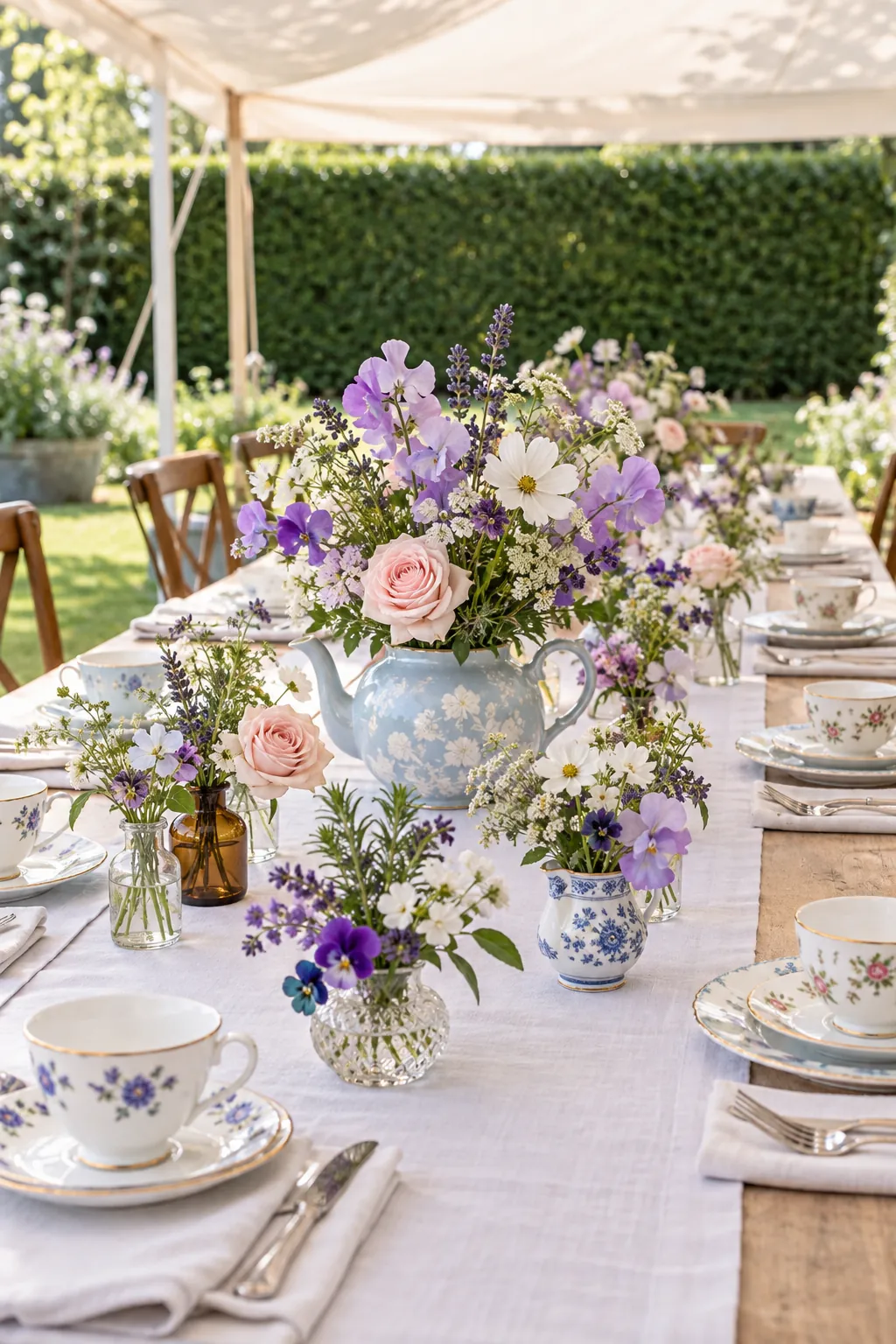
A whimsical tea table becomes difficult to use when every storybook reference competes for attention. Flowers work best when one familiar shape, color contrast, or vessel carries the idea and the rest of the table stays functional. These arrangements create a playful garden atmosphere while leaving room for cups, food, conversation, and safe movement.
Teacup Flower Gardens
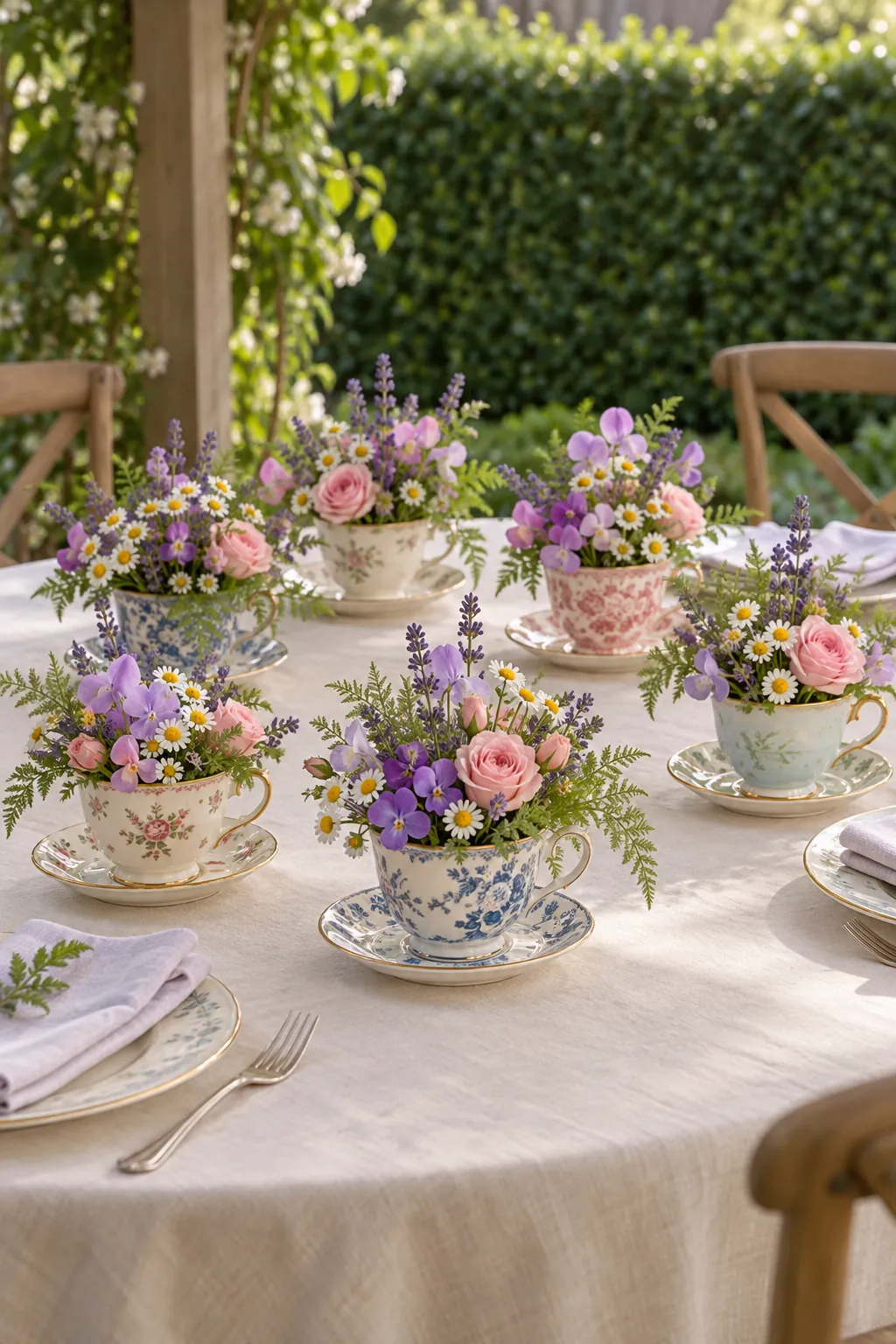
Mismatched teacups turn small garden flowers into playful individual centerpieces without taking over the table. Place a hidden water cup inside any valuable china so the flowers remain easy to remove. Use different blooms in each cup, but repeat one color across the group to keep the display connected.
Tumbling Teapot Bouquet
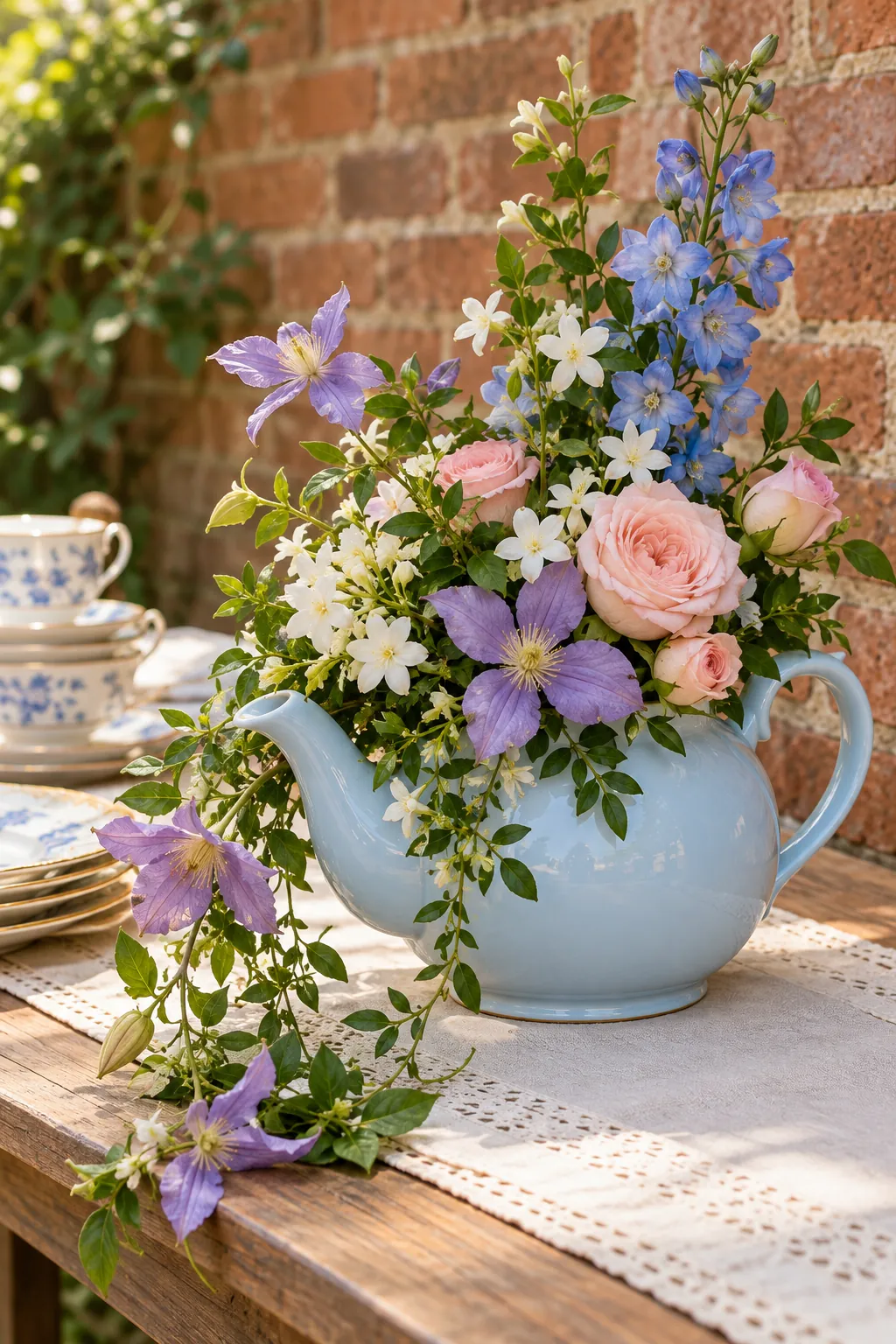
A teapot filled with trailing flowers gives the table a sense of movement while staying practical. Let clematis or jasmine descend near the spout, then balance that line with taller flowers beside the handle. Test the pot with water before arranging, because old decorative teapots may not be watertight.
Red and White Rose Table
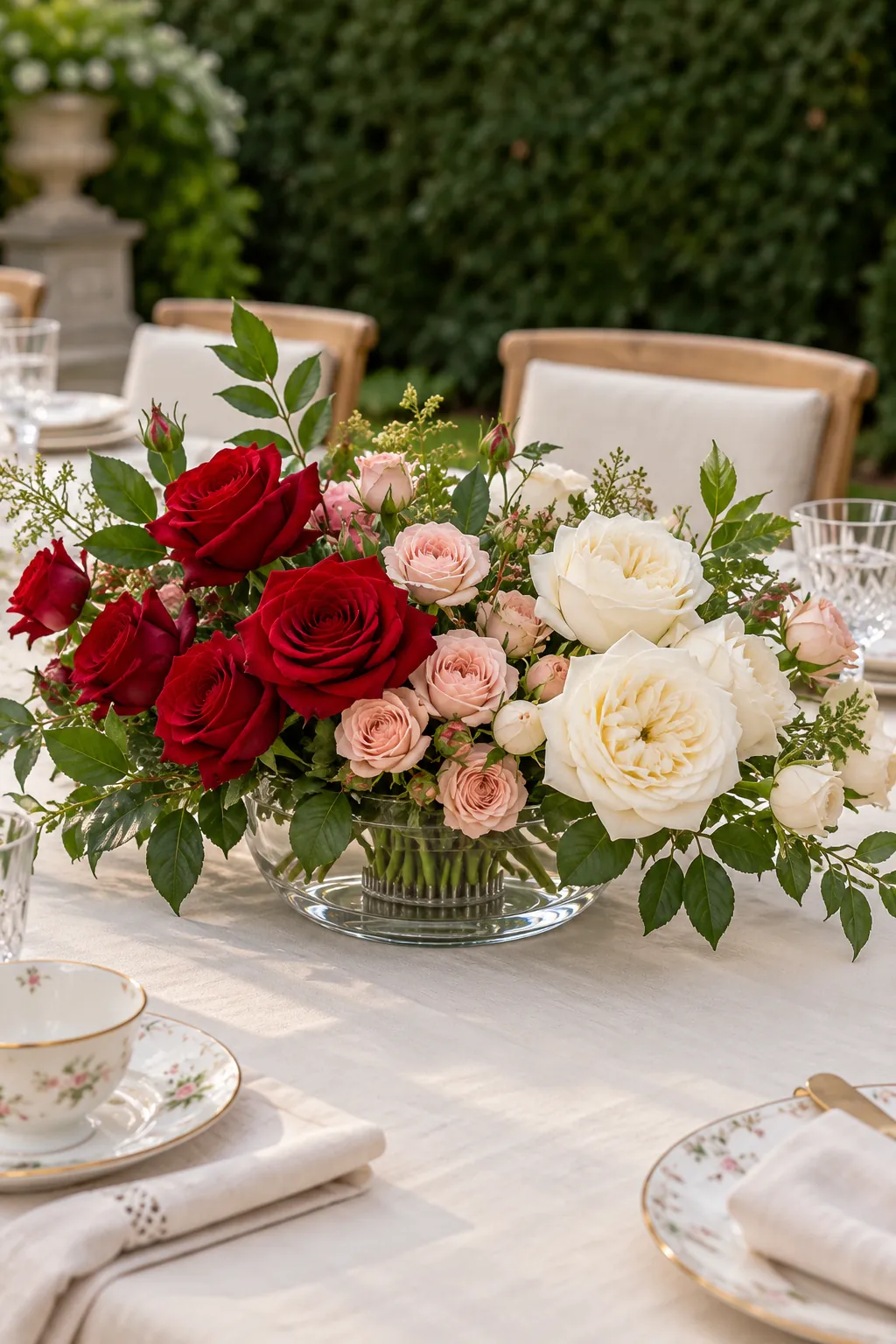
Red and white roses create an immediate storybook garden reference without requiring character props. Keep the colors in separate loose clusters and add a few blush roses where they meet. Deep green foliage gives the bold contrast a natural frame and prevents the arrangement from looking striped.
Playing Card Bud Vases
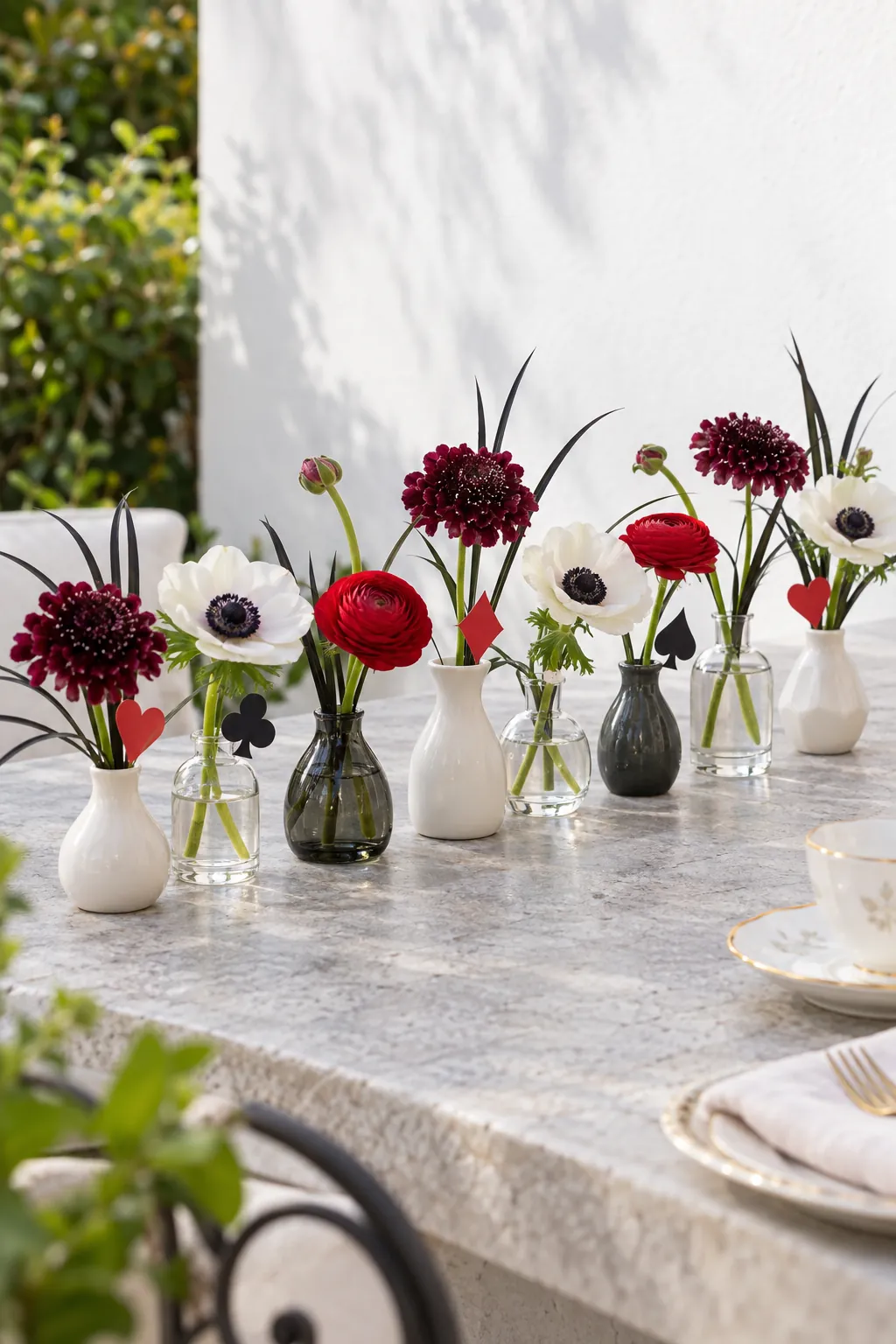
Small bud vases in red, black, and white can suggest a playing card palette along the table. Use plain suit shaped paper accents sparingly and keep every flower vessel stable and unobstructed. Dark burgundy flowers read more naturally than dyed black blooms and still preserve the dramatic contrast.
Oversized Paper Flower Backdrop
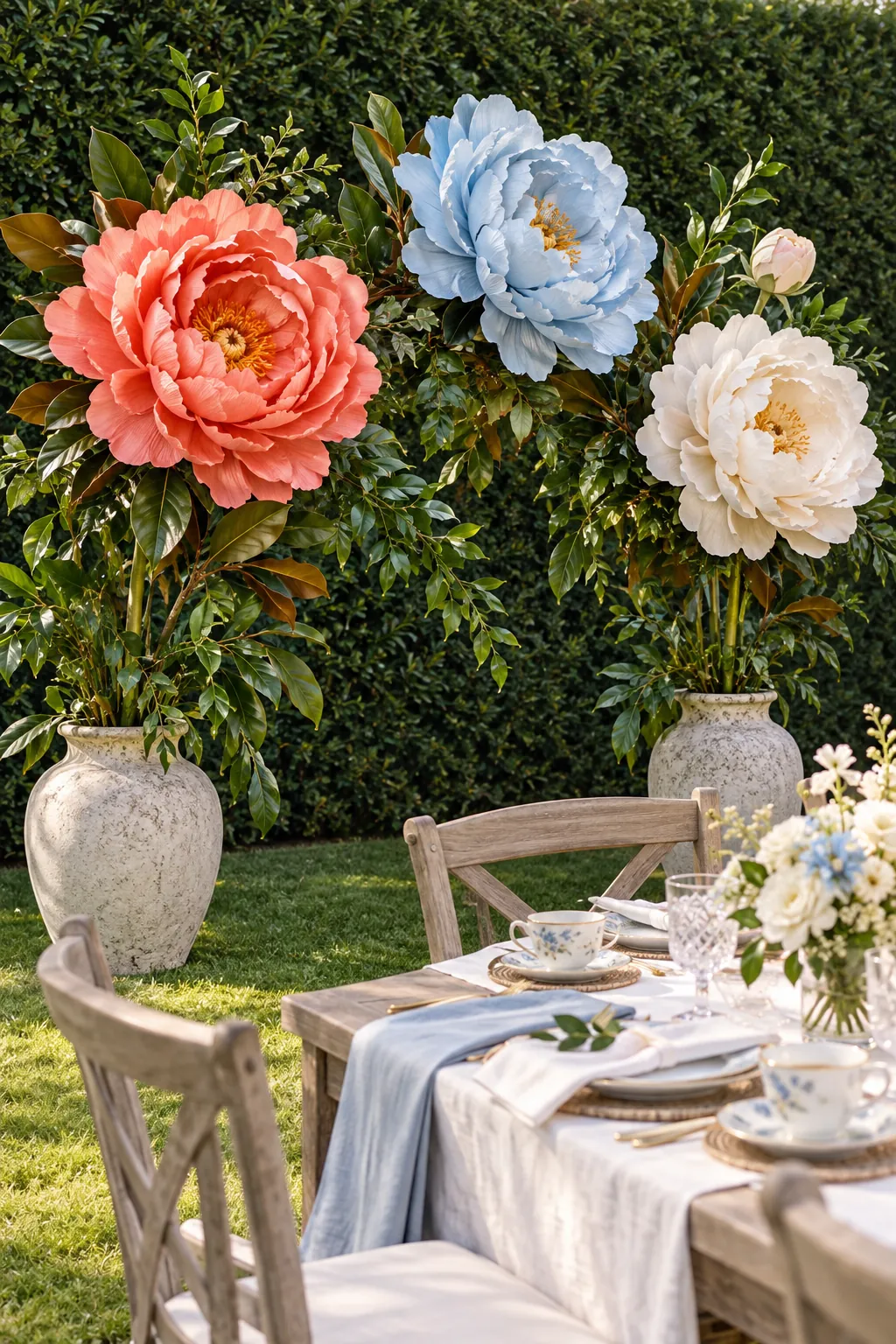
Oversized paper flowers make a strong backdrop when they stay behind the dining area instead of crowding plates. Choose two or three large forms, then connect them with real foliage in floor vessels. Keep all stems and stands secure so guests can move around the garden tea party without brushing the display.
Clock Face Floral Centerpiece
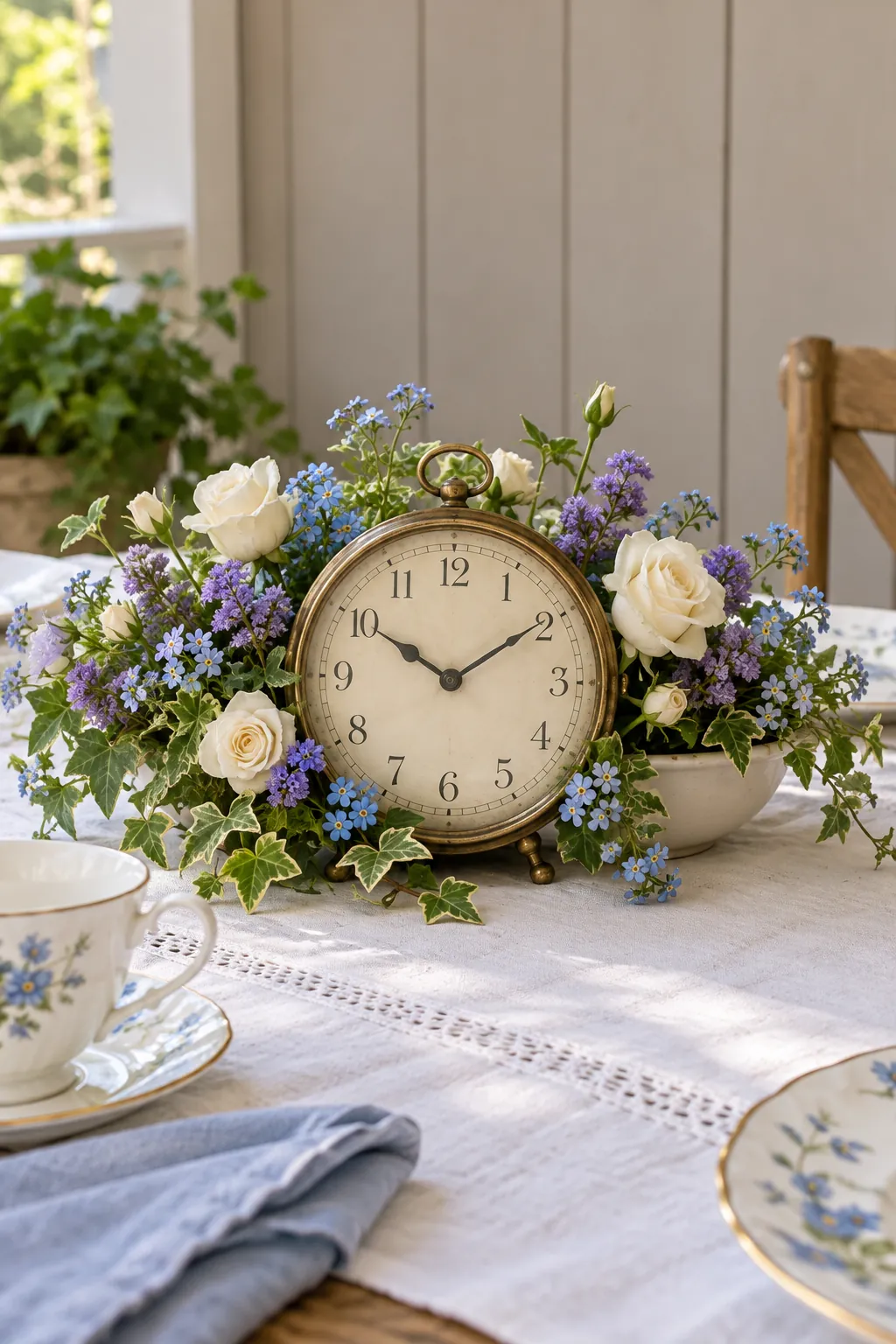
A round vintage clock can anchor flowers in a low ring and create a subtle time theme. Keep the clock face visible by arranging small blooms around the lower edge rather than covering the entire object. Use a separate watertight bowl behind it so moisture never reaches the mechanism.
Keyhole Garden Arrangement
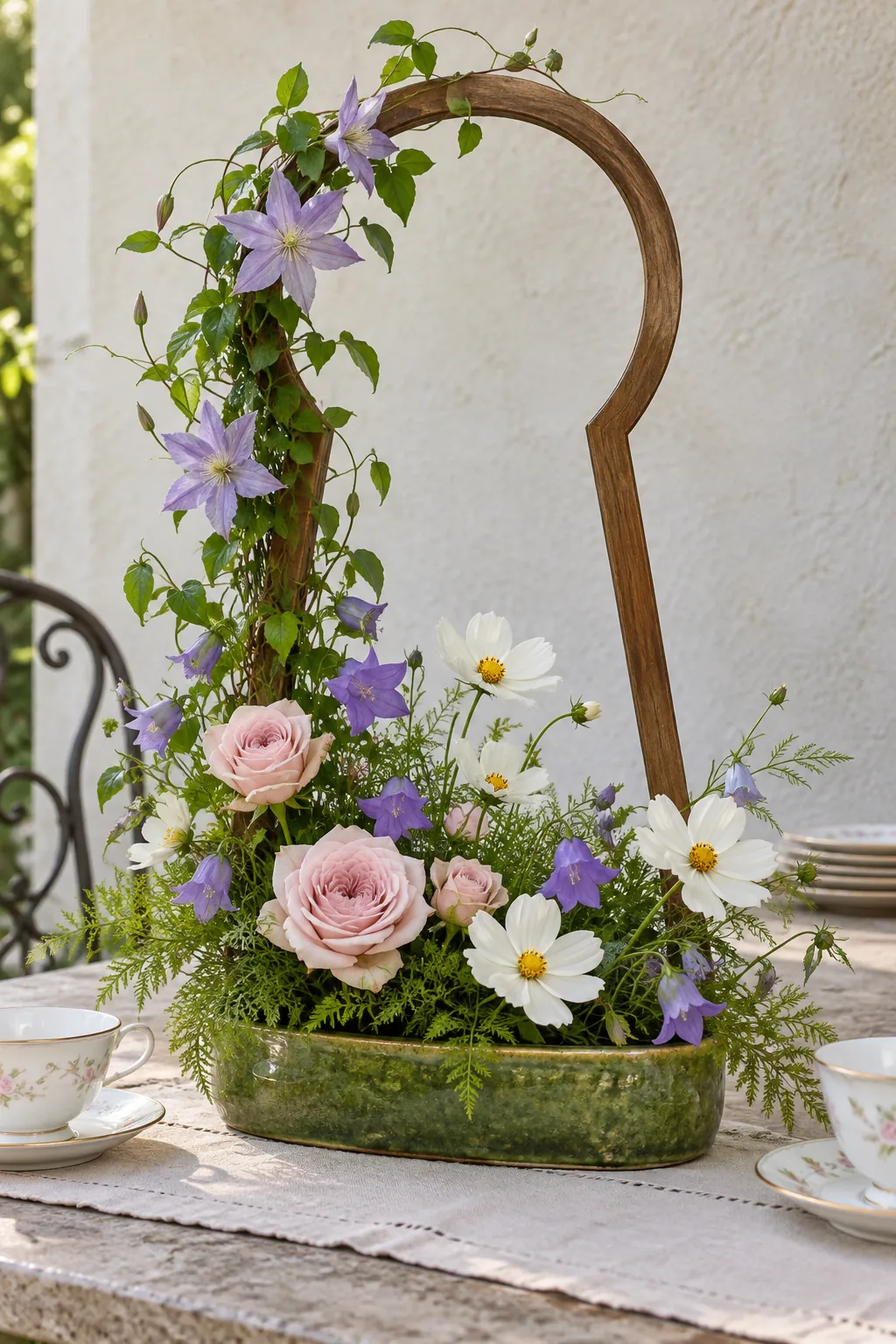
A small keyhole shaped arch gives one garden arrangement a clear frame and a sense of discovery. Place the flowers in a low vessel at the base, then let light vines follow only part of the arch. Leaving most of the opening clear makes the shape recognizable and keeps the design from becoming a dense wreath.
Woodland Mushroom Flowers
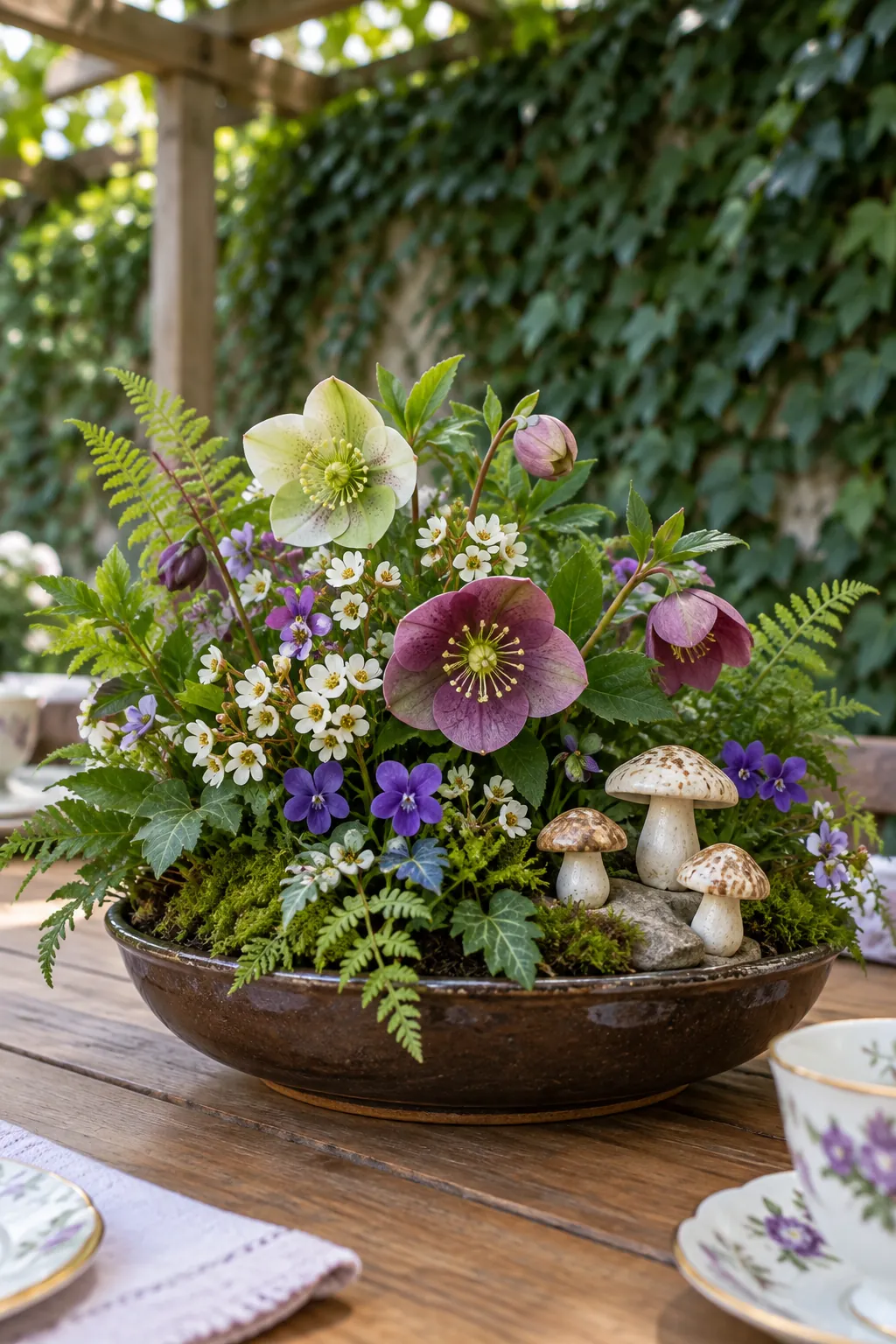
Small ceramic mushrooms can sit among mossy foliage and delicate flowers for a restrained woodland scene. Keep the mushrooms away from water and use only a few so the real flowers remain central. Ferns, hellebores, and tiny white blooms create texture without turning the centerpiece into a novelty display.
Chessboard Vase Pair
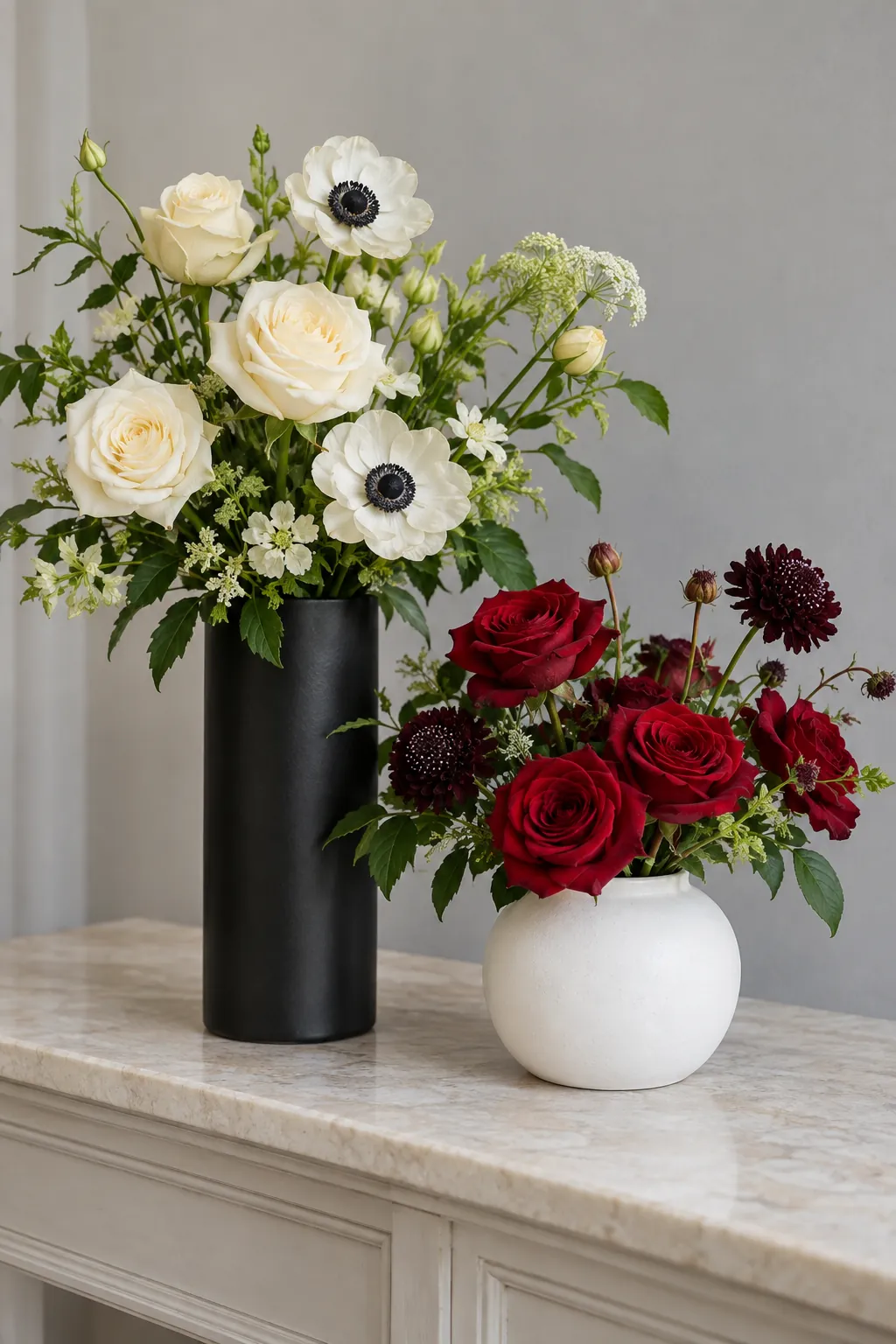
A black vase and a white vase create a graphic pair that recalls a chessboard without filling the table with props. Reverse the flower colors by placing pale blooms in the dark vessel and deep red blooms in the light vessel. Keep both arrangements at different heights so the pairing feels lively rather than mirrored.
Tiny Bottle Posies
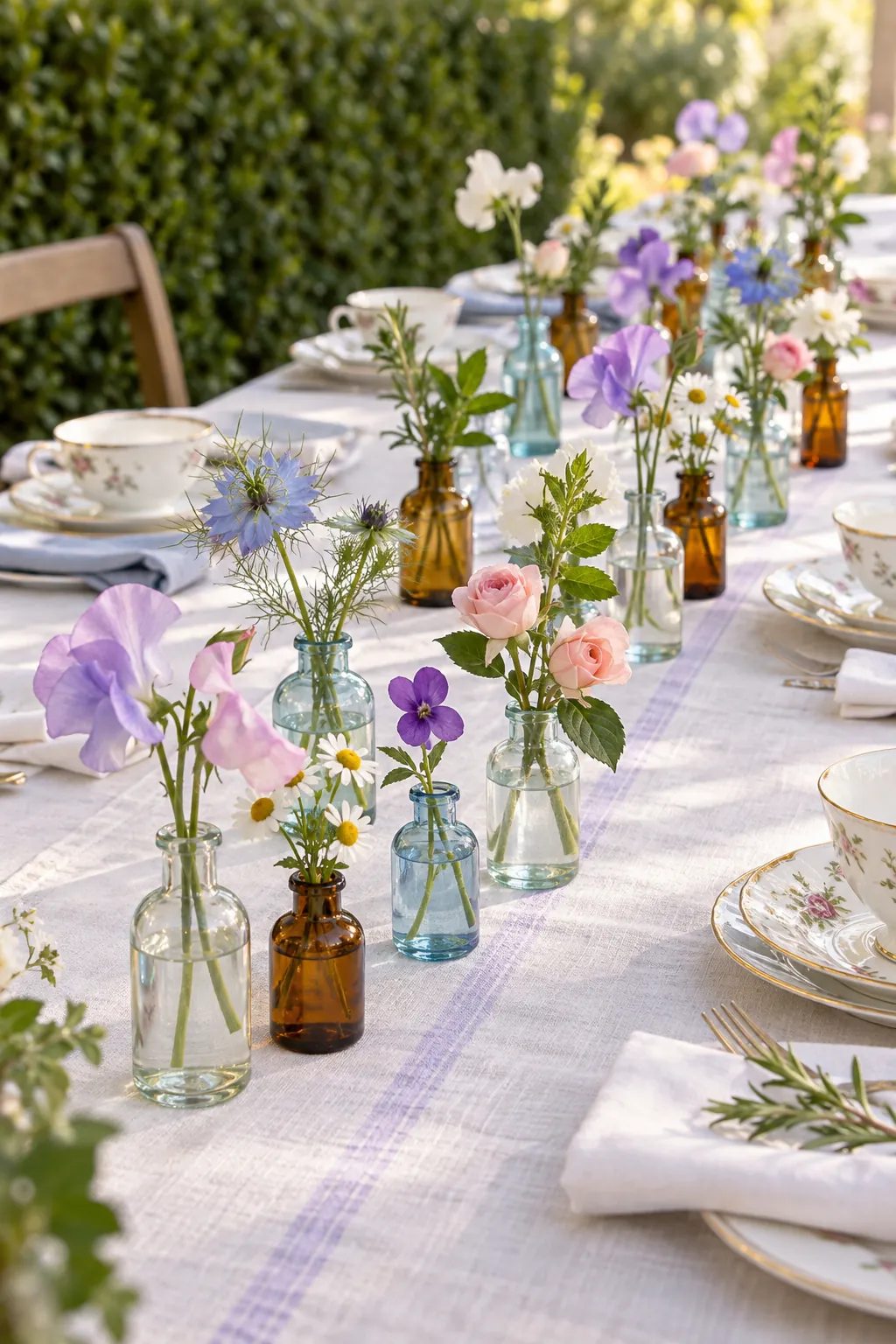
Tiny glass bottles filled with one or two stems can wander between teacups and serving pieces. Vary the bottle shapes and flower directions, but keep their water levels and spacing orderly. This approach stretches a small flower budget and lets you move each posy when the table needs more room.
Long Mad Tea Party Flowers
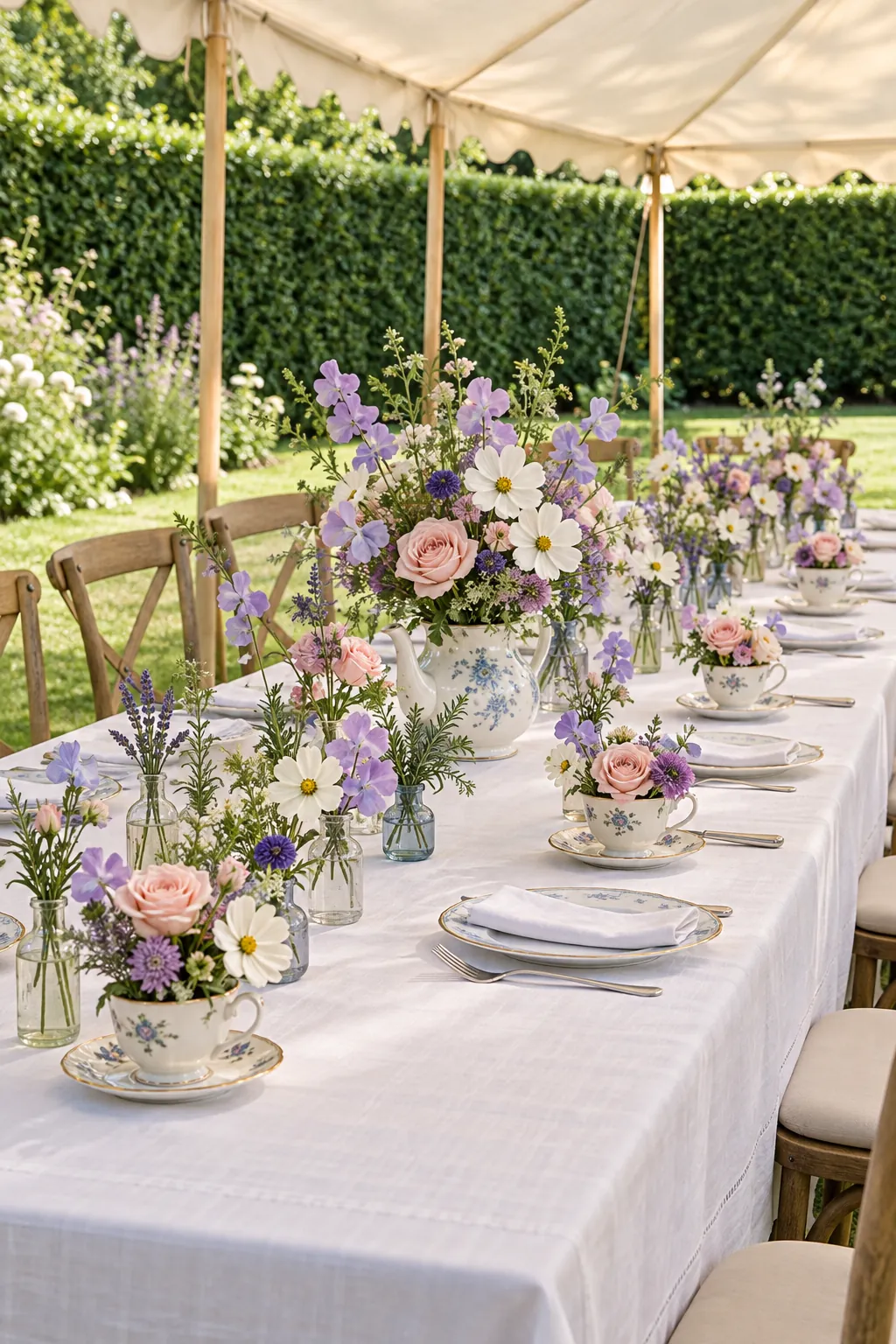
A long tea table can combine teacup flowers, bottle posies, and one central teapot bouquet without repeating the same arrangement. Keep every piece low, leave open spaces for serving, and use one shared color in all three formats. The varied vessels create the playful mood while the repeated flowers make the Wonderland party decor feel intentional.