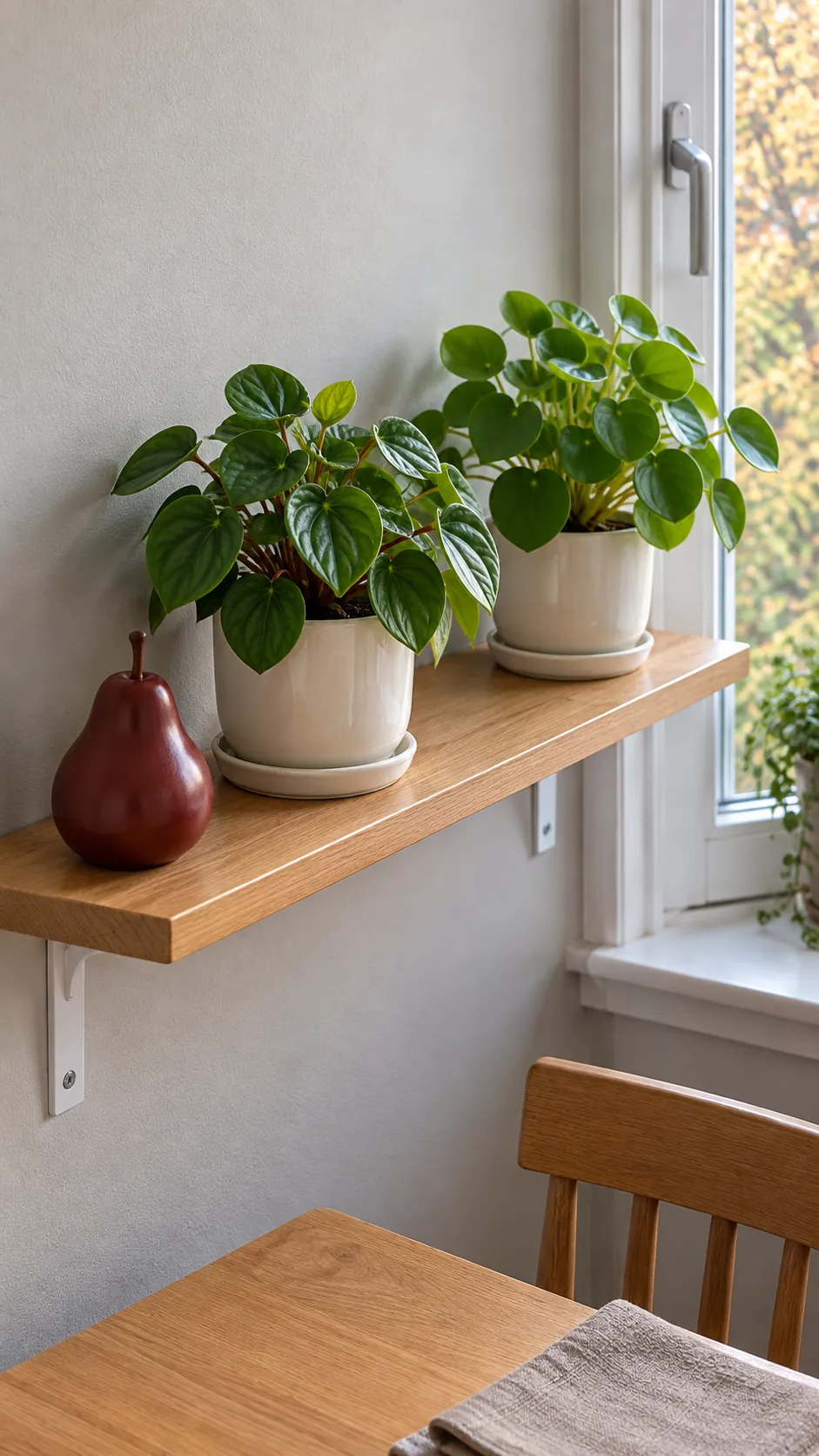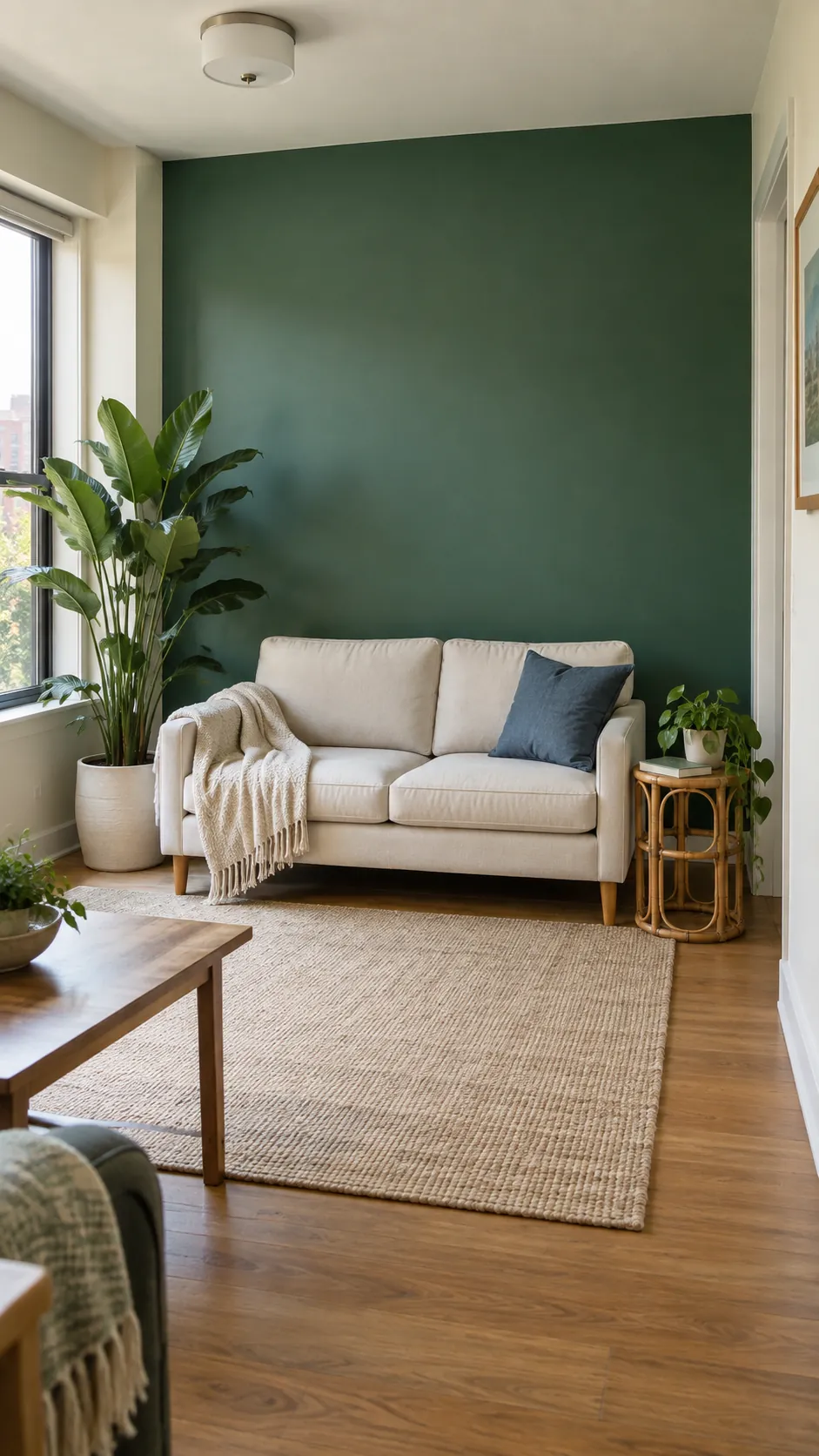
A wall can look beautifully green and still be wrong for the way you live. Dark paint changes the balance of light, while living foliage adds watering, drainage and access needs. Decide whether you want color, texture or growing plants first, then choose a treatment your room and routine can support.
Sage Paint Behind a Cream Sofa
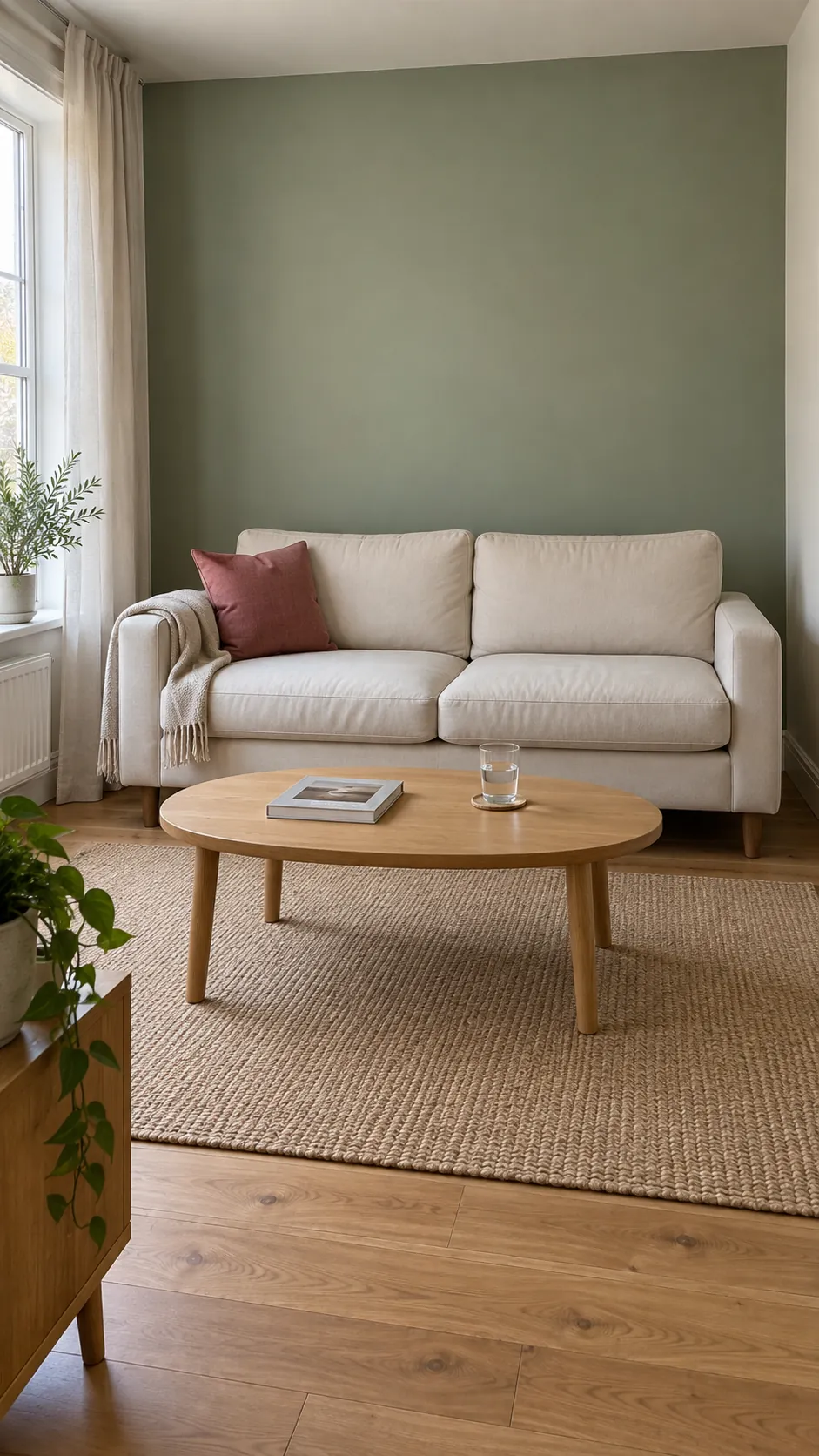
A muted sage wall gives a cream sofa definition without making the whole living room feel dark. Test a large sample beside the upholstery and flooring, then look at it in daylight and with your usual lamps switched on. A gray leaning green can feel cooler than expected beside warm oak. Keep the adjacent walls simple so the living room green accent wall reads as one deliberate surface.
Forest Green Around a Fireplace
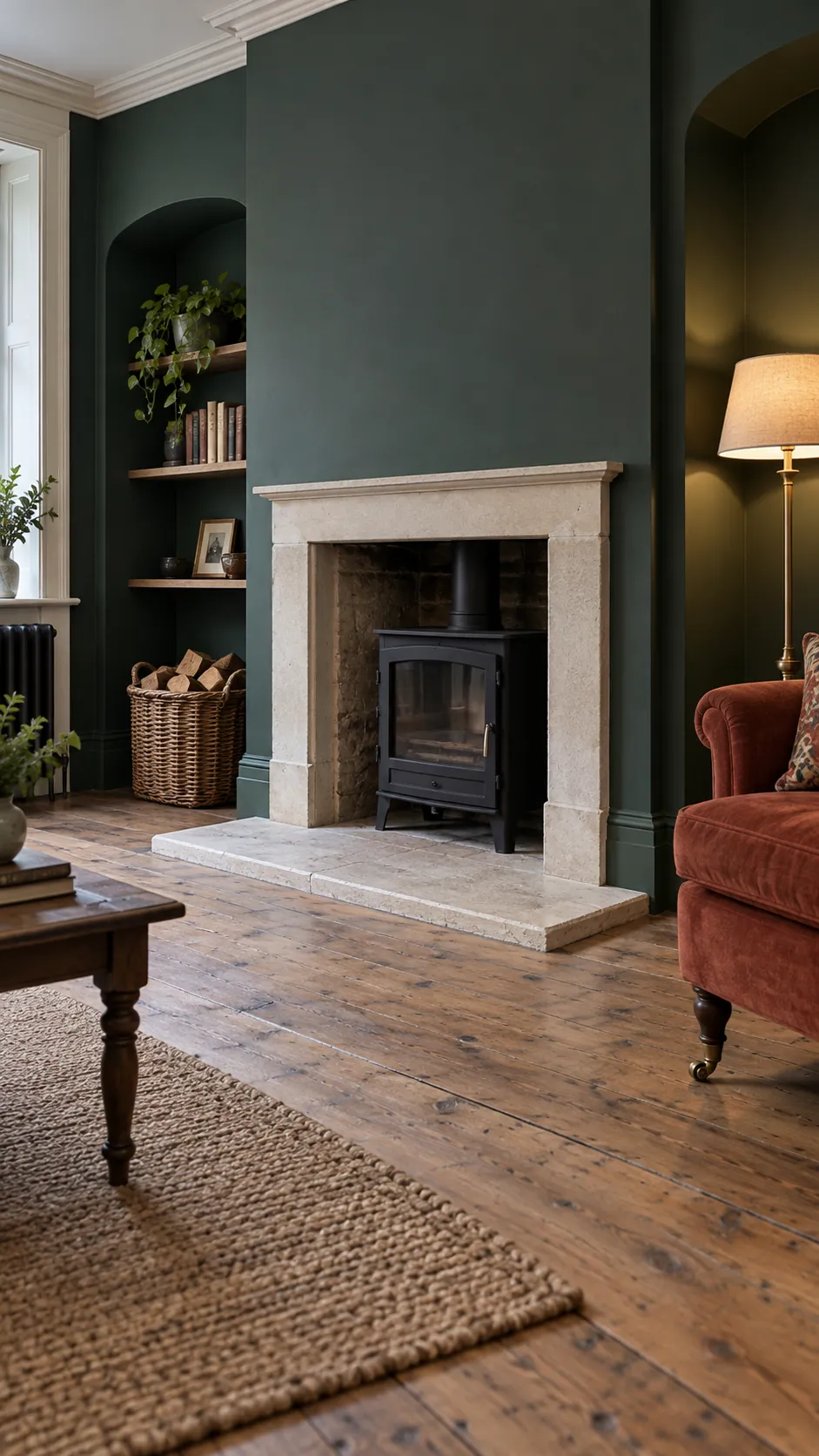
Deep forest paint can tie a fireplace surround and nearby alcoves into a single focal point. Leave the firebox, required clearances, and any heat exposed surfaces to materials approved for that appliance. A pale stone hearth provides enough contrast to stop the lower part of the room disappearing into shadow.
Choose a washable finish where logs or tools might brush the wall. Position a lamp beside the seating rather than relying on the fire to illuminate the green. This works especially well when you already have a strong architectural feature and want fewer decorative objects.
Olive Walls With a Walnut Dining Table
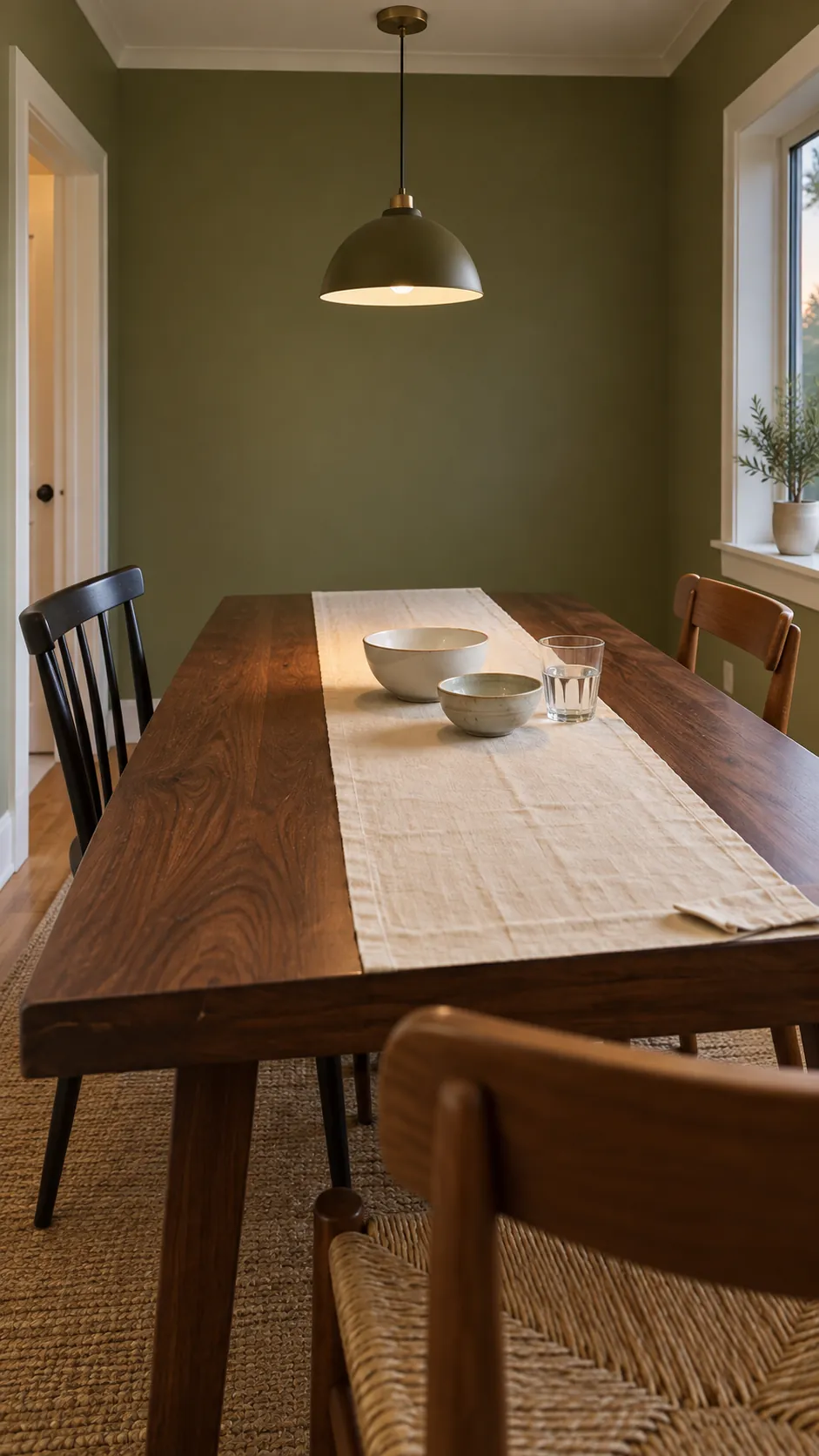
Olive green sits comfortably beside walnut because both carry earthy undertones. In a dining room, sample the paint under the pendant you actually use at dinner. Very warm bulbs can push some olives toward muddy brown. A pale linen tablecloth or a few light ceramic dishes will separate the tabletop from the darker background. Keep the green wall decor ideas restrained here, since the wood grain already supplies plenty of detail.
A Deep Green Bedroom Headboard Wall
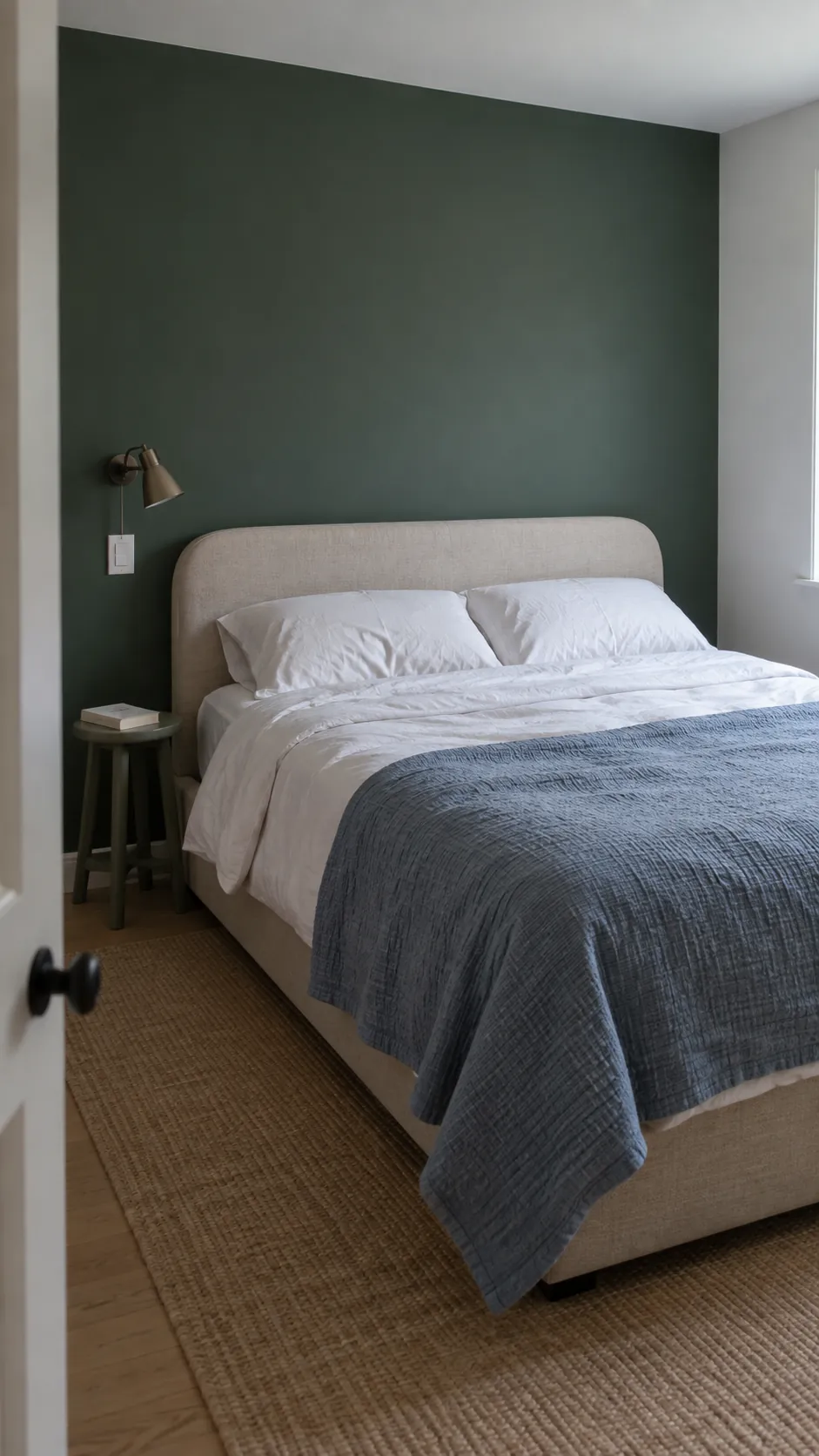
Painting only the wall behind the bed gives you a dark backdrop while leaving the opposite surfaces available to reflect light. Carry the color across the full wall rather than outlining the headboard, which can make furniture placement feel fixed. An oatmeal upholstered headboard keeps pillows readable against the paint.
Before committing, check how the shade looks from the doorway as well as from the bed. Wall lights need to land where you can reach their switches comfortably. Skip a heavy shelf over the pillows if it would turn a restful backdrop into a storage problem.
A Pale Celadon Laundry Wall
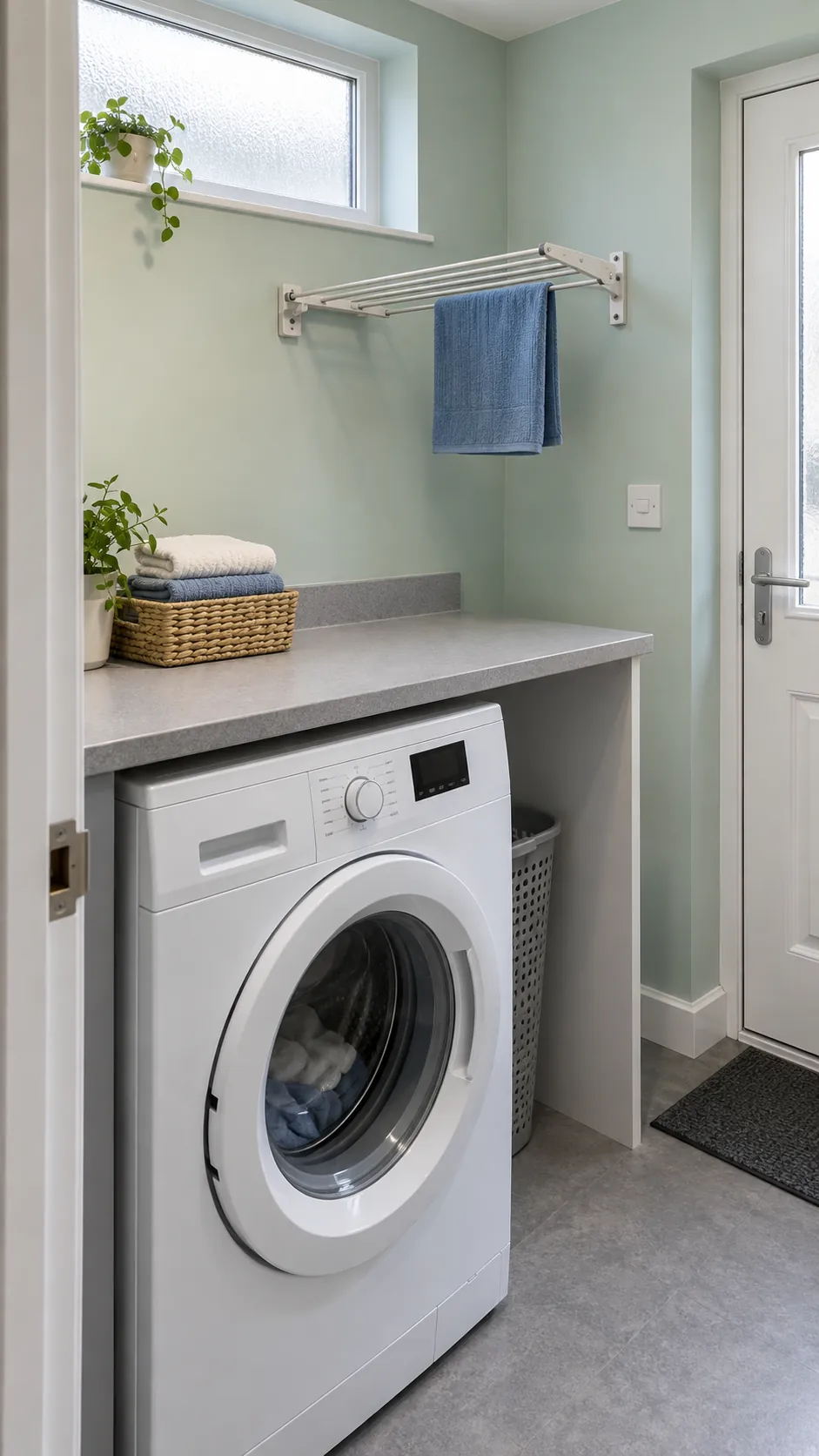
Celadon adds color to a laundry area without fighting the visual weight of white machines. Use a finish suitable for wiping away splashes, following the coating maker’s preparation and curing instructions. Keep vent openings, service access and appliance clearances unobstructed. A shallow drying rail can make the colored wall useful, provided its fixings suit the wall and the expected load.
Green Lower Walls in a Busy Entryway
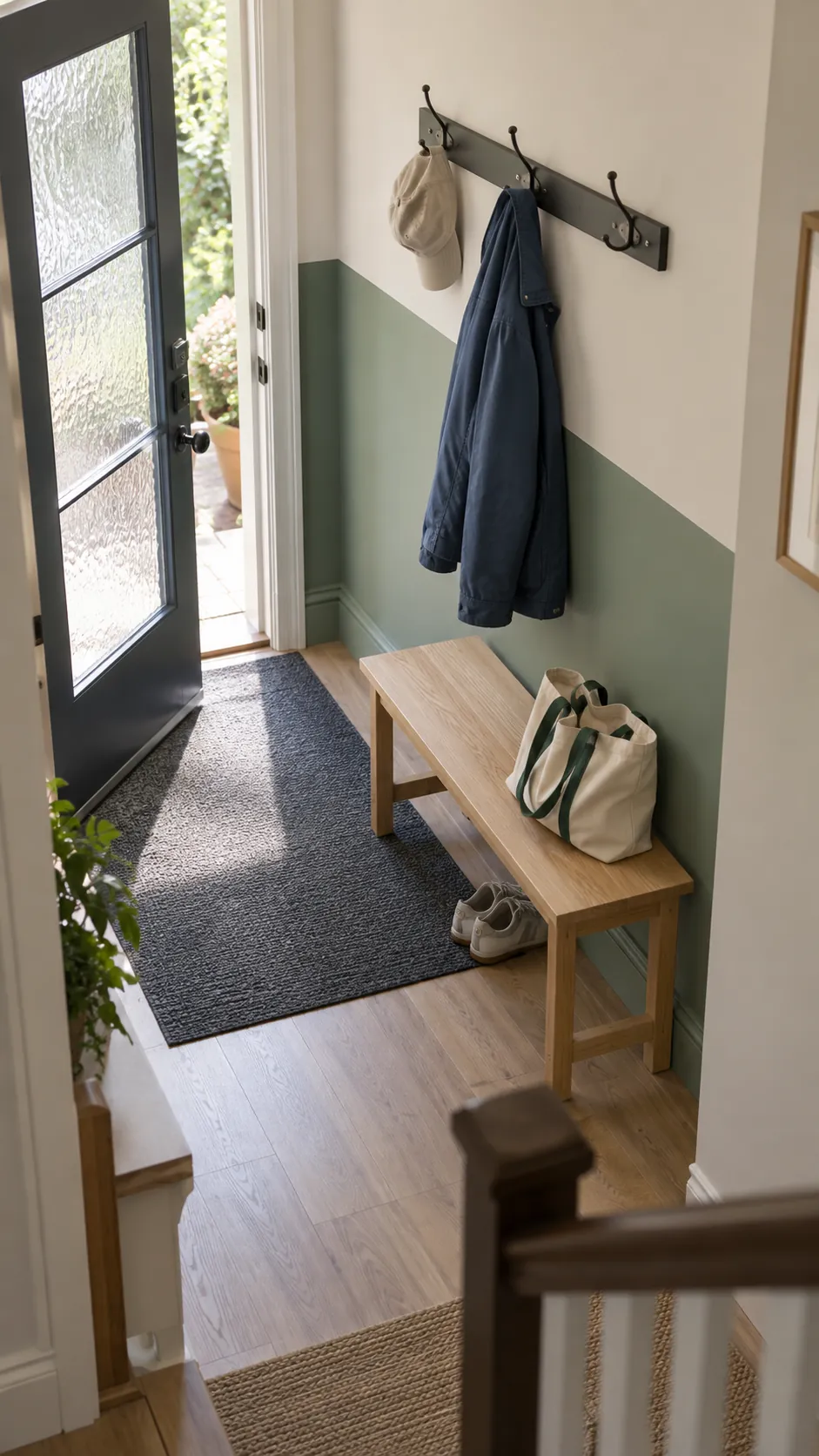
A green lower section can make everyday marks less conspicuous than a bright white entry wall. Set the division in relation to the bench or existing trim rather than choosing a height in isolation. Use a durable coating, because darker paint does not prevent scuffs. A row of sturdy hooks should be fixed into appropriate support. Leave room for coats to hang without rubbing every time someone opens the door.
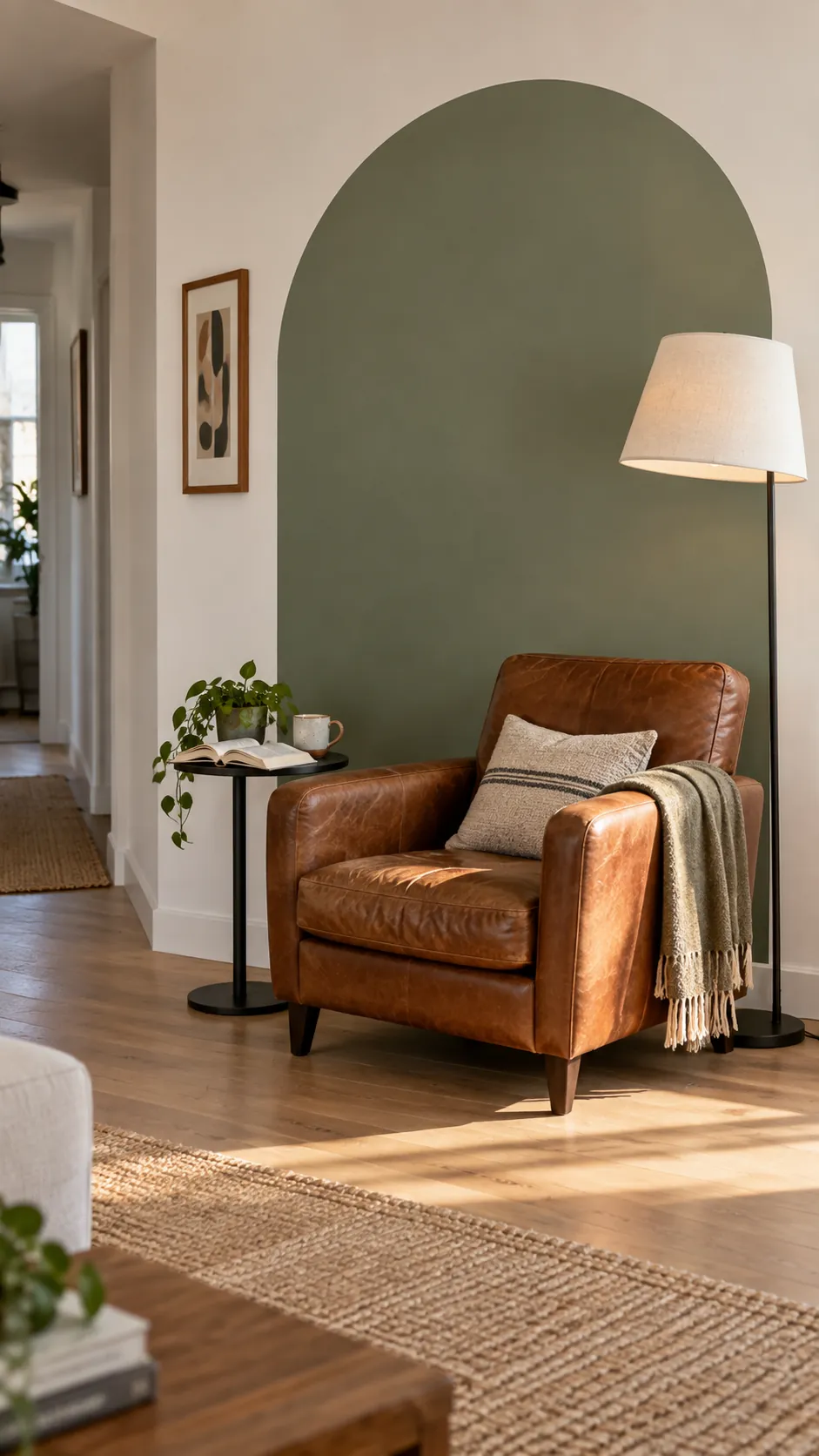
A Painted Arch for a Reading Chair
A painted arch can identify a reading corner when you cannot add architectural trim. Draw its outline first and check the shape from the main approach to the room. Make it wide enough to frame the chair without tightly tracing its silhouette.
A small side table should still fit within easy reach. Let the arch be the main graphic element and choose a plain lampshade. If the chair is likely to move, a simple rectangular color block will be easier to live with than a precisely fitted arch.
Bottle Green Paneling in a Hallway
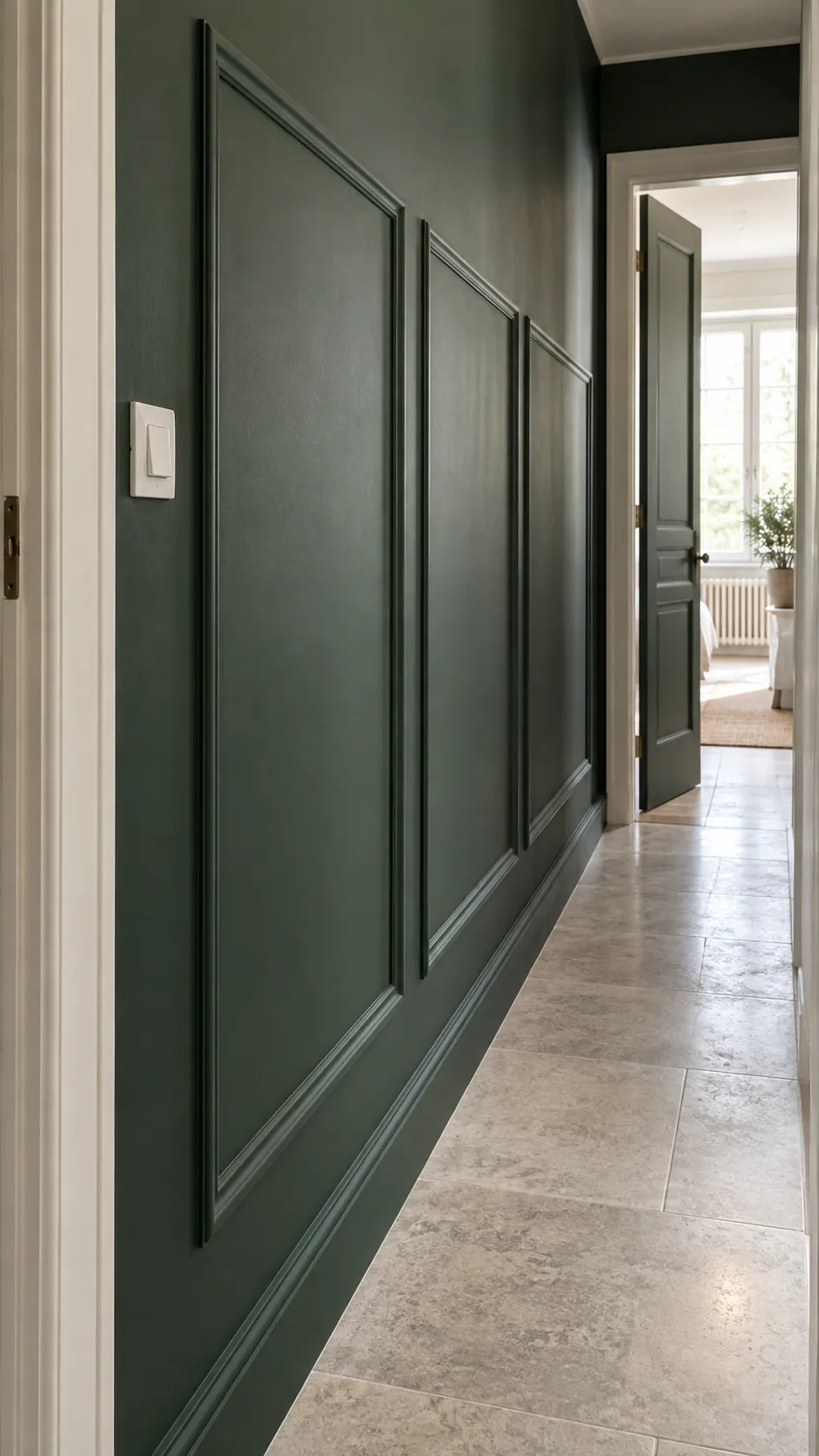
Shallow wall molding painted bottle green adds relief where a narrow hallway cannot spare space for furniture. Lay out the panels around switches, doors and existing trim before attaching anything. The panels should not force a switch into an awkward tiny compartment. Raking light will reveal uneven joints, so careful preparation matters more than adding extra molding. Keep projecting trim clear of door swings and passing bags.
A Green Office Wall Behind the Desk
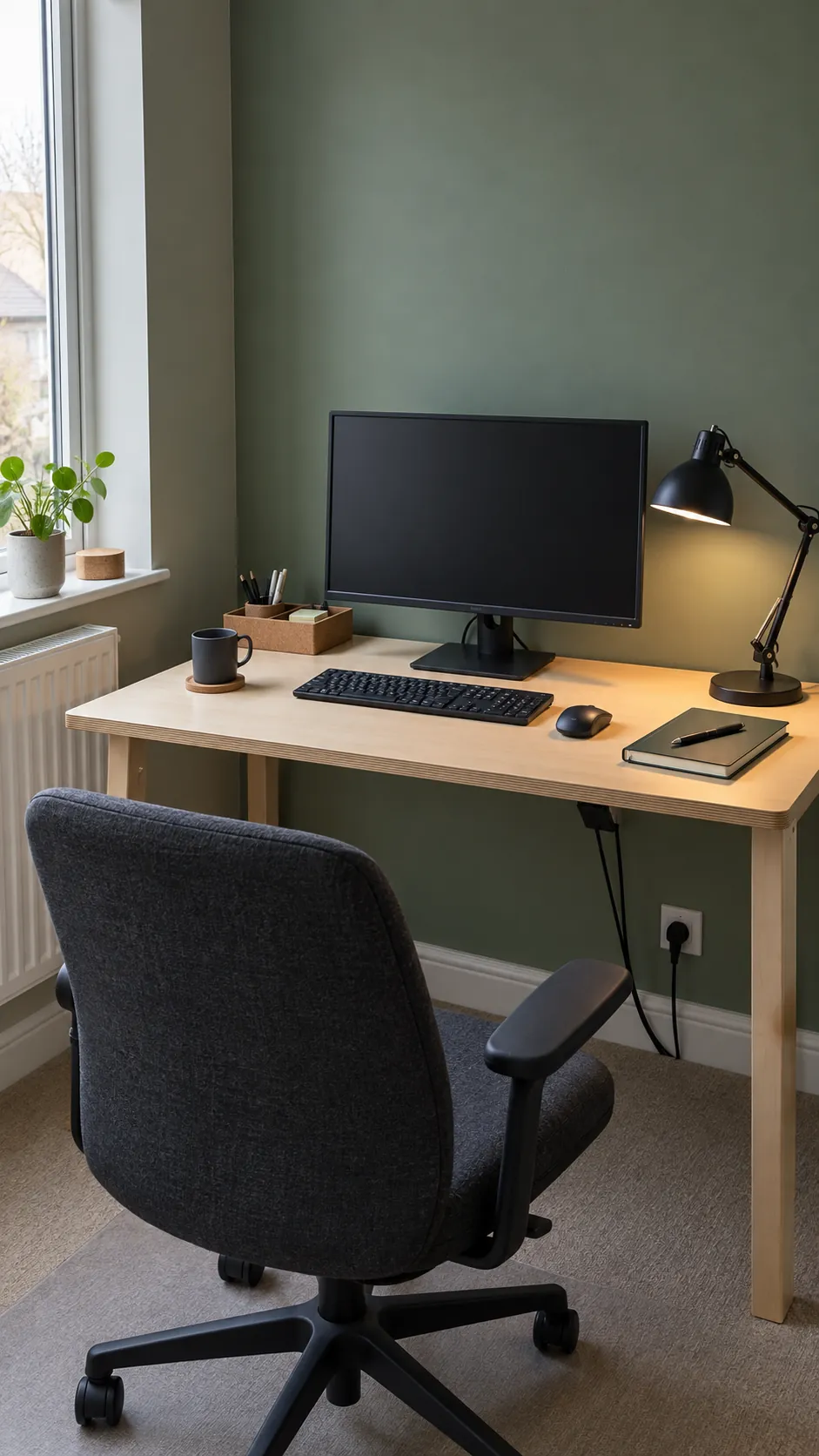
A quiet green office wall can give shelves, a monitor and task lighting a coherent background. Choose the wall you face if color helps the work area feel settled, or the wall behind your chair if the main goal is a video call backdrop. Check your webcam view before deciding where decorations belong.
A matte looking finish usually produces fewer distracting reflections than a glossy one. Preserve useful task light at the desk instead of making the whole room moody. Route power cables away from watering areas if you include a plant.
A Tonal Green Bookshelf Recess
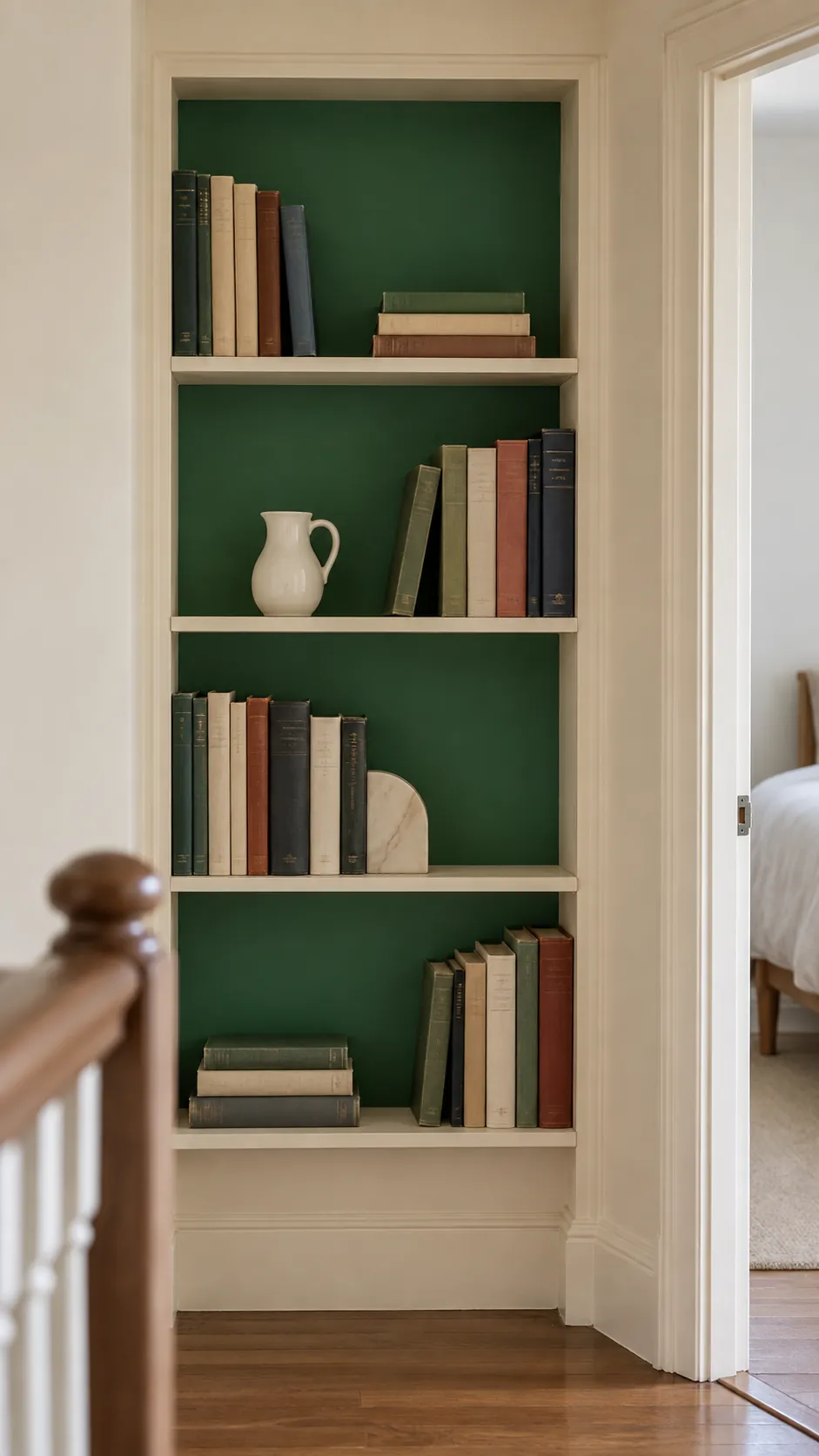
Painting the back of a recessed bookcase green adds depth without covering the entire room. Use a shade that still lets dark book spines stand out. Remove or protect the shelves so the edges stay clean. Leave some breathing room between books and objects rather than filling every opening. This is a manageable test of the green wall aesthetic before a larger painting project.
Removable Botanical Paper in a Breakfast Nook
A small leaf pattern can soften a breakfast nook with little space for actual plants. Check that removable wallpaper is approved for your wall finish, and test an inconspicuous patch before covering the area. Removable does not guarantee damage free removal, especially on weak paint. Avoid placing it where chair backs scrape repeatedly.
Pair a detailed print with a simple table and plain seat cushions. Measure the pattern repeat as well as the wall height before ordering. If the nook gets cooking splashes, choose a surface whose cleaning instructions fit that exposure.
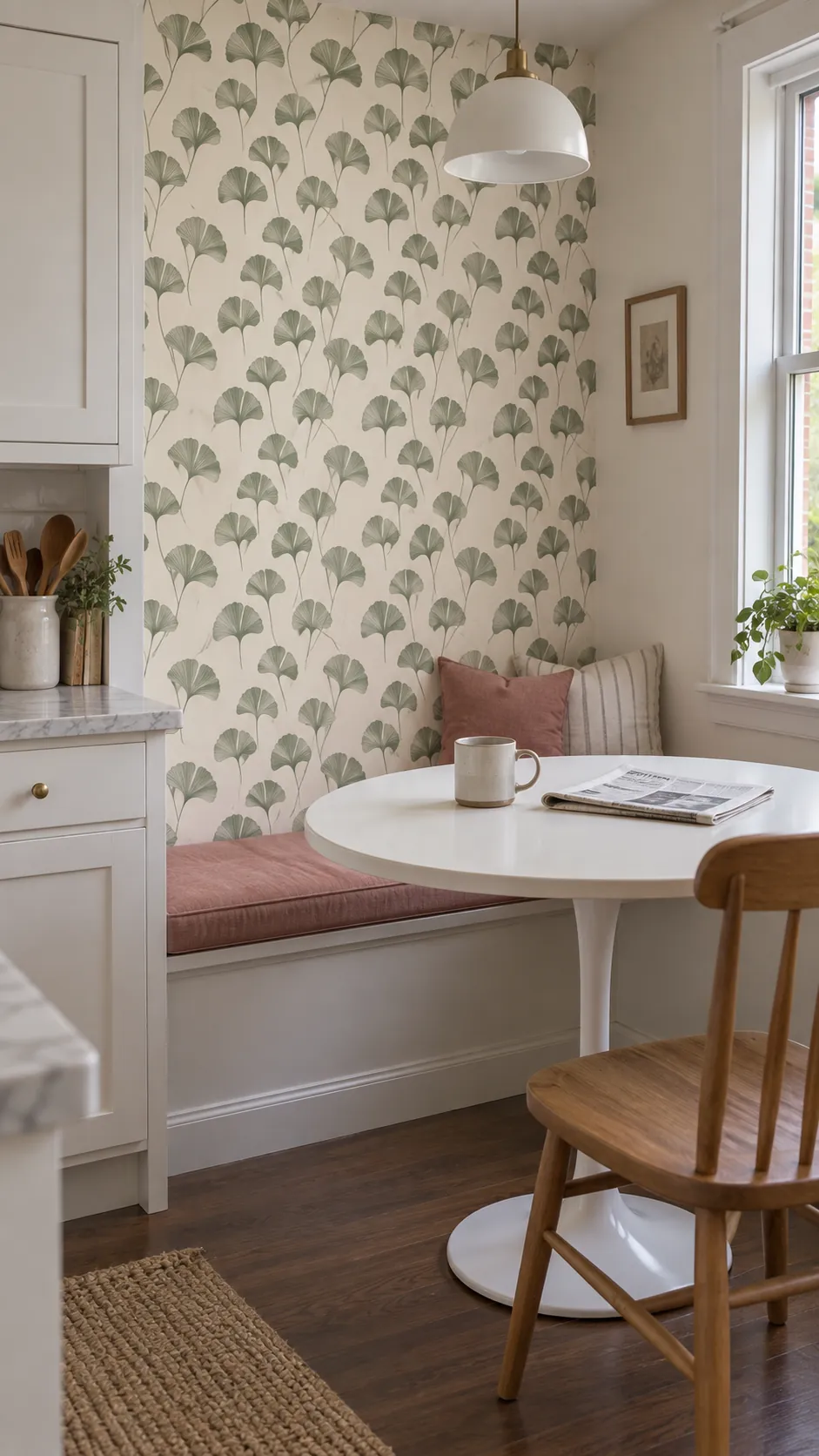
A Framed Green Textile Above a Console
A woven green textile introduces color without requiring a newly painted wall. Choose an abstract stripe or geometric weave so the material itself remains part of the appeal. A protective frame can reduce dust handling, but its finished weight determines the mounting hardware. Position it relative to the console rather than automatically centering it on the whole wall.
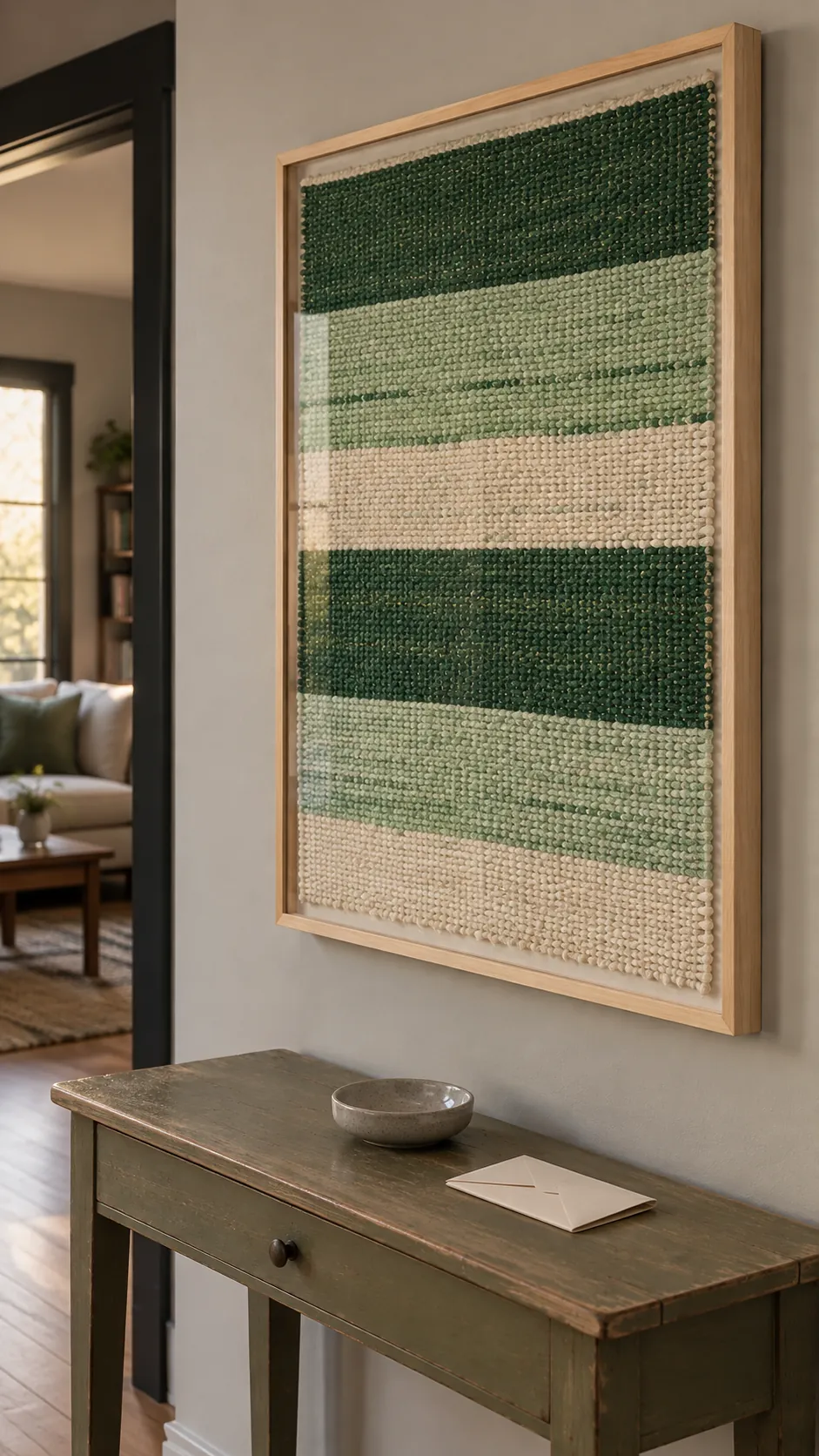
Botanical Studies on an Eucalyptus Wall
A few botanical studies work best when their pale paper remains distinct from the wall color. Choose eucalyptus paint with enough depth to outline the frames. Lay the arrangement on the floor first so spacing does not depend on repeated holes. Consistent mats can unify prints of different plant species. Keep real foliage nearby modest in scale so the display does not become visually crowded.
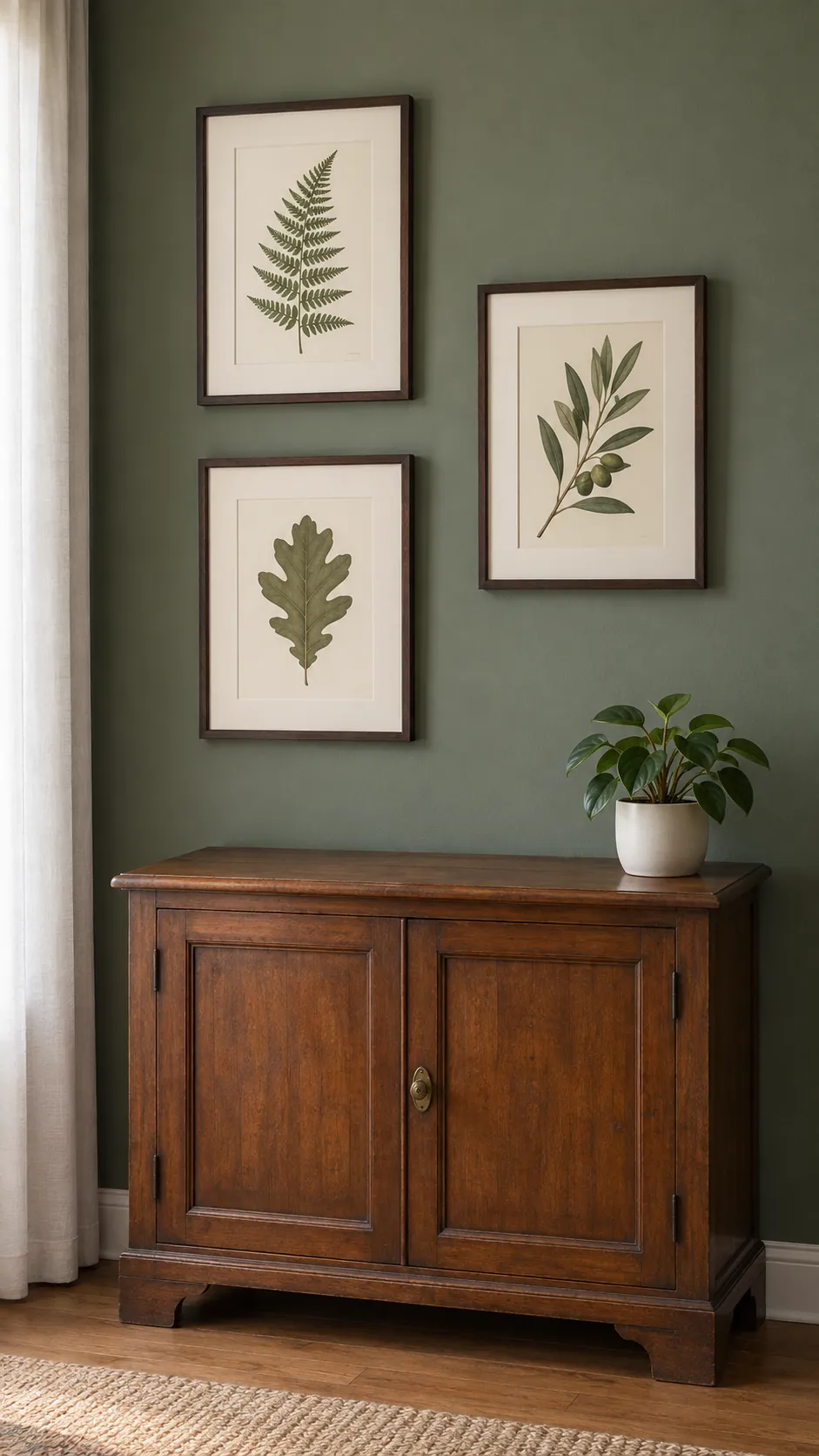
A Round Mirror Against Moss Green
A mirror can interrupt a solid moss green wall with reflected light and depth. Check exactly what it reflects before fixing it in place, since an untidy utility corner will also be doubled. The mirror must be supported by hardware rated for its weight and suitable for the wall.
A slim console below can hold keys without competing with the reflection. Leave clearance between the frame and anything standing on the console. This is especially useful in an entryway where another detailed picture would feel busy.
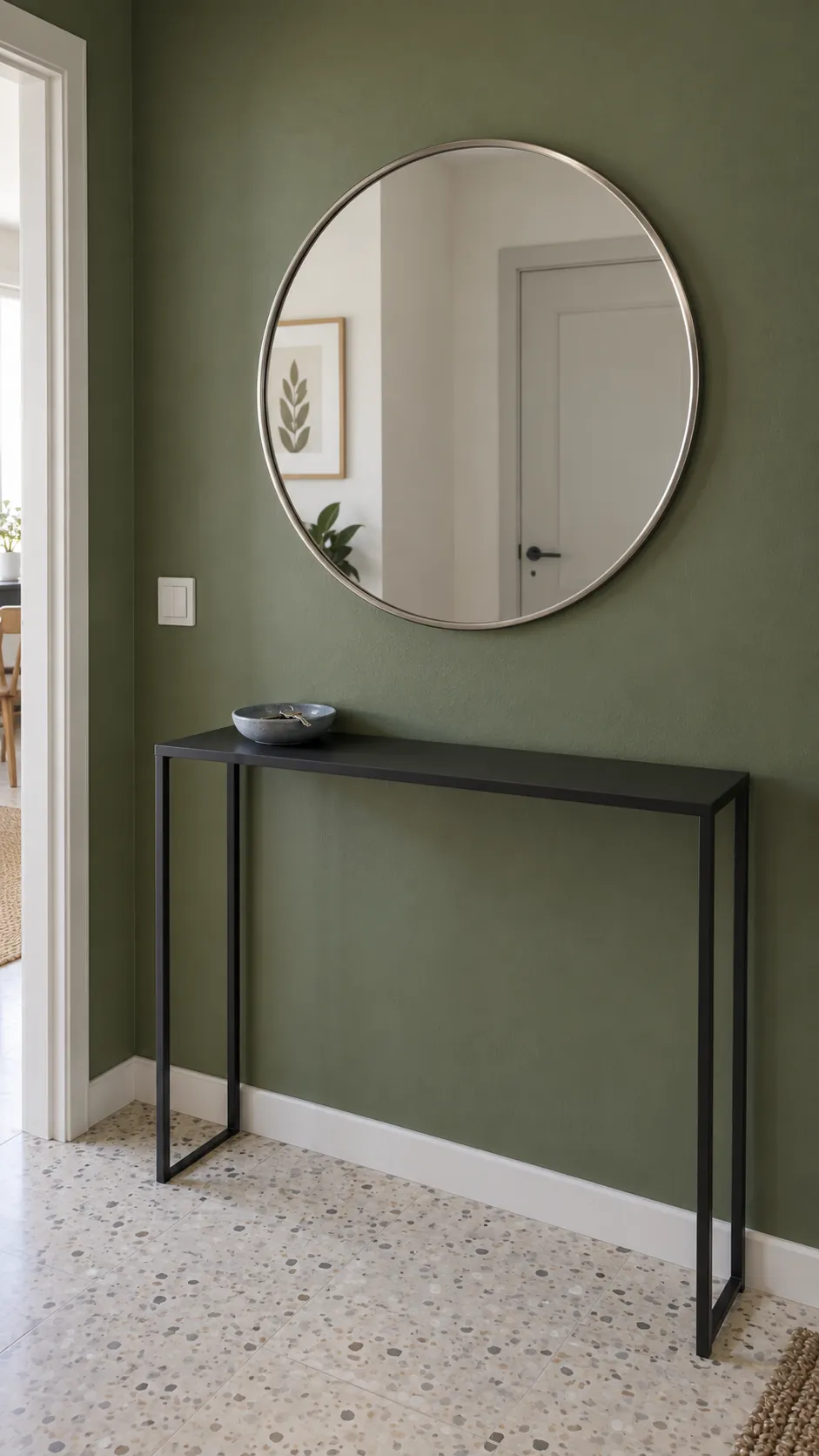
Green Tile Behind a Bathroom Basin
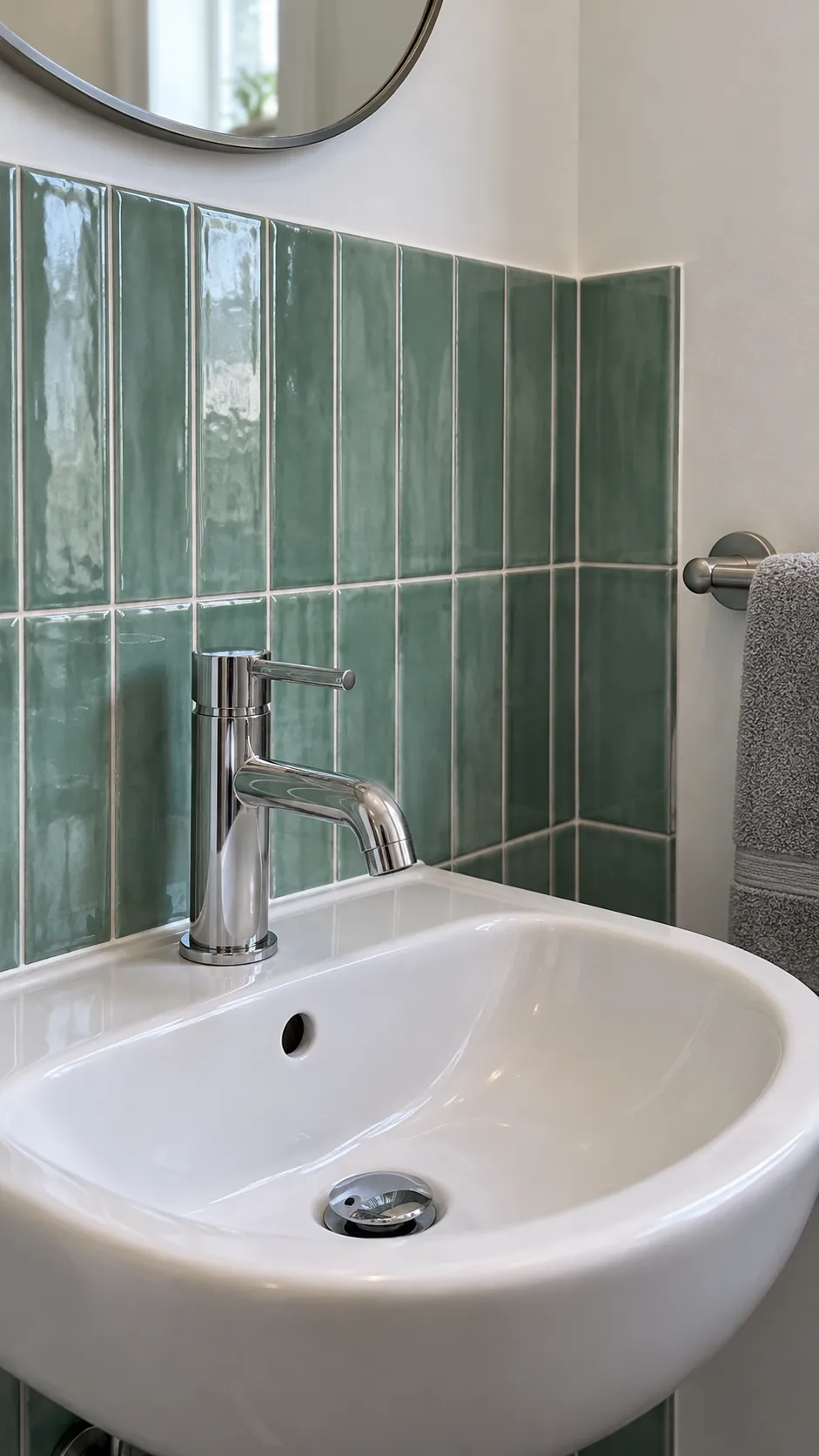
Green tile creates a practical color surface where water makes ordinary decoration awkward. Choose tile, grout and backing appropriate to the wet exposure in that location. A tiled splashback does not replace required waterproofing in a shower or other wet area. Hold a sample next to the basin and metal finishes before settling on its tone. Glossy tile reflects more light, while an uneven glaze introduces variation that a paint swatch cannot show.
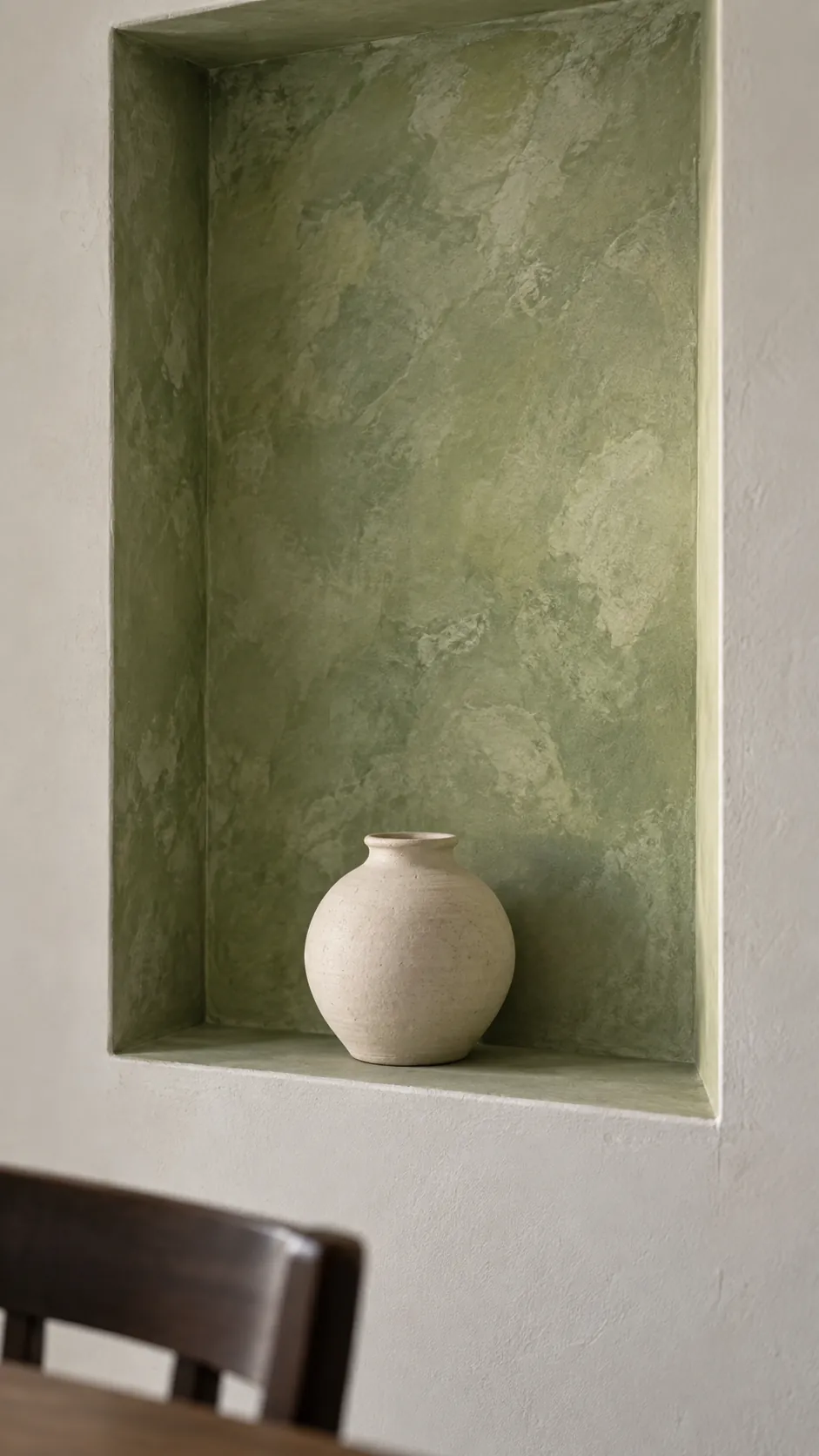
A Limewash Green Alcove
A mineral wash can give an alcove gentle tonal variation without adding another object. The substrate and product determine whether a specialist primer is needed, so check compatibility before starting. Try the application on a sample board rather than learning across the finished wall.
Allow the subtle marks to remain irregular instead of drawing obvious repeated strokes. Place a simple ceramic vessel in the alcove to make the surface easier to appreciate. Choose a different finish if the spot needs frequent scrubbing that the product cannot tolerate.
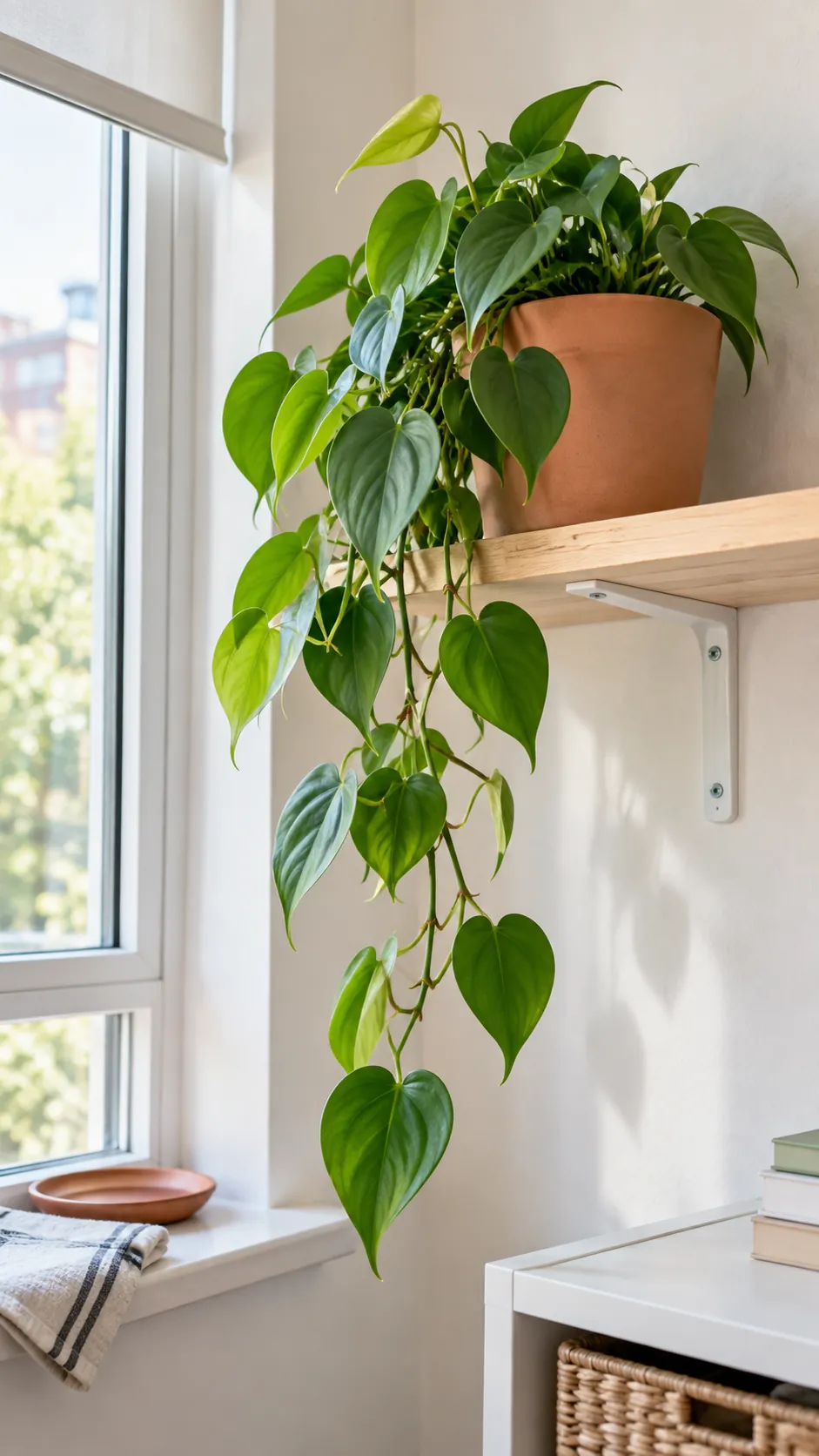
A Single Trailing Plant on a Wall Shelf
One trailing plant can give a small room the feeling of a plant wall with far less upkeep. Position the shelf where the chosen species receives suitable light, not simply where an empty wall needs decoration. Keep the plant in a removable nursery pot inside a watertight outer container. Take it down to water and let it drain before returning it. Confirm the plant is appropriate for your household if pets or children can reach the leaves.
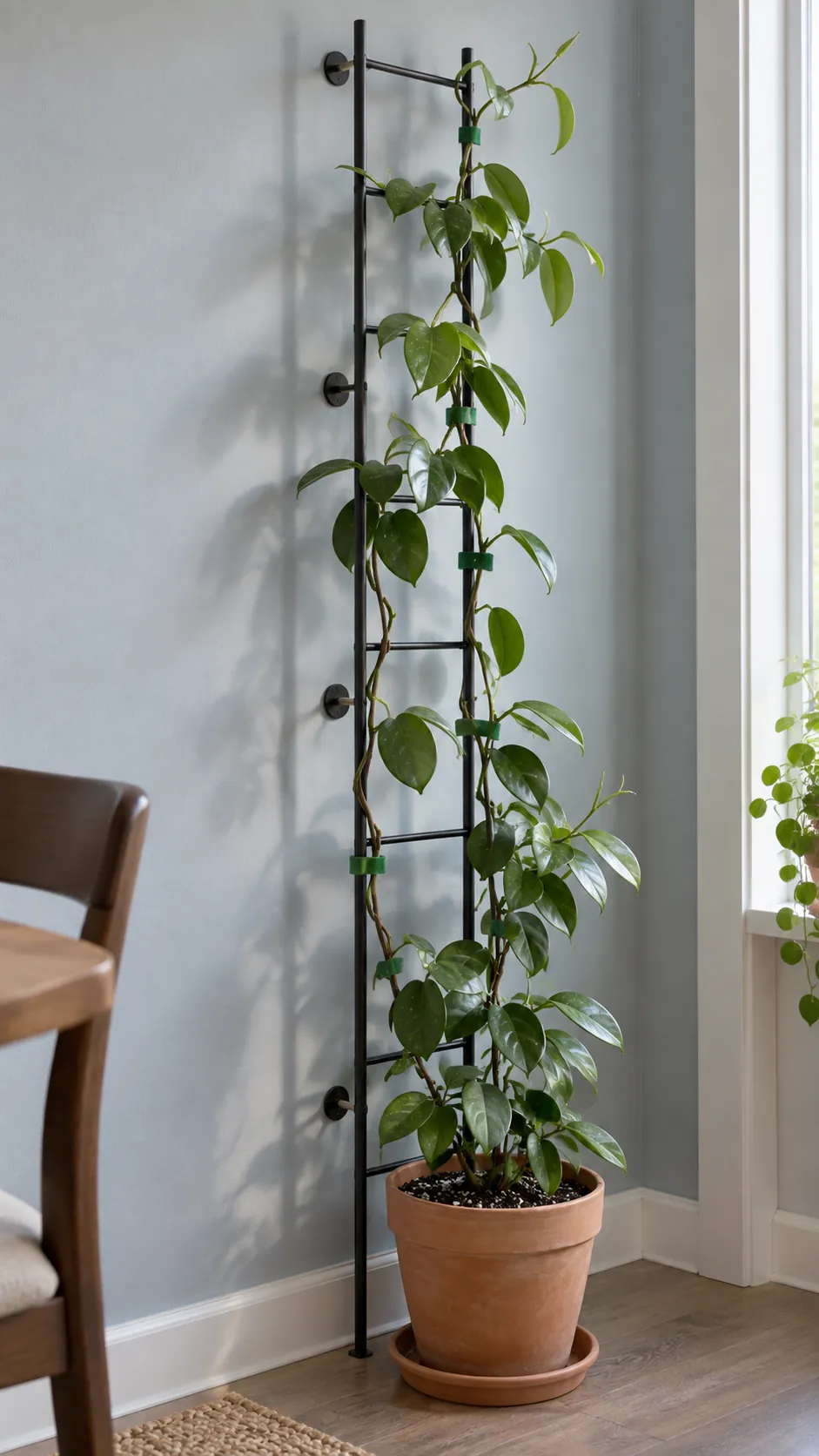
A Detachable Trellis for Climbing Foliage
A separate trellis keeps climbing growth organized and makes the wall behind it easier to inspect. Leave a gap between the support and the paint so foliage is not pressed against a damp surface. Train stems gently with plant ties, allowing room for growth.
Mount the support in a way that can be released for repainting or cleaning. Avoid letting adhesive roots attach directly to a finish you want to preserve. A single suitable climbing plant is easier to monitor than several species competing on the same support.
Removable Pots on a Kitchen Herb Rail
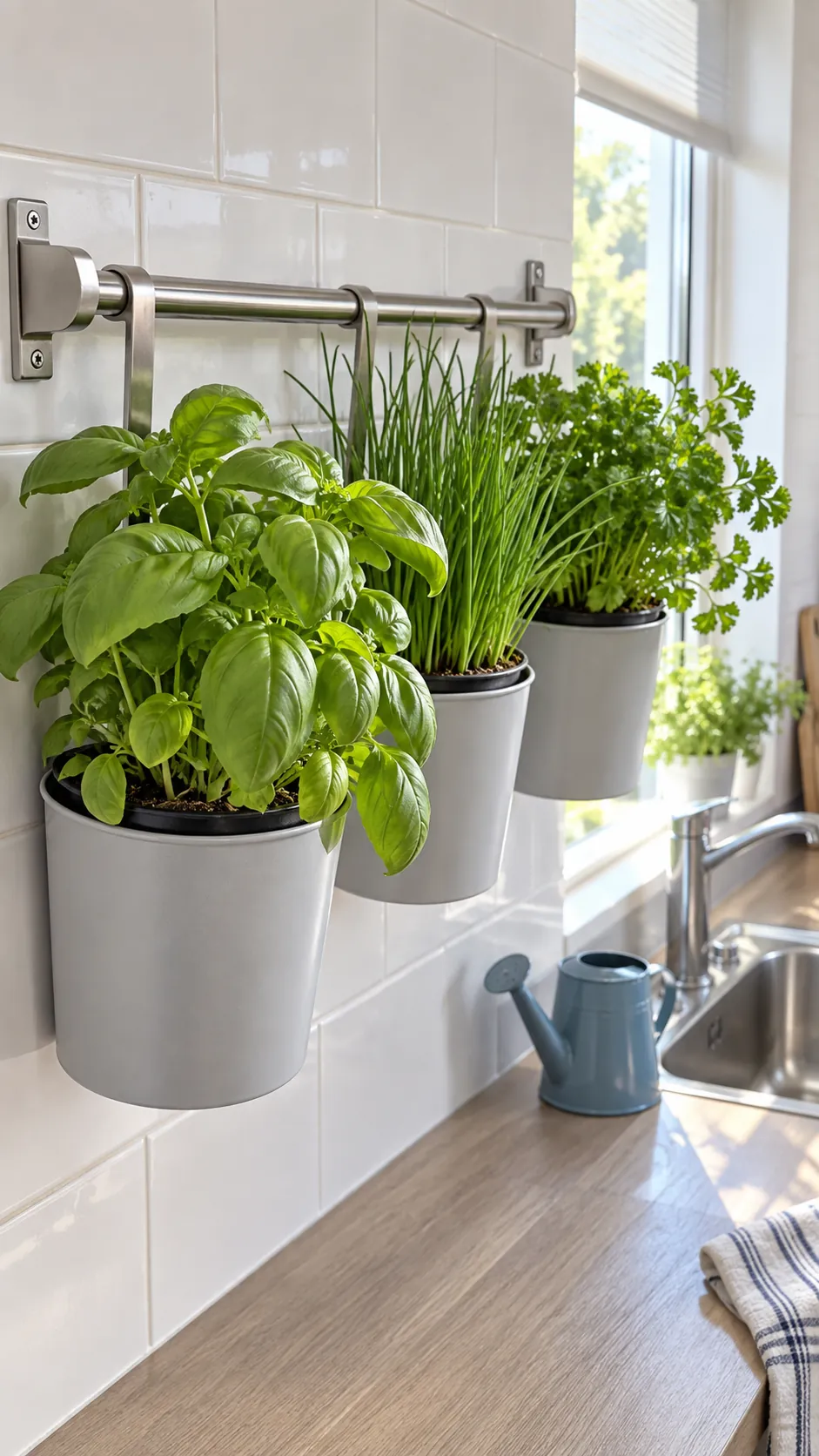
A rail of individual herb pots makes harvesting and sink watering easier than a sealed wall planter. Put it near genuinely bright light or provide an appropriate grow light; a decorative corner may not supply enough. Choose herbs with compatible conditions if they share one container. Separate pots give you more control when their watering needs differ. Keep the display away from cooking heat and mount it for the combined weight of wet soil and containers.
A Freestanding Ladder of Greenery
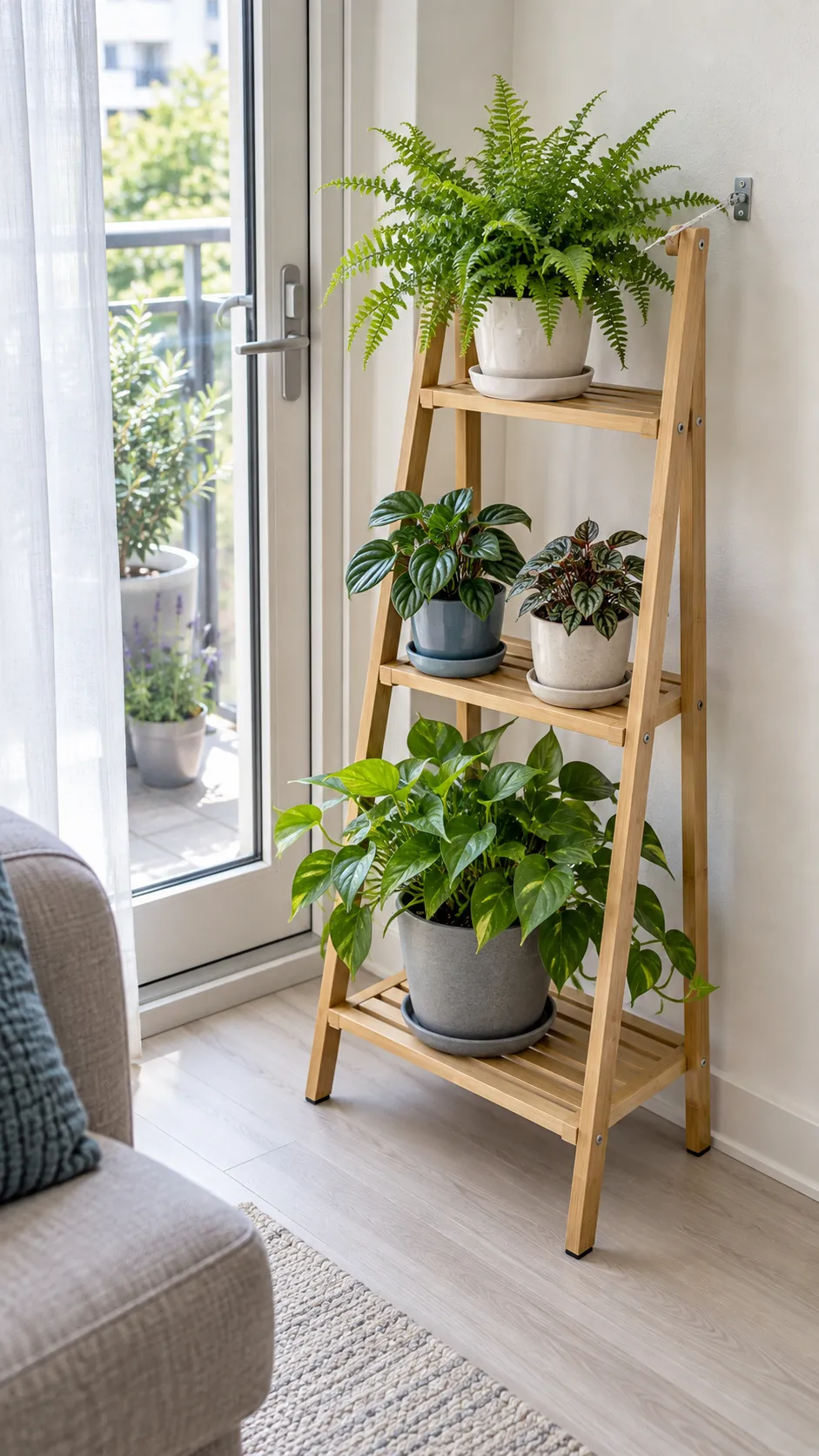
A freestanding plant stand offers a vertical display when permanent wall changes are restricted. Check your tenancy rules and use any manufacturer required restraint rather than assuming that freestanding means impossible to tip. Place the heaviest pots low and keep the feet level. Waterproof trays protect the shelves, but standing water should still be emptied. Leave enough space to remove each pot without dragging leaves through the shelf above.
A Small Modular Living Wall
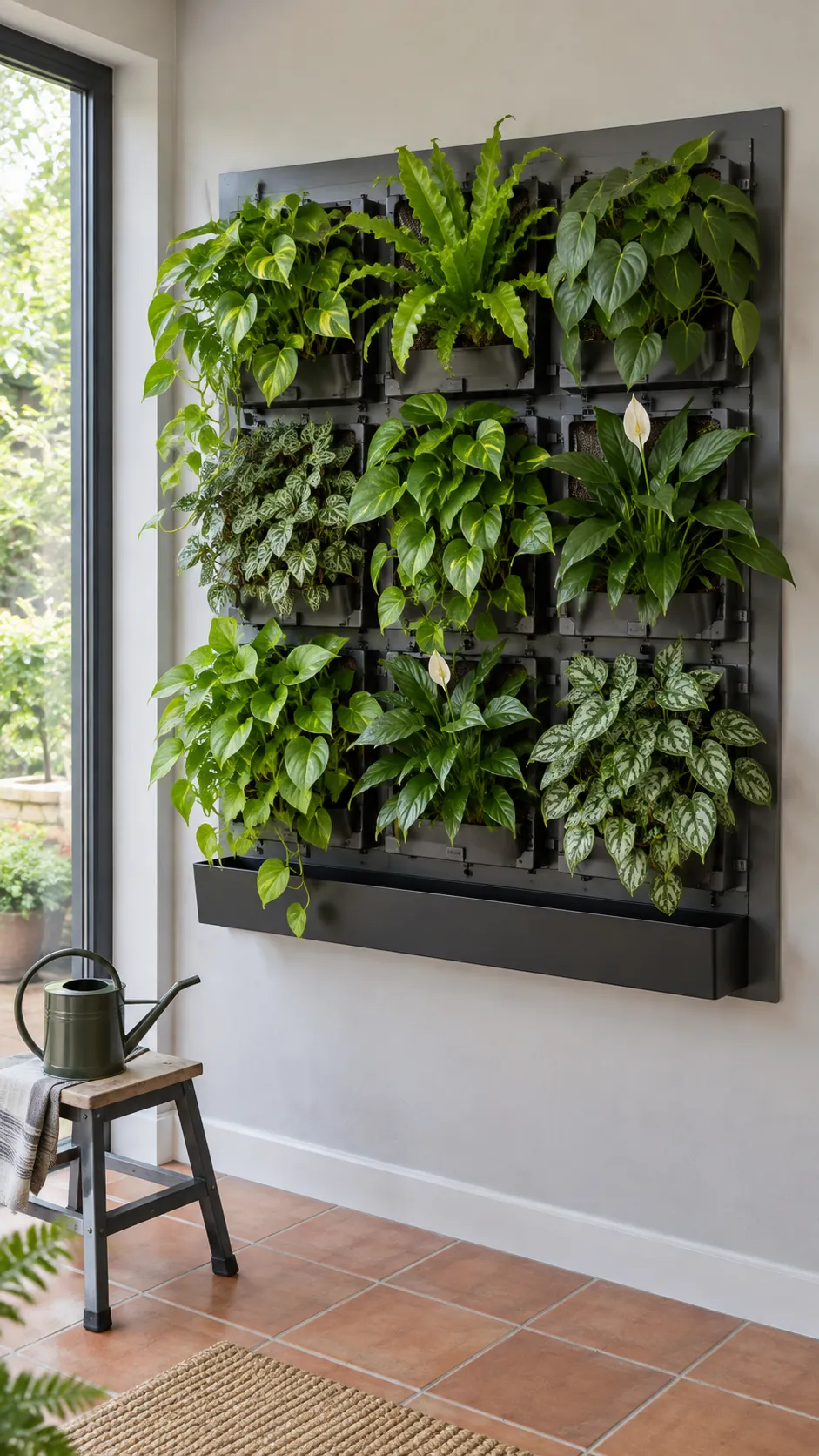
Start a modular living wall at a size you can reach and maintain comfortably. Plan its waterproof backing, drainage collection and mounting load before buying the plants. A wall of wet growing medium is substantially more demanding than hanging a picture.
Group plants by similar light and watering requirements rather than mixing ferns and succulents for appearance alone. Keep individual modules removable so a struggling plant can be replaced. Treat the installation as decoration with ongoing care needs, not as a substitute for ventilation or air filtration.
A Plant Display With Dedicated Grow Lighting
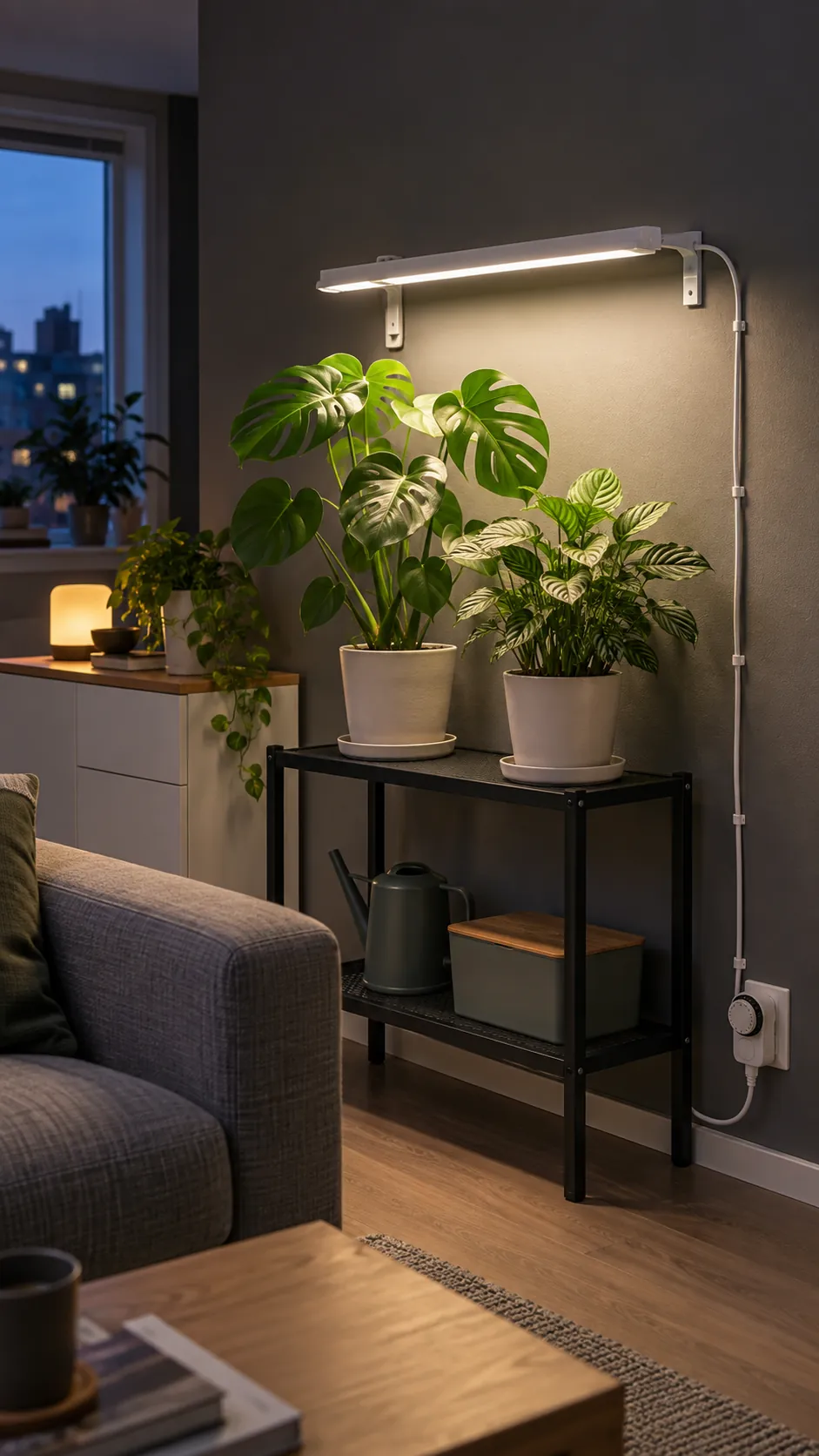
A grow light makes a plant display possible in places where window light falls short. Choose a fixture suited to the plants and follow its recommended working distance, then watch for stress and adjust as needed. A timer helps keep the schedule consistent. Plan cables, sockets and watering access together so water cannot drip onto electrical equipment. Shield the light from normal seated eye level when the display shares a living room.
A Preserved Moss Accent Panel
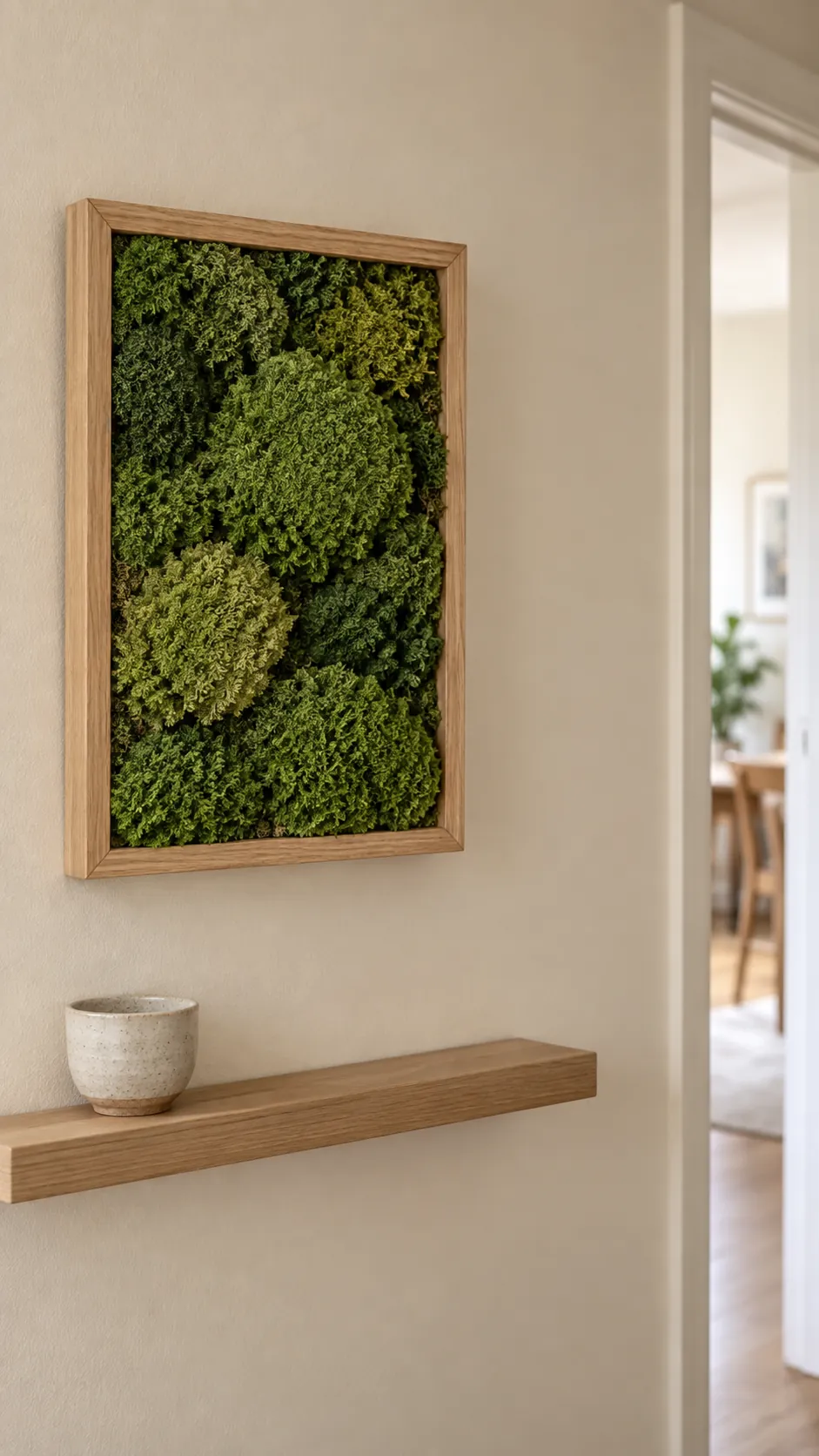
Preserved moss provides a green surface without the watering routine of a living wall. It is not a growing plant, and care instructions commonly call for keeping it dry and away from harsh sun. Check the specific maker’s humidity guidance before using it in a bathroom. A small framed panel can be easier to dust around and replace than a whole covered wall. Do not count on it to clean the room’s air.
A Faux Foliage Panel for a Dim Corner
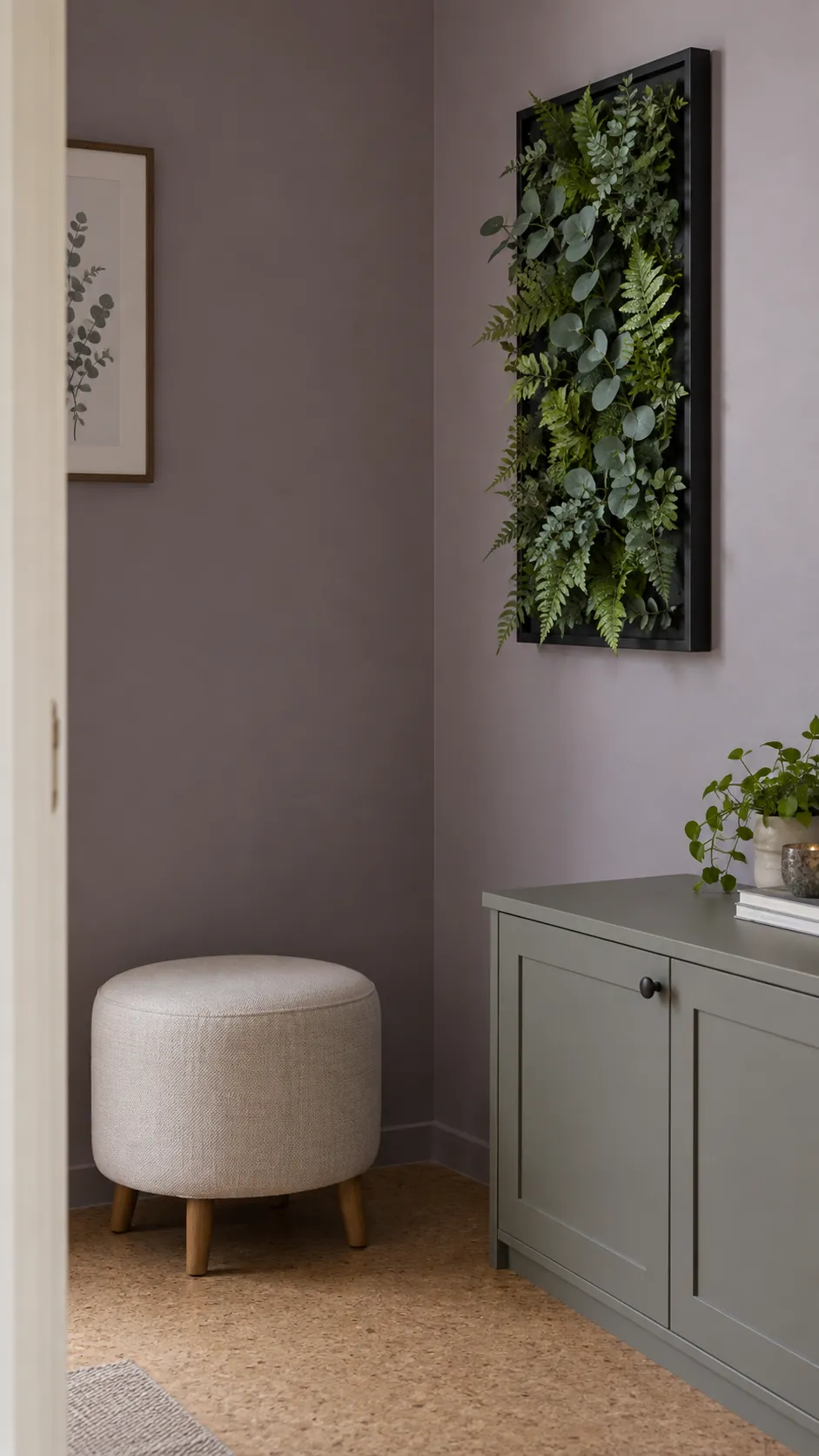
Artificial foliage is an option when a wall has neither suitable daylight nor space for a grow light. Choose a restrained mix of leaf shapes and check that the backing will be hidden from ordinary viewing angles. Leave the panel accessible for regular dusting.
Keep it away from heat sources and follow any material fire safety guidance. If the corner is narrow, a slim framed section will intrude less than deep plastic branches. Good green wall living room decor should fit your care routine as well as your photograph.
A Small Seasonal Plant Ledge
A modest plant ledge lets you change the mood without rebuilding the wall. Keep a few dependable plants in removable pots and vary one small decorative object with the season. Check that any added plant has compatible conditions and is safe for the household. Avoid covering leaves or blocking light with decorations. Start with a display you can water, clean and inspect easily; expand only after that routine feels comfortable.