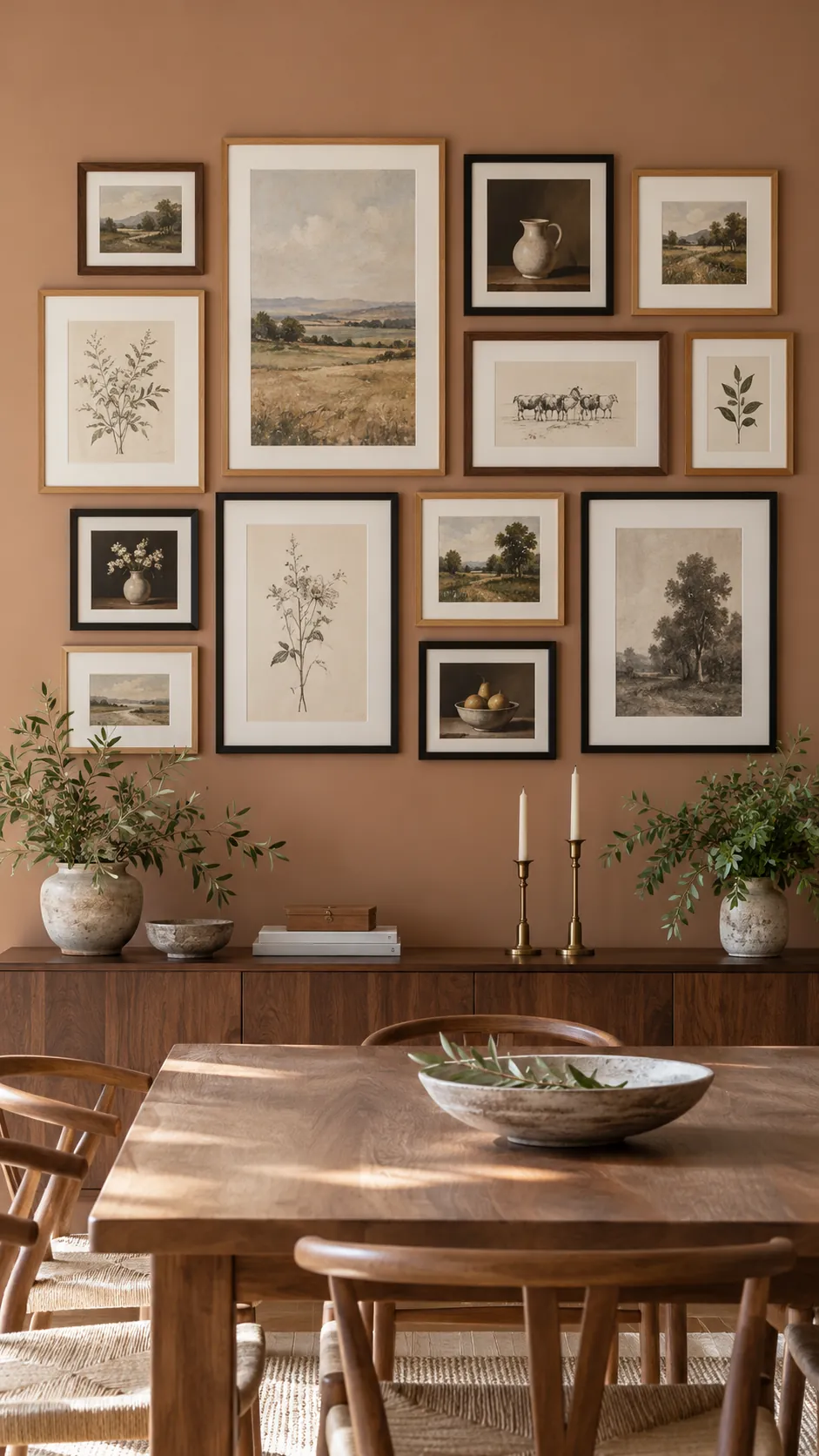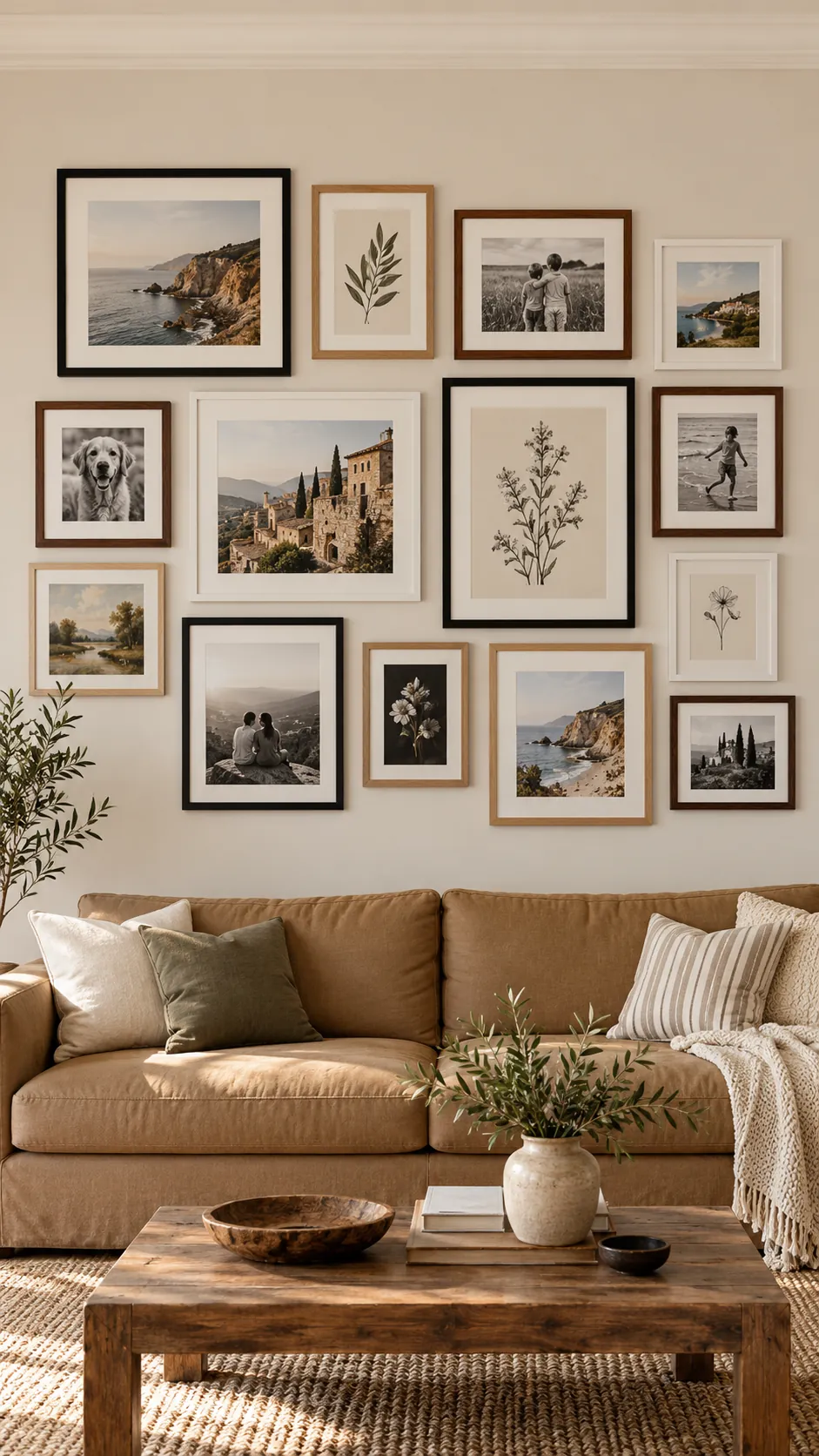
Mixed finishes look intentional when the wall repeats a few clear relationships. Start with the art and photographs you want to keep, then use frame color to distribute visual weight rather than trying to make every piece match. Paper templates on the wall make the balance easier to judge before hanging.
Use Black as the Visual Anchor
Put the largest or darkest image in a black frame near the center. Repeat black in two or three smaller frames so the anchor does not feel isolated. Let white and wood frames soften the outer edges of the group.
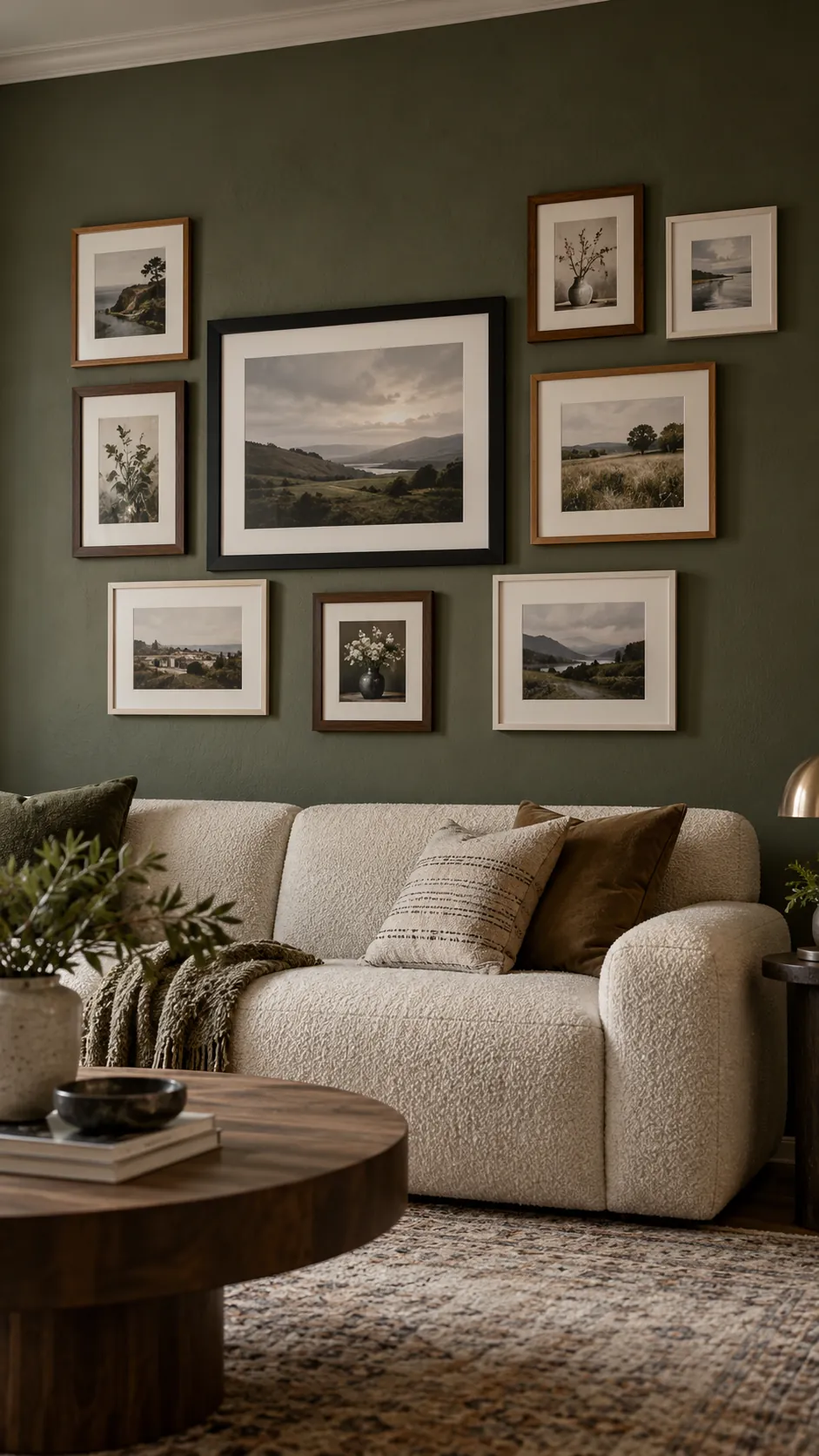
Build a Light Border With White Frames
Place several white frames near the top and sides to keep a dense arrangement from feeling heavy. White finishes blend gently with pale walls and give colorful art more breathing room. Include at least one white frame near the center to connect the border to the whole display.
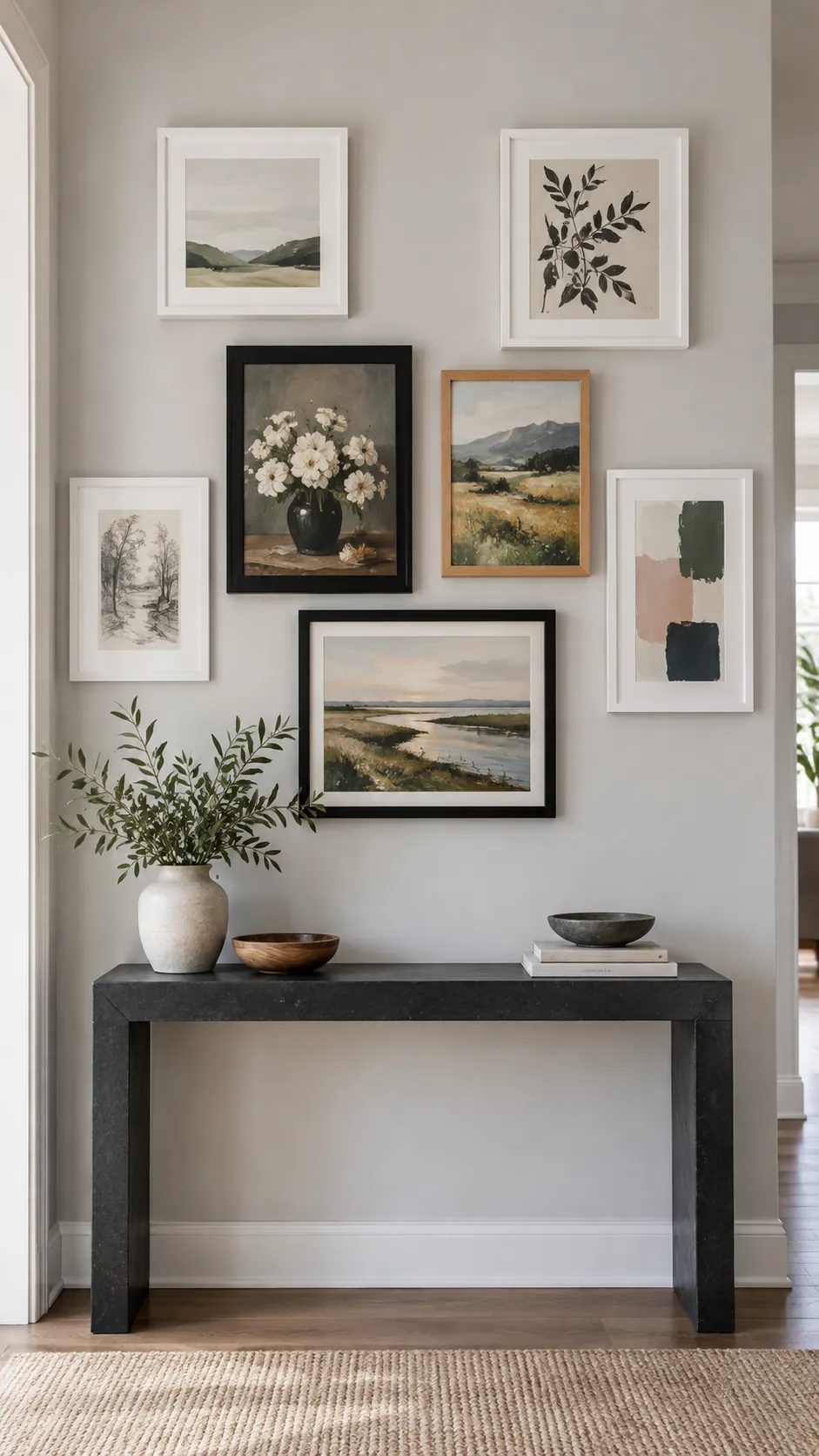
Repeat the Room Wood Tone
Choose wood frames that relate to one permanent element, such as the floor, console, or shelving. The grains do not need to match exactly, but a shared warm or cool undertone helps. Black and white frames create useful pauses between wood tones that are close but not identical.
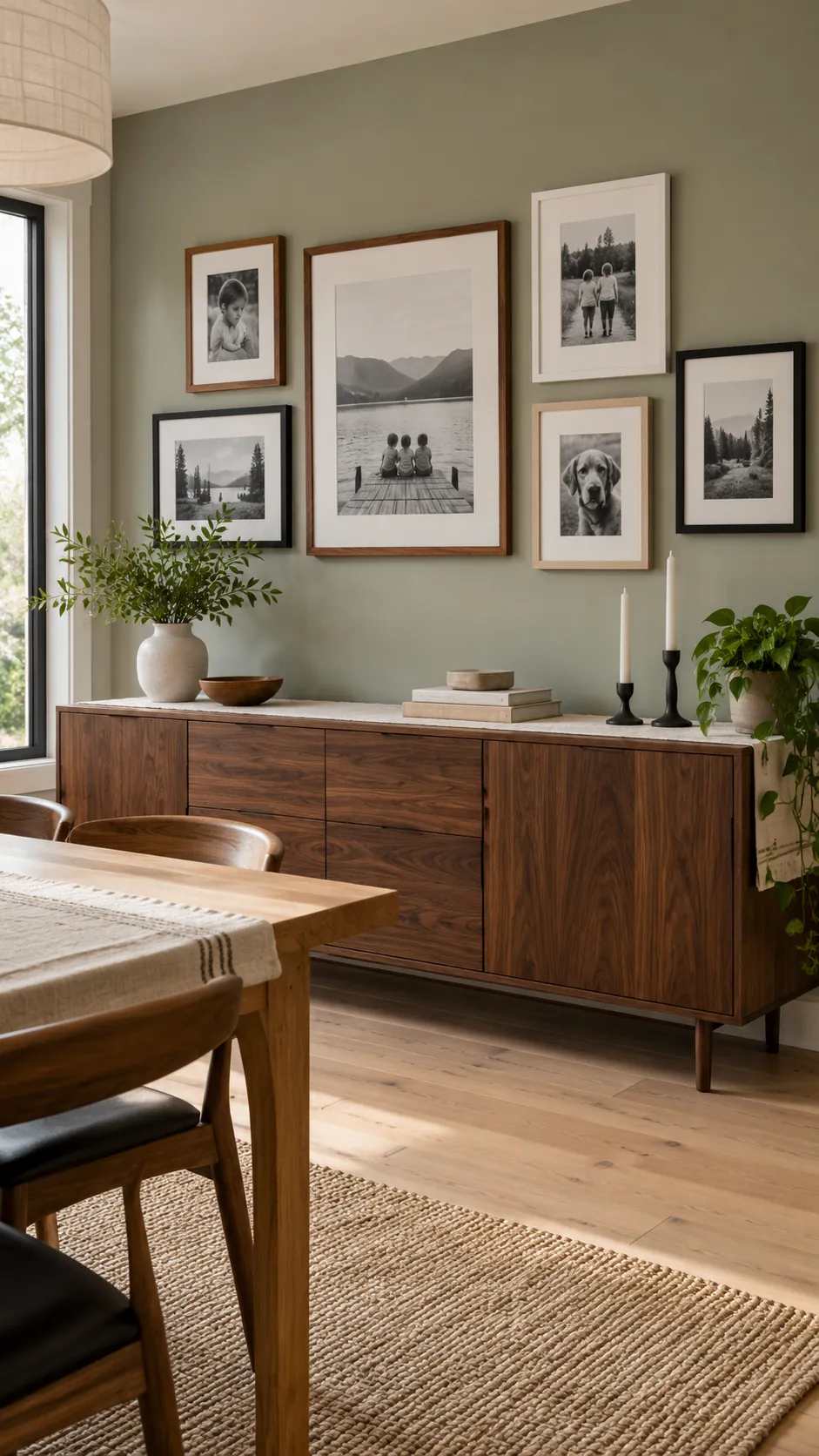
Use a Simple Three Finish Ratio
Give one finish about half the frames and divide the rest between the other two. This creates a dominant note without turning the wall into a matching set. Count visual area as well as frame quantity because one large black frame can outweigh several small white ones.
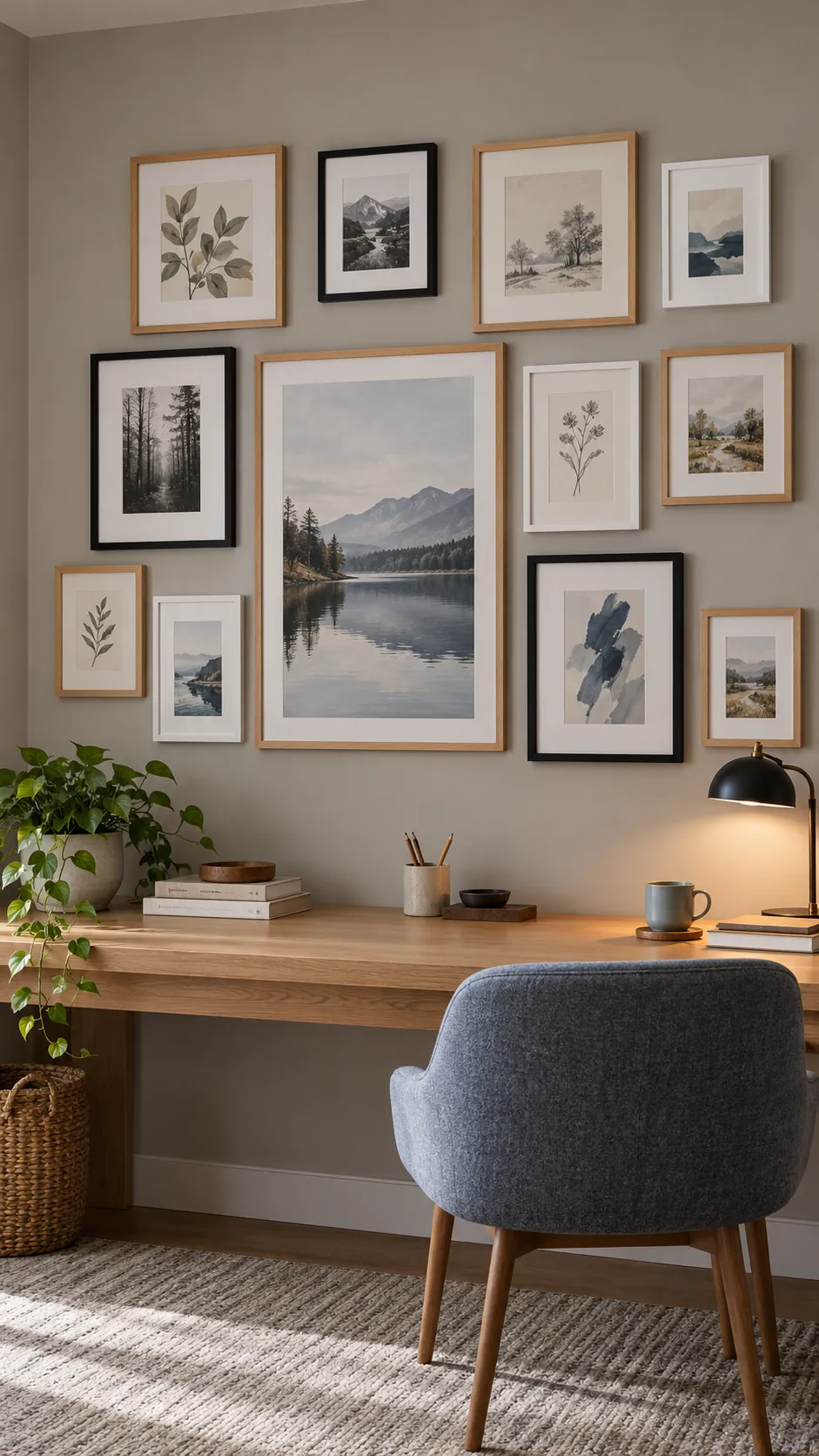
Alternate Finishes Along the Main Line
Identify the strongest horizontal or vertical path through the arrangement. Avoid placing every black frame together along that line. An alternating sequence of dark, light, and wood creates rhythm while allowing size and orientation to vary.
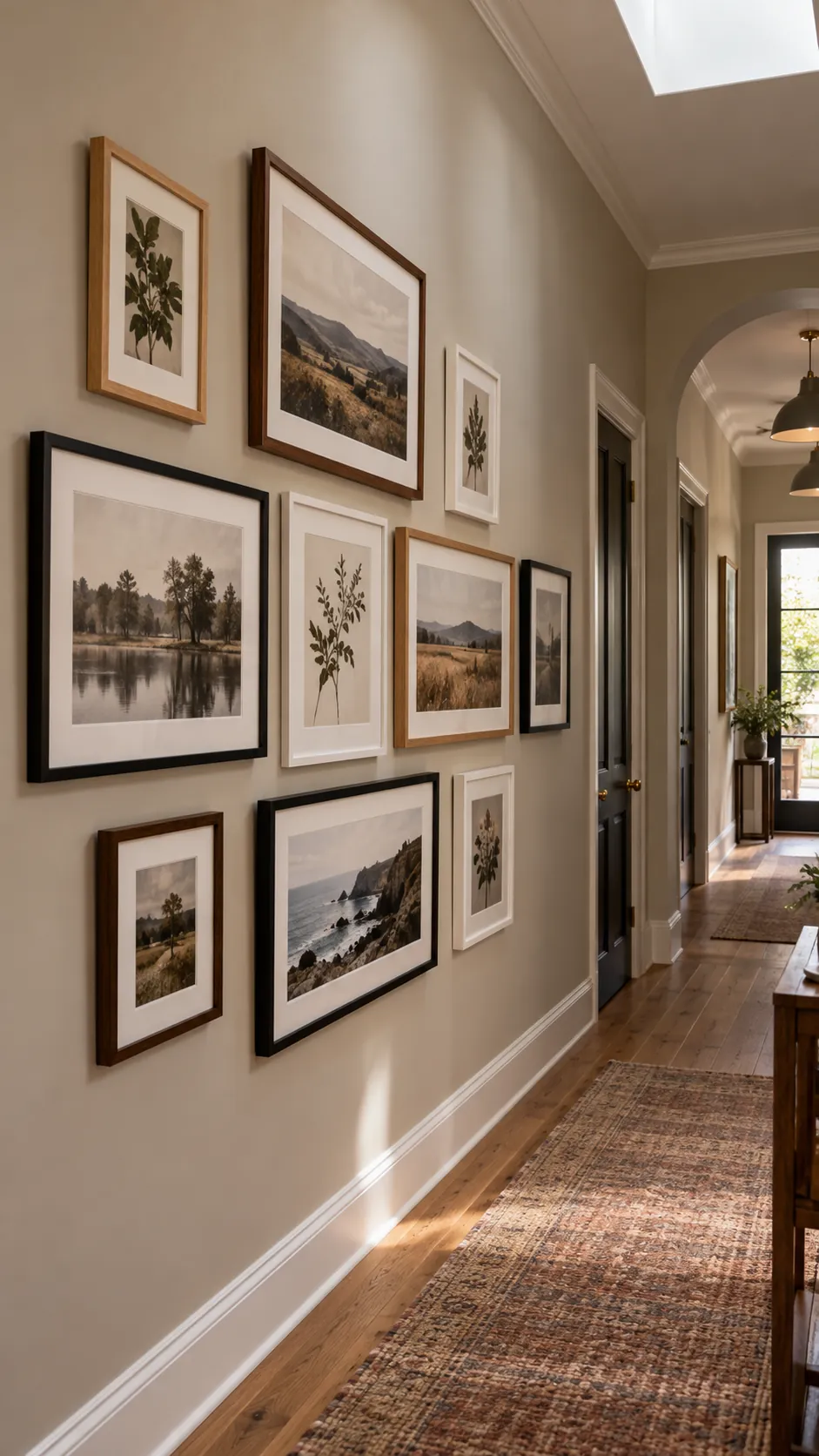
Pair Similar Art With Different Frames
Place two related photographs or prints in different frame finishes. Their shared subject connects the finishes and makes the variation feel deliberate. Keep mat color or mat width consistent so the pair still reads together.
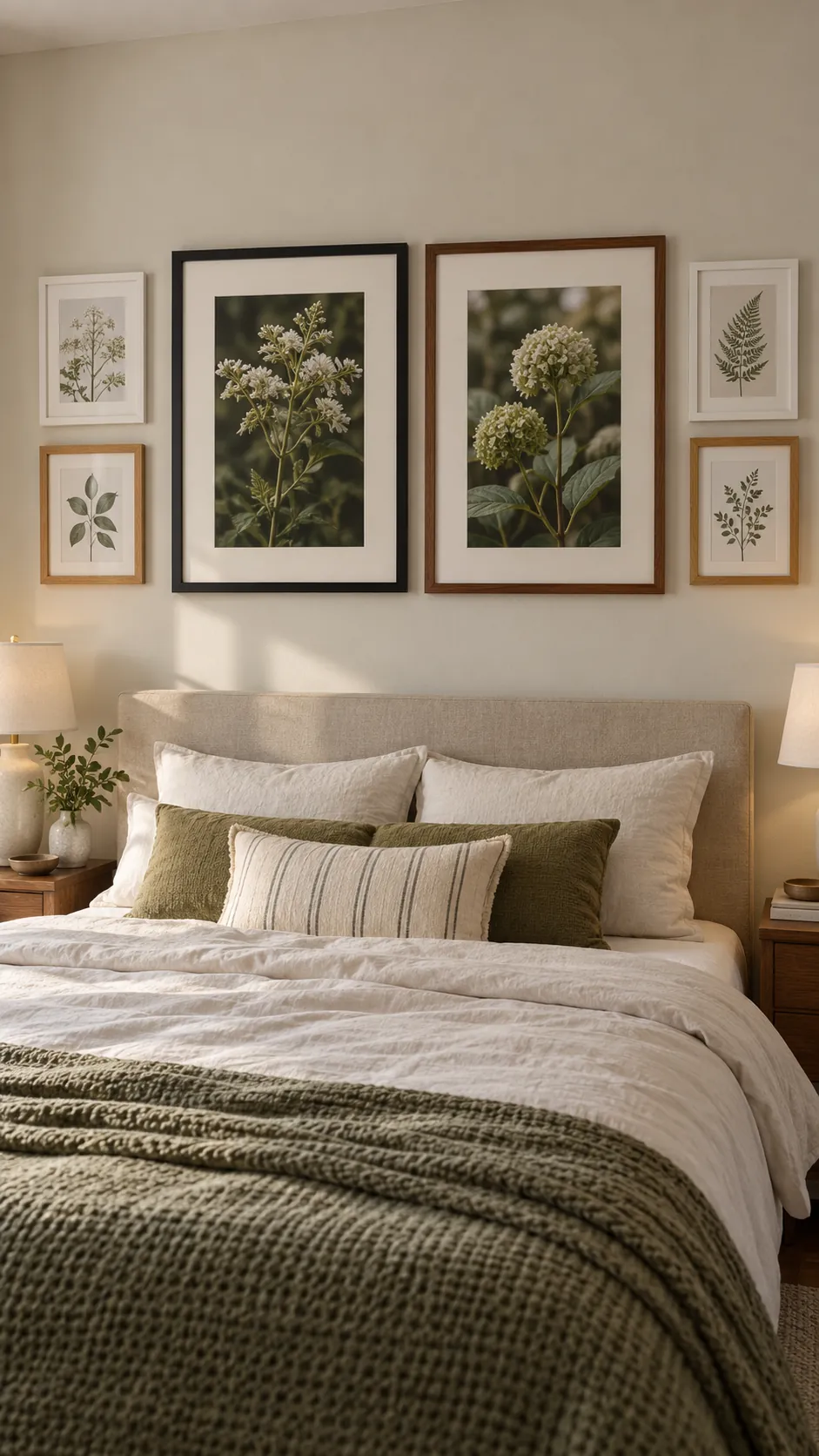
Let Mats Carry the Cohesion
Use one warm white mat family across black, white, and wood frames. The repeated paper color creates a quiet inner border around every image. Vary mat width only when a small print needs more breathing room.
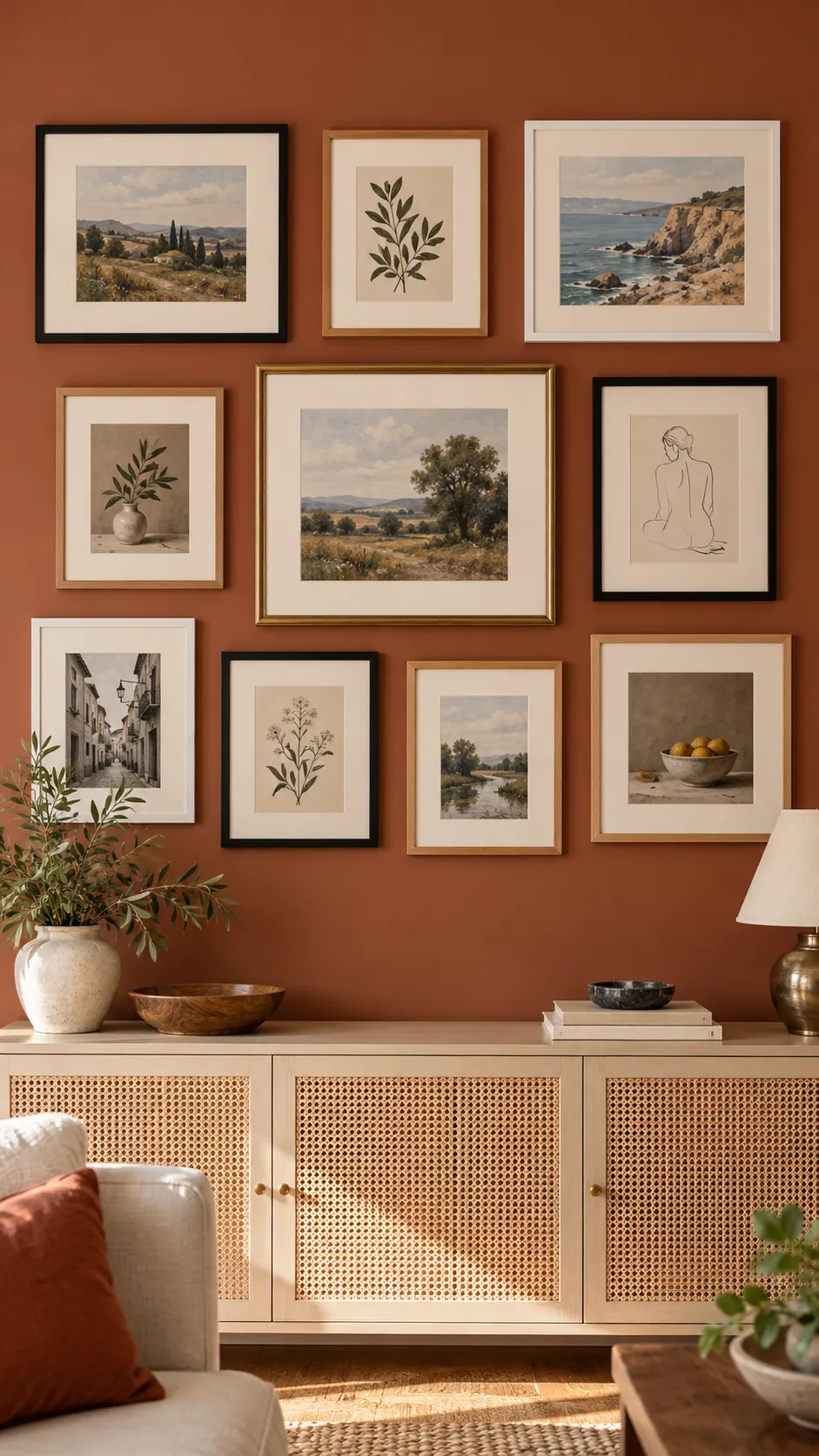
Balance Each Side by Weight
A large black frame can balance two medium wood frames or several slim white frames. Step back and compare the dark area on each side instead of counting pieces. Move the heaviest finish closer to the center if one edge feels as though it is pulling away.
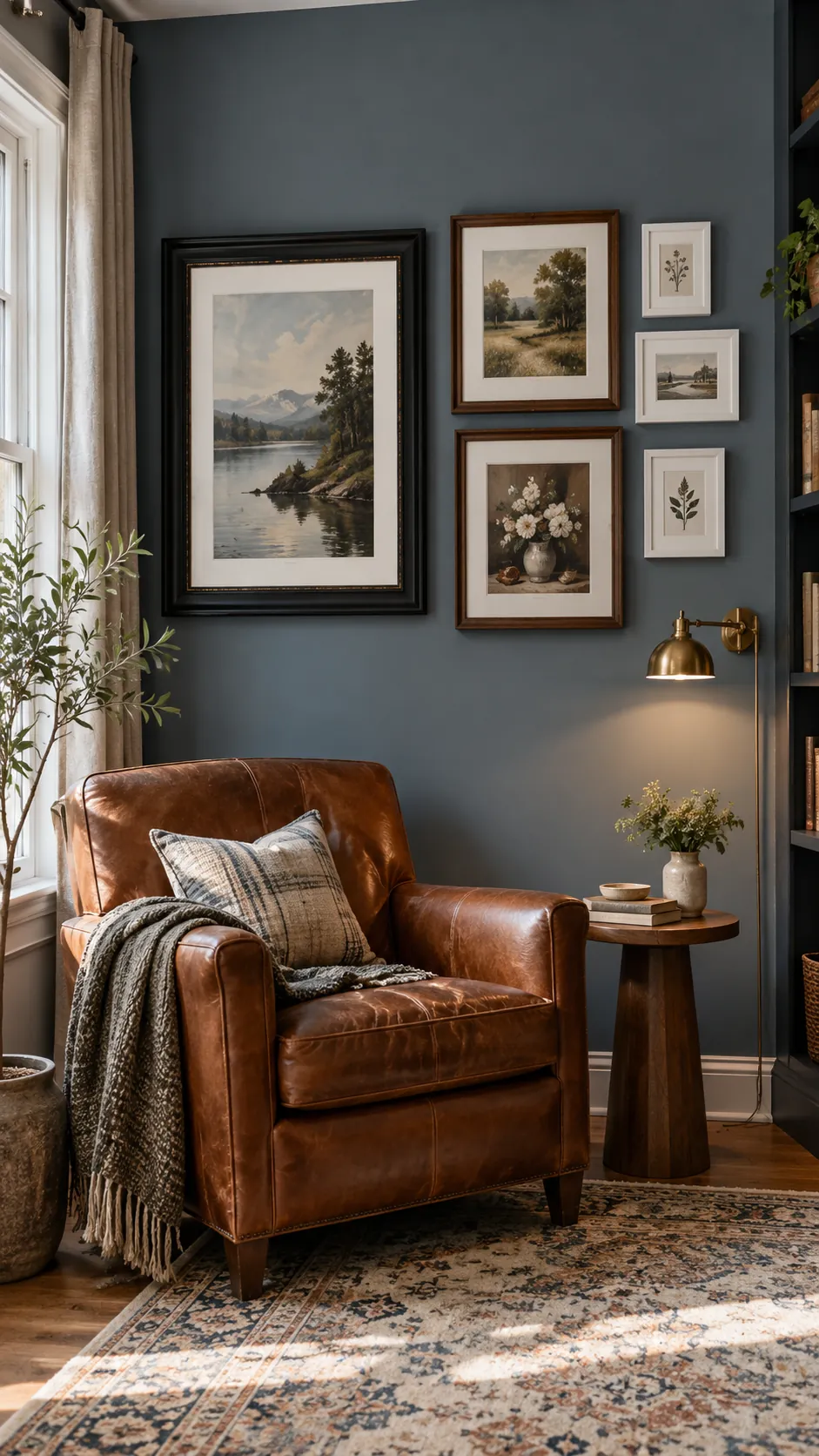
Mix Wood Species Through Undertone
Group honey oak with other warm woods and use black frames between very different grains. For cooler ash or washed oak, white frames provide an easier transition. Repeating each wood tone at least twice prevents a single frame from looking accidental.
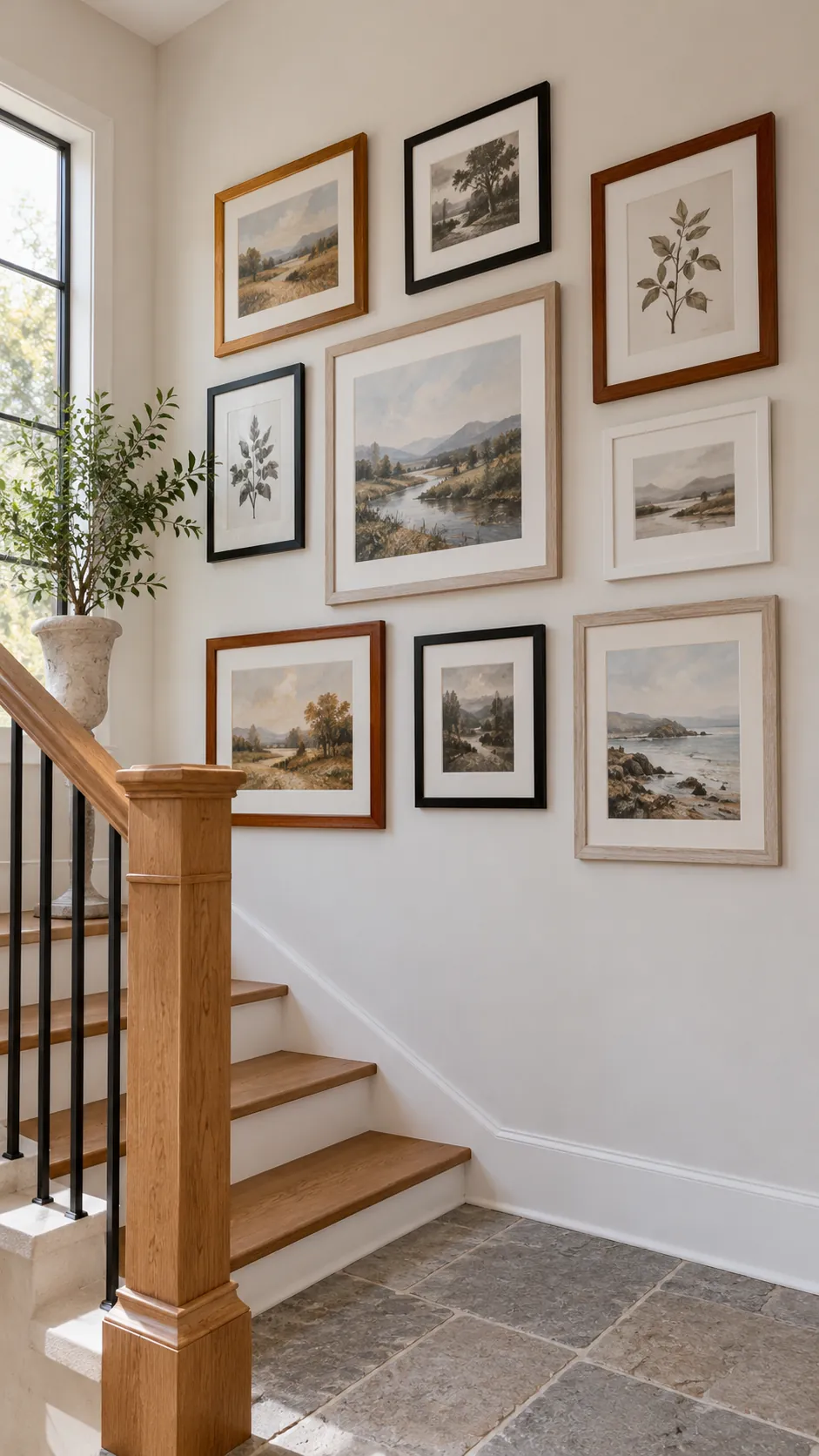
Keep Profile Depth in One Family
Color variation is easier to read when most frame profiles have similar depth and visual thickness. Combine slim black, slim white, and slim wood frames for a clean wall. If you include one ornate or deep profile, repeat its visual weight elsewhere with size or color.
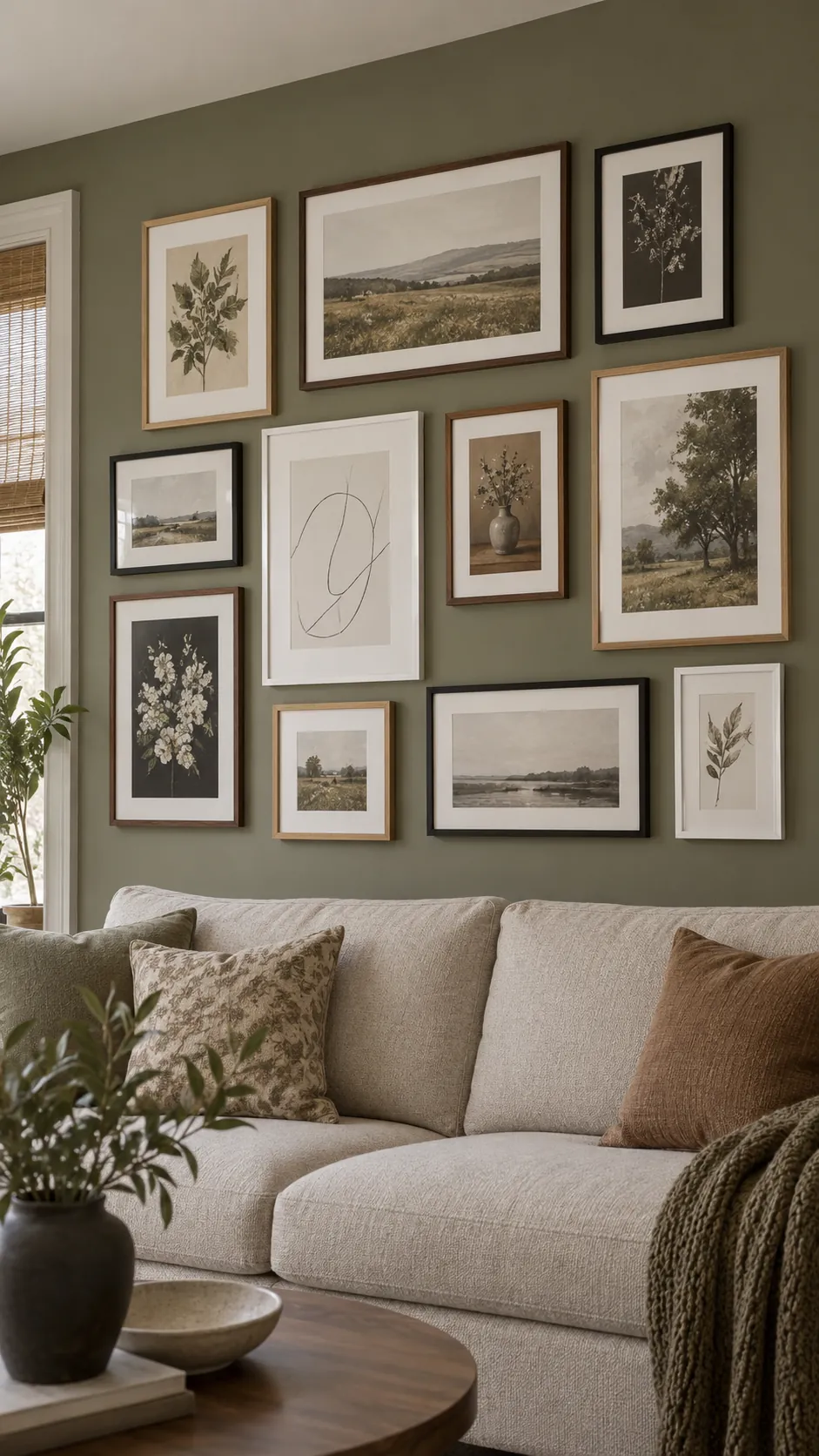
Use Spacing as the Final Unifier
Keep the gaps between neighboring frames consistent even when colors and sizes change. Trace every frame on paper, tape the templates to the wall, and measure the narrowest routes through the group. When the spacing forms a steady rhythm, black, white, and wood read as one coordinated collection rather than separate sets.