
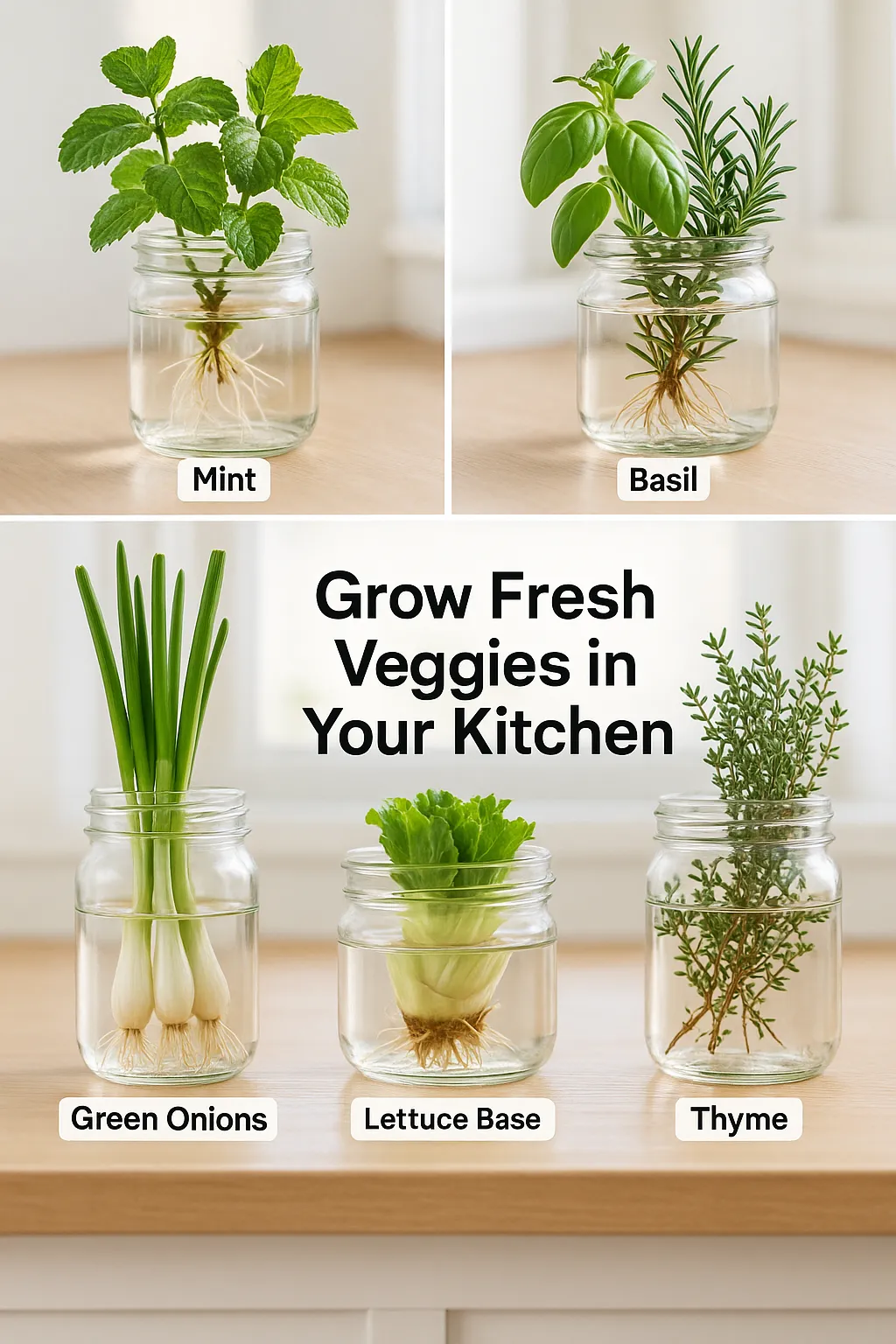
Imagine snipping fresh basil for your pasta or grabbing crisp green onions for a garnish, all grown effortlessly in water right on your kitchen windowsill. Sound too good to be true? It’s not! Growing certain edible plants in water is surprisingly simple, incredibly convenient, and a fantastic way to reduce kitchen waste and enjoy fresh flavors year-round.
Forget bulky pots and messy soil – all you need are some jars, water, and the right plant cuttings or scraps. This method is perfect for small spaces, beginner gardeners, or anyone wanting a touch of living green decor that also happens to be delicious.
While growing in plain water is mostly for rooting cuttings or getting short-term harvests from scraps (long-term growth requires nutrients!), it’s an incredibly rewarding and easy way to get started. Ready to turn your kitchen into a mini hydroponic haven? Let’s dive in!
Why Grow Edible Plants in Water?
- Super Simple: Minimal setup and maintenance required.
- Space Saving: Perfect for windowsills, small counters, or any sunny spot.
- Reduces Waste: Give new life to vegetable scraps you’d normally toss.
- Visually Appealing: Clear jars showcasing roots and greenery add life to your kitchen.
- Convenient Freshness: Harvest herbs and greens exactly when you need them.
- Budget-Friendly: Uses existing scraps or easily rooted cuttings.
Basic Supplies You’ll Need
Getting started is incredibly easy. You likely have most of these items already:
- Clean Jars or Glasses: Any clear container will do – mason jars, old jam jars, even drinking glasses. Ensure they are thoroughly cleaned.
- Fresh Water: Regular tap water is usually fine. Letting it sit out overnight can allow chlorine to dissipate, which some plants prefer. Filtered water works great too.
- Plant Cuttings or Vegetable Scraps: See the list below for what works best!
- A Bright Spot: Most of these plants need several hours of sunlight per day. A south-facing windowsill is often ideal, but any bright spot will work.
Edible Plants You Can Grow in Water
Here’s a list of fantastic edible plants that readily root or regrow in water:
Herbs from Cuttings
These herbs root easily from stem cuttings. Snip a healthy stem, remove the lower leaves, and place the stem in water.
Mint (Peppermint, Spearmint, etc.)
- How to Start: Snip a 4-6 inch stem just below a leaf node (where leaves emerge). Remove the lowest leaves so none are submerged.
- Kitchen Use: Fantastic for teas, cocktails (mojitos!), desserts, sauces, and garnishes. Roots very quickly.
Basil
- How to Start: Similar to mint, take a 4-inch cutting below a node, remove lower leaves. Change water frequently as basil can be sensitive.
- Kitchen Use: Essential for pesto, Caprese salads, pasta sauces, Thai dishes, and garnishes.
Oregano
- How to Start: Take a healthy cutting, remove lower leaves. Roots may take a bit longer than mint or basil.
- Kitchen Use: A staple in Italian, Greek, and Mexican cooking – great for pizzas, sauces, meats, and veggies.
Thyme
- How to Start: Take cuttings from newer, greener stems (woody stems root less readily). Remove lower leaves.
- Kitchen Use: Wonderful with roasted meats (chicken, lamb), vegetables, soups, and stews.
Rosemary
- How to Start: Use semi-hardwood cuttings (not brand new green, not old tough wood). Strip lower leaves. Can take several weeks to root.
- Kitchen Use: Pairs beautifully with roasted potatoes, lamb, chicken, focaccia bread, and infused oils.
Sage
- How to Start: Similar to rosemary, take cuttings from semi-hardwood stems. Remove lower leaves. Patience is key.
- Kitchen Use: Famous for flavoring Thanksgiving stuffing, sausages, pork dishes, and browned butter sauces.
Lemon Balm
- How to Start: Easy to root like its relative, mint. Take a stem cutting below a node, remove lower leaves.
- Kitchen Use: Adds a lovely, gentle lemon flavor to teas, fruit salads, fish dishes, and as a garnish.
Stevia
- How to Start: Take cuttings from non-flowering stems. Remove lower leaves.
- Kitchen Use: Use the leaves as a natural, zero-calorie sweetener for drinks or desserts (it’s very potent!).
Tarragon
- How to Start: Take cuttings from fresh green stems. Remove lower leaves. Can sometimes be tricky but worth a try.
- Kitchen Use: A key flavor in French Béarnaise sauce, excellent with chicken, fish, and egg dishes.
Vegetables & Greens from Scraps
Don’t throw away those ends! Many vegetables will happily regrow edible parts in water.
Green Onions / Scallions
- How to Start: Cut off the green tops, leaving about 1-2 inches of the white base with roots attached. Stand them root-down in a shallow glass of water.
- Kitchen Use: Snip the regrown green tops for garnishes, salads, stir-fries, omelets – almost anything! They regrow multiple times.
Leeks
- How to Start: Works just like green onions – use the white base with roots attached.
- Kitchen Use: Regrown green tops have a mild oniony flavor, good for soups and stocks.
Garlic Greens (Scapes)
- How to Start: Place a whole garlic clove (or just the base) in a shallow dish with a little water covering the bottom. It will sprout green shoots.
- Kitchen Use: The sprouts (garlic greens or scapes) have a mild garlic flavor, perfect chopped as a garnish for salads, soups, or baked potatoes.
Lettuce (especially Romaine)
- How to Start: Cut off the leaves, leaving the base intact (about 1-2 inches). Place the base cut-side-up in a shallow dish of water.
- Kitchen Use: New leaves will sprout from the center. Harvest the small, tender leaves for salads and sandwiches.
Celery
- How to Start: Cut off the stalks, leaving the base (about 2 inches). Place the base cut-side-up in a shallow bowl of water.
- Kitchen Use: The inner stalks and leaves will regrow. Use the flavorful leaves in stocks, soups, or as a garnish. Small stalks can also be eaten.
Bok Choy / Pak Choi
- How to Start: Similar to lettuce and celery, use the base of the bunch. Place cut-side-up in shallow water.
- Kitchen Use: Regrown leaves are tender and great for stir-fries or soups.
Carrot Tops
- How to Start: Cut off the top inch or two of the carrot root (the part with the green stem remnants). Place cut-side-down in shallow water.
- Kitchen Use: The leafy green tops will regrow. They are edible but can be quite bitter. Best used sparingly in pesto, stocks, or as a feathery garnish if you enjoy the flavor.
Beet Greens
- How to Start: Similar to carrots, use the top part of the beet root where the leaves were attached. Place cut-side-down in shallow water.
- Kitchen Use: The leafy greens will regrow. These are delicious and nutritious when cooked like spinach or Swiss chard.
Sweet Potato Slips
- How to Start: Suspend a sweet potato (pointy side down) partially submerged in a jar of water, using toothpicks to hold it up. Roots will grow down, and leafy vines (“slips”) will grow up.
- Kitchen Use: The leaves of the sweet potato vine are edible and nutritious! Cook them like spinach in stir-fries or stews. The slips can also be planted to grow new sweet potatoes (in soil).
Ginger
- How to Start: Place a piece of fresh ginger rhizome (with visible ‘eyes’ or buds) in shallow water.
- Kitchen Use: It may sprout roots and green shoots. The shoots can be used for a milder ginger flavor.
Turmeric
- How to Start: Similar to ginger, use a piece of fresh turmeric rhizome with buds in shallow water.
- Kitchen Use: Shoots can provide a subtle turmeric flavor.
Essential Care Tips for Water Growing Success
Keep your water garden thriving with these simple tips:
- Change the Water Regularly: This is crucial! Replace the water every 2-4 days. This prevents bacterial growth, stops algae buildup, keeps the water oxygenated, and removes waste products.
- Use Good Water: While tap water often works, letting it sit overnight helps chlorine evaporate. Filtered or rainwater is great if you have it.
- Provide Enough Light: Most herbs and vegetables need at least 4-6 hours of bright light daily. A sunny windowsill is ideal. Rotate the jars occasionally so all sides get light.
- Understand Nutrient Needs: Remember, water provides hydration but few nutrients. Plants rooted or regrown in water will use stored energy. For long-term, productive growth, they eventually need to be transferred to soil or a hydroponic solution with added nutrients. Enjoy the initial rooting phase and short-term harvests!
- Harvest Wisely: For herbs and regrowing greens (like green onions), snip off only what you need, typically no more than one-third of the growth at a time, to allow the plant to continue growing.
Common Issues & Troubleshooting
- Cloudy or Smelly Water: Change the water more frequently (daily if needed). Ensure no leaves are decaying below the waterline.
- Rotting Stems/Bases: Make sure only the roots or the very base designed for regrowing are submerged. Too much stem underwater can lead to rot. Use fresh water. If rot starts, try trimming the affected part if possible, or start over with a fresh cutting/base.
- Slow or No Growth: Usually due to insufficient light. Try a brighter spot. It could also mean the cutting/scrap lacked enough stored energy, or for herbs, it might just need more time to root.
Start Your Kitchen Water Garden Today!
Growing edible plants in water is a fun, rewarding, and incredibly easy way to bring fresh flavors and greenery into your kitchen. Whether you’re rooting herb cuttings for future planting or getting bonus harvests from vegetable scraps, it’s a simple step towards a more sustainable and flavorful kitchen.
Pick one or two plants from the list above, grab a jar, add some water, and find a sunny spot. You’ll be amazed at how quickly life can spring from seemingly simple cuttings and scraps!
Which edible plant will you try growing in water first? Share your plans or successes!