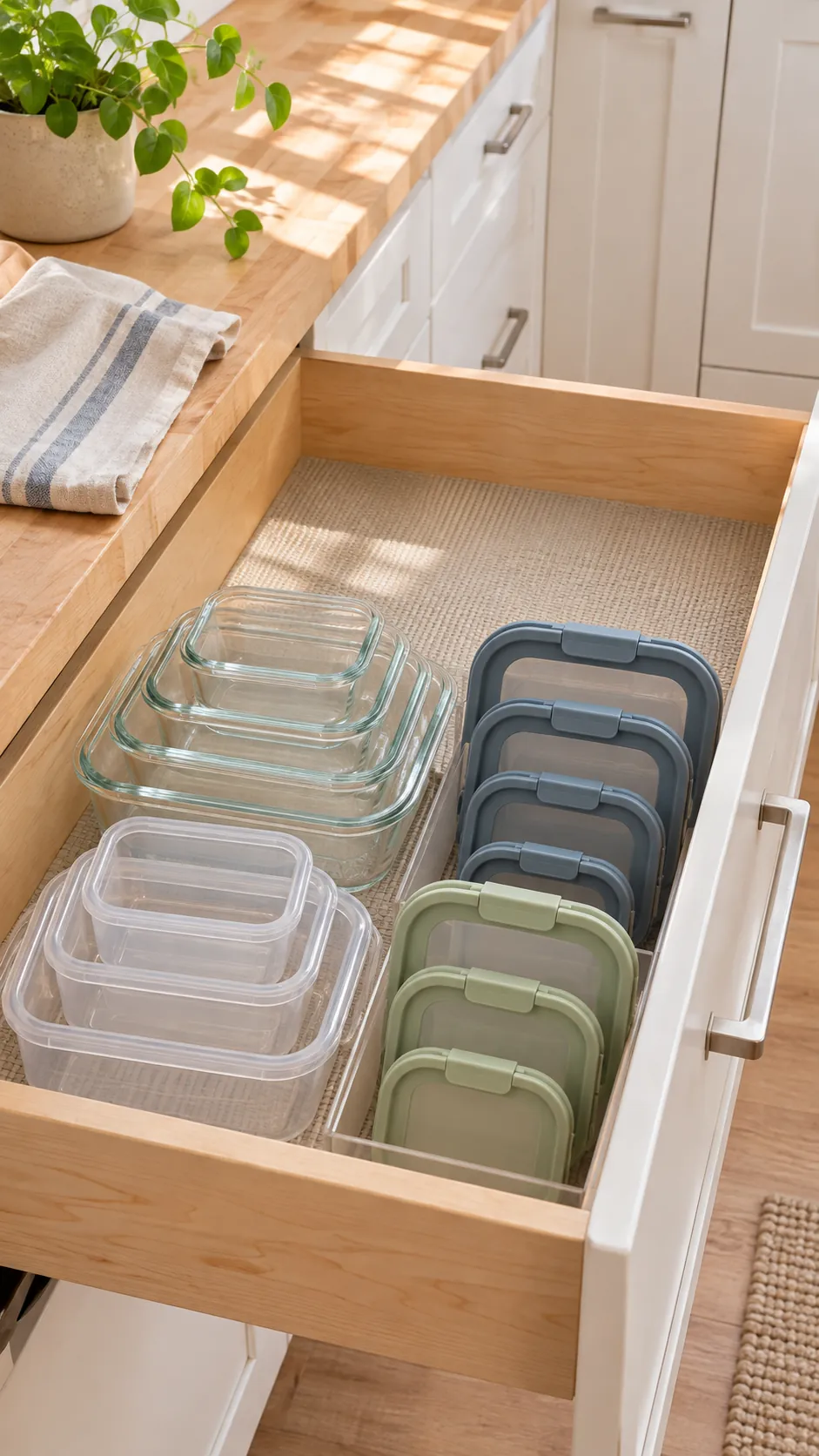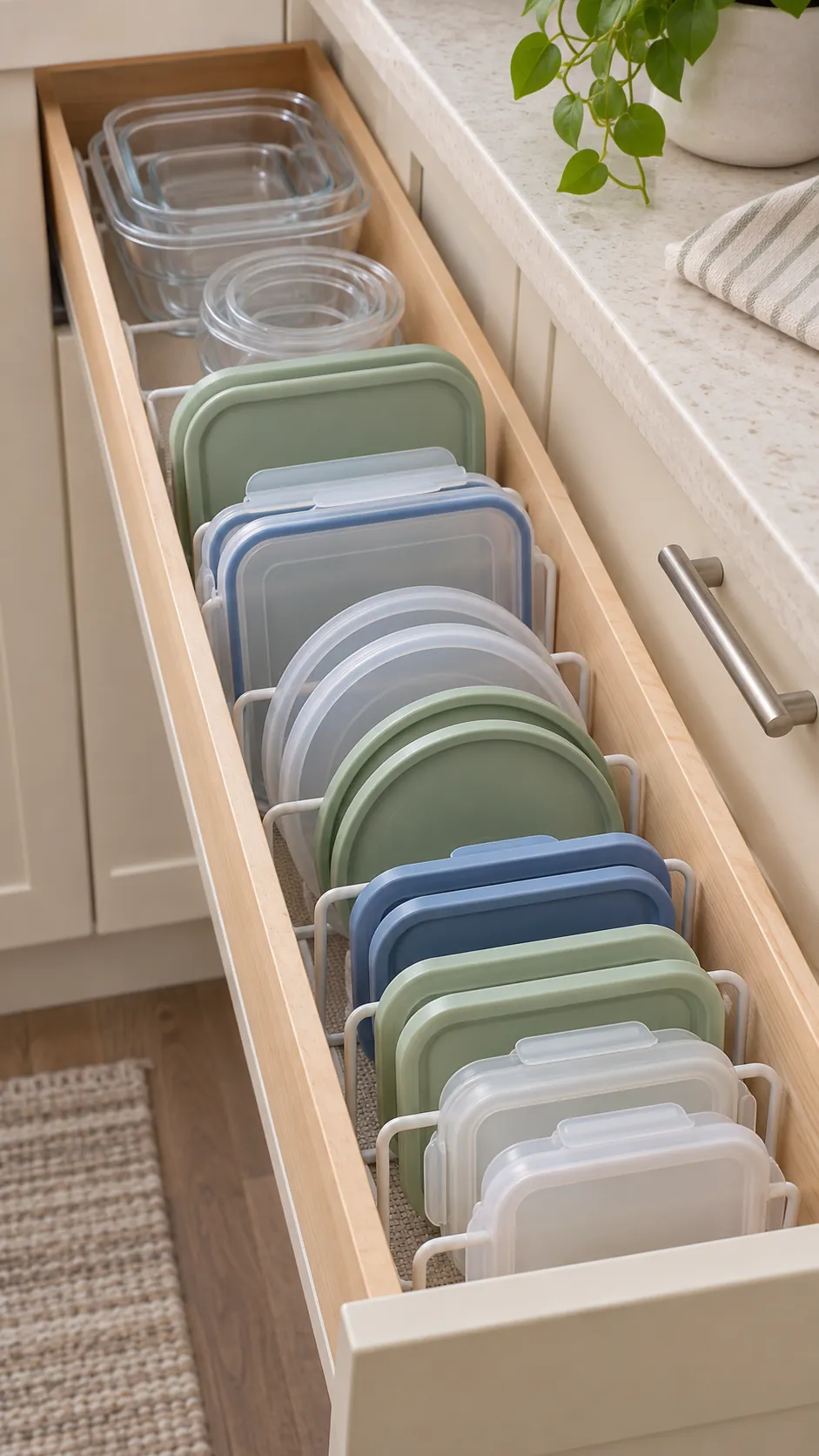
A narrow drawer can hold a useful container set, but loose lids turn every meal cleanup into a matching game. The most reliable fix is to give each lid a visible edge, a stable slot, and a nearby container family. Measure the drawer before buying anything, then keep only pieces that still seal well and have a clear partner.
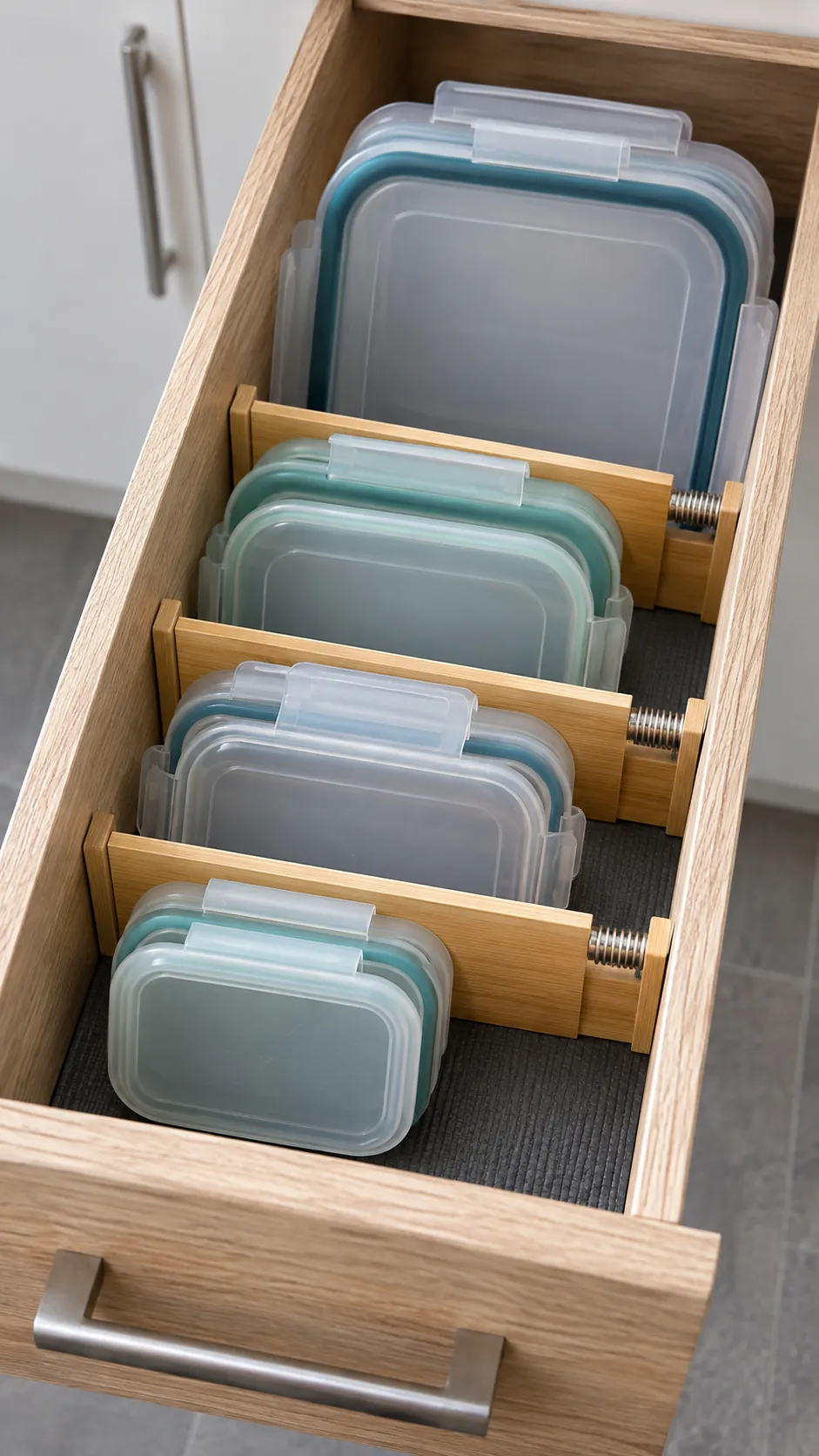
Use Short Adjustable Dividers
Short adjustable dividers create upright lanes without stealing the limited height above the lids. Set each lane slightly wider than its largest lid so pieces slide out without rubbing the drawer sides. Group lids by shape first, then adjust the dividers after a week of normal use. This flexible layout works well when your collection changes over time.
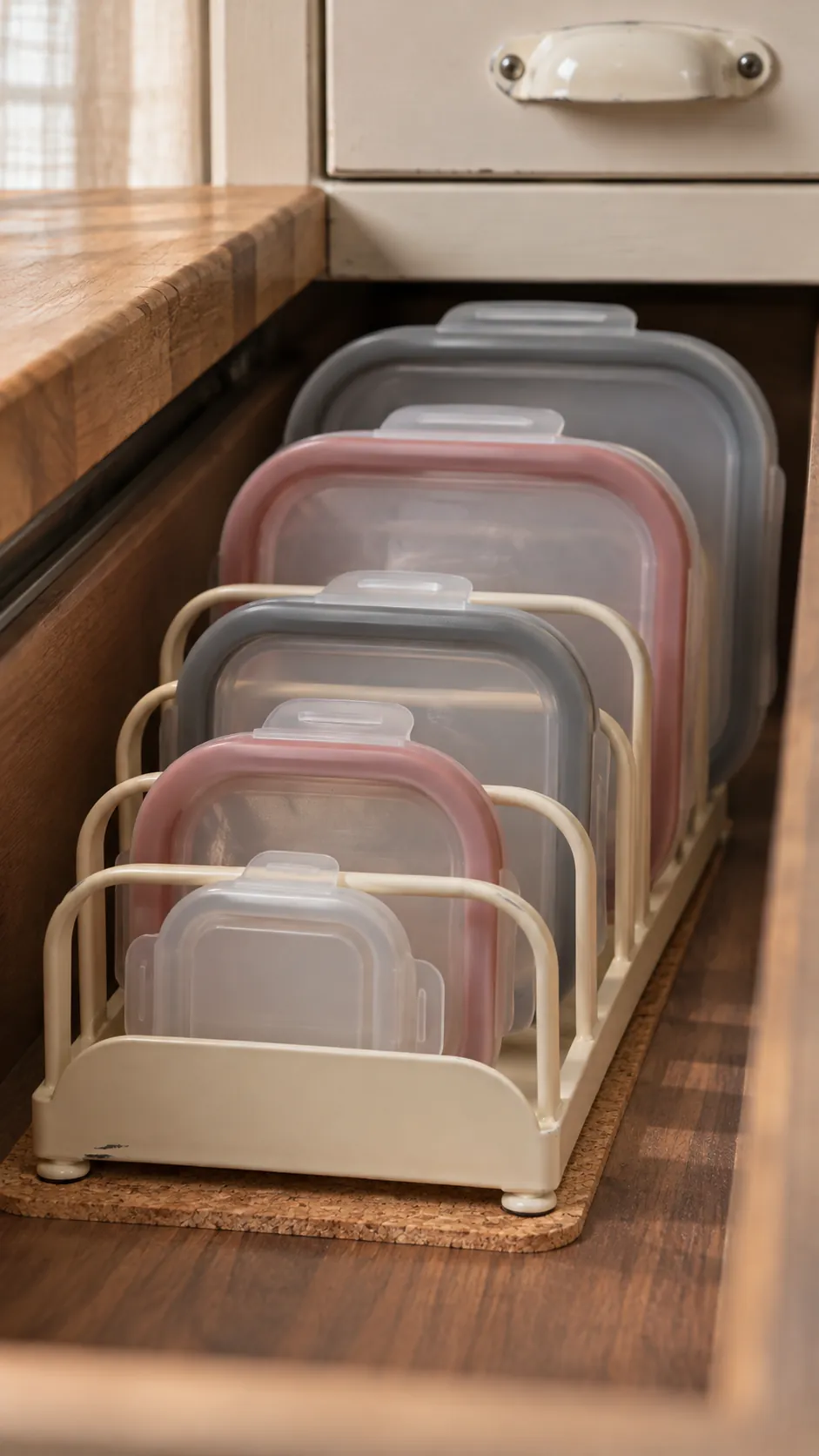
Repurpose a Slim Letter Sorter
A low letter sorter can become a compact container lid rack when its feet and edges fit below the closed drawer. Place small lids toward the front and larger lids in the rear slots so every outline stays visible. Add a thin nonslip liner underneath if the sorter moves when the drawer opens. Choose smooth coated metal or sealed wood that is easy to wipe clean.
Stand Lids in a Narrow Bin
A narrow open bin contains small lids while keeping their top edges easy to scan. Pick a bin with straight sides because flared walls waste valuable drawer width. Store the bin beside the matching nested containers when space allows. Lift the whole bin out for cleaning instead of removing every lid separately.
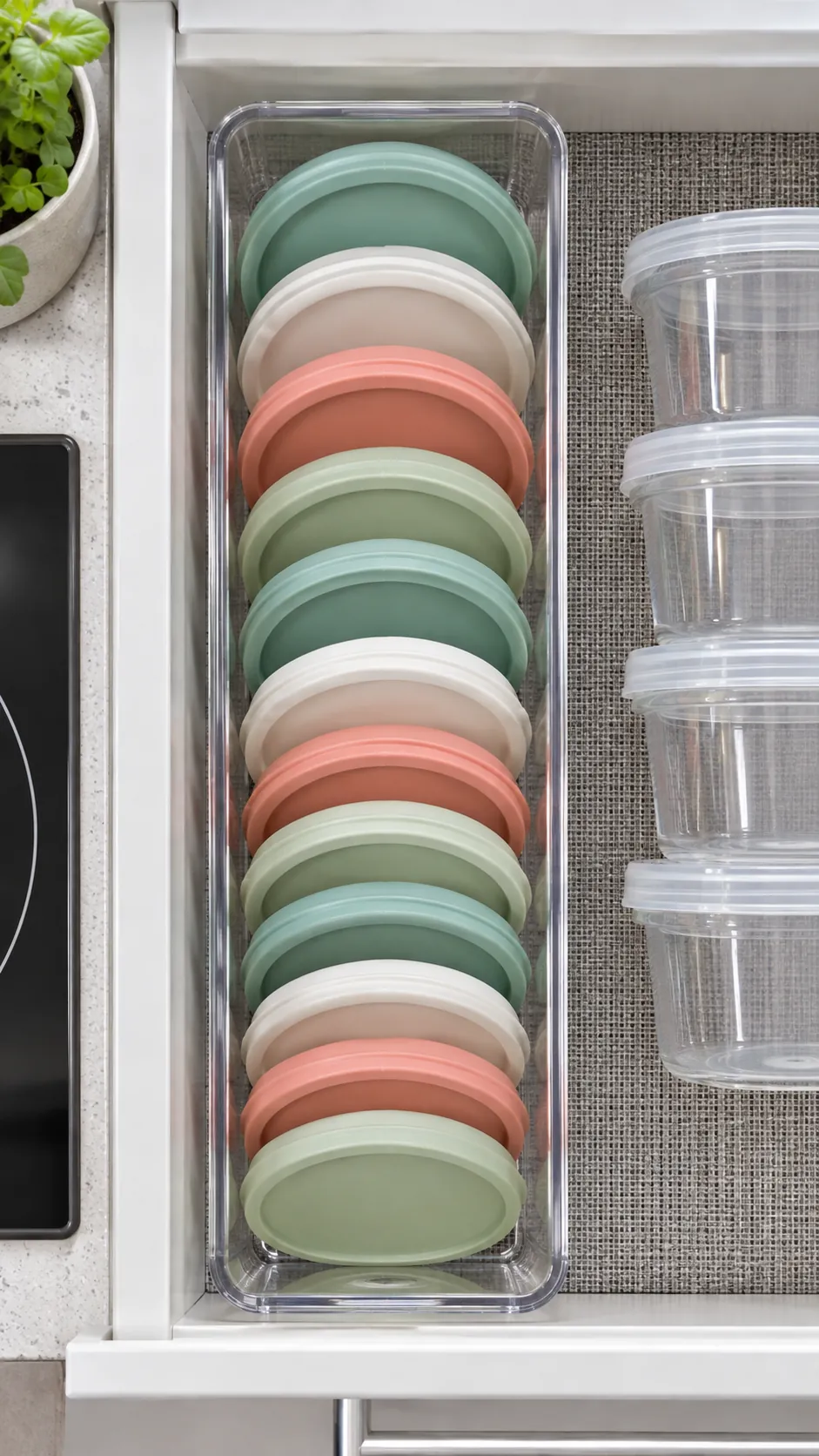
Sort by Shape Before Size
Separating round, square, and rectangular lids reduces the number of pieces you must compare. Within each shape group, arrange lids from small to large with the smallest at the front. This order makes matching faster even when several lids share the same color. Keep unusual shapes in their own small compartment so they do not disrupt the main rows.
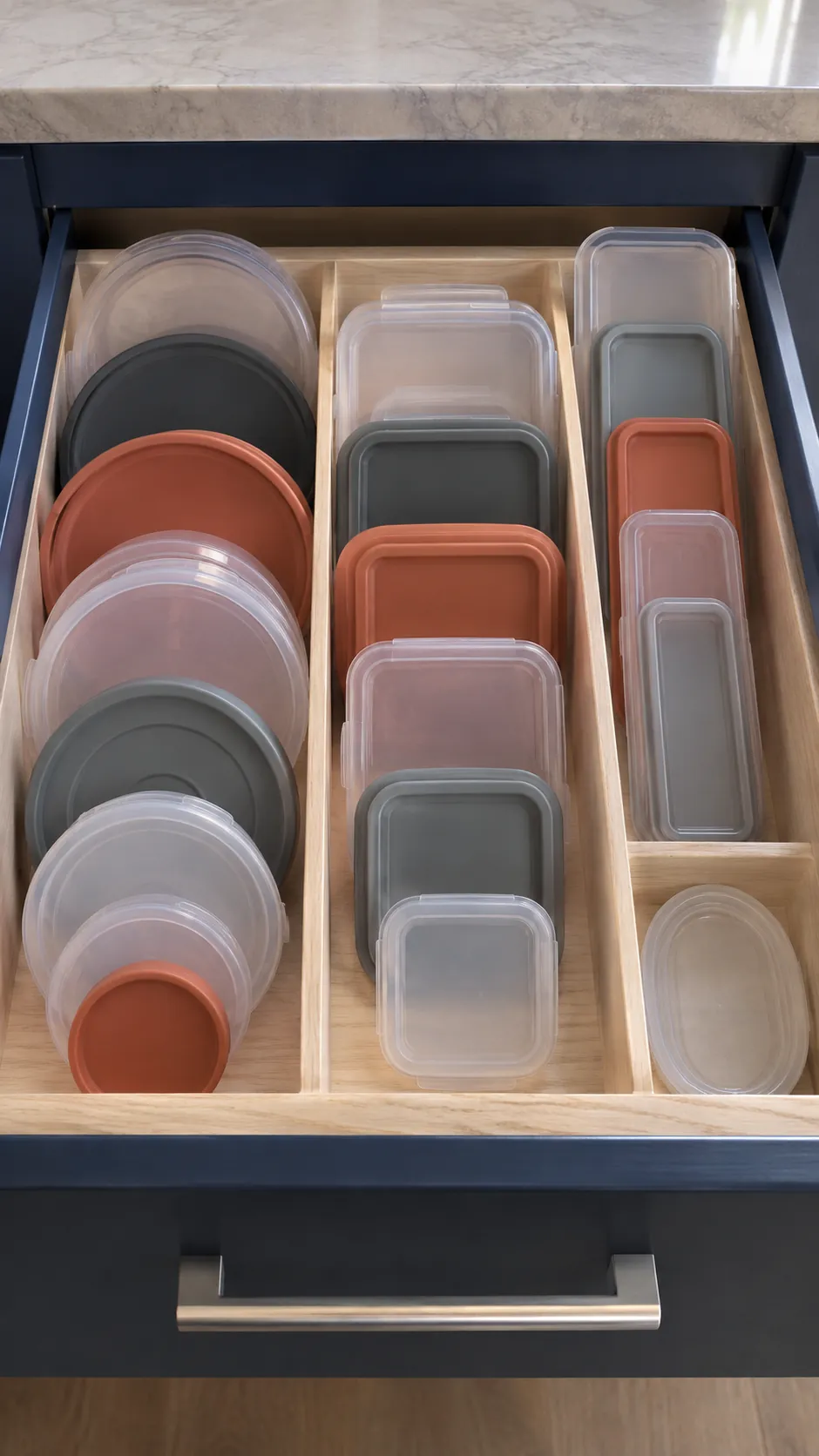
Pair Tiny Lids with Their Containers
Very small dressing and snack lids disappear easily among larger pieces. Store each tiny lid snapped onto its empty container when the small increase in stacking height fits the drawer. This choice removes guessing and keeps miniature parts from slipping under dividers. Reserve loose vertical storage for larger sizes that use space more efficiently when separated.
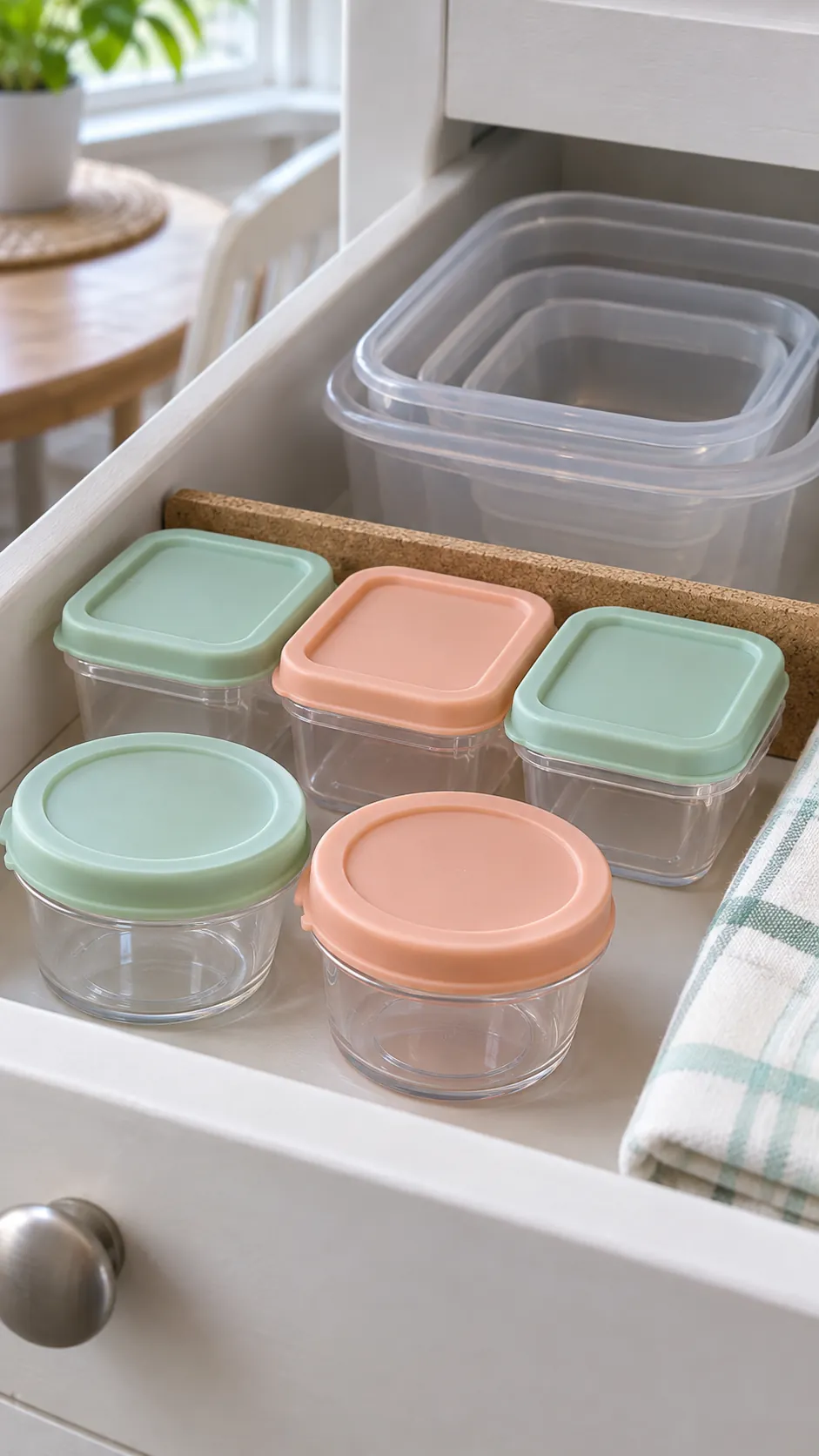
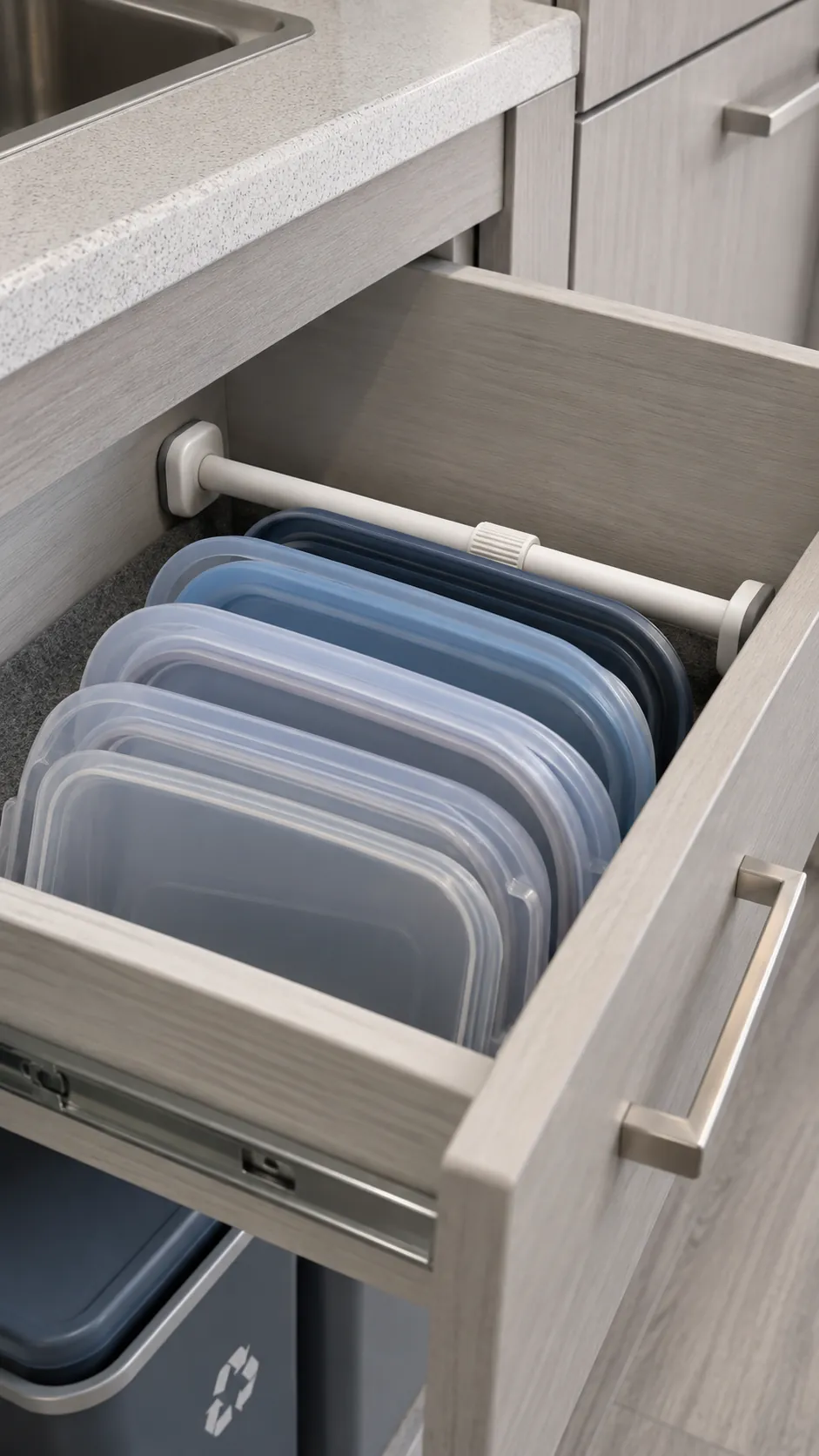
Add a Spring Tension Divider
A small spring tension divider can hold a row of flexible lids upright without permanent hardware. Position it across the drawer and test the pressure before loading the section. Too much pressure can mark soft drawer walls, while too little lets the row collapse. This method suits renters because it can be removed without drilling.
Use Pegs for Changing Collections
A shallow peg system lets you move boundaries when a new container size enters the drawer. Place pegs around lid groups rather than around every single lid, which preserves usable space. Confirm that the peg height clears the drawer frame before installation. The movable layout is especially useful for households that rotate lunch containers and meal preparation sets.
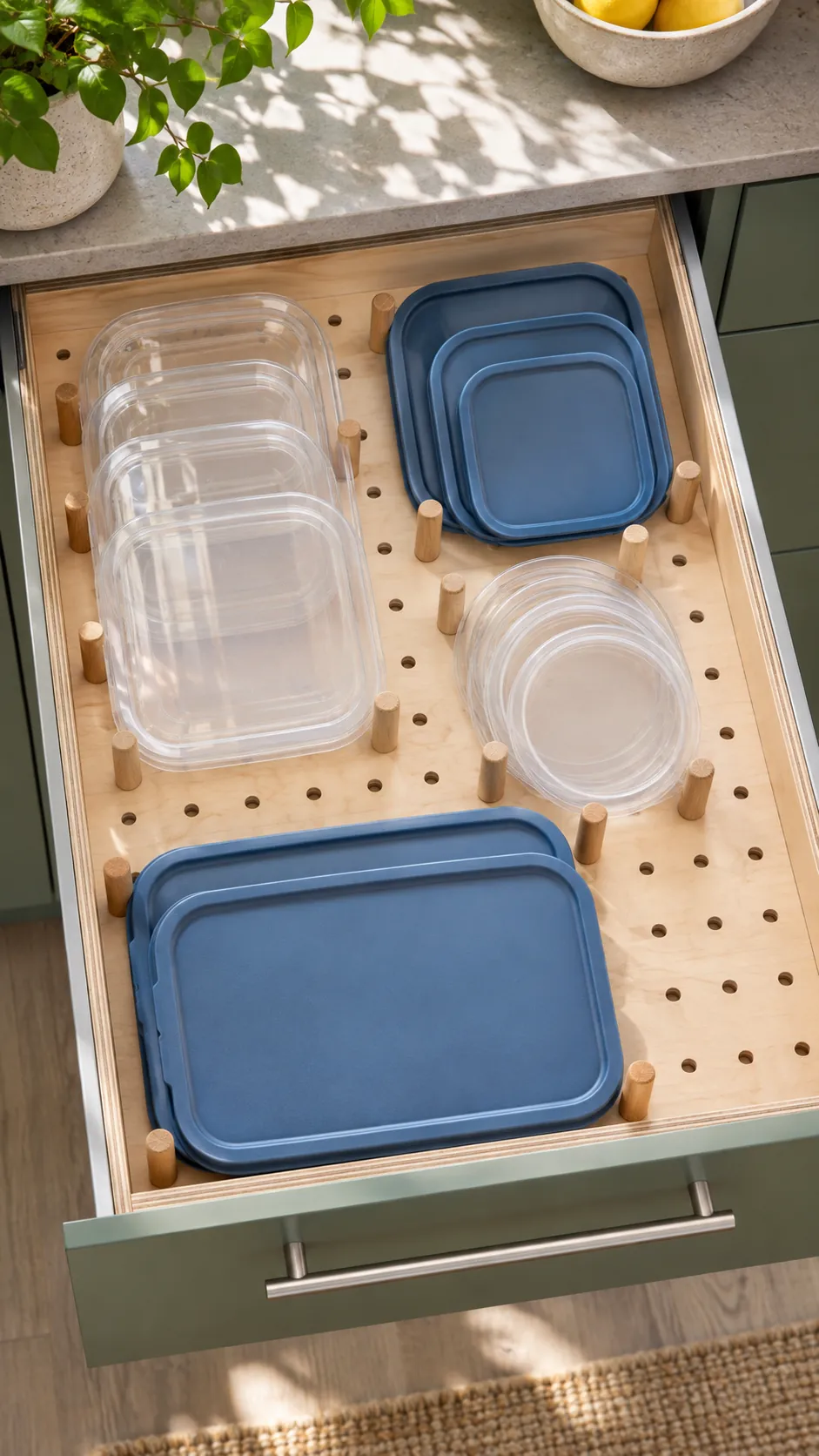
Label Slots by Container Family
Simple labels prevent similar lid families from drifting into the wrong compartment. Use washable labels on the drawer liner or divider tops rather than on the lids themselves. Name groups by practical use, such as lunch, leftovers, and snacks, when brand names do not help. The labels also show every household member where clean pieces belong.
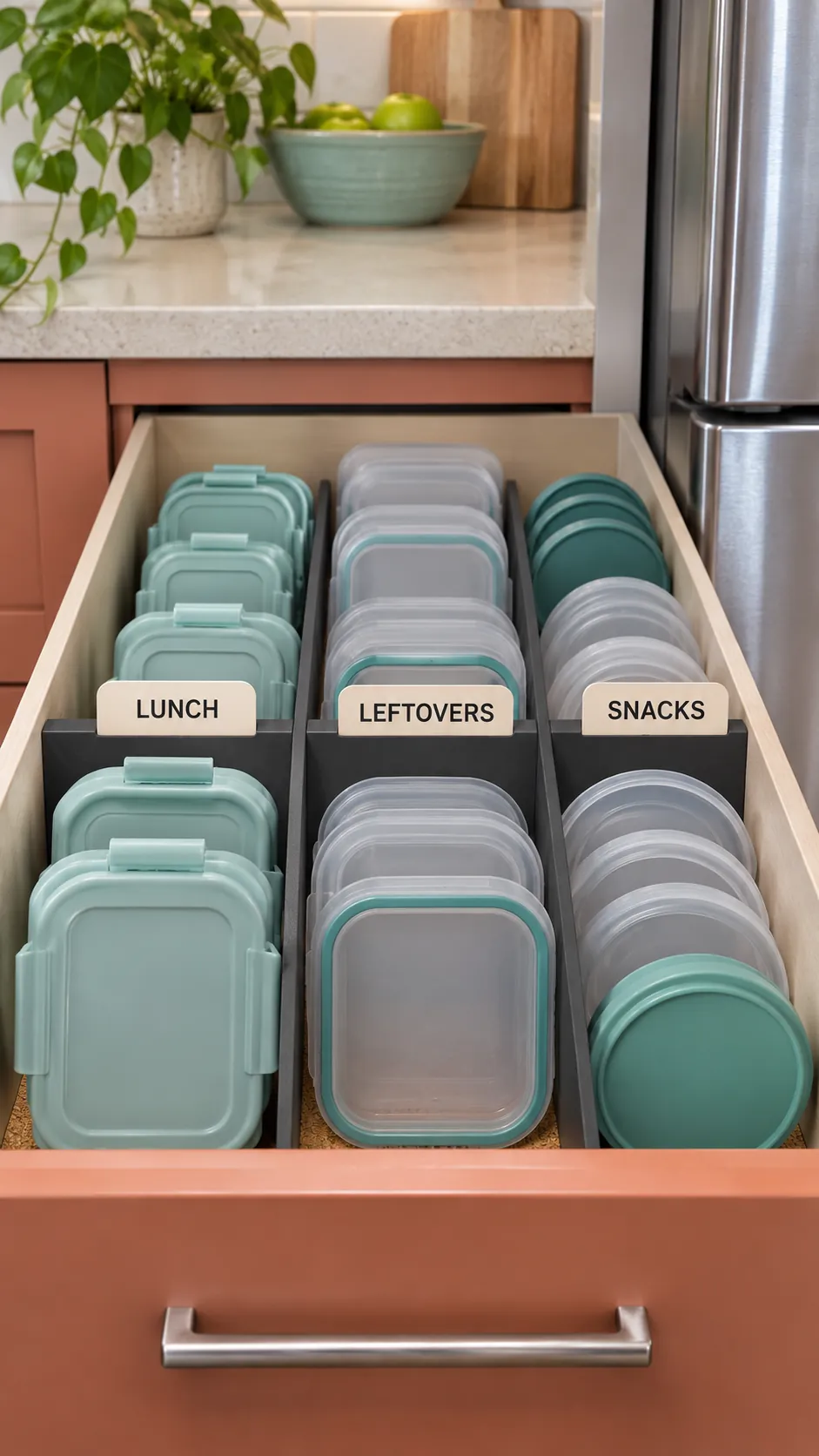
Create a Front Access Row
Put daily lids in a short front row where the drawer opens first. Move occasional freezer and party sizes toward the back so they do not interrupt routine access. Leave enough finger space at the front to grip a lid without lifting its neighbors. This frequency based order saves more time than a perfect color arrangement.
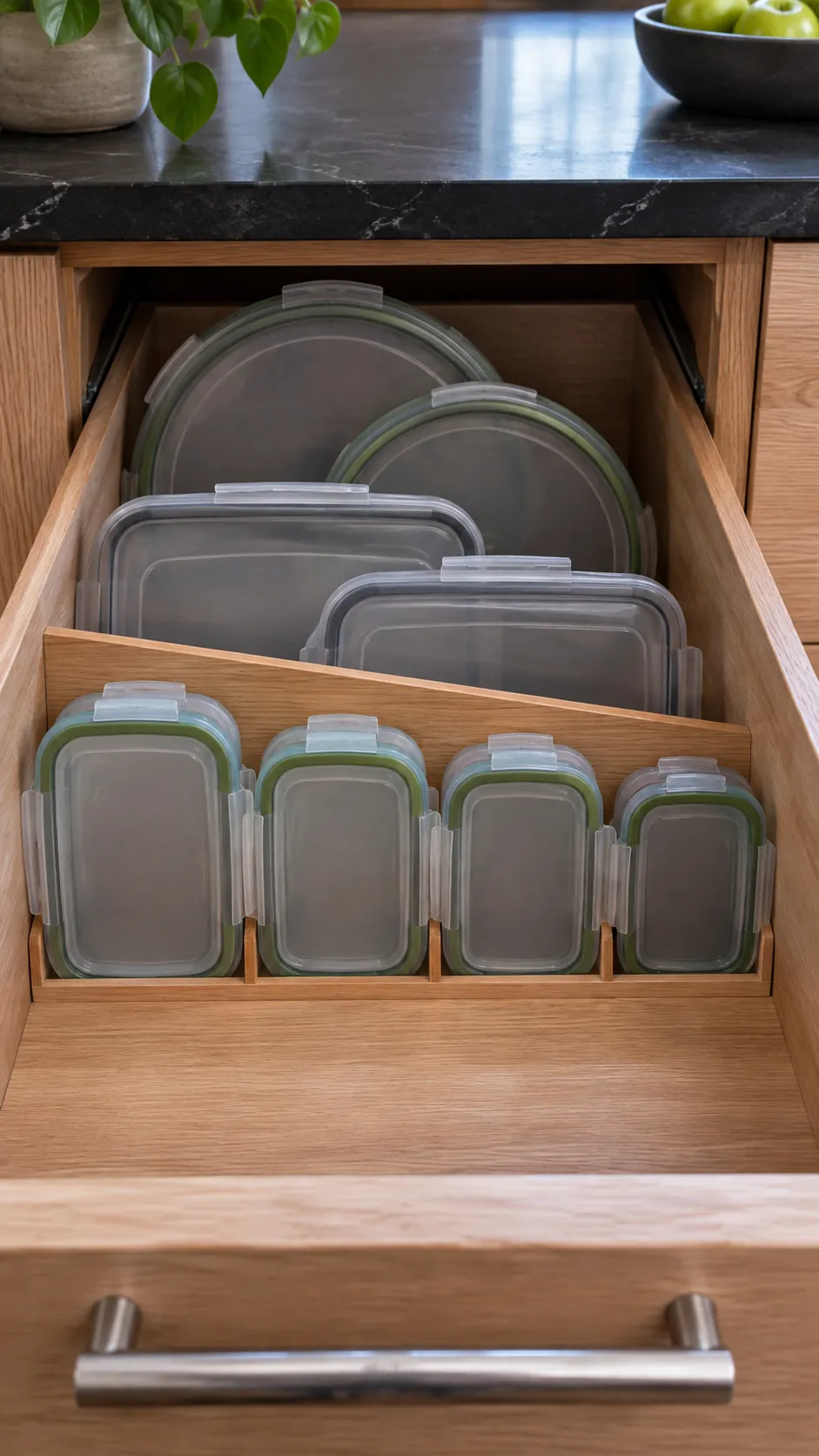
Alternate Lids to Reduce Bulk
Some lids have thick tabs or raised seals that create a bulky stack when every piece faces the same way. Alternate their orientation so the thick edges do not line up. Keep the row loose enough to avoid bending the seals or locking tabs. This small adjustment can recover useful length without adding another organizer.
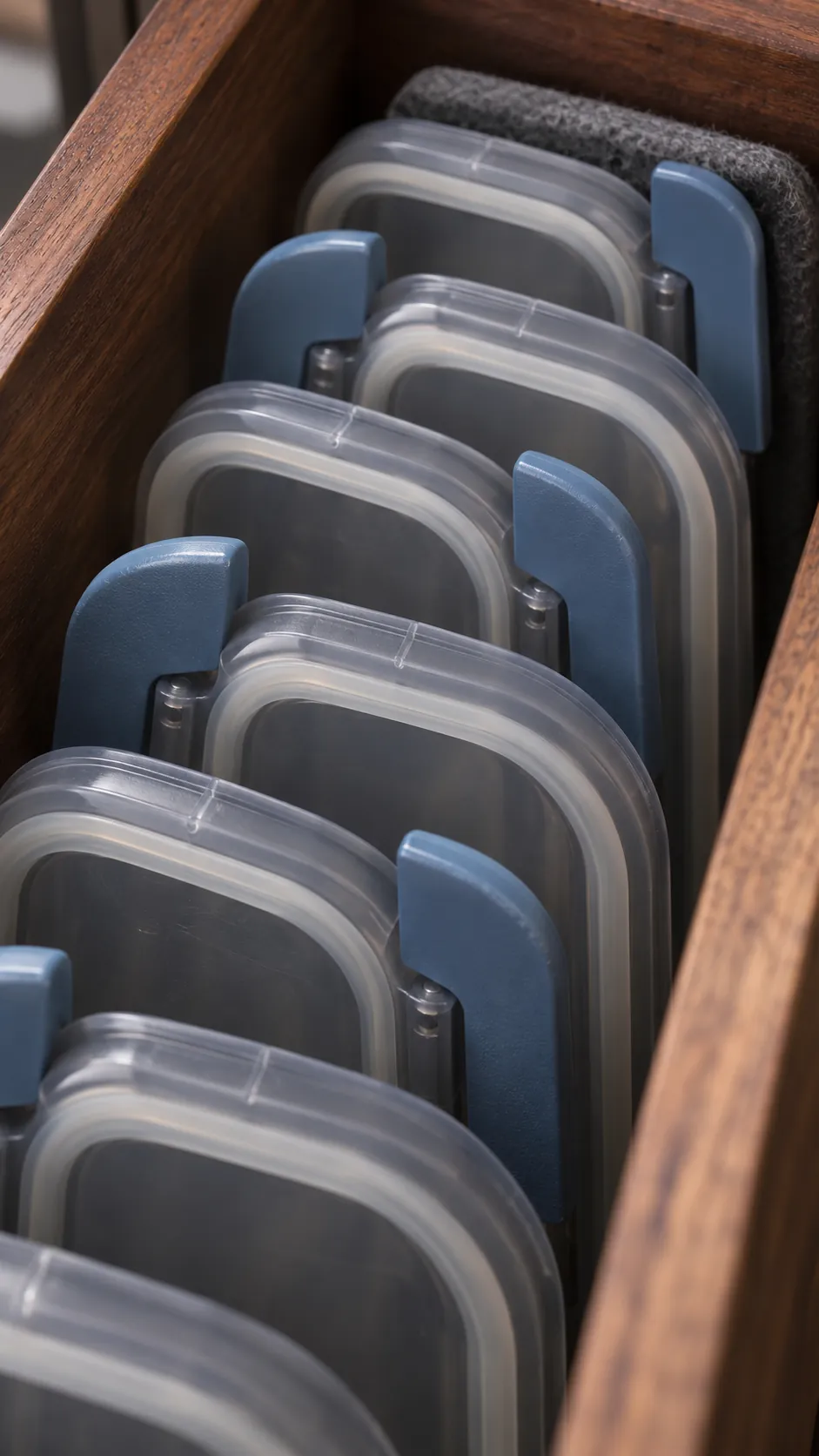
Use a Low Bamboo Plate Rack
A low bamboo plate rack gives broad lids firm individual slots and adds a warm natural finish. Check the rack height and slot width against the drawer opening before purchase. Seal any unfinished wood if the manufacturer allows it, then wipe away crumbs and moisture promptly. Use this option for rigid lids that stand securely without sagging between rails.
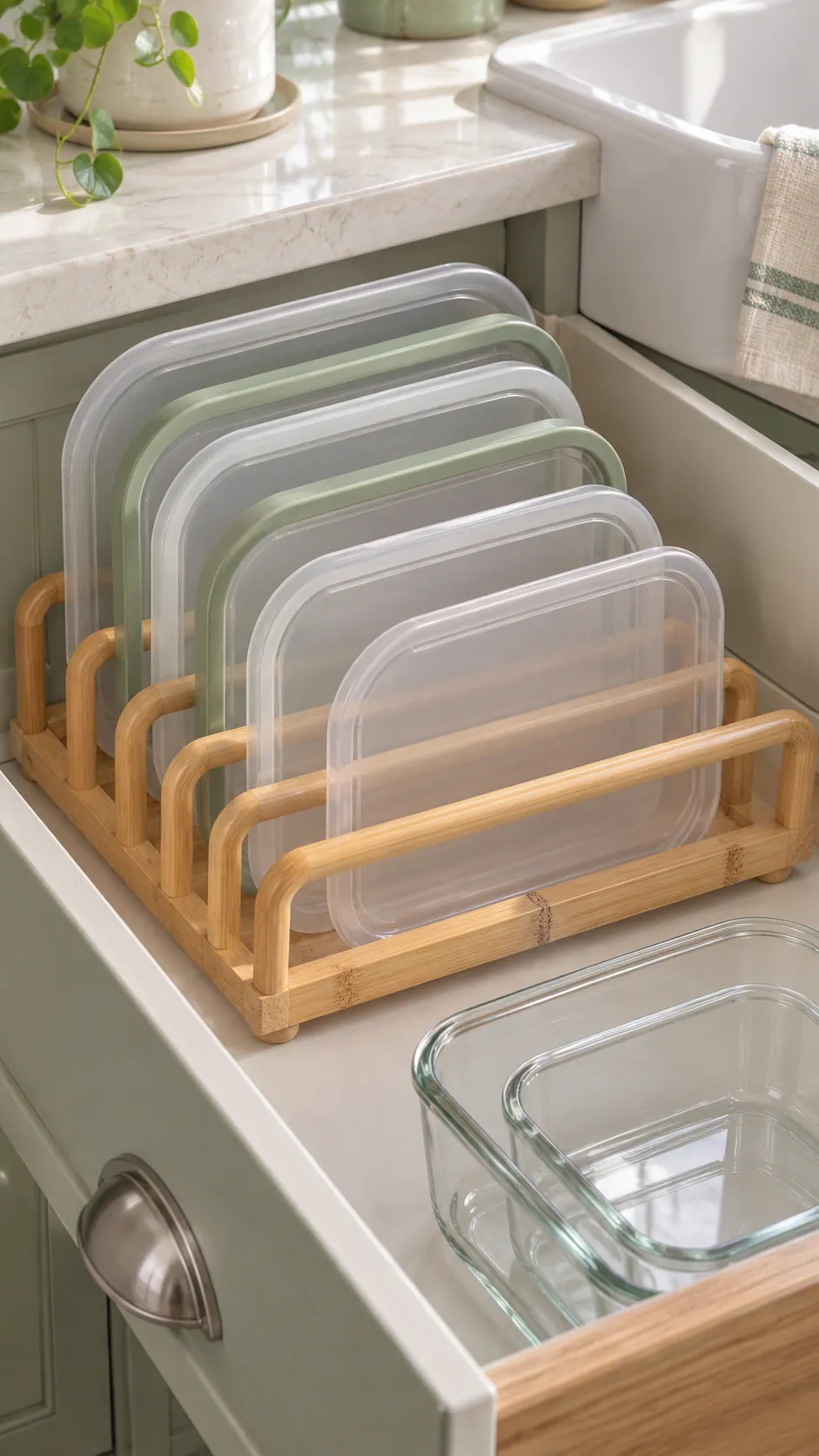
Divide the Drawer with Small Boxes
Shallow boxes can create custom drawer compartments from items you already own. Choose boxes that fit tightly enough to avoid large gaps but still lift out for cleaning. Assign one box to flexible lids and another to rigid pieces with locking tabs. Cover rough cardboard with washable paper only if it stays dry and does not shed fibers.
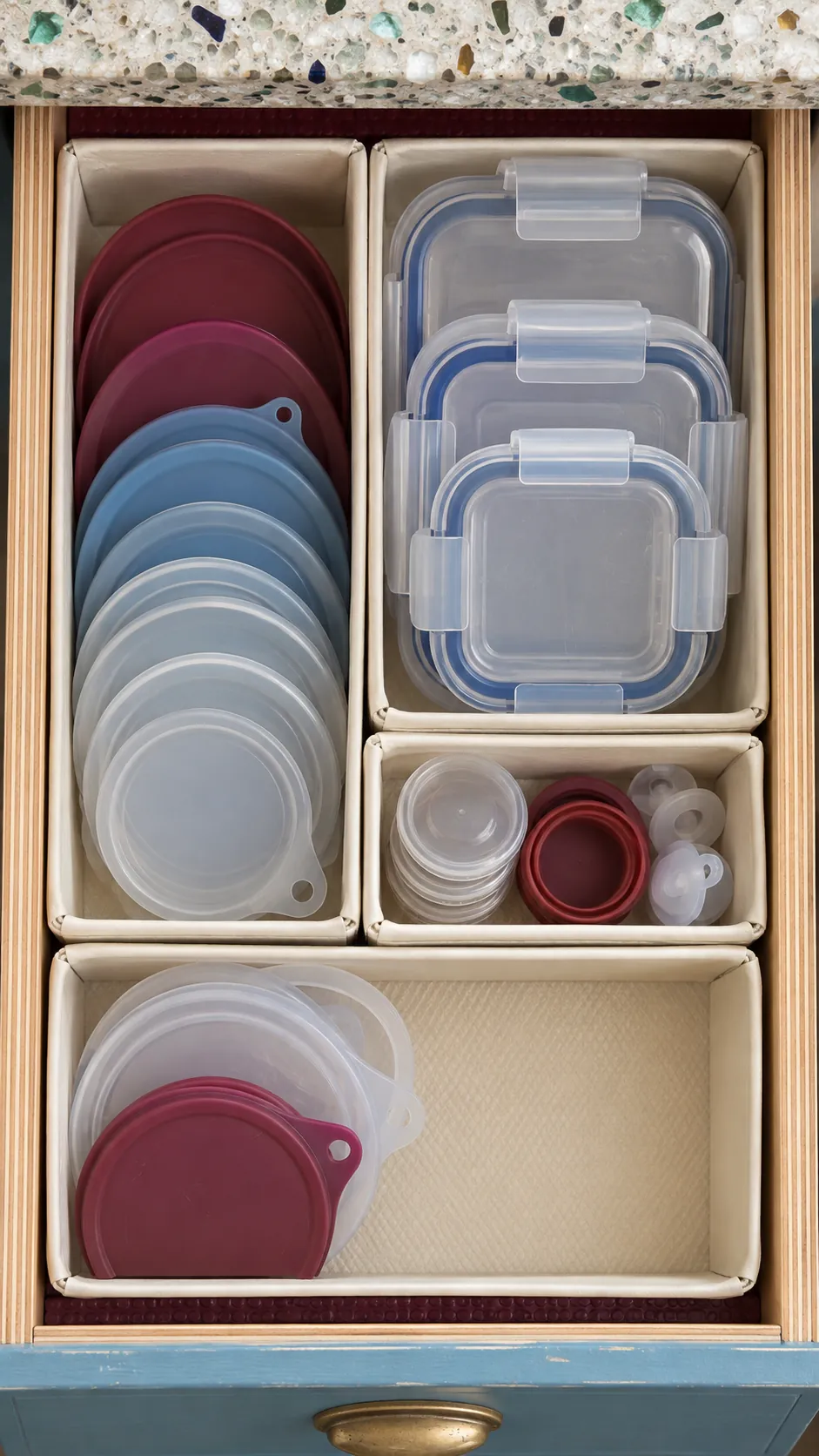
Keep Orphan Lids in One Test Slot
An isolated test slot stops unmatched lids from spreading through every compartment. Place a date label beside the slot and look for partners during normal kitchen use. Recycle or discard pieces according to local rules when no matching container appears after your chosen review period. Limiting the slot to a few pieces prevents uncertainty from taking over the drawer.
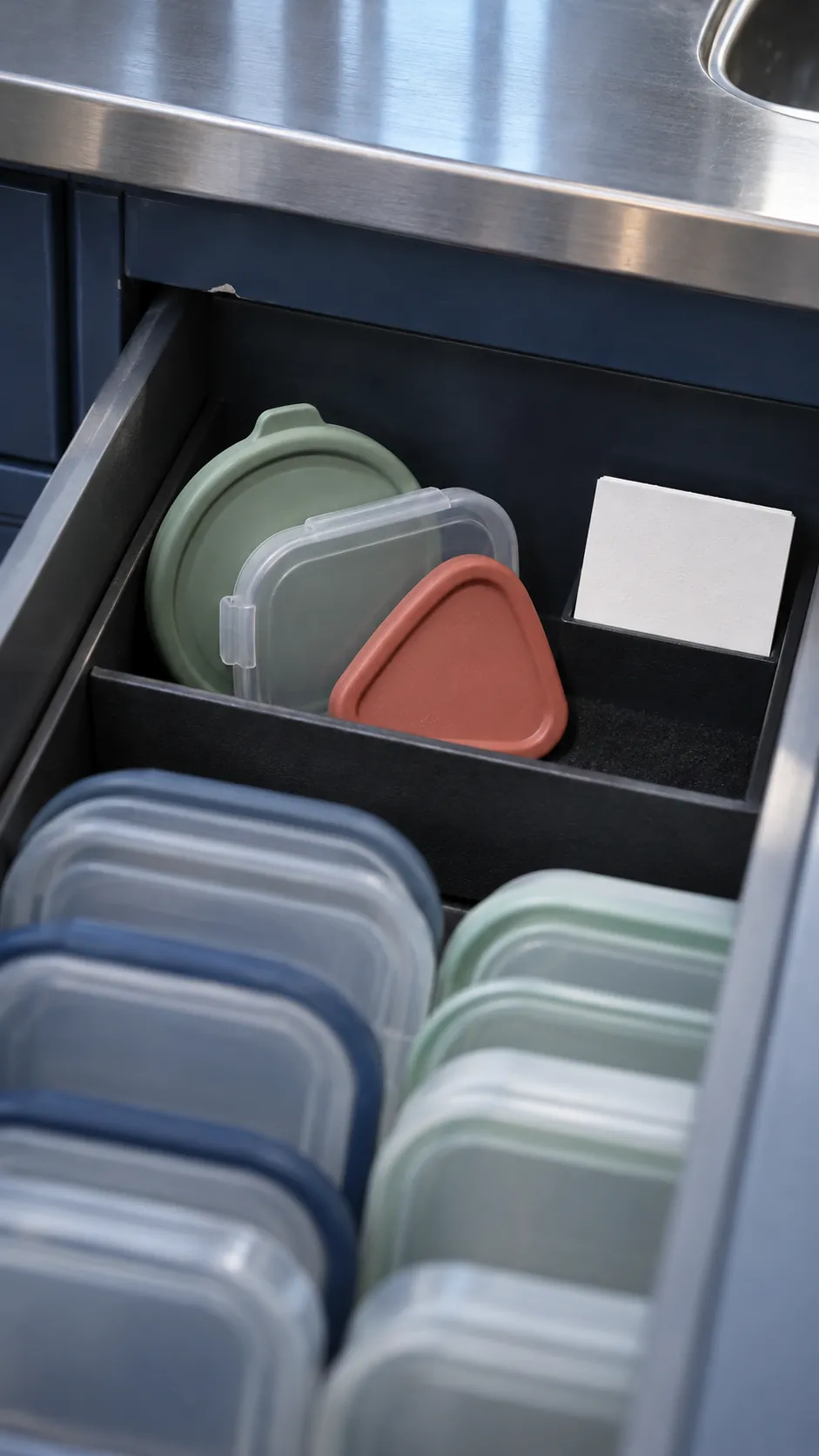
Nest Containers Beside Their Lid Row
Place nested containers beside their vertical lid row when the drawer width can support both zones. Align each container family with the corresponding lid group to shorten the visual search. Avoid nesting so tightly that damp surfaces cannot dry before storage. A small gap between the two zones makes removal easier and keeps stacks from leaning.
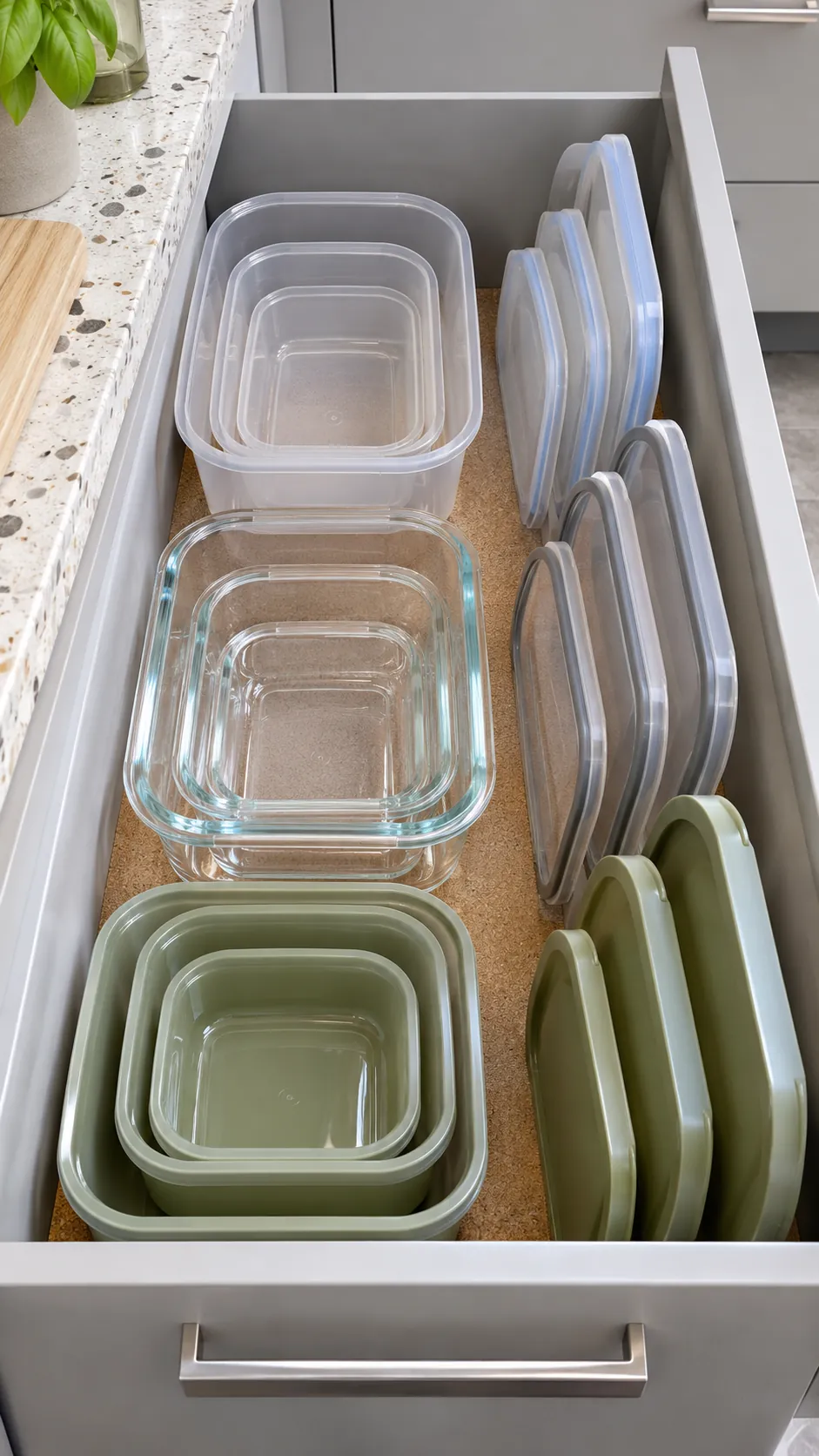
Set a Firm Collection Limit
Let the available drawer space define how many food storage pieces the kitchen can support. Keep the container sizes you use most and remove damaged, warped, or chronically unmatched parts. Test every questionable seal with its intended container before deciding. A smaller complete set is easier to maintain than a crowded collection that hides useful pieces.