
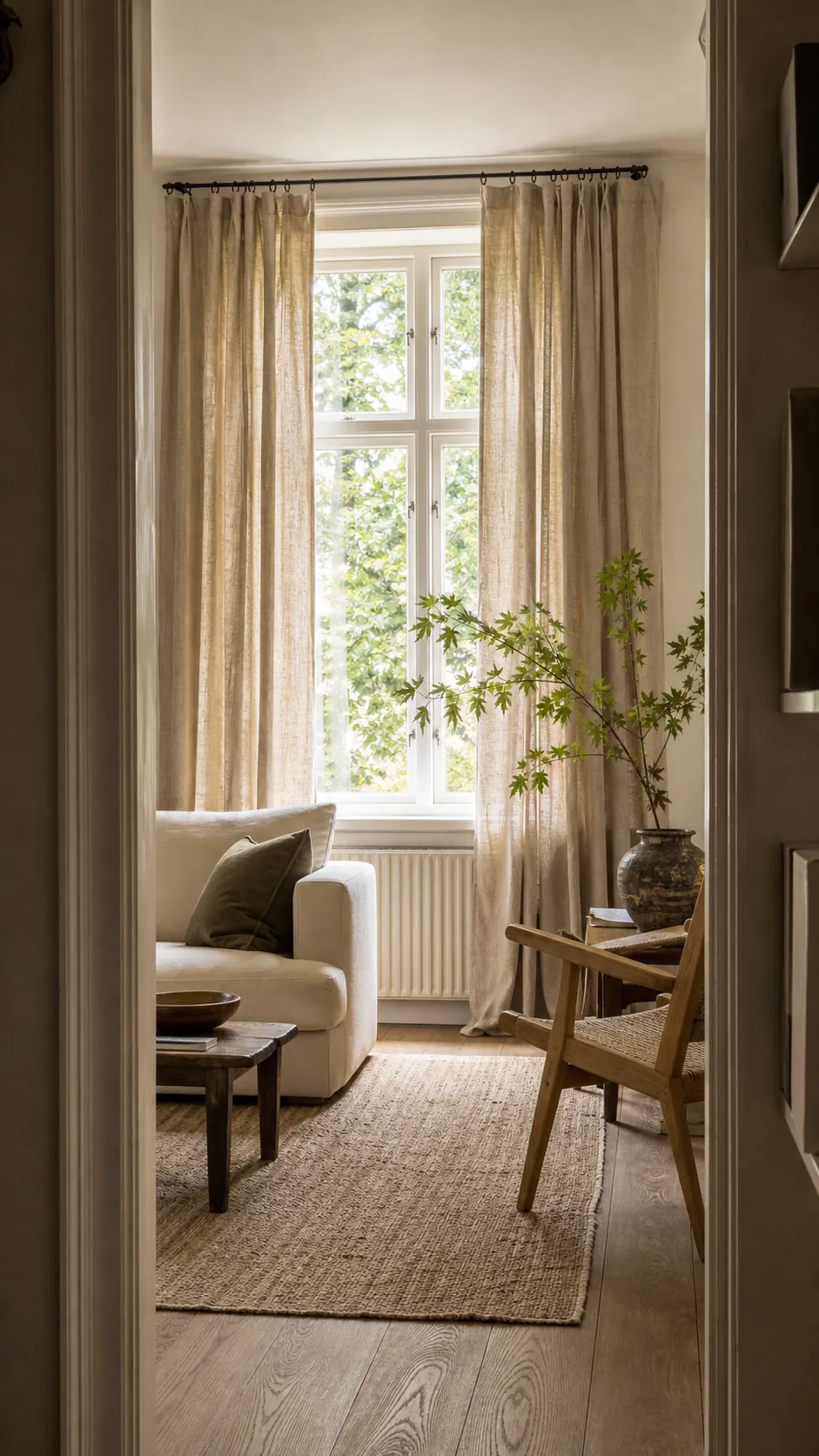
Bare glass and hard window trim can make an otherwise comfortable room feel unfinished. Curtains solve more than privacy: they soften daylight, absorb a little echo, add movement, and connect wall color to the textiles already in the room.
The softest result is not automatically the palest or fluffiest fabric. It comes from matching weight, drape, light control, and maintenance to the room. These fifteen house curtain ideas range from airy living-room linen to washable kitchen checks and properly lined bedroom velvet.
Washed Linen Panels in Warm Flax
Washed linen filters daylight into a warmer glow and hangs with relaxed irregular folds. Warm flax is gentler than stark white beside cream walls, oak furniture, and natural rugs.
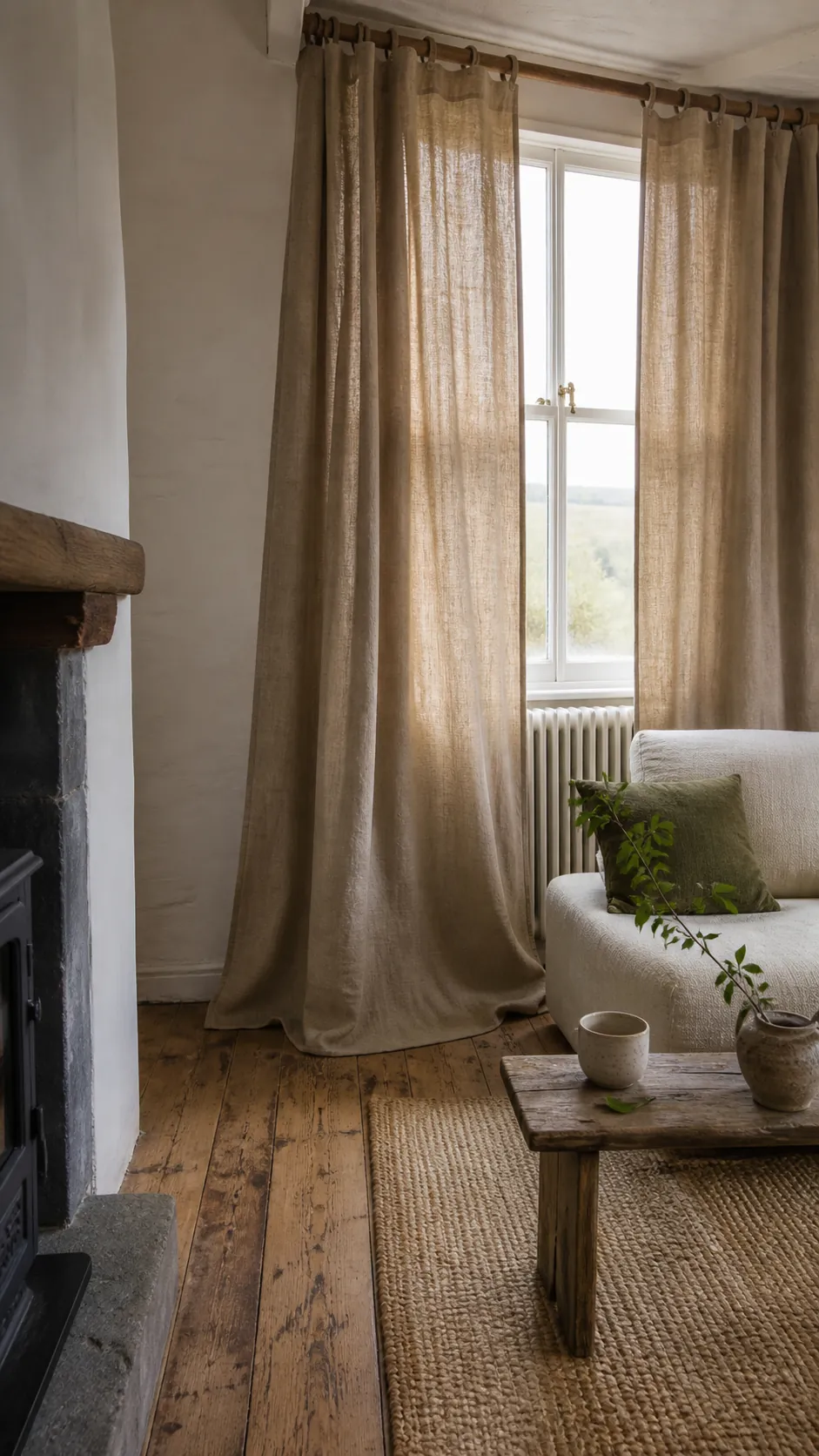
Use generous width so the fabric still forms folds when closed. If nighttime privacy matters, add a separate blind or lining rather than assuming loosely woven linen will hide a lit room.
Full-Wall Sheers for Diffused Daylight
Running sheers across the full window wall turns harsh rectangles of light into one broad luminous surface. The treatment feels especially soft in modern rooms with large areas of glass.
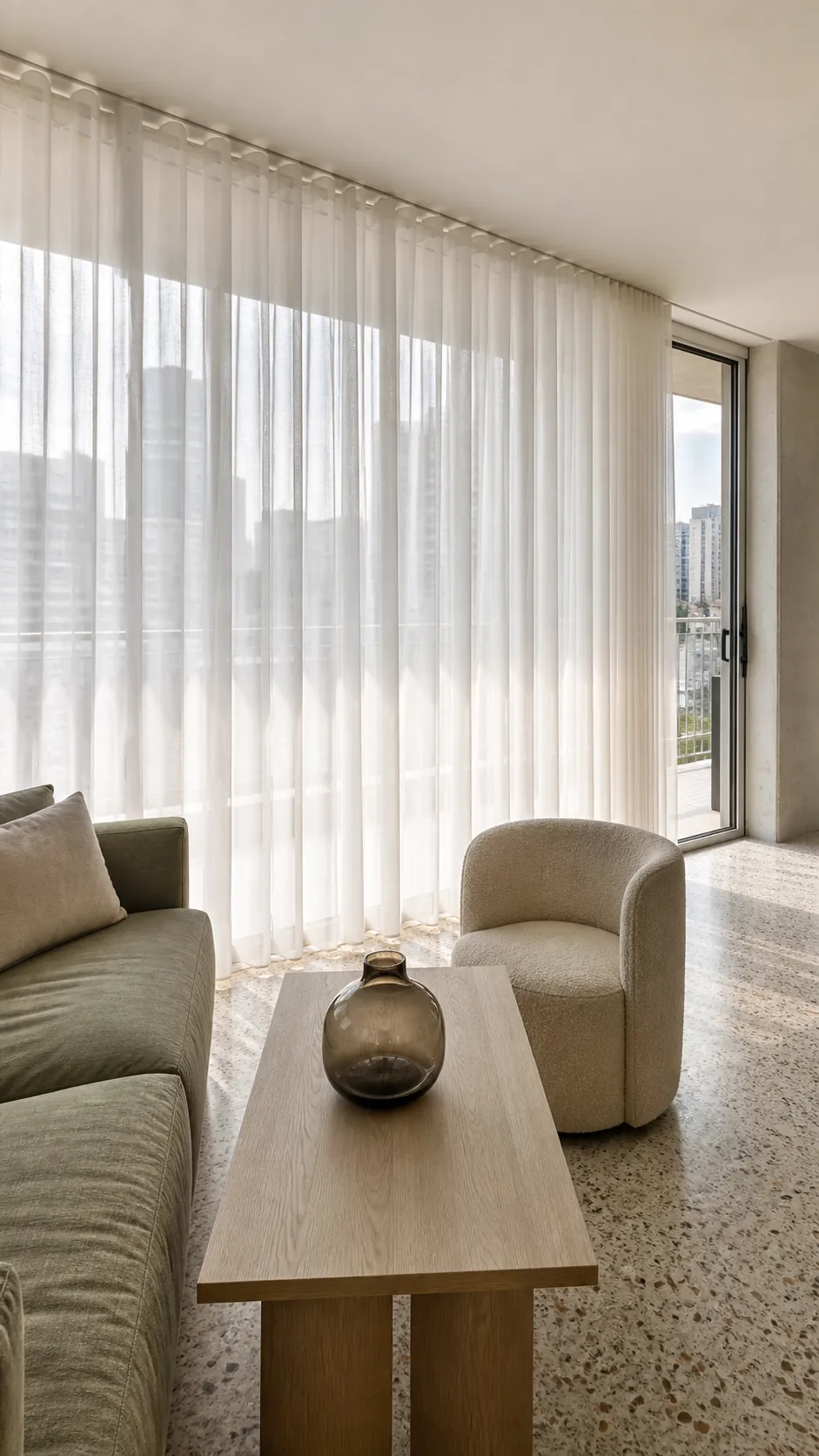
Choose more fullness than you would for opaque panels. Test privacy after dark with interior lights on, because daytime screening can become transparent at night.
Sheers Behind Textured Neutral Drapes
A double layer lets the window change with the day. Close the sheer for glare and daytime privacy; draw the textured outer panels for evening comfort, insulation, or darkness.
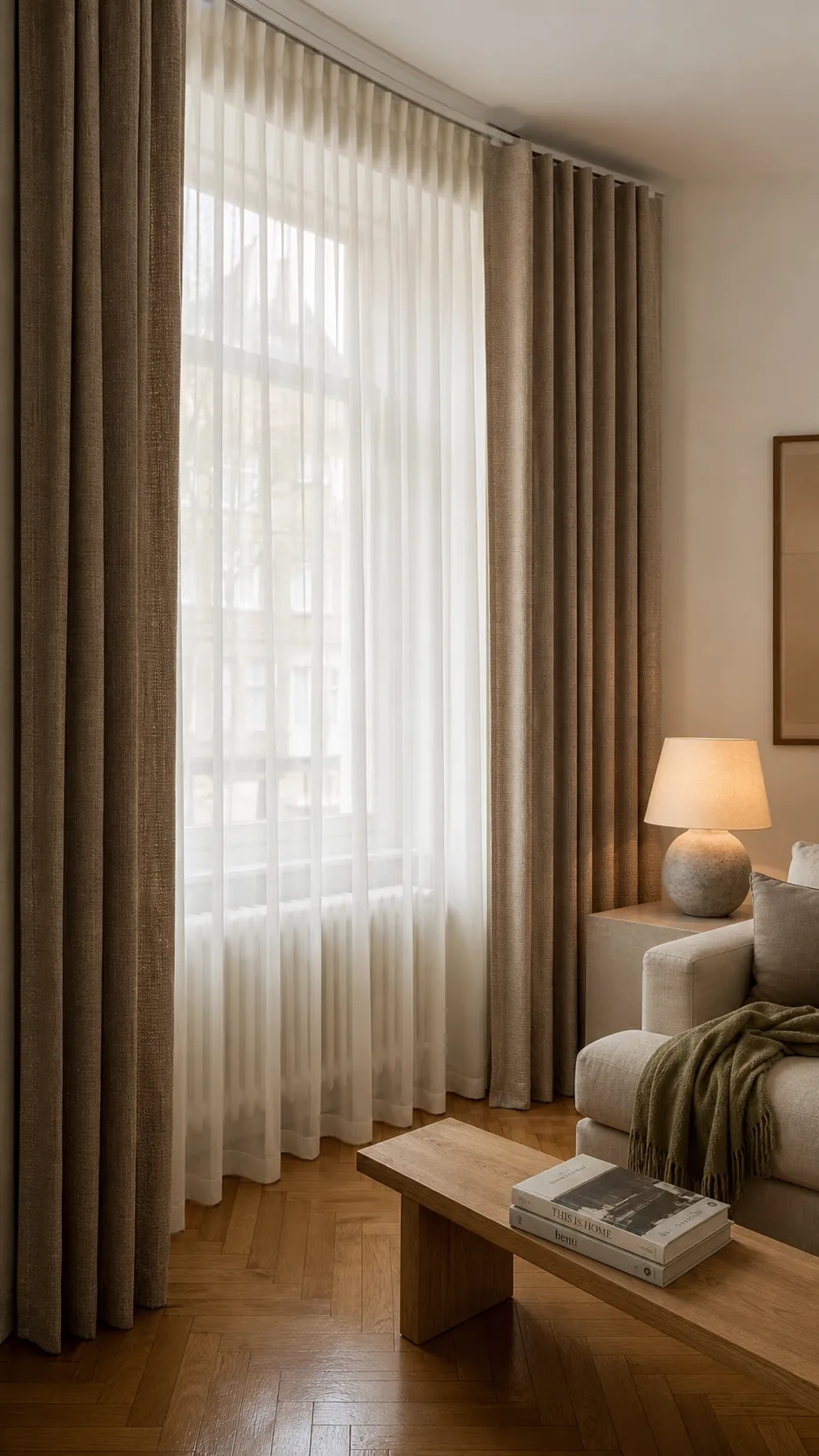
Install tracks with enough separation that the fabrics move independently. Keeping both layers at a related finished length prevents the lower edge from looking accidental.
Linen Café Curtains at a Kitchen Window
Café curtains soften a kitchen without hiding the whole window. A lower-half linen panel screens neighbors at eye level while leaving the top open for daylight and a view of the sky.
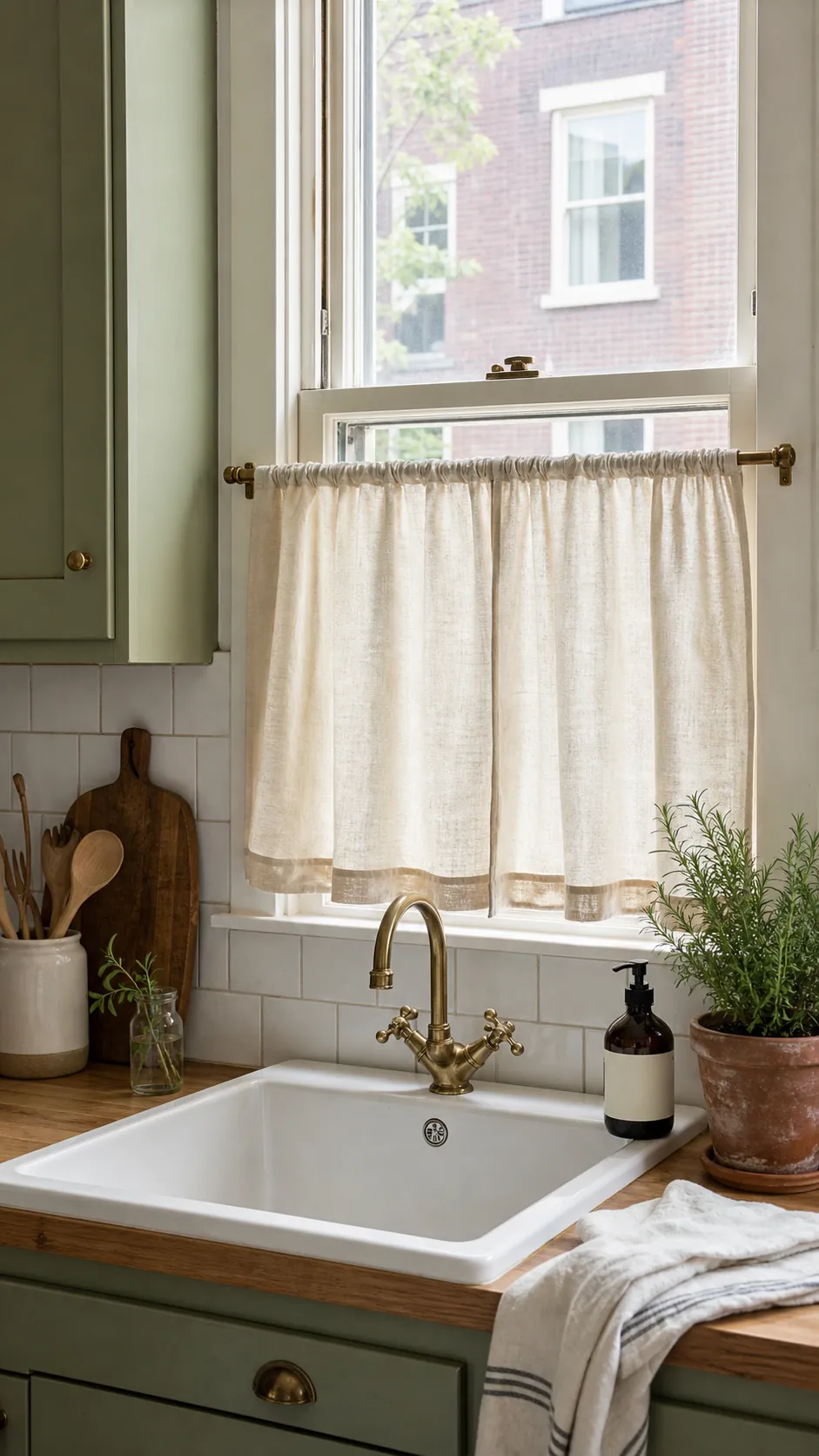
Keep fabric safely away from burners and frequent splashes. A washable linen-cotton blend on a simple tension rod is practical where drilling is difficult.
Relaxed Cotton Curtains for a Family Room
Plain cotton has a softer, more familiar presence than shiny synthetic fabric and is often easier to clean than delicate linen. A lightly brushed weave looks substantial without becoming formal.
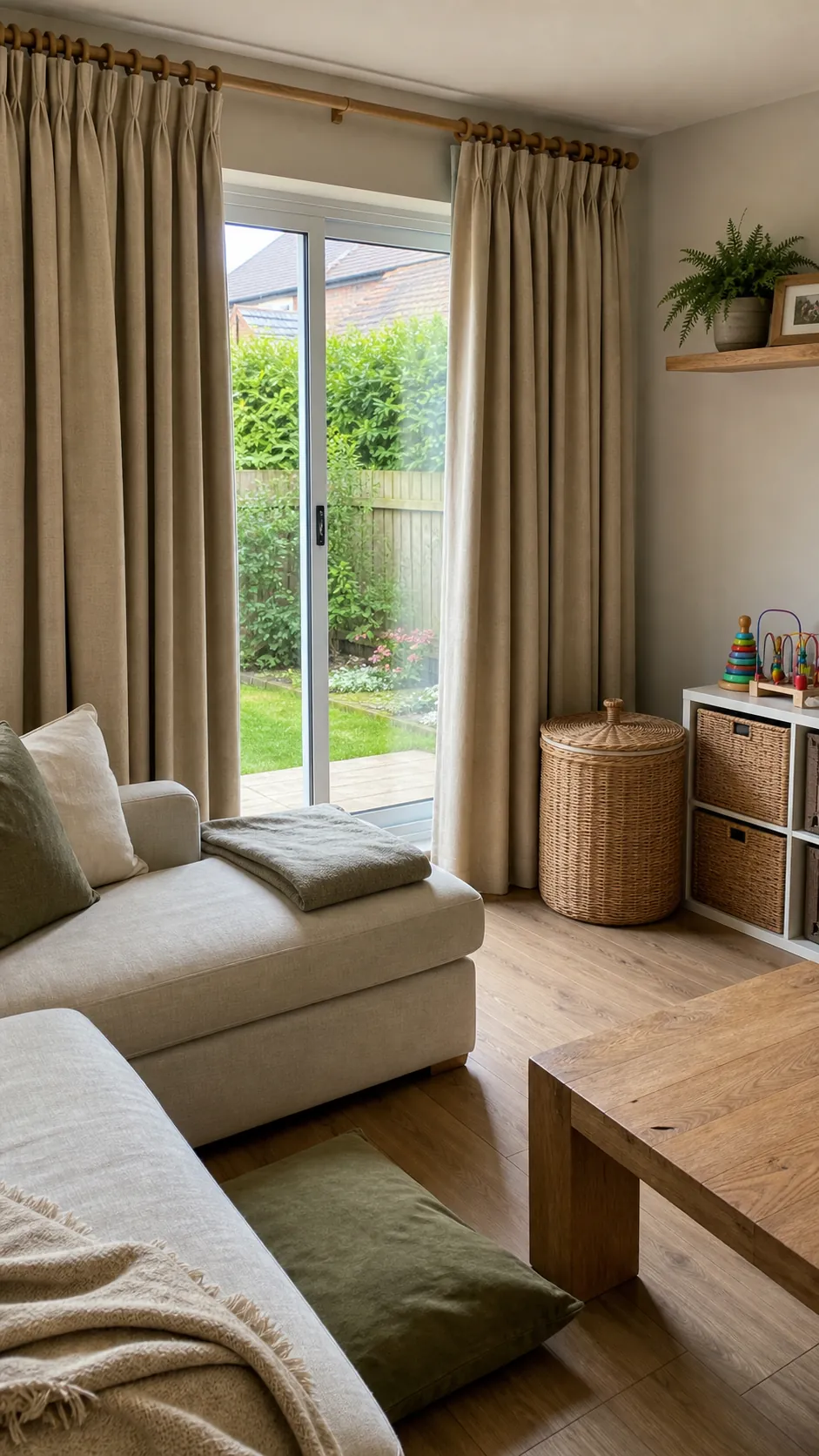
Use washable panels where children and pets brush past the hems. Lining improves the drape and protects the face fabric from strong sun while keeping the room visually calm.
Dusty Rose Velvet for a Cocooning Bedroom
Velvet brings visual and acoustic softness to a bedroom, and dusty rose warms neutral walls without the severity of a very dark color. Its dense pile is useful where light reduction matters.
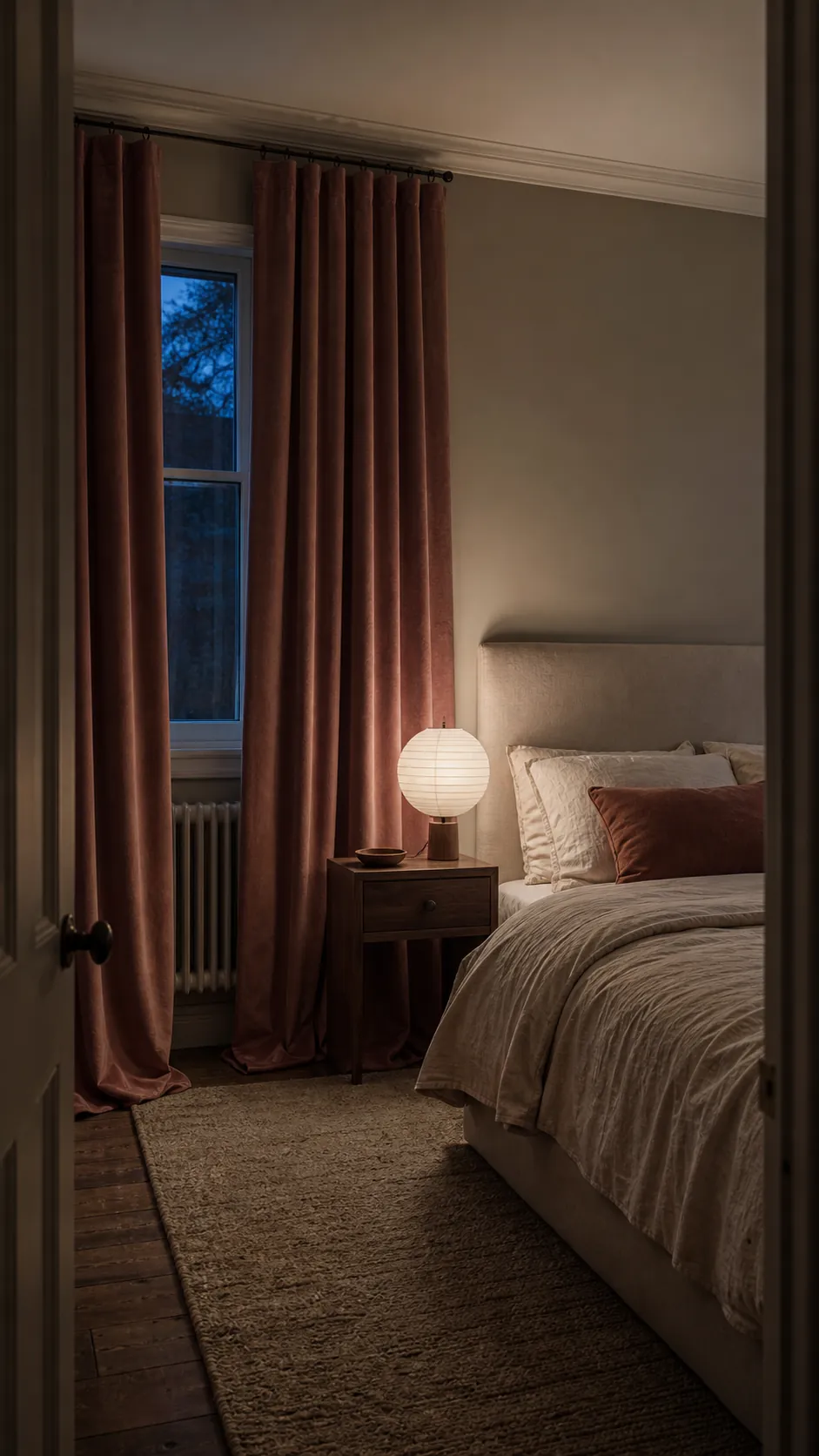
Support the weight with a proper rod or track and allow room for the thick stack. Pair it with matte bedding so the room feels enveloping rather than theatrical.
Small-Scale Floral Curtains in a Guest Room
A spaced botanical print adds friendliness to a plain guest room. Choose a small motif with plenty of visible ground so the window feels gentle rather than crowded.
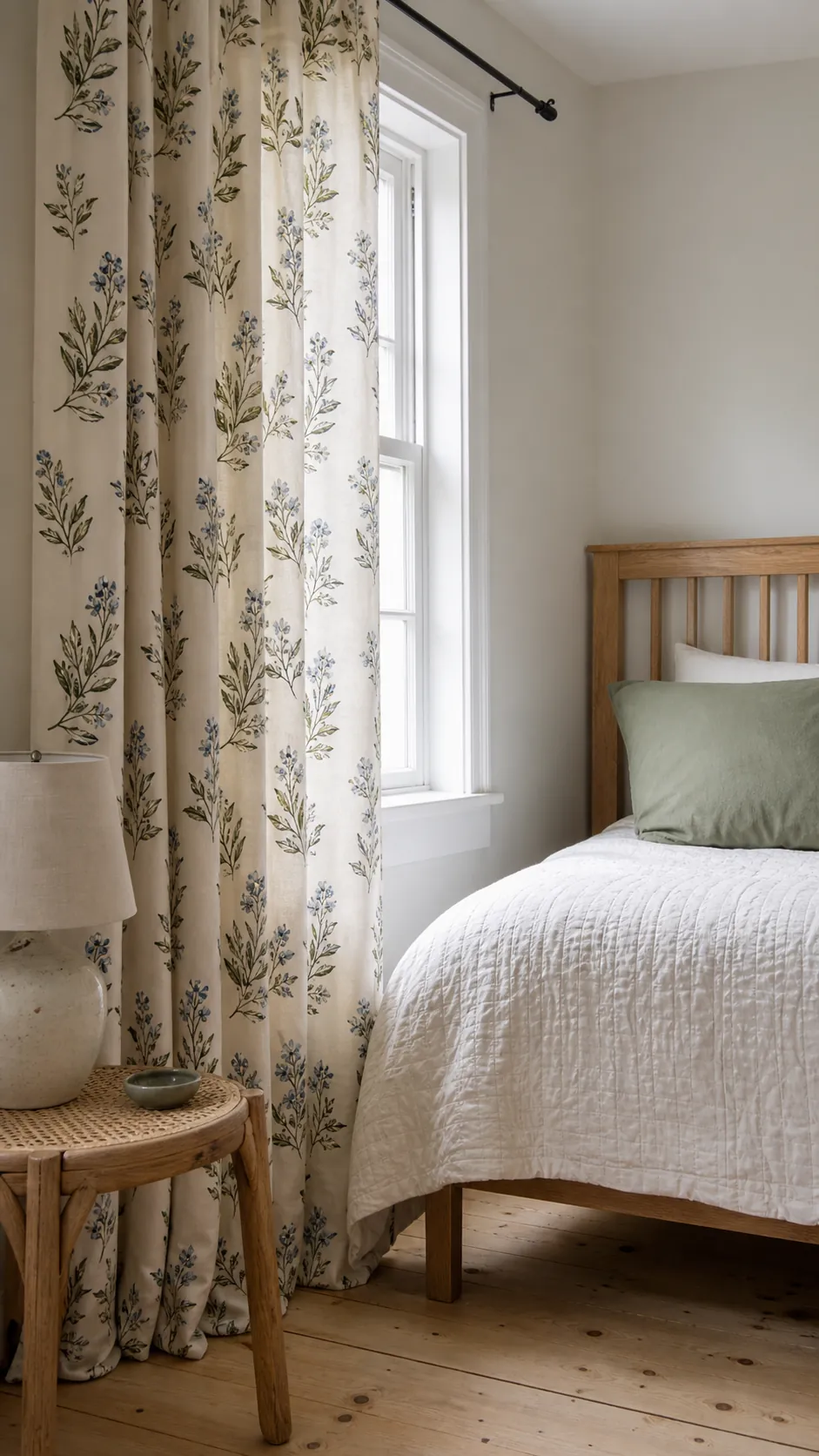
Repeat only one or two print colors in bedding and leave the rest solid. This makes the curtains part of the room instead of turning the guest space into a matching set.
Soft Gingham at a Breakfast Nook
Low-contrast gingham introduces familiar pattern without visual noise. Sage and cream or biscuit and white can soften a hard breakfast nook filled with tile, glass, and painted cabinetry.
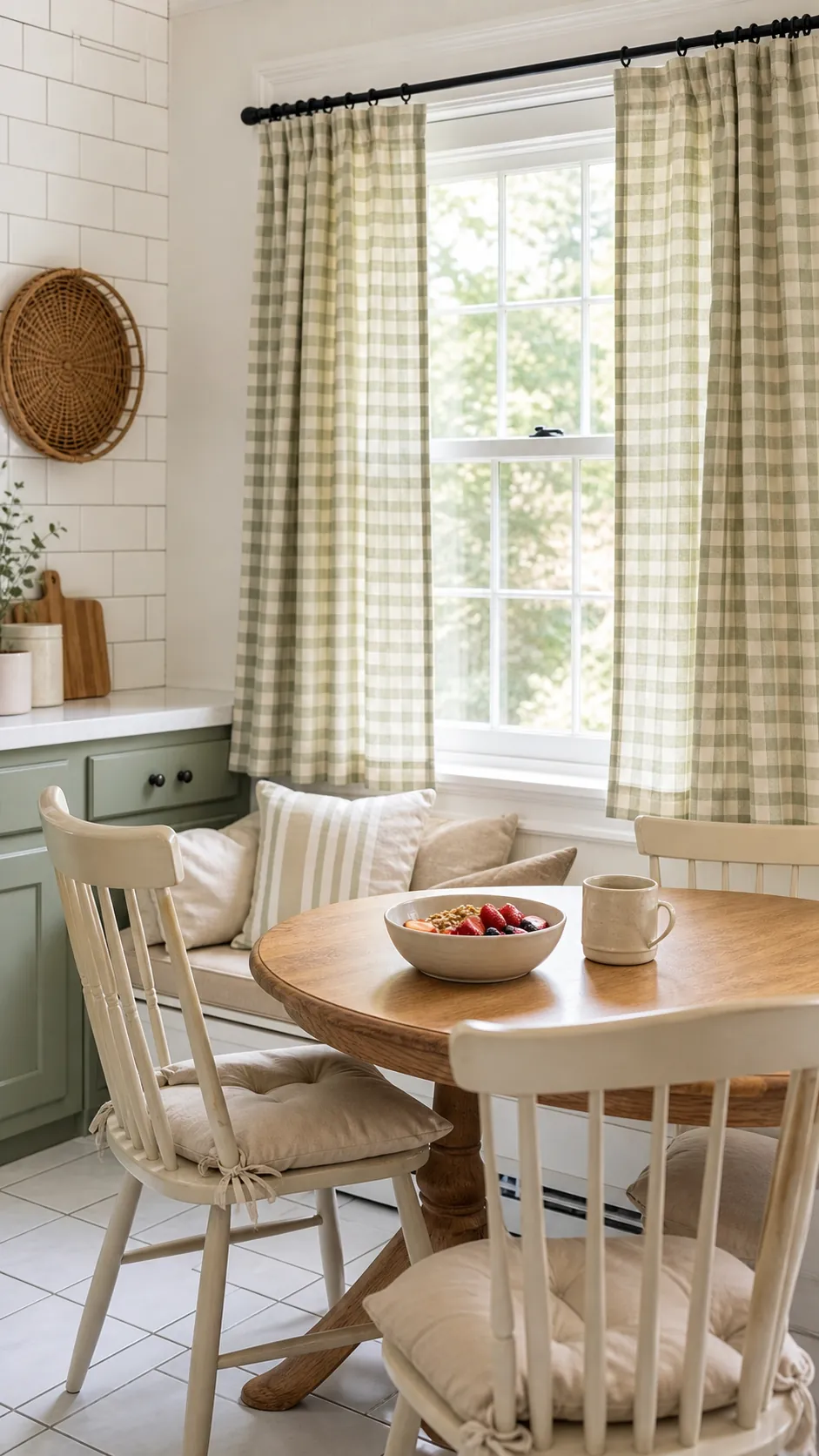
Select washable cotton and keep the hem above eating surfaces or heaters. A simple gathered header suits the casual pattern better than ornate hardware.
Muted Block-Print Curtains for a Reading Nook
A hand-block-inspired print brings irregularity that feels softer than a precise digital repeat. Muted olive, clay, and indigo work well beside books, worn wood, and a comfortable chair.
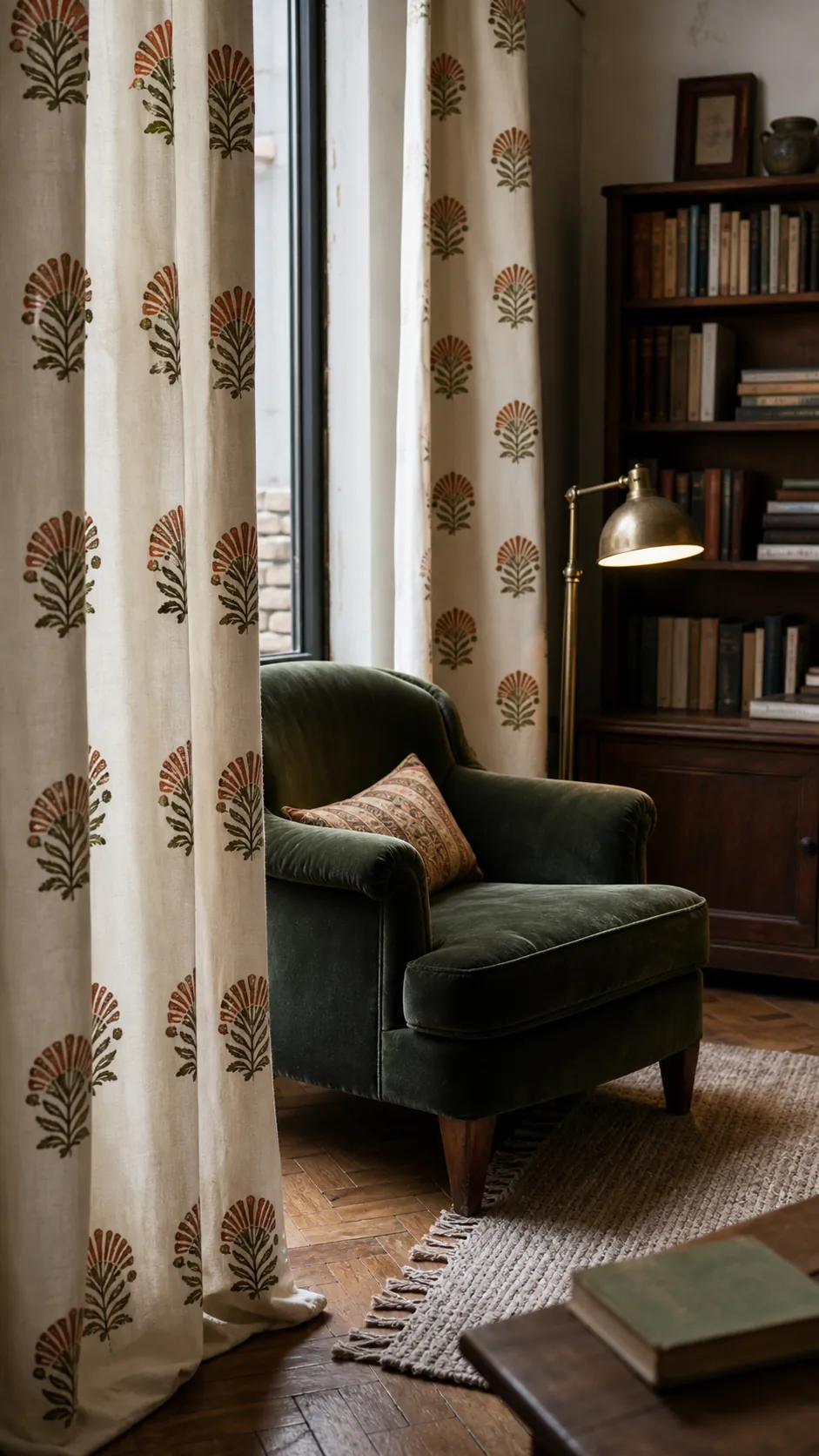
Let the print be the nook’s main pattern. A plain cushion and tonal rug give the eye places to rest, while lining protects colored fabric from direct sun.
Scalloped Café Curtains in a Bathroom
A restrained scalloped edge makes a bathroom window feel finished without a heavy full-length curtain. Use a moisture-tolerant washable fabric that dries readily and preserves natural light.
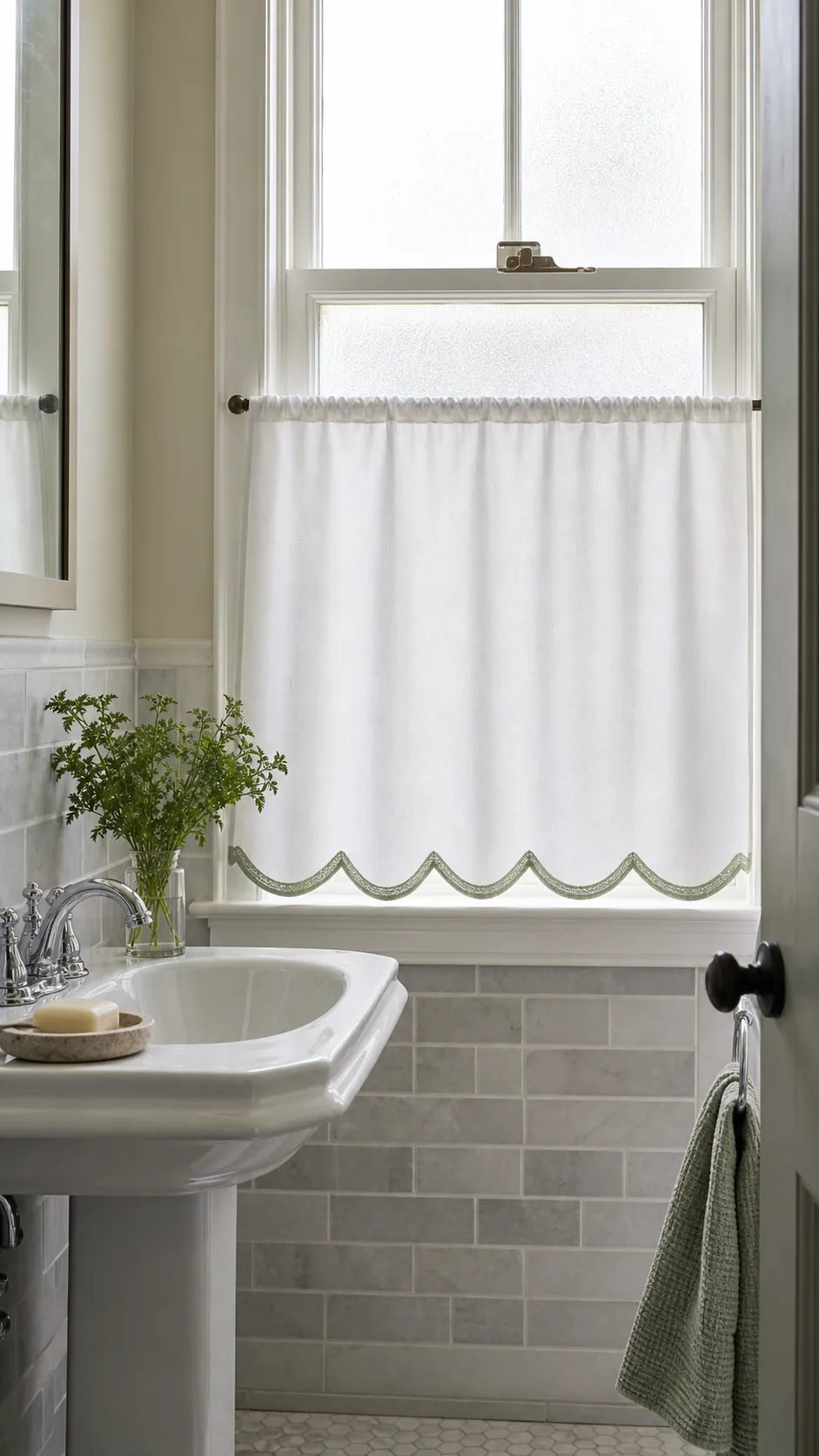
Cover the privacy line rather than guessing at half the glass. Keep the cloth clear of wet surfaces and provide ventilation to avoid lingering dampness.
Loose Linen Tiebacks at French Doors
Loose fabric tiebacks create curved folds that soften the strong rectangles of French doors. Matching ties look quieter than decorative tassels and can release quickly when privacy is needed.
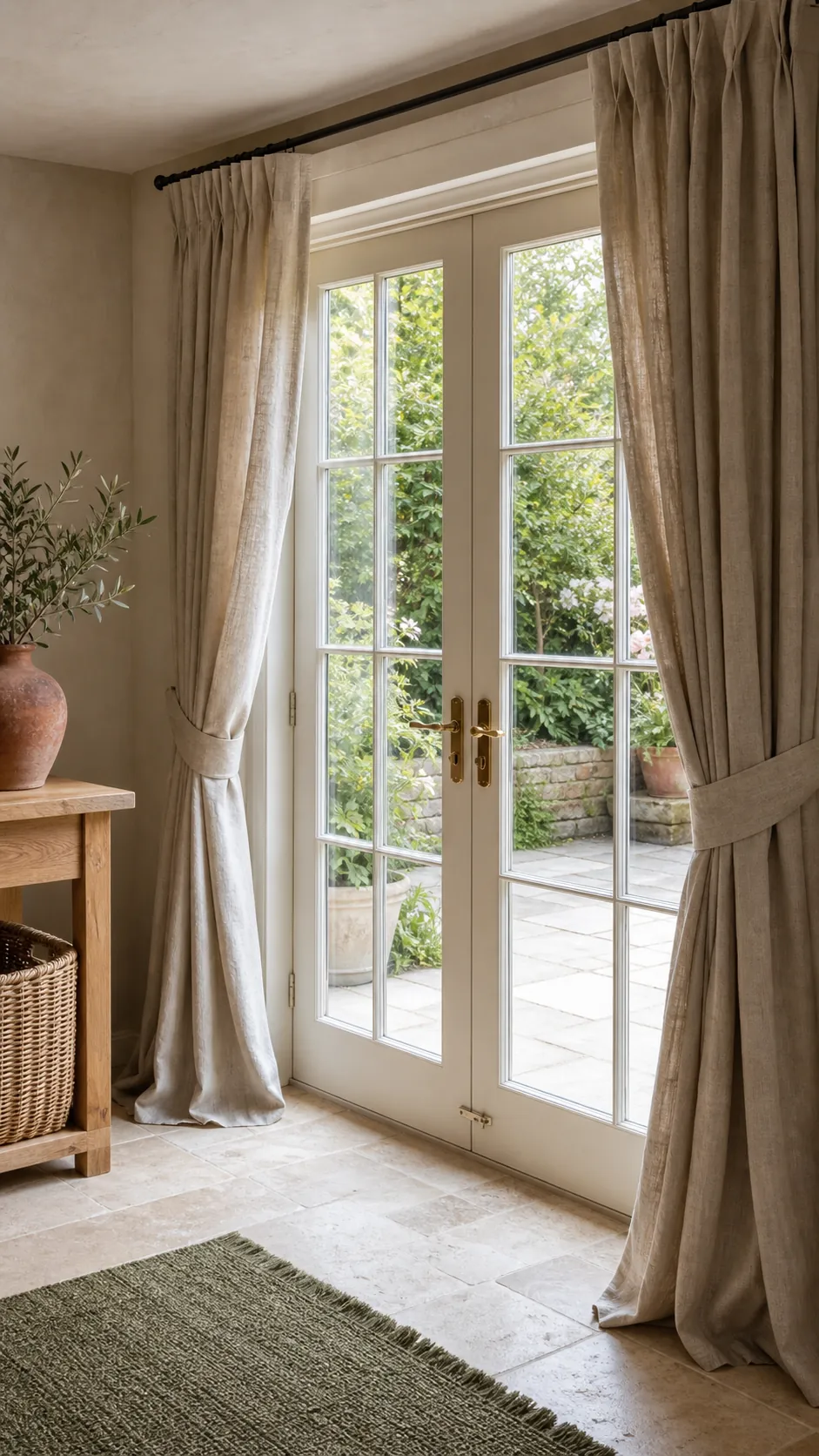
Mount holdbacks where fabric will not catch door handles. Confirm that panels can close fully and remain clear of thresholds on windy days.
A Soft Roman Shade With Side Panels
A relaxed Roman shade gives precise light control while stationary side panels add fullness. This is useful above a desk, bench, or radiator where moving floor-length curtains would be inconvenient.
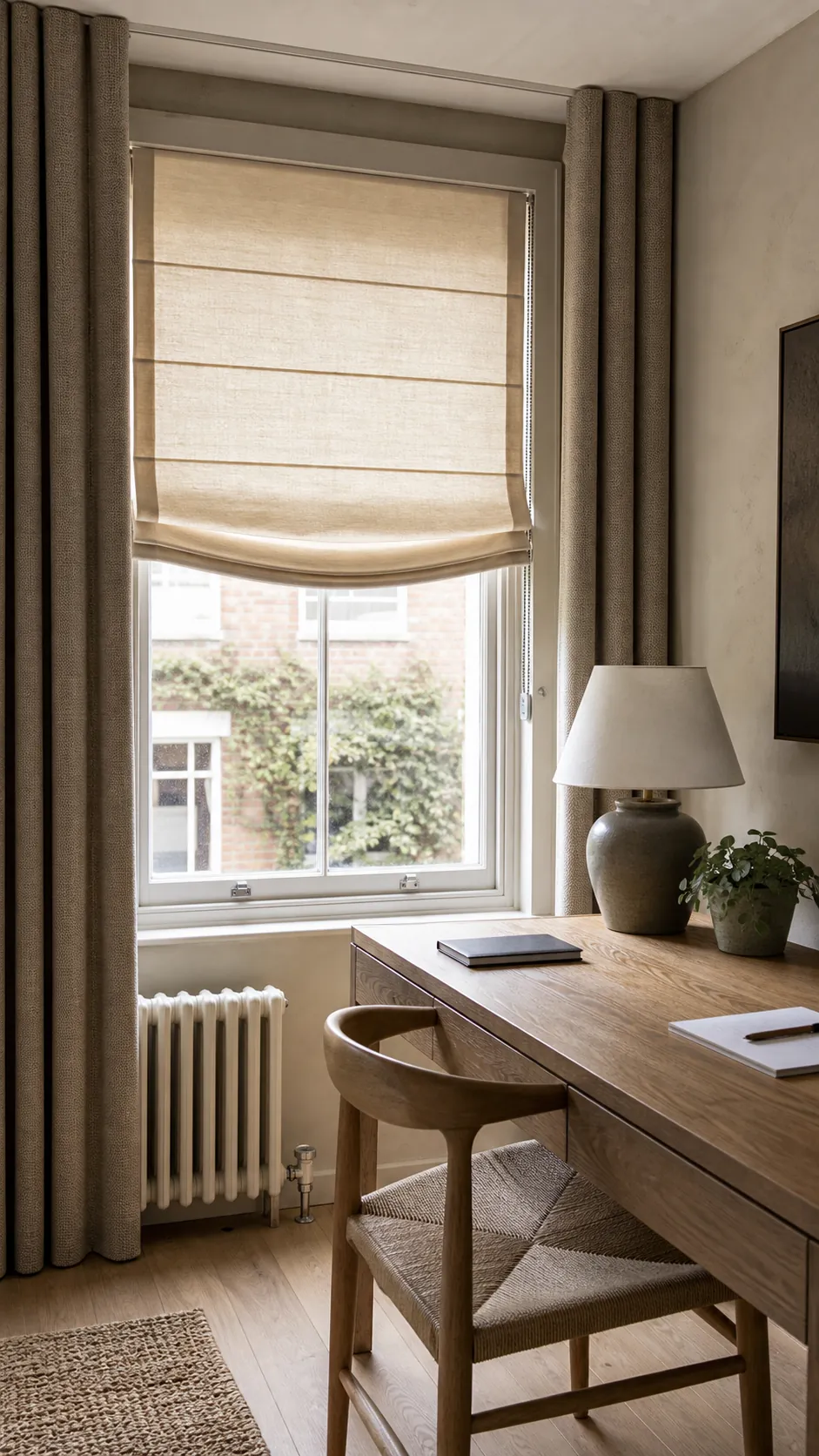
Use related fabrics rather than an exact match: a plain shade can sit beside subtly textured panels. Ensure cords or chains meet current child-safety requirements.
A Draft-Stopping Curtain at an Interior Door
Older homes can benefit from a lined door curtain that softens a hard opening and reduces a noticeable draft. A wool blend or interlined cotton adds warmth without requiring velvet drama.
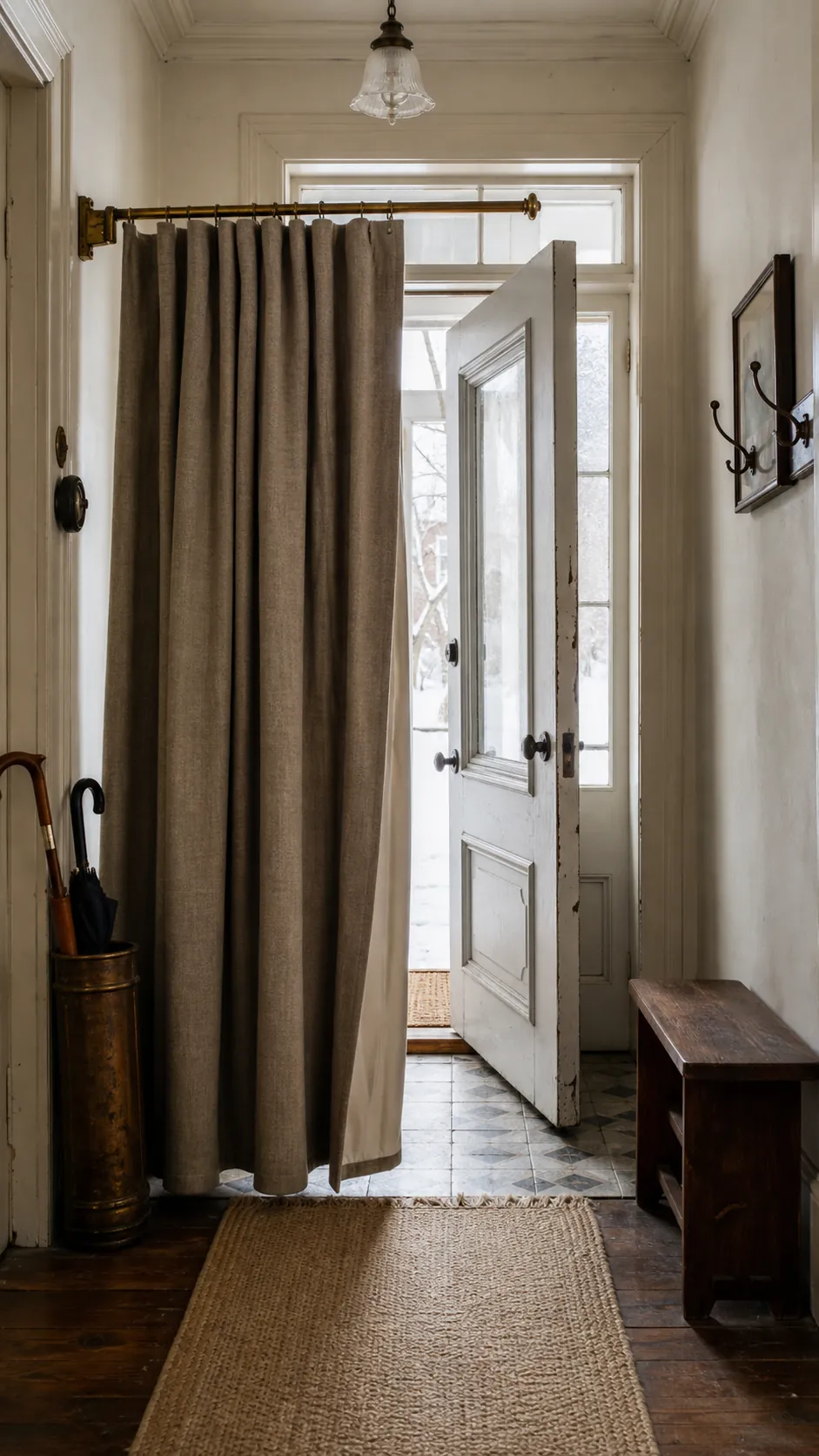
Fit hardware so the fabric clears handles and swings fully away from the route. Never obstruct an exit, heater, or frequently used passage for the sake of a decorative layer.
Curved Tracks Around a Bay Window
A fitted curved track lets fabric follow a bay instead of cutting across it. The result preserves floor space and turns several angular frames into one soft enclosure.
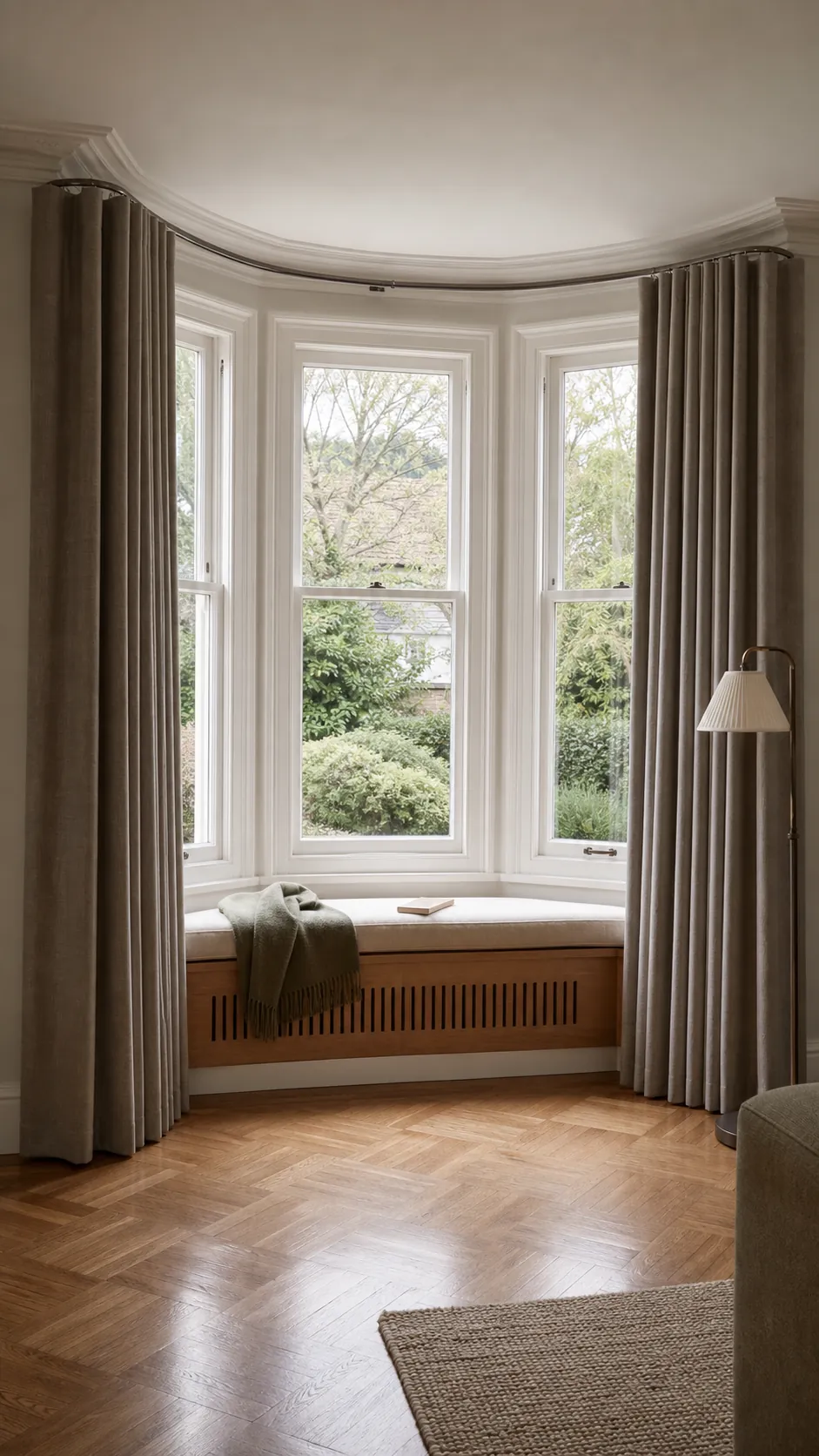
Plan where every panel stacks before ordering. Radiators, window catches, and a bay seat can change the safe depth and finished length of the treatment.
Tone-on-Tone Curtains With Woven Texture
When the house already contains several colors and patterns, softness can come from texture rather than another print. Choose curtains one shade deeper than the wall, with a visible basket weave or fine slub.
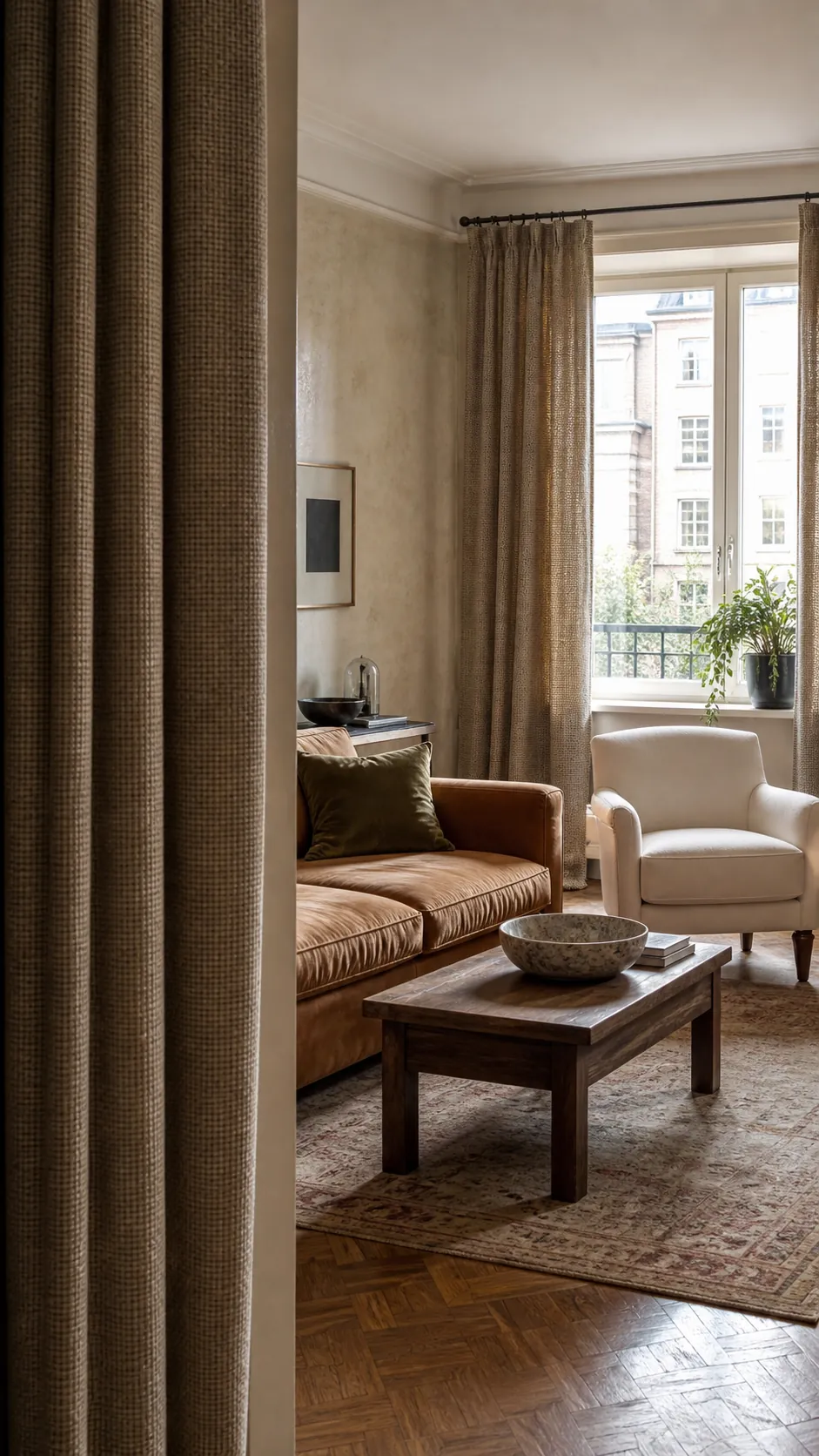
View the sample against the wall in morning and evening light, then check it beside the largest upholstered piece. A close color relationship keeps the room calm, while the woven surface prevents it from feeling flat. Give the panels enough width to form real folds and choose a length that suits cleaning, heating, and daily movement; those practical details are what keep a soft home looking comfortable after the first photograph.