The wall behind a toilet often looks unfinished, but filling every inch can make the room feel crowded. Start with the usable width, the tank lid clearance, and the view from the doorway. In a powder room without a shower, decoration still needs to tolerate cleaning and occasional splashes; in a full bathroom, ventilation and moisture deserve extra attention.
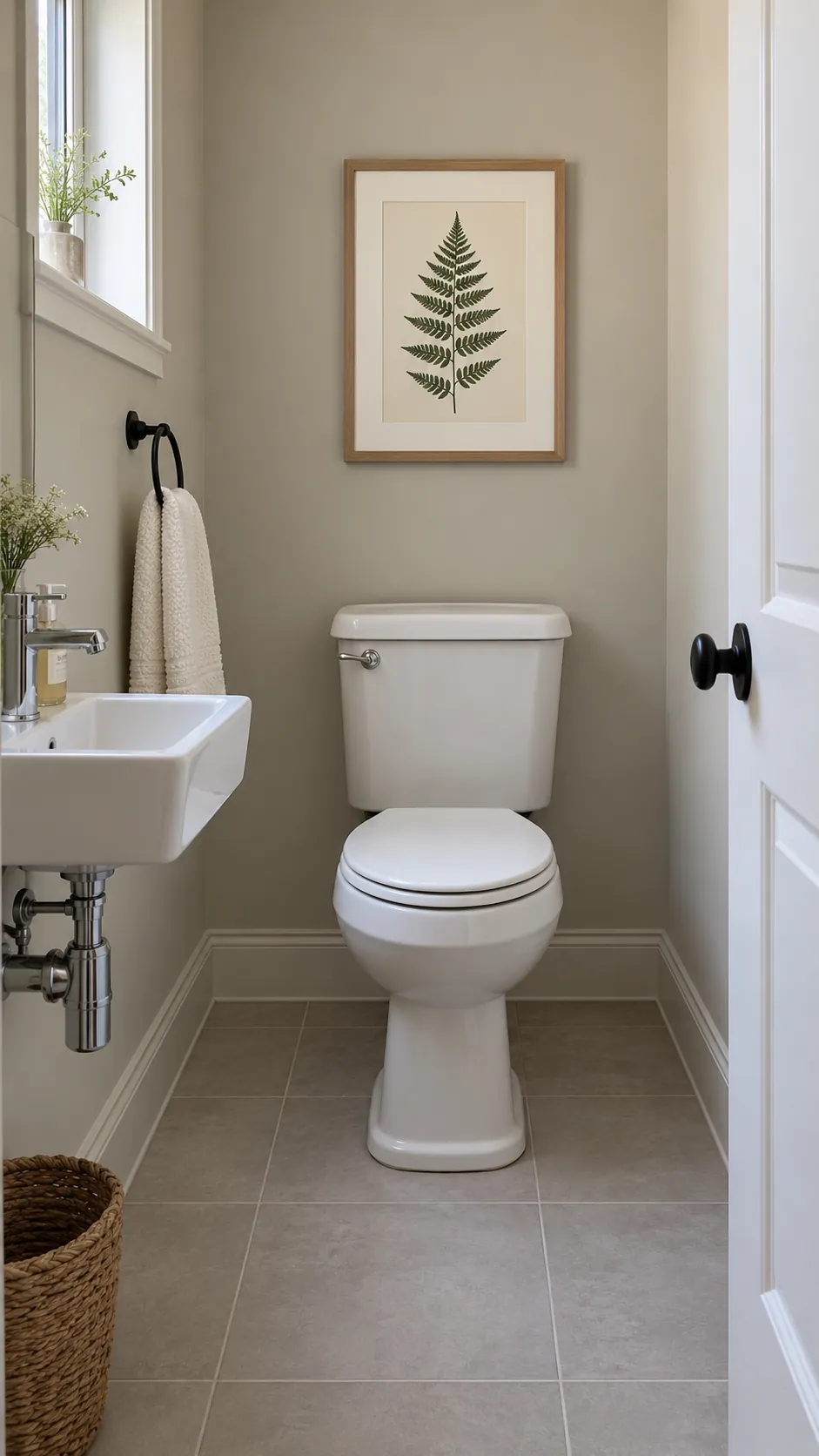
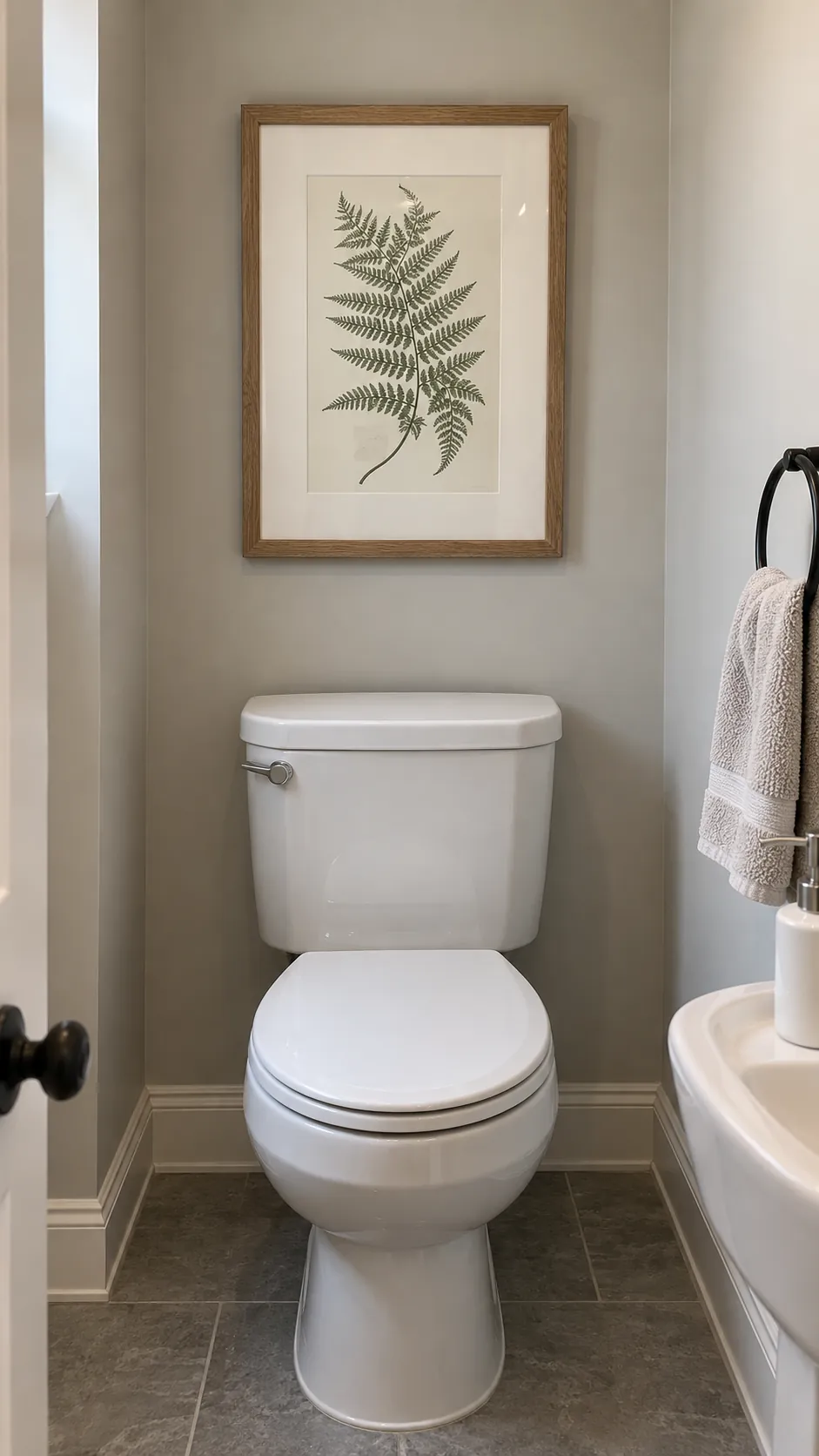
One generously matted botanical print
A single botanical study gives the toilet wall a clear focal point without making a small room feel busy. Choose a print with enough open paper around the leaves that the frame does not read as a solid block. As a starting point, keep the outer frame narrower than the tank, then use a paper template to judge the result from the doorway. Leave room below it to lift the tank lid and reach any controls, and keep ventilation grilles clear. A dark fern drawing can connect to black hardware, while a pale oak frame softens white tile.
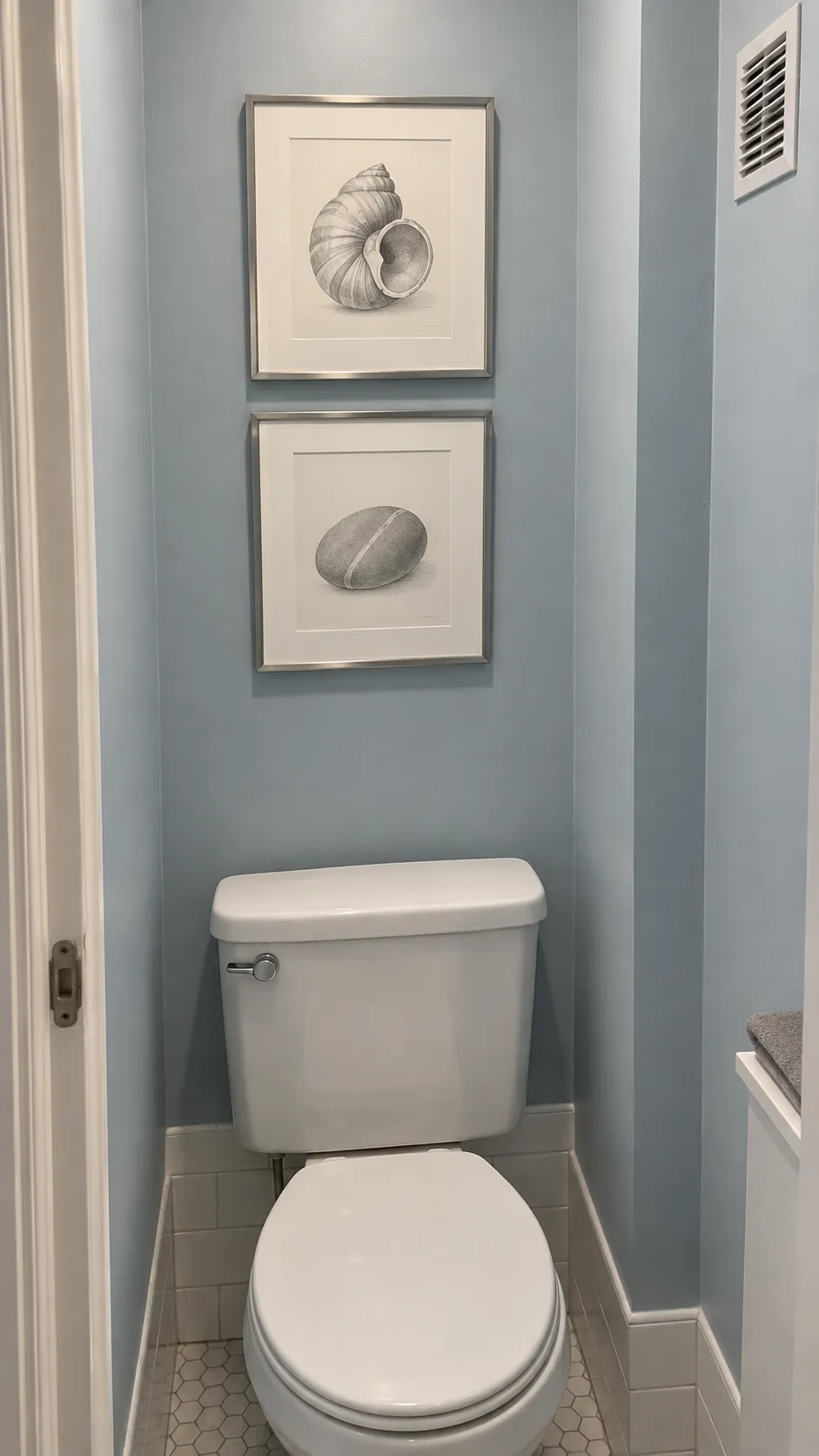
A slim pair of stacked sketches
Two small drawings arranged vertically suit a wall that has more height than width. Give both frames the same finish and align their centers so the pair reads as one composition. A shell study above a pebble drawing creates a quiet relationship without repeating the same subject. Test the lower frame first, with the tank lid fully lifted, before marking the upper position. Keep the gap modest enough that the drawings belong together, rather than floating as two unrelated pictures.
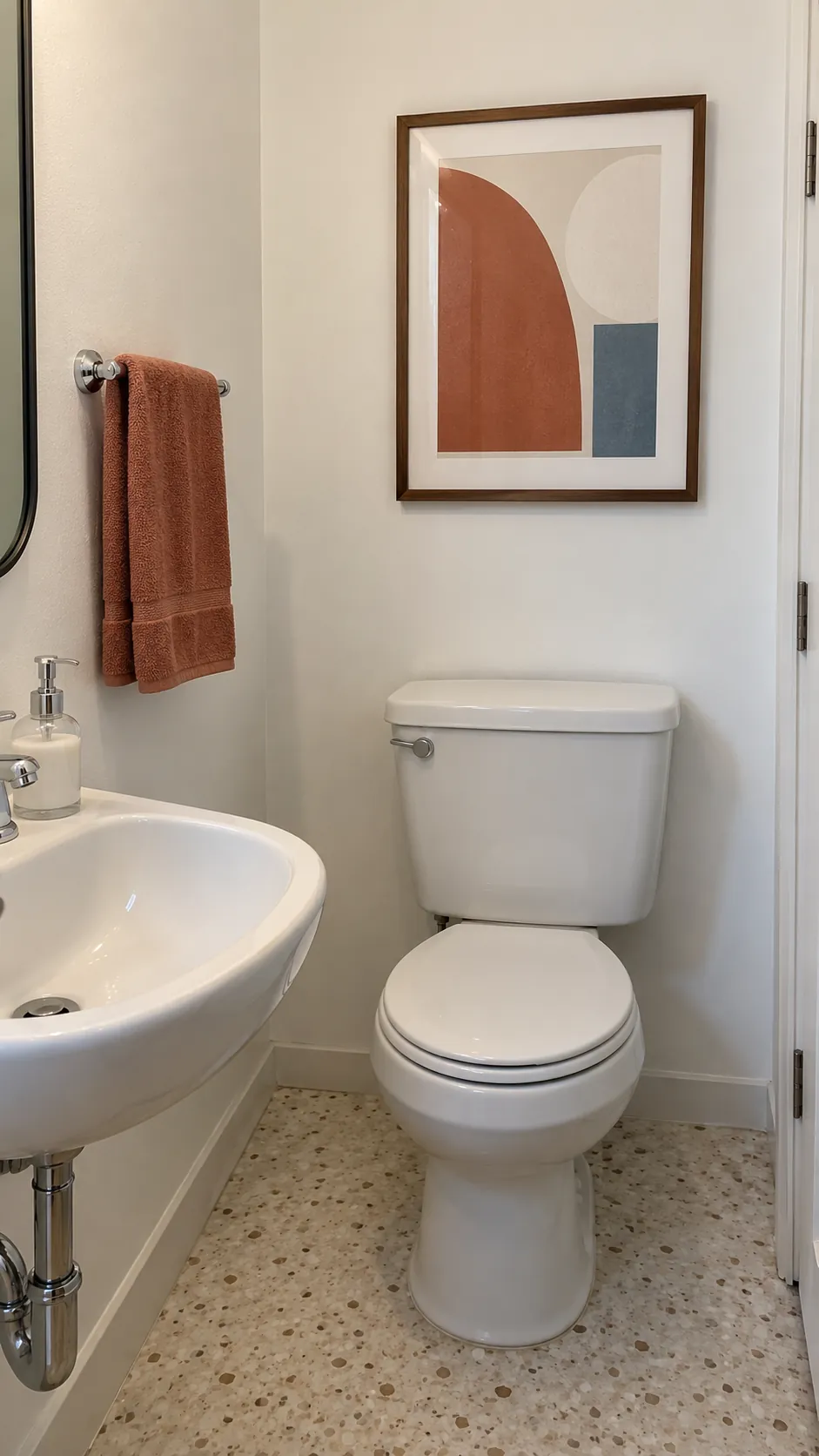
A colorful abstract that echoes the hand towel
An abstract print can supply color when the fixtures and walls are neutral. Borrow one existing accent from the hand towel, rather than adding several new colors that need matching accessories. Broad shapes remain legible in a narrow room where guests often view the picture at an angle. Choose a simple frame and let the artwork carry the visual weight. Place a towel near the basin instead of piling coordinated objects on the toilet tank.
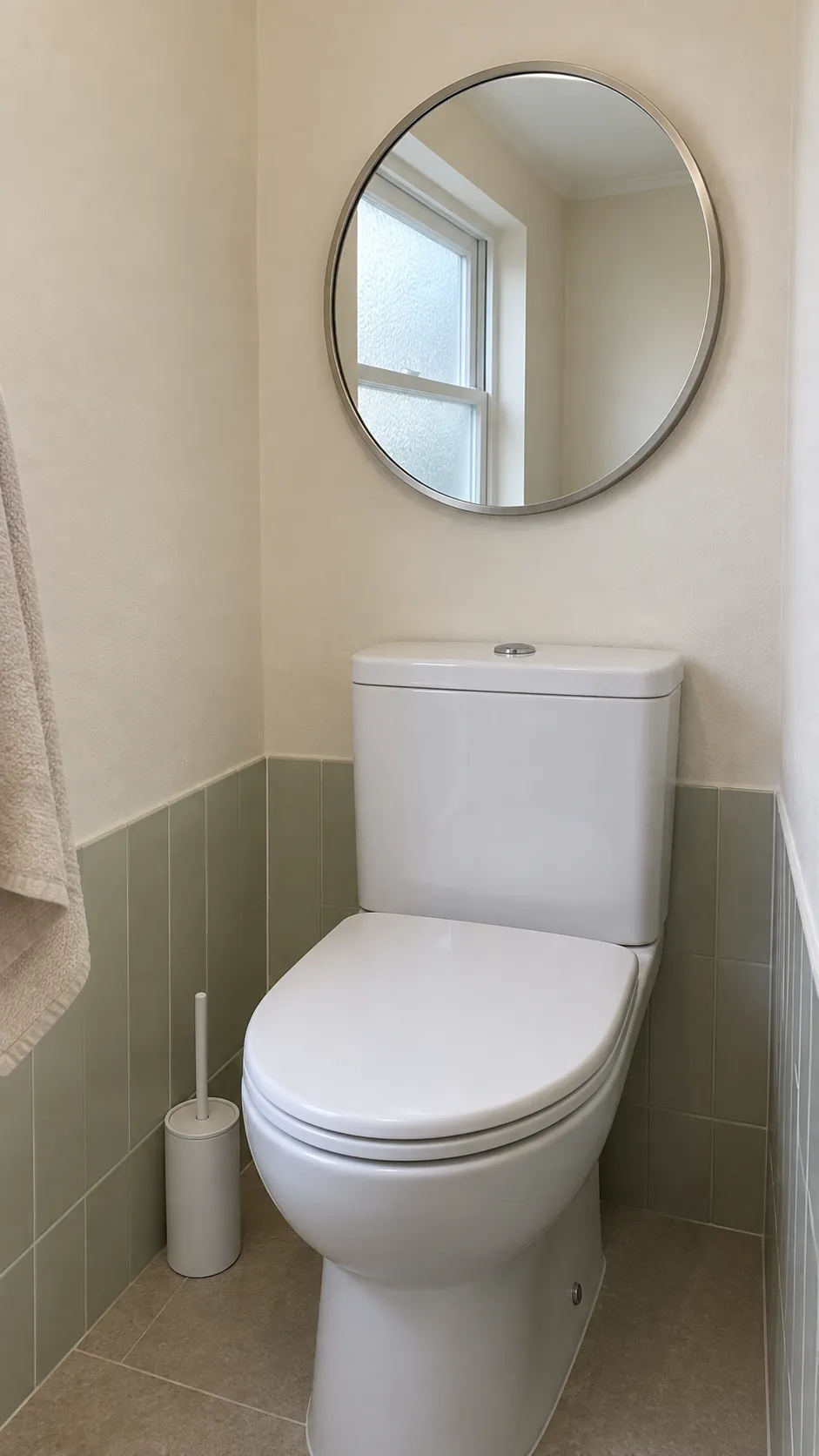
A round mirror for a narrow wall
A small round mirror breaks up the rectangle formed by the tank and its lid. Use it only when its reflection improves the view, such as showing daylight or a calm section of wall. A mirror that reflects the underside of a shelf or a cluttered doorway may make the room feel busier. Check the reflection at both standing and seated heights before mounting it. Install the mirror with fixings rated for its weight and the actual wall material.
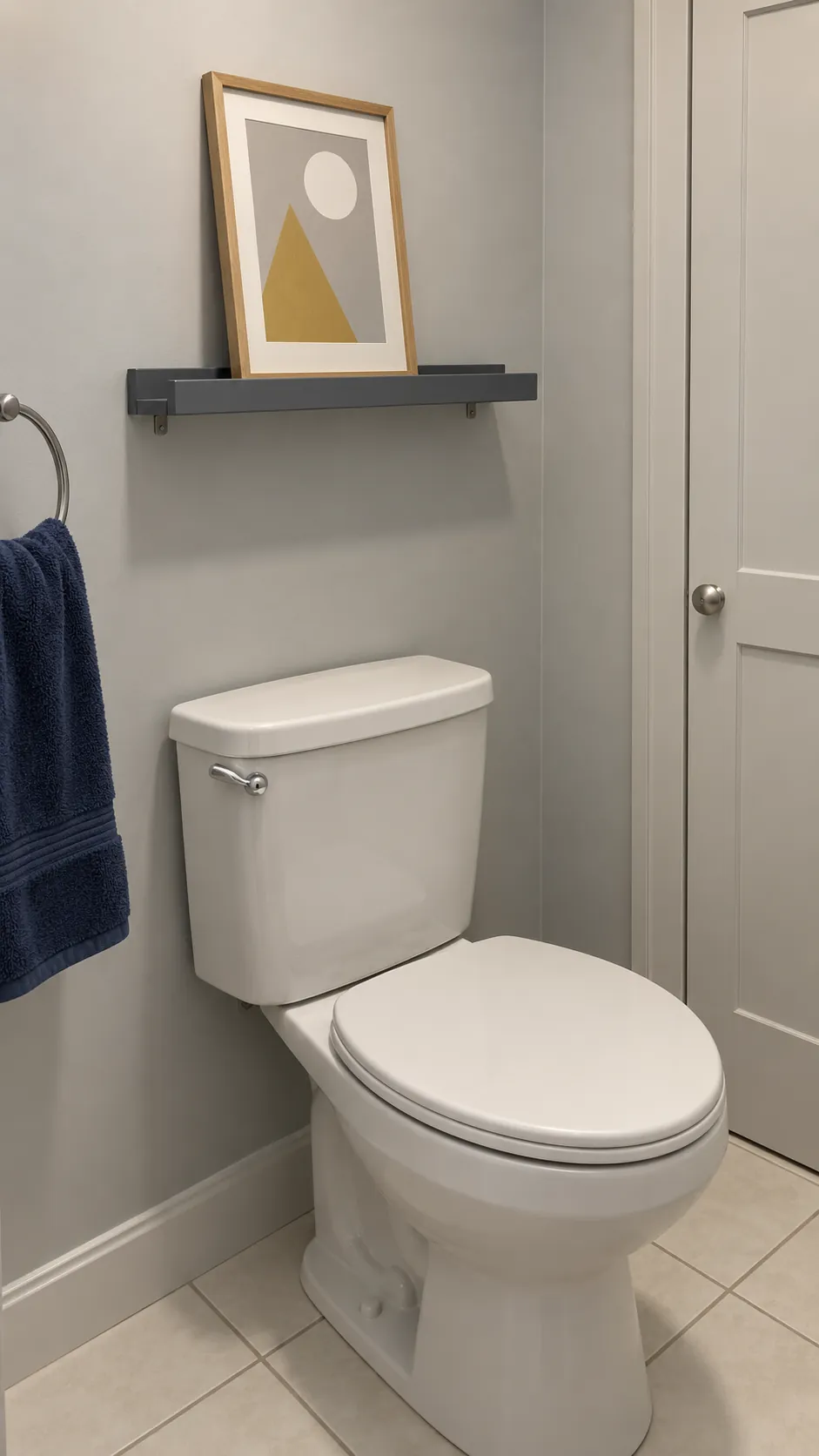
A shallow shelf with one leaning print
A shallow picture shelf makes it easier to change powder room artwork without moving the wall fixings. Keep the ledge high enough for tank access and shallow enough that it does not intrude into the space above a seated guest. Use one restrained geometric print with a secure frame stop, not a stack of unstable pictures. Avoid candles, heavy loose ornaments, and glass vessels that could fall during cleaning. Check the shelf and fixing instructions for the load you intend to place on it.
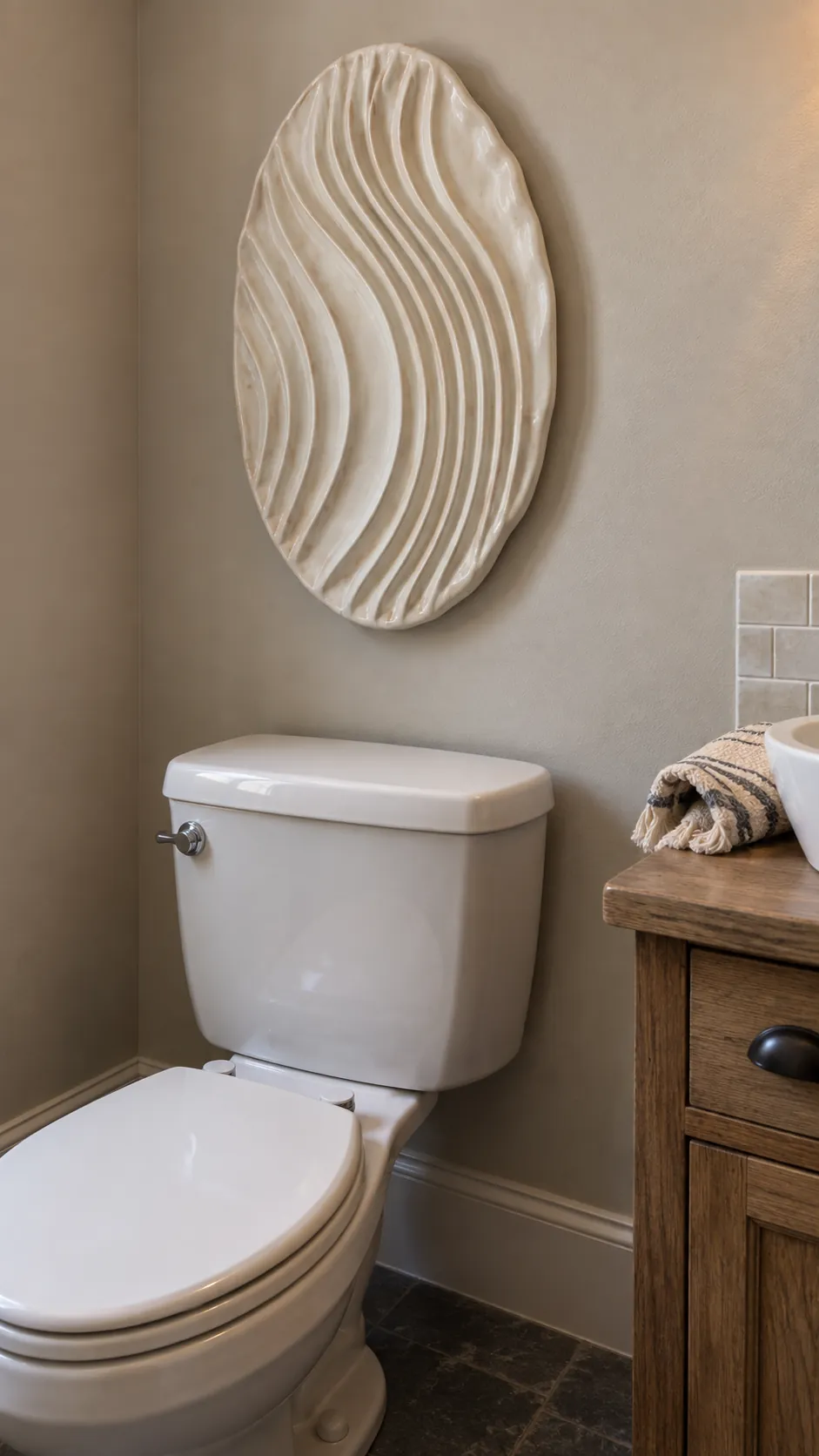
A sculptural ceramic wall piece
A ceramic relief adds dimension without the layered look of several frames. An irregular oval with a simple ribbed surface works well beside smooth porcelain because the contrast is easy to see. Choose a wall piece with a proper hanging system rather than adapting an ordinary heavy plate. Confirm that the wall anchors suit its weight, and keep it out of the tank lid path. A sealed finish is easier to wipe than a porous surface in a room that collects dust.
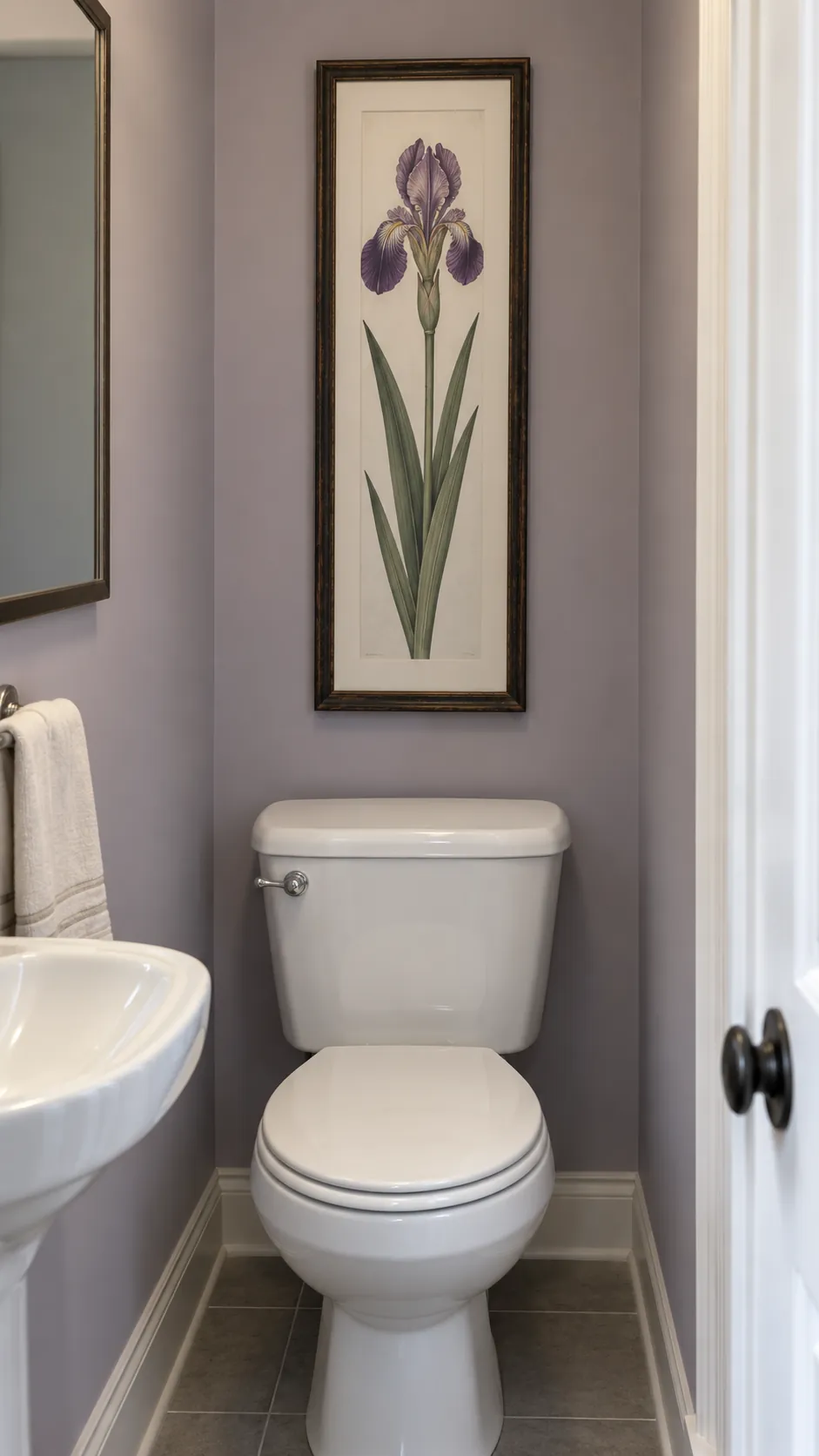
A restrained grid of small architectural photographs
Four small architectural photographs can fill a broad wall while preserving a tidy outline. Use images of different details, such as an arch, a stair, a doorway, and a column, with consistent mounts and frame sizes. Lay the full arrangement out on paper before transferring positions to the wall. Center the group over the toilet rather than centering each picture independently on nearby features. If the room has a shower, avoid irreplaceable photographs and choose materials suited to the extra moisture.
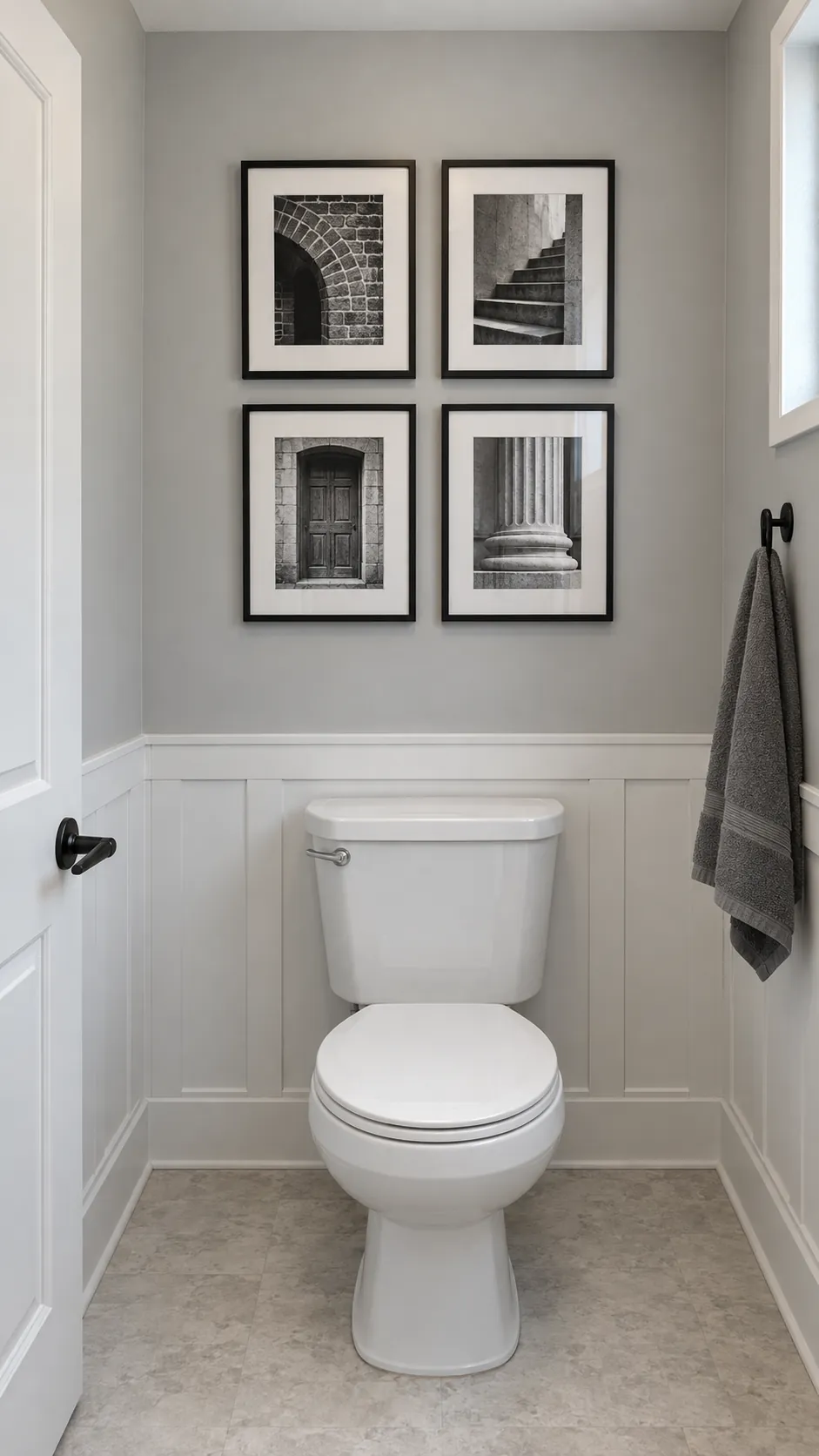
A woven panel for softer texture
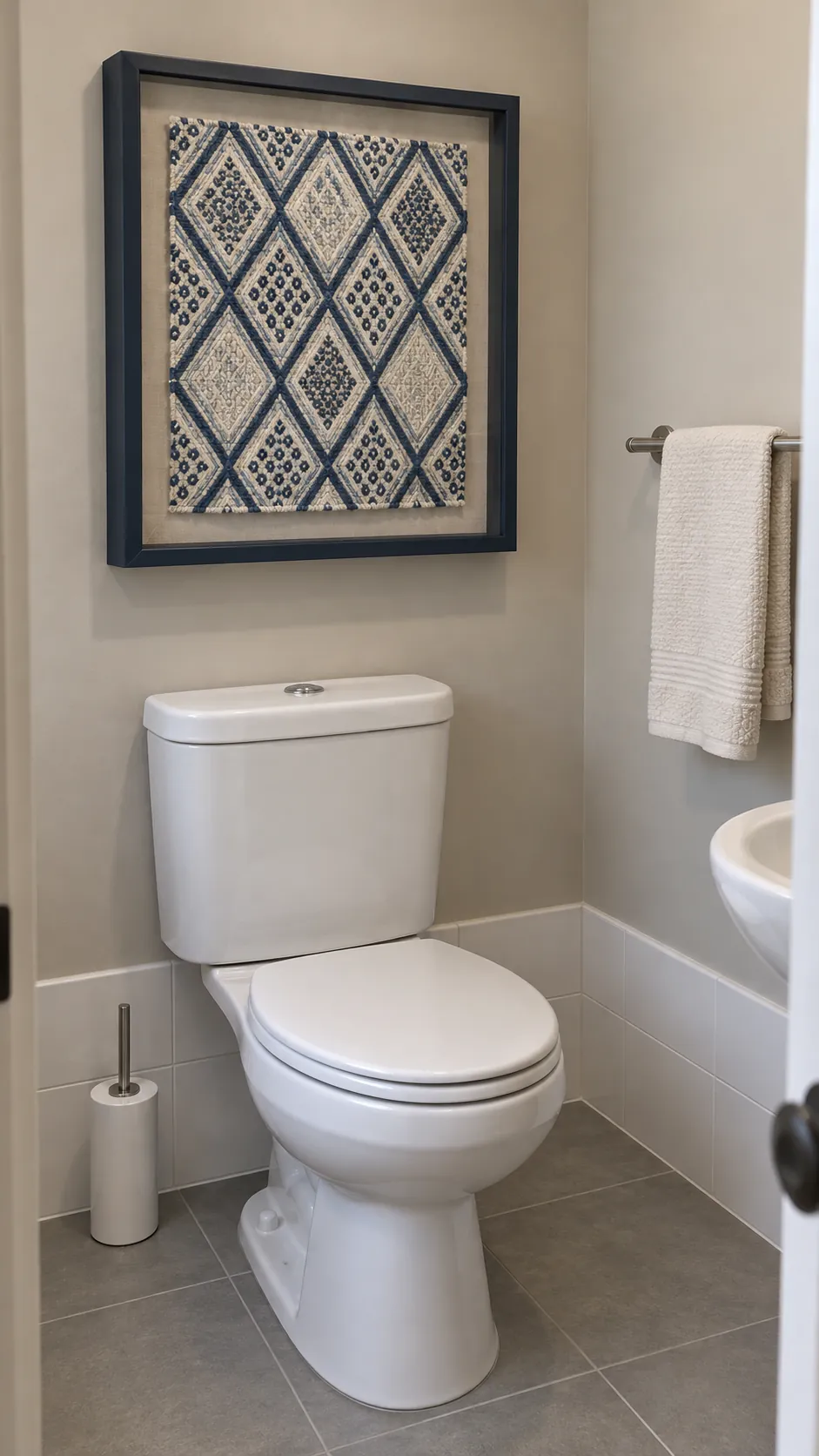
A woven panel brings softness to a room dominated by tile, metal, and porcelain. A tightly woven checker pattern gives the wall a deliberate motif without adding written signs or extra colors. Keep the textile clear of splashes, and choose a piece you can remove easily for dusting. This approach suits a dry powder room better than a poorly ventilated bathroom with frequent shower steam. Let its texture stand alone instead of surrounding it with more fabric decorations.
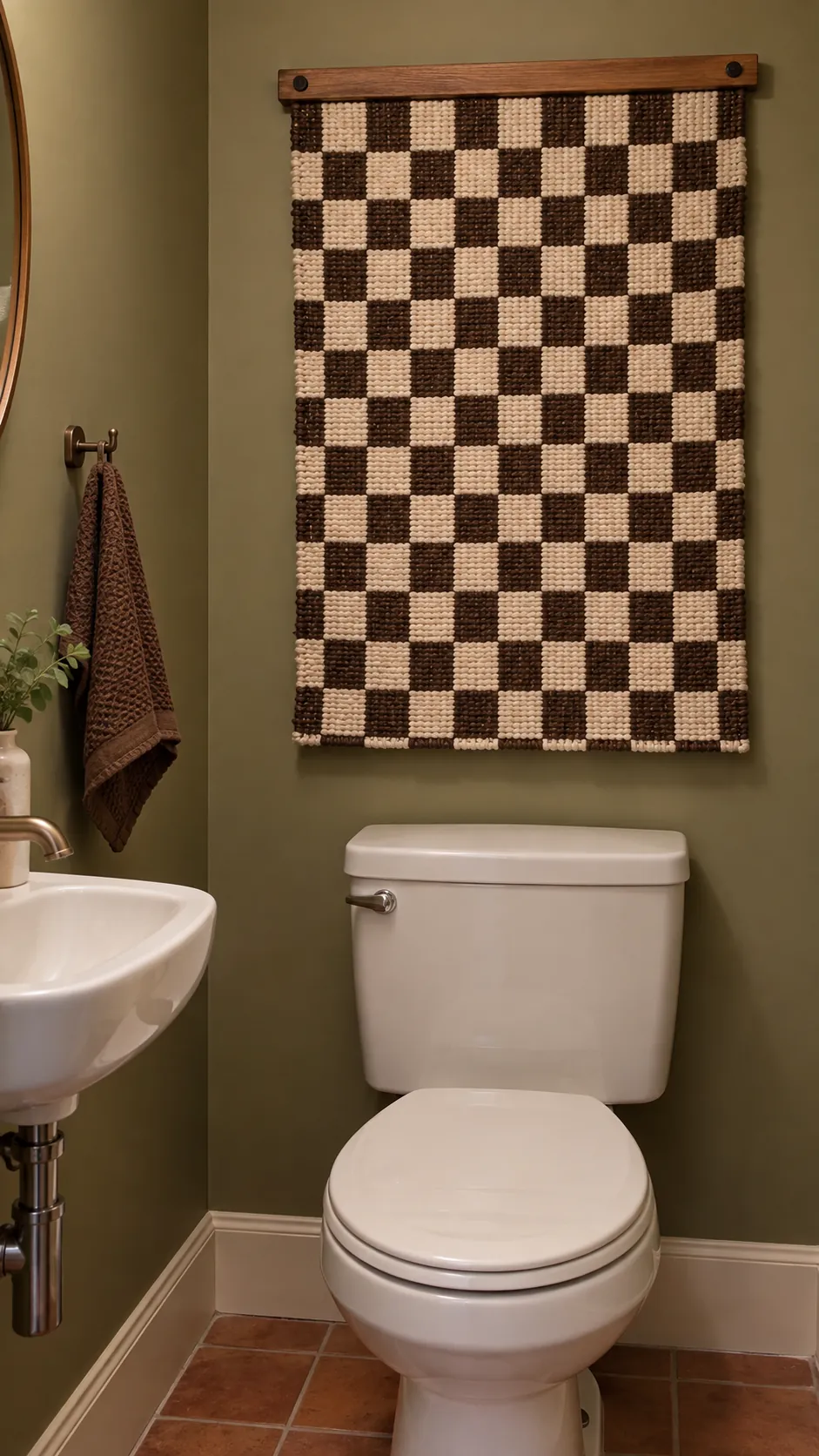
A horizontal print above a low tank
A horizontal print can balance a squat tank when the wall has generous width. A graphic study of overlapping circles creates a stable band of interest without needing several frames. Keep the composition within the usable wall area so it does not compete with a nearby towel ring or switch. Judge its height with a temporary paper outline rather than relying on a general picture placement rule. The tank needs clear access, and the artwork should look connected to the fixtures from the doorway.
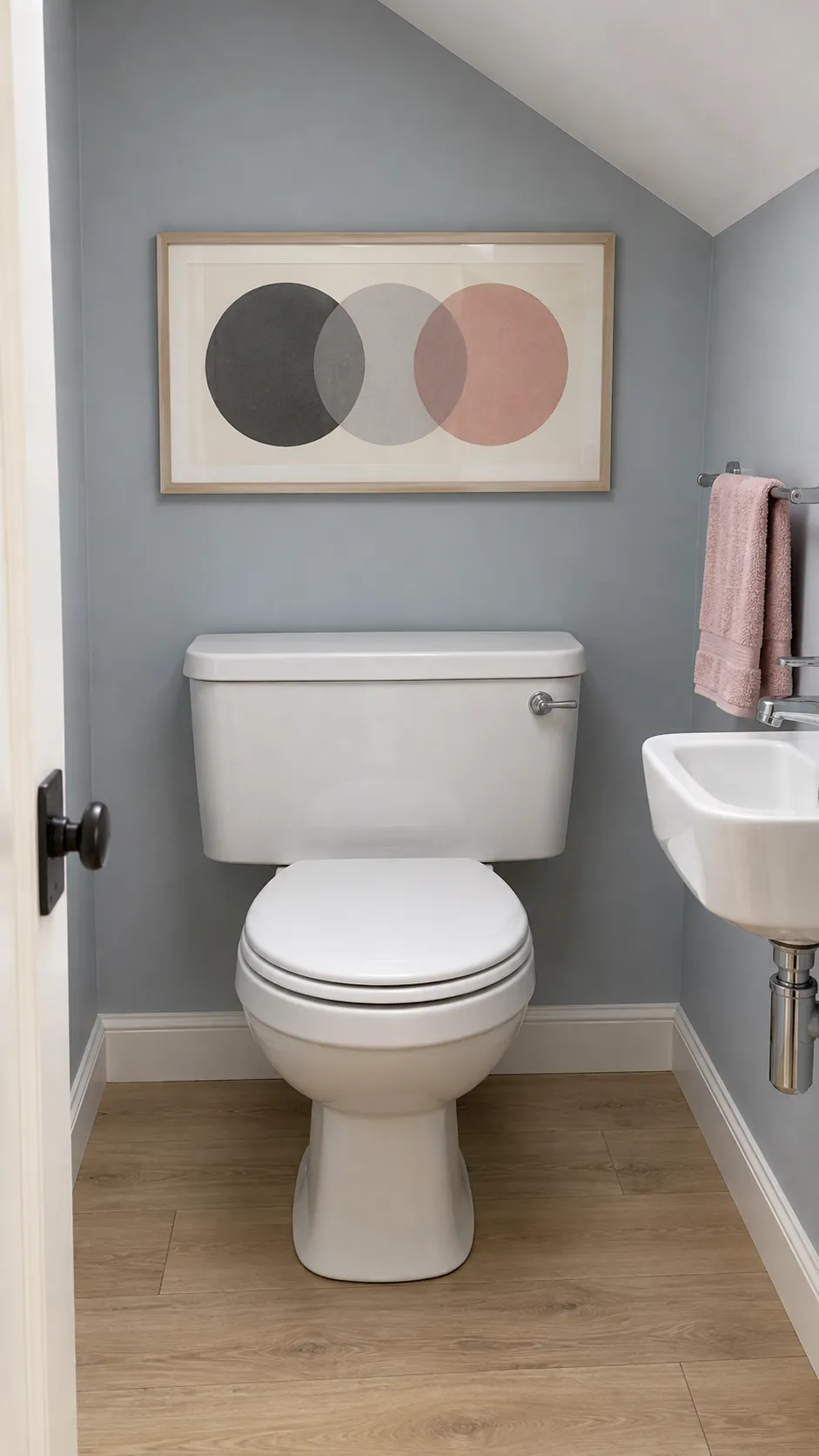
A narrow vintage floral study
A tall floral study works in a slim gap between the toilet and a side wall. Choose one recognizable flower, such as an iris, so the image still has impact at a small scale. A simple frame with a restrained aged finish gives the print character without adding a bulky carved edge. Use a reproduction if sunlight, cleaning products, or moisture could damage an original. Keep the lower edge above the tank opening zone and use the wall width as your guide.
A small metal sculpture with open space
An open metal sculpture gives the wall interest while allowing the paint color to remain visible. A curved ribbon shape feels lighter than a solid plaque of the same outer size. Repeat a metal finish already present in the room if you want the piece to feel integrated. Check for sharp projecting edges and choose a mounting position that guests cannot easily brush against. Follow the maker’s hanging directions because a decorative loop is not always a load bearing attachment point.
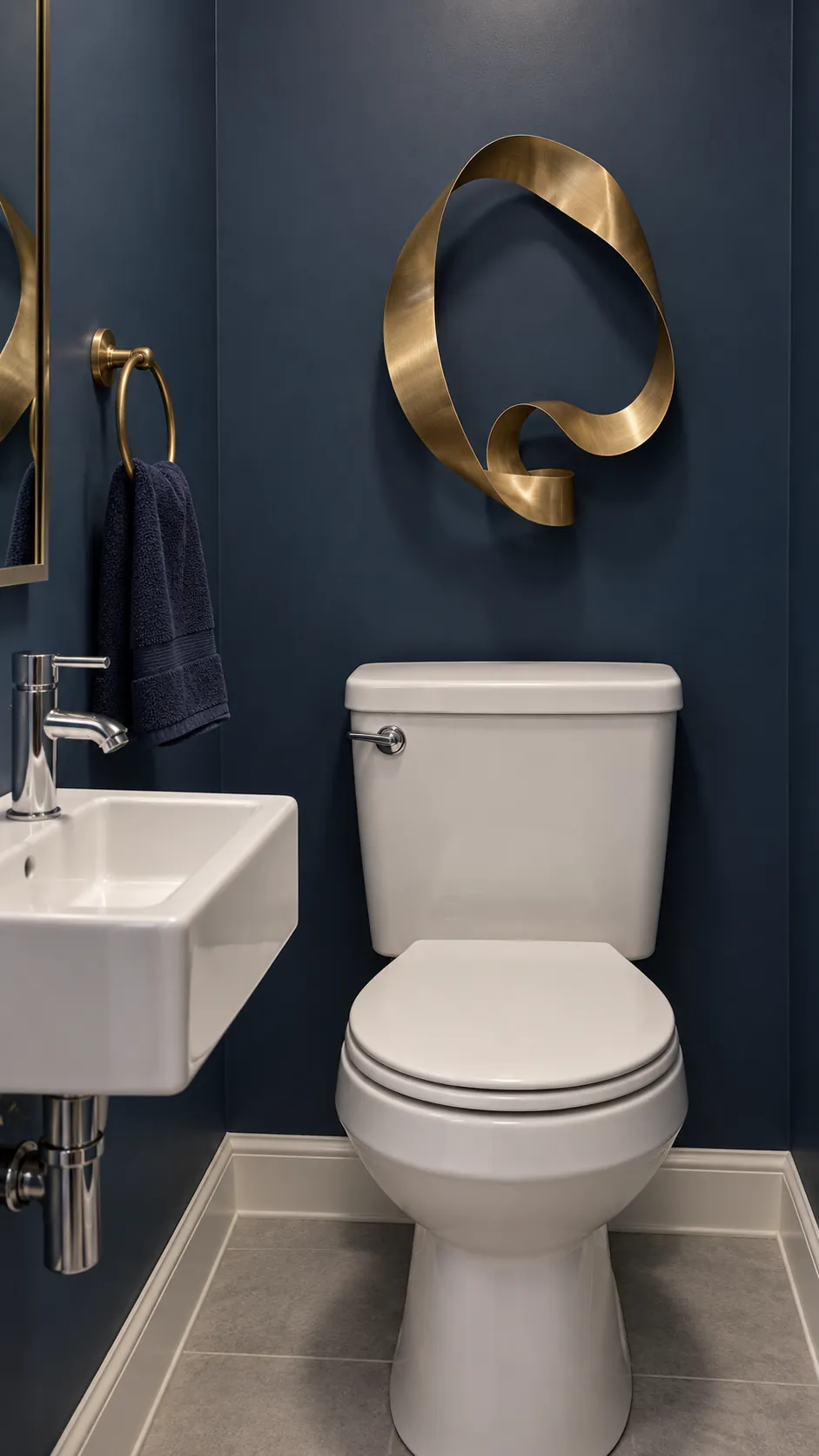
A framed graphic on a patterned wall
When the wall already carries a pattern, artwork needs a quieter outline. A bold charcoal arch on a wide white mount can remain readable over small scale block print wallpaper. Keep the frame plain and avoid a busy image with many tiny details. Try the picture in place before committing, because wallpaper contrast can change its apparent size. One clear shape usually gives the eye a place to rest without asking the pattern to disappear.
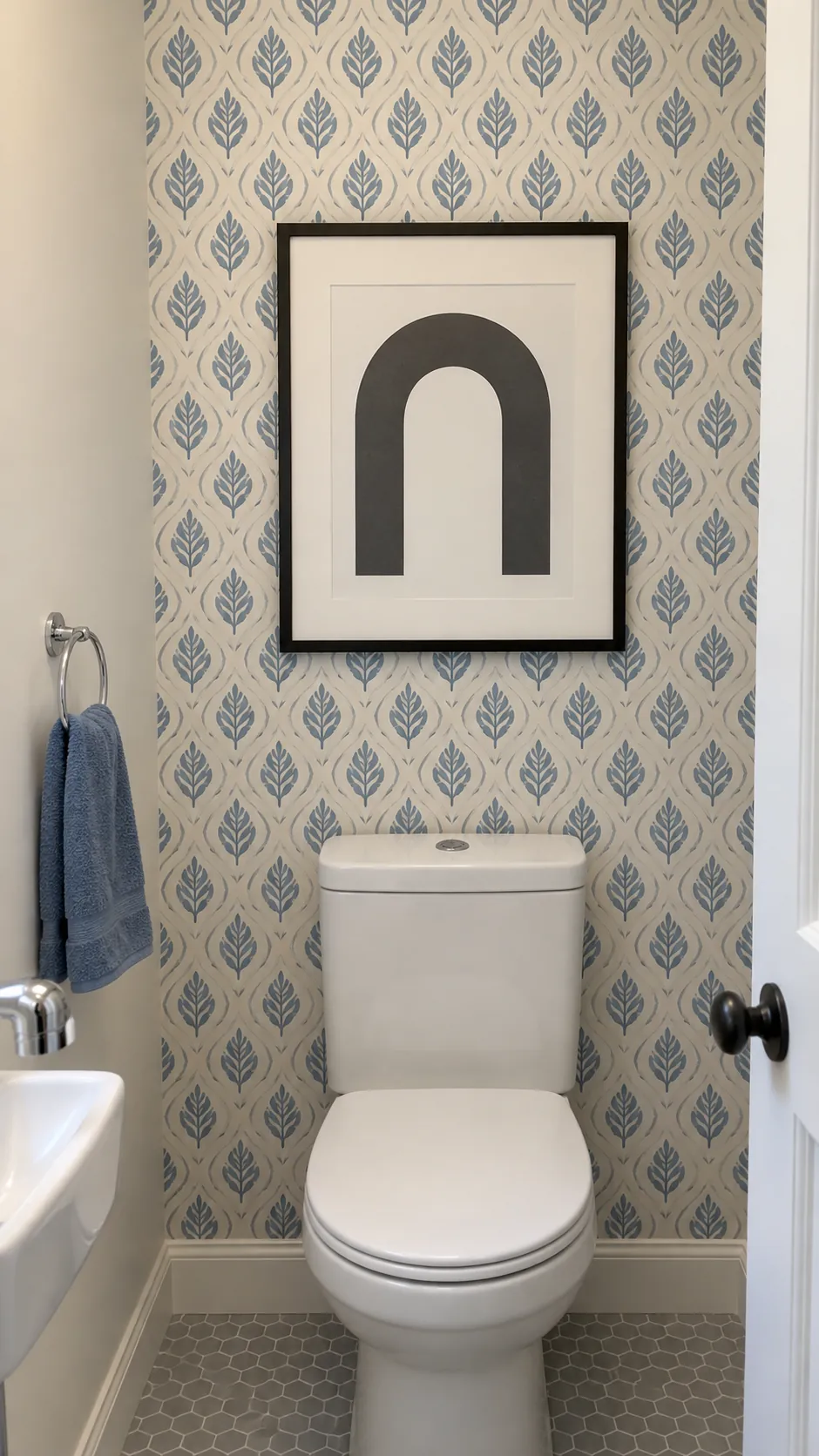
A tiny gallery inside one large frame
One large frame can hold several small drawings while keeping the wall easy to organize. A divided mount containing a leaf, a seedpod, and an acorn creates a related collection with only one outer edge. Leave generous paper between the subjects so the grouping does not resemble a crowded noticeboard. This is useful when you want the detail of a gallery but have little room for separate fixings. Use the frame’s complete outside dimensions when testing artwork proportions above the tank.
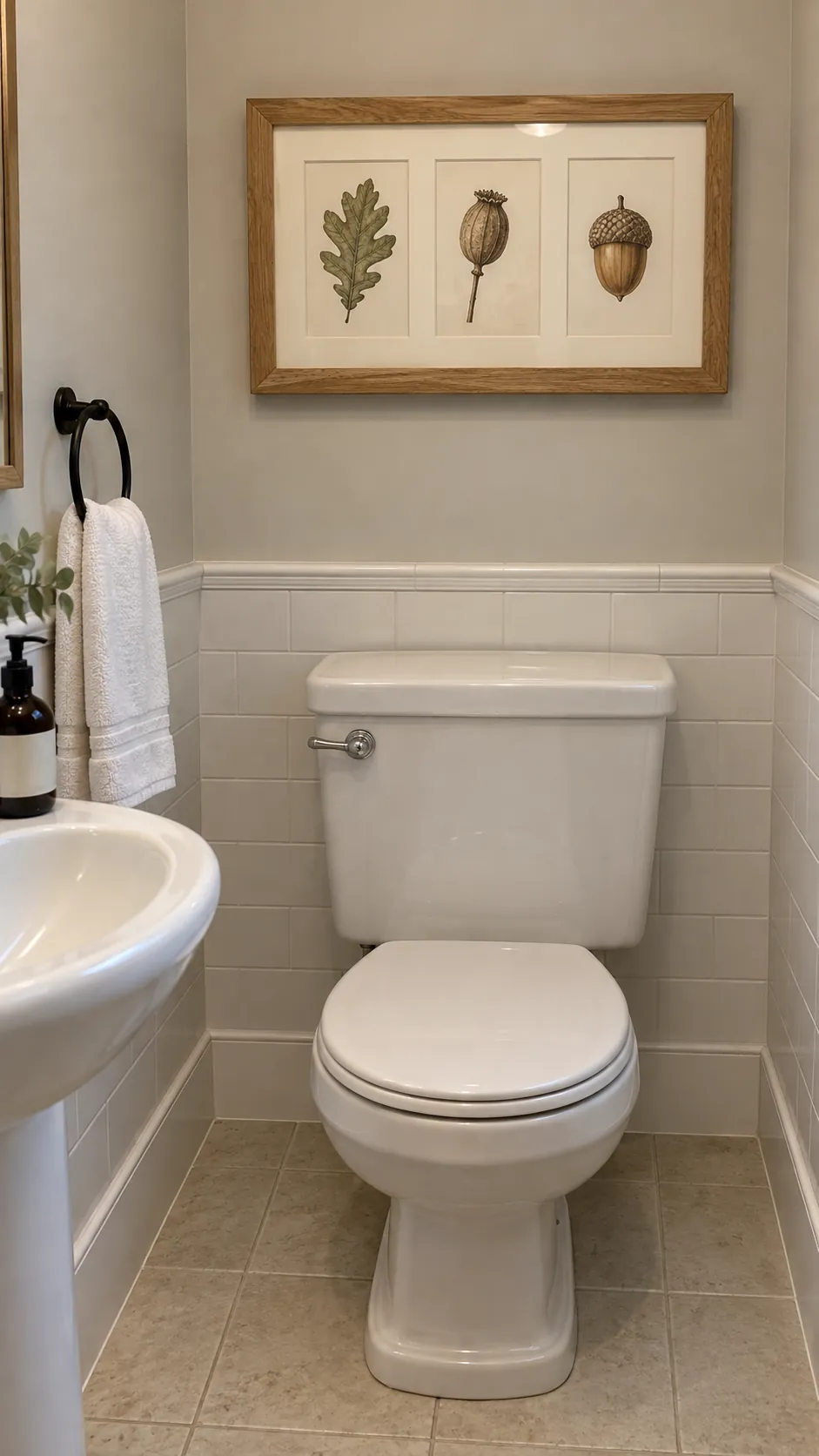
A framed textile fragment with a graphic motif
A framed textile fragment adds pattern with more depth than a paper print. A blue and cream stitched diamond design gives the wall a specific visual rhythm that can relate to a simple towel. Choose a suitable mount that supports the cloth without stretching or crushing it. Keep valuable textiles away from rooms with persistent condensation and use a reproduction if conditions are uncertain. A deeper frame needs extra clearance, so check its projection as well as its width.
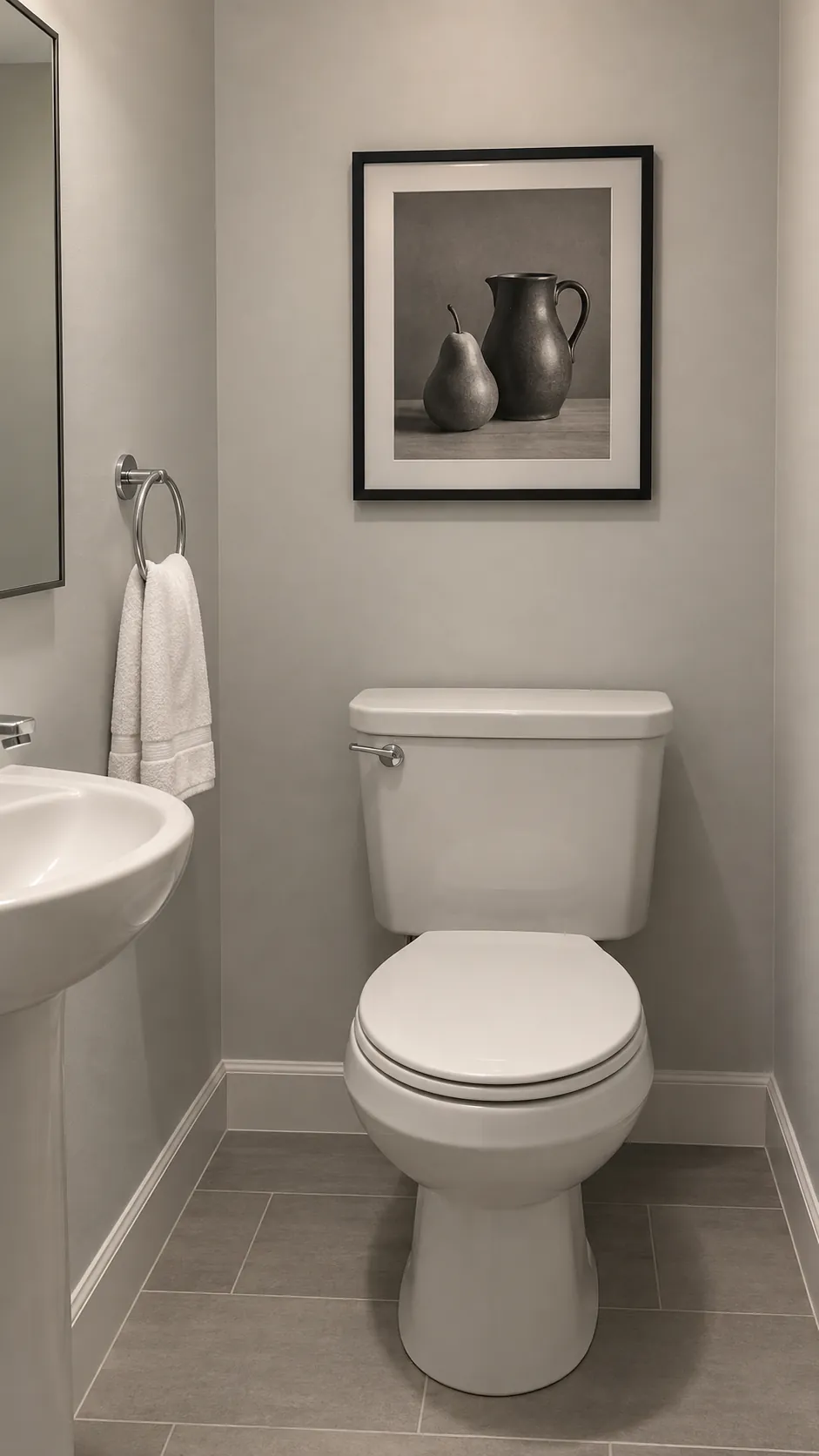
A monochrome still life for an uncluttered finish
A monochrome still life suits a powder room where you want decoration without another accent color. A photograph of a pear and a ceramic jug gives the wall a familiar subject while staying visually quiet. Use a narrow frame if nearby fixtures already have strong outlines. Before buying it, check that the picture remains clear under the room’s actual evening lighting. Leave the tank top mostly empty so the framed bathroom art gets attention and cleaning stays straightforward.