
Walking into a home and being met with a dark, cramped corridor can feel unwelcoming. Many houses have a long hallway that feels more like a tunnel than a room, leaving homeowners unsure of how to decorate without making the space feel even smaller. It is a common design challenge, but these tight areas actually offer a great chance to show off your personal style right at the front door.
This list provides practical ways to make your entrance feel wider, brighter, and more useful. Whether you need better lighting or smart storage, these narrow front entryway ideas will help you see your hallway in a new way. You can turn that awkward passage into a beautiful transition that sets the tone for the rest of your home.
Slim Console Table with Tapered Legs
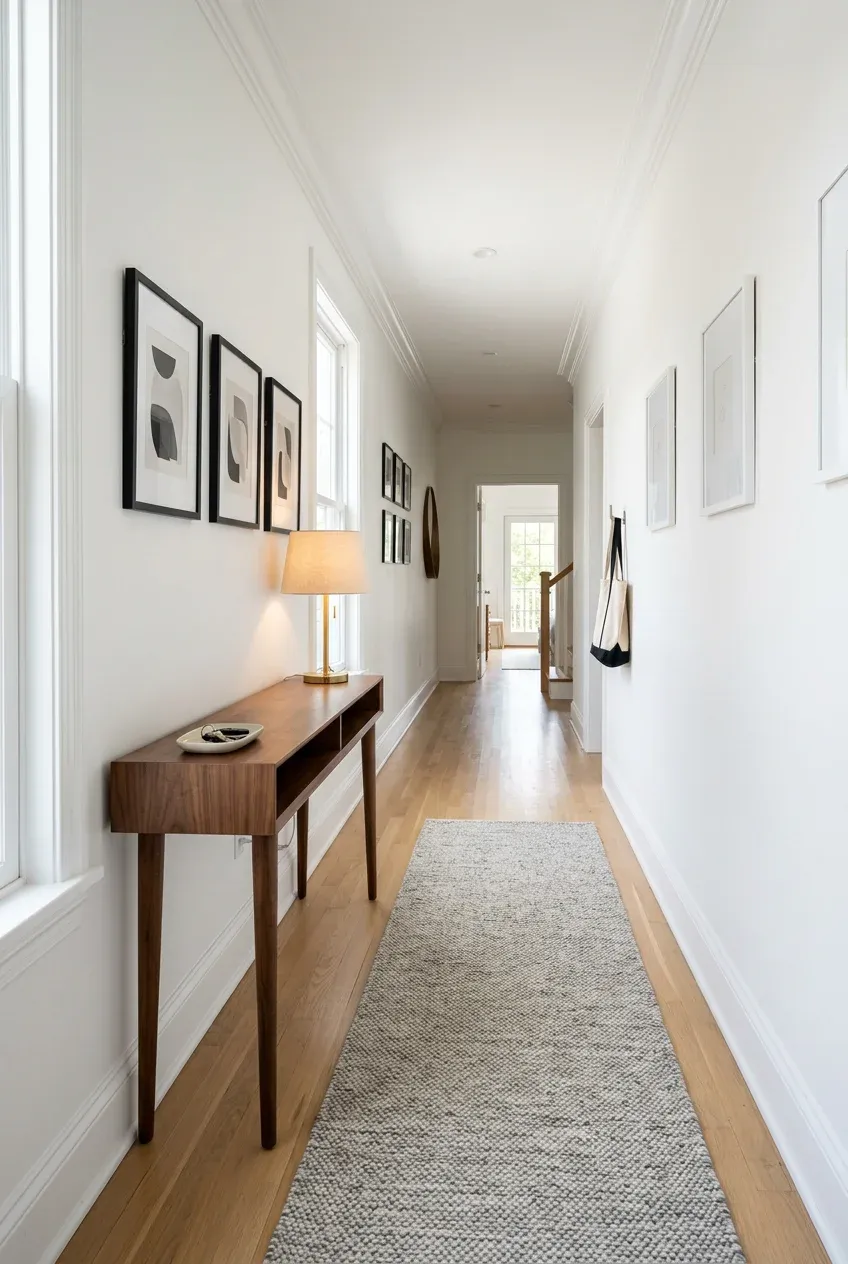
A bulky table will block your path and make a narrow hallway feel crowded. Instead, look for a slim console table with thin, tapered legs. The space visible underneath the table tricks the eye into seeing more floor area, which makes the hallway feel less cramped. Choose a depth of about 10 to 12 inches to ensure you still have plenty of room to walk past comfortably.
These tables are great for holding a small tray for keys or a single lamp. Because they take up very little physical and visual space, they provide a surface for decor without creating a bottleneck. Look for wood or metal finishes that match your existing trim to keep the look cohesive.
Overhead Flush Mount Globe Lights
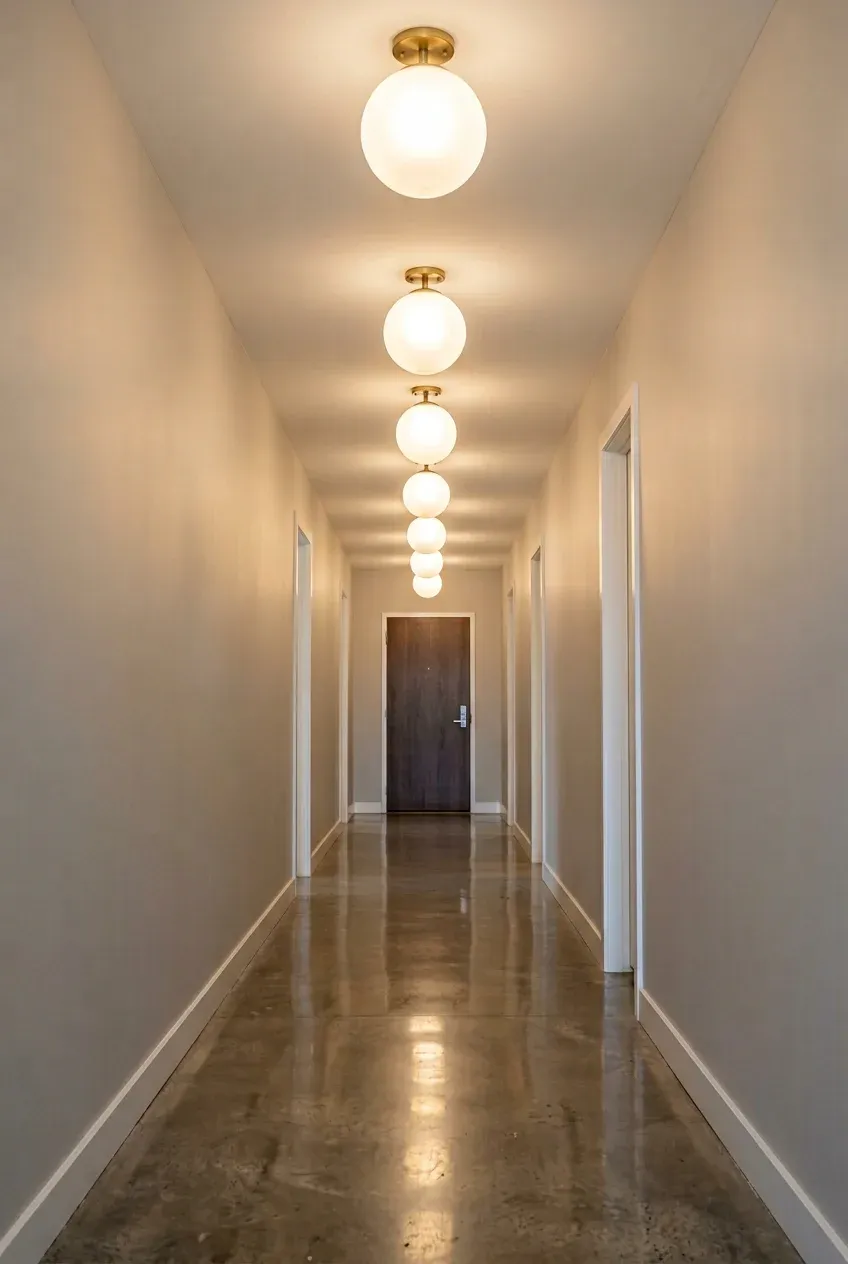
Lighting is one of the most important narrow entrance hall ideas because it prevents dark corners from shrinking the space. Flush mount globe lights are a smart choice because they sit close to the ceiling, keeping the walkway clear for tall people or when you are moving furniture. The rounded shape of a globe light helps soften the sharp, straight lines of a long corridor.
Space these lights evenly down the length of the hall to ensure there are no shadows. Using frosted glass globes will diffuse the light evenly, creating a warm glow rather than a harsh glare. This setup makes the entire passage feel airy and bright from the moment you step inside.
Large Rectangular Mirror Placed Lengthwise
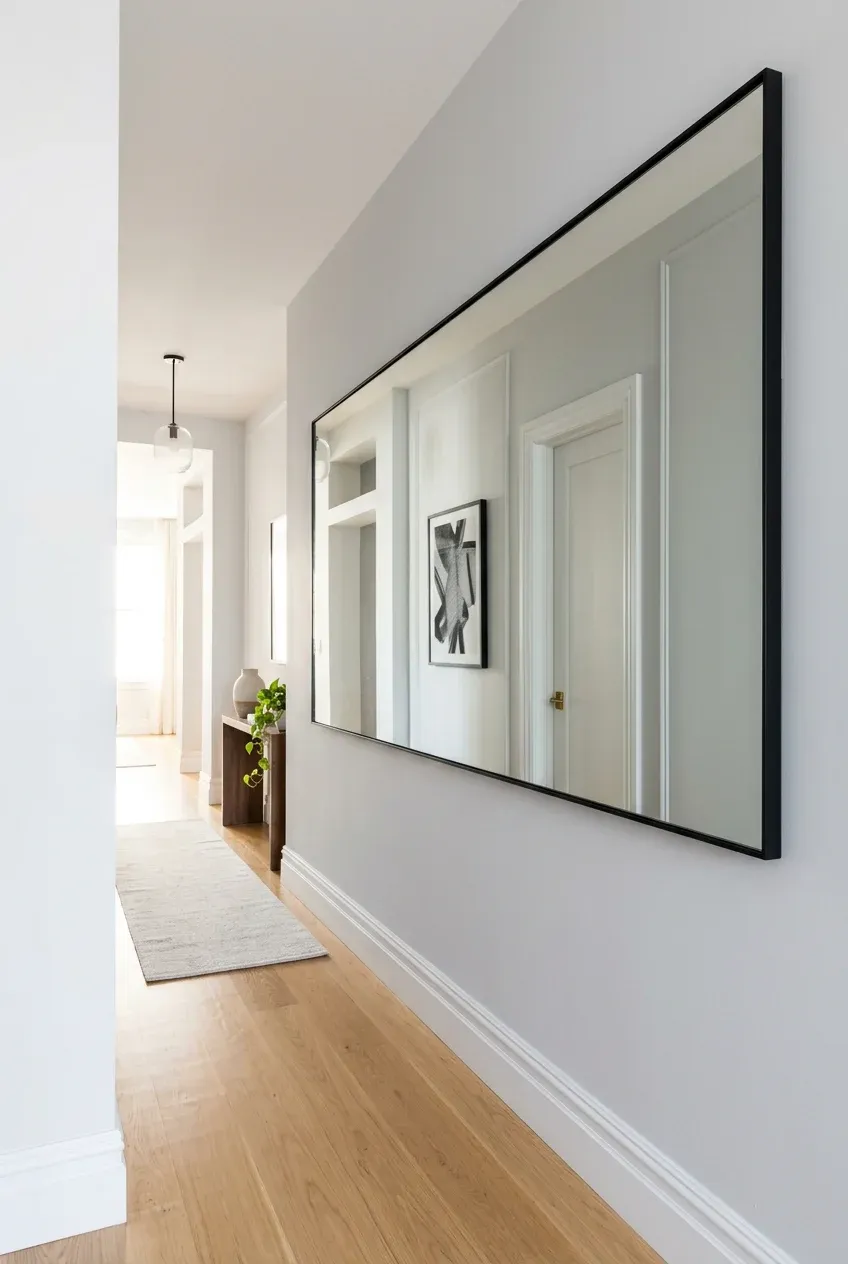
Mirrors are a classic trick for narrow hallway design because they reflect light and create the illusion of more depth. By hanging a large rectangular mirror lengthwise on one of the side walls, you effectively double the visual width of the hall. It breaks up the solid surface of the wall and makes the area feel like it opens up into another room.
Place the mirror across from an open doorway or a light source if possible. This bounce-back effect maximizes the brightness in the space. A simple, thin frame works best so the mirror doesn’t feel too heavy or decorative for a small area.
Patterned Runner Rug Covering the Floor
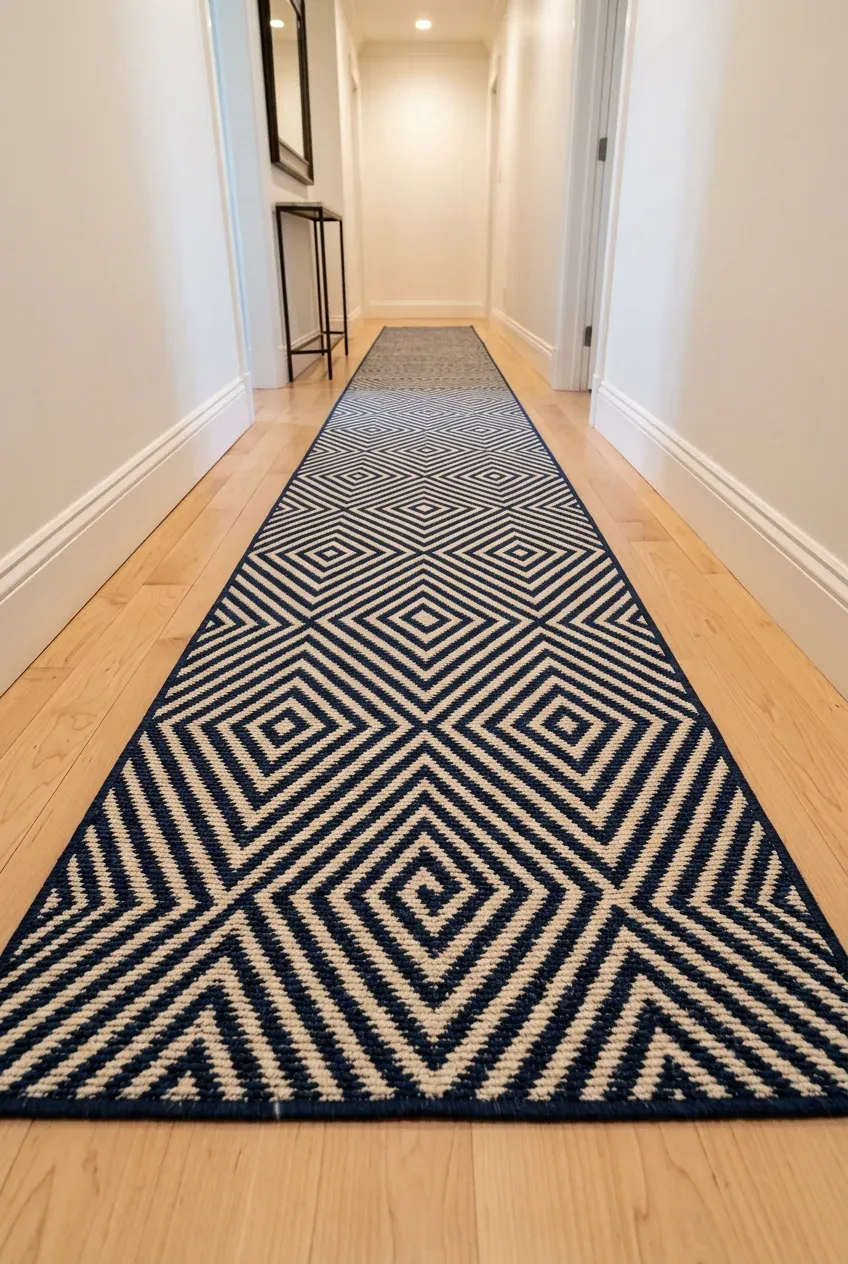
A long rug is essential for long hallway entryway ideas because it draws the eye forward and adds comfort underfoot. A patterned runner can hide dirt from shoes while adding a splash of color to an otherwise plain area. Look for geometric patterns or stripes that run along the length of the rug to emphasize the path.
Make sure the rug is narrow enough to show a few inches of floor on either side. This border helps define the walkway and prevents the rug from looking like wall-to-wall carpeting. A low-pile material is best so that doors can swing open easily without getting stuck on the fabric.
Wall Mounted Wooden Peg Rail
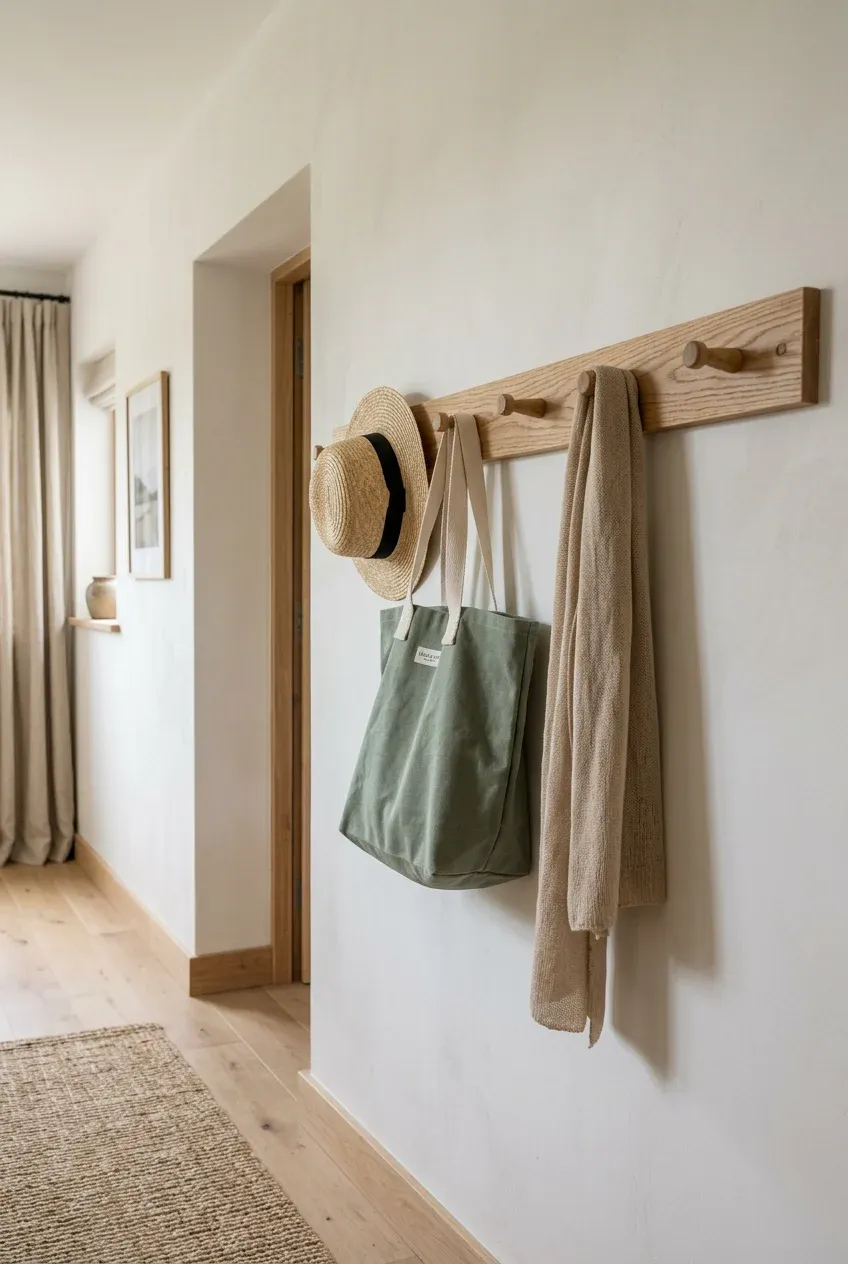
When you don’t have room for a full closet, a wall-mounted wooden peg rail is a lifesaver for small entrance hall ideas. It offers a place to hang coats, bags, and hats without taking up any floor space. Shaker-style peg rails are particularly useful because they look clean and organized even when they are empty.
Mount the rail at a height that is easy to reach but high enough so that long coats don’t trail on the floor. If you have a very long hall, you can run the rail across a large section of the wall to create a dedicated zone for every family member. It keeps the floor clear and the entryway looking tidy.
Matching Framed Art Gallery in a Straight Line
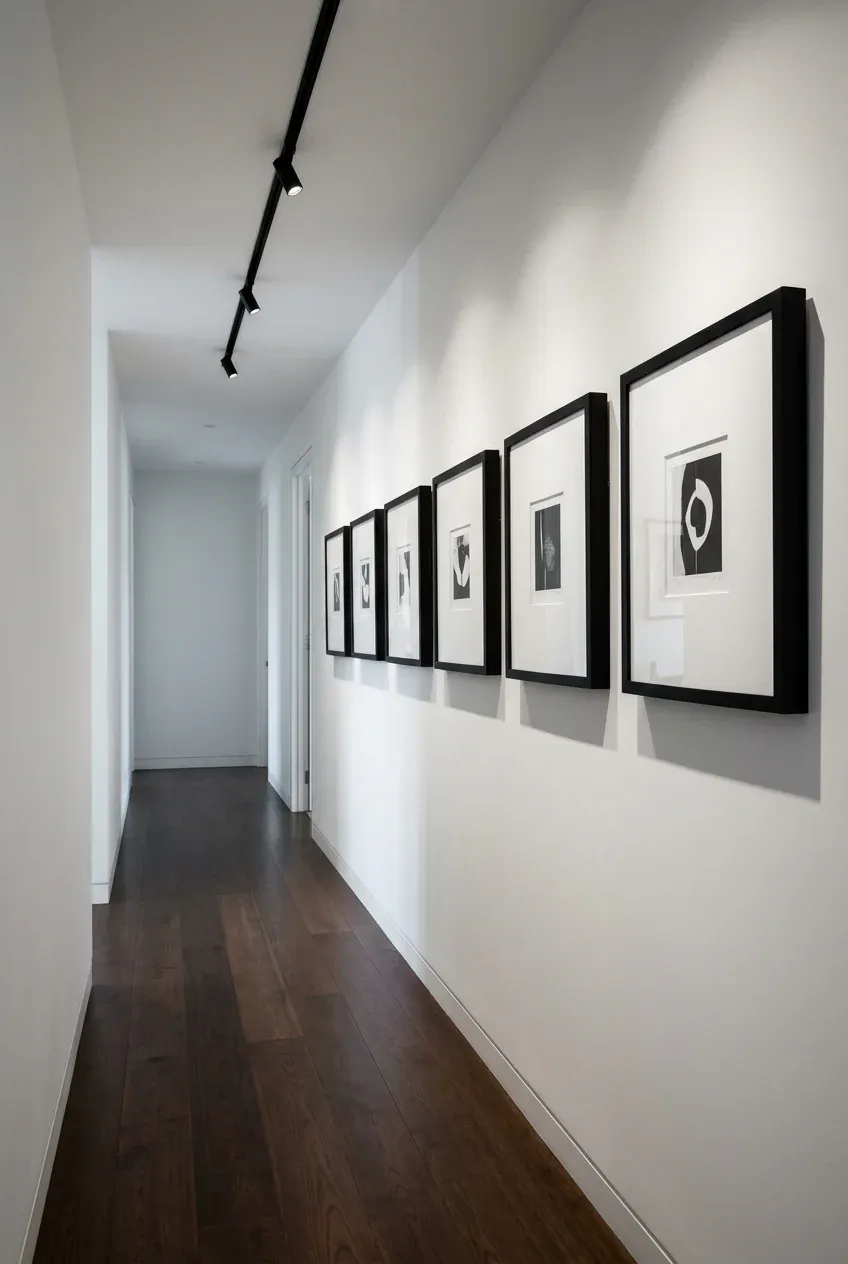
Decorating a long wall can be intimidating, but a linear gallery is a great way to handle it. Use matching frames and space them evenly in a perfectly straight horizontal line. This creates a sense of order and rhythm that guides people through the long hallway decorating entry ways.
Keep the art at eye level so people can enjoy it as they walk by. Using consistent matting and frame colors prevents the wall from looking cluttered. This approach turns a boring transition space into a personal gallery that feels intentional rather than accidental.
Low Profile Storage Bench with Hidden Cubbies
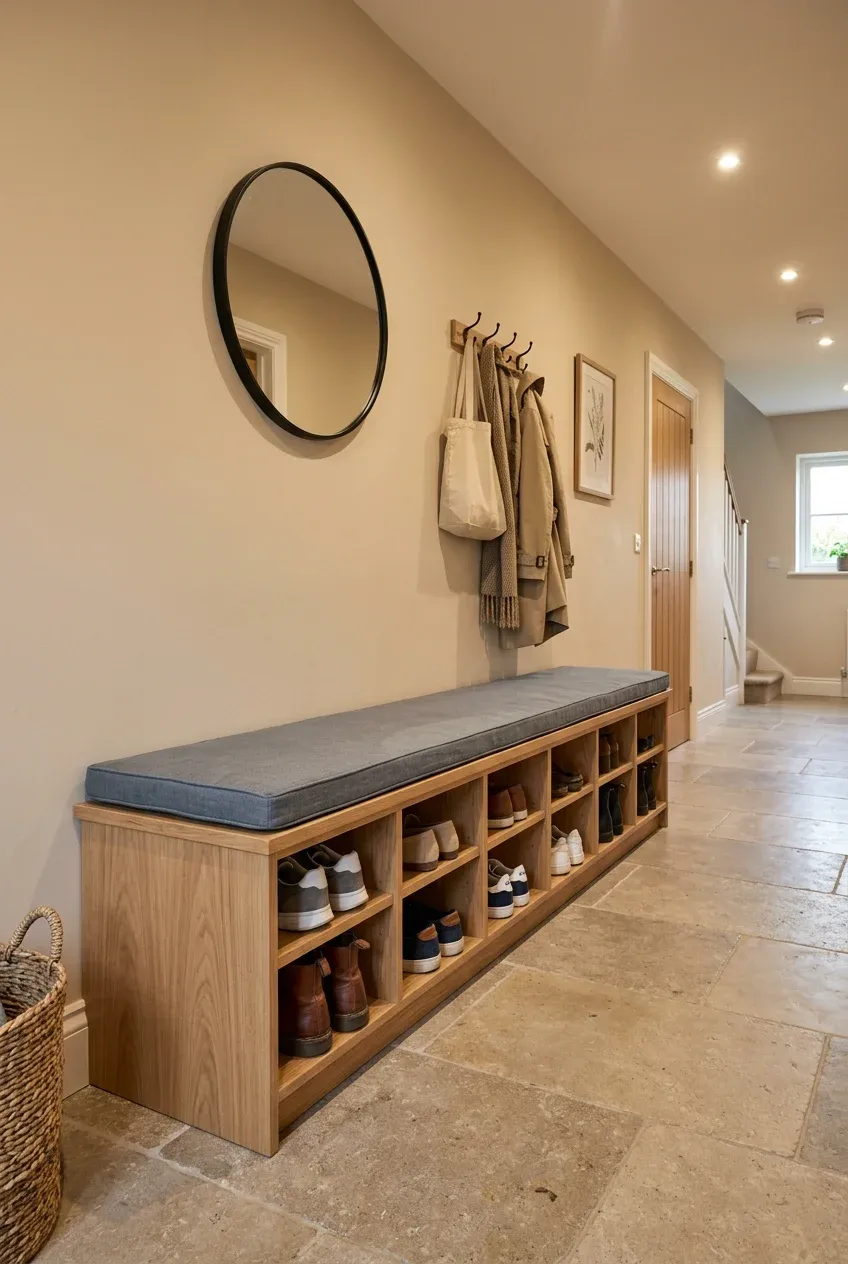
A place to sit and take off shoes is a luxury in a tight space. A low-profile storage bench provides this function while staying out of the way. Look for a design that features hidden cubbies or drawers underneath the seat to keep shoes and umbrellas out of sight.
Choose a bench that is long and narrow to mimic the shape of the hallway. This keeps the footprint small while maximizing the utility of the piece. Adding a thin cushion on top makes it more comfortable and allows you to introduce a bit of texture or fabric to the entrance.
Vertical Striped Wallpaper to Add Height
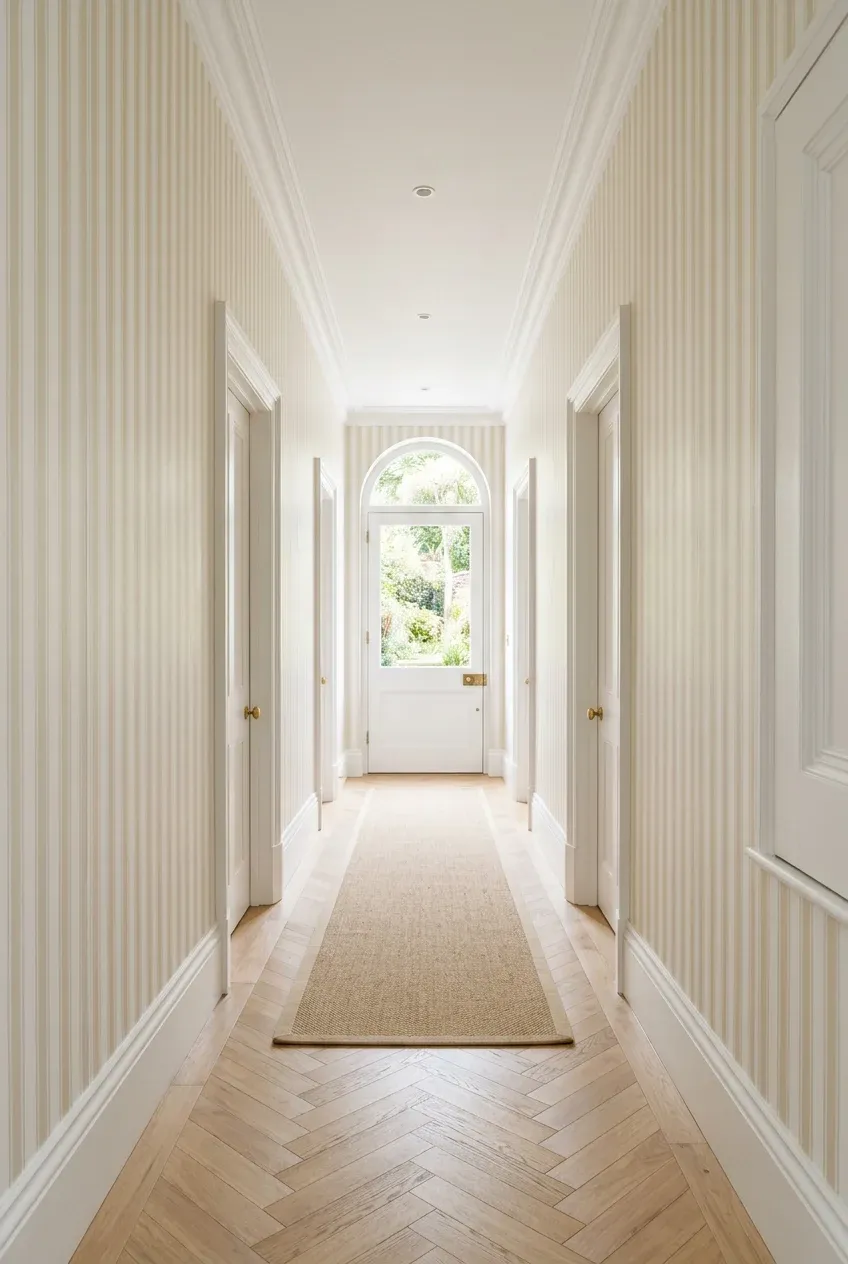
If your hallway feels low and pressing, vertical striped wallpaper can change the entire feel of the room. The lines draw the eyes upward, making the ceiling appear higher than it actually is. This is one of those hallway inspiration narrow tricks that works well in homes with standard or low ceilings.
Stick to light, neutral colors for the stripes to keep the space feeling open. Subtle patterns like a ticking stripe or a soft cream and white combo add interest without being overwhelming. It’s a simple way to add character to a long stretch of wall without needing much furniture.
Glass Front Narrow Cabinet for Collectibles
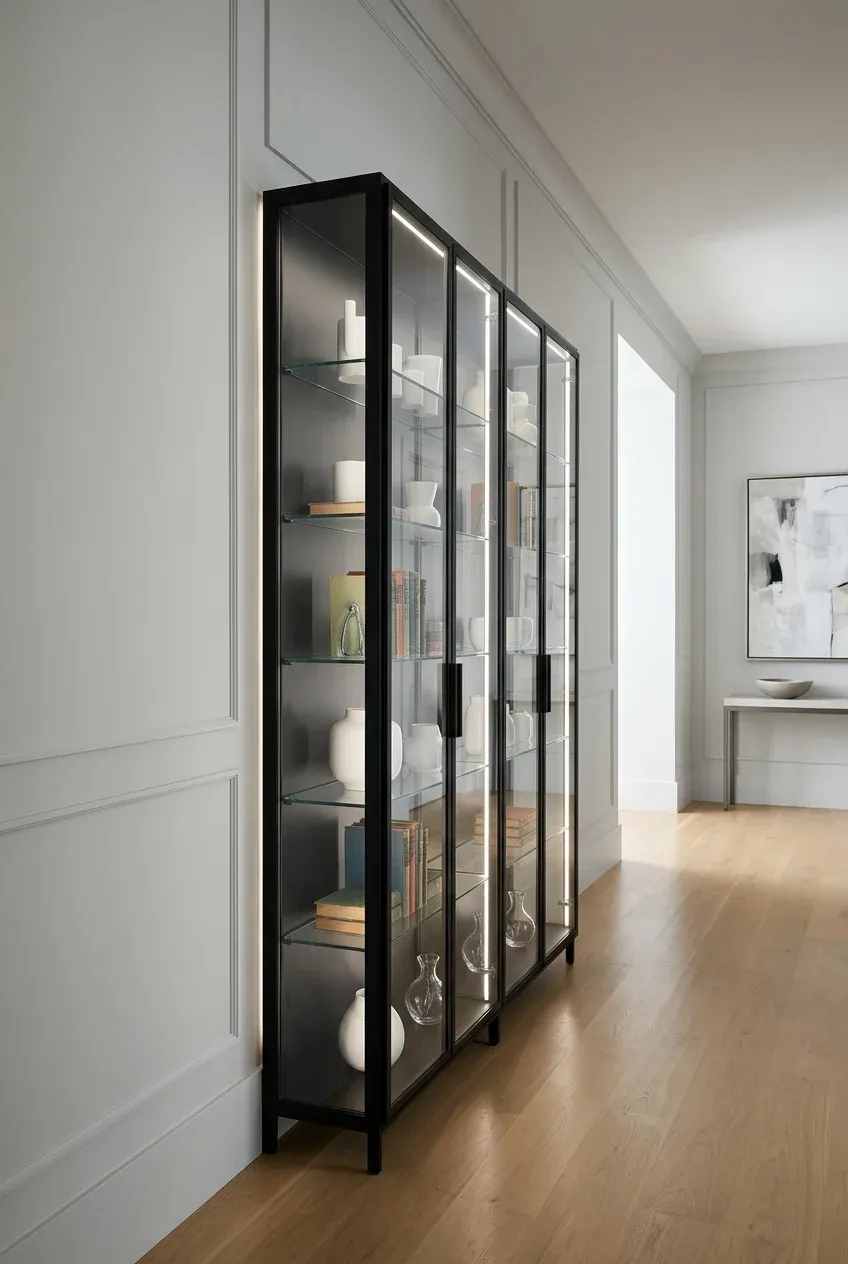
A glass-front cabinet is a great addition to long entry way ideas because the transparent doors prevent the piece from feeling like a heavy block of wood. It provides a slim storage solution for books or collectibles while protected from dust. Because you can see through the glass to the back of the cabinet, it maintains a sense of openness.
Look for a cabinet with a very shallow depth, often sold as a bookcase or media cabinet. Placing this midway down a long hall gives the eye a place to rest. It adds a sense of sophistication and makes the hallway feel like a curated part of the home.
Single Statement Pendant Light at the Entrance

While flush mounts are good for the length of the hall, a single statement pendant light right at the door creates a clear focal point. It signals where the home begins and adds a bit of drama. This works well for wide hallway ideas too, as it helps fill the vertical space near the front door.
Make sure the pendant hangs high enough so it doesn’t interfere with the door swing or people’s heads. Choose a style that reflects your home’s personality, like a glass lantern or a modern metal shape. This one piece of jewelry for your home can make a simple hallway feel much more expensive.
Floating Shelves for Keys and Mail
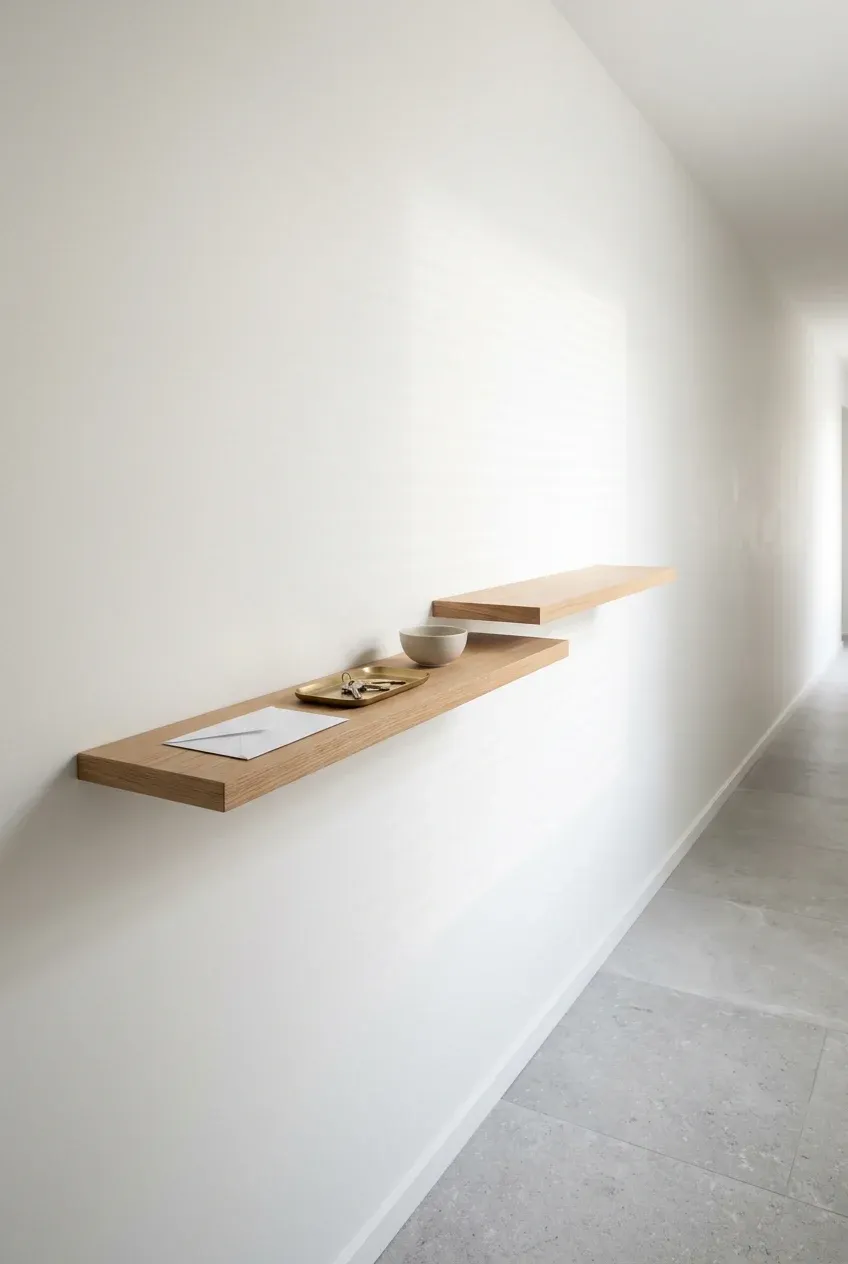
When floor space is at a premium, floating shelves are the best solution for narrow hallway design. They provide a landing strip for mail, sunglasses, and keys without the need for legs or a base. You can install them at exactly the height you need, making them very customizable.
Use a single long shelf or a few smaller ones staggered on the wall. They take up zero floor space, which keeps the walkway completely clear for traffic. This is a very practical way to stay organized in a home where every inch of floor space counts.
Contrasting Paint Color on the Far End Wall

A long hallway can sometimes feel like it goes on forever. To fix this, try painting the wall at the very end of the hall a darker or contrasting color. This draws the eye toward the end of the passage and makes the wall feel closer, which helps balance the proportions of the long space.
This technique adds a pop of personality without making the side walls feel like they are closing in. You can also hang a piece of art or a small table on that far wall to create a visual destination. It’s a simple paint project that makes the layout feel much more intentional.
Tall Potted Plant in a Corner Stand
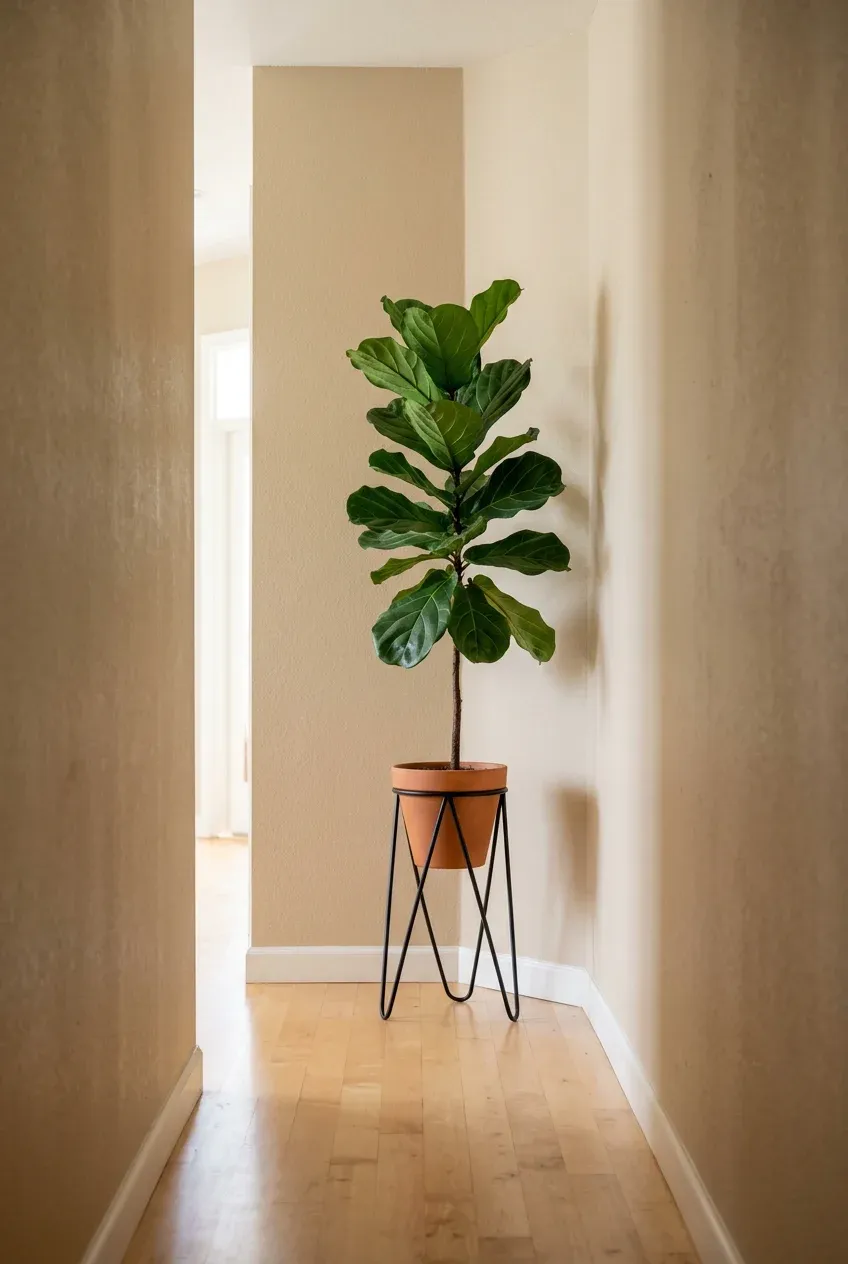
Adding a bit of nature can breathe life into a sterile hallway. A tall, slender plant like a Snake Plant or a Fiddle Leaf Fig can fit perfectly into a corner or a small gap. Using a plant stand helps lift the greenery up, ensuring it is visible and doesn’t get hidden behind furniture.
Plants soften the hard angles of a long hallway and add a much-needed organic shape. If your hallway doesn’t get much light, look for low-light varieties or high-quality faux plants. The green color provides a refreshing break from neutral walls and makes the entrance feel more lived-in.
Woven Baskets Tucked Under a Table
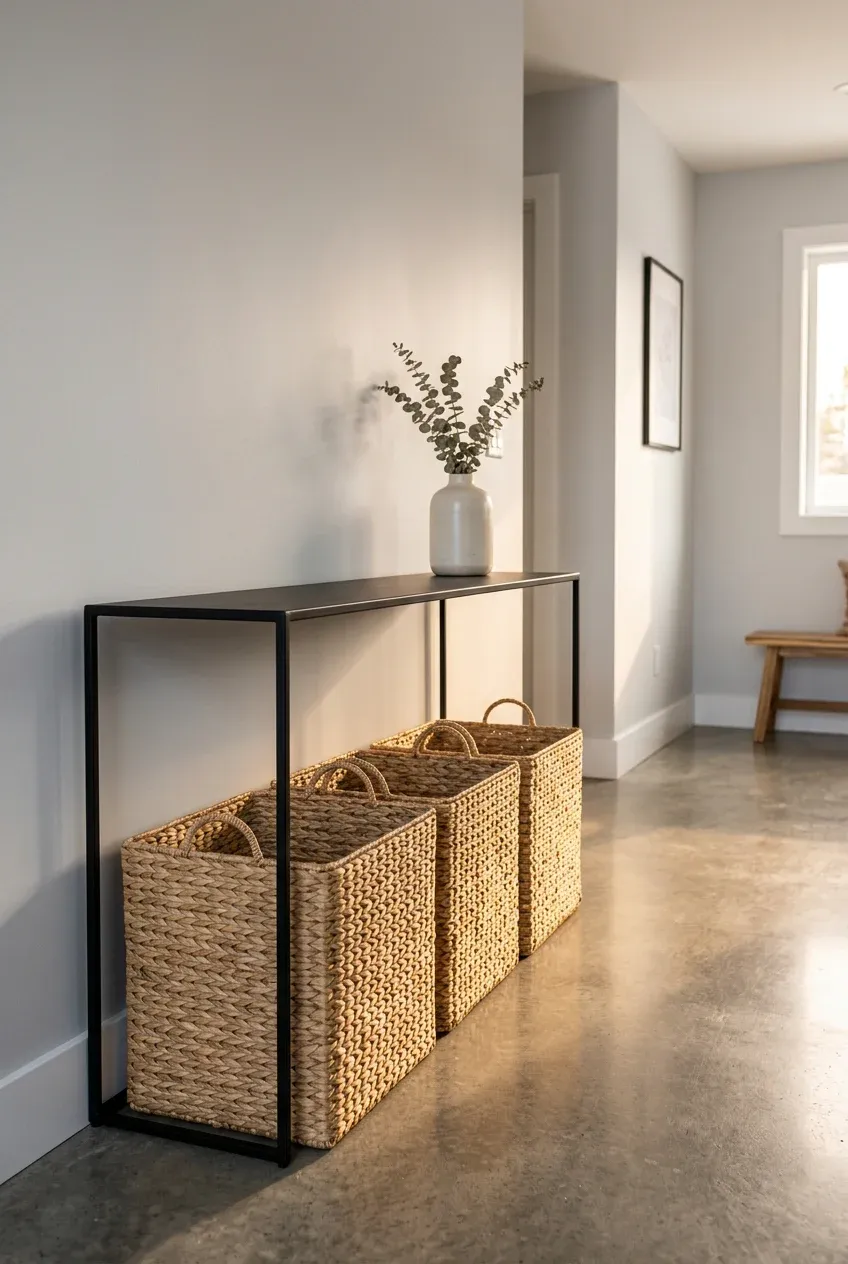
Storage is often a struggle in entryways, but the space under a console table is frequently wasted. Tucking a few woven baskets underneath provides a spot for shoes, hats, or dog leashes. This keeps the items organized and hidden while adding a soft texture to the room.
Baskets are easy to slide in and out, making them convenient for daily use. They also help ground the furniture and make a thin table look more substantial. Choose baskets made from natural materials like seagrass or wicker to add warmth to the entryway.
Floor to Ceiling Built-in Bookcases
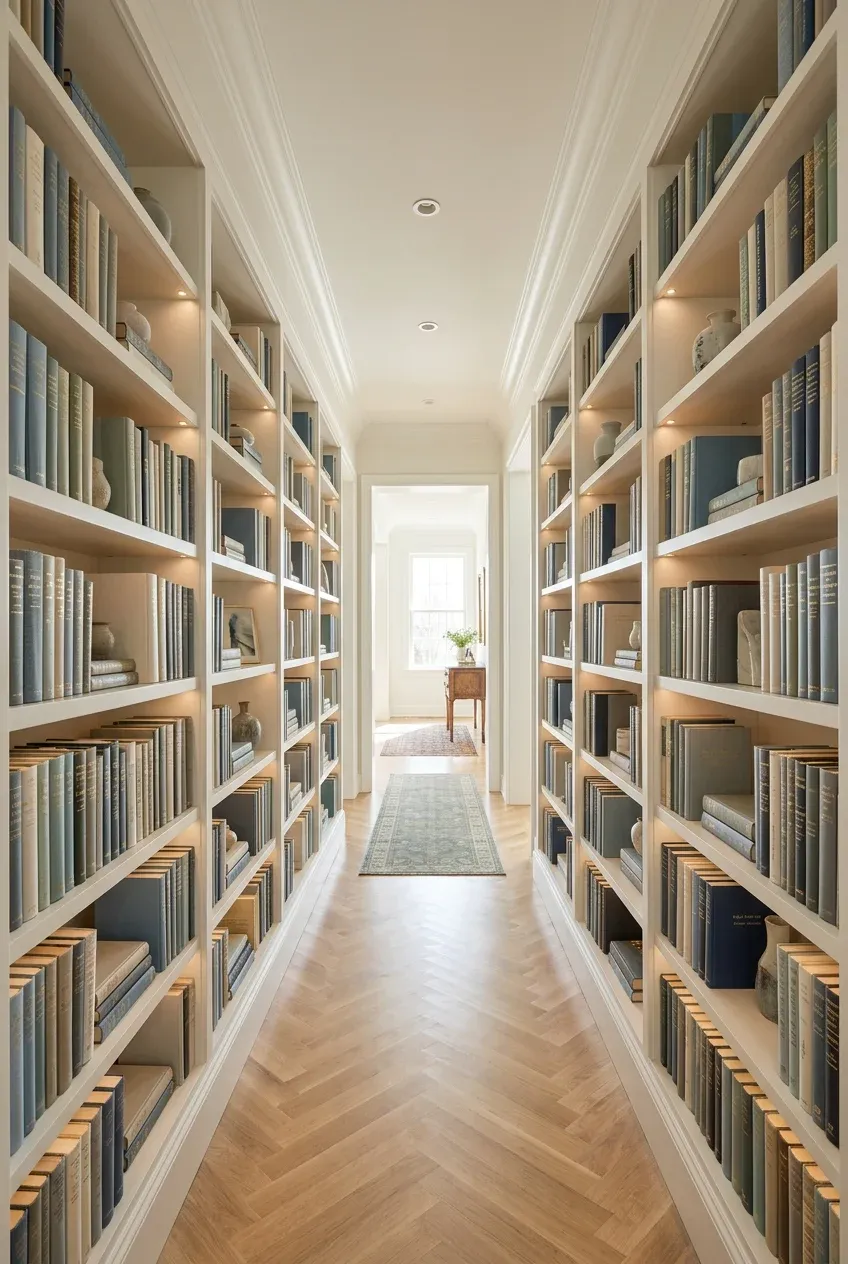
If you have enough width, floor-to-ceiling bookcases can turn a hallway into a functional library. Even shallow shelves that are only 6 to 8 inches deep can hold a significant number of books. This is a great way to use every bit of vertical space in your narrow hallway design.
Painting the shelves the same color as the walls helps them blend in so the hall doesn’t feel too tight. It adds a lot of character and provides a massive amount of storage for homes that lack built-in closets. This setup turns a simple transition area into one of the most interesting parts of your house.