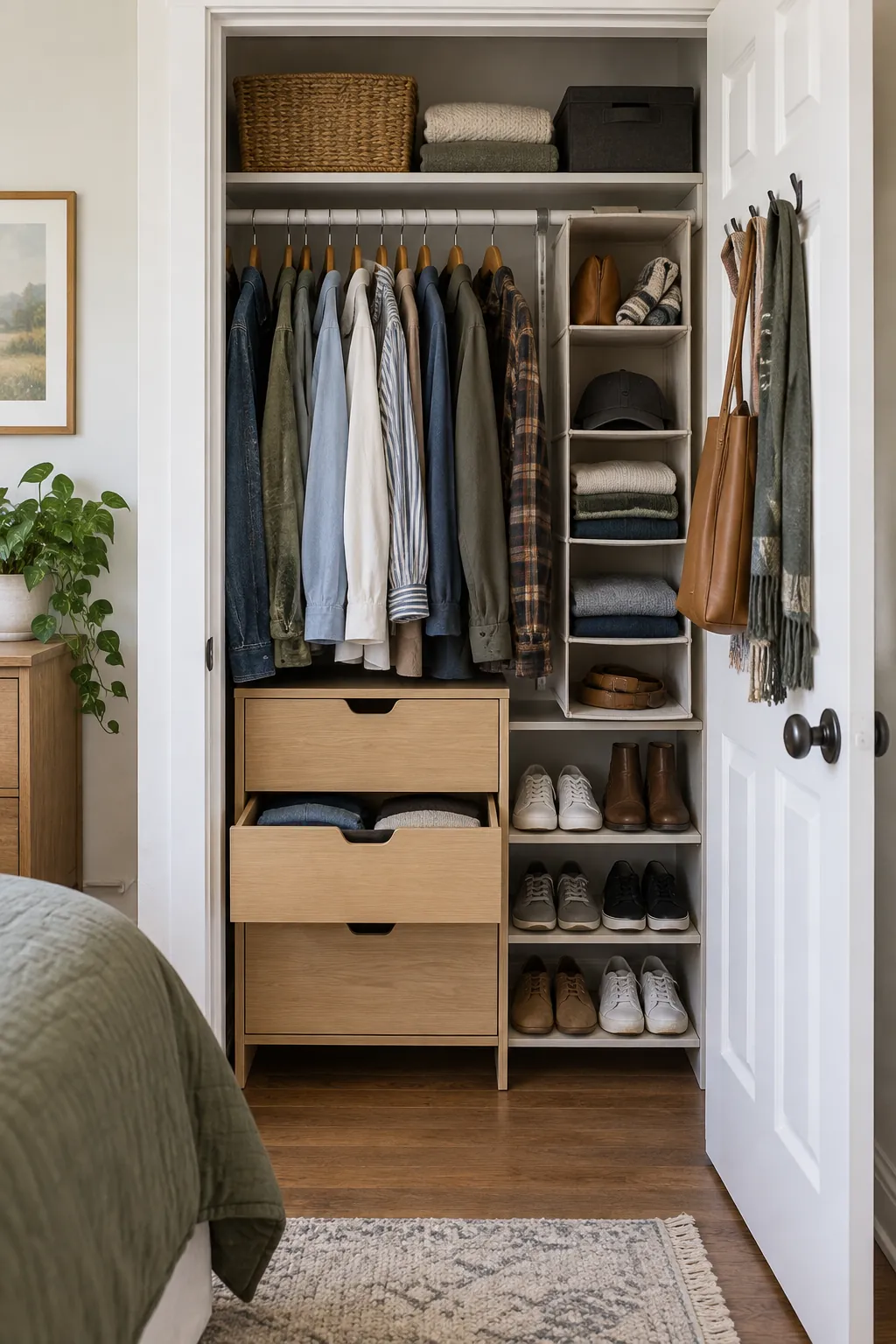
A tight closet can tempt you to buy a full system before you know what is getting in the way. Start by noticing where clothes are difficult to see, where the door collides with storage, and which shelves you cannot use comfortably. Small, removable changes often solve those problems with less expense and disruption.
Sort clothes before buying storage
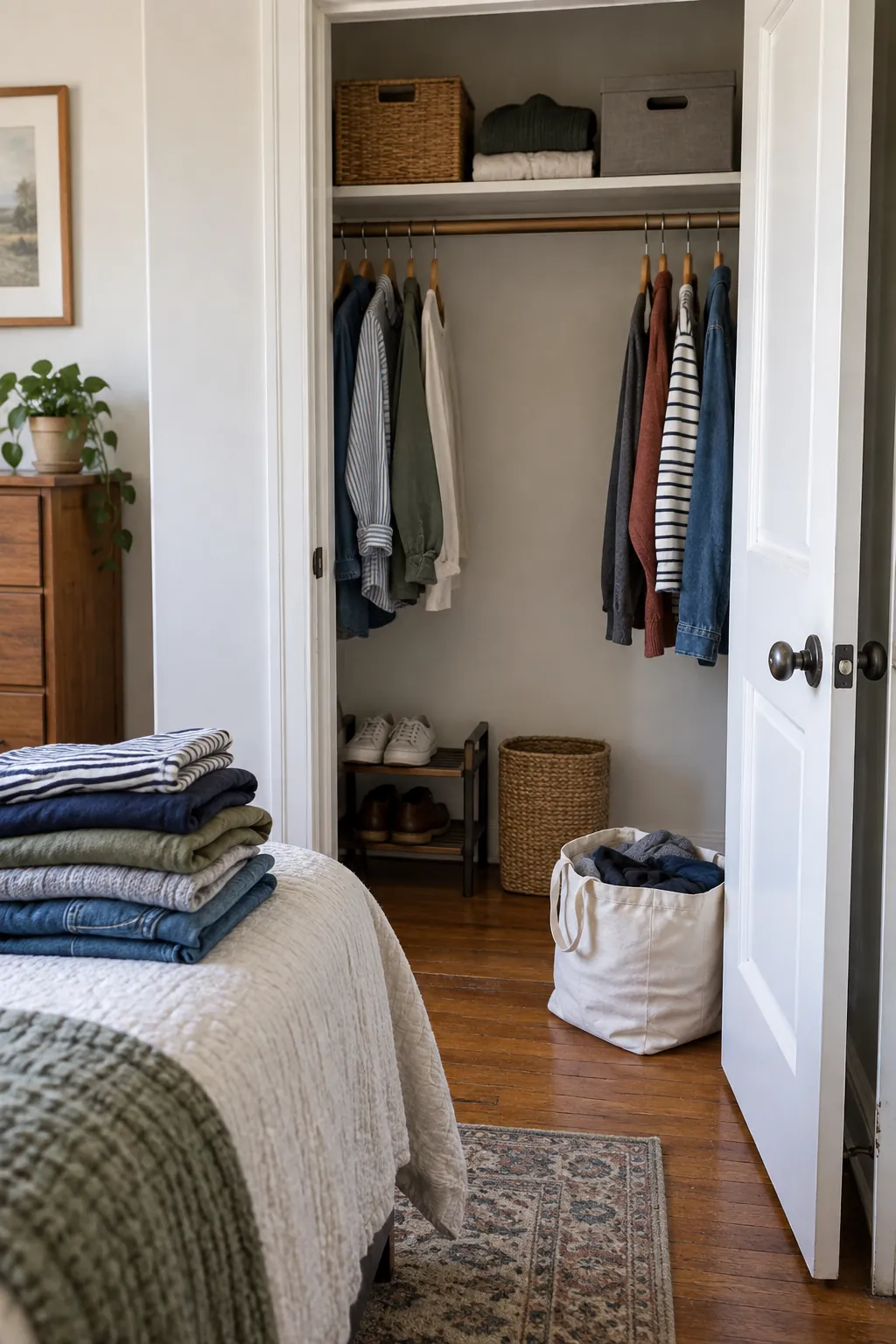
A small closet makeover starts with the clothes that really need to live there. Empty one category at a time, then return the pieces you wear and can reach comfortably. Put off season clothing elsewhere only if you have a dry, accessible place for it. This prevents a new organizer from becoming a place to hide the same overflow.
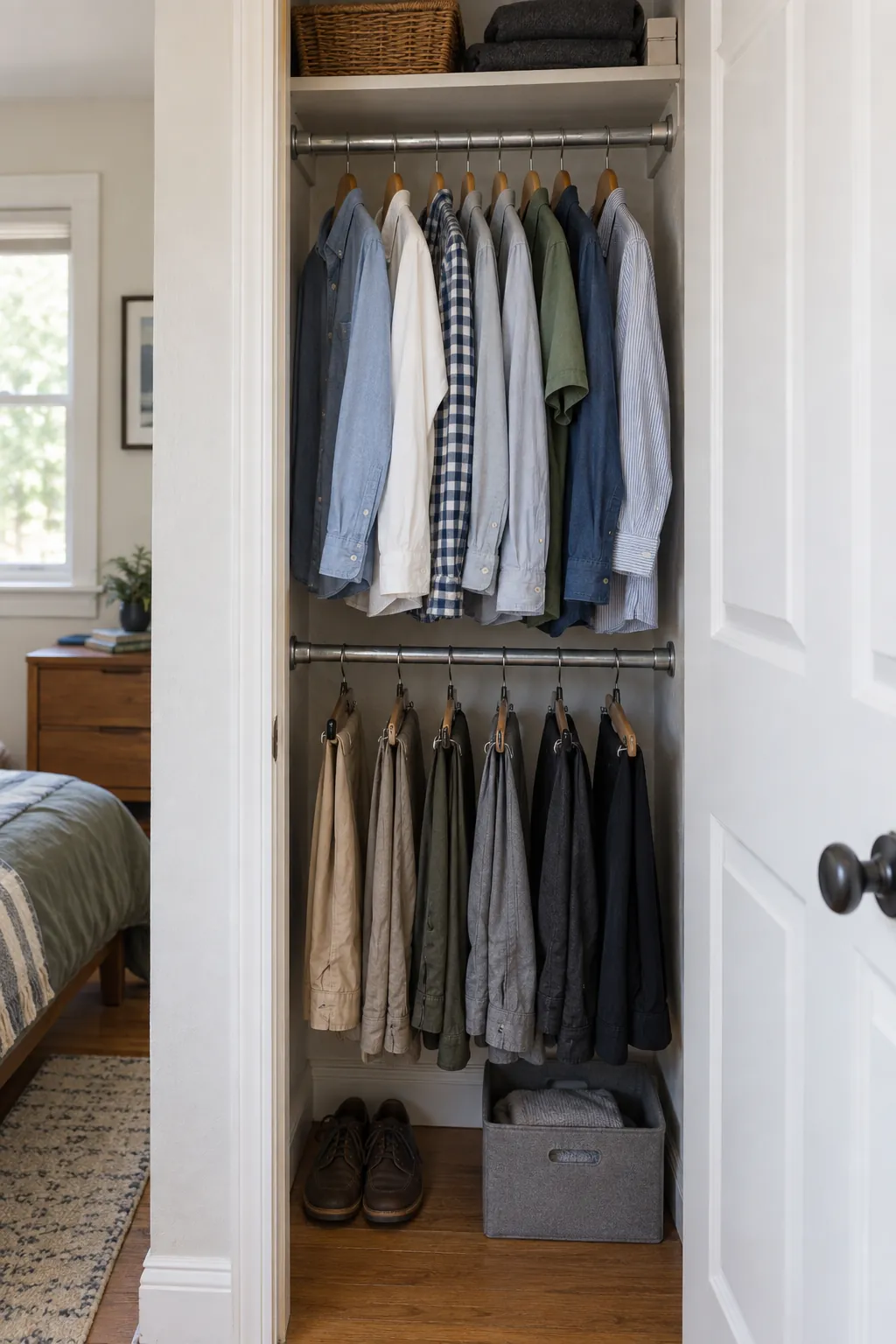
Add a second rail below short garments
Shirts rarely need the full height beneath a single hanging rod. A properly fitted lower rail can hold trousers or children’s clothes where that space is currently empty. Measure the longest garment in each zone before setting the height. Use hardware rated for the load and the wall or closet structure rather than relying on a weak temporary bar.
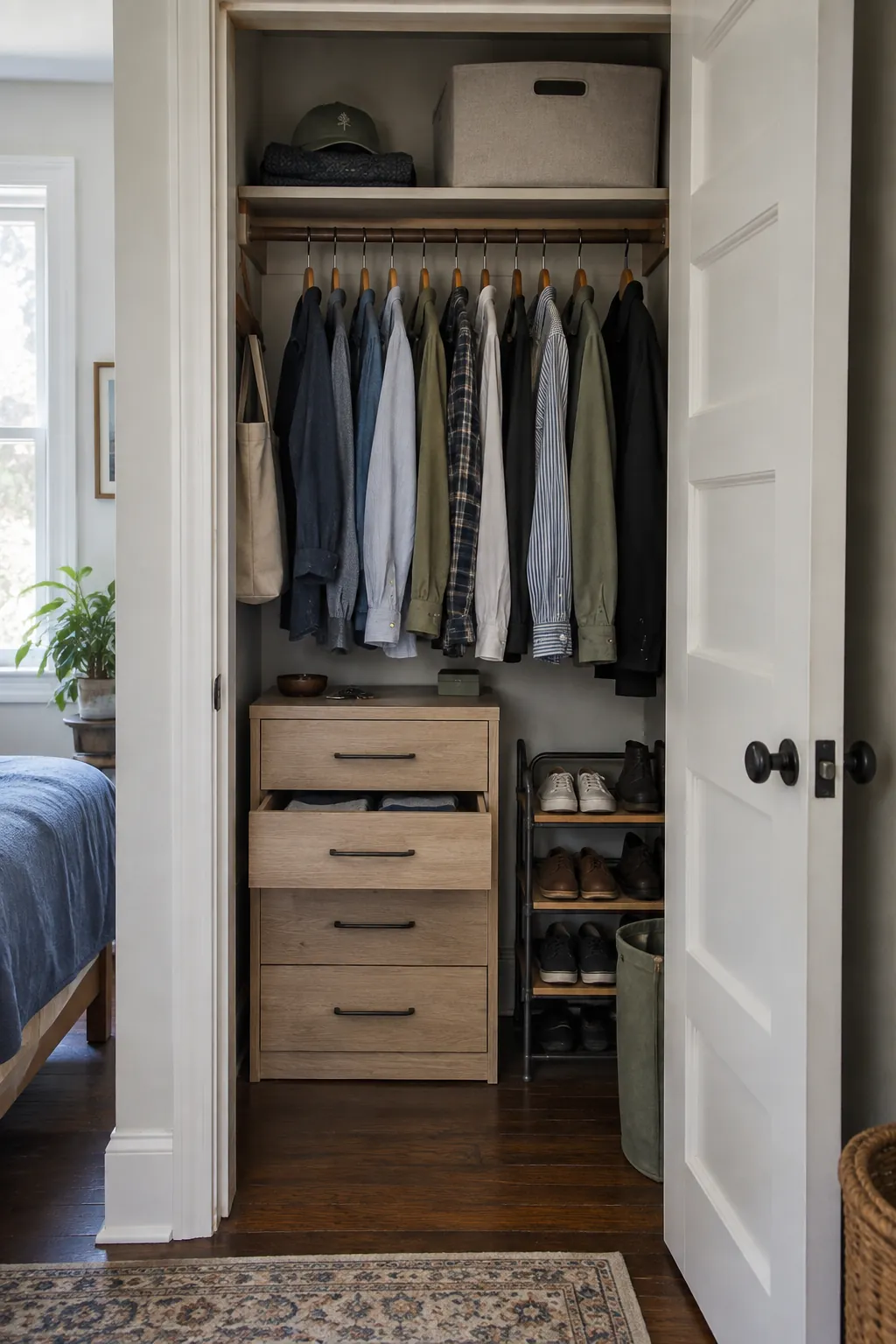
Place a low chest beneath the rail
A freestanding drawer chest creates useful clothes storage without custom cabinets. Choose a width that leaves room for the door and a depth that permits every drawer to open fully. Slide it below short hanging pieces and keep heavy clothing in lower drawers. Follow the maker’s stability and anchoring guidance if the unit is tall or can tip.
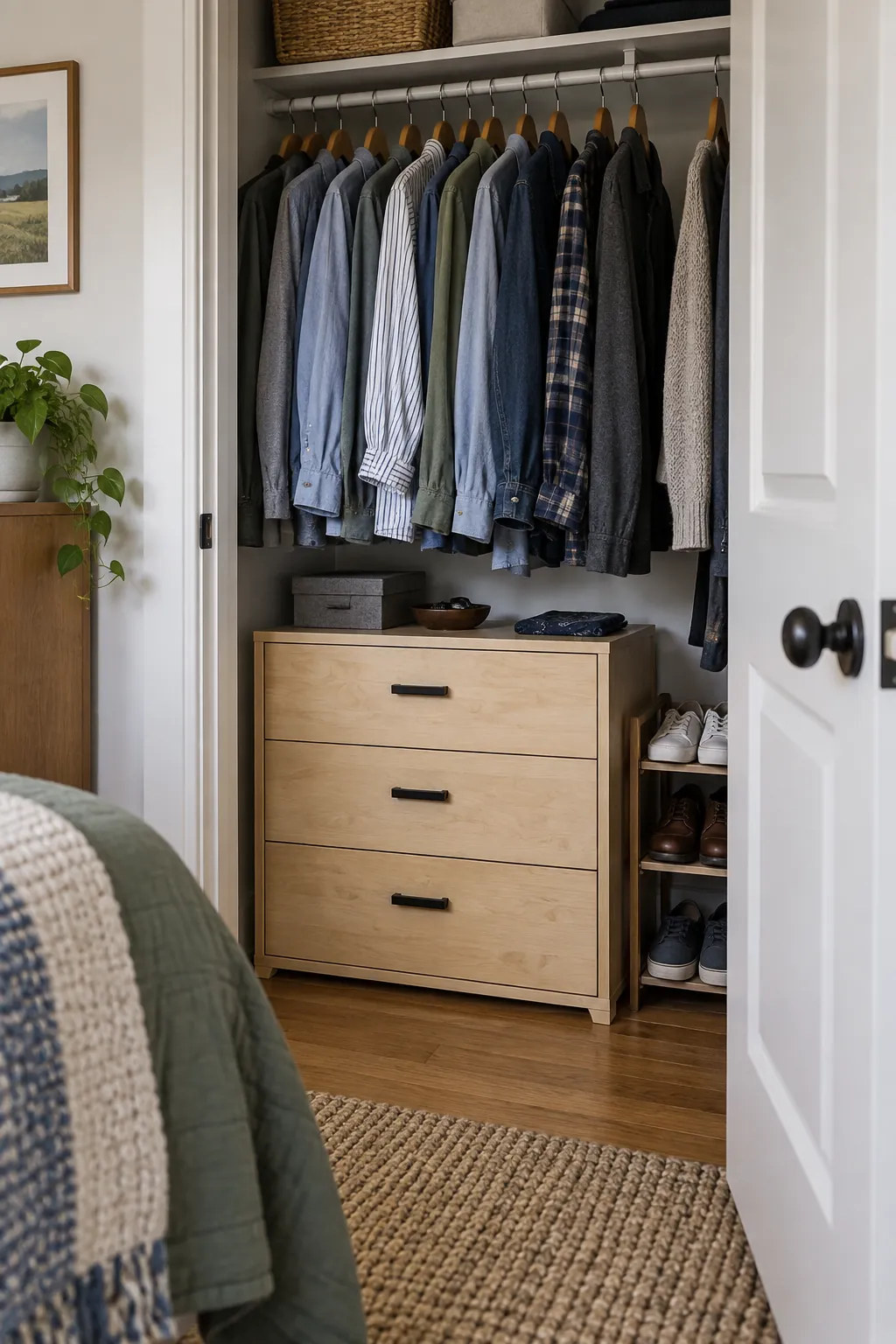
Use an organizer on the door
The back of a hinged closet door can hold scarves, belts, or small accessories. Select shallow pockets or hooks so the organizer clears shelves when the door closes. Test the door before filling every pocket, since added weight can affect the hinge. Keep the things you use daily at eye level rather than hiding them near the floor.
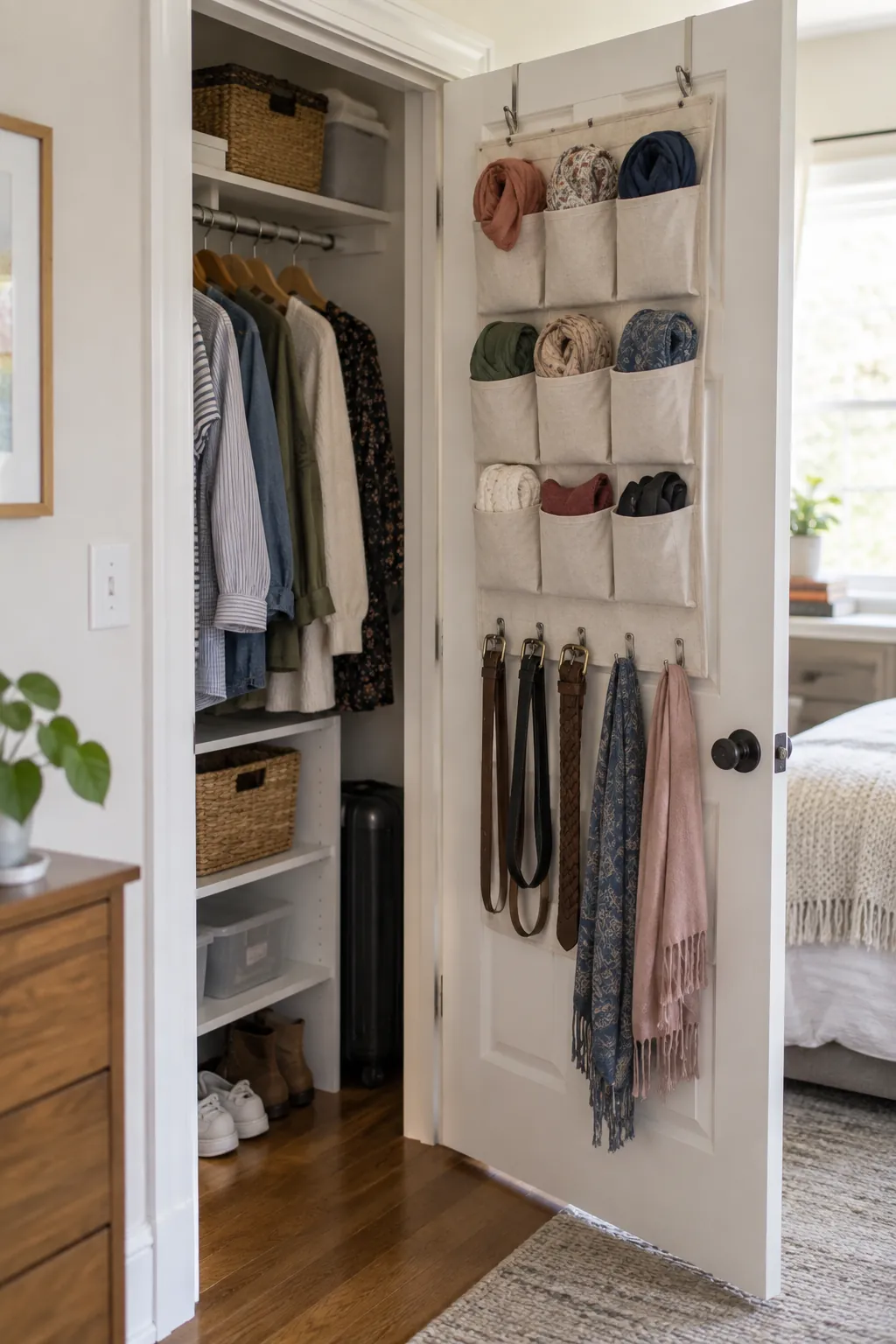
Slide in a narrow open shelf
An inexpensive slim shelf can organize folded clothes beside the hanging area. Check the closet opening as well as the inner width, because a shelf may fit inside but not pass through the door. Use lower levels for heavier stacks and avoid piling fabrics so high that they fall forward. A freestanding unit is easiest to remove when your needs change.
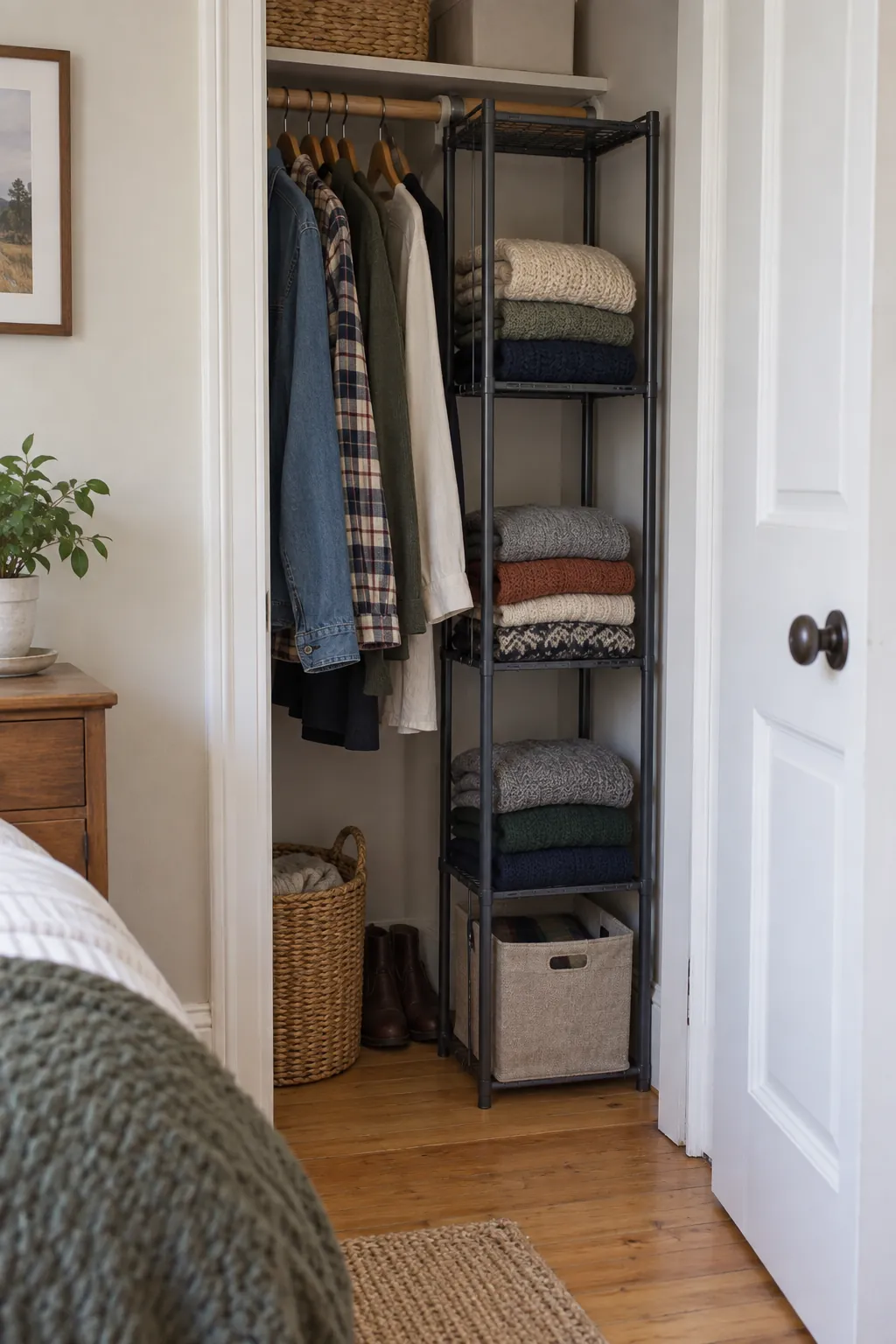
Turn a shelf into pull out storage
A rigid bin with a firm grip can make a deep fixed shelf work like a drawer. Leave enough clearance above the bin to lift its contents out without taking the entire container down. Separate small accessories from folded shirts so the bin stays useful when full. For a rental, this solution adds no permanent parts to the closet.
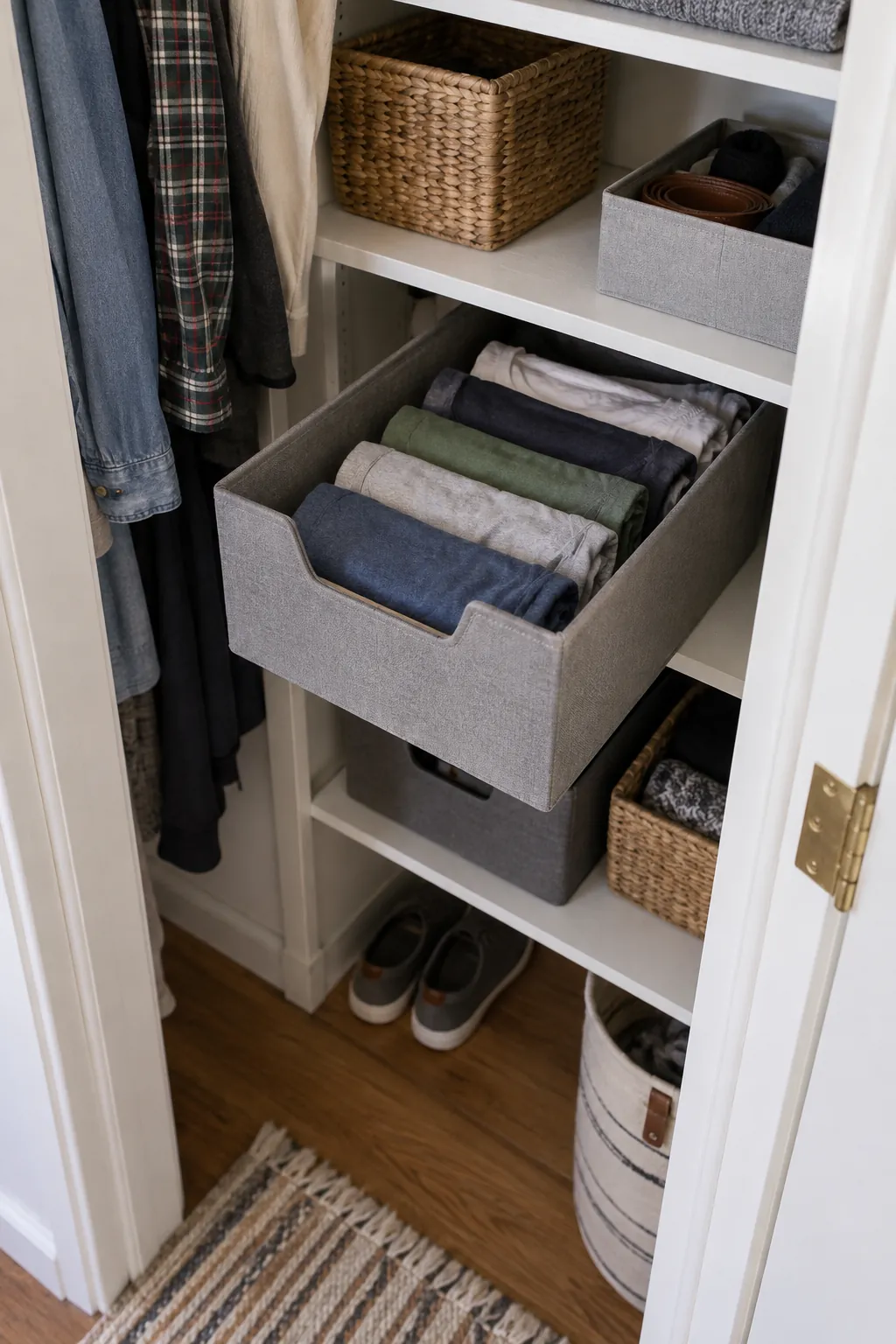
Hang accessories on a side wall
A short row of hooks can free drawer space for clothing. Place them where the closet door and hanging garments will not collide with the items. Removable options need a clean compatible surface and must respect their stated weight limit. Keep frequently used bags and hats separate so you can lift one without pulling down the others.
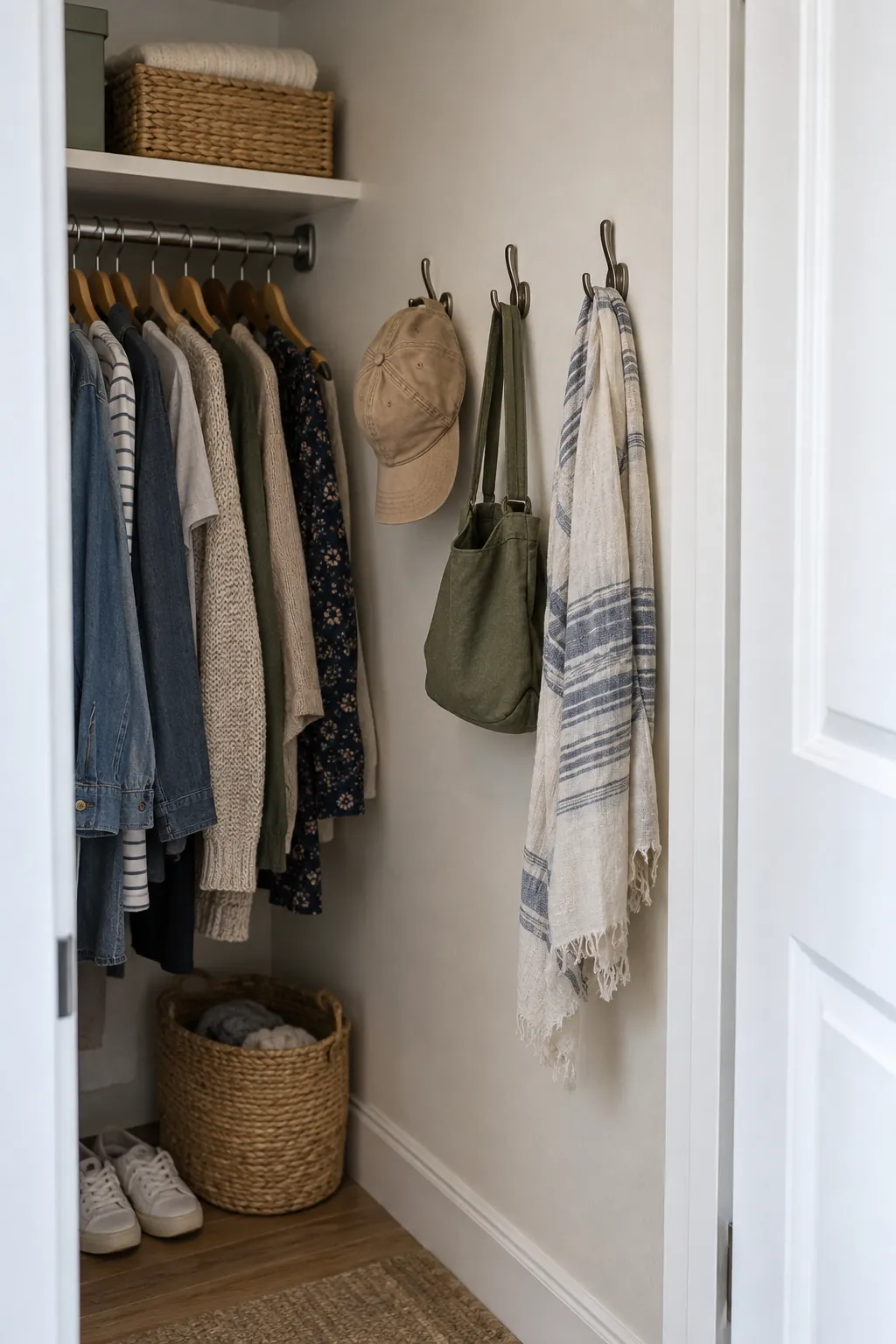
Choose slim hangers for breathing room
Matching slim hangers can reduce crowding on a short rail, but they will not make an unlimited wardrobe fit. Replace bulky hangers only where the garment weight and shape suit a slimmer profile. Leave a little space between pieces so sleeves do not snag. The improvement should make it easier to see and return clothes, not invite more buying.
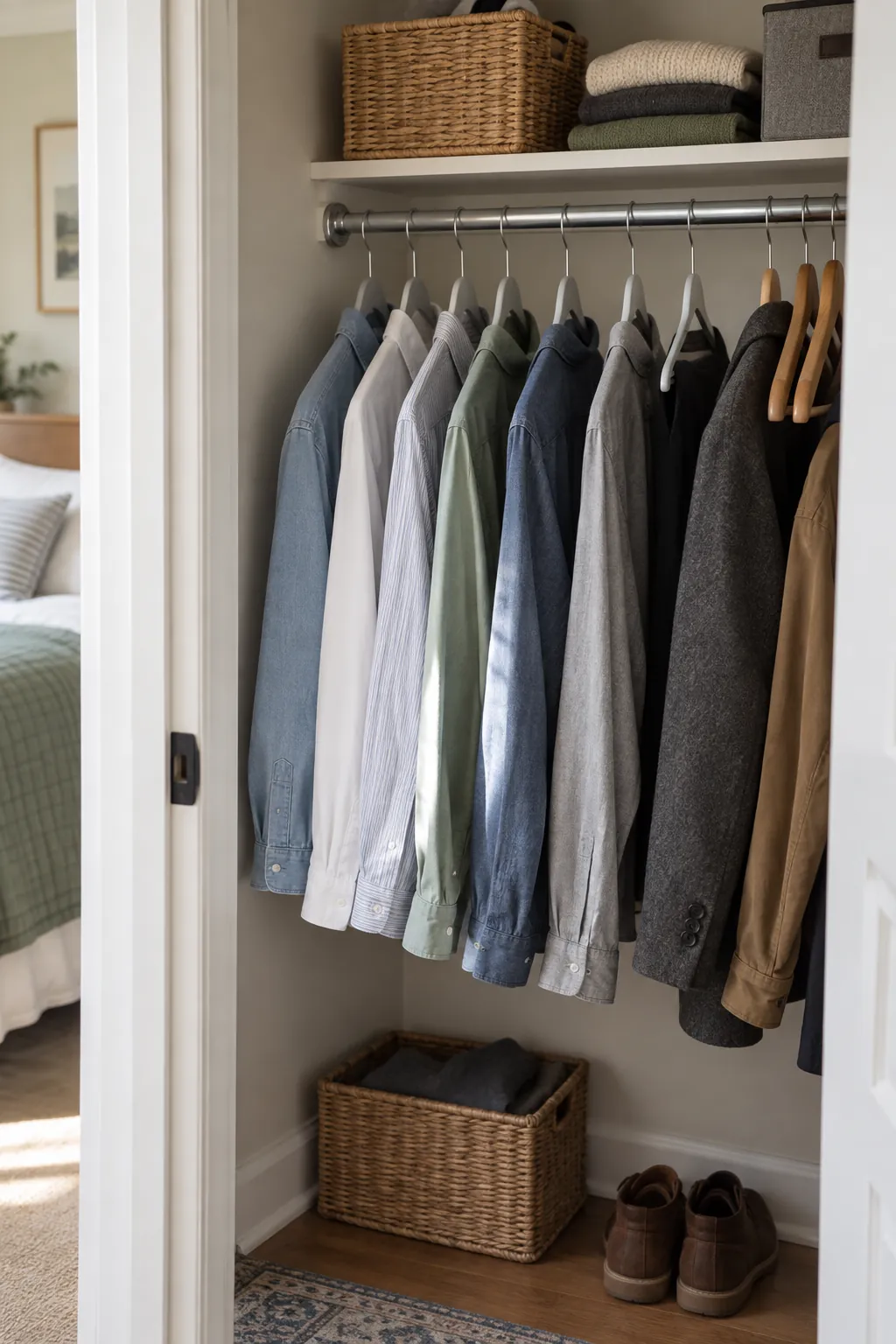
Give shoes a floor level home
A low shoe rack can reclaim the floor below hanging clothes. Measure the tallest shoe pair and choose open spacing that allows the soles to dry after wear. Put everyday pairs in front and reserve boxes for shoes that truly need protection. Keep the rack clear of vents and avoid blocking the path of a drawer.
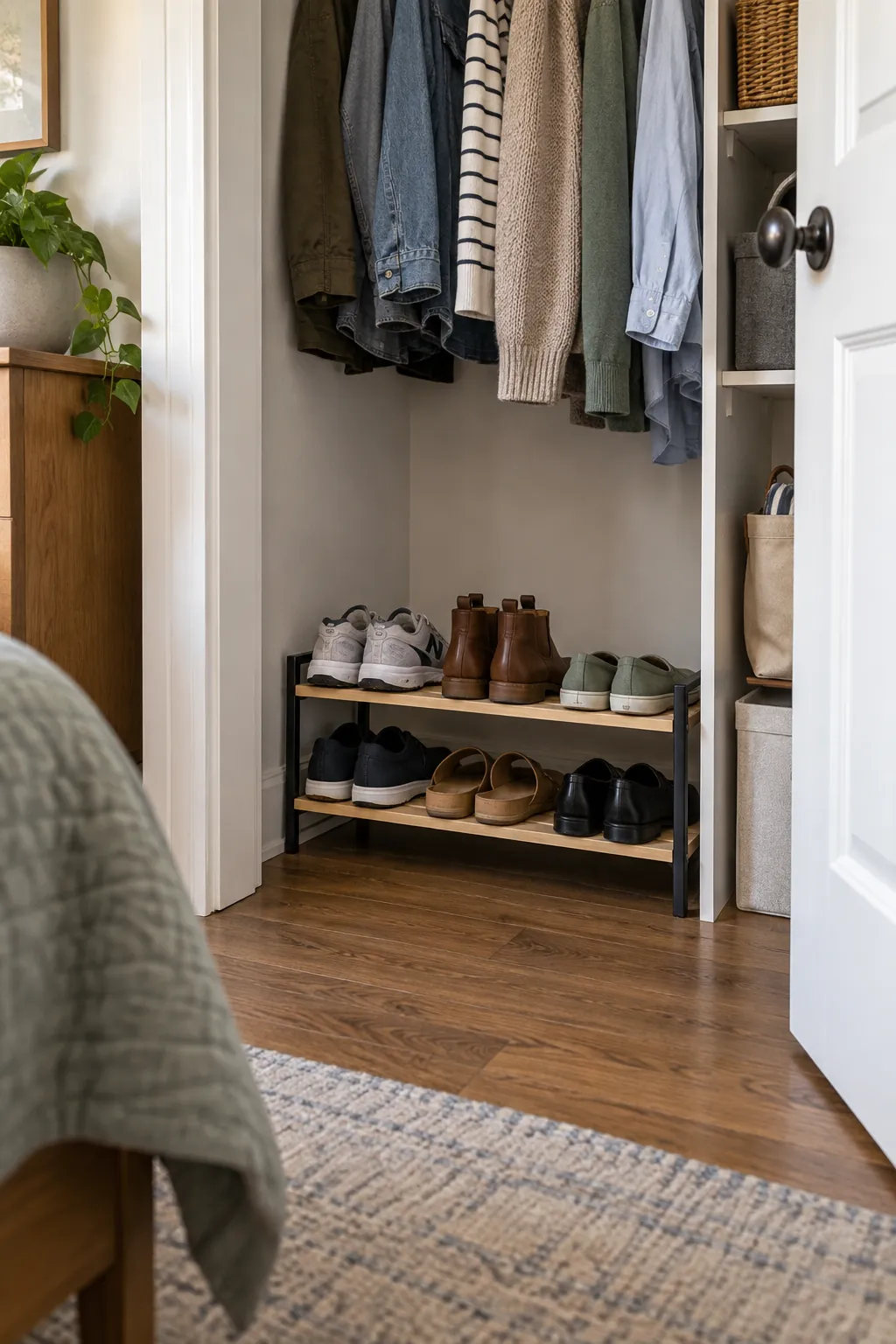
Divide a long top shelf
A high shelf becomes frustrating when every item tips into the next. Add lightweight dividers to keep folded sweaters or spare linens in distinct stacks. Choose a height that leaves room to lift each stack down safely. Store only occasional items above shoulder level and keep a stable step stool nearby when needed.
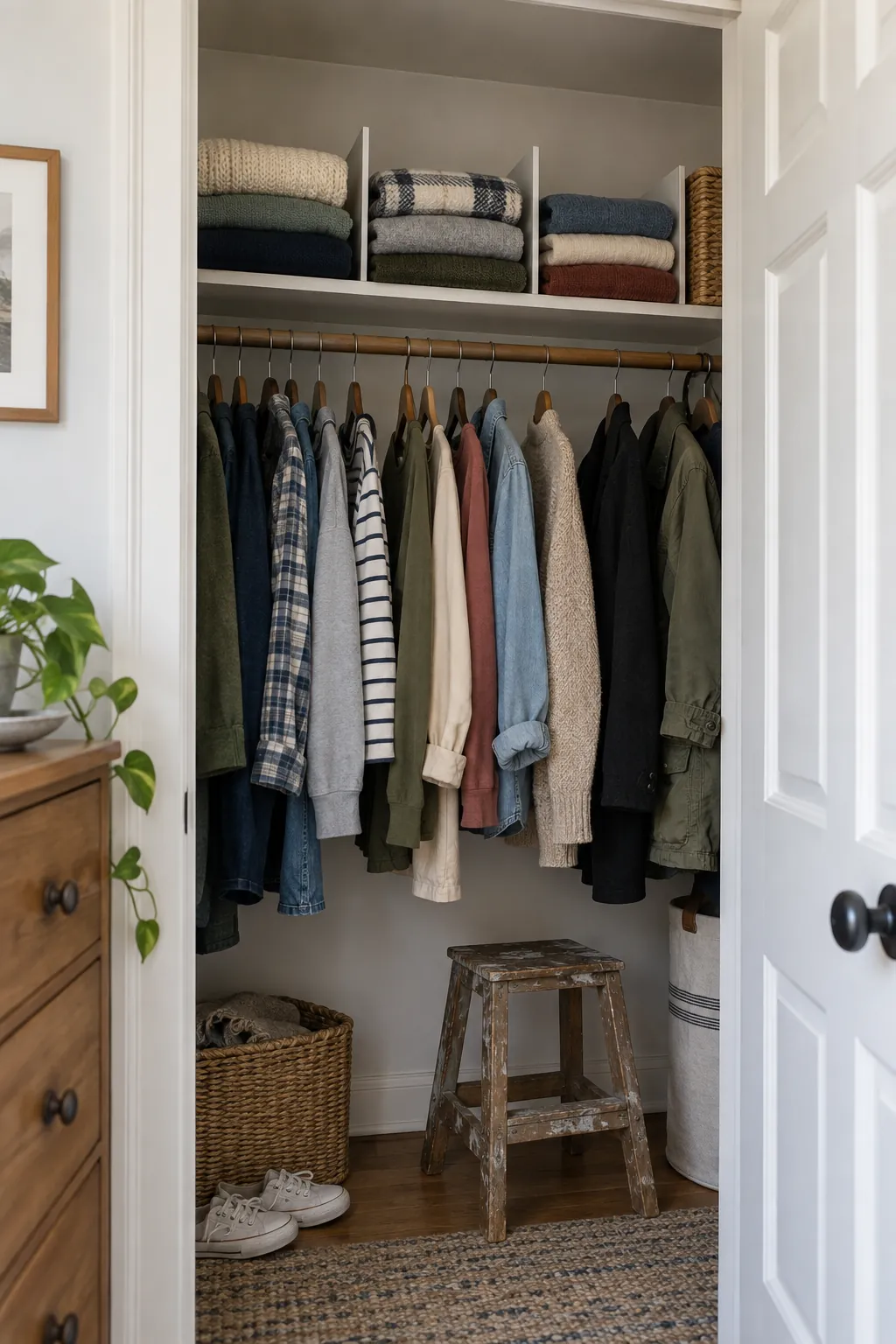
Create a compact laundry zone
A hamper inside or next to the closet prevents worn clothes from landing on a chair. Choose one you can lift out without moving the drawer unit or shoe rack. A breathable fabric basket is useful when laundry may sit for several days. Keep it away from damp walls and make the opening easy to reach.
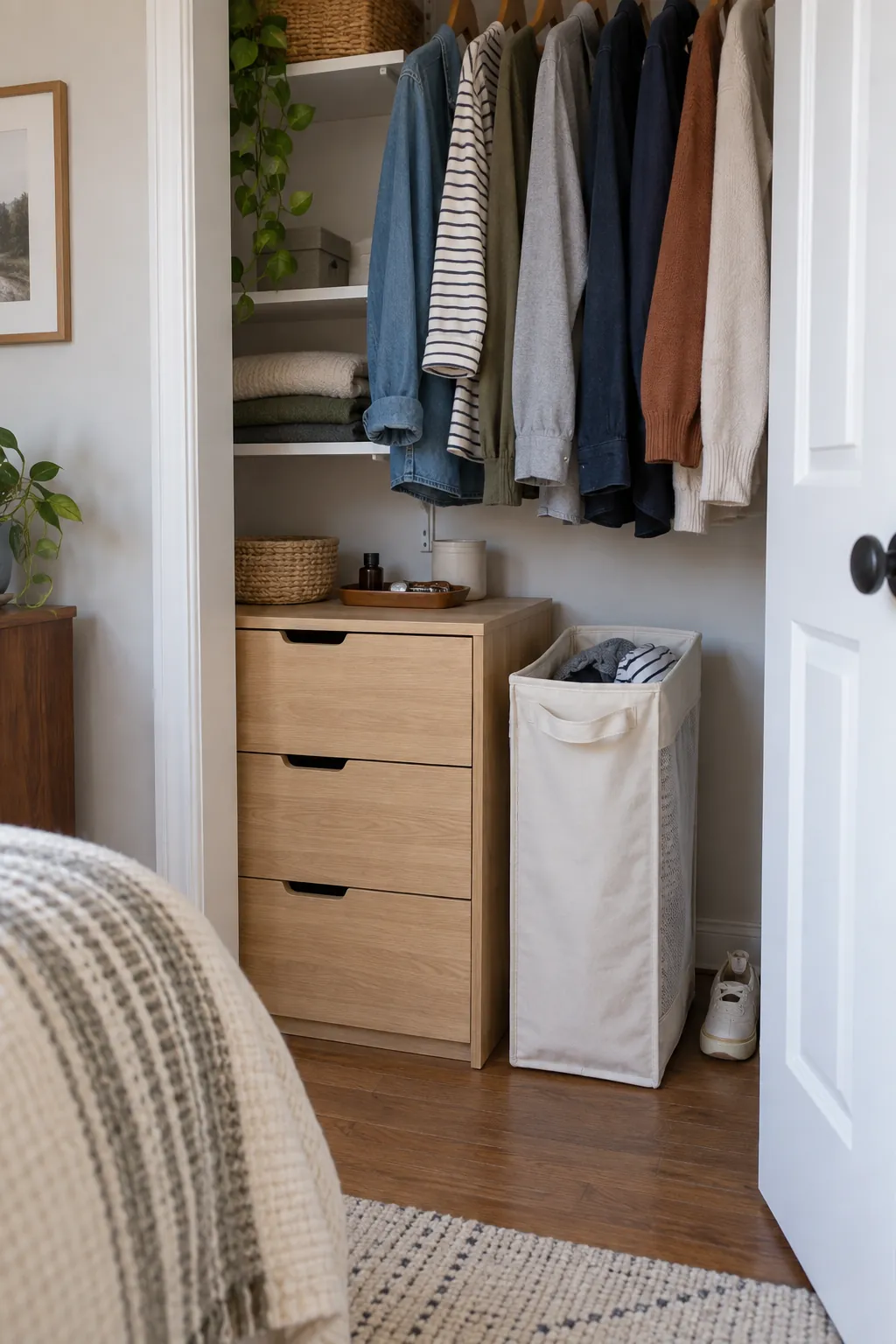
Store seasonal pieces above the daily zone
The highest reachable shelf is better for occasional pieces than for clothes you use each morning. Put clean dry seasonal items in light containers that you can lift safely. Label the container simply so you do not have to unpack every box to find a scarf. Avoid loading the shelf beyond its stated capacity.
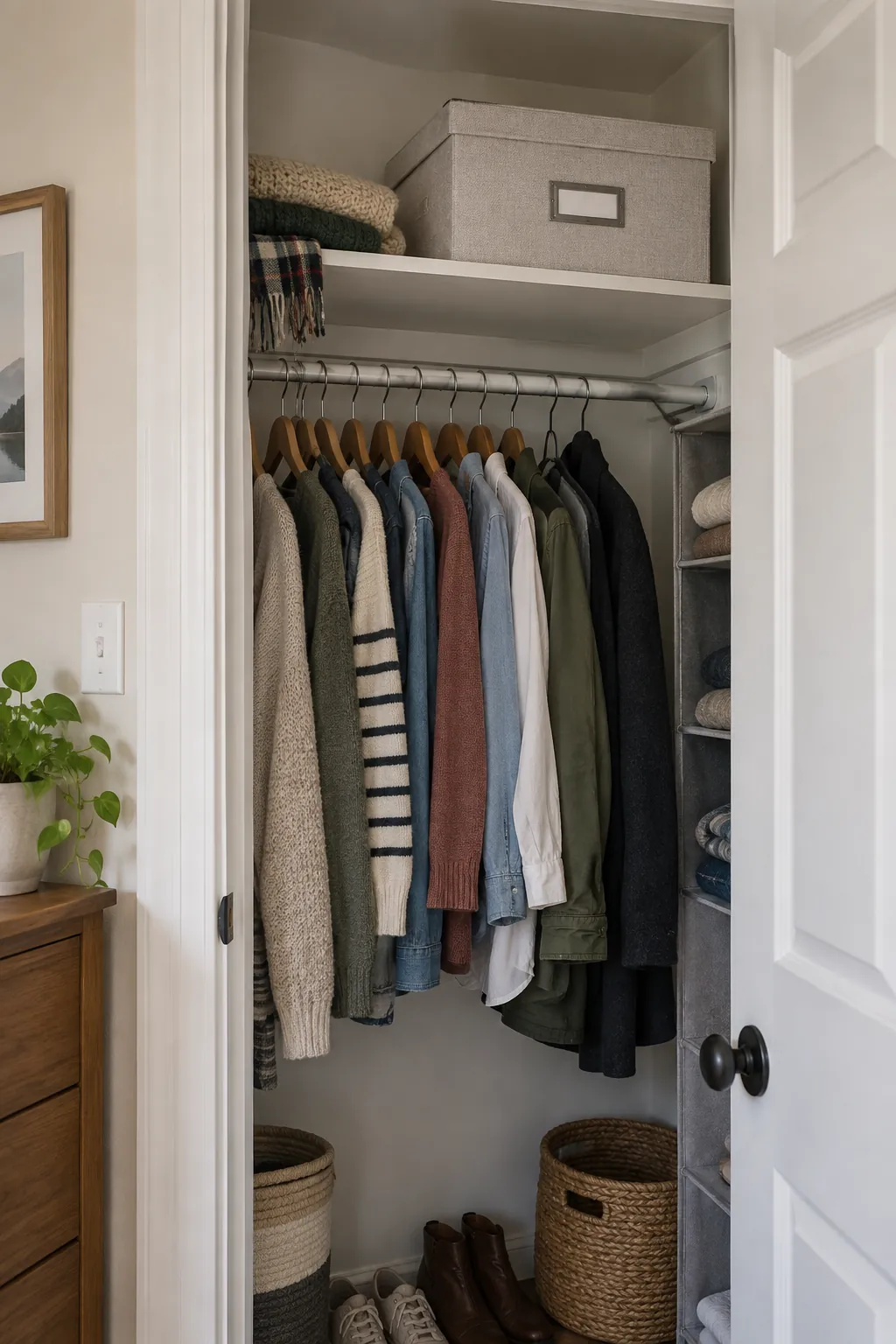
Swap a bulky door for a curtain when suitable
A curtain can free floor space when a swinging closet door hits nearby furniture. Check the lease and keep any original door safely if it must be restored later. Mount a suitable rod securely and choose a fabric that slides without dragging on the floor. The curtain should conceal storage while still letting you reach the whole closet opening.
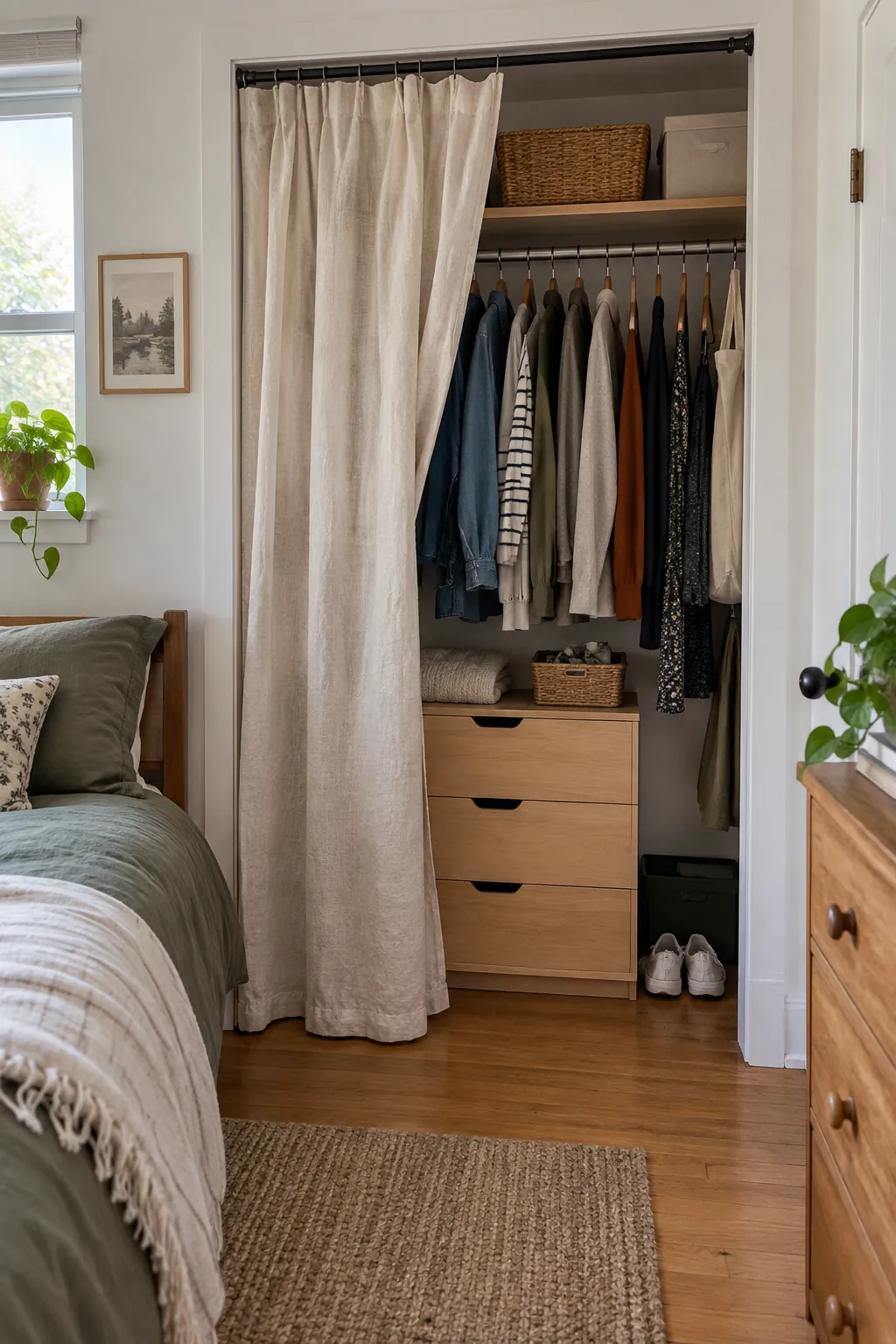
Add light where the back stays dark
A dark closet often feels smaller because you cannot see the back corners. A simple battery powered light can illuminate shelves without a full electrical project. Position it where it does not interfere with the door, clothing, or a pull out bin. Choose a unit you can reach easily to change batteries or recharge.
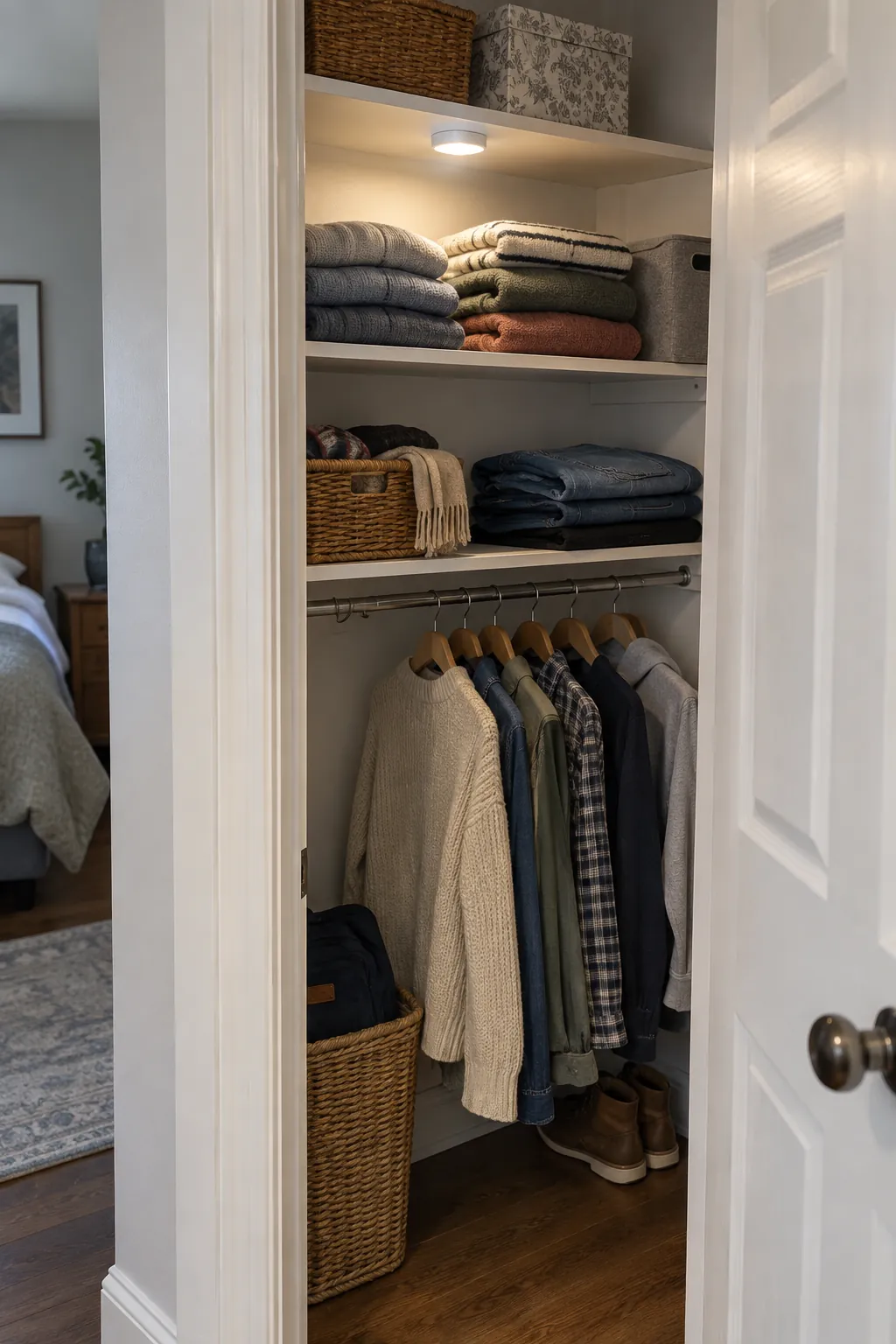
Finish with clear everyday zones
The best budget closet systems make daily routines easier rather than merely fitting more items. Keep the most used clothes near the center, accessories at a reachable side, and infrequent pieces above. Open every drawer and door once the makeover is assembled to test the flow. If anything blocks another part, simplify the layout before filling the last shelf.