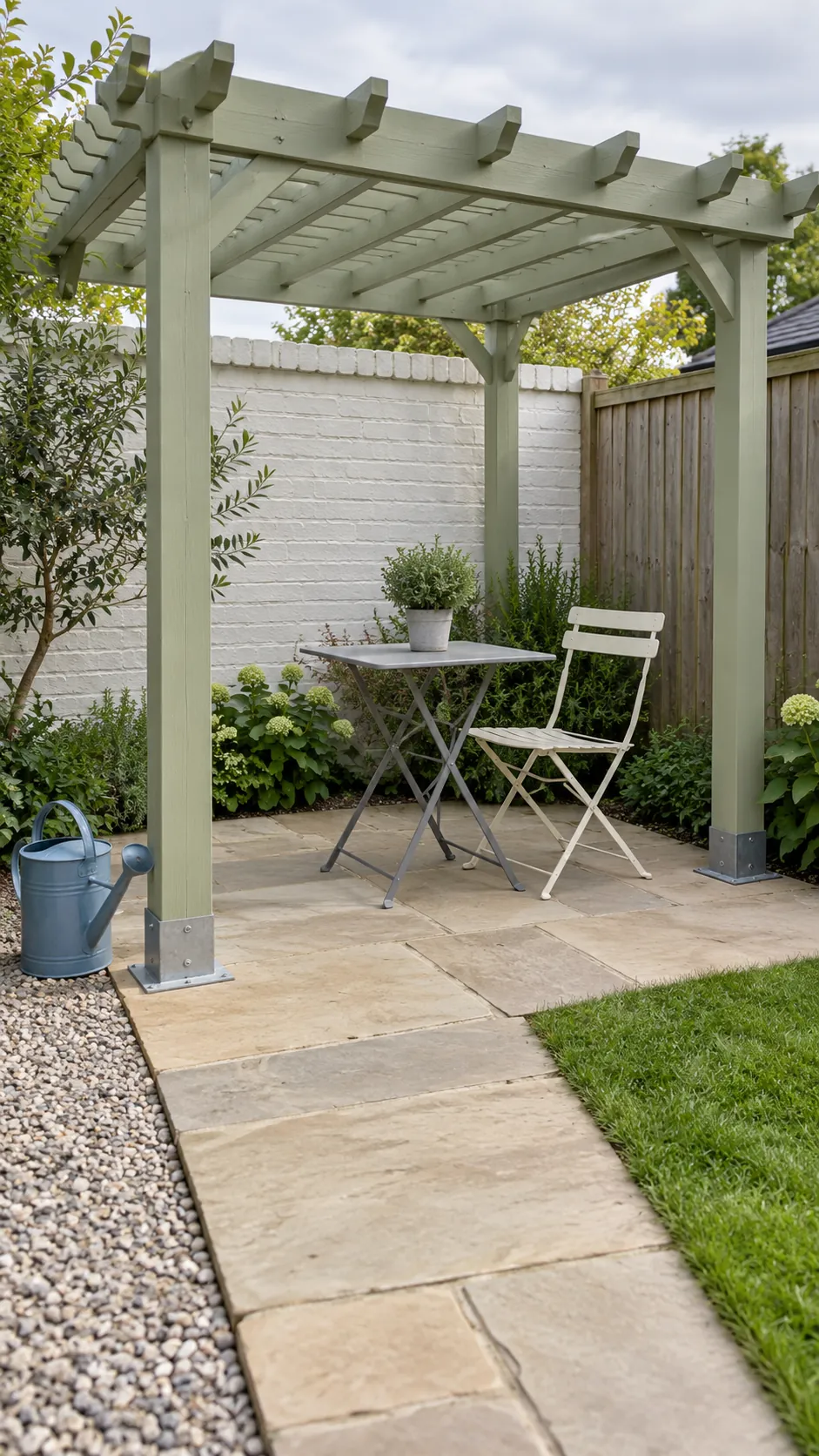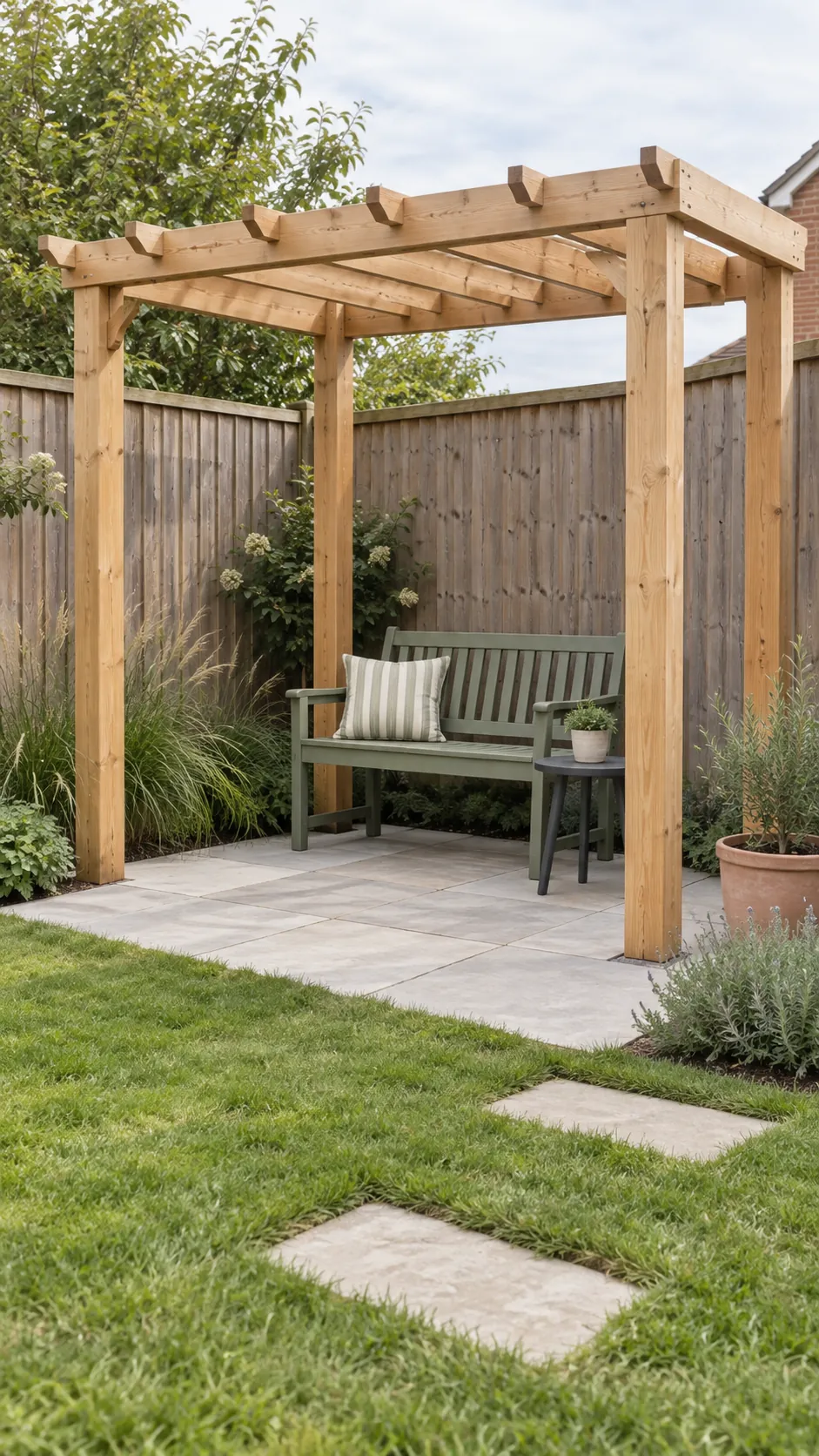
A spare garden corner can hold a comfortable seat, but posts, chair backs and plant pots quickly consume its usable space. Decide how you will enter and sit before choosing the roof outline. A clear footprint usually matters more than adding another decorative feature.
A bench along the rear edge
A single bench can make a small corner useful without the space needed for several loose chairs. Set it against the rear of the pergola footprint and keep an open area in front for feet and entry. Check the view from the seat before choosing which way the frame faces. A small side table is often enough for a drink without turning the opening into a furniture obstacle.
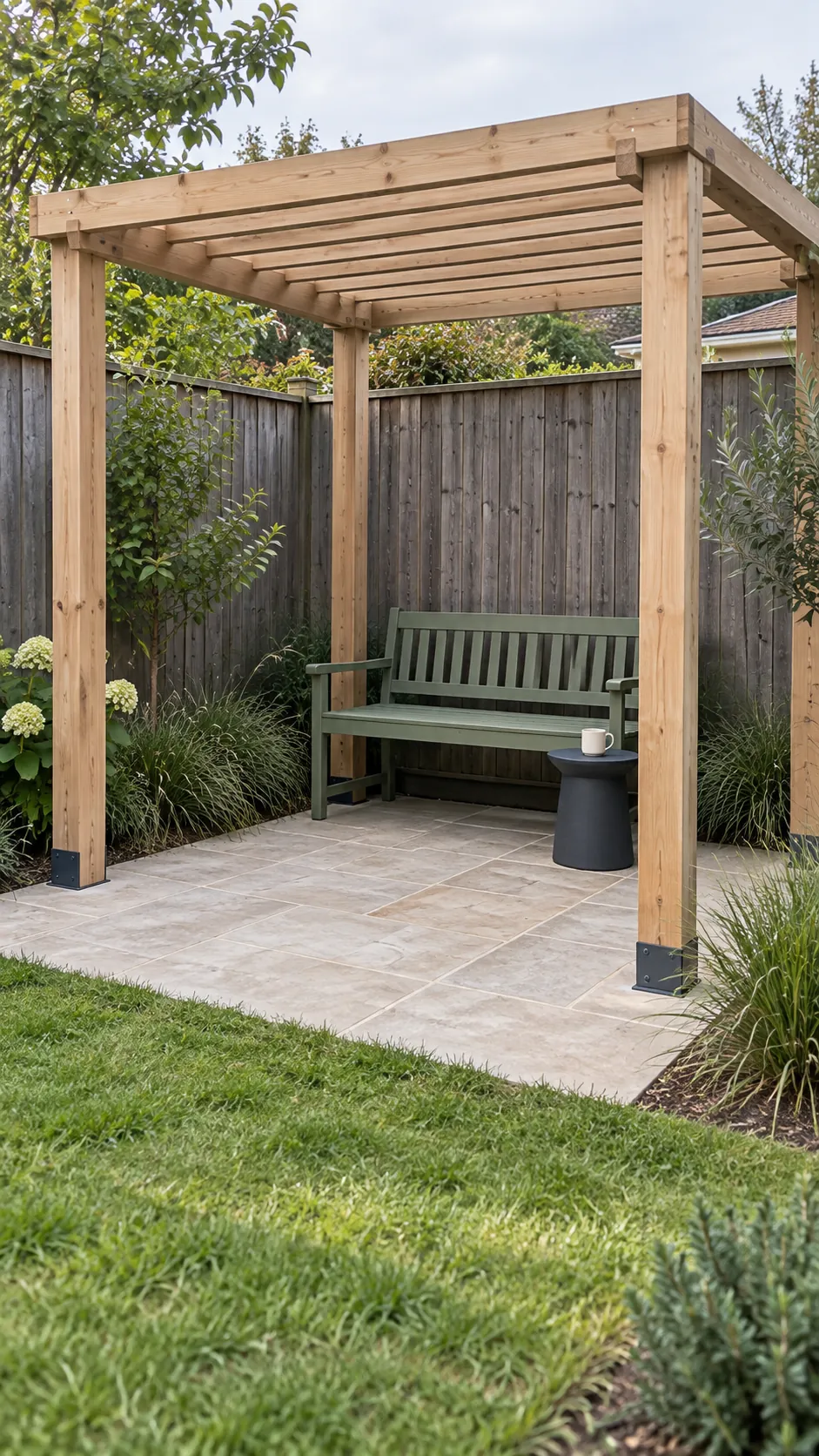
Two chairs angled toward the garden
Two compact chairs can make a corner feel connected to the wider garden. Angle them toward the best view rather than automatically facing each other across a large table. Measure with the chairs occupied and allow room to stand without hitting a post. Keep planting behind the seats low enough that it does not catch clothing when someone moves.
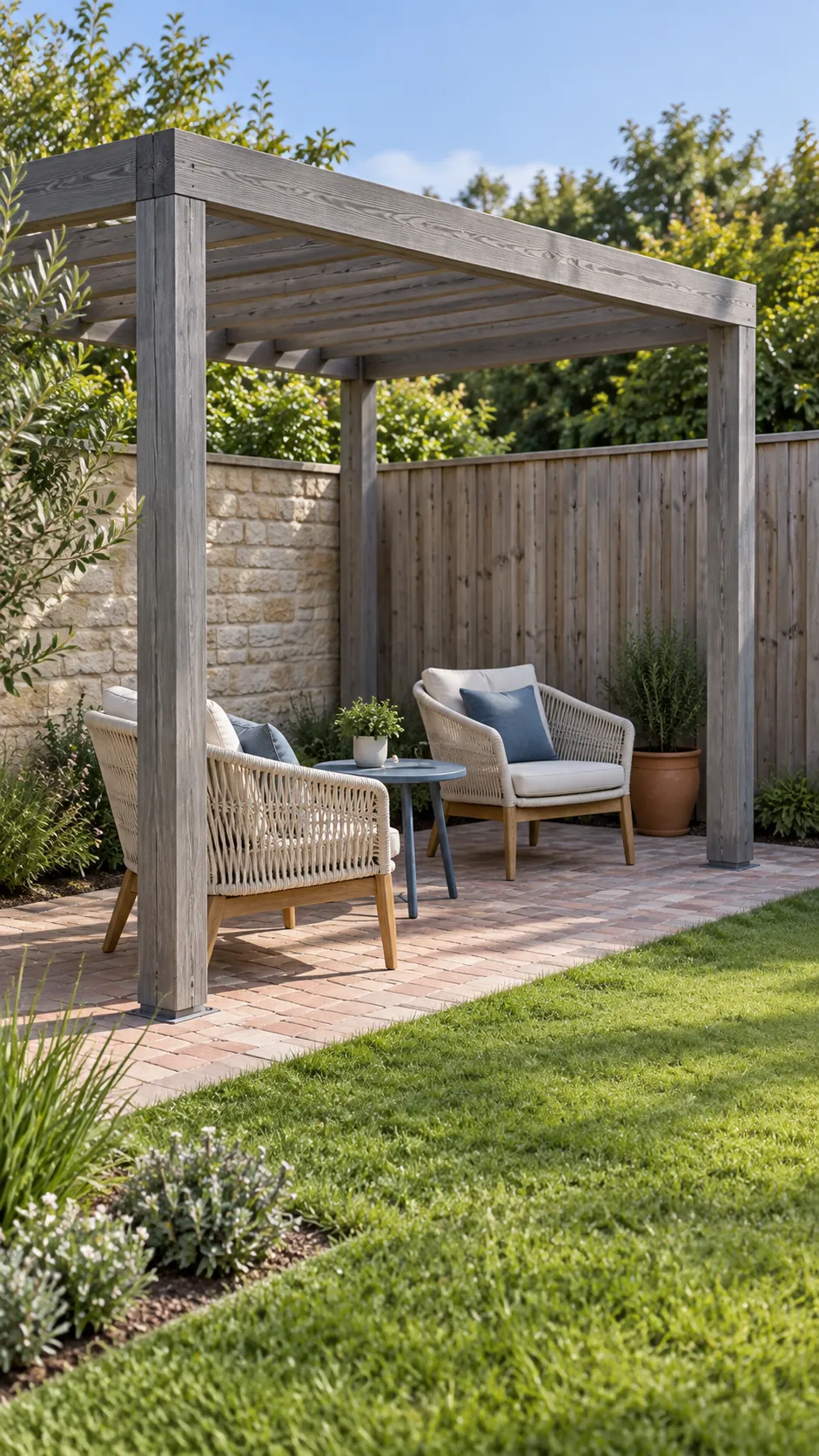
A square frame over an existing patio corner
An existing patio corner can be a useful starting point if its surface and foundations suit the planned structure. Check its level, drainage and condition before treating paving as a ready made base. A qualified installer can advise how posts should be supported without damaging nearby services. Align the frame with the usable floor area, then leave the main patio route outside its furniture footprint.
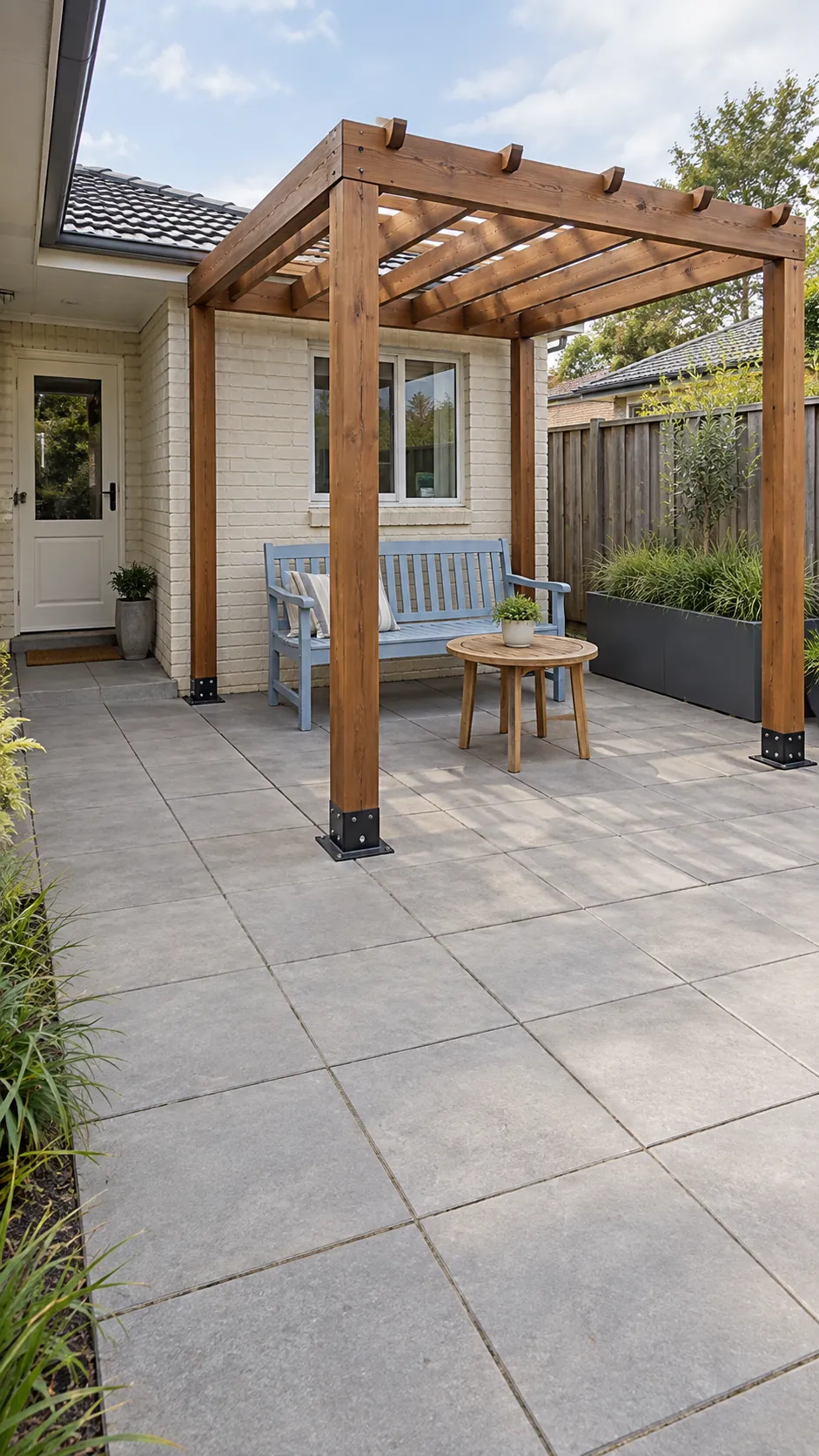
A triangular seat pad within a garden corner
A triangular floor area can use an awkward corner while keeping the front edge open to the garden. The pergola above still needs a designed support layout rather than improvised beams stretched between fences. Test the seat position with a temporary outline before committing to the pad shape. A modest chair and side table can work better here than furniture that needs space on every side.
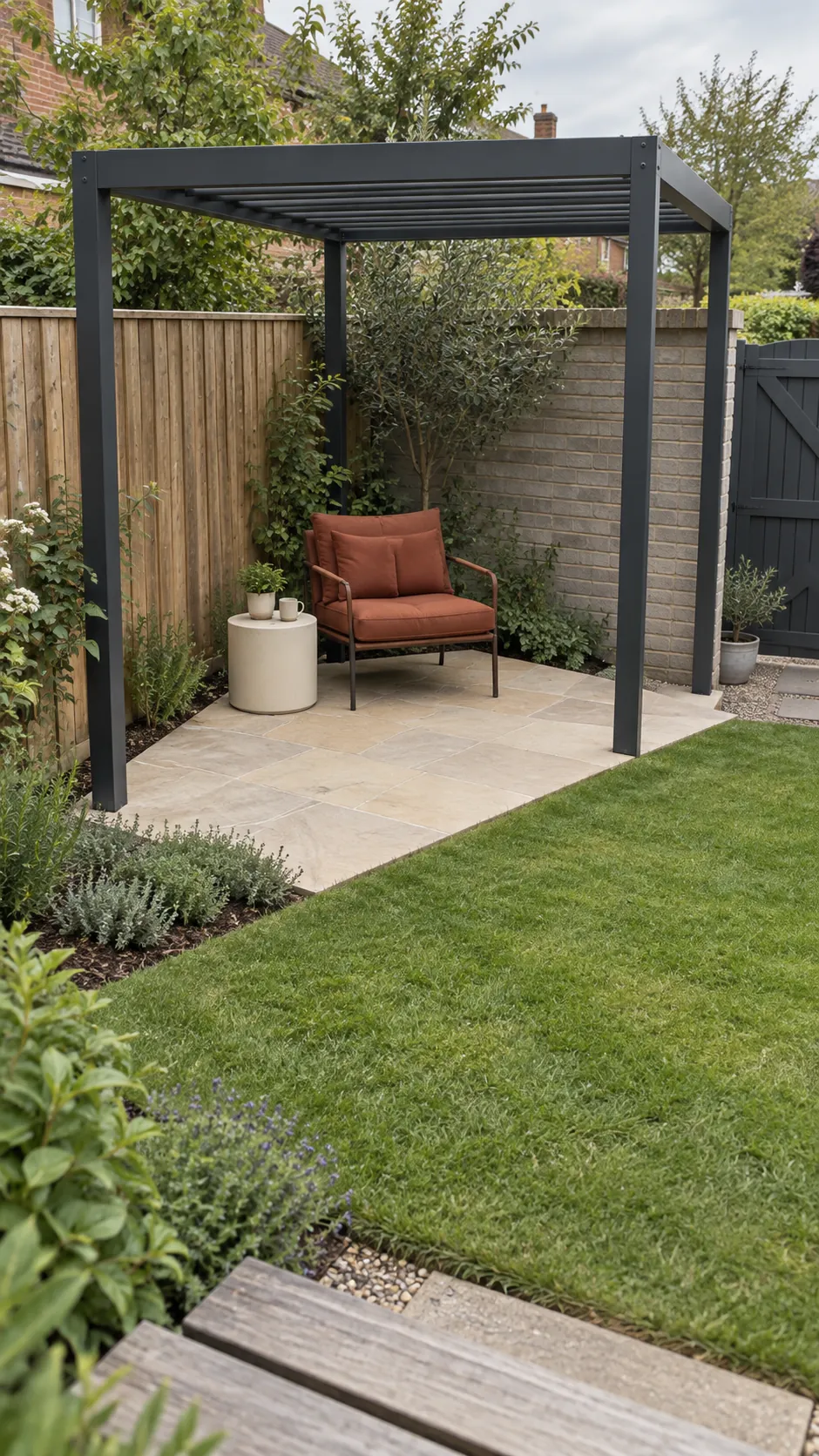
One open side beside a privacy screen
A partial screen can make a corner comfortable without closing the whole garden view. Put screening where it addresses an actual sightline from neighbors or the house. Leave the best outlook and entry open so the space does not become a cramped box. Check wind exposure and structural suitability before adding panels that increase the load on the frame.
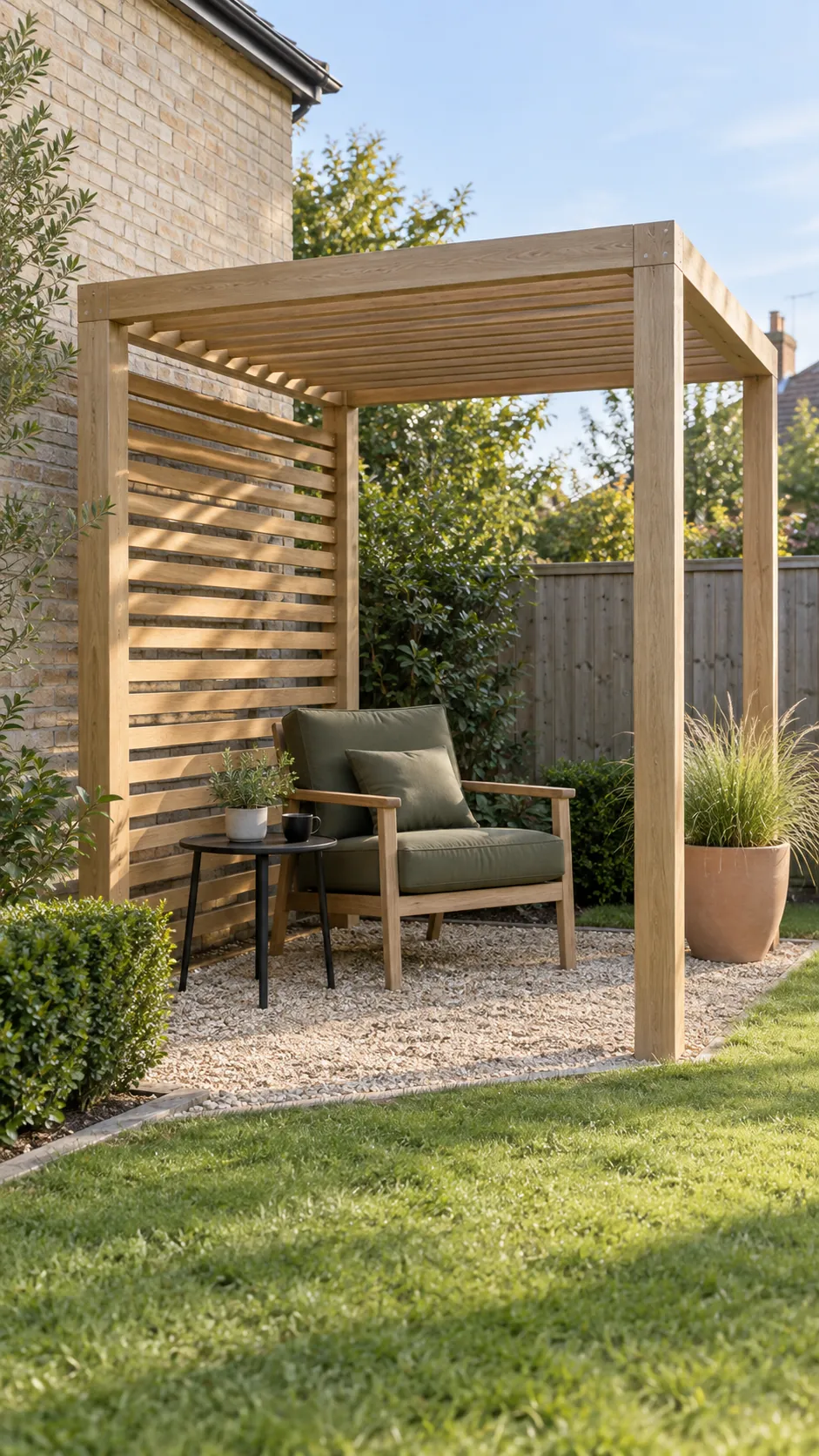
A narrow frame with a movable chair
A narrow pergola can define a seat without taking over the full width of a small garden. A lightweight chair lets you adjust the view and recover space when cleaning or gardening. Choose its size by the usable area between posts rather than the overall roof dimensions. Keep a simple path beside the chair so reaching the corner does not require stepping over its legs.
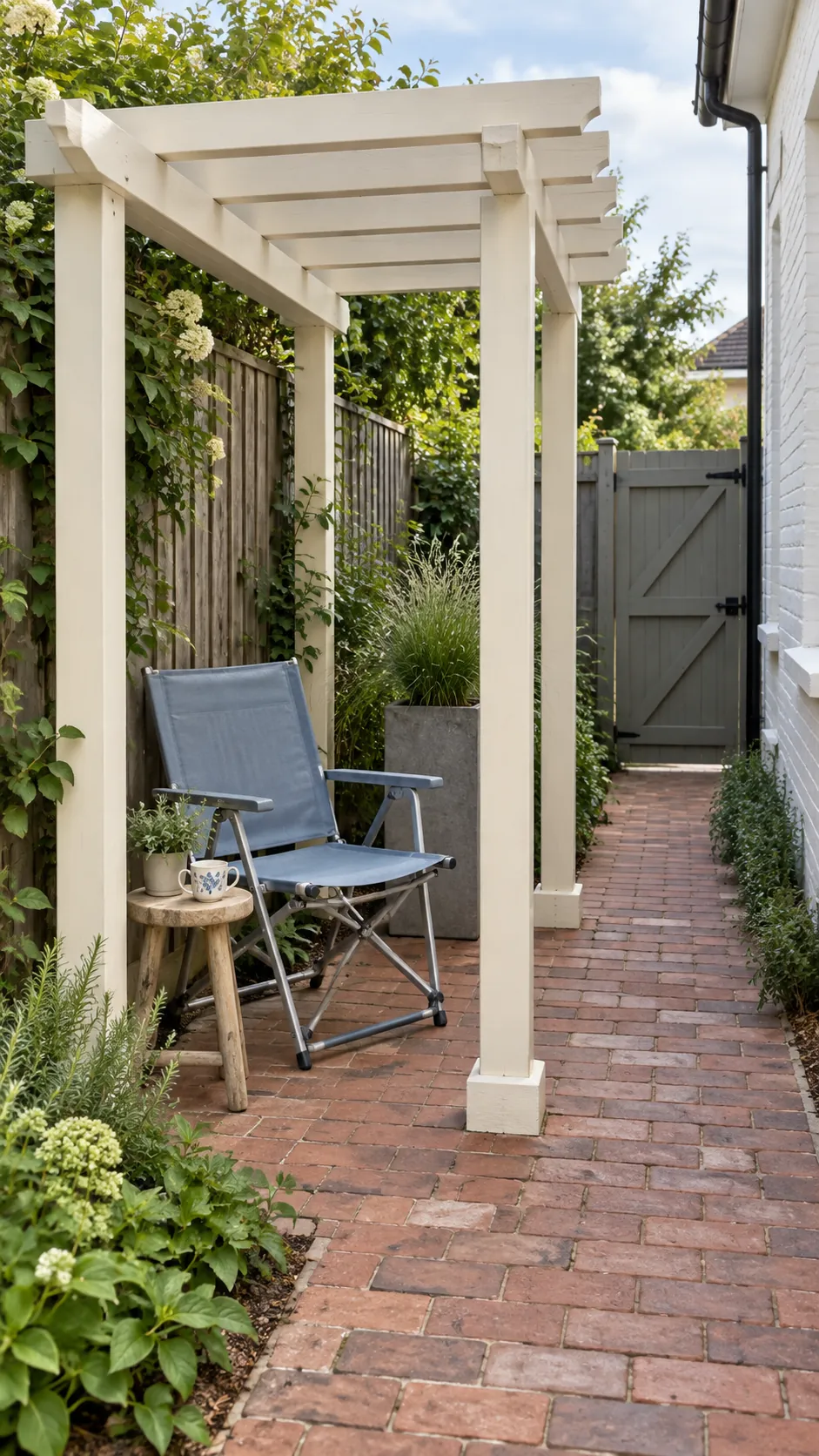
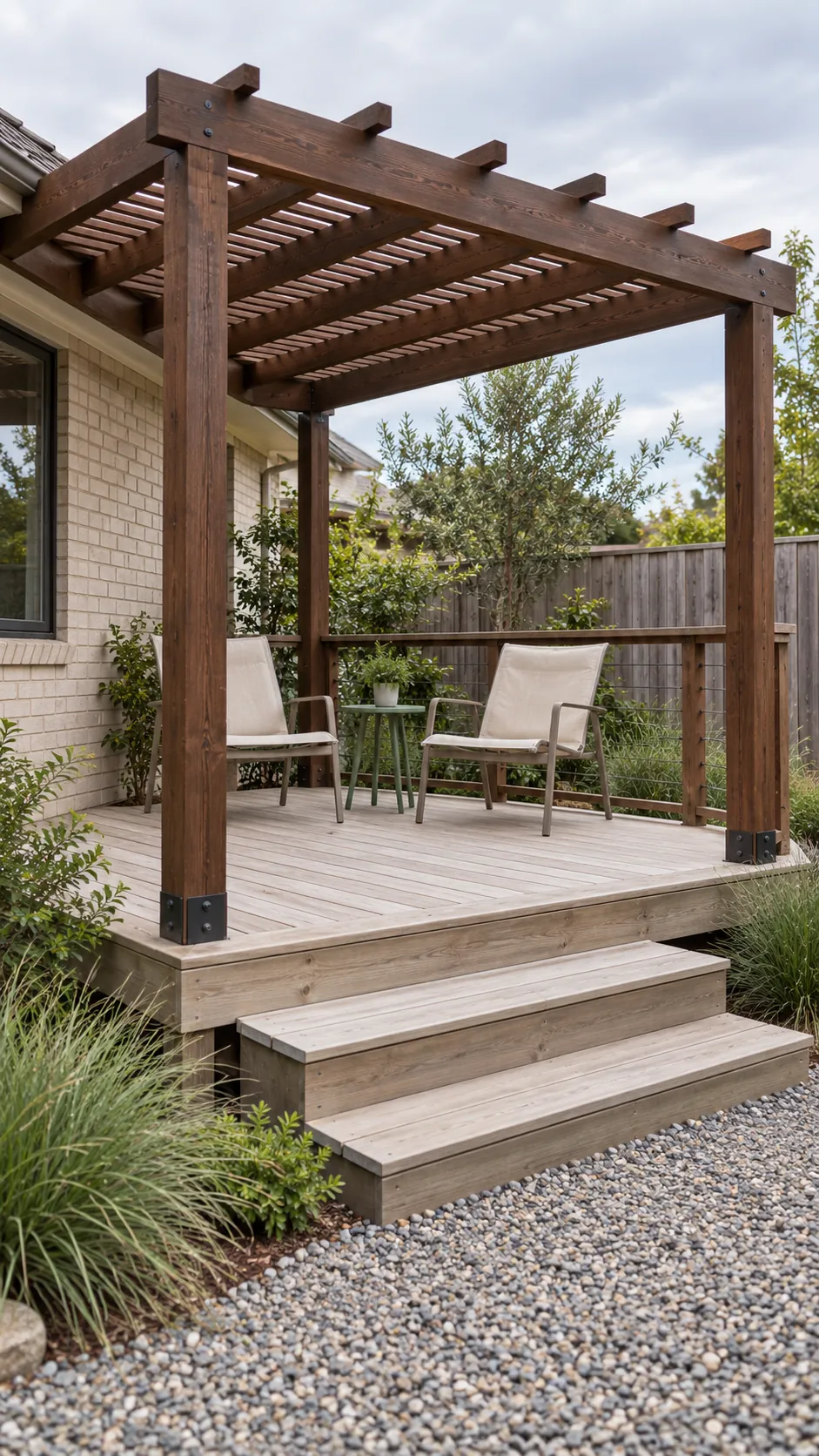
A raised corner deck with visible steps
A small deck can create a level corner where the ground shape makes seating awkward. Its supports, foundations and any required guards need proper design for the site. Place the pergola posts where they work with the deck structure, rather than assuming deck boards alone can carry them. Keep the step approach visible and free of planters so the level change remains easy to recognize.
Containers outside the sitting footprint
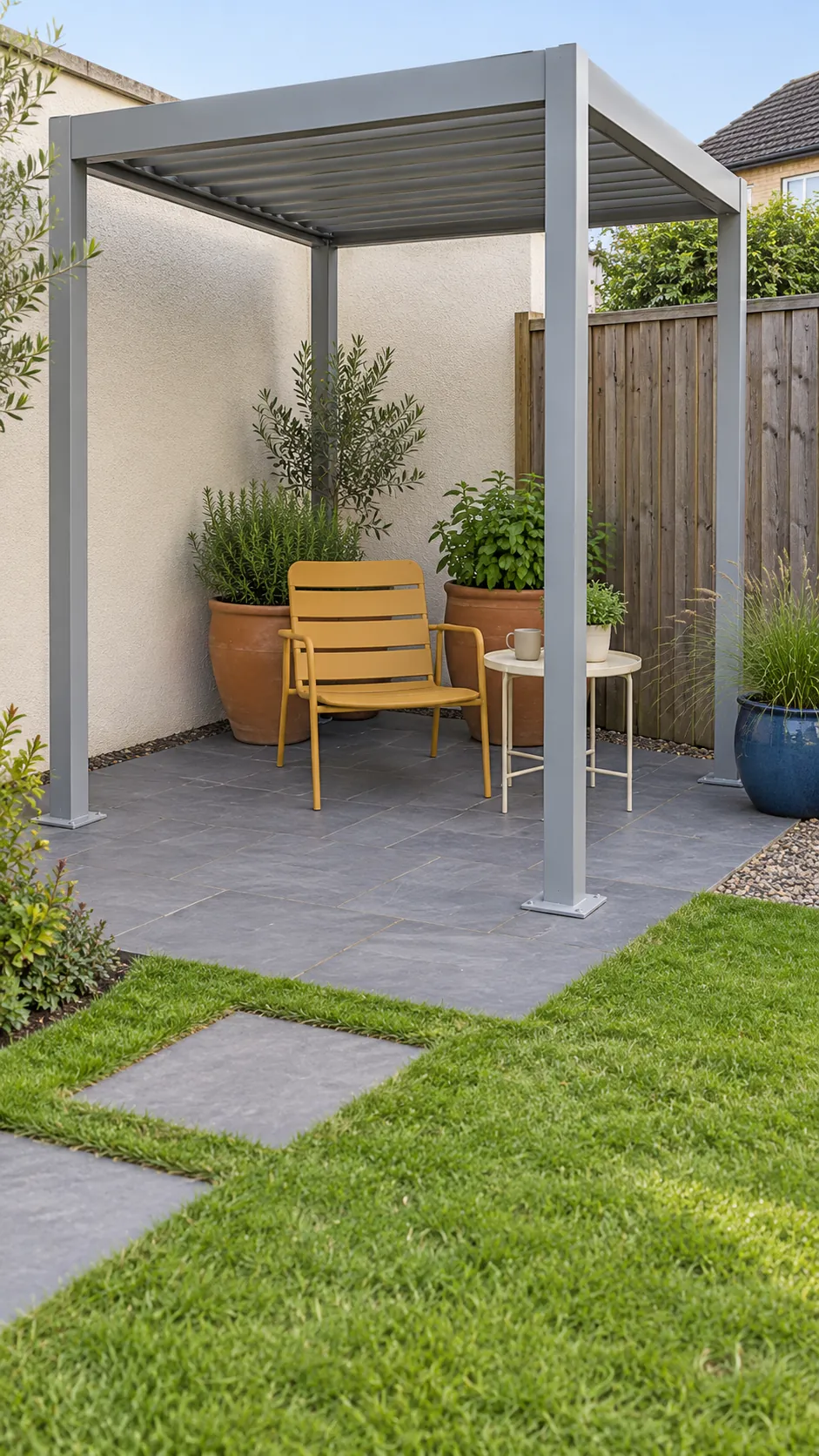
Containers can soften a bare corner while leaving the seat pad simple. Group a few appropriately sized pots beyond the posts instead of surrounding every chair with small plants. Allow for watering access and the mature spread of foliage. The most useful arrangement is one where you can reach the seat without moving a pot first.
A small table for two at the corner
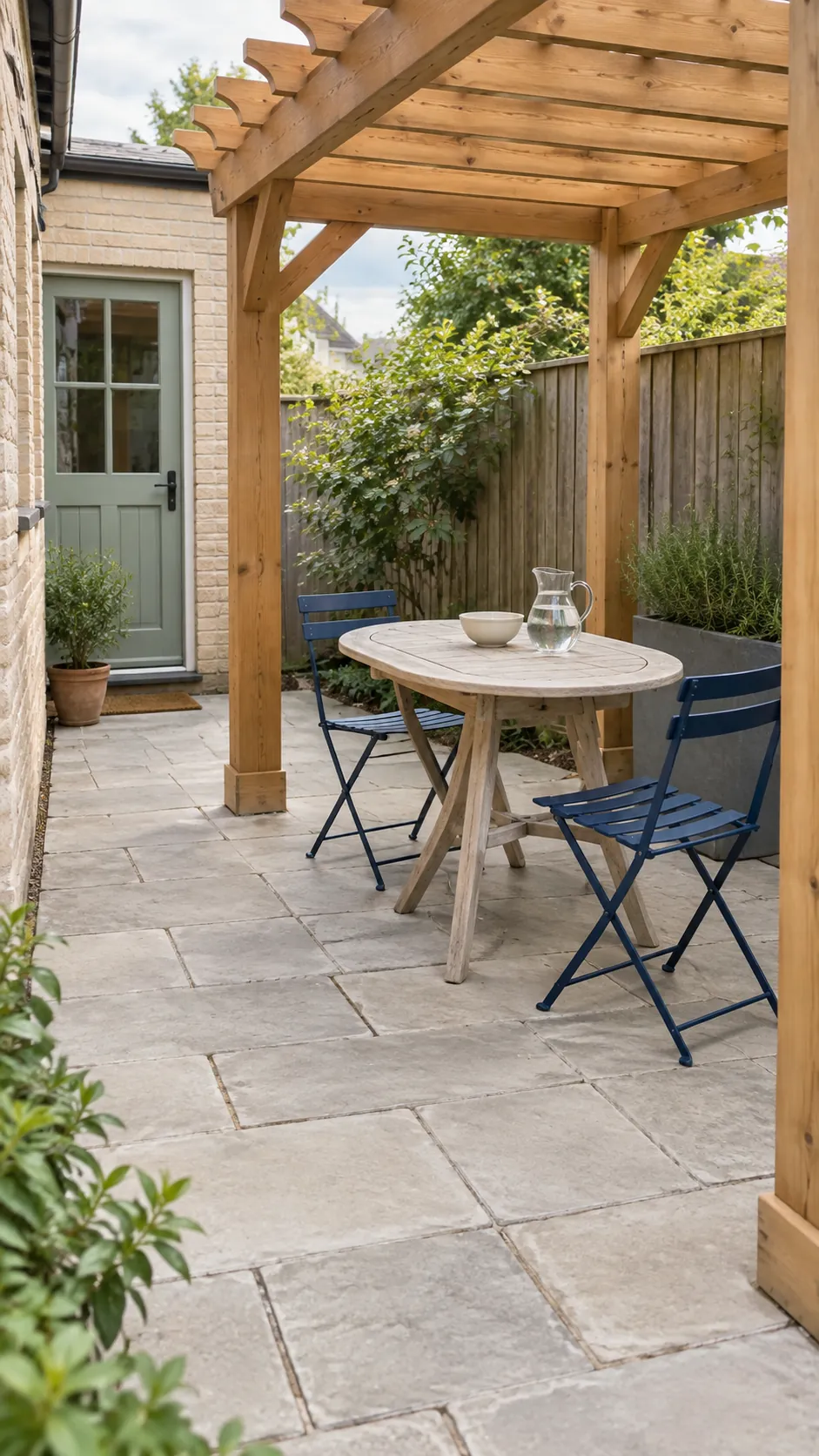
A compact table can turn a corner into a useful meal spot when there is enough room for pulled out chairs. Try the layout on the ground before choosing the pergola size. Keep the house route beside the dining area and avoid placing a front post where a chair back needs to move. A plain tabletop leaves more working space than a permanent decorative centerpiece.
Open rafters with a clear shade plan
Open rafters can define a corner but may leave the seat in strong afternoon sun. Observe the site at the time you expect to use it rather than judging shade from a morning photograph. Any added shade fabric or roof system needs suitable supports and consideration of wind and rain. Choose the cover for your actual need, since a pergola frame alone does not promise waterproof shelter.
A painted frame against a plain boundary
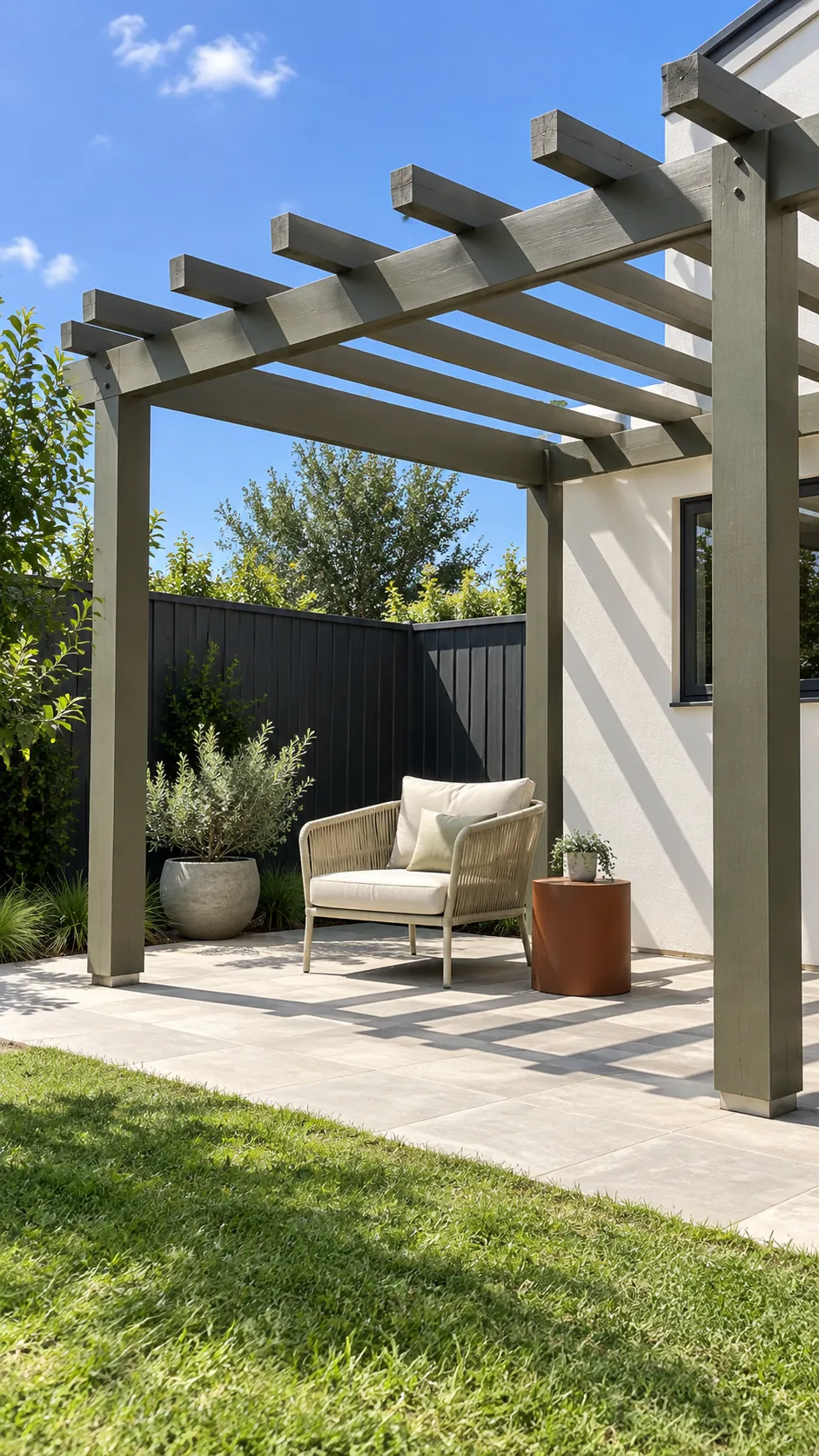
A muted painted frame can distinguish a small corner from a plain fence or wall. Choose one color that works with the house and paving instead of adding many contrasting accessories. Use a finish suited to the timber and outdoor exposure, with the required surface preparation. Leave a gap where maintenance access is needed so an attractive new frame does not make the boundary difficult to care for.
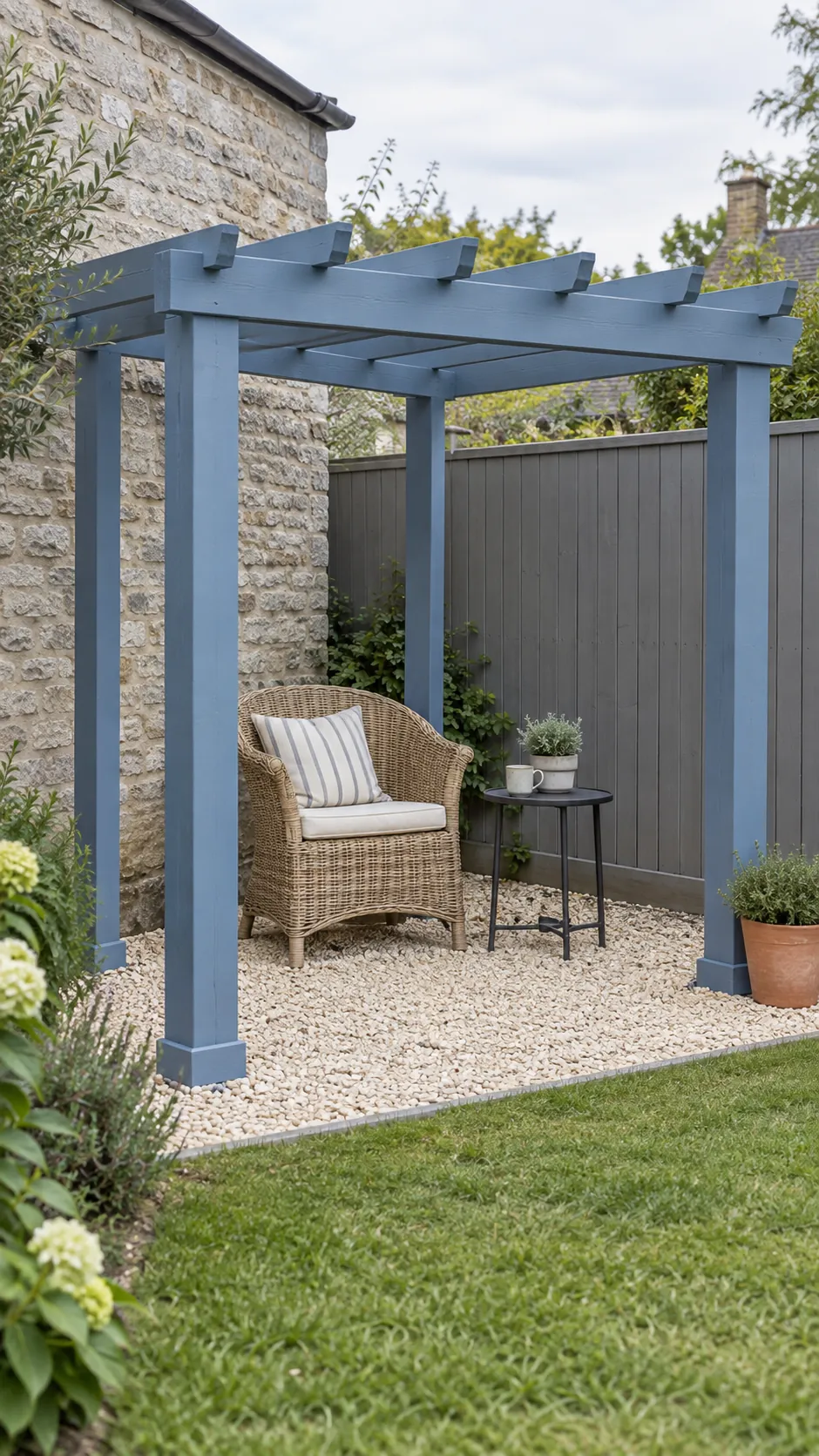
A garden path that ends at the seat
A short path can make a remote corner feel like a deliberate destination. Align its final approach with the opening between posts rather than stopping at a chair or planter. Keep nearby plants outside the walking width as they mature. A stable surface and a clear junction at the seat pad matter more than a complicated path shape.
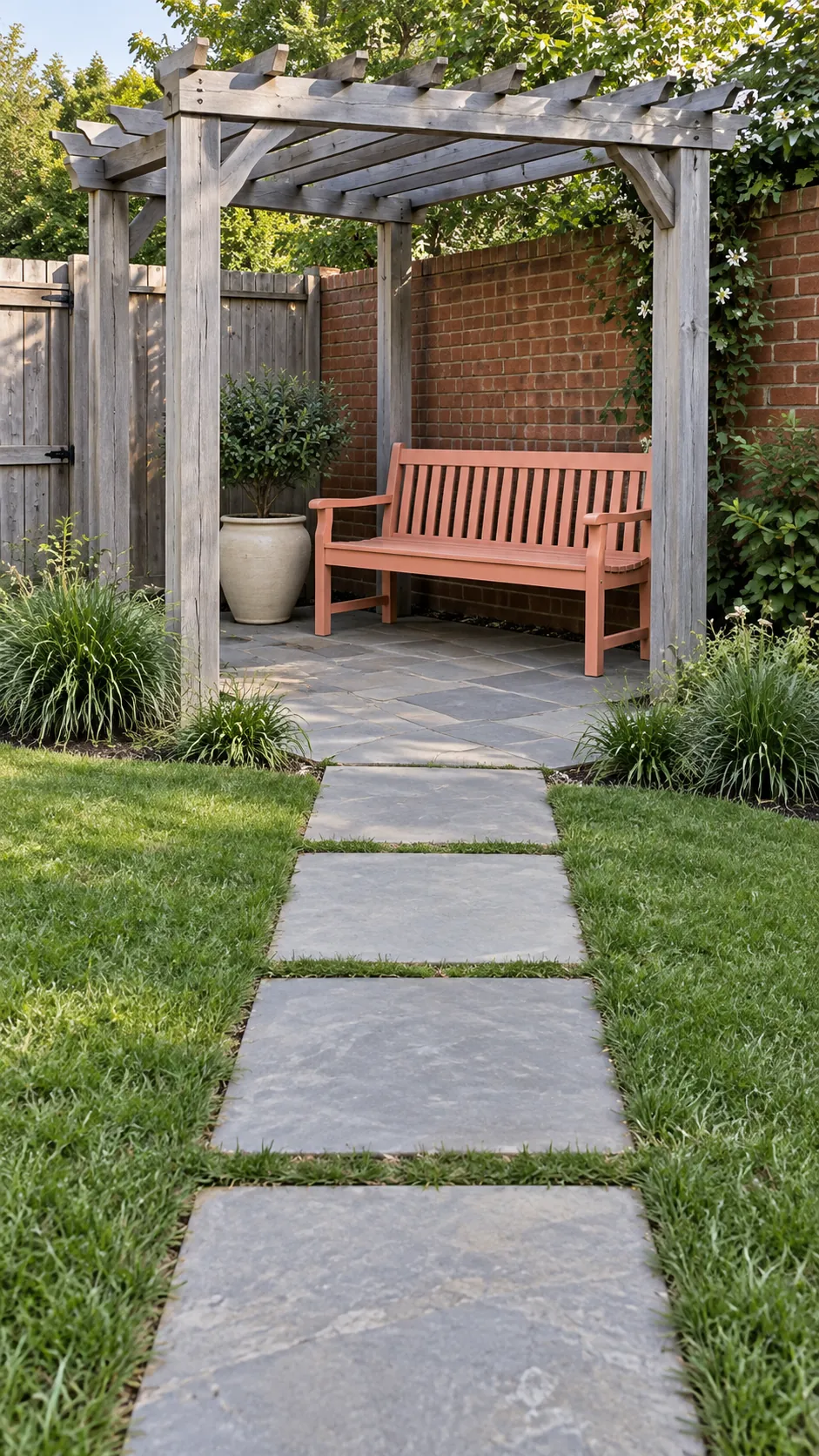
A modest light beside the entrance
A small shielded light can make a corner easier to find after dusk. Aim it toward the entry and nearby floor rather than directly into seated eyes. Select equipment suitable for its outdoor exposure and seek professional advice for permanent wiring. Portable decorative lights can add atmosphere, but they should not be the only way to see a difficult approach.
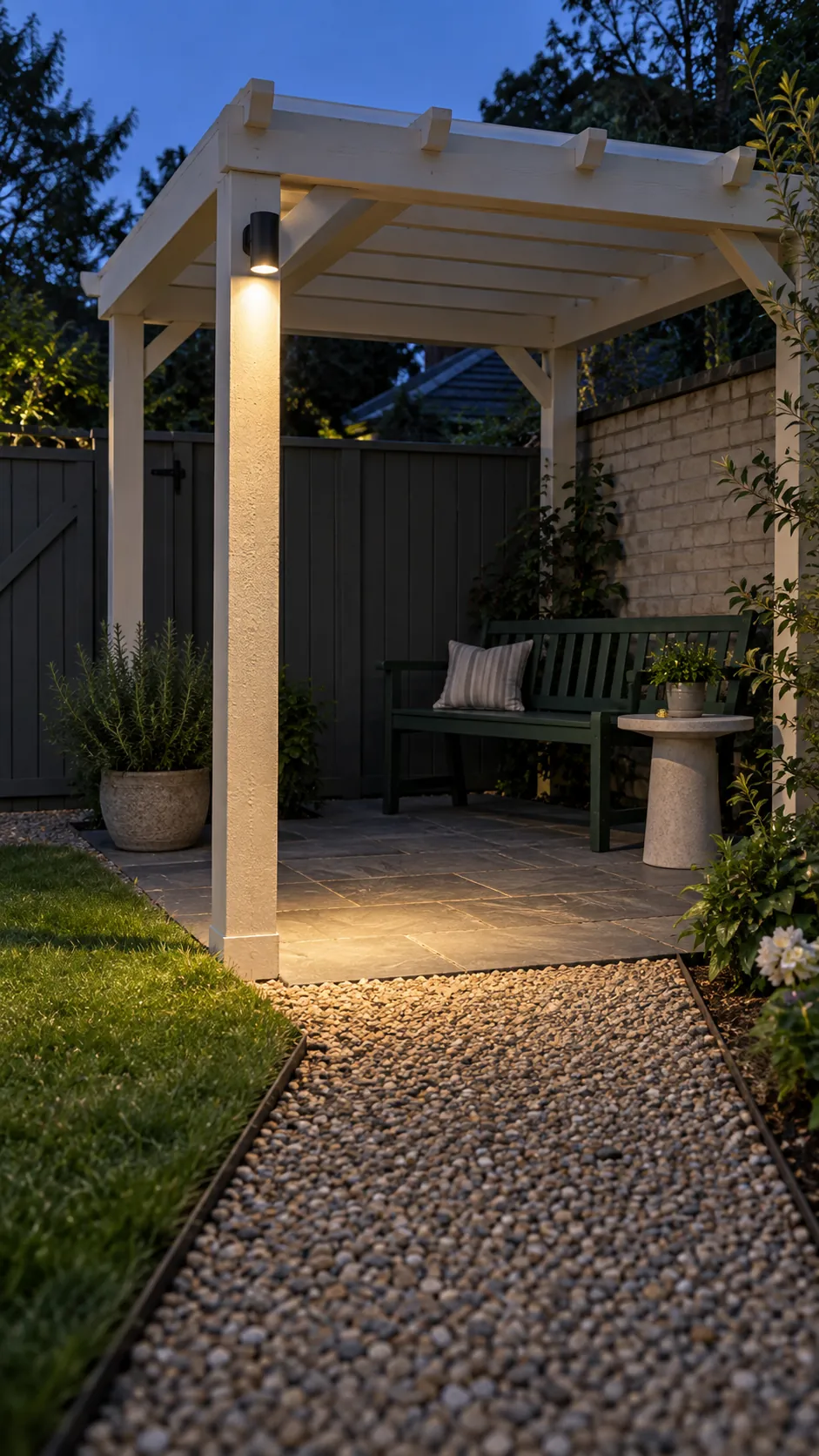
A freestanding frame clear of the fence
A freestanding pergola can sit near a garden fence while keeping its own support system. Do not assume an ordinary fence can carry roof beams or added shade loads. Check boundaries, local requirements and access before setting post locations. A visible gap can also help you inspect and maintain both structures later.
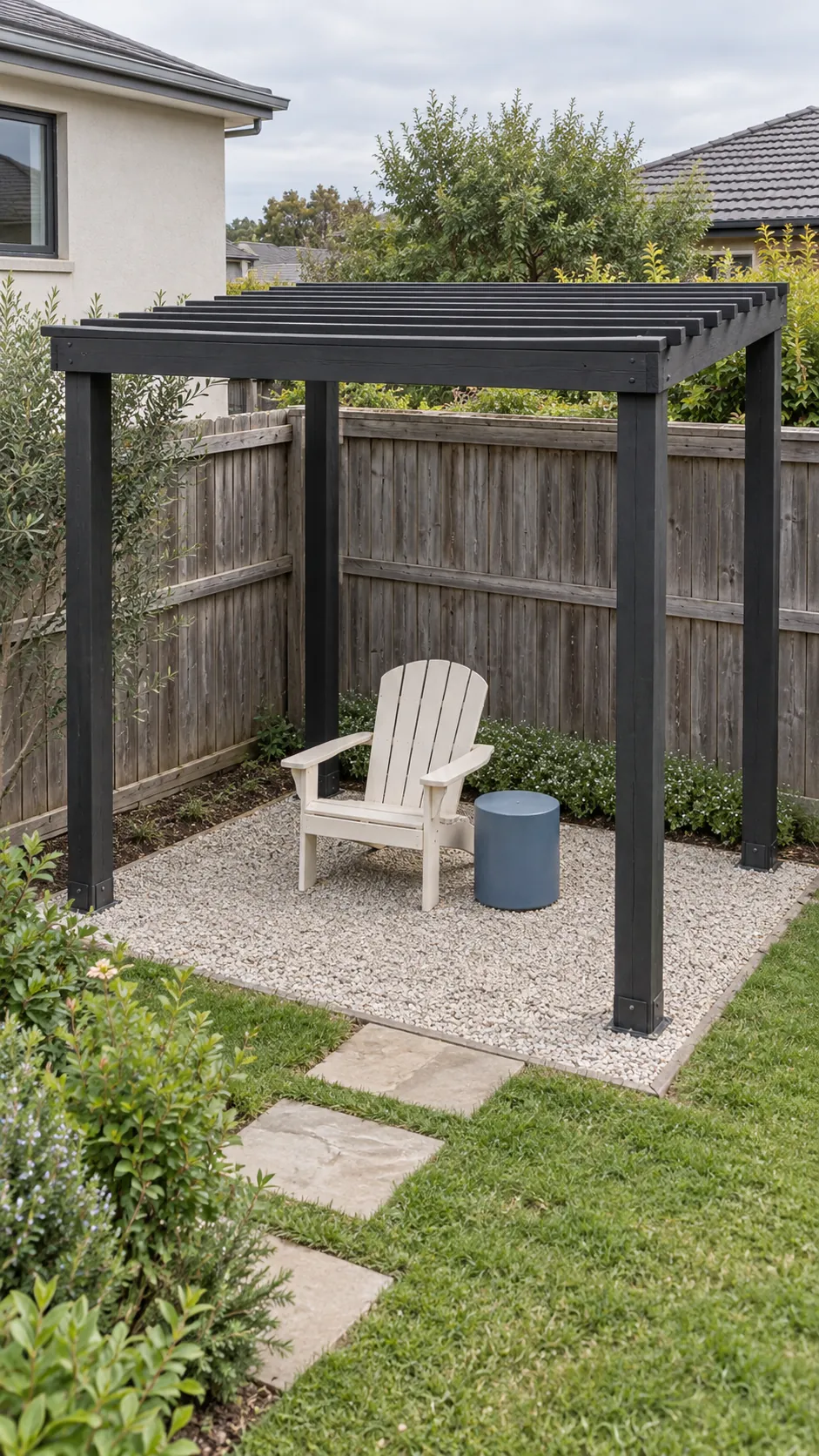
A simple corner with room for maintenance
A small corner works best when its useful floor area remains clear after the garden fills out. Leave access to post bases, nearby drains and any planting supports. Choose furniture you can move when cleaning or pruning requires working room. Before adding another object, walk into the seat area and check whether the corner still serves its main purpose comfortably.