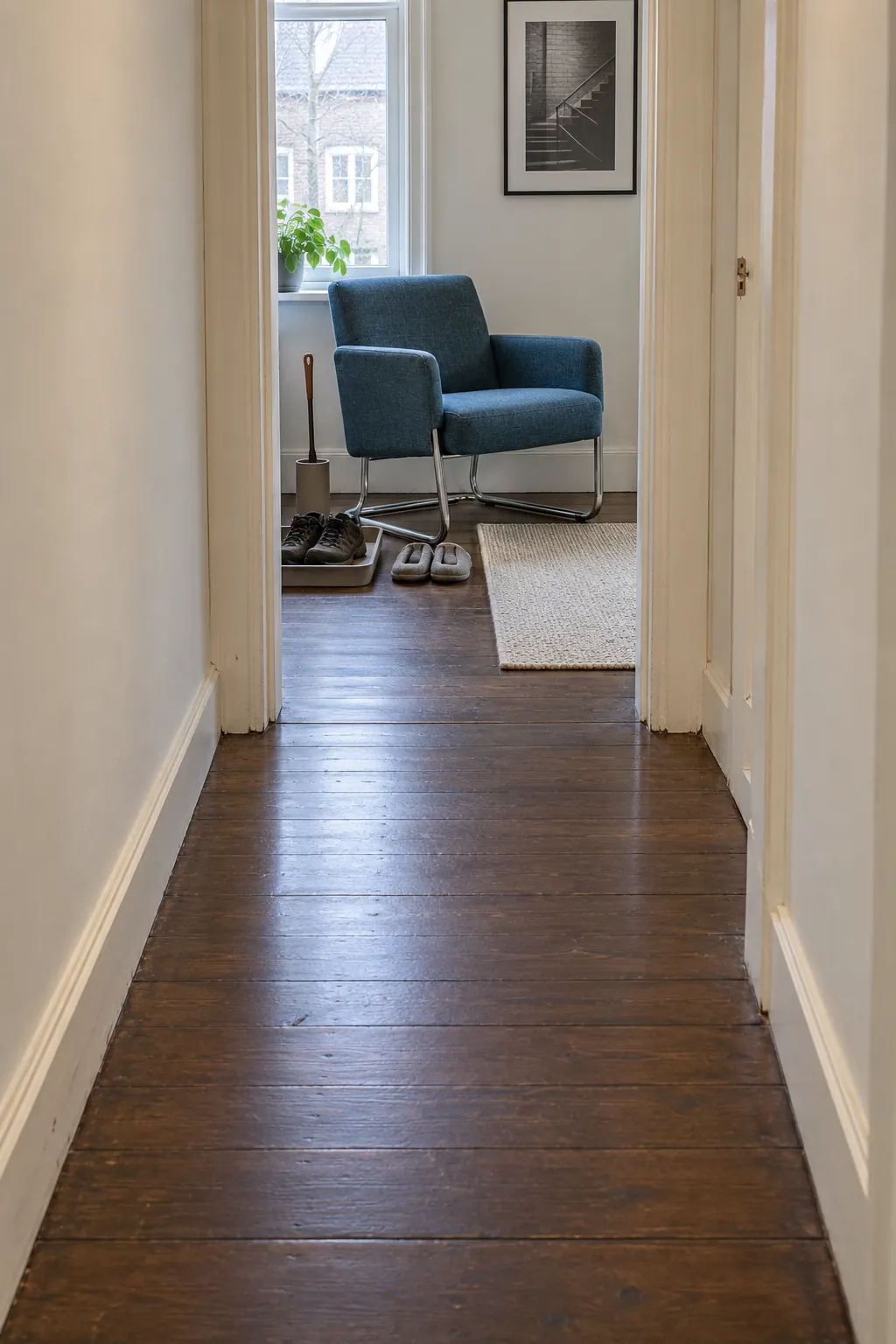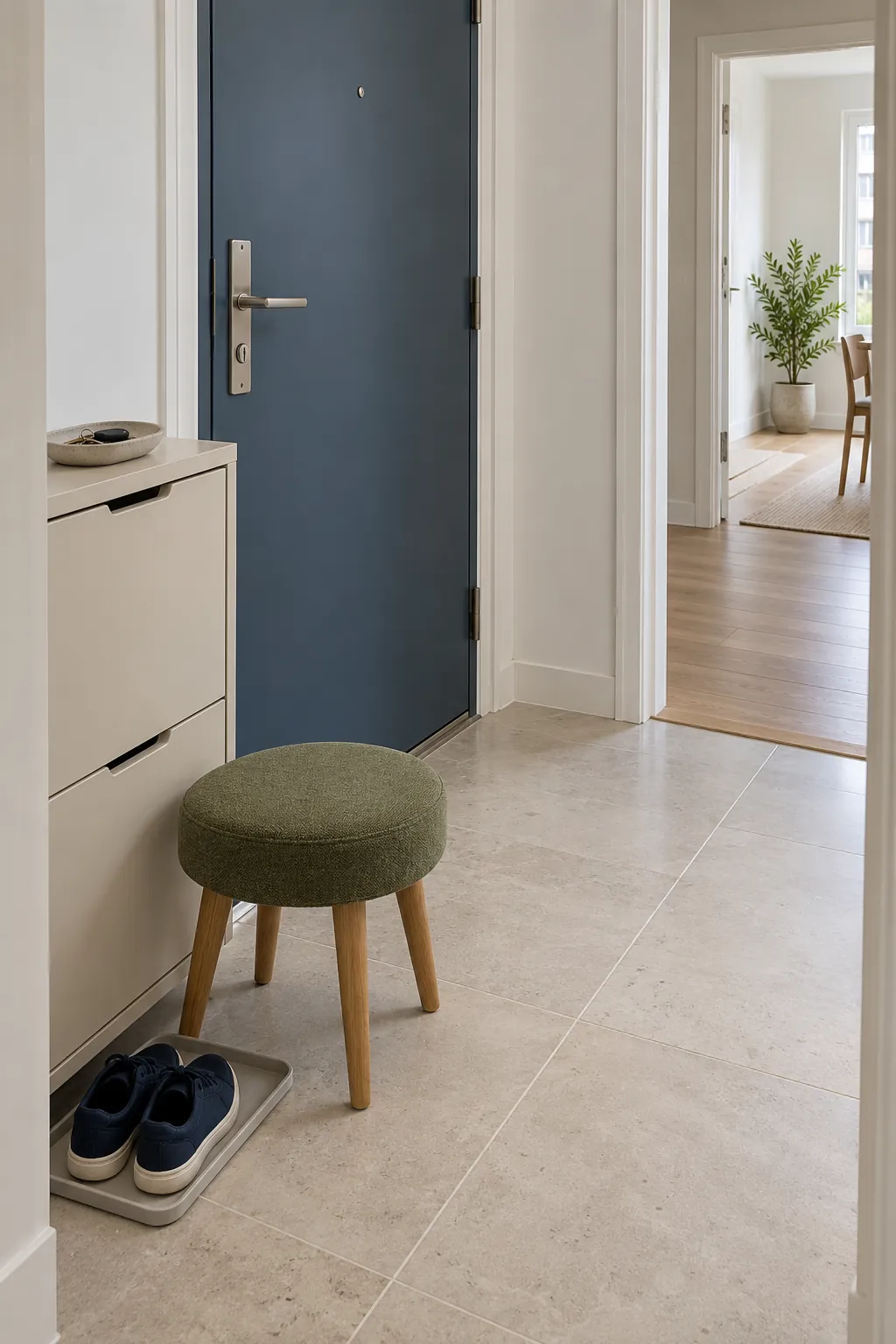
A seat can fit against the wall and still make the entrance harder to use. Your knees need room when you bend toward a shoe, the door needs its full swing, and somebody else may need to pass. Start by testing the sitting position with a chair you already own, then mark both its resting footprint and the space you use in front of it.
Keep the required exit route clear and follow your building rules for clearance. Choose furniture rated for sitting, with a height that lets the intended user place both feet securely on the floor. If standing up requires arm support, prioritize a stable chair with arms over the smallest possible stool.
A folding stool that stores flat
A folding entryway stool gives you a shoe changing seat without reserving floor space all day. Measure its folded thickness as well as its open footprint, then give it a reachable storage slot beside a closet or inside one. Choose a model intended for adult sitting, with secure locking hardware and feet that grip your floor. Open it completely before use and keep the hinges away from small fingers.
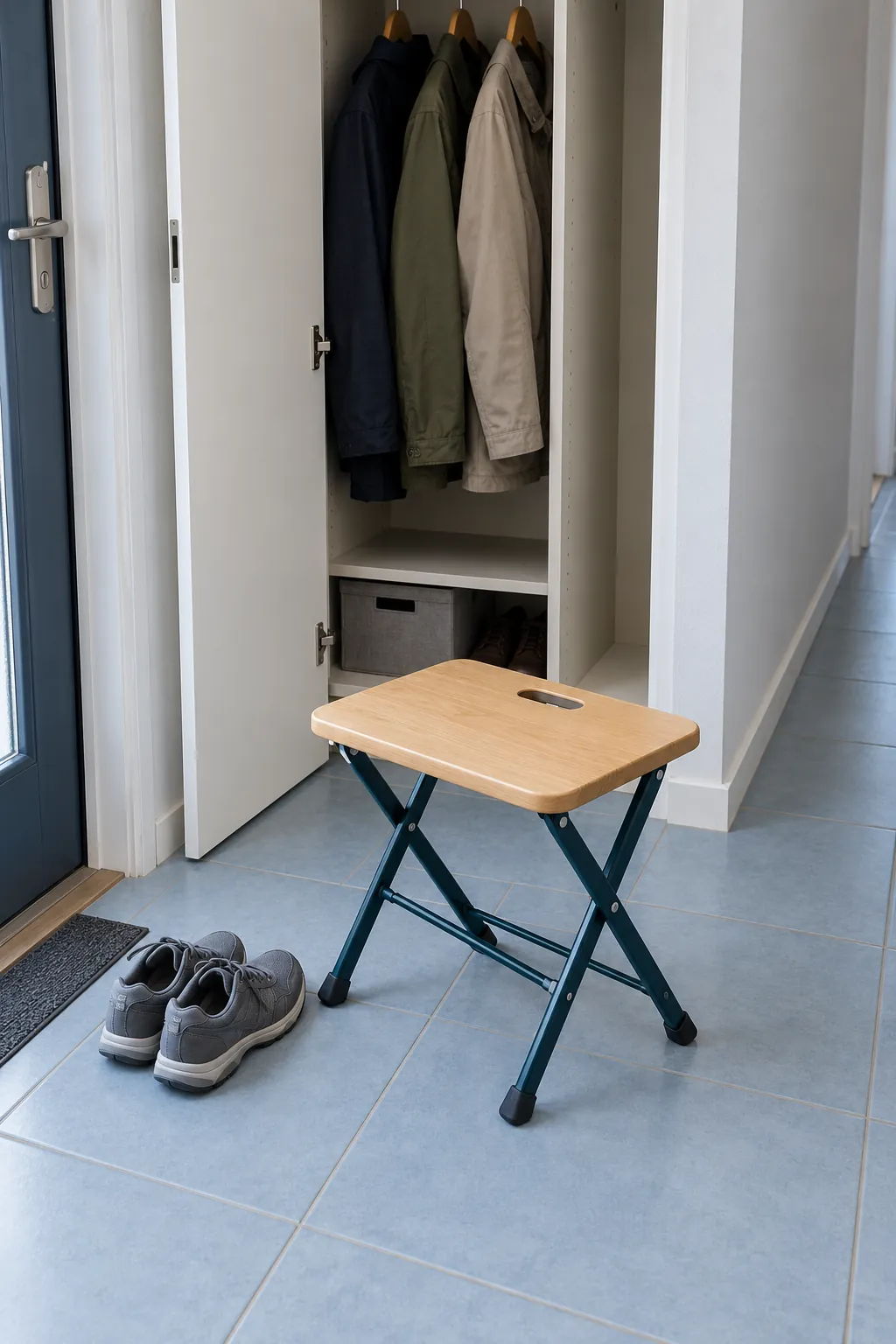
A wall mounted seat that folds upward
A purpose built folding wall seat suits an entrance where a loose stool would become another object to move. Its folded projection still counts as an obstruction, so check the door handle, coat hooks, and walking route with the seat both open and closed. The installation must match the wall structure and the manufacturer’s specified fixings and load requirements.
Renters need permission before drilling or making structural changes. Adhesive hooks and ordinary shelf brackets are not substitutes for rated seating hardware. If the wall cannot support the required installation, choose a freestanding folding option instead.
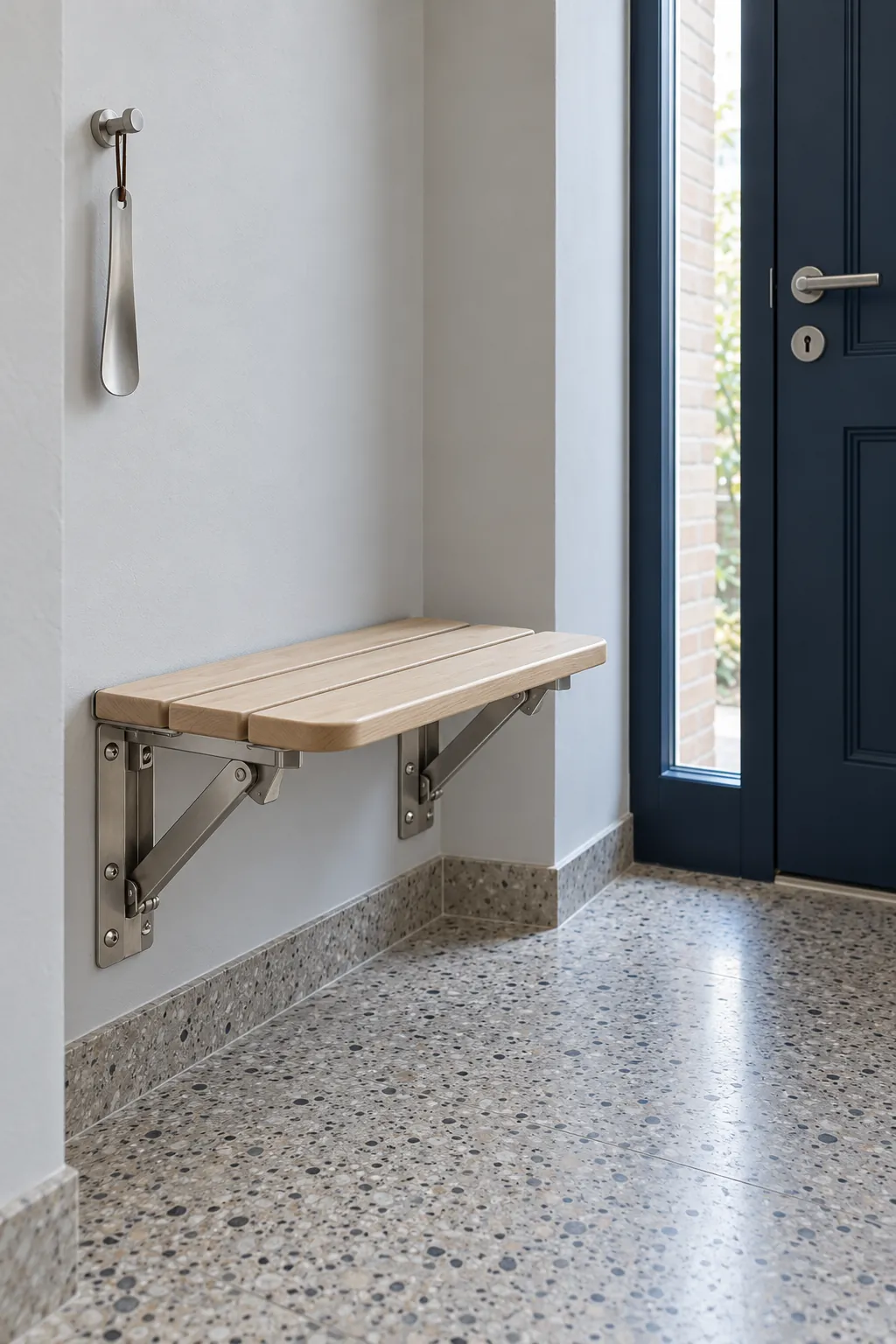
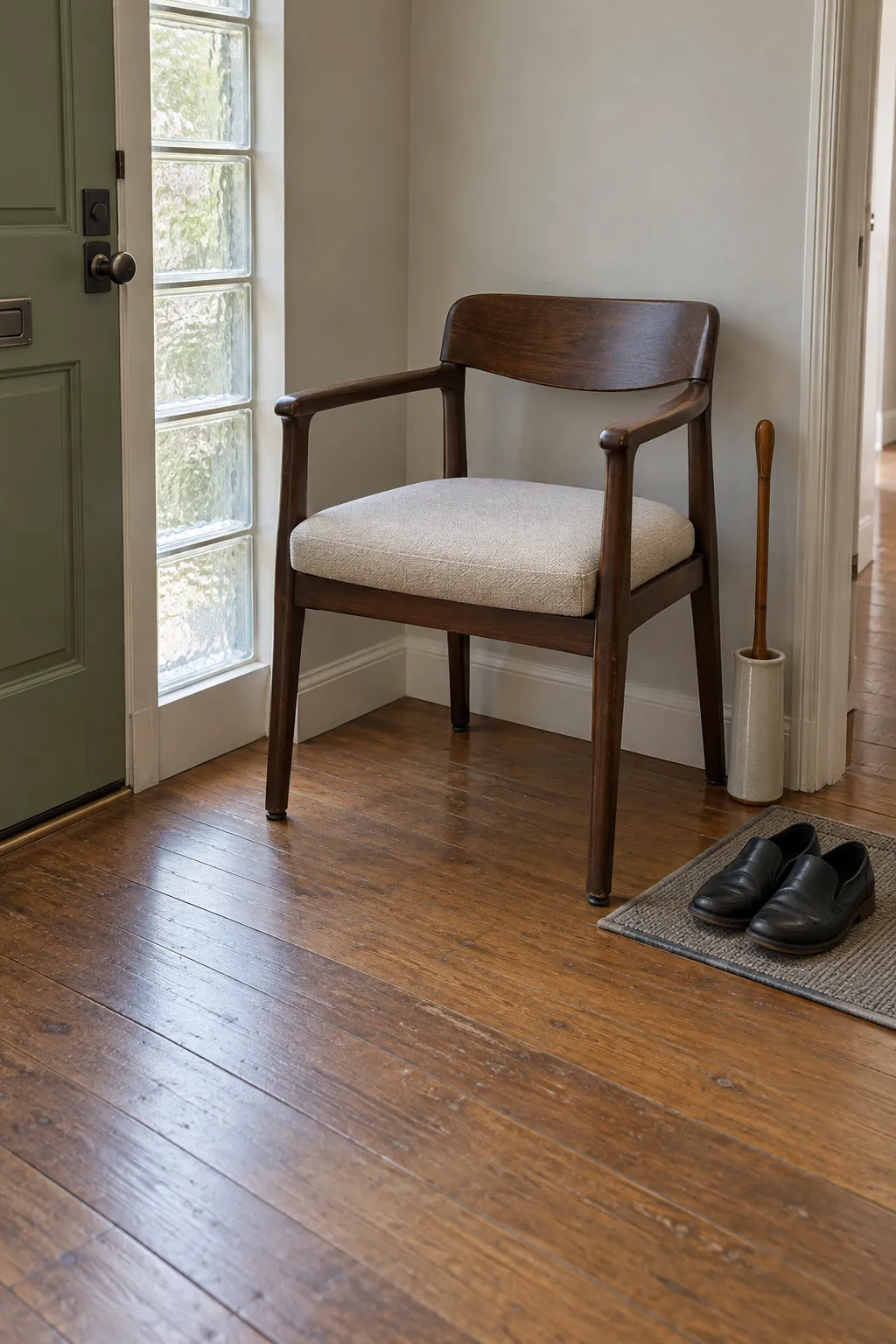
A small chair with useful arm support
For someone who needs help lowering or raising their body, a firm chair with arms can be a better choice than compact entrance seating with no support. Check the overall width at the arms, because that measurement may be greater than the seat width. A solid back and a stable frame matter more here than a visually delicate silhouette. Test the chair with the actual user and leave room for any mobility aid they use. Place it beyond the door swing rather than squeezing it into a gap that makes standing difficult.
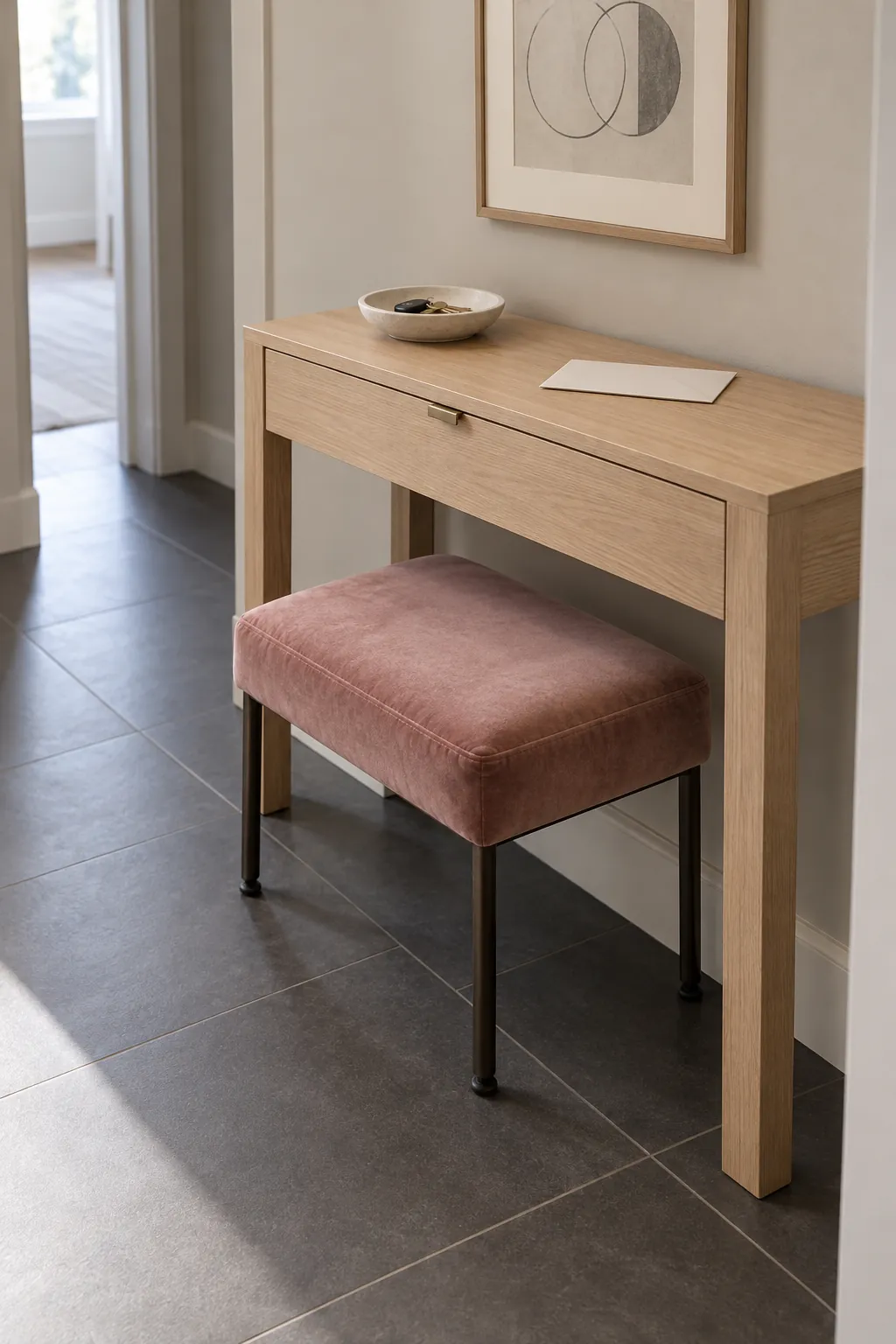
A stool tucked beneath an existing console
If a console already occupies the entrance, use its empty lower space before adding another piece of narrow hallway furniture. Measure between the legs and below any drawer apron, then compare those dimensions with the whole stool. Pull the stool fully out to sit, keeping your knees clear of the console edge.
A low stretcher across the console may prevent this arrangement even when the top looks spacious. Keep baskets and shoes out of the parking slot so the seat returns there easily. This solution works best when the console stays in place during the test sit.
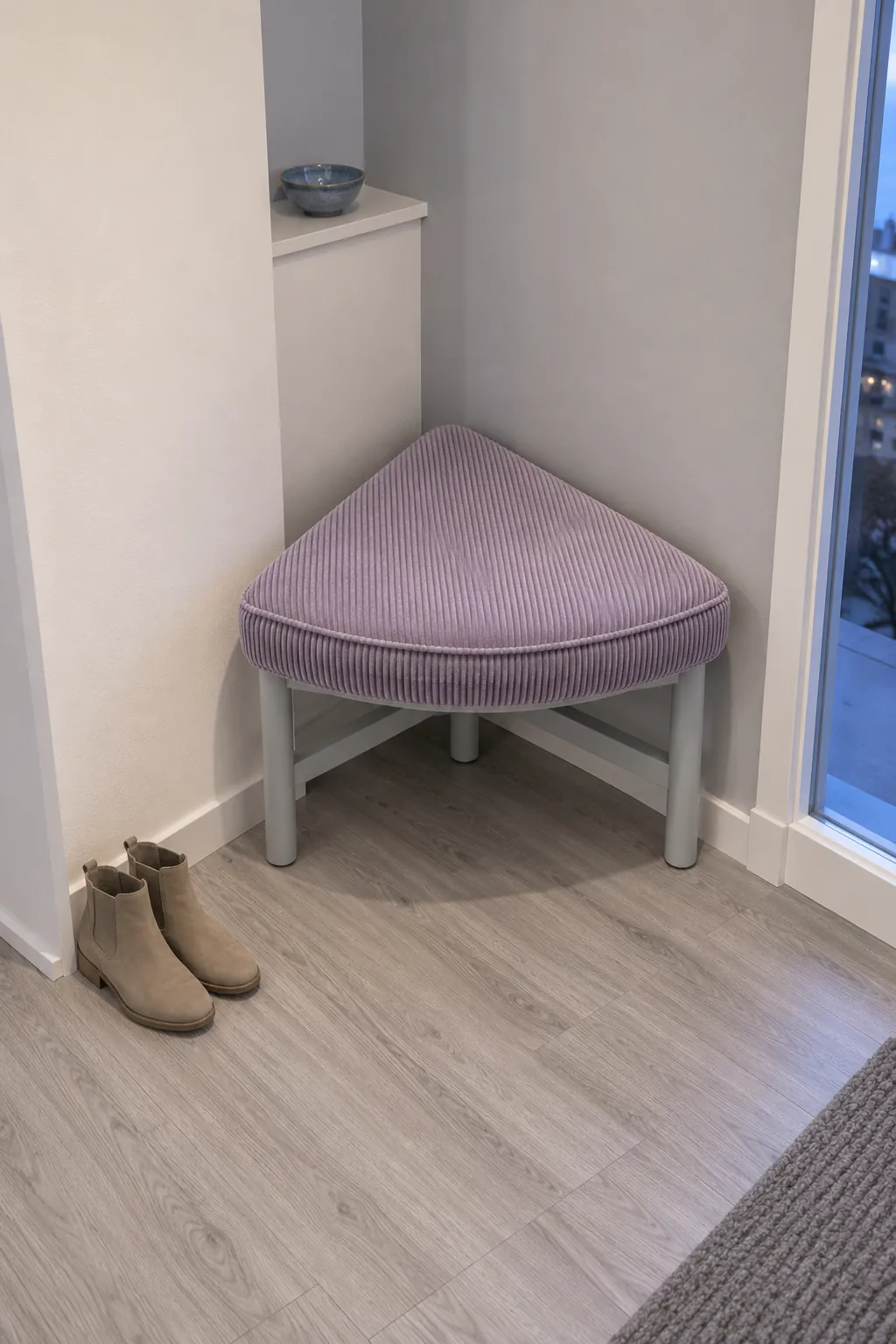
A corner stool in an unused recess
A triangular seat can use a corner beside an alcove where a rectangular bench would project too far. Check the actual sitting area, since a deep point at the back does not provide much usable support. Face the seat toward the open room and leave space for both feet without putting them in the main passage. Use a manufactured seating piece with a stable base, rather than sitting on a corner shelf.
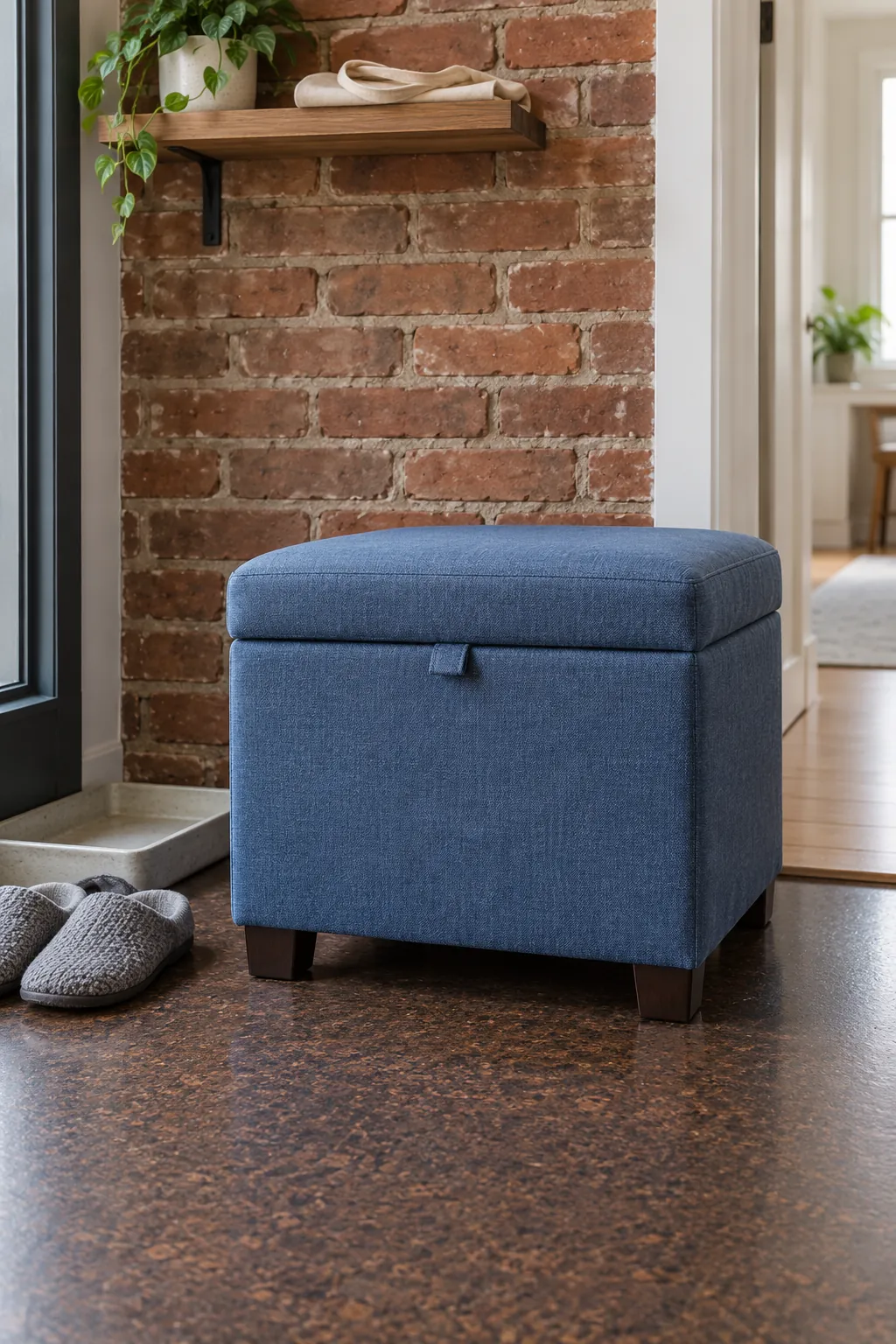
A firm storage ottoman for dry accessories
A small storage ottoman combines a sitting spot with a home for gloves, reusable bags, or spare slippers. Look for a firm lid that stays secure under the user’s weight and a base that does not tip when they lean forward. Soft poufs may look smaller, but their low, yielding surface can make getting up awkward.
Keep wet shoes outside an enclosed fabric compartment. Open the lid fully during your layout test to check nearby walls and furniture. Store only items you can retrieve without unloading a pile from the top. The seat needs to remain a seat on busy mornings.
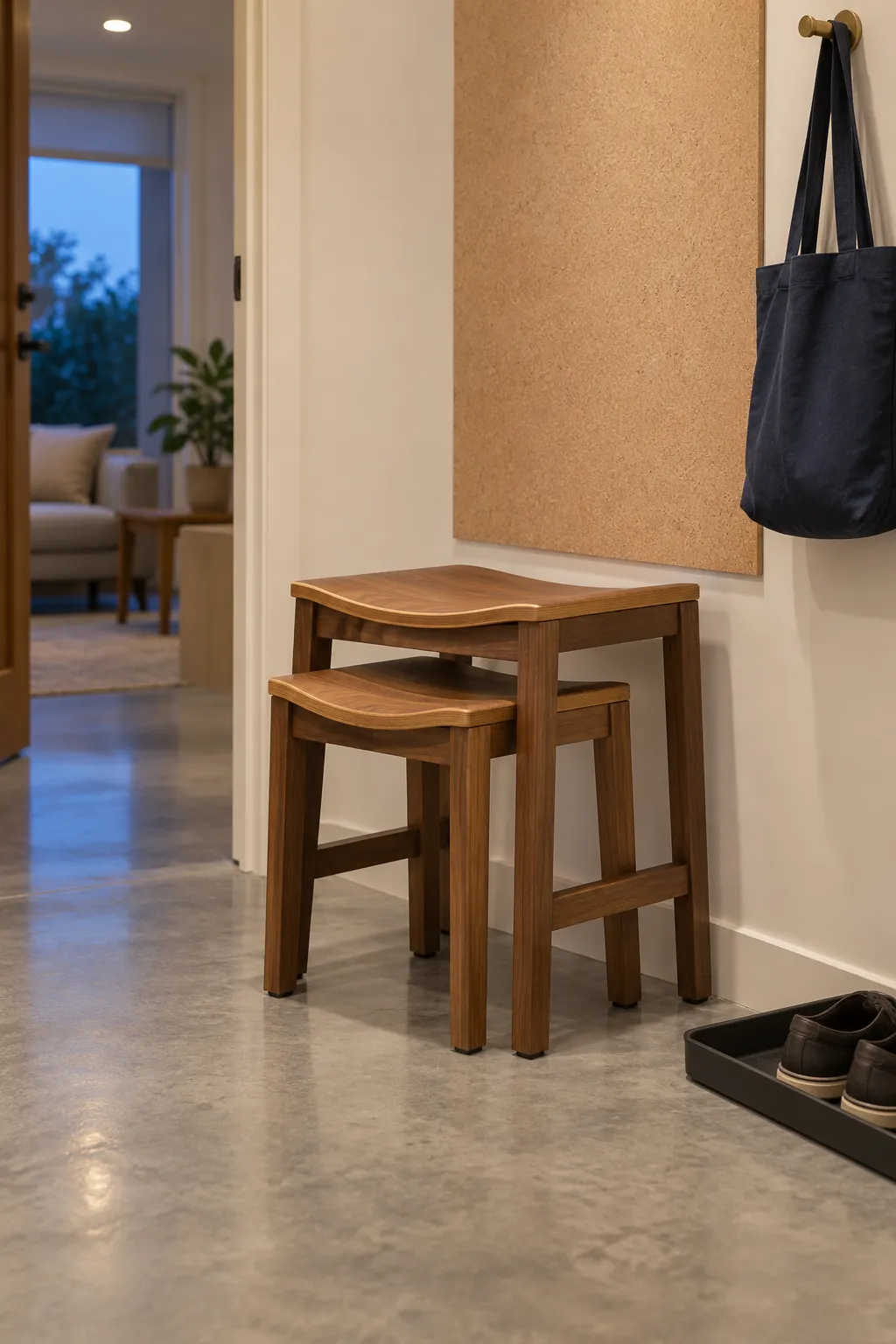
Nesting stools for occasional extra seating
Nesting stools help when two people sometimes need seats but a second permanent footprint would crowd the foyer. Choose an actual nesting seating set, since nesting side tables may not support a seated person. Confirm that each stool gives its user a comfortable height and enough room for their feet. Store the smaller piece beneath the larger one, and separate them only when the entrance has room for both. Avoid placing one person directly in the opening of the front door.
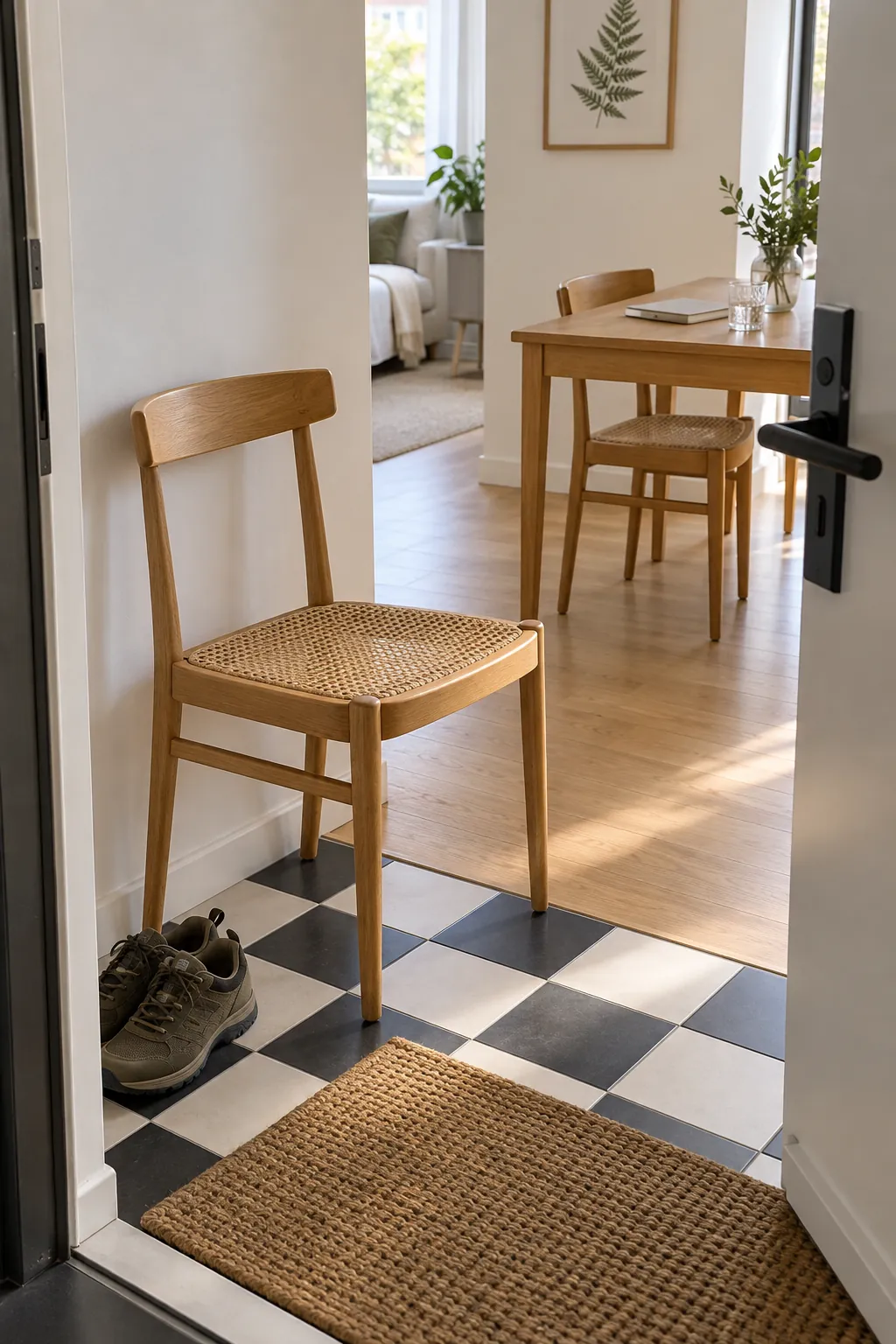
A dining chair that serves the entrance
When the dining area sits a few steps from the front door, one existing chair can handle shoe changes. Pick a chair that is easy for the intended user to move without dragging or lifting beyond their ability. Establish a temporary position that clears the threshold and returns the chair to the table afterward.
Floor protectors reduce scuffs, but they must not make the chair slide during sitting. Try the routine while carrying the bag you normally bring home. If moving the chair feels burdensome every time, a permanent nearby seat will be more practical.
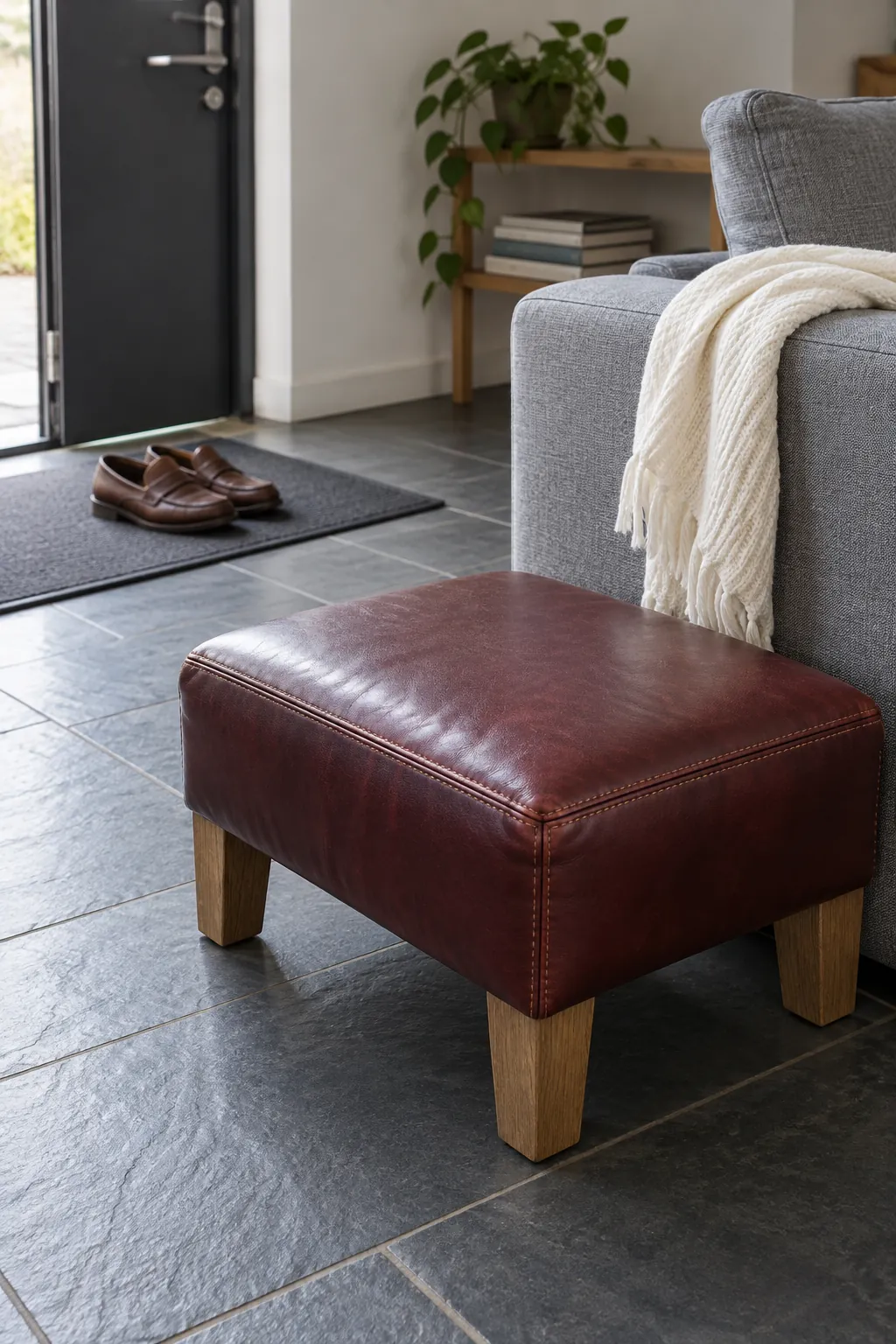
A sitting rated footstool beside the sofa
If your door opens straight into the living room, a firm footstool can belong to the seating area while serving the entrance. Verify that the manufacturer permits sitting, because some decorative footrests are intended only for feet. Choose a height that works for shoes and a cover suited to the dirt your household brings inside. A washable mat nearby can define where outdoor shoes stop without adding another cabinet.
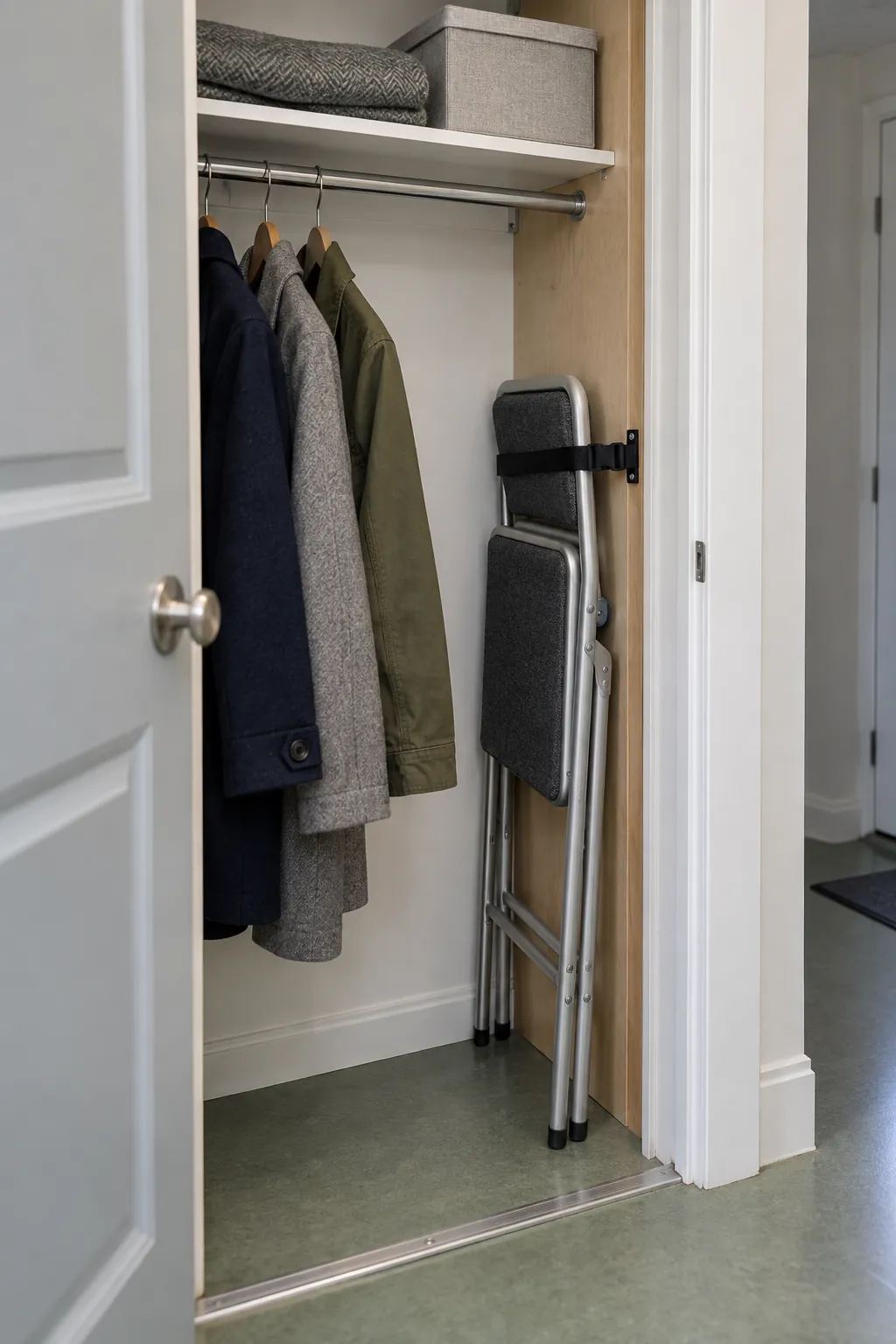
A folding chair stored in the coat closet
A folding chair offers back support while disappearing from the hallway between uses. Reserve a vertical slot that you can reach without moving coats, a vacuum, or a stack of bags. Compare the folded chair height with the closet rail and any shelf above it. A simple retaining strap can keep the stored chair from falling outward when the door opens.
Set the chair on a level surface and engage its locking mechanism before sitting. Do not hang it from an unrated hook on the closet door. This arrangement suits occasional visitors better than a daily routine that requires several awkward lifting steps.
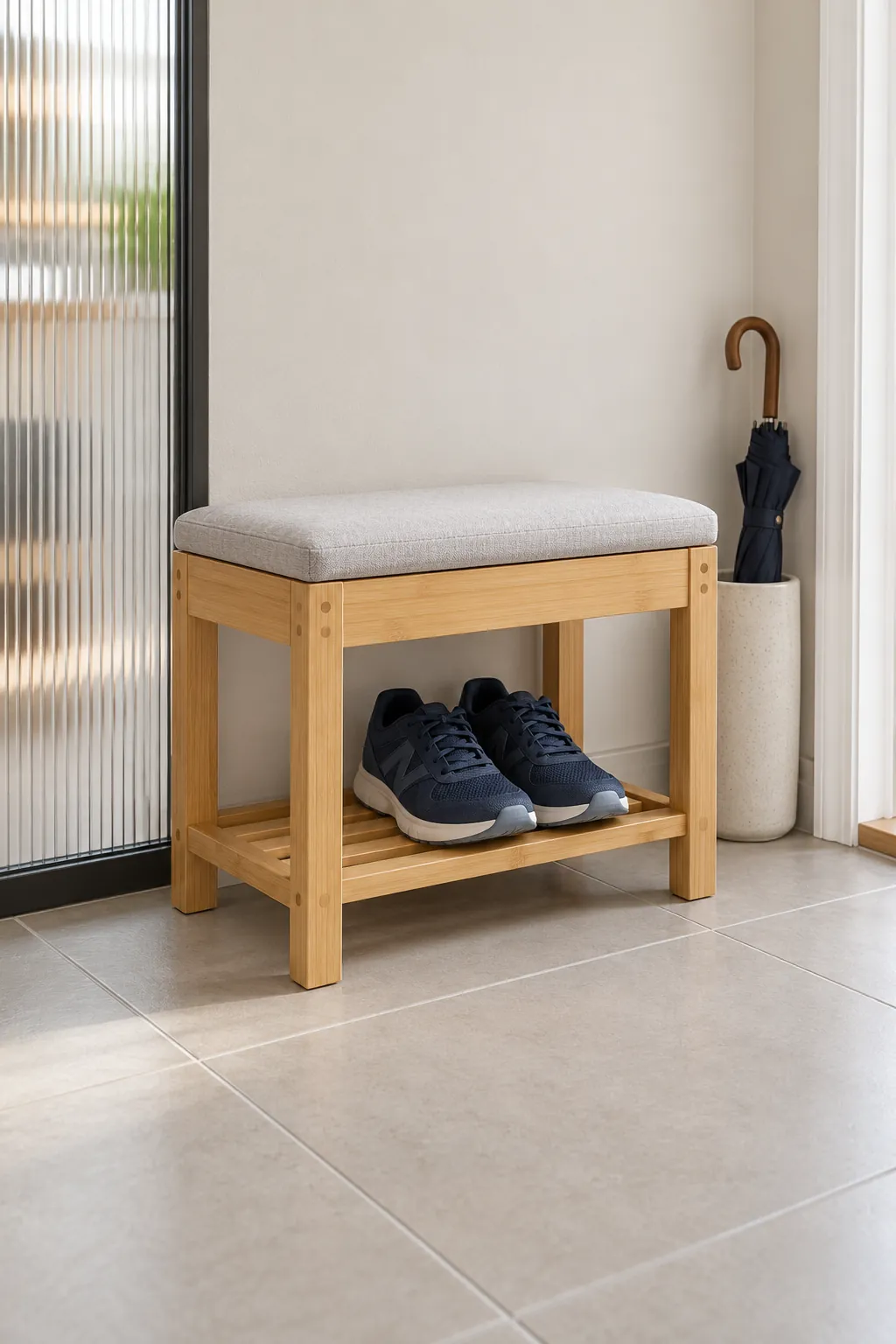
A single seat with a shoe shelf underneath
A compact shoe changing seat with one lower shelf can replace two separate objects. Choose furniture designed to carry a seated adult, rather than adding a cushion to an ordinary shoe rack. Measure your largest everyday pair before buying, including the clearance needed to slide it onto the shelf. Keeping just that pair underneath preserves the benefit of a small footprint. Put the rest of the collection in another storage zone.
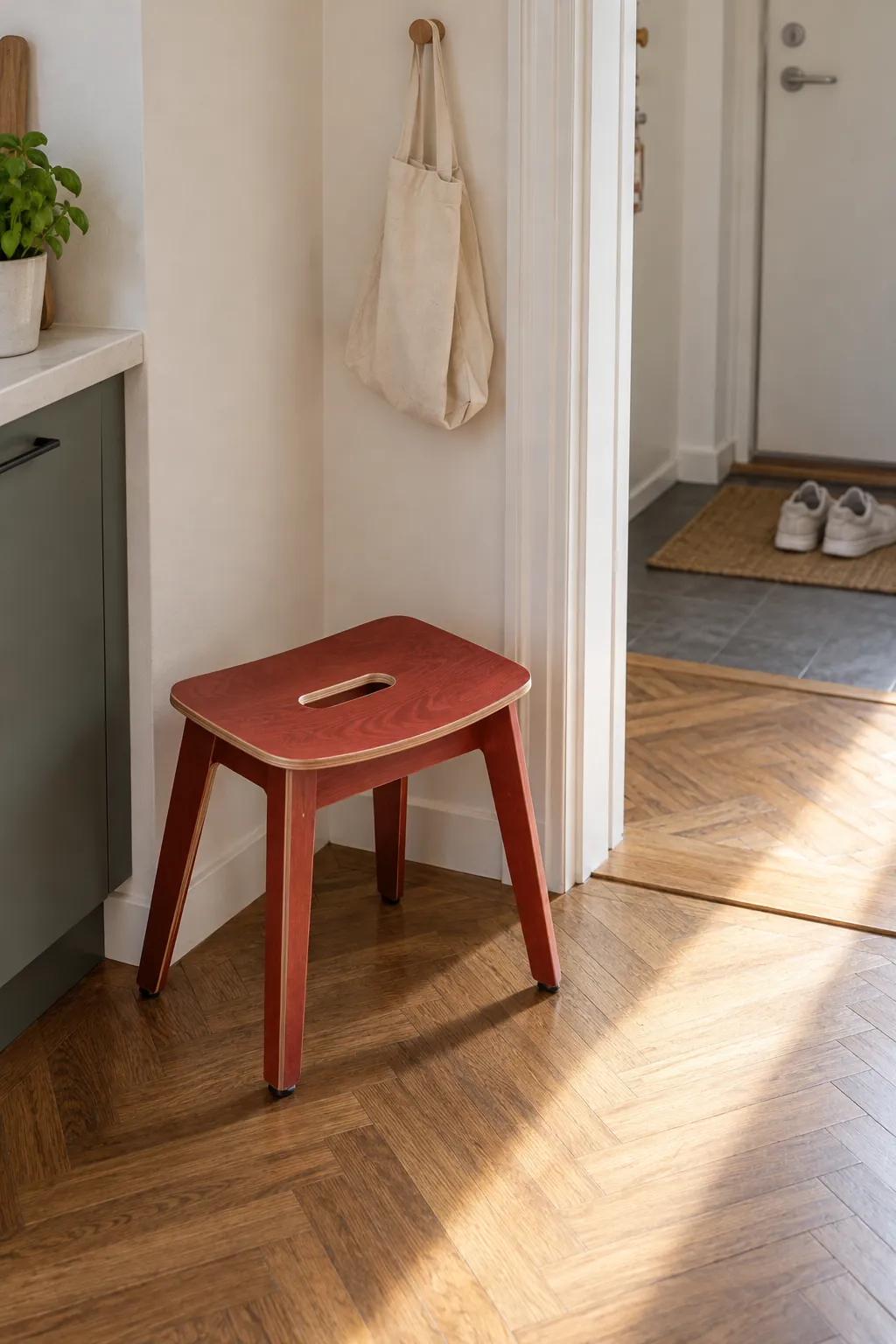
A carry handle stool for flexible parking
A light stool with a built in handhold can move between a nearby room and the entrance without unfolding anything. Its value comes from easy handling, not from a smaller footprint while someone is sitting. Test whether you can carry it comfortably with your usual belongings, then choose a predictable parking place outside the hallway.
The handle should not create a sharp edge beneath the sitter. Inspect the base for rocking and avoid designs that narrow into an unstable pedestal. A portable seat is useful only if returning it becomes part of the routine.
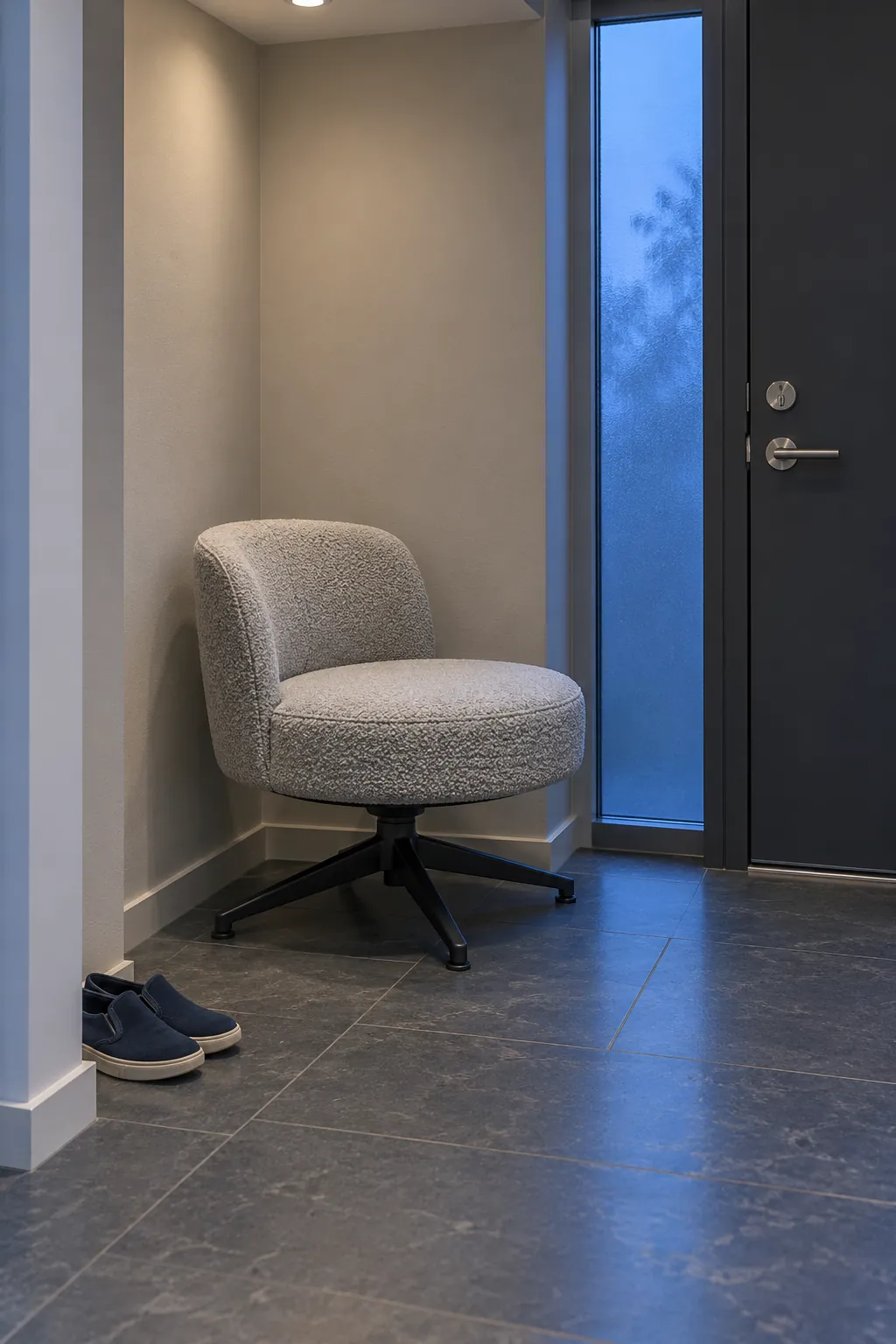
A stationary swivel seat for a tight turn
In an alcove with enough knee space, a swivel seat can let you turn toward the room without scraping chair legs across the floor. Choose a stable base without casters and a seat height suited to putting on shoes. Check that turning does not bring knees into a console, door edge, or another person’s path. A rotating seat is unsuitable if unexpected movement makes sitting or standing less secure.
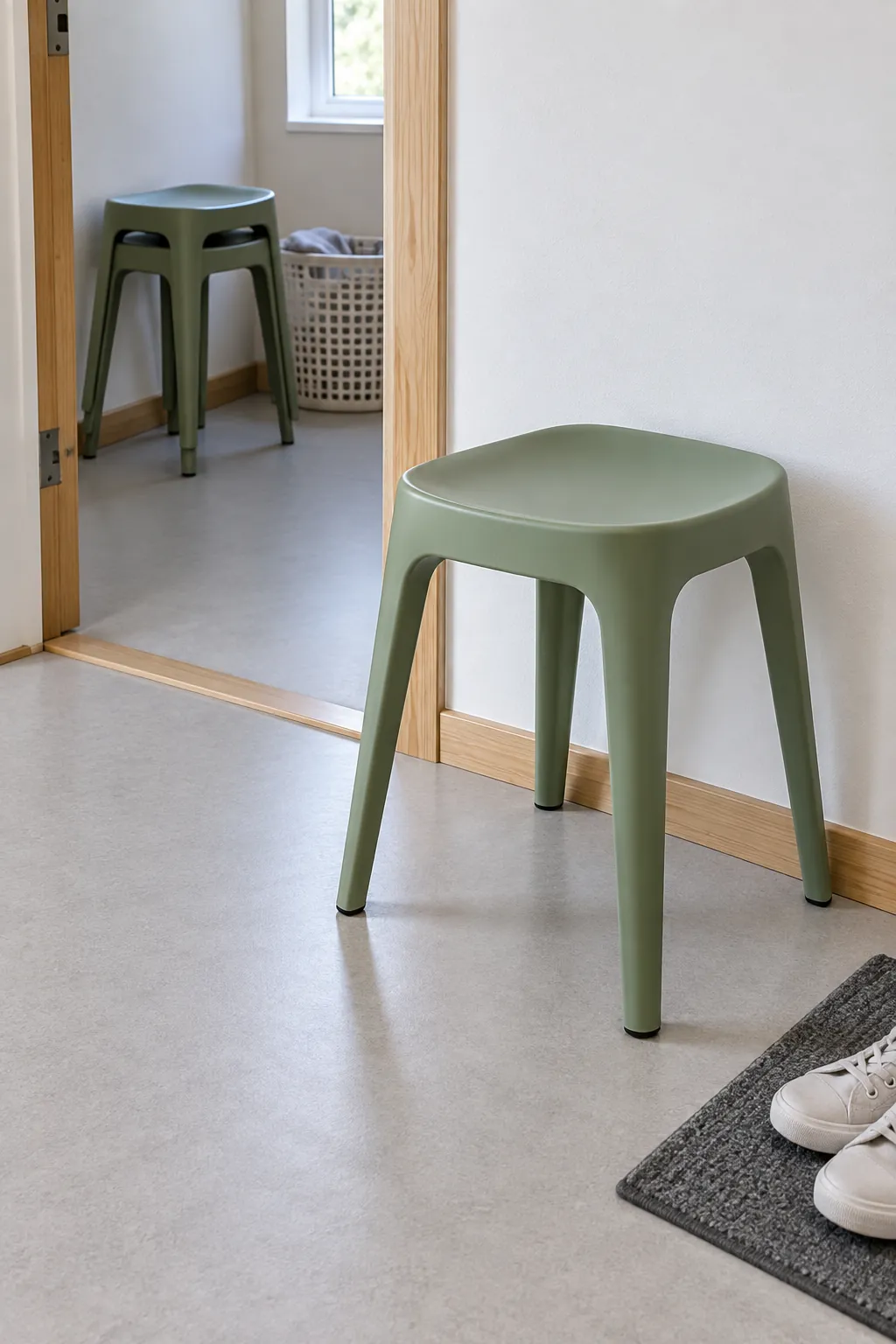
A stackable stool that joins the household set
A stackable stool makes sense when you already keep spare seats for guests. Use one at the entrance and return it to the stack when the hallway needs to be empty. Check the manufacturer’s stacking limit and place the stored stack where it cannot fall into the walking route.
Wide splayed legs can take more floor space than the seat suggests. Compare the footprint at floor level instead of judging only the top. This option avoids buying separate apartment entry furniture for a task an existing seat can handle.
An existing chair beyond the narrow hallway
Sometimes the best small foyer seating plan leaves the foyer empty. Use a stable chair in the nearest suitable room and place a small washable shoe tray beside it, provided the route there is manageable for the user. Keep a shoehorn and indoor footwear within reach so the spot performs the whole task. Agree on where wet footwear stops before it crosses a vulnerable rug. If every seat you test obstructs the entrance, move the activity instead of forcing furniture into the passage.