
Old stained glass has a way of stopping people in their tracks. Maybe it’s the soft glow that hits the floor at just the right angle, or the mix of colors that feels both familiar and rare. Many homeowners want that warmth but aren’t sure how to bring it into everyday spaces. The good news is that stained glass works in more places than you might expect. And you don’t need a historic home to make it look natural.
This list offers ideas that fit different styles, from Victorian stained glass windows to clean, modern designs. Each section shows a simple way to add color, texture, and charm without overwhelming your rooms. Whether you’re renovating or adding one piece at a time, these ideas can help you put stained glass to work in a practical, inviting way.
Victorian Stained Glass Panels Framing a Front Entryway
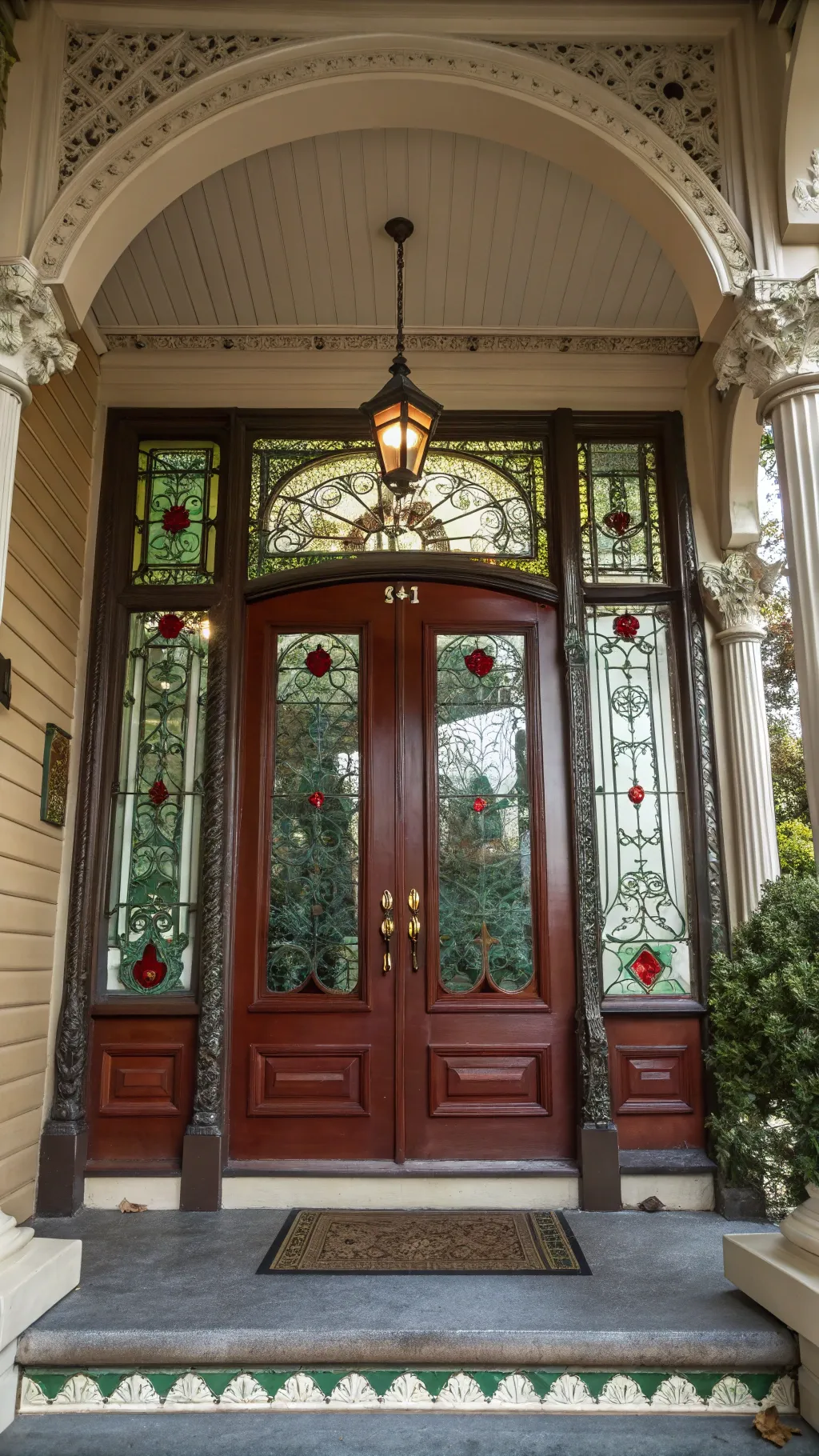
Framing a front entry with Victorian stained glass panels adds color before guests even step inside. These panels work well around a solid wood door or beside a door with clear glass. Their detailed patterns help set a classic tone without taking over the entire façade. Choose panels with soft greens or deep reds if you want a traditional look.
A contractor can mount the panels in narrow sidelights or transom openings, but you can also hang reclaimed pieces on small brackets if your entry isn’t built for them. This keeps the look flexible while still giving your home that welcoming glow.
Antique Stained Glass Windows Used as Living Room Accent Pieces
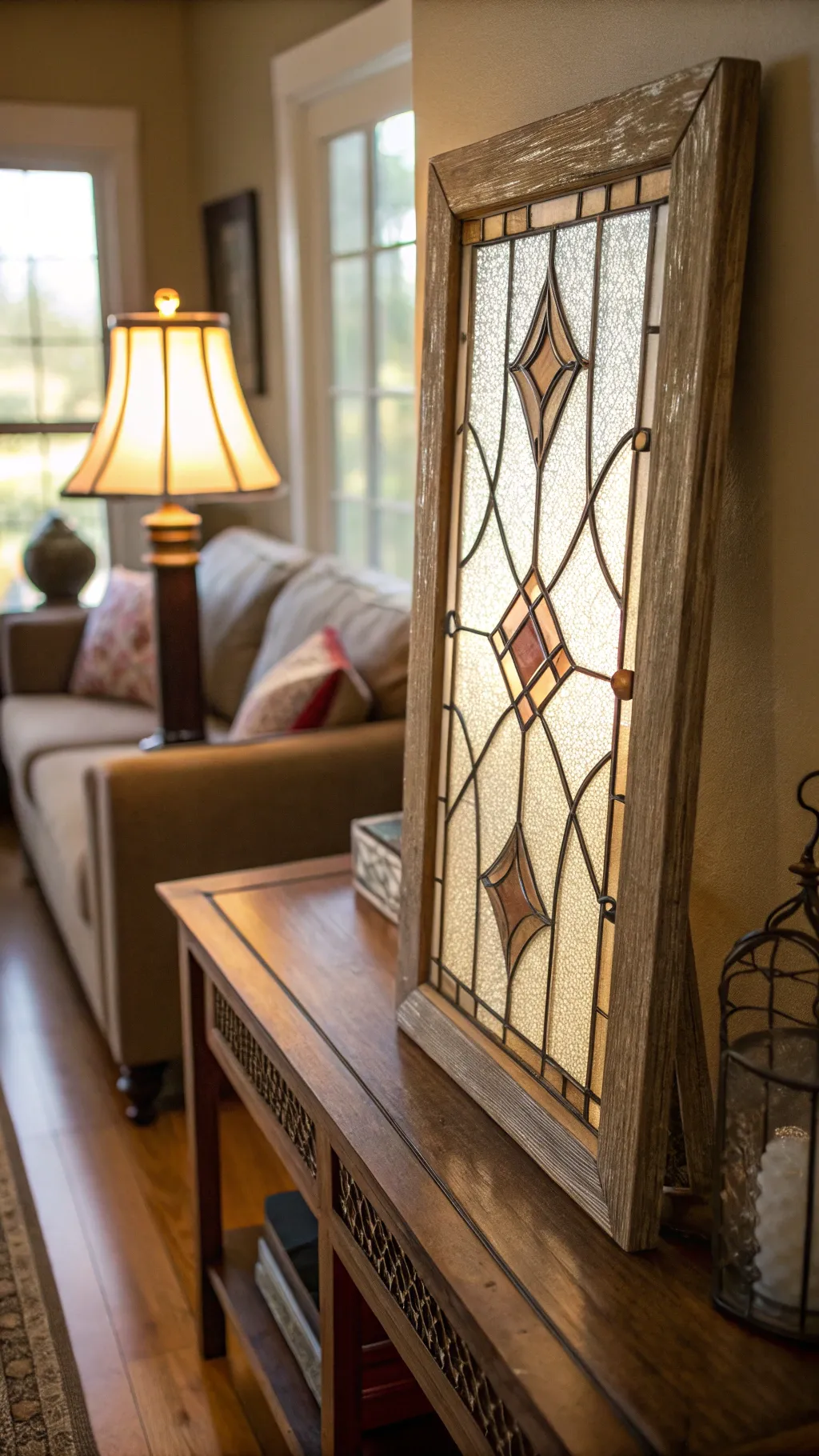
Antique stained glass windows make strong accent pieces in living rooms. Lean one against a console table or place it on a shelf where the light can catch it. The aged solder lines and uneven glass bring in a lived‑in charm that new pieces can’t copy.
If you want more impact, mount the window in front of a clear glass opening. The old panel filters the light in a gentle way, and it becomes a focal point without requiring any structural changes.
A Stained Glass Window Panel Hung as Indoor Wall Art
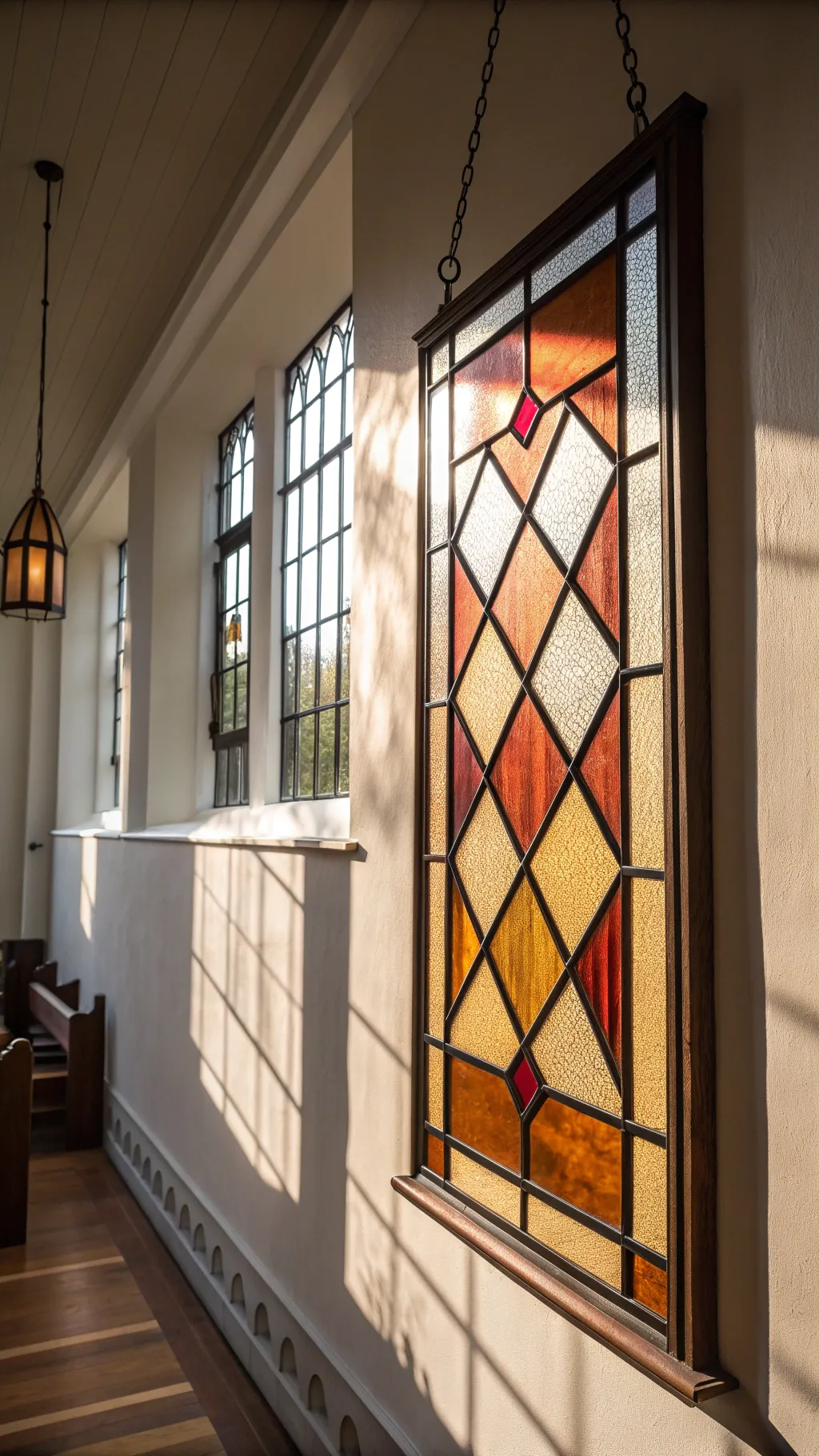
Hanging a stained glass window panel as wall art is an easy way to add color without committing to major construction. Pick a spot where natural light can reach it, even at an angle. This gives the glass a soft, shifting effect throughout the day.
Use small brackets or a simple chain so the panel sits slightly off the wall. This keeps the panel safe while giving the piece enough room for light to move behind it.
Victorian Stained Glass Windows Positioned Above Interior Doorways
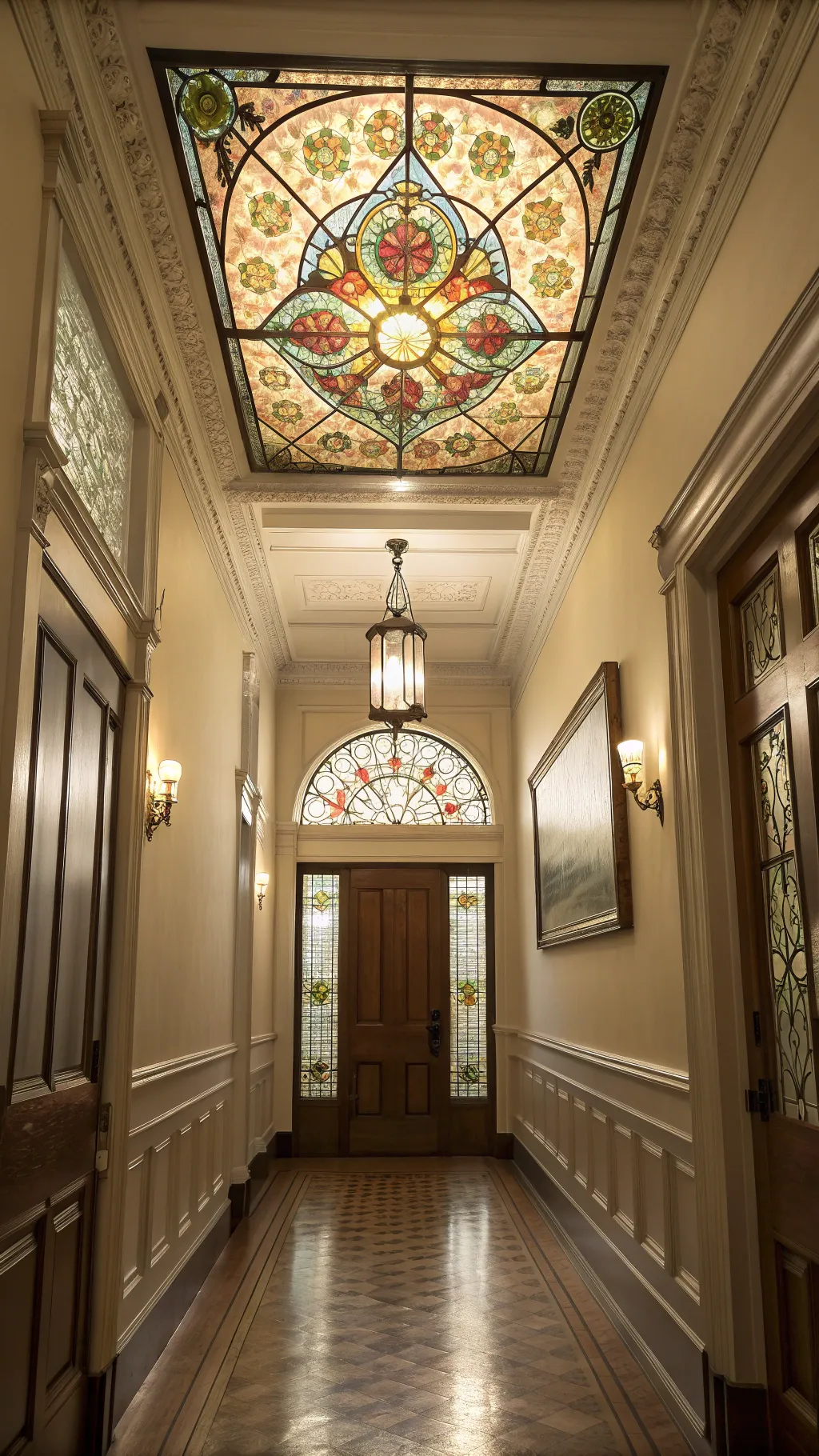
Placing Victorian stained glass windows above interior doorways adds quiet color to hallways and adjoining rooms. These windows work well in older homes with tall ceilings, but they can also fit in modern spaces if the openings are sized correctly.
Pick patterns that echo nearby trim or flooring tones. Warm reds or amber shades help blend the glass with woodwork, while soft blues add a cooler, calm touch.
Stained Glass Doors Interior with Soft Amber and Rose Tones
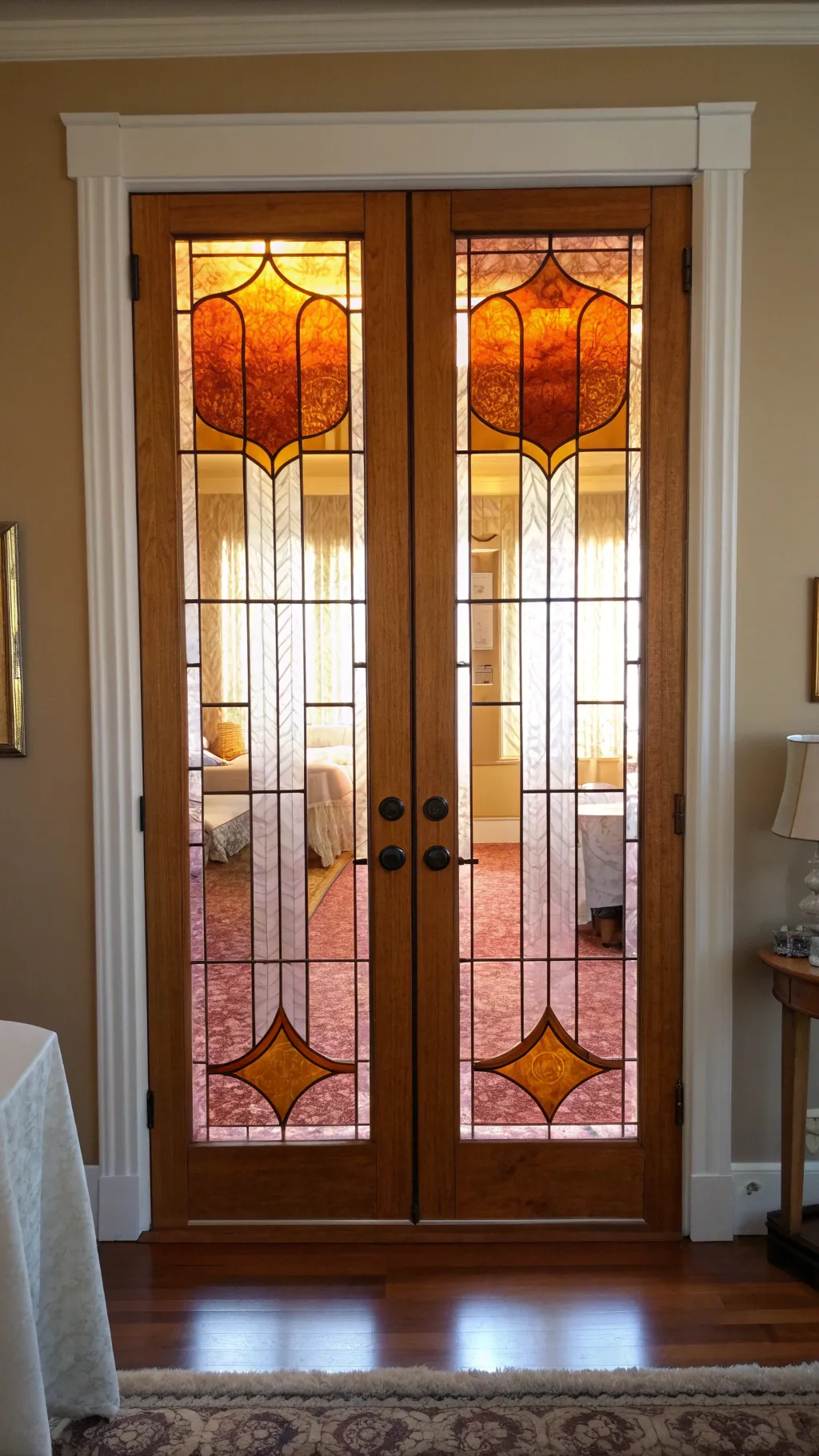
Interior stained glass doors bring color into shared spaces without blocking light. Amber and rose tones give off a warm glow that works well in bedrooms, dining rooms, and small work areas. They feel gentle and help soften rooms with strong lines or darker furniture.
If you’re adding new doors, ask for reinforced edges so the panels stay protected during daily use. For existing doors, you can mount a lightweight panel over a clear glass opening to get the same effect.
Art Deco Stained Glass Window Installed in a Dining Room Nook
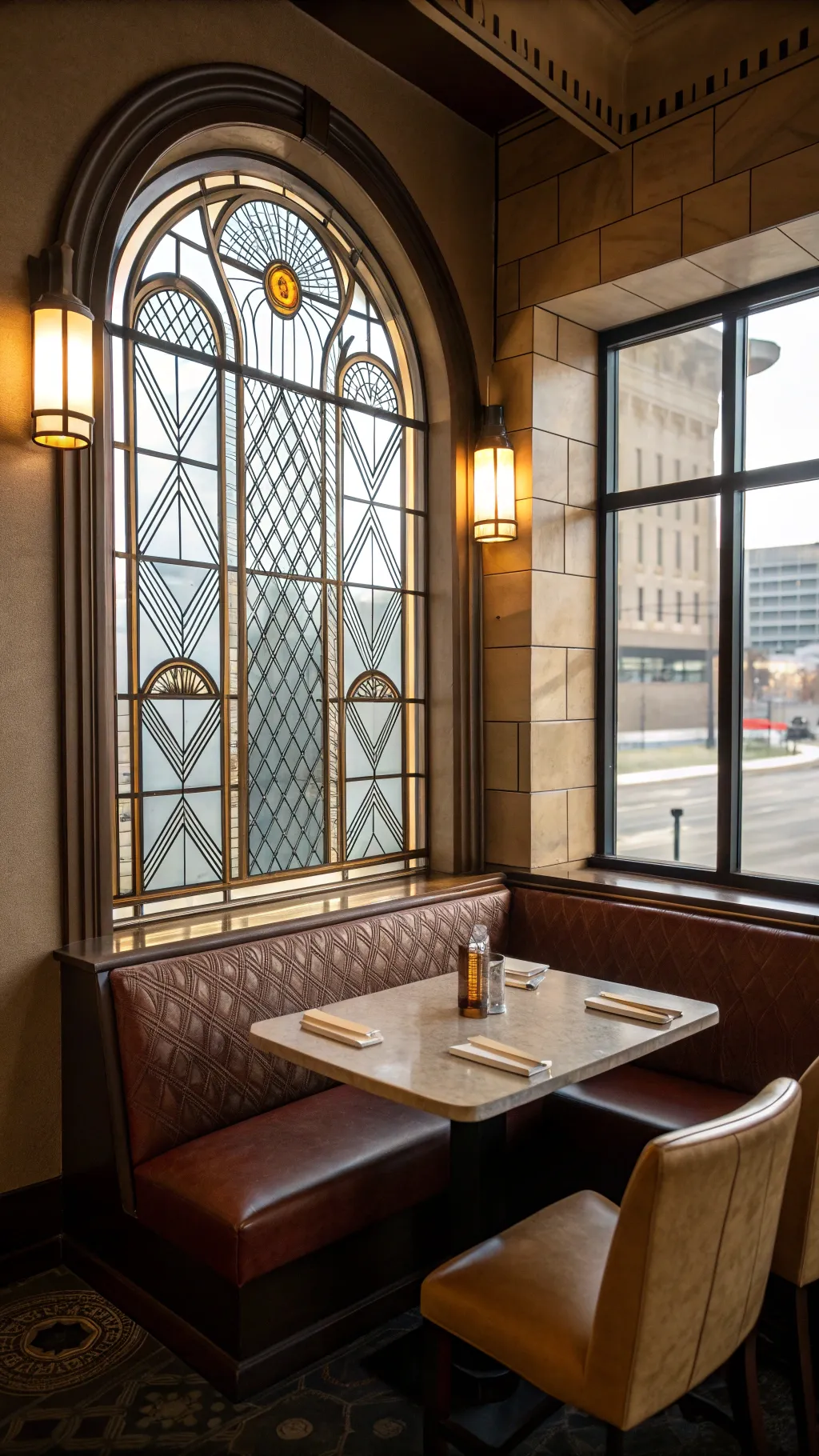
An Art Deco stained glass window adds clean geometry to a dining nook. Bold stripes or stepped shapes work well with simple tables and soft lighting. These windows often use clear textured glass mixed with a few strong colors, which keeps the design crisp.
If the nook doesn’t have a window, hang the panel against the wall and place a small light behind it. This gives the impression of a backlit architectural detail.
Stained Glass In House Transoms for Colorful Hallway Light
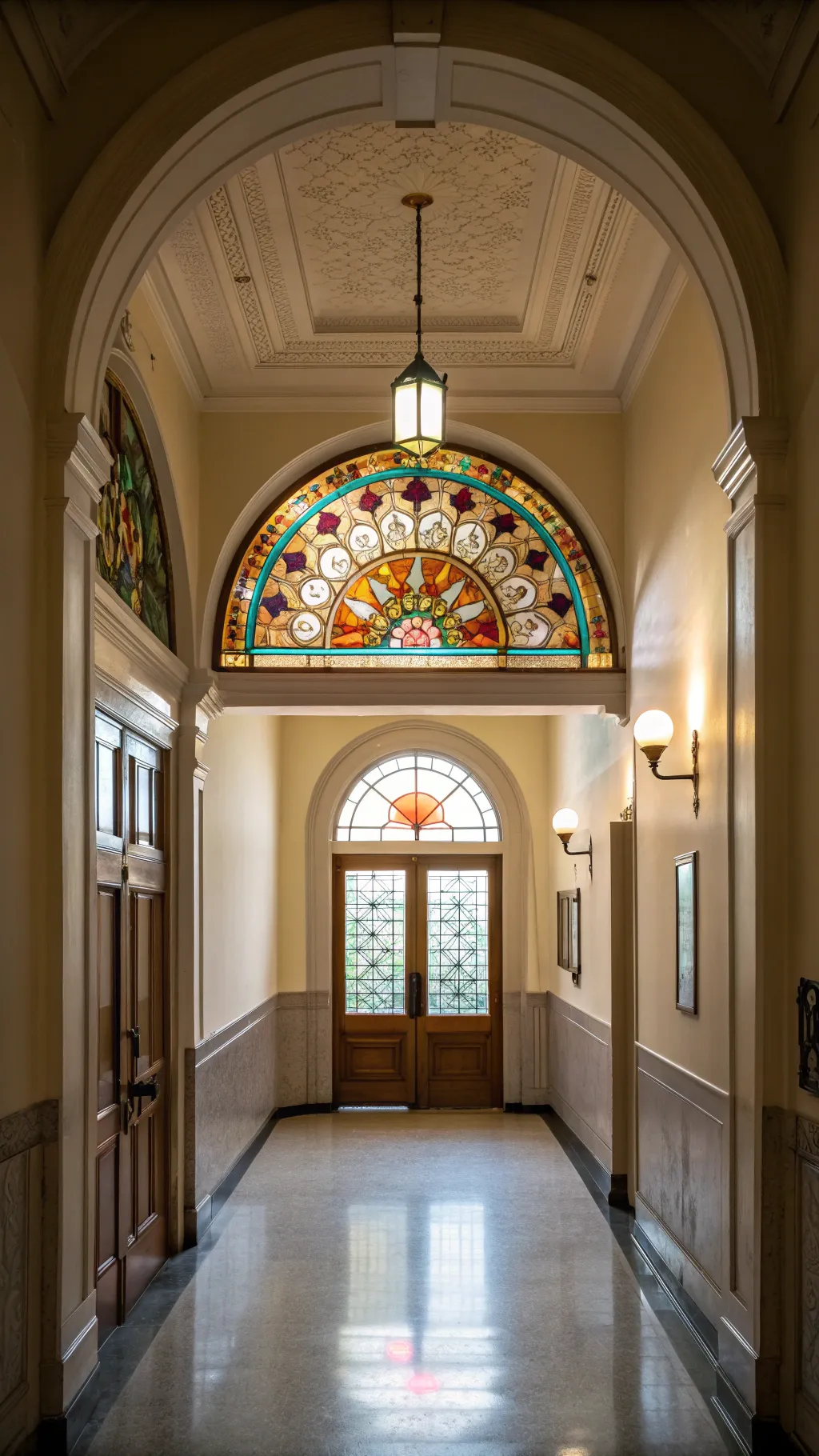
Transom windows are an easy spot for stained glass in house projects because they don’t interrupt privacy or furniture placement. A small panel above a hallway door adds color with minimal effort.
Pick panels with mid‑tone colors so the hallway doesn’t feel too dark. Green, gold, or soft ruby shades work well because they stay readable without dimming the space.
Modern Stained Glass Windows with Clean Geometric Lines
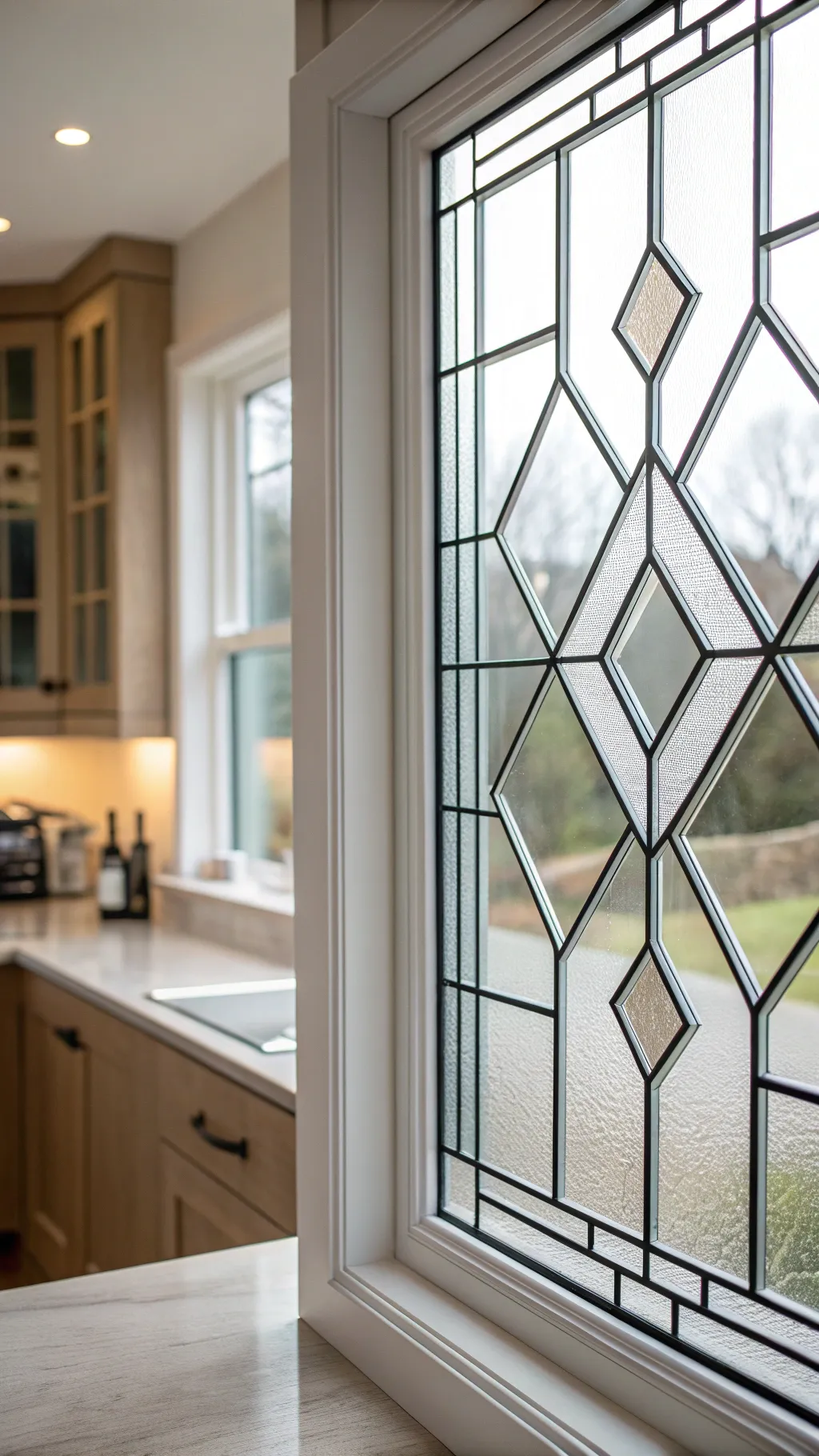
Modern stained glass windows bring color without the ornate motifs found in older pieces. Straight lines, open sections, and clear glass keep the look fresh. These windows fit well in kitchens, offices, and bathrooms.
Choose colors that echo the room’s main palette. A single accent color can keep the window from feeling busy while still giving the room personality.
Stained Glass Bathroom Window for Soft, Private Light
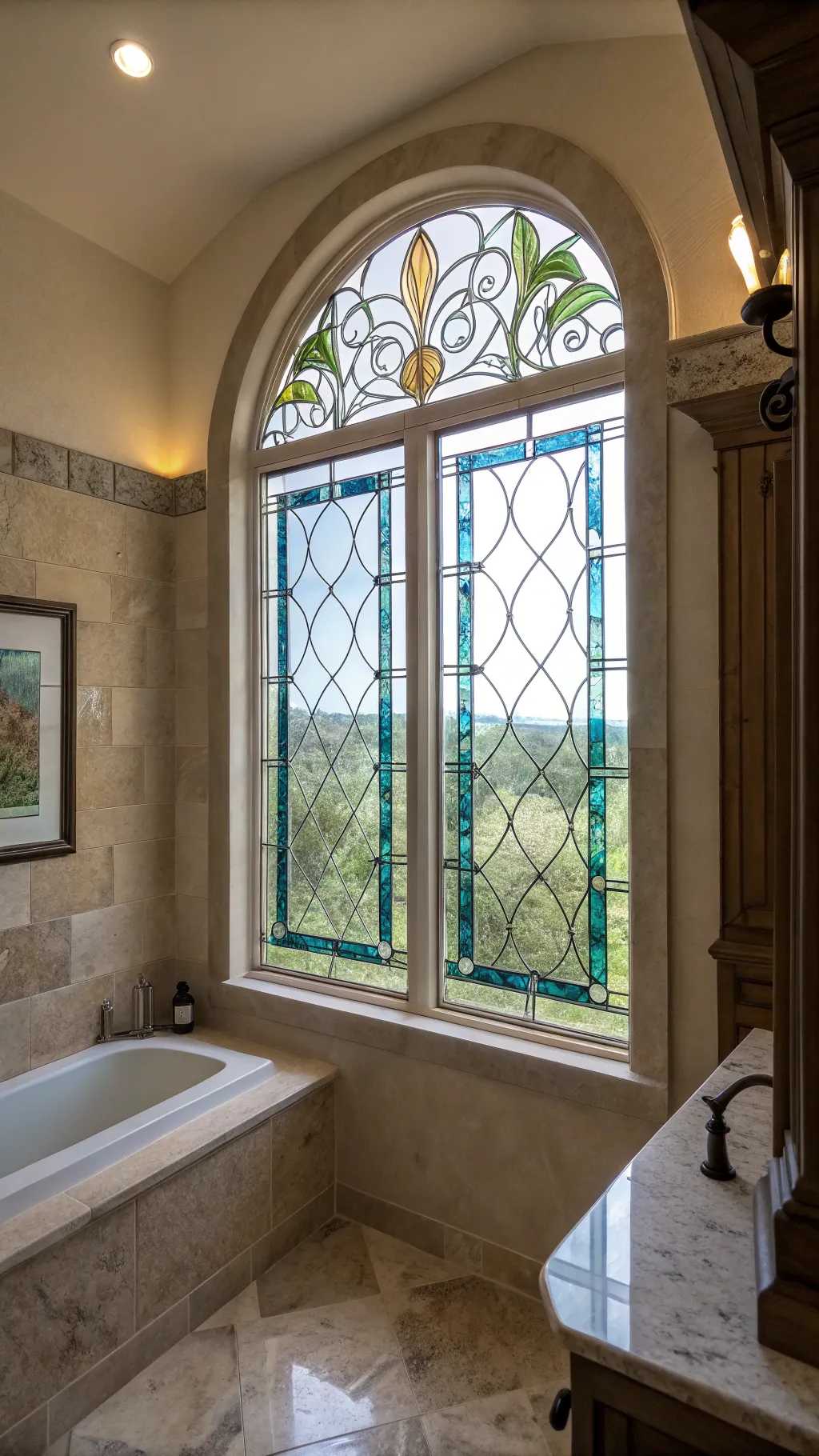
A stained glass bathroom window gives privacy and gentle light in one step. Instead of frosted glass, stained glass adds interest while keeping the view blocked.
Blue, green, and neutral tones work well in spaces with tile or natural stone. Look for panels with textured sections to further blur the view while keeping the room bright.
Reclaimed Vintage Panels Mounted in a Kitchen Pass‑Through
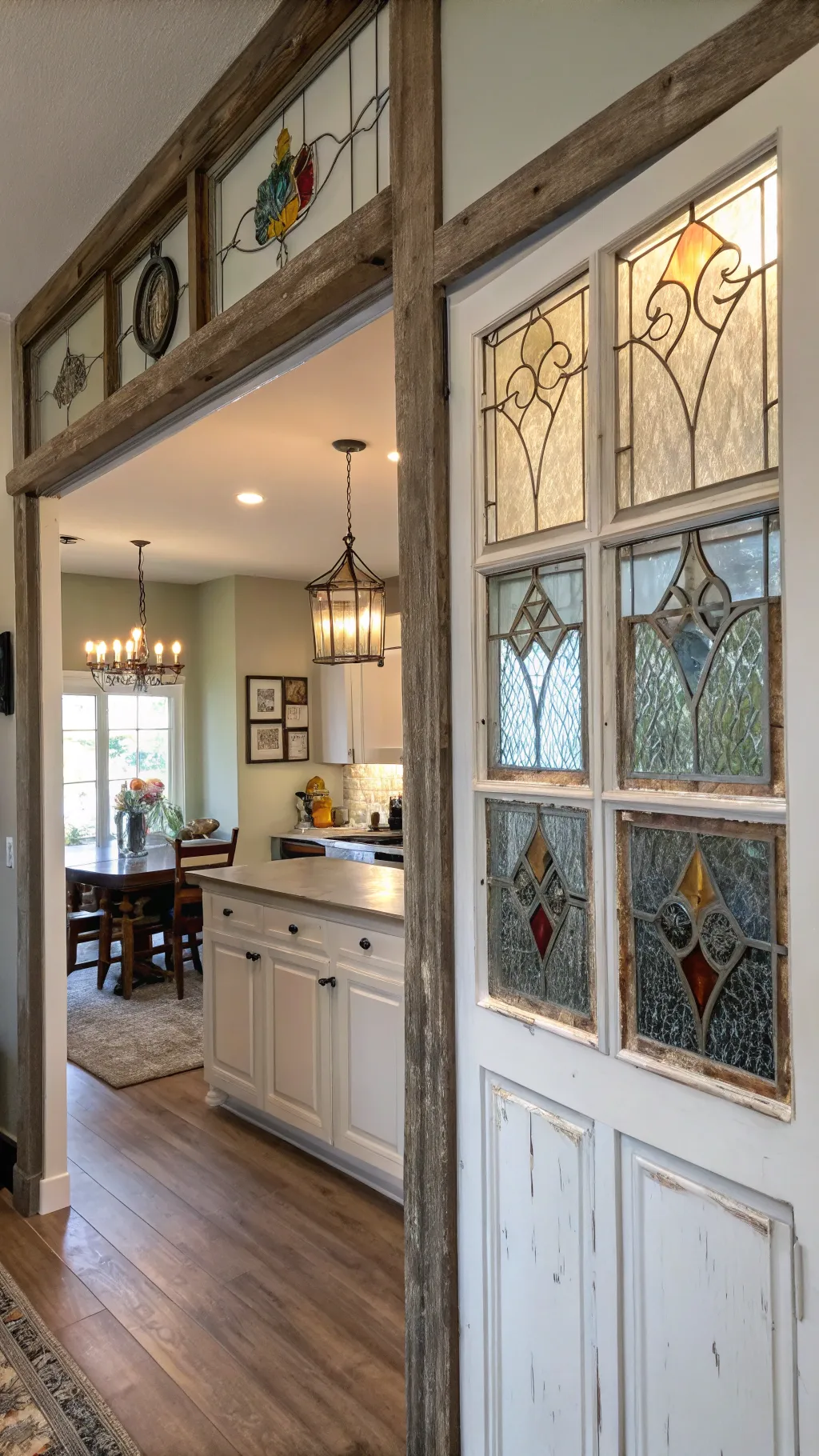
Mounting reclaimed vintage panels in a kitchen pass‑through adds charm without limiting airflow or movement. This works well between kitchens and dining rooms where you want separation but not a full wall.
Choose panels that are narrow and relatively light so they’re easy to secure. Simple L‑brackets can hold them in place while still letting the panels remain visible from both sides.
Small Stained Glass Window Panel Placed in a Reading Corner
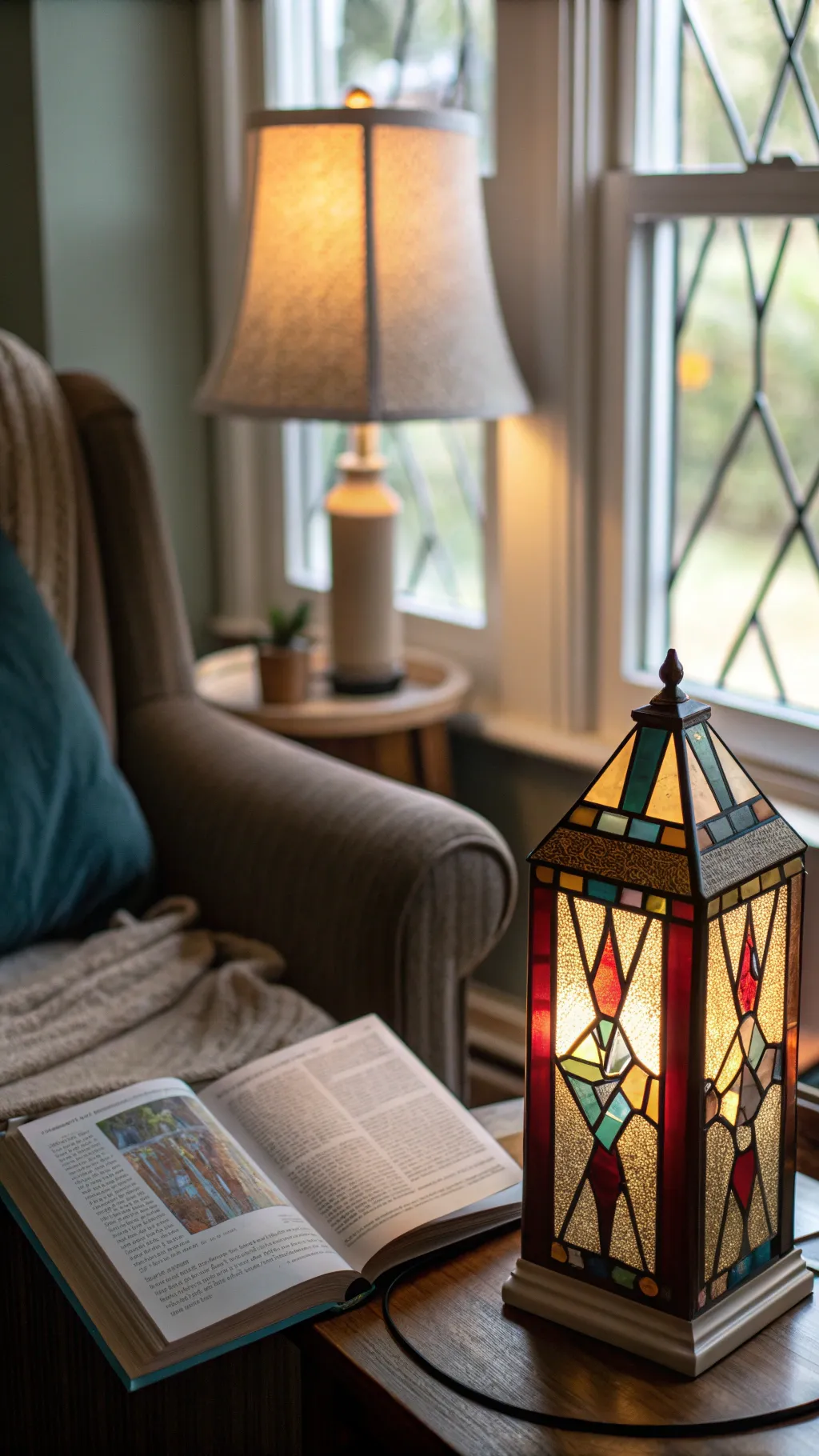
A small stained glass window panel can make a reading corner feel cozy. Prop it on a windowsill or hang it at eye level where the glow lands on a chair or side table.
If the corner lacks natural light, place a small lamp behind the panel. It creates a steady glow that adds warmth without overwhelming the space.
Patterned Victorian Motifs Used in a Bedroom Sidelight
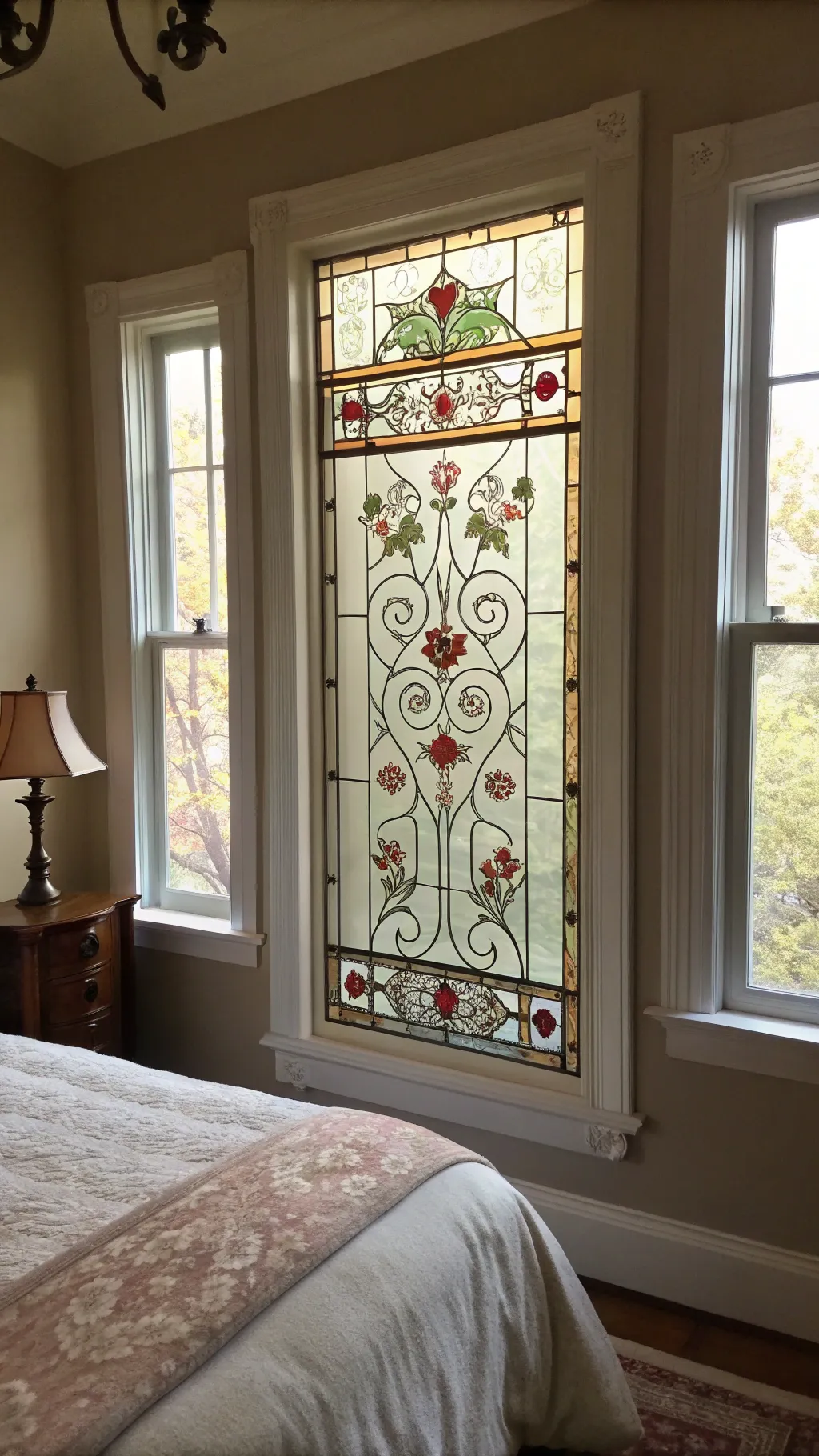
Victorian motifs, like simple florals or geometric borders, work well in bedroom sidelights. These narrow windows can feel plain, and stained glass adds interest without taking attention from the main window.
Pick muted tones for a calm look. Soft blues, pale greens, or amber accents keep the room feeling relaxed.
Antique Stained Glass Windows Repurposed as Room Dividers
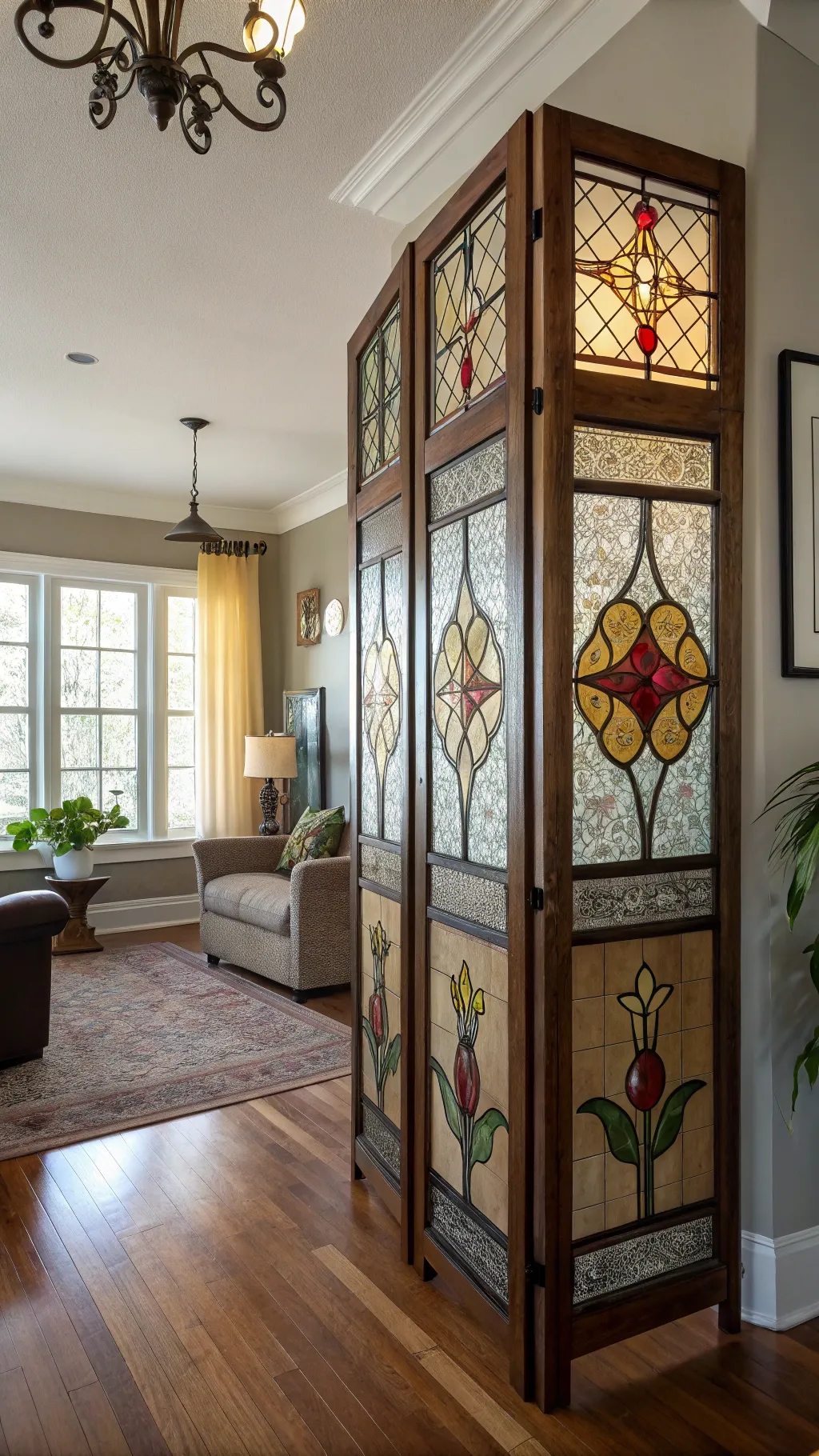
Repurposing antique stained glass windows as room dividers adds color while keeping sightlines open. This works well in studio apartments or open floor plans where a full wall would feel heavy.
Mount the panels in a light frame or hang them from hooks attached to ceiling beams. This setup makes the divider feel airy and easy to move if you later rearrange the space.
Color‑Blocked Stained Glass Doors Interior for a Subtle Update
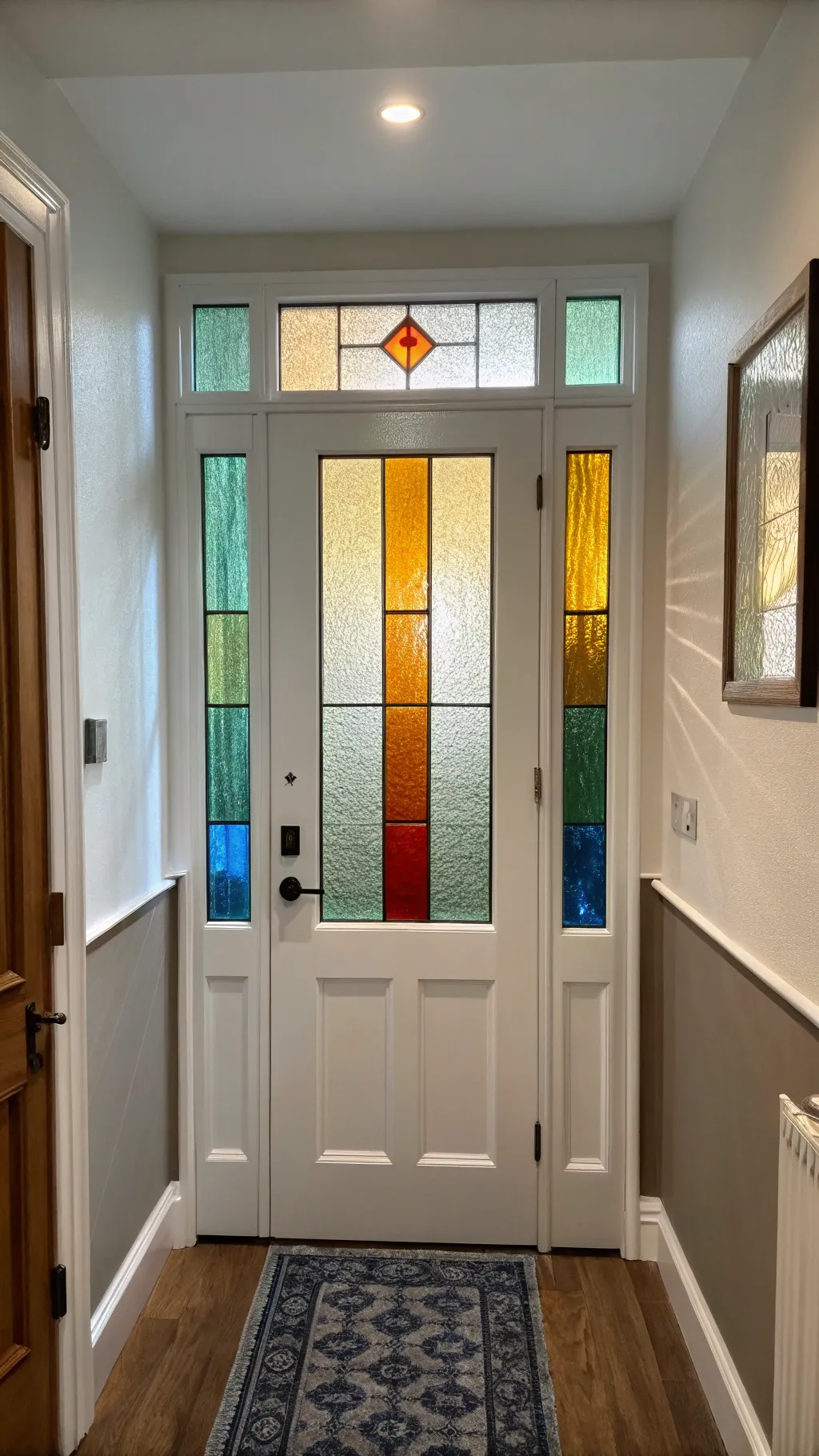
Color‑blocked stained glass doors offer a simple way to update interior spaces. Use two or three colors in clear sections for a gentle shift in tone. This approach works well in hallways or pantries where full decorative panels might feel too formal.
Try colors that pick up on flooring or furniture tones so the effect feels intentional and steady.
A Tall Art Deco Stained Glass Window as a Staircase Feature
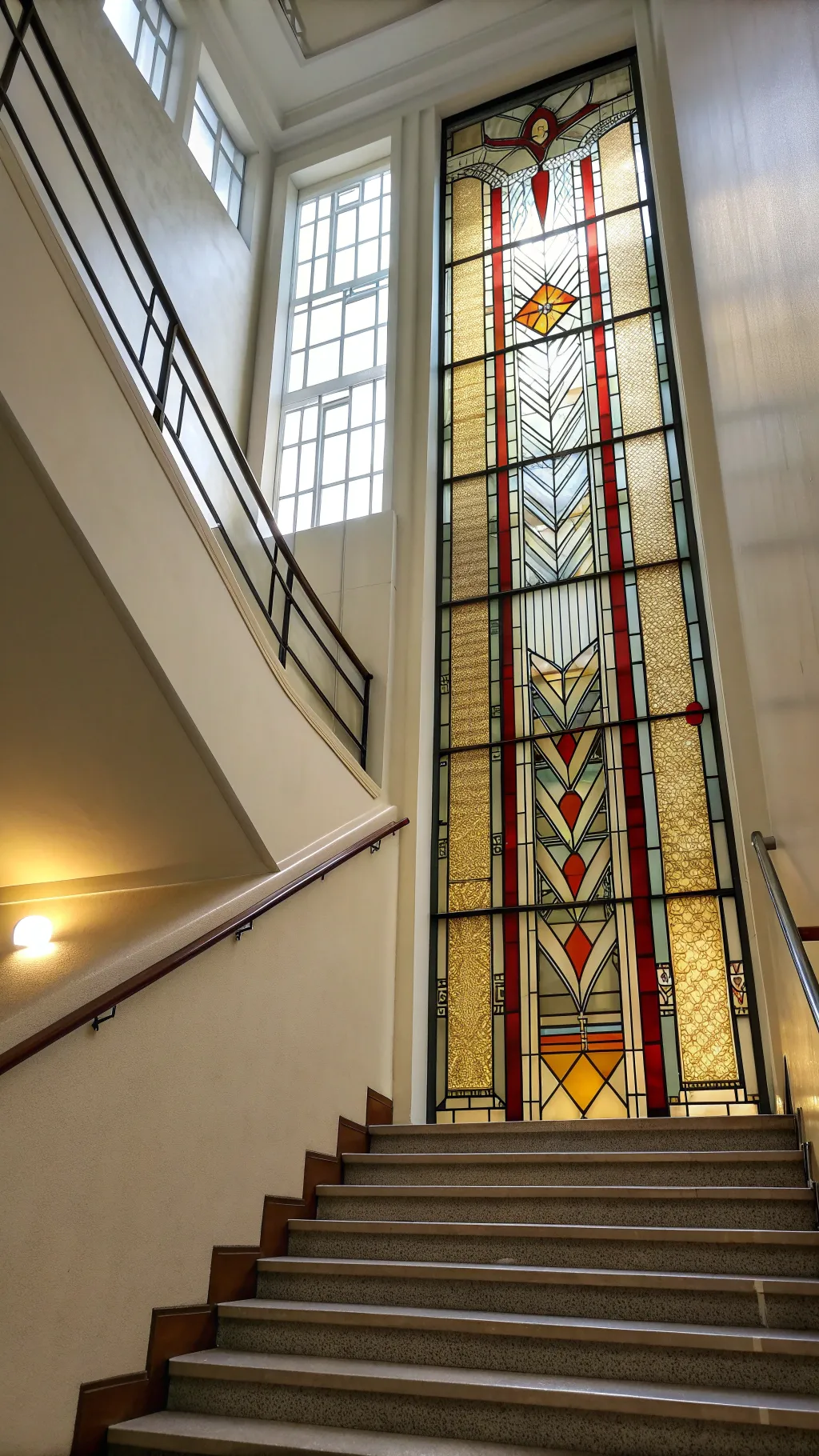
A tall Art Deco stained glass window adds interest to a staircase wall. Vertical lines and stepped motifs fit the natural rise of the stairs. These windows draw the eye upward and add color to a space that’s often overlooked.
If the wall doesn’t have a built‑in window, mount the panel on the surface and add a slim light behind it. This gives the look of an architectural feature without major construction.
Stained Glass Windows Aesthetic Created with Mixed Vintage Panels
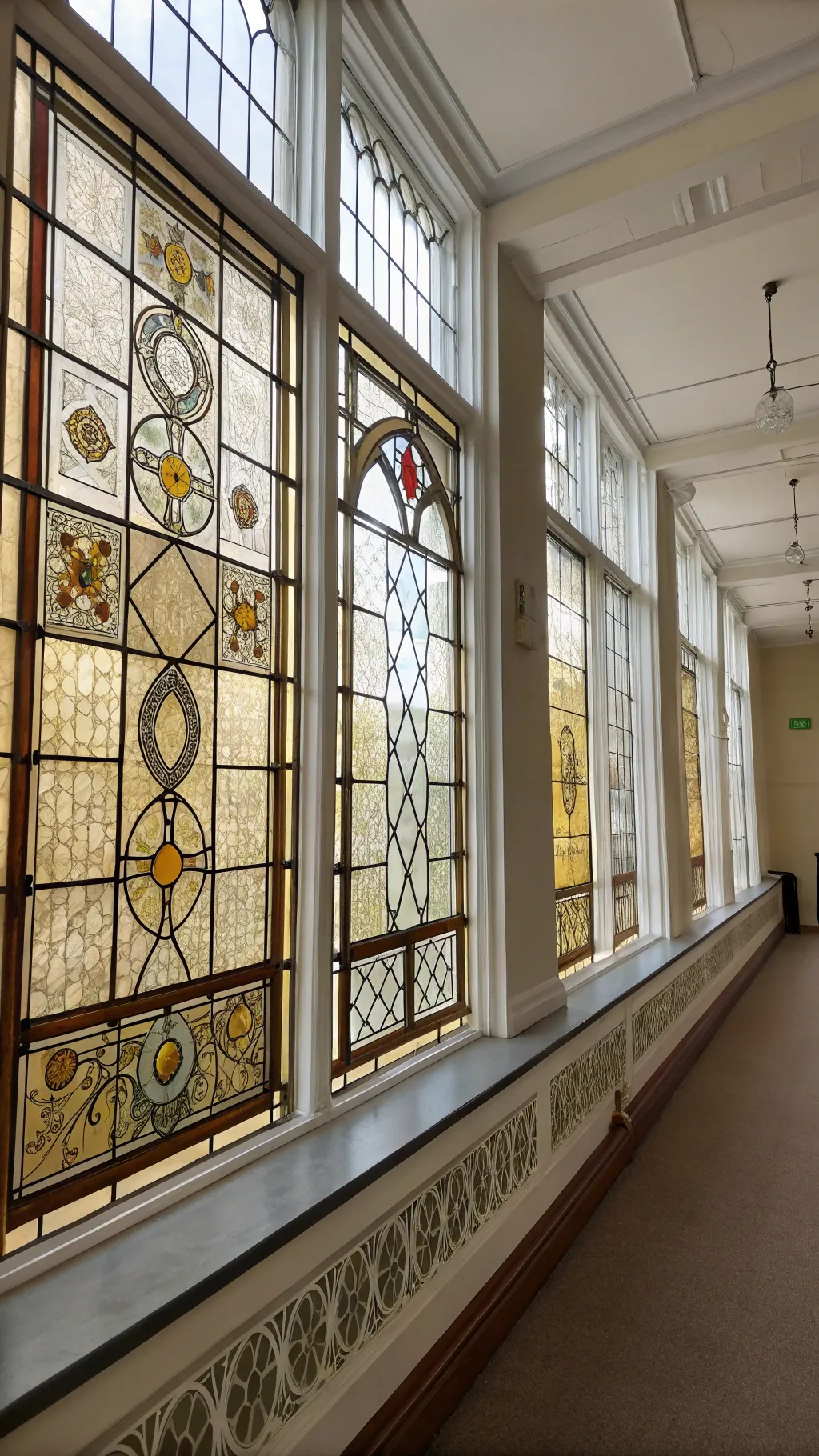
Mixing vintage panels creates a stained glass windows aesthetic that feels collected over time. Use different sizes and colors but keep one common detail, such as lead tone or border style, so the arrangement feels connected.
Hang the panels in a cluster on a large wall or line them on a shelf near a bright window. The group effect brings in a warm, layered look that’s easy to adjust as you find new pieces.