A hallway has to keep working while it celebrates. Guests need to find the next room, coats need space, and the route should still feel comfortable after dark. Start with the surfaces you already have, then add a few focused moments that reward a closer look.
Bats climbing the long wall
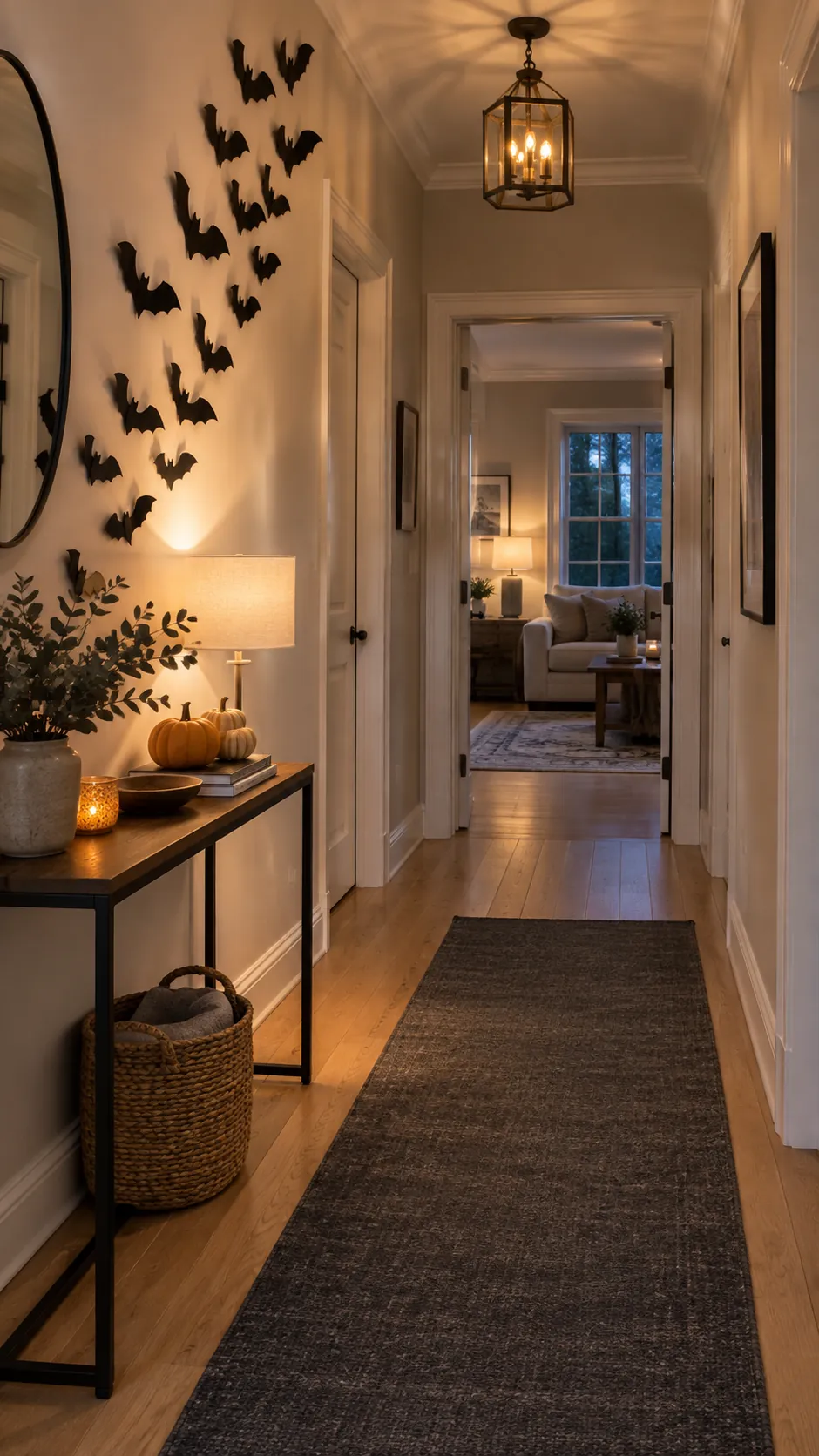
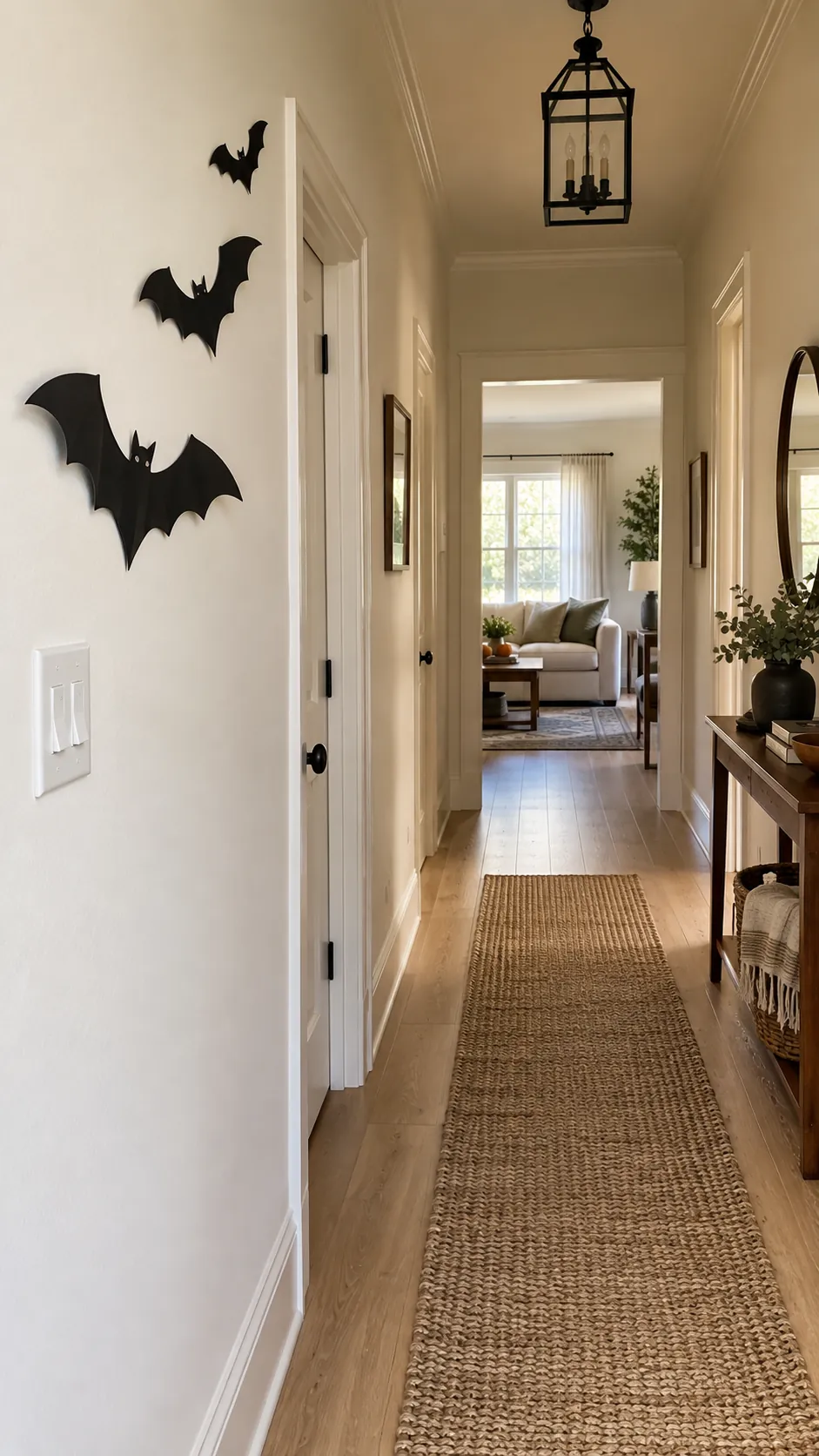
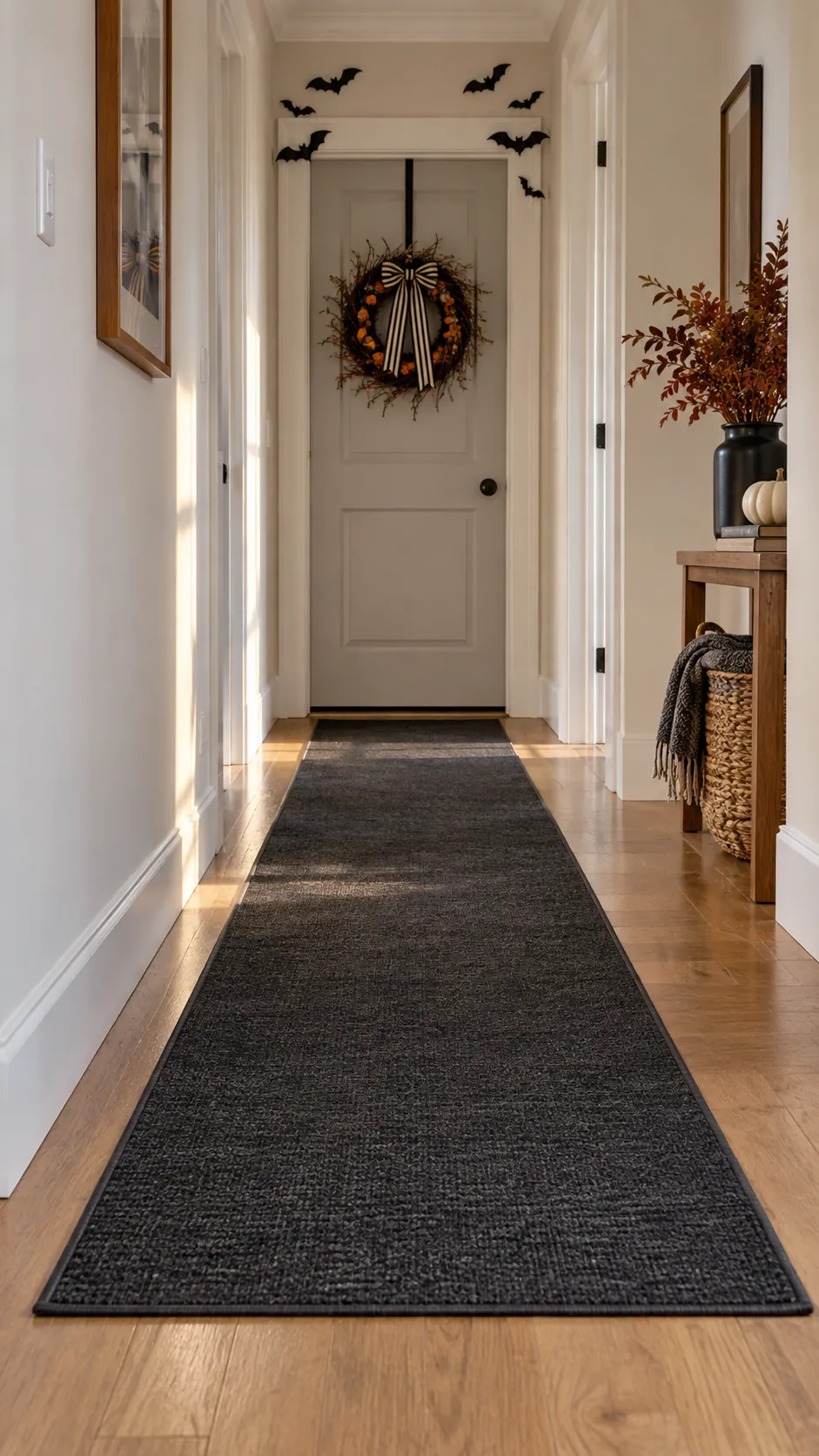
A flight of black paper bats gives a blank wall movement without taking any floor space. Cut three sizes and let the shapes rise toward the ceiling rather than lining them up in a straight stripe. Test removable adhesive on an unseen patch before placing the first bat. Leave the switch plate and any thermostat fully accessible.
Window clings that cast a second scene
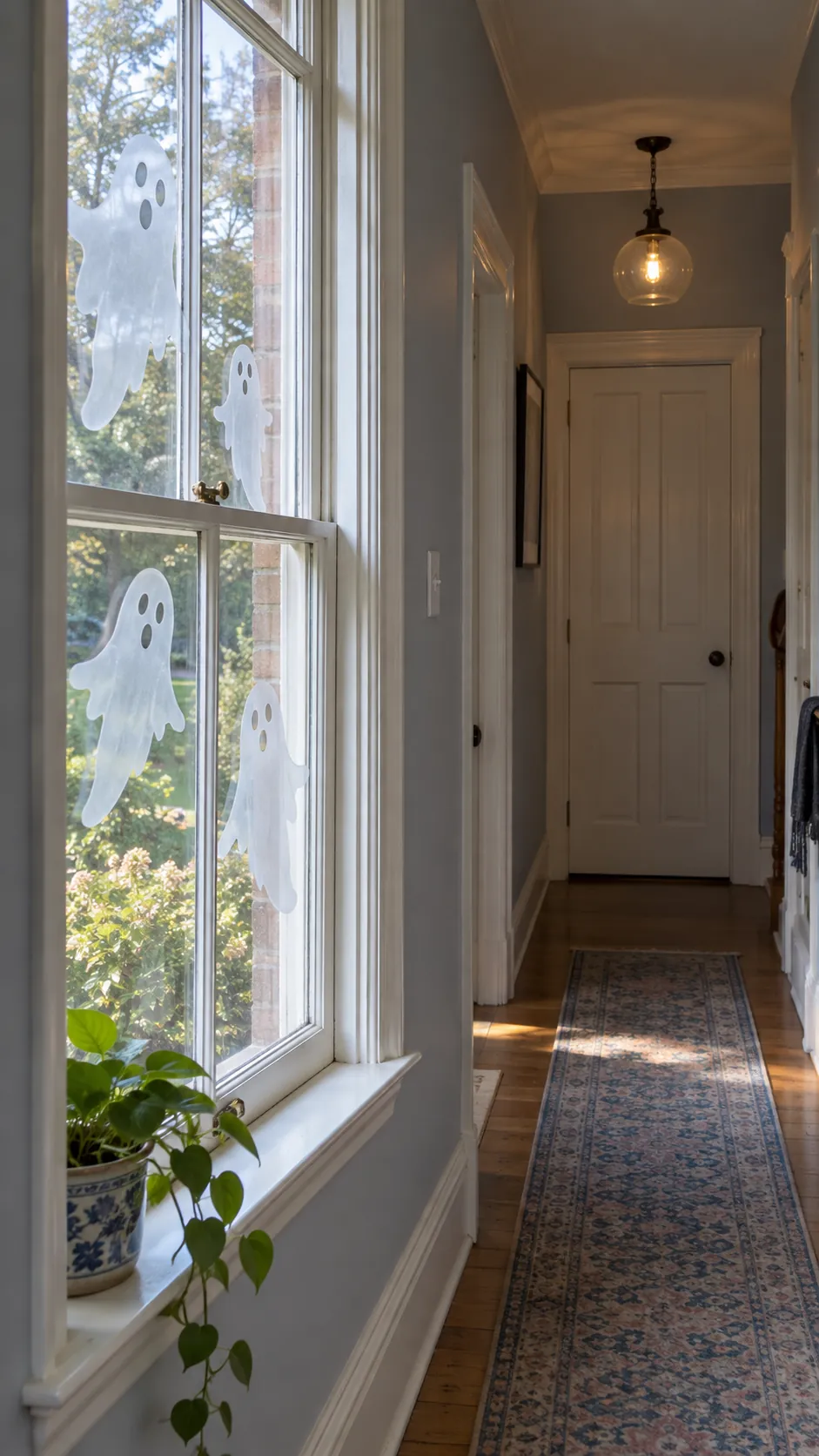
If your hallway has a window, translucent ghost clings can catch daylight and make a quiet surprise after dark. Place a few at different heights on the glass while leaving most of the pane clear. A nearby lamp will make their outlines visible from the hall without blocking the window. Choose clings that peel away cleanly instead of painting the glass.
Webbing tucked into the ceiling corner
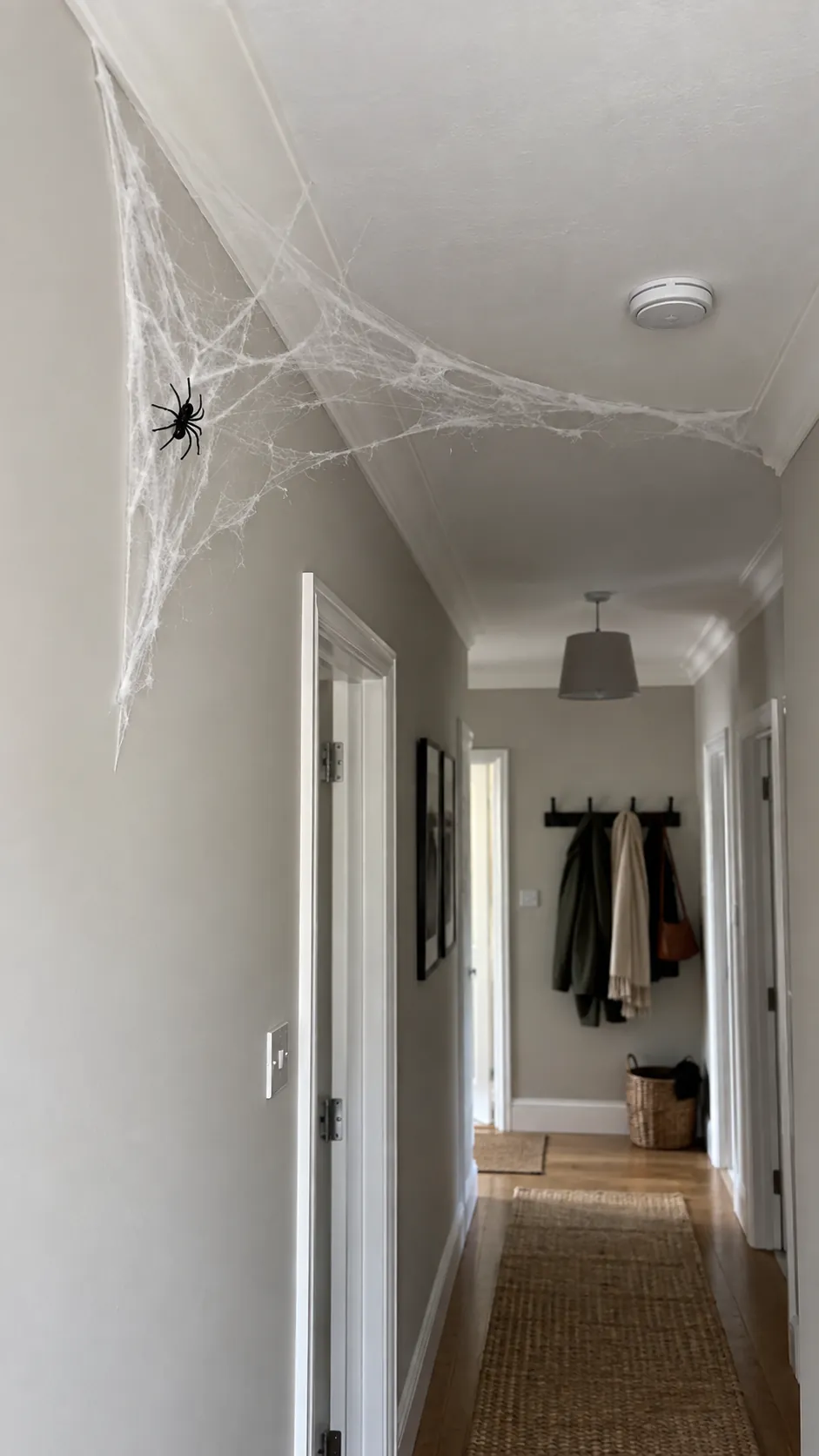
A narrow line of synthetic web along a ceiling corner reads more convincingly than a thick cloud across the passage. Pull the fibers apart until the wall color shows through, then attach them to removable hooks above head height. One or two spiders are enough to give the web a focal point. Keep the material away from light fittings and smoke alarms.
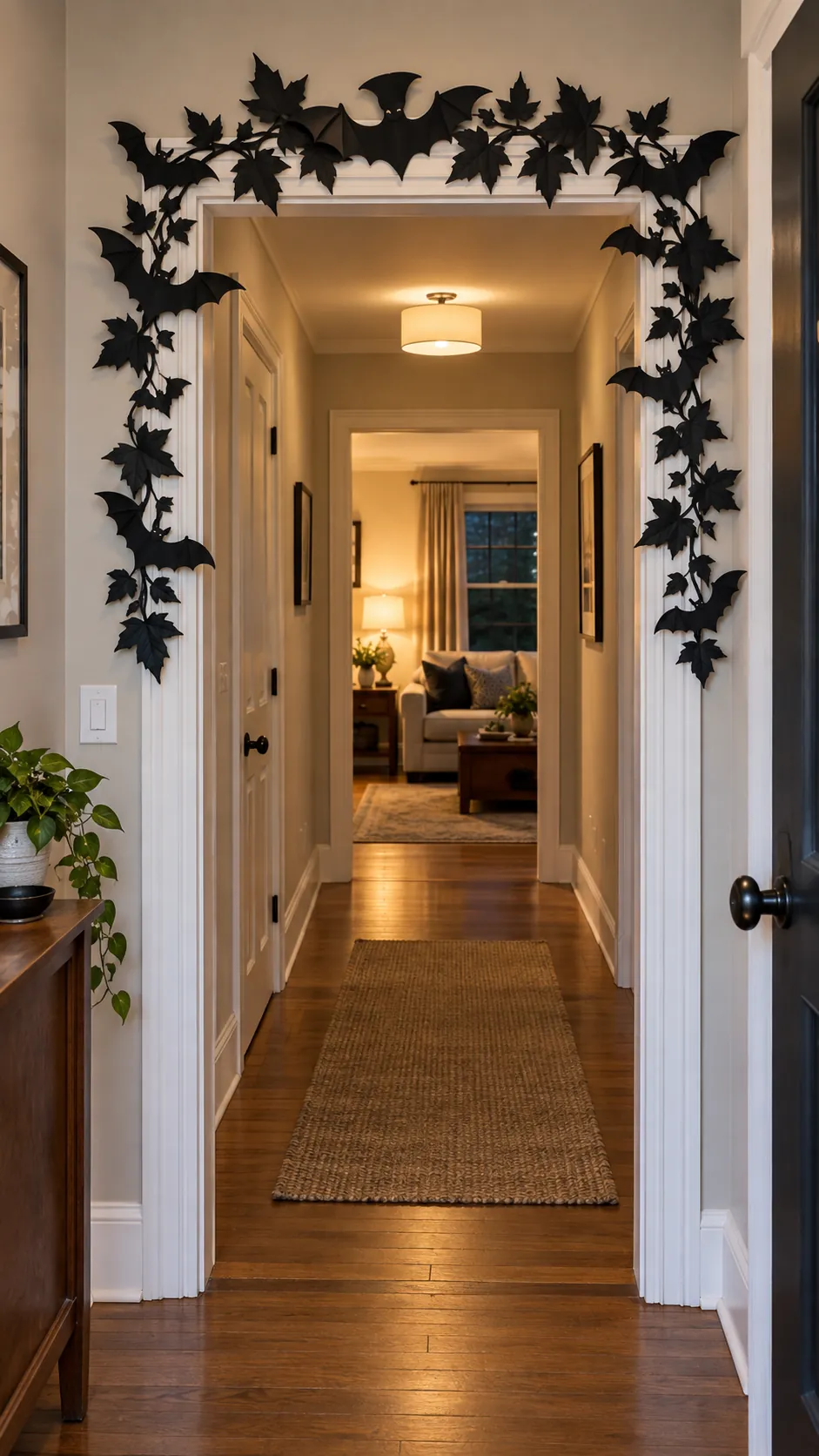
A paper arch around the first doorway
Make the first doorway the visual threshold with layered black paper shapes around its trim. Bats, pointed leaves, and a small moon can form an arch while the door opening stays at its normal width. Use low tack mounting pieces on a clean painted surface and test removal first. This version gives a Halloween archway effect without a frame that people might brush against.
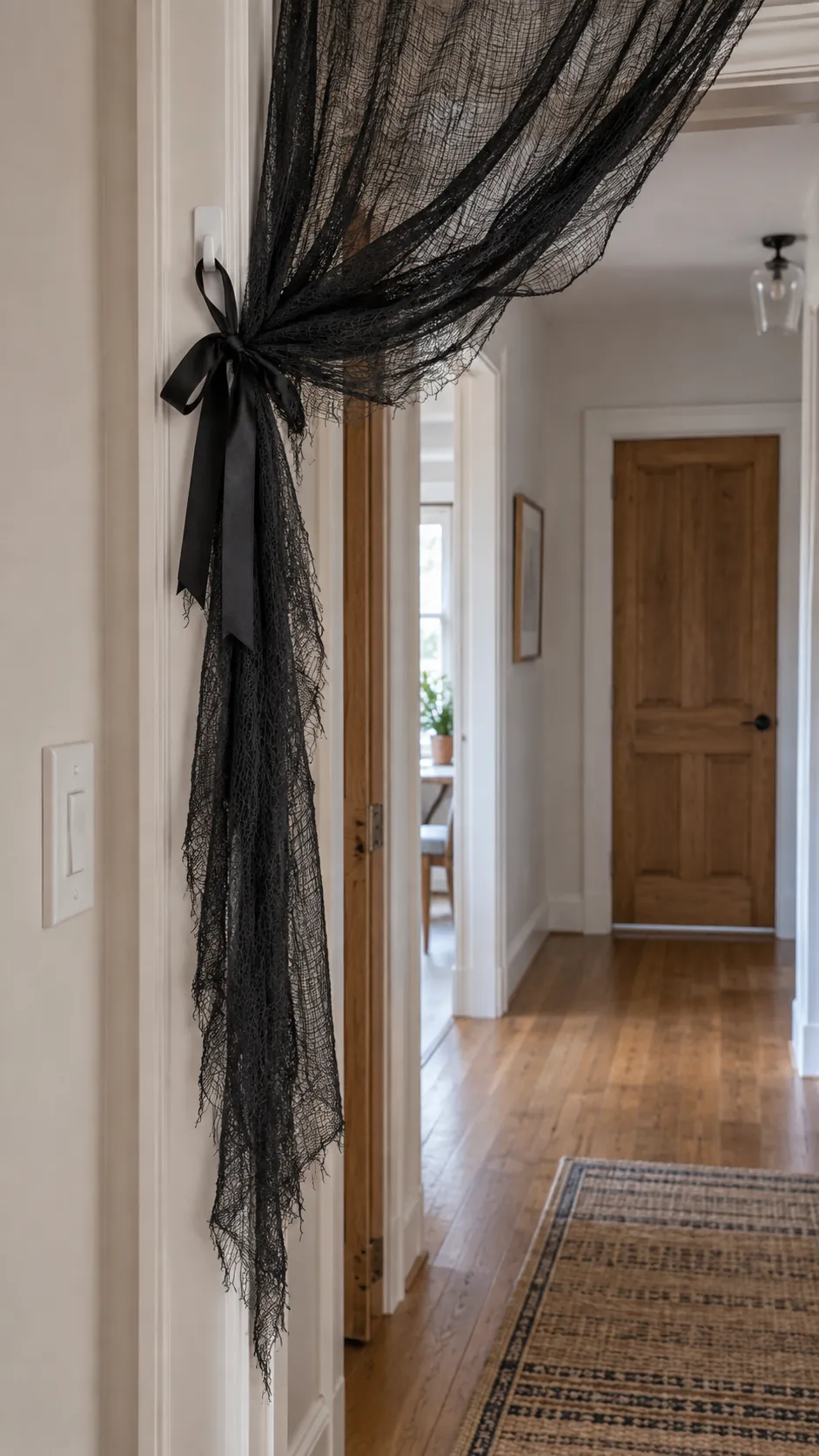
Gauze gathered beside an interior door
A strip of charcoal gauze can soften the edge of a hall doorway like a stage curtain. Gather it to one side with a ribbon fixed to a removable hook rather than hanging fabric across the opening. The visible door frame makes the effect dramatic even in a short passage. Check that the door can open completely before calling the arrangement finished.
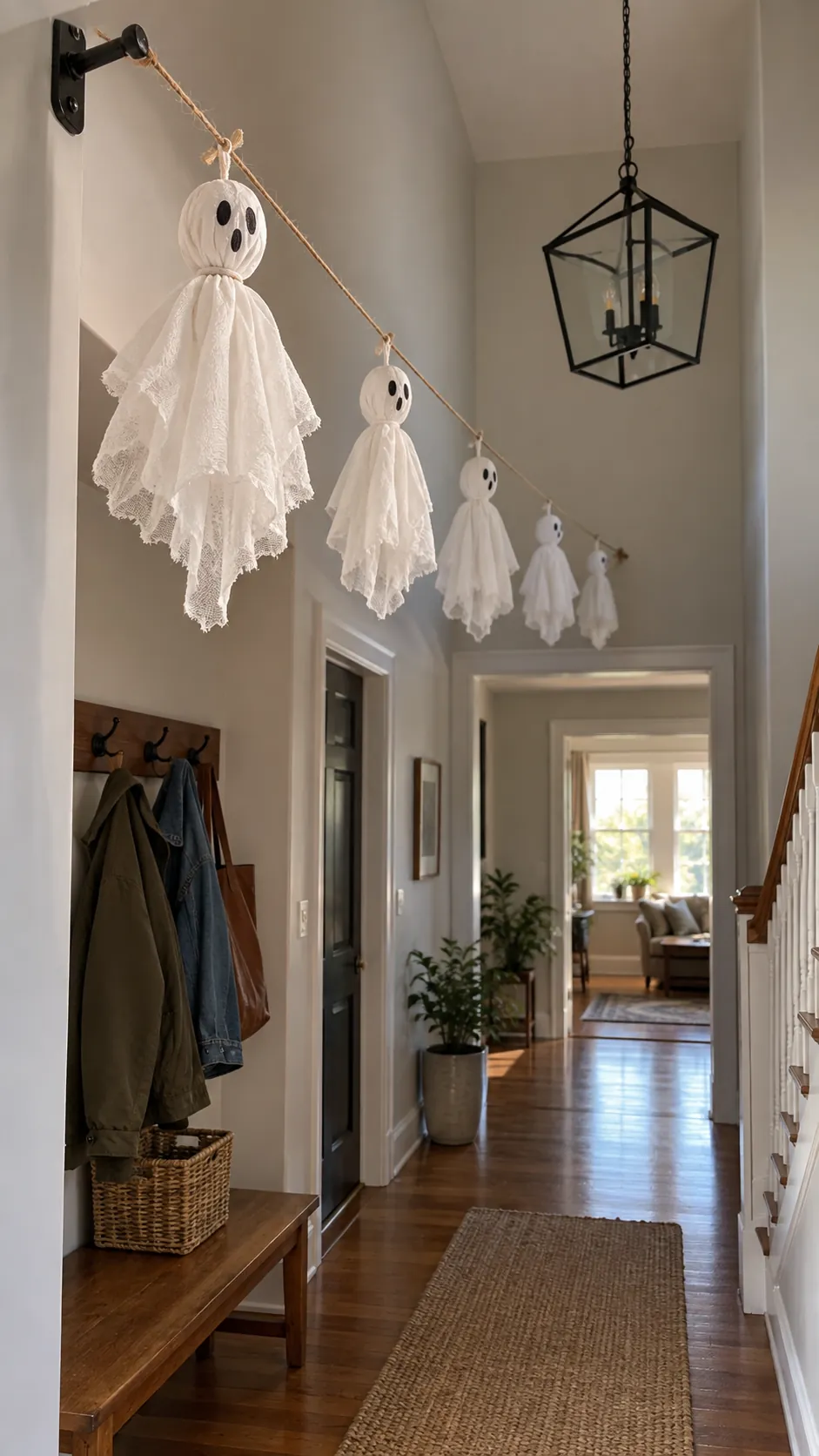
Ghost garland above the walking line
Small cloth ghosts work well across a high stretch of ceiling when the lower hems stay well above visitors. Give each one a rounded paper head and a loose cotton body so the shapes have some variation. Tie the cord to secure hooks at both ends instead of relying on tape overhead. A gentle row near the hall entrance feels festive without filling the air with dangling obstacles.
Battery candles in a recessed niche
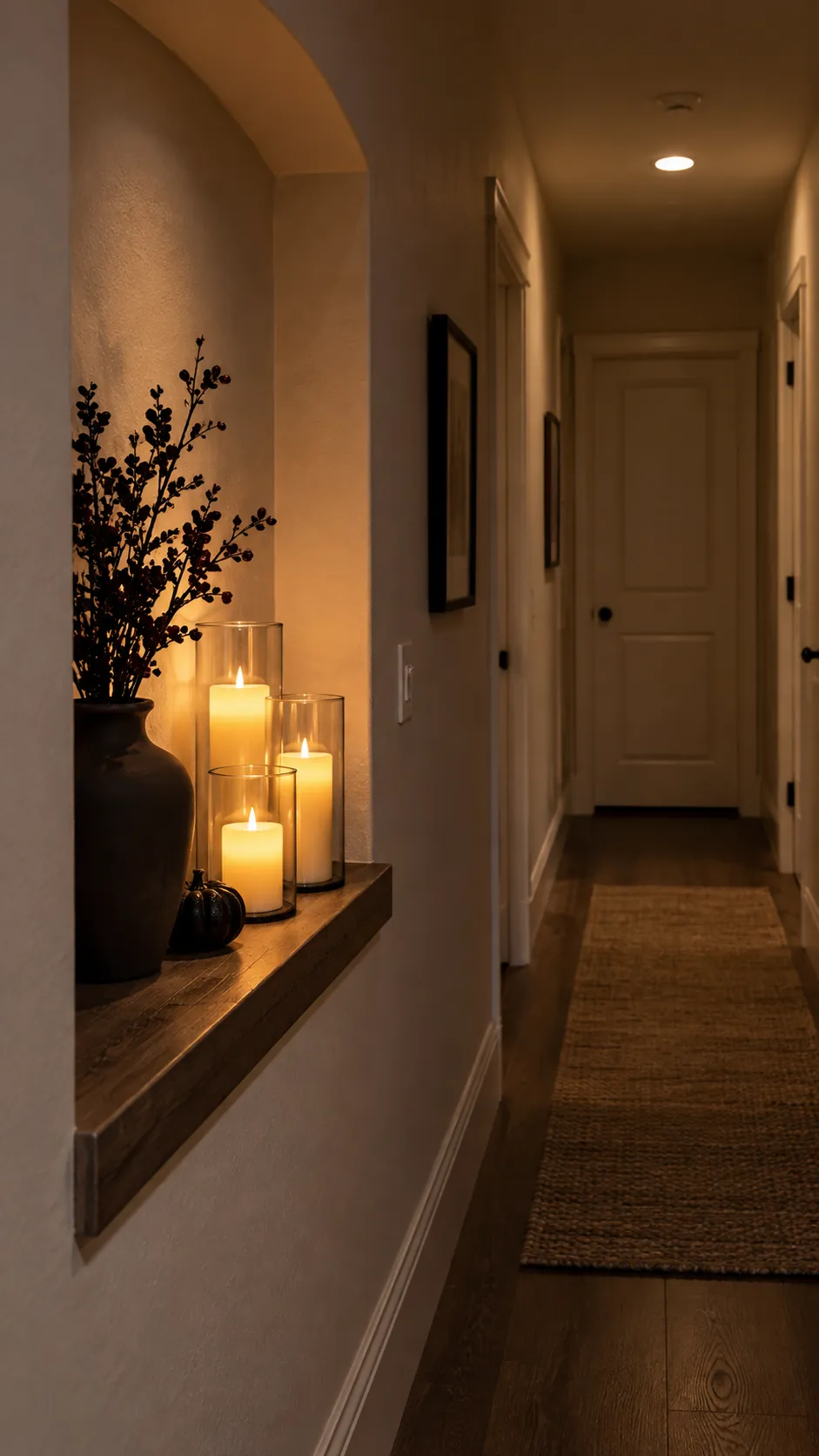
A recessed shelf can hold three battery candles at staggered heights and still leave the hallway clear. Put the tallest light behind a matte black vase so the glow catches the wall rather than shining into guests eyes. Use only enclosed electric lights near fabric or paper. This little pool of light creates atmosphere while the normal ceiling lighting remains usable.
Pumpkins arranged on a narrow console
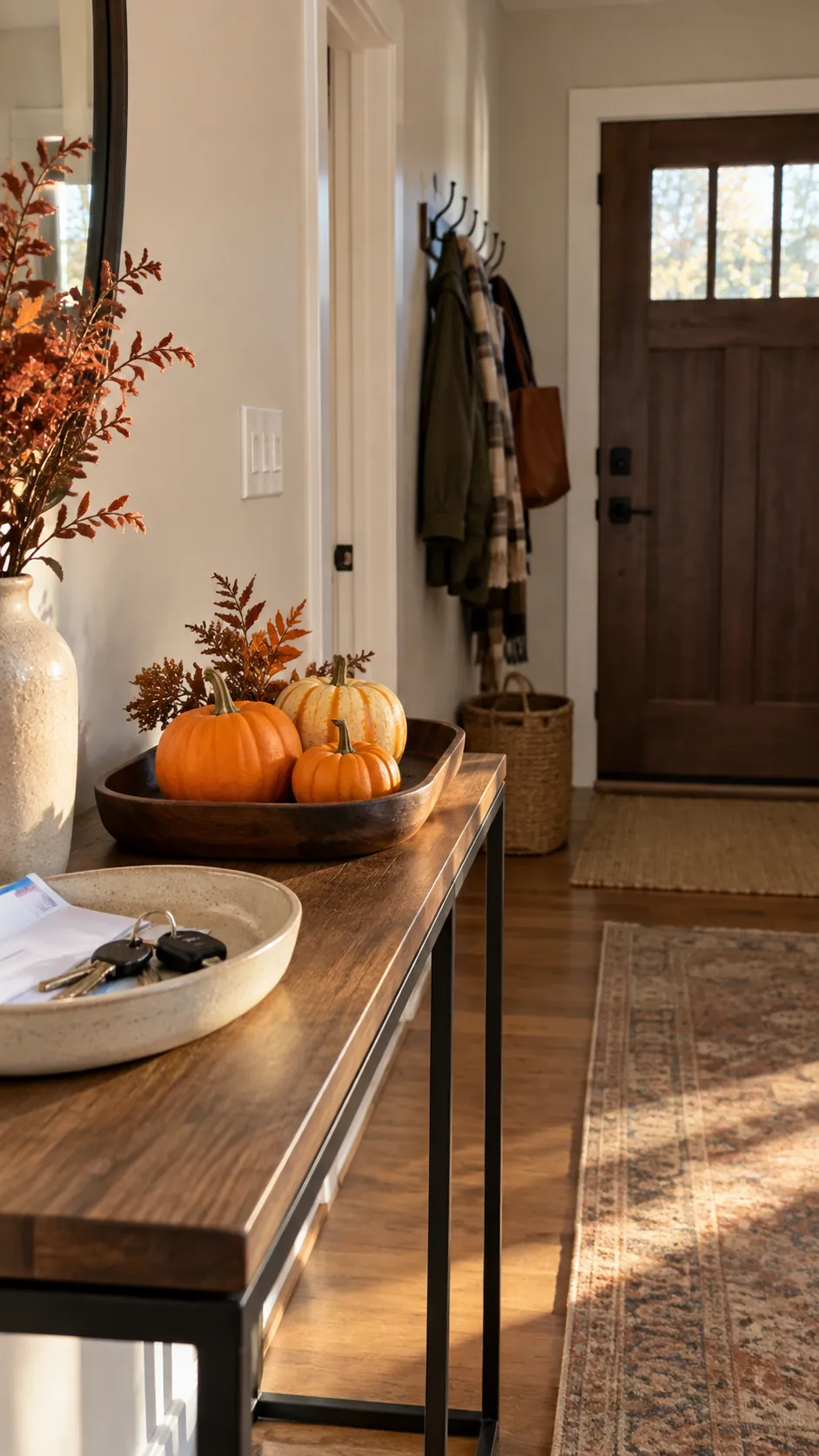
A console already in the hall can carry a cluster of small pumpkins instead of adding objects along the floor. Mix one pale pumpkin with two deep orange ones and leave room for keys and mail. If the console is shallow, set the pumpkins in a low tray so a shoulder cannot knock one down. The display works from autumn through Halloween with very little rebuilding.
A ghost caught in the mirror
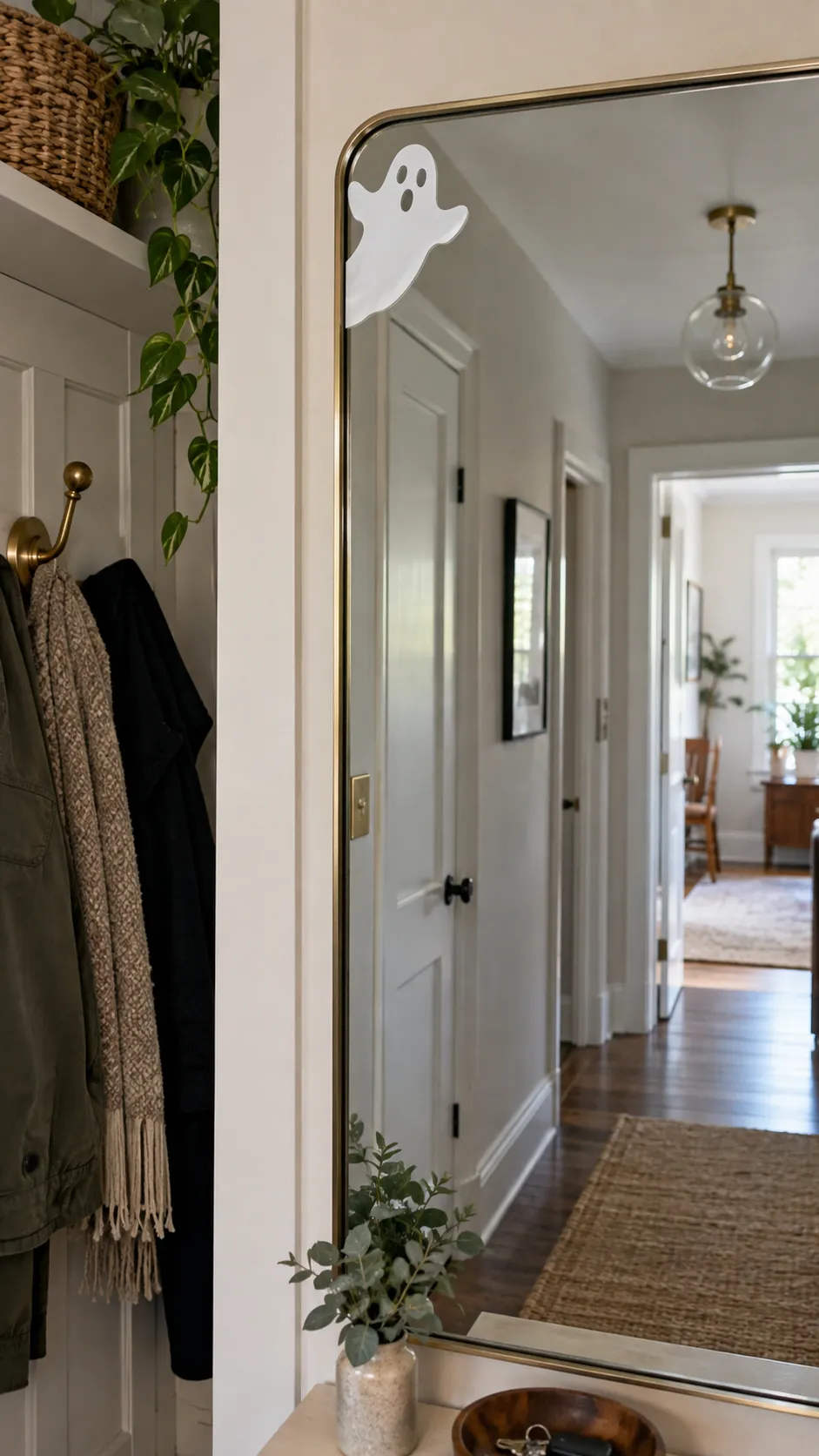
A removable white cling in one corner of an existing mirror makes the reflection feel playfully haunted. Keep the center clear so people can still check their appearance on the way out. A single off center shape is more convincing than covering the whole glass. Avoid spraying the mirror, since coatings can be difficult to remove cleanly.
Witch hats above the coat hooks
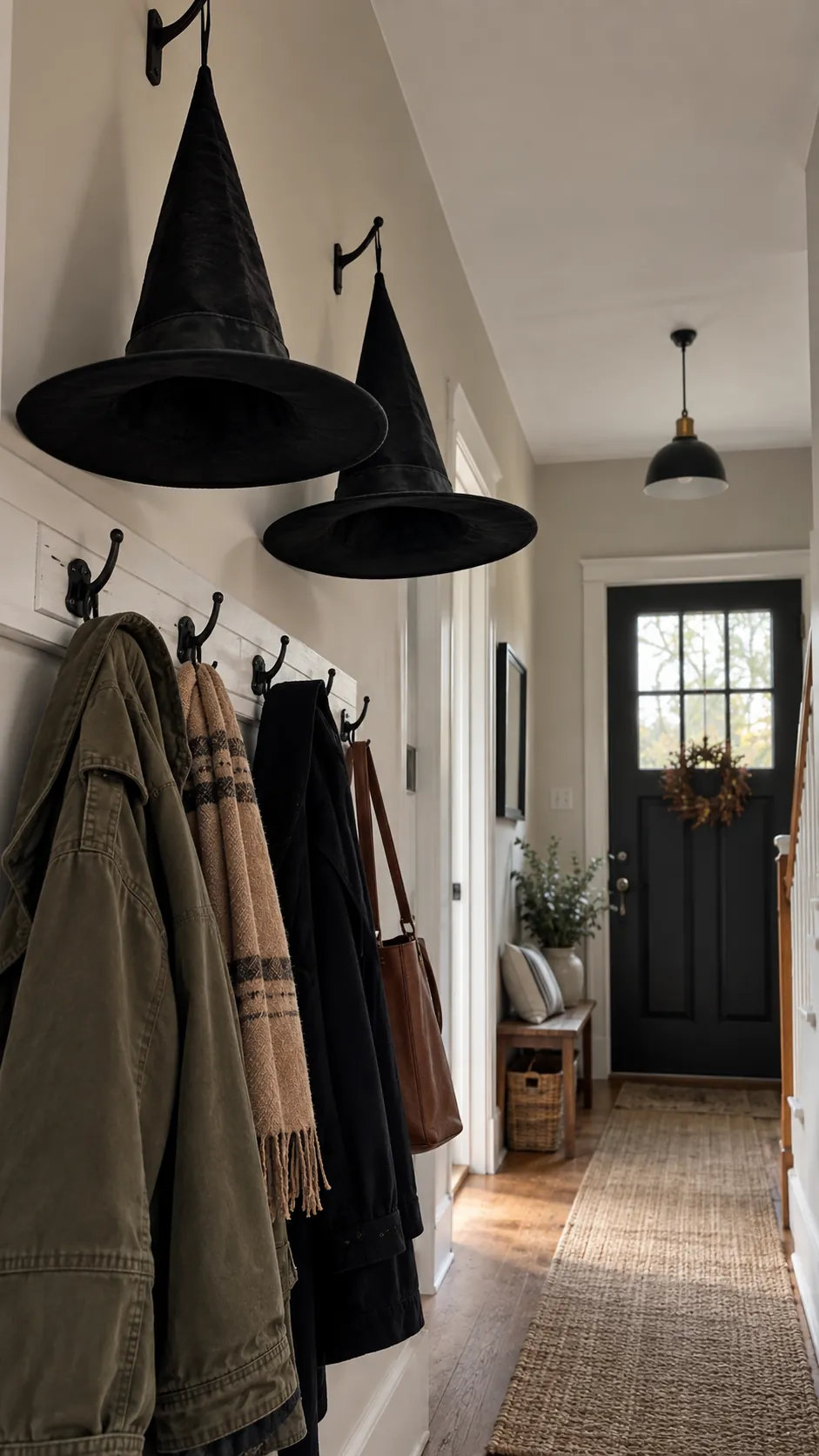
Use the height over a coat area for a pair of lightweight witch hats. One can rest on an existing hook while the other hangs from a short, secure loop. Keep both above the reach of swinging coats and below no sprinkler head or fixture. The familiar storage zone becomes part of the scene without sacrificing its everyday job.
Potion bottles on a slim shelf
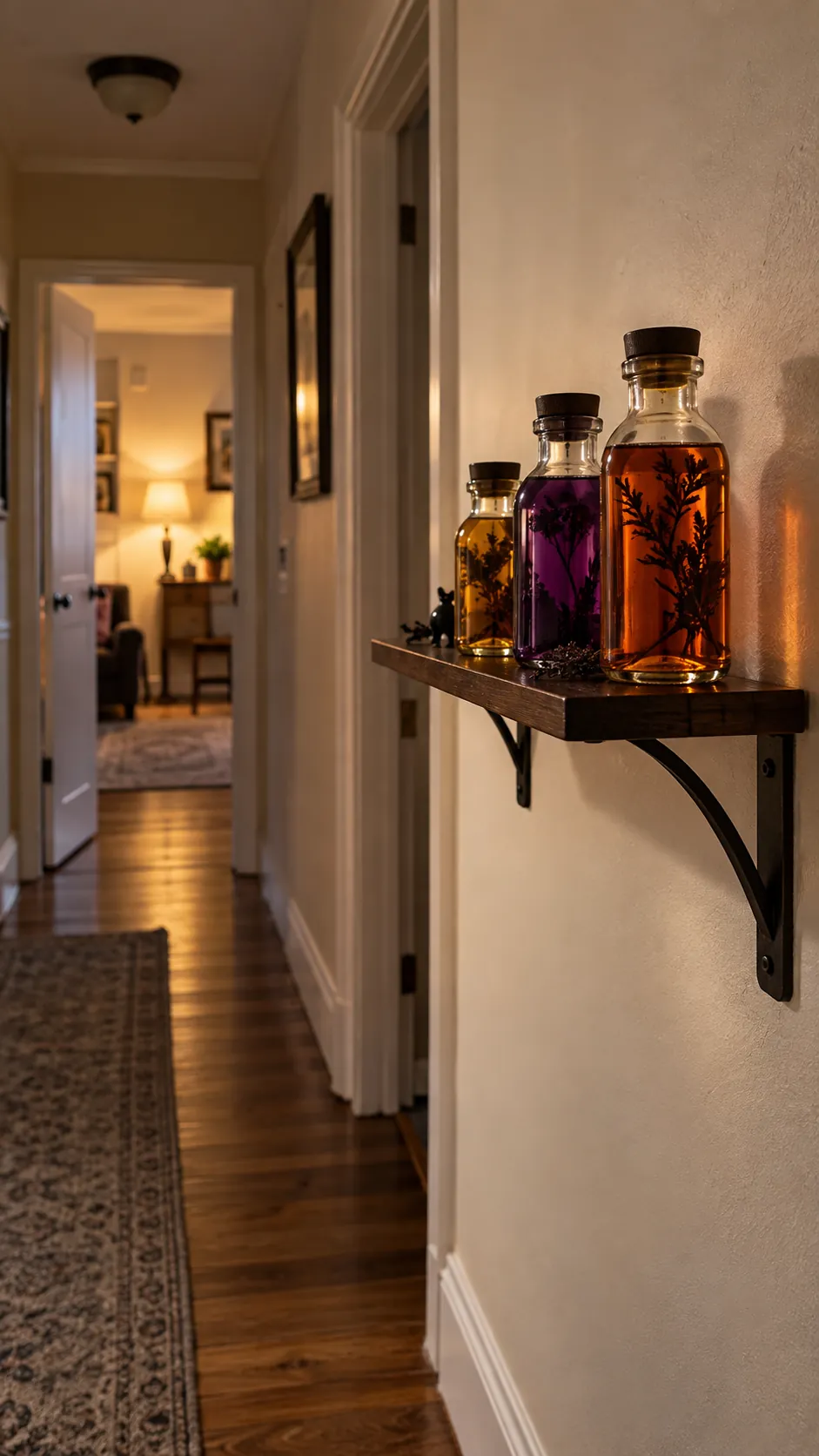
A small wall shelf can hold reused glass bottles filled with colored water for an apothecary mood. Choose stable bottles with lids and keep any labels simple enough to read at a glance. Set the shelf away from a door swing and out of a child’s reach if the glass is fragile. An amber lamp nearby makes the liquids look richer than bright colored bulbs would.
A skeletal hand key tray
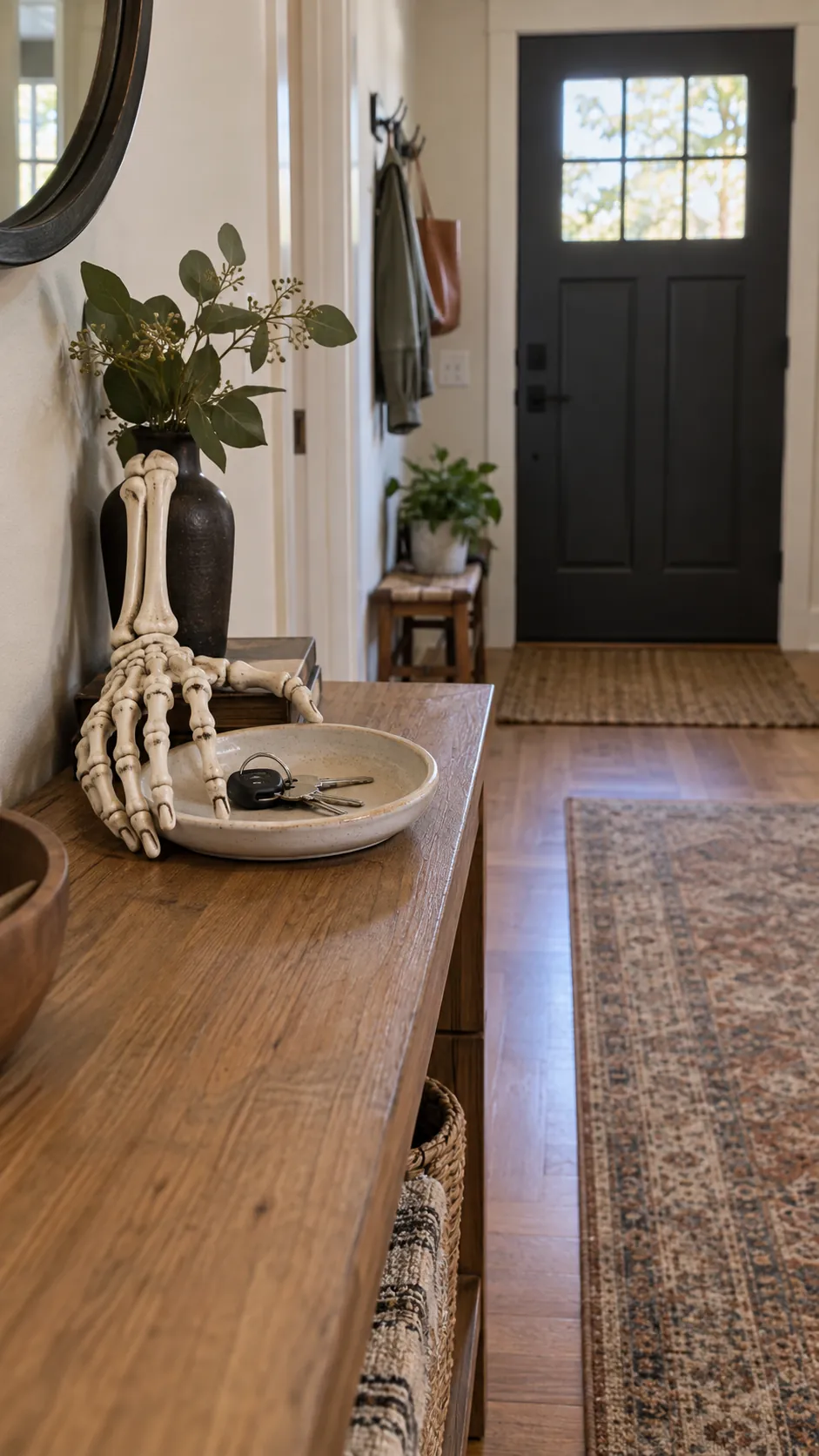
A shallow tray with one toy skeletal hand offers a tiny joke at the place where everyone drops keys. Put the prop beside the tray rather than inside it, so the tray remains useful. Matte ceramic or aged metal makes the arrangement feel more at home than a heap of shiny plastic. Because it stays on existing furniture, it adds no new obstacle.
A gallery of old fashioned portraits
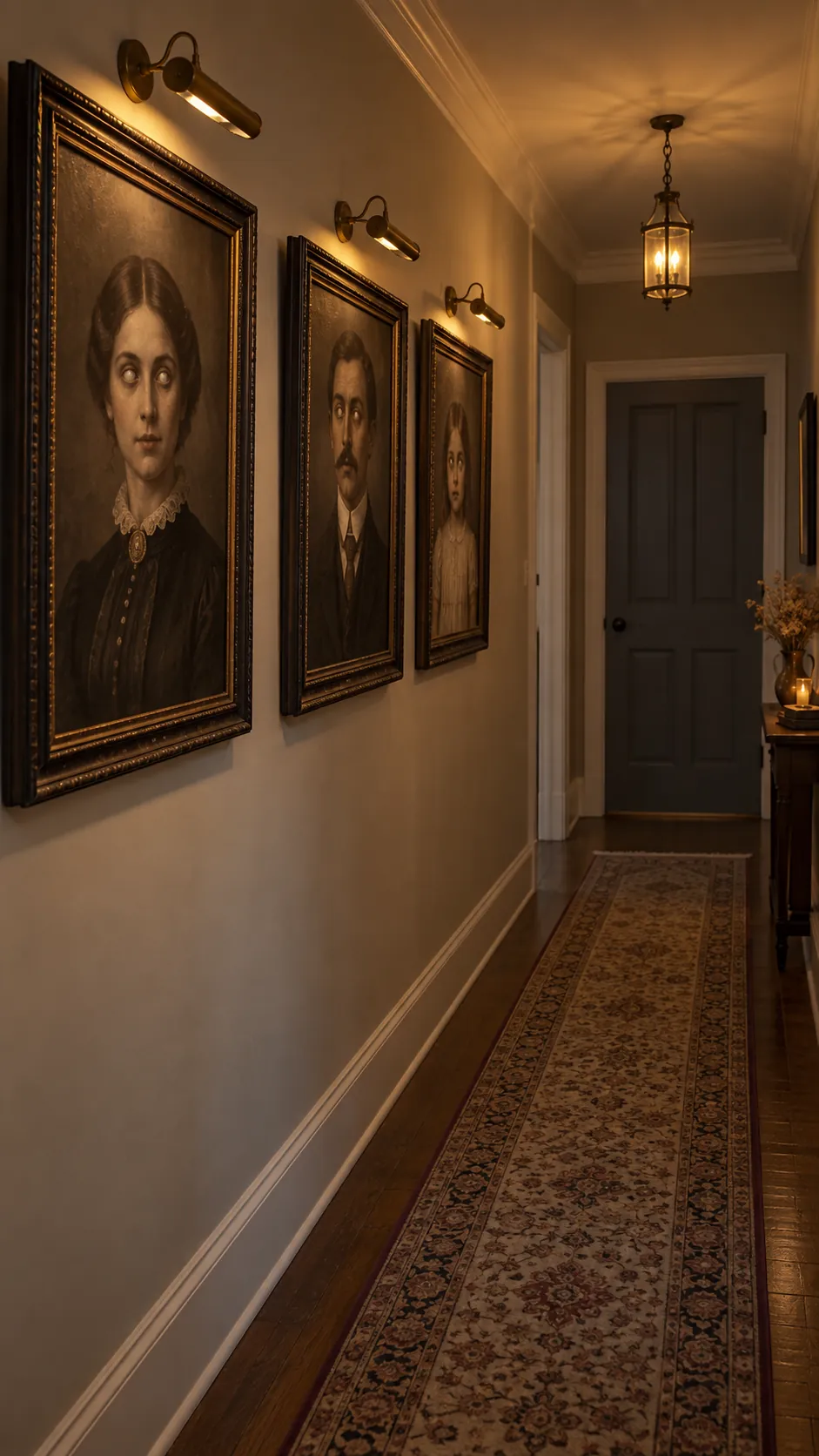
Swap a few existing pictures for printable vintage style portraits with subtly unusual eyes or silhouettes. Reuse the same frames and hanging points so the gallery keeps a tidy rhythm. Give each portrait a distinct face or clothing detail rather than repeating one image. This is a strong choice for a long hallway because visitors notice the change as they move.
A secure dark runner
A charcoal runner can make a pale hallway feel theatrical, but only if it lies flat. Choose a rug with an effective gripping backing and check every corner after the first few walks. Keep its edges away from door clearances and avoid loose fabric laid over an existing runner. The dark stripe guides the eye toward the decorated end of the hall.
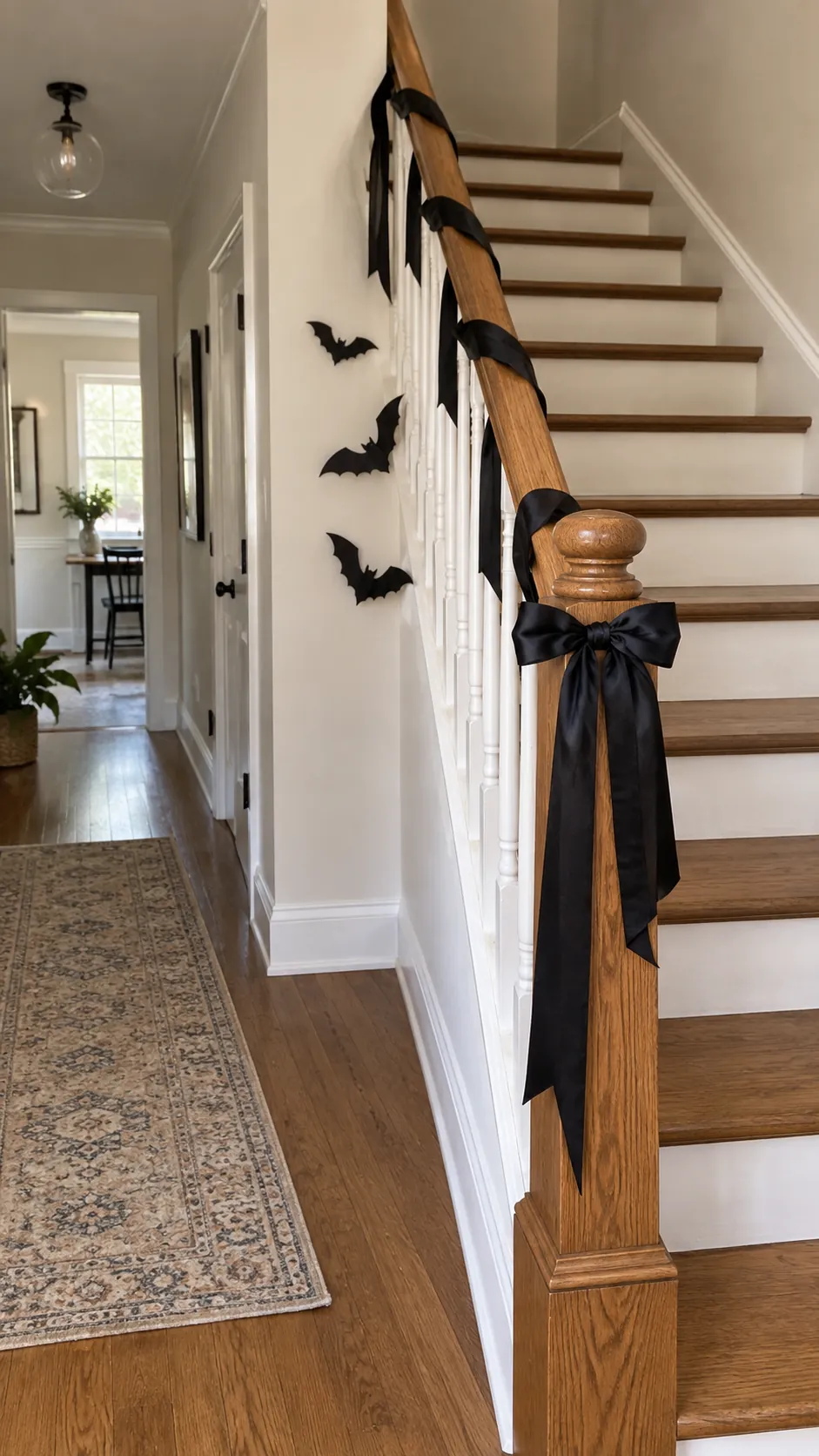
Ribbon wrapped along the stair rail
Where a hallway meets stairs, tie a black ribbon loosely along the outside of the rail. Add a few paper bats near the newel post and keep the hand grip itself completely free. The ribbon should be easy to remove and unable to trail onto the steps. This creates a visible Halloween transition without putting pumpkins on stair treads.
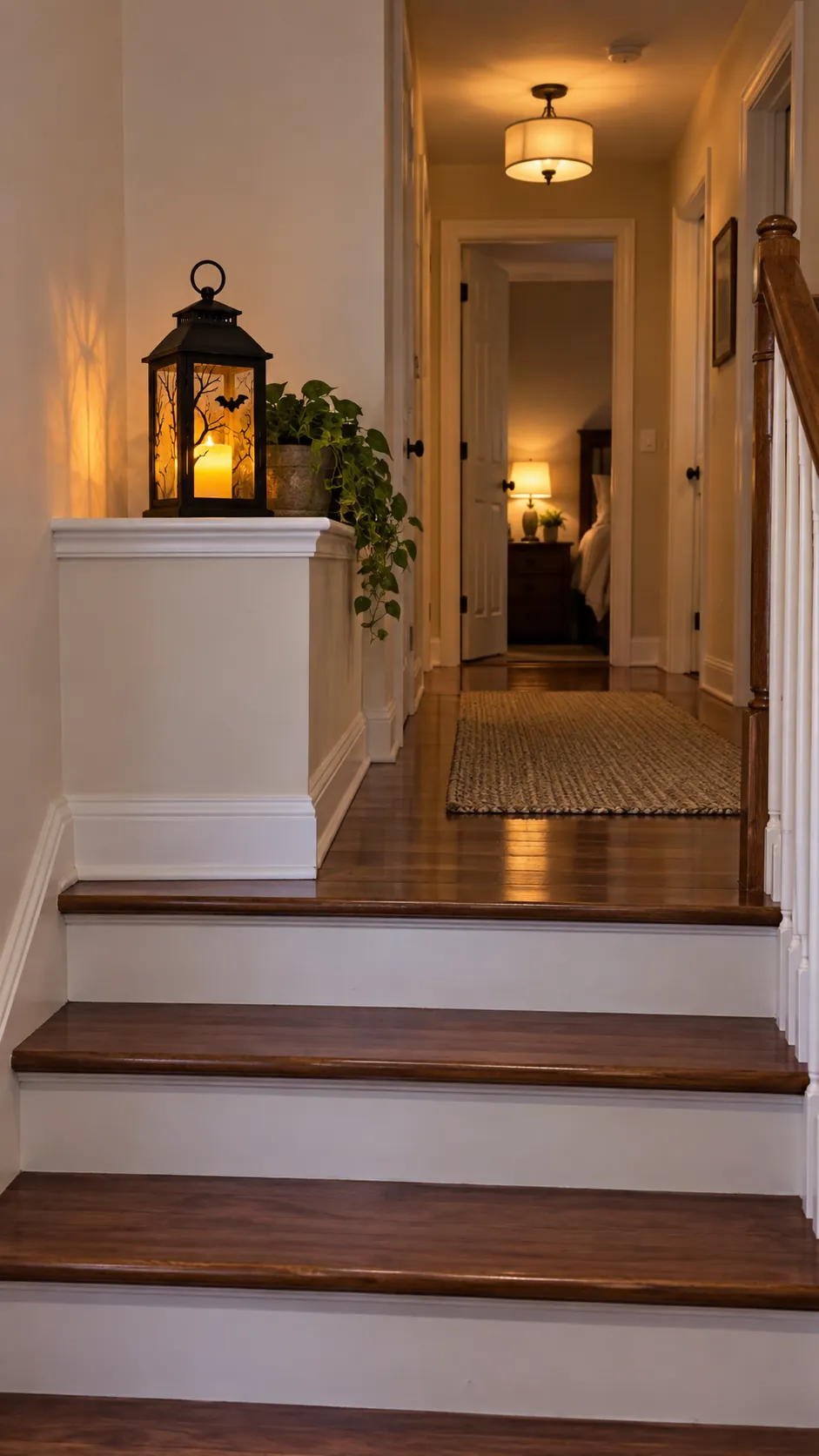
A lantern on the stair landing
A broad landing can support one closed battery lantern against the wall if the walking route stays open. Place it on a stable low shelf or wide ledge rather than on a stair. Warm light picks out the rail and makes the level change easier to read. Check the sight line from both directions before leaving it there for a party.
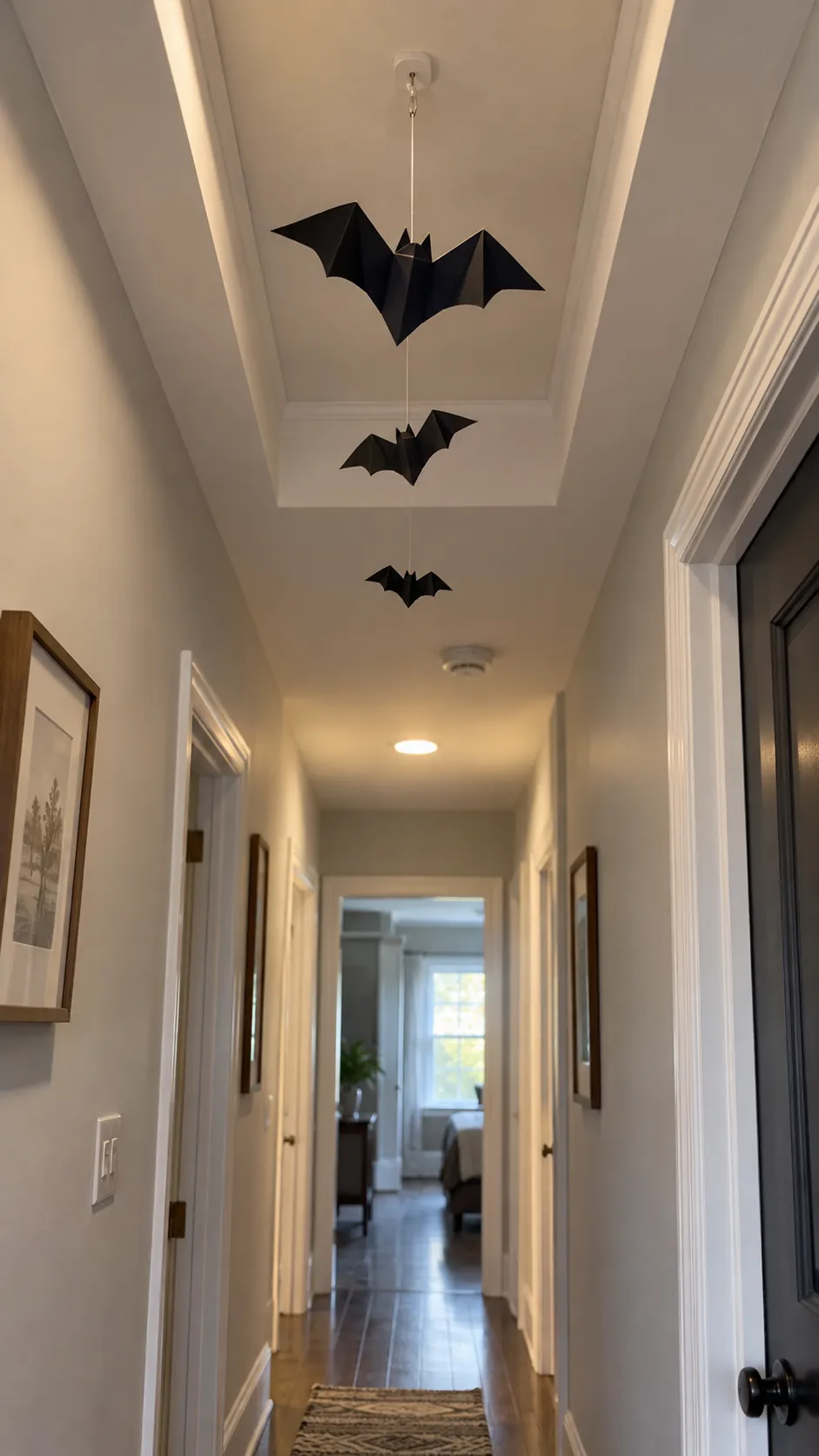
Bats suspended in a ceiling recess
A ceiling recess gives a small mobile room to move without hanging into the corridor. Suspend a few light paper bats on short lines at different depths, each tied to a secure removable hook. Their shadows will shift gently under the existing ceiling light. Keep the pieces clear of fans, detectors, and door tops.
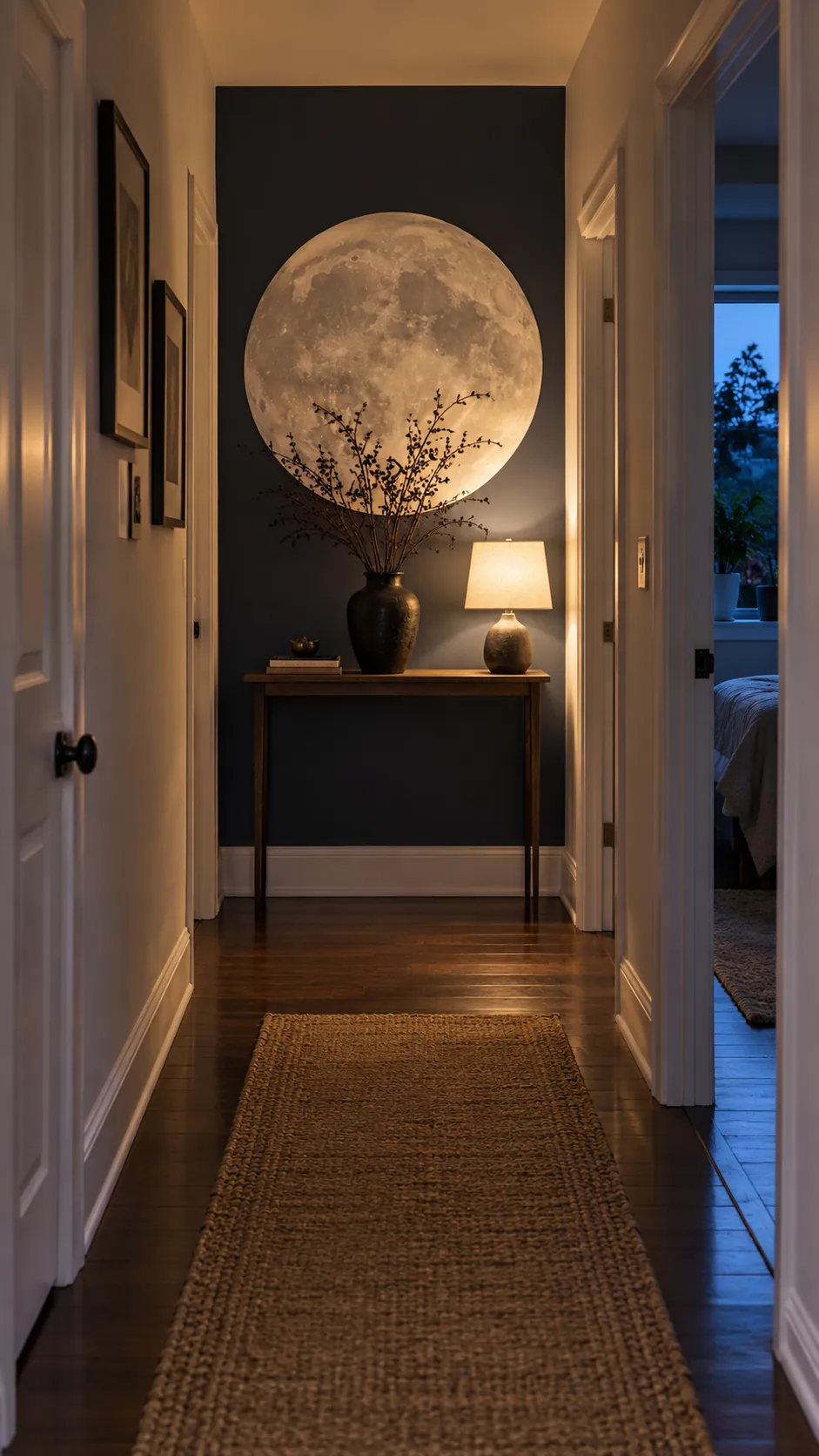
A moon above the end table
A matte paper moon centered over an end table can give the hallway a clear destination. Make it large enough to read from the entrance but leave the surrounding wall quiet. A small dark vase underneath repeats the night sky shape without becoming another theme. This works especially well when a short hallway has only one useful wall.
Stars along the upper wall
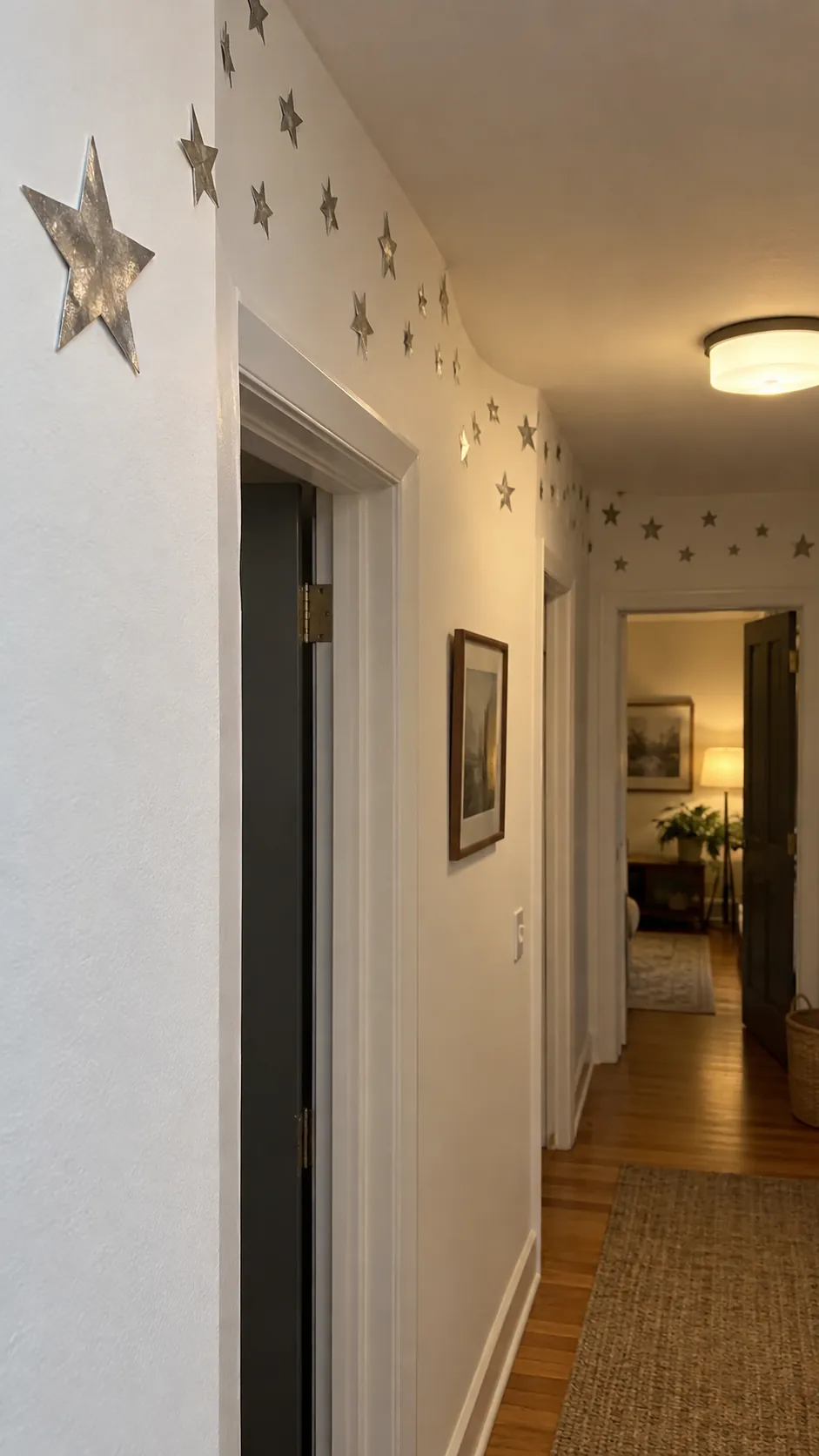
Scatter a modest trail of removable metallic stars near the ceiling, leaving the lower wall calm. Vary their spacing so the eye follows the turn of the hallway. Choose a soft pewter finish if the existing paint is warm, since mirror bright stickers can look harsh under ceiling lamps. Remove a test star after a day to check the wall finish.
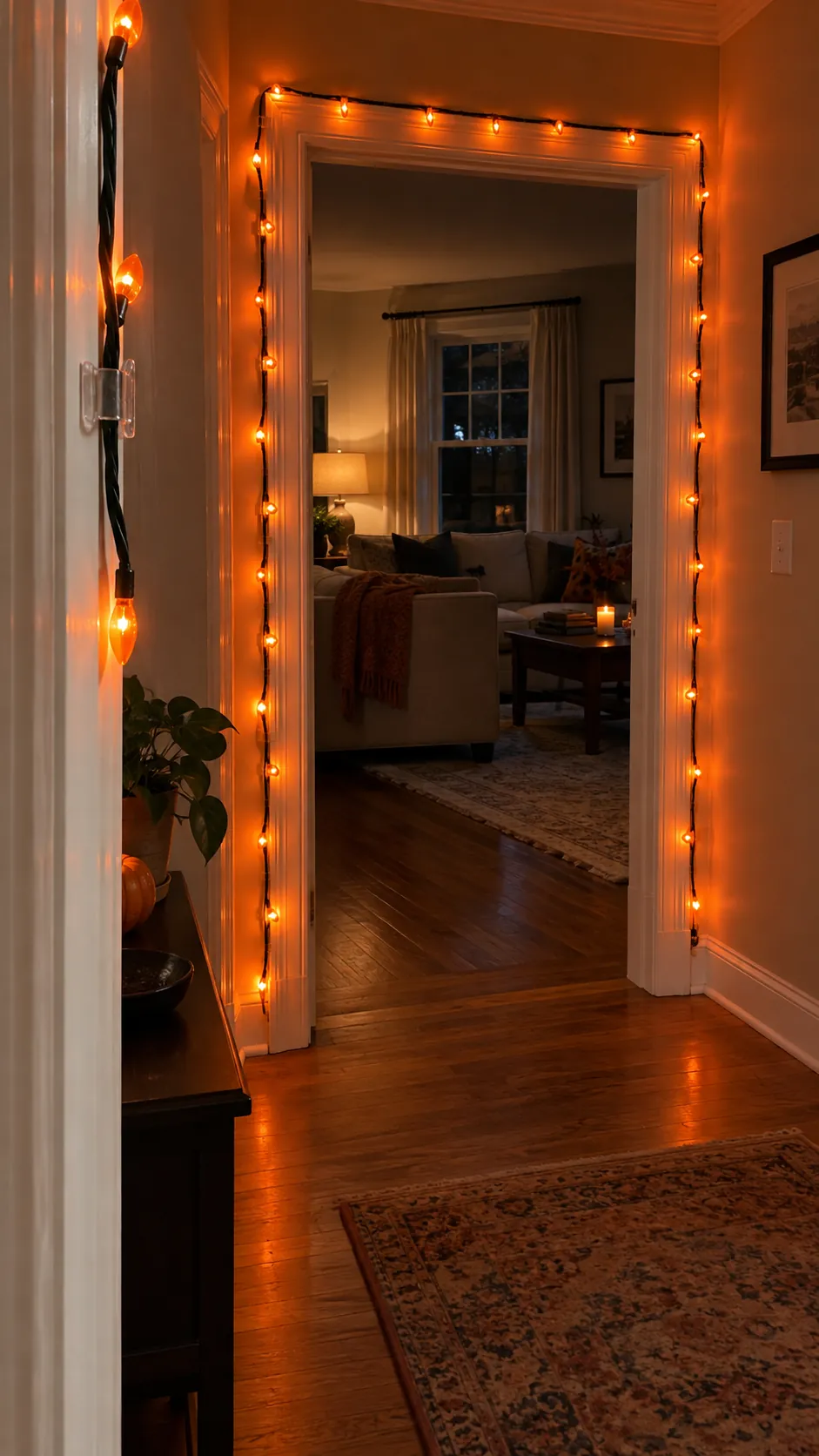
Orange light outlining a doorway
A short strand of enclosed orange lights can trace the outside of a doorway and make the room beyond inviting. Attach the cord neatly along the frame with suitable clips, keeping plugs and wires off the floor. Avoid wrapping the lights in fabric or paper. The ordinary hall light should still be bright enough to see faces and steps.
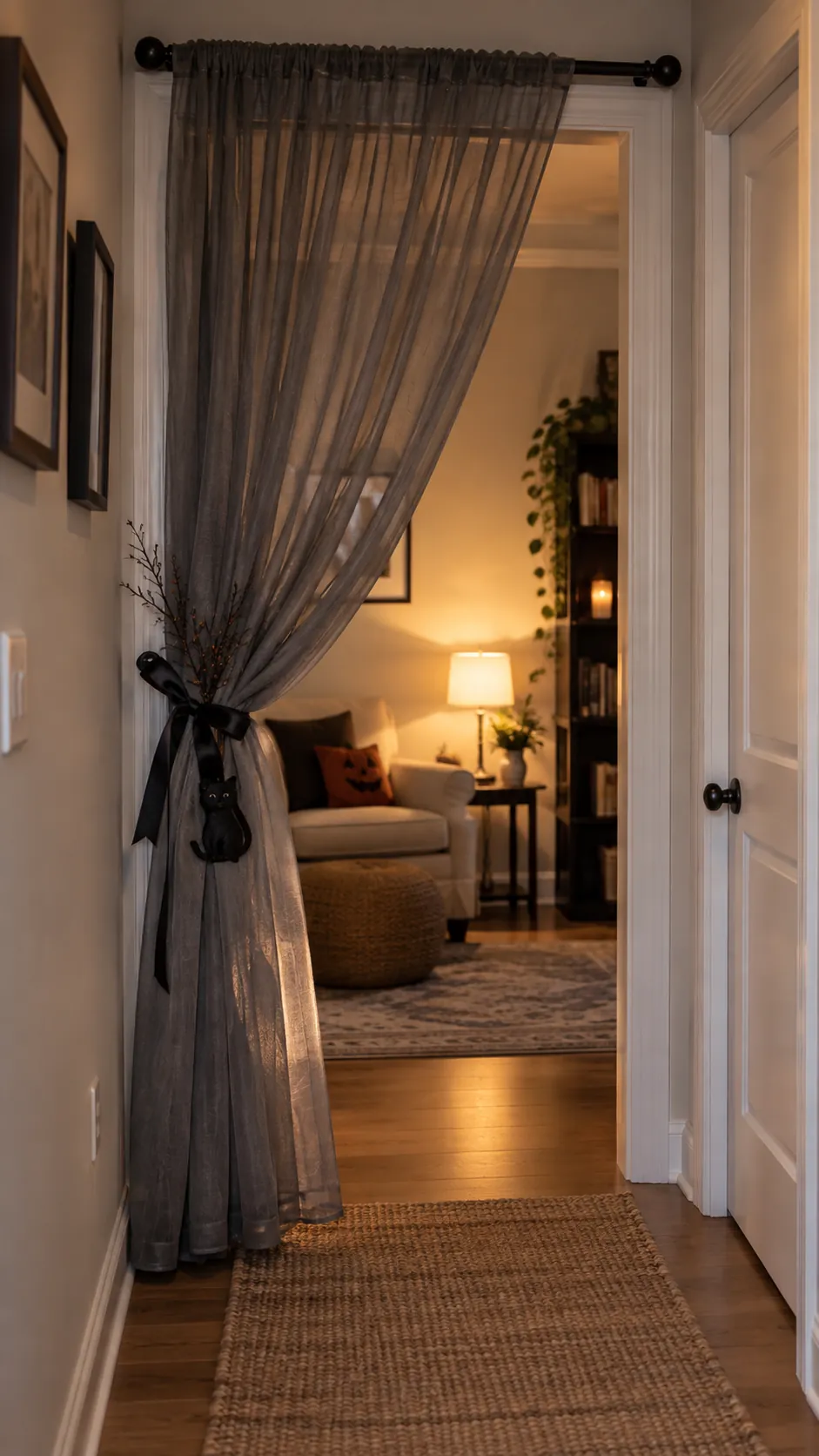
A sheer curtain at the hallway end
If the hall opens to a room, a sheer panel fixed at the far side can create a soft reveal. Gather the panel back so the doorway keeps its full usable opening. A lamp in the room beyond will show the folds without turning the hall dark. This is a better place for theatrical fabric than a narrow cross passage.
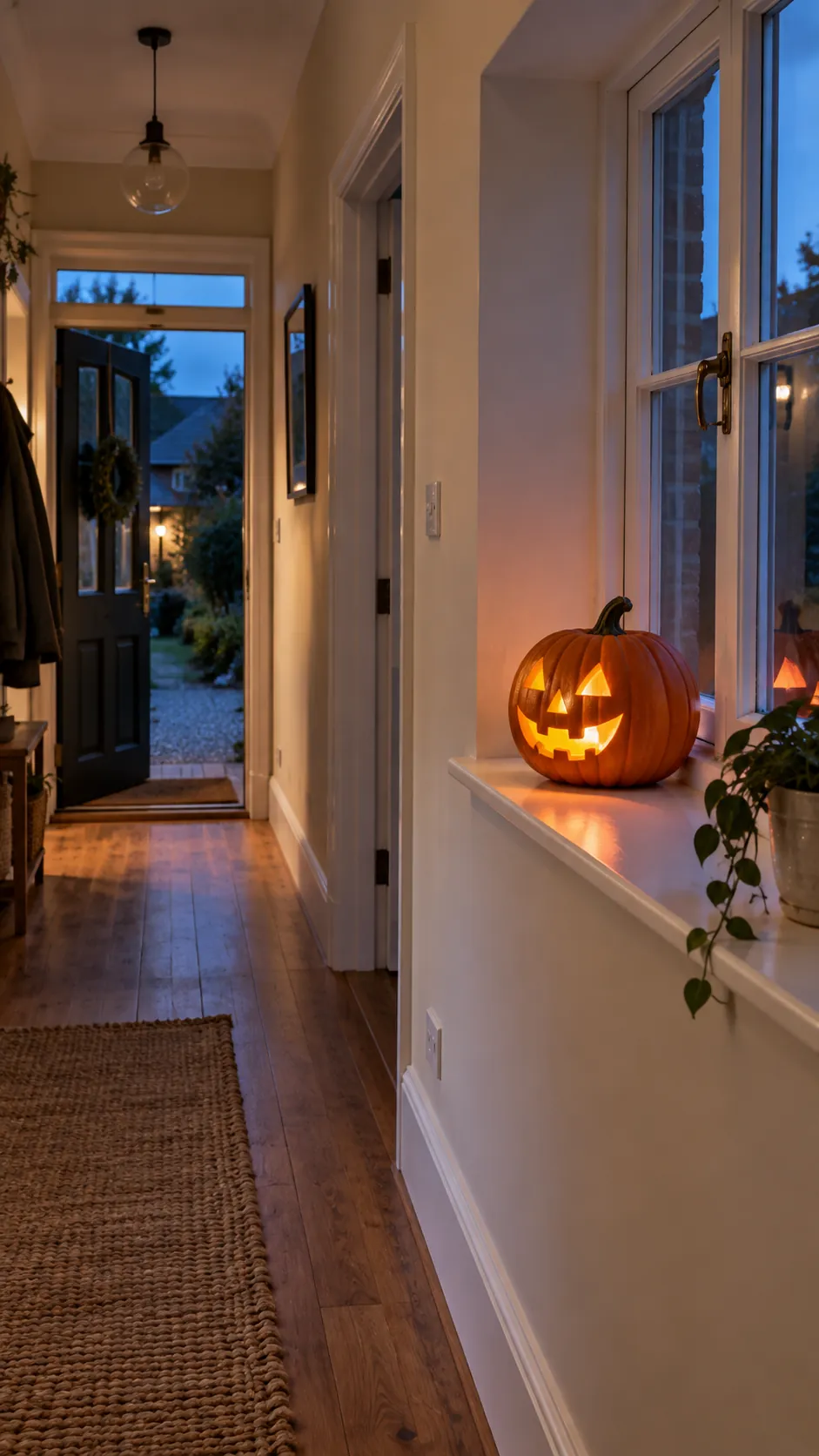
A glowing pumpkin on the window ledge
A single carved style pumpkin with a battery light can glow from an existing deep window ledge. Face it toward the hallway and leave the glass latch accessible. Use an artificial pumpkin if the ledge is warm or if the display needs to last several weeks. The reflection doubles the effect without adding another object to the floor.
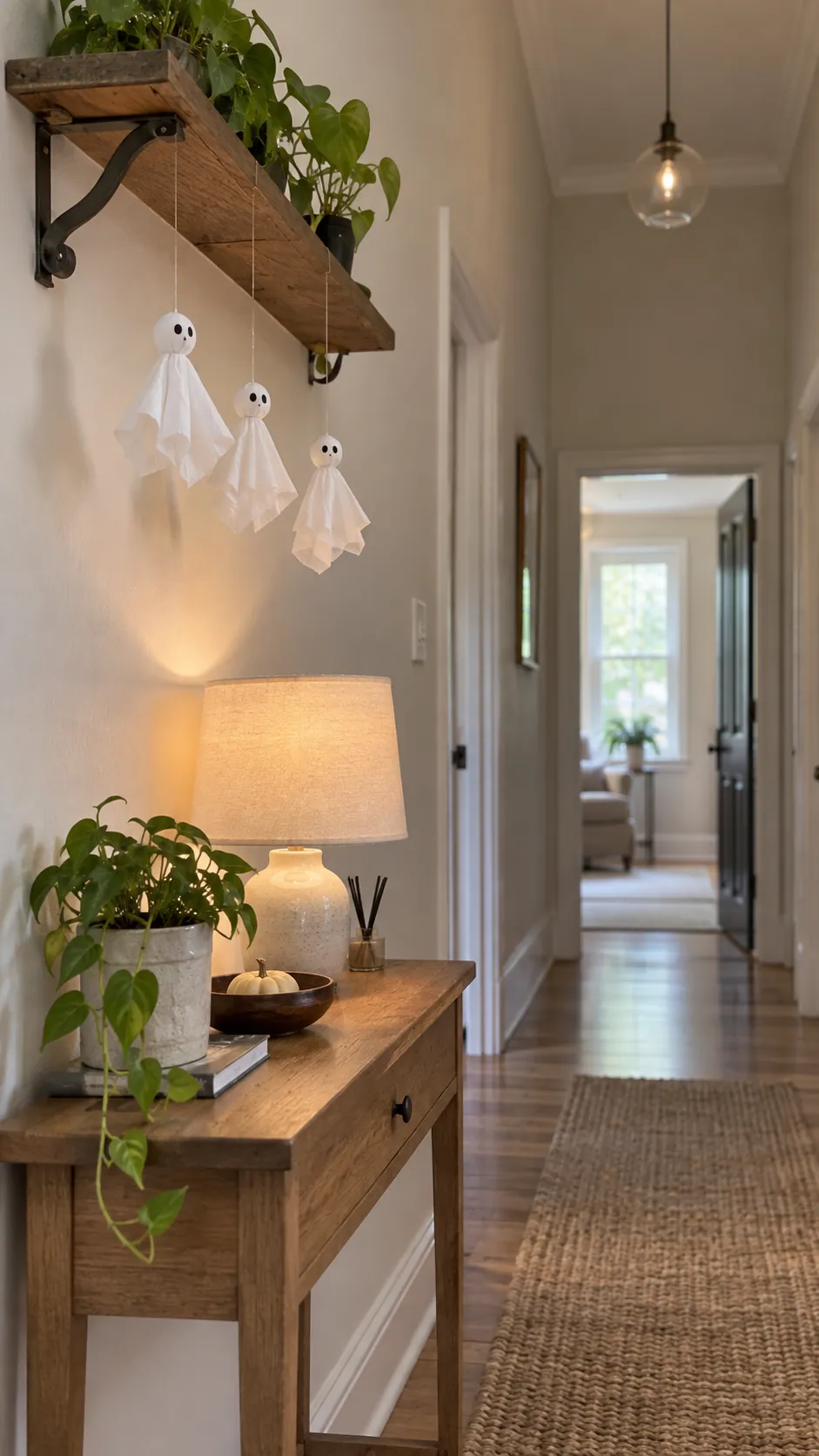
Tissue ghosts over a small table
Three little tissue ghosts hanging over a hall table feel light and handmade. Shape each around a paper ball and draw different simple expressions with a dark pen. Use short lines so no face brushes a visitor or the table lamp. Keep the table surface mostly clear for the things the household actually needs.
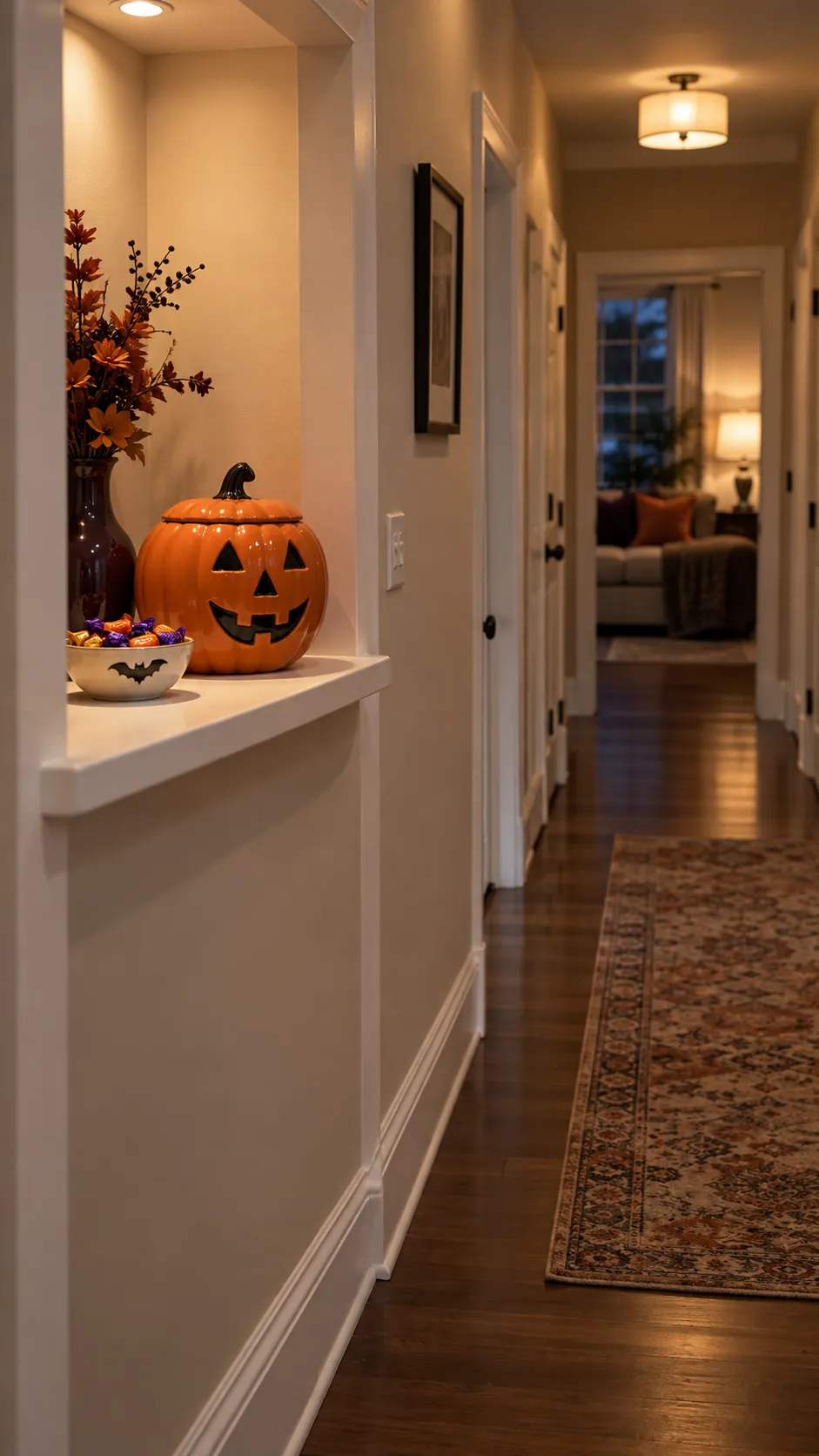
A treat station in an alcove
A recessed alcove can hold sweets for a Halloween house party without turning the corridor into a queue. Put a covered bowl on a stable shelf and leave a small space for discarded wrappers. Guests should be able to step aside to choose a treat while others pass. If the hall has no alcove, move the station into the next room instead.
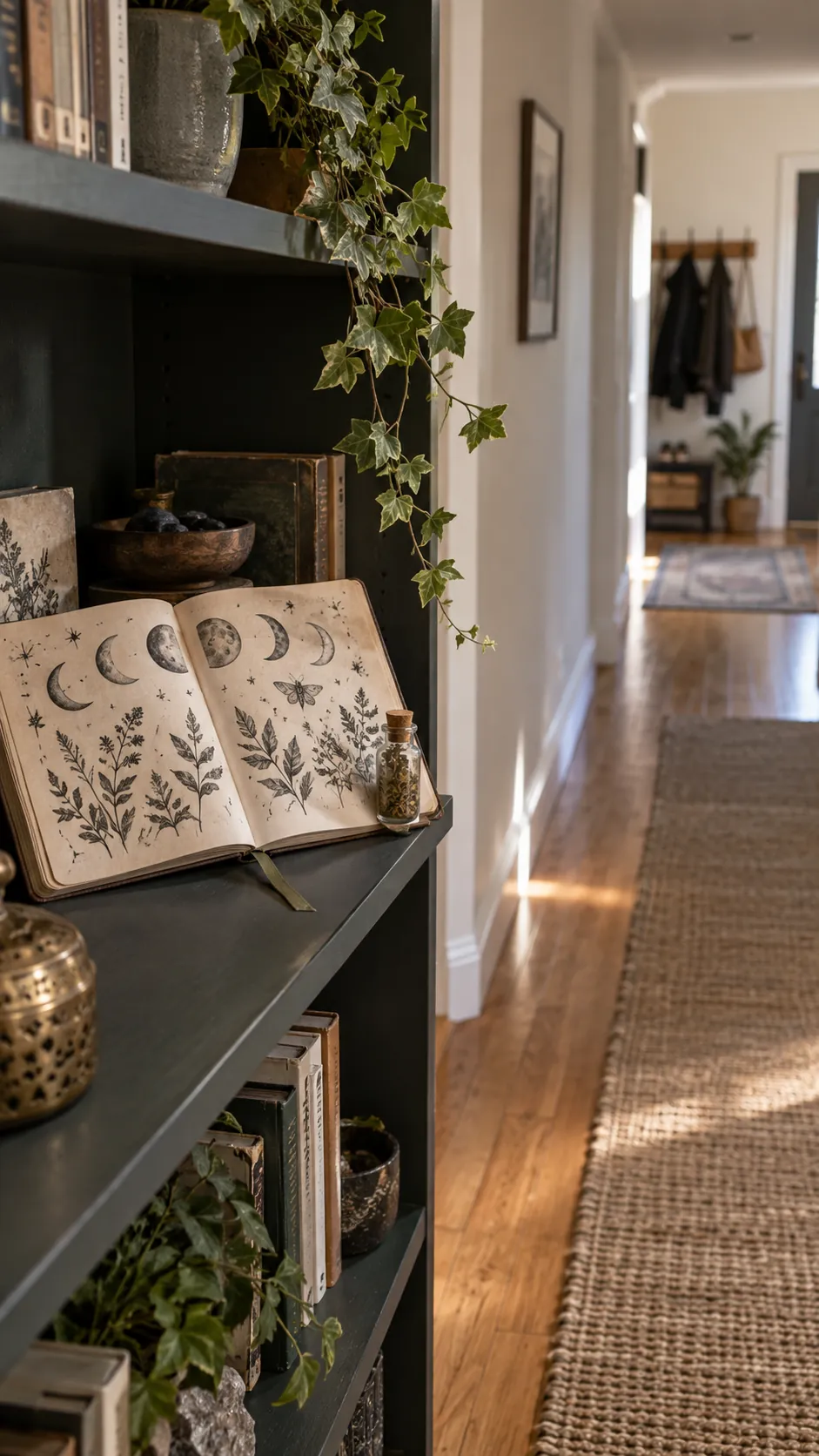
An illustrated spellbook on an existing shelf
An open book with hand drawn moons and botanical sketches can suggest a witch’s study on an existing shelf. Use a spare notebook rather than an old book that could be damaged by adhesive. A paper bookmark and one tiny bottle finish the scene. Keep the display low enough to see but well clear of doors and shoulders.
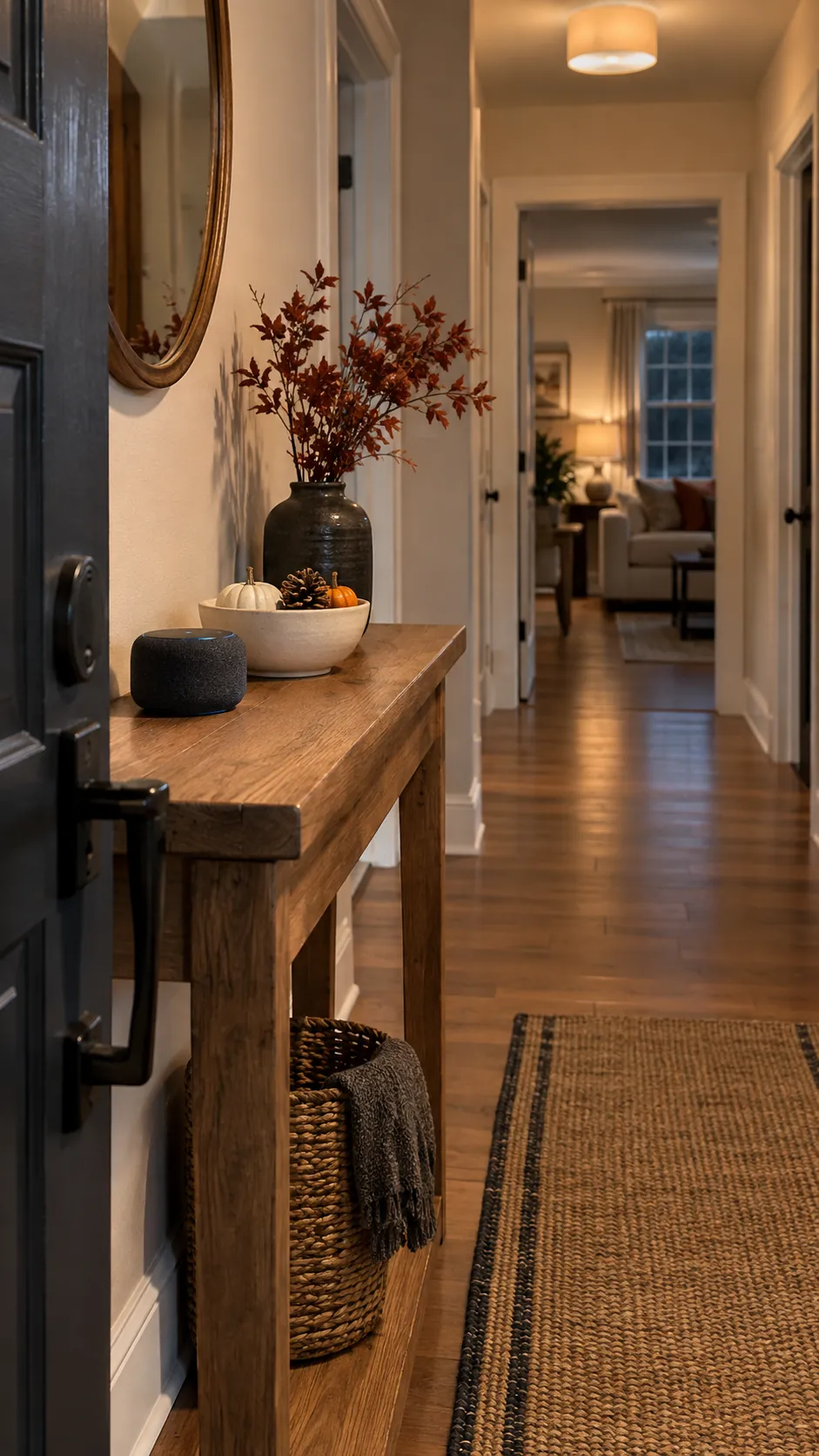
A quiet sound cue at the entrance
A small speaker can play a soft creak or rustle when guests first enter the hall. Hide it on a shelf with the volume low enough that conversation and door sounds remain clear. Avoid jump scares in a tight passage where someone might step backward. The most convincing effect is brief, then the hallway returns to calm.
A shadow projected onto the end wall
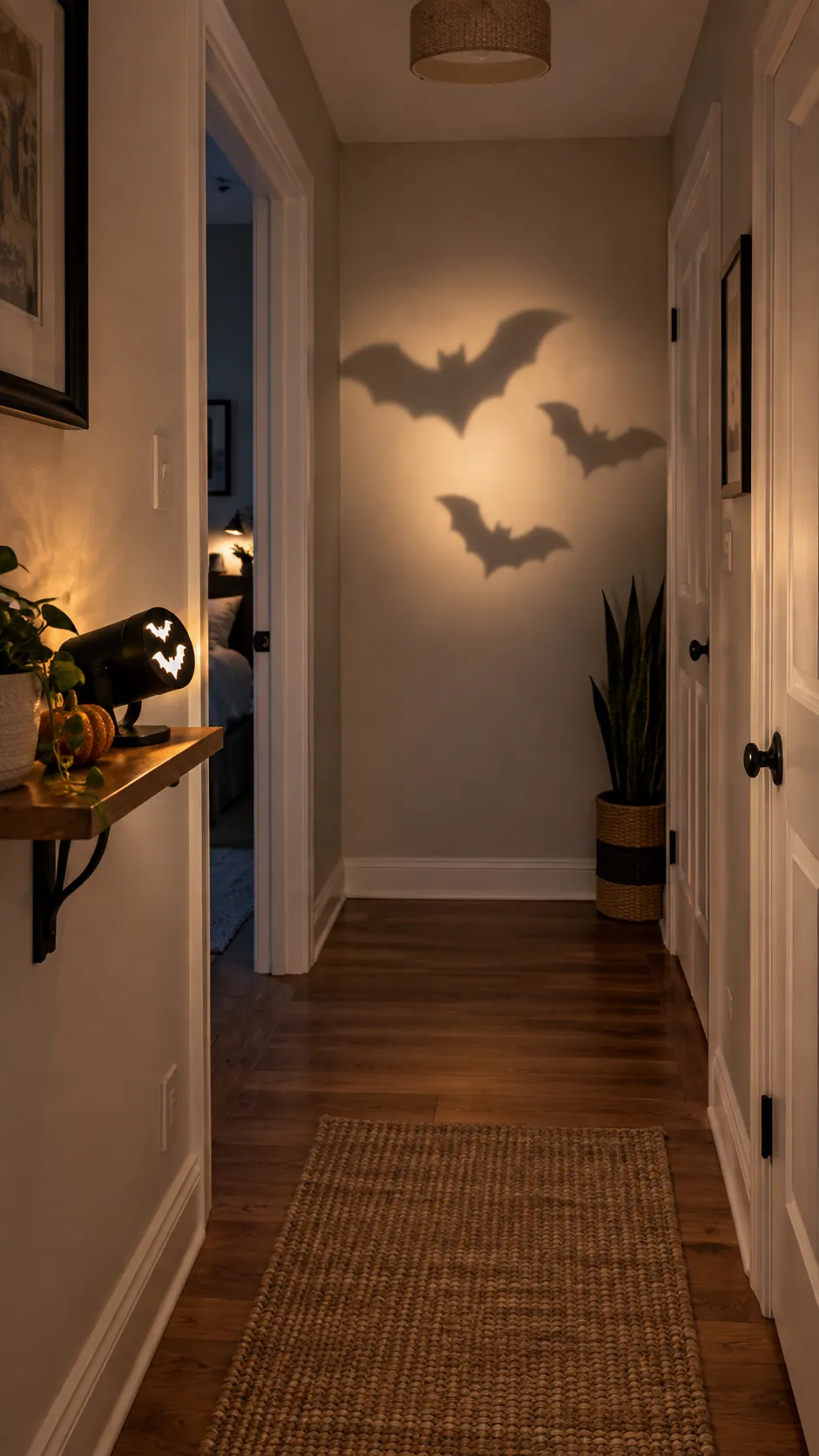
A compact battery projector can cast slow bat shadows onto a plain wall at the far end of the hall. Place it on a stable shelf and test the image while people walk through the route. Keep the projection gentle rather than flashing, which can be unpleasant for guests. The wall becomes active without adding bulky props.
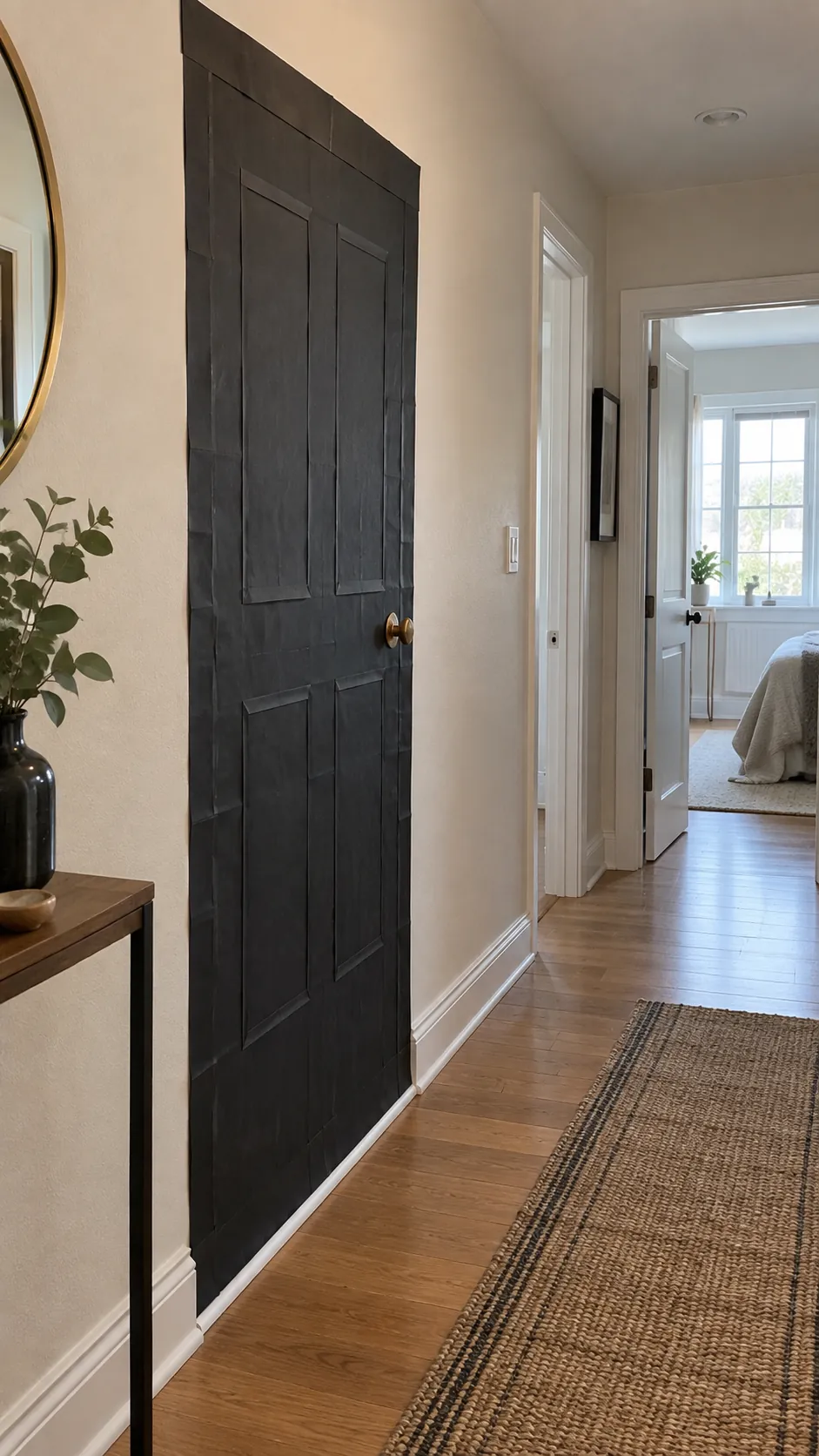
A false door made from removable paper
On a spare wall, narrow paper panels can suggest a mysterious closed door. Use a dark rectangle, a small paper handle, and a simple top molding shape. Make the illusion shallow enough that no one mistakes it for the real exit in low light. This idea adds a story to a blank wall while leaving the floor untouched.
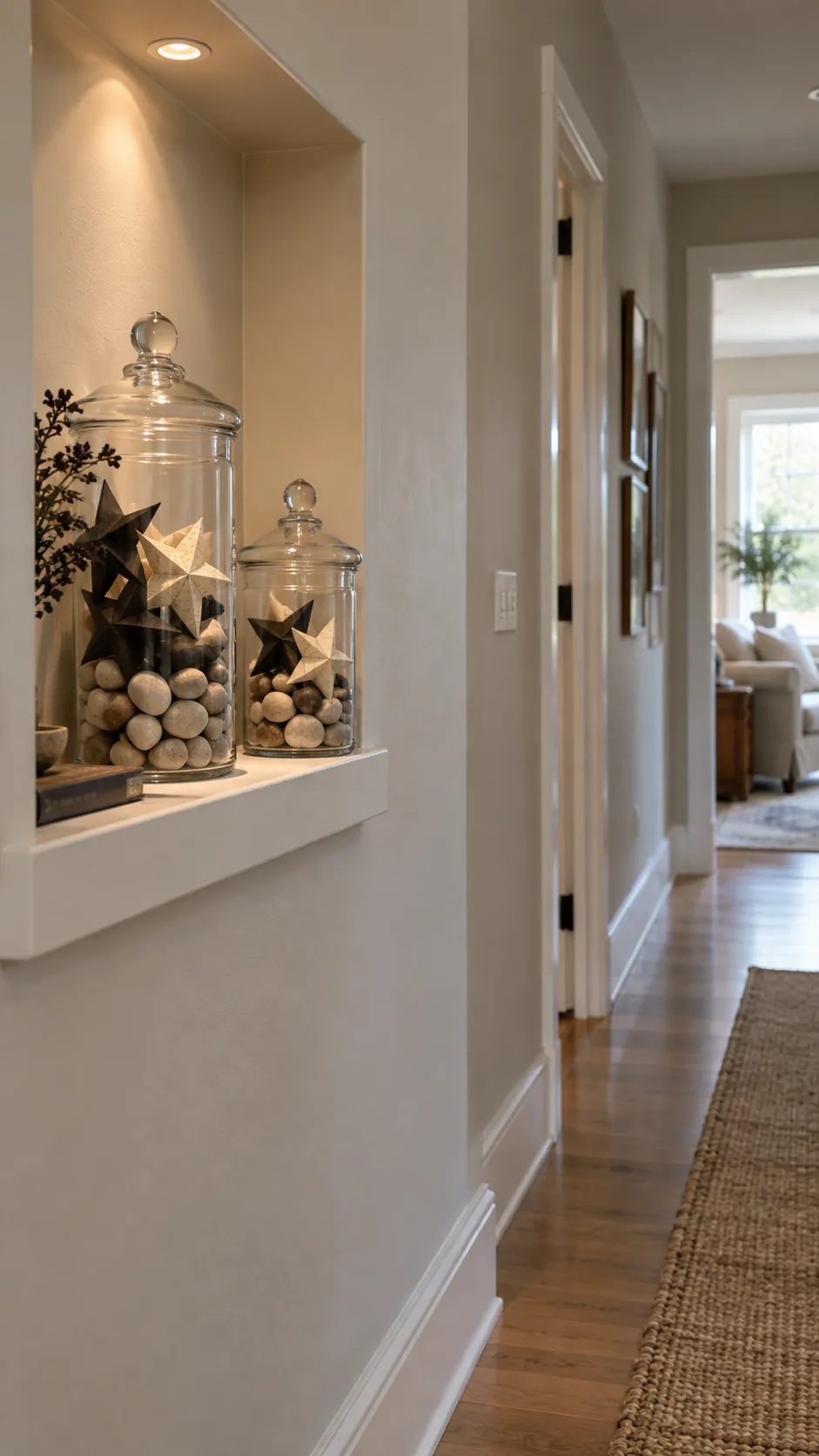
Apothecary jars in a wall niche
An existing niche can become a miniature cabinet of curiosities with two lidded jars and a dried stem. Fill one jar with paper stars and another with clean pebbles, rather than liquids near a busy walkway. Give the objects breathing room so they read as a collection. The setup is easy to lift out when the season ends.
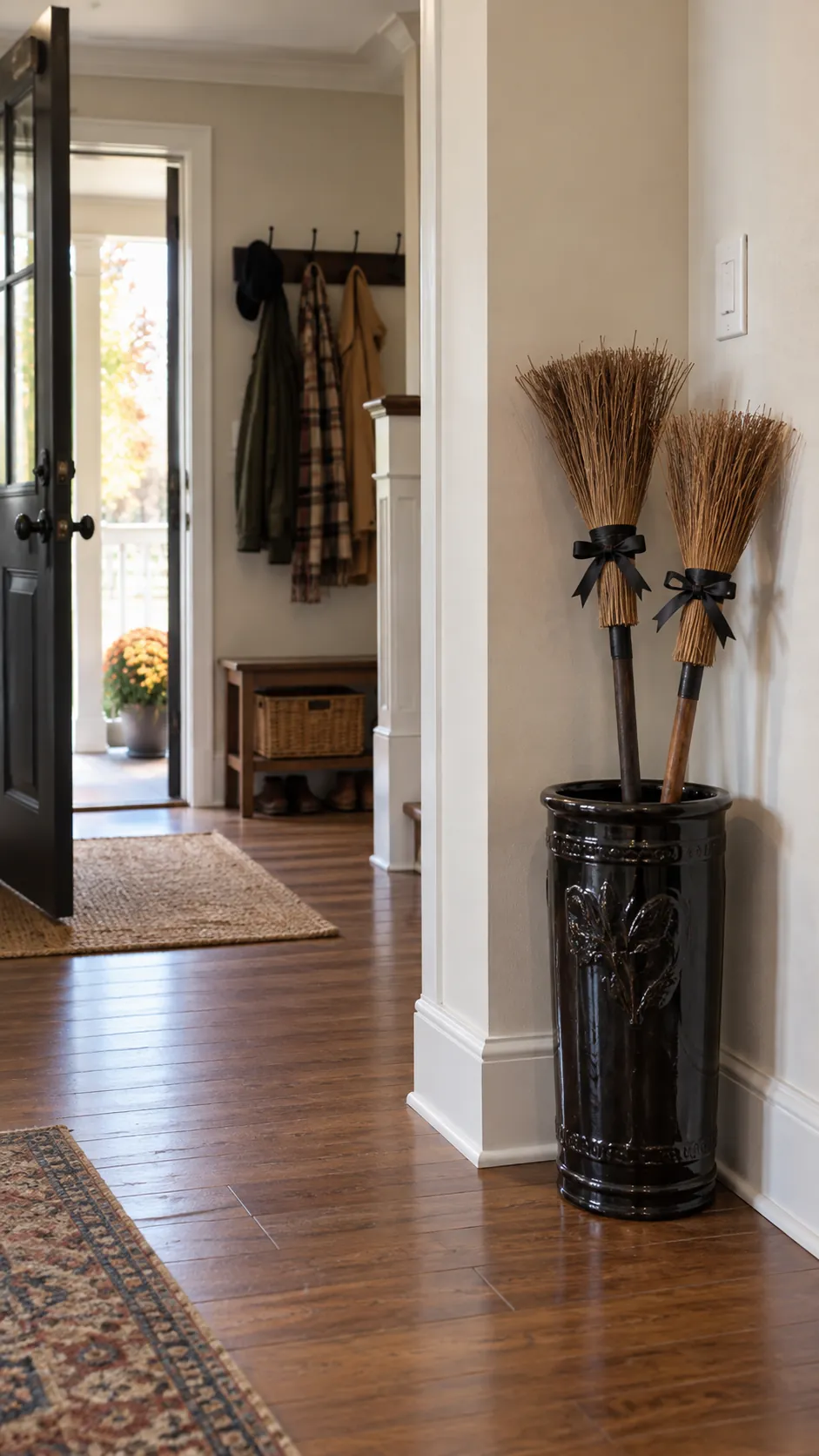
Brooms gathered in a corner stand
A pair of small decorative brooms can stand in a heavy umbrella holder at a wide hall corner. Trim or tie any loose bristles so they cannot snag clothing. Keep the holder behind the door swing and away from the main line of travel. It hints at a witch’s arrival using a storage spot the room already understands.
A cobweb framing the console mirror
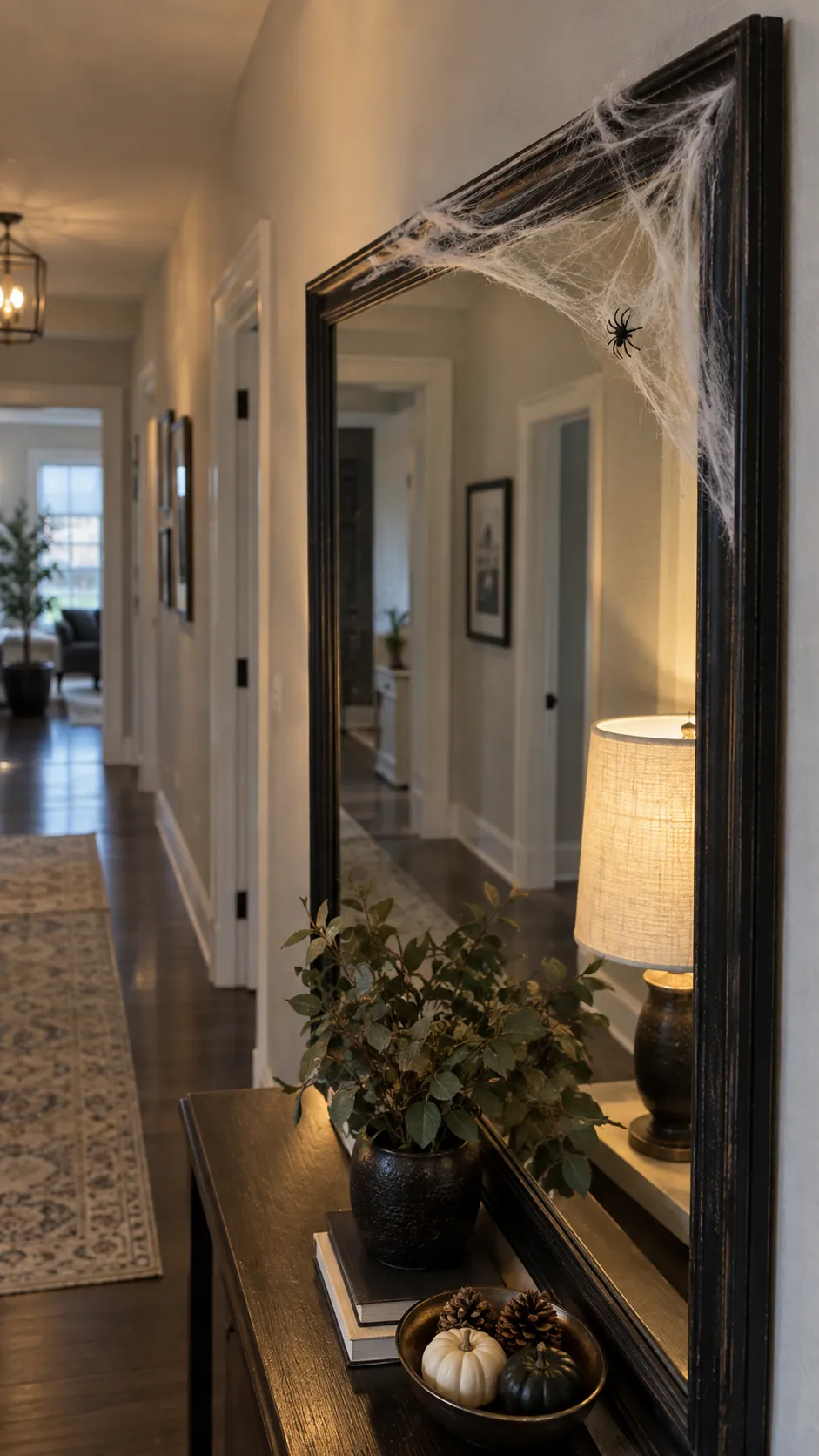
Stretch a little synthetic web across only one upper corner of a firmly mounted console mirror. Tuck a small spider where the strands meet and leave the reflective center useful. The dark web is most visible against a pale wall or warm lamp. Keep fibers away from the lamp shade and remove every strand during cleanup.
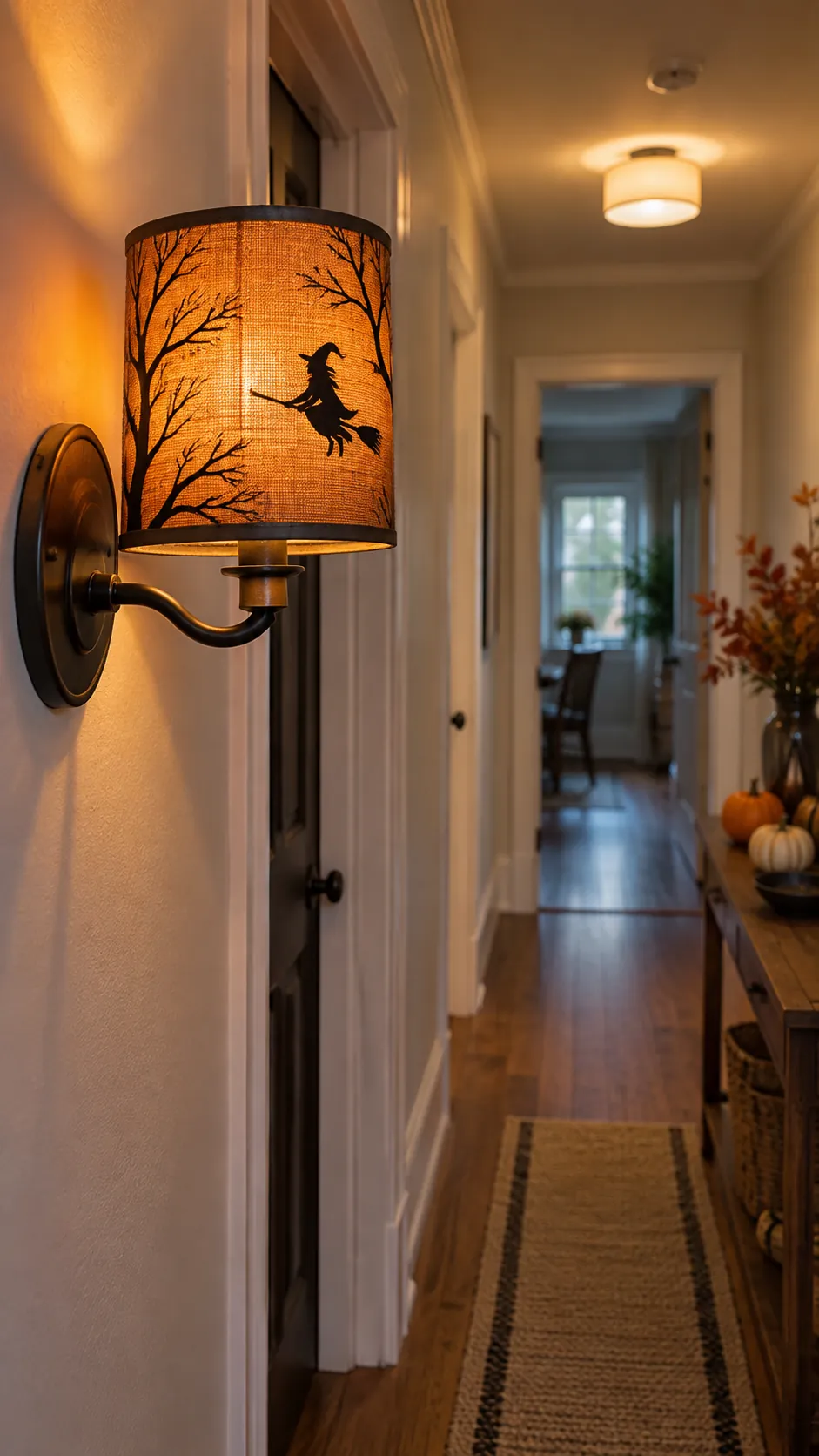
An amber shade on the hall lamp
Changing the color of a lamp shade can shift the entire hallway without making it too dark. Choose a translucent amber shade sized for the actual fixture and leave the bulb and ventilation as designed. Pair it with ordinary ceiling light during arrivals and departures. The warm wash can unify pumpkins, wood, and black paper details.
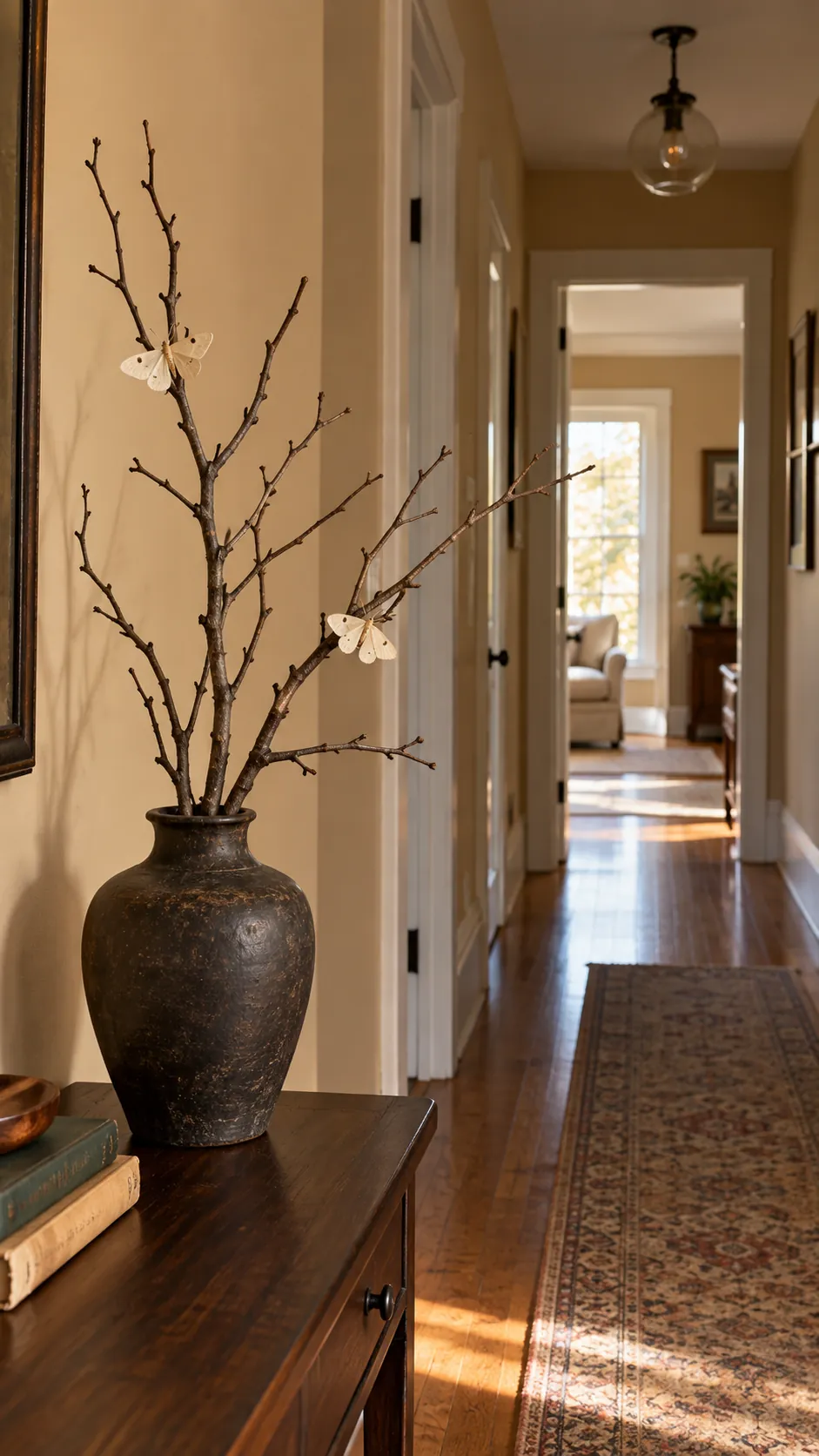
Bare branches in a weighted vase
A few bare branches in a weighty vase make a sculptural silhouette on a broad end table. Cut the stems to stay clear of shoulders and give them just one or two small paper moths. Put felt beneath the vase if the table is easily marked. Unlike a freestanding branch on the floor, the arrangement stays contained.
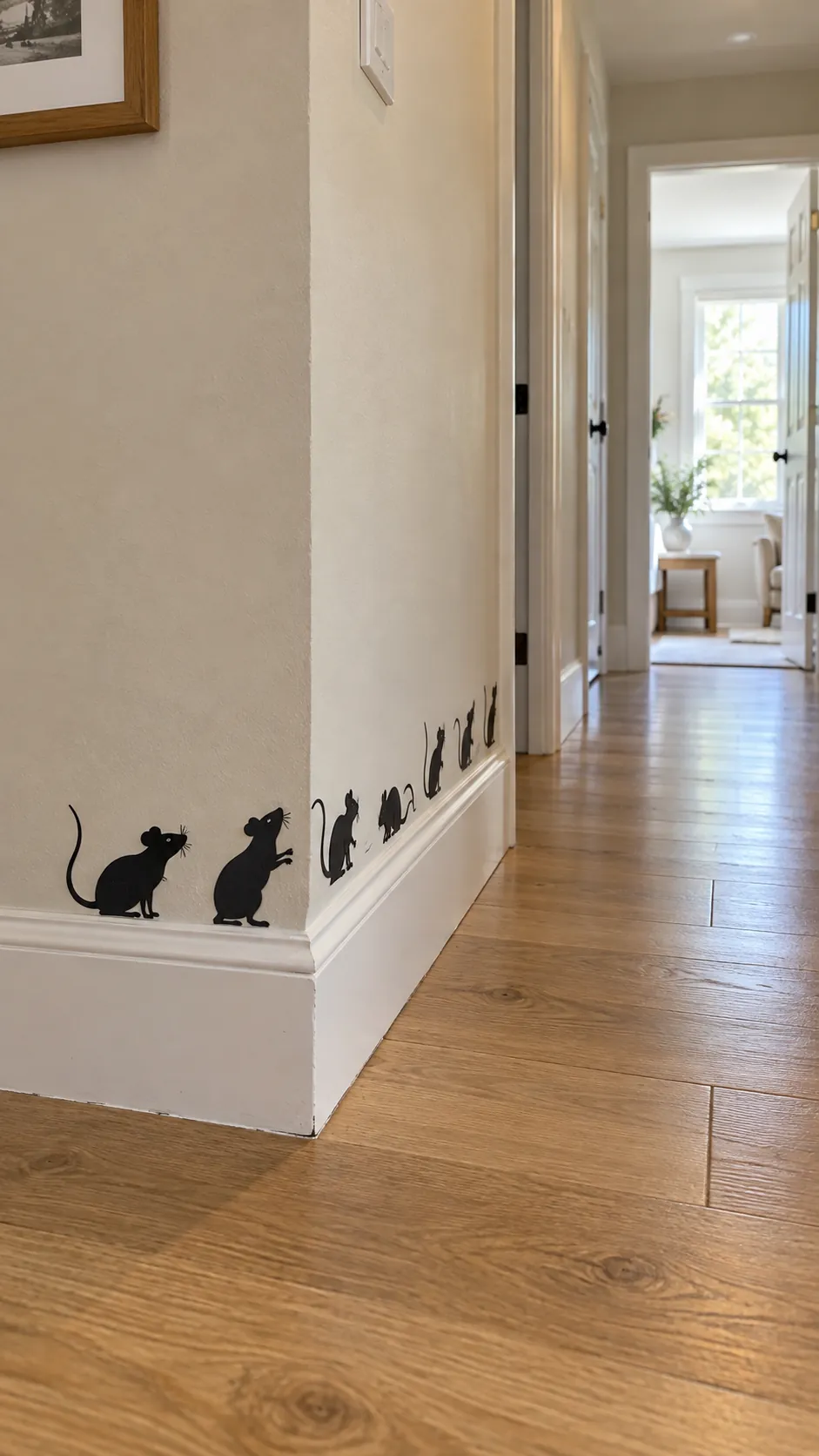
Paper mice above the baseboard
Tiny black paper mice appear to scurry along the wall when placed just above the baseboard. Group them near a corner and vary their body angles for a believable trail. Use removable adhesive and avoid placing pieces where a vacuum will catch them. The joke is easiest to notice in a well lit hall, not a dark one.
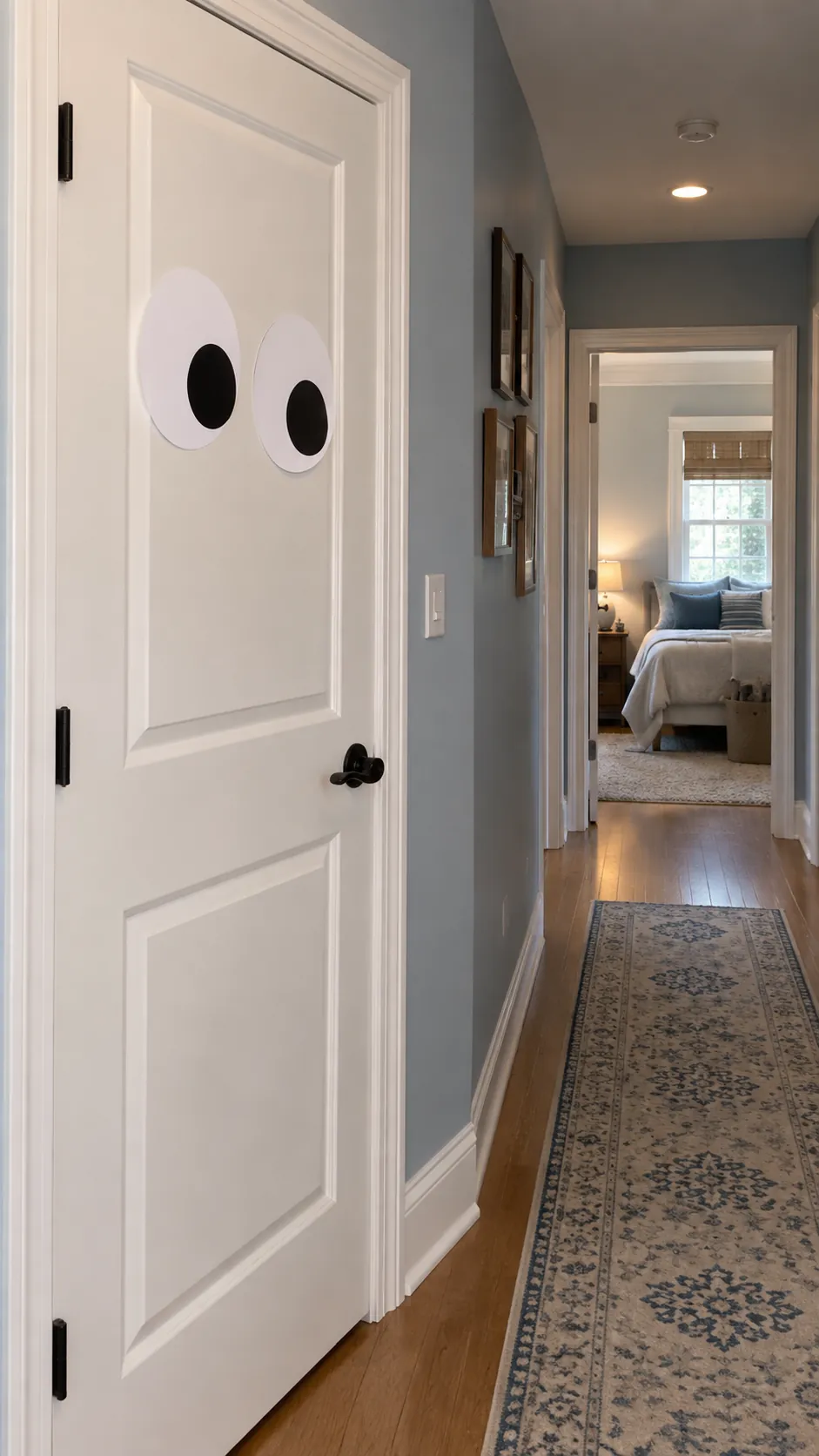
Monster eyes on the closet door
A pair of oversized paper eyes can turn a hallway closet into a friendly monster. Place the pupils slightly off center as if the closet is watching the arrivals. Keep the handle, latch, and any safety signage uncovered. This is a quick family project that does not ask children to walk past a frightening figure.
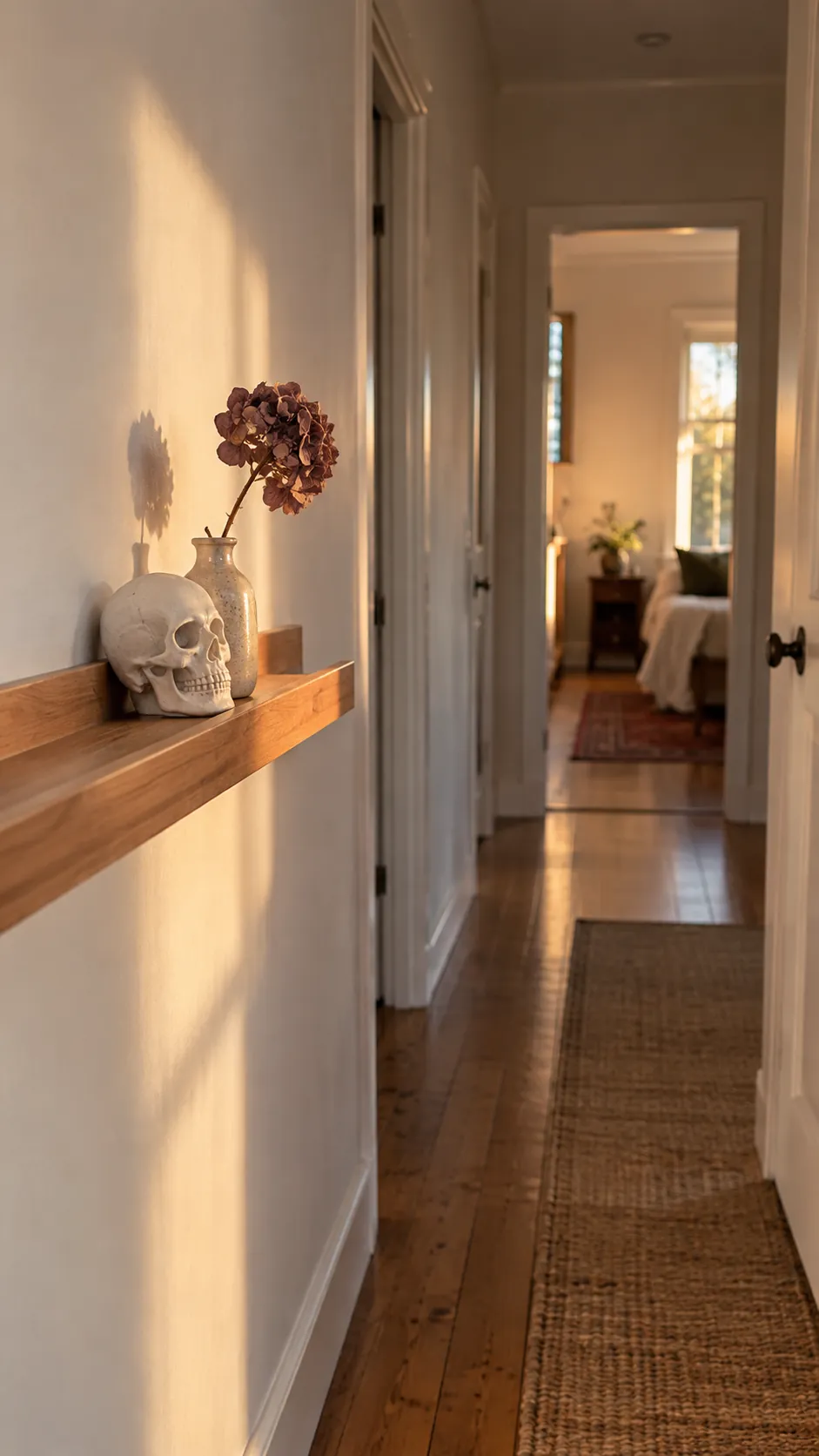
A narrow skull display on a ledge
One small skull on a picture ledge can be enough for a restrained haunted study look. Set it beside a single dried flower and leave the rest of the ledge empty. Secure the object if the ledge is shallow or the hall gets crowded. The sparse arrangement reads from a distance and is easy to dust.
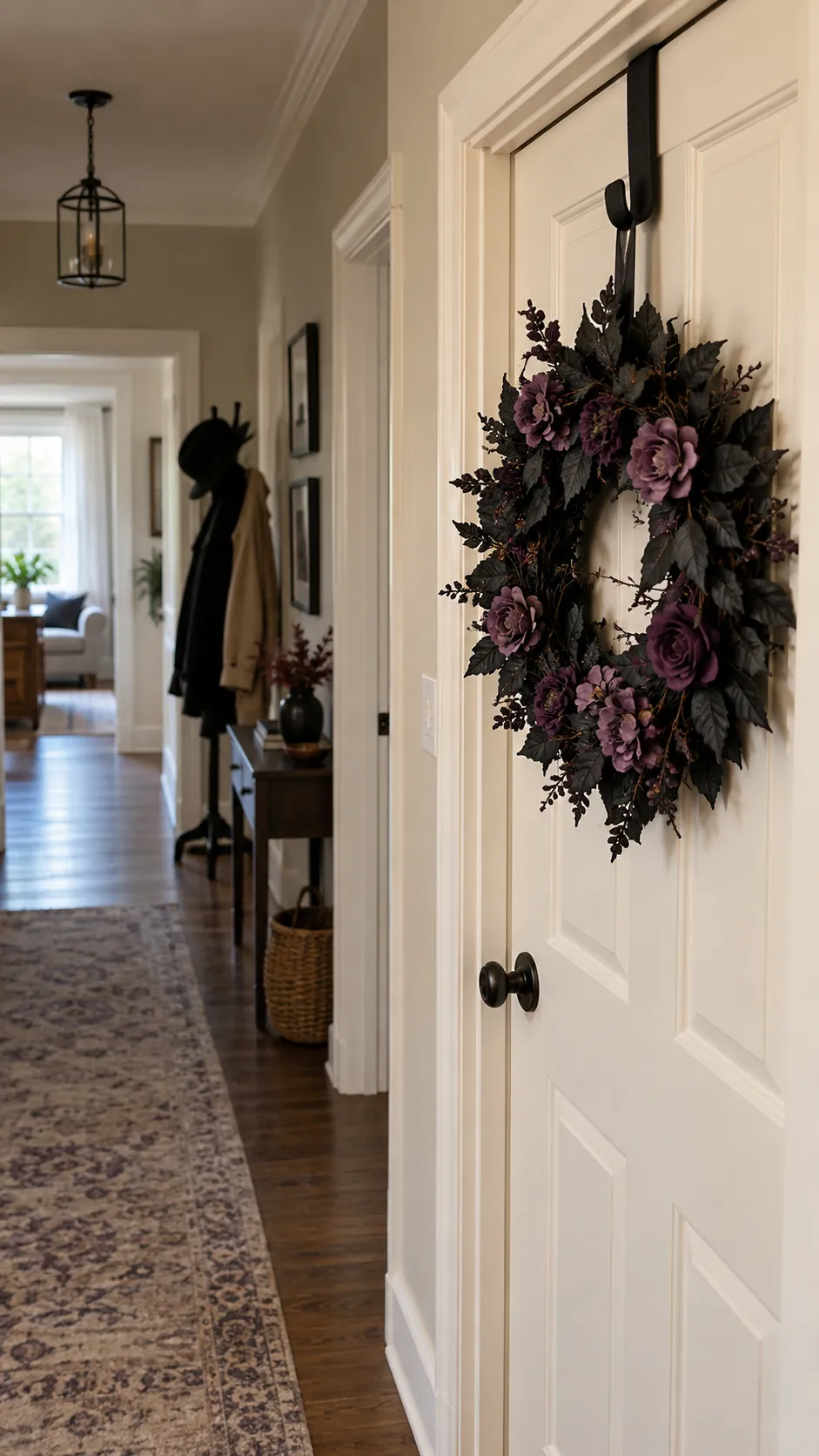
A dark floral wreath on the inner door
A light wreath of black leaves and muted purple flowers can hang on the inner hall door. Use a padded over door hook that does not stop the door from latching. Keep the wreath compact enough that it clears the surrounding wall and nearby coats. This gives visitors a final Halloween detail as they move into the next room.
A photo corner in a recessed nook
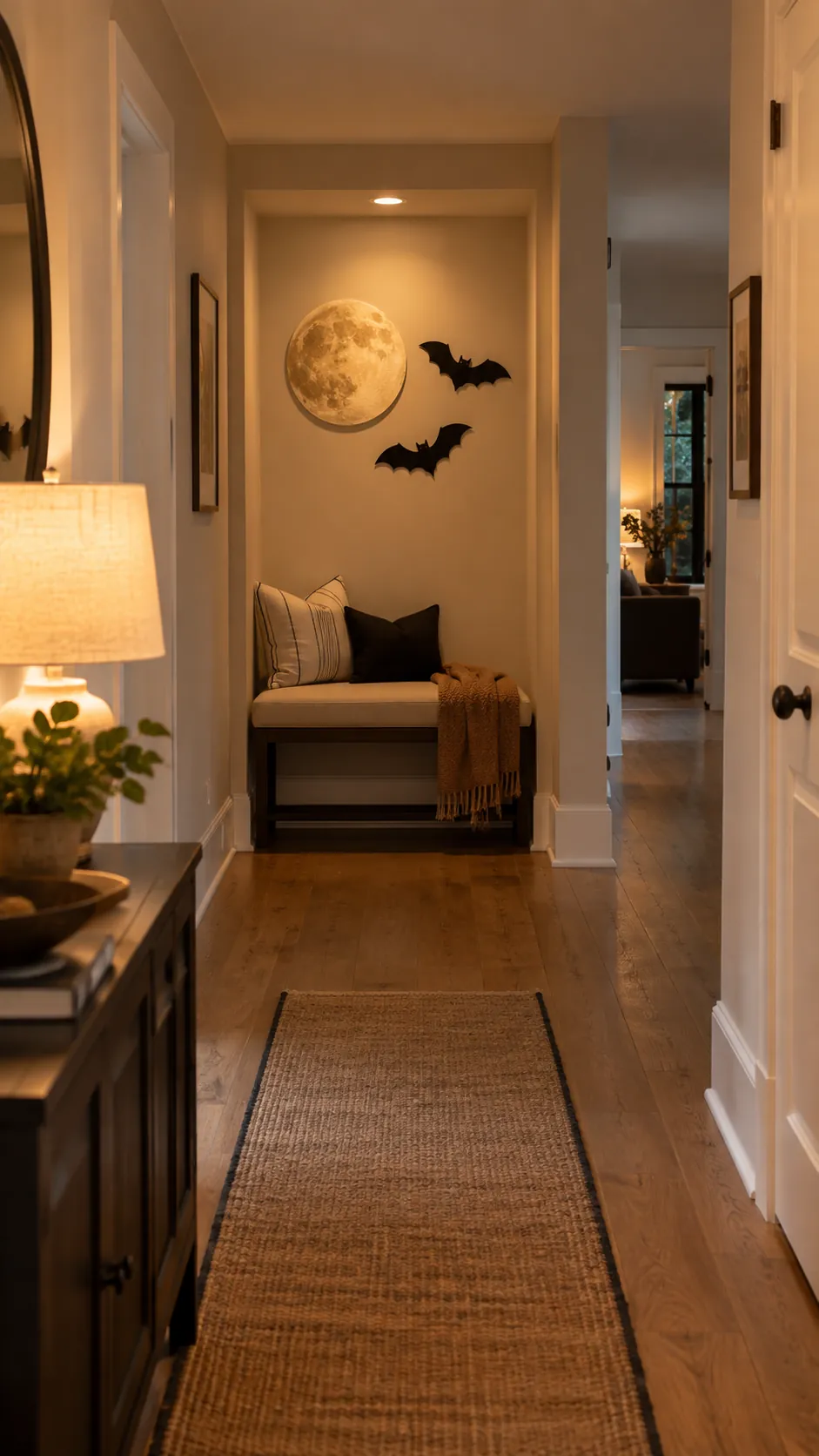
A recessed nook near the end of the hallway can become a small photo spot with a paper moon and two bats. Mark the standing position inside the nook rather than in the traffic lane. A nearby lamp provides better faces than a dark theatrical effect. Guests can pause for a picture while everyone else continues through the hall.