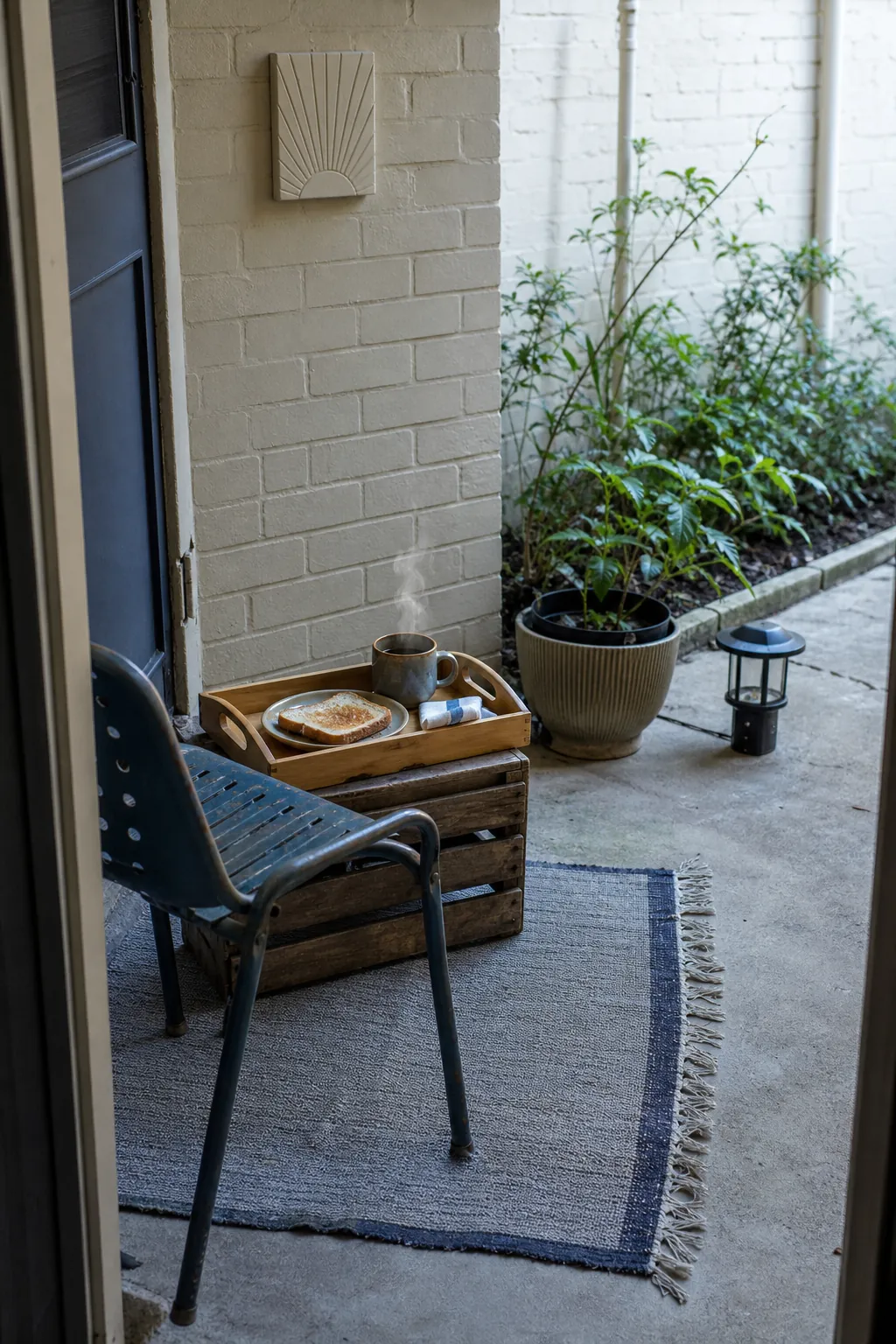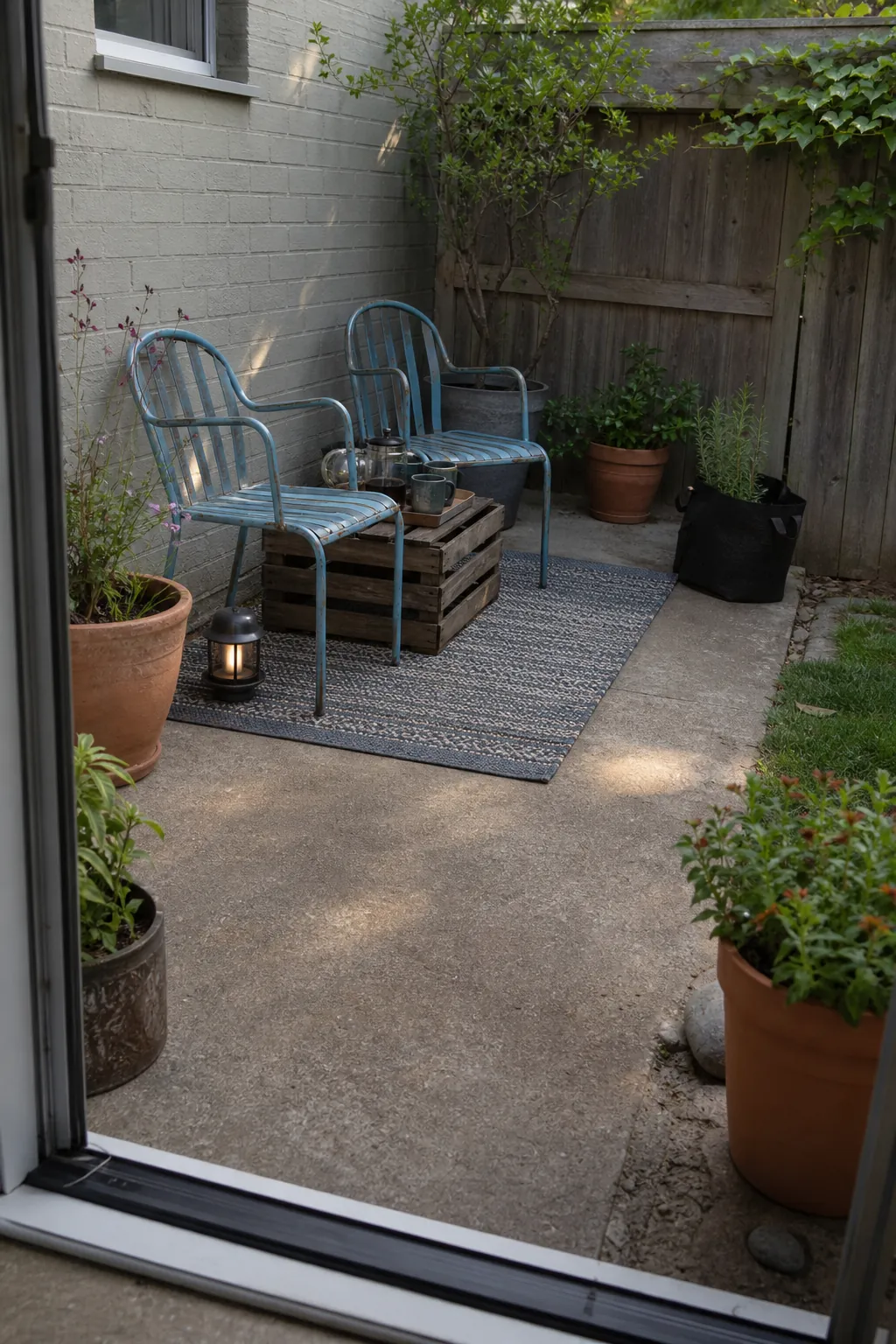
A budget patio starts by spending in the right order. Clean and measure first, reuse what can survive outdoors, and pay for the invisible basics—stable feet, drainage, suitable soil, and a proper base—before decorative extras. These 17 small patio ideas on a budget make a compact outdoor space better without turning “cheap” into a repair project.
Choose One Job Before You Shop
Decide whether the patio is mainly for coffee, meals, reading, gardening, or two-person conversation. Measure the furniture zone and preserve the door route. A short shopping list built around one daily use prevents low-cost impulse buys from becoming expensive clutter.
Set a total cap, then reserve part of it for delivery, hardware, potting mix, and weatherproofing. A free chair that needs new cushions and a truck is not always a bargain.
Deep-Clean the Surface for an Instant Reset
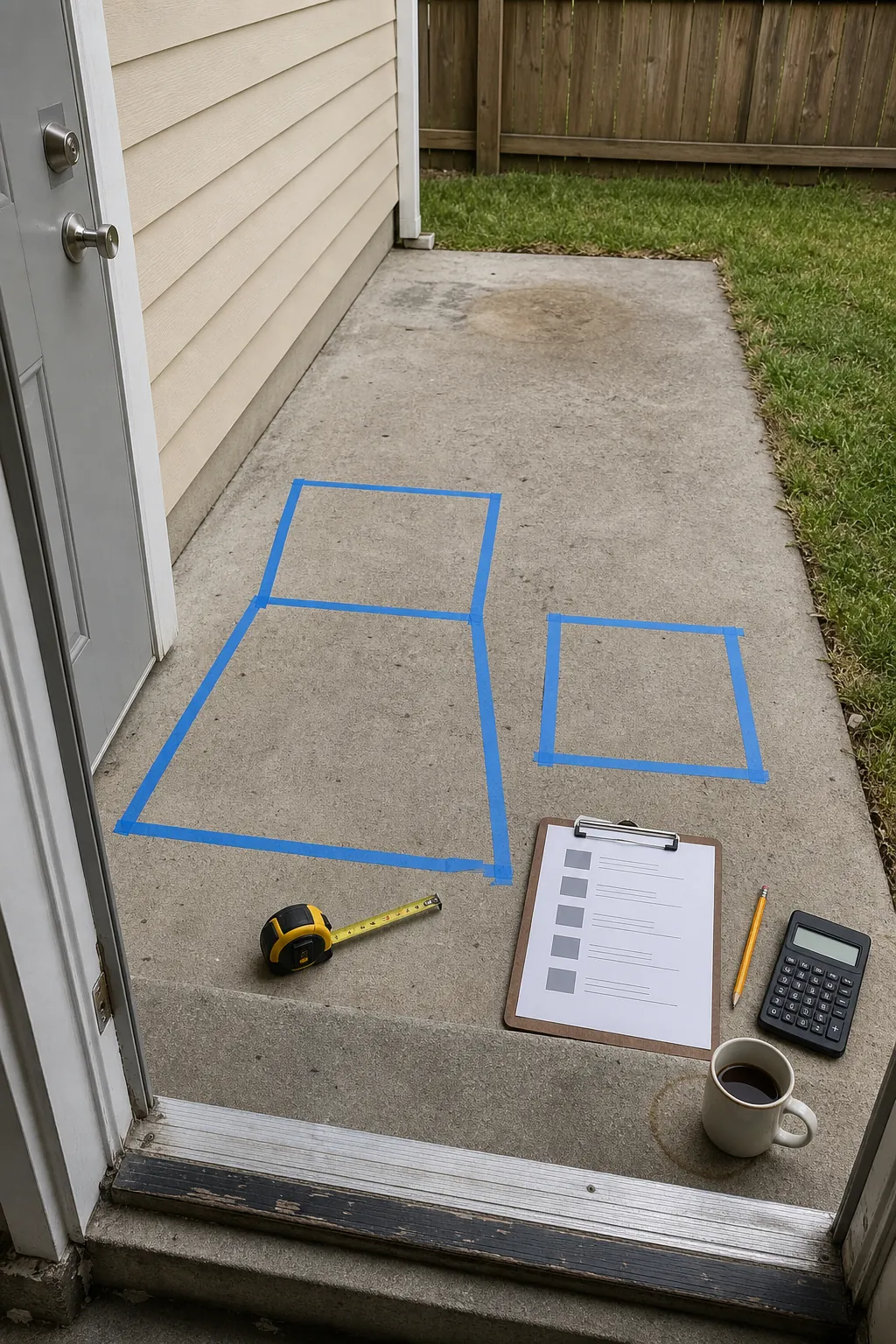
Sweep corners, pull weeds from joints, wash furniture, and clean mildew using products safe for the actual surface. Often the patio looks unfinished because dirt has blurred every edge, not because it needs new materials.
Test cleaners in a hidden spot and direct runoff away from plants and storm drains as required locally. Tighten loose hardware while everything is empty, then let surfaces dry before returning rugs or cushions.
Rearrange Existing Furniture Into One Corner
Before replacing anything, push seating toward the least useful corner and test a diagonal view. Removing one redundant table can make a bigger difference than adding several decorations.
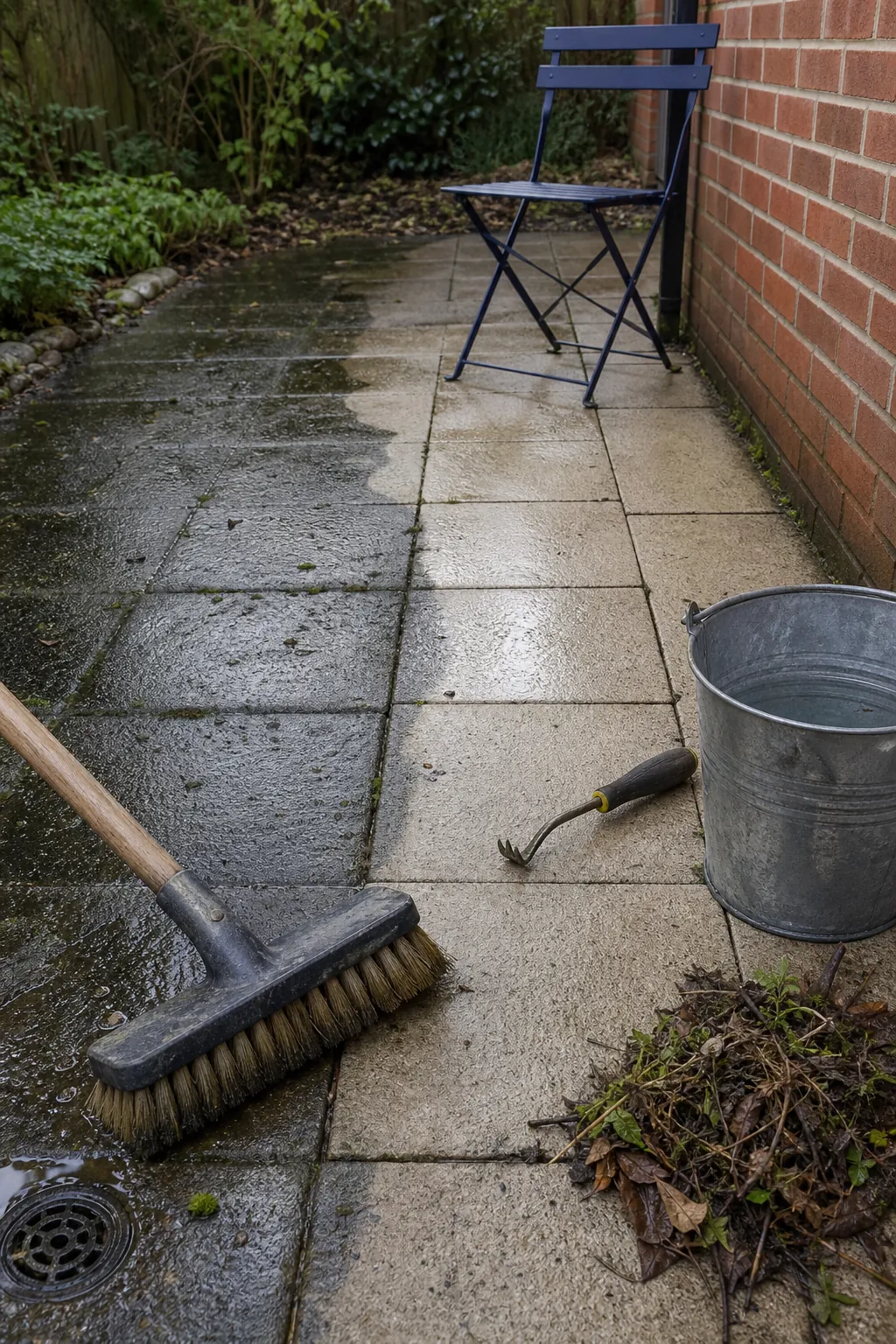
Use painter’s tape to test clearances and open every door fully. Keep the arrangement for a week before buying; daily use will reveal whether you need a drink surface, shade, or storage more than another chair.
Hunt for Outdoor Furniture Secondhand
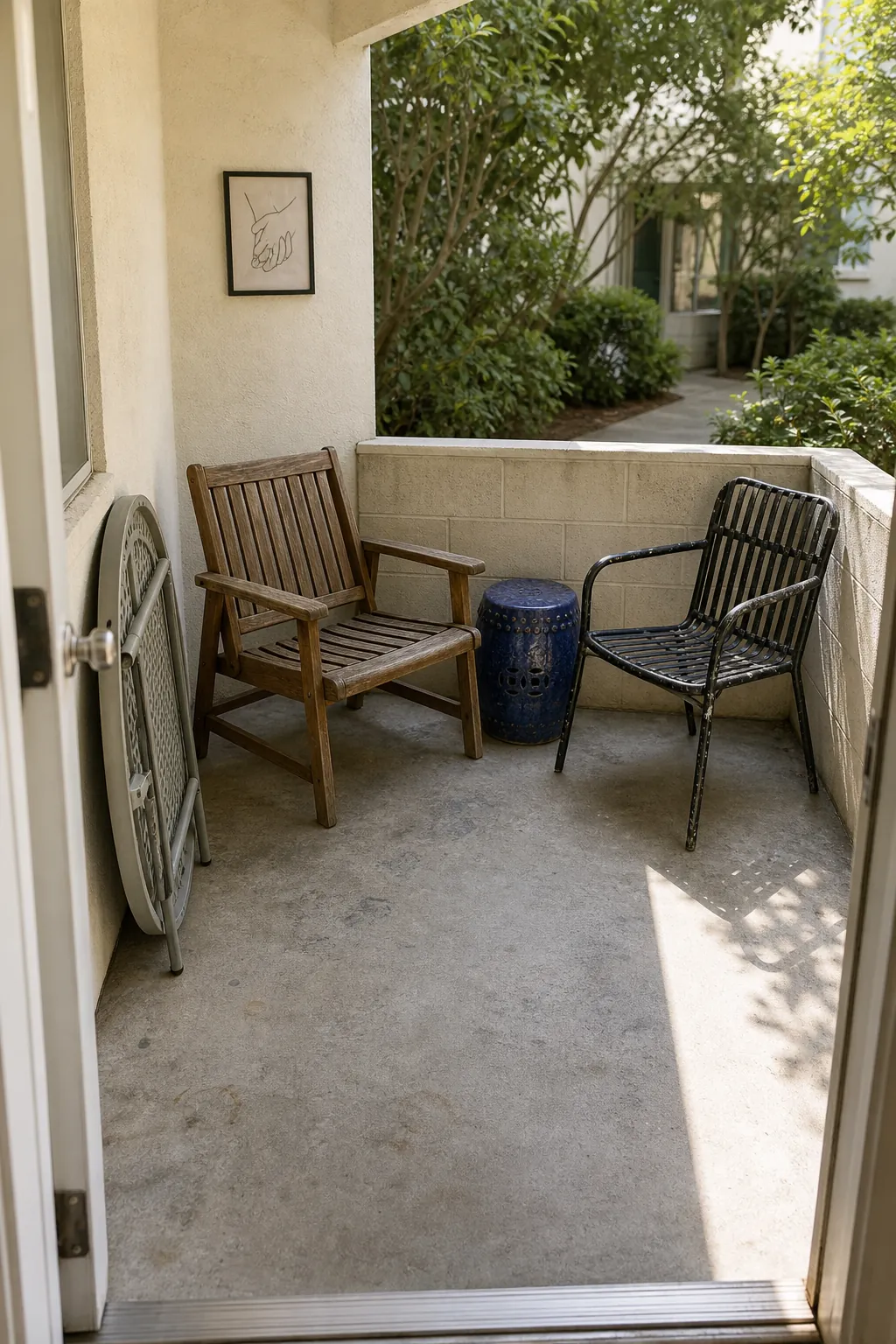
Search local resale listings, yard sales, estate sales, and neighborhood free groups for compact metal, resin, or solid-wood outdoor pieces. Ask for dimensions and inspect rust-through, loose joints, rot, odor, and missing hardware before committing.
Favor simple furniture that fits in your vehicle and can be cleaned. Skip upholstered indoor furniture; even when free, it can hold moisture, mildew, and pests and may violate apartment rules.
Refresh Sound Furniture With Exterior Paint
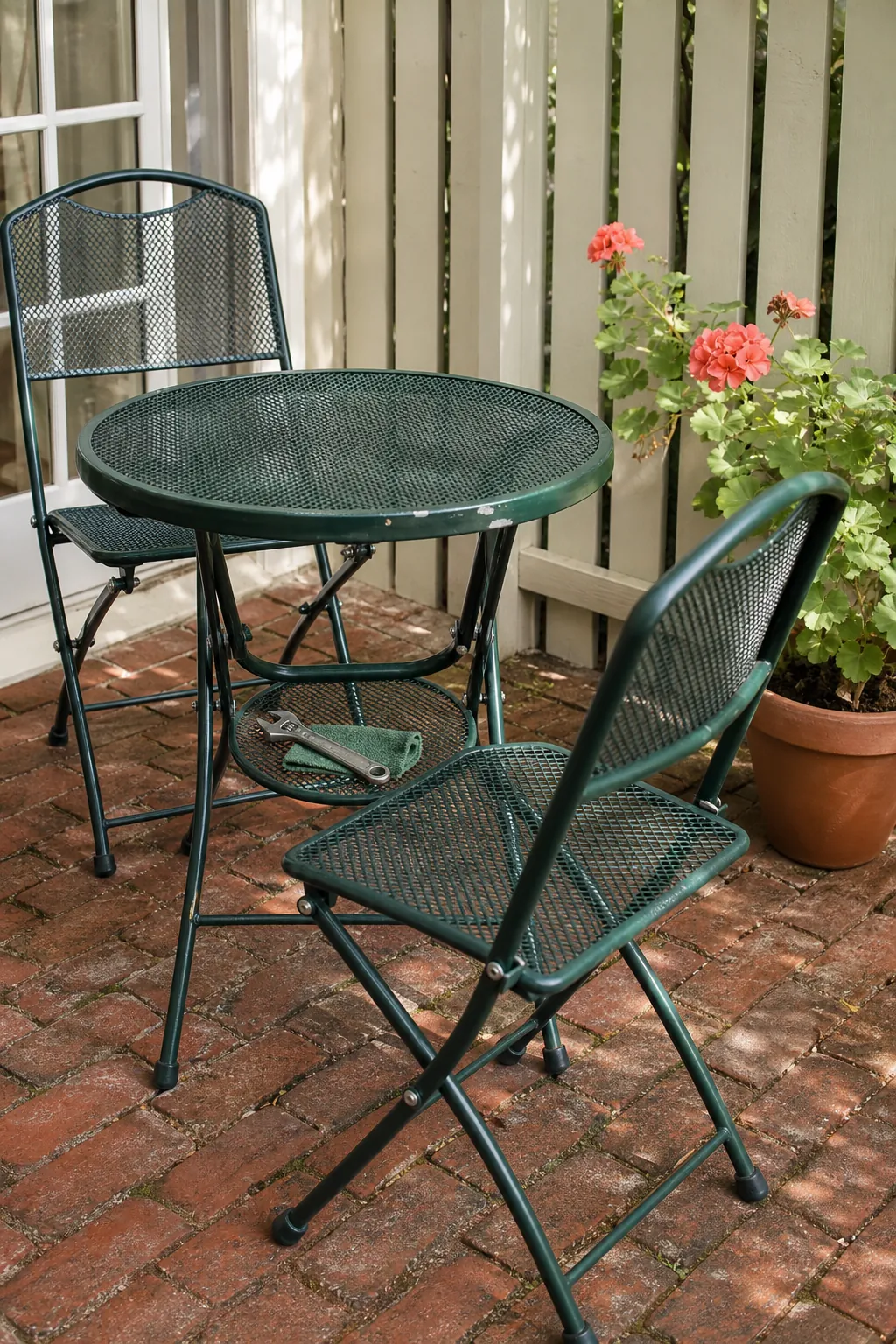
A faded table can look intentional after cleaning, light sanding, compatible primer, and exterior-rated paint. Follow the product directions for material, temperature, ventilation, drying, and recoating instead of spraying over dirt and rust.
Use one restrained color across unrelated pieces to create cohesion. Paint cannot repair rot, structural corrosion, or failed joints, so spend your labor only on furniture that is still safe.
Turn a Sturdy Crate Into a Side Table
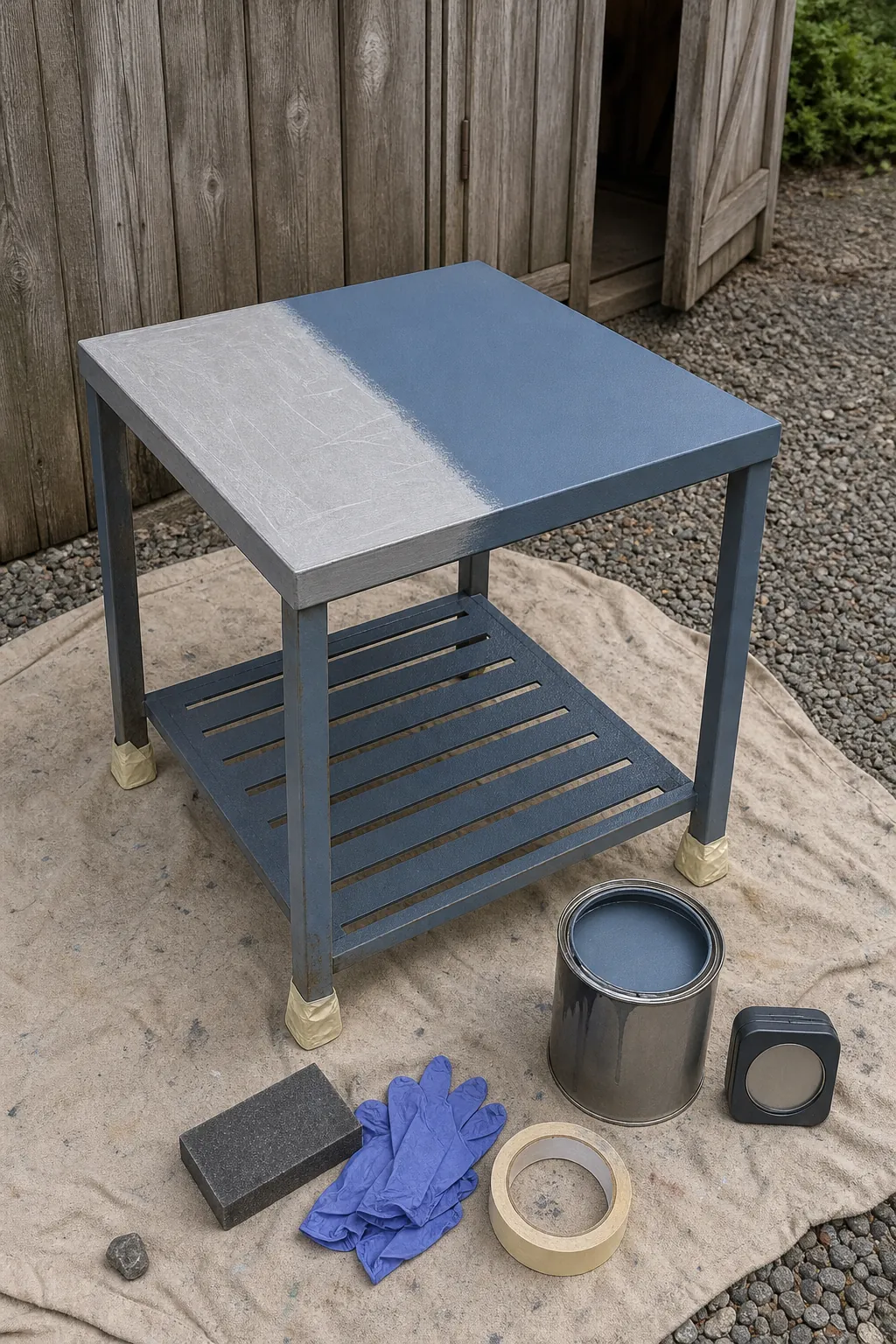
A structurally sound wood crate can become a small side table after sanding rough edges, reinforcing loose joints, and sealing it for outdoor exposure. Place it on its strongest orientation and add discreet feet so the base can dry.
Do not use a decorative fruit box as seating unless it is designed and reinforced for that load. A top tray creates a level surface and can come inside with drinks before rain.
Build a Simple Bench From Rated Lumber
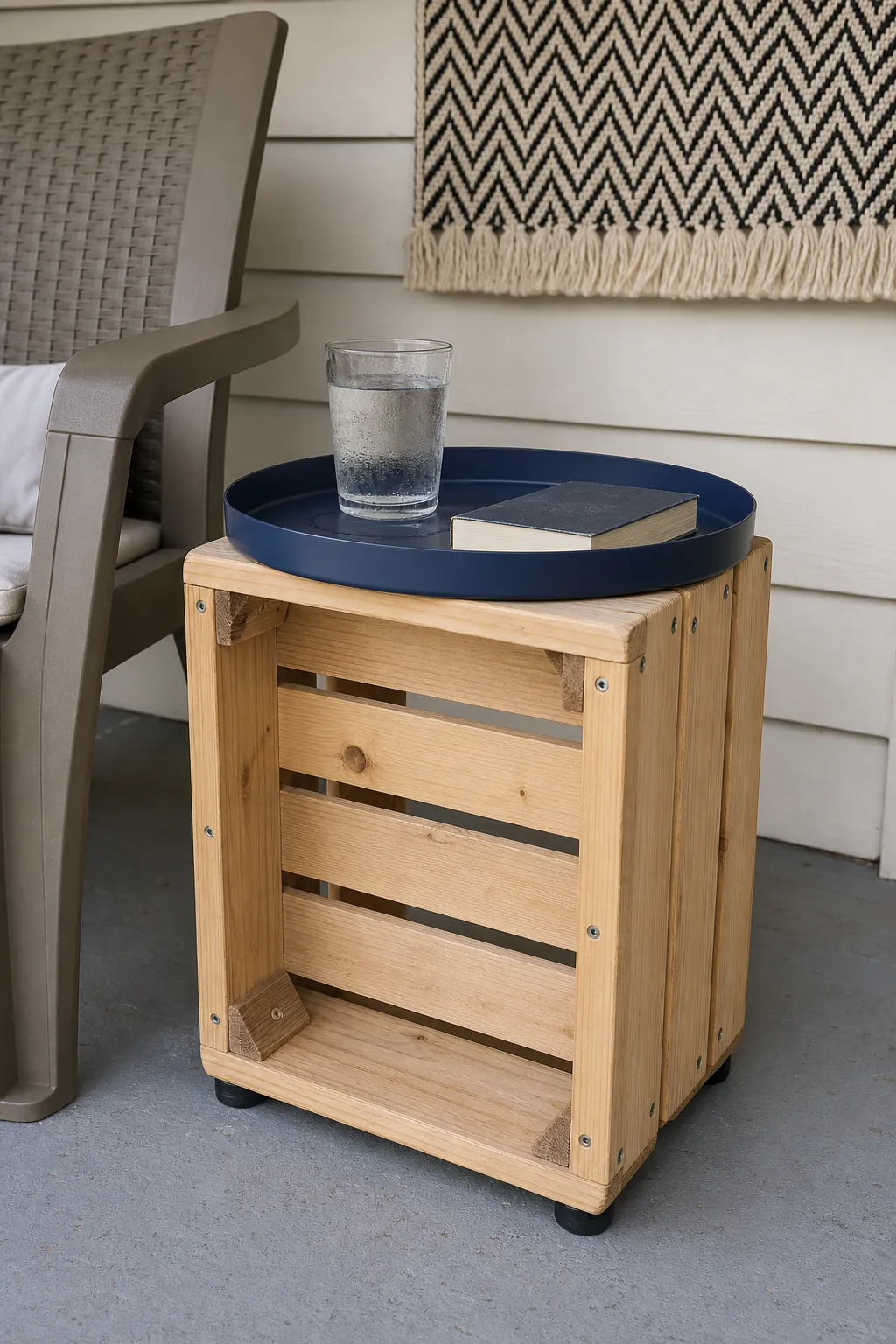
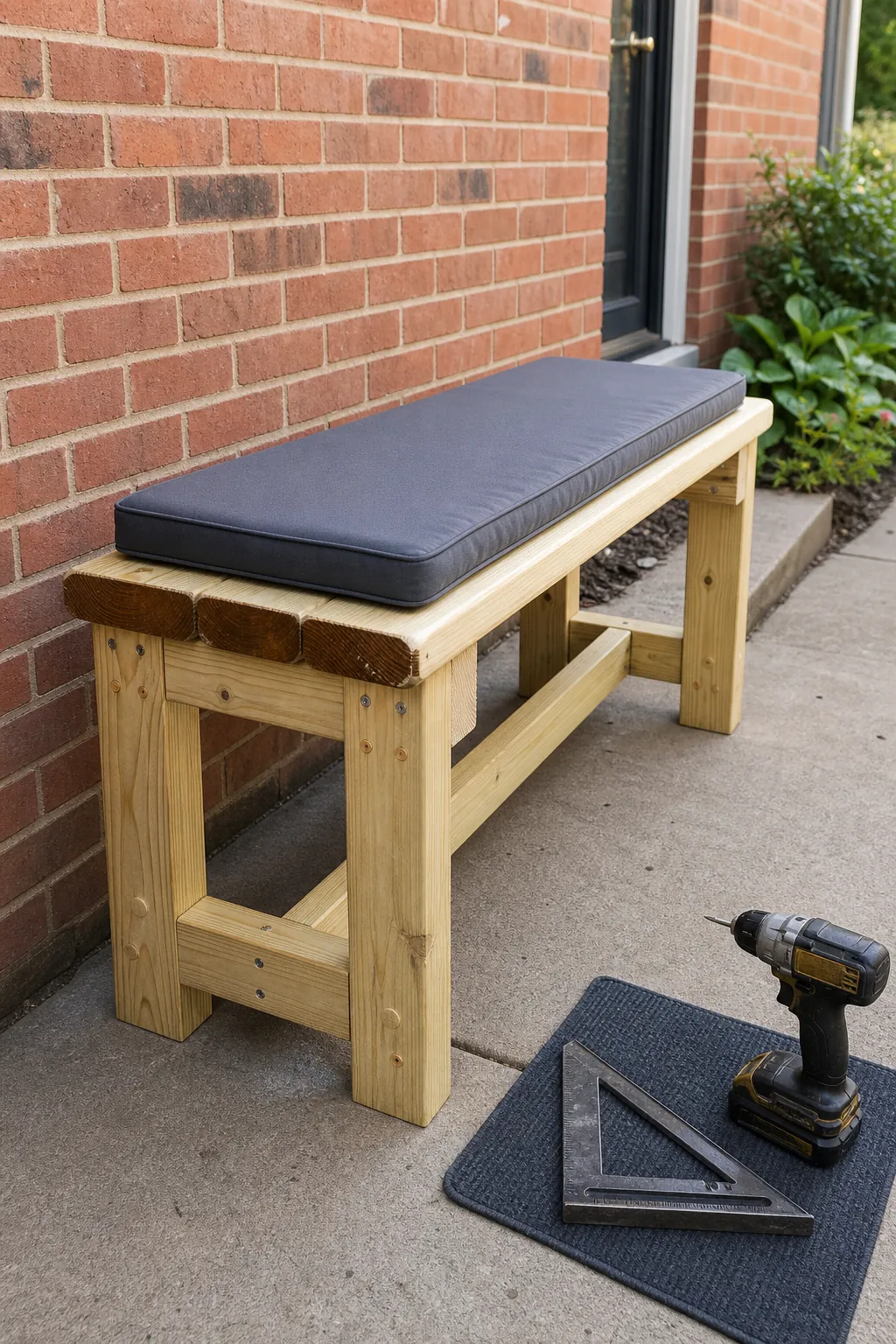
A straight bench is one of the few DIY furniture projects that can genuinely save money when you already have tools. Use plans with adequate bracing, exterior-rated fasteners, and lumber suitable for your climate and ground contact conditions.
Keep the design modest and test for rocking before finishing. Round exposed edges, seal end grain, and never substitute pallet wood of unknown treatment for a seat that touches skin.
Create a Properly Based Gravel Seating Pad
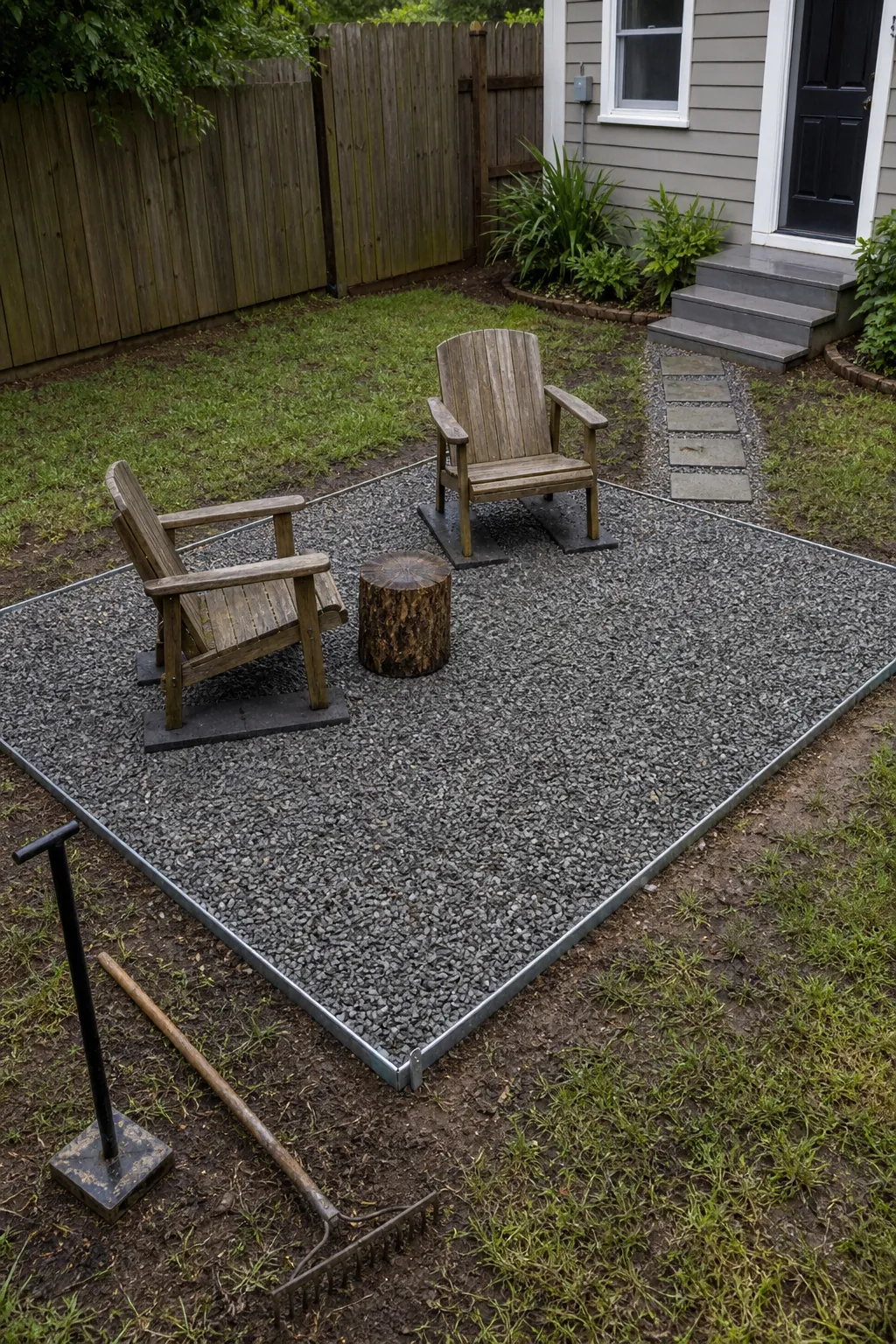
Compacted gravel can cost less than a full paver field and suits informal small backyard patio designs, but it still needs excavation, a suitable compacted base, edge restraint, and correct grading. Loose gravel poured over grass will migrate, wobble, and collect weeds.
Local soil, frost, drainage, and accessibility needs determine the layers. Price delivery, disposal, edging, and tool rental before comparing it with other surfaces.
Use Pavers Only Under Furniture Feet
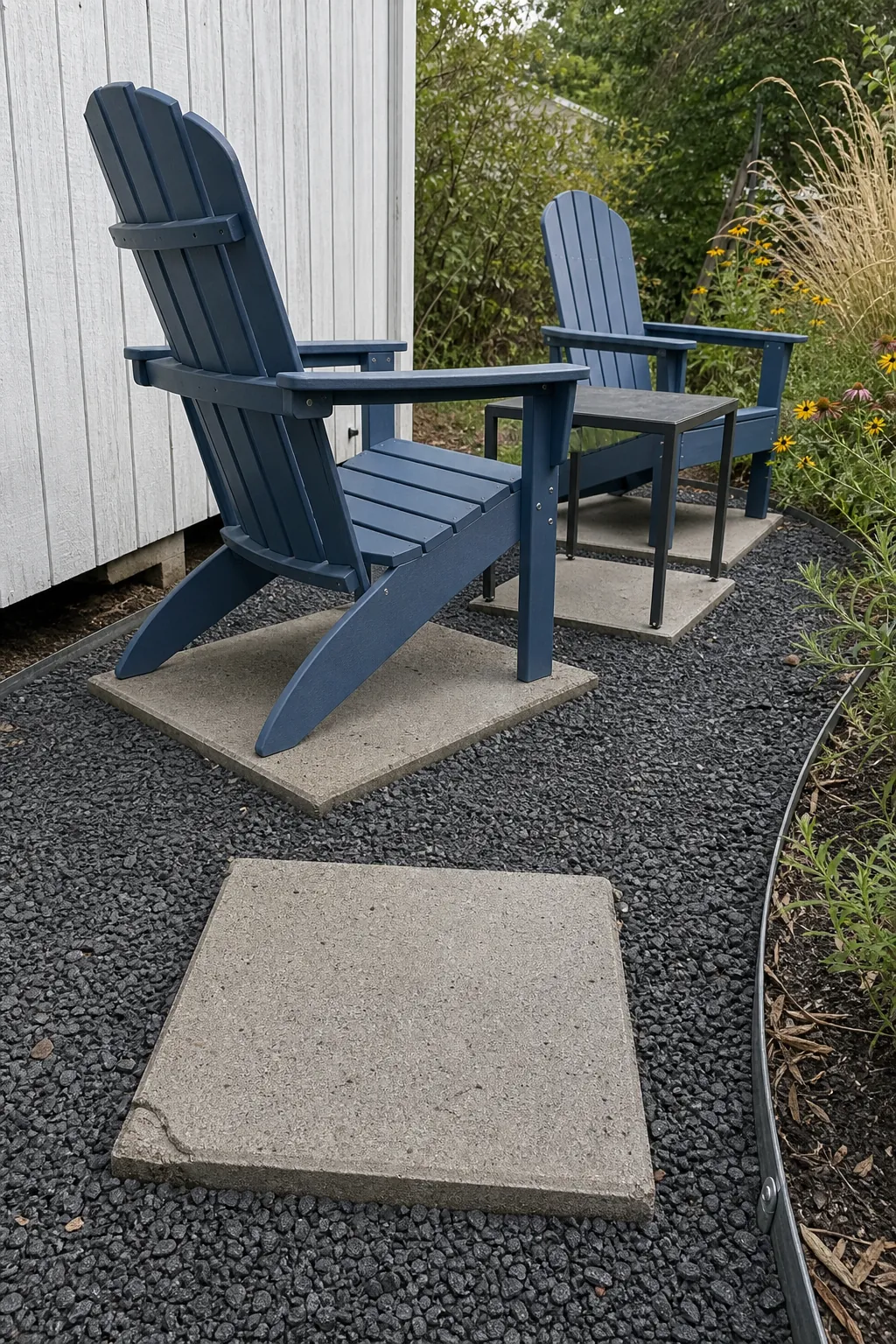
If a complete paver patio exceeds the budget, place a limited number of large pavers as stable furniture pads within a properly prepared gravel area. This reduces material while keeping chair legs level.
The base beneath each paver still matters. Compact, grade away from the house, and use edging so surrounding aggregate stays contained. Treat this as a smaller proper project, not permission to skip preparation.
Buy a Remnant Outdoor Rug
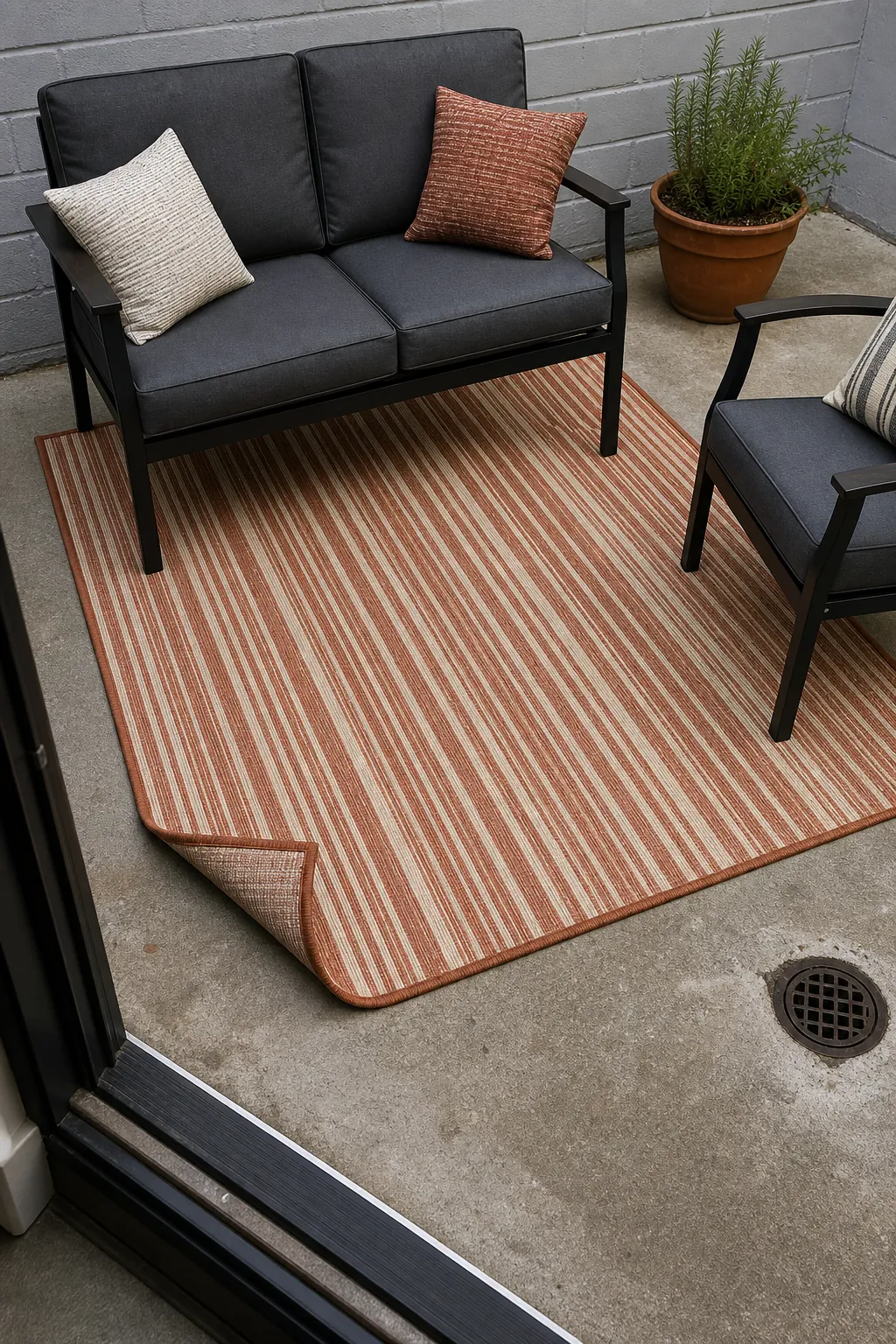
End-of-season clearance, open-box stock, and properly bound outdoor carpet remnants can define the seating zone for less. Measure first so the front legs of the seating fit on the rug and it does not cover a drain.
Choose a quick-drying weave, inspect returns for damage, and lift it periodically to clean underneath. A cheap rug that traps water against wood or concrete is not a saving.
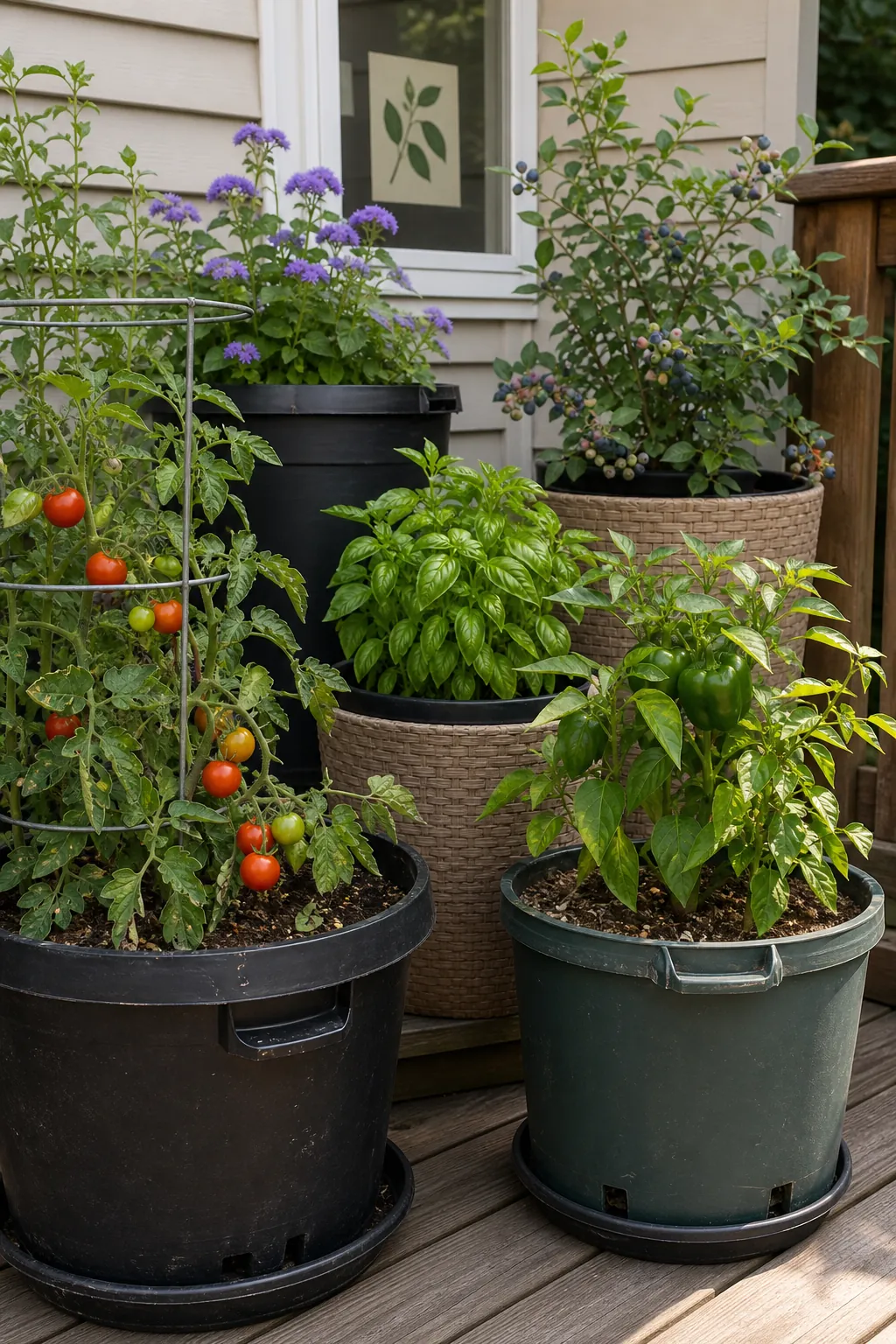
Source Large Nursery Pots for Less
Ask local nurseries whether they give away or sell used tree pots. Neighborhood groups, estate sales, and garden-club swaps can also produce large containers for far less than decorative retail pots.
Clean used containers, verify they held plant-safe materials, and confirm drainage holes. Slip plain nursery pots into lightweight cachepots if appearance matters, but never let the inner pot sit in trapped water.
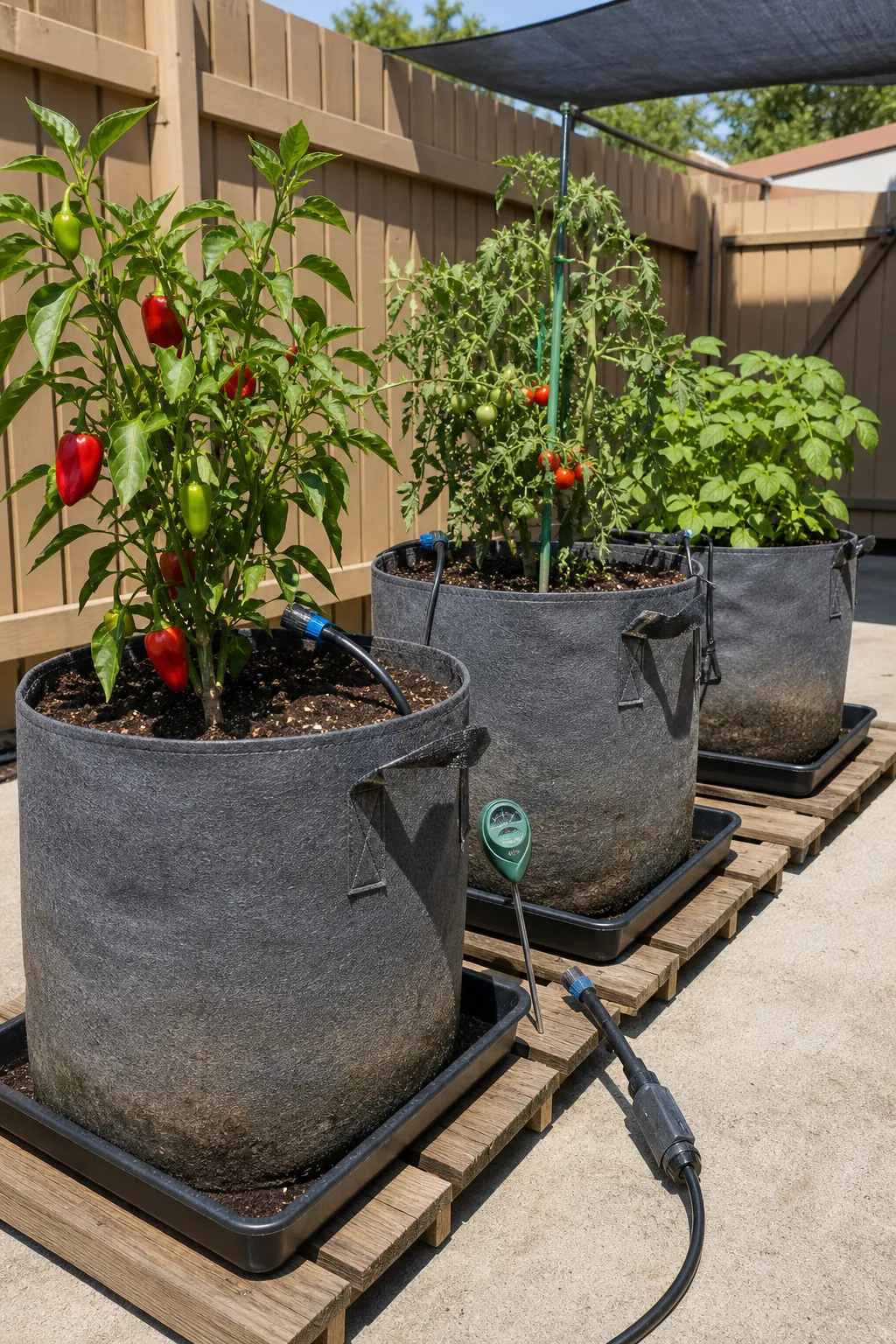
Use Grow Bags Where They Make Sense
Fabric grow bags are inexpensive, store flat, and work well for many vegetables, but they can dry quickly on hot concrete. Choose an adequate volume, use quality potting mix, and match crops to your watering routine.
Set bags in appropriate shallow trays when needed, protect the surface below, and do not crowd them. A larger bag often costs less over time than replacing stressed plants in several undersized ones.
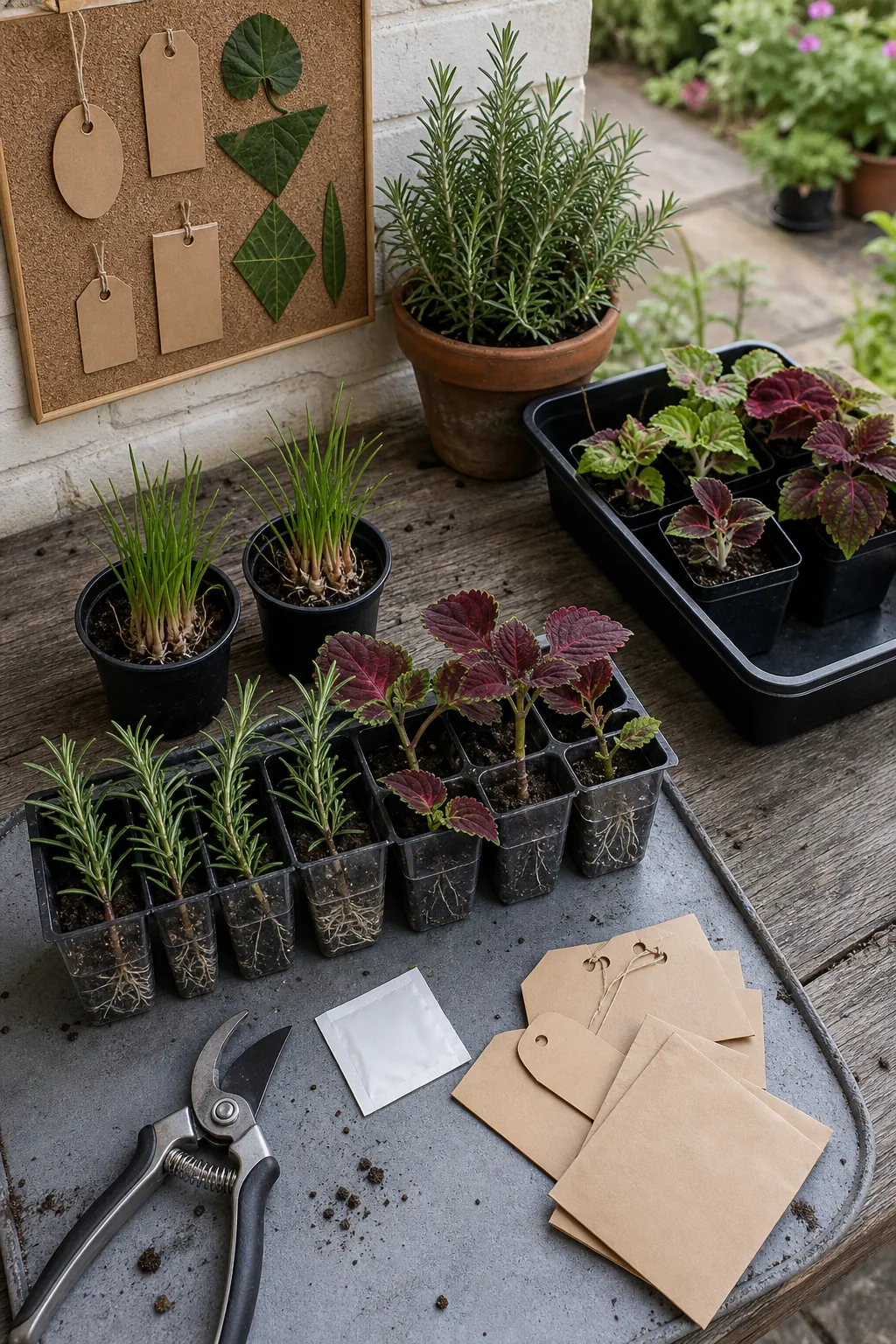
Multiply Plants With Cuttings and Divisions
Trade rooted cuttings, herb divisions, and saved seed with friends or a local garden group. Start with plants suited to your light and climate; a free plant that struggles in the wrong exposure consumes soil, water, and attention.
Use clean tools, label propagation dates, and quarantine unfamiliar plants briefly to watch for pests. Grow slowly rather than filling every container in one shopping trip.
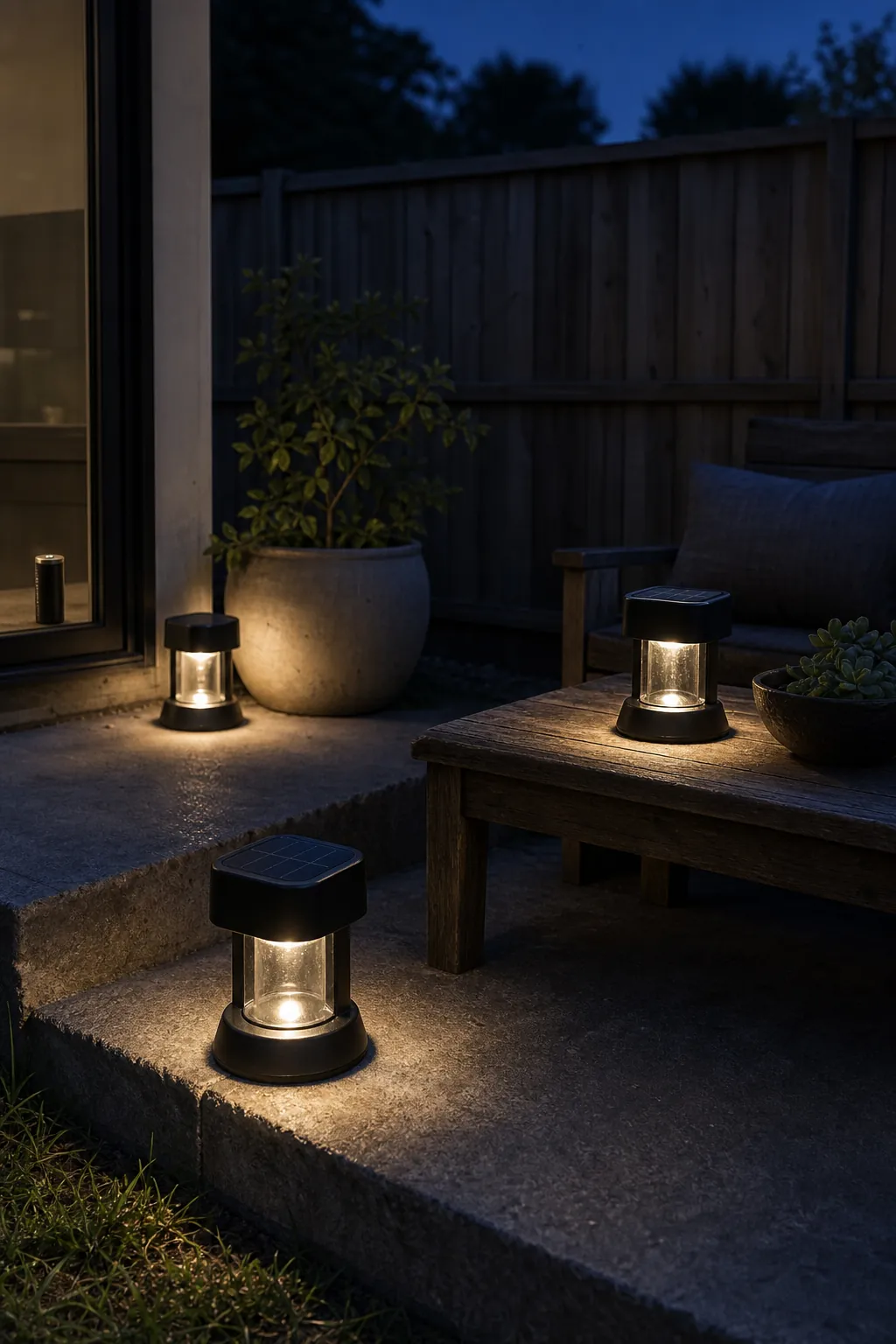
Cluster Inexpensive Solar Lanterns Low
Two or three modest solar lanterns can mark steps and table edges without wiring. Place their panels where they receive enough sun, aim light downward, and buy outdoor-rated units with replaceable batteries when possible.
Low lighting is kinder to neighbors and looks better than a scatter of weak fixtures everywhere. Bring lightweight lanterns inside before severe weather and keep them out of walking routes.
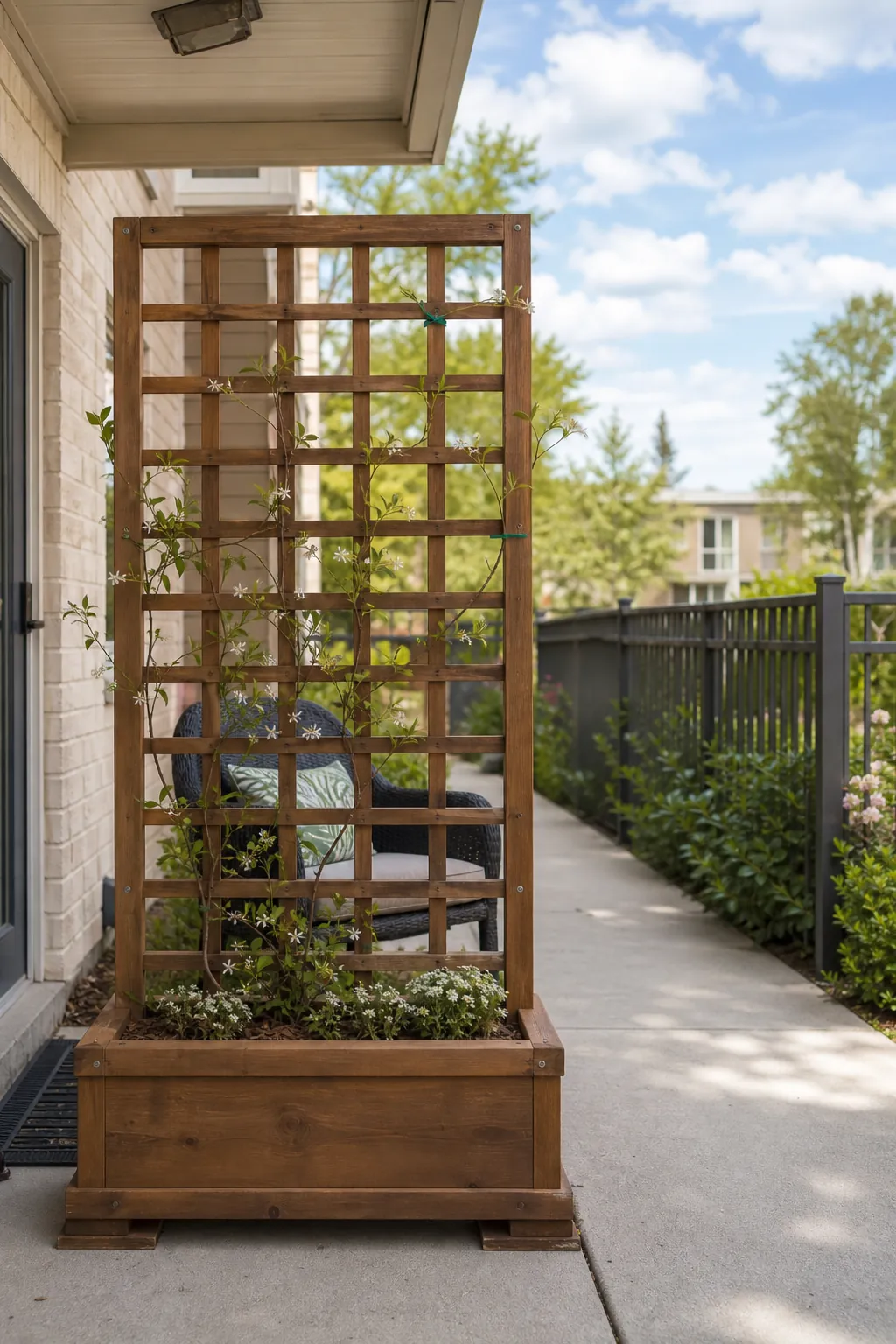
Make a Privacy Planter From One Trellis
Instead of screening the whole patio, place one sturdy trellis planter along the direct sightline. A secondhand trellis can work after inspection and refinishing, but the container must be broad enough to resist wind and deep enough for the chosen vine.
Use a noninvasive climber suited to the sun, confirm lease or boundary rules, and keep the structure below required heights. Targeted privacy uses fewer materials and preserves more light.
Sew New Covers for Existing Cushions
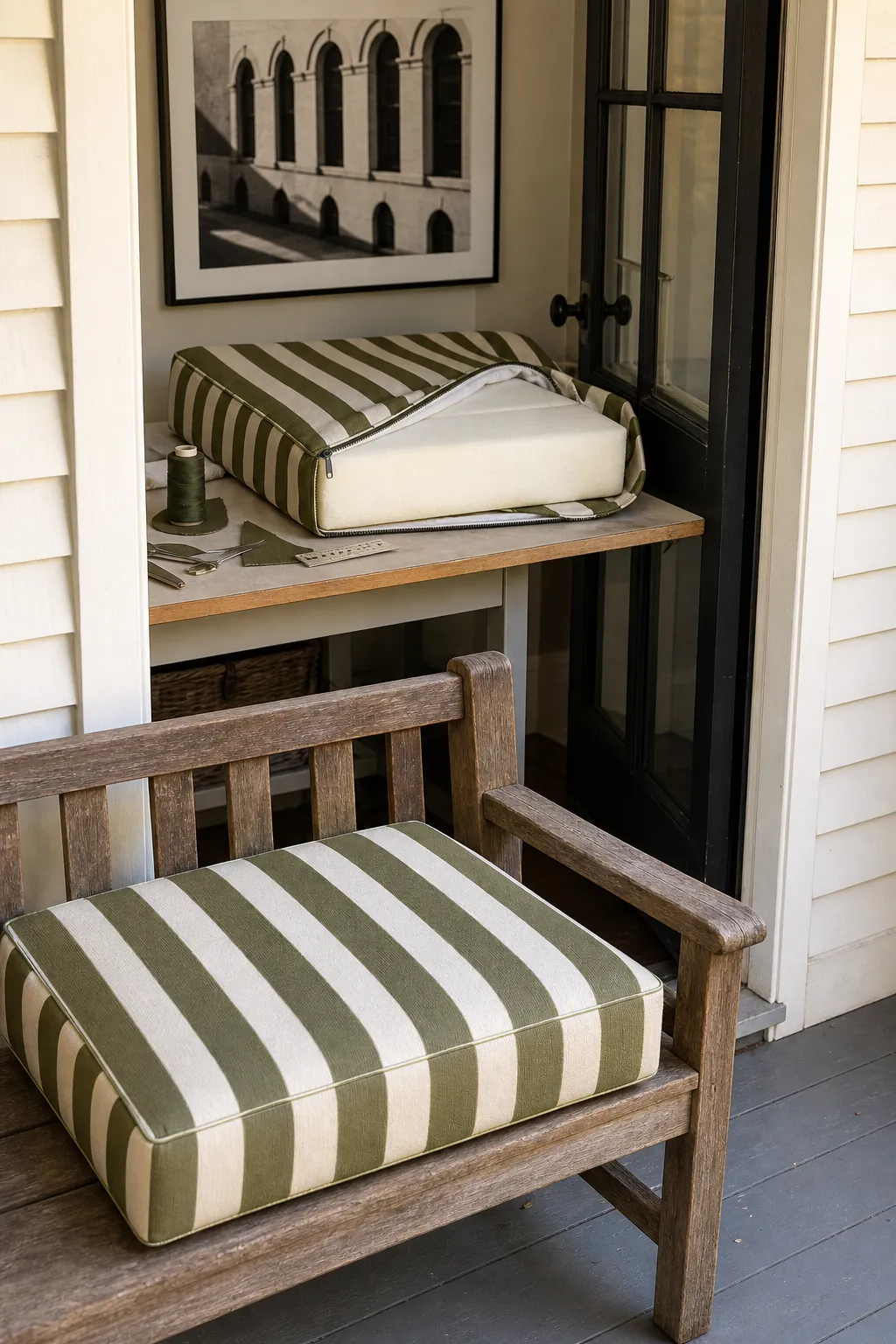
If the foam is clean, supportive, and completely dry, replacement covers can refresh seating for less than new cushions. Use UV- and mildew-resistant outdoor fabric, strong thread, and a closure that lets you wash and dry each cover.
Do not seal damp or degraded foam inside. Keep cushions in a dry indoor spot between storms; outdoor fabric resists weather but is not permission to ignore moisture.
Finish With One Useful Detail
After the seating, surface, plants, and light work, choose one detail that supports the patio’s main job: a washable throw for reading, a tray for coffee, or a lidded caddy for garden tools. Stop when the routine feels complete.
A successful small patio on a budget is not the one with the most hacks. It is the one you can maintain, move through safely, and enjoy without planning another purchase. Spend last on decoration and first on the reason you wanted the space.