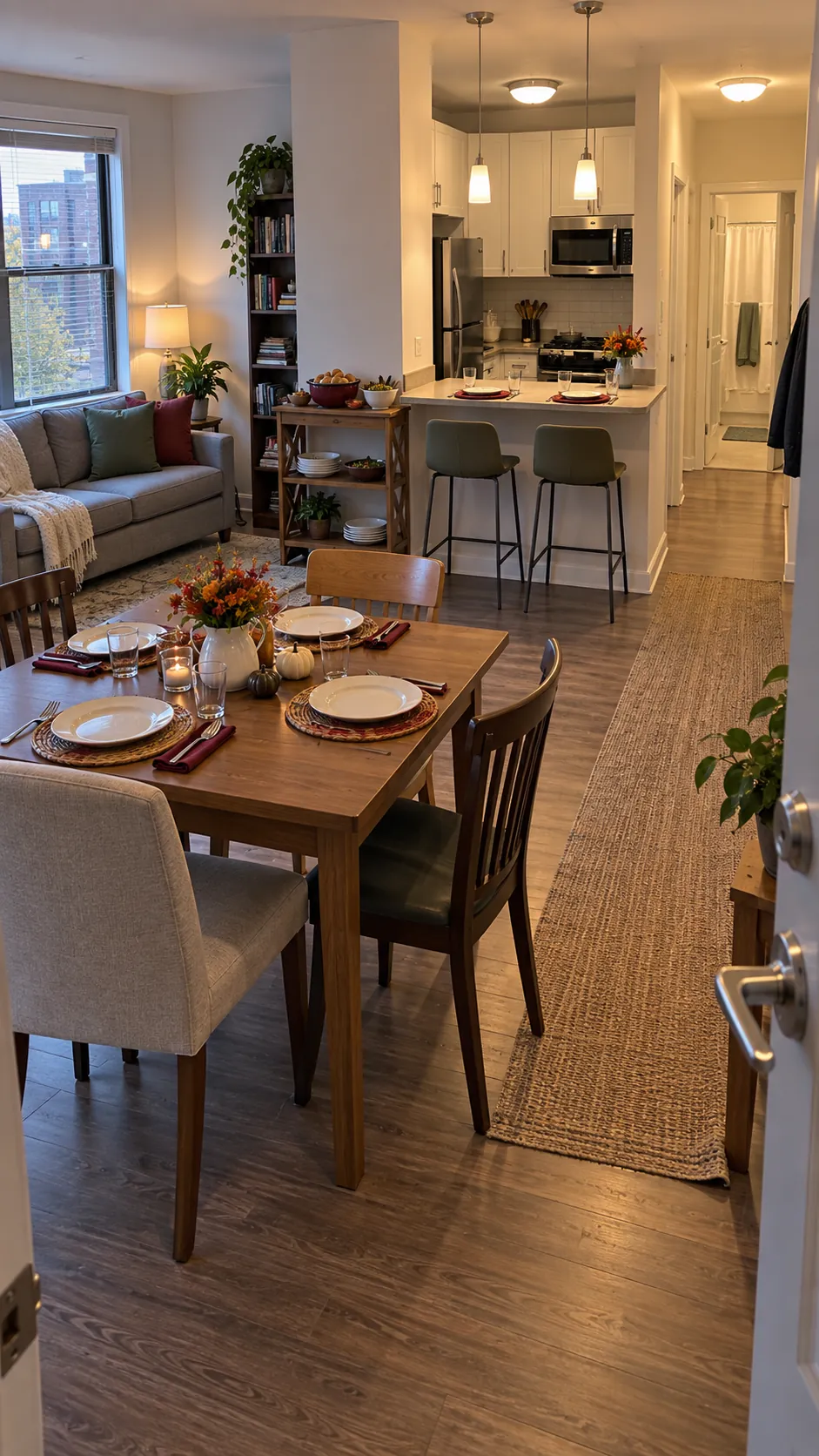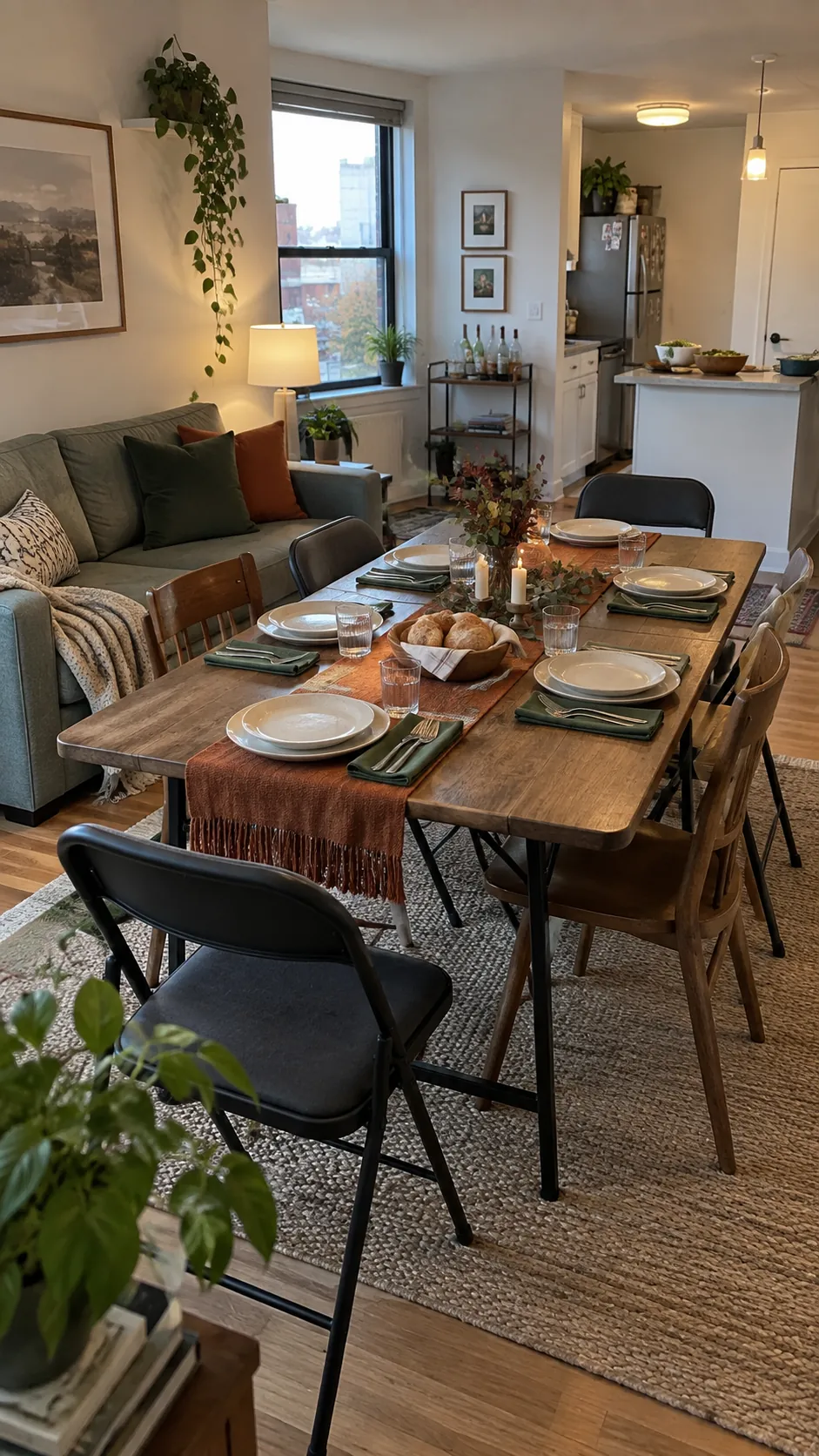
The meal is planned, but the chairs have nowhere obvious to go. In a small apartment, the useful question is which surfaces can hold a full plate and which paths people still need to reach the kitchen and bathroom. Count the actual seats, test each table at dinner height, and move furniture before guests arrive.
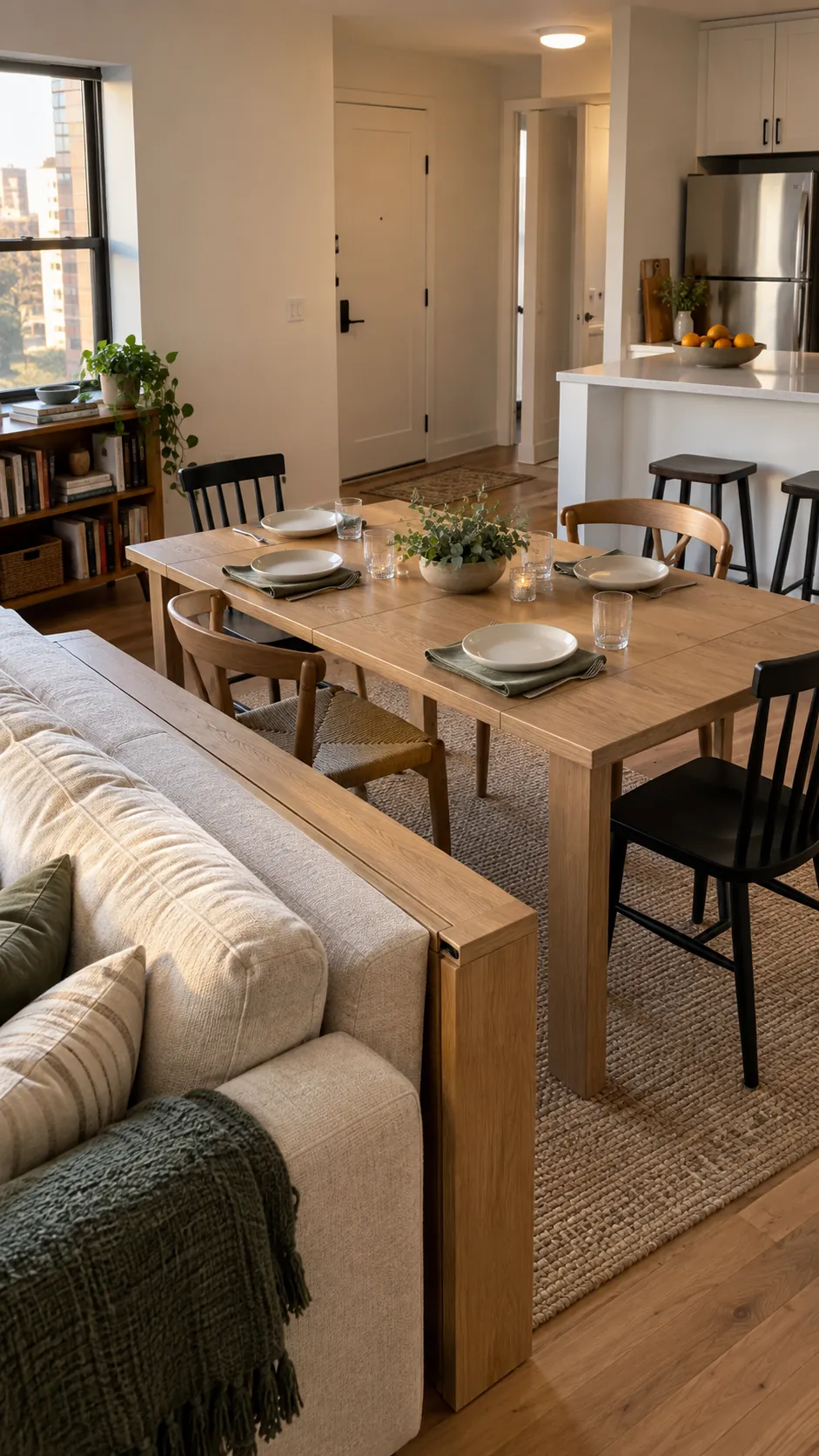
Open an expandable console behind the sofa
A narrow console can live behind the sofa for most of the year and open into a holiday table when needed. Pull it far enough from the wall for guests to sit and stand without shifting the sofa during the meal. Test its full extension and lock before adding place settings, since the unfolded surface needs stable support. Serve dishes from the kitchen counter so the limited tabletop holds plates and glasses rather than every platter.
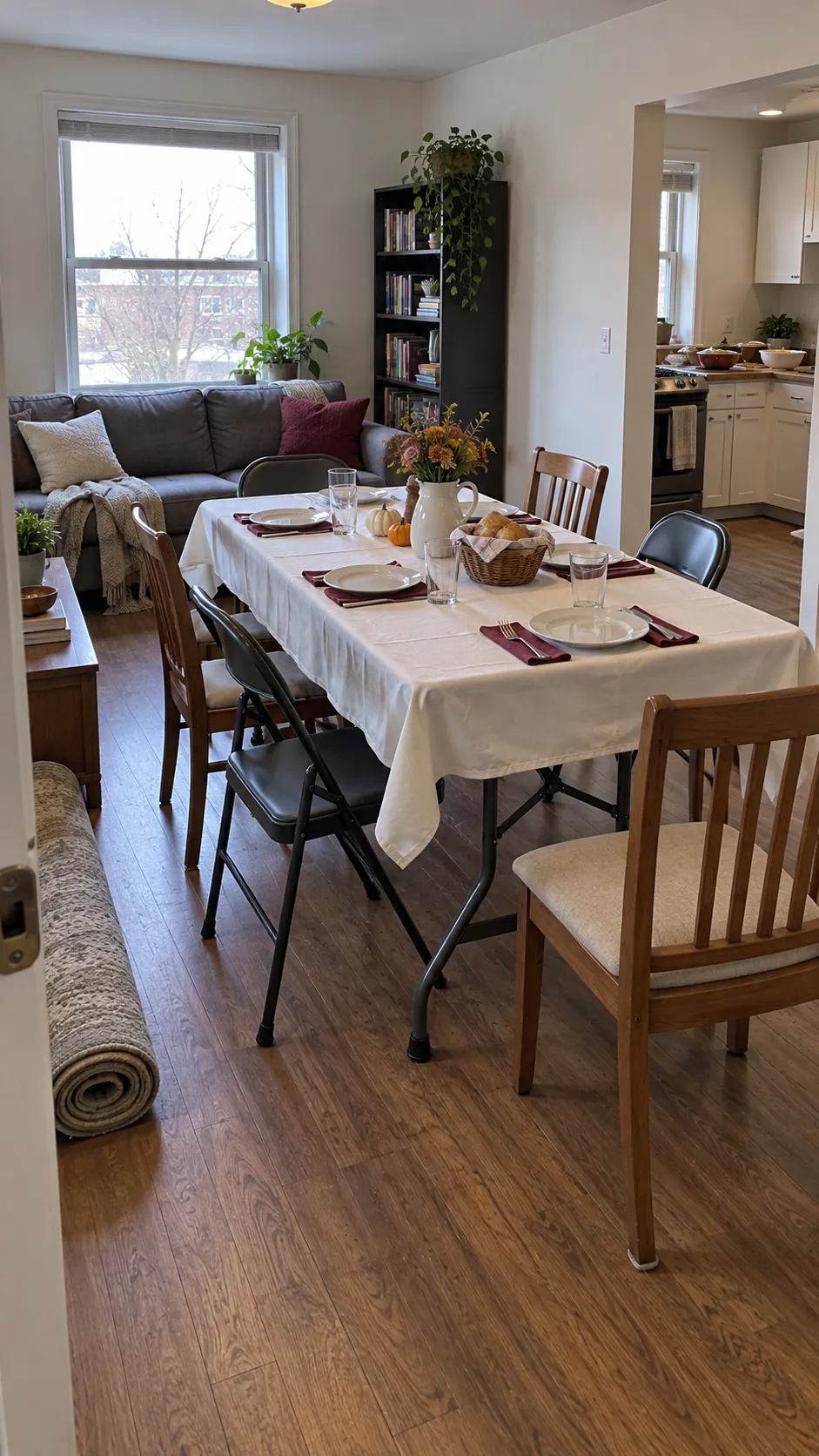
Unfold a temporary table in the living room
A folding table gives a no dining room apartment a conventional dining height for one day. Move the coffee table out first, then open the table and walk around it with the chairs pushed back. Check the leg locks and floor protection before anyone sits down. A simple cloth can soften its look, but it cannot fix a table that rocks or blocks the exit.
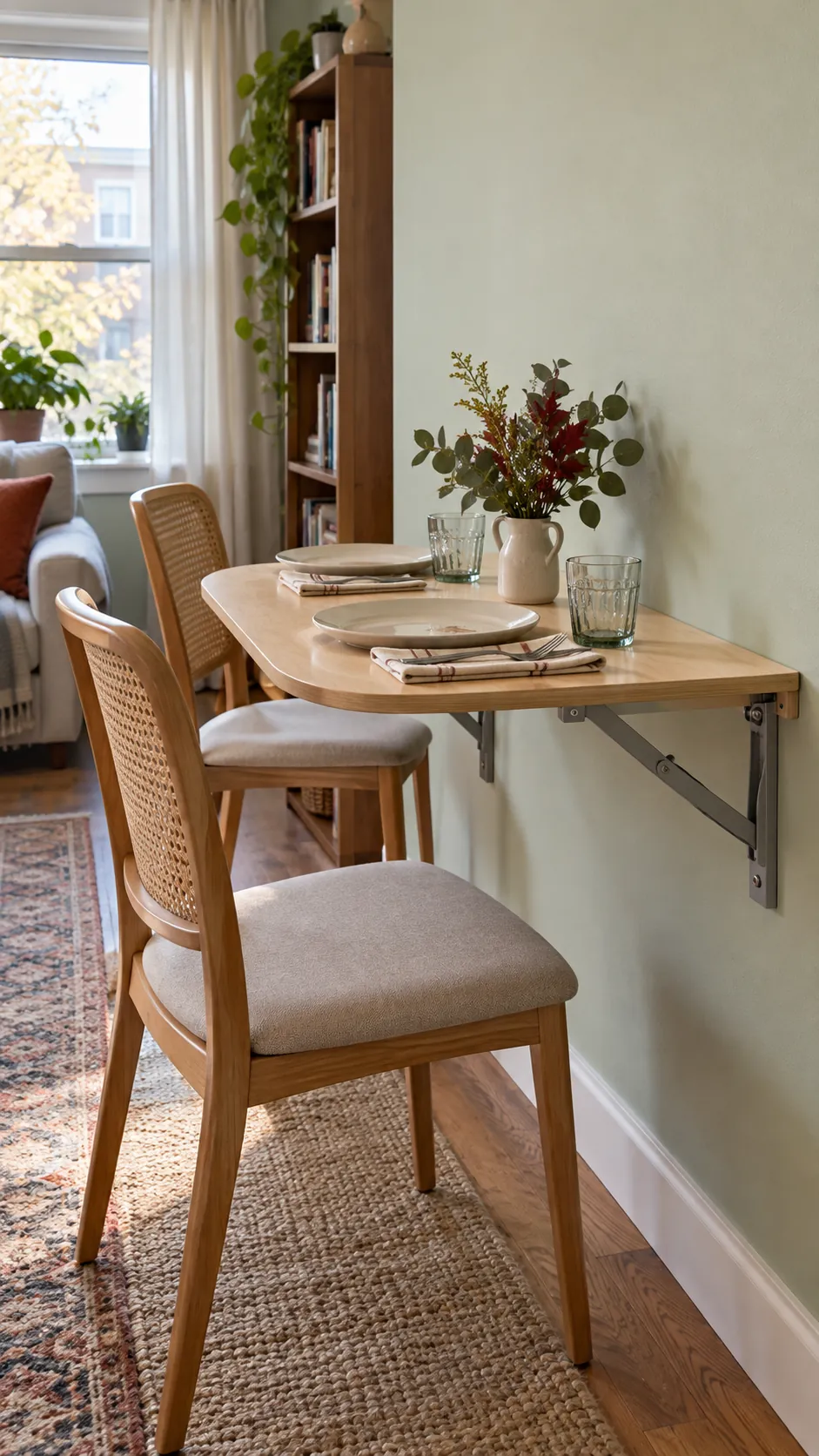
Lower a wall mounted leaf for two
A wall mounted drop leaf can add two comfortable places without keeping a dining table in the room all year. Use it only if the installation and support rating suit a seated meal and the wall can accept the mounting. Place the chairs where knees have room and the leaf can fully open. Keep hot serving dishes on another surface rather than pushing them against the wall edge.
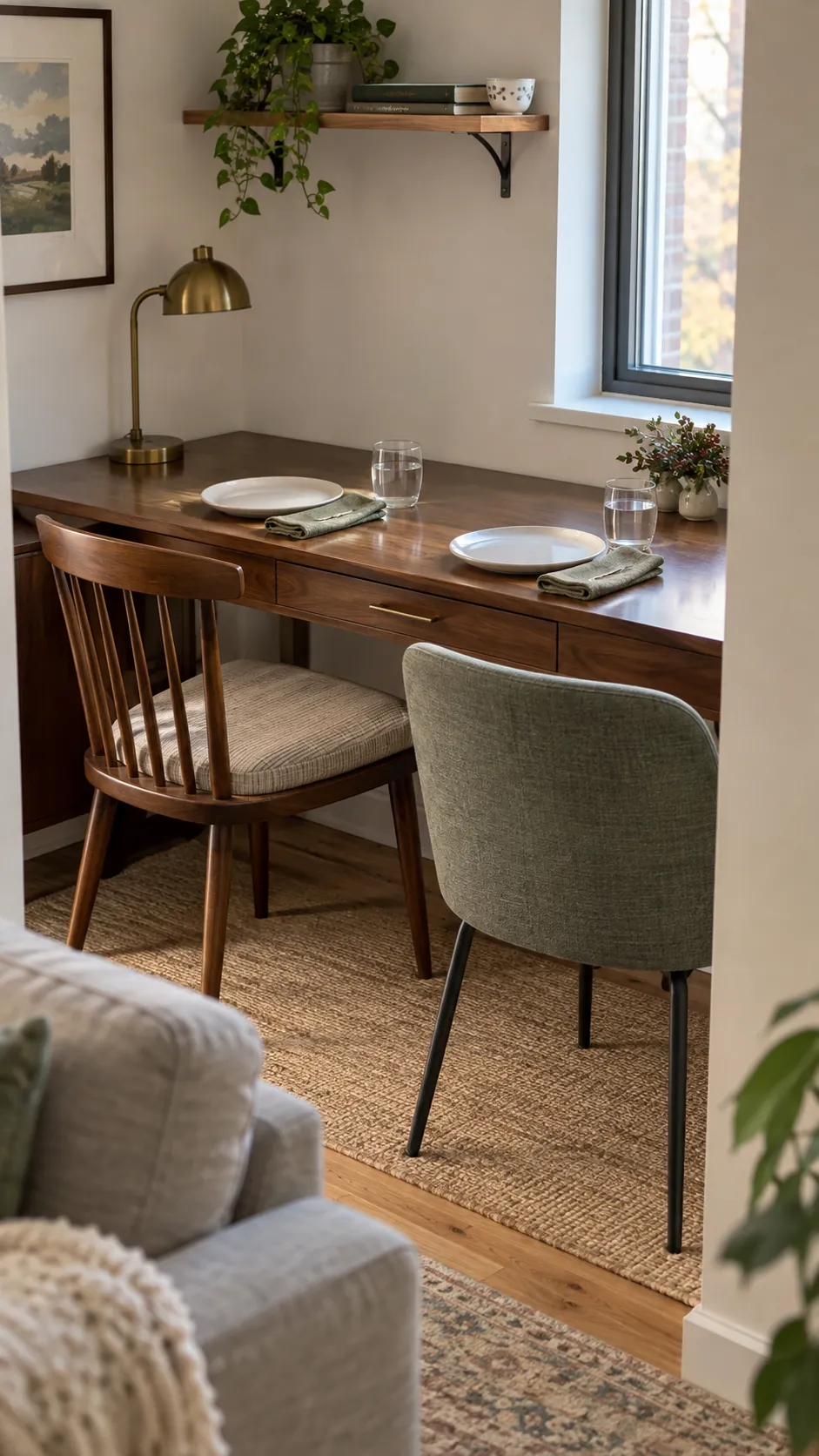
Clear the desk for a pair of guests
A sturdy home office desk can become a small dining spot without adding furniture. Remove cords, electronics, and paperwork entirely rather than shifting them to one end. Check the chair heights and give each guest enough clear surface for a plate and glass. This works especially well for two people who want a quieter corner away from the main living room table.
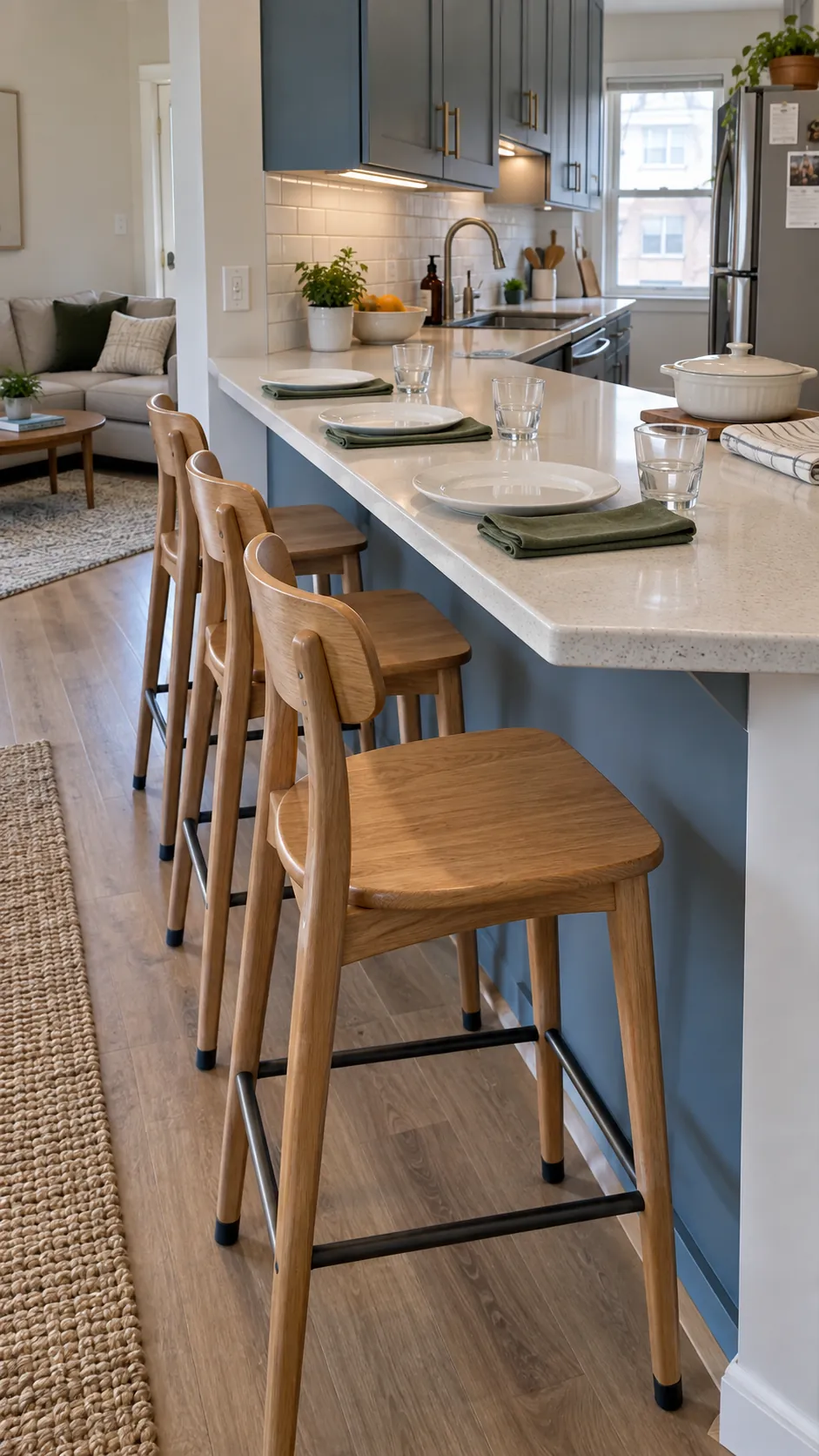
Use counter seats for a small group
A kitchen counter with an overhang can hold a few diners while the living area serves others. Confirm there is actual knee space; a counter without an overhang is a serving surface, not a comfortable seat. Choose stools that put guests at an easy eating height and leave the cook a clear working zone. A long row of seats may feel less conversational, so use it for the guests who enjoy helping in the kitchen.
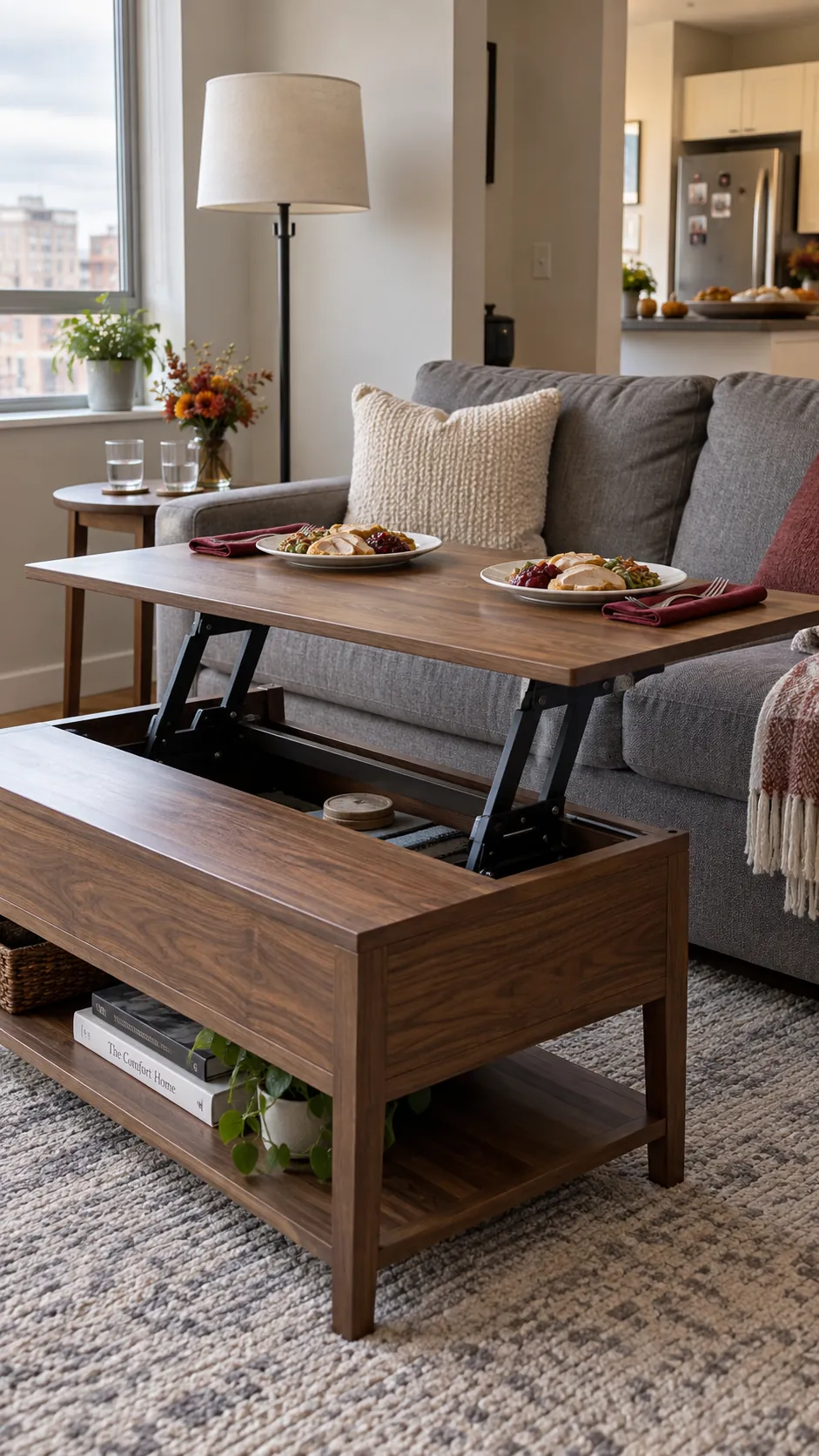
Raise the coffee table for sofa dining
A lift top coffee table can make the sofa a workable meal spot for two people when its raised surface locks securely. Set ordinary plates on it during a trial run and check whether knees fit under the top. Keep heavy serving dishes and very hot cookware in the kitchen, since the mechanism is designed for its own load limit. Put a side table nearby for drinks so the raised surface does not become crowded.
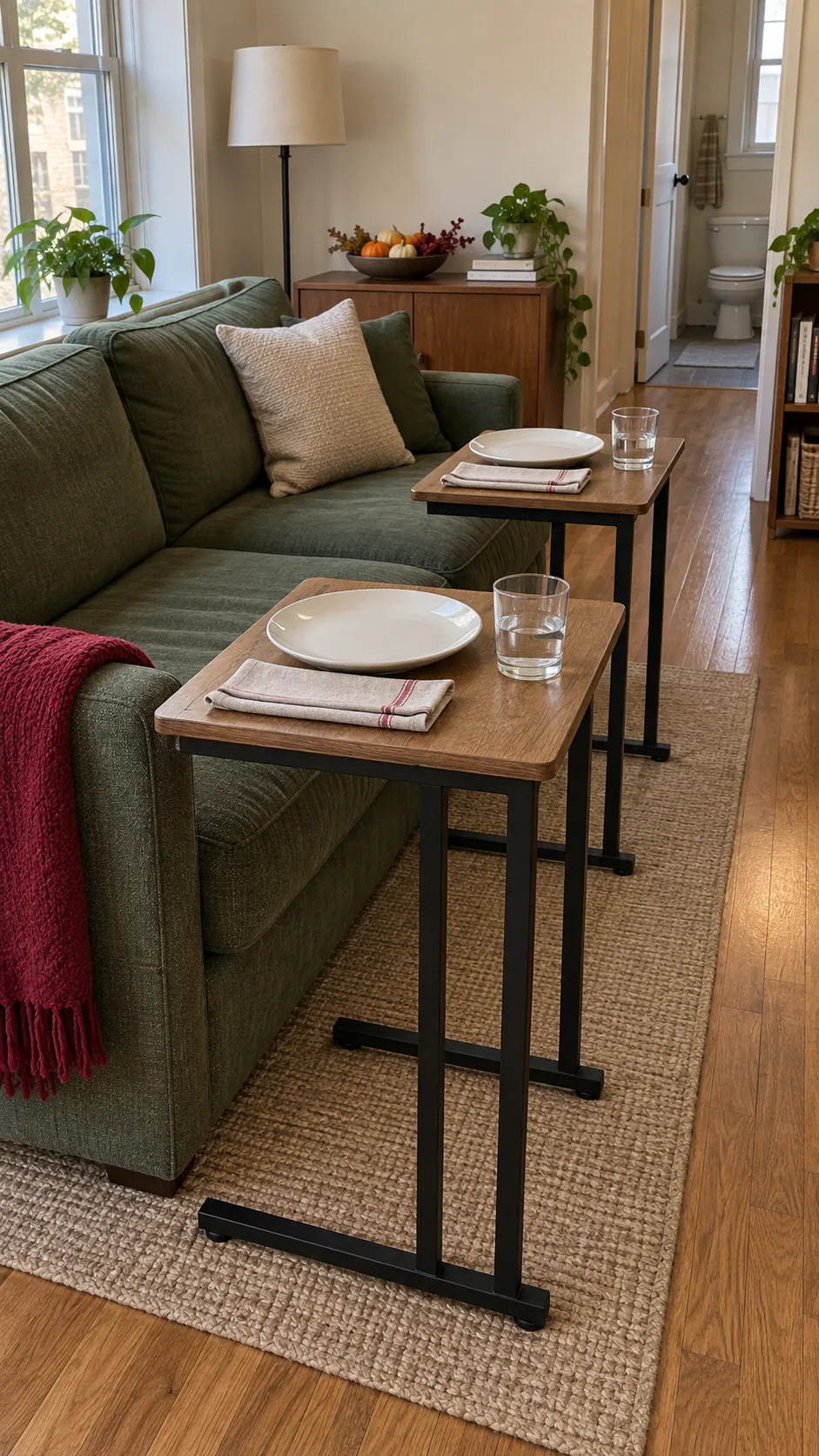
Give each sofa seat a stable tray table
Two compact tray tables beside a sofa can separate place settings when one low coffee table is too crowded. Choose rigid, stable tables that cannot fold under a plate, and position their legs clear of feet and walking routes. Guests should be able to sit upright and set down a glass without balancing it on the couch arm. Carry plated food to them rather than inviting a line of people to juggle hot dishes.
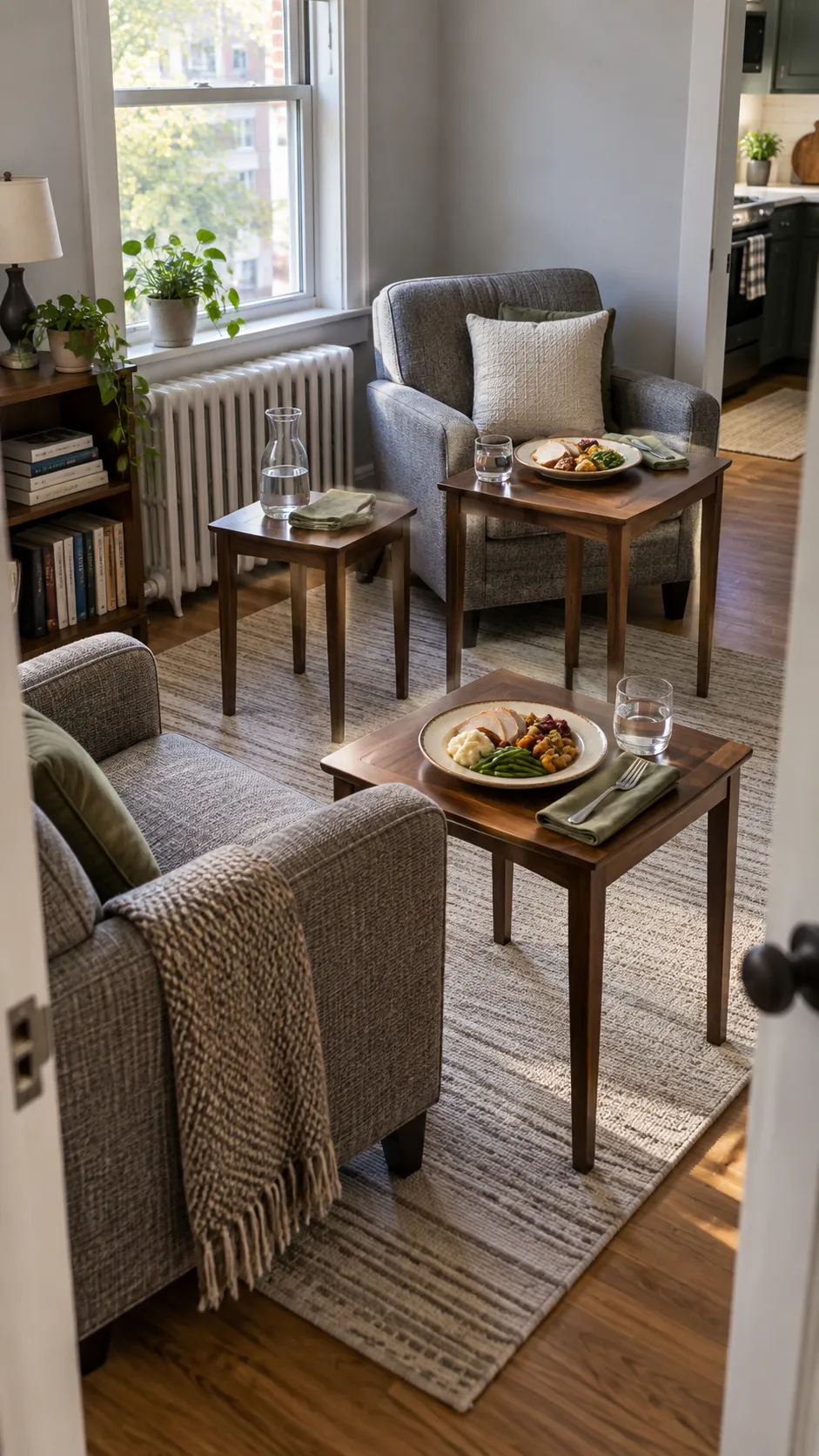
Spread nesting tables between chairs
Nesting tables can create several small plate surfaces instead of one large dining footprint. Pull them apart and pair each with an armchair or other supportive seat, keeping the table close enough to eat comfortably. Test the top size with a real plate before promising it as a full dinner place. This is better for a relaxed plated meal than for passing large bowls around the room.
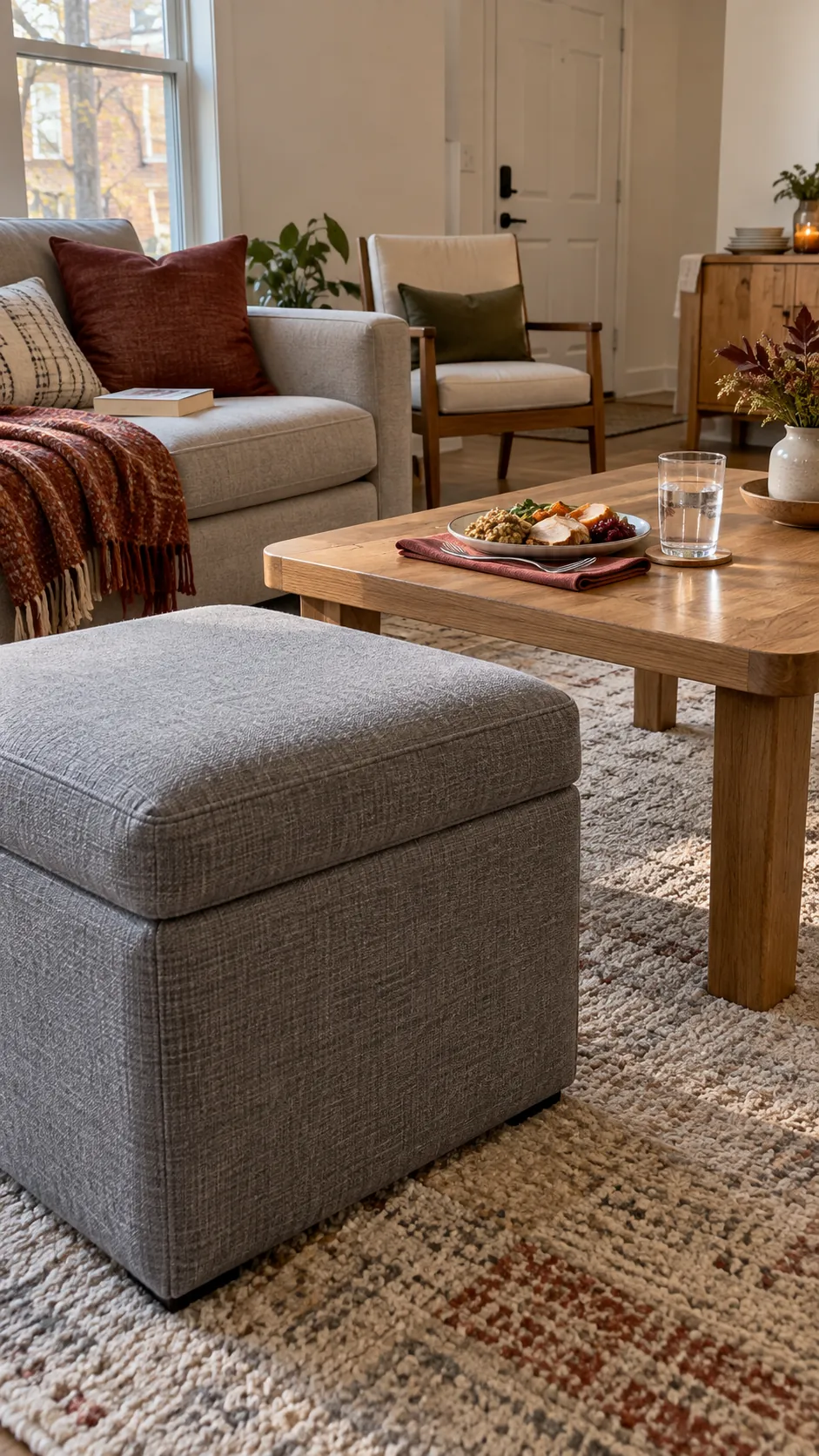
Pull an ottoman up to a low table
A firm storage ottoman can add a short term seat at a sturdy coffee table. Check that it does not tip or roll, and keep it for someone who can comfortably sit at the lower height. Add a supportive cushion only if it stays put rather than sliding under a guest. The ottoman can return to its usual spot as soon as the meal is over, which helps keep temporary dining seating manageable.
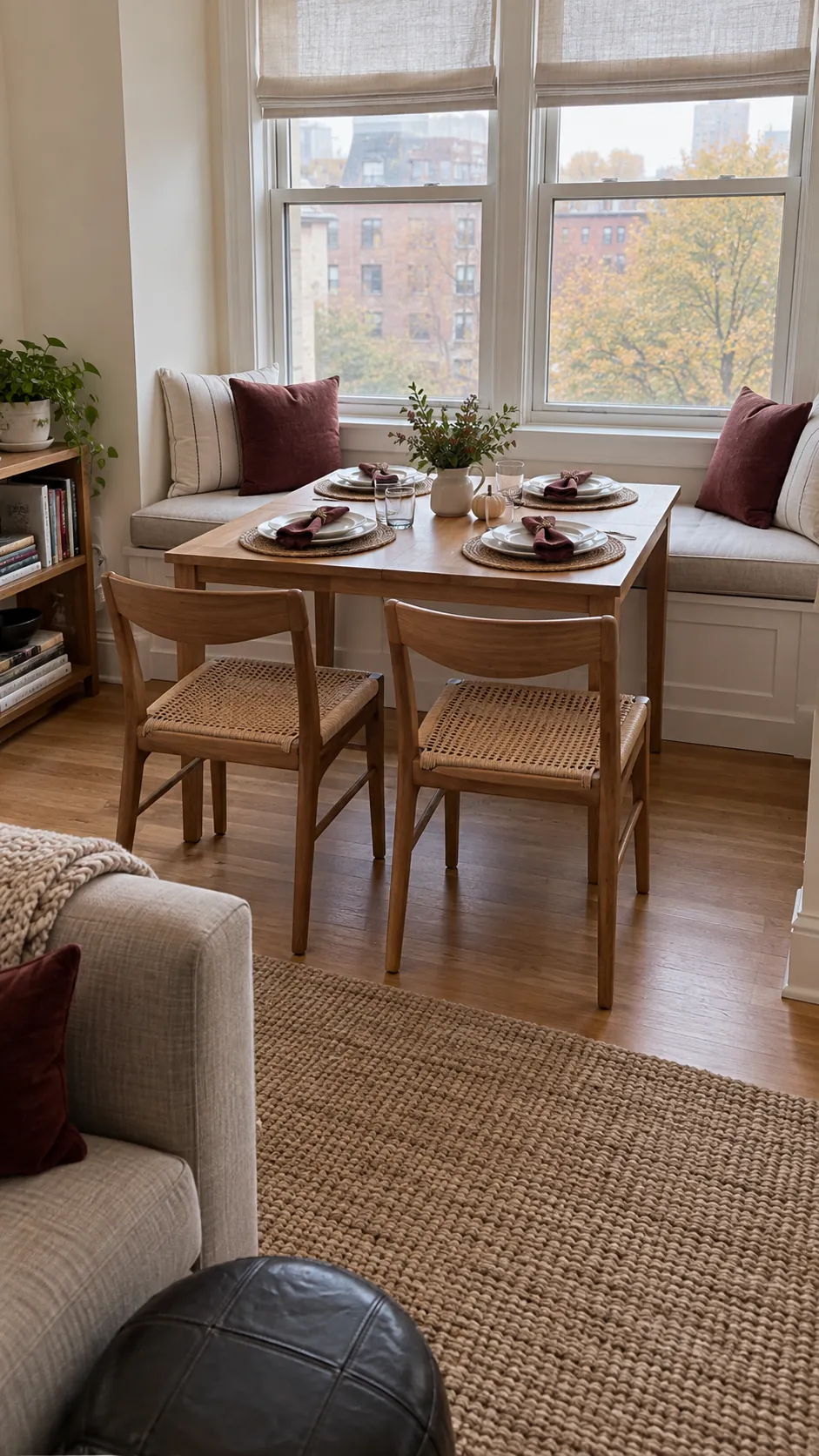
Pair a window bench with a small table
An existing window bench can replace chairs along one side of a compact table. Bring a stable table close enough for comfortable reach while leaving room for people to slide onto the bench. Check its depth and height before planning adult places, since a shallow ledge is not a seat. Use the view and daylight as a bonus, but keep food clear of blinds and window cords.
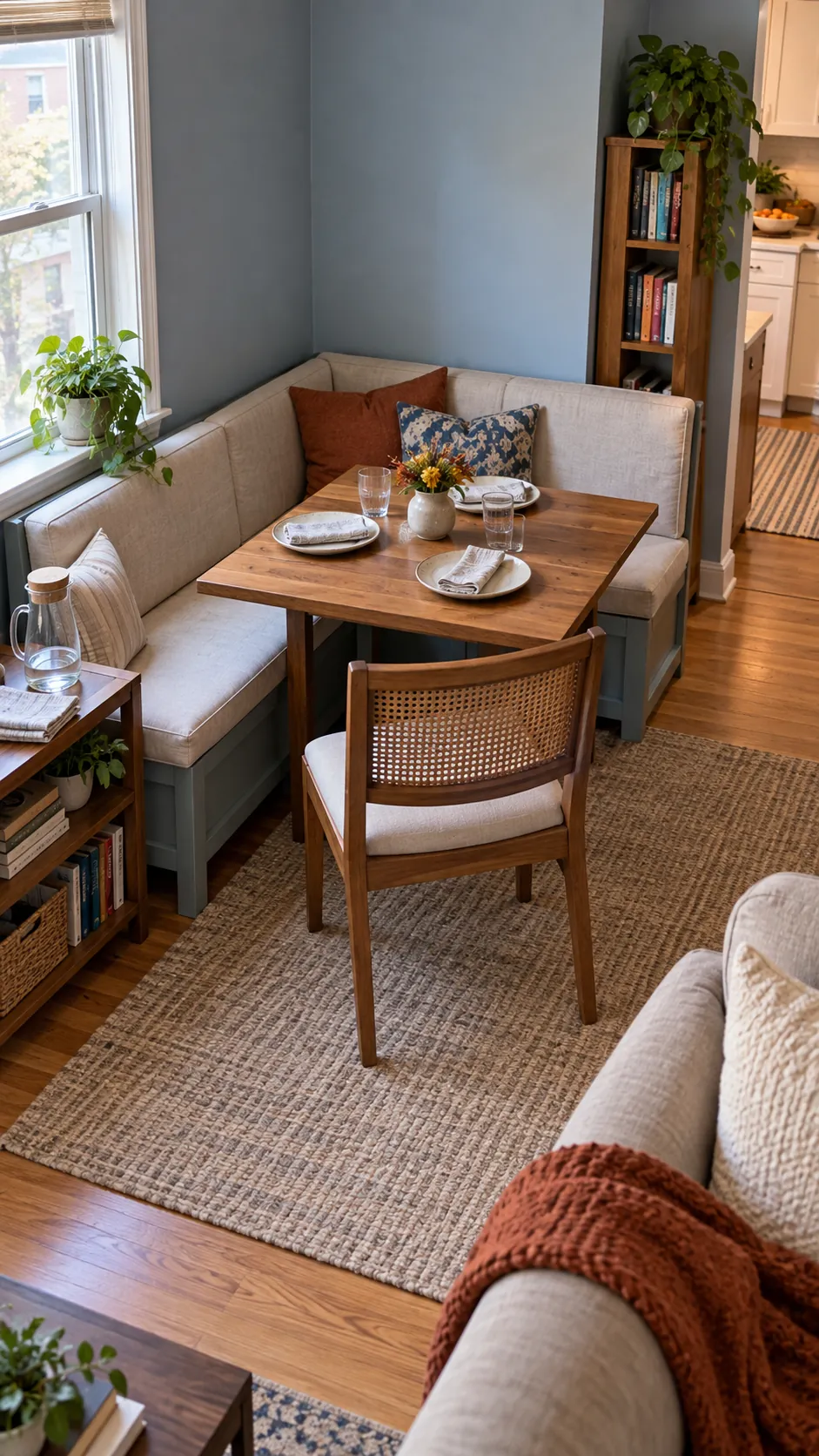
Turn a corner bench into a dining nook
A sturdy corner bench can use the edges of a living room that separate chairs would leave empty. Put a small square table within reach of every seat, then test how the inner guest gets out. Avoid trapping anyone behind other chairs or furniture, especially if they need easy access during the meal. A cushion can make the bench welcoming, but its back support matters more than extra pillows.
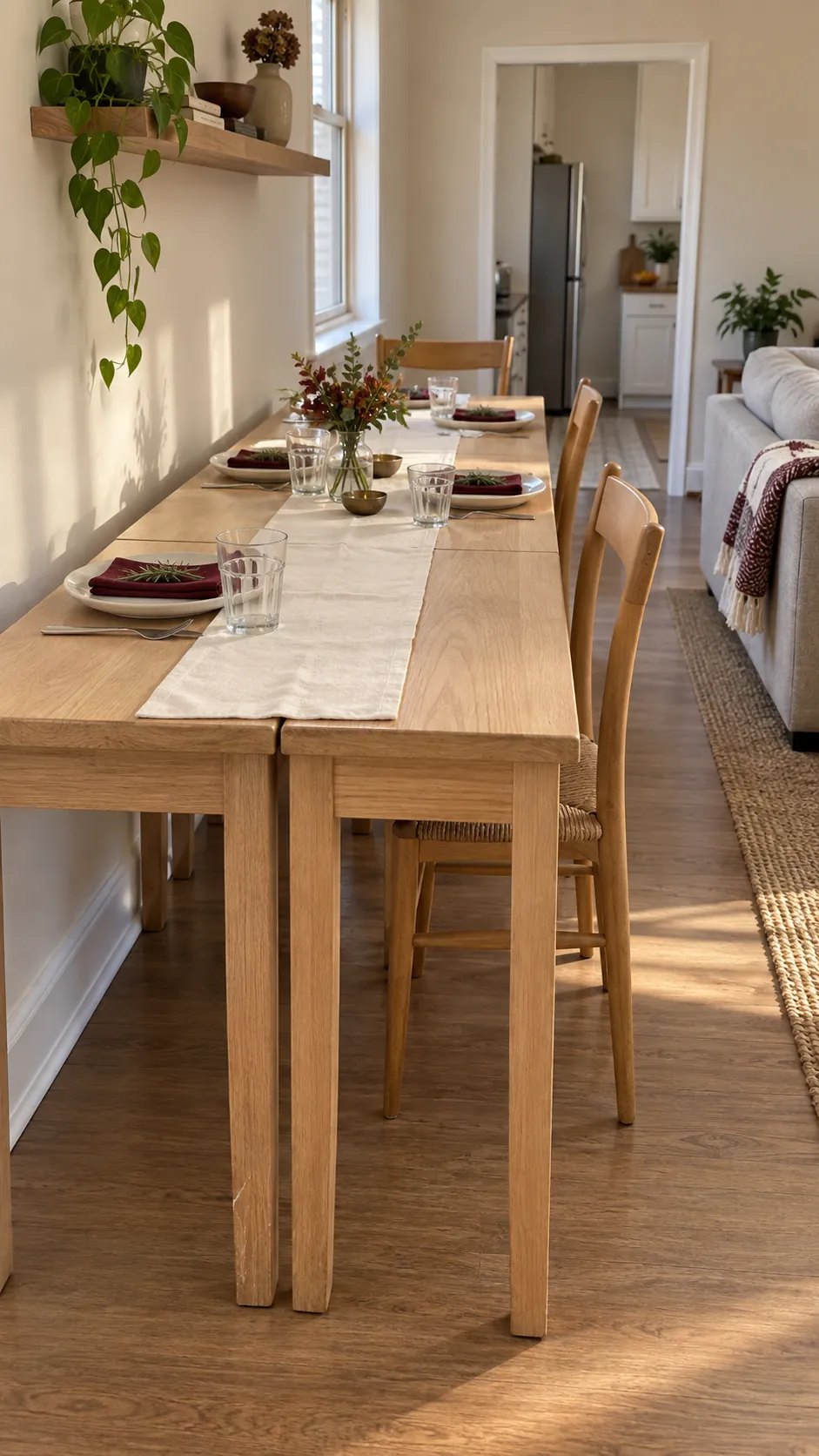
Line up two matching small tables
Two small tables at the same height can make a longer place for guests when no single large table fits in storage. Set them on a level floor and check that their edges meet without rocking or leaving a plate catching gap. Covering the join with a cloth is fine only after the surfaces are stable. This arrangement can run along a living room wall while retaining a route to the kitchen.
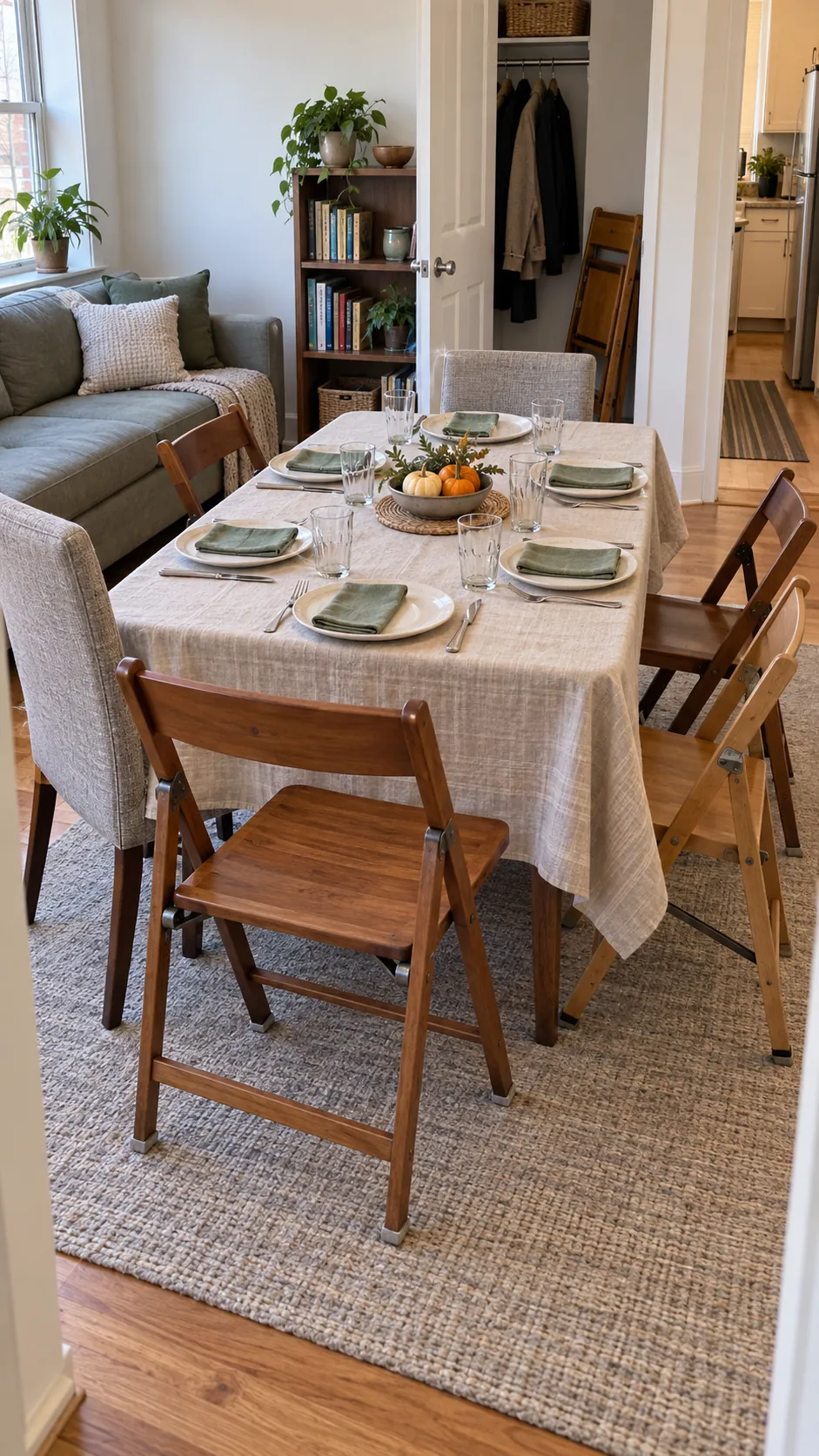
Borrow folding chairs for the day
Extra chairs need not live in the apartment all year for one holiday meal. Borrow sturdy folding chairs, check their locks and feet, and place them at the table before the day begins. Match each chair to a surface with enough elbow space rather than counting empty floor as a place to eat. Return the chairs promptly so the living room can recover its ordinary circulation.
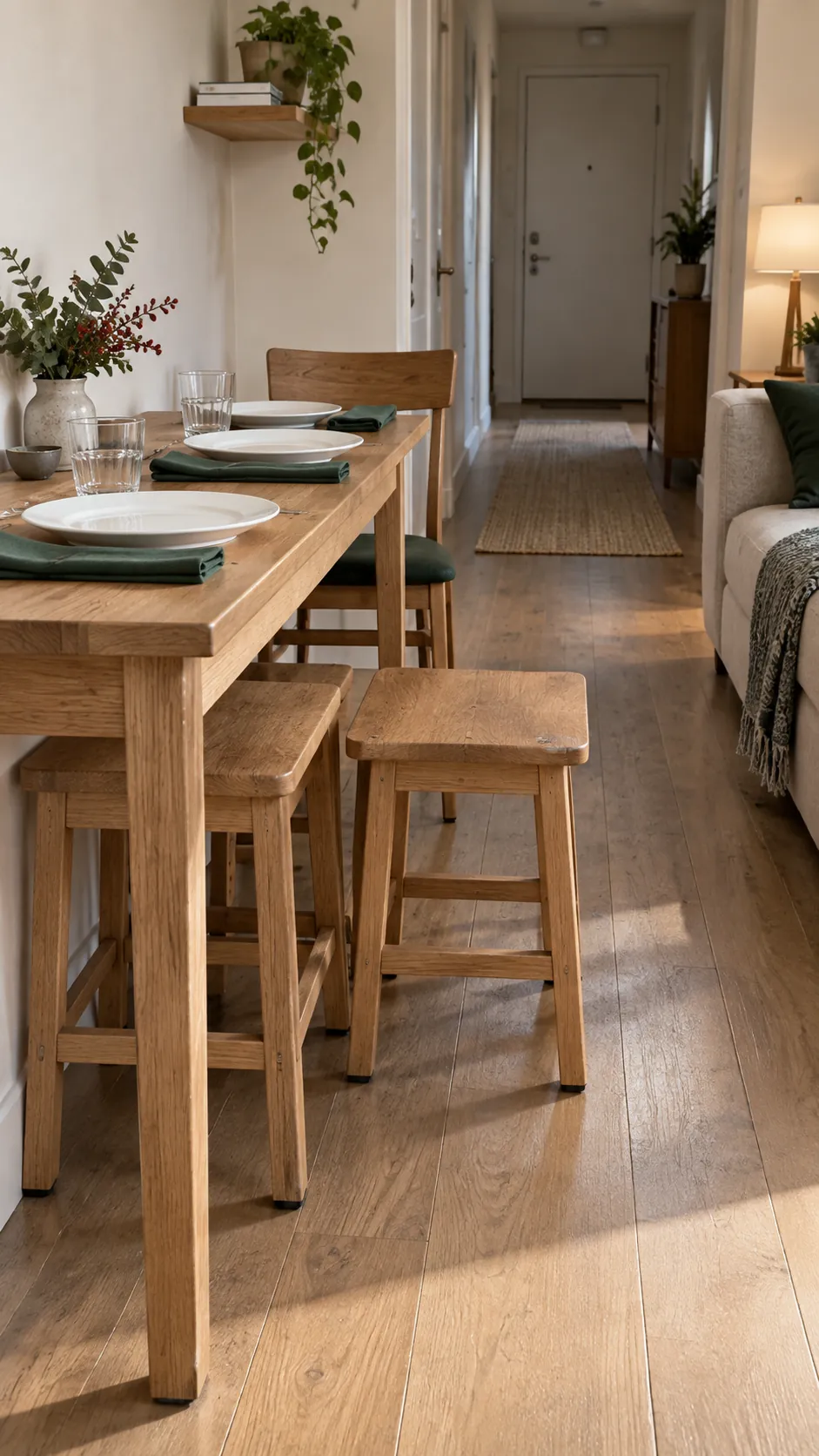
Tuck backless stools under the table
Backless stools can add flexible seats where chair backs would collide with a sofa or wall. Slide them under the table between courses to reopen the path through the room. Check stool stability and choose them for guests who are comfortable sitting without back support for a full meal. A high stool at a low table is not a substitute for a properly matched seat.
Bring the work chair into the meal
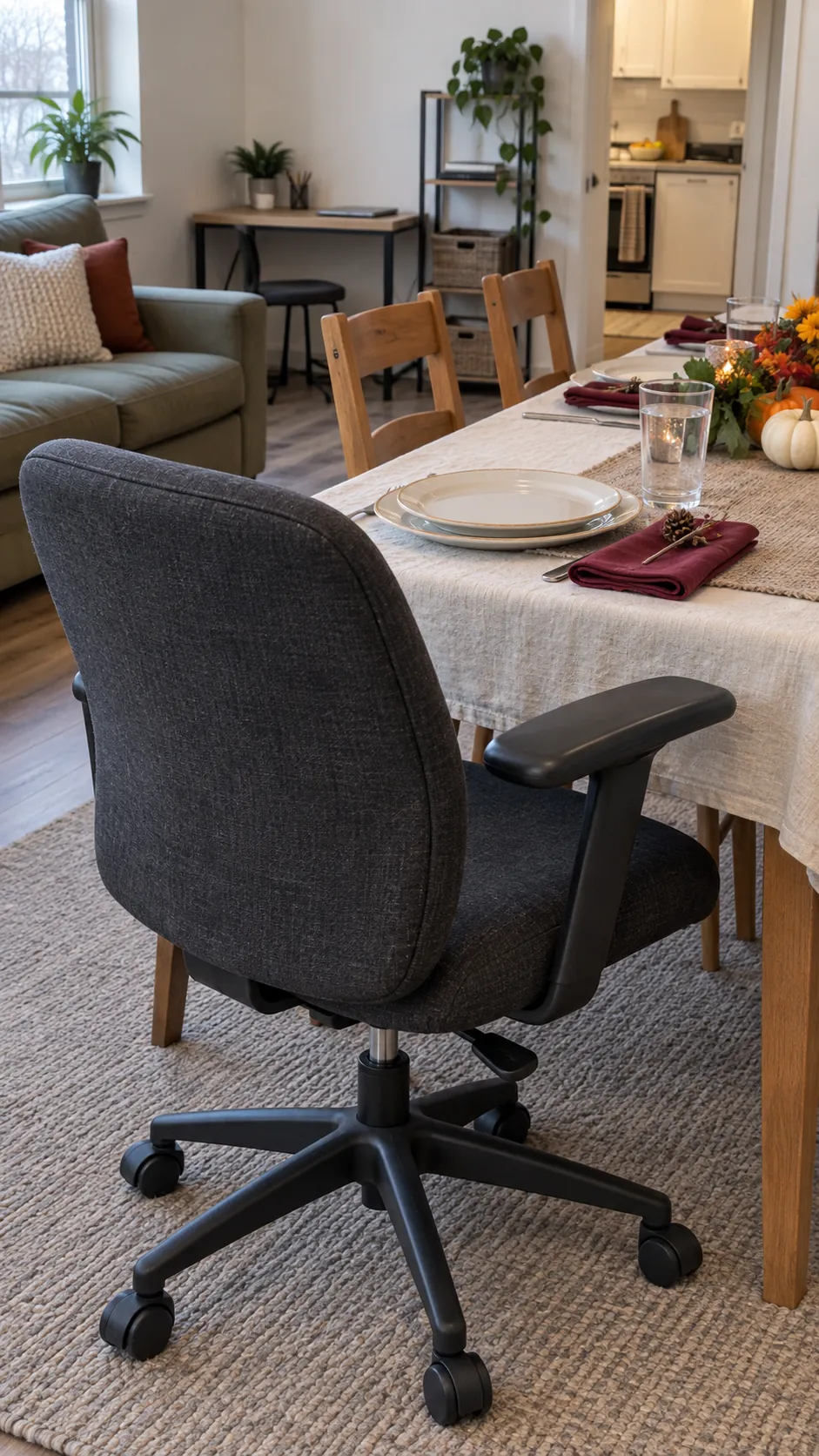
An office chair can serve one guest if it fits the table and rolls safely on the floor. Clean its arms and seat, adjust the height, and check that the casters do not move when the guest leans forward. Position it where its width does not block another diner. This is a sensible way to use a chair already in the apartment without buying one that needs storage later.
Set a separate small table for children
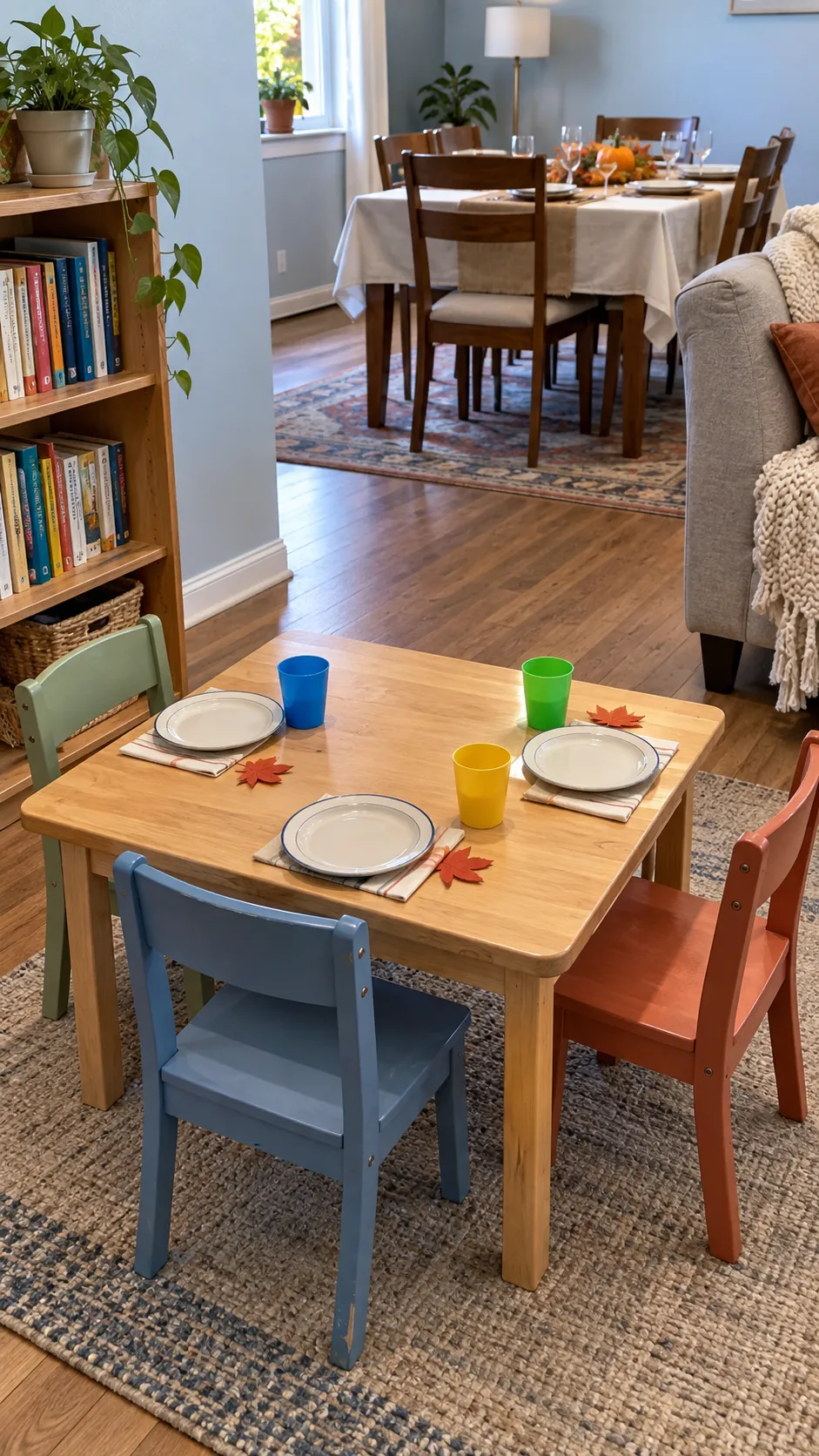
A child sized table can free comfortable adult seats if the children are old enough to eat there appropriately. Put it within sight of caregivers and away from a door swing or hot serving area. Use chairs that match its height and give each child a full stable plate surface. The small table should be a welcoming place, not a way to squeeze more people into an unsafe corner.
Divide the meal into two nearby zones
When one table cannot seat everyone, make two intentional dining zones rather than scattered improvised perches. A compact table in the living room and a counter or desk nearby can each hold a small group with proper plate space. Leave a clear route between them and place shared food at a neutral serving point so guests are not reaching over one another. Count and test every actual seat before inviting people, then choose the arrangement that lets everyone eat comfortably.