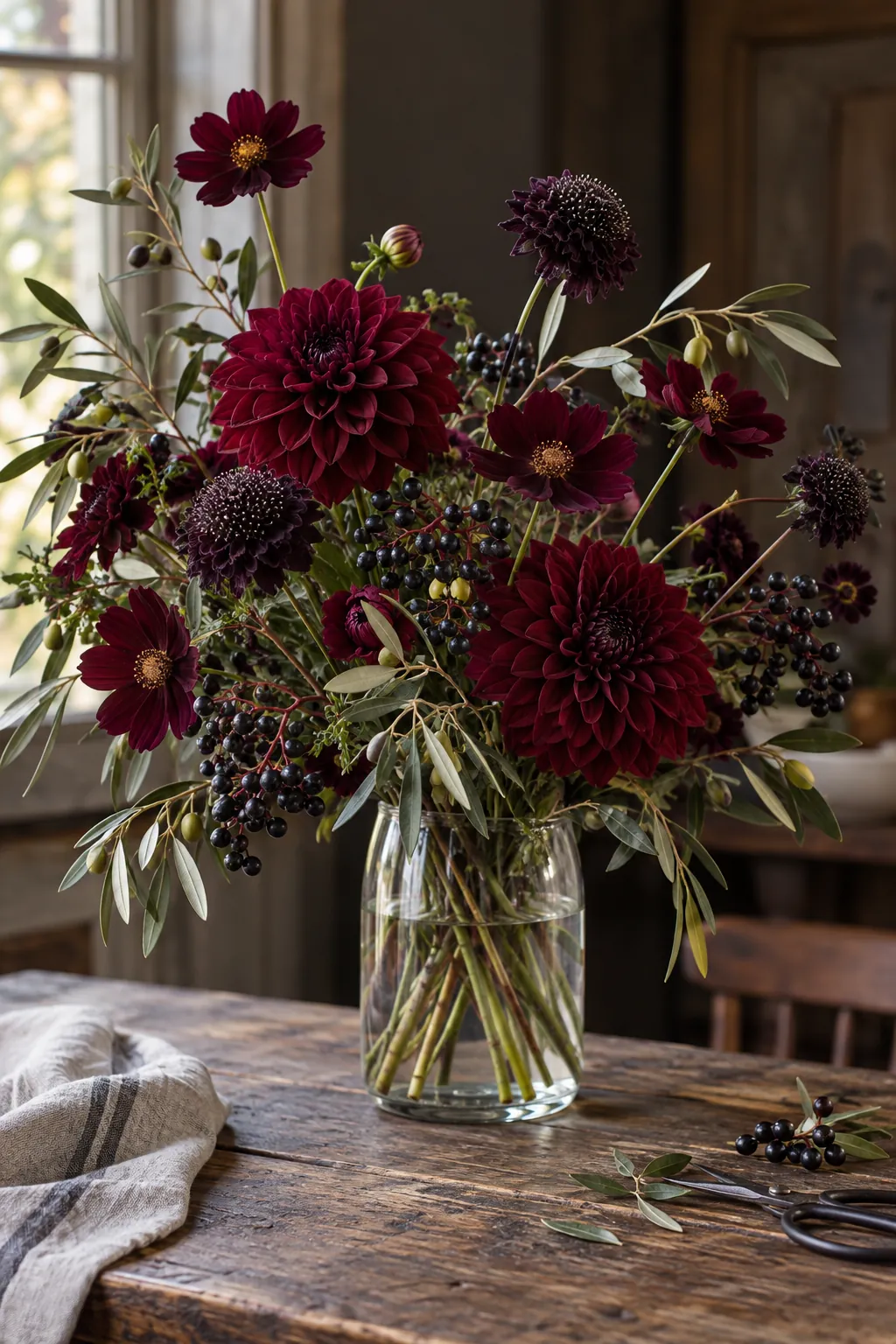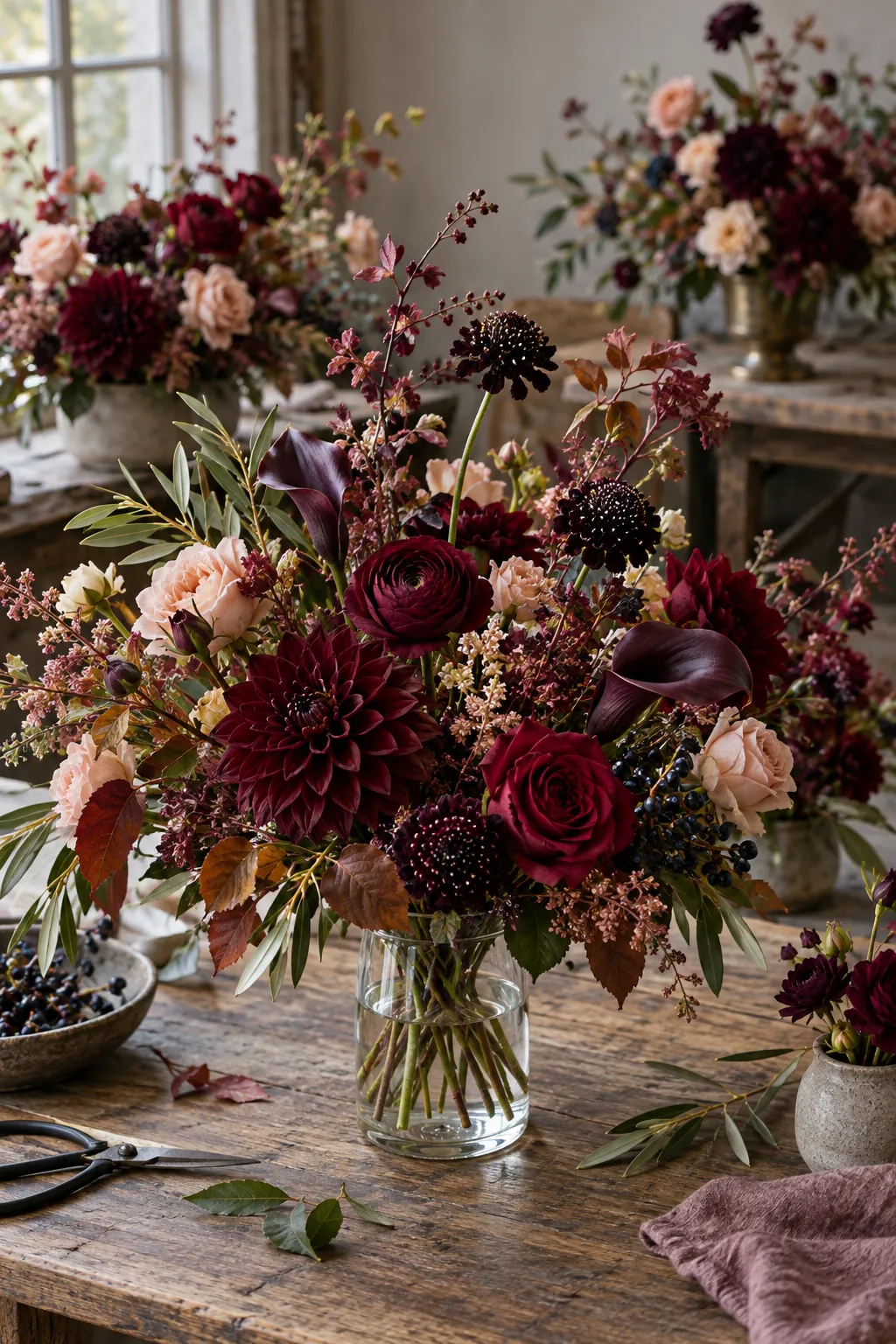
Burgundy can create depth without turning a bouquet into one dark block. The key is to vary flower scale, preserve open space, and add a partner color that reveals whether the burgundy leans red, purple, or brown. These combinations use those contrasts to keep moody fall flowers readable in natural light.
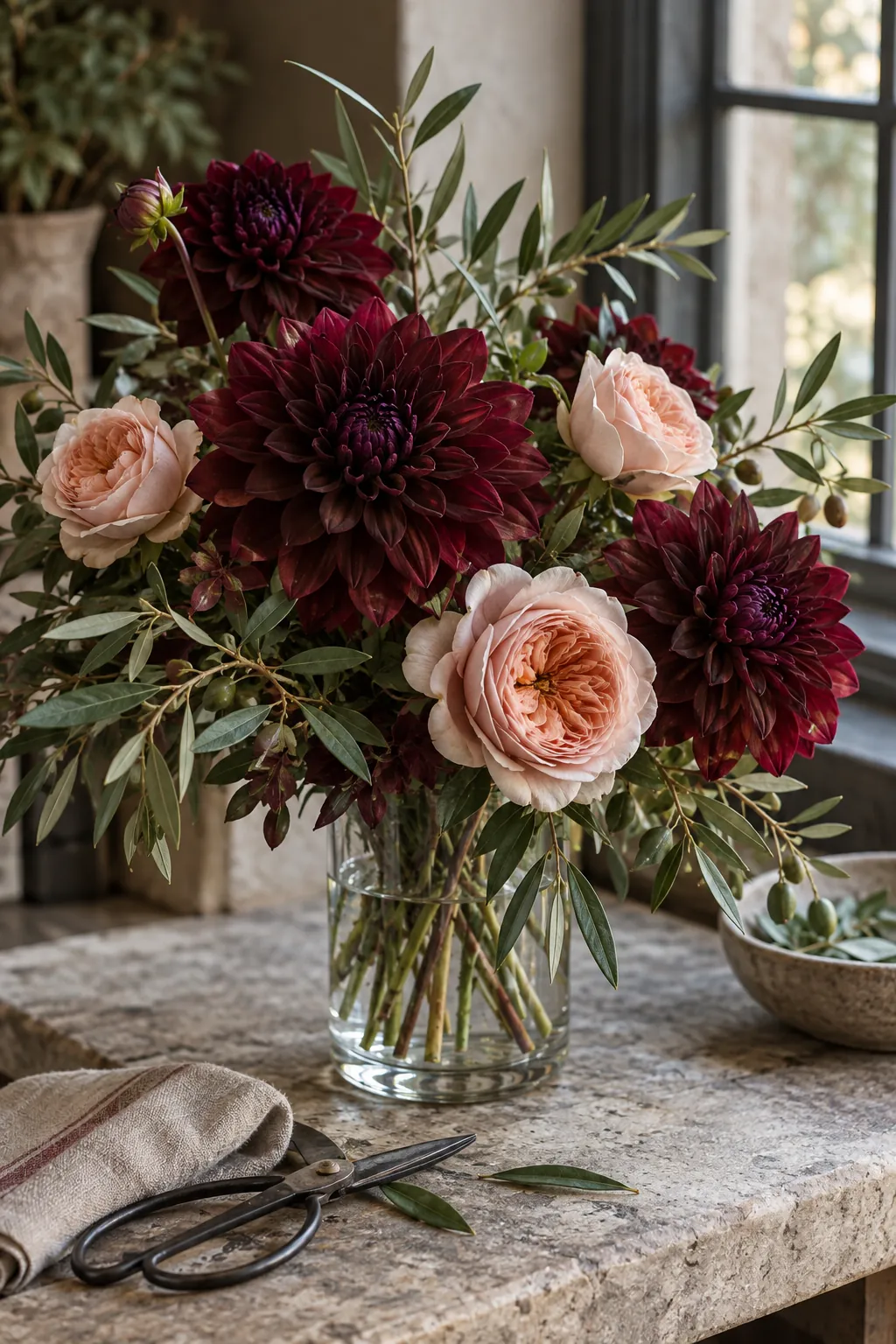
Burgundy Dahlias With Blush Roses
Blush roses reveal the red undertone in burgundy dahlias without making the bouquet too dark. Place the dahlias low and deep, then let a few roses catch the light near the outline. Olive foliage adds a muted bridge that keeps this dramatic palette soft enough for an intimate table or ceremony.
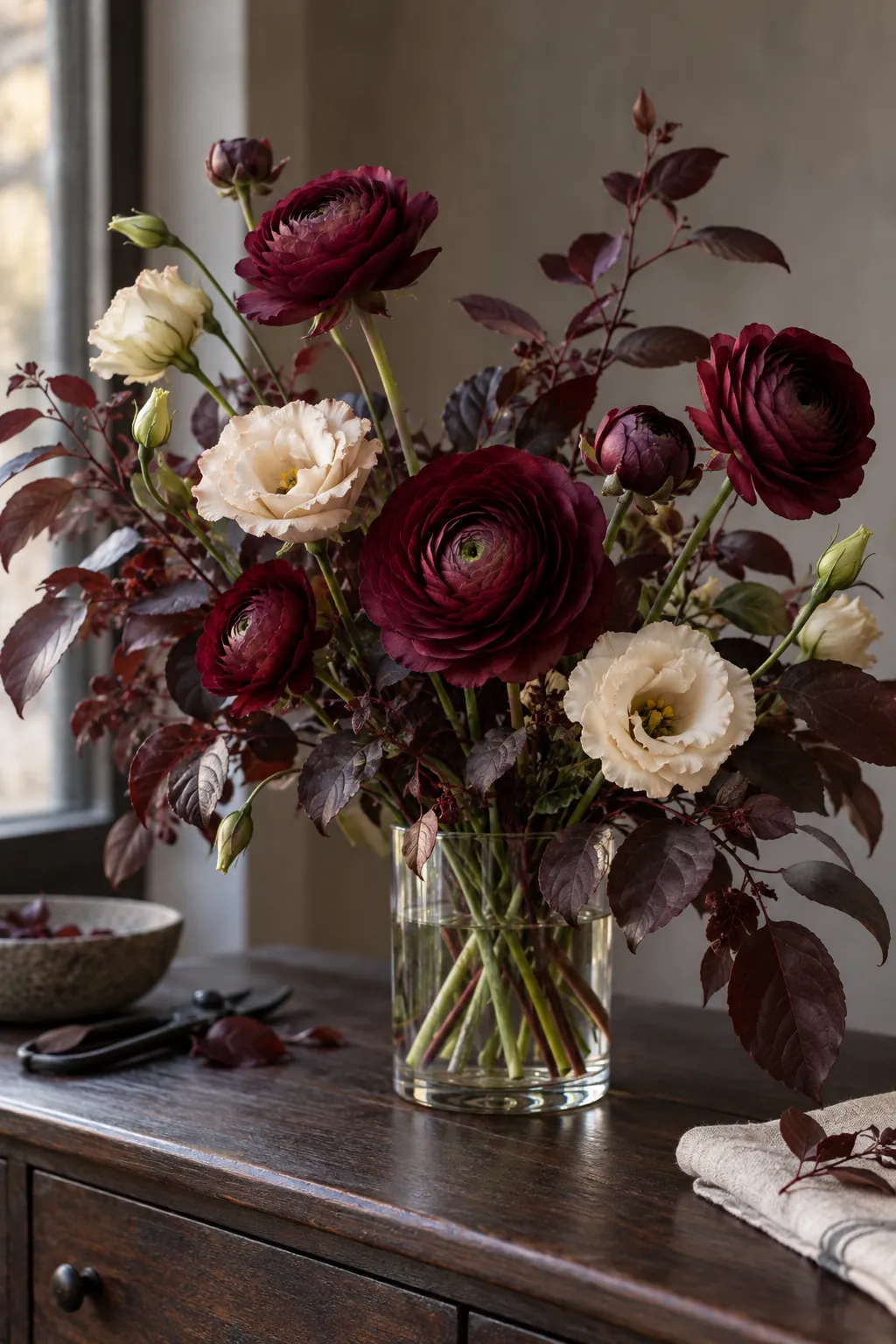
Wine Ranunculus With Cream Lisianthus
Cream lisianthus gives wine ranunculus enough contrast for their layered petals to remain visible. Use the cream flowers in small uneven groups instead of a bright ring around the center. Plum foliage repeats the cool shadow color and keeps the arrangement moody rather than stark.
Burgundy Carnations With Chocolate Cosmos
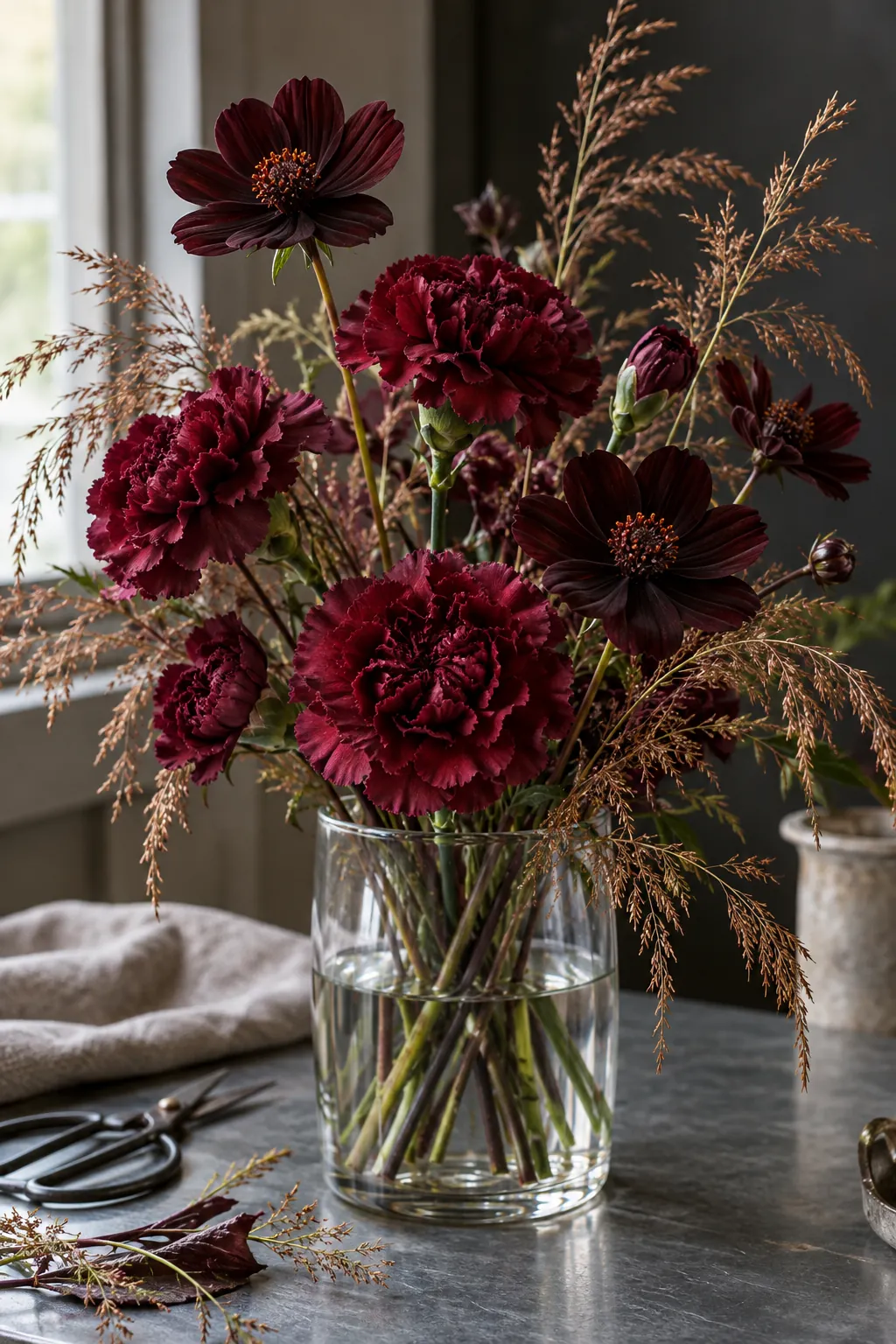
Burgundy carnations provide volume while chocolate cosmos adds a smaller near brown detail. Loosen the carnations into irregular clusters so their ruffled faces do not form a solid mass. Fine bronze grass creates movement and gives the compact flowers a more natural autumn outline.
Dark Red Roses With Plum Scabiosa
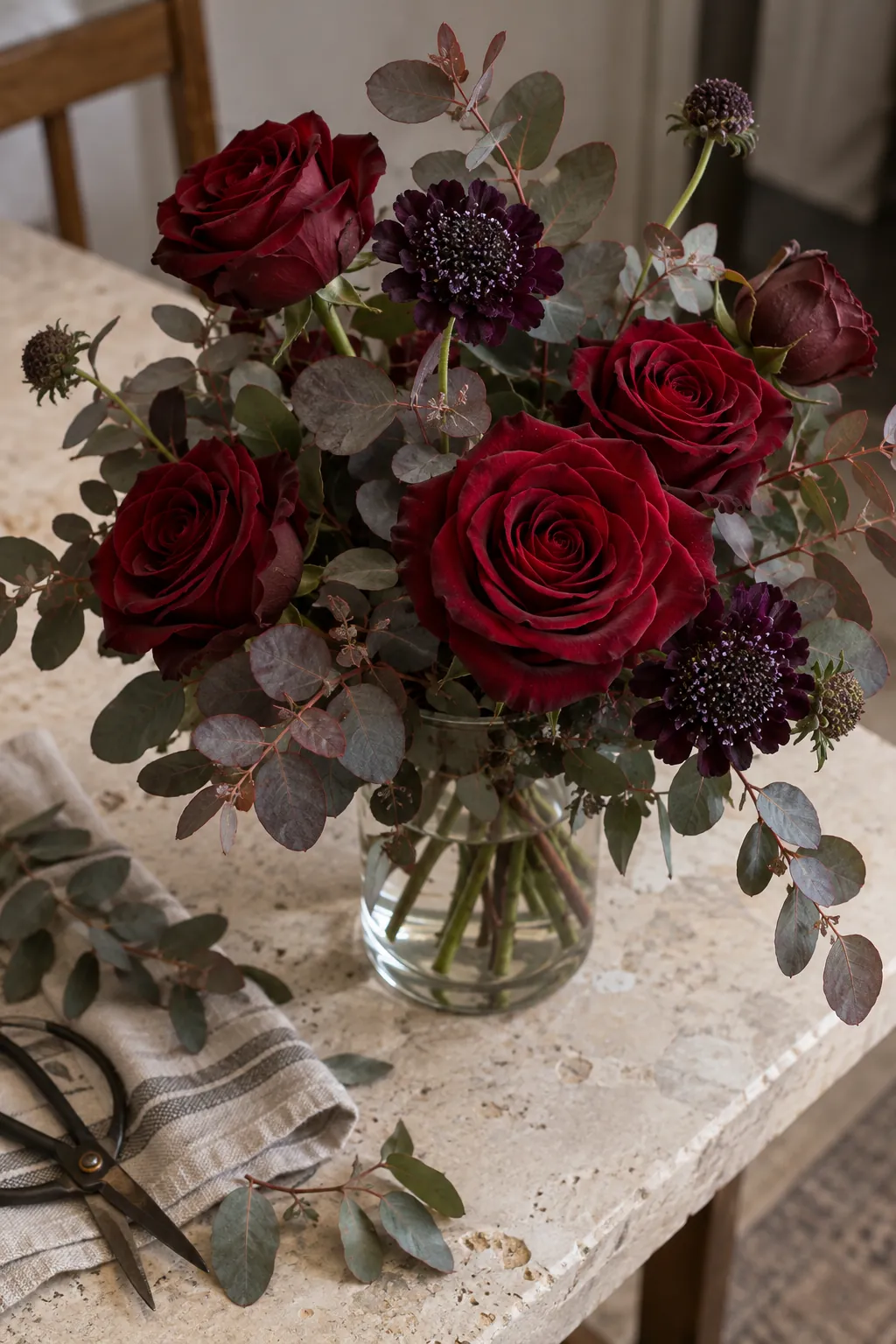
Plum scabiosa cools dark red roses and separates the bouquet from a classic red arrangement. Lift the scabiosa above the rose faces so its pin cushion shape remains clear. Smoky eucalyptus softens the outer edge and prevents the two deep colors from closing in on each other.
Burgundy Peonies With Blackberries
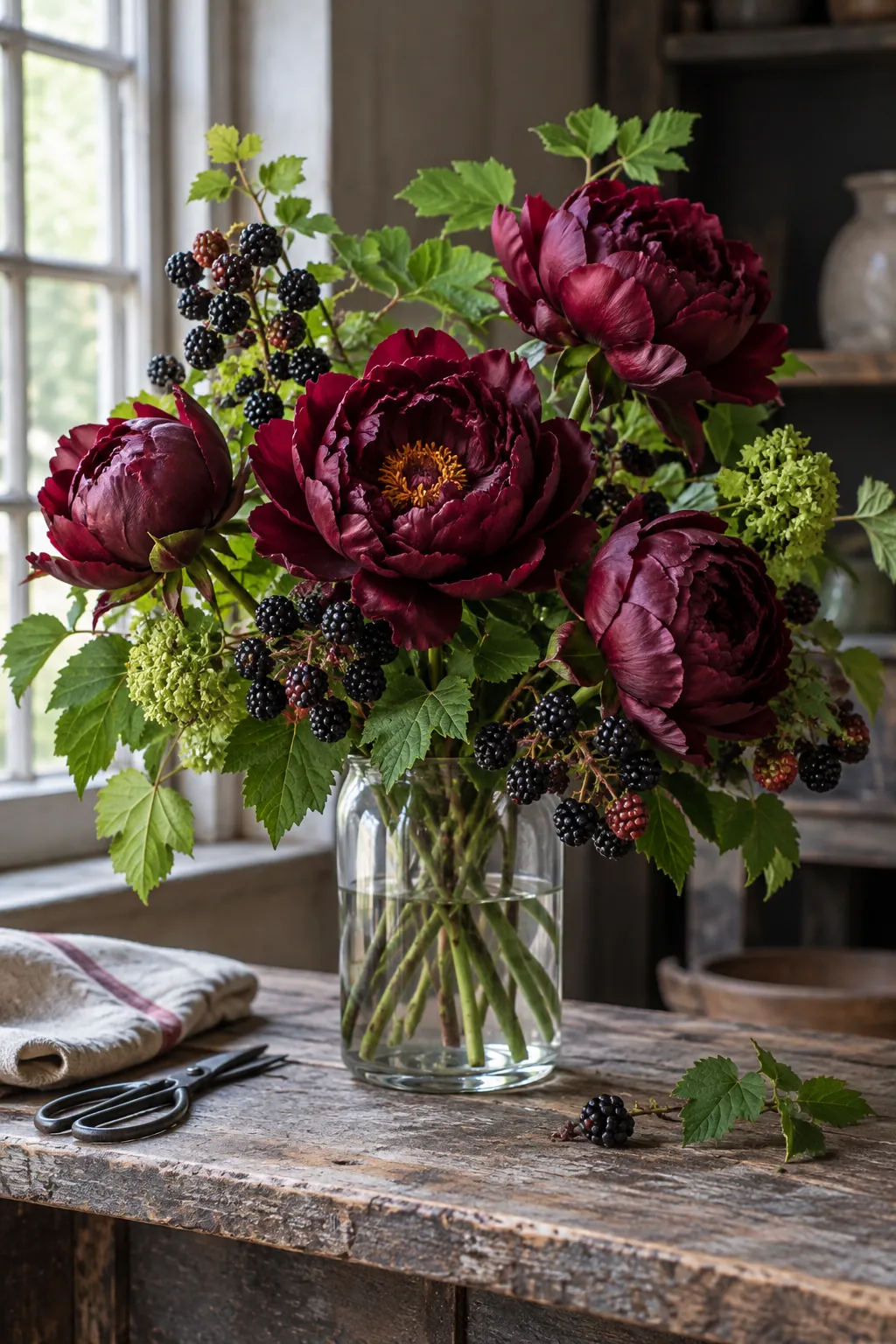
Blackberries give burgundy peonies a rich garden harvested character without introducing another large flower. Keep the fruit on sturdy branches and place it where the berries will not press into delicate petals. Green viburnum leaves add enough freshness to stop the palette from reading as almost black.
Merlot Mums With Copper Beech
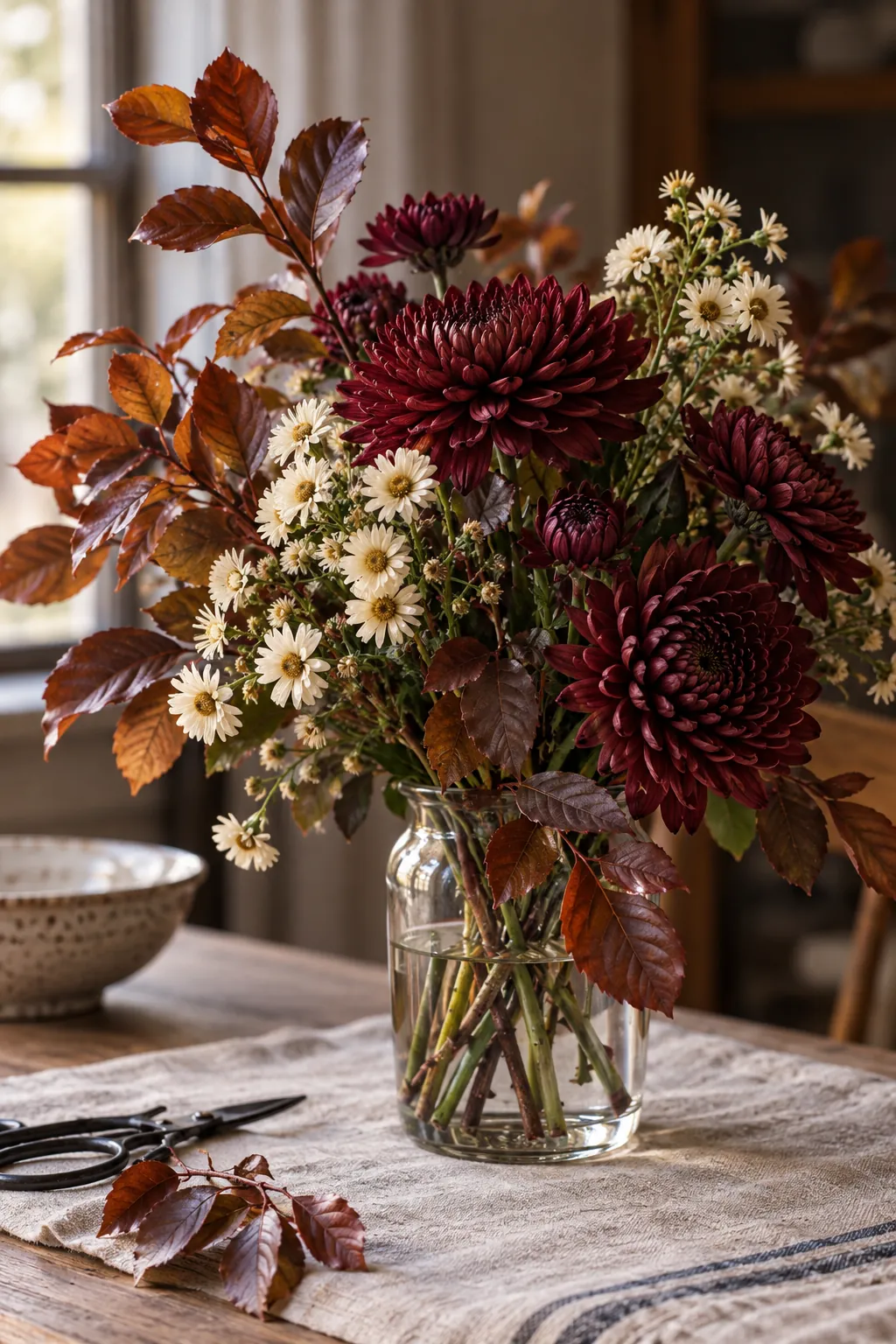
Copper beech brings out the warm side of merlot chrysanthemums while cream asters restore a small point of light. Build the mums at mixed heights so their dense forms stay lively. Let the leaves extend beyond the flower line for a distinctly woodland inspired silhouette.
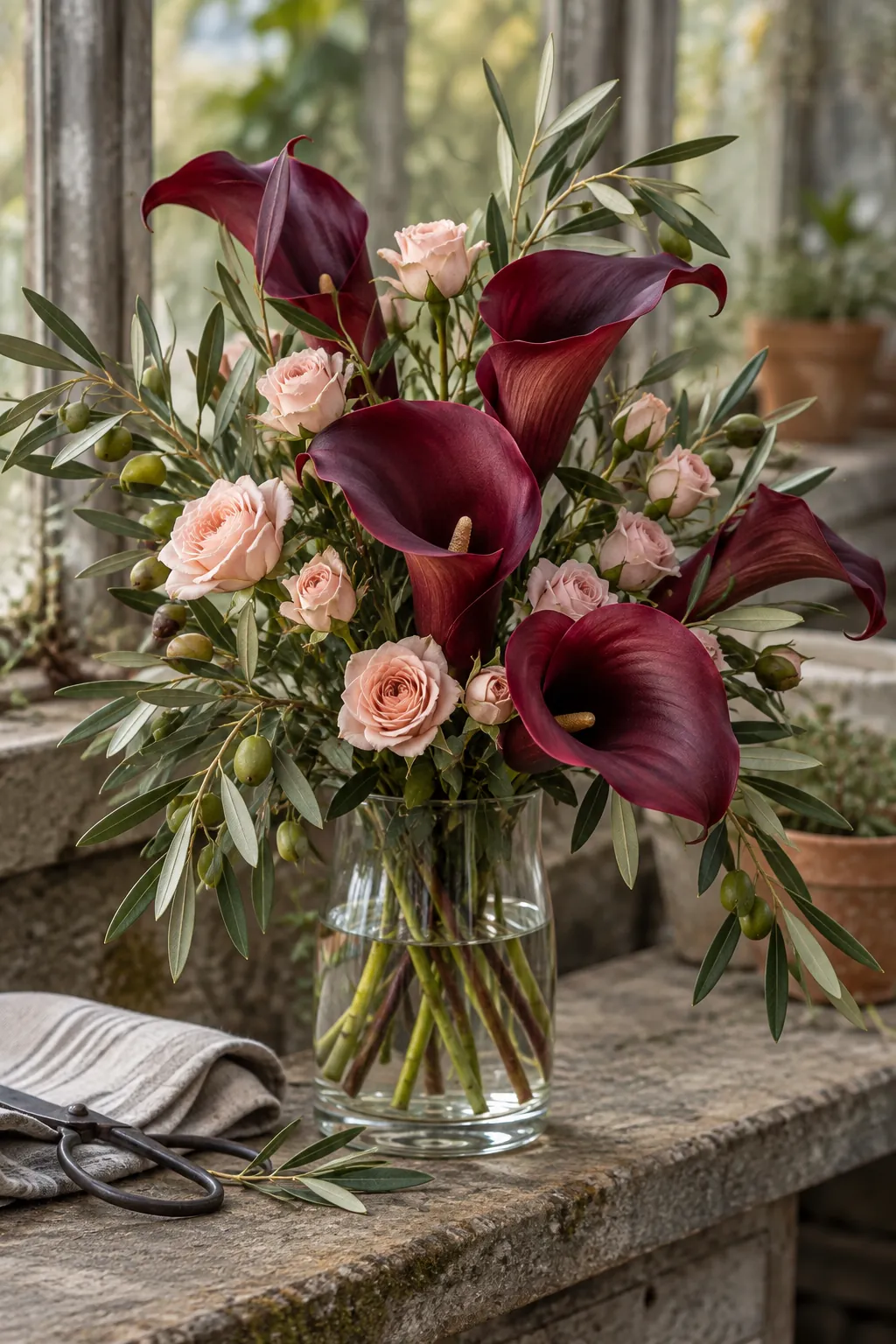
Burgundy Calla Lilies With Olive Branches
The clean curves of burgundy calla lilies create a sleek moody bouquet with very little filler. Angle the callas in different directions and use olive branches to support their long lines. A few blush spray roses soften the negative space without hiding the sculptural flowers.
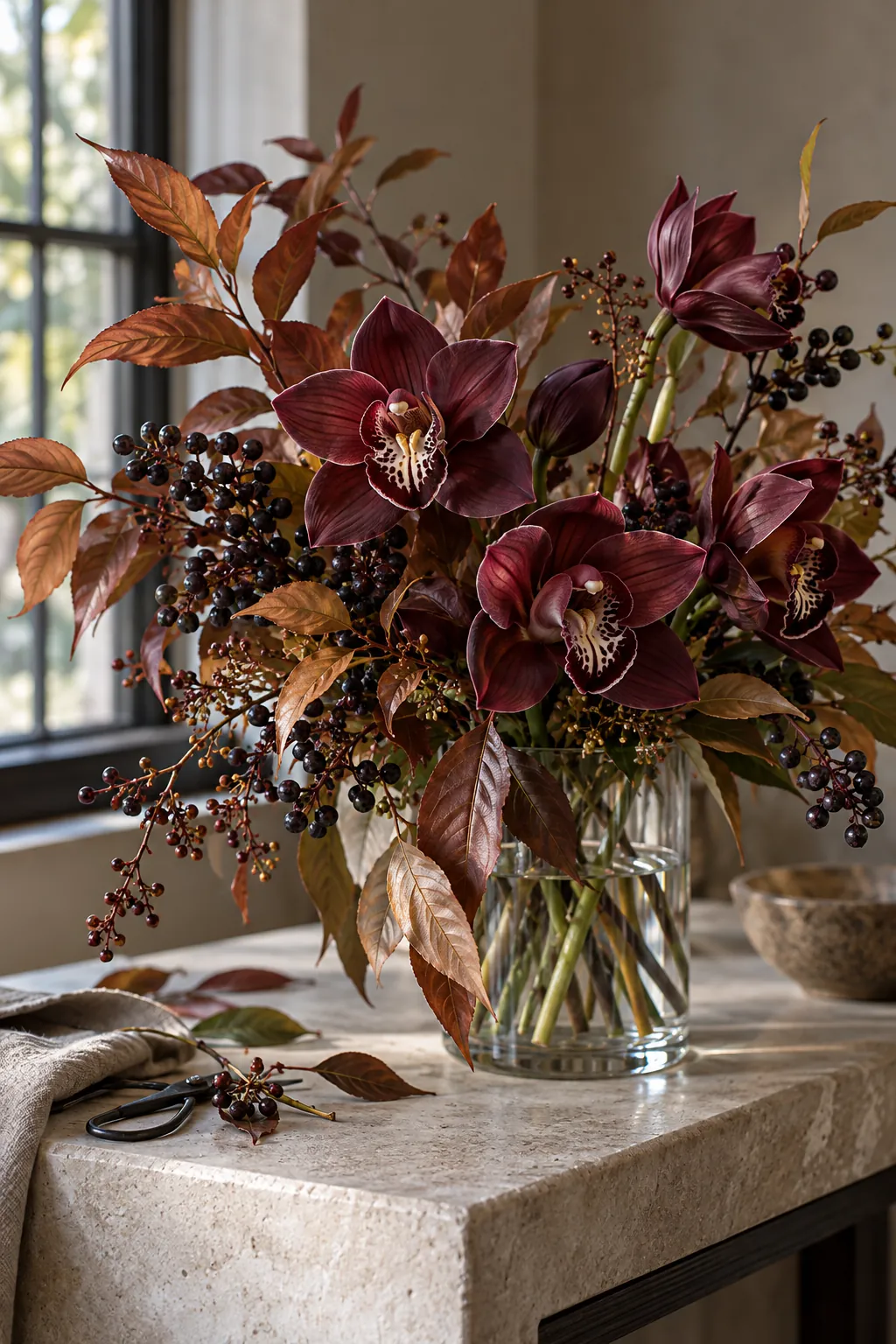
Wine Orchids With Bronze Foliage
Wine orchids look especially rich against matte bronze foliage because the textures are clearly different. Give each orchid bloom open space and repeat its color with only a few dark berries. The result feels polished and autumnal without becoming a dense formal dome.
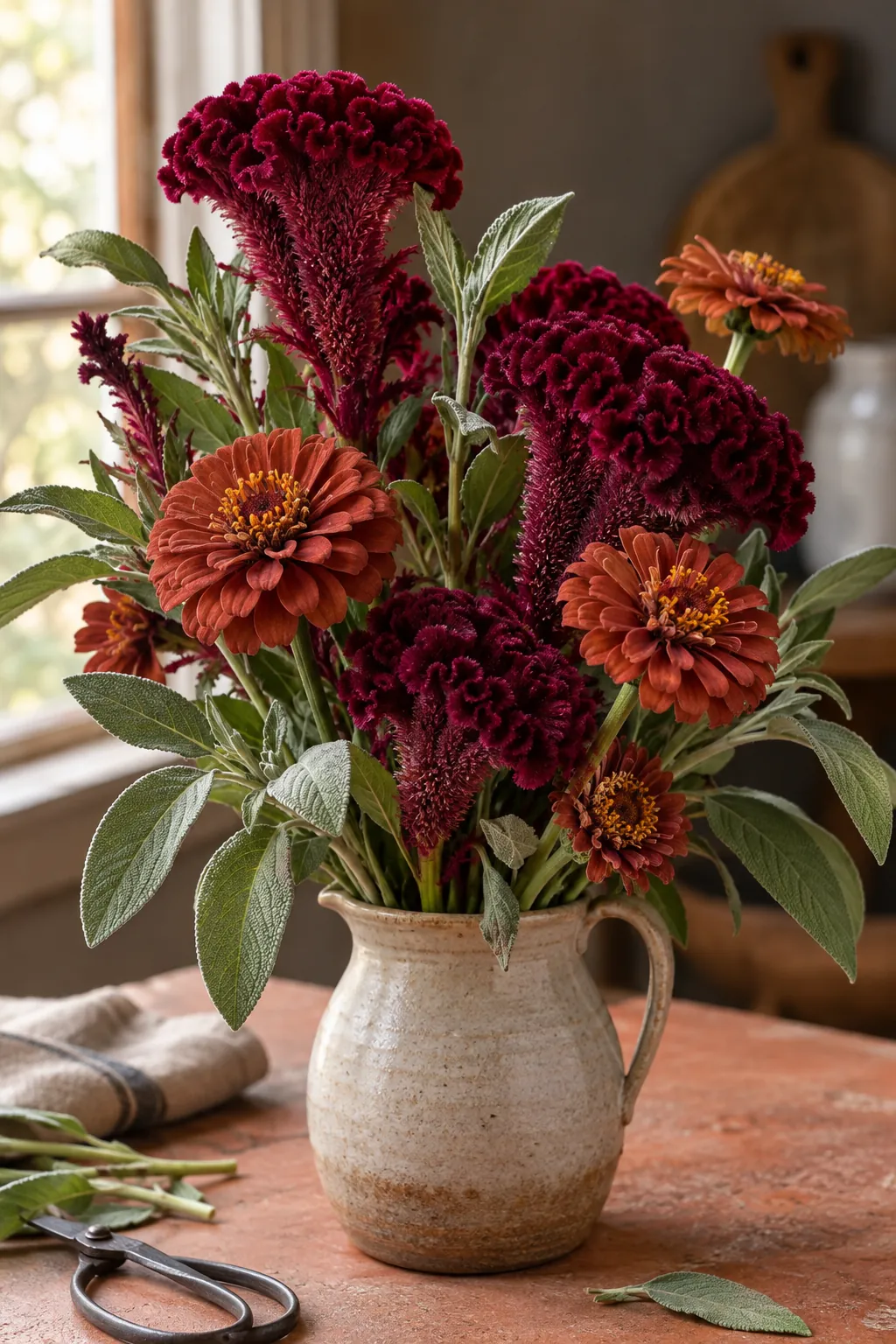
Burgundy Celosia With Rust Zinnias
Burgundy celosia and rust zinnias share warmth but offer completely different surfaces. Use the celosia as an irregular central accent, then stagger the round zinnias around it. Sage leaves cool the color mix and make both saturated tones easier to see.
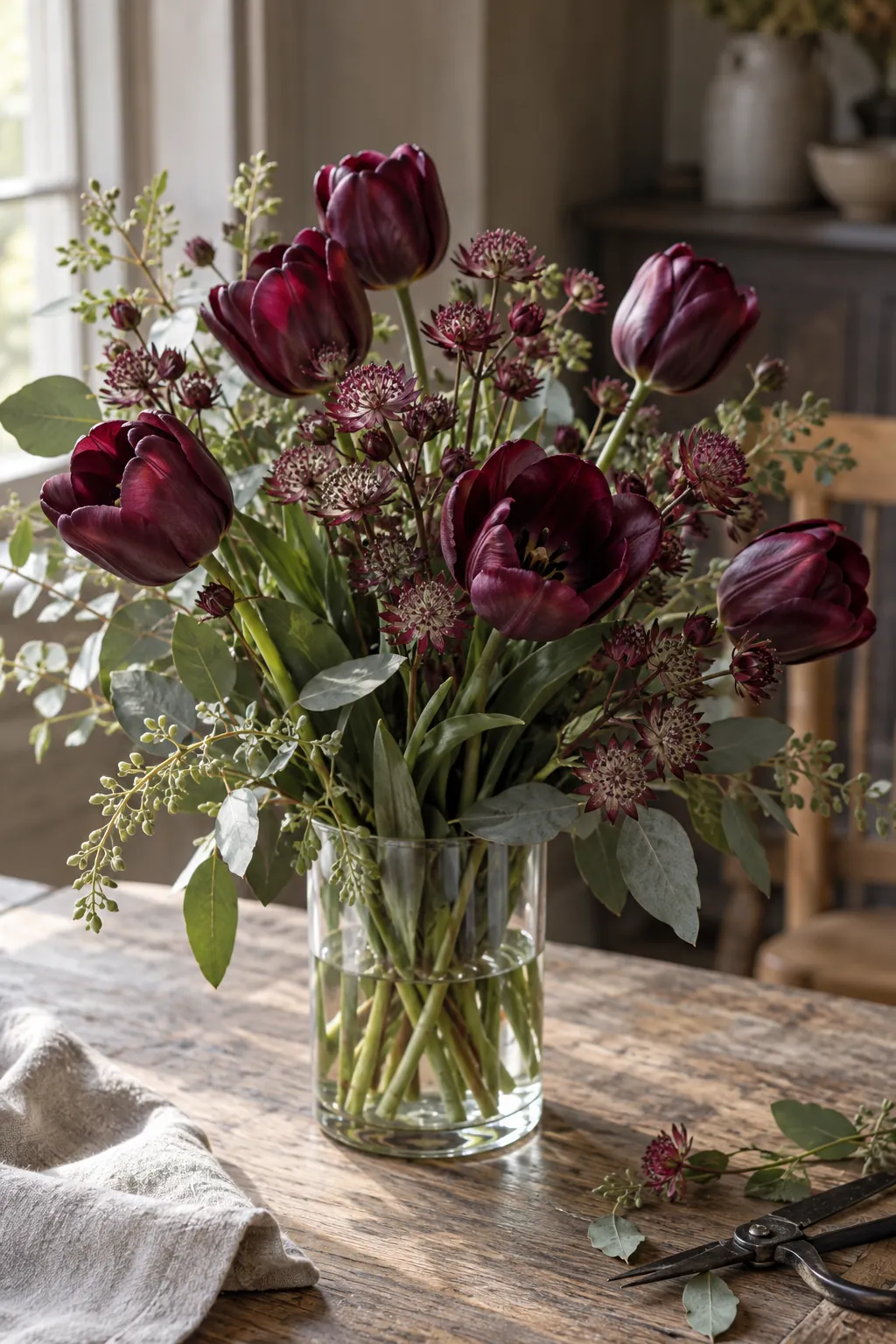
Deep Plum Tulips With Burgundy Astrantia
Deep plum tulips create smooth flowing lines while burgundy astrantia adds fine star shaped texture. Leave some tulip stems taller so their natural bends define the bouquet outline. Gray green foliage fills only the lower structure and preserves the elegant upper movement.
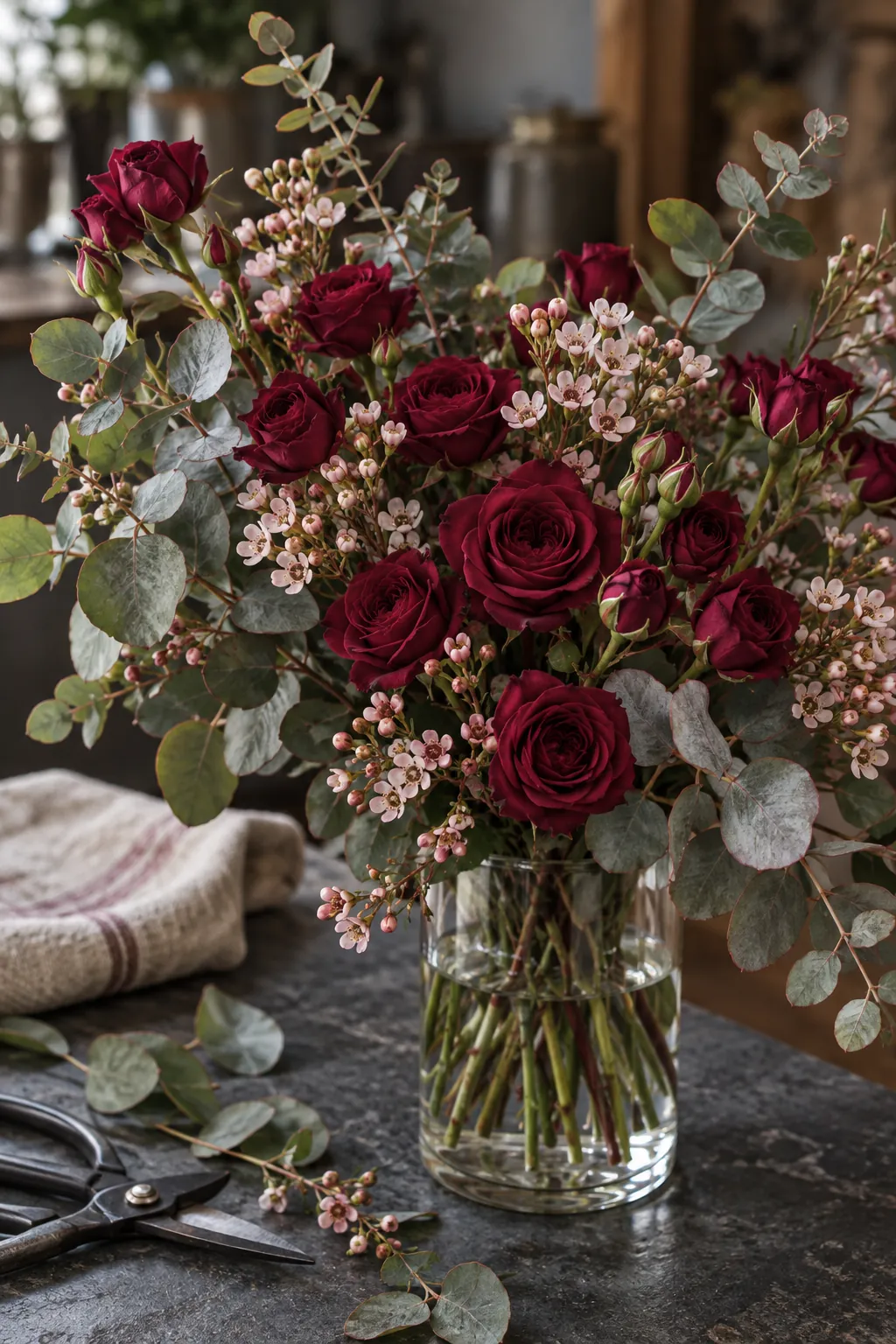
Burgundy Spray Roses With Smoky Eucalyptus
Burgundy spray roses make a detailed bouquet because every branch carries several bloom stages. Spread the branches so buds, half open flowers, and full roses remain visible. Pale pink waxflower introduces tiny highlights while smoky eucalyptus maintains the subdued fall mood.
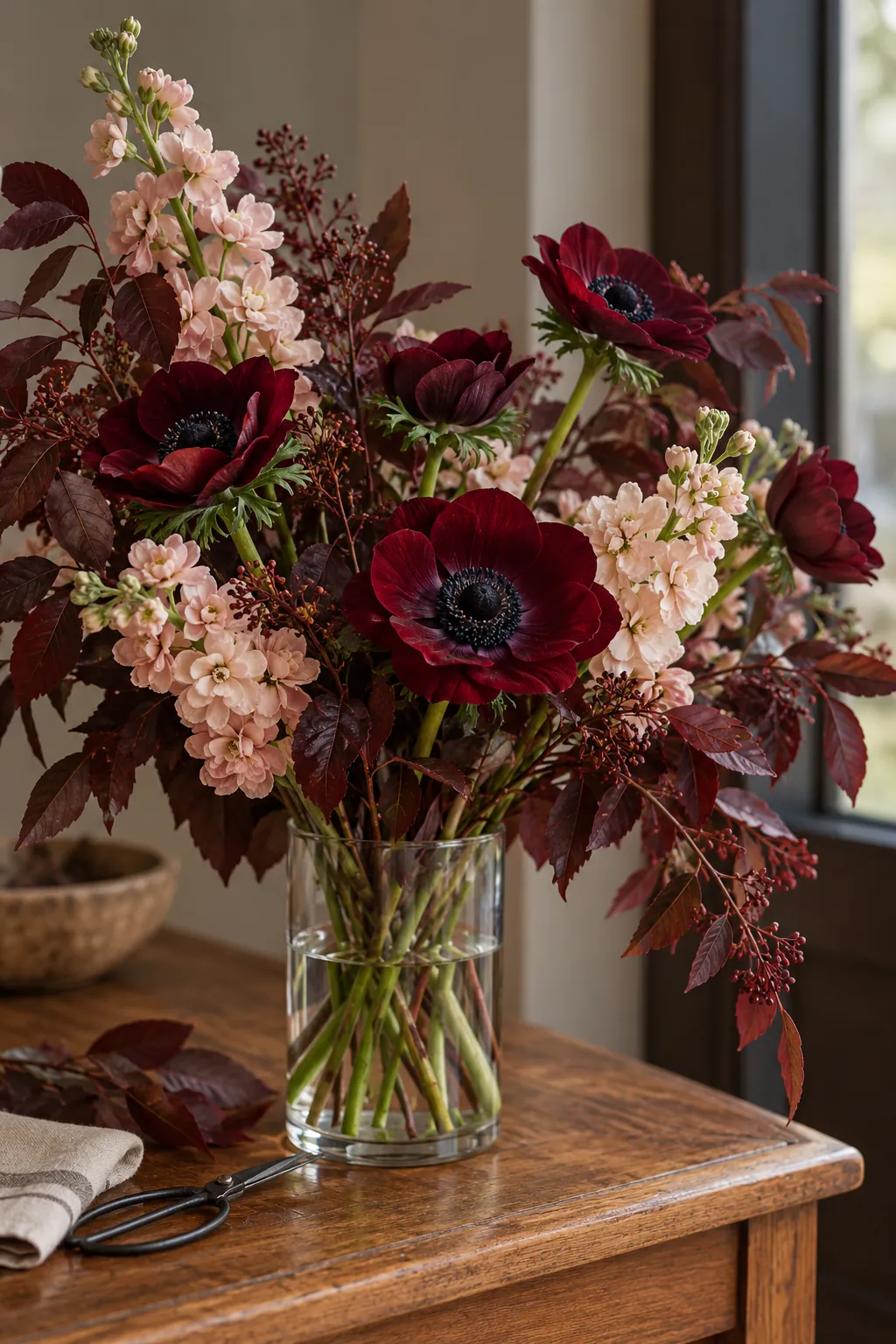
Dark Red Anemones With Blush Stock
Dark red anemones bring strong centers that keep blush stock from feeling overly sweet. Place the anemones at several depths and let the stock create broken vertical lines. Burgundy foliage around the base links the contrast and gives the bouquet a settled autumn foundation.
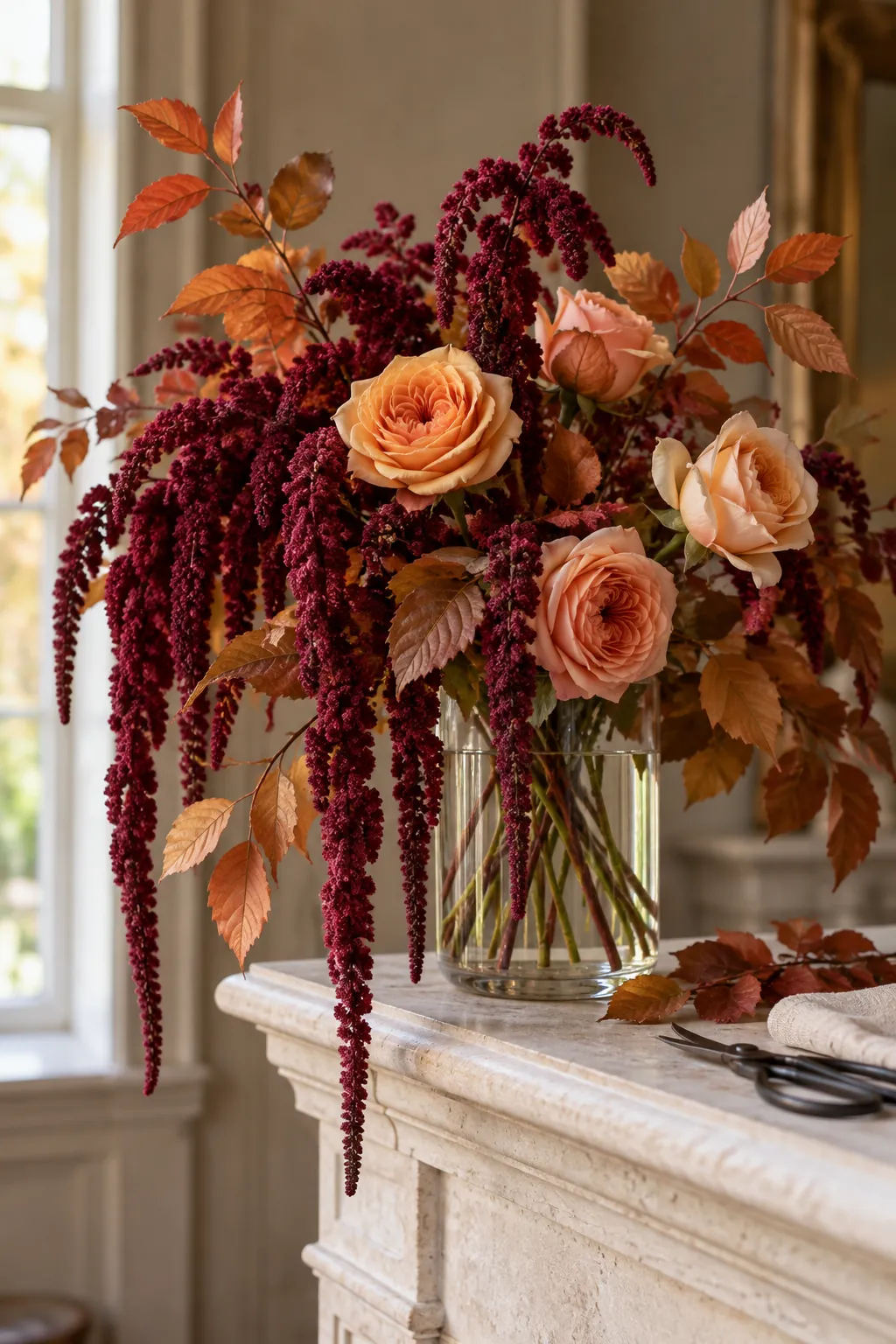
Burgundy Amaranthus With Apricot Roses
Apricot roses warm burgundy amaranthus while the trailing form adds unmistakable drama. Use one controlled fall of amaranthus and repeat the burgundy shade near the bouquet center. Copper leaves continue the warm transition without competing with the roses.
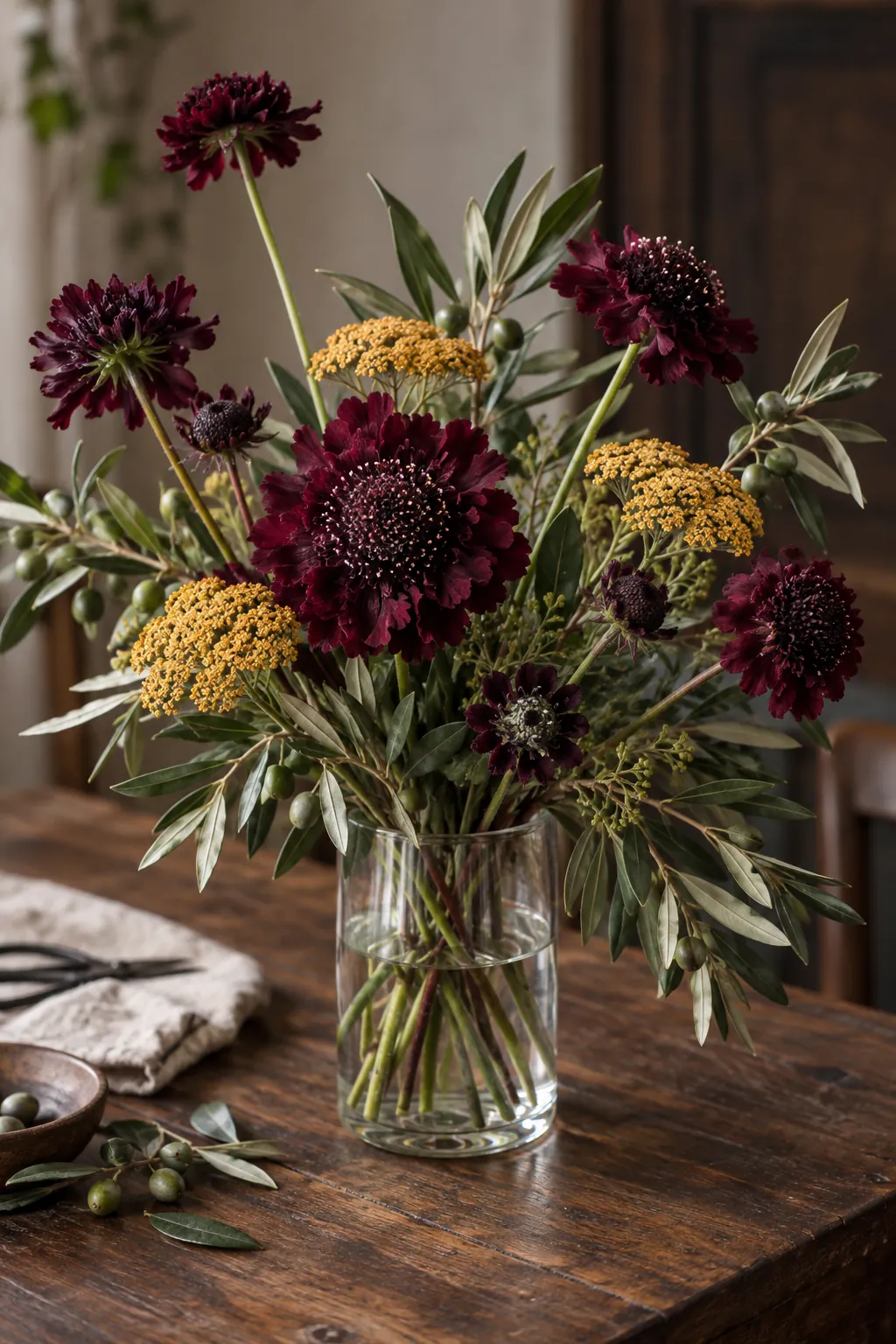
Wine Scabiosa With Golden Yarrow
Golden yarrow makes wine scabiosa feel brighter and more distinctly autumnal. Break the yarrow into small clouds so the yellow does not form one loud block. Olive greenery connects the two colors and keeps the bouquet grounded in a natural meadow palette.
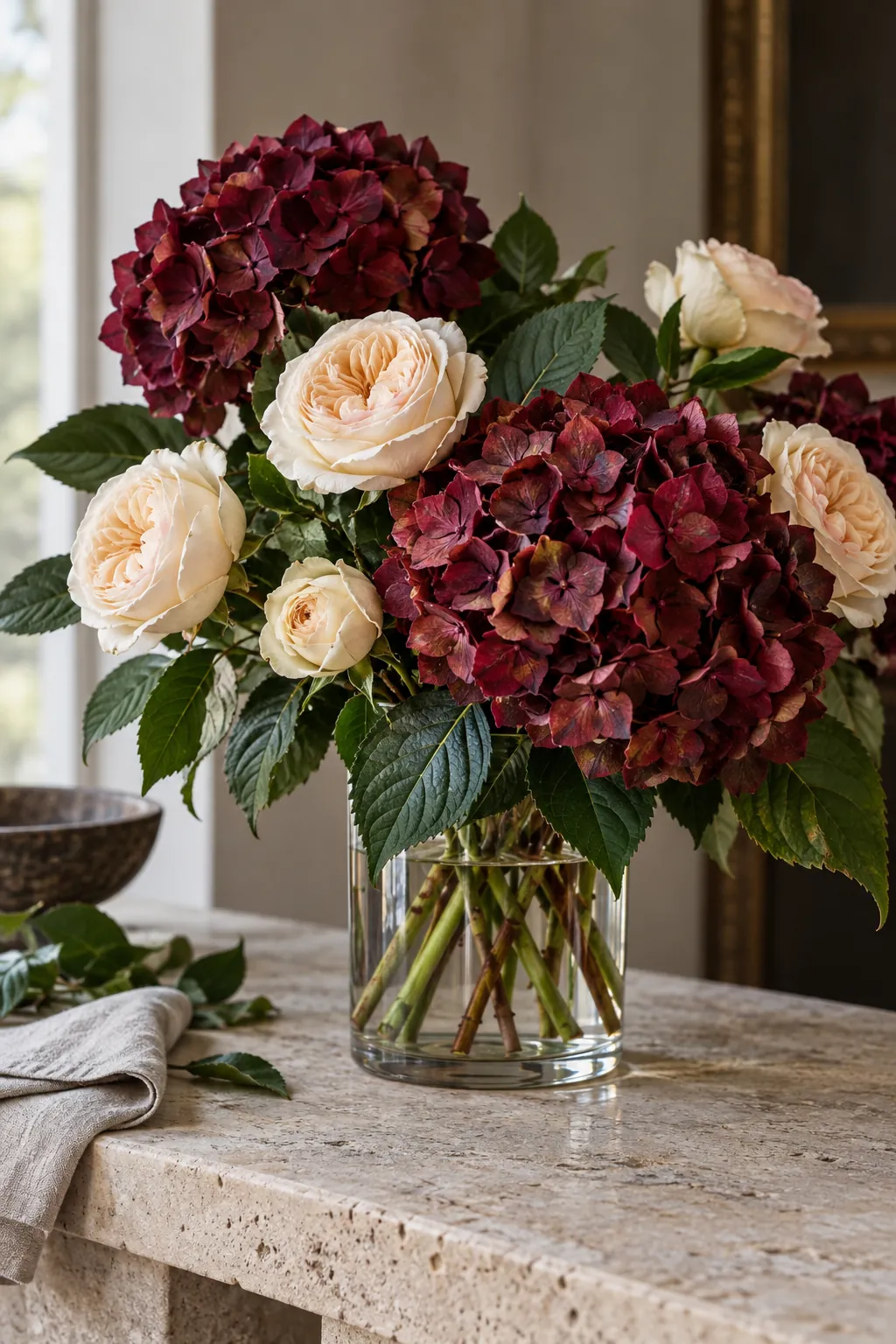
Burgundy Hydrangea With Cream Roses
Burgundy hydrangea creates a broad textured base for cream garden roses. Tuck the roses at different depths rather than sitting every bloom on top of the hydrangea. Dark green leaves at the edge define the shape and keep the pale flowers from looking disconnected.
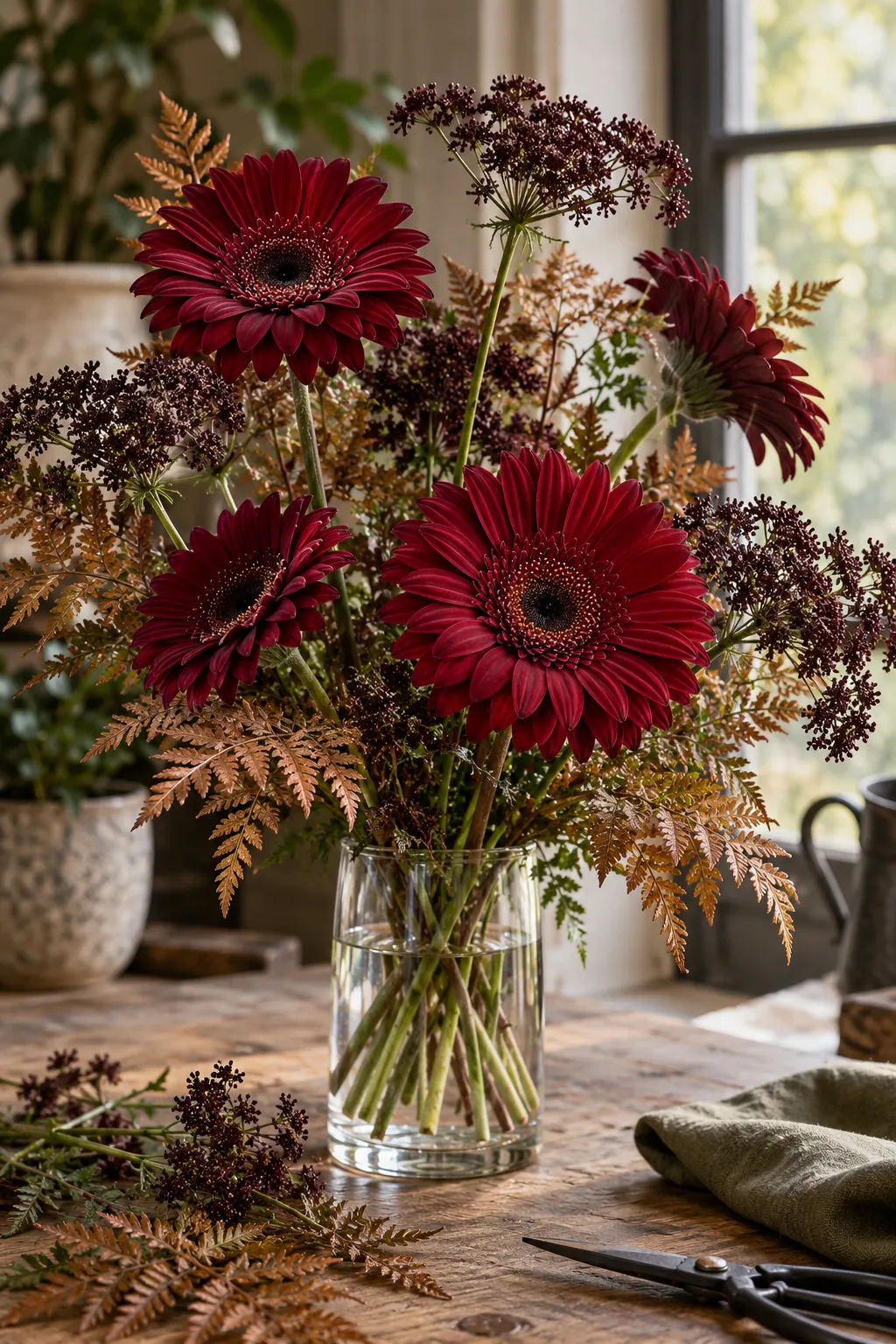
Dark Red Gerbera With Chocolate Lace
Dark red gerbera daisies can look graphic, so chocolate lace flower is useful for softening their round outlines. Turn the gerberas at varied angles and keep the lace flower slightly above them. Bronze fern introduces a feathered texture that suits a relaxed late fall bouquet.
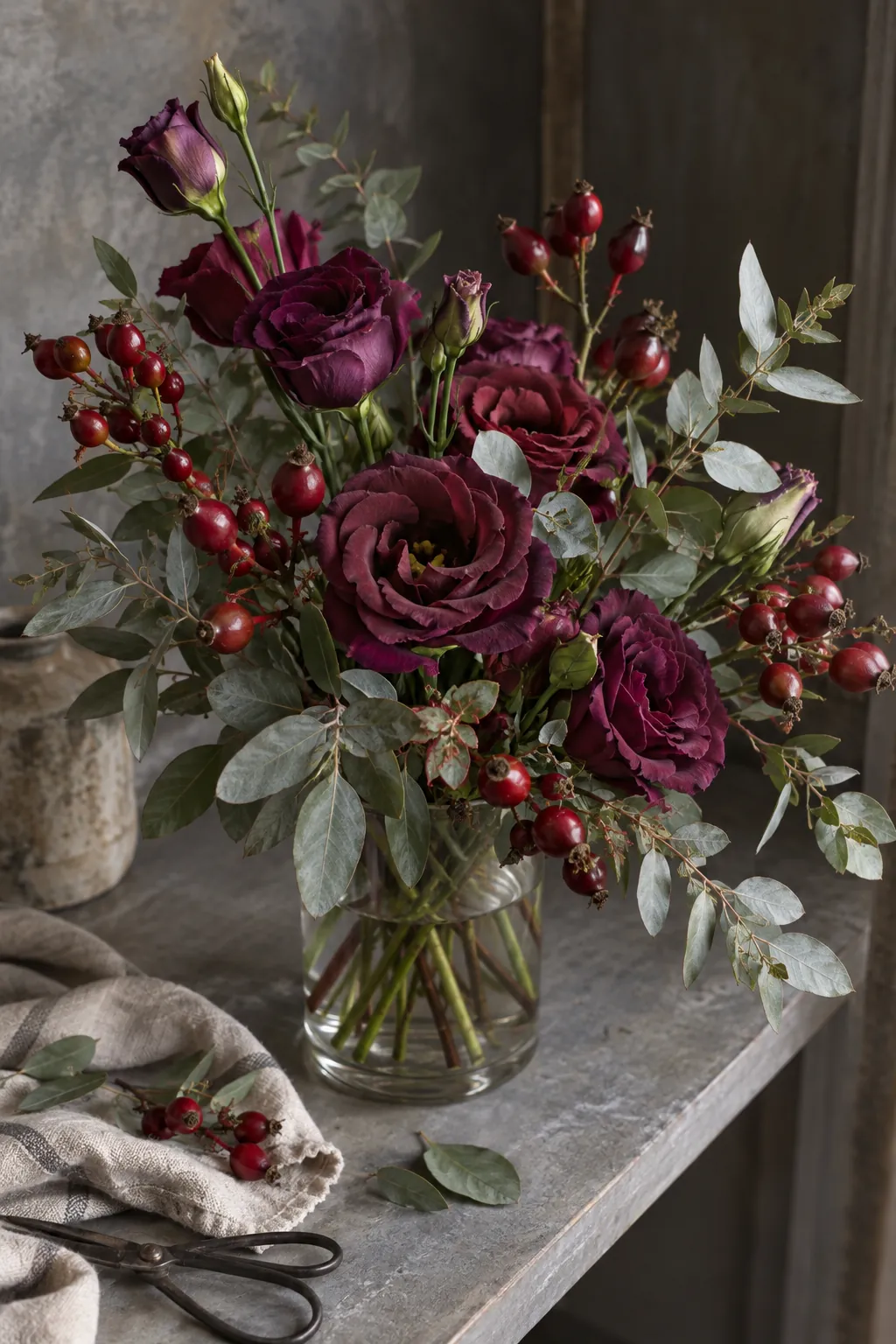
Plum Lisianthus With Red Rose Hips
Deep red rose hips add crisp seasonal points among the softer plum lisianthus. Keep several lisianthus buds in the outline and place the hips where their branching shape stays visible. Silver foliage lifts the shadowed palette without introducing a bright white flower.
Mixed Burgundy Meadow Bouquet
A mixed meadow bouquet works when every burgundy ingredient has a different scale and silhouette. Use dahlias as the anchor, cosmos and scabiosa for movement, and dark berries for small concentrated accents. Airy olive branches hold the collection together while preserving irregular gaps through the final shape.