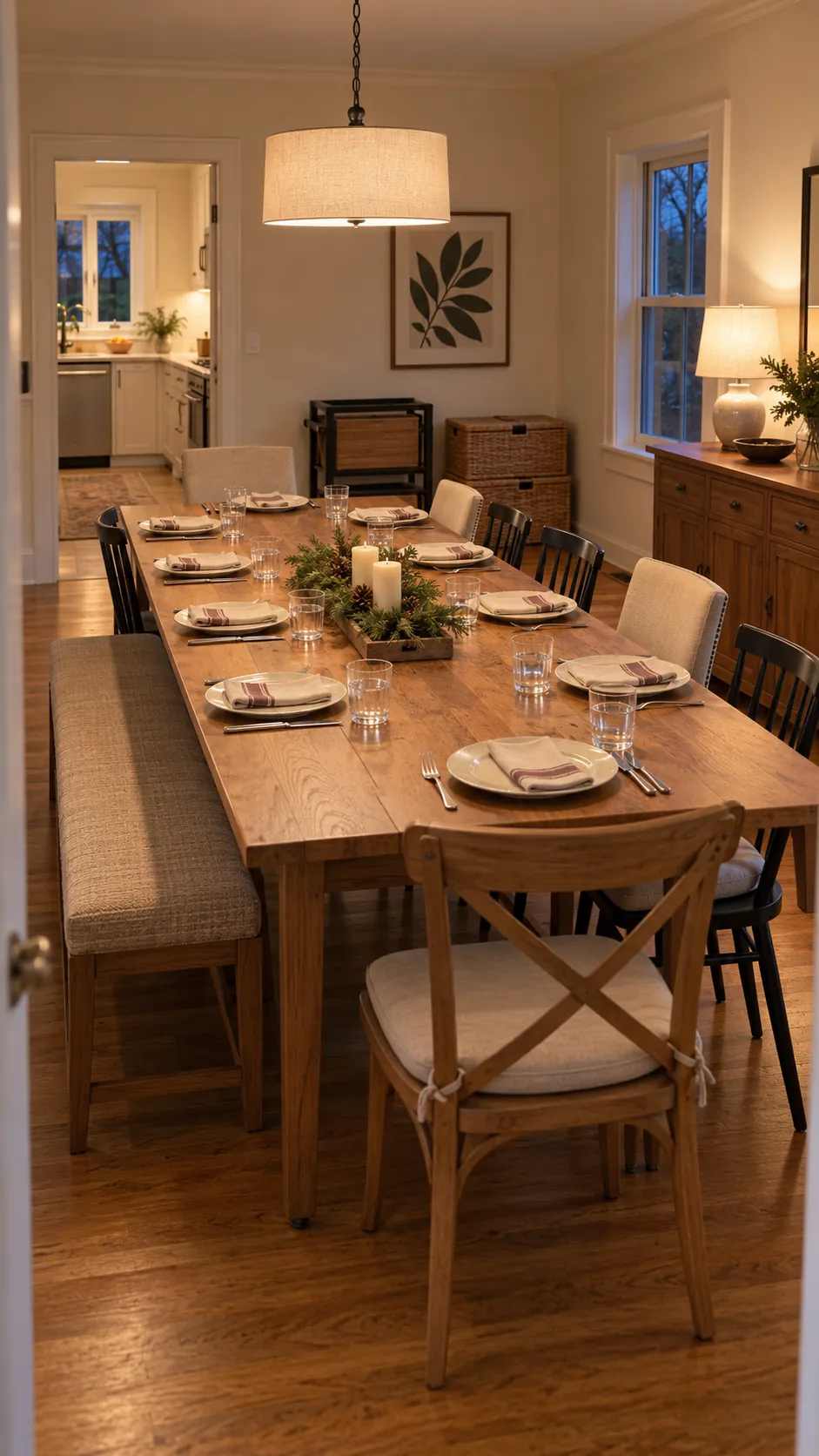
A beautiful room can still feel wasteful when nobody has a reason to enter it between holidays. The useful question is not whether formal dining is outdated, but which small changes would make the room support ordinary family life. Start with the activities your household already does, then protect enough clear space for meals when guests arrive.
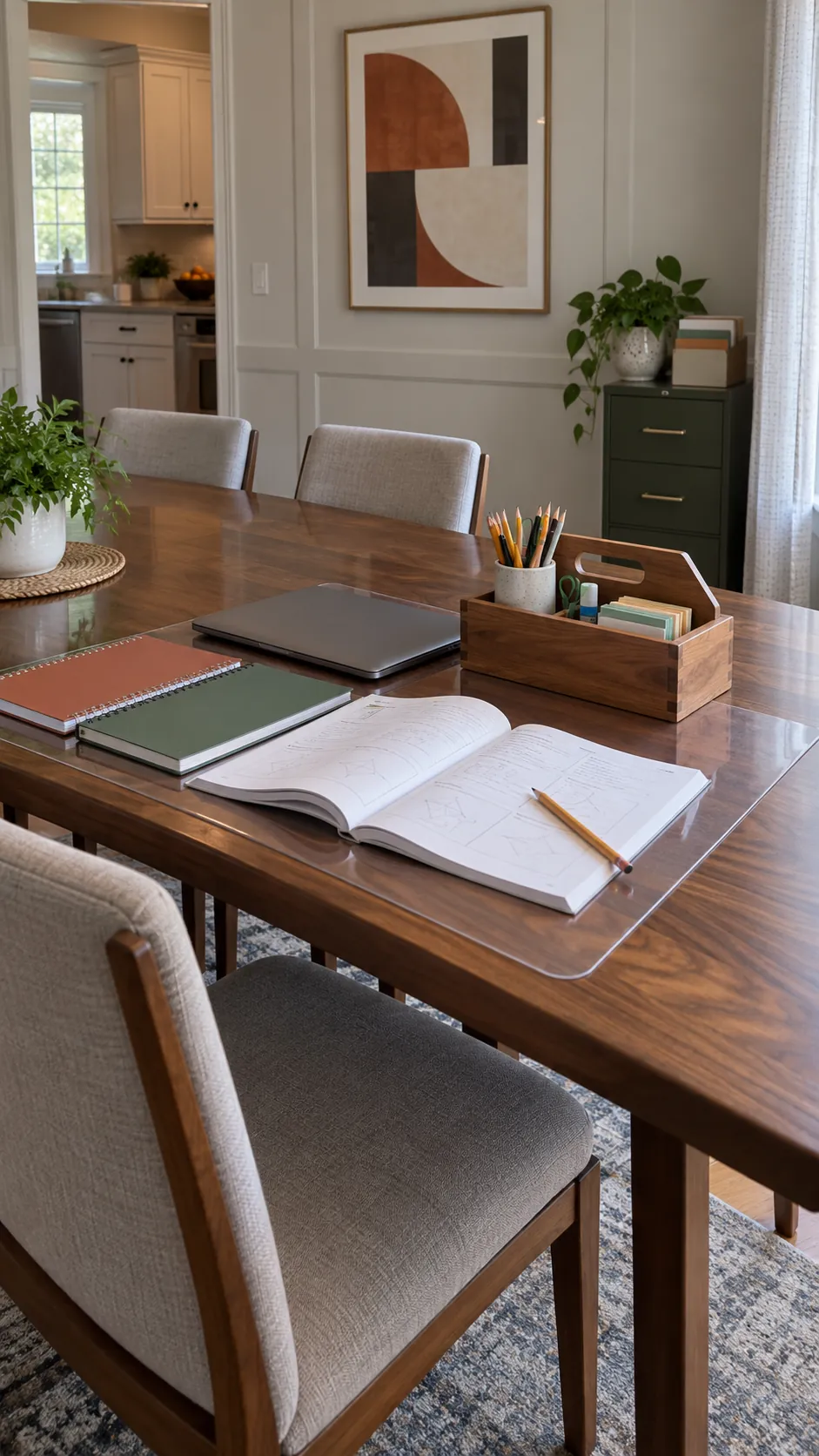
Create a homework landing zone
Give one end of the table a shallow caddy for pencils, chargers, and current school papers. A nearby drawer unit lets everything disappear before dinner, so the room changes purpose without a long cleanup. Choose a wipeable table pad that protects the surface while making the family dining space feel relaxed enough for daily work.
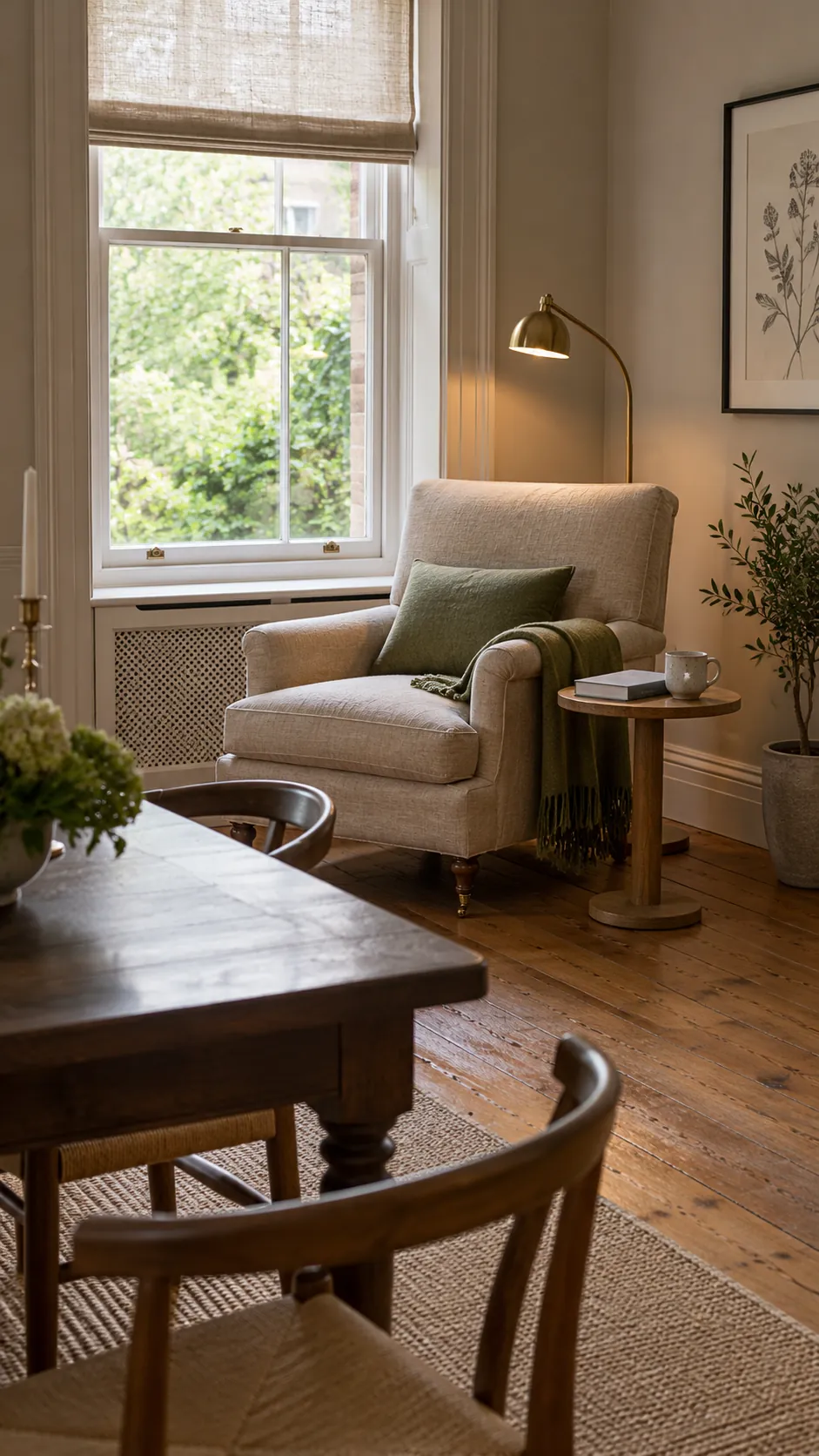
Add a comfortable reading corner
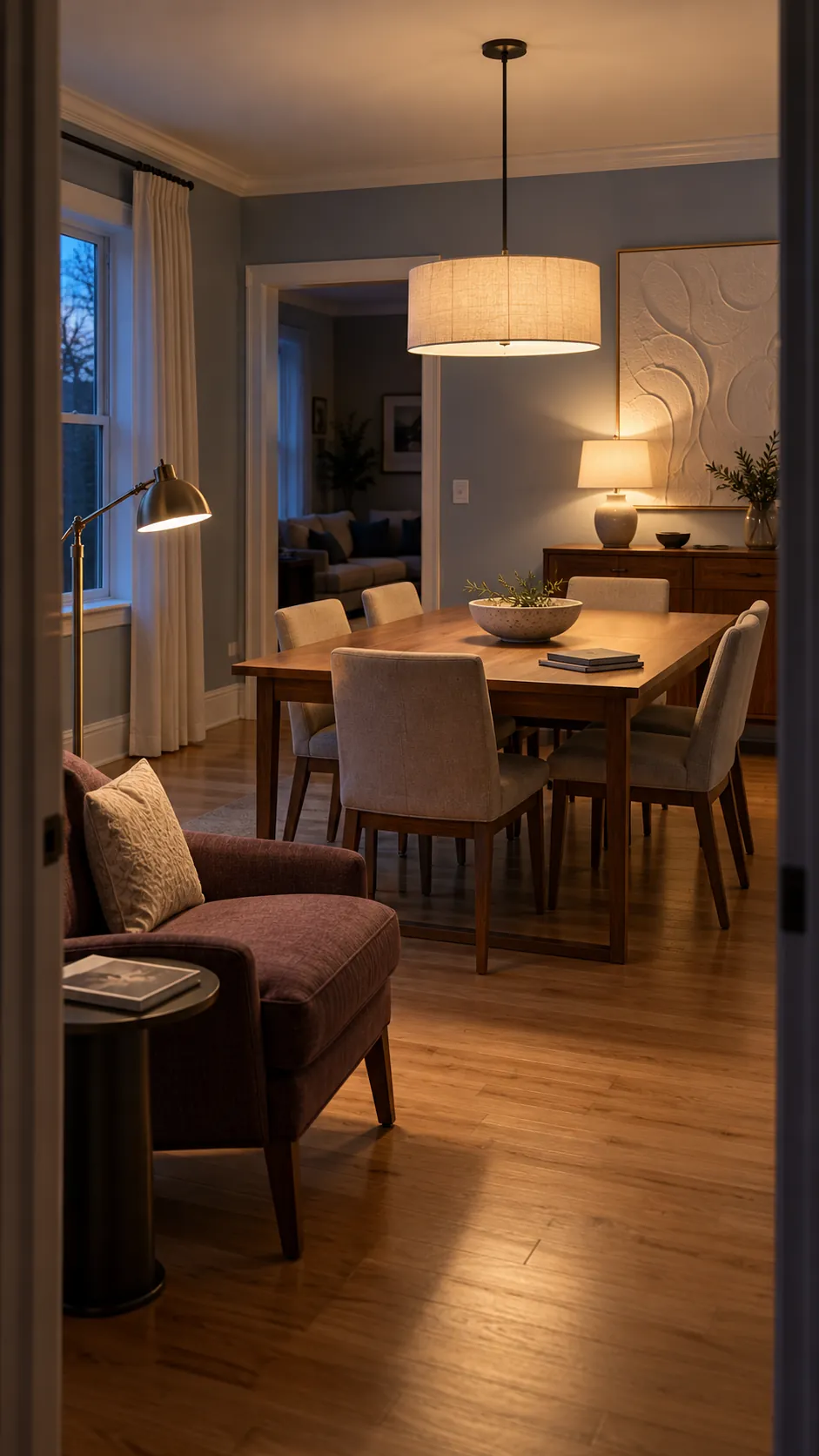
Place one supportive chair and a floor lamp near the best window instead of filling every wall with dining furniture. A small round table can hold a book and a drink while remaining easy to move when extra seating is needed. This quiet corner gives someone a reason to use the room without changing its main identity.
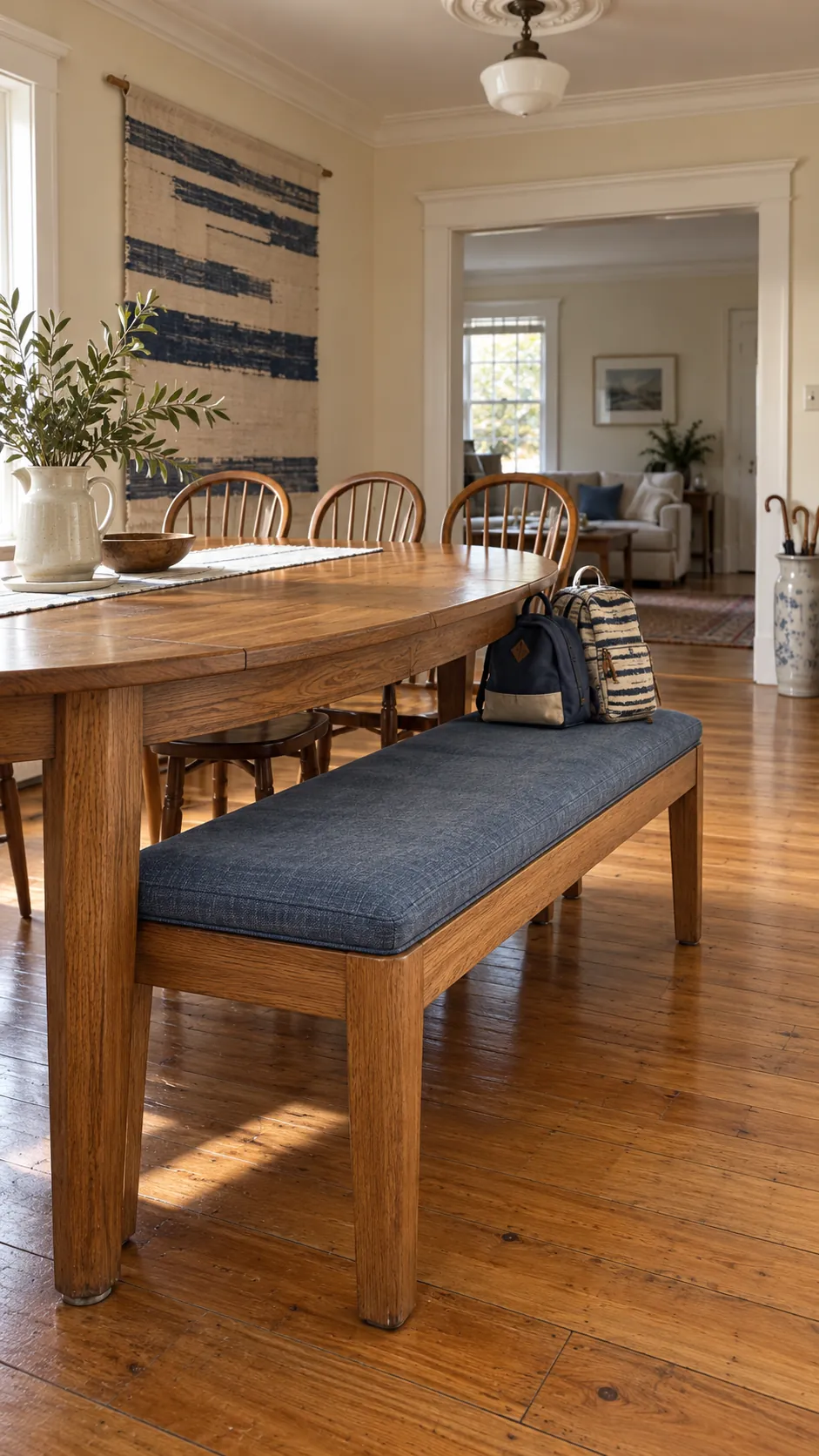
Use a bench for flexible seating
A bench can seat children during meals, hold bags during the week, and slide under the table when the floor must stay open. Pick a depth that supports comfortable sitting rather than a narrow decorative perch. A washable cushion adds softness and makes an unused formal dining room feel more approachable.
Turn the sideboard into daily storage
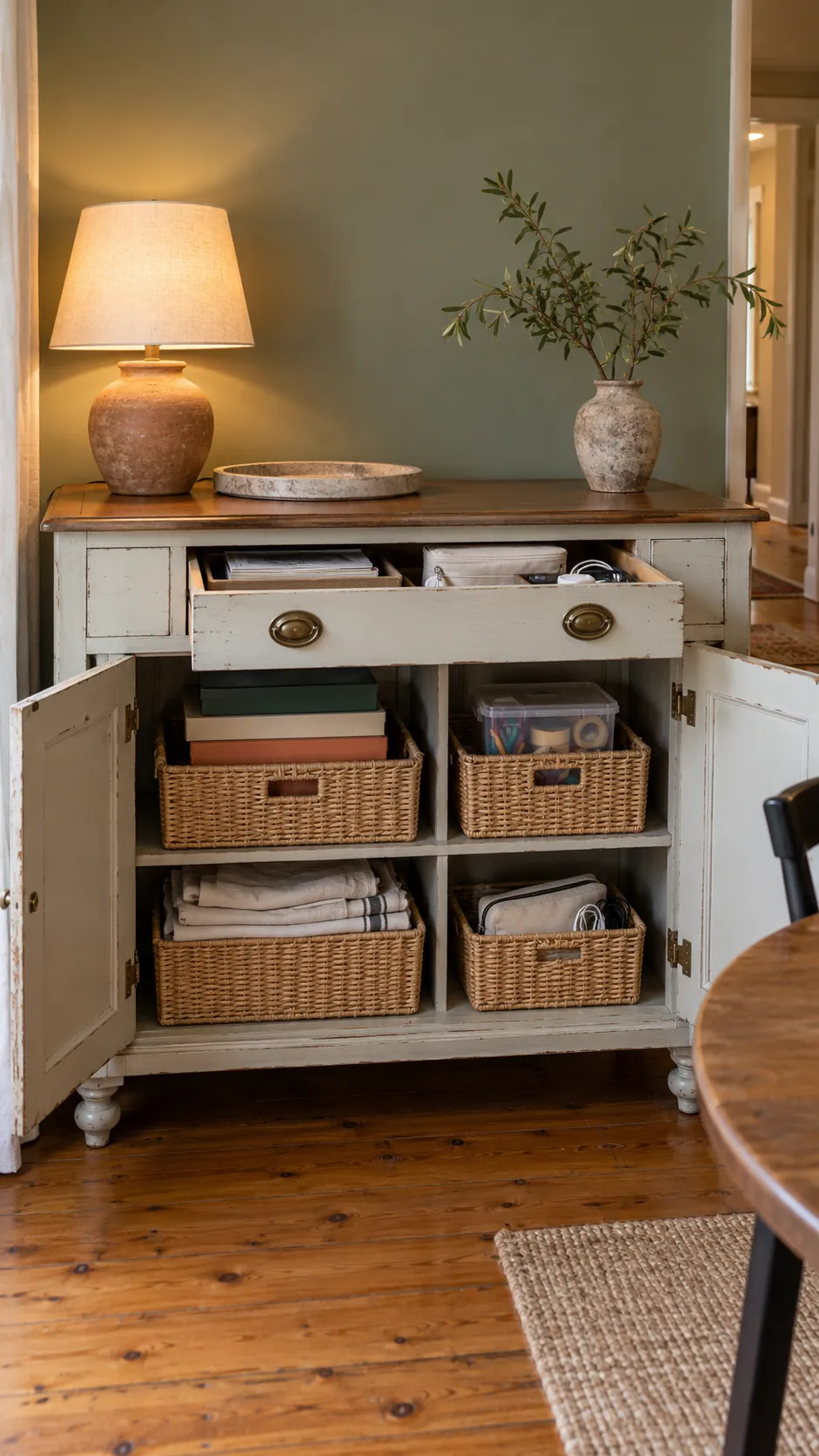
Reserve the sideboard for objects that help the room work every day, not only serving pieces used twice a year. Baskets inside can separate games, craft supplies, table linens, and device cords. Keep the top mostly clear so it remains a practical serving surface when people gather.
Make game night easy to start
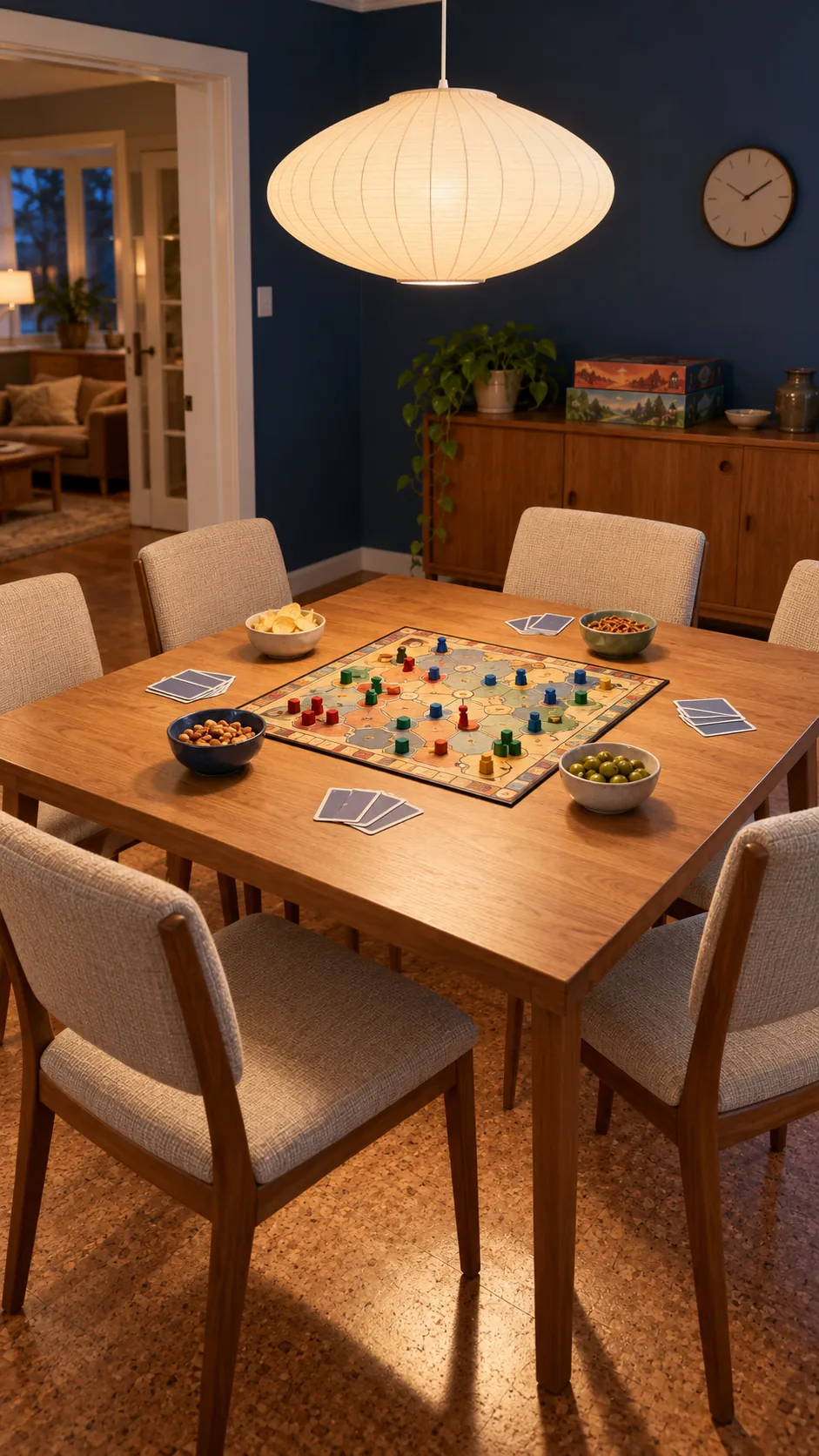
Store a short selection of favorite games within reach and keep the table center simple enough to clear in one motion. Comfortable dining room seating matters because a game can last longer than a meal. A pendant on a dimmer provides bright, even light for cards and softer light after play ends.
Build a simple art station
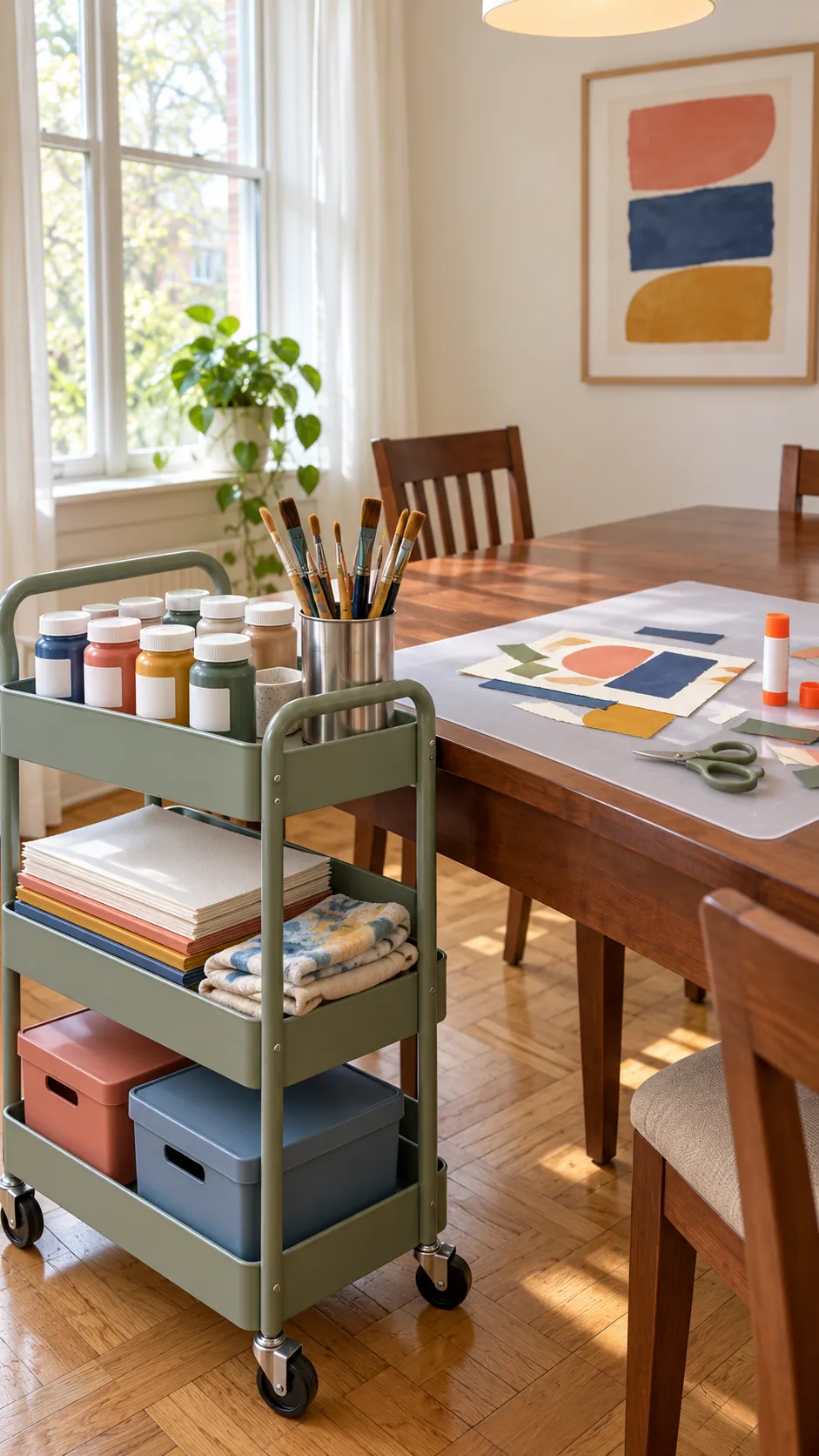
Use a rolling cart for paper, paint, and tools so creative supplies can arrive at the table and leave just as quickly. Protect the work area with a fitted mat rather than a permanent cover that makes the room look unfinished. Good closed storage keeps the casual dining room makeover calm even when children use it often.
Choose chairs people want to use
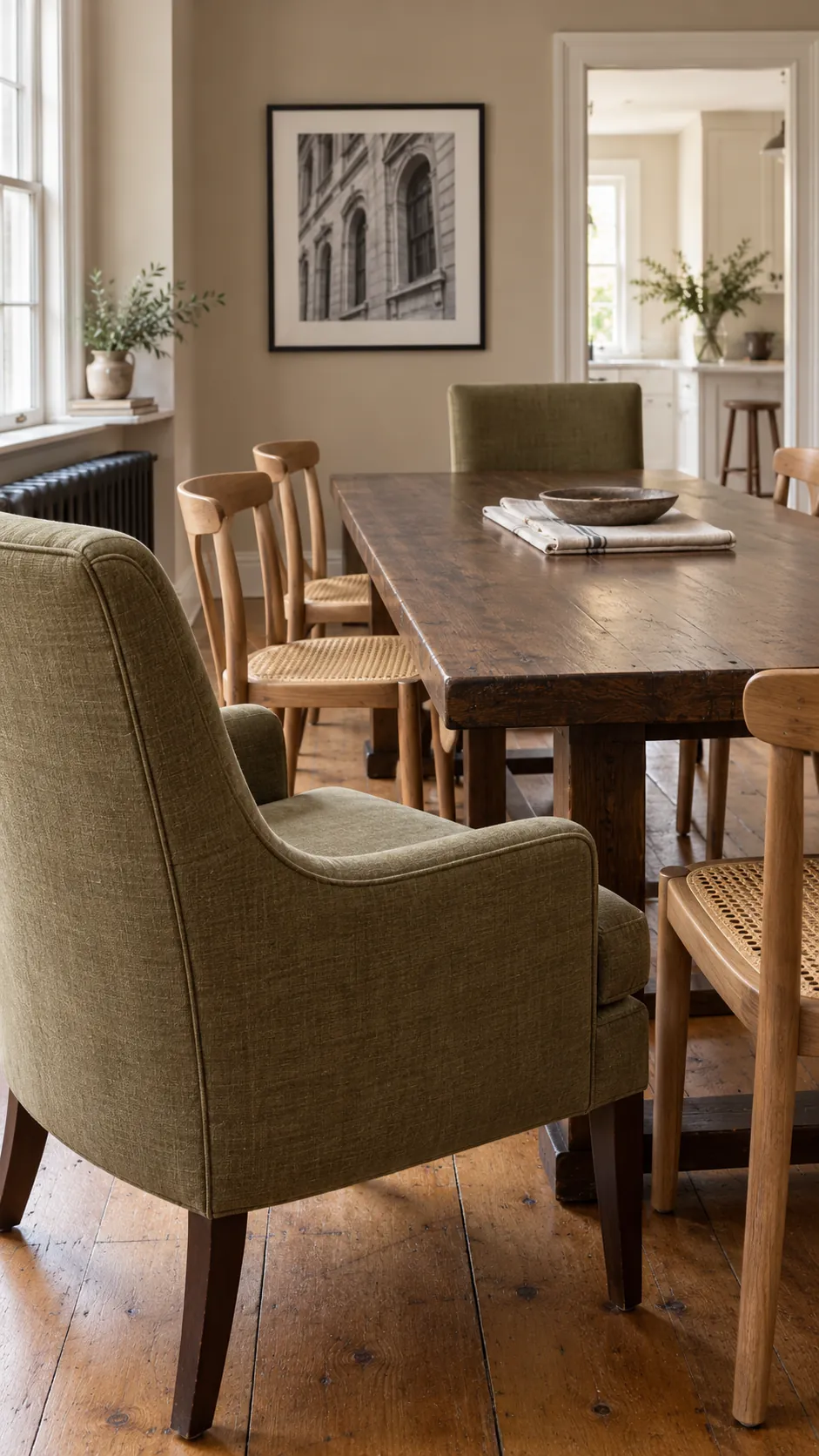
Stiff chairs can quietly discourage long conversations, homework, and weekend projects. Test the seat depth, back angle, and fabric feel before choosing a style, then add only cushions that stay in place. Mixing two upholstered host chairs with simpler side chairs can improve comfort without replacing the whole set.
Layer lighting for different tasks
One overhead fixture rarely serves every activity well. Add a shaded lamp on the sideboard for warmth and a focused floor lamp near reading or craft seating. Put the main light on a dimmer so breakfast, work, dinner, and celebrations each have an appropriate level.
Use an easy care rug
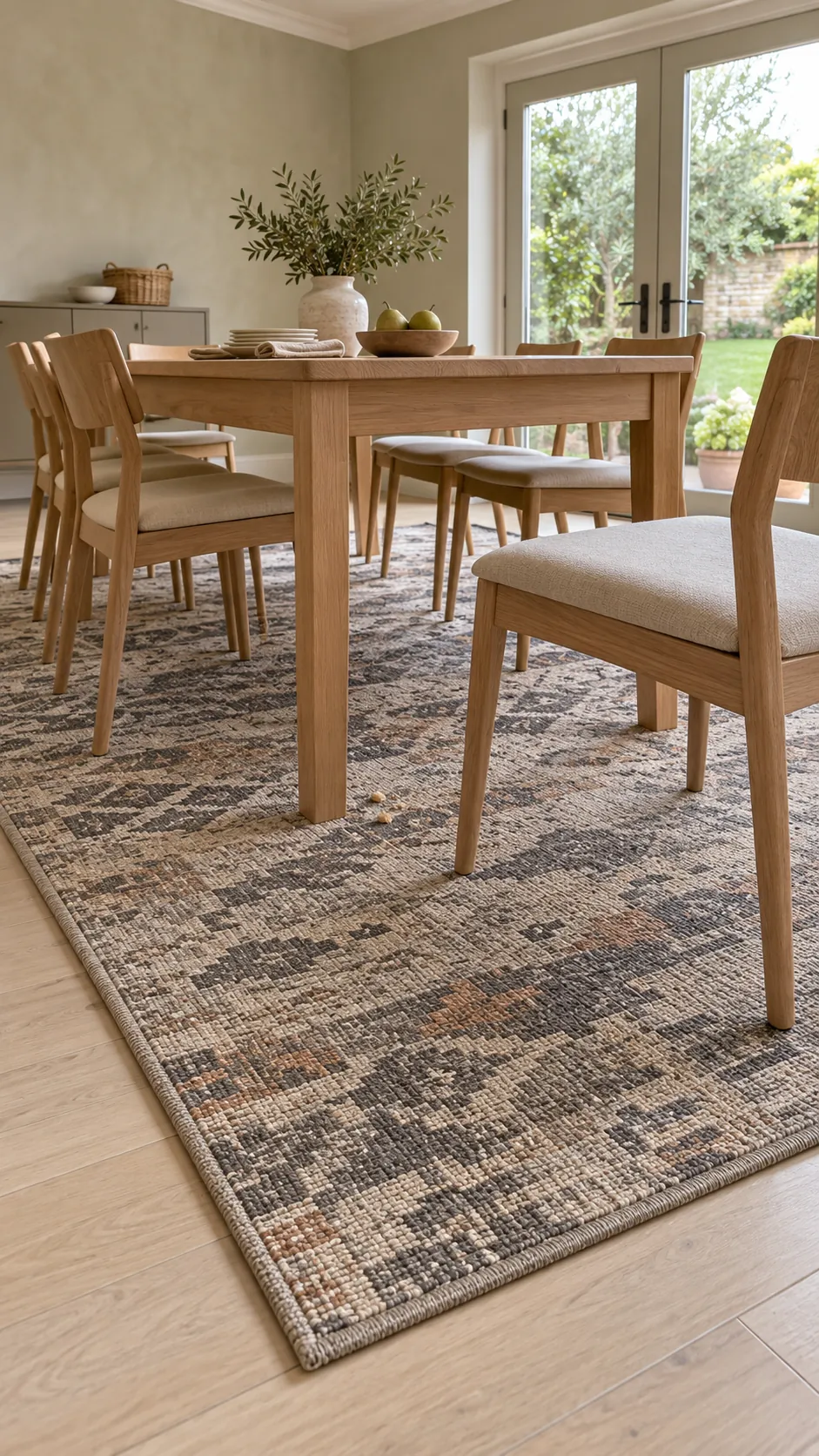
A rug can soften sound and define the room, but it should not make every spilled drink feel like a crisis. Choose a low pile, cleanable surface and a size large enough for chair legs to remain on it when pulled out. A subtle pattern hides everyday crumbs better than a pale solid field.
Keep the centerpiece low and movable
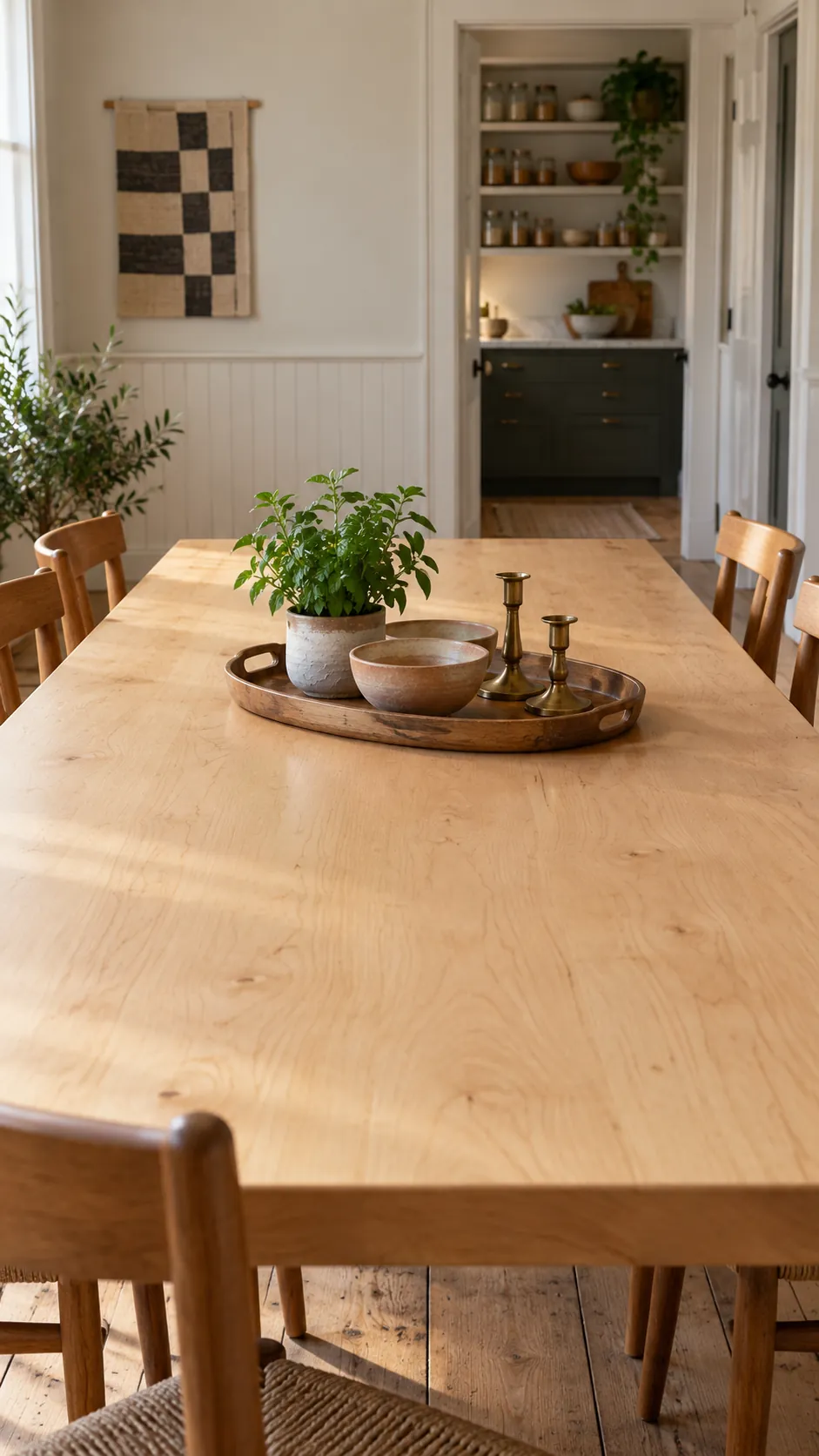
A large permanent arrangement consumes the space that makes a table useful. Place a low bowl, a small plant, or a few candleholders on one tray that can move to the sideboard in seconds. The table will still look intentional while remaining ready for breakfast, puzzles, or paperwork.
Create a family planning wall
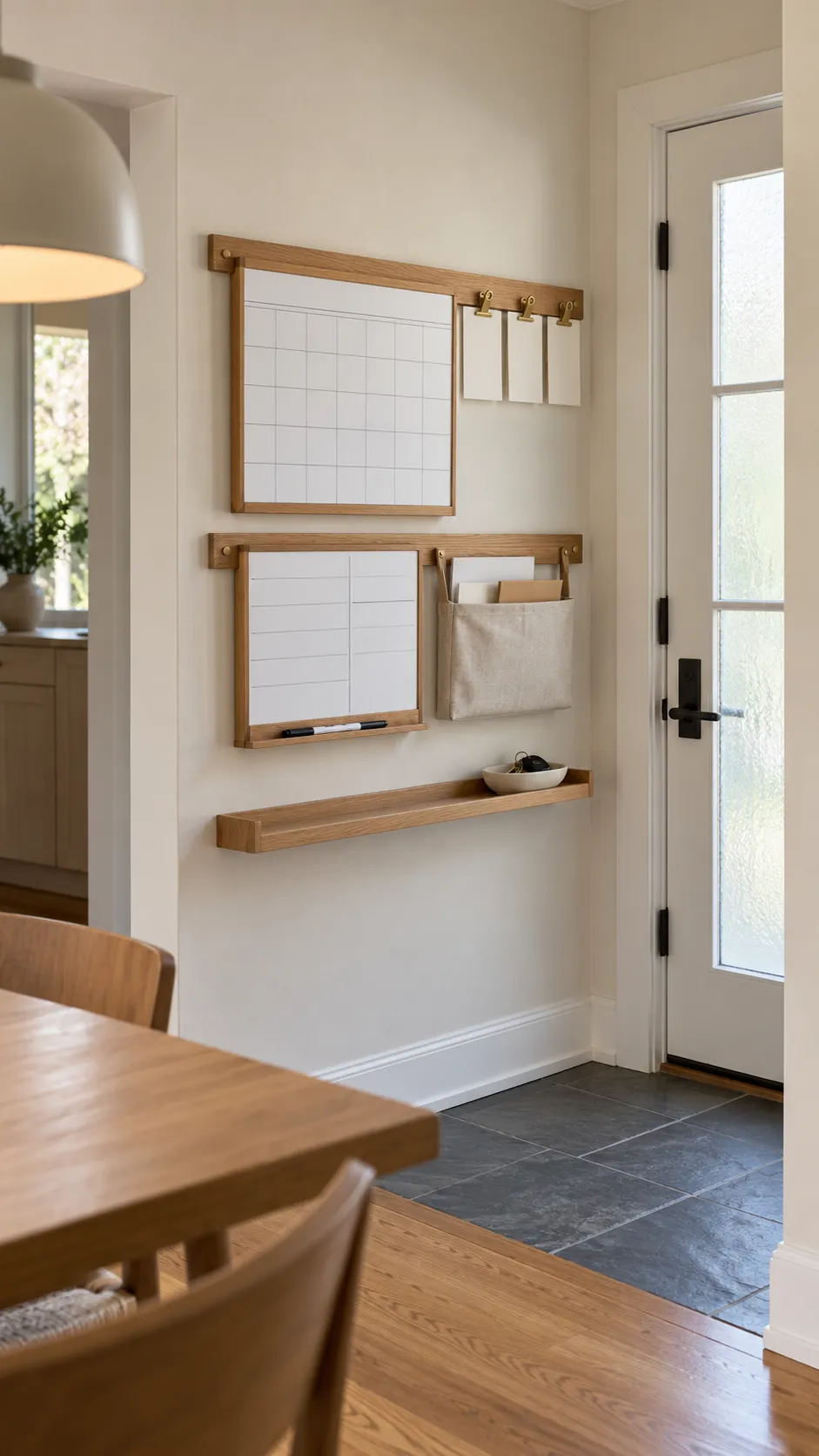
Dedicate a contained wall area to a calendar, weekly meal plan, and small mail pocket. Matching frames or one clean rail system keeps practical information from spreading across the room. Position it where adults can update it easily without making it the first view from the entry.
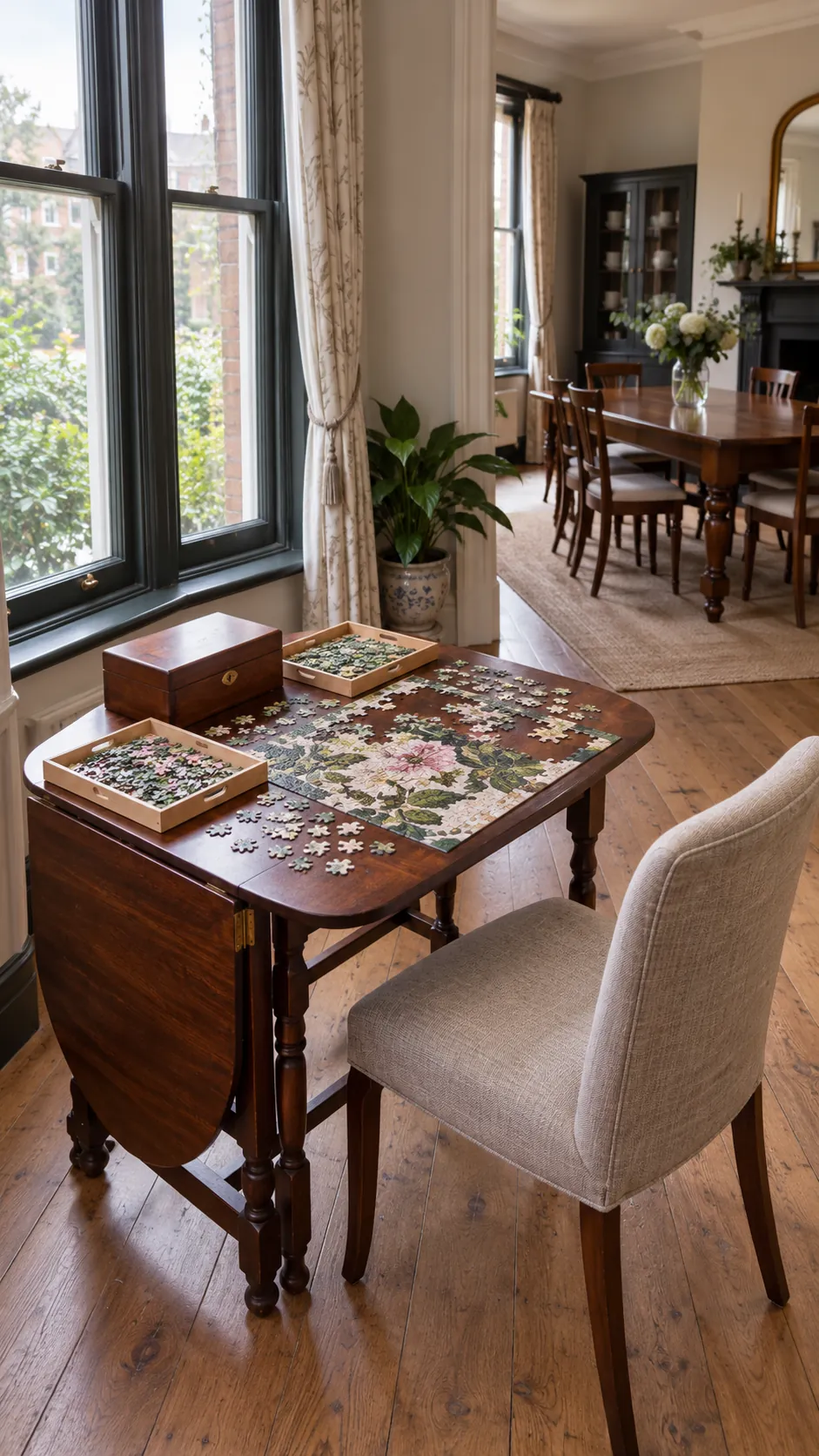
Add a puzzle table beside the main table
A small secondary table lets a puzzle stay in progress while the dining surface remains available. Choose a folding or nesting design that can be stored when the room must seat a crowd. A lidded sorting tray protects loose pieces from pets and younger children.
Set up a quiet work spot
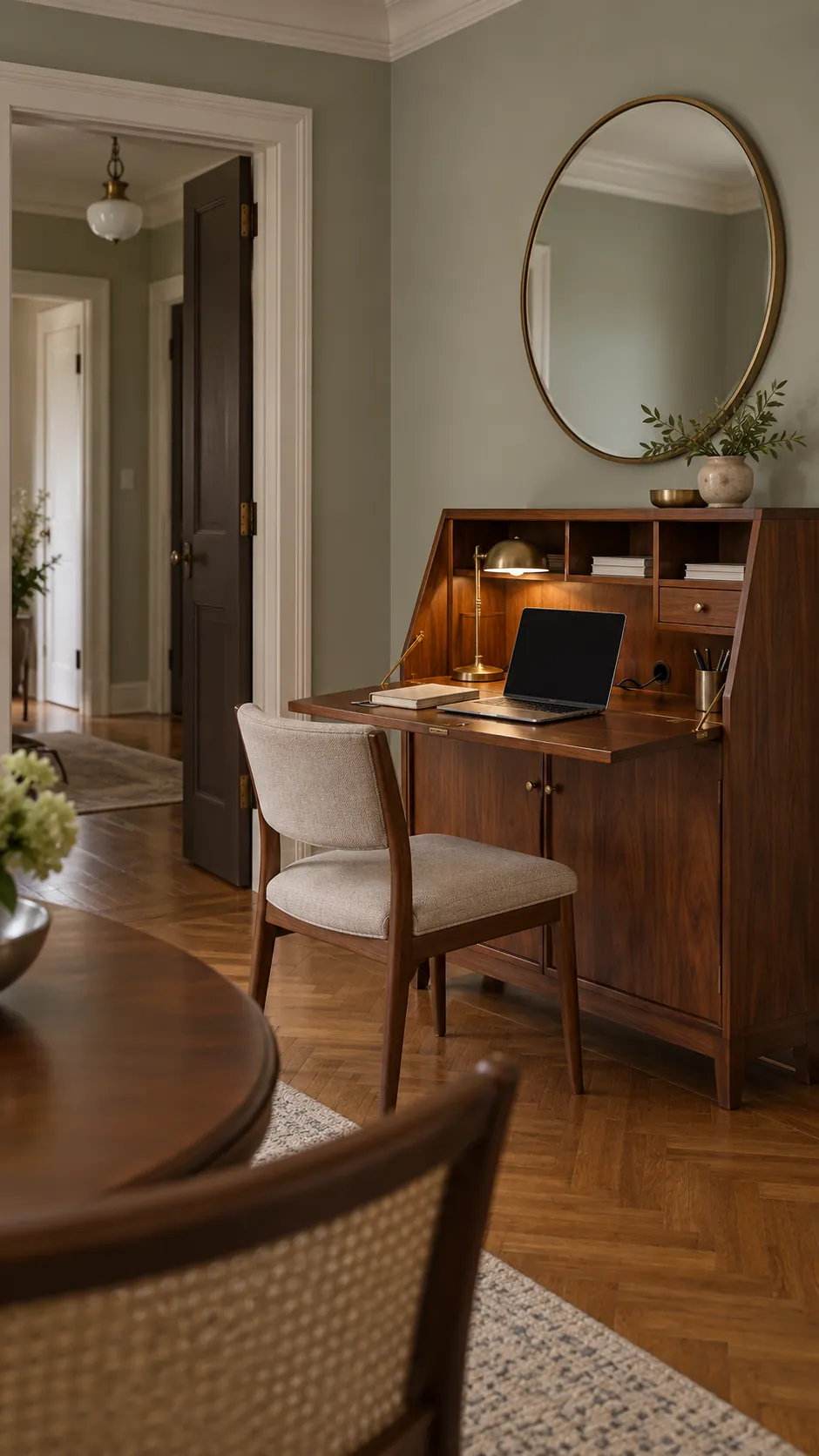
If the room is quiet during the day, a compact writing desk can use one wall without competing with the dining table. Select a desk that closes or has drawers, then route cords out of sight. The arrangement works best for occasional focused work rather than a permanent office full of equipment.
Make room for morning coffee
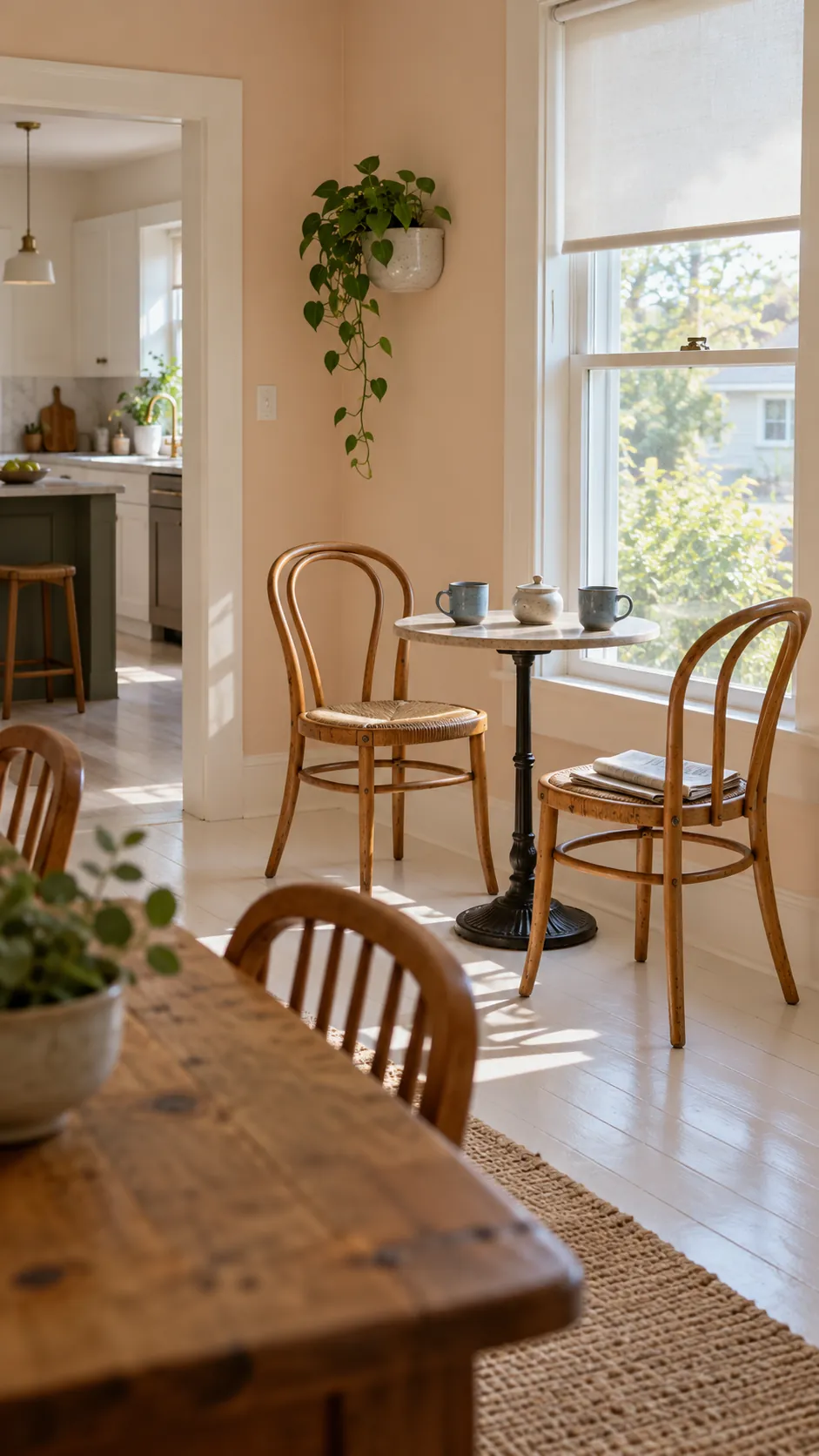
Set two light chairs near a window to create a pleasant place for coffee and conversation. Keep their path separate from chairs pulled out at the table, especially in a narrow room. This small social zone can make the space useful even when nobody plans to eat there.
Display objects with personal meaning
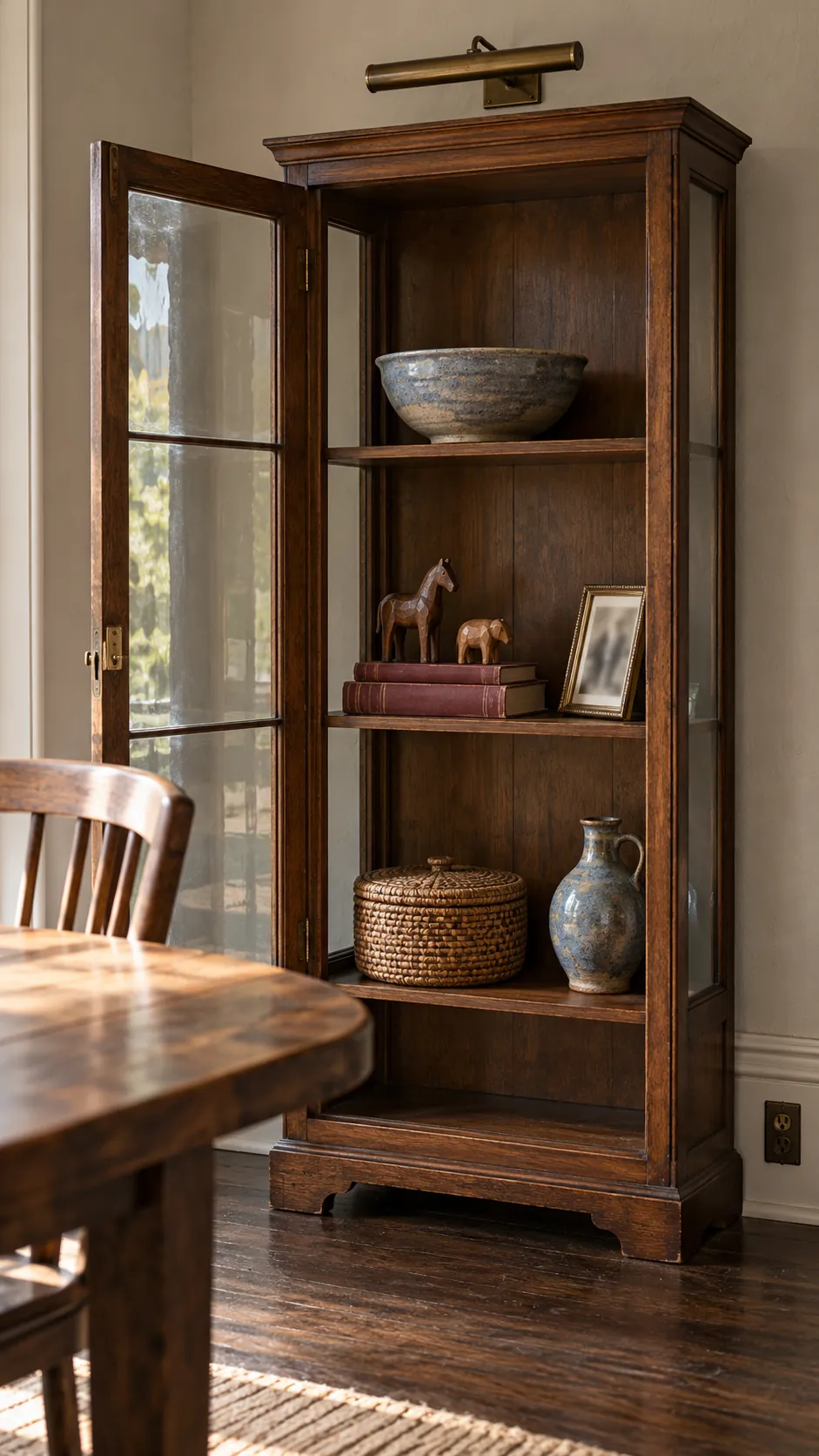
Replace a showroom style display with a few objects connected to family stories, travel, or local makers. Leave open space between pieces so shelves remain calm and easy to dust. Personal objects make a welcoming dining room feel inhabited without adding clutter to the table.
Use curtains to soften the room
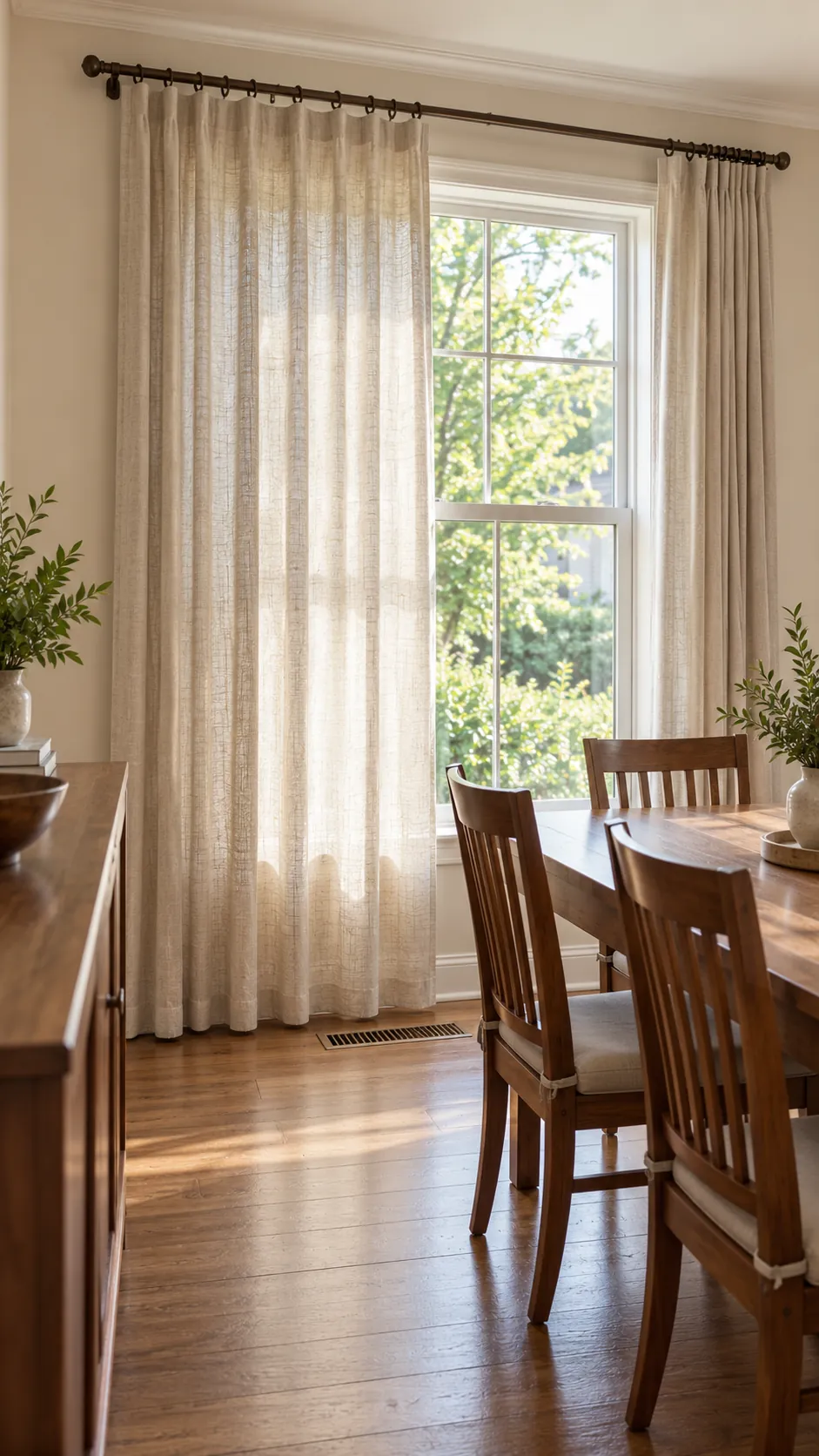
Bare windows and hard dining furniture can make sound bounce and the room feel severe. Full length washable curtains add softness, improve evening privacy, and filter strong daylight during homework. Hang them clear of heating vents and wide enough that the window can open fully.
Protect clear walking paths
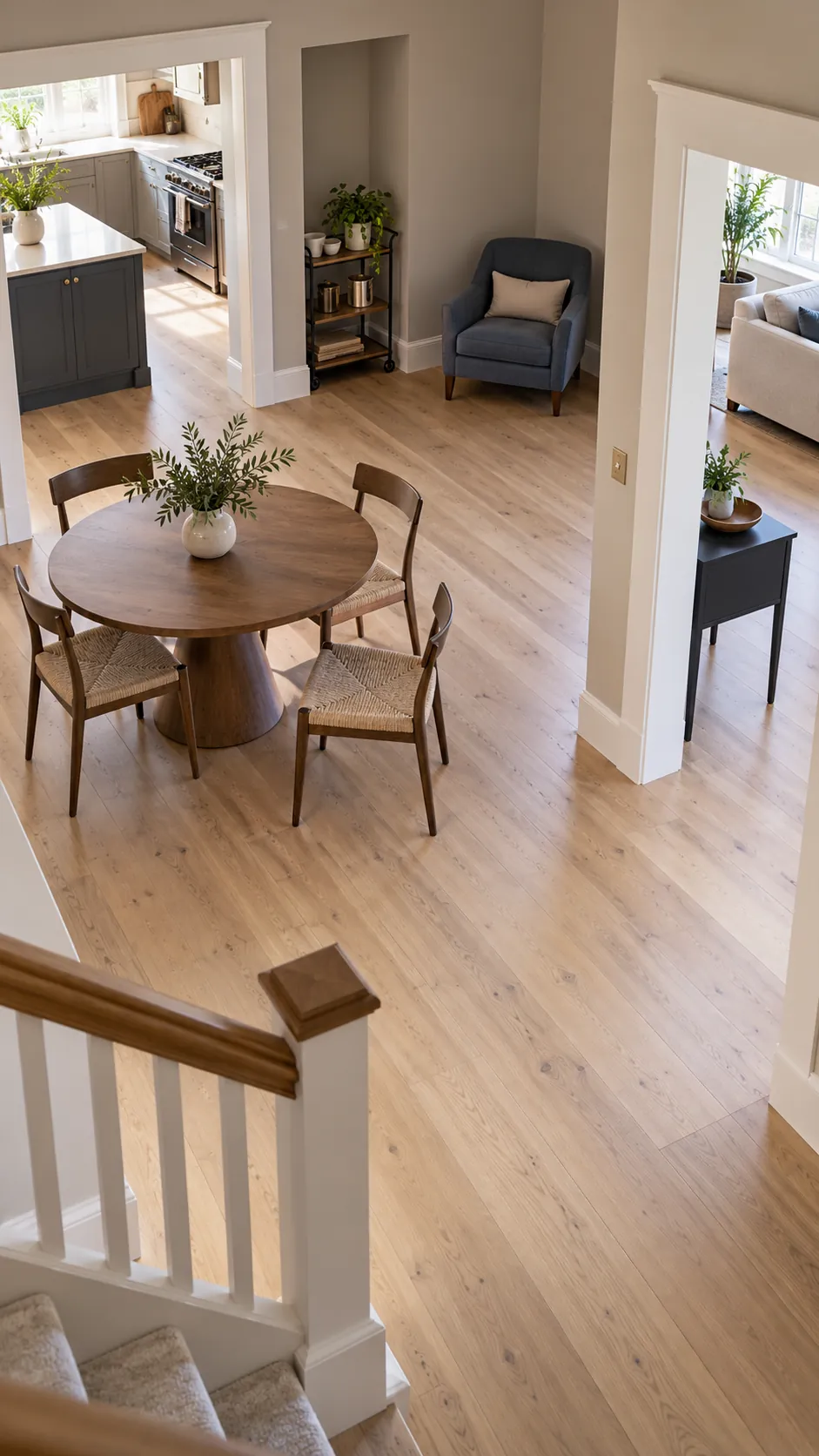
A multipurpose room fails when added functions block the route between the kitchen, entry, and living area. Pull out every chair and test the busiest path before adding a cart, desk, or reading seat. Keeping circulation open makes daily use feel natural and allows serving dishes to move safely during larger meals.
Keep holiday dining easy to restore
Choose secondary furniture that folds, rolls, nests, or fits against a wall when the table needs every seat. Label nearby storage so craft tools, work supplies, and games can be cleared without sorting each item during a busy week. The best formal to casual dining plan gives the family more use now while preserving a comfortable gathering room when guests arrive.