
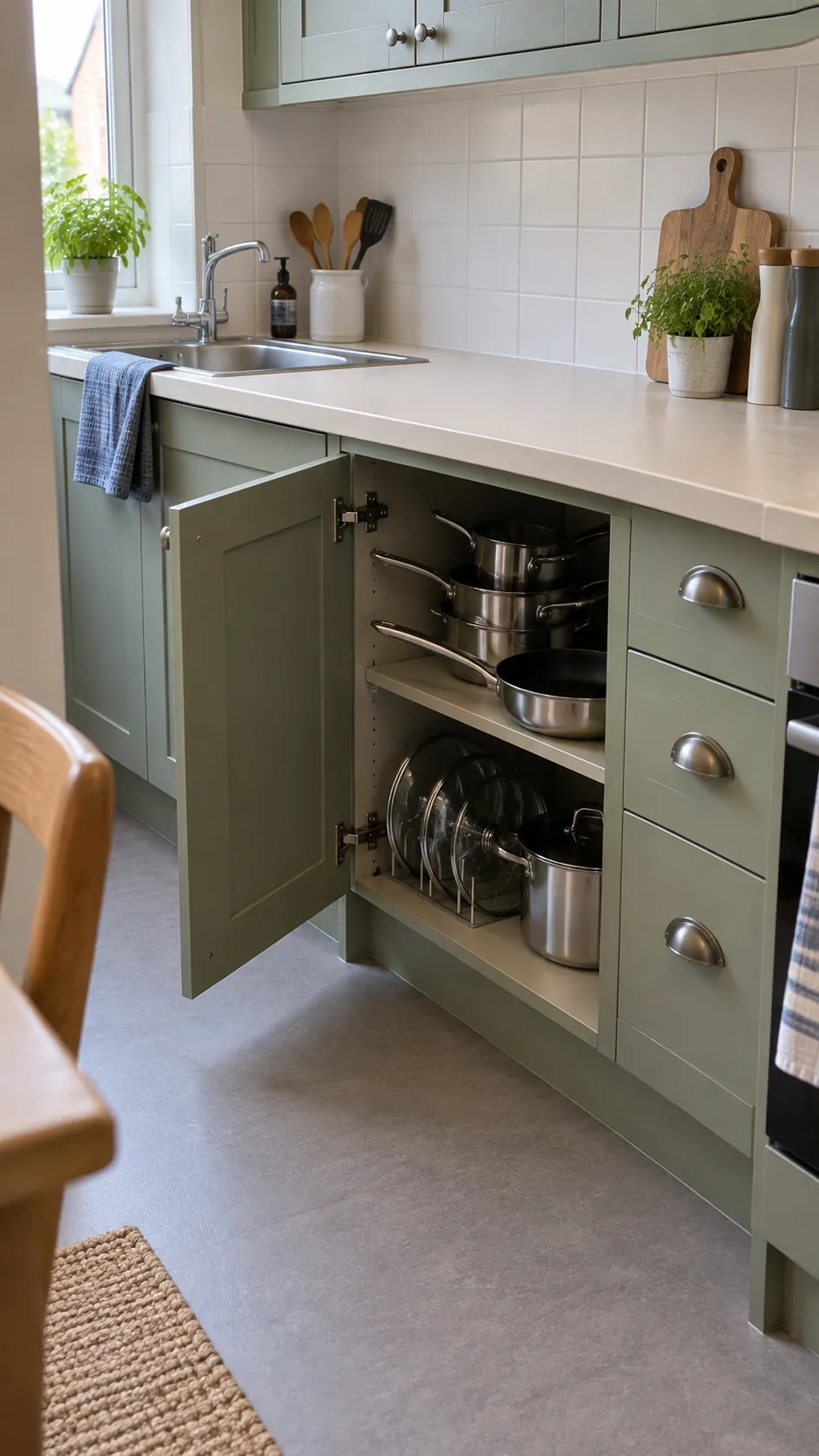
A cupboard can be deep enough for cookware and still be frustrating to use. Handles catch the frame, lids slide behind stacks, and the pan needed for dinner sits beneath three others. Start with the opening and the removal path, then choose storage that lets each useful piece come out without a struggle.
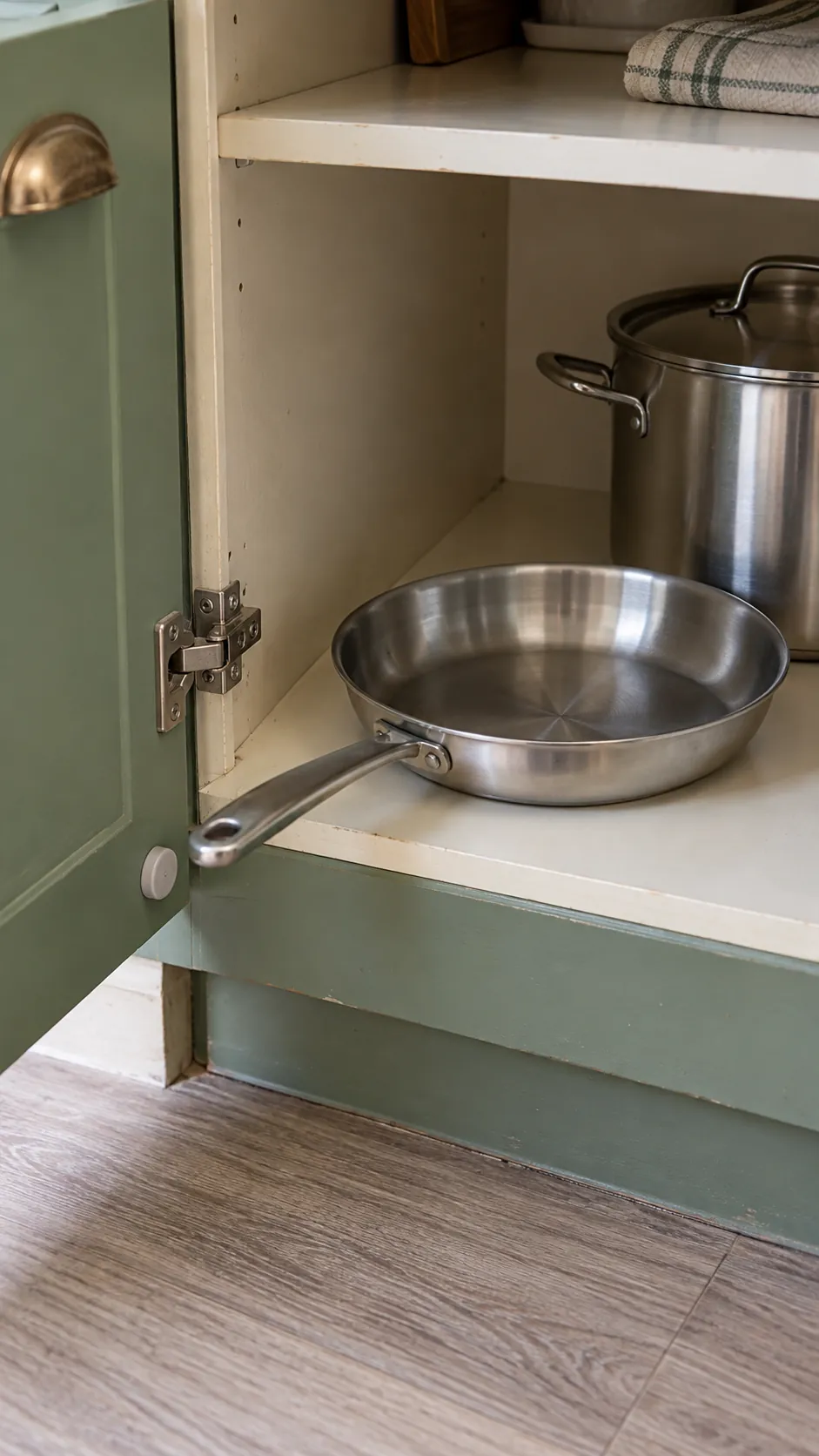
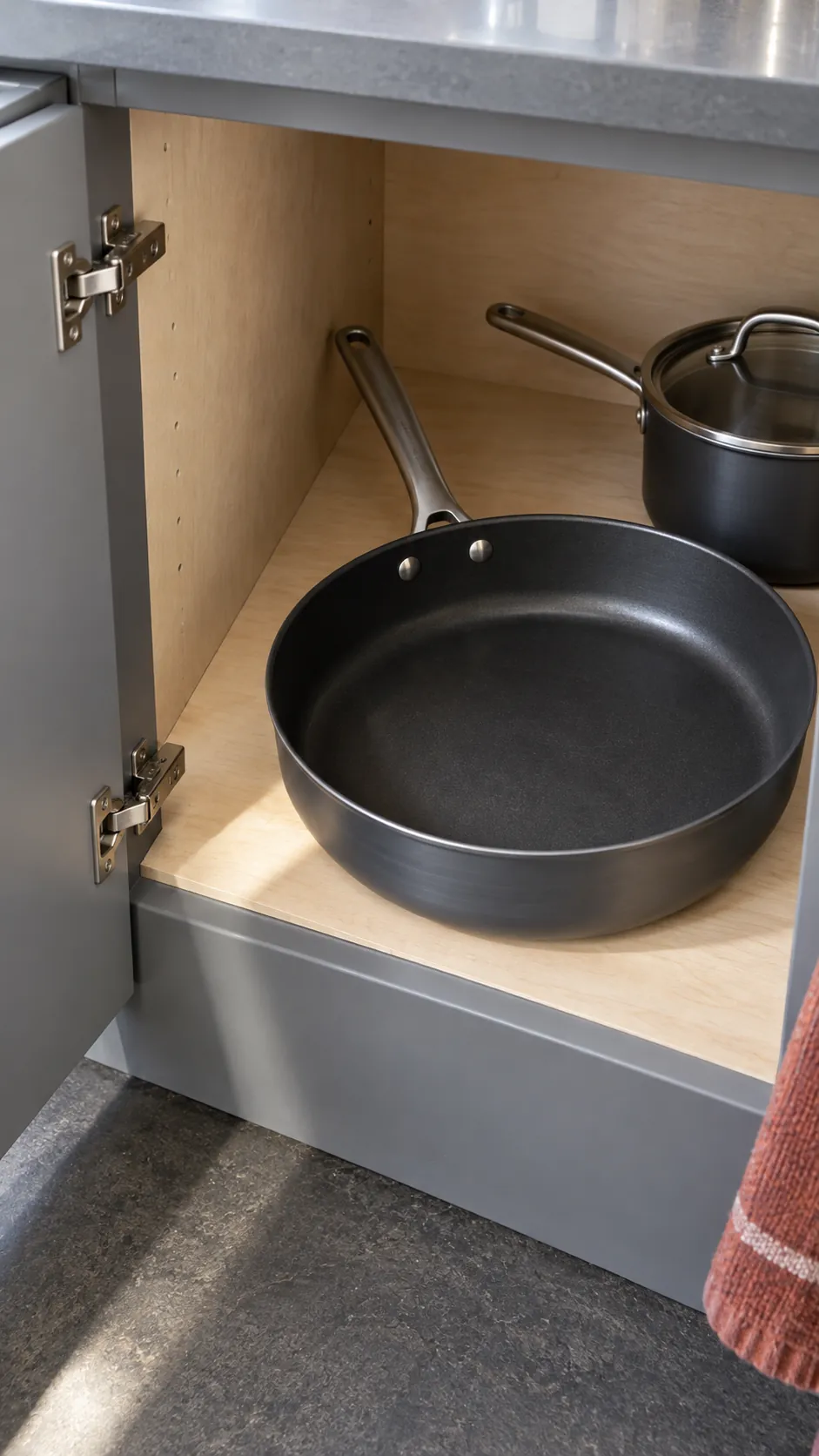
Give the everyday pan its own front position
Put the pan you reach for most at the front of the easiest lower cupboard. Leave its handle within reach and check that the door closes without pushing the pan sideways. This reduces the number of pieces you must move for an ordinary meal. Store it only after it has cooled and dried.
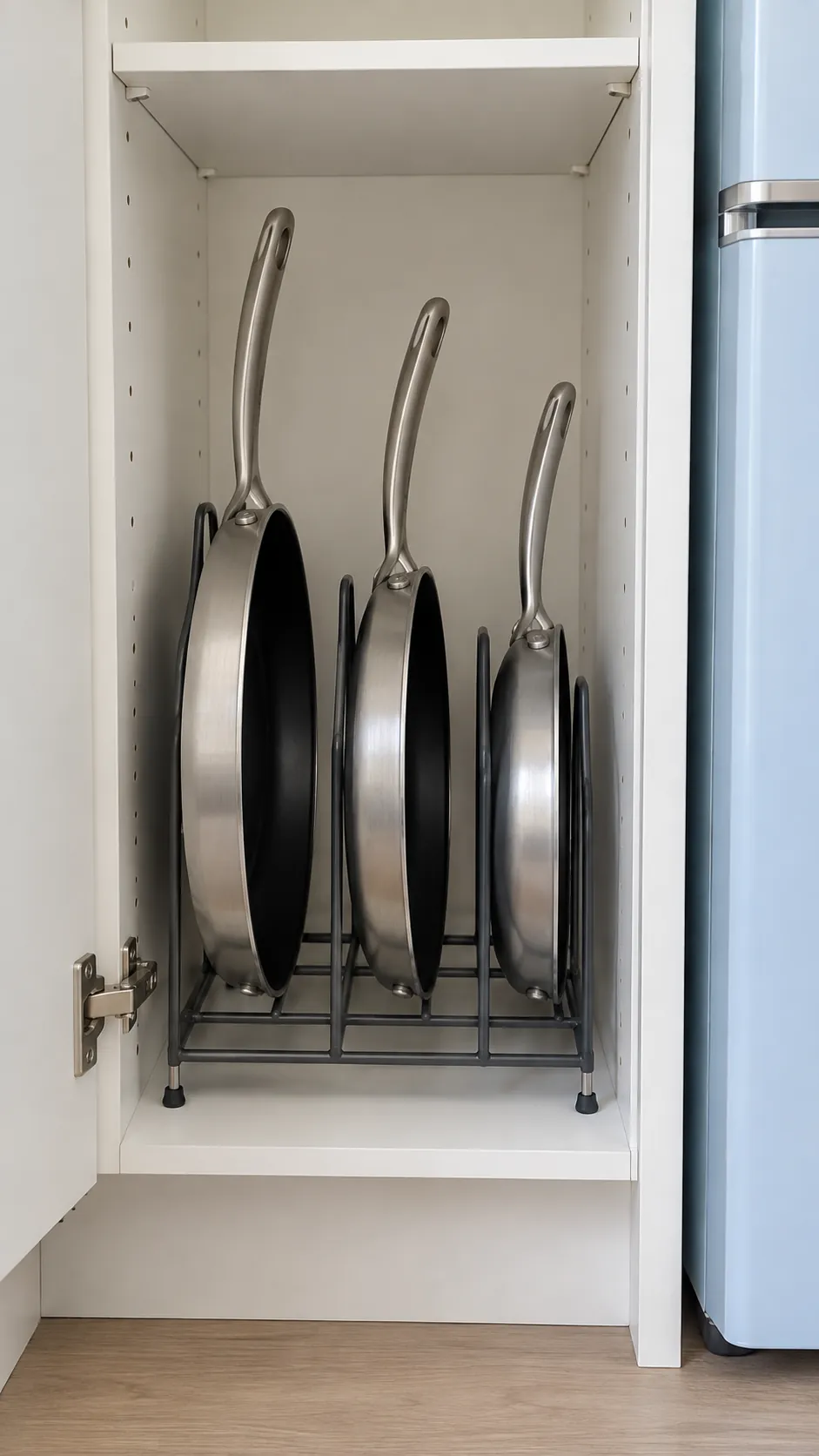
Stand suitable frying pans in a fitted divider
A vertical pan organizer can turn a short pile into separate reachable slots. Measure the opening, pan diameter, handle length, and shelf height before choosing one. The dividers must support the actual pans without letting them tip or scrape against one another. Keep heavy cookware on a suitable low shelf and follow the organizer load rating.
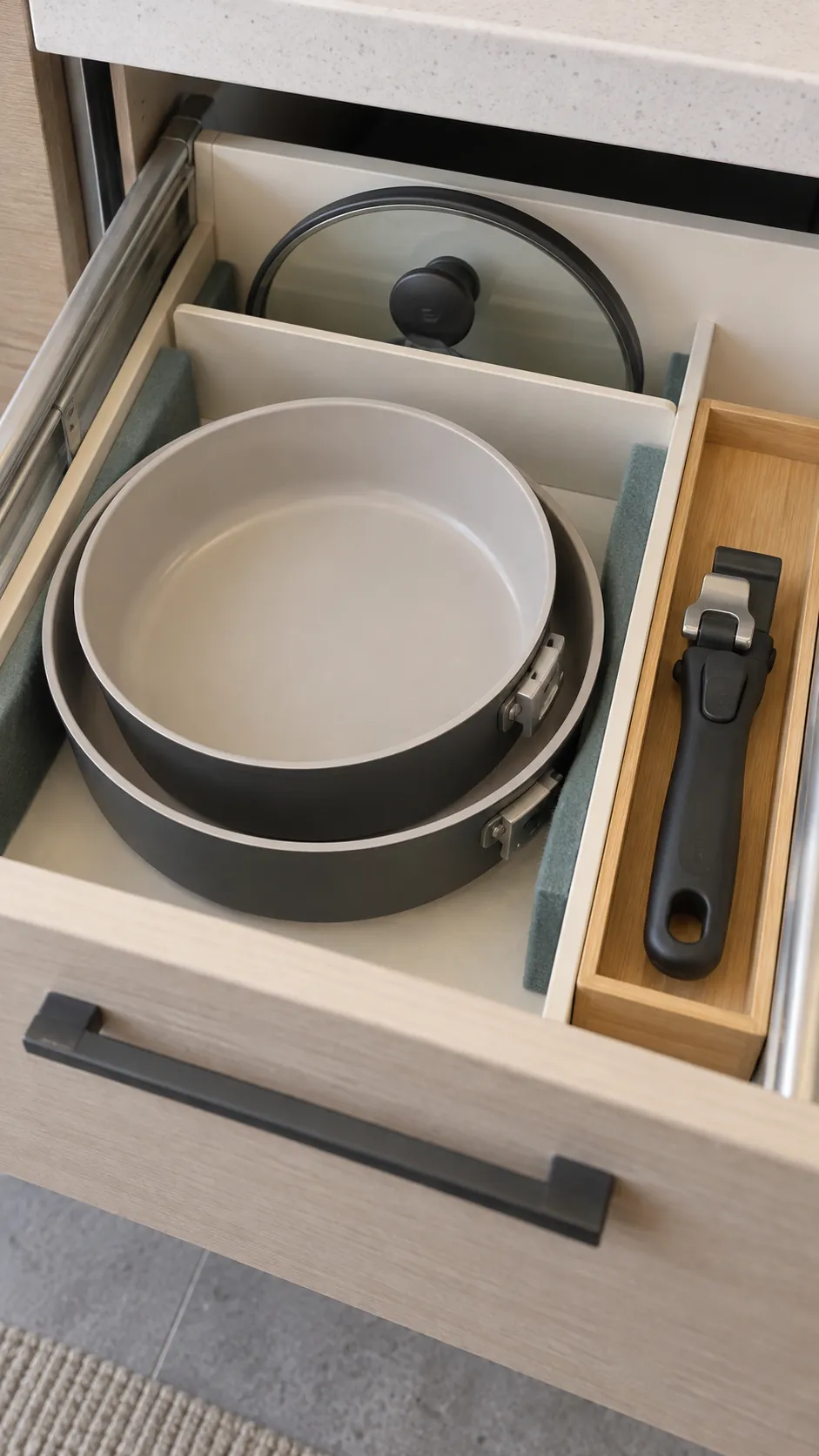
Nest compatible saucepans in a shallow stack
Nest pans only when their shapes fit without pressure on handles or rims. Use the protective separators recommended for their finish, especially with coated cookware. Keep the stack small enough that removing the bottom saucepan is comfortable.
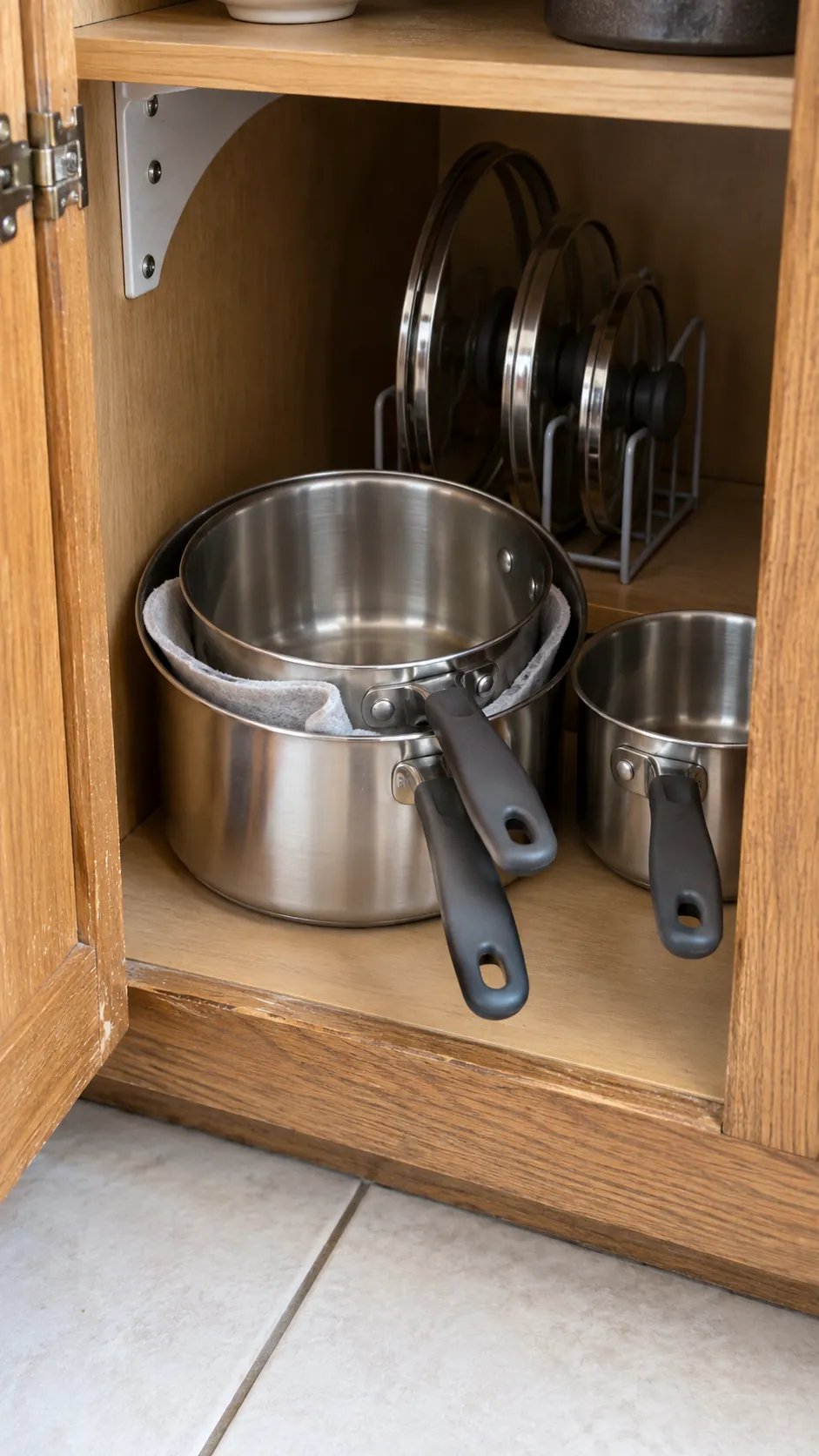
Store the lids in a nearby holder rather than balancing them between the pans. Check that the nested stack clears the cupboard opening as well as the interior shelf. If a daily pan lives at the bottom, move it to a separate position instead.
Turn long handles toward usable cabinet depth
Try rotating a pan so its handle runs into the depth of the cupboard rather than across the opening. Allow space around the hinge and make sure your hand can still reach the grip. A handle should never force the door shut or wedge behind another pot. Test removal with neighboring cookware in place before deciding that the arrangement fits.
Separate lids into a narrow upright rack
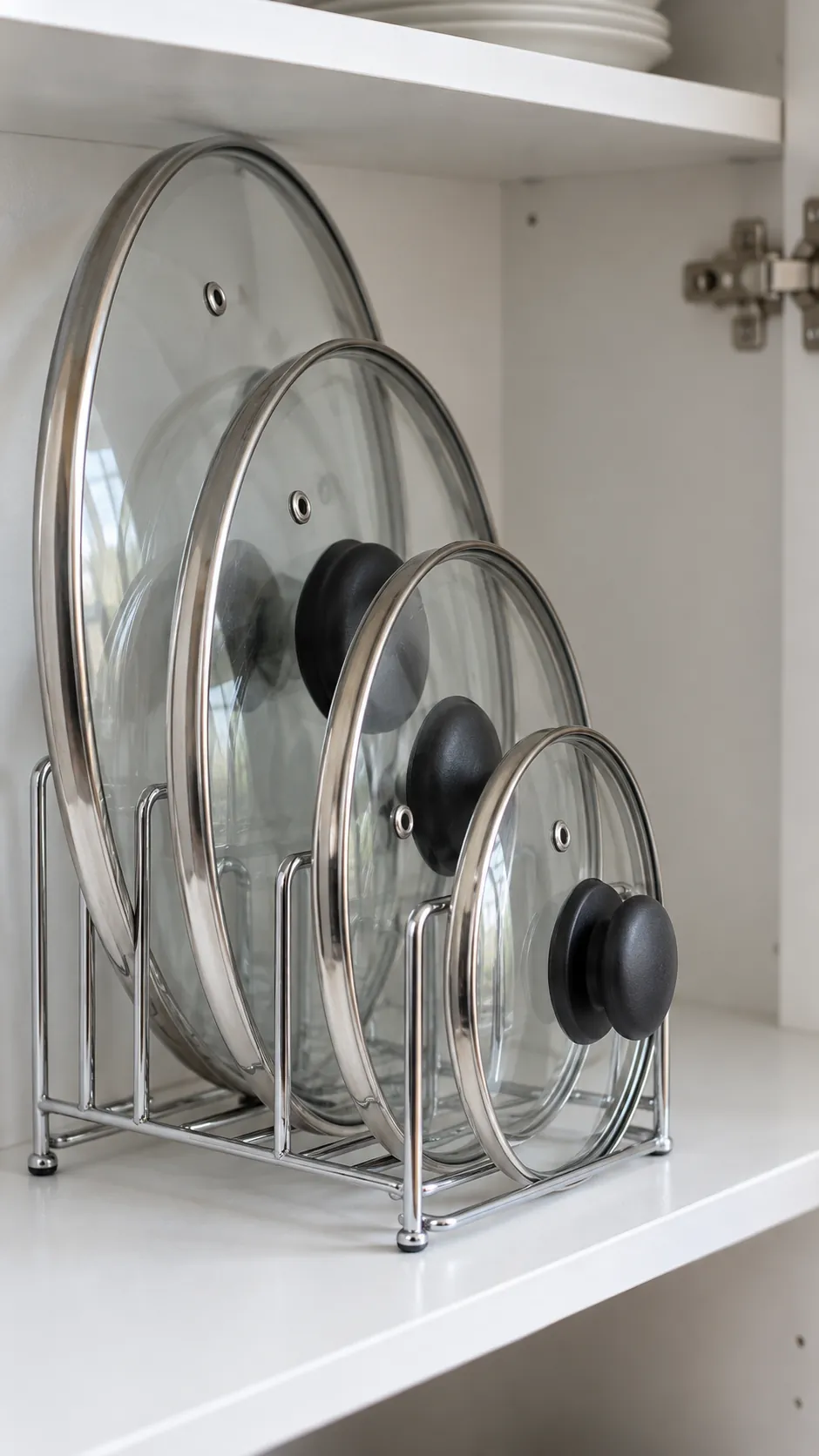
A slim lid rack can use a strip of shelf space that will not hold a whole saucepan. Choose slots that accommodate the knobs and rims of your actual lids. Put the largest lid where it has stable support and can come out without lifting the others. This makes pot lid storage easier to maintain than a loose leaning row.
Use the cabinet door for light lids only when it fits
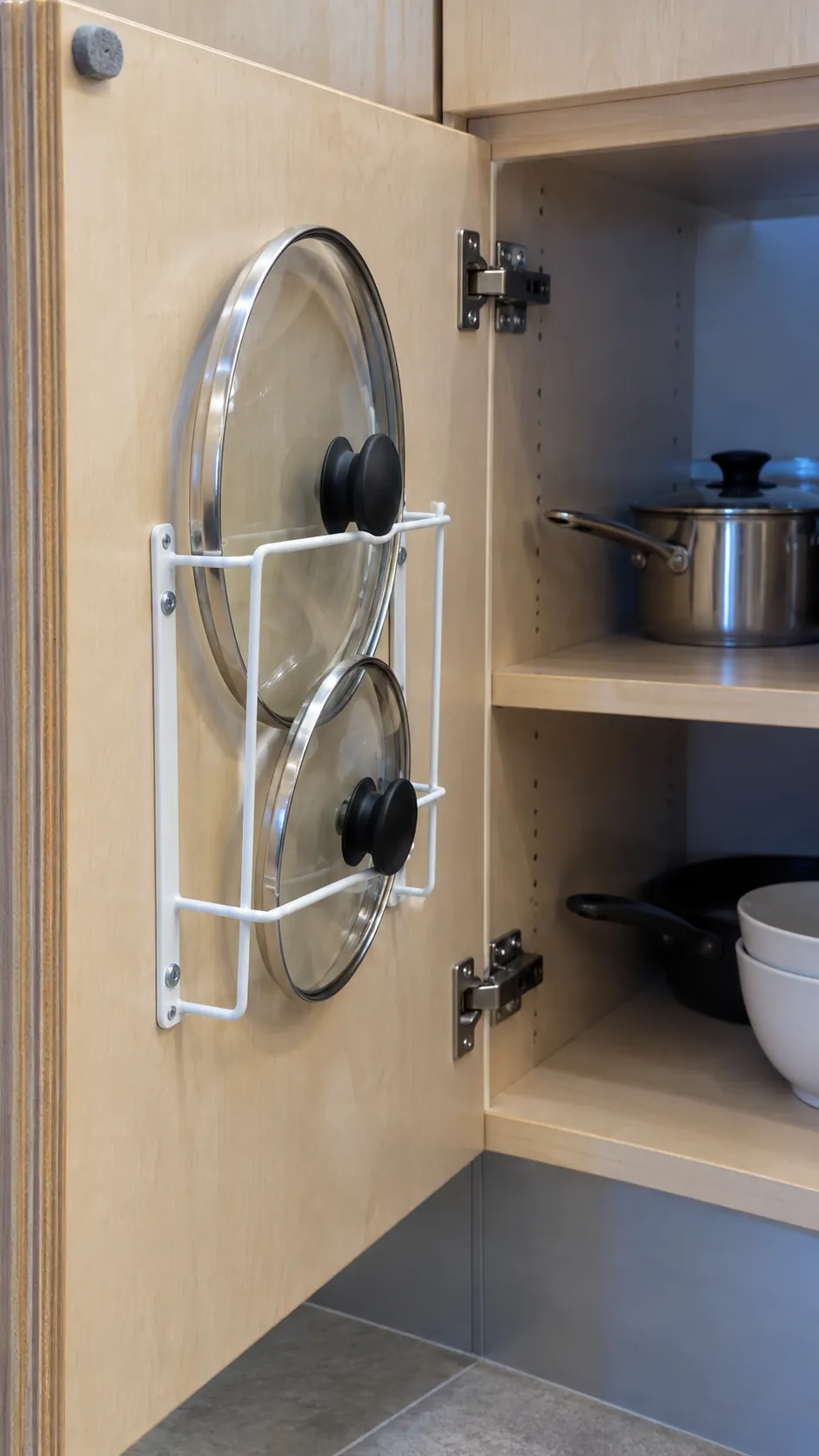
A door mounted holder can free a shelf corner, but the rack and lid knobs project into the cupboard. Close the door slowly with the cookware in place to check for collisions. Confirm that the door construction, hinges, fixings, and holder rating suit the load. In a rental, get permission for permanent fixings and use a freestanding option if the door cannot support the arrangement.
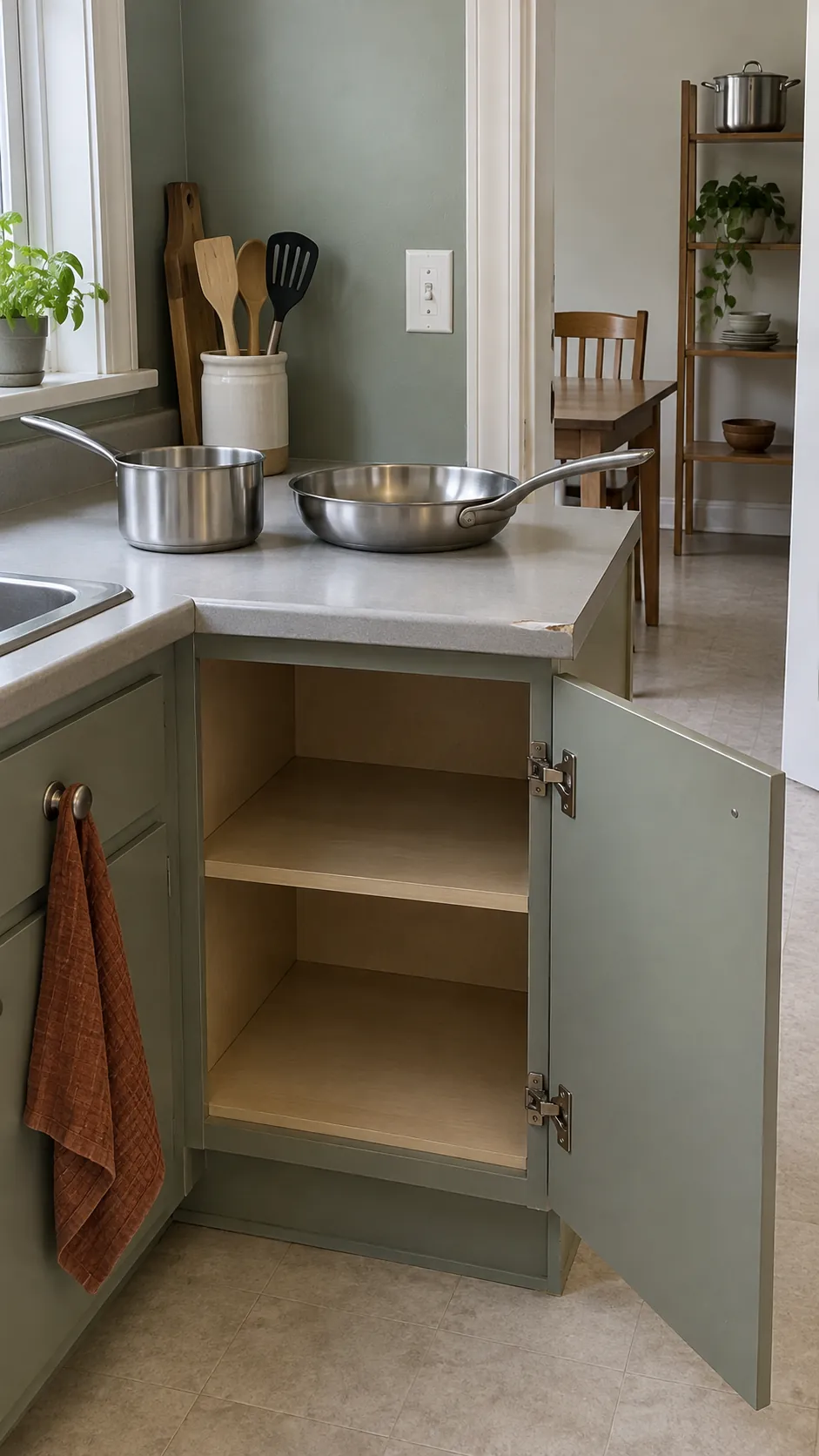
Adjust one shelf around the tallest useful pot
An unnecessarily low shelf can waste the useful height of a narrow cupboard. Move an adjustable shelf so the tallest pot fits with enough room to lift its handles. Keep the shelf level on the correct supports and within the cabinet load limit.
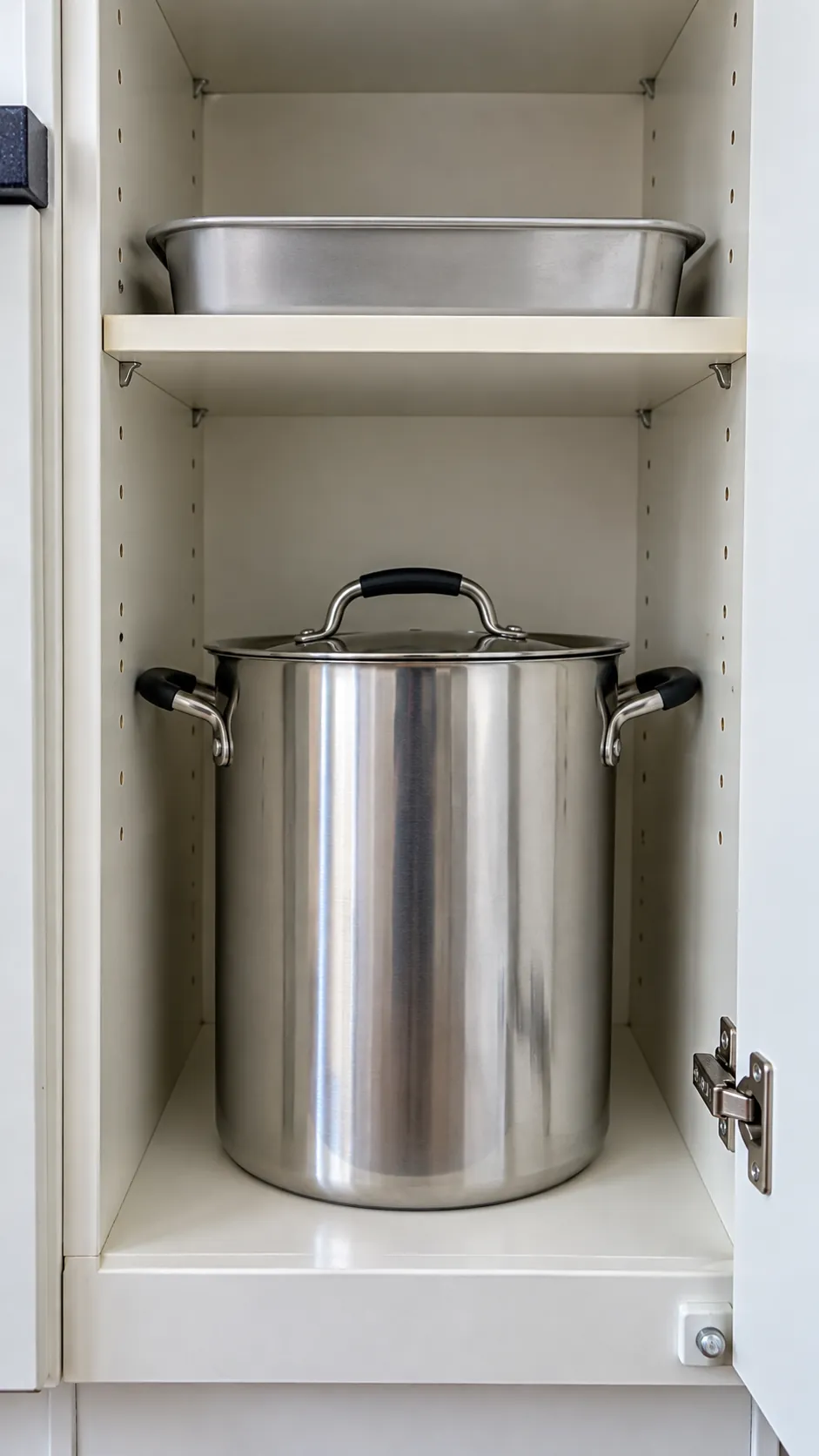
Do not remove a fixed structural shelf or cut the cabinet to gain height. Recheck what the space above will hold before making the change. A tall pot position works best when the other shelves still have a clear purpose.
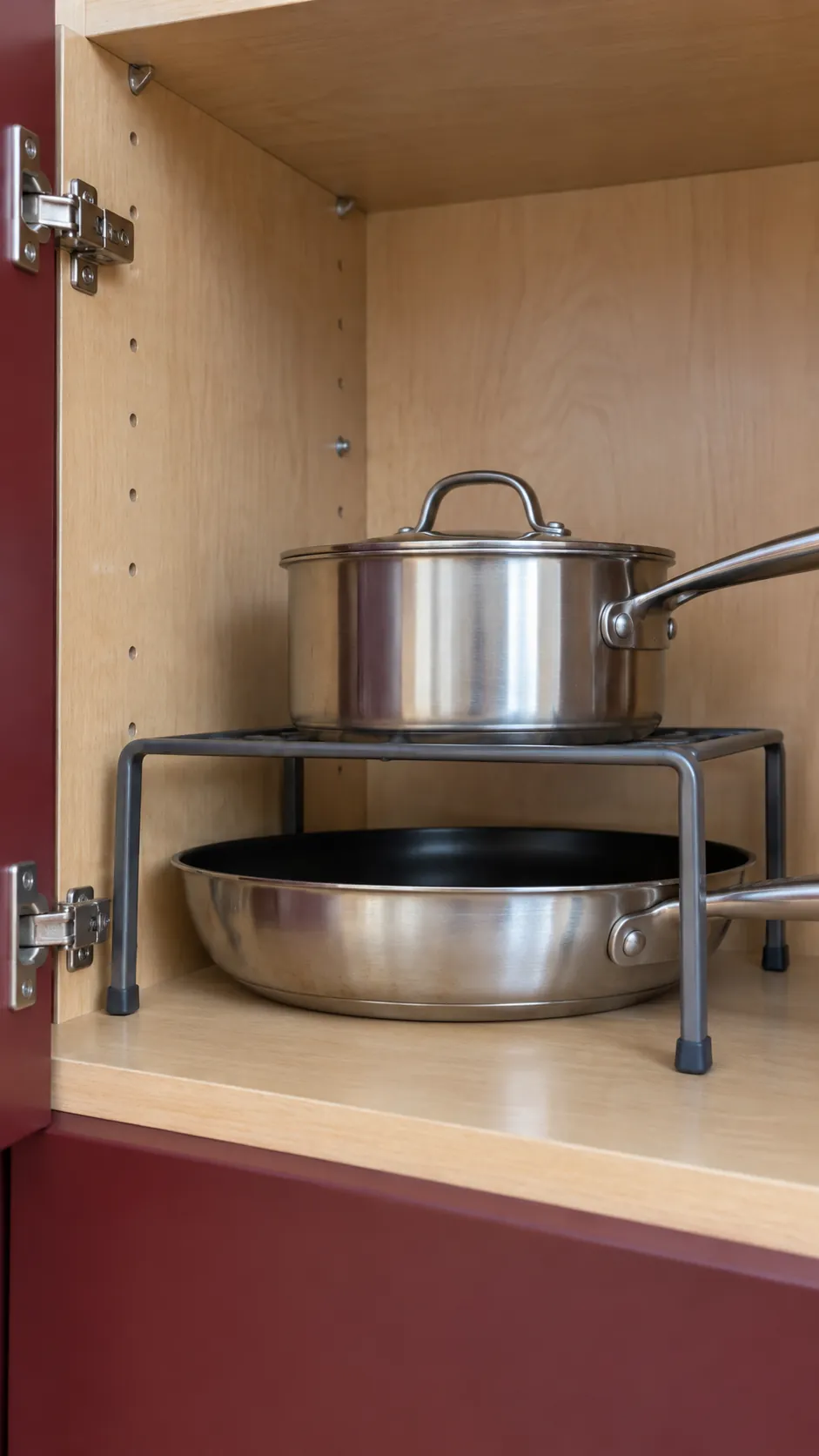
Add a rated riser above low cookware
A stable shelf riser can create an upper level over a short pan or small saucepan. Match its width and depth to the cupboard and confirm its load rating for the intended cookware. Leave enough room to slide the lower piece out without striking the riser legs. Skip this option if the extra frame makes an already narrow opening harder to use.
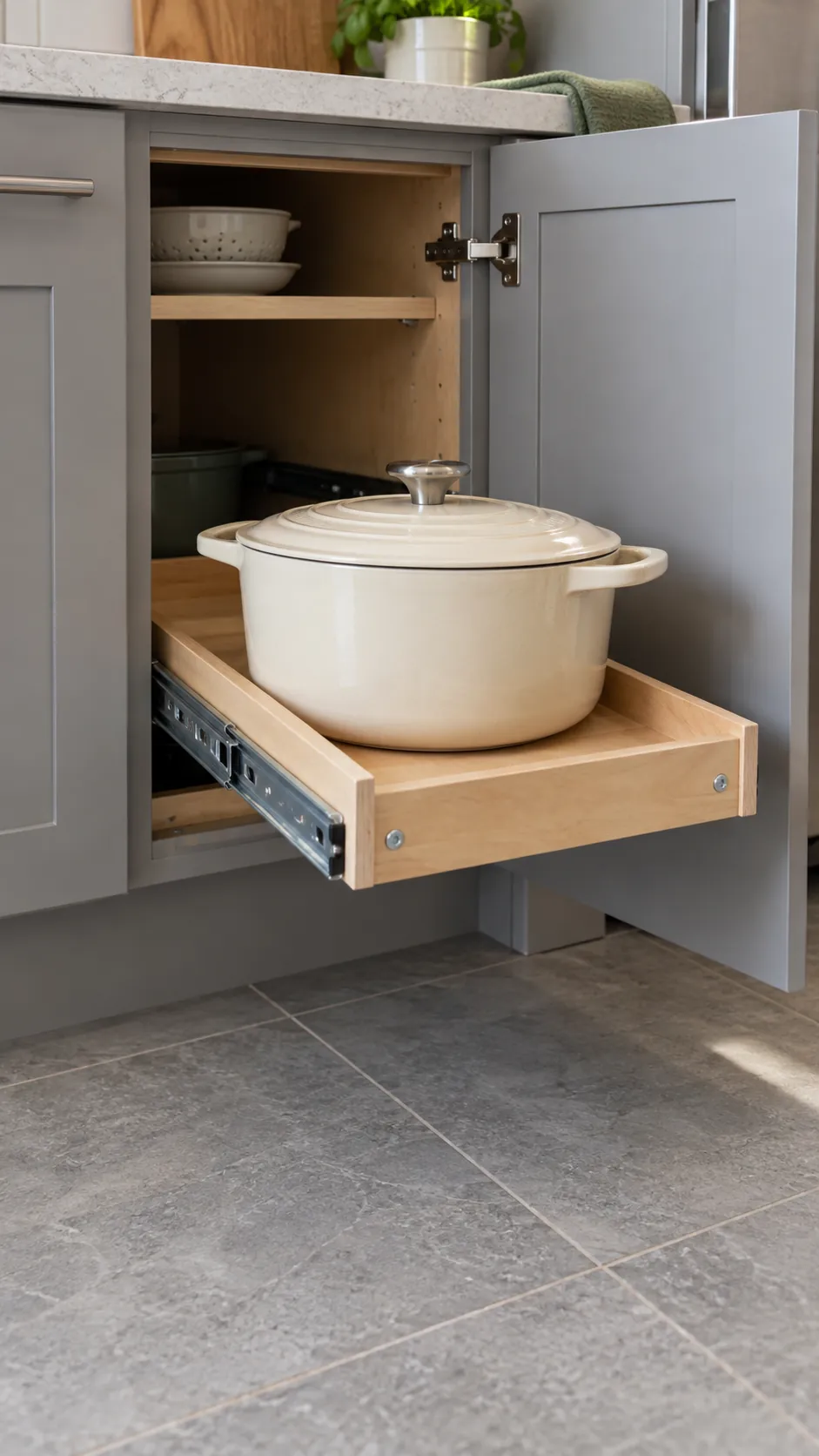
Fit a narrow pullout for heavy pieces
A properly installed pullout brings cookware forward instead of requiring a reach to the back. Check the clear door opening, hinge projection, slide requirements, and combined weight of shelf and contents. Use hardware designed for that load and cabinet construction. Keep the heaviest pot centered on the shelf and allow the pullout to return fully before closing the door.
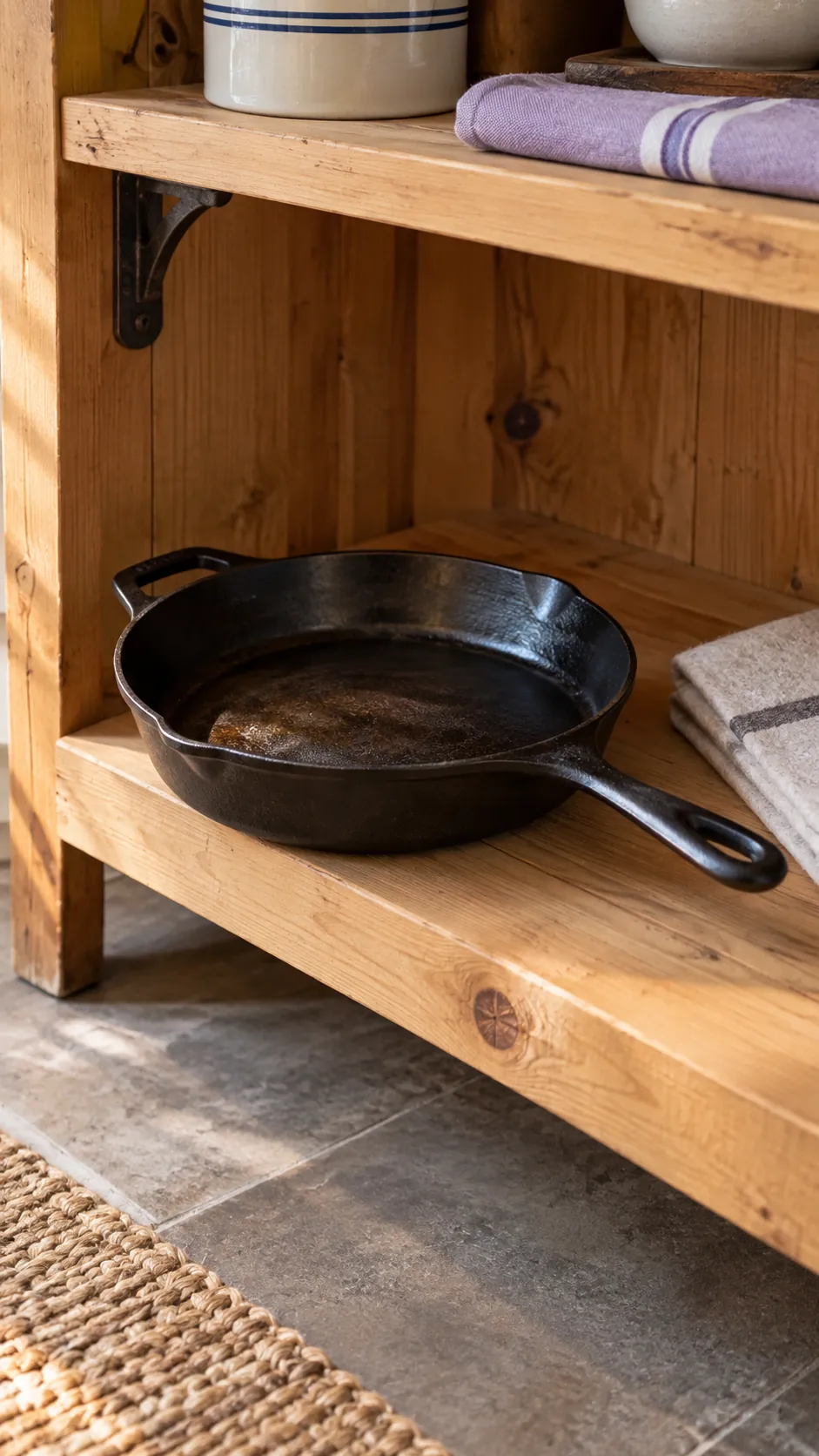
Give cast iron a low supported home
Store a heavy skillet on a strong low shelf where you can lift it with control. Avoid overhead hooks or a tall stack unless the complete system is specifically suitable for the weight. Dry the pan thoroughly and follow its care guidance before storage. Leave room for both the main handle and helper handle so neither catches the cabinet frame.
Hang a few pans on a properly fixed wall rail
A wall rail can help when cabinet width is the main constraint and a suitable wall is available. Use fixings appropriate for the wall and a rail and hooks rated for the full cookware load. Space the pans so they do not strike each other or project into the walking route.
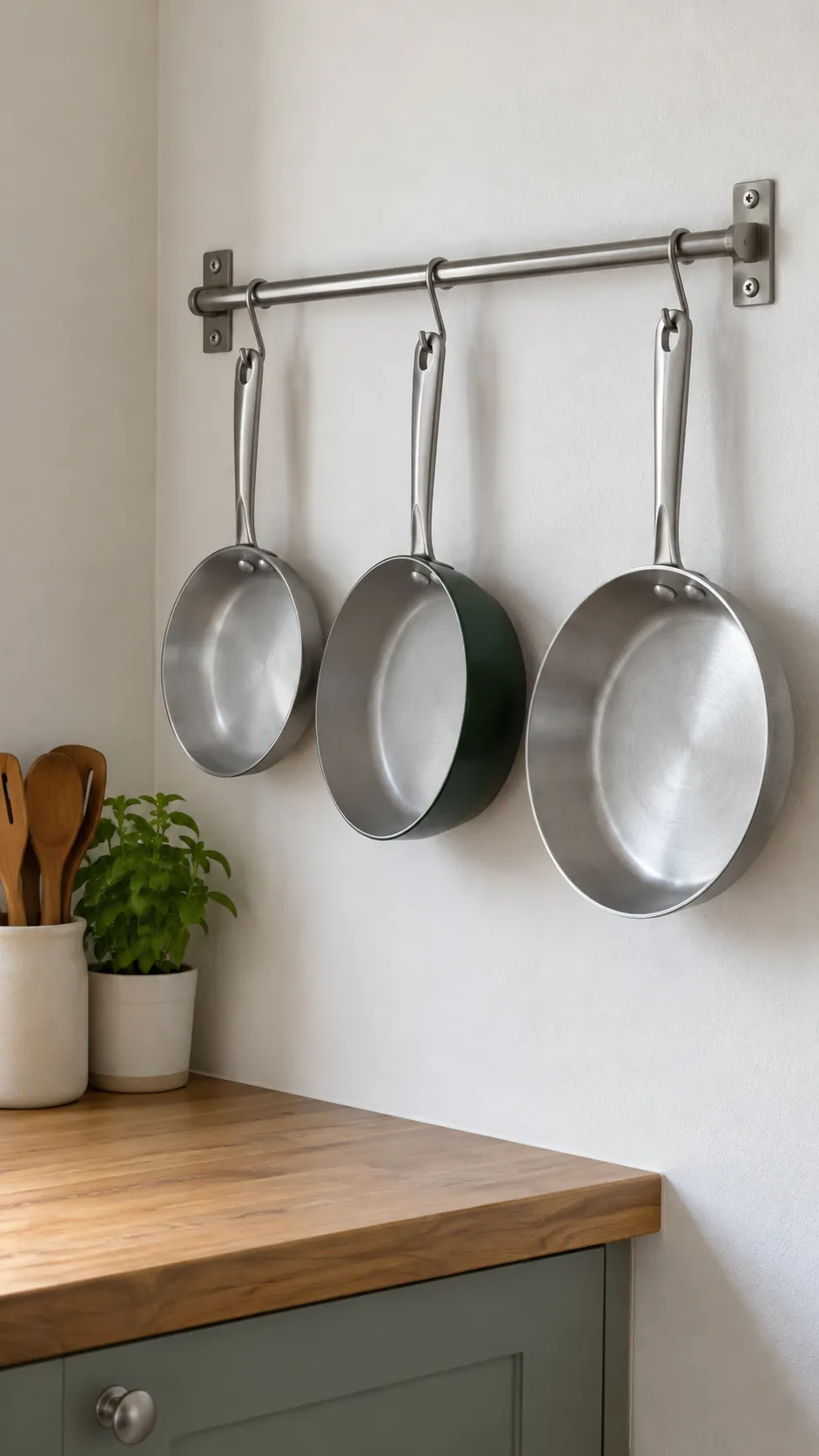
Choose a location away from hob heat, grease, and splash where the pans can remain clean and dry. Do not rely on decorative adhesive hooks for heavy cookware. Check rental permission before drilling and leave enough clearance to lift each pan off its hook.
Use a cabinet side panel only if it can carry the load
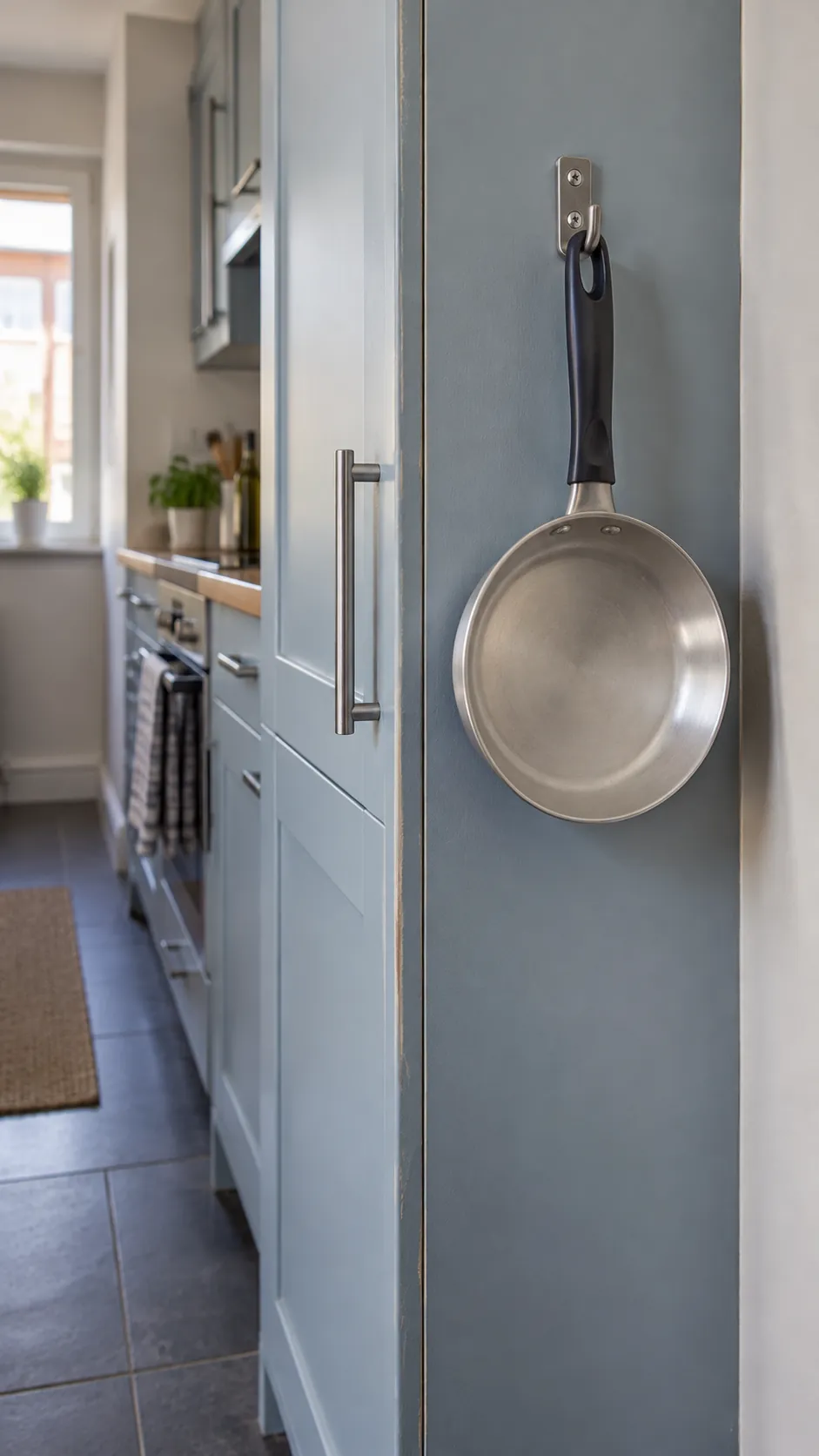
An exposed cabinet end may offer a reachable hanging position for a light pan. Check the panel material and thickness, the approved fixing method, and whether drilling would enter another compartment or damage a finish. Thin decorative panels are not automatically strong enough for cookware. If the construction is uncertain, keep the pan on a supported shelf instead.
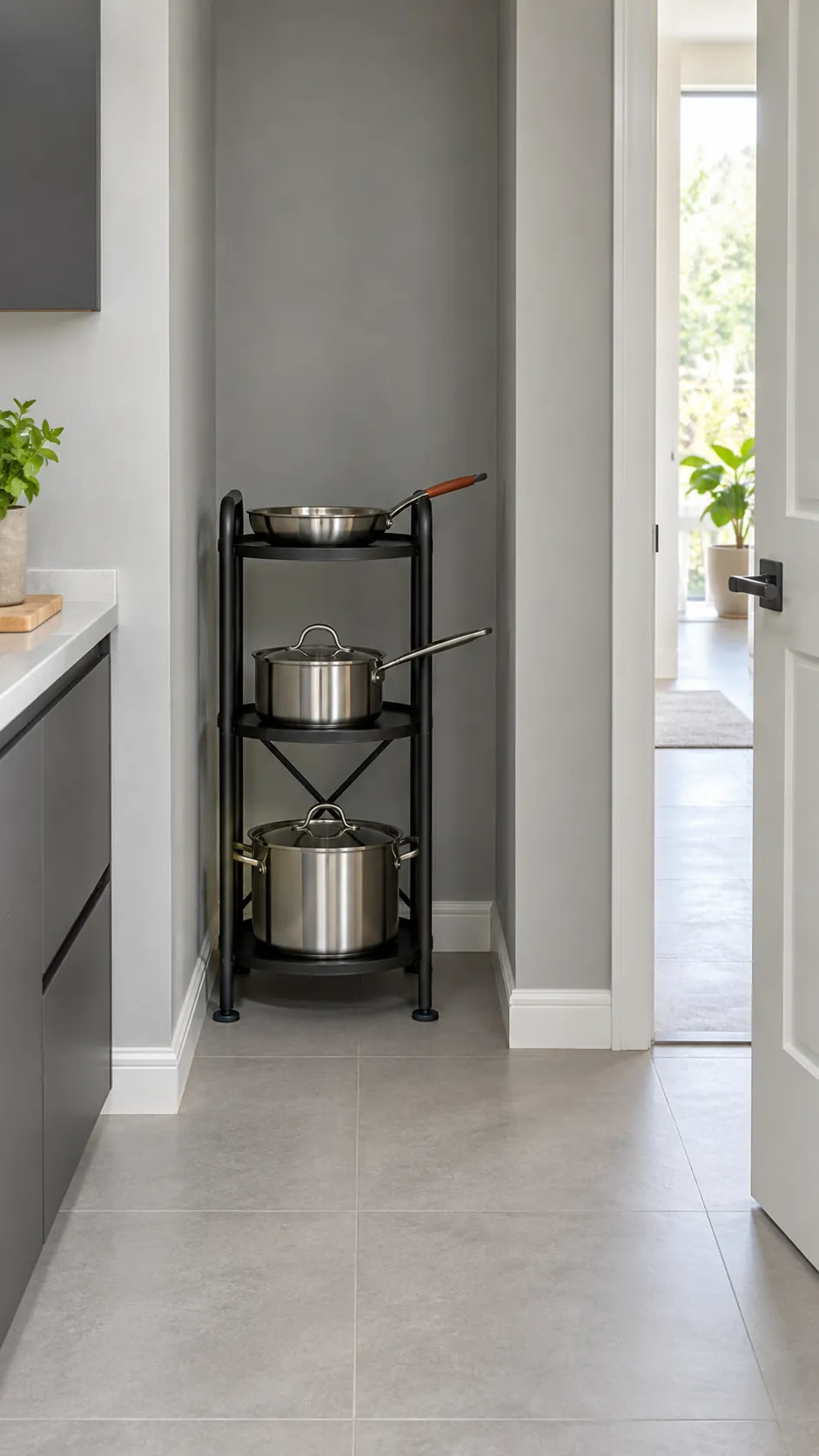
Choose a stable narrow cookware stand
A freestanding tiered stand can give pots separate levels outside a cupboard. Check the complete loaded footprint, the shelf ratings, and whether handles protrude beyond the frame. Put heavier pieces lower and follow any required anchoring instructions. The stand belongs in a genuine storage nook, not a corridor or the space needed to open the oven.
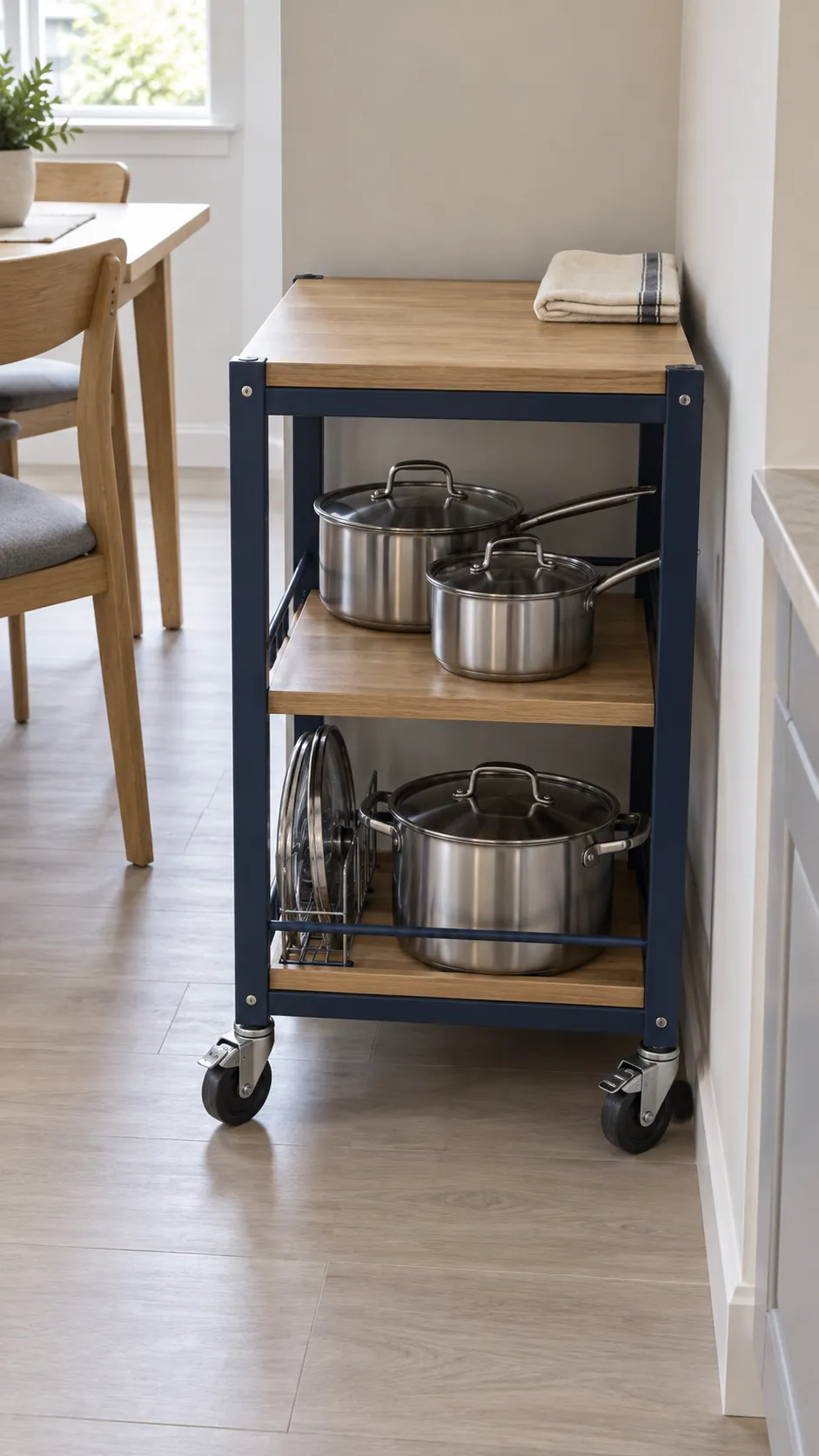
Use a sturdy cart as a movable cookware cupboard
A compact cart can hold a small daily cookware set when there is a suitable parking position. Choose solid shelves and a load rating that covers the pots, lids, and any other contents. Lock the castors when parked, and keep the load stable with heavy pieces low. Move the cart only after checking that the route is clear and nothing can slide off.
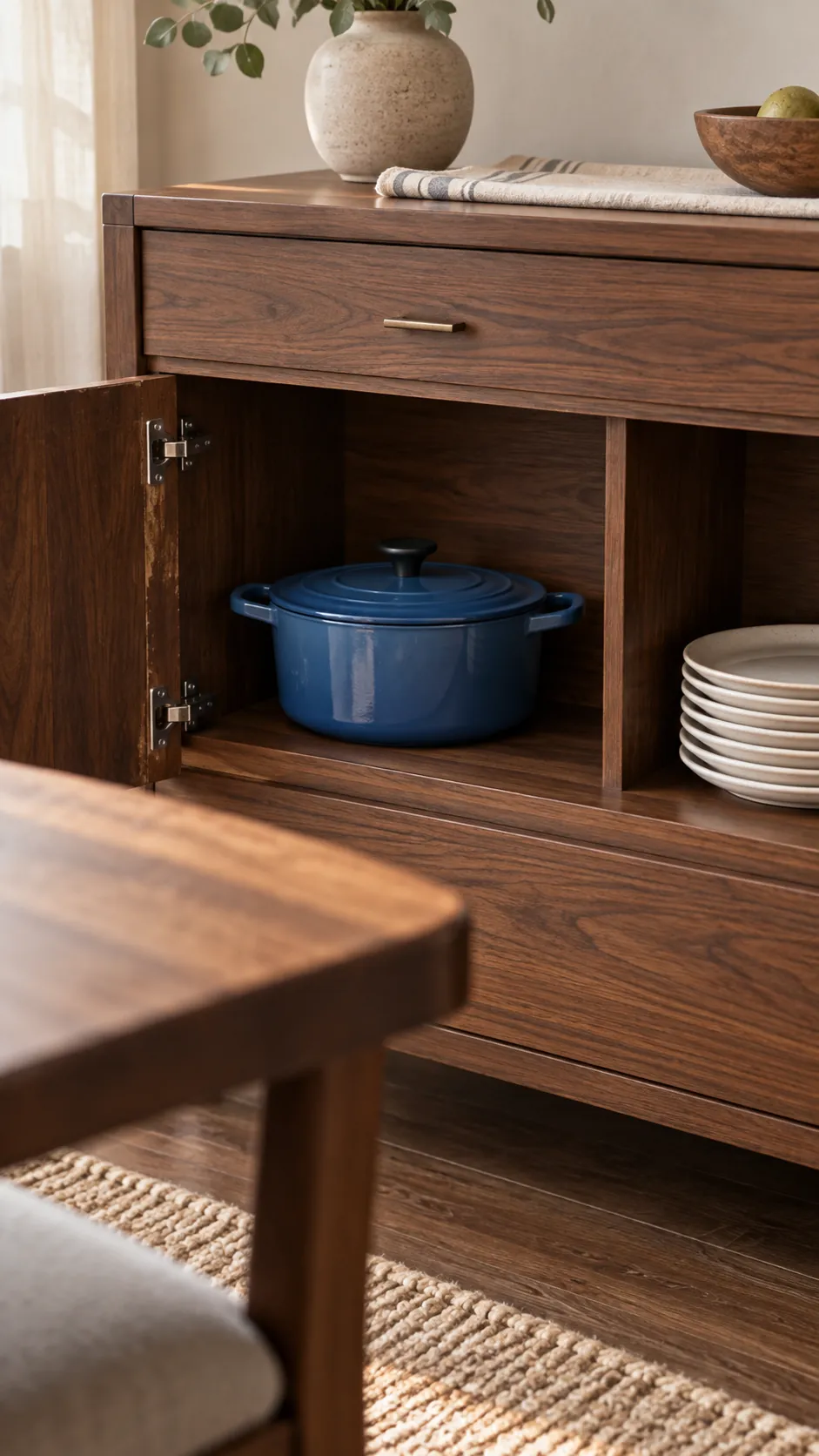
Store occasional cookware in nearby dining furniture
A strong sideboard shelf can hold a roasting pot or casserole that is used less often. Check its depth, shelf support, and load limit rather than assuming all dining furniture is suitable. Keep the cookware clean, fully dry, and easy to retrieve without disturbing fragile tableware. This frees narrow cupboard storage for pieces that support everyday cooking.
Keep a detachable handle set together
Cookware designed with removable handles can reduce the footprint of a nested set. Follow the maker instructions for removing, attaching, and checking the handle, and store it in a nearby dedicated tray. Never remove or modify a fixed handle to make an ordinary pan fit. Before replacing an existing set, compare the actual storage gain with the pans you already use.
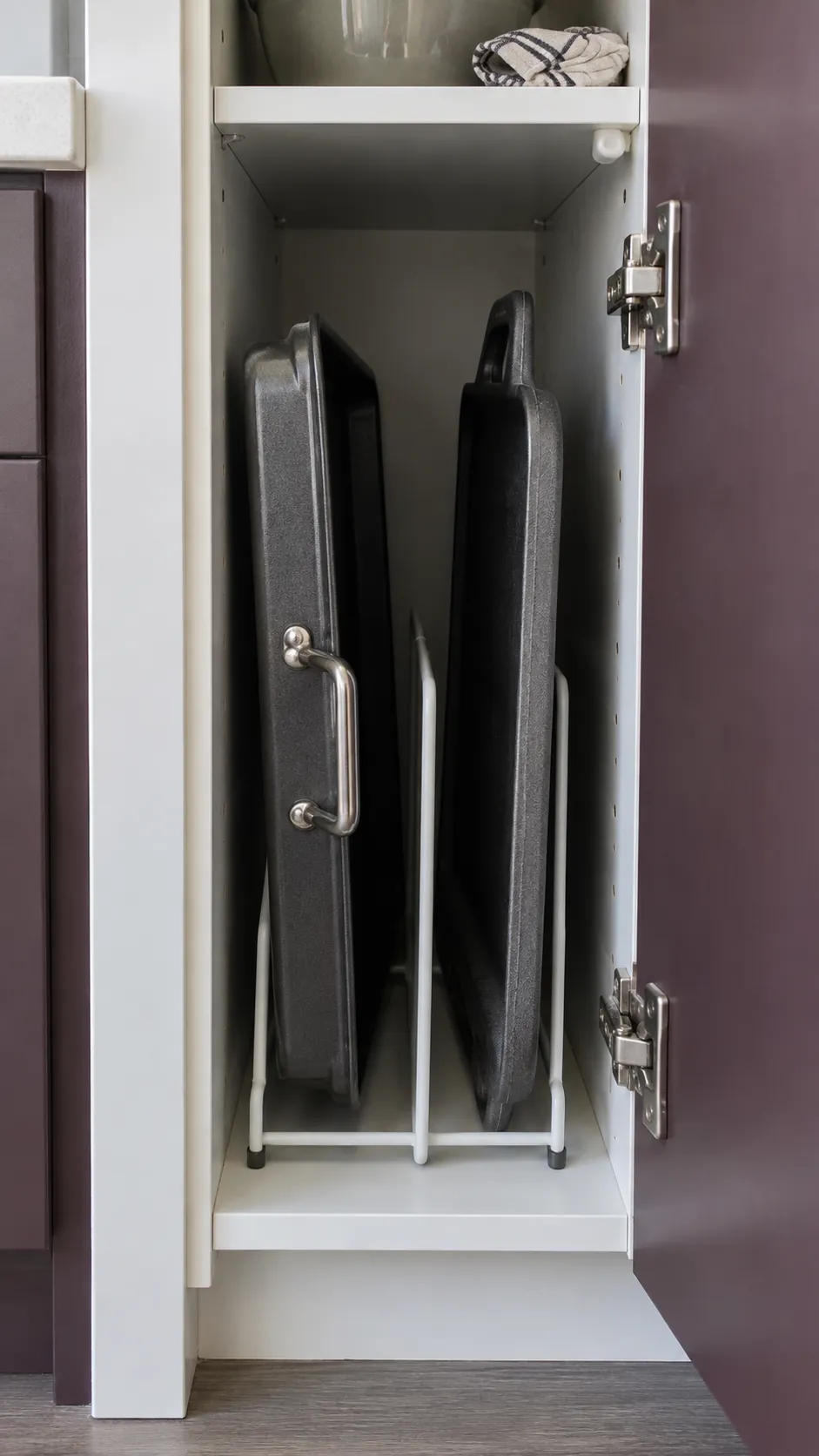
Reserve a tall slot for flat griddles and roasting trays
A narrow vertical compartment can hold flat cookware that is awkward in a saucepan stack. Use stable dividers suitable for the pieces and protect surfaces where the manufacturer recommends it. Check that handles and rim lips clear the opening without catching a hinge. Keep this slot separate from heavy round pots so you can take one tray out directly.
Move surplus pieces out of the prime cooking zone
Keep the cookware needed for meals you actually make in the easiest storage positions. Move occasional duplicates to a suitable secondary shelf, and consider passing on pieces that no longer serve a purpose. Do not choose an arbitrary number if your household regularly uses several pans at once.
After a few normal cooking sessions, notice which stack you still have to dismantle and which pot never comes forward. Adjust those positions before buying another organizer. Useful small kitchen pot storage is measured by safe access and a clear return space, not by how tightly everything can be packed.