
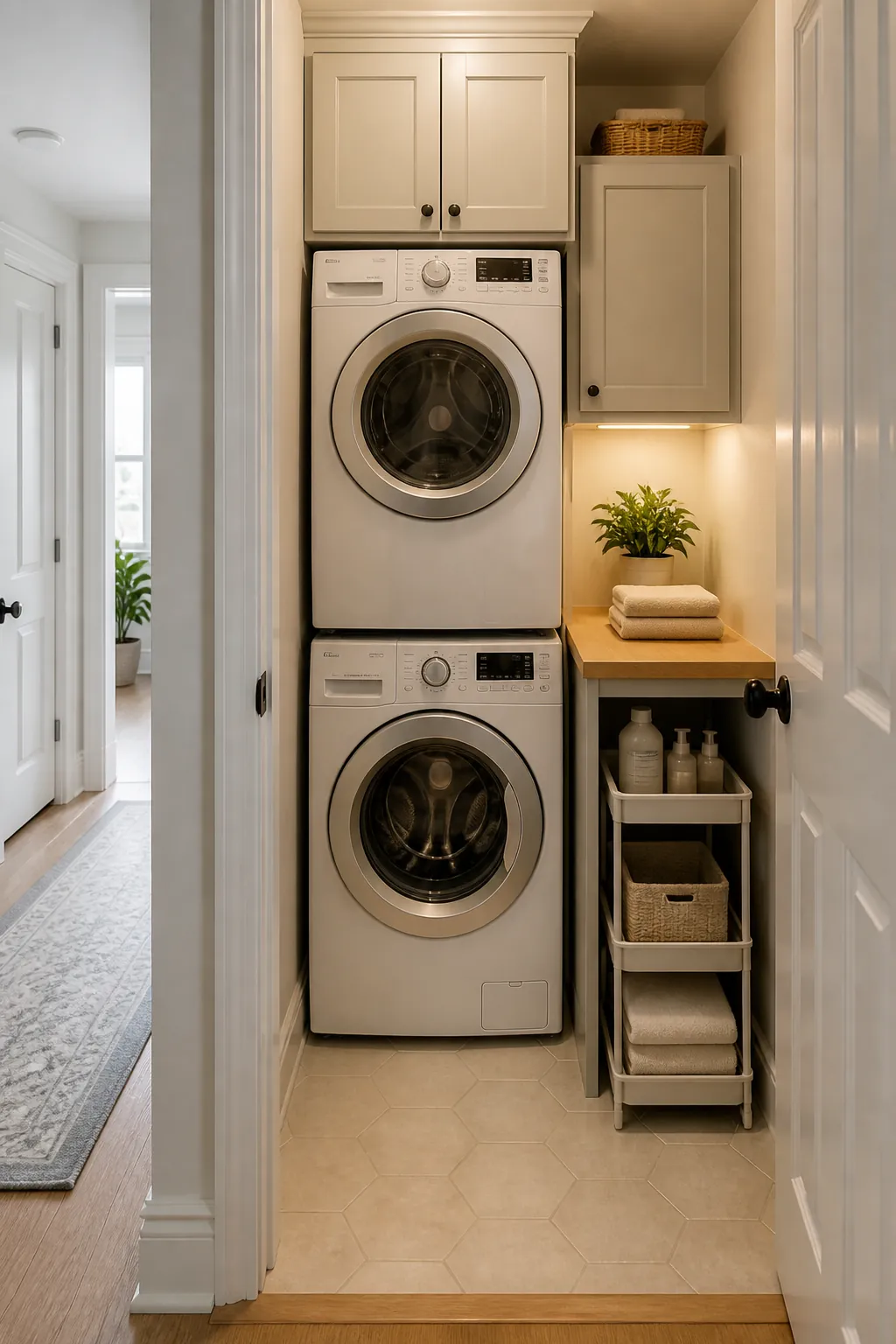
Tiny laundry rooms usually fail at the handoff: there is nowhere to set a full basket, reach detergent, hang a damp shirt, or open the door without shifting something else first. The fix is to plan the room around the actual sequence of laundry, not just the prettiest storage photo.
Use these tiny laundry room ideas for stacked closets, top-loader nooks, narrow utility rooms, and hallway laundry areas. Each idea earns its space with a specific job, so every shelf, hook, counter, and clearance zone has a reason to be there.
Pocket-Size Stacked Closet
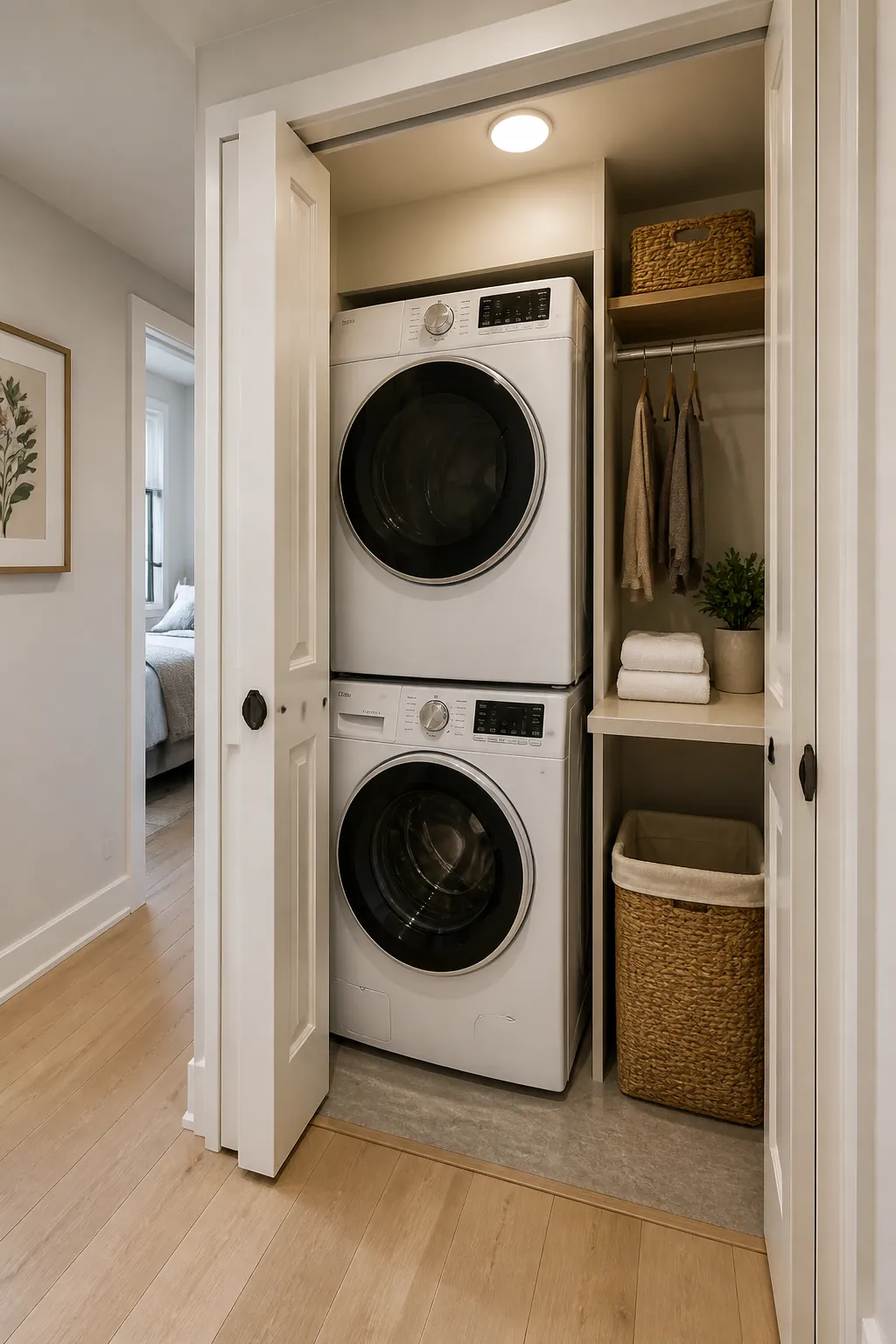
Stacking the washer and dryer frees the one thing a closet lacks most: shoulder room. Use the open side or the area above the machines for a shallow shelf, a short hanging rod, and one surface where a basket can land.
Before committing, check the dryer vent route, outlet location, machine depth, and whether the closet doors still close. In a pocket-sized setup, a few extra inches at the back can decide whether the front stays usable.
Side Counter Beside a Top Loader
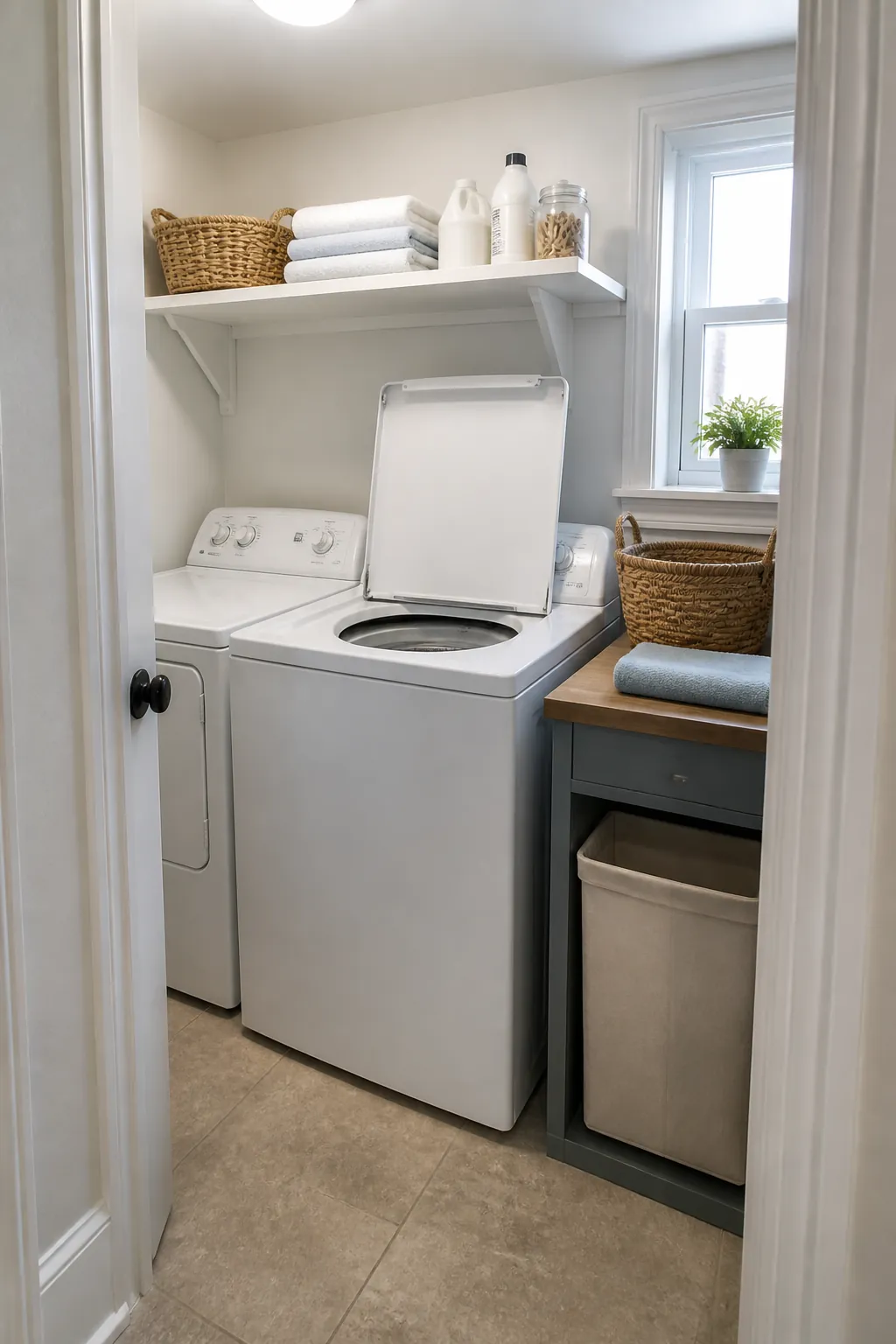
A top loader needs lid clearance, so the useful counter often belongs beside the machine rather than above it. A narrow side counter gives you a place to sort socks, set stain remover, or park a folded stack without blocking the washer.
Keep the counter depth aligned with the machine front so it does not pinch the aisle. If the side gap is tight, choose open legs or a wall-mounted slab so the floor still feels light.
Low Wall Cabinets
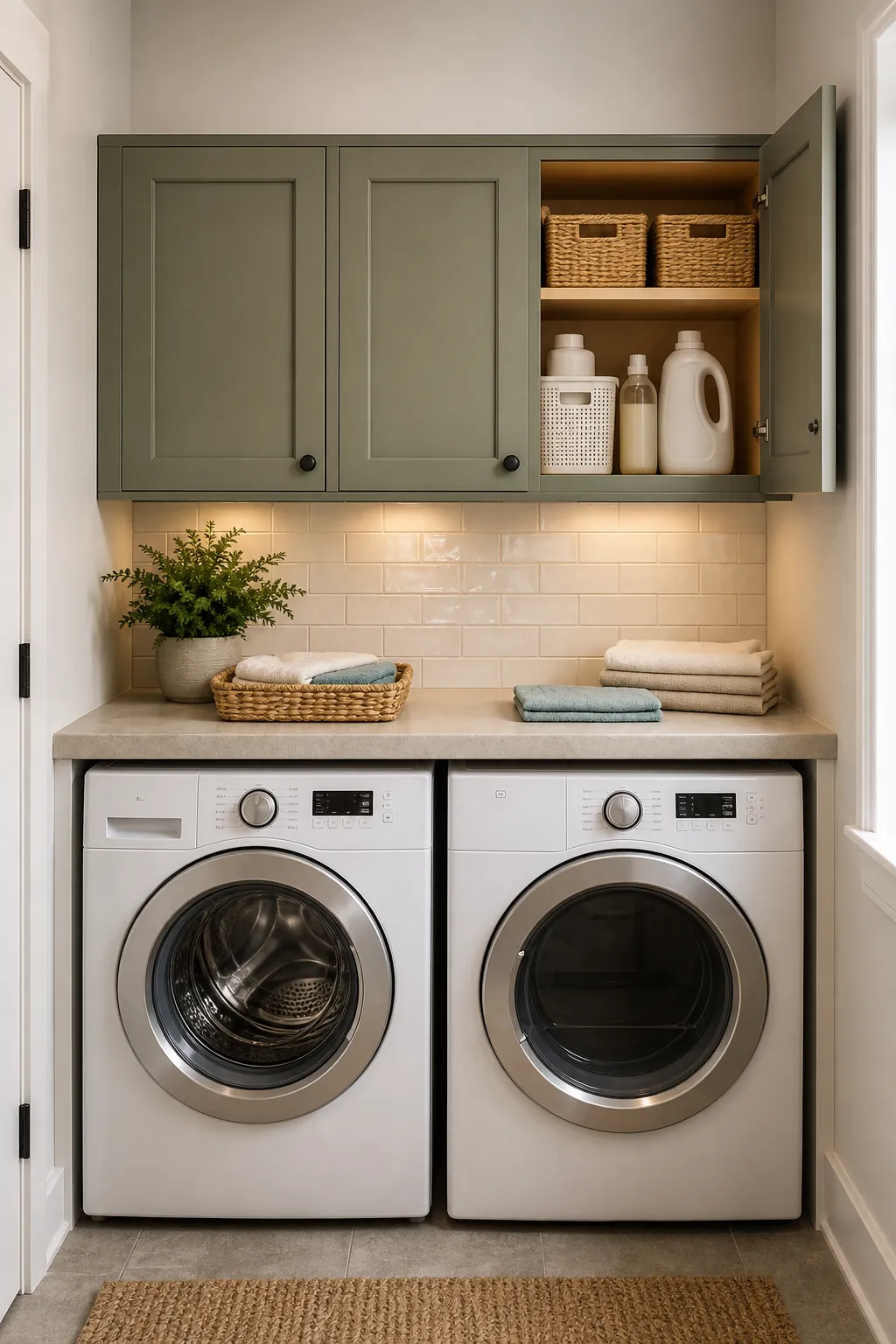
Low upper cabinets work better than high ones in a tiny laundry room because detergent has to be reachable with one hand. Mount them where you can see the front row of bottles instead of stacking supplies in a forgotten overhead zone.
Leave enough space below for lids, controls, and your knuckles when you are loading the machine. Doors that lift or slide can be easier than swing-out doors in a narrow aisle.
Rolling Gap Cart
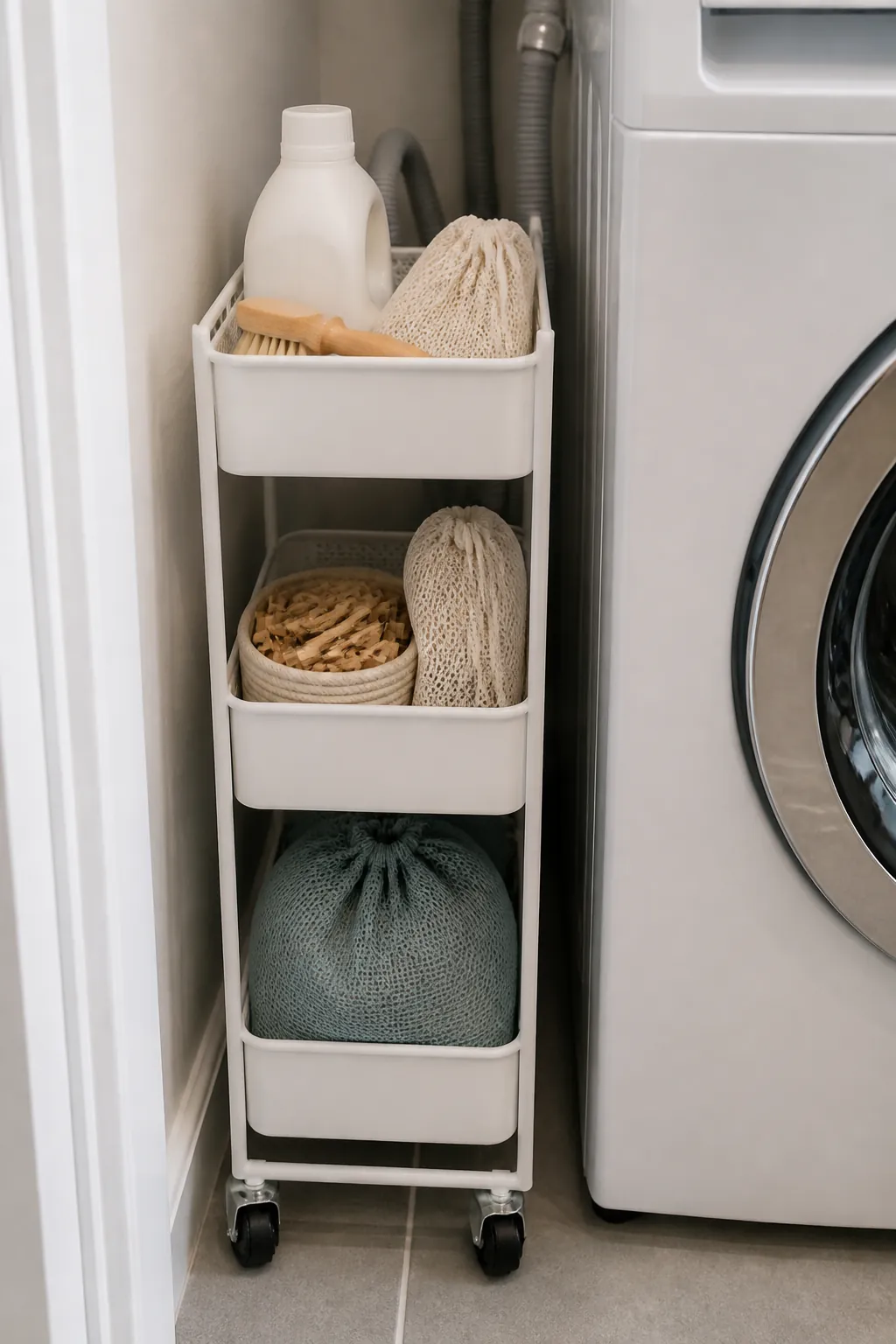
A slim rolling cart turns the awkward strip beside the washer into active storage. It is best for narrow items you use every week: dryer sheets, stain spray, mesh bags, lint rollers, and spare clothespins.
Choose a cart with a handle and raised edges, because small bottles tip easily when the cart is pulled out. Keep heavier containers on the lowest shelf so it does not wobble.
Back-of-Door Drying Rack
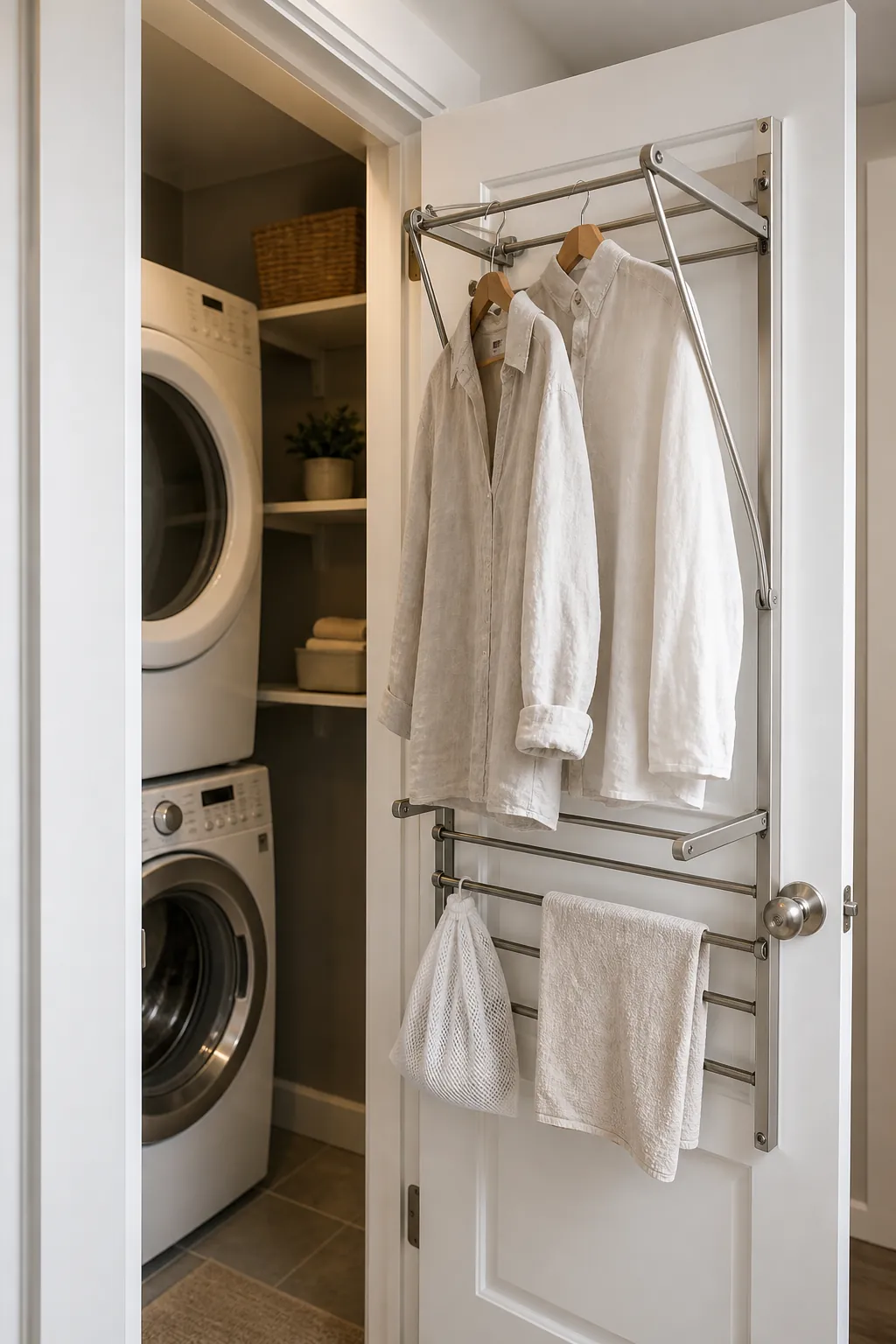
The back of the door is useful because it disappears when the room is open and works when the door is closed. A fold-out drying rack there keeps damp delicates off shower rods, chair backs, and cabinet knobs.
Check that hangers and wet sleeves will not hit the machines or wall trim. If the door is hollow, use hardware made for that door type or pick an over-door rack that spreads the load.
Fold-Down Counter Leaf
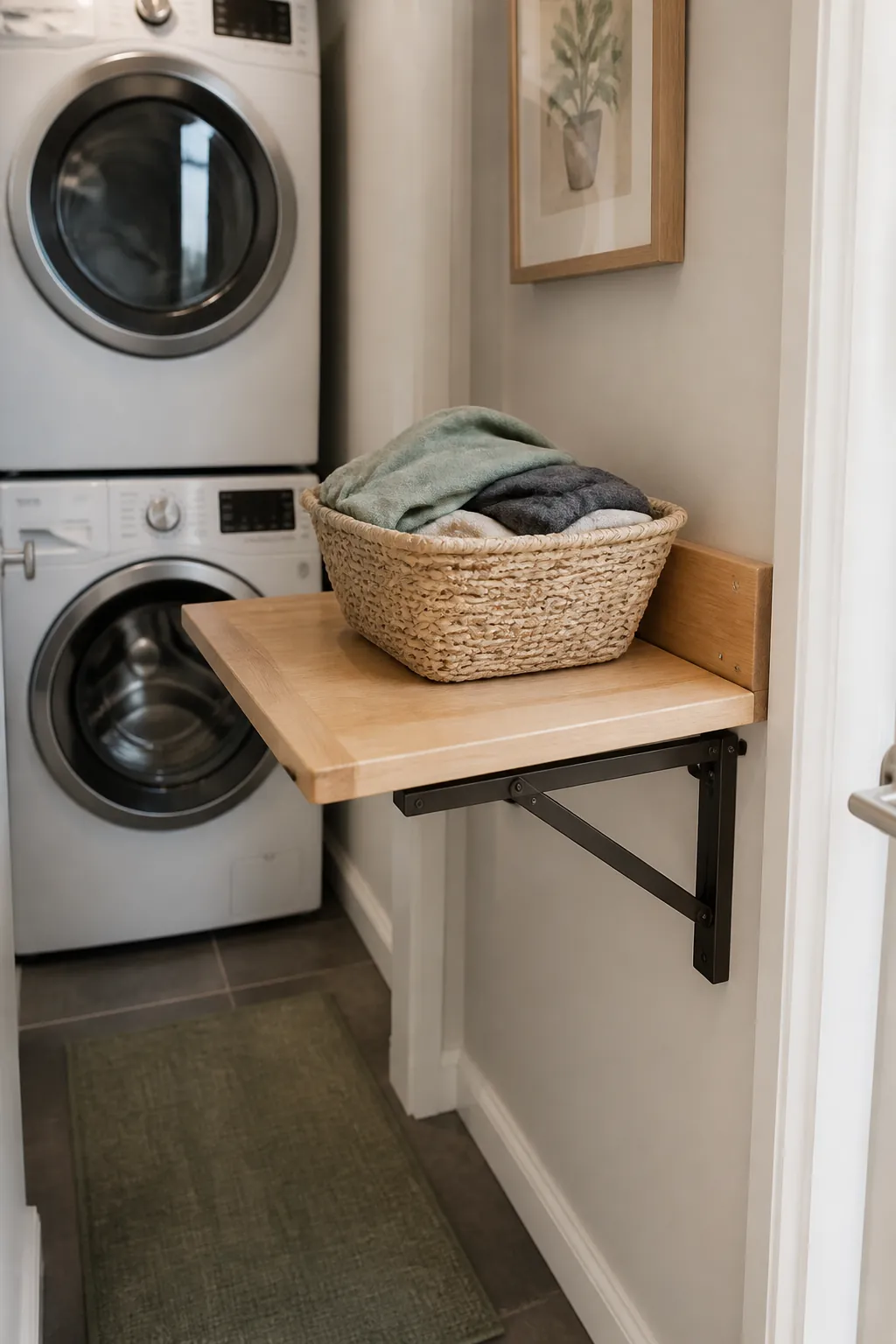
A fold-down leaf gives a tiny laundry room a temporary work surface without permanently stealing floor space. It can hold a basket while you unload, then fold flat once the job is done.
Mount it at a comfortable standing height and make sure it clears machine doors, knobs, and nearby trim. This idea is strongest when the room needs a landing spot more than another cabinet.
Over-Machine Shelf With Lid Clearance
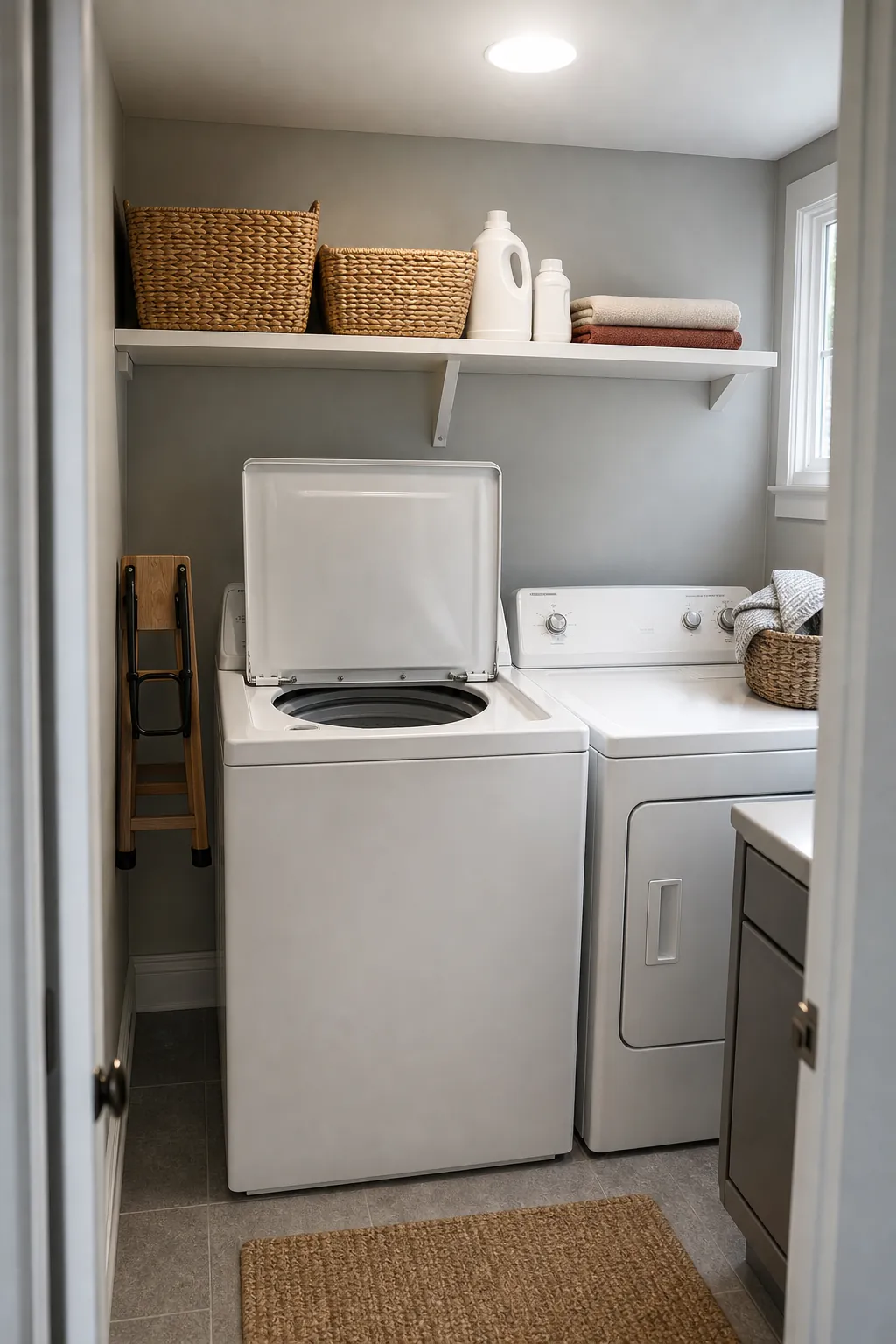
An over-machine shelf is helpful only if it respects how the machines open and service. For front loaders, it can sit closer to the top; for top loaders, it needs enough height for the lid to open fully.
Use the shelf for light, frequent items rather than heavy bulk jugs. If hoses, valves, or shutoffs sit behind the machines, leave access instead of boxing them in.
Peg Rail on the Shallow Wall
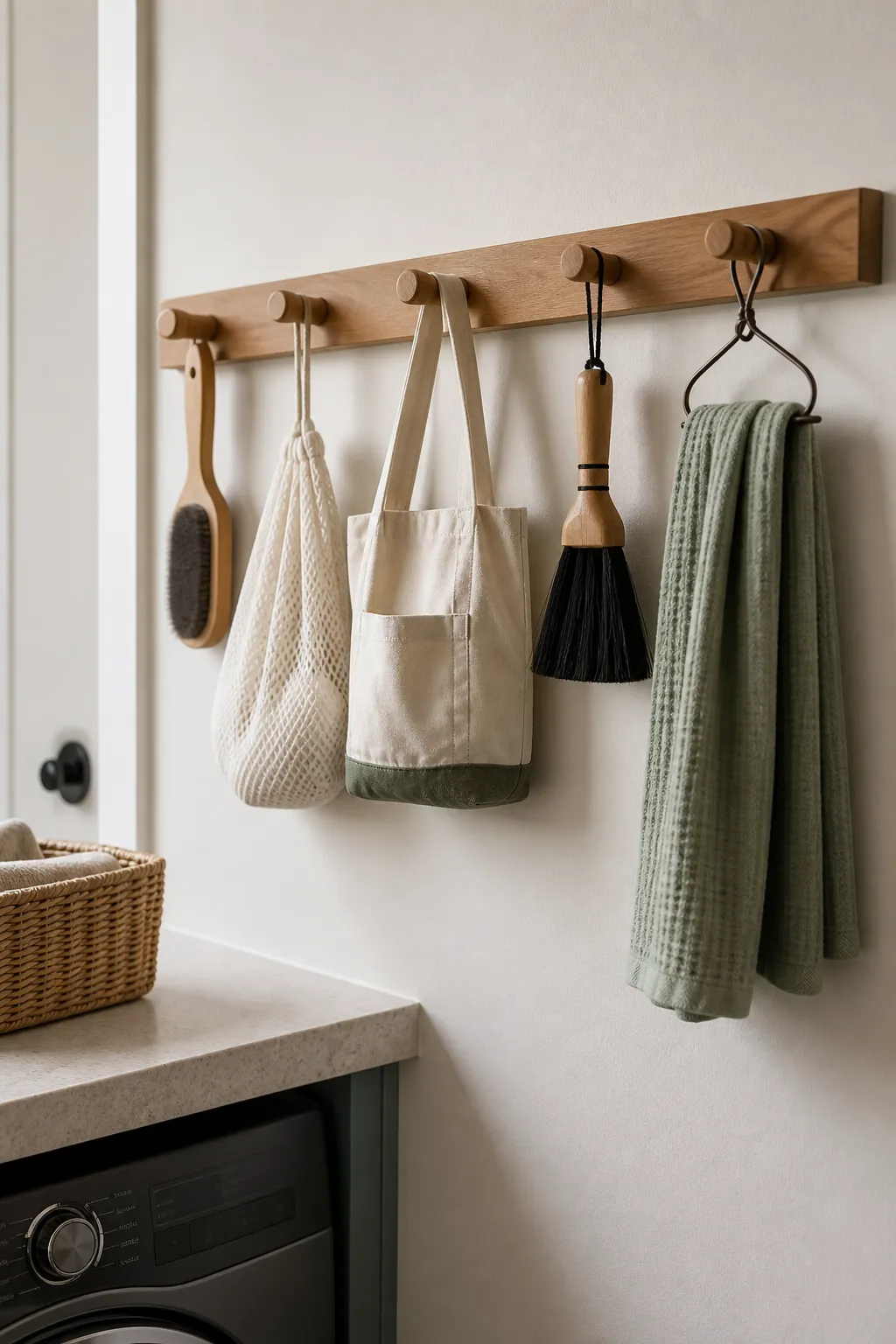
A shallow peg rail keeps tools visible without adding cabinet depth. It is a good place for a lint brush, small dustpan, collapsible hanger, cleaning cloths, or a bag for unmatched socks.
Place it where hanging items will not brush your shoulder every time you walk in. In a very narrow room, short pegs and flat hooks matter more than the length of the rail.
Mini Sink in the Corner
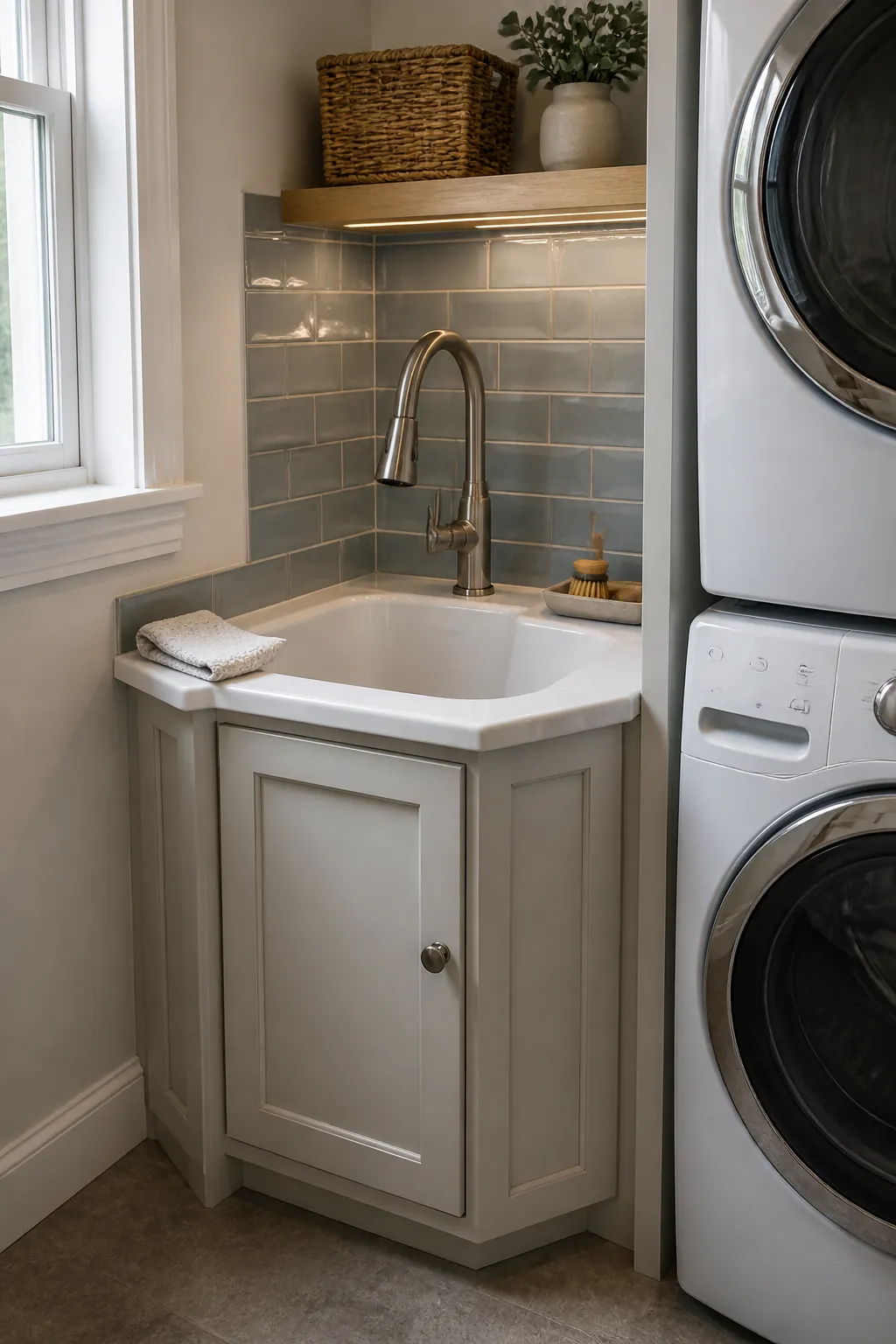
A tiny corner sink can be more useful than a larger cabinet if you regularly soak stains, rinse muddy cloths, or hand-wash small items. The key is choosing a basin that handles quick tasks without taking over the aisle.
Plan the plumbing and splash area before choosing the cabinet. Wall-mounted faucets, rounded basin corners, and open space underneath can make the sink feel lighter in a cramped room.
Curtain Instead of Swinging Doors
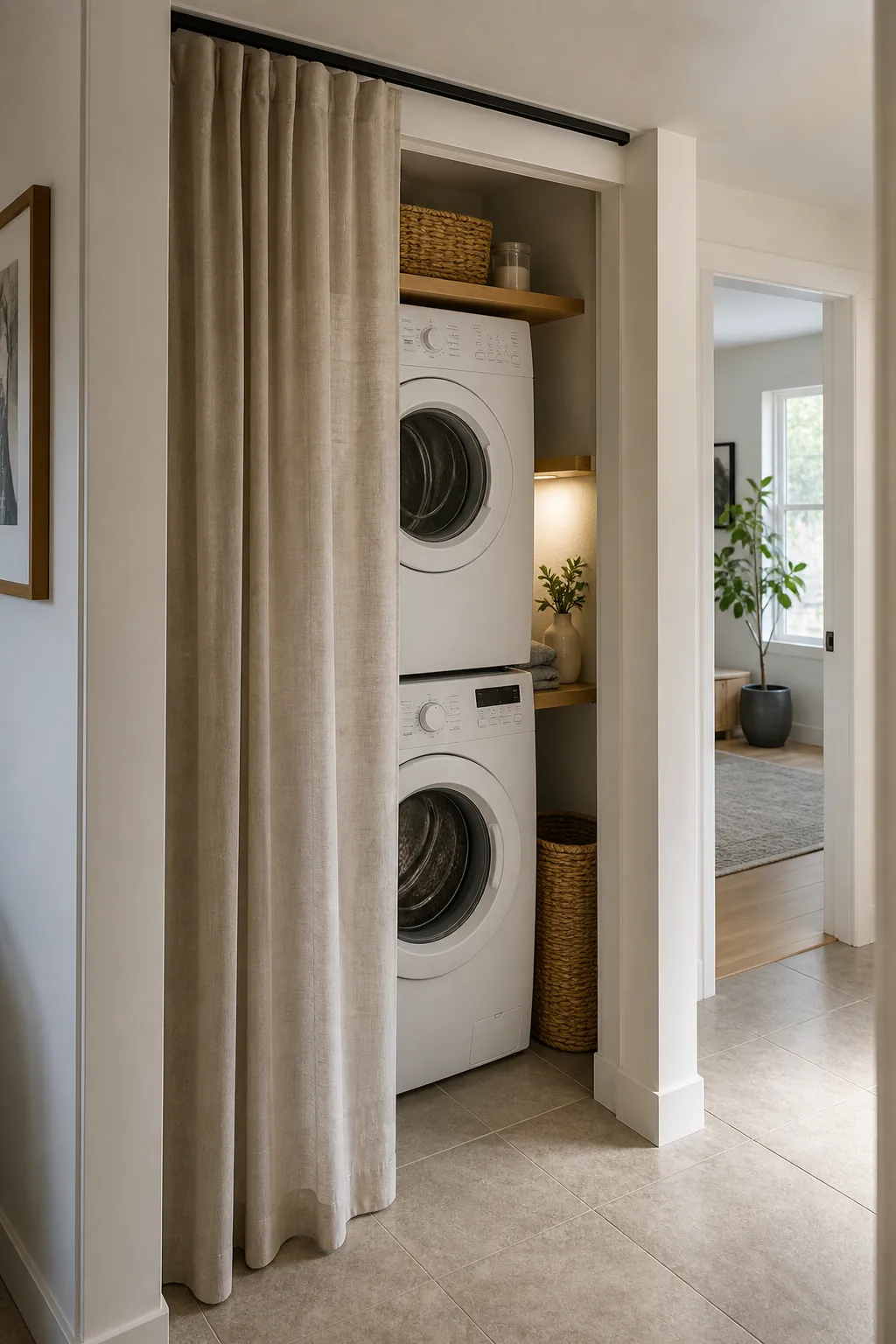
Replacing closet doors with a curtain can return the space that bifold or swing doors steal. It also makes it easier to carry a full basket in without wrestling with panels.
Use a washable fabric with enough weight to hang cleanly, and mount the rod high so the opening feels intentional. This works especially well when the laundry zone sits in a hallway or mudroom.
Vertical Tool Cabinet
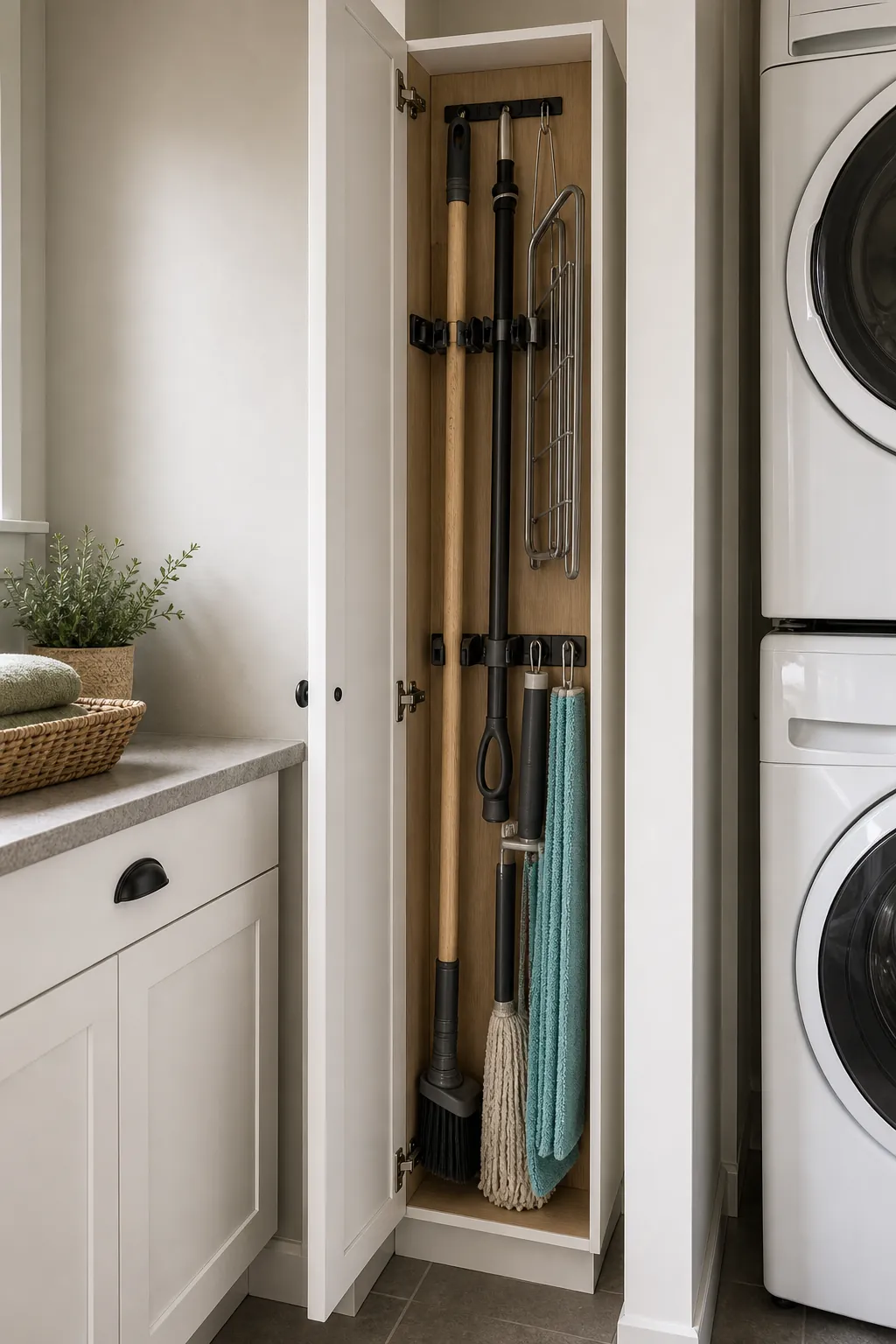
A tall skinny cabinet gathers the awkward items that never fit normal shelves: mop, broom, ironing board, drying rack, vacuum wand, and refill bags. In a small laundry room, vertical storage is often cleaner than spreading tools across hooks.
Measure the tallest item first, then choose shelves around it. A cabinet that is too shallow for handles will become frustrating quickly, so check handle depth as well as width.
High Shelf for Bulk Refills
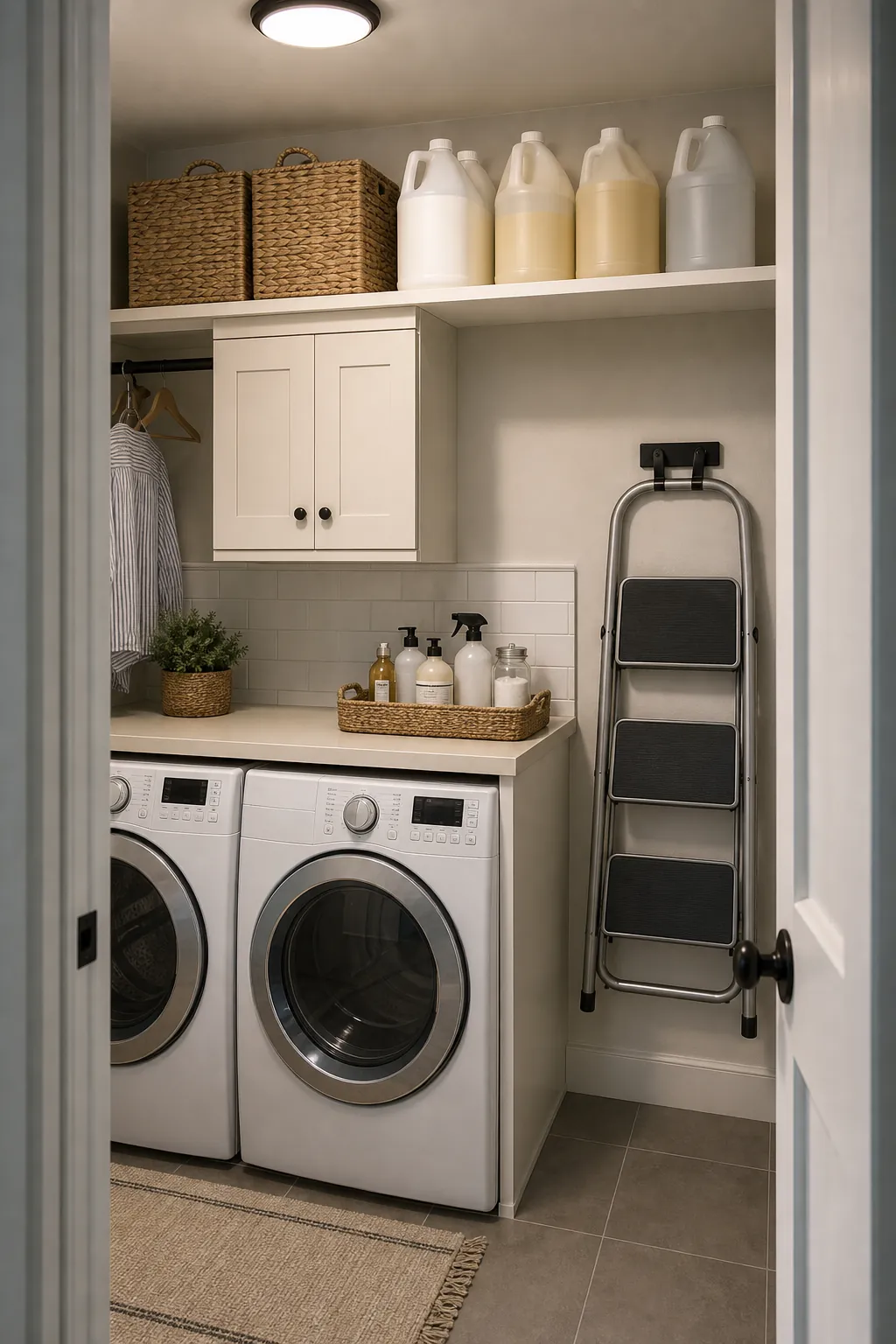
Bulk refills belong high because they are not part of the daily workflow. Keeping extra detergent, paper goods, and backup cleaning supplies above eye level frees the reachable zone for items you use constantly.
Use labeled bins or trays so nothing slides behind the machines. The best high shelf is boring: sturdy, shallow enough to see, and not so deep that half the supplies disappear.
Shallow Floor-to-Ceiling Shelves
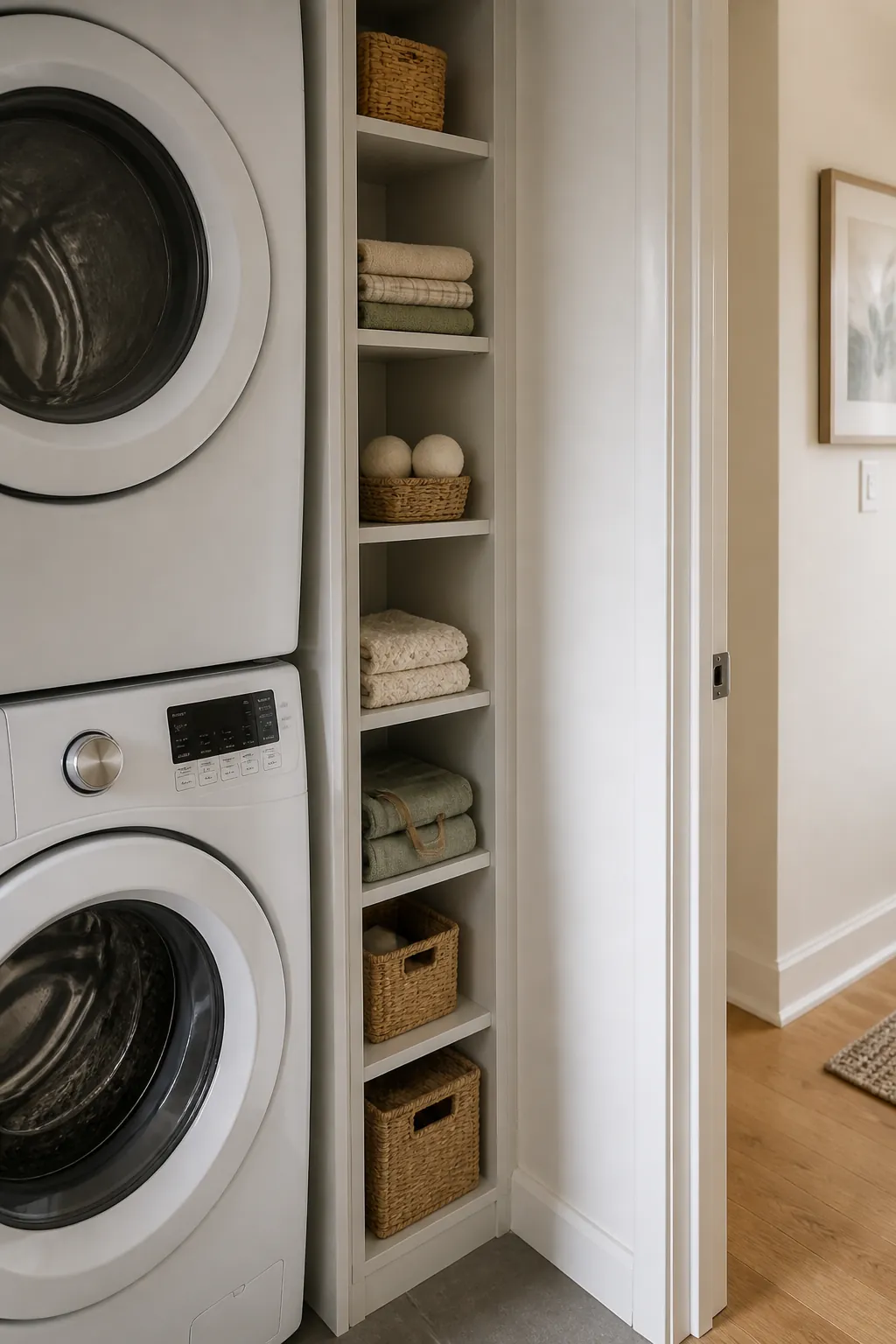
Shallow floor-to-ceiling shelves add capacity without narrowing the aisle the way deep shelving does. They are ideal for folded towels, small baskets, cleaning bottles, and the odd items that otherwise collect on top of the machines.
Keep shelf depth consistent from top to bottom so the wall reads as built-in rather than crowded. If the room is truly tight, open shelves can feel easier to use than cabinet doors.
Light Tile That Stretches the Room
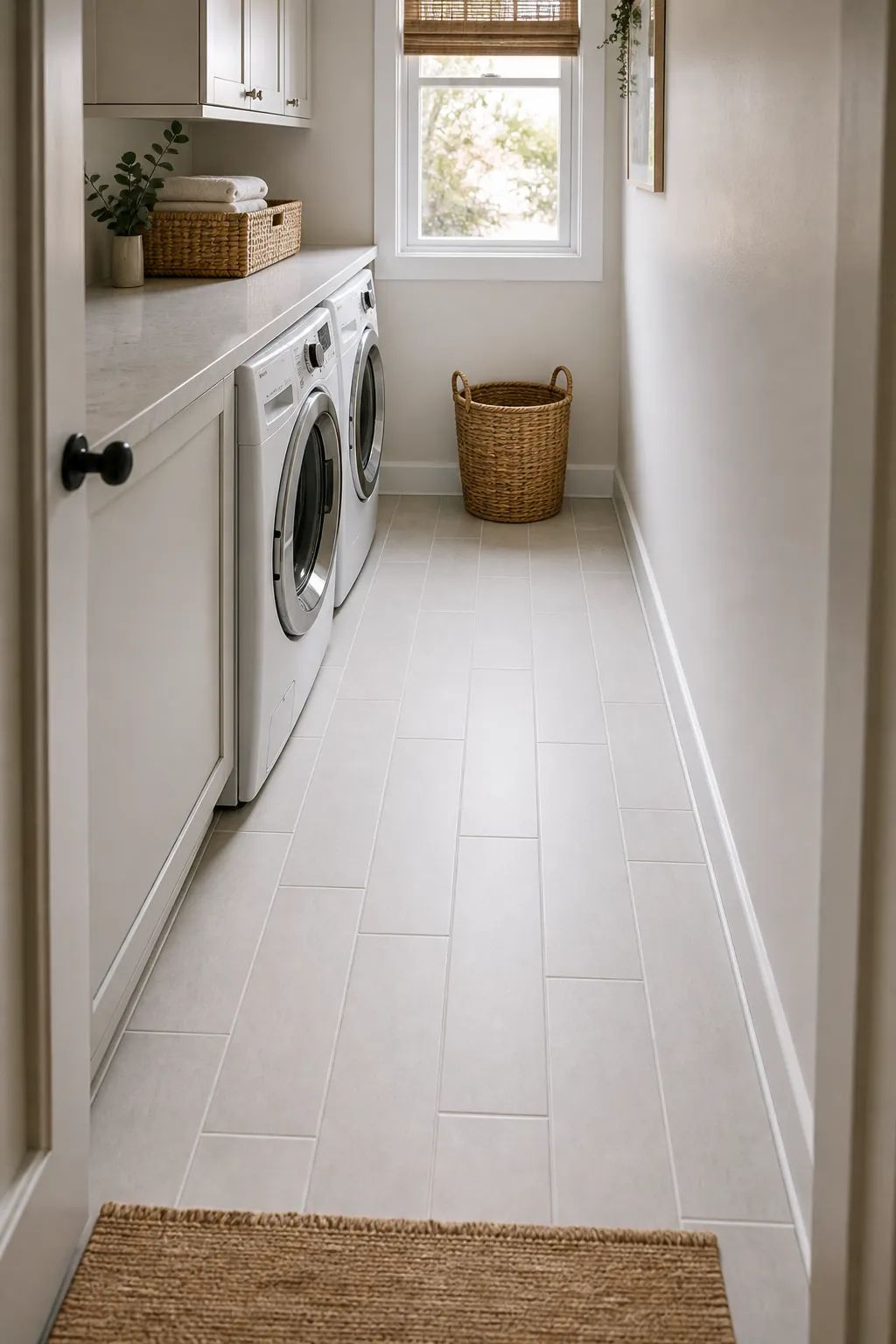
Light tile helps a tiny laundry room feel longer when the floor and wall surfaces do not chop the space into blocks. Running the same calm material across the floor, backsplash, or lower wall can visually quiet a busy utility zone.
The practical detail is grout and finish. Choose surfaces that handle splashes, lint, and cleaning sprays, then keep contrast low so the room feels continuous instead of patched together.
Tiny Farmhouse Utility Nook
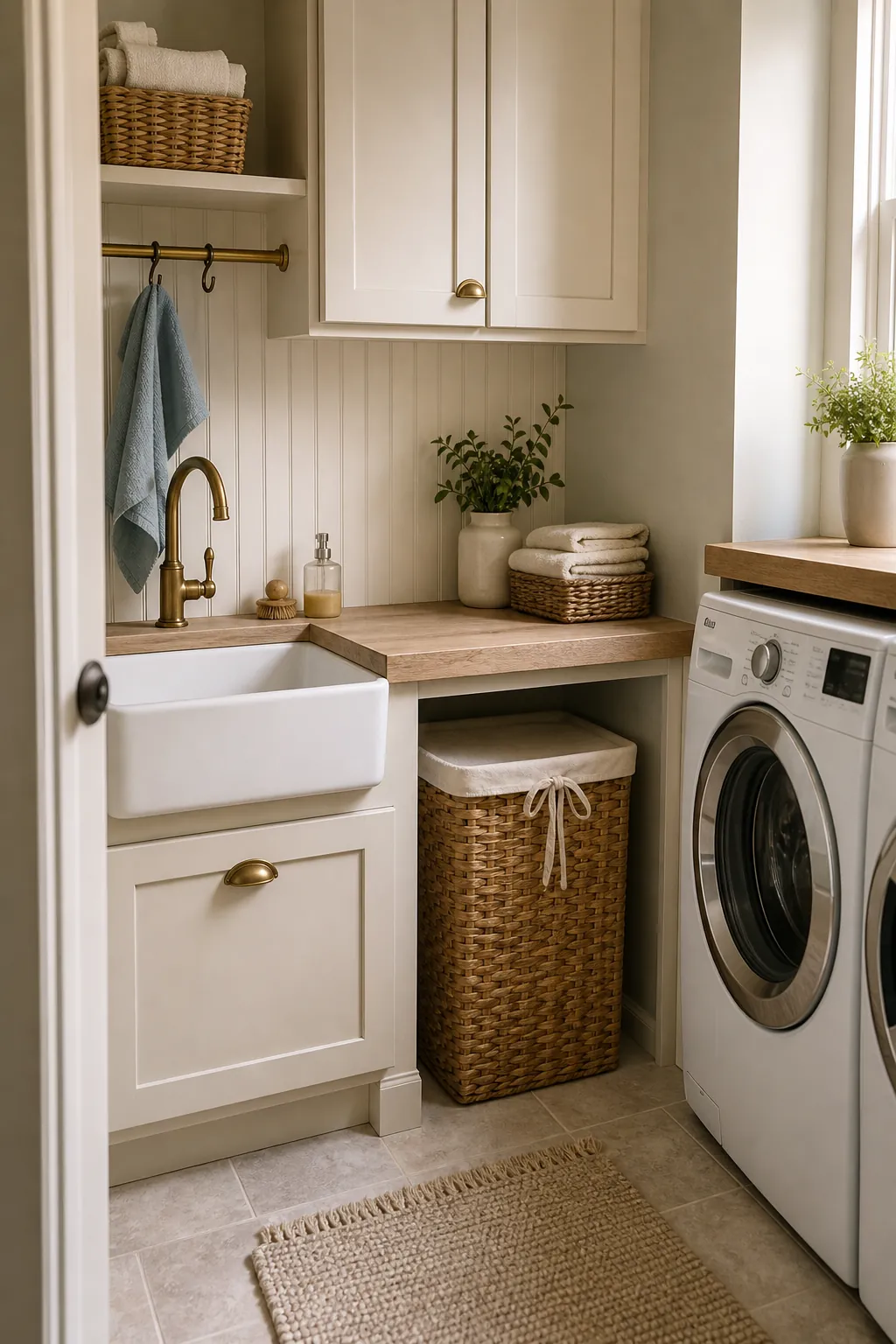
A farmhouse-style nook works in a tiny laundry room when the charm is tied to function: a wood shelf, a skirted utility area, a woven basket, or a simple rail for drying. The look falls apart when decor takes the space needed for laundry.
Keep the palette warm but restrained, and let useful materials do most of the work. One open shelf and one basket usually serve a small nook better than a cluster of signs and accessories.
Hidden Ironing Board Slot
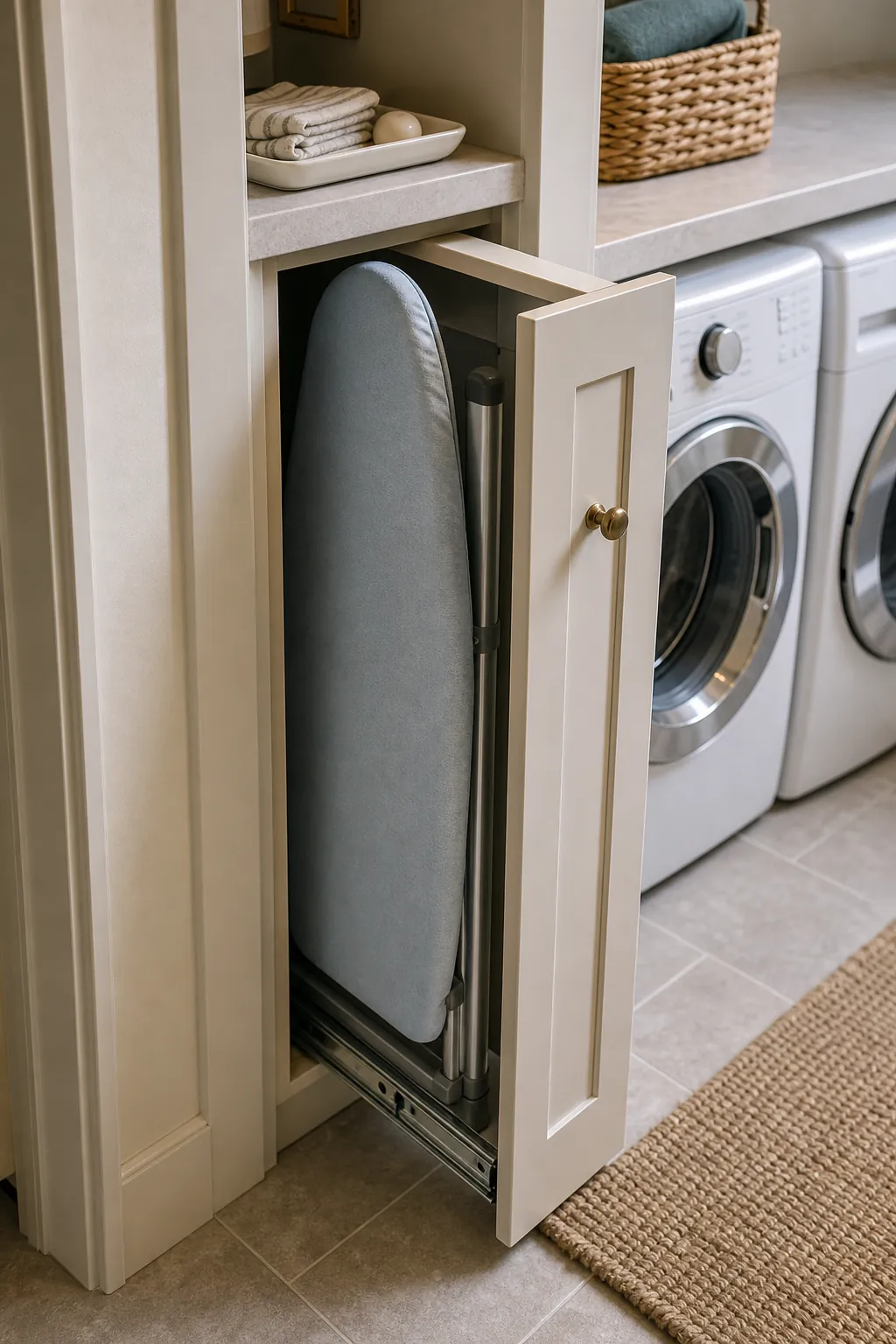
A slim ironing board slot solves a real storage problem because boards are wide, awkward, and usually in the way. Tucking one into a vertical gap keeps it close to the dryer without leaning it against the wall.
Check the full pull-out or swing-down path, not just the storage width. The board needs room for your body, the iron cord, and a safe resting place while you work.
Basket Landing Pad
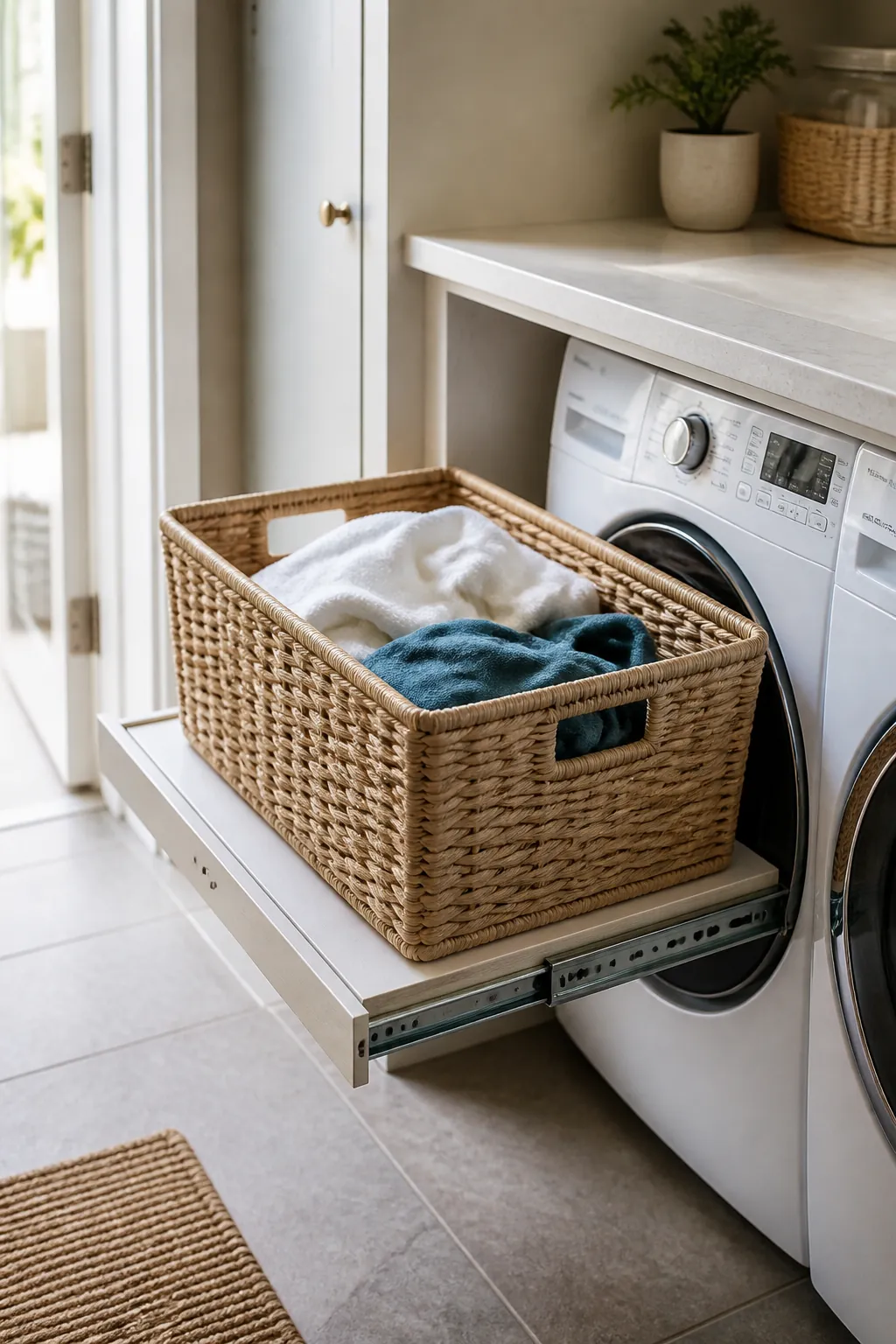
A basket landing pad may be the smallest idea here, but it fixes one of the biggest annoyances. If there is nowhere to set a full basket, every load starts on the floor or balanced on a machine edge.
This can be a narrow bench, a short counter, or a sturdy shelf at hip height. Give it one clear job and resist filling it with decor, because empty space is the feature.
One Calm Color Palette
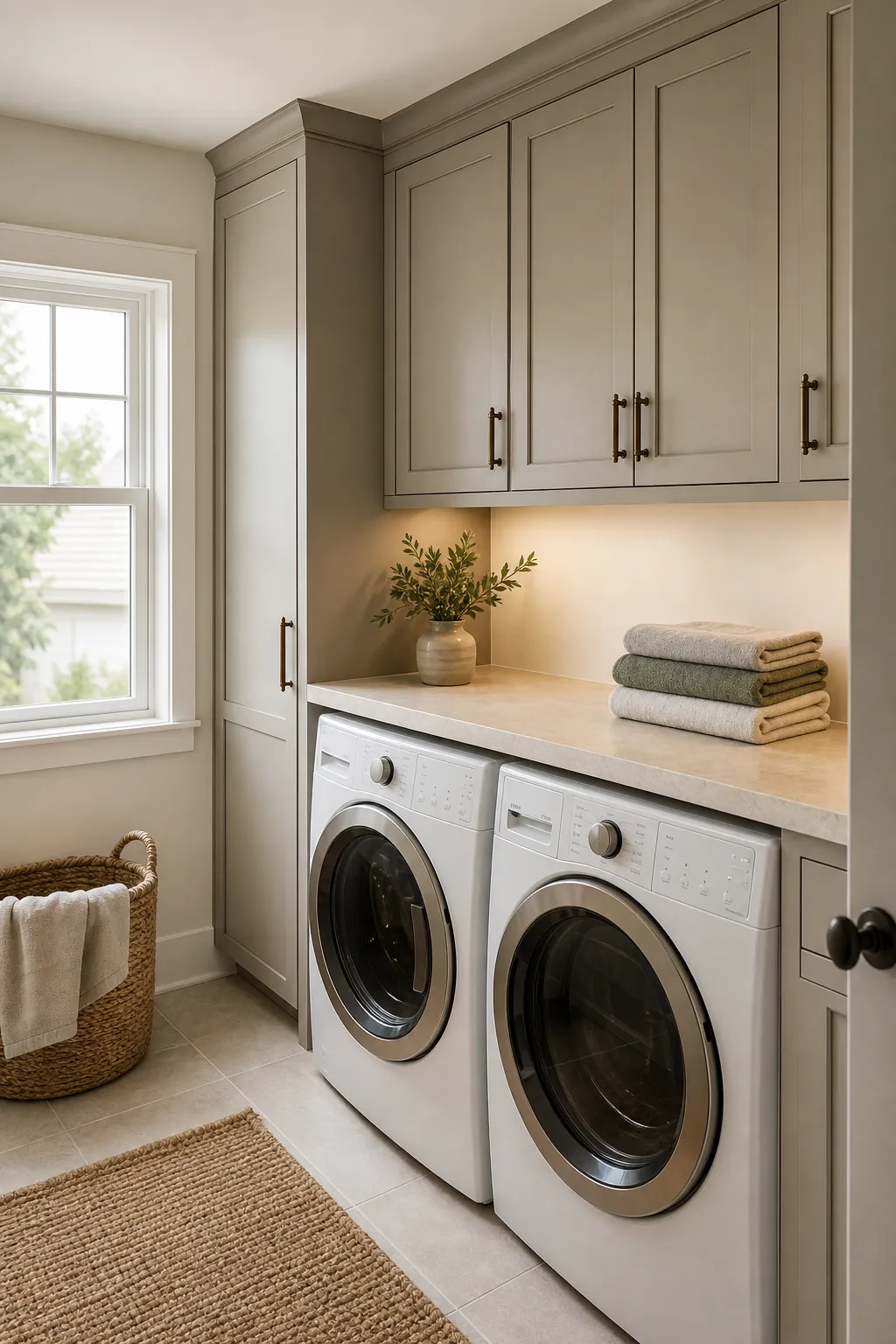
A calm palette makes a tiny laundry room easier to read at a glance. When machines, cabinets, baskets, and walls stay in a tight range of colors, detergent labels and hanging clothes do not make the room feel as chaotic.
Add contrast through hardware, a shelf edge, or a small woven texture rather than several competing colors. The goal is not blandness; it is giving a hardworking room fewer visual interruptions.
The best tiny laundry room idea is the one that removes the bottleneck you feel every week. Start with the practical pinch point – door swing, basket landing, drying space, reach, or storage – then choose the finish that makes the fix look intentional.