
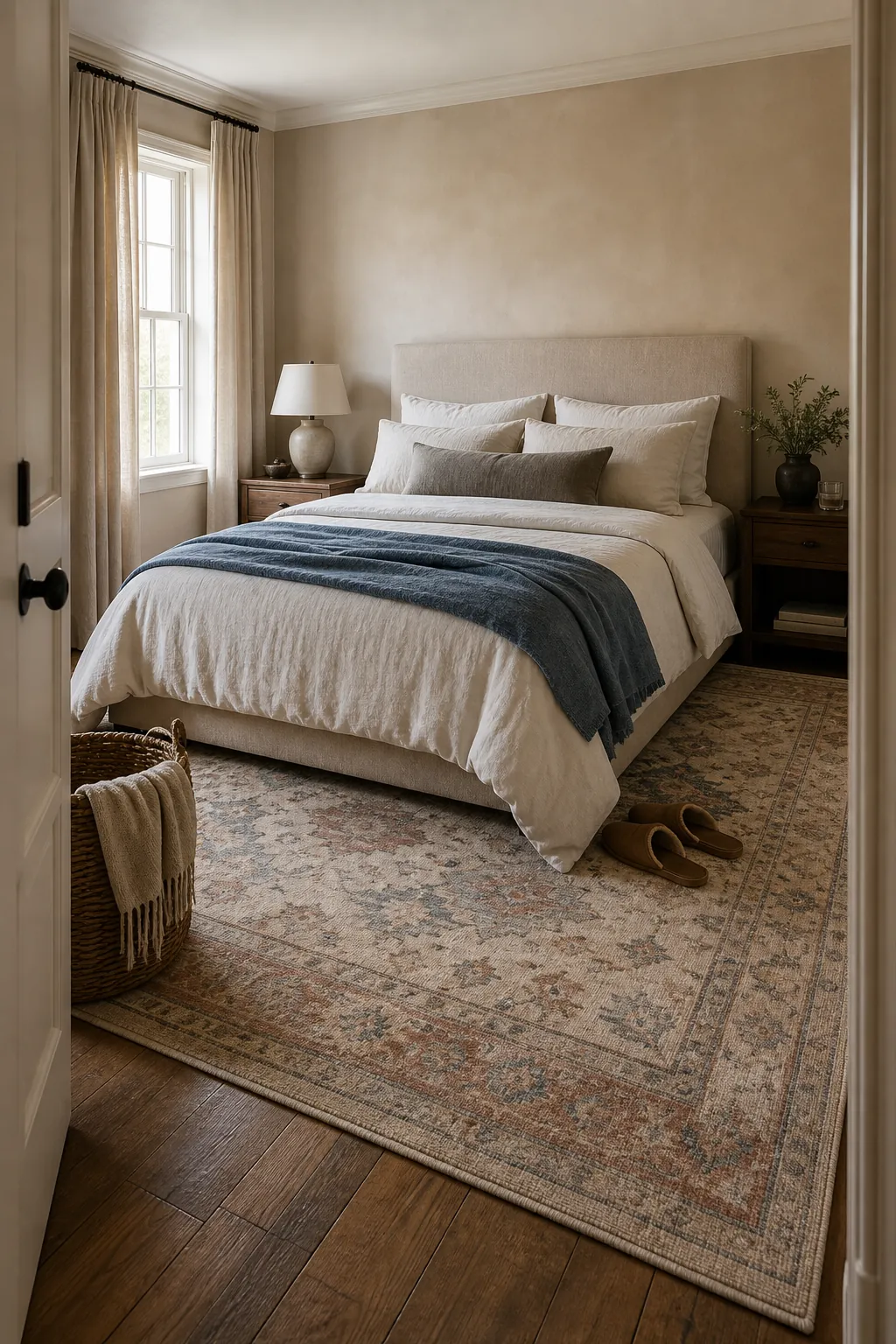
A bedroom can have good furniture, layered bedding, and warm lighting yet still feel unfinished. The missing piece is often at floor level: the bed has no visual base, so every item reads separately instead of as one calm sleeping zone.
These bedroom rug ideas solve different problems—tight rooms, dark floors, pets, awkward dimensions, and limited budgets. The consistent rule is to relate the rug to the bed, not to an arbitrary patch of empty floor.
A generous rug beneath the whole bed
In a large primary bedroom, place one oversized area rug beneath the bed and both nightstands. The visible border should feel balanced on three sides, making the entire arrangement read as a single zone. This is the most polished option when the room can absorb the scale.
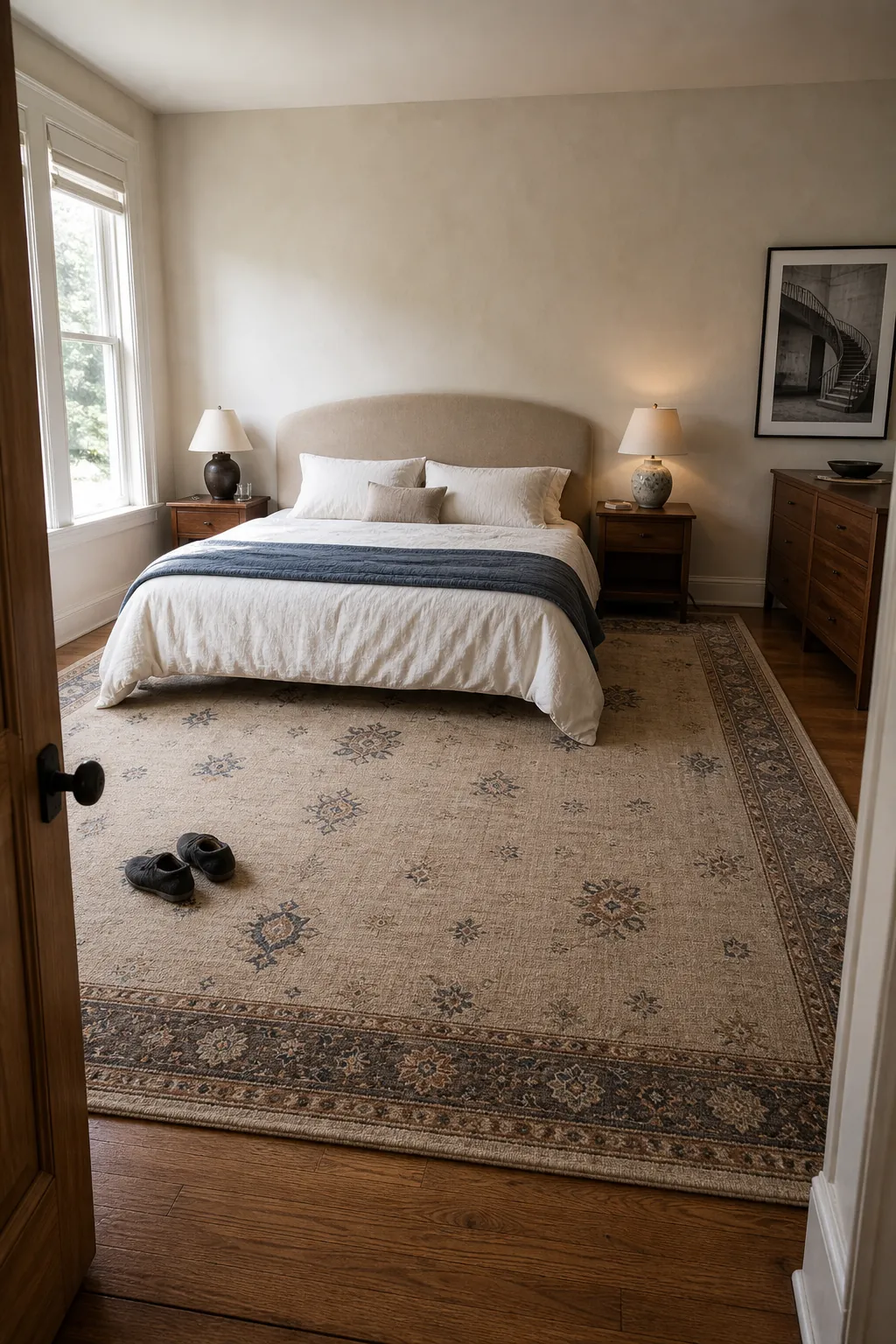
A rug tucked under the lower two-thirds
Starting the rug just in front of the nightstands saves money without sacrificing the soft landing beside the bed. Let it continue under the lower two-thirds and extend beyond the foot. This placement usually gives the best ratio of visible rug to hidden rug.
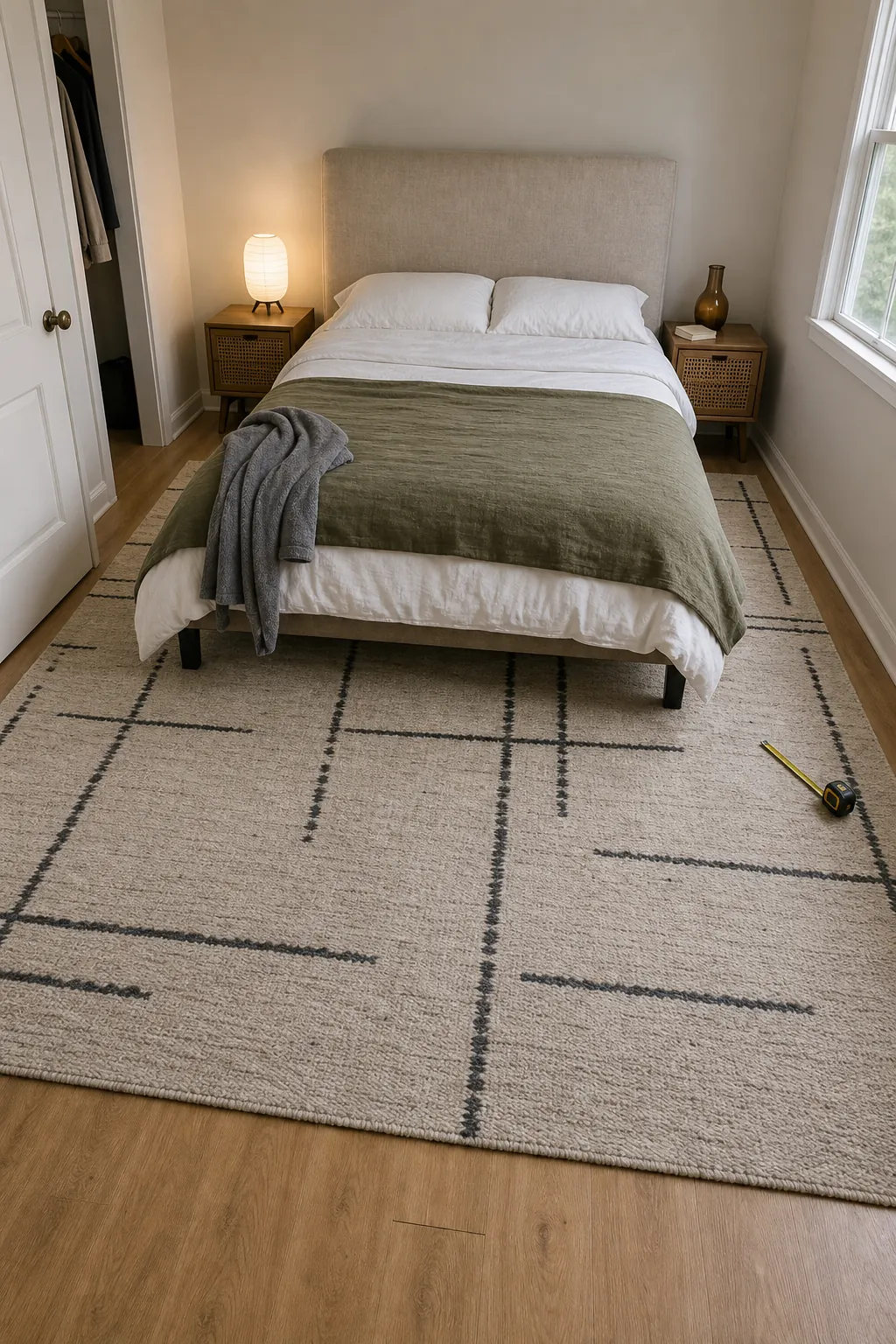
Matching runners along both bed sides
Two runners create symmetry and barefoot comfort in a narrow room where a large rug would disappear beneath the bed. Align their top edges and leave even gaps from the bed frame. Use non-slip pads so the pair feels intentional rather than temporary.
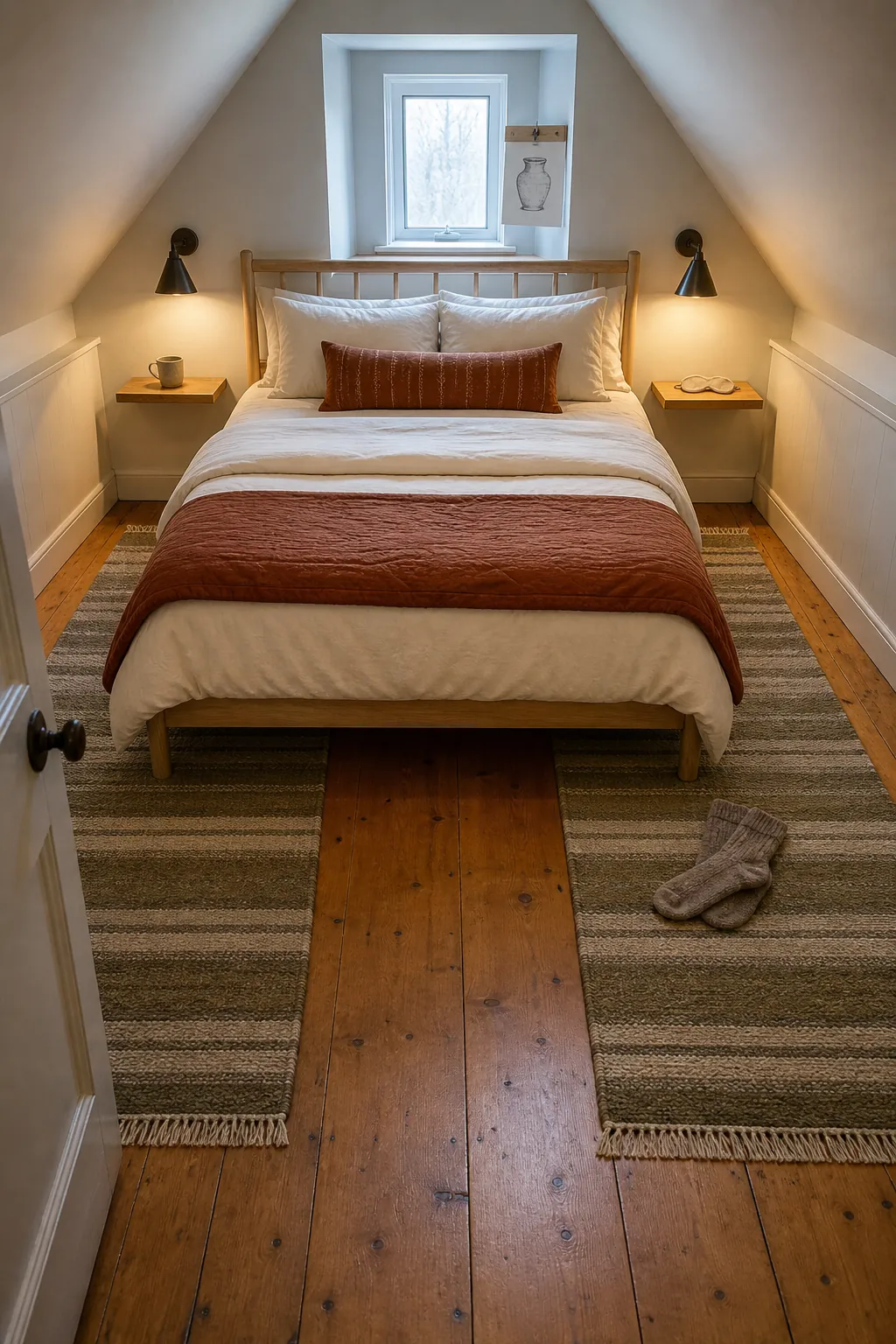
A small rug across the foot of the bed
When doors or built-ins make an under-bed layout impossible, place a compact rug across the foot. It should be wider than the bed or relate clearly to a bench. This gives color and softness to a small room while keeping circulation clear.
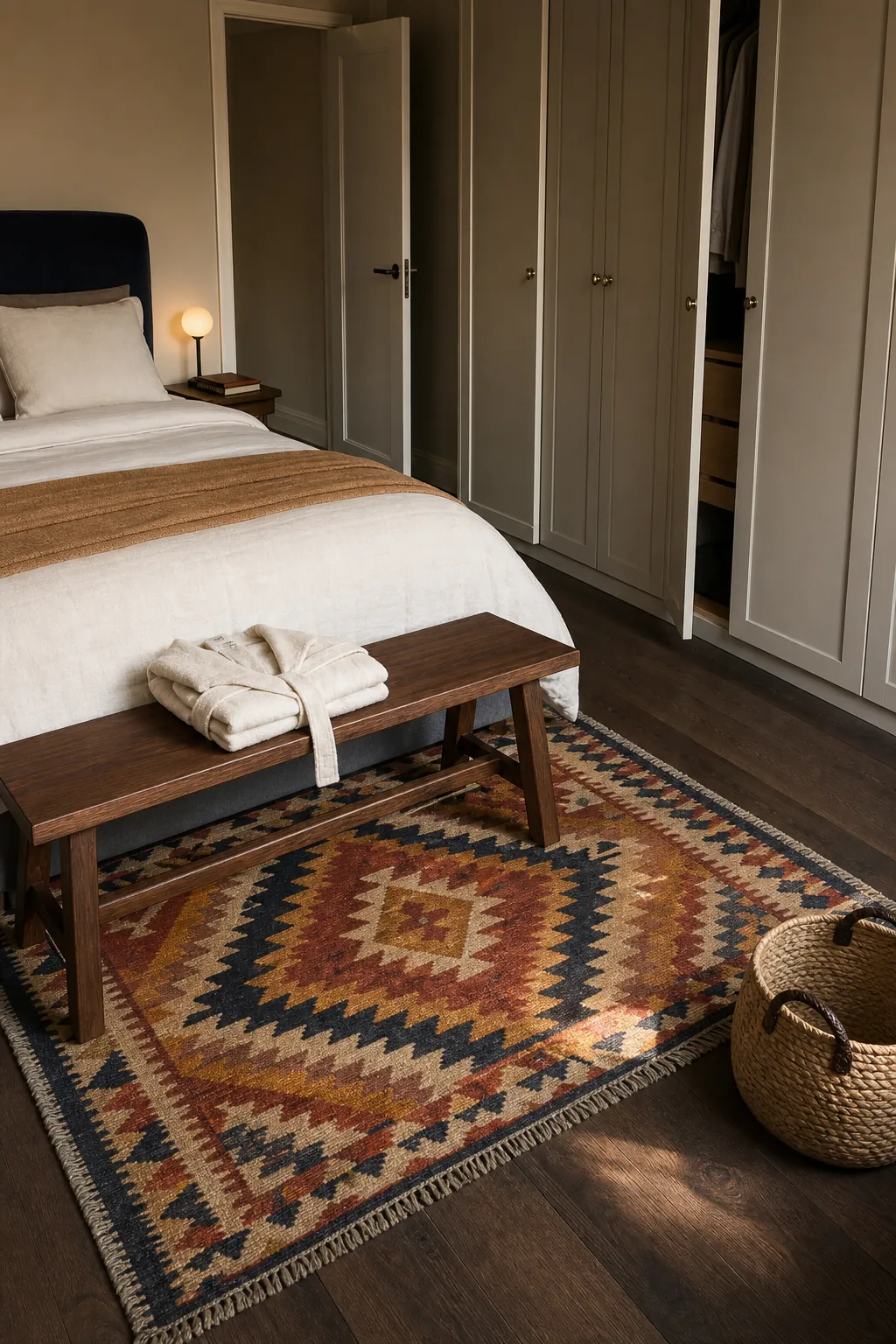
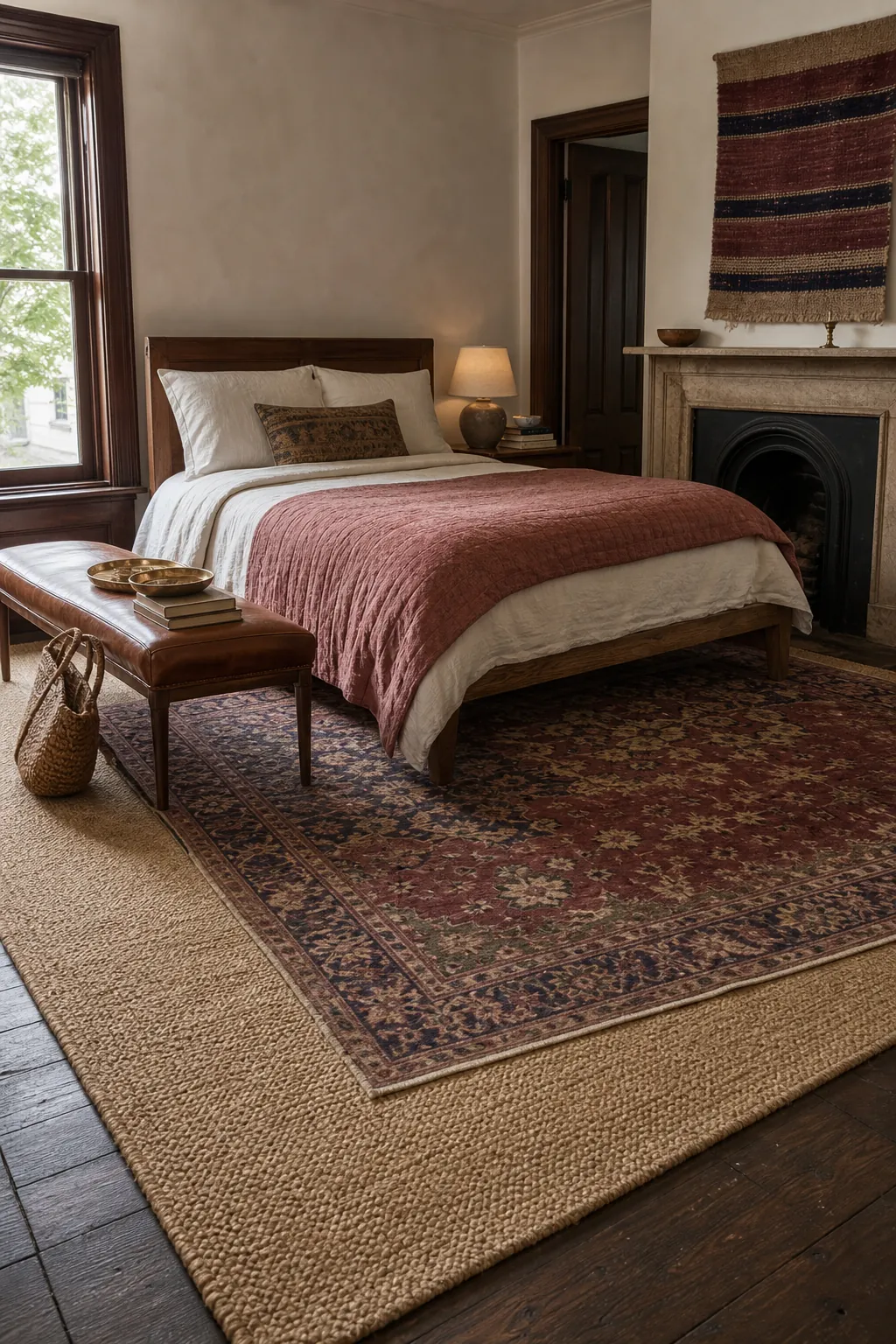
A vintage rug layered over natural fiber
Use a broad jute or sisal rug as the quiet foundation, then layer a smaller vintage wool rug where feet land. The base establishes scale; the top layer brings softness and personality. Keep the combined pile low enough to avoid a trip edge.
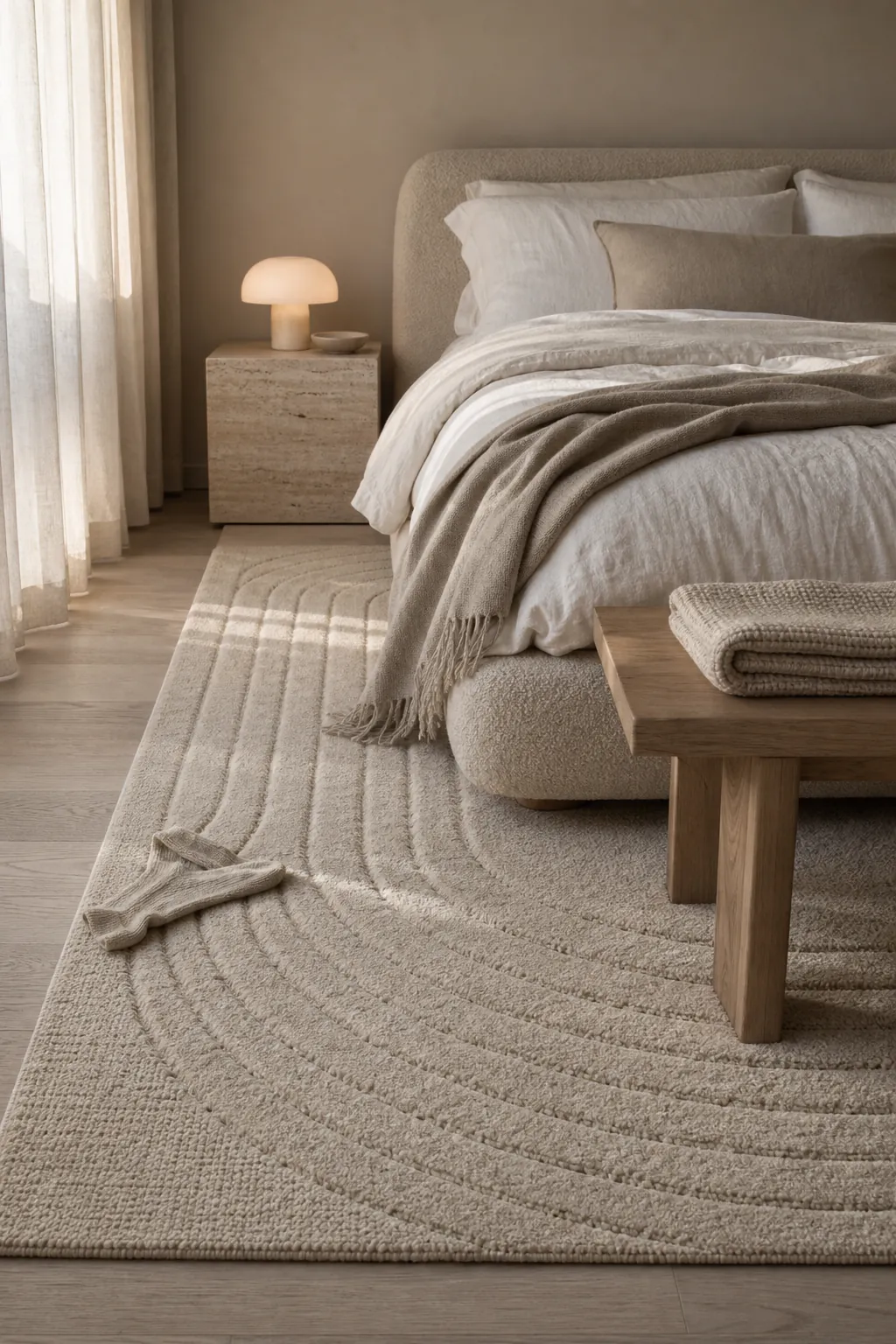
A tone-on-tone rug with high-low texture
A neutral bedroom does not need a strong pattern if the rug has visible construction. Cut-and-loop checks, carved lines, or ribbed wool catch light differently from smooth bedding. Choose a tone that is slightly lighter or darker than the floor so the edge remains visible.
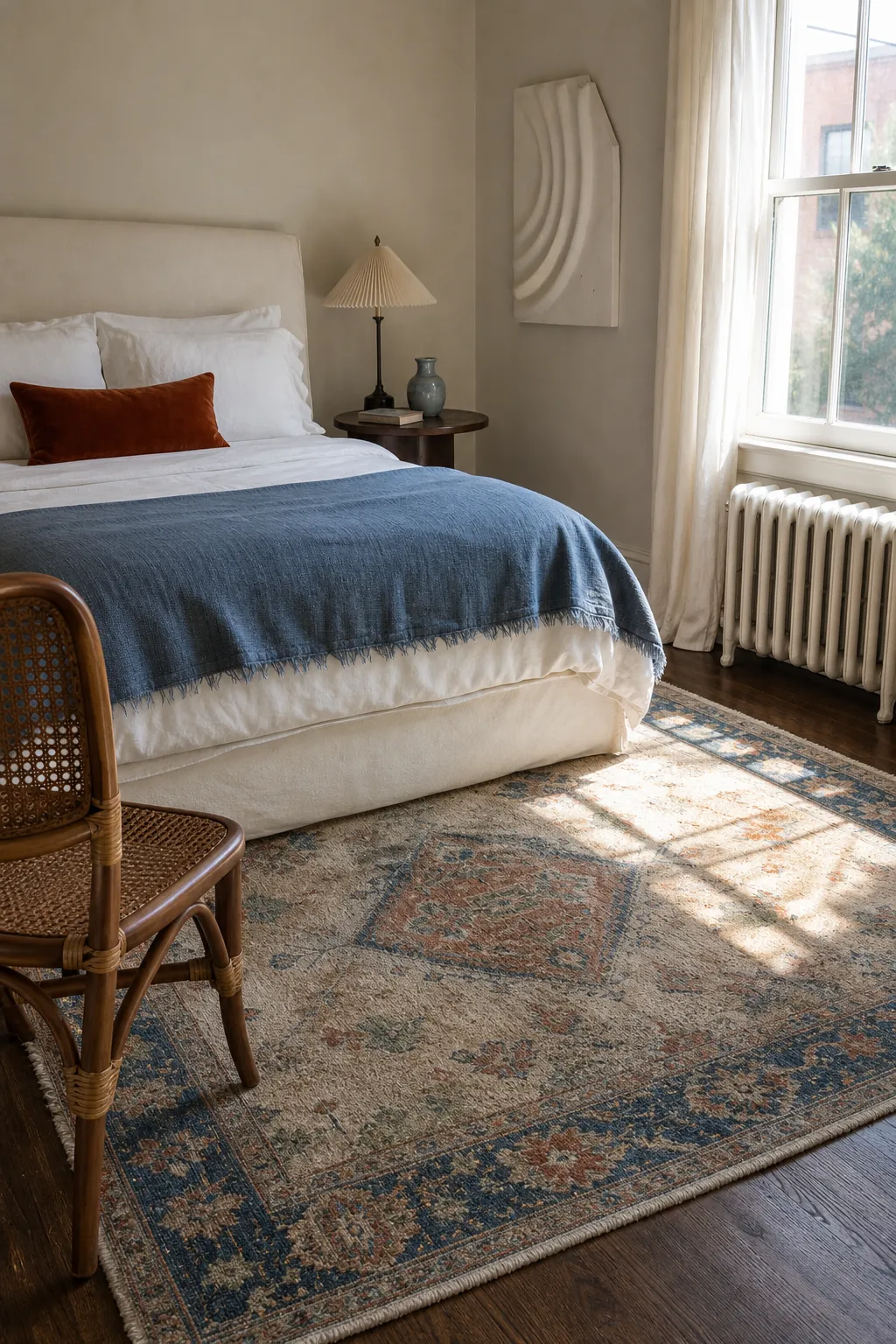
A faded Persian-style rug that sets the palette
A gently faded pattern can connect bedding, wood furniture, and curtains without demanding exact matches. Pull just two colors from the rug into the room—perhaps dusty blue in a throw and rust in one cushion. Let everything else stay quiet.
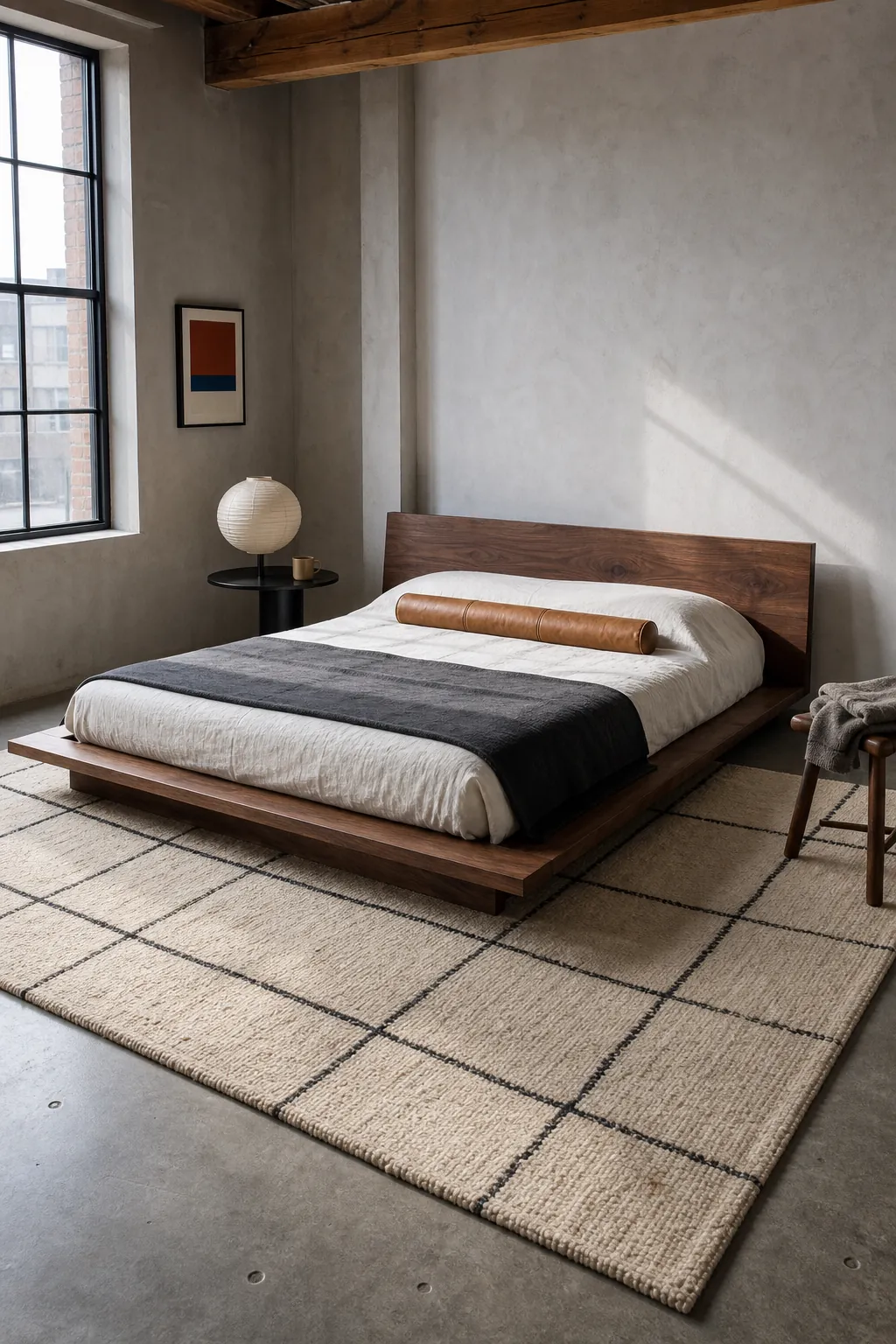
A graphic grid for a modern bed
A wide, imperfect grid adds structure beneath a simple platform bed without introducing a fussy motif. Keep the lines soft black, brown, or charcoal rather than harsh jet black. The pattern works especially well with plain linen and minimal furniture.
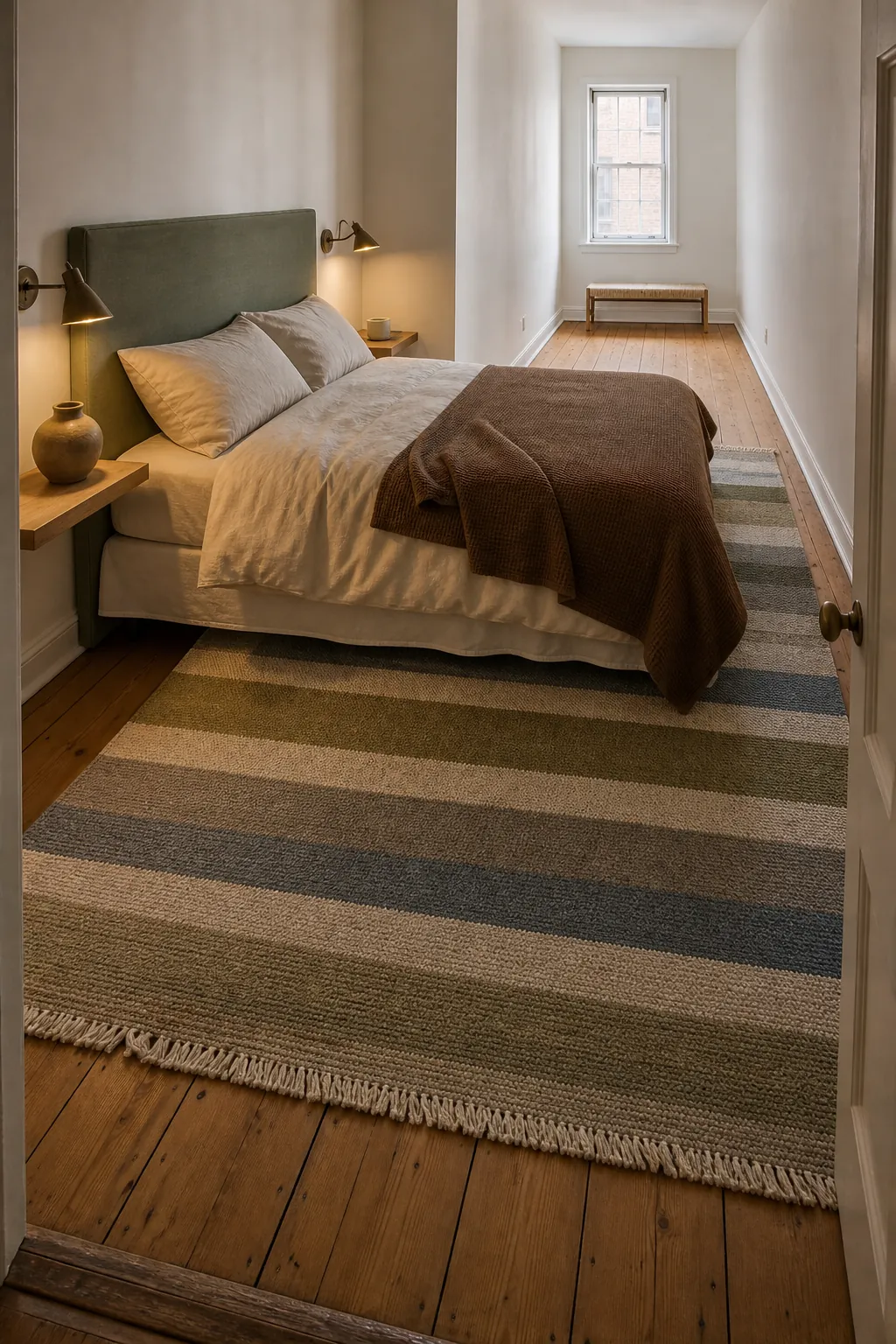
Crosswise stripes that make the bed area wider
Run broad stripes across the bed width to counter a long, narrow room. Low-contrast bands in cream, taupe, olive, or blue feel restful while still widening the visual base. Avoid thin, high-contrast stripes that can become visually restless at this scale.
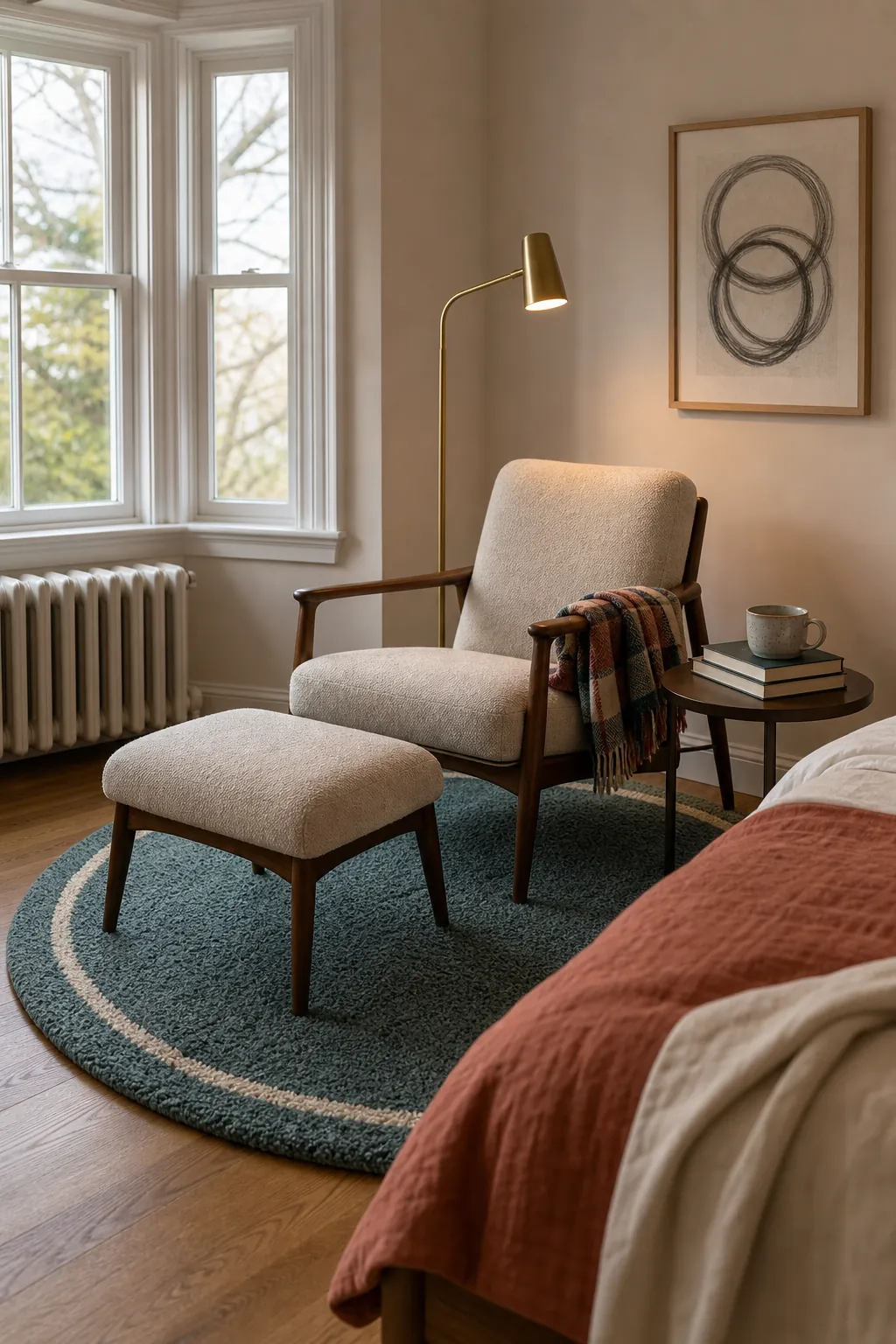
A round rug beside a reading corner
Not every bedroom rug must sit under the bed. A round rug can define a chair-and-lamp reading corner while softening a room full of rectangular furniture. Let the chair’s front legs sit on it and leave a clean path to the bed.
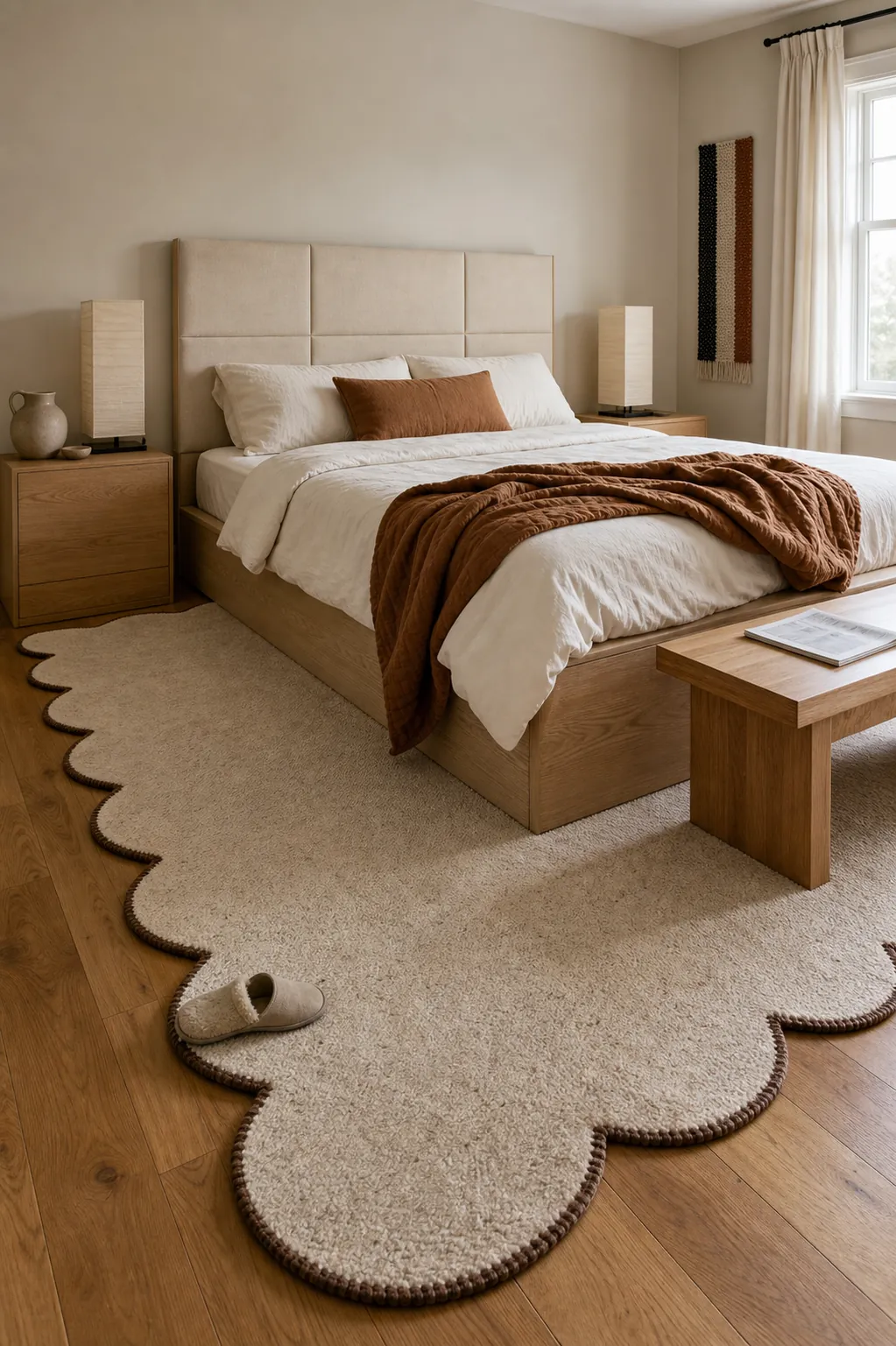
A scalloped edge that softens straight furniture
A restrained scalloped border introduces movement around a boxy bed and nightstands. Keep the rug color simple so the silhouette is the feature. This is a good way to make a neutral bedroom feel considered without adding another printed pattern.
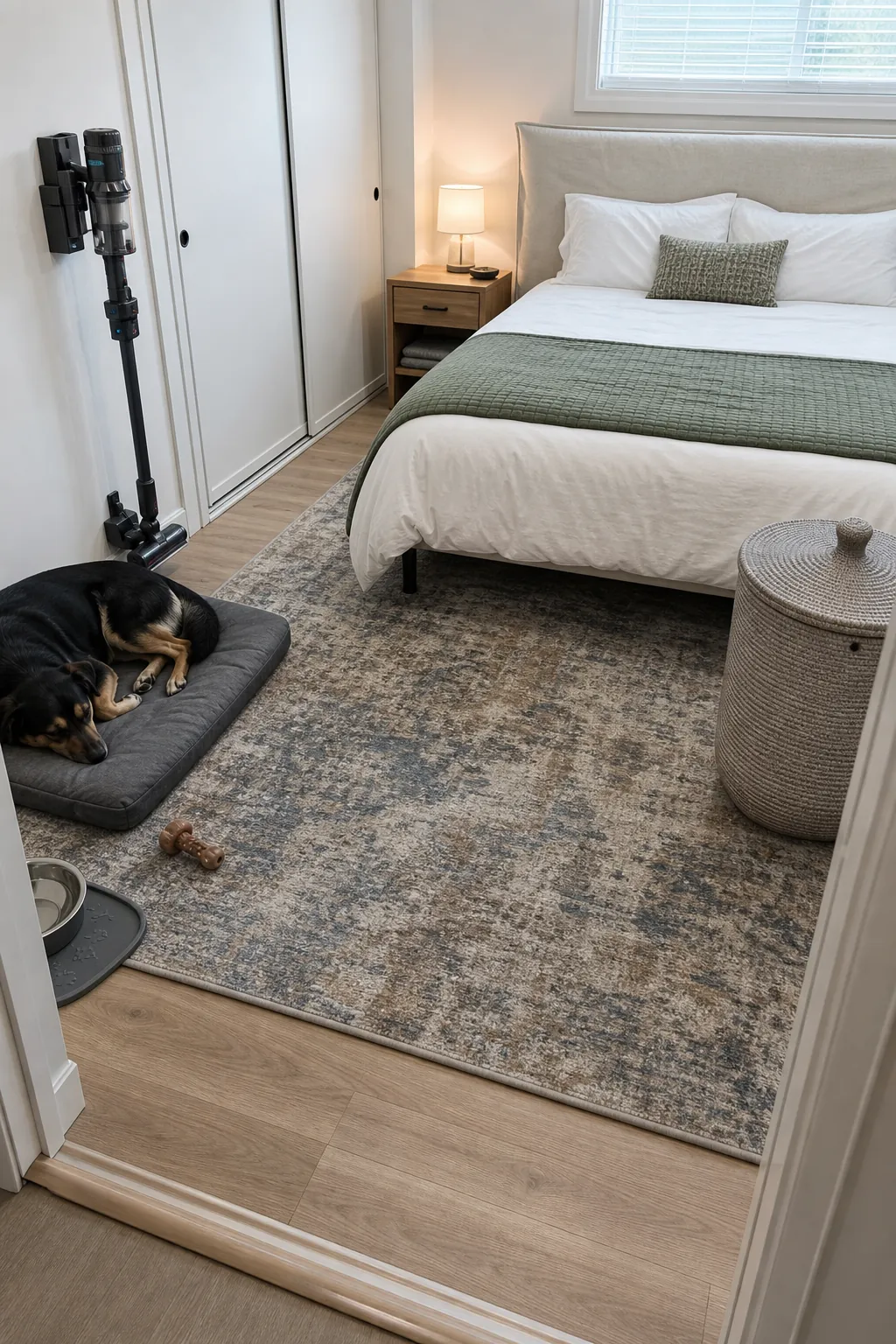
A washable low-pile rug for real life
For pets, children, or breakfast in bed, a washable or easy-clean low-pile rug can be more useful than a delicate pale wool. Choose a mottled pattern that hides lint between cleaning days and verify that the largest size fits your machine or local laundry service.
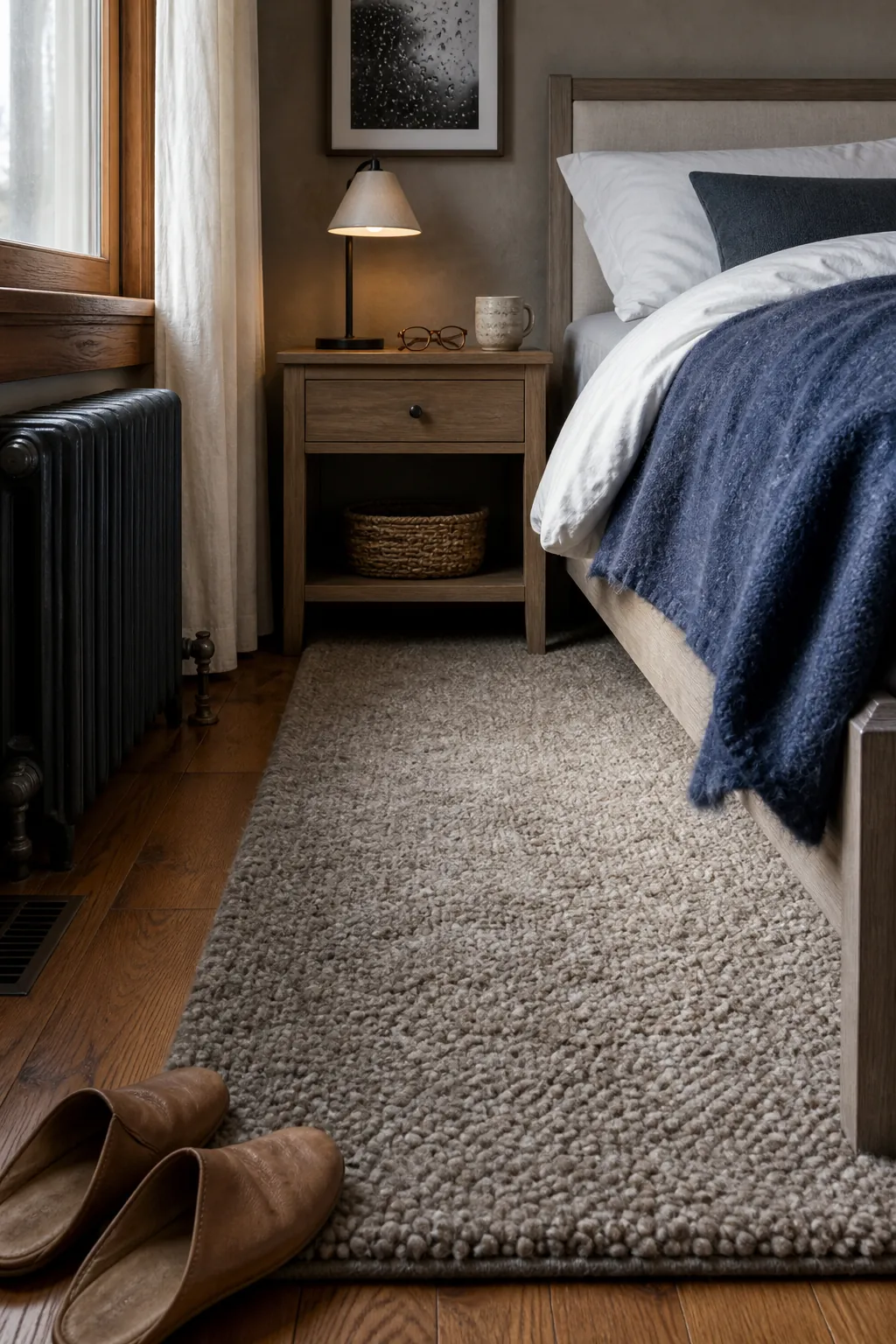
A dense wool rug for a soft first step
A dense medium-pile wool rug gives a cushioned landing without the maintenance of long shag. Place the plushest exposed section where bare feet actually touch down. A quality pad adds comfort and prevents the rug from creeping across smooth flooring.
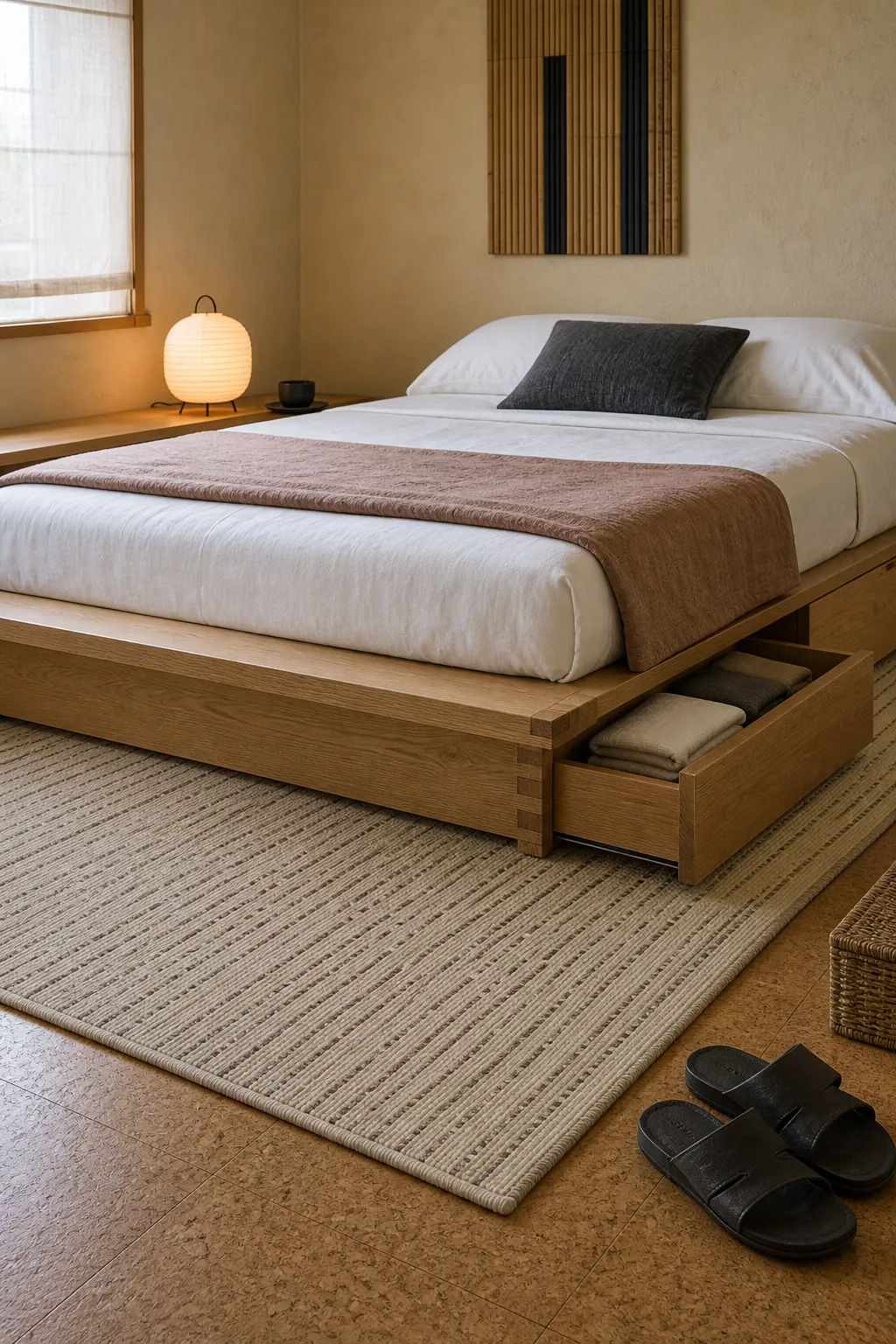
A flatweave beneath a low platform bed
Low beds need a rug that does not visually swallow the frame. A crisp flatweave keeps the silhouette light, allows under-bed drawers to move, and is easier to vacuum. Use visible weave or a broken stripe to keep the surface from looking like plain carpet.
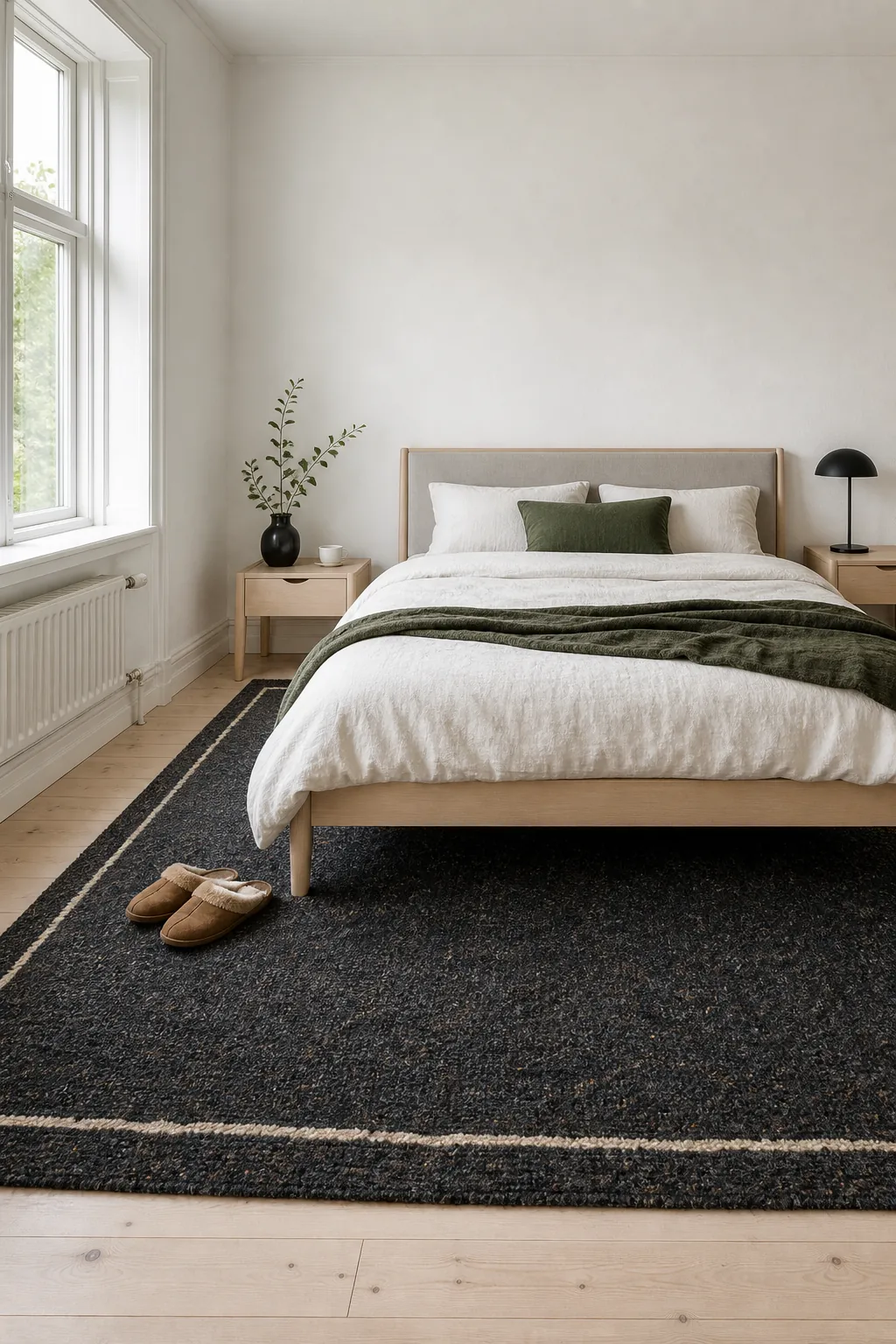
A dark rug that grounds a pale room
In a bedroom with white walls, pale bedding, and light furniture, a deep brown, charcoal, navy, or forest rug can supply needed weight. Choose a heathered or patterned surface so dust is less obvious, and repeat the dark value in two small elements above floor level.
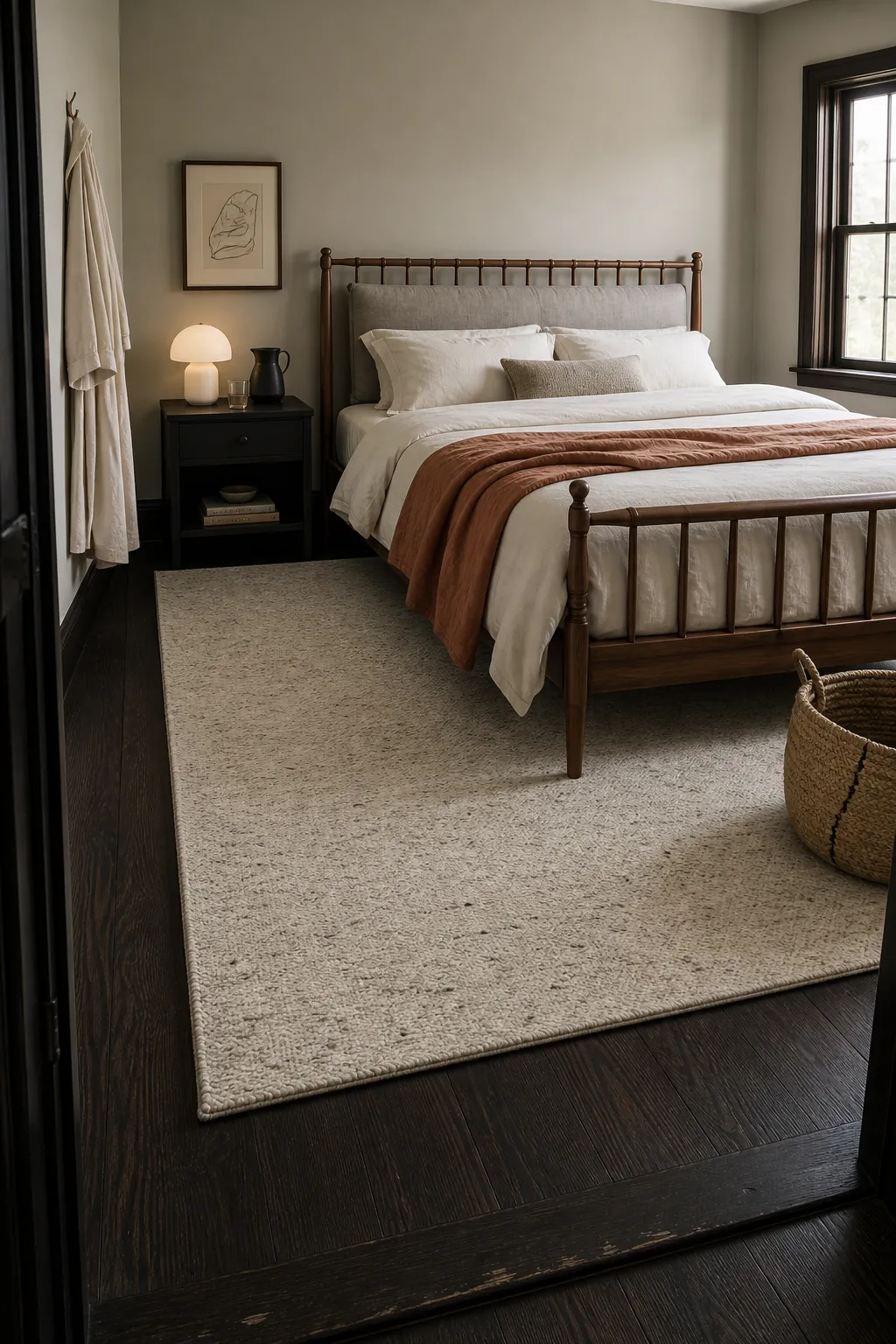
A light rug that lifts dark flooring
Espresso wood and dark carpet can make the bed area feel heavy. An oatmeal, ivory, or pale mushroom rug creates a clear halo around the bed and reflects window light. A flecked construction is more forgiving than solid white.
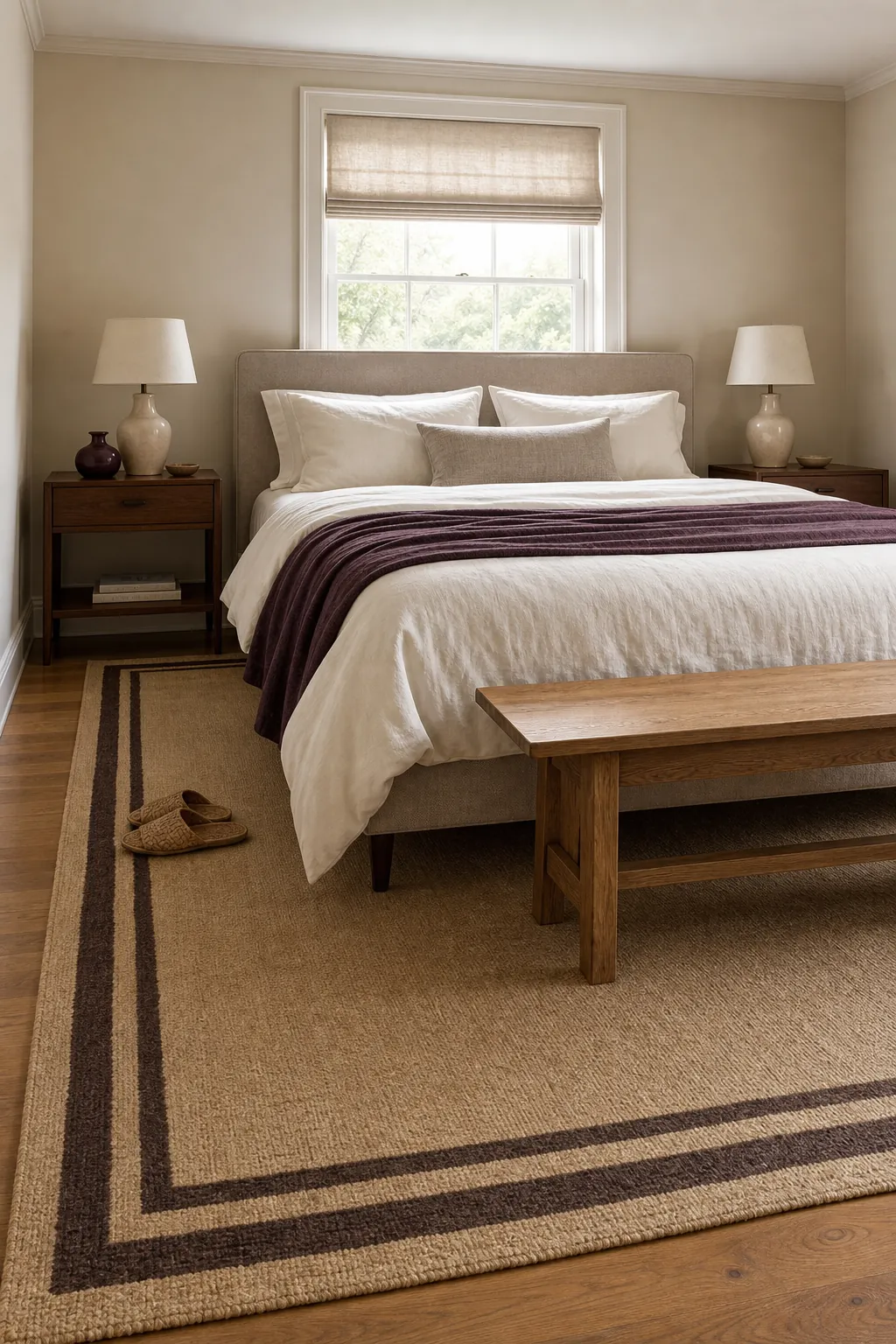
A bordered rug that frames the bed
A broad border clarifies the edge of a neutral rug and makes the bed arrangement look deliberate. Ensure the border remains visible beyond the frame; if most of it disappears underneath, the effect is lost. A hand-drawn line feels softer than a severe geometric band.
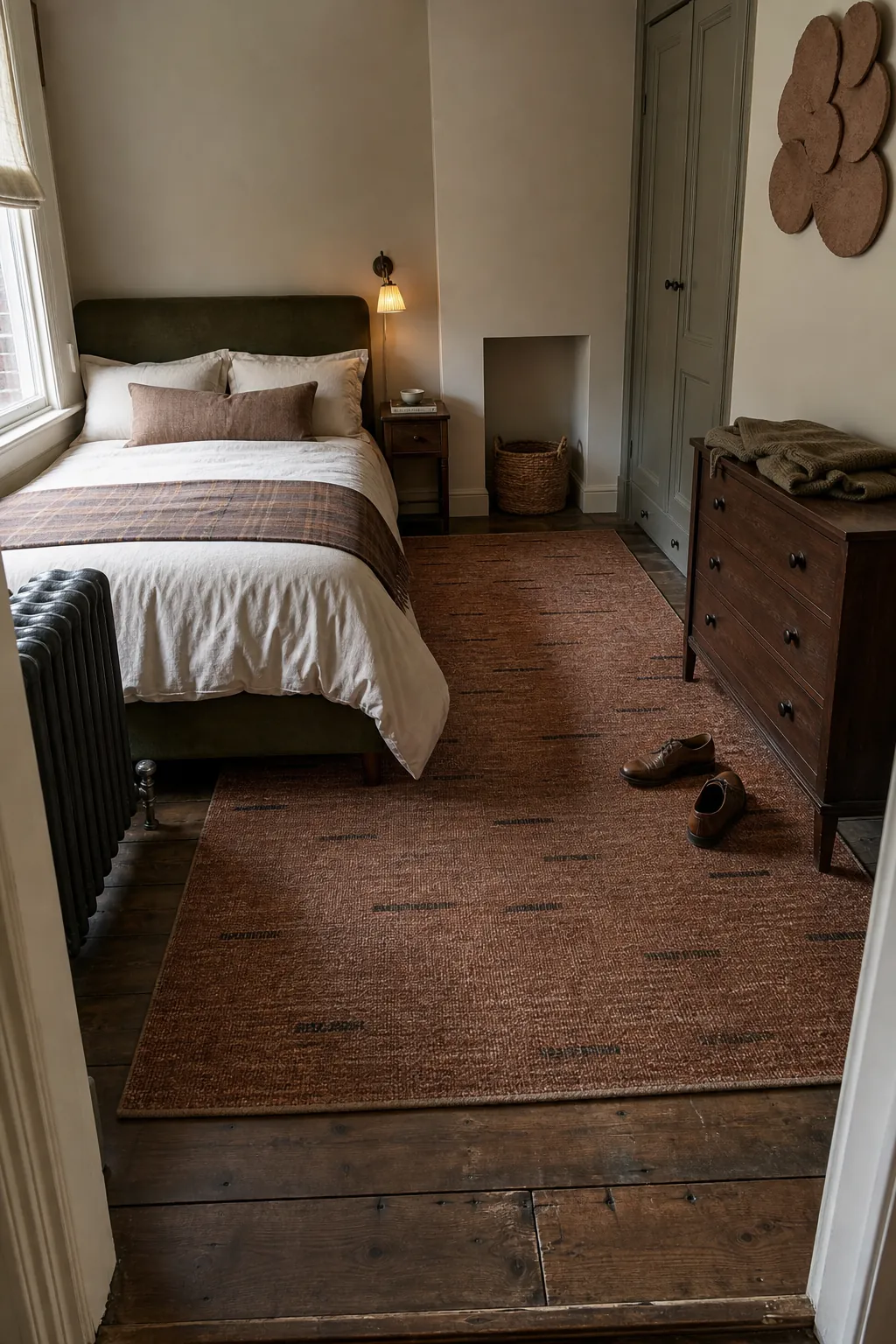
An offset rug for an awkward room
If a radiator, fireplace, or wardrobe prevents perfect symmetry, align the rug with the side of the bed that people use most. The exposed area should serve a purpose—such as the walking route to a dresser—so the offset looks responsive rather than accidental.
A custom-bound rug for unusual dimensions
When standard area rugs either block a door or look too small, have a piece of broadloom cut and bound to the room’s exact dimensions. This works especially well in attic bedrooms, rooms with alcoves, and layouts where the bed sits close to built-ins.
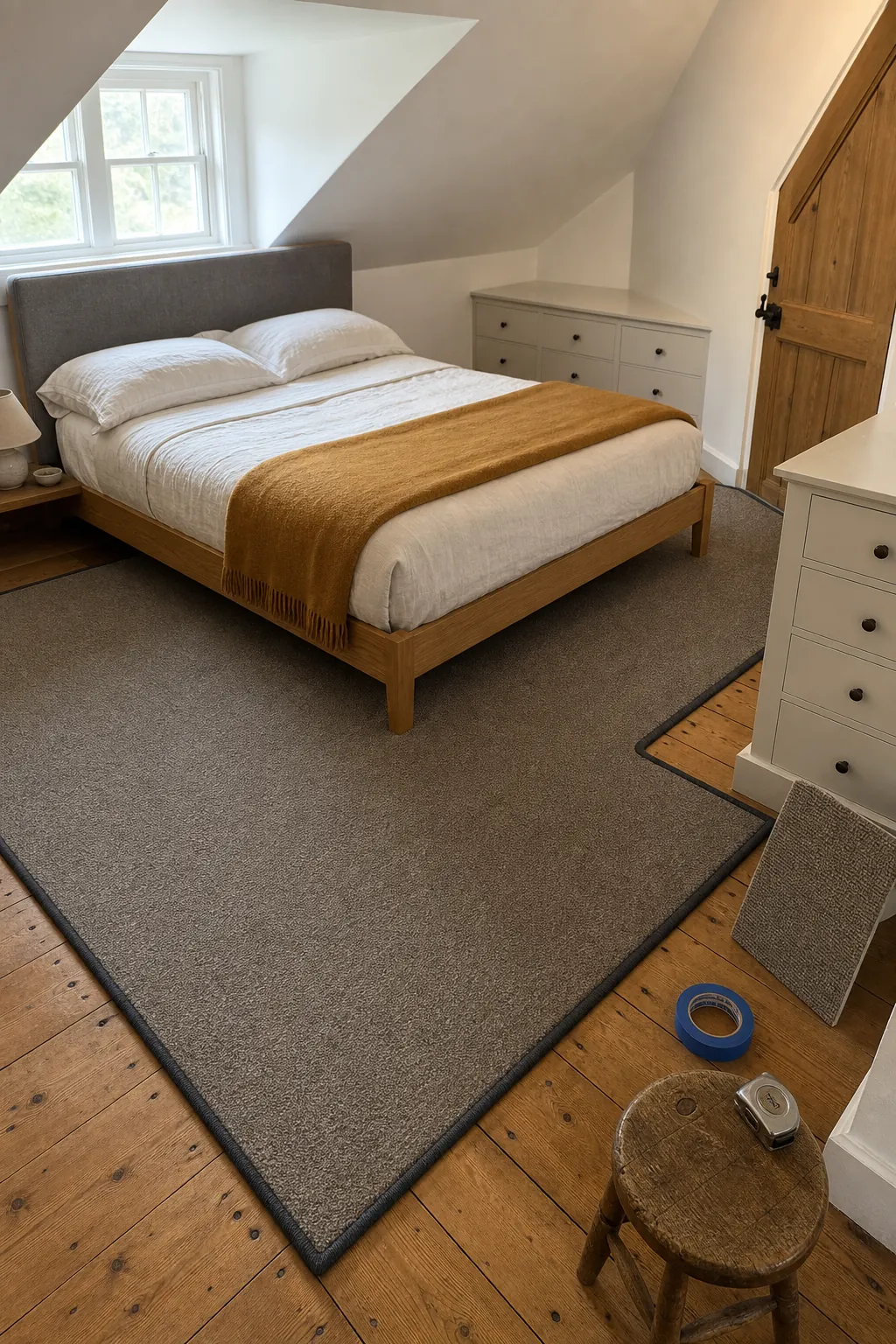
Mark the intended outline with painter’s tape before ordering and check every door, drawer, vent, and walking path. A finished bed area is not defined by perfect symmetry; it is defined by a rug whose scale and placement make sense for the room you actually use.