
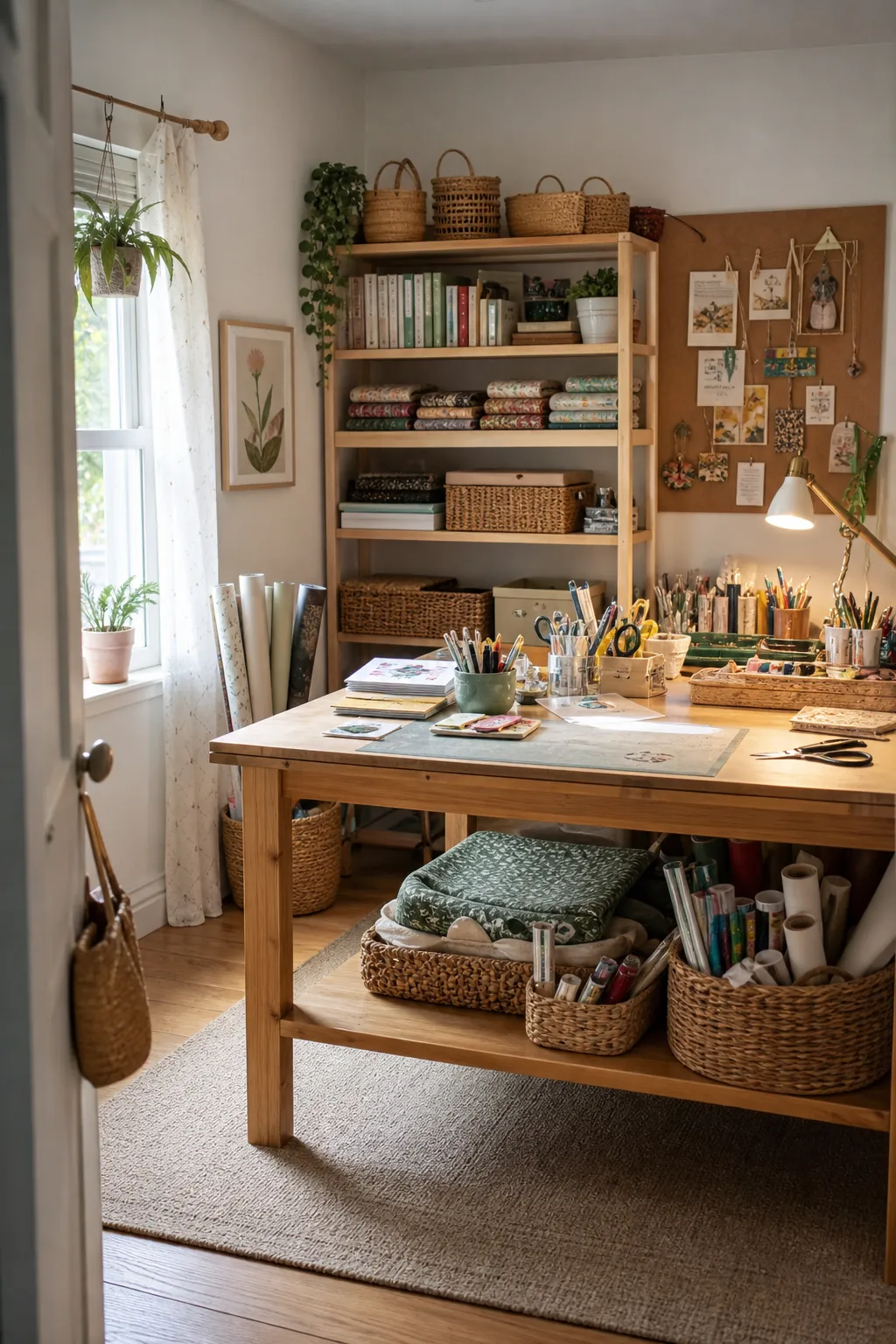
A good craft room does not need to look perfect. It needs to make starting easier, stopping cleaner, and returning to a half-finished project less frustrating. The best craft room inspiration usually comes from rooms that solve ordinary problems: too many small supplies, not enough work surface, weak lighting, and projects that spread across the house. These ideas lean cozy, practical, and natural, with room for bamboo, rattan, wood, baskets, vintage storage, and a little visible mess from real making.
Bamboo Pegboard Tool Wall
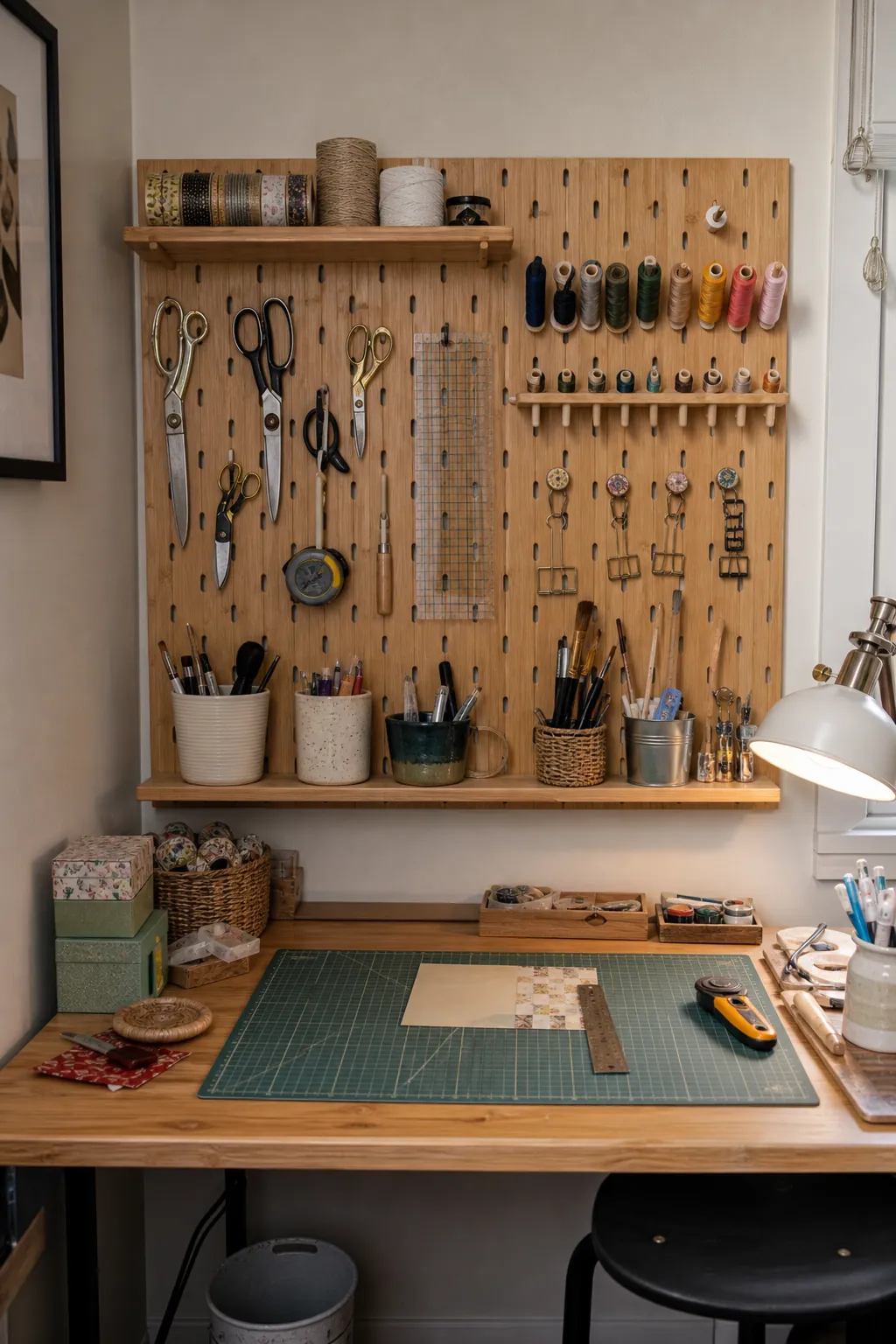
A pegboard works because it gives scissors, rulers, tape, thread snips, and brushes a visible home instead of letting them disappear into drawers. For a warmer look, use a bamboo or light wood pegboard with small shelves, cups, and hooks. Keep the most-used tools within arm’s reach of the desk and move decorative supplies higher. The result is a cozy craft room that still works hard.
Small Corner Craft Desk
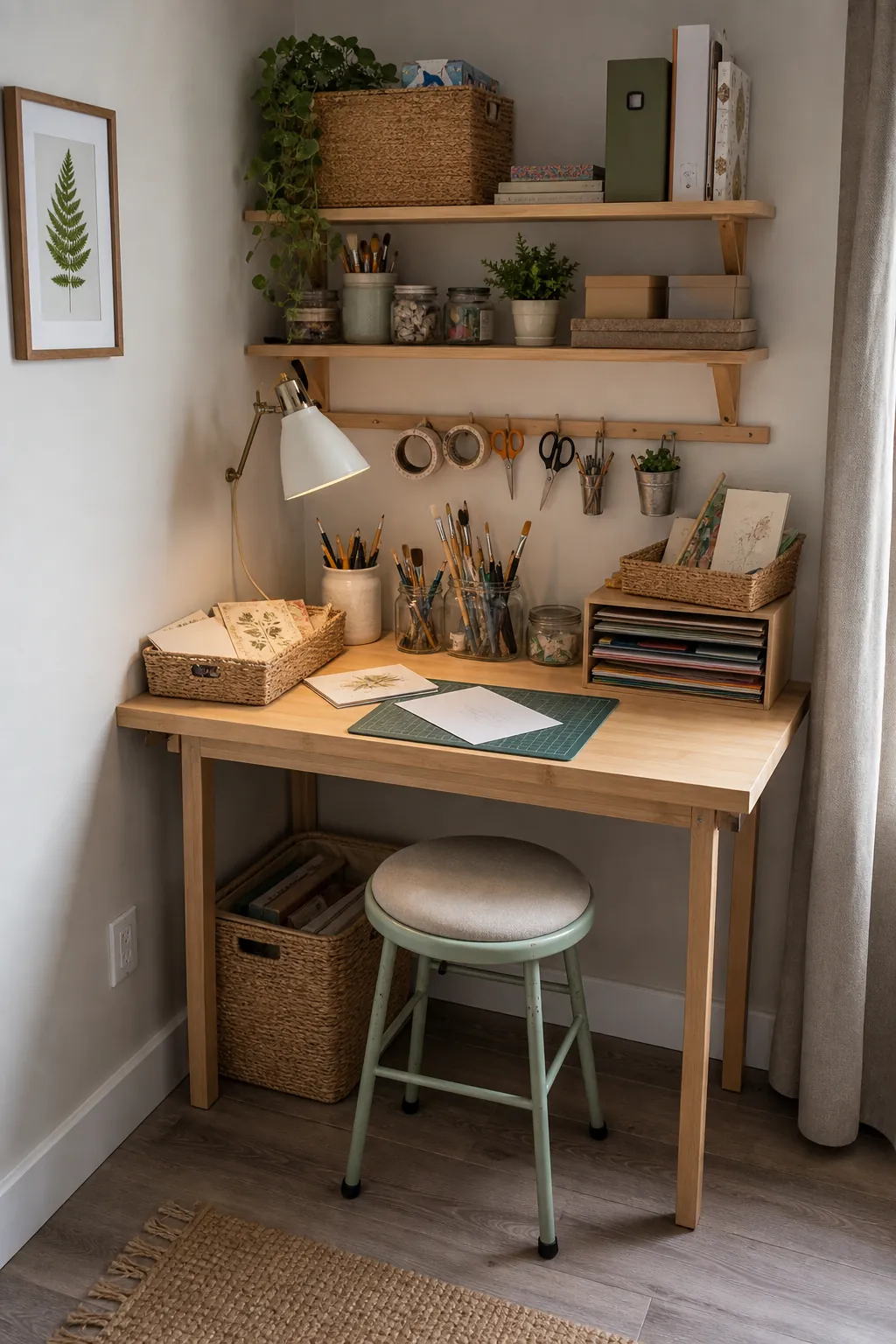
When the room is really a corner, treat the wall as part of the desk. A narrow worktop, two shelves, a task lamp, and a closed bin for current projects can turn unused square footage into a real making zone. This is one of the simplest craft area ideas for small spaces because it avoids bulky furniture and keeps the floor clear.
Vintage Cabinet Supply Station
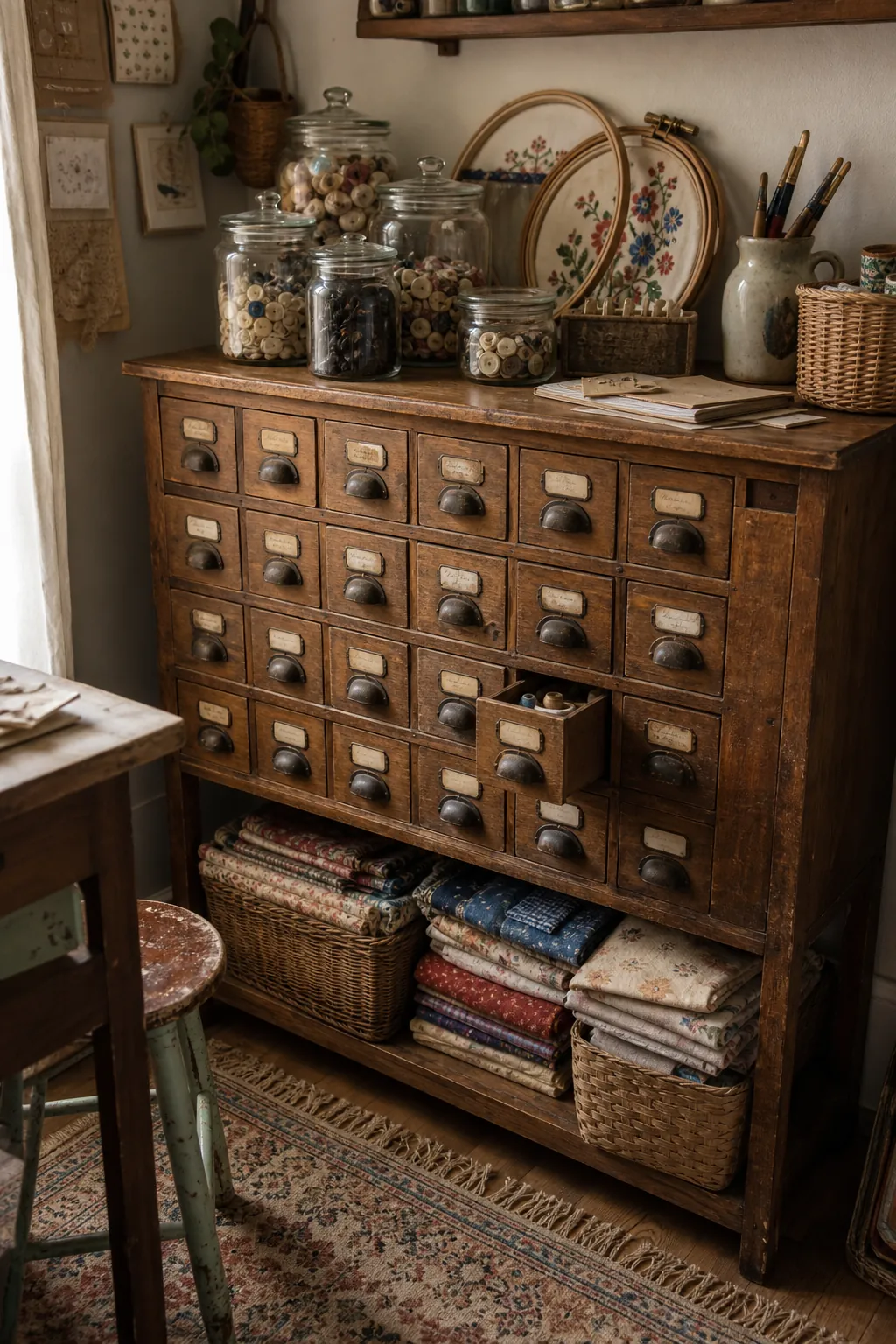
A vintage craft room can be more than pretty. Old card catalogs, apothecary drawers, glass-front cabinets, and thrifted dressers are excellent for small parts because every category gets its own compartment. Add simple labels so charm does not become confusion. If the cabinet is deep, use shallow trays inside each drawer so beads, bobbins, clips, and stamps do not slide to the back.
Office And Craft Room Combined
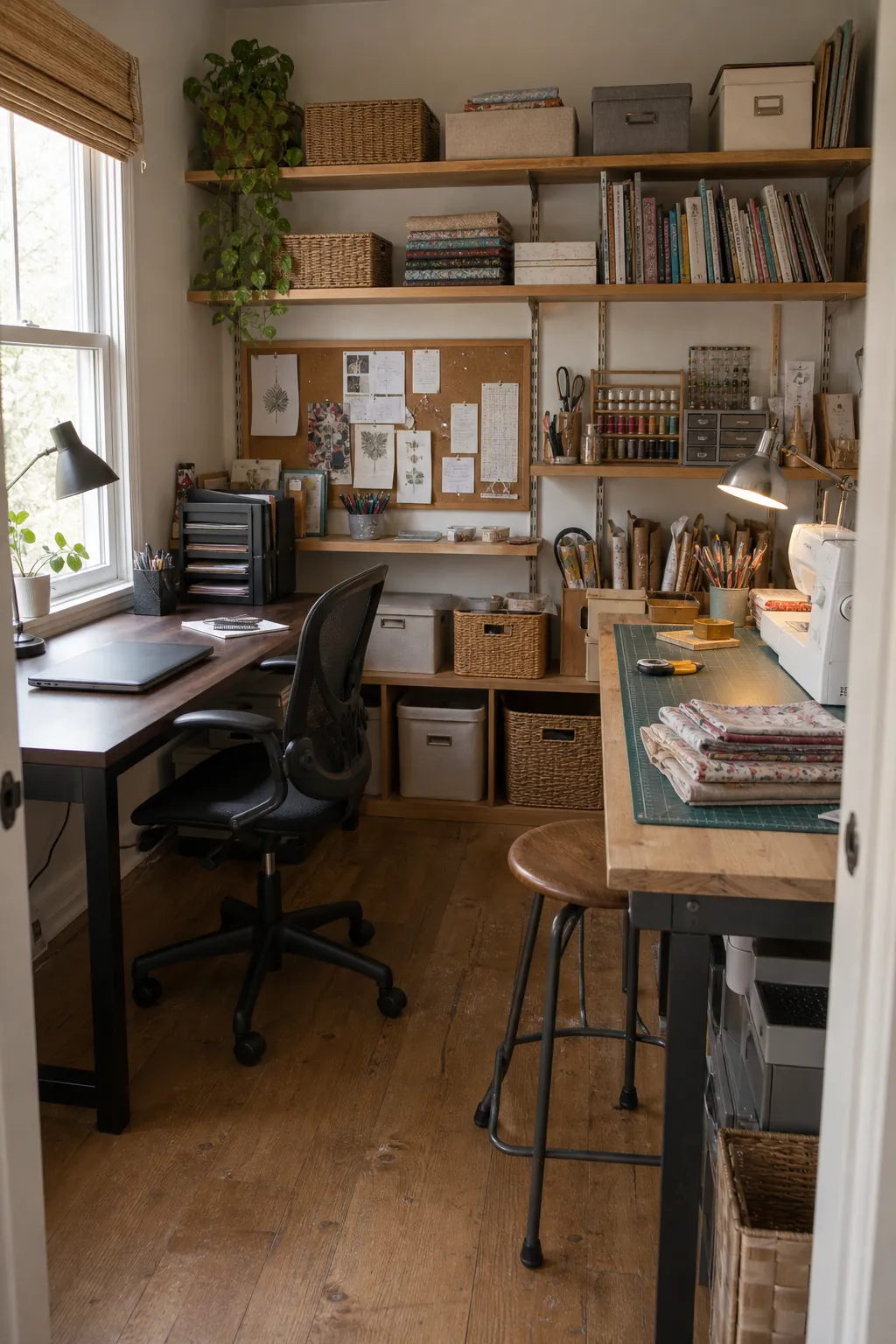
If your craft room also has to work as a home office, divide the room by task instead of by furniture style. Put clean digital work on one side and messy material work on the other. A shared shelf wall can hold files, patterns, baskets, and reference books, while a wipeable mat protects the craft side. This keeps an office and craft room combined from feeling like two rooms competing for one outlet.
Center Cutting Table Layout
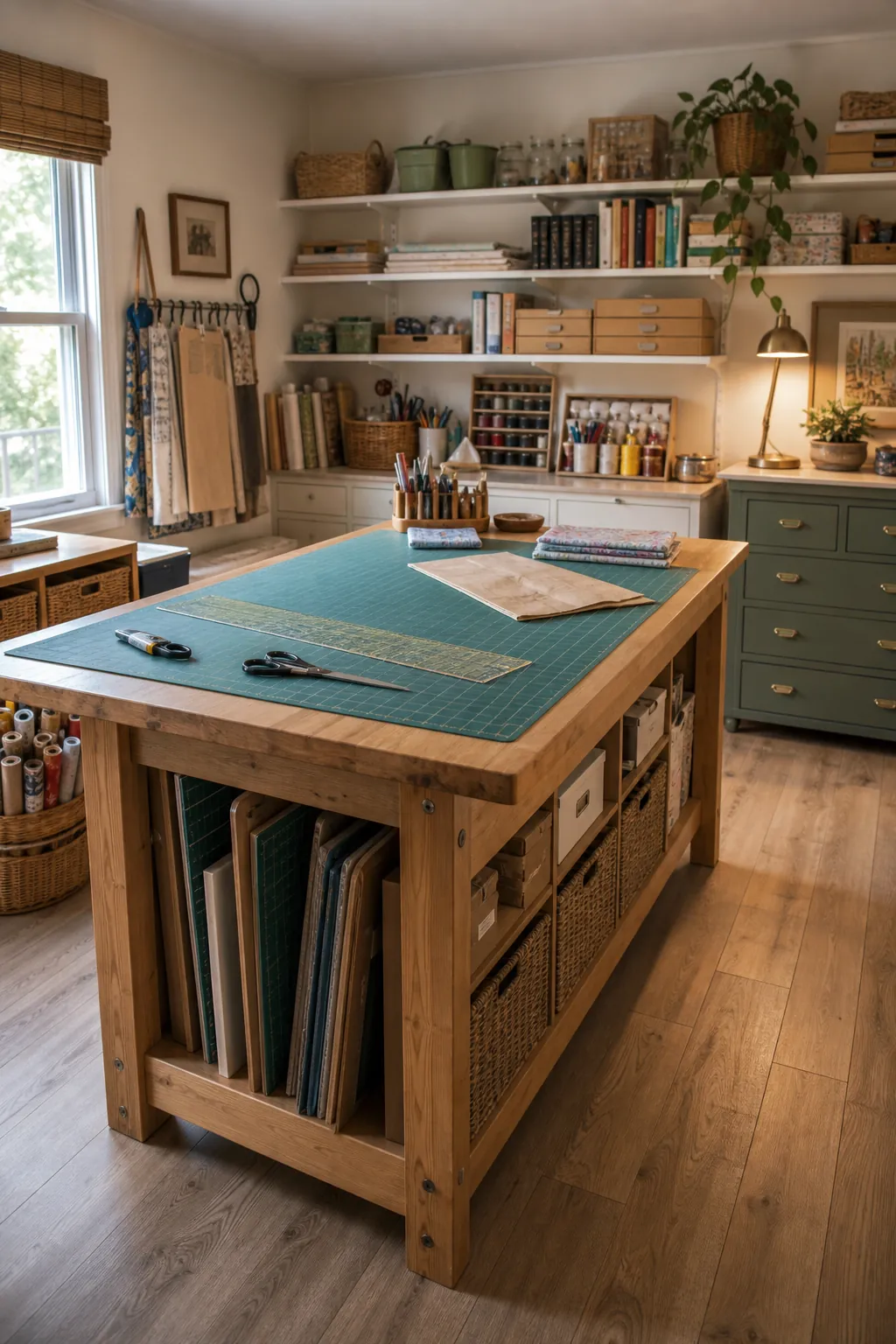
For sewing, quilting, paper crafts, and gift wrapping, a central table changes everything. Leave walking room on at least three sides if possible, and use the space underneath for flat pattern boxes, cutting mats, or baskets. The best hobby room ideas layout start with the largest task surface, then place storage around it instead of squeezing the table in last.
Sewing Room Thread Wall
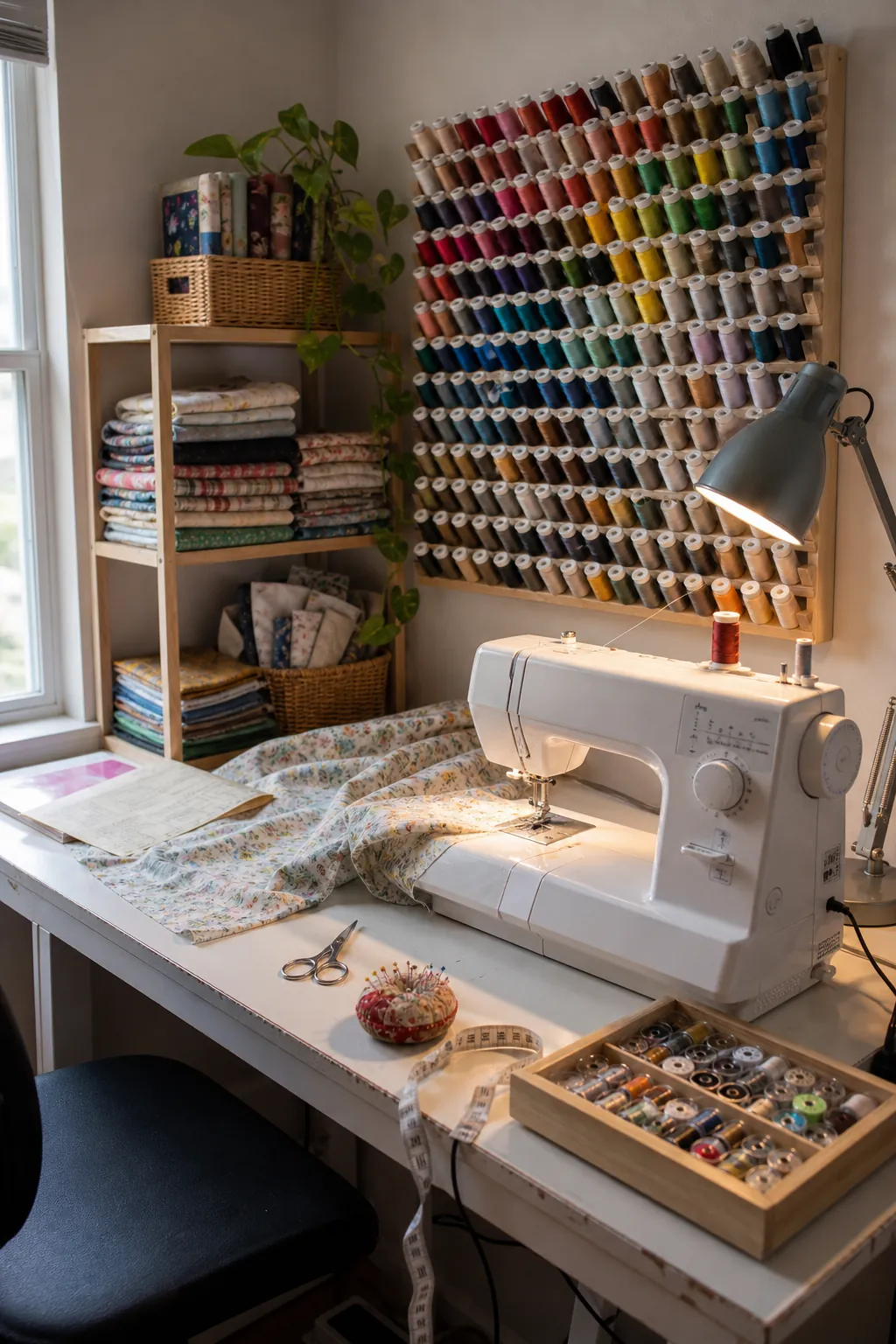
Good sewing room ideas make thread, needles, bobbins, scissors, and measuring tools easy to reach without covering the machine table. A thread rack can be useful, but it should not sit where sunlight fades the colors. Pair it with a shallow drawer for bobbins and a small basket for the project currently under the needle.
Rolling Cart For Active Projects
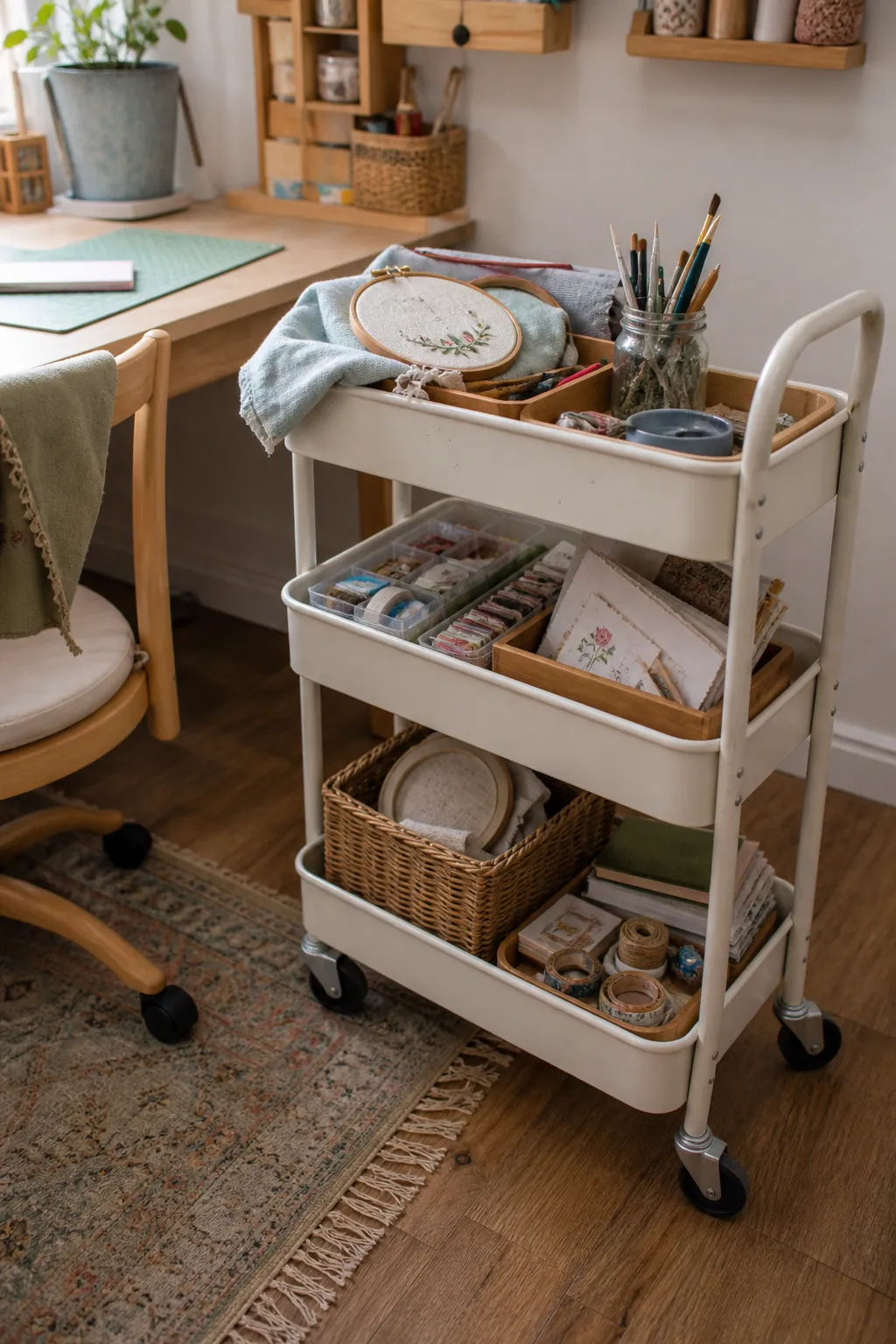
A cart is not a substitute for storage, but it is perfect for active work. Use it for the supplies tied to one current project, not every supply you own. That small rule stops carts from becoming clutter towers. In a cozy hobby room, a cart can move between a desk, chair, ironing board, or dining table and then tuck away when the room needs to reset.
Closed Closet Craft Zone
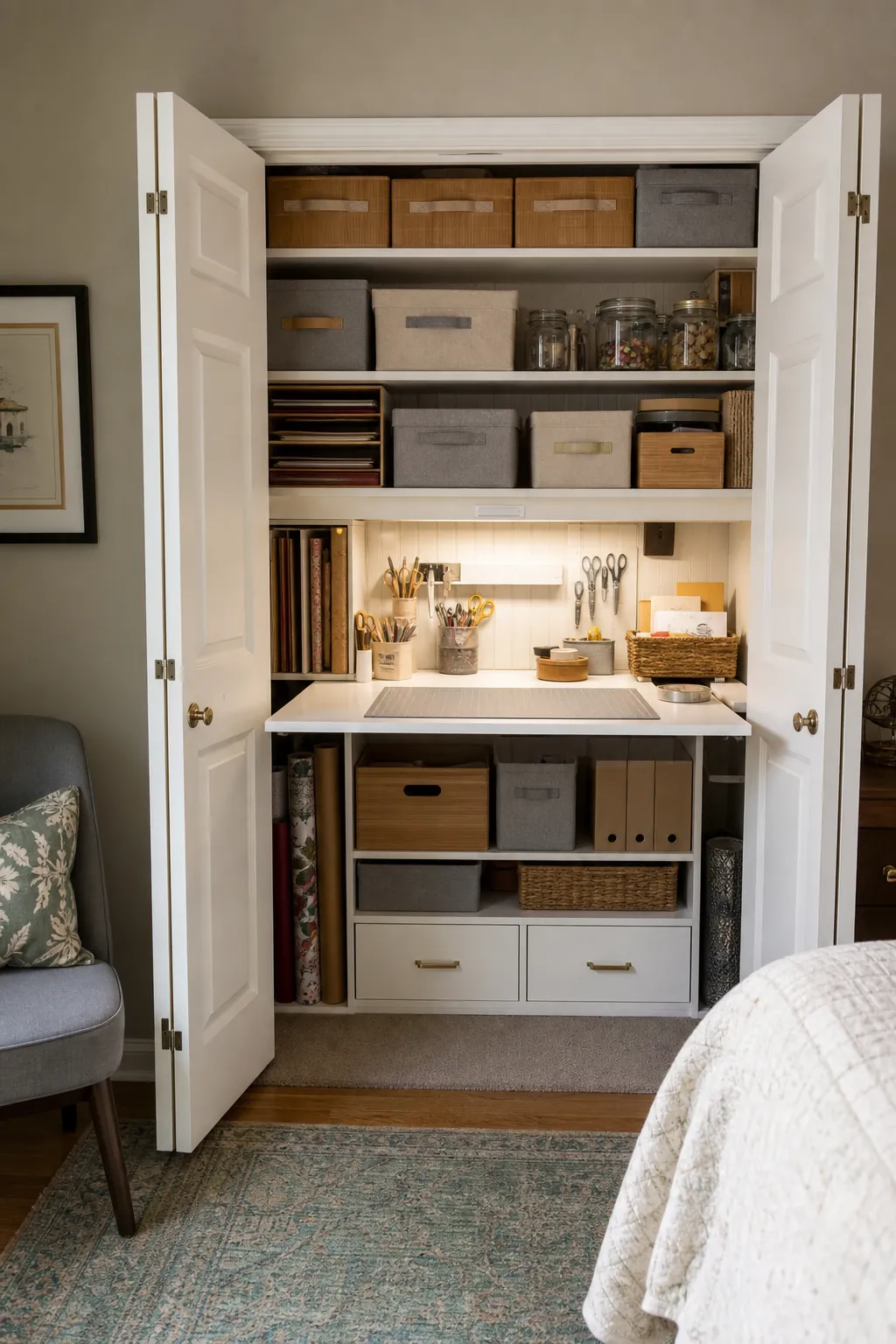
Closed storage matters when the craft space is in a guest room, bedroom, or living area. A closet with shelves, labeled bins, and a fold-down work surface can hold a surprising amount without making the whole room feel busy. Put messy categories behind doors and leave only the supplies that make you want to create on display.
Labeled Drawer Supply System
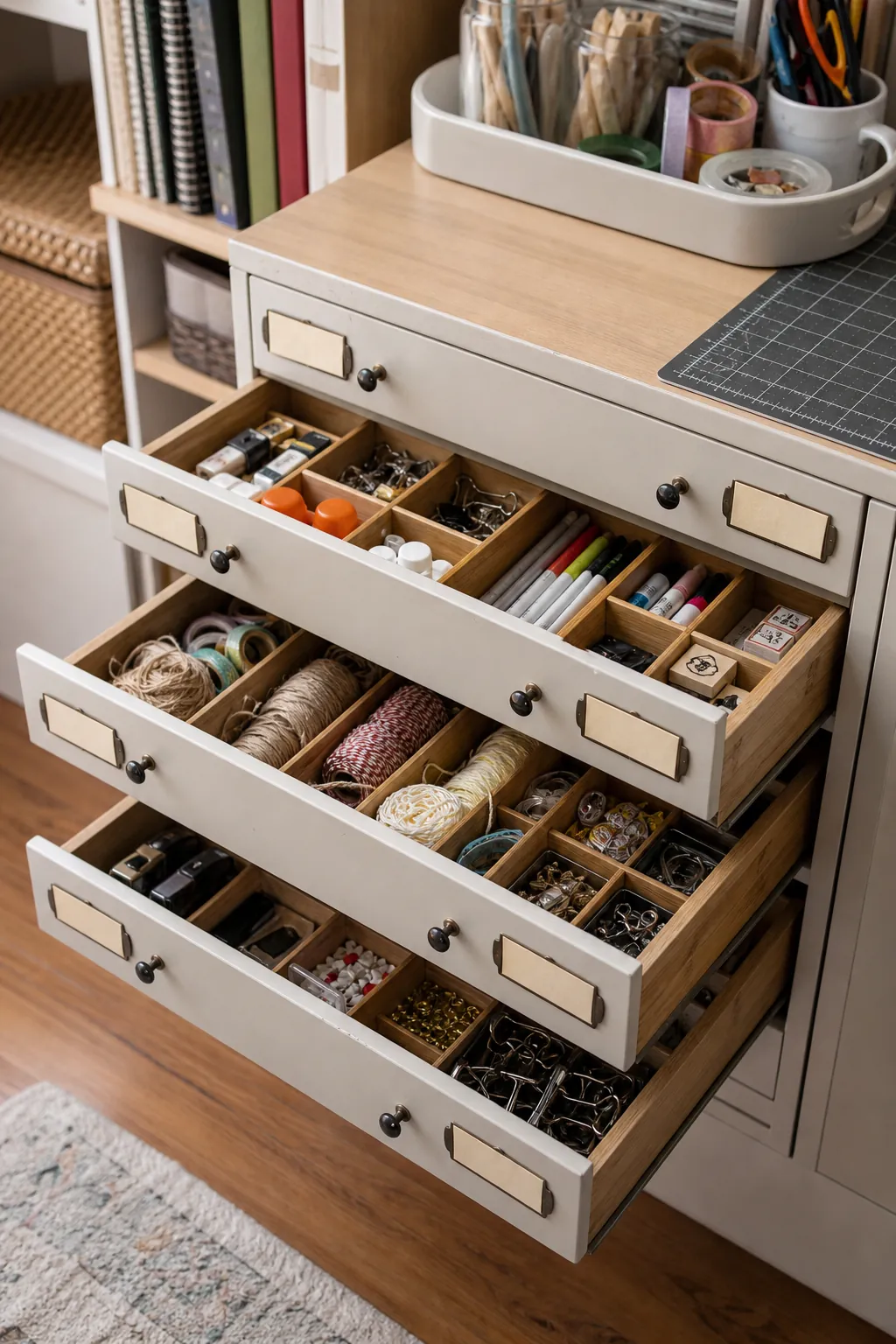
Labels sound basic because they are basic. They are also the difference between a reset that takes five minutes and a reset that never happens. Use drawers for categories that look chaotic in open bins: glue, blades, markers, fasteners, stamps, and spare parts. For craft room organization ideas, this is the quiet workhorse.
Paper And Ribbon Wall Storage
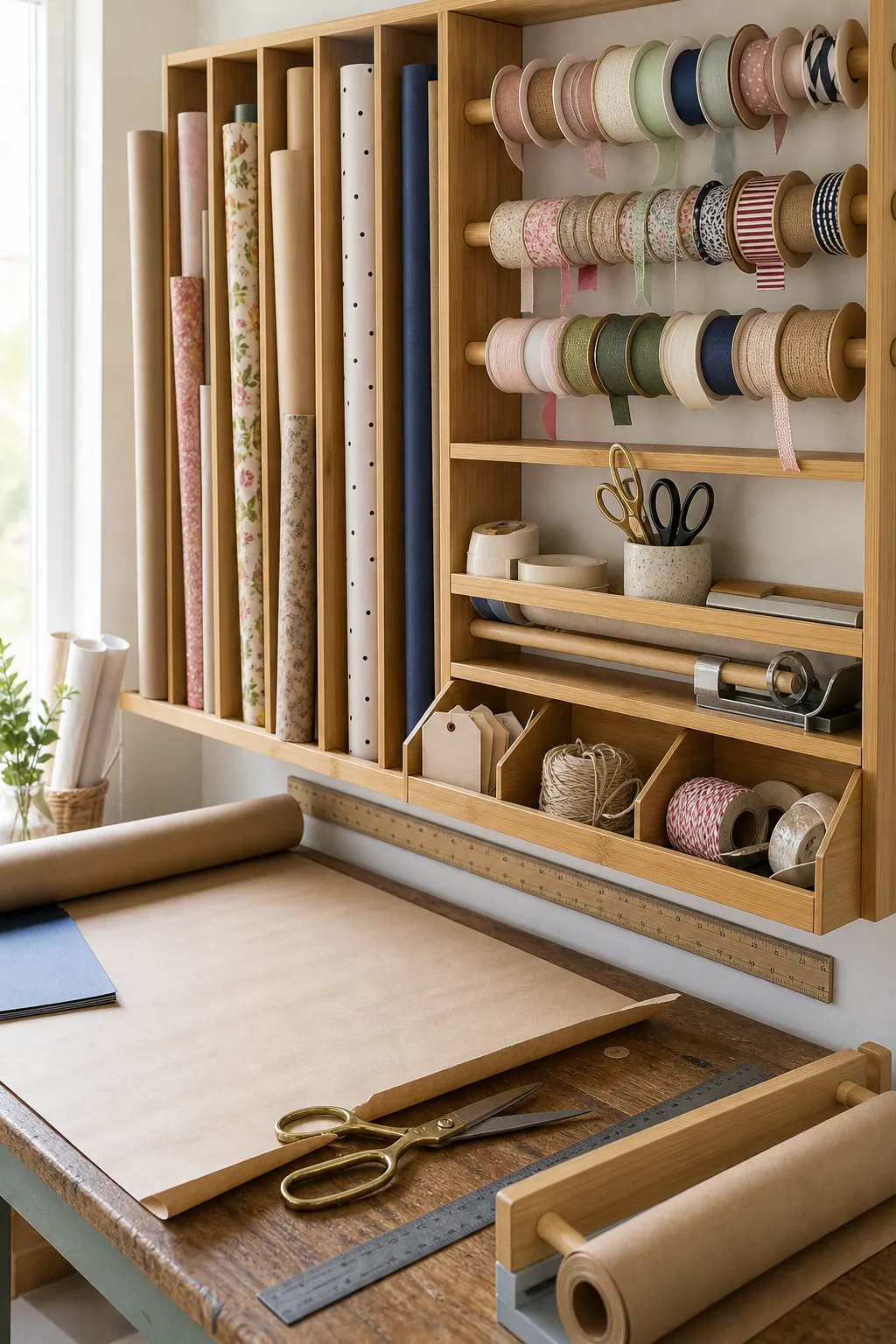
Paper and ribbon are awkward because they are long, fragile, and easy to crush. Wall dowels, shallow slots, and vertical cubbies keep rolls visible without eating desk space. Place this zone near the cutting area, not across the room. It makes wrapping, scrapbooking, card making, and seasonal projects feel much less like a scavenger hunt.
Natural Basket Yarn Shelves
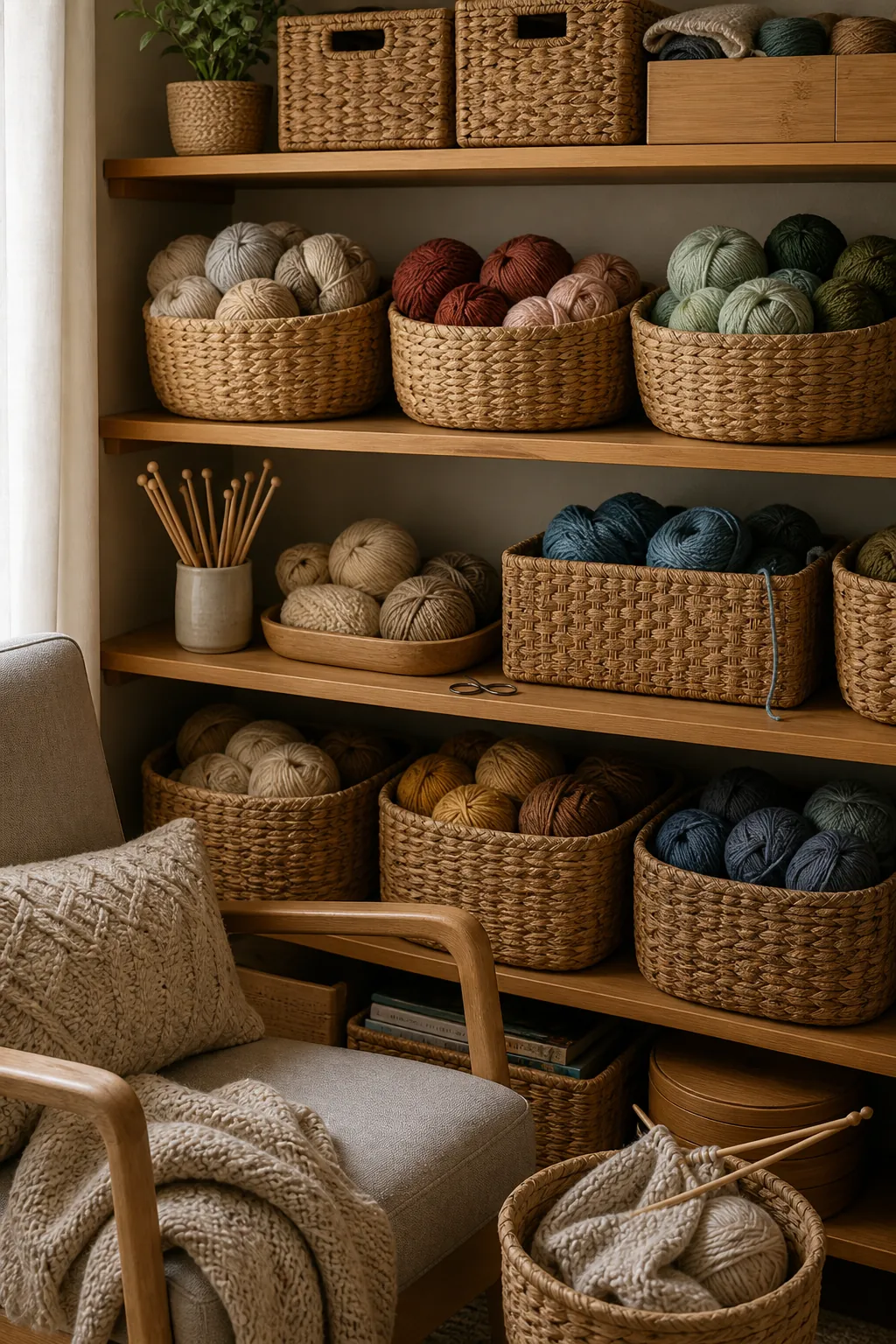
Open shelves can look calm when every shelf has a job. Use woven baskets for yarn, bamboo trays for tools, and lidded boxes for overflow. Keep current colors visible and store backup supplies higher or behind doors. This gives you the softness of a cozy craft room without letting every skein, hoop, or jar compete for attention.
Kid Friendly Craft Table
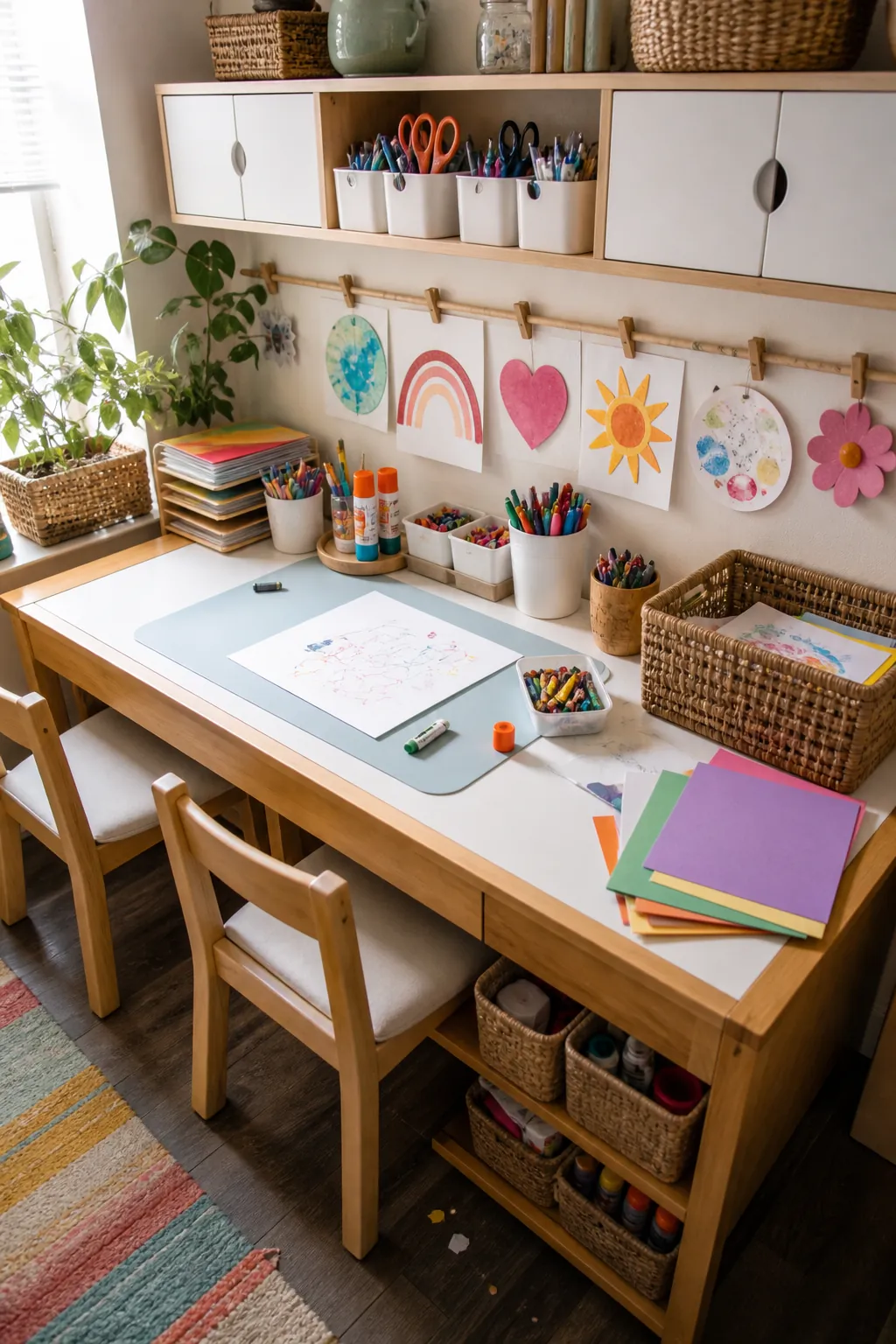
A family craft table needs different rules than a private studio. Choose washable surfaces, rounded storage baskets, low shelves for child-safe supplies, and a higher cabinet for sharp tools or permanent materials. Keep the top mostly clear so kids can start quickly. A small display rail above the table makes finished work part of the room instead of another pile.
Window Light Paint Station
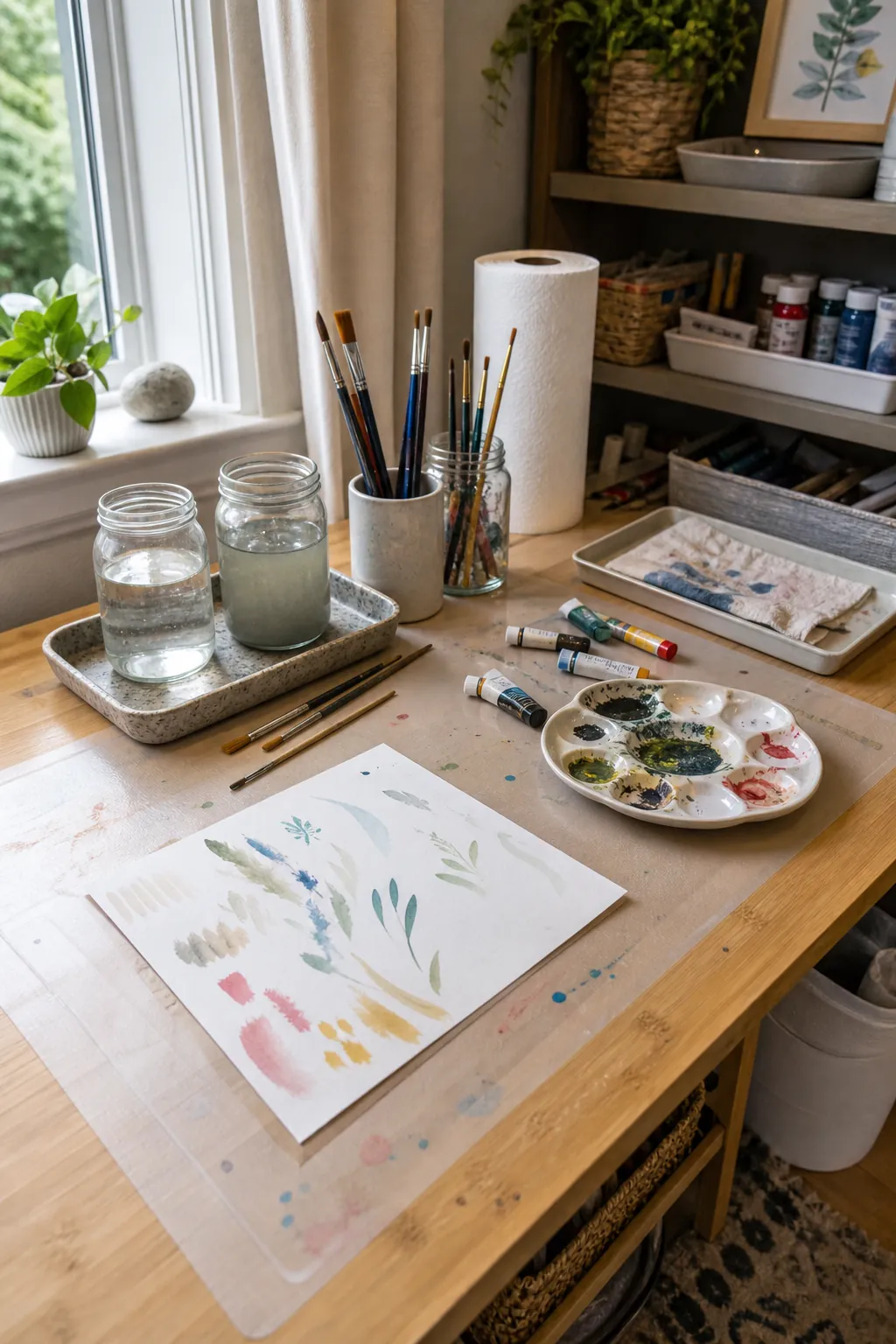
Painting, stamping, clay, and glue-heavy work all benefit from natural light and a surface that can take abuse. Put a washable mat over the desk, keep water jars on a tray, and store paper towels where you can grab them with one hand. The goal is not a spotless station. The goal is a station that can get messy and recover fast.
Foldaway Guest Room Craft Space
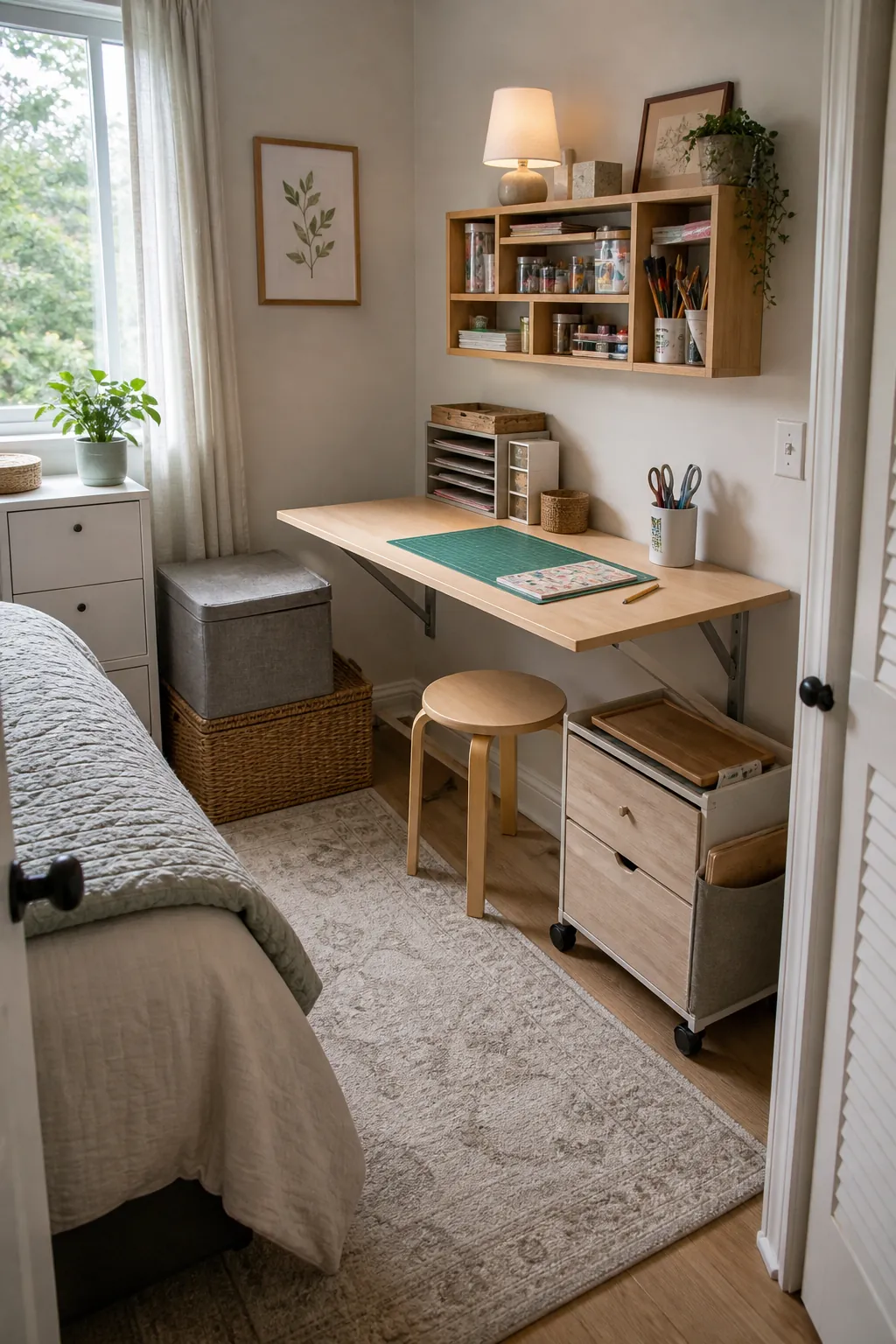
Shared rooms need a craft setup that can disappear. A wall desk, nesting stools, covered bins, and a rolling cabinet let the room switch back to guest mode without a full cleanout. This is especially useful for renters and small homes where the craft area must coexist with sleeping, storage, or home office duties.
Project Planning Bulletin Board
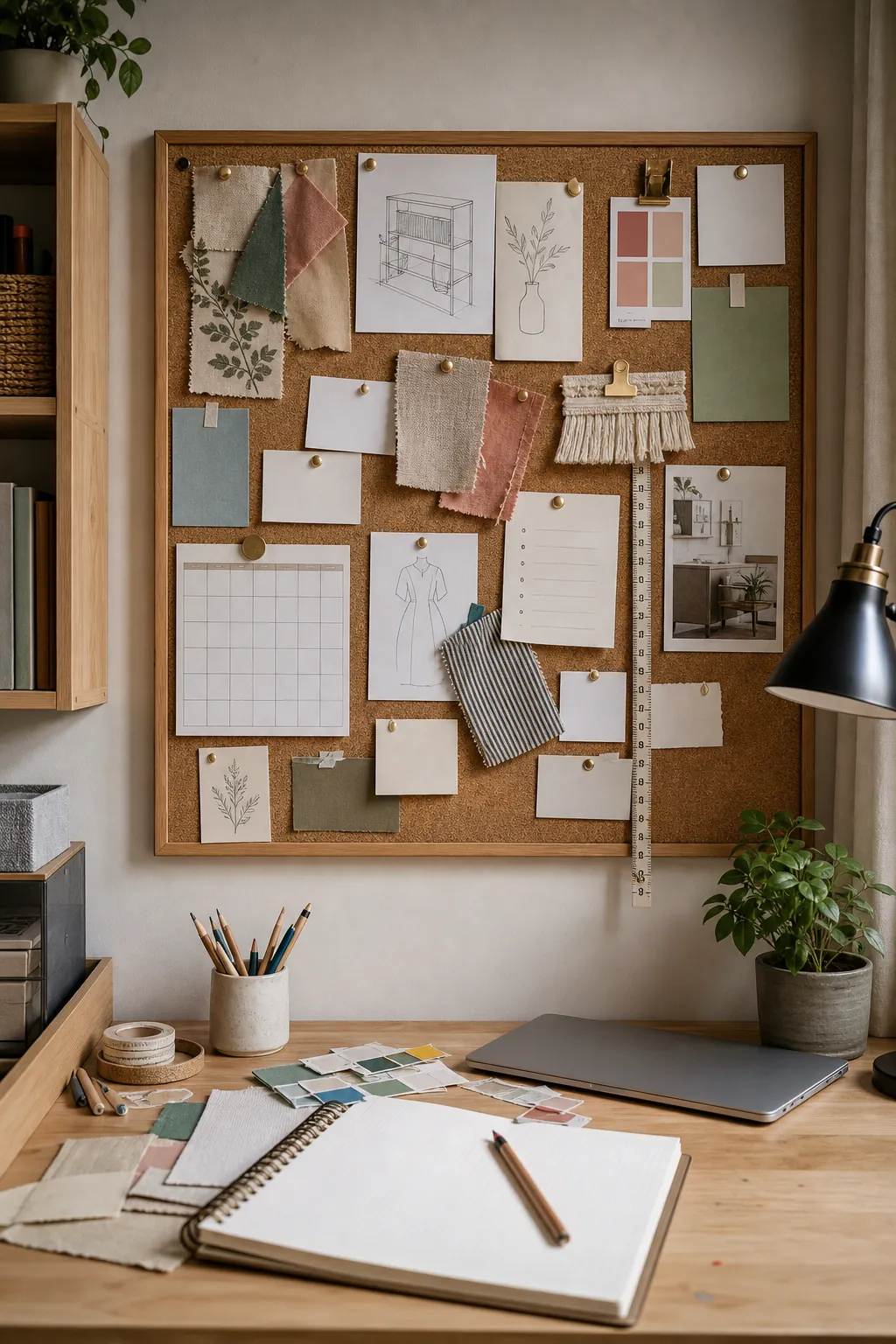
A planning board keeps ideas from getting buried in notebooks, camera rolls, and random envelopes. Pin sketches, fabric swatches, color cards, measurements, deadlines, and a small list of supplies to buy. For craft office room ideas, this visual planning zone is a bridge between creative thinking and practical follow-through.
Comfort Chair And Task Light
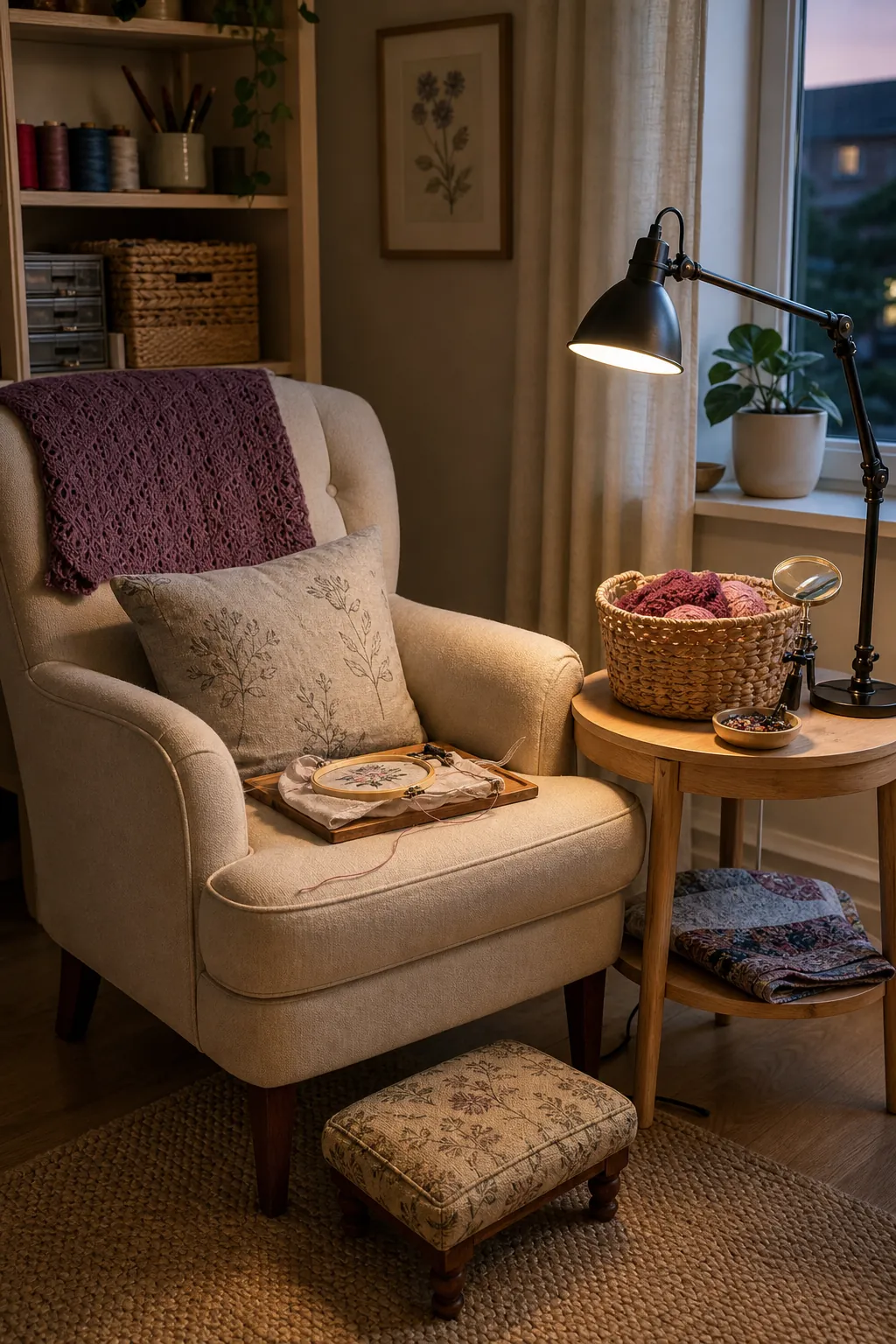
Lighting and seating are not decorative extras. They decide whether you can sew a dark hem, sort beads, paint edges, or knit for more than twenty minutes without strain. Add a good task lamp behind or beside the chair, keep a small basket for work in progress, and choose a seat that supports the type of making you actually do.
Thrifted Bookshelf Fabric Storage
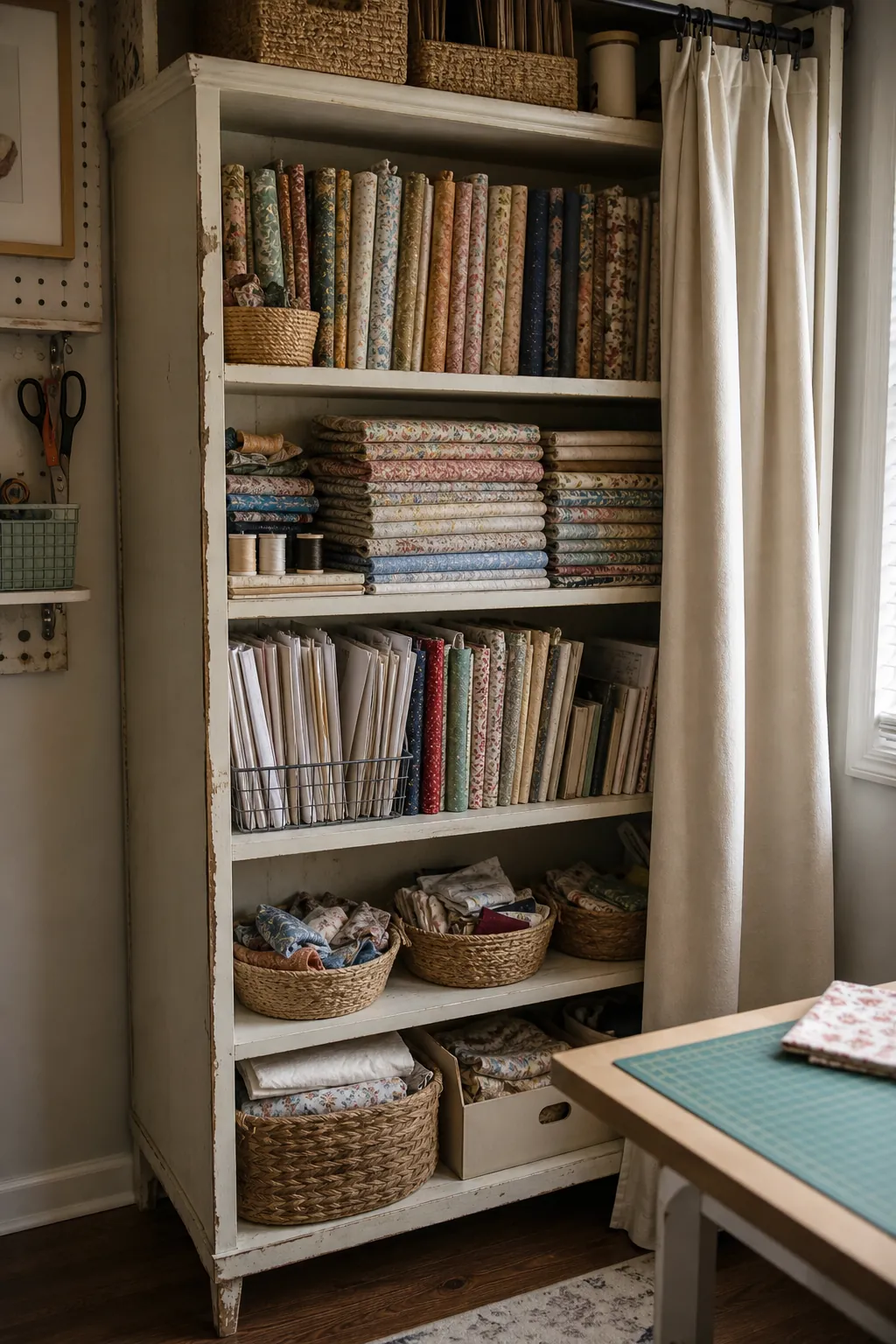
A secondhand bookshelf can become excellent fabric storage when the folds are consistent. Wrap yardage around boards, stand smaller cuts upright, and use baskets for scraps. If the room gets strong sunlight, add doors, curtains, or fabric covers to reduce fading. This budget version often works better than buying a matching system before you know your habits.
Under Table Storage Layout
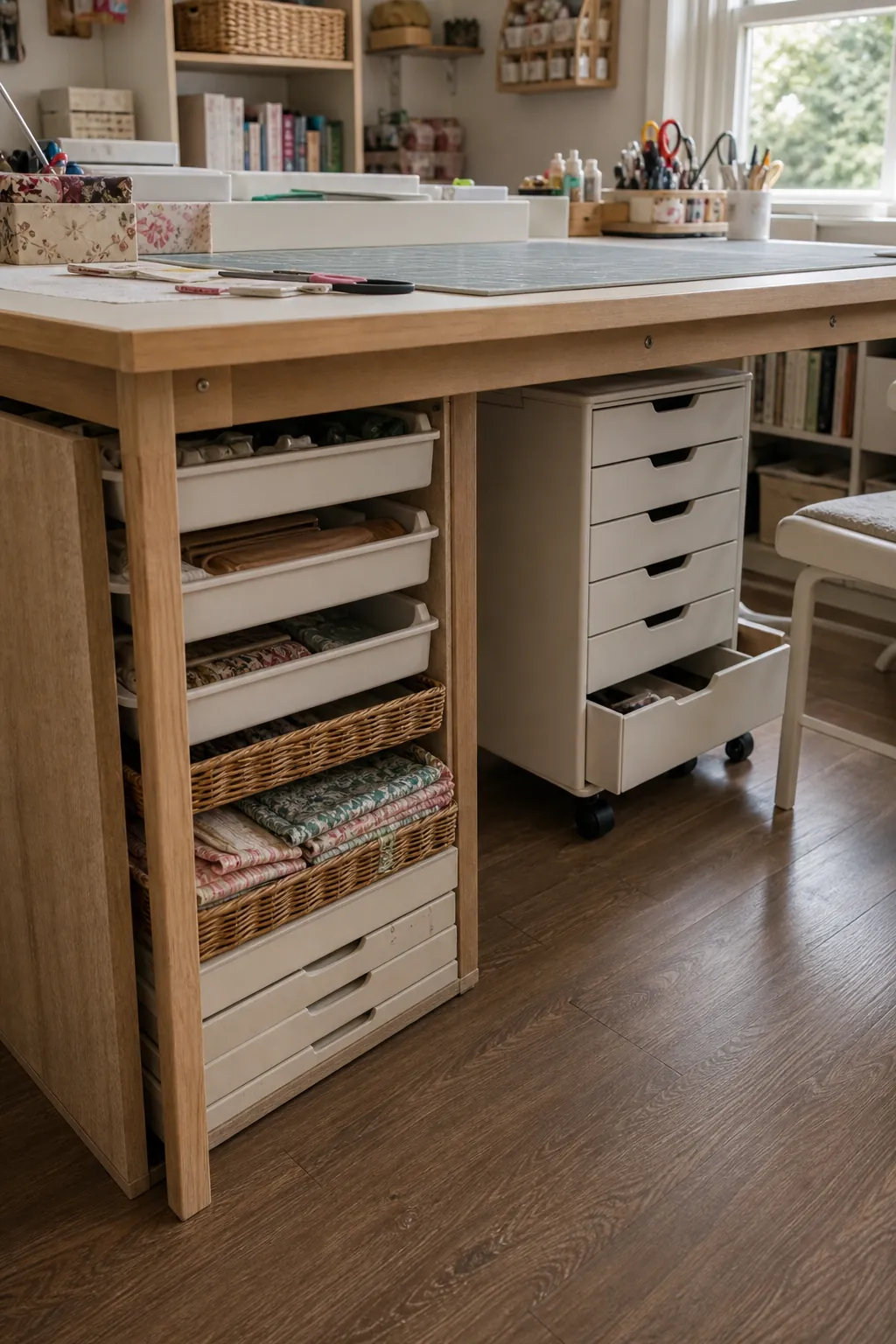
The area under a table is useful only if you can reach it. Choose shallow drawers, pull-out bins, or open cubbies instead of deep mystery boxes. Keep heavy items low and leave room for knees where you sit. Smart craft room layout ideas floor plans protect both storage and movement, because a cramped room eventually becomes an unused room.
Finished Craft Display Shelf
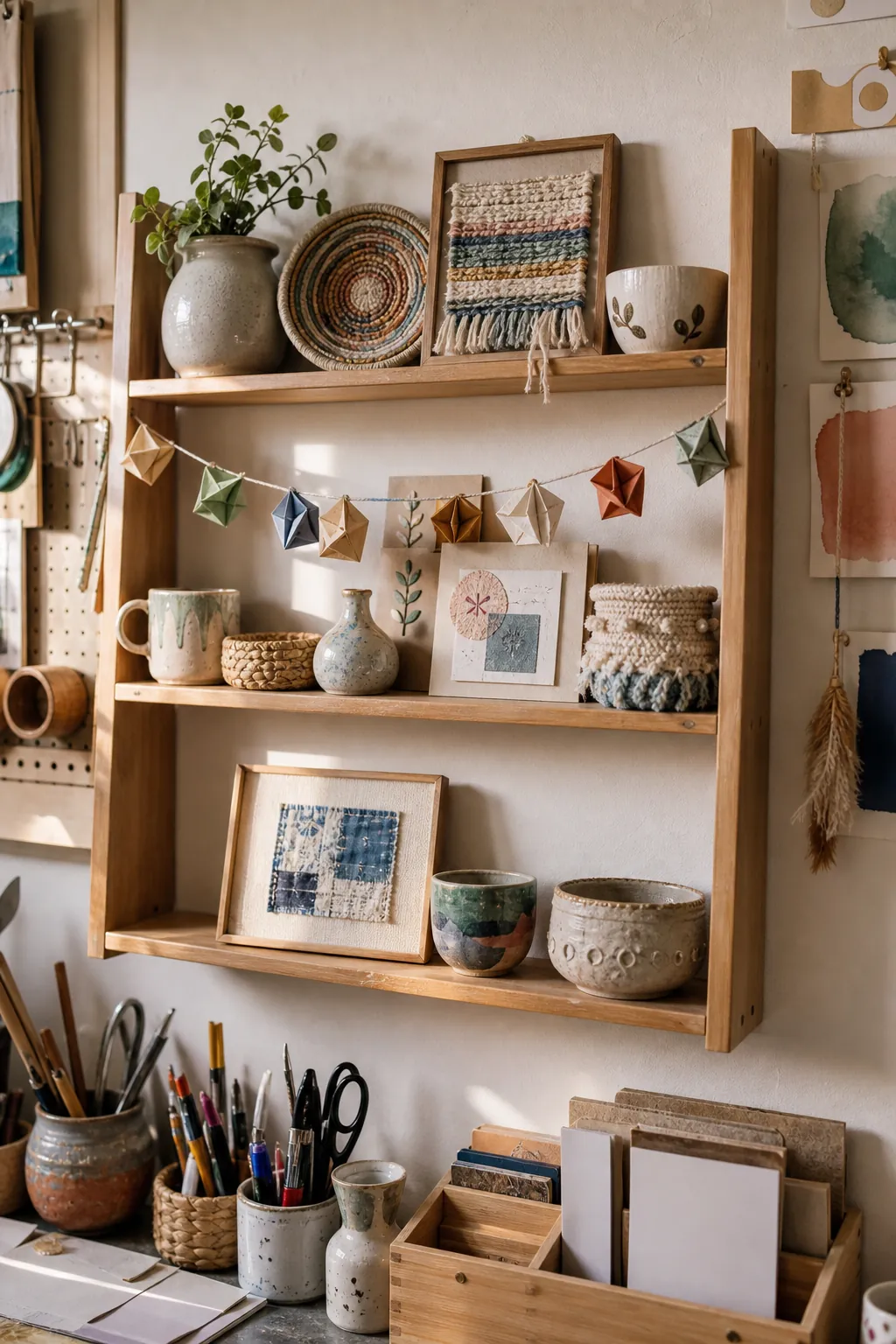
Leave space for finished work. A narrow shelf, rail, shadow box, or rotating display gives the room a reason to stay inspiring after the supplies are put away. It also reminds you what the organization is for. The point of a craft room is not perfect storage; it is a room that keeps inviting you back to make the next thing.