
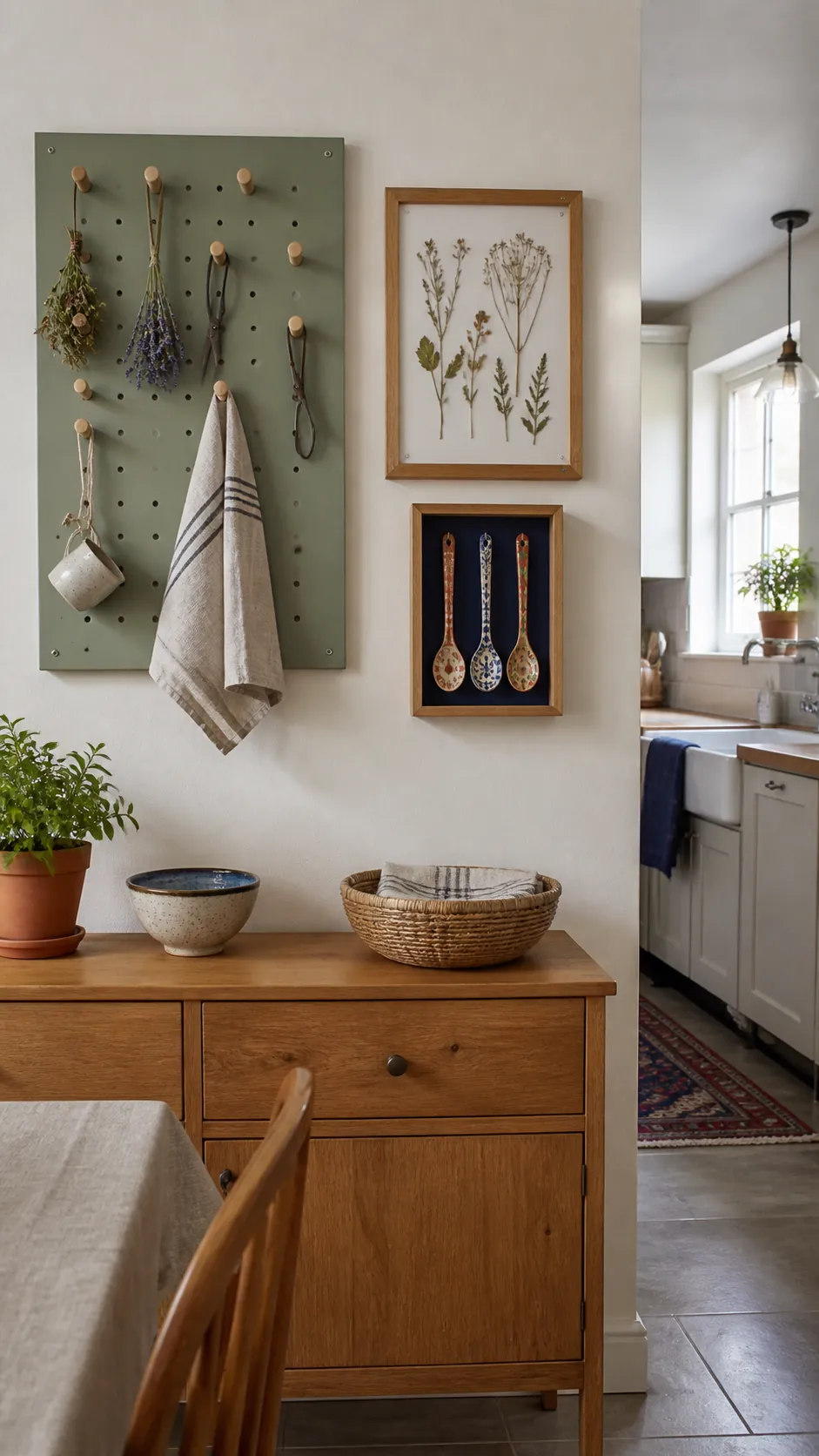
DIY kitchen wall decor is most convincing when the project solves a real problem—scale, storage, warmth, or personality—without getting in the way of cooking. These 19 DIY kitchen wall decor ideas use thrifted, removable, and beginner-friendly materials, with practical notes for safe mounting, cleaning, and rental restrictions.
Paint-Dipped Wooden Spoon Shadow Box
Seven vintage spoons become a graphic collection when their cobalt-painted handles stop at one consistent line. Arrange the different bowls inside a deep white-oak shadow box before fixing anything, using subtle changes in angle to show their individual wear. The white interior keeps the dark wood and blue color from feeling visually heavy.
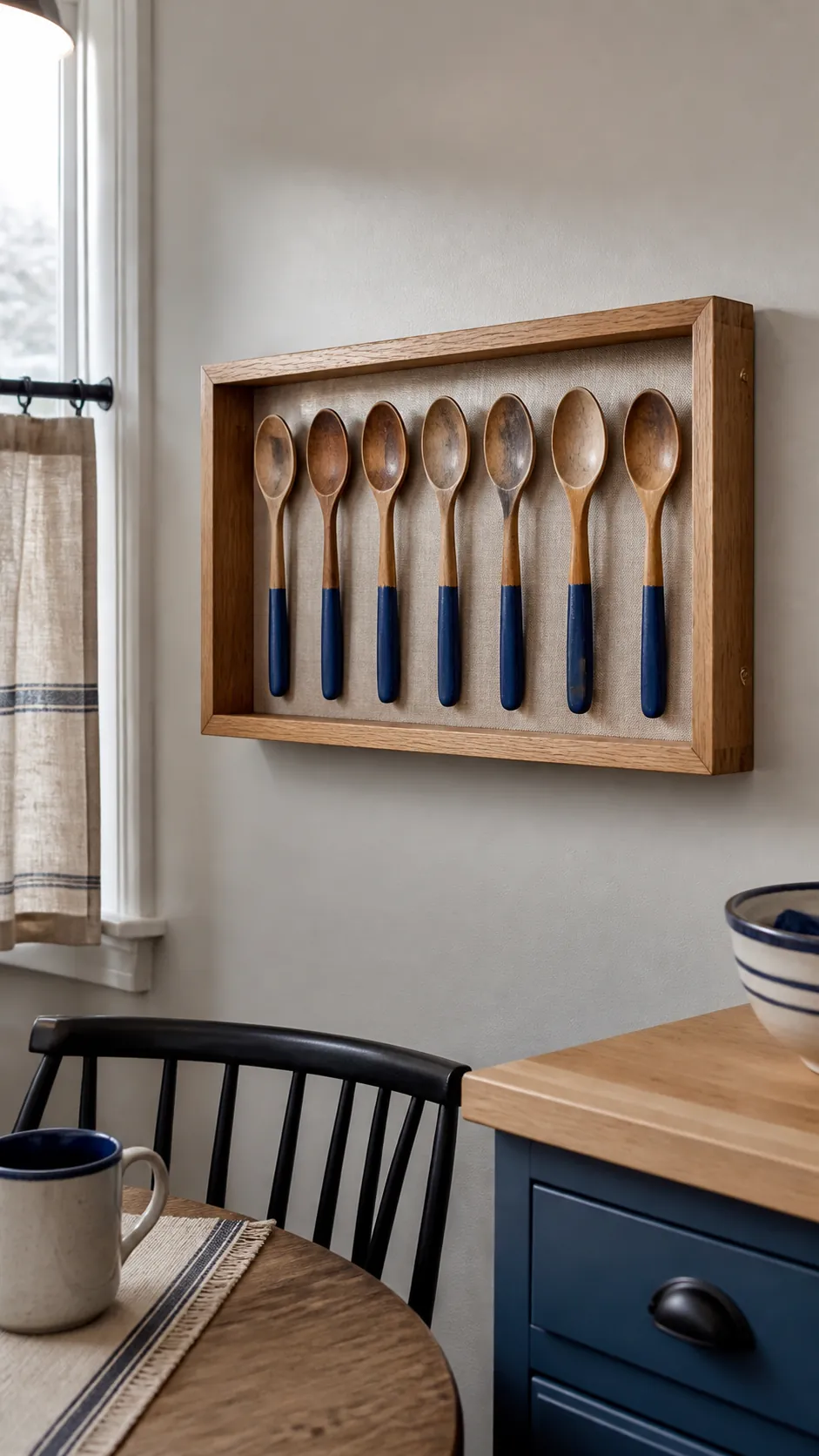
Treat the spoons as display objects after painting, and secure each one so it cannot slide or pivot inside the case. Hang the finished box on a dining-side wall where its depth stays out of the work aisle and the front can be wiped easily.
Pressed Herb Specimen Frames
Rosemary, sage, and thyme have different stem structures, making them a natural set for three floating specimen frames. Dry the herbs thoroughly, then compose each one with enough clear space for its outline to remain recognizable.
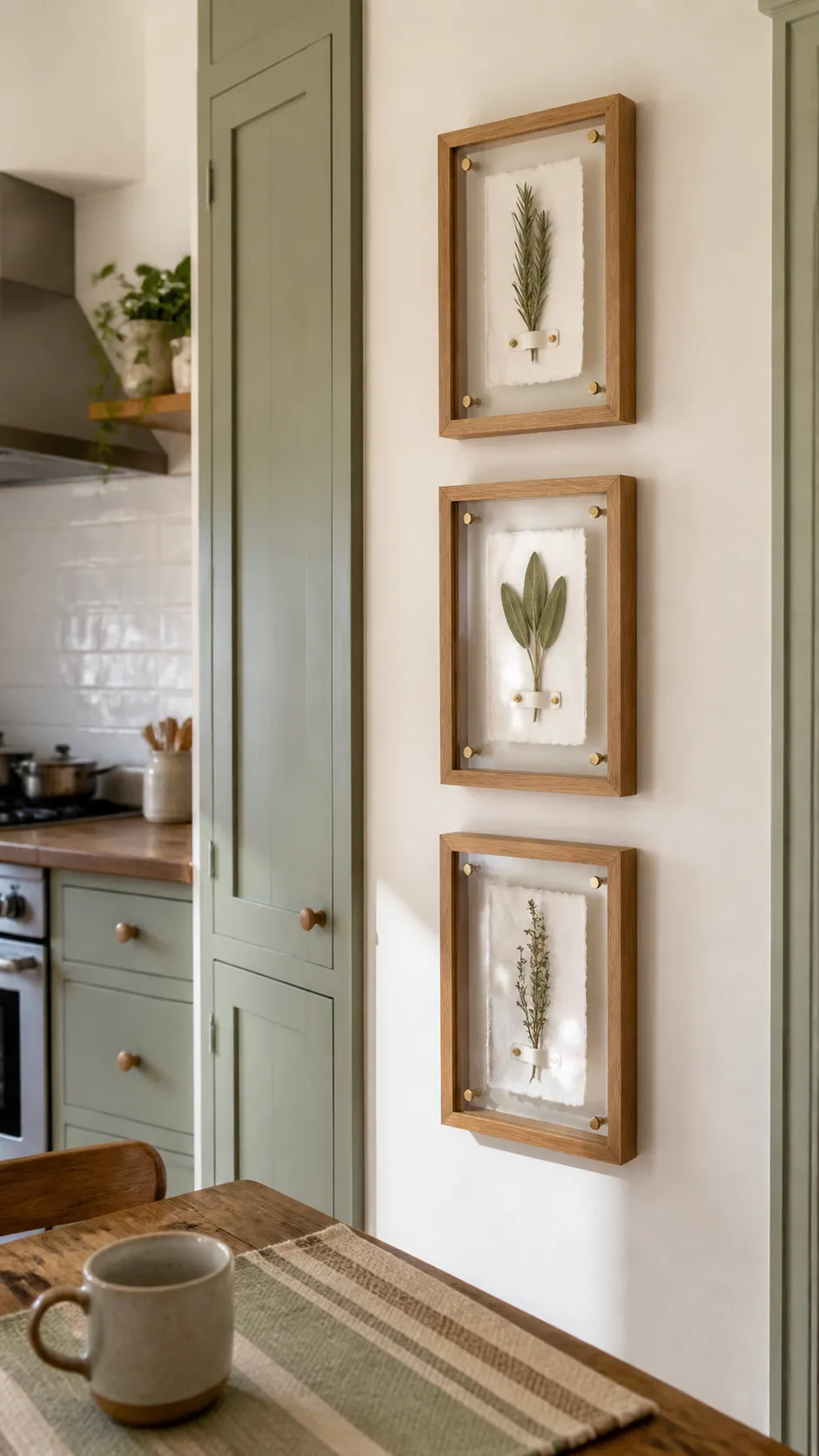
Use text-free mounting paper and align the frames by their outer edges rather than trying to make the irregular plants match. Cleanable acrylic is practical in a kitchen and avoids placing exposed dried material where it can collect residue. A slim, evenly spaced row will feel more like a botanical study than a craft display.
Painted Pegboard Organizer
A sage-painted pegboard works when it is planned around the tools that need a home, not filled after installation with whatever is nearby. Set measuring cups and scissors within easy reach, reserve the small shelf for a few stable items, and let the linen apron soften one edge. Leave open holes between zones so the board remains readable.
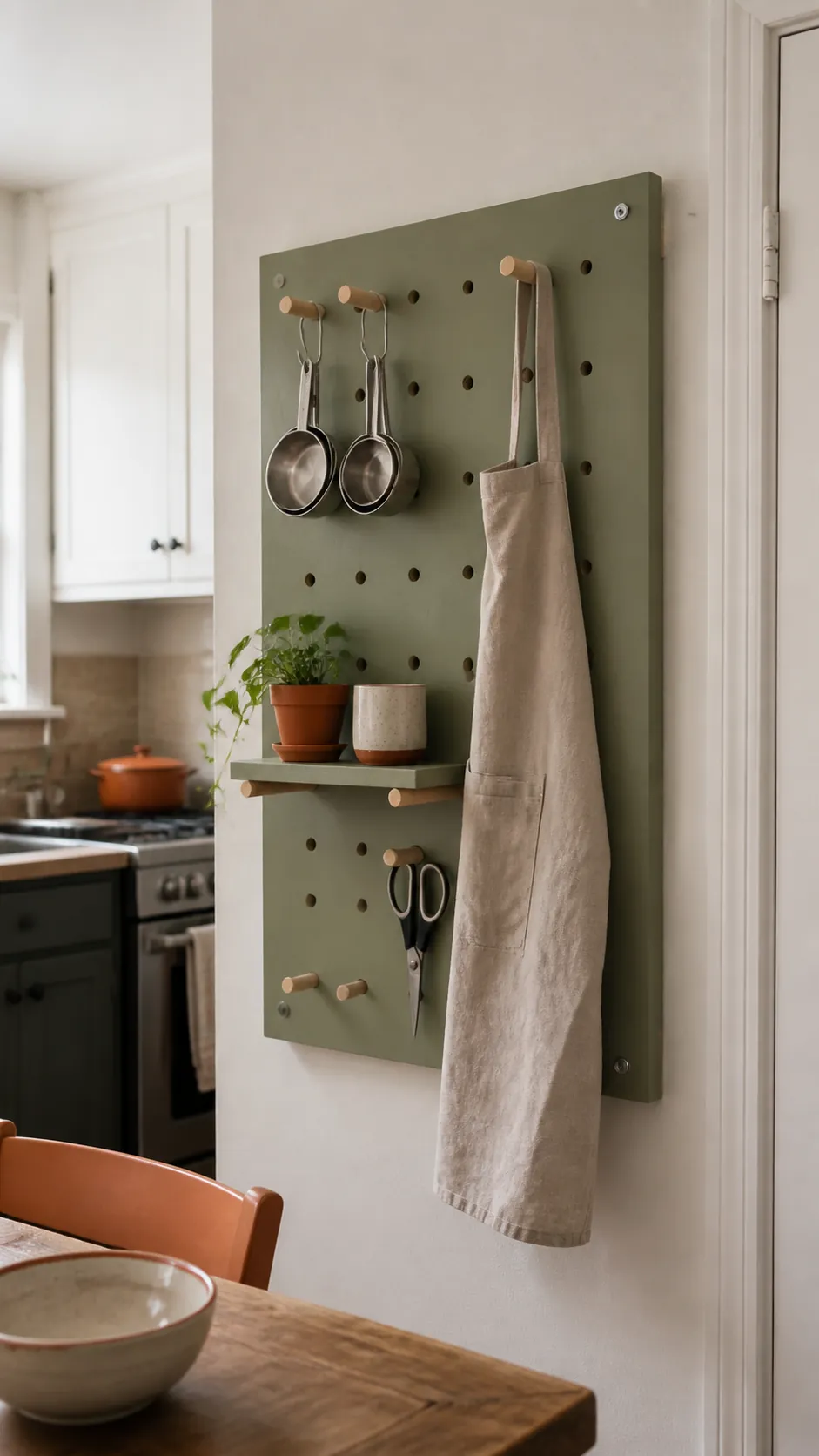
Install the panel with the support and rear clearance its hook system requires, keeping denser objects toward the bottom. Check that nothing hanging from it interferes with the counter, cabinet doors, or the main preparation area.
Thrifted Plate Mosaic
Mismatched plates in blue, cream, and terracotta can form an energetic burst without looking like a formal china display. Build the composition on the floor, turning patterned rims outward and using plain pieces to calm the center.
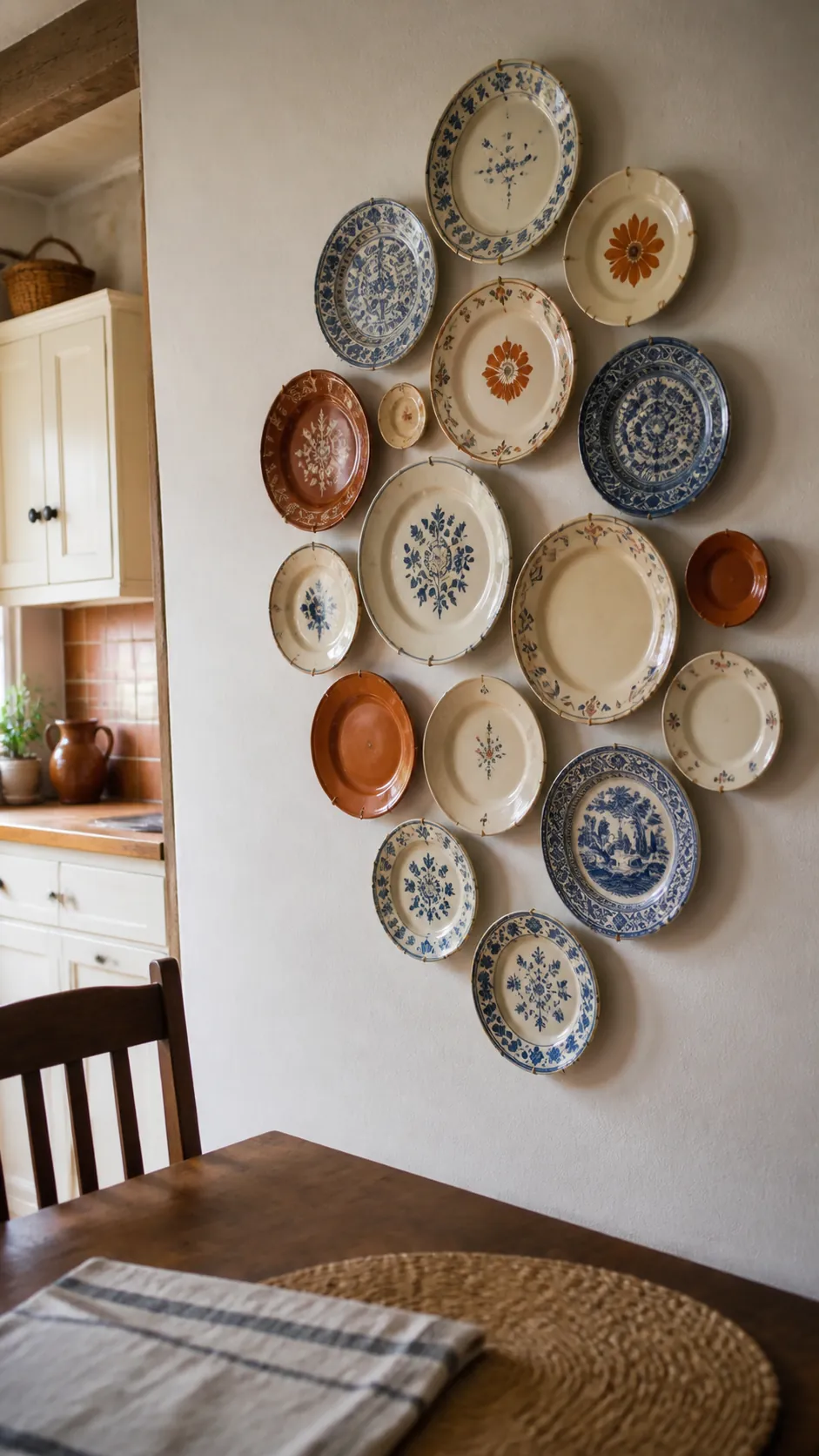
Photograph the final arrangement and transfer one plate at a time so the asymmetric outline does not drift. Fit every ceramic piece with a hanger designed for its form and condition. Choose a wall beyond chair movement and active cooking, where a broad spray of fragile objects can remain secure and easy to dust.
Hand-Painted Checkerboard Mural
An overscale clay-and-cream checkerboard turns a blank wall into color and pattern without adding objects. Lay out the major grid carefully, but allow slight brush variation at the edges so the result retains a hand-painted character. Broad squares are easier to live with near cabinetry than a tiny, high-contrast check.
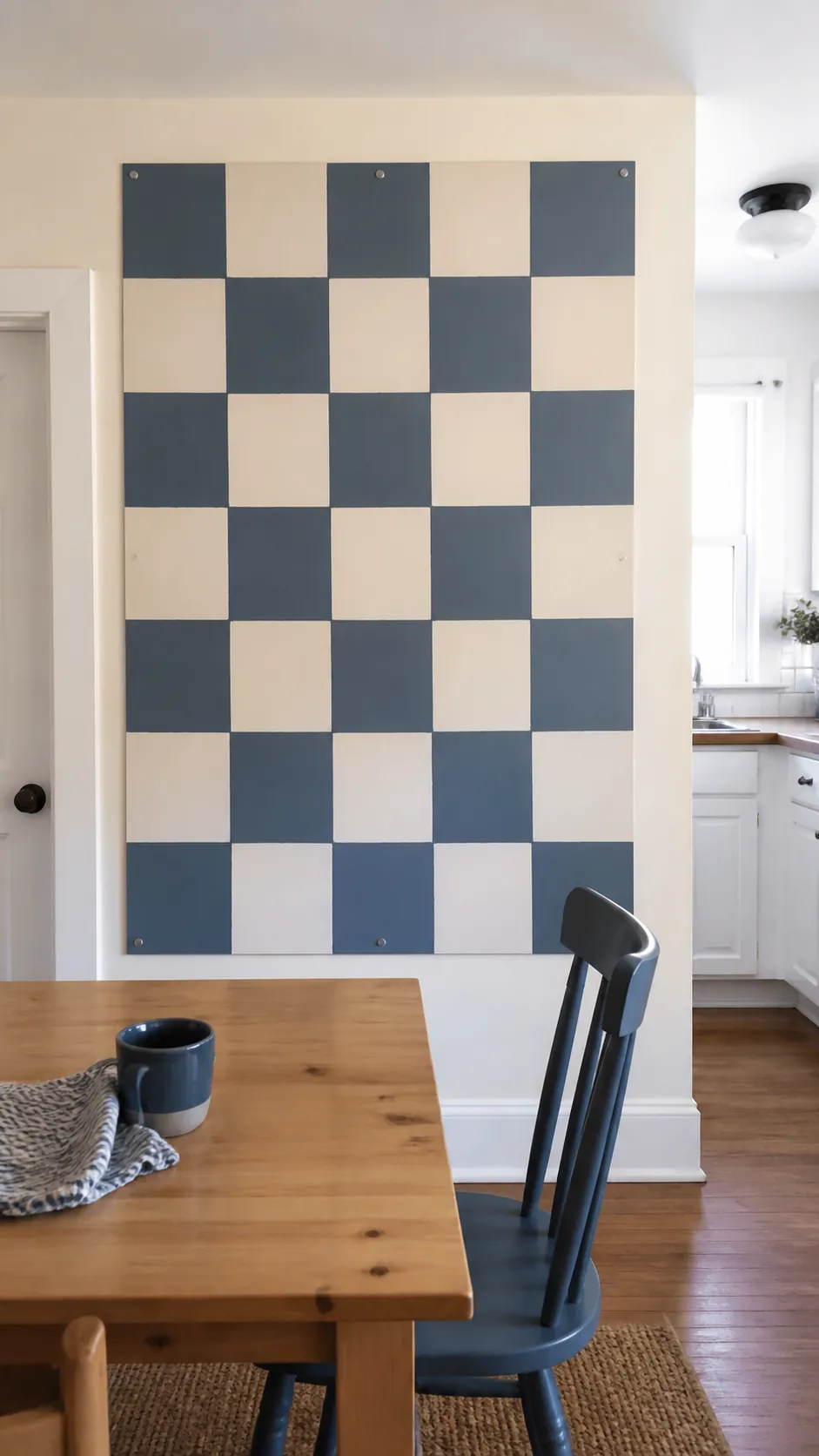
Renters can paint a primed removable panel instead of assuming a wall finish will peel away cleanly. Before committing to the full field, compare both colors with the floor, counters, and evening light.
Framed Family Recipe Enlargement
Enlarging one handwritten family recipe preserves the marks, corrections, and rhythm that make the page meaningful. Scan the original and work from the digital copy, leaving the fragile sheet stored safely away from kitchen light and moisture.
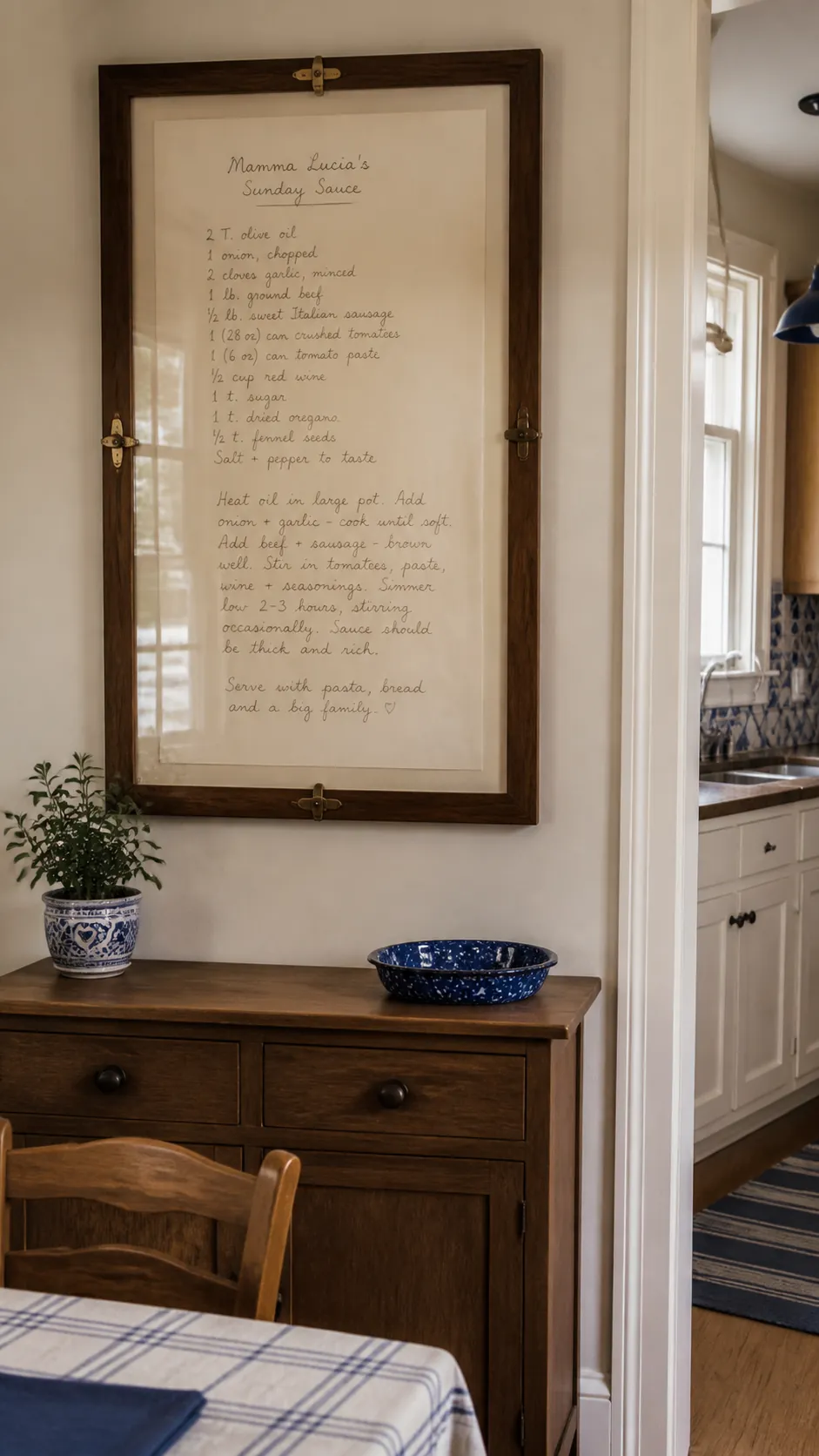
Cream paper and a handmade walnut frame give the reproduced handwriting presence without making it look newly typeset. Choose glazing that protects the print and control reflections so the script remains visible from the table. Let this one personal document stand alone instead of surrounding it with unrelated kitchen quotations.
Reclaimed Cutting Board Gallery
Five reclaimed cutting boards make an appealing vertical gallery when handles, edge wear, and wood tones vary. Sand rough areas, clean each piece appropriately, and seal it for display before planning the composition. Treat the boards as decor rather than returning them to food preparation after the makeover.
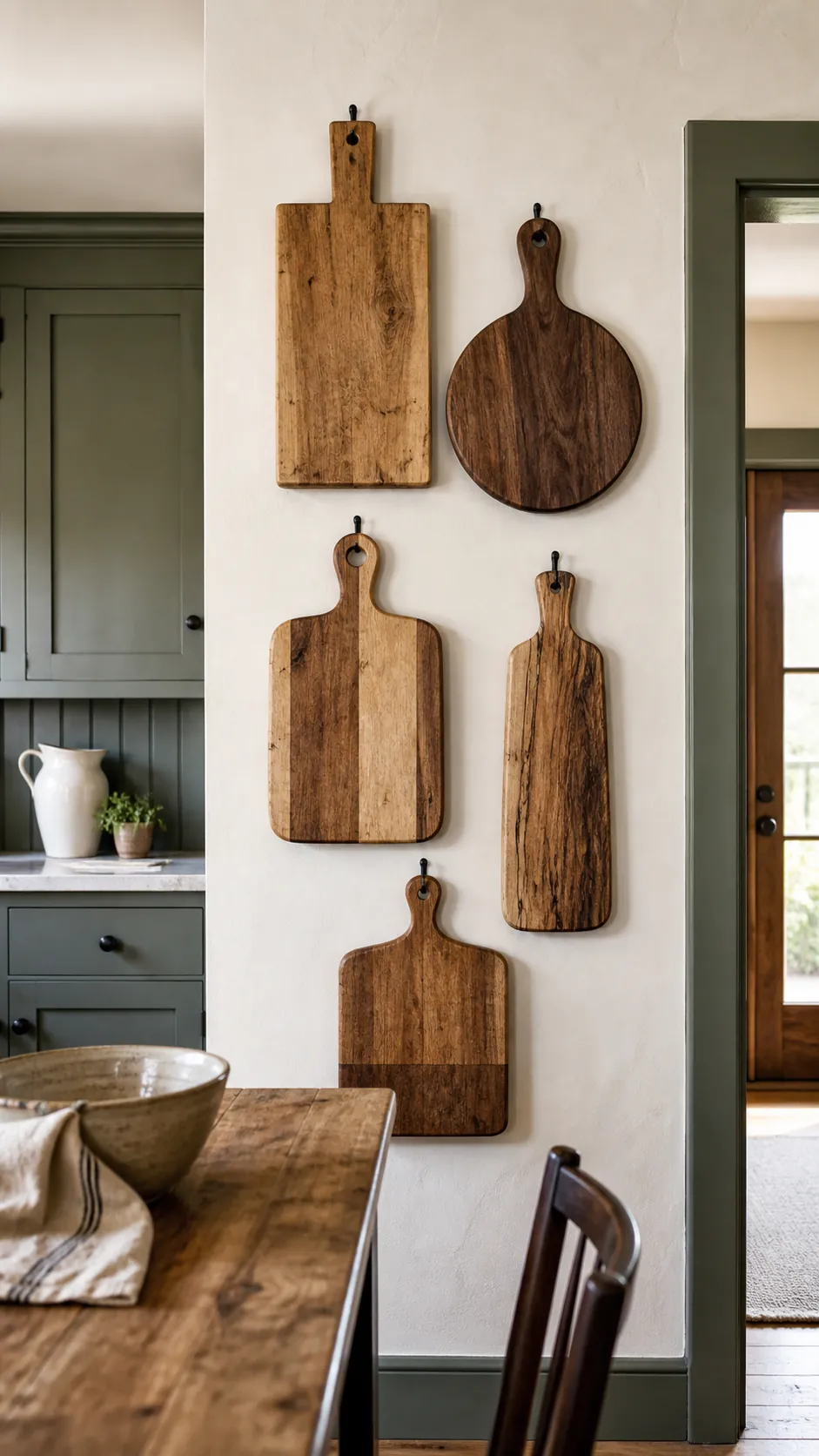
Arrange the handles in different directions while maintaining a loose grid through the board bodies. Secure the heavier pieces with dependable concealed hardware and place the group away from sink spray or range residue.
Fabric Scrap Quilt Panel
A small quilt panel gives leftover gingham, indigo, and faded floral fabric enough scale to act as artwork. Sort scraps by value before sewing so the pattern has a clear light-dark structure rather than relying only on nostalgic prints.
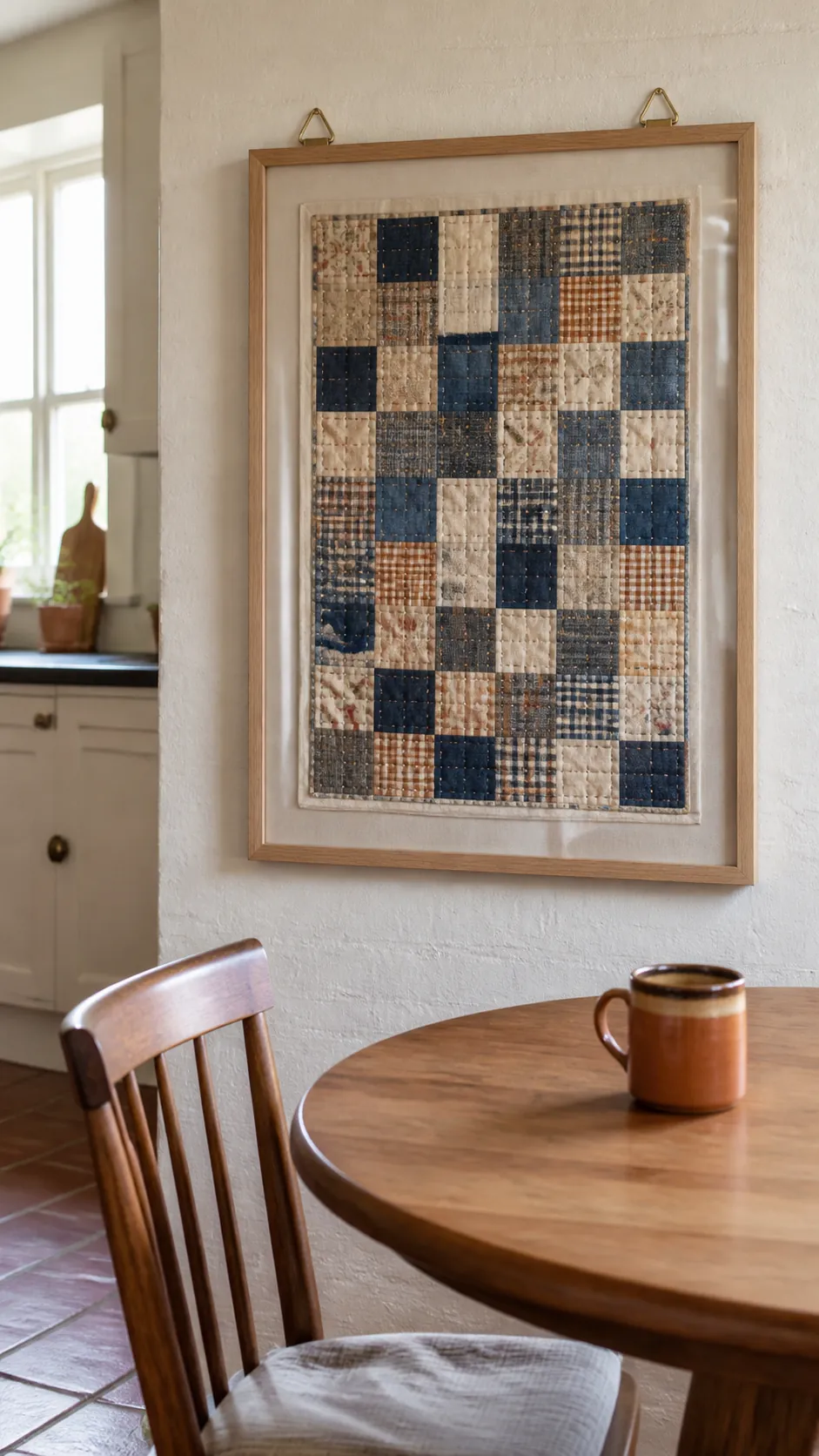
Mount the finished textile evenly in a frame without stretching it out of square. A removable protective front or dust cover makes upkeep more realistic in a dining area. Keep fabric well away from the stove and direct splashes, where fibers and seams would quickly become difficult to maintain.
DIY Chalkboard Meal Planner
A tall charcoal panel can organize the week without turning the refrigerator into a paper-covered command center. Draw a simple grid with enough room for actual meal notes, leaving part of the dark surface blank so the board does not look permanently crowded. A real frame makes the planner feel connected to the room’s millwork.
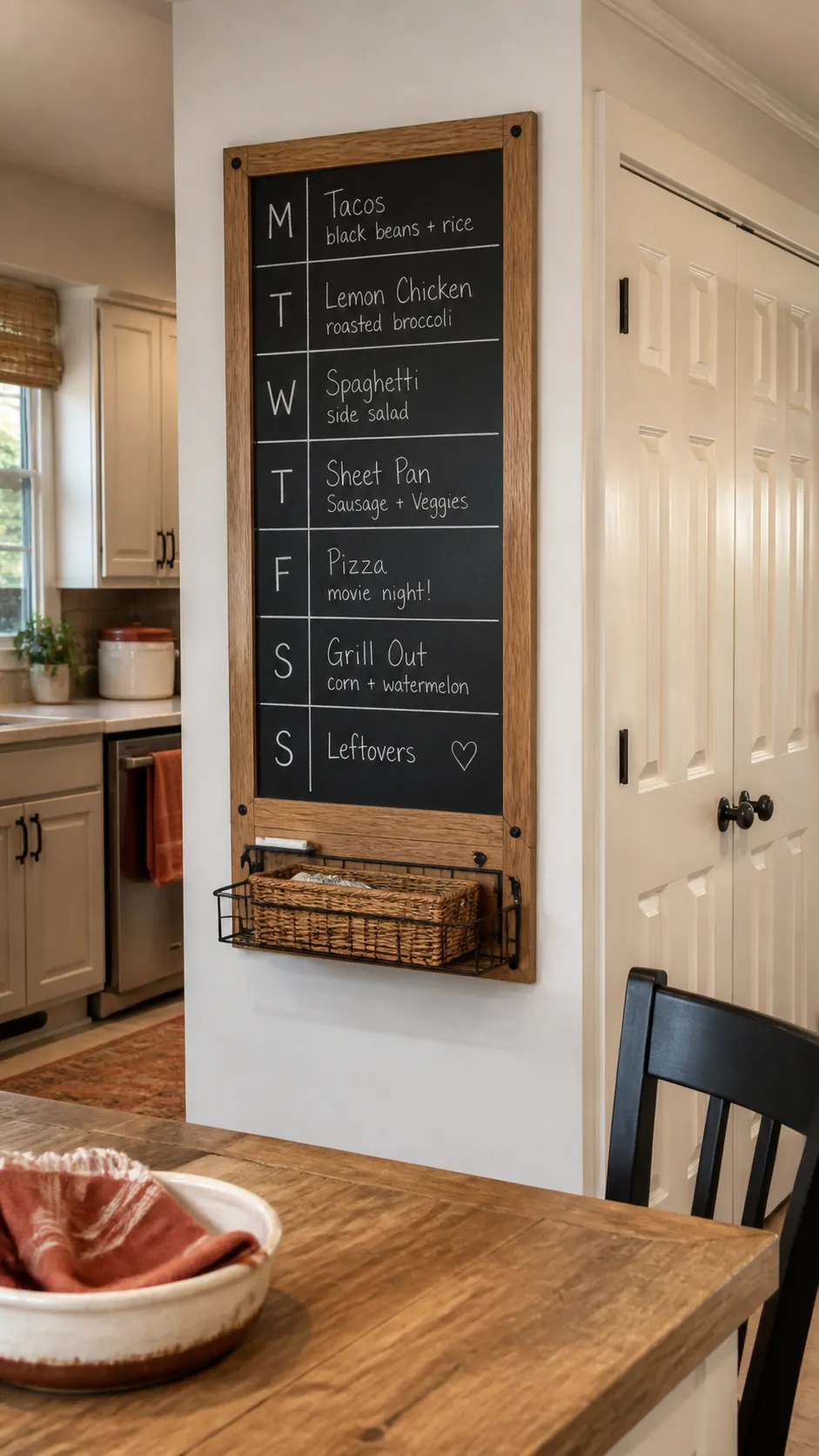
Put it near the pantry or family route rather than over an active preparation surface. Wipe changes with a damp cloth to contain dust, and position any chalk ledge where it will not snag clothing.
Copper Mold Wall Cluster
Vintage copper molds offer strong relief because their fluted and domed shapes catch light differently throughout the day. Mix polished pieces with naturally patinated ones, arranging them as a restrained cluster rather than covering the wall from edge to edge.
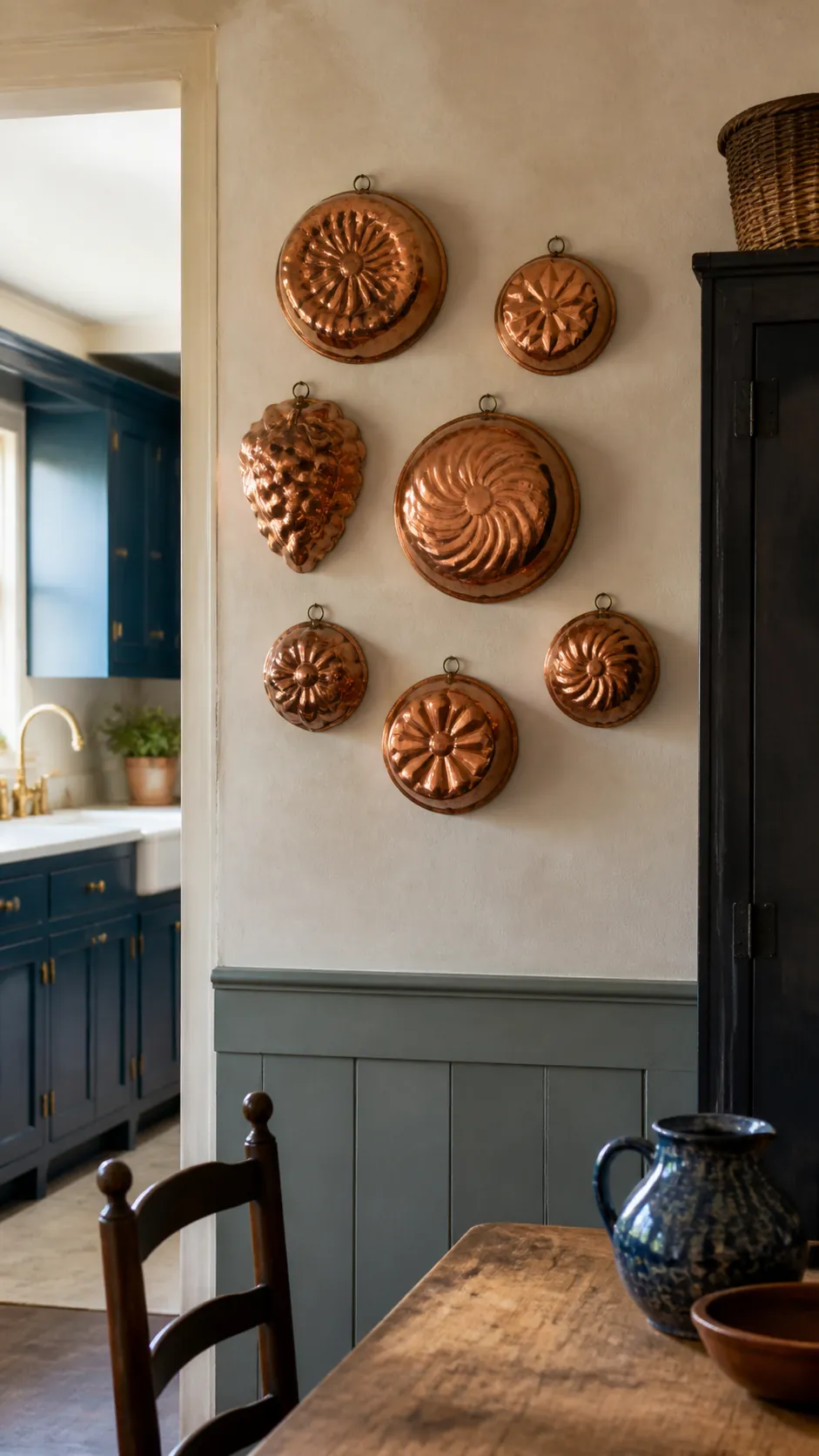
Clean thrifted finds according to their condition and reserve them for display, especially when their history is unknown. Inspect every hanging loop and support each mold so it lies securely against the wall. Bare space around the group lets the metal silhouettes and changing finishes provide the interest.
Stenciled Botanical Border
A diagonal olive-leaf border can guide the eye across a quiet wall without the commitment or visual density of wallpaper. Practice the repeat on kraft paper, deciding where stems overlap and where the sweep will begin and finish. Slight changes in paint pressure keep the leaves from looking mechanically stamped.
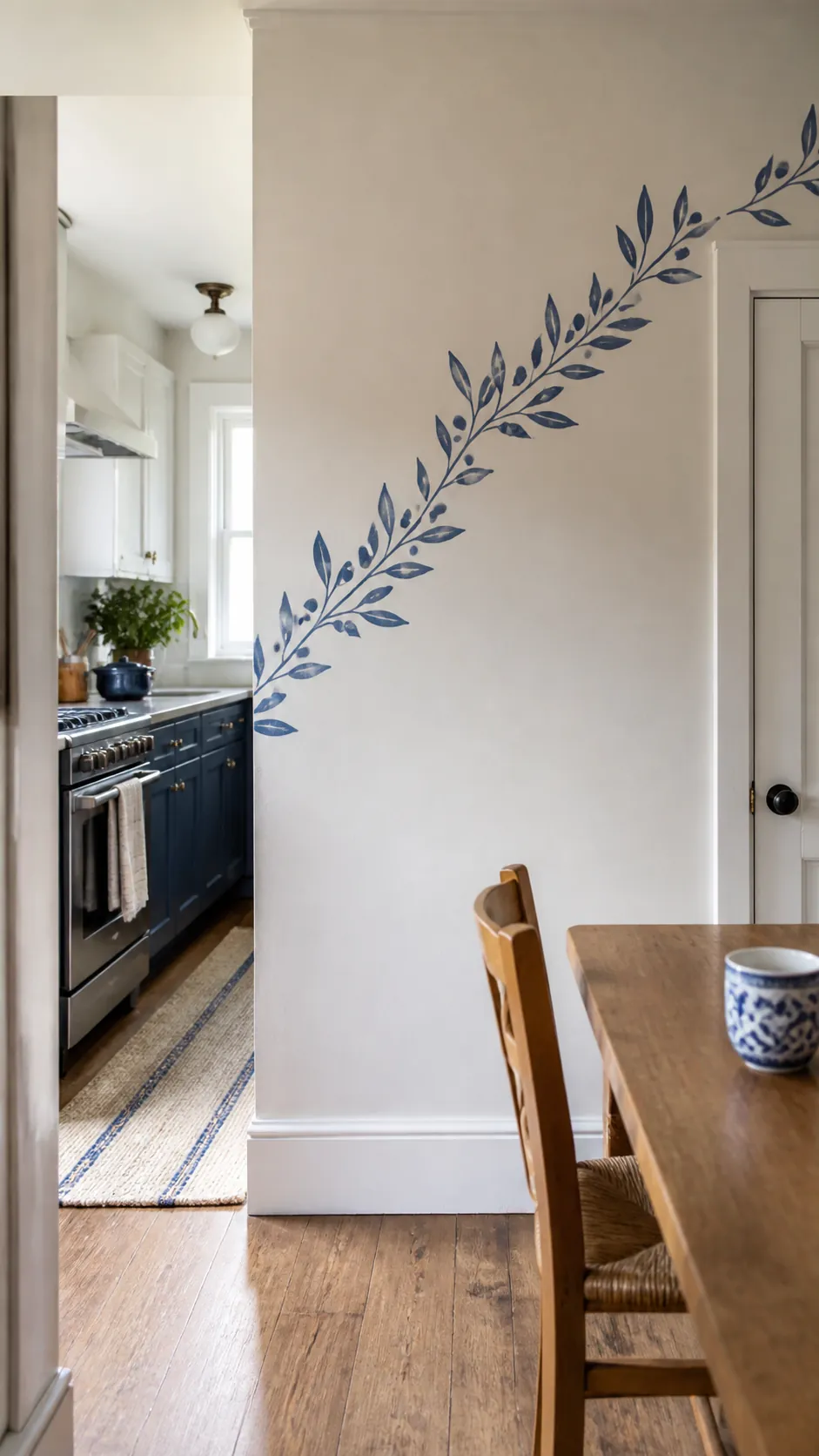
Use low-tack materials suited to the base finish and test them in an inconspicuous area before working across the wall. End the motif deliberately at trim or cabinetry rather than squeezing partial leaves into the remaining space.
Upcycled Crate Shelves
Three shallow fruit crates can become useful wall boxes once their construction is strong enough to deserve a second life. Remove rough edges, repair loose joints, and finish every visible face before arranging the boxes with varied orientations.
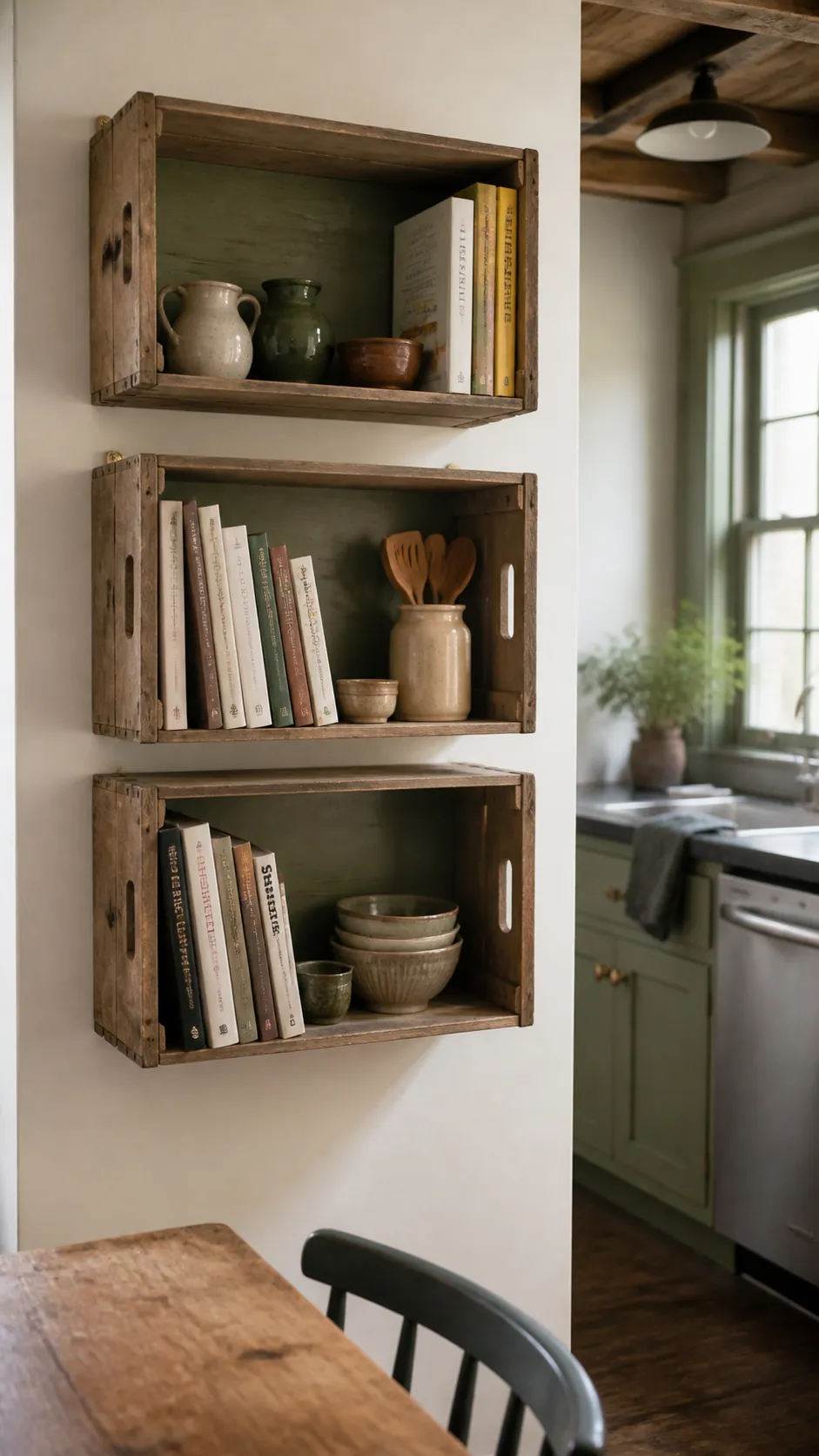
Mount the crates through sound material into appropriate wall support, treating their books and pottery as a real load rather than lightweight styling. Keep heavier volumes low and preserve enough depth around each vessel to lift it out safely. Because the slatted boxes already introduce strong texture, edit their contents to a few practical pieces.
Coffee Sack Textile Art
Coarse jute can read as abstract textile art when its faded shapes and bold weave are isolated in one generous frame. Start with a clean, dry, odor-free sack; visible mold, pests, or unknown residue are reasons to choose a different piece. Crop away readable branding and select the section with the most interesting shifts in fiber and color.
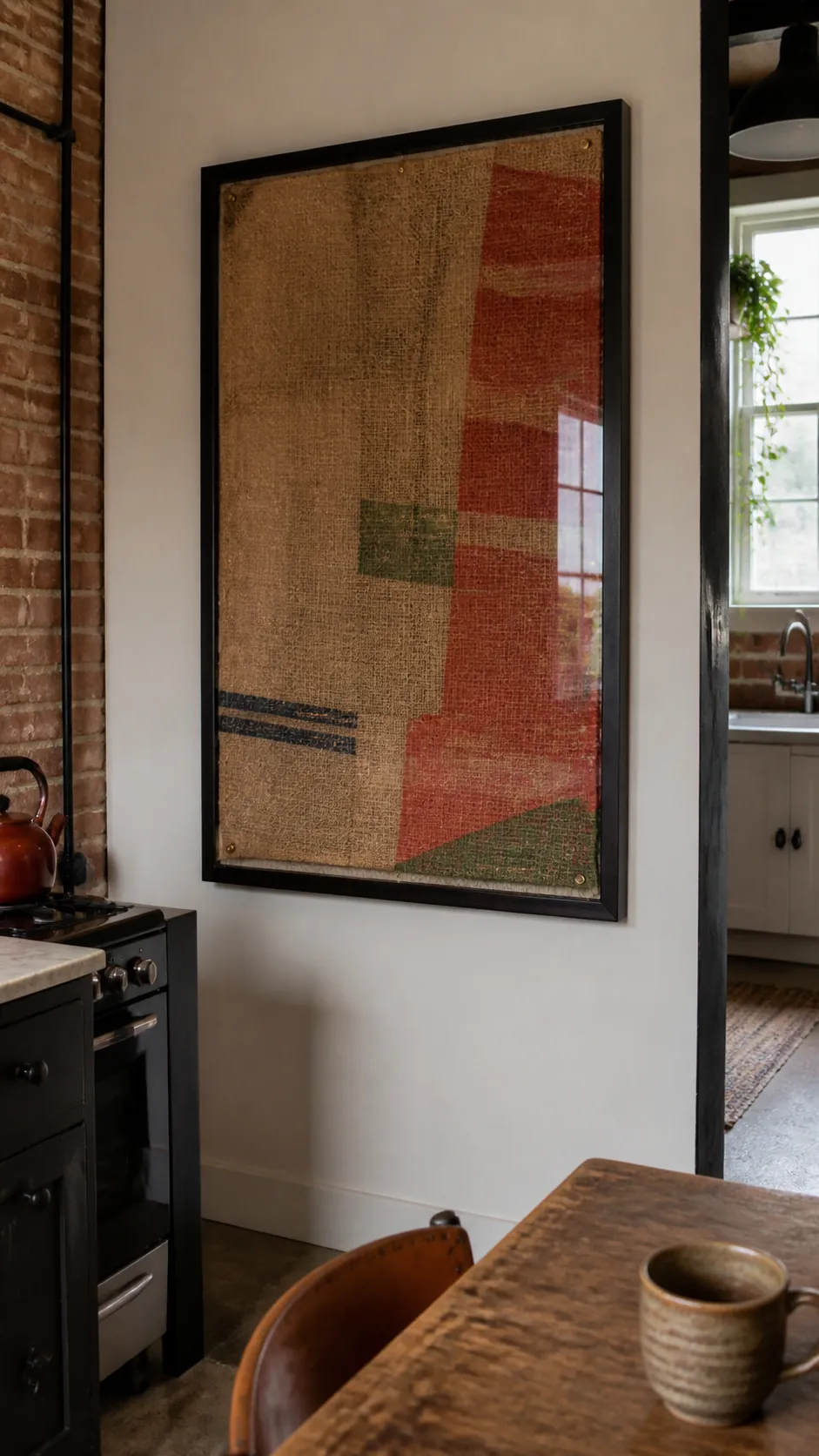
Stretch the material over a stable backing without pulling the irregular weave unnaturally straight. Enclosing it behind acrylic contains loose fibers and makes the front easier to clean in a dining-side location.
Air-Dry Clay Wall Pockets
Three terracotta-colored wall pockets bring handmade relief to a kitchen through shape and shadow. Form them around simple templates so their openings relate without being identical, then smooth any edges that will touch the wall.
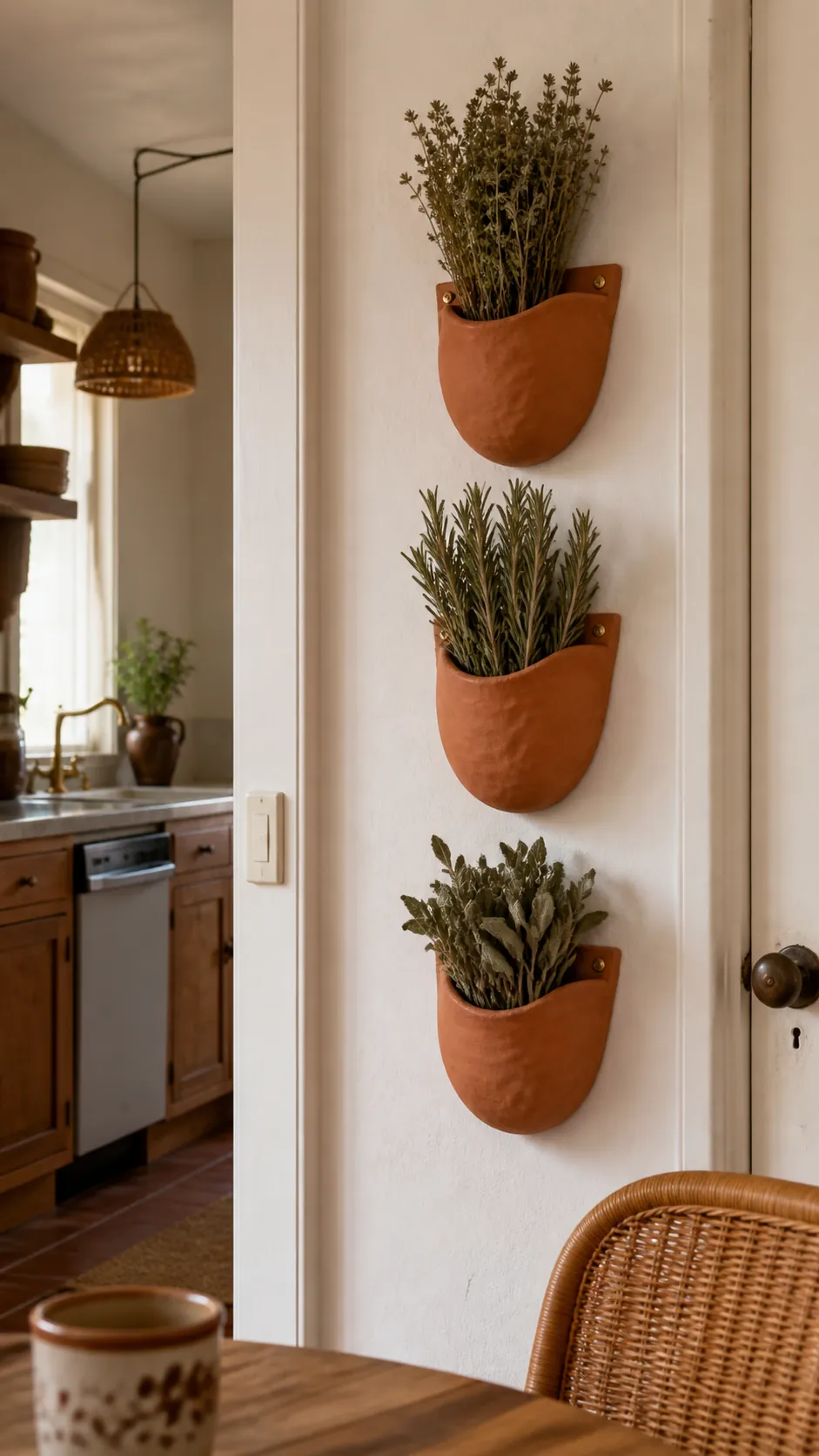
Air-dry clay is decorative rather than a dependable waterproof planter, so fill the pockets with light dried culinary herbs instead of soil and water. Plan secure hanging points while forming the backs, not after the pieces have cured. Stagger their heights on a calm wall where the projecting forms will not enter a busy passage.
Faux Stained-Glass Acrylic Panel
A translucent acrylic panel can cast ruby, amber, and smoke color into a kitchen without the weight of real stained glass. Draw the geometric design at full size first, varying the fields enough to create movement while retaining a few clear passages for daylight. Cure every painted area according to the product before handling or mounting the sheet.
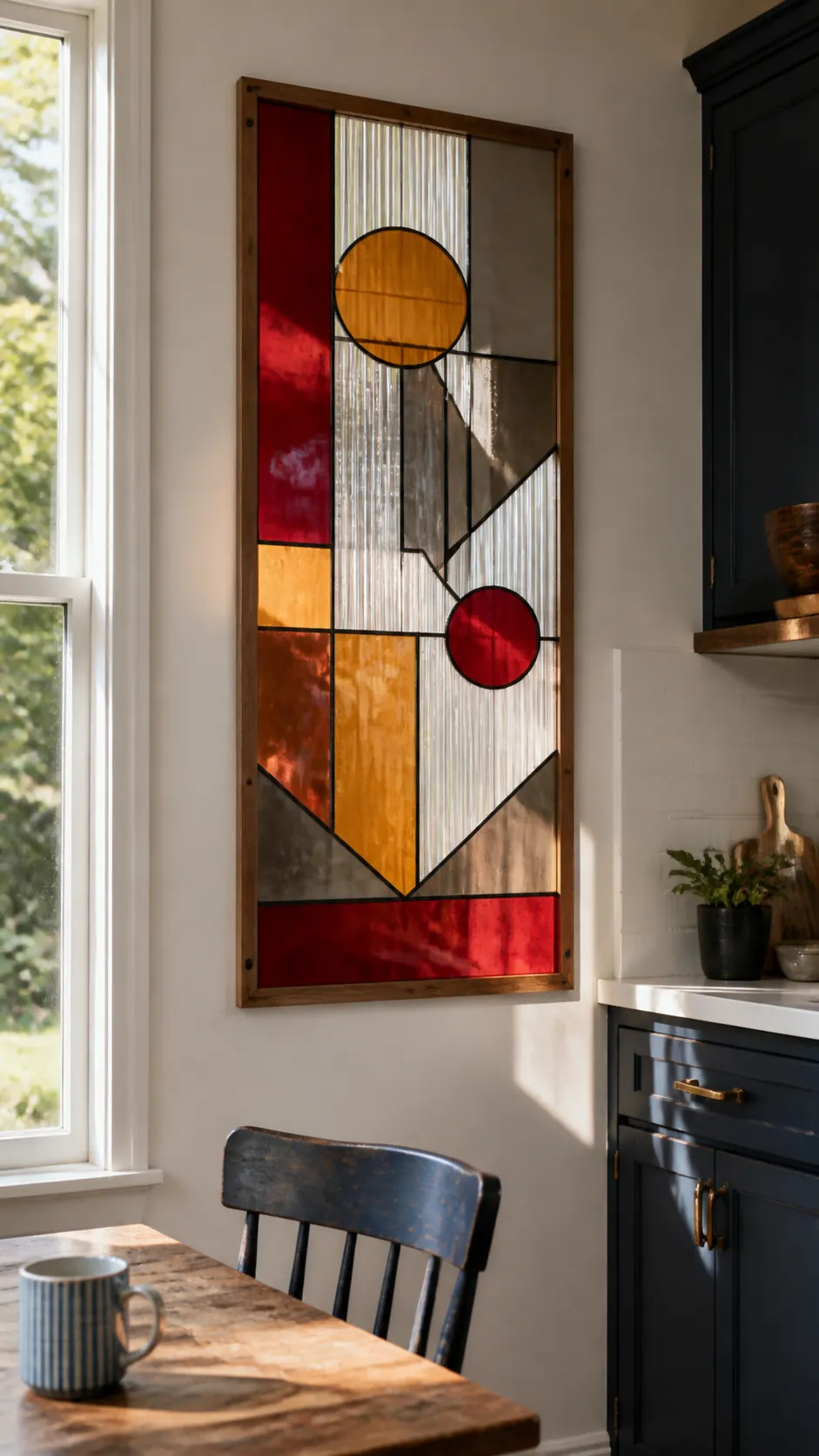
Finish exposed acrylic edges and support the panel so it cannot bow or rattle. Place it where it does not block required ventilation, window operation, or a needed exterior view.
Cork Tile Memo Grid
A neat cork-tile grid gives recipes, a calendar, and two snapshots a defined command zone. Align the tile joints carefully, because the repeated seams become part of the design even after papers are pinned up.
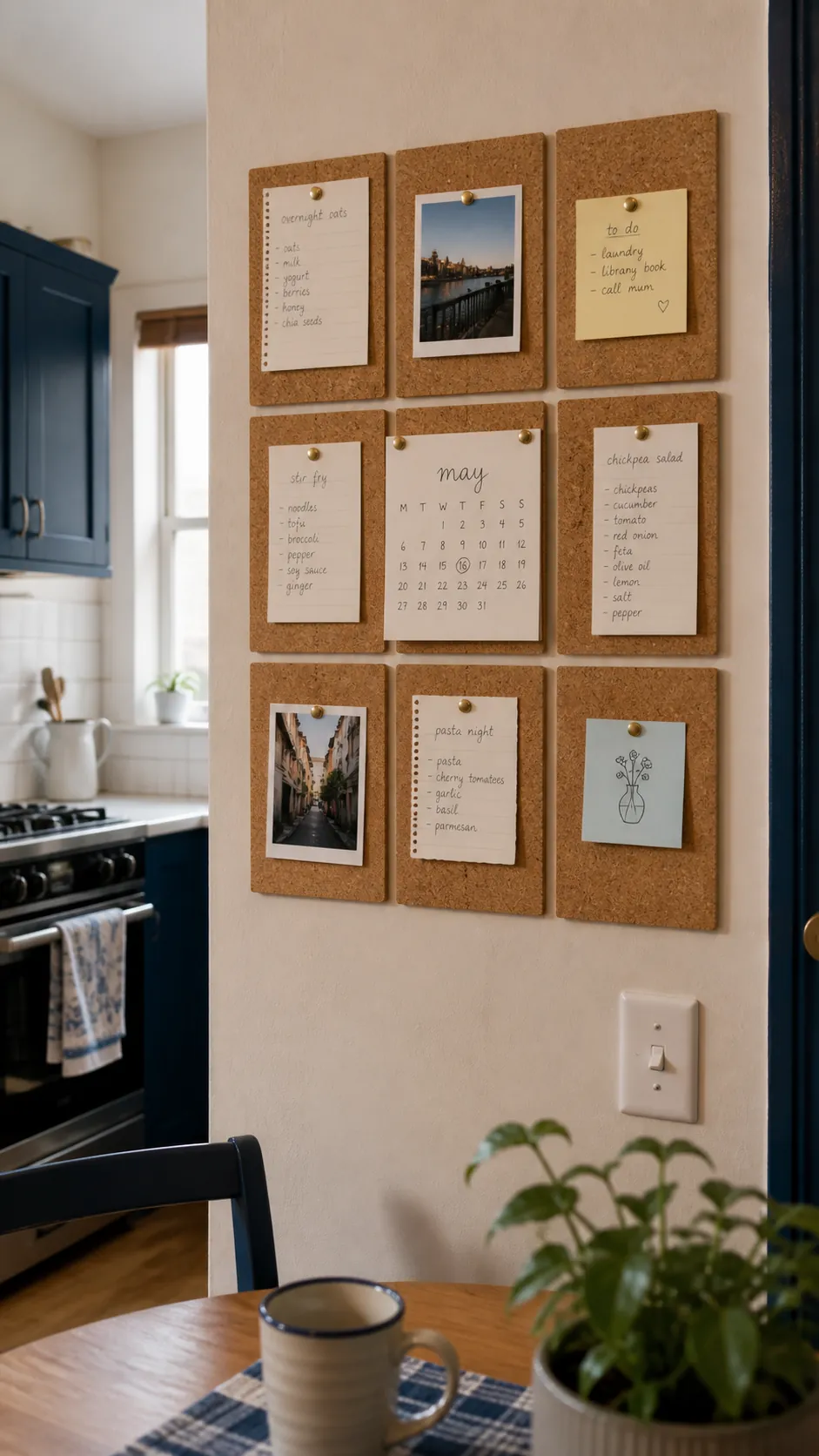
Give every category a loose area instead of layering new notes over old ones until the cork disappears. If using removable strips, test both their bond and their effect on the painted surface before trusting the complete grid. Keep spare pushpins in a closed container and place the memo wall away from food preparation.
Wood-Bead Rail Garland
An extra-long painted rail can carry useful aprons and a small basket while a wood-bead garland adds a relaxed handmade line. Drape the beads in one shallow curve rather than looping them across every peg. The garland should remain an accent to the storage function, not the main reason the rail exists.
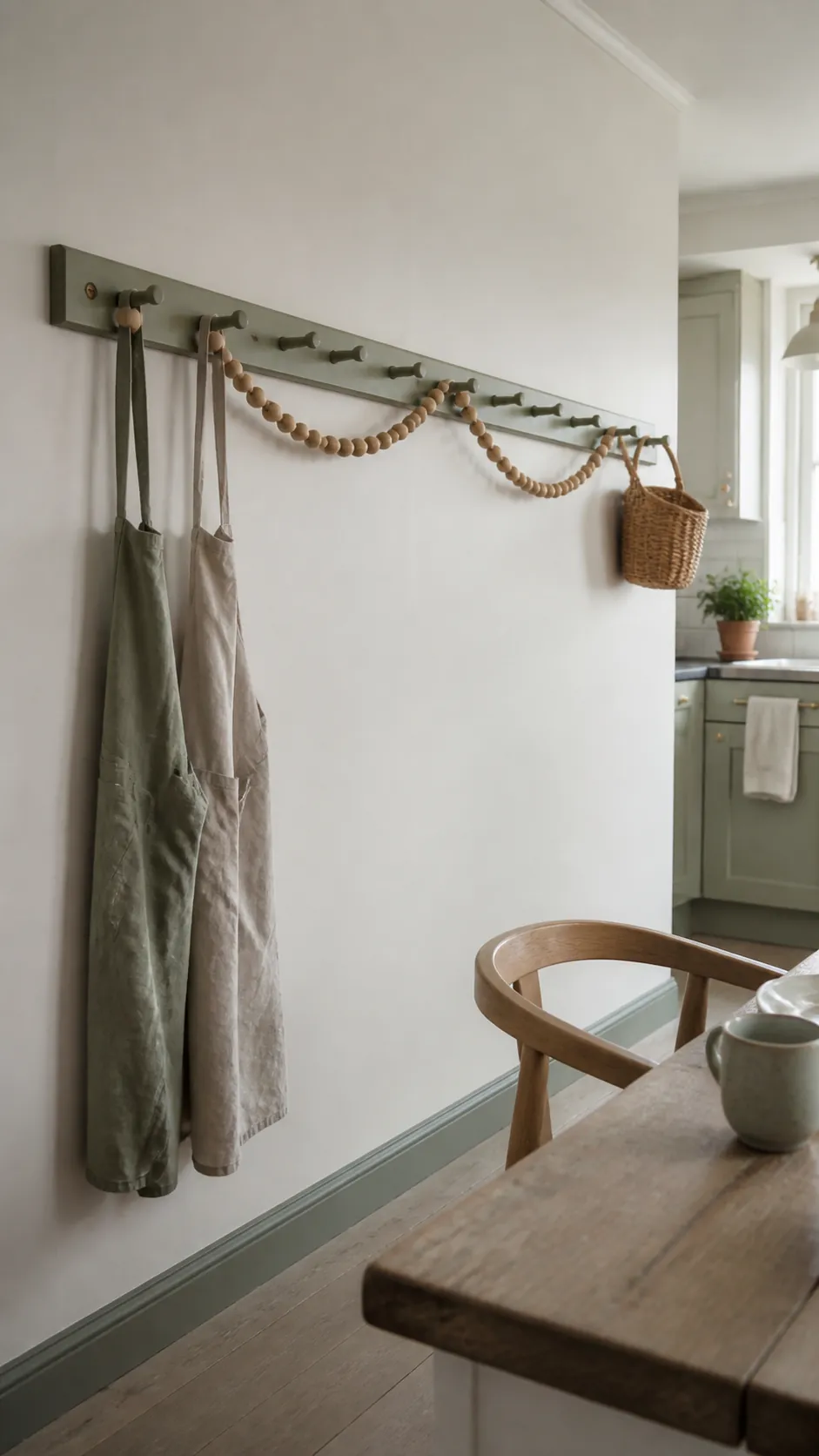
Fasten the board for its practical load and make sure the shallow hooks do not project into traffic. Locate both wood and fabric away from cooking heat, then leave several pegs empty for daily changes.
Magazine Collage Under Glass
Vintage produce silhouettes and broad color fields can become a sophisticated collage when imagery is cut away from its original page context. Build one large composition, repeating a few curves and colors while resisting the urge to fill every sliver of backing.
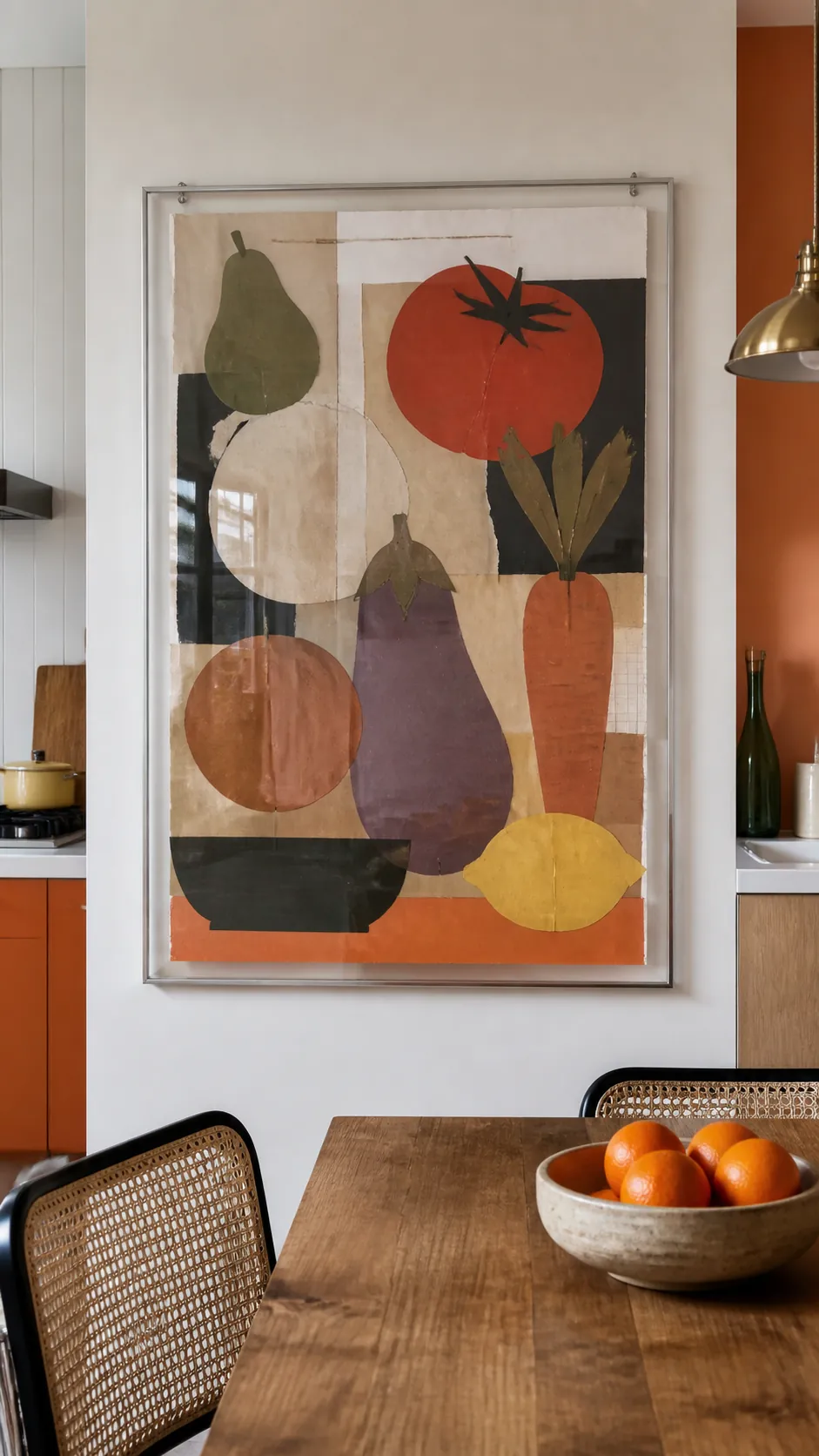
Photograph the loose layout before gluing so an accidental shift does not erase the best version. Use suitable archival materials, then protect the paper behind glazing in a simple frame. Position the finished work away from harsh sun and kitchen splatter, where printed color and cut edges would be vulnerable.
Painted Plywood Arch Panel
A removable plywood panel painted with a broad rust arch creates an architectural backdrop without painting the actual wall. Cut the curve from a full-size guide, round and seal the exposed edges, then prime both faces as the material requires. A slim shelf crossing the color field gives the panel a useful point of reference.
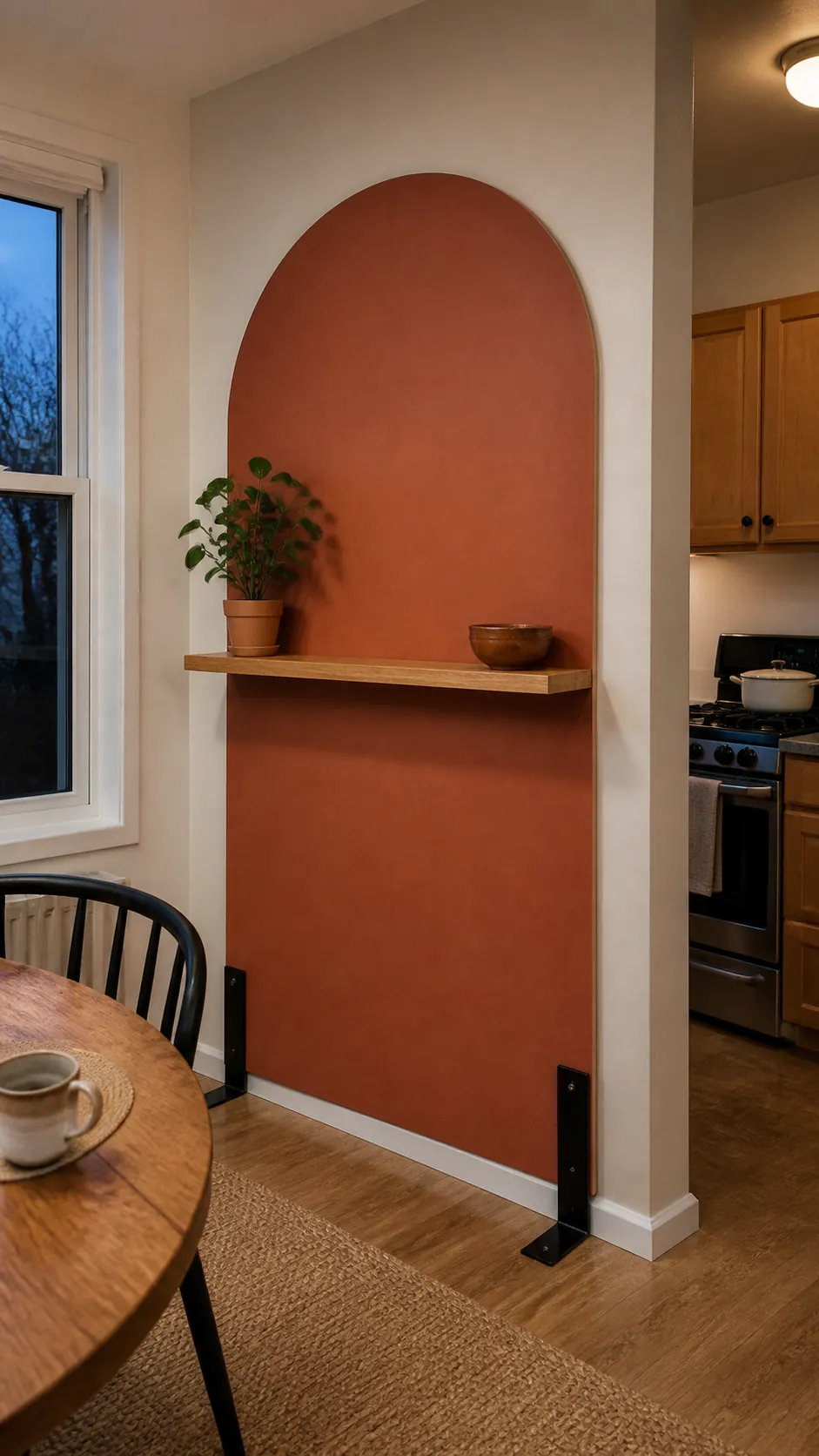
Even a freestanding panel needs dependable anti-tip restraint, so obtain permission for any required anchors and keep it out of circulation. Limit the shelf to light, shallow objects that will not pull the structure forward.