

An indoor herb garden sounds simple until the basil stretches, the rosemary sulks, and the mint tries to take over the whole planter. The fix is not buying more cute pots. It is building the garden around light, drainage, watering zones, and how you actually cook.
These 19 indoor herb garden ideas are for real kitchens, apartments, windowsills, and small indoor garden corners. Use them as a design menu: choose the setup that matches your light, then group herbs by care needs so the garden stays useful after the first week.
Before You Buy Another Herb Pot
The biggest mistake is treating every herb the same. Mediterranean herbs such as rosemary, thyme, oregano, and sage like brighter light and drier roots. Leafy herbs such as basil, parsley, cilantro, and dill usually want steadier moisture. Mint belongs in its own pot because it grows aggressively. Once you separate those needs, indoor herb garden design becomes much easier.
1. Start with a bright windowsill herb garden
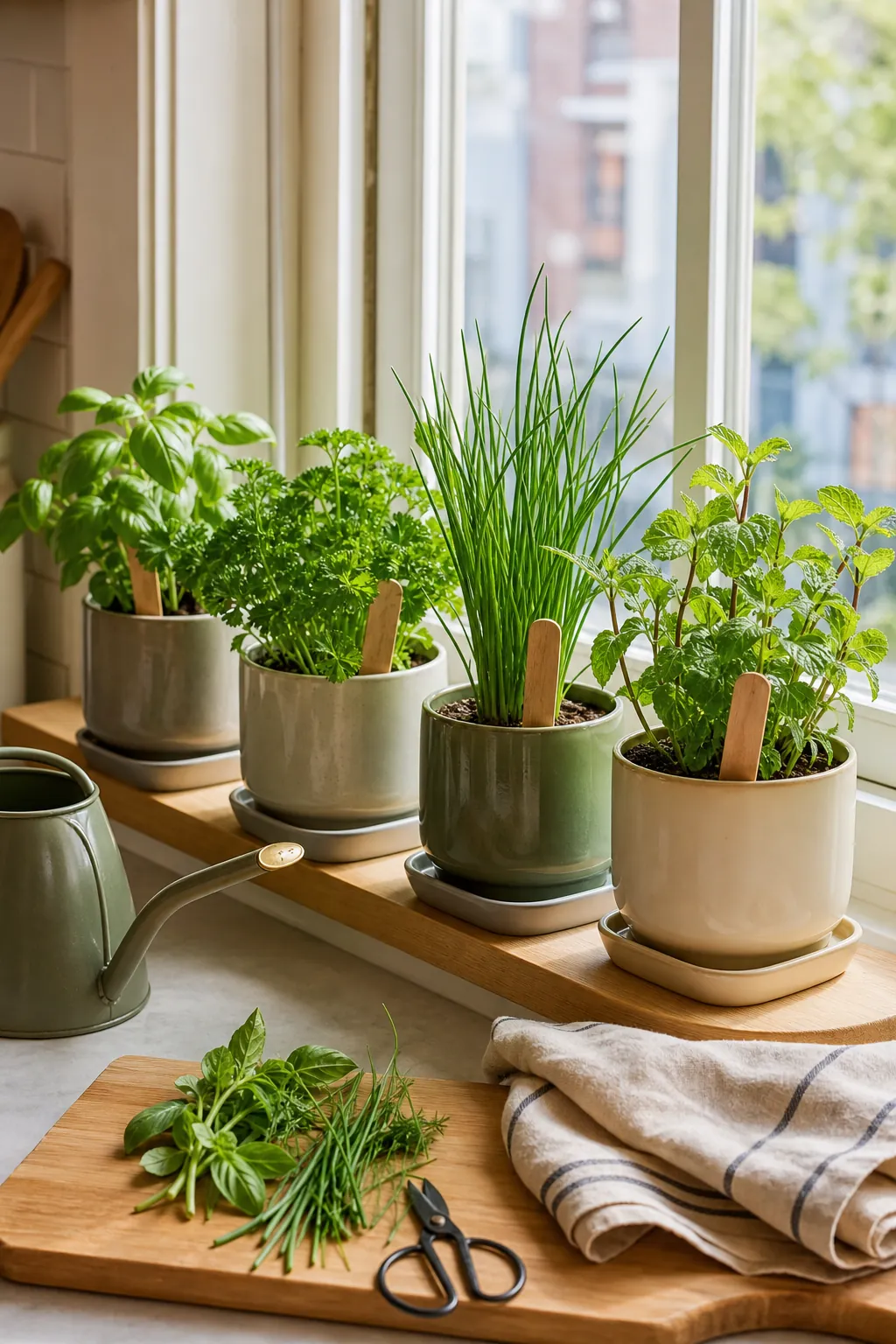
A true windowsill herb garden works best when the window is bright enough to support new growth, not just keep plants alive. Use individual pots so basil, parsley, chives, and mint can be watered on their own schedule, then rotate them every few days so one side does not lean toward the glass. If the sill gets cold at night, pull the pots back onto a tray before the temperature drops.
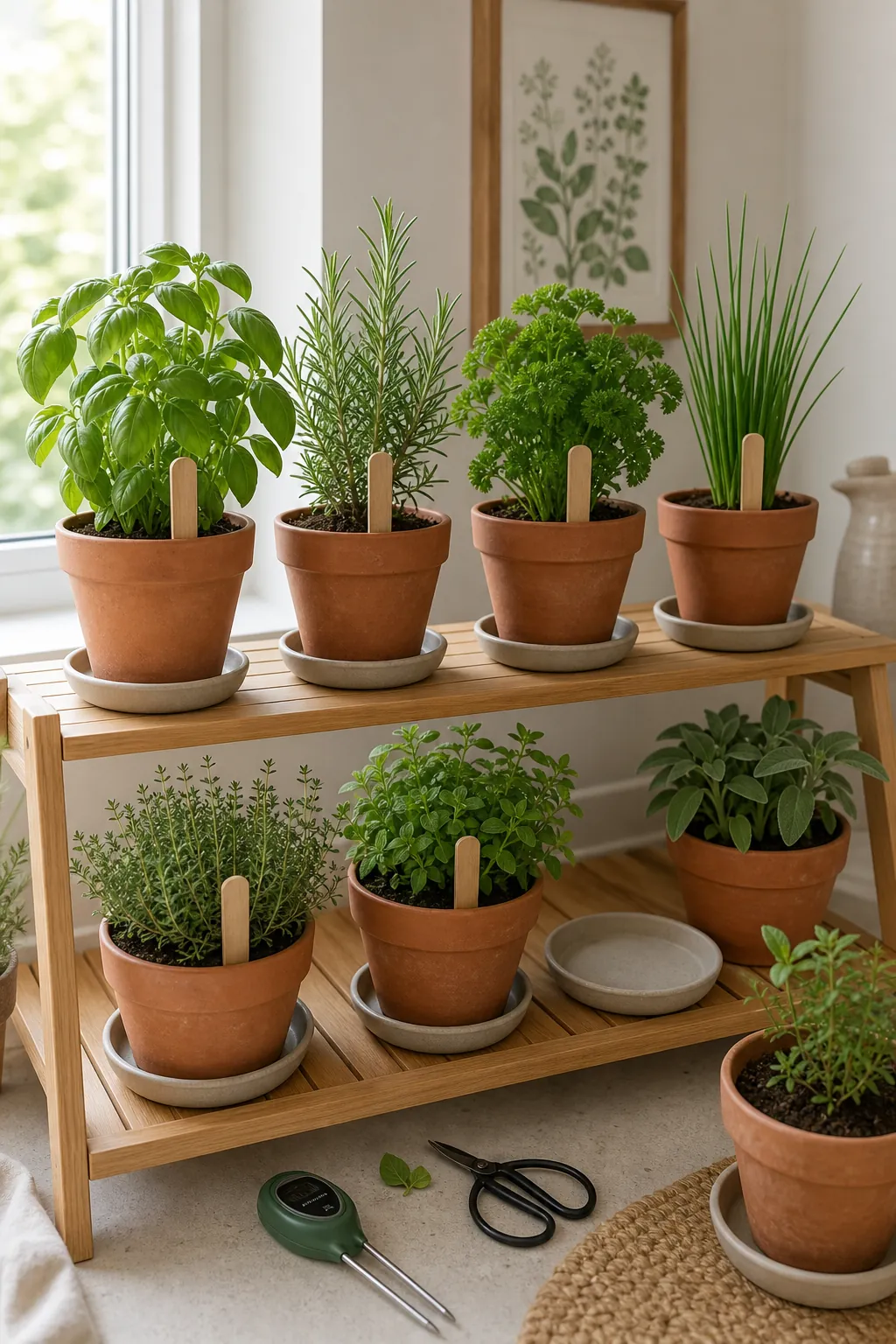
2. Use a tiered shelf when the sill is too narrow
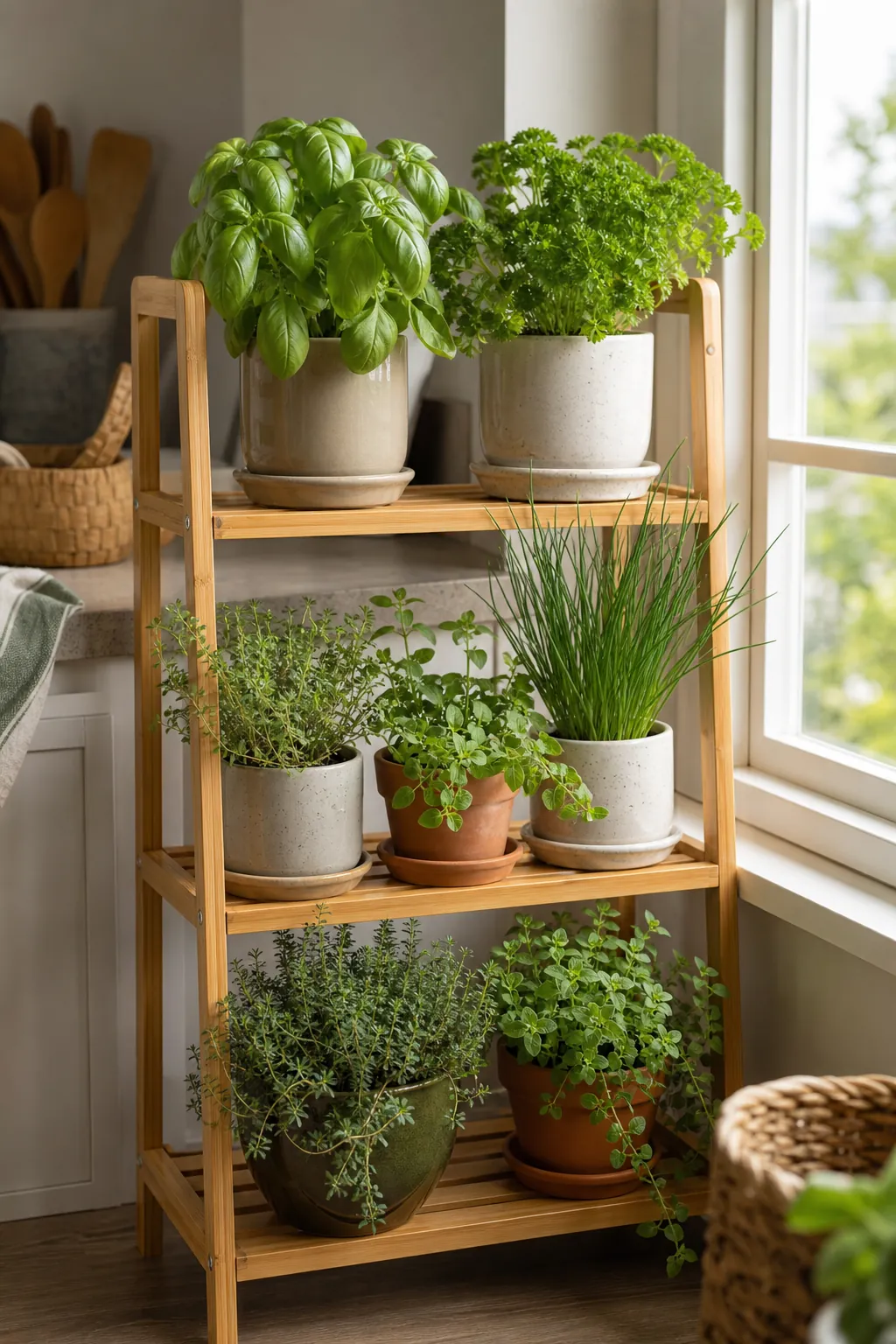
A tiered shelf turns one bright window into several growing levels. Put taller herbs, such as parsley or dill, on the top or back level, and keep trailing thyme or oregano where they will not shade smaller pots. A bamboo shelf looks natural in a kitchen and gives the setup a cleaner indoor garden design than a crowded line of mismatched containers.
3. Add an under-cabinet grow light for weak winter windows
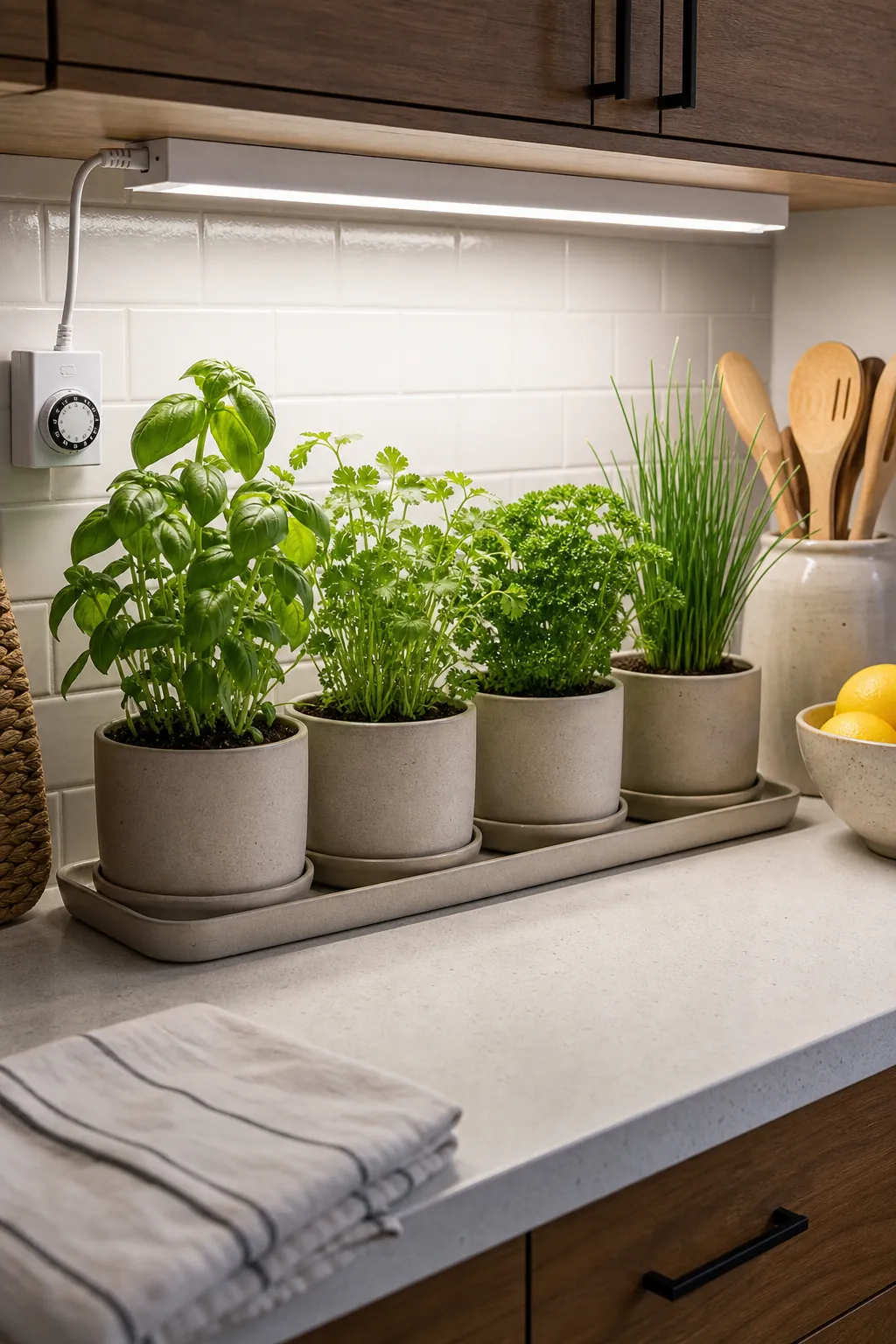
Many indoor herb garden problems are light problems. If basil stretches, cilantro flops, or parsley turns pale, a slim grow light under a cabinet can be more useful than another decorative planter. Keep the light close enough to matter, run it consistently, and leave space between the pots so air can move around the leaves.
4. Build an apartment herb garden on a rolling cart
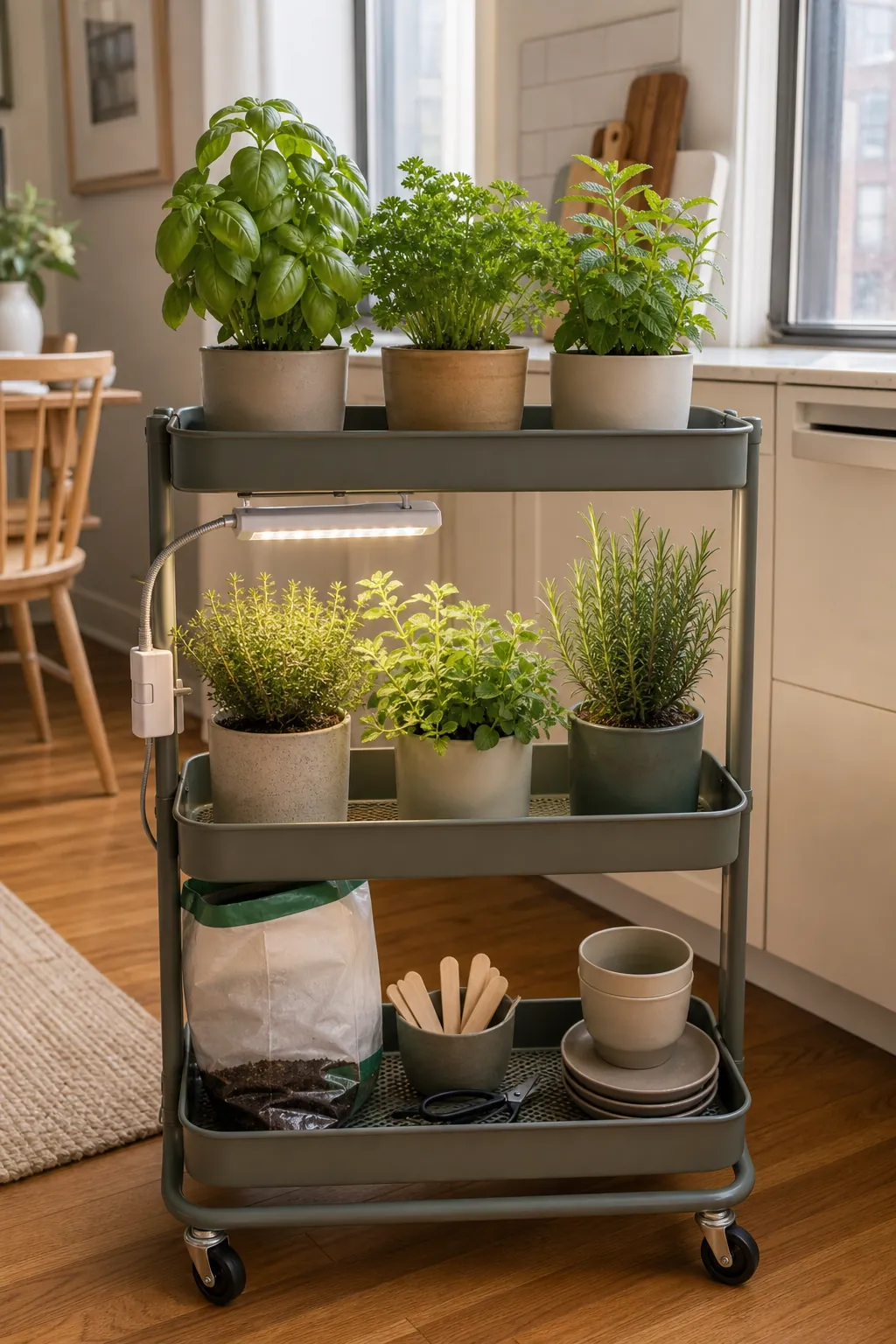
A rolling cart is useful when the best light shifts through the day or the kitchen is short on counter space. Use the top shelf for herbs you harvest constantly, the middle shelf for slower growers, and the bottom shelf for supplies. This also keeps an apartment herb garden movable when you need to clean, cook, or open a window.
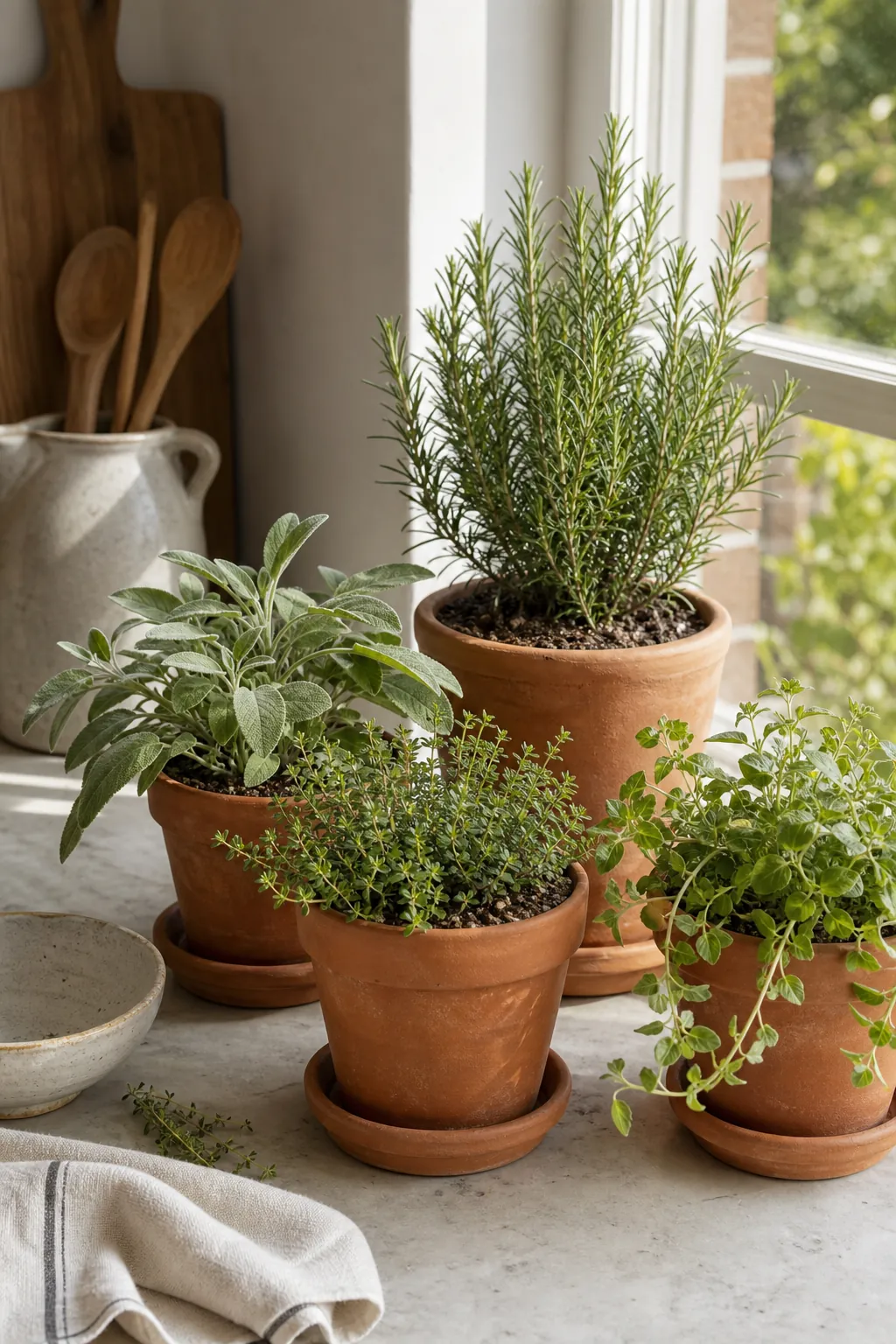
5. Group dry-loving Mediterranean herbs together
Rosemary, thyme, oregano, and sage usually prefer brighter light, sharper drainage, and drier soil than basil or cilantro. Put them in terra cotta or another breathable container style and let the top of the mix dry before watering again. Grouping them together makes watering simpler and helps prevent the common mistake of treating every herb like basil.
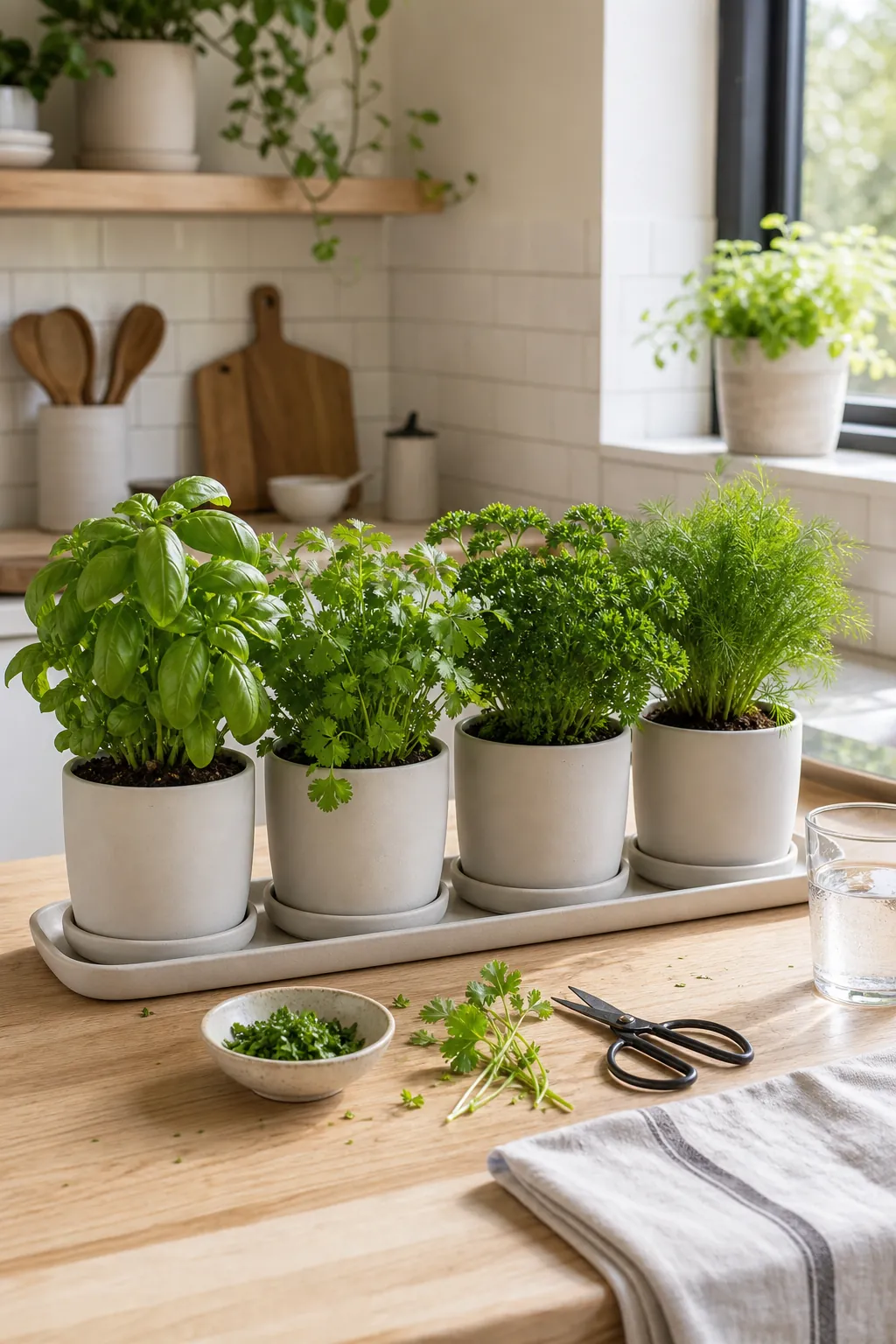
6. Keep leafy herbs in a separate moisture zone
Basil, cilantro, parsley, and dill are easier to manage when they are not sharing a planter with rosemary or thyme. Give them rich potting mix, steady moisture, and enough light to keep stems from stretching. If cilantro bolts quickly, treat it as a repeat-sown herb instead of expecting one plant to last all season.
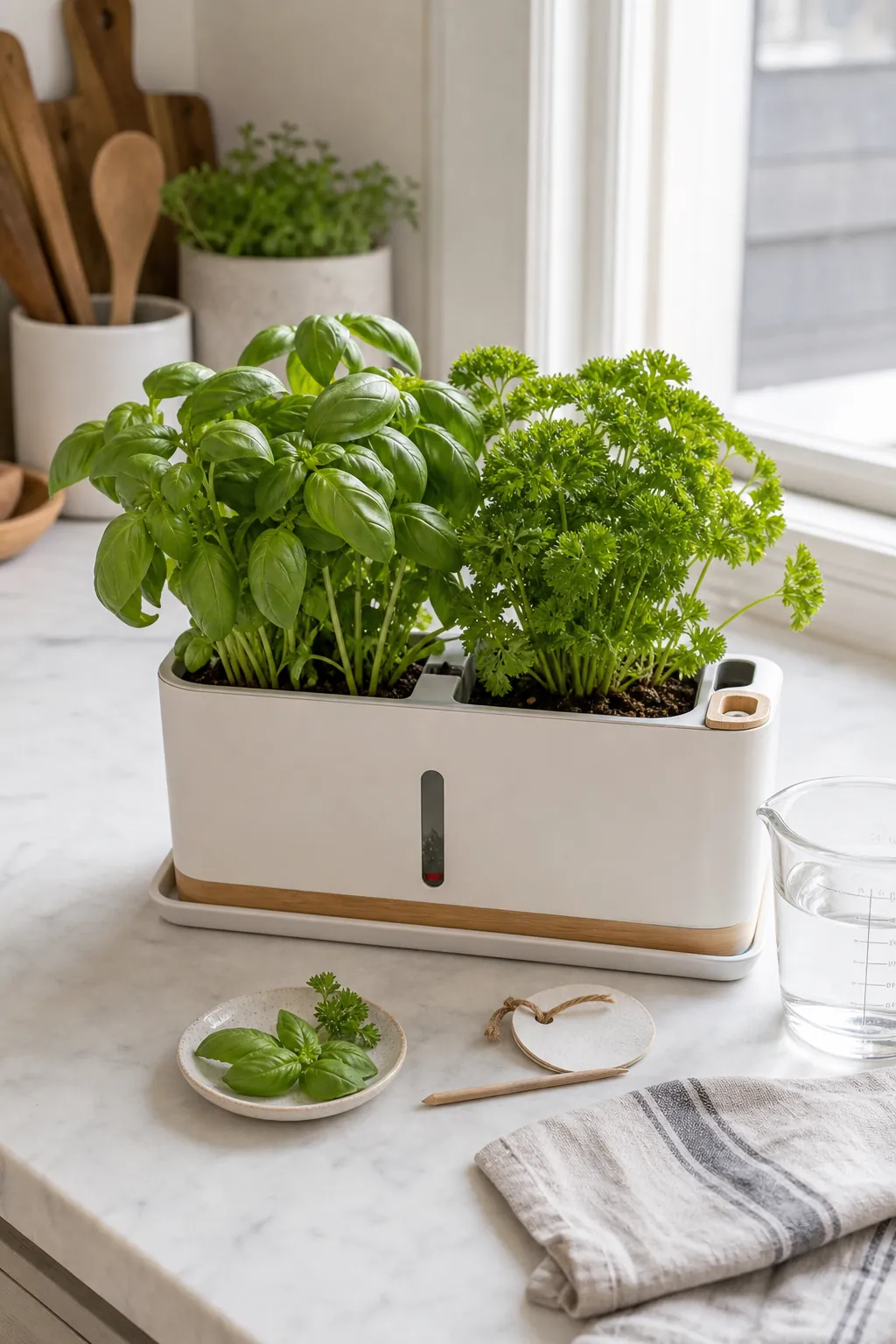
7. Use self-watering planters if you forget the schedule
Self-watering pots can help with basil and parsley, especially in apartments where heat dries small containers quickly. They are not a cure for poor light or bad drainage, but they do reduce the daily guessing game. Check the reservoir before it runs dry and flush the pot occasionally so salts do not build up.
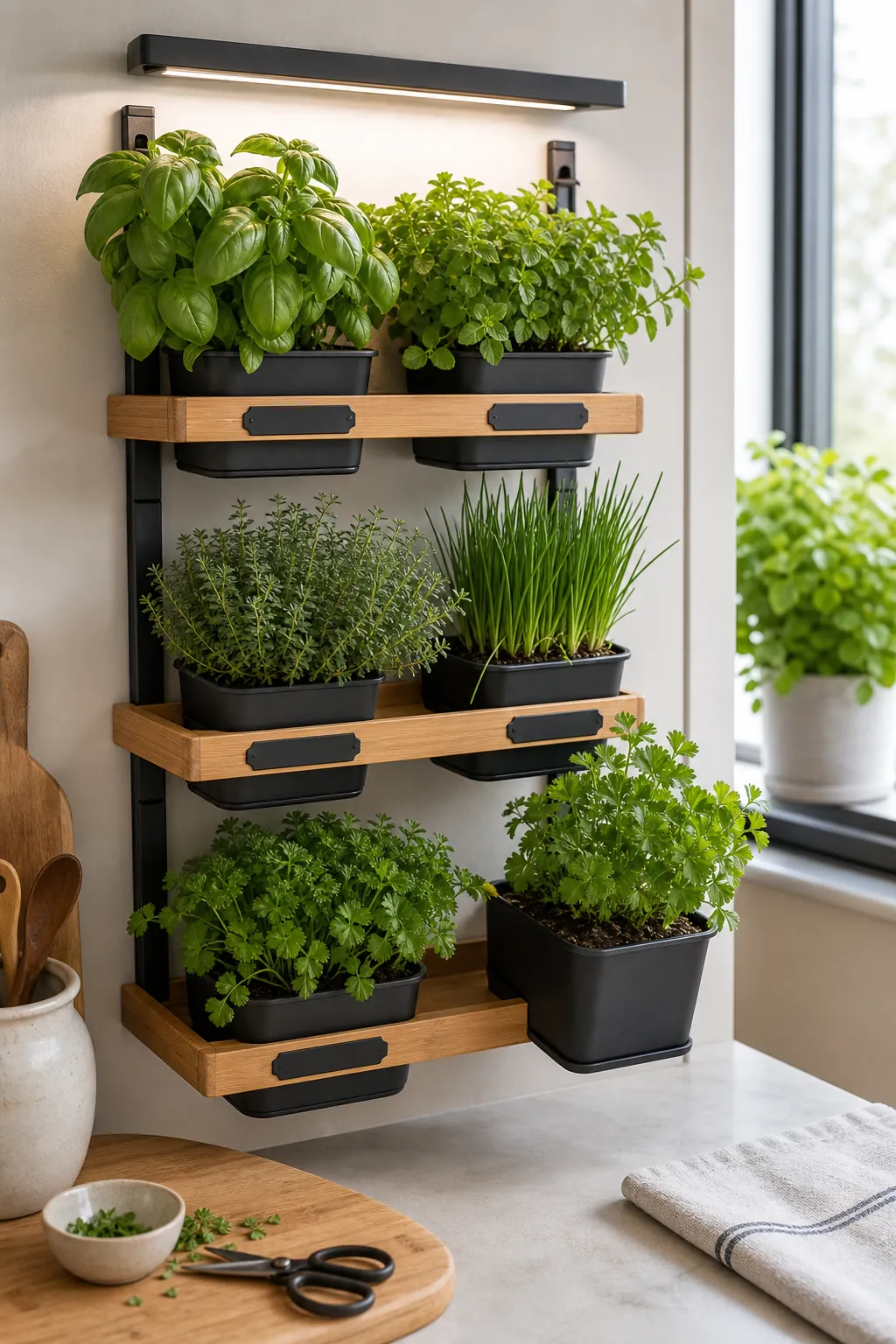
8. Make a vertical herb wall only if every pot gets light
Vertical gardens look impressive, but herbs still need light on the actual leaves. A wall-mounted rack near a window or under a long grow light works better than a dark decorative wall. Use removable pots so you can water at the sink, inspect roots, and rotate plants before one side becomes thin.
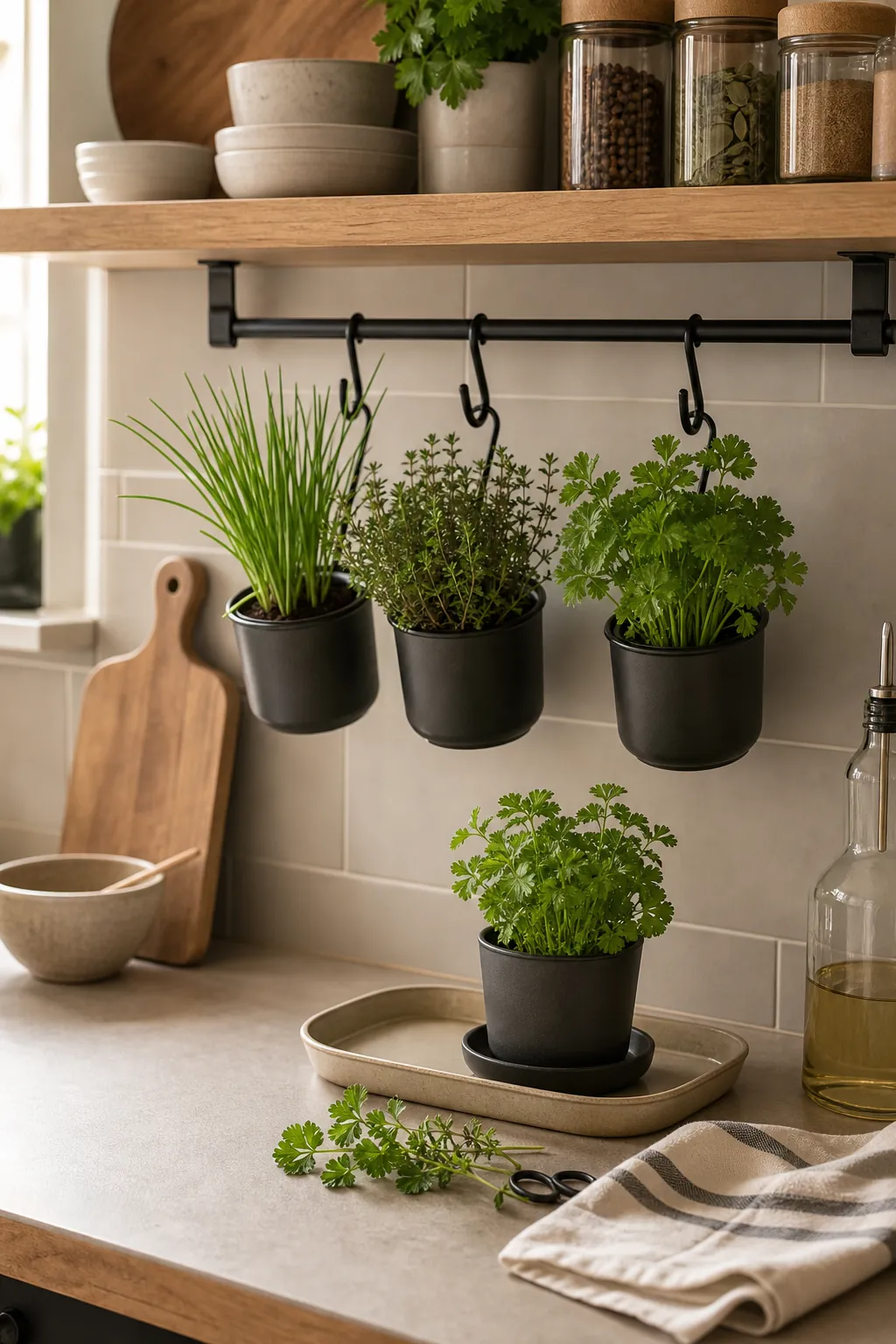
9. Hang small herbs from a sturdy kitchen rail
A rail can free up counter space, but it should hold small herbs only. Chives, thyme, and compact parsley are better candidates than heavy, thirsty basil plants. Use pots with secure hooks and take them down to water so moisture does not drip onto wood counters or appliances.
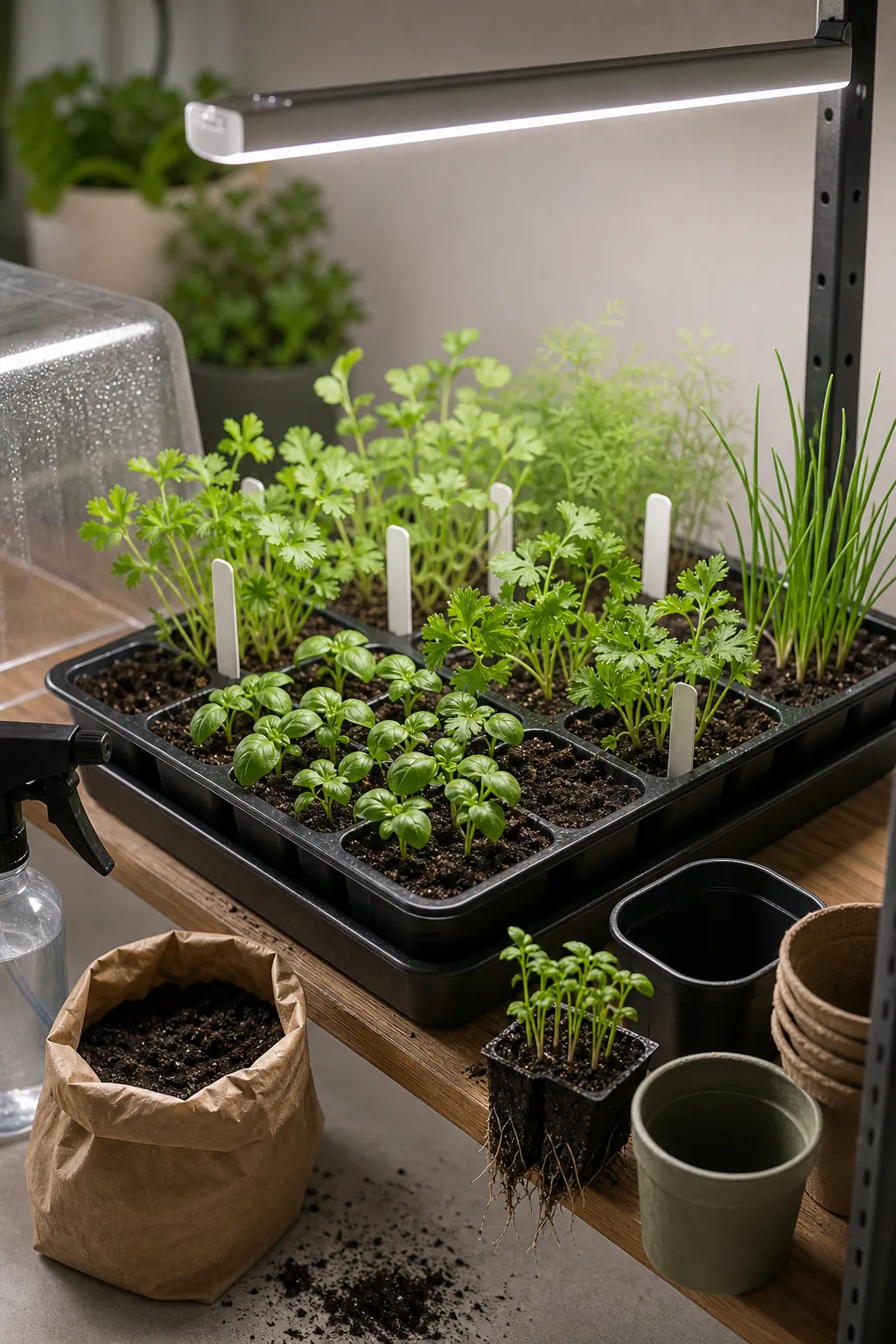
10. Start seeds in a tray, then move them before roots stall
Starting from seed is satisfying, but seedlings need direct, close light and timely potting up. Once roots fill the small cells, move herbs into deeper containers instead of waiting for them to look desperate. This is especially helpful for basil, parsley, cilantro, dill, and an indoor food garden that you want to refresh in waves.
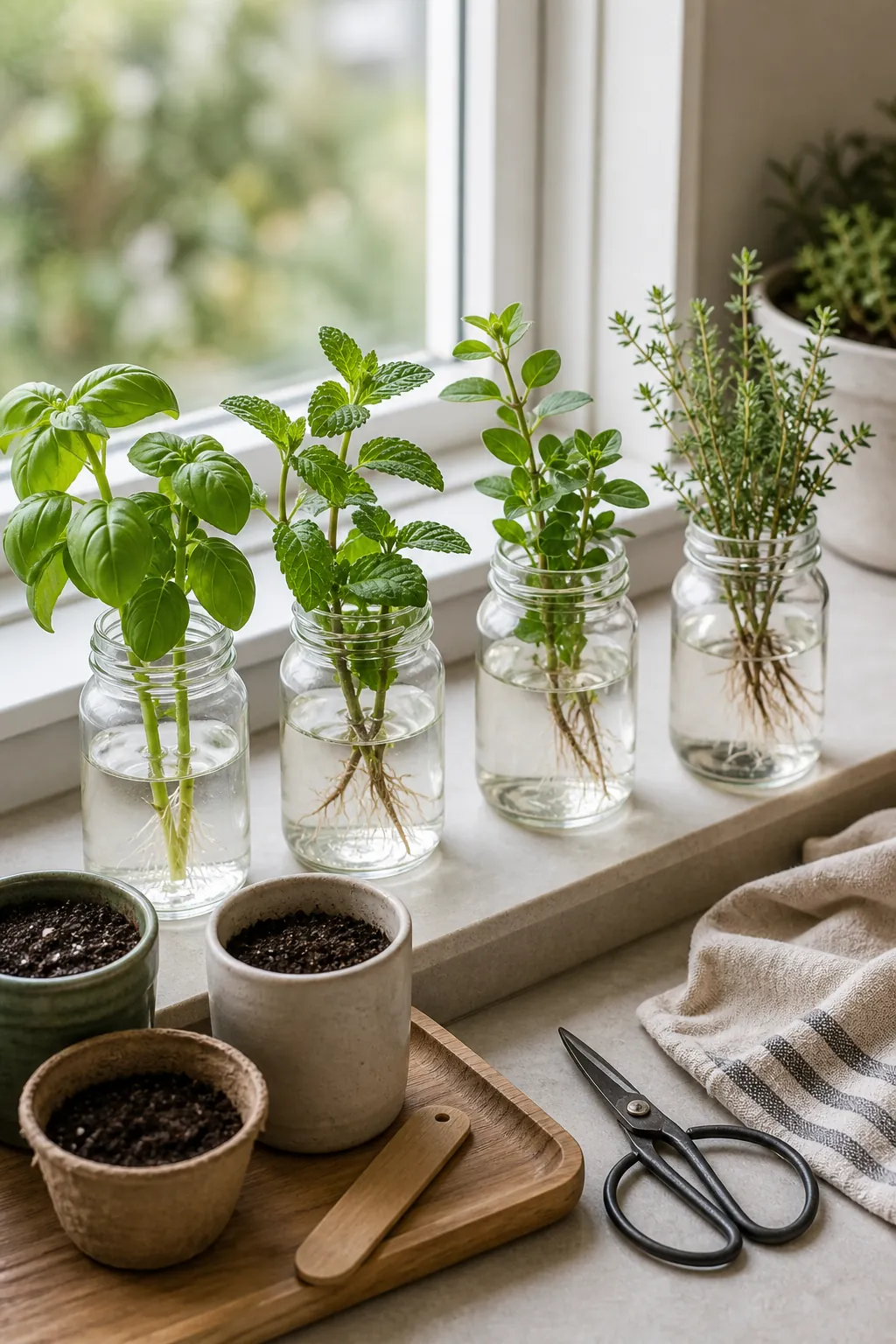
11. Root a few cuttings on the windowsill
Some herbs can be rooted from fresh cuttings, which is an easy way to expand a small indoor garden. Keep the jars clean, change the water often, and pot cuttings once roots are long enough to support new growth. This works best as a starter step, not as a permanent home for every herb.
12. Turn one corner into a small indoor garden
If the kitchen is full, use a bright dining corner, breakfast nook, or shelf near a window. Combine herbs with microgreens or a small salad tray so the setup feels like an indoor food garden rather than scattered pots. Keep everything on trays so watering stays clean and the corner still feels like part of the room.

13. Give the setup a simple indoor garden design system
A small indoor garden looks calmer when the pots, trays, and labels share a system. You do not need matching everything, but repeating two materials, such as terra cotta and bamboo, keeps the herbs from looking like clutter. Leave room between plants so harvesting and checking soil stay easy.
14. Try an indoor windowbox with separated zones
A long indoor planter can work if it has drainage and if the herbs inside like similar conditions. Use dividers or separate nursery pots hidden inside the box so one thirsty herb does not force you to soak the whole planter. This gives you the windowbox look while keeping herb care flexible.
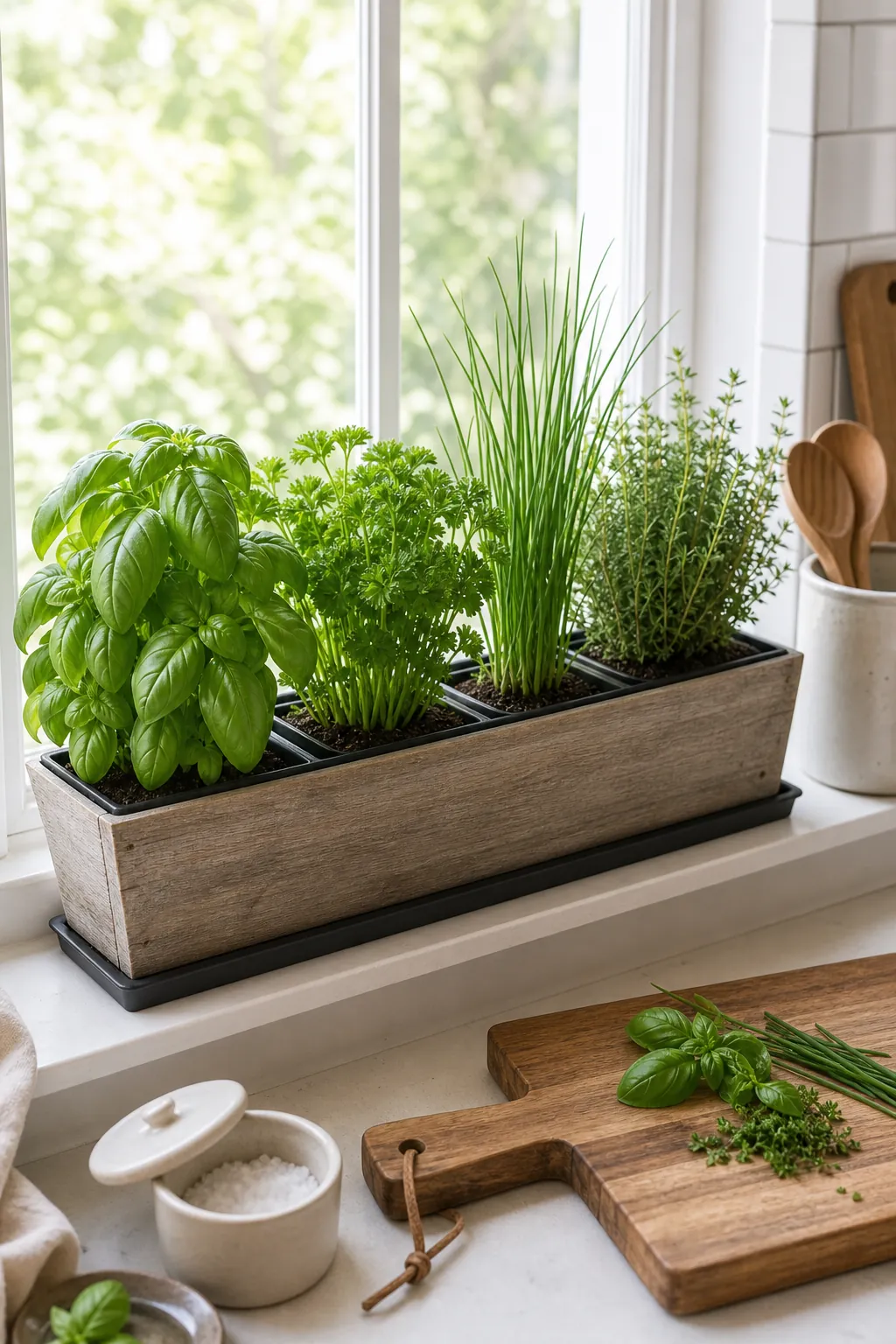
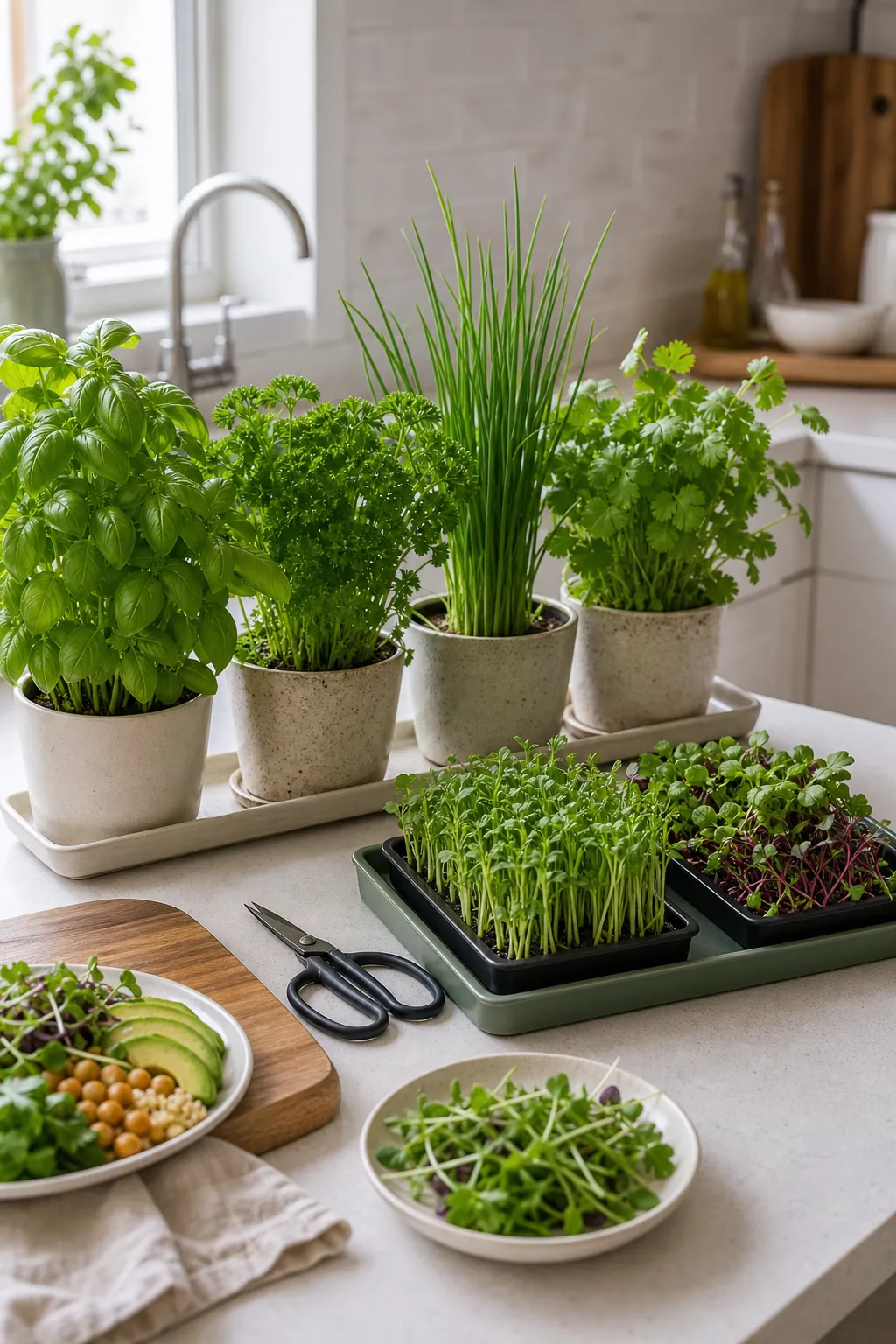
15. Mix herbs with microgreens for faster harvests
Herbs take time to fill in, so microgreens can make an indoor food garden feel rewarding sooner. Keep the fast crops in shallow trays and the herbs in deeper pots. Harvest microgreens with clean scissors while the herbs keep growing for slower, repeated cuttings.
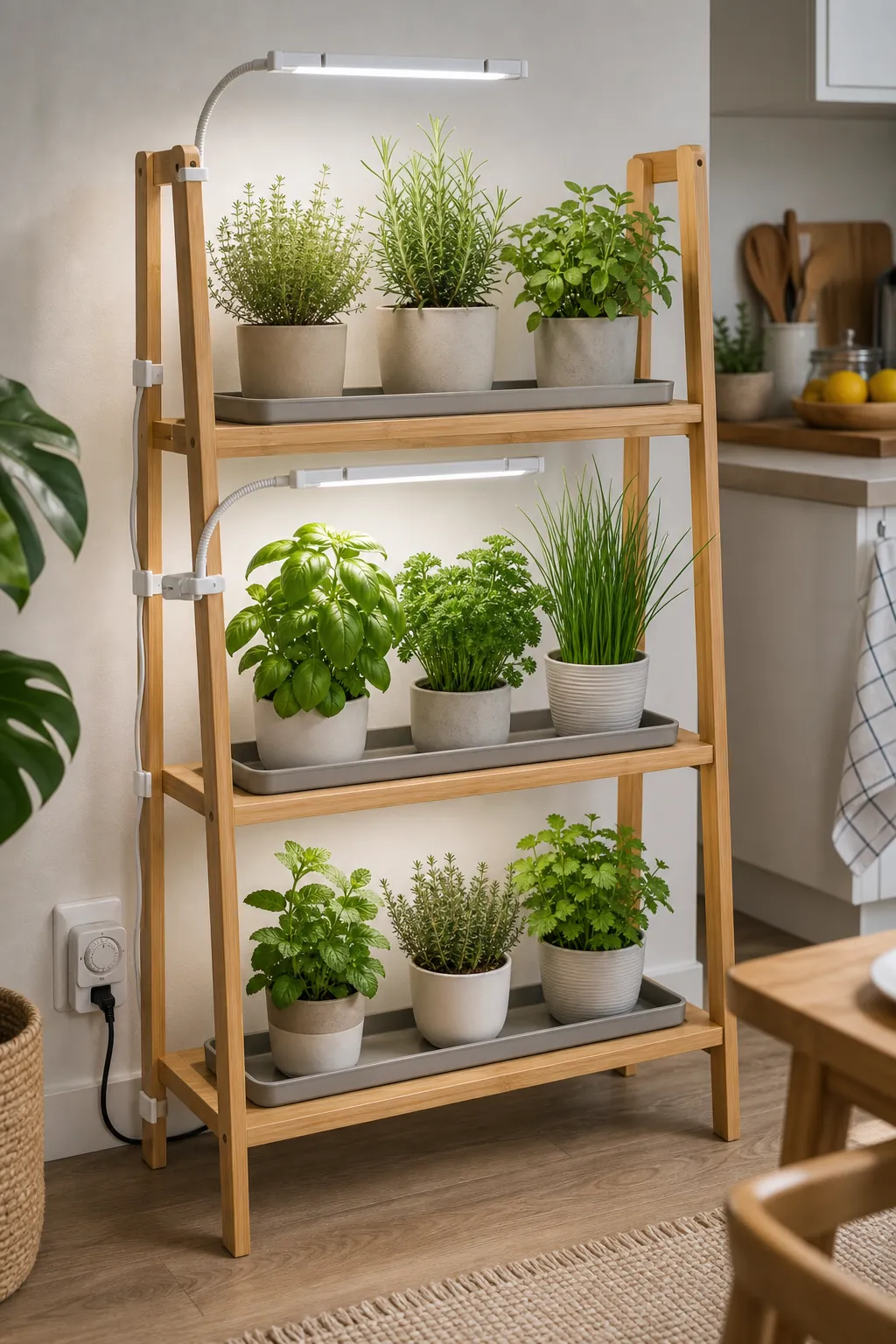
16. Choose a rental-friendly grow-light shelf
Renters do not need to drill into walls to grow herbs indoors. A freestanding shelf with clamp lights, trays, and cord clips can support a serious setup without permanent changes. Keep the cords lifted away from water and use a timer so the herbs get consistent light even when your schedule changes.
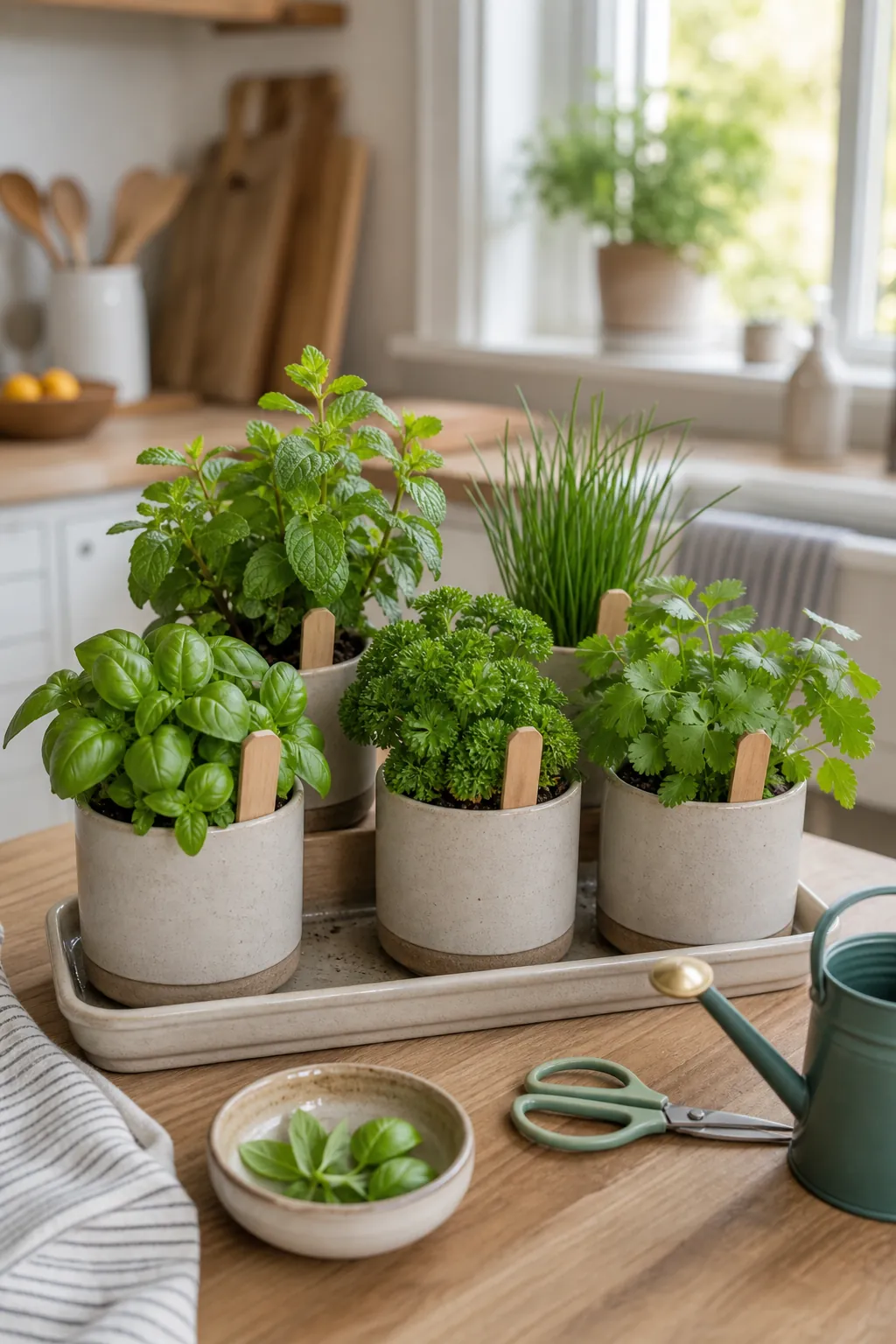
17. Label herbs clearly so everyone harvests the right plant
Labels are not just cute. They keep mint from being mistaken for basil, help kids learn the difference between parsley and cilantro, and make repeat sowing easier. Use waterproof markers or bamboo tags, and add a harvest note if one plant needs only light trimming.
18. Treat winter as a different indoor herb garden season
Winter indoor herbs usually need more help than summer windowsill herbs. Short days, dry heat, and cold glass can slow growth quickly. Move pots back from drafts, use a grow light when the window is weak, and accept smaller harvests instead of cutting the plant down to stems.

19. Design the garden around harvesting, not just display
The best indoor herb garden is the one you actually use. Put the most-used herbs within reach of the prep area, keep scissors nearby, and harvest lightly from the top so plants stay bushy. When the setup supports cooking, it stops being a fragile decor moment and becomes part of the kitchen rhythm.
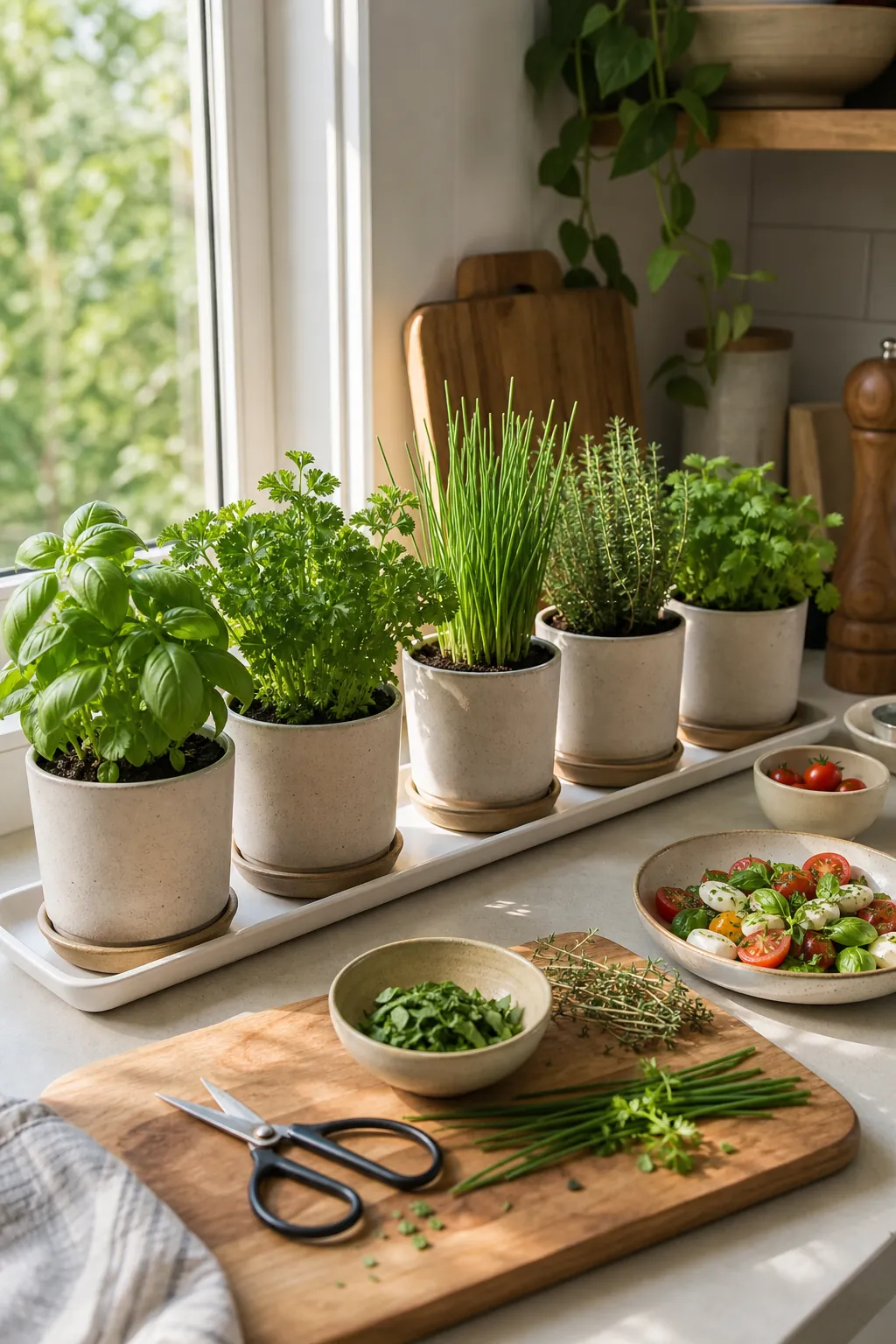
A Simple Indoor Herb Garden Setup That Works
If you want the simplest starting point, choose four herbs you cook with weekly, give each one its own pot with drainage, place them in your brightest practical spot, and add a grow light if the window is weak. Keep a tray under the pots, trim lightly and often, and move herbs into larger containers before roots crowd the pot.
That small system beats a huge planter that mixes herbs with opposite needs. A good indoor herb garden should feel like part of the kitchen: easy to water, easy to harvest, and good-looking enough that you do not hide it when guests come over.