
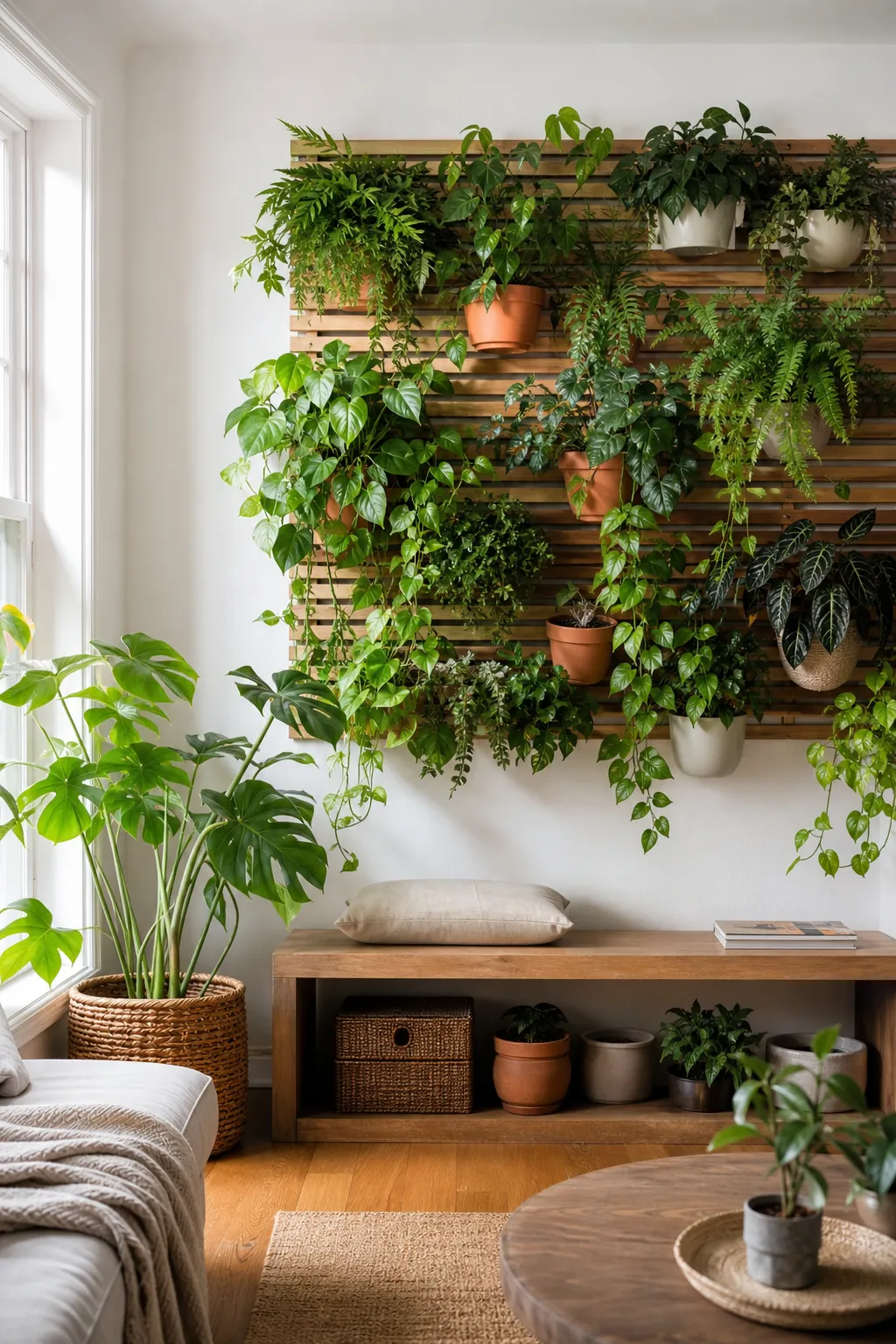
If you are searching for 19 plant wall ideas indoor, the real question is not just which wall looks prettiest. It is which idea will survive your light, watering habits, wall material, pets, and patience. A good indoor plant wall should make the room feel alive without turning a blank wall into a damp maintenance project.
The easiest way to choose is to decide how committed you want to be. A full living wall can be beautiful, but it needs light, drainage, waterproof backing, and regular trimming. A simpler plant accent wall can give you the same green effect with removable pots, shelves, rails, or preserved moss. Use these indoor plant wall ideas as a menu: start with the version that fits your room now, then upgrade later if the plants are thriving.
Before You Build an Indoor Plant Wall
Check three things before buying planters. First, watch the wall for a full day and note whether it gets bright indirect light, weak reflected light, or almost no usable light. Second, decide how water will be controlled. Any diy plant wall indoor setup should protect drywall with removable pots, liners, trays, waterproof board, or a true reservoir system. Third, group plants by care needs. Ferns, pothos, succulents, and herbs should not all be watered on the same schedule just because they look good together.
1. Pothos Grid Plant Wall
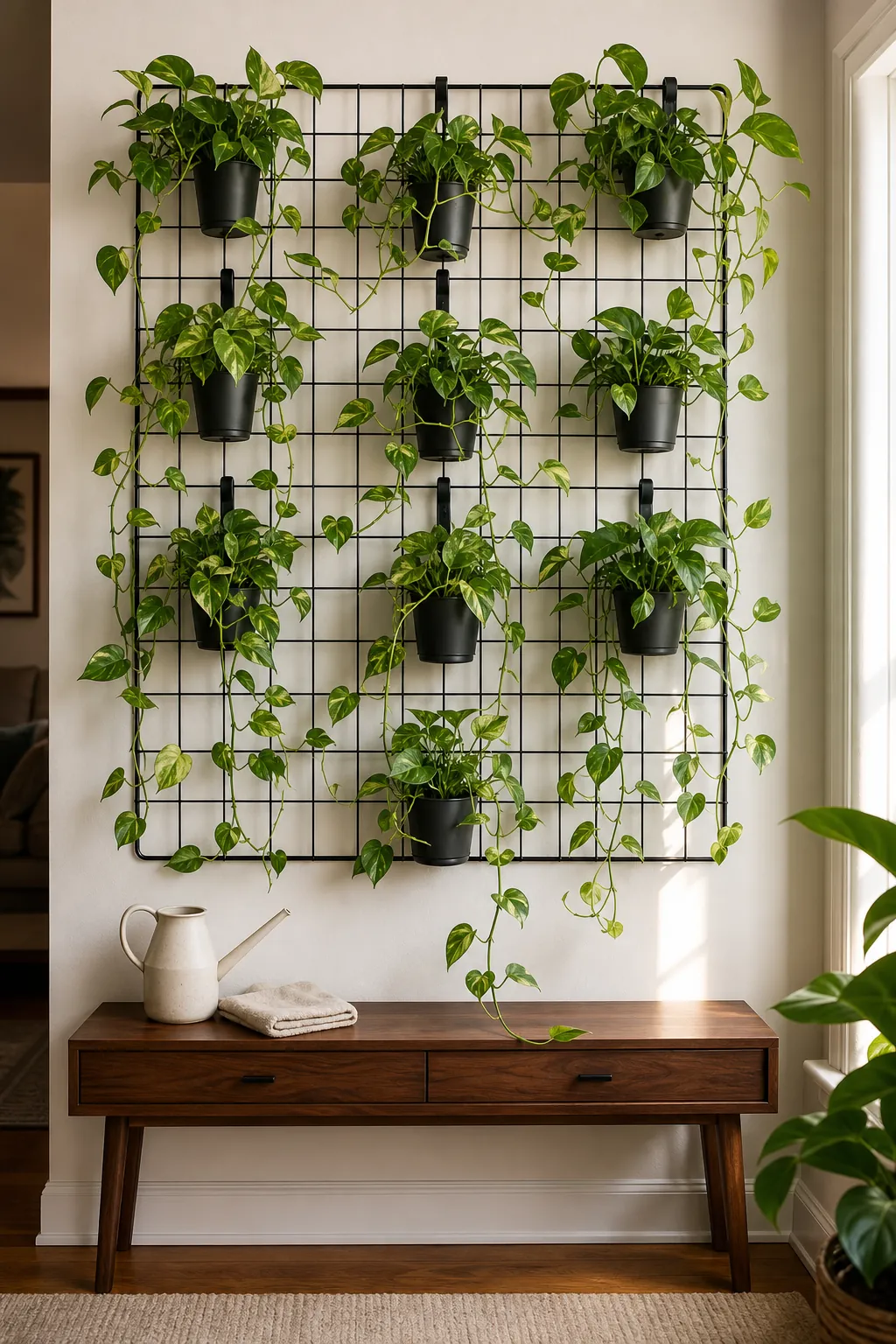
Pothos is the beginner-friendly answer for many wall garden ideas indoor because it trails quickly, tolerates imperfect watering, and fills visual gaps better than fussy plants. Mount a slim grid, bamboo rail, or wire panel above a console table and attach small nursery pots or clip-on planters. Let the vines trail downward instead of forcing every plant into a dense living wall from day one.
This works especially well when you want plant room ideas that feel lush but still easy to edit. If one pot struggles, remove it, trim it, or swap it without disturbing the whole display.
2. Bamboo Slat Trellis Wall
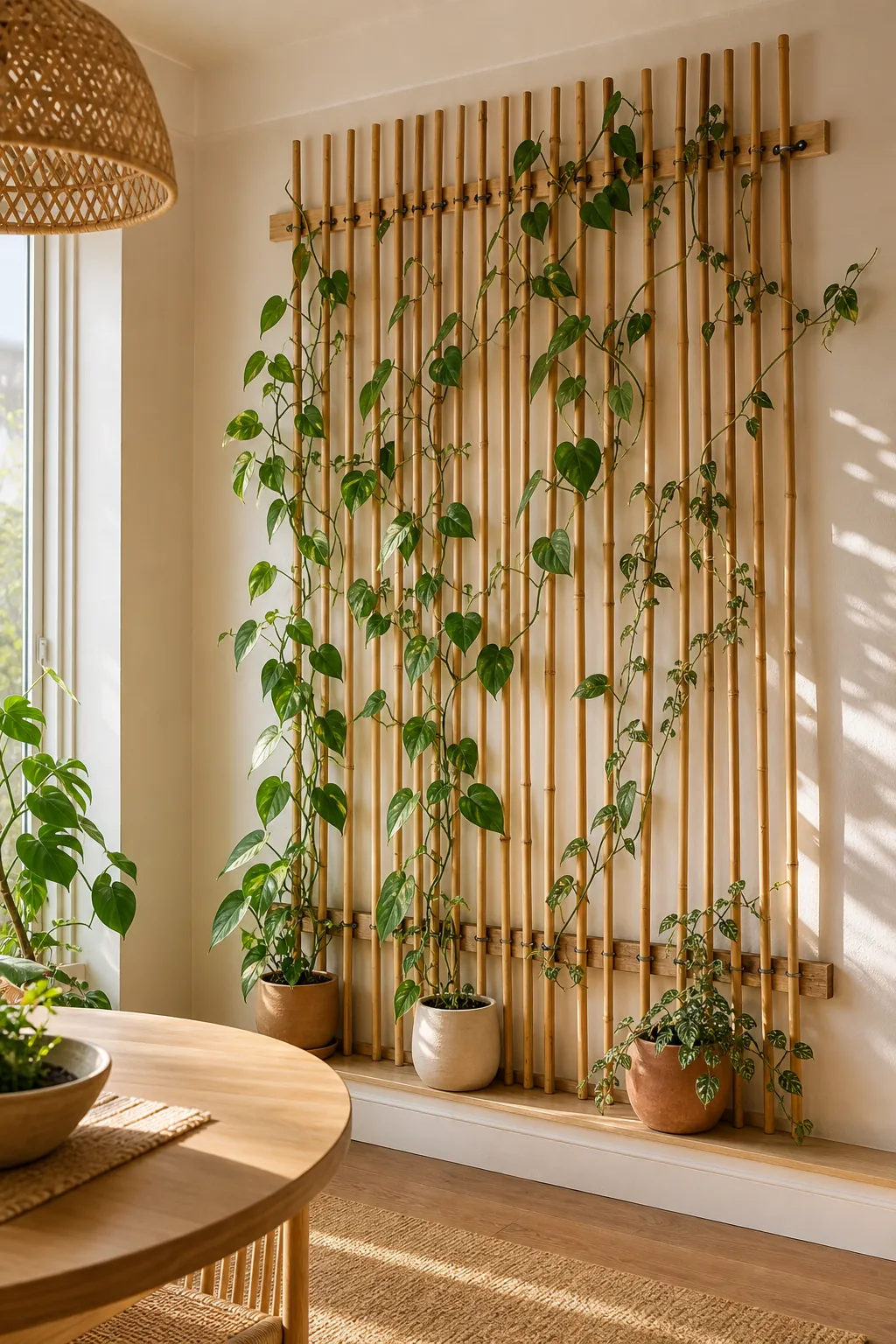
A bamboo slat trellis creates a warm natural backdrop without making the room feel crowded. Mount vertical or horizontal bamboo slats on battens, then add trailing philodendron, pothos, hoya, or small hanging planters. The slats give vines something to lean against, and the open structure keeps the wall breathable.
This is a strong choice for renters who want the look of a living wall ideas board without a wet felt system. Keep every plant in its own pot and use saucers or removable cachepots so watering never happens directly against the wall.
3. Pegboard Plant Wall
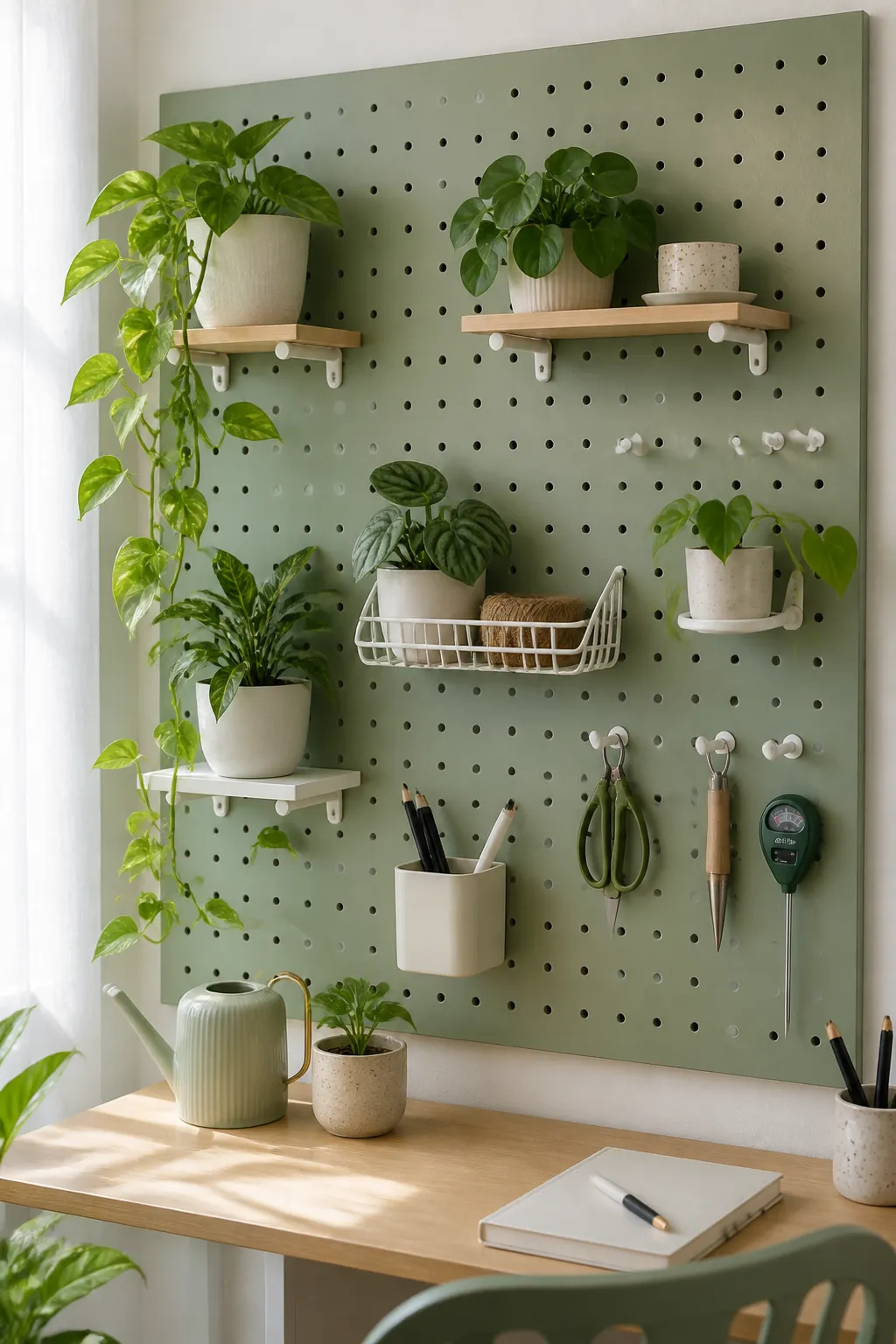
A pegboard plant wall is one of the most practical feature wall ideas because it can change with the season. Use shelves for small pots, hooks for watering tools, and baskets for trailing plants. The layout can be dense near the window and lighter in corners where plants would stretch toward the light.
Choose lightweight pots and keep the heaviest plants on lower shelves. This keeps the wall safe, makes watering easier, and gives you room to rearrange plants as they grow.
4. Terracotta Pot Clip Wall
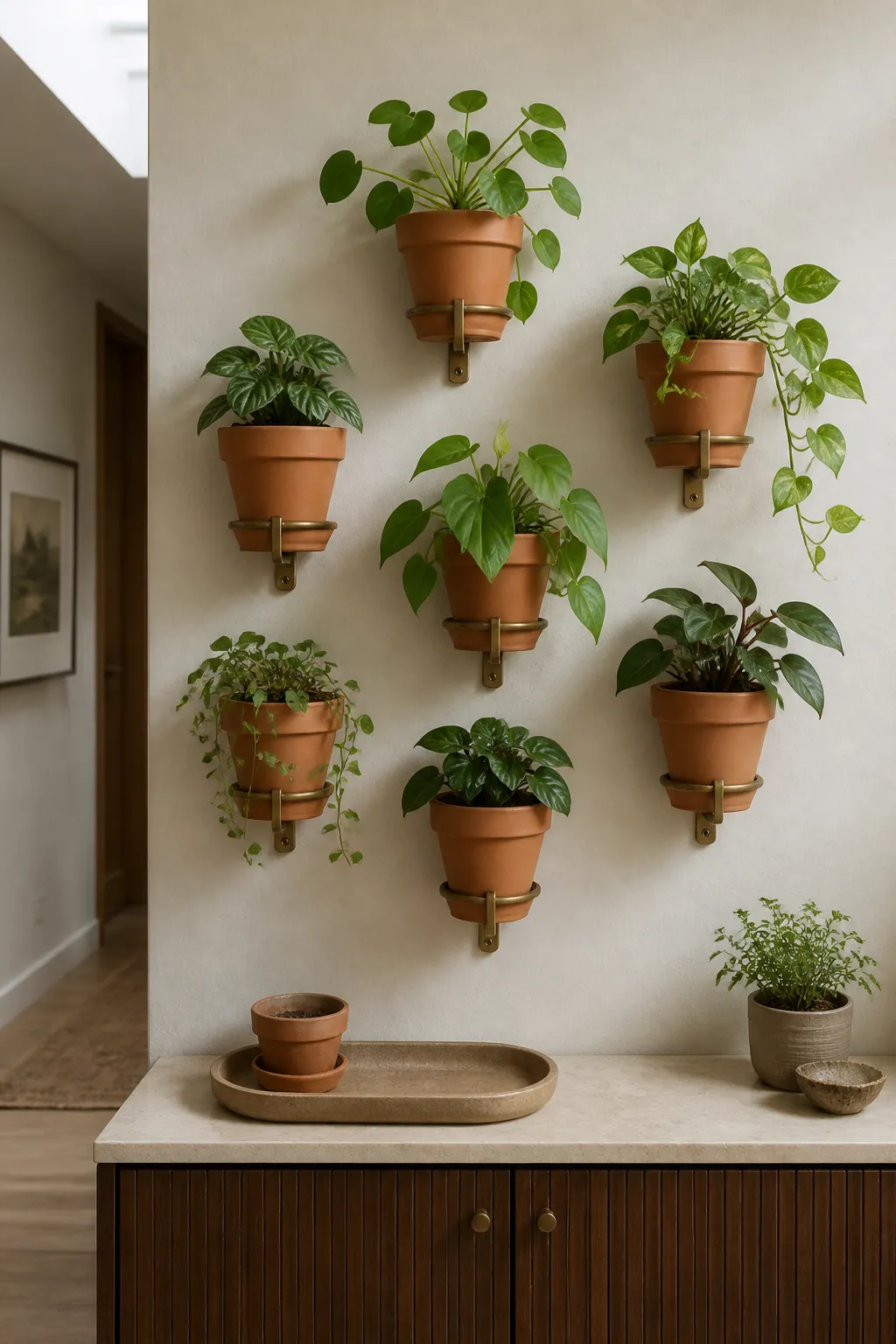
Wall-mounted pot clips give you a clean plant accent wall without complicated construction. Use a staggered pattern of terracotta pots for peperomia, pilea, small pothos, or compact philodendron. The repetition makes the wall feel intentional, while the individual pots keep care simple.
This idea is good for people who worry about overwatering. Take each pot down, water it in the sink, let it drain, then return it to the wall. That one habit prevents most water marks and damp-wall problems.
5. Kitchen Herb Rail Wall
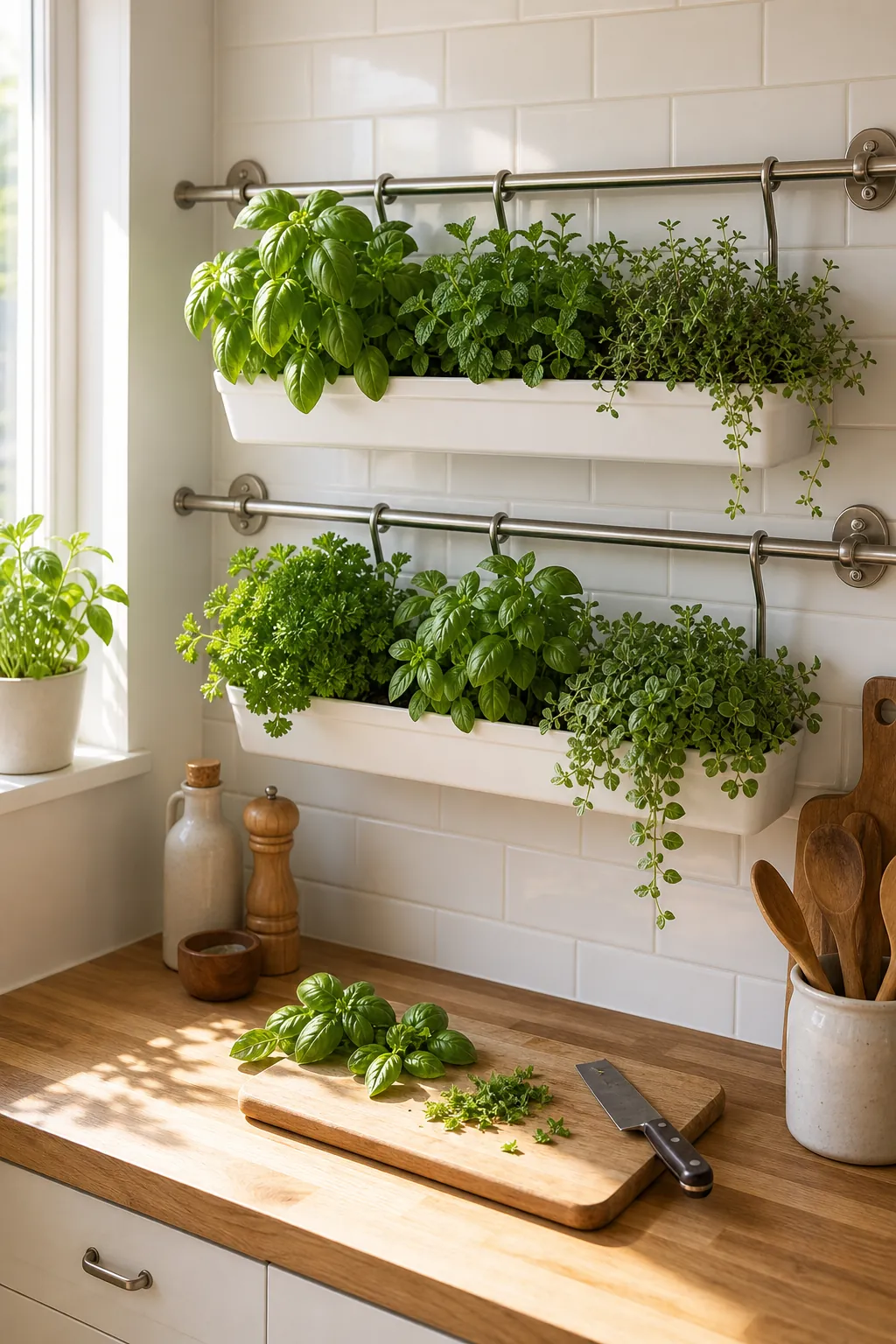
A sunny kitchen wall can become a compact herb wall with rails, hooks, and narrow trough planters. Basil, mint, parsley, thyme, and trailing oregano look fresh near a prep zone, but they need more light than many decorative houseplants. Put this wall near the brightest window or add a discreet grow light under a shelf.
The secret is access. Herbs get pinched, watered, and replaced often, so avoid a tall layout that looks good in photos but becomes annoying to use.
6. Bathroom Fern Wall
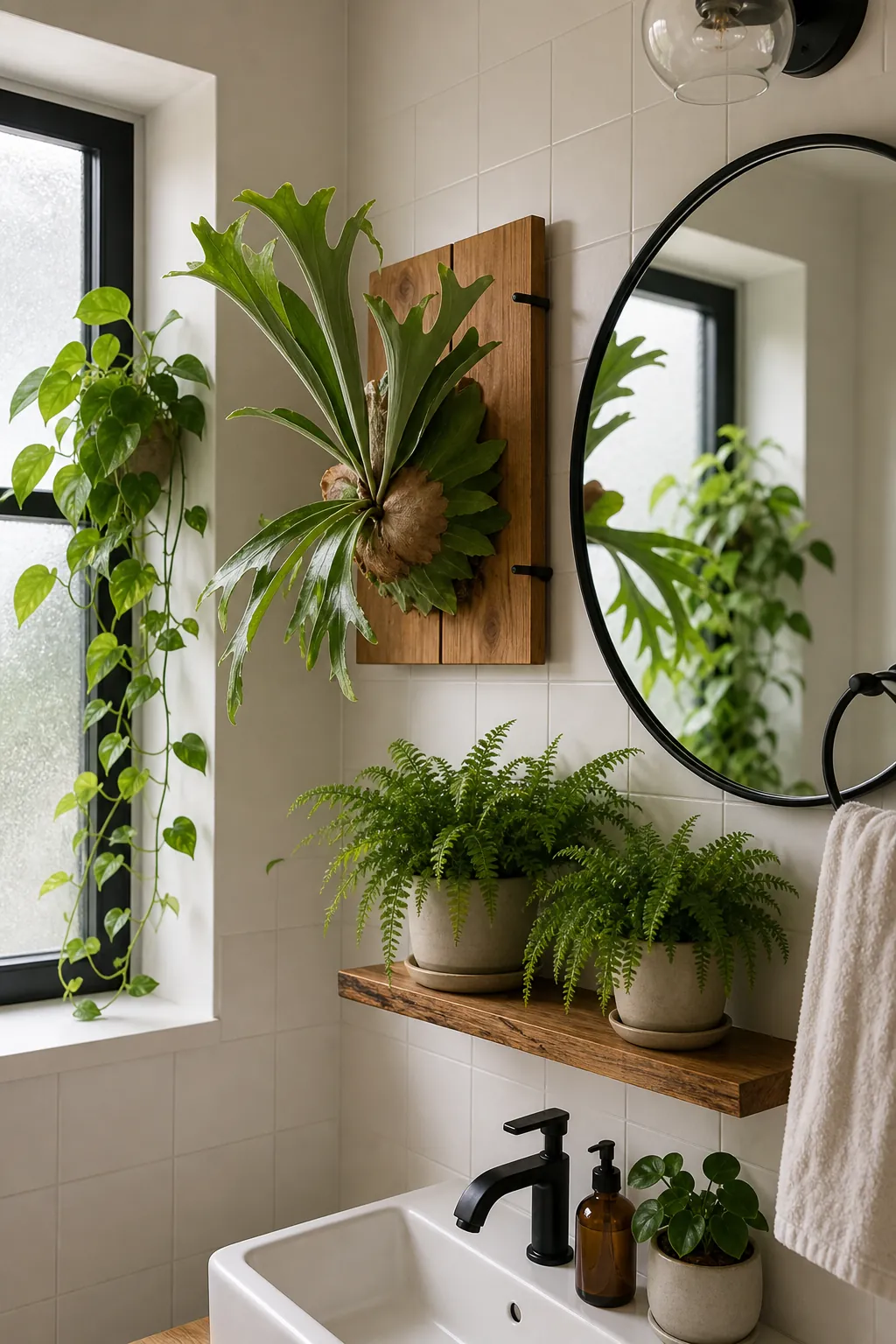
A bathroom plant wall can look dramatic because humidity helps ferns, mossy textures, and tropical foliage. Try staghorn ferns mounted on boards, small Boston ferns on shelves, or a few humidity-loving plants grouped beside a mirror. The result feels like a spa without requiring a floor-to-ceiling installation.
Do not assume every bathroom works. If there is no window, use a grow light. If ventilation is poor, leave space behind planters so the wall can dry between showers.
7. Home Office Plant Shelf Wall
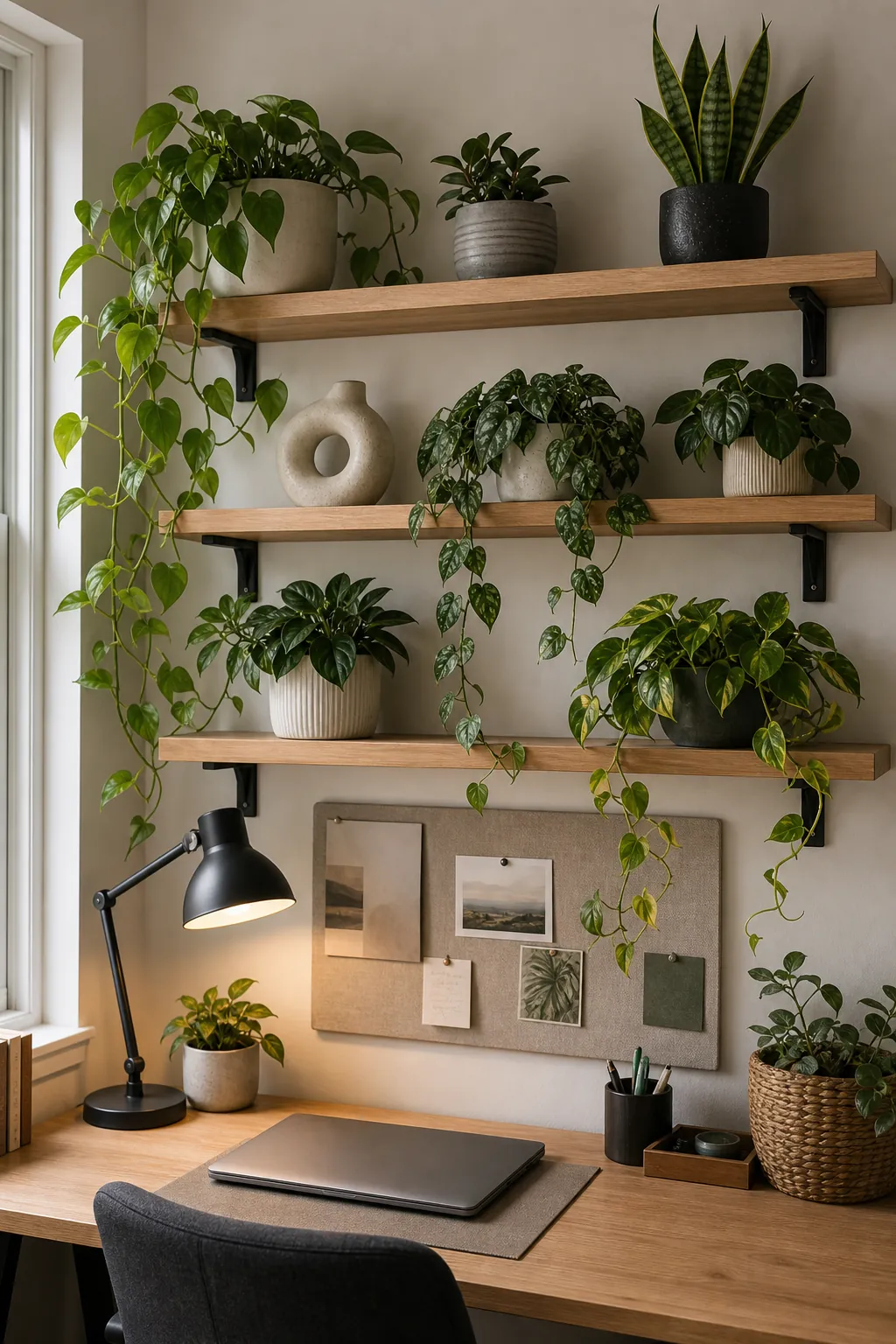
For a desk area, shallow wall shelves are often better than a heavy living wall. Mix upright plants, trailing vines, and one sculptural pot so the arrangement feels layered on video calls. Keep the shelf depth narrow enough that the room still functions, especially in apartments and small offices.
This is one of the easiest hanging plants indoor ideas to maintain because every plant remains visible. You can spot yellow leaves, dry soil, and pests before they become a wall-wide problem.
8. Felt Pocket Living Wall
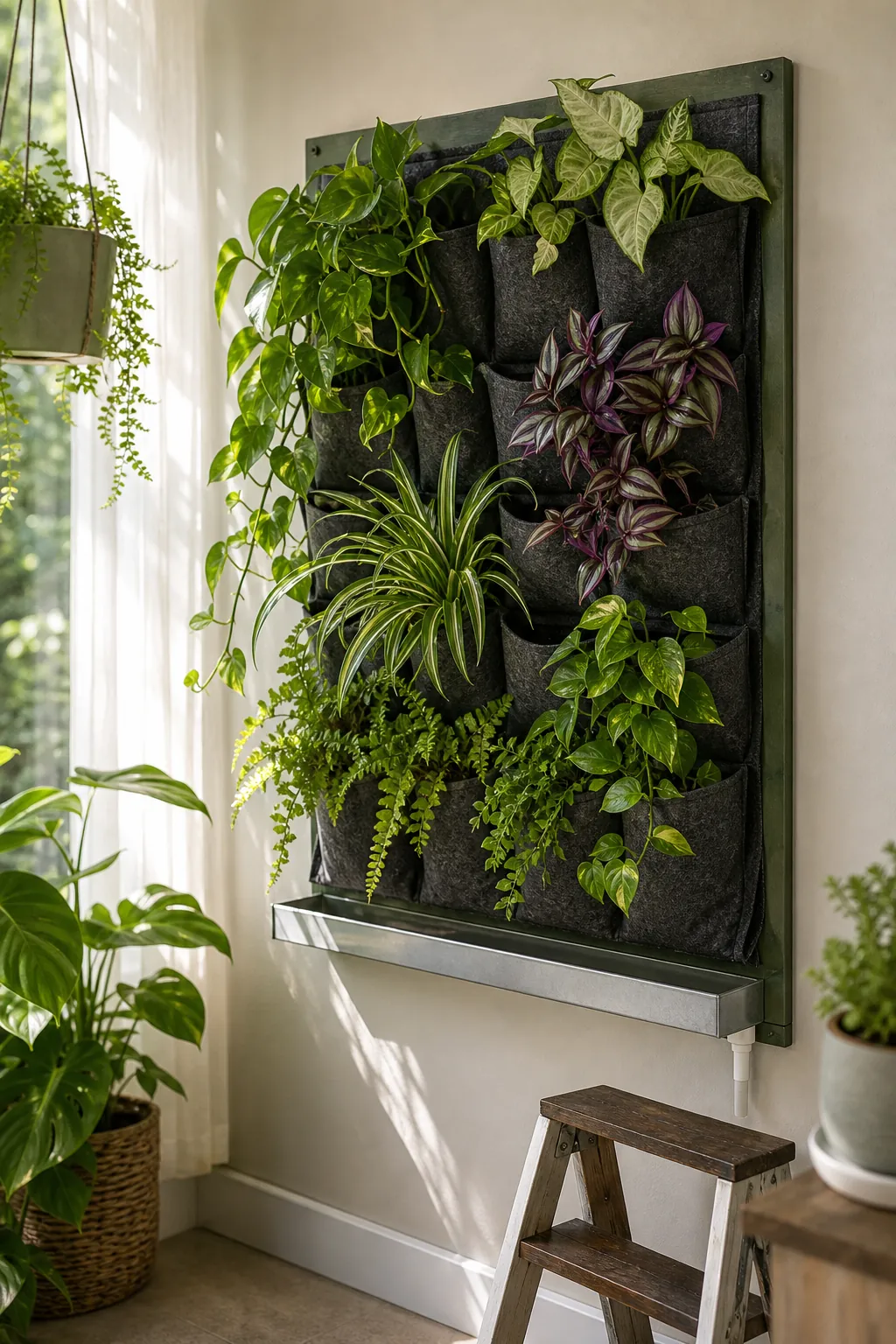
A felt pocket wall gives the closest diy living wall indoor look, but it needs the most planning. Use a waterproof backing board, check the loaded weight, and choose plants with similar watering needs. Pothos, ferns, syngonium, tradescantia, and spider plants are common choices because they fill space and recover well from trimming.
Start smaller than your dream wall. A test panel teaches you how fast pockets dry, whether the room has enough light, and how much runoff you need to catch.
9. Preserved Moss Feature Wall
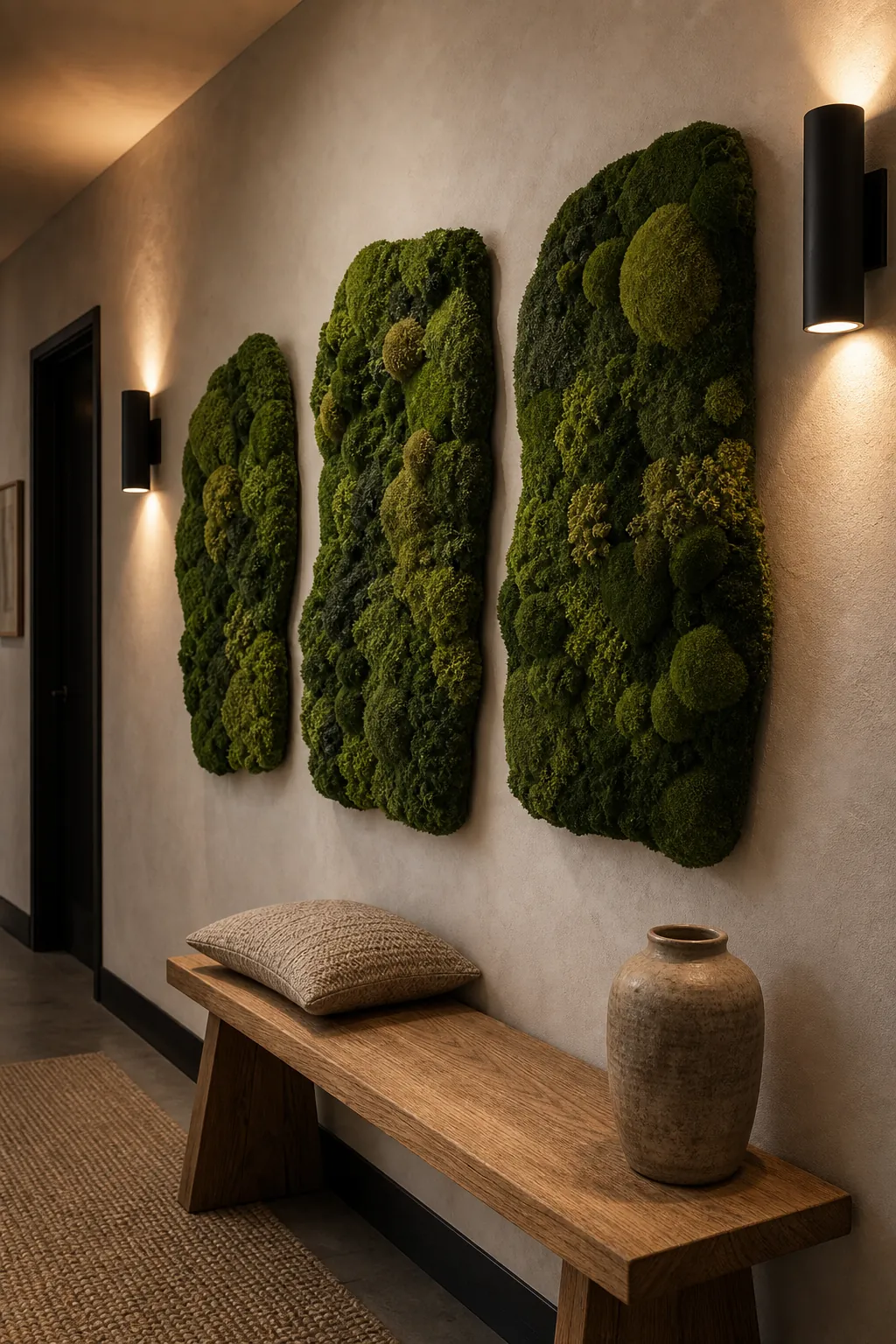
If the wall is dim, narrow, or far from a water source, preserved moss may be the smarter plant wall. It gives texture and biophilic color without irrigation, soil, or grow lights. Use it as framed panels, a long horizontal band, or a small feature wall behind a bench.
This is not a living plant wall, so it will not grow or need watering. That is exactly why it works in hallways, stair landings, and other spaces where live plants would slowly decline.
10. Succulent Wall Frame
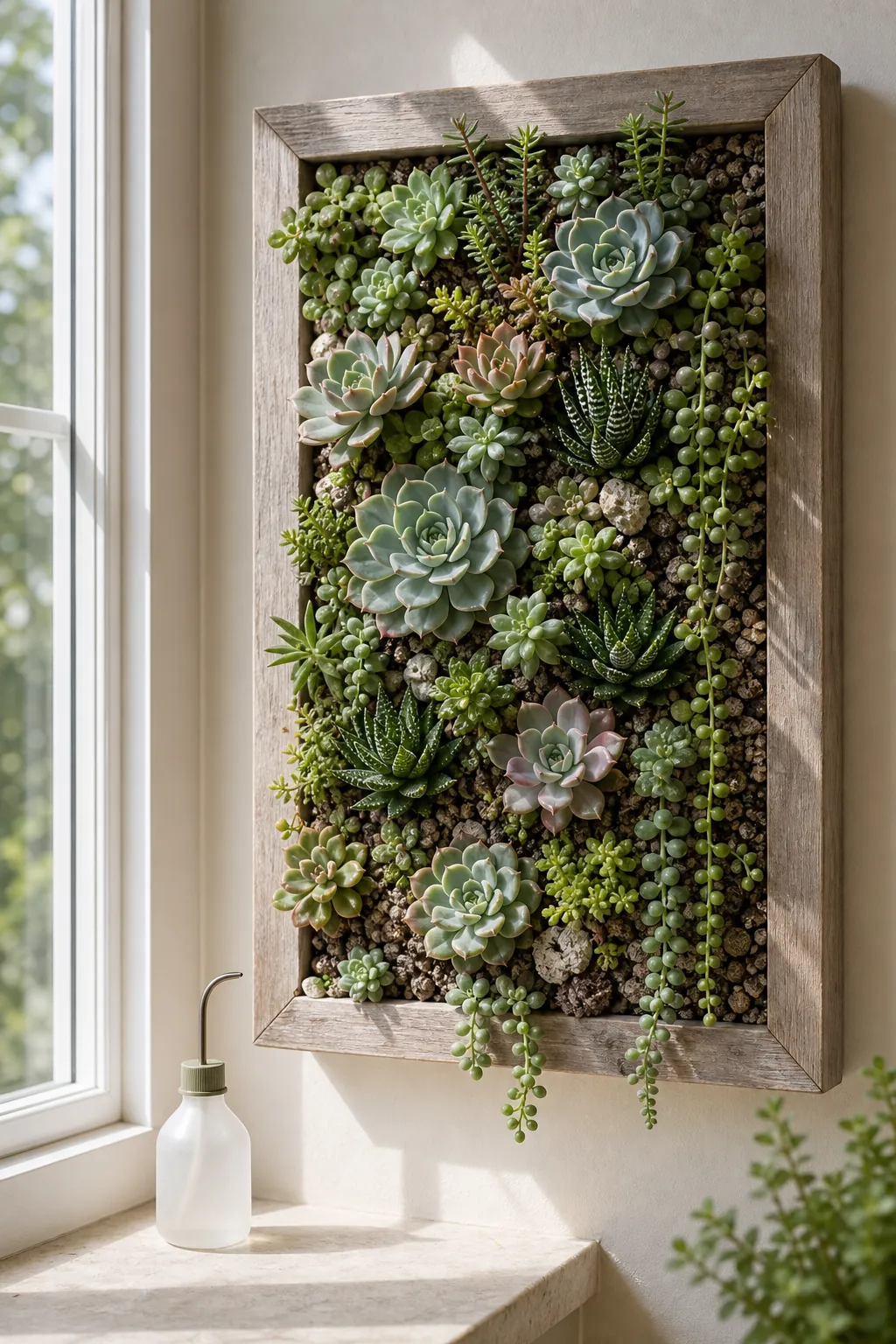
A succulent wall can be gorgeous, but it belongs in bright light. Use a shallow frame, gritty mix, and plants with similar drought tolerance. Echeveria, haworthia, sedum, and string-of-pearls style accents can work if the wall is close to a sunny window or a strong grow light.
The mistake is treating a succulent wall like a fern wall. Succulents need airflow, fast drainage, and less frequent watering. If your room is dim, choose preserved moss or pothos instead.
11. Hanging Plant Corner Wall
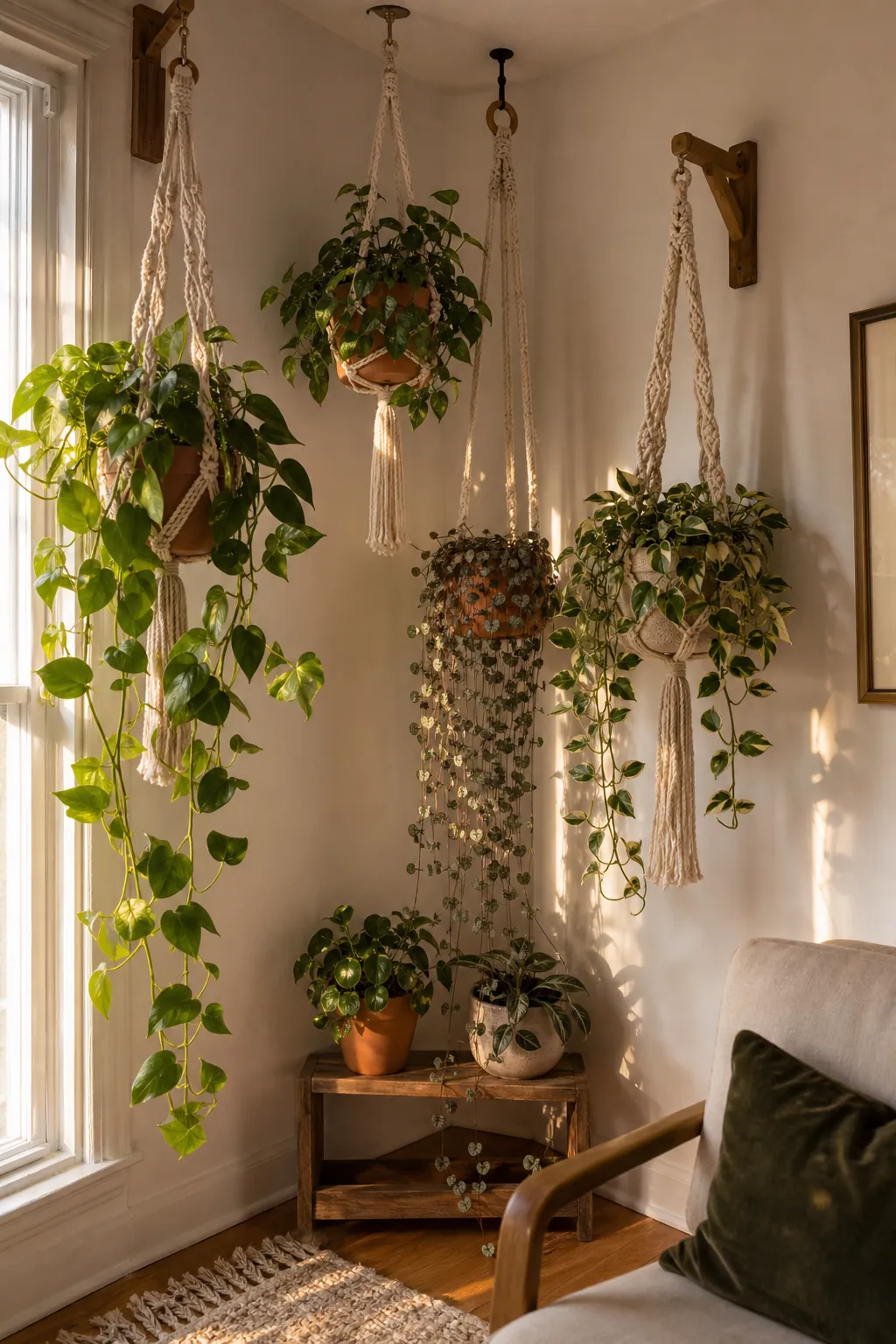
A corner plant wall makes use of awkward vertical space. Combine ceiling hooks, wall brackets, and one low shelf so the plants cascade from different heights. This is ideal for trailing pothos, scindapsus, hoya, string of hearts, and small philodendron varieties.
Keep the corner from feeling messy by repeating one material, such as bamboo, black metal, or natural rope. The plants can vary; the hardware should create the rhythm.
12. Plant Wall Room Divider
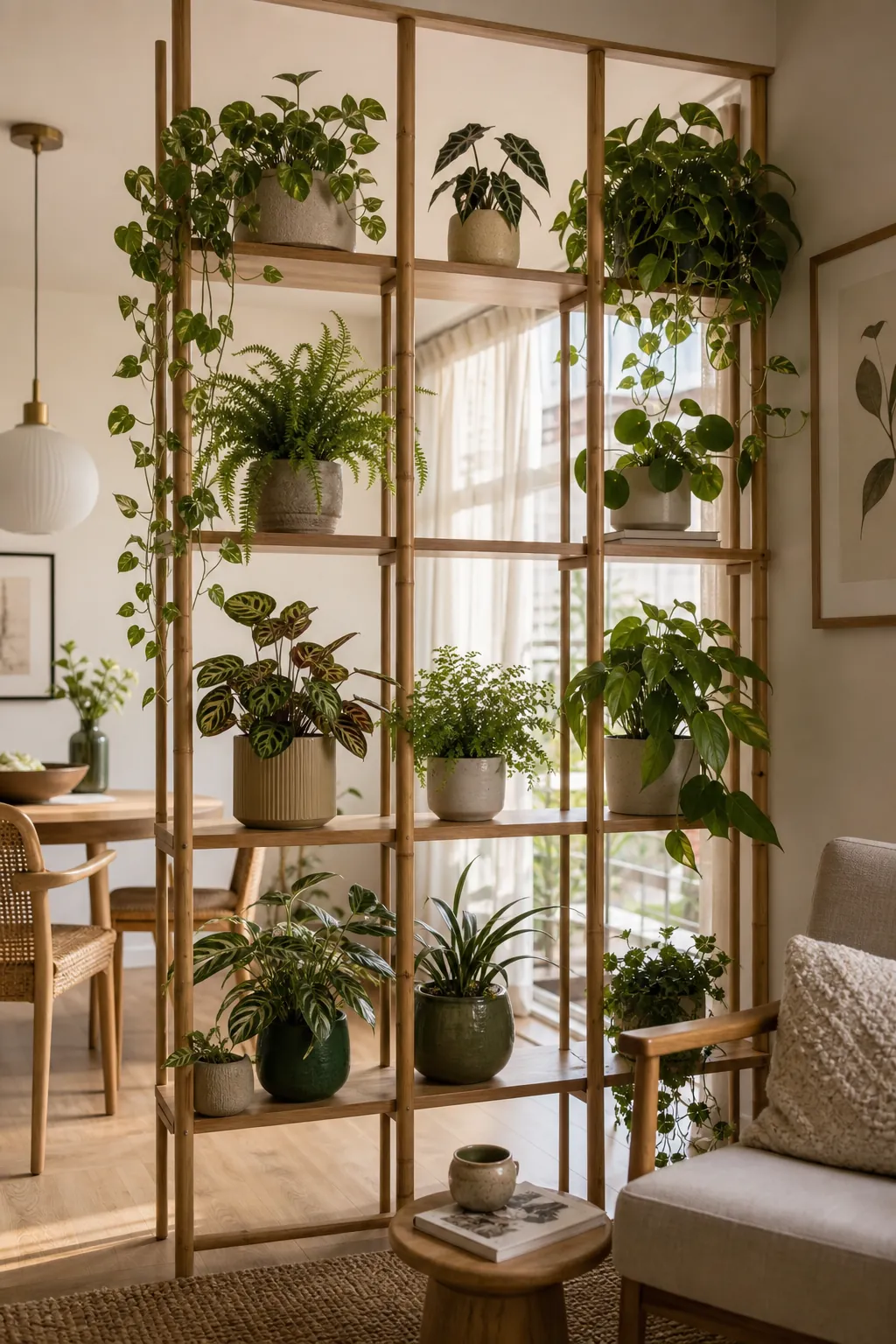
If you do not have a free wall, turn an open shelving unit into a plant wall divider. It can separate a dining nook, desk zone, or reading corner while still letting light pass through. Use plants on both sides so the divider looks intentional from every angle.
This idea borrows the lush feeling of backyard ideas and brings it indoors in a controlled way. Choose stable shelves, avoid top-heavy pots, and leave some open negative space so the room does not feel blocked.
13. Bedroom Headboard Plant Wall
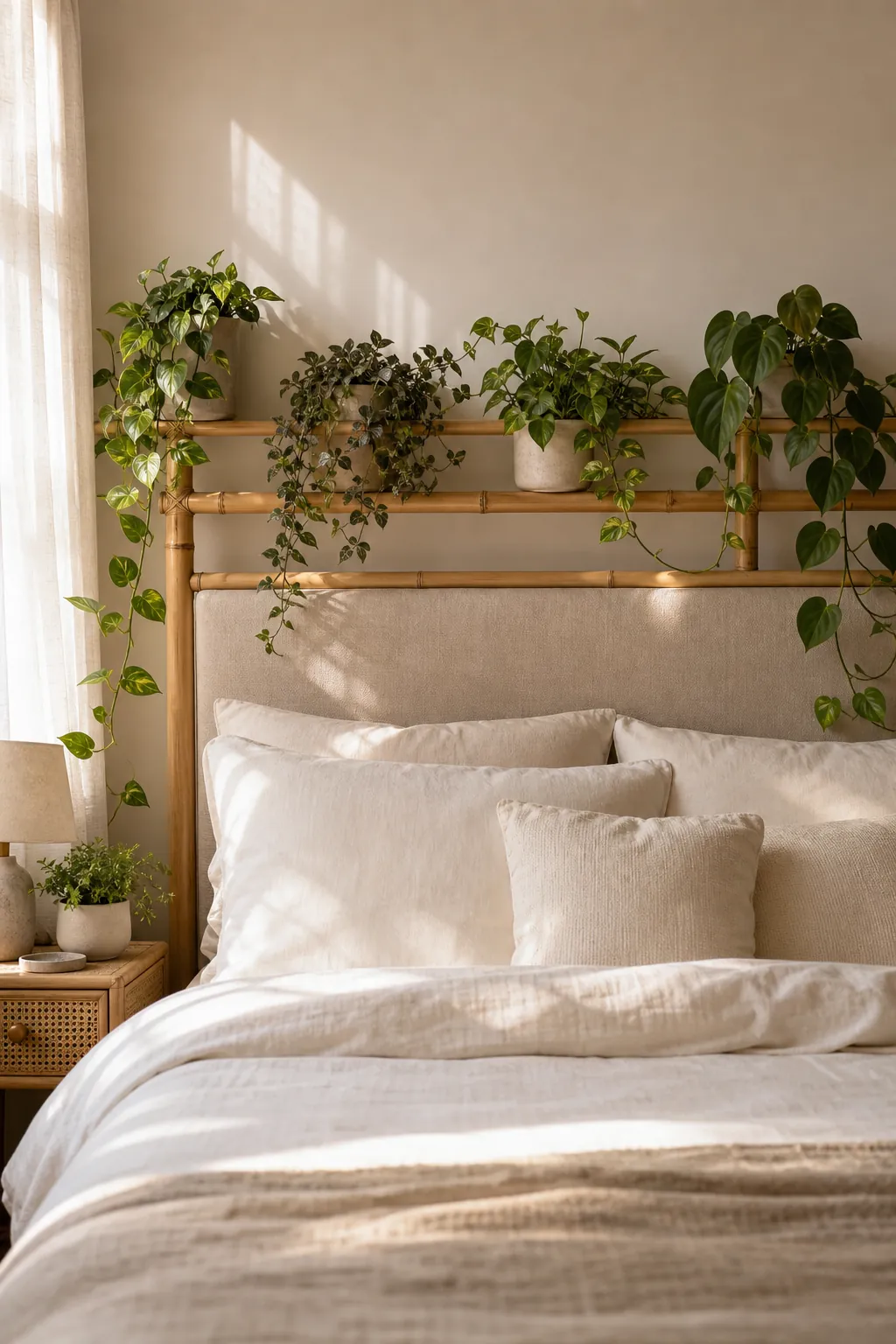
A plant wall above the bed should feel calm, secure, and easy to dust. Instead of heavy pots directly over pillows, use a low shelf ledge beside or slightly above the headboard, then trail vines horizontally across a rail. Soft plants like pothos, heartleaf philodendron, and hoya are better than prickly or messy varieties.
Keep watering conservative and removable. The bedroom is not the place to experiment with drippy irrigation or unstable hanging containers.
14. Entryway Plant Accent Wall
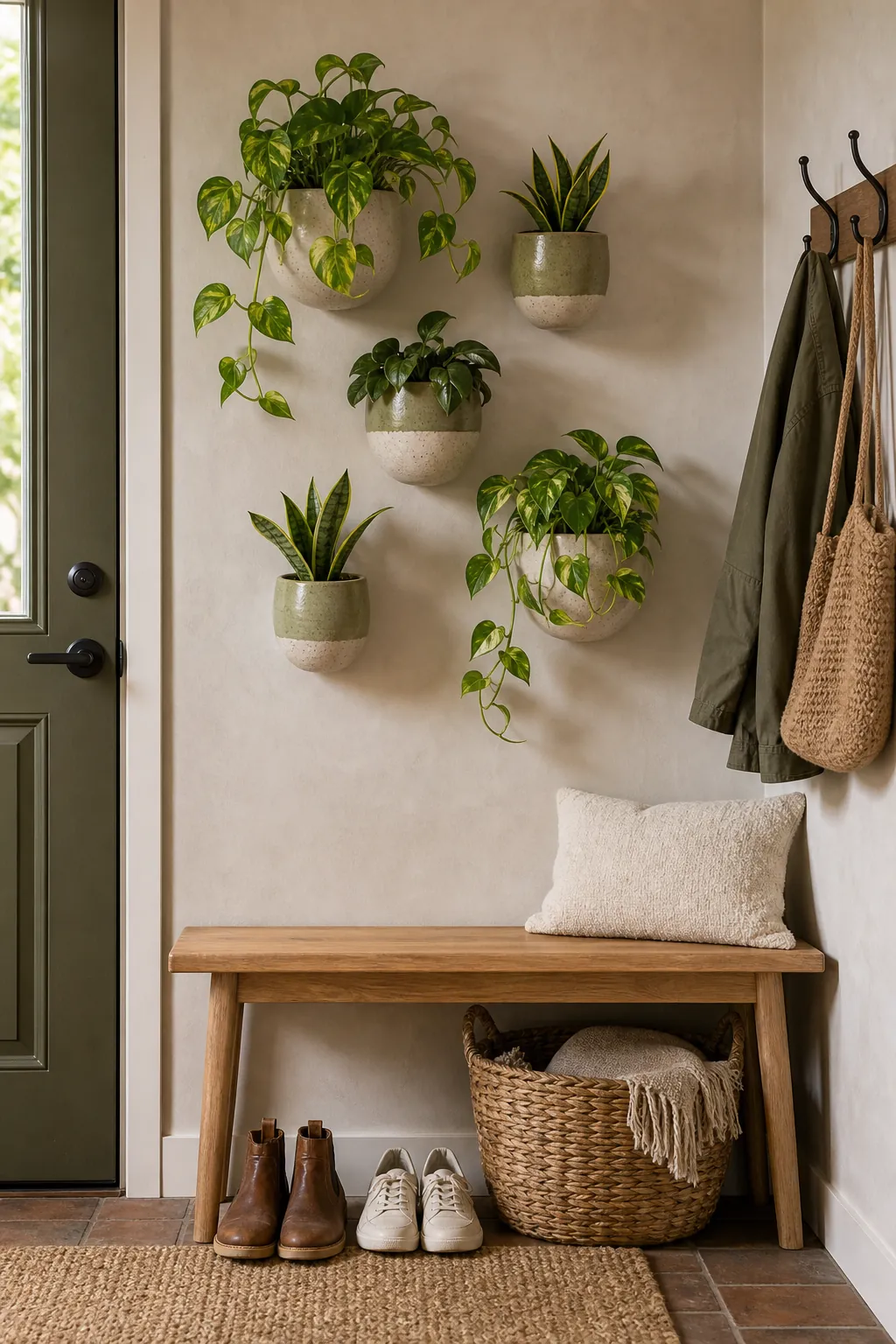
An entryway plant accent wall makes a strong first impression without taking floor space from shoes, bags, or traffic. Use three to seven wall pockets in an uneven cluster and choose durable plants that can handle occasional drafts, such as snake plant cuttings, pothos, peperomia, or small philodendrons.
Because entryways can be darker than living rooms, check the light first. If the wall is dim all day, use preserved moss, faux greenery mixed with one real plant near the door, or a small grow light on a timer.
15. Grow Light Gallery Wall
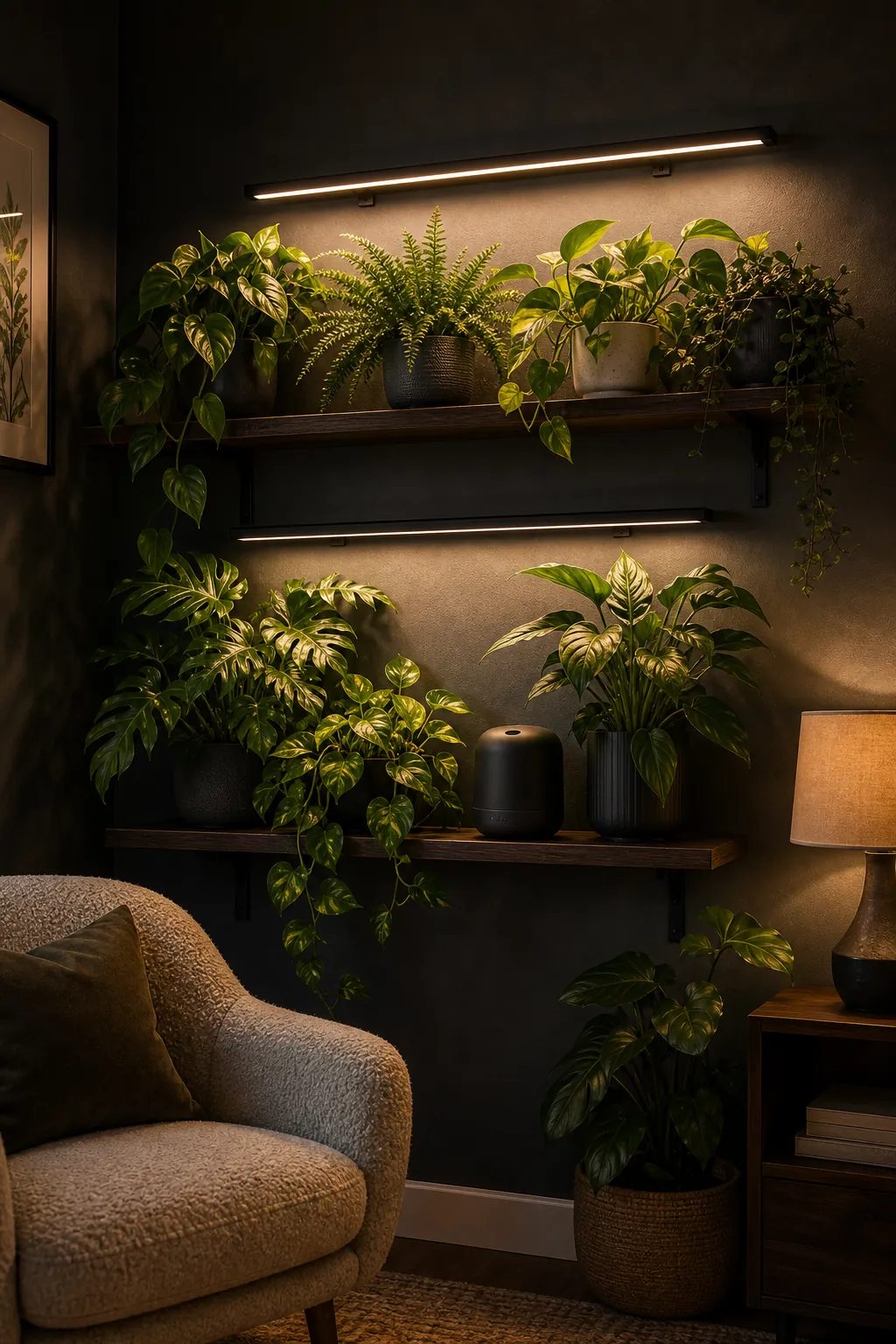
Grow lights can make an indoor plant wall possible where natural light is weak. Mount slim bar lights above shelves, use spotlight bulbs for a small framed wall, or place vertical light strips at the sides of a denser living wall. The goal is even coverage, not a single harsh beam.
Choose warm-looking fixtures if the wall is in a living space. The best grow light setup should blend into the room so the plant wall feels designed, not like a utility shelf.
16. Climbing Vine Wire Wall
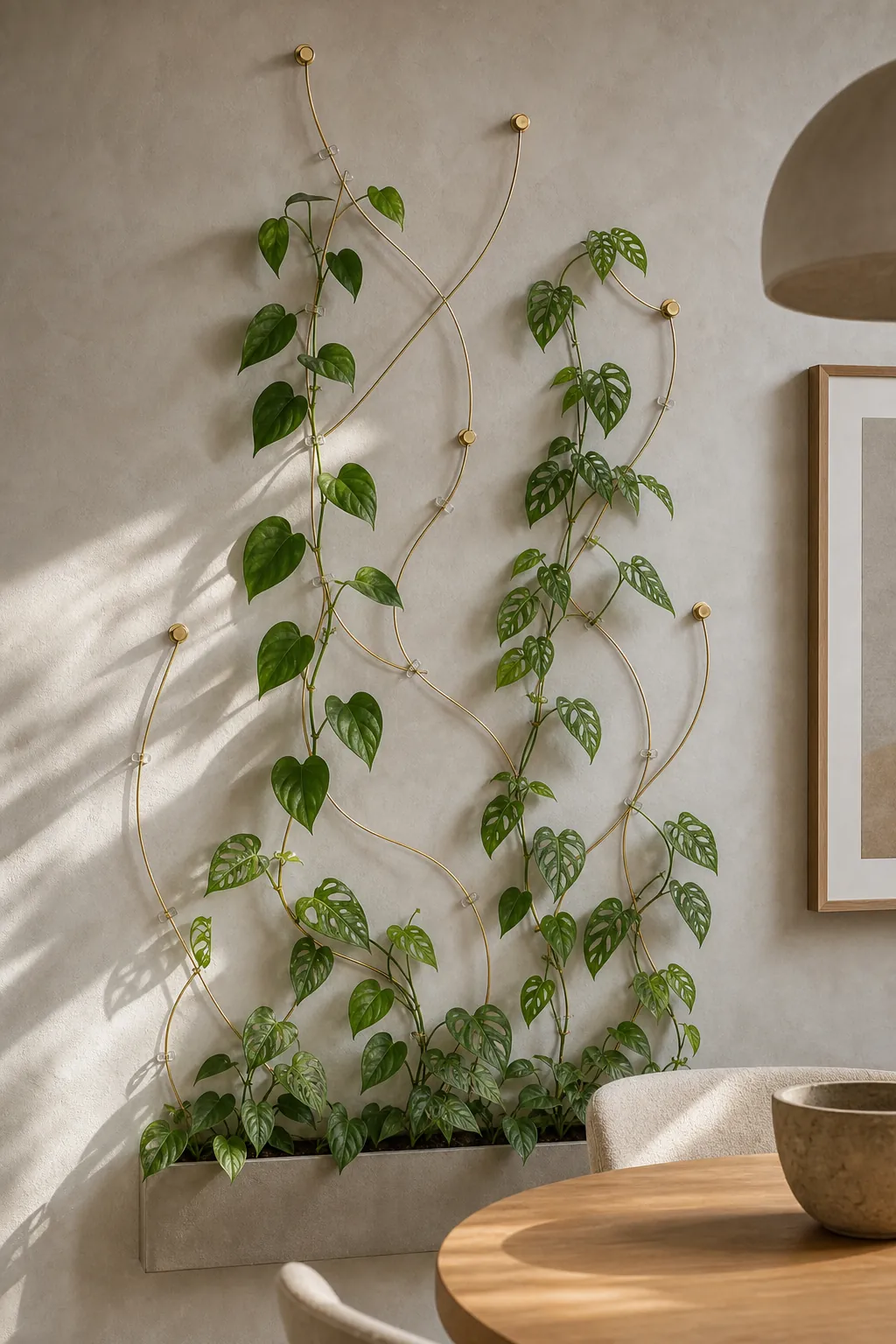
A wire wall is a light, graphic way to train climbing plants. Install brass, black, or stainless wire in gentle lines and clip young vines as they grow. This works well for pothos, philodendron, monstera adansonii, and other plants that naturally reach for support.
Do not tape vines directly to painted drywall for the long term. Use removable clips or proper supports so pruning, cleaning, and repainting stay possible.
17. Renter-Friendly Nursery Pot Wall
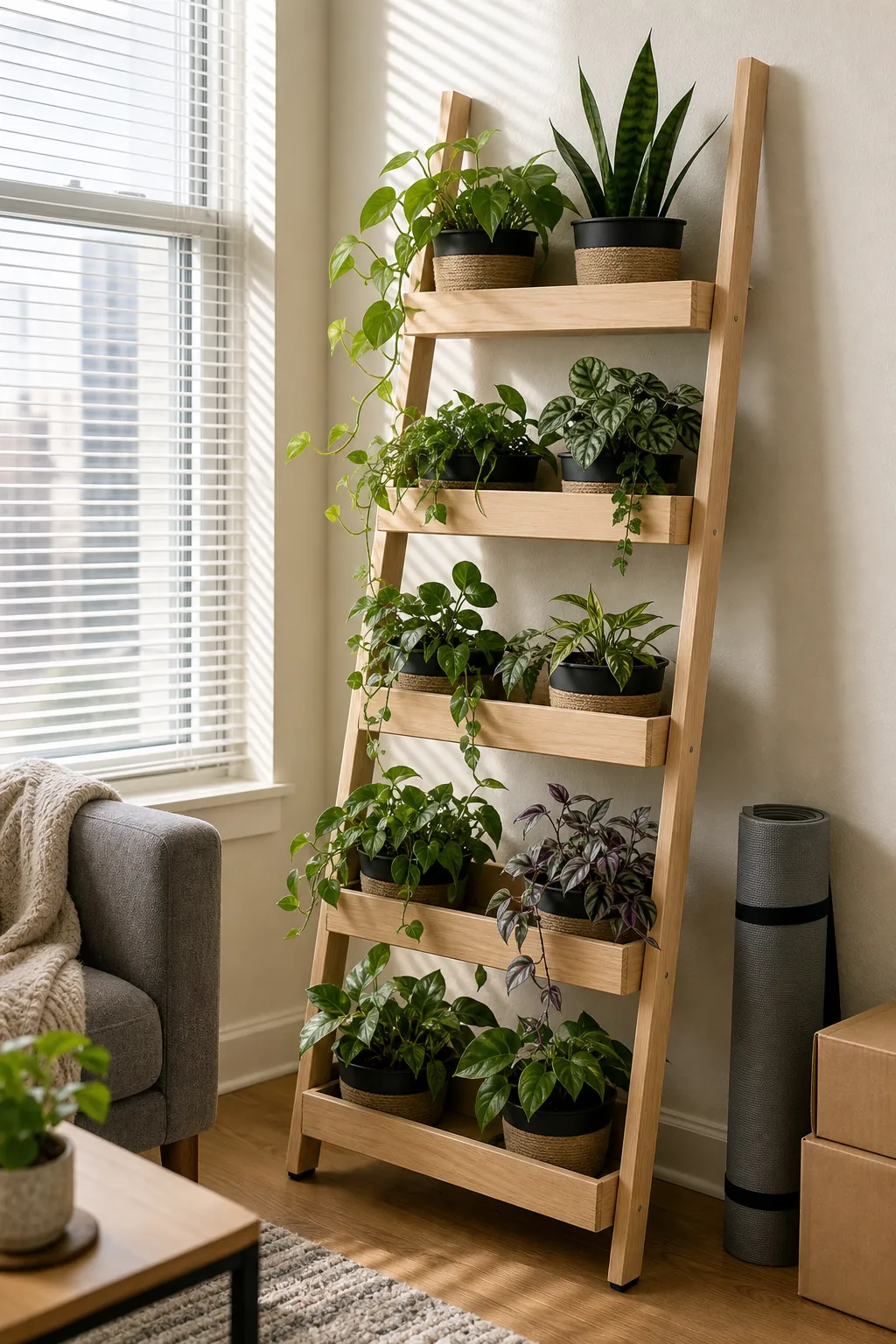
For apartments, keep the plant wall removable. Use freestanding ladder shelves, tension poles, lightweight wall shelves where allowed, or a leaning frame that holds nursery pots. The black nursery pot can sit inside a nicer cachepot, so the display still looks finished.
This setup is also forgiving for beginners. You can rotate plants toward the window, quarantine a struggling pot, and move the whole wall when your lease or light changes.
18. Stairway Plant Gallery Wall
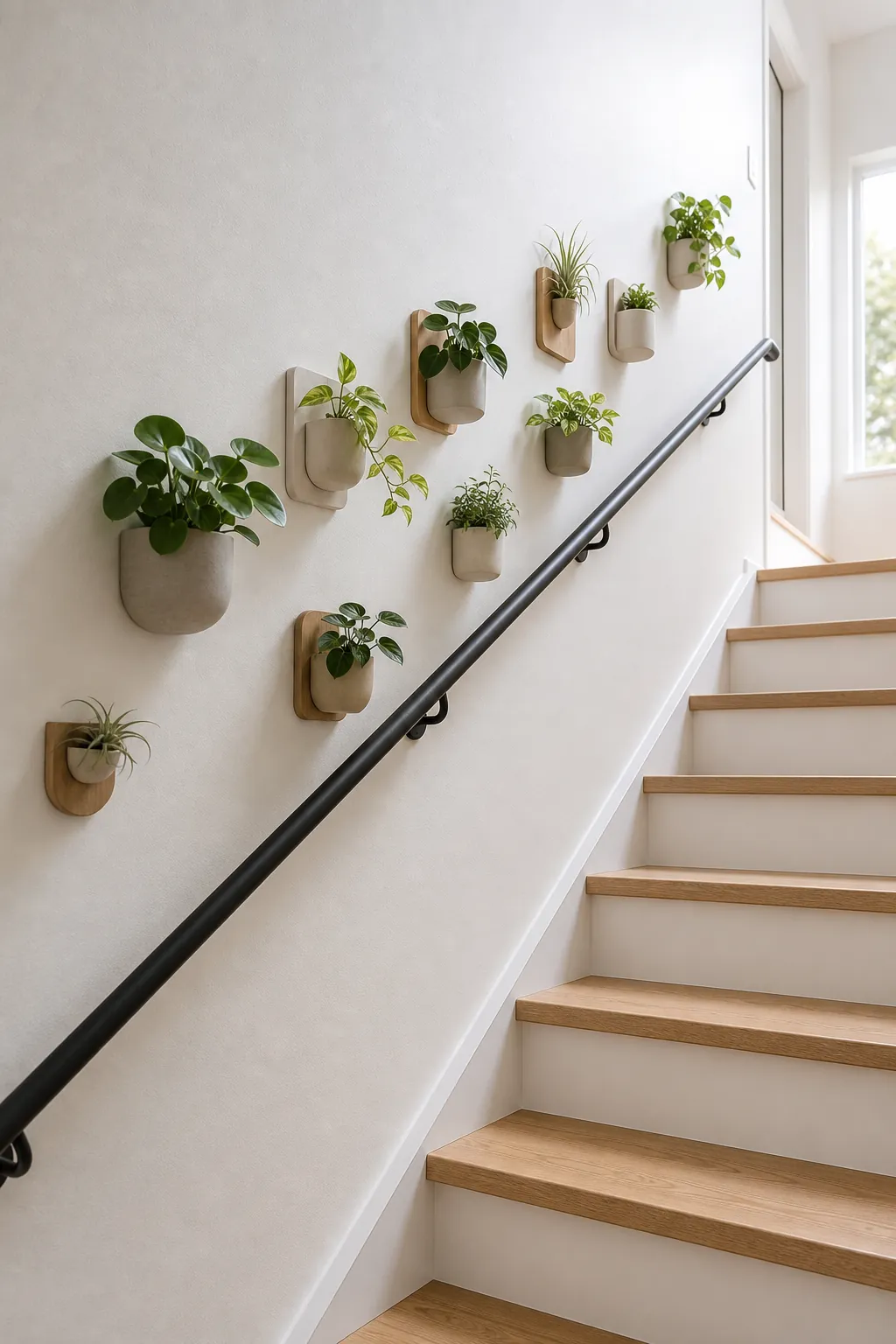
A stairway wall can hold a series of small mounted planters like a gallery. Keep the pots shallow, secure, and away from shoulders or handrails. Plants with tidy growth, such as peperomia, small philodendron, air plants, or compact pothos cuttings, work better than large trailing vines in a narrow path.
Watering access matters here. If you need a ladder every time, the wall will get neglected. Place plants where you can safely reach them from a step.
19. Mini Propagation Wall
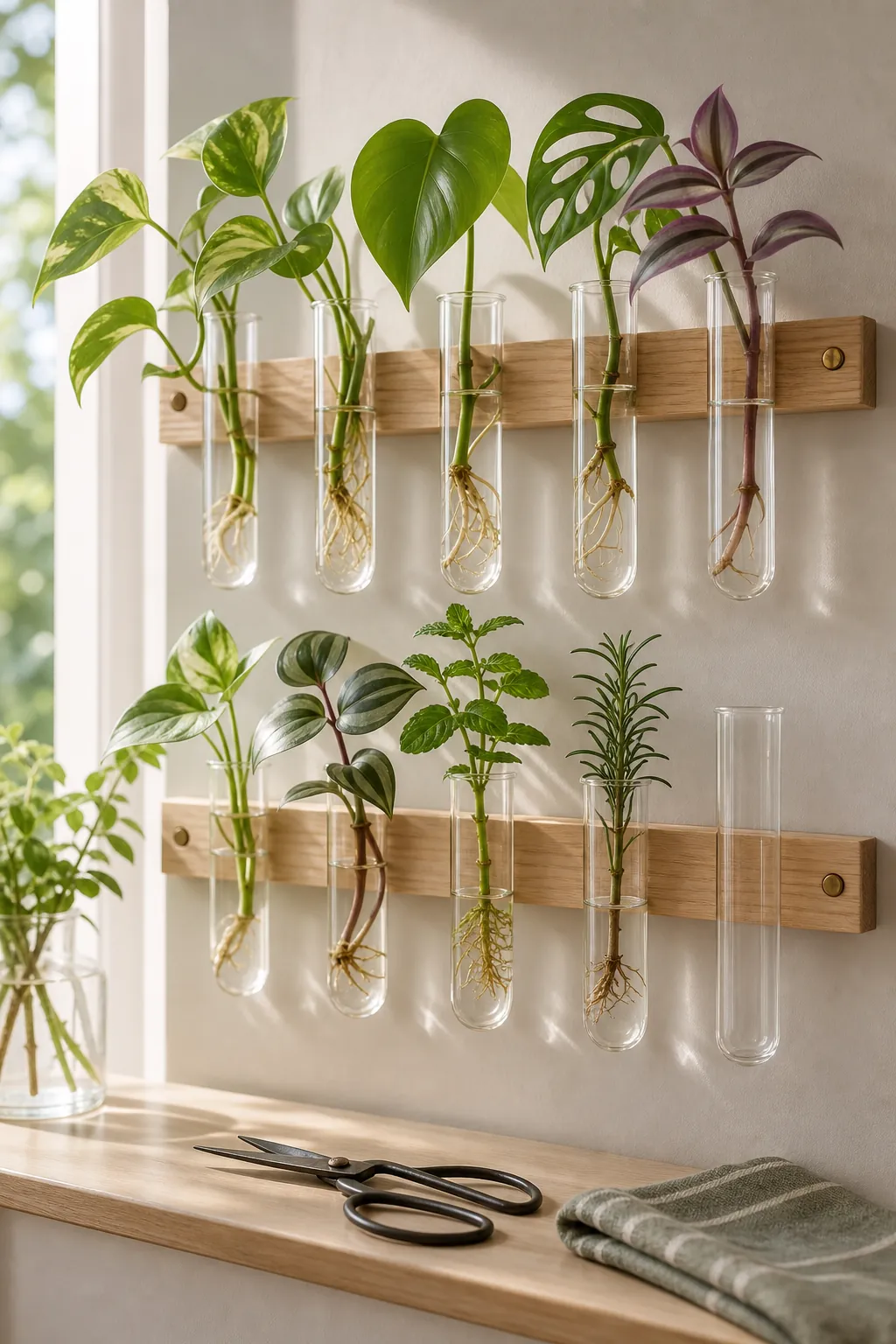
A propagation wall is small, affordable, and surprisingly decorative. Mount glass tubes, narrow bud vases, or a wood-and-glass propagation station and fill it with pothos, philodendron, monstera, tradescantia, or herb cuttings. It gives you the plant wall feeling while the cuttings root.
Change the water regularly and keep the wall out of direct hot sun. Once roots are ready, pot the cuttings and refresh the wall with new stems.
How to Choose the Best Indoor Plant Wall Idea
If you want the lowest maintenance option, choose preserved moss, removable wall pots, or shelves. If you want a lush living wall, start with a small felt pocket or modular system and test light, humidity, drainage, and weight before scaling up. If the wall is far from a window, plan the grow light first and the plants second.
The best indoor plant wall is not the fullest one on installation day. It is the one that still looks good after watering, pruning, seasonal light changes, and a few plant swaps. Build it so maintenance is visible, reachable, and simple, and the wall will keep earning its place in the room.