
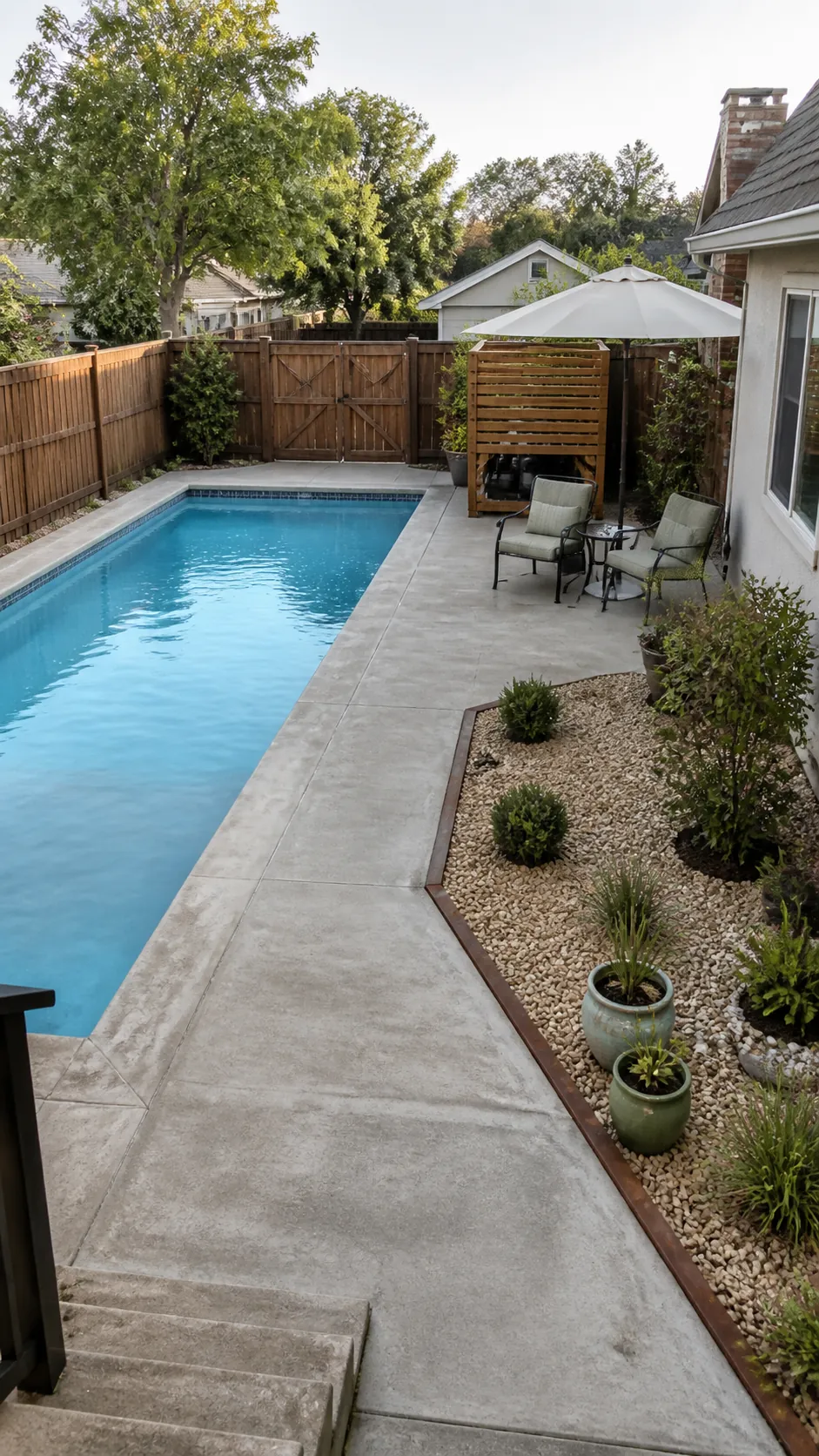
An affordable pool makeover starts by deciding which problems actually cost you enjoyment: a stained slab, muddy strip, harsh sun, exposed equipment, or nowhere comfortable to sit. Trying to solve everything in one weekend often leads to wasted plants and half-finished hardscape. These pool landscaping ideas on a budget focus on visible improvements that can be phased without compromising drainage or safety.
Draw a Phased Master Plan
Measure the pool, gates, deck, drains, utilities, and existing plants before buying materials. Divide the yard into must-fix work, useful upgrades, and decoration. This prevents an inexpensive planter from landing where a future path or drain belongs.
Price the entire design even if you will build it over several seasons. Complete grading, drainage, electrical, and structural work before finishes. A coherent small first phase looks better than unrelated bargains scattered around the pool.
Deep-Clean the Existing Deck
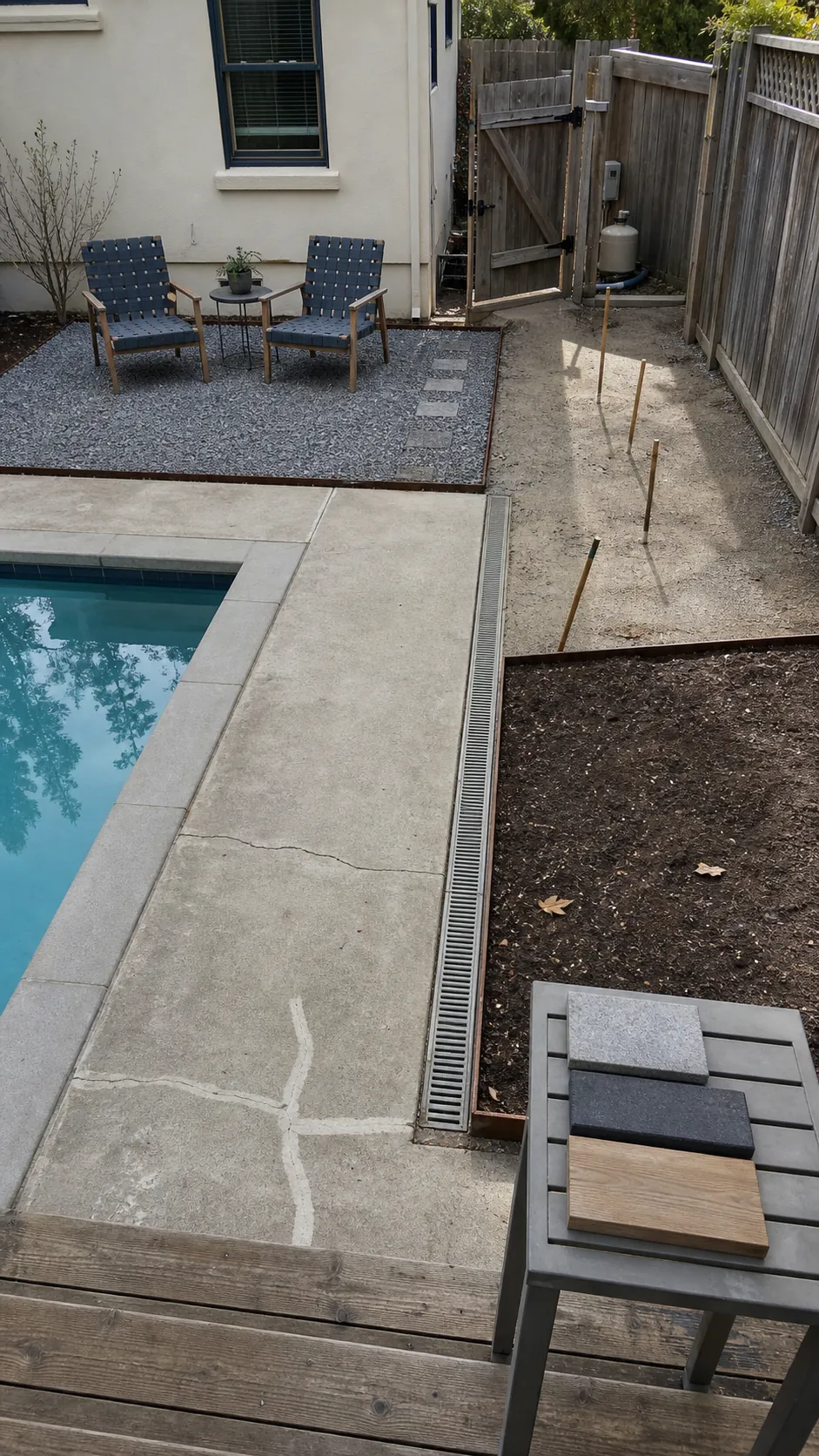
A careful wash can reveal that an old deck needs less replacement than expected. Sweep first, test the least aggressive approved cleaner in a hidden area, and protect the pool from dirty runoff. Repair the source of rust, leaf, or irrigation stains instead of only bleaching the mark.
Use equipment and pressure appropriate for the surface so you do not etch concrete or damage joints. Clean drains and expansion seams at the same time. The result gives every later budget pool patio idea a fresher backdrop.
Refresh the Fence With One Stain Color
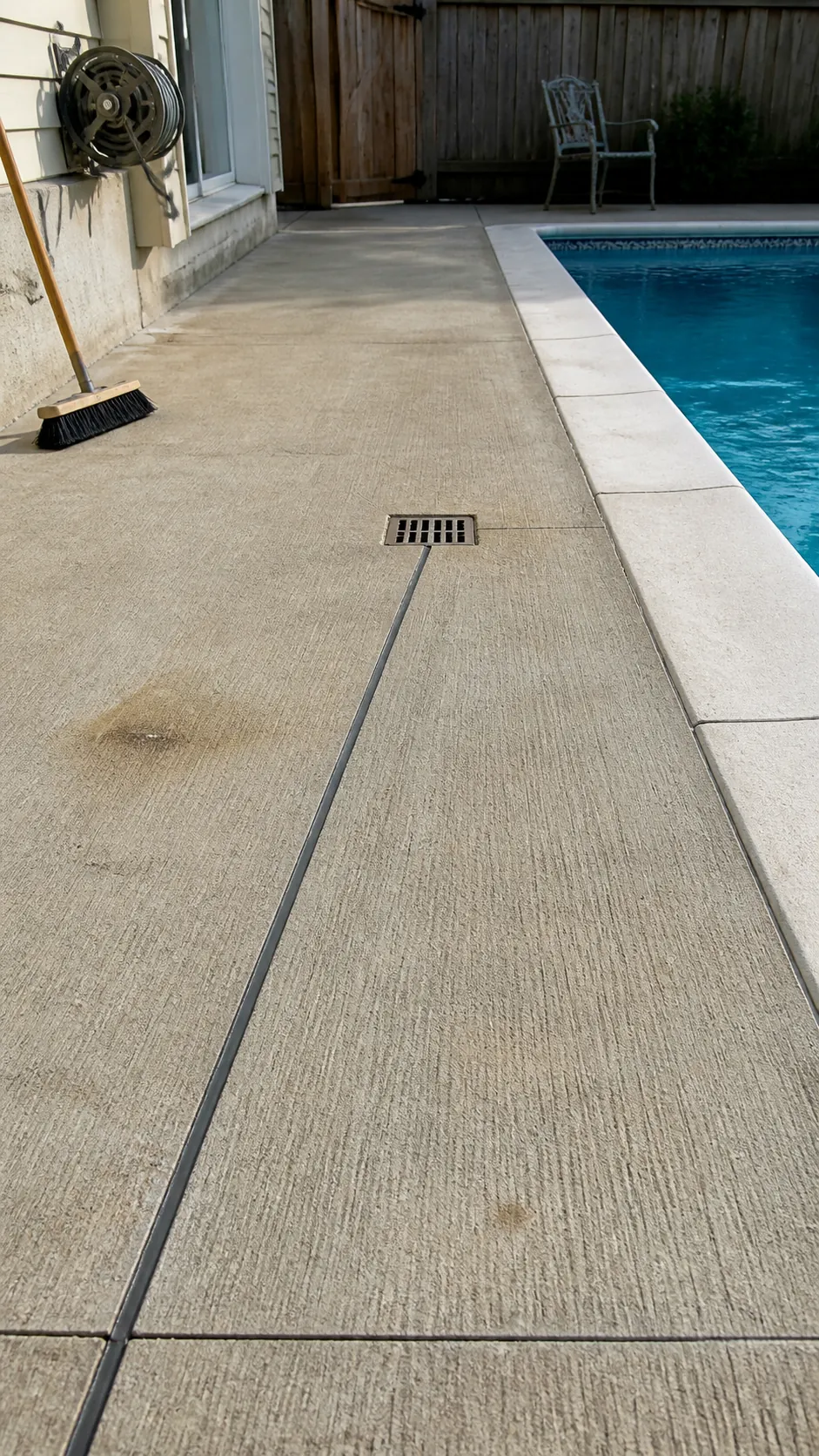
A weathered fence can make the entire pool area feel unfinished even when the deck is sound. Replace loose boards, reset protruding fasteners, then apply an exterior finish compatible with the timber. One medium tone creates a quieter background than several mismatched repairs.
Do not coat damp or decayed wood, and keep products out of the water and soil. Check whether the fence serves as the pool barrier before altering gaps, rails, or gates. A refreshed boundary often delivers more impact per dollar than decorative accessories.
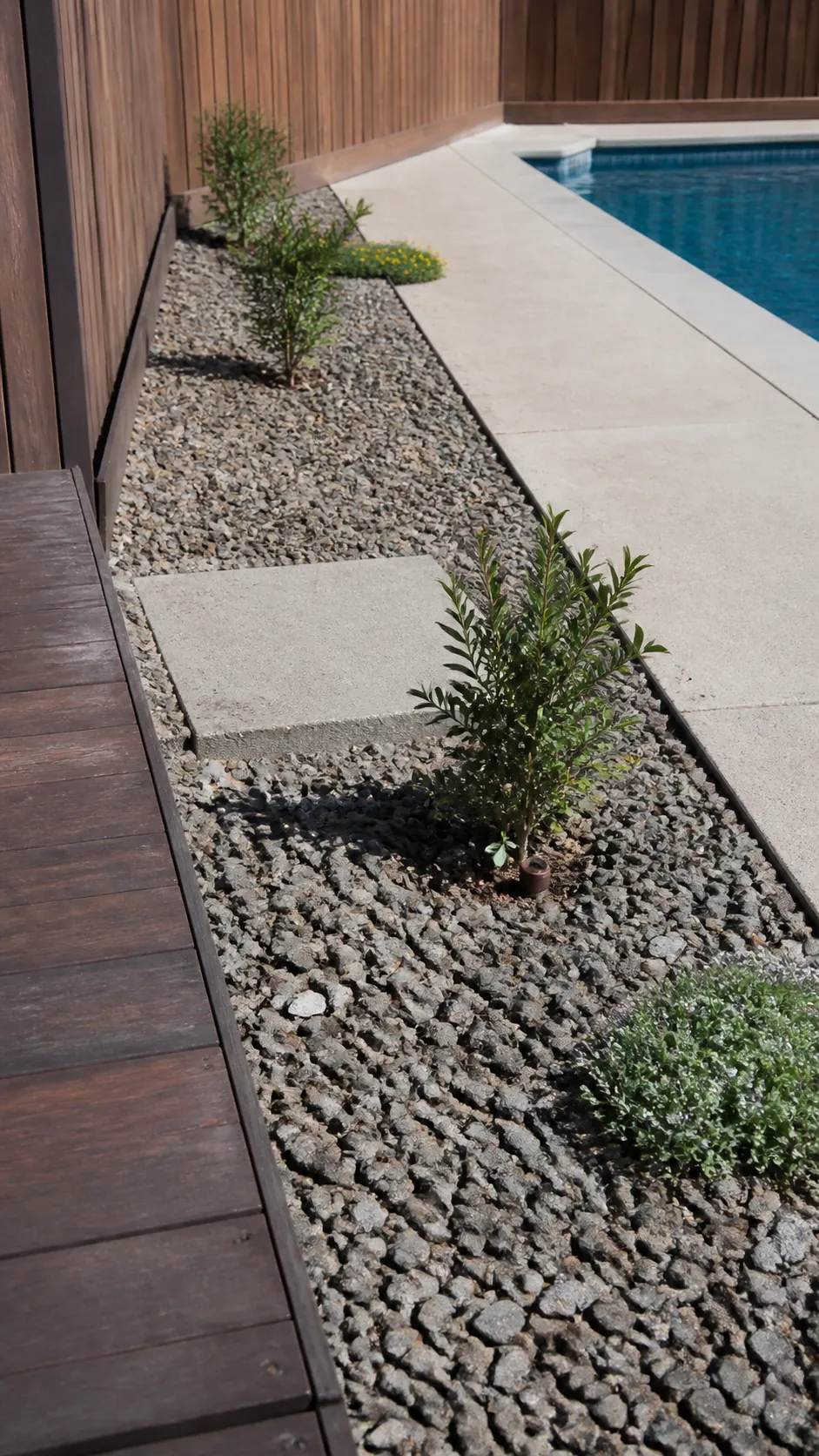
Convert a Hard-to-Mow Strip to Gravel
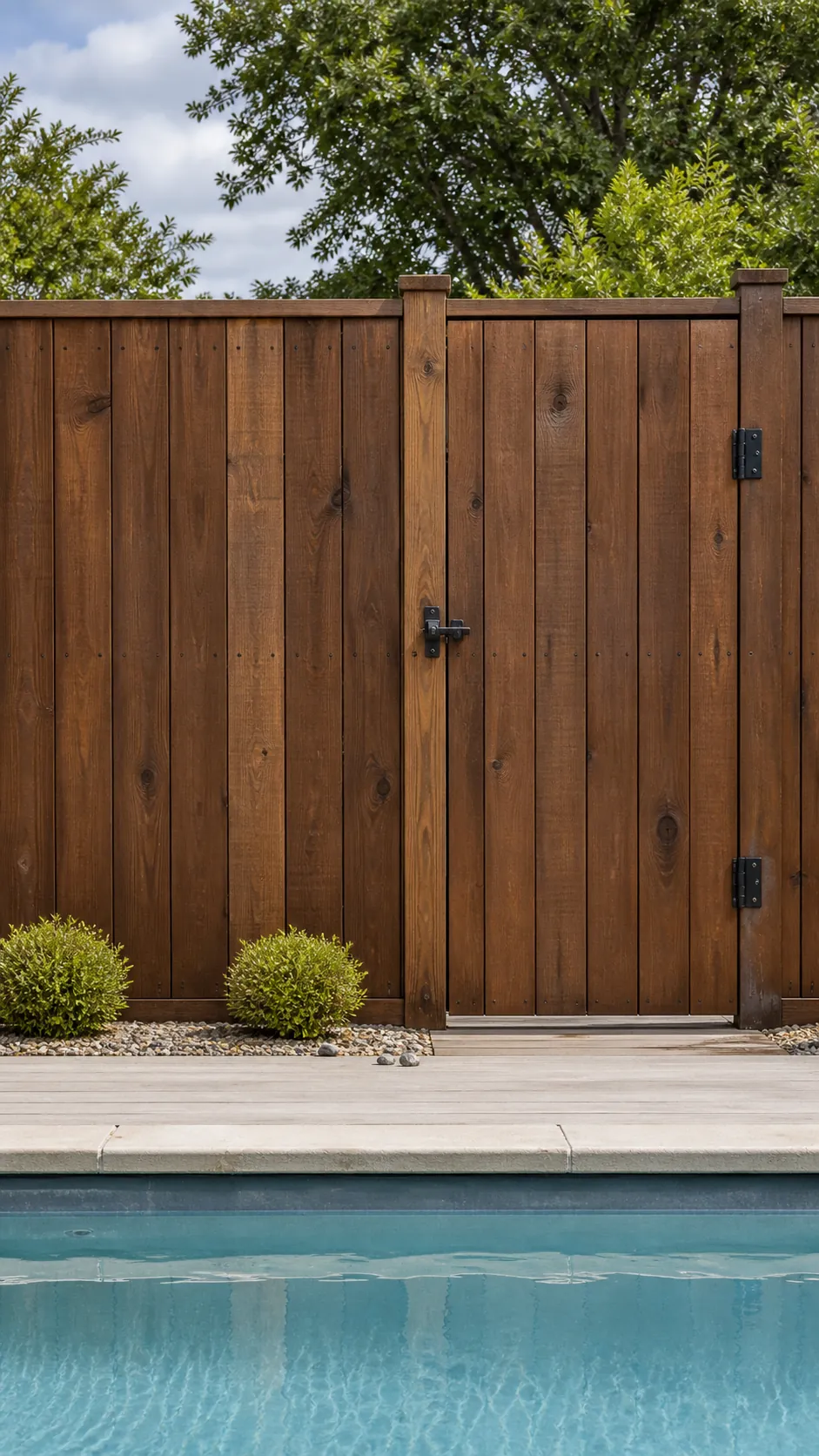
A narrow lawn ribbon beside the pool consumes time and blows clippings toward the water. Remove it only after confirming drainage and irrigation, then install a compacted base, angular gravel, and durable edging. Retain a few planting pockets so the strip does not become a heat-reflecting stone field.
Order material by measured volume and compare bulk delivery with bags. Gravel still needs leaf removal and occasional weeding, so avoid the promise of zero maintenance. Keep loose round stone off main walking routes and chair legs.
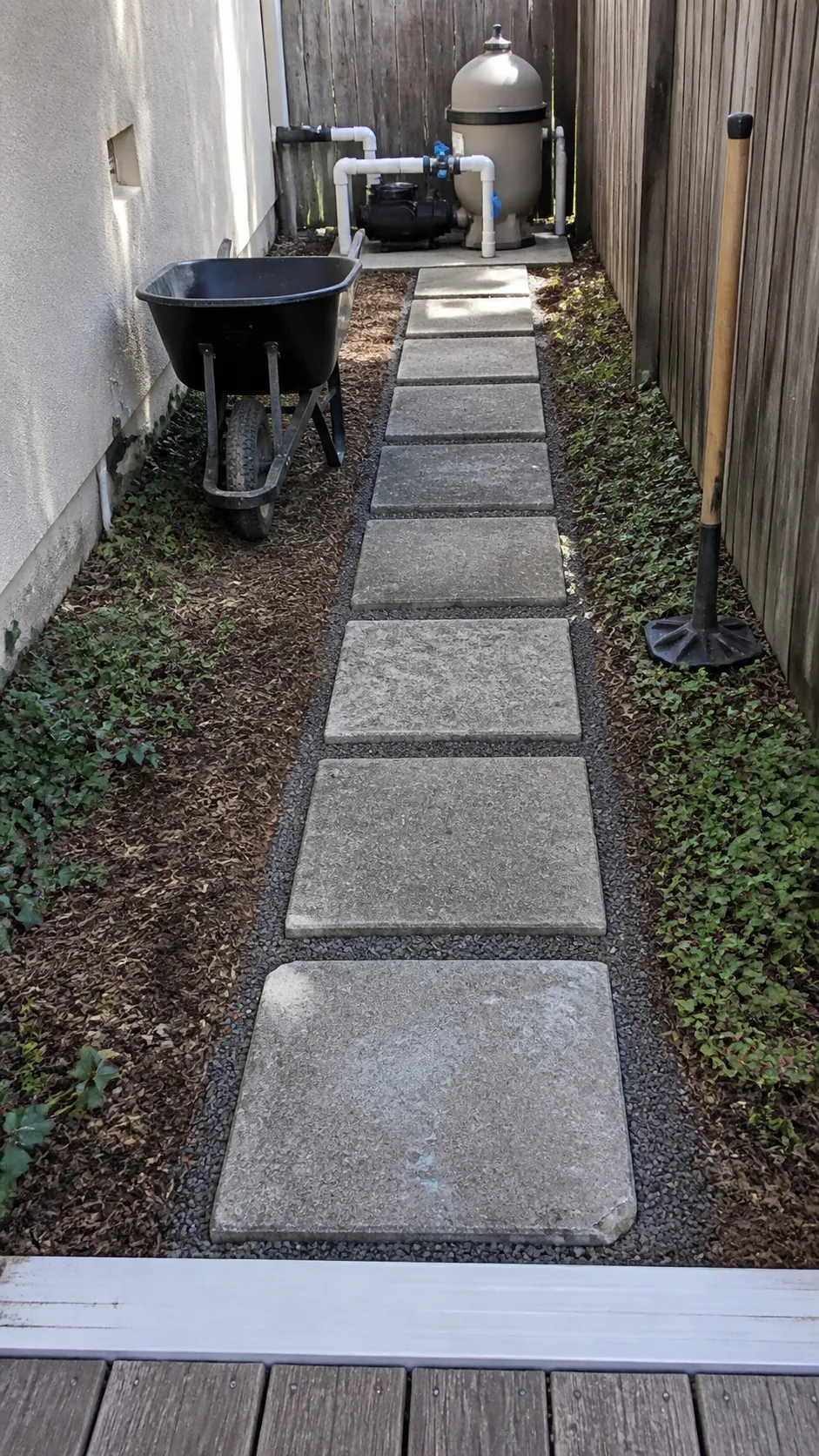
Build a Reclaimed-Paver Service Path
Salvaged pavers can create a stable route to equipment without paying for a full patio extension. Choose pieces of similar thickness and set them on a properly compacted base. A simple straight or gently offset line is easier to level than a complicated mosaic.
Inspect used units for cracks, oil, paint, and sharp edges before bringing them poolside. Keep spacing comfortable for an adult carrying tools. Fill gaps with compacted fine gravel rather than loose material that rolls underfoot.
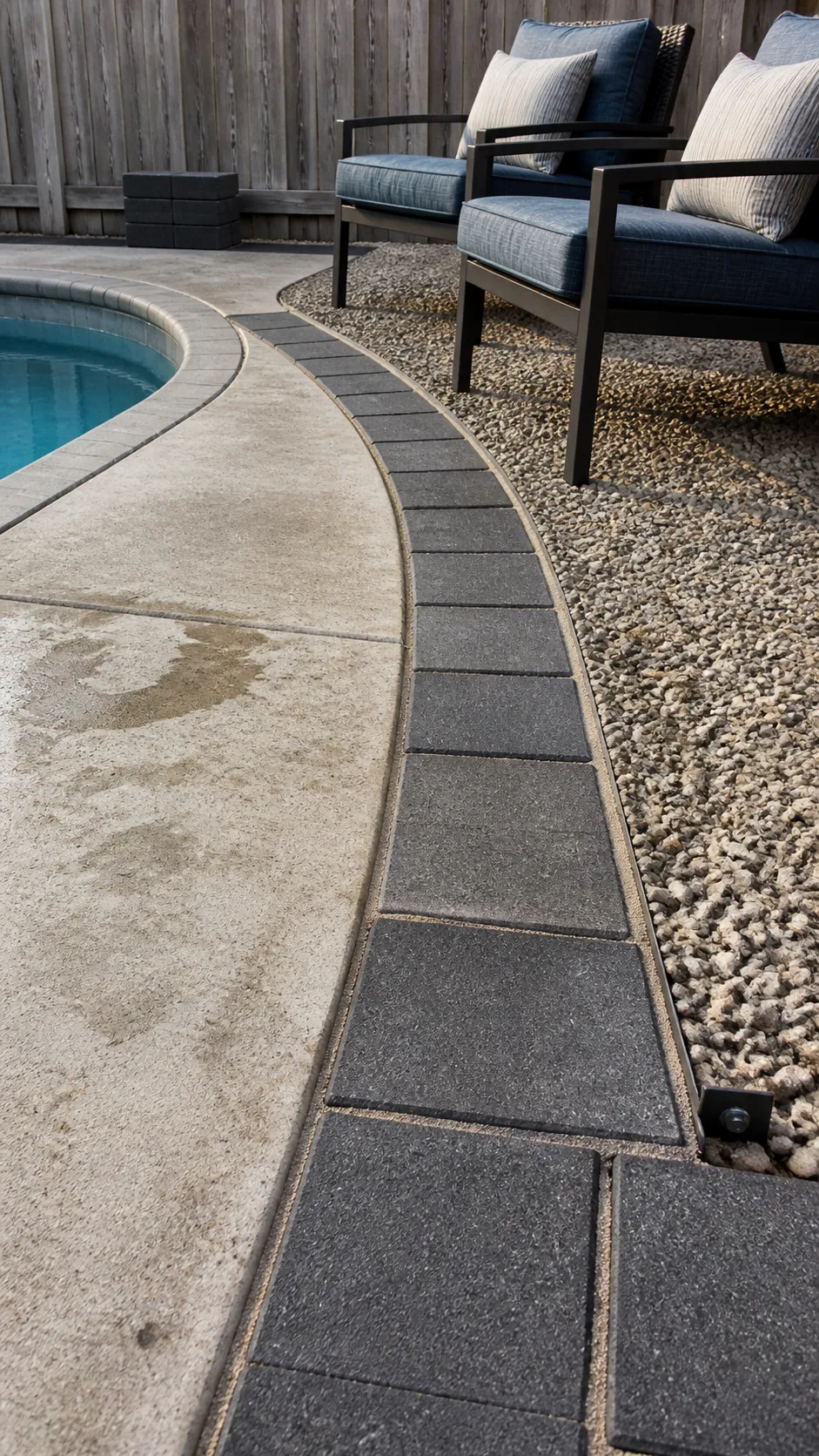
Add a Standard-Paver Accent Border
A narrow border of standard-size concrete pavers can make plain paving feel intentional without replacing the main slab. Use the border to define a lounge zone or transition to gravel, not as a random decorative stripe. Repeating one affordable unit keeps cuts and waste low.
Prepare the base and edge restraint correctly so the pavers do not spread or settle. Confirm that the finished surface stays flush and drains away from the pool. Buy a few spare units for future repairs.
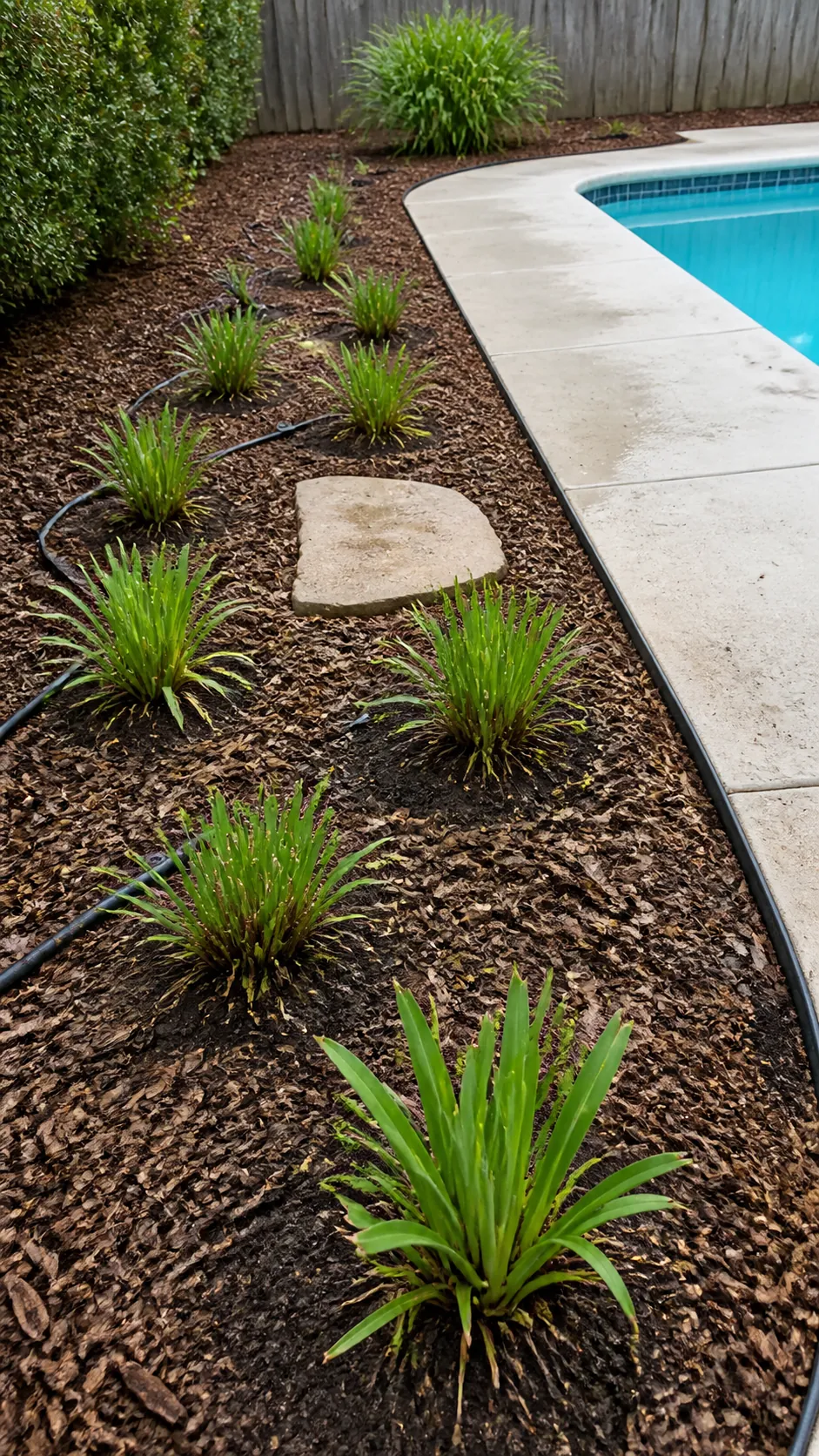
Divide Proven Perennials
Healthy clumping perennials from elsewhere in the yard can fill a pool border for little more than labor. Divide only species that tolerate the poolside sun, heat, moisture, and occasional splash. Move them during the appropriate season and water consistently while roots reestablish.
Keep anything thorny, toxic, invasive, or messy away from circulation and water. Repeat a few reliable plants instead of collecting free divisions that need different care. Leave mature spacing even when small divisions look sparse.
Buy Smaller Plants and Give Them Time
Several small, healthy plants usually cost less and establish more easily than instant-size specimens. Choose varieties by mature size and climate fit, then place them according to the plan rather than filling every gap. Temporary mulch makes the young bed look finished while roots grow.
Inspect roots, foliage, and labels before buying discounted stock. A cheap plant that is diseased, rootbound, or wrong for the site is not a saving. Concentrate the first year’s budget on one visible bed instead of underplanting the whole perimeter.
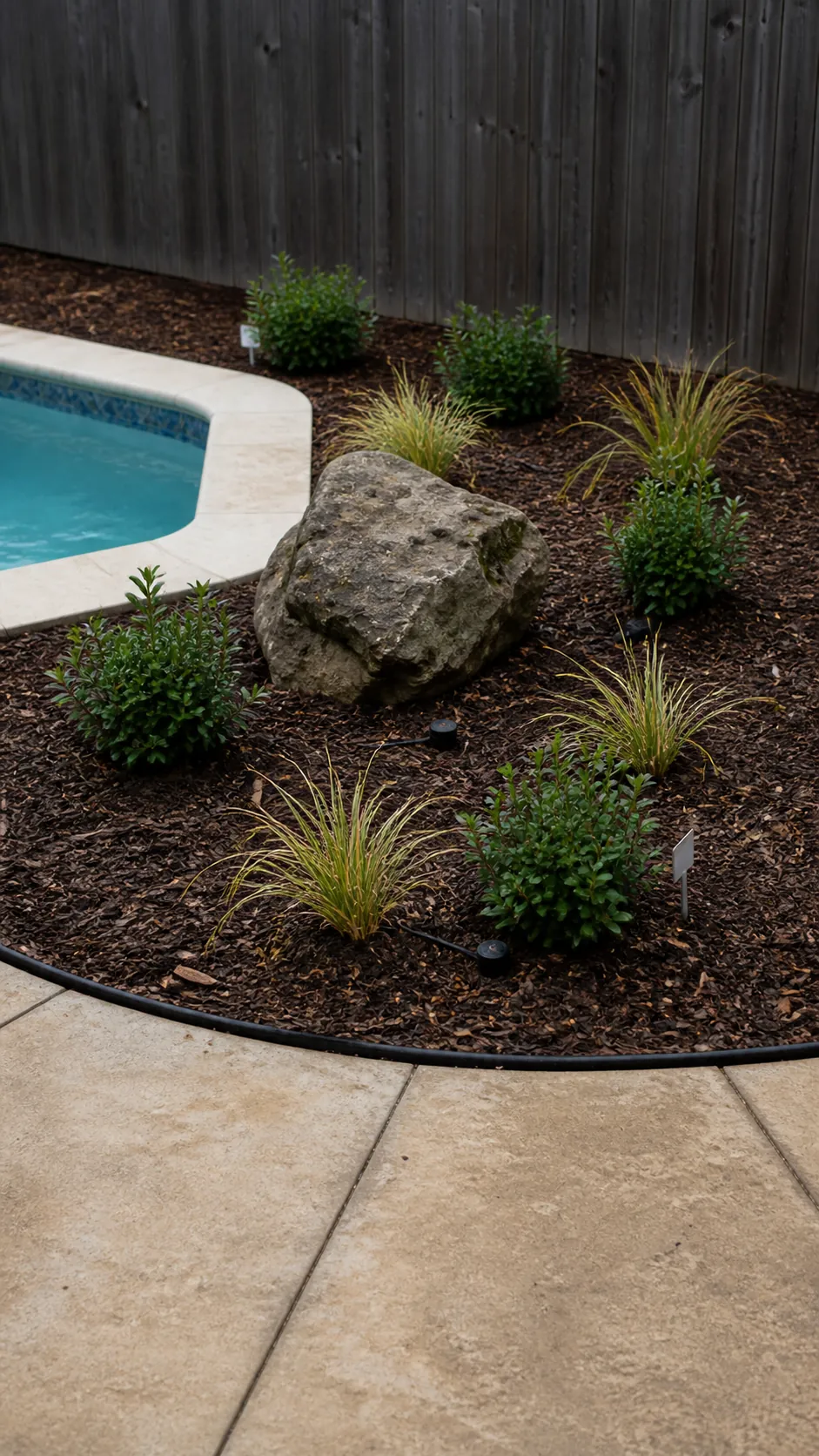
Use Climate-Adapted Groundcover Plugs
Groundcover plugs are inexpensive because each plant is small, yet they can eventually shade soil and connect a border. Select a noninvasive type appropriate for sun, foot traffic, and regional climate. Plant in a repeated grid that follows mature spread rather than placing plugs inches apart.
Weed and mulch between plugs during establishment, then edge them before they reach paving. Avoid seeding near the pool where soil and straw can wash into water. A local extension source can help identify adapted alternatives to thirsty lawn.
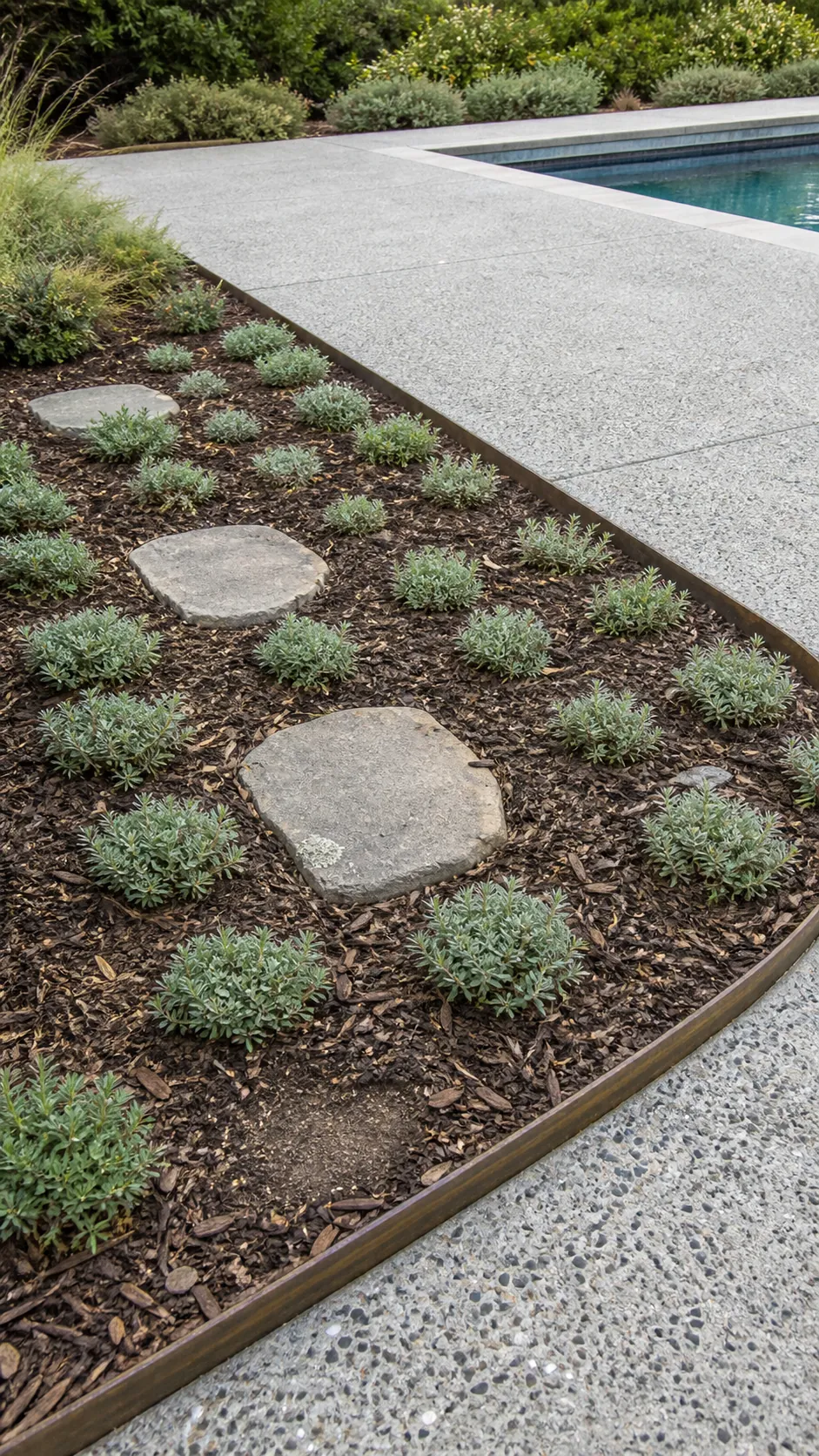
Group a Few Secondhand Oversized Pots
Estate sales, reuse centers, and local listings can yield large planters for less than retail. Select sound frost-resistant containers with drainage holes, then unify mismatched pieces through a limited color palette. Two or three large pots look stronger and require less watering than many tiny ones.
Clean containers safely and inspect for cracks before filling. Use lightweight filler only if appropriate for the plant and pot stability. Keep pots outside gate swings, coping, and required barrier clearances.
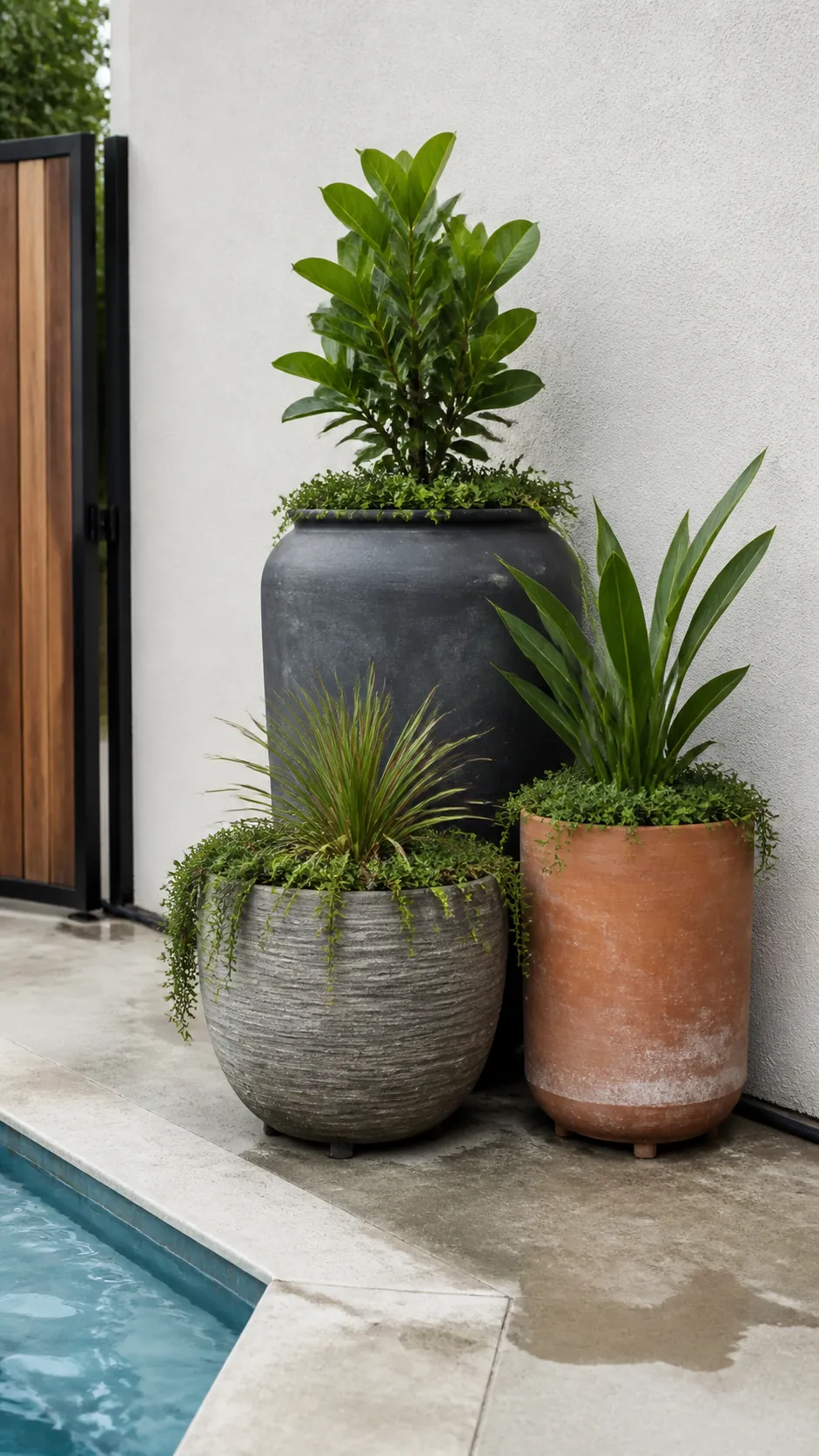
Build One Simple Timber Planter
A single rectangular planter can screen equipment or define a seating edge more effectively than several small boxes. Use outdoor-rated, nontoxic materials suitable for soil contact and reinforce the structure for wet soil weight. Add an inner drainage gap without trapping water against timber.
Keep the planter separate from the pool barrier so it cannot become a climbing aid. Choose one upright plant and a low filler rather than an expensive mixed display. Site it where the eventual mature foliage will not block service access.
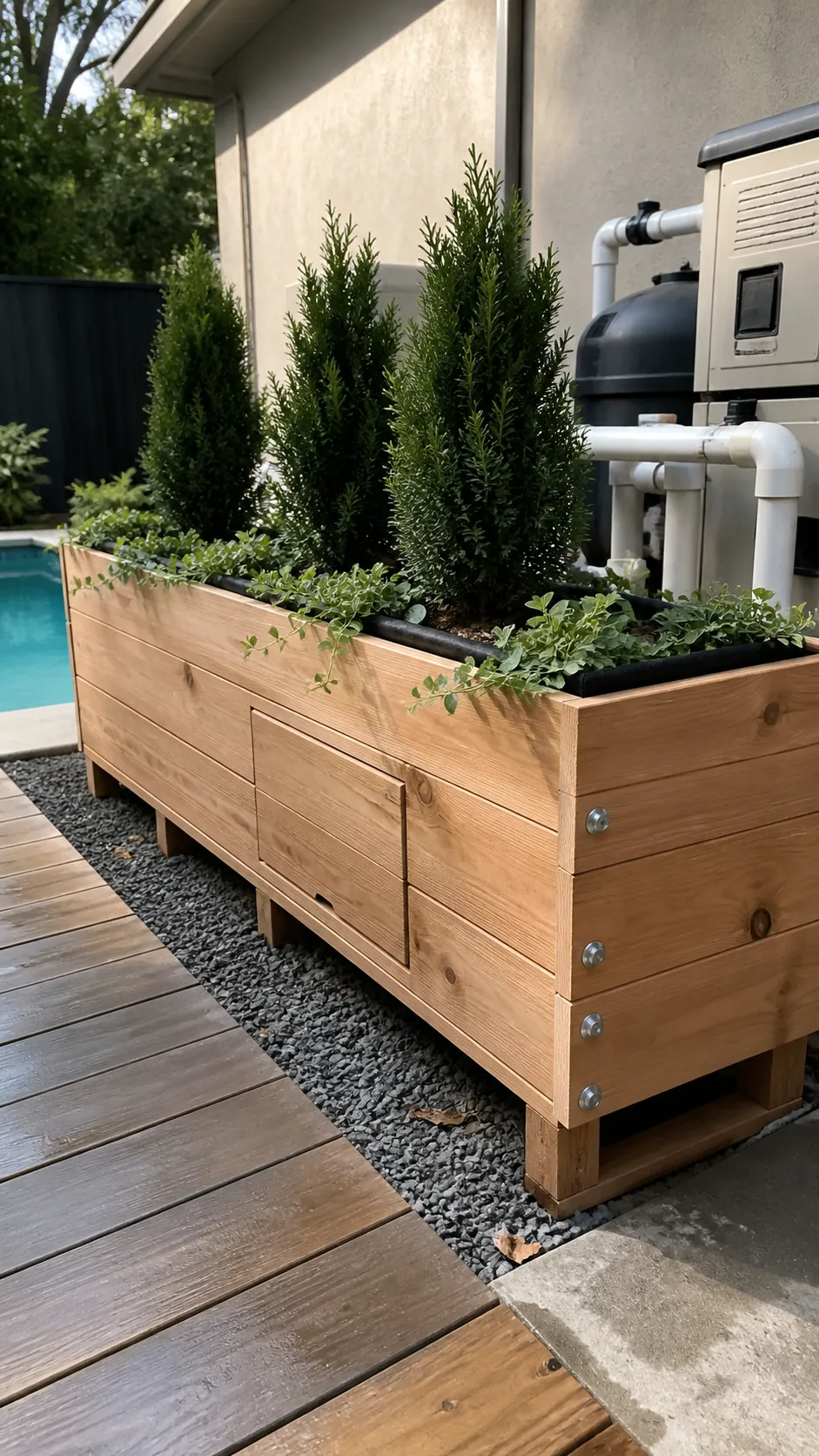
Use Free Arborist Chips in Outer Beds
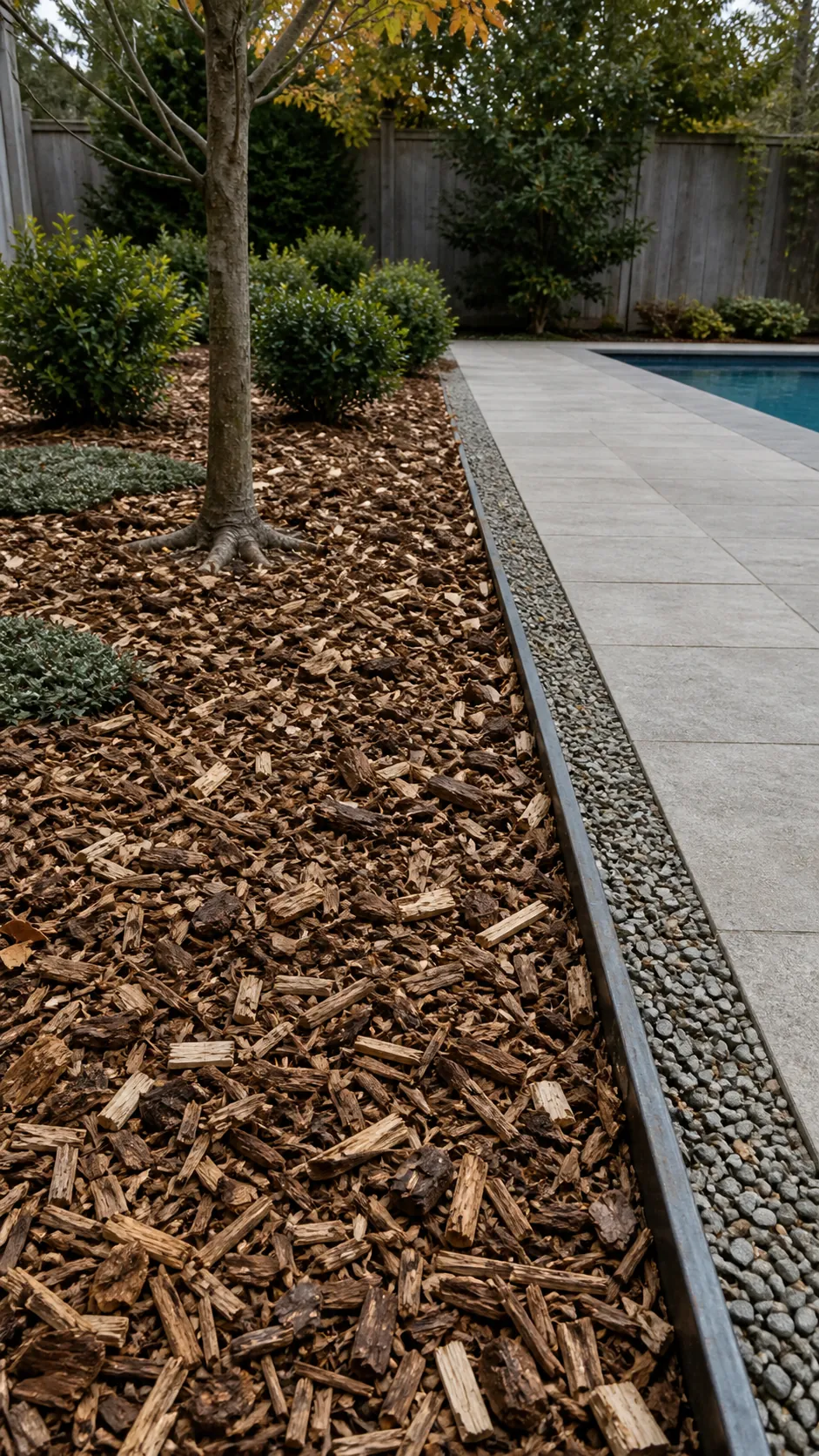
Coarse arborist wood chips can cover large outer beds, conserve moisture, and suppress weeds at low cost. Use clean material from a reputable source and keep it away from trunks, foundations, and the immediate splash zone. Organic mulch belongs where wind and feet will not carry it into the pool.
Spread an appropriate depth over weeded soil without piling it into a volcano. Expect the chips to fade and settle naturally. A crisp edge between mulch and paving makes free material look deliberate.
Choose One Large Shade Umbrella
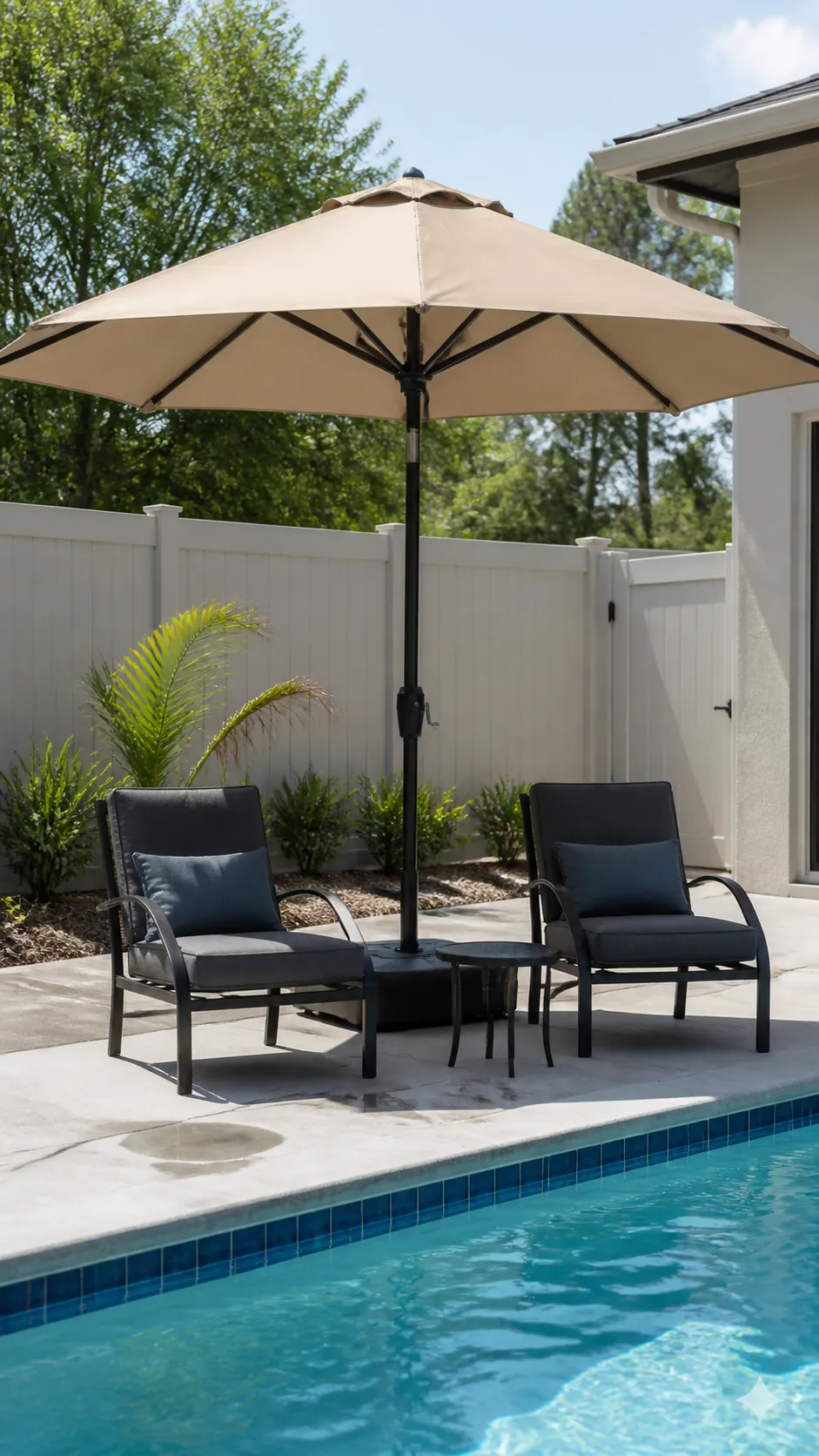
A well-made umbrella can shade a lounge zone for far less than a pergola. Buy the correct base for the canopy size and wind exposure, then position it so the pole does not narrow the main route. A neutral canopy works with future phases instead of locking the yard into a trend.
Close the umbrella when unattended and store it for severe weather. Do not place a portable base where it could become a climbing aid near the barrier. Shade the chairs rather than stretching the canopy over the water.
Refinish the Furniture You Already Own
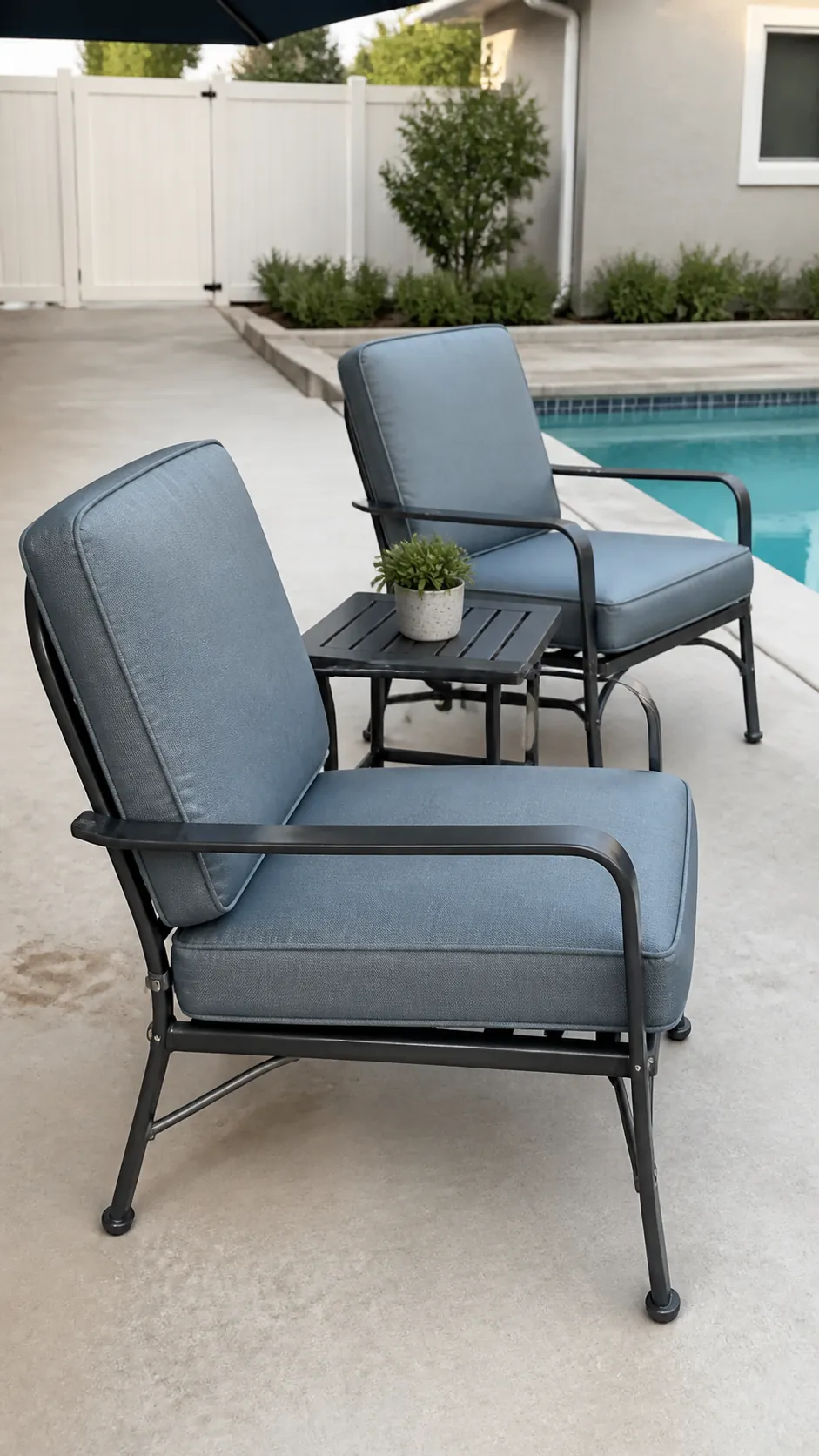
Sound metal or timber frames can often be cleaned, repaired, and refinished instead of replaced. Tighten hardware, address corrosion, and use coatings approved for the material and outdoor exposure. New cushion covers in one durable fabric can make mismatched pieces feel coordinated.
Do not paint over weakened frames or cracked welds. Keep drying coatings and sanding dust far from the pool. Arrange the restored pieces in one defined zone so the deck still feels open.
Stretch Low-Voltage Lights Along One Route
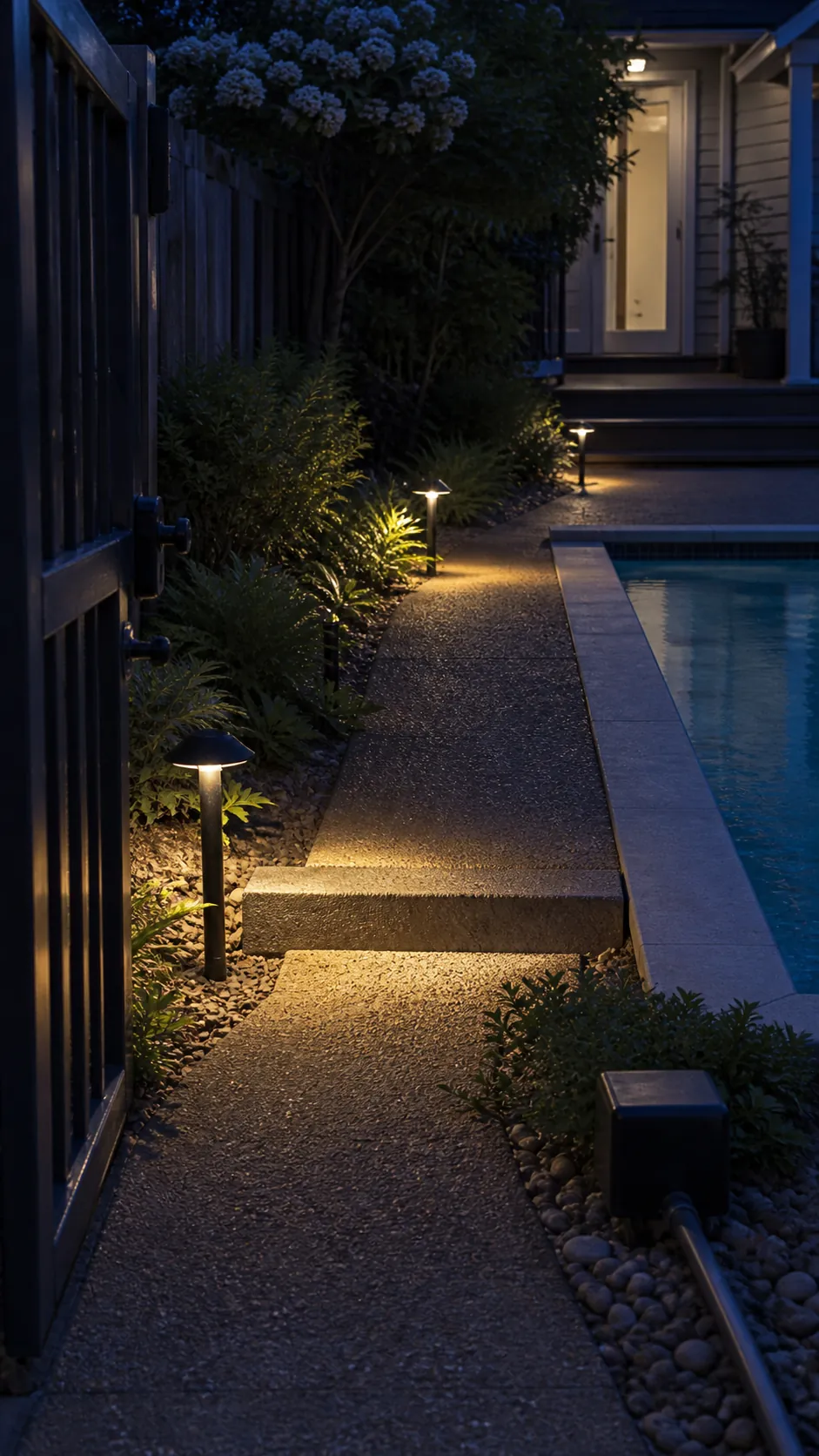
Lighting the gate, step, and route to the house has more value than spotlighting every plant. A small low-voltage kit can create a warm sequence with fewer fixtures and less cable. Choose outdoor-rated components and shield the beams from neighbors and swimmers.
Electrical work near water must follow local rules, so hire a qualified professional when required. Document cable routes before planting. Avoid relying on cheap stakes that fail quickly or create glare.
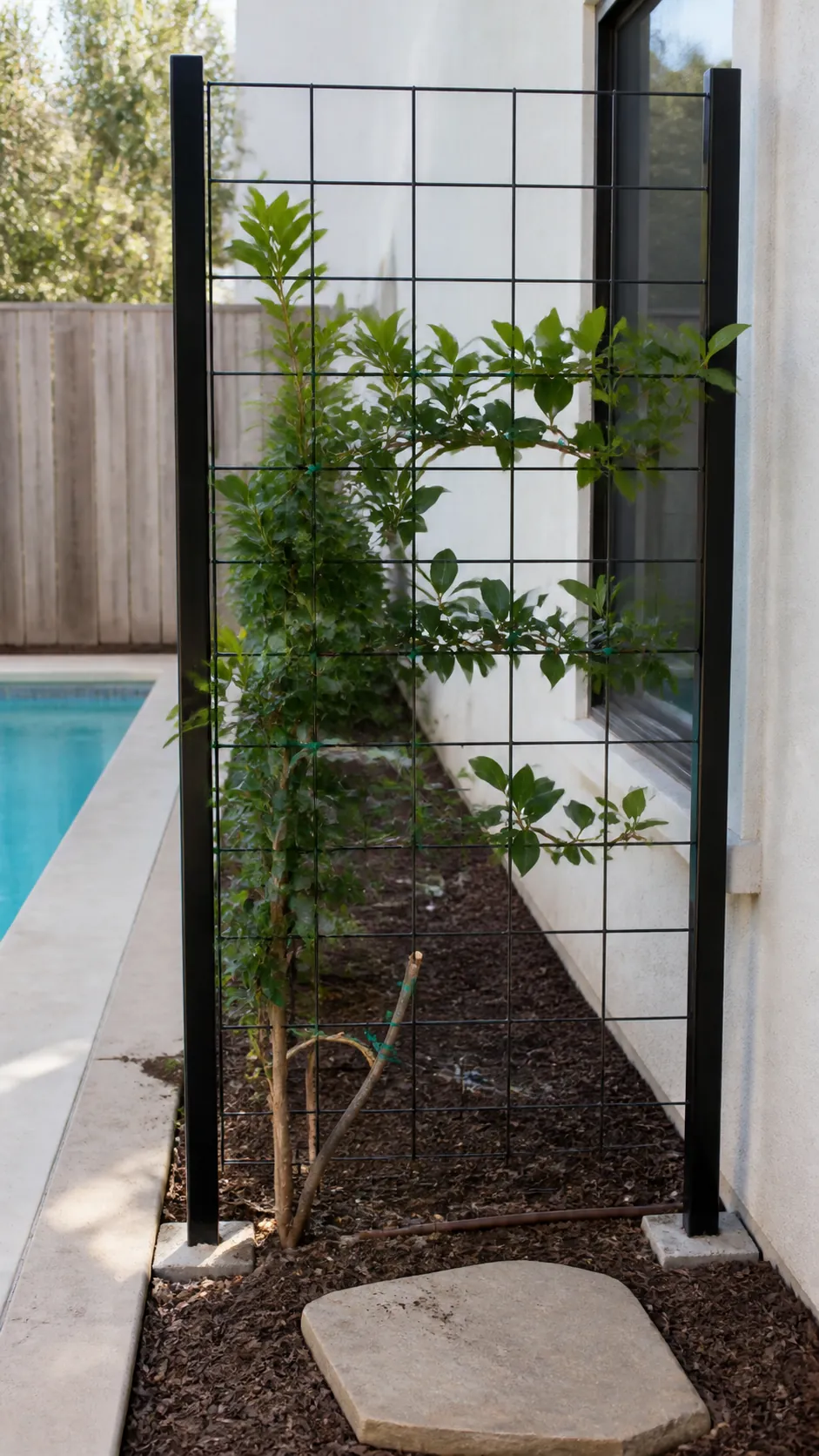
Train One Vine on a Basic Trellis
A simple freestanding trellis can soften a blank side and provide targeted screening with one plant. Use a sturdy frame and choose a well-behaved vine that will not damage fences, drop excessive flowers, or invade local habitat. Train stems horizontally to cover useful width.
Leave room behind the frame for pruning and inspect ties each season. Keep it away from gates and climbing restrictions. The least expensive vine becomes costly if it reaches gutters, plumbing, or neighboring property.
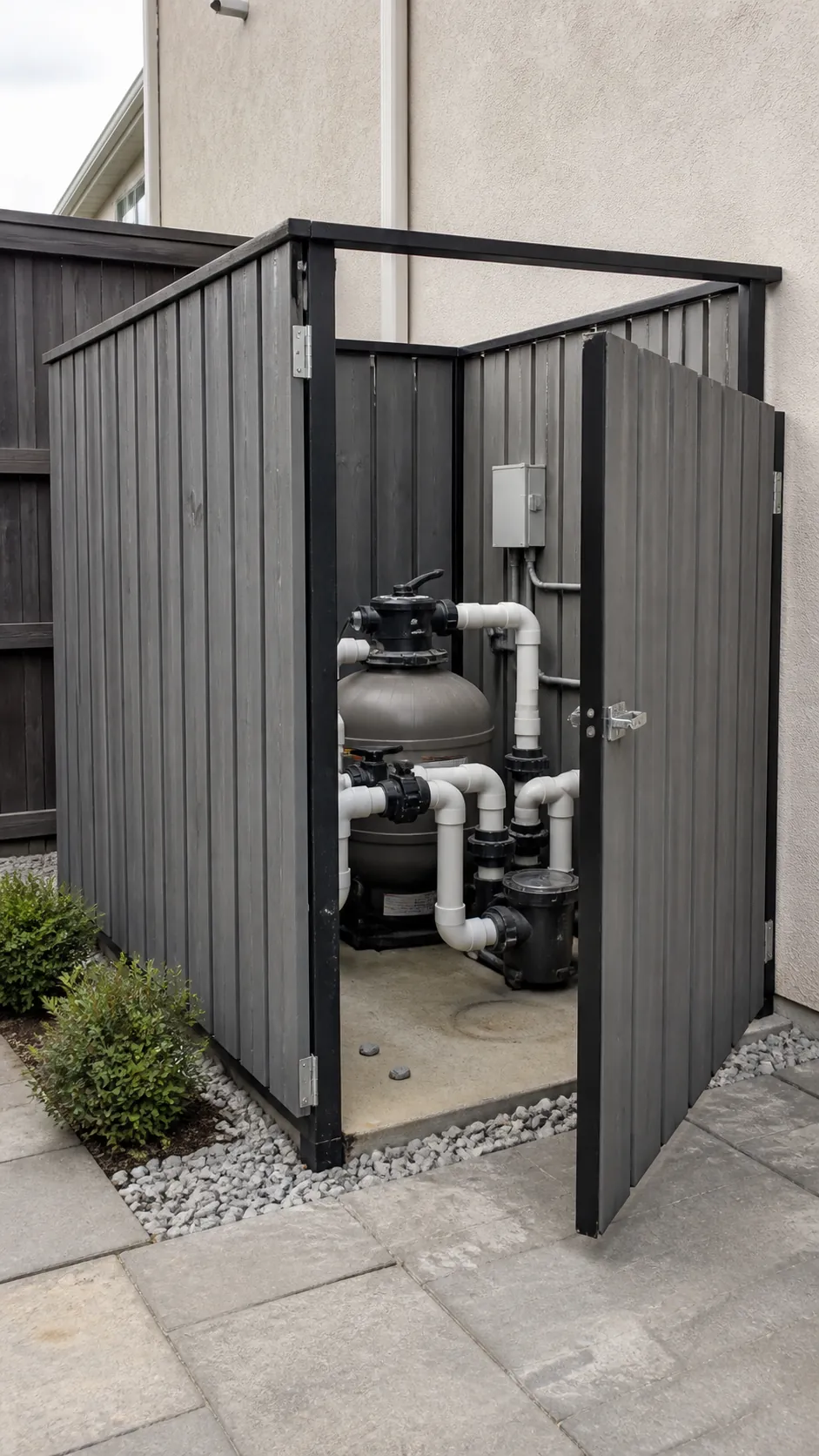
Screen Equipment With Stock Slats
Standard fence slats can form a neat equipment screen without custom decorative panels. Build a simple frame with enough ventilation, top clearance, drainage, and a full-width removable side. Match the fence color so the screen recedes.
Measure the working clearance around every pump, filter, valve, and electrical panel before building. Never sacrifice service access to save one board. Use corrosion-resistant fasteners and keep plants outside the repair zone.
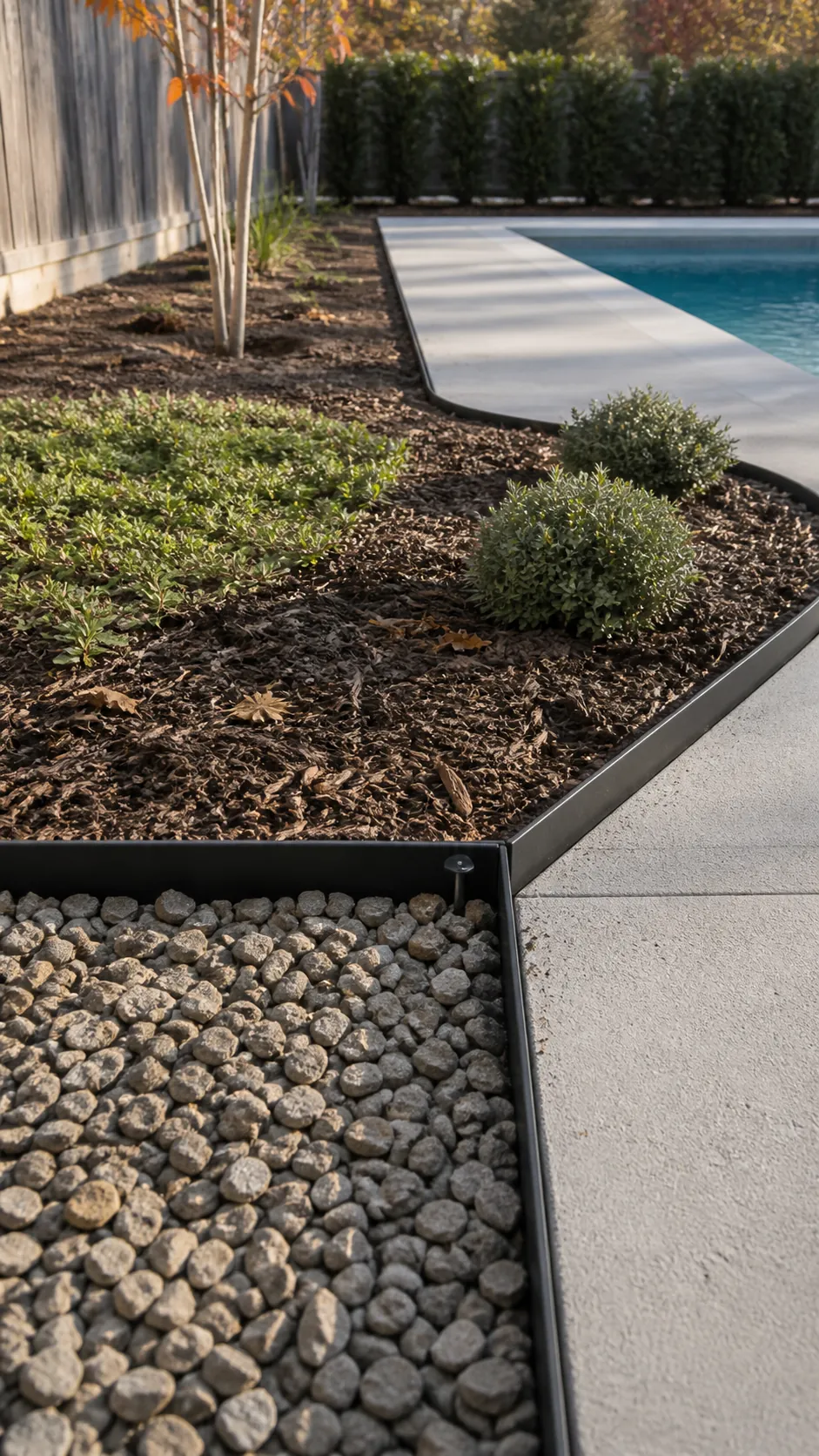
Repeat One Inexpensive Edging Material
Consistent edging can make modest gravel, mulch, and planting read as one design. Powder-coated steel, aluminum, standard brick, or a simple concrete curb can work depending on the site. Choose the version you can install straight, secure, and flush enough to avoid trips.
Use the same edge around every new phase so later work connects visually. Do not buy thin plastic that heaves or breaks if a durable option fits the budget. Good preparation matters more than a decorative profile.
Finish One High-Impact Zone Before Expanding
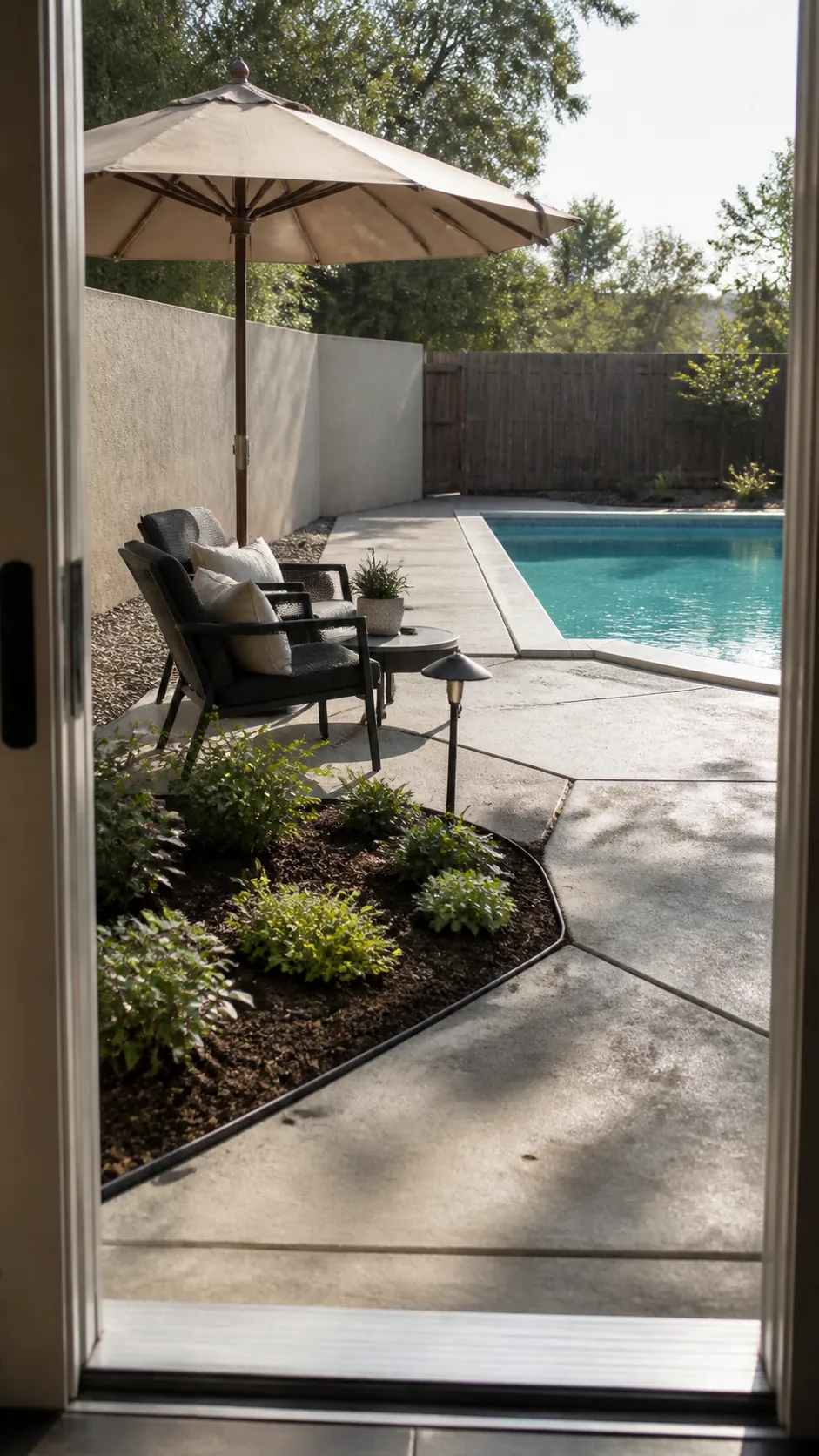
Choose the view from the house or the place where people sit most often and complete that zone first. A clean deck, shade, two restored chairs, one planted border, and a lit path can transform daily use even while other edges remain simple. Photograph and measure the finished phase so later materials, colors, and levels match.
Reserve money for drainage, safe electrical work, barrier repairs, and unexpected site conditions before buying decoration. DIY the tasks that match your skills, but hire qualified help for structural, electrical, plumbing, grading, and code-sensitive work. The most convincing backyard pool landscaping on a budget is not the cheapest collection of objects; it is a sequence of durable decisions that does not need to be undone.