
Designing a sibling shared bedroom for a boy and a girl often feels like a puzzle. You want to make sure both kids feel at home while keeping the space functional and organized. Whether you are dealing with a small apartment or just want your kids to grow closer, finding the right balance between shared play areas and private sleeping zones is key.
This list covers practical ways to set up a brother and sister room with shared bedrooms in mind. You will find tips on furniture placement, storage hacks, and simple decor tricks that work for different ages. These room sharing ideas sibling pairs will love help turn a cramped space into a comfortable place for both children to sleep, study, and play.
Symmetrical Twin Beds with a Shared Nightstand

Placing two twin beds side-by-side with a single nightstand in the middle is a classic layout for a kids room shared brother sister. This setup creates a sense of equality because both children have the same amount of space and easy access to a surface for their water bottles or books. It works well in wider rooms where you want to keep the center open for play.
To make this work for a brother and sister, use the shared nightstand as a neutral zone. You can choose a sturdy wooden table that fits both of their styles. This layout is also great for twins bedroom ideas sisters or brothers might use, as it keeps them close enough to talk at night but separate enough to have their own blankets and pillows.
Floor-to-Ceiling Bookshelf as a Room Divider
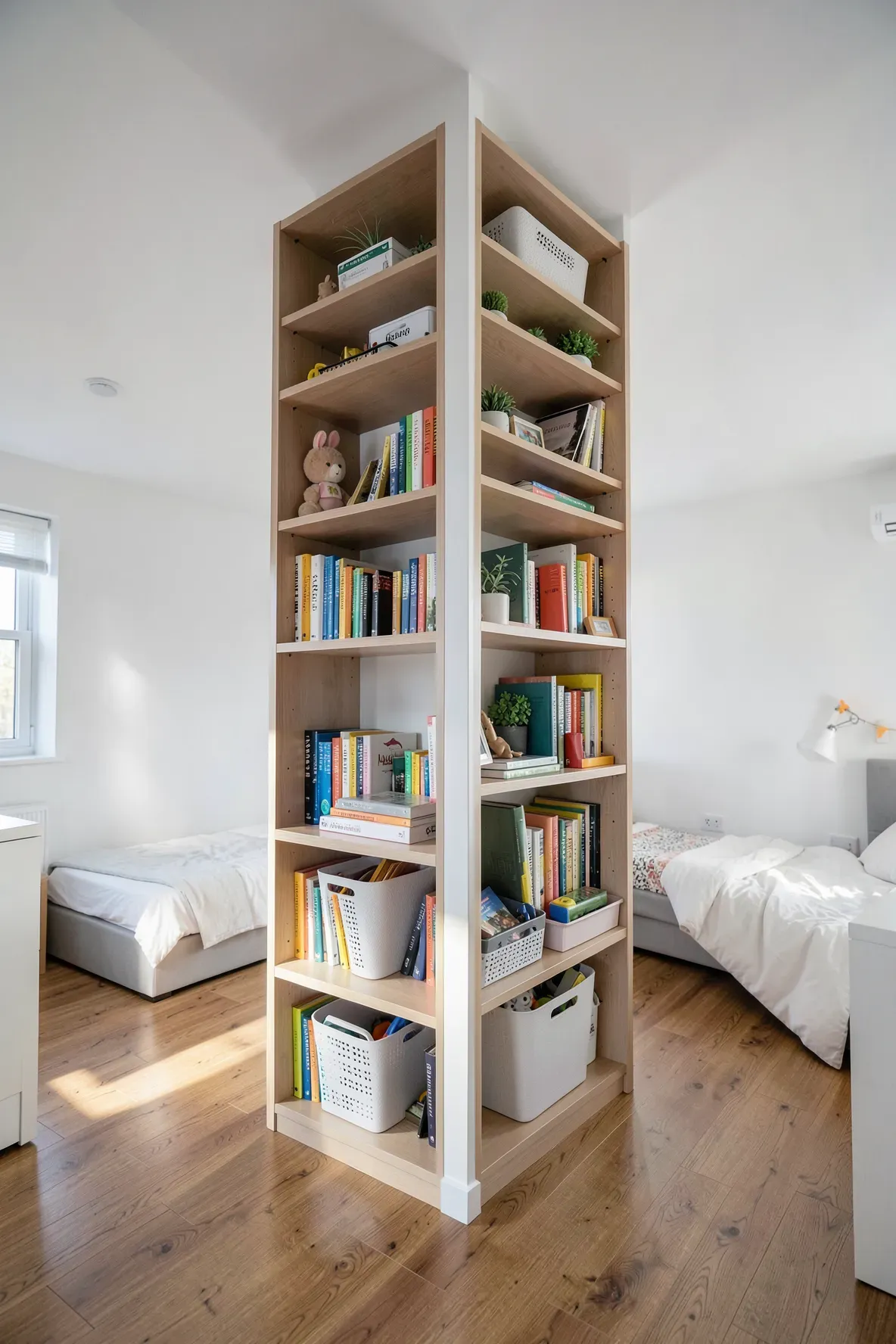
When you need to create privacy in a brother and sister room, a tall bookshelf is a smart tool. By placing a sturdy unit perpendicular to the wall, you physically divide the room into two sections. This gives each child a private nook without the cost of building a permanent wall. It is one of the most effective room ideas for two sisters or a brother-sister duo who need their own boundaries.
Make sure to anchor the shelf to the wall and floor for safety. You can leave some shelves open to let light pass through or fill them with bins to block the view entirely. This gives each sibling a place to store their specific toys and books on their own side of the divider.
Bunk Beds with Privacy Curtains for Each Level
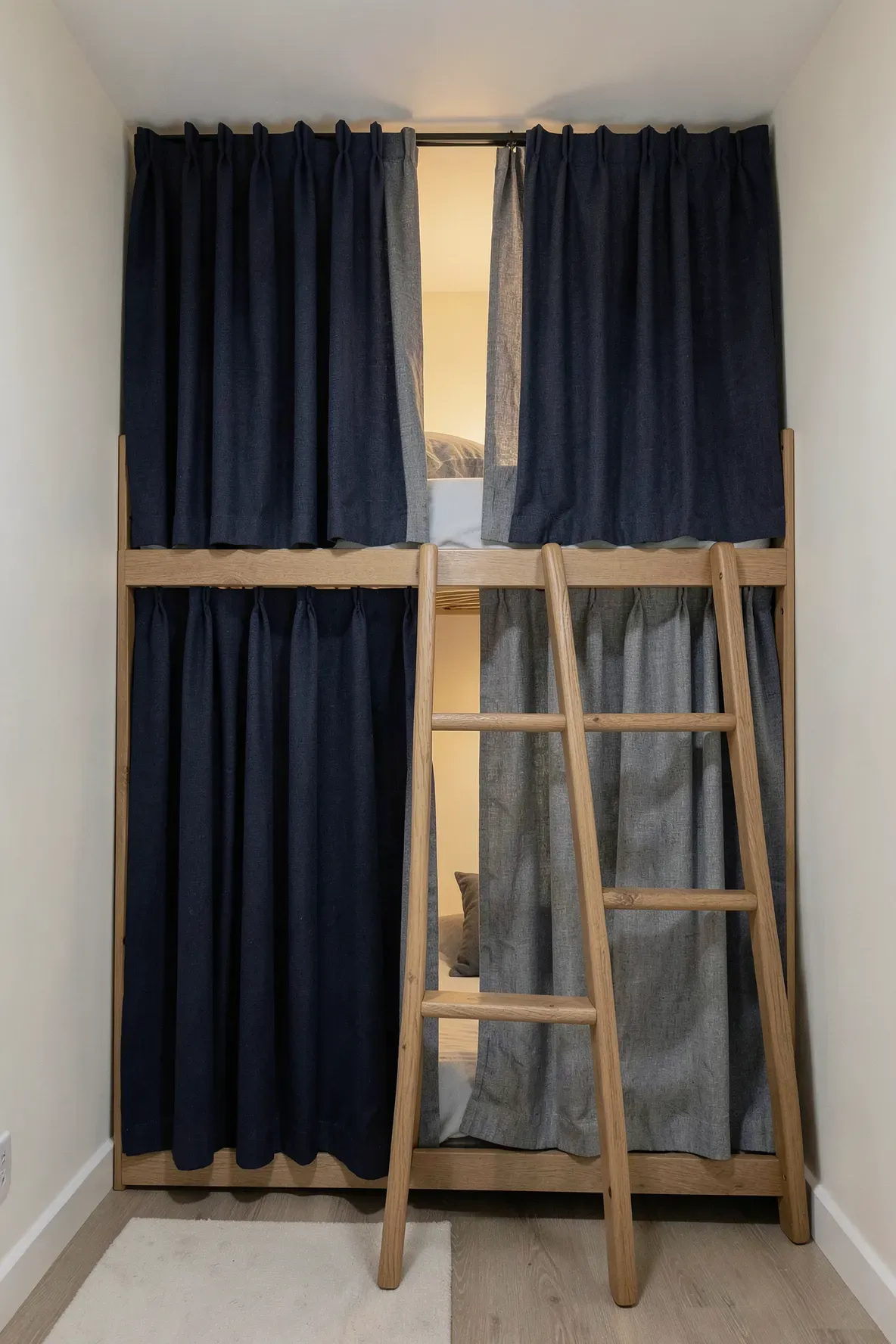
Bunk beds are a staple for small bedroom ideas because they use vertical space. To make a shared room feel more private, attach simple curtain rods or tension rods to the bed frames. Adding thick fabric curtains allows each child to close off their bed and have a personal ‘fort’ whenever they need a break from their sibling.
This is especially helpful in a brother and sister room shared bedrooms setup where different bedtimes might be an issue. The curtains block out light from a lamp or a tablet, letting one child sleep while the other reads. It is a low-cost way to give each kid a sense of ownership over their sleeping area.
Neutral Color Palette with Individual Accent Pillows
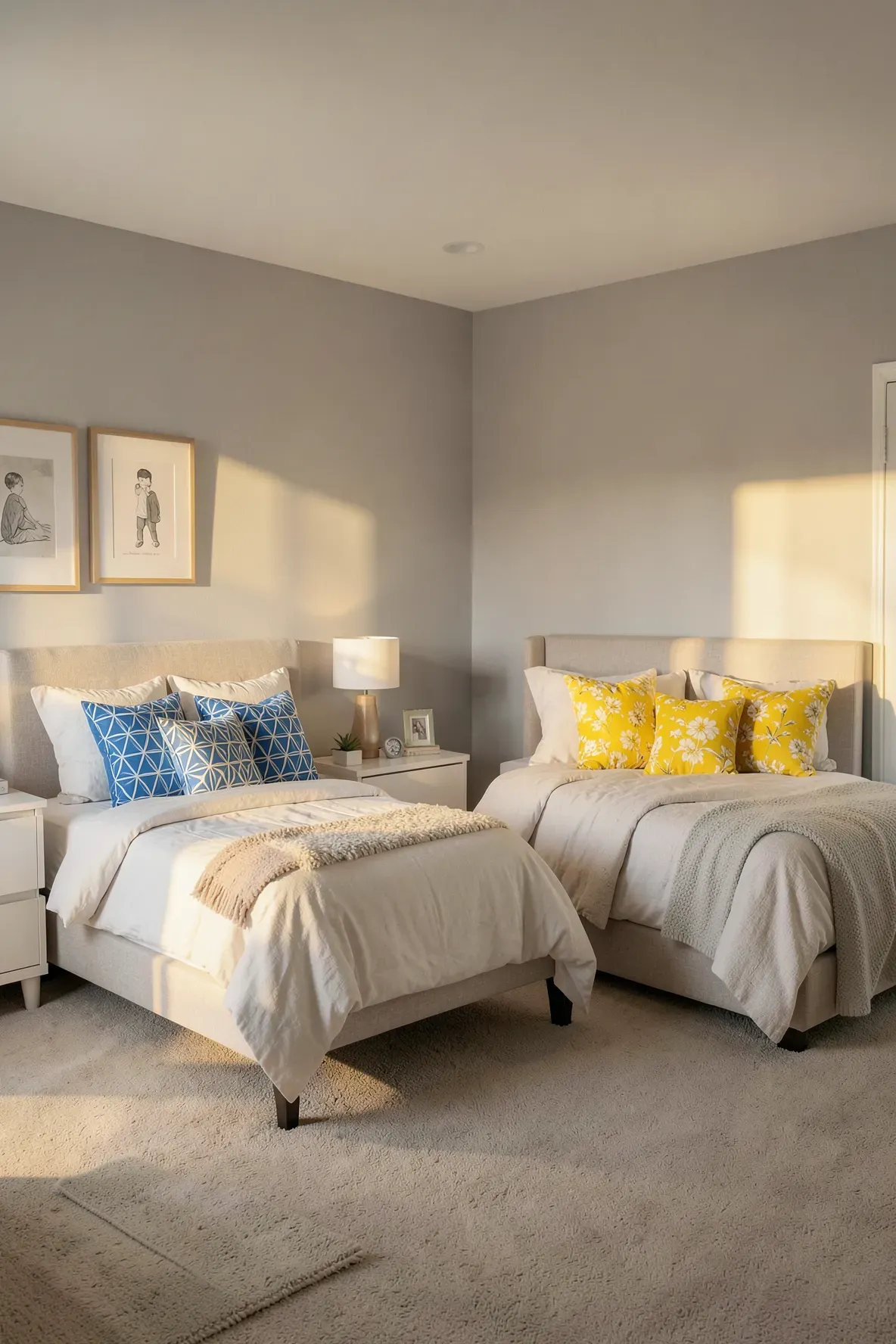
Choosing a base color like light gray, beige, or white makes a brother and sister room ideas easier to execute. Instead of picking ‘boy’ or ‘girl’ colors for the walls, keep the background simple. This prevents the room from feeling mismatched or cluttered. You can then let each child pick their own accent pillows, throw blankets, or small rugs to show off their personality.
This approach helps the room look cohesive while still respecting individual tastes. If one sibling likes blue and the other likes yellow, those colors can pop against the neutral walls without clashing. It is a flexible way to handle brothers room ideas or mixed-gender spaces as the kids grow and their favorite colors change.
Back-to-Back Desks for a Shared Study Zone
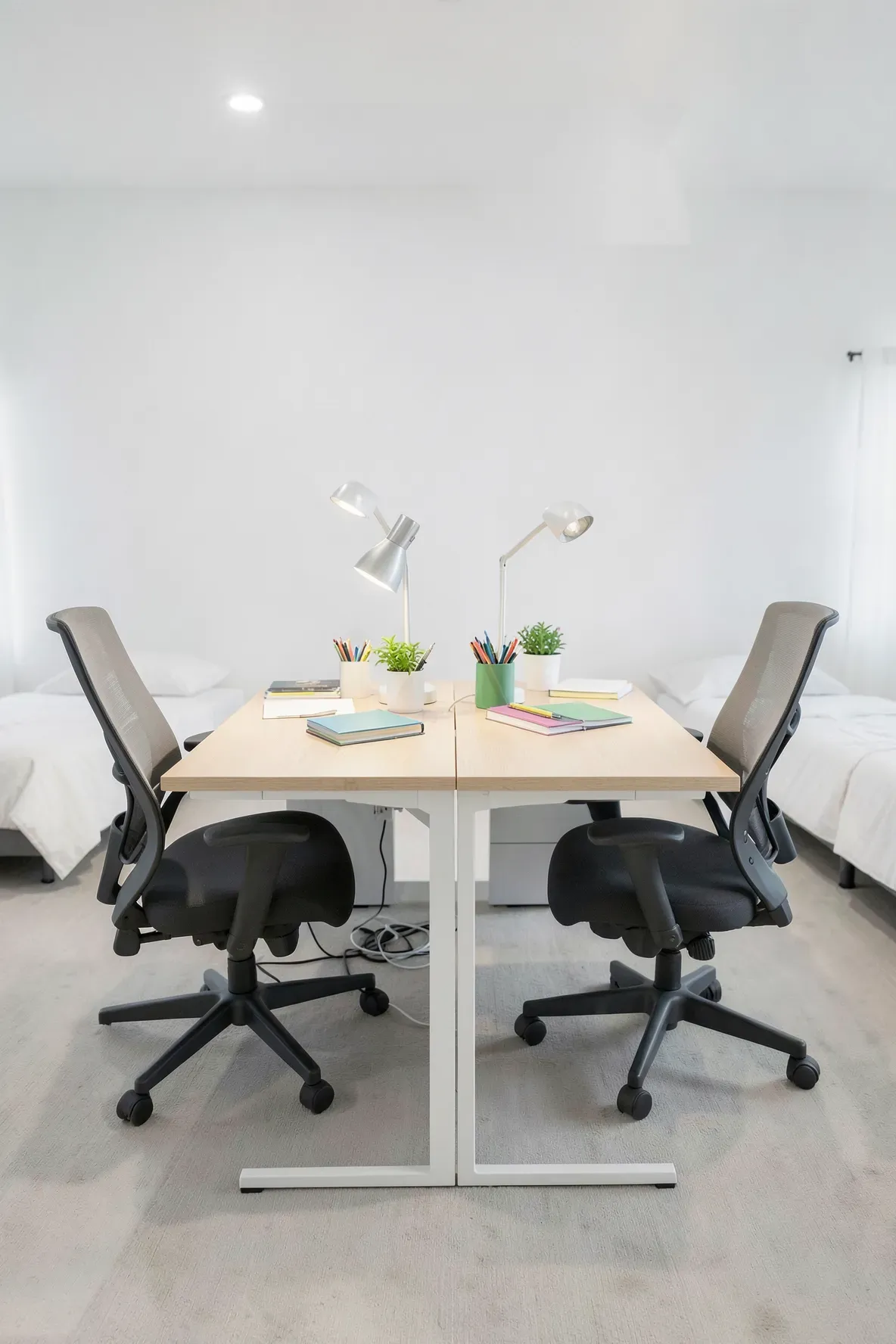
Creating a dedicated homework area is important as kids get older. Placing two desks back-to-back in the center of the room or along a wall creates a clear study zone. This layout helps minimize distractions because the siblings aren’t looking directly at each other while they work. It keeps school supplies in one place rather than scattered around the beds.
If the room is small, look for slim desks with built-in drawers. Using a shared power strip in the middle makes it easy for both kids to plug in their laptops or desk lamps. This setup encourages a productive environment while keeping the rest of the room free for relaxation and play.
Corner Bed Placement to Maximize Floor Space
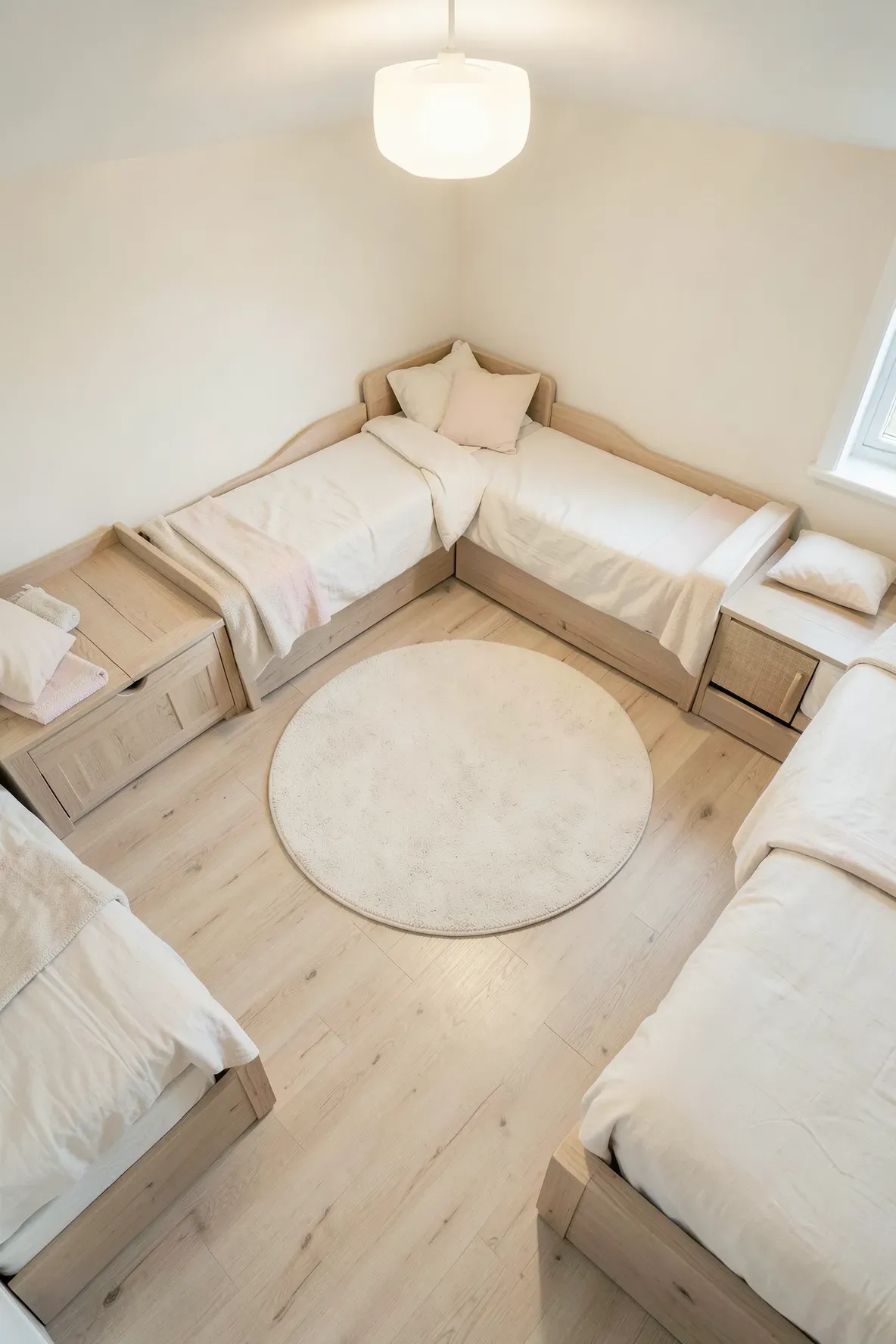
In many small bedroom ideas, placing beds in an ‘L’ shape in the corner is the best way to open up the floor. By pushing the headboards into the corner, you create a large open area in the middle of the room for activities. This layout works well for younger children who need space to spread out their toys or building blocks.
To make this feel organized, you can place a small square table or a shared storage chest in the corner where the two beds meet. This serves as a joint nightstand. It is a practical choice for a sibling shared bedroom where floor space is at a premium.
Color-Coded Storage Bins for Personal Belongings
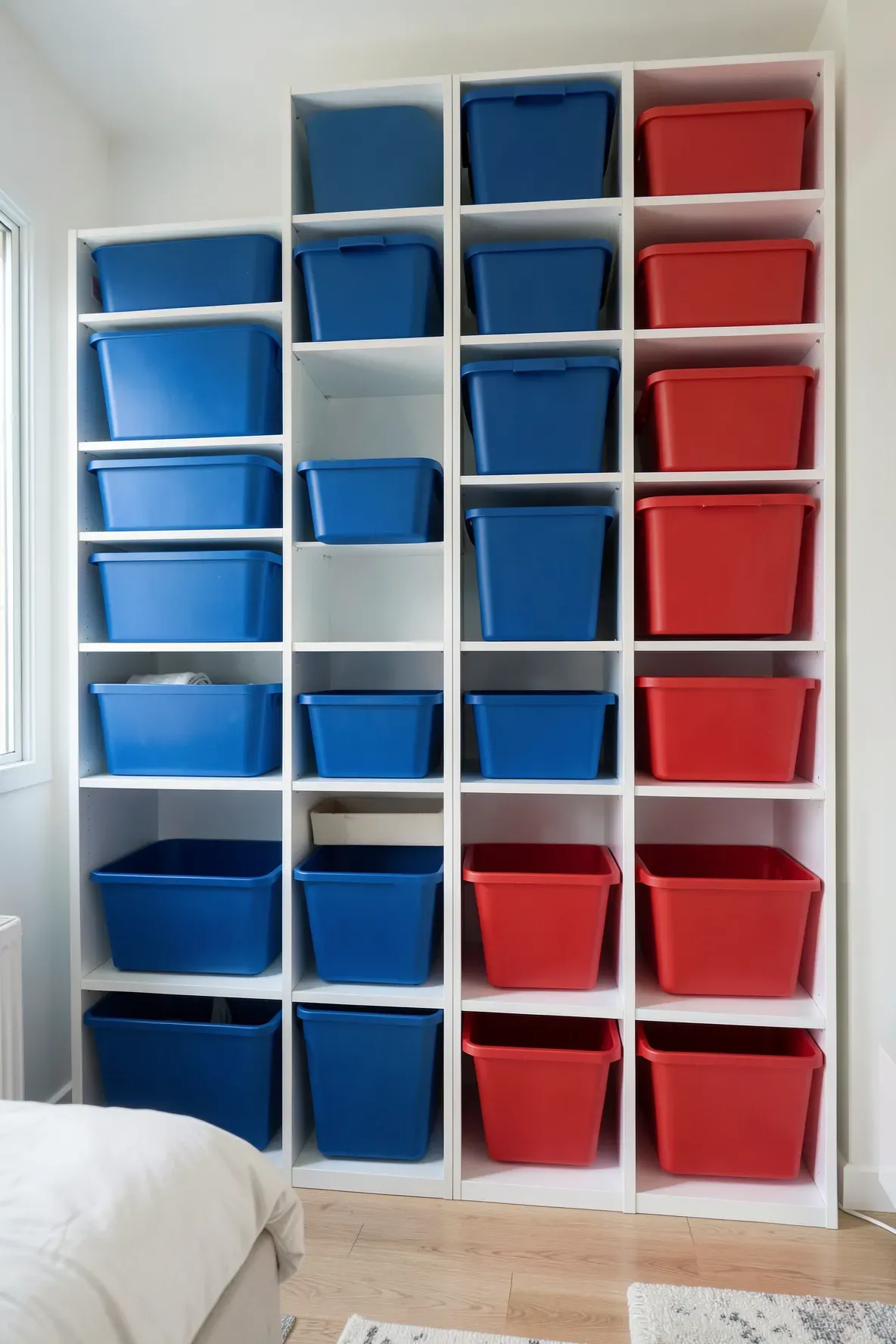
One of the biggest challenges in a kids room shared brother sister is keeping track of whose toys are whose. Using color-coded bins is a simple way to solve this. Assign one color to the brother and another to the sister. This makes cleanup faster and prevents arguments over misplaced items.
Plastic bins or fabric cubes fit easily into standard shelving units. Even if the furniture is shared, the contents remain private. This system teaches kids responsibility for their own things and helps maintain order in a busy shared space.
Loft Bed with a Play Area or Desk Underneath
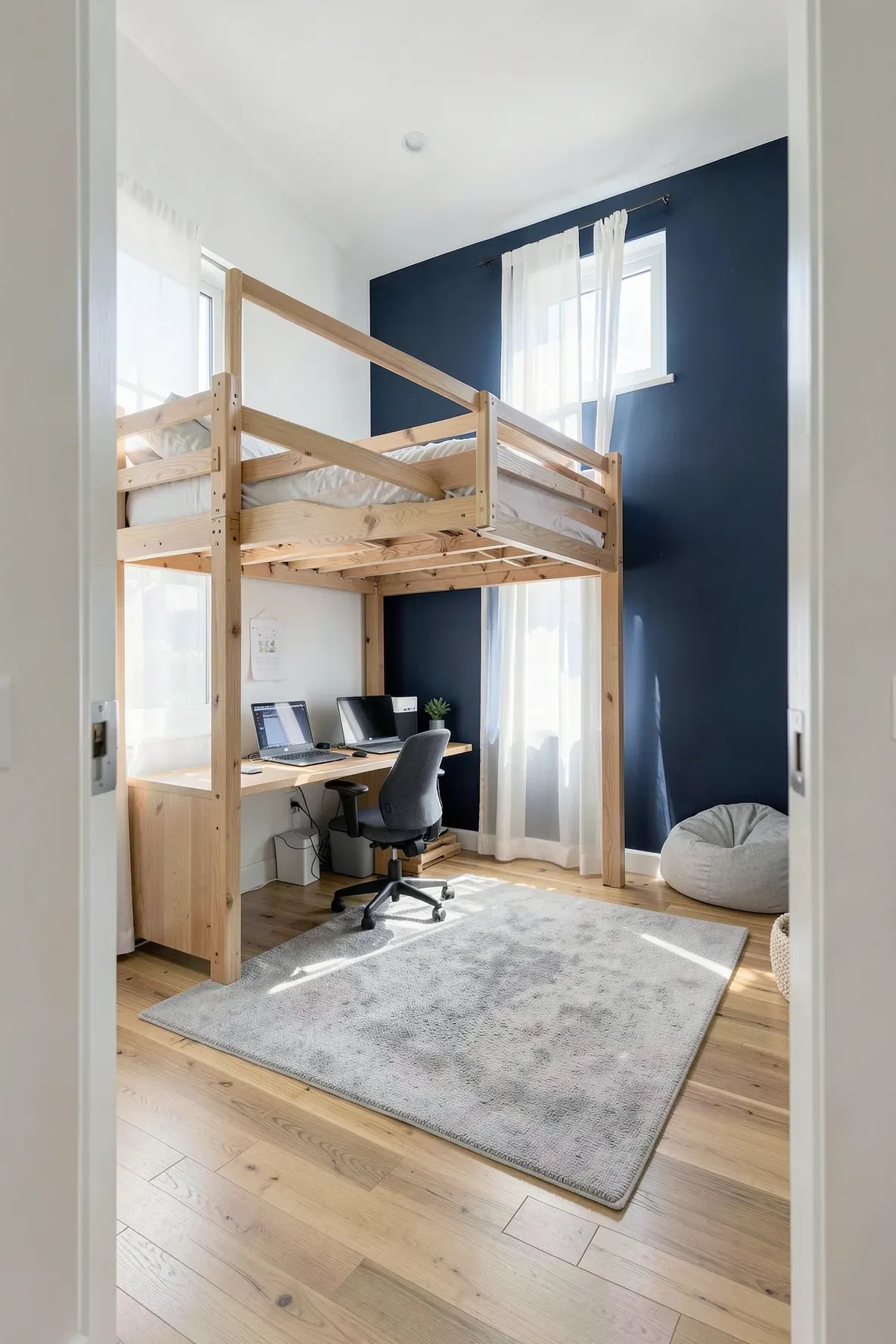
If you have high ceilings, loft beds are excellent for a brother and sister room. By lifting one or both beds off the ground, you double the usable square footage. The space underneath can become a desk area, a reading nook with bean bags, or a place for toy chests. This is a favorite among room ideas aesthetic fans because it looks modern and fun.
For a mixed-gender room, one child can have a loft bed while the other has a standard twin bed. This creates a natural separation of space. It gives the child in the loft a sense of independence and their own ‘zone’ that is physically removed from the main floor area.
Gallery Wall Featuring Artwork from Both Siblings
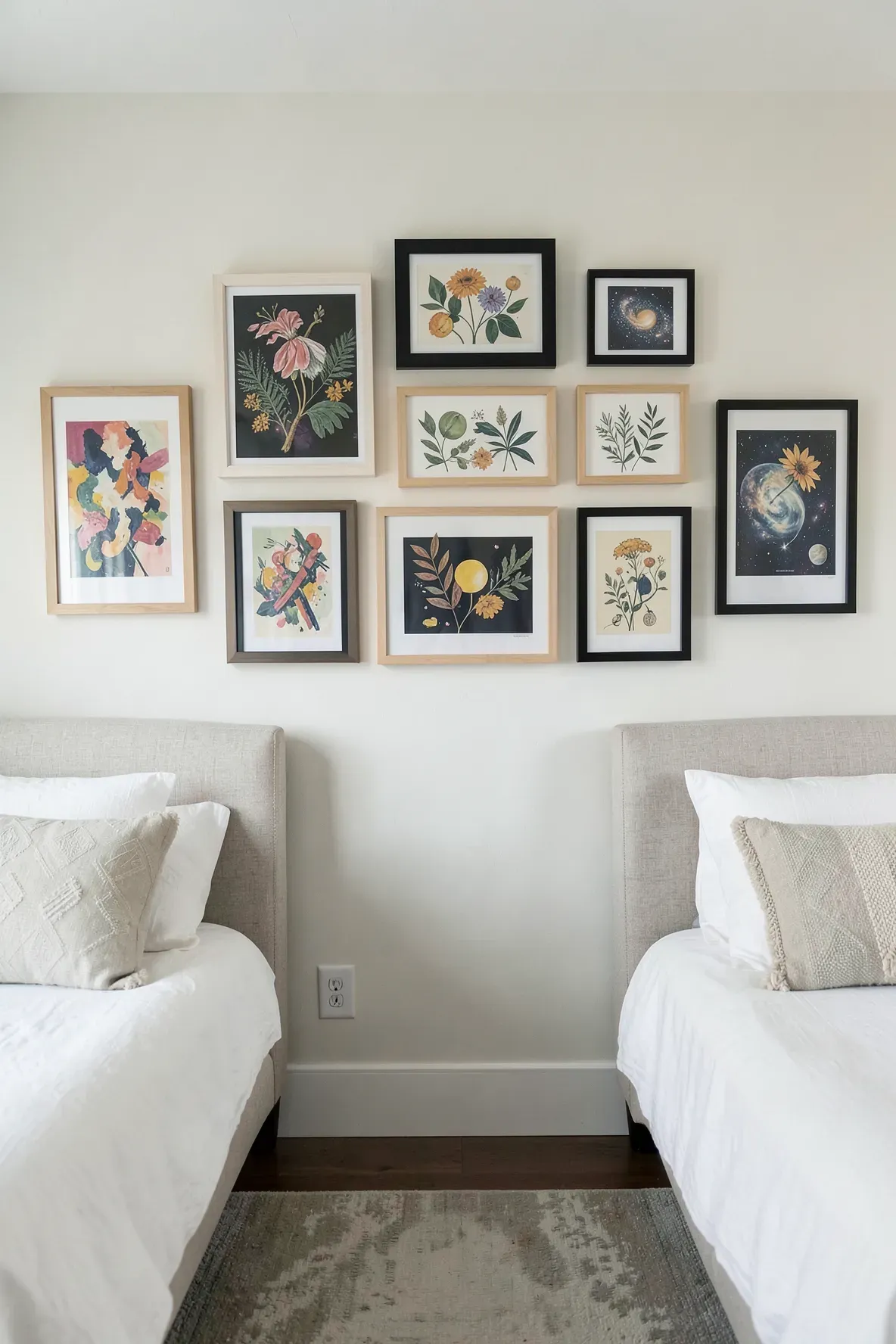
A shared wall can be a great place to celebrate both children. Instead of choosing one theme, create a gallery wall that mixes their drawings, photos, and posters. Use matching frames to keep the wall looking organized rather than messy. This helps the room feel like it belongs to both of them equally.
Split the wall down the middle or mix the items together for a more eclectic look. This is a simple way to incorporate room ideas for two sisters or a brother and sister without spending much money. It turns their personal interests into the main decor of the room.
Matching Bedding in Different Colors for Each Child
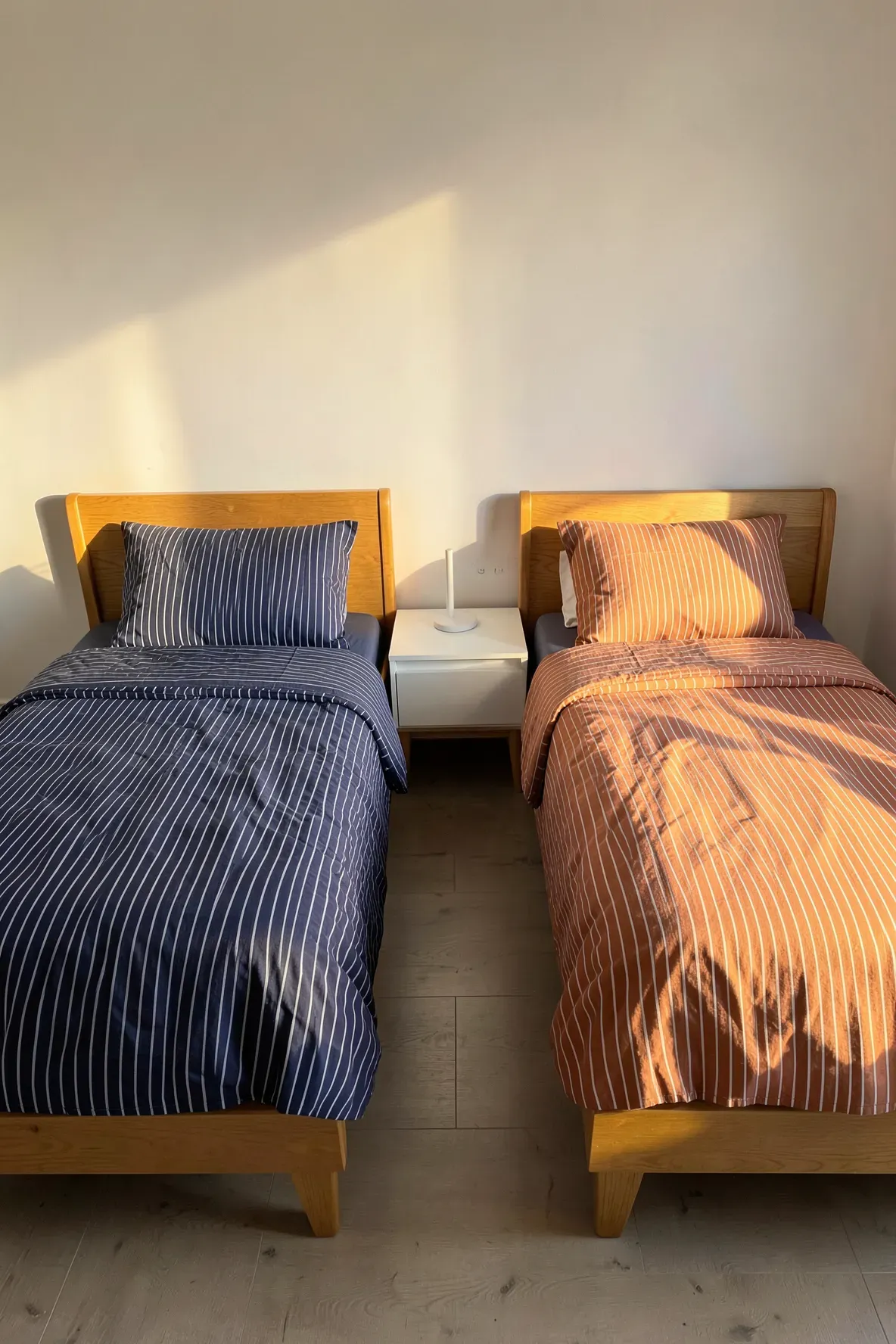
To keep a brother and sister room ideas looking sharp, try using the same style of bedding but in different colors. For example, buy the same striped duvet cover in navy for the brother and in green or orange for the sister. This creates a visual link between the two sides of the room while still letting them have their own identity.
Matching the texture or pattern helps the room feel unified. It avoids the chaotic look that happens when two completely different bedding sets are used in a small space. It is an easy way to satisfy both kids without compromising on the overall design.
Under-Bed Rolling Drawers for Extra Toy Storage
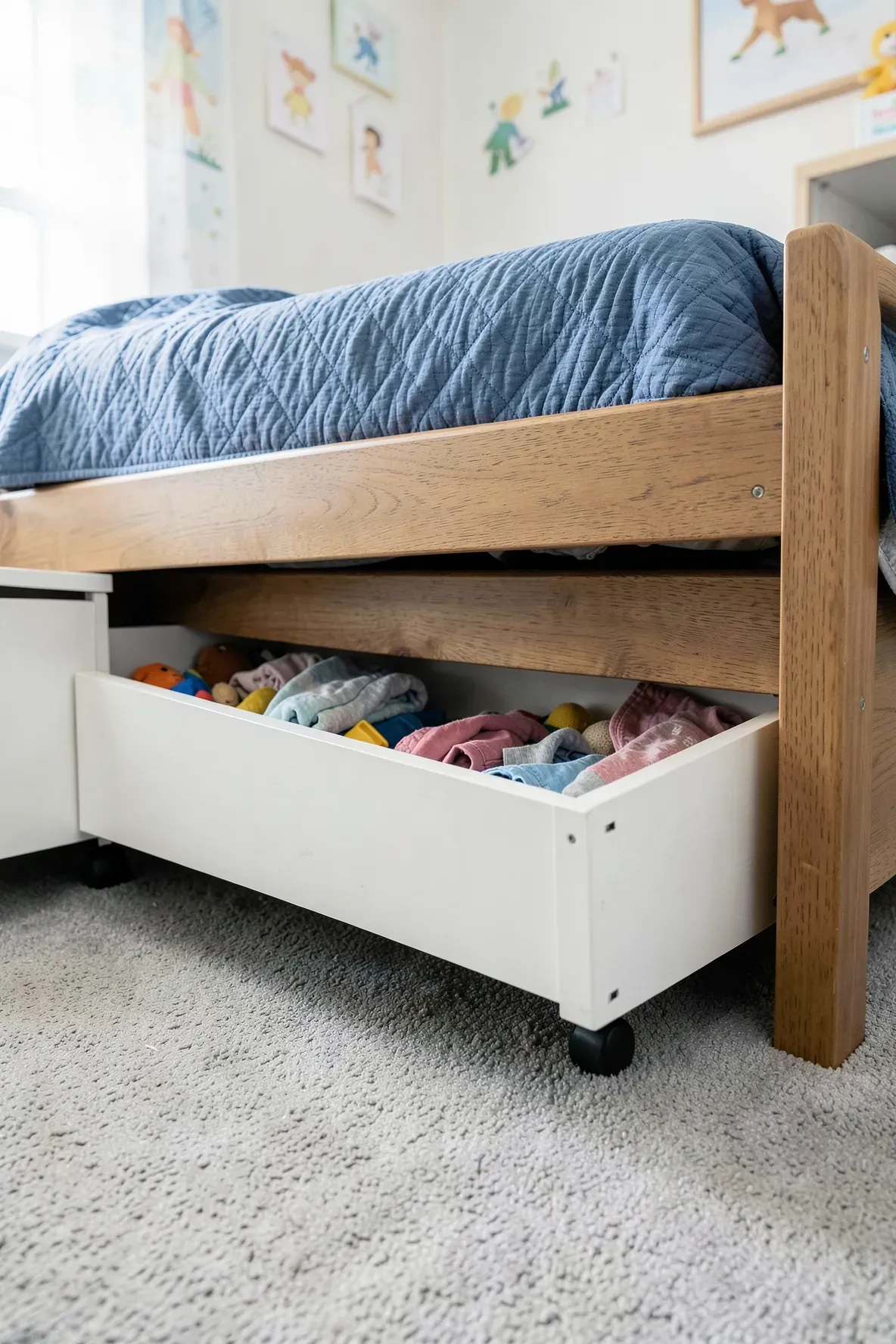
Storage is always a priority in shared bedrooms. Rolling drawers that fit under the bed are perfect for keeping shoes, out-of-season clothes, or bulky toys out of sight. Since each child has their own bed, they can have their own dedicated under-bed drawers. This prevents their items from getting mixed up.
Look for drawers with wheels so they are easy for kids to pull out on their own. This is a great tip for small bedroom ideas because it utilizes space that is usually wasted. It keeps the floor clear, making the room feel larger and more organized.
Wall-Mounted Name Signs Above Each Sleeping Area
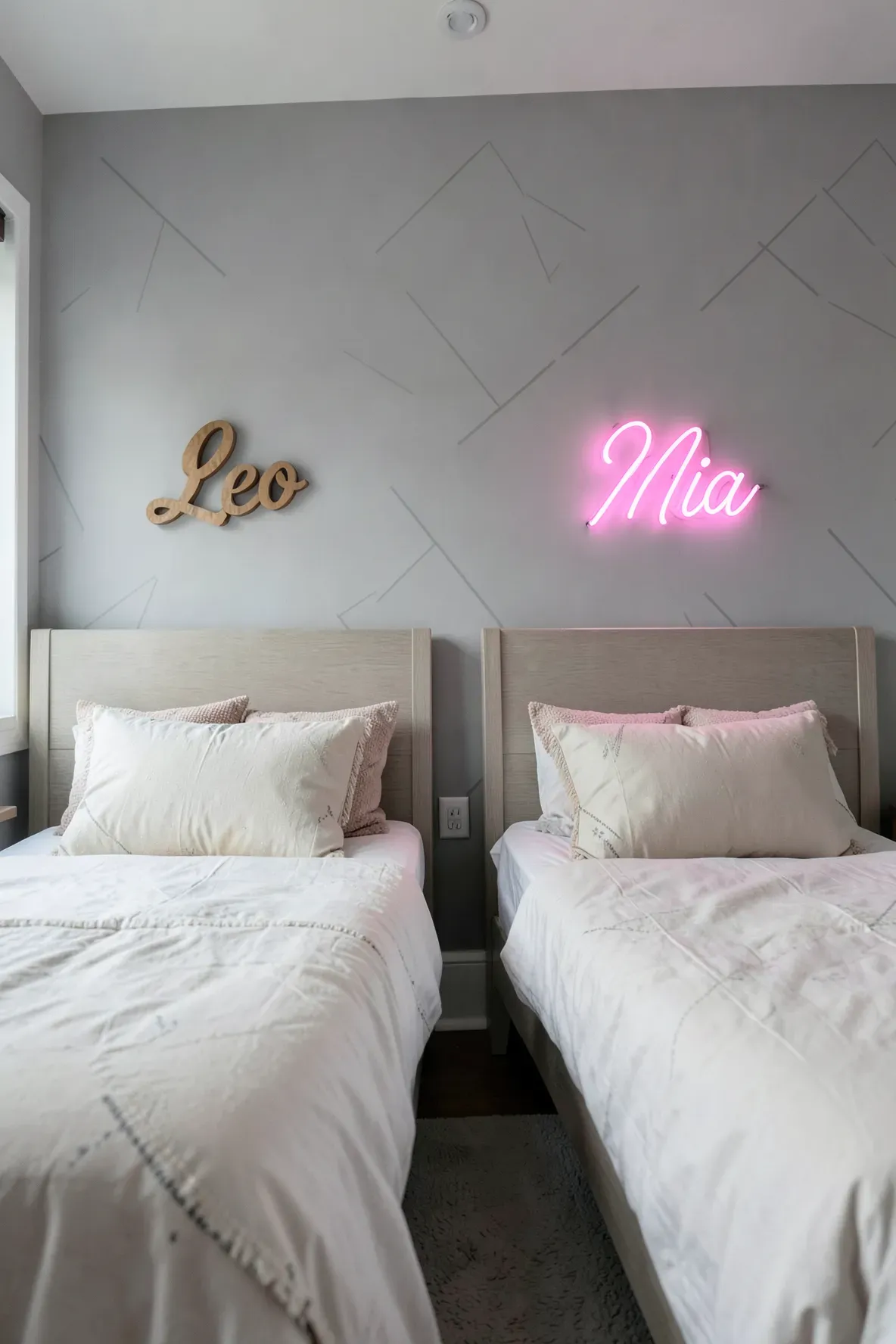
Personalizing a space doesn’t have to be complicated. Hanging a wooden or neon name sign above each bed clearly defines whose territory is whose. This is a popular choice for room ideas aesthetic and helps kids feel a sense of pride in their own corner of the room.
Name signs also help guests or family members know which bed belongs to which child. You can choose different fonts or colors for each sign to match their individual personalities. It is a small detail that makes a big difference in how a child perceives their shared living space.
Central Area Rug to Define the Shared Play Space
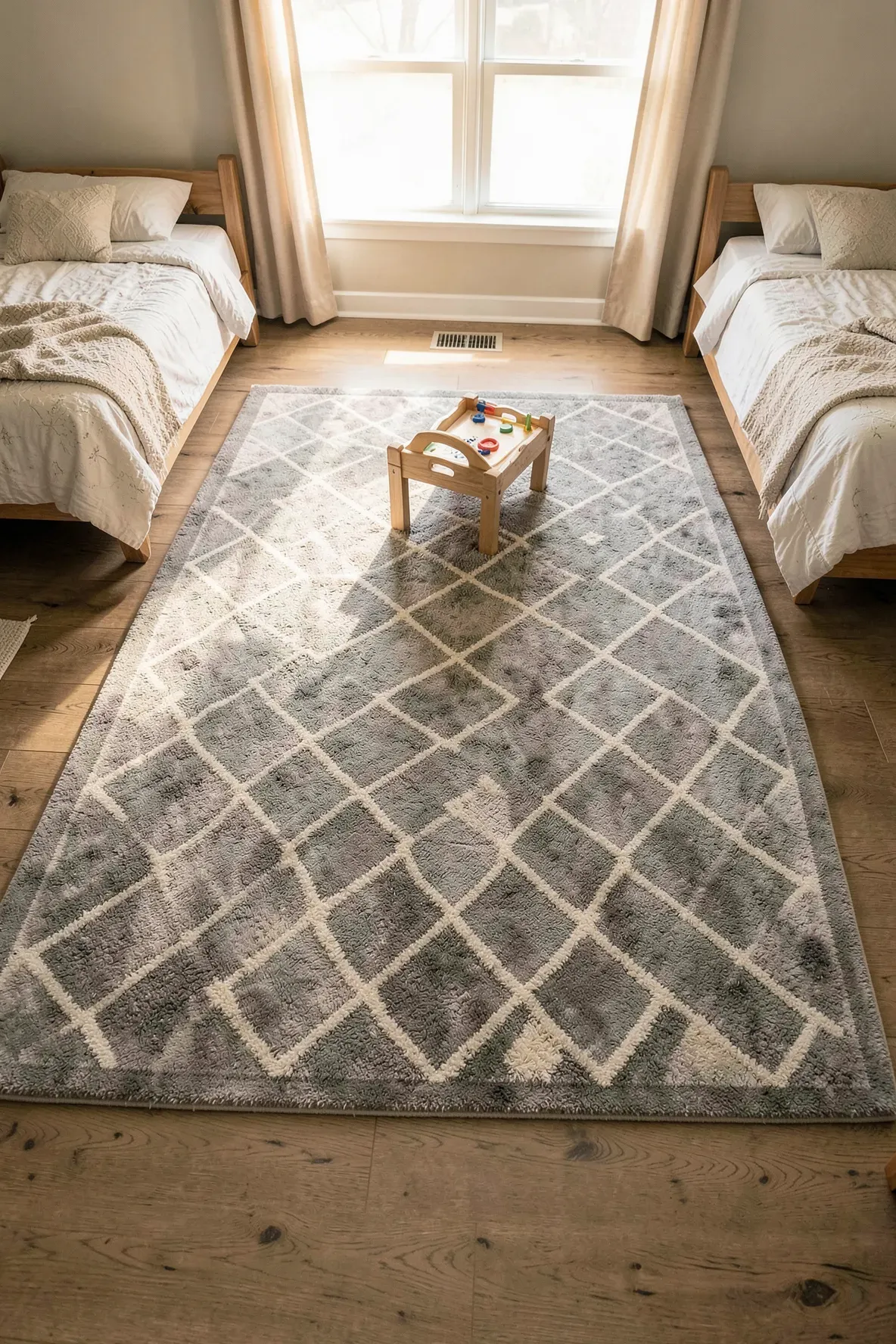
A large rug in the middle of the room can act as an ‘anchor.’ It defines the neutral ground where both siblings can play together. This is helpful in a kids room shared brother sister because it sets a physical boundary for where toys should stay. It also adds warmth and comfort to the room.
Choose a low-pile rug that is easy to vacuum and durable enough for heavy foot traffic. A geometric pattern or a solid neutral color usually works best for a mixed-gender room. The rug helps muffle noise, which is a bonus if the kids are playing while you are in the room below.
Individual Reading Lamps Attached to Bed Frames
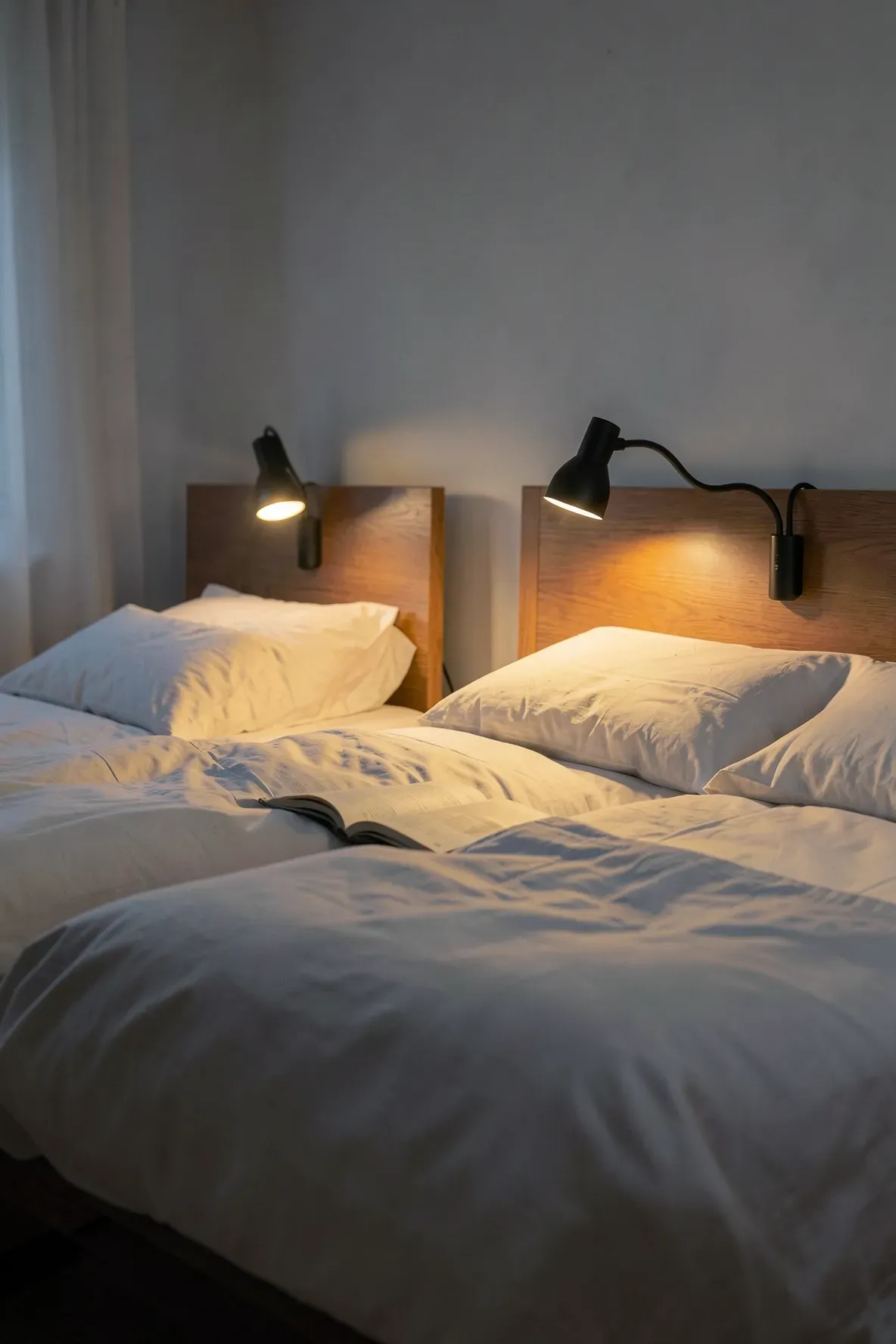
Clip-on or wall-mounted reading lamps are essential for a sibling shared bedroom. They allow one child to stay up and read or draw without keeping the other one awake with a bright overhead light. This small addition can prevent many nighttime arguments.
Look for lamps with flexible necks so the light can be pointed exactly where it is needed. This gives each child control over their own environment. It is a practical solution for brother and sister room shared bedrooms where the kids might have different sleeping habits.
Trundle Bed for Occasional Sleepovers or Extra Space
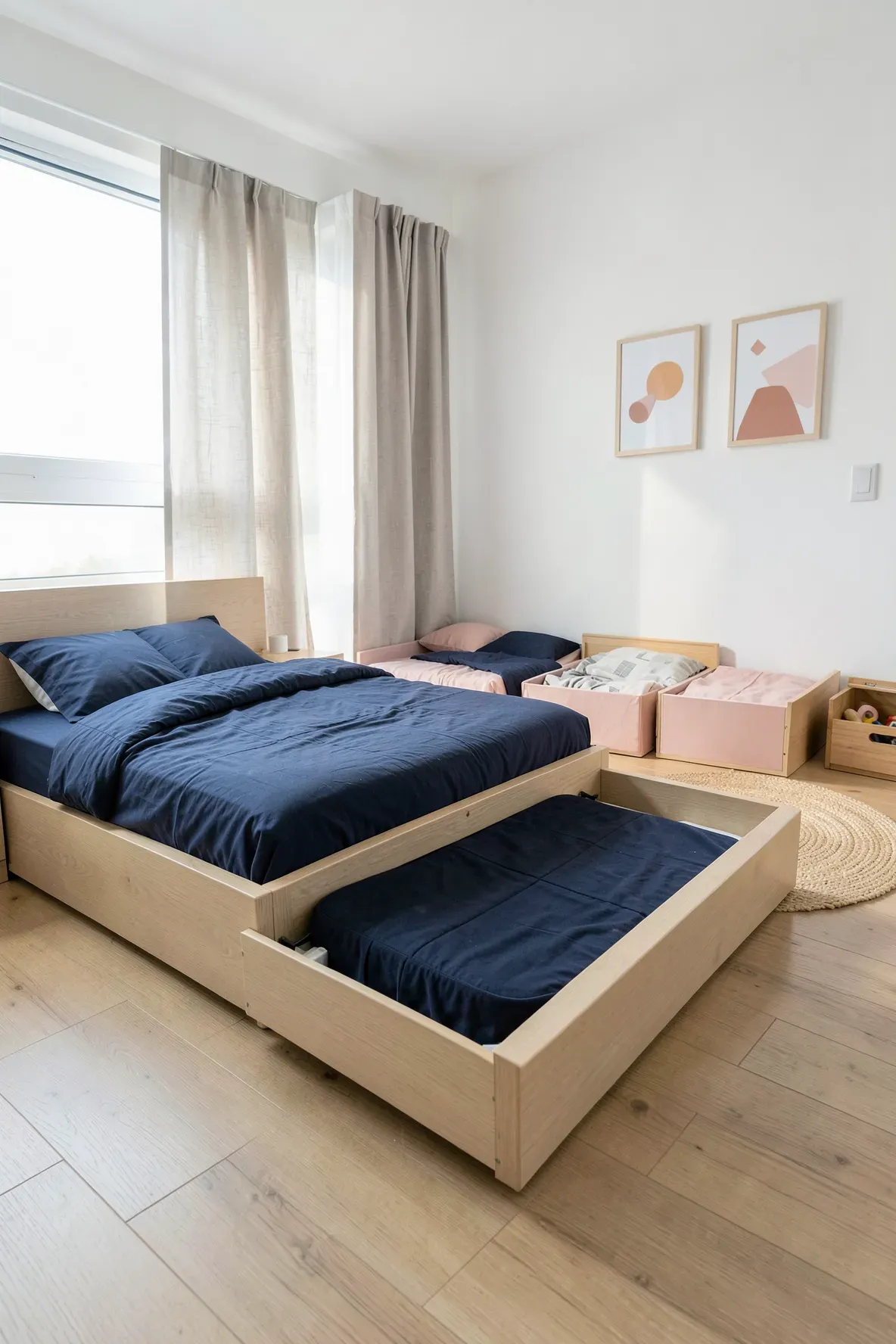
A trundle bed is a bed that slides out from under another bed. This is a fantastic option for small bedroom ideas when you don’t want two full-time beds taking up floor space during the day. It can also be used as a spare bed for when a friend stays over.
In a brother and sister room, a trundle can be tucked away during the day to create more room for playing. When it is time for bed, it rolls out easily. This is a flexible furniture choice that grows with the family and adapts to different needs.
Vertical Shelving Units to Save Square Footage
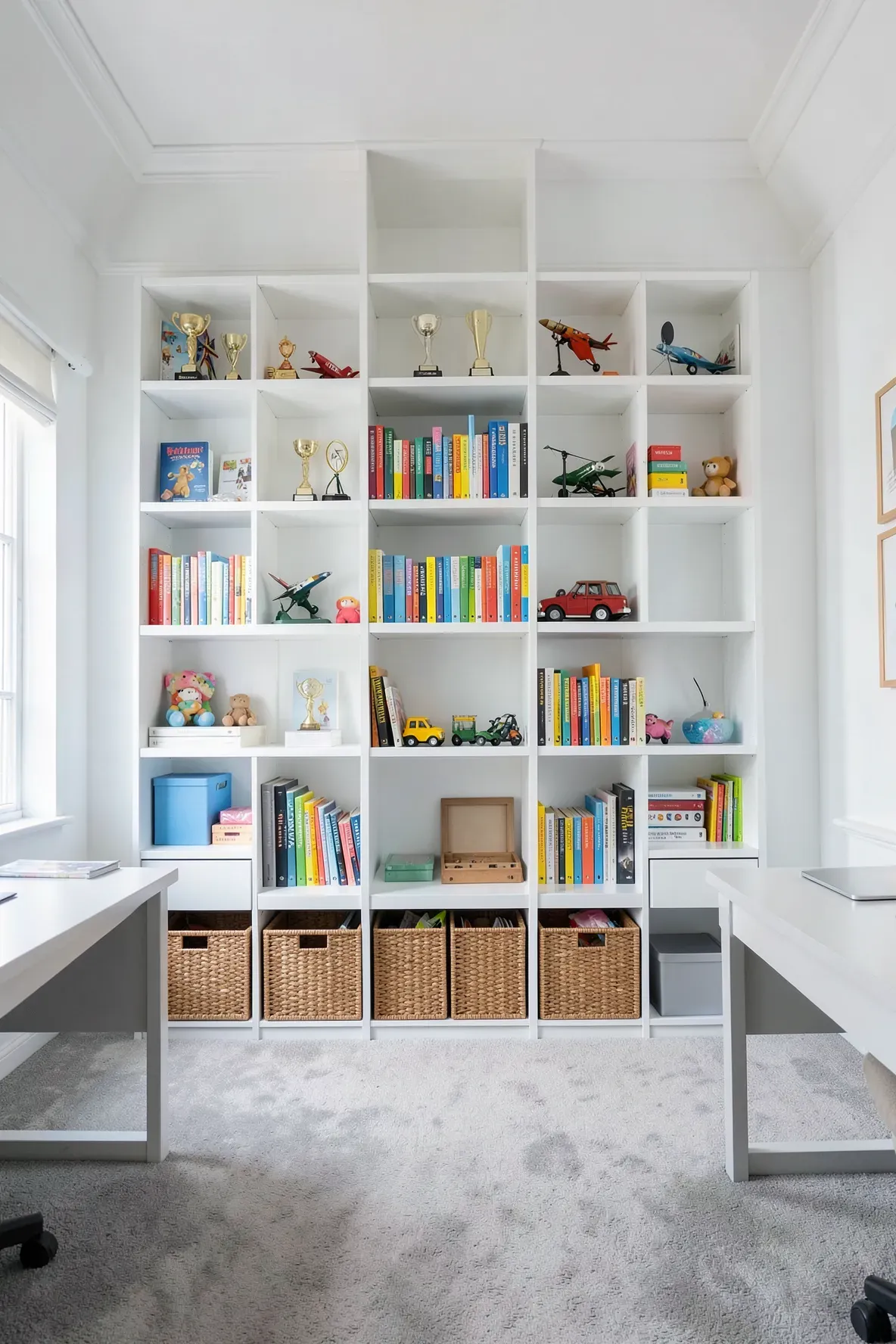
When floor space is limited, go up. Tall, narrow shelving units provide plenty of storage for books, trophies, and bins without taking up much room. You can assign the top shelves to the older sibling and the bottom shelves to the younger one for easy access.
Vertical storage helps keep the room from feeling cluttered. It is a great way to organize brothers room ideas or any shared space. By using the walls for storage, you leave more open area for the kids to move around and play comfortably.
Double-Sided Wardrobe for Shared Clothing Storage
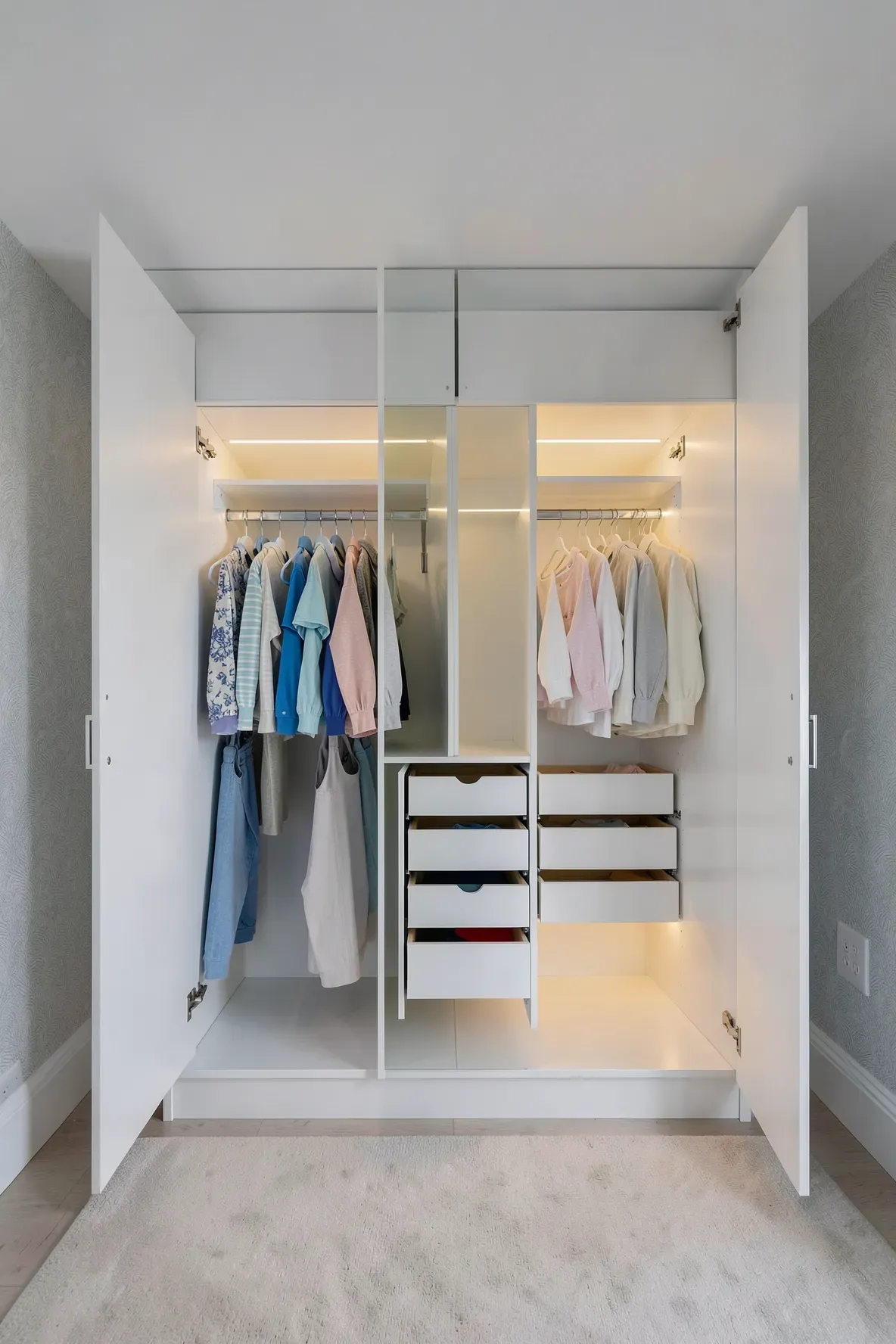
If the room only has one closet, a double-sided wardrobe or a split closet system is a must. Divide the hanging space and drawers exactly down the middle. This gives both the brother and sister their own designated area for clothes, making it easier for them to get dressed in the morning.
Using different colored hangers for each child can further help keep things organized. This setup reduces morning chaos and ensures that neither child feels like their sibling is taking over the closet. It is a simple way to manage a shared brother and sister room.
Window Seat Nook for Quiet Reading Time
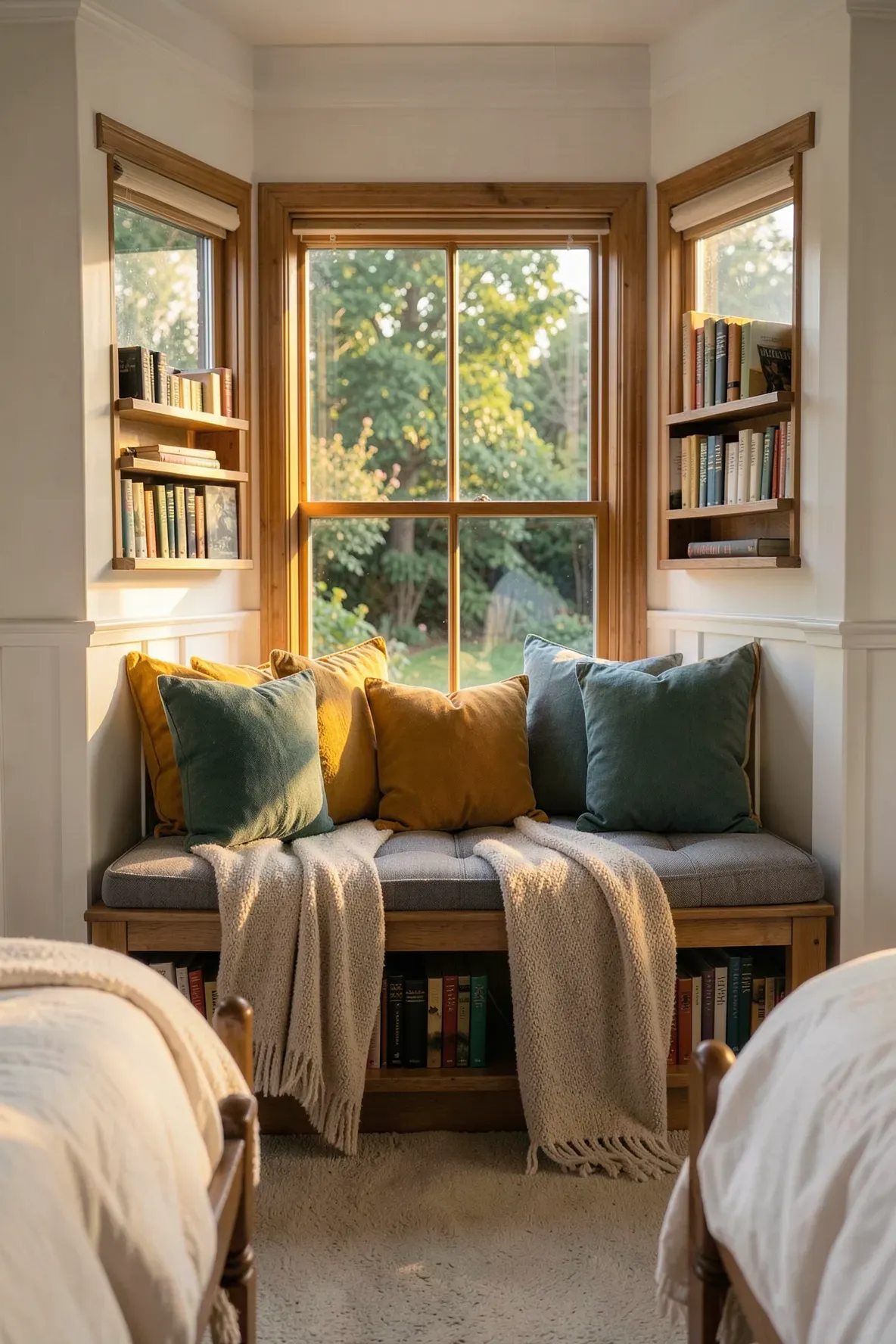
If the room has a window, consider building or placing a small bench underneath it. A window seat provides a neutral spot where either child can go to sit quietly and read. Adding a few cushions and a small shelf for books makes it a cozy escape within the shared room.
This works well because it provides a ‘third space’ that isn’t a bed or a desk. It can be a shared area where they sit together, or a place they take turns using. It adds character to the room and makes use of an often-overlooked area.
Headboard Cubbies for Small Personal Treasures
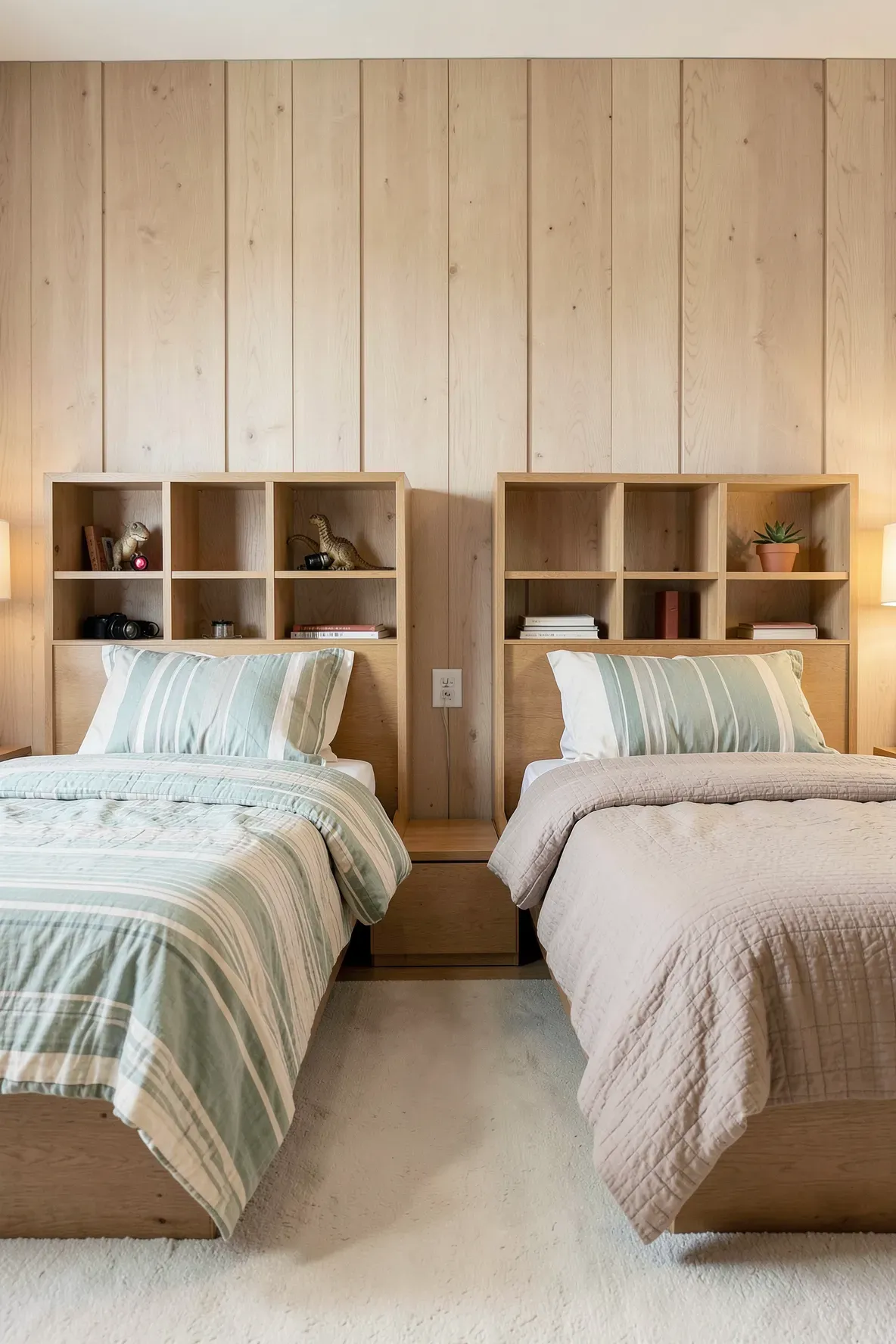
Storage headboards are a great way to give each child a place for their most important items. These cubbies can hold a favorite toy, a flashlight, or a diary. Because these items are right at the head of their bed, they feel more private and secure.
This is a smart addition to any sibling shared bedroom because it keeps small items off the floor and away from curious siblings. It gives each child a little bit of ‘secret’ space that belongs only to them, which is very important in a shared environment.
Creating a functional brother and sister room is all about balancing shared space with personal boundaries. By using smart furniture like bunk beds or room dividers and sticking to a cohesive color palette, you can design a room that both kids enjoy. These practical layouts show that even a small bedroom can be a comfortable home for two siblings. With a little planning, your kids can have a space that supports their individual needs while helping them learn to live together happily.