
Ferns have a way of making any space feel lush and alive, whether you are trying to brighten a dark corner in your living room or add some curb appeal to your entryway. These plants are famous for their textured fronds and ancient history, but many people struggle with how to display them properly without them looking messy or dying within a week.
This list provides straightforward fern garden ideas and indoor setups that actually work. You will see how different containers and placements can change the look of your home, using everything from classic hanging baskets to modern stone troughs. Whether you want to use a real Boston fern indoor or need low-maintenance outdoor potted plant ideas, these tips will help you create a beautiful fernery without the stress.
Boston Fern in a Classic Macramé Hanger
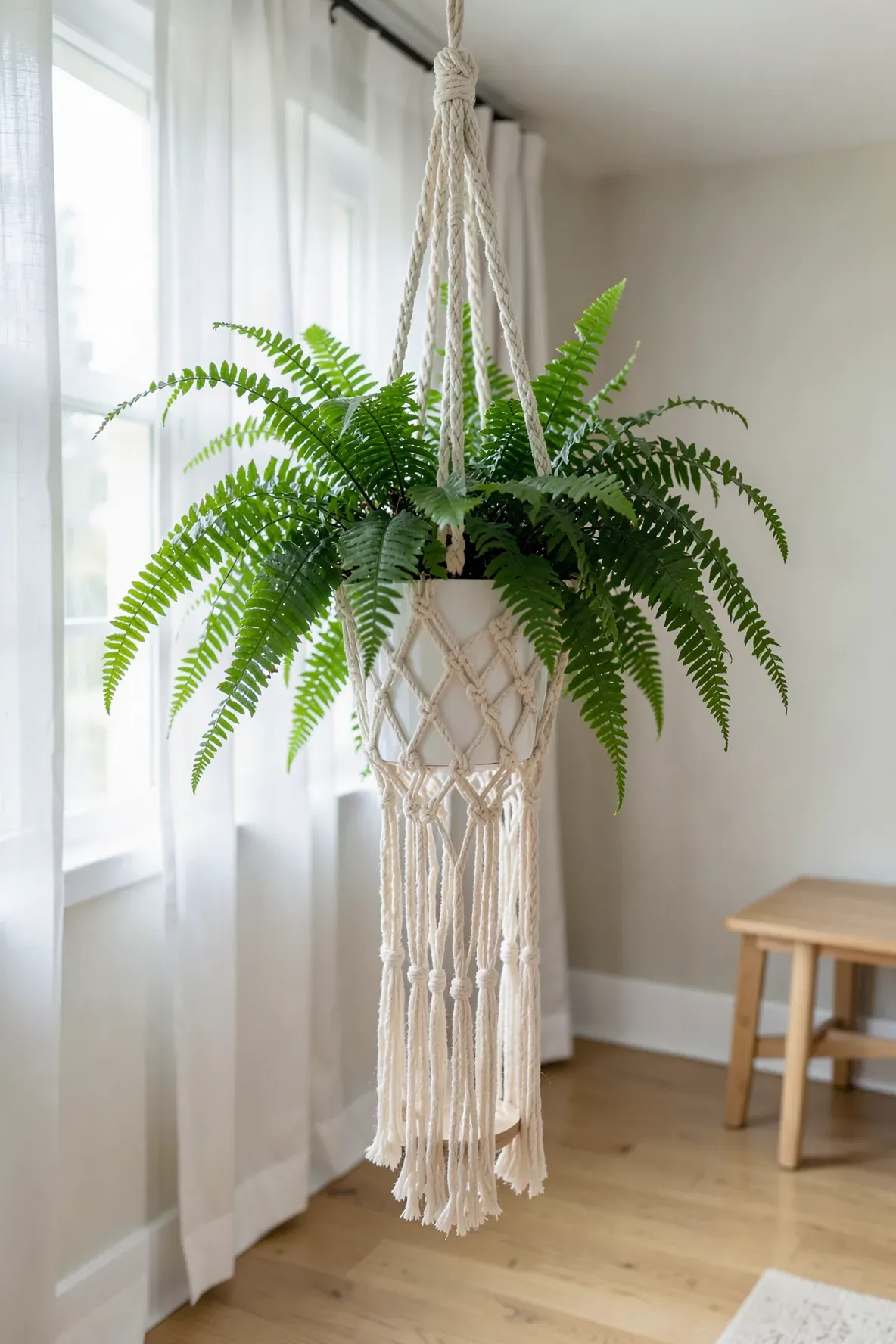
A Boston fern indoor thrives when it has plenty of space for its long, arching fronds to spill over the sides of a pot. Using a macramé hanger allows the plant to sit at eye level, which keeps it away from pets and curious children while improving air circulation. You should place this setup near a window with bright, filtered light, as direct sun can scorch the delicate leaves. To keep the mess to a minimum, use a plastic pot with a drainage tray inside the macramé. This makes it easier to take the plant to the sink for a thorough watering and a quick misting to maintain the humidity these plants crave.
Kimberly Queen Fern in a Tall Resin Pedestal
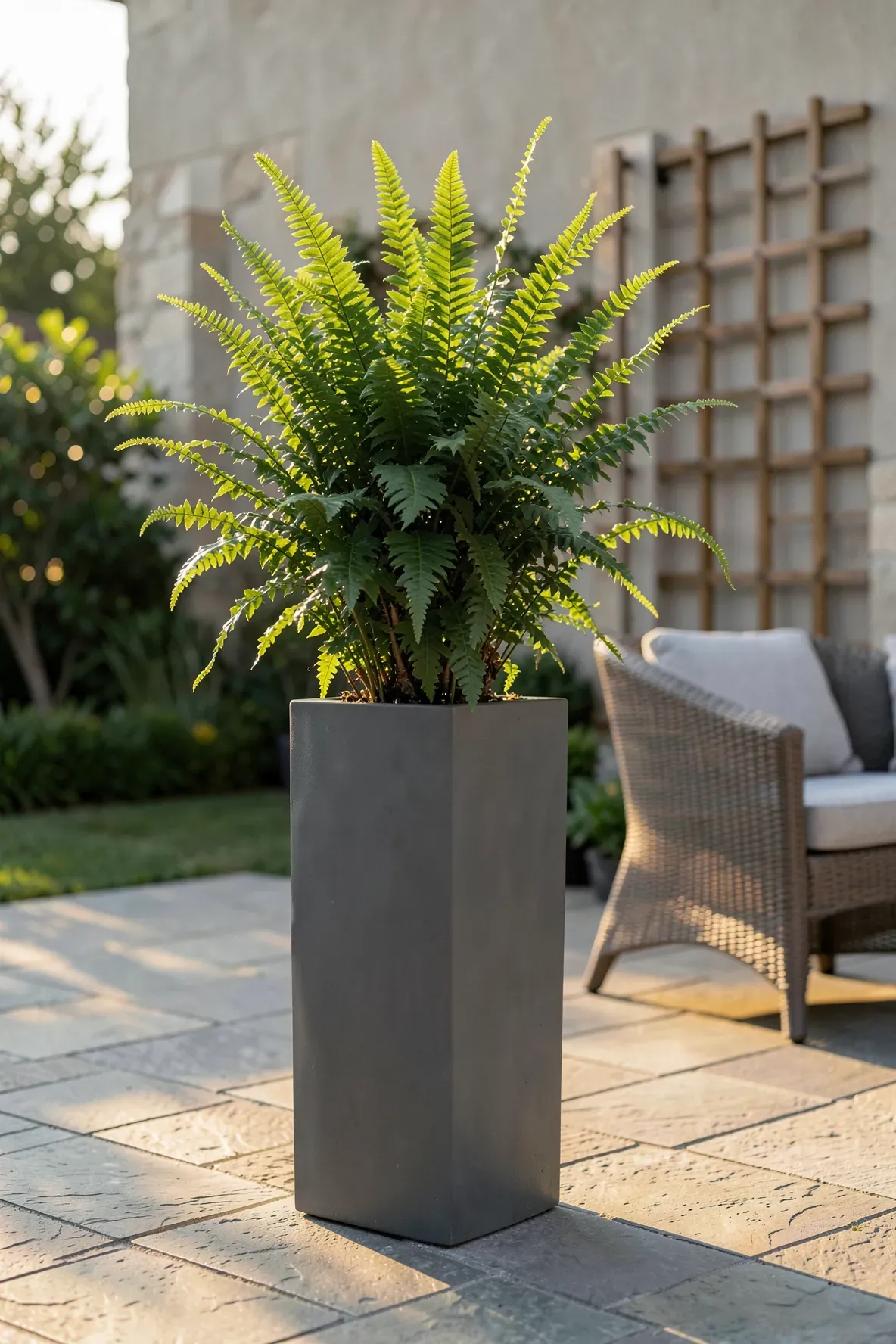
Kimberly Queen fern planter ideas often focus on height because these plants grow more upright than their Boston cousins. A tall resin pedestal planter works well because it is lightweight enough to move around but looks heavy and substantial. This setup is great for a patio or a sunroom where you want to create a focal point. Since Kimberly Queens can handle more sun and wind than other varieties, you can place them in spots that get a bit of morning light. The tall planter also keeps the foliage off the ground, preventing pests from easily crawling into the soil.
Maidenhair Fern in a Self-Watering Ceramic Pot
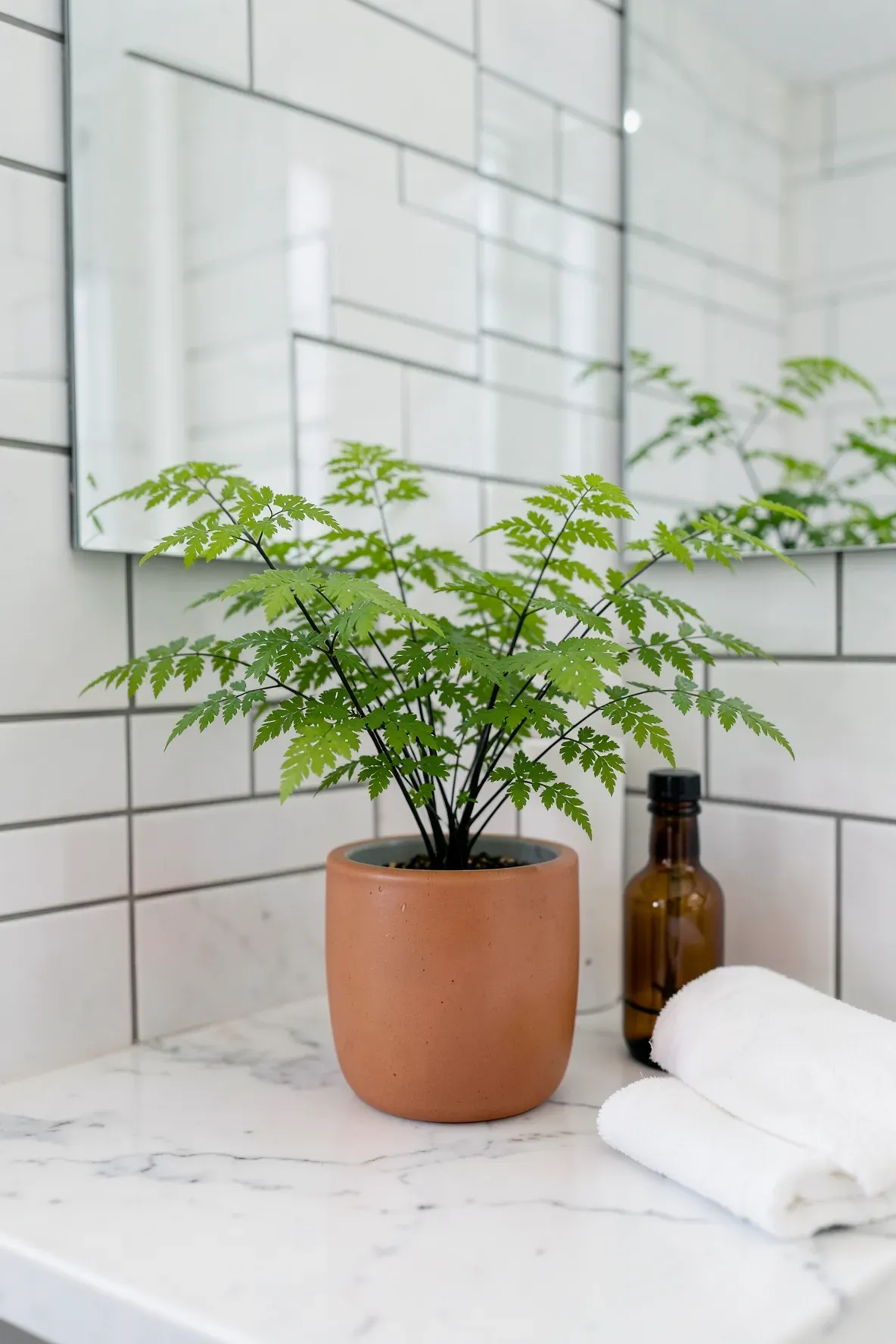
Maidenhair ferns are notorious for being finicky about moisture, as they will wilt the moment their soil dries out. Using a self-watering ceramic pot takes the guesswork out of their care by providing a consistent supply of water to the roots. Look for a plant pot design that matches your indoor fern decor, like a simple glazed finish in a soft earth tone. These ferns prefer indirect light and high humidity, so placing the pot on a bathroom counter or a kitchen windowsill is often the most successful spot for them to grow without turning brown.
Staghorn Fern Mounted on a Reclaimed Wood Plank
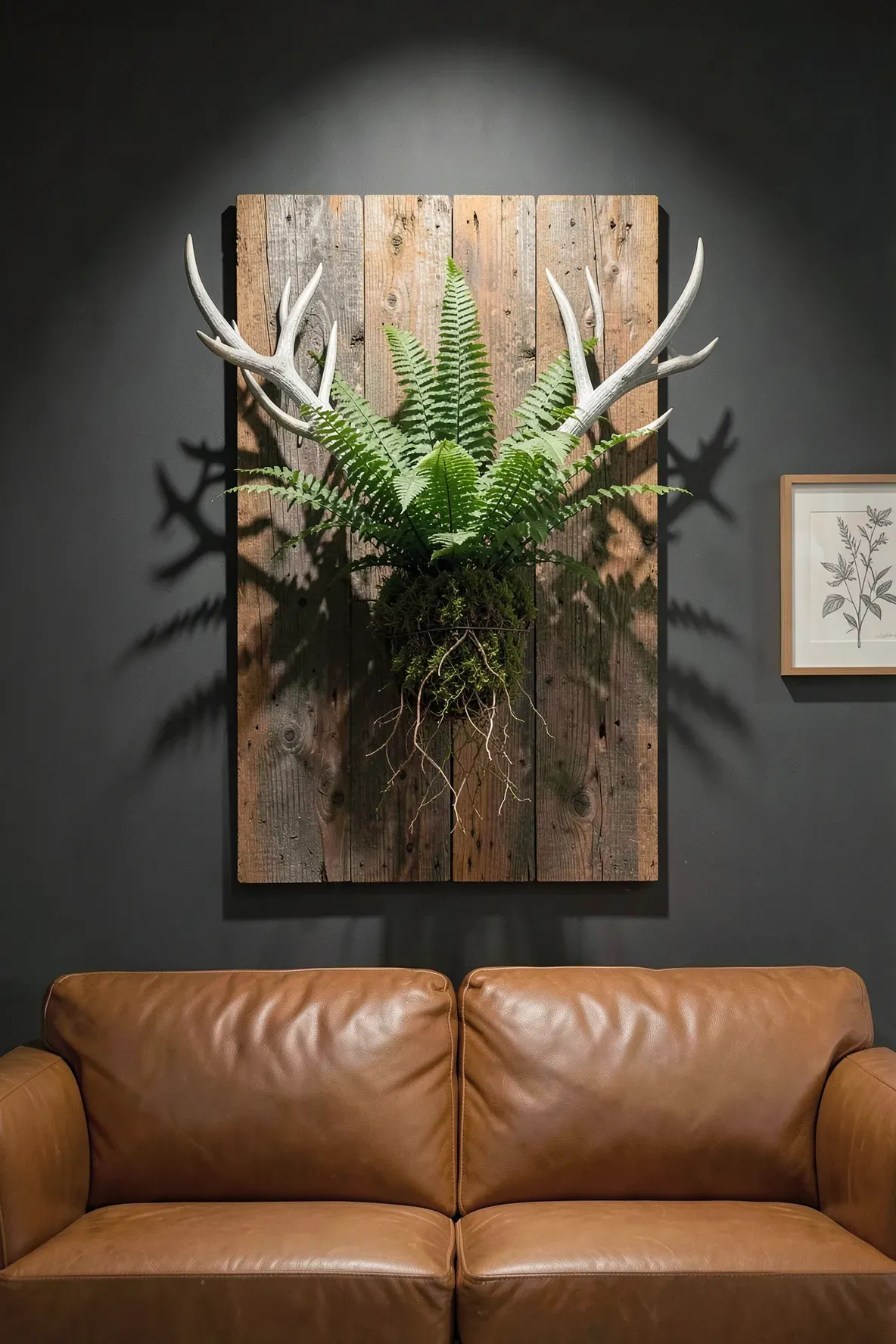
For a unique look in your fernery ideas, try mounting a Staghorn fern on a piece of reclaimed wood instead of putting it in a traditional pot. These ferns are epiphytes, meaning they grow on trees in nature rather than in soil. You can secure the root ball to the wood using fishing line and a bed of damp sphagnum moss. This creates a living piece of art for your wall. To water it, simply take the entire plank down and soak it in a tub for about fifteen minutes once a week, letting it drip dry before hanging it back up.
Bird’s Nest Fern in a Mid-Century Modern Stand
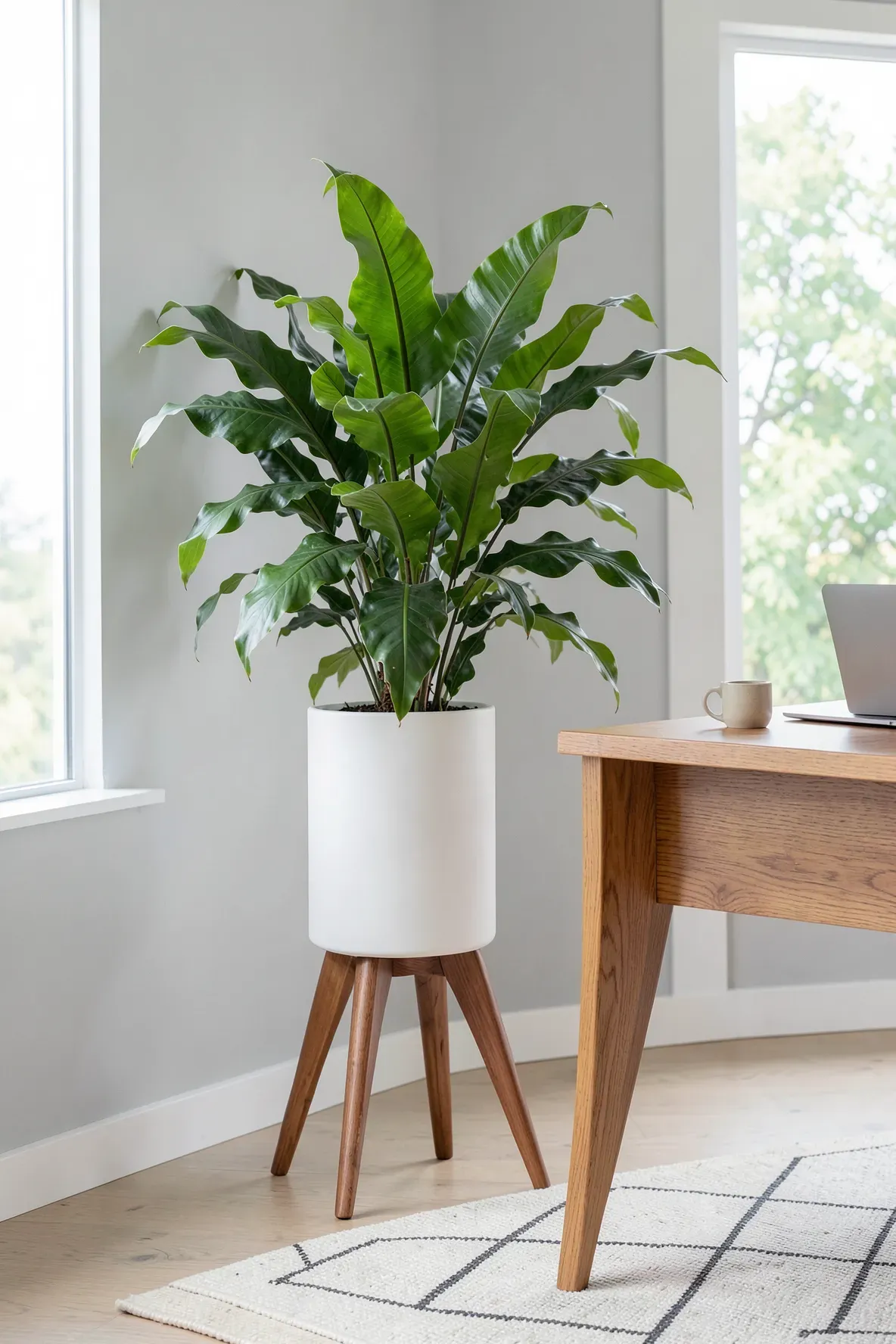
The Bird’s Nest fern has wide, wavy leaves that look great in a minimalist setting. A mid-century modern stand with wooden legs raises the plant off the floor, giving it a clean and organized look. This is a smart choice for fern decor in a home office or living room because it doesn’t take up much floor space. These ferns are slower growers and don’t mind being a little snug in their pots, so you won’t have to repot them very often. Just make sure the pot has a drainage hole to prevent water from sitting at the bottom and causing root rot.
Pair of Boston Ferns in Black Urns for the Front Porch
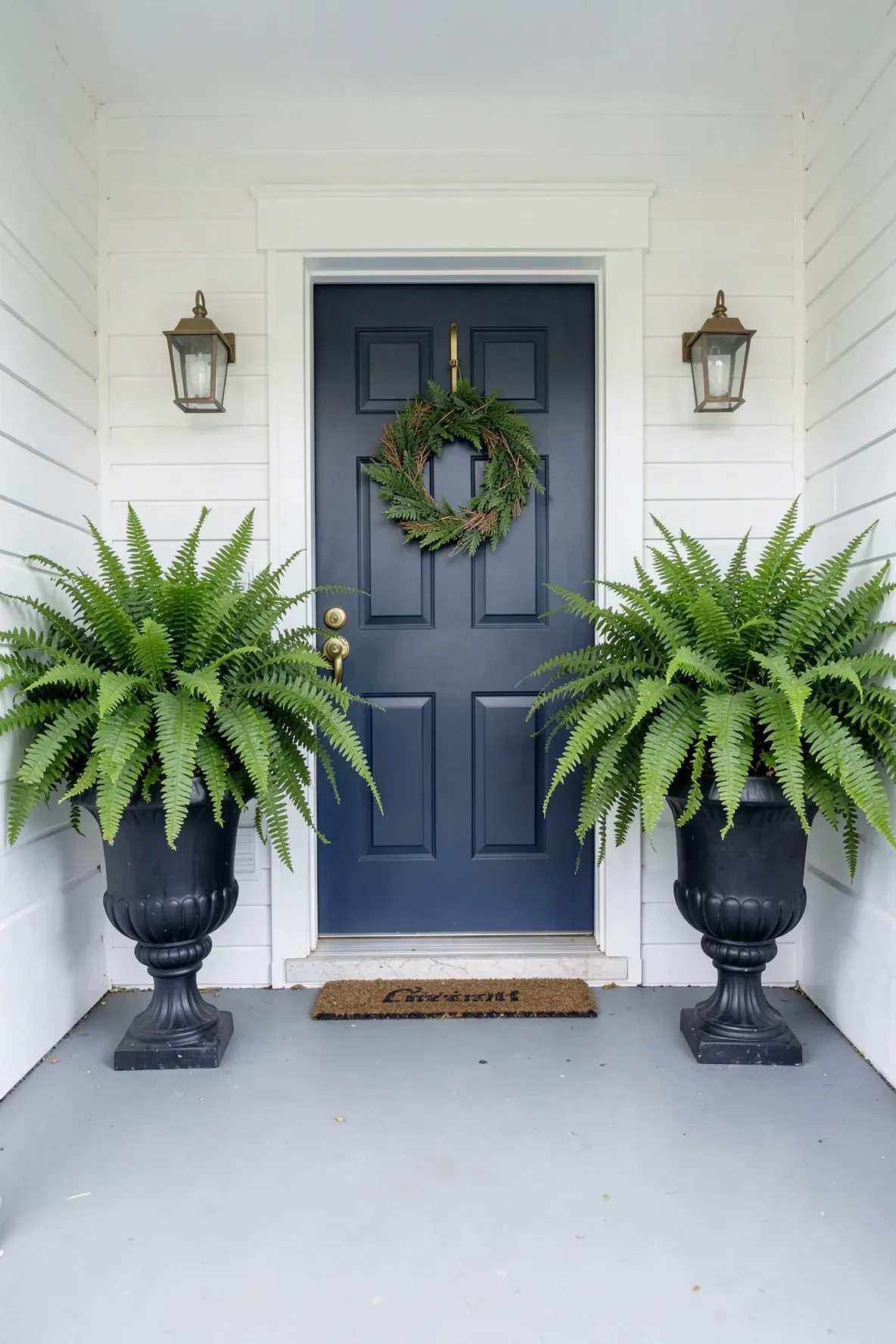
Placing ferns in pots on front porches is a classic way to welcome guests. Using large black urns creates a formal look that frames your front door perfectly. Boston ferns are the traditional choice for this because they grow into large, bushy spheres that fill the wide mouth of an urn. If your porch is shaded, these plants will stay green and vibrant all summer. You can even tuck a small water reservoir or an automatic drip line into the urns to ensure they stay hydrated during hot July afternoons when the soil tends to dry out quickly.
Silver Lady Fern in a Textured Concrete Planter
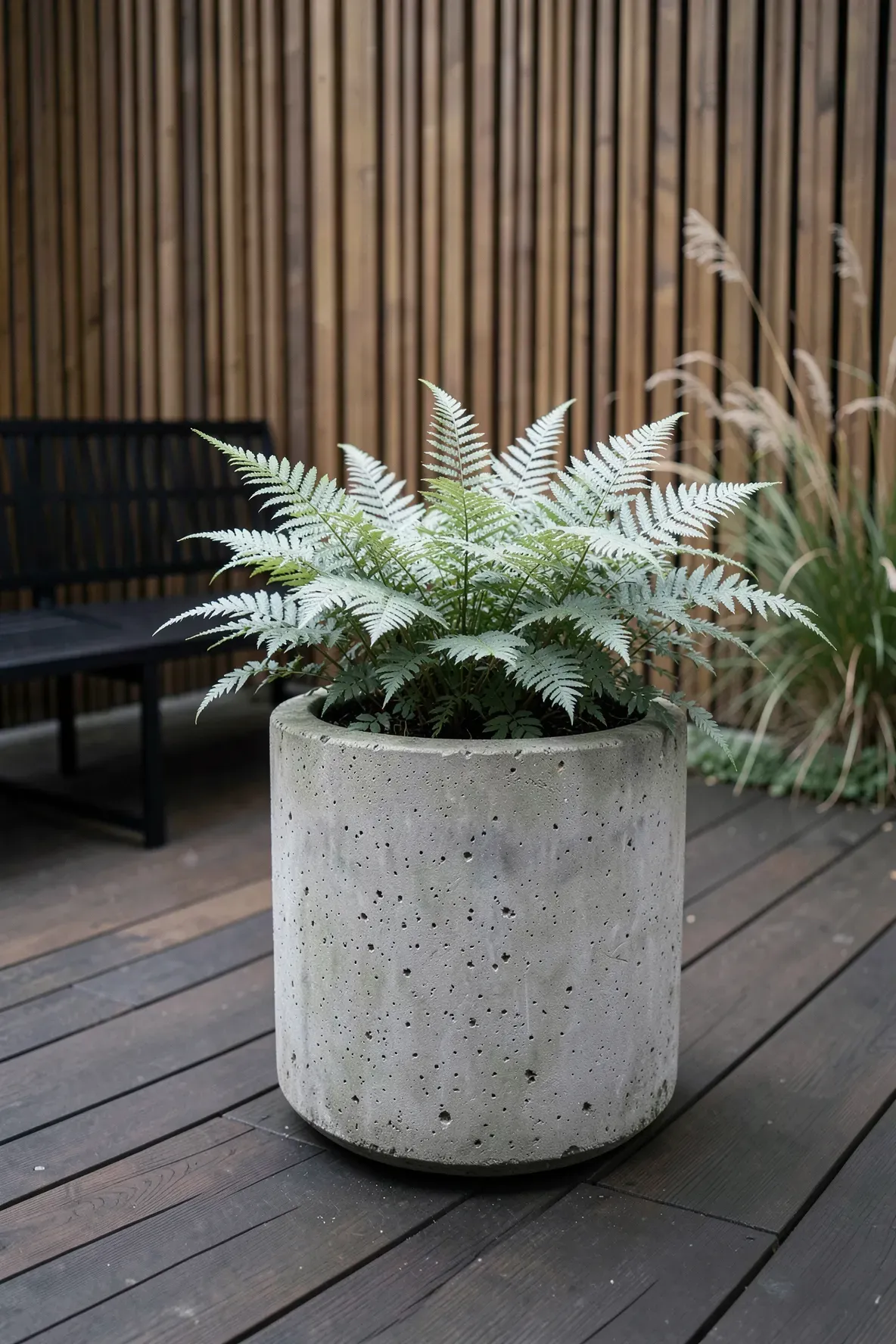
The Silver Lady fern looks like a miniature palm tree, making it a great choice for a modern fern garden landscaping project. A textured concrete planter provides a rugged contrast to the soft, feathery fronds of the fern. This plant likes a bit of humidity, so it does well on a shaded patio or in a bright entryway. Concrete pots are also heavy, which prevents the plant from tipping over if a strong breeze catches the fronds. Because concrete is porous, it helps the soil breathe, which is beneficial for the health of the fern’s root system.
Kangaroo Paw Fern in a Low Hanging Metal Basket
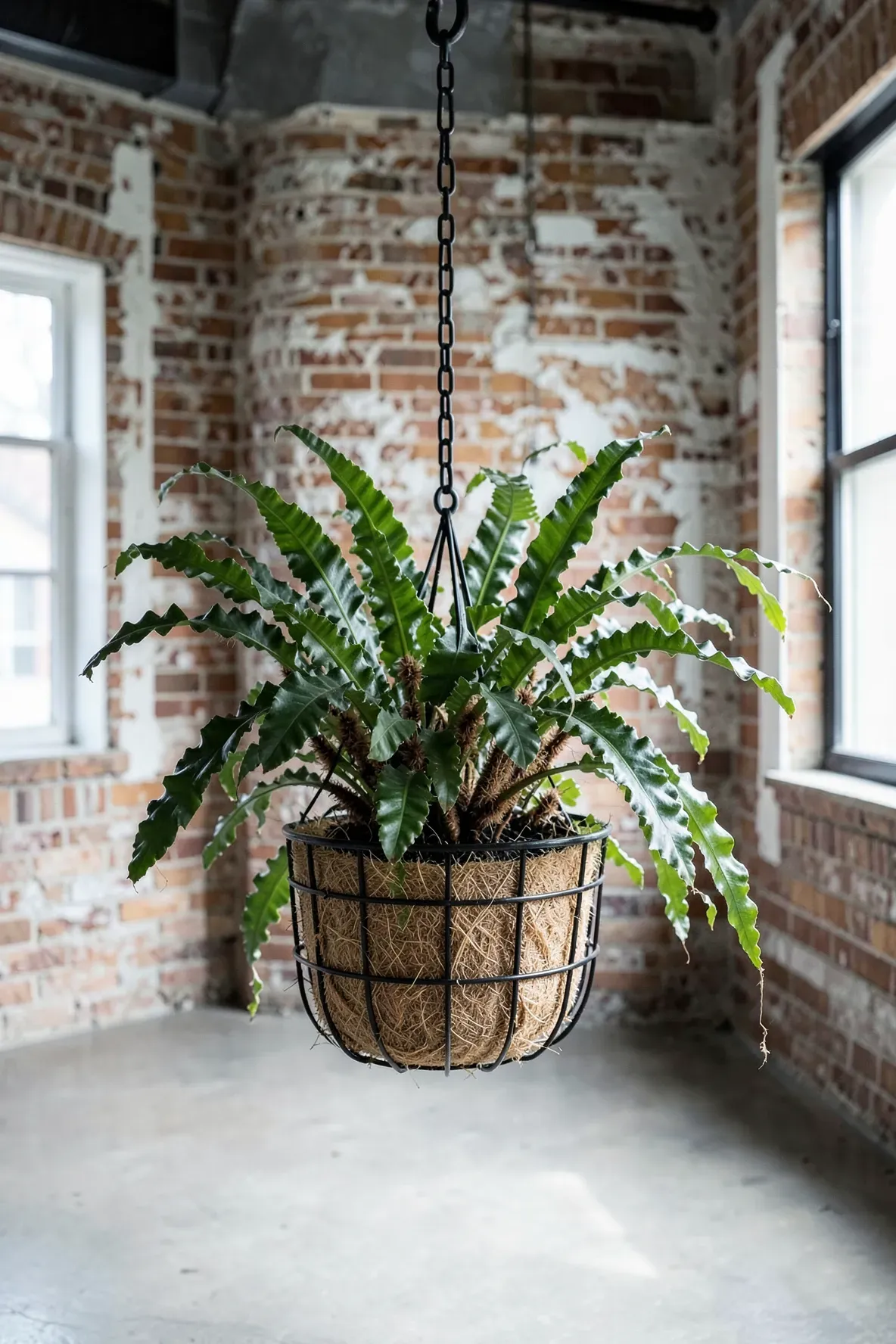
Kangaroo Paw ferns have leathery leaves and fuzzy rhizomes that like to crawl over the edges of their container. A low-hanging metal basket with a coco-fiber liner is a great way to show off this growth habit. These ferns are quite hardy and can tolerate lower light levels than many other varieties. They look best when hung at a level where you can see the interesting texture of the leaves from above. The metal basket adds an industrial touch to your fern decor while providing excellent drainage, which is key for keeping the roots healthy.
UV-Resistant Fake Ferns in Weatherproof Window Boxes
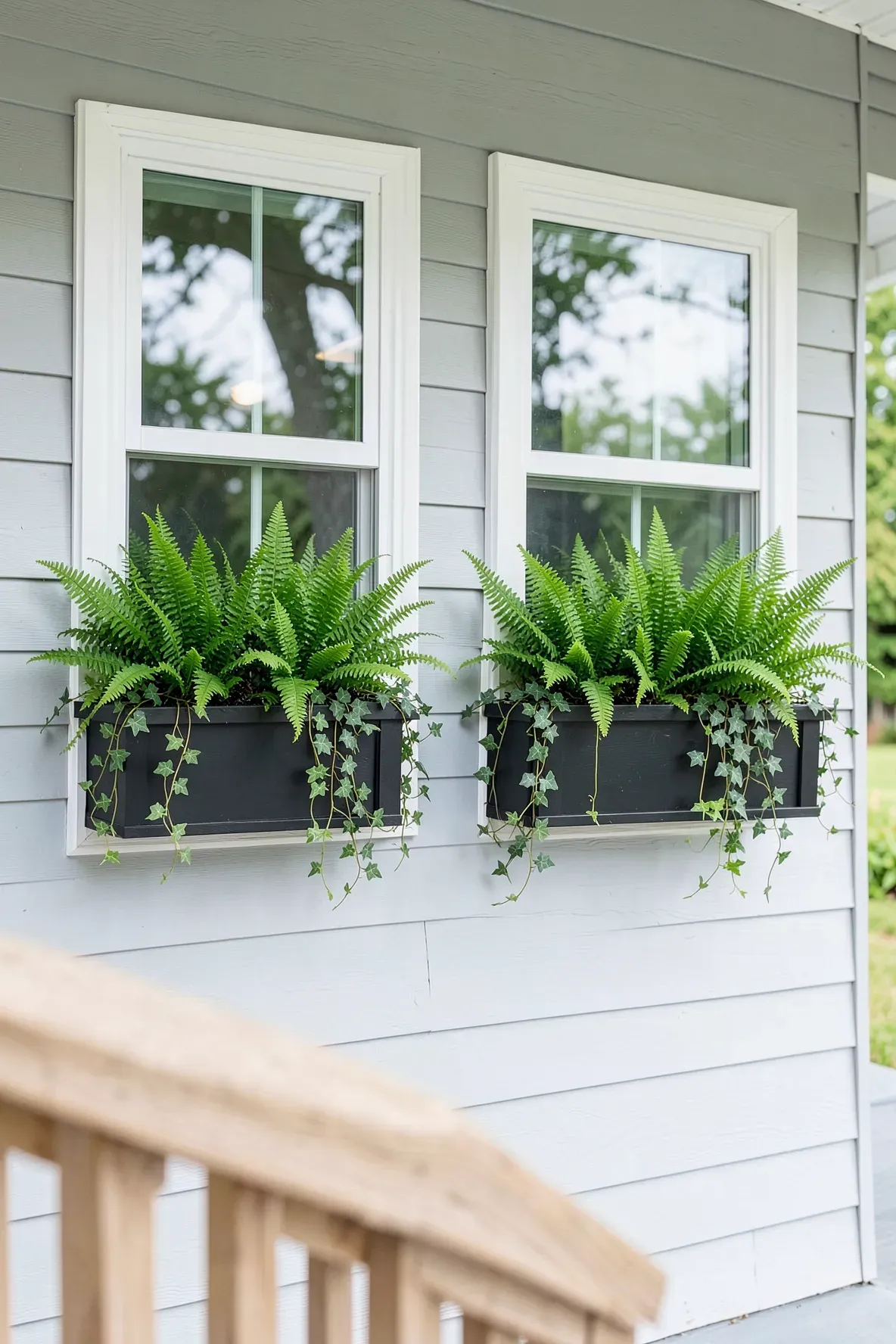
Sometimes the light conditions on a porch just won’t support live plants, or you might not have the time for constant watering. Using fake ferns on front porch window boxes is a practical solution that still looks green. Choose UV-resistant versions so the color doesn’t fade to a strange blue-green over time. You can mix them with real trailing ivy or other hardy plants to make the arrangement look more realistic. These are especially useful for high-up window boxes that are difficult to reach with a watering can every day.
Asparagus Fern in a Vintage Glass Terrarium
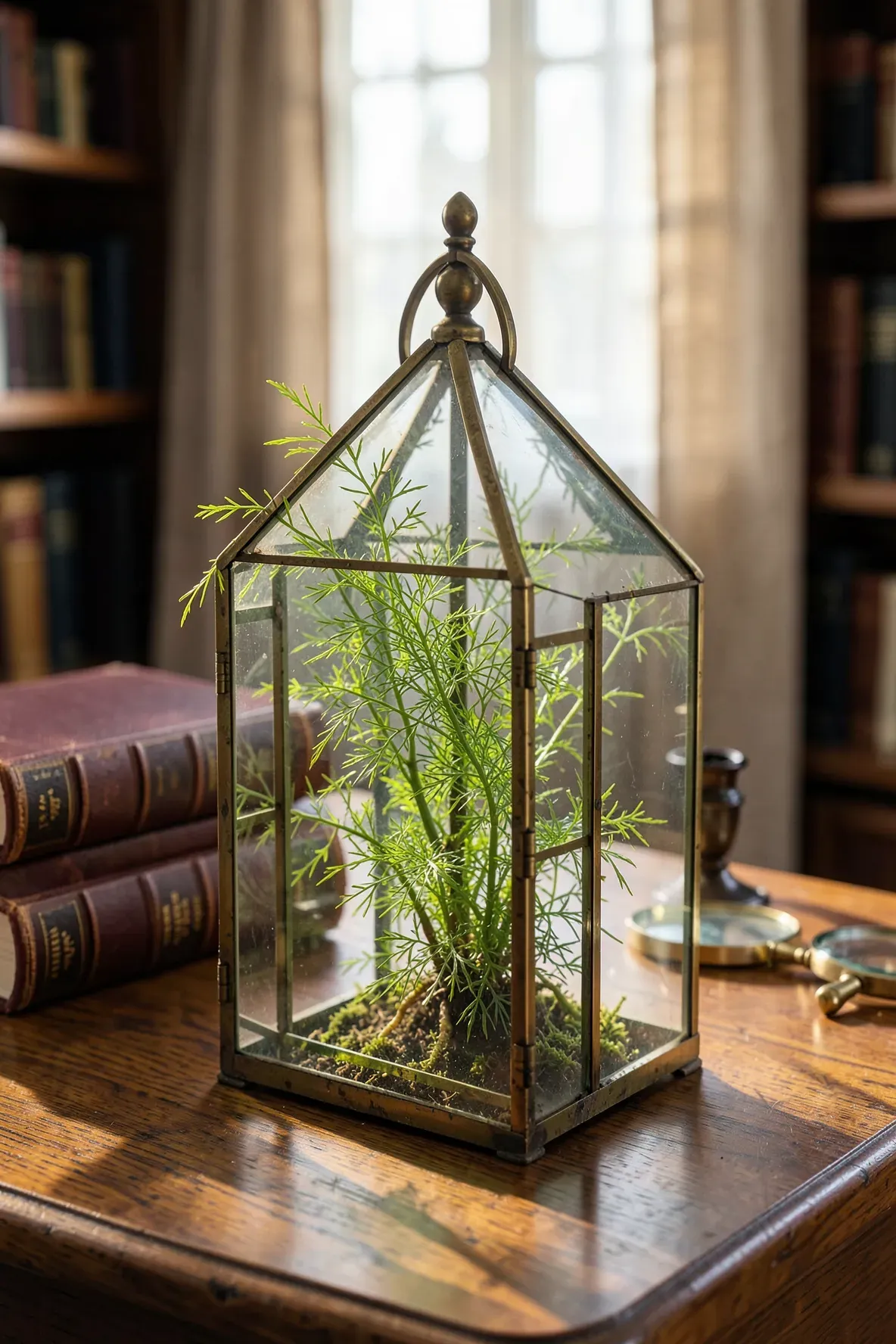
Though not technically a true fern, the Asparagus fern has a wispy, delicate look that fits perfectly into fern garden ideas. Placing one inside a vintage glass terrarium helps trap moisture and creates a miniature ecosystem. This is a great tabletop piece for a desk or a bookshelf. Since these plants can grow quite fast and have small thorns, the glass enclosure keeps them contained and safe to be around. Make sure the terrarium is in a spot with plenty of light, as these plants can get leggy and thin if they are kept in too much shade.
Button Fern in a Small Terracotta Tabletop Pot
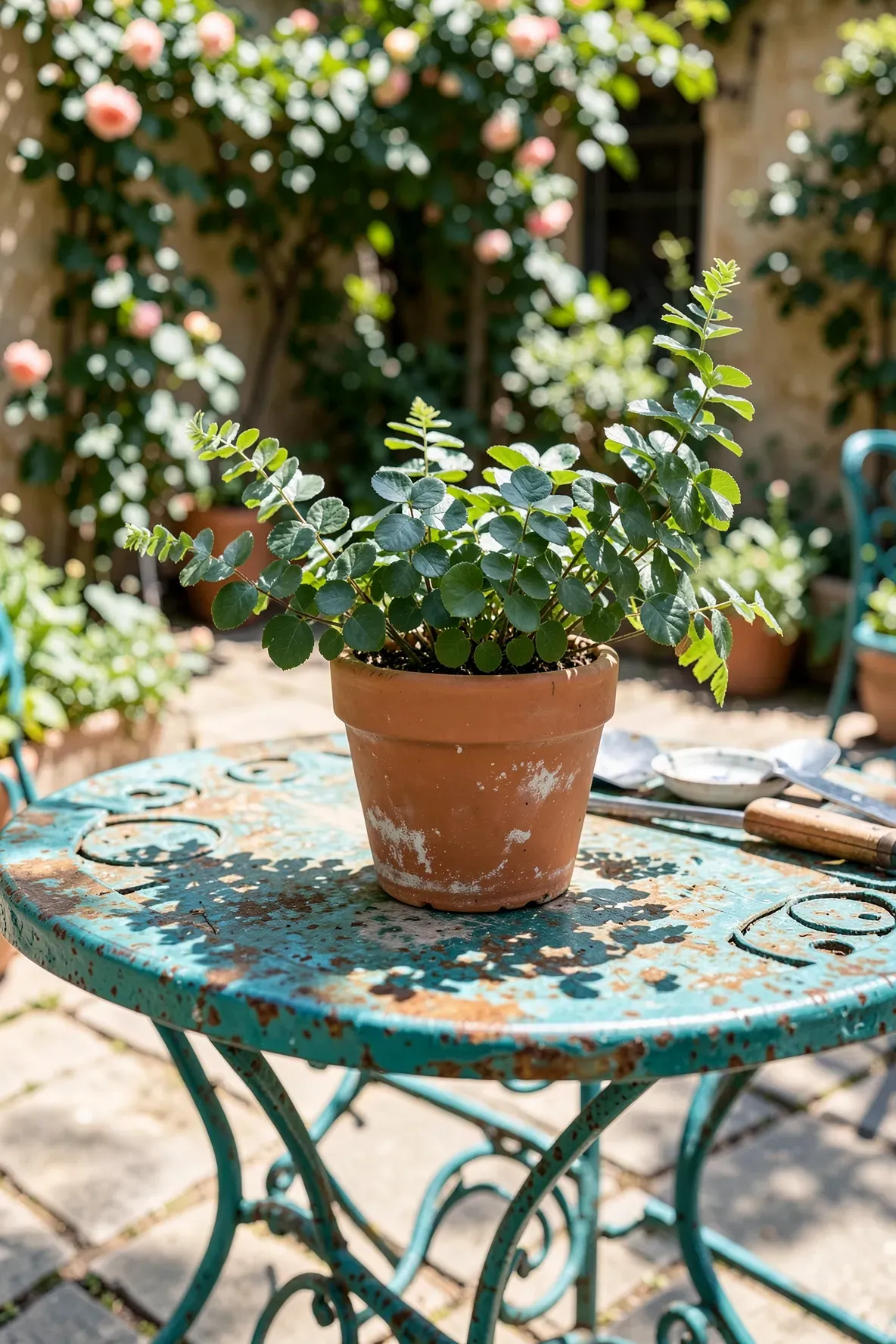
The Button fern is a compact plant with small, round leaves that stay close to the soil. It looks best in a simple terracotta pot that highlights its dark green foliage. This is one of the best outdoor potted plant ideas for a small bistro table or an outdoor shelving unit. Terracotta is a breathable material that helps prevent the soil from staying too soggy, which is helpful for this specific variety. Because they stay small, they are easy to move inside when the weather gets too cold, making them a versatile part of your plant collection.
Kimberly Queen Fern in a Large Galvanized Steel Bucket
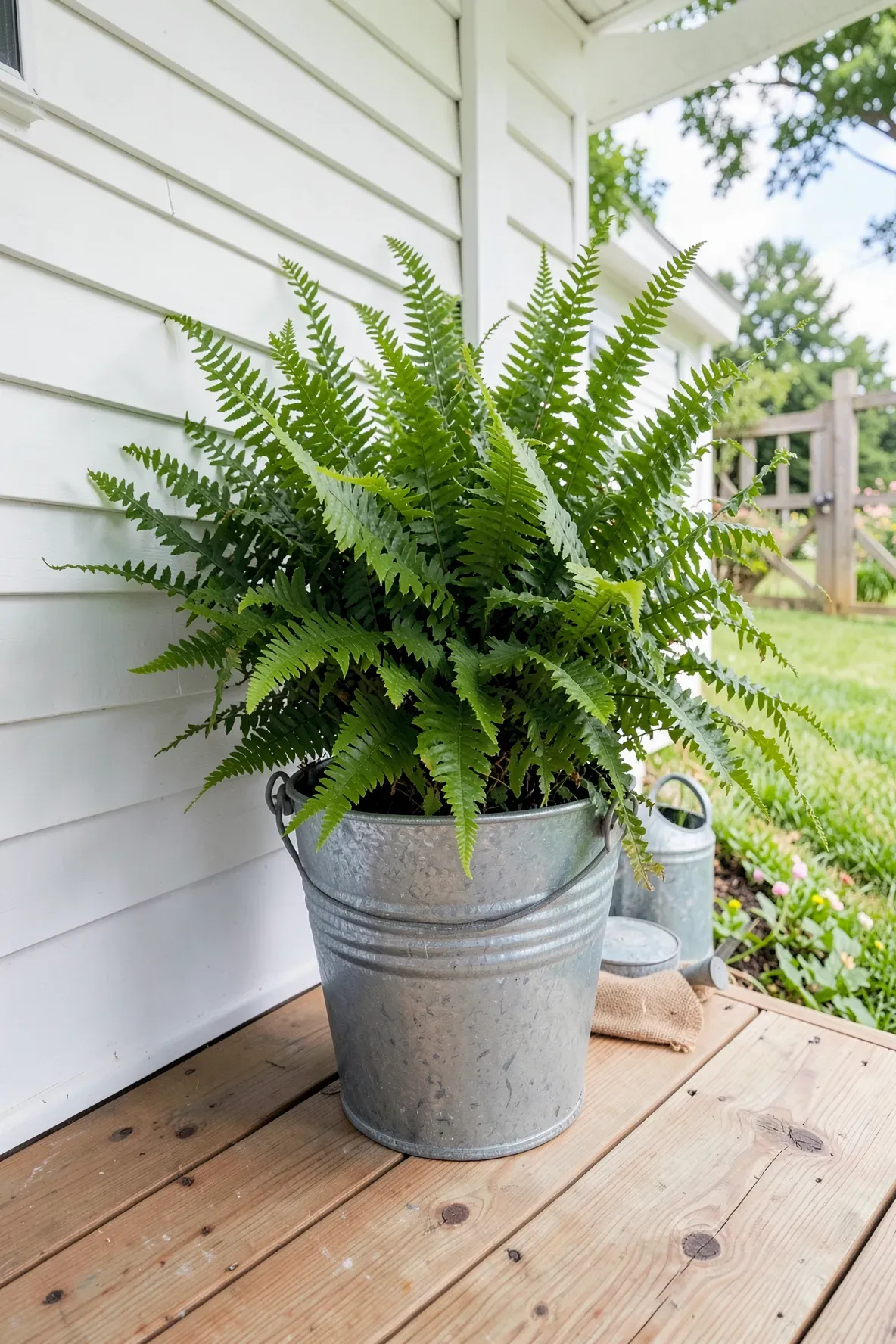
For a farmhouse or rustic look, a large galvanized steel bucket makes a sturdy home for a Kimberly Queen fern. These buckets are deep enough to hold plenty of soil, which helps the plant grow quite large over a single season. You must drill several drainage holes in the bottom of the bucket before planting to ensure water can escape. This setup works well on a back deck or near a garden gate. The silvery metal of the bucket complements the deep green of the fern, creating a clean and bright look for your outdoor space.
Rabbit’s Foot Fern in a Moss-Lined Wire Basket
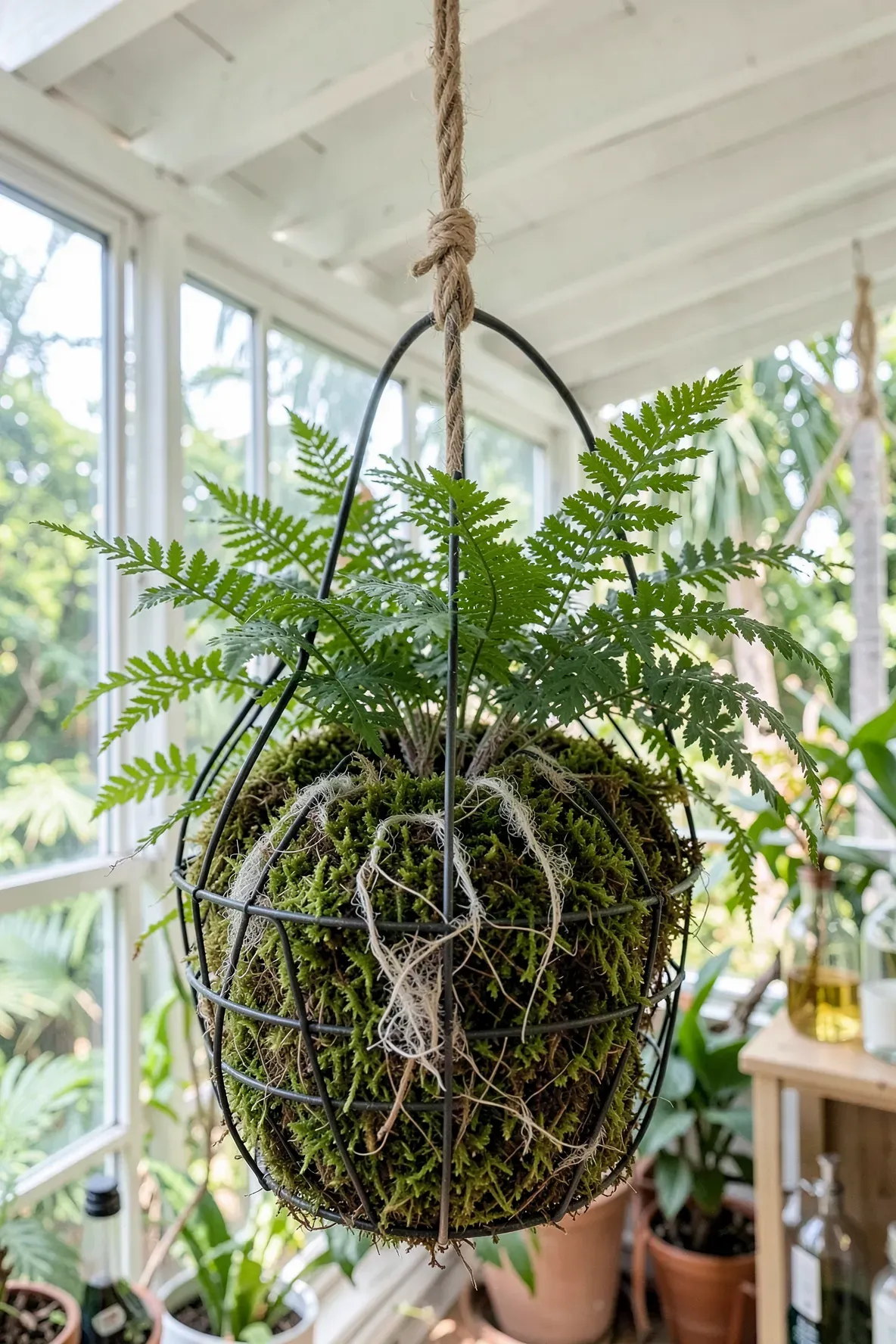
The Rabbit’s Foot fern is famous for the furry rhizomes that grow out of the soil and over the sides of the pot. A moss-lined wire basket is the best way to display these, as the rhizomes can easily grip the moss and grow all around the container. This creates a ball of greenery over time. These ferns enjoy bright, indirect light and should be misted often to keep the “feet” from drying out. They are a conversation starter and work well in a sunroom or a sheltered porch where people can see the unique texture up close.
Autumn Fern Groupings in a Shaded Garden Border
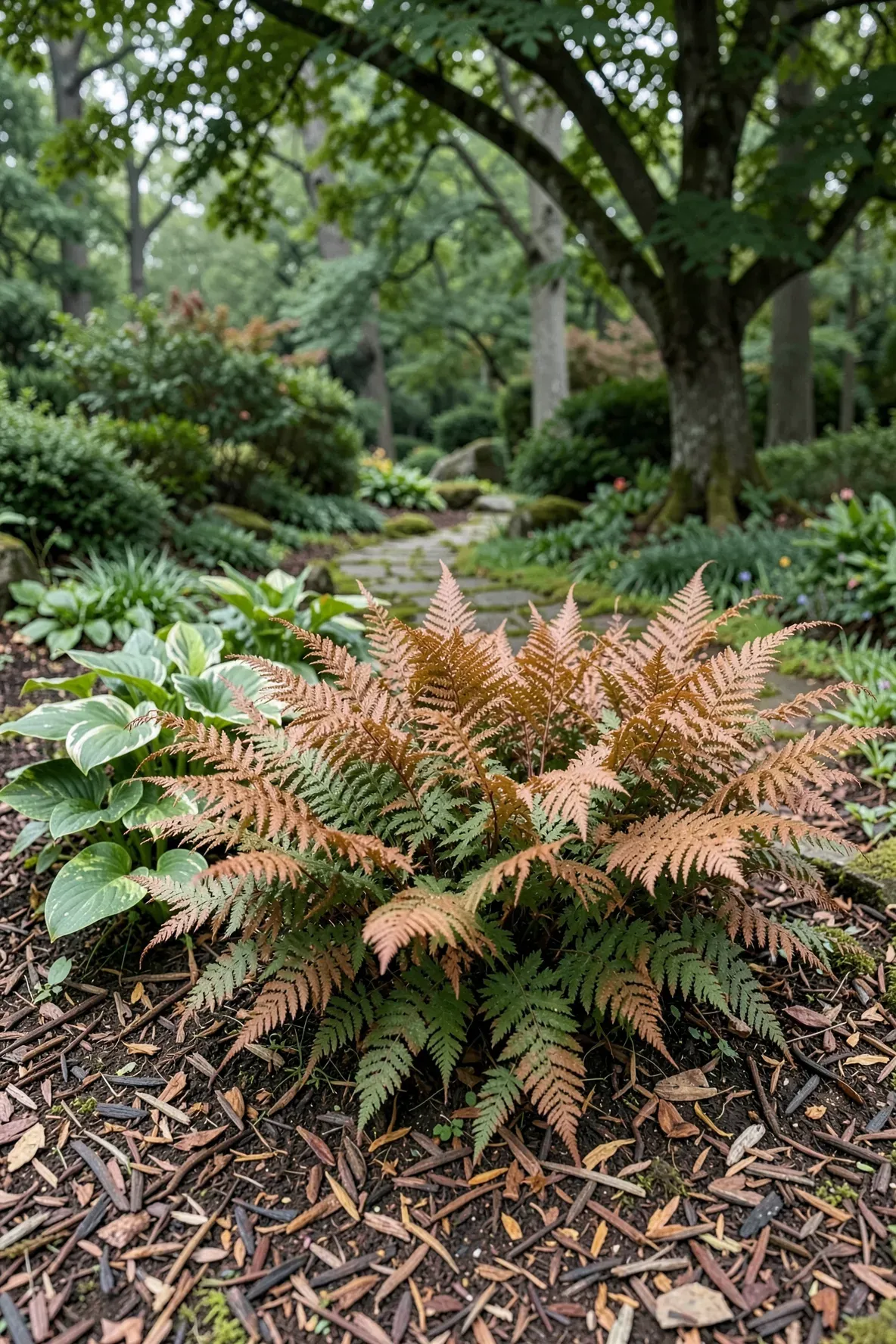
If you are looking for fern garden landscaping ideas, the Autumn fern is a top pick because of its changing colors. Its new growth starts out as a copper or bronze color before turning green. Planting them in groups along a shaded garden border creates a lush, forest-like feel. They pair well with hostas or bleeding hearts. To keep them looking their best, mulch the area with shredded bark to retain moisture in the soil. These ferns are relatively low-maintenance once they are established and can handle a bit more dry shade than other types.
Japanese Painted Fern in a Stone Trough Planter
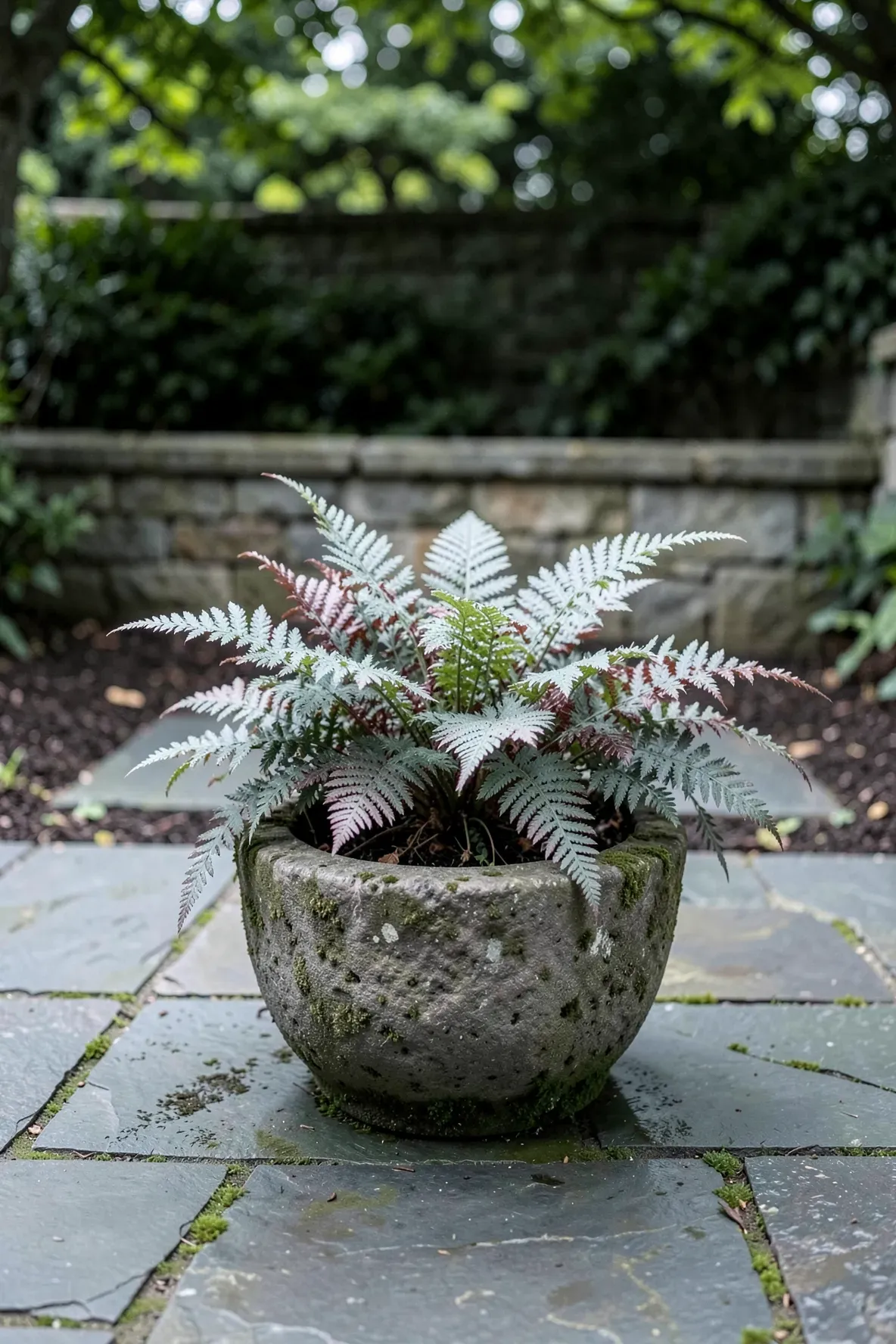
Japanese Painted ferns have striking silvery-blue and burgundy fronds that stand out in dark areas. A stone trough planter provides a heavy, traditional base that makes the delicate colors of the fern pop. This is a great addition to a patio or a walkway where you want a bit of color without using flowers. These ferns are deciduous, meaning they will die back in the winter and return in the spring. Using a stone planter ensures the roots stay cool during the summer, which helps the plant maintain its unique coloration throughout the growing season.
Boston Fern in a Woven Seagrass Floor Basket
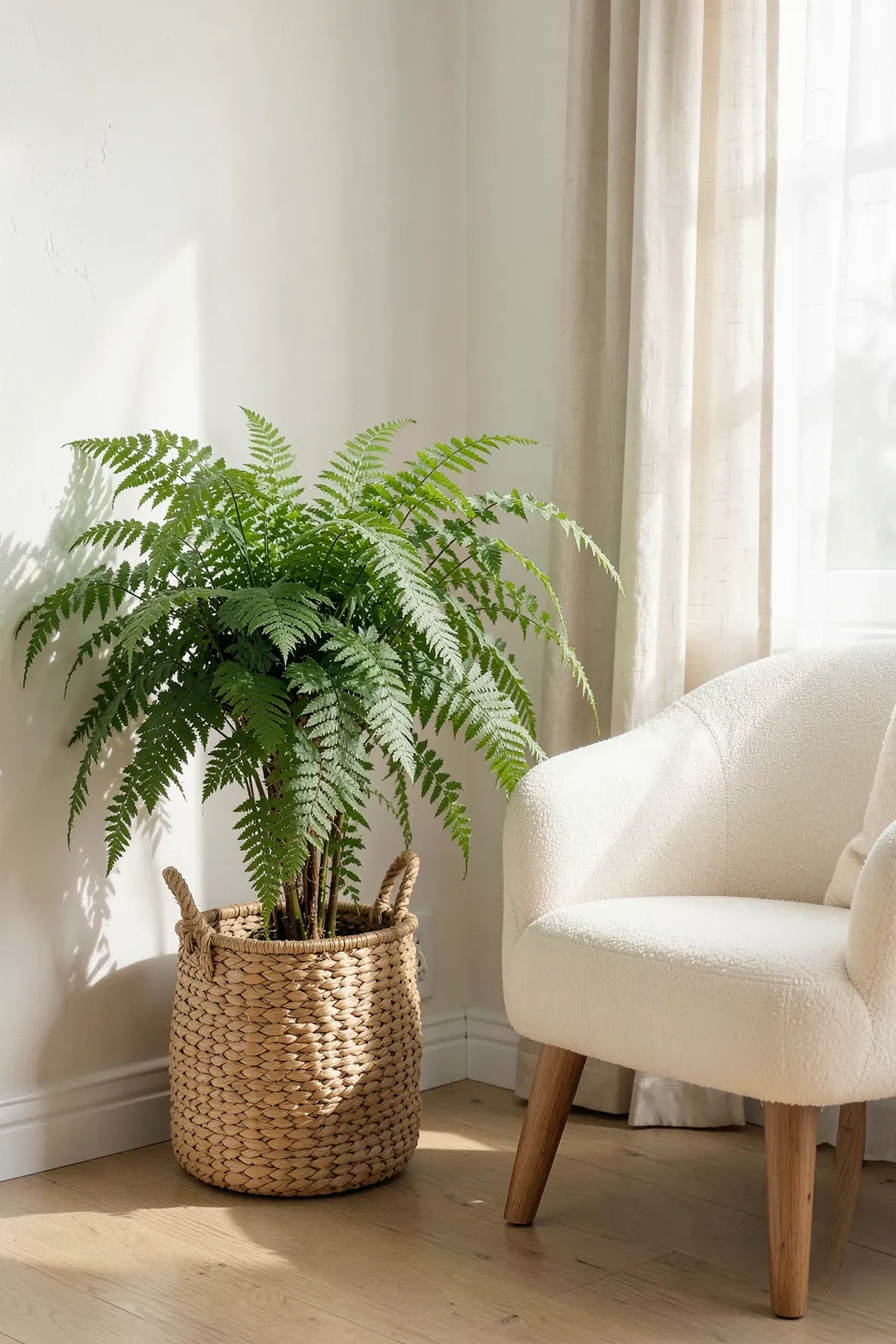
A woven seagrass basket adds a warm, natural texture to your indoor fern decor. This is a simple way to hide a plain plastic nursery pot and make a large Boston fern look like a finished piece of furniture. Since seagrass can be damaged by water, it is important to place a sturdy plastic liner or a deep saucer at the bottom of the basket. This setup is perfect for filling an empty corner in a bedroom or living room. The soft texture of the basket matches the feathery look of the fern, creating a very relaxed and cozy atmosphere.
Sword Fern in a Dark Charcoal Geometric Pot
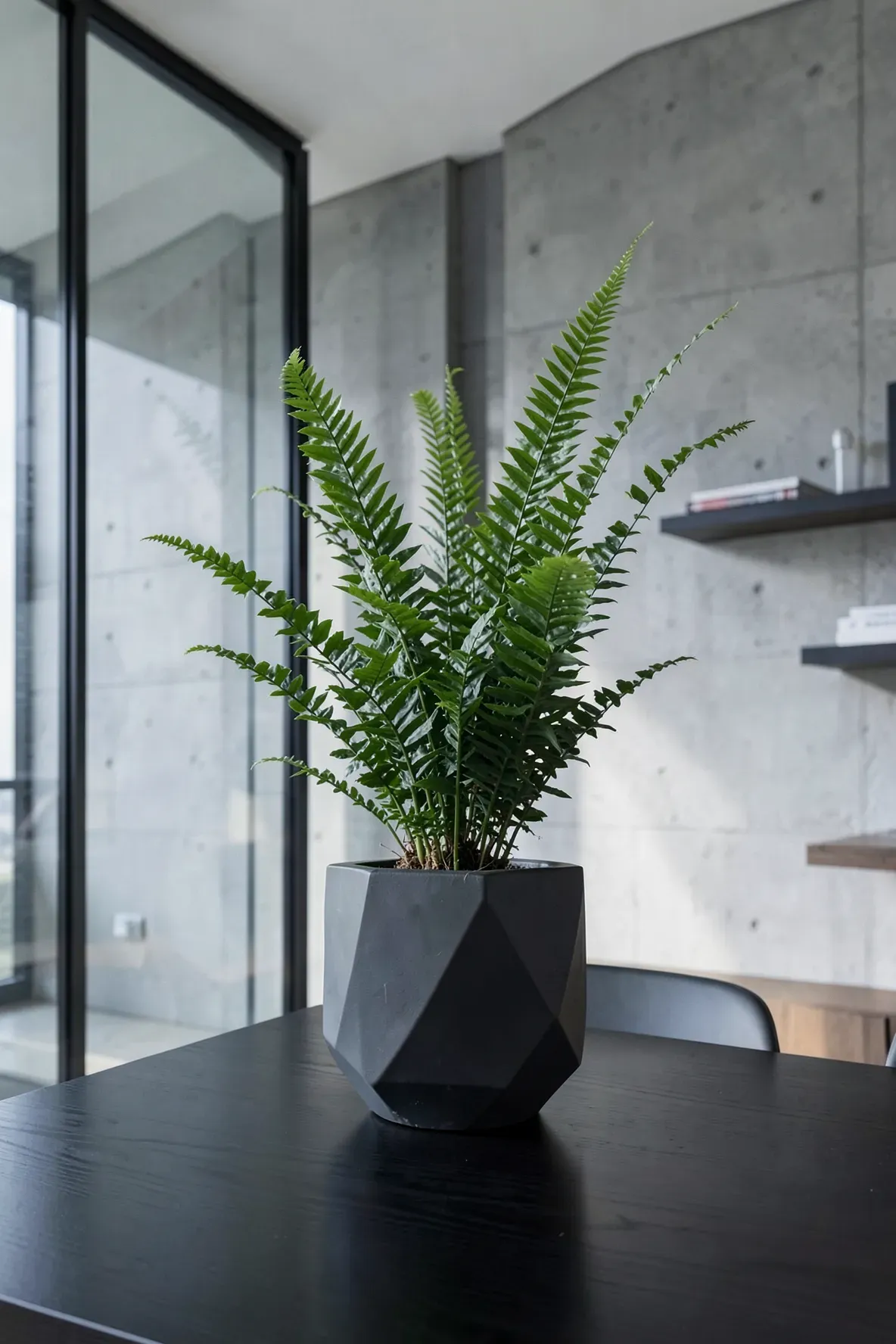
Sword ferns have a very structured and architectural look with their stiff, upright fronds. Putting them in a dark charcoal geometric pot emphasizes this modern aesthetic. This plant pot design is ideal for a contemporary home or a sleek office space. Sword ferns are incredibly tough and can handle a variety of light conditions, though they prefer a spot that isn’t in total darkness. The dark color of the pot makes the bright green leaves seem even more vivid, making it a strong visual element for any room.
Blue Star Fern in a Minimalist White Glazed Planter
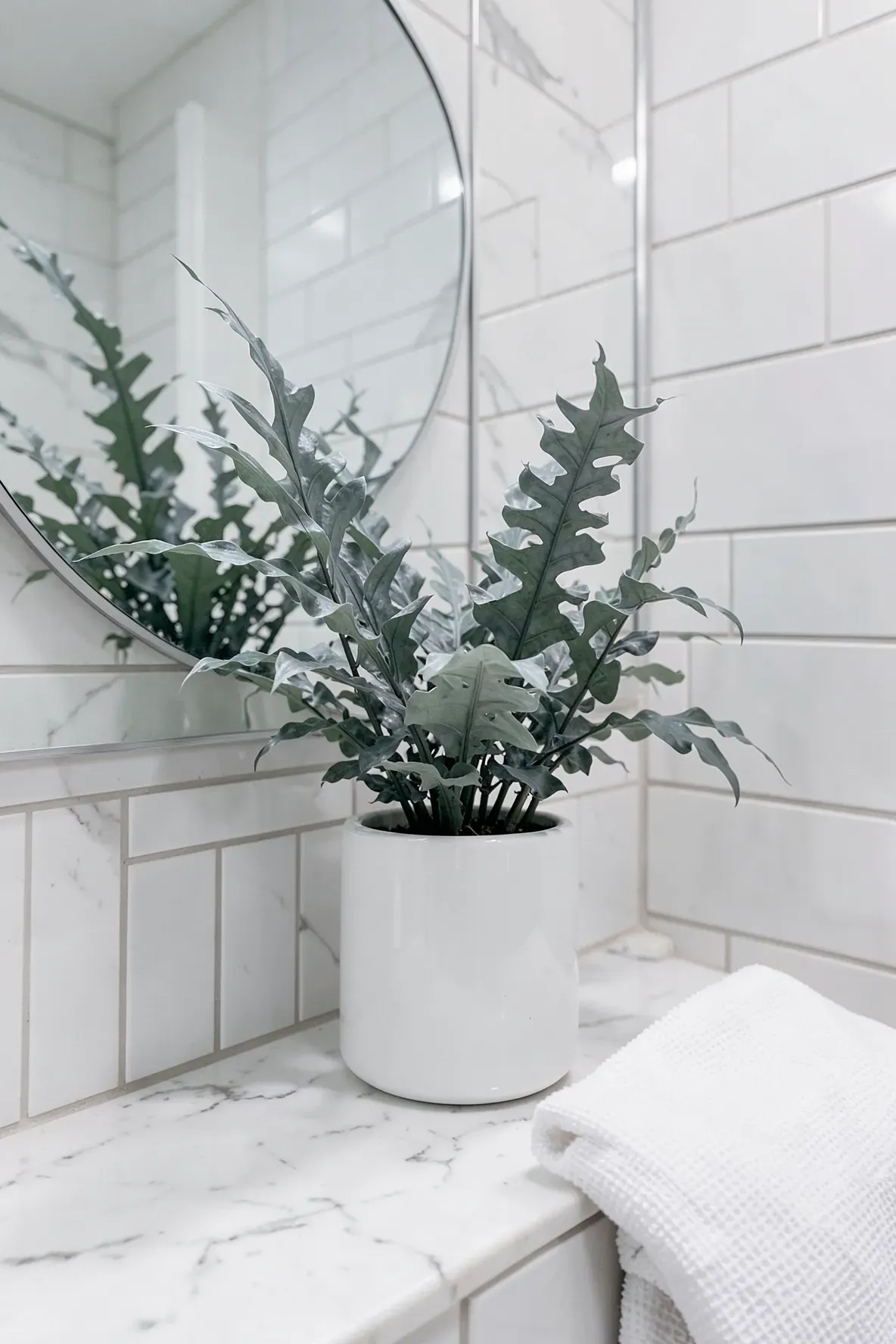
The Blue Star fern has a unique blue-gray tint and elongated leaves that look very different from typical lacey ferns. A minimalist white glazed planter provides a clean background that allows the unusual color of the leaves to be the main focus. This fern is generally easier to care for than the Maidenhair and can tolerate slightly drier air. It looks great on a nightstand or a bathroom shelf. The glazed finish of the pot helps keep the soil moist for longer periods, which is perfect for busy plant owners who might forget a watering day.
Ostrich Fern in a Tiered Vertical Wall Planter
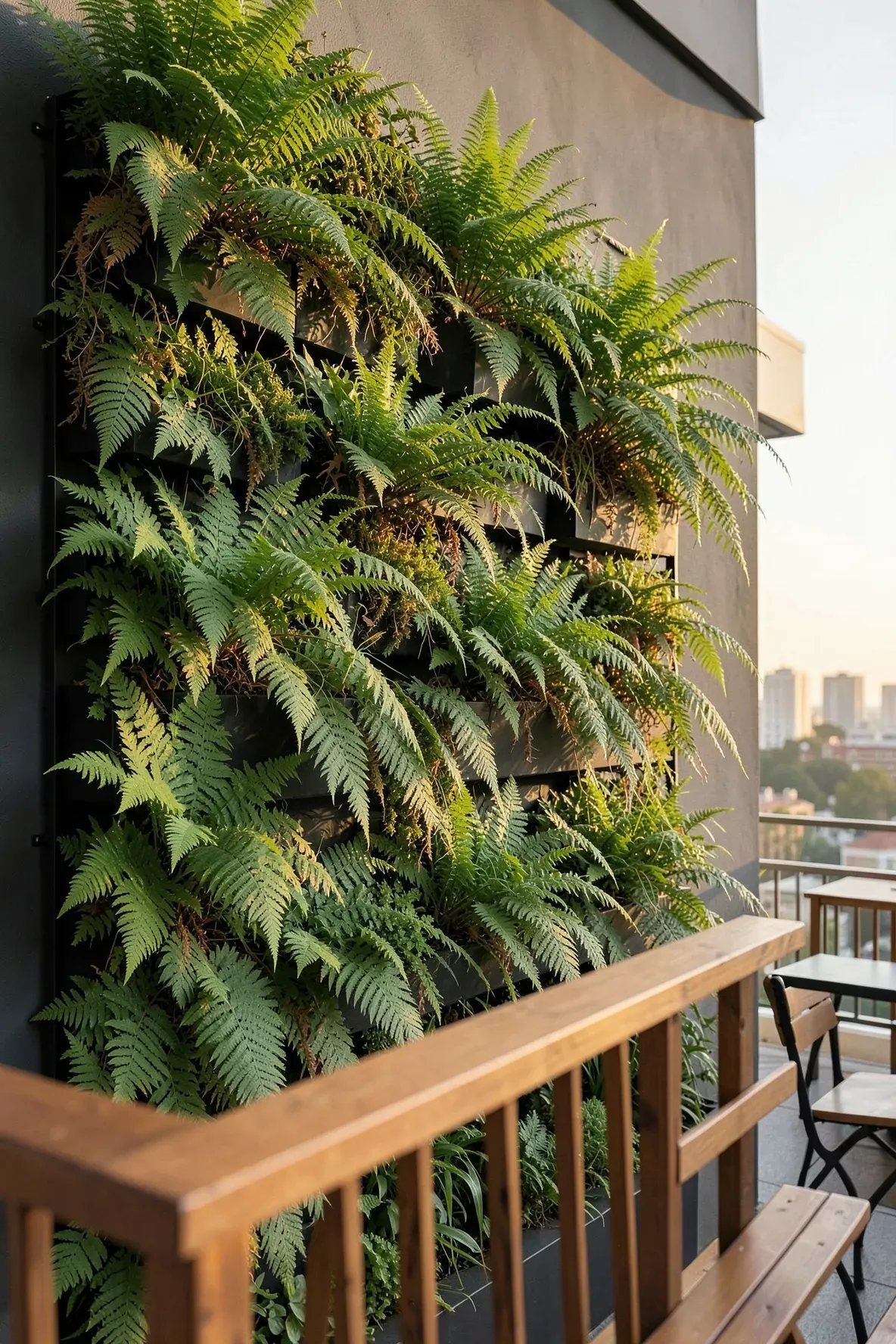
Ostrich ferns can grow quite large, but using them in a tiered vertical wall planter allows you to enjoy their scale even in a small backyard or on a balcony. This is one of the more creative fern garden ideas for maximizing vertical space. As the ferns grow, their large, feathery fronds will overlap, creating a wall of green that provides privacy and a cooling effect. Make sure the wall planter is sturdy and has a reliable way to get water to the top levels, as the soil in vertical containers can dry out faster than in the ground.
With so many varieties and styles to choose from, adding ferns to your home doesn’t have to be complicated. Whether you prefer the classic look of a Boston fern on the porch or the modern feel of a Blue Star fern in a sleek pot, the right container makes all the difference. Start with one or two of these ideas and see how much life a little bit of greenery can bring to your space.