
Running out of room in your backyard doesn’t mean you have to stop planting. Most of us focus so much on the ground that we forget about the empty space on our fences and walls. Vertical gardening lets you grow more food and flowers without needing a massive plot of land.
This list covers simple ways to build your own displays using everyday materials. Whether you want to hide an ugly fence or grow fresh herbs right outside your kitchen door, these ideas will help you make the most of every inch of your outdoor space.
Recycled Wooden Pallet Lean-To with Herb Pockets
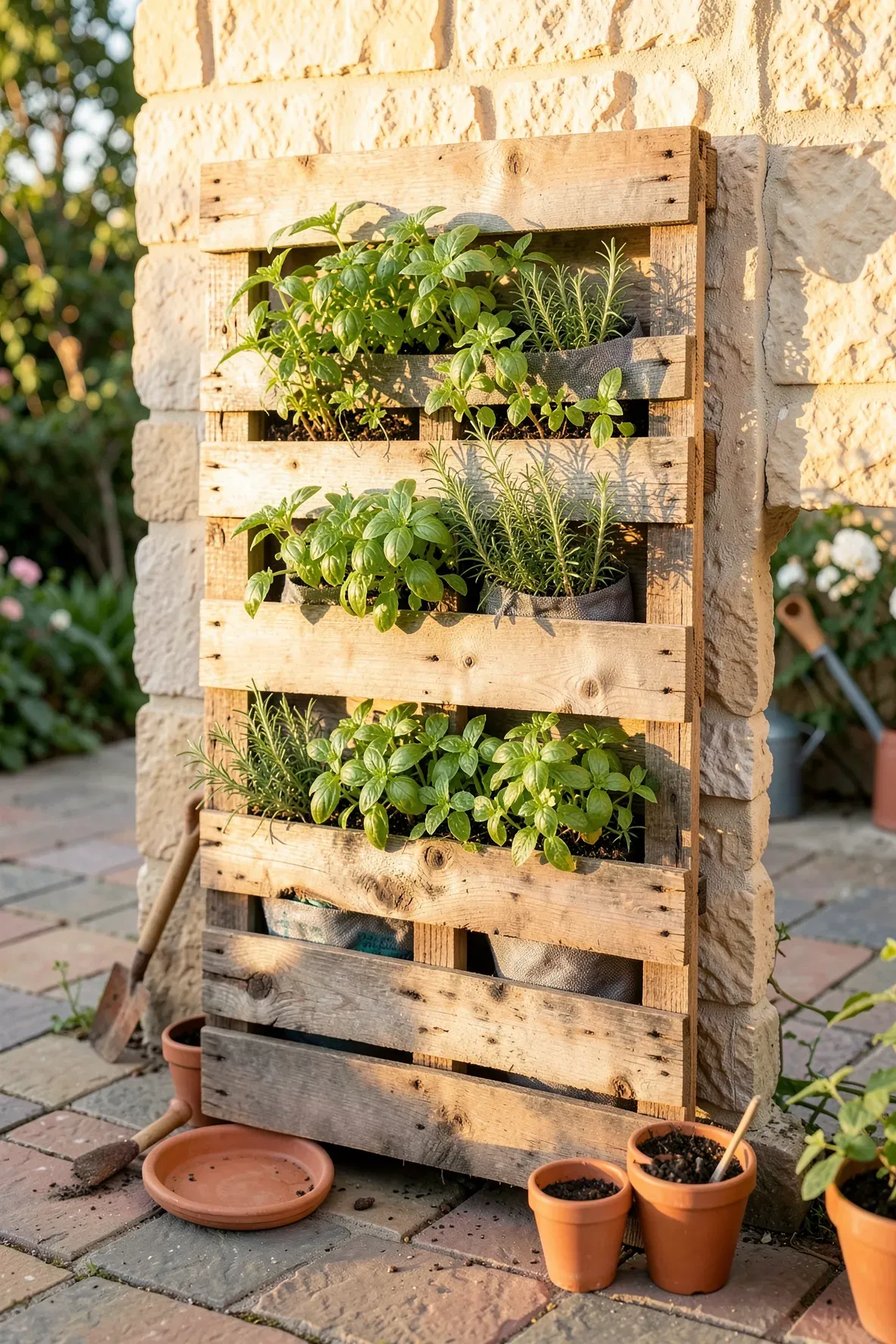
Wooden pallets are easy to find and work well for a rustic herb garden. You can lean a pallet against a sunny wall and staple landscape fabric behind the slats to create pockets for soil. Fill these pockets with potting mix and plant herbs like basil or mint. It is a quick way to build a wall garden ideas outdoor project without spending much money.
Make sure to use heat-treated pallets rather than chemically treated ones if you plan to grow edible plants. Sand down the rough edges to avoid splinters and consider painting it to match your porch. This setup keeps your herbs off the ground and away from most pests.
Metal Grid Panel with S-Hook Terracotta Pots
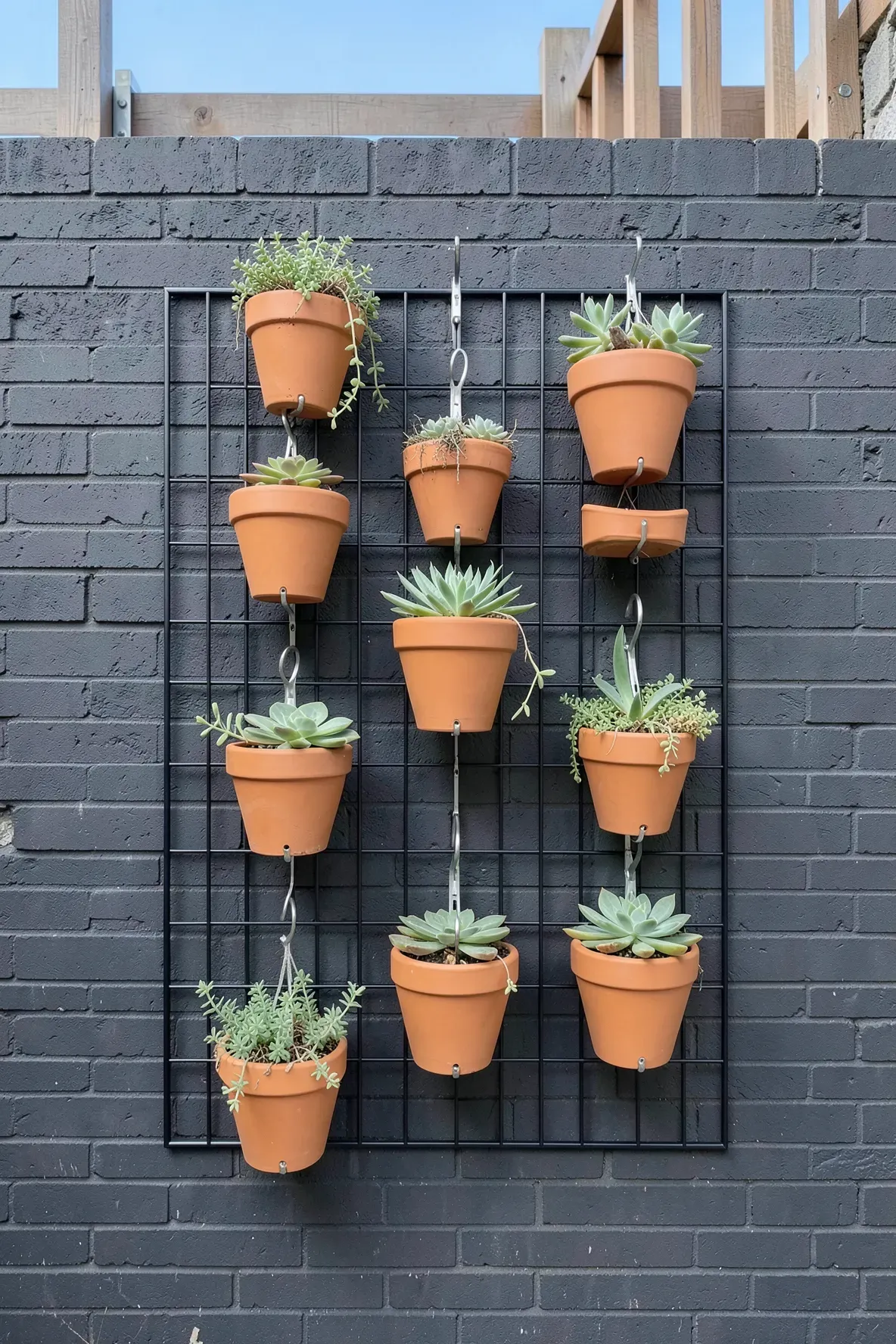
A simple wire mesh or metal grid panel makes a sturdy base for outdoor plant wall ideas. You can mount the grid to a brick or wood surface and use S-hooks to hang small terracotta pots by their rims. This allows you to move plants around whenever you want to change the look or give a specific plant more sunlight.
Terracotta is great because it breathes, but it does dry out fast in the sun. Try using this method for succulents or drought-tolerant flowers. It creates a clean, organized look that works well even in small balcony spaces.
Tiered Cedar Window Boxes Mounted to a Brick Wall
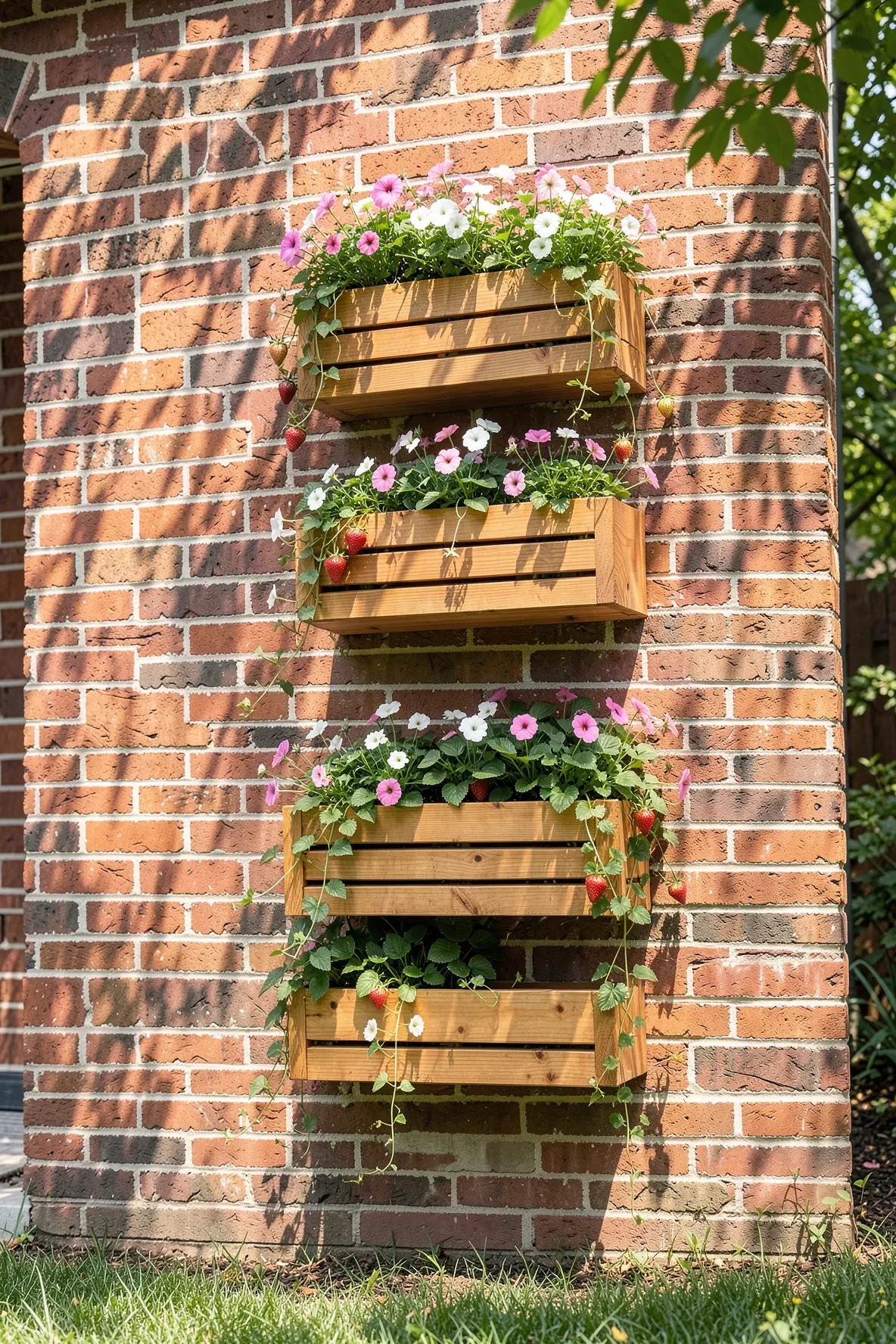
Cedar is naturally resistant to rot, making it a smart choice for garden wall decor outdoor displays. You can bolt several window boxes directly onto a brick wall at different heights. This tiered effect creates a lush wall of greenery that hides boring masonry.
When installing these, use masonry anchors to ensure they stay secure when the soil is wet and heavy. Leave enough space between the boxes so the plants on the lower levels can still get plenty of light. This is a solid option for growing strawberries or trailing flowers like petunias.
Vertical Pocket Planters Made of Felt Fabric
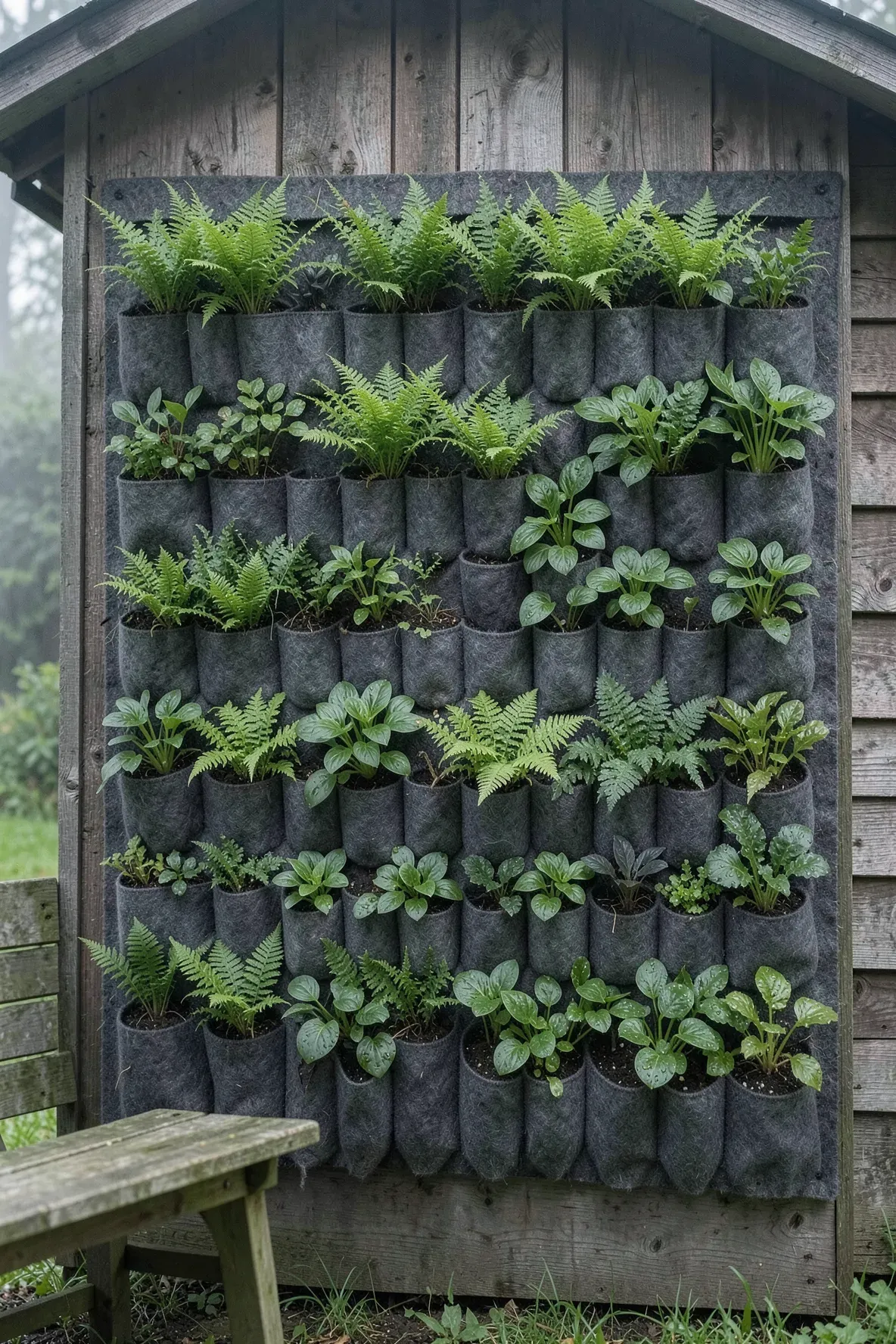
Felt pocket systems are lightweight and easy to hang on any flat surface. The fabric allows roots to breathe and prevents water from pooling at the bottom of the container. You can find these in various sizes to cover a small patch or an entire side of a shed.
These planters work best for leafy greens and ferns that enjoy consistent moisture. Because the felt is porous, you might need to water more often during hot spells. They are a great entry point for anyone looking for simple hanging garden ideas.
Hanging Macrame Plant Holders on a Wooden Fence
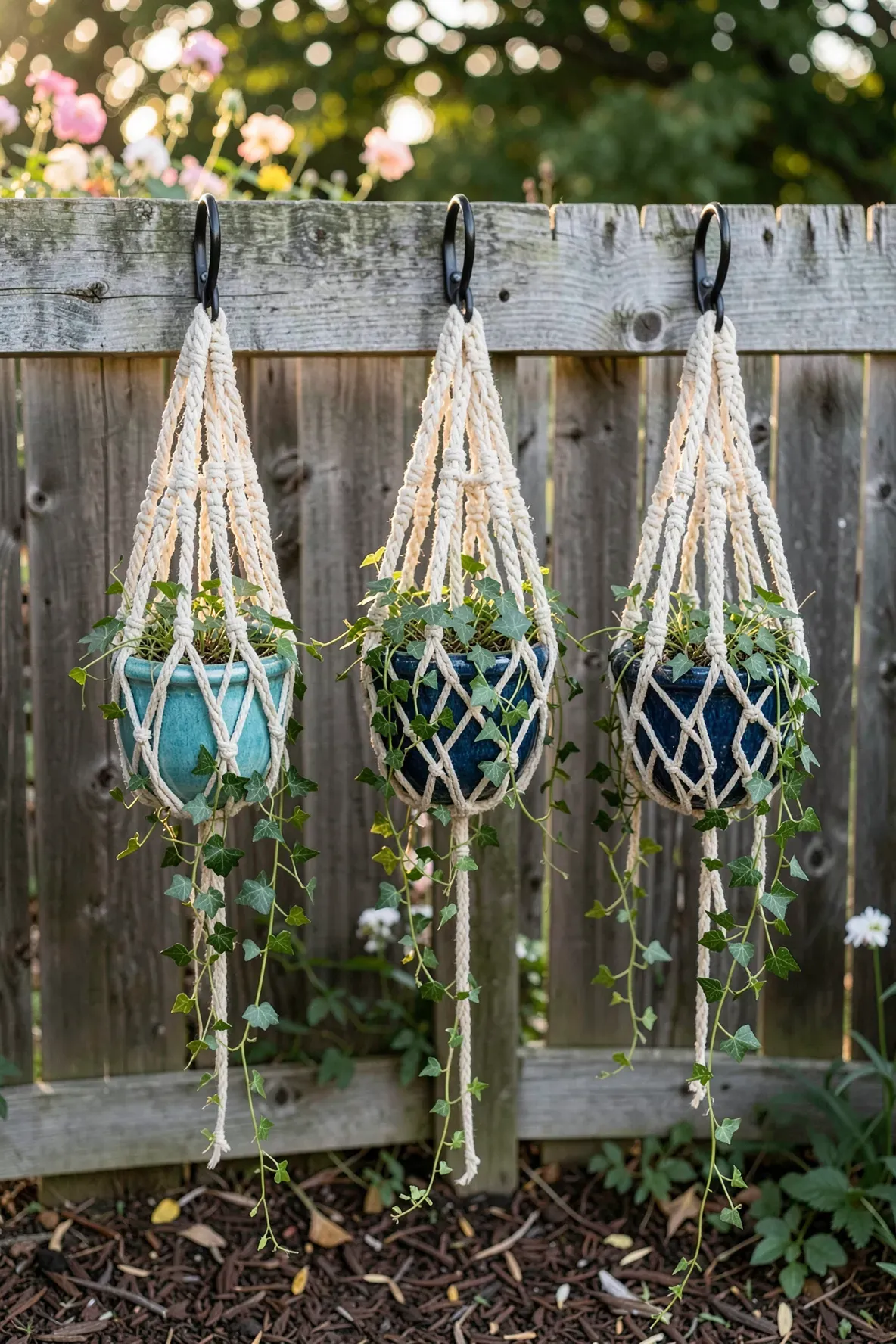
Hanging plants on fence lines adds texture and visual interest to a flat backyard border. You can use weather-resistant cord to tie macrame holders that cradle your favorite ceramic pots. Secure them to the fence posts using heavy-duty hooks.
Choose plants that trail downward, like ivy or creeping Jenny, to soften the look of the wood. This method keeps your plants at eye level, making it easier to check for pests or see when they need a drink. It is a soft, natural look that contrasts well with hard fencing.
Lattice Trellis with Climbing Vines and Wall Hooks
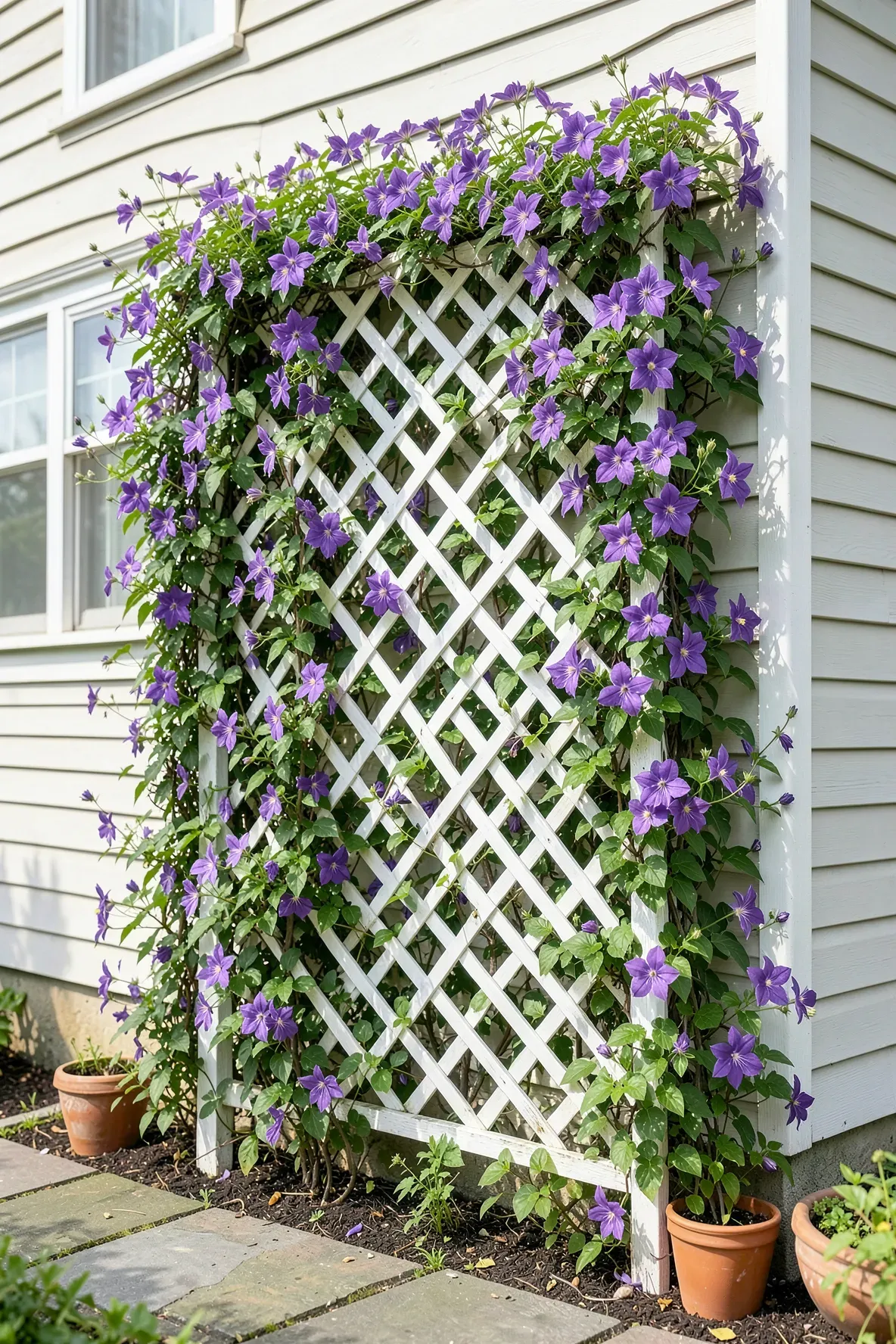
A classic lattice trellis is one of the most reliable ways to grow vertically. You can attach a wood or vinyl lattice to your home or garage and guide climbing vines like clematis or jasmine up the structure. Adding a few extra hooks allows you to tuck in small pots among the vines.
This setup provides privacy and shade as the plants grow thicker over time. It also works well as one of many garden edging ideas if you place the trellis at the end of a path to create a living screen. It is a low-maintenance way to fill a large vertical space.
Repurposed Rain Gutter Planters for Shallow Roots
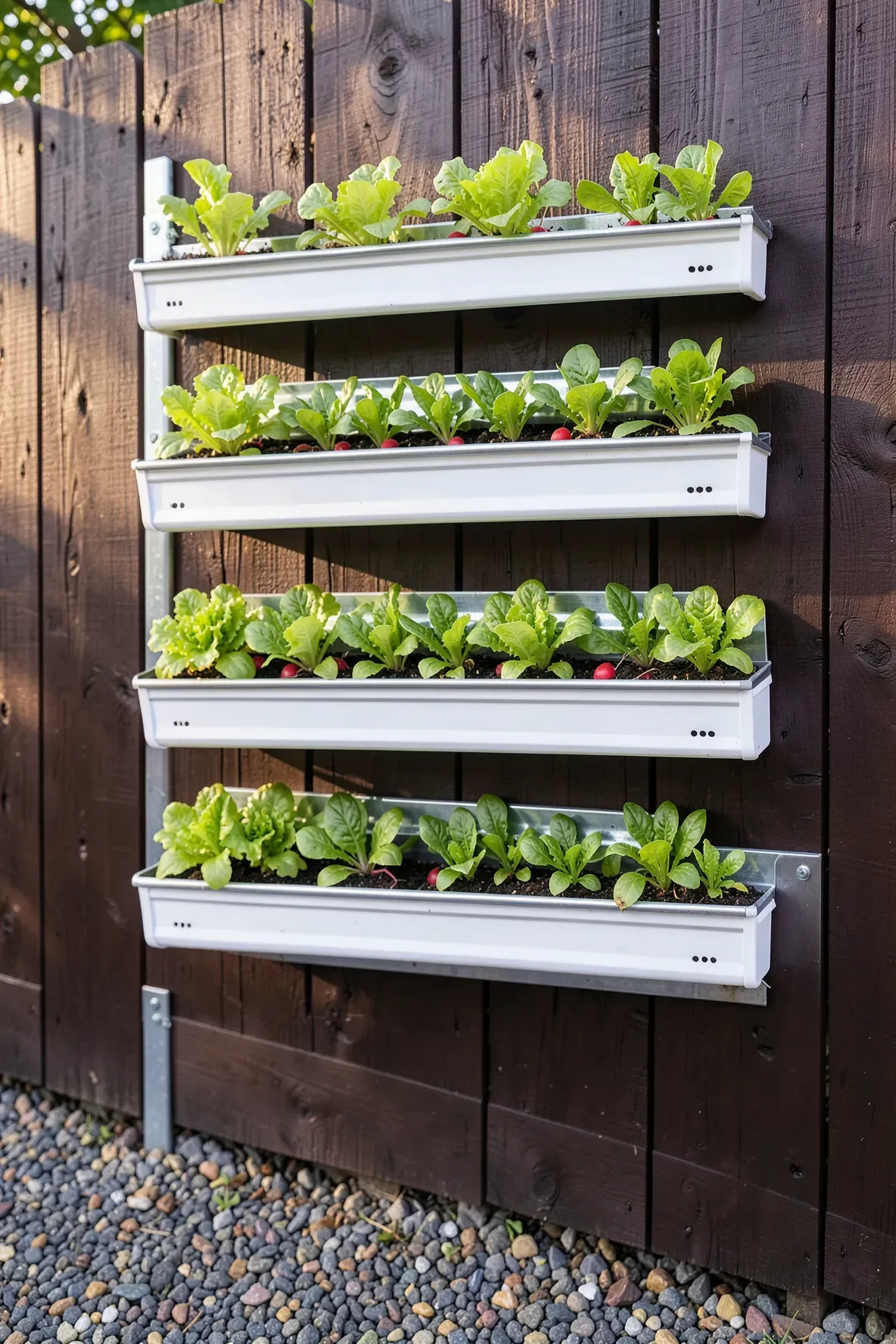
Old aluminum rain gutters can be cut to size and mounted horizontally along a wall or fence. These are perfect for plants with shallow root systems like lettuce, spinach, or radishes. Drill small drainage holes in the bottom every few inches to prevent the soil from getting waterlogged.
Line them up in rows to create a productive vegetable garden in a very narrow space. Since they don’t hold much soil, they stay relatively light even when wet. This makes them a great choice for fence hanging planters where weight might be a concern.
Galvanized Metal Buckets Bolted to Garden Shed Walls
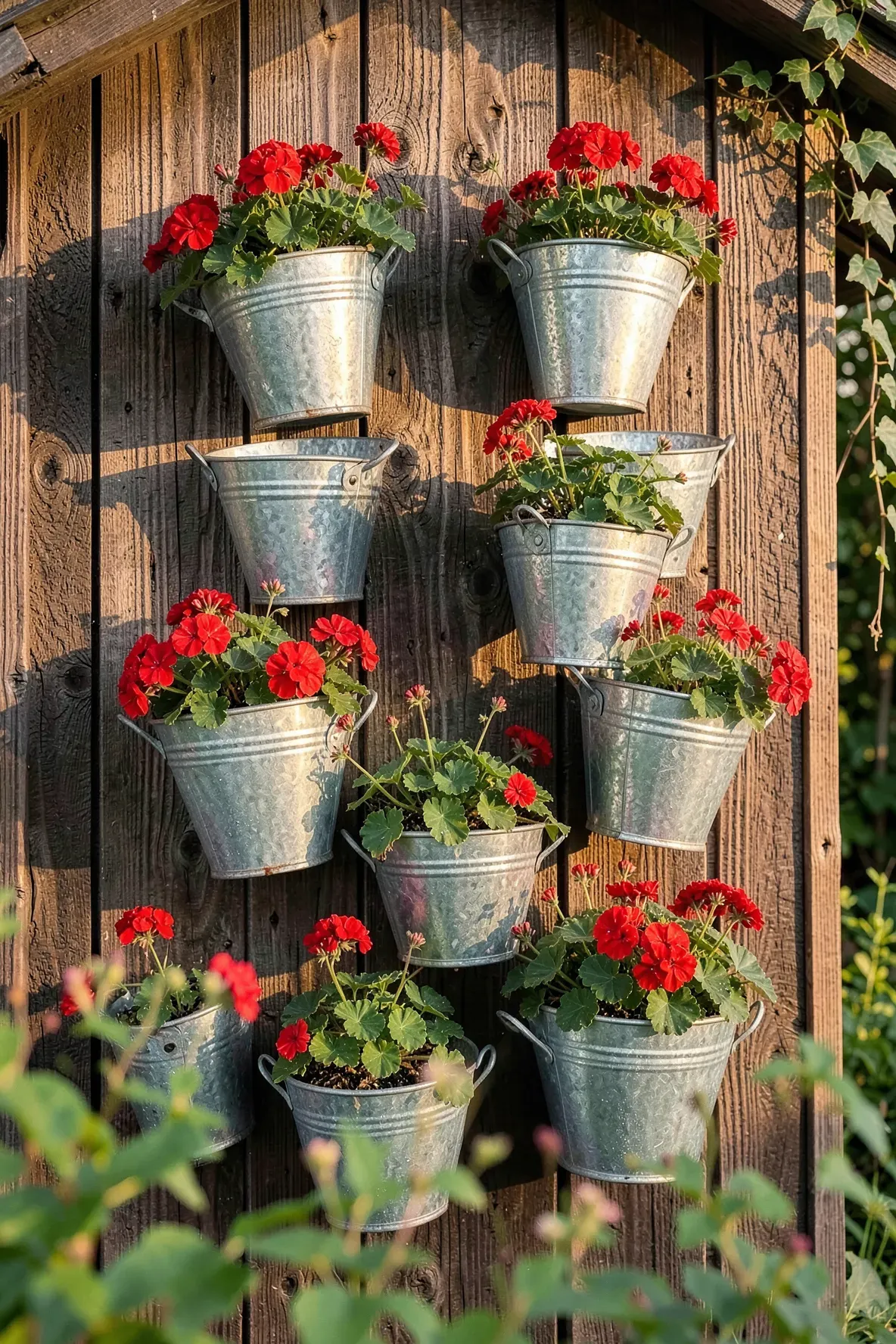
Using galvanized buckets is one of those simple garden shed ideas that adds storage and style. You can bolt the buckets directly through the metal or wood siding of your shed. They are tough enough to handle the weather and provide deep enough space for larger flowers.
Make sure to drill drainage holes in the bottom of each bucket before mounting them. You can arrange them in a neat grid or a random pattern for a more casual look. They are perfect for holding bright geraniums or even small pepper plants.
Floating Wooden Shelves for Potted Succulent Displays
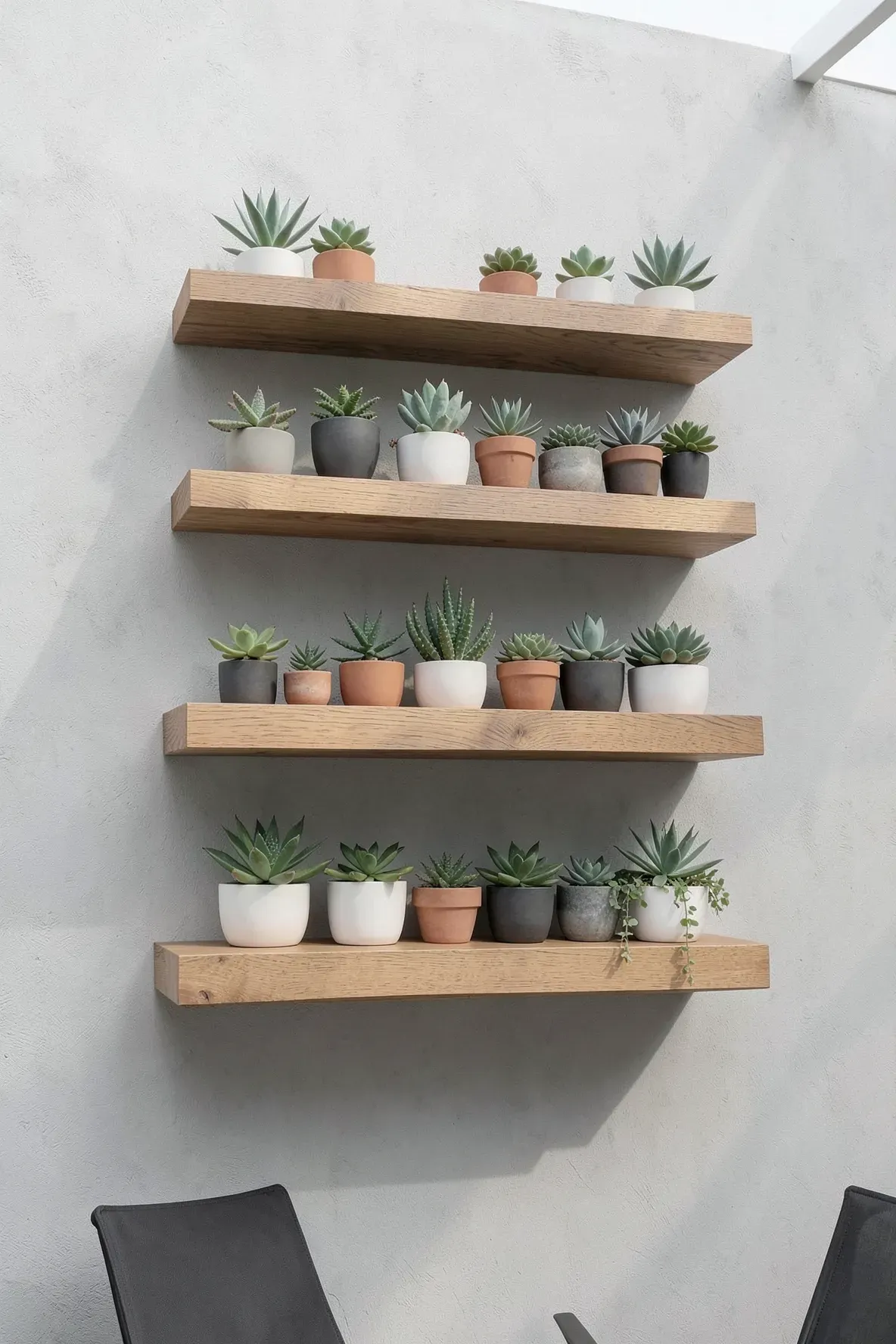
Floating shelves aren’t just for indoors; they can be used to create a modern outdoor plant wall. Use pressure-treated wood to build thick shelves and mount them to a sturdy exterior wall. This gives you a flat surface to display a collection of potted succulents or cacti.
This method is great because you can easily bring the pots inside if the weather gets too cold. It turns your plant collection into a piece of art that you can rearrange whenever you like. Use different pot colors and sizes to keep the display interesting.
Stacked Stone Retaining Wall with Built-In Planting Crevices
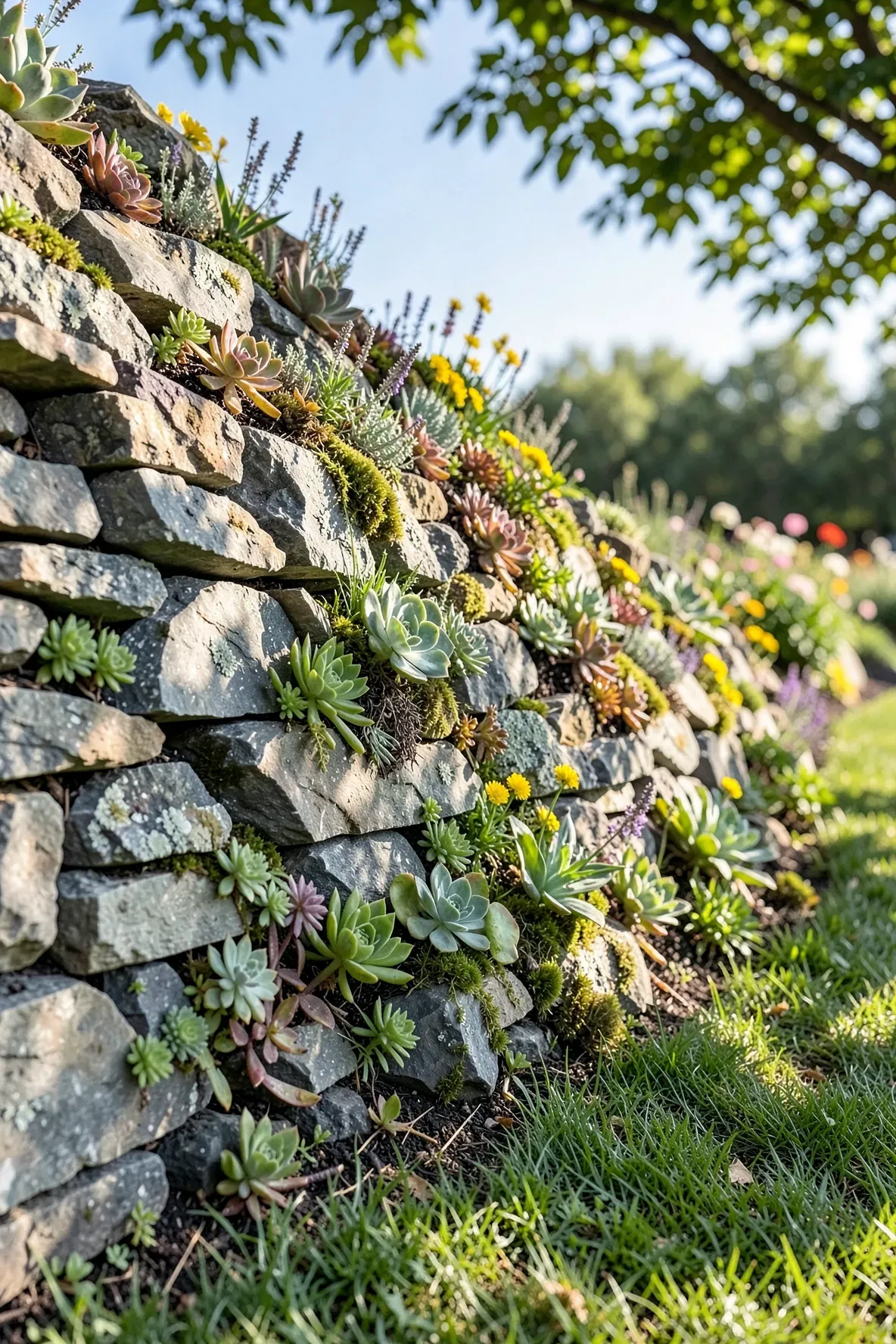
If you are already looking into garden edging ideas, consider a dry-stack stone wall. Instead of using mortar, you stack the stones and leave small gaps filled with soil. Many rock-loving plants like sedum or hens-and-chicks will thrive in these small pockets.
This creates a natural, rugged look that blends into the landscape. The stones help regulate soil temperature and provide excellent drainage. Over time, the plants will spread and cover the stones, creating a living wall that feels like part of the earth.
Wrought Iron Wall Rings for Individual Flower Pots

Wrought iron rings are a classic choice for hanging planters outdoor. These rings screw directly into a wall and hold a standard terracotta pot securely in place. They are nearly invisible once the plant grows over the edges, making the pots look like they are floating.
You can use these to create a vertical herb garden right next to your grill or outdoor kitchen. They are very durable and won’t rust away quickly in the rain. It is a clean way to keep your favorite plants accessible and organized.
Upcycled Mason Jar Herb Garden on Reclaimed Wood
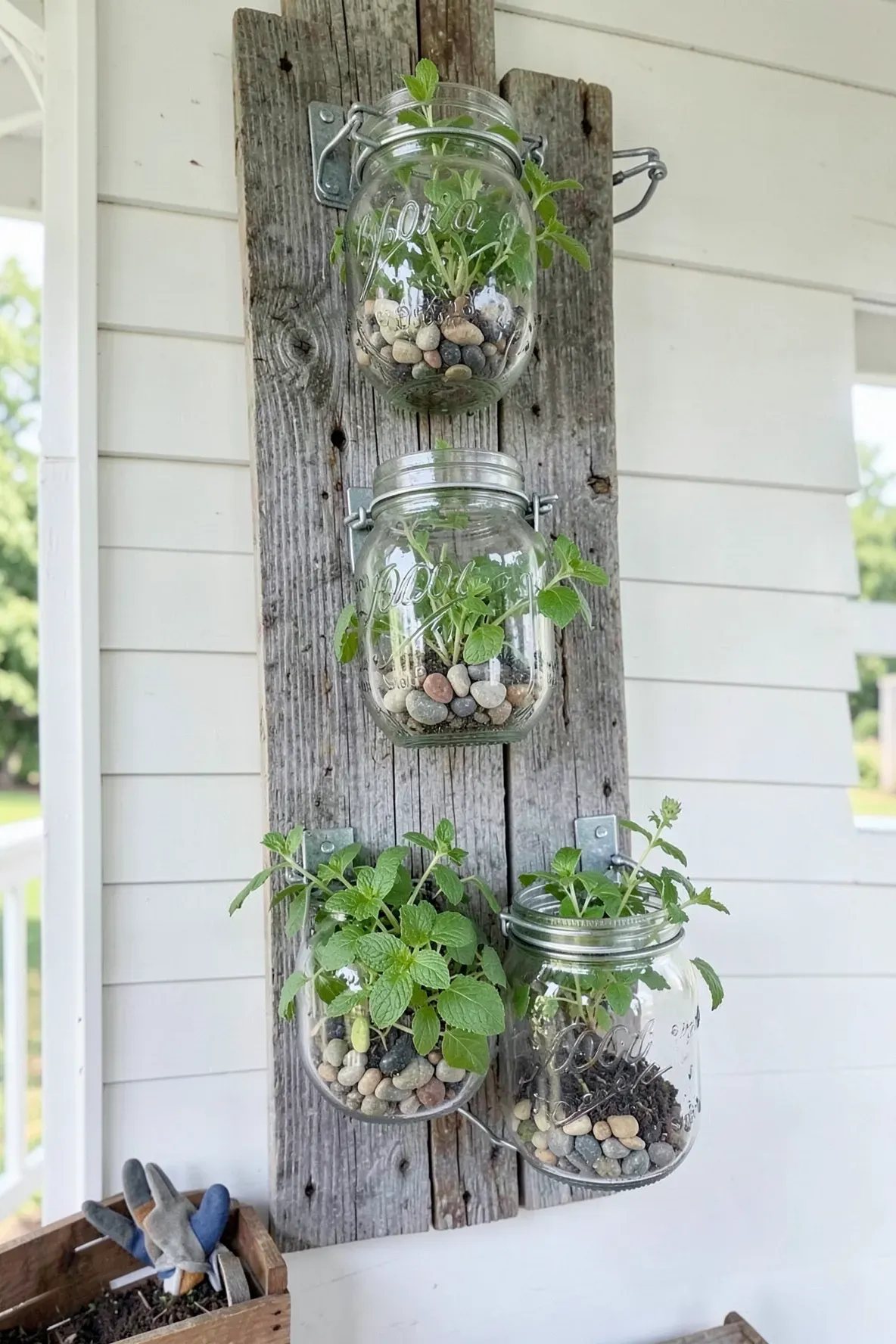
Mason jars can be attached to a piece of reclaimed wood using metal pipe clamps. This is a popular project for those who enjoy garden crafts. The wood board is then mounted to a wall, creating a beautiful and functional herb display.
Since mason jars don’t have drainage holes, you should put a layer of small rocks at the bottom to catch excess water. These work best in a covered area like a porch where you can control the amount of water they get. It is an excellent way to reuse old jars and scraps of wood.
Geometric Wall Planters for Modern Patio Decor
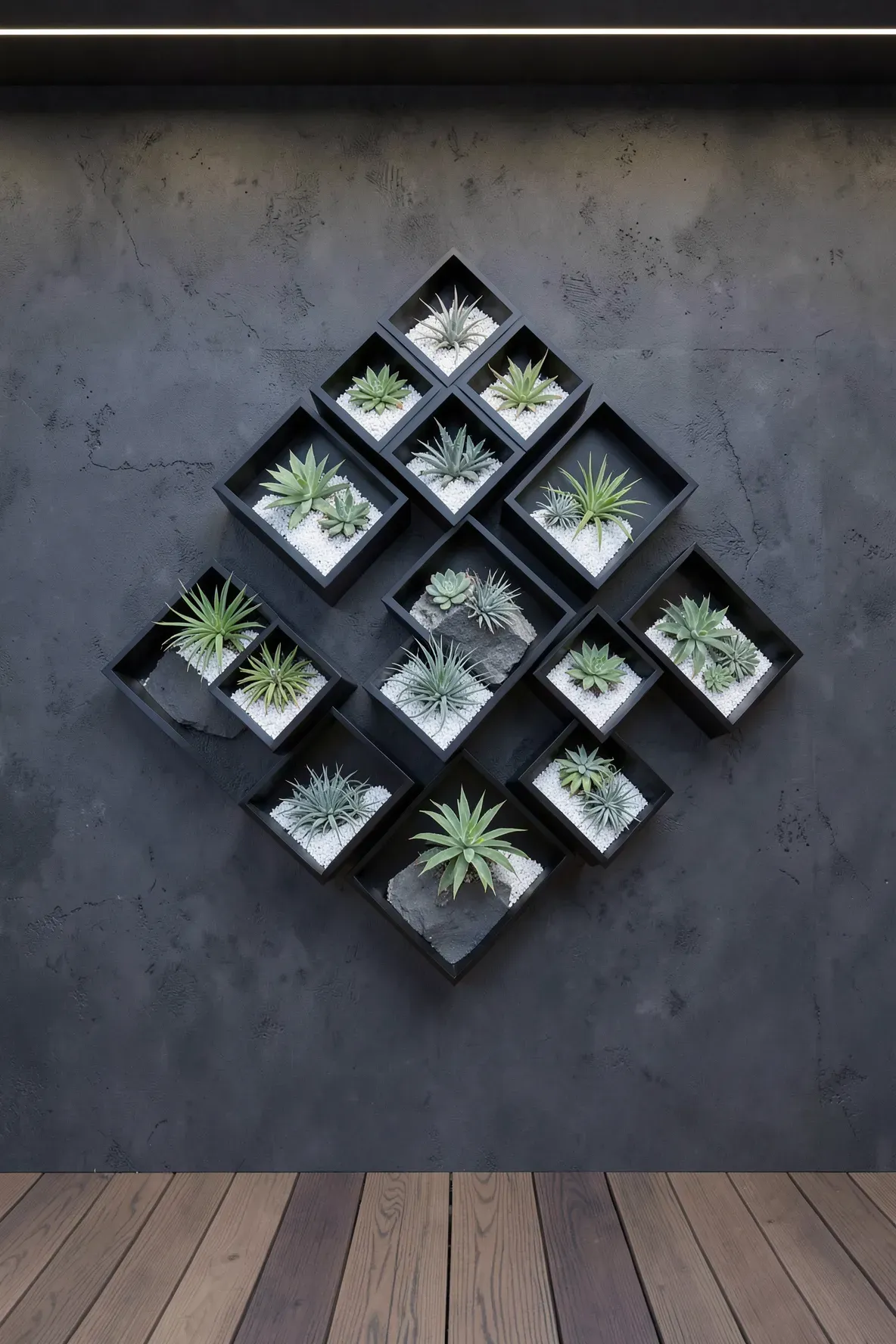
For a more contemporary look, try geometric wall planters made of metal or plastic. These often come in diamond or hexagon shapes and can be grouped together to form a pattern. They are perfect for minimalist spaces where you want a bit of greenery without the clutter.
These planters are usually smaller, so they are best for slow-growing plants like air plants or small succulents. They serve as both a planter and a piece of modern art for your patio. Mixing different shapes can create a focal point on an otherwise empty wall.
Old Wooden Ladder Propped Against a Wall with Potted Ferns
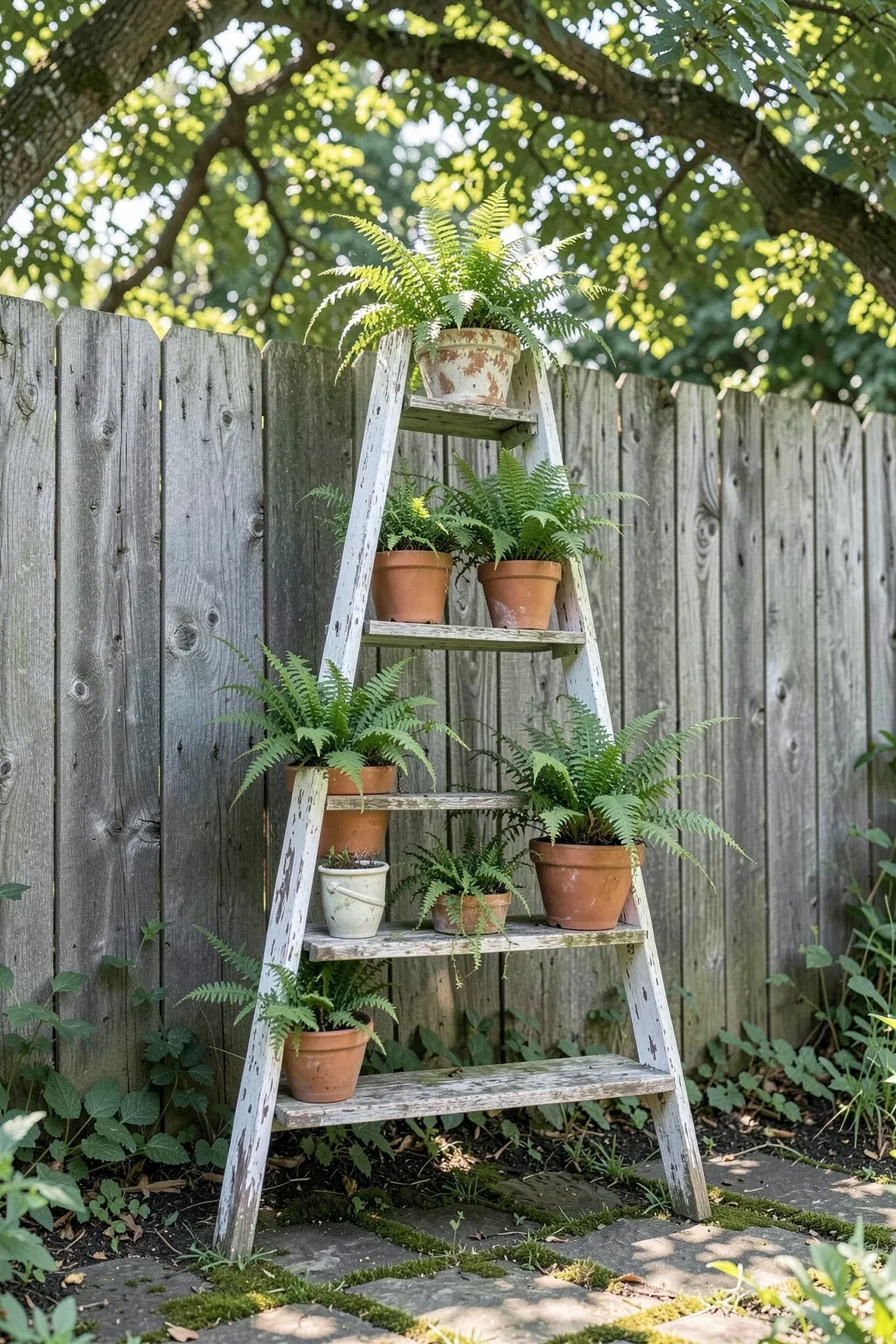
An old wooden ladder is a ready-made stand for vertical gardening. You don’t even need to mount it; just prop it against a wall or fence. Each rung acts as a shelf for different sized pots, allowing you to create a lush tower of greenery.
Ferns look particularly good on ladders because their fronds spill over the sides. If the ladder is old, you might want to give it a coat of outdoor sealant to prevent it from rotting. It is a flexible option that you can move around your yard as the seasons change.
Chalkboard Painted Wall with Hanging Tin Can Planters
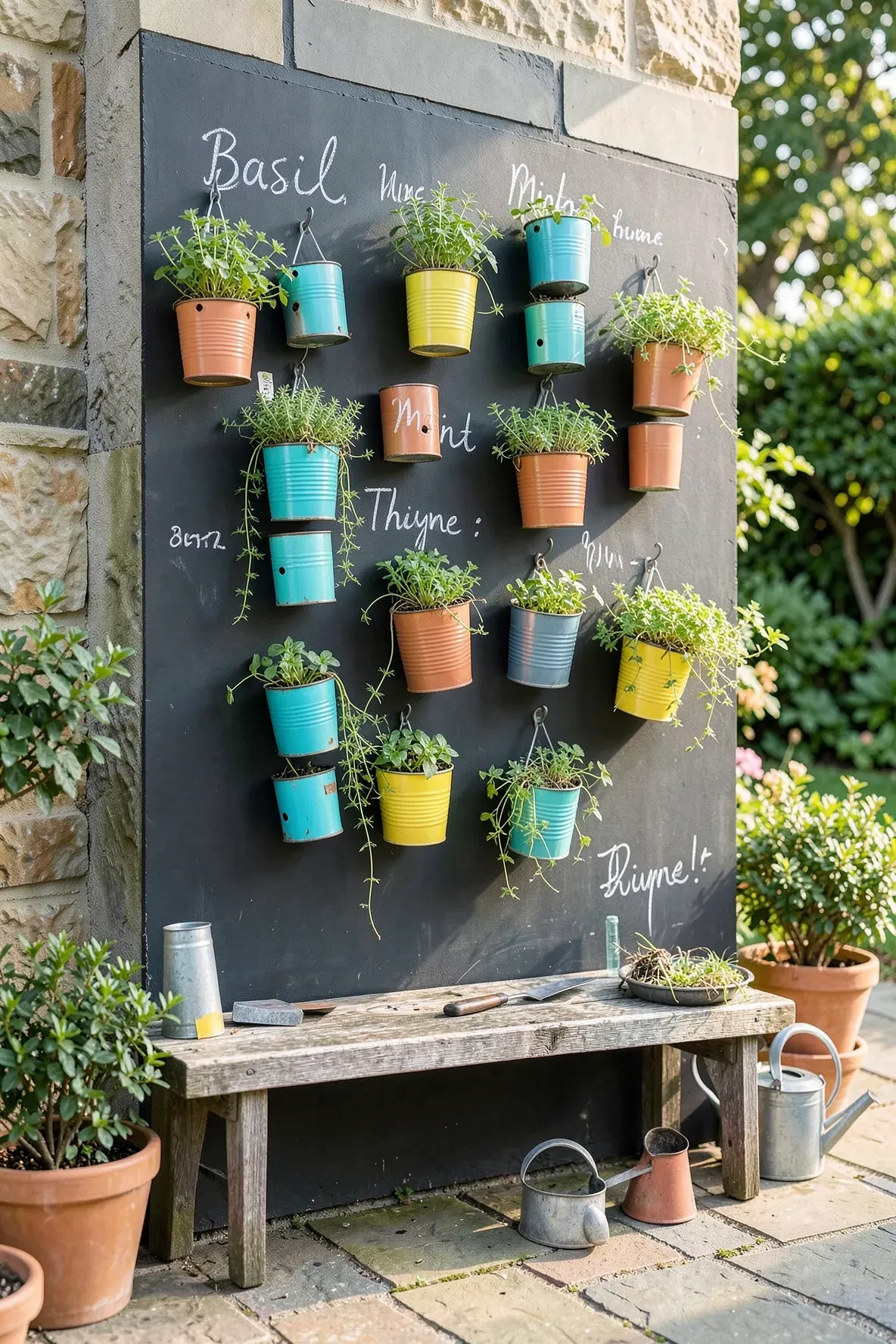
Painting a section of an outdoor wall with chalkboard paint adds a fun, interactive element to your garden. You can hang painted tin cans from hooks and label each plant with chalk. This is a great way to keep track of different herb varieties or seed starting dates.
Tin cans are easy to prep; just wash them and drill a few holes in the bottom. You can paint them in bright colors to make the display pop against the dark chalkboard background. It is a budget-friendly project that kids usually enjoy helping with.
Solar Powered Lighted Wall Planters for Evening Ambience
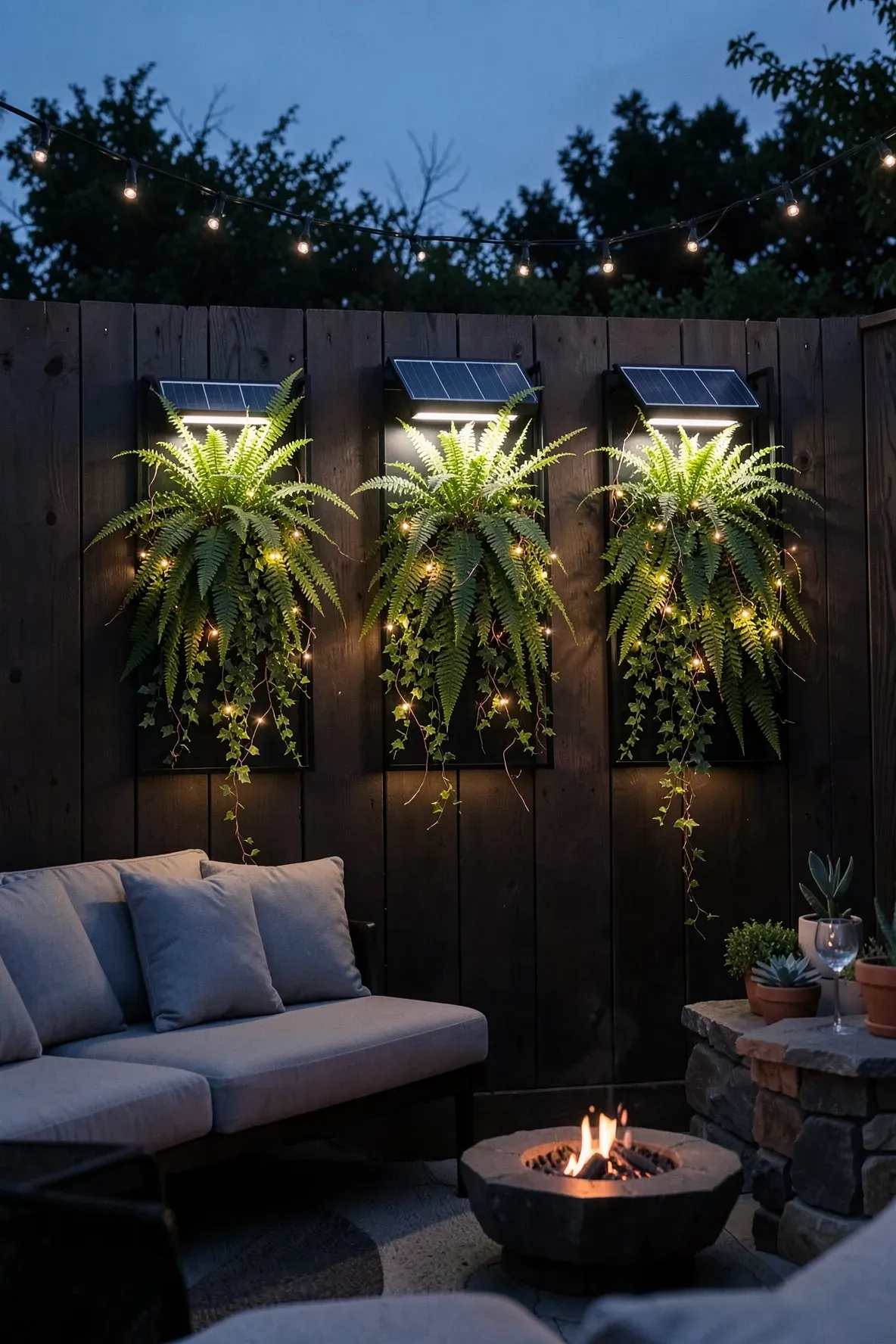
Some vertical planters come with built-in solar lights that charge during the day and glow at night. These are perfect for patios where you spend a lot of time in the evening. The light highlights the texture of the leaves and provides a soft glow for your outdoor seating area.
You can also add small solar fairy lights to any existing hanging garden ideas. Just wrap the lights around the planter frames or the plants themselves. This makes your vertical garden a feature of the yard even after the sun goes down.
Driftwood Branch Hanger for Air Plants and Moss
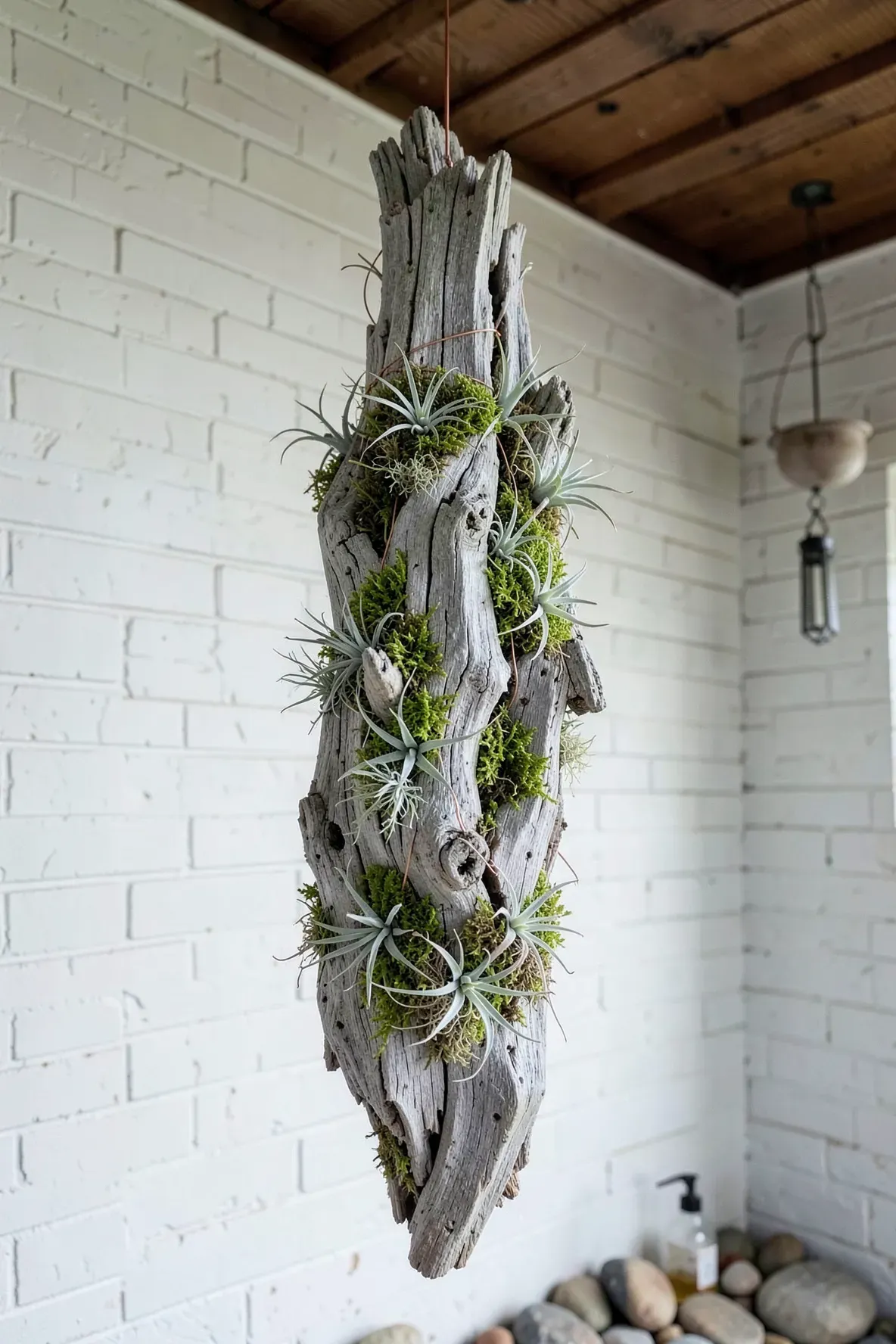
If you want something that looks very natural, use a large piece of driftwood as a base. You can wire air plants and clumps of moss directly onto the wood. Since air plants don’t need soil, this display is very lightweight and easy to hang from a single hook.
This type of vertical garden needs a bit of misting with water every few days but is otherwise very low maintenance. It works well on a porch or under an eave where it is protected from harsh direct sun. Each piece of wood is unique, giving you a one-of-a-kind garden feature.
Vertical PVC Pipe Garden with Cutout Planting Slots
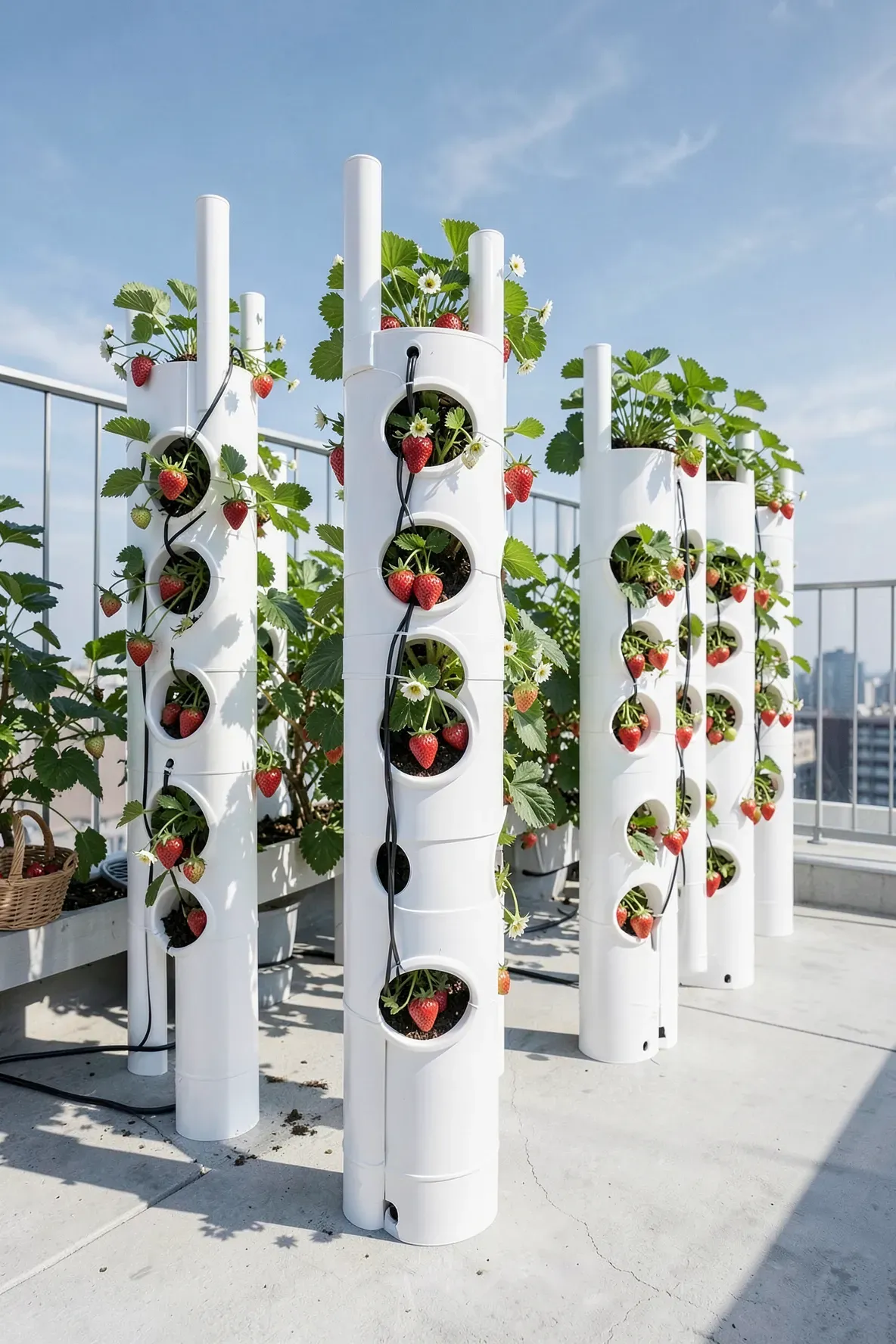
Large PVC pipes can be turned into high-capacity planters by cutting holes along the sides. You stand the pipe upright or mount it horizontally and fill the center with soil. Plants grow out of the holes, eventually covering the plastic pipe entirely.
This is a very efficient way to grow strawberries or leafy greens in a tiny footprint. You can even run a small irrigation tube down the center of the pipe to make watering effortless. It is a practical solution for anyone focused on growing as much food as possible.
Bamboo Pole Framework for Hanging Coconut Husk Baskets
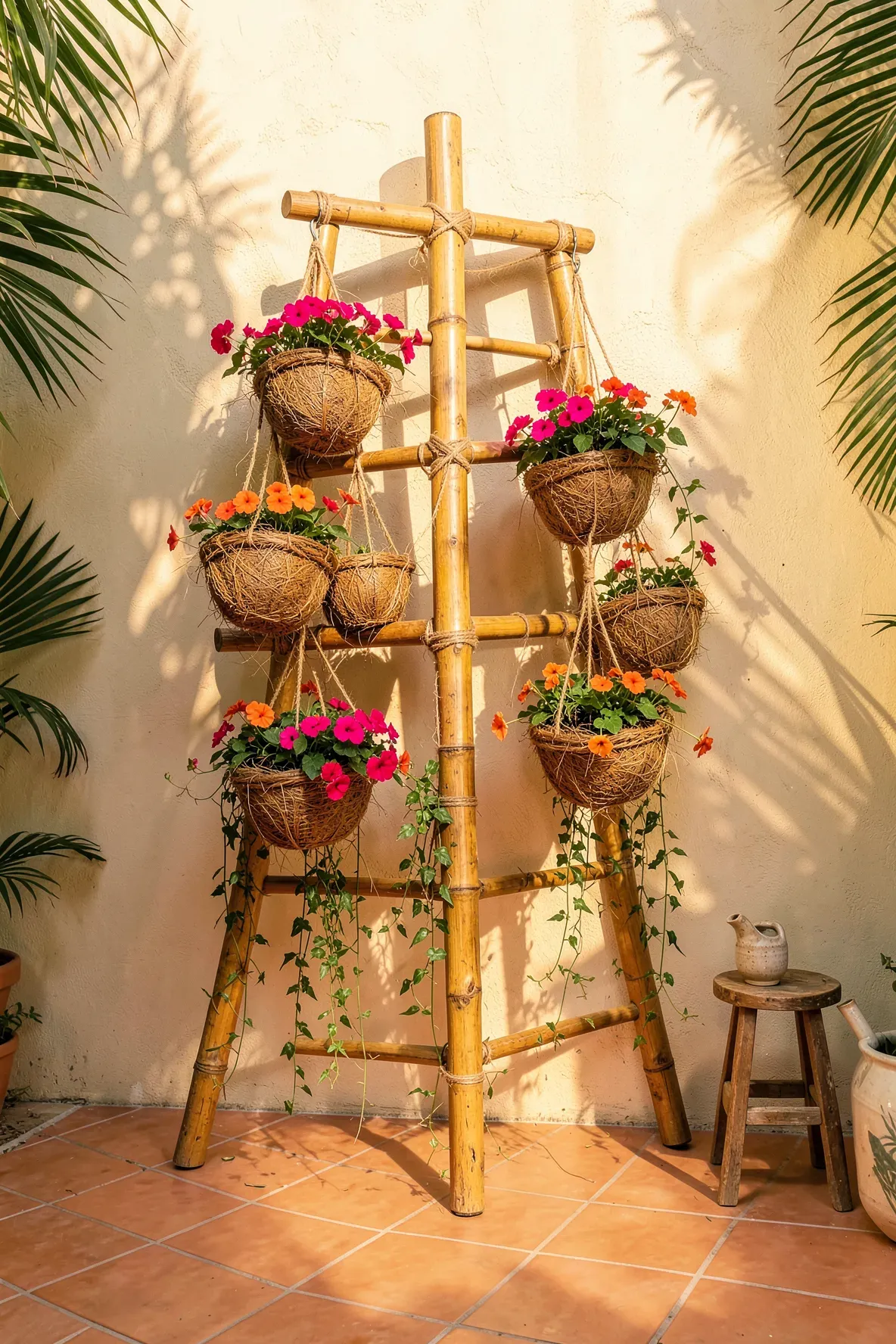
Bamboo poles are strong, lightweight, and look great in a garden setting. You can lash them together to create a frame and hang coconut husk liners from the crossbars. Coconut liners are excellent for drainage and give the roots plenty of air.
This setup has a tropical feel and works well for bright flowers like impatiens or begonias. The framework can be leaned against a wall or used as a free-standing divider in your yard. It is an affordable way to add a lot of planting space quickly.
Vertical gardening is a smart way to turn a cramped backyard into a lush getaway. By using walls, fences, and even old ladders, you can grow a surprising amount of greenery in a small area. Pick one or two of these ideas to start with, and you will see how easy it is to bring your garden to life without needing more ground space.