
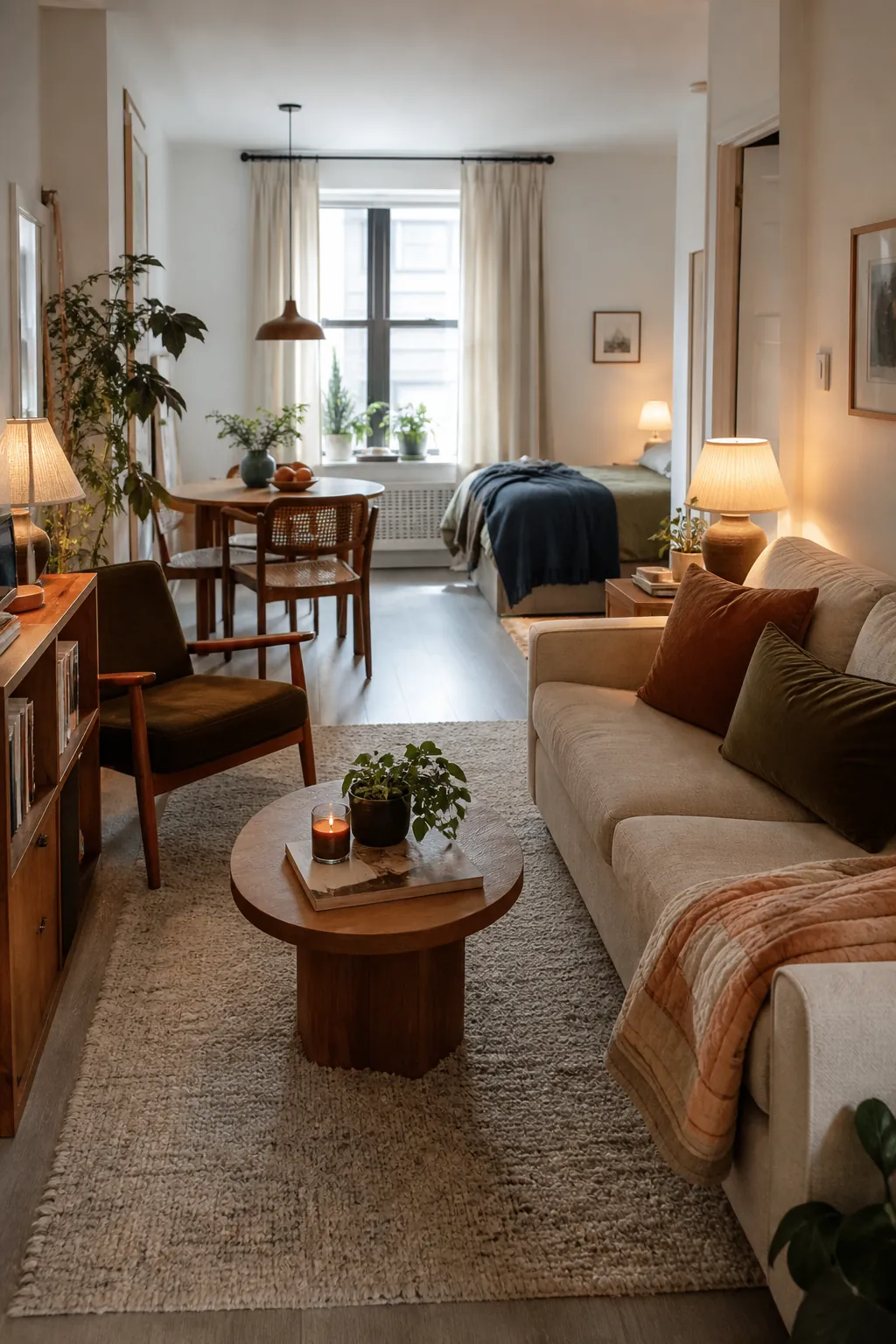
A cozy apartment is not the one with the most blankets, baskets, or tiny decorations. It is the one where light falls gently, the chair supports you, useful things are within reach, and the room can settle at the end of the day. In a compact home, warmth works best when it is intentional.
These ideas focus on renter-friendly layers you can carry to a future home. Start with lighting and the places where you actually rest, then add texture, color, and personal pieces while protecting the clear paths and surfaces that keep a small apartment comfortable.
Replace the Big Light With Three Smaller Lamps
A ceiling fixture makes every corner equally bright, which can feel flat and exposed. Instead, place a floor lamp by the sofa, a table lamp on a cabinet, and a small rechargeable lamp near dining or work. Separate pools of warm light create depth without taking much space.
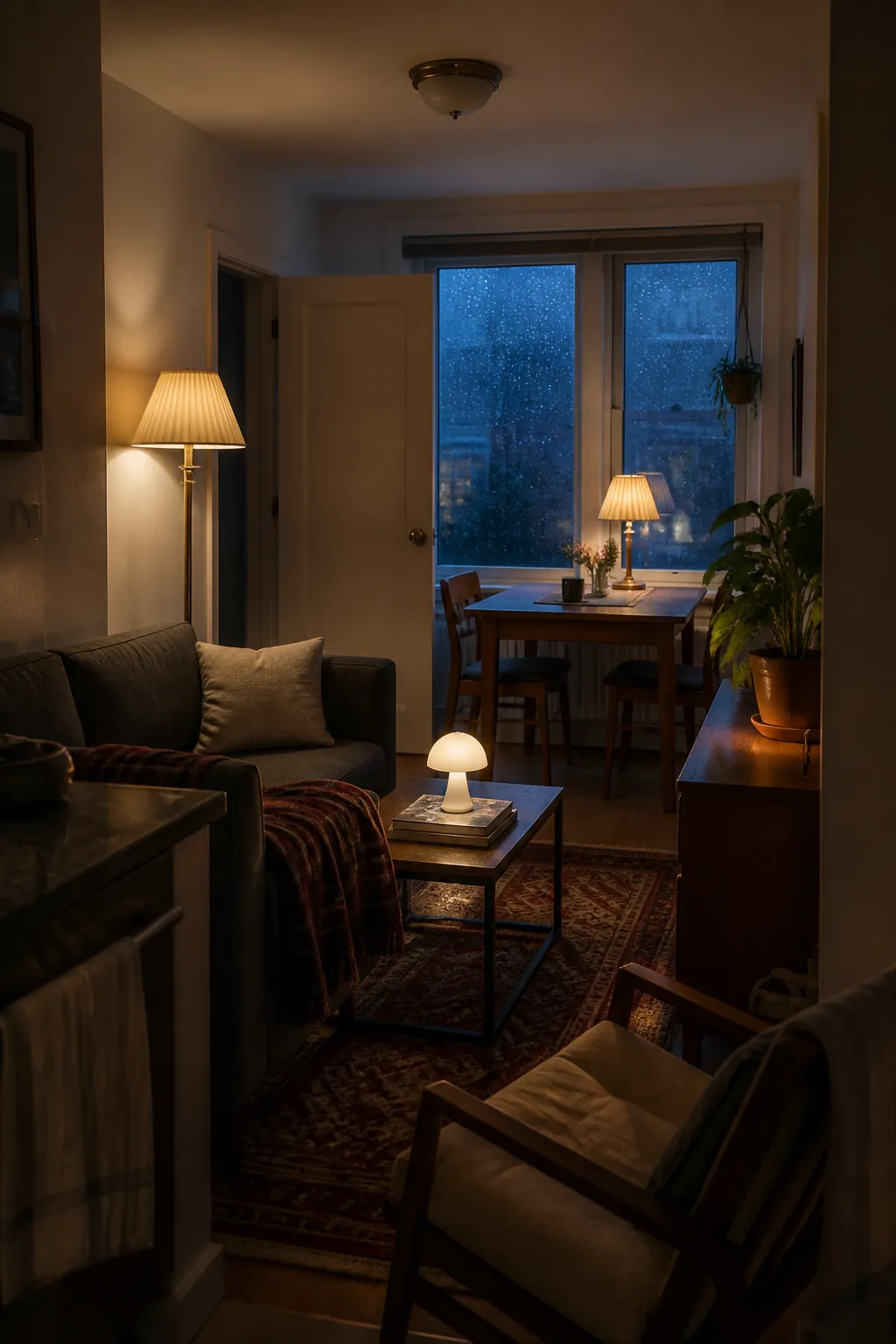
Choose compatible warm-white bulbs and keep cords clipped outside walkways. Each lamp should support a real task—reading, eating, or winding down—so the lighting earns its footprint.
Turn One Corner Into a Reading Cocoon
A chair becomes a cozy destination when it has a lamp, a reachable table, and a soft textile. Angle it slightly away from the busiest route, then add a footstool only if the room can still breathe.
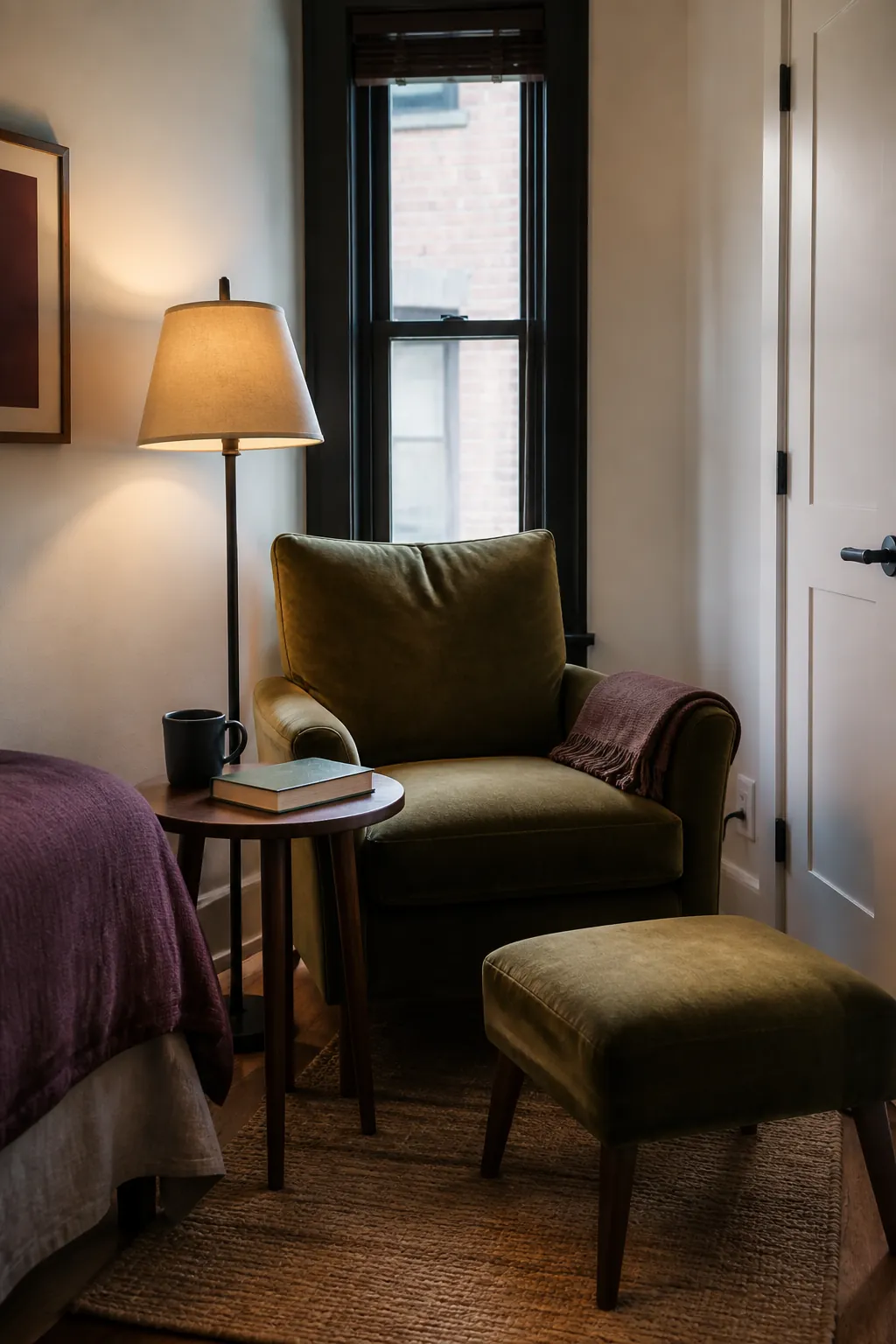
Keep the setup specific: one current book, a coaster, and a throw are enough. A crowded nook loses the calm that made it inviting in the first place.
Use Curtains to Soften Rental Architecture
Fabric changes the acoustics and hard edges of a room. Hang washable curtains high and wide so open panels expose the glass, then select a weave with enough body to look warm without stealing daylight.
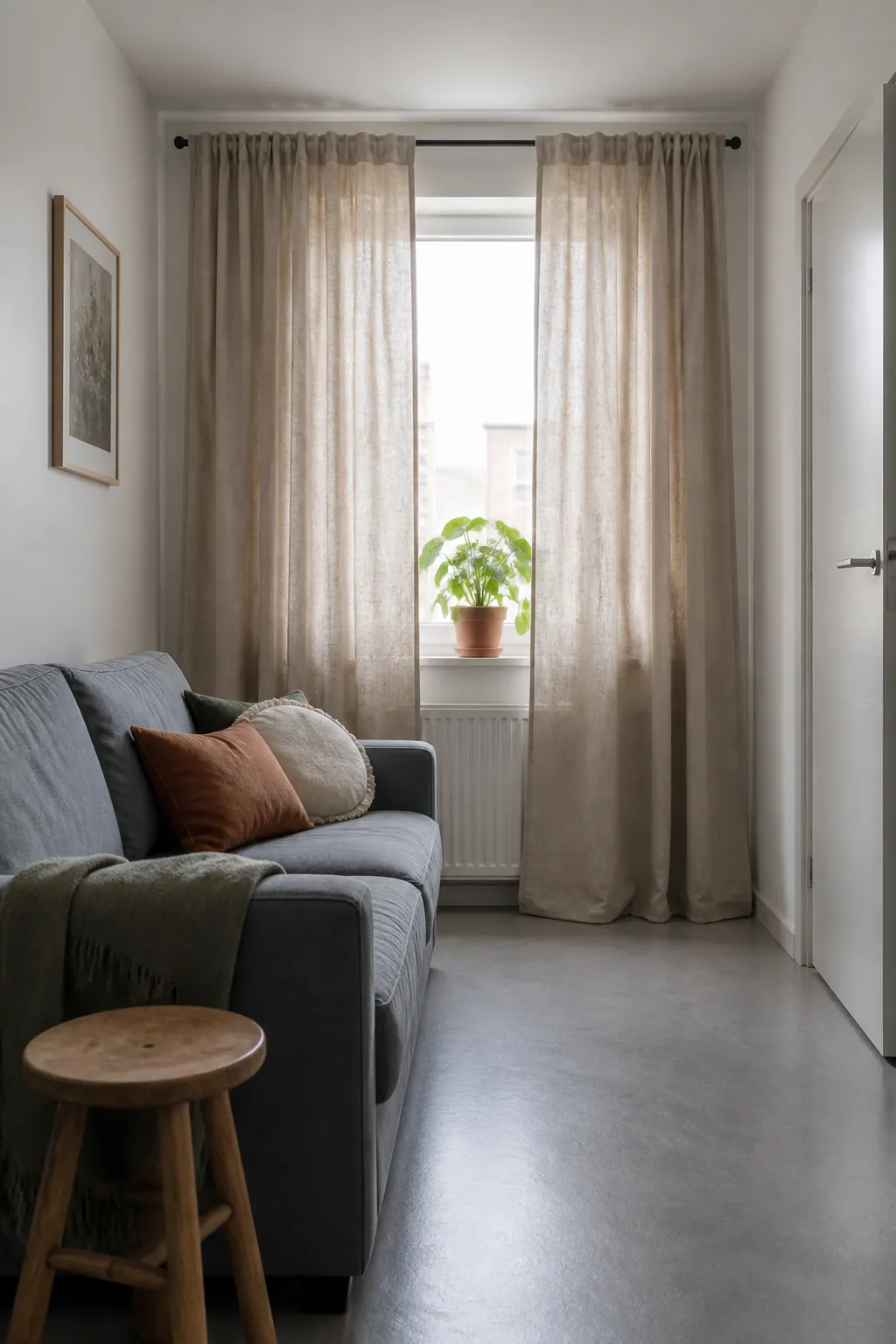
Sheers suit bright privacy; lined panels help drafty bedrooms. Use a no-drill solution only within its rating and keep hems clear of radiators.
Ground the Sofa With a Generous Rug
A rug creates a soft visual boundary for the living zone. Choose one large enough to reach beneath the front sofa and chair legs, which makes mismatched furniture feel connected instead of scattered.
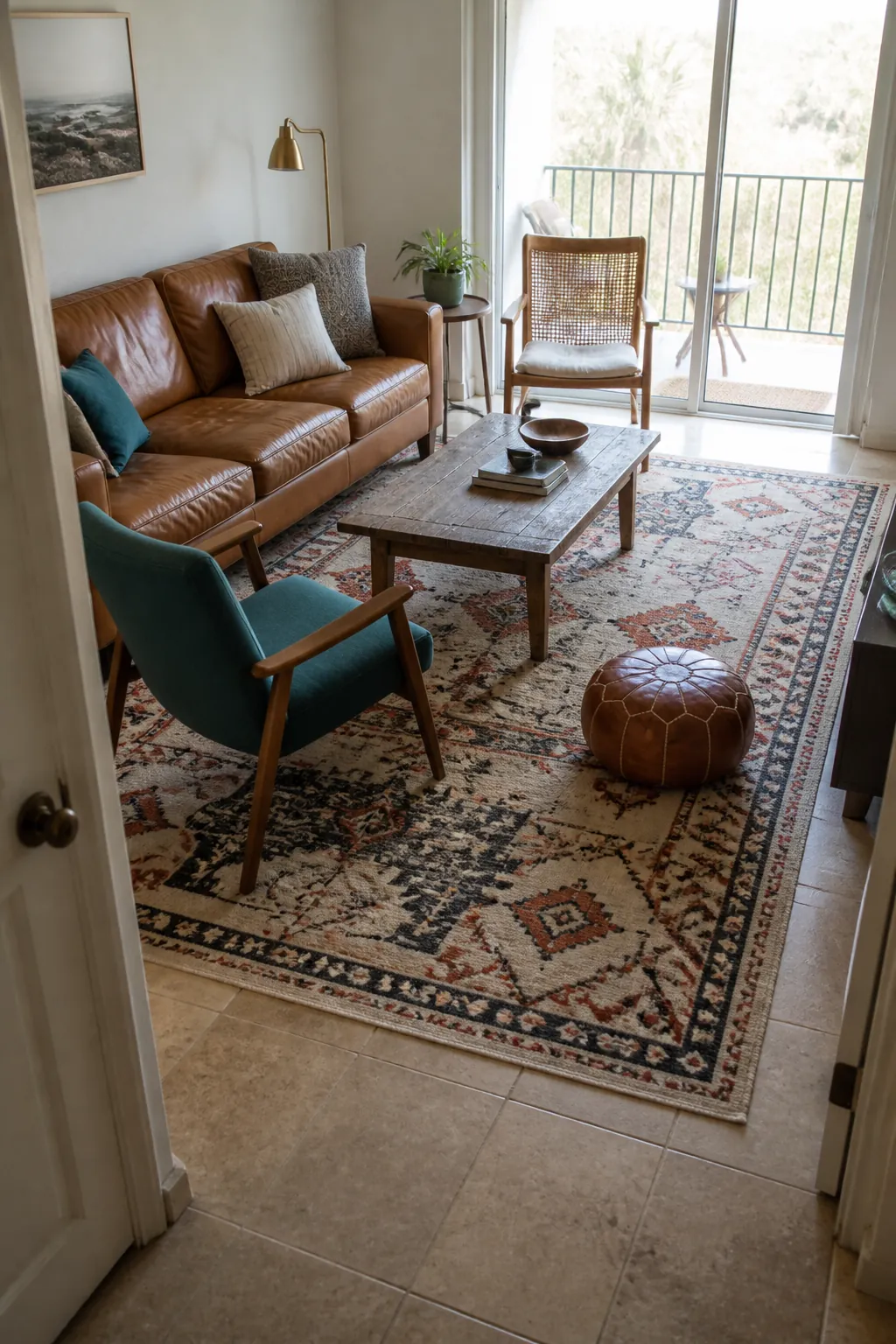
A washable low pile is easier in a busy apartment. For extra softness, layer a small wool or faux-sheepskin piece only where feet land, not across a route where it can slip.
Mix Three Textures Instead of Ten Accessories
Try one nubby textile, one smooth surface, and one natural grain: perhaps a boucle cushion, glazed ceramic lamp, and worn wood table. This trio gives a neutral room depth without filling every shelf.
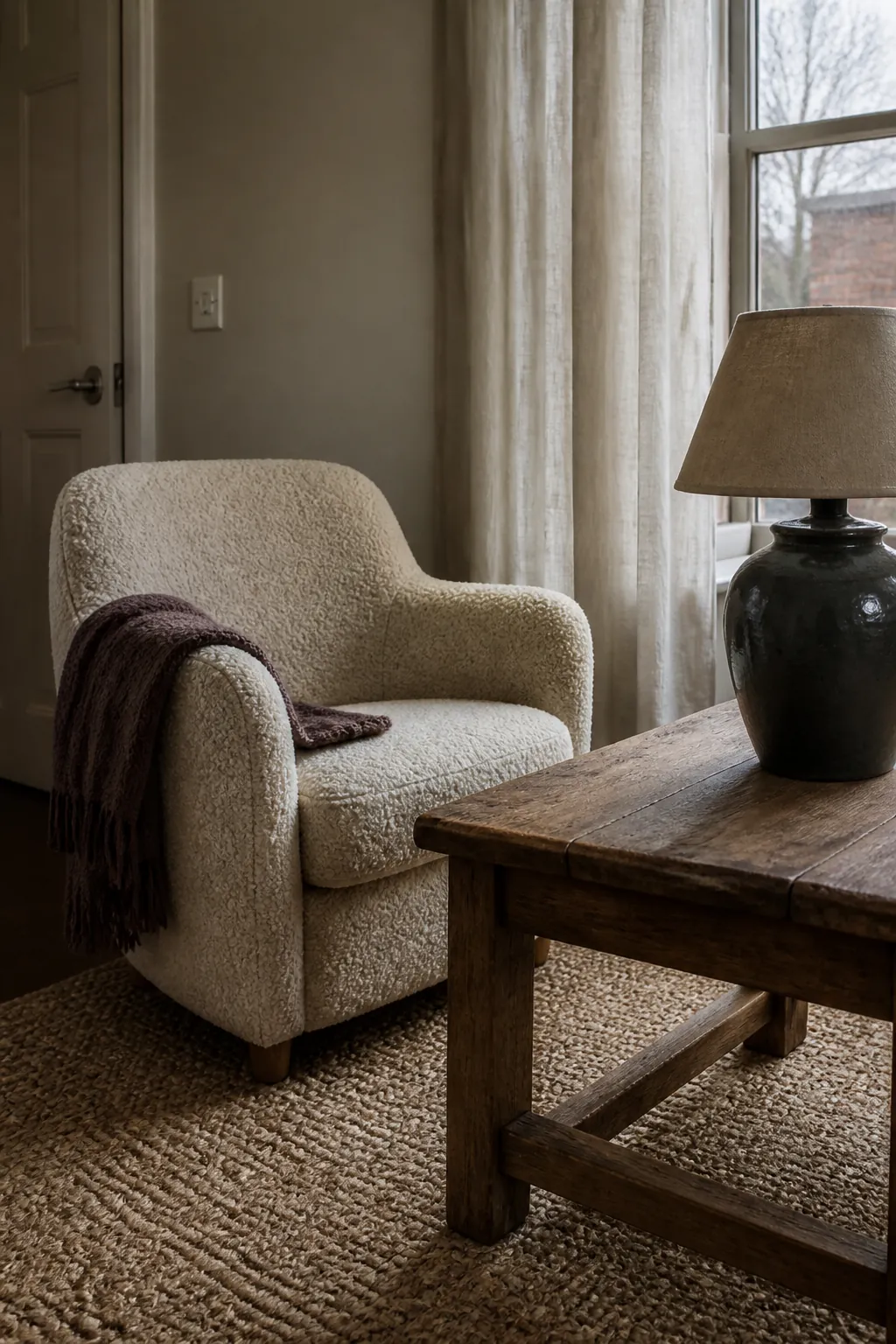
Repeat materials lightly across the apartment rather than buying matching sets. Tactile variety makes a room feel lived in; quantity merely makes it full.
Choose an Earthy Accent Pair
Warm color feels more coherent when two accents recur across zones. Rust and olive, plum and ochre, or terracotta and dusty blue can appear in cushions, towels, and one piece of art.
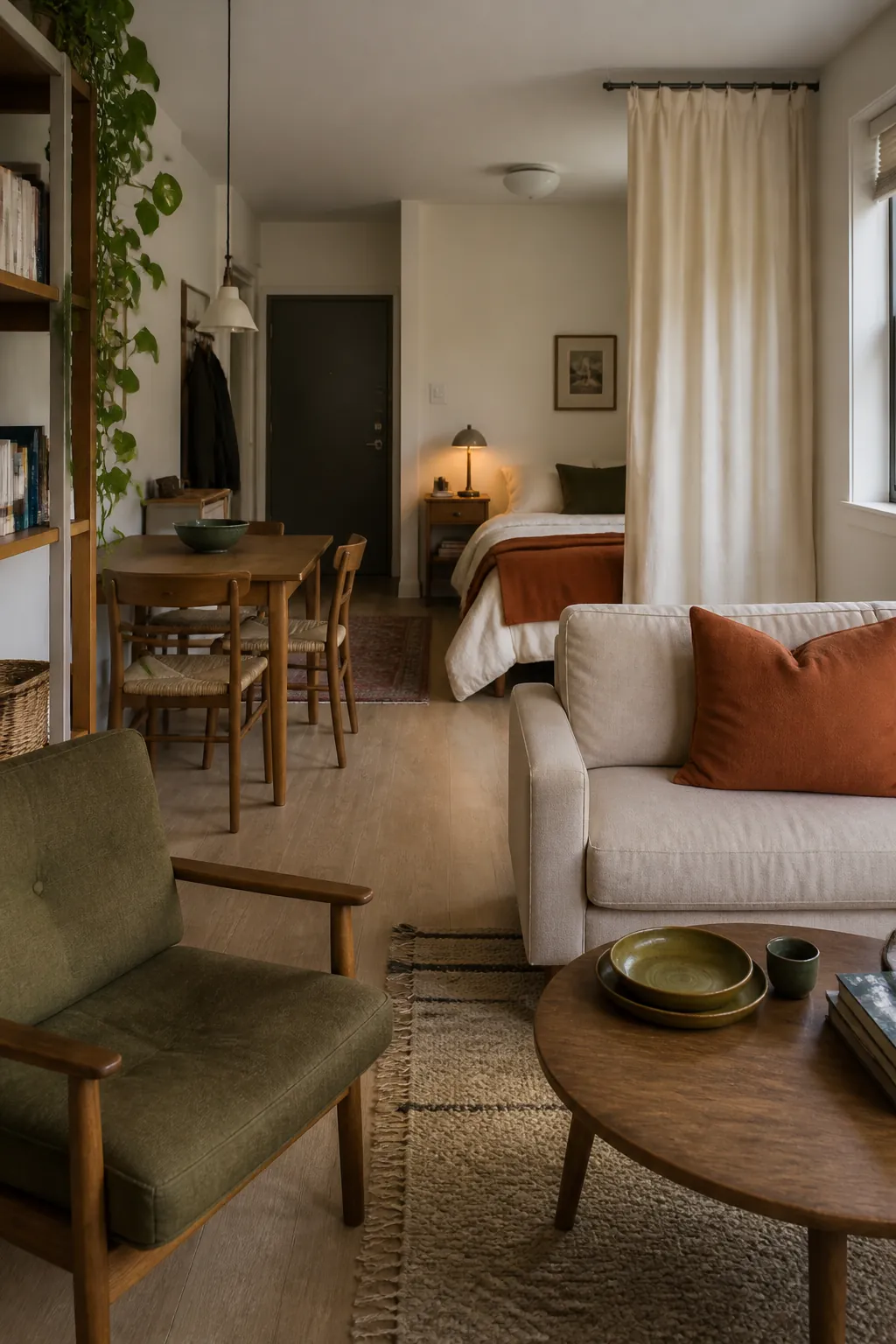
Keep the base quieter and distribute accents unevenly. A larger rust throw in one area and a small rust bowl elsewhere feel connected without looking staged.
Layer the Bed Like a Place to Rest
Start with breathable sheets, add one coverlet, then fold a warmer blanket at the foot. Two supportive sleeping pillows and one smaller cushion usually look richer than a mound you remove nightly.
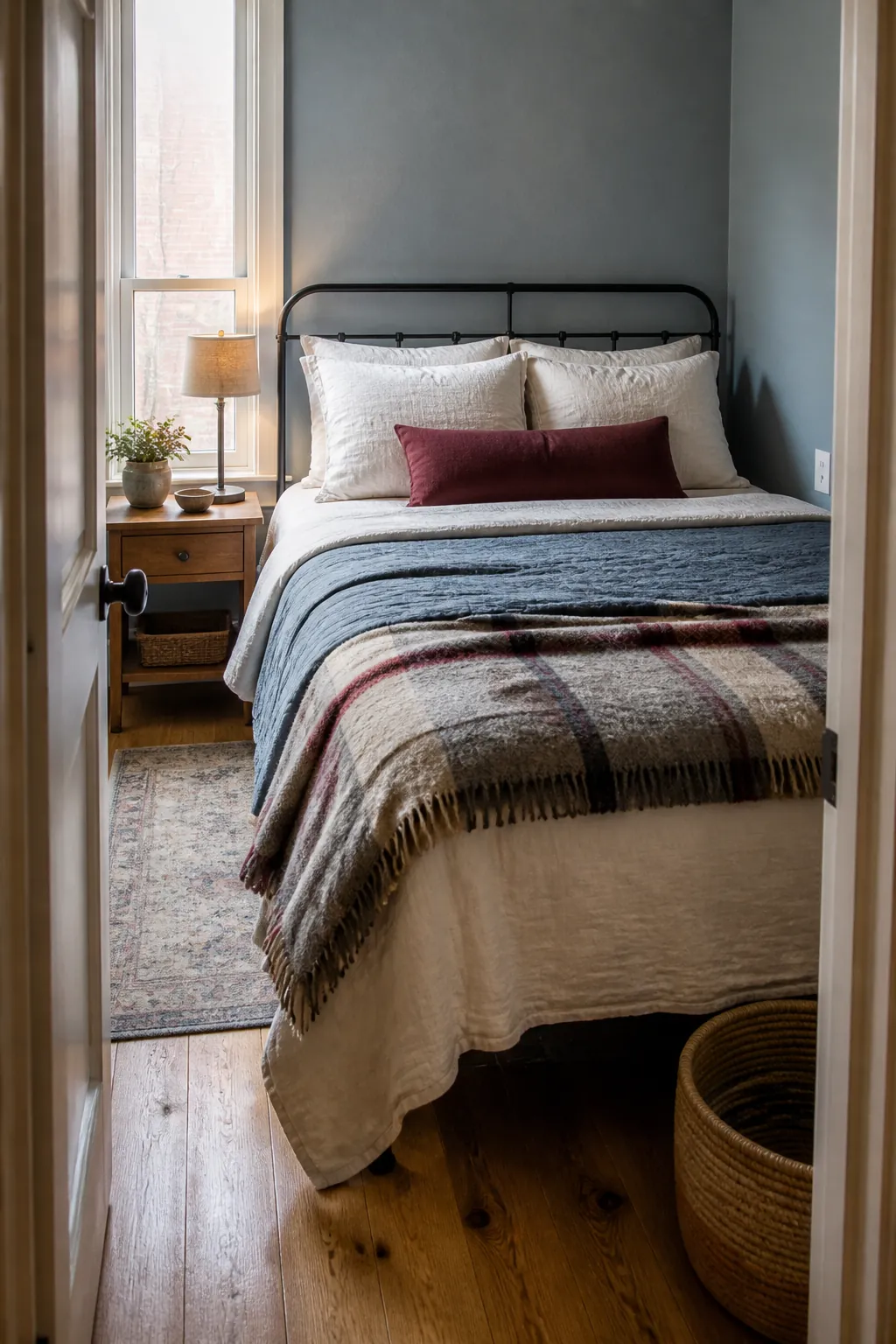
Vary weave and tone rather than adding many patterns. The bed should remain easy to make, because daily friction is the fastest way for a cozy idea to become clutter.
Add Warmth With Real Wood
A small wood table, stool, frame, or tray interrupts cold gray flooring and white rental walls. Secondhand pieces with a little wear often add more warmth than glossy new furniture.
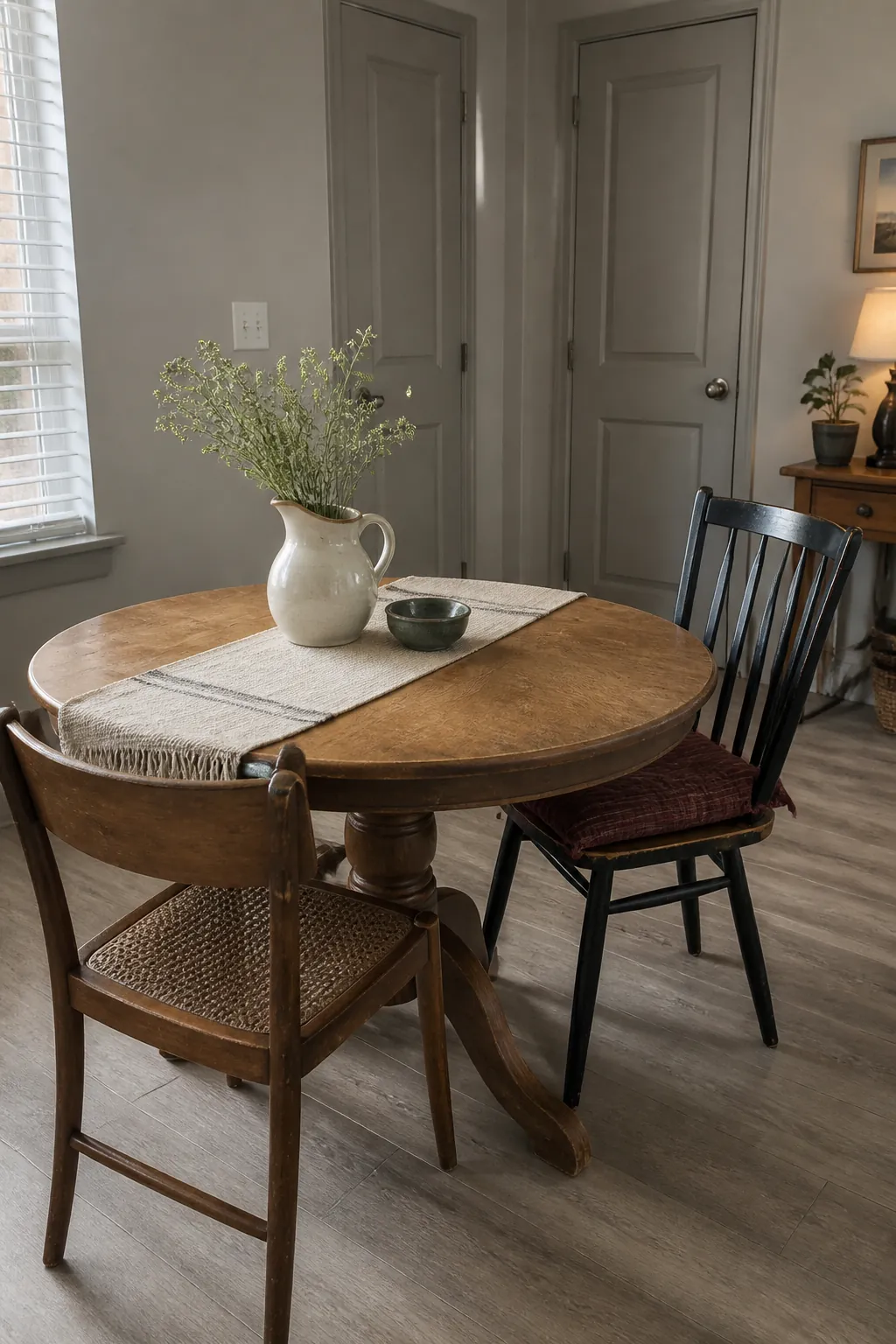
Repeat the wood tone once or twice, but do not force an exact match. A room assembled over time feels more personal when its finishes relate rather than duplicate.
Display Books Where You Actually Read
Books give color and texture while keeping a real purpose. Place a short stack on a side table or one edited shelf near the chair, with current reads easiest to reach.
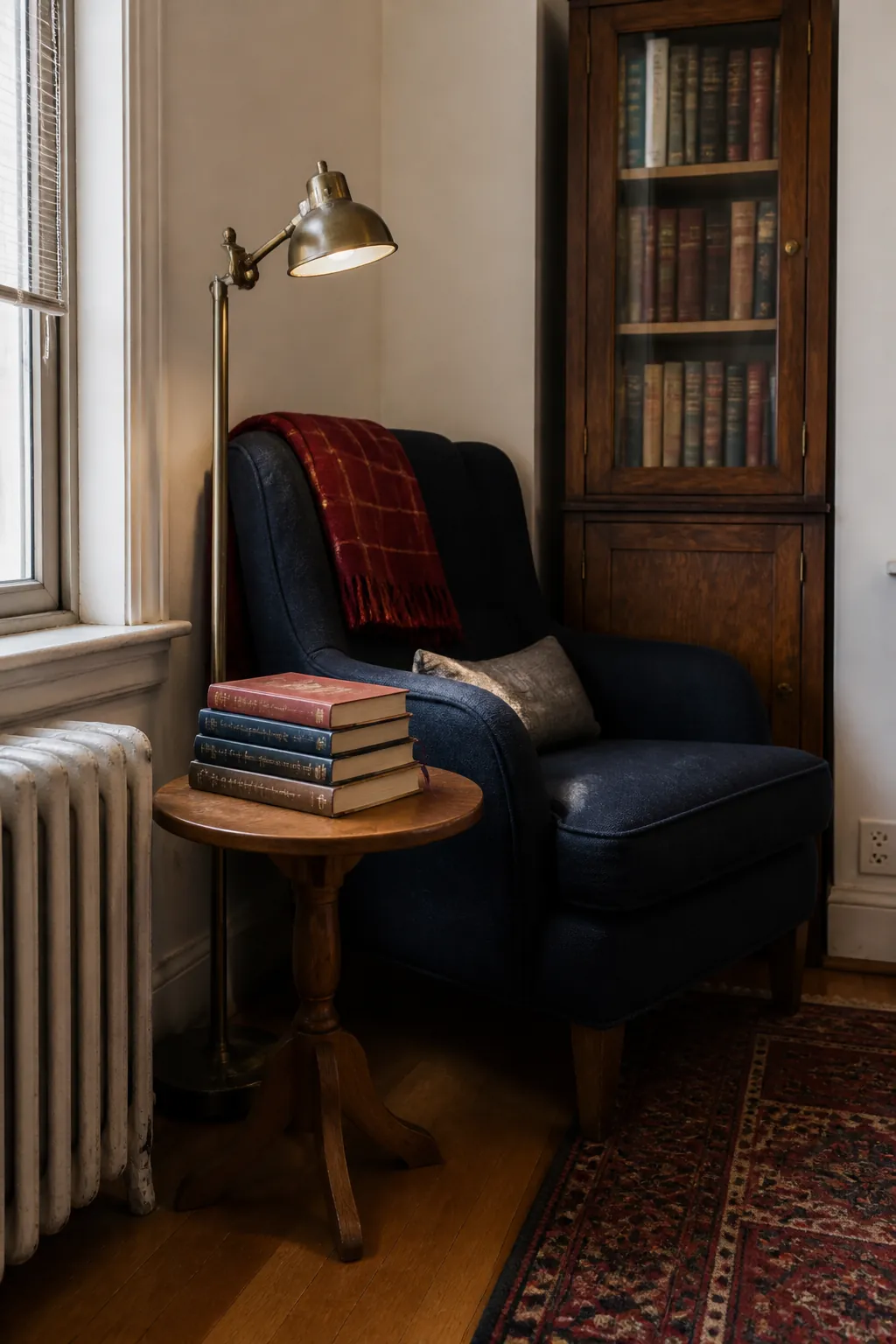
Avoid turning every horizontal surface into a book stack. Concentrated collections look deliberate and leave room for a cup, phone, or ordinary daily task.
Filter Harsh Views Without Losing Light
Frosted removable window film or cafe curtains can provide privacy while preserving daylight. Use them on the exact sightline that needs coverage rather than darkening the entire window.
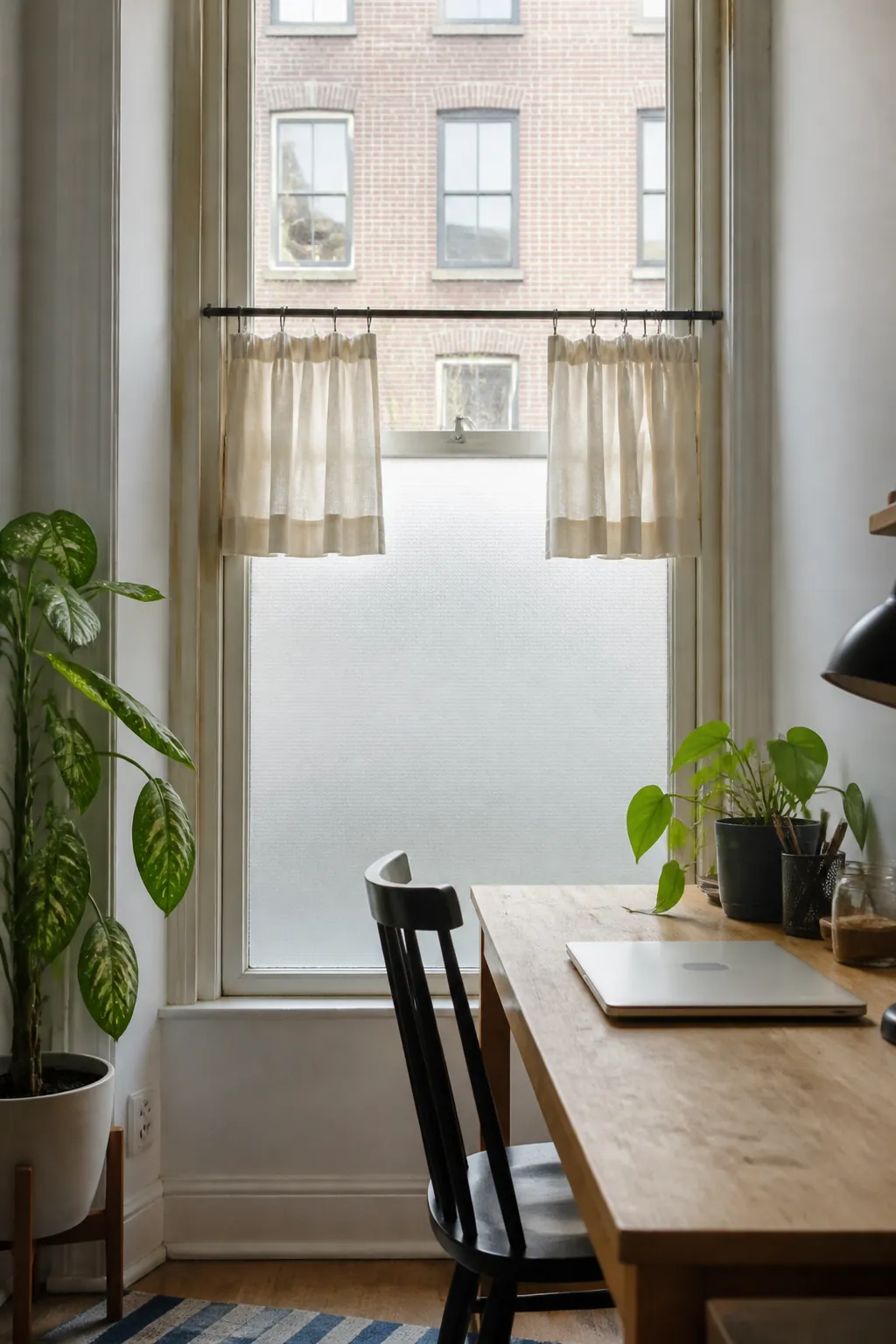
Test removable products first and maintain ventilation and emergency access. Soft privacy makes a room feel sheltered, but safety and the lease still set the limits.
Gather Plants Into One Green Moment
Instead of scattering tiny pots, cluster two or three compatible plants near the best window. Different heights make the group feel lush while one tray protects the floor and simplifies watering.
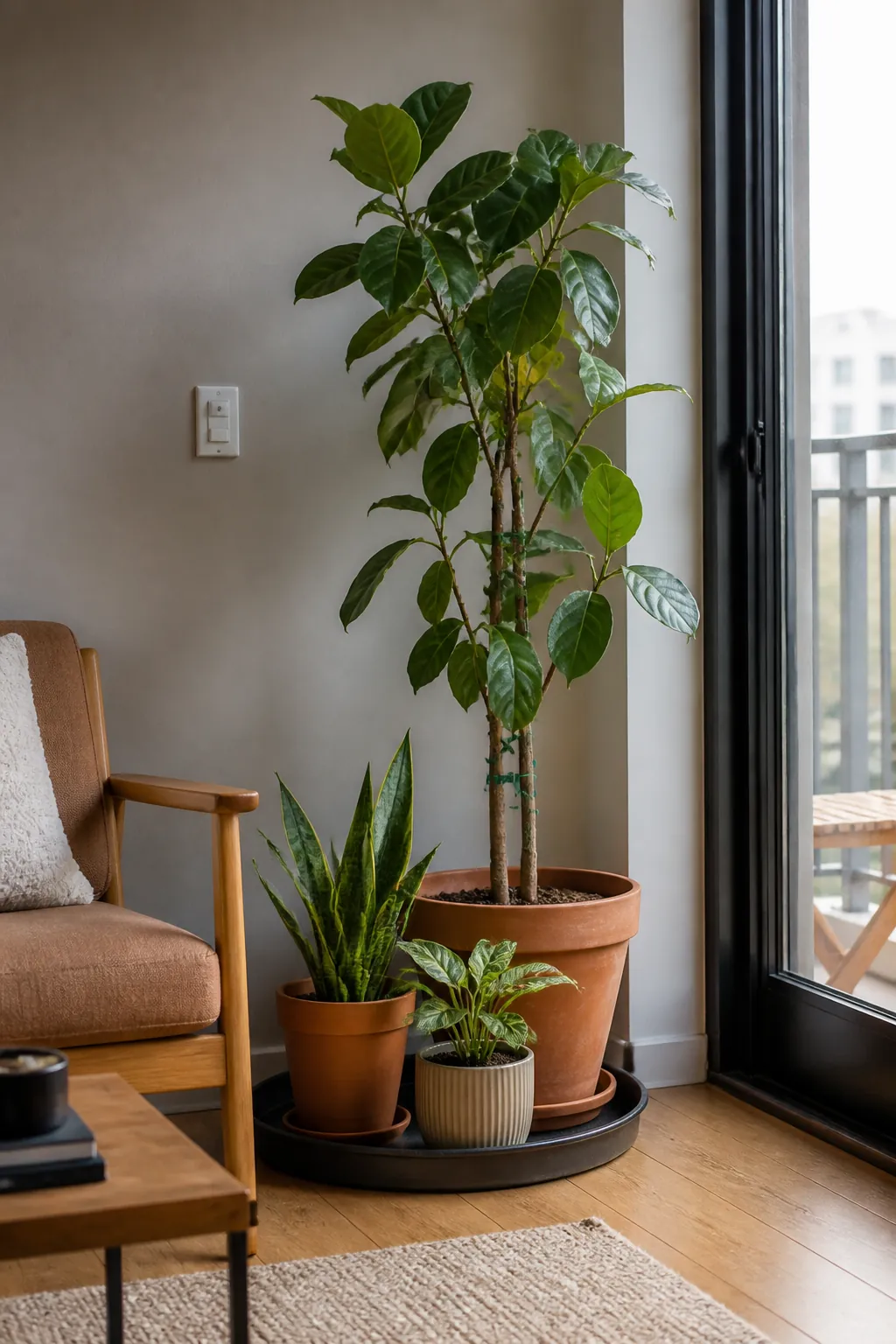
Choose species for real light and care habits. A single healthy plant is cozier than a shelf of struggling ones.
Make a Tiny Dining Nook Feel Intimate
Pull a round table toward a wall, add a soft-shaded pendant or rechargeable lamp, and use a washable runner instead of several decorative objects. Light centered over the table defines the nook at night.
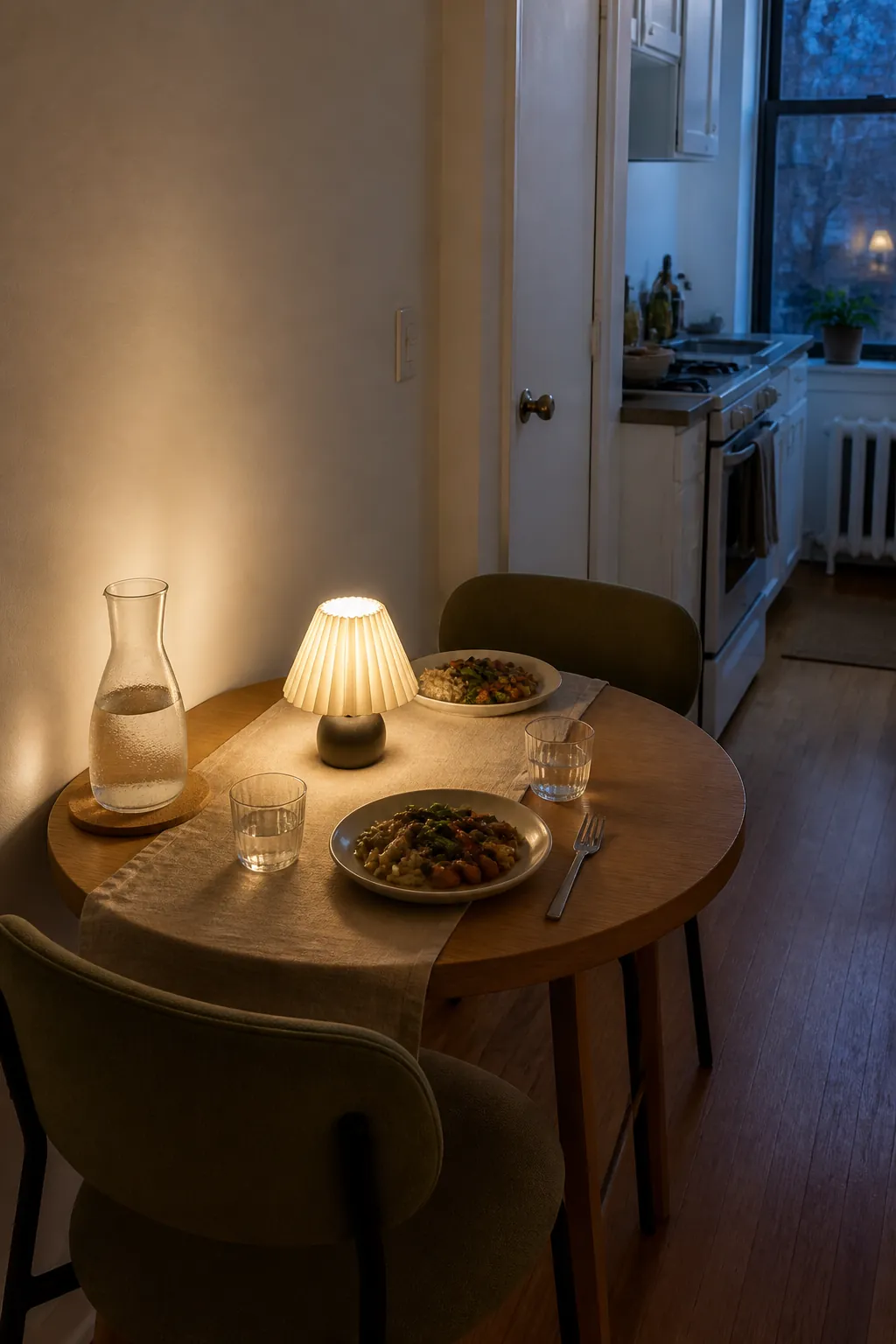
Keep chairs comfortable enough for a long meal or laptop session. The nook should invite lingering without blocking the kitchen route.
Warm the Kitchen With Useful Textiles
A striped towel, woven runner, cotton apron, and fabric shade can soften a hard rental kitchen. Select washable pieces in the apartment’s accent colors so function builds the visual story.
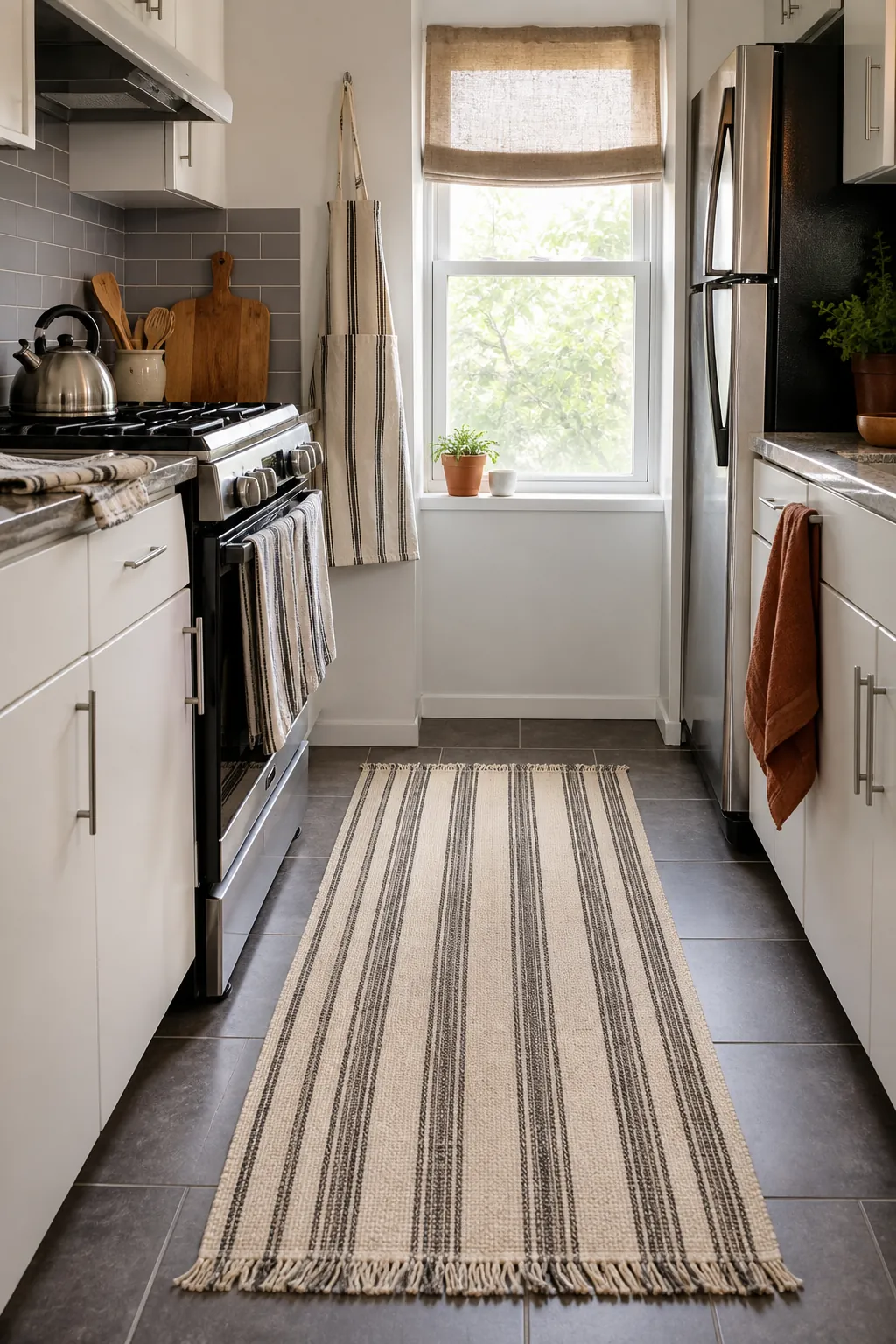
Keep fabric away from burners and damp zones. Practical softness works only when it remains safe and easy to wash.
Create a Welcoming Doorway Ritual
A warm lamp, small washable mat, hook for a daily bag, and dish for keys can make the entrance feel like an arrival rather than a storage bottleneck.
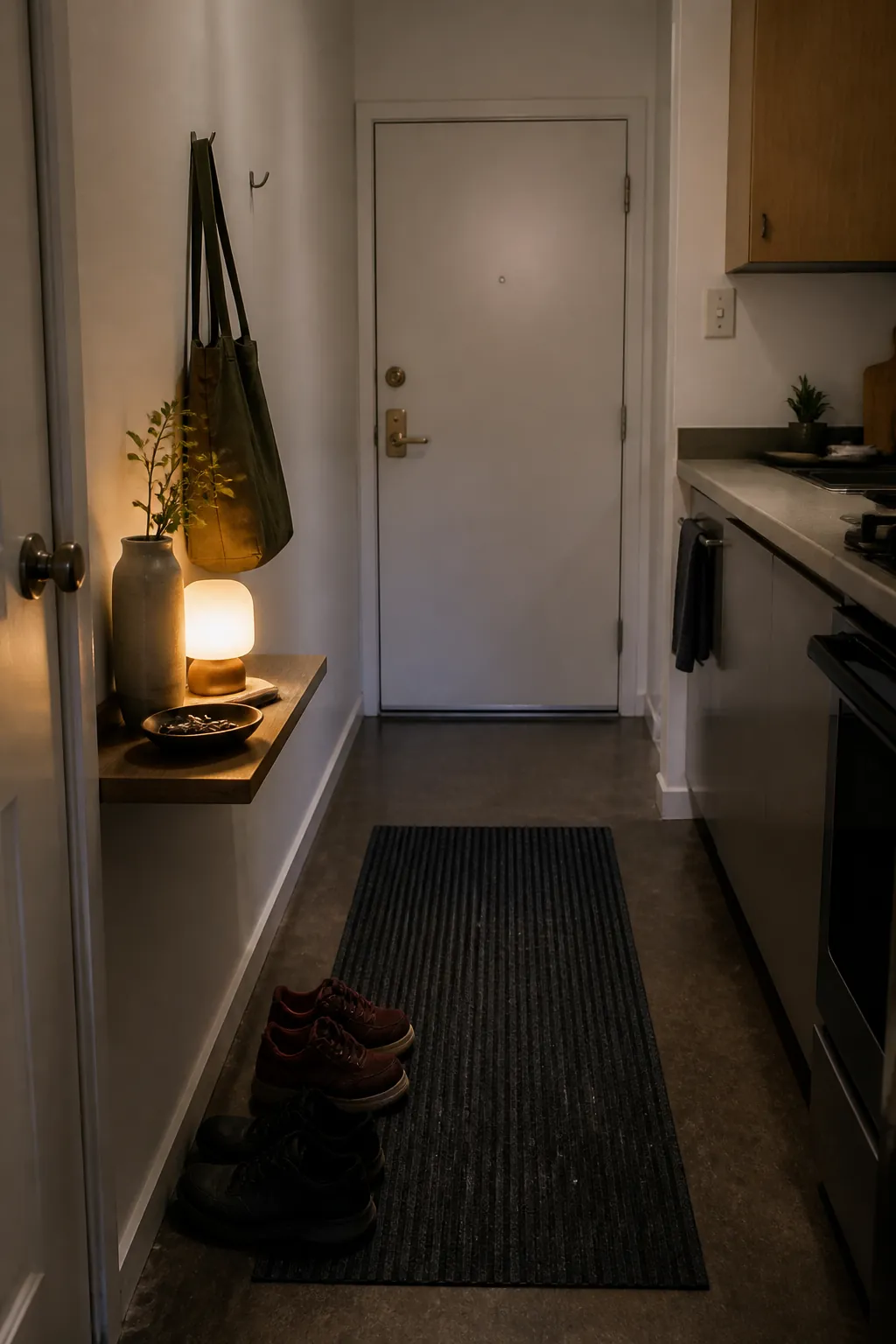
Limit the station to what you use daily. When shoes, mail, and outerwear overflow, move seasonal items elsewhere instead of expanding the entry pile.
Frame a Favorite Textile as Art
A woven sample, embroidered cloth, or block-printed fabric adds sound-softening texture and personal history to a wall. One generous piece can be calmer than many small frames.
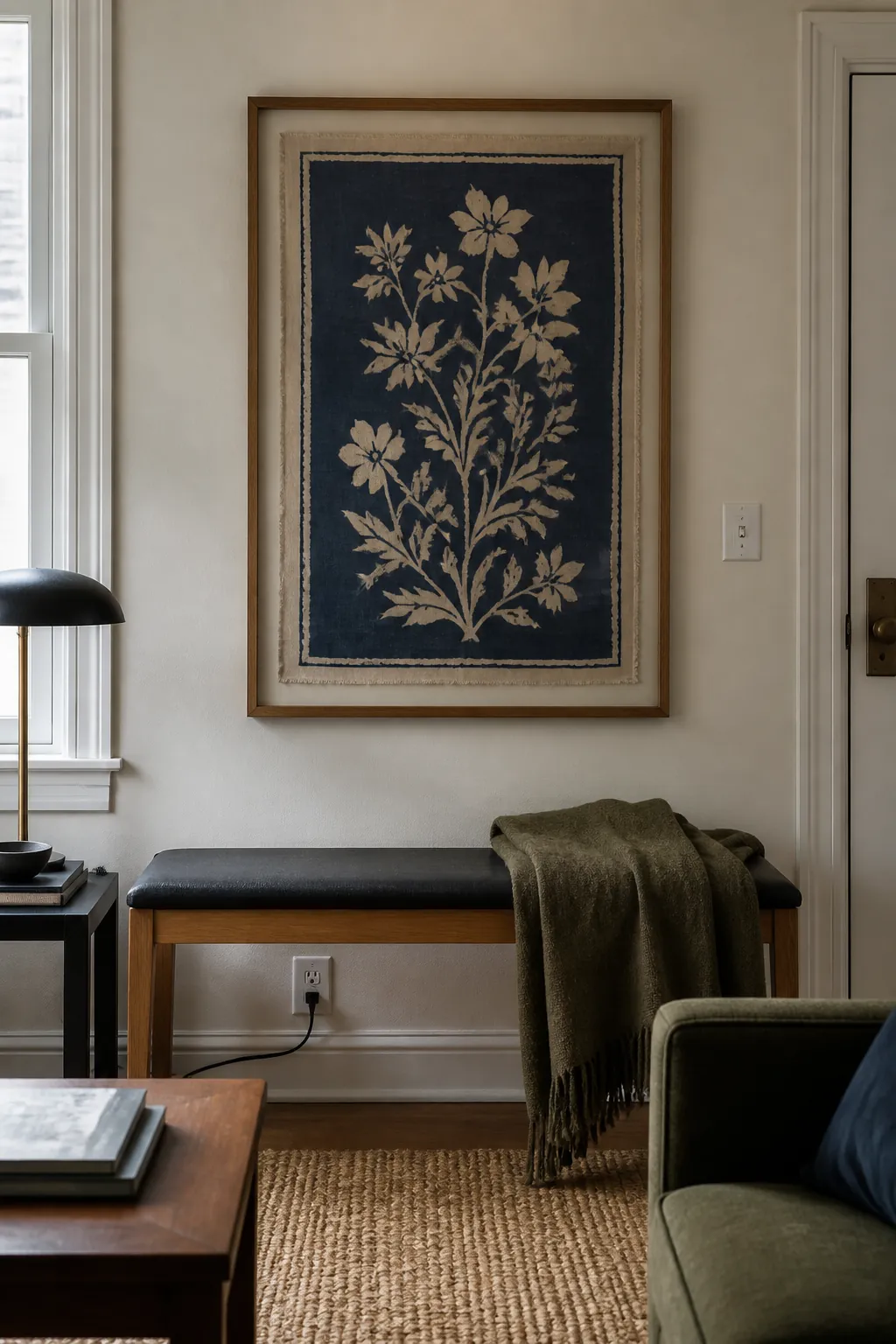
Use a lightweight frame and hardware suited to the wall. Choose a concrete motif—such as indigo botanical block print—so the piece feels intentional rather than generic.
Use Baskets Only Where They Solve a Habit
A basket beside the sofa can hold one throw; another near the door can catch scarves. Baskets become clutter when they are purchased before their job is defined.
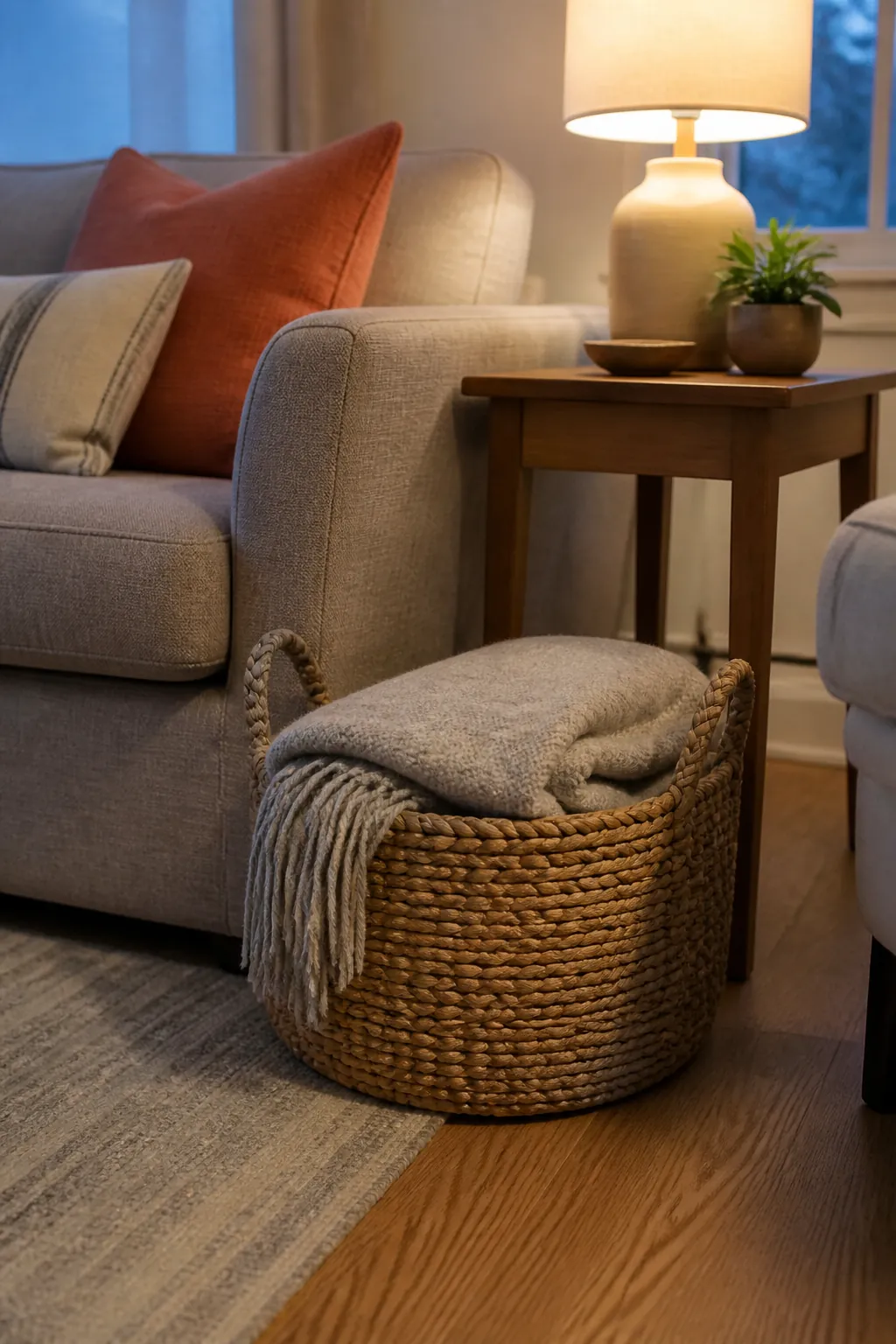
Pick a size that fits the contents and does not invade the path. Hidden capacity is useful; mystery storage is not.
Shape the Sofa With Fewer Better Cushions
Two or three cushions in different sizes and fabrics can make a sofa inviting without consuming the seats. Use one lumbar cushion for support and one tactile accent for warmth.
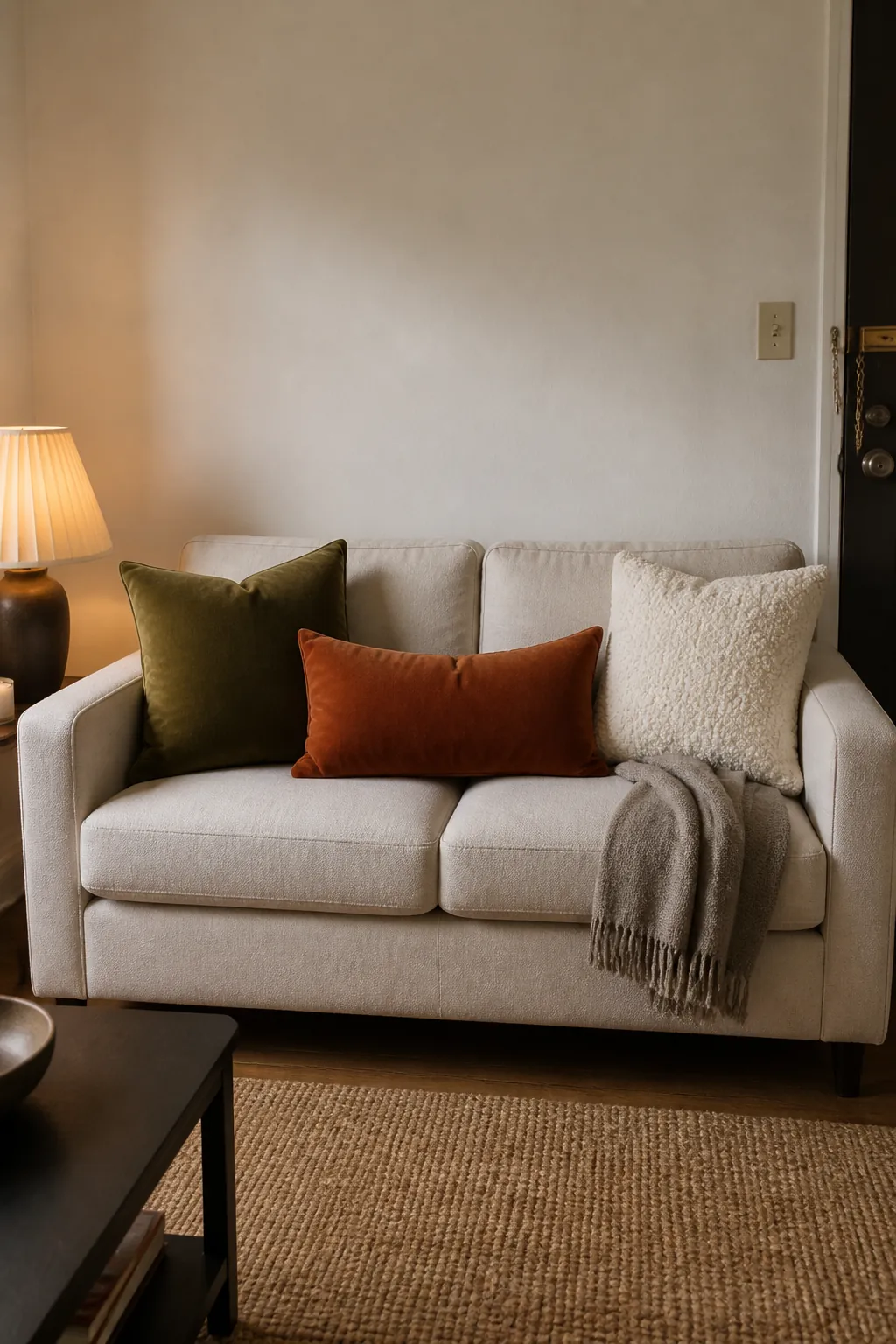
Repeat a room accent without buying a complete set. Cushions should improve comfort, not require relocation before anyone can sit.
Keep One Wall or Surface Quiet
Cozy rooms need visual pauses. Leave one wall mostly bare or one console nearly empty so the eye can rest and the textured areas feel deliberate.
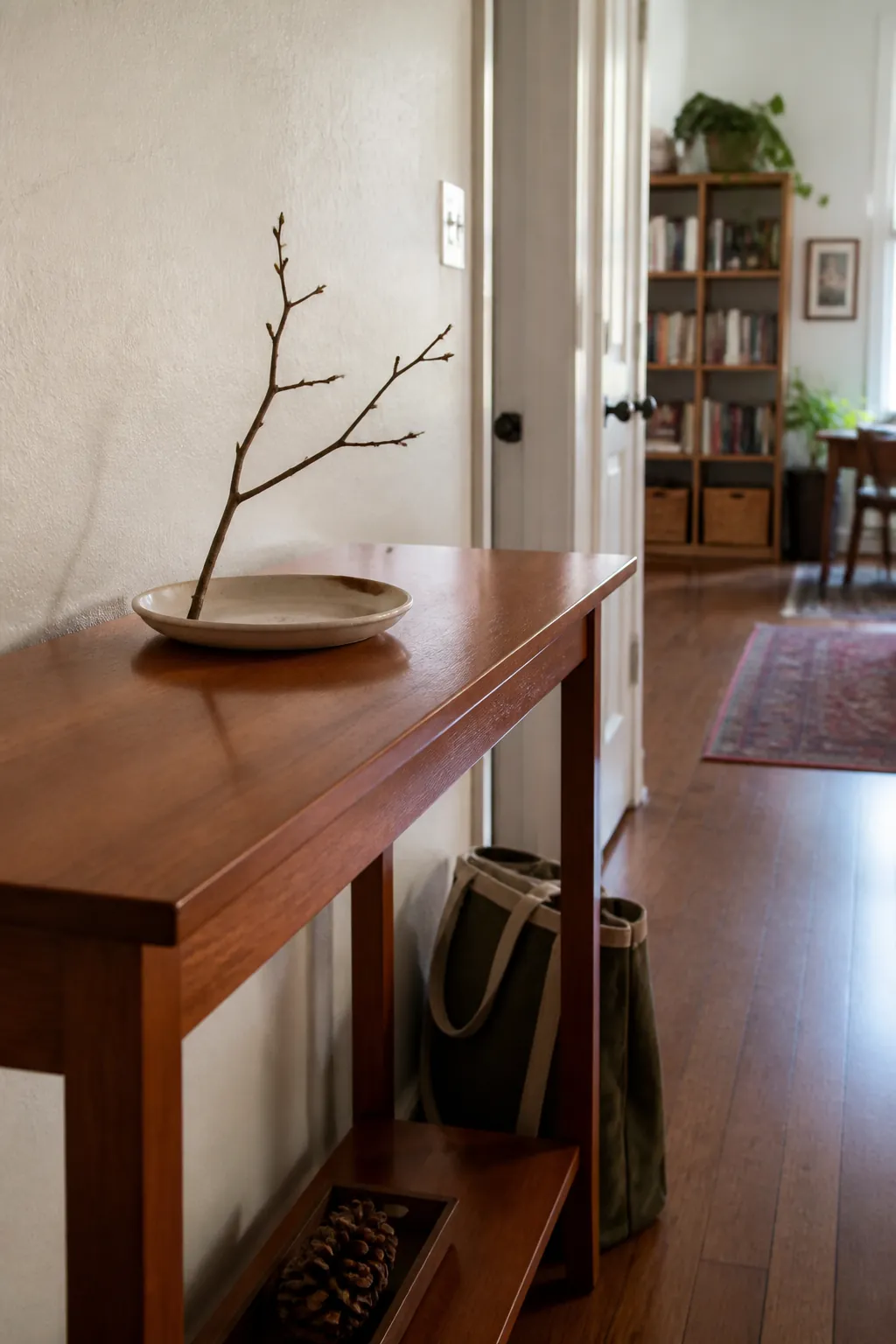
Protect that space from becoming a drop zone with one shallow tray and a nightly reset. Empty space is part of the atmosphere, not a decorating failure.
Adjust the Layers With the Season
Store one set of lightweight summer textiles and one warmer winter layer instead of keeping everything visible all year. A heavier throw, lined curtain, or deeper cushion cover can change the mood without new furniture.
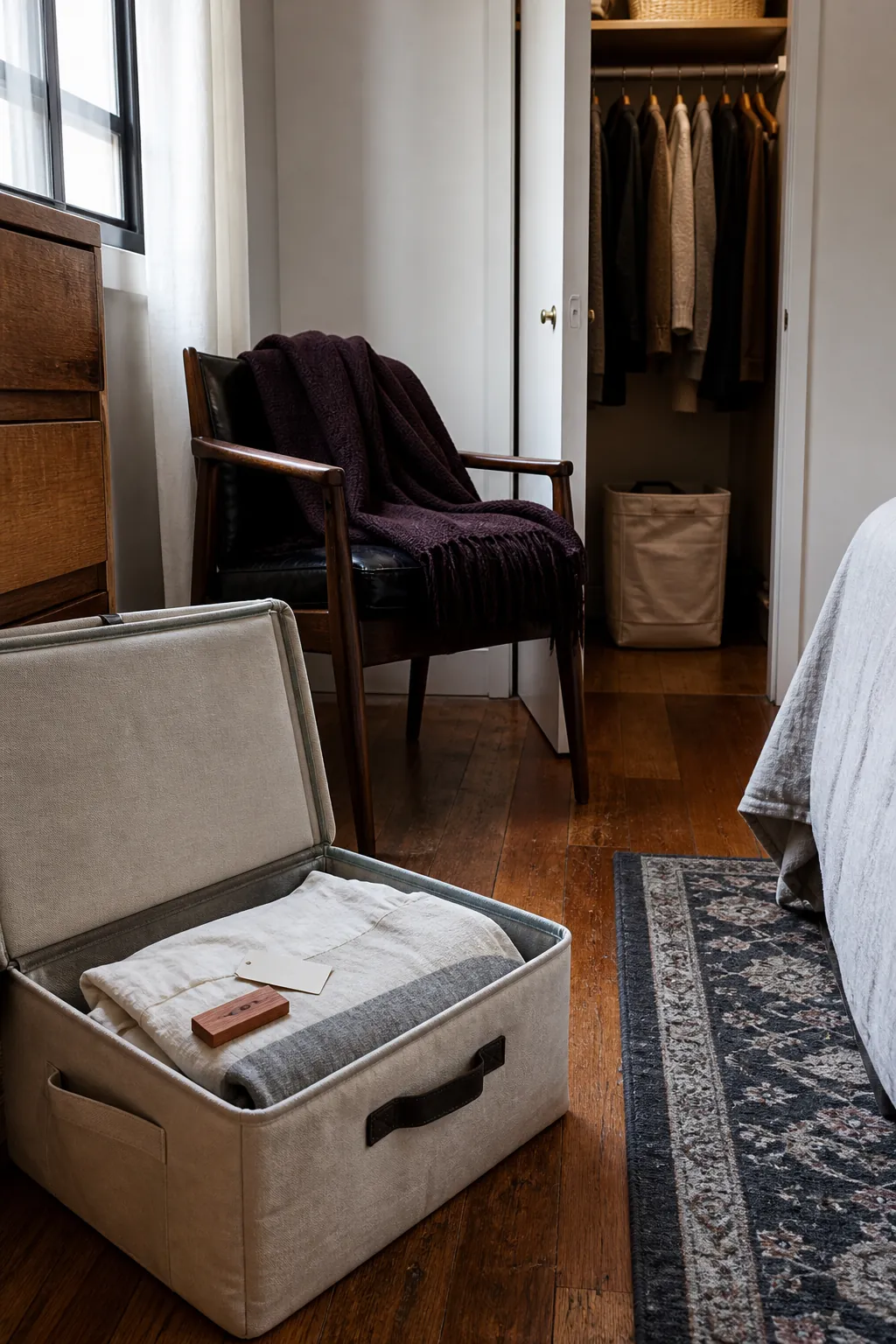
Keep off-season pieces clean and contained under the bed or high in a closet. Rotation preserves novelty and prevents cozy layers from becoming permanent crowding.
Let Personal Objects Finish the Room
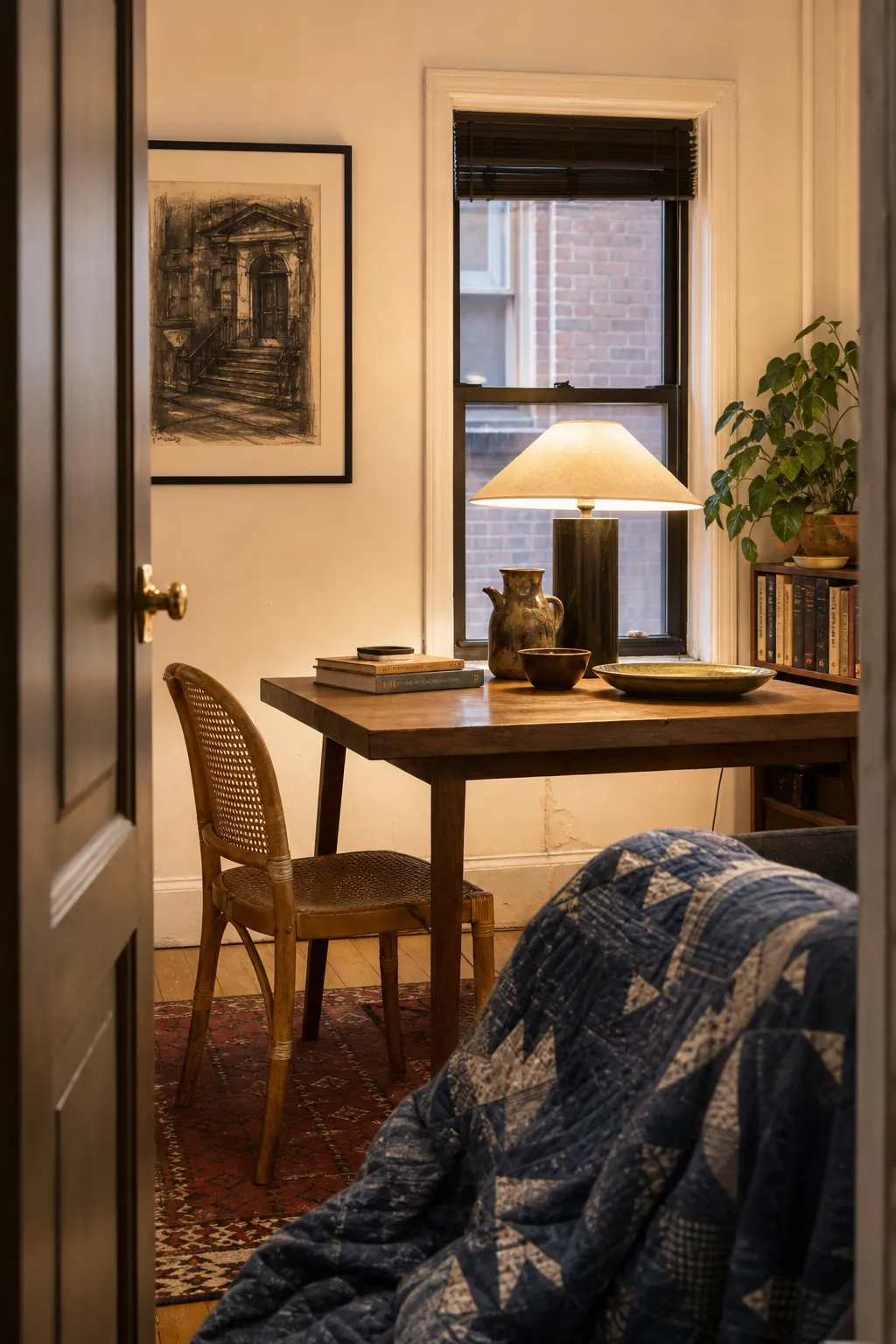
The final layer should come from your life: a repaired chair, a mug made by a friend, an inherited quilt, a photograph, or the books you return to. These objects create a feeling that trend-driven filler cannot reproduce.
Add them slowly and keep the useful routines visible beneath the styling. A cozy small apartment is not one that looks full; it is one that feels ready to receive you.