
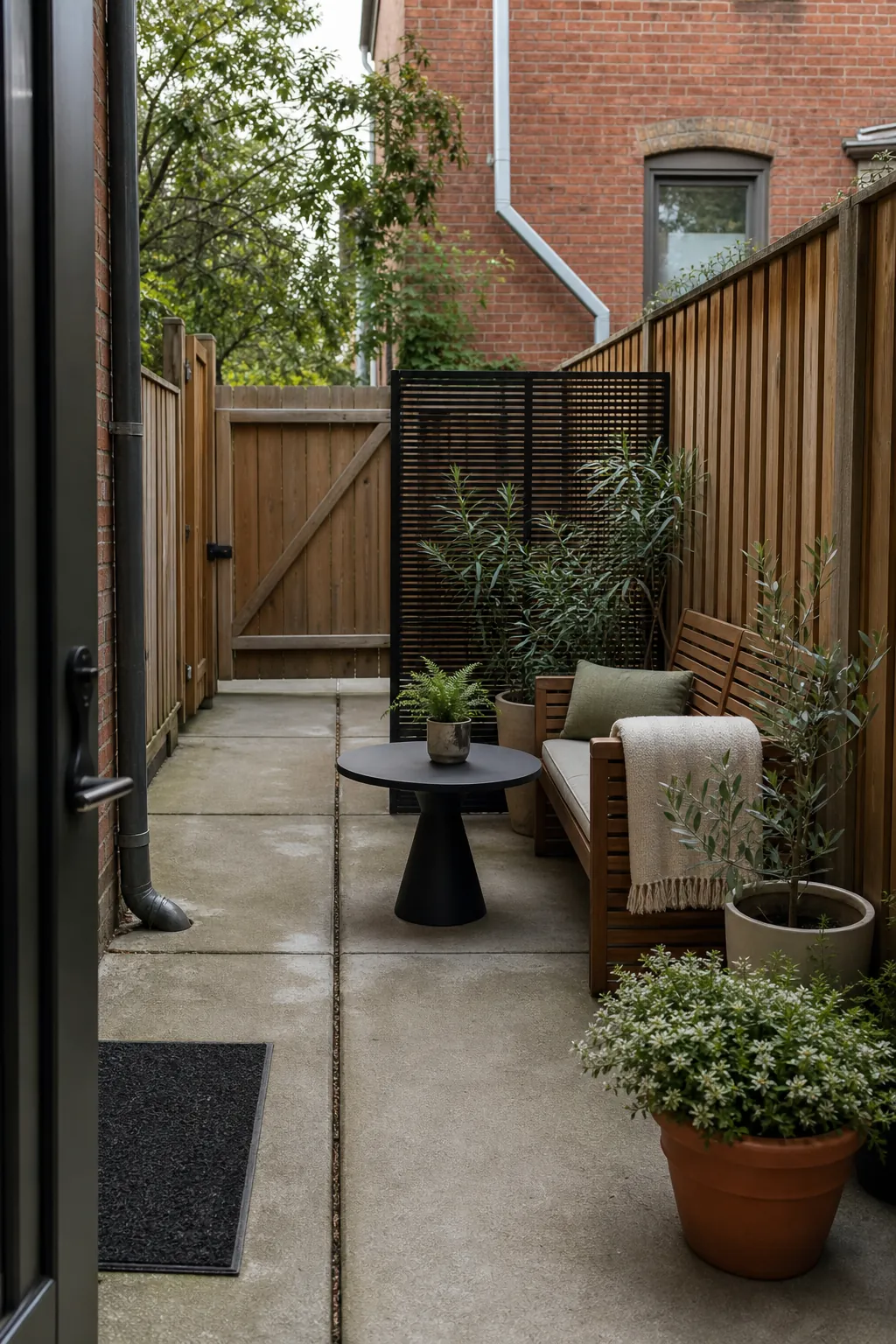
A townhouse patio can be only a few steps deep and still become the most-used part of the home. The trick is not squeezing in more decor. It is deciding what the space needs to do, protecting the route from the door to the gate, and choosing pieces that earn every inch. These 20 small patio ideas for a townhouse solve the problems people actually run into: close neighbors, awkward fences, harsh sun, poor drainage, storage clutter, and furniture that looked smaller online.
Before buying anything, measure the patio, door swing, utility access, and the narrowest walking point. Mark a comfortable path with painter’s tape, then test the layout for a few evenings. A beautiful setup is only successful if you can carry dinner outside, water plants, open the gate, and put cushions away without moving half the patio.
Build a Corner Bench Around the Open Floor
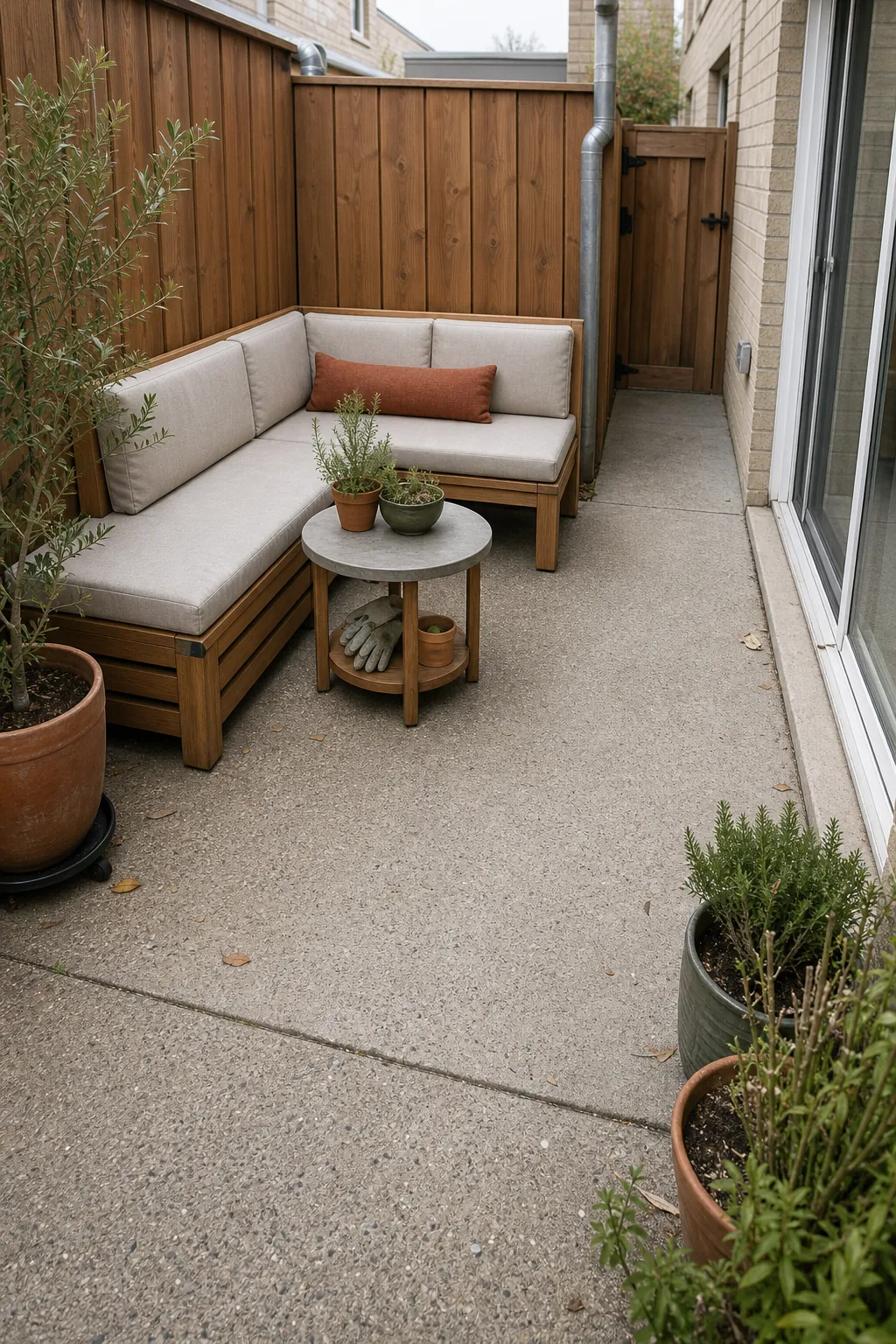
Push an L-shaped bench into the least-used corner instead of floating chairs in the center. This creates more seated places while leaving one continuous open zone for circulation. A backless end keeps the bench visually light near a window, while slim seat pads add comfort without the bulk of deep outdoor cushions.
Keep at least one direct route from the back door to the gate. If the patio is rented, use two modular benches that meet at the corner rather than a built-in. A small round table is easier to move around than a square one with sharp corners.
Choose a Folding Bistro Set for Flexible Dining
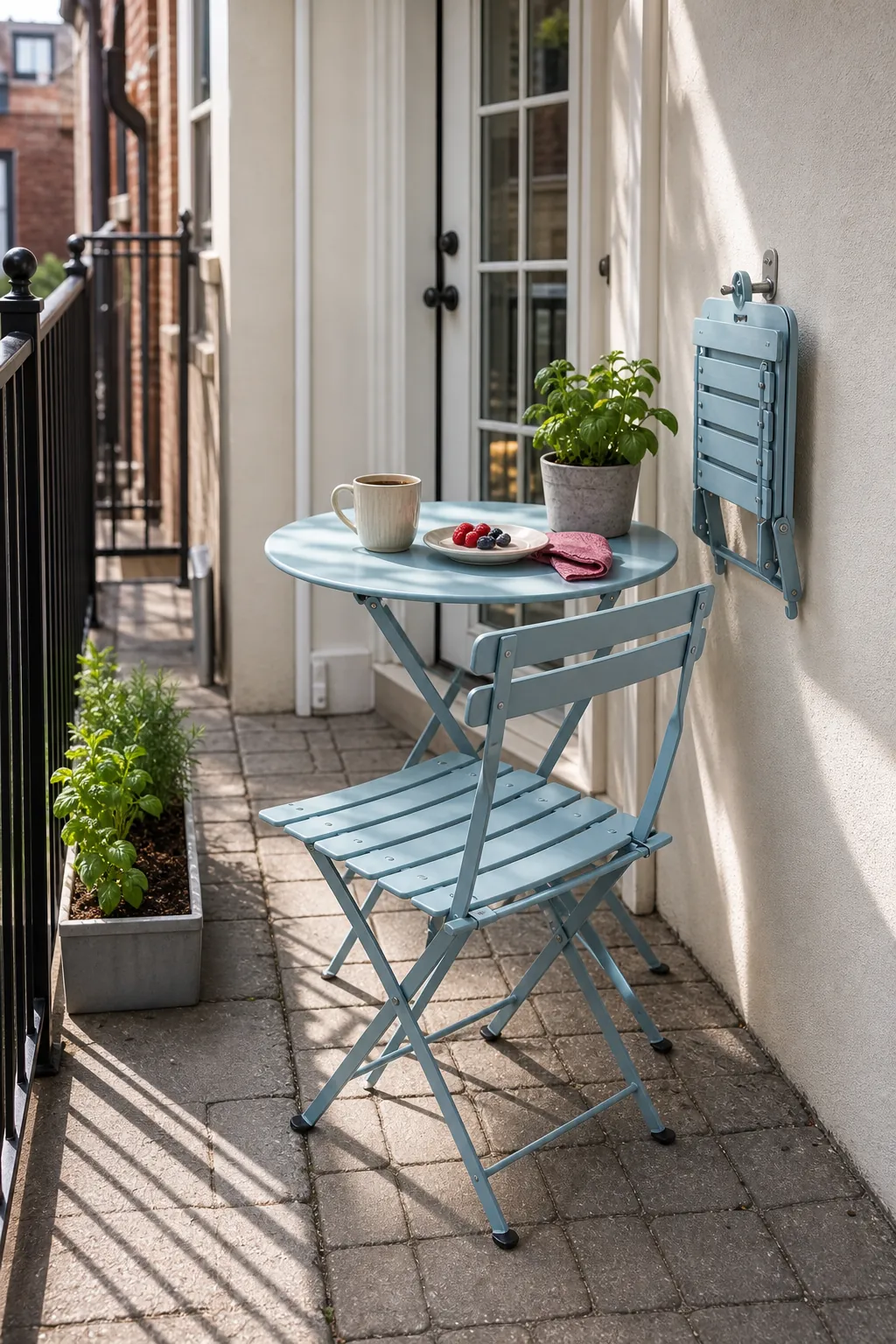
A folding bistro set gives a mini patio a real breakfast spot without permanently claiming the floor. Look for chairs that fold nearly flat and a table shallow enough to park against the wall when you need the patio for gardening, a child’s play mat, or extra guests.
Measure the chair depth while someone is seated, not just the table footprint. The useful dimension is the space left behind the pulled-out chair. Powder-coated steel or aluminum is easier to handle than heavy cast iron and can be stored quickly before severe weather.
Create Privacy With Tall Movable Planters
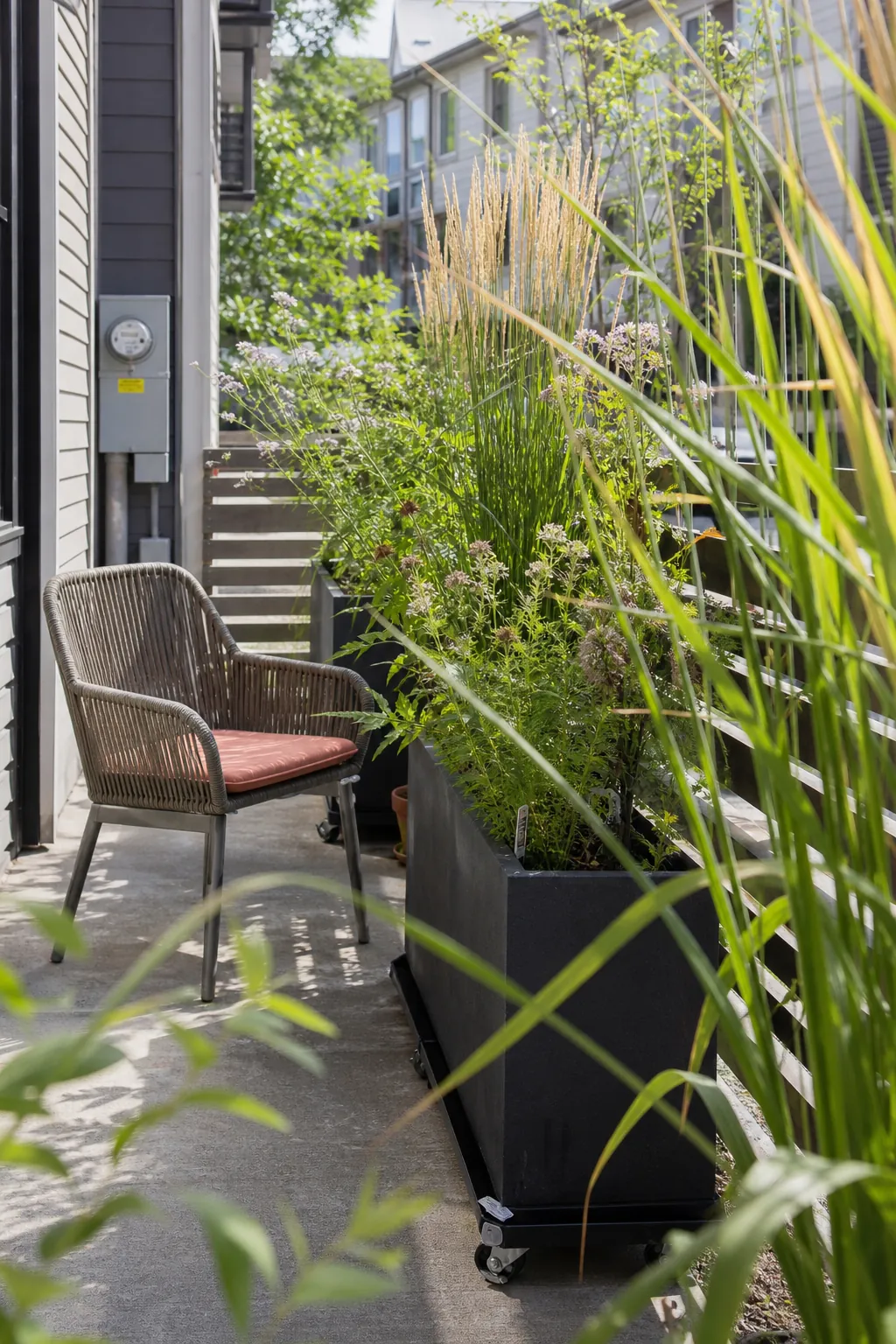
For an overlooked townhouse patio, a row of tall containers can soften sightlines without turning the yard into a dark box. Place the screening where neighbors actually see the seating—not automatically along every fence. Two or three substantial planters usually look calmer and work better than a crowd of tiny pots.
Choose plants for the patio’s real light and climate, and confirm mature width before buying. Use frost-safe, drainage-ready containers and wheeled caddies rated for the filled weight. Never block a shared access route, utility meter, or required gate.
Install a Freestanding Slatted Screen
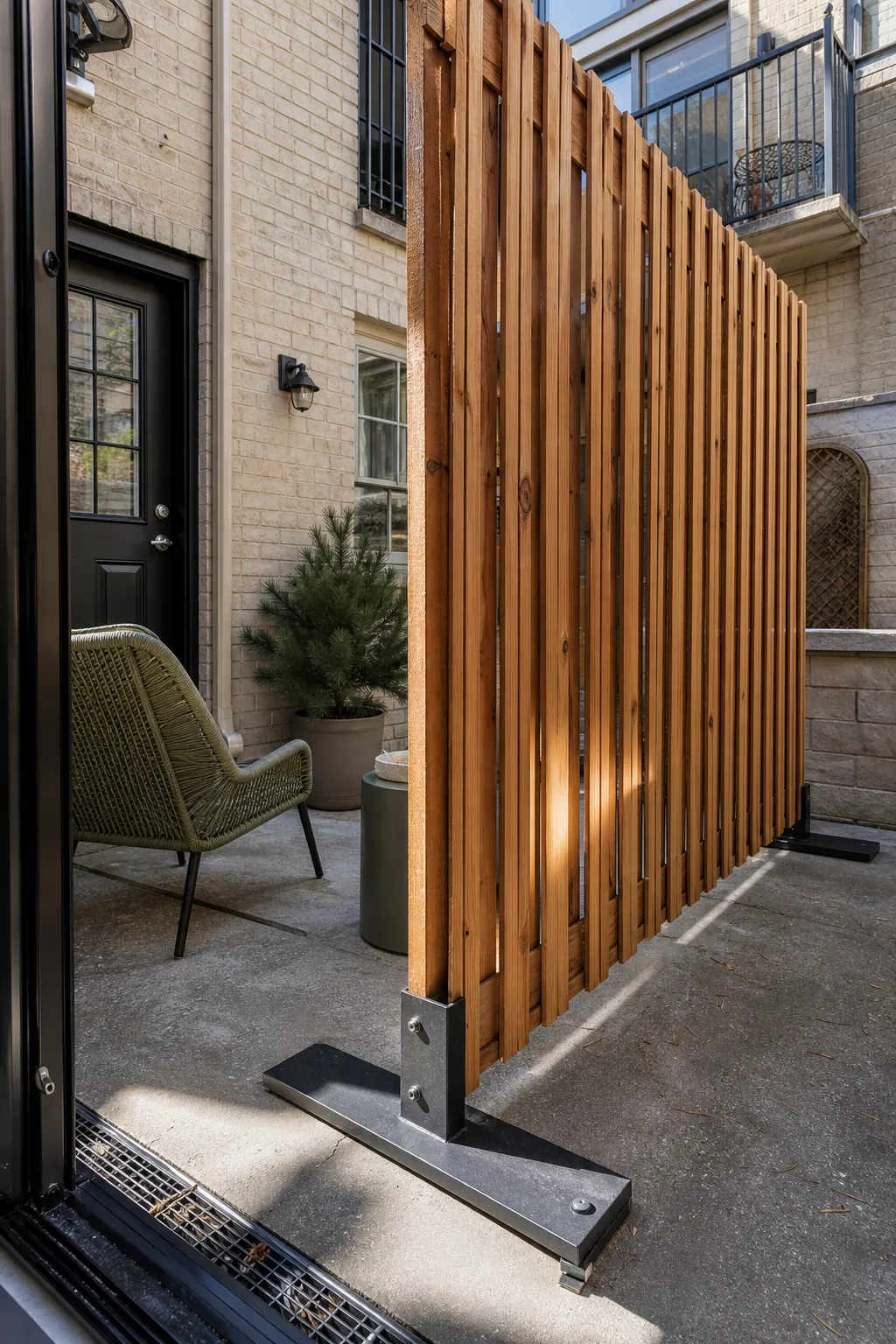
A weighted slatted screen is useful when plants would struggle or take years to fill in. Angle it across the specific view you want to interrupt, leaving small gaps between slats so the patio keeps airflow and filtered light. A warm wood tone also breaks up long runs of vinyl or masonry fence.
Freestanding does not mean windproof. Check the manufacturer’s ballast guidance and local association or rental rules. Position the base where nobody can trip over it, and keep it clear of grills and fire features. For a cohesive look, repeat the screen’s wood tone in one small table or planter.
Turn One Wall Into an Herb Garden
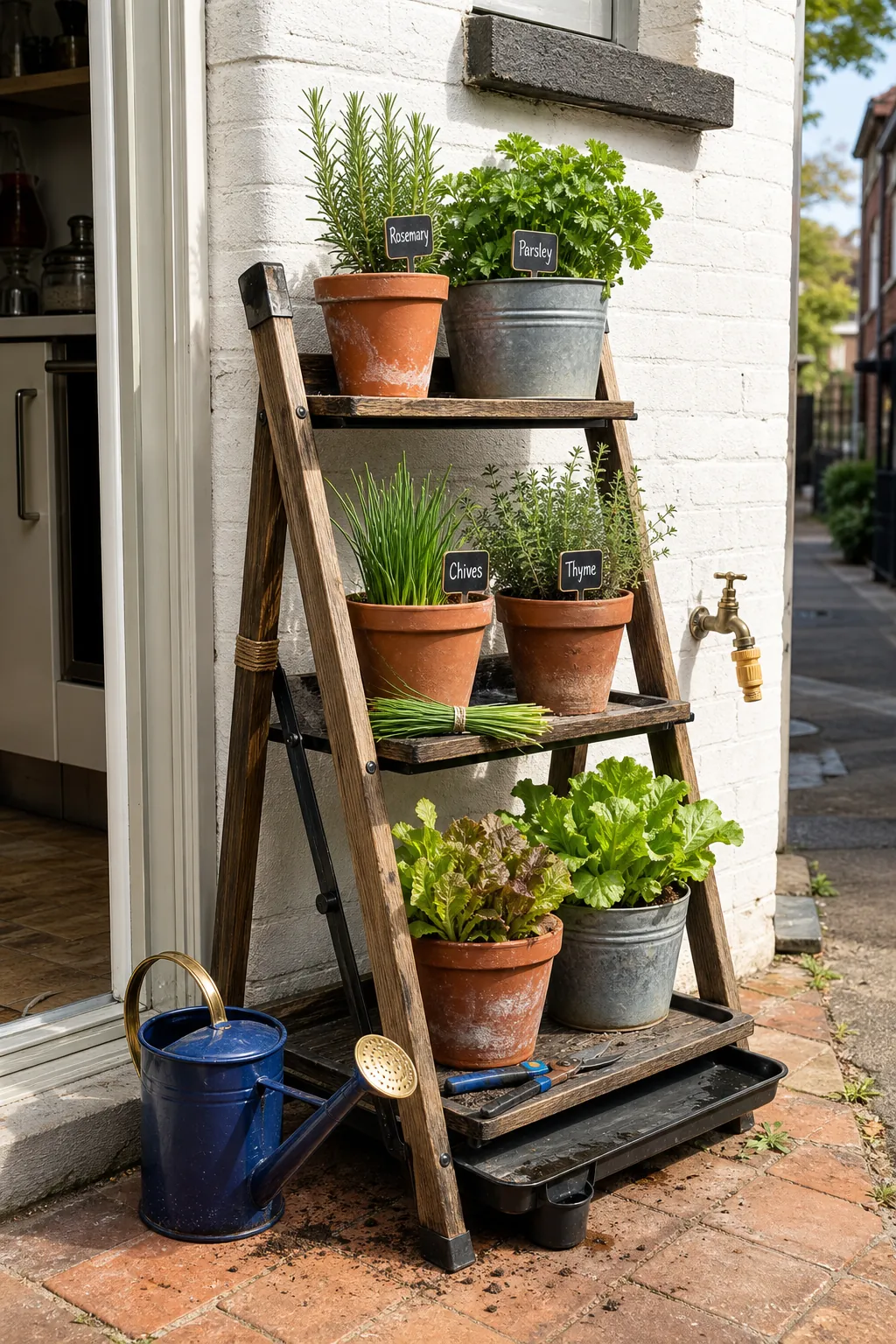
A vertical herb rack brings greenery to eye level and keeps the ground open. Put the thirstiest pots where they are easiest to reach, add saucers or a controlled drip tray, and group herbs with similar water needs. A freestanding ladder-style rack is a practical no-drill choice for renters.
Watch the sun for a full day before planting. A shaded townhouse wall may suit mint, parsley, and leafy greens better than sun-loving rosemary. Water must drain away from siding, thresholds, and neighboring property. Leave enough space behind the rack for air movement and inspection.
Anchor the Seating With a Properly Sized Rug
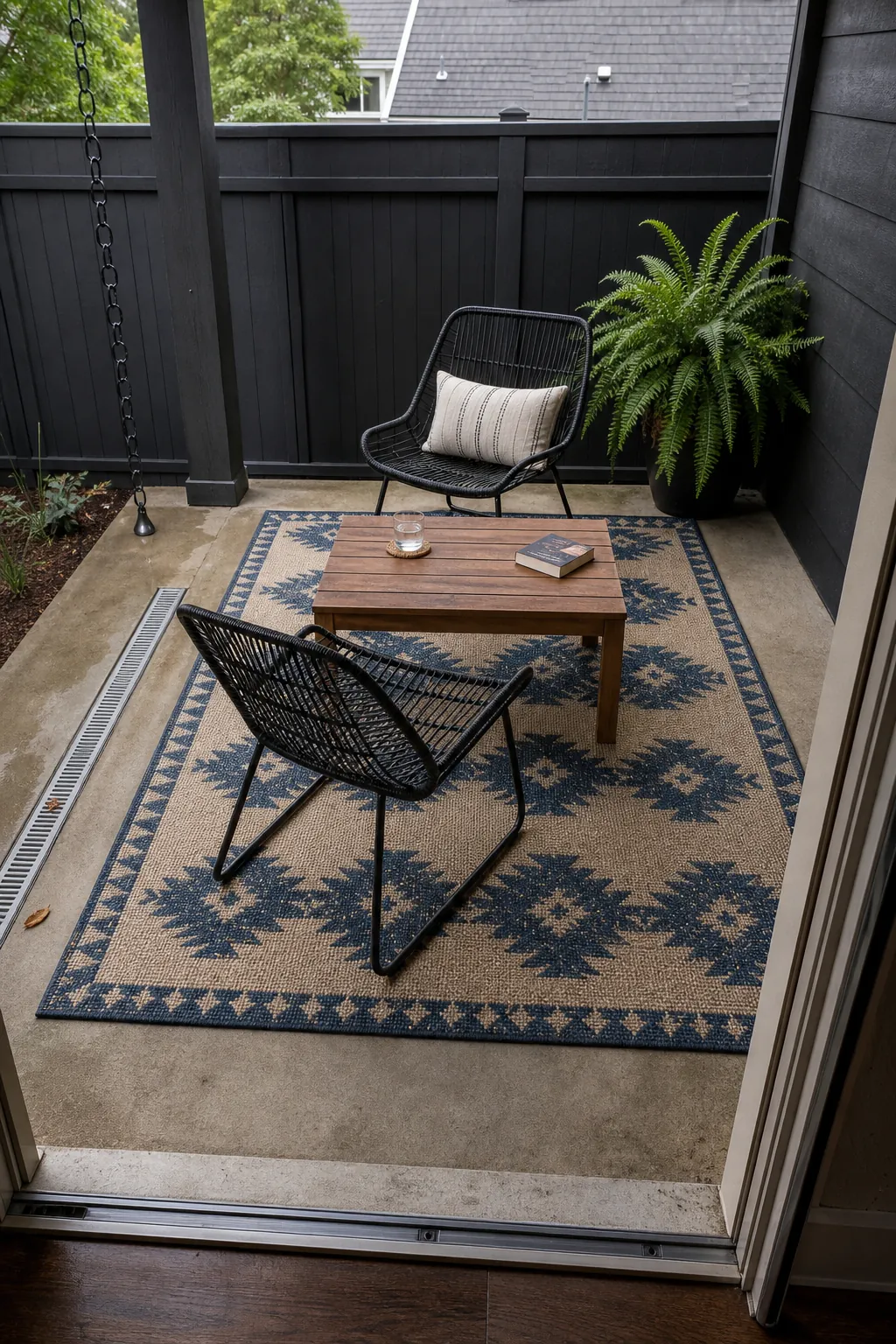
An outdoor rug makes a concrete rectangle read as a room, but the wrong size creates another obstacle. Choose one large enough for at least the front feet of every seat to rest on it. A restrained pattern hides tracked soil while a low pile dries faster and is easier to sweep.
Only use a rug if the slab drains well. Lift it regularly to clean underneath and let both surfaces dry, especially in humid or shaded yards. If water lingers after rain, skip the textile and define the zone with furniture placement and coordinated planters instead.
Use a Deck Box as Seating and Storage
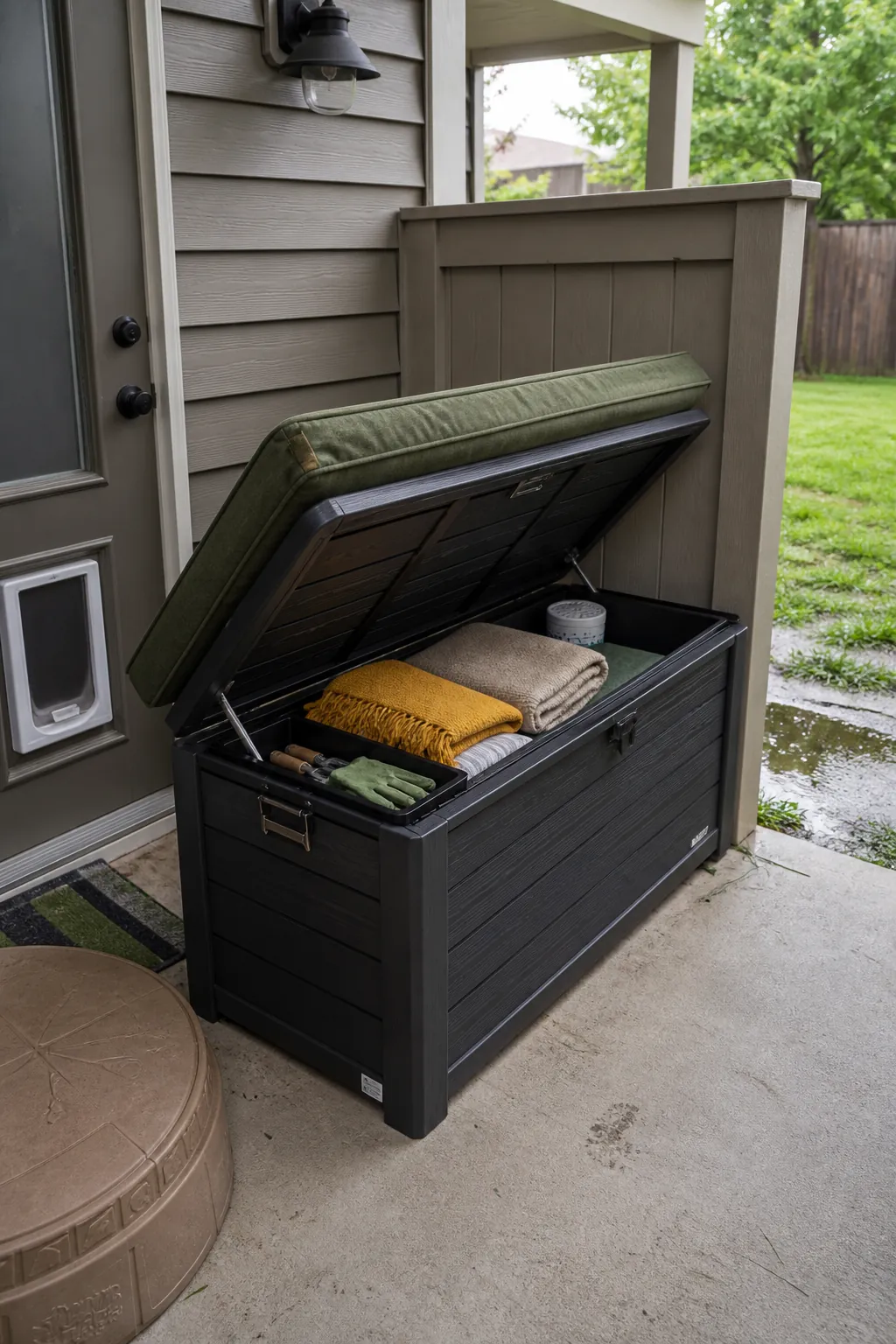
A seat-height deck box can replace both a bench and a storage cabinet. Use it for dry cushions, a folded throw, or small gardening supplies, and choose a lid that opens fully without striking the fence. A single fitted cushion keeps it comfortable without producing another pile of loose accessories.
Confirm that the box is rated to support seated weight; many are not. Keep chemicals, fertilizers, and sharp tools away from children and pets. Storage should reduce the nightly reset, not become a damp catchall. Air out textiles before closing them inside.
Shade the Patio With a Half Umbrella
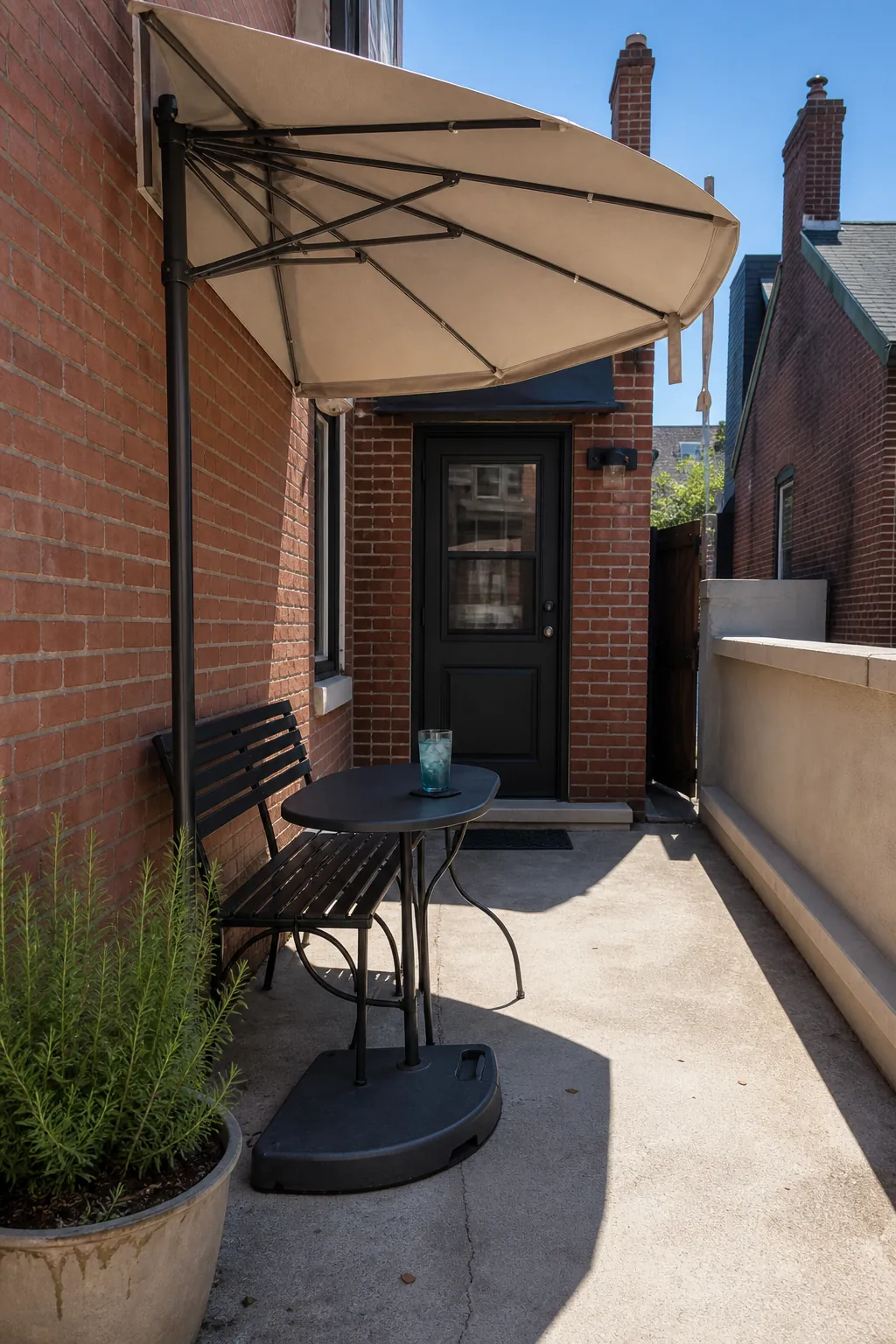
A half-round or wall-hugging umbrella shades a narrow patio without dropping a pole into the middle of the layout. Place it on the sunny side and use its tilt only within the manufacturer’s limits. A pale canopy reflects heat and is less visually heavy against a close fence.
Use the specified weighted base, close the canopy when unattended, and never rely on a fence tie as a substitute for safe anchoring. Track where the sun lands during the hours you actually use the patio; shade at noon is irrelevant if you only sit outside after work.
Hang Warm Lighting Along the Perimeter
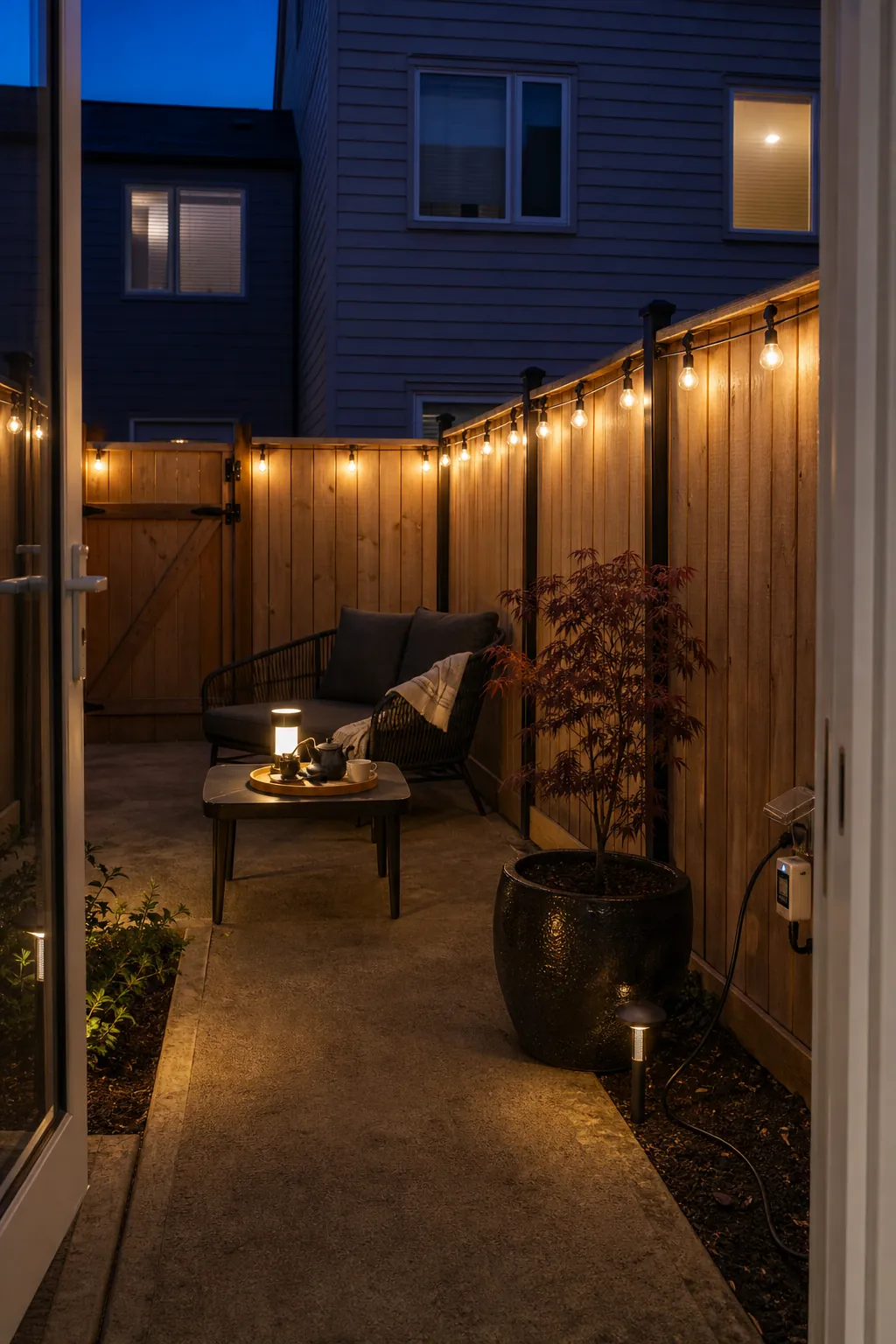
Lighting at the edges makes a small patio feel deeper and keeps the center uncluttered. Choose outdoor-rated warm-white strands, secure them to permitted structures, and let the cable follow one clean line rather than sagging across the whole yard. A plug-in timer makes the setup feel effortless.
Use weatherproof connections and a protected GFCI outlet. Do not run extension cords through doorways or across wet walking paths. If attachments are restricted, place rechargeable lanterns on the table and low solar lights inside planters for the same layered effect.
Make a Slim Potting Station
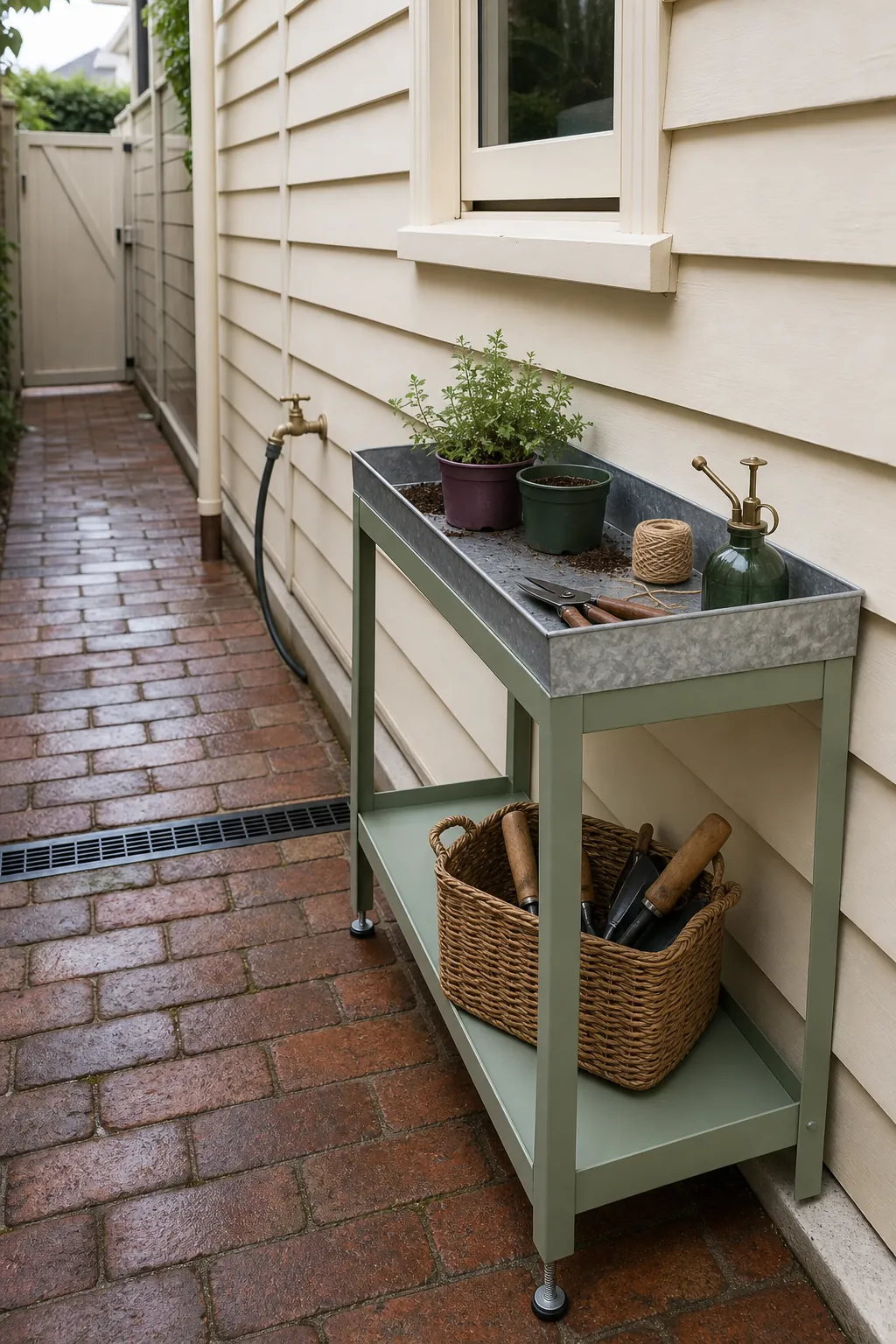
A shallow console can become a tidy potting station without consuming dining space. Use a galvanized tray to catch soil, hang only the tools you use weekly, and store extra pots inside one basket. The top can double as a serving ledge after the gardening supplies are put away.
Choose a depth that preserves the walkway and add adjustable feet if the slab slopes for drainage. Anchor tall furniture where required and permitted. A sealed hardwood, powder-coated metal, or exterior-grade resin surface will cope with splashes better than indoor furniture moved outside.
Tuck a Reading Chair Into the Quiet Corner
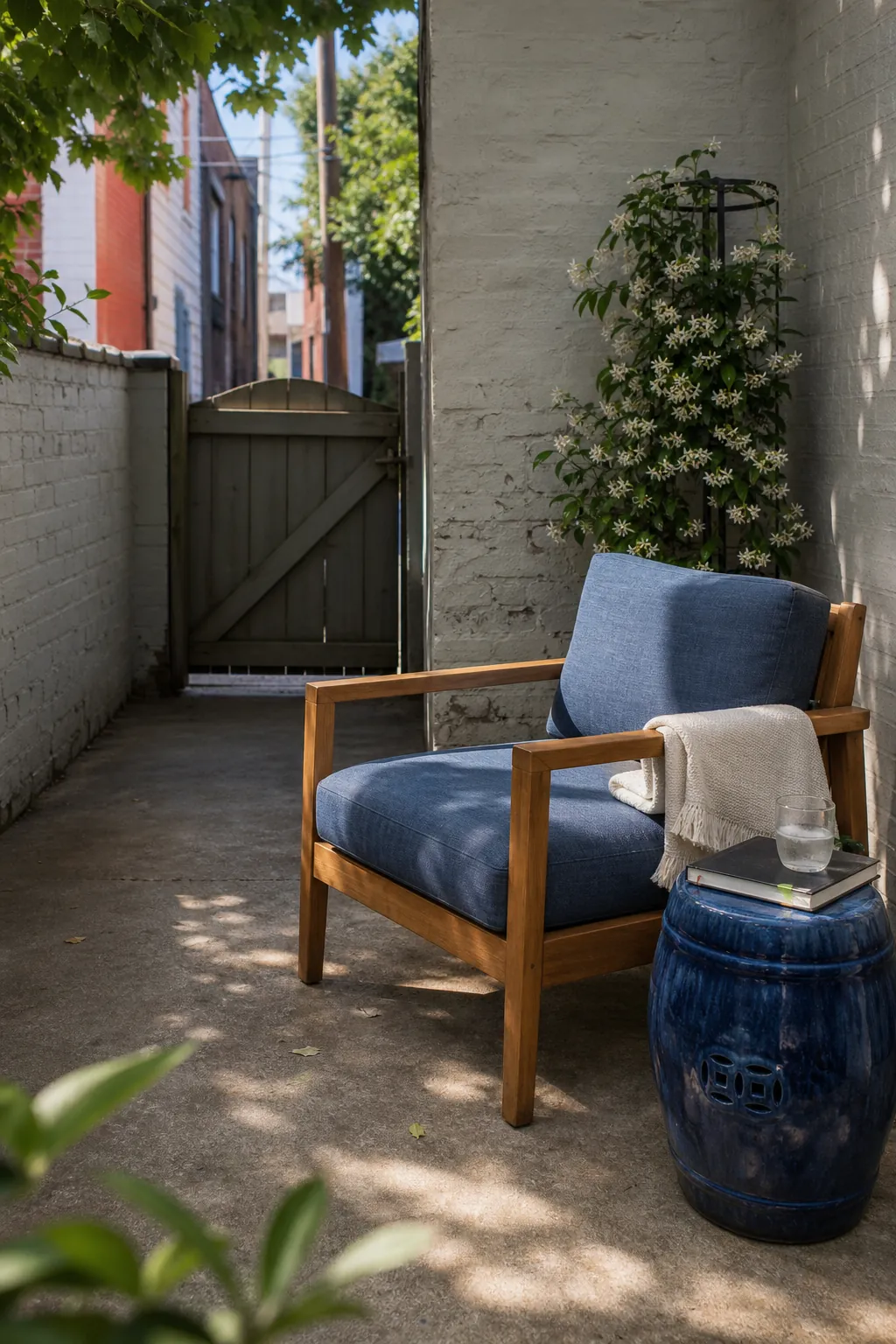
If you usually use the patio alone, one genuinely comfortable chair is better than a cramped four-seat set. Angle it toward the longest view, add a garden stool for a drink, and place one fragrant or textured plant nearby. The negative space around the chair is part of the design.
Test the seat before committing; upright dining chairs rarely become relaxing just because they are outdoors. A quick-dry cushion and washable cover make daily use realistic. Keep the chair light enough to move when company arrives or bad weather is forecast.
Layer Containers Instead of Scattering Them
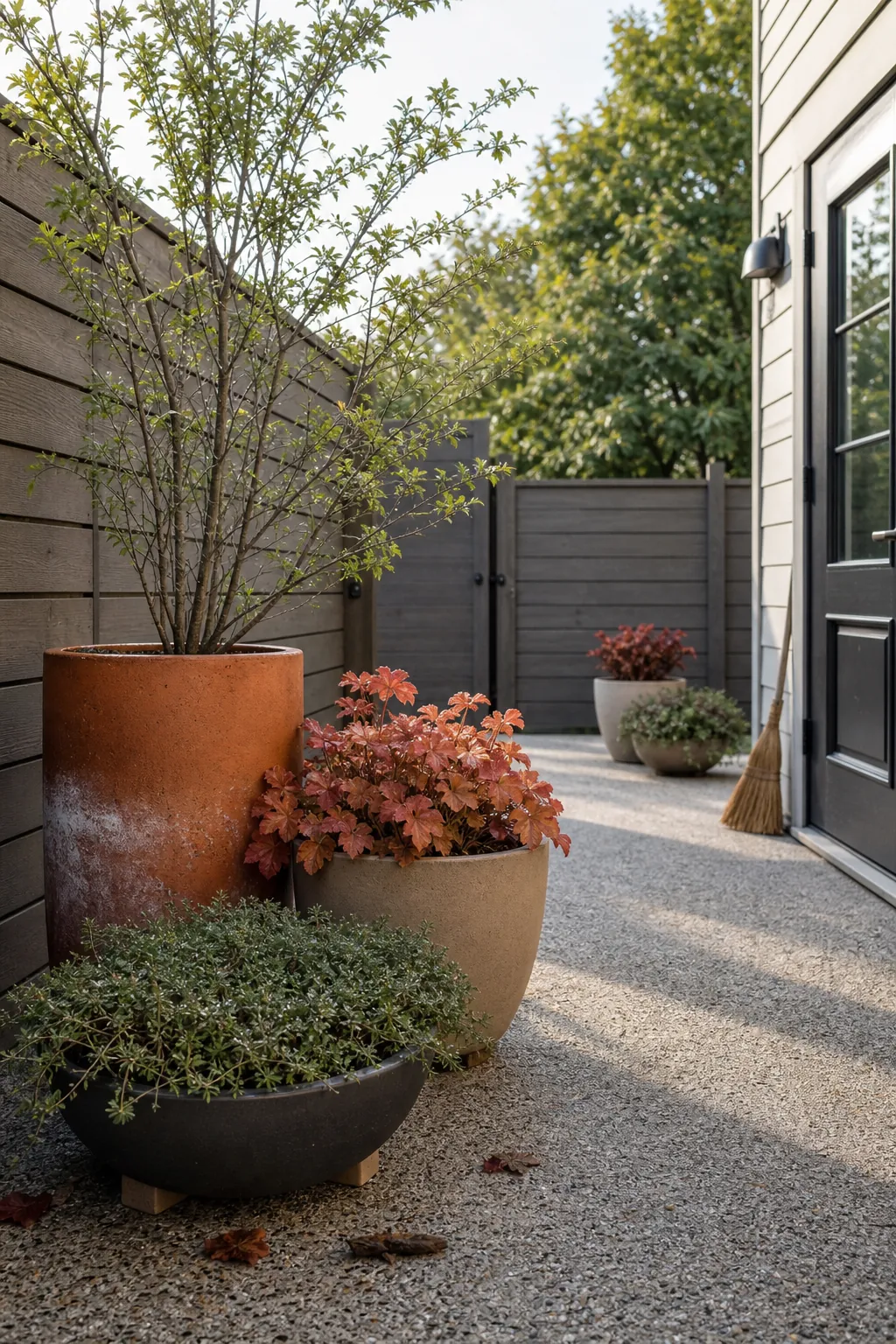
Group a tall, medium, and low container in one or two deliberate clusters. Repeating the pot material or plant color gives the eye a clean rhythm and leaves the remaining slab easy to sweep. This looks fuller than lining tiny pots around every edge and is simpler to water.
Set heavy containers first, then check that leaves will not crowd the path at mature size. Elevate pots just enough to protect drainage holes, and use saucers only where standing water can be emptied. A small patio needs fewer, better-placed plants—not a miniature garden center.
Lay Removable Deck Tiles Over Tired Concrete
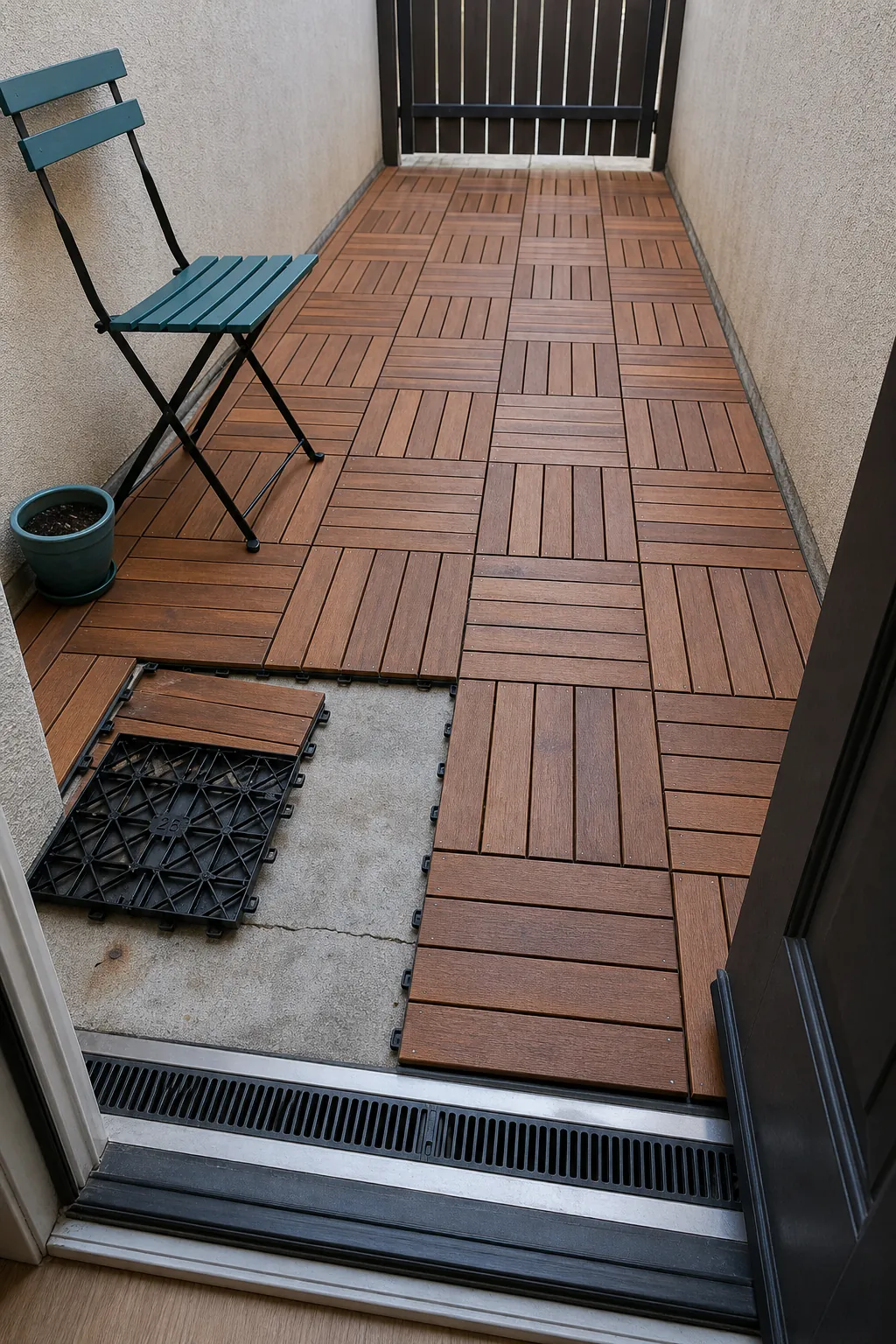
Interlocking deck tiles can warm up plain concrete and create an indoor-outdoor transition without a permanent build. Lay out a few samples first; large color variation or busy checkerboard patterns can make a tiny floor feel restless. A single consistent direction usually lengthens the view.
The slab must already drain correctly. Tiles cannot fix cracks, pooling, or an unsafe slope, and they should never raise the surface enough to interfere with a door. Check beneath them seasonally for trapped debris, moisture, and insects, following rental or association rules.
Design a Grill Zone That Protects Circulation
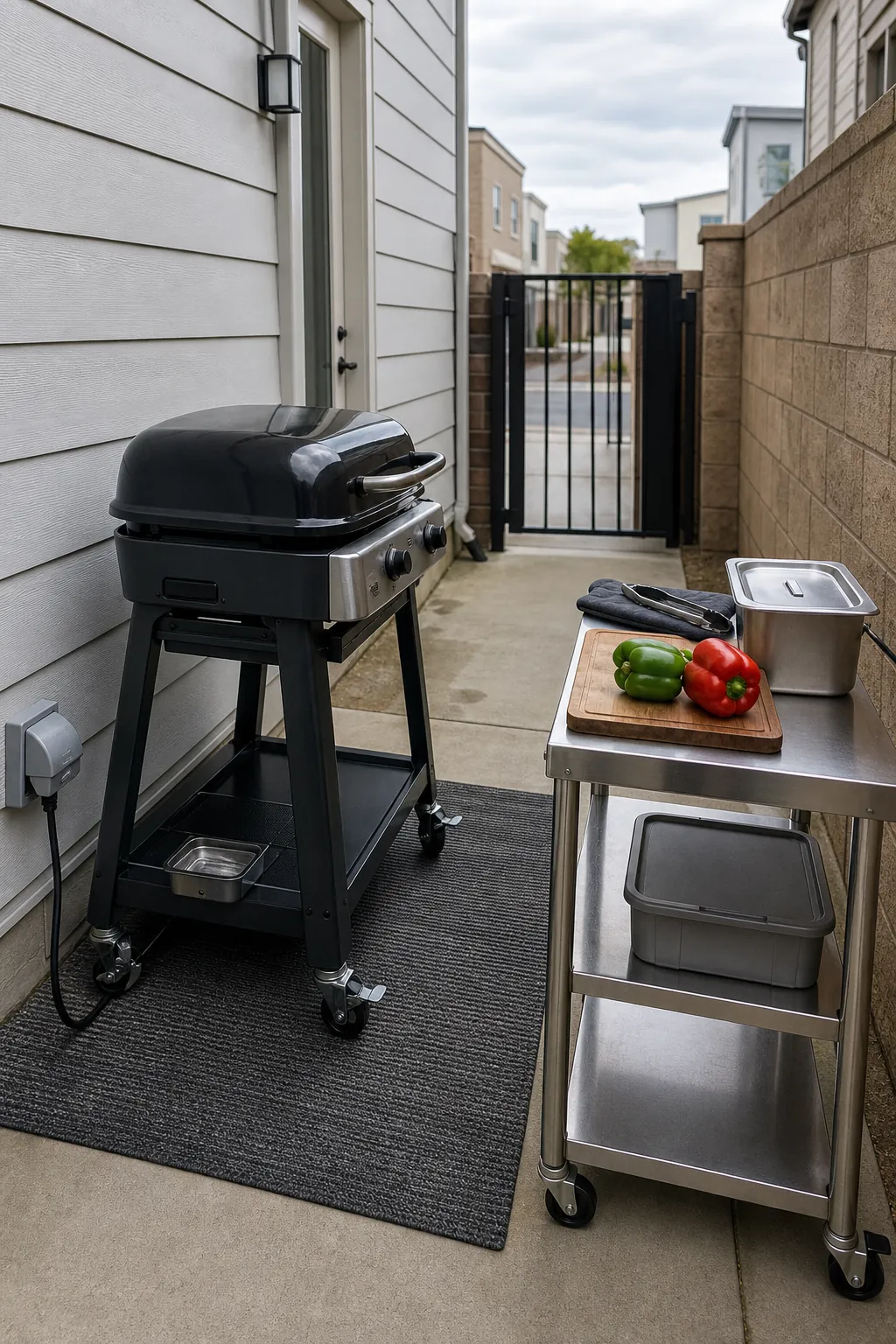
If cooking outside matters, give the grill a defined operating position instead of squeezing it beside the sofa. A slim cart can hold utensils and move away after dinner, but the appliance needs the clearances required by its manual, local codes, and townhouse association.
Never place a grill under combustible coverings, beside siding, or where someone must pass behind the cook. Many multifamily communities restrict charcoal, gas, or open flame, so verify the rules before buying. Where permitted, a compact electric model may suit a tiny patio better.
Add a Narrow Water-Free Sensory Garden
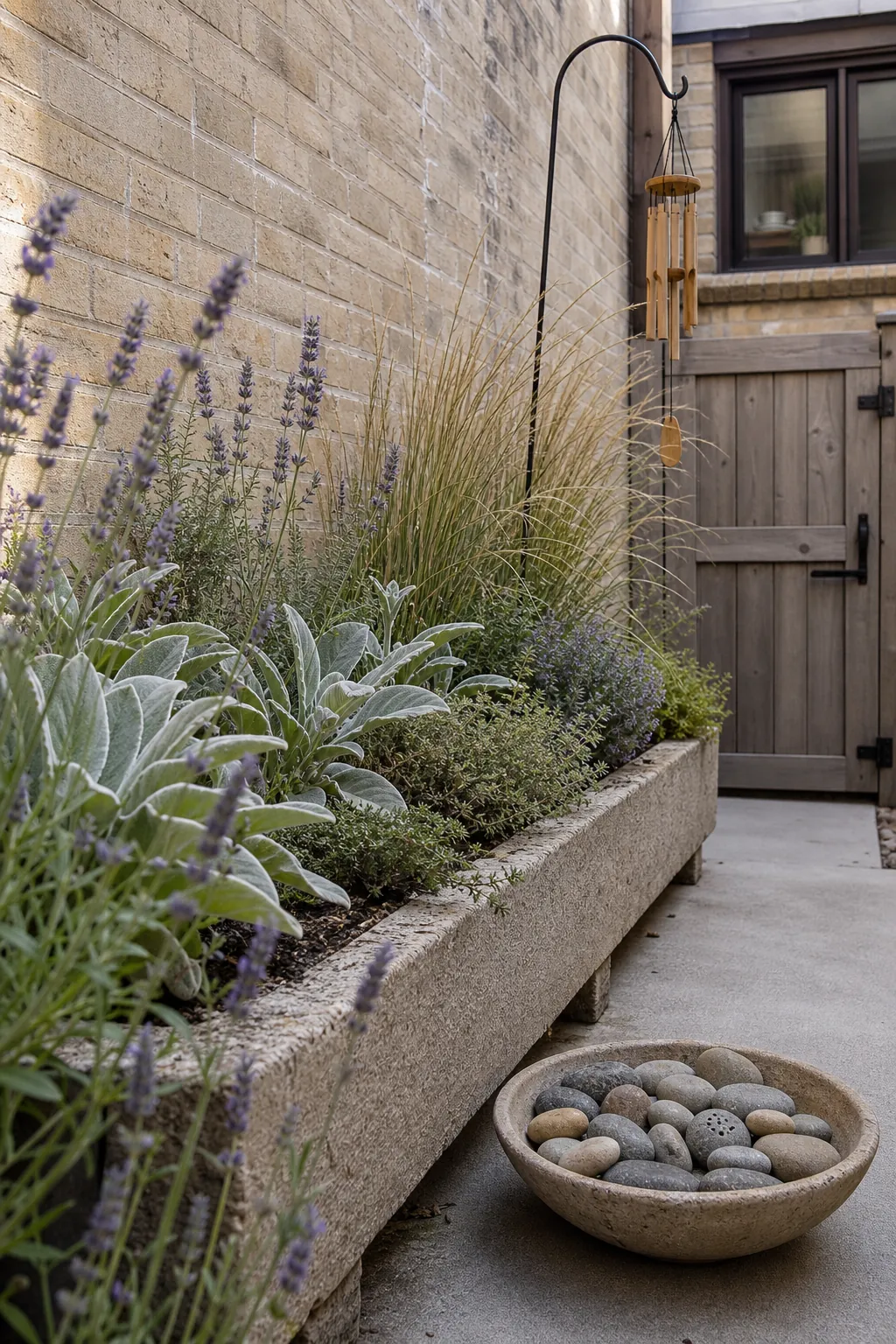
You do not need a fountain to make a patio feel restorative. Combine fragrant herbs, foliage that moves in a breeze, and a shallow dish of smooth stones that stays dry. This creates scent, sound, and touch without the maintenance, electrical needs, or mosquito risk of standing water.
Place aromatic plants where brushing past them releases scent, but avoid thorny or irritating varieties near the walkway. Select species that are safe for children and pets in your household. A limited plant palette will feel calmer and be easier to maintain.
Screen Utility Clutter Without Blocking Access
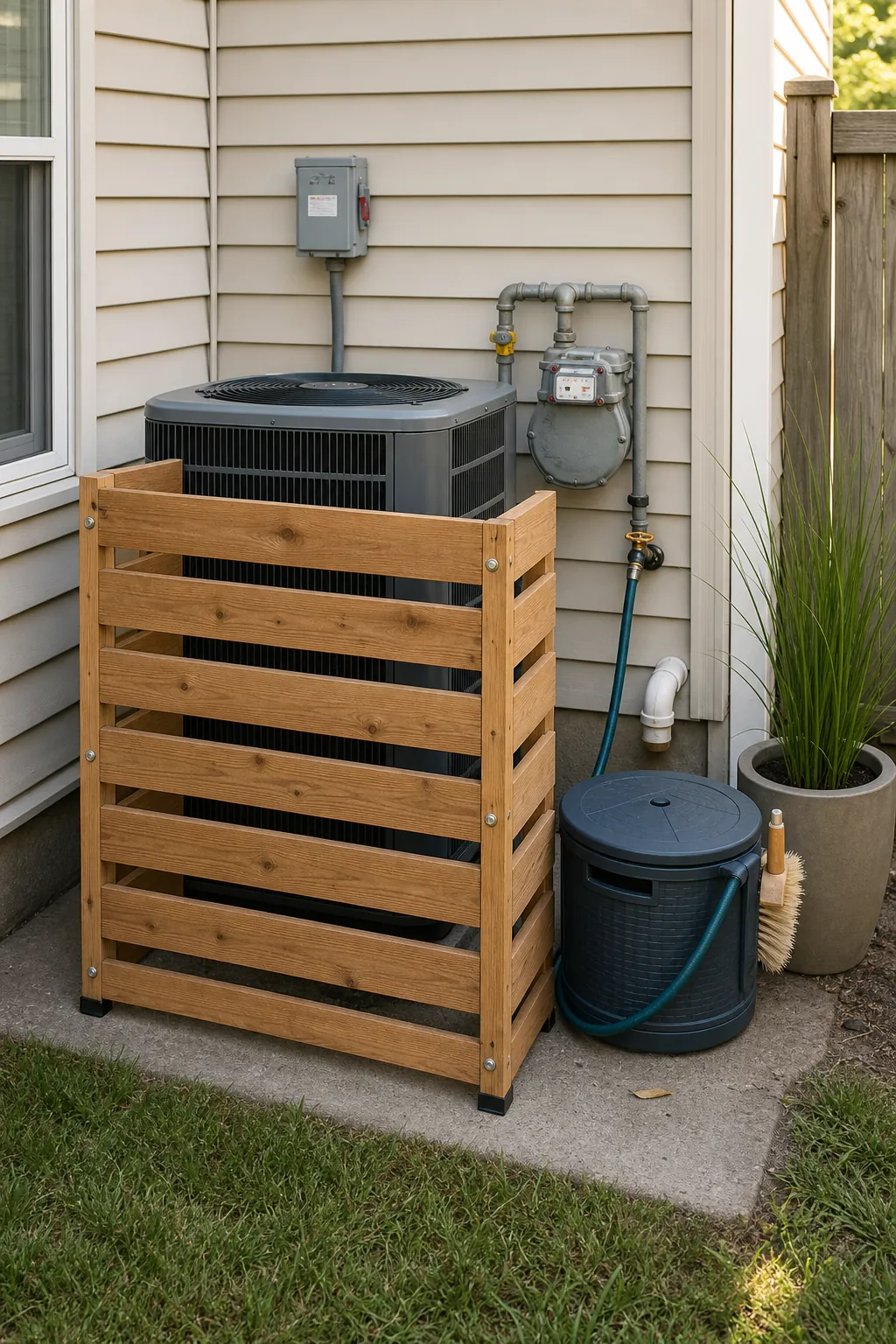
Air-conditioning units, meters, hoses, and bins often dominate a small townhouse backyard. Use a removable vented panel or a well-positioned planter to reduce the visual clutter from the seating area, while leaving the equipment fully accessible for service.
Follow every required clearance and never restrict airflow, drainage, shutoffs, or meter reading. Match the screen to the fence rather than making it a new focal point. A hose pot and one lidded bin can handle the loose items that make the corner look busier than it is.
Set Up a Two-Person Conversation Nook
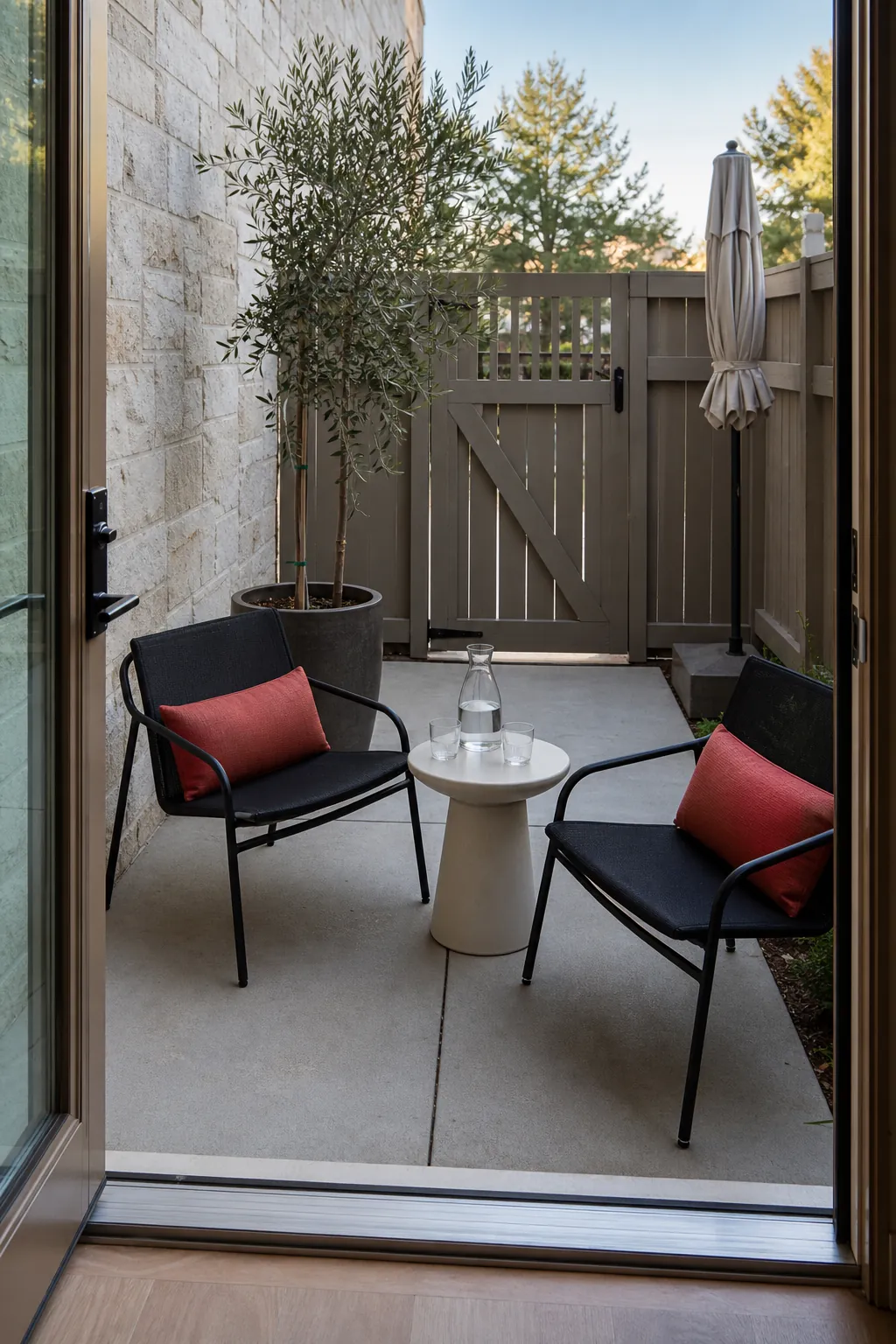
Turn two compact lounge chairs slightly toward each other instead of pressing both flat against a wall. The diagonal arrangement feels conversational and can make a boxy patio less rigid. Use one shared pedestal table so each person has a surface without two side tables crowding the floor.
Chairs with visible legs and open arms reveal more floor, which helps the space breathe. Keep the backs below the main sightline from indoors. A washable lumbar cushion adds color while still fitting inside a small storage box when rain arrives.
Plan for Mosquito Control From the Start
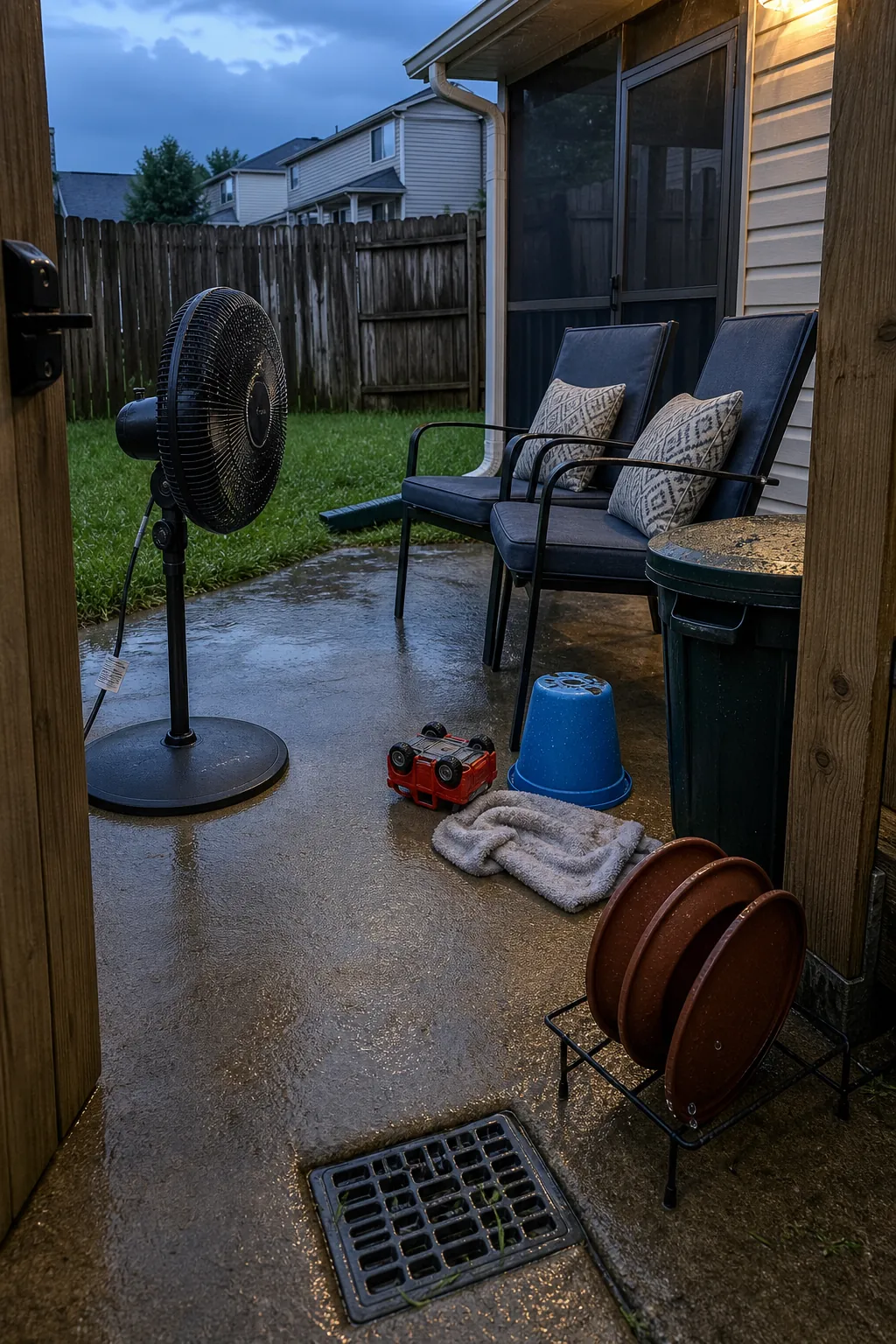
A patio that looks good but is miserable at dusk will go unused. Empty saucers, buckets, toy bins, and folded covers after rain, and clean gutters or drains that affect the area. A small outdoor-rated fan can improve comfort at the seating zone while maintaining useful air movement.
Choose pest-control methods appropriate to your region, household, and local guidance. Do not assume one scented plant will protect the whole patio. Removing standing water and keeping the space easy to inspect are the most important design decisions.
Keep a Clear All-Weather Path
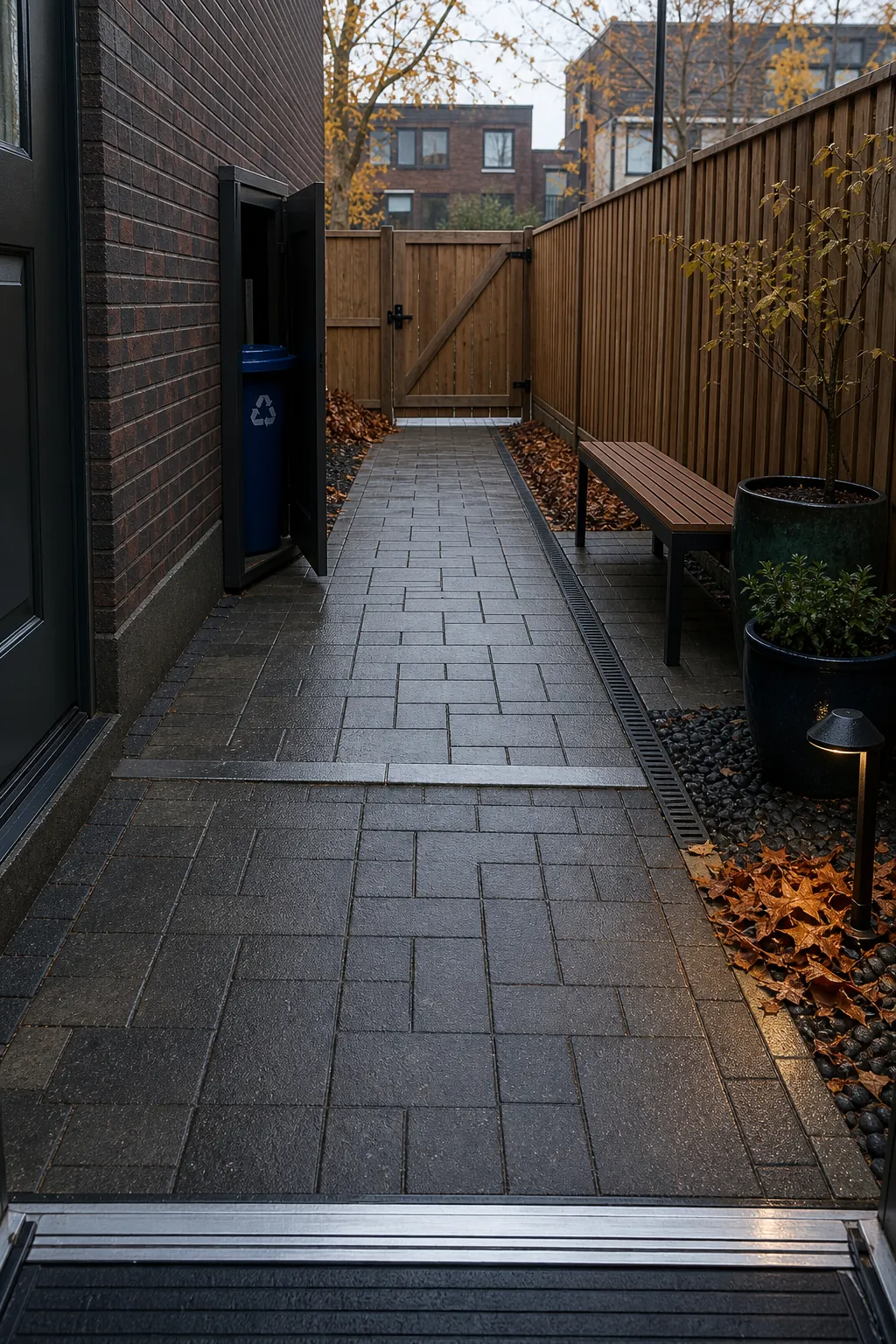
Make the door-to-gate route the fixed spine of the layout. Keep furniture legs, pots, cords, and rug corners outside it, then check the route in rain and at night. A clear path makes every other patio feature easier to use and is especially important where neighbors or maintenance staff need access.
Use stable, nonslip surfaces and correct drainage problems before decorating. Place a low light near any level change, but avoid glare aimed at neighboring windows. When the route stays obvious, a narrow patio feels organized rather than cramped.
Create a Ten-Minute Reset Routine
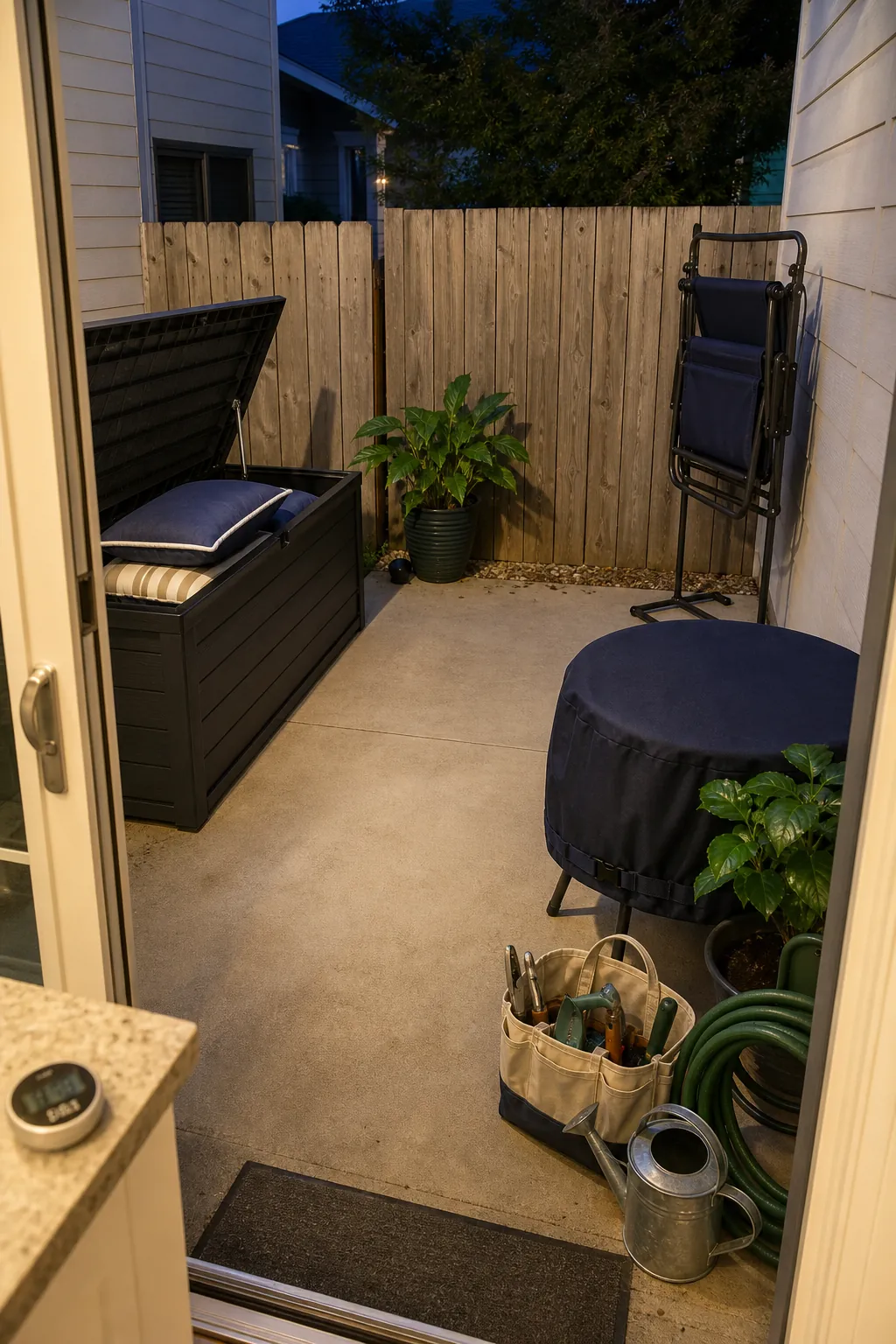
The best small patio inspiration survives ordinary life. Give every loose item a home: cushions into the bench, tools into one caddy, folding chairs onto a rack or inside, and watering supplies beside the hose. If the whole setup can be reset in ten minutes, you are more likely to use it and protect it.
Live with the first layout before adding more. Notice where water collects, where the afternoon sun lands, and what you move every time you open the door. A townhouse patio feels generous when nothing fights the way you actually live. Let those observations—not a shopping list—decide the final pieces.