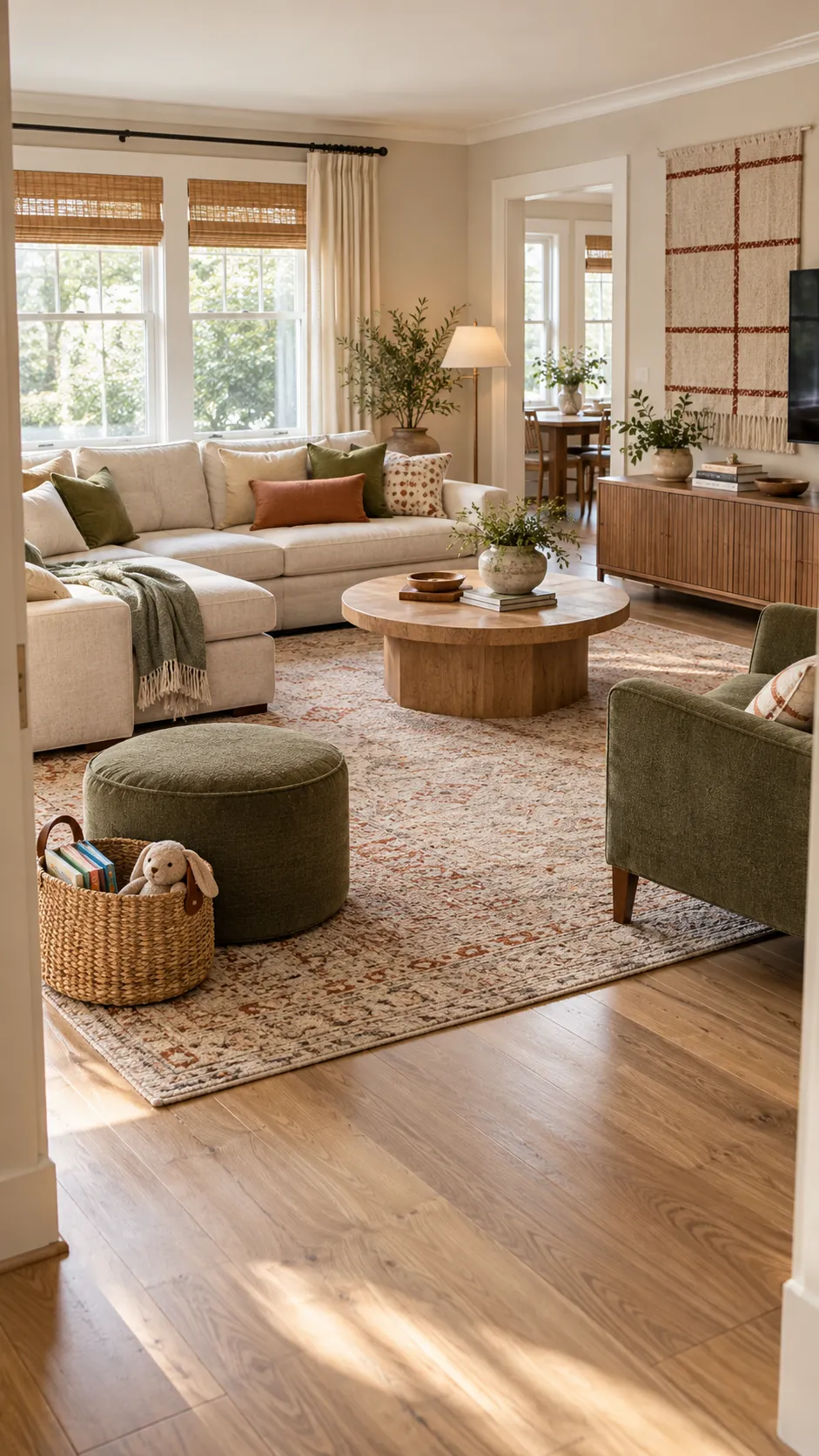
A beautiful room fails when everyone worries about touching it. The stronger approach gives spills, toys, books, and busy evenings a sensible place while preserving color, proportion, and calm. These choices make daily family life easier without turning the shared room into a playroom.
Choose a Sofa With Forgiving Texture
A softly textured sofa disguises small marks better than a flat, delicate weave. Choose removable cushion covers when possible, and test the fabric with a damp cloth before committing. A tailored shape and comfortable depth can look refined while still inviting everyone to sit.
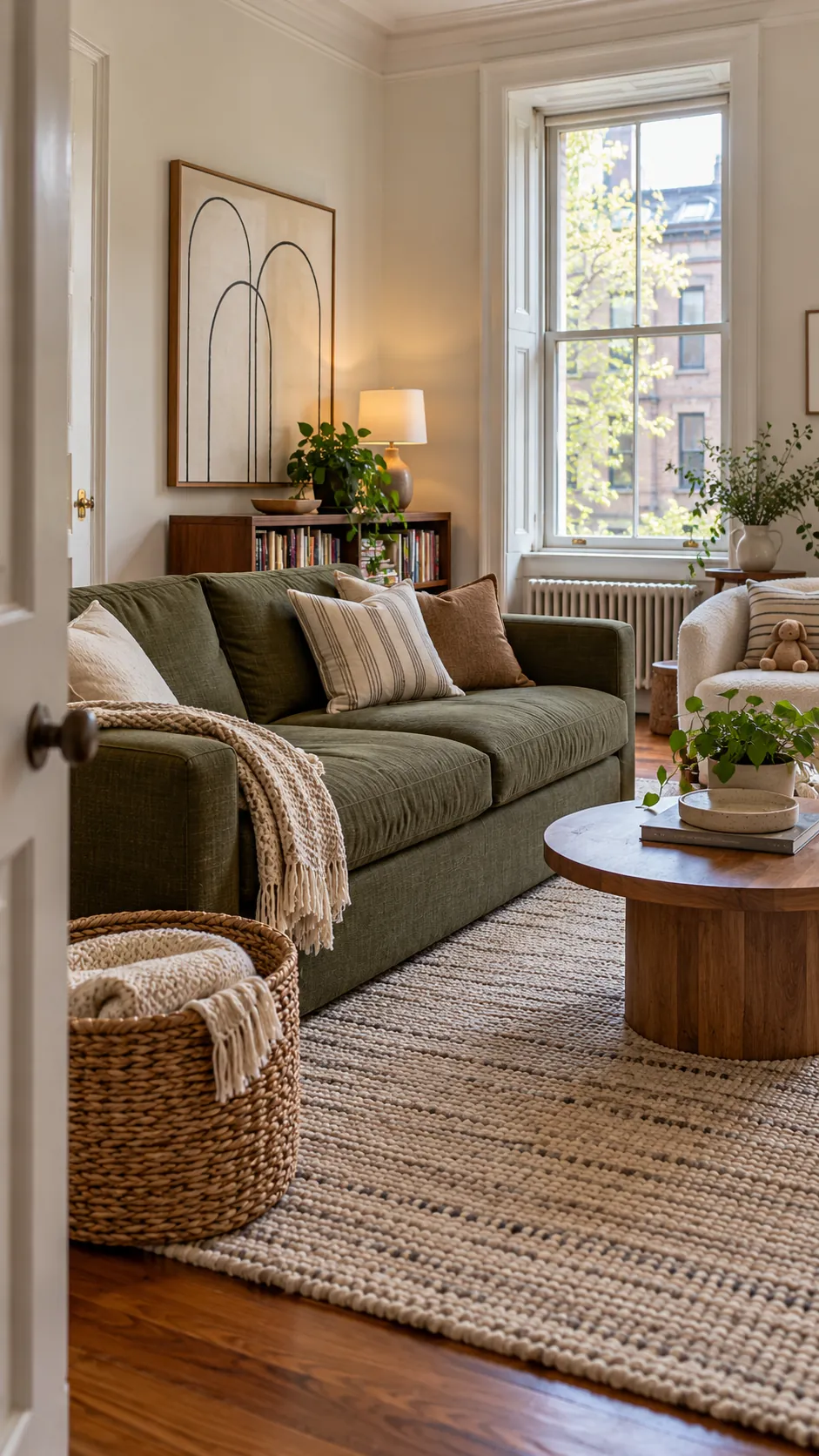
Build Storage Into the Coffee Table
A coffee table with drawers or a lifting top gives game pieces and art supplies a fast place to disappear. Keep the mechanism easy enough for children to use without trapped fingers. A solid wood finish gives the center of the room adult presence while storage handles daily clutter.
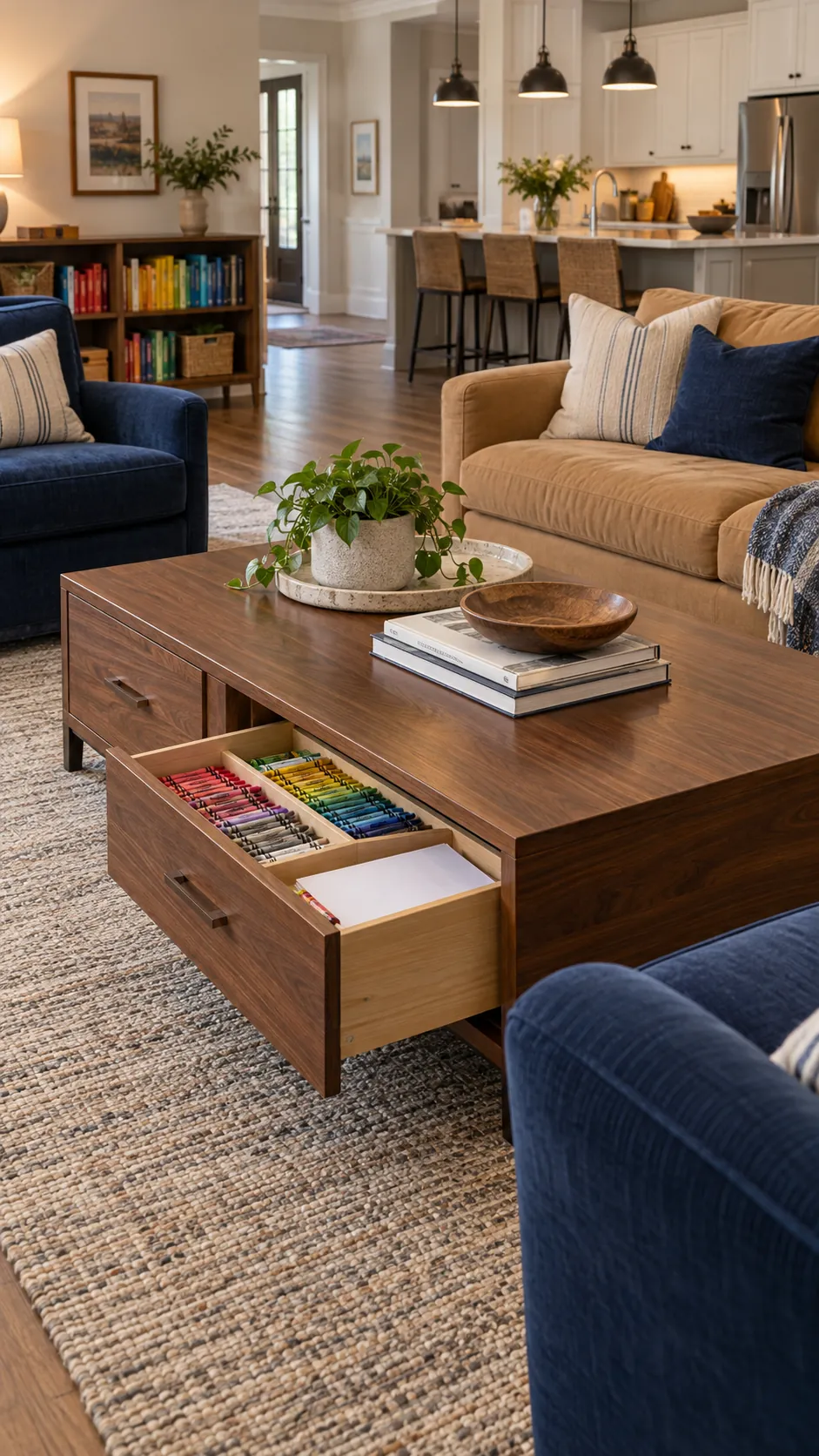
Use Washable Rugs With Real Pattern
A washable rug does not need to look temporary or childish. A medium scale pattern hides crumbs and creates movement, while a restrained palette keeps the room composed. Size it so the main furniture sits confidently on the rug and the edges do not curl into walking routes.
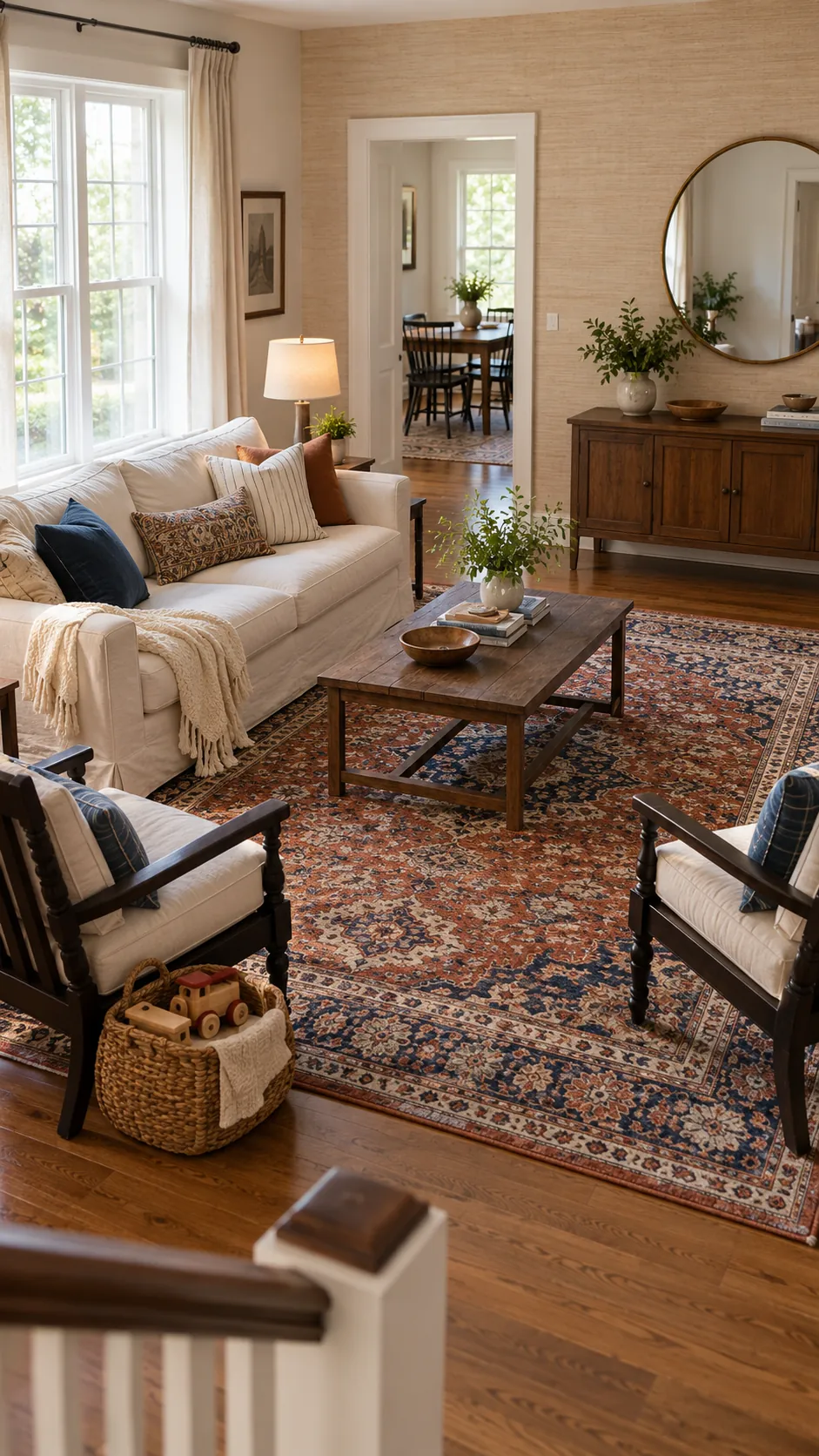
Give Toys One Beautiful Cabinet
Closed storage lowers visual noise without pretending children do not live in the room. Choose a cabinet with broad shelves, safe hinges, and bins that each child can return independently. When its finish relates to another wood in the room, it reads as furniture rather than a playroom fixture.
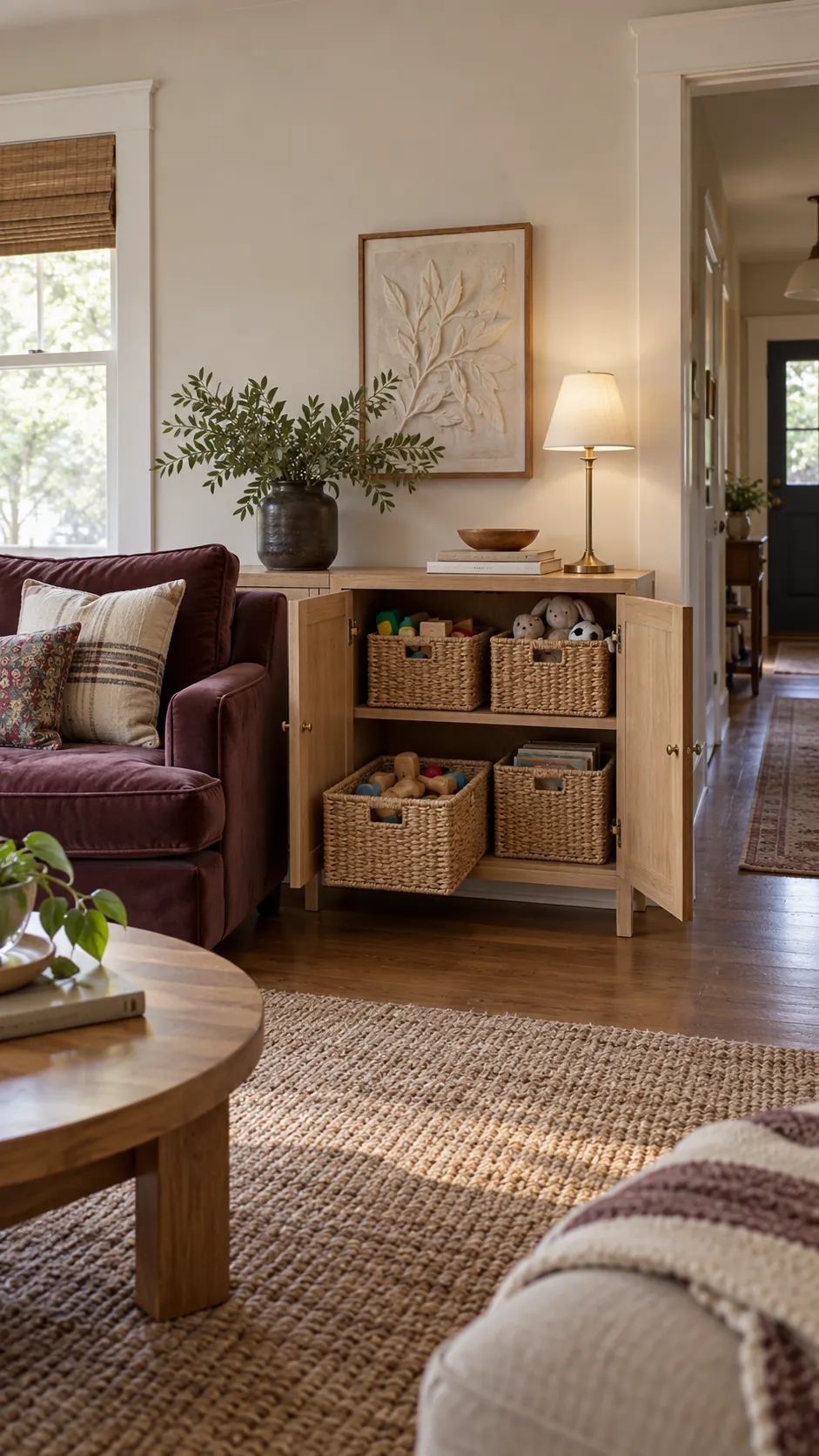
Layer Adult Color Over Practical Pieces
Durable furniture can still support a sophisticated palette. Start with resilient neutral upholstery, then add two deeper colors through cushions, throws, and art that can change over time. Repeating those accents in separate parts of the room makes the scheme feel intentional instead of precious.
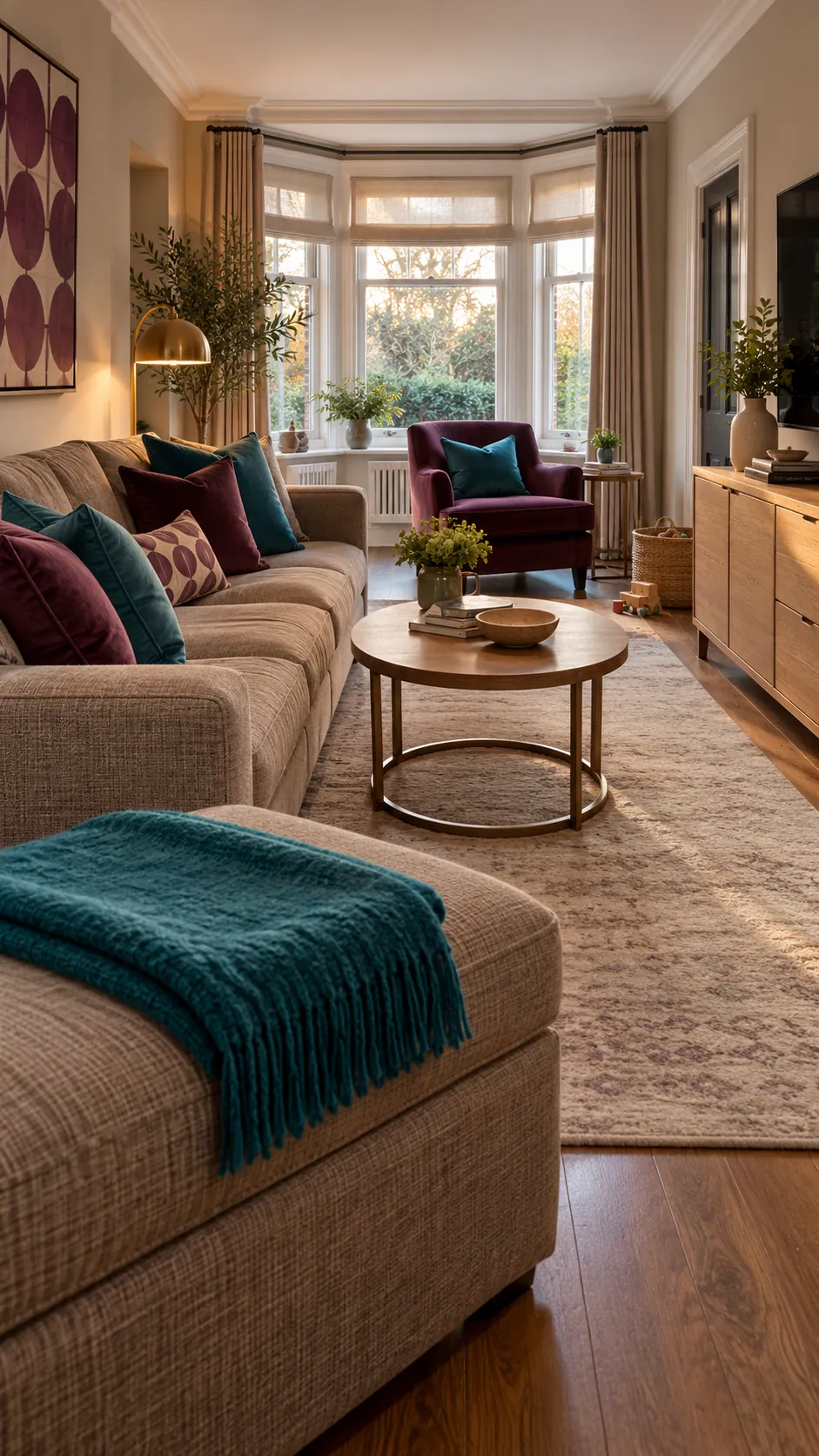
Add a Soft Ottoman Instead of Sharp Corners
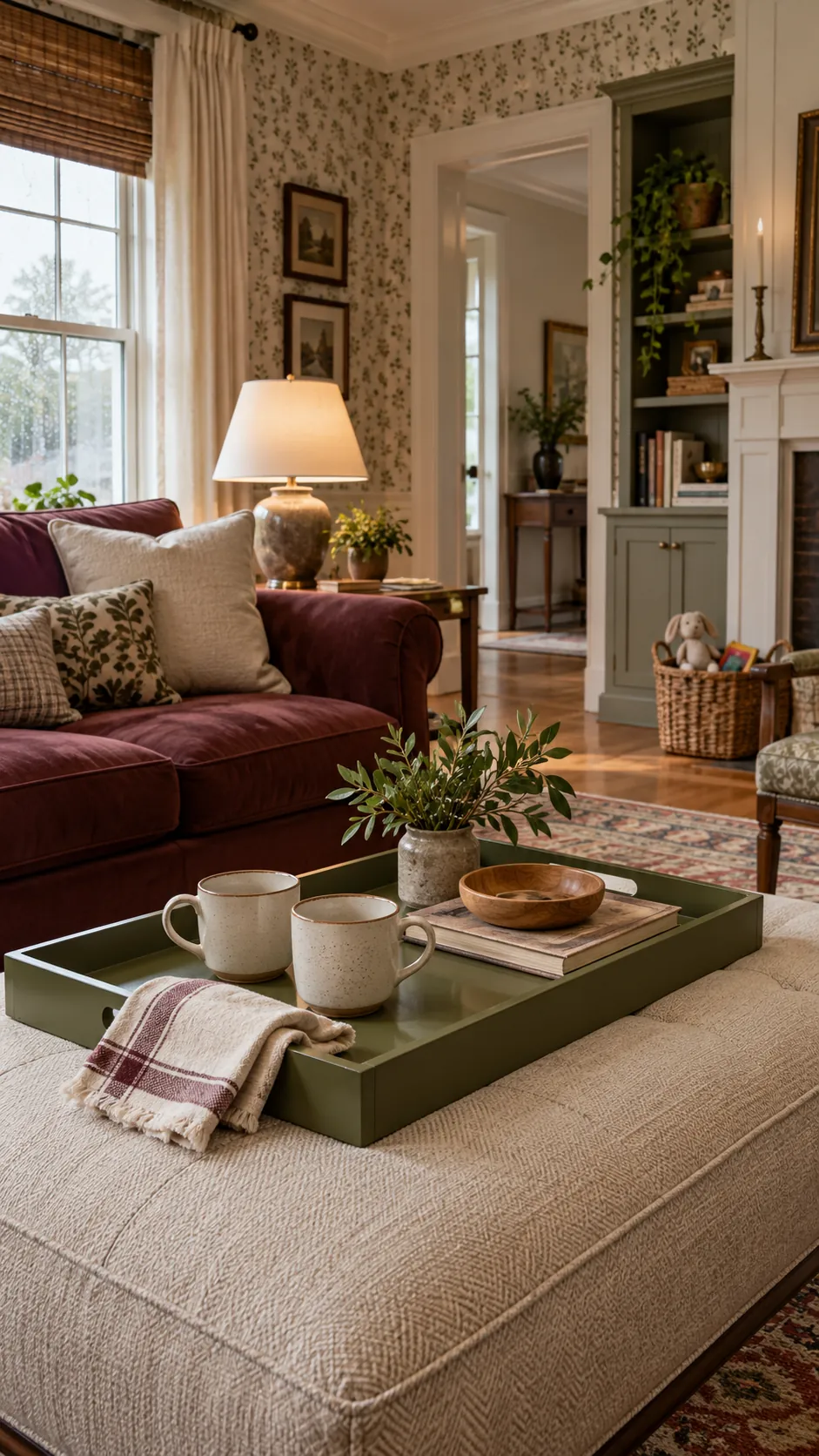
A large upholstered ottoman creates a safer center for crawling children and doubles as extra seating. Use a firm tray for drinks and choose a fabric that tolerates spot cleaning. Its scale should leave enough passage around every side so the room stays calm when children move quickly.
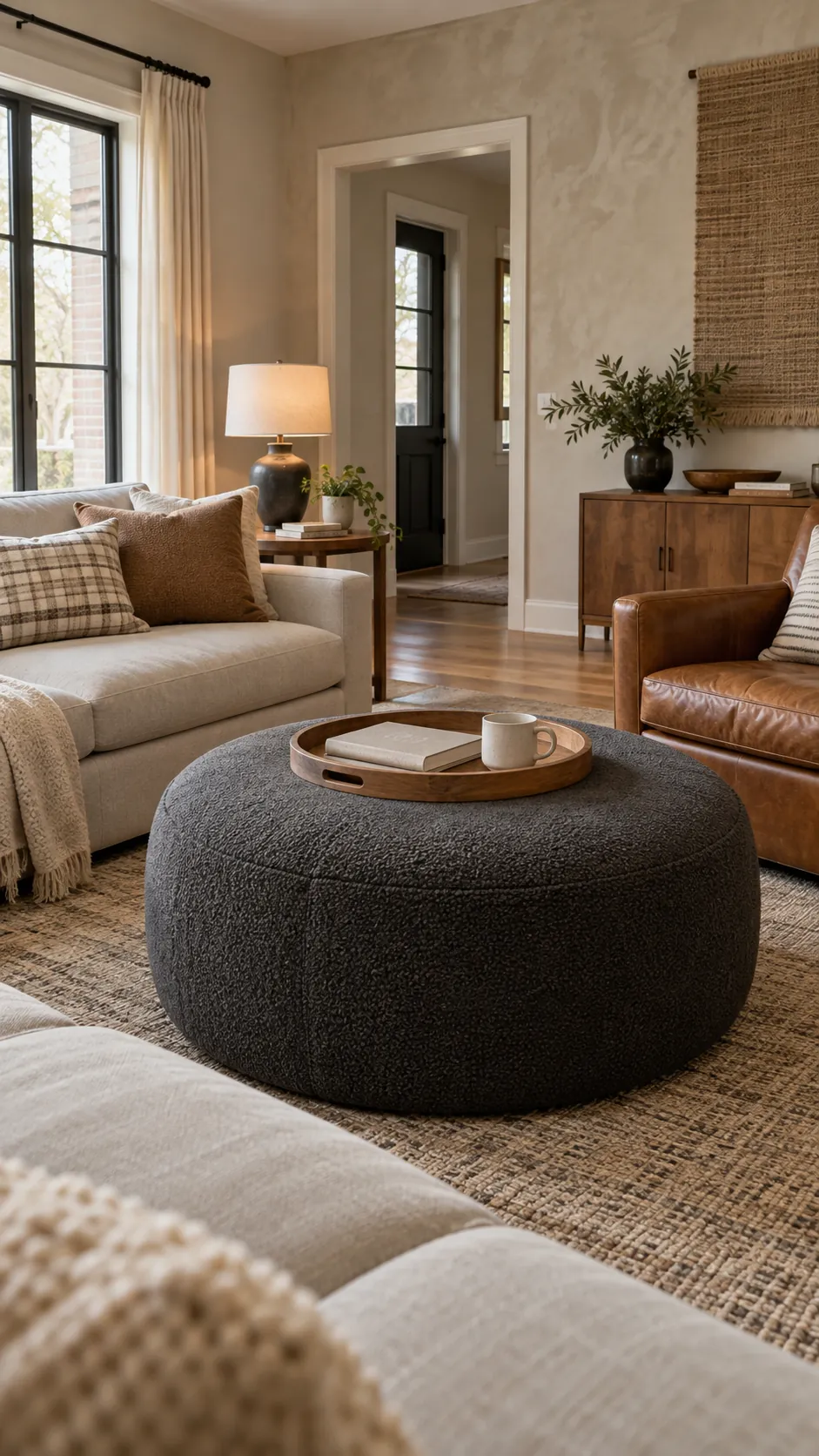
Mount Art at a Shared Eye Line
Art makes a family room feel complete, but it should not compete with play or hang beyond safe reach. Choose one strong composition and mount it securely above furniture, leaving lower walls free for movement. A clear display feels more grown up than many small pieces scattered without order.
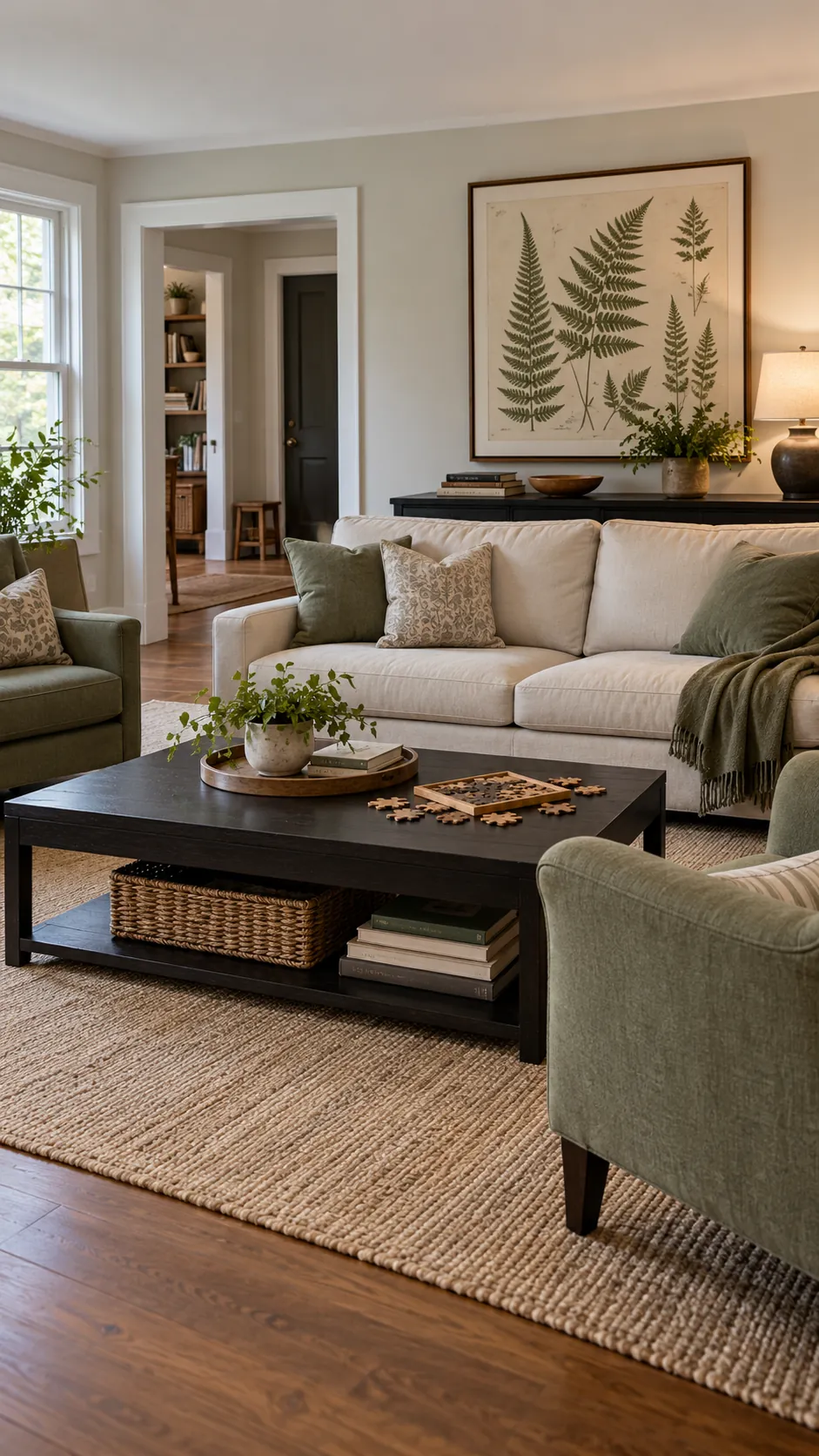
Create a Window Seat That Can Take Wear
A window seat turns an overlooked edge into reading space without adding another bulky chair. Use dense foam, a washable cover, and drawers below for books or small toys. Keep the cushion tailored and repeat its fabric elsewhere so the seat belongs to the room.
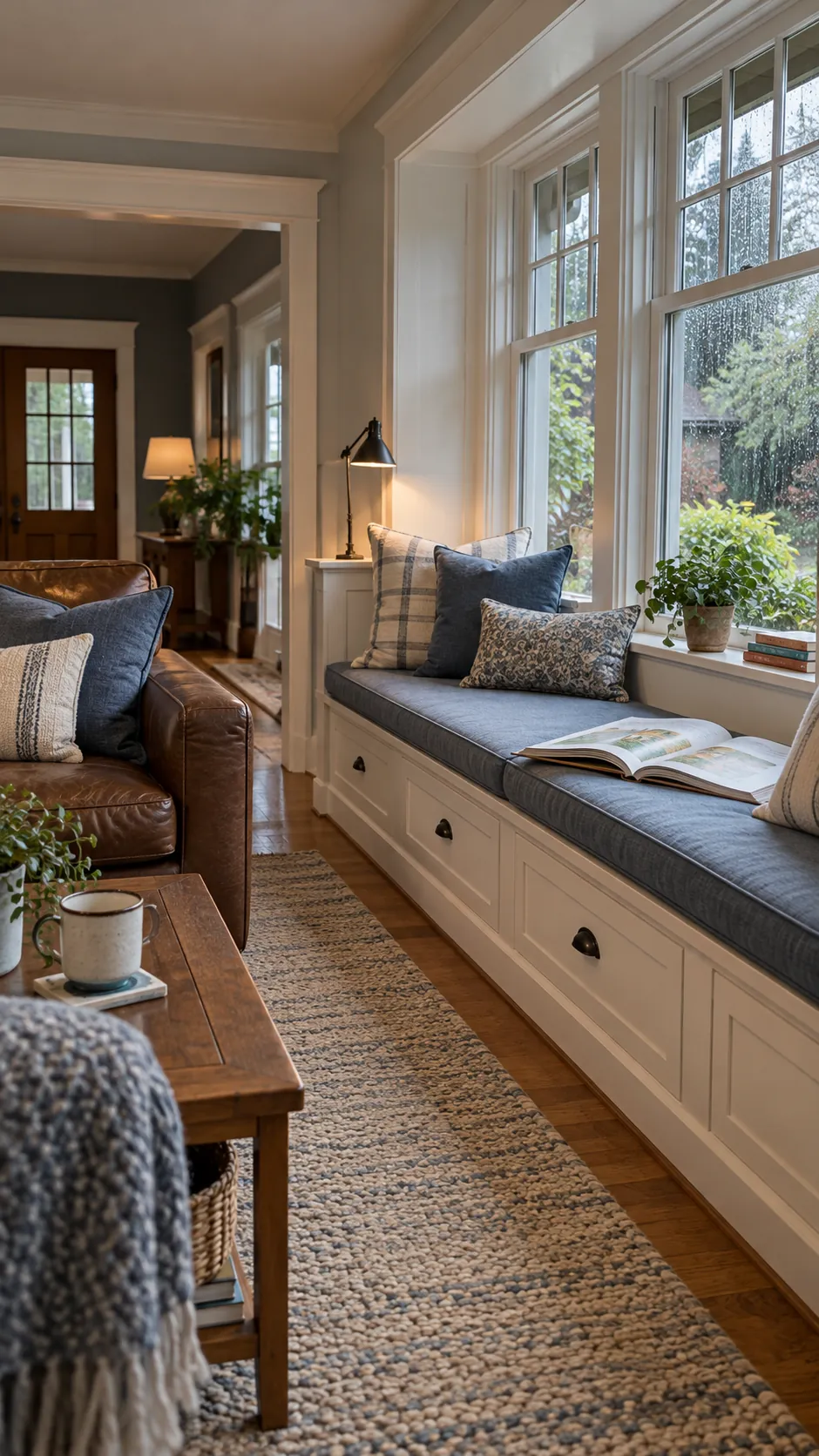
Choose Rounded Tables That Still Feel Substantial
Rounded edges ease circulation and reduce hard corners without forcing a playful look. A stone, wood, or plaster table with real visual weight can anchor a refined room. Check that every seat can reach it and that the base remains stable when bumped.
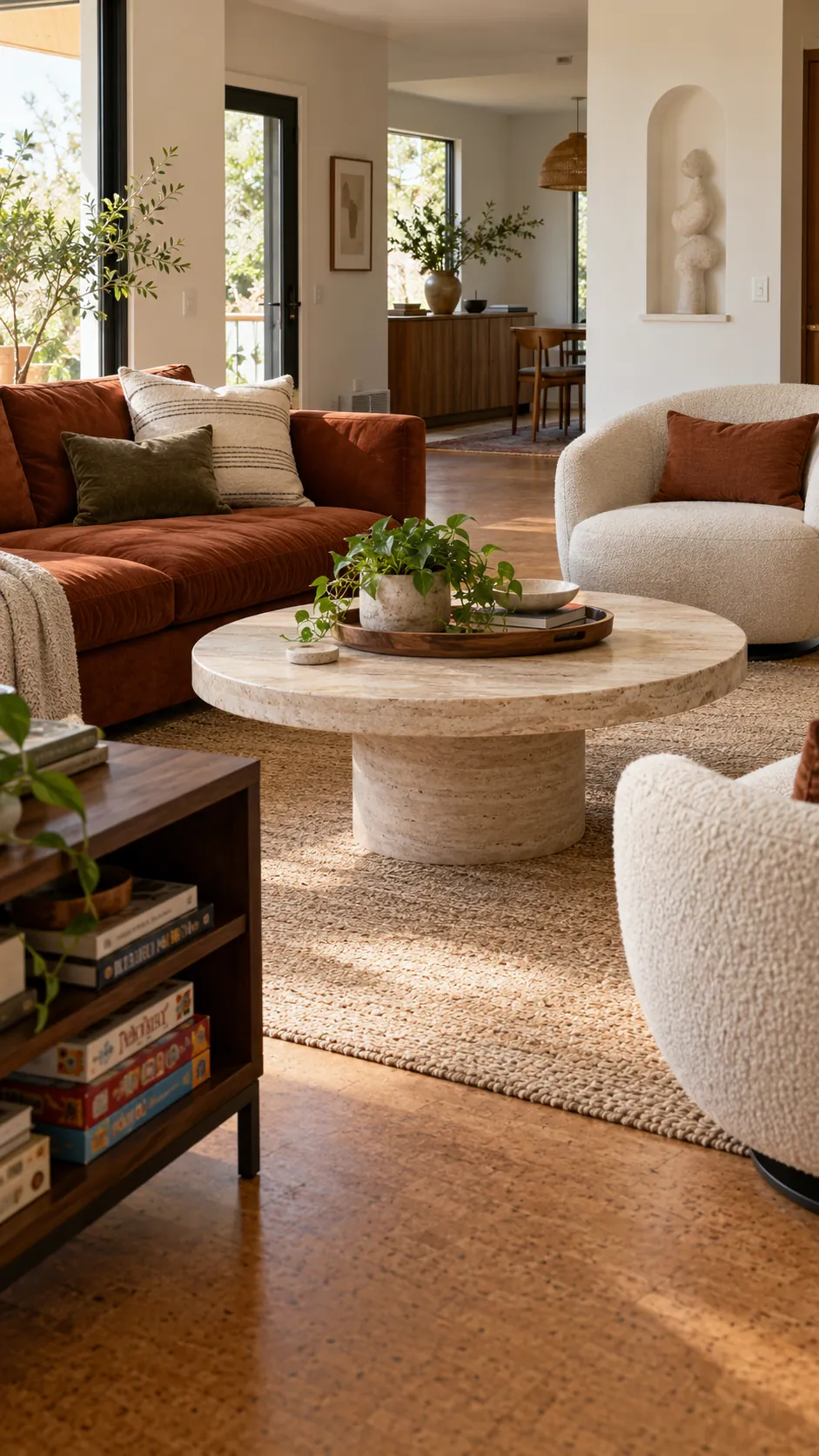
Make the Media Wall Quiet
A television can serve family life without controlling the entire room. Place it on a low cabinet, contain cords, and balance the dark screen with books or one larger object nearby. Avoid filling every shelf, because open space gives the wall the restraint of an adult room.
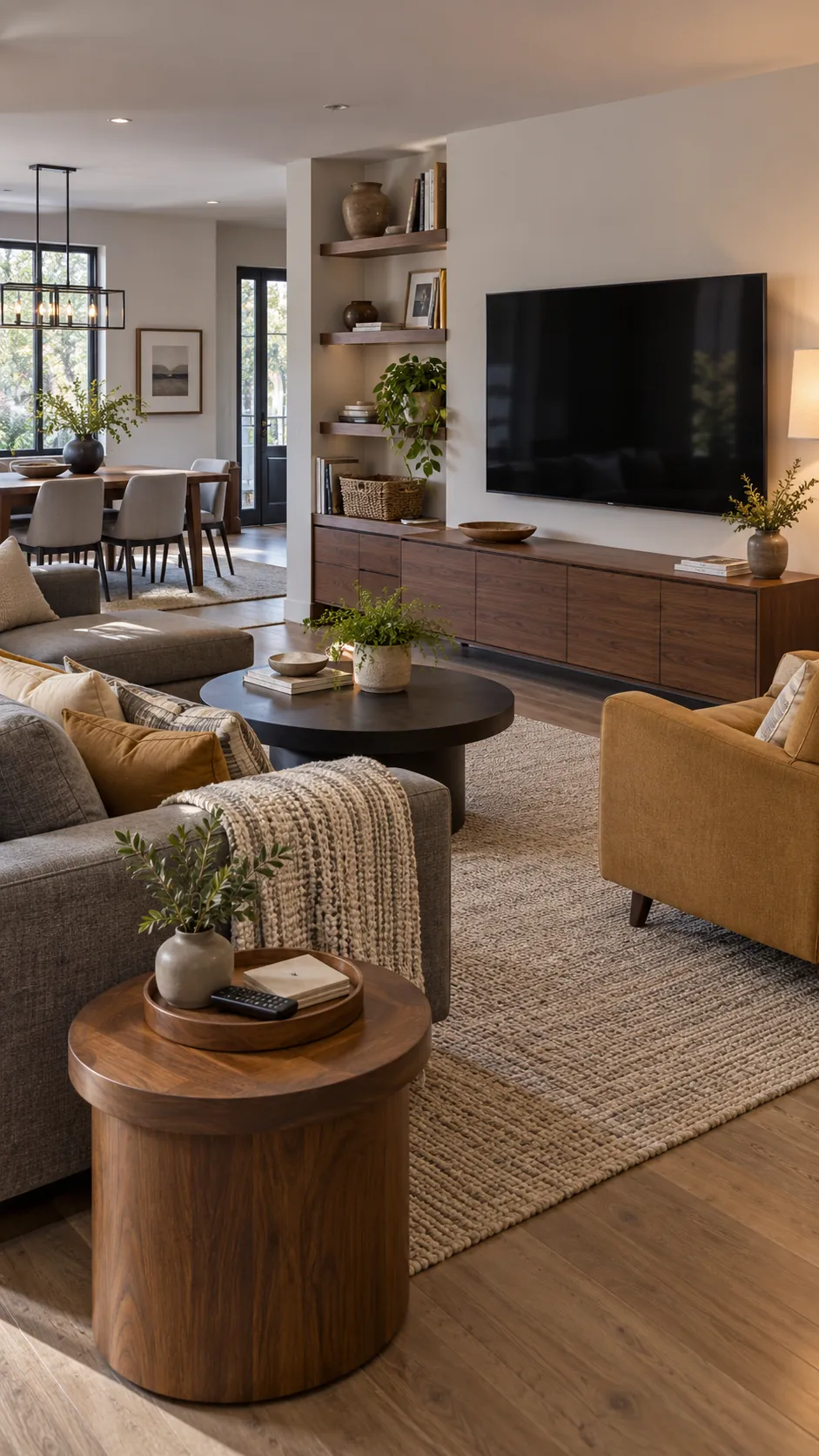
Keep a Clear Floor Zone for Play
Children need open floor more than they need a room crowded with special furniture. Pull seating to a useful perimeter and preserve one rug area where blocks or puzzles can spread. When play ends, nearby storage should clear that same floor in minutes.
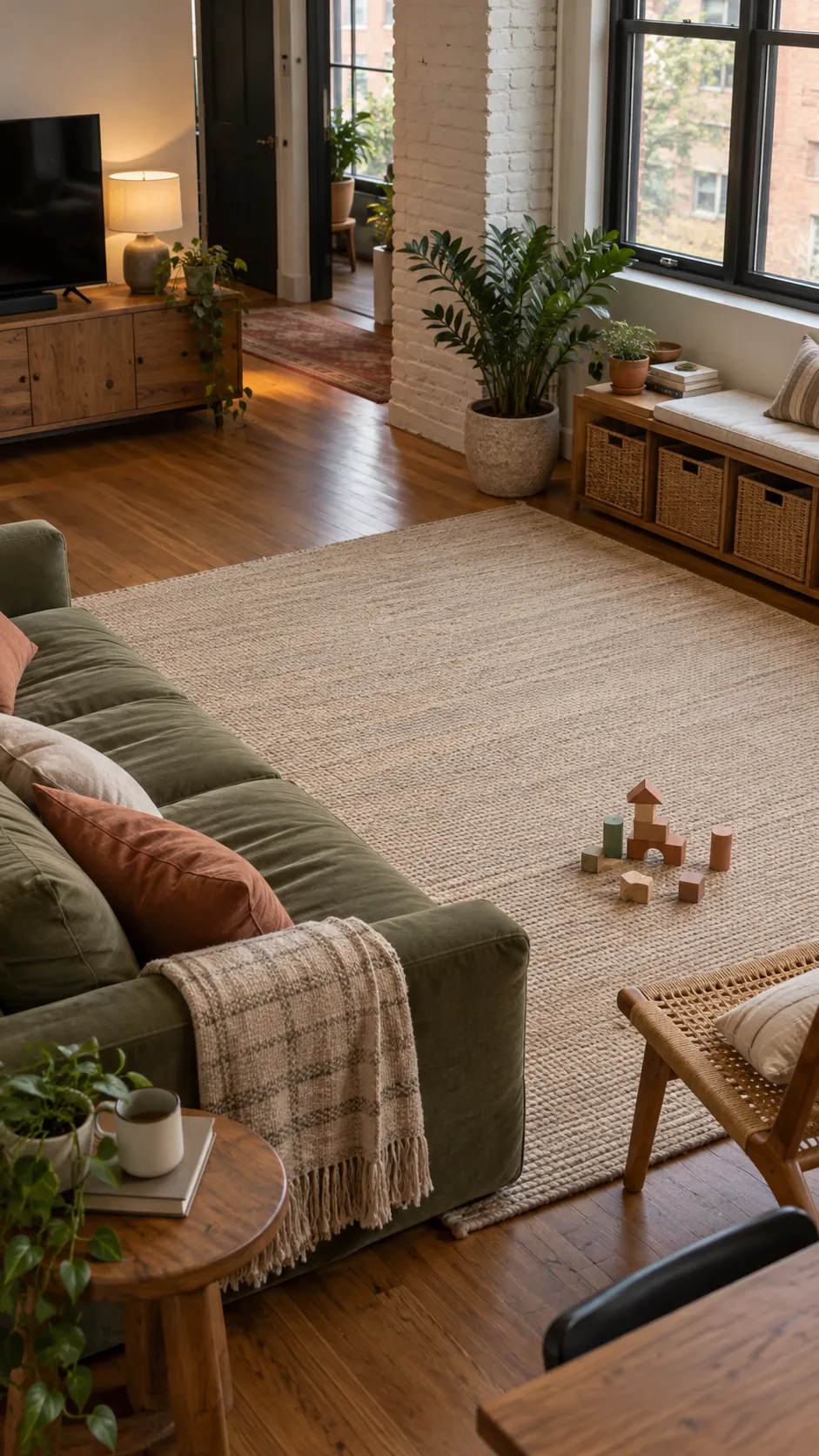
Use Curtains That Can Survive Touch
Full curtains soften a room and make it feel finished, but their fabric must handle daily hands. Choose washable panels or a forgiving linen blend, and keep hems just clear of floor grime. Secure rods well and use simple hardware rather than delicate decorative parts.
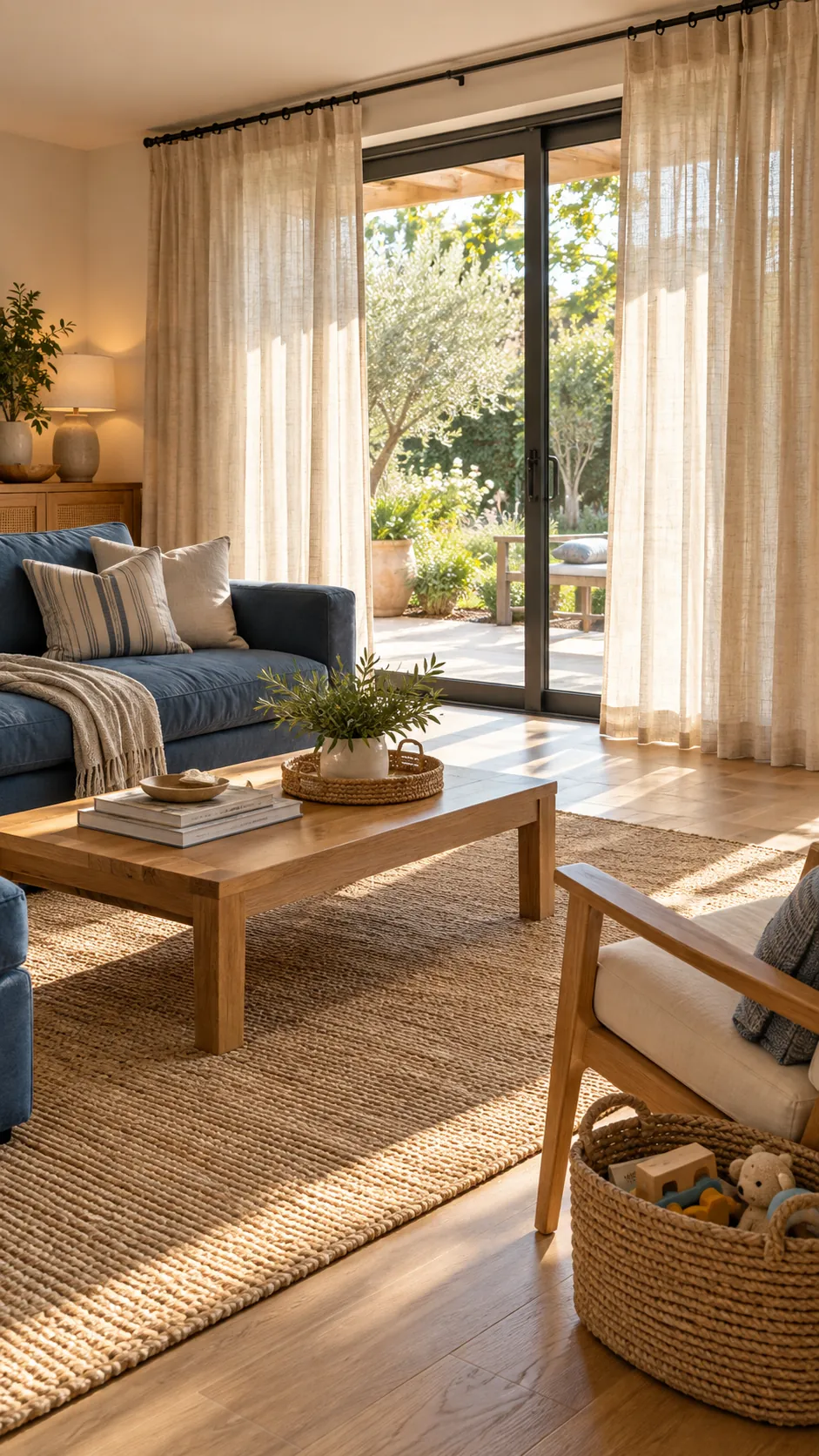
Mix Vintage Wood With New Upholstery
One older wood piece adds depth that all new furniture often lacks. Pair it with clean upholstery and leave enough space around its shape so it looks chosen rather than inherited by default. Secure tall pieces and repair loose hardware before children use the room.
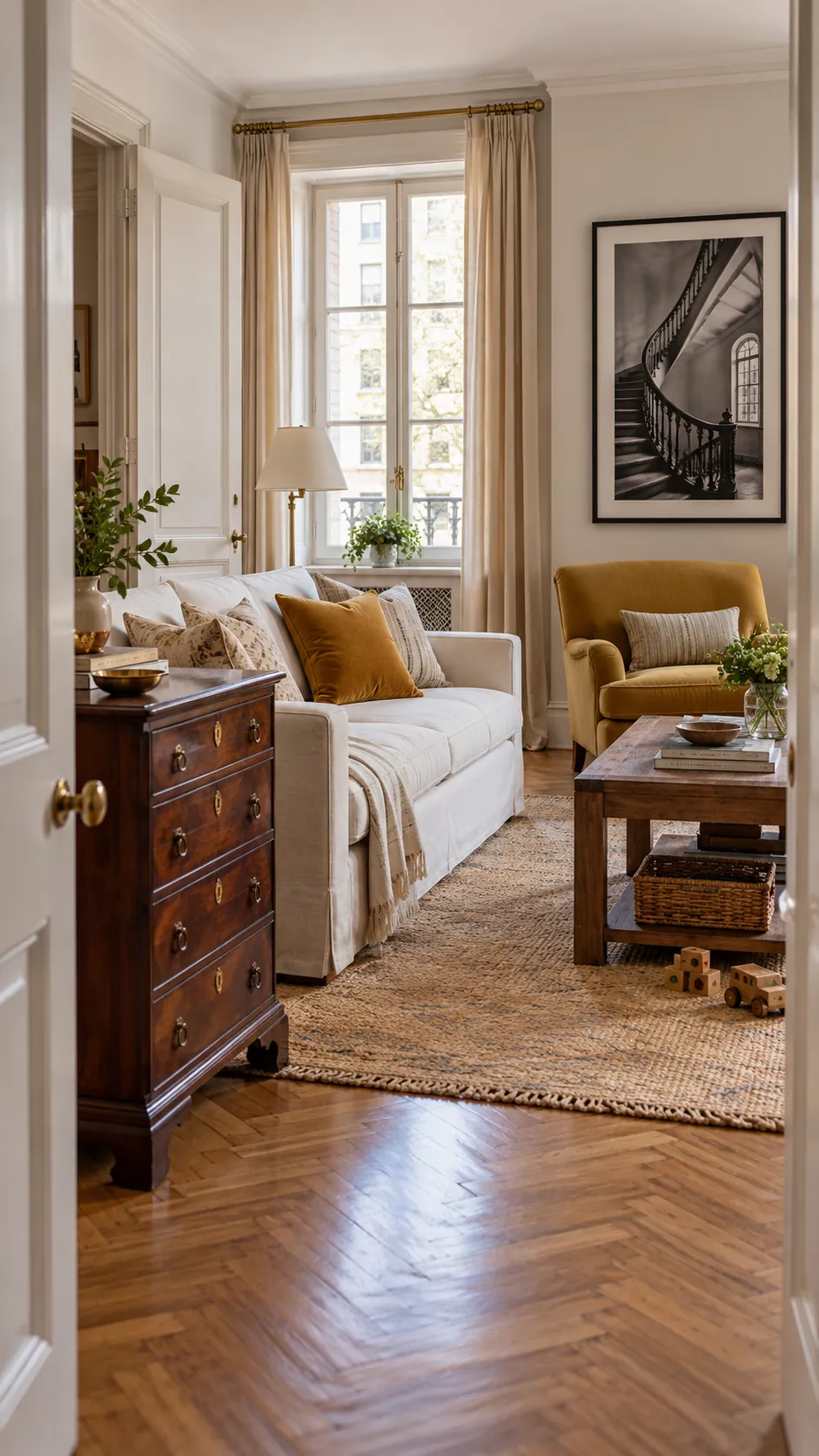
Choose Lamps With Stable Bases
Layered light makes evenings calmer, but family rooms need lamps that resist tipping. Put heavier bases behind furniture edges, hide excess cord, and keep shades beyond the reach of active play. Repeating the light color across fixtures gives the room a polished evening atmosphere.
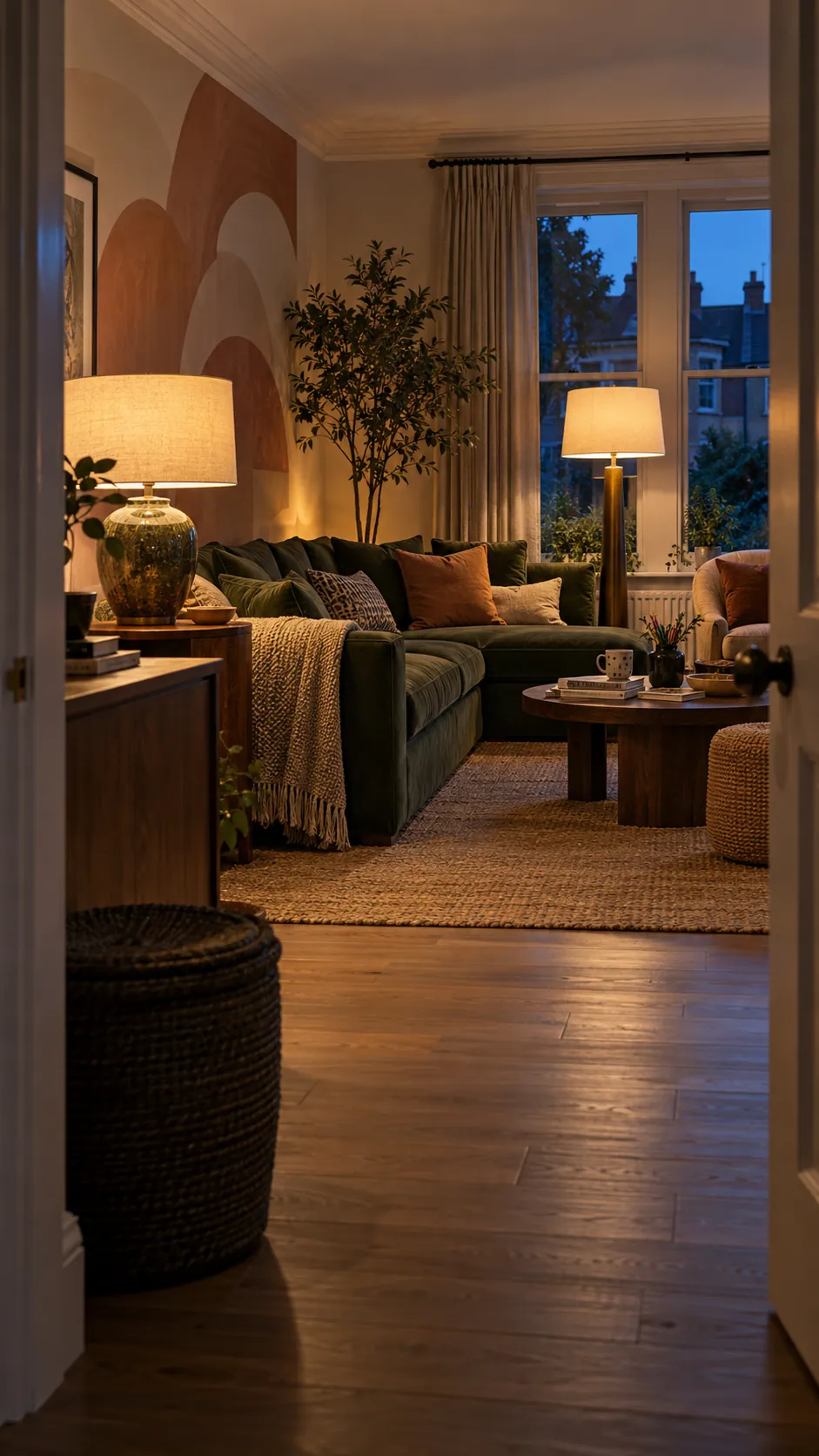
Display Children’s Work in One Deliberate Place
Children’s art can look important when the display has a consistent boundary. Use one large pin board, magnetic panel, or matching frames, then rotate a small selection instead of covering every wall. The limit gives each piece attention and keeps the rest of the room visually quiet.
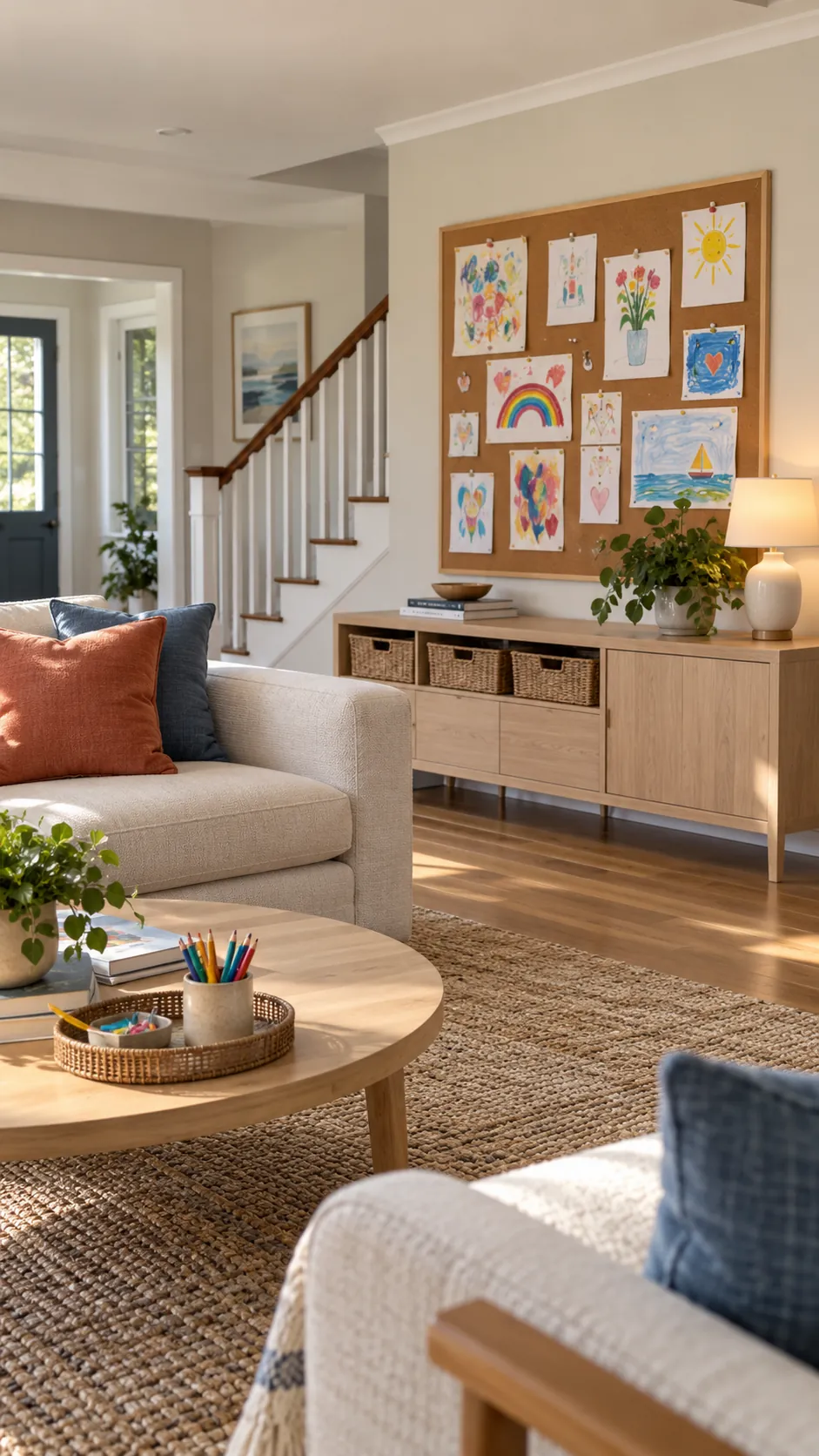
Choose Slipcovers With Tailored Seams
A slipcover can be practical without appearing loose or temporary. Look for defined arms, straight hems, and separate cushion covers, then keep a second set for the busiest season. A precise fit preserves the sofa shape even after repeated washing.
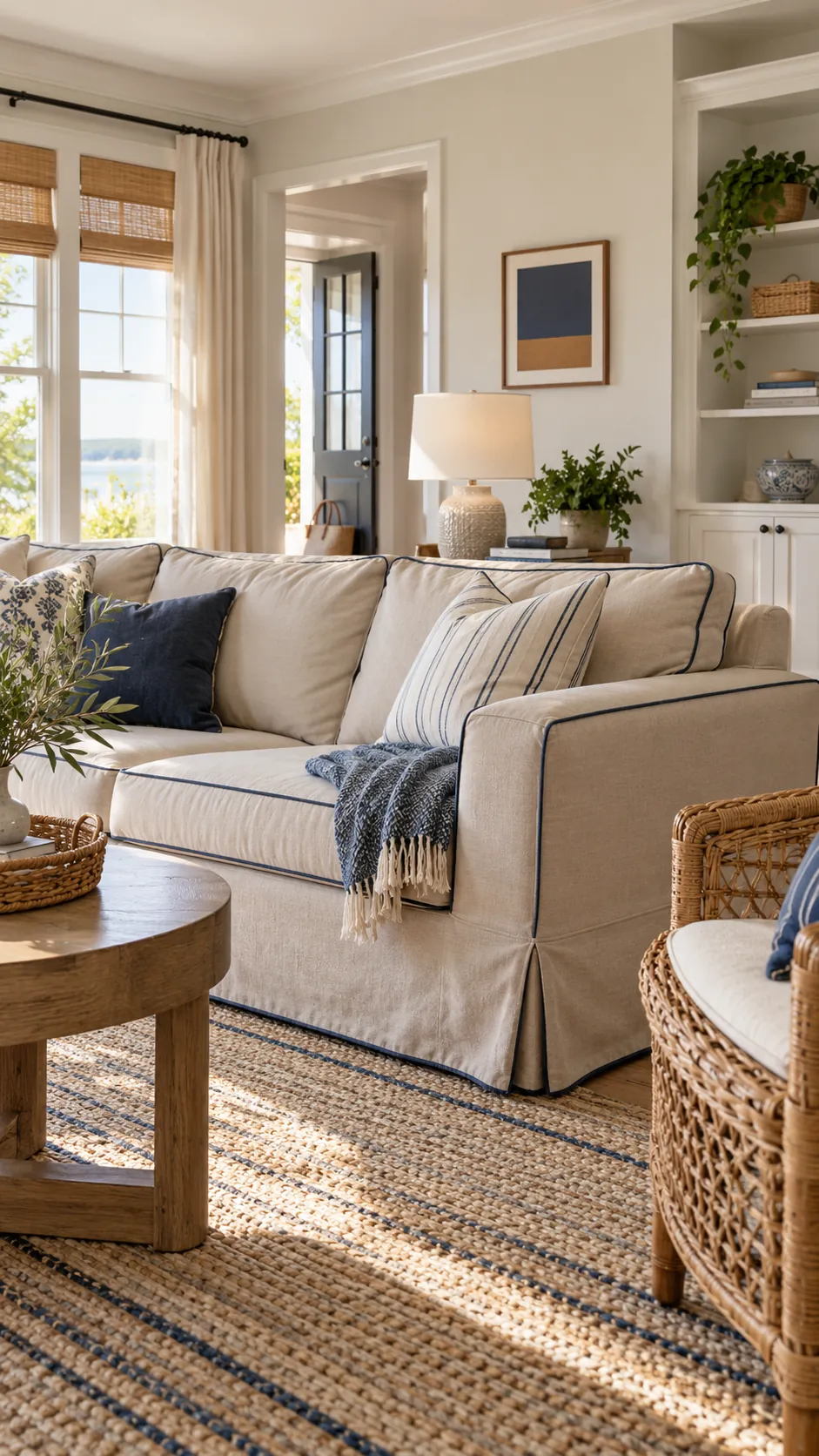
Place a Console Behind the Sofa
A slim console can hold lamps, charging cords, and family essentials without consuming the room center. Choose rounded corners and anchor it when the walkway is busy. The surface should hold only a few useful pieces so it supports the layout rather than becoming another clutter shelf.
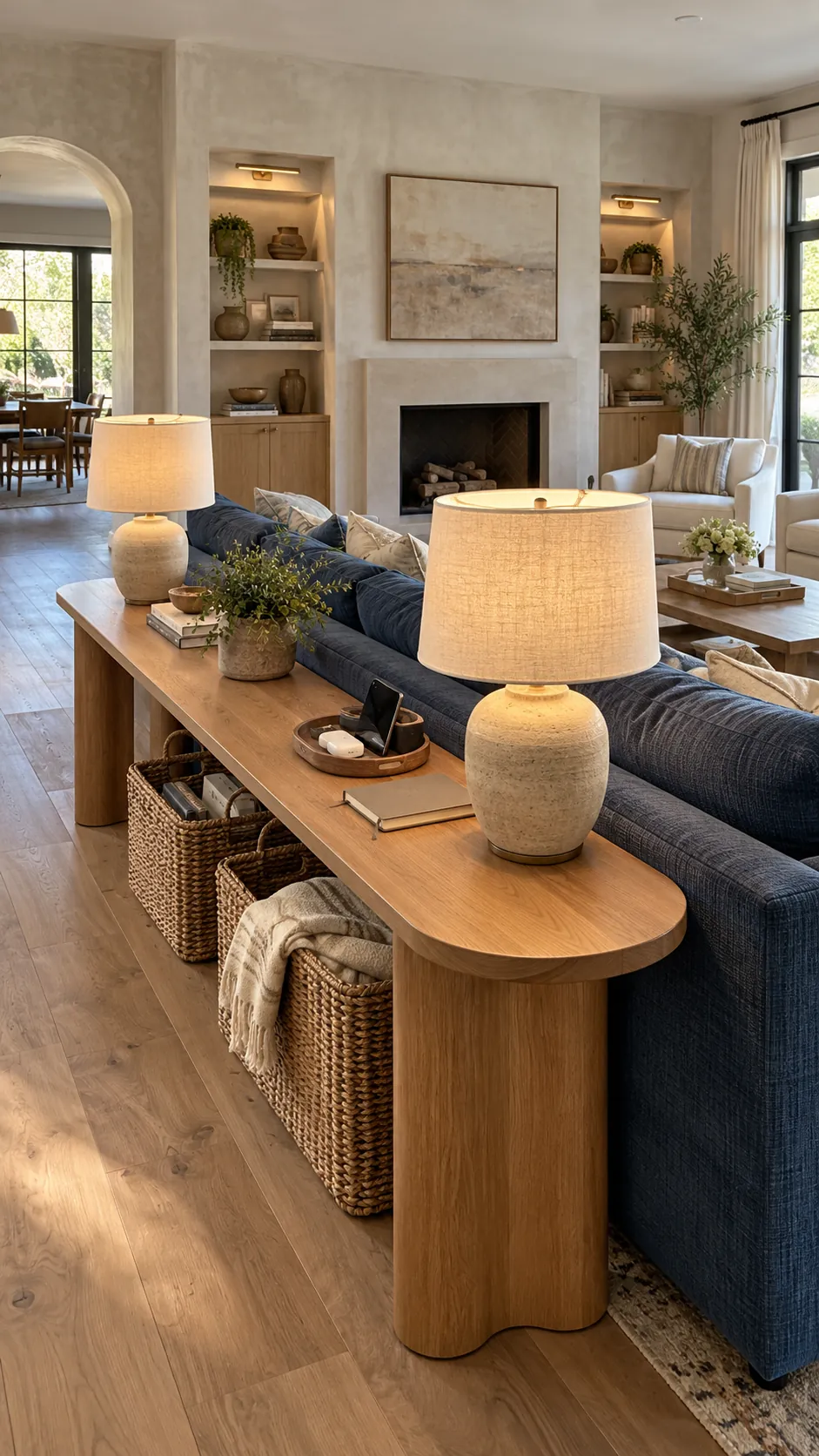
Use Baskets in Matching Materials
Baskets work best when they have defined jobs and a visual relationship. Repeat one fiber or color while varying sizes for blankets, toys, and books. Avoid placing baskets in every corner, because a small coordinated group looks calmer and is easier for children to understand.
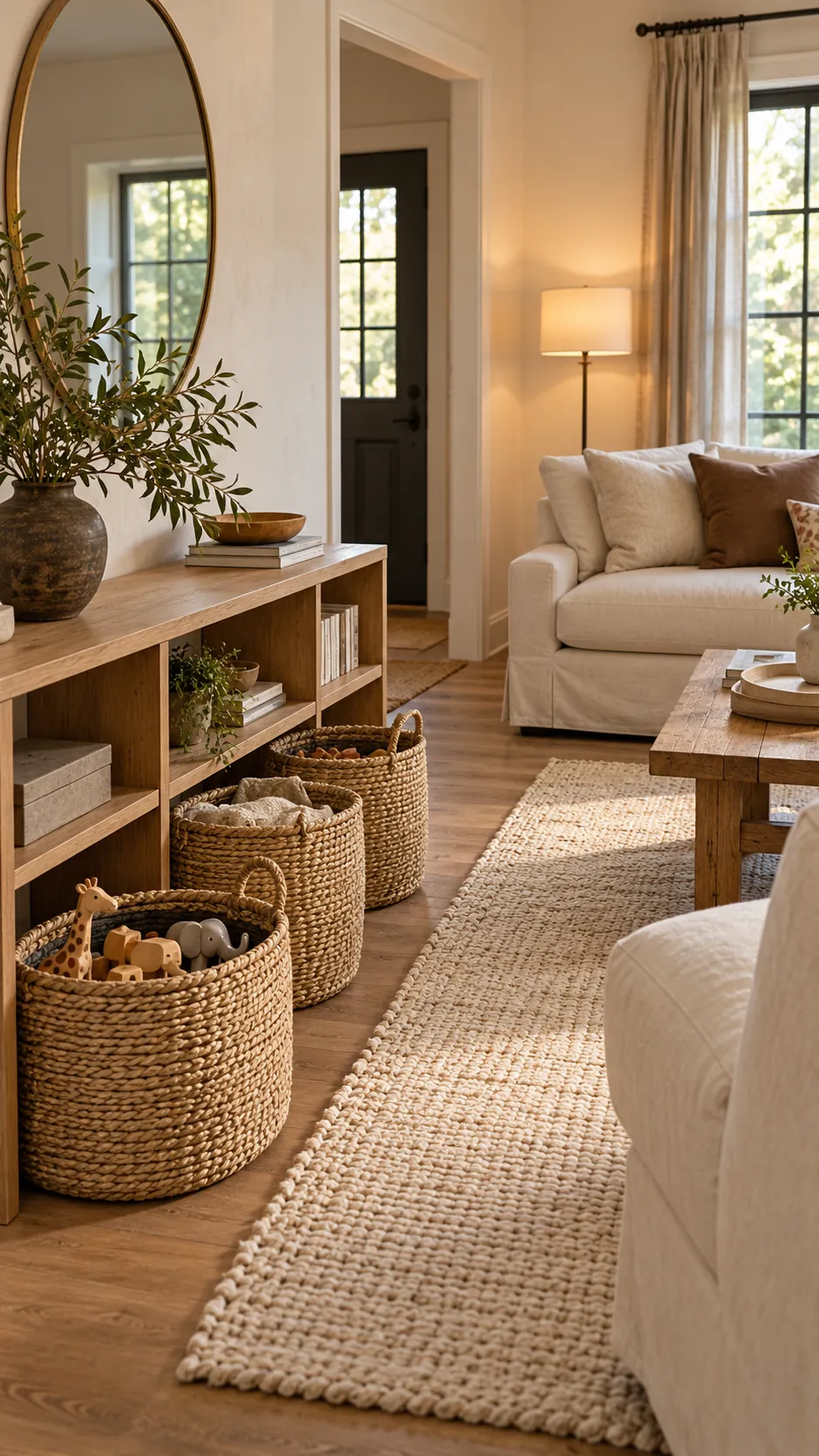
Choose Chairs Children Can Move Safely
A lightweight accent chair lets the room adapt for games, guests, and conversation. It should still feel stable, with no sharp metal feet or delicate arms. Choose one adult looking material such as woven leather or textured wool, then keep its scale friendly to smaller users.
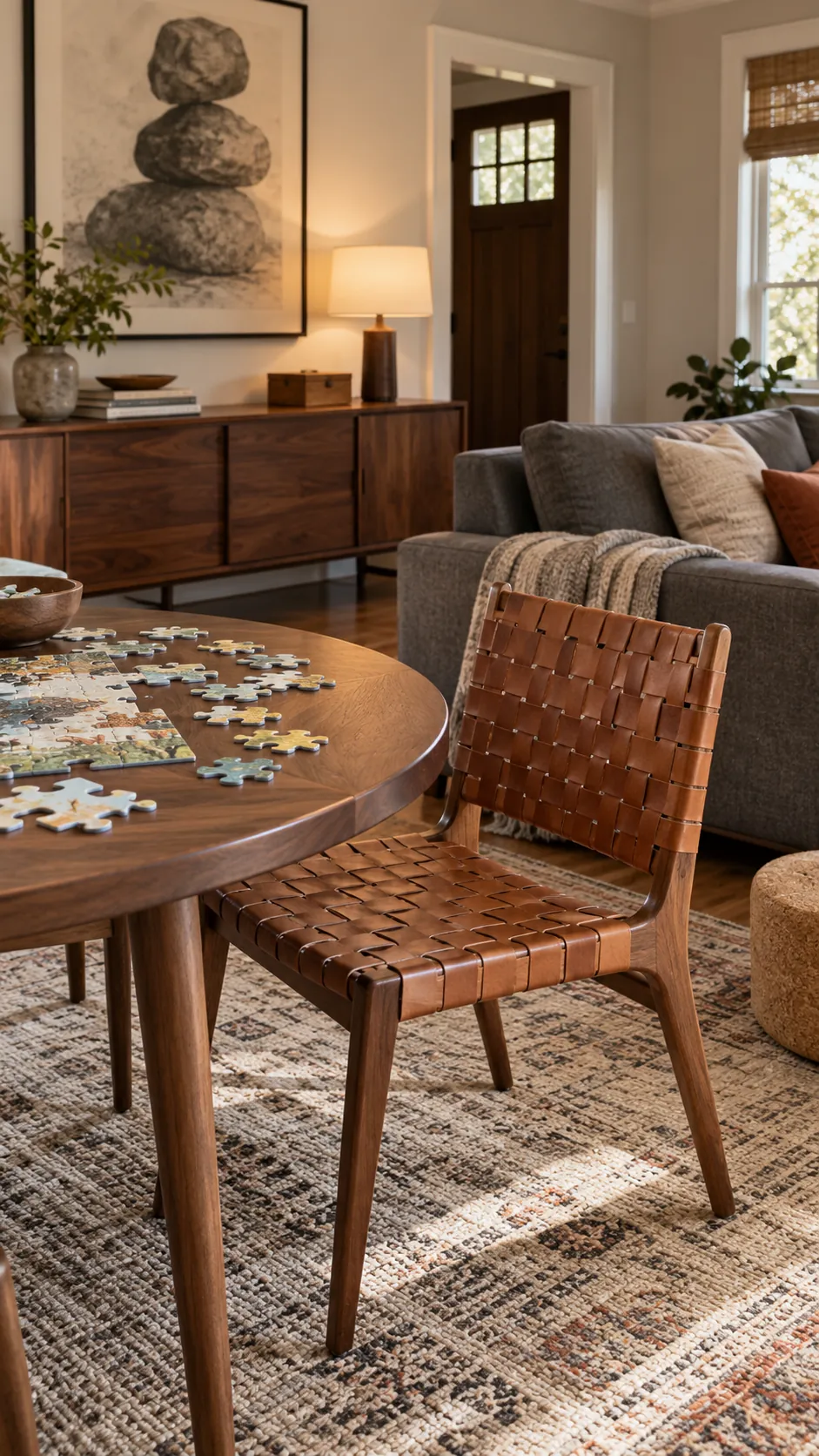
Protect Surfaces With Good Looking Trays
A tray gives drinks, snacks, and craft supplies a clear boundary on an ottoman or table. Choose a washable finish and enough rim to catch small spills. Returning the tray to one place after use creates order without banning everyday activity.
Leave Room for Real Life
The most welcoming family room includes a little open space, flexible seating, and storage that is easy to reach. Edit objects until each surface has a job, then live with the layout for a week before buying anything else. A room looks grown up when it supports people calmly, not when every sign of family life has vanished.