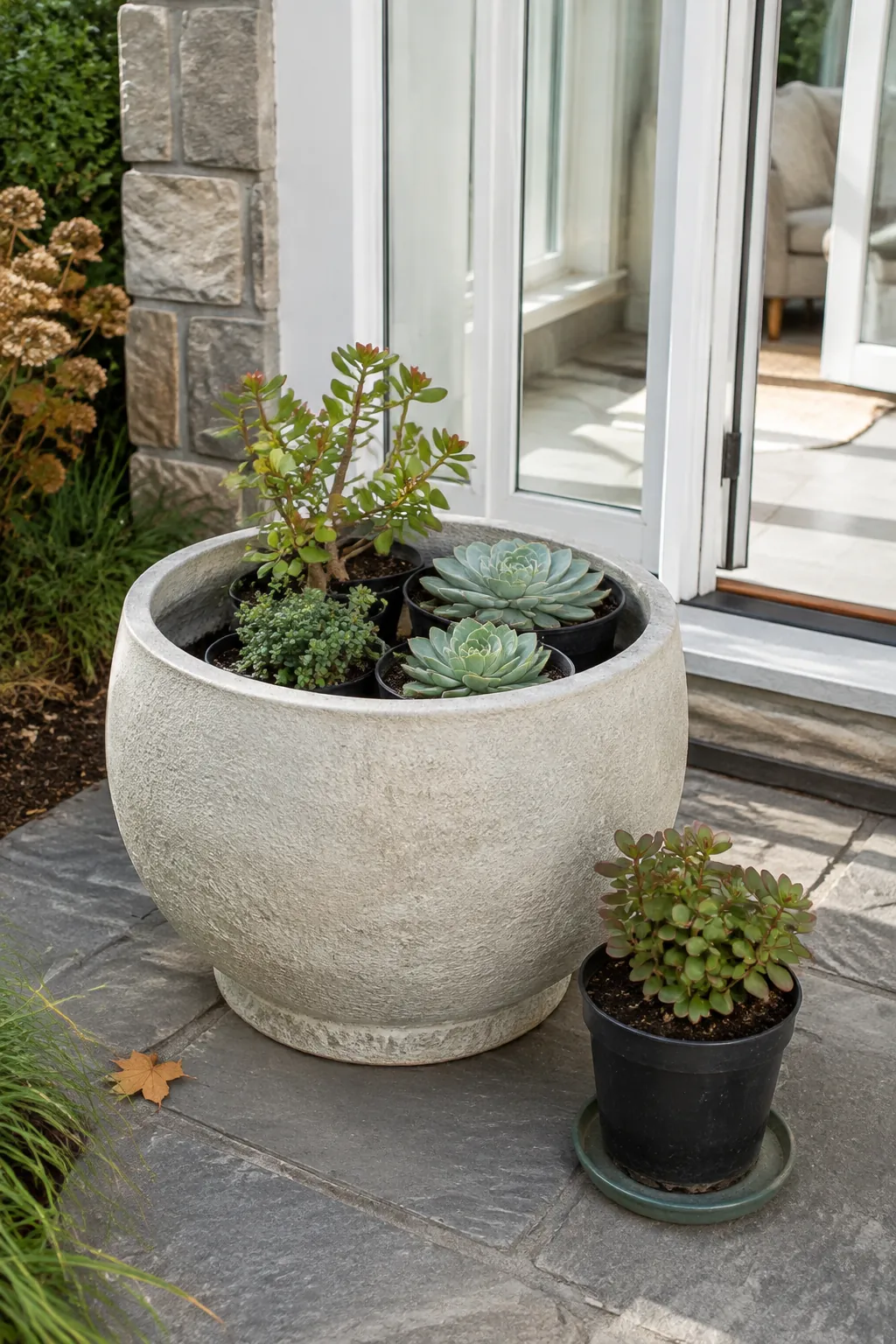
The biggest pot in the garden can also be the hardest to move when a wet winter arrives. Decide where excess water will go, what the filled container will weigh, and which plants can stay outdoors in your climate before choosing the decorative finish. A generous display should make the garden easier to enjoy, not harder to maintain.
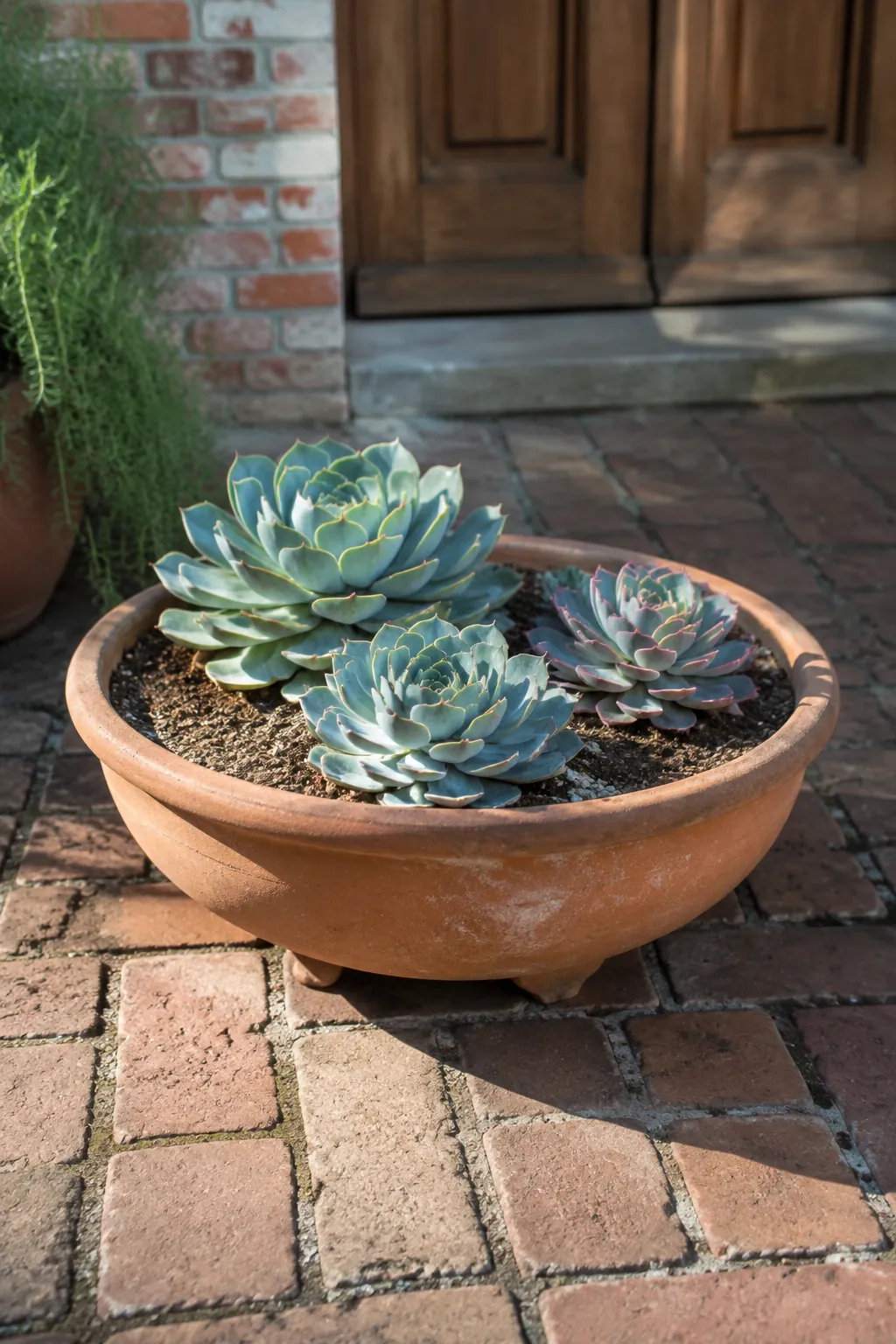
A broad terracotta bowl for rosettes
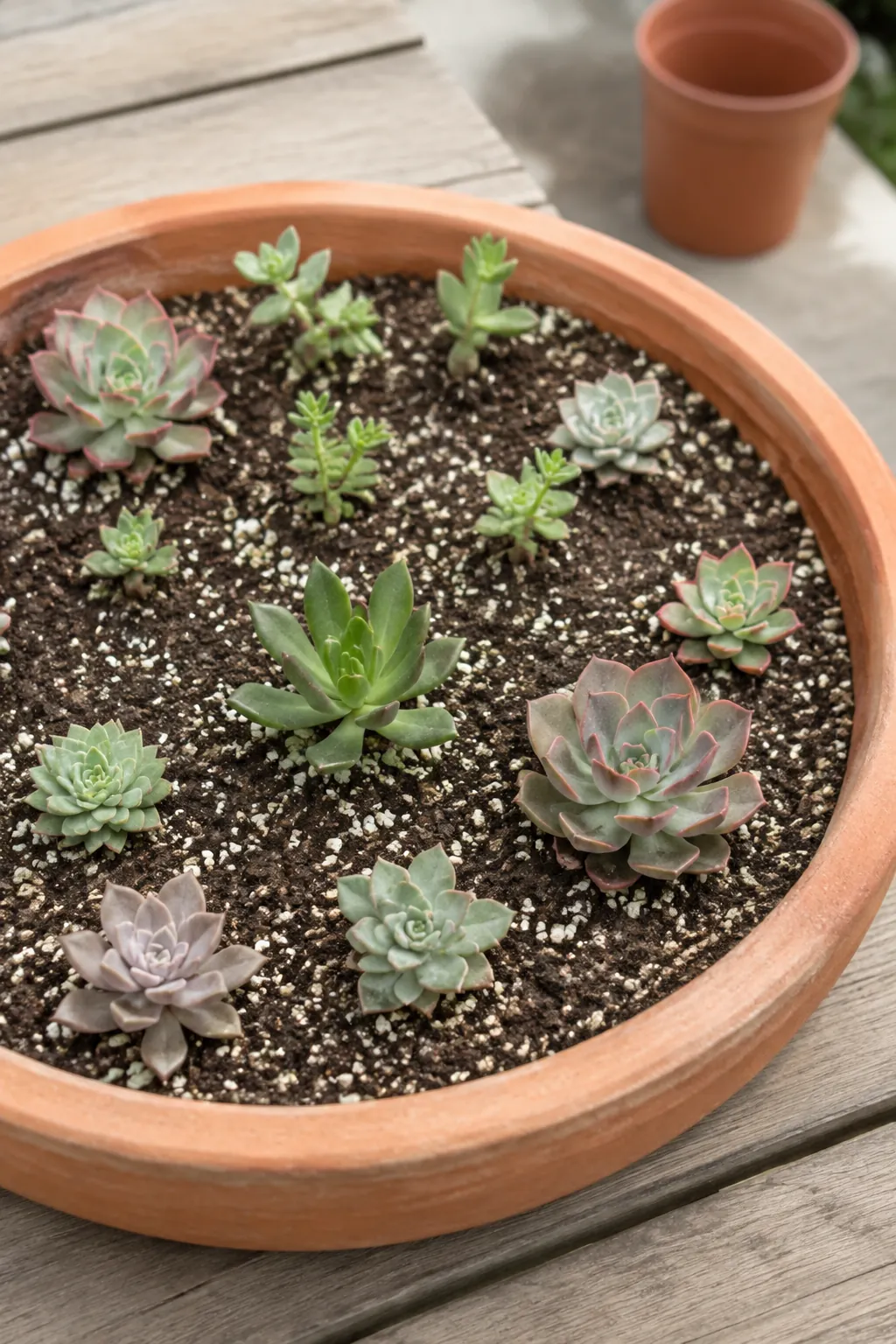
A broad clay bowl lets rosettes read as a garden from across the patio. Choose a vessel with enough depth for the roots and a real drainage outlet rather than a decorative serving dish. Leave visible growing space between plants so the arrangement can mature without forcing leaves against one another. In a rainy climate, keep the bowl where prolonged storms will not soak it repeatedly.
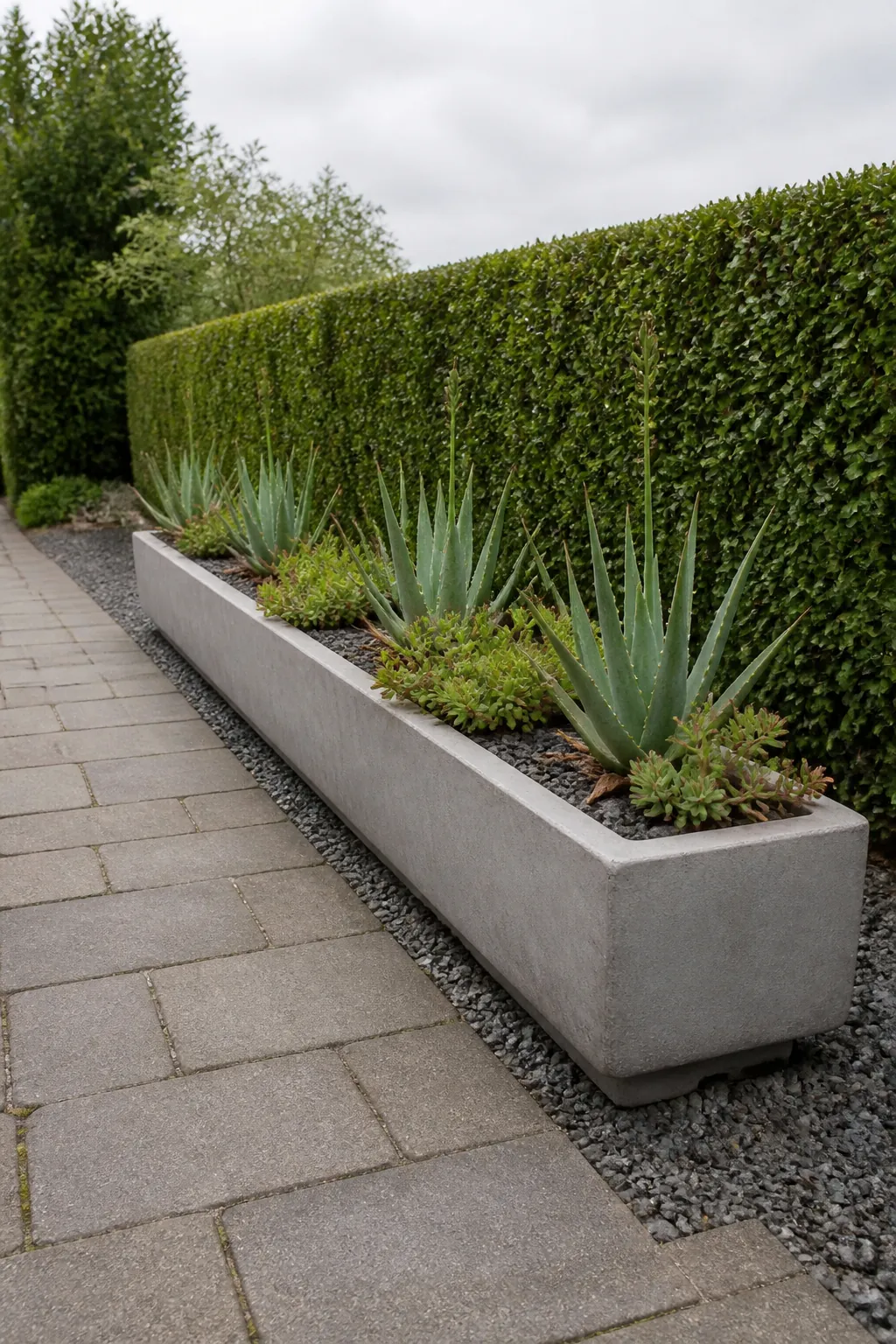
A concrete trough beside the path
A long concrete trough gives a narrow route a clear planted edge. Set it outside the walking clearance and avoid sharp leaved plants that lean into passing legs. Its weight makes placement a decision to settle before adding soil, especially on steps or raised paving. Discreet feet can keep the drainage outlets clear if the manufacturer permits them. Check the ground beneath after watering to confirm that runoff is actually escaping.
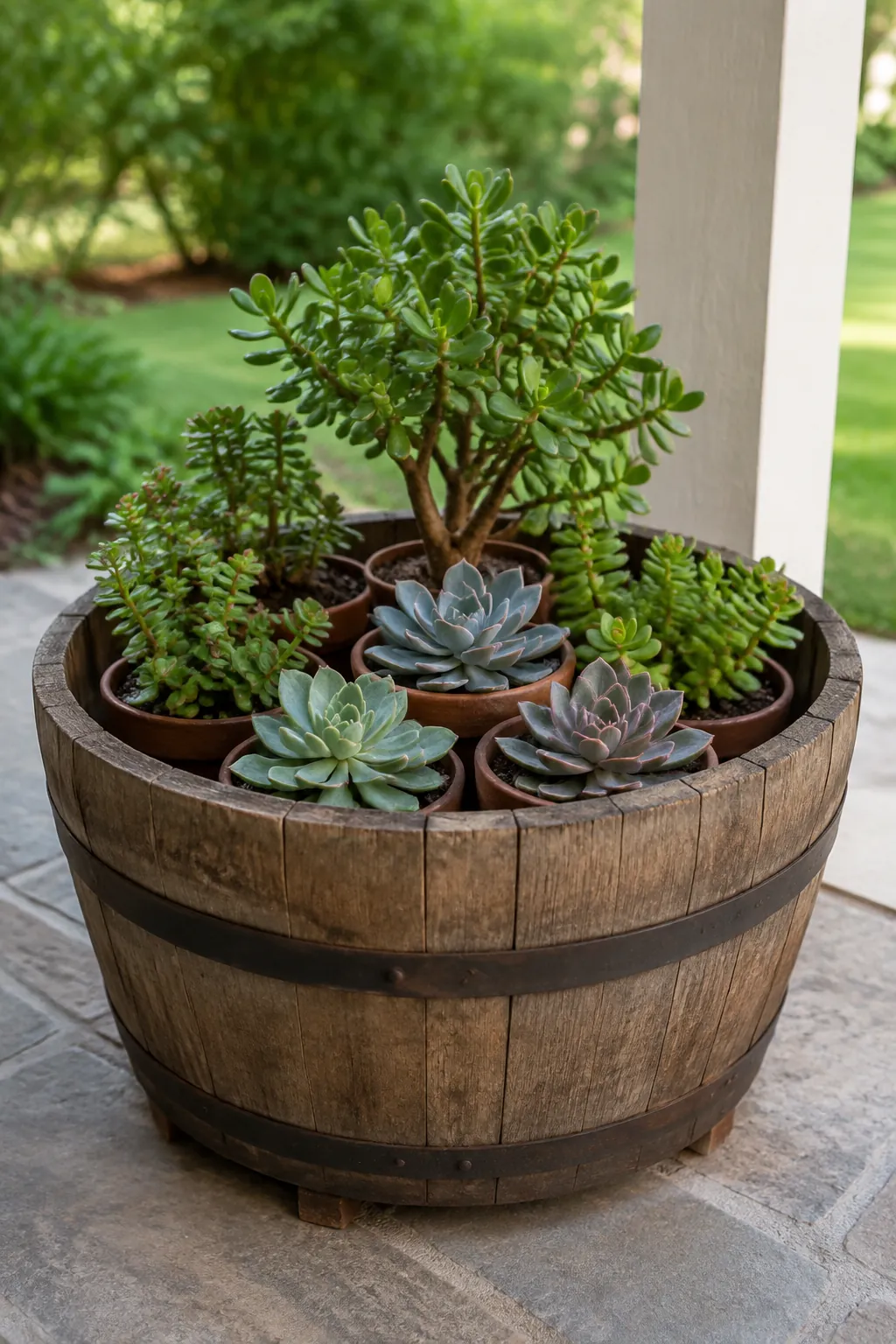
A half barrel with removable inner pots
A wooden half barrel supplies generous scale without requiring every succulent to share one soil volume. Fit several draining inner pots inside so tender plants can come out when temperatures fall. Keep the barrel outlets open and the wood away from standing water. The arrangement works best when foliage hides some pot rims while enough access remains to lift each plant. Avoid adding decorative fill that locks the inner containers together.
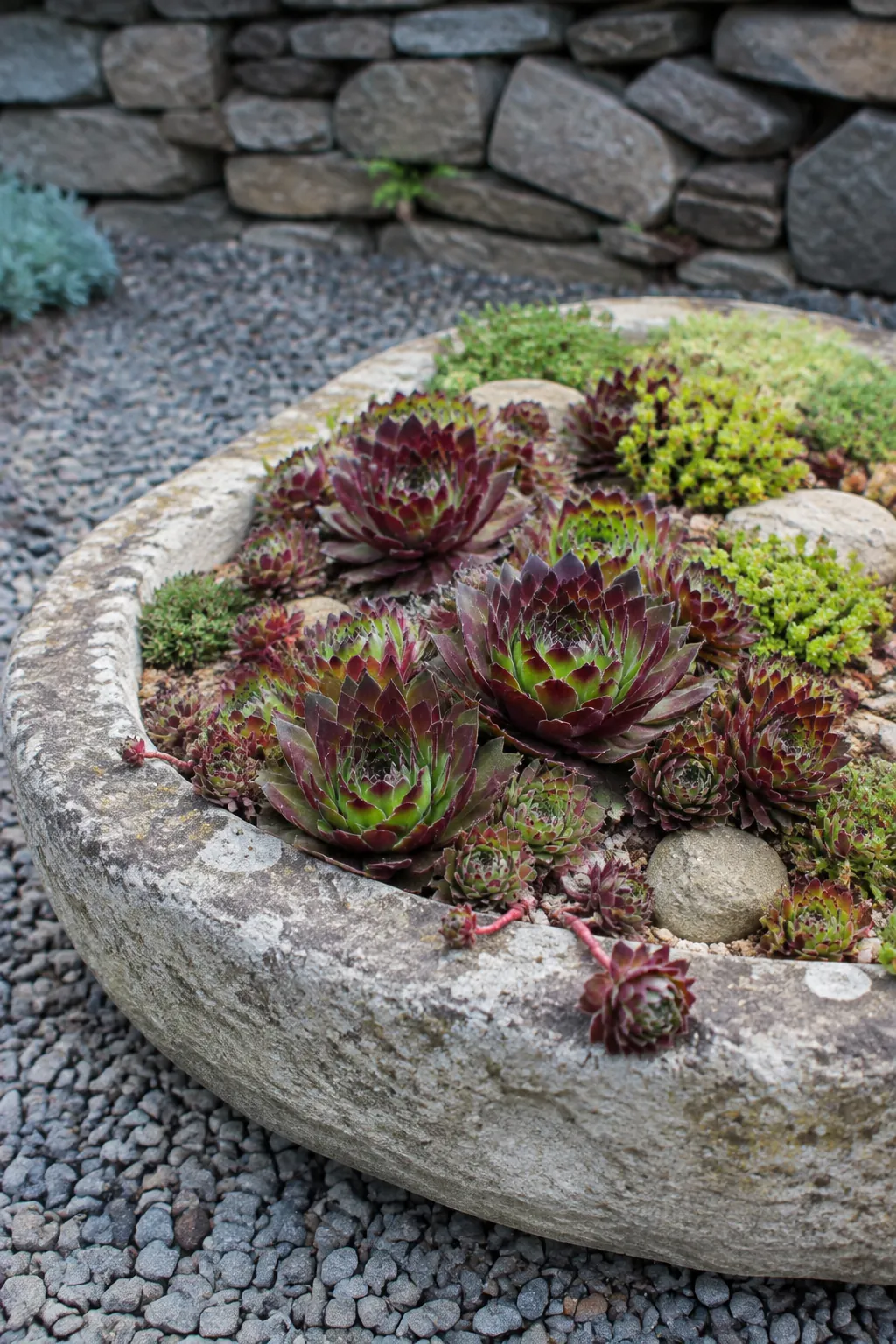
A frost hardy alpine stone trough
Sempervivum and suitable hardy sedums can give a stone trough a different seasonal role from tender patio succulents. Check each variety against your local winter conditions rather than assuming every rosette tolerates frost. Use an open draining substrate and keep the container from sitting in trapped winter water. Small gaps between stones leave room for offsets to spread over time.
A lightweight pot on a rated rolling base
A large lightweight planter on a properly rated plant caddy can follow seasonal shelter needs across a level patio. Include the combined wet weight of pot, soil, plants and base when choosing the hardware. Lock the wheels after moving it and keep it away from slopes or exposed edges. This is useful for tender species only if the sheltered destination has adequate light and a clear access route.
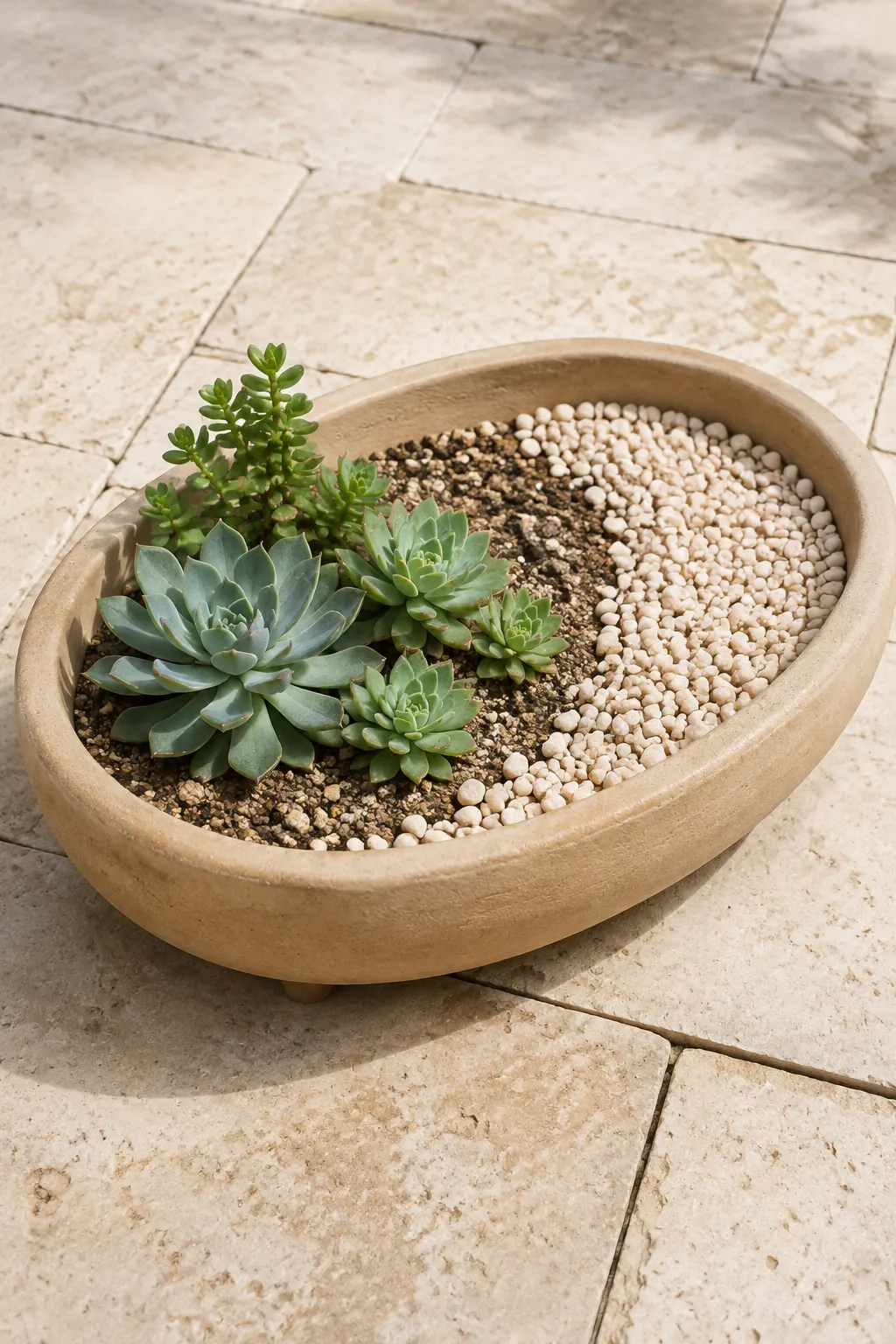
A low oval planter with a gravel crescent
An oval container can hold a planted cluster on one side and a modest gravel crescent on the other. The open area gives each leaf silhouette more presence than a pot packed to the rim, while leaving space for future growth. Keep the gravel layer thin enough to inspect the substrate and do not treat surface stones as a substitute for drainage. Choose a restrained stone color that relates to the patio rather than competing with the plants.
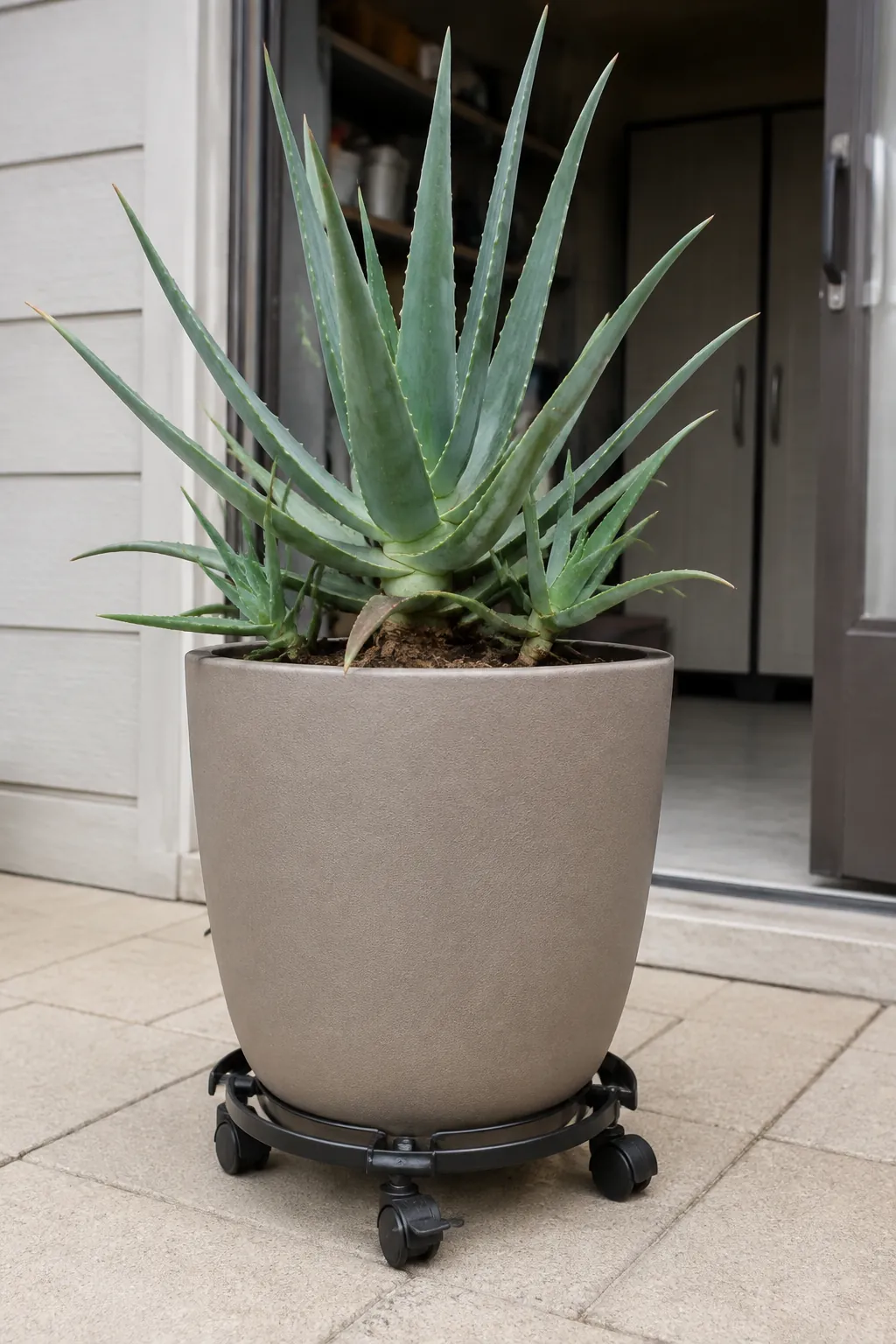
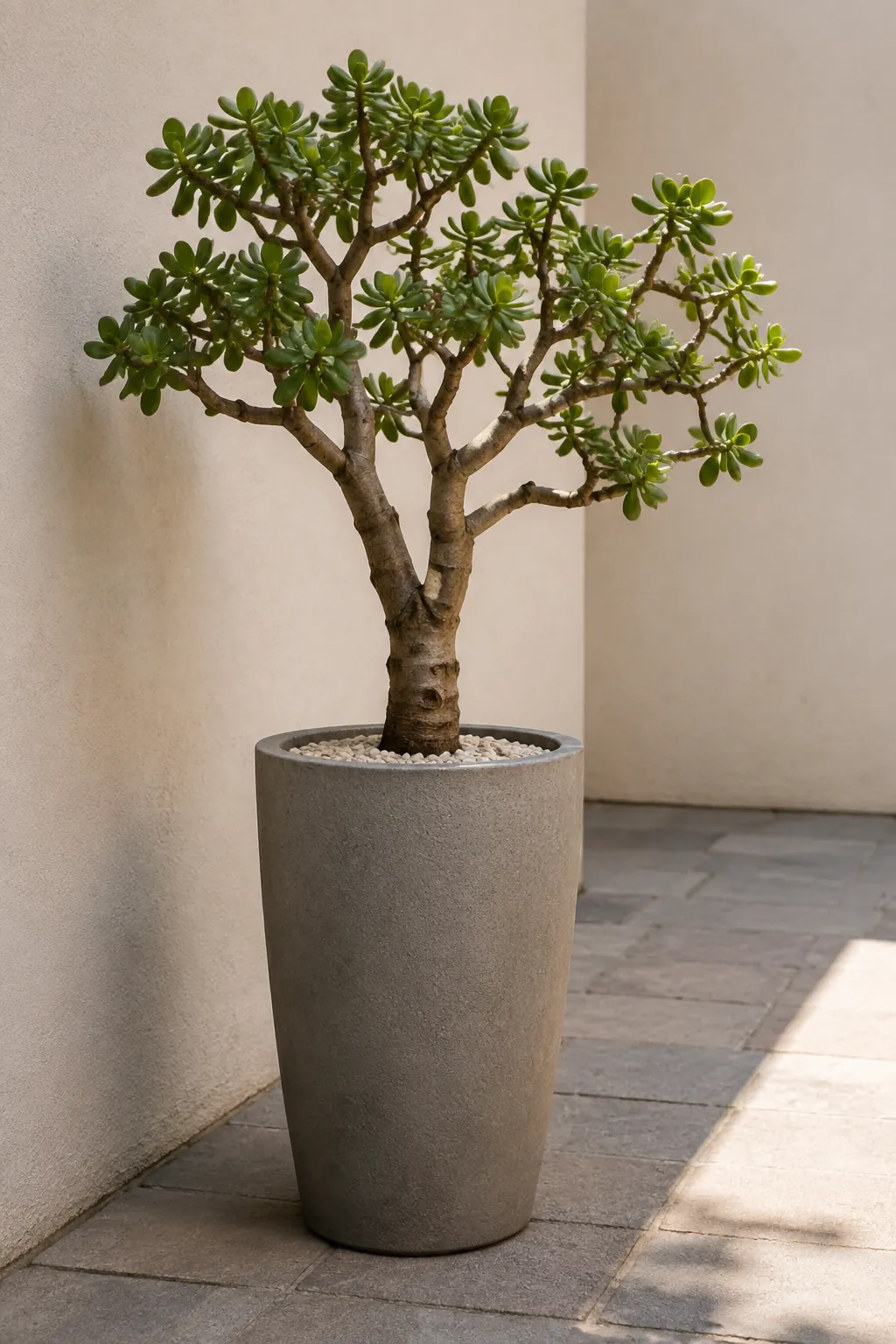
A tall tapered pot with one sculptural plant
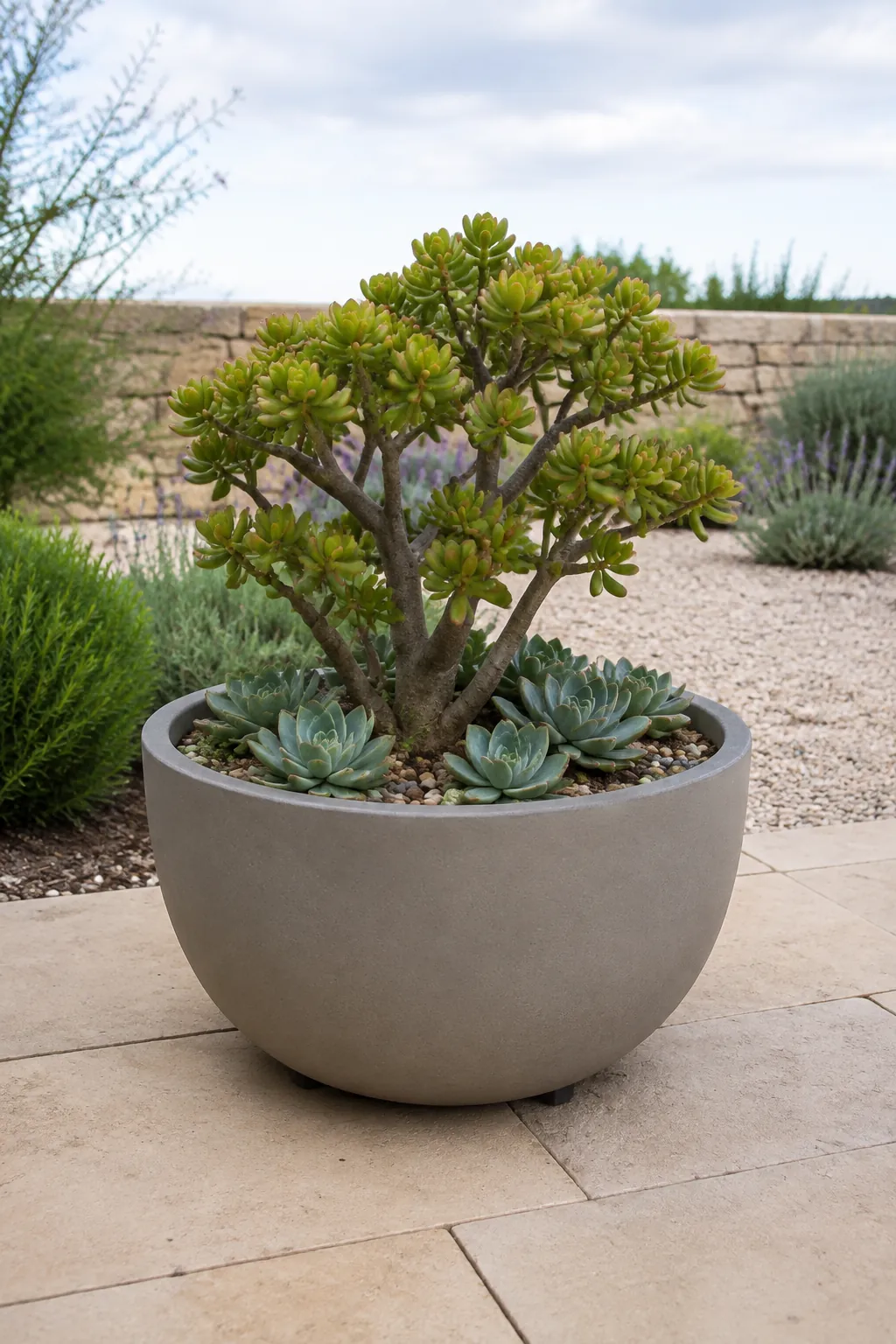
One branching jade or suitable aloe can carry a tall vessel without a crowded underplanting. Match the eventual plant size to the pot and choose a broad stable base in windy sites. A fitted draining insert may make a deep decorative container easier to manage, provided runoff can leave the outer vessel. Place pointed foliage well back from seats and access routes.
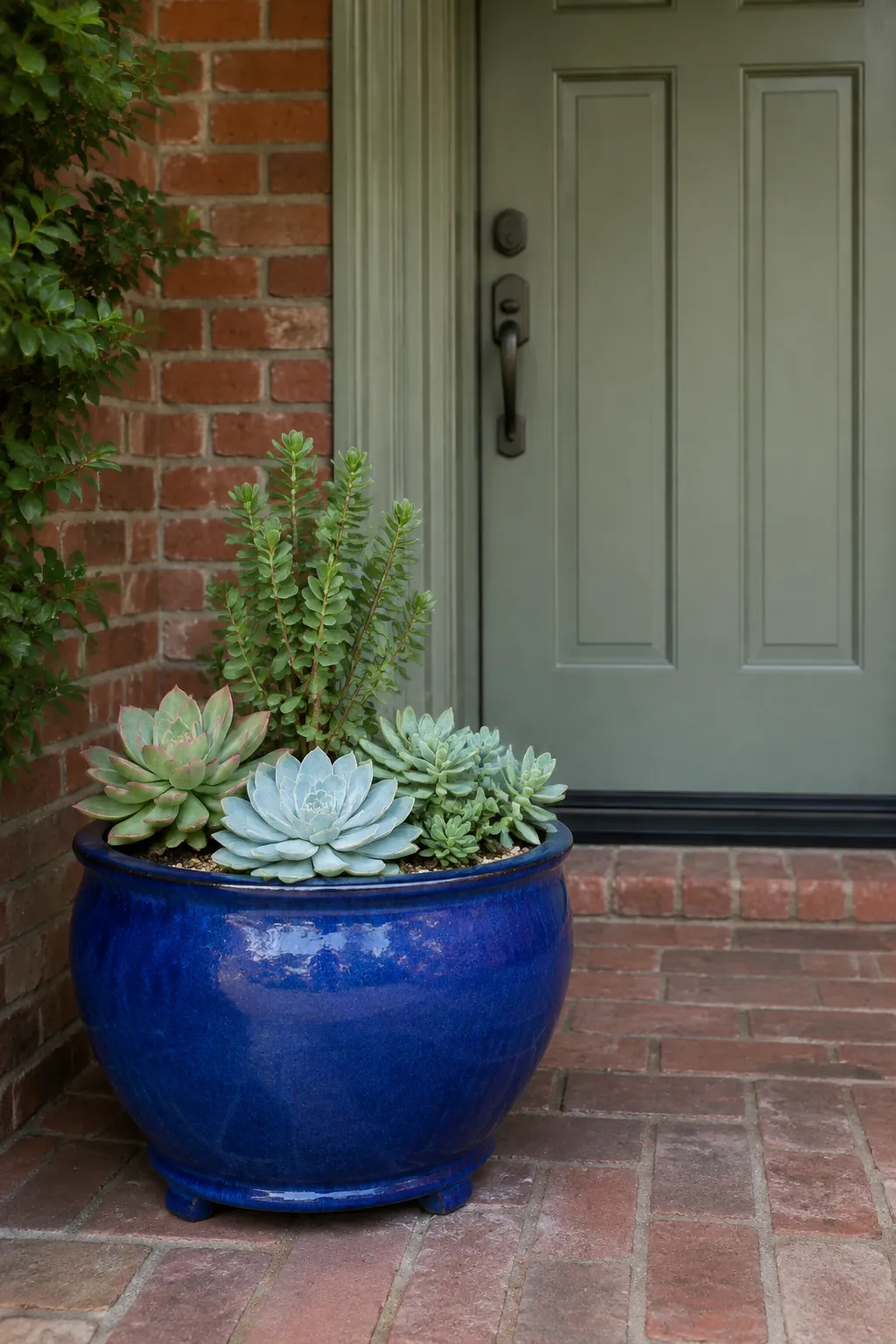
A wide blue ceramic pot at the entry
Blue glazed ceramic gives pale succulent foliage a strong backdrop beside a front door. Leave the door swing, delivery space and threshold completely clear. Because glazed containers lose less moisture through their walls than unglazed clay, pay attention to how the root zone dries between waterings. Use frost suitable ceramic or move the container before freezing weather can damage it.
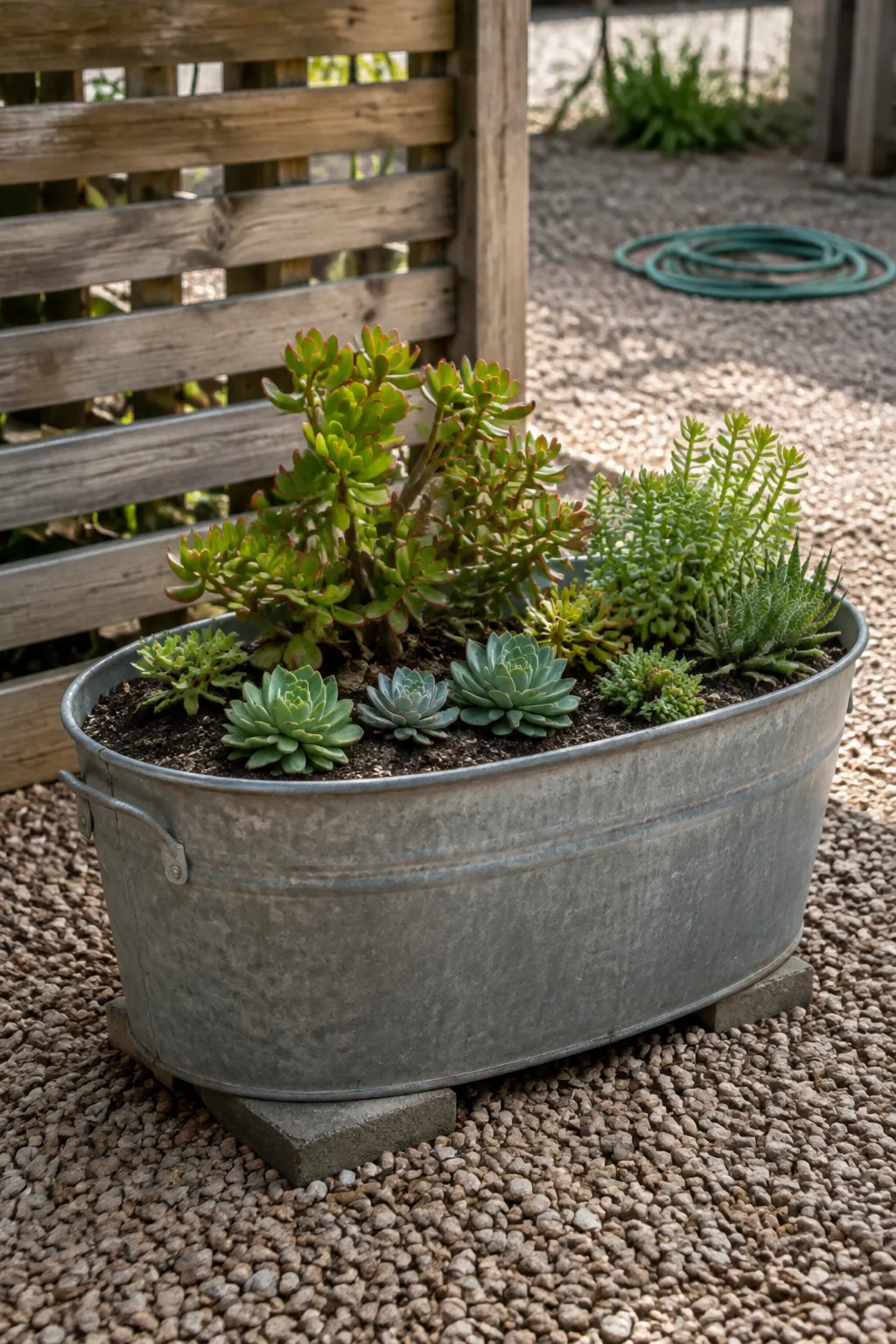
A galvanized tub for a casual gravel yard
A sound galvanized tub can become a generous container when it has proper drainage openings and no hazardous edges. Set it where reflected heat from metal will not cook sensitive roots during the hottest part of the day. A gritty mix and a little elevation above the ground help keep the base outlets usable. The relaxed look suits a utility garden more naturally than a formal entrance. Inspect the base occasionally for corrosion that could weaken its support.
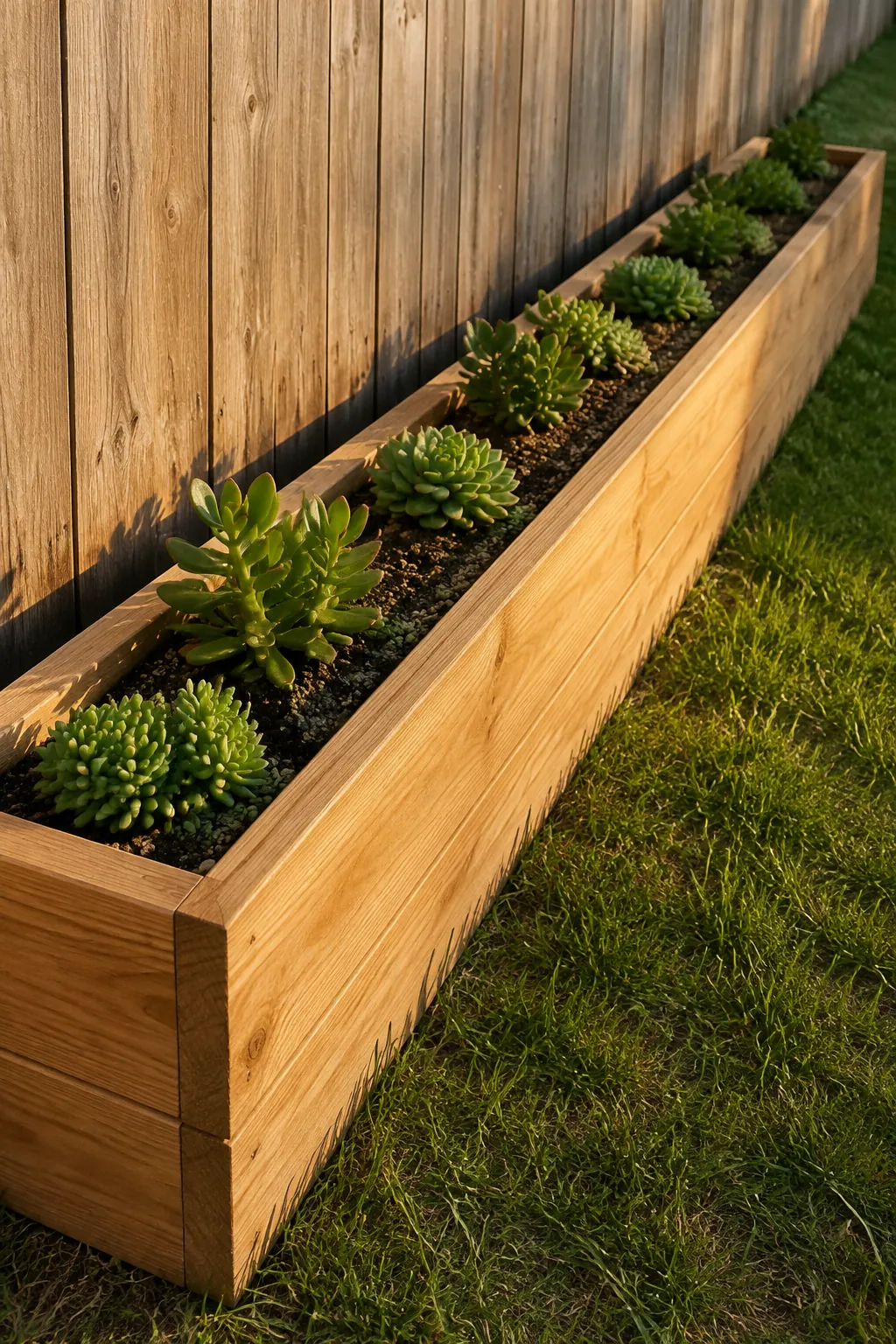
A cedar box along a sunny fence
A rectangular cedar box offers a simple backdrop for repeating succulent forms. Separate the timber from persistent wet soil with a suitable draining liner or individual inserts, while ensuring every layer lets runoff escape. Keep enough room behind the box to inspect the fence and clear fallen debris. Repeating just two compatible plant types can make the long shape feel deliberate.
A porous hypertufa planter on a stone pad
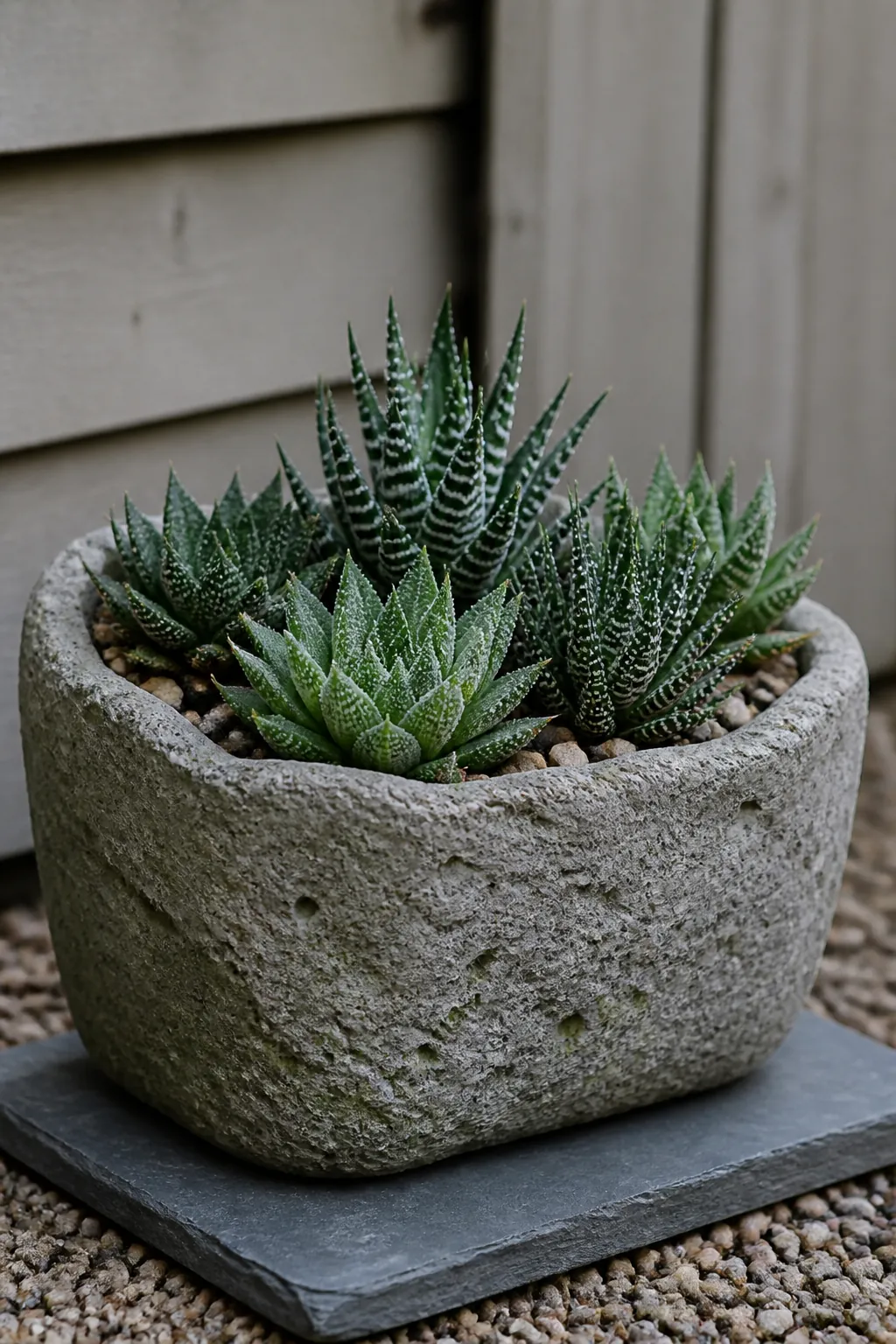
Hypertufa provides the weathered character of stone with less weight than an equivalent solid stone vessel. Choose a properly cured planter and match its root space to the plants instead of filling a huge cavity around tiny starts. A stable stone pad prevents it from settling unevenly into soft ground. Its muted texture makes an especially good setting for compact plants with intricate leaf patterns. Let the planter dry appropriately between waterings rather than assuming its porous walls will compensate for wet mix.
A cluster of generous pots at different heights
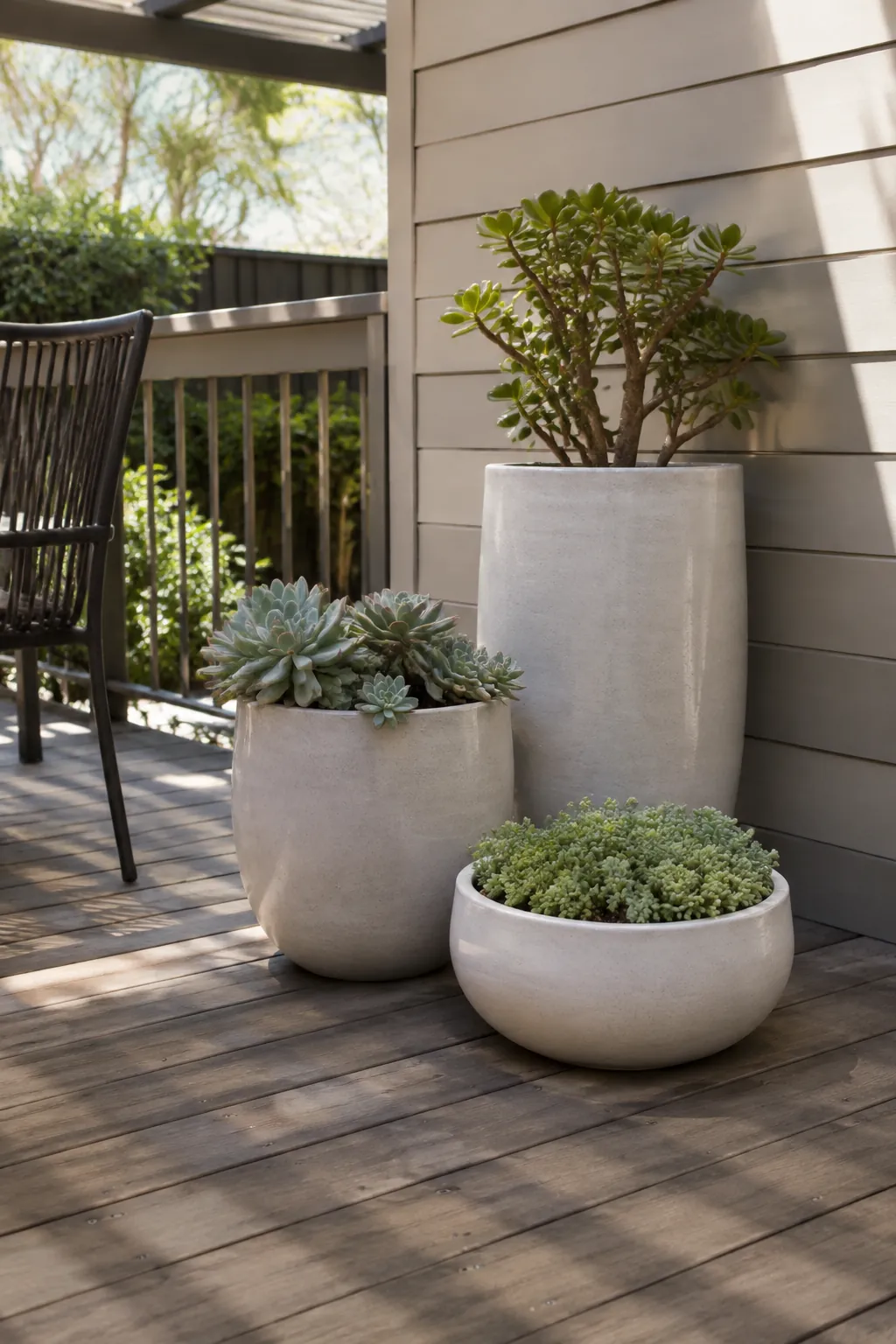
Three substantial containers can anchor a patio corner without becoming one heavy shared planting. Vary their heights while repeating one color or material to keep the grouping connected. Position the tallest at the back and leave a route for checking every pot. Similar appearances do not guarantee similar water needs, so keep care decisions tied to the actual plants.
A large shallow tray for seasonal cuttings
A broad planted tray makes a satisfying seasonal project when you already have suitable rooted cuttings. Give each cutting enough anchorage and avoid exposing freshly prepared material to harsh sun immediately. The relatively small soil volume can dry quickly, so inspect it more often during hot weather. Move the tray by its supported base rather than lifting a fragile decorative rim.
A rain sheltered planter under the eaves
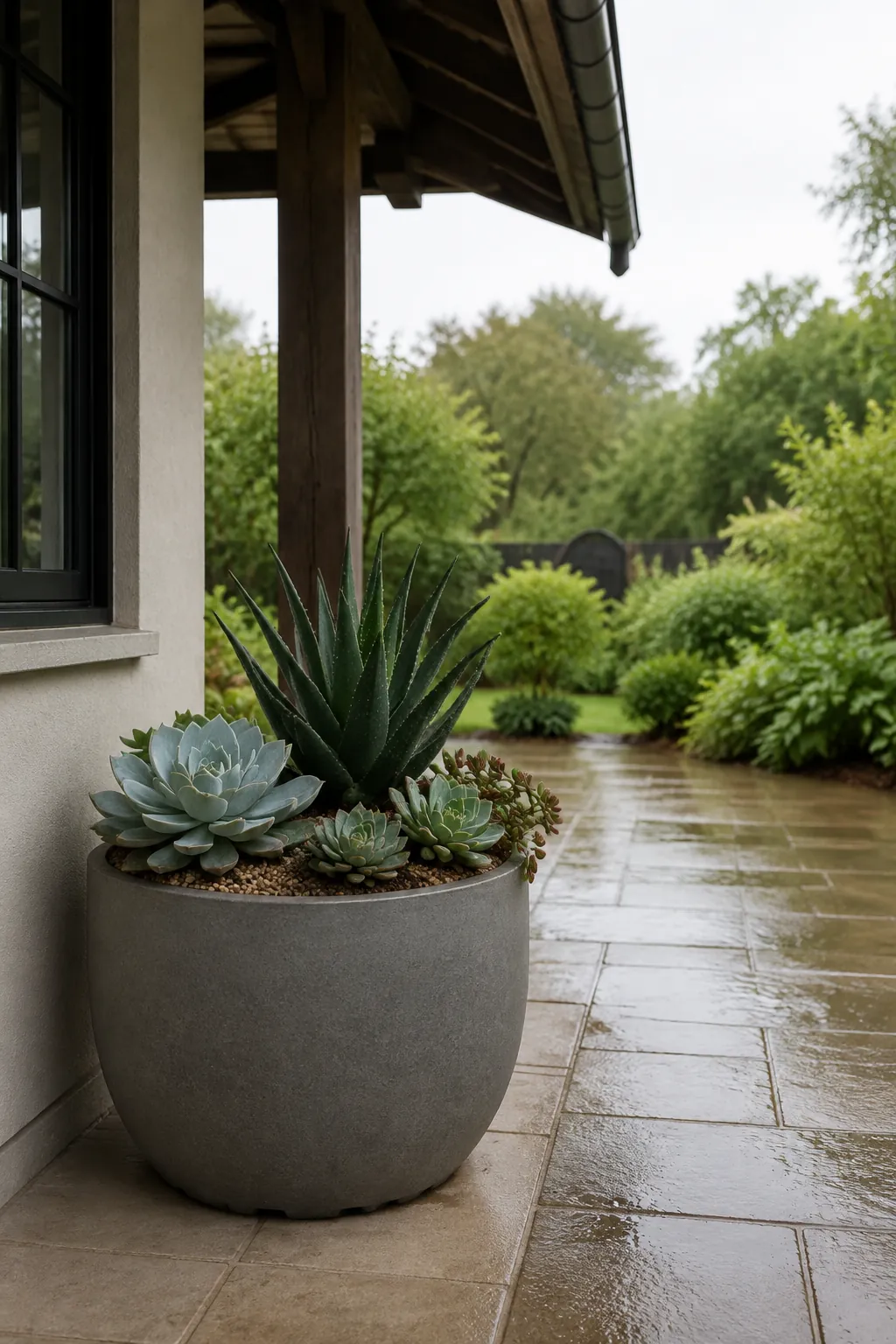
A large pot under an open eave can help manage repeated rainfall without enclosing plants in humid glass. Check that the roof runoff does not pour directly into the vessel. The shelter must still provide the light the chosen succulents need, since deep shade can produce weak growth. Watch the mix during dry spells because a protected pot may receive almost no useful rain.
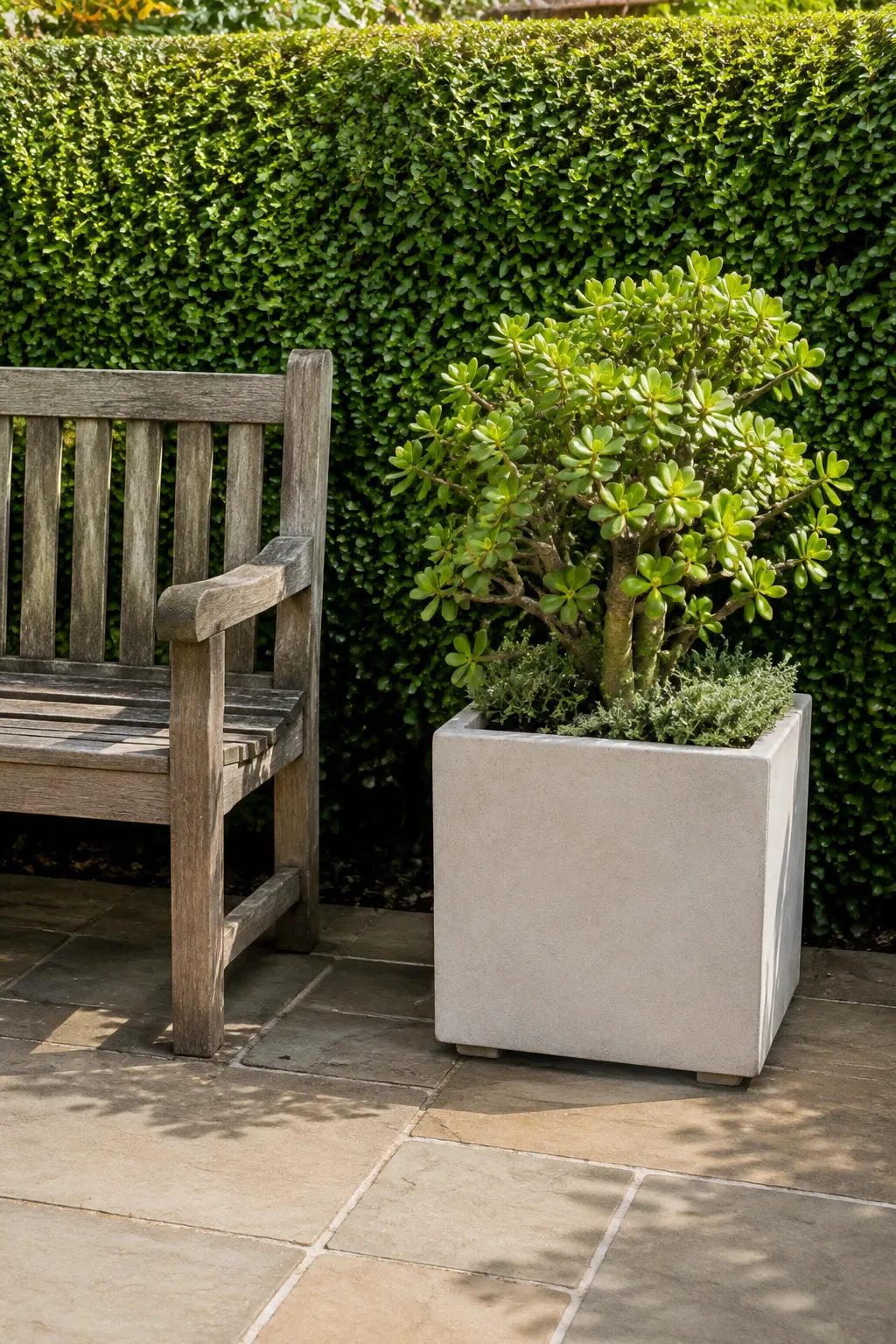
A square planter beside an outdoor bench
A square container makes a tidy companion to a straight garden bench, especially with rounded or softer foliage near where elbows and children may reach. Leave the seat easy to approach. Raising the pot slightly can reveal drainage without adding much visual clutter. Keep irrigation spray from nearby beds off the arrangement if it would leave the soil continually wet.
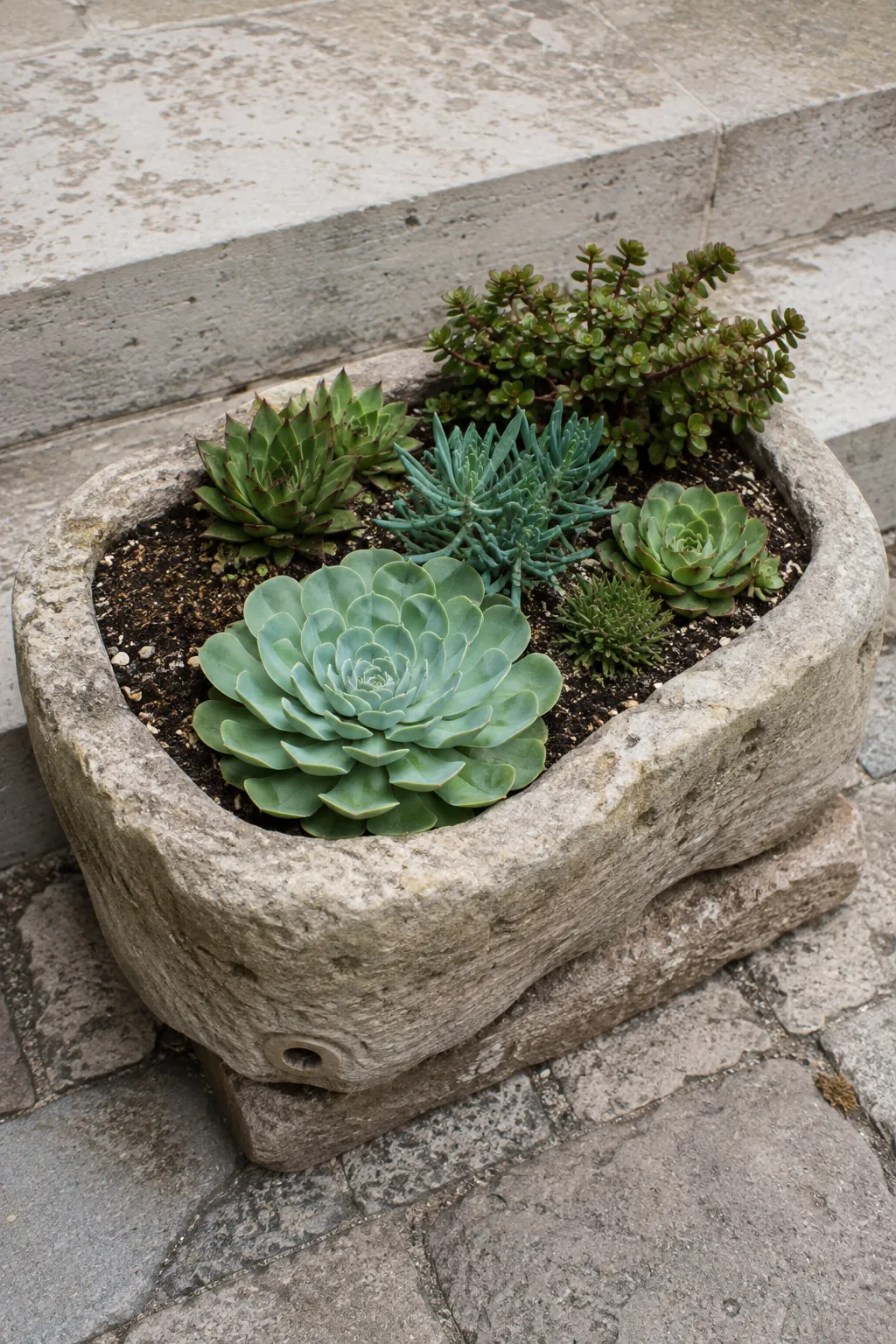
A salvaged basin converted into a planter
A sturdy old basin brings character when it can be safely modified to drain. Have brittle stone or ceramic drilled with appropriate tools and support rather than forcing a hole that could crack the vessel. Mesh over a large outlet can retain mix without plugging the water path. Set the finished basin level on a stable base and allow its irregular shape to guide a loose planting pattern.
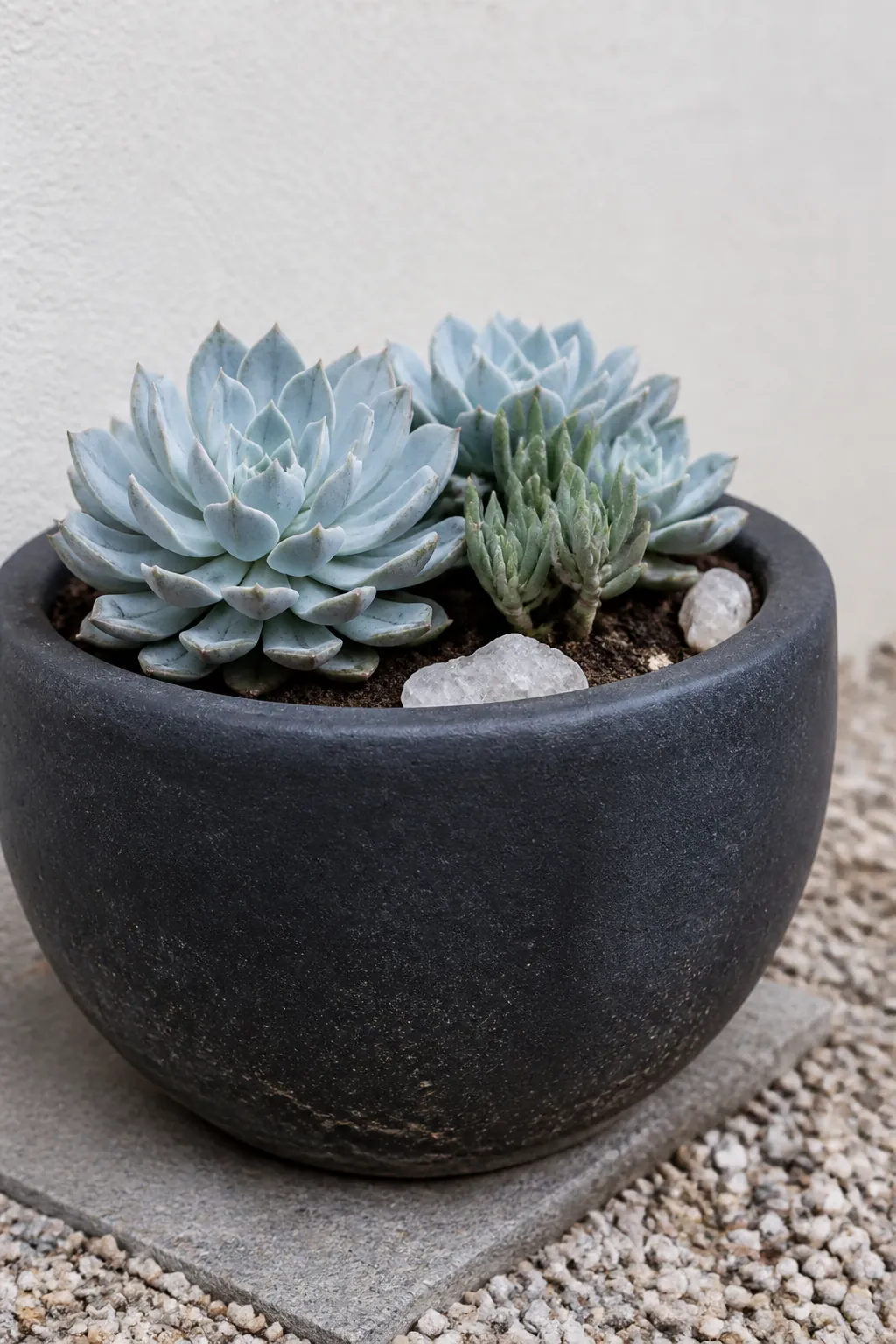
A dark planter with pale mineral accents
A charcoal container brings out silver, blue and pale green foliage especially well. Use a few light stones to echo those leaf tones while leaving the stems visible. Dark surfaces can become hot in strong sun, so assess the actual exposure before choosing this finish. An airy planting looks more convincing than covering every inch with contrasting gravel.
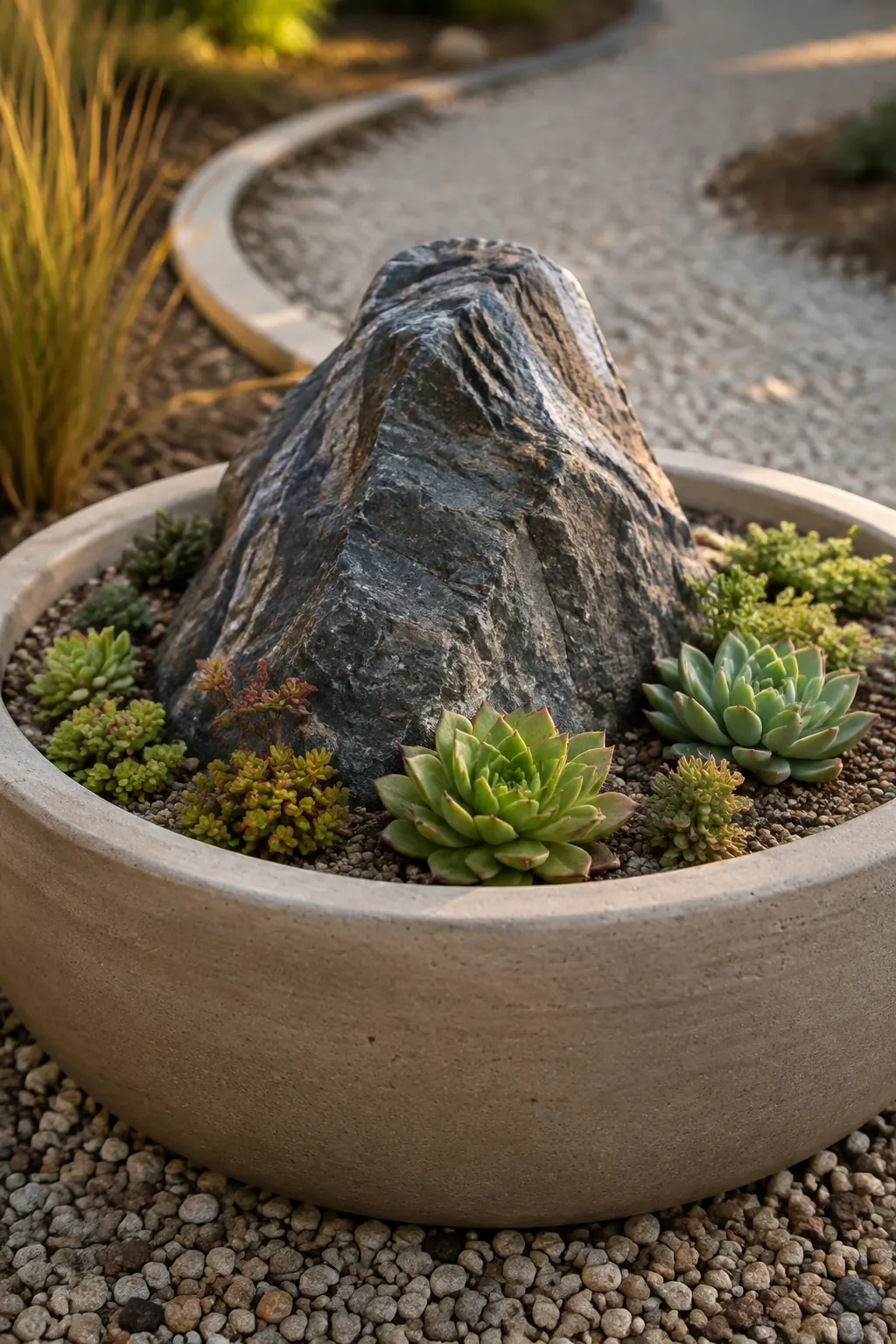
A low planter built around one natural rock
One interesting rock can supply the height and structure that a small succulent collection lacks. Seat it securely so its weight will not shift onto roots or crack the planter. Arrange plants around it with enough soil space for growth rather than wedging them into dry decorative gaps. This approach brings succulent rock garden landscaping down to the scale of a single container.
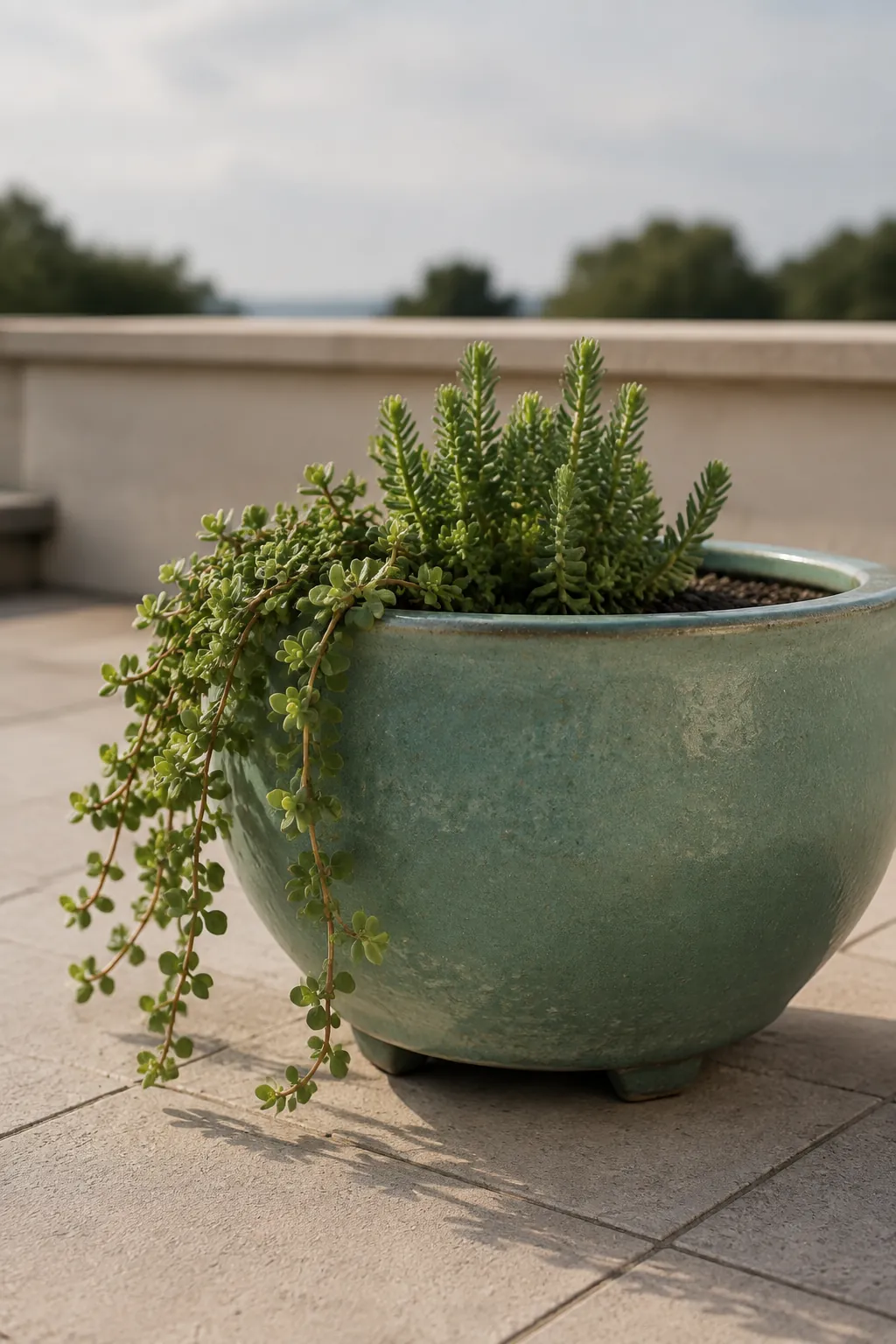
A broad planter with a restrained trailing edge
A few trailing stems can soften a large pot without hiding its shape. Use a species suited to the same light and watering conditions as the upright plants, and keep delicate trailers out of busy routes. Let growth fall from one side so the opposite rim stays accessible. Check beneath the hanging stems for trapped debris and pests during routine care.
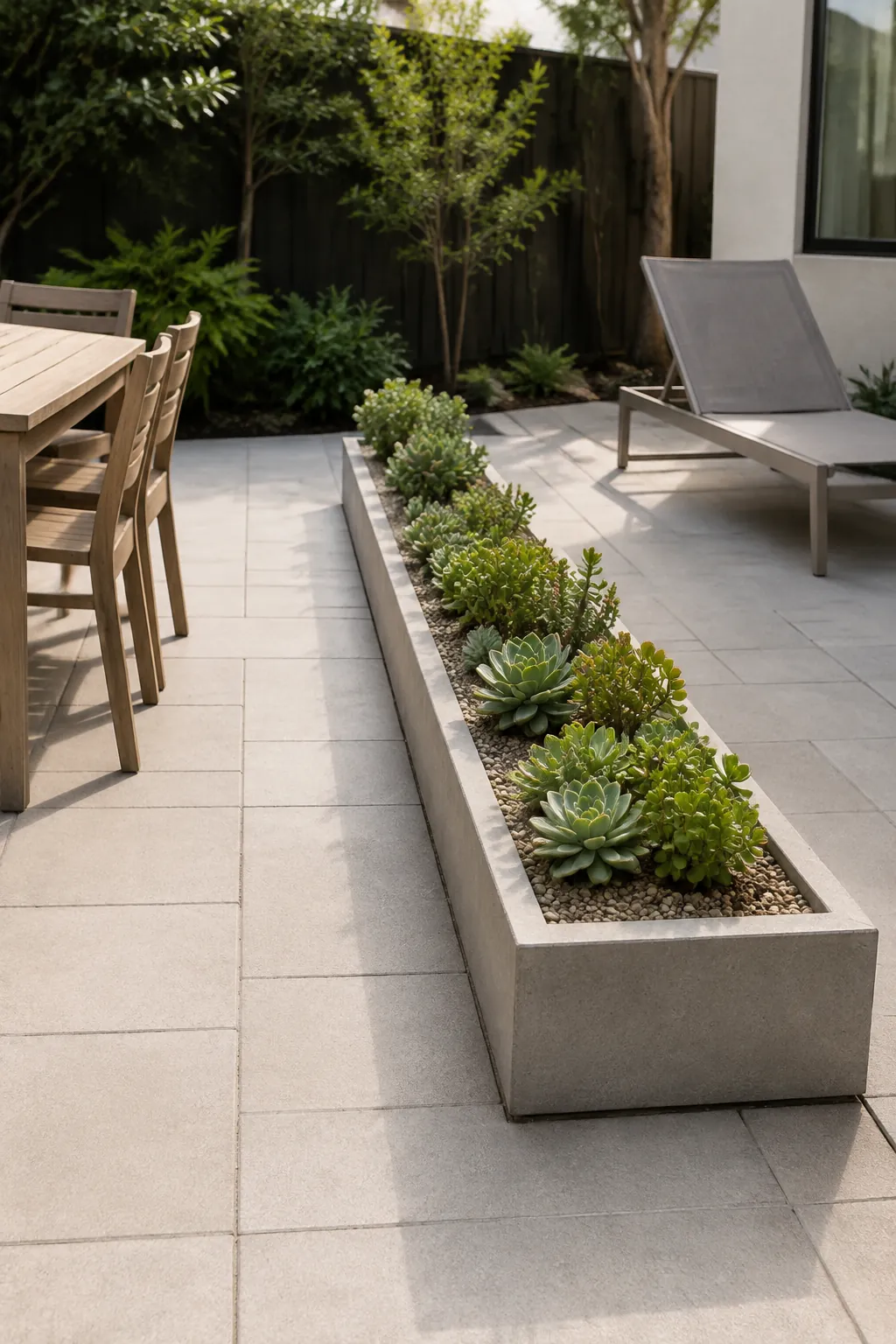
A long low planter dividing two patio zones
A long low vessel can mark the boundary between dining and lounging without blocking conversation. Leave generous passage around both ends and check the supporting surface before adding a heavy container. Repeat a small family of plants so the length reads clearly from either side. This form works well when you want landscaping with pots that still leaves the garden layout reversible.
A large outer pot with a winter lift out garden
Build a seasonal display from separate draining pots concealed within a generous outer vessel. Select inner containers that you can actually lift once the plants have grown, and avoid fastening them into a permanent arrangement. Before cold weather, move tender specimens to suitable bright protection while leaving only plants proven hardy for your conditions. Your large garden planter can stay in place while the part that needs winter care remains manageable.