

Plant wall ideas are easy to save and surprisingly easy to regret. The pretty part is the foliage; the part that decides whether it lasts is light, watering access, drainage, wall protection, and plant choice.
Use these ideas as starting points for a real home, not just a perfect photo. Some are true living wall ideas, while others use shelves, trellises, rails, baskets, or preserved moss to get the green-wall feeling with less risk. If you are planning a DIY plant wall indoor setup, start small enough that you can water every plant without dreading the job.
Framed Pothos Grid
A framed pothos grid is the easiest way to get the full living wall ideas look without building a sealed irrigation system. Mount a shallow wood frame, add a metal grid or narrow slats, and clip nursery pots or small wall planters into a loose checkerboard so the vines can trail instead of crowding each other.
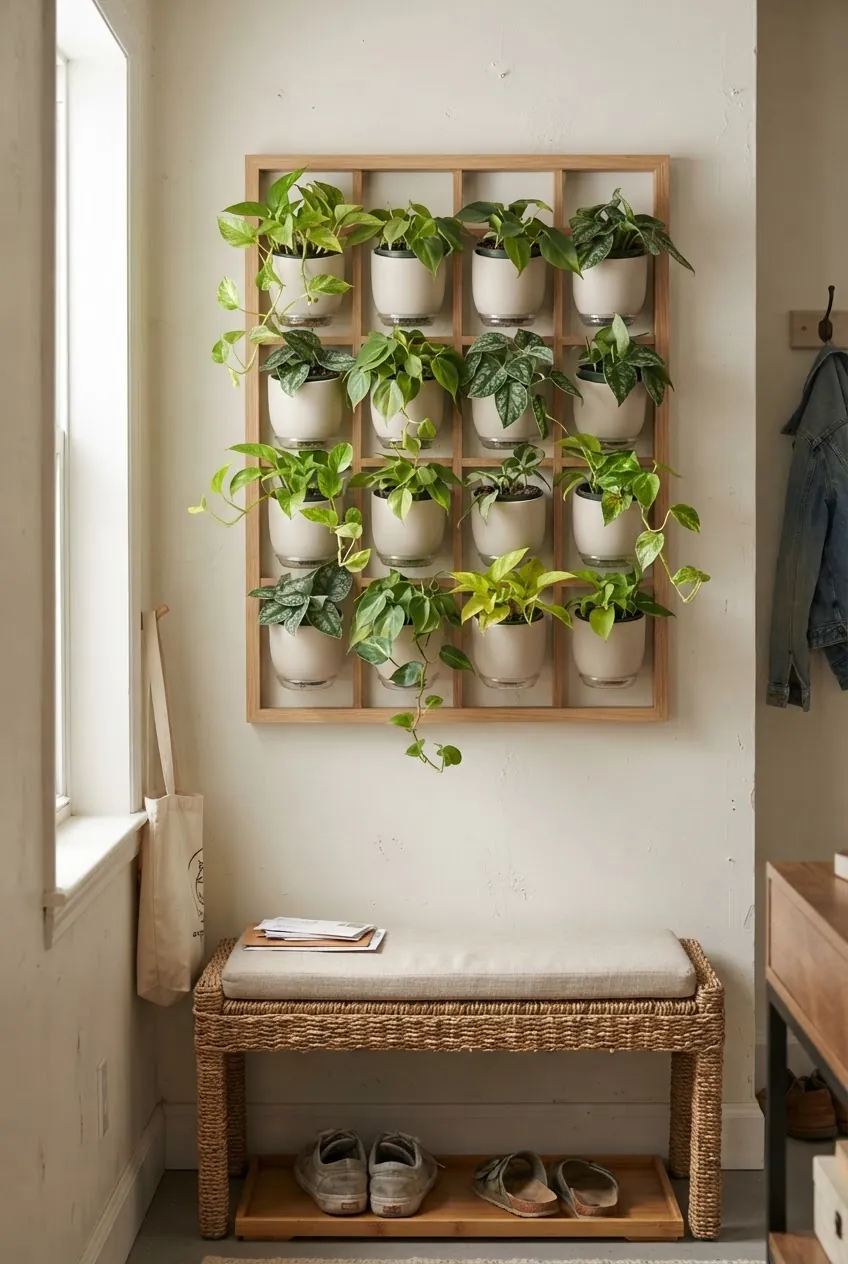
Use this for an entry, hallway, or apartment dining nook where you want a plant accent wall but still need to remove each pot for watering. Pothos, heartleaf philodendron, and scindapsus are forgiving choices, but the real trick is matching pot size and drainage trays before the wall gets heavy.
Slim Rail of Hanging Terracotta Pots
A slim rail lets you turn a blank wall into a row of hanging plants indoor without committing to dozens of holes. Use a sturdy rail fixed into studs, then hang terracotta pots at different heights so the leaves read as one green band instead of a set of random hooks.

This idea works well when the room already has warm textures such as bamboo shades, linen curtains, or wood shelves. Keep heavier pots lower, use liners or saucers, and choose plants with similar watering rhythms so the rail does not become a weekly balancing act.
Modular Pocket Living Wall
If you want the dense green look that shows up in plant room ideas, a modular pocket system is the closest DIY-friendly version of a professional living wall. The pockets create a woven tapestry of leaves, but they also demand the most planning around water, airflow, and wall protection.
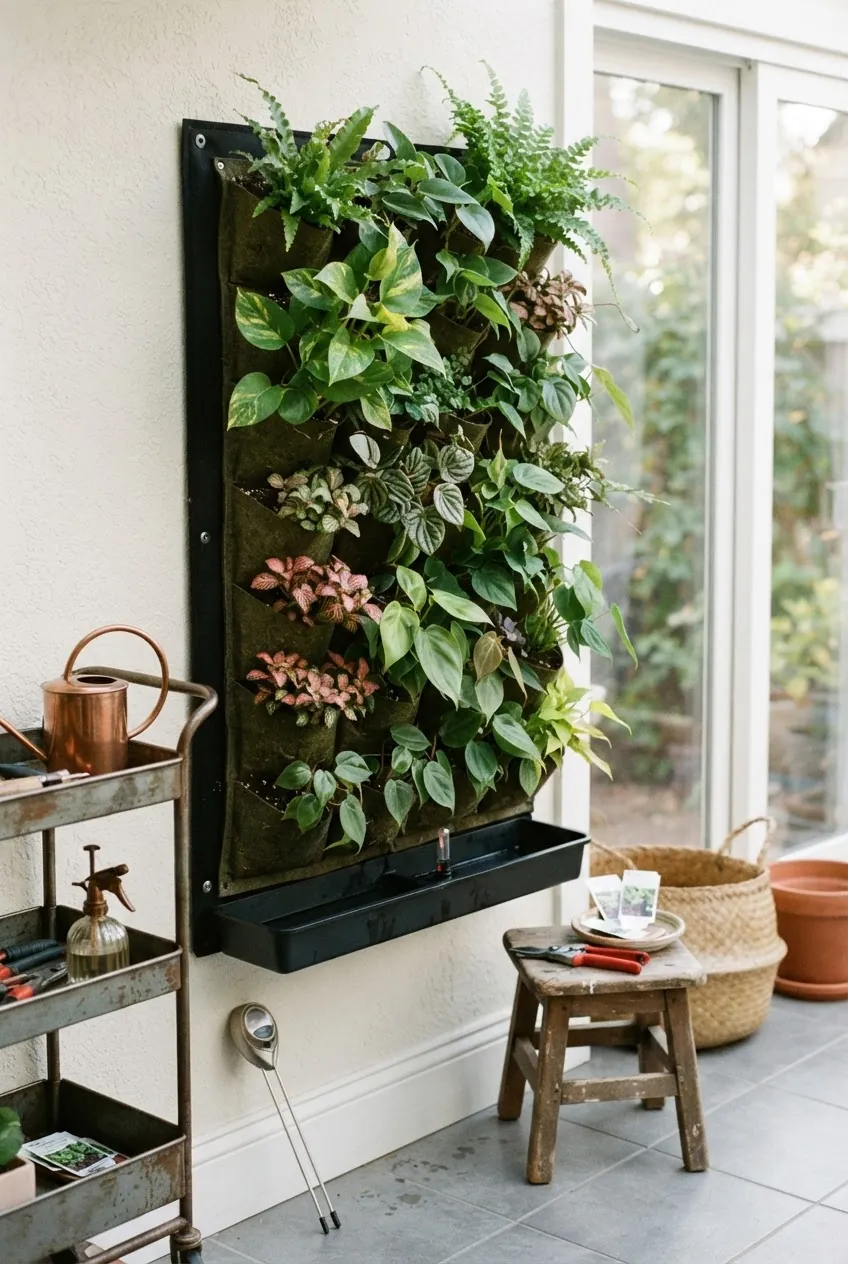
Use a waterproof backing board, leave a service gap if the system allows it, and group plants by moisture needs. Ferns, pothos, small philodendrons, peperomia, and fittonia can share a humid wall, while succulents usually need a separate drier setup.
Bamboo Trellis Vine Panel
A bamboo trellis panel gives a plant wall structure before the plants mature. It is especially good for vines that need guidance, because the canes create an organic grid that looks intentional even while the plants are still small.
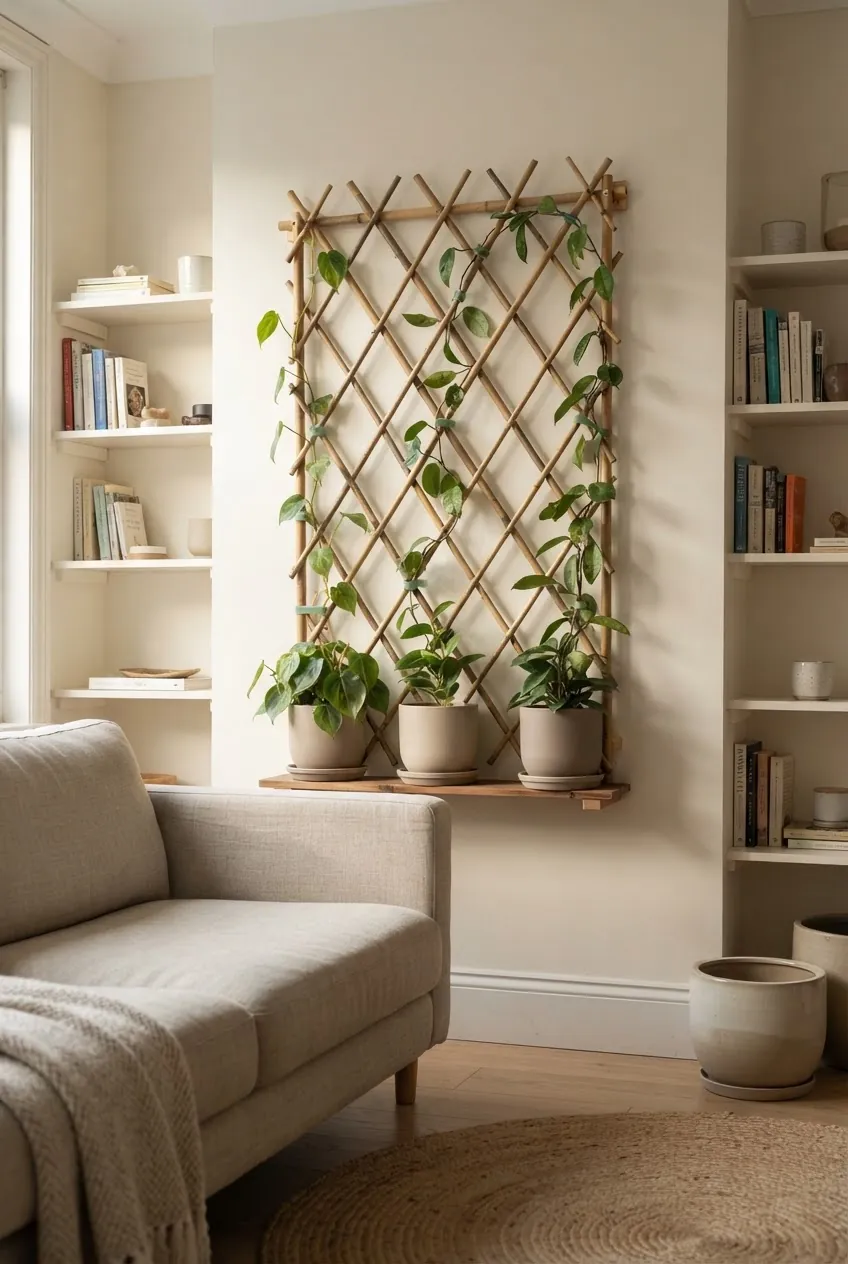
Pair it with trailing philodendron, hoya, jasmine in bright rooms, or a few mounted planters at the base. The bamboo keeps the wall from feeling flat, and it is a natural fit for house decorating ideas that lean warm, relaxed, and low plastic.
Kitchen Herb Strip
A kitchen herb strip is practical only if the wall gets enough light or has a small grow light. Mount a narrow shelf or rail near the prep zone, then keep herbs in removable pots so you can rotate tired plants, trim them hard, and wash saucers before they stain the wall.

Use basil, mint, parsley, thyme, and chives if the light is strong. For lower light kitchens, treat the setup as a decorative green rail with pothos and peperomia instead of forcing herbs to limp along.
Bathroom Fern Wall
A bathroom fern wall can be beautiful because many ferns appreciate humidity, but it still needs light and drainage. Mount plants near a window or add a discreet grow light, and use washable wall planters rather than fabric pockets that stay damp against paint.
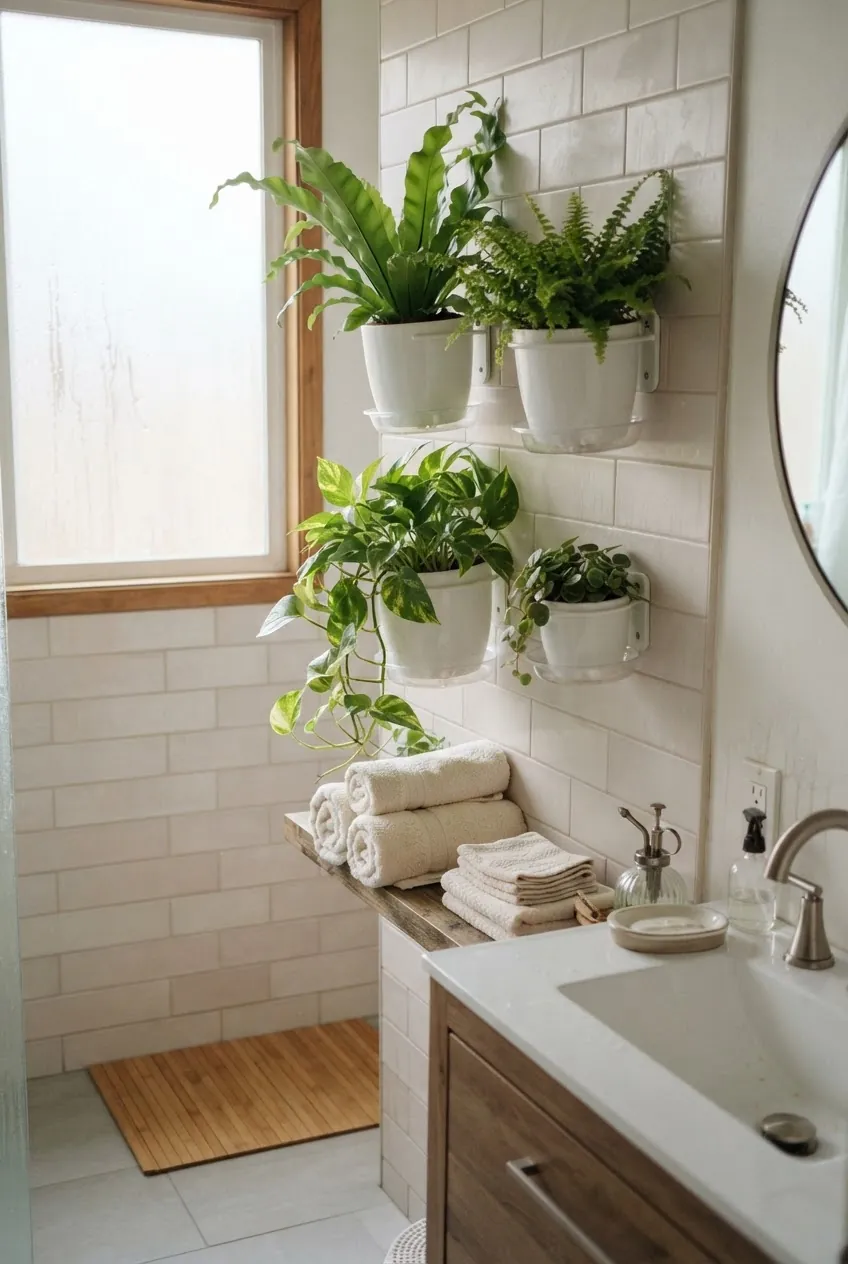
Birds nest fern, button fern, lemon button fern, and pothos can make a bathroom feel lush without blocking the mirror. Keep airflow in mind, because a humid wall with no drying period can become a maintenance problem fast.
Preserved Moss Accent Panel
A preserved moss panel gives the mood of a green wall with almost none of the watering risk. It is not a living garden, but it is useful for dark hallways, rental entries, or busy homes where a real wall of plants would become stressful.
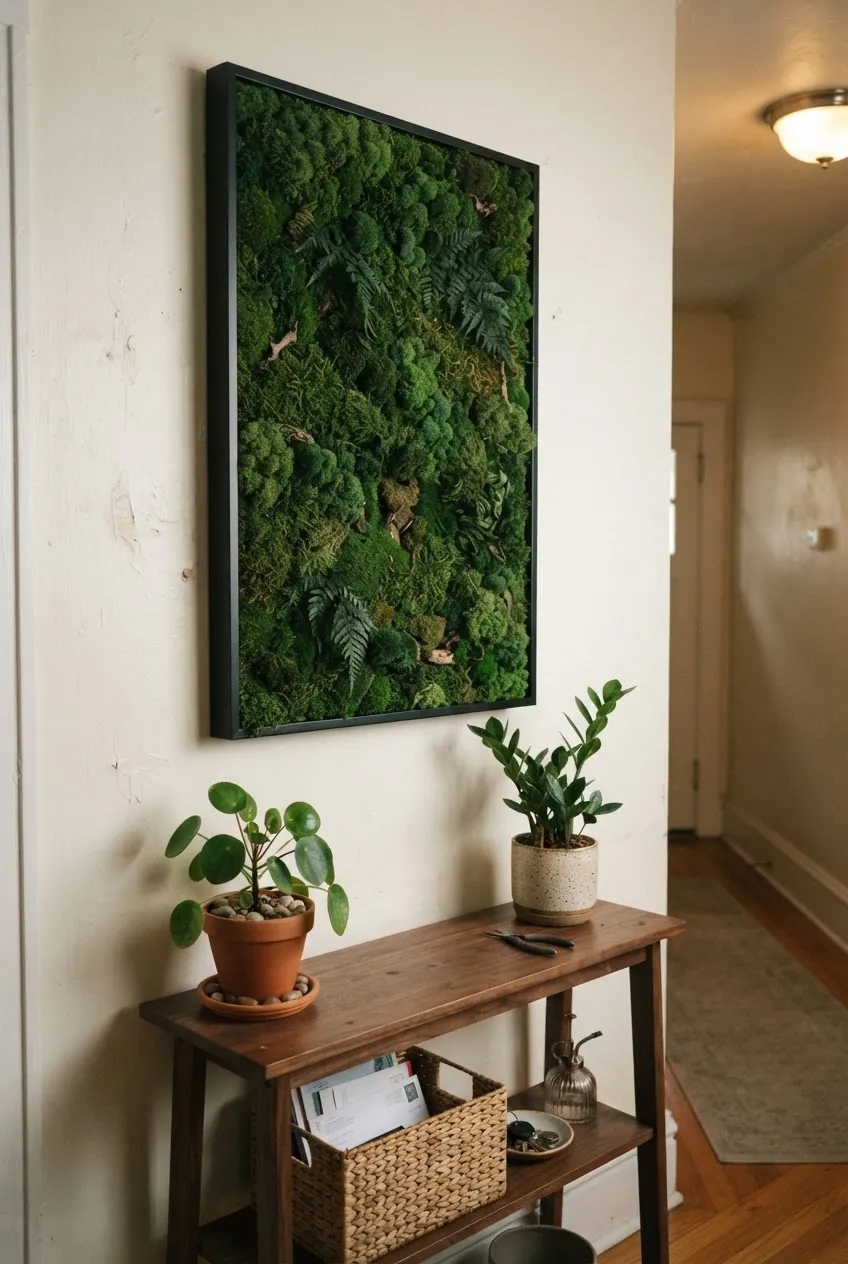
Choose this when you want a plant accent wall more than a plant-care project. Mix preserved moss textures with a few mounted air plant holders or nearby potted plants if you want a bridge between decor and living greenery.
Succulent Shadow Box
A succulent wall needs more sun and less water than most indoor living walls, so do not mix it with fern or pothos pockets. Treat it like a shallow vertical planter for bright windows, patios, or sunrooms, and make sure the planting medium drains fast.
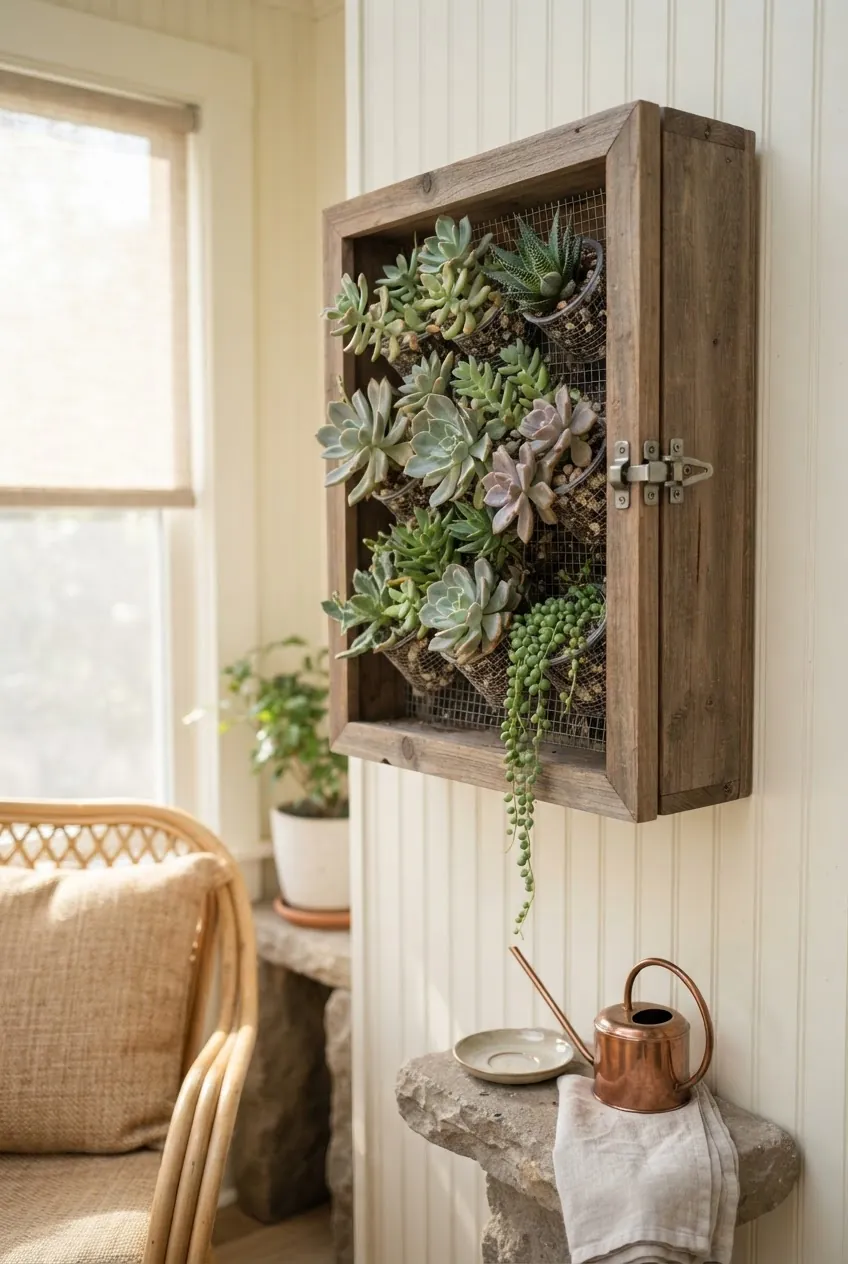
This idea looks best when the box is small enough to take down for watering. Succulents can rot quickly if a vertical frame stays wet, so a removable shadow box is safer than a permanent damp panel.
Staircase Plant Gallery
A staircase plant gallery uses vertical height that often goes undecorated. Stagger shallow shelves along the stair line, then combine framed prints, trailing vines, and a few upright plants so the wall feels collected instead of overloaded.
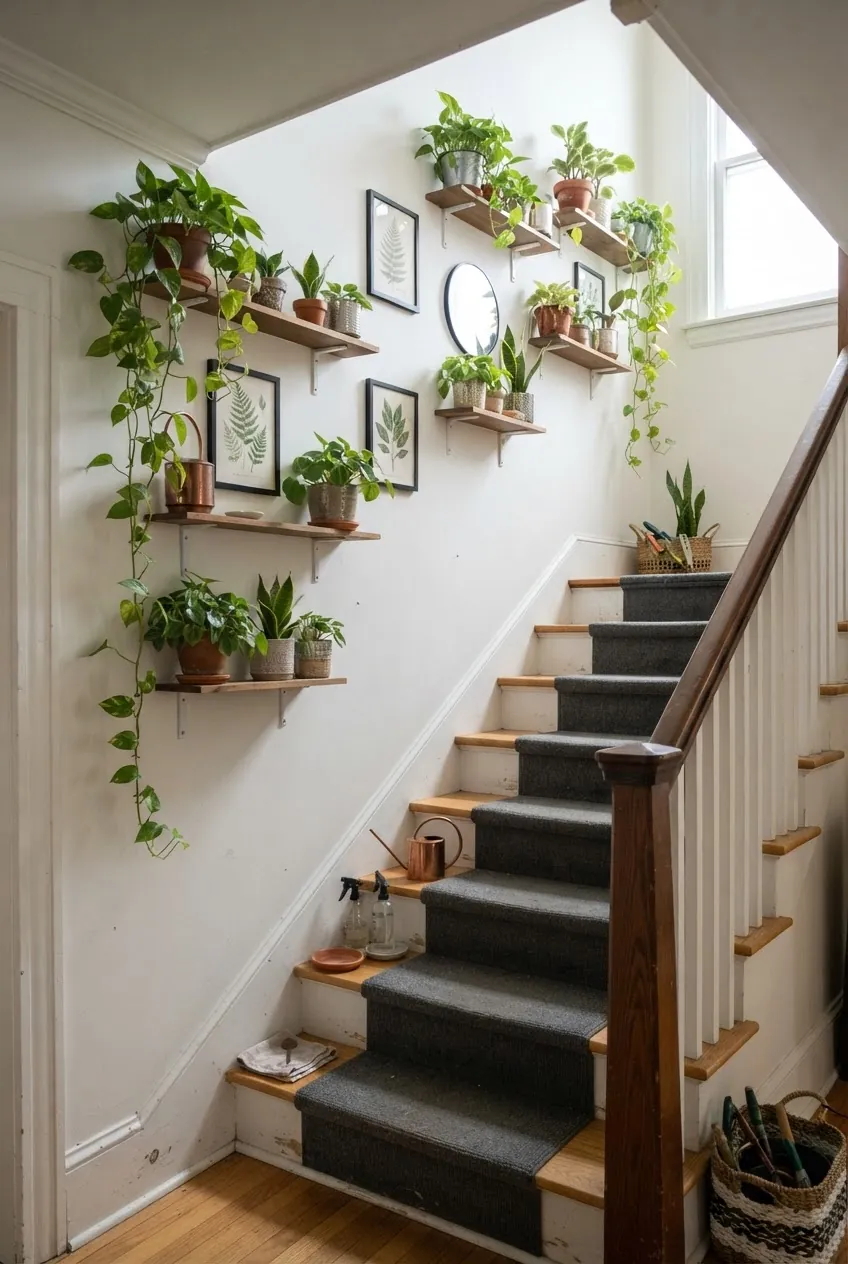
The best version is reachable. If you need a ladder every time a plant dries out, the wall will fail. Place thirstier plants lower, drought-tolerant plants higher, and keep a narrow watering can nearby.
Balcony Privacy Plant Screen
For small outdoor spaces, a plant wall can double as privacy. Use a freestanding trellis, balcony-safe planter boxes, and vines or trailing annuals so the screen feels lush without attaching too much weight to the building wall.
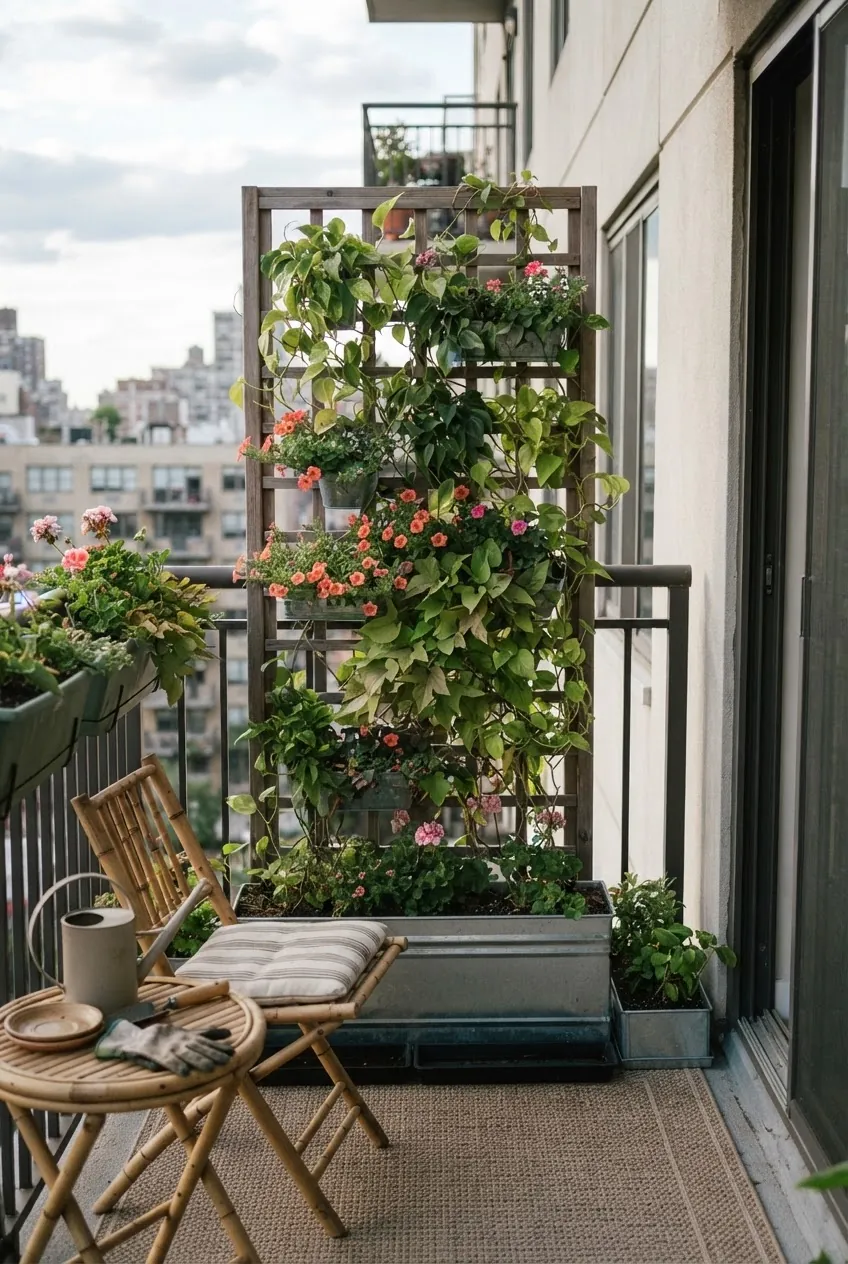
This is one of the most useful outdoor patio ideas for renters, because it can move with you. Check wind exposure, drainage, and building rules before you fill every planter, especially on upper floors.
Patio Trellis Green Wall
A patio trellis green wall gives an outdoor room instant structure. Train vines up a trellis or lattice, then layer potted grasses, herbs, or trailing plants at the base so the wall looks full while the climbers are still growing.
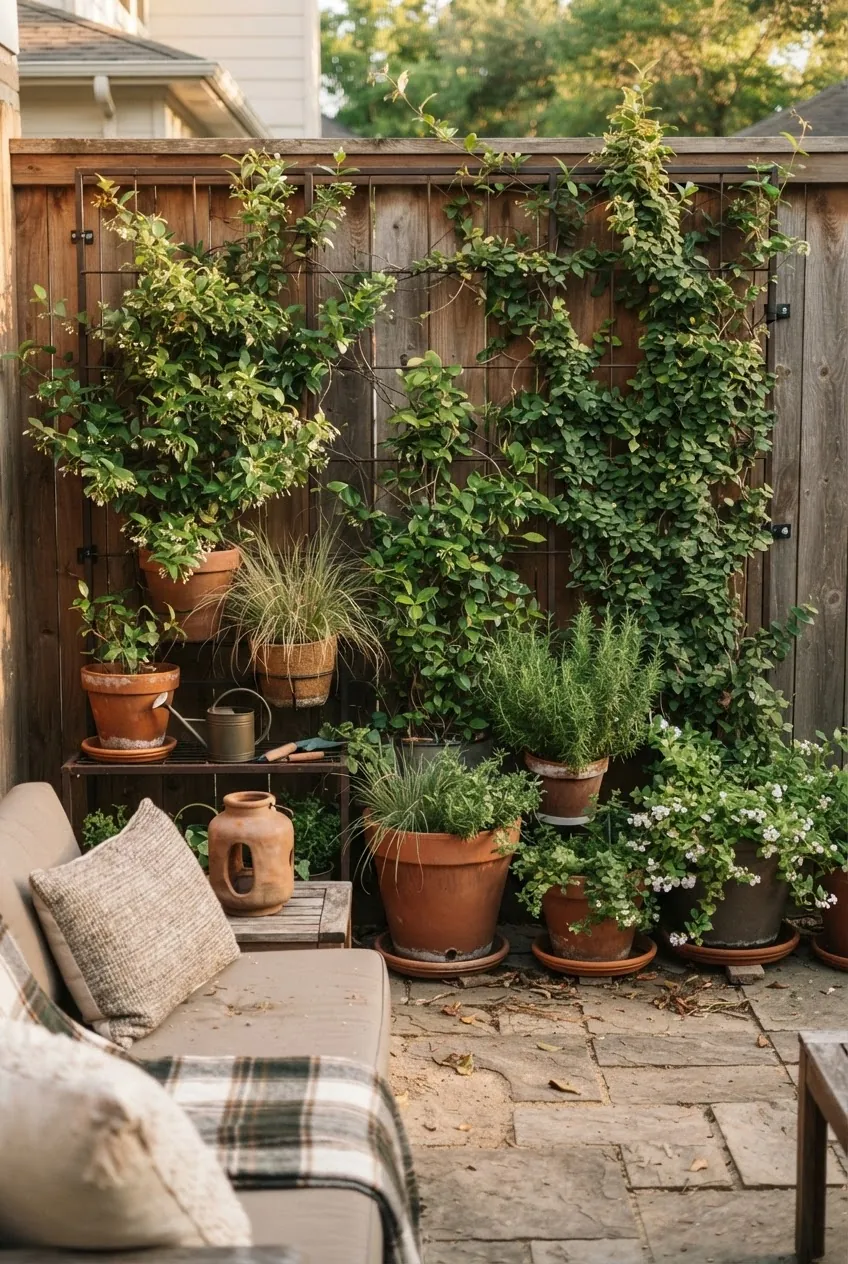
Use this where you need shade, privacy, or a softer fence line. Outdoor plant walls handle more mess than indoor ones, but they still need drainage, seasonal pruning, and plants suited to your climate.
Pegboard Propagation Wall
A pegboard propagation wall turns cuttings into display. Hang small glass jars, test tubes, or bud vases on a sealed pegboard, then rotate rooted cuttings into soil when they are ready.
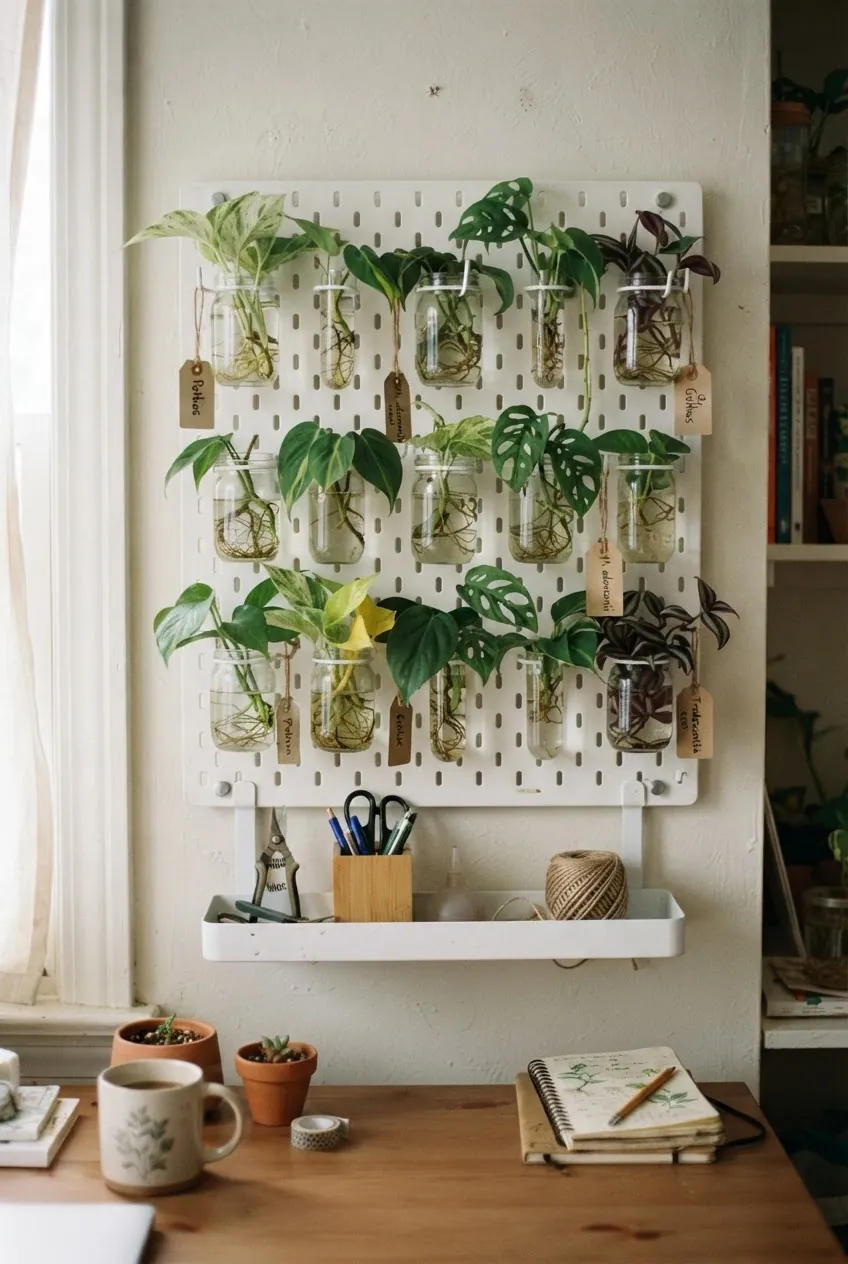
This is a great DIY plant wall indoor project because it is light, affordable, and easy to rearrange. Keep it near bright indirect light, clean the glass often, and avoid placing it over outlets or electronics.
Floating Shelf Plant Wall
Floating shelves are the safest starting point for many plant wall ideas because the plants stay in normal pots. Use two or three shelves with different depths, then mix trailing plants with upright shapes and a few books or baskets so the wall feels styled.
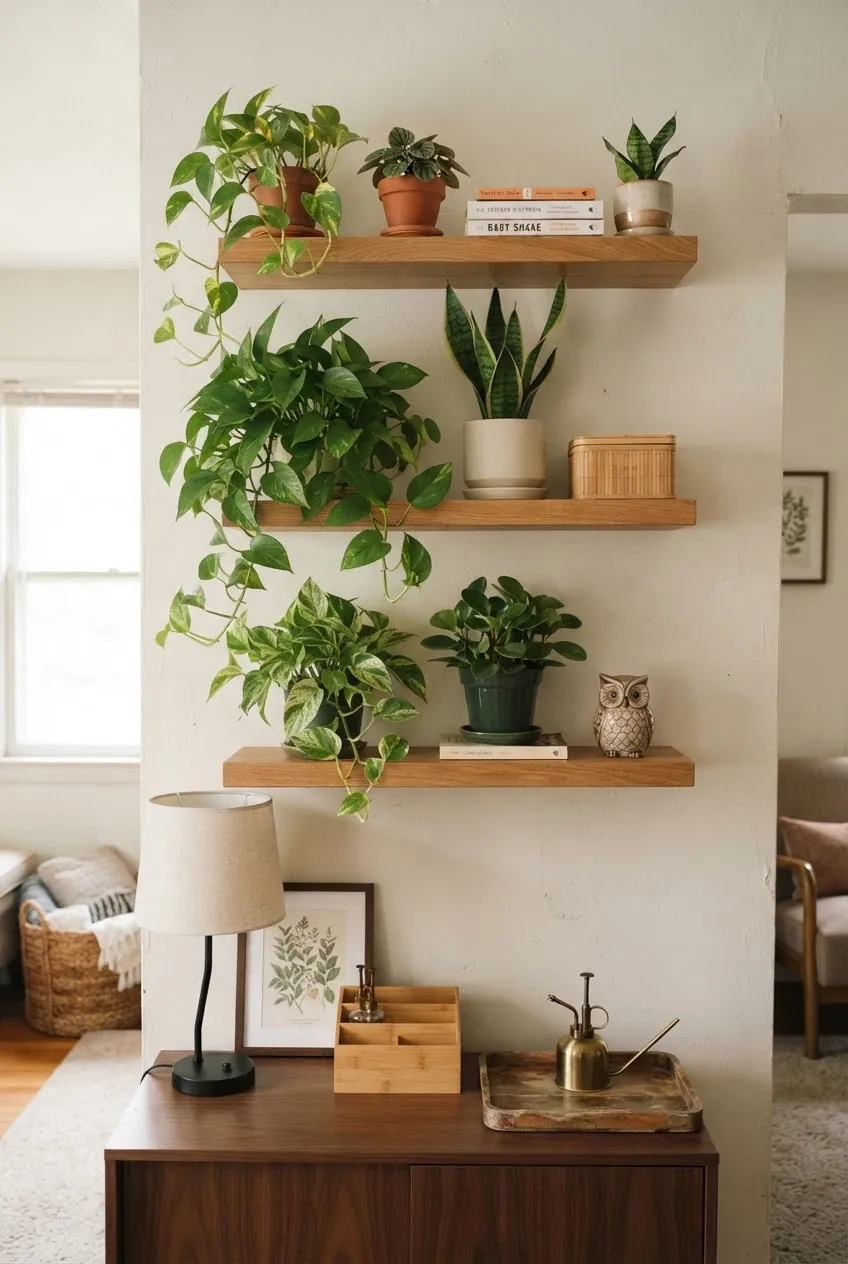
This is a strong choice for living rooms and bedrooms where you want green texture but need simple care. Put saucers under everything and leave space above each plant so leaves do not press against the shelf above.
Macrame Hanging Plant Cluster
A macrame cluster creates a softer plant wall, especially in bedrooms, reading corners, or boho living rooms. Mount a strong horizontal bar or ceiling track near the wall, then hang plants at layered heights so the cluster reads as one vertical composition.

The maintenance note is simple: make watering easy or you will avoid doing it. Choose lightweight pots, use removable nursery pots inside decorative covers, and keep a towel or catch bowl nearby for deep watering days.
Entryway Plant Accent Wall
An entryway plant accent wall should stay narrow and tough. Combine a small mirror, coat hooks, and a few wall planters so the green moment works with keys, bags, and shoes instead of competing with them.
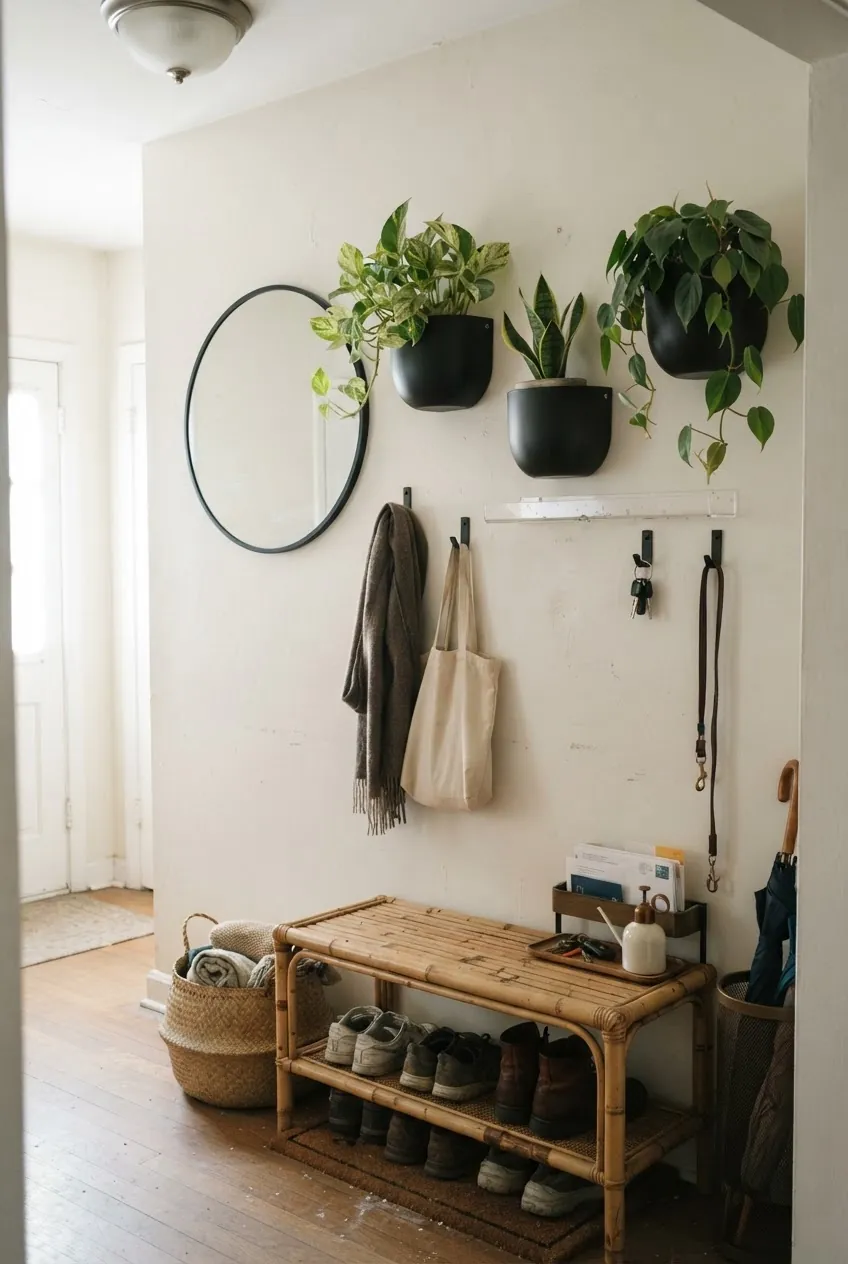
Choose plants that tolerate inconsistent attention, such as pothos, zz plant cuttings in pots, snake plant, or philodendron. Keep planters away from coat swing zones and use clear trays so you can see overflow before it reaches paint.
Bedroom Headboard Green Wall
A headboard green wall looks dreamy, but keep soil and water away from pillows. The safest version is a ledge or shelf above the headboard with trailing plants set in lined pots, not a wet living wall directly behind the bed.
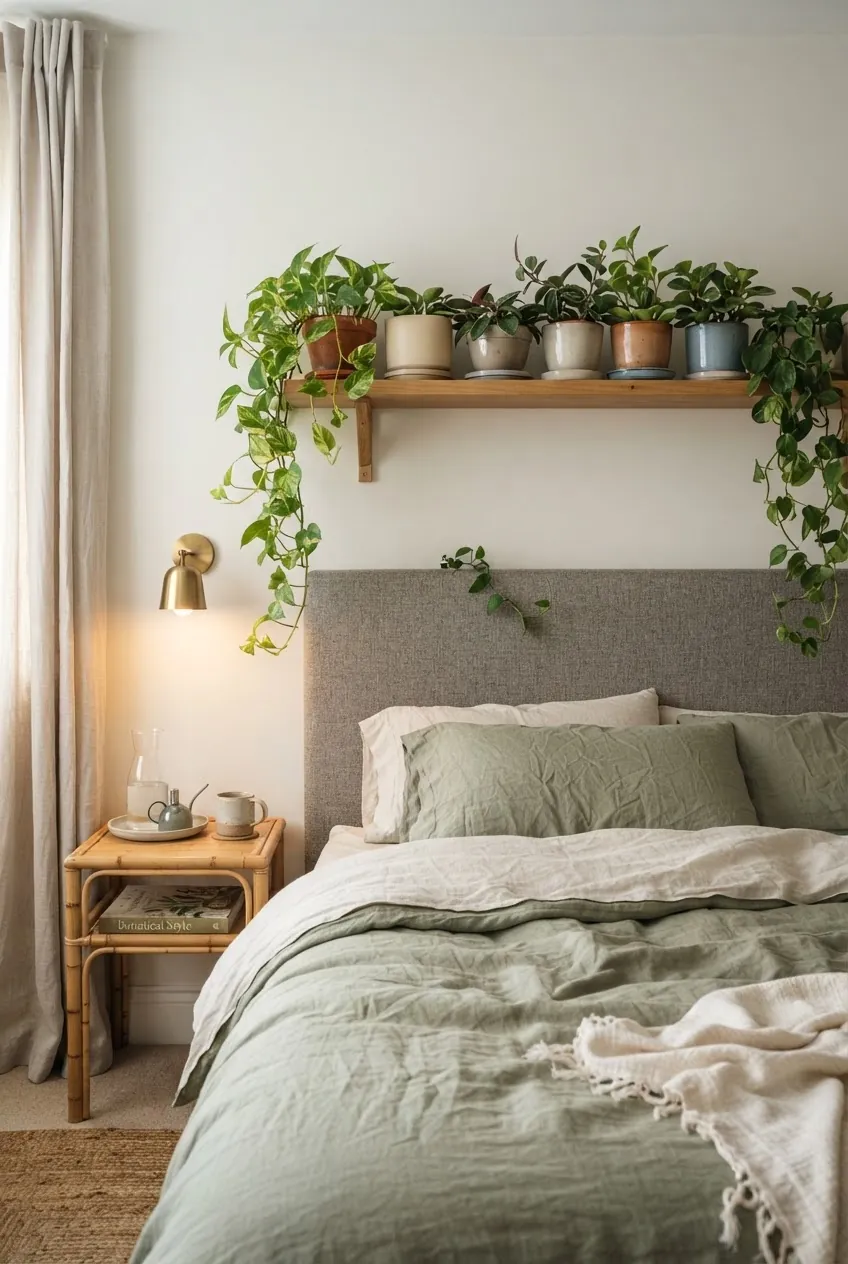
Use gentle growers such as pothos, hoya, trailing peperomia, or philodendron. Leave enough space to dust, prune, and move plants for watering; the goal is a calm bedroom, not leaves falling into your sheets.
Home Office Zoom-Backdrop Plant Wall
A home office plant wall should look good on camera and in real life. Use shelves, a small trellis, and a few trailing plants behind your chair, then keep the center visually calm so video calls do not feel chaotic.
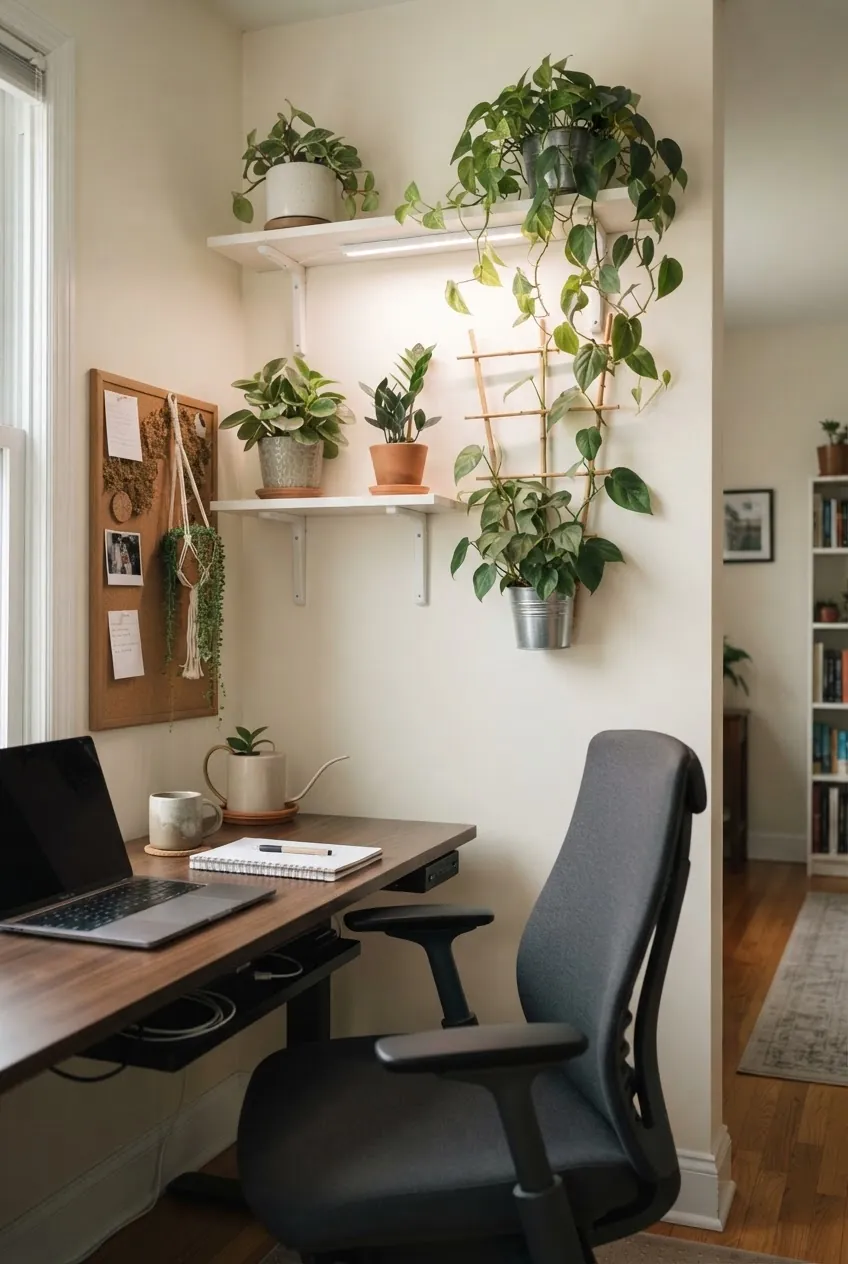
This is where grow lights can help, because offices are often placed in corners with weak light. Aim for even foliage, easy watering access, and a clean line behind your head instead of a dense jungle that steals focus.
Outdoor Fence Planter Wall
An outdoor fence planter wall can turn a plain boundary into a layered garden. Use rail planters, mounted boxes, or pocket planters rated for exterior use, then mix trailing plants with seasonal flowers and herbs.
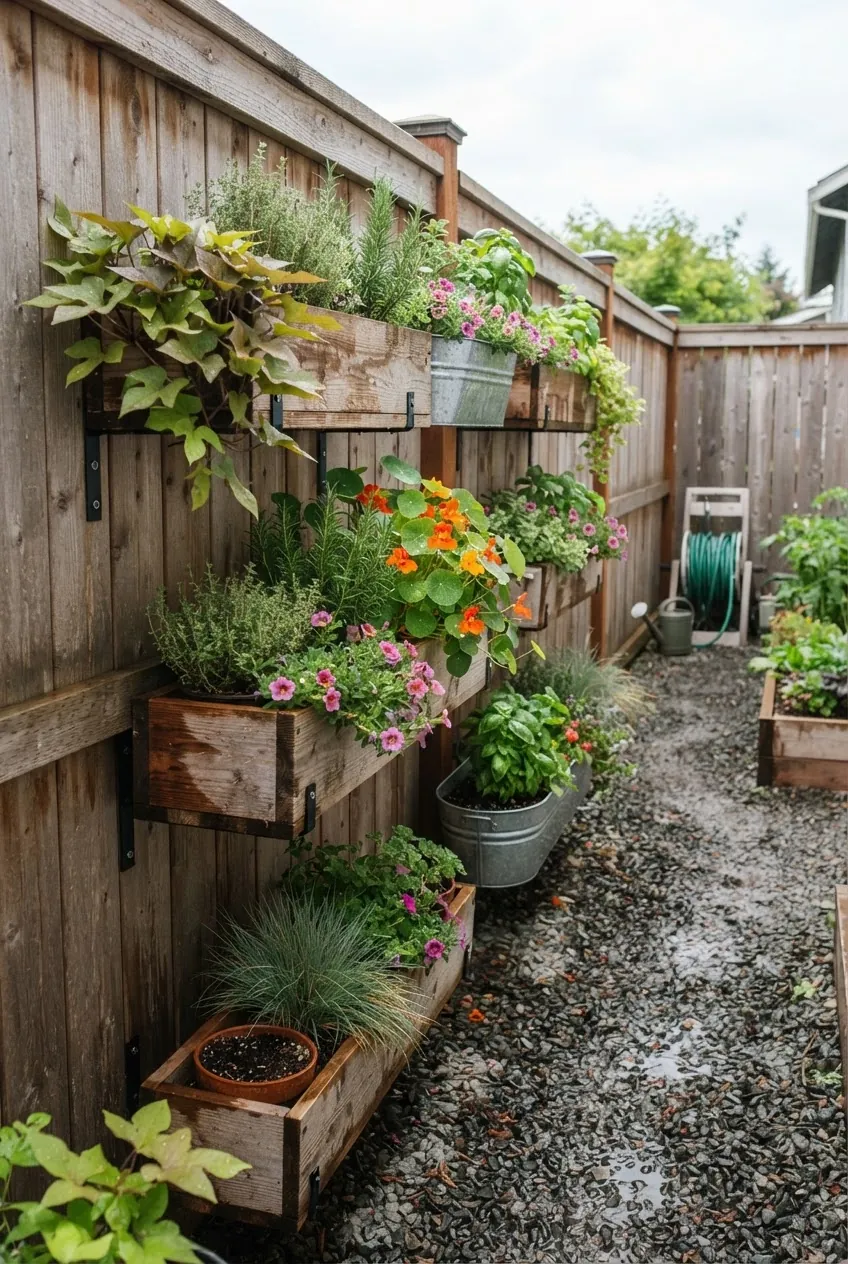
This is one of the easiest backyard ideas because drainage is less risky outdoors. Still, protect wood fences from constant damp contact, use exterior hardware, and leave enough space to repaint or repair the fence later.
Corner Plant Ladder Wall
A ladder shelf can fake a plant wall without mounting anything heavy. Lean or secure the ladder in a corner, then layer trailing plants on upper rungs and sturdier upright plants near the bottom.
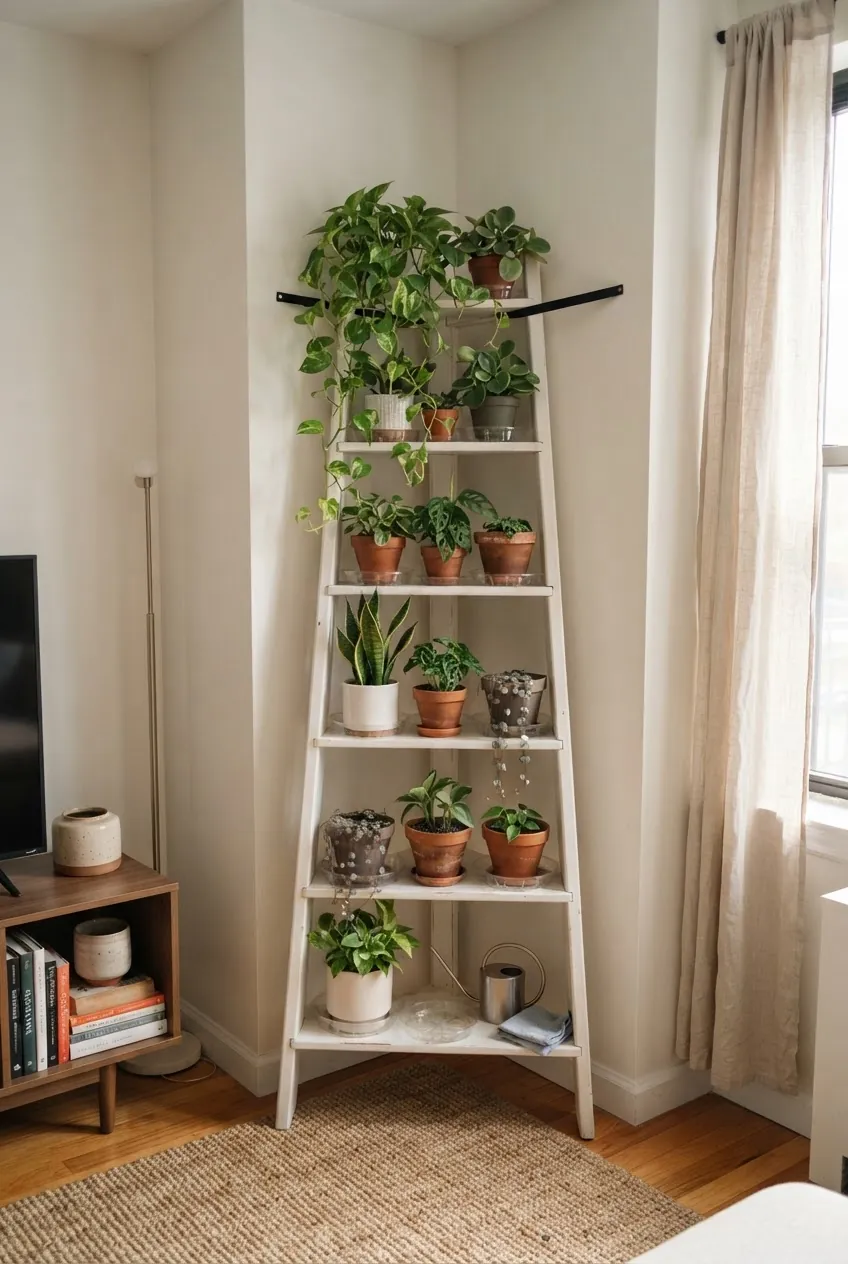
This is ideal for renters because it gives vertical impact with almost no wall repair. Put waterproof trays on each shelf, anchor the ladder if children or pets are nearby, and rotate plants so one side does not lean permanently toward the window.
Renter-Friendly Wire Grid Wall
A wire grid wall is light, flexible, and easy to change. Mount it with approved anchors or attach it to a freestanding frame, then clip on small planters, propagation jars, mini shelves, and plant-care tools.
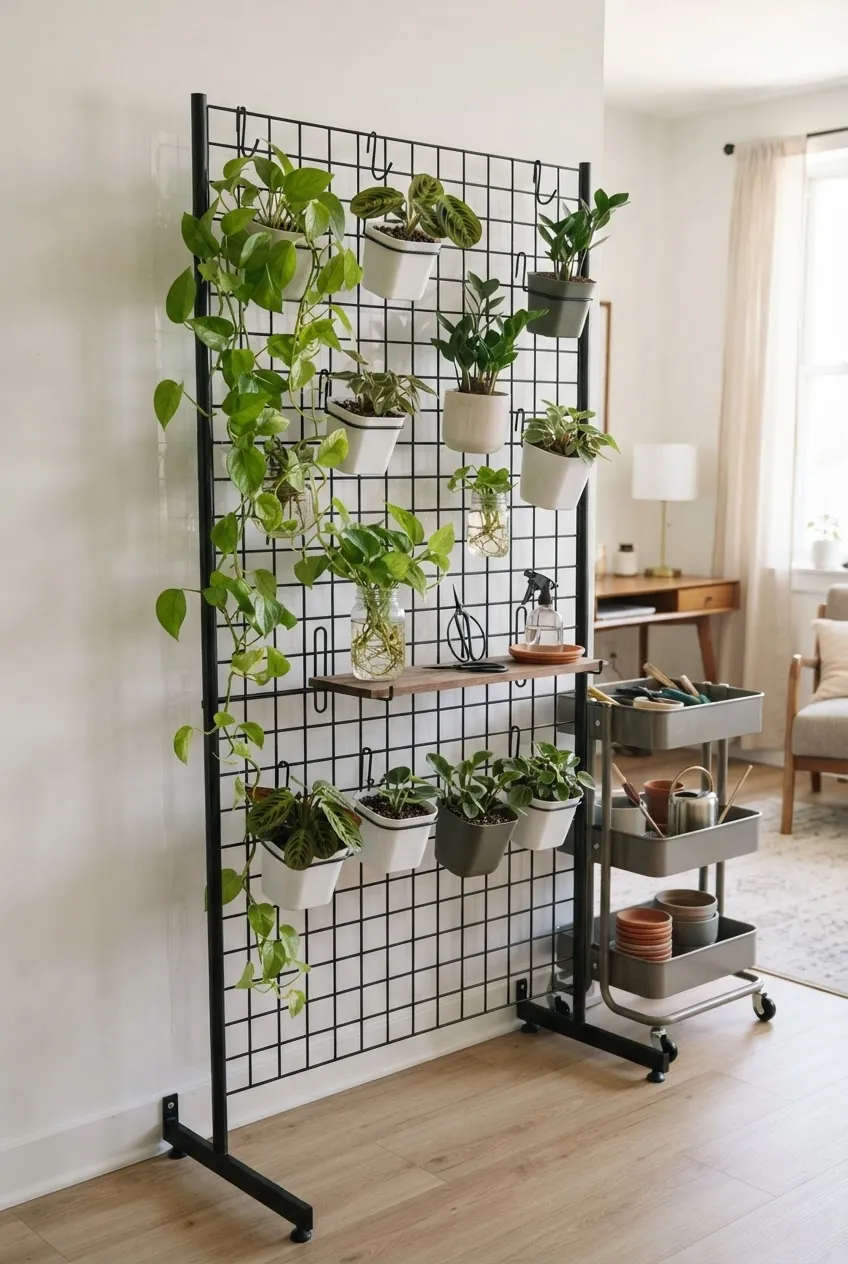
Keep the plant count modest. The grid is best for lightweight vines and small pots, not heavy wet soil. It is a smart way to test DIY plant wall indoor ideas before investing in a permanent system.
Mixed Pot Wall With Drip Tray System
A mixed pot wall looks casual, but it needs the most discipline around watering. Use a long drip tray, waterproof backing, and removable planters so every pot can drain without sending water into drywall.
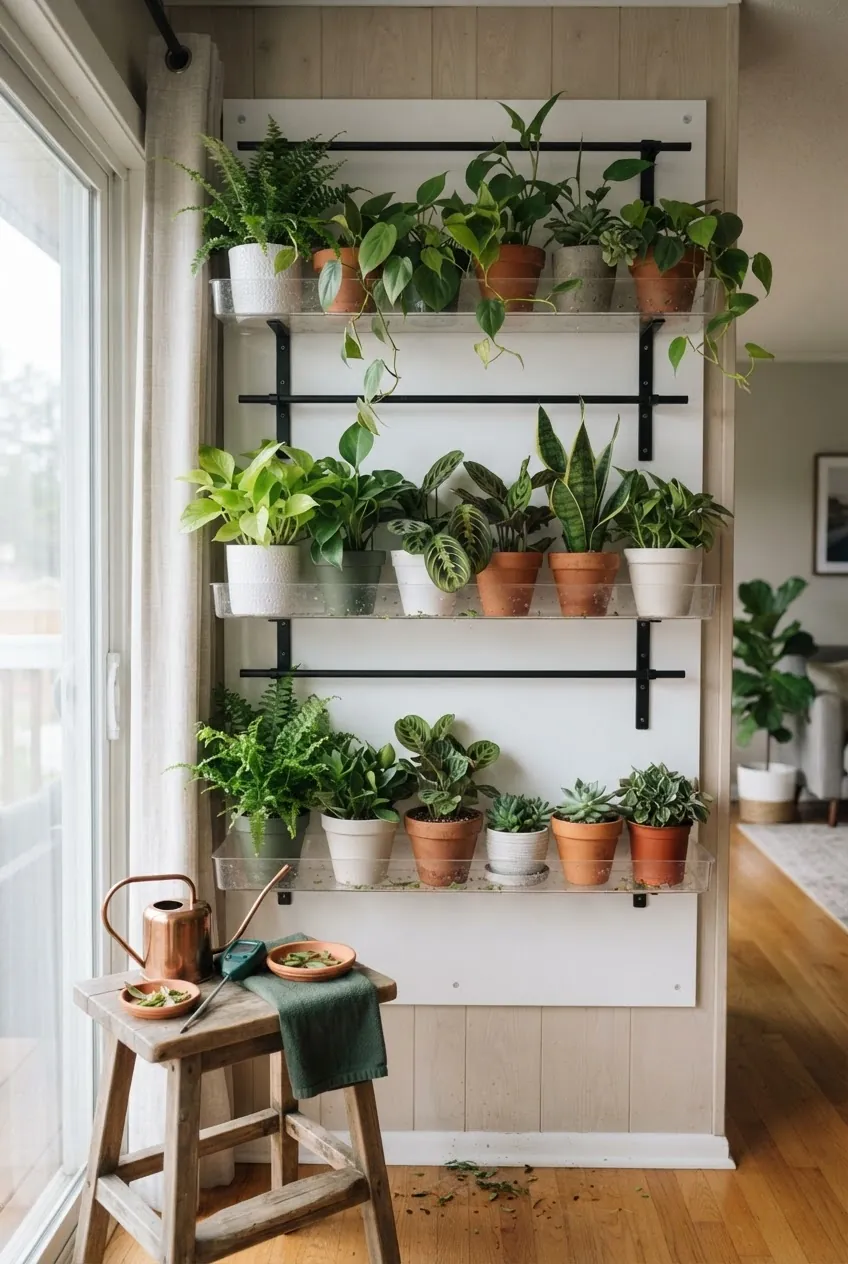
This is the answer for people who love variety. You can combine pothos, peperomia, philodendron, small ferns, and spider plants, but keep plants with very different moisture needs in separate zones.
The strongest plant wall is the one you can keep alive after the first photo. Before buying hardware, decide where excess water goes, how each pot comes down, whether the wall gets enough light, and which plants share the same care rhythm. That practical plan is what turns saved inspiration into a wall that still looks good months later.