A low budget porch looks intentional when each item earns its space, not when every seasonal aisle find comes home. Start with useful containers and strong shapes, then add color from materials you can gather, grow, repaint, or reuse. The result can feel generous without sacrificing the walking path or creating a pile of decor that lasts only a few weeks.
Gather Branches From Your Own Yard
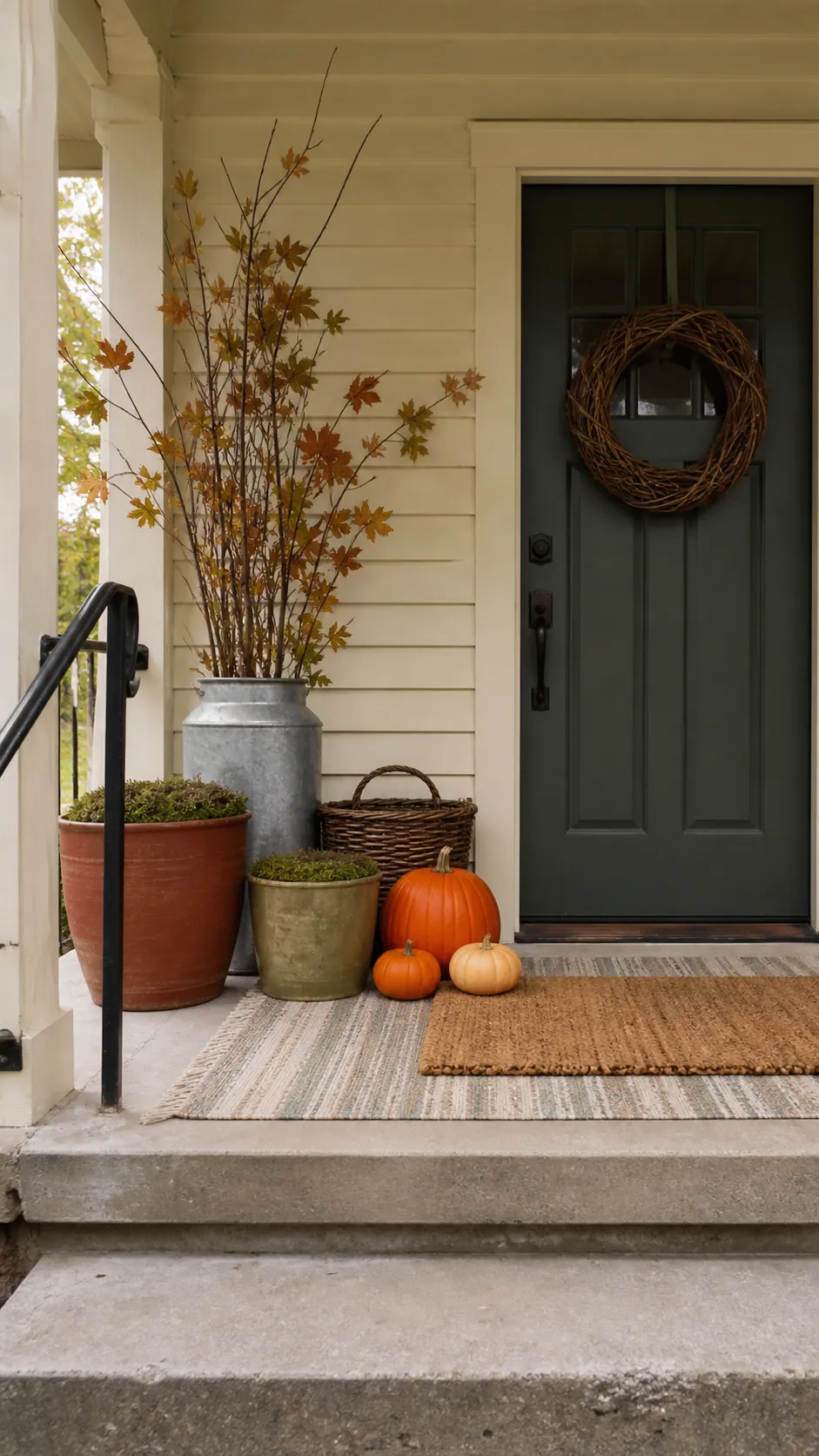
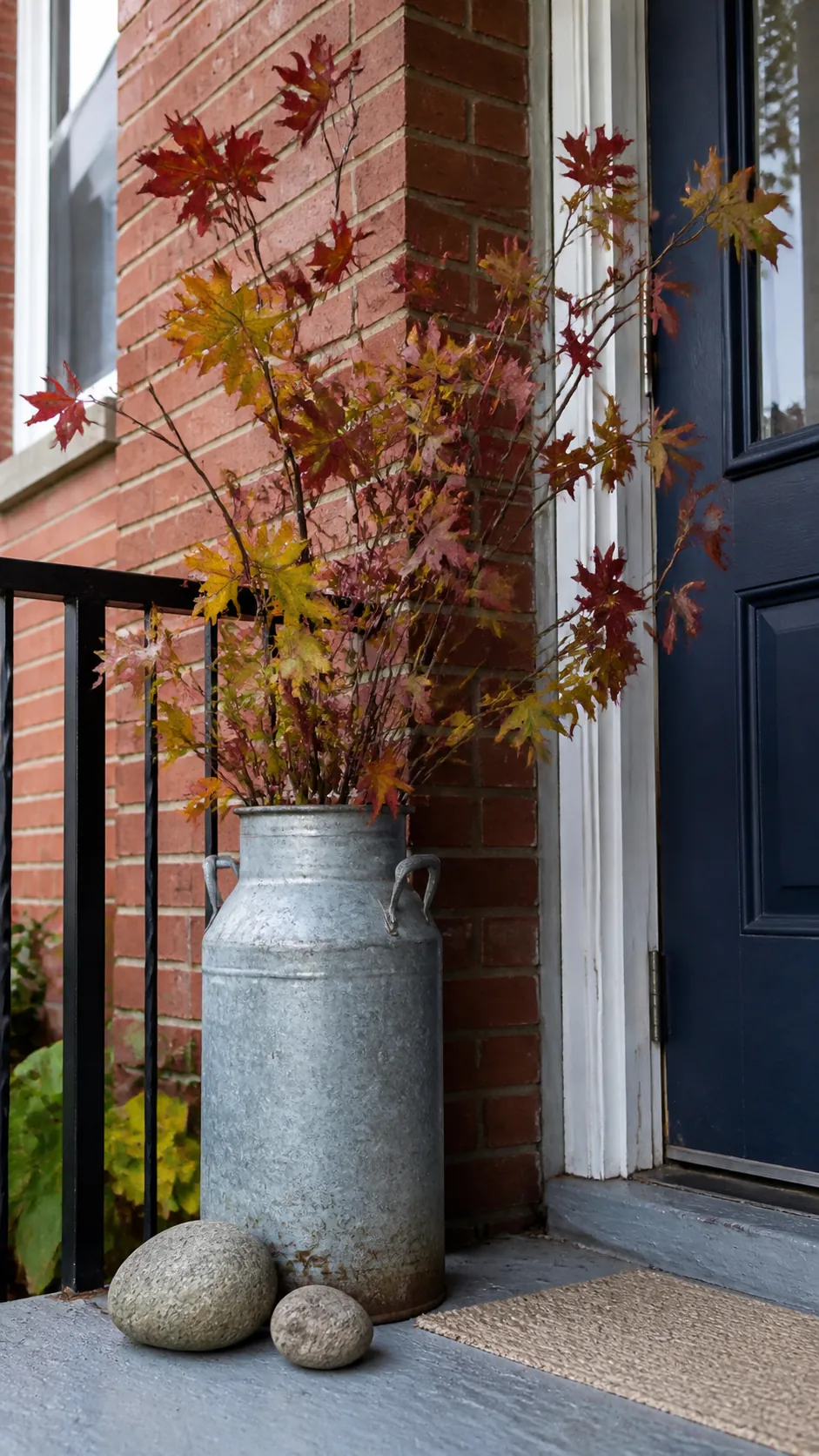
Freshly fallen branches can fill a tall container for almost nothing. Choose clean pieces with interesting forks, trim loose twigs, and weight the vessel before arranging them. Collect only where you have permission, and keep brittle branches away from lights and the door swing.
Thrift a Basket for Pumpkins
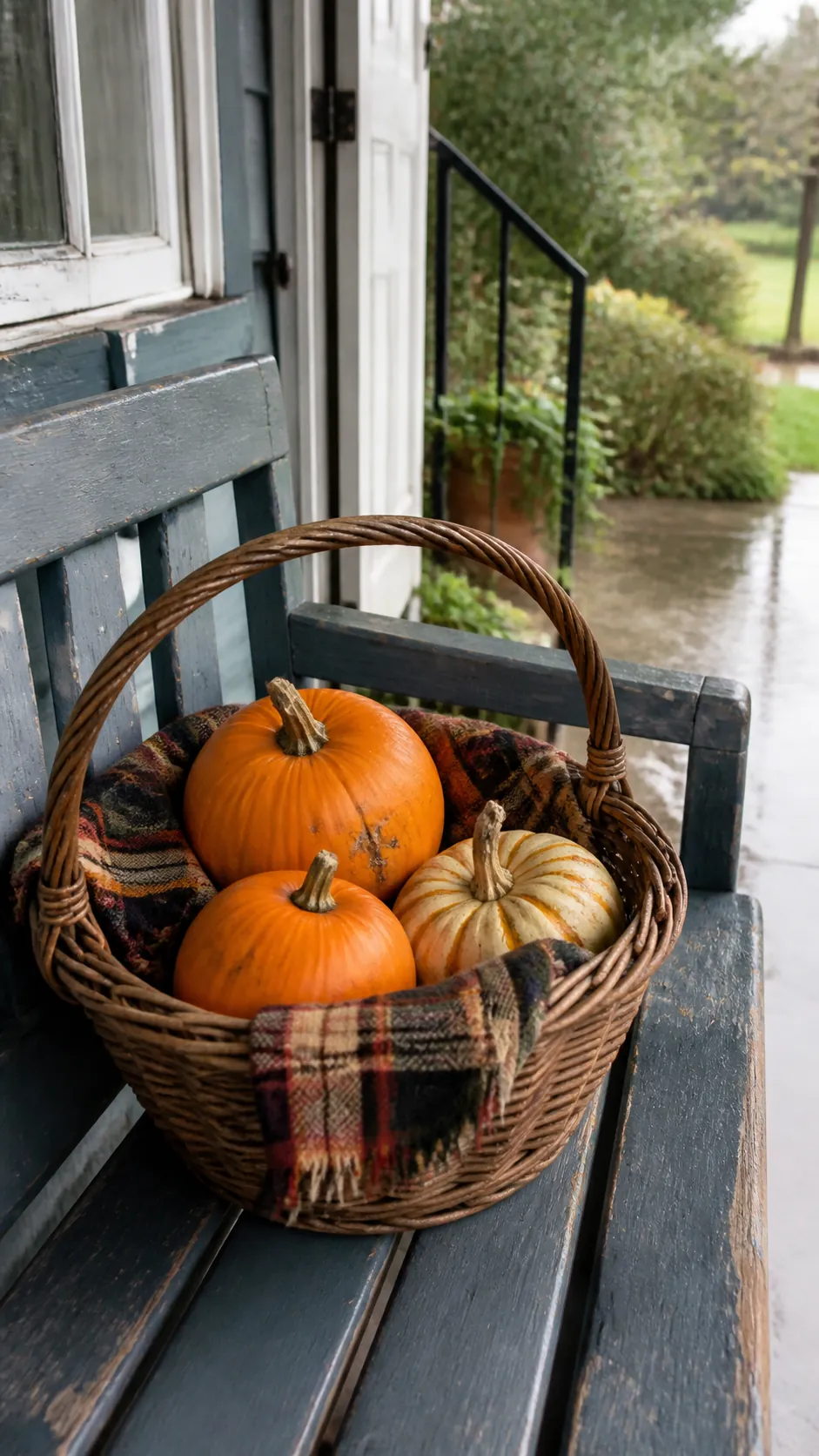
A secondhand basket makes three grocery store pumpkins read as one substantial display. Check the base and handles for weakness, then place the basket under cover so rain does not soften the weave. A folded scrap of plaid fabric can hide gaps and add color without another purchase.
Repaint Mismatched Plant Pots
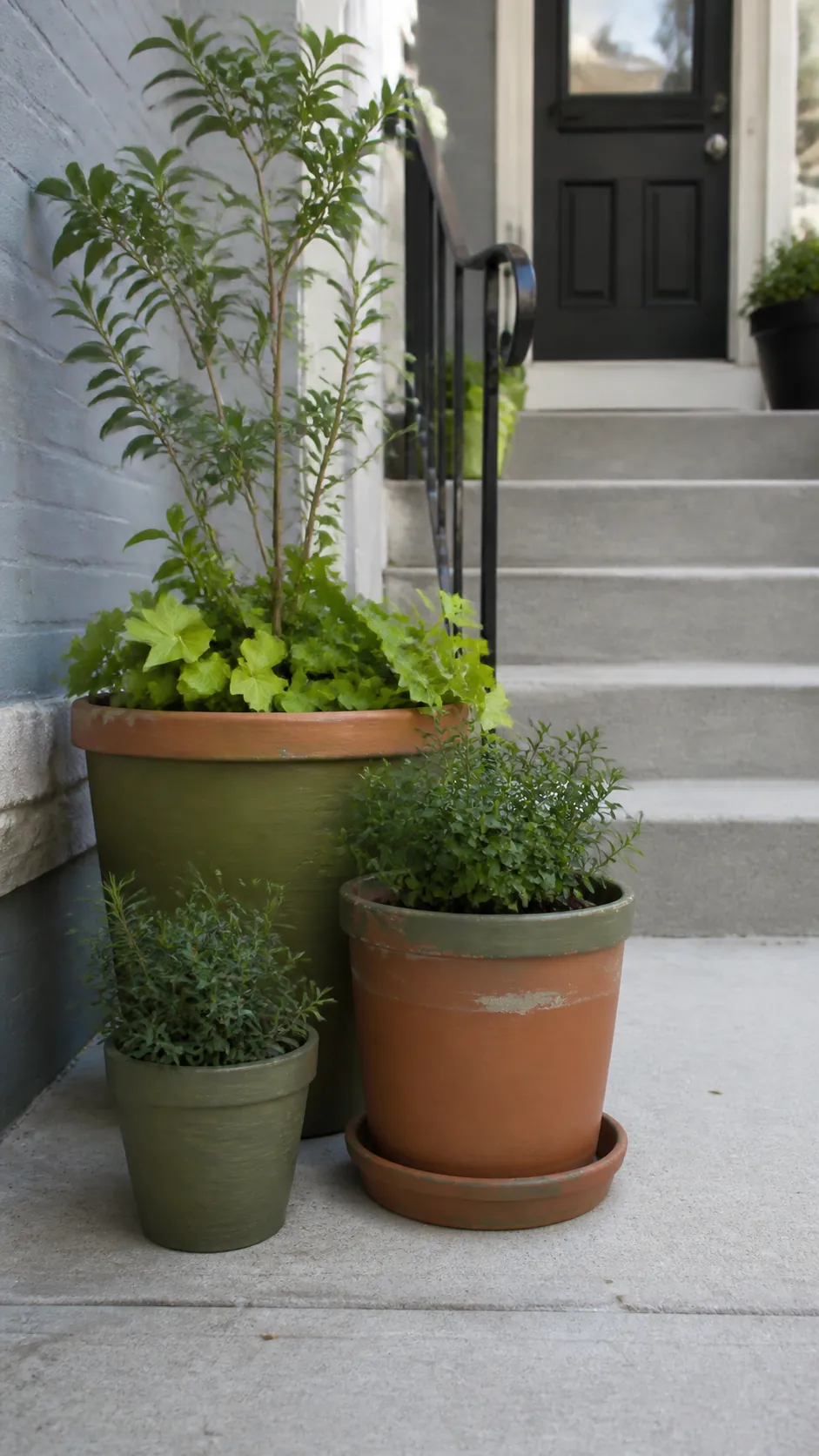
Leftover exterior paint can unify pots that came from different rooms or thrift shops. Clean and prepare each surface according to its material so the finish does not peel after the first wet week. Two related colors look collected and relaxed, while one repeated color creates a sharper entrance.
Cluster a Few Grocery Store Pumpkins
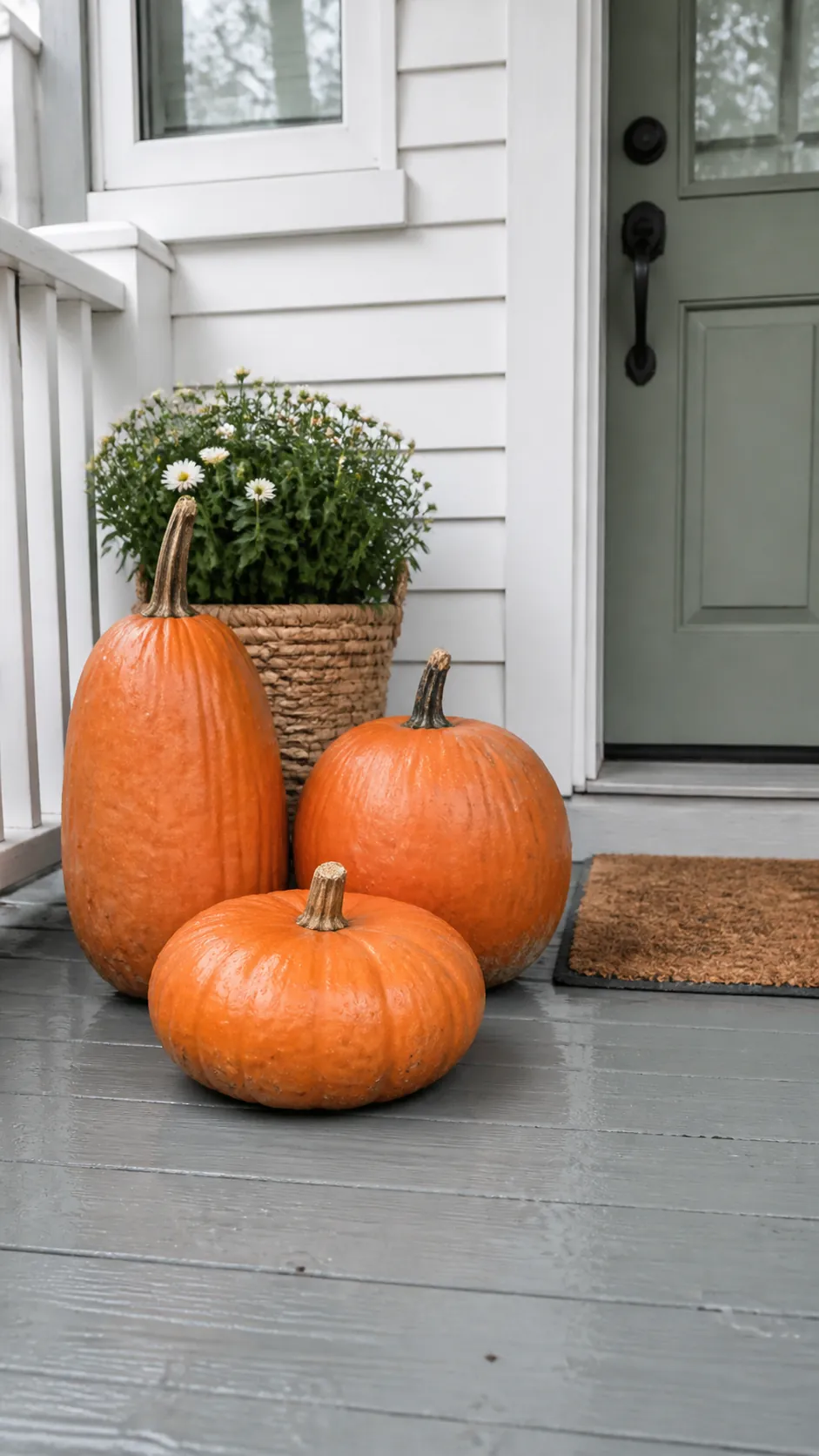
You do not need a wagon full of pumpkins to make the season visible. Choose one tall, one round, and one flat shape, then group them closely at different angles. Moving the cluster onto one side of the door makes it look deliberate and preserves a clean route for guests.
Sew a Cover From a Plaid Remnant
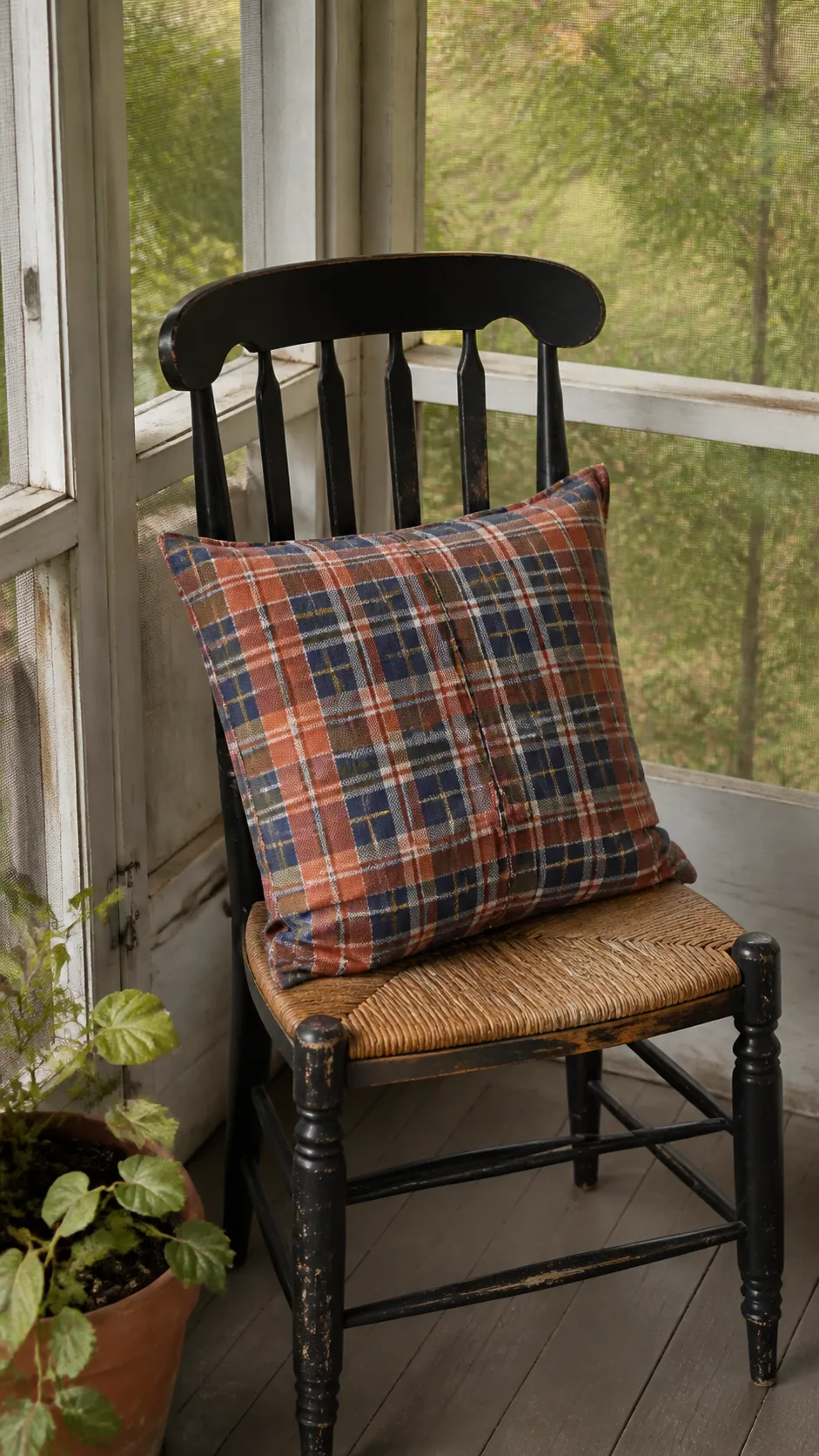
A fabric remnant can become a simple envelope cover for an existing outdoor pillow. Select a washable weave and size it loosely enough to remove before rain. One patterned cushion on a chair or bench gives more impact than several small novelty pillows.
Mix One Mum With Free Greenery
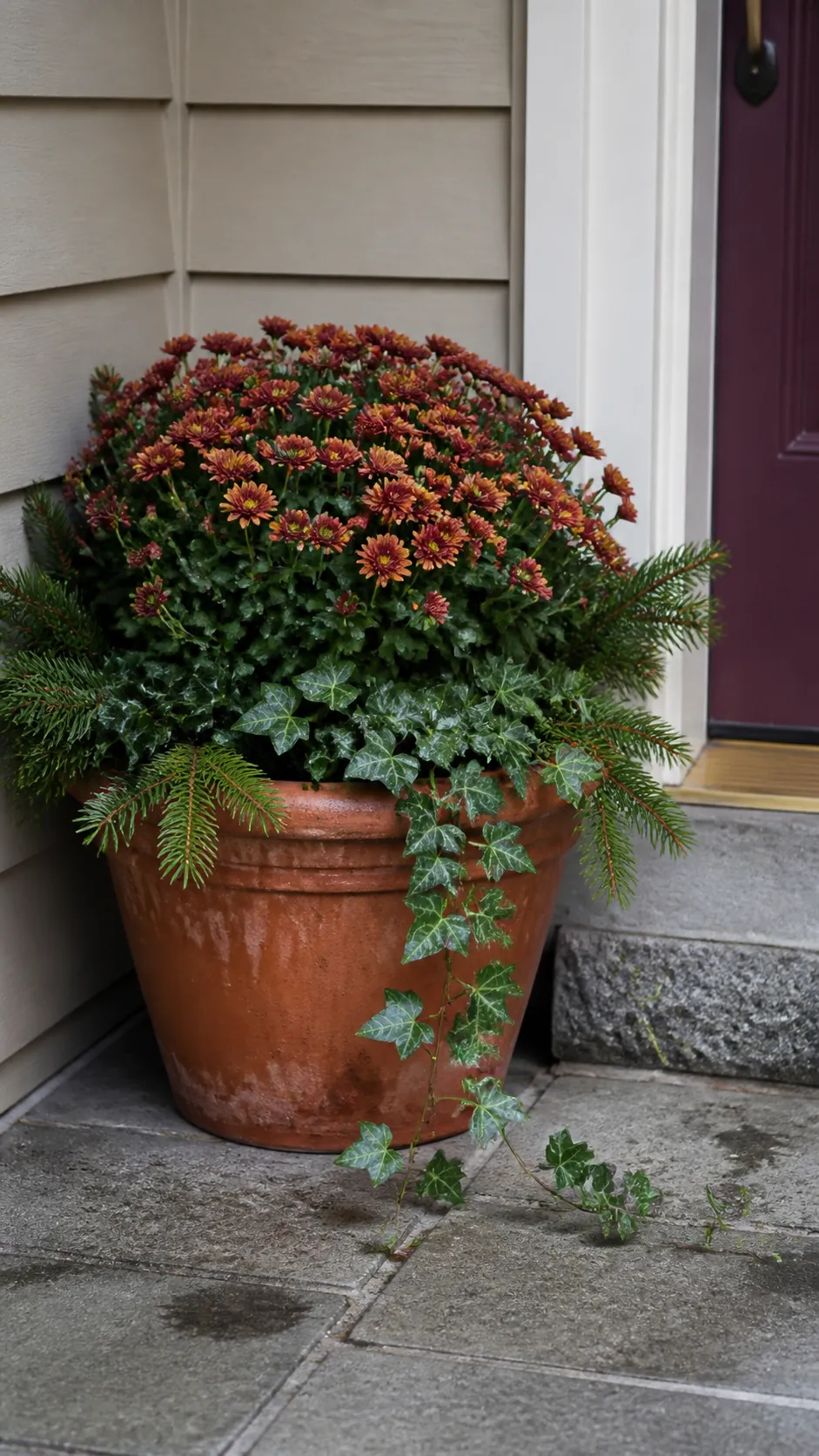
One healthy mum can look fuller when it shares a wide planter with clipped evergreen tips or trailing vines already in the yard. Verify that every cutting is safe to handle and gather only from plants you own. Keep the living plant accessible for watering instead of burying its soil beneath decorative material.
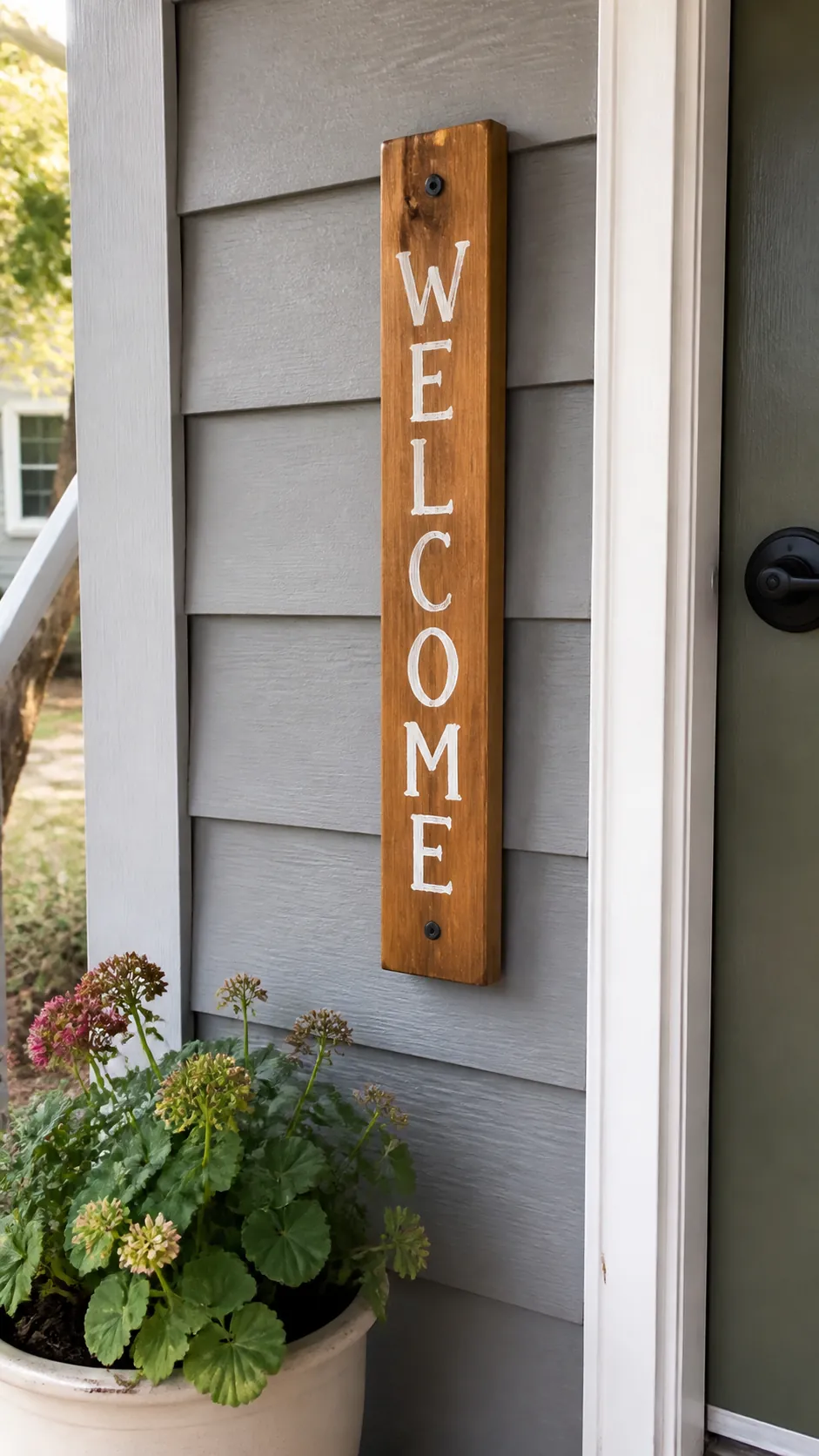
Paint a Scrap Wood Welcome Board
A sound offcut of exterior grade wood can become a narrow welcome board. Sand rough edges, use a short readable word, and protect the finished surface with a suitable sealer. Secure the board to the wall or a heavy base so wind cannot push it across the steps.
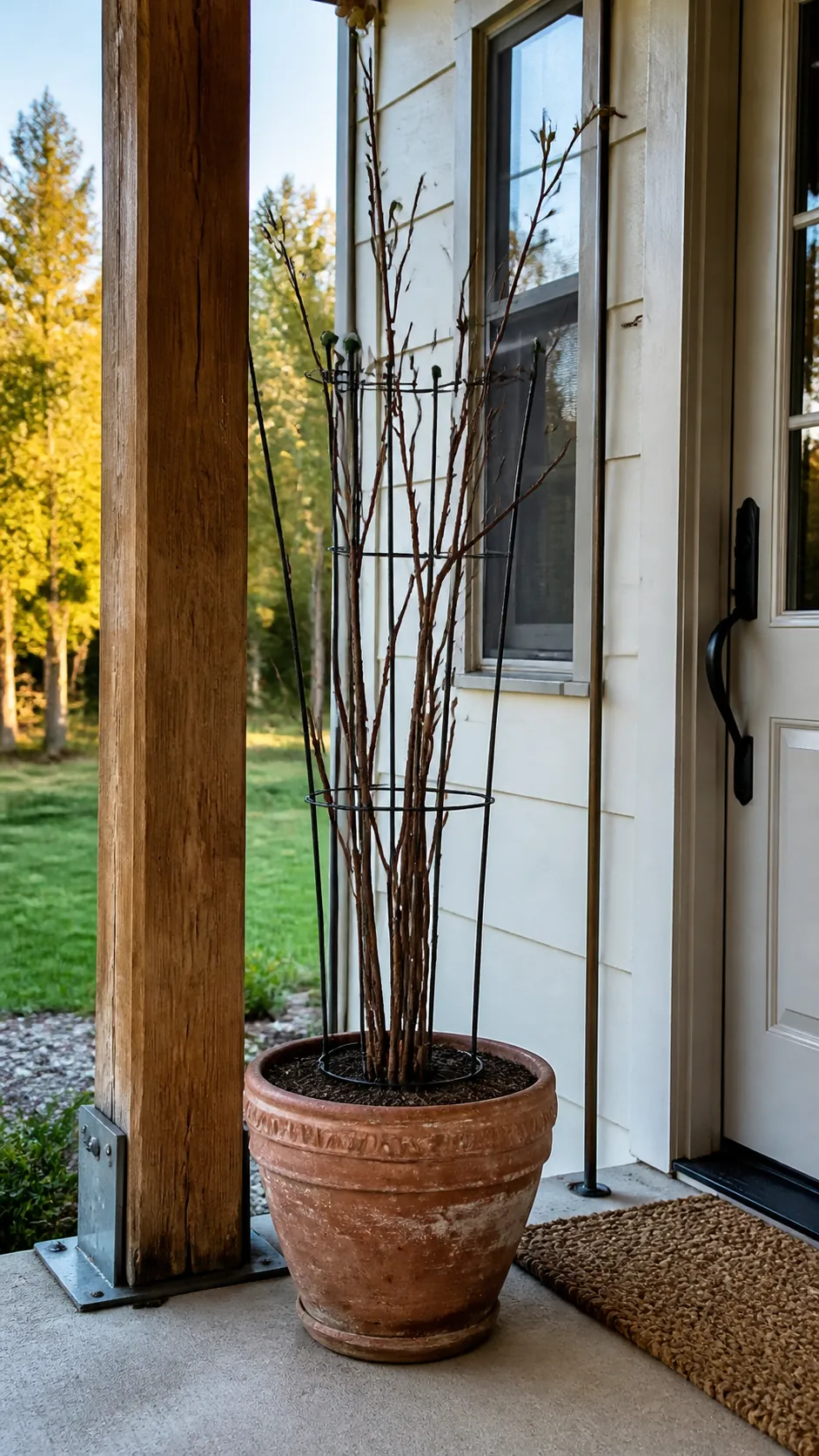
Turn a Tomato Cage Into a Leaf Form
An unused tomato cage can support leafy branches in a large pot and create inexpensive height. Invert or position it safely according to its shape, pad any exposed wire ends, and anchor the base with soil or stones. Wrap the foliage loosely so the finished form stays airy rather than resembling a solid cone.
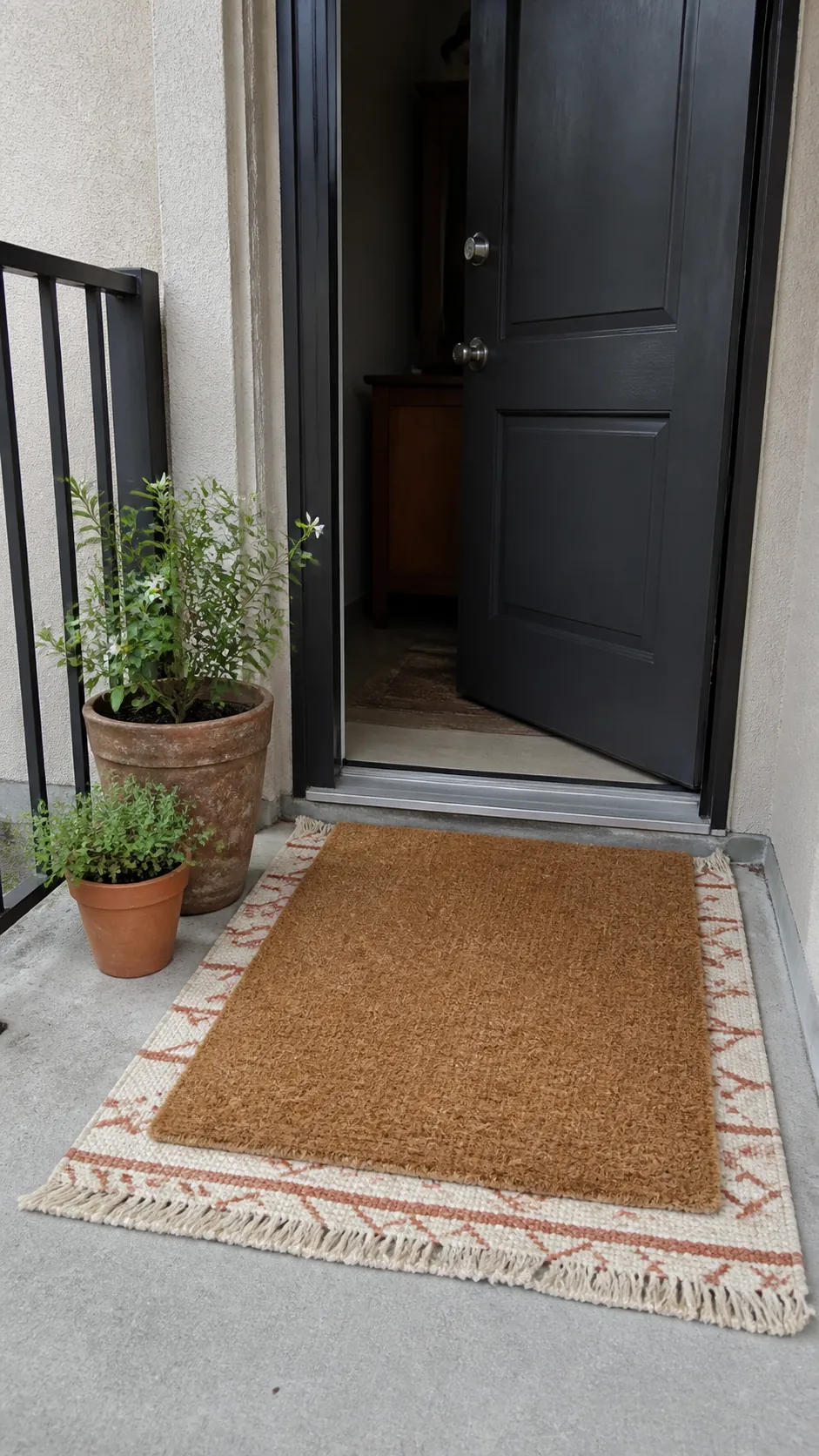
Layer a Small Rug You Already Own
A washable flat weave rug from a mudroom can refresh the porch beneath a plain doormat. Confirm that the fabric is suitable for temporary outdoor use and bring it inside before soaking weather. The lower rug should extend clearly around the mat without curling into the door path.
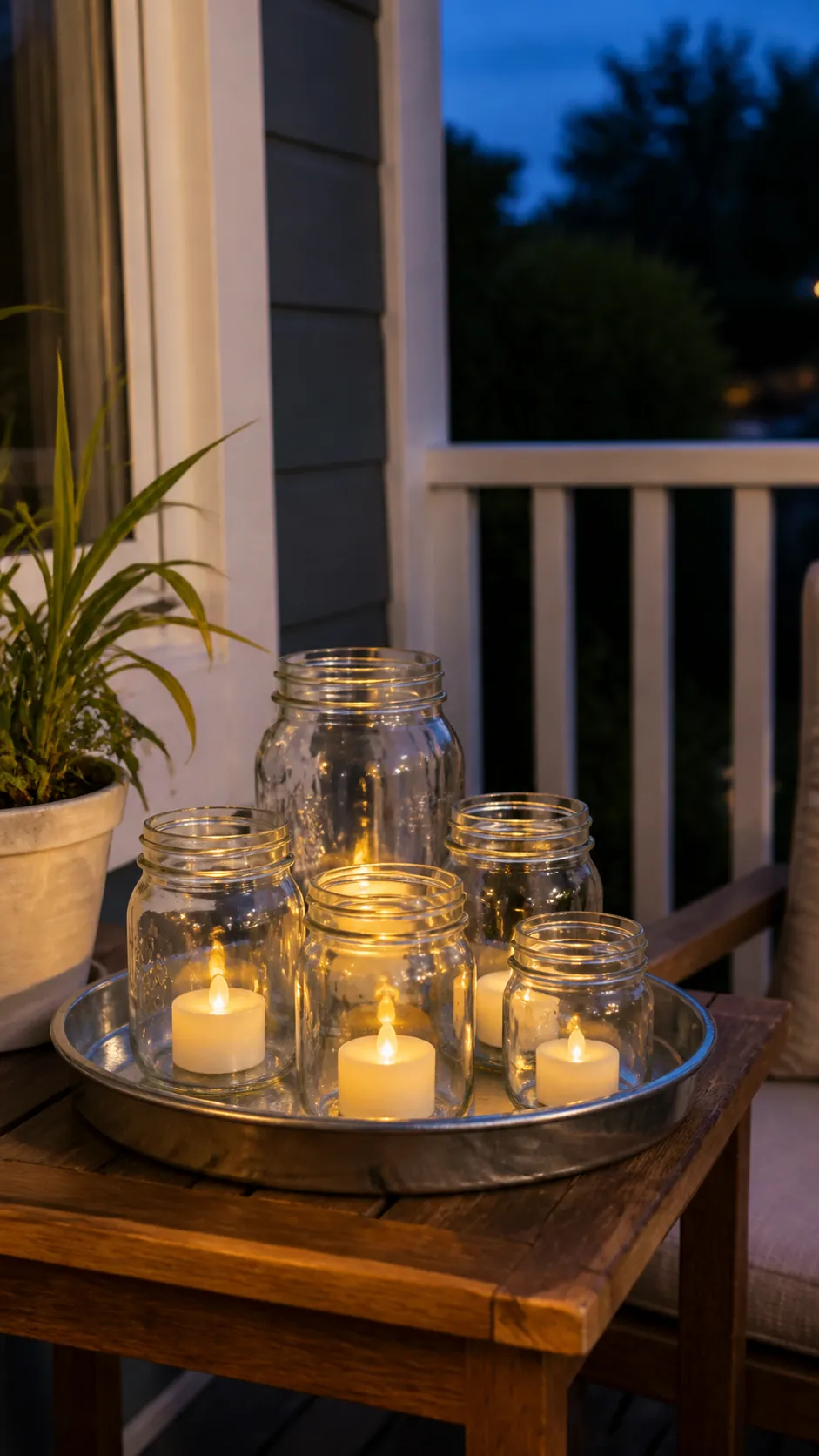
Light Mason Jars With Safe Candles
Clean mason jars can hold small outdoor rated flameless candles for a gentle evening glow. Group them inside a shallow metal tray so they are stable and easy to carry indoors. Keep the glass away from step edges, and never substitute open flames near dry fall materials.
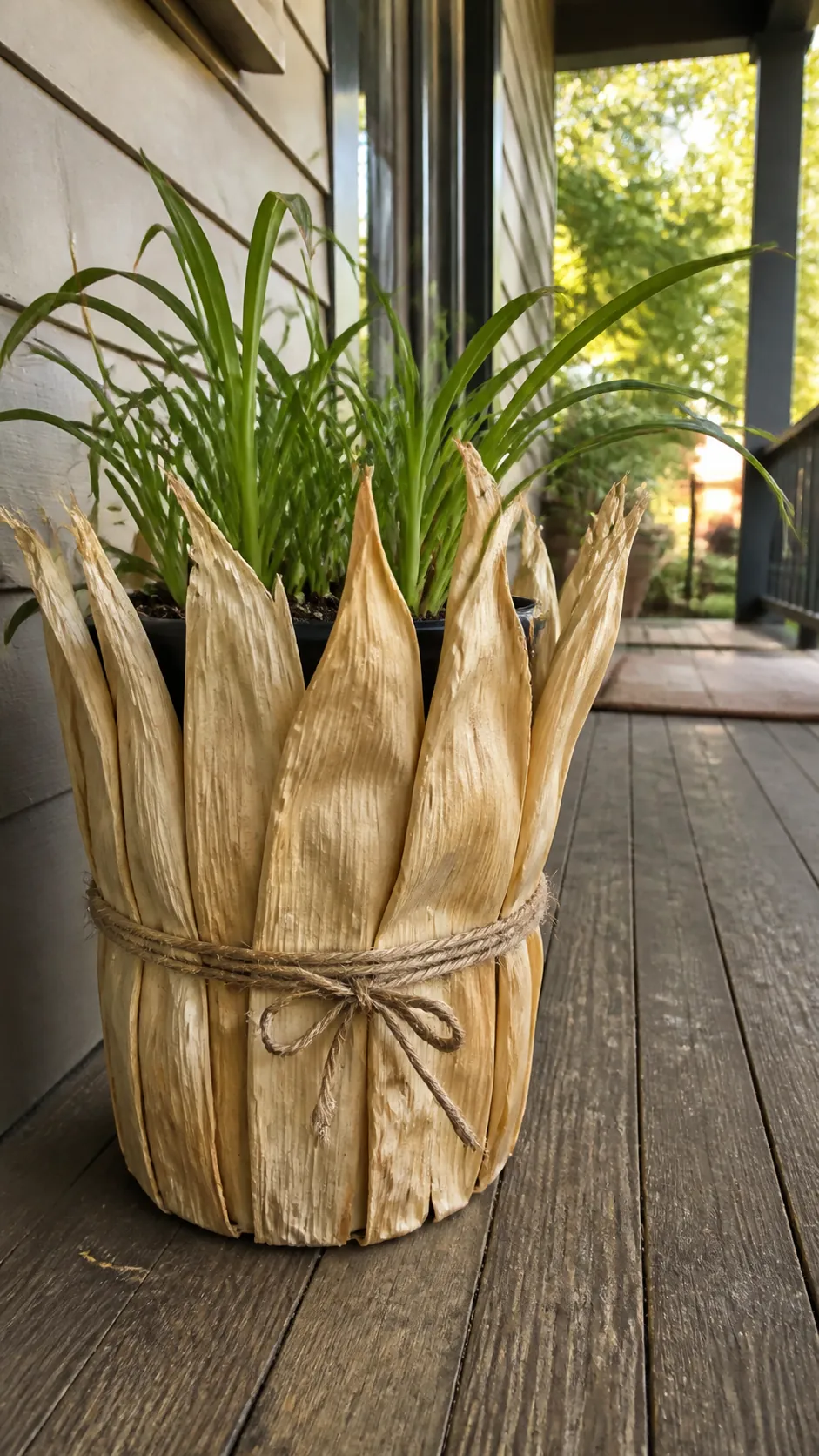
Tie Corn Husks Around Existing Planters
Dry corn husks can disguise a plain nursery pot and introduce pale harvest texture. Wrap them around an outer cachepot, not against constantly wet soil, then bind the middle with sturdy jute. Place the finished planter under cover and inspect it often for moisture or insect activity.
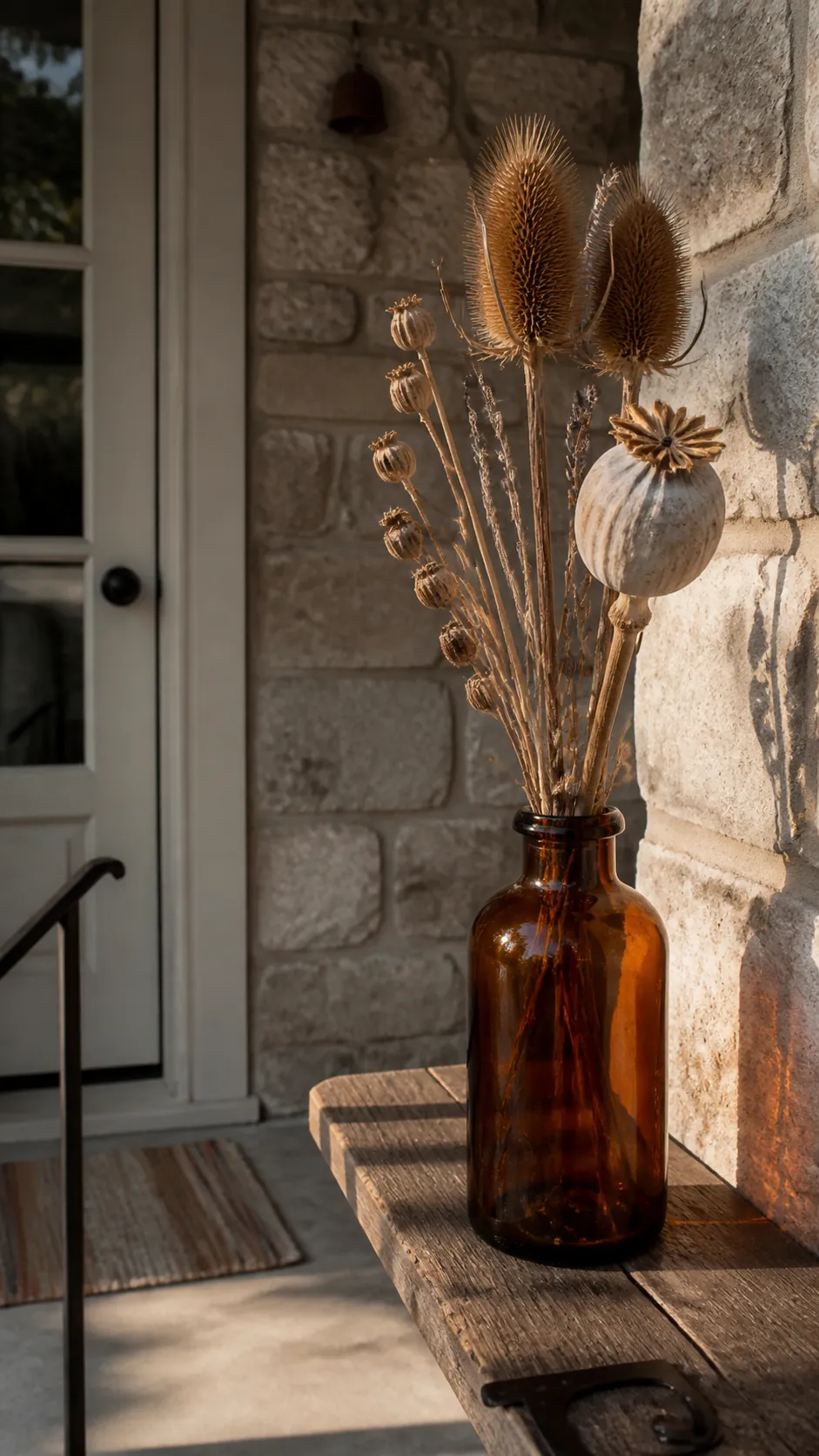
Display Dried Seed Heads in a Bottle
Dried seed heads make a sculptural arrangement when held in a heavy bottle or crock. Look for varied shapes, remove anything that sheds excessively, and avoid protected plants or land where collecting is forbidden. A narrow grouping leaves more usable surface area than a broad bouquet.
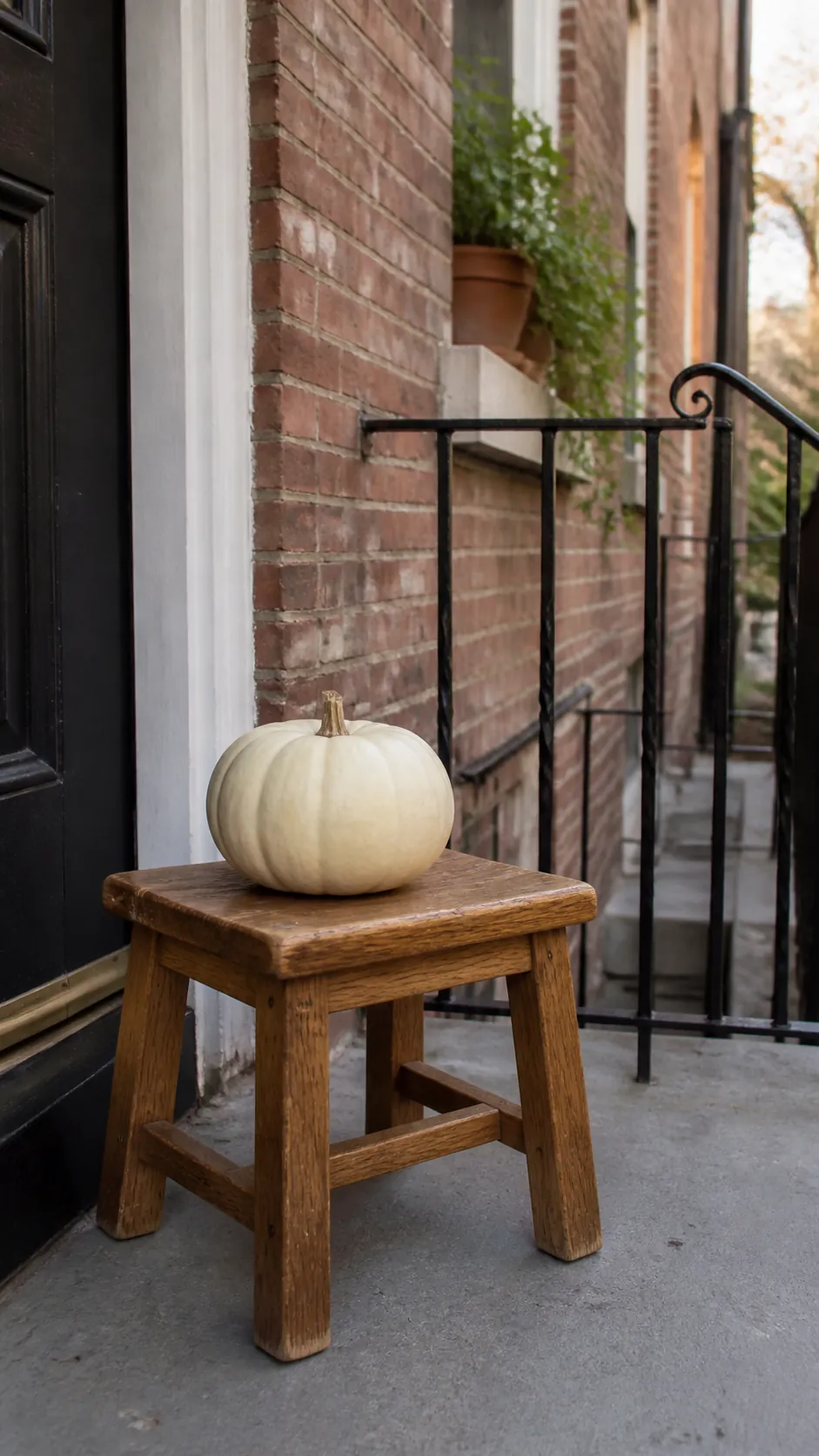
Use a Secondhand Stool as a Riser
A short wooden stool lifts one pumpkin or planter enough to vary the display height. Test every joint before use, tighten loose hardware, and keep the stool on a level protected surface. A worn finish can be charming, but rot and wobble are not worth disguising.
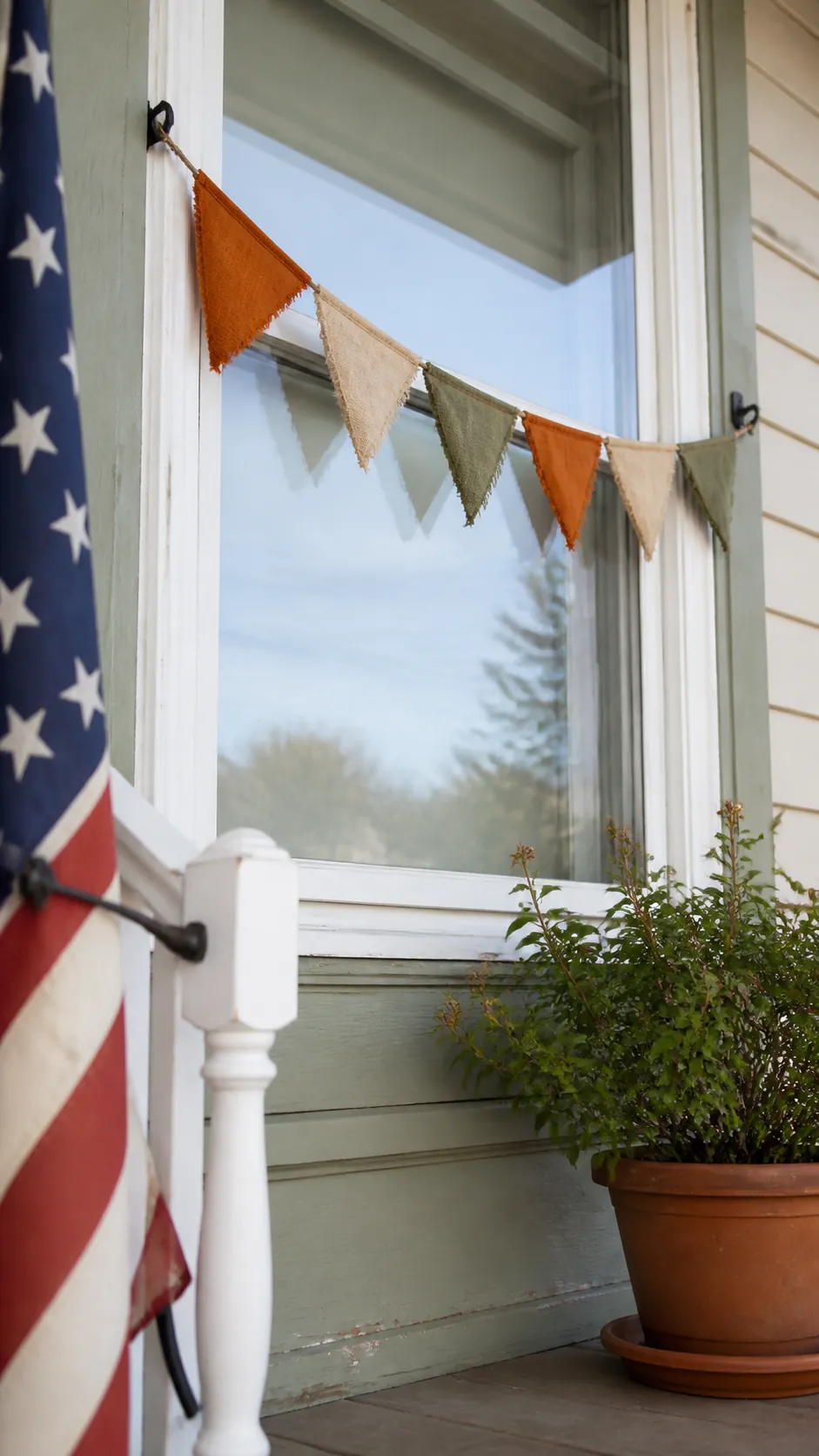
Cut Fabric Scraps Into Simple Bunting
Small triangles cut from coordinated fabric scraps can form a cheerful sheltered garland. Limit the colors to three, leave open space between flags, and sew or glue each piece securely around the cord. Hang it high and taut where it cannot brush faces or tangle with the door.
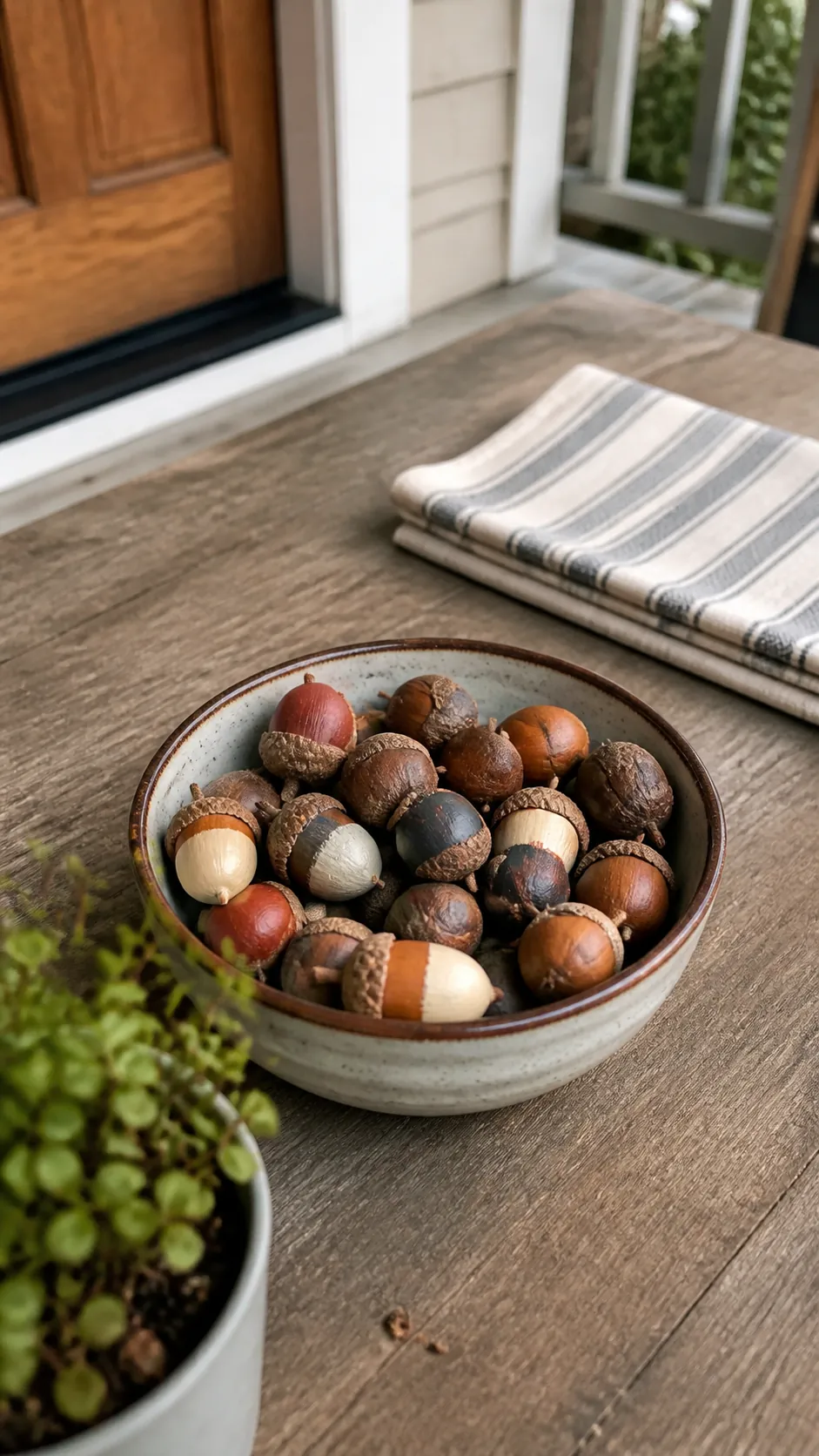
Fill a Bowl With Painted Acorns
A handful of clean treated acorns can become a small color accent with leftover craft paint. Paint only a few caps or nuts in muted cream and rust, leaving most of the natural brown visible. Keep the bowl on a table away from children and pets, since the pieces are decorative and easy to swallow.
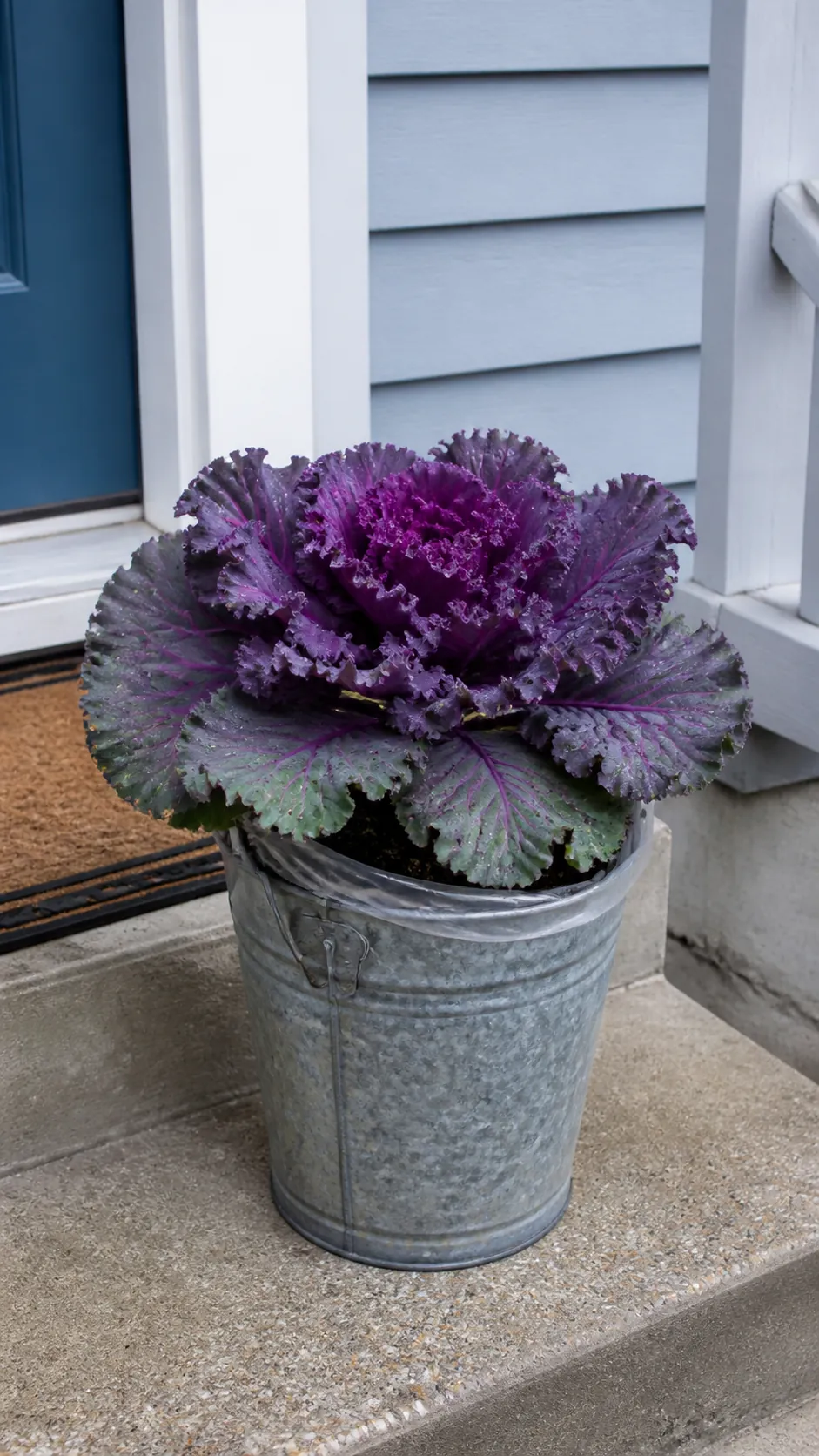
Plant One Pot With Ornamental Kale
One pot of ornamental kale offers broad color and texture when flowering plants are expensive or fading. Set it inside a container you already own and leave enough visible soil for easy watering. Purple centers pair well with terracotta, black, or galvanized finishes, so no extra accents are necessary.
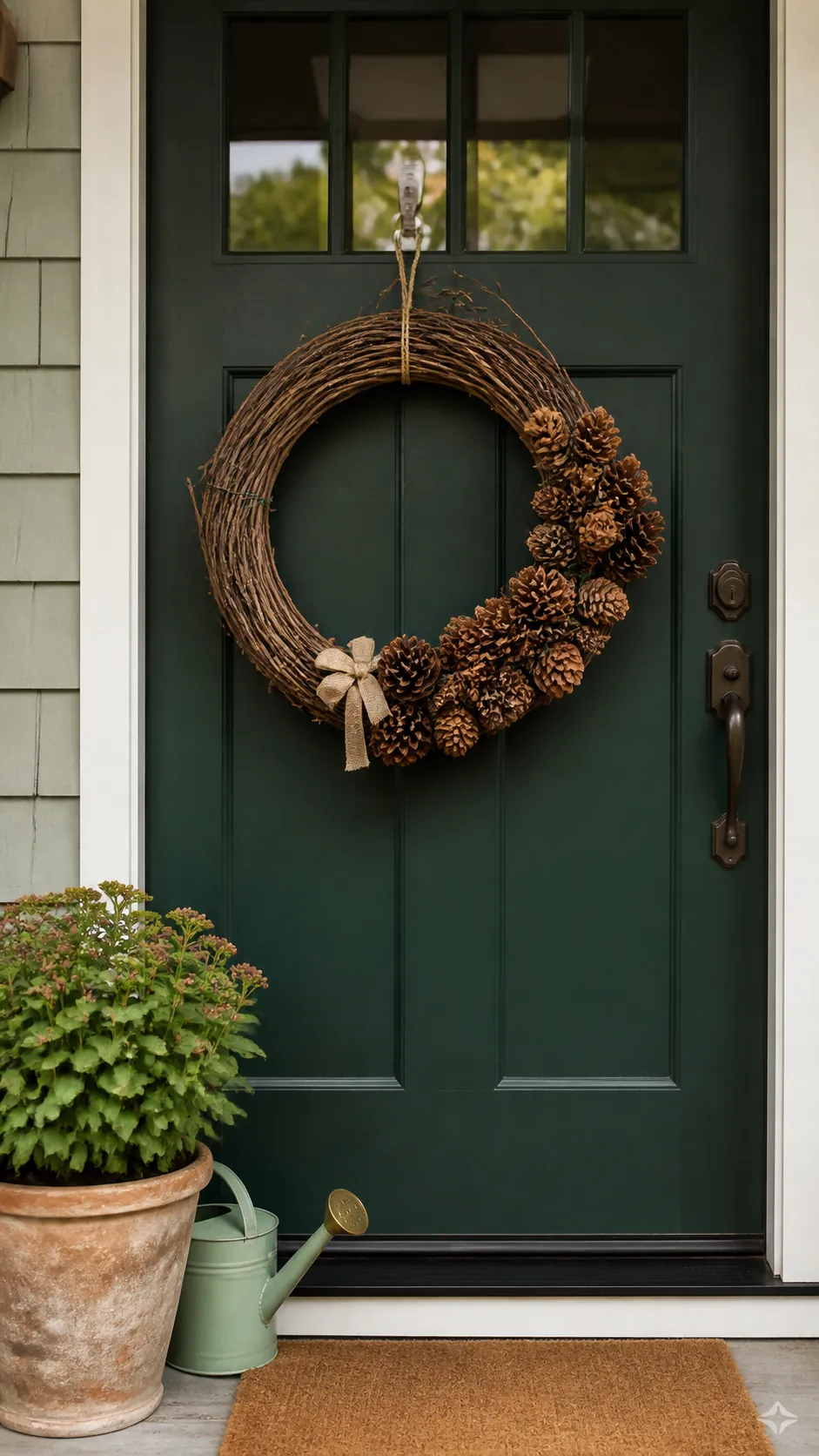
Wire Pinecones Onto an Old Wreath
An old grapevine wreath can carry a new season after you remove tired decorations. Wire on treated pinecones in one concentrated sweep rather than covering the entire ring, then add a simple fabric tie. Check every attachment before hanging it where wind can reach the door.
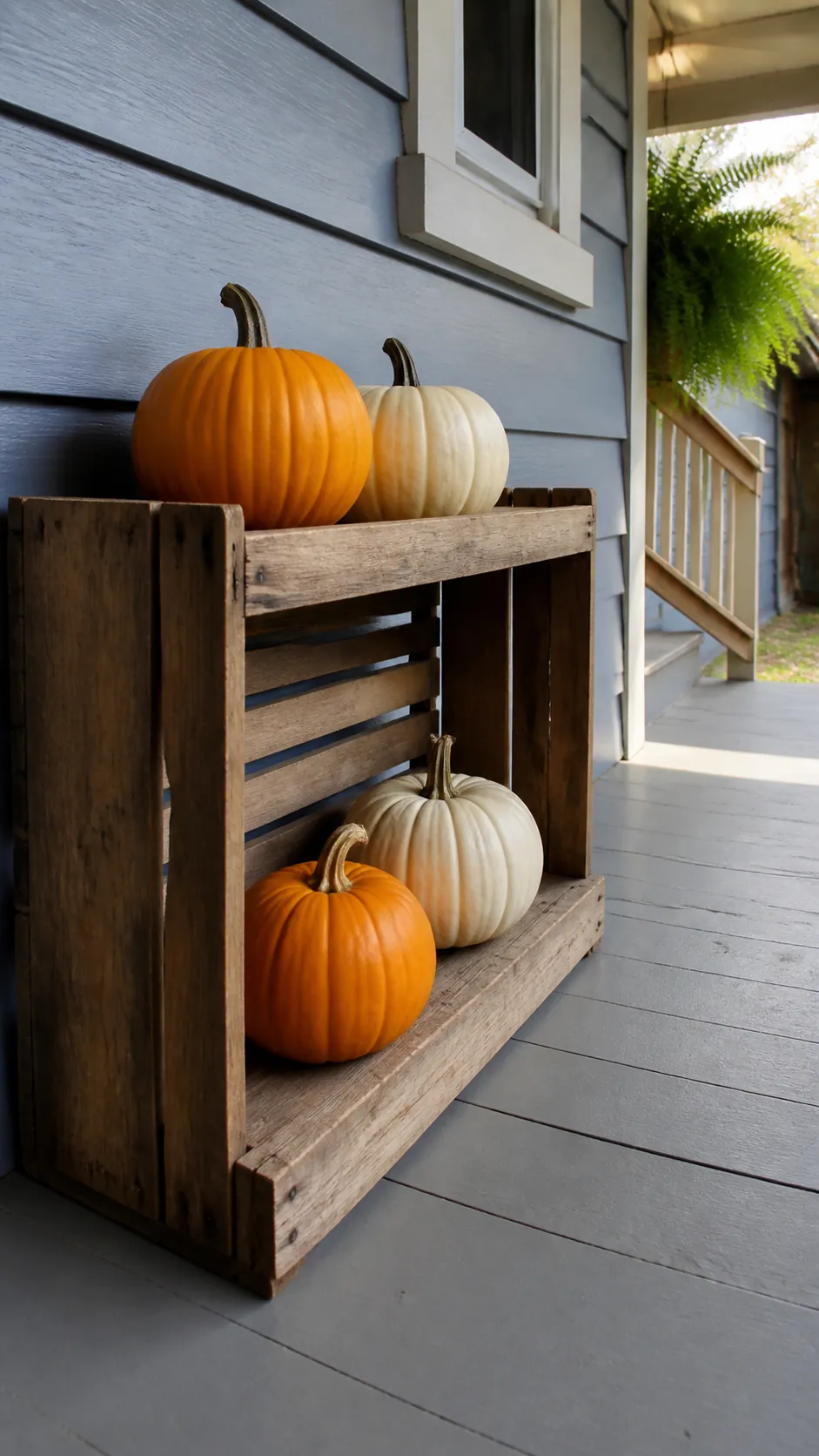
Stand Pumpkins on a Produce Crate
A sturdy produce crate creates two display levels and makes a small group appear more substantial. Turn the open side forward for one protected nook, or face it toward the wall for a solid riser. Remove splinters and loose fasteners before setting it near anyone who uses the porch.
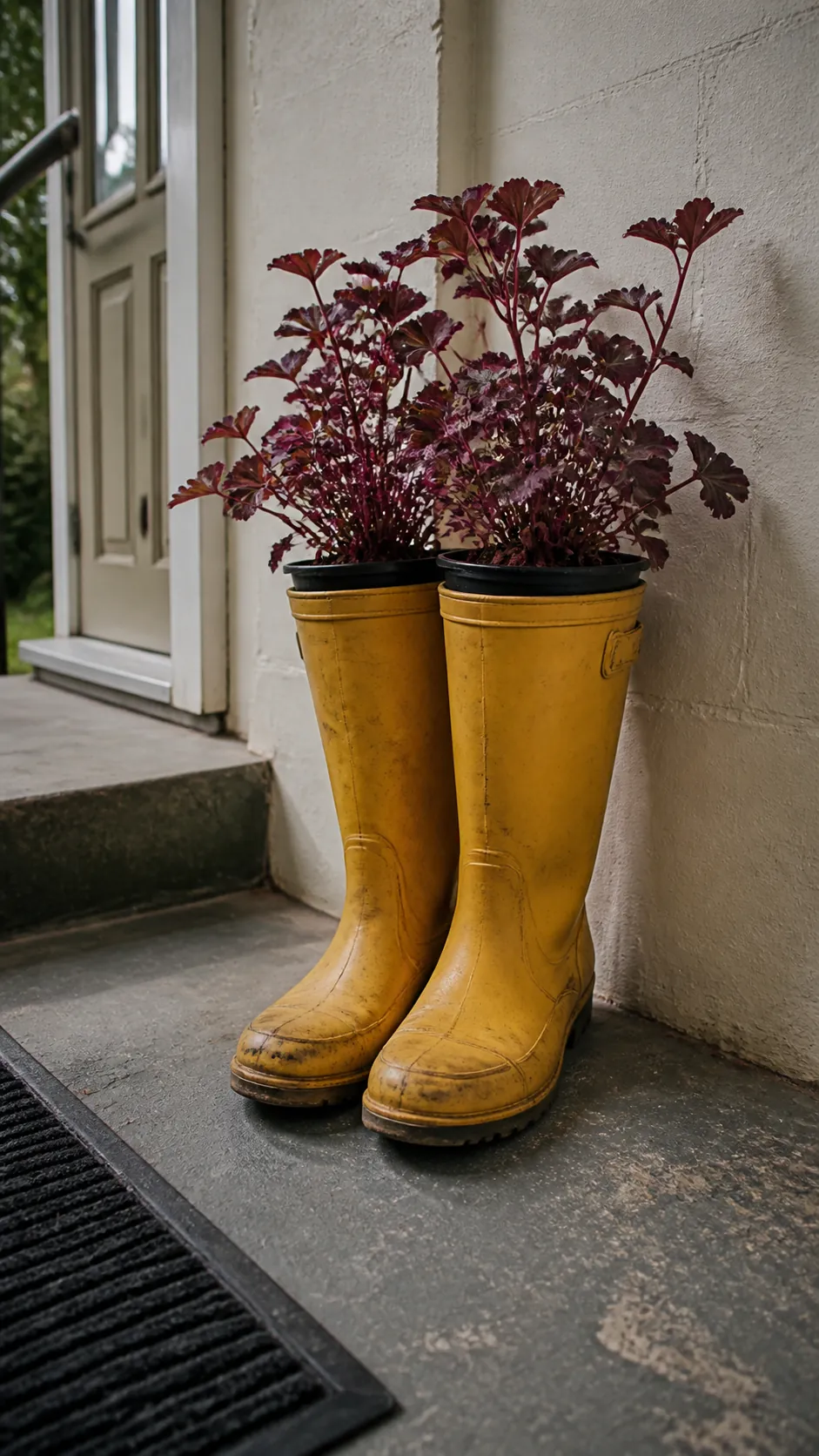
Repurpose Old Rain Boots as Planters
A pair of worn rain boots can hold temporary nursery pots and bring playful color to a sheltered corner. Insert plants in removable liners rather than filling damaged footwear directly with wet soil. Position the boots together against a wall so they stay upright and do not become a tripping hazard.
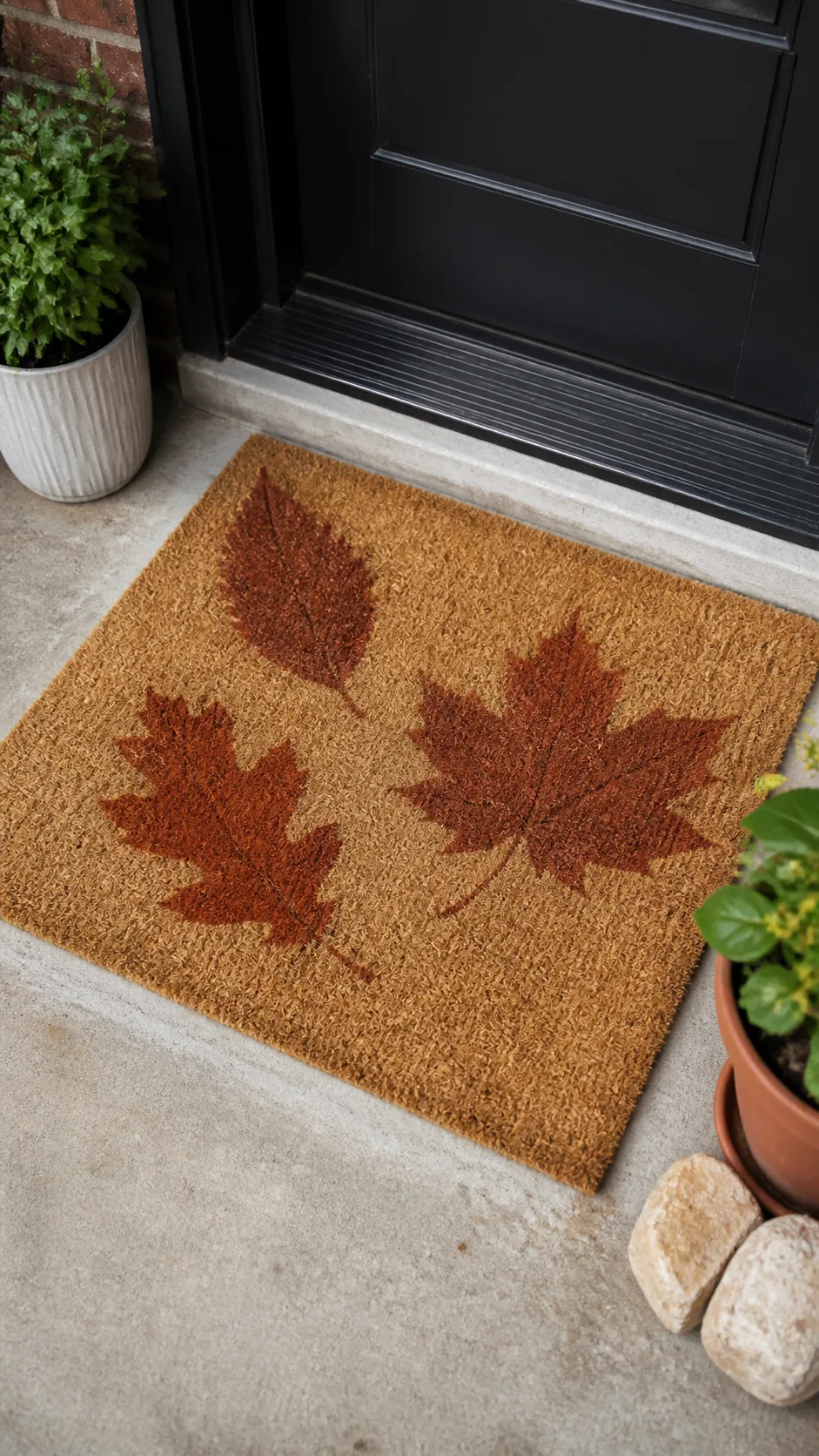
Stencil the Back of an Old Doormat
A reversible plain mat gives you a fresh surface for a simple leaf stencil. Use paint intended for the fiber and outdoor conditions, then allow it to cure completely before walking on it. Keep the motif large and sparse so the mat remains readable after ordinary dirt arrives.
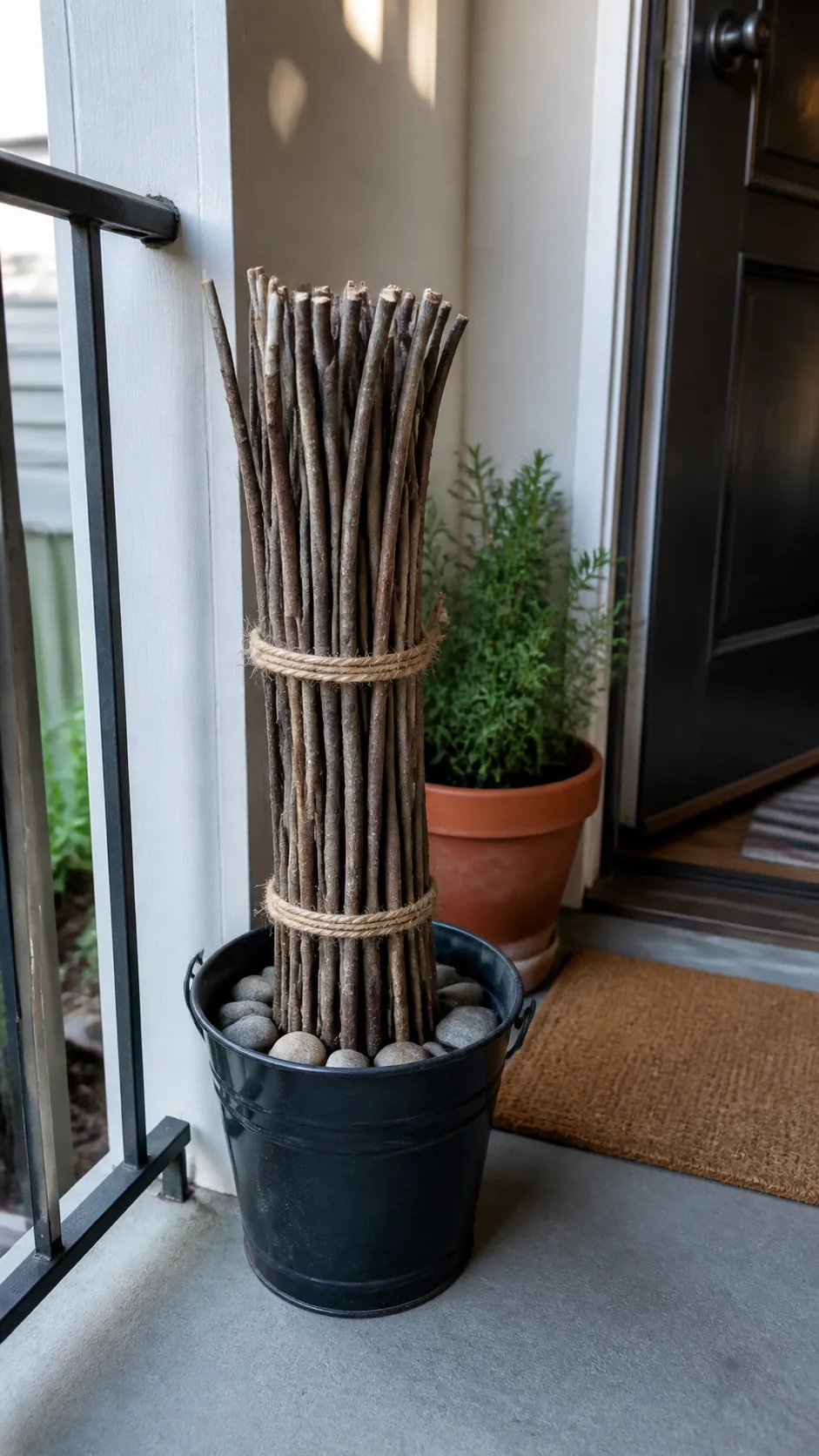
Bind Twigs Into a Compact Bundle
Straight twigs trimmed to similar lengths can form a compact rustic bundle beside a planter. Tie them at two points with jute and stand them inside a weighted bucket rather than leaning them loose. The narrow shape adds texture without stealing room from a small front porch.
Serve Cider From a Basket You Bring Outside
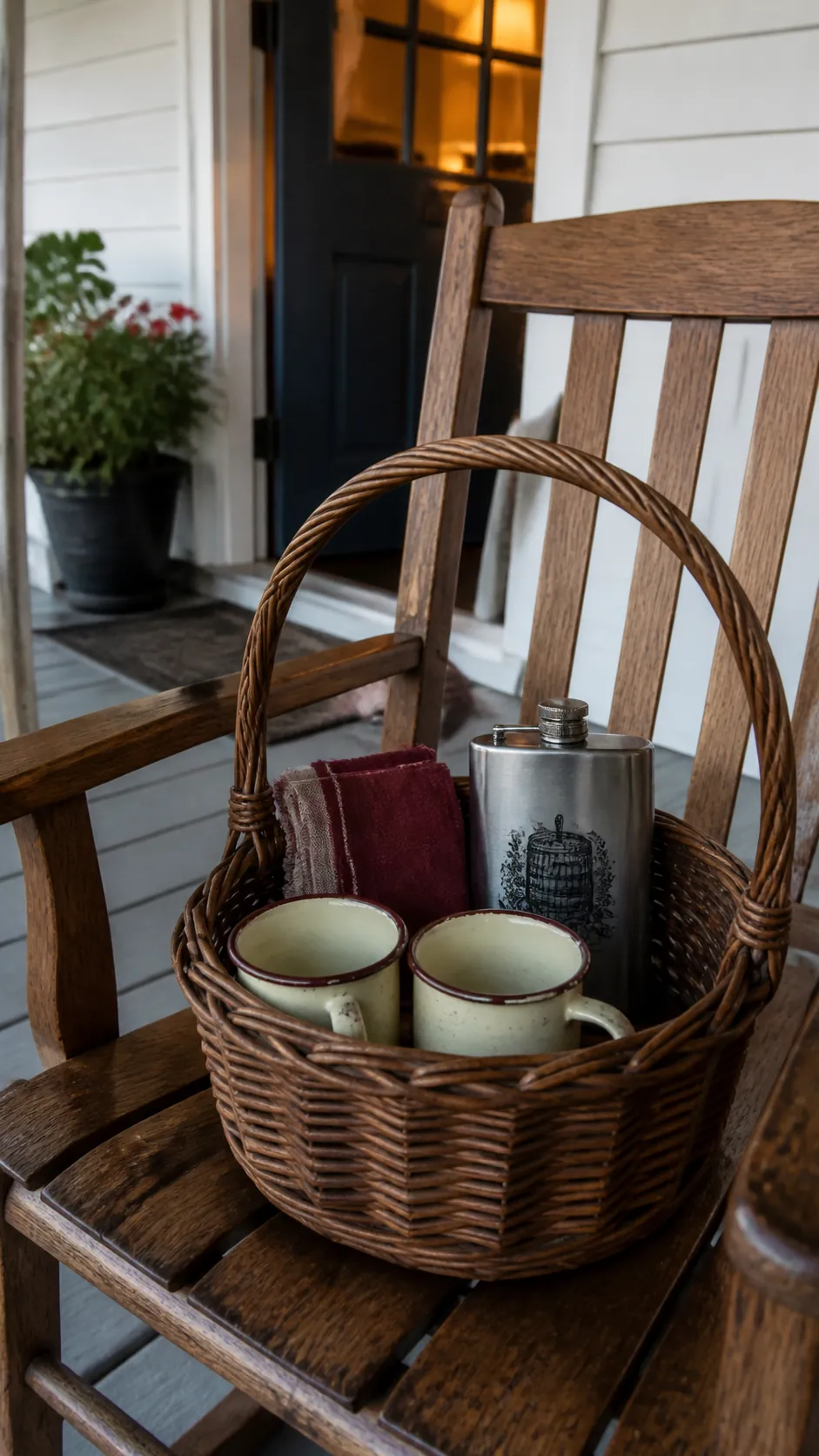
A handled basket with enamel mugs can turn an ordinary porch chair into a temporary cider station. Bring the basket outside only while people are using it, then return food, cups, and linens indoors. This costs less than permanent themed decor and makes the porch feel welcoming because the display supports a real gathering.