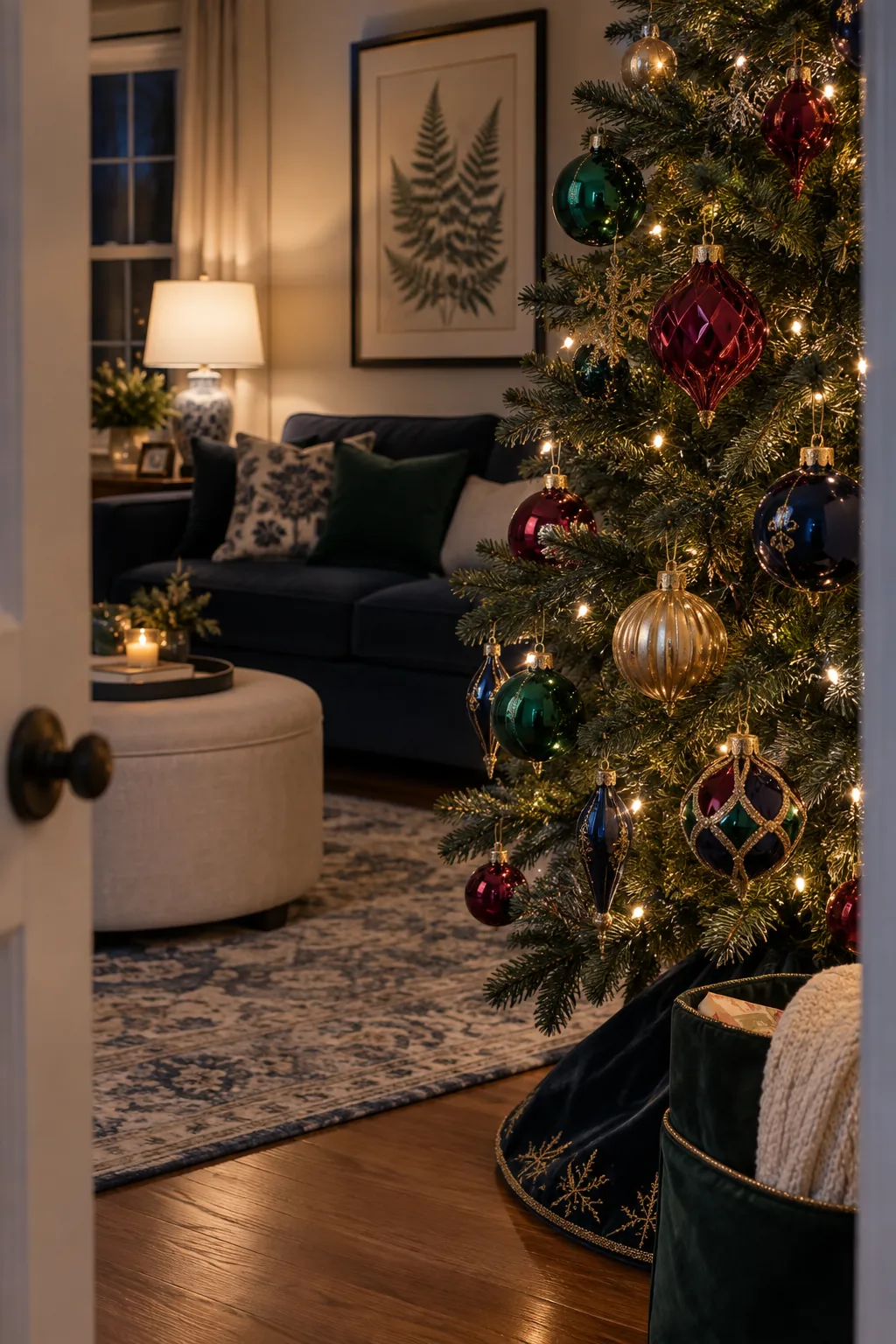
A dark sofa can make delicate ornaments vanish or make a bright tree feel disconnected from the room. The useful starting point is the lightest color in your palette, because that is what separates decorations from green branches and blue upholstery. Hold a few ornaments beside the fabric in daylight, then check them again with the lights you actually use in the evening.
You do not need to match every Christmas ribbon color to the furniture. Repeat one connection, such as a metal finish, a softer blue, or a warm accent already in the rug, and let the tree keep its own character. The combinations below explain where each color belongs so coordinated holiday decor remains practical rather than rigid.
Champagne and Ivory
Champagne ornaments pick up the warmth of brass or oak without making a dark sofa feel heavier. Use ivory ribbon as the broadest light surface, then tuck smaller champagne balls deeper into the branches. Choose a softly brushed metallic finish if your room already has shiny lamps.

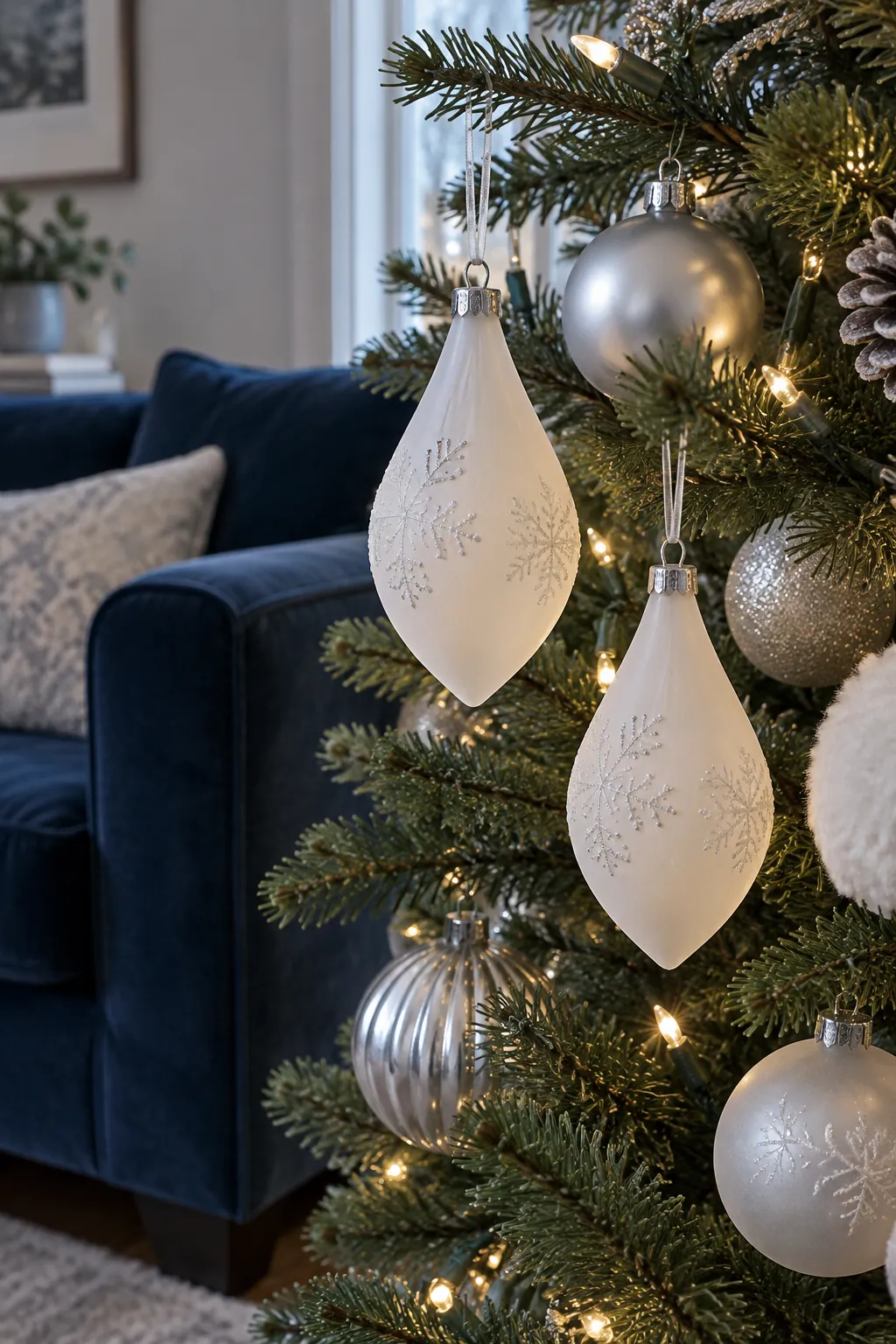
Silver and Frosted White
Silver brings a crisp edge to blue and silver Christmas decorating, especially beside cool gray flooring. Mix reflective balls with opaque white ornaments so the tree does not disappear into a collection of tiny reflections. A white fabric skirt separates the green branches from the sofa at floor level.
Burgundy and Antique Gold
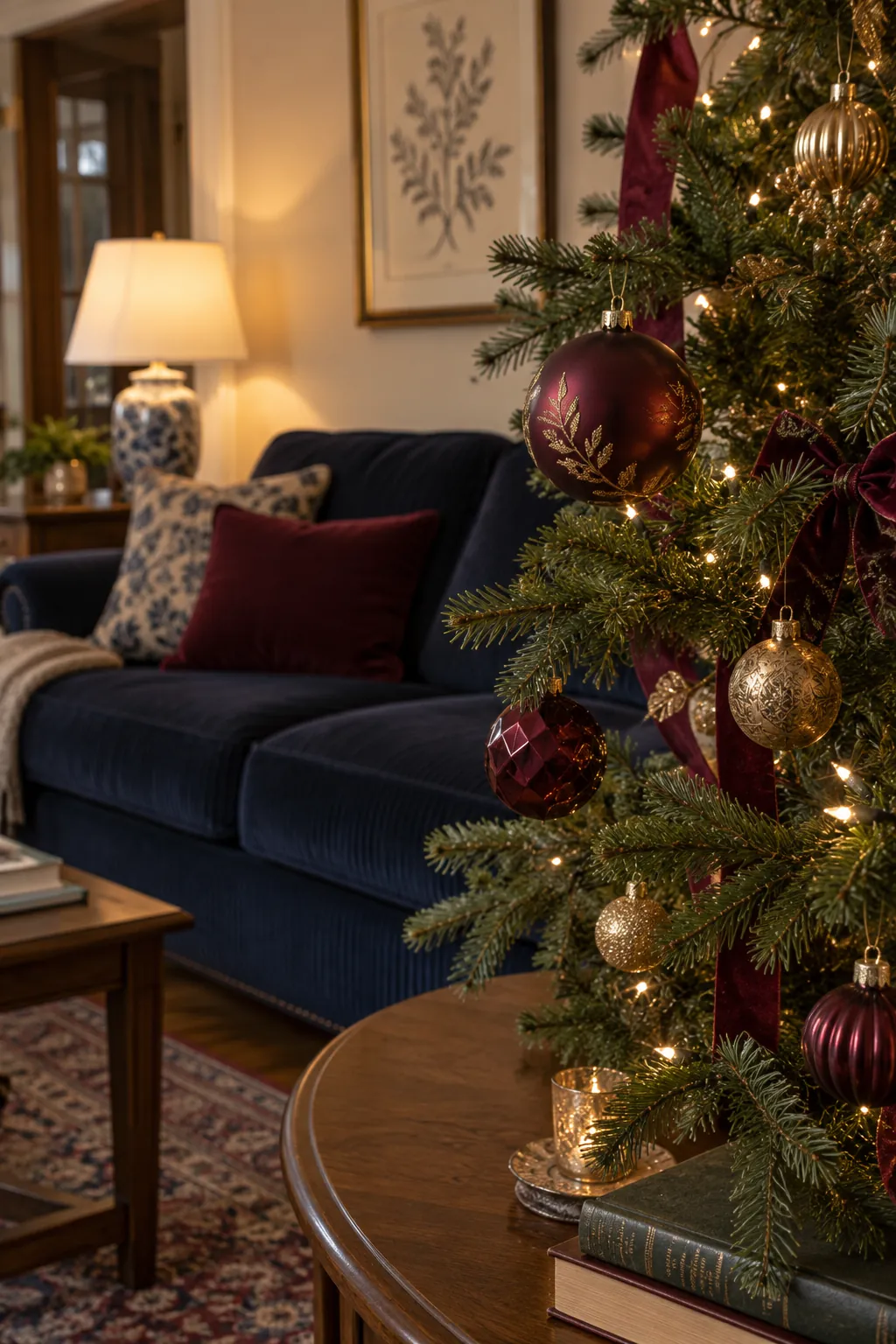
Burgundy makes navy feel rich while antique gold prevents the pair from looking flat. Put burgundy ornaments toward branch tips where their color remains visible, rather than hiding them in deep green foliage. Echo the gold once on a nearby cushion or tray, keeping the rest of the room quiet.
Blush and Pearl
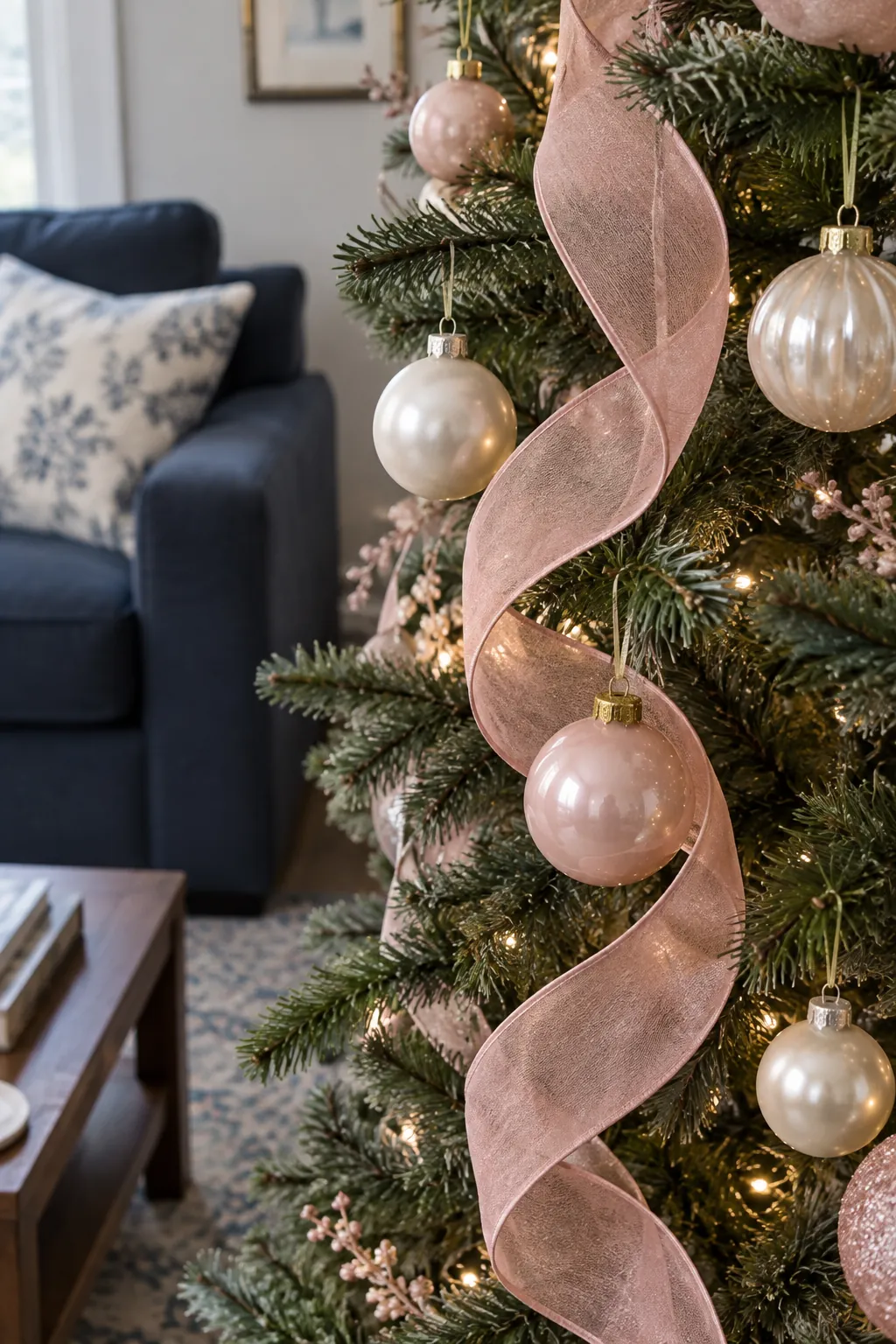
Blush softens the strong outline of a navy sofa without requiring pastel furniture. Combine dusty pink balls with pearl colored drops, avoiding very bright pink if you want a restrained result. A narrow blush ribbon is enough to carry the accent through the tree.
Copper and Cream
Copper ornaments bridge a blue sofa and warm timber furniture particularly well. Let cream occupy more surface area than copper so the metal reads as a highlight. Check the combination with the tree lights switched on, because very amber bulbs can push copper toward orange.

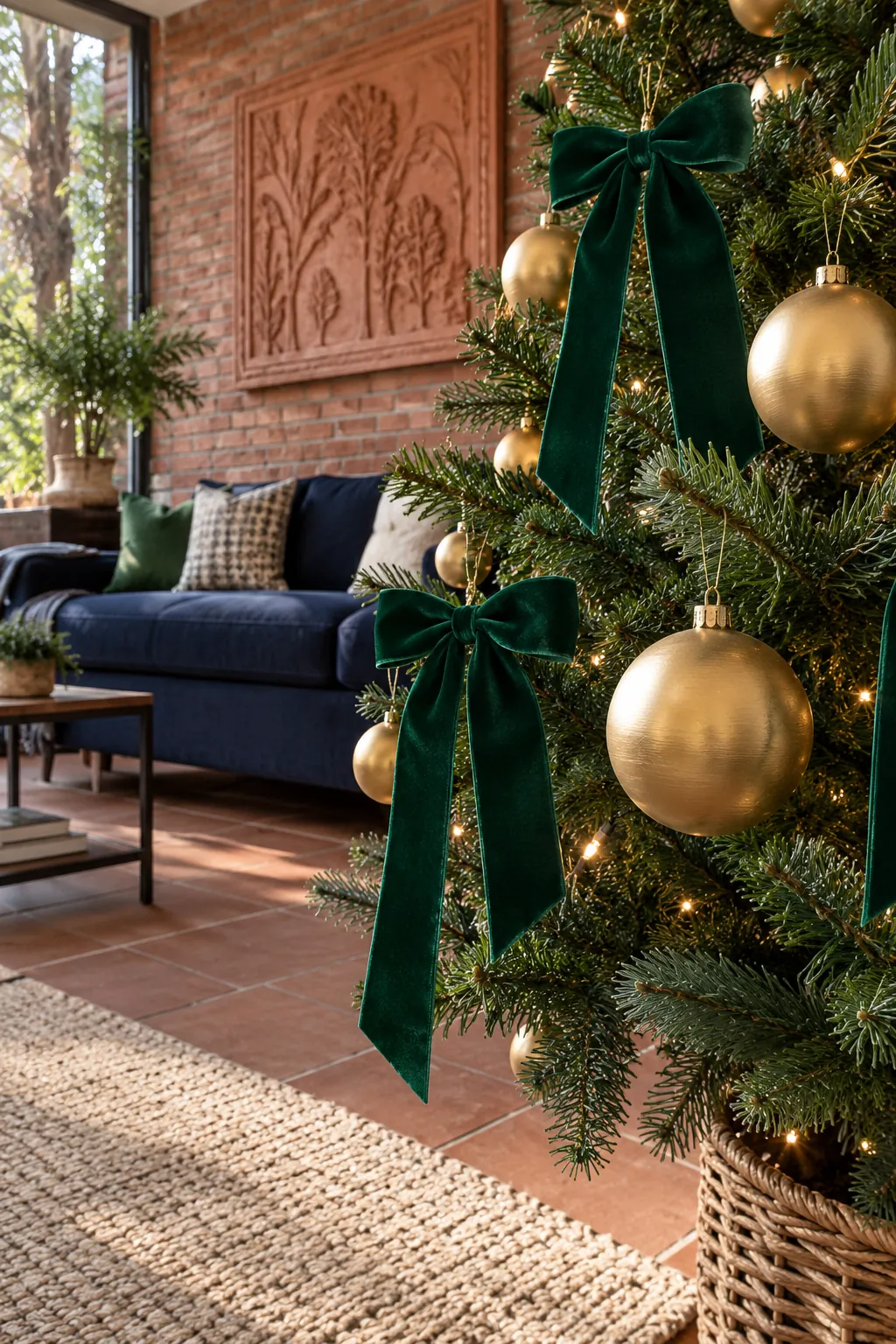
Emerald and Brushed Gold
Emerald creates a layered green tree rather than a sharp contrast against its needles. Larger gold ornaments help distinguish the decorations from the branches, while emerald velvet ribbon adds depth near the front. Keep the gold finish consistent when you want navy and gold Christmas decor to feel settled.
For a dense tree, place the lighter balls slightly further forward than the velvet loops. Dark green ribbon can disappear if it lies flat against the needles. Turn each loop so its face catches a little window light, then step back to check that gold is distributed from top to bottom.
Ice Blue and Clear Glass
Ice blue links the tree to the sofa through a lighter version of its color family. Clear glass catches light without adding another strong hue, making this useful in a small living room. Space delicate pieces away from busy walkways and choose shatter resistant alternatives where children or pets can reach.

Red and Warm White
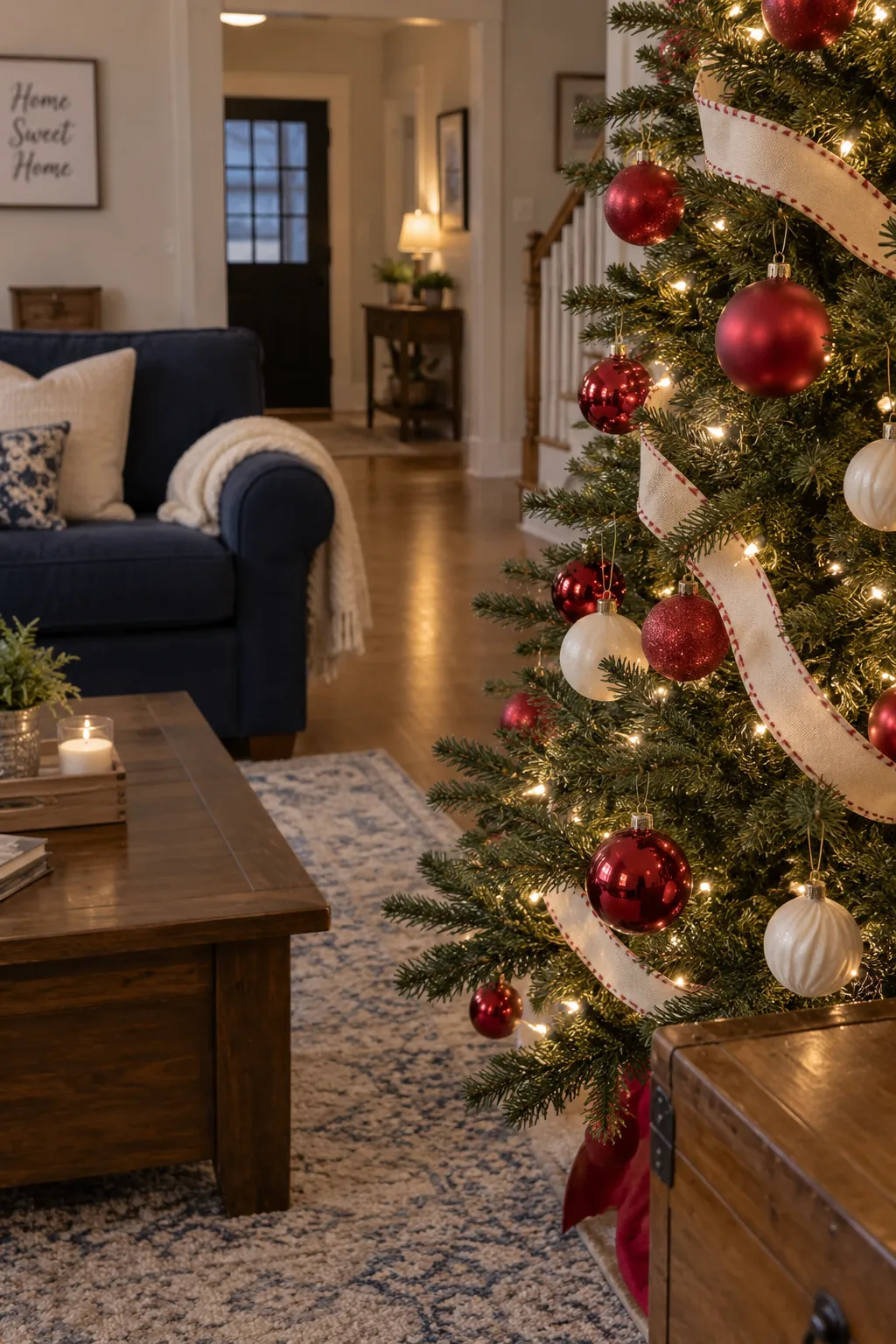
Red gives a recognizable holiday accent while warm white provides breathing room beside navy. Use a few red clusters instead of spreading equal amounts across every branch. A white ribbon with a red stitched edge ties the colors together without making the whole tree look striped.
Teal and Silver
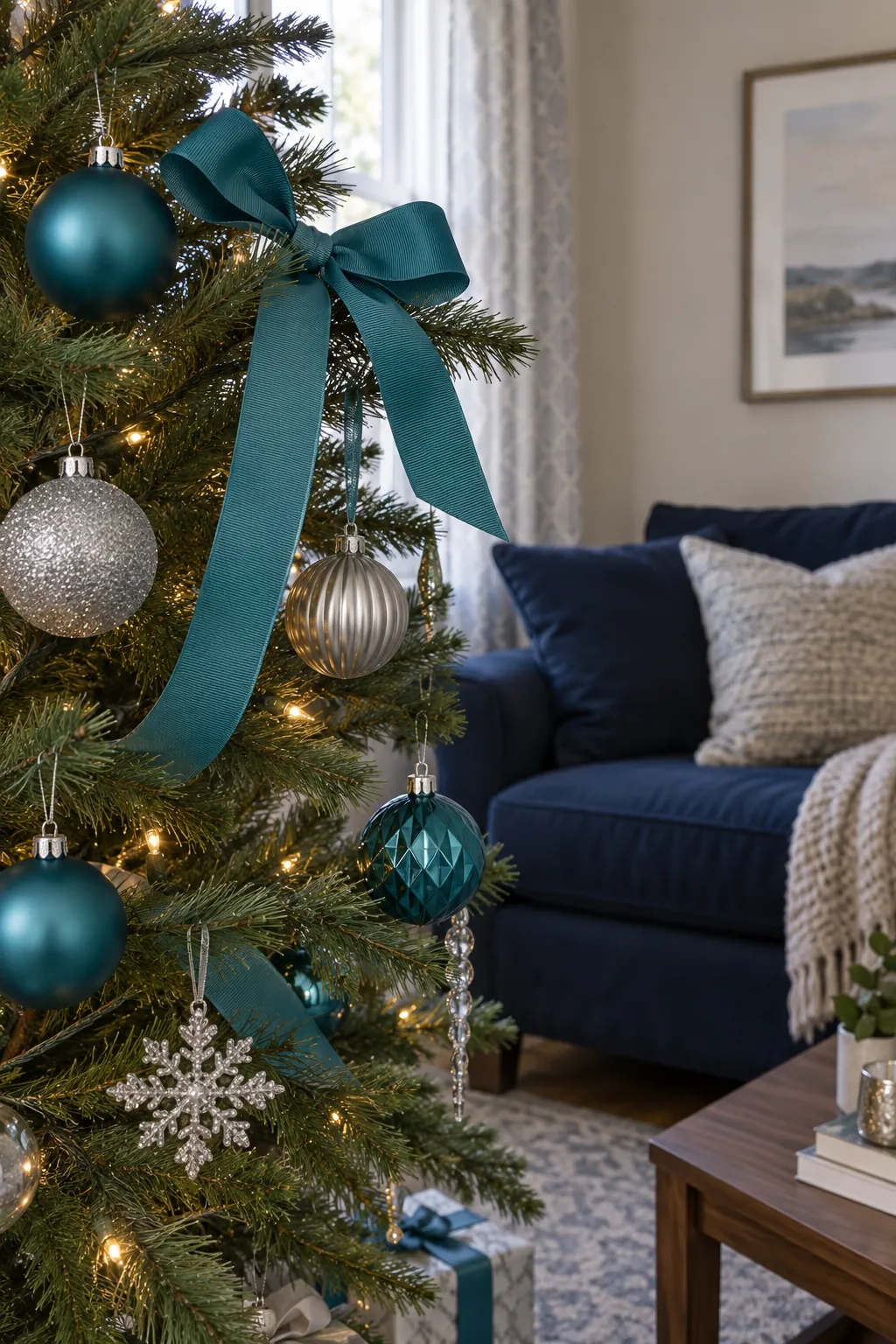
Teal offers a blue green connection between navy upholstery and evergreen branches. Silver ornaments keep that middle color from becoming too dark, especially in rooms with limited daylight. Test a teal ribbon sample against the actual sofa because green leaning and blue leaning teals behave differently. If the sample appears greener at night, let silver carry more of the visible ornament area rather than trying to correct the sofa color with extra blue.
Mustard and Natural Wood
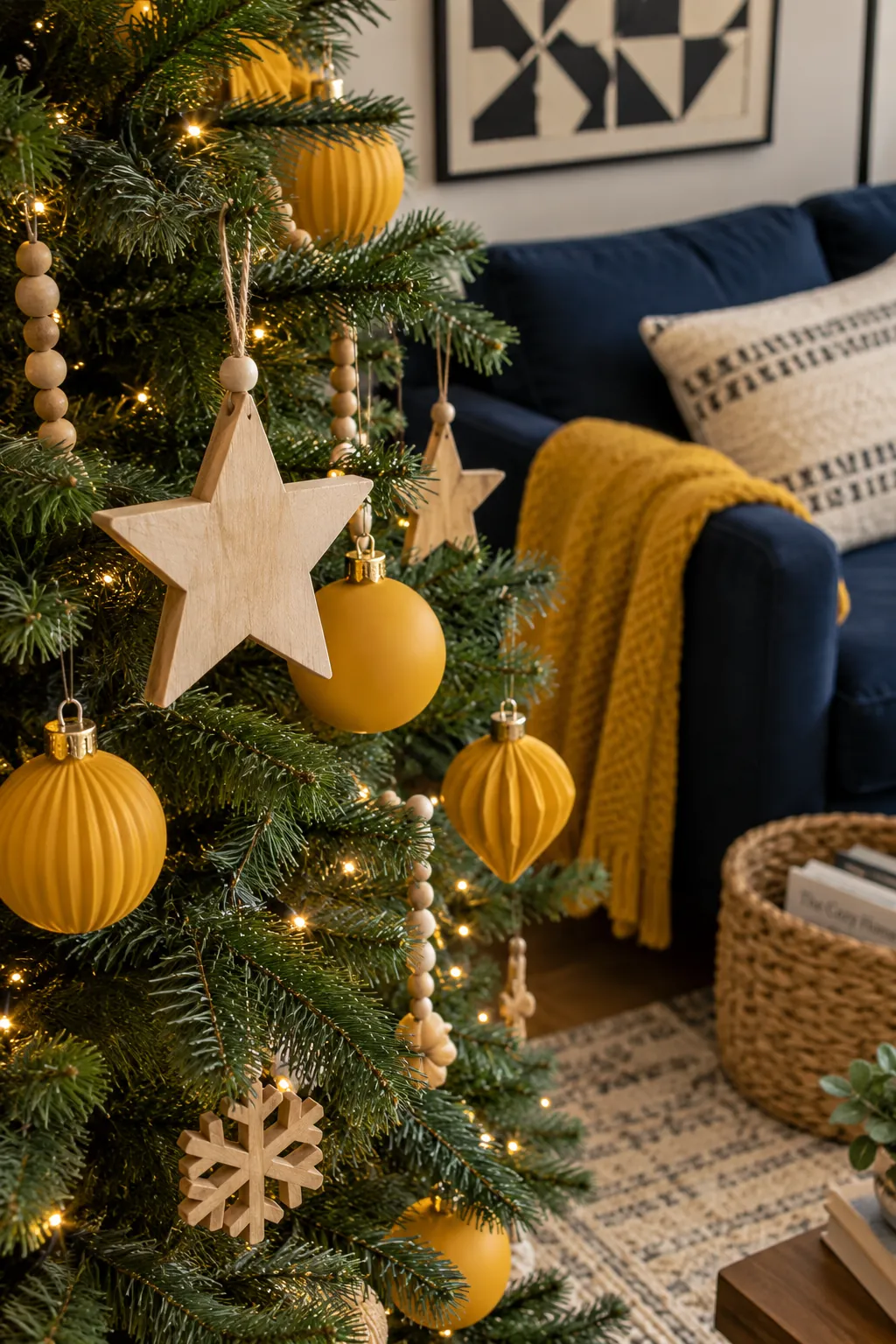
Mustard adds a confident warm accent to navy without relying on metallic shine. Pair small mustard ornaments with pale wooden stars for a softer finish than yellow glitter. Limit the saturated color to a few repeated points if your existing rug already contains a busy pattern.
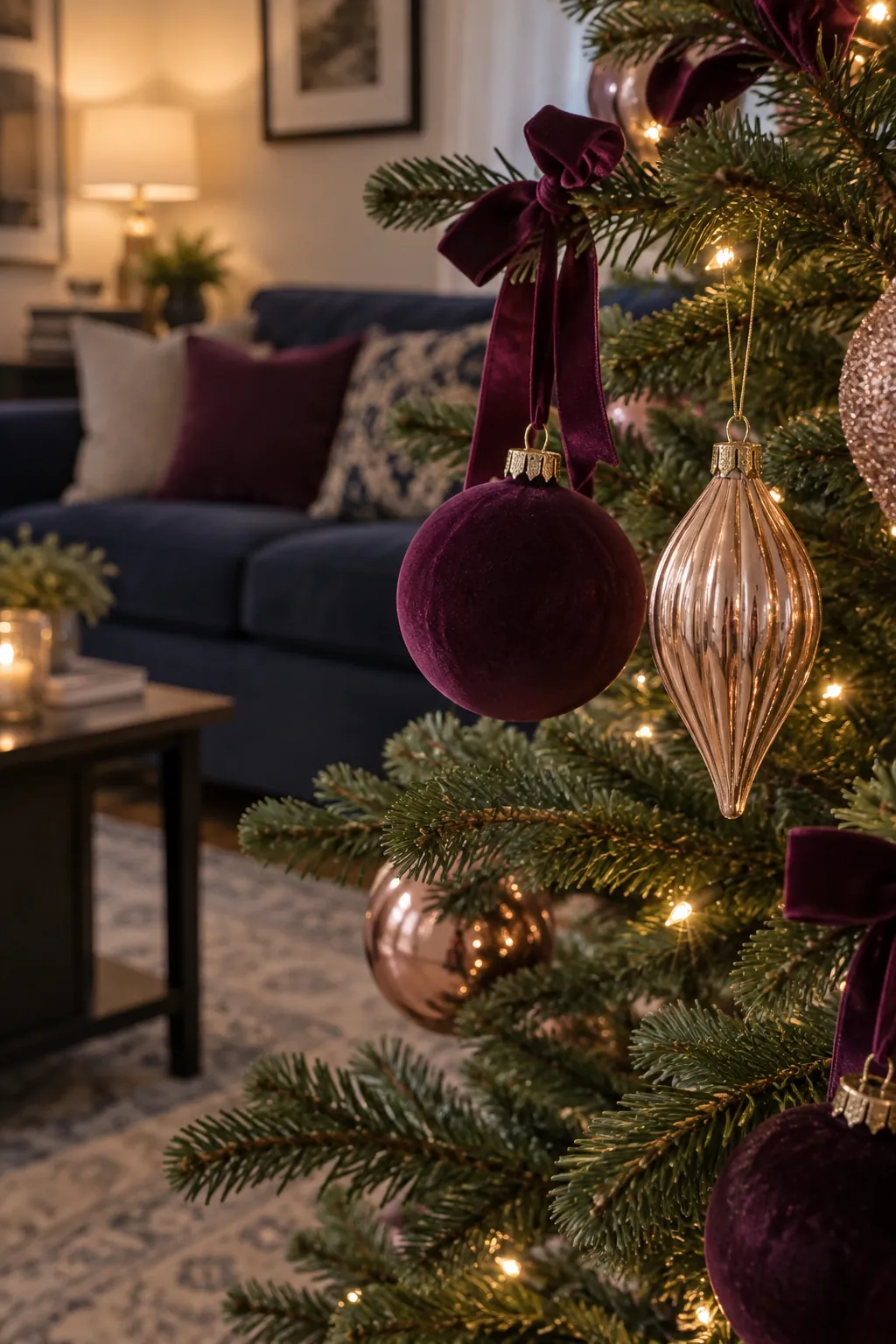
Plum and Rose Gold
Plum sits close enough to navy to feel harmonious but needs lighter details to remain visible. Rose gold provides that lift through slim drops and small balls rather than a heavy ribbon. Place one pale ornament near each plum cluster so the dark colors do not merge after sunset.
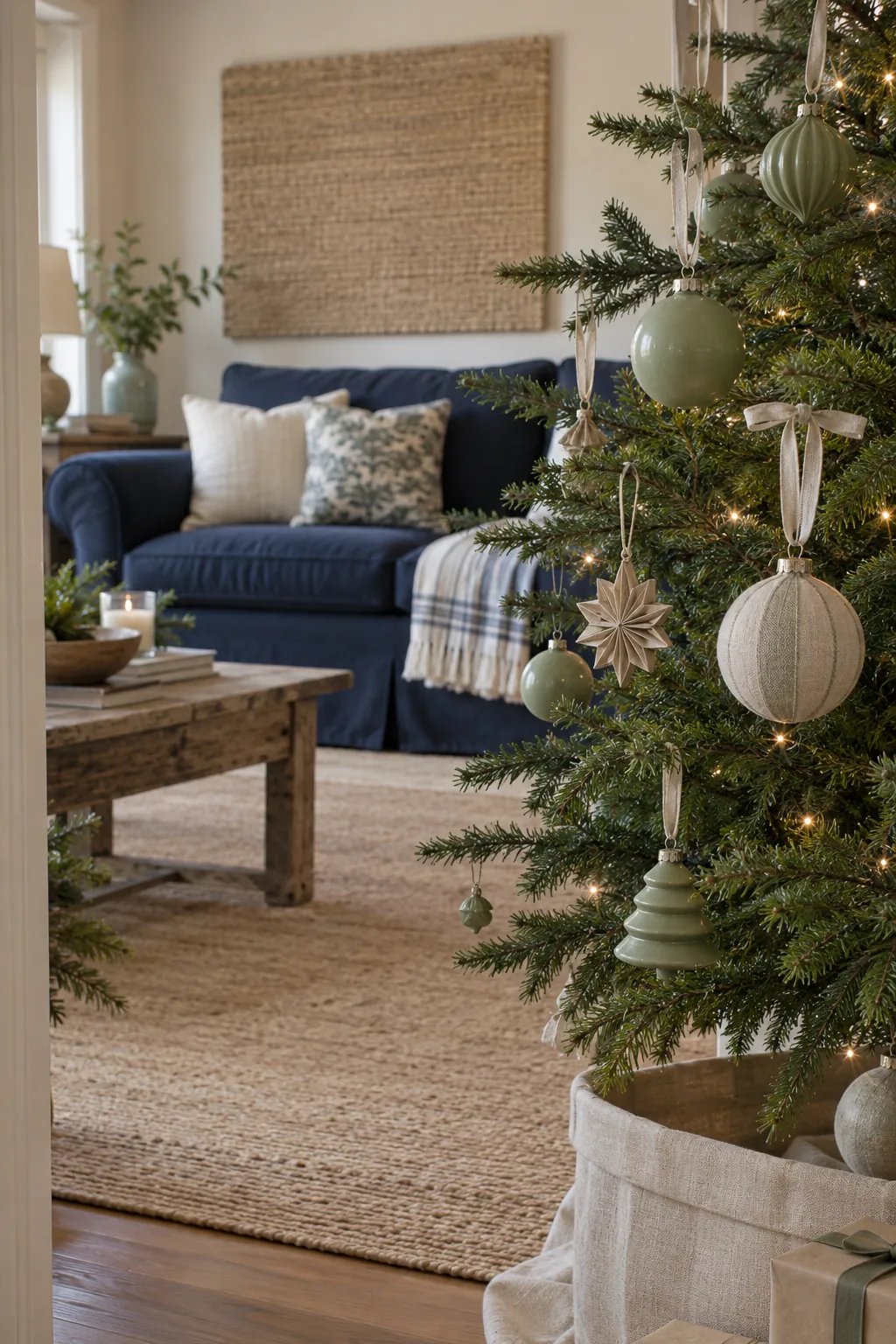
Sage and Linen
Sage creates a gentle transition from the tree foliage to a blue seating area. Linen ribbon supplies a matte neutral surface that suits relaxed rooms with woven baskets. Choose sage ornaments with a slightly grayer tone than the branches so their shapes remain readable.
A soft linen ribbon is easier to arrange in short tucked sections than in one continuous spiral. Give each section an open bend so the weave remains visible. Keep the cut ends behind branches instead of letting them hang into the seating space.
Black and Champagne
Black ornaments can work beside navy when champagne carries most of the visible decoration. Use black as a small graphic accent, such as a few satin bows, instead of making it the dominant ornament color. This combination benefits from a light wall or pale curtains that stop the room feeling enclosed.

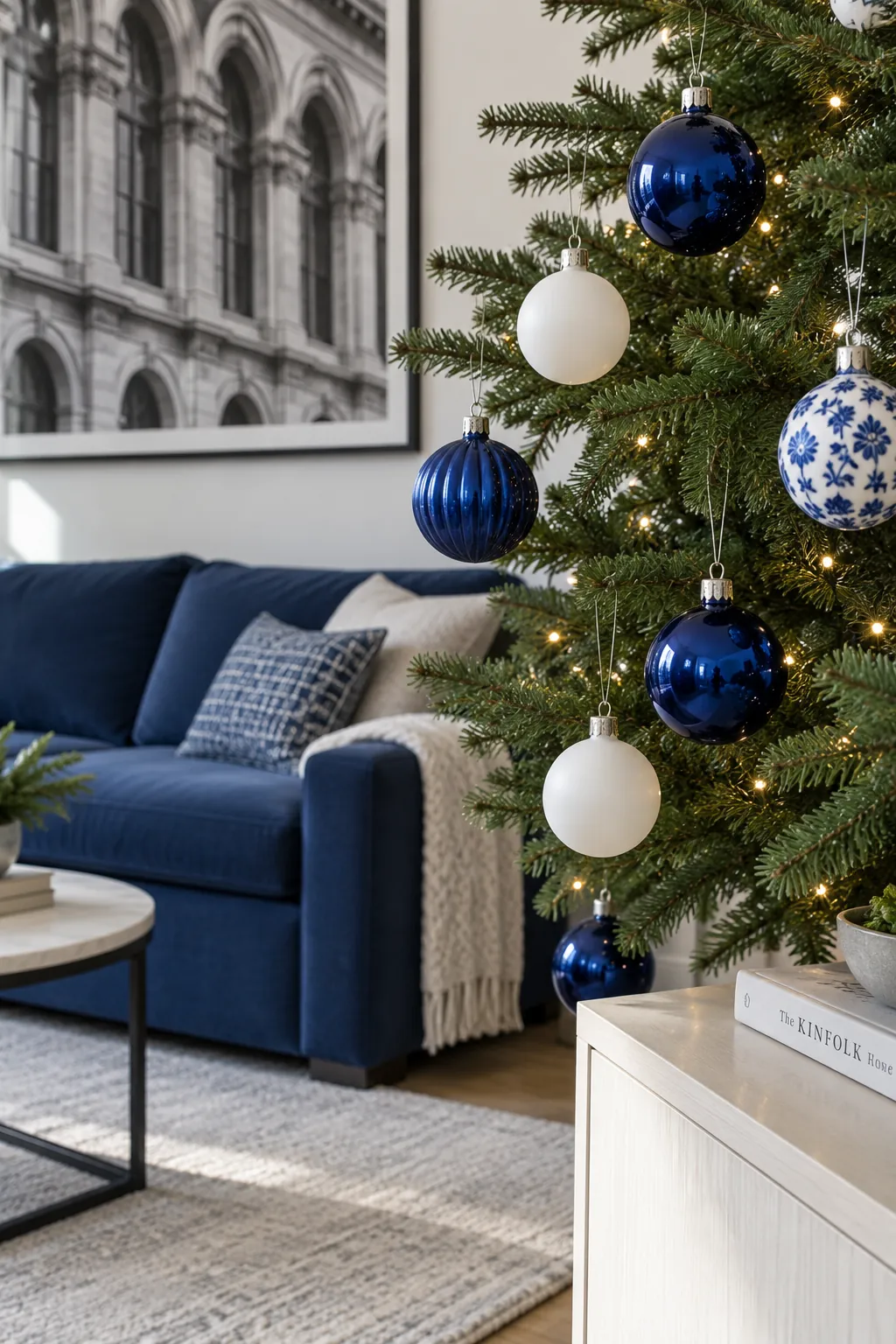
Cobalt and White
Cobalt makes blue Christmas decorations feel bright rather than subdued. White ornaments create clear edges between the stronger blue pieces and the tree foliage. Keep cobalt away from cushions that are almost, but not quite, the same shade, since near matches can look accidental.
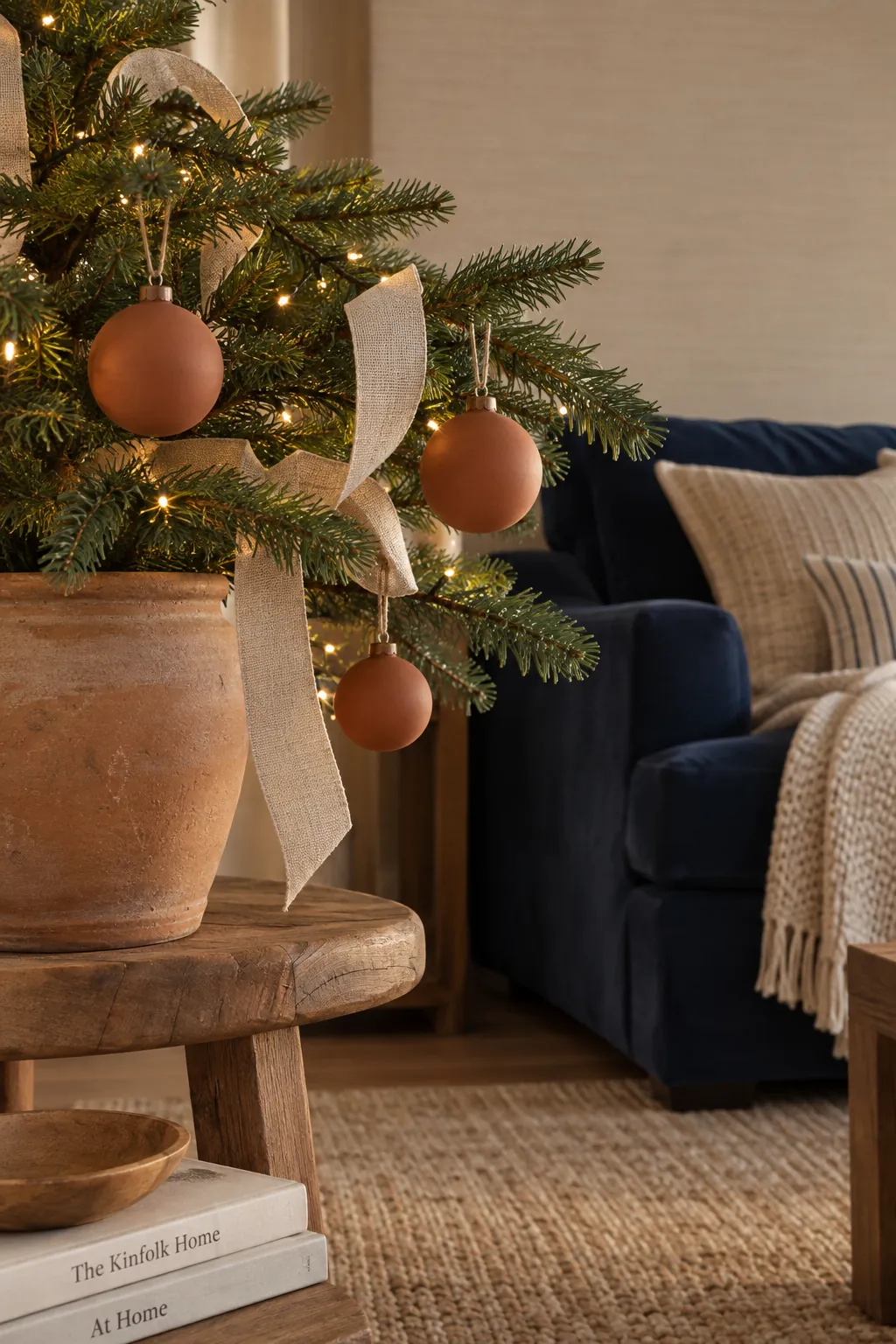
Terracotta and Oatmeal
Terracotta relates to navy through a warm earthy contrast that feels comfortable with clay pottery. Oatmeal ribbon calms the pairing and works particularly well with a textured rug. Use matte terracotta ornaments instead of adding fragile real ceramic pieces to branches that cannot support them. A pale tree skirt can separate this earthy scheme from a dark wood floor. If the room already contains orange pottery, choose quieter terracotta ornaments so the tree repeats that warmth without competing with it.
Lavender and Pewter
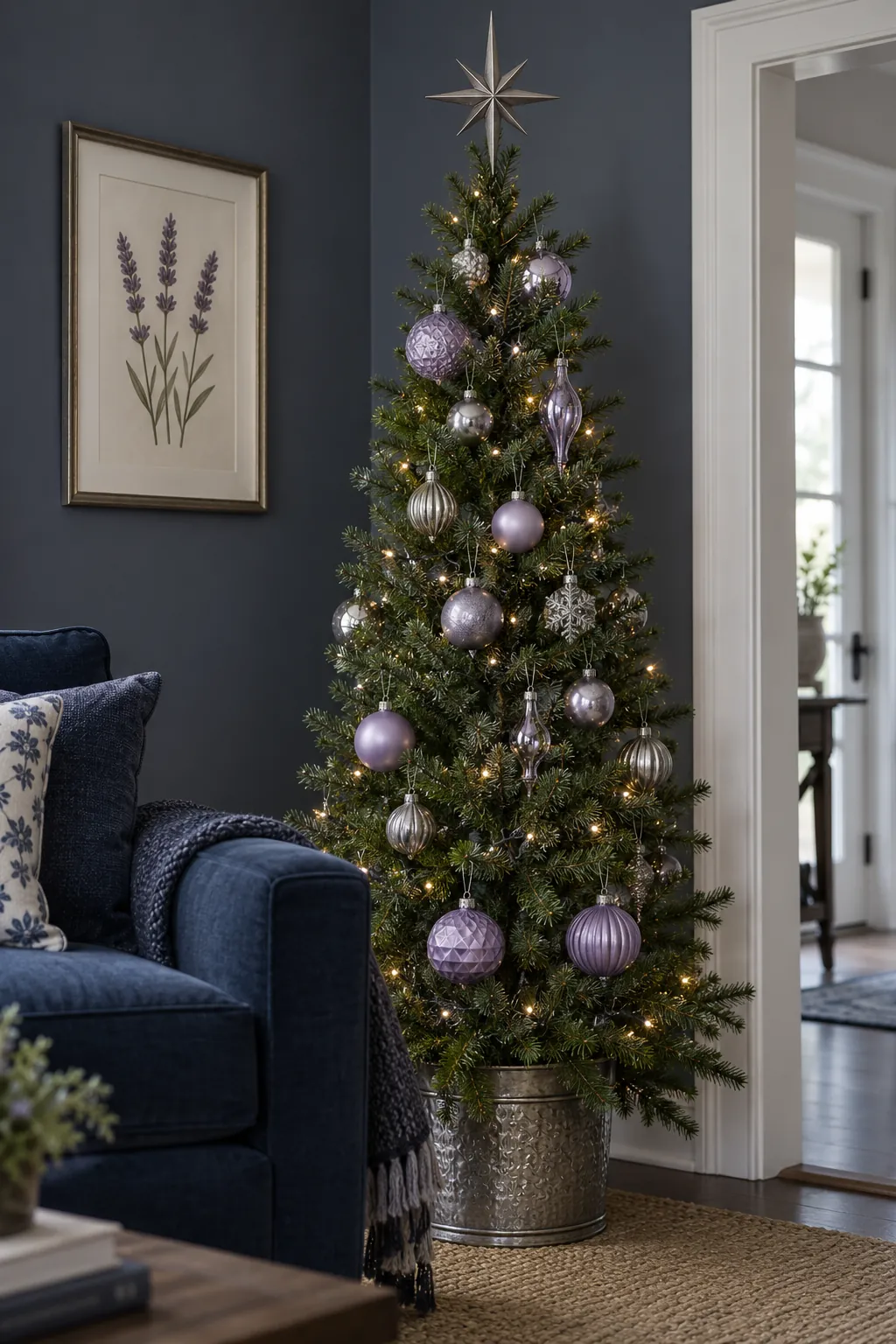
Lavender adds a cool softness while pewter keeps the scheme grounded beside dark upholstery. Select pale lavender ornaments rather than deep purple ones when the tree stands in a shadowed corner. A pewter toned topper repeats the metallic accent without introducing a brighter silver.
Forest Green and Cranberry
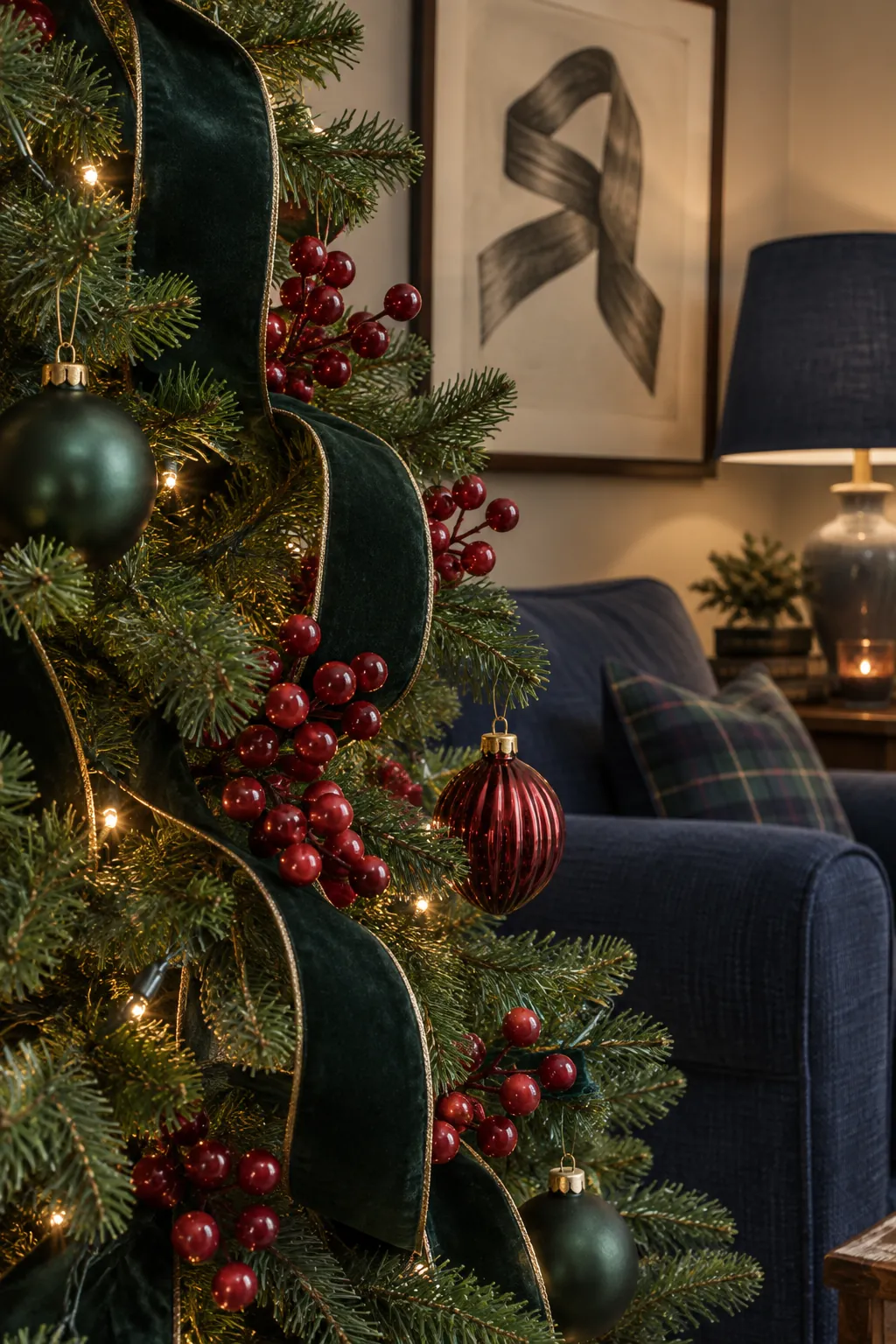
Forest green and cranberry keep the tree traditional while allowing the sofa to stay visually distinct. Use cranberry in berries and a few larger balls, then add forest ribbon where it catches the light. Avoid packing every branch with dark decorations, since visible needles and light gaps provide necessary relief.
Bronze and Dusty Blue
Bronze connects blue upholstery with aged metal fixtures and warmer furniture. Dusty blue ornaments repeat the sofa color at a gentler intensity, so you can coordinate without buying an exact navy match. Compare the bronze finish with nearby lamp bases before committing to a full set. When the room has both brass and bronze, use the finish nearest the tree as the main reference and keep the other metal on smaller accents.

Coral and Soft Gold
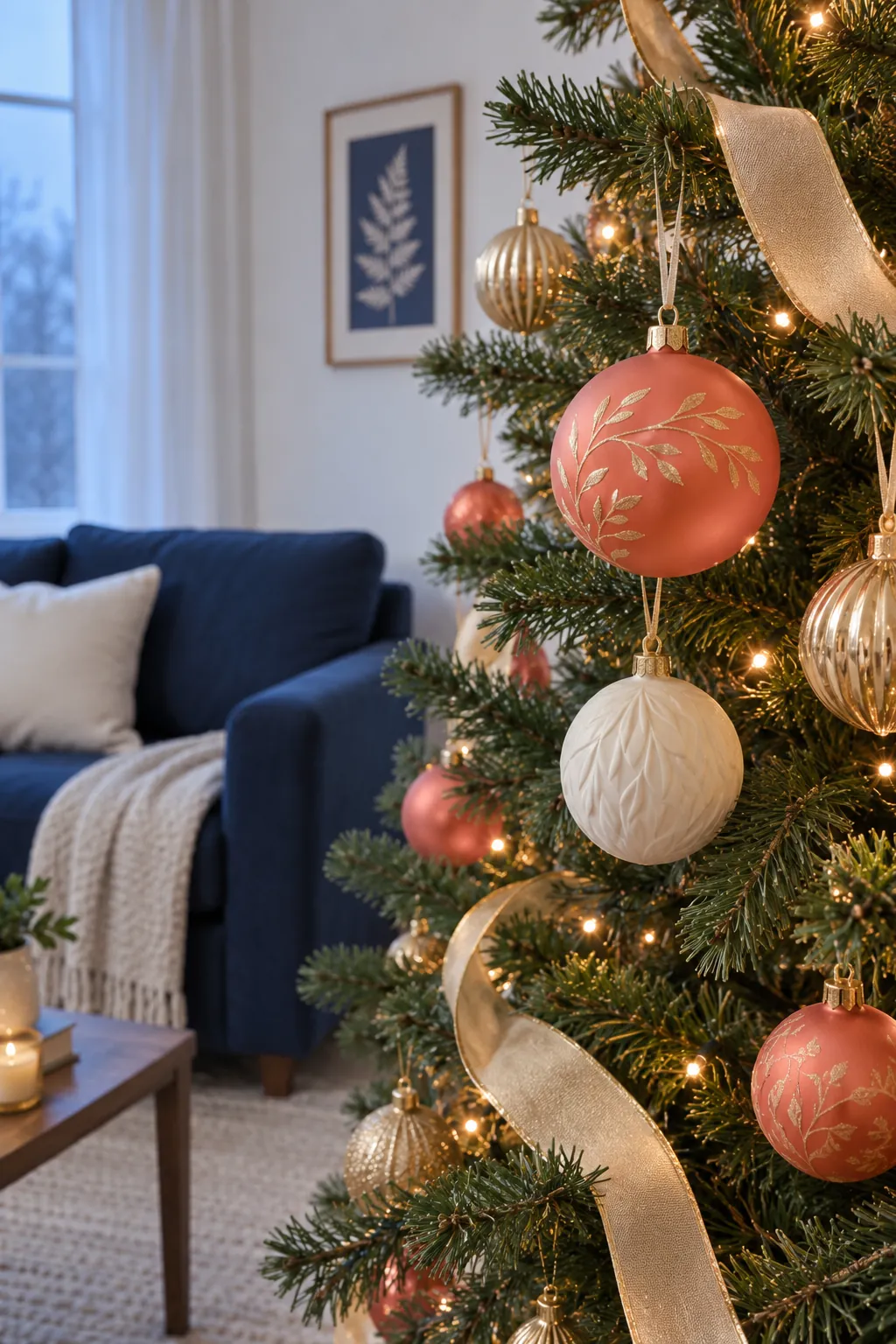
Coral introduces a cheerful accent that stands out clearly against navy. Soft gold gives it a holiday context, while a restrained amount of ivory keeps the tree from becoming visually hot. Choose coral that leans pink if the room has cool daylight, and inspect it under your evening lighting too.
Chocolate and Cream
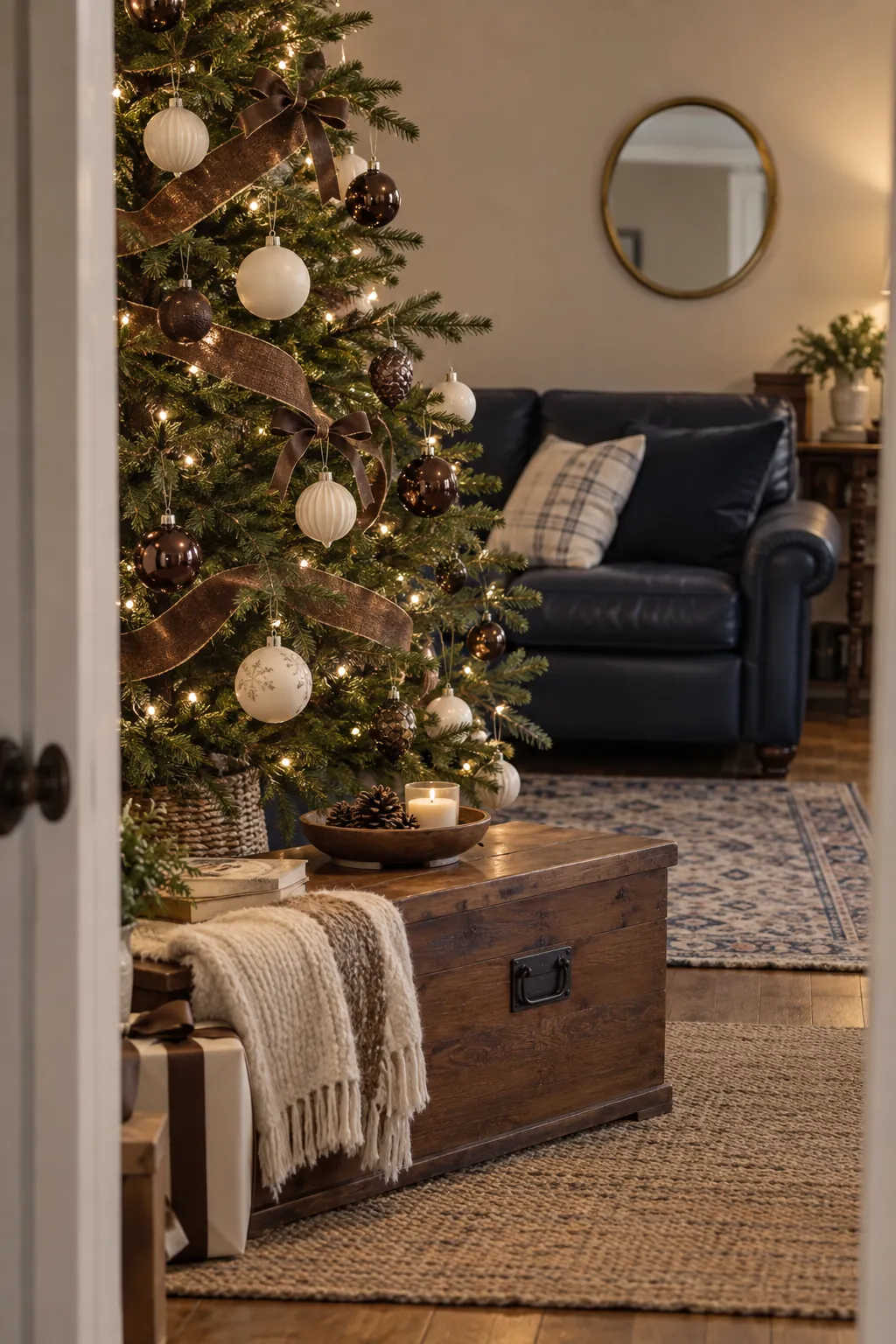
Chocolate makes a navy living room Christmas palette feel cozy when the space has leather or walnut details. Cream ornaments should occupy the outer branches, with brown ribbon creating quieter depth behind them. Skip additional dark blue ornaments here, since the sofa already supplies that strong anchor.
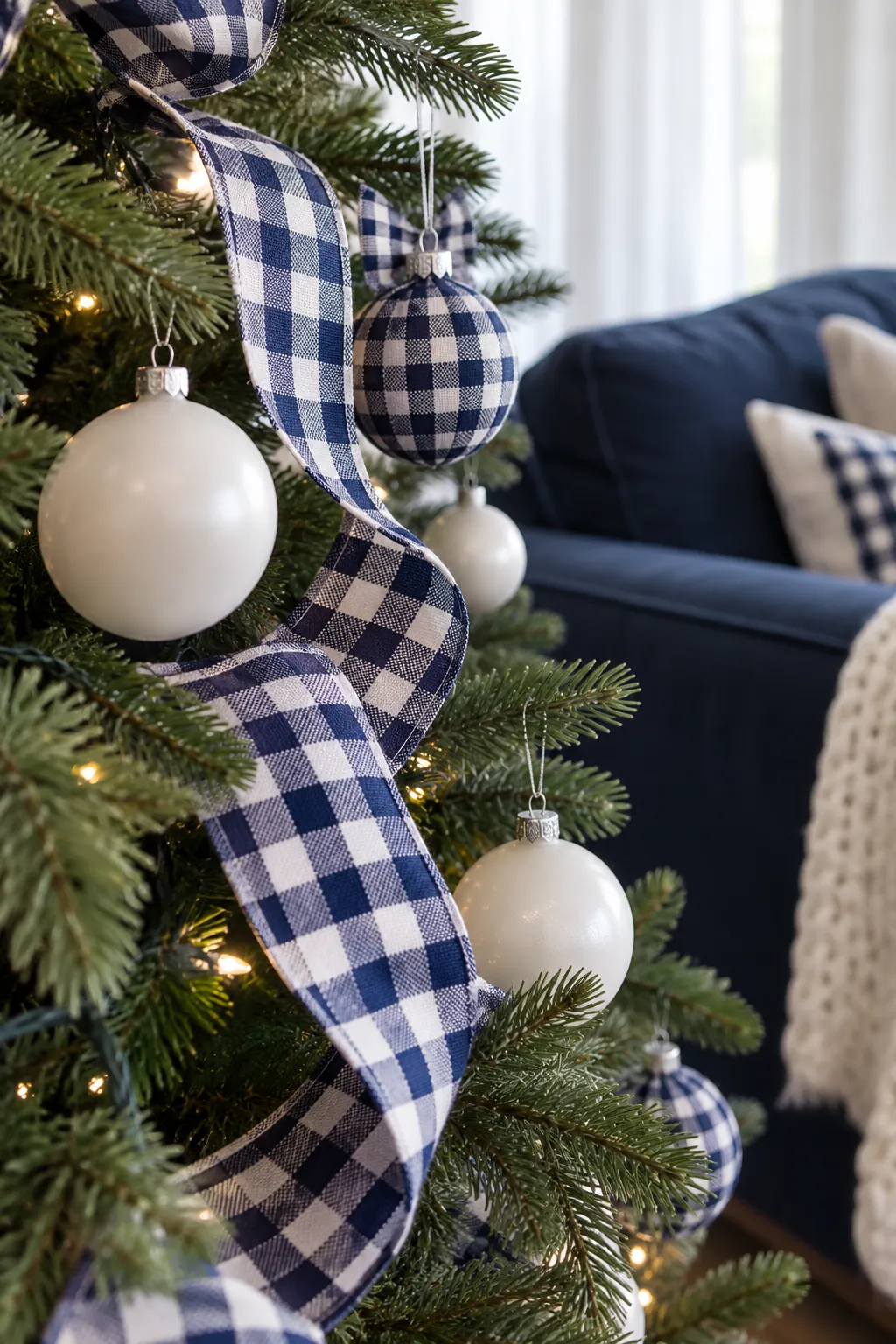
White and Navy Gingham
White ornaments and navy gingham ribbon repeat the sofa through pattern instead of another large dark surface. Make loose ribbon folds that show both colors, rather than wrapping the tree tightly into horizontal bands. Small plain white bows work better than adding a competing plaid from elsewhere in the room.
The scale of the check changes the effect, with larger squares reading more clearly from across the room. Spread the ribbon in separate lengths so you can rotate a fold without disturbing the whole tree. If you already have gingham cushions, keep the tree checks similar in scale rather than adding a third busy pattern.
Mixed Jewel Tones With Gold
Ruby, emerald, and sapphire ornaments let a navy sofa support a more colorful family tree. Repeat the same gold ornament finish throughout to give the different colors a shared thread. Before buying anything, place a small selection of your existing ornaments beside the sofa and identify which colors already work. Keep the strongest pieces at different heights so one dense cluster does not pull attention away from the rest of the room.