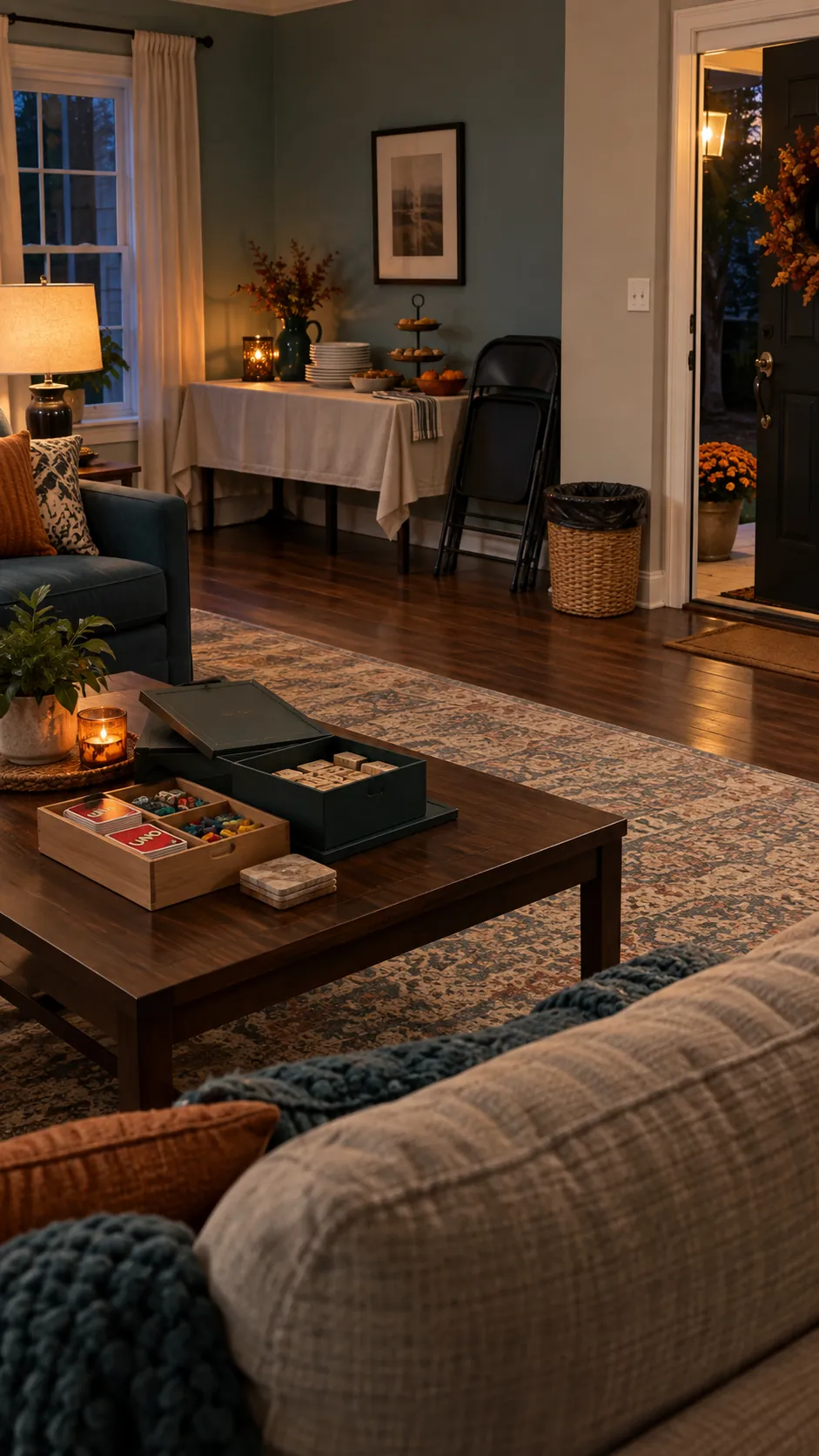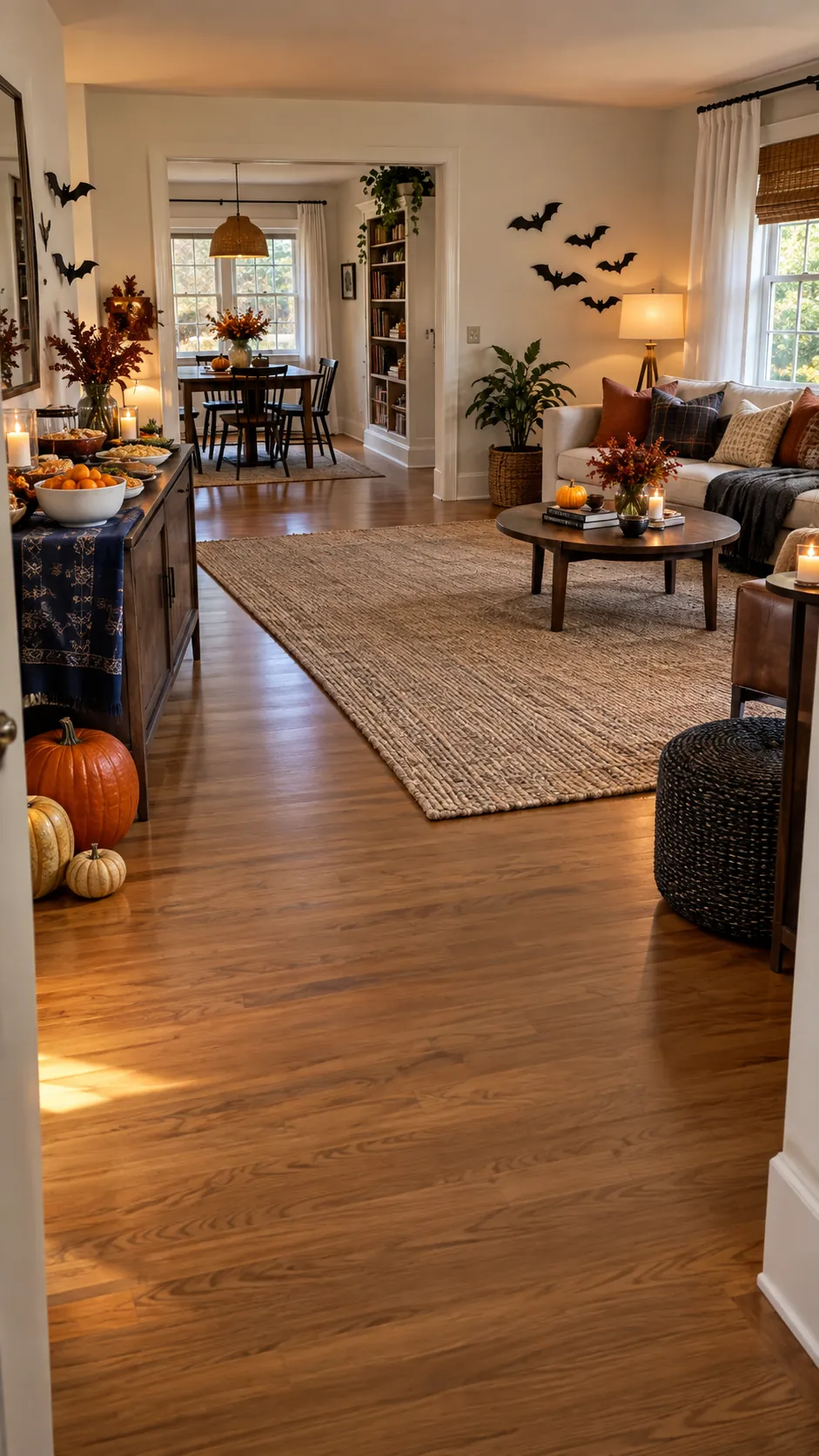
A party room can look festive and still fail the moment guests queue for snacks while a game starts in the same aisle. Plan the walking paths first, then give food, play, and conversation their own clear places. These arrangements use ordinary furniture and modest decor so the room stays comfortable when it fills up.
Keep the Center Open for Games
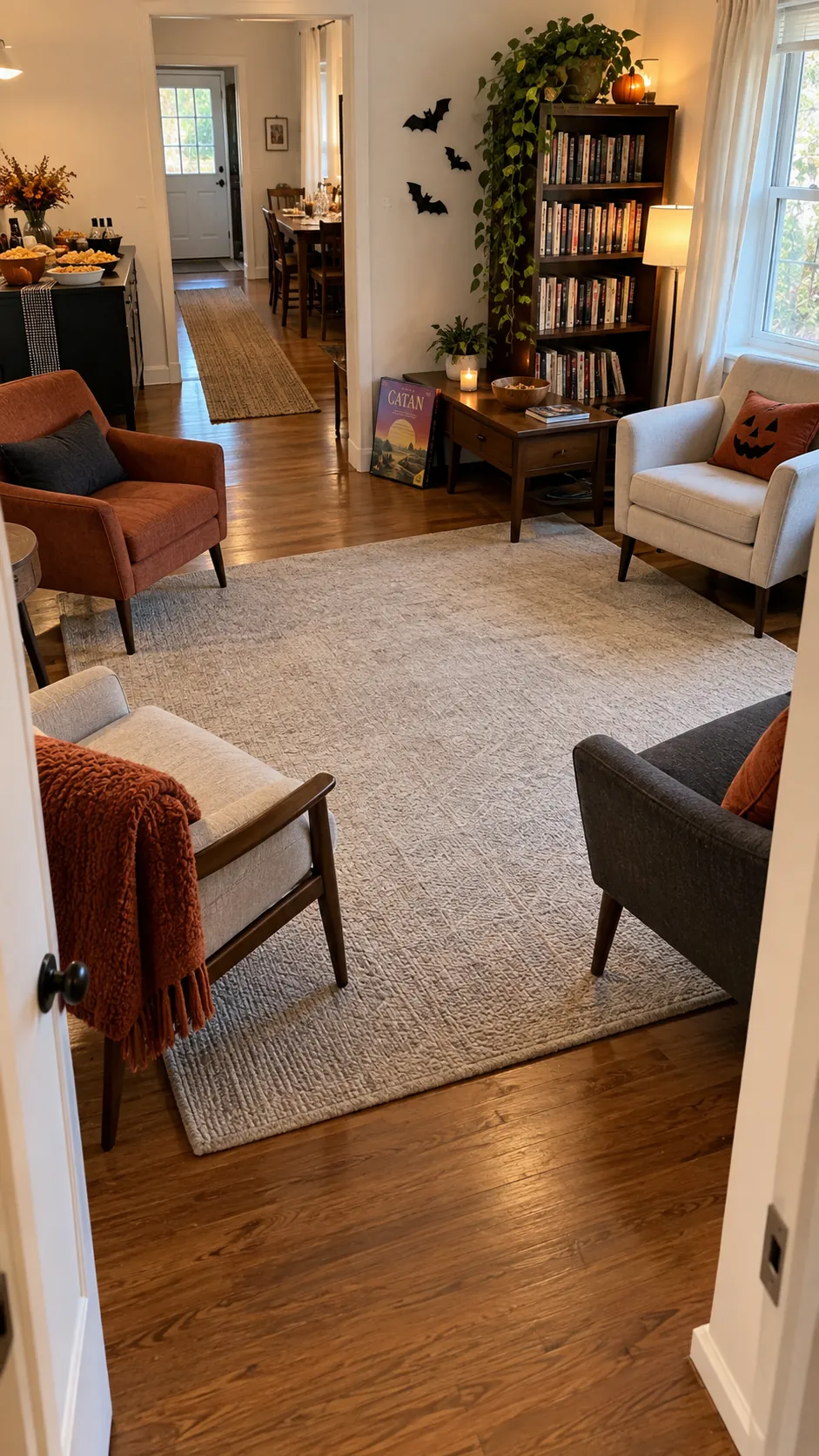
Pull the coffee table toward a wall before guests arrive, then stand where a game host will stand. If people cannot move around the play area while someone is seated, shift one chair to another room. Leave a clear route from the door to the food so arrivals do not cut through a game. A rug can define the play space without adding another object to step around.
Set the Buffet Along One Wall
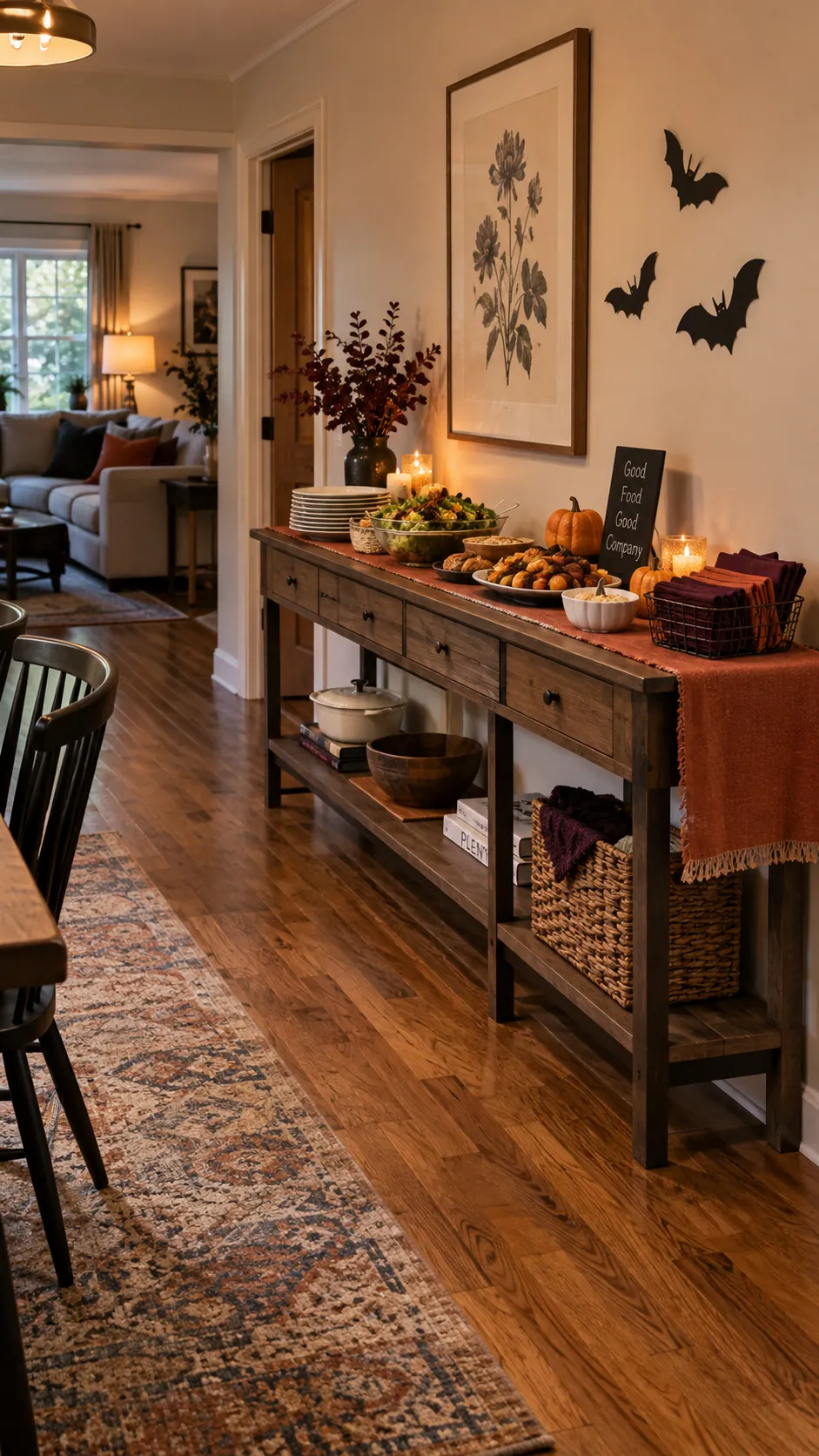
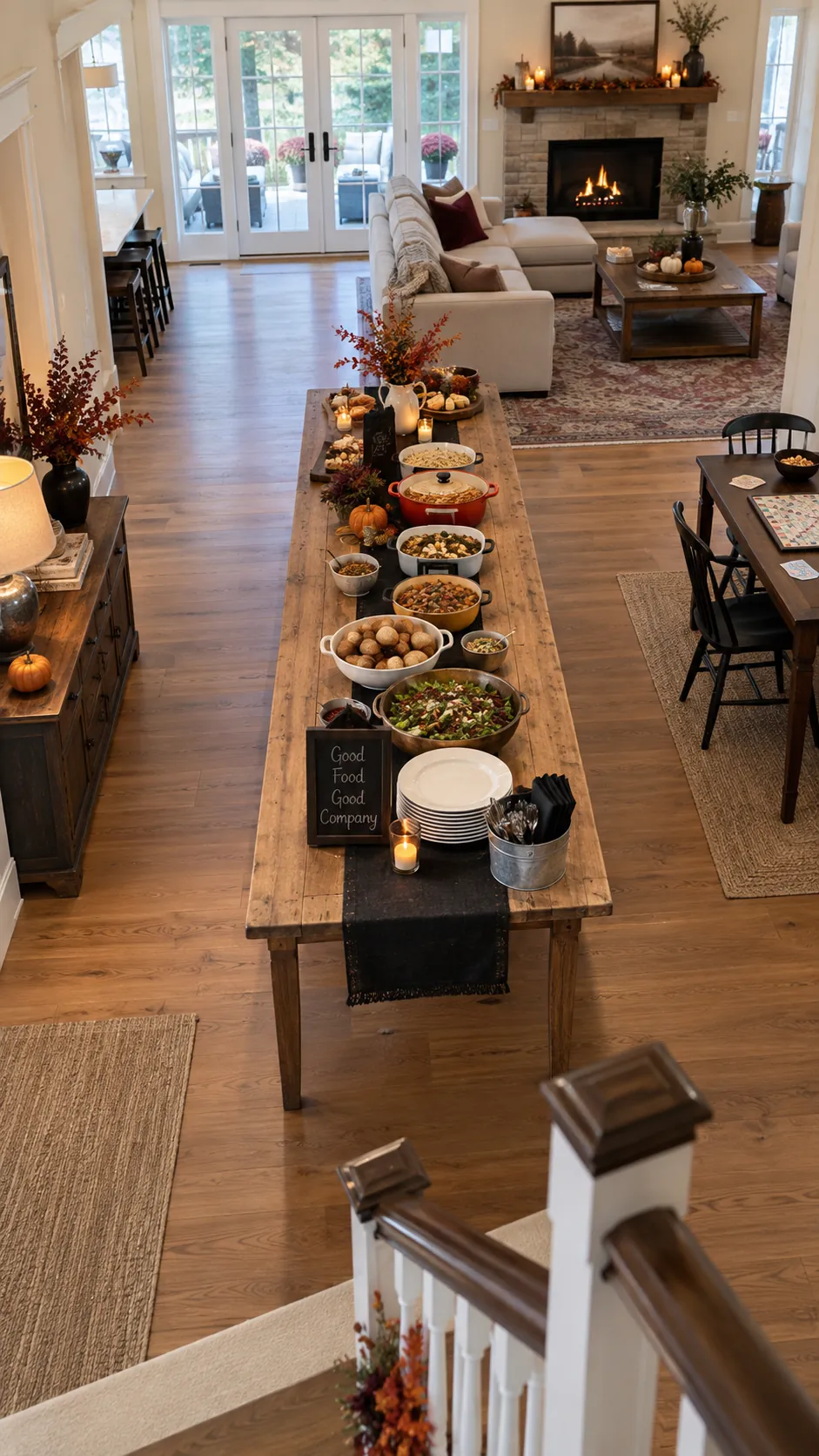
A narrow serving table against a wall gives guests one obvious food destination. Put plates at the entrance end and napkins at the exit end so the line moves in one direction. Keep the back edge free for refills instead of hiding supplies behind decorations. Test the line with two people passing before committing to the arrangement.
Move Drinks Away From the Food
A separate drink station prevents a guest choosing a beverage from stopping the entire buffet line. Place it near a washable surface and within easy reach of the room, not beside the most active game. A tray can catch drips while cups stay grouped at the front. Keep water just as visible as themed drinks so guests can serve themselves quickly.
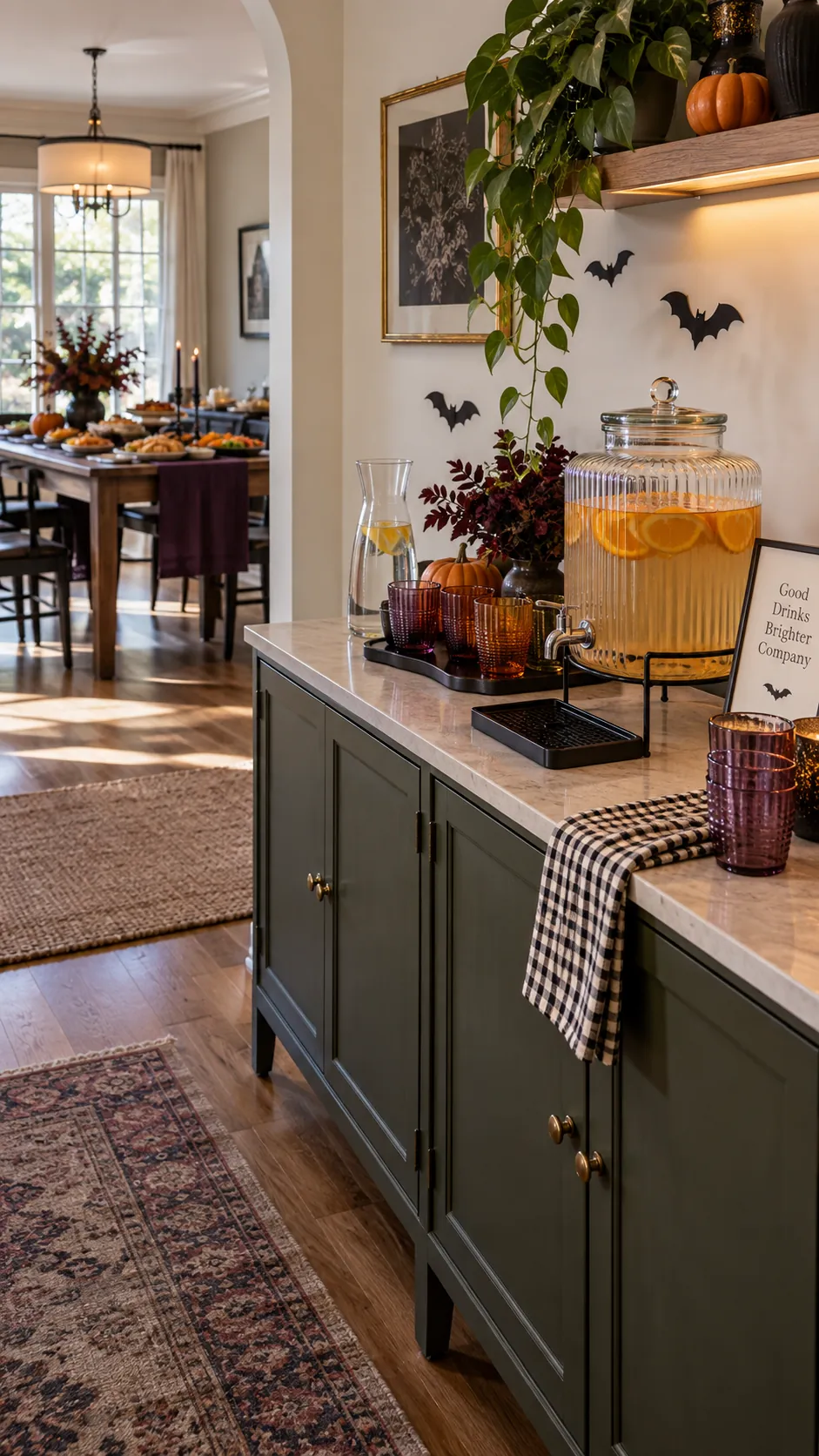
Use Perimeter Seating
Arrange chairs around the room edge to preserve a generous center for movement. Angle pairs slightly inward so conversation remains comfortable even when people are not playing. Leave one gap wide enough for anyone carrying a plate to pass. Check that chair legs do not block a doorway when seats are occupied.
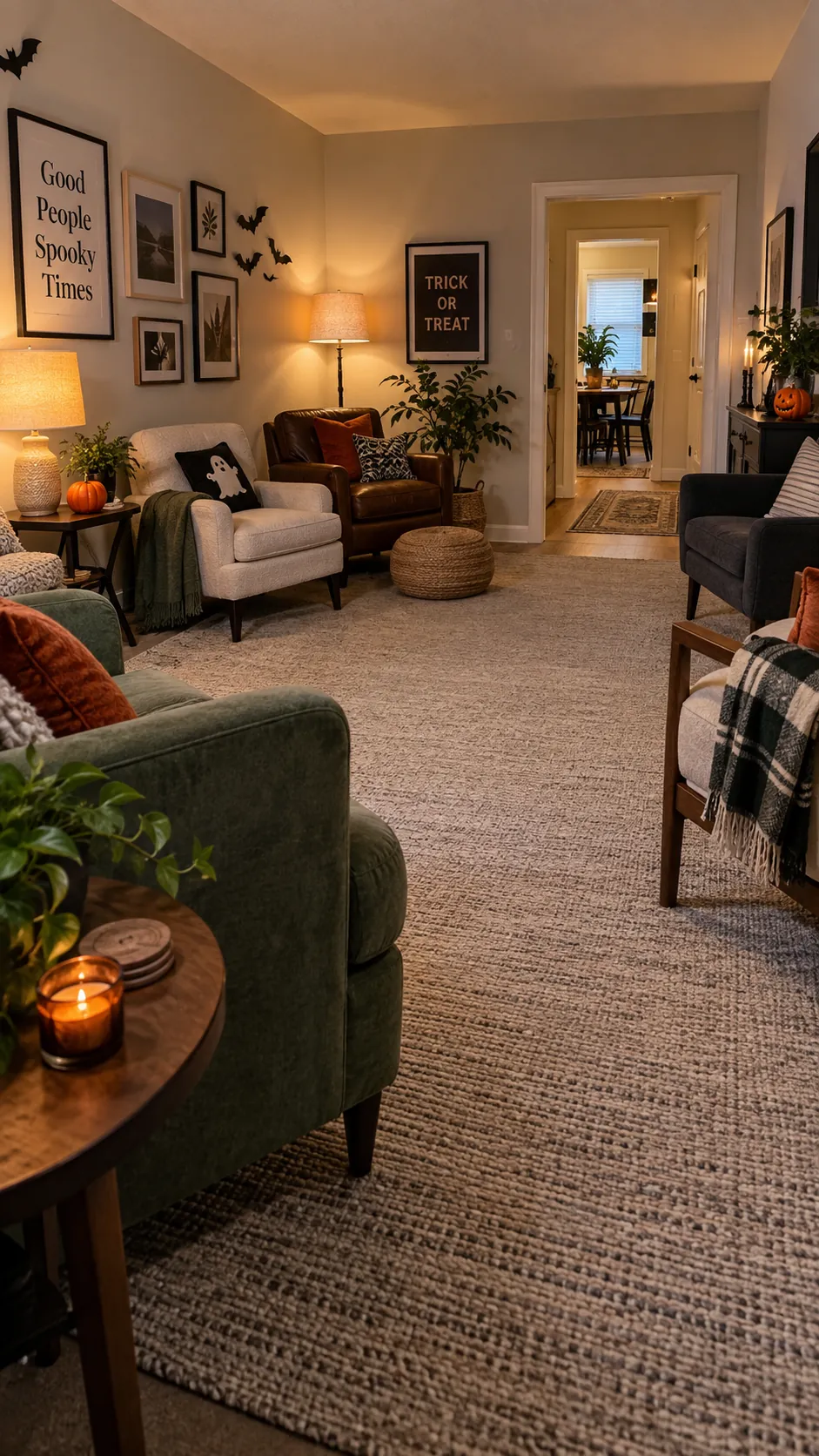
Give the Main Game Its Own Table
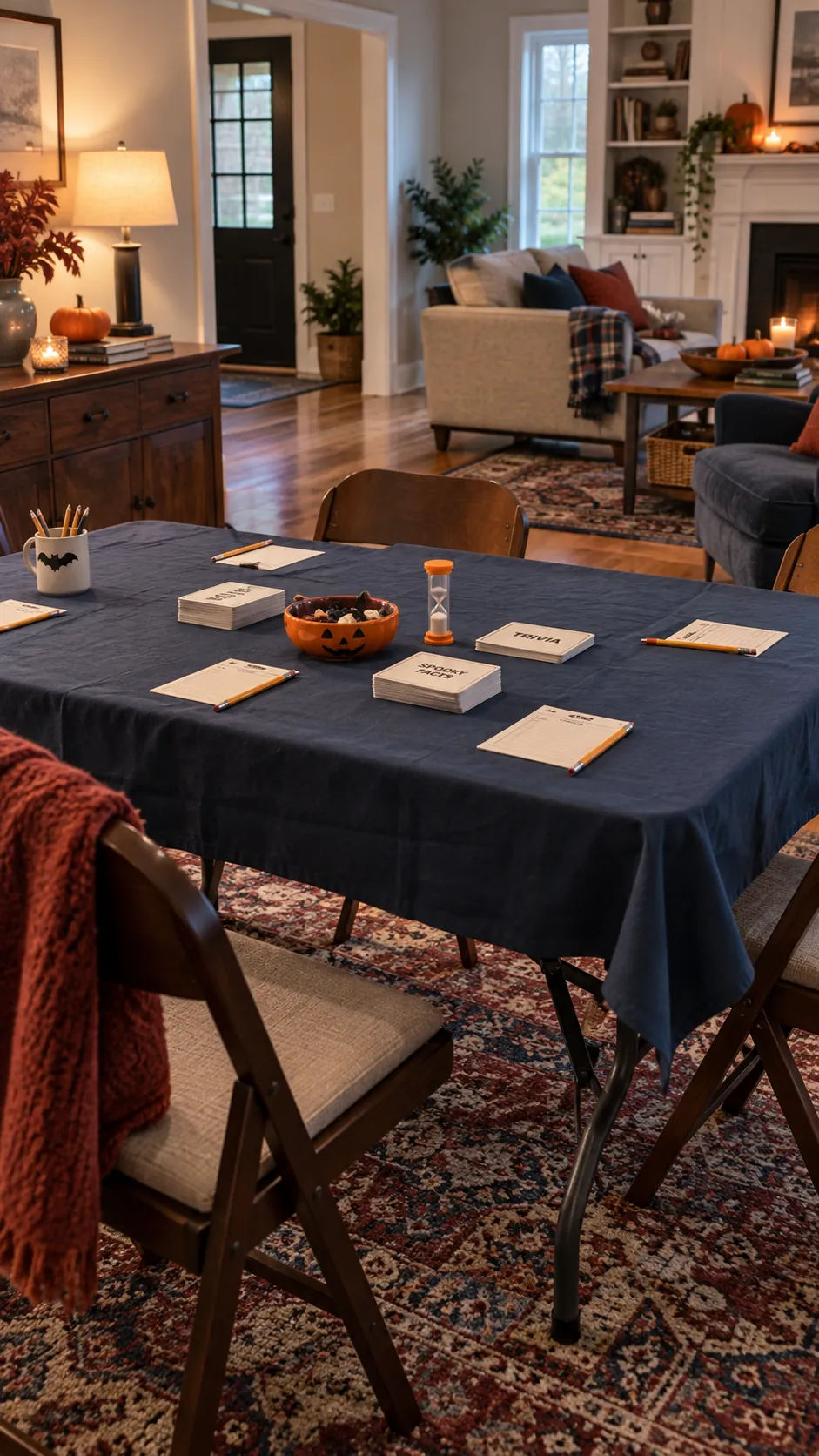
A folding table can hold cards, pencils, or game props without taking over the dining surface. Set it where the host can reach the group without crossing the buffet queue. Match table size to the actual activity rather than filling every open corner. Add a small container for loose pieces so the next round starts without a search.
Layer Light Instead of Darkening the Room
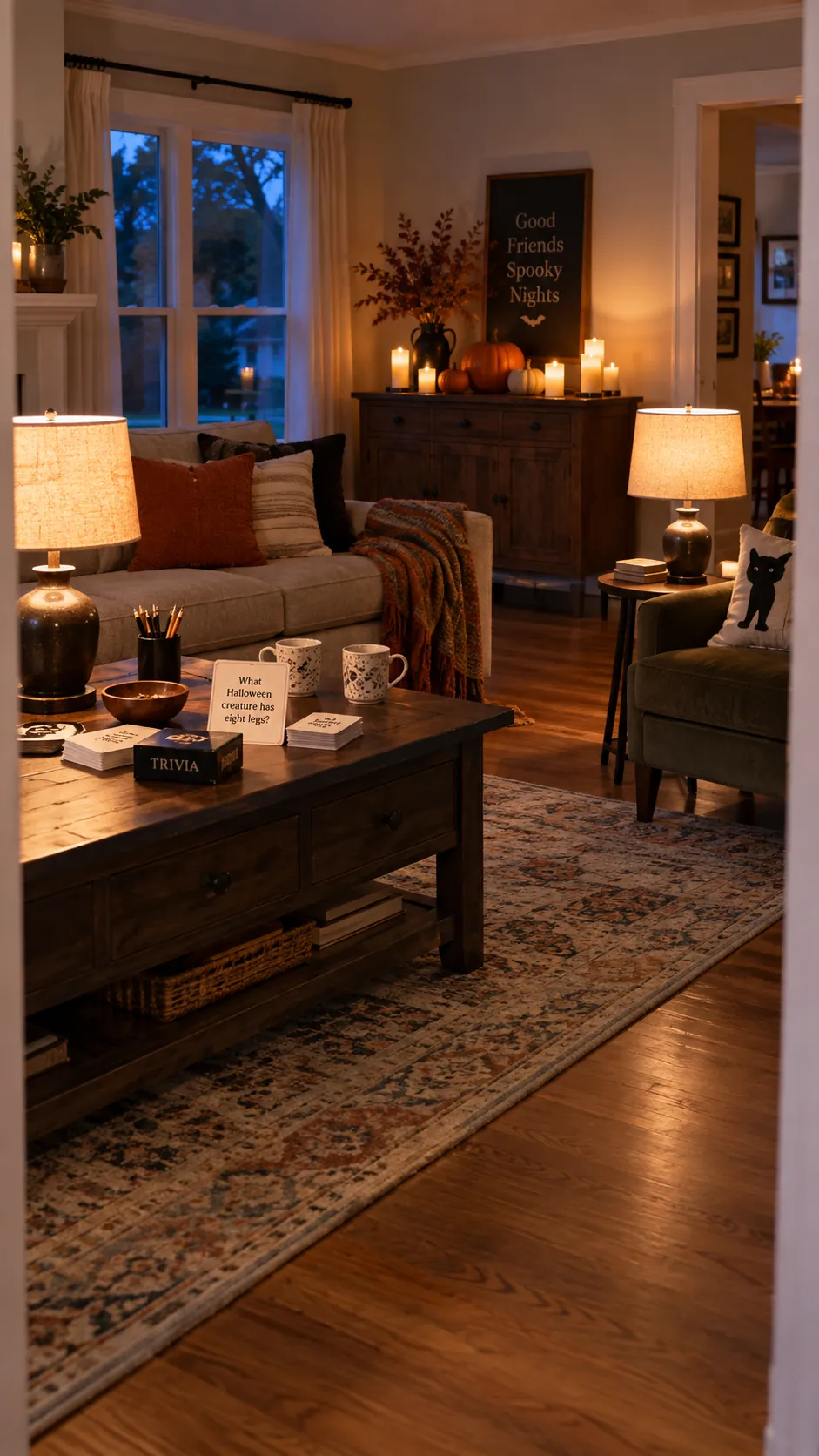
Halloween atmosphere works better when guests can still read game cards and see what they are eating. Use warm lamps for general light, then add a few battery candles away from food and fabric. Point any colored light at a wall or prop rather than into faces. Walk through the room at party brightness to find steps or corners that disappear.
Create an Arrival Drop Zone
Give coats, bags, and costume accessories a place before guests enter the main room. A bench or sturdy chair near the entrance helps children adjust shoes and masks. Label one basket for small items that would otherwise land on the buffet. Keep this zone shallow enough that new arrivals do not bunch up at the door.
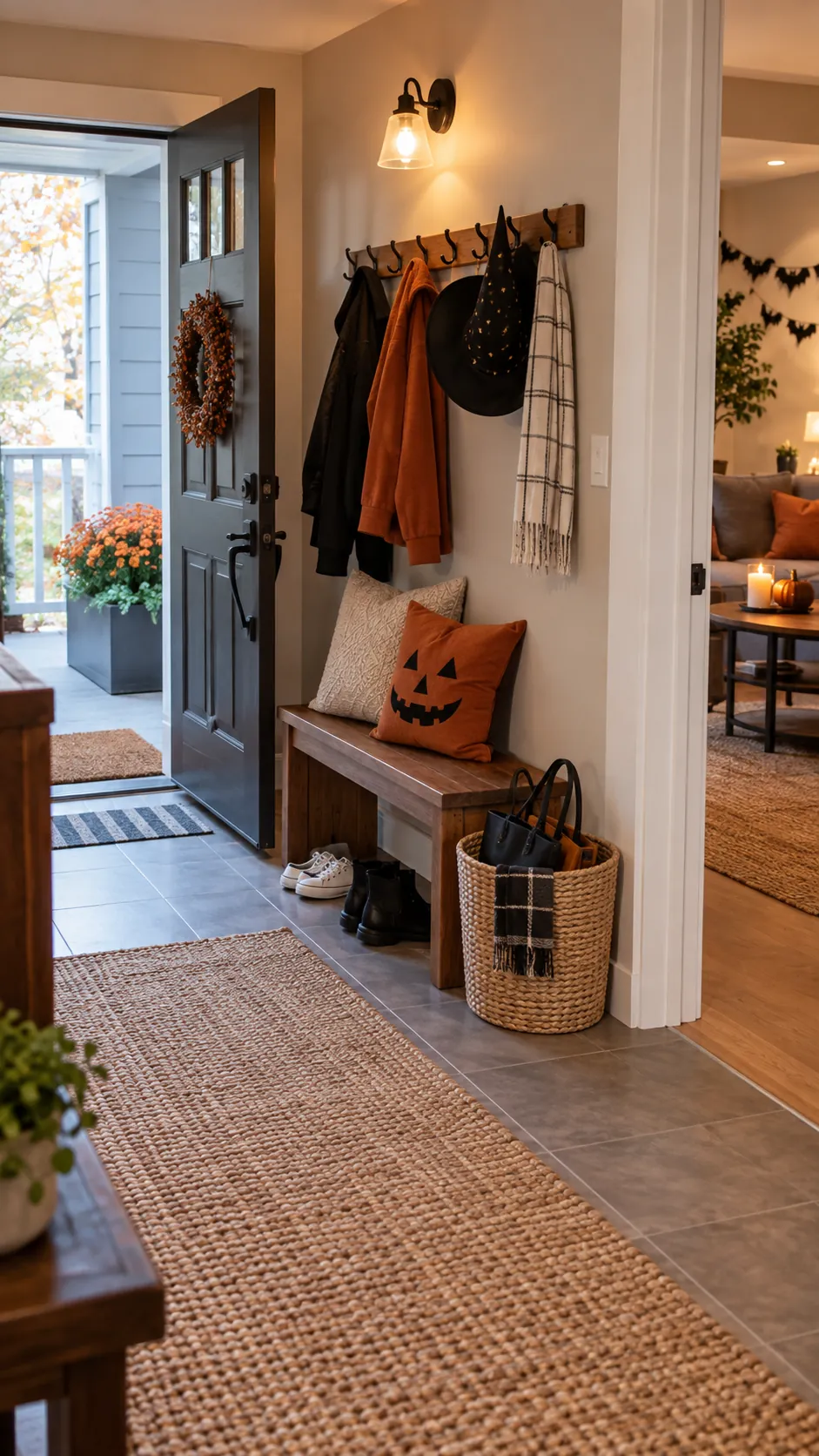
Put Candy in a Small Side Nook
A candy display can add color without competing with the meal. Use a side table away from the main serving line so guests can browse after eating. Keep wrappers and a waste basket beside it. For younger visitors, put the display where an adult can see it without standing guard.
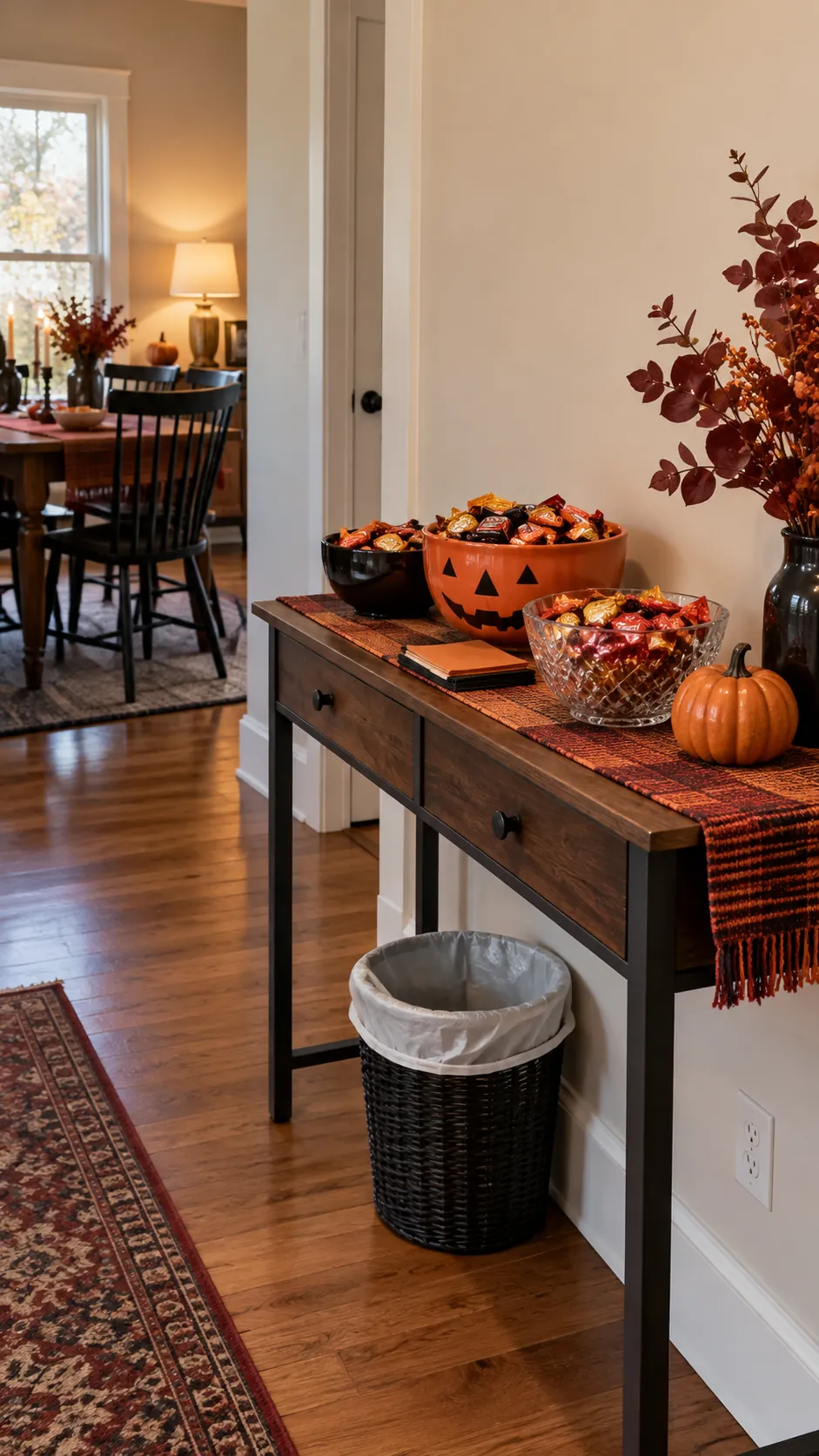
Choose Furniture That Can Move Midparty
A light side chair and a small nesting table are more useful than a large decorative prop when the guest count changes. Start with furniture in its normal position, then mark the pieces you can shift in a minute. Store a folded blanket or floor cushion for an extra seat. Keep any moved piece away from exits and heating vents.
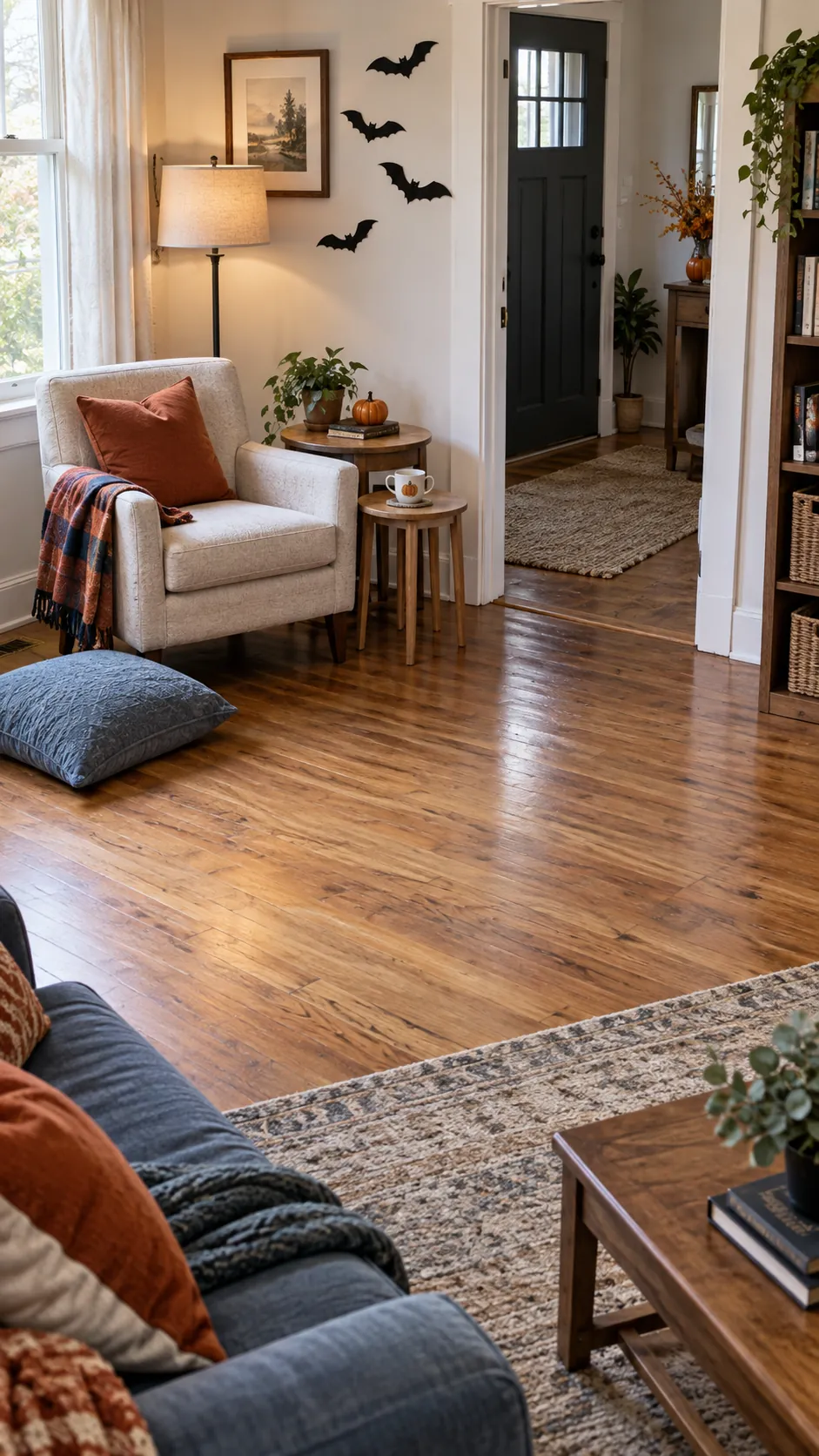
Hide Refills Close to the Buffet
Extra cups, serving utensils, and snacks belong near the serving area but out of the guest path. A closed cabinet or low basket can hold them without making the table look crowded. Put the items needed first at the top. The host can then replenish food without leaving the room or interrupting a game.
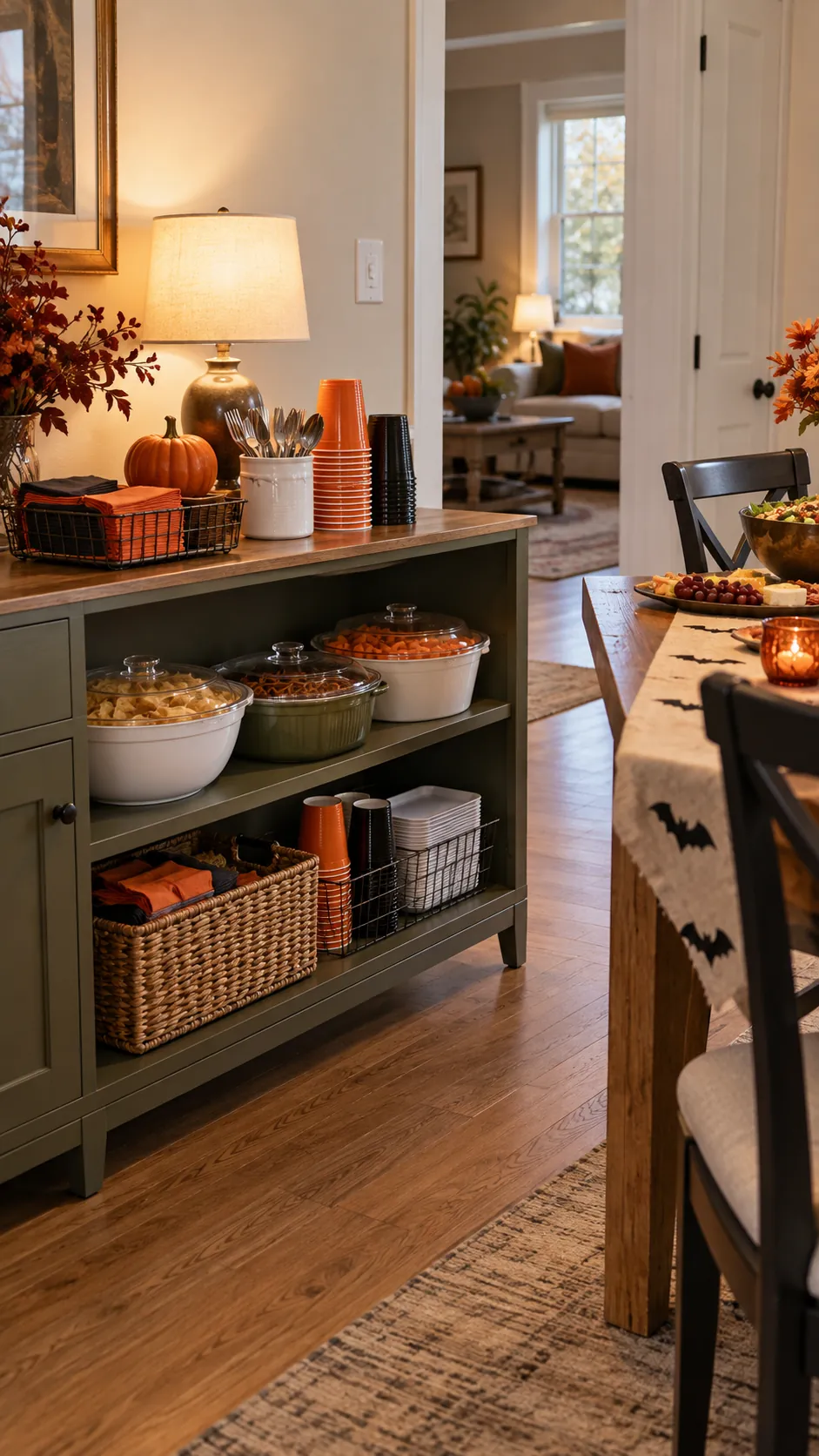
Frame the Entrance With One Strong Scene
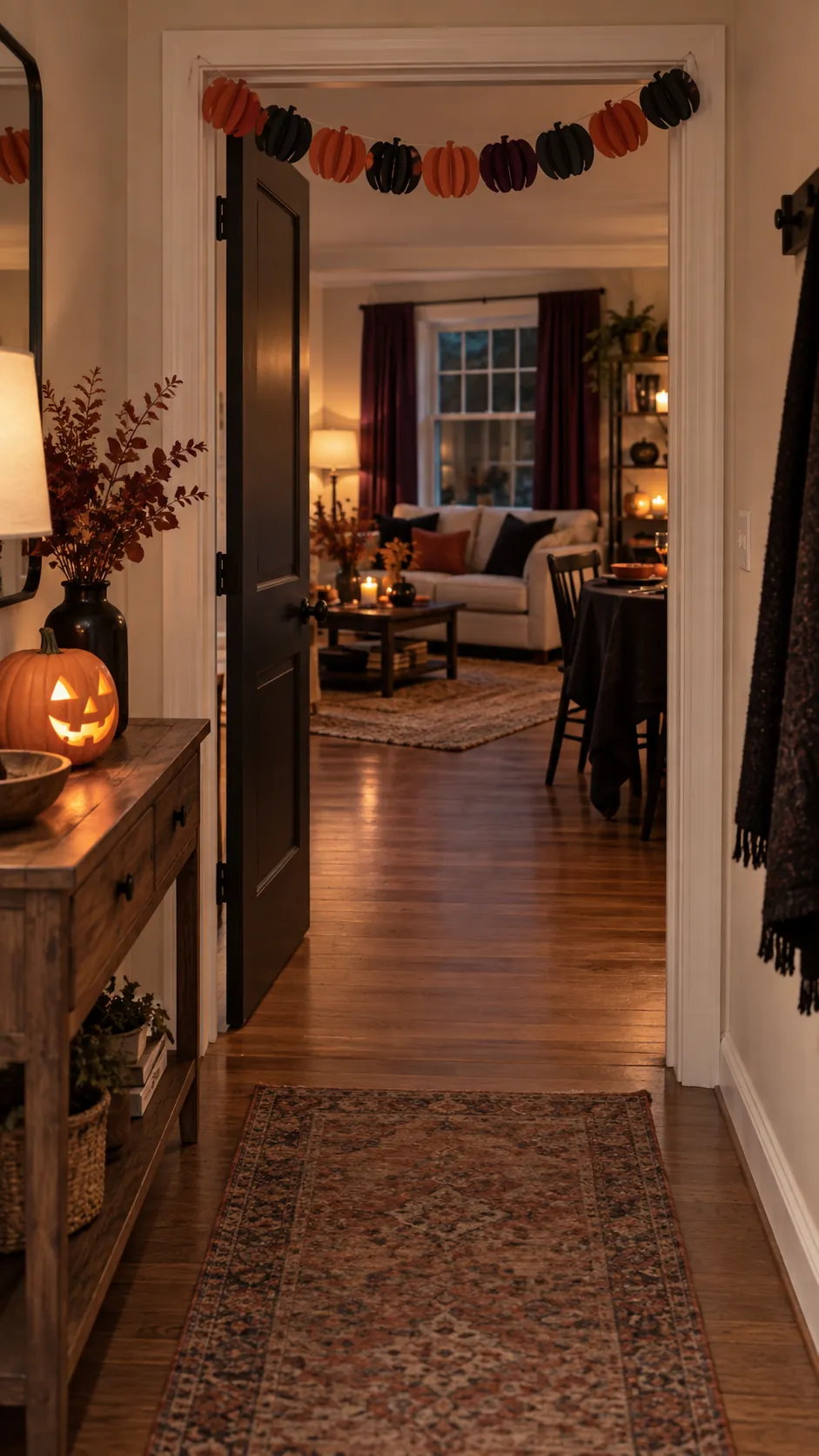
A single doorway treatment announces the Halloween theme before guests see the rest of the room. Try a restrained paper garland and one lit pumpkin on a stable surface. Keep hanging pieces above head height and away from the door swing. Repeating the same accent color inside makes the transition feel deliberate.
Make a Clear Serving Loop
When the room has two doorways, let guests enter the buffet from one side and leave toward seating on the other. In a room with one opening, turn the table so the return path runs beside rather than against the queue. Place condiments after the main food because decisions there often take longer. A practice walk with a plate reveals awkward turns before the party.
Reserve a Low Mess Activity Corner
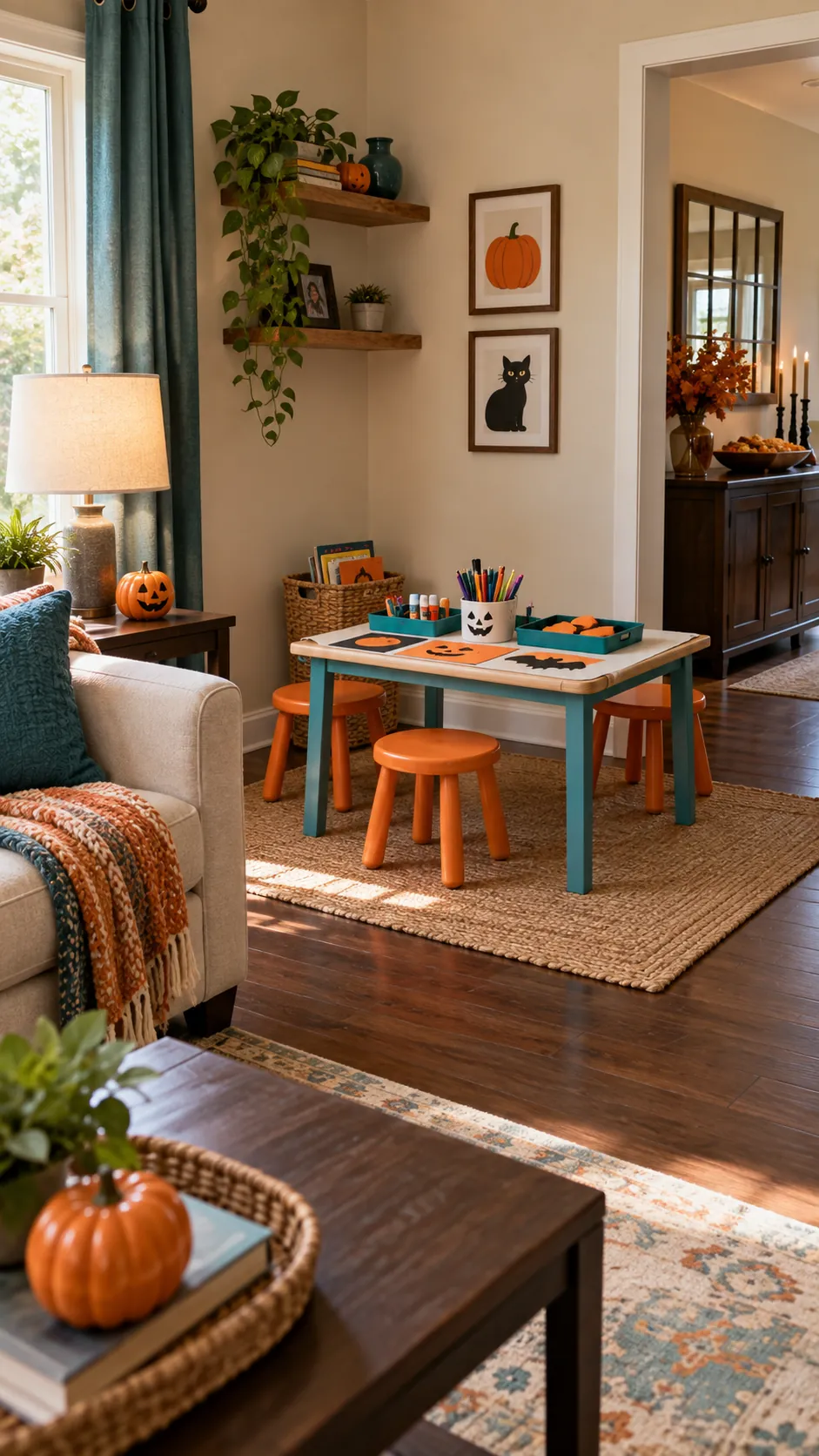
A small craft or guessing game corner gives children something to do while food is being set out. Use a washable mat and a shallow tray to contain supplies. Keep scissors or tiny parts out of reach when younger children are present. Position the corner where an adult in the main room has a clear sightline.
Protect a Conversation Pocket
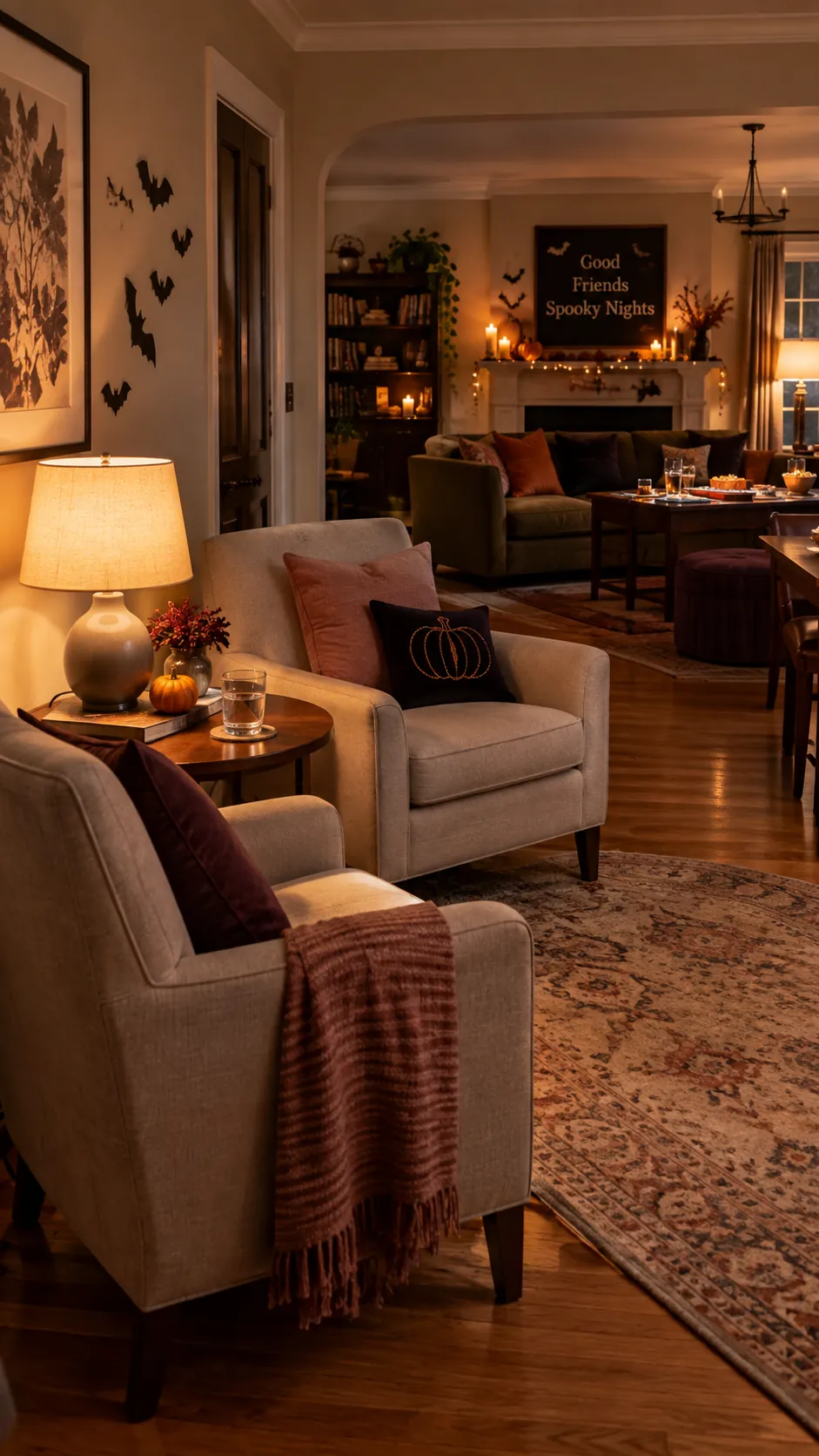
Not every guest wants to join every game, so leave a quieter pair of seats near a lamp. Point them toward the room rather than isolating them behind the buffet. Keep speaker volume moderate in this area. This pocket also gives an older guest a comfortable place to remain part of the gathering.
Use a Photo Spot That Does Not Block Traffic
A photo backdrop works best on a wall guests would not otherwise use to reach food or seating. Put a small mark on the floor where the camera holder can stand without blocking a doorway. Keep props in one basket instead of scattering them across the room. Test the lighting with a phone before guests arrive.
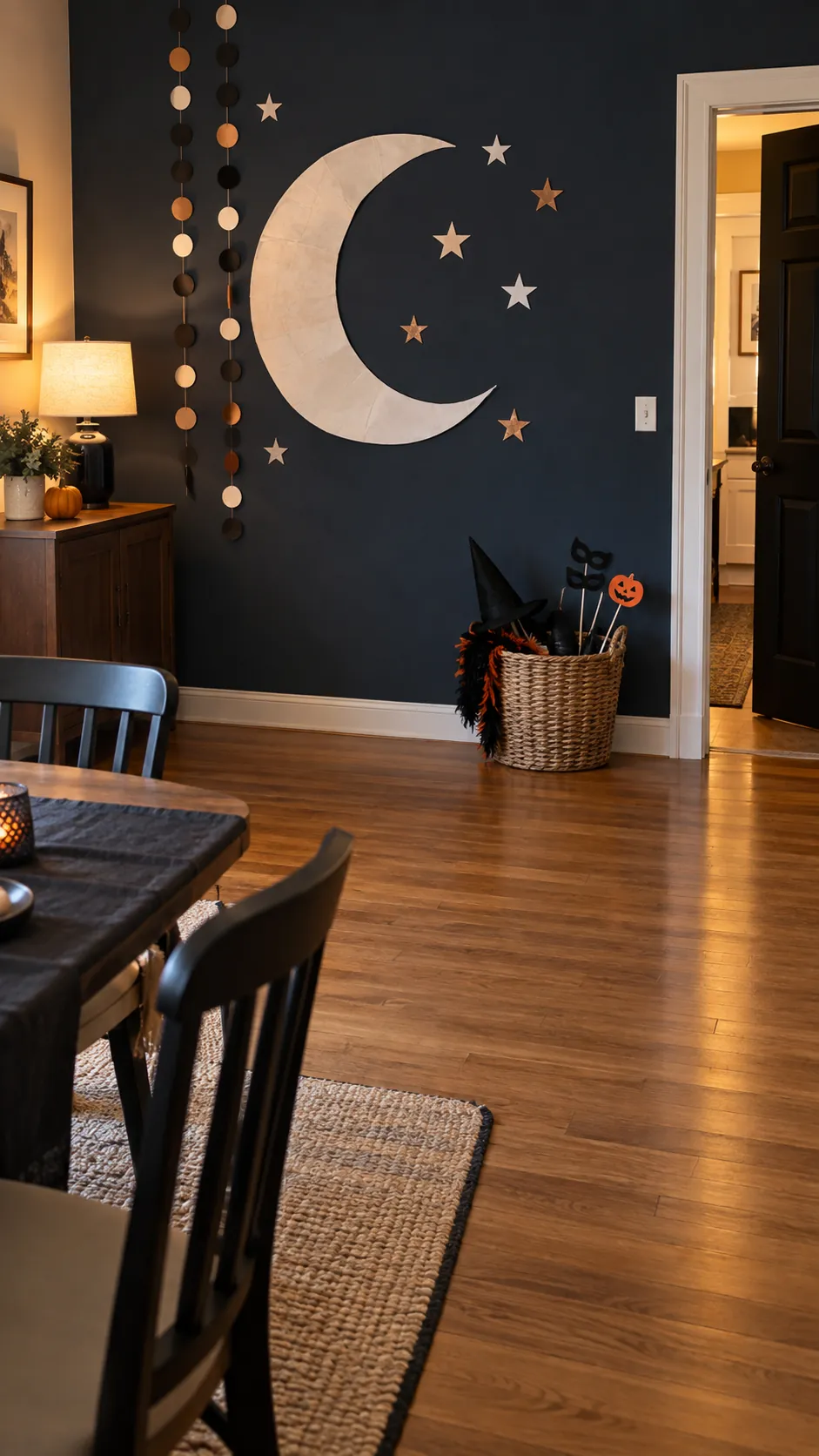
Keep Music Near the Activity Zone
Place the speaker where the game host can lower it quickly for instructions. A shelf is safer than the floor when guests are walking in costumes. Route its cable behind furniture or choose a charged wireless speaker. Music should support the room without forcing people at the buffet to shout.
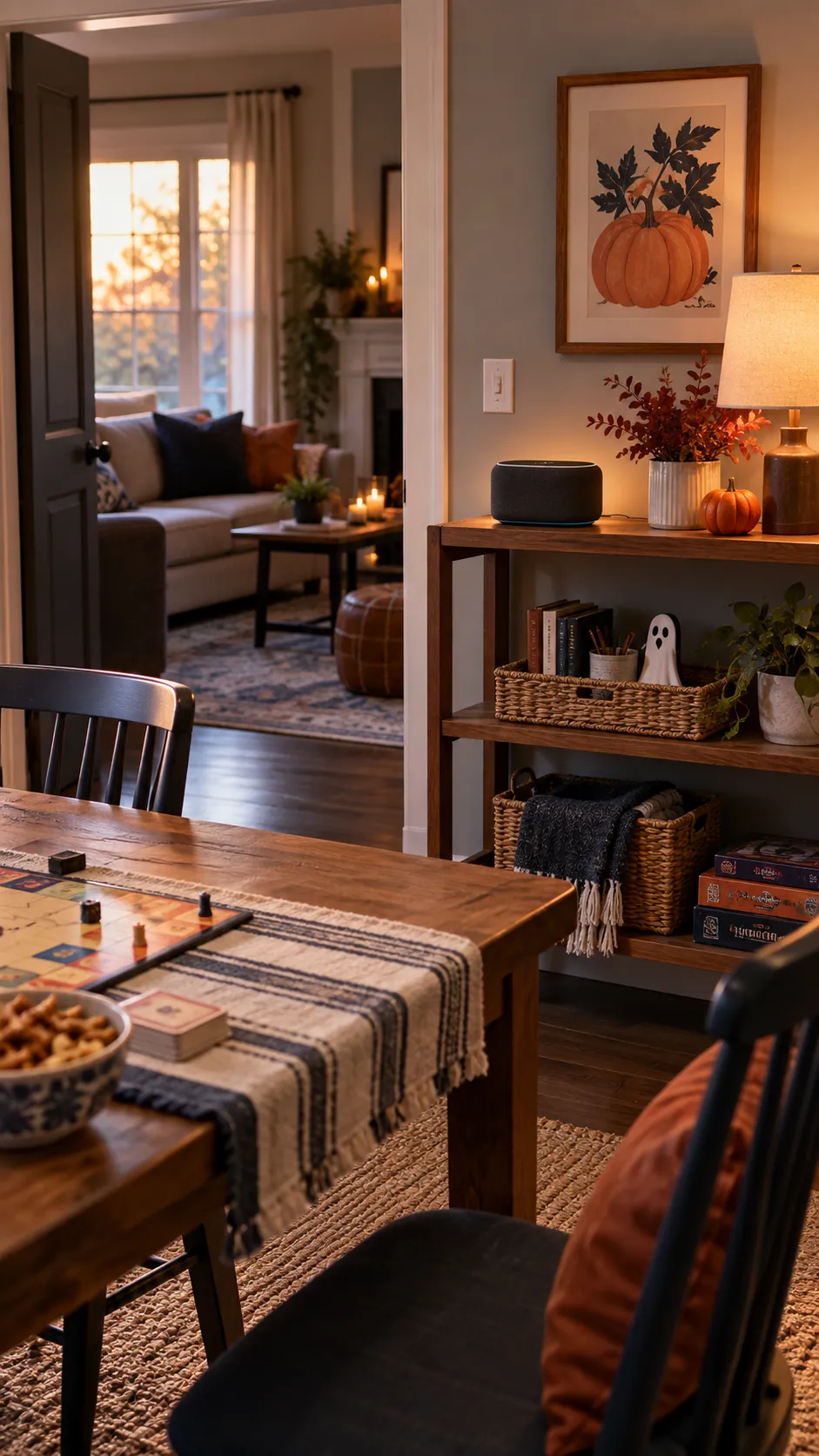
Store Game Props Between Rounds
A lidded basket beside the game table keeps cards, tokens, and prizes from spreading onto food surfaces. Give each activity a small pouch so setup takes seconds. Put used items back before bringing out a new game. The open floor stays usable even when the evening changes pace.
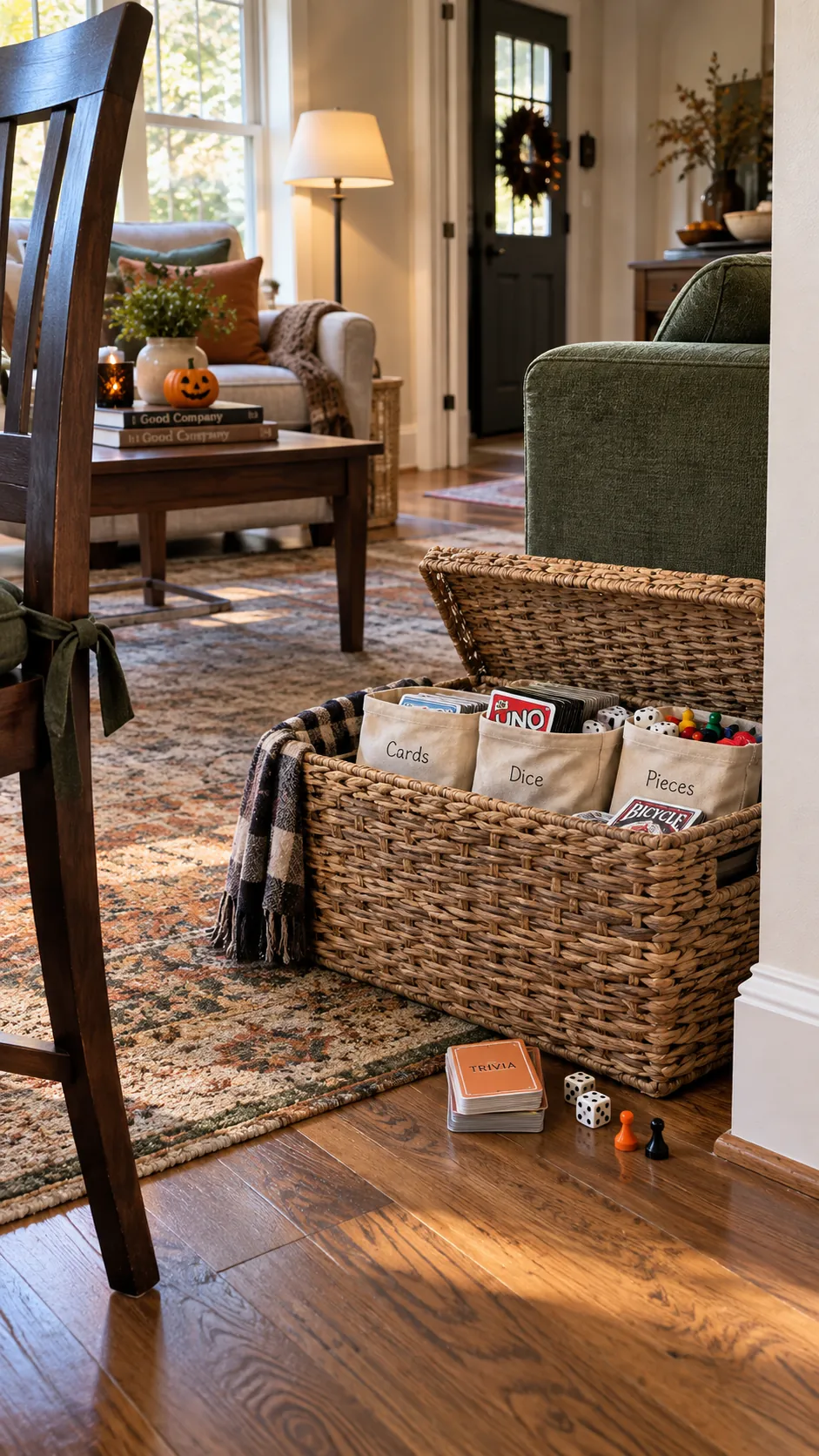
Dress the Table With Cleanable Layers
A washable runner creates a Halloween focal point without taking away serving space. Keep tall decorations behind dishes so guests can reach food without leaning over them. Choose stable vessels that will not tip when someone lifts a platter. Wipe the surface once before setting food out, especially after placing props.
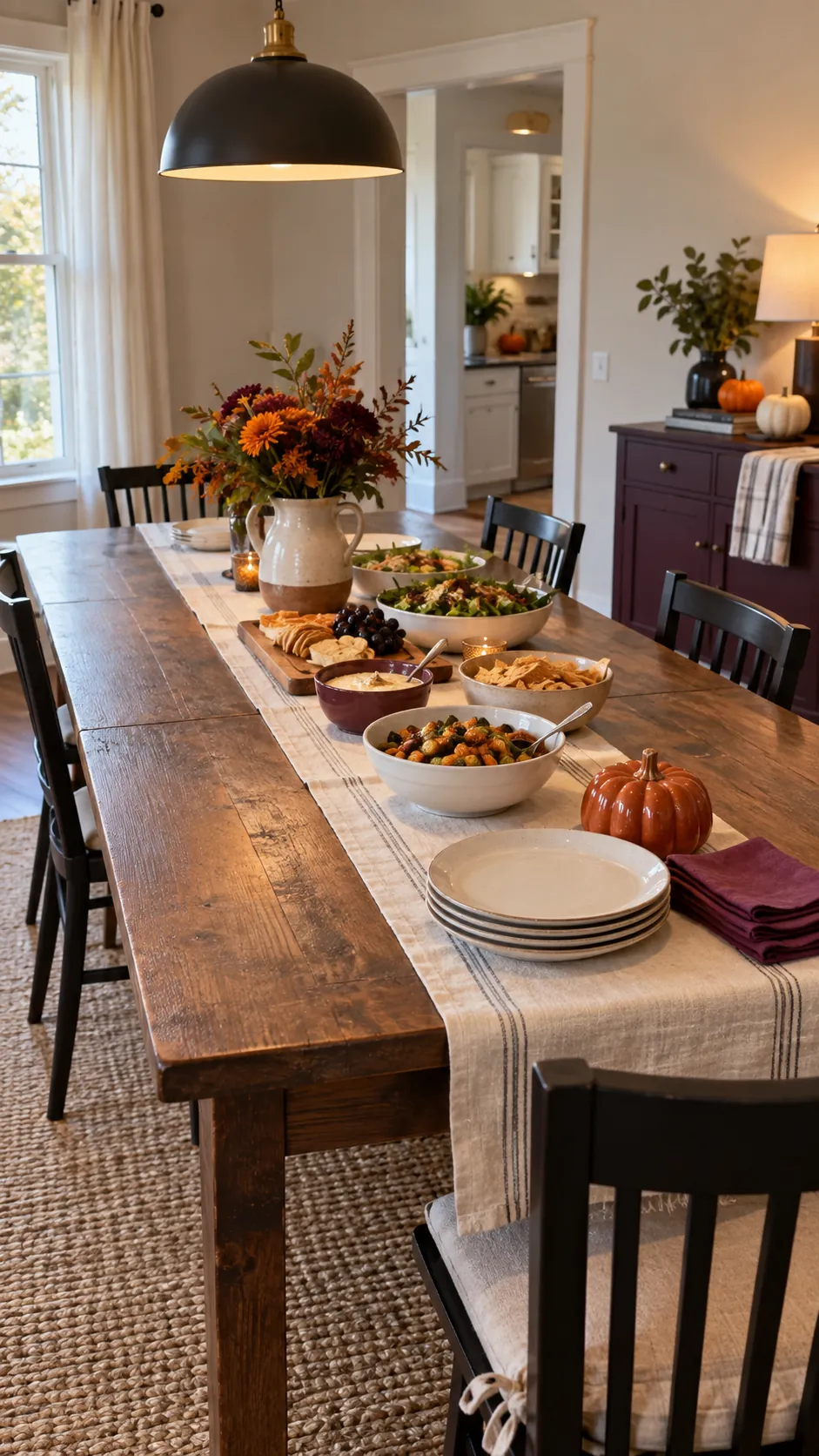
Plan One Extra Seating Option
A compact folding chair or sturdy ottoman can accommodate a late arrival without shrinking the play space from the start. Store it close enough to bring out discreetly. Give it a clear sightline to both conversation and games. Avoid using a fragile decorative stool as a substitute for an actual seat.
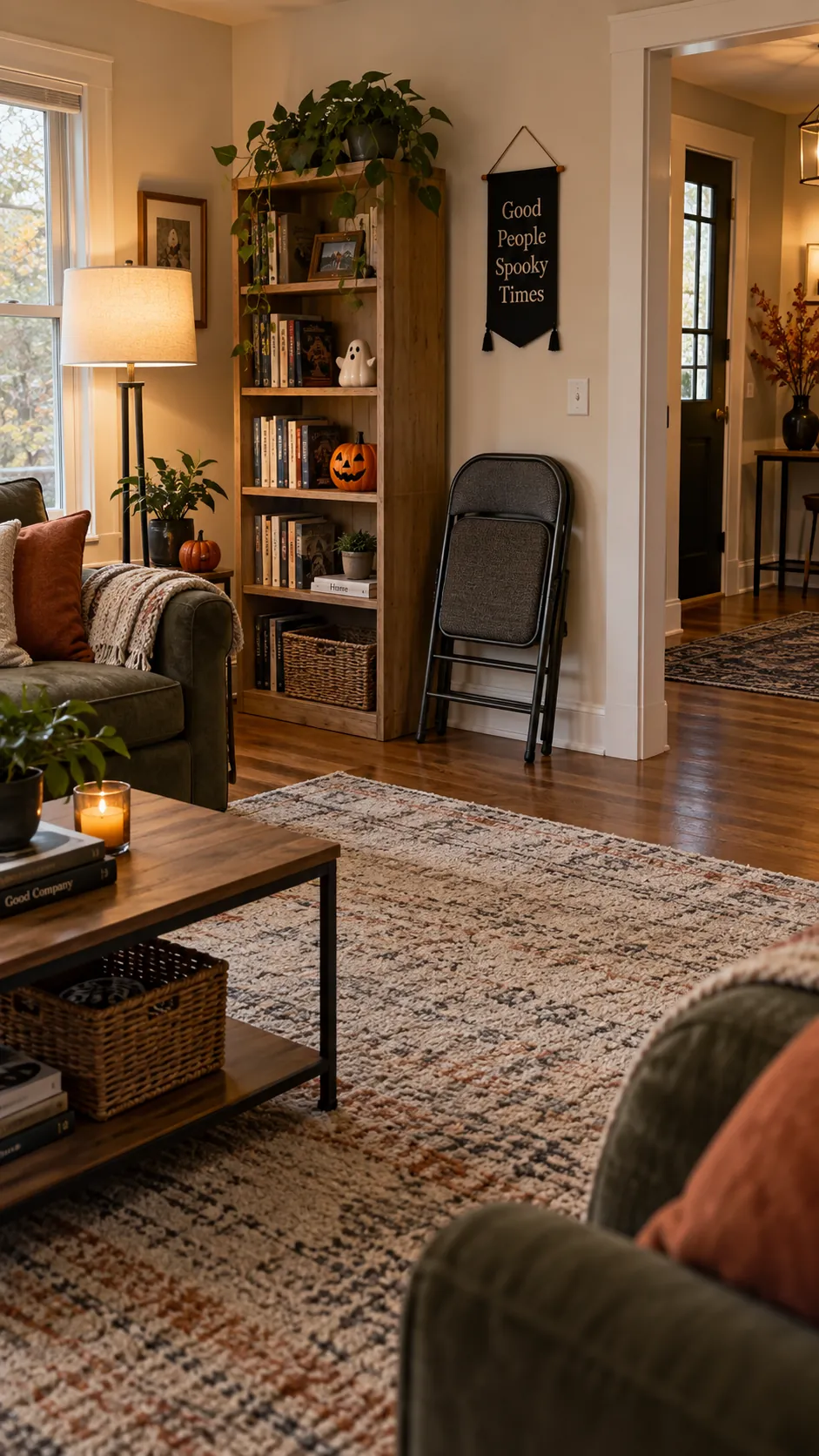
Make Every Route Easy to Navigate
Decor should never narrow the route to a door, bathroom, or food station. Check for trailing fabric, cords, and props at ankle height. Leave space for guests using mobility aids or carrying a child to turn comfortably. If a path feels tight during setup, it will feel tighter when the room is full.
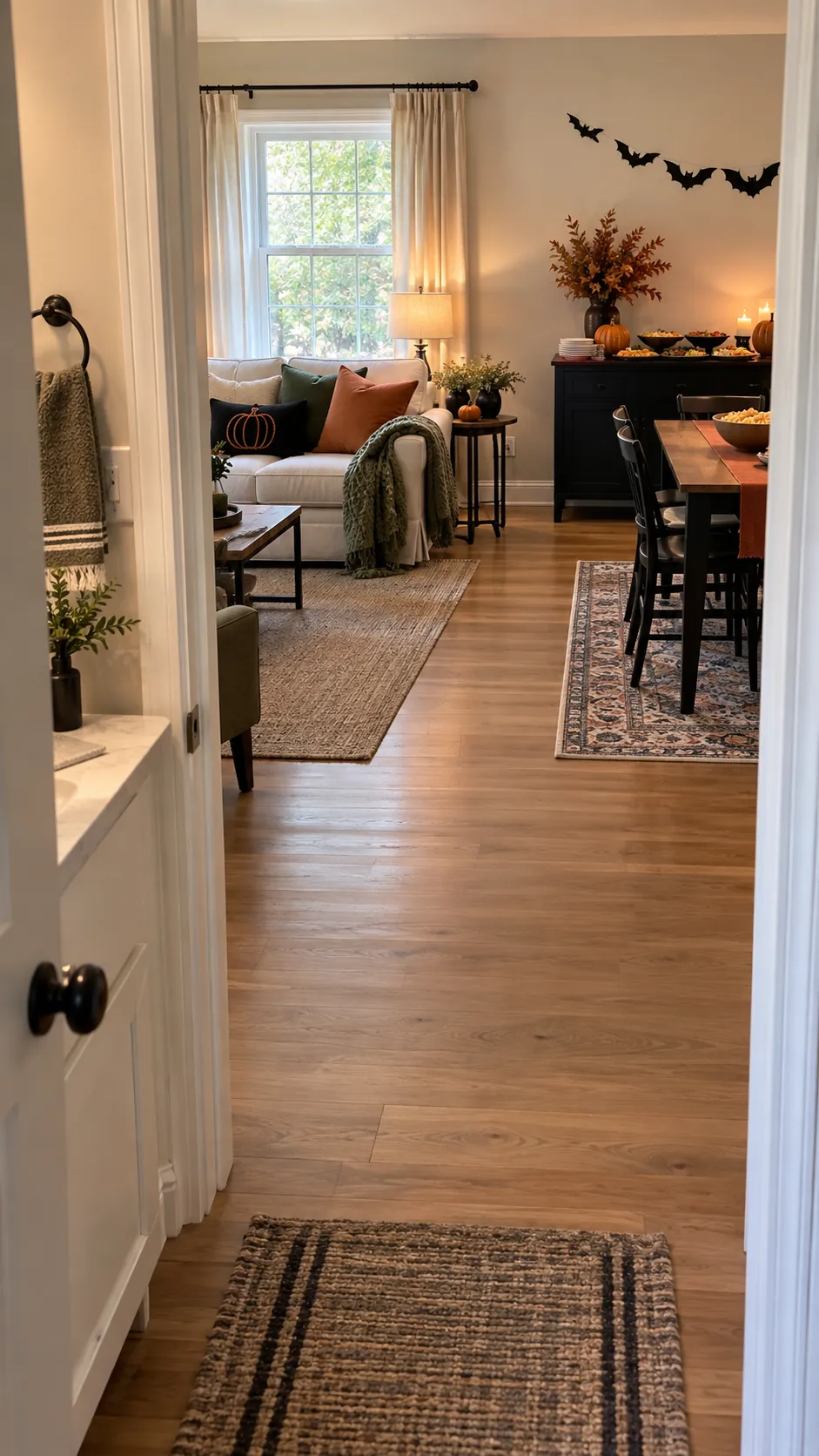
Use Vertical Decor to Save Floor Space
Hang a few lightweight paper shapes high on a wall or from a secure shelf instead of placing large props in walkways. Keep them away from open flame, fans, and heat sources. Repeat one motif near the buffet and game table to connect the zones. The floor remains free for chairs, games, and guest movement.
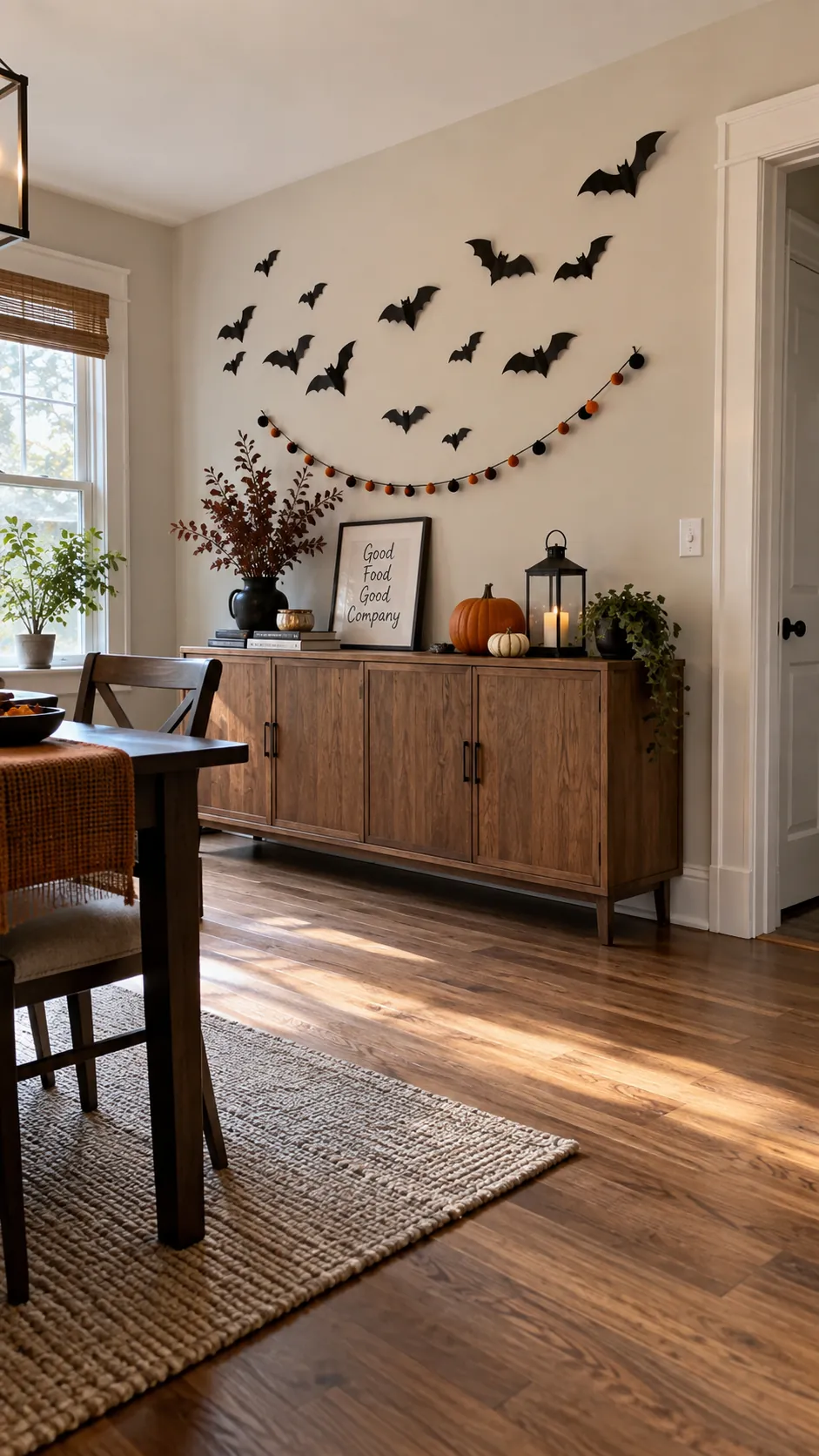
Set Up a Quiet End of Night Reset
Place a waste basket near the exit and keep cleaning cloths where the host can reach them. As games finish, return loose pieces to their containers and move extra chairs back. Leave the buffet clear enough for guests to gather belongings without crowding it. A simple reset lets the room remain welcoming through the last goodbye.