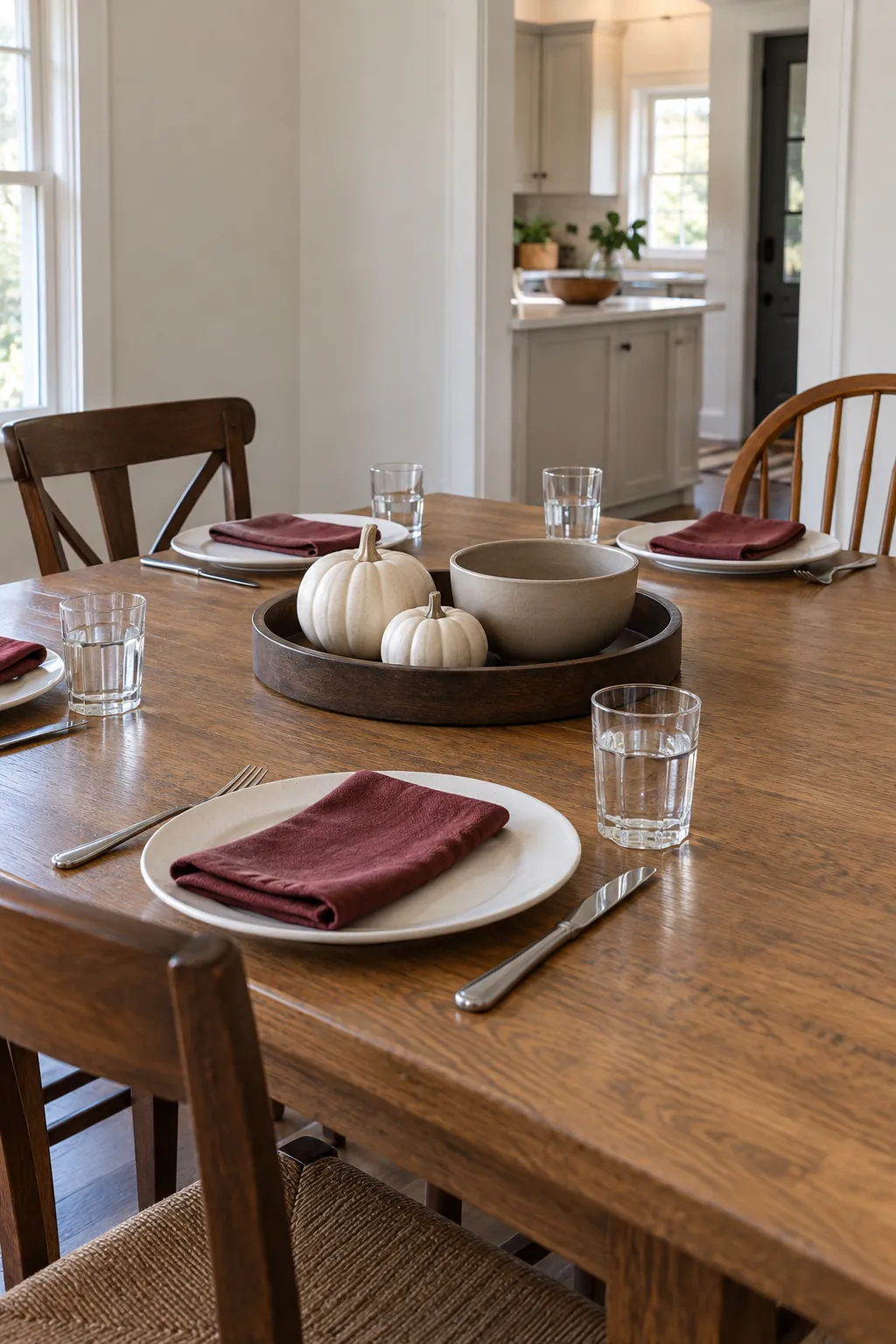
A beautiful table loses its appeal if a perfume like scent competes with the food or a tall arrangement hides the person opposite you. Shape, color, and texture can do the decorative work on their own. Start with a low footprint and materials that feel comfortable to the guests who will actually sit there.
Ask about particular sensitivities rather than assuming that a natural material is automatically suitable. Skip potpourri, scented pinecones, cinnamon bundles, fragrant sprays, and strong scented foliage when you want a quieter table. Check reused decor for storage odors, and test the finished centerpiece beside the serving dishes before dinner.
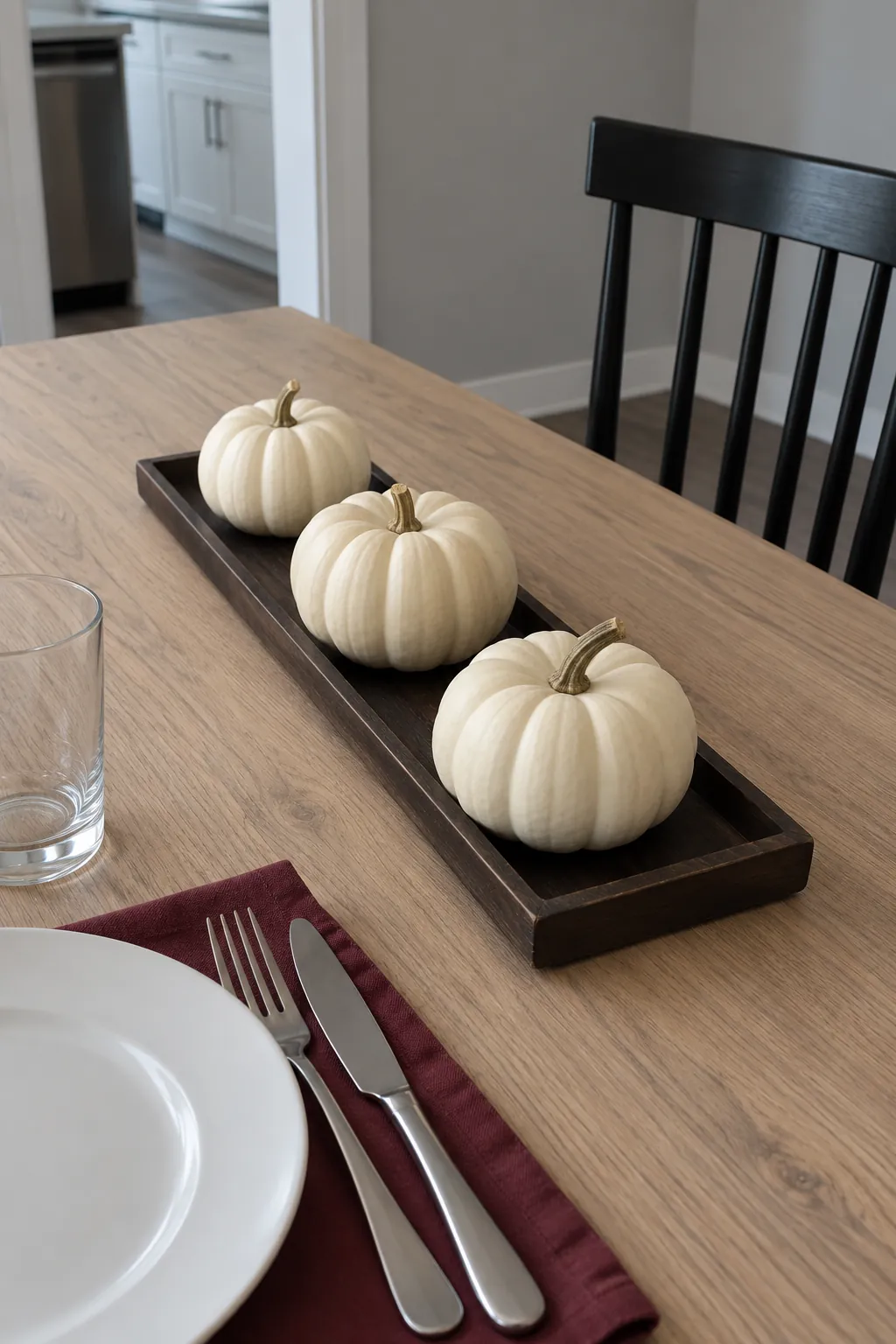
A shallow bowl of whole pears
Fill a shallow ceramic bowl with a few whole pears and let their uneven shapes supply the detail. Choose firm fruit with intact skin and avoid cutting it open as part of the display. A low bowl keeps conversation clear and can move when a serving dish needs the center. Set it apart from food being served so guests know it is the table accent.
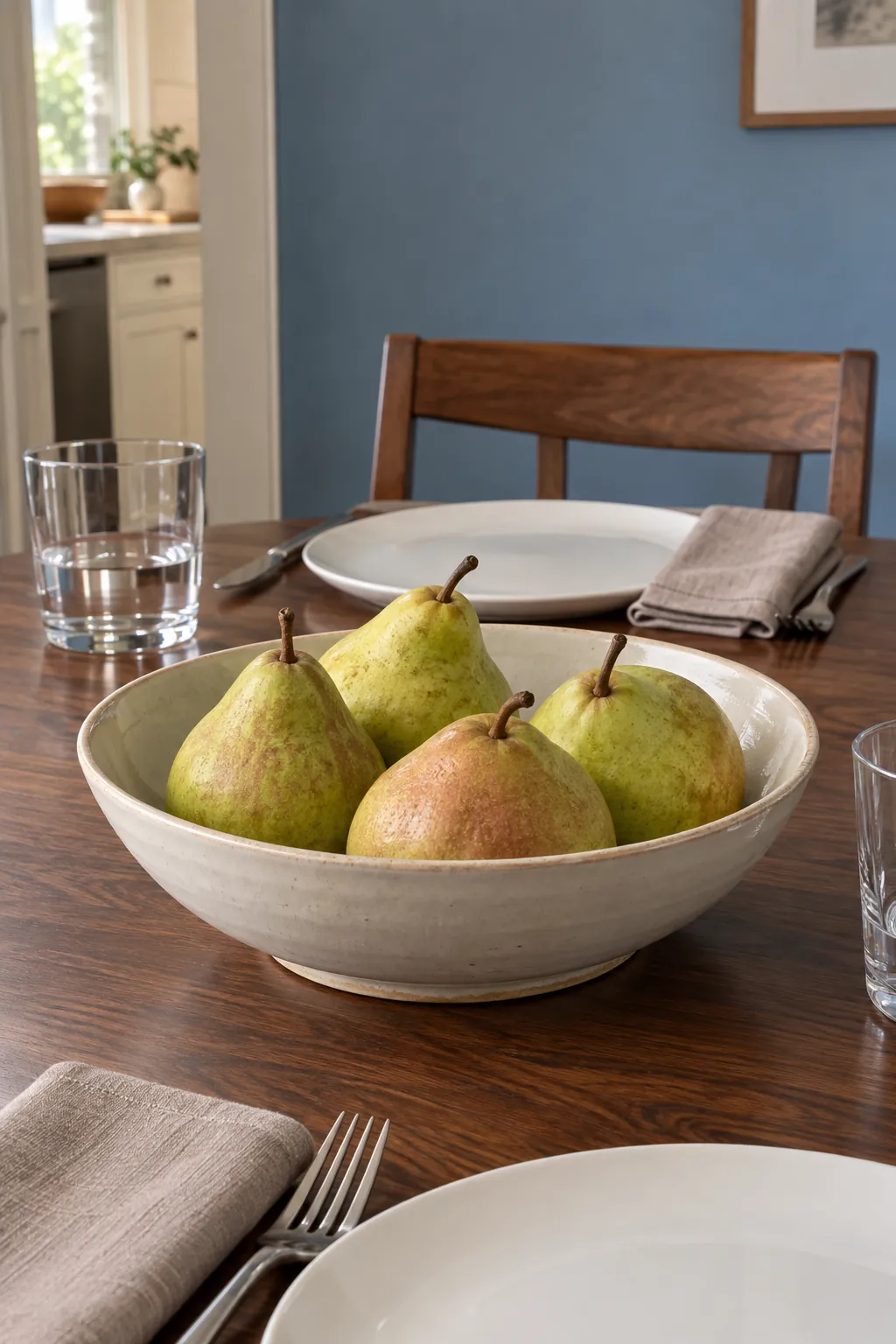
White pumpkins on a narrow tray
Arrange three small white pumpkins on a narrow tray with gaps between them. The tray gives the group a clear boundary and makes it easy to lift away together. Check each pumpkin for soft spots and protect the table from its base. Leave the stems natural and skip fragranced paint, sprays, or decorative coatings.
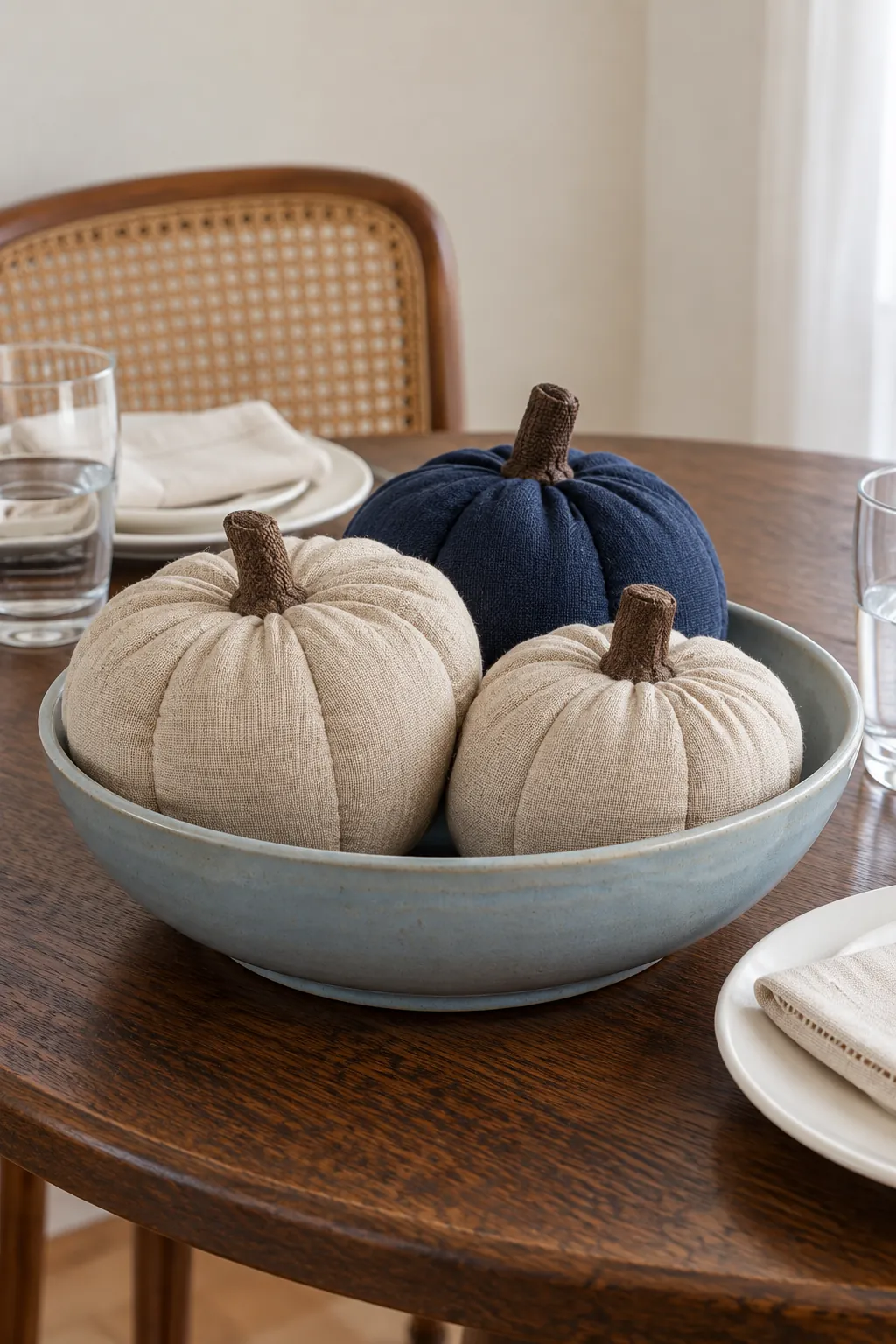
Soft fabric pumpkins in a bowl
Place a few fabric pumpkins in a wide bowl, mixing oatmeal linen with one muted navy piece. Soft fabric provides seasonal shape without flowers or a flame. Choose items that have not been stored with scented sachets or treated with fragrance. Keep the bowl low and the pumpkins securely contained rather than scattering them near plates.
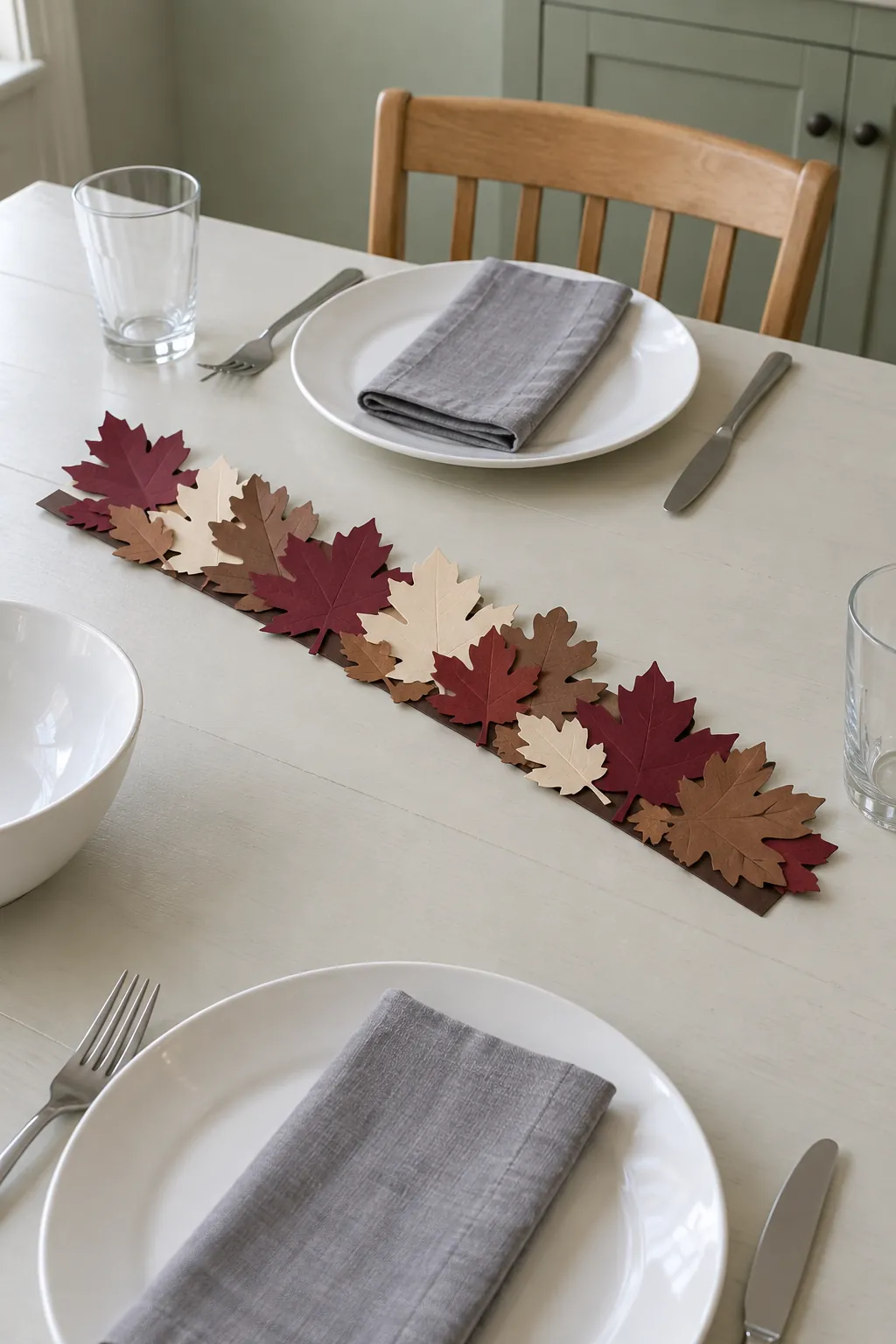
A flat trail of paper leaves
Cut simple leaves from plain colored paper and arrange them along a narrow strip of cardstock. Attach the leaves securely so the whole piece can be moved without loose shapes slipping into dinnerware. Muted brown, burgundy, and cream are enough to suggest autumn.
Keep the finished strip short enough to leave space at both ends for serving bowls. Use fully dry adhesive and choose paper without added fragrance or loose glitter. This paper Thanksgiving centerpiece works best as a low line rather than a mound of overlapping cutouts.
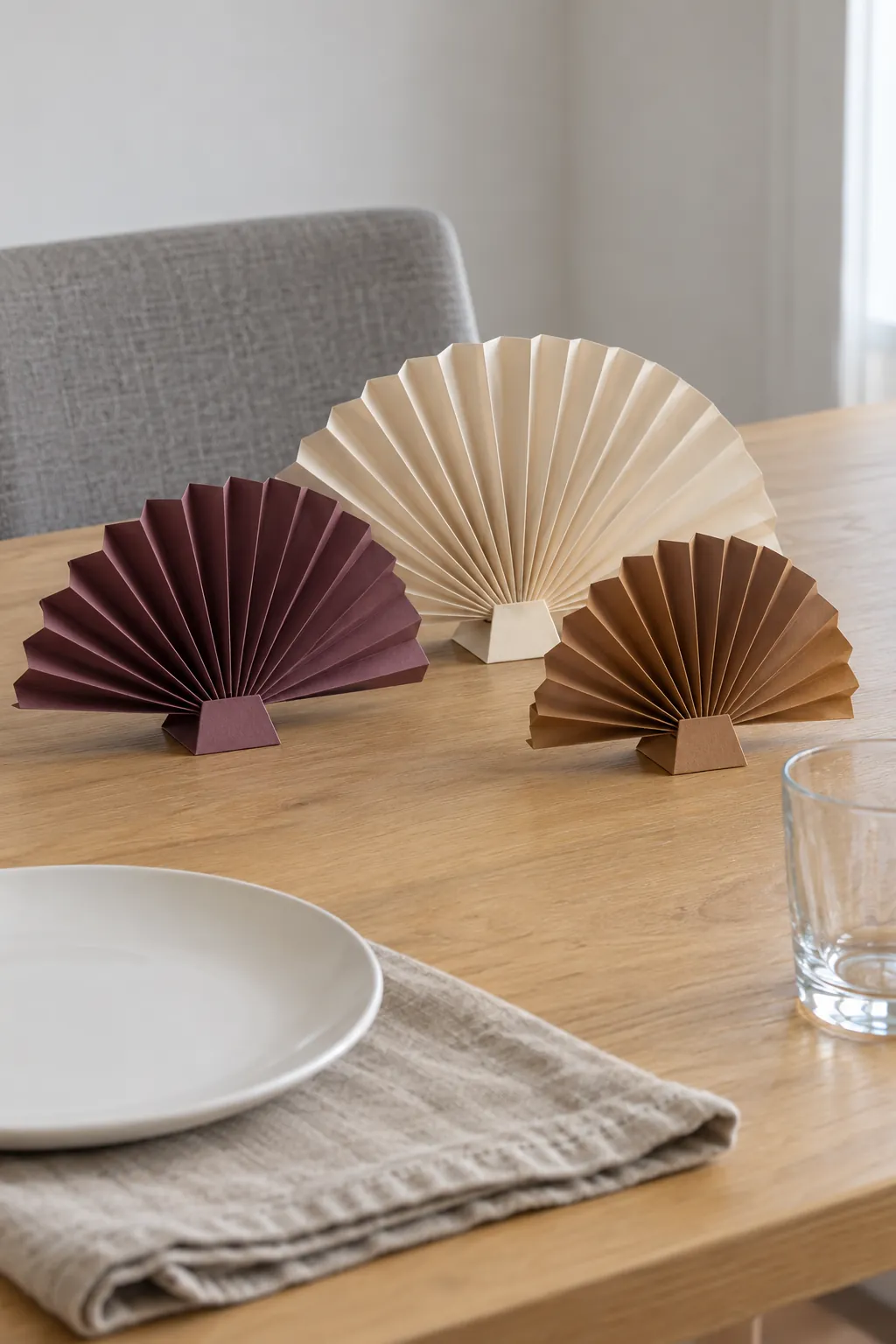
Low accordion paper fans
Fold sturdy paper into small accordion fans and secure their bases so they sit upright. A group of different widths creates shape while staying below seated eye level. Choose one quiet palette instead of adding a separate printed pattern to every fan. Test the bases on the actual table so a passing sleeve cannot easily tip the display.
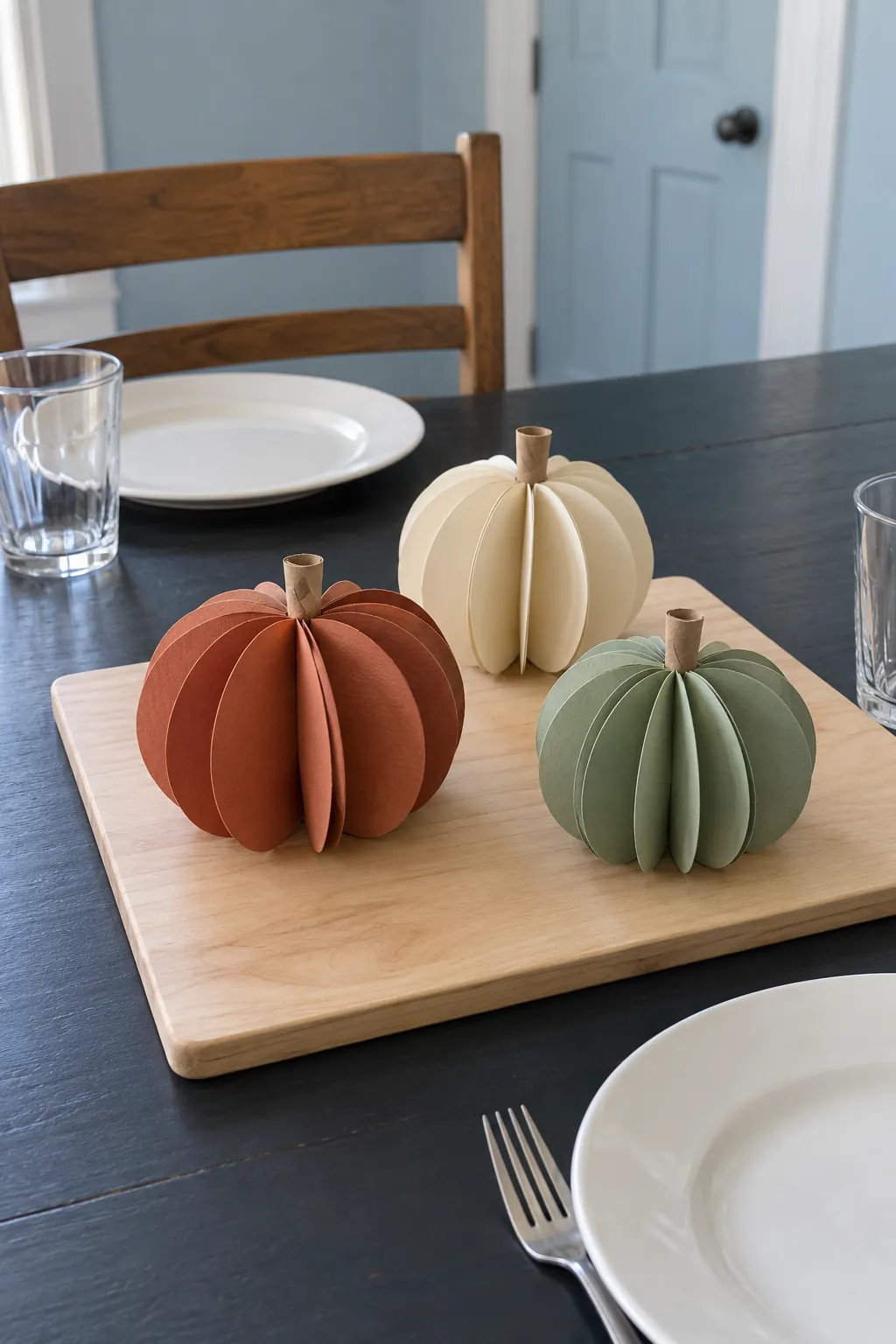
Folded paper pumpkins
Make rounded pumpkins from folded cardstock segments and gather them on a small board. Keep the shapes compact, with short paper stems that do not catch sleeves. The repeated curves make a clear holiday focal point even when the paper colors are muted. Store the finished pieces in a dry box after dinner if you want to use them again.
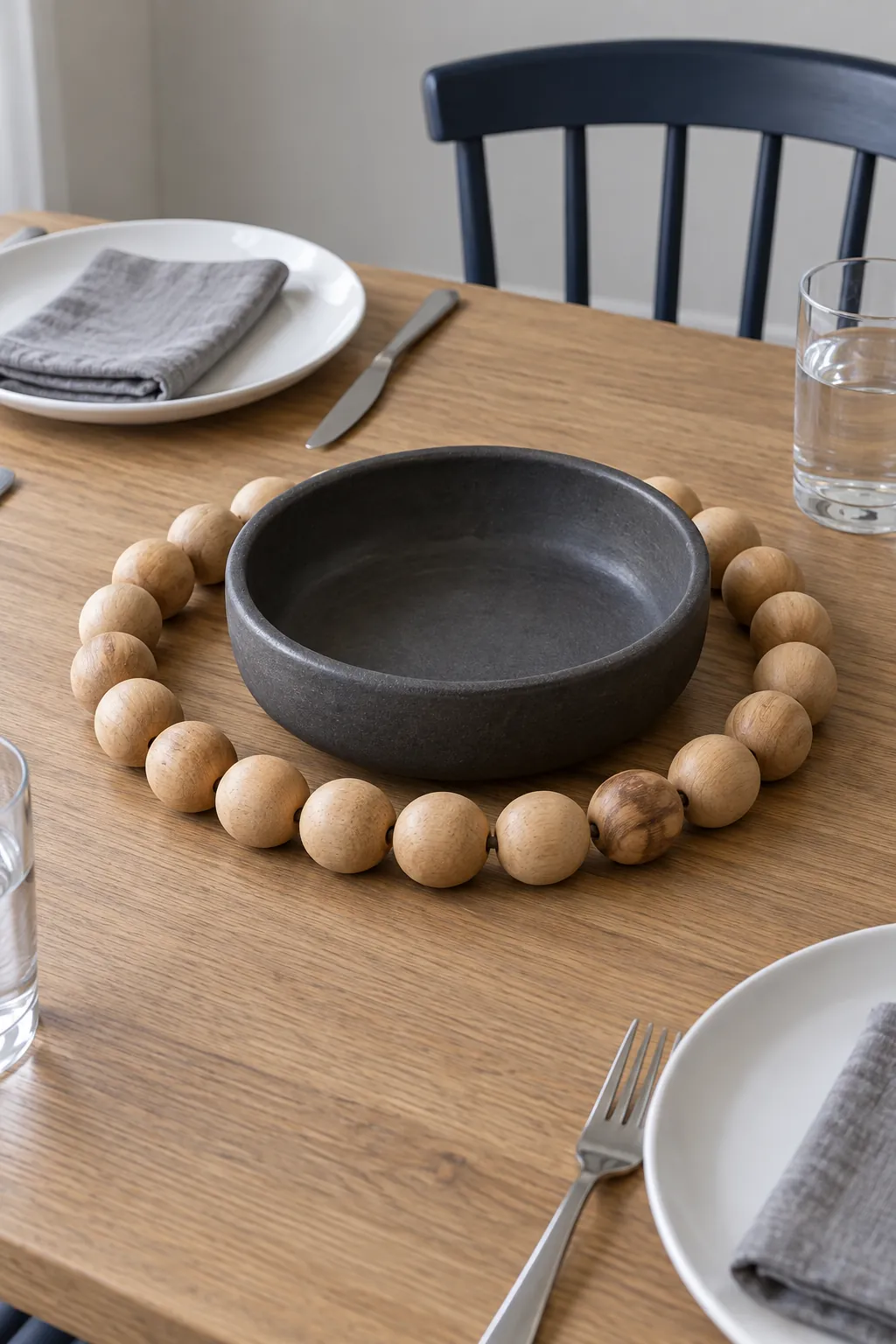
A ring of large wooden beads
Lay a short loop of large wooden beads flat around a small empty ceramic bowl. The bowl gives the loop a center, while the beads add texture without a tall arrangement. Use a securely joined strand and keep small loose pieces away from young children. Bare wood looks best beside a plain runner that leaves the bead shapes easy to see.
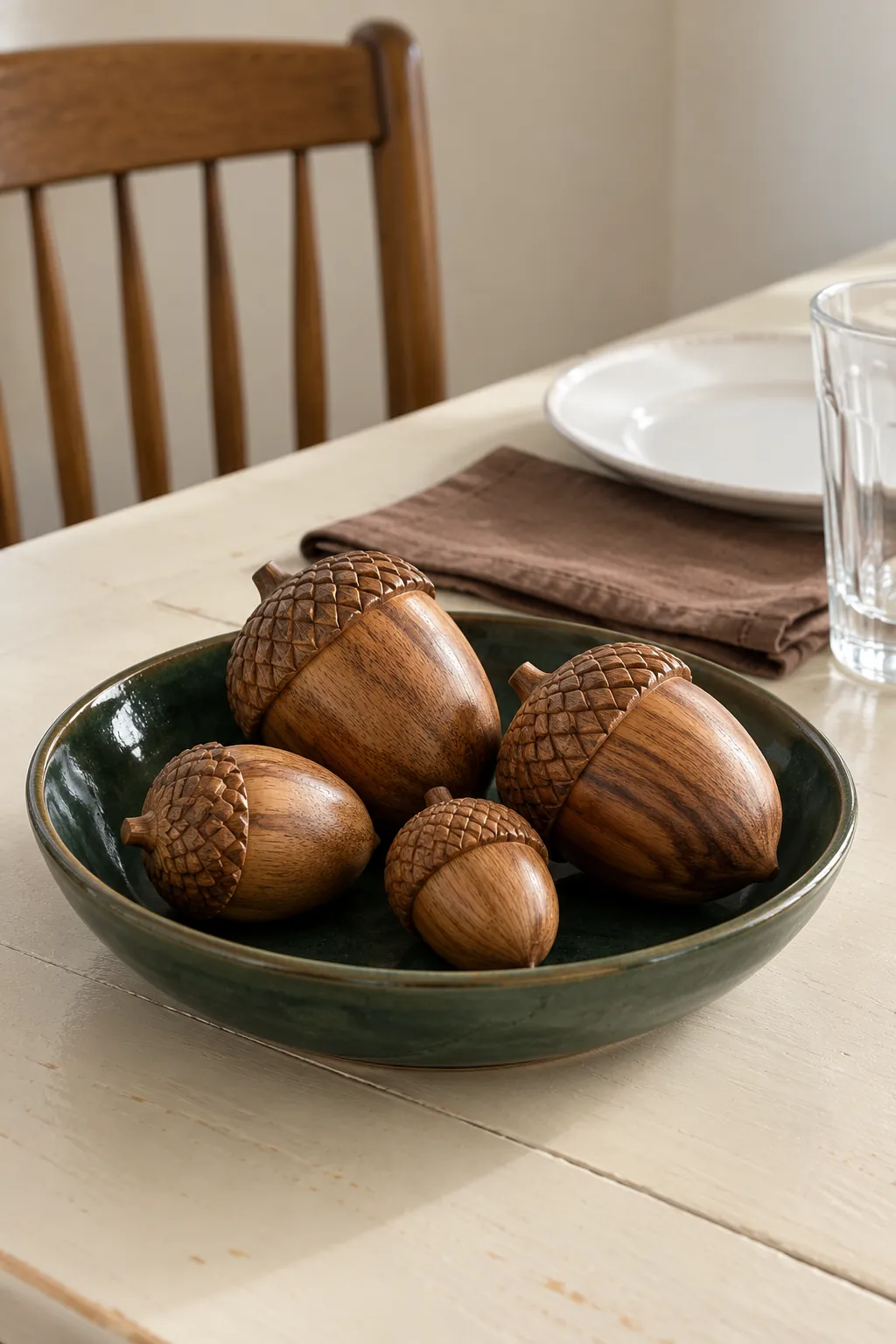
Wooden acorns in a dark dish
Collect carved wooden acorns in a shallow dark dish for a restrained harvest detail. Mix only a few sizes so the bowl feels collected rather than crowded. Choose clean objects with a finish that is fully cured and has no noticeable odor. Keep the pieces inside the dish and reserve a separate surface for edible nuts or snacks.
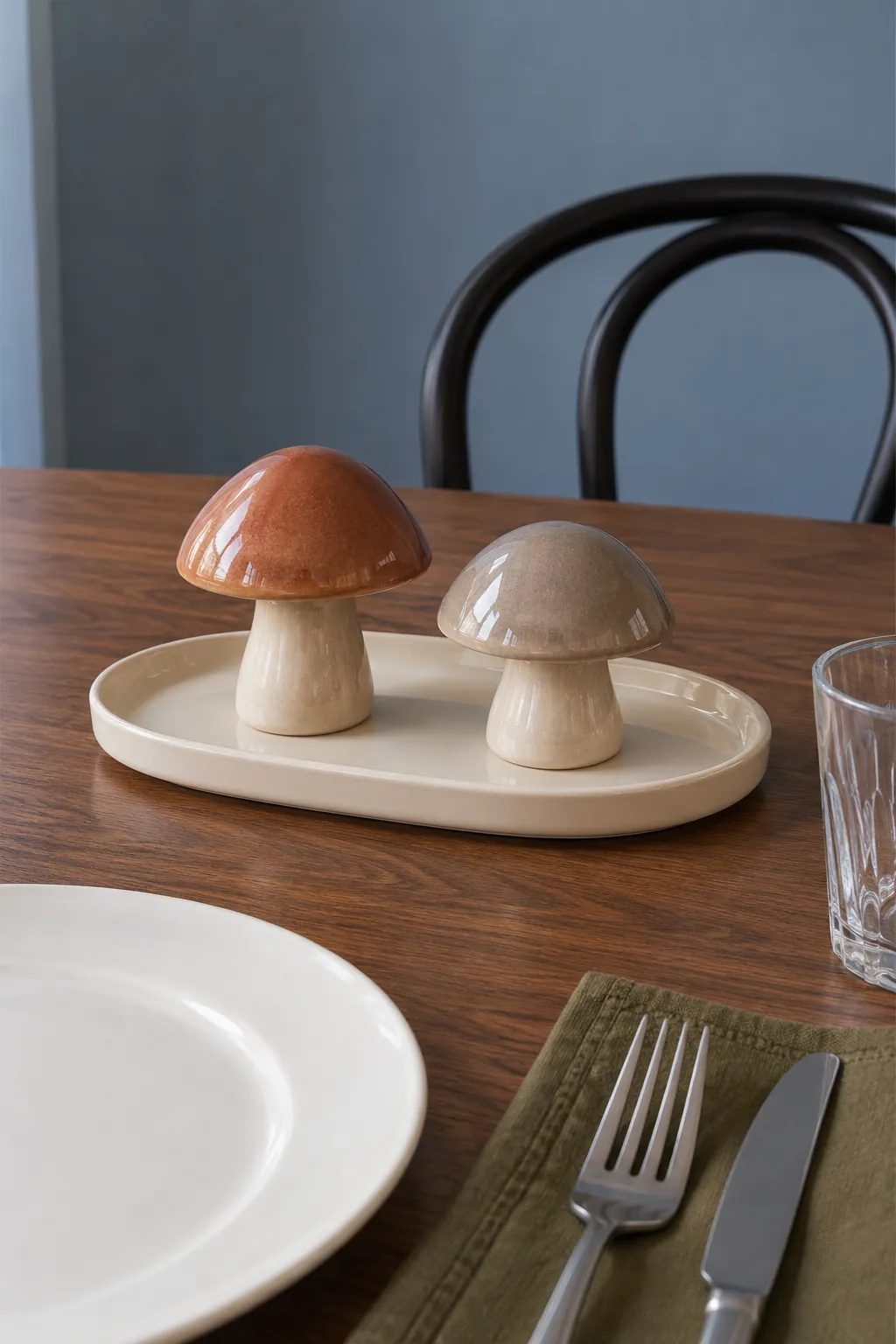
A pair of ceramic mushrooms
Set two small ceramic mushrooms on a low tray with their caps at slightly different heights. Their sculptural outlines give a plain table a playful seasonal accent. Keep them modest enough that guests can see one another above the display. A simple napkin color can echo one glaze tone without adding more objects to the center.
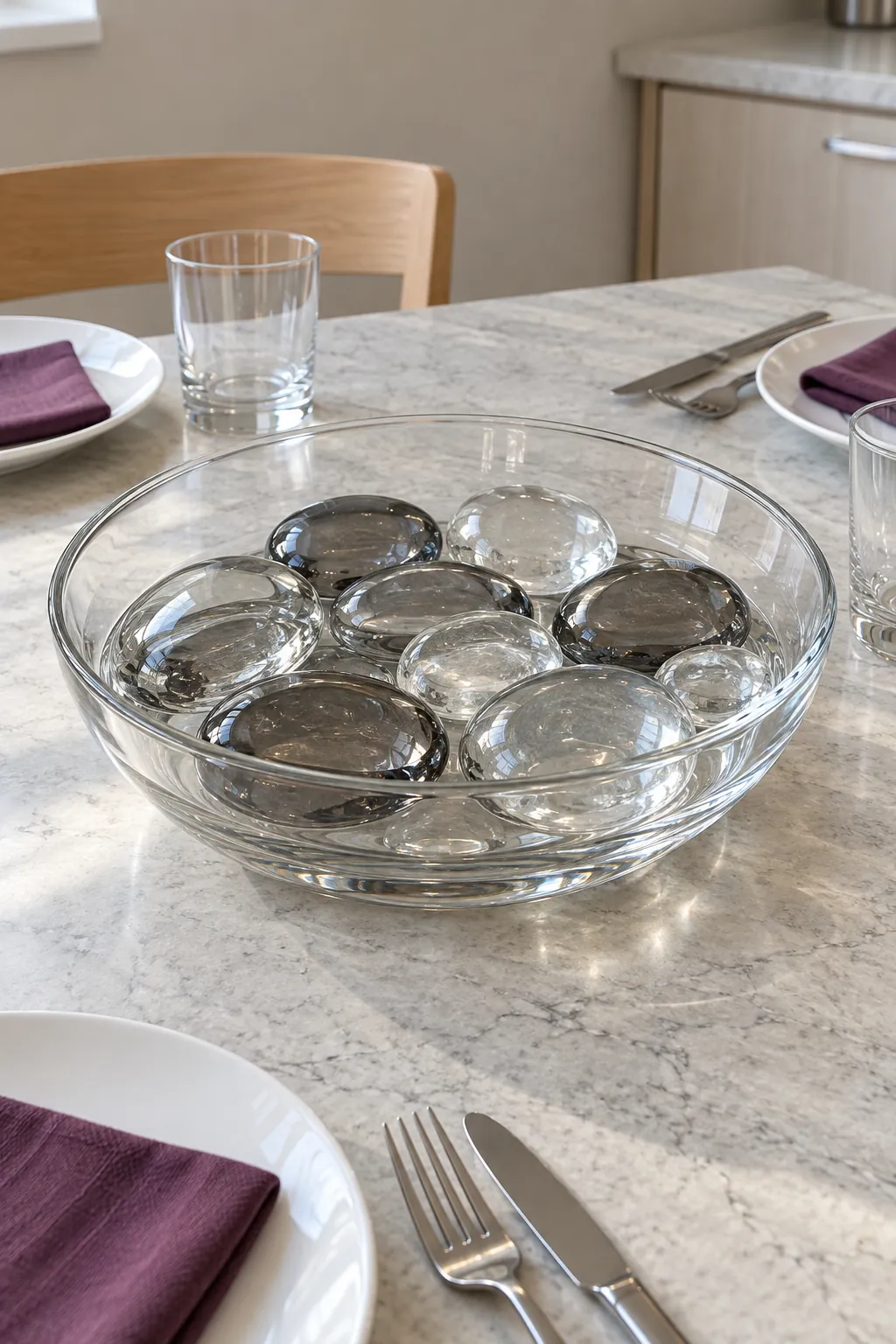
Smooth glass pebbles in a shallow bowl
A shallow glass bowl of large smooth glass pebbles reflects the room's ordinary light without candles. Choose a restrained clear and smoky palette rather than bright mixed colors. Use pieces that stay contained in the bowl and keep the display away from children who might put them in their mouths. The bowl should sit directly on a stable surface, without an improvised pedestal.
Whole pomegranates on a pale platter
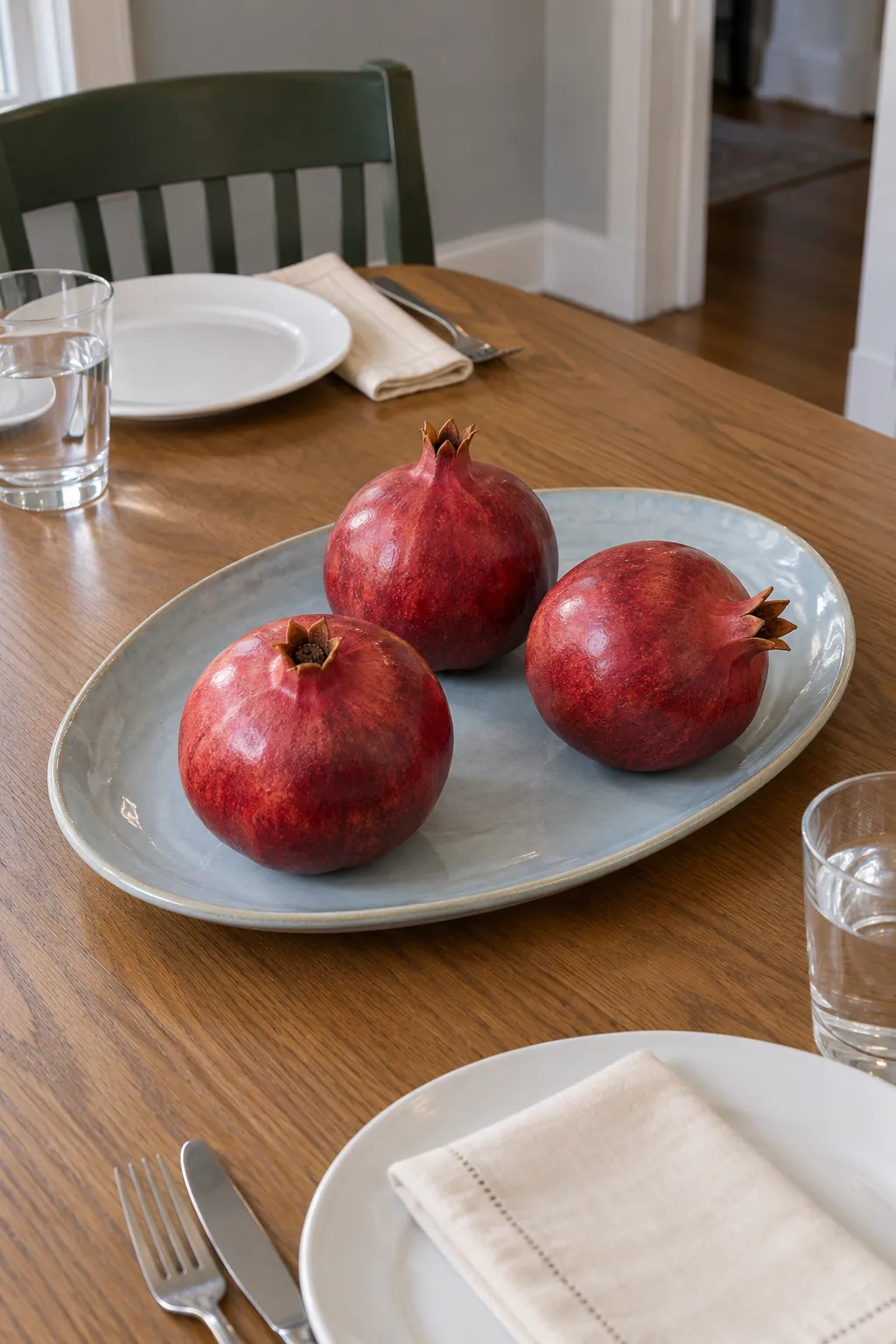
Arrange a few whole pomegranates on a pale platter with empty space around their crowns. Their deep red skins make a strong accent without cutting the fruit or adding scented greenery. Pick intact fruit and check the platter's weight before deciding it will be easy to move. A brown or cream napkin elsewhere on the table keeps the red from needing another decorative companion.
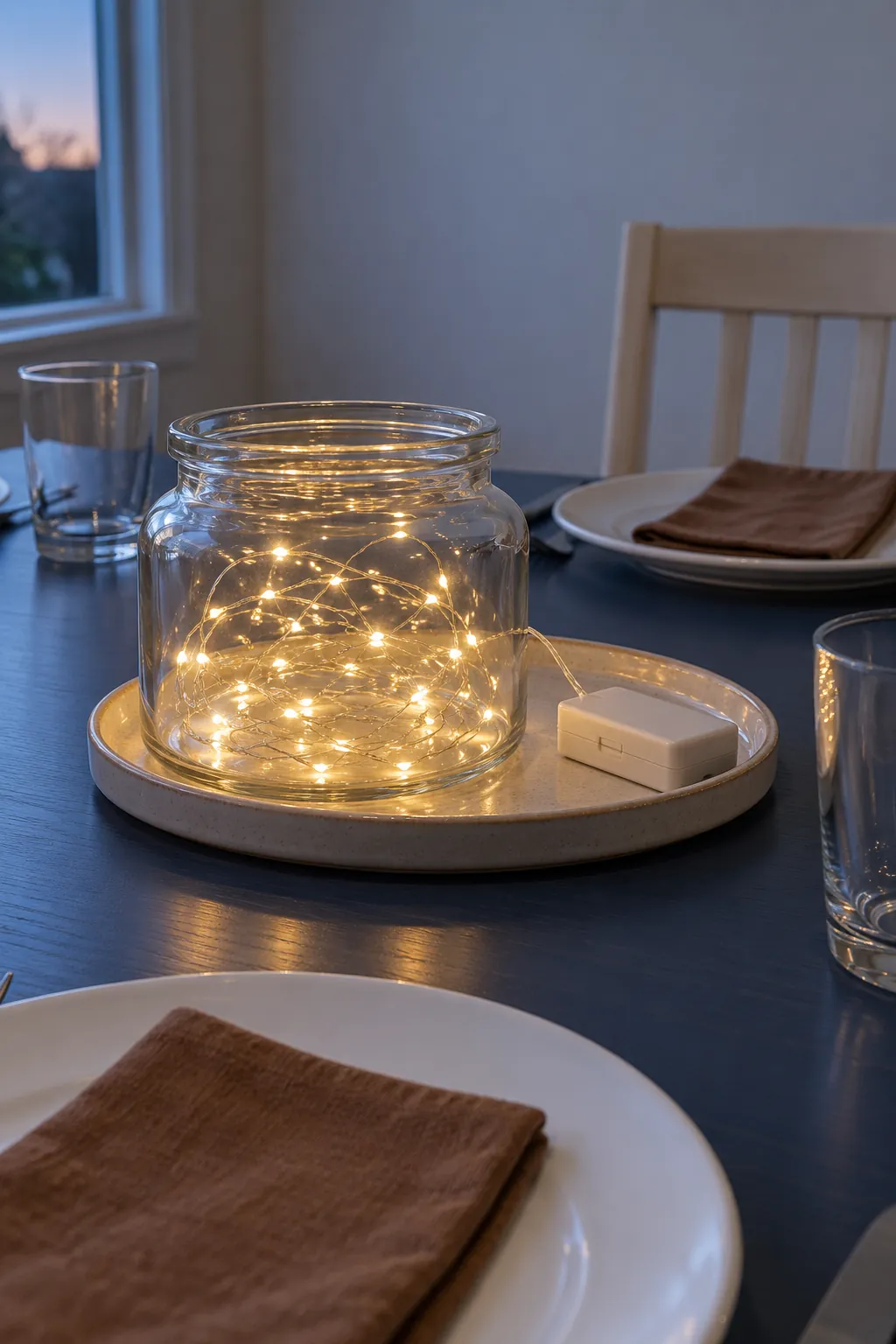
A jar of plain battery lights
Place a short strand of plain battery lights inside a wide jar for a small pool of light. The jar contains the wire and keeps the table free of a trailing cord. Choose a strand suitable for its intended use and follow the manufacturer's instructions.
Keep the battery pack accessible and dry rather than burying it beneath other materials. Use a steady light setting so the display does not distract from conversation. This is a candle free option that adds light, but the jar still needs space away from glasses and serving handles.
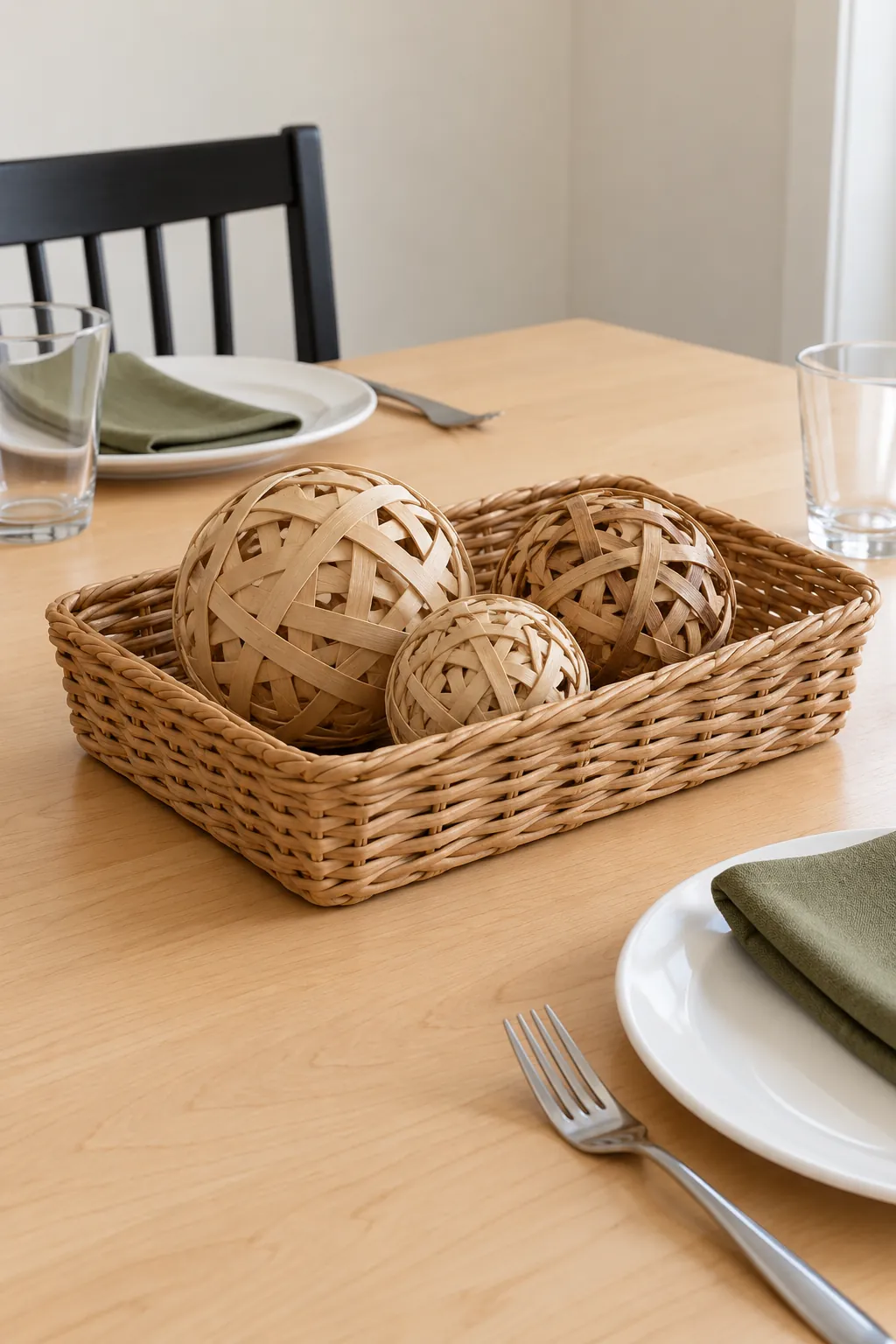
Woven balls in a bread basket
Use a shallow bread basket to hold a few clean woven decorative balls. The basket supplies a familiar household shape and keeps the texture in one contained area. Check the materials for shedding and any fragrance from storage before placing them on a dining table. Treat the basket as decor for this meal and use another clean vessel for the bread.
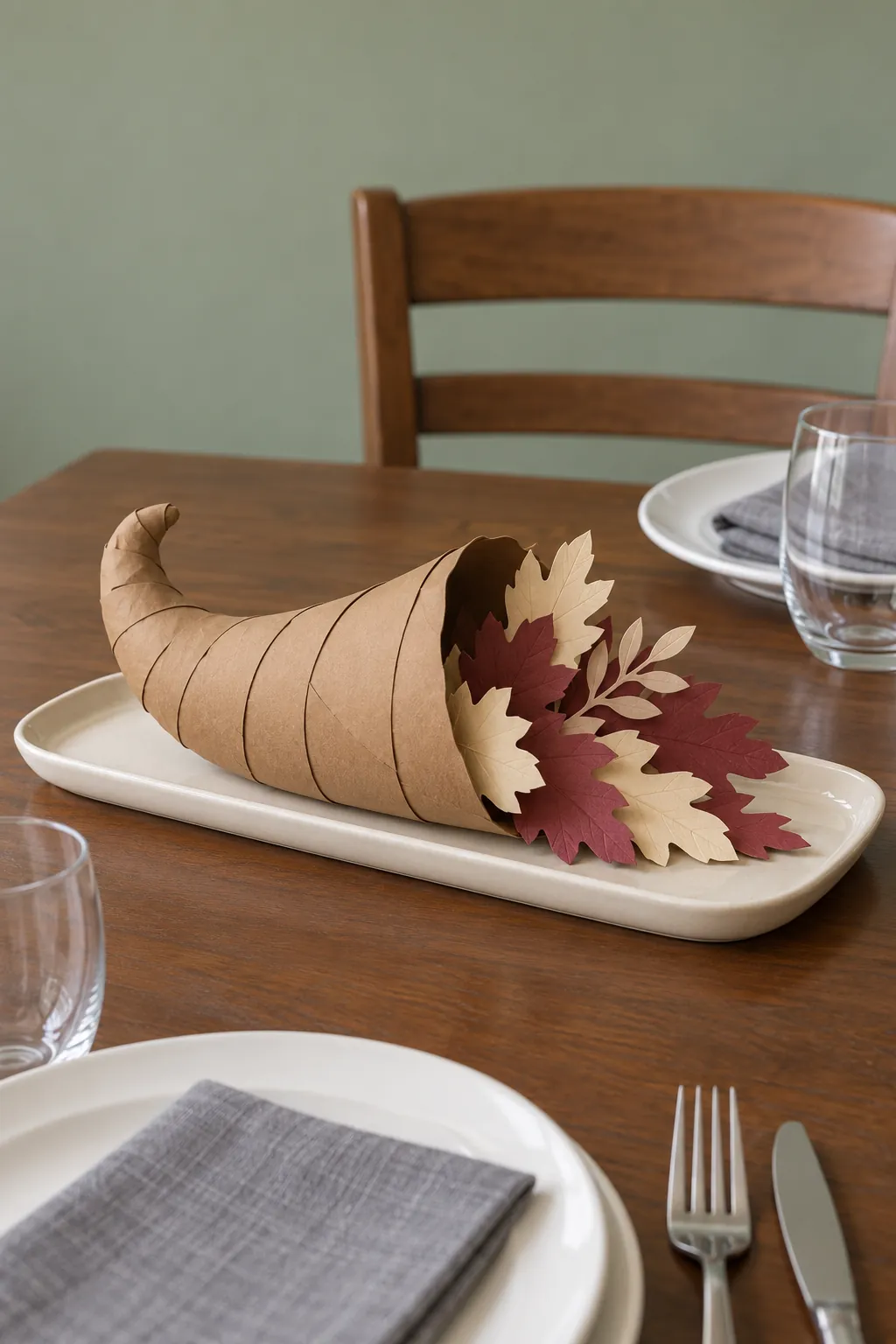
A small paper cornucopia
Shape sturdy brown paper into a short cornucopia and rest it on a flat tray. Fill the opening with securely attached paper leaves rather than fragrant dried material. The horn should stay low enough that its curve does not rise into conversation. Make the tray the base of the whole arrangement so you can remove it without gathering loose parts.
A simple line of small gourds
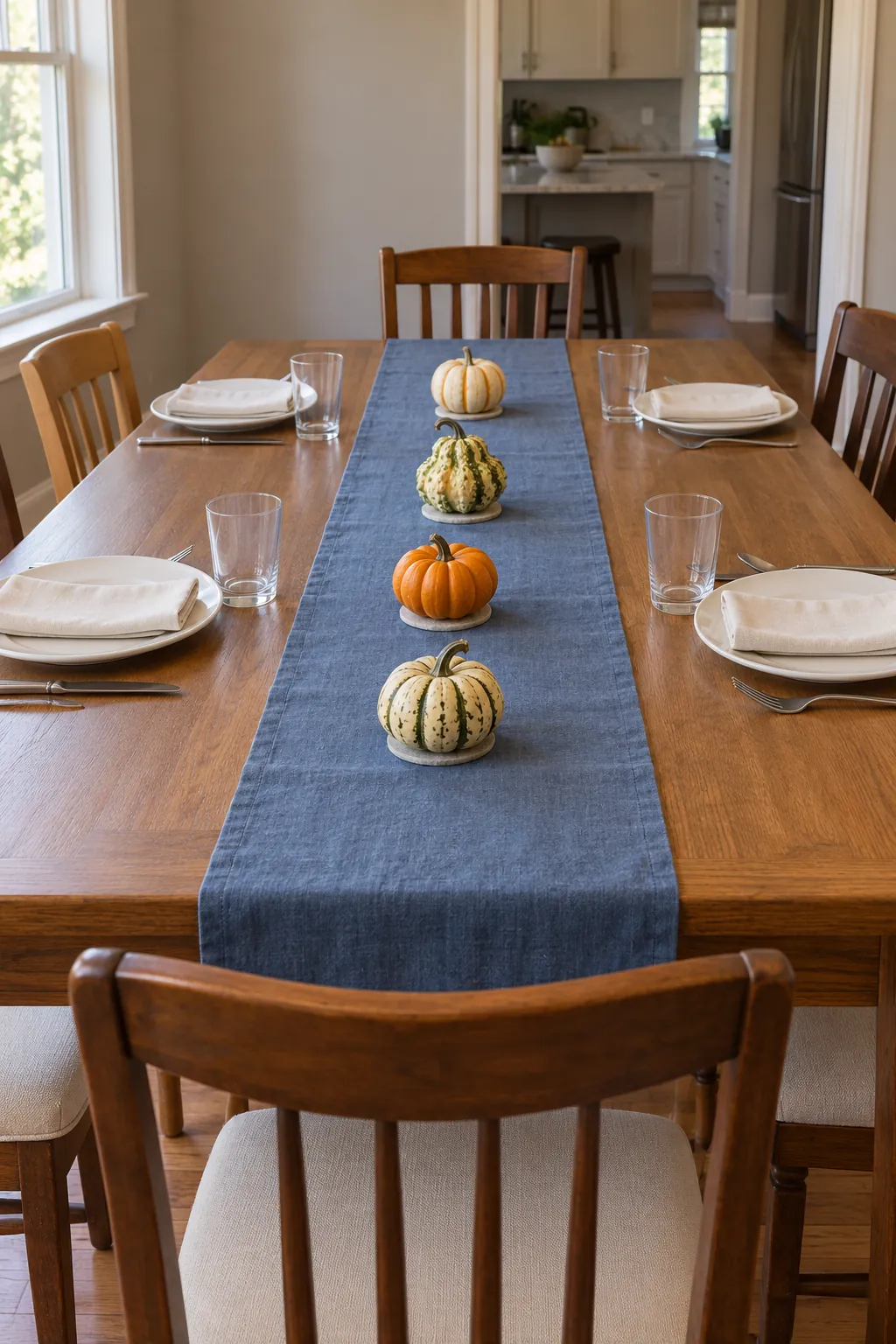
Place a few small gourds in a loose line down a narrow cloth runner. Let their different shapes create rhythm, with bare fabric showing between them. Inspect the gourds for damage and use discreet surface protection where needed. Stop the line before it reaches the plate zones so guests can pass dishes across the table.
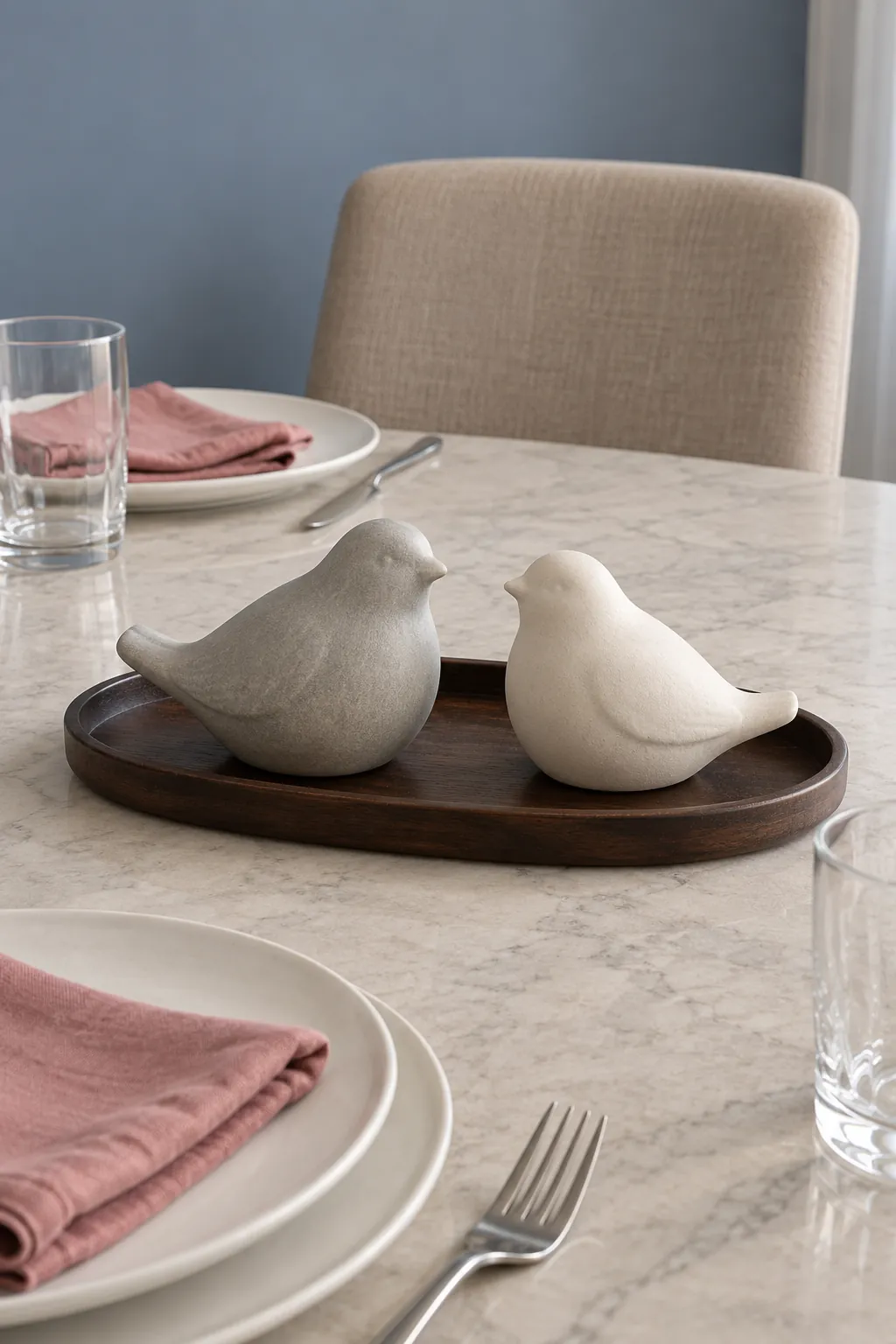
Two matte ceramic birds
A pair of small matte ceramic birds can make a quiet centerpiece without any botanical material. Angle them slightly toward one another on a plain oval tray. The tray keeps the grouping intentional and protects the table from rough ceramic bases. Choose simple forms that leave enough visual space around them for the actual meal.
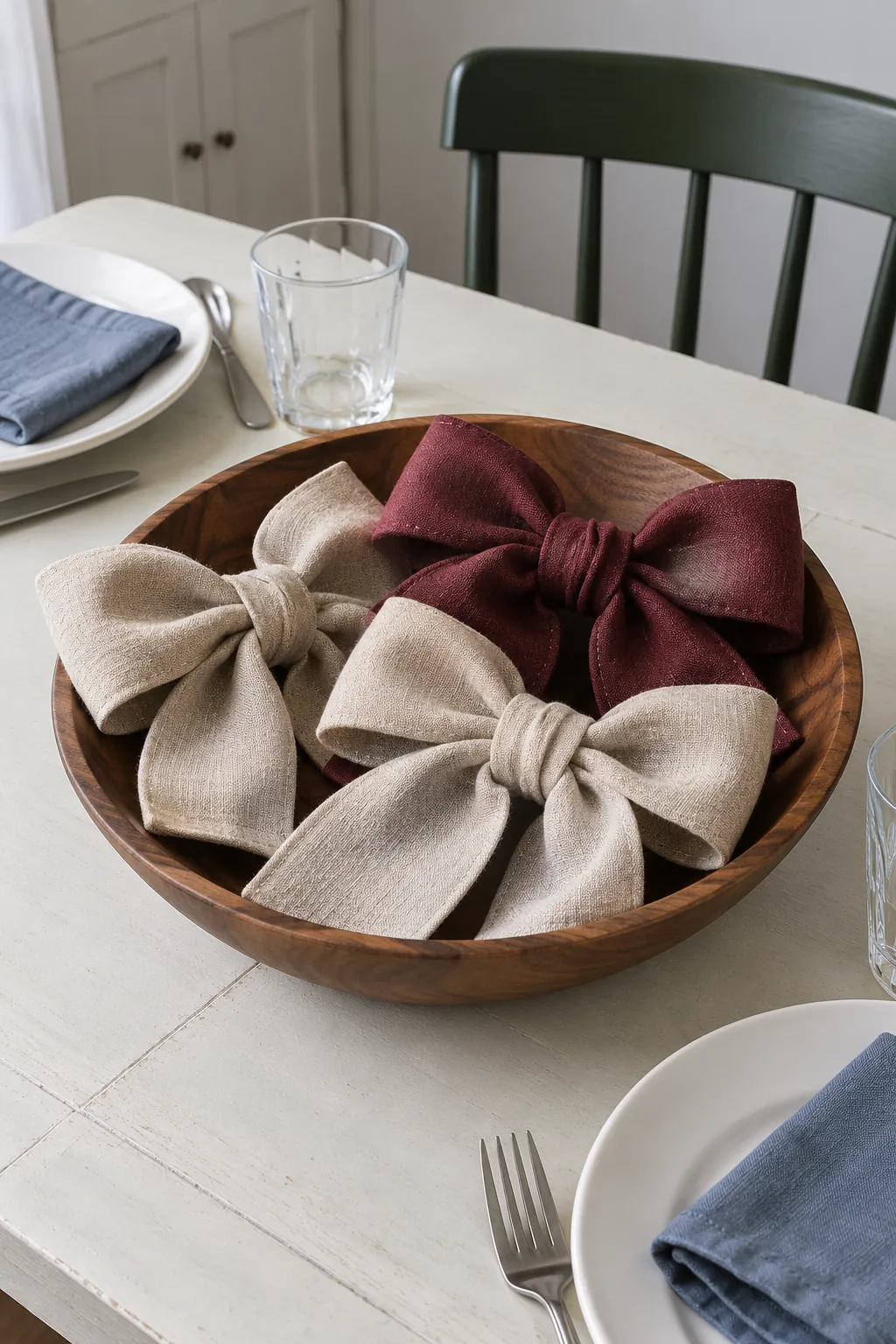
Linen bows gathered in a wooden bowl
Tie broad linen strips into loose bows and gather a few in a low wooden bowl. Their soft curves add a textile focal point without tall stems or extra dish layers. Keep the strips securely finished so threads do not shed near food. A bowl wide enough to show the separate folds works better than packing the fabric into a tight mound.
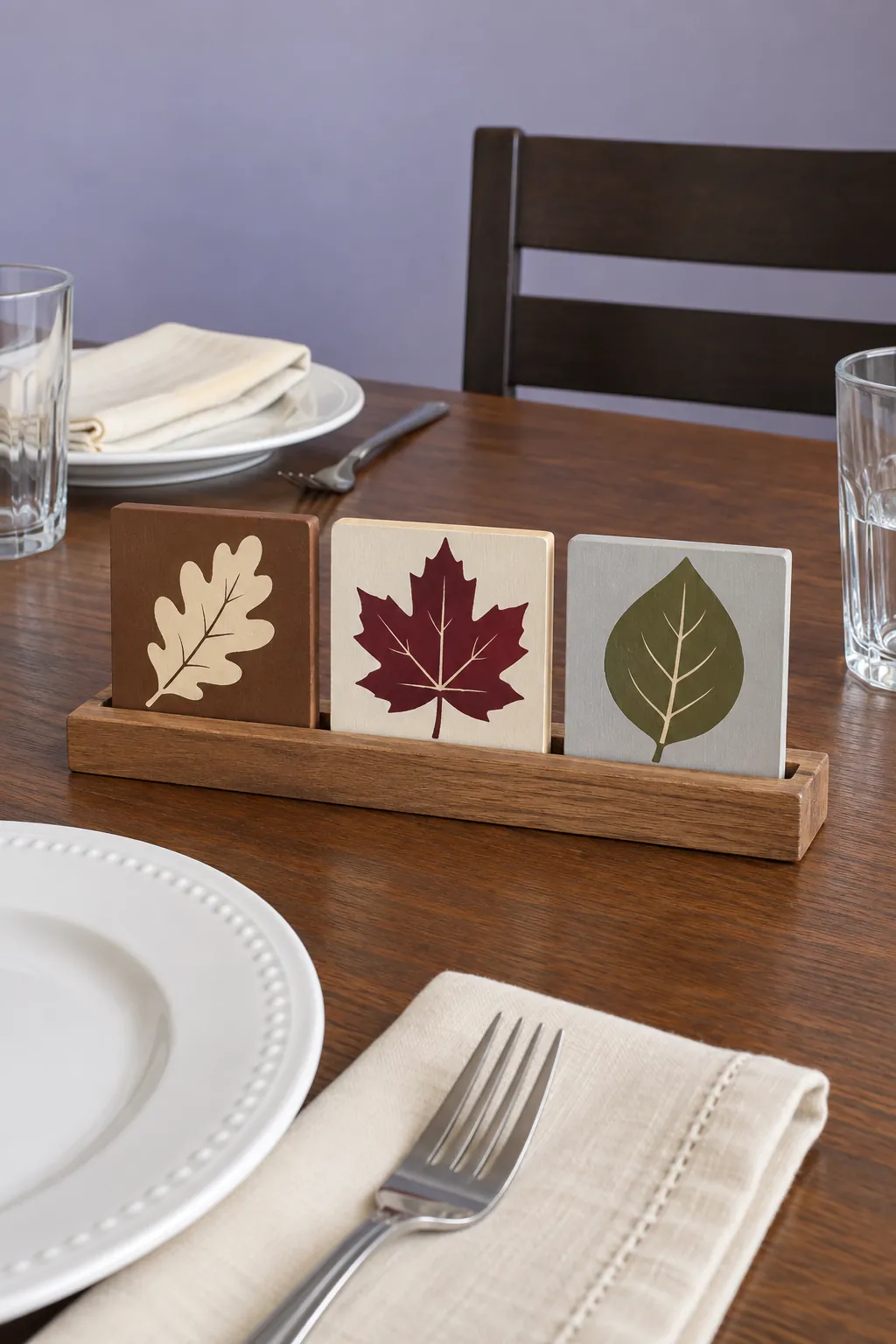
Painted leaf tiles on a stand
Display three small wooden tiles painted with simple leaf silhouettes on a low grooved stand. The tiles bring pattern to the center while the stand keeps them together. Let any paint or finish cure fully, and check for odor before putting the piece on the dining table. Keep the tiles short enough that guests can still see across them.
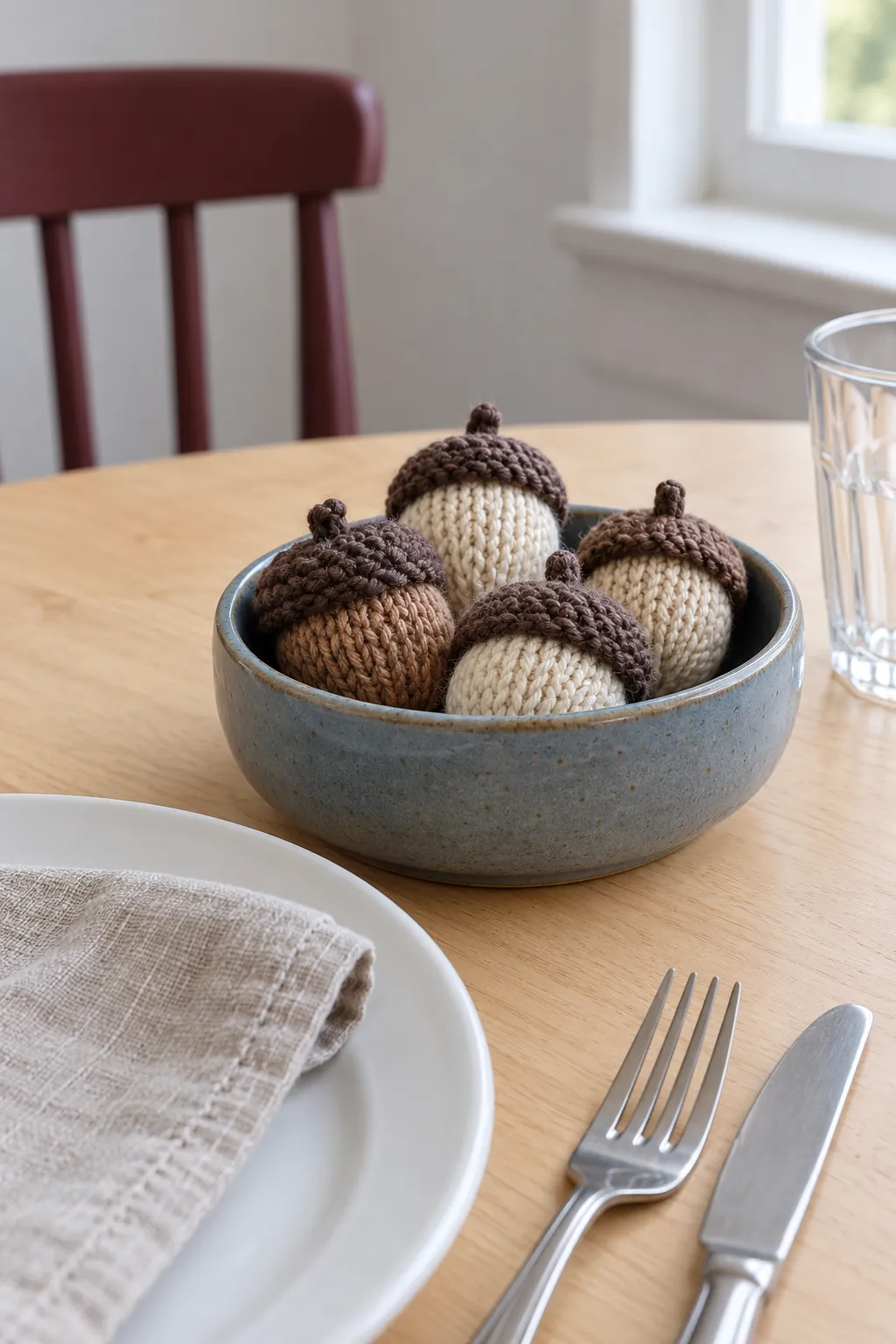
Knitted acorns in a ceramic cup
Fill a wide low ceramic cup with a few knitted acorns in brown and cream yarn. The stitched texture creates a softer autumn accent than glossy ornaments. Select clean pieces without scented stuffing or added fragrance. Keep the cup away from place settings if children might pull out the small decorations.
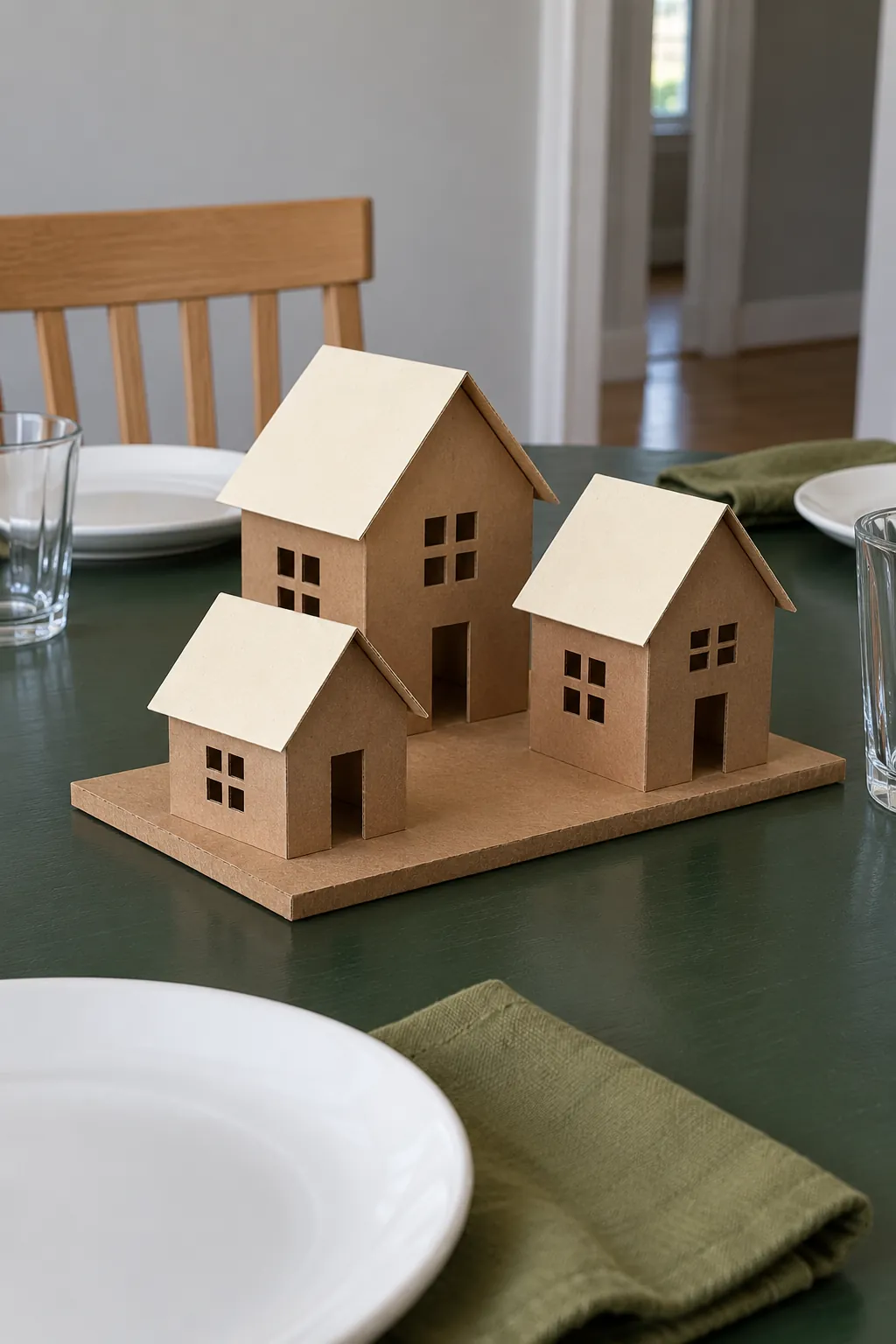
A little cardboard harvest village
Arrange three simple cardboard houses on a low rectangular base. Warm brown walls and cream roofs give the miniature village a seasonal feeling without lights inside it. Keep the houses small, with no tall chimneys or projecting roof edges. Fully dry adhesive and a single connected base make the display easier to store and move.
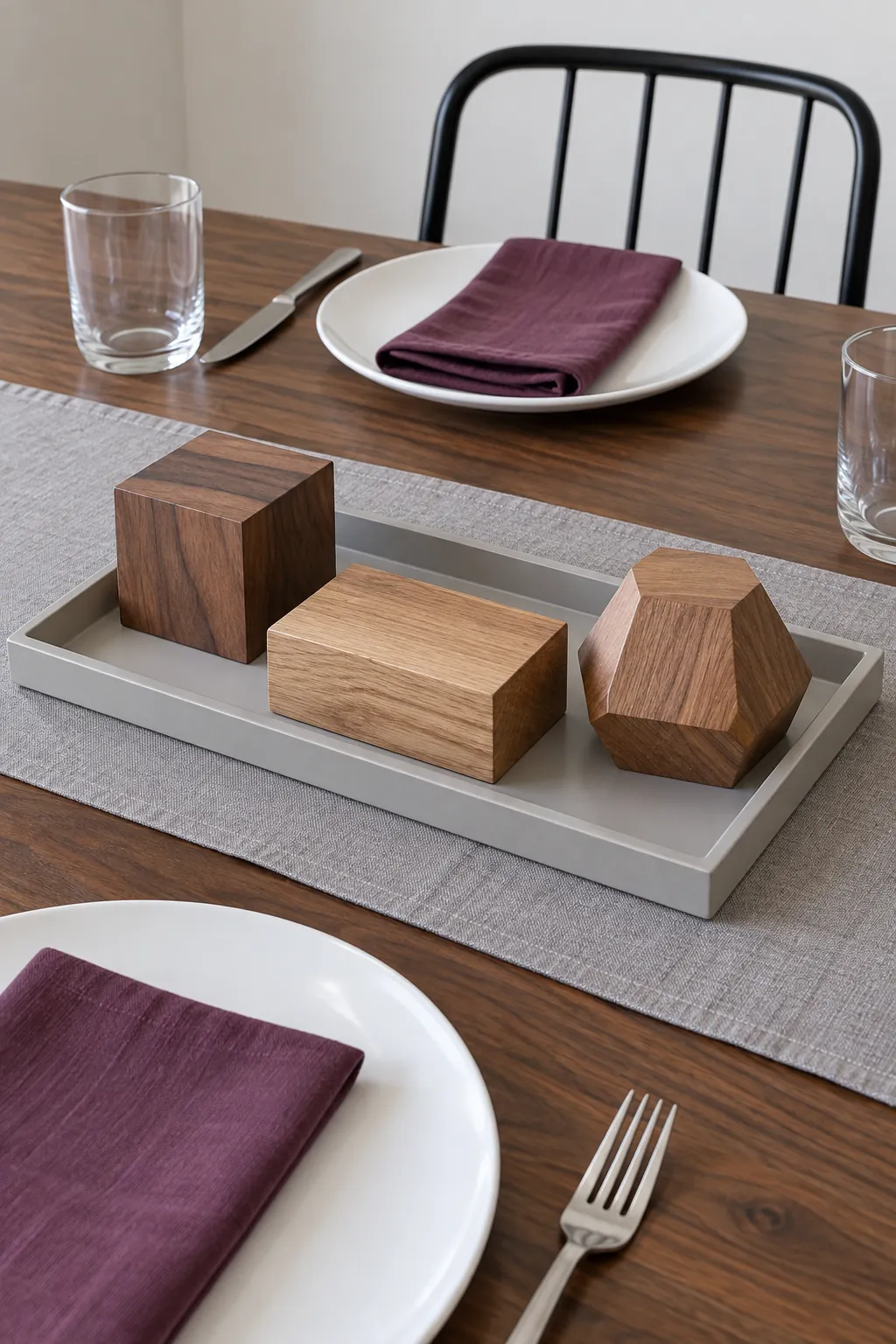
Low geometric wooden blocks
Combine a few smooth wooden blocks with different simple shapes on a flat tray. Their varying outlines can supply a contemporary centerpiece without flowers, scent, or a flame. Use stable pieces that cannot easily roll into a plate, and keep the group low. A muted runner beneath the tray ties the wood to the table without adding another decorative theme.
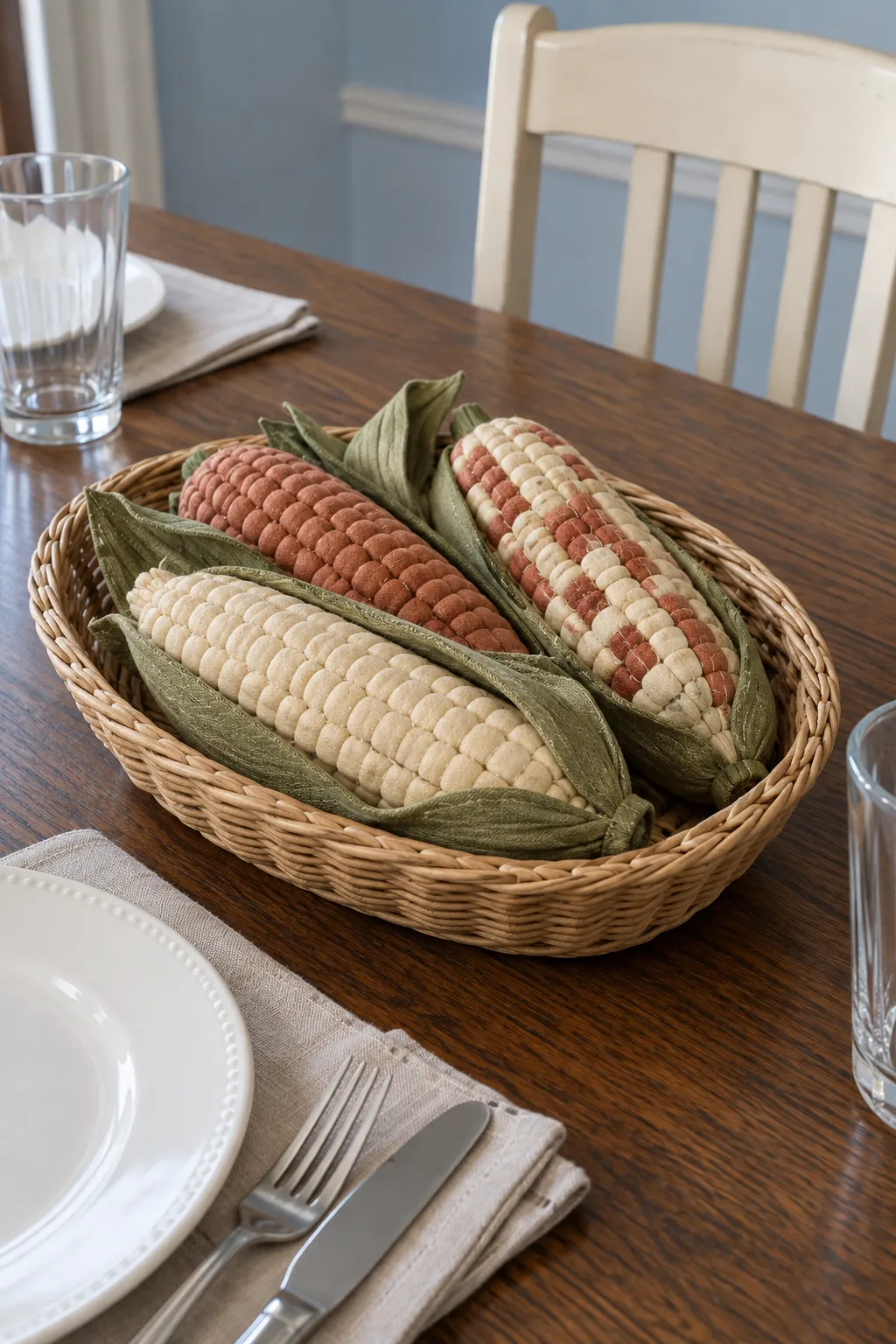
Fabric corn in a shallow basket
Place a few fabric corn cobs in a shallow basket for a harvest shape with a soft finish. Use stitched fabric kernels and short attached husks rather than loose dried plant material. Keep the colors muted so the texture feels collected instead of theatrical. Check seams and stuffing before use, and leave the basket's rim visible around the pieces.
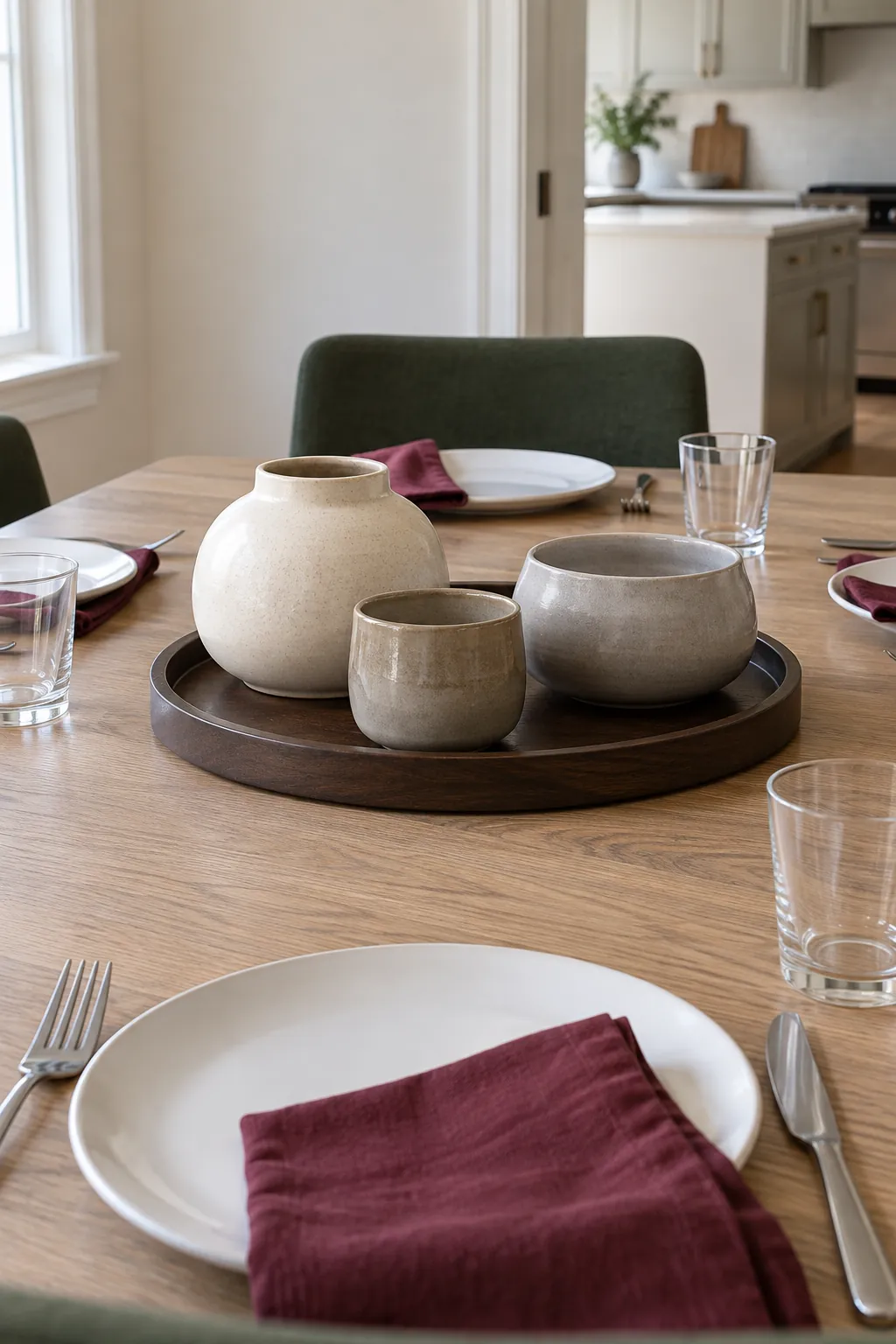
A trio of empty ceramic vessels
Group three small empty ceramic vessels with different rounded silhouettes. Choose low shapes and one limited glaze palette so the arrangement reads as a deliberate centerpiece. Their empty interiors let the pottery itself provide the detail.
Set the group on a compact tray and check it from seated height before guests arrive. Move one vessel away if the display blocks a face or takes the space needed for a platter. The strongest finishing decision may be removing an object until the table feels ready for dinner.