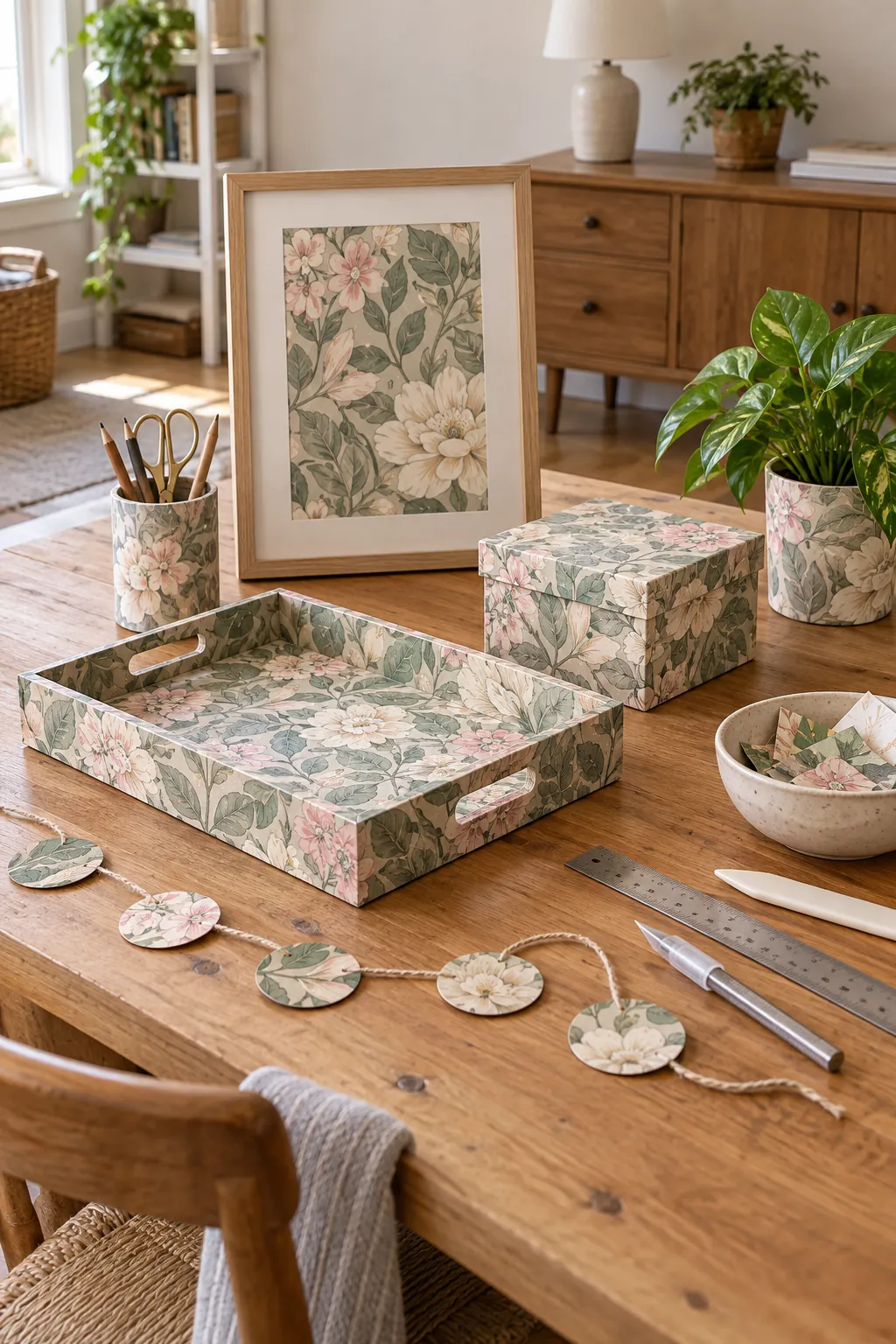
Small wallpaper offcuts are often too attractive to discard and too awkward for another full wall. Their best use is a project that fits inside one clean piece or turns several scraps into a deliberate pattern. Begin with flat, dry surfaces, sharp cutting tools, and a test of the adhesive on an unseen area.
Indexed Reddit discussions show that wallpaper can reveal rough surfaces and that paper may shrink as it dries. Those problems matter on small crafts too. Smooth the base, allow pasted paper to relax as its instructions require, work from the center outward, and protect only the projects that will receive handling or moisture.
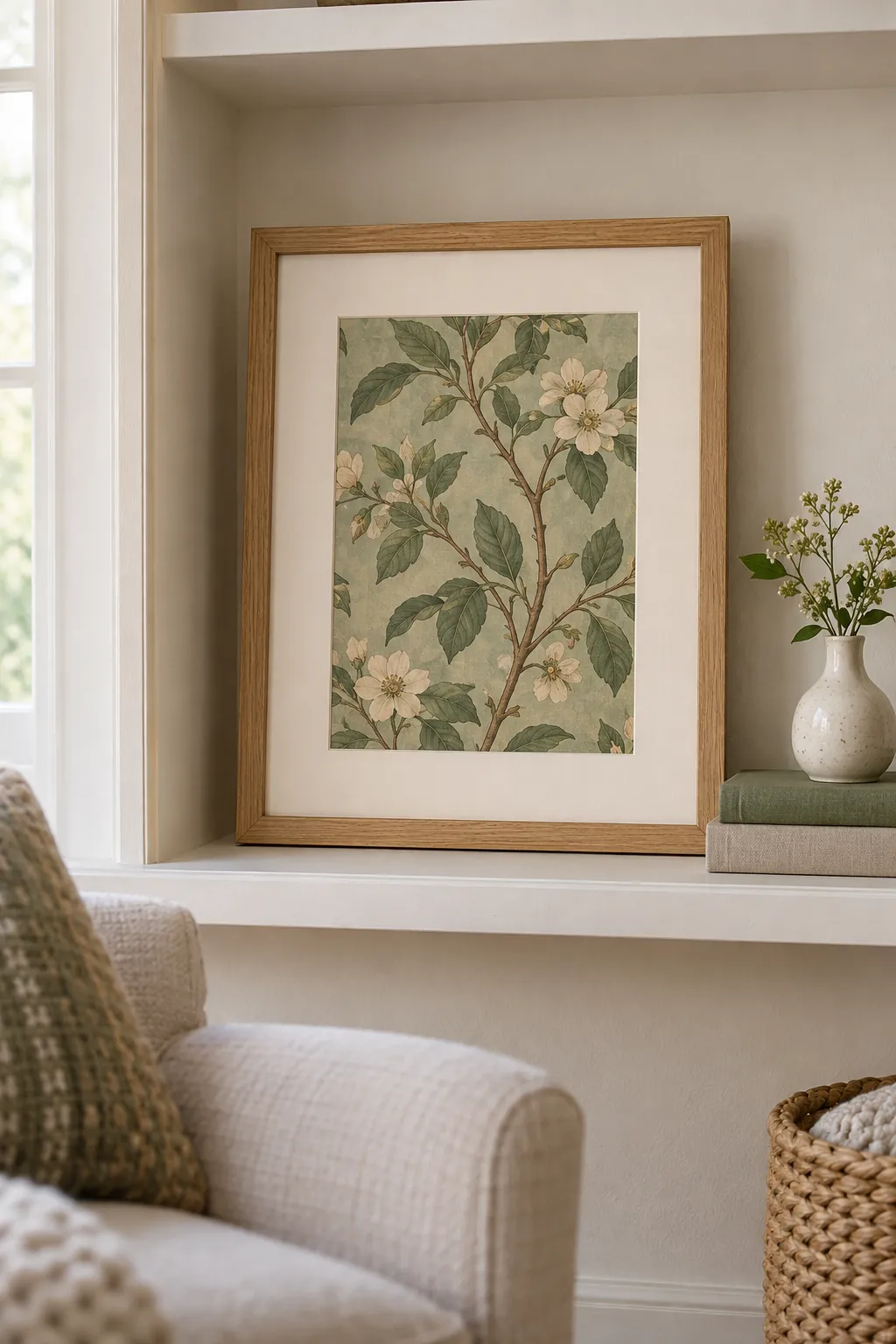
Frame a Single Wallpaper Motif
Cut around one complete flower, geometric repeat, or scenic detail and place it in a simple frame. A mat gives an irregular offcut a clean boundary and makes a small pattern feel intentional. Mount the paper with archival corners or a light removable hinge so it can be changed later.
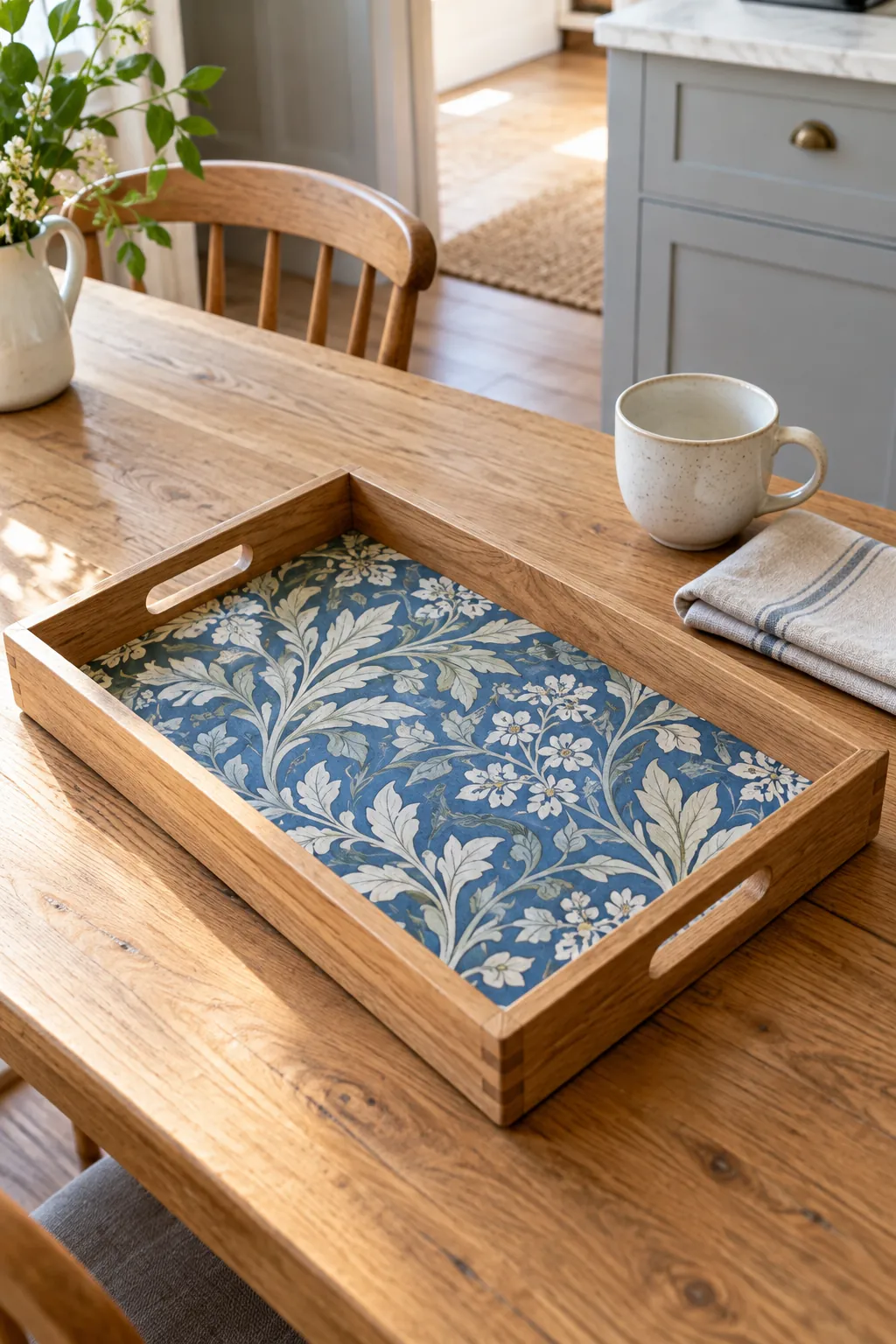
Line a Wooden Serving Tray
Use the flat base of a shallow tray as a template and cut the wallpaper slightly small so the edges do not buckle. Adhere it smoothly, then apply a clear water resistant finish if the tray will hold drinks. Keep liquid away from unsealed seams and allow every layer to cure before use.
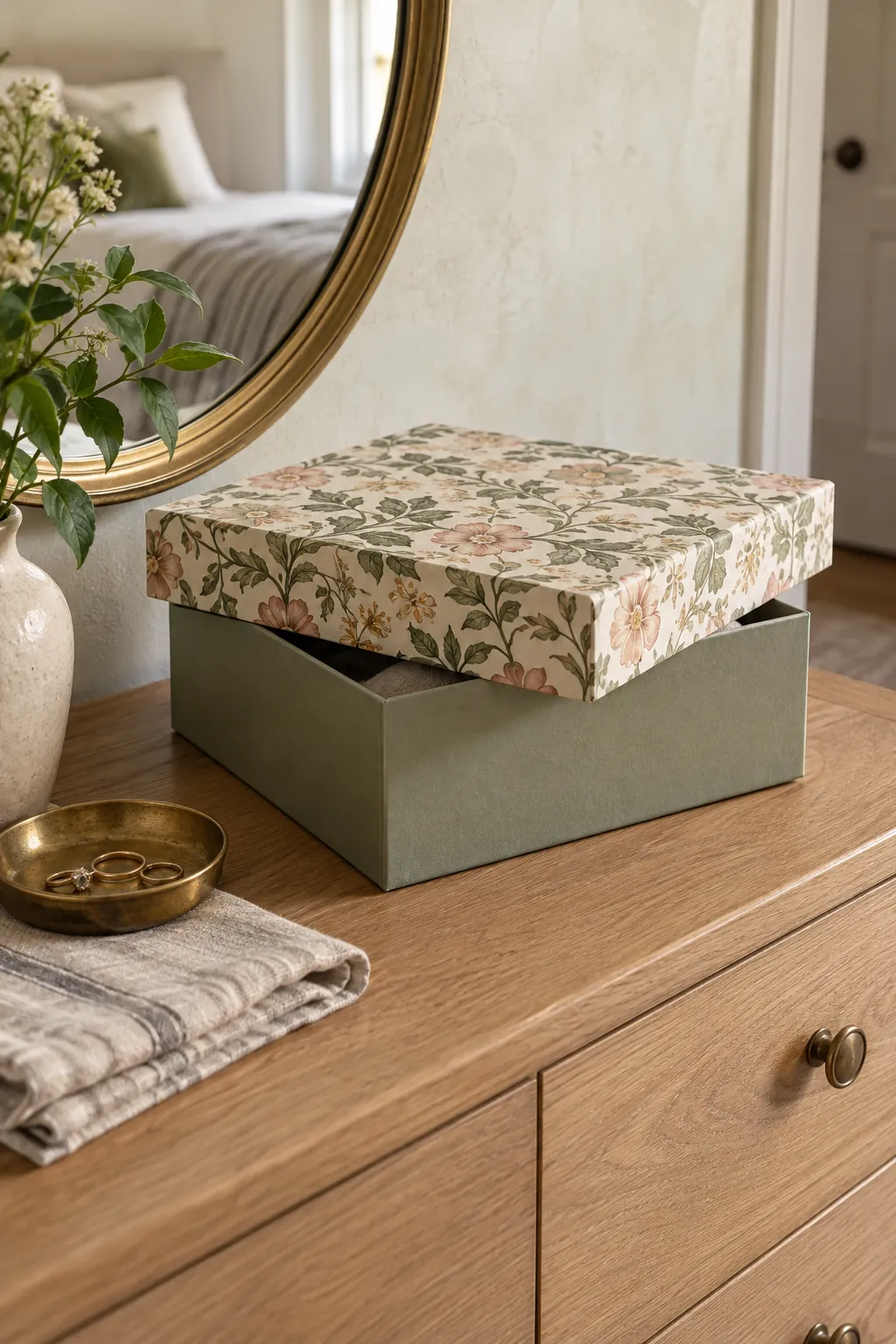
Cover a Decorative Box Lid
A box lid needs only a modest rectangle of paper and gives you a forgiving first project. Wrap the paper over the lid edges, clip tiny notches at the corners, and fold each side flat without building bulky layers. Leave the box base plain or paint it in one color pulled from the pattern.
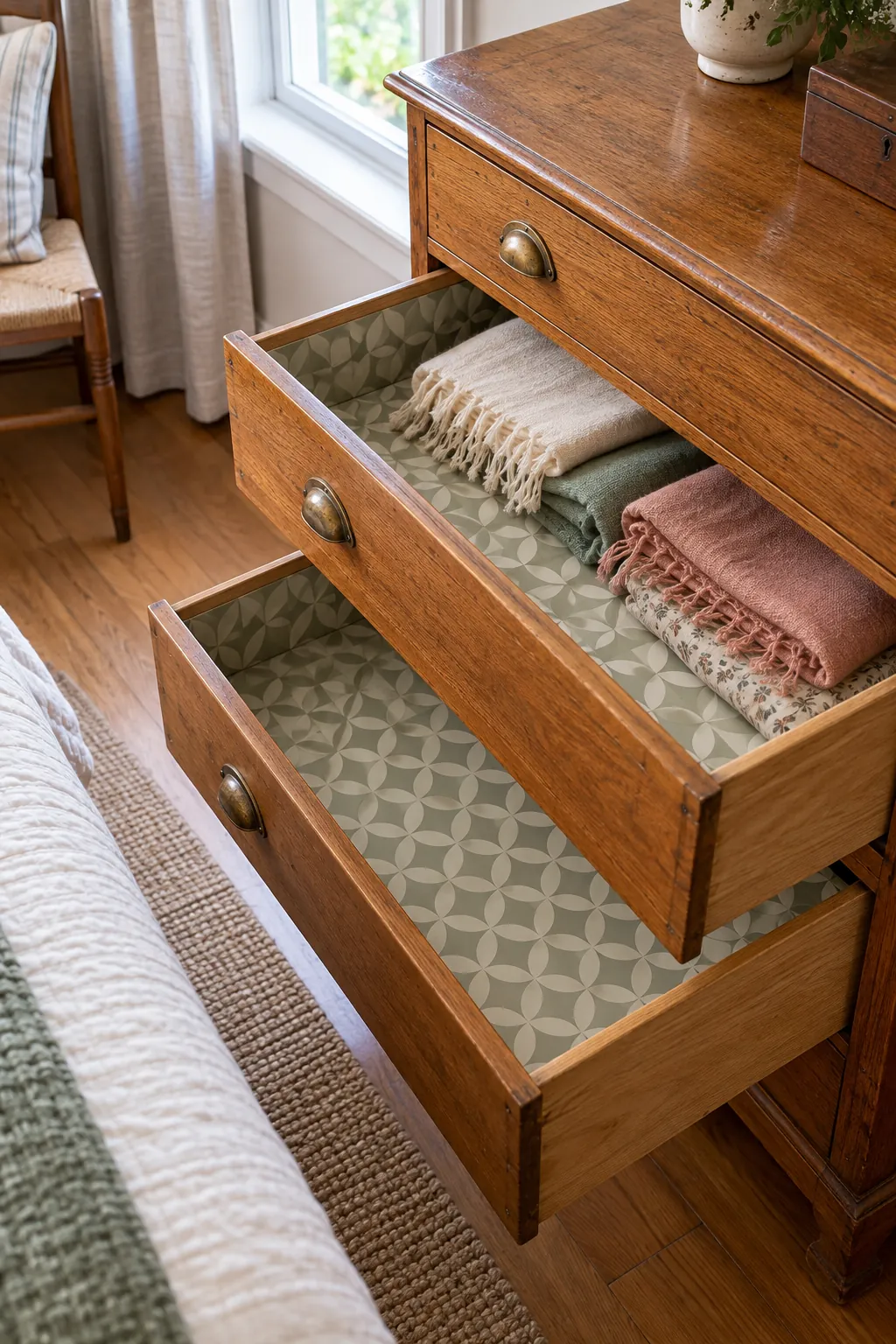
Make Coordinated Drawer Liners
Measure the drawer bottom in several places because old furniture may not be perfectly square. Cut a paper template first, then transfer the fit to the wallpaper and secure it with removable adhesive dots. A removable liner protects the furniture and lets you reuse the piece when the drawer changes purpose.
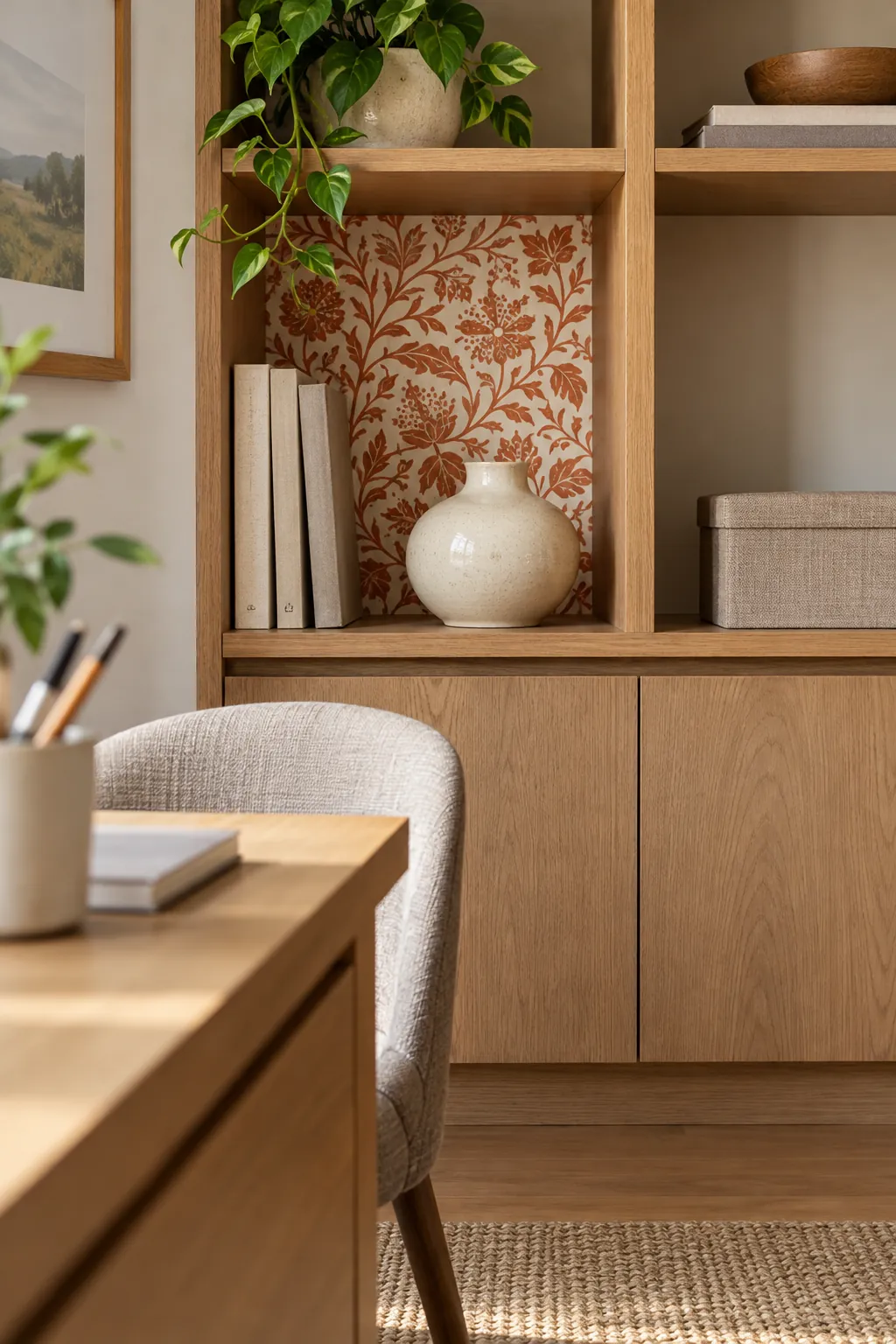
Add Pattern Behind a Shelf
A small open shelf or cubby can use a wallpaper scrap as a removable backdrop. Cut a precise paperboard panel to fit the back, cover that panel, and slide it into place instead of gluing directly to furniture. This method is renter friendly and makes later pattern changes easy.
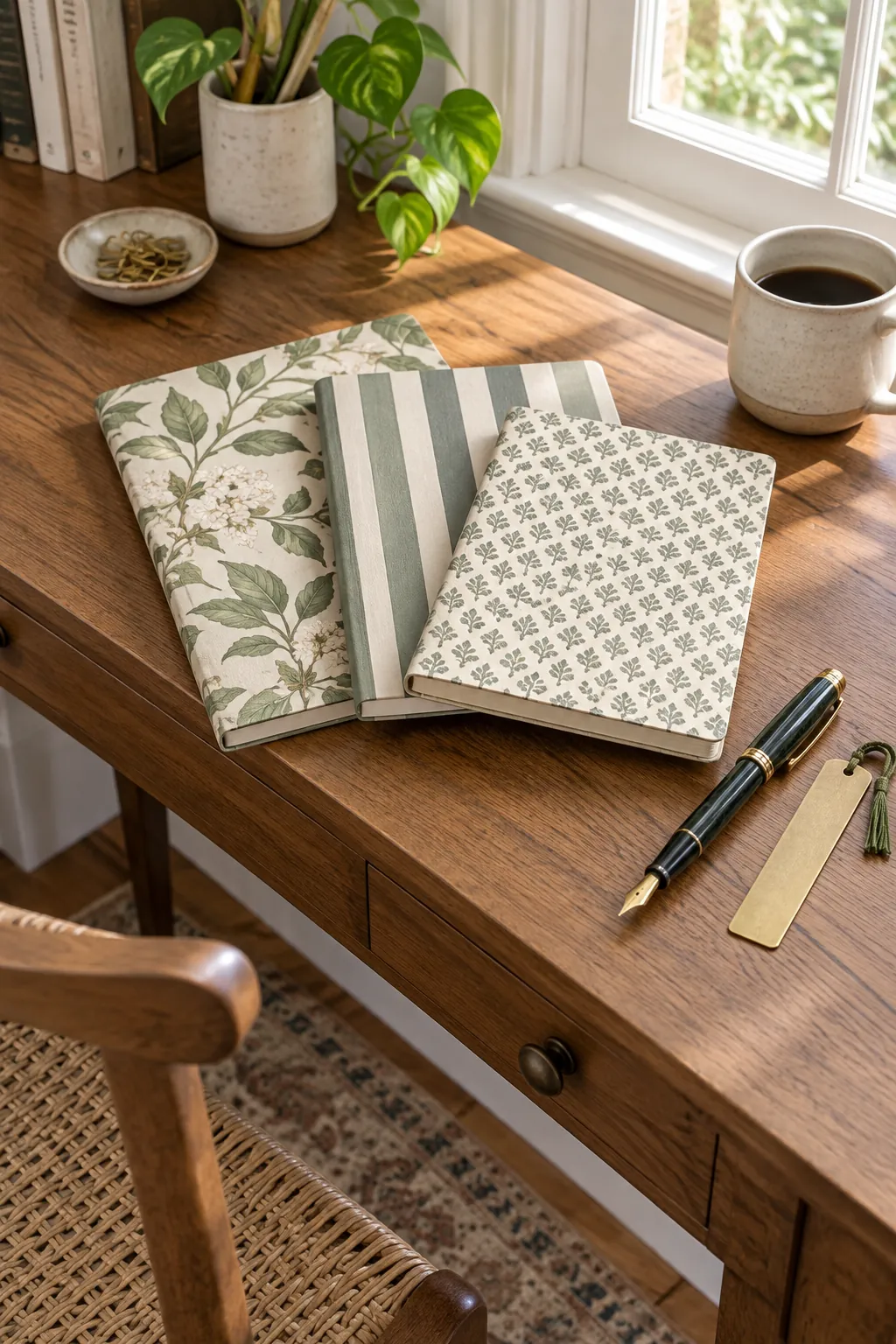
Wrap Plain Book Covers
Use wallpaper as a removable jacket for notebooks or books that you want to display. Score the folds with a bone folder and leave enough ease around the spine so the cover can open freely. Avoid permanent paste on valuable books, and secure the jacket to itself instead.
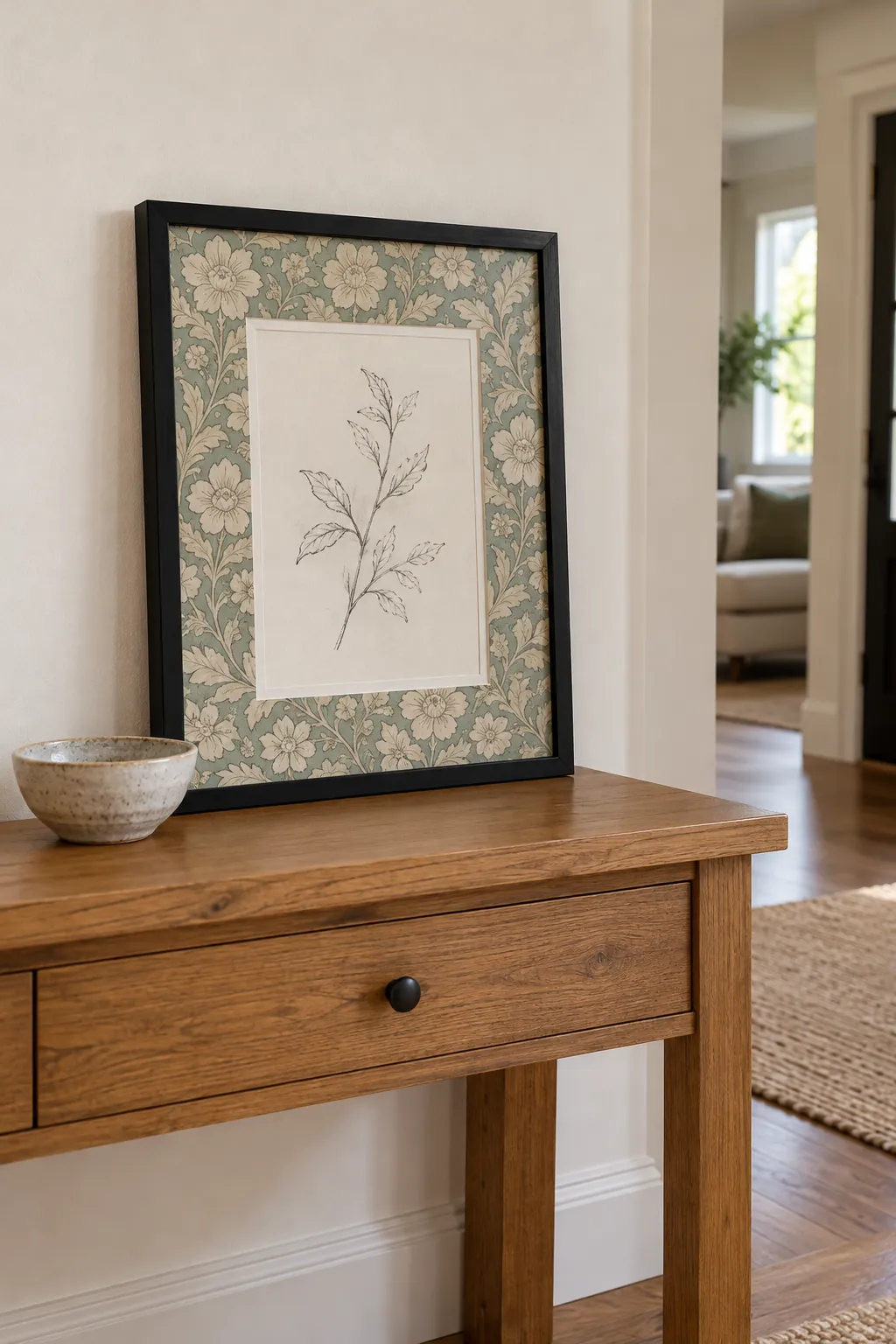
Create a Patterned Picture Mat
Cover a plain precut picture mat when the offcut is too narrow for full framed art. Apply paste evenly, smooth from the center, and cut the inner opening from the back with a sharp blade. Pair a busy wallpaper mat with a simple photograph or line drawing so the frame has one clear focal point.
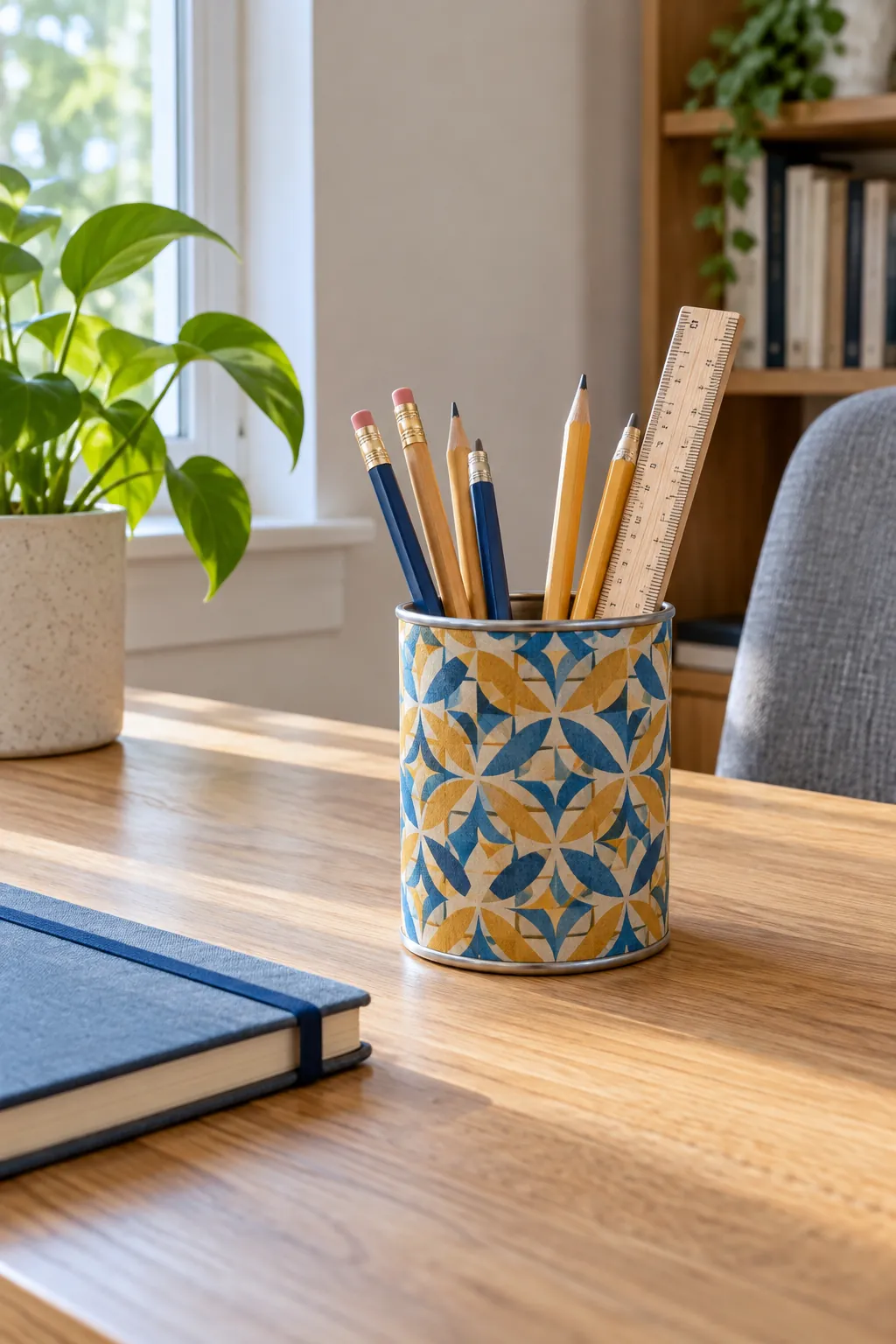
Decorate a Pencil Cup
Wrap a clean metal tin or sturdy cardboard tube with a rectangular wallpaper strip. Seal the vertical overlap neatly at the back and fold no paper across a sharp metal rim. Add a felt circle underneath to protect the desk and keep the finished cup stable.
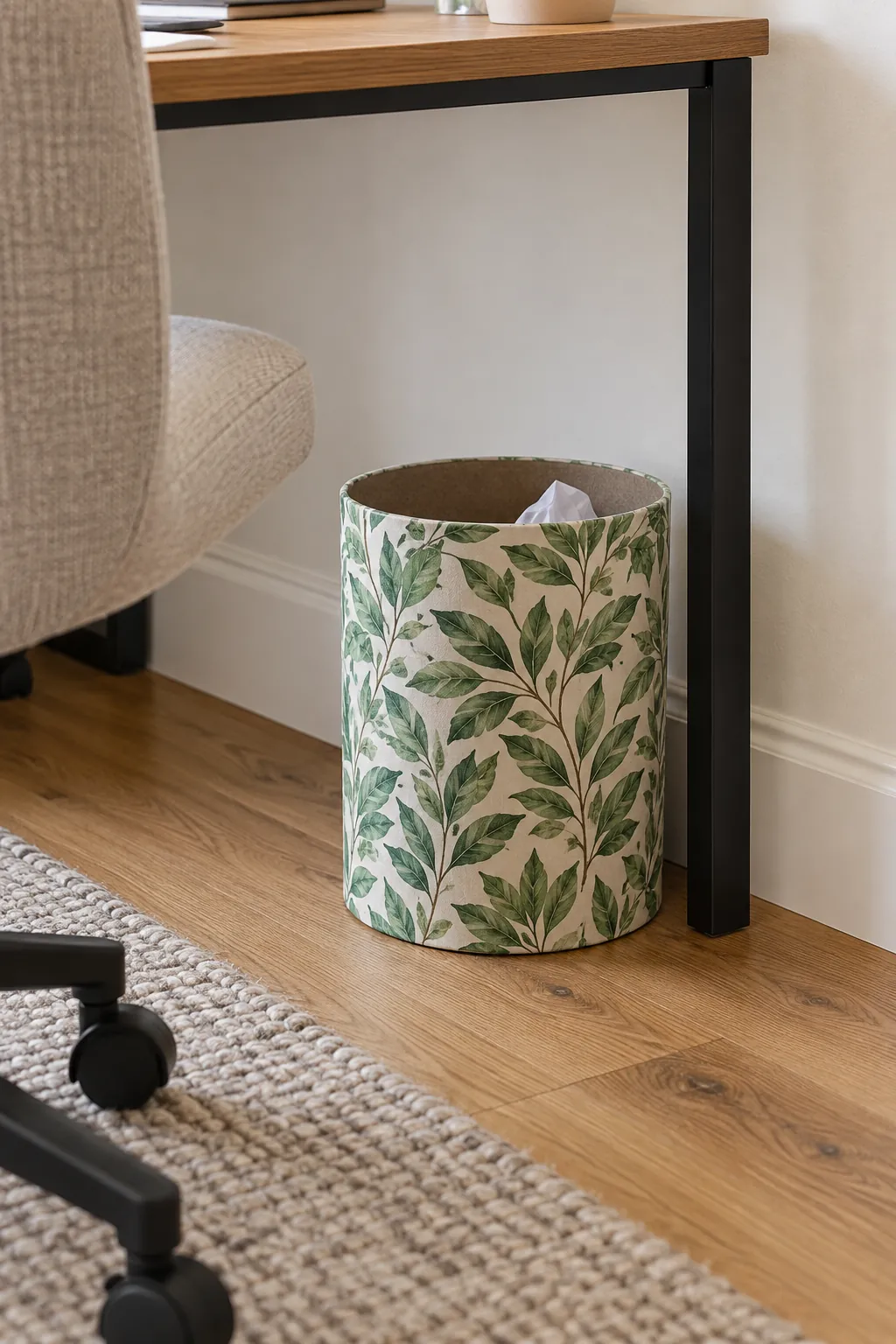
Cover a Small Wastebasket
A straight sided wastebasket is easier to cover than a tapered one. Make a paper template, align the most interesting part of the pattern at the front, and place the overlap toward the back. Use this project only for dry paper waste unless the finished surface is fully protected.
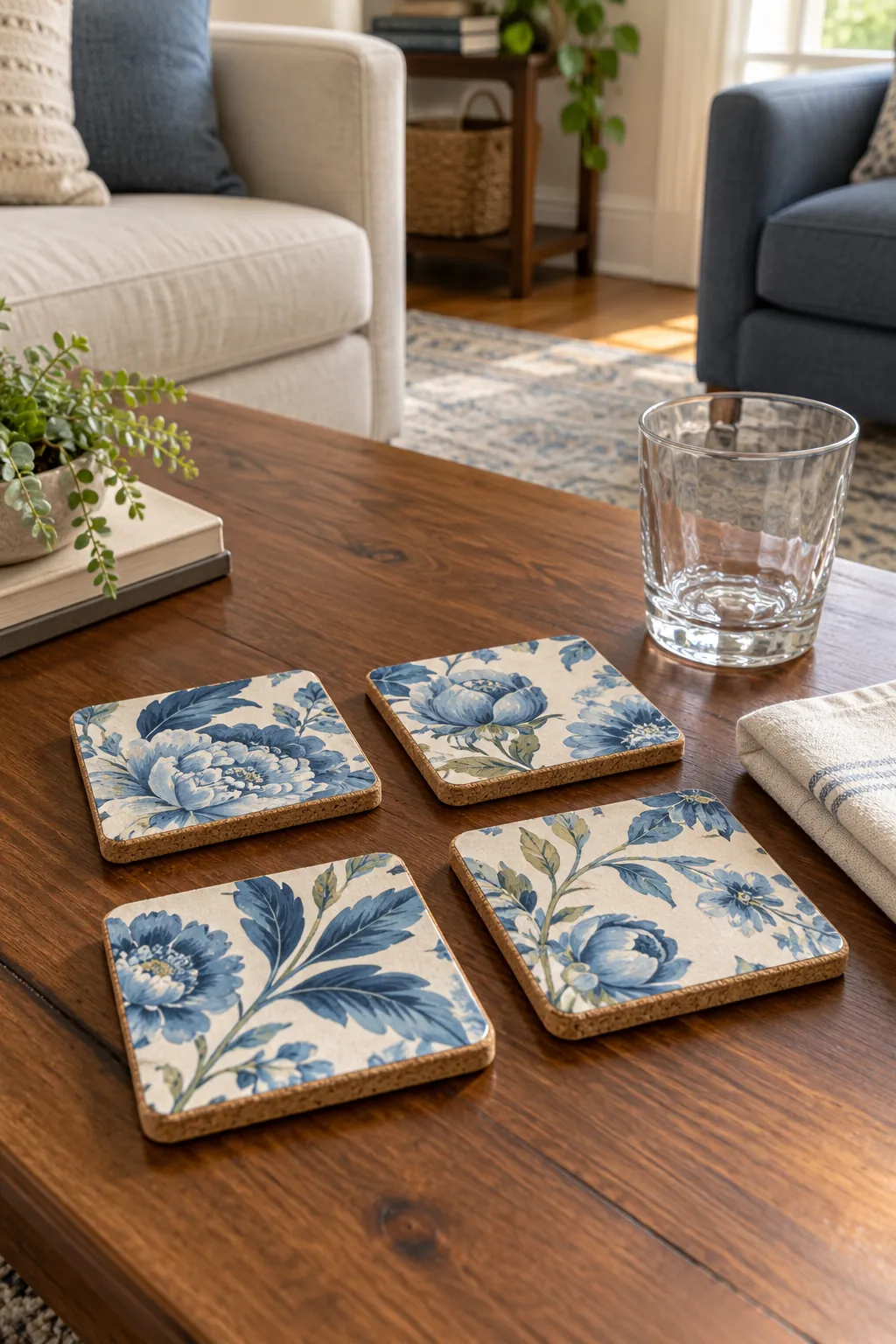
Make Sealed Drink Coasters
Cut matching wallpaper circles or squares and adhere them to cork or wood blanks. Press every edge firmly, then add several compatible clear protective coats to the top and sides. Let the finish cure fully and use felt pads underneath so moisture does not reach the paper from below.
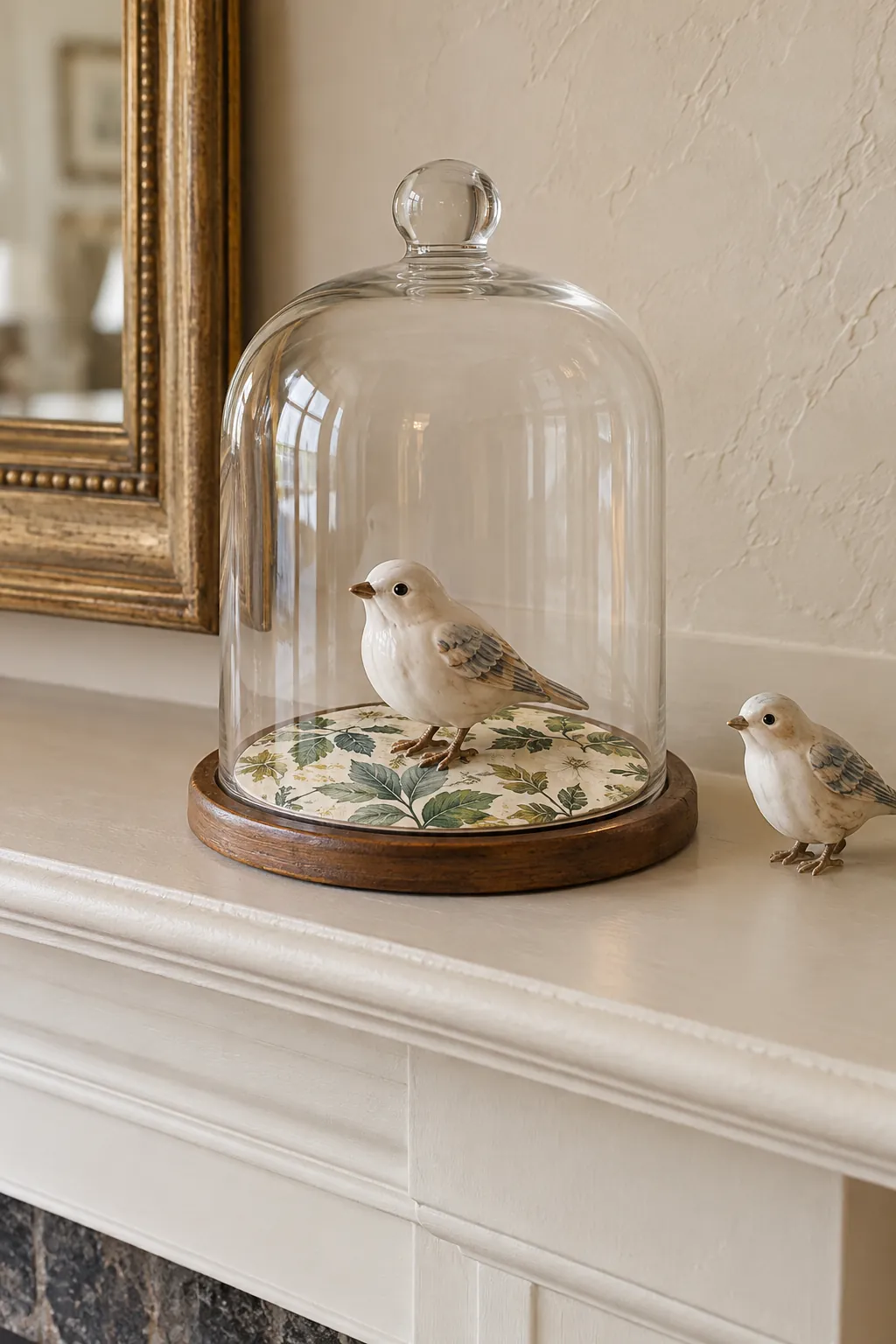
Line the Base of a Glass Cloche
Trace the inside base of a glass cloche and cut one clean wallpaper circle. Place it beneath a small object so the pattern becomes a stage rather than a background. Keep the paper loose or use removable adhesive because the glass already protects it from handling.
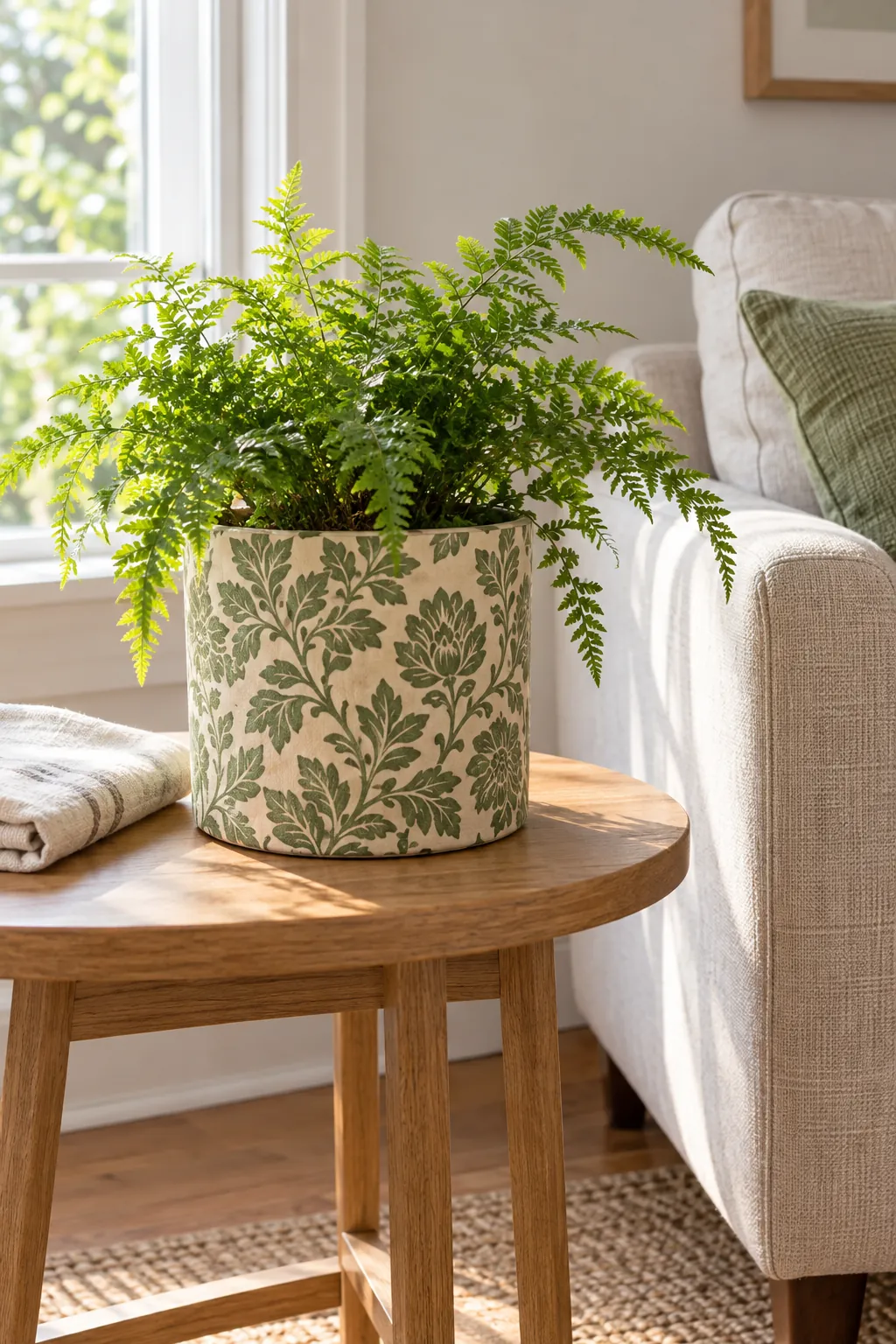
Dress Up a Plant Pot Sleeve
Create a removable sleeve around a plain cachepot rather than applying paper to a wet plant pot. Leave a gap at the base and remove the sleeve before watering so moisture cannot reach the wallpaper. A simple cylinder works best and can be stored flat when not in use.
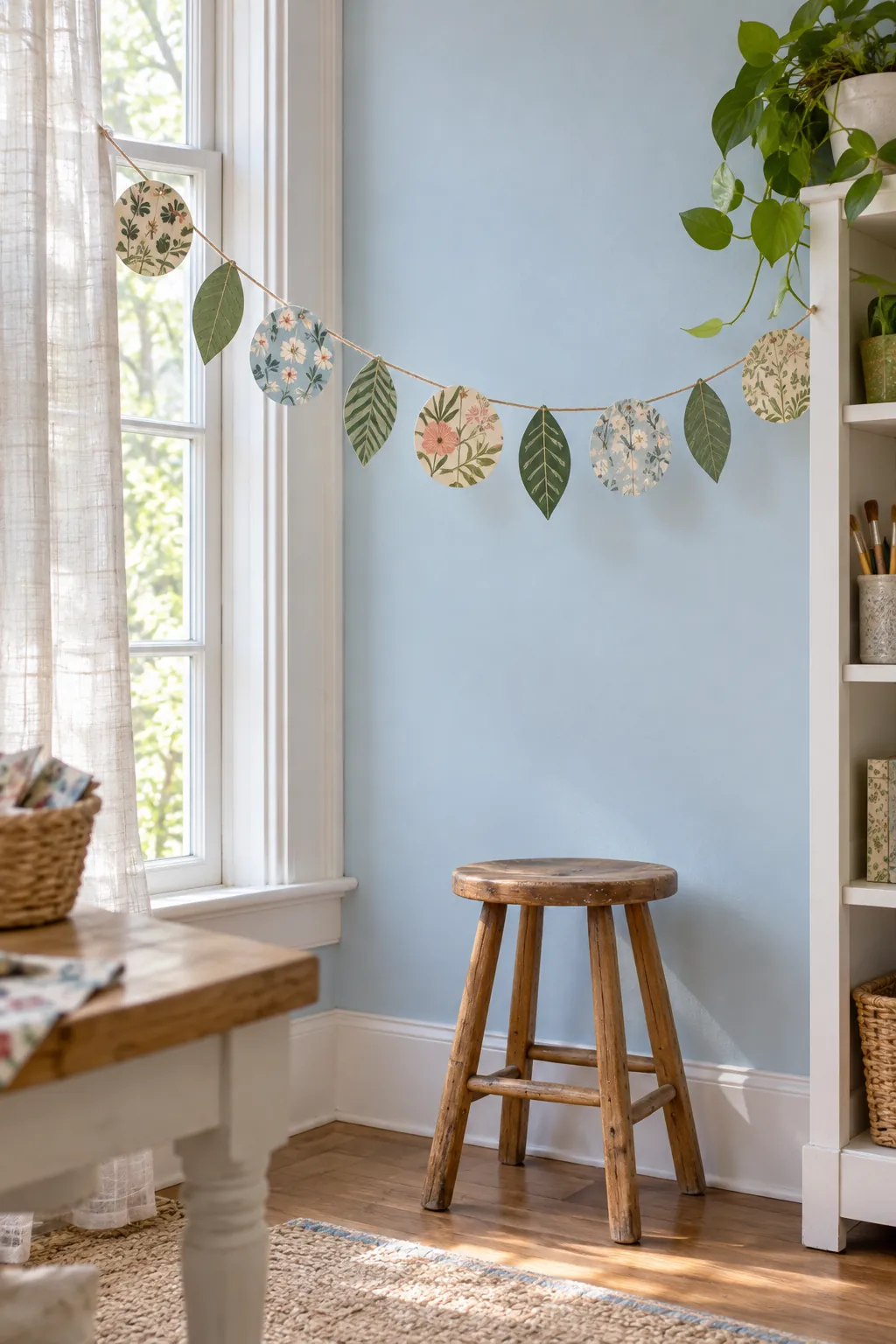
Cut a Simple Paper Garland
Punch circles, leaves, or flags from several coordinating offcuts and attach them to cotton cord. Repeat the shapes in a predictable rhythm so different patterns still feel connected. Hang the finished garland away from heat, moisture, and open flame.
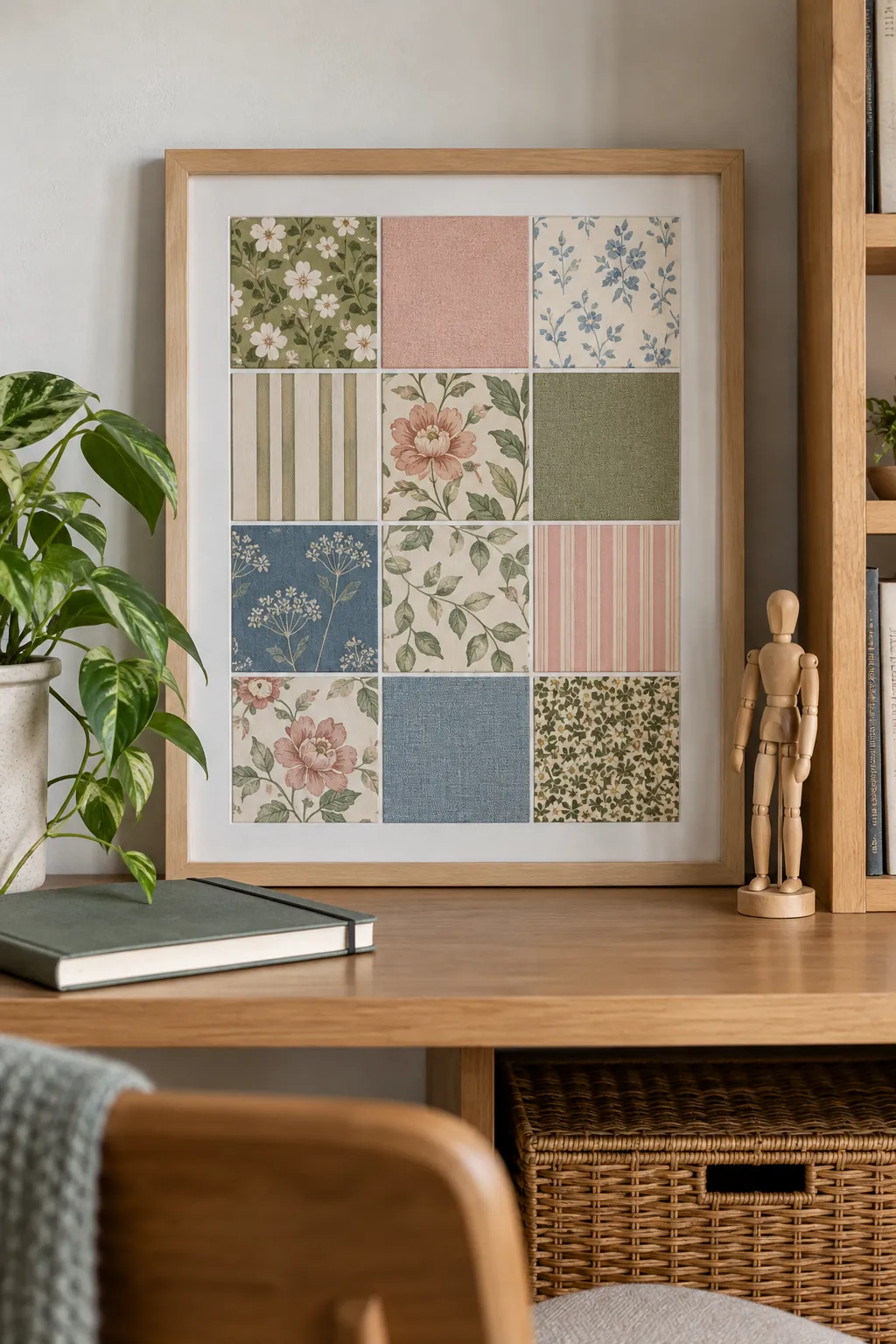
Build a Mini Patchwork Panel
Trim several scraps into equal squares and arrange them on paperboard before gluing. Rotate large motifs and quiet fragments until the color distribution feels balanced, then preserve narrow even gaps between pieces. Frame the panel or lean it on a shelf where the cut edges remain protected.
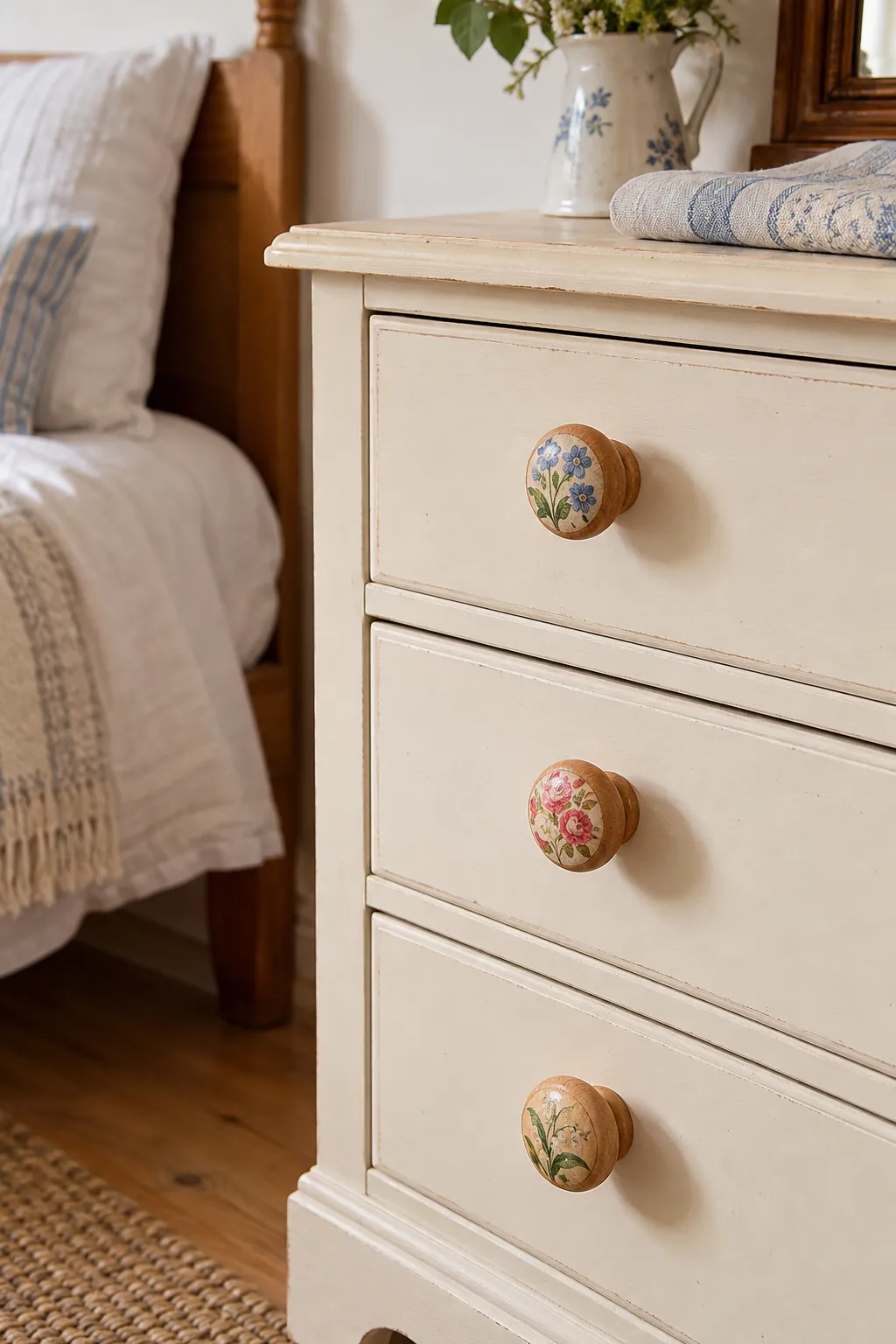
Cover Wooden Drawer Knobs
Small flat wooden knobs can hold a tiny motif from even the narrowest scrap. Remove the knobs, cover only the front face, seal the paper well, and allow it to cure before reinstalling them. Keep the screw and moving edges free of paper so the hardware sits securely.
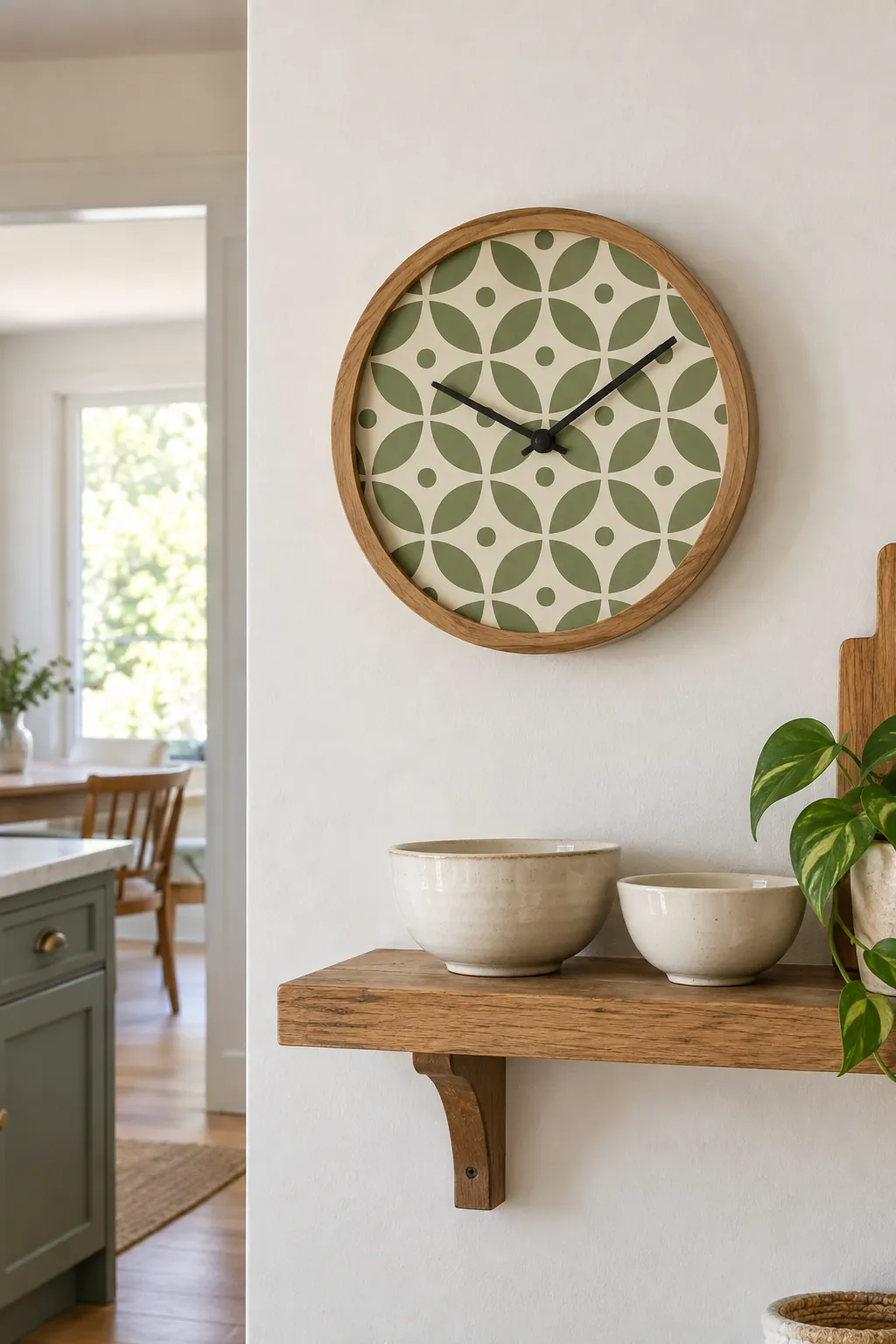
Refresh a Plain Clock Face
Remove the clock hands and mechanism before tracing the face onto wallpaper. Mark the center accurately, cut the opening cleanly, and choose a pattern that leaves the hands easy to see. Reassemble only when the adhesive is dry and confirm that nothing rubs against the moving parts.
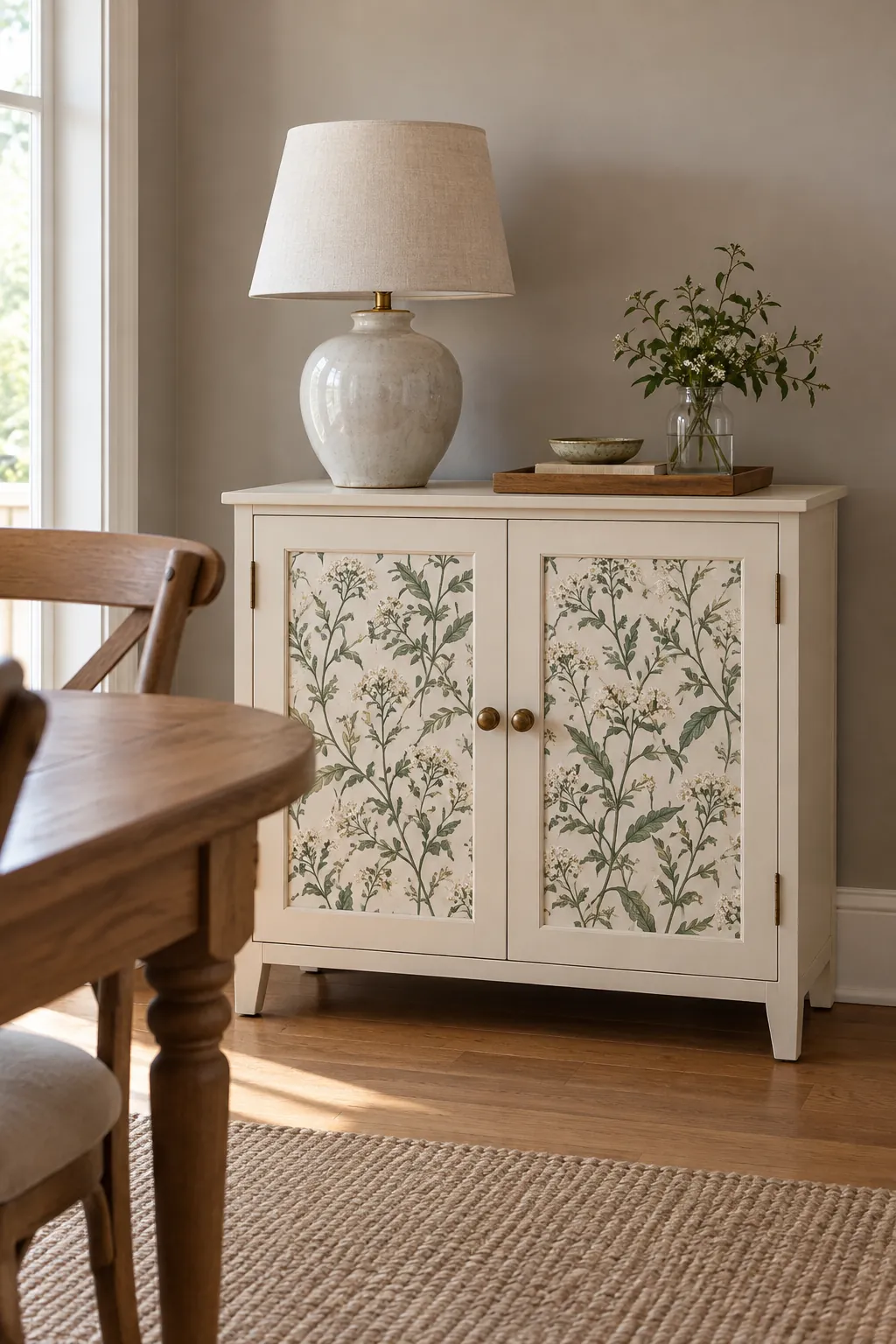
Panel a Cabinet Door Inset
A recessed cabinet door can hold a wallpaper panel without covering its rails and stiles. Make a paper template, check that both doors align, and apply the offcut only to a smooth clean inset. For a reversible result, cover thin removable board and secure it inside the recess.
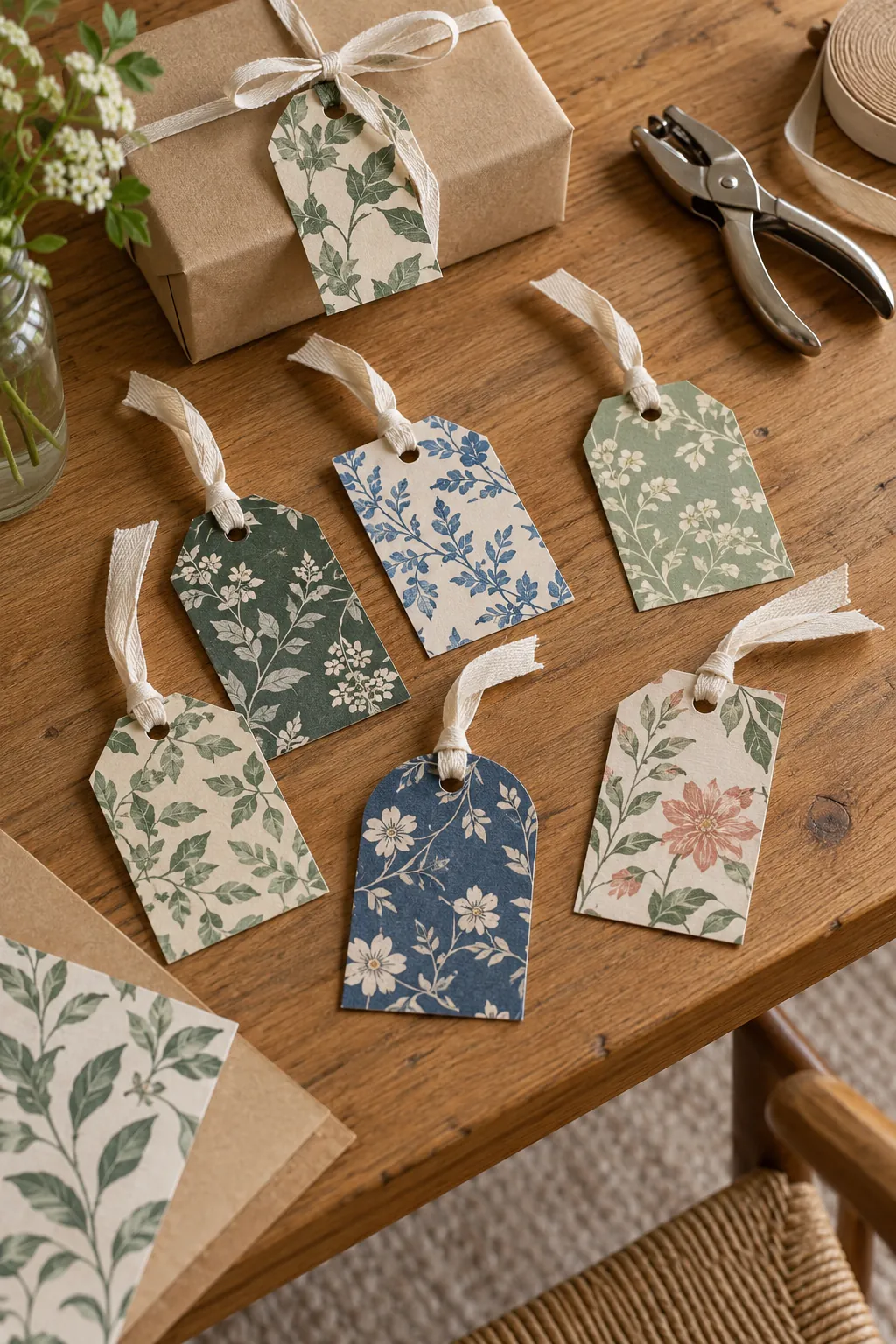
Make Decorative Gift Tags
Back small wallpaper pieces with plain card before cutting tag shapes. Punch clean holes, add cotton ribbon, and keep the reverse blank for a handwritten note. These tags can be reused as small ornaments if you avoid writing a date on the patterned side.
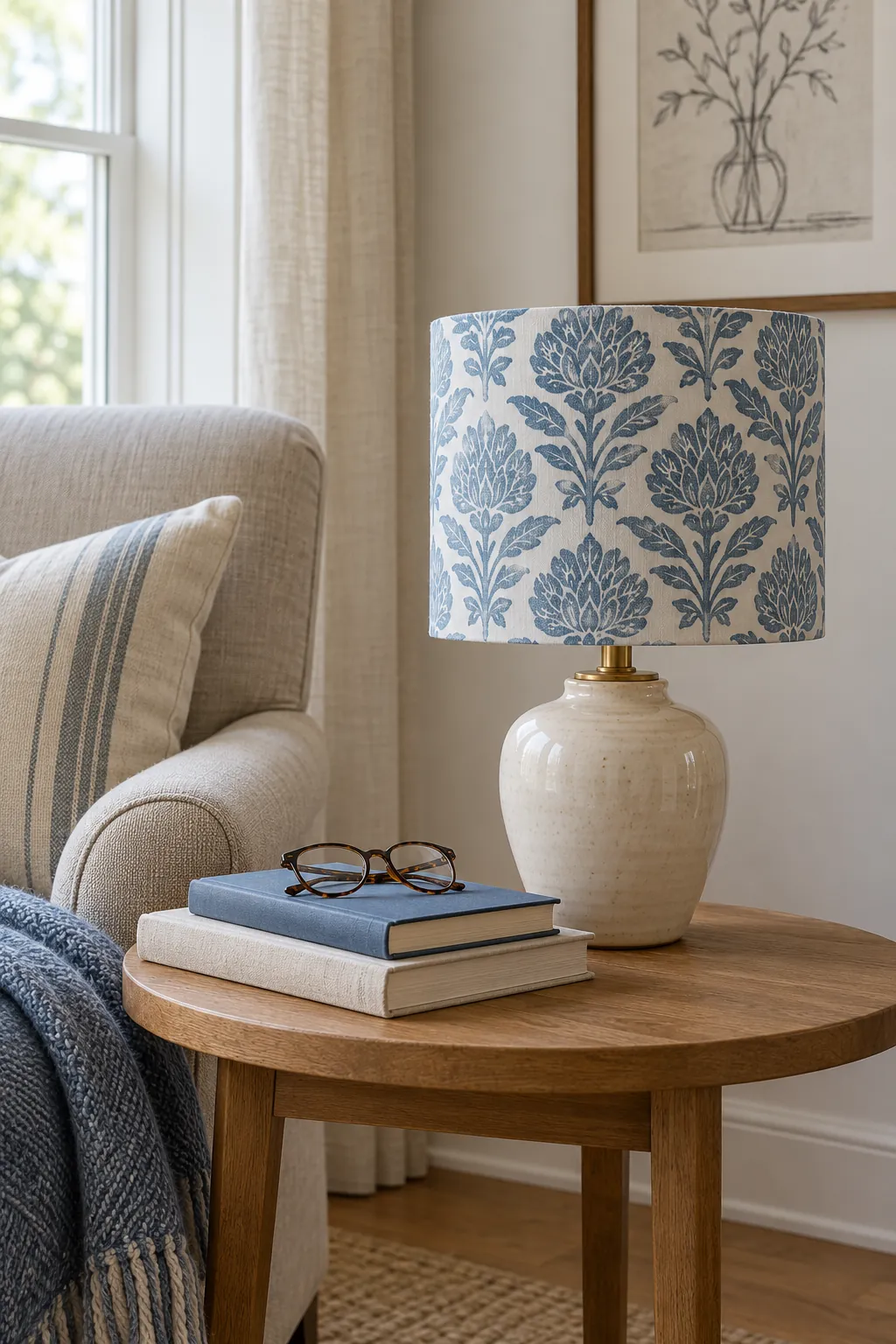
Cover a Plain Lampshade Panel
Use wallpaper only on a shade designed for craft covering and keep all material clear of the bulb and ventilation openings. A small drum shade with a rigid outer panel is easier than a pleated or curved frame. Follow the shade maker guidance for heat clearance and use a suitable cool running bulb.
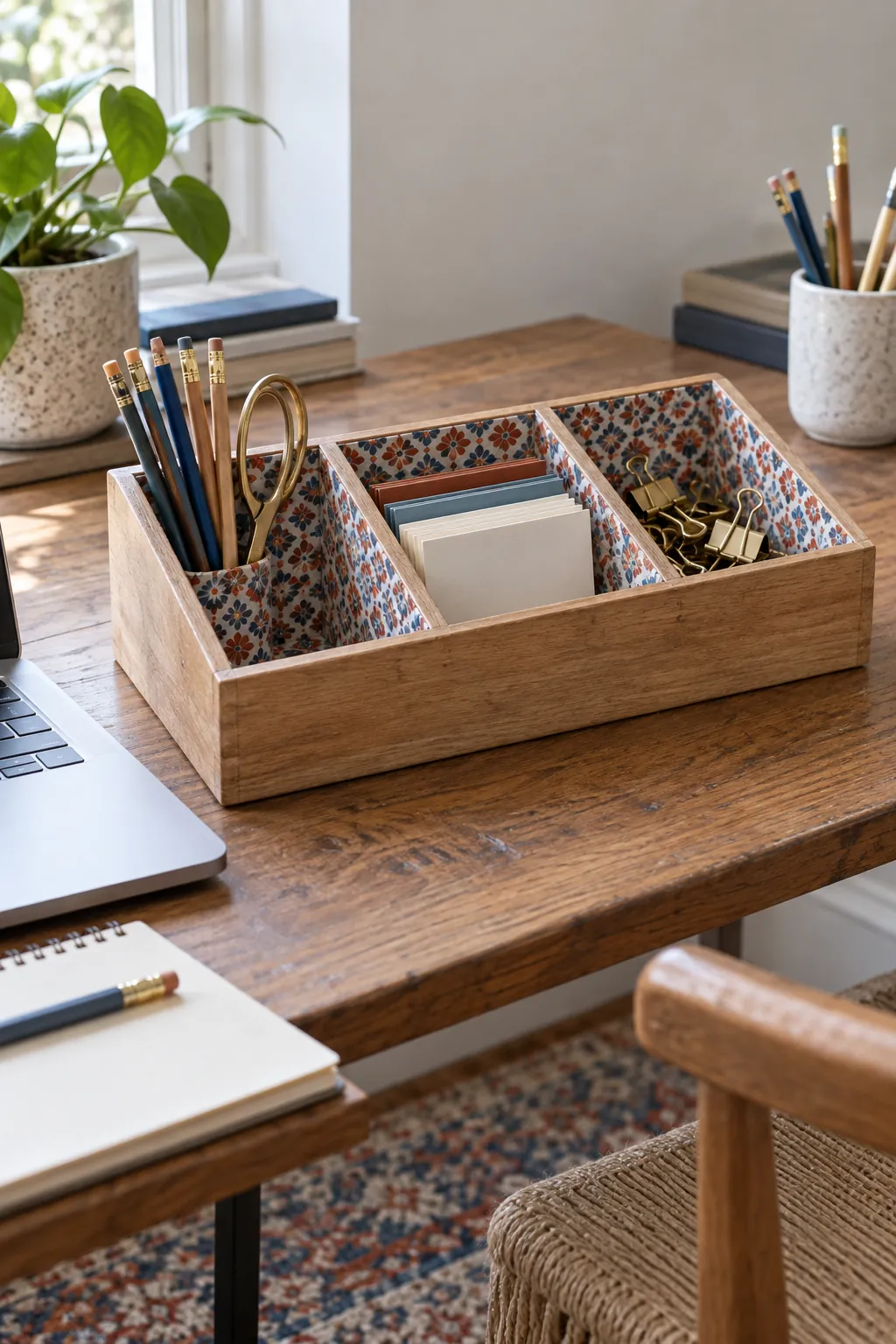
Line a Desk Organizer
Wallpaper can make the compartments of a plain desk organizer easier to distinguish. Create templates for the base and back of each section, then fit the pieces without covering slots or moving joints. Use a smooth pattern scale so tiny compartments do not break the motif into confusing fragments.
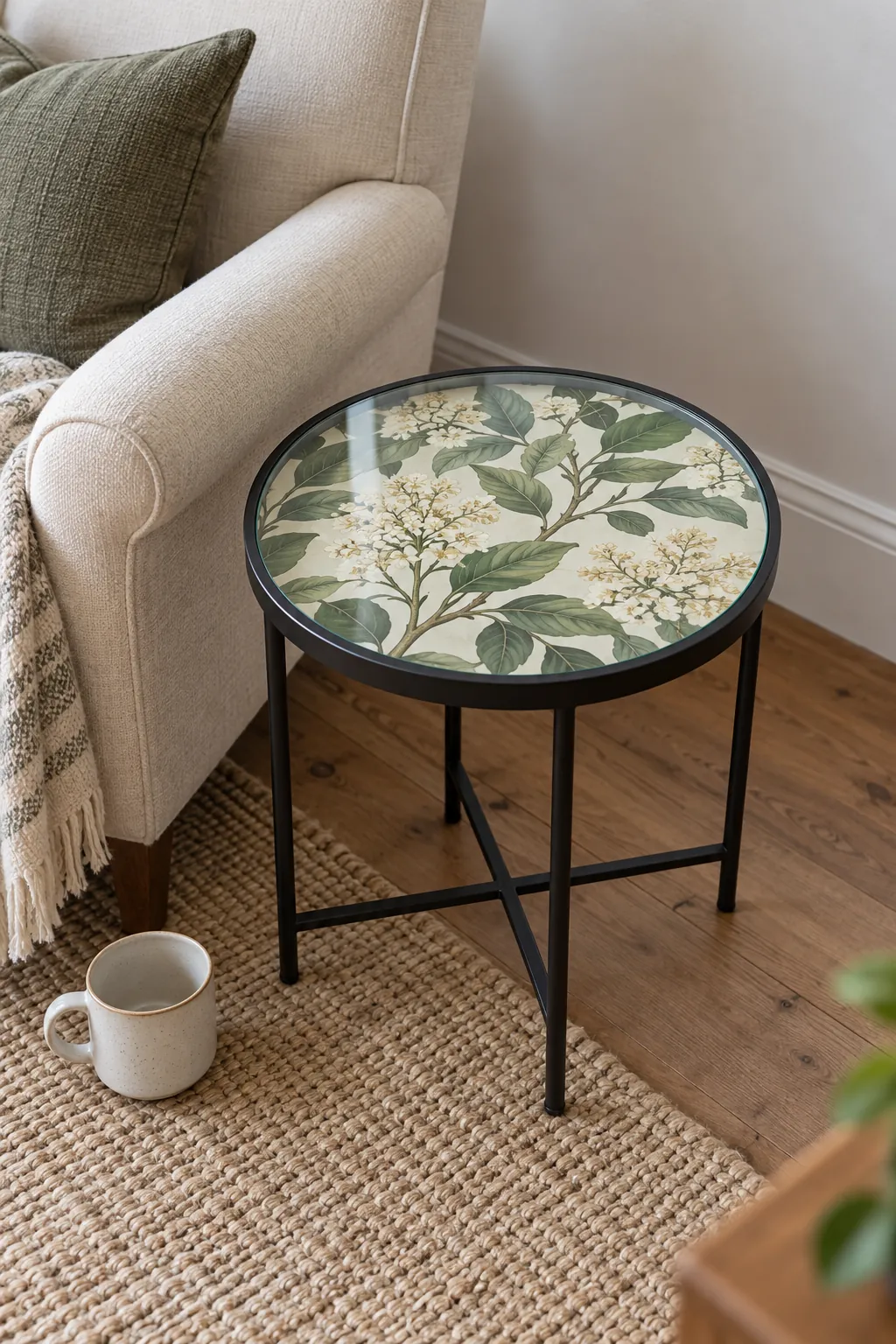
Create a Tabletop Under Glass
Place one larger offcut beneath the removable glass top of a small table. Cut the paper to fit without adhesive, flatten it under books first, and clean both sides of the glass before assembly. The glass protects the design and lets you replace it without damaging the table.
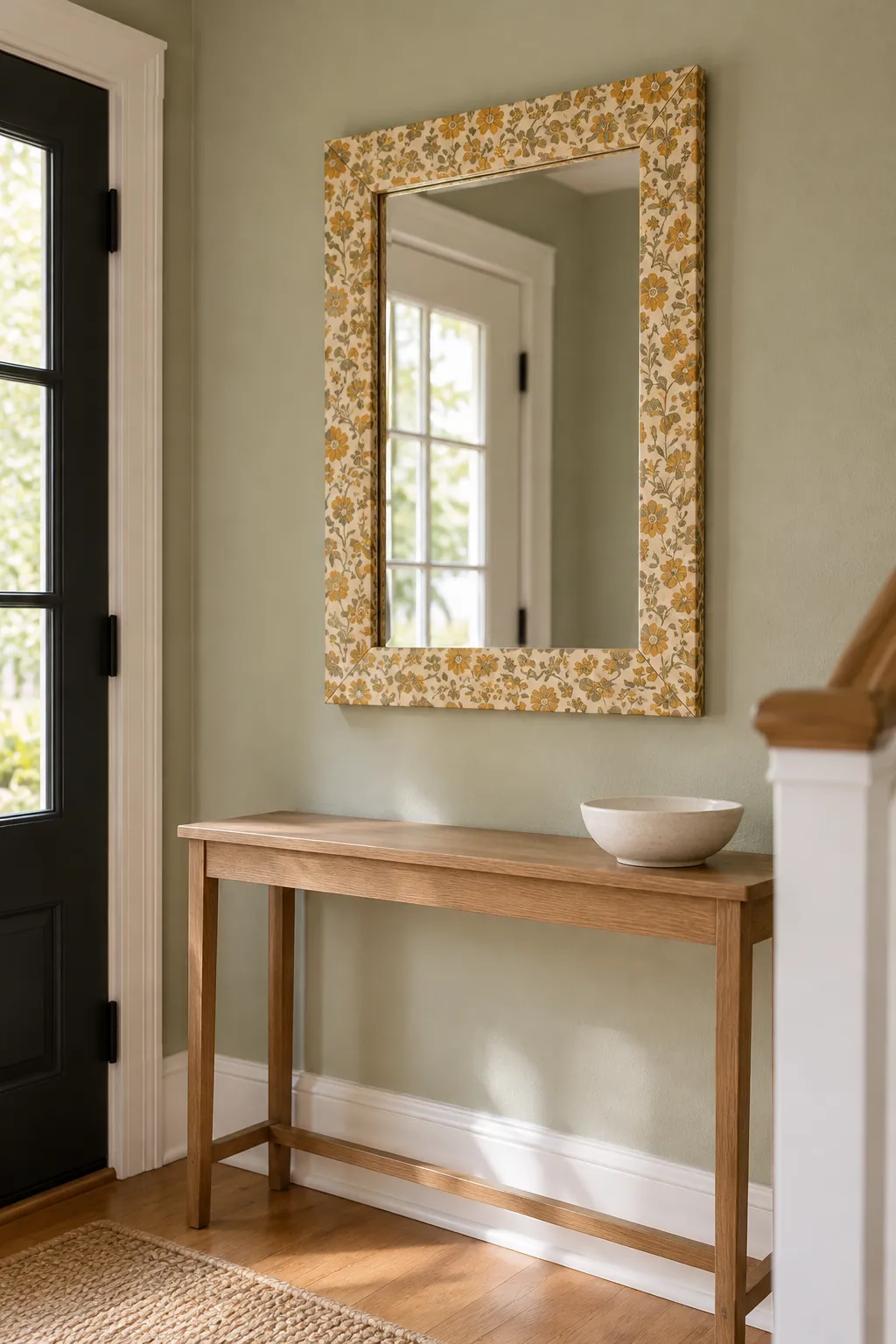
Add a Patterned Mirror Border
Apply narrow wallpaper strips to a flat unfinished mirror frame, not to the mirror glass. Match corners carefully or use simple butt joints when the pattern is too small to miter. Seal the paper and keep cleaning spray on the cloth rather than directing it toward the edges.
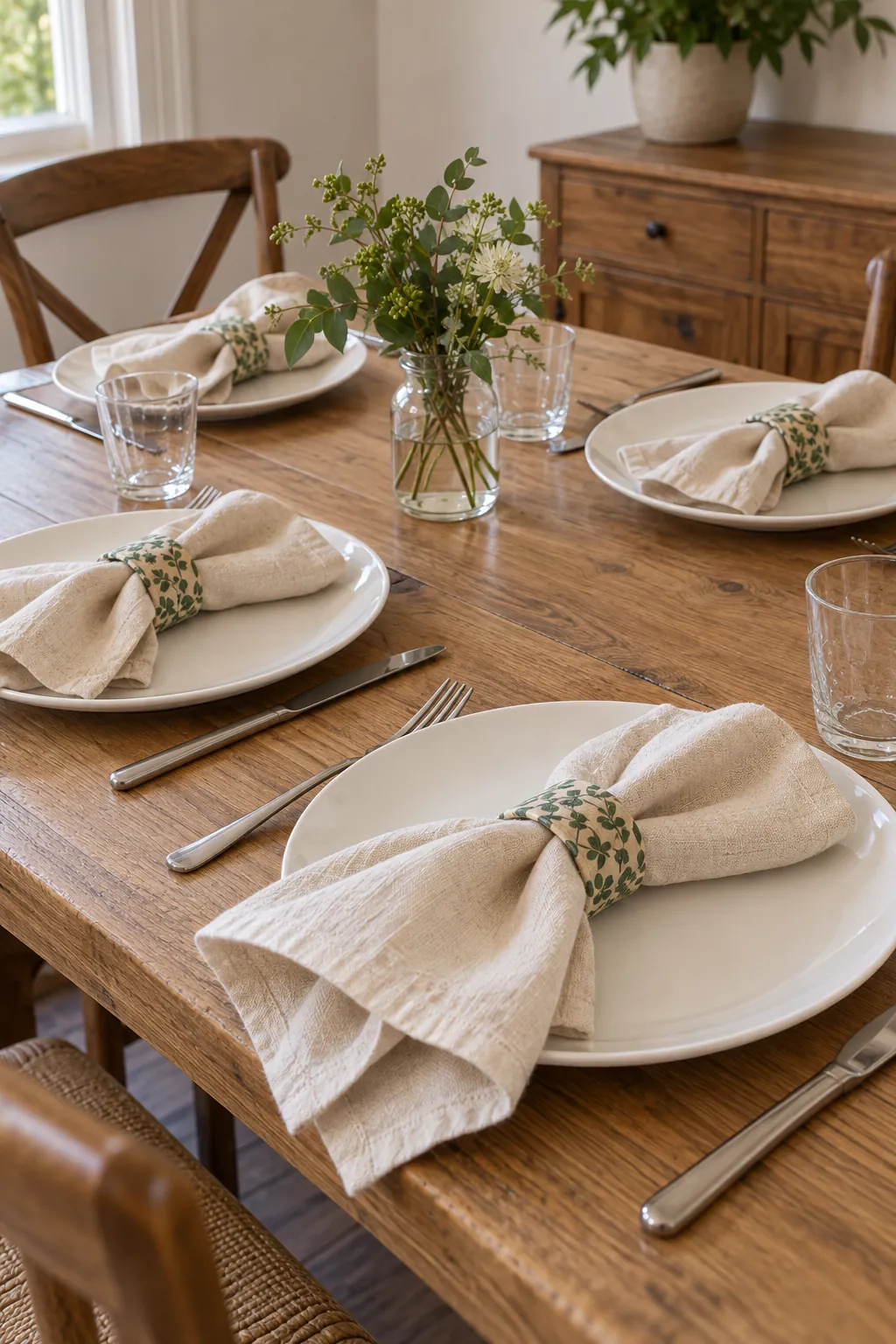
Make a Set of Napkin Rings
Wrap wallpaper around sturdy card tubes and cut equal bands after the adhesive dries. Seal the surface if the rings will be handled often, and keep the inside edge smooth so it does not snag fabric. Pair a patterned ring with plain cloth napkins for clear contrast.
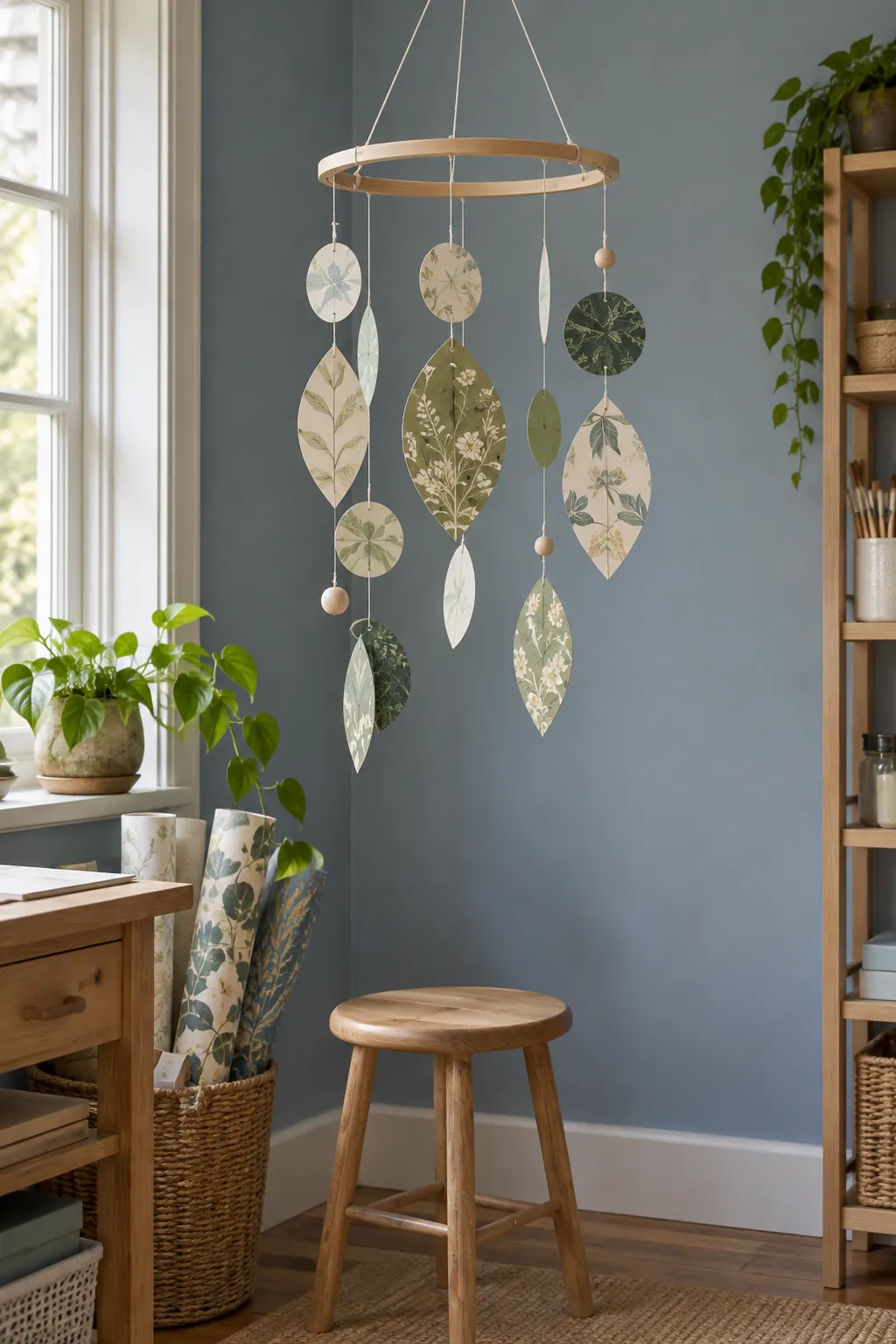
Assemble a Small Mobile
Back wallpaper with light card, cut balanced shapes, and suspend them from a small wood hoop with thread. Test the weight of every branch before hanging, and place the mobile where it cannot touch a lamp, fan, or crib. Use broad simple shapes so the pattern remains visible from across the room.