Old bathroom tile often has more value than its first impression suggests. The difficult choice is not simply which color looks attractive, but which pattern fits the room, which surfaces can be saved, and where repairs will remain watertight. A successful plan treats tile, grout, fixtures, light, and circulation as one system.
Indexed homeowner discussions repeatedly return to the same worries: strong original colors, cracked grout, small floor plans, and fear of destroying sound period work. The ideas below answer those concerns with schemes that can guide either careful preservation or a historically sympathetic new installation. Have uncertain substrates, moisture damage, and old flooring materials assessed before disturbance.
Black And White Basketweave Floor
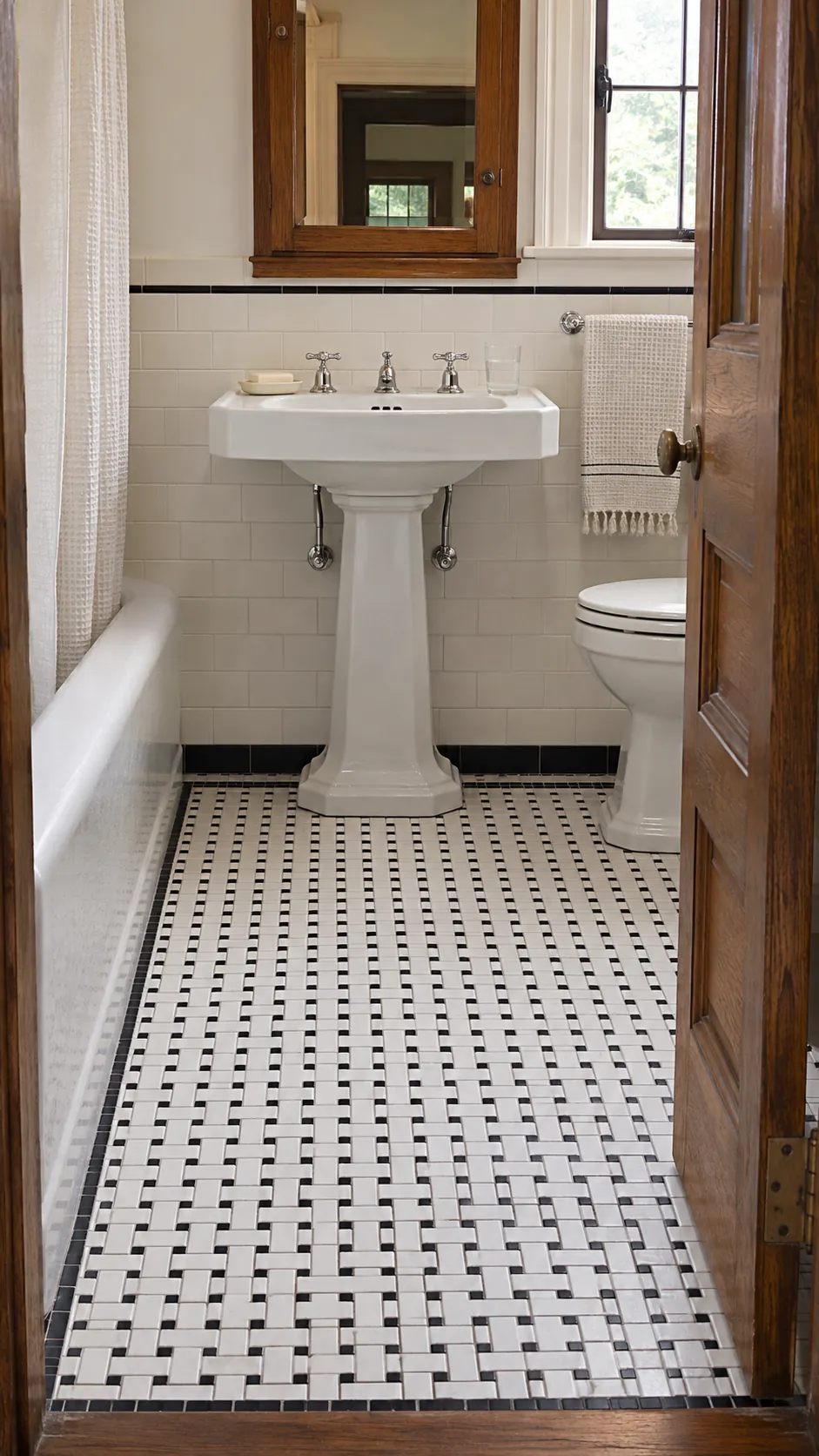
Tiny mosaics add grip and make an uneven old room feel deliberate. Use a warm white wall color so the black pattern stays crisp without turning the room stark. A dark grout can reduce visible staining, but confirm that the grout type suits the joint width.
Mint Green Square Wall Tile
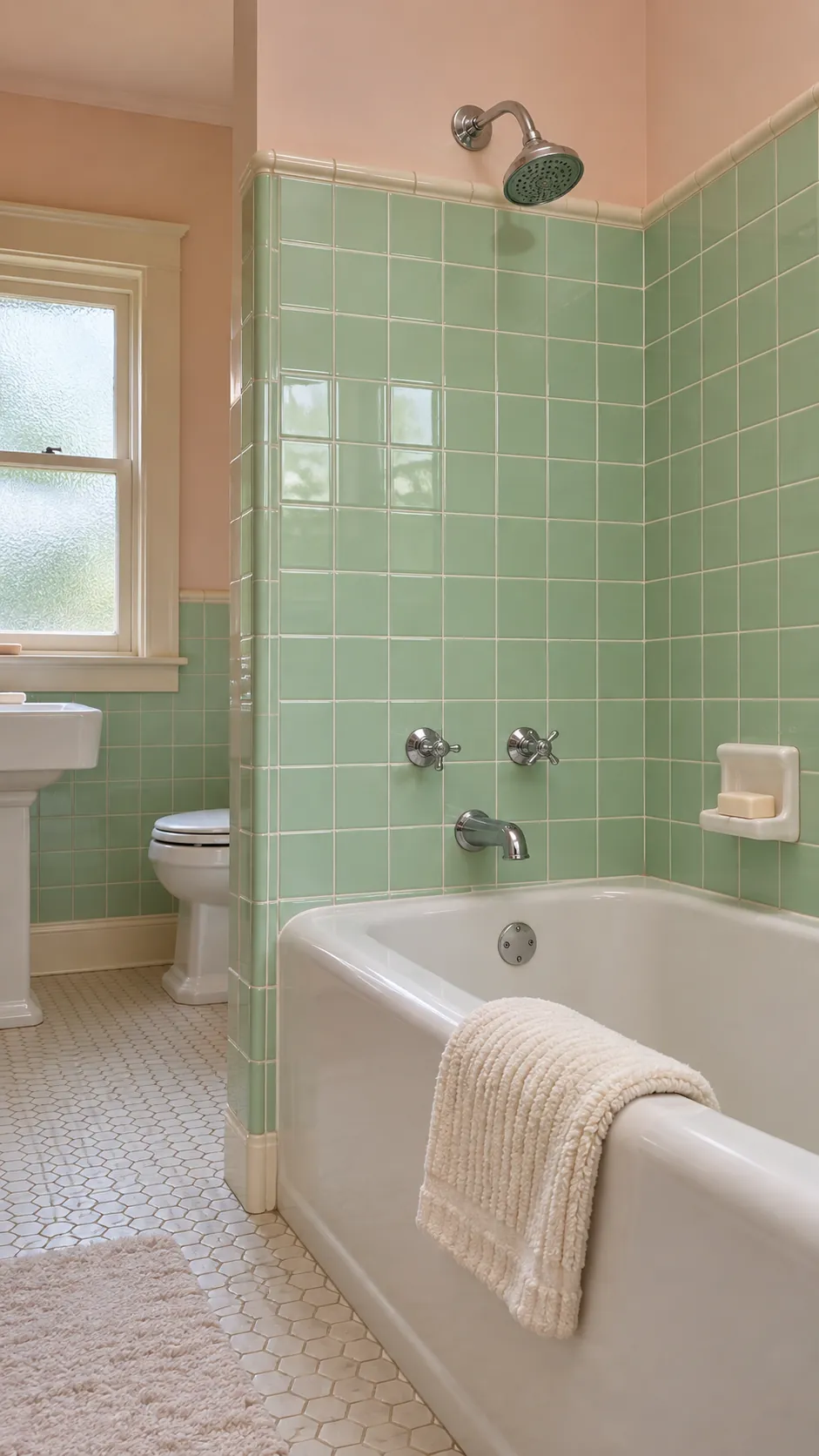
Mint tile feels calmer when nearby finishes stay creamy rather than icy. Keep the original rounded trim if it is sound because that detail is difficult to reproduce convincingly. A simple white curtain and chrome fittings let the green remain the main feature.
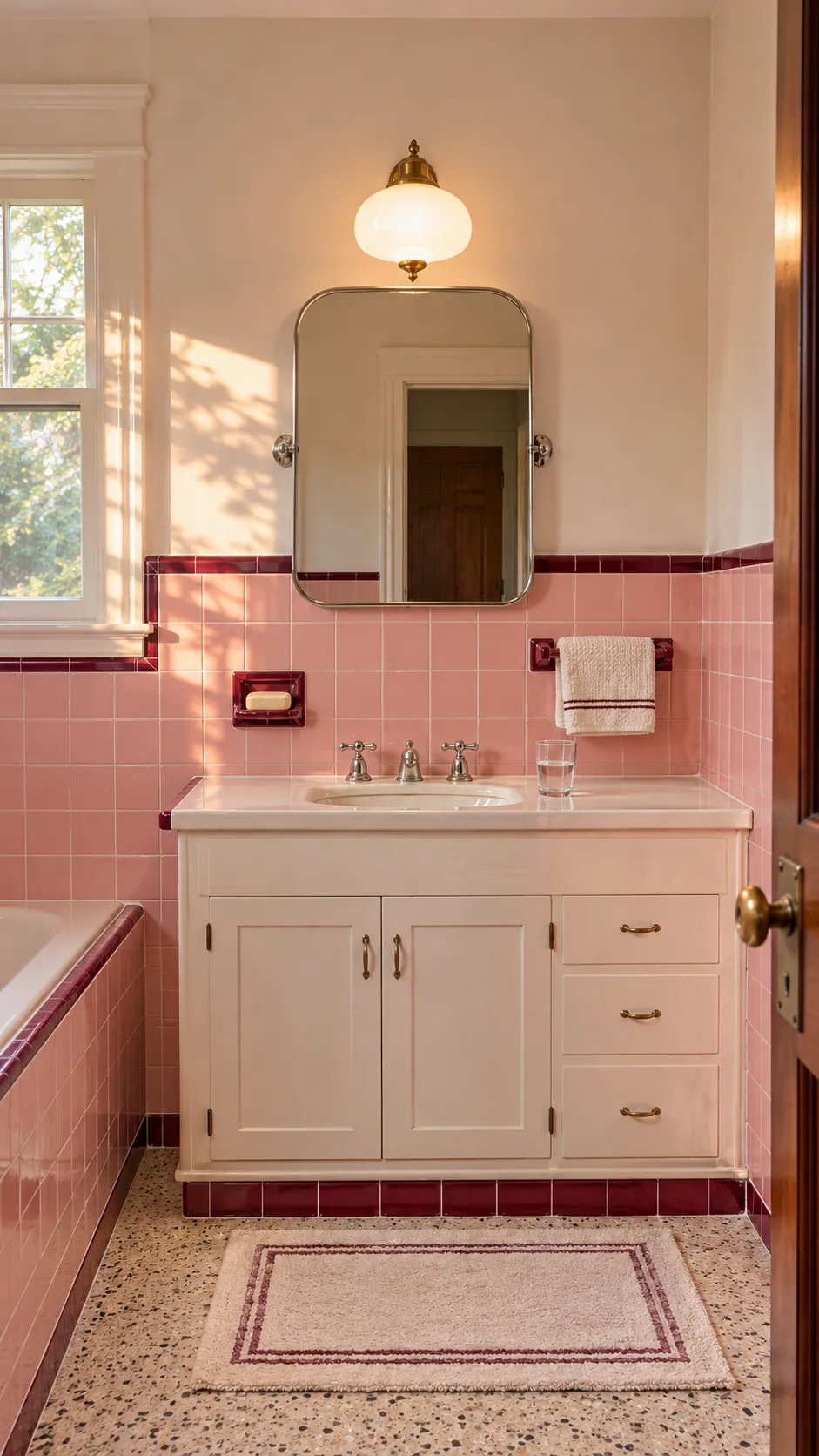
Pink Tile With Burgundy Trim
Pink becomes architectural when a deeper trim color gives it a clear edge. Repeat burgundy once in a towel or small accessory instead of filling the room with matching accents. Warm lamps help the glaze read rich rather than sugary.
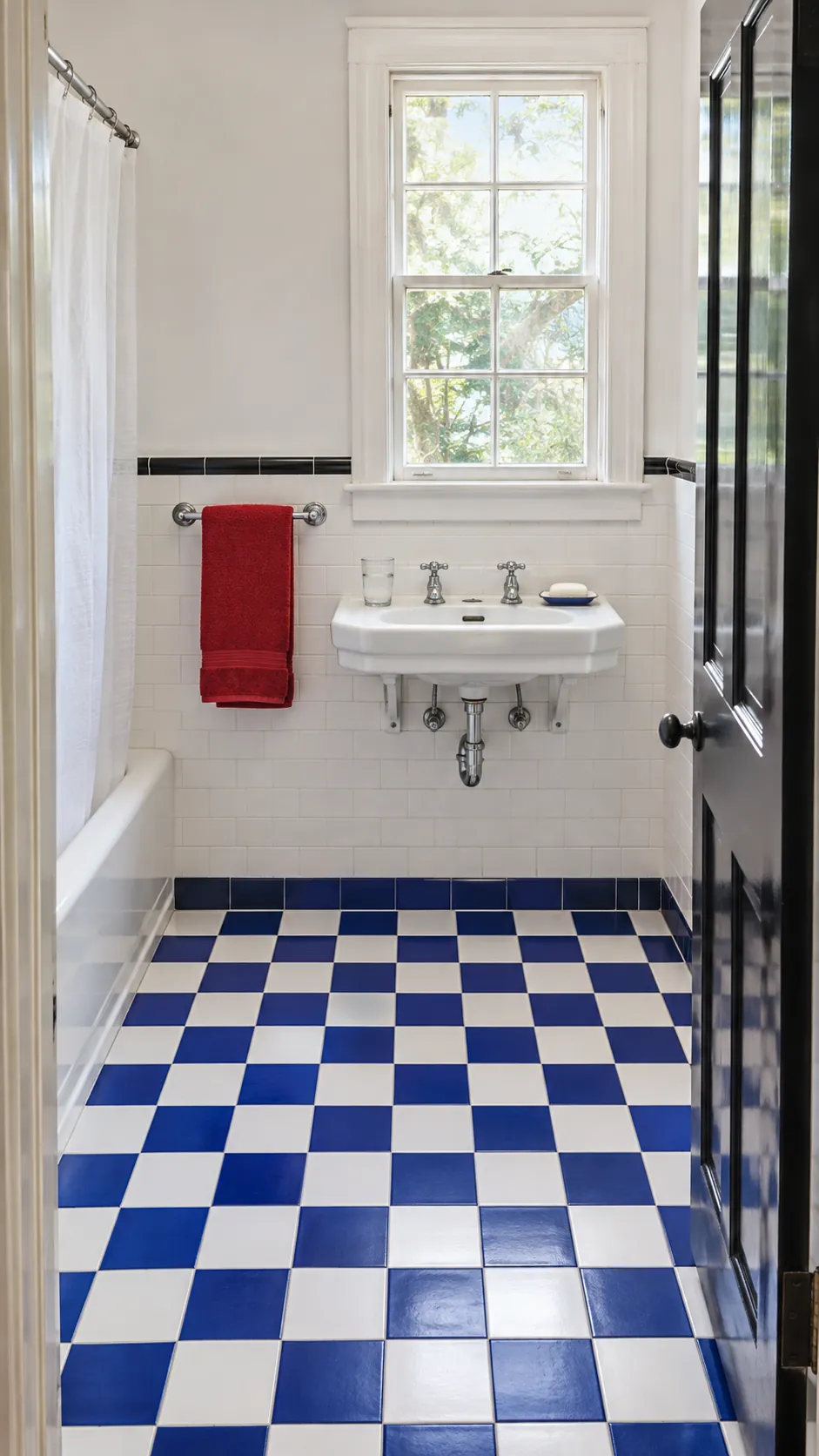
Cobalt And White Checkerboard
A checkerboard floor brings energy to a small bath without covering every surface in pattern. Keep walls plain and let cobalt appear only once more in a useful object. The strong geometry also helps disguise minor differences between replacement tiles.
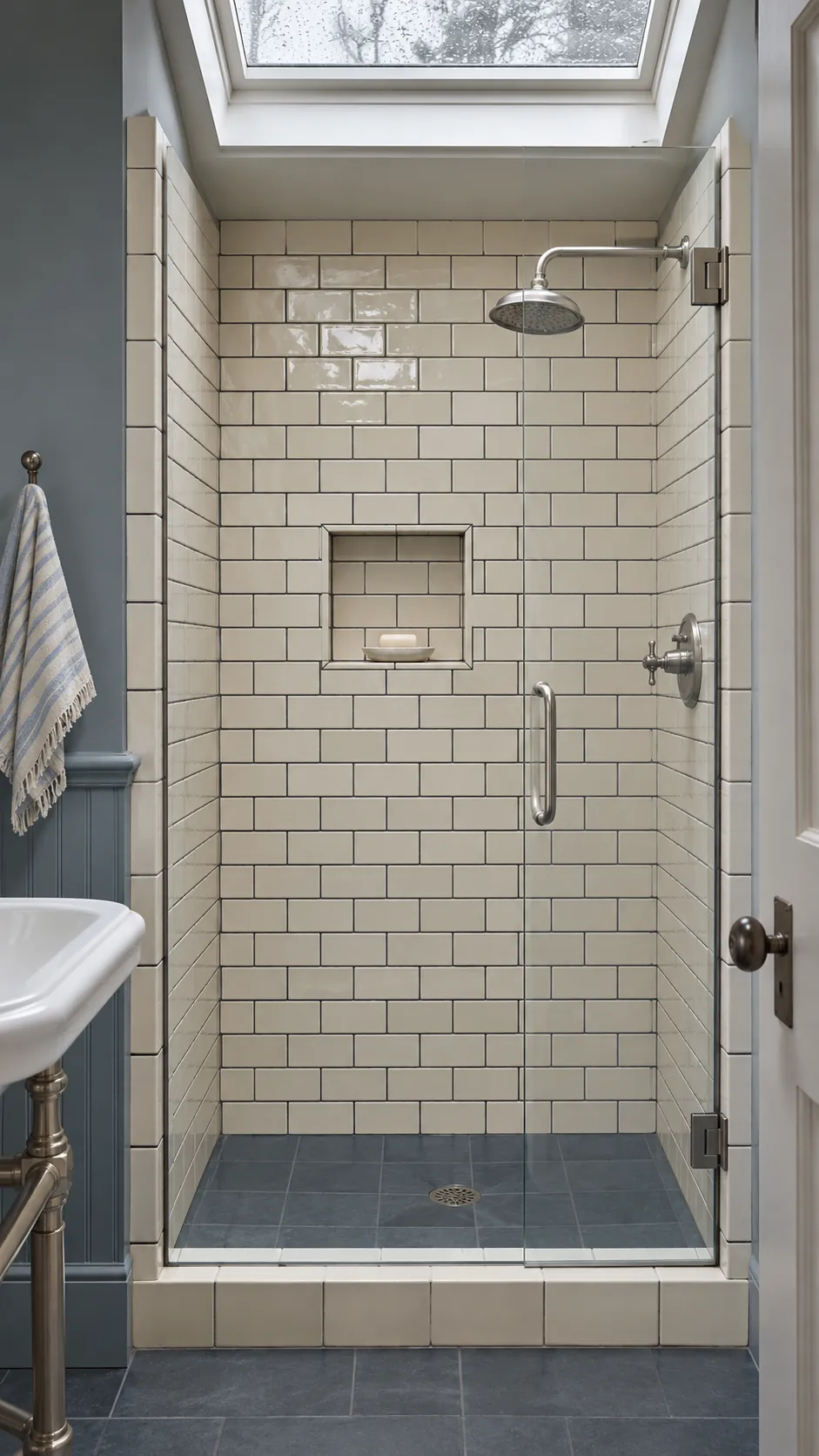
Cream Subway Tile With Dark Grout
Cream subway tile gives an older shower depth that pure white often lacks. Dark grout outlines every course, so careful spacing matters more than usual. Test grout on a loose sample because pigments can catch in handmade glaze texture.
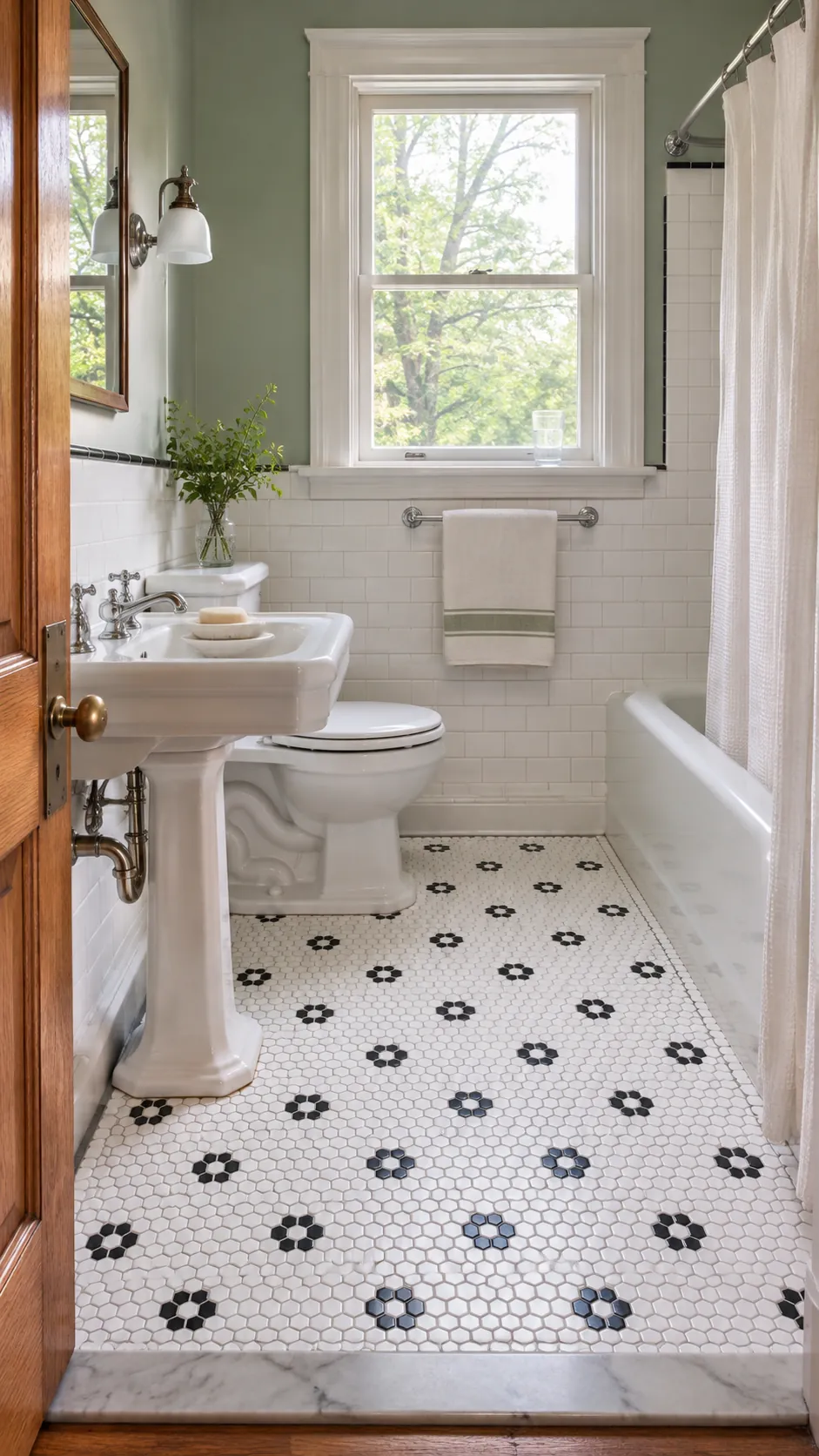
Small Hexagon Flower Mosaic
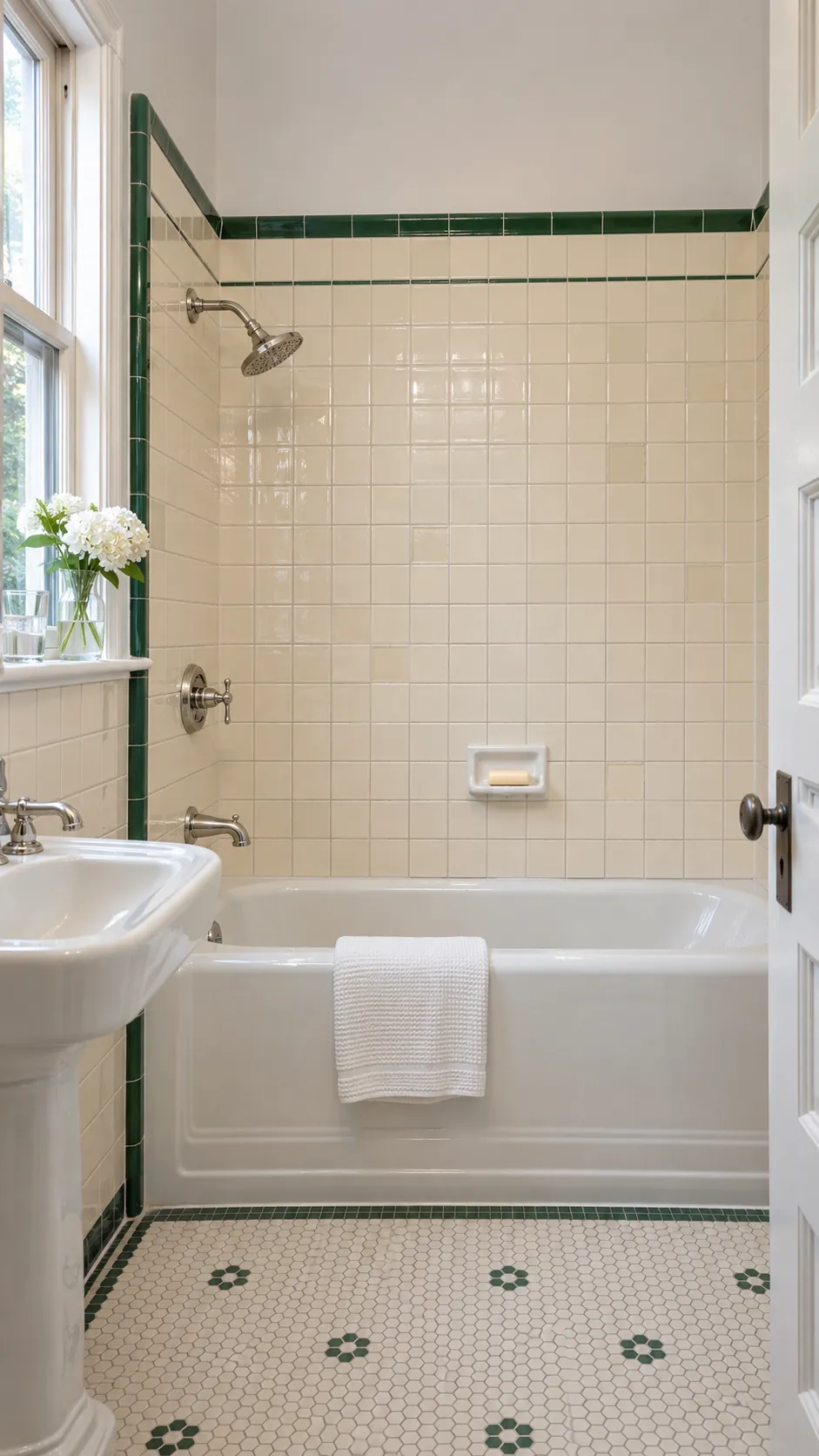
A flower mosaic rewards a close look while the room still reads as quiet from the doorway. Set motifs far enough apart that they act like punctuation. Use a plain threshold and simple walls to protect the floor from visual competition.
Seafoam Tile Wainscot
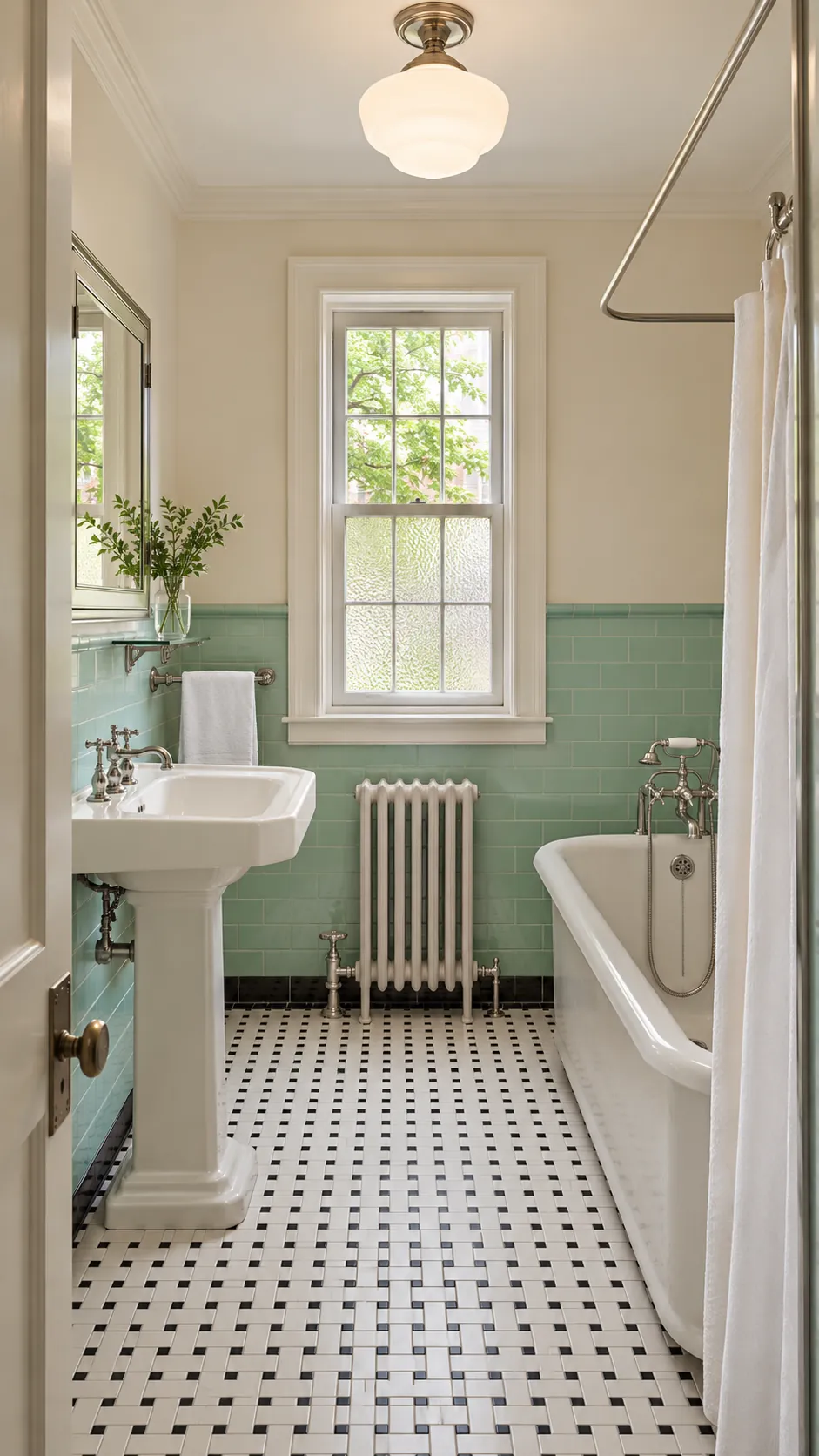
A seafoam wainscot protects splash zones and leaves room for breathable painted plaster above. The horizontal cap makes the room feel longer, which is useful in a narrow vintage small bathroom. Choose paint from the warm side of white so the green does not look gray.
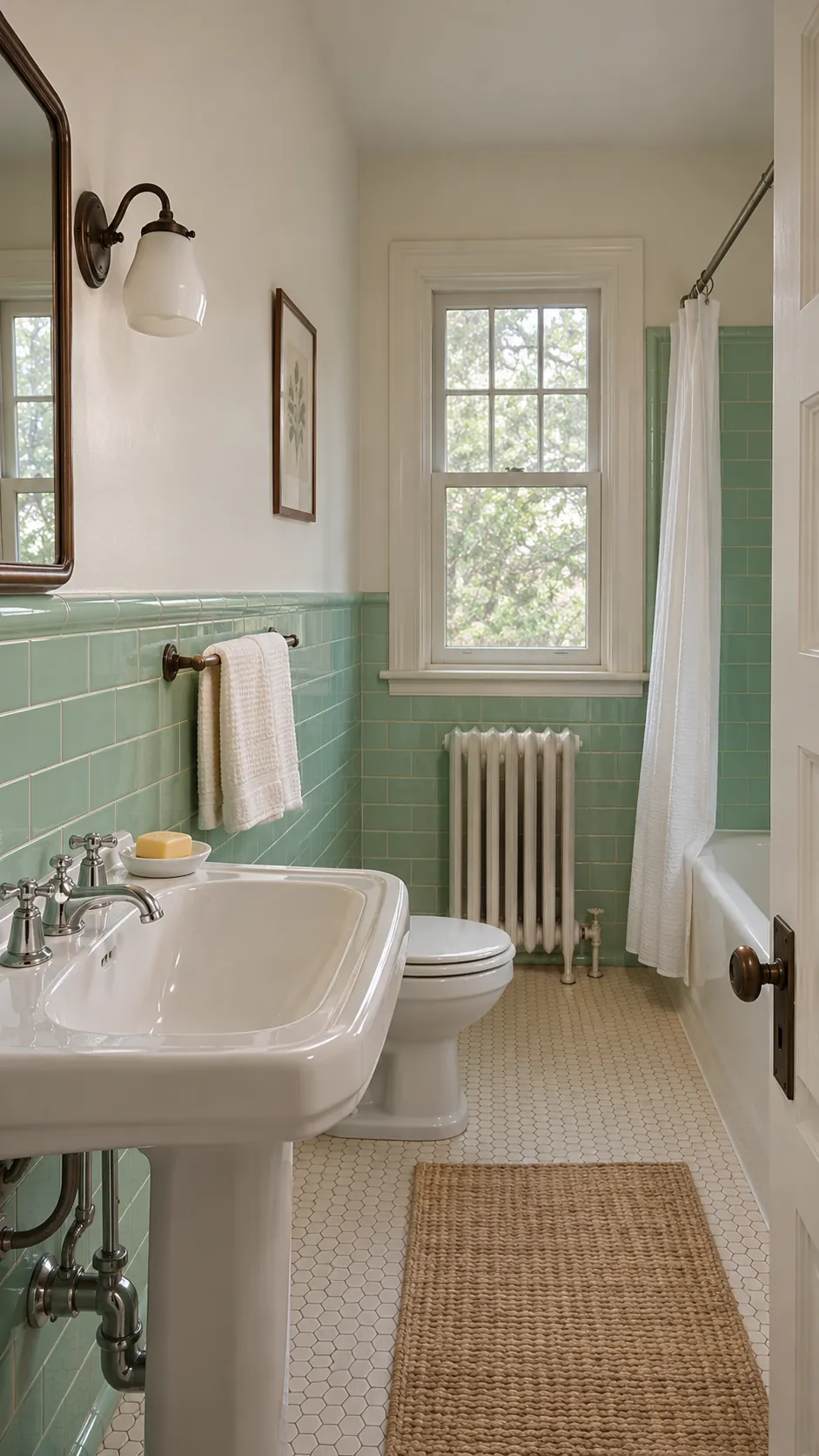
Maroon Pencil Border
One narrow maroon line can give basic cream tile a convincing period rhythm. Align it with the mirror or window sill so it relates to the architecture. This approach also allows a vintage bathroom remodel to keep most of the field tile simple and affordable.
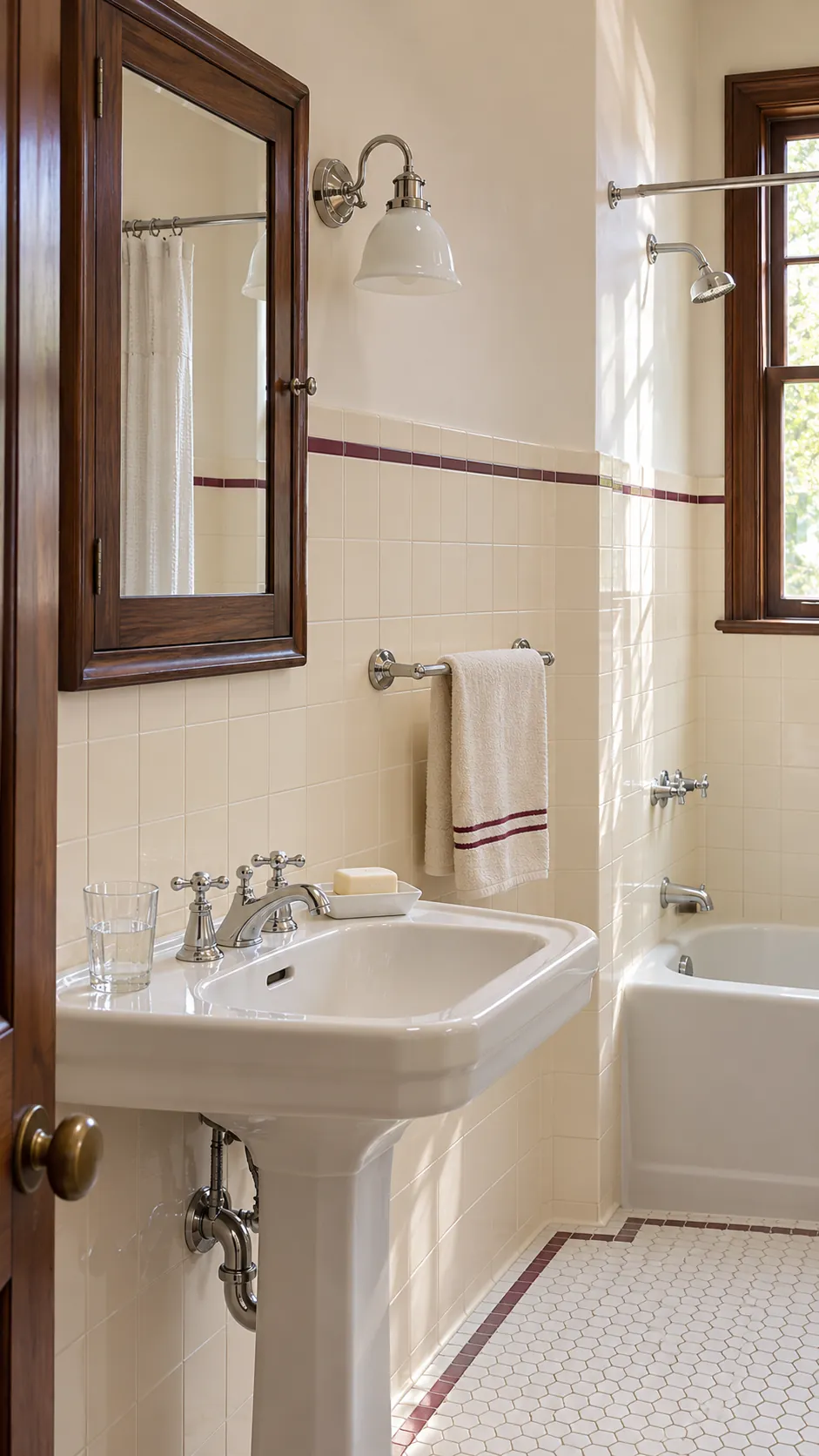
Yellow And White Pinwheel Floor
A pinwheel pattern adds movement without the heavy contrast of black and white. Butter yellow works especially well with sage paint and plain white fixtures. Keep the grout close to the white tile color so the pattern remains readable rather than busy.
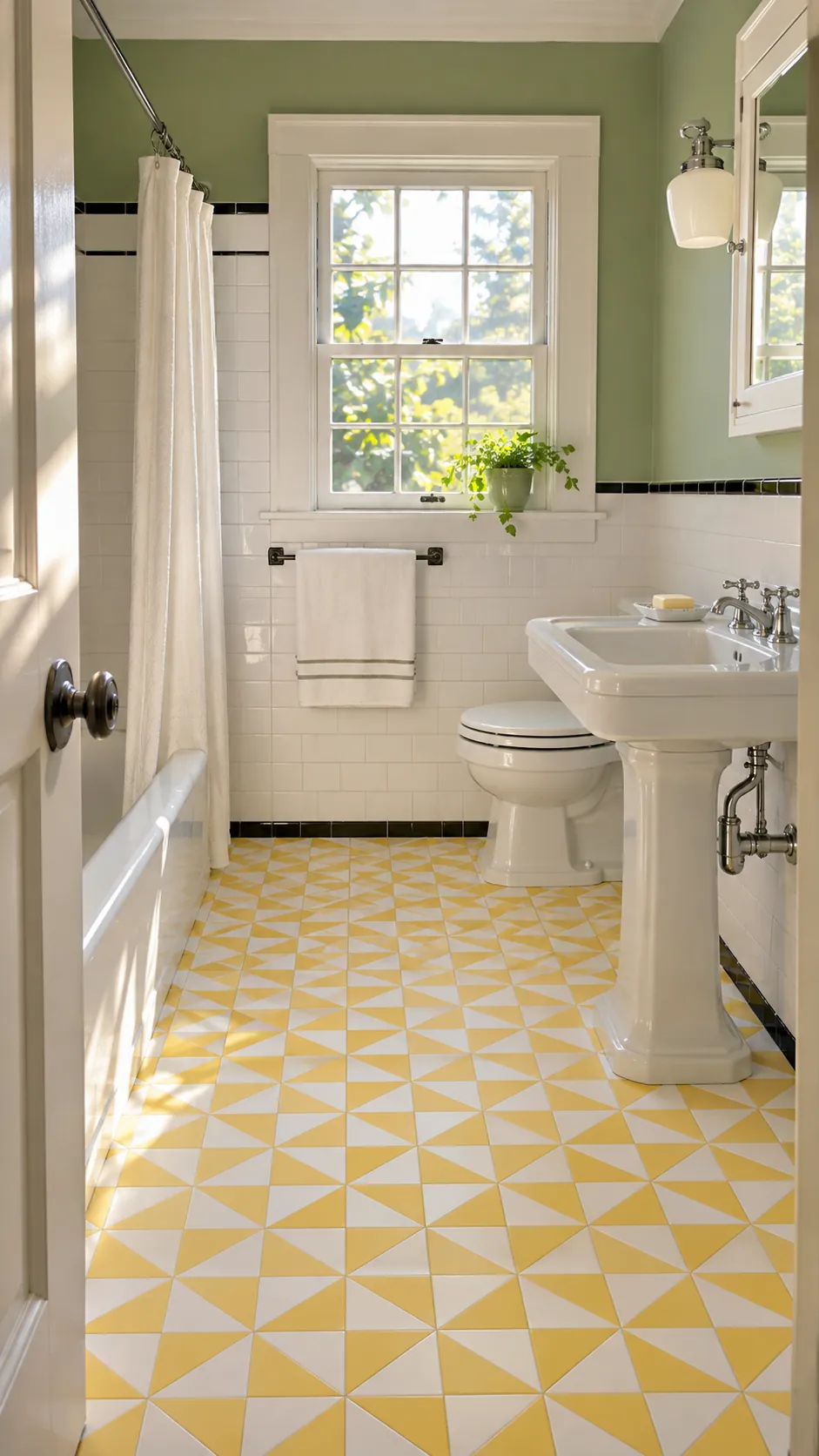
Blue Tile Tub Surround
Dusty blue creates a gentle tub enclosure that feels original even in a new installation. A white bullnose keeps the transition neat and avoids a bulky metal edge. Pair it with warm gray flooring so the room has depth but stays restful.
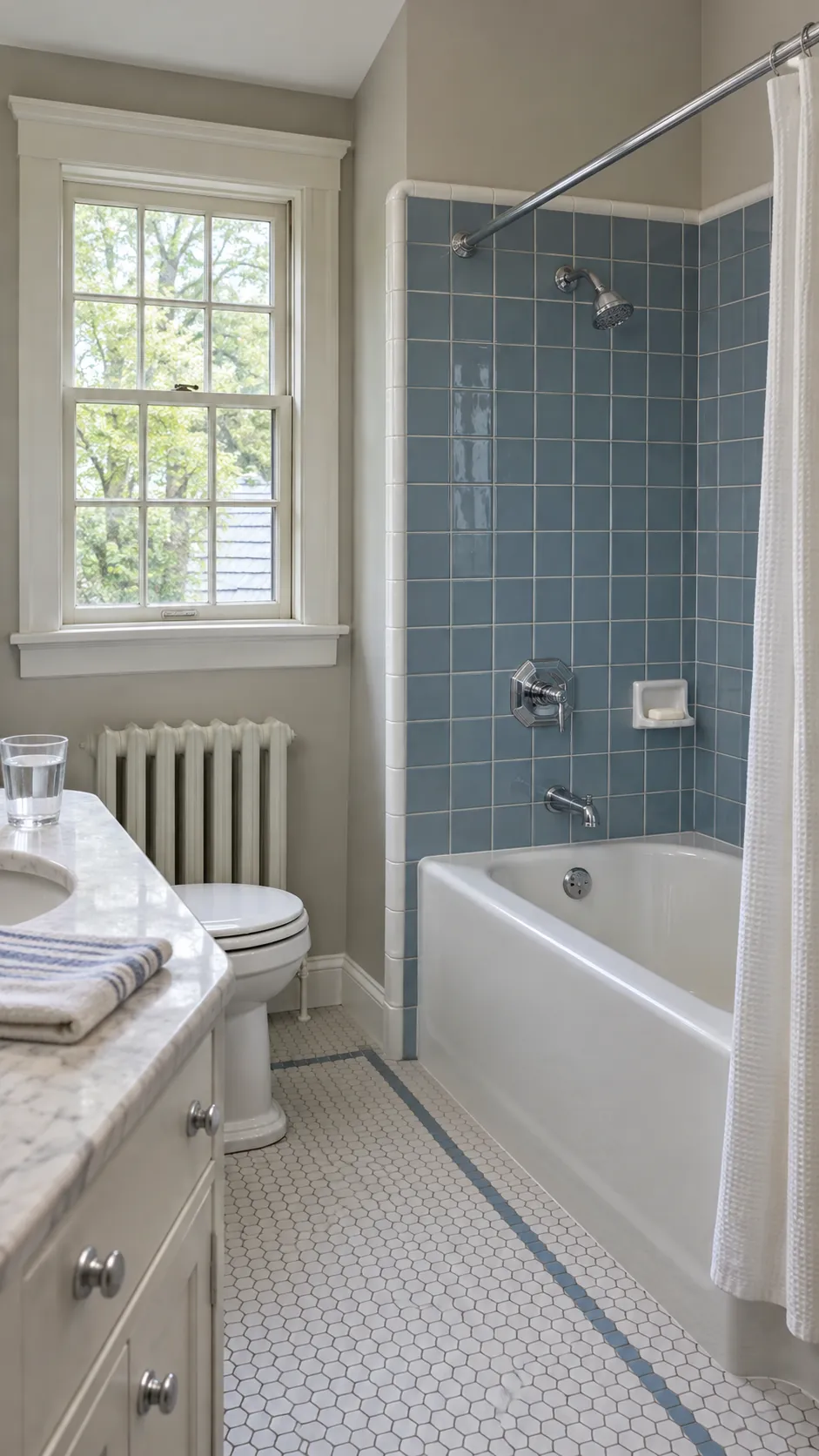
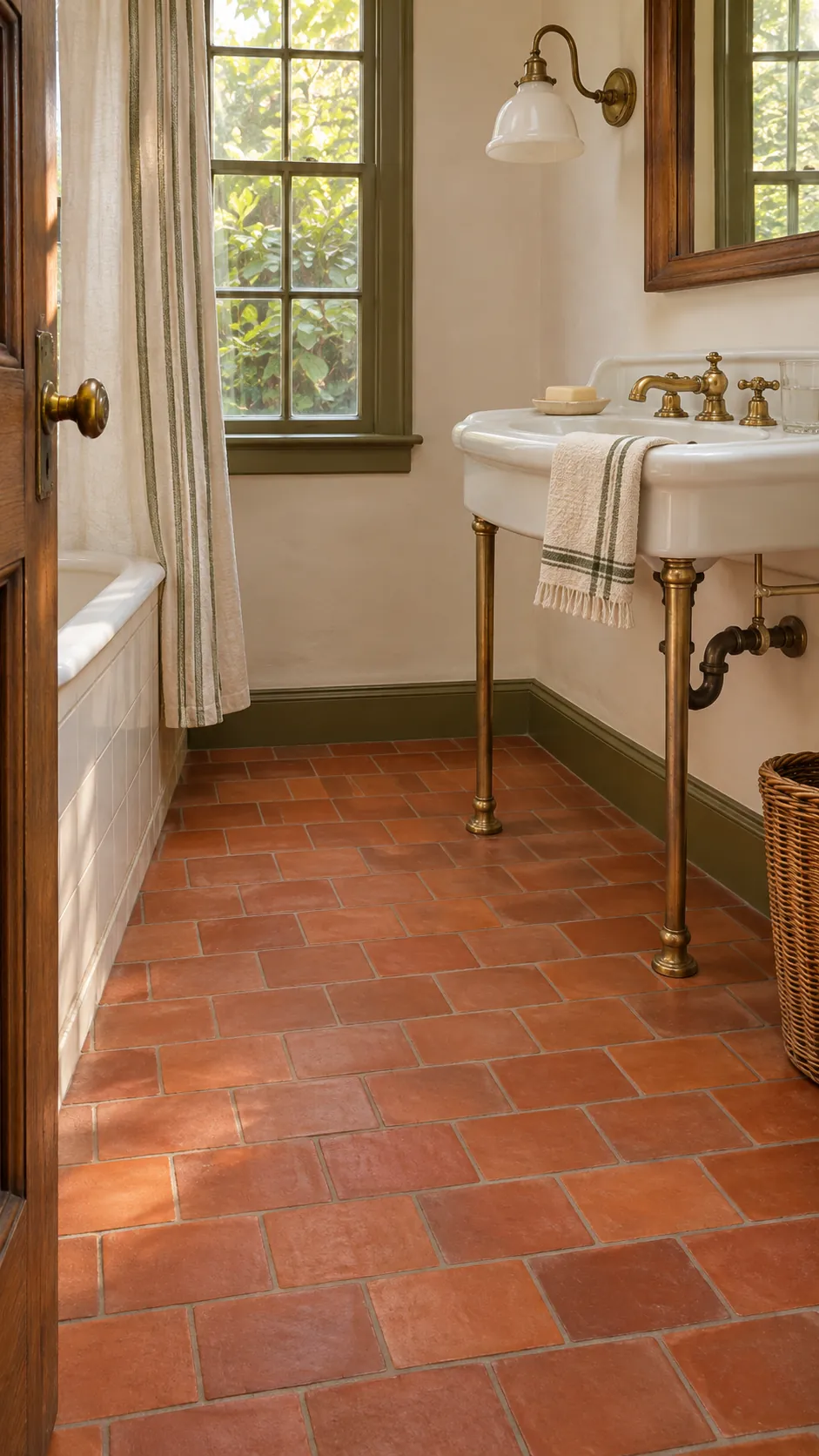
Terracotta Quarry Tile Floor
Terracotta brings an earthy note to a vintage cottage bathroom and hides everyday dust better than glossy tile. Seal it with a product approved for wet rooms and check slip performance before purchase. Lime colored walls and aged brass keep the palette grounded.
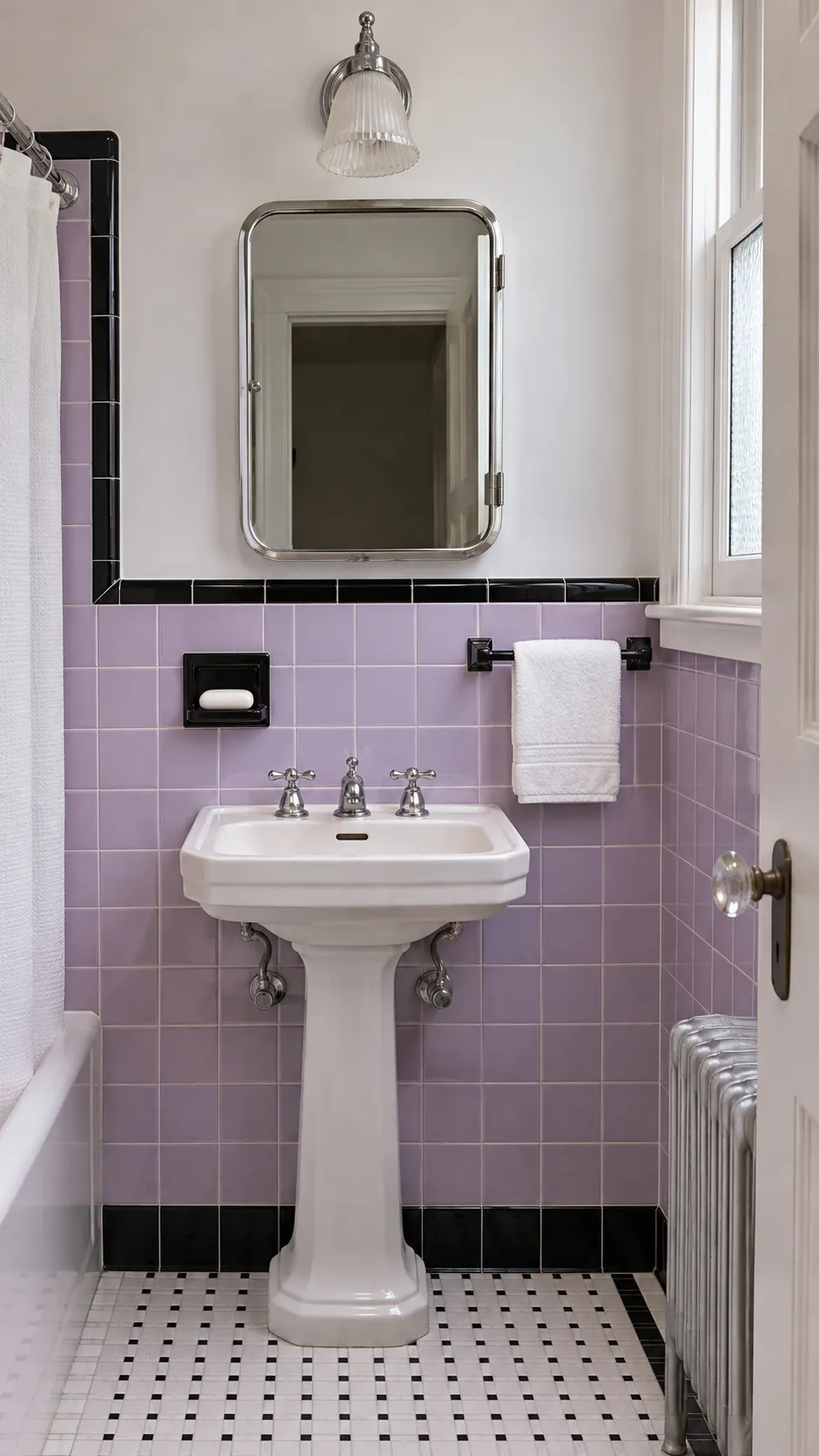
Lavender Tile With Black Accents
Lavender gains confidence from a precise black edge. Limit black to the trim, one fixture, and perhaps the mirror frame so the scheme does not feel theatrical. White porcelain provides enough breathing room for the unusual color.
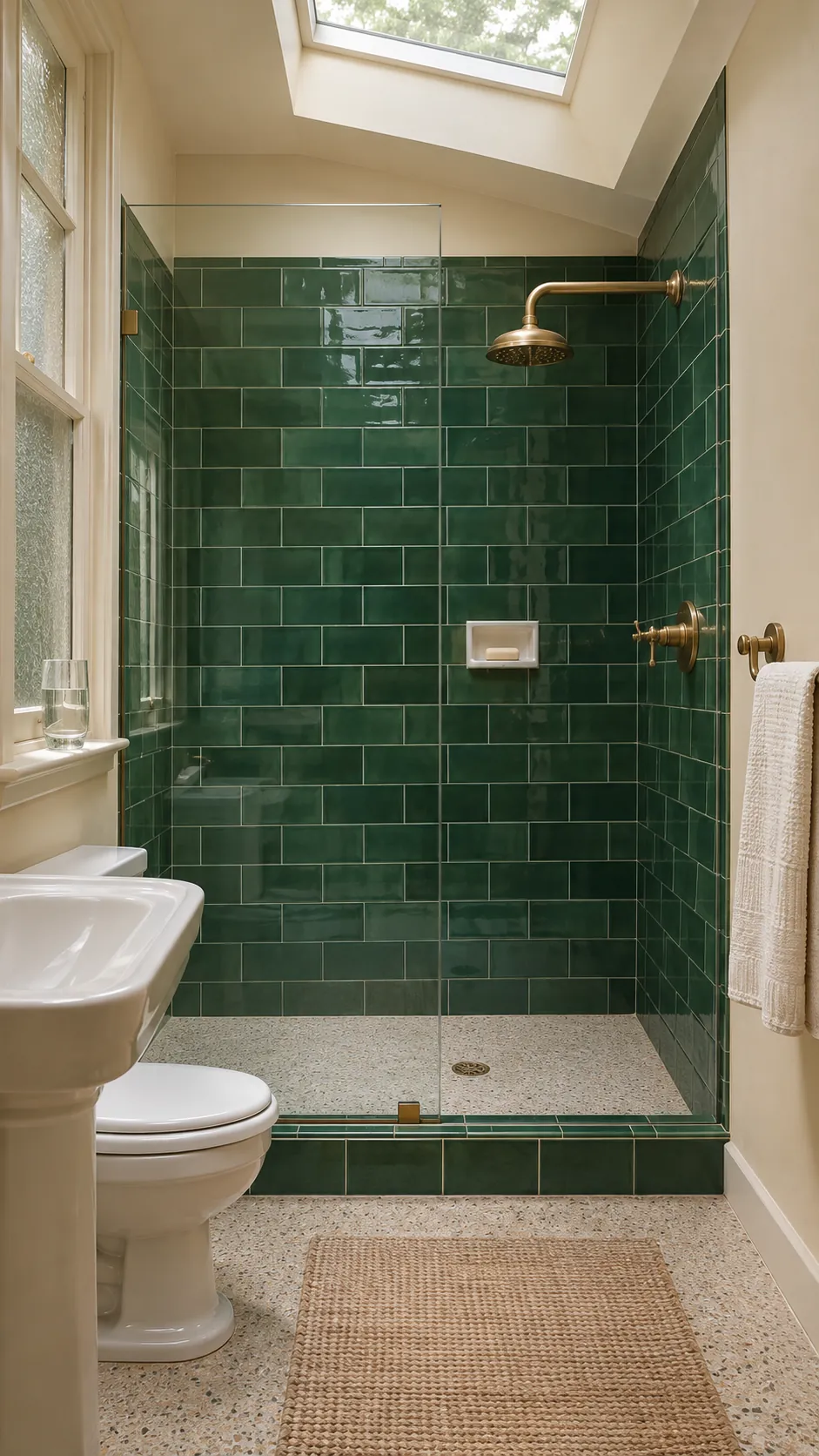
Jade Green Shower Tile
Deep jade tile turns a shower into a focused color zone. Use good ventilation and balanced lighting because dark glossy surfaces reveal water marks quickly. Cream outer walls and a pale floor prevent the enclosure from shrinking the whole room.
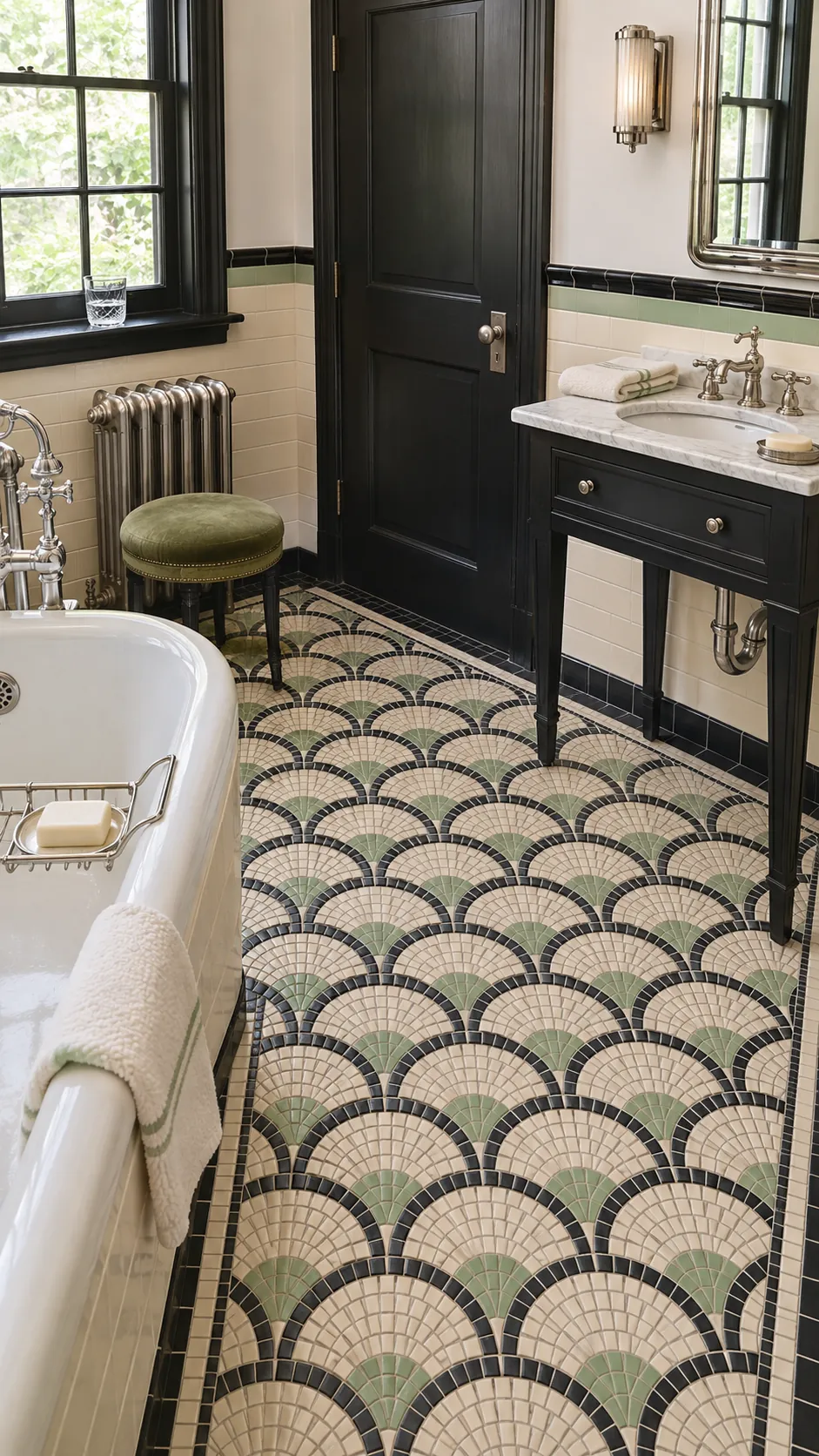
Art Deco Fan Mosaic
A fan mosaic suits a 1920s bathroom remodel when the curves remain disciplined. Repeat one green tone in the vanity and keep metal finishes consistent. Lay out the pattern from the room center before cutting so the border finishes evenly.
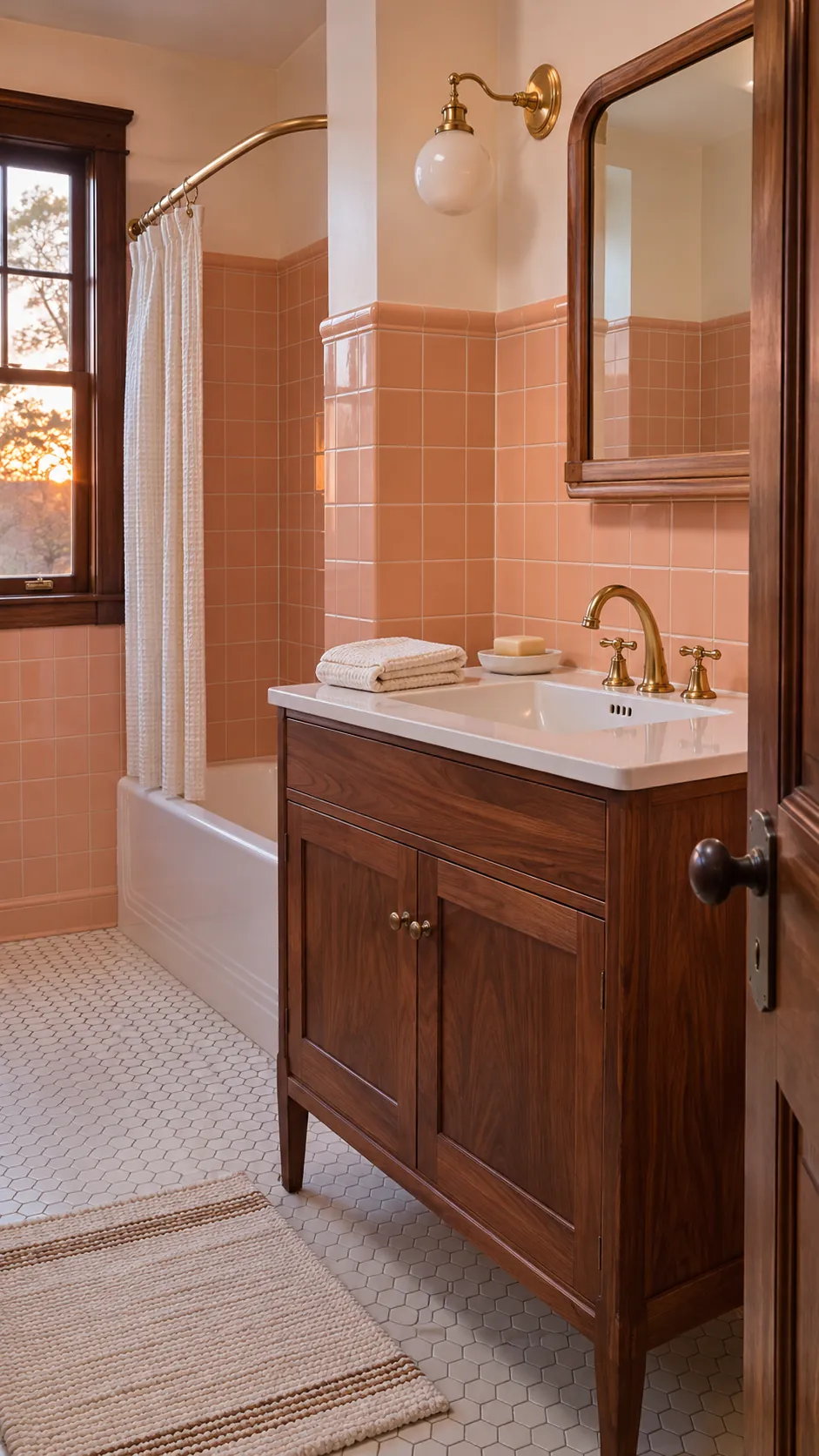
Peach Tile And Walnut Vanity
Peach tile looks sophisticated beside real walnut because the wood supplies contrast and age. Use a white basin to separate the two warm surfaces. Brass can support the palette, but a limited number of fittings keeps it from looking overly coordinated.
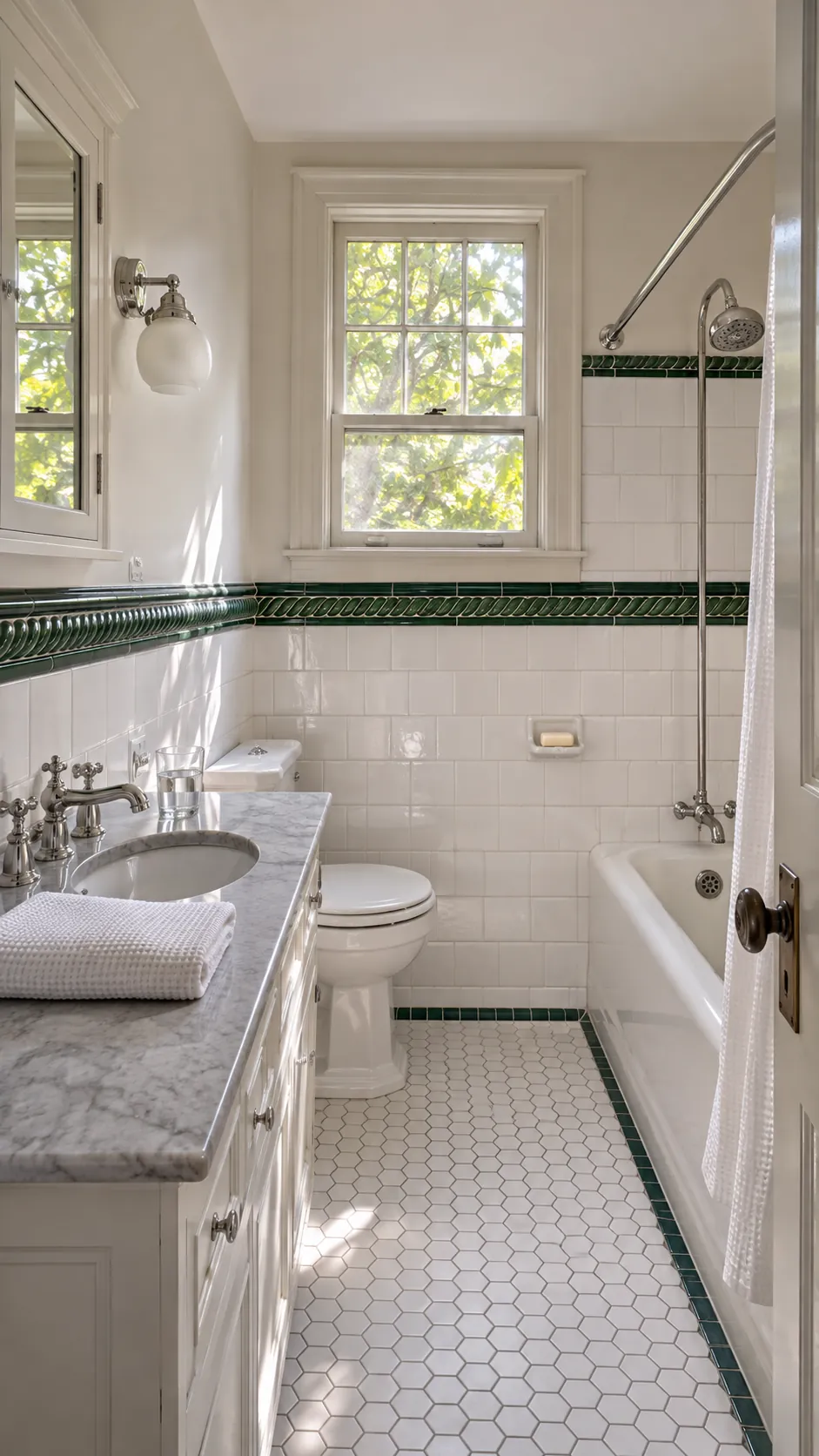
White Tile With Green Rope Border
A molded rope border gives plain white tile a tactile traditional bathroom detail. Follow the room perimeter without unnecessary breaks, and plan corners before installation. Forest green paint on a small cabinet can connect the trim to the rest of the room.
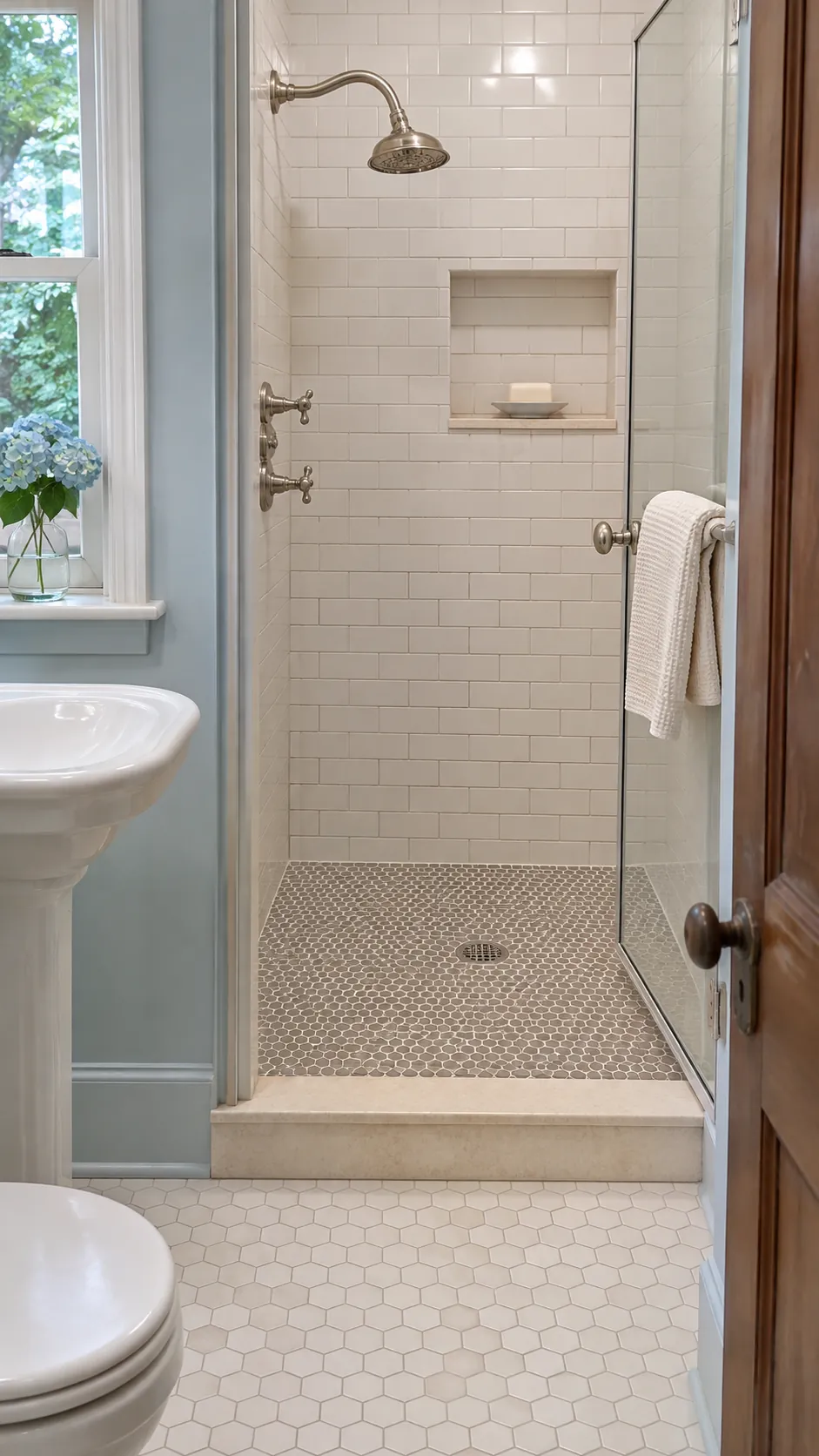
Penny Tile In Warm Gray
Penny tile conforms well to shower slopes and provides many grout joints for traction. Warm gray avoids the harshness of black while still showing the circular pattern. Maintain the grout and waterproofing carefully because the small format creates many joints.
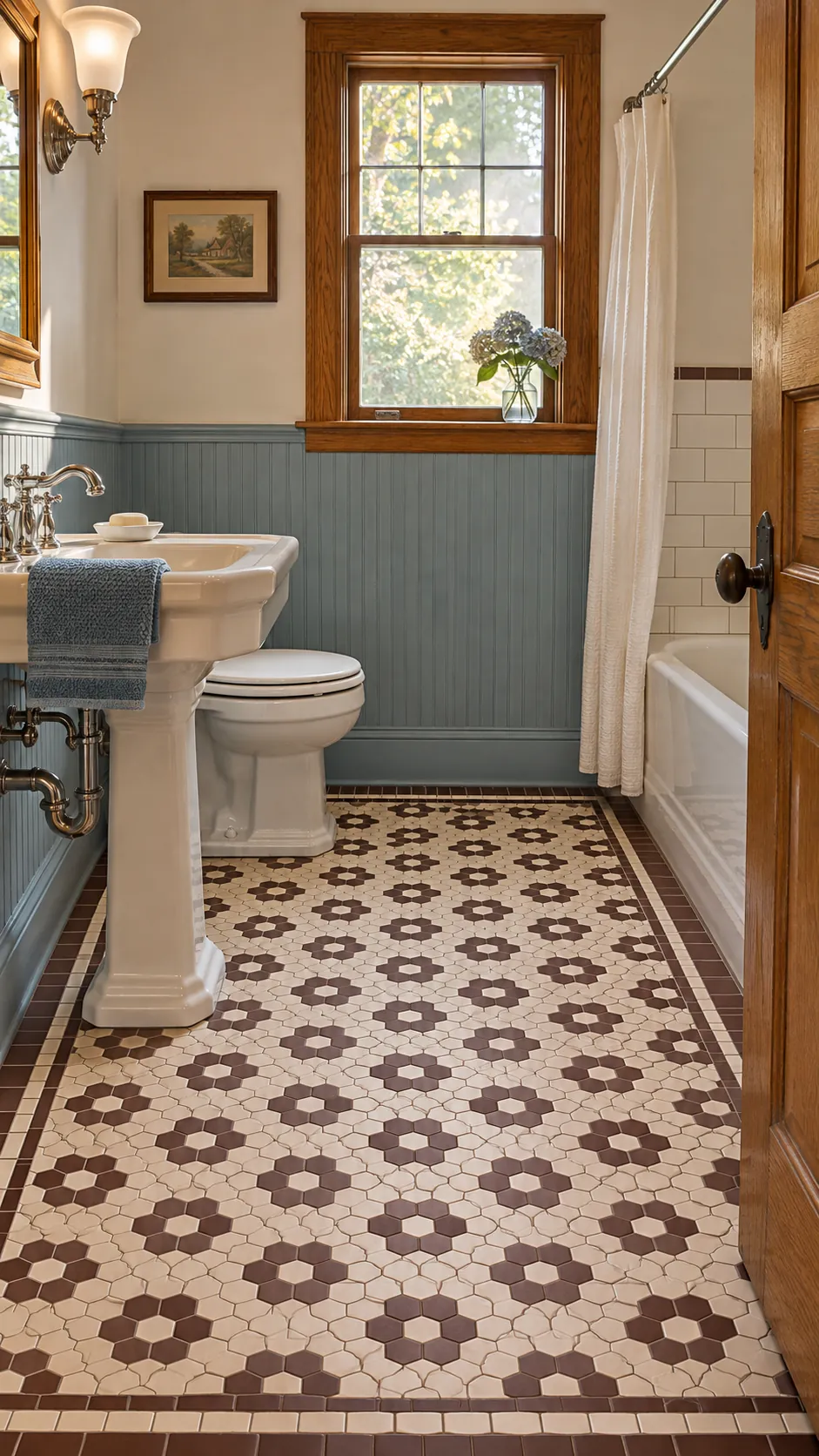
Brown And Cream Geometric Floor
Cocoa and cream make a geometric floor feel gentle enough for daily use. Beadboard above the wet zones adds cottage character without competing with the mosaic. A muted blue towel offers contrast that does not disturb the period mood.
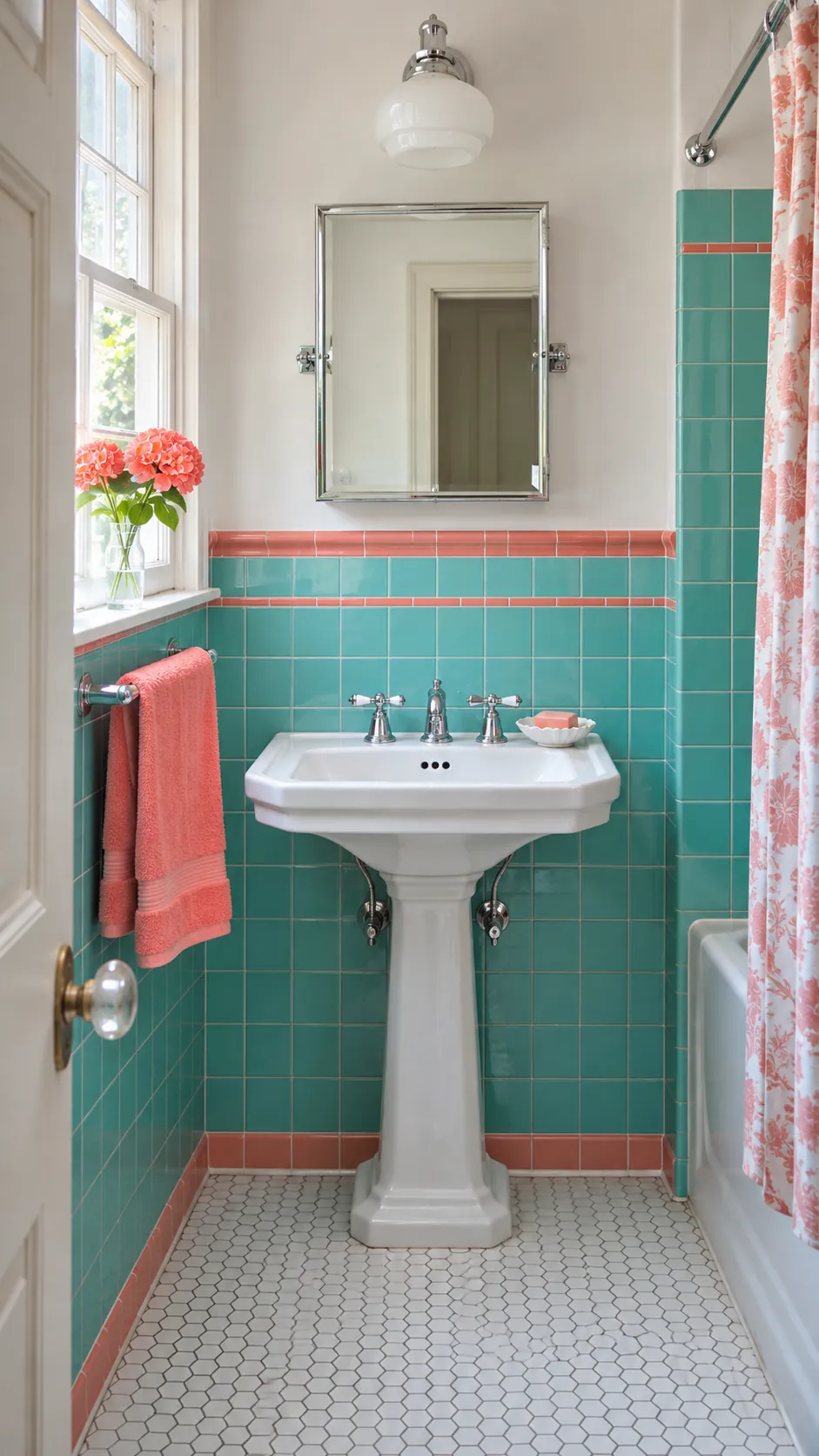
Turquoise Tile With Coral Details
Turquoise already carries strong personality, so one coral textile is enough to make it feel fresh. Keep fixed fixtures white and avoid introducing another saturated tile. This is a practical way to update vintage bathroom inspiration without removing sound material.
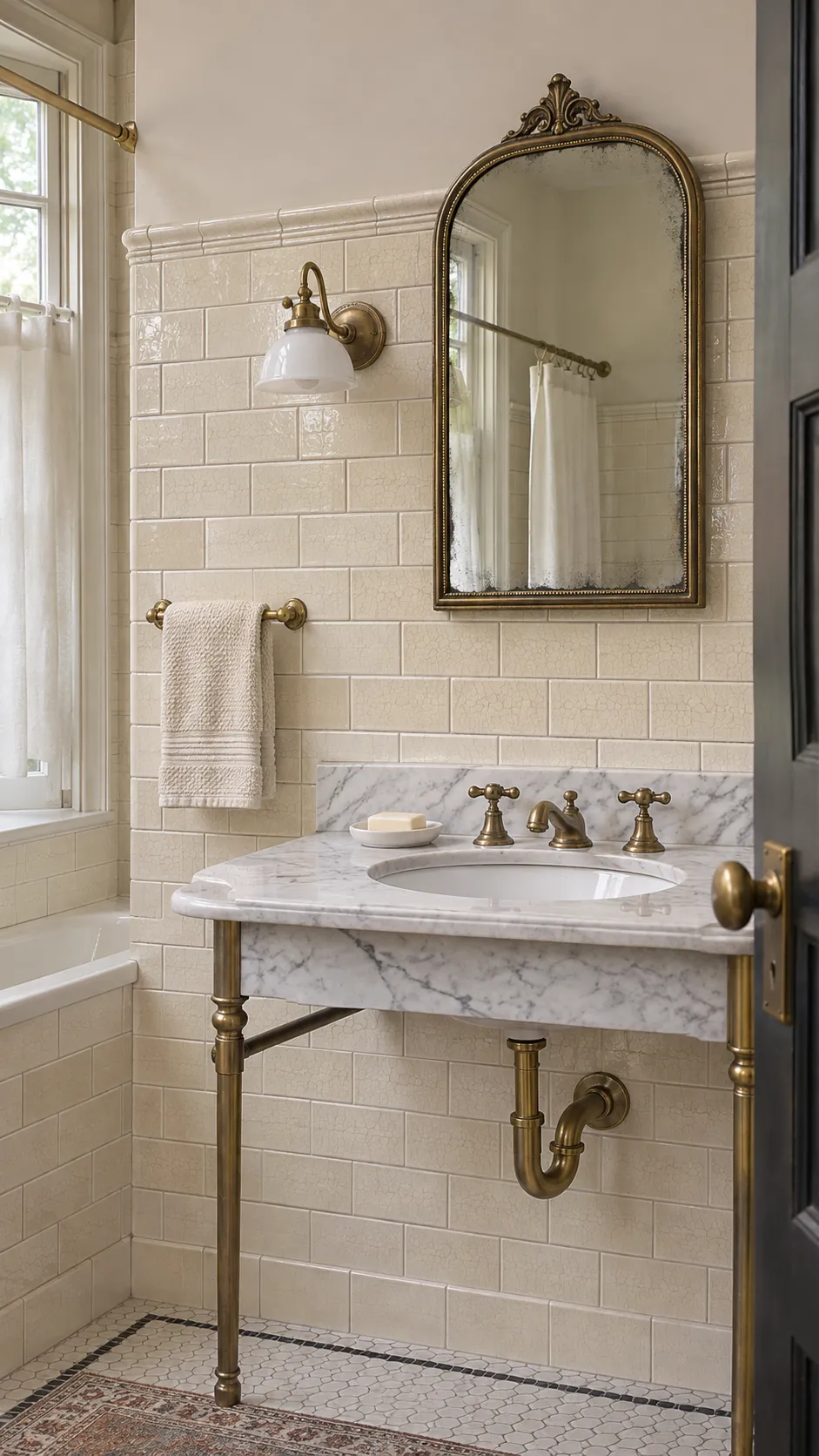
Crackle Glaze Ivory Tile
Crackle glaze adds quiet age through surface variation rather than strong color. Confirm that the selected product and sealer are approved for the intended wet area. An aged mirror and marble ledge continue the patina while remaining useful.
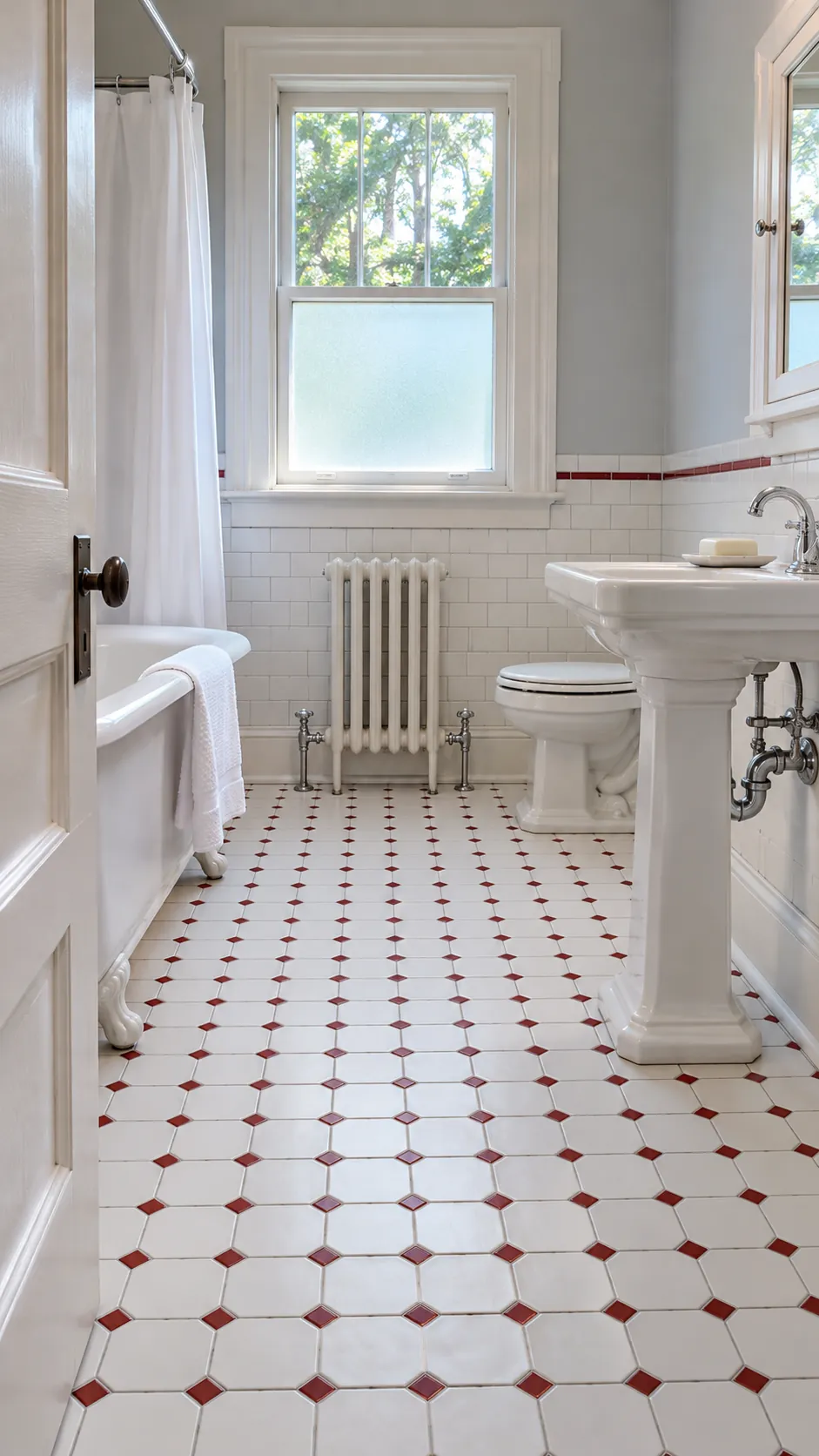
Red And White Octagon Dot Floor
Small red dots give a white octagon floor a lively but controlled rhythm. Brick red feels easier to live with than a bright primary shade. Pick up the color in one painted detail and leave the walls soft gray or cream.
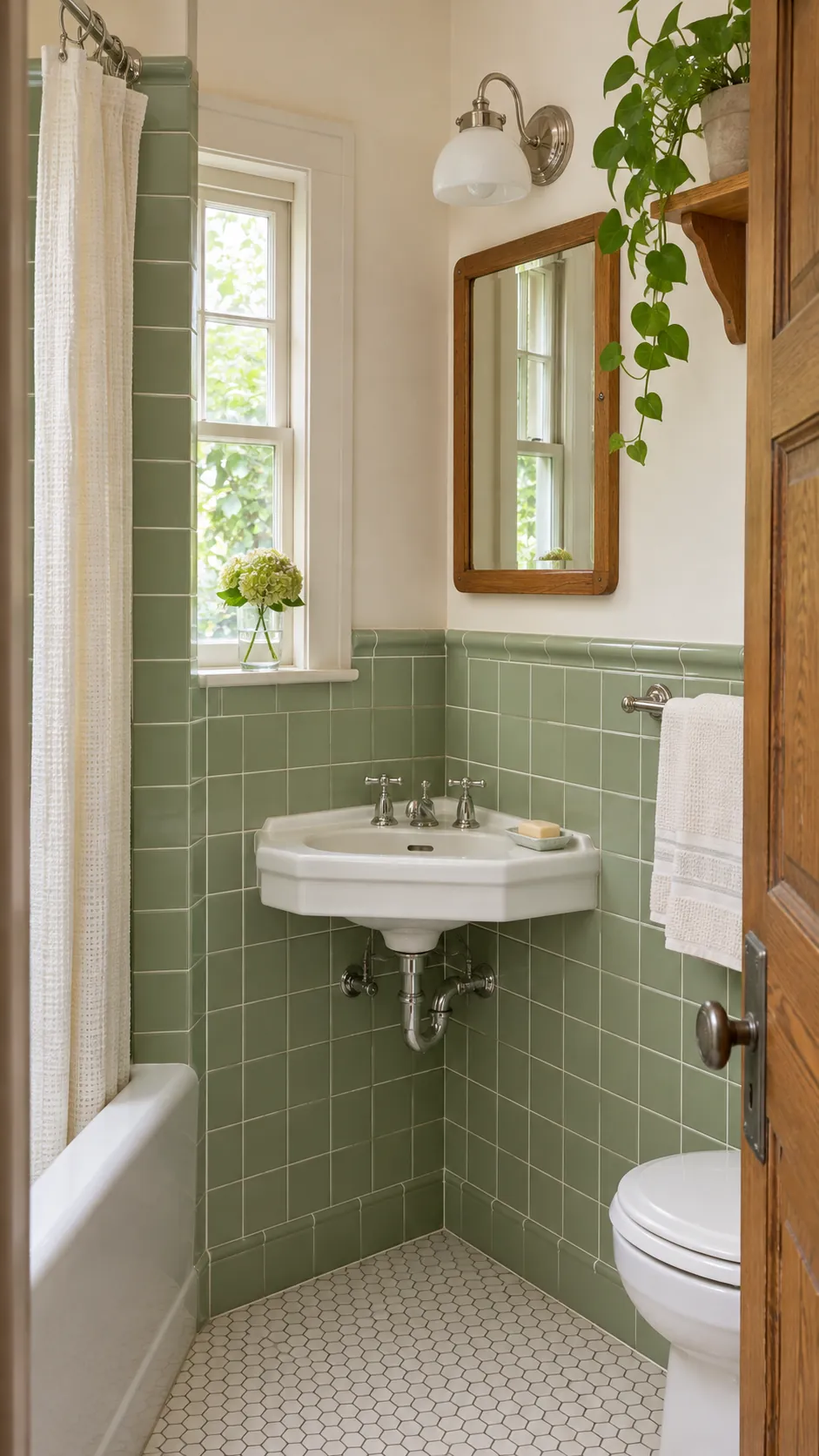
Sage Tile Around A Corner Sink
A corner sink can free a useful path in a very small vintage bathroom. Wrapping sage tile around the corner makes the solution feel built in rather than improvised. Add a shallow oak shelf only where it will not interfere with shoulder space.
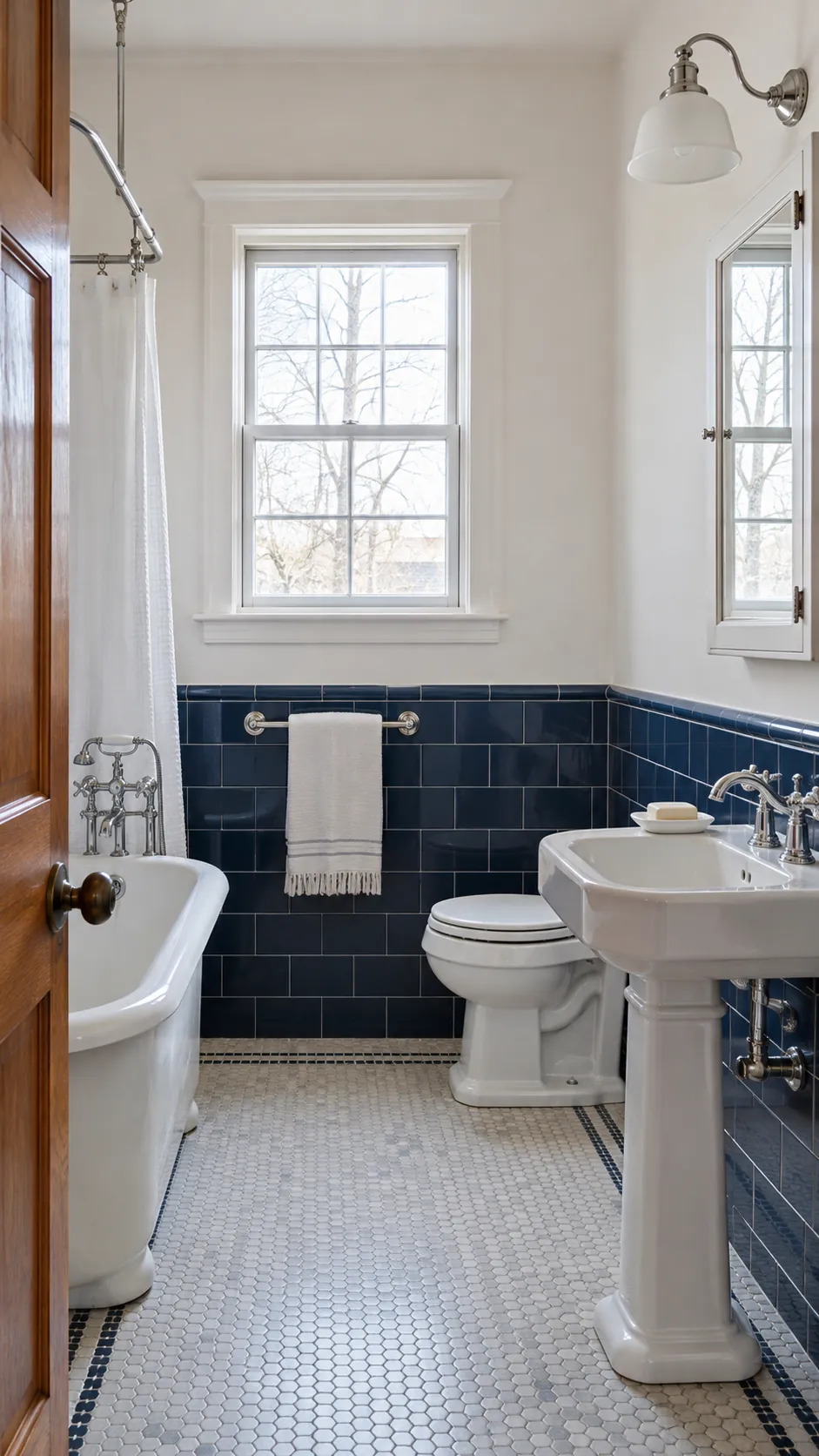
Navy Tile Base With White Walls
Keeping navy low on the wall gives the room a stable base while preserving light near the face and mirror. A slim cap creates a clean stopping point. This arrangement works well when full height dark tile would make the room feel compressed.
Restored Original Mixed Tile
Good original tile deserves assessment before demolition. Repair loose areas, correct moisture problems, and use matched replacement pieces only after a qualified professional confirms the assembly can be saved. Slight color variation in honest repairs often looks better than a complete imitation of age.