
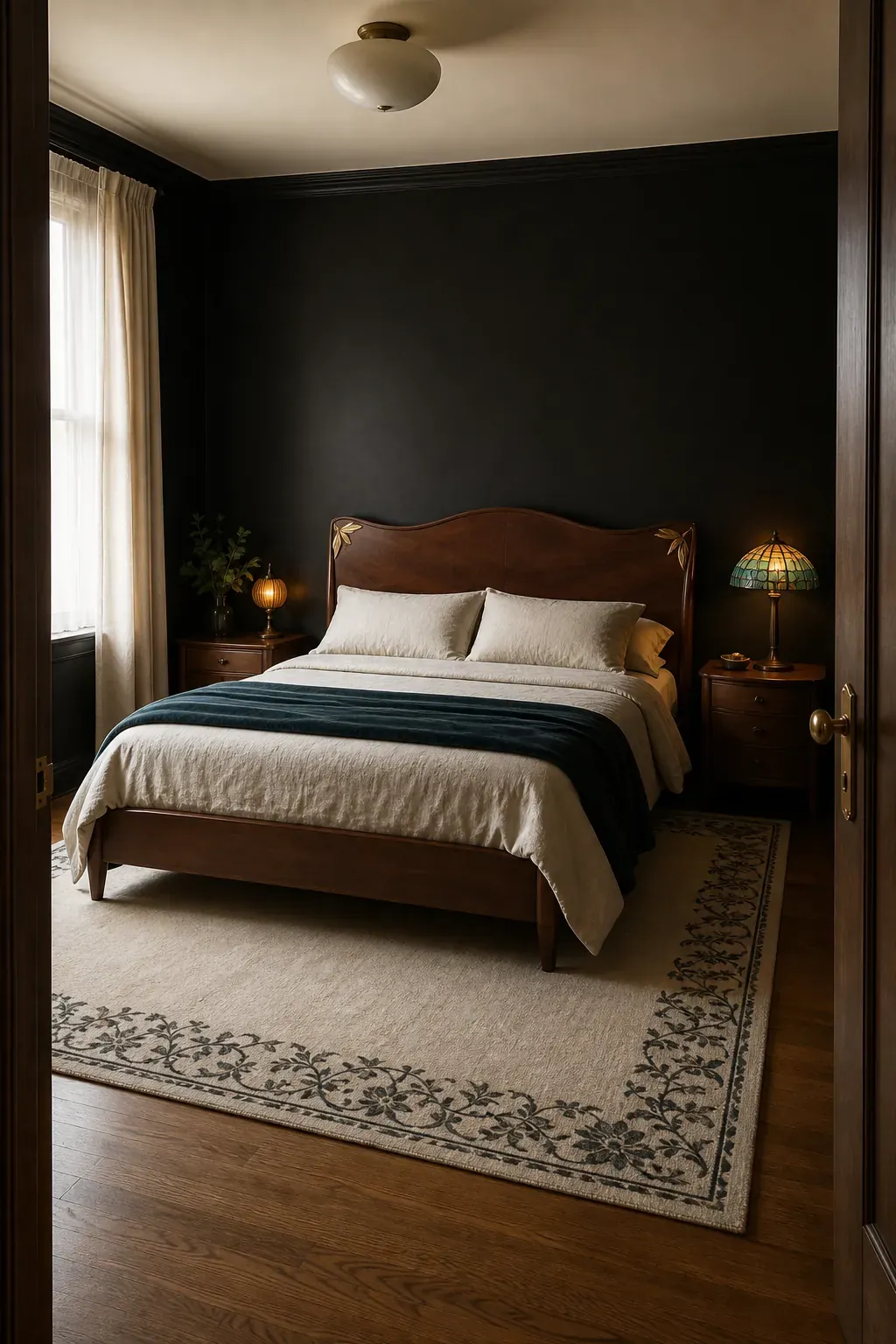
A black nouveau bedroom should feel like a sleeping space shaped by nature, not a black box filled with ornate objects. The most convincing rooms pair dark depth with flowing lines, asymmetrical botanical motifs, curved furniture, aged metal, colored glass, and soft textile relief.
These ideas range from paint and wallpaper to renter-friendly details. Each one adds a different layer, so choose a few that share the same material and color story instead of using every motif at once.
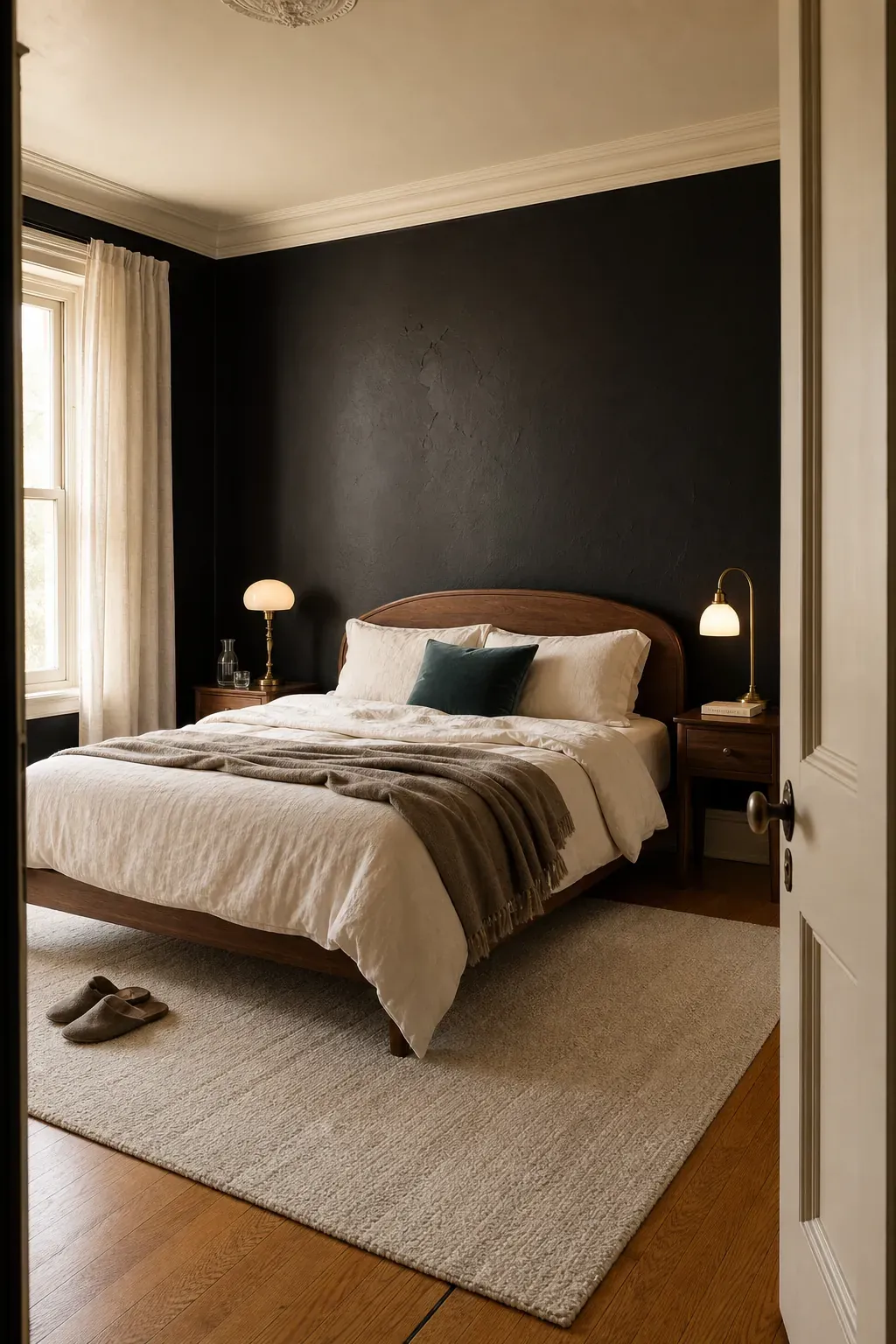
Inky walls with a cream ceiling
Paint the walls a softened ink black, then keep the ceiling, trim, and bedding warm cream. The pale upper plane reflects light while the dark walls create intimacy. Choose a black with brown, blue, or green undertones that relates to the room’s wood and textiles.
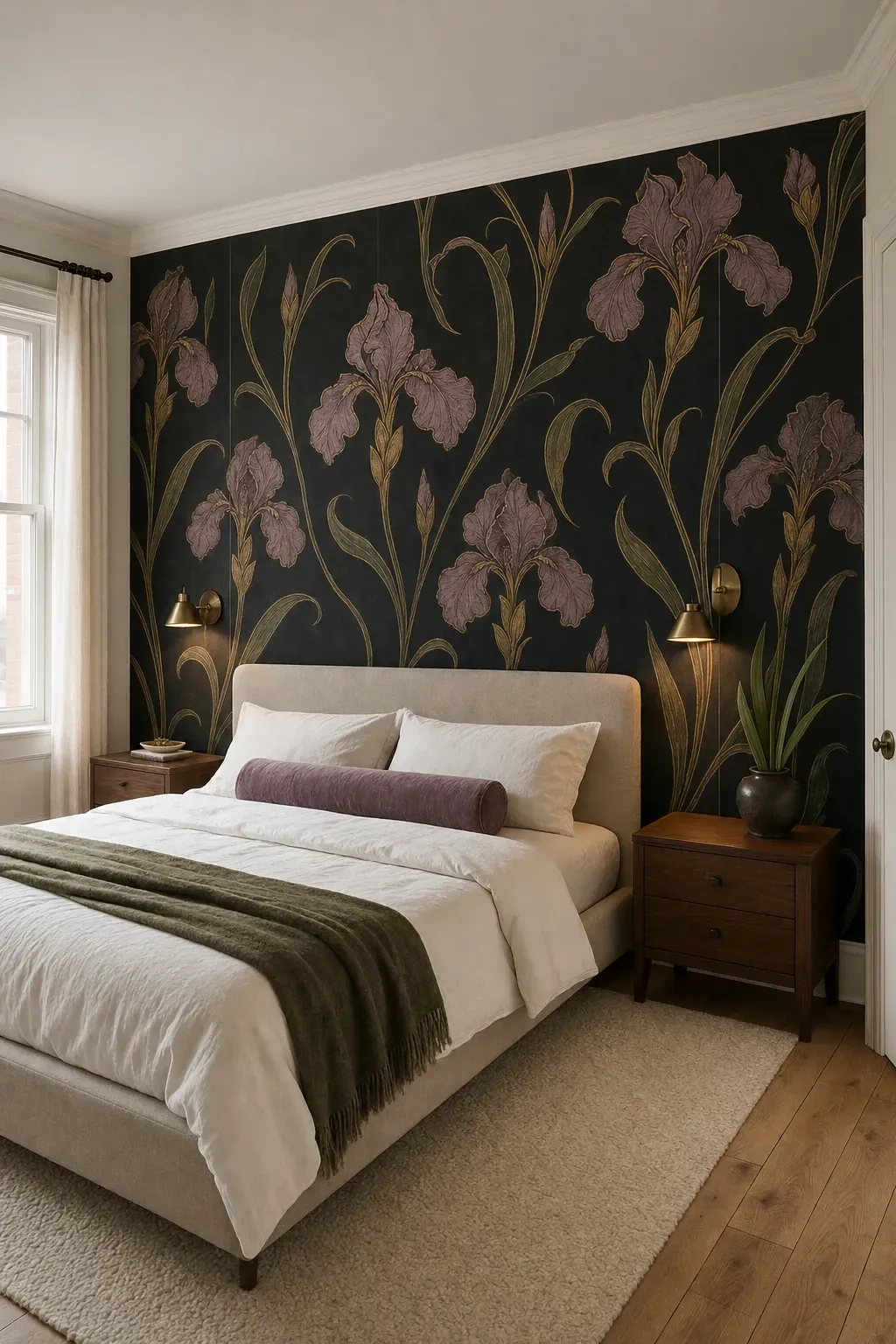
Black iris wallpaper behind the bed
Use one wallpapered headboard wall with tall, winding iris stems on a black ground. Keep the remaining walls quiet and repeat only one flower color in the bedding. A large-scale botanical feels more authentically nouveau than a tiny allover floral.
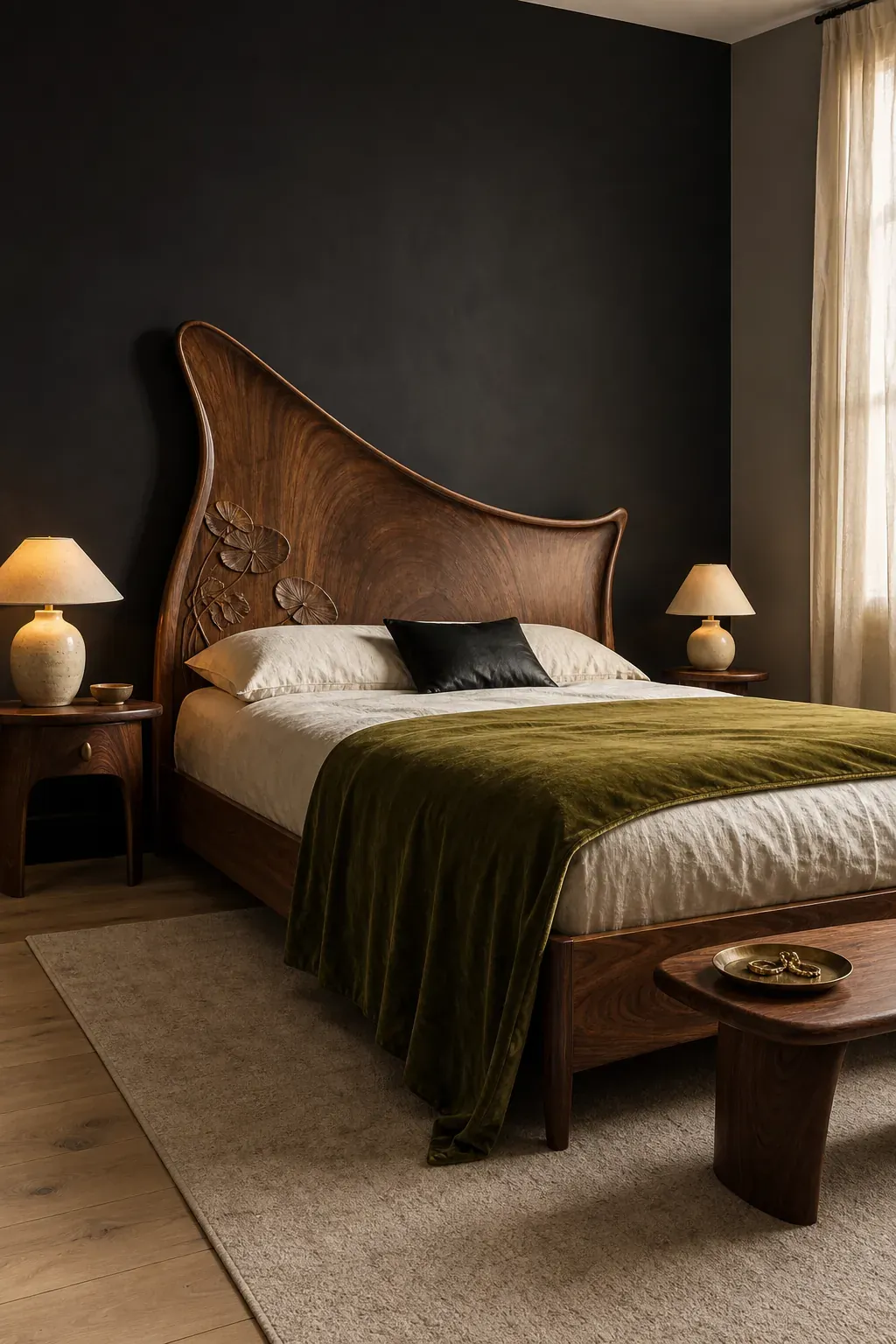
A curved walnut headboard
Let furniture introduce the movement. A walnut headboard with an asymmetrical arch or carved stem-like edge warms black walls and creates a focal line without pattern. Pair it with plain bedding so the silhouette remains visible.
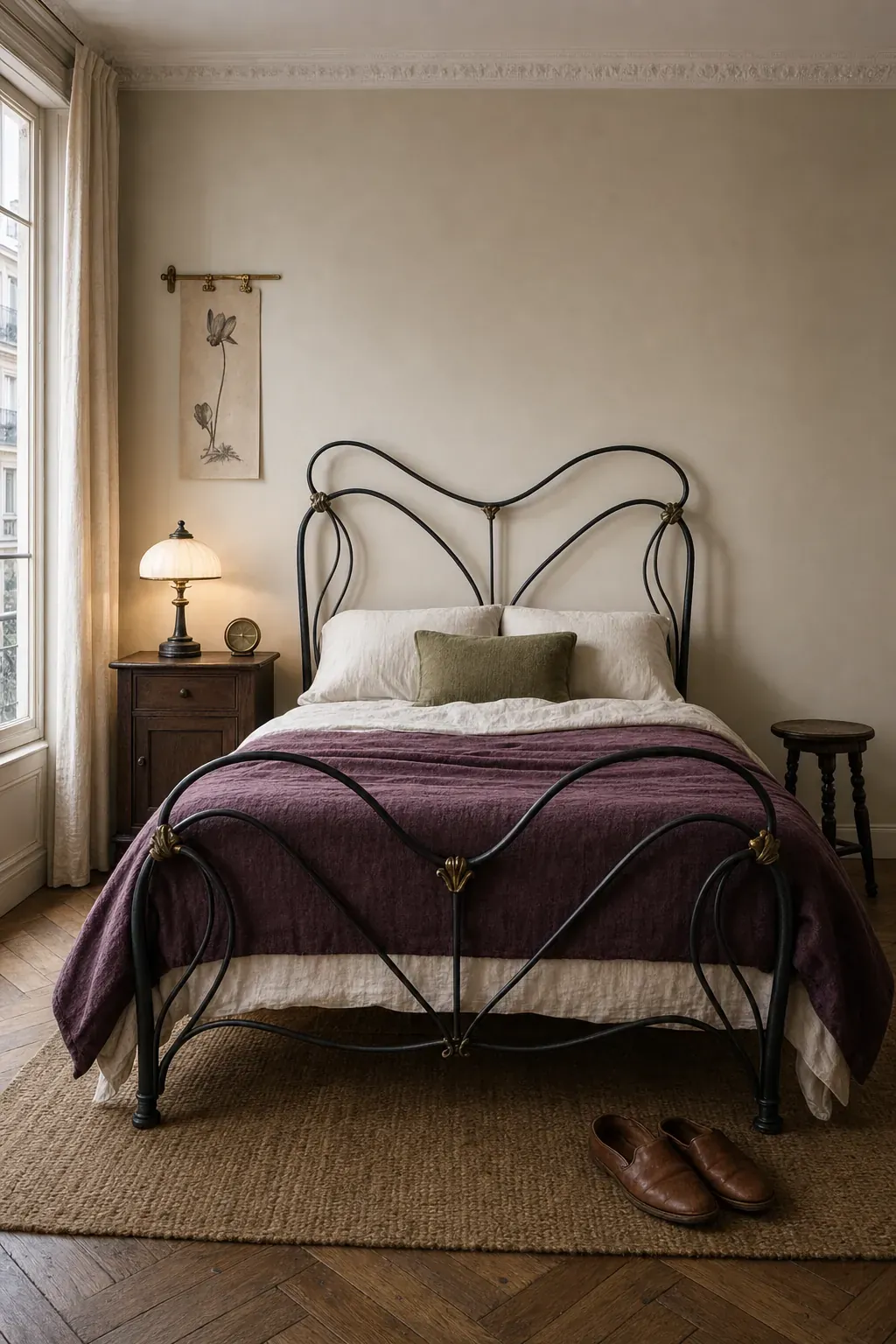
A whiplash-curve iron bed
A wrought-iron frame with long S-shaped lines gives a black nouveau interior its signature rhythm. Avoid dense Victorian scrollwork; the strongest design has open space around a few graceful curves. Warm the metal with linen, velvet, and wood.
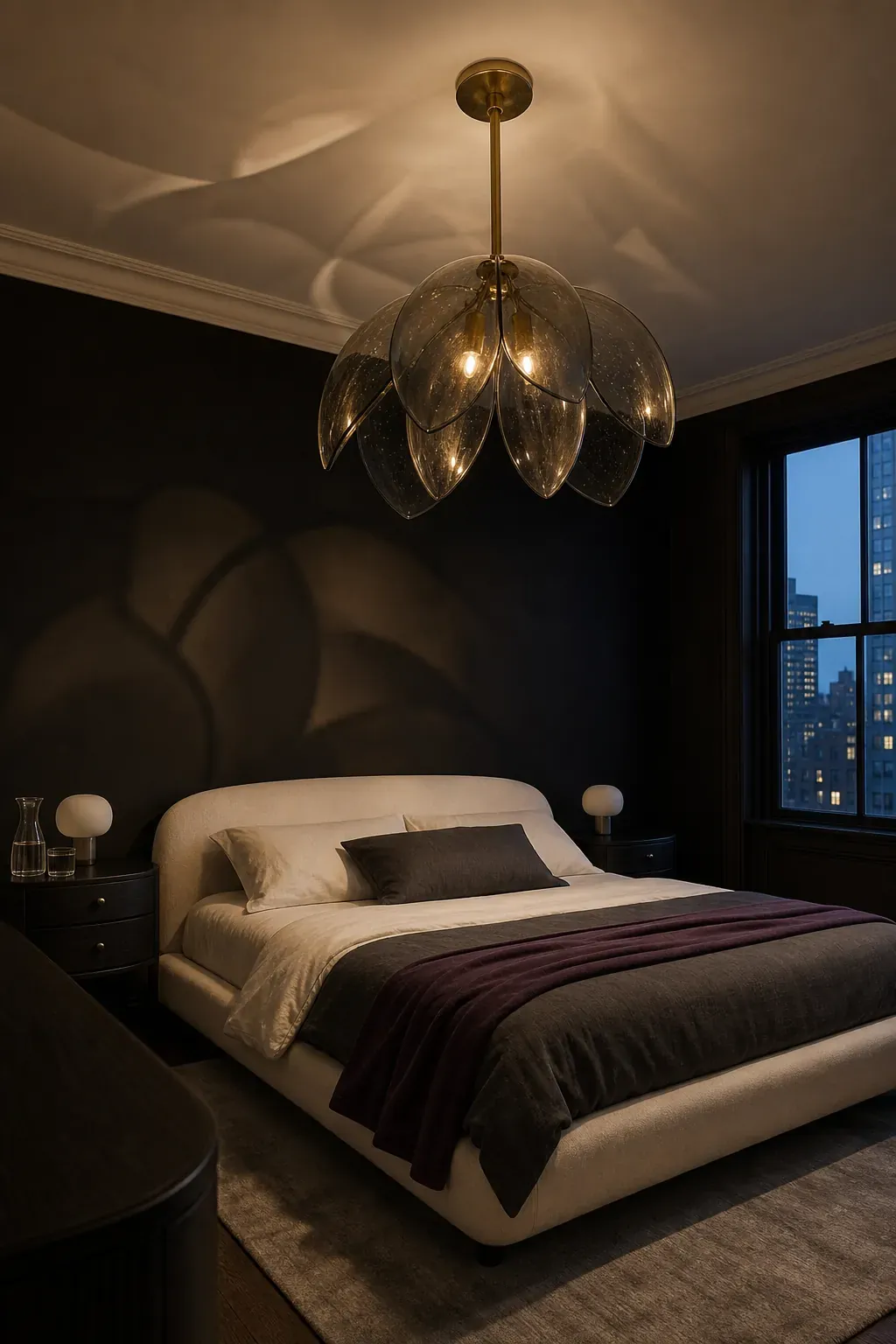
A smoked-glass pendant with petal lines
Replace a generic ceiling fixture with smoked glass shaped like overlapping petals. The translucent surface keeps the room from feeling heavy and throws a softer pool of light than opaque black metal.
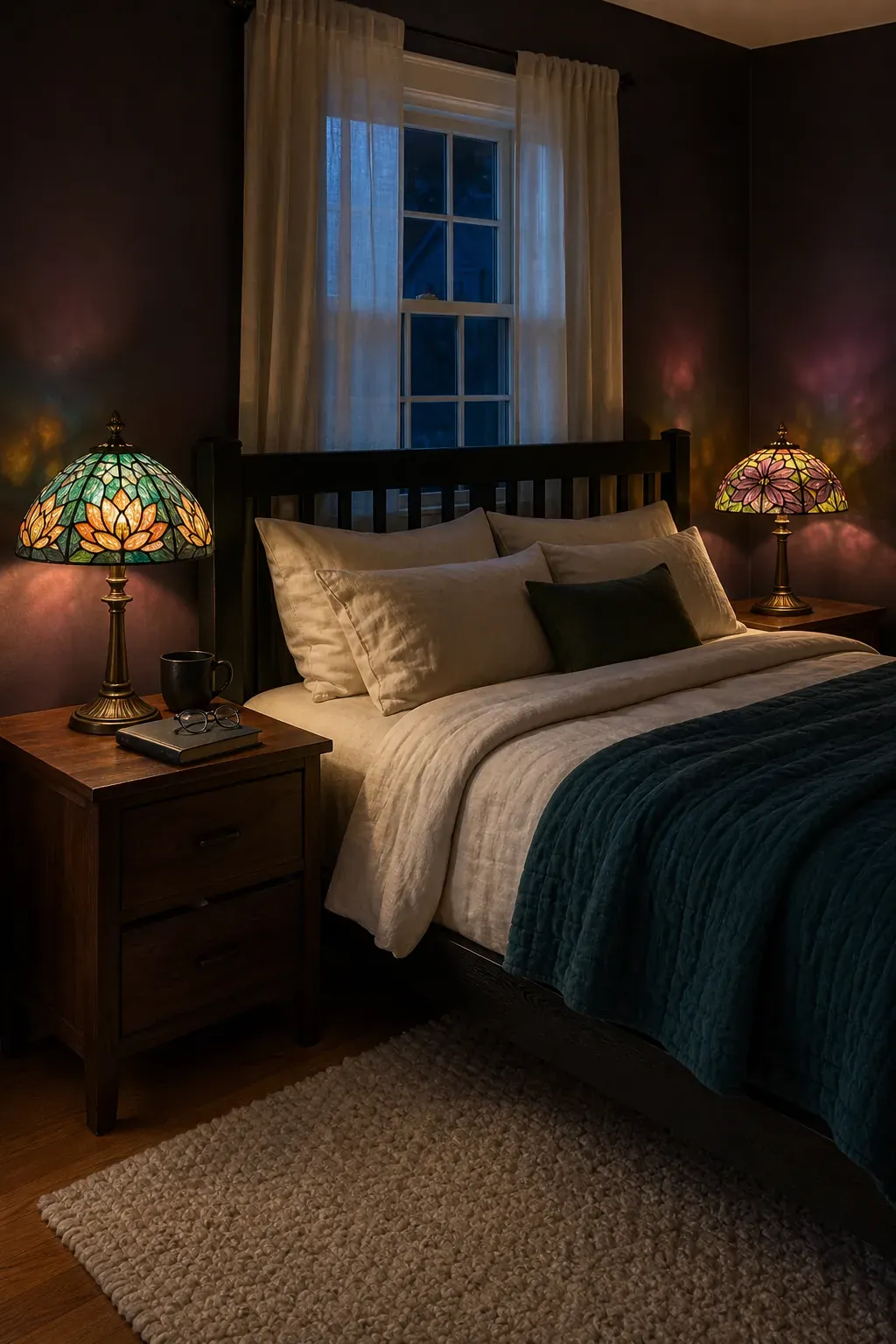
Jewel-toned glass bedside lamps
Small stained-glass lamps bring color close to the bed without brightening every surface. Look for leaf, dragonfly, or water-lily geometry in teal, amber, and plum. Keep the lamps low-wattage and let cream shades or glass segments glow rather than glare.
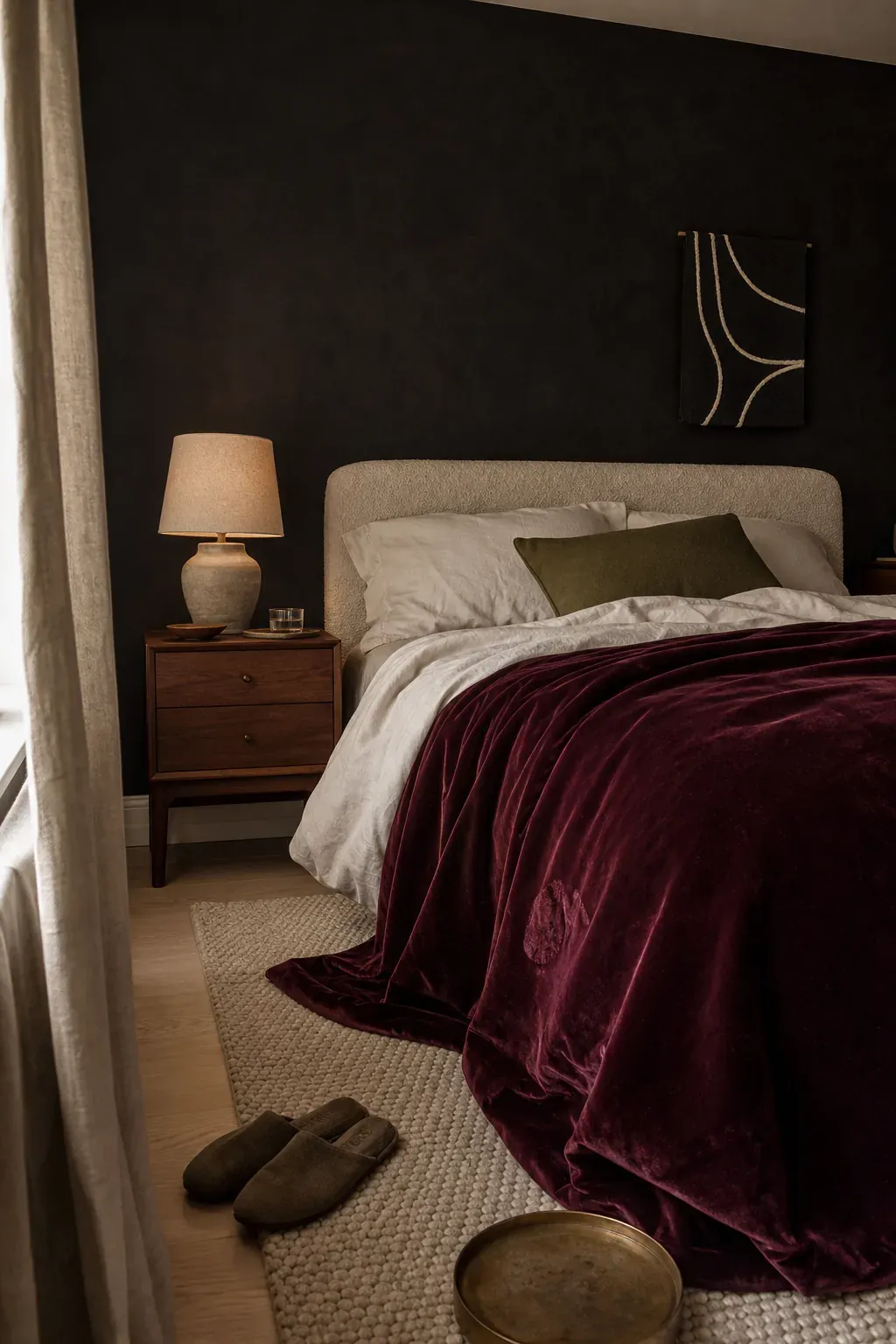
Oxblood velvet on the bed
A single oxblood velvet coverlet adds romantic depth against black without becoming bright red. Balance the heavy nap with rumpled ivory linen and a little warm wood. One expansive textile reads more sophisticated than several matching red accessories.
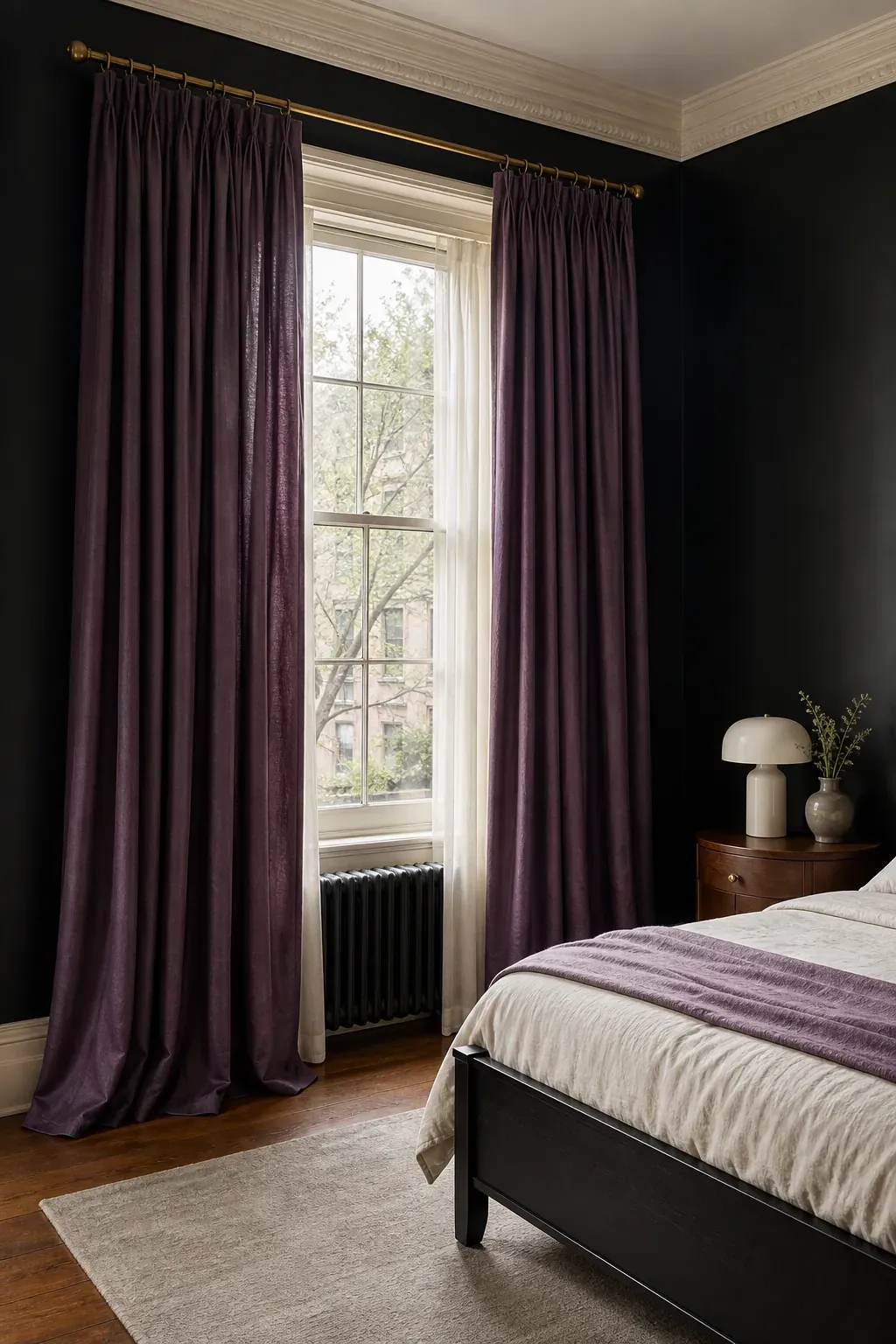
Plum curtains with a soft sheen
Deep plum curtains soften black walls and look different as daylight moves across them. Choose lined silk, linen-silk, or a matte velvet with enough body to form long curves. Hang them high and wide so the window does not shrink visually.
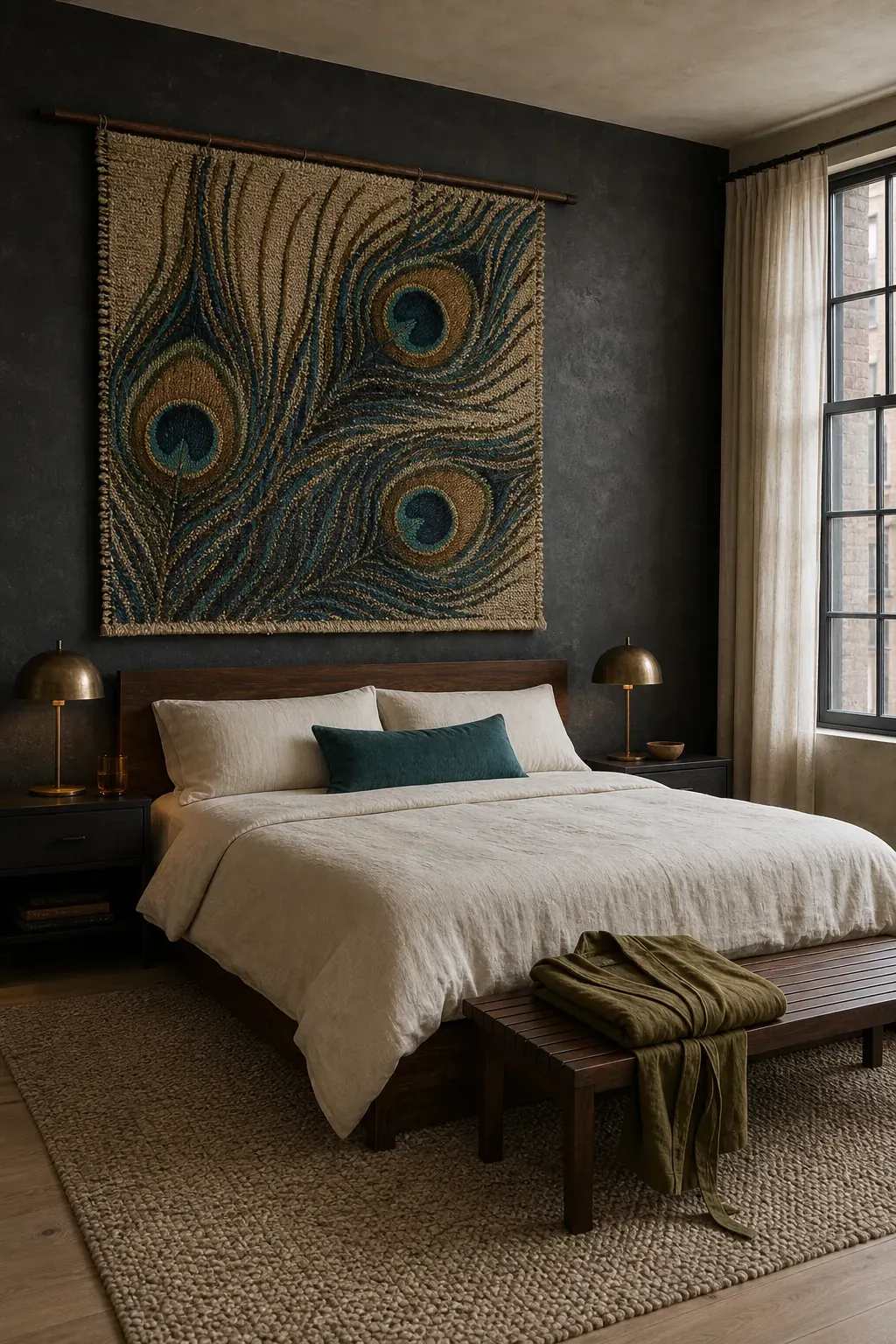
A peacock-feather textile panel
Use the peacock motif once, in a woven or embroidered panel with teal, bronze, and muted sapphire eyes. The feather’s natural curve suits the style, but restraint prevents the bedroom from becoming themed.
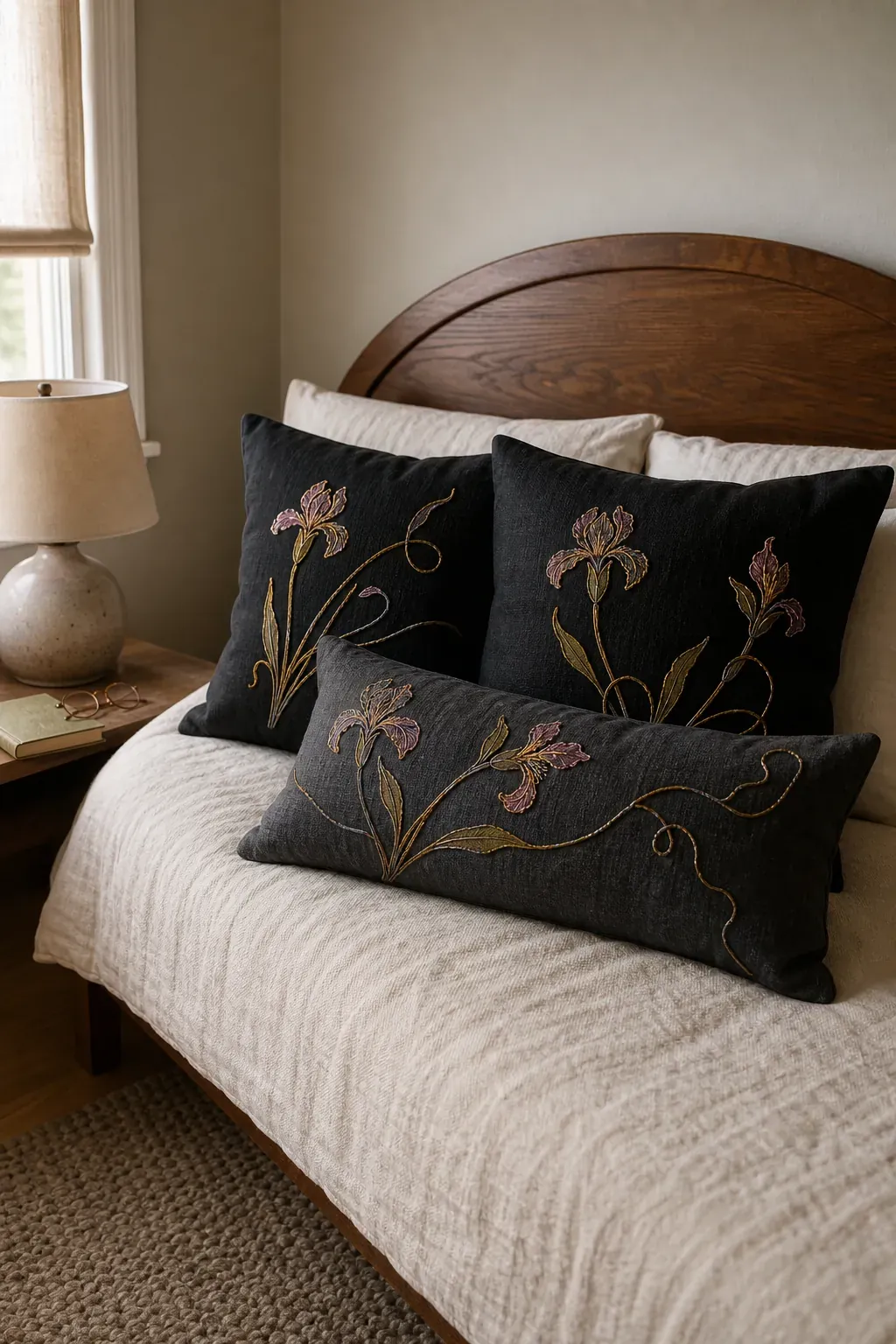
Iris embroidery on black linen pillows
Black linen pillows embroidered with winding iris stems add botanical detail at a touchable scale. Limit the palette to old gold, dusty mauve, and olive, then keep the duvet plain so the stitched lines can breathe.
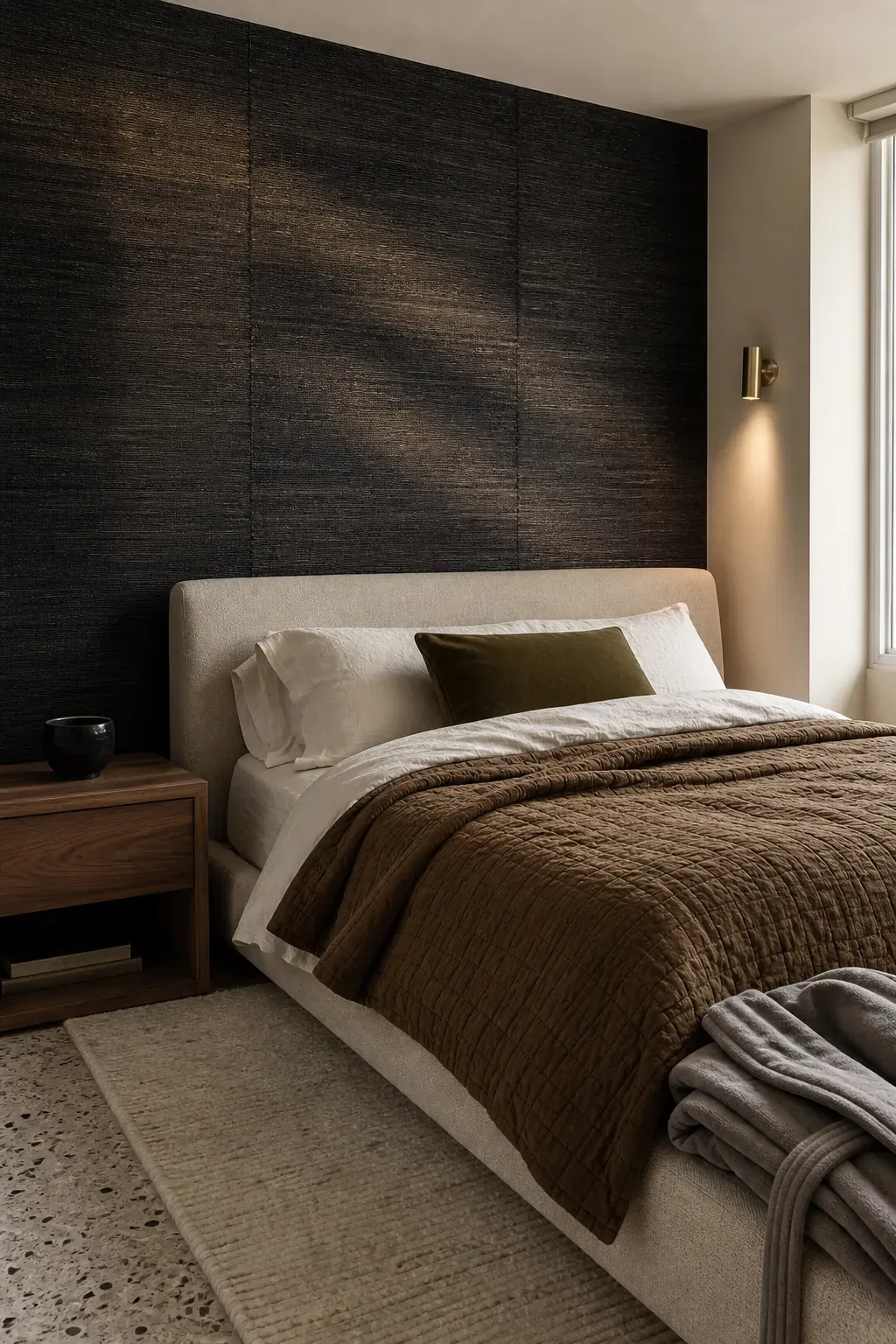
Black grasscloth for tactile depth
Black grasscloth changes tone along every fiber, giving a dark wall depth that flat paint cannot. Use it behind the bed or inside a shallow alcove, where grazing light can reveal the weave. Keep lamps several inches away from the delicate surface.
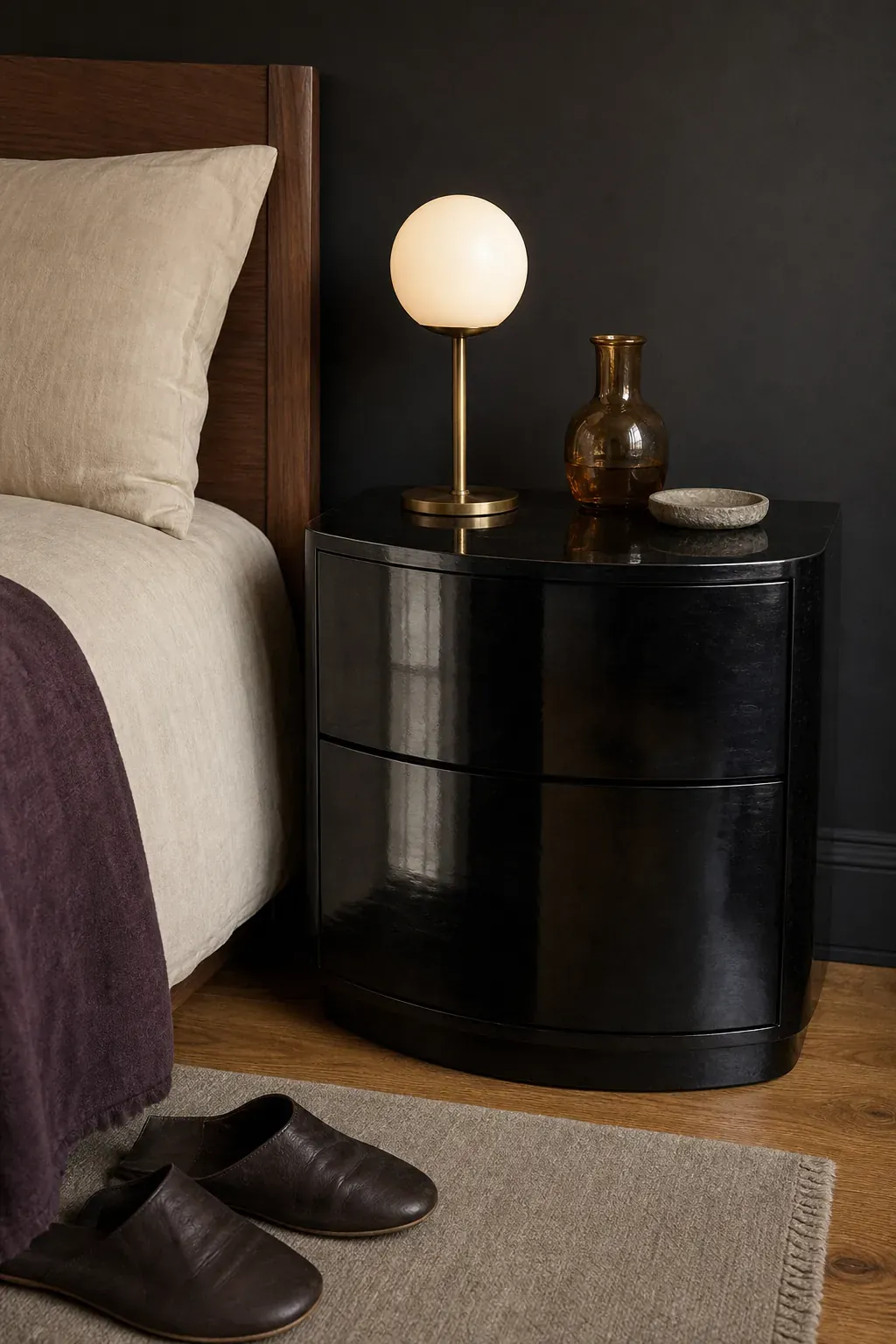
A lacquered black nightstand
One lacquered nightstand introduces a controlled reflection among matte walls and textiles. Choose a piece with curved corners or a bowed front, then keep its top spare. Too many glossy black surfaces turn restful drama into glare.
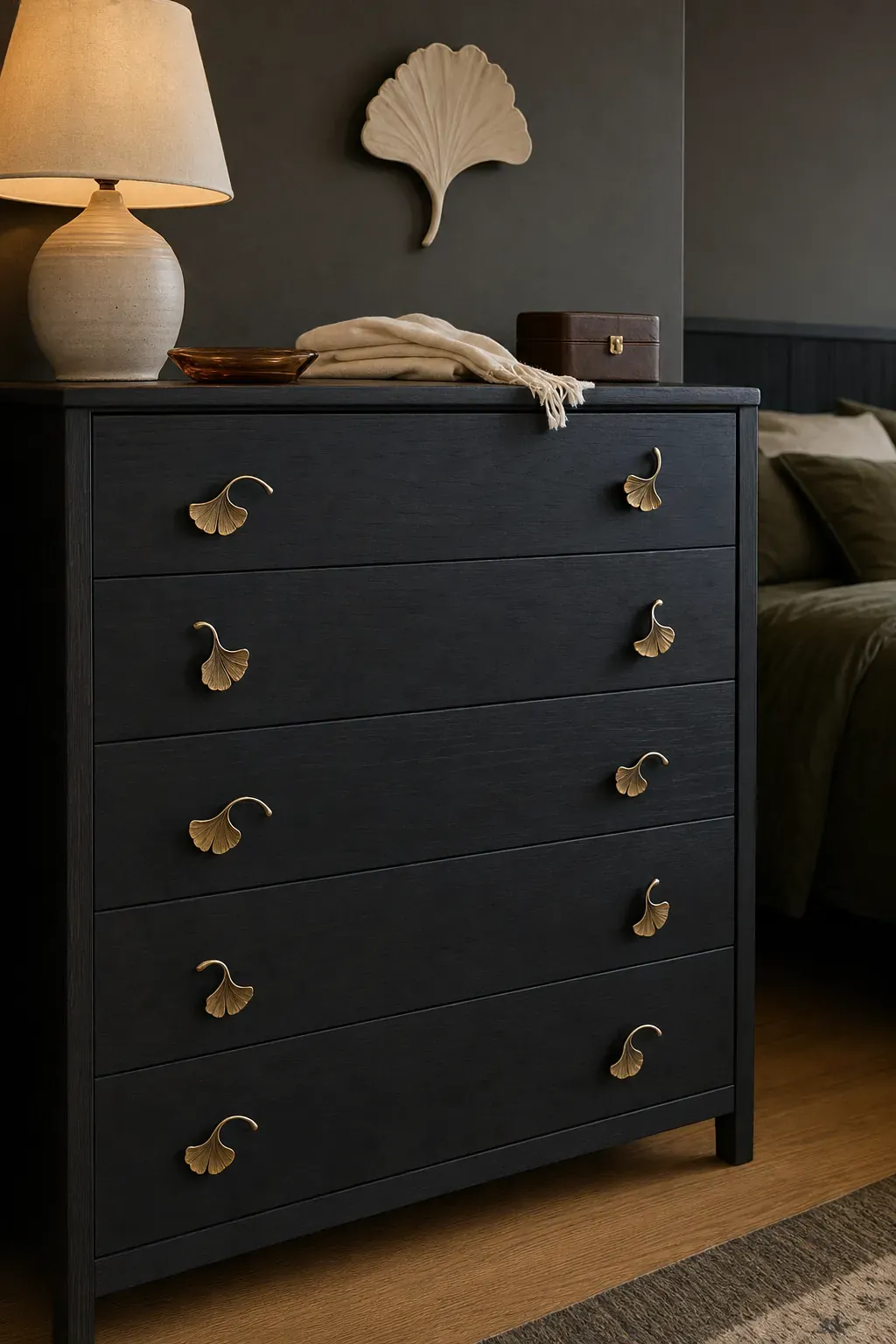
Aged brass leaf hardware
Change plain drawer pulls for aged-brass handles shaped like slender leaves or curling stems. This is a small, renter-friendly way to repeat the movement of larger pieces. Save the original hardware for move-out day.
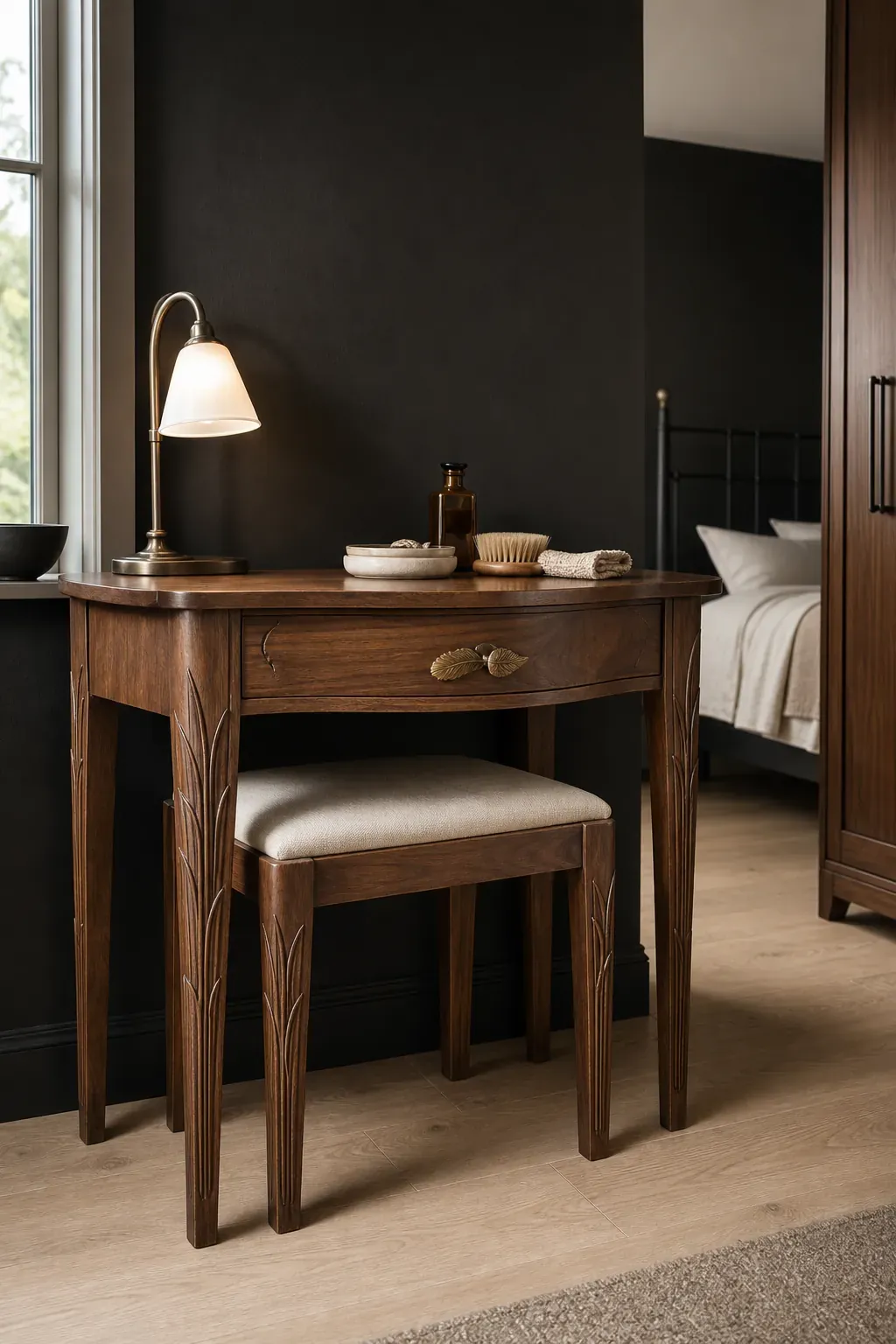
A carved vanity with botanical legs
A compact walnut vanity can supply the room’s craftsmanship through tapered legs carved with reeds or flower stems. Pair it with a simple stool and good task lighting so the piece remains useful, not merely decorative.
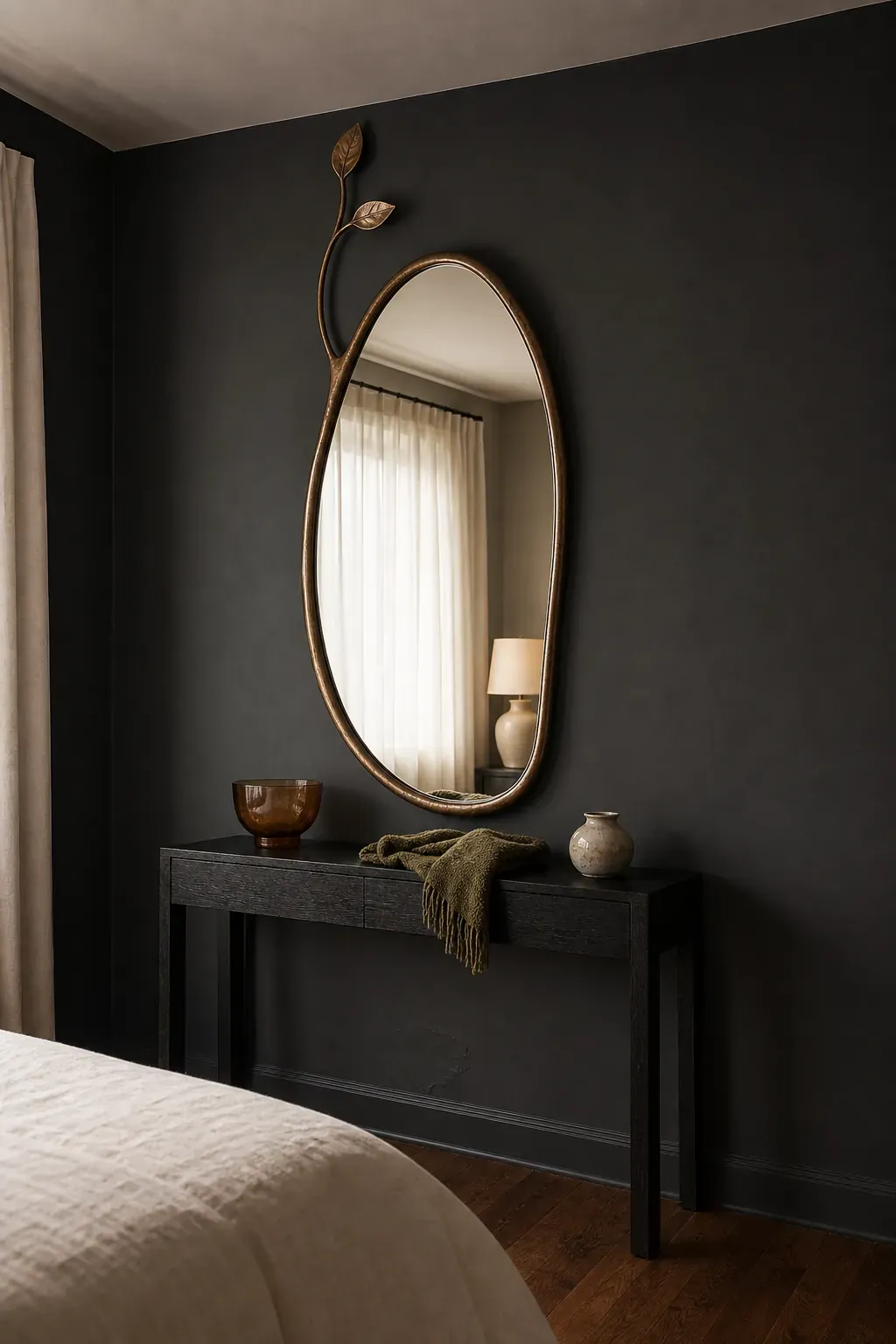
An asymmetrical bronze mirror
Choose a mirror whose bronze frame rises like a stem on one side and opens into an uneven oval. It reflects window light while continuing the organic line language. Position it to reflect a pale curtain or lamp, not a cluttered surface.
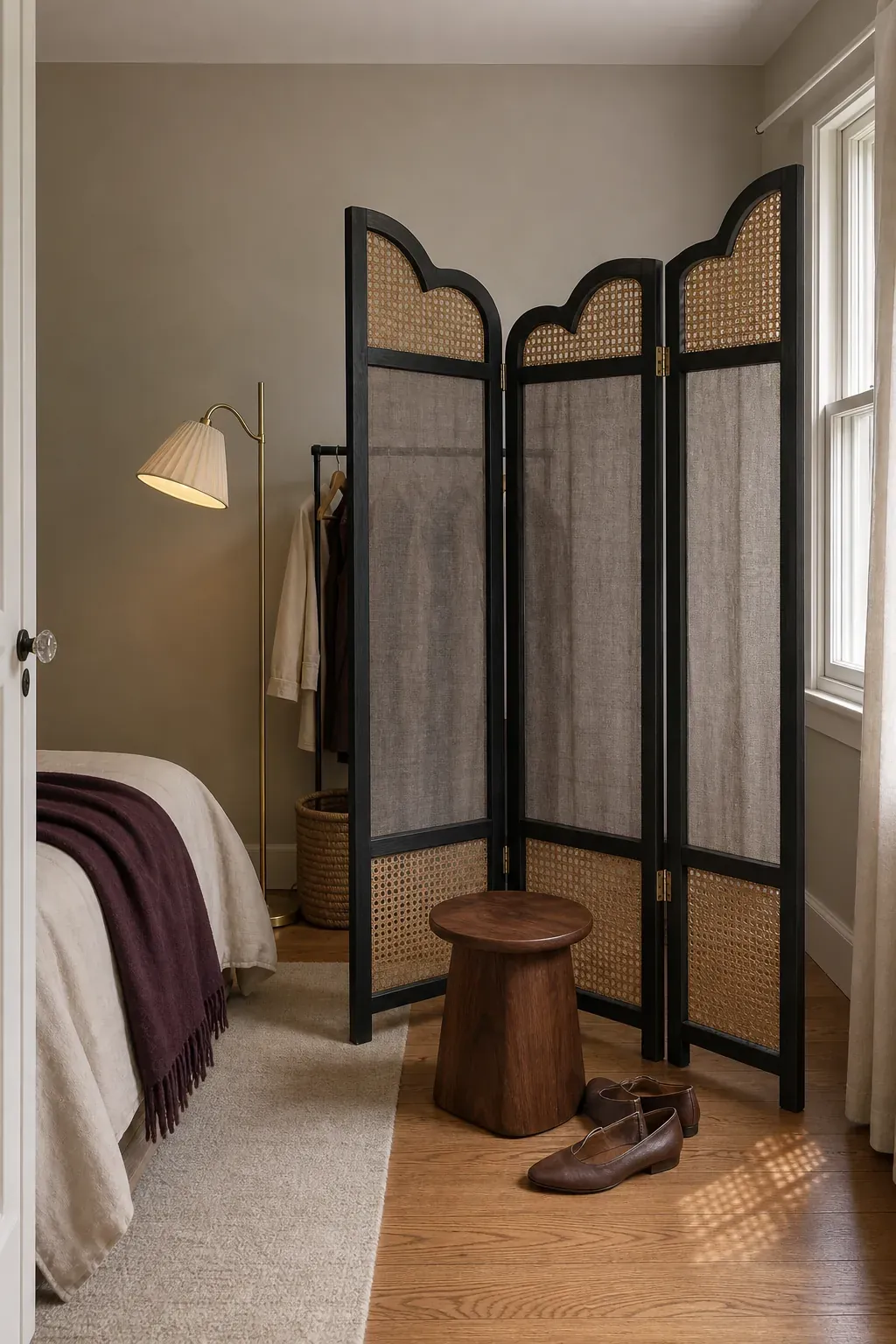
A scalloped folding screen
A folding screen with a black-stained wood frame and arched woven panels can hide a clothing rail or create a dressing corner. The repeating curves add structure without permanent construction, which makes the idea especially useful in rentals.
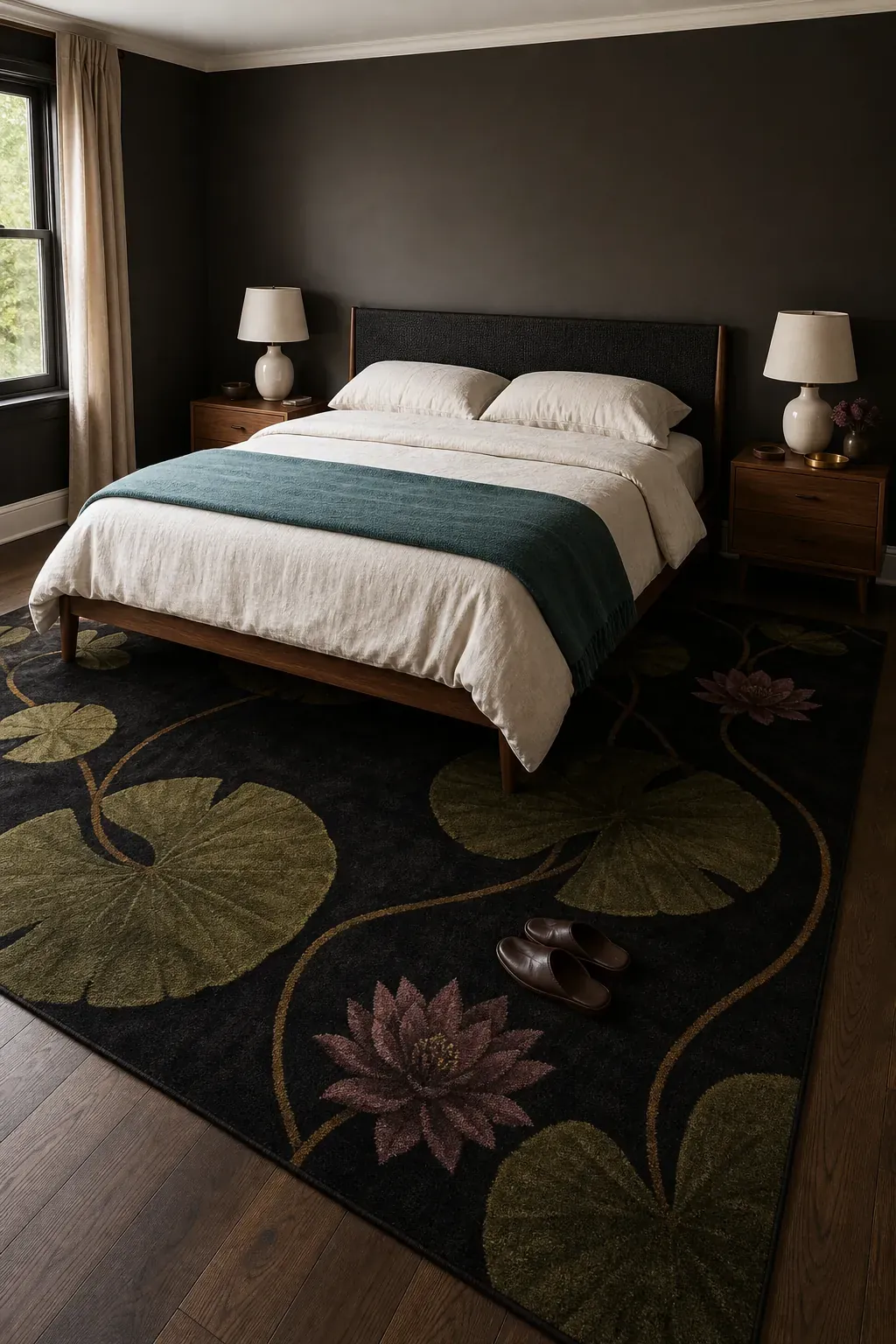
A dark floral rug beneath the bed
Anchor the room with a low-pile rug whose black-brown ground carries large water-lily leaves and muted flowers. Let the pattern extend beyond the bed so it remains visible. Plain bedding prevents the floor and bed from competing.
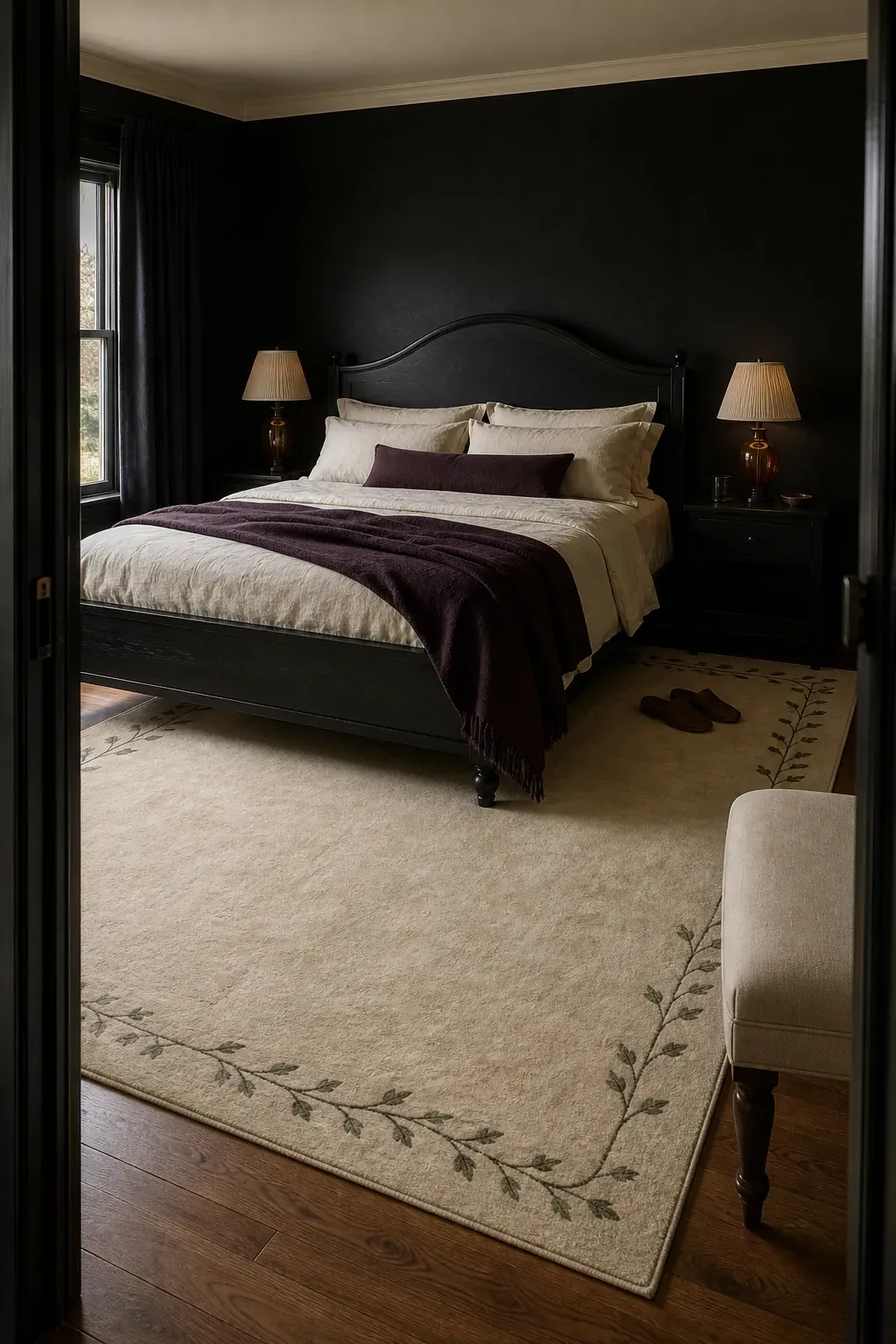
A pale rug that gives black room to breathe
When walls, bed, and curtains are dark, use an oatmeal or antique-ivory rug with only a thin charcoal vine border. The light floor plane keeps furniture edges legible and makes the black elements feel chosen rather than overwhelming.
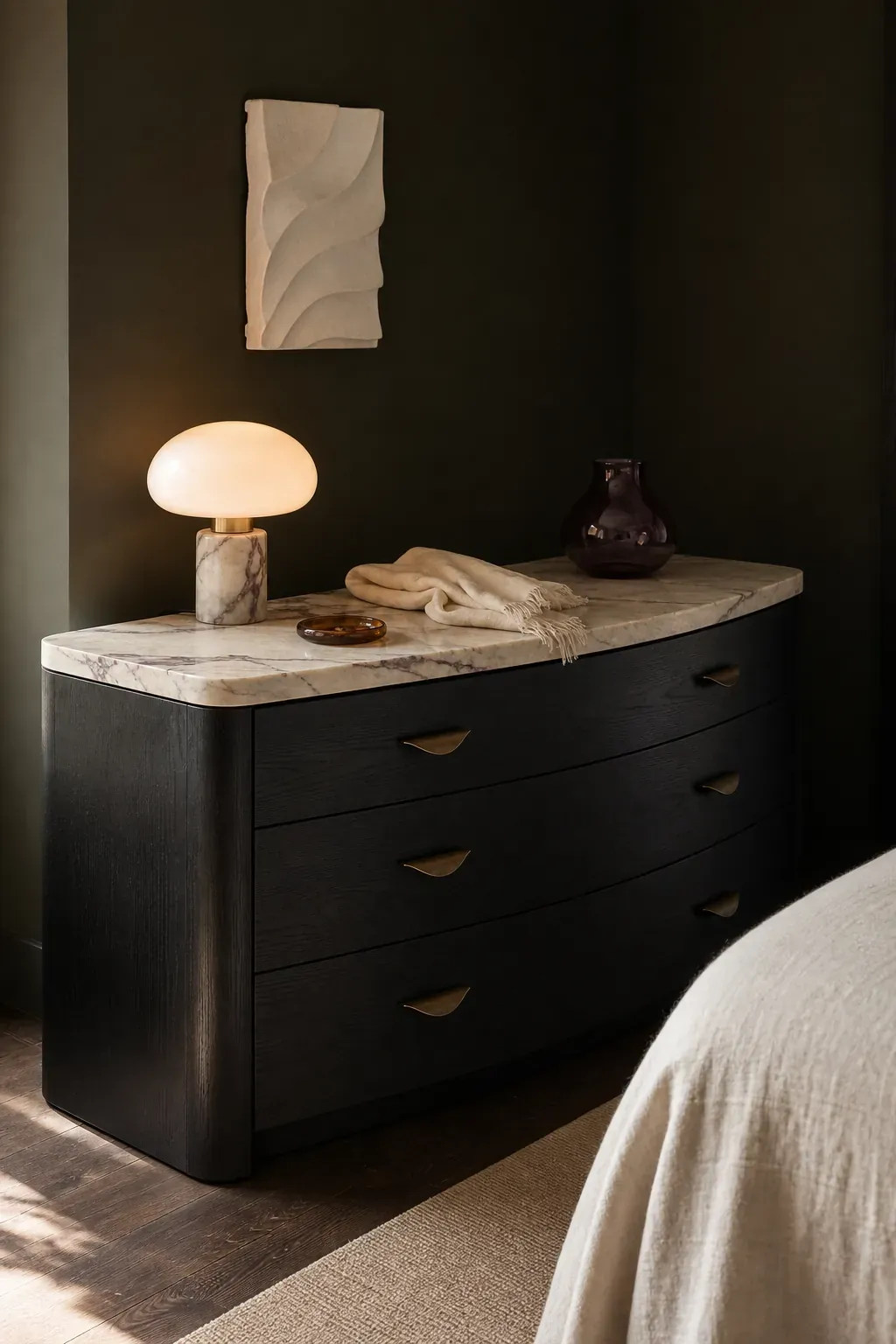
Black wood paired with veined marble
A black-stained dresser topped with pale veined marble creates strong material contrast. Rounded drawer fronts and warm gray veining keep the combination organic. Repeat marble only once elsewhere, perhaps in a lamp base.
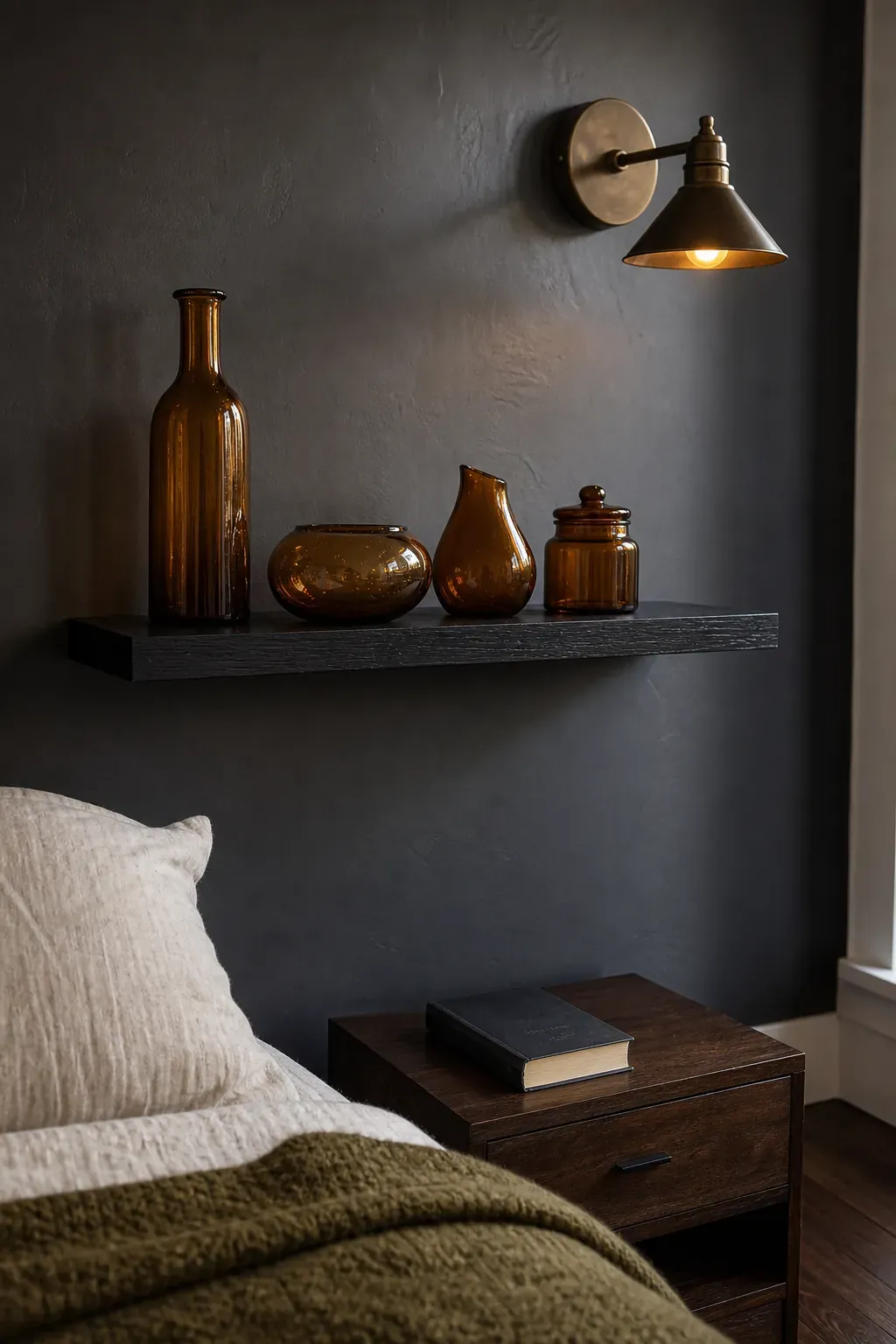
Amber glass on a dark shelf
A few amber-glass vessels catch bedside light and prevent black shelves from disappearing. Vary their heights and curves, but keep the group small enough to leave negative space. Empty vintage glass is often more restful than a dense collection.
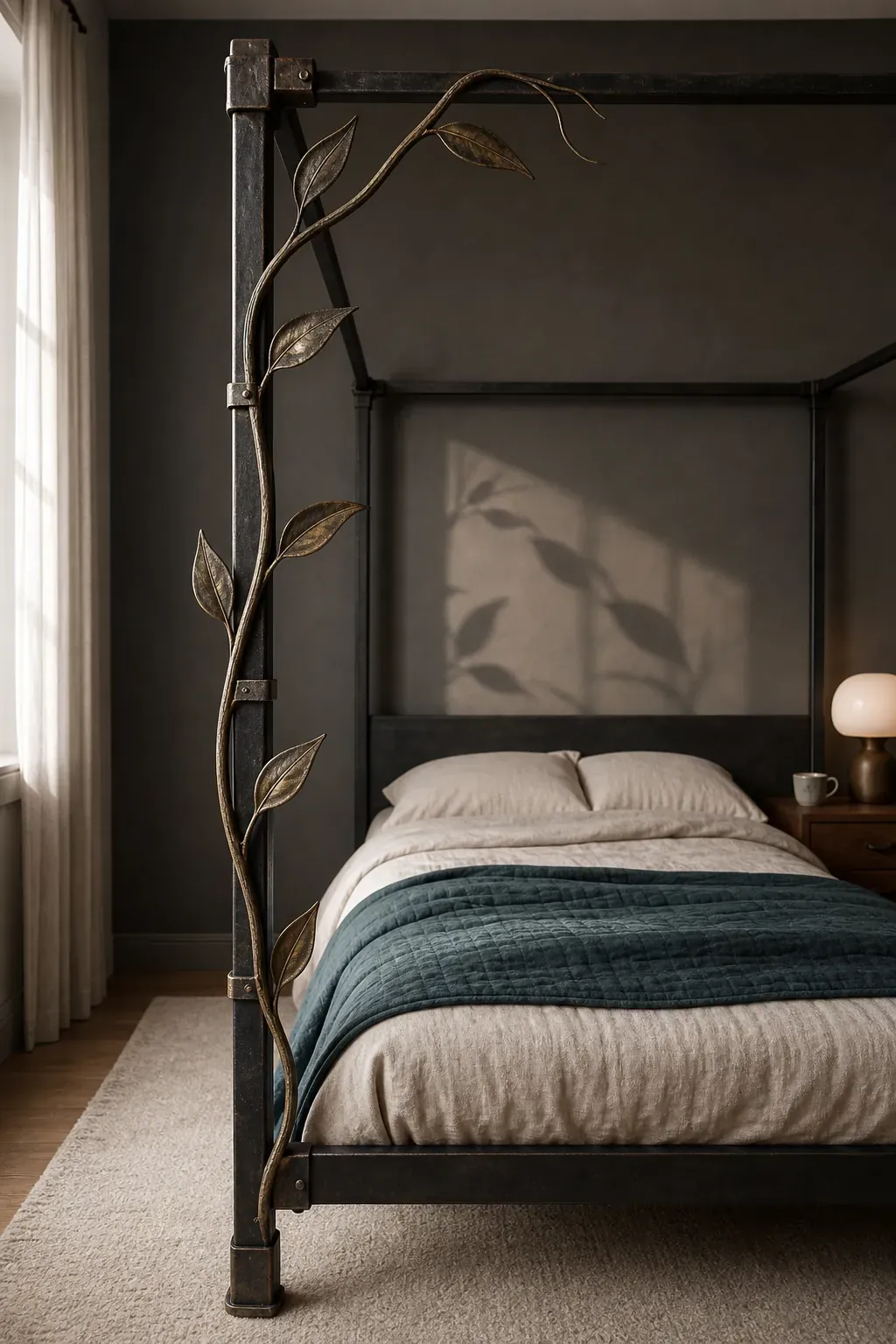
Bronze vine details around the bed
A narrow bronze vine running along a canopy rail or headboard edge adds sculptural line without covering the wall. Look for hand-forged variation and an aged finish. Keep the leaves sparse so they cast distinct shadows.
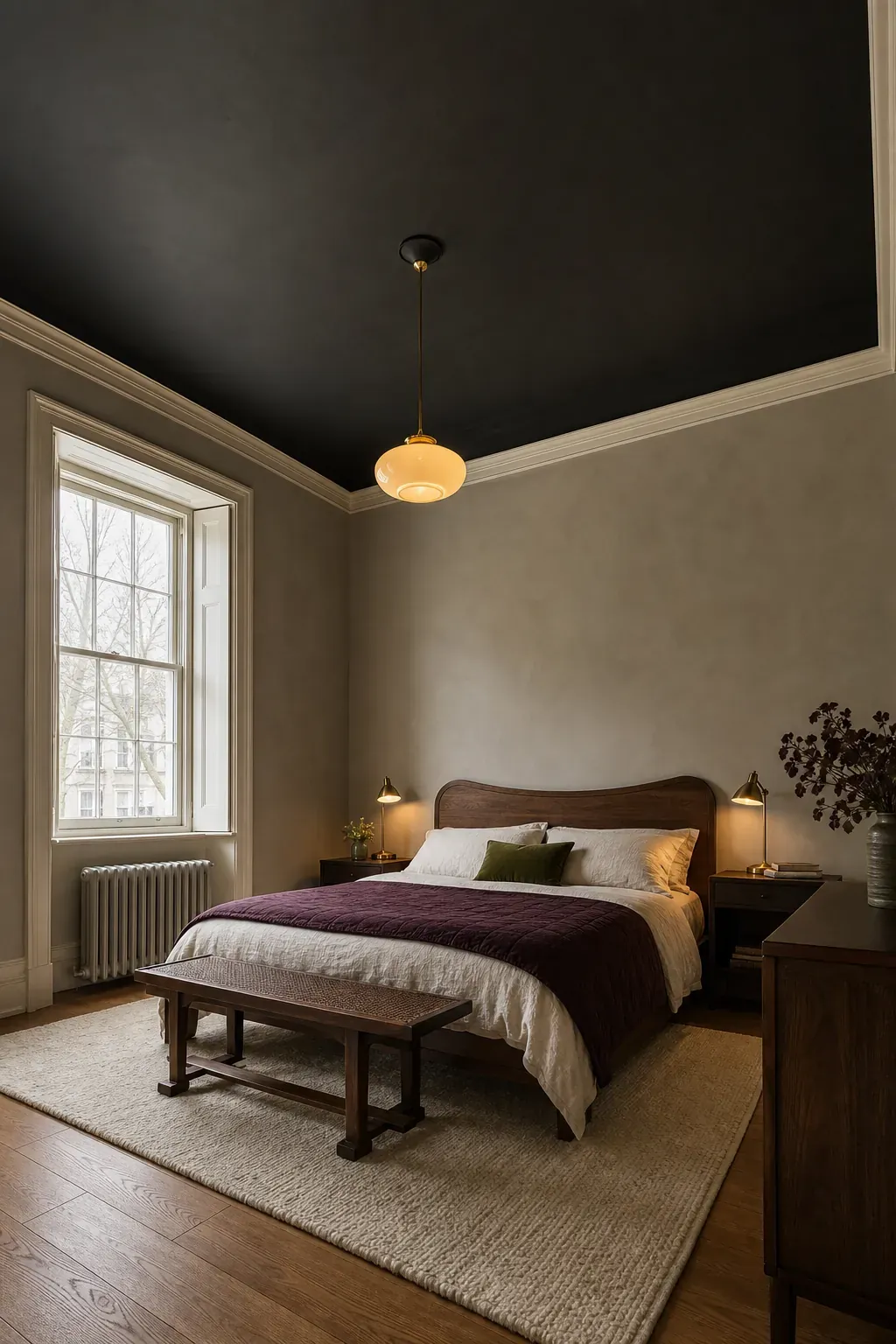
A black ceiling above warm gray walls
Reverse the expected scheme in a tall bedroom: paint the ceiling soft black and keep the walls warm gray. A pale picture rail creates a transition, while the dark upper plane makes pendant glass and brass details glow.
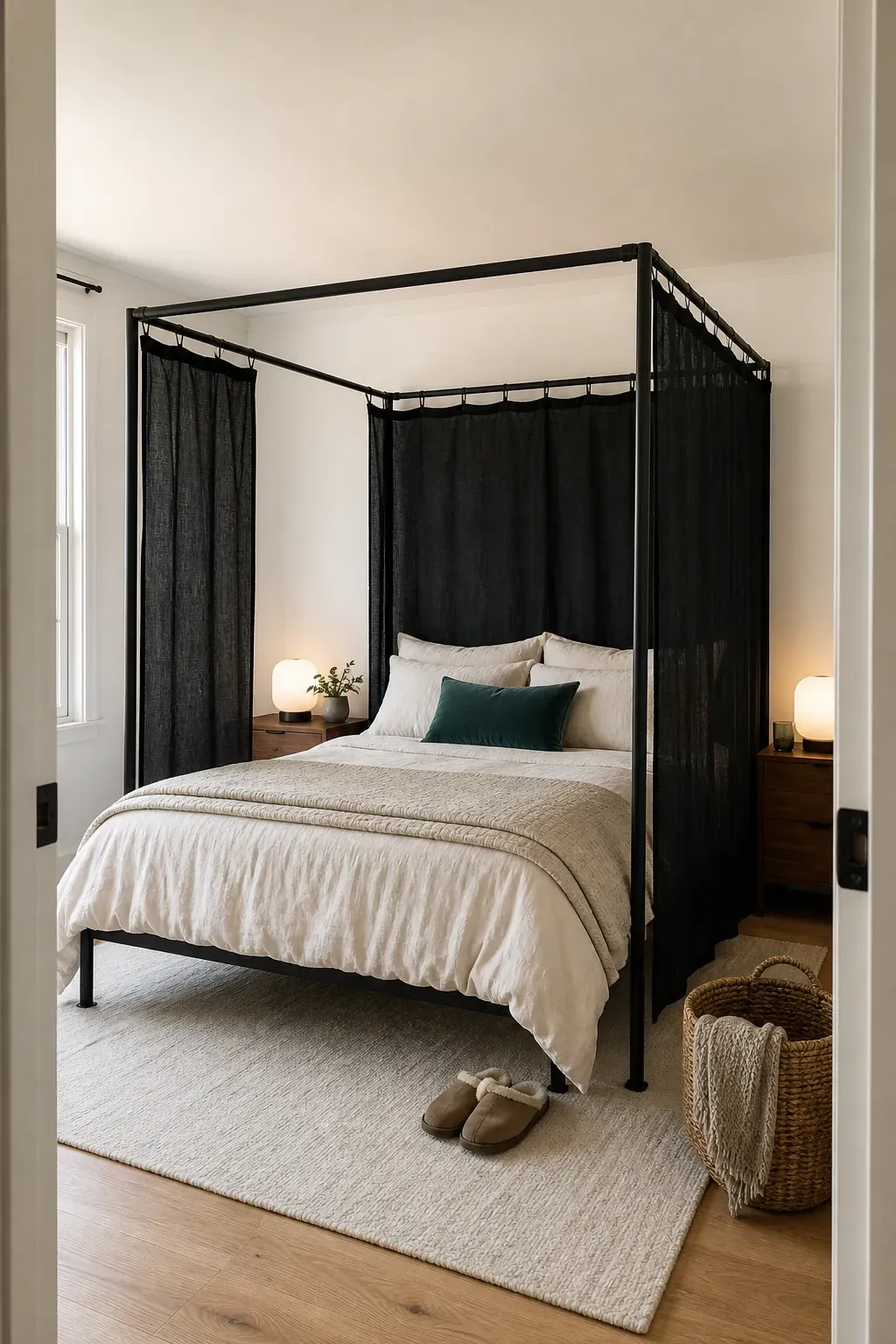
A renter-friendly black canopy
Build the dark envelope with a simple removable canopy frame and washable black linen panels rather than paint. Leave the front open, keep fabric away from lamps, and layer cream bedding inside. The contrast creates a room-within-a-room effect.
A charcoal half-wall in a small bedroom
In a compact room, stop charcoal paint at picture-rail height and use a warm off-white above it. The horizontal break adds intimacy without absorbing all available light. Curve the top edge behind the headboard for a subtle nouveau gesture.
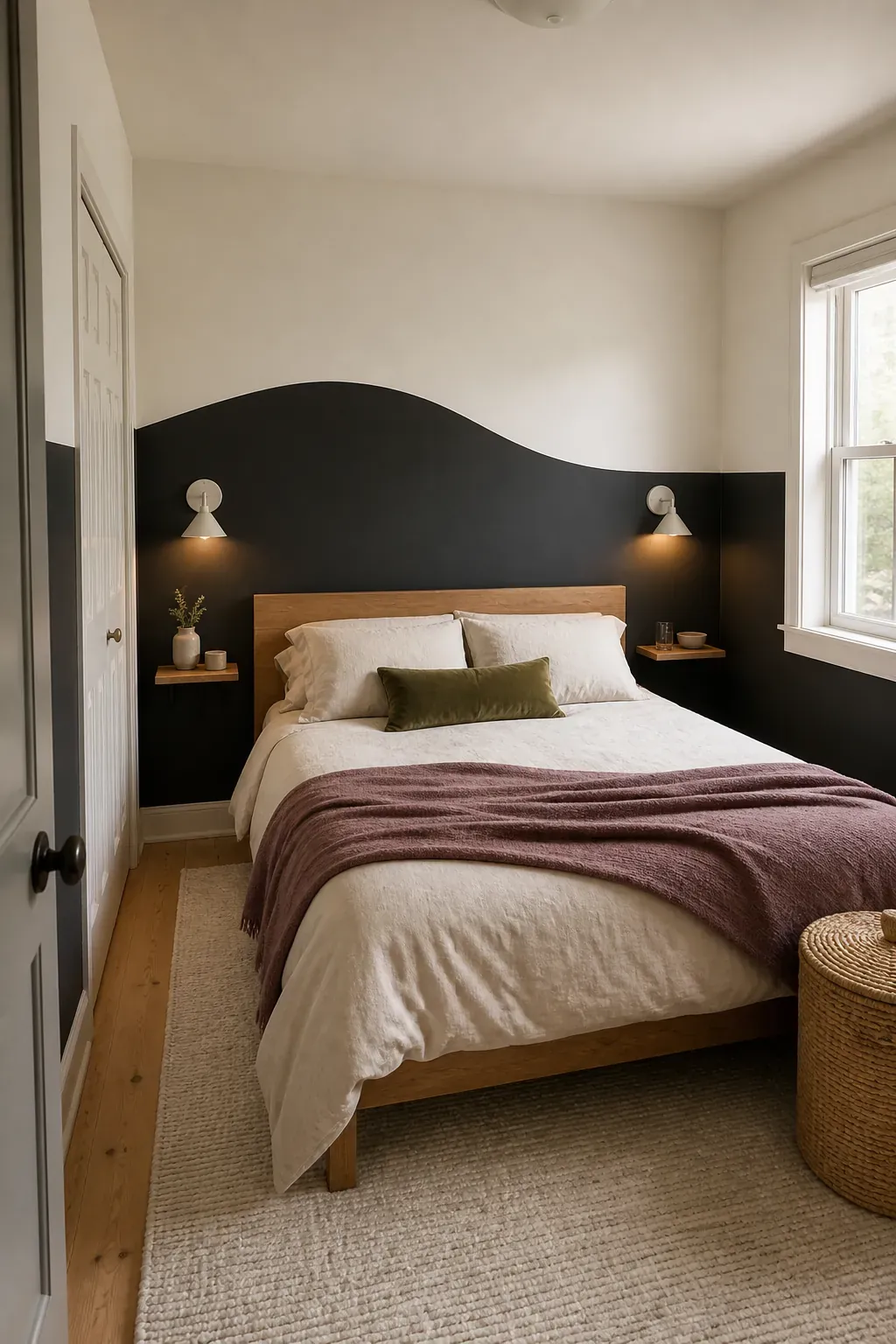
A restrained mix of black, cream, wood, and one jewel tone
The most finished black nouveau bedrooms repeat a short material language instead of collecting every dramatic object. Use matte black for depth, cream for light, walnut or oak for warmth, aged brass for small highlights, and one jewel tone—teal, oxblood, plum, or moss—as the connective color.
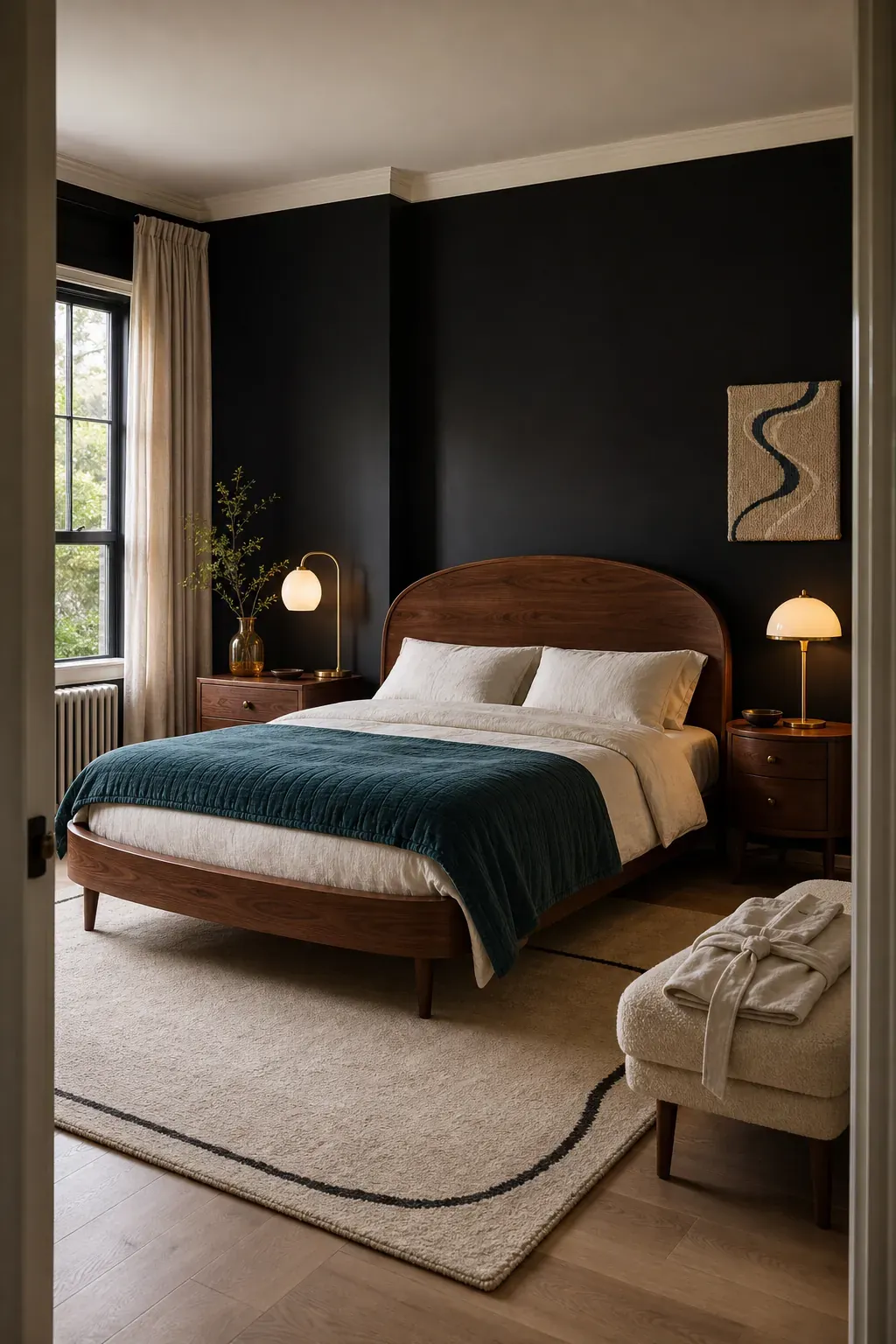
Check the room at night as carefully as you do in daylight. Dark surfaces need several low, warm light sources and visible texture. If every object is black, glossy, patterned, or ornate, remove one layer. Romance comes from controlled contrast and curves—not from darkness alone.