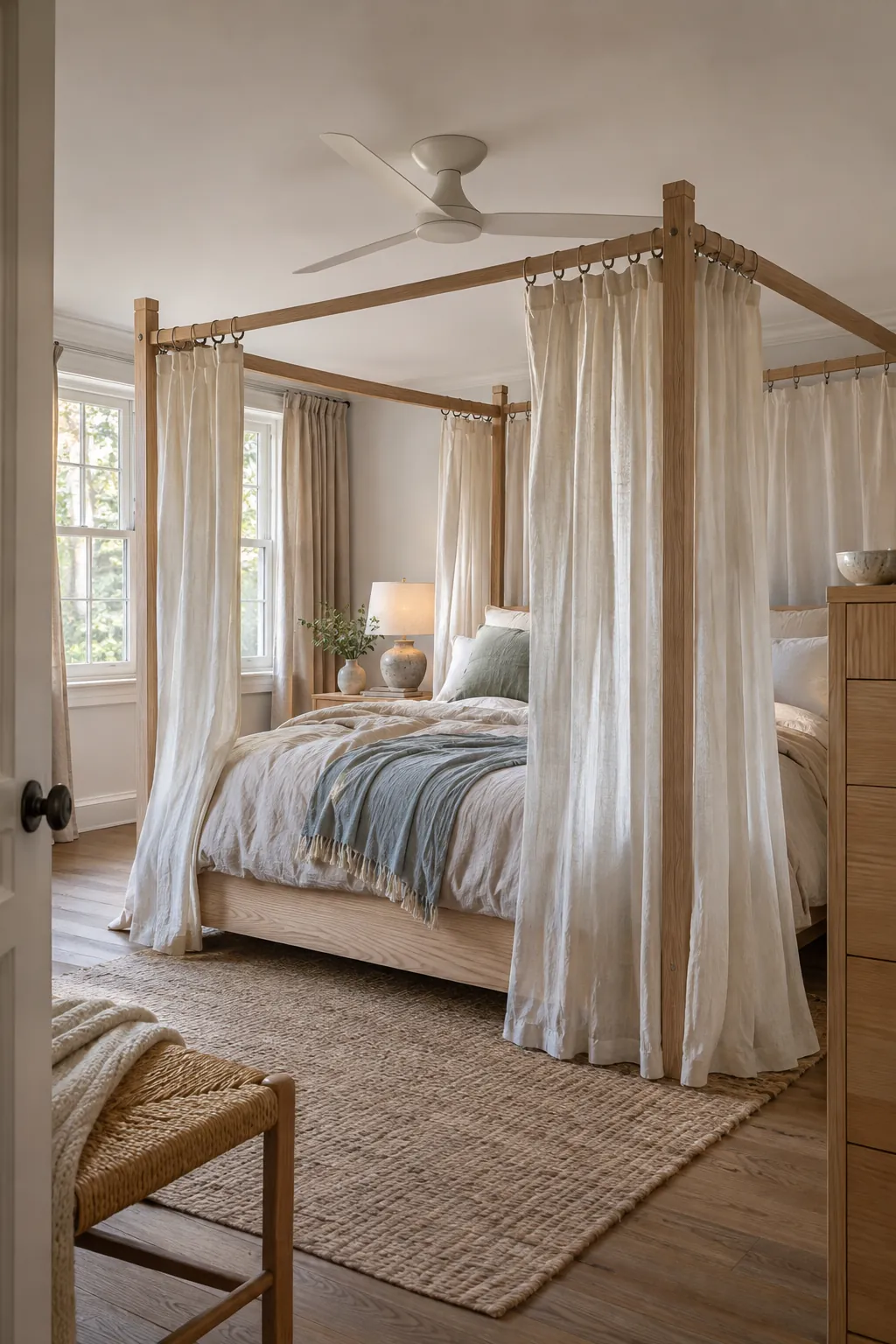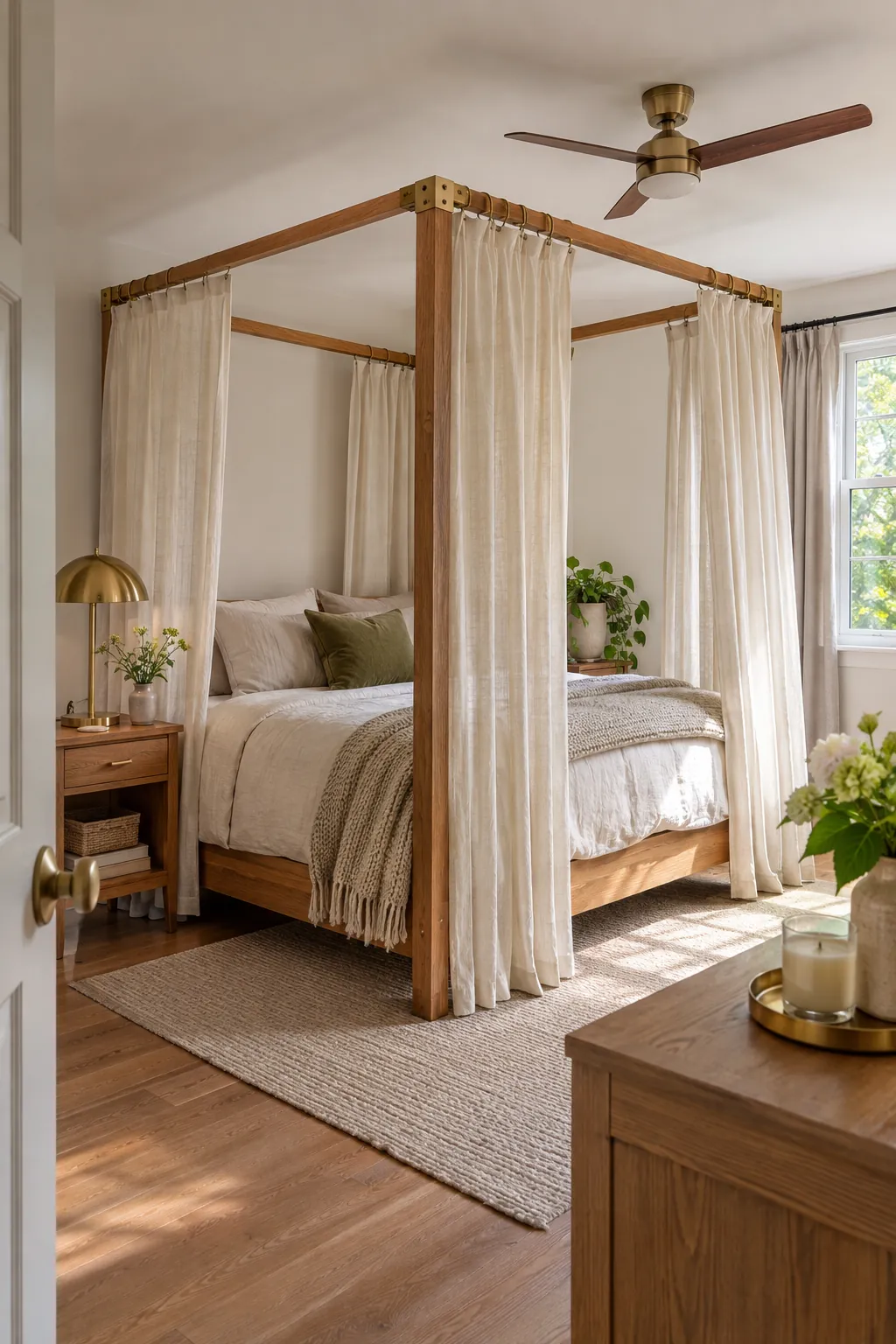
A canopy changes more than the look of a bed. It affects circulation, light, cleaning, ceiling clearance, and how protected the sleeping area feels. These ideas start with the room plan, so the finished canopy remains comfortable after the first dramatic impression.
Measure the Canopy Footprint
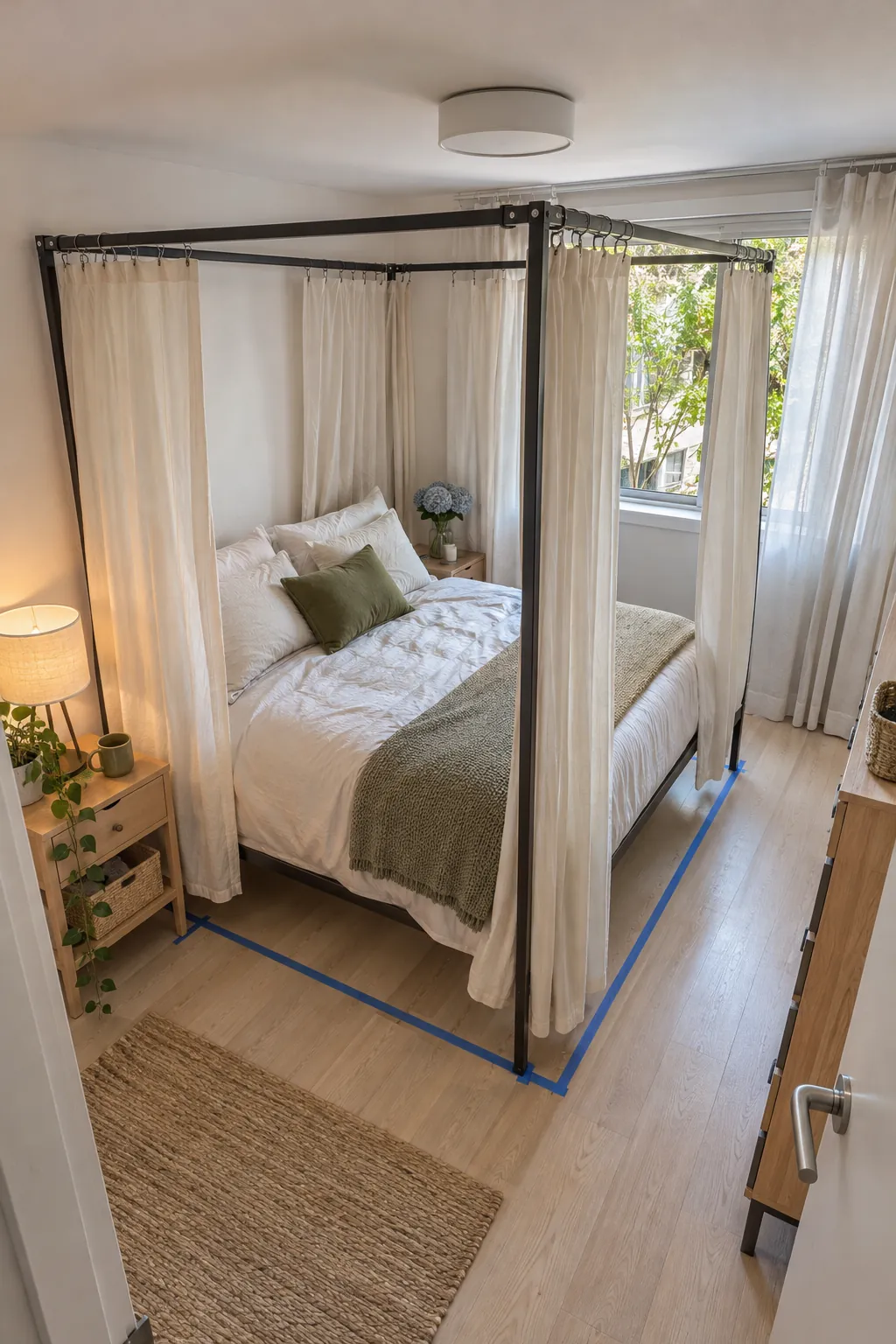
Start by marking the bed and post positions on the floor before buying a frame. The outline shows whether doors, drawers, and walking routes still work when the tall structure is present. This simple check reduces the risk of an expensive canopy that overwhelms a limited bedroom.
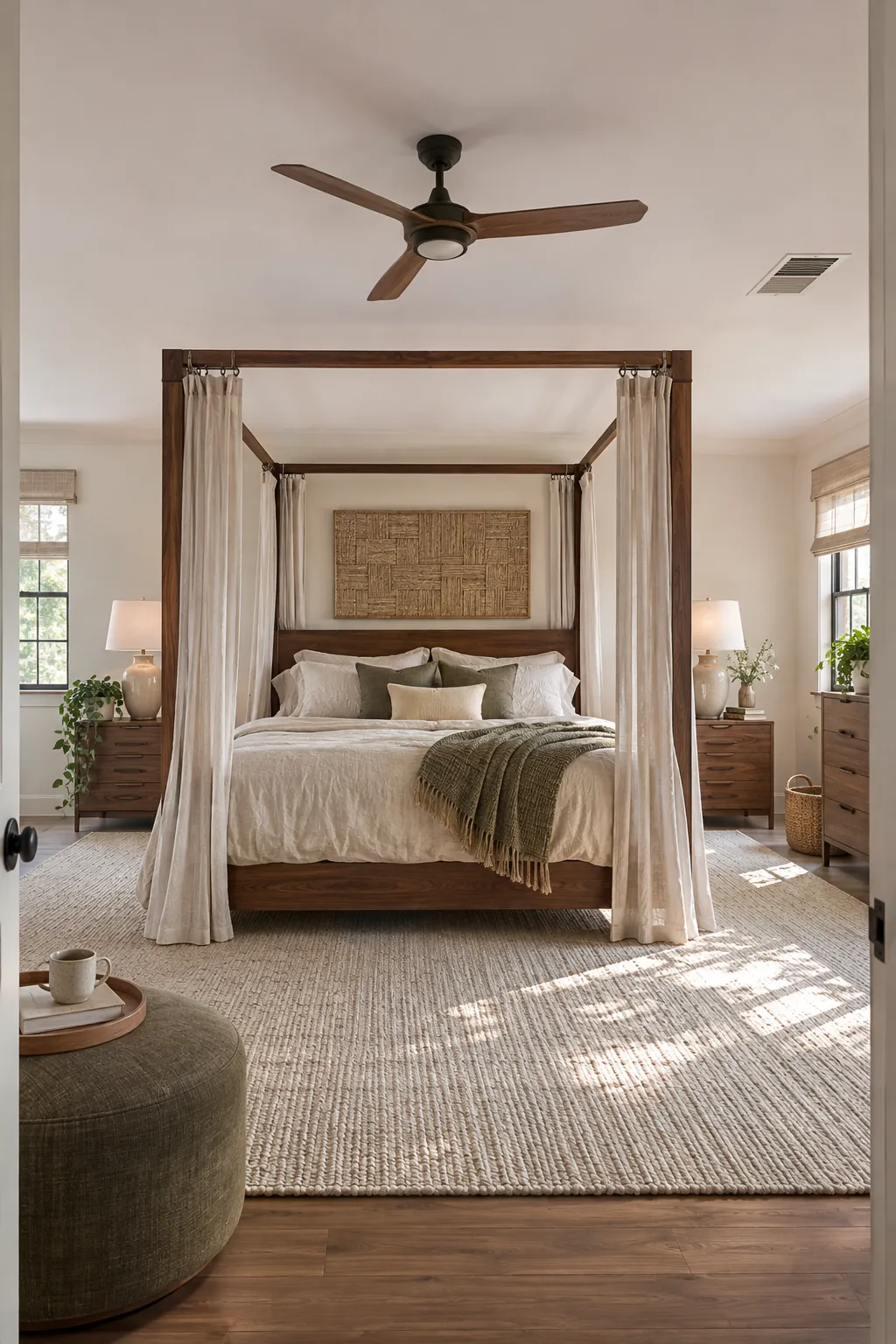
Center the Bed With Purpose
A centered canopy can organize a generous room and create balanced access on both sides. Leave enough space behind the headboard only when that zone will serve a real purpose, such as a narrow desk or dressing shelf. The bed should still have a direct route from the door.
Use a Slim Frame in a Small Room
Thin posts preserve sightlines and make a canopy bed easier to use in a small room. Match the frame color to the walls when you want it to recede, then keep nearby furniture low and simple. Avoid projecting finials that catch clothing or narrow an already tight route.
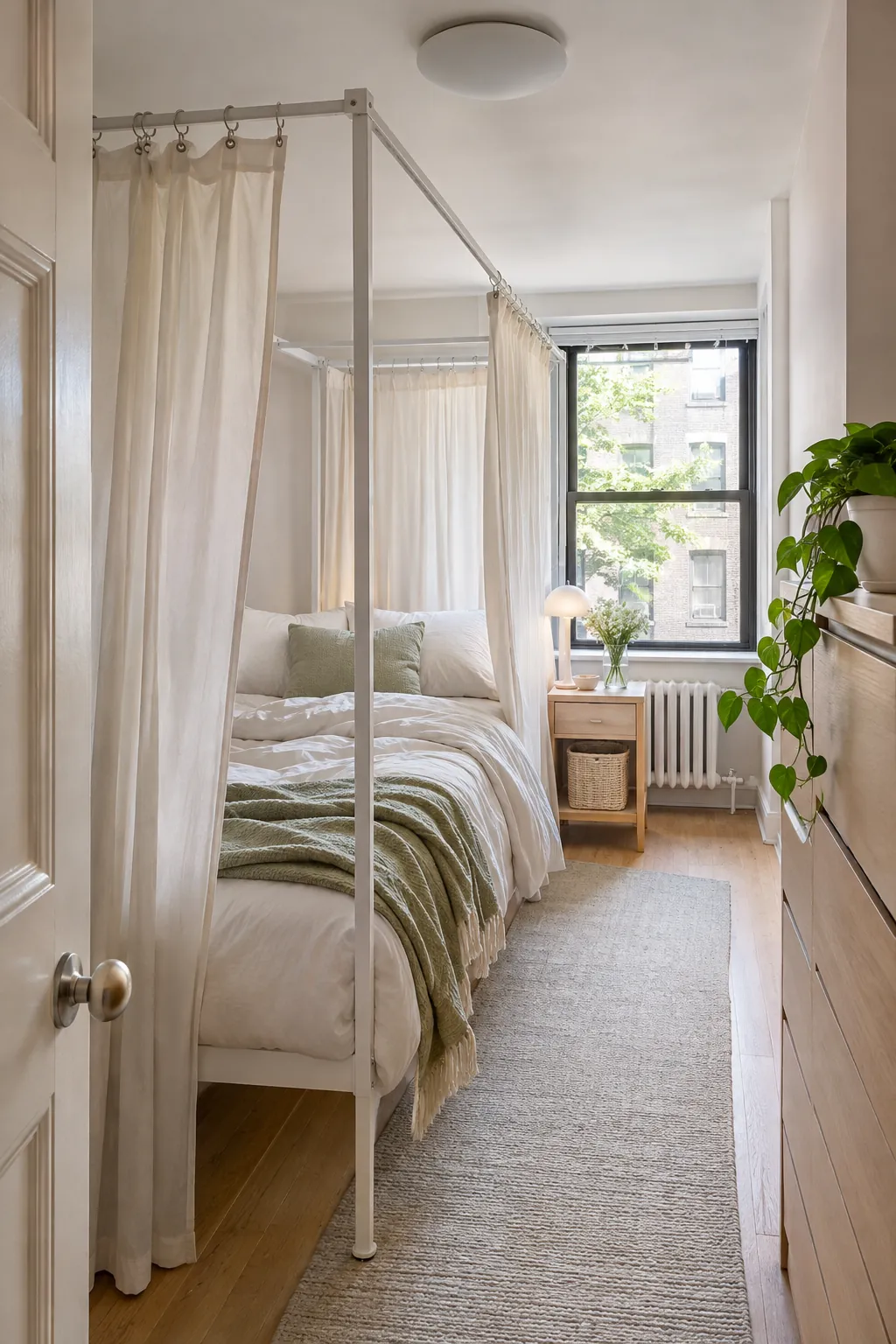
Create a Grown Up Tester Bed
A tester panel above the head of the bed can feel tailored and adult without covering the full ceiling. Use professional fixing and keep the upholstered structure clear of lights and fans. Quiet fabric and clean edges prevent the treatment from looking like temporary party decor.
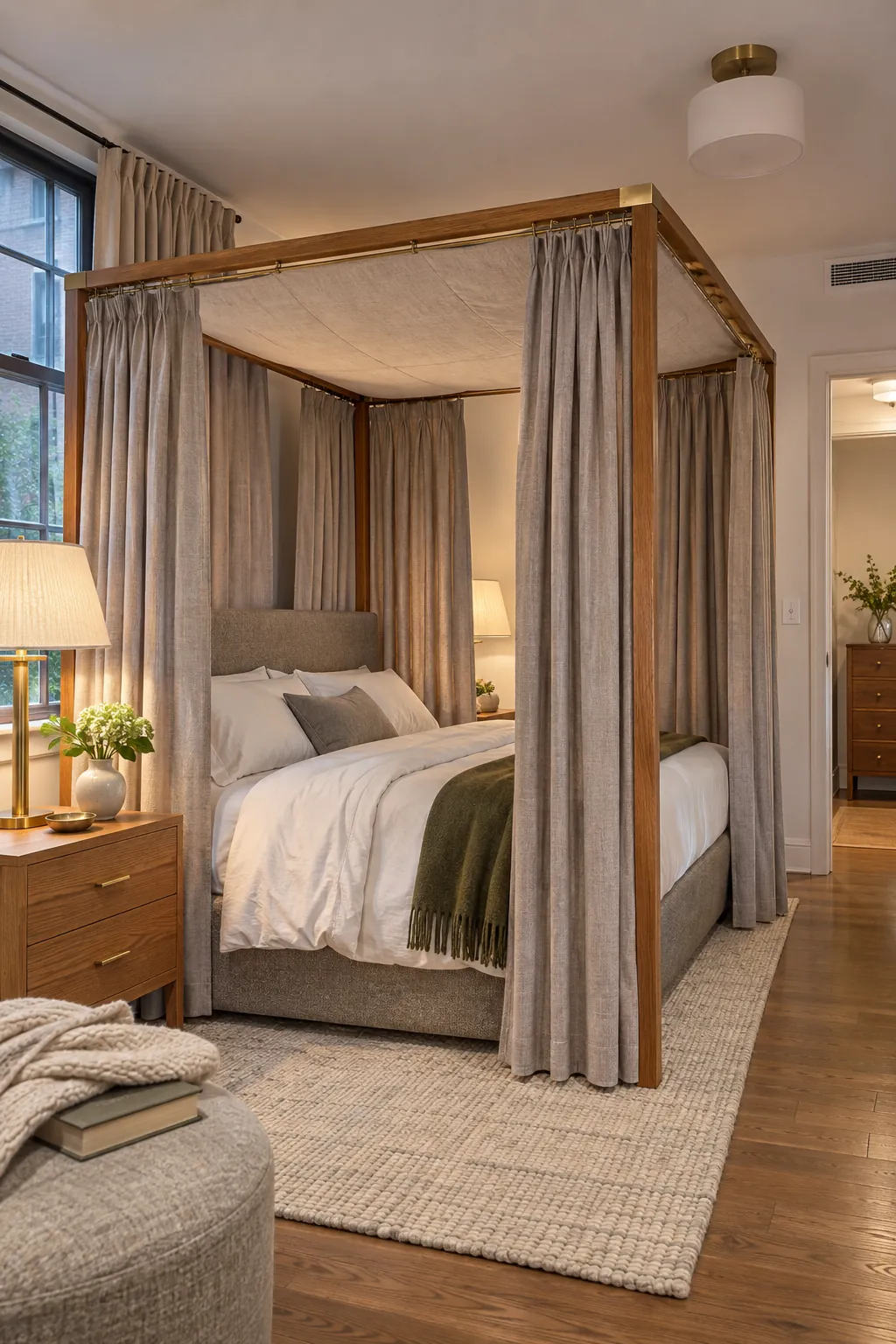
Work Around a Ceiling Fan
A moving ceiling fan needs a completely clear sweep and generous distance from fabric. Use a half canopy behind the fan zone, or choose a frame with no drapes near the blades. Never treat airflow as the only concern, since loose cloth can also pull toward moving parts.

Try a Freestanding Curtain Frame
A freestanding frame can add soft curtains without ceiling holes, which helps in some rental rooms. Confirm that the base is stable, the top rails cannot rack, and the fabric does not block bedside access. Choose washable panels because freestanding cloth tends to receive more daily handling.
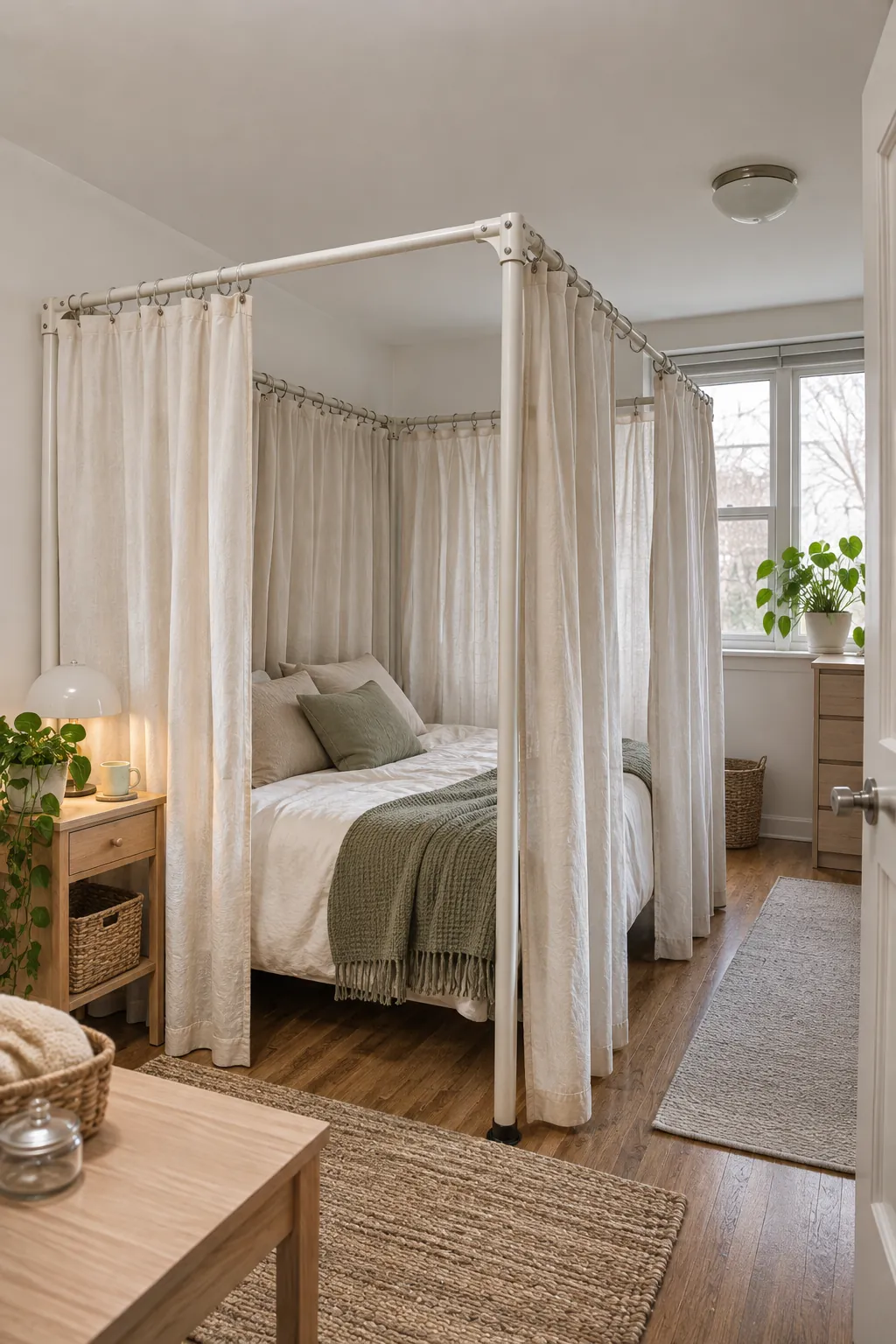
Frame a Tall Intimidating Room
A canopy can make a very tall bedroom feel more sheltered by establishing a lower visual ceiling around the mattress. Keep the top plane open if the room already lacks warmth, then use fabric only at the head or corners. A low lamp and textured rug strengthen the sense of human scale.
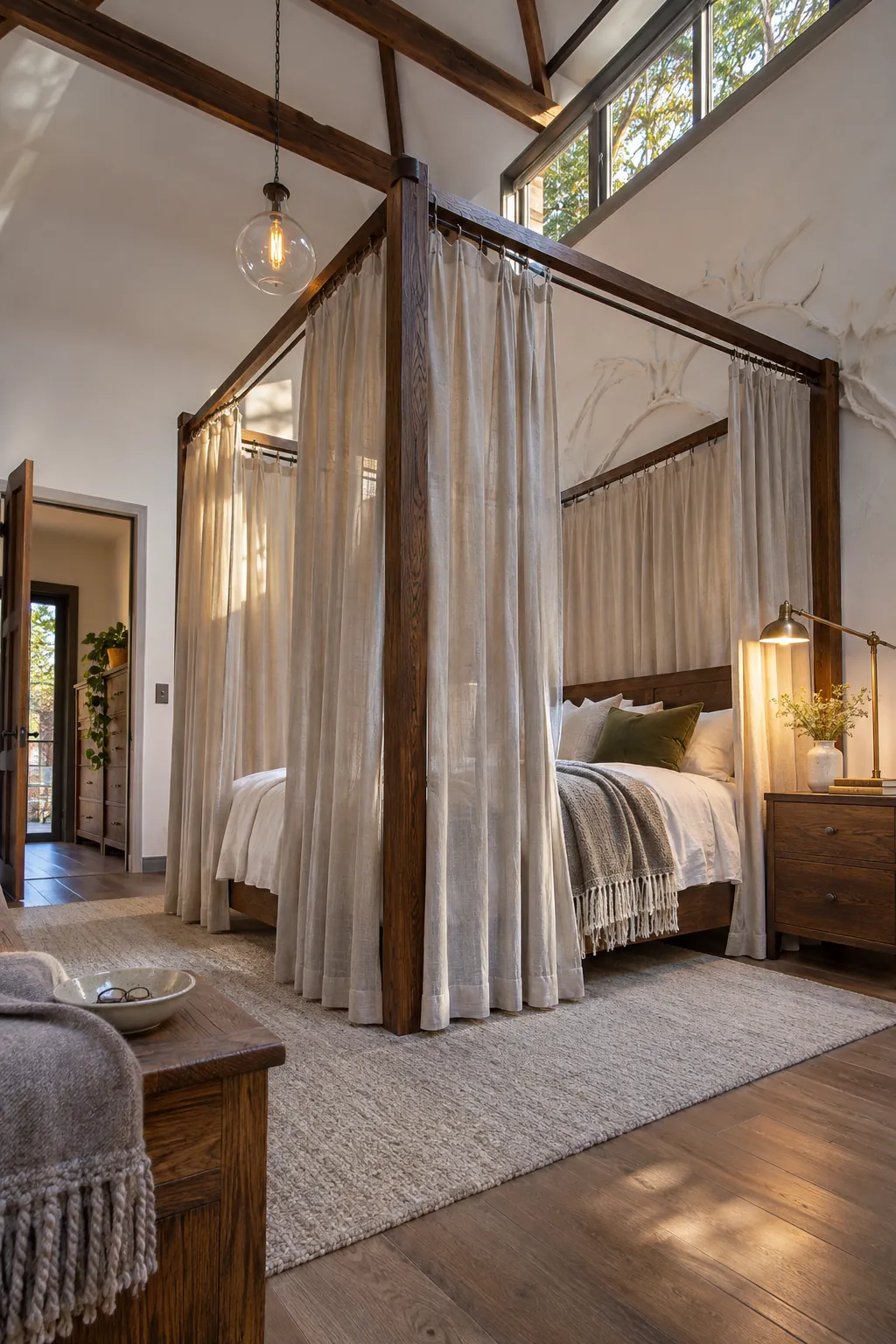
Use Ceiling Tracks Instead of Posts
Ceiling tracks create a canopy effect when a full frame would consume too much visual space. Fix tracks only to suitable structure and plan openings that let you enter the bed easily. A rectangular route around the mattress looks deliberate when the curtains stack neatly at the corners.
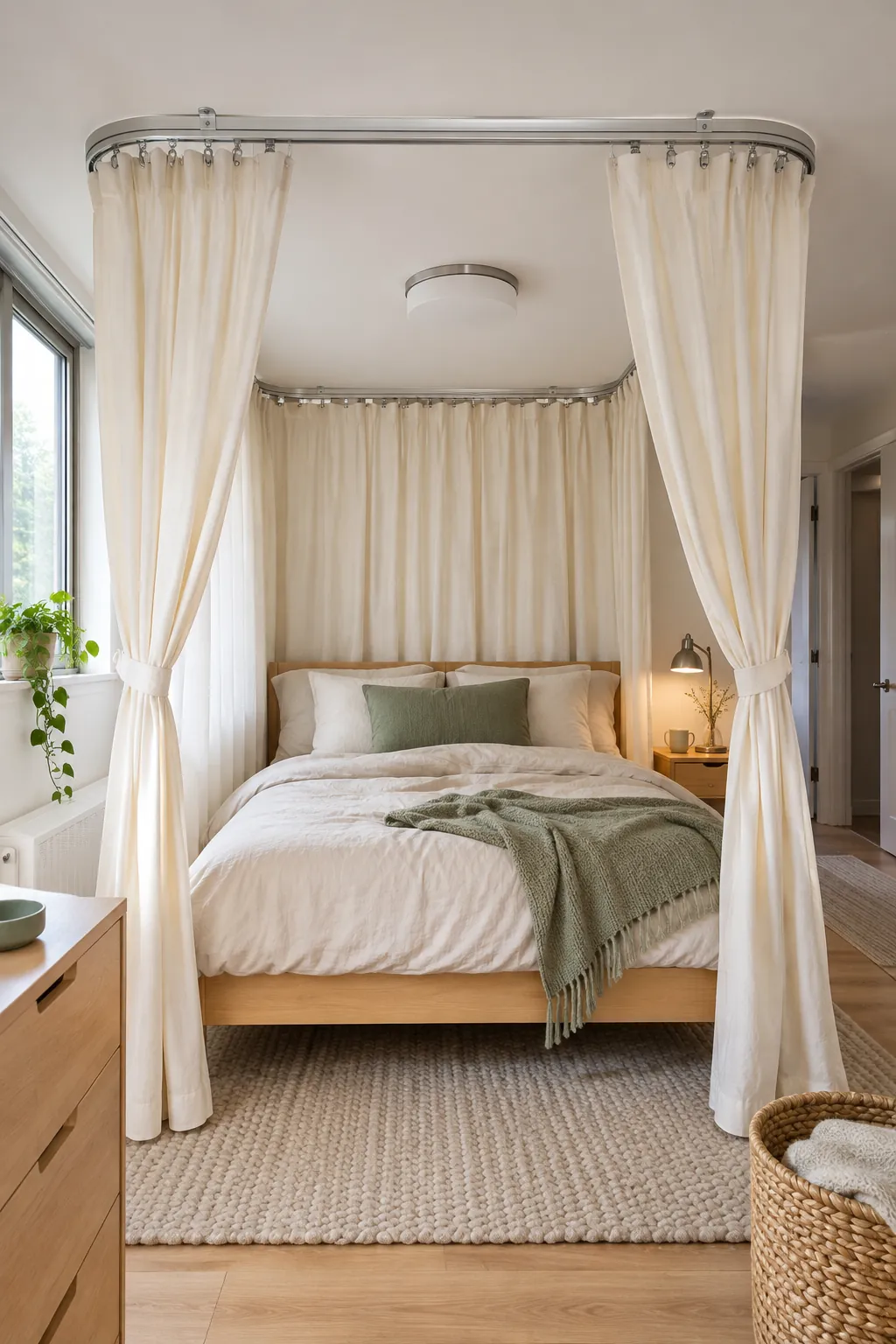
Keep a Dorm Canopy Removable
Dorm rules and fragile ceiling finishes can rule out drilled hooks and heavy frames. Use only approved removable methods and choose a light treatment that cannot fall across the sleeper. If the building does not permit secure fixing, a freestanding solution is safer than improvising overhead support.
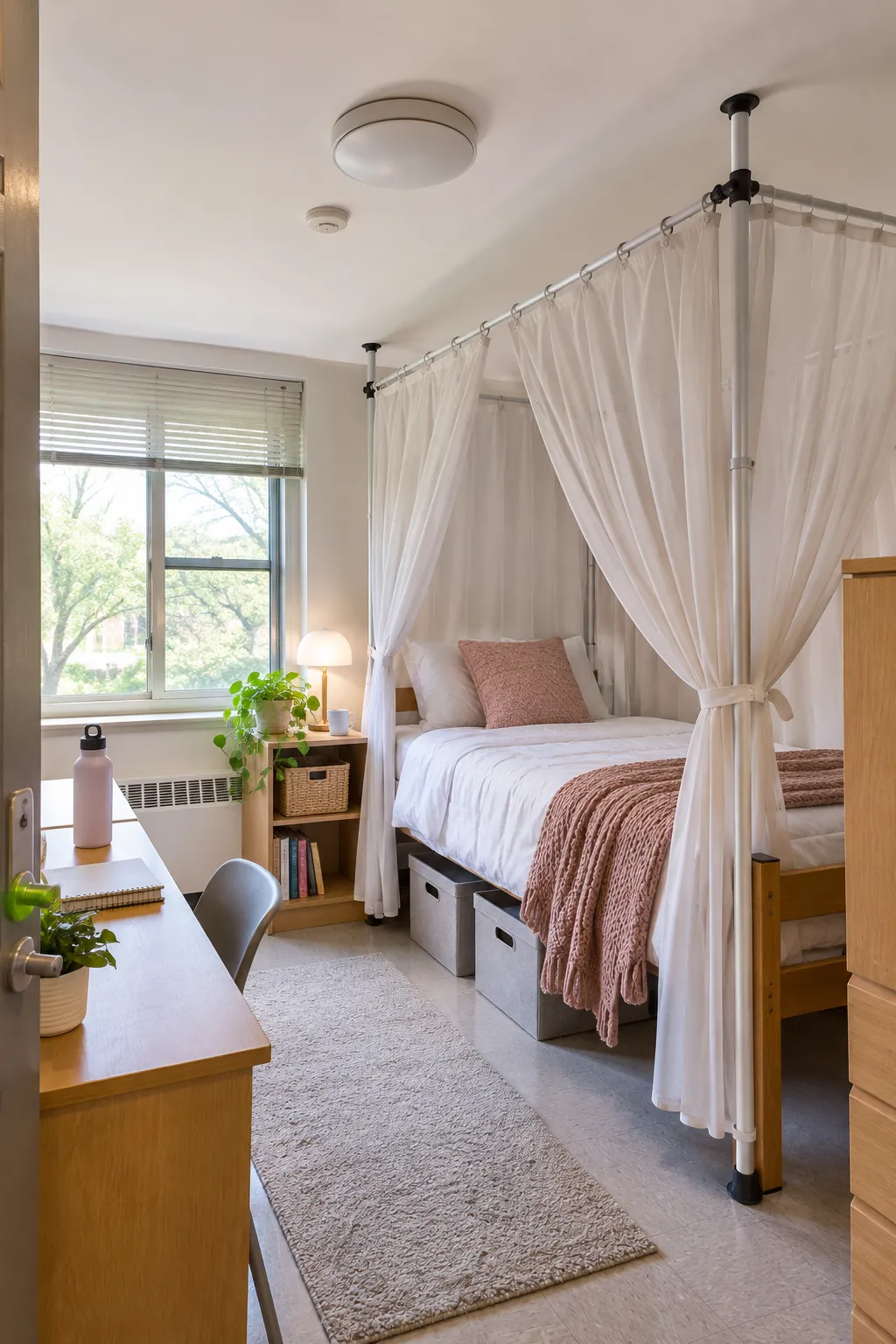
Hang One Head Curtain
One curtain behind the headboard brings depth without enclosing the mattress. Mount it well clear of reading lights and let the hem finish behind the bed rather than pooling on the floor. This focused treatment costs less fabric and collects less dust than four full sides.
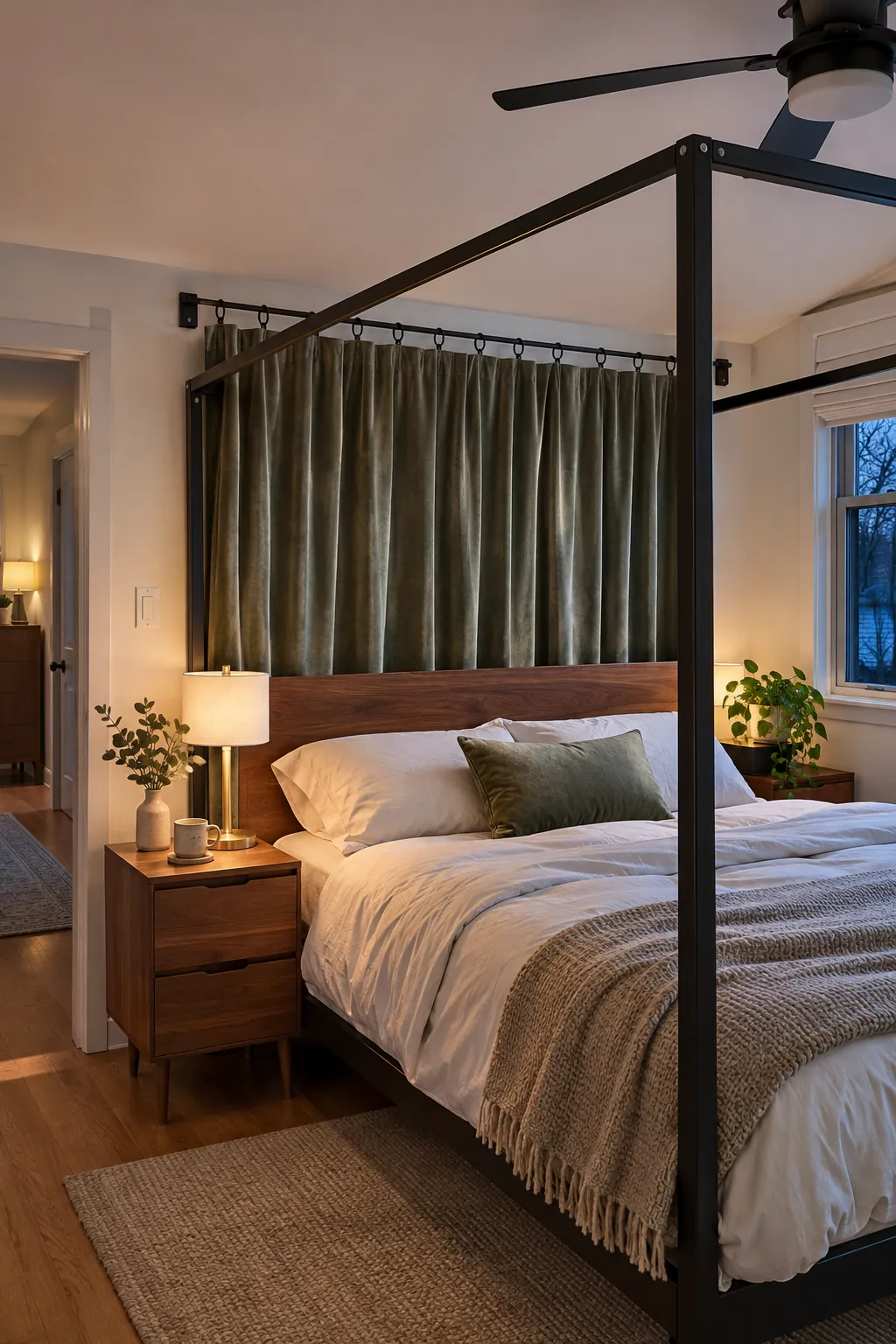
Leave the Canopy Bare
An uncovered four poster gives the room architectural structure without adding textile maintenance. Use the top rails to frame an uncluttered ceiling and keep pendant fixtures outside the bed footprint. The result works well for people who like canopy bed decorating ideas but sleep better with open airflow.
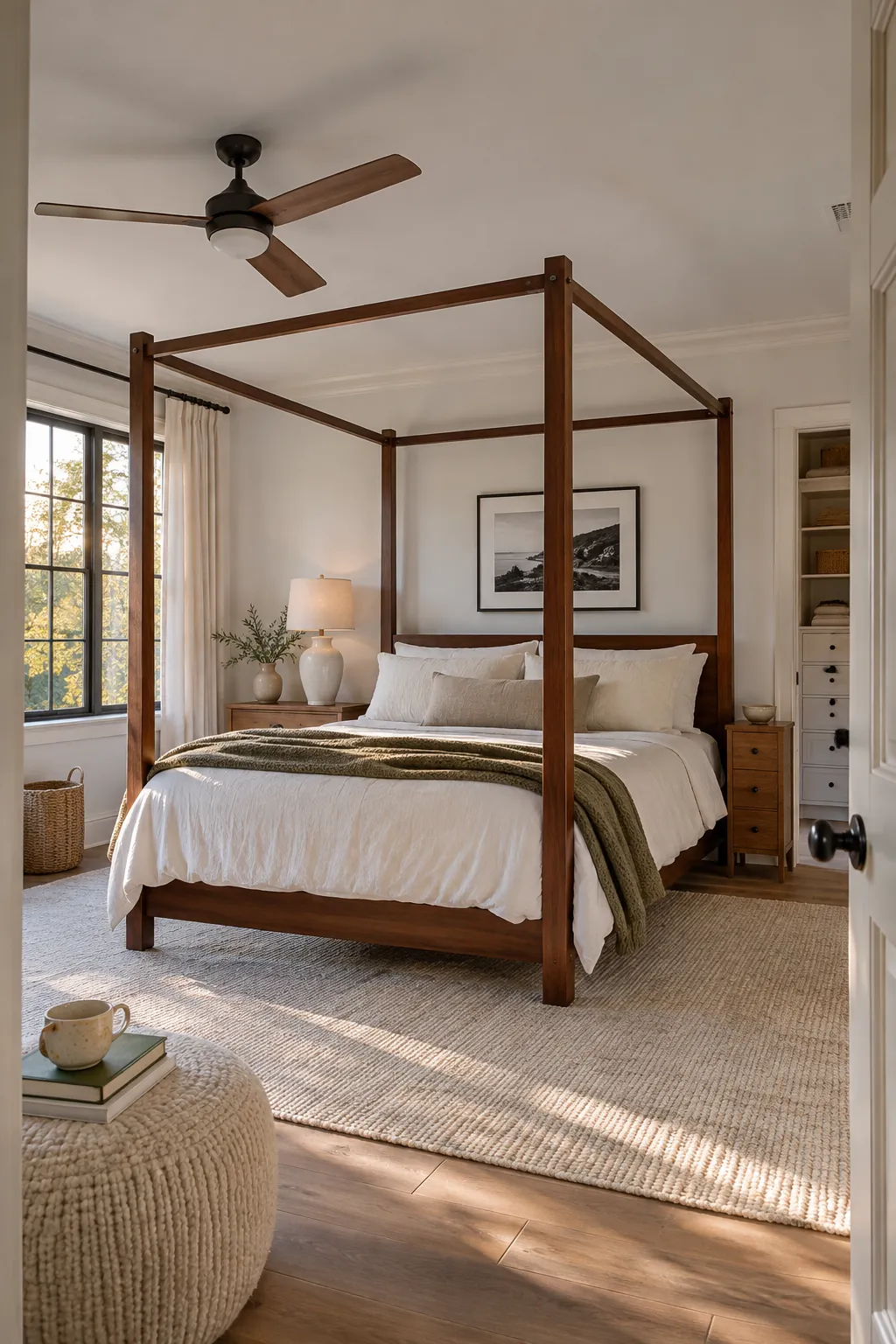
Gather Fabric at the Corners
Corner panels soften a frame while leaving both long sides open. Tie each panel at a practical height and keep the folds away from drawers, outlets, and lamps. The repeated corners make the canopy feel complete without the visual density of closed curtains.
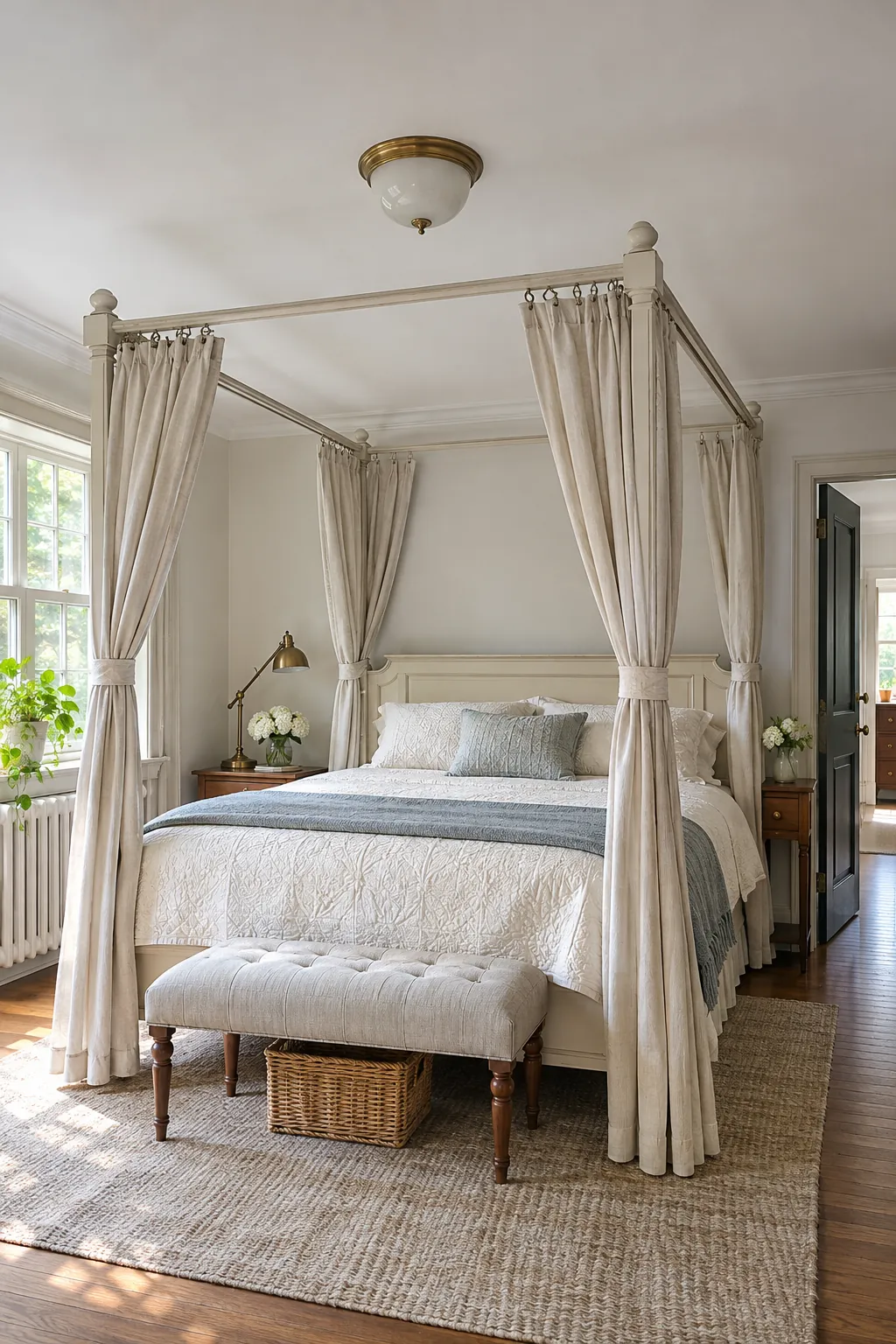
Use a Wall Mounted Half Canopy
A wall mounted half canopy can define the head of the bed in a room with limited floor area. The support must attach to suitable structure and remain shallow enough that it does not feel heavy above the pillows. Side panels should stop before they interfere with bedside tables.
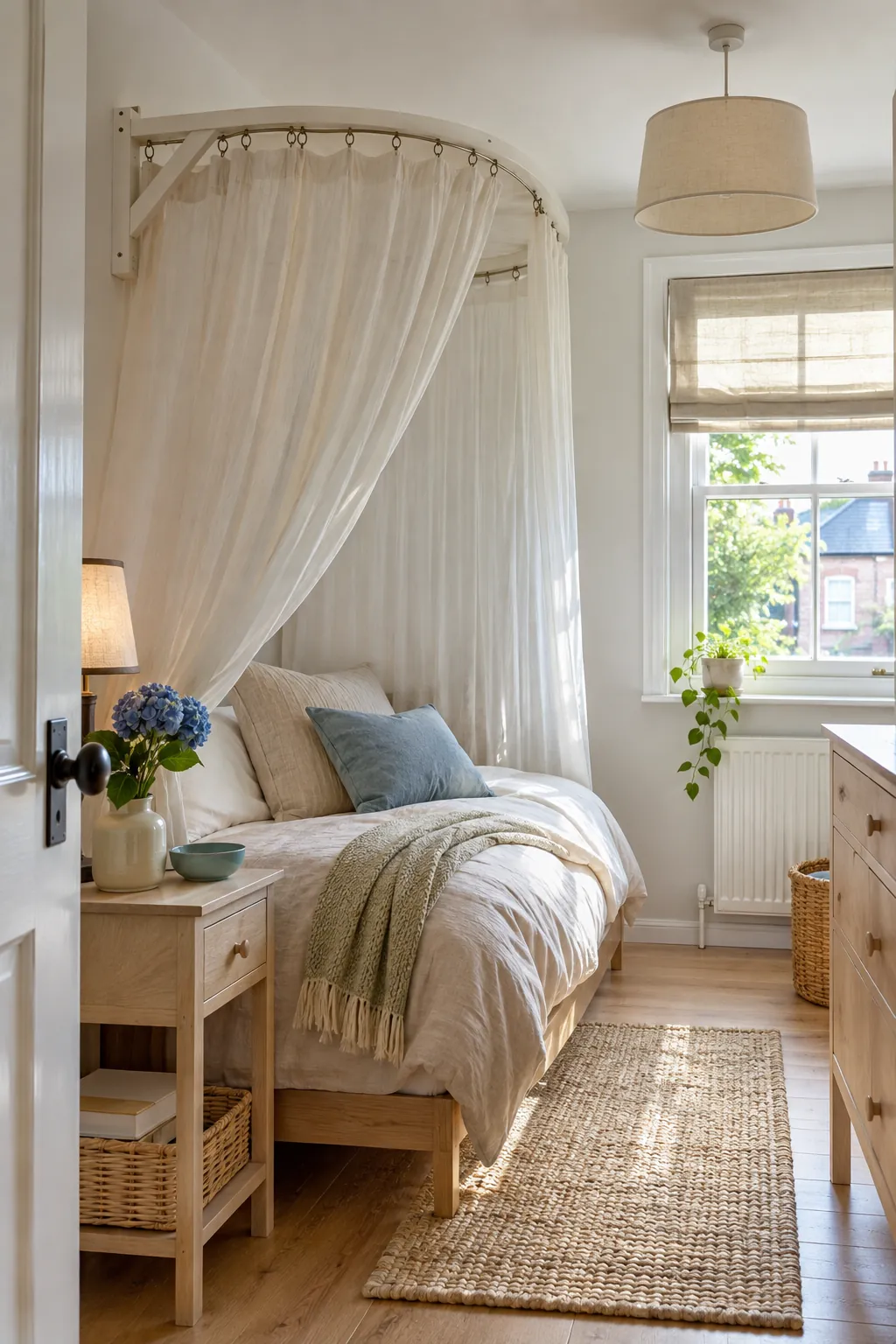
Balance Dark Drapes With Light Bedding
Deep curtains can make an adult canopy feel calm and cocooning, but they also absorb light. Restrict the dark fabric to two sides and use pale sheets to keep the sleeping area readable. Test the treatment at night and during the day before committing to every panel.
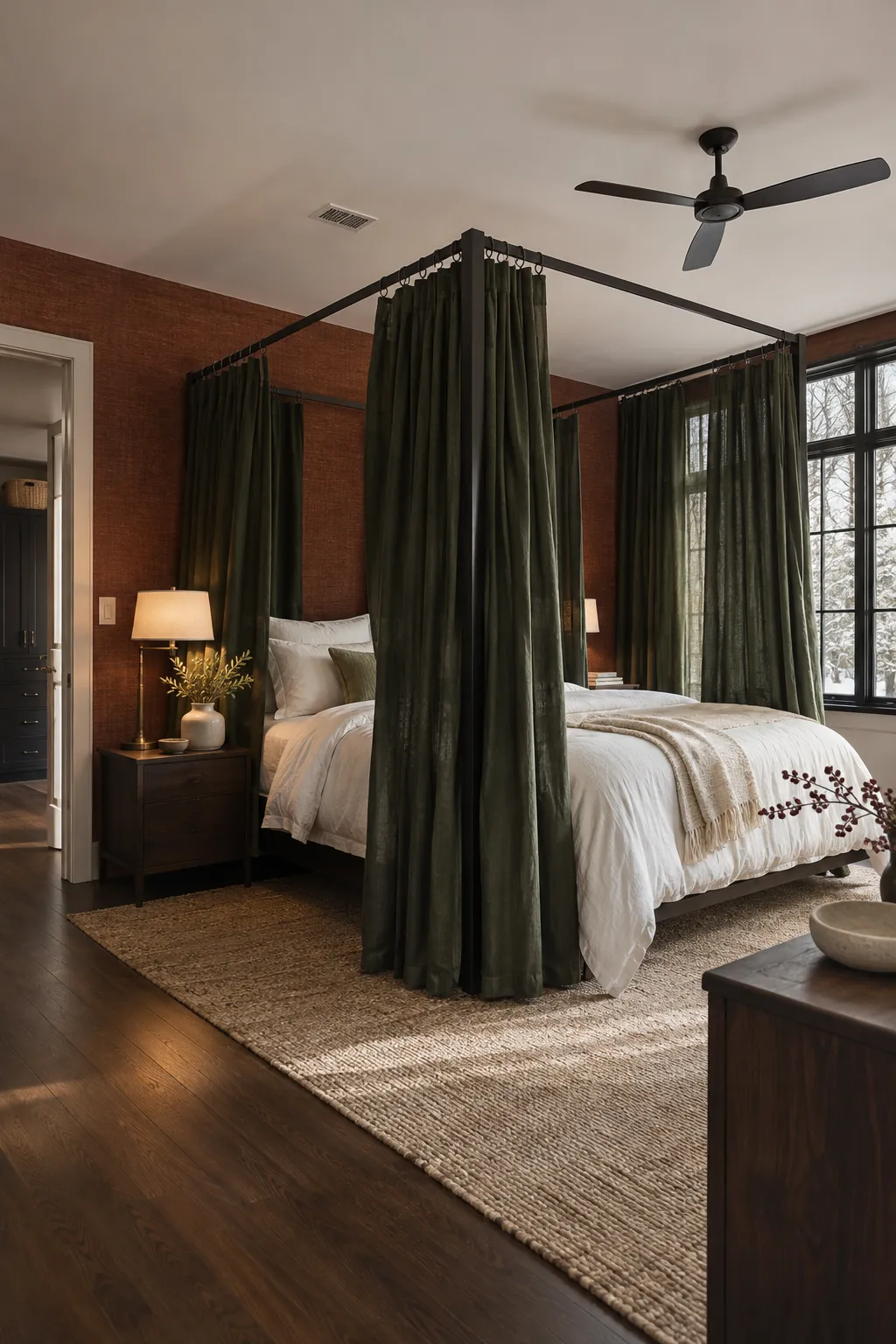
Place the Bed Under a Slope
An attic canopy should follow the usable height of the room instead of fighting the roofline. Position the lower rail beneath the slope and preserve a standing path on the open side. A low frame and pale materials help the angled ceiling feel intentional.
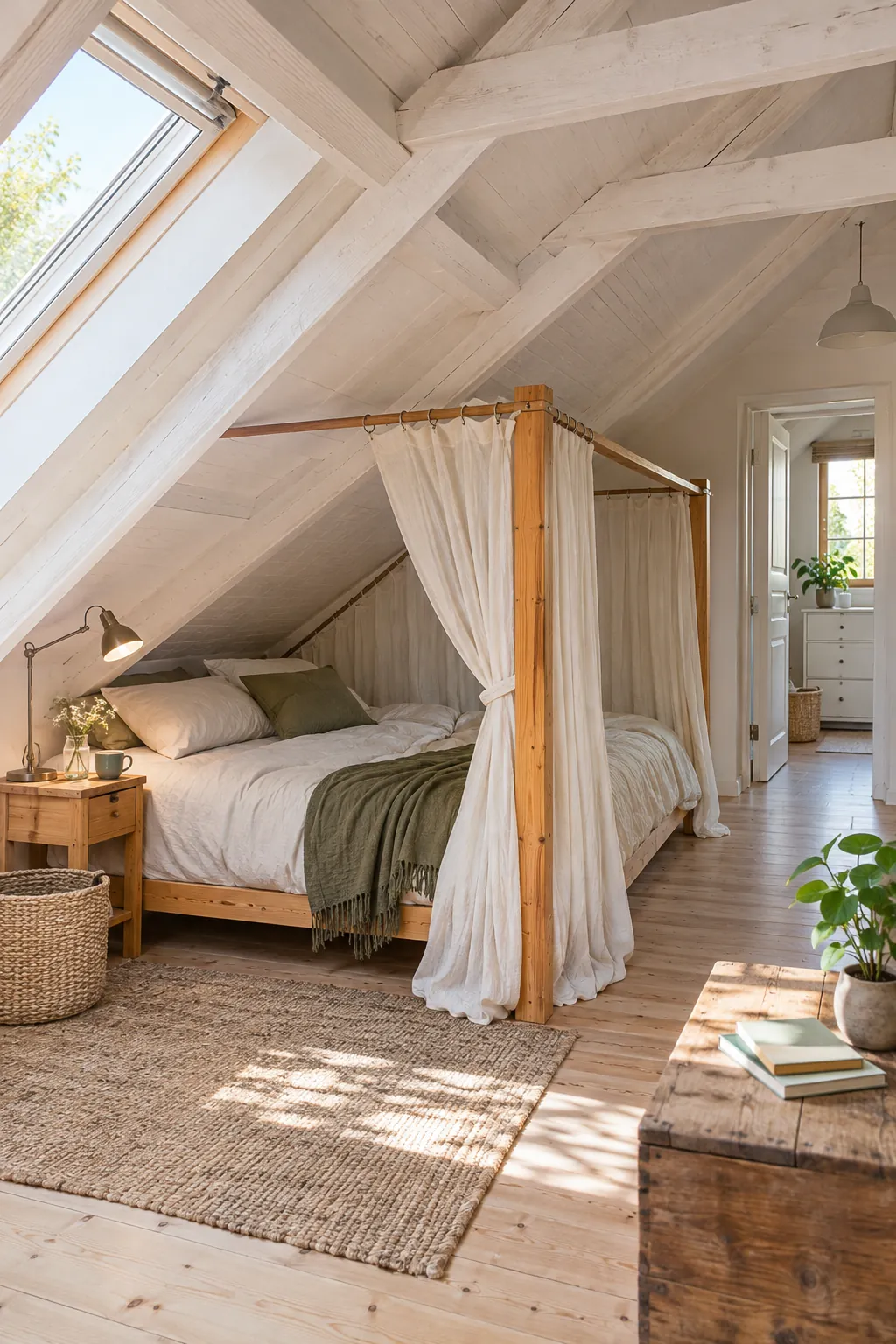
Add Privacy in a Shared Room
A partial canopy can create visual privacy in a shared bedroom without building a solid divider. Use breathable curtains that open fully and agree on a layout that preserves shared light and circulation. The fabric should not cover vents, exits, or access to common storage.
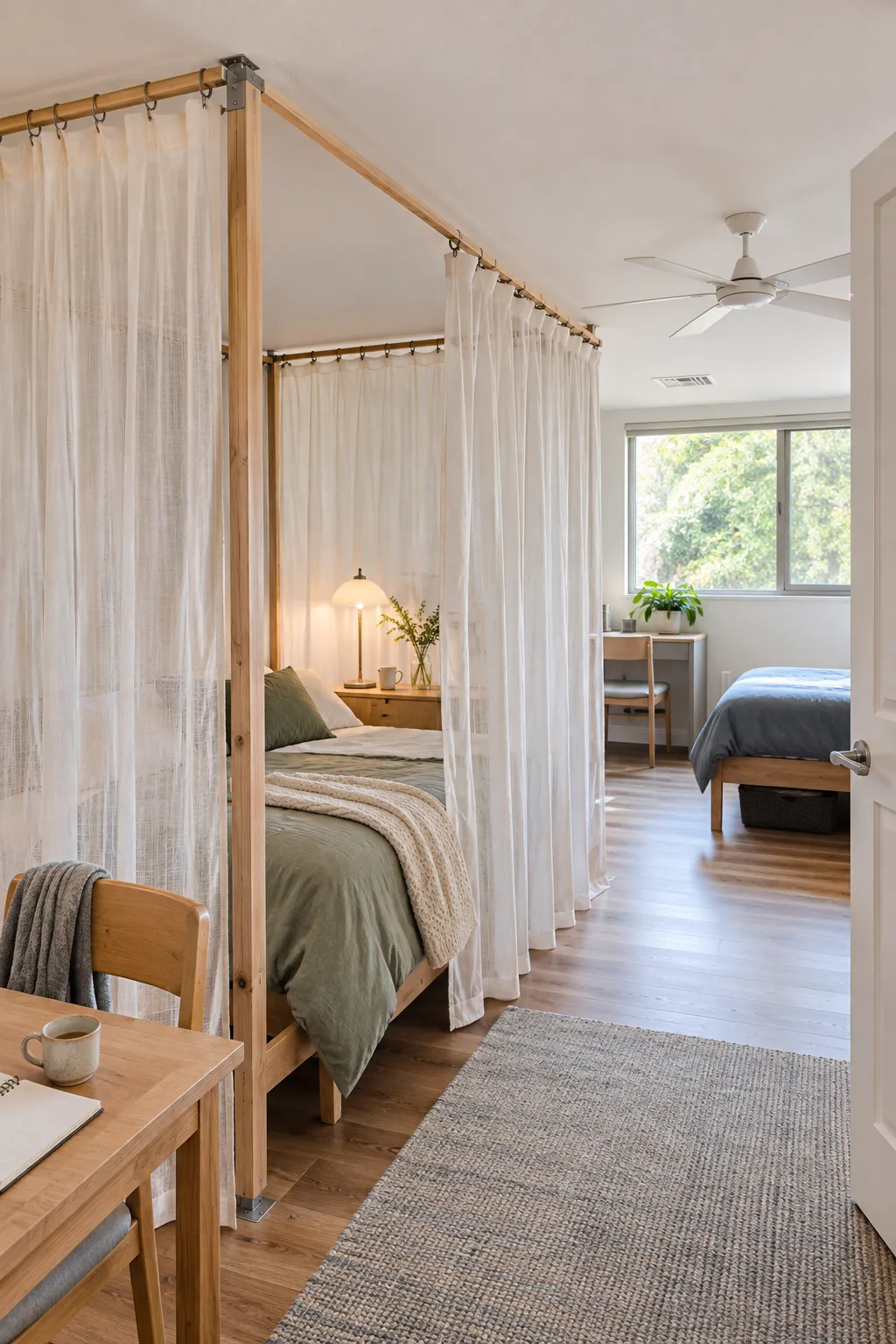
Make a Reading Retreat
Supportive pillows and a focused lamp can turn a canopy bed into a useful reading retreat. Keep the lamp mount and cord beyond loose curtains, then place a small shelf within easy reach. A few current books make the room feel used, while large stacks create clutter and dust.
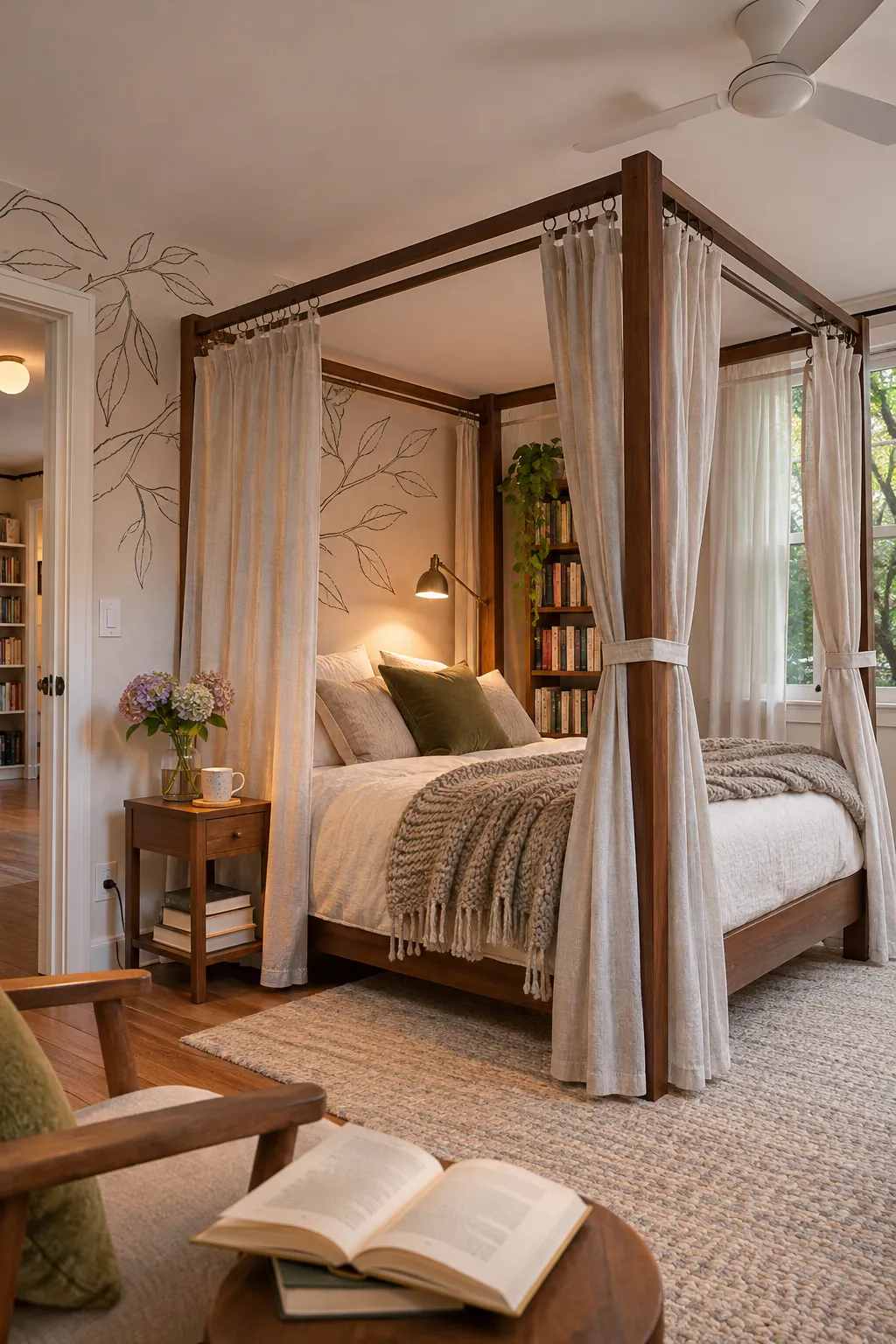
Choose Washable Curtain Panels
Canopy curtains sit close to bedding and need a realistic cleaning plan. Choose panels that fit your washing method, use removable rings, and avoid hems that drag across the floor. Fewer wide panels are usually easier to remove and rehung than many narrow pieces.
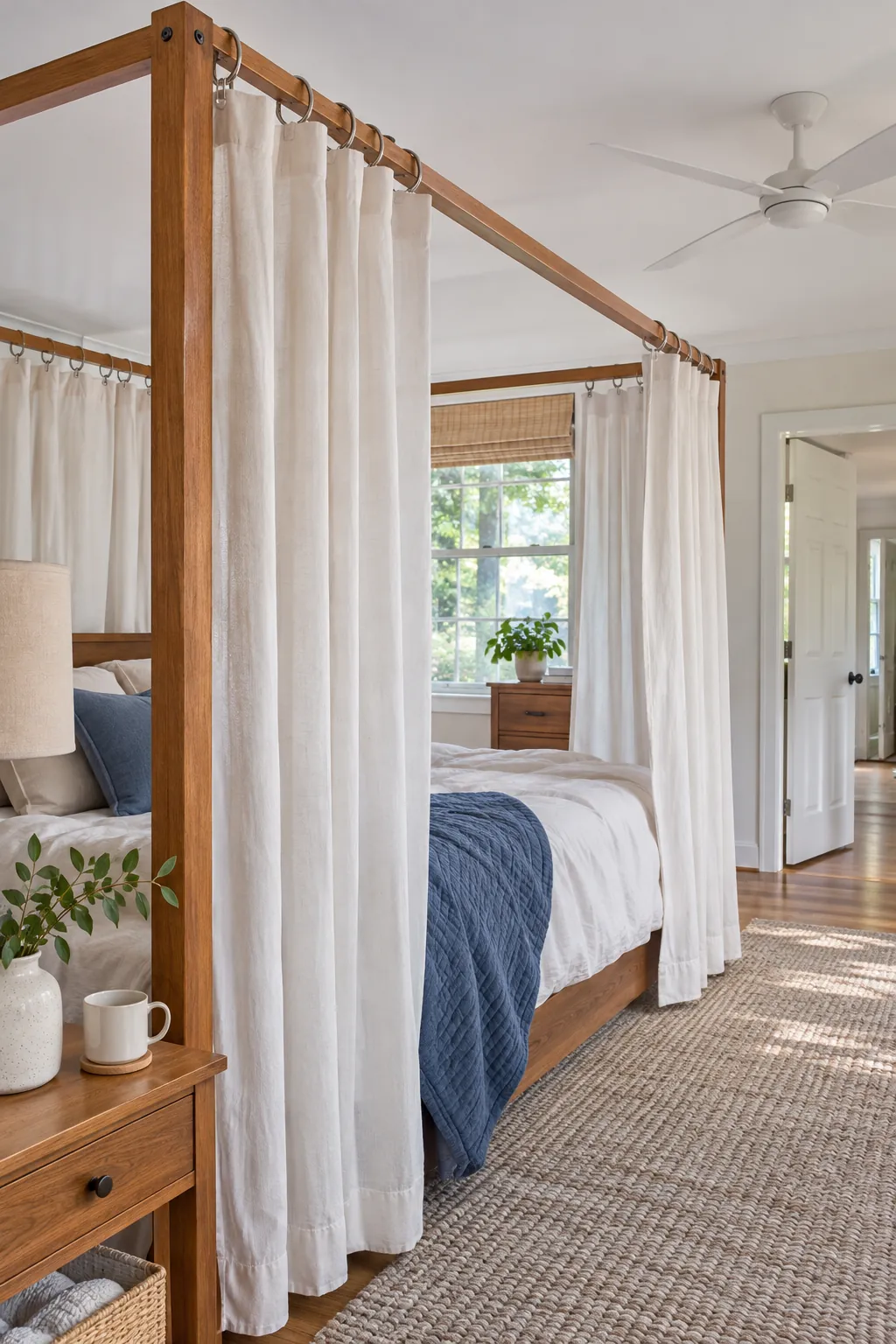
Layer Texture Without Clutter
A canopy room can feel rich through texture even when the color palette stays quiet. Combine a smooth sheet, slub curtain, woven rug, and visible wood grain, then stop before every surface gains another layer. Clear bedside areas keep the tactile room calm.
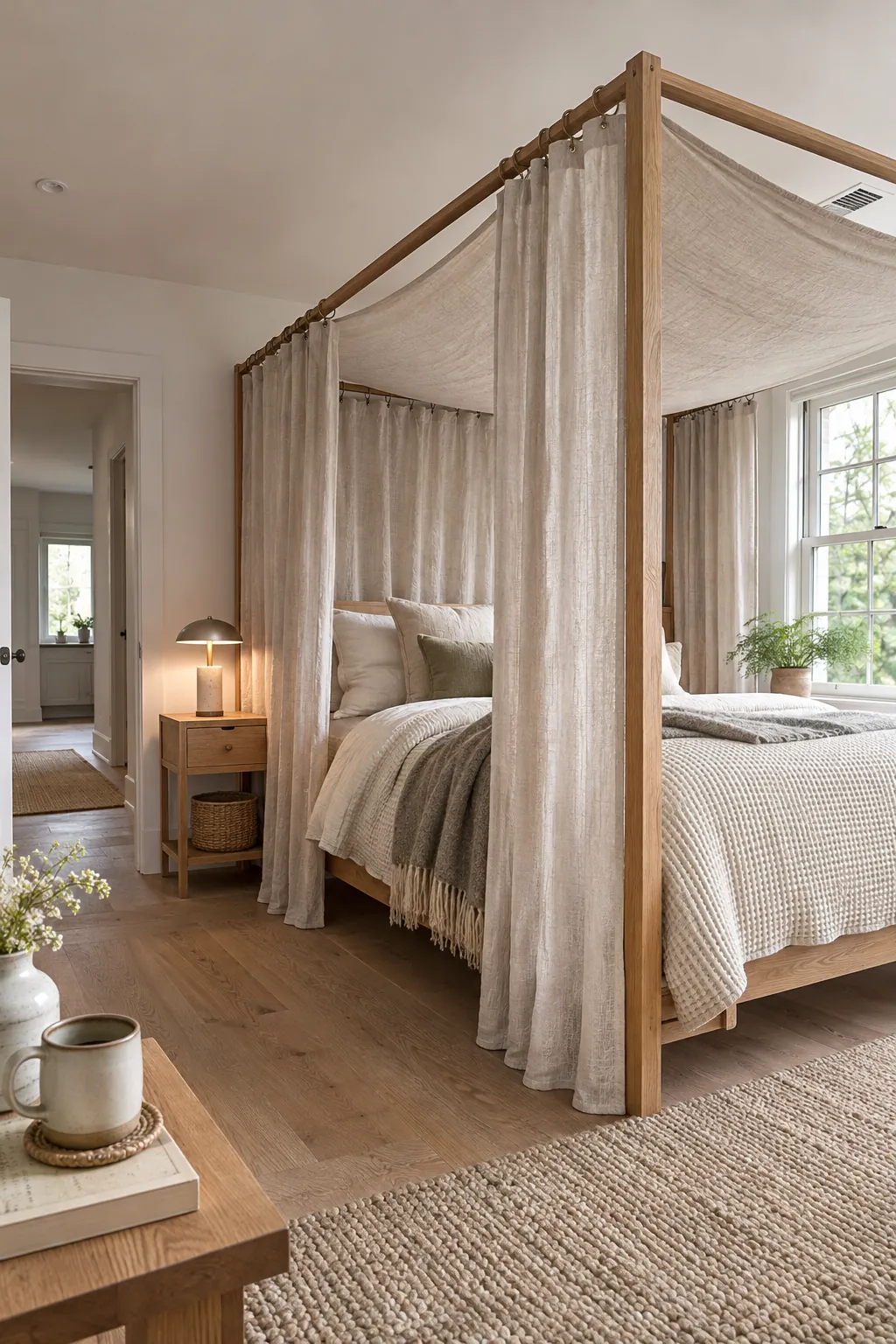
Use Color Only at the Canopy
A colored canopy panel can act as the main accent in an otherwise neutral room. Repeat the hue once in a small object so it feels connected, but avoid matching every cushion and accessory. This approach lets you change the room later without replacing large furniture.
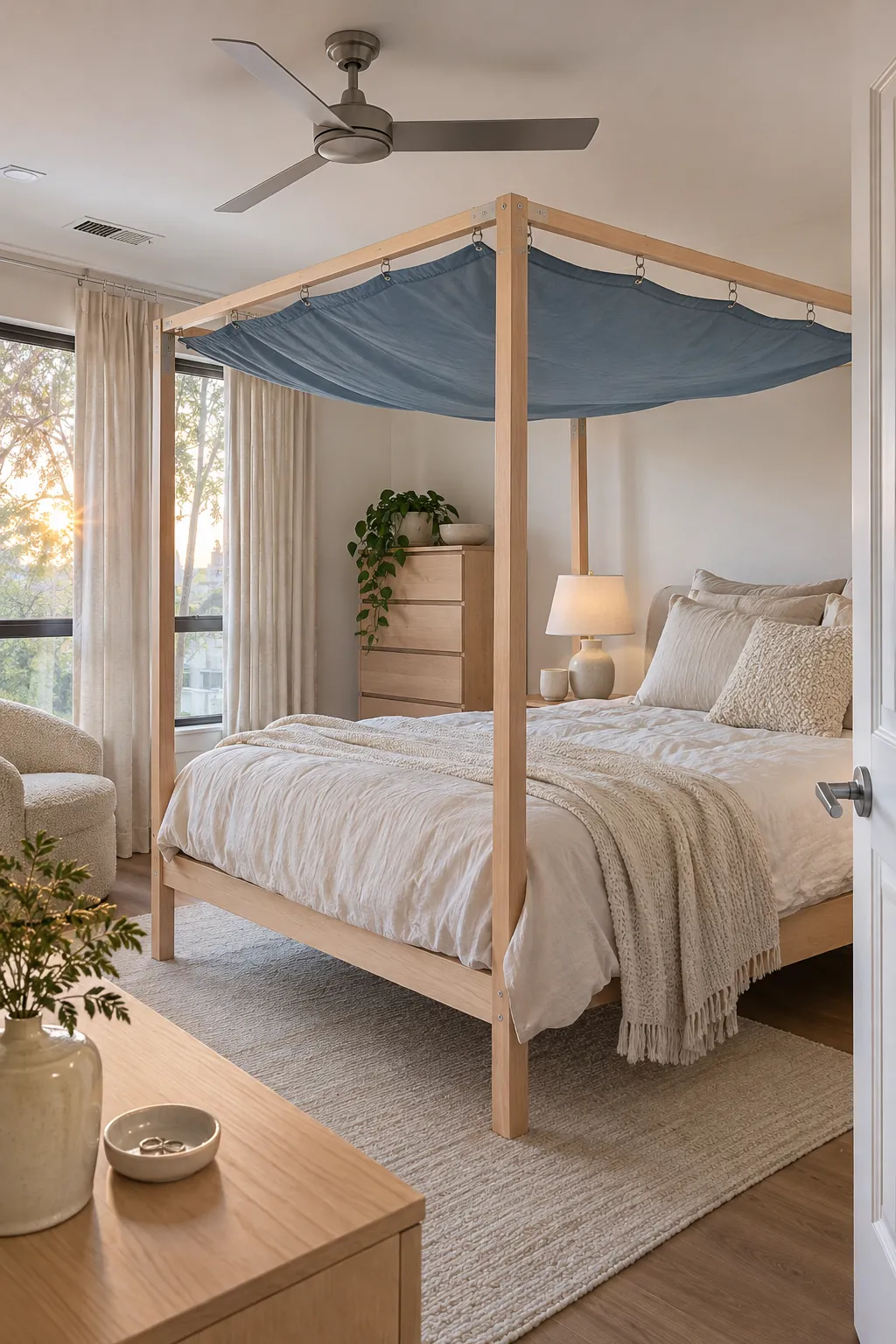
Keep Window Access Clear
A canopy near a window must not block opening hardware, blinds, or safe ventilation. Tie curtains beyond the moving window and preserve a route for cleaning the glass. Watch the path of direct sun because strong exposure can fade fabric and disturb sleep.
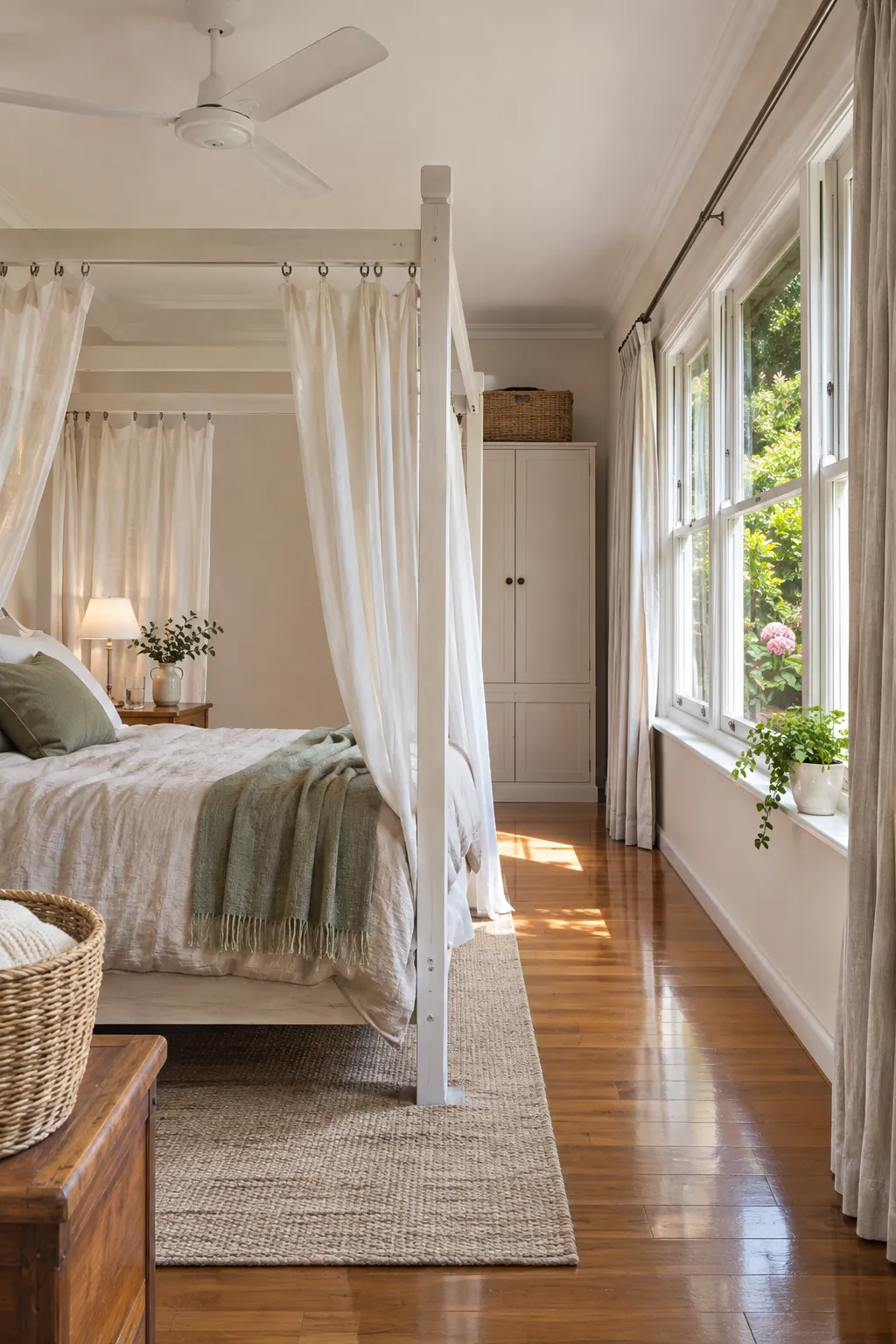
Plan Lighting Outside the Fabric
Bedside lighting should remain stable, reachable, and separated from canopy panels. Wall lamps or compact table lamps often work better than pendants inside a fabric enclosure. Check where shadows fall so the canopy feels cozy without making reading difficult.
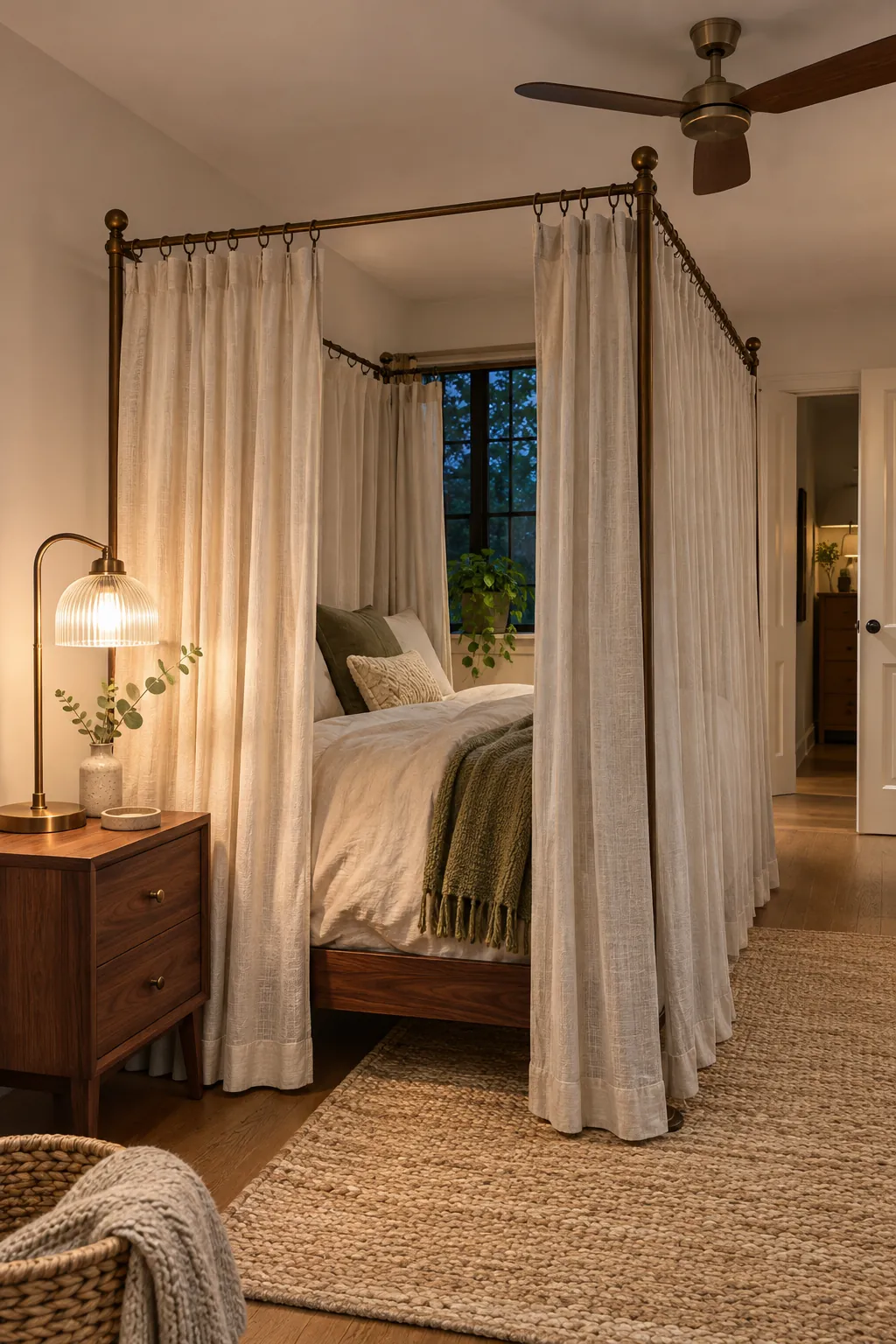
Use a Corner Canopy Layout
A bed can move closer to one wall when the opposite side still offers comfortable access. Choose straight posts and under bed storage to reduce the need for extra furniture. The room will feel larger when the route from the door remains open and the frame color stays quiet.
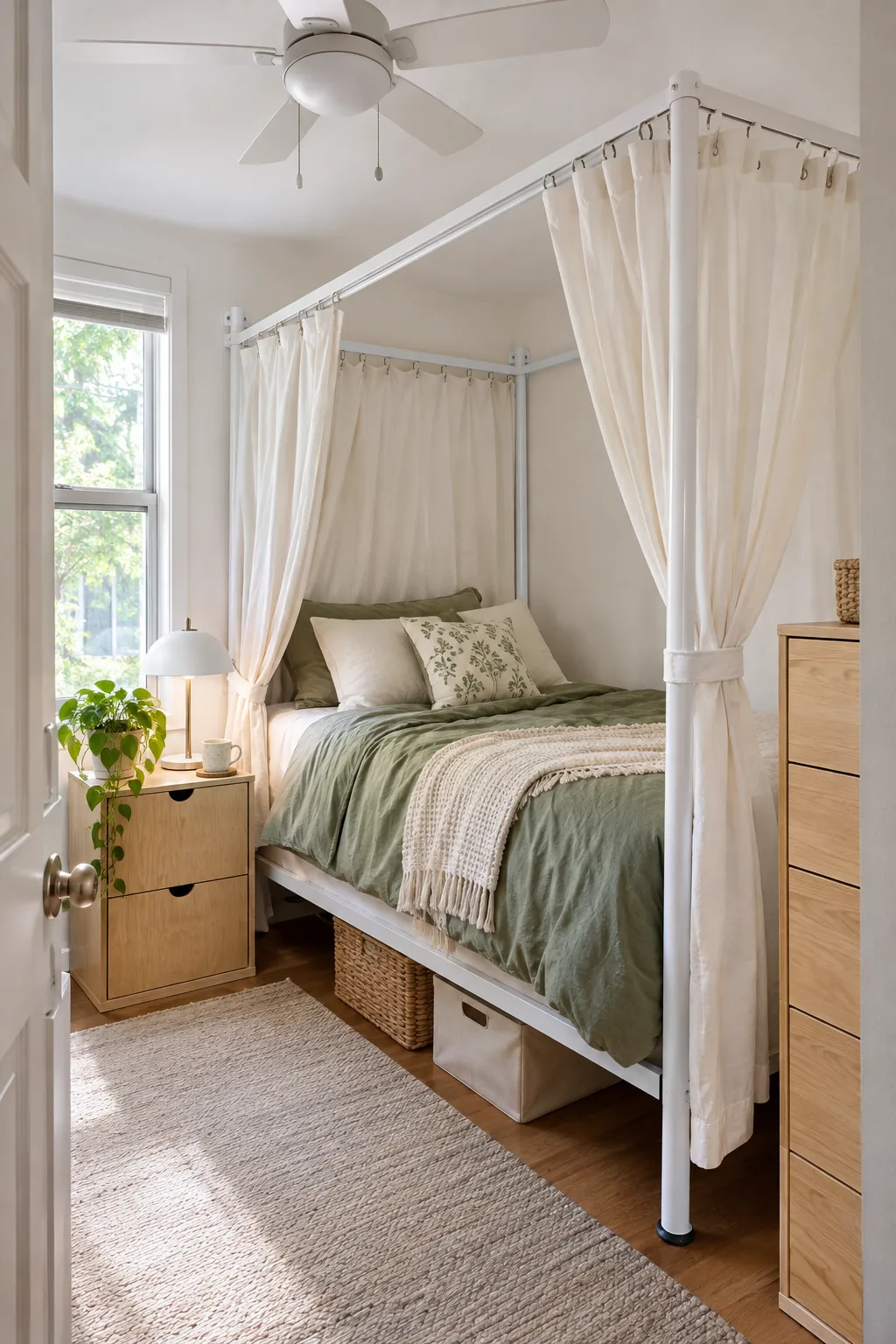
Build a Calm Bohemian Room
A bohemian canopy does not need layers on every surface. Use one patterned textile, one plain curtain, natural timber, and a few objects with personal meaning. Empty floor and wall areas let the strongest materials look intentional instead of crowded.
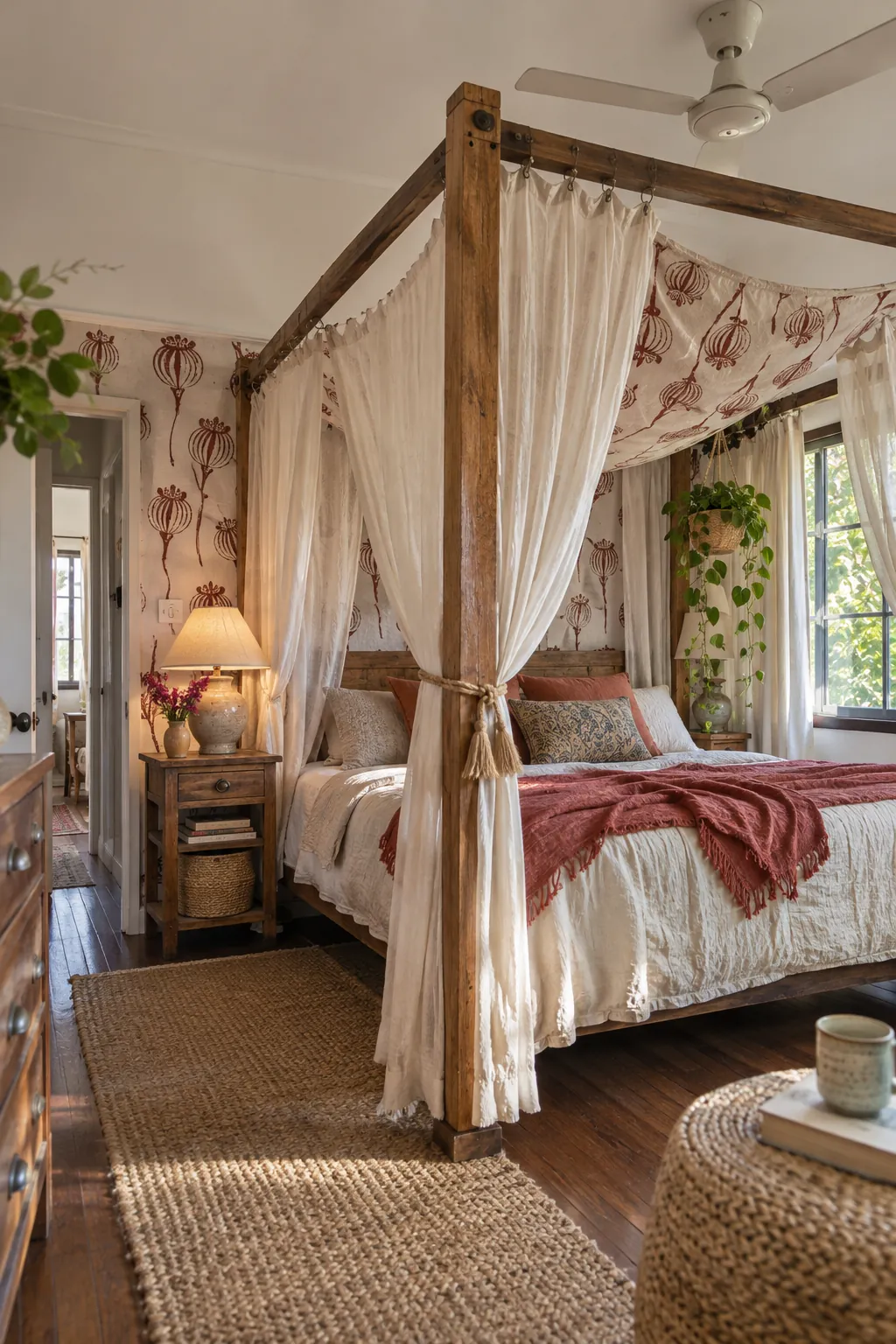
Choose Comfort Over a Perfect Photo
The best canopy room supports sleep, movement, cleaning, and light before it supports a photograph. Test curtain positions, bedside reach, and airflow for several days before adding more decoration. A practical layout will continue to feel inviting after the novelty of the canopy fades.