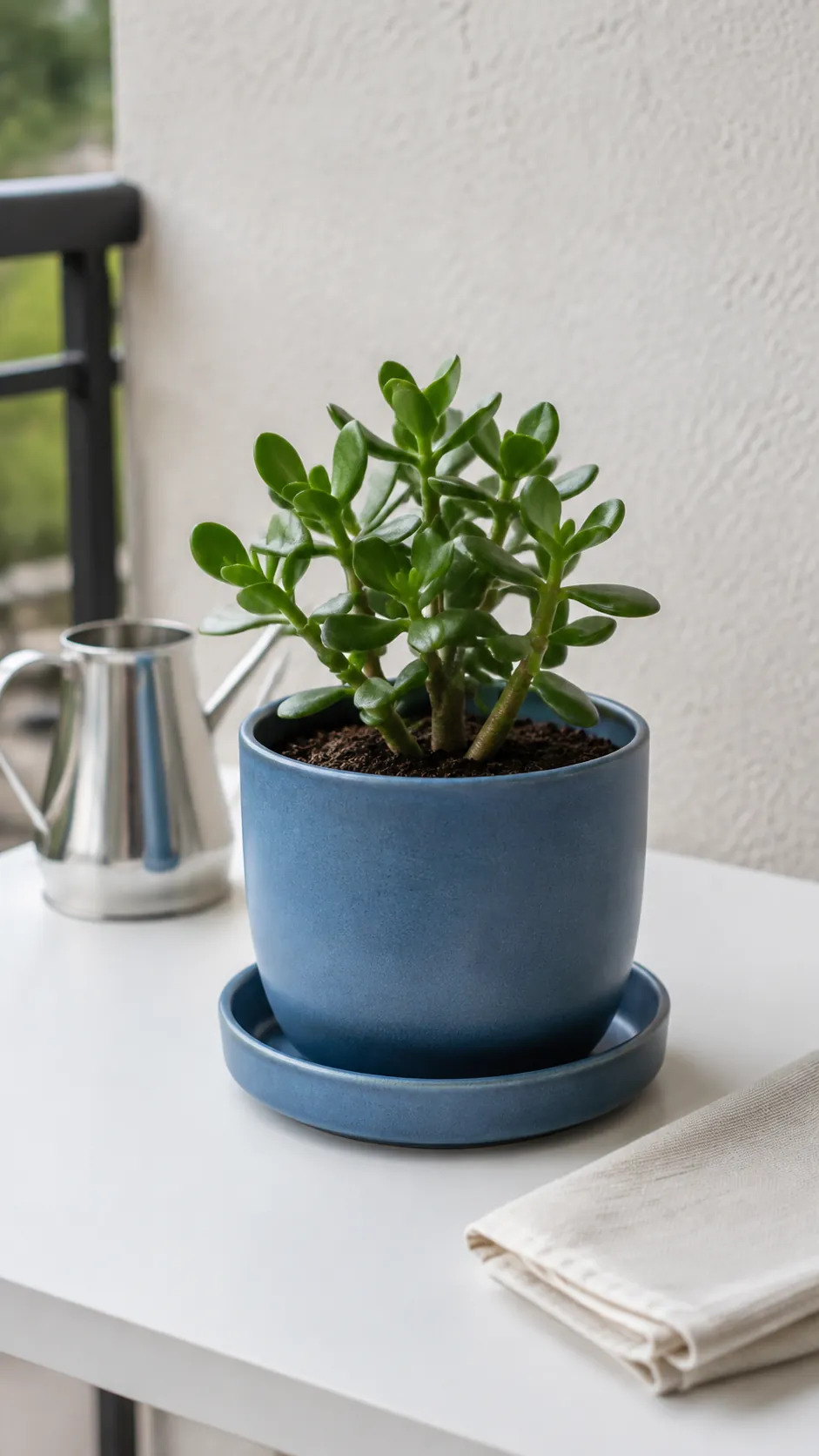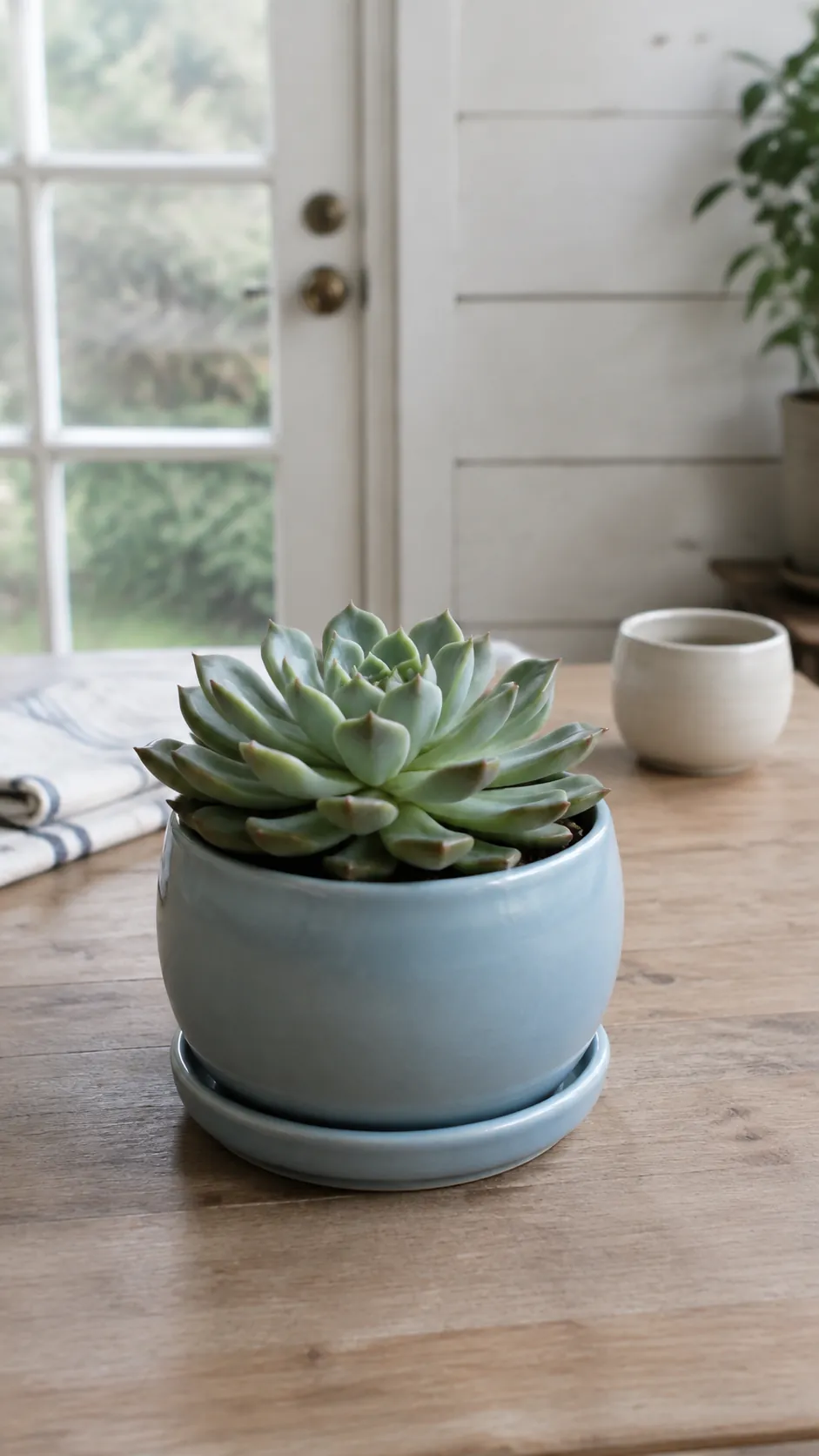
A beautiful container becomes frustrating when the plant cannot drain or the roots will not fit through the opening. Start with the growing space and the watering routine, then choose the shape and glaze you enjoy seeing every day. The designs below range from simple cylinders to handmade forms, with practical details to check before planting.
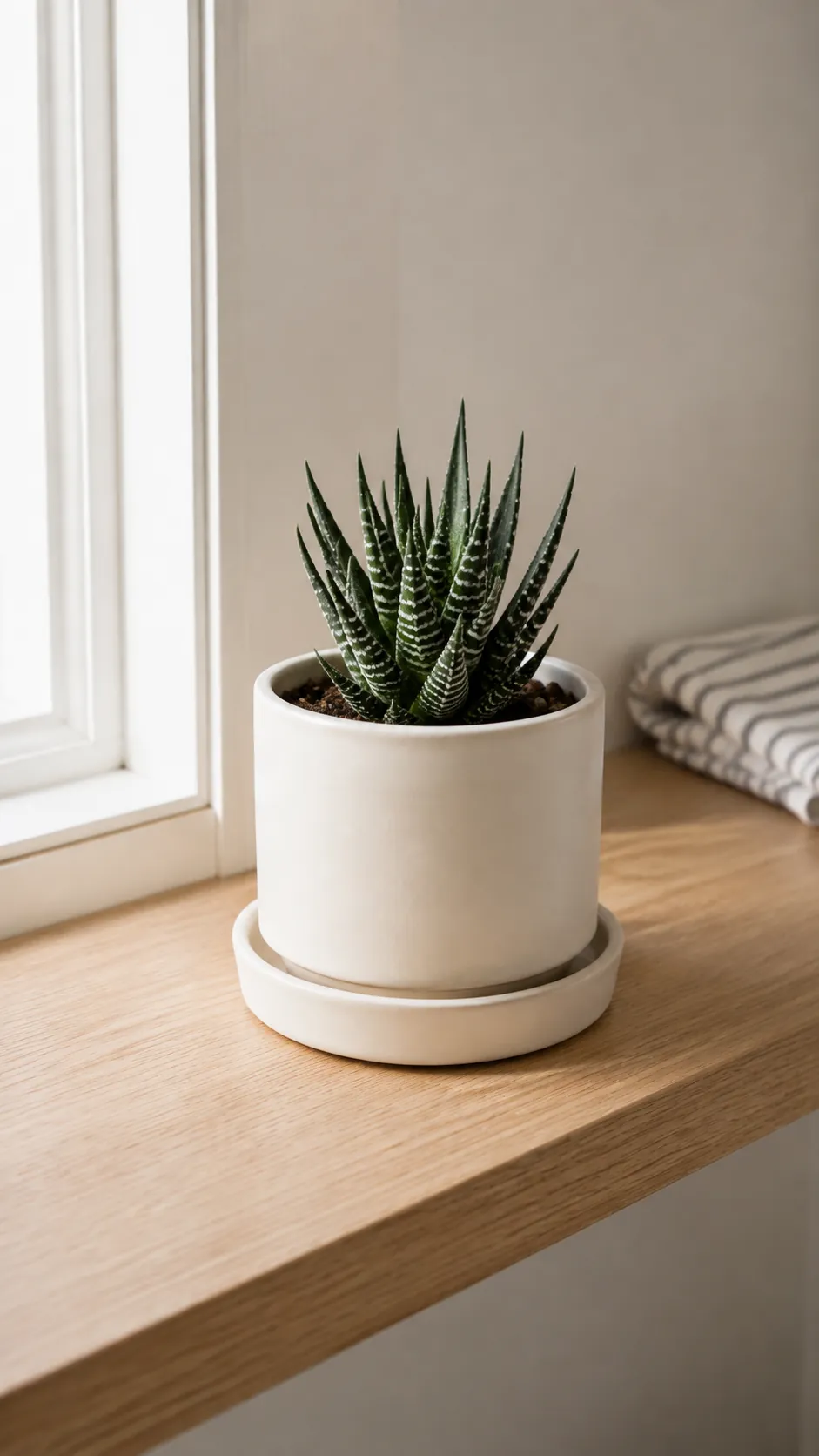
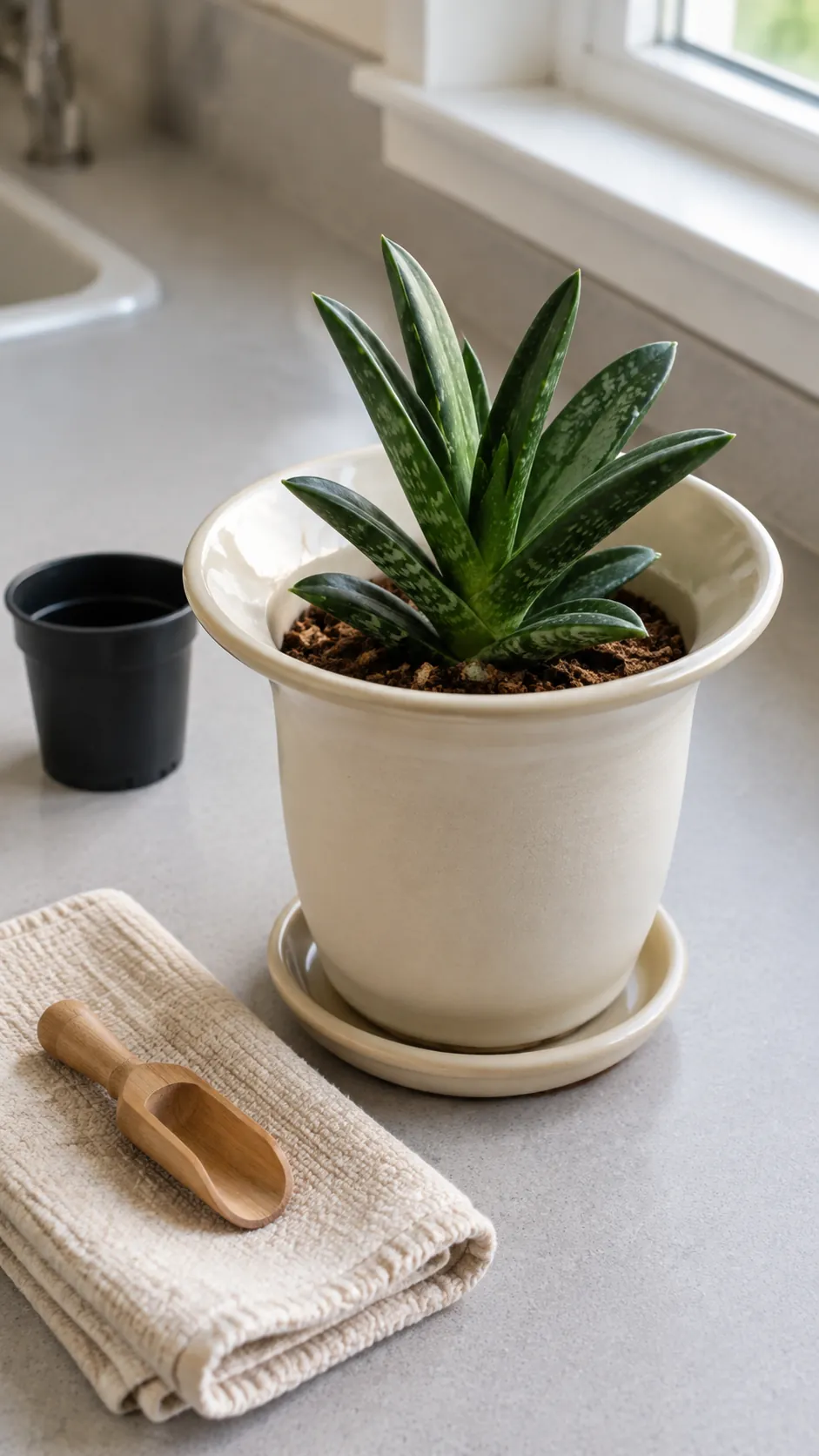
Ivory cylinder with a matching saucer
A plain ivory cylinder lets the plant’s outline do the decorating, especially when a pointed haworthia rises above a smooth rim. Choose a version with a drainage opening and a separate saucer so the clean silhouette also works at watering time. Check the internal dimensions before buying, because thick ceramic walls can leave less root space than the outside measurement suggests.
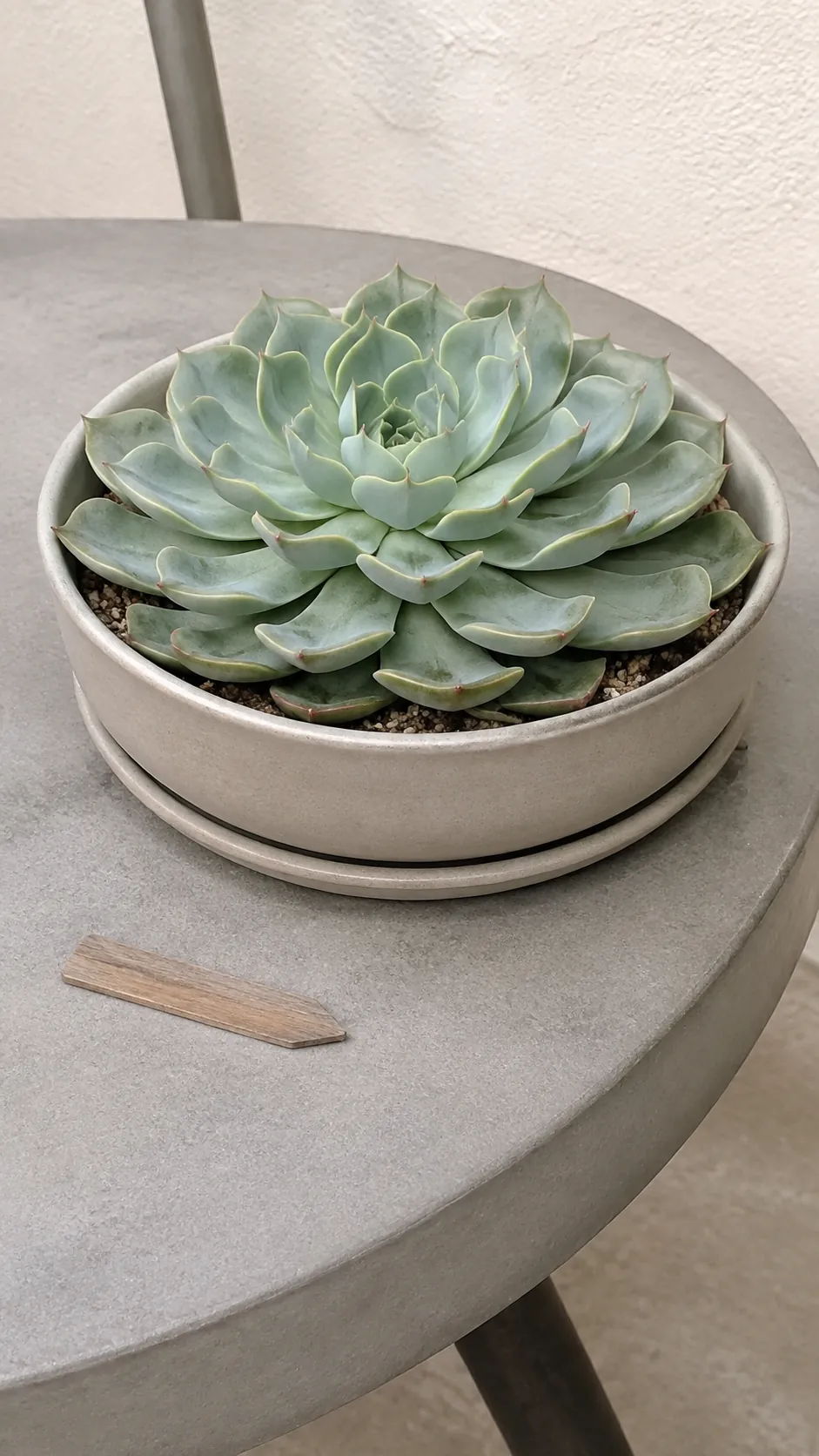
Low bowl for a single broad rosette
A low ceramic bowl frames an echeveria without hiding its lower leaves behind a tall wall. Match the bowl depth to the existing root system instead of assuming every succulent wants the shallowest dish available. Leave room around the rosette to inspect the soil, and choose a draining bowl rather than relying on stones beneath the mix.
Pinched stoneware with an uneven rim
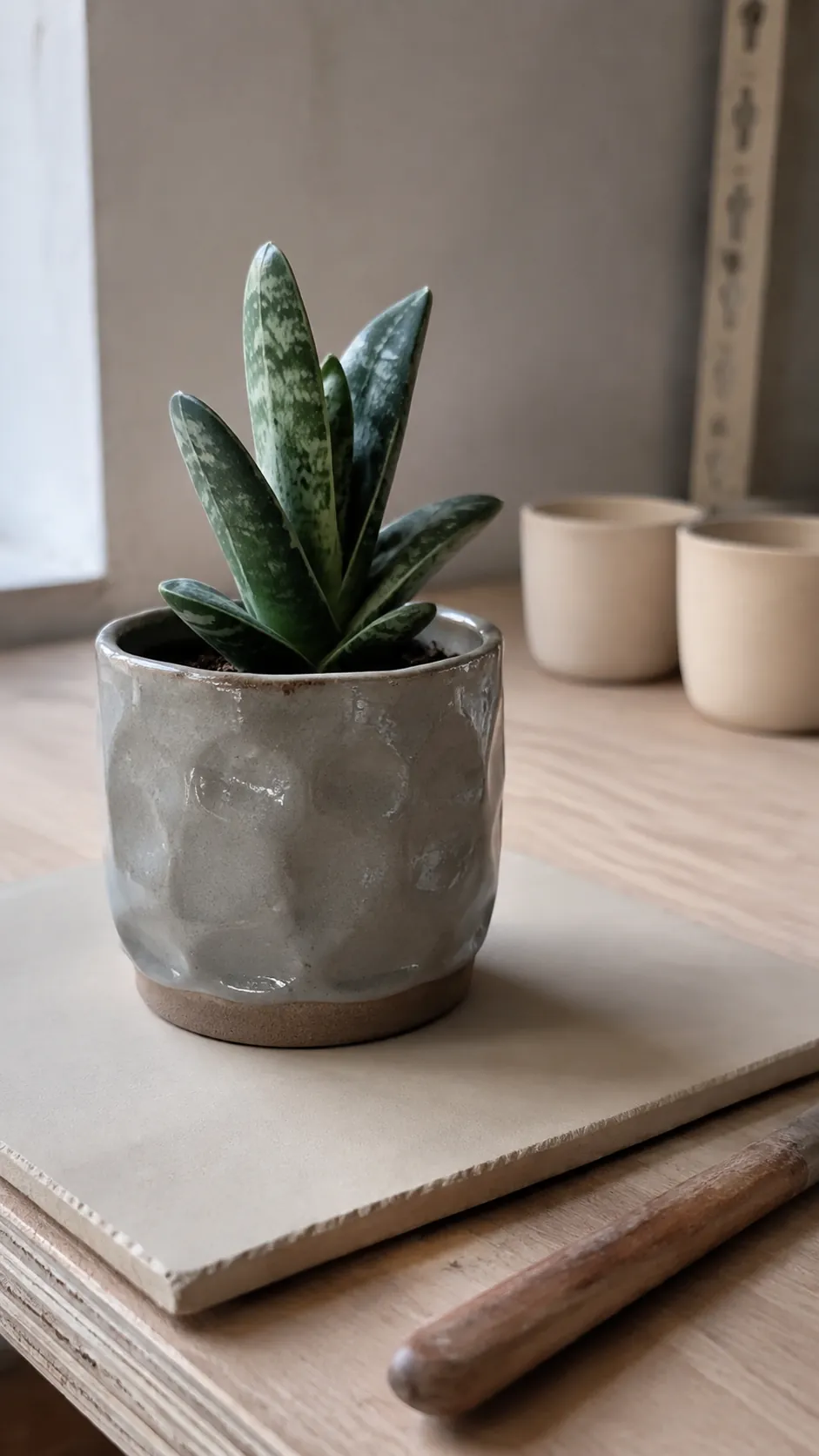
A gently irregular pinch pot brings handmade character to a windowsill without requiring a busy painted pattern. If you are making one, aim for reasonably even walls and a stable base before adding decorative marks. The clay must be fired appropriately for functional use, since air dry craft clay is not an interchangeable substitute for durable ceramic pots for plants.
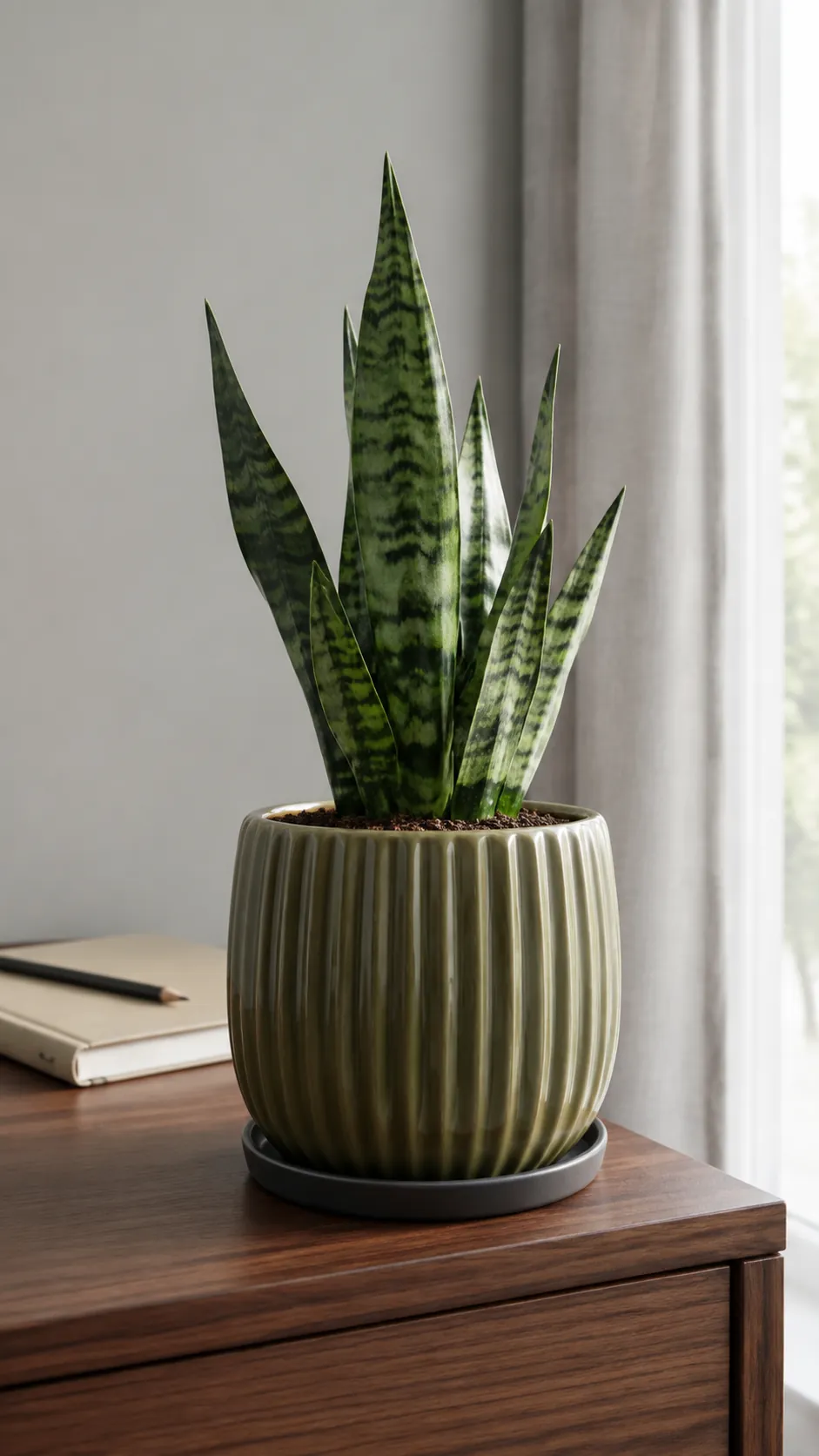
Ribbed planter for upright leaves
Vertical ribs repeat the lines of an upright succulent and add interest even in a single glaze color. Run your eye along the rim and foot when shopping, since an attractive texture does not guarantee a stable vessel. Deep exterior grooves also collect dust, so a soft brush is more useful than scrubbing at the finish with an abrasive pad.
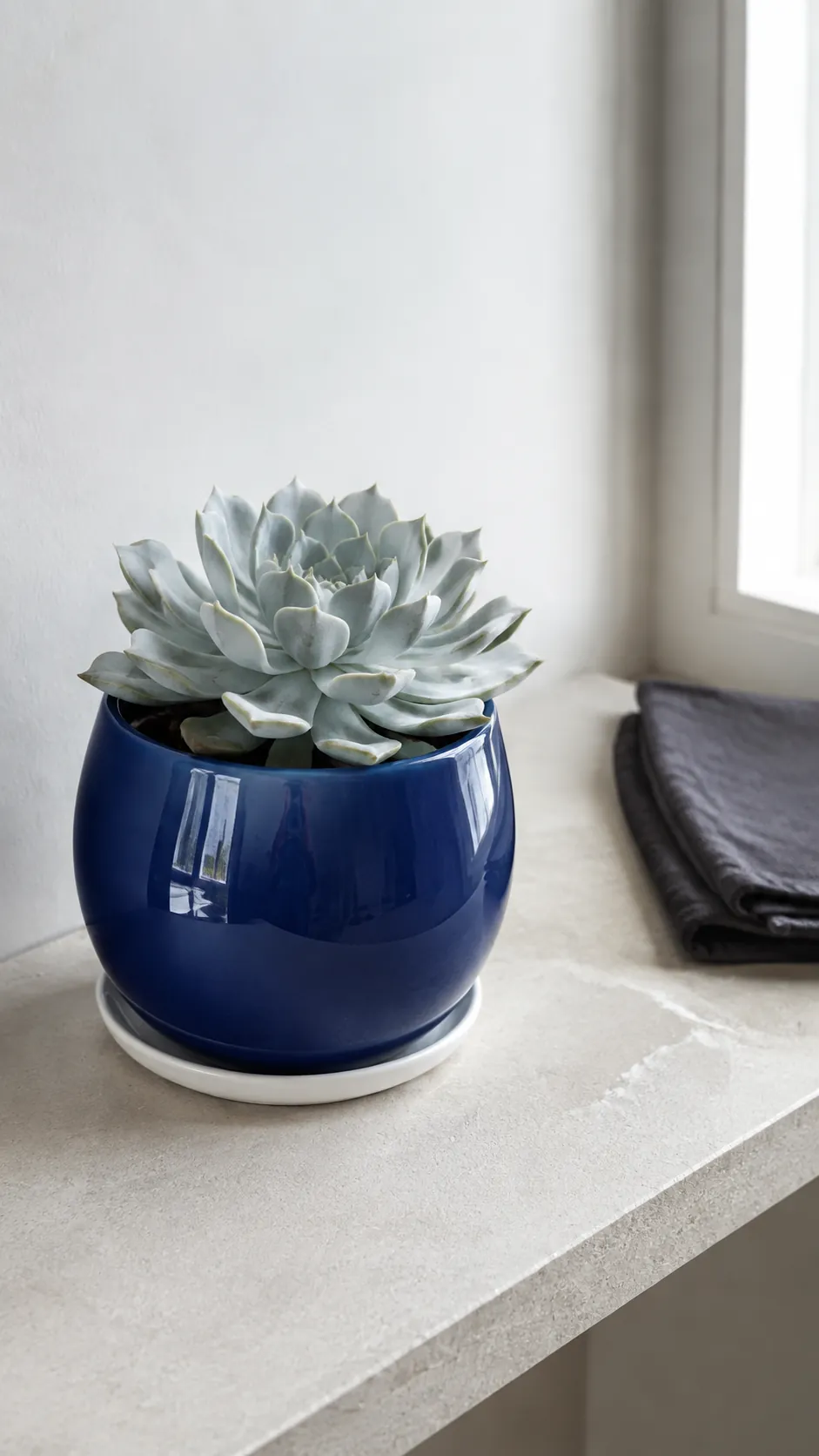
Cobalt glaze for pale foliage
A deep blue pot gives pale green or silvery leaves a strong background. Keep nearby accessories quiet so the glaze and plant do not compete with several other bright objects. Glossy ceramic can reflect a window sharply, which makes it worth checking the pot in its intended position before deciding whether the shine suits the room.
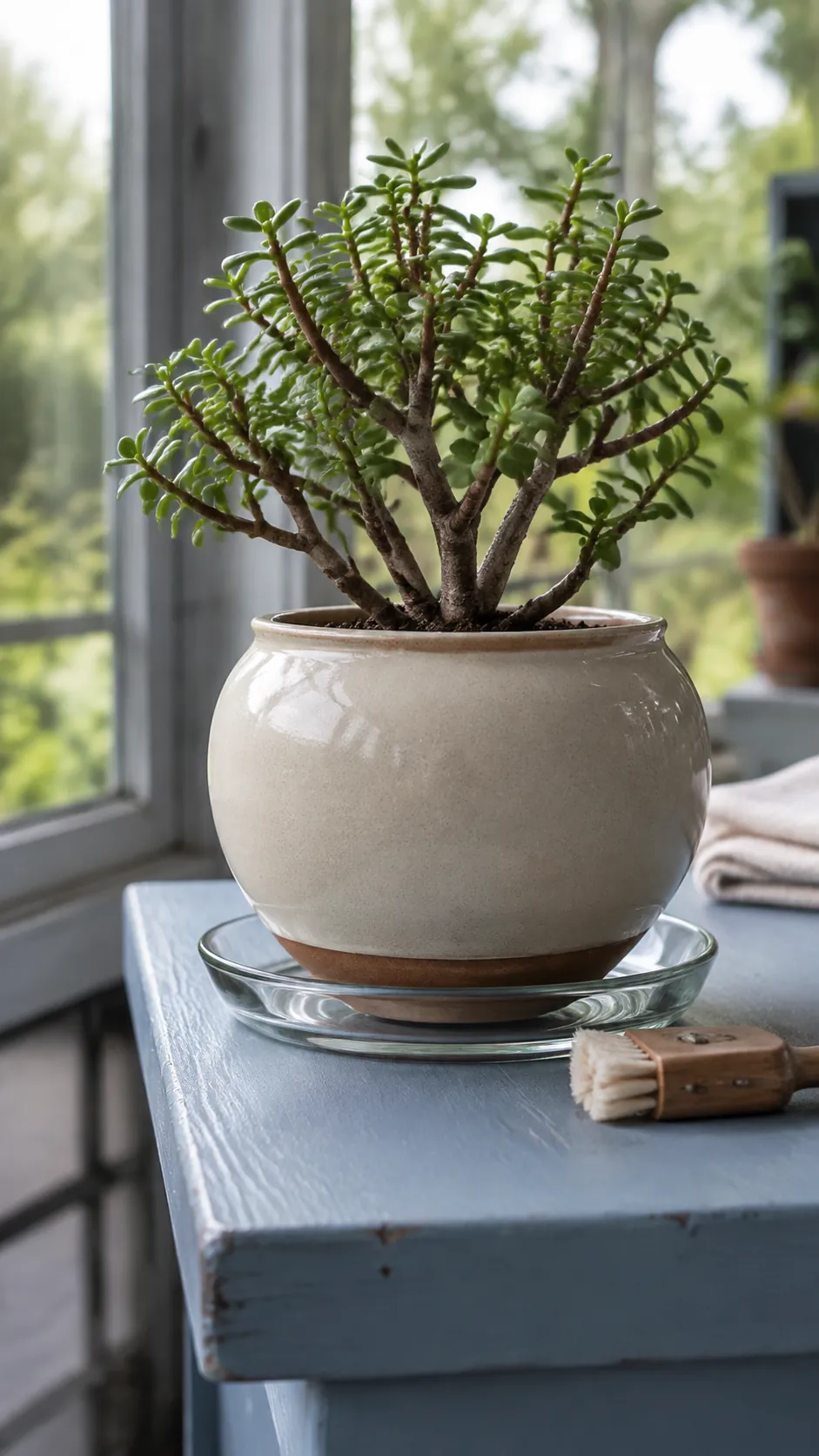
Raw clay foot beneath a glazed body
An exposed clay foot adds a tactile detail to an otherwise simple glazed pot. That bare strip does not mean the whole container will behave like unglazed terracotta, particularly when the interior is glazed. Pair the vessel with a waterproof saucer if it sits on wood, because an unglazed base can still transfer moisture to a surface.
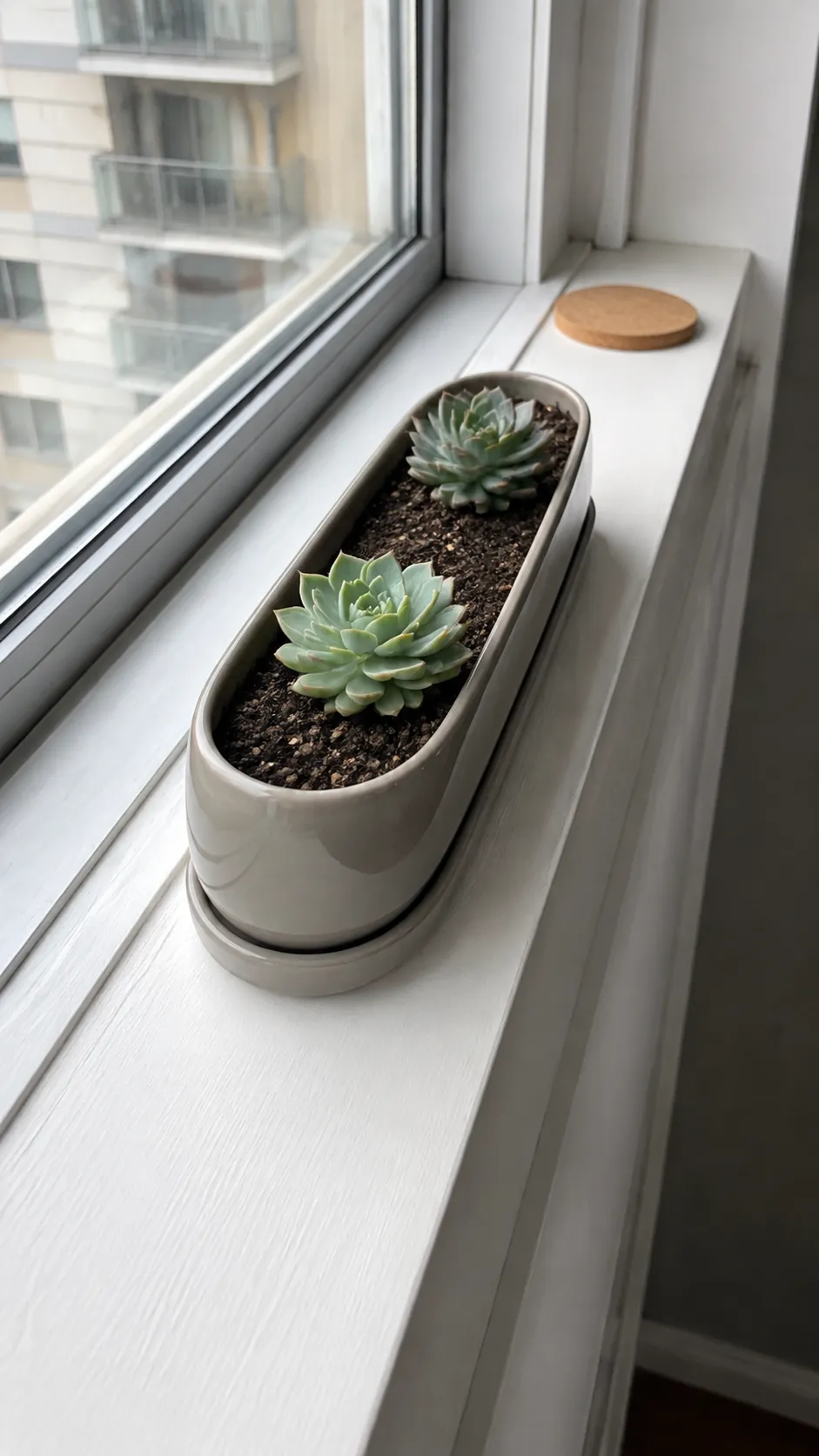
Small oval trough for a narrow ledge
An oval trough uses a long ledge without projecting as far into the room as a round bowl. Check that the whole base fits securely and leave space between the foliage and the window. For a shared planting, combine succulents with compatible light and watering needs rather than choosing solely by leaf color.
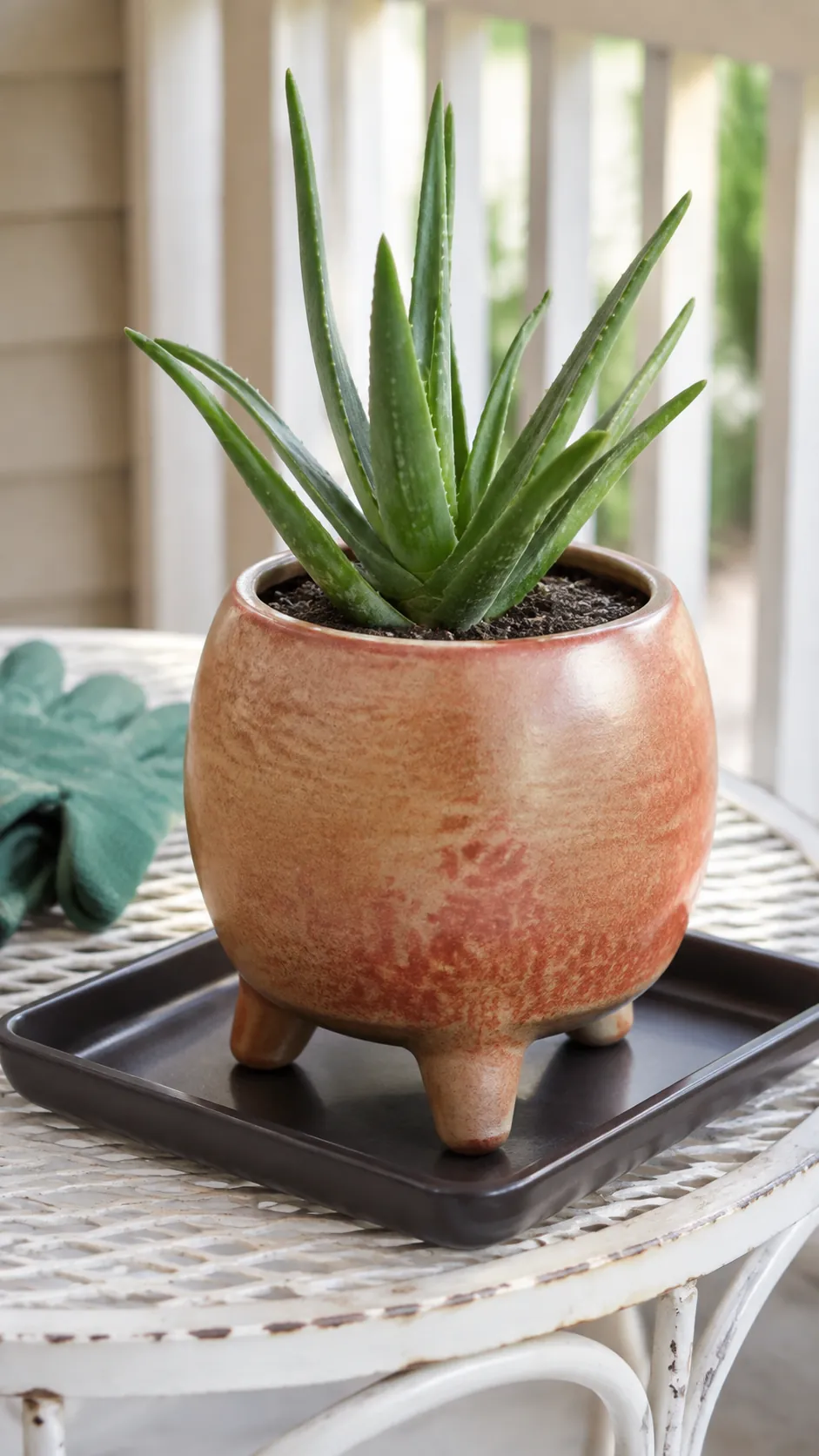
Three short feet for a lifted silhouette
Short ceramic feet make a squat pot feel lighter while leaving its actual growing depth unchanged. Look underneath for a drainage opening that remains clear when the pot is resting normally. A waterproof tray is still necessary indoors, since raised feet do not catch escaping water.
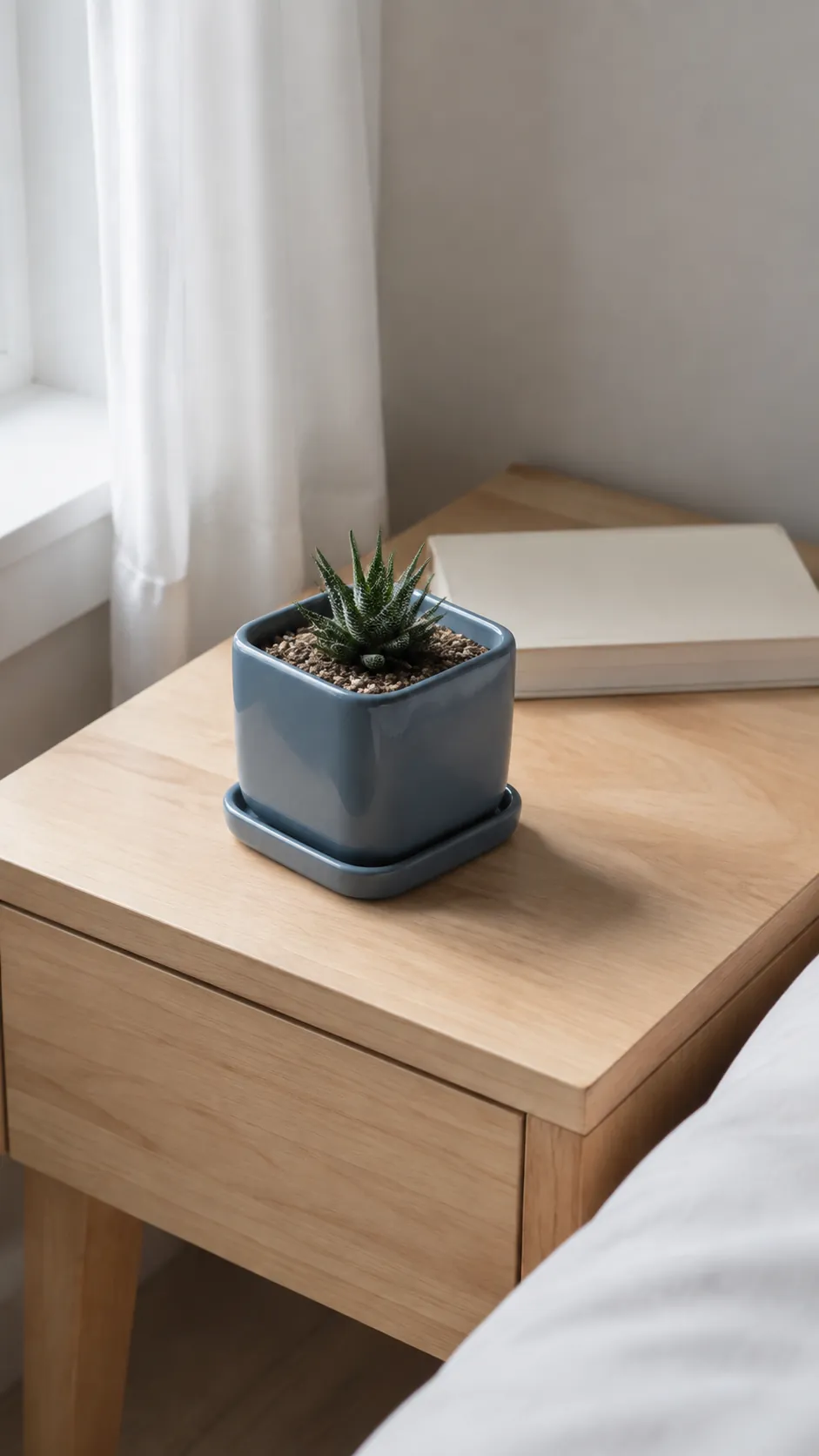
Soft square with rounded corners
A rounded square pot introduces a different outline without the sharp edges of a rigid cube. Its corners can hold mix beyond a circular root ball, so choose a modest size and avoid packing a small plant into an oversized cavity. The shape works well on a square side table where a round saucer would otherwise take up most of the surface.
Flared rim for easy access
A gently flared opening makes it easier to lift a plant for repotting than a vessel with a narrow neck. That practical detail matters when roots fill the container and the soil mass no longer slips out freely. Leave the plant’s lower leaves above the rim so they do not rub against the ceramic edge.
Hand painted botanical sprig
A single painted leaf sprig gives pottery flower pots a personal detail without wrapping the entire vessel in decoration. Choose a motif with enough open space to remain readable when the real succulent grows larger. If you paint an existing pot yourself, use a finish compatible with its surface and remember that decorative paint is different from kiln fired glaze.
Carved wave texture
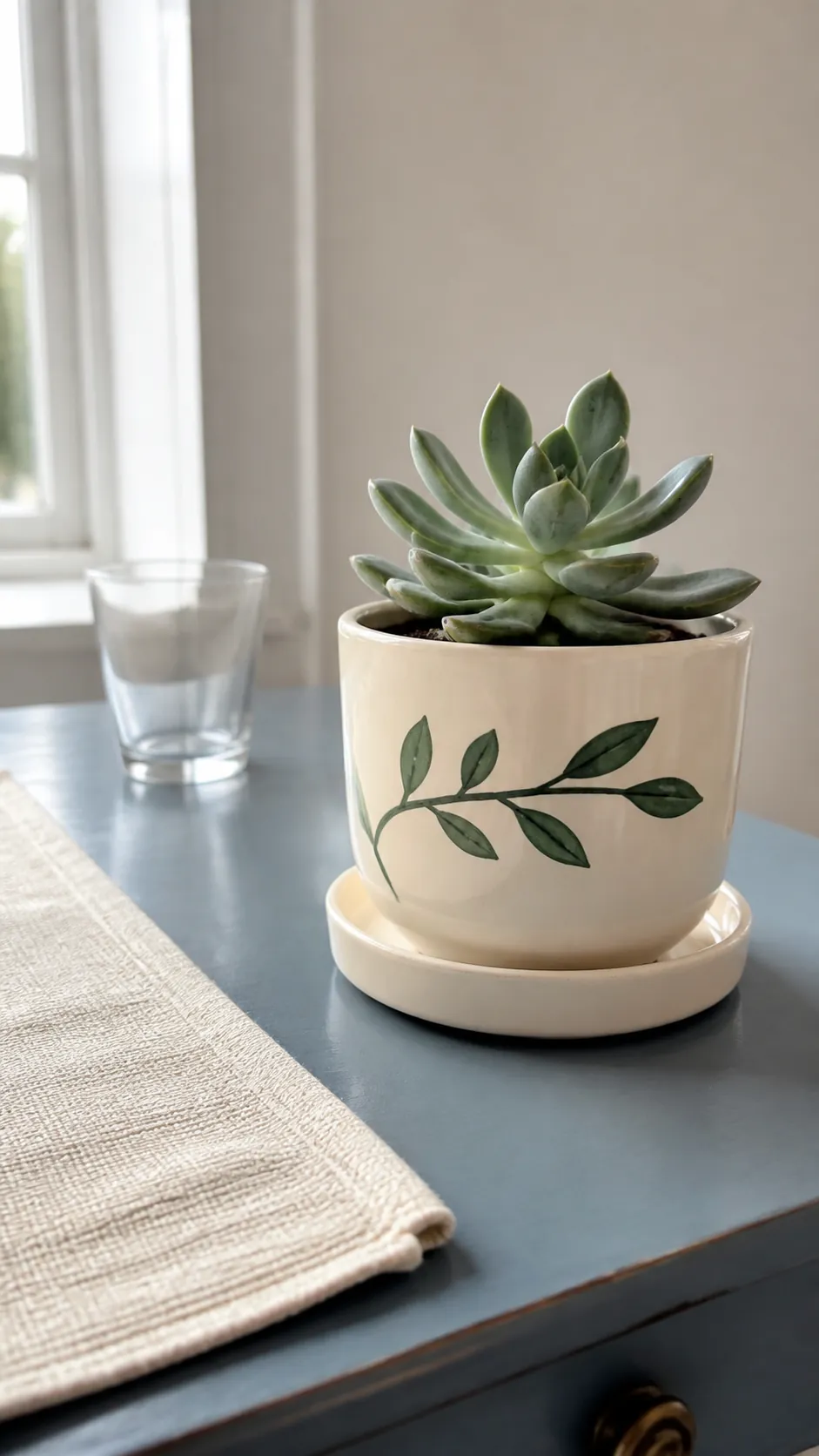
Shallow carved waves give a pot movement while keeping the palette restrained. This is a useful direction for ceramic planters ideas when you enjoy texture but want to avoid a very shiny glaze. On a handmade piece, keep carving shallow enough that the wall remains structurally sound and the interior stays easy to clean.
Petite cup with a removable insert
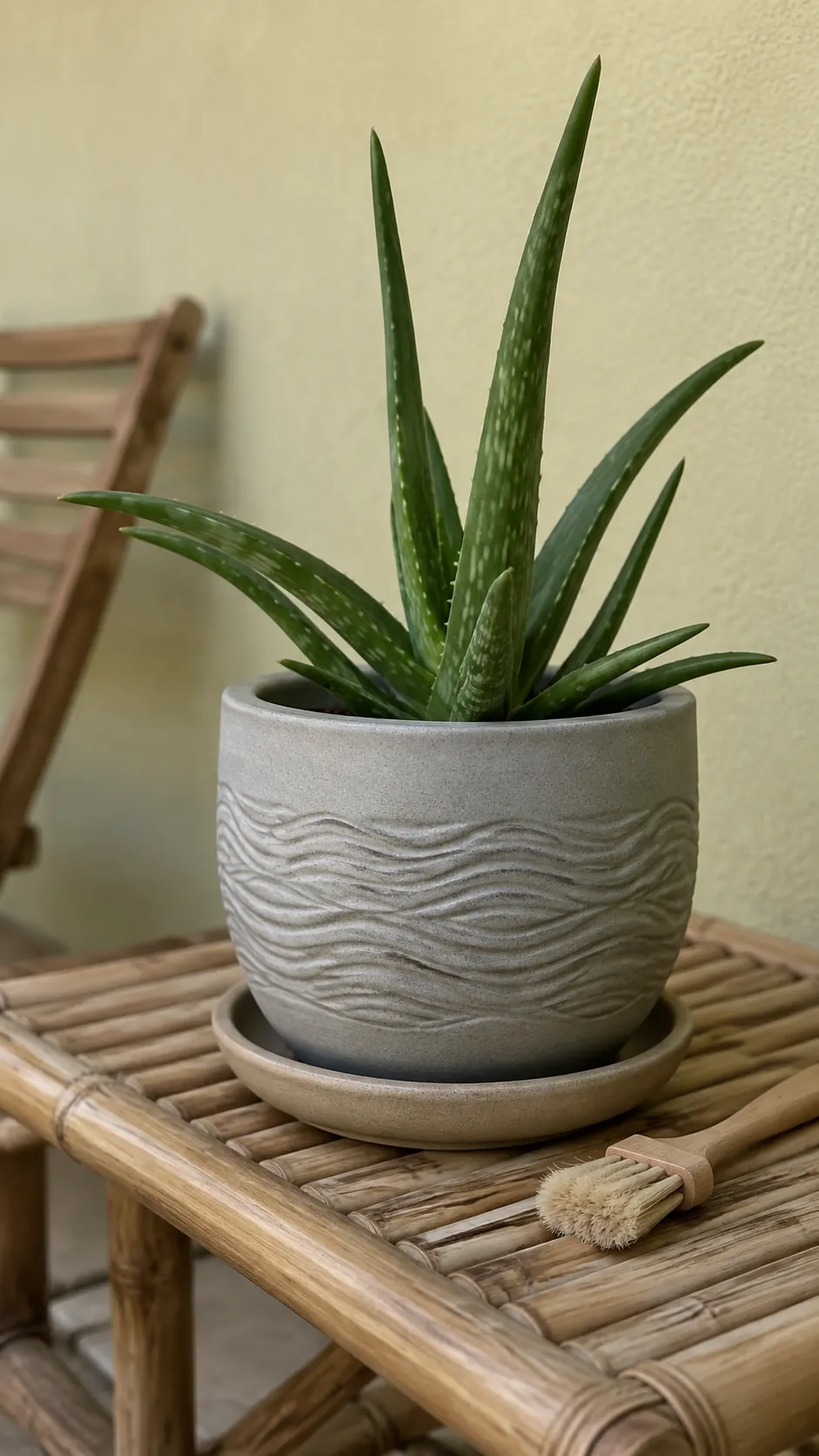
A small ceramic cup can become a decorative cover for a nursery pot, provided the insert fits and lifts out easily. Remove the insert to water, allow it to drain, and check the outer cup before returning it. This arrangement is especially practical for a treasured vessel you would rather not risk drilling.
Wide charcoal pot for branching jade
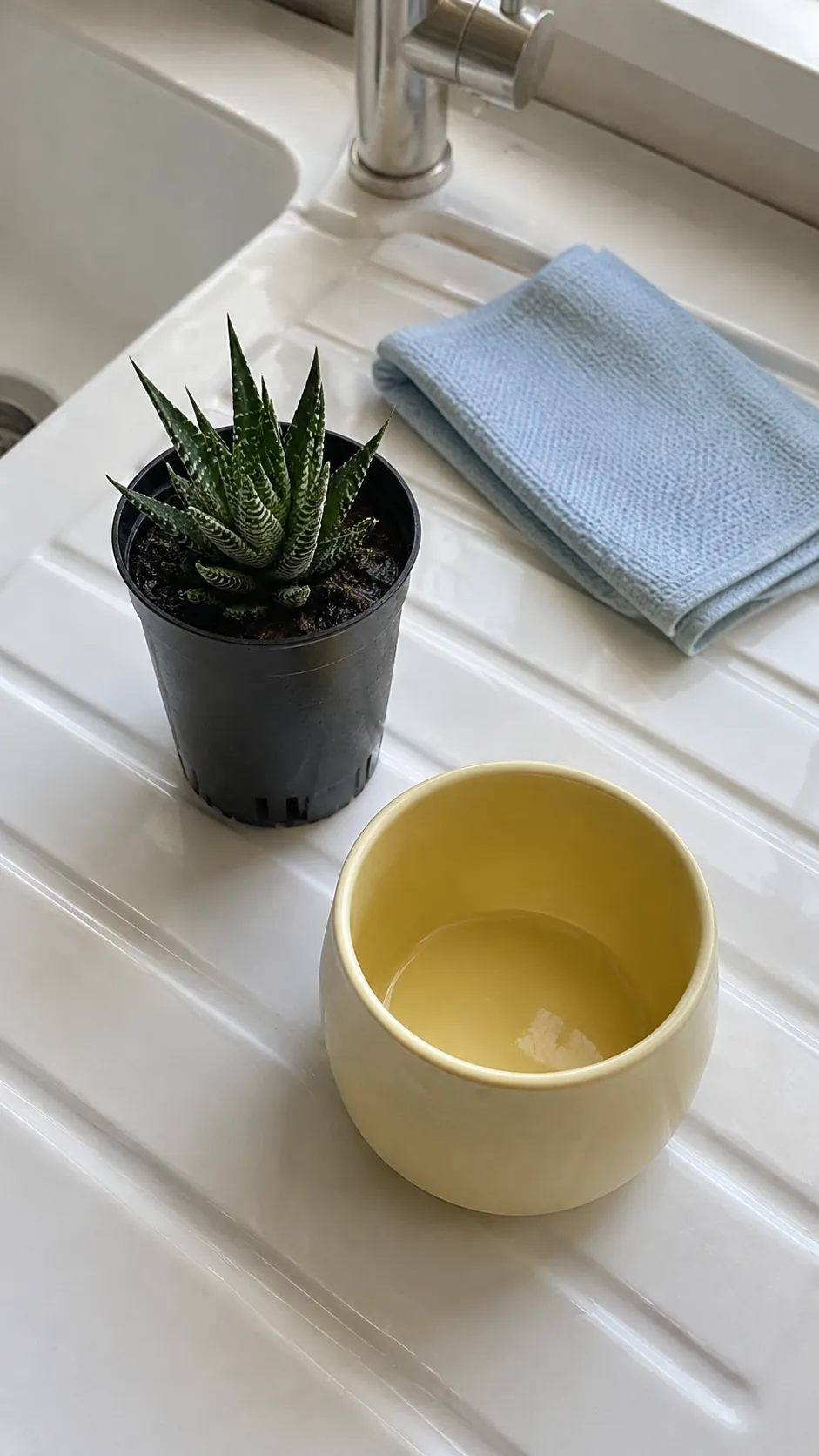
A branching jade can visually balance a broader charcoal container better than a tiny rosette can. Pot weight and a stable footprint matter as the plant becomes top heavy, but adding a huge volume of wet mix is not a good way to gain stability. Choose dimensions that suit the root ball and use a solid stand or table that can support the combined weight.
Scalloped rim with a quiet glaze
A softly scalloped rim adds a playful edge to an otherwise simple planter. Keep leaves clear of the dips and peaks so the shape remains visible and the foliage avoids repeated rubbing. When comparing unique plant pots, consider how easily you can remove fallen leaves from beneath the rim as well as how the pot looks empty.
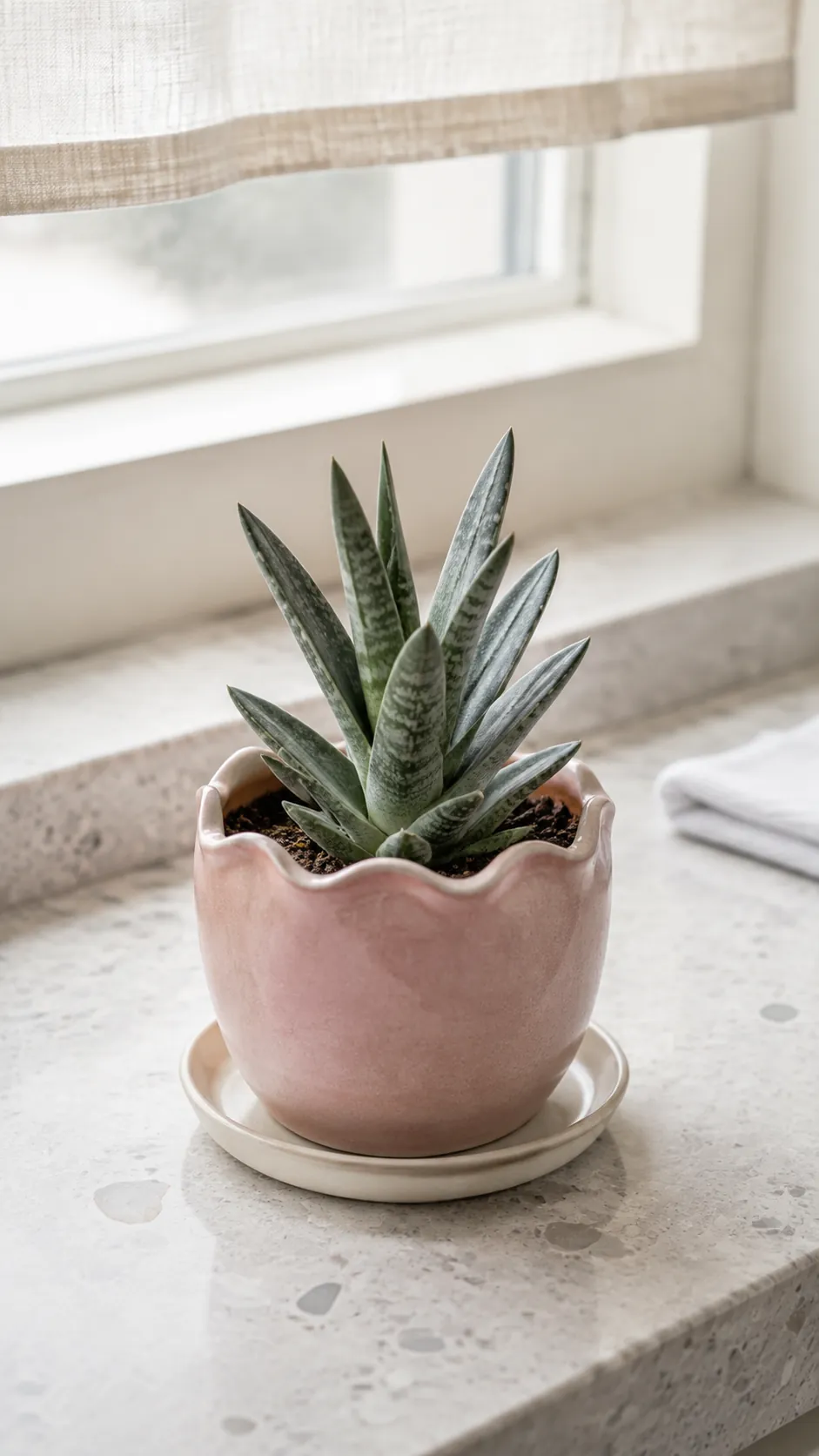
Pale celadon for a shaded bright window
Celadon gives green foliage a gentle tonal companion instead of a hard contrast. Use the pot where the particular succulent receives suitable light; the calming color of a container does not make a dim shelf a suitable growing spot. A bright window with filtered light can suit some species, while others need a sunnier position and gradual acclimation.
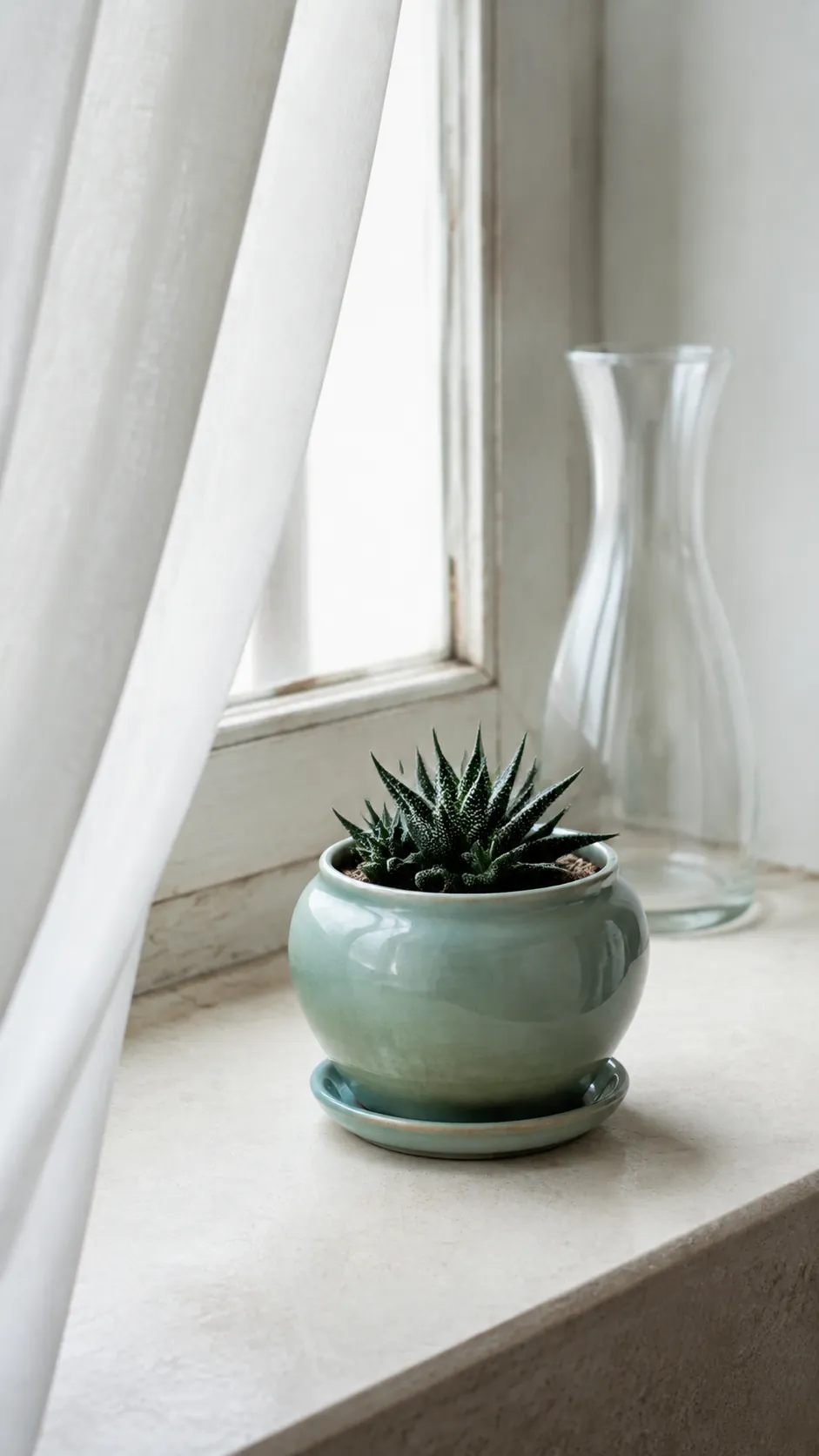
Faceted sides with a plain opening
Flat facets catch light differently as you move around the pot, making one neutral glaze surprisingly expressive. A smooth circular opening keeps the growing space straightforward even when the outer shape is angular. Check that the pot does not rock on its base, especially if the facets continue down toward the foot.
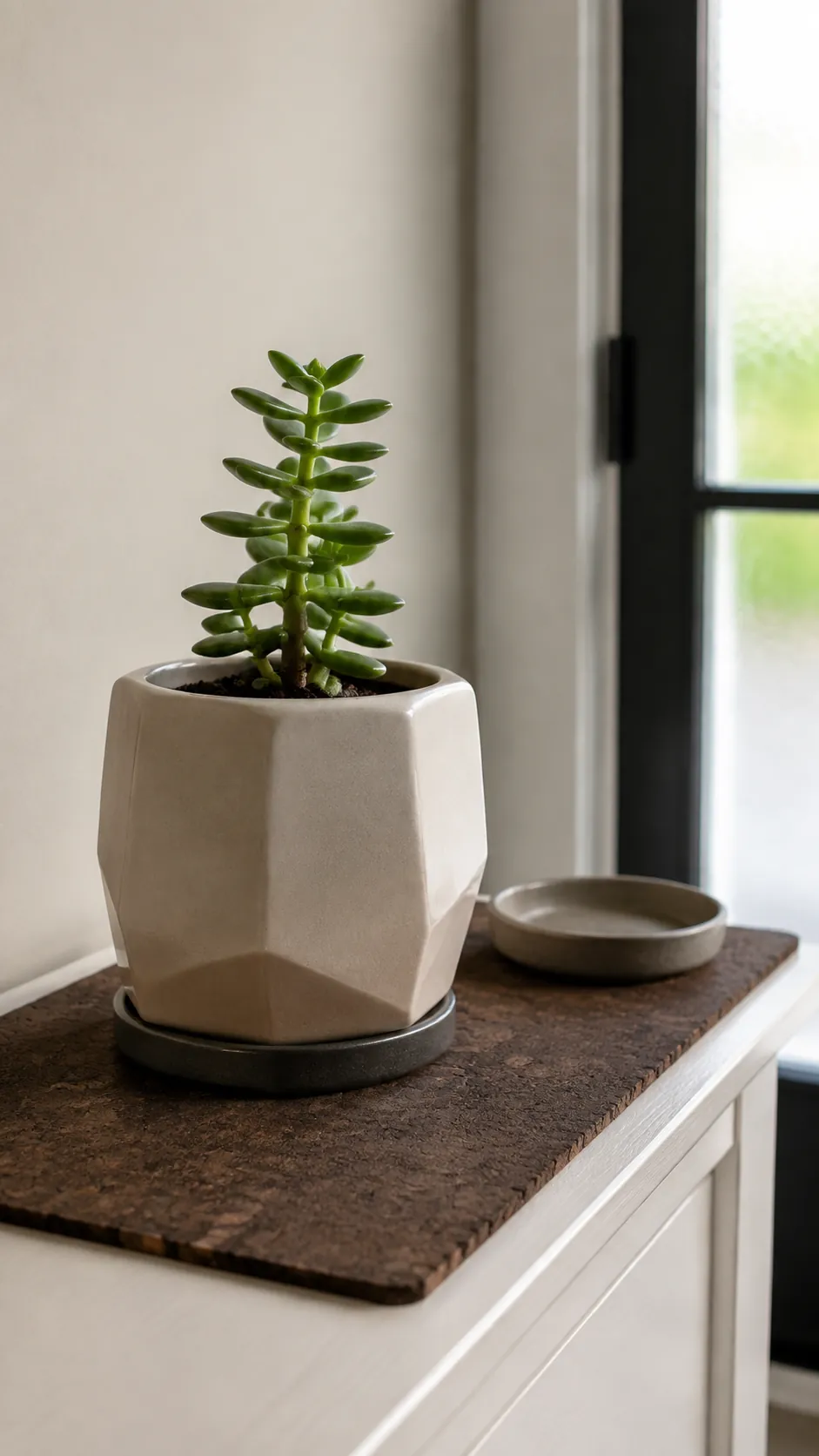
Terracotta toned ceramic with a glossy interior
A clay colored exterior can offer the familiar look of terracotta in a more refined ceramic form. Inspect the interior rather than judging porosity by color alone, because glaze can reduce moisture movement through the walls. Water according to the actual mix and conditions, not an assumption that every orange brown pot dries quickly.
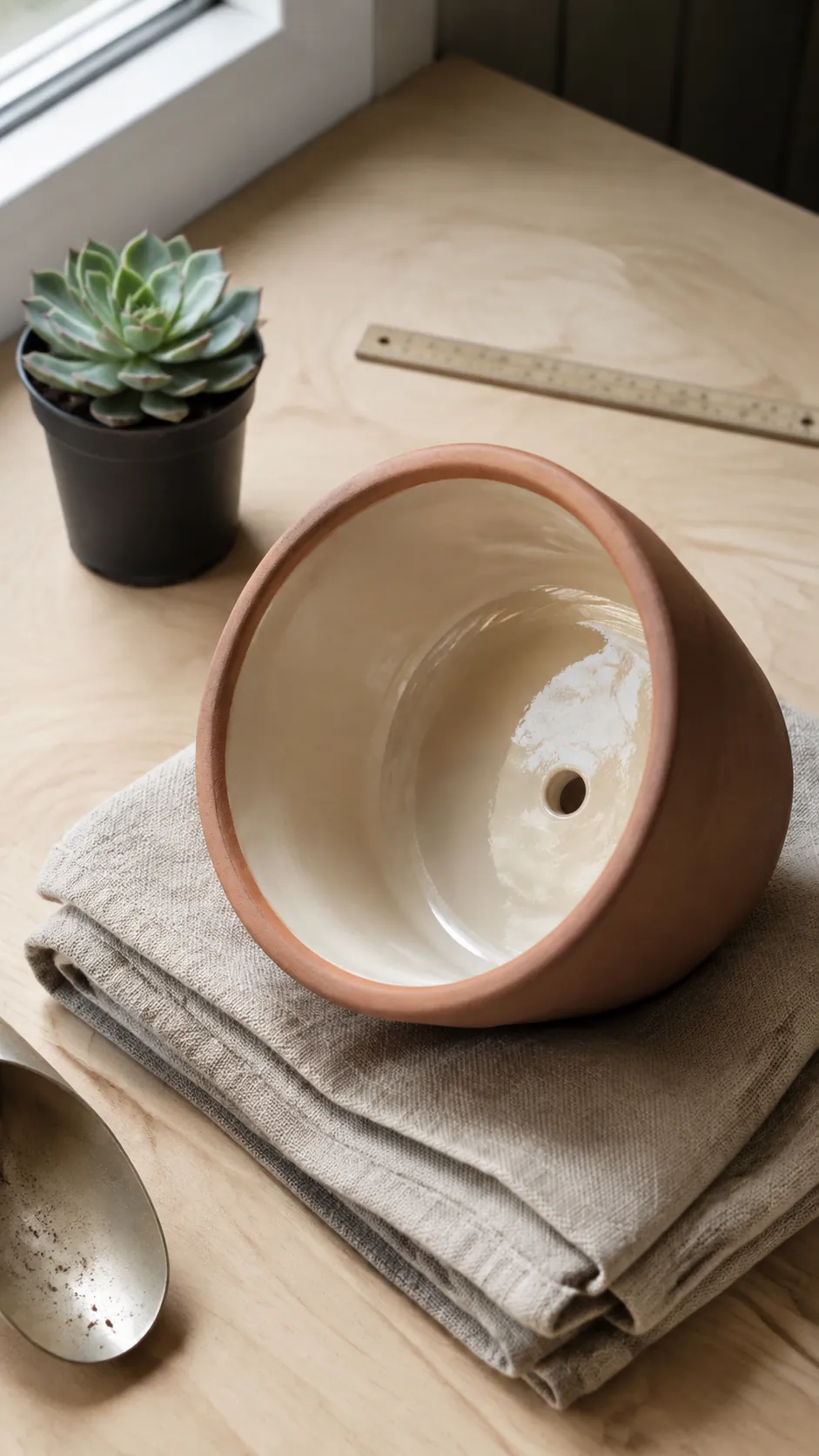
Tiny handled vessel for a gift
Small decorative handles can make a planter feel like a keepsake, especially with one compact succulent. Treat delicate handles as decoration unless the maker says they are designed to carry the planted weight. For a gift, include a simple note naming the plant and explaining whether the ceramic is a draining pot or an outer cover.
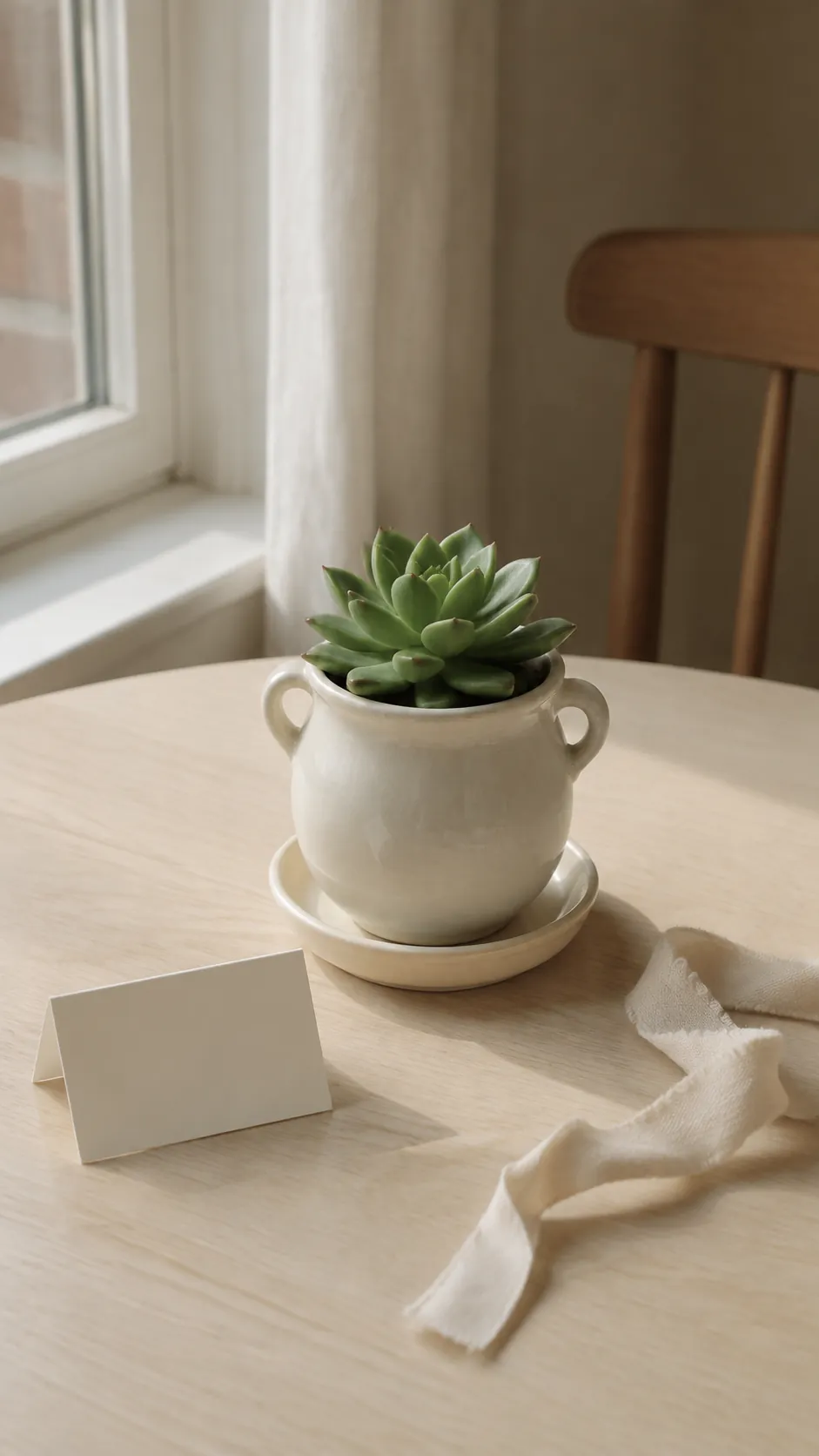
Shallow rectangle for separate mini pots
A ceramic tray holding separate little growing pots offers the appearance of a succulent garden with more flexible care. Each plant can be removed for watering or shifted closer to the light as needed. Empty the tray after watering so the arrangement does not quietly become a reservoir beneath the containers.
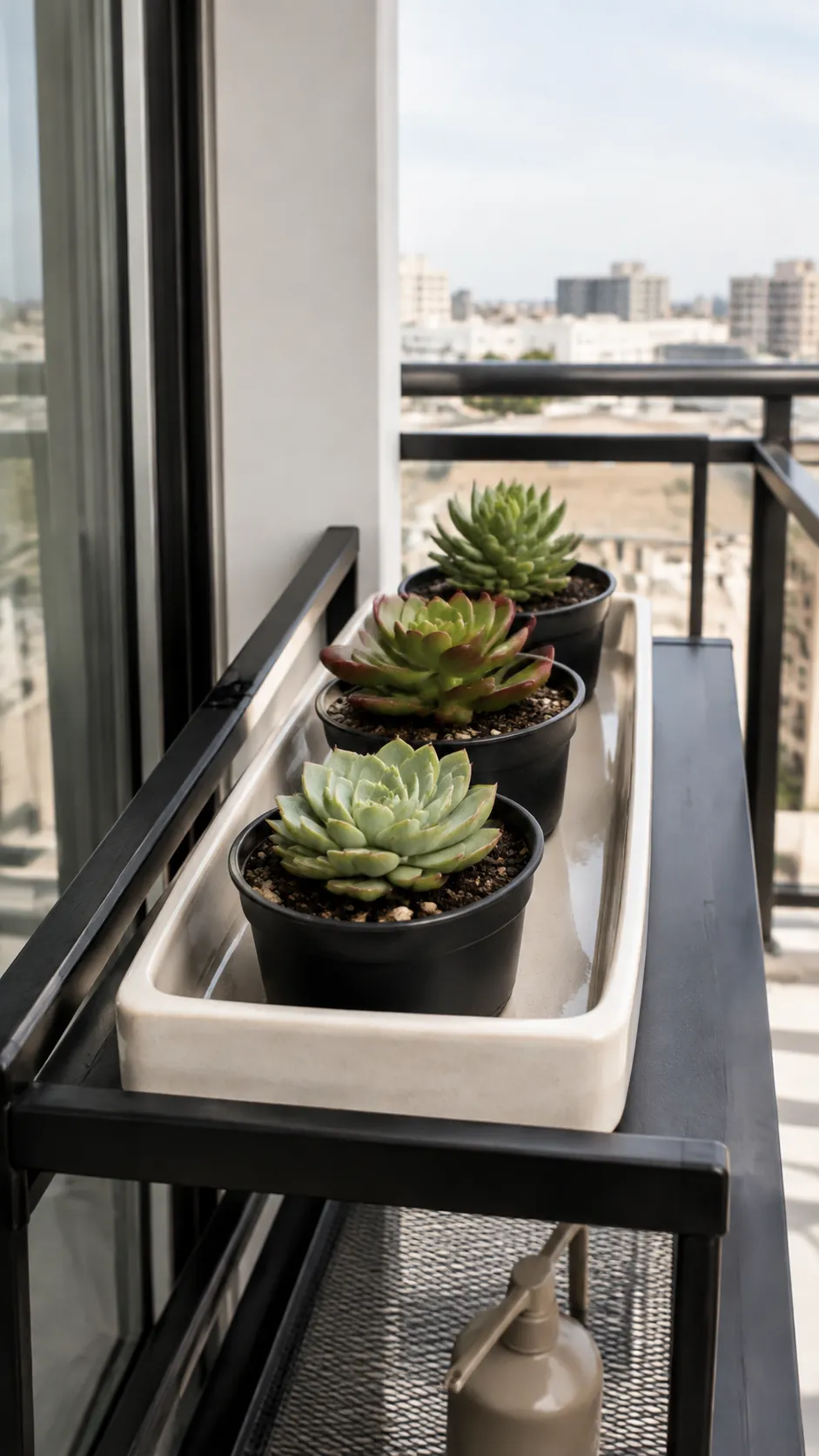
Cream slip with exposed brush marks
Visible slip brushwork gives a handmade pot surface variation without a detailed illustration. The effect is especially attractive beside a plant with a strong repeating leaf pattern, where two kinds of rhythm can coexist. If commissioning a piece, ask about drainage, fired durability, and the finished internal size before discussing the exact brushstroke.
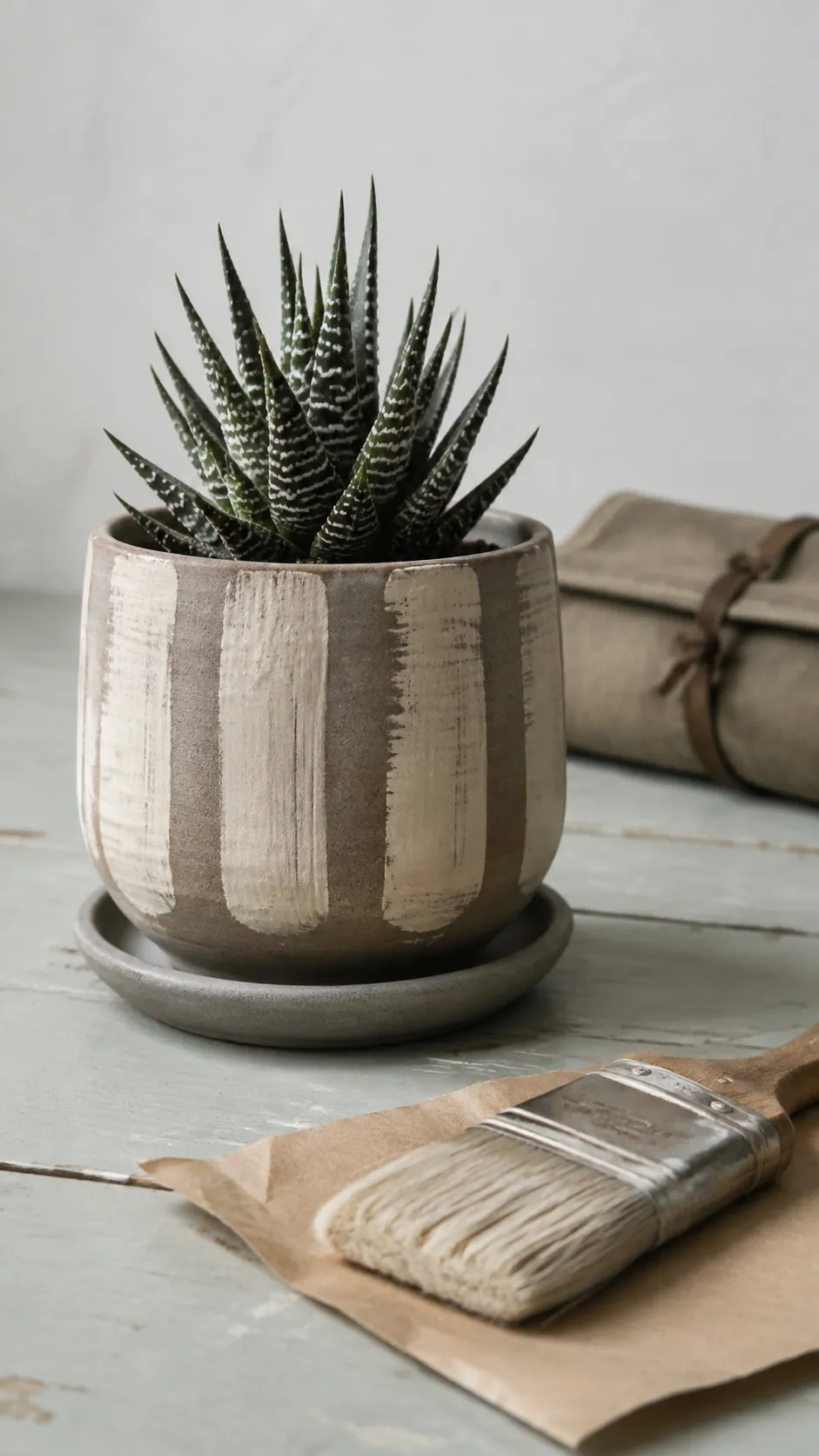
Mushroom colored pot with a broad lip
A broad lip gives a small vessel a substantial profile and can be comfortable to hold during maintenance. It also takes up space above the soil, so compare the opening with your plant’s lower foliage. A compact upright succulent usually leaves the rim more visible than a rosette that spreads over every edge.
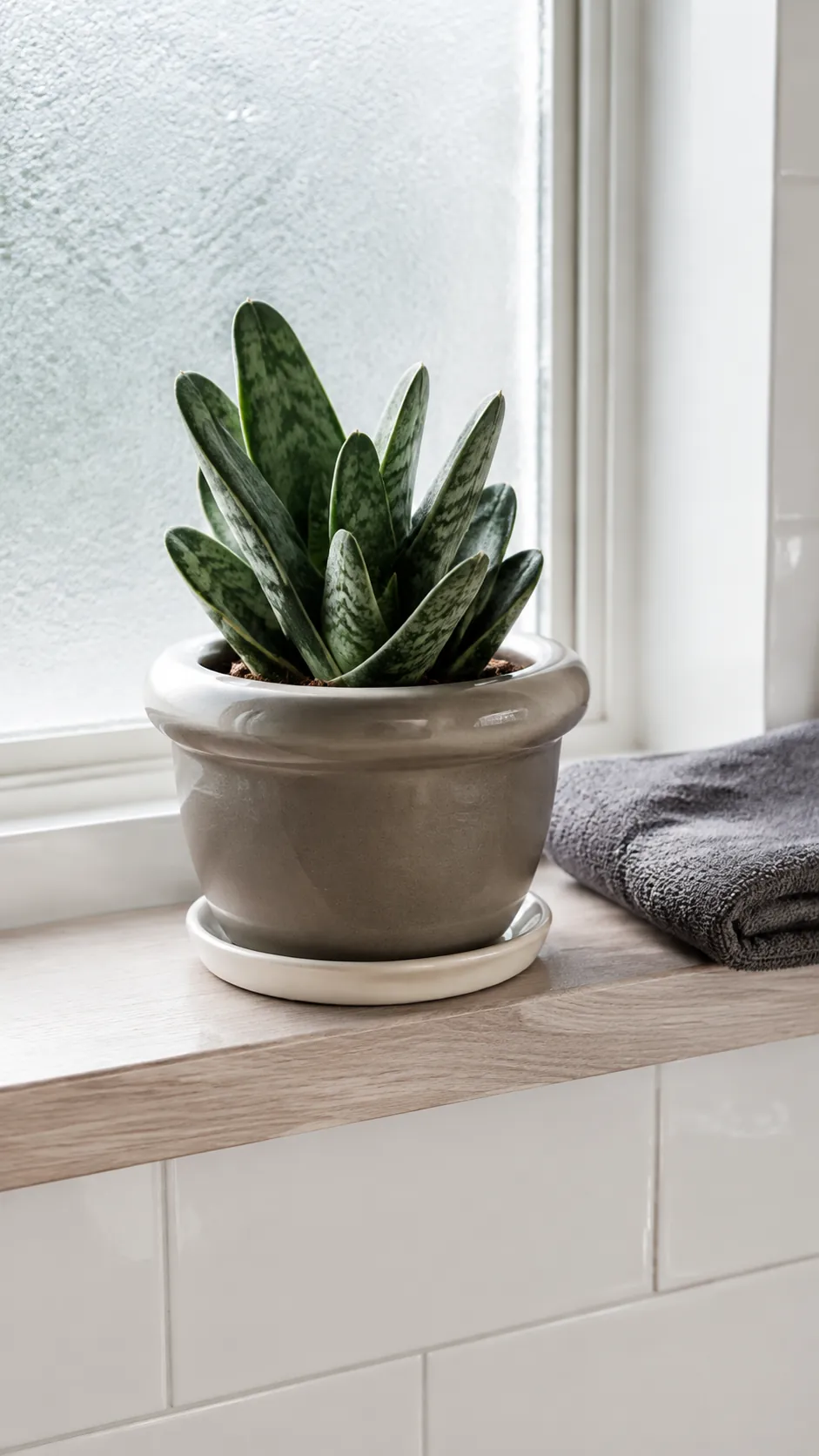
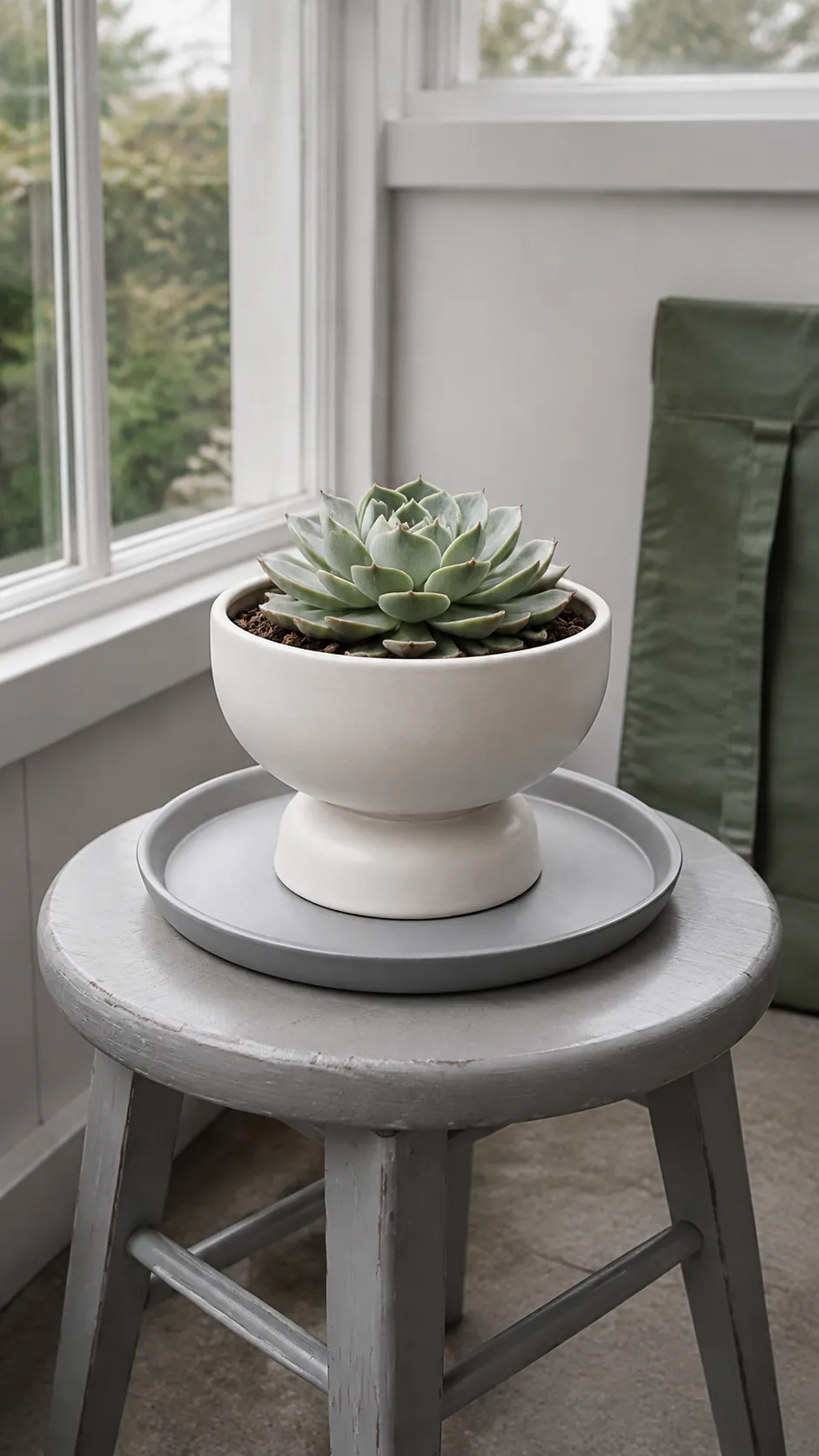
Small pedestal bowl on a stable foot
A pedestal bowl elevates a succulent visually without needing a separate tall stand. Favor a low pedestal and a sufficiently wide foot so the display remains steady when you reach past it. Confirm where drainage water goes, because a hidden hollow base is not automatically a useful saucer.
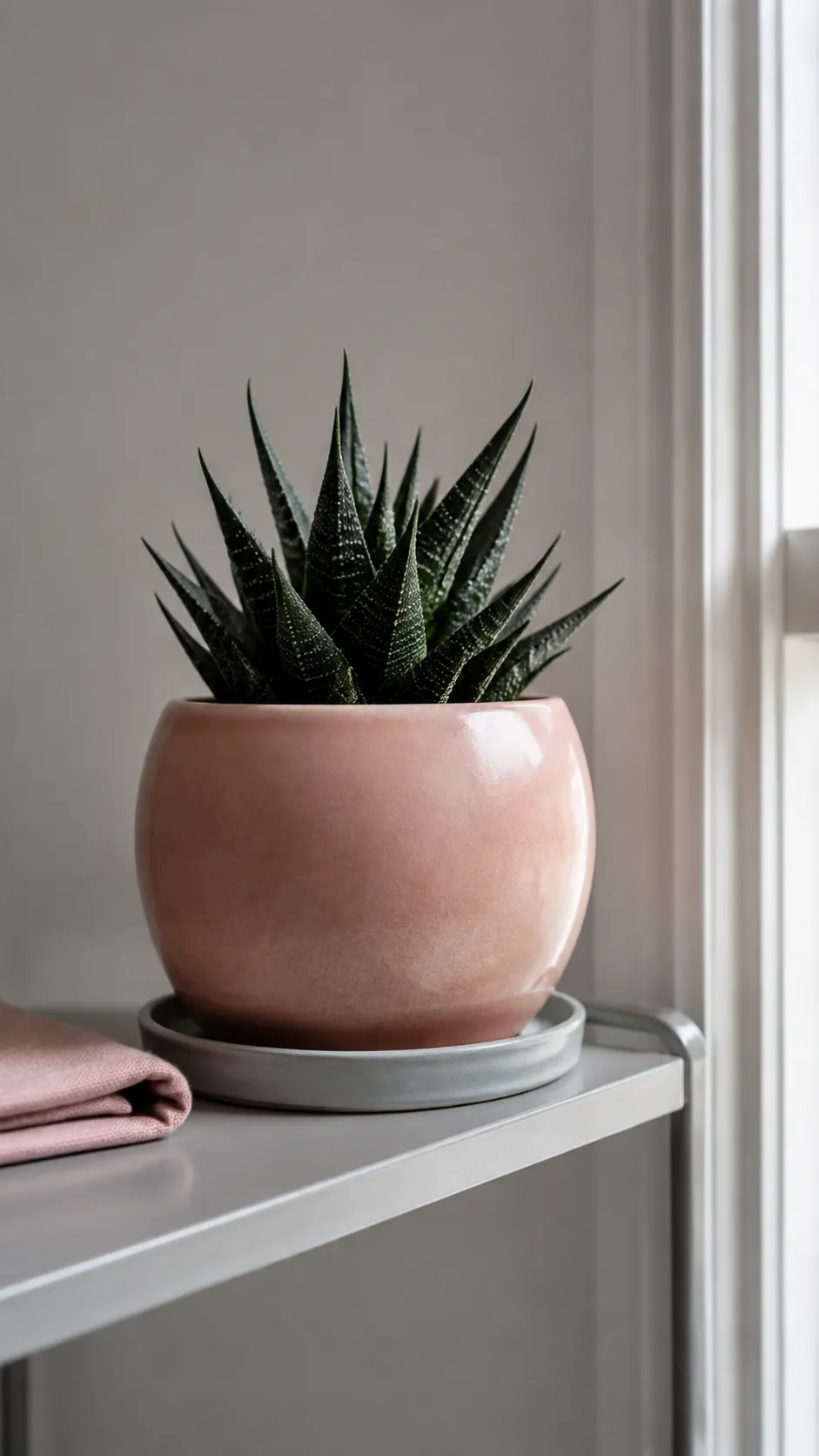
Muted blush pot beside dark leaves
A blush ceramic pot softens the appearance of a dark green succulent without relying on a novelty shape. Look for a restrained pink that still works in daylight, since store lighting can make glaze colors misleading. Repeat the color in one small nearby object if you want a connection, while leaving the plant’s immediate space uncluttered.
Made to fit planter and saucer pair
A matched pot and saucer pair is a strong final choice when you want the whole arrangement to look intentional. Check that the saucer offers enough clearance to see and empty collected water rather than gripping the pot tightly. The most useful succulent pot ideas combine the look you enjoy with a container you can lift, drain, inspect, and repot without a struggle.