The best herb garden ideas begin with the way you cook, the light you actually have, and the amount of watering you can sustain. A beautiful layout cannot rescue rosemary in a damp corner or basil in weak light. The 25 designs below range from windowsill pots to raised beds, but each one keeps drainage, mature plant size, access, and compatible moisture needs in view.
Use these as adaptable patterns rather than shopping lists. Measure your space, watch its sun, choose culinary herbs you already buy, and start with a garden small enough to notice. A compact, frequently harvested garden is more valuable than a large bed that becomes difficult to reach.
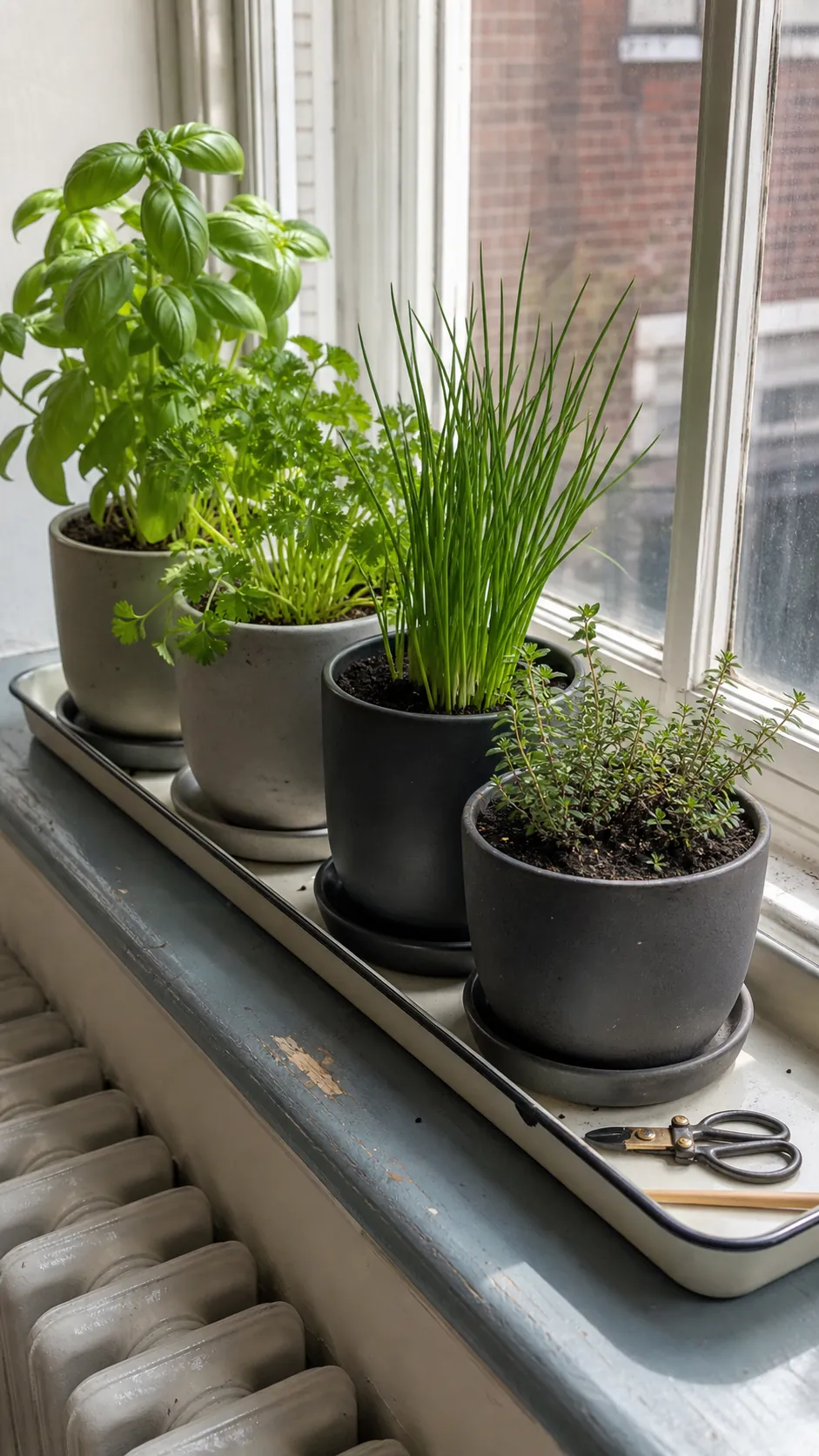
A sunny windowsill tray with individual pots
Group basil, chives, parsley, and thyme on a waterproof tray while keeping each herb in its own draining pot. Individual pots let you water basil more often and allow thyme to dry slightly. A tray makes the whole kitchen herb garden easy to rotate and move for cleaning.
Use the brightest window available and keep tender basil away from cold winter glass. If stems stretch, add an appropriate grow light rather than crowding more plants onto the sill.
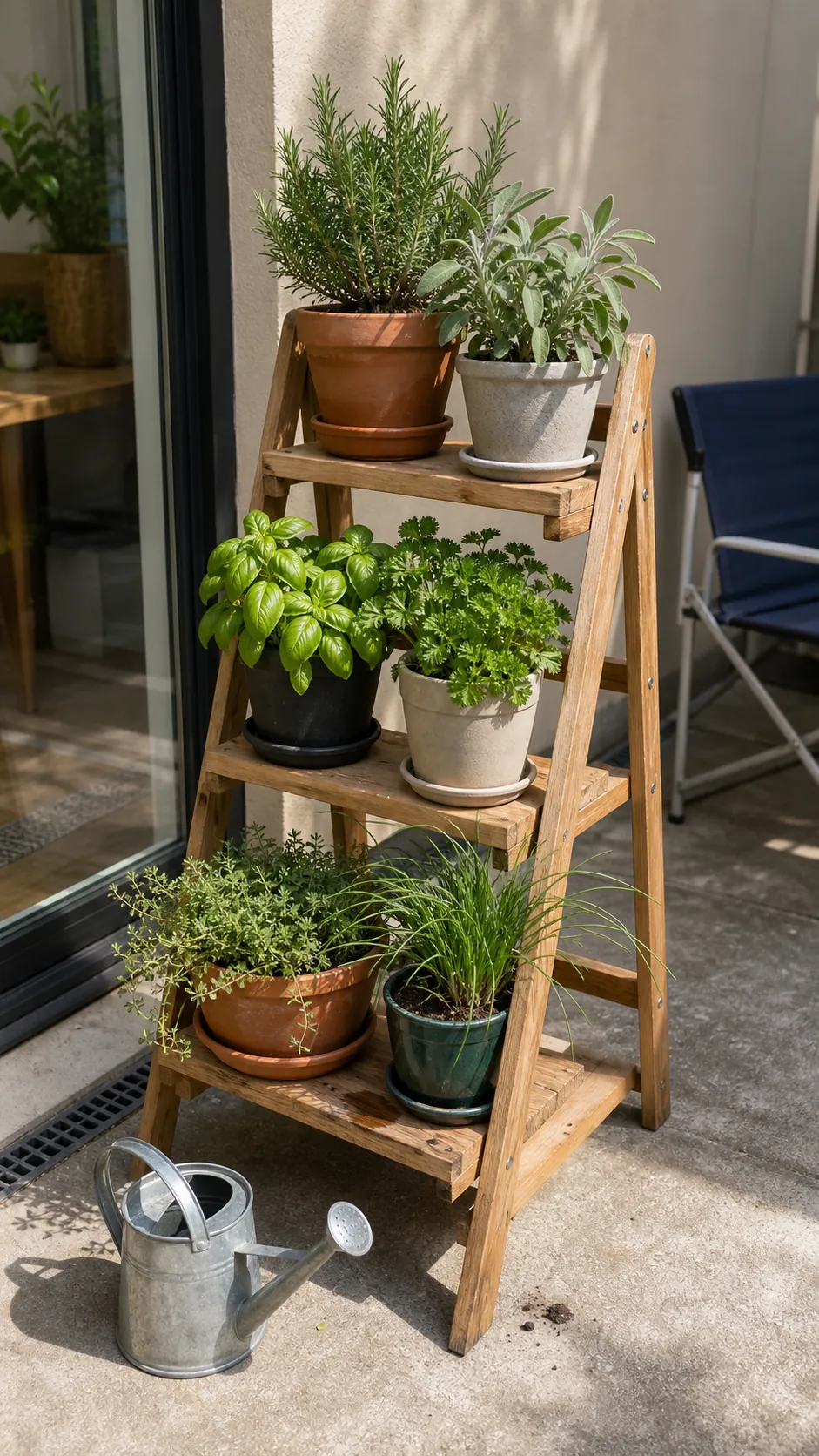
A tiered ladder garden for a small patio
A three-tier ladder stand turns a narrow patio footprint into useful growing space. Put taller sun-loving herbs on the upper shelf and compact plants below, but check the shadow pattern before filling every tier. Leave enough gap to lift out pots and water without soaking lower foliage.
Choose a wide, stable base and secure a lightweight stand where wind is an issue. Matching pots are optional; consistent drainage and safe load capacity matter more.
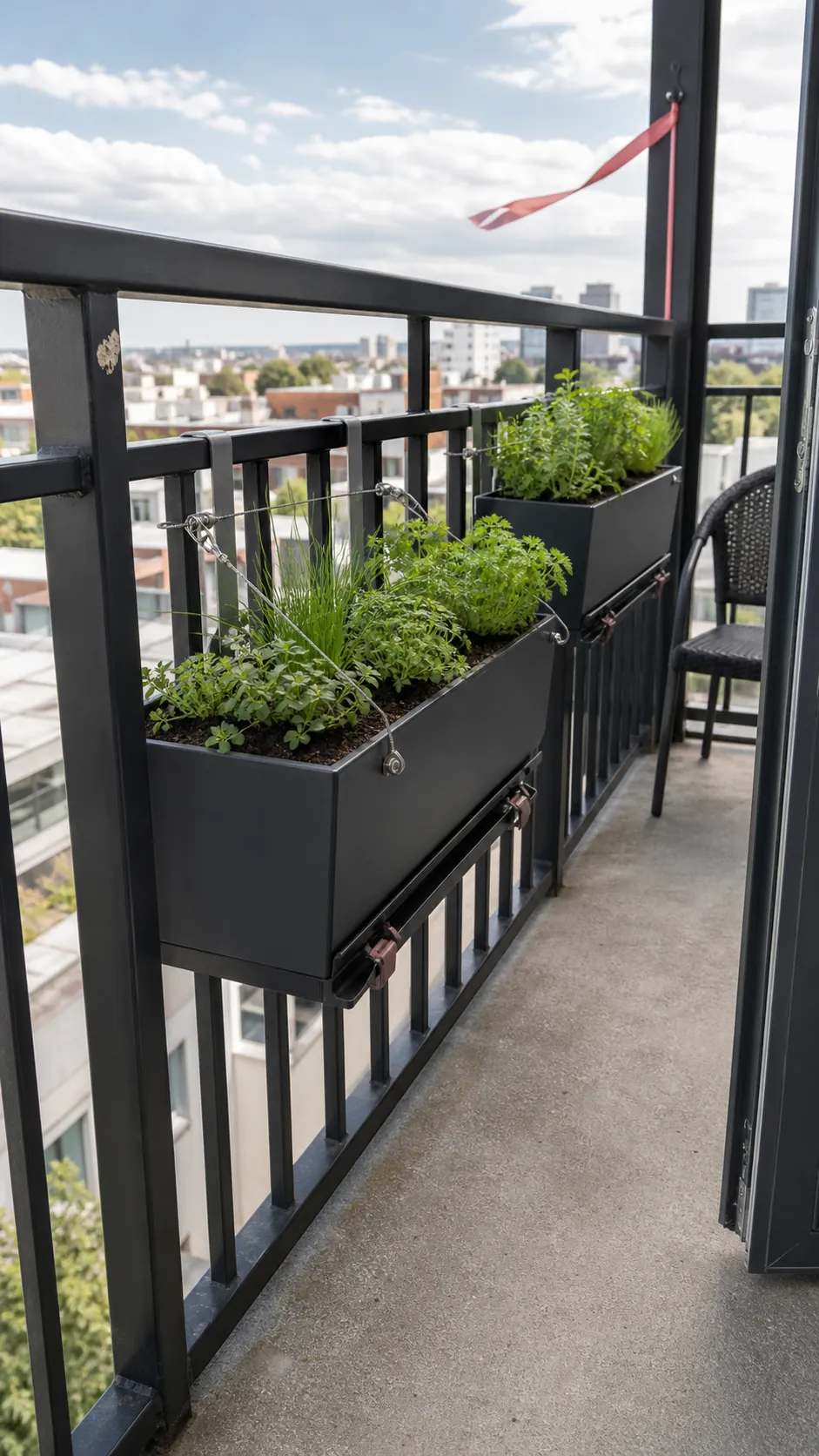
Secure railing boxes for balcony herbs
Railing boxes free the balcony floor for seating and circulation. Use brackets rated for the saturated weight of the planter, add a secure secondary restraint, and keep every component inside the railing where falling objects could endanger people below.
Plant low, wind-tolerant thyme, oregano, chives, or compact parsley rather than top-heavy rosemary. Check moisture daily during hot, breezy weather because exposed boxes dry much faster than garden beds.
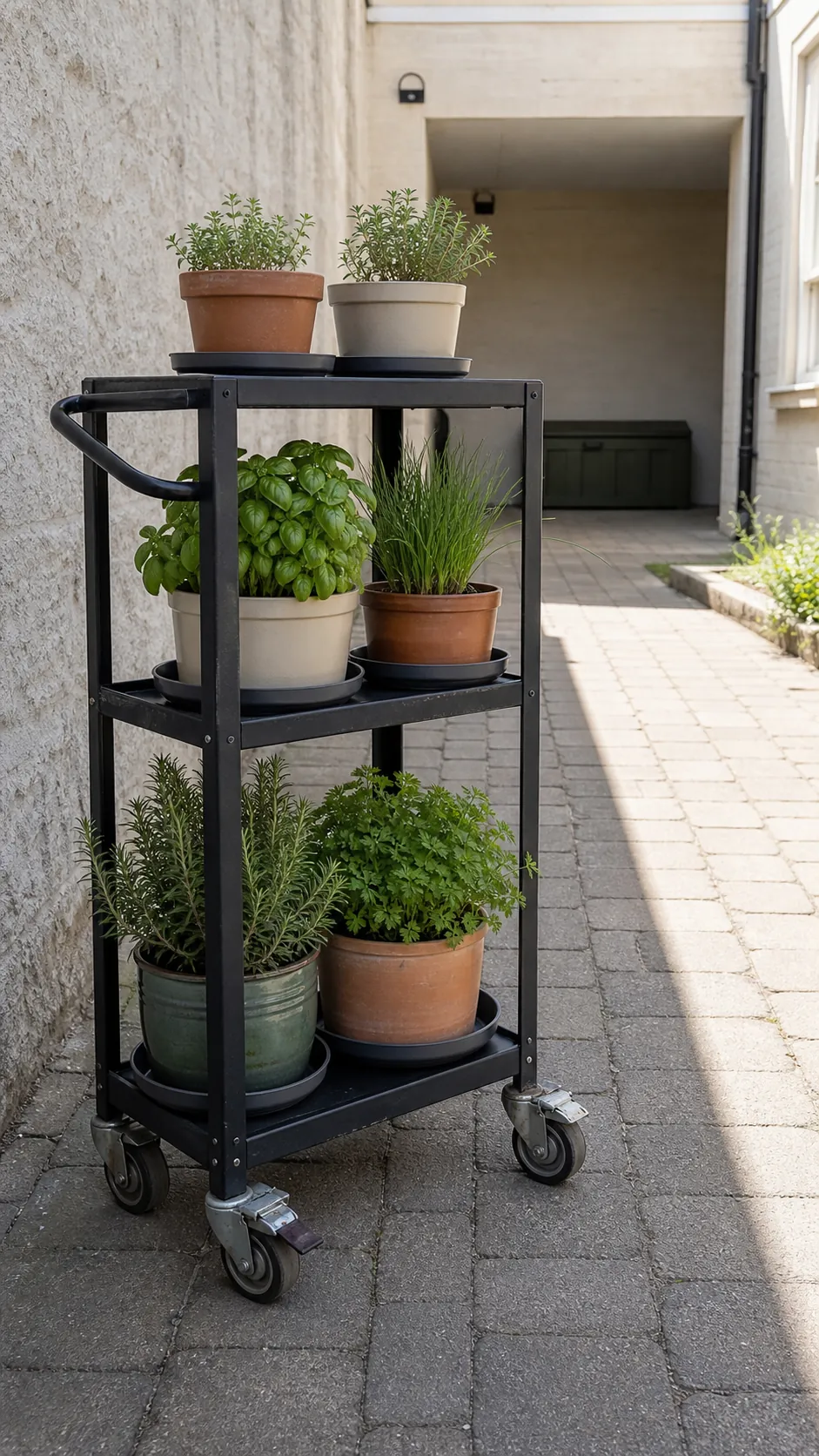
A rolling herb cart that follows the sun
A utility cart on locking casters suits a patio where sun moves between buildings. Place heavy pots on the lowest shelf, use saucers that cannot slide, and roll the cart only on a clear level route. The garden can move into shade during extreme heat or closer to shelter during storms.
Keep the cart open enough for airflow and easy cleaning. This layout also helps renters bring tender perennial herbs indoors before cold weather.
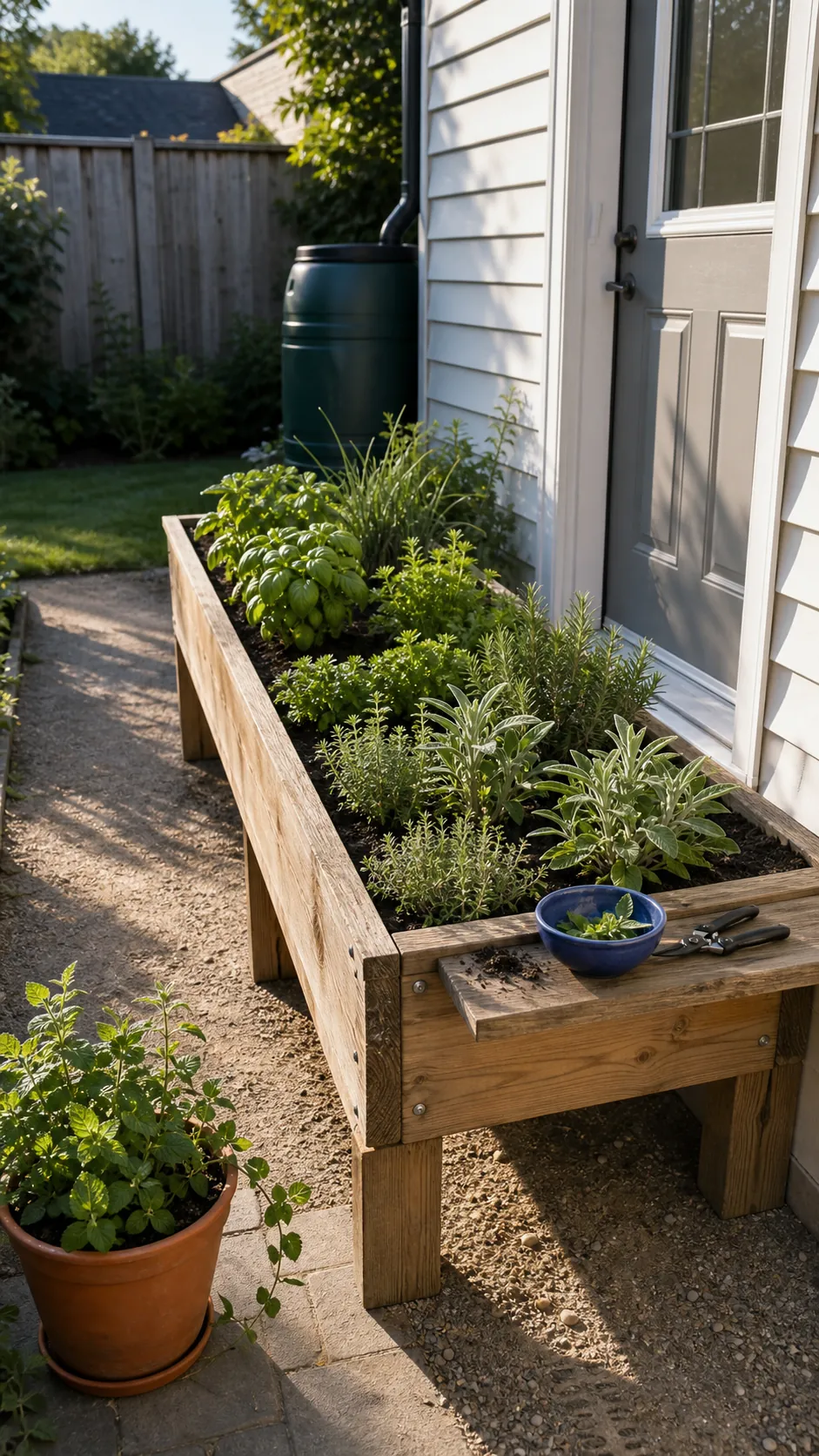
A raised kitchen bed beside the back door
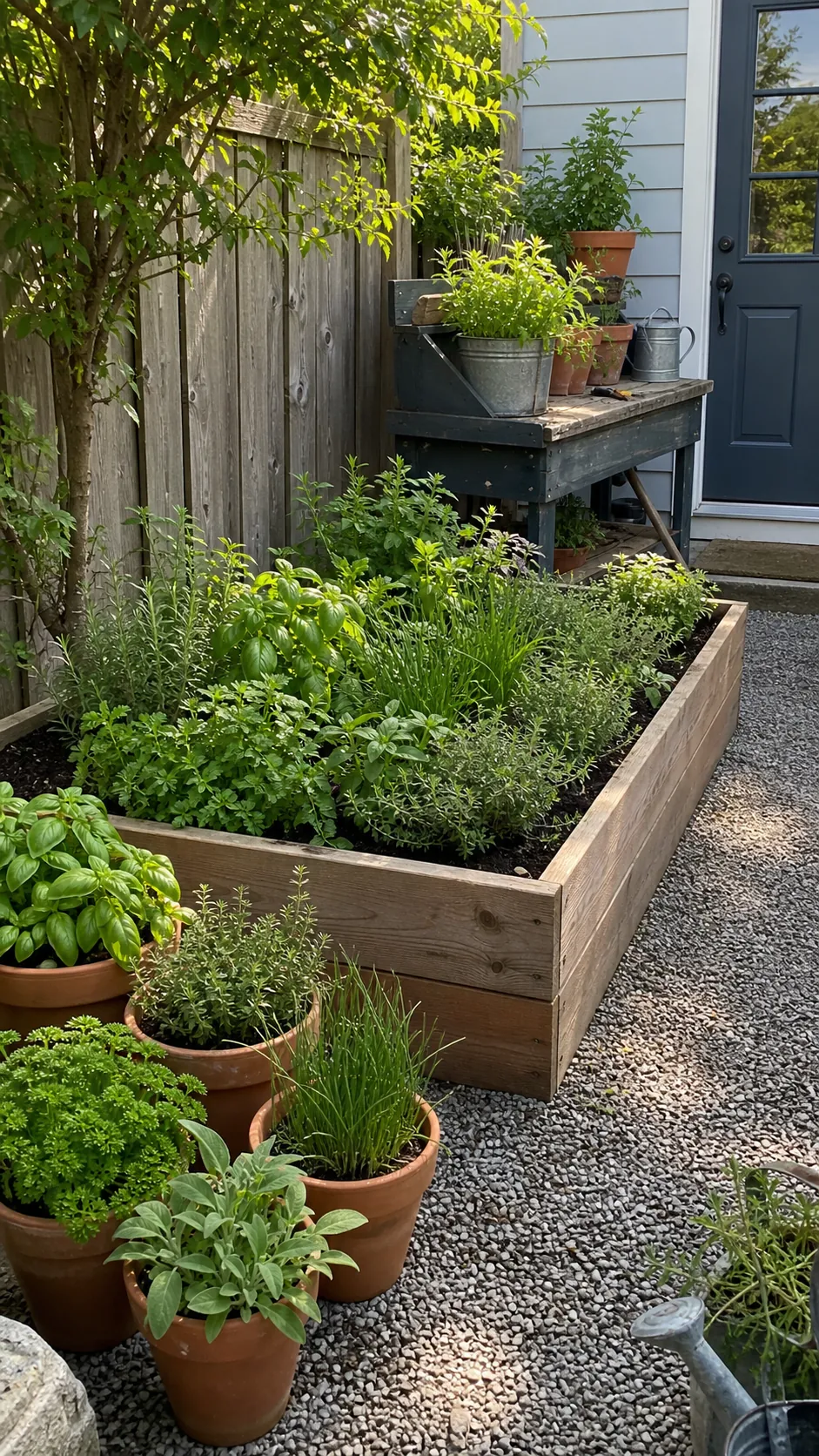
Place a compact raised herb garden bed near the route you already use for cooking. A bed no wider than you can comfortably reach from its accessible sides reduces compaction and makes quick harvests more likely. Keep the path firm and wide enough for a watering can.
Group drought-tolerant Mediterranean herbs in the sunniest, best-drained zone and reserve a slightly moister section for parsley, chives, and basil. Contain mint in a separate pot.
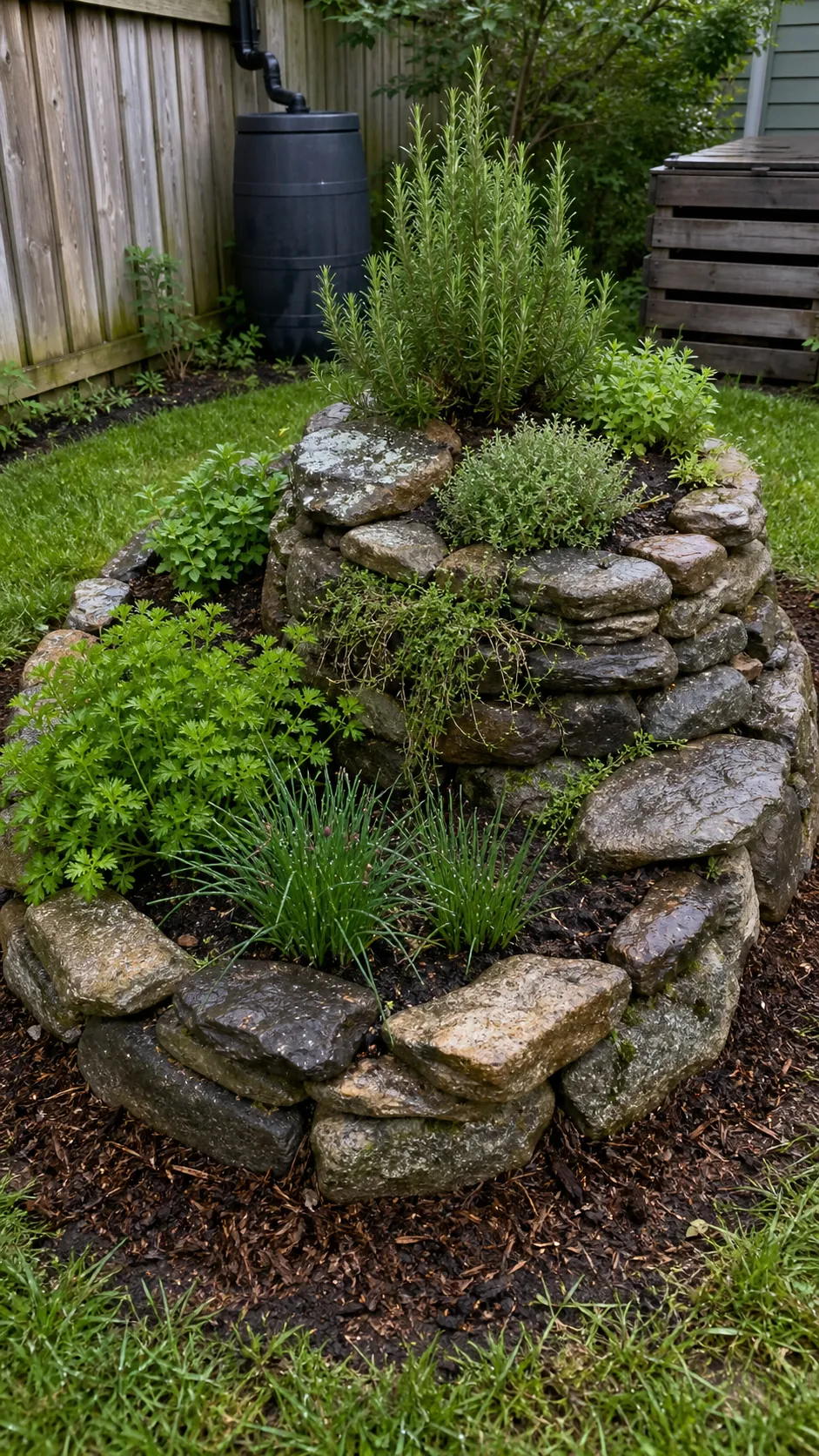
A stone herb spiral with moisture zones
An herb spiral creates a high, fast-draining top and a lower zone that retains more moisture. Position rosemary, thyme, and oregano near the upper sunny section, with parsley or chives lower down. Build the spiral only as tall as its retaining stones can safely support.
The design is visually strong, but it still needs a weed-free base, stable stones, and access around most of the circumference. Do not use the spiral as an excuse to combine herbs with completely incompatible conditions.
Culinary pots grouped by the meals you cook
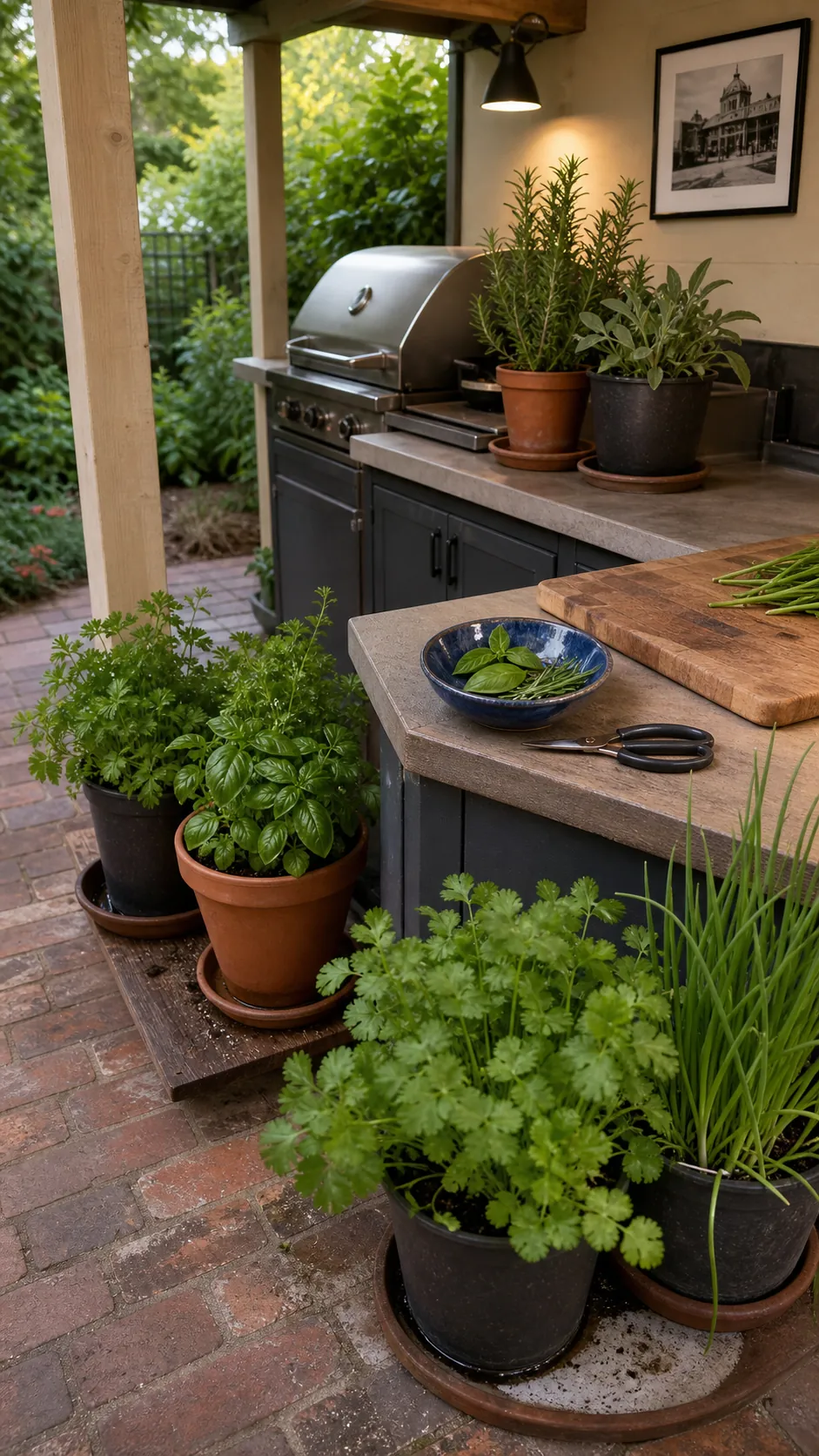
Create small potted herb garden groups around real cooking habits: basil, parsley, and oregano near the pizza oven; cilantro and chives near the kitchen; rosemary, sage, and thyme close to an outdoor grill. Theme by use, then split plants further when their watering needs conflict.
Plain removable tags prevent mistakes after seedlings mature. This is a flexible herb garden design because a pot can move, be replaced, or graduate to a larger container without disturbing the group.
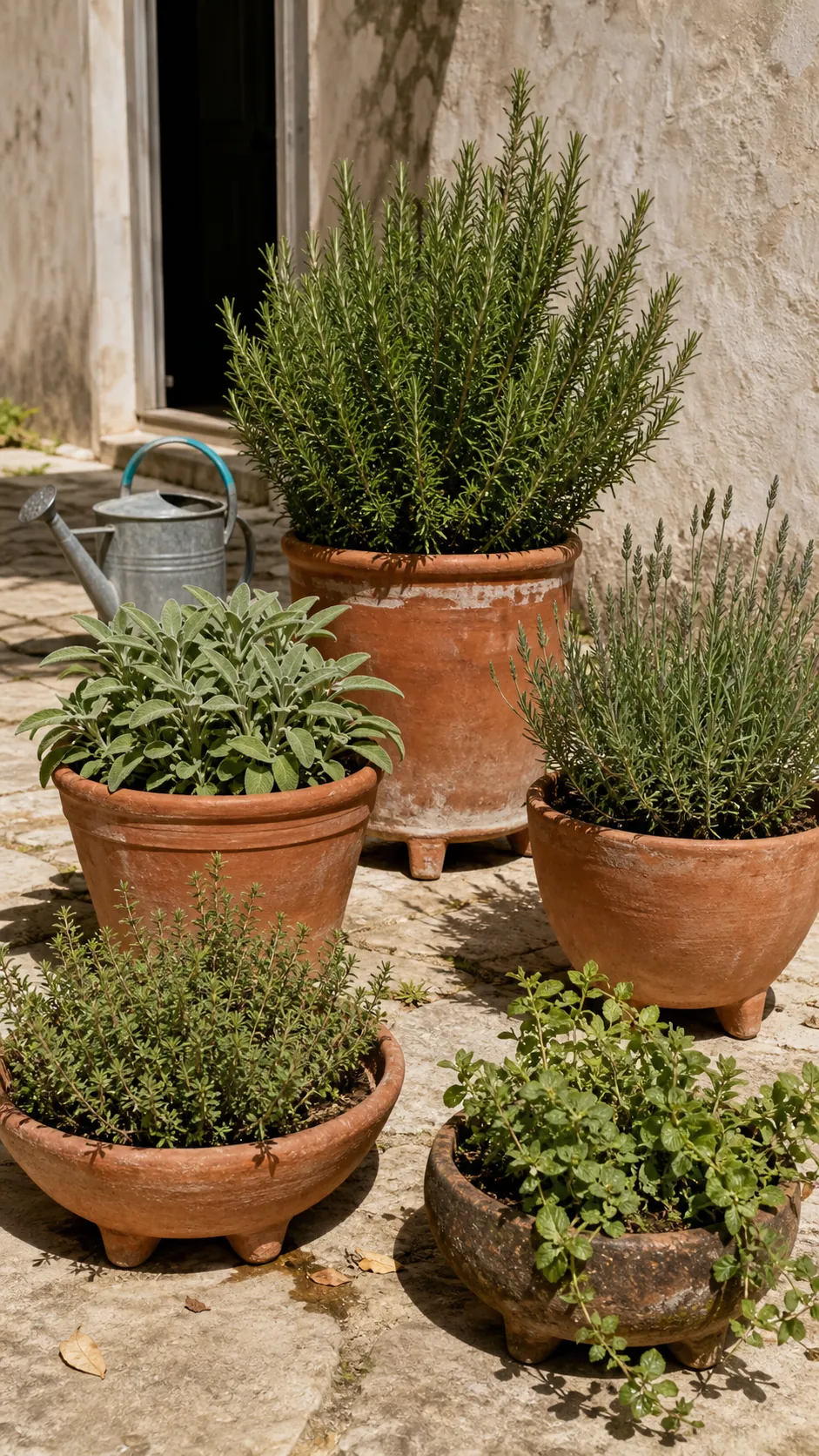
A terracotta cluster for dry-loving herbs
Terracotta suits rosemary, sage, thyme, lavender, and oregano because its porous walls dry faster than plastic. Use containers large enough for mature roots, lift them on pot feet, and group varied heights without pressing pots so tightly together that air and access disappear.
This cluster works well on a sunny patio in a climate where you can monitor water frequently. In very hot or windy locations, larger pots and a thin organic mulch can slow extreme drying.
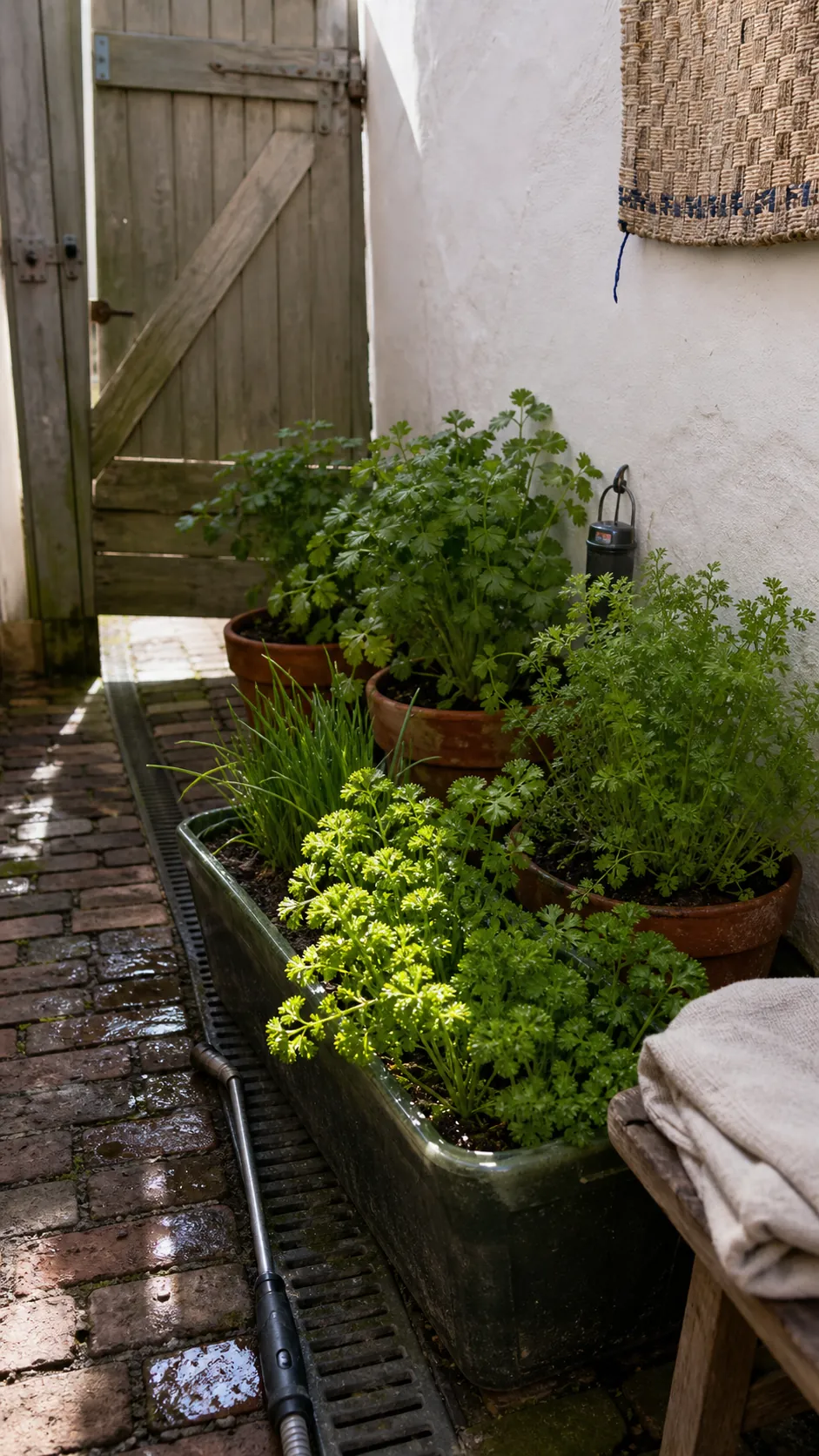
A cooler corner for parsley, chives, and cilantro
Not every herb needs the harshest afternoon sun. A spot with morning light and protection from peak heat can extend the useful season for parsley, chives, chervil, and cilantro. Use containers with drainage and enough soil volume that they do not swing from waterlogged to parched in a few hours.
Watch the actual plants: thin growth signals inadequate light, while scorched edges and rapid bolting may indicate heat stress. This cooler zone complements rather than replaces the sunny herb area.
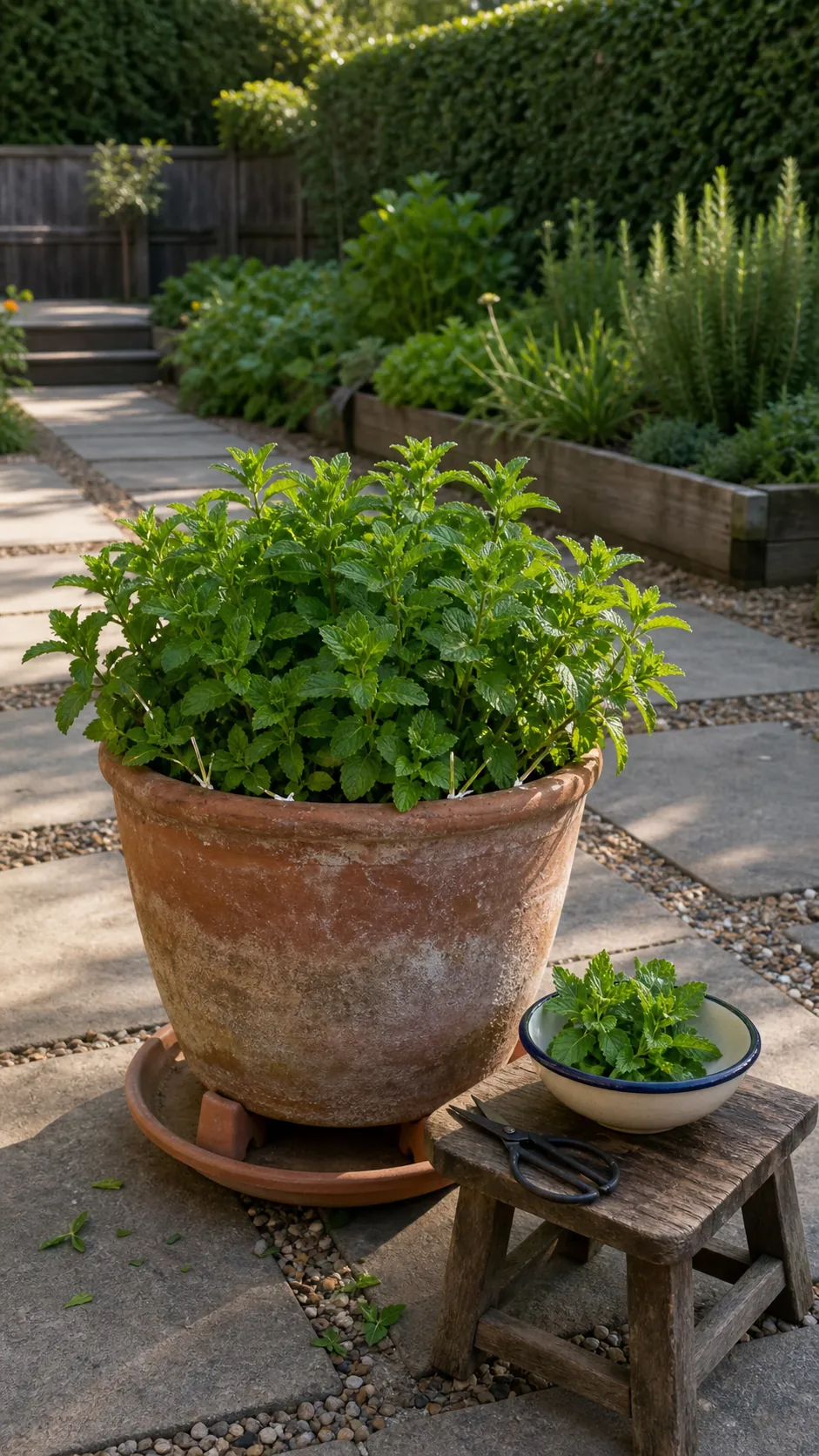
A dedicated mint pot on a hard surface
Give mint a generous container of its own and place it on paving, a saucer, or another surface where escaping stems are easy to spot. Do not sink a bottomless mint pot beside valuable plants and assume it will remain contained forever.
Harvest frequently, prune runners before they root, and divide the plant when it becomes congested. This simple separation solves one of the most repeated herb-garden regrets: mint spreading through a shared bed.
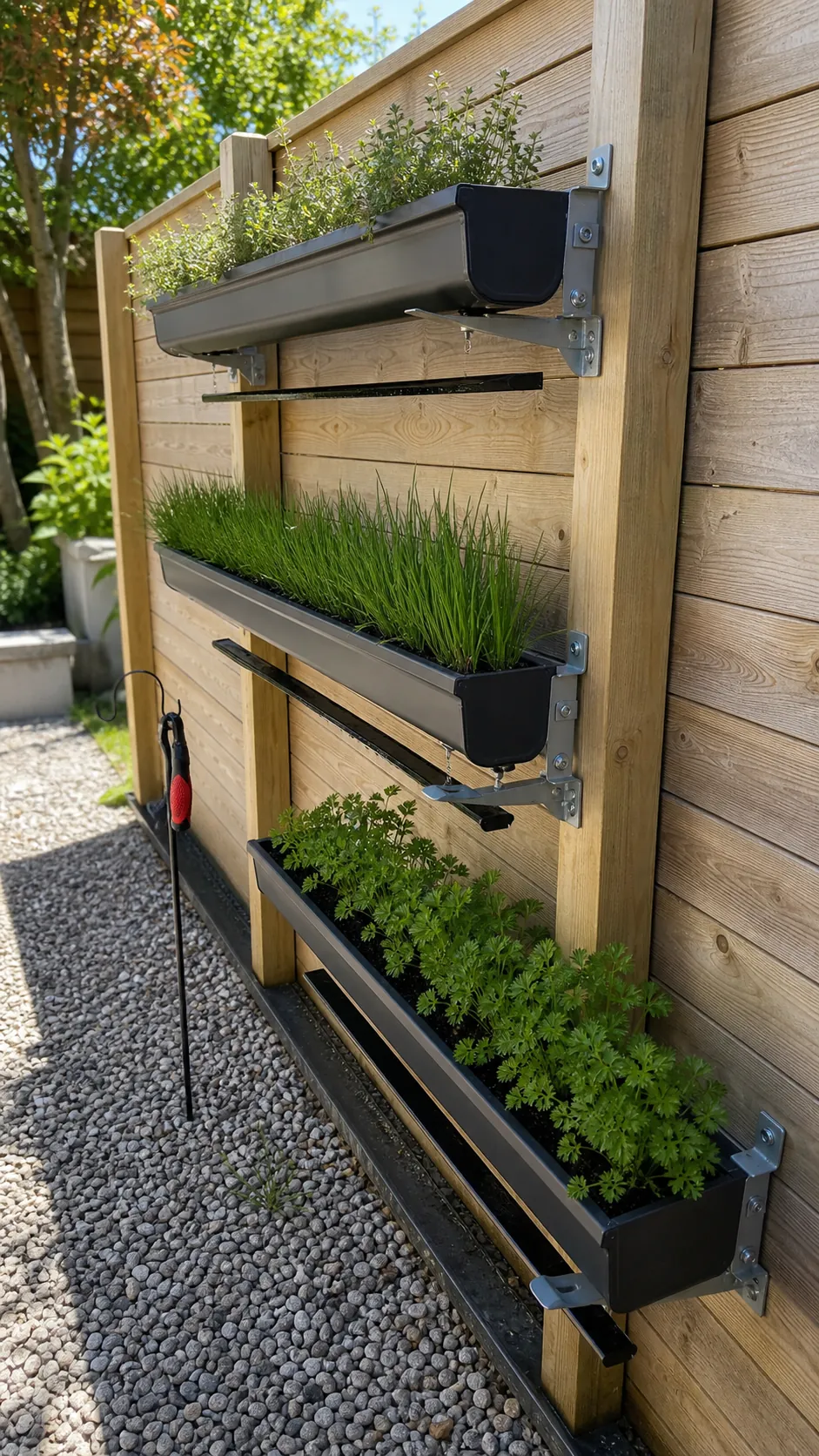
Hanging gutter planters with reliable support
Short gutter-style planters can hold shallow-rooted thyme, chives, and compact parsley along a sunny fence. Use purpose-made end caps, frequent drainage openings, brackets rated for wet weight, and a mounting surface capable of carrying the load.
Avoid very long unsupported runs and do not hang them above seating or a neighbor’s property. The shallow volume dries quickly, so this idea fits gardeners who can check water often.
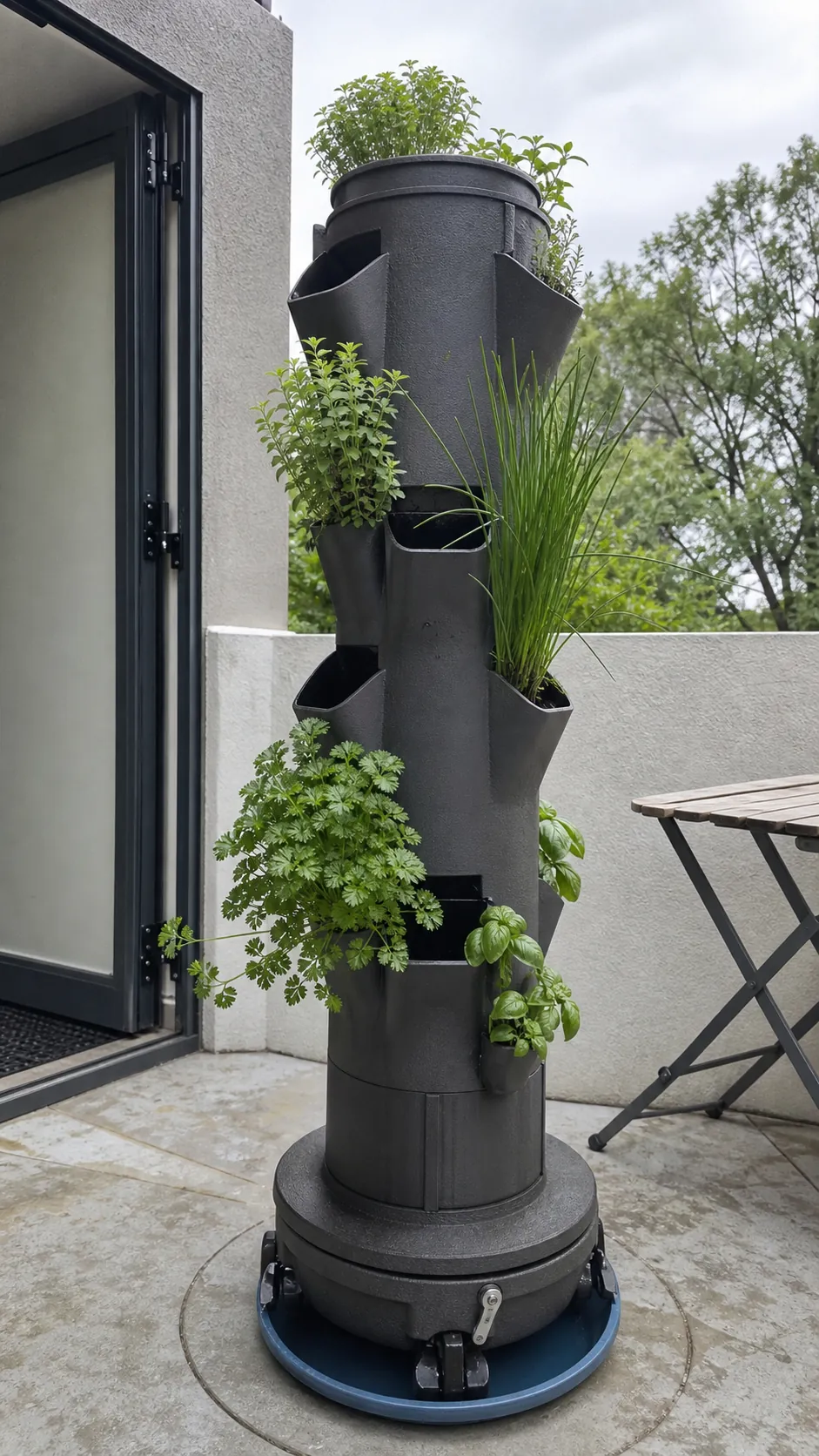
A vertical pocket garden with room to breathe
A freestanding vertical pocket tower can fit many herbs into a small garden, but every pocket need not be filled. Leave gaps for mature growth, place trailing thyme where it will not shade neighbors, and make sure runoff from upper pockets does not continually saturate the lowest plants.
Choose a system you can rotate or reach from both sides. Vertical designs save floor area only when watering, harvesting, and cleaning remain practical.
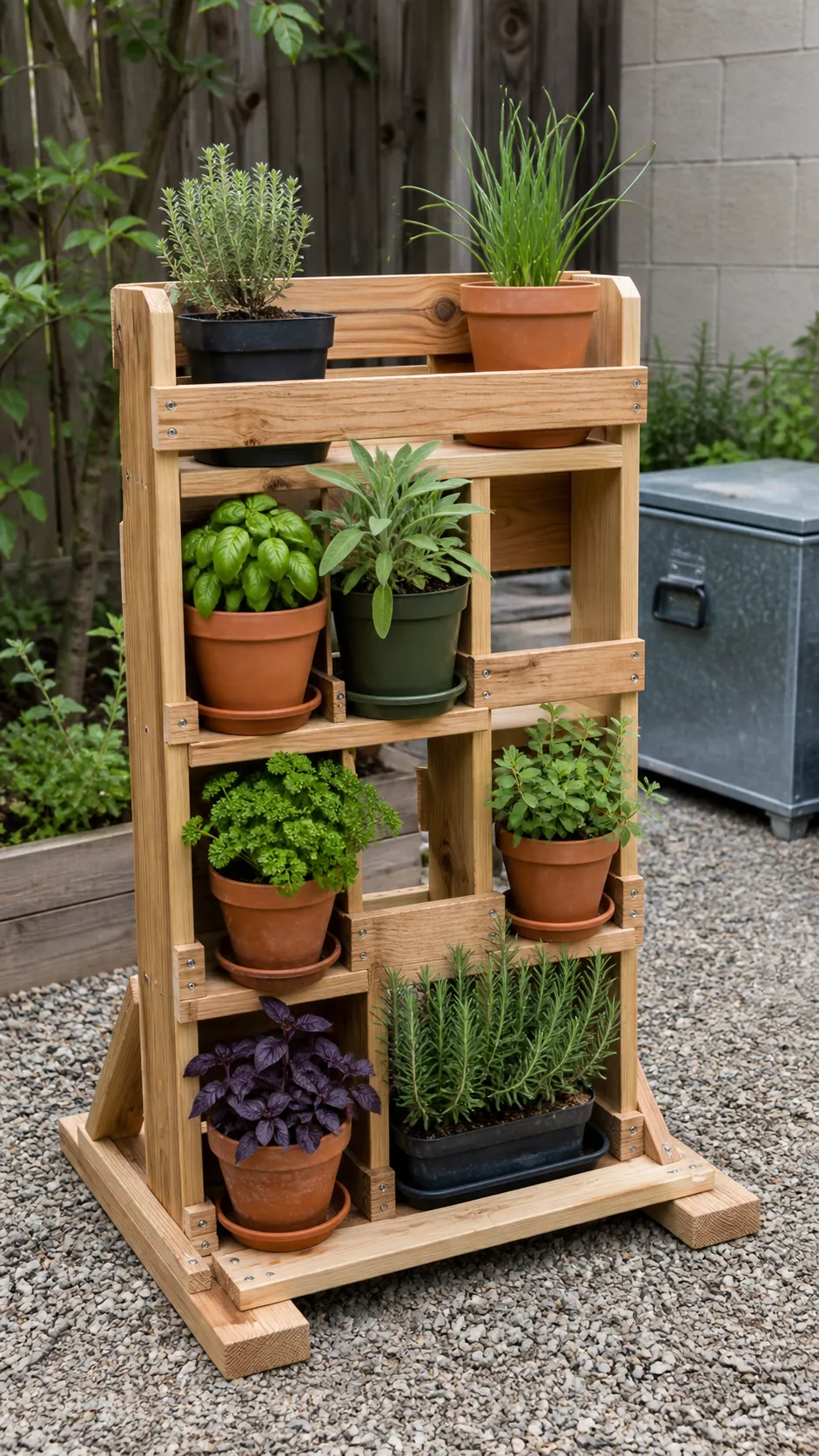
A freestanding pallet-style herb rack
Build the pallet look as a stable freestanding rack that holds removable pots rather than stapling soil-filled fabric to mystery timber. Use clean, known materials, sand rough edges, and add a broad base or wall restraint appropriate to the site.
Removable pots make the rack easier to water and let you replace one herb without dismantling the display. Place heavy containers low and keep the overall height within easy reach.
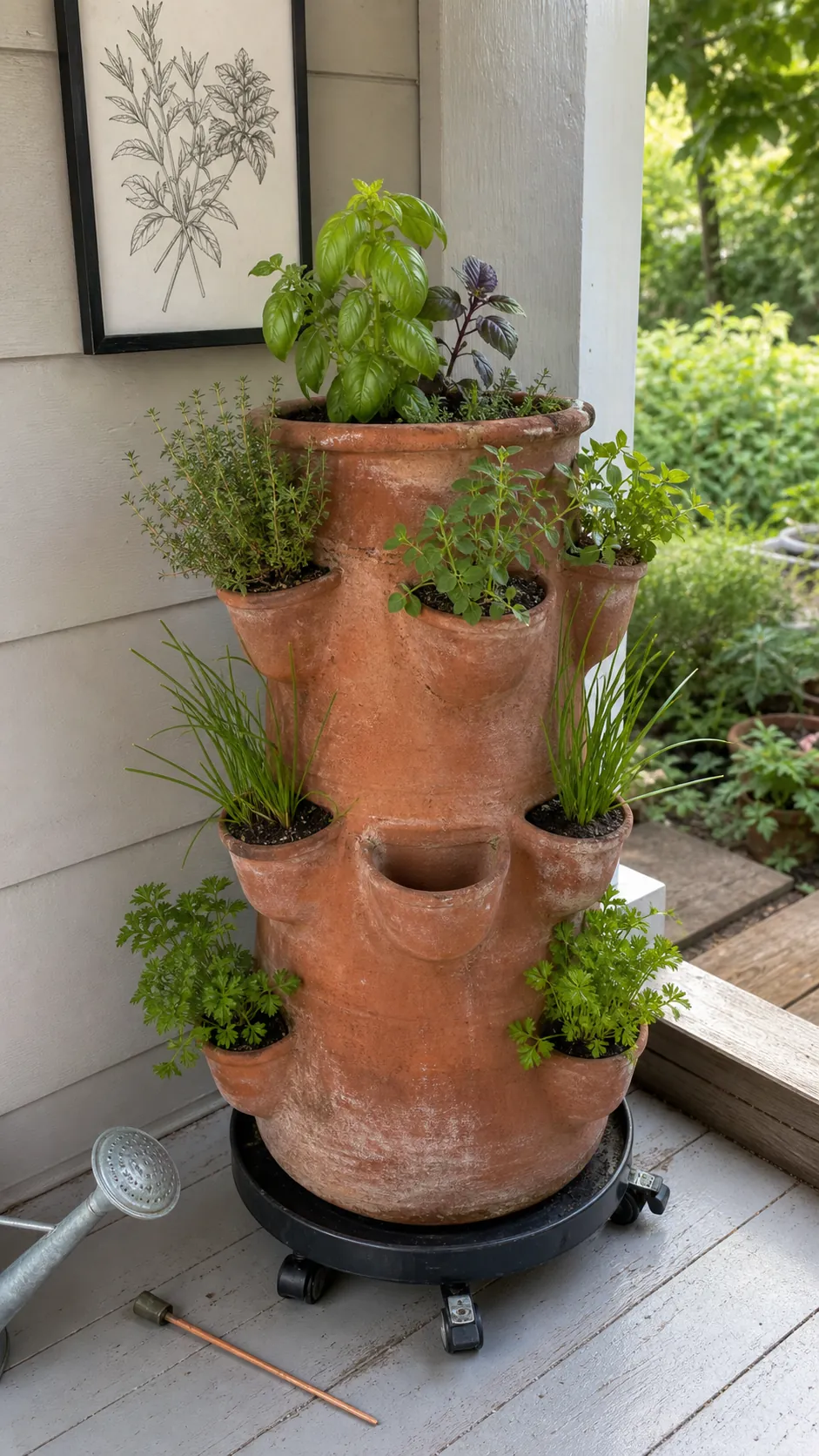
A strawberry pot planted with compact herbs
A strawberry pot’s side openings suit small thyme plants, trailing oregano, and compact chives, with a larger parsley or basil at the top. Fill gradually so mix reaches every pocket, and water slowly from several points until the full column is evenly moist.
Check lower pockets for excessive wetness and upper pockets for drought. The form is space-efficient, but it demands more observation than a simple wide pot.
A self-watering planter for thirsty basil
A sub-irrigated planter can reduce daily watering for basil and parsley when it includes an overflow hole, a separated reservoir, and a reliable fill point. Follow the planter’s design rather than improvising a permanently flooded sealed tub.
Keep rosemary, sage, and thyme in conventional free-draining pots unless the system can meet their drier preferences. Empty and clean the reservoir periodically, and never assume “self-watering” means maintenance-free.
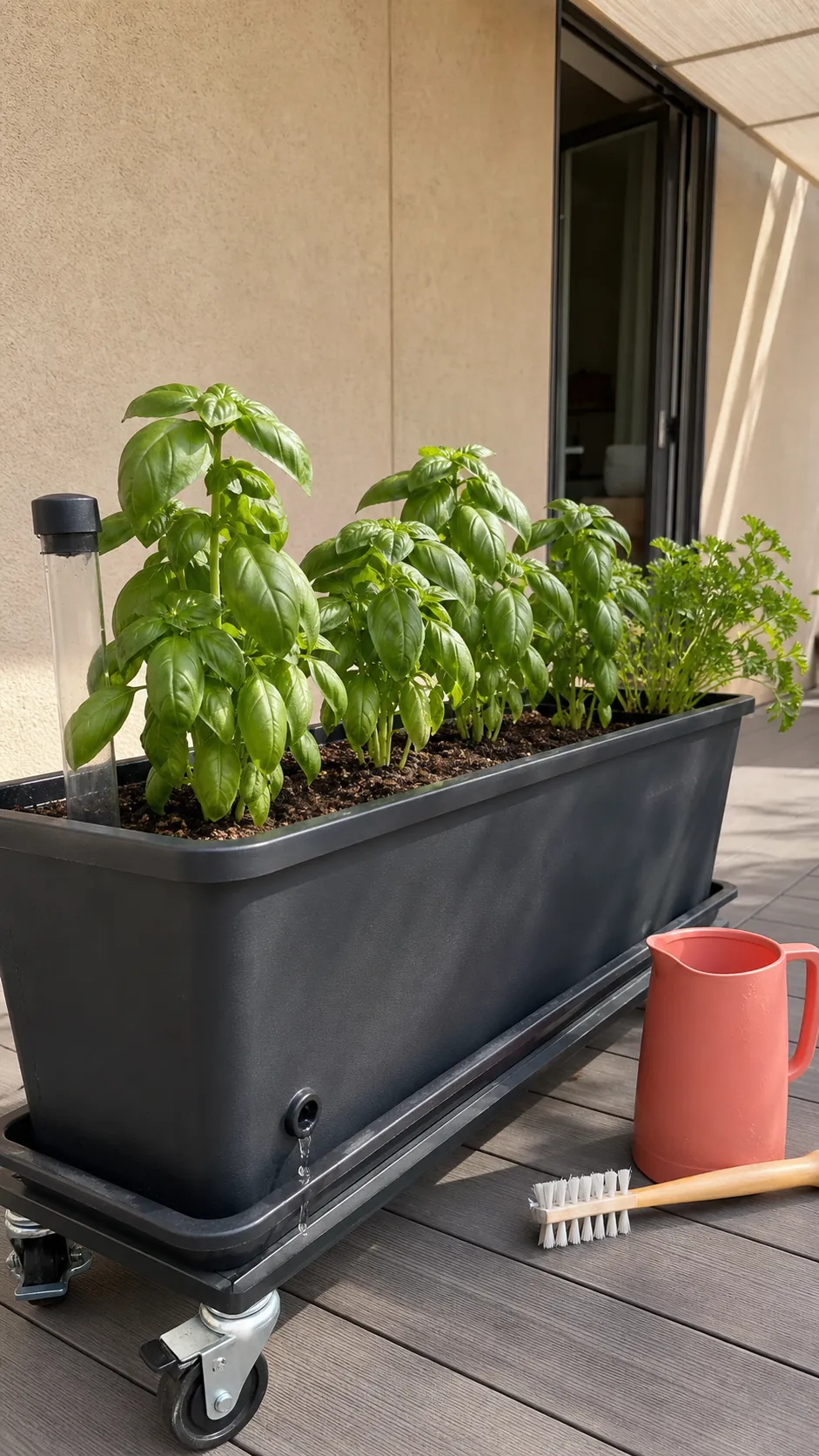
An indoor grow-light shelf for year-round herbs
A narrow metal shelf with adjustable full-spectrum lights can support basil, chives, parsley, and cilantro away from a window. Use waterproof trays, keep cords and power connections above the wet zone, and set lamp distance and schedule according to the fixture instructions.
Leave space between plants for airflow and raise the lamp as growth changes. Reflective white surroundings can improve usable light without covering the entire area in foil.
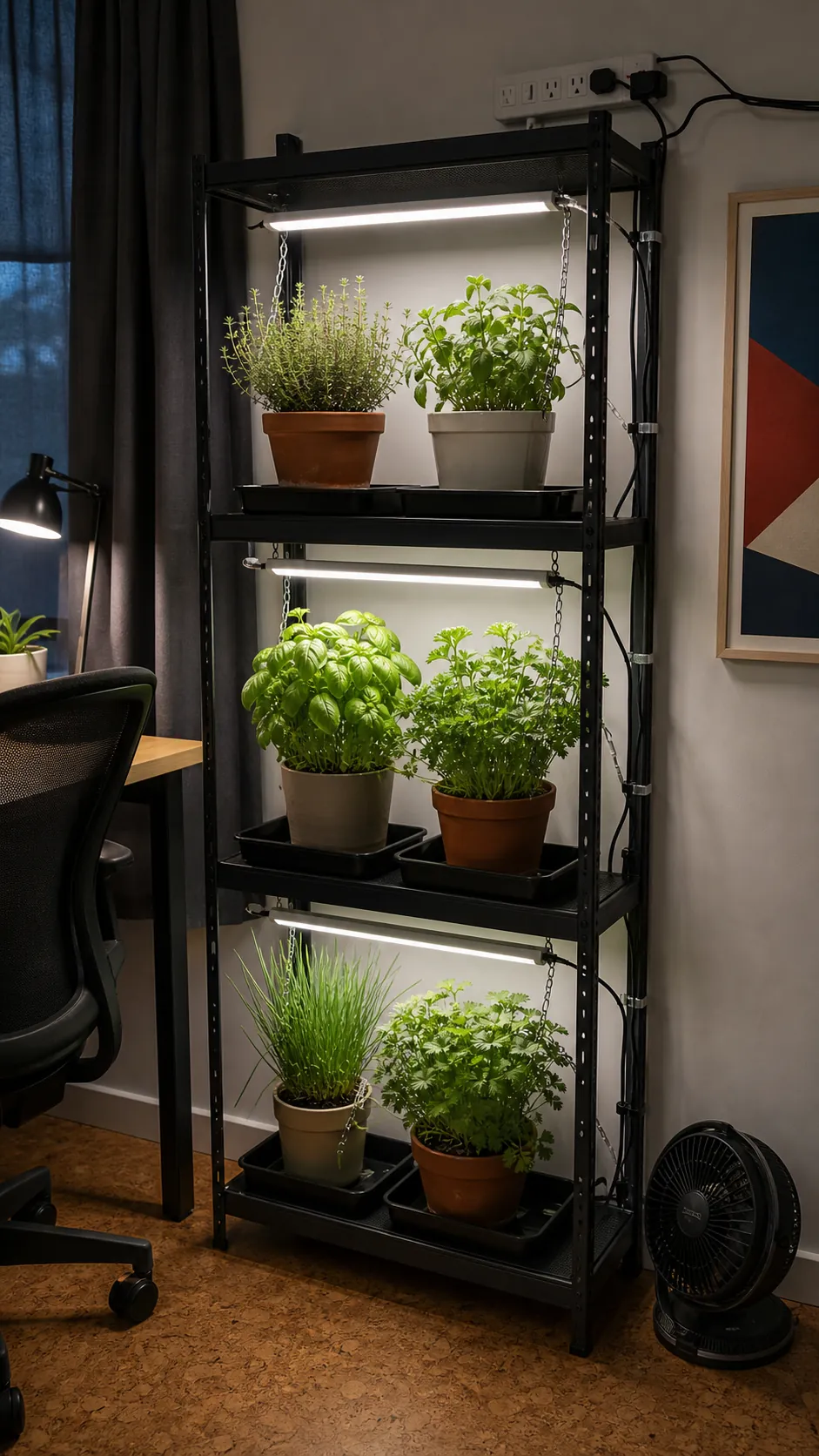
Mason jars used as removable cachepots
For a mason jar display, keep each herb in a small draining insert that lifts out for watering. The jar acts as a decorative outer vessel and must be emptied whenever runoff collects. Stones do not turn sealed glass into a draining pot.
Use wide-mouth jars, compact herbs, and an opaque insert that reduces light on damp residue. Repot as soon as roots crowd the small inner container.
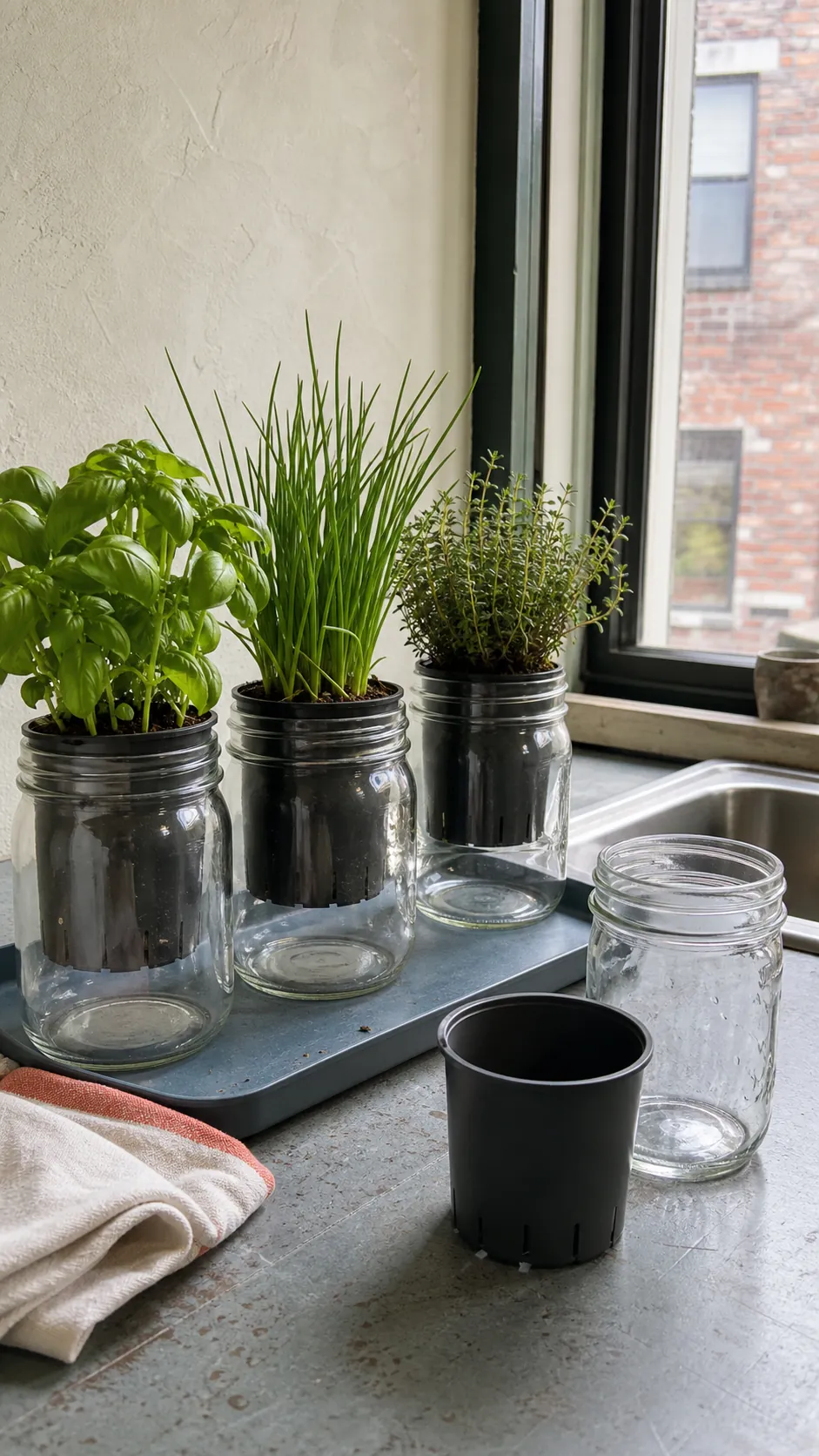
A simple countertop hydroponic herb station
A small hydroponic setup can grow basil or leafy herbs where soil is inconvenient, but it needs more than a jar of water. Use a food-safe opaque reservoir, a suitable plant support, measured hydroponic nutrients, adequate light, and the air gap or aeration required by the chosen method.
Clean the reservoir and monitor roots. Light reaching nutrient solution encourages algae, so opaque containers are more functional than clear decorative vessels.
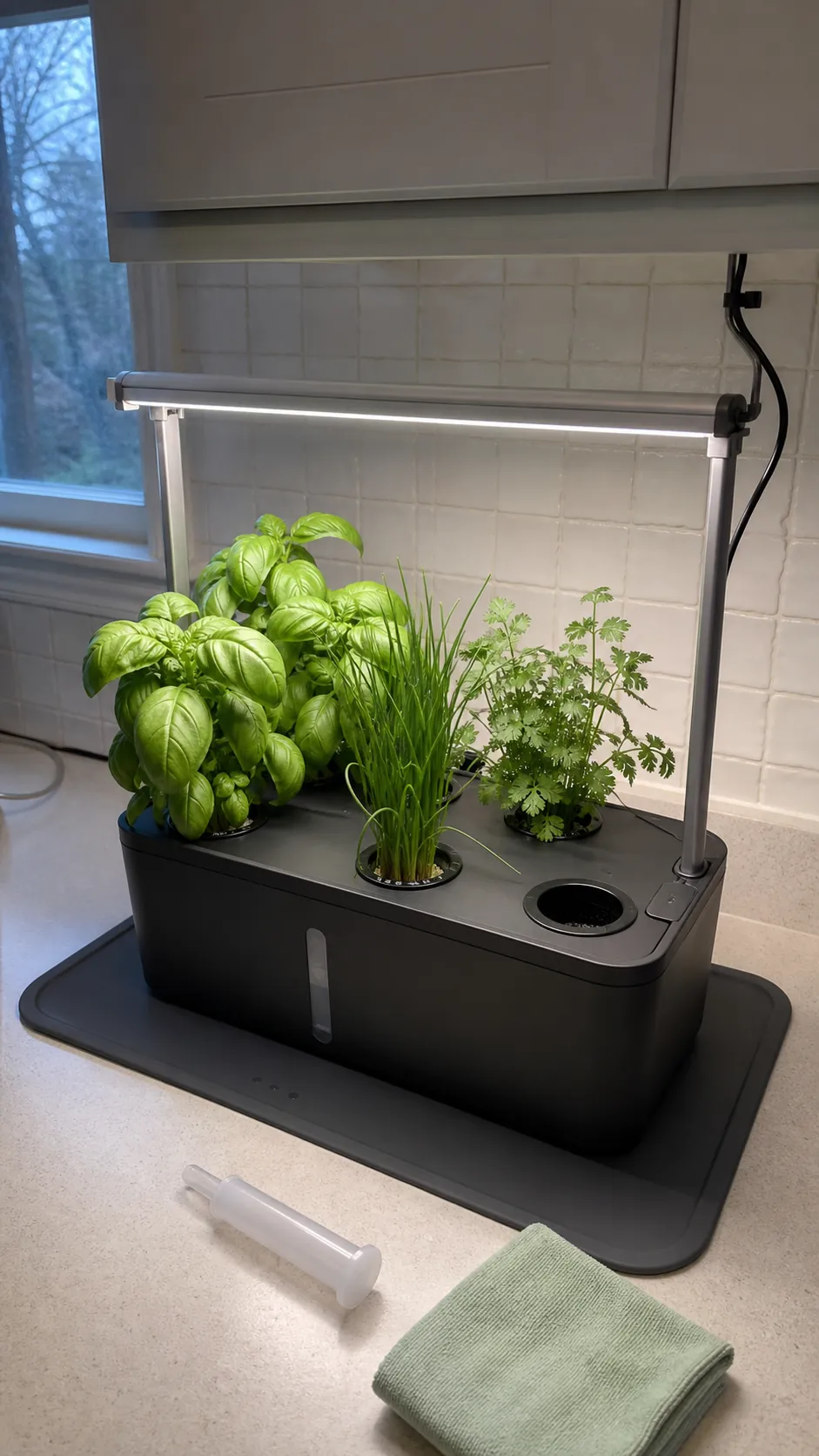
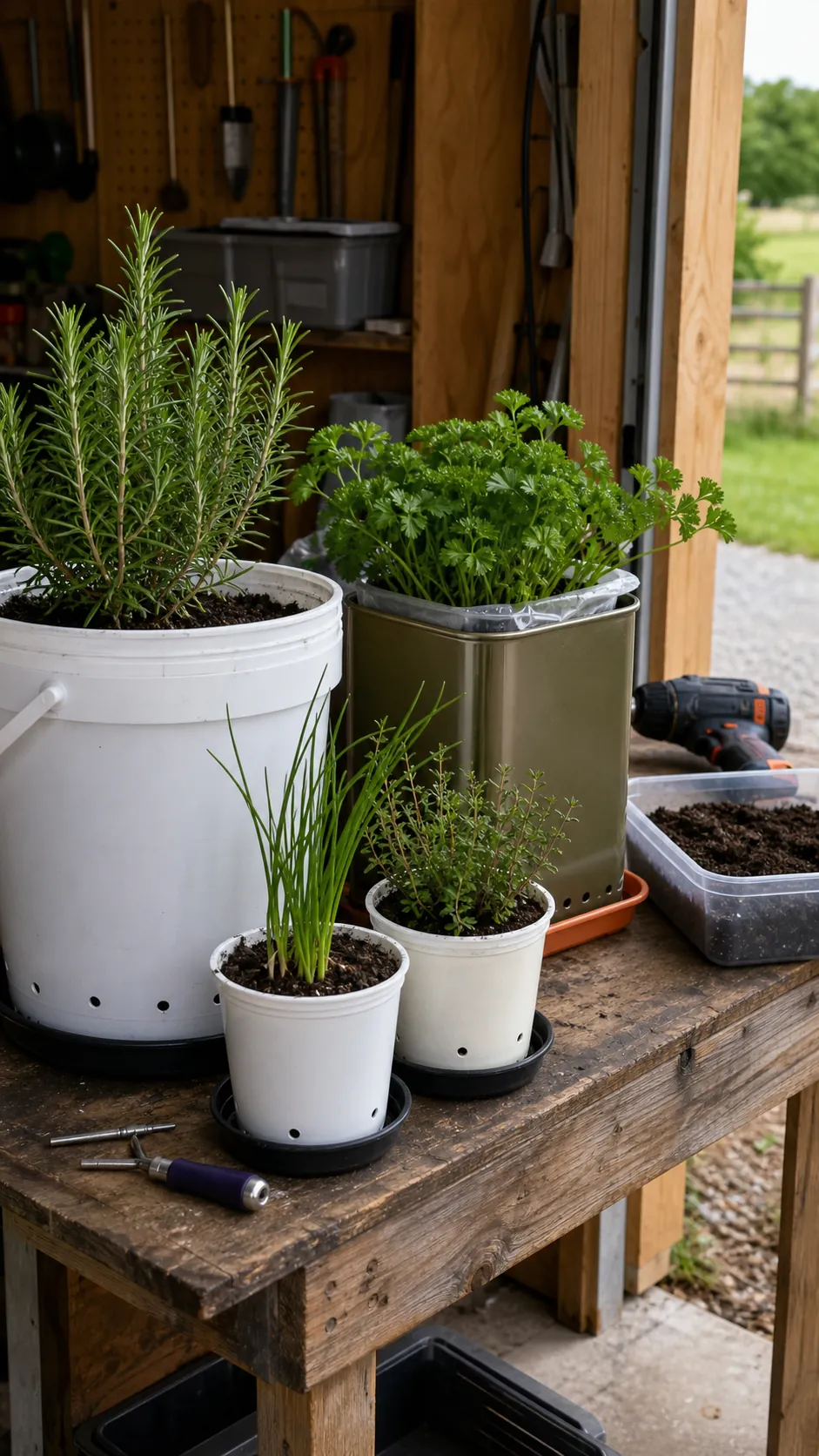
Food-safe upcycled containers on a potting bench
Clean food-grade buckets, olive tins with safe intact interiors, and sturdy nursery containers can become useful herb pots once they have adequate drainage. Avoid vessels with unknown chemical history, flaking coatings, sharp edges, or materials that heat dangerously in sun.
Use the same potting mix and root-space standards you would apply to a purchased planter. Upcycling succeeds when the container functions well, not merely because it was free.
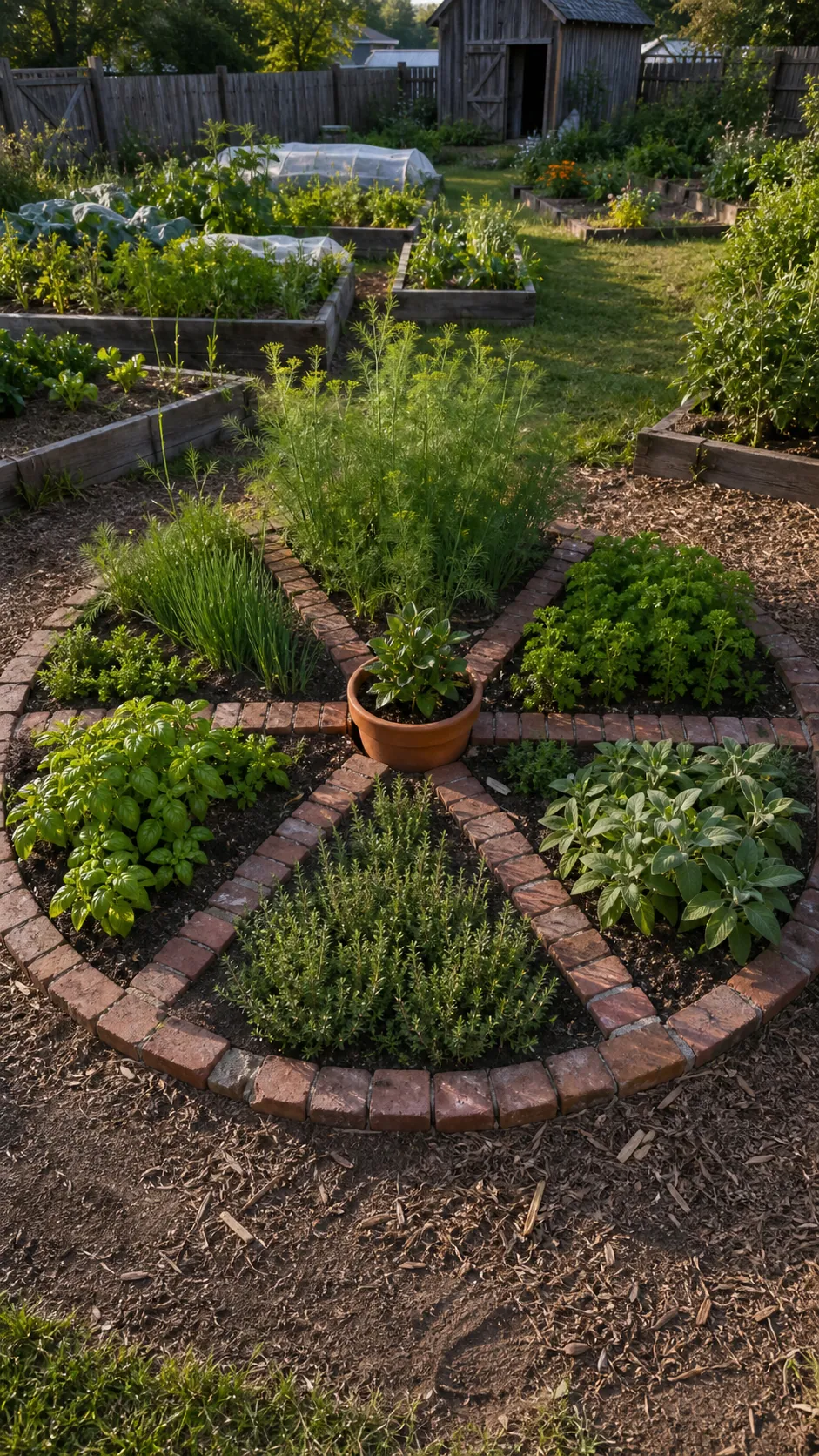
A brick-edged herb wheel with clear paths
Divide a circular bed into reachable wedges with brick or stone paths. Each wedge can hold herbs with similar growth habits, while the hard lines make annual replanting and perennial maintenance easier. Keep the diameter small enough that every section can be reached without stepping on soil.
Place taller dill or fennel where it will not shade lower thyme and chives. Formal geometry is useful only when mature plants still fit their spaces.
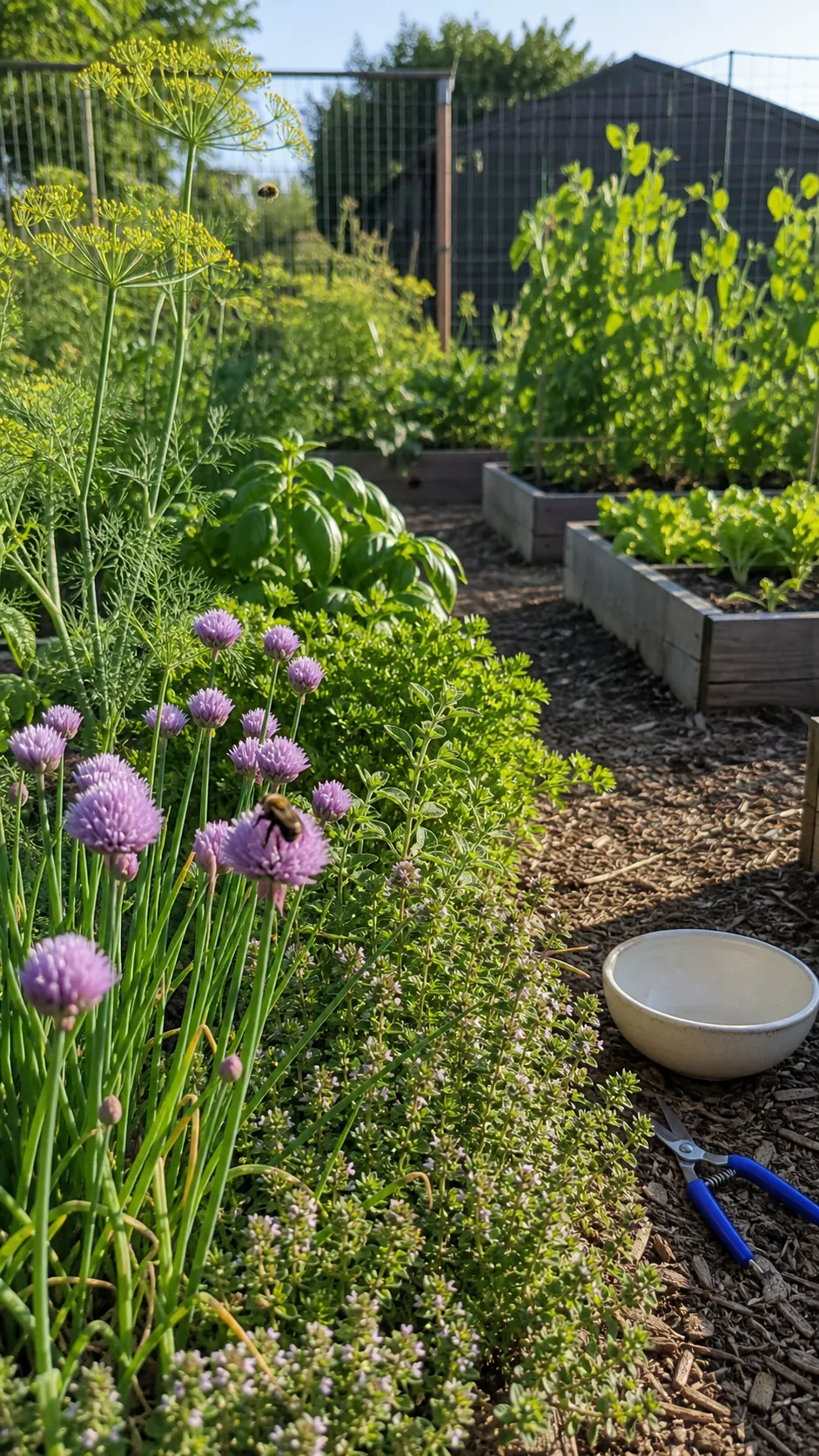
A flowering herb edge for pollinators
Allow selected thyme, chives, oregano, dill, or borage plants to flower along the edge of a vegetable garden. Their blooms add seasonal texture and can attract visiting pollinators, while the central culinary herbs remain easy to harvest.
Know which plants self-seed readily and remove unwanted flower heads before they scatter. Keep a pesticide-free harvest zone and confirm every plant’s identity before culinary use.
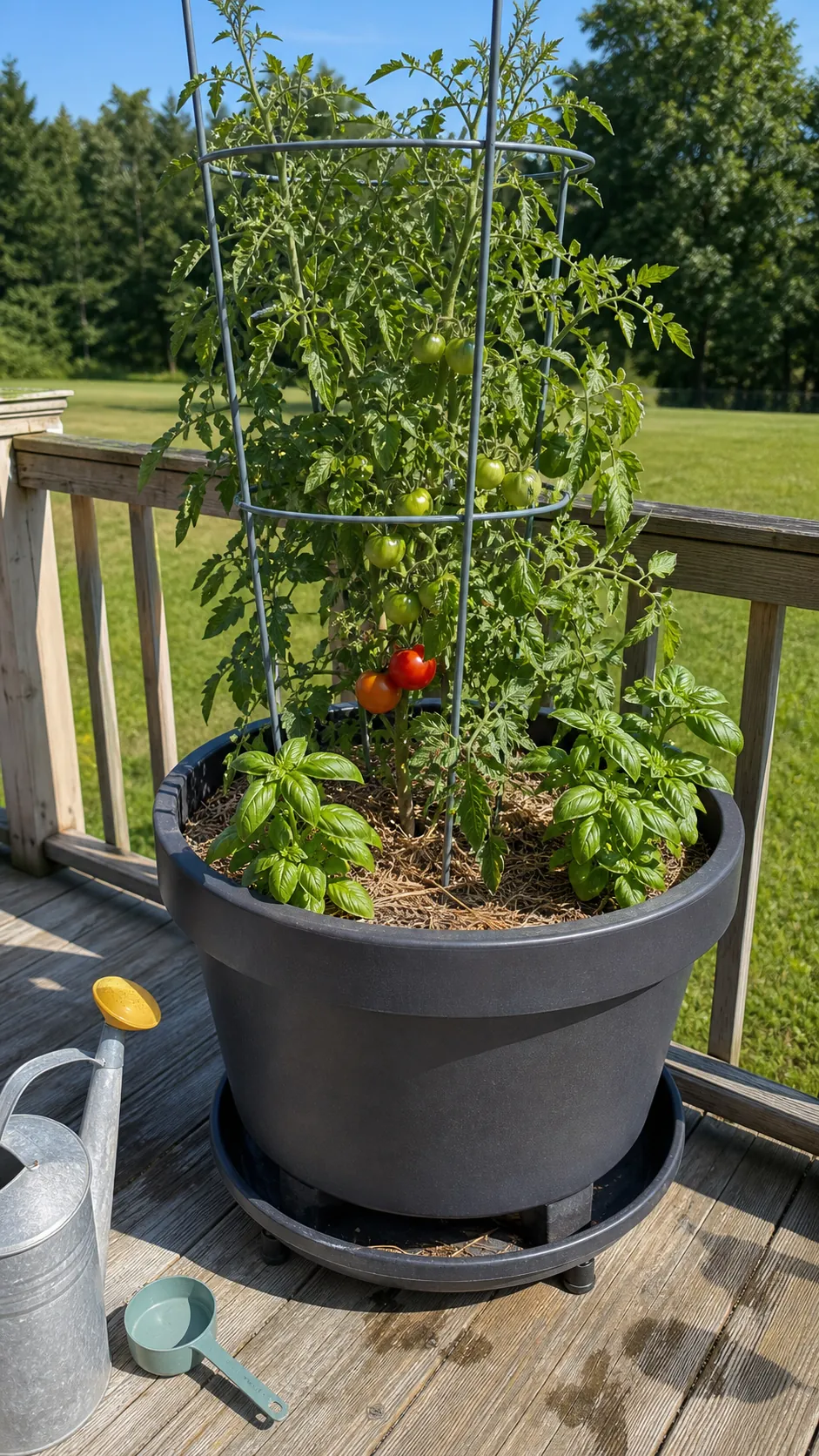
Basil and tomato sharing a generous container
A large container can hold one compact tomato with basil near the edge when it provides enough root volume, feeding, sun, and water for both. Do not use a small decorative pot; tomatoes are demanding and quickly dominate cramped mixes.
Place the tomato support before roots fill the pot, keep basil from being shaded completely, and check moisture daily in hot weather. This design connects veggie garden ideas with herbs without pretending companion planting removes basic care.
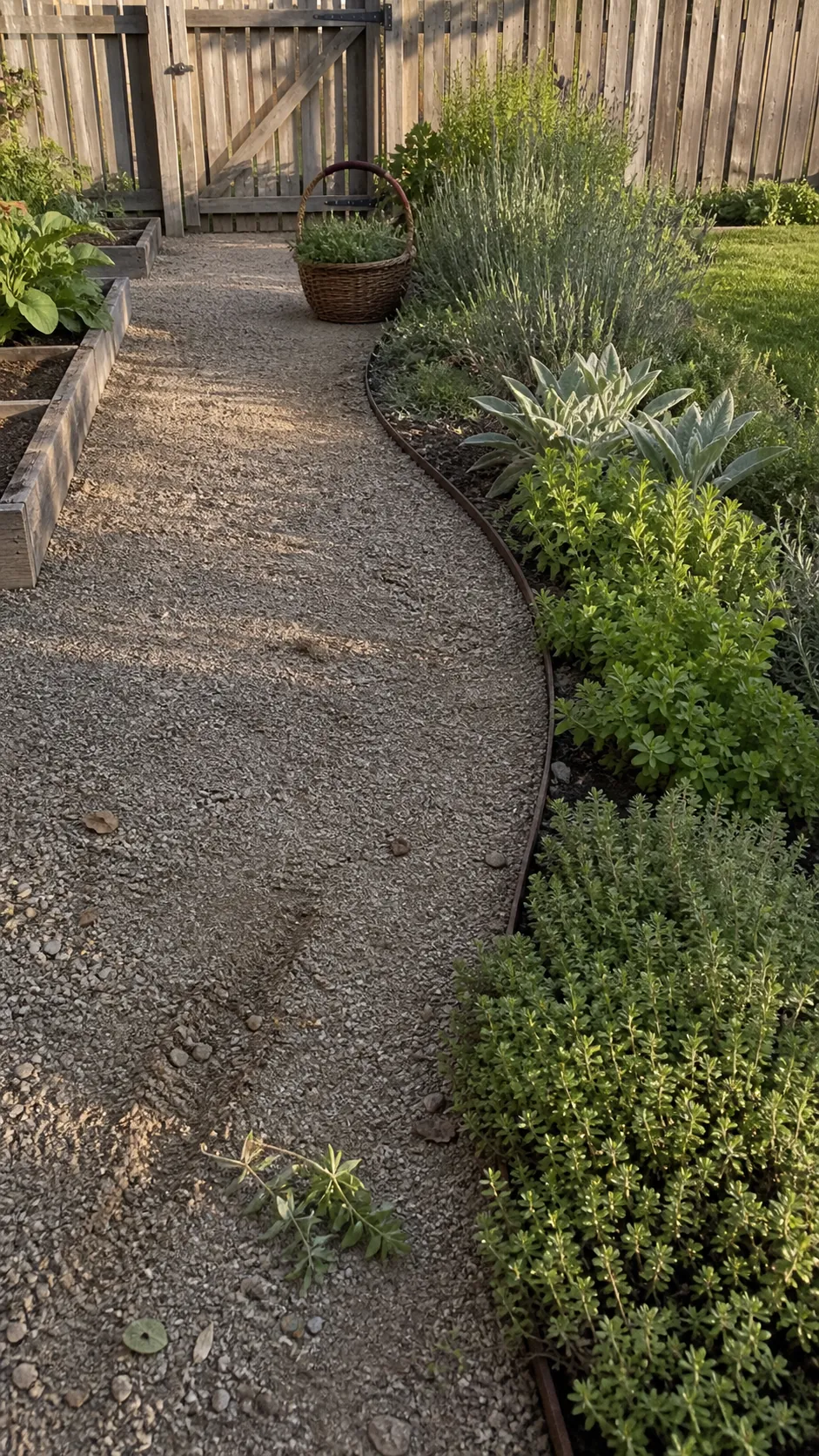
A fragrant herb path with plants kept off the walkway
Edge a sunny path with low thyme, lavender, sage, or oregano where their mature width will not create a tripping hazard. Set the plants back from foot traffic and choose species suited to the soil and winter conditions rather than planting directly between every paving joint.
Provide a firm route to the harvest area and prune woody stems before they obstruct passage. The sensory effect comes from proximity, not from crushing plants underfoot.
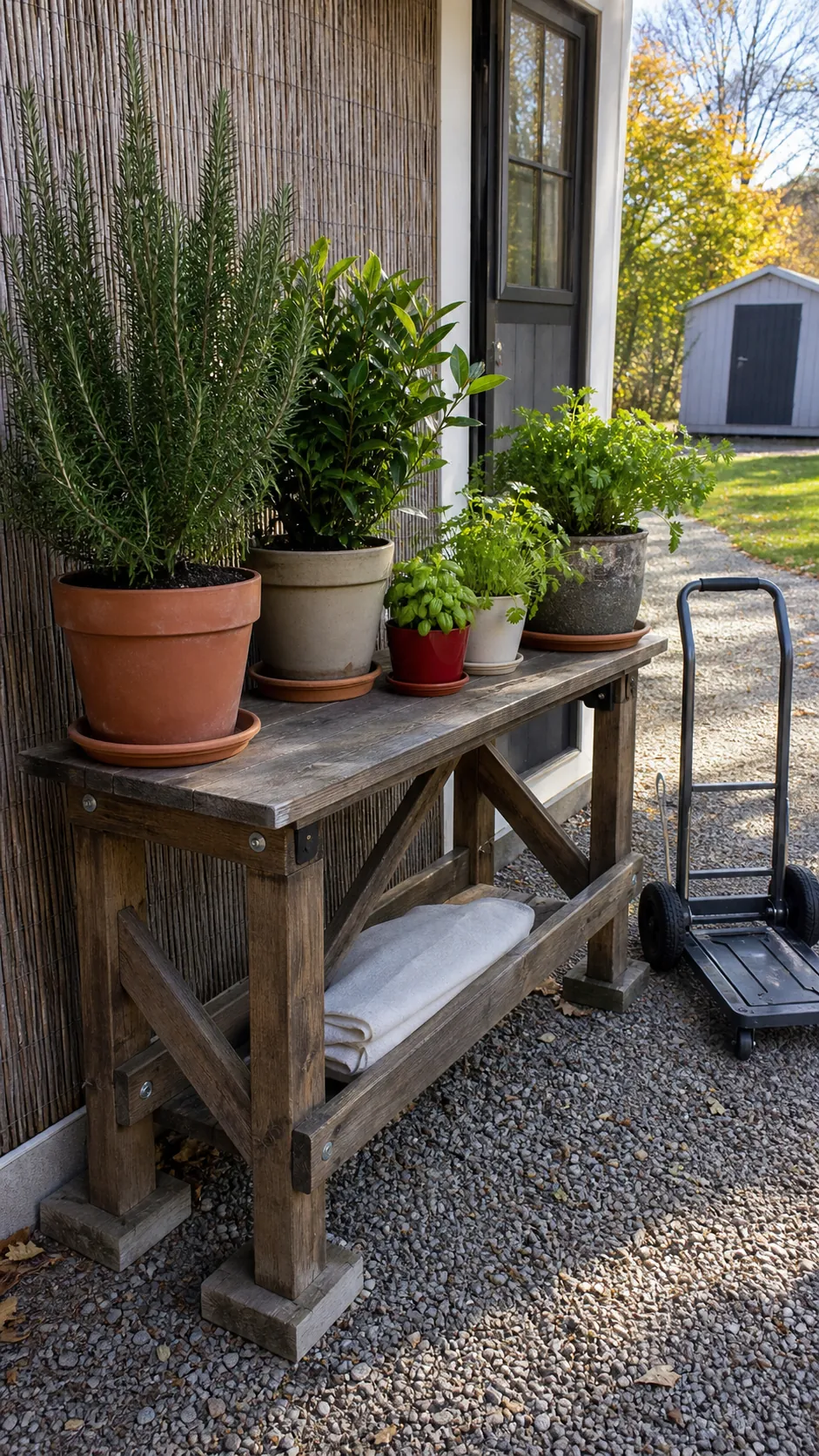
Seasonal herb pots on a movable bench
Set a few substantial pots on a strong bench near the garden entrance, keeping the heavy containers directly above supports. Annual basil and cilantro can rotate with the season, while rosemary or bay can move to winter shelter where climate requires it.
A bench reduces bending and makes inspection easier, but confirm its wet-load capacity and leave drainage unobstructed. Store empty pots elsewhere so the working surface remains accessible.
A harvest station beside the productive bed
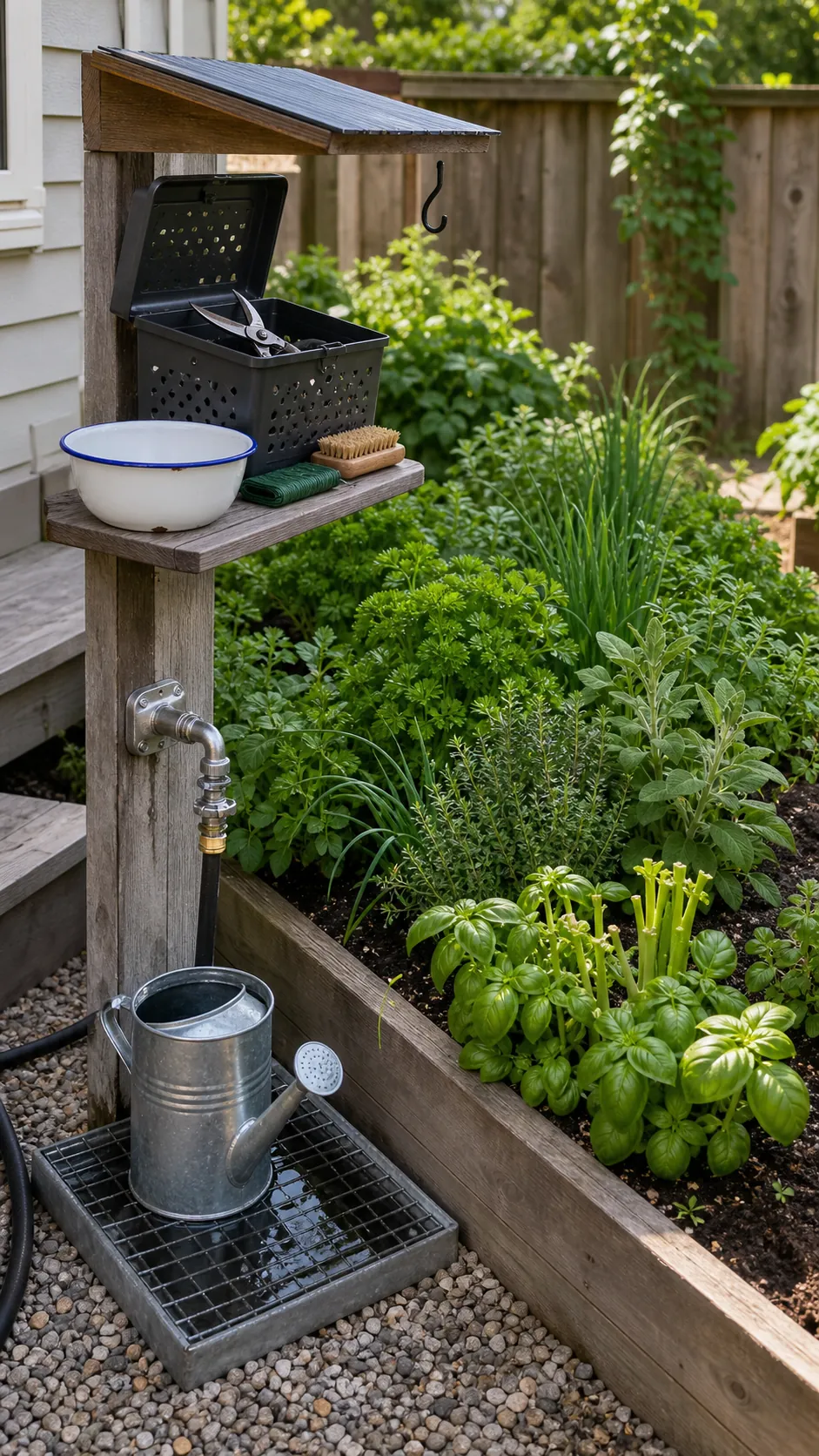
Finish the garden with a small practical harvest point: clean snips in a covered box, a washable bowl, plant ties, and a nearby water source that does not require dragging a hose across stems. Keep tools dry and out of children’s reach.
Place the station beside a reachable mixed herb bed, not inside the planting area. The best small herb garden is one that makes a two-minute harvest easy, because regular cutting encourages useful growth and turns the design into everyday food.