
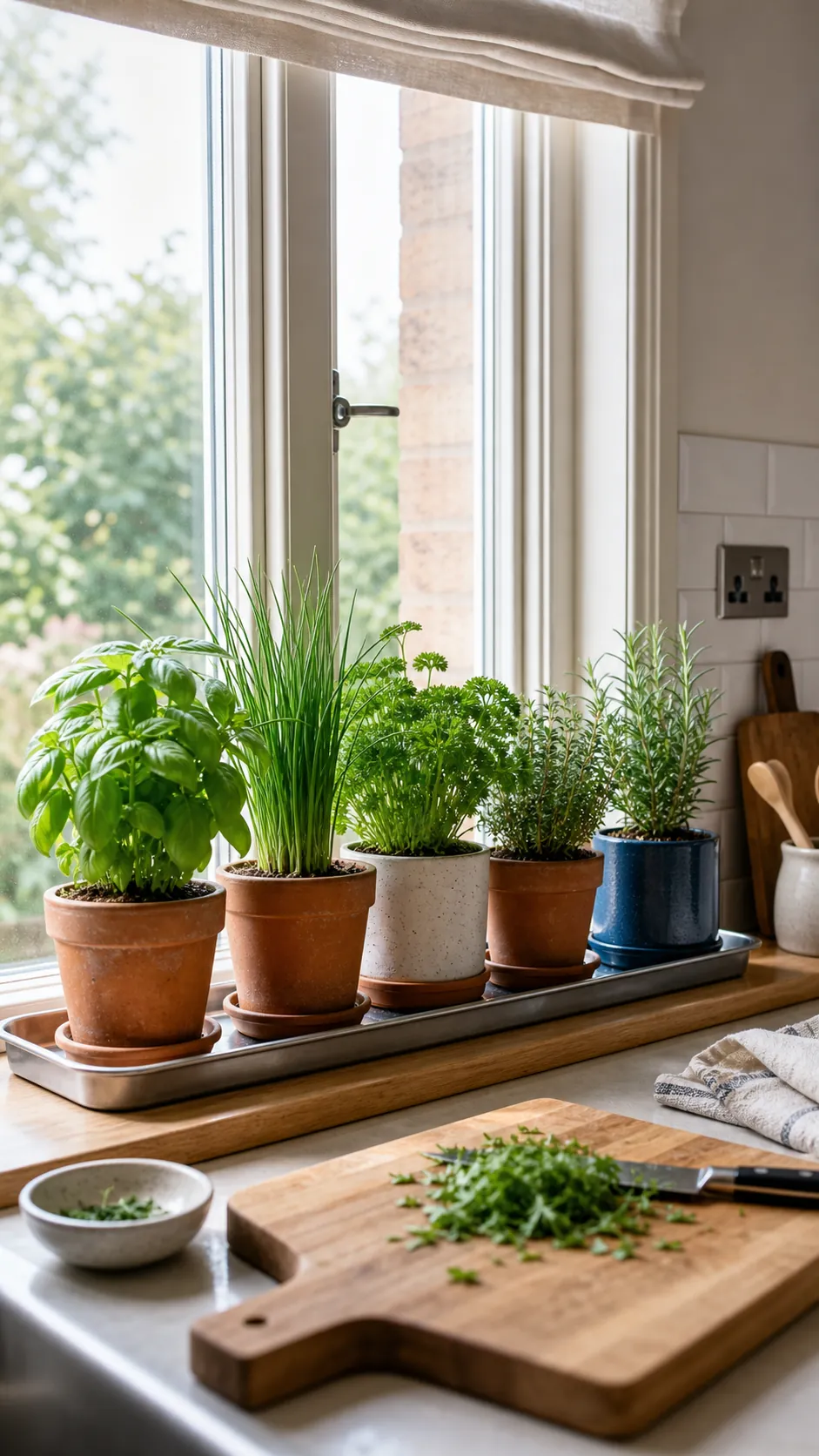
A kitchen window herb garden succeeds when it is designed around light, drainage, and the way you cook—not when pots are squeezed onto a sill for one photograph. These ideas range from simple separate pots to renter-friendly shelves and compact lighting. Throughout, keep water away from electrical fittings, protect the sill, and match each herb to its own conditions. A smaller group of healthy, harvested plants will outperform a crowded display.
Give Every Herb Its Own Draining Pot
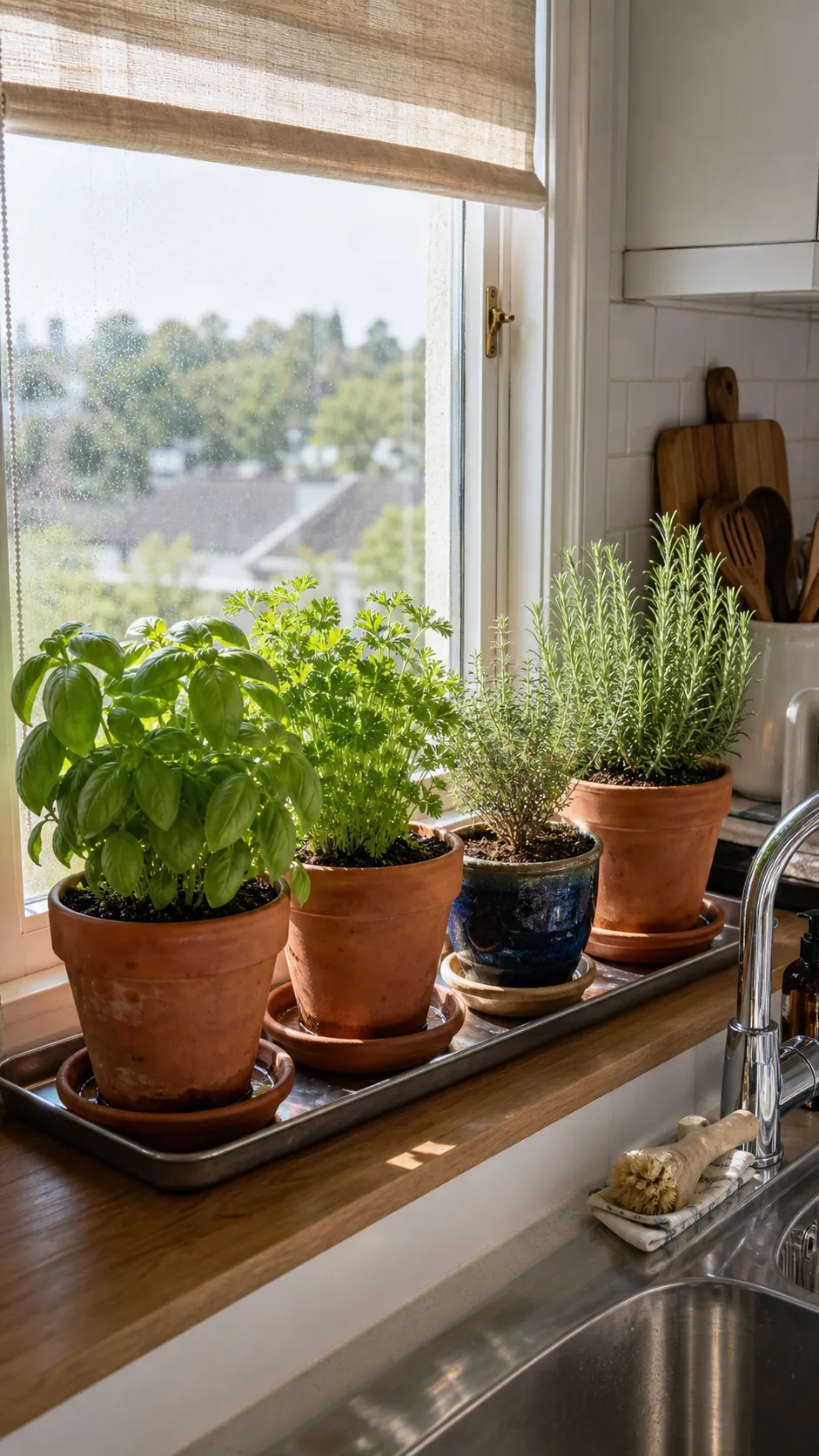
The prettiest shared trough can become a care problem when basil wants more moisture than rosemary. Start with separate pots that have real drainage holes, then place them together on one waterproof tray. You can lift, rotate, water, or replace each plant independently. Individual containers make beginner mistakes easier to correct and stop vigorous roots from taking over a neighbour’s soil.
Add a Narrow Shelf Across a Deep Window
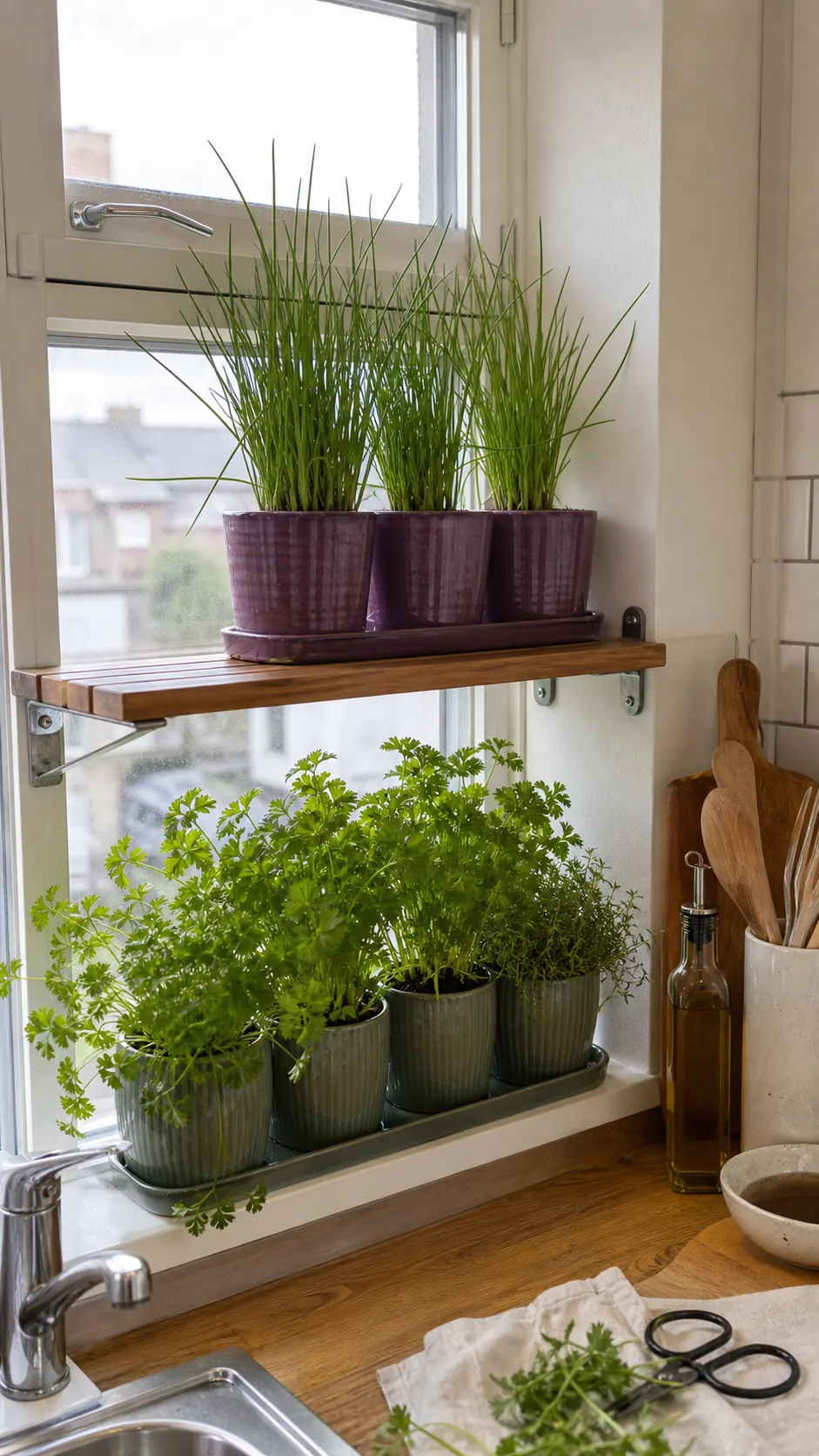
A deep reveal can hold a slim shelf without consuming worktop space. Keep it below the window handle, use brackets rated for the damp kitchen environment, and confirm pots cannot fall when the window opens. A clear or slatted shelf lets more light reach the lower level. This kitchen window plant shelf works best when both tiers remain easy to water and inspect, rather than becoming a dense green screen.
Build a Removable Ledge Over the Sink
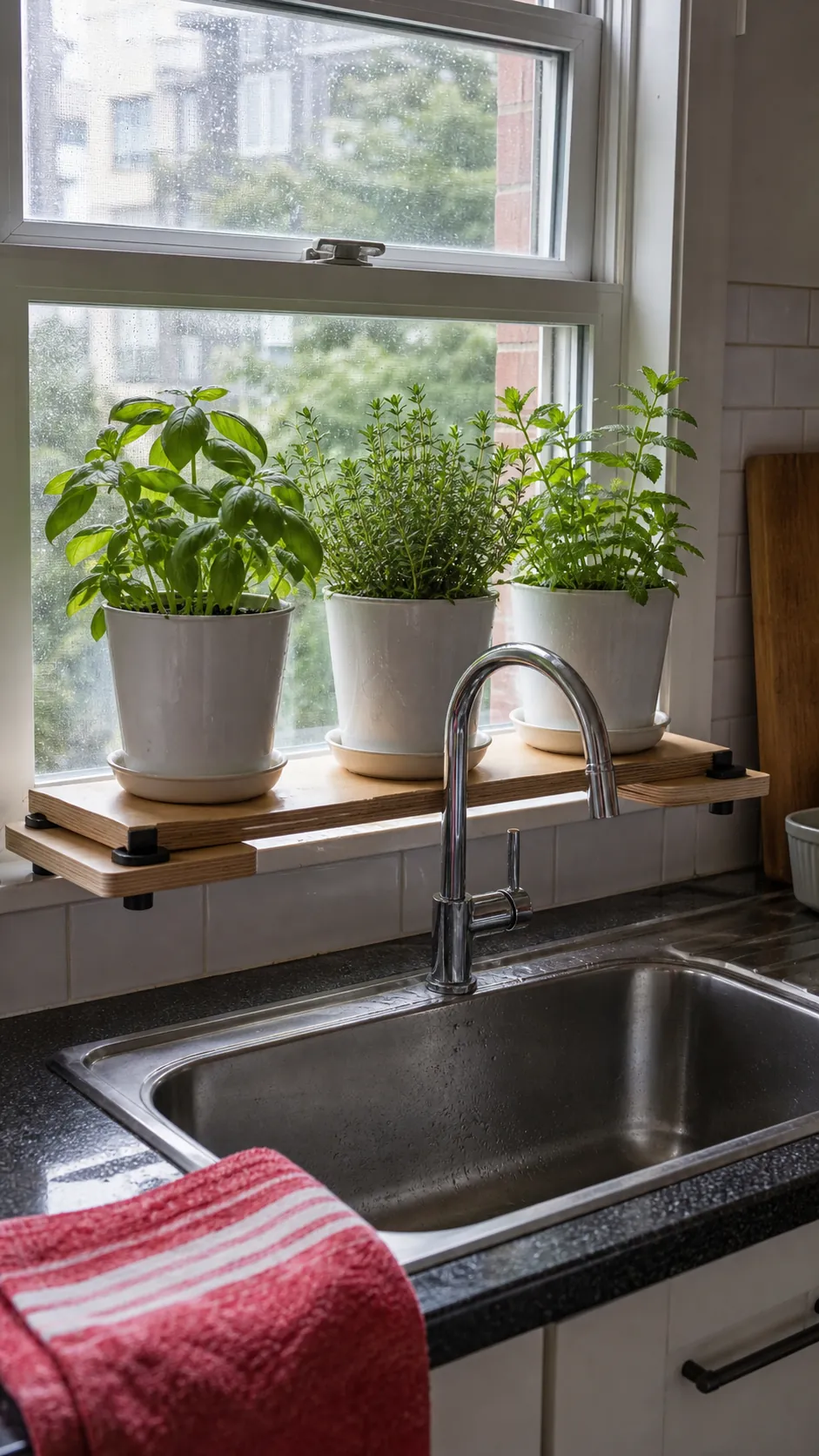
A freestanding ledge can bridge the dry edges of a sink without drilling into tile or a rental window frame. Size it so taps, handles, and cleaning still work, and choose a sealed material that tolerates splashes. Keep heavy pots near the supports, not at the centre. Removable designs suit apartment herb gardens because they add growing room while leaving the original kitchen intact.
Use a Two-Tier Counter Stand
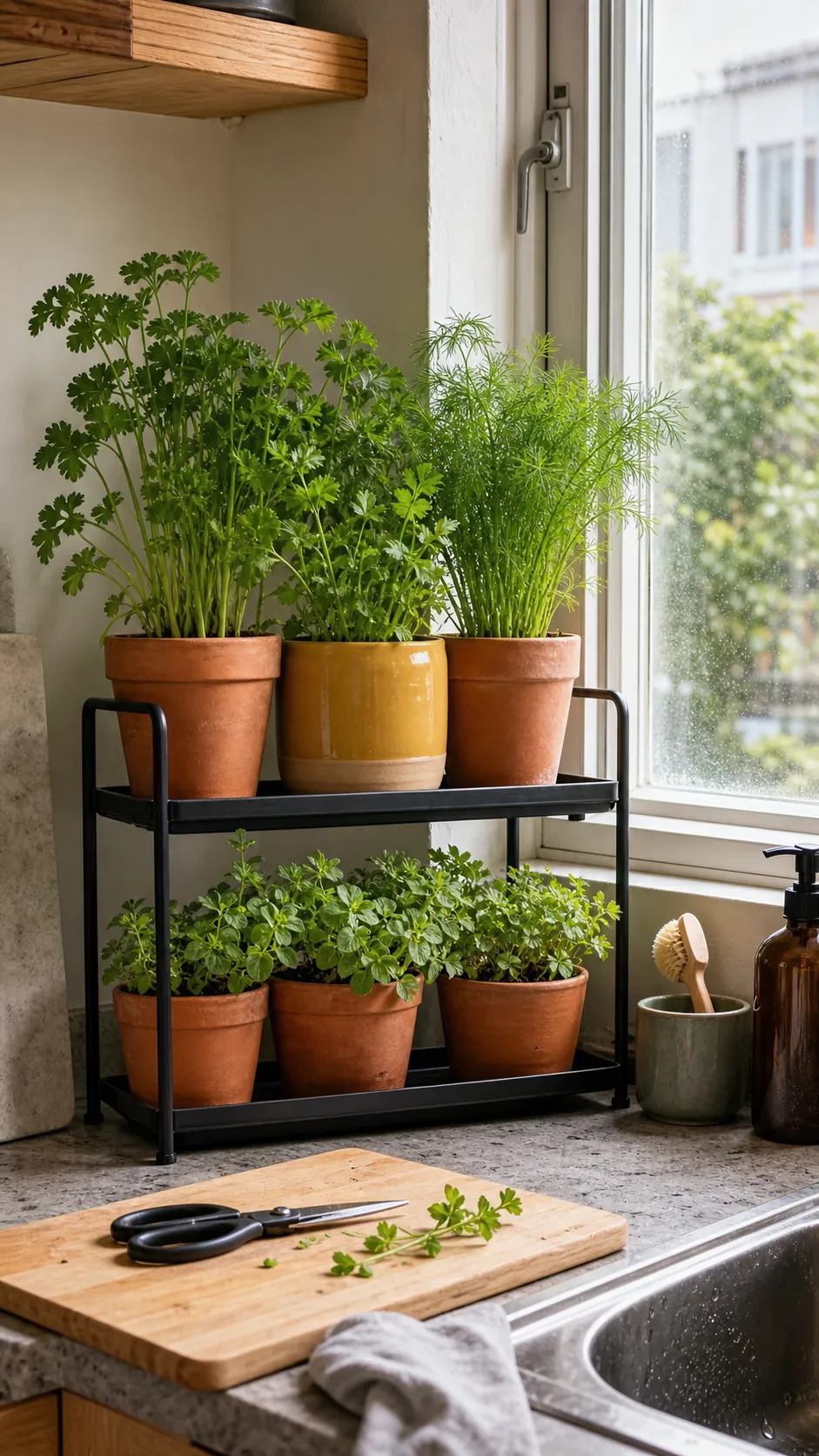
A compact riser brings back-row pots up to the light and keeps saucers from spreading across the counter. Choose open shelves, stable feet, and enough vertical clearance for mature leaves. Put taller herbs behind or above short ones only if they do not shade them. A two-tier stand is useful in small kitchen ideas because it creates order without pretending every plant needs the same conditions.
Hang Lightweight Pots From the Reveal
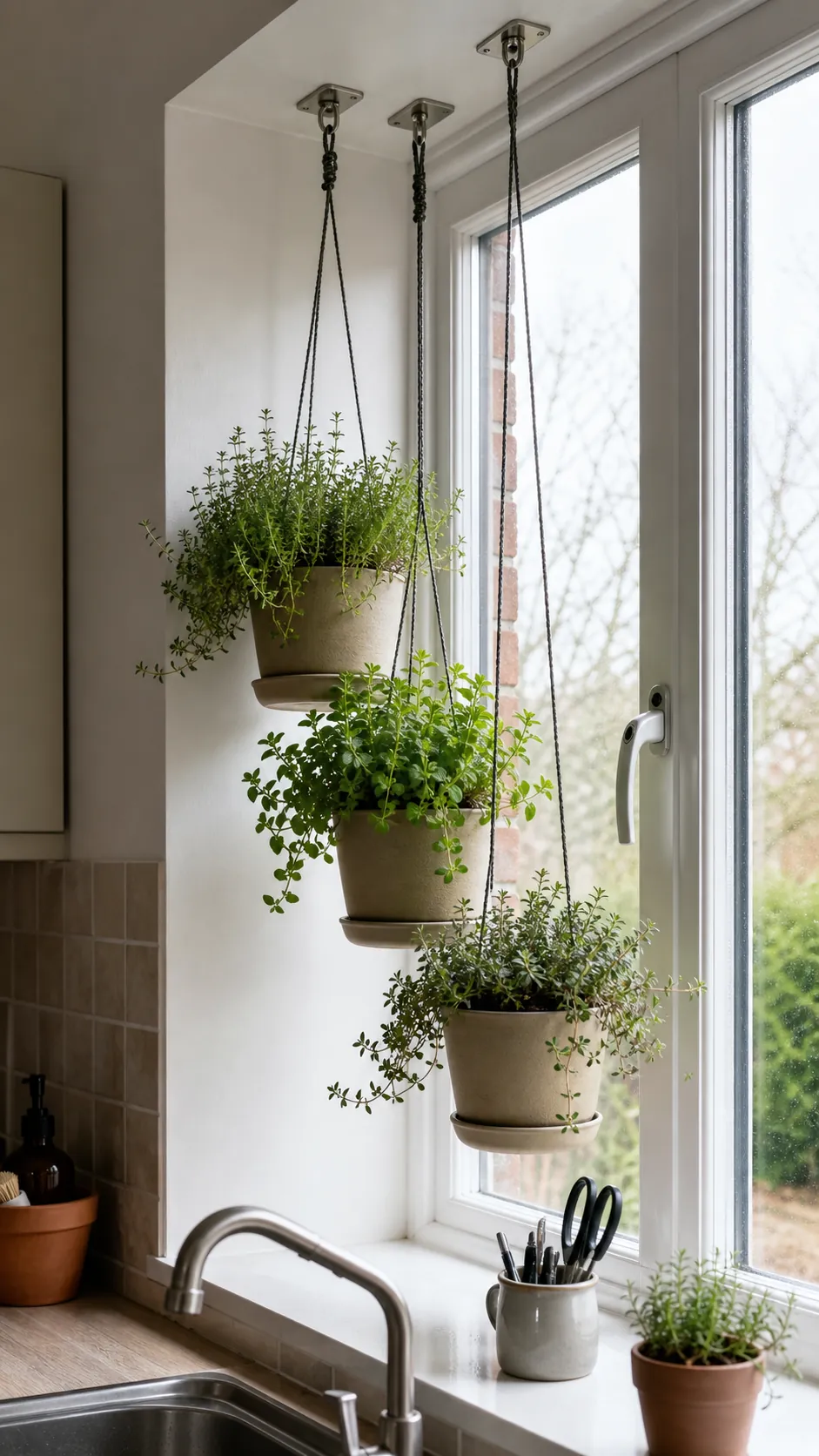
Where the sill is tiny, lightweight pots can hang from secure hooks inside the reveal. Use closed drip trays or removable inner nursery pots, keep foliage away from the glass, and never overload a curtain pole that was not designed for plants. Stagger heights so each herb receives light and the window still opens. Hanging works best for compact, frequently harvested herbs, not heavy wet planters.
Choose a Self-Watering Setup for Basil
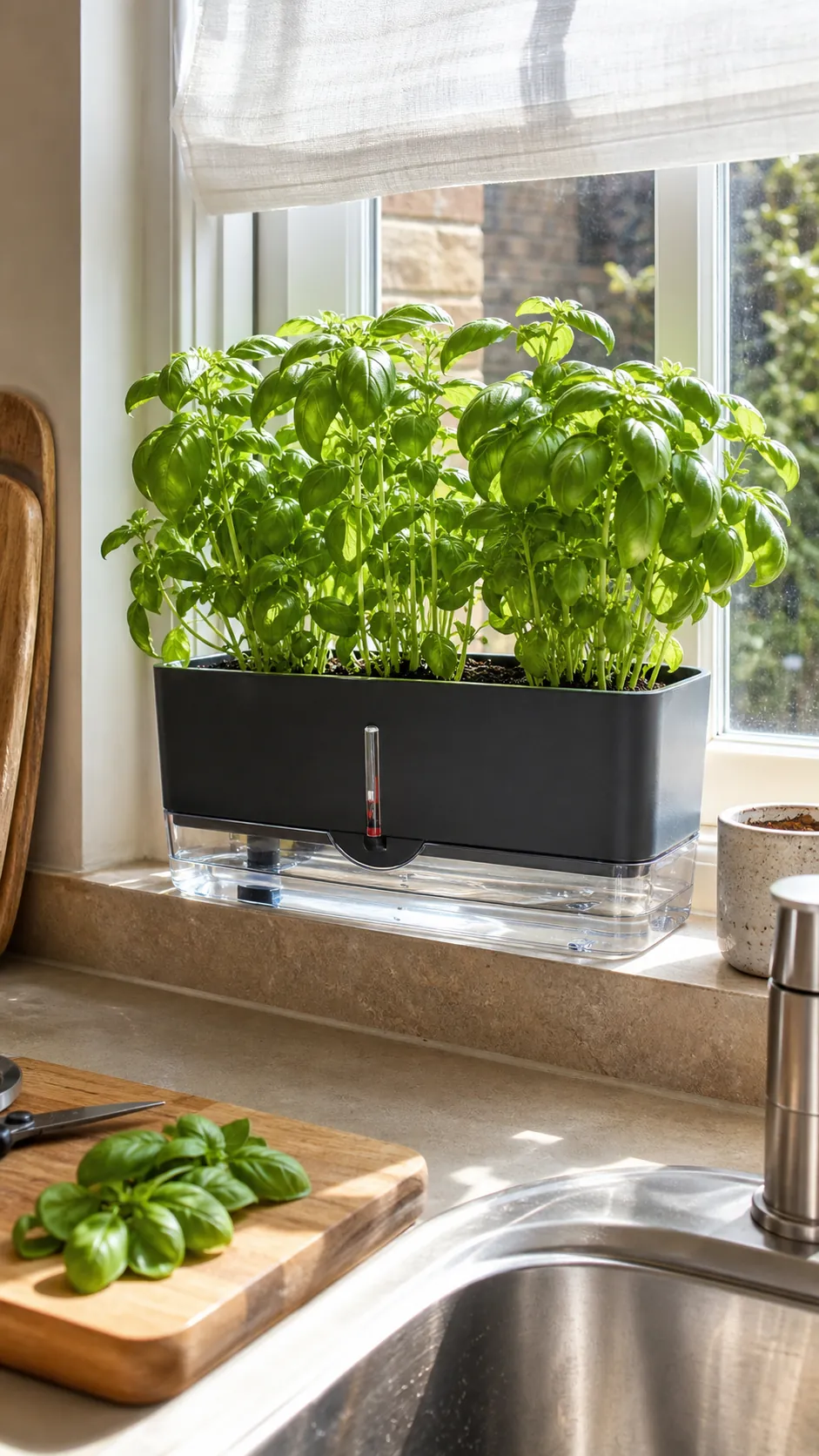
Basil can wilt quickly in a warm bright window, yet constantly saturated compost encourages root trouble. A small reservoir planter provides a steadier supply when it includes an air gap and a visible fill limit. Let the surface guide you before topping it up, and clean the reservoir regularly. Self-watering reduces sudden swings; it does not remove the need to watch roots, light, and temperature.
Group Mediterranean Herbs in Terracotta
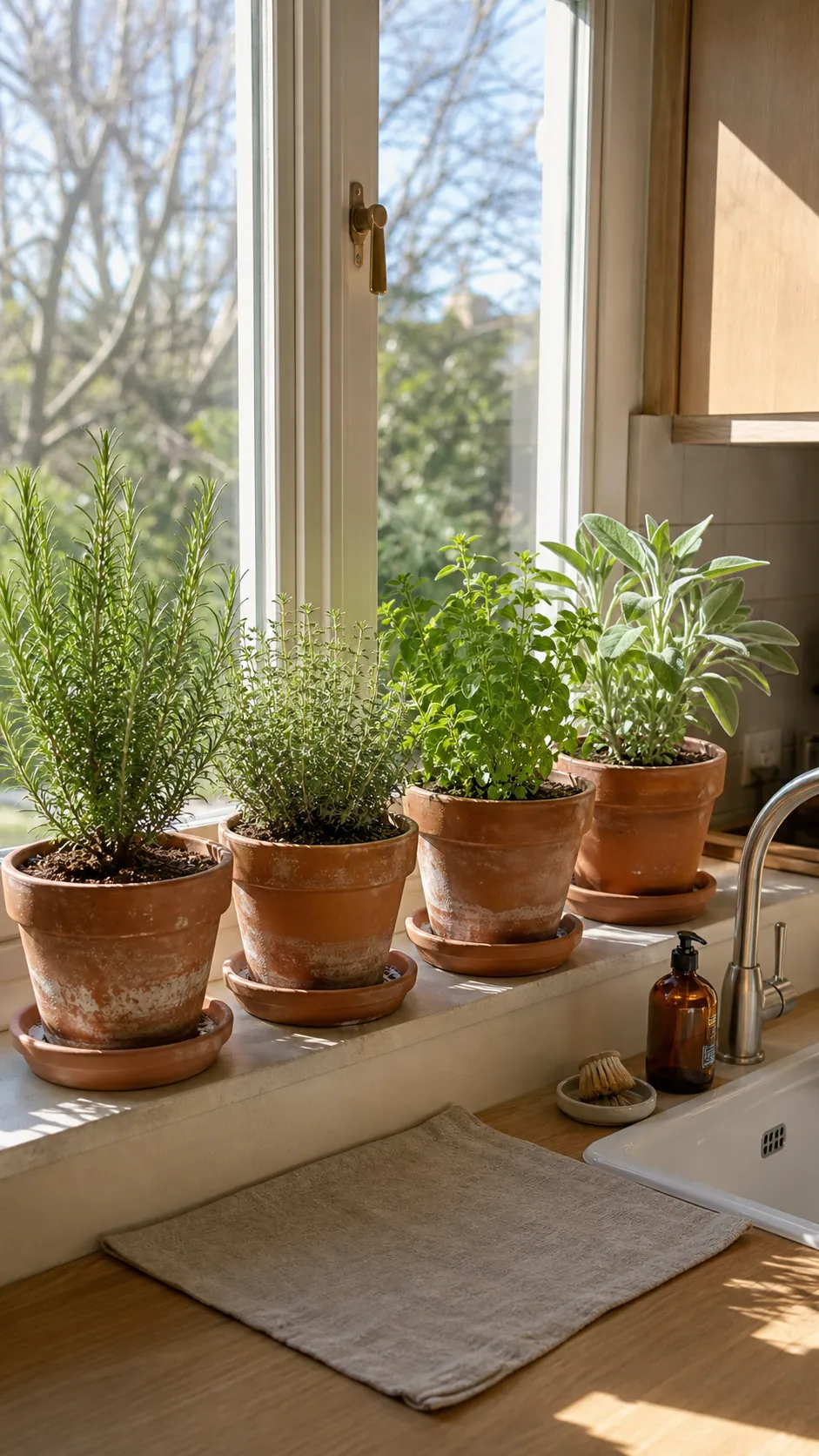
Rosemary, thyme, oregano, and sage generally suit a brighter, drier grouping. Unglazed terracotta helps moisture escape and makes it easier to see which pots are drying fastest. Give every plant its own container and leave air around the foliage. A gritty, well-draining mix matters more than a rustic look. This arrangement works because the care patterns are compatible, not simply because the pots match.
Keep Leafy Herbs in Glazed Pots
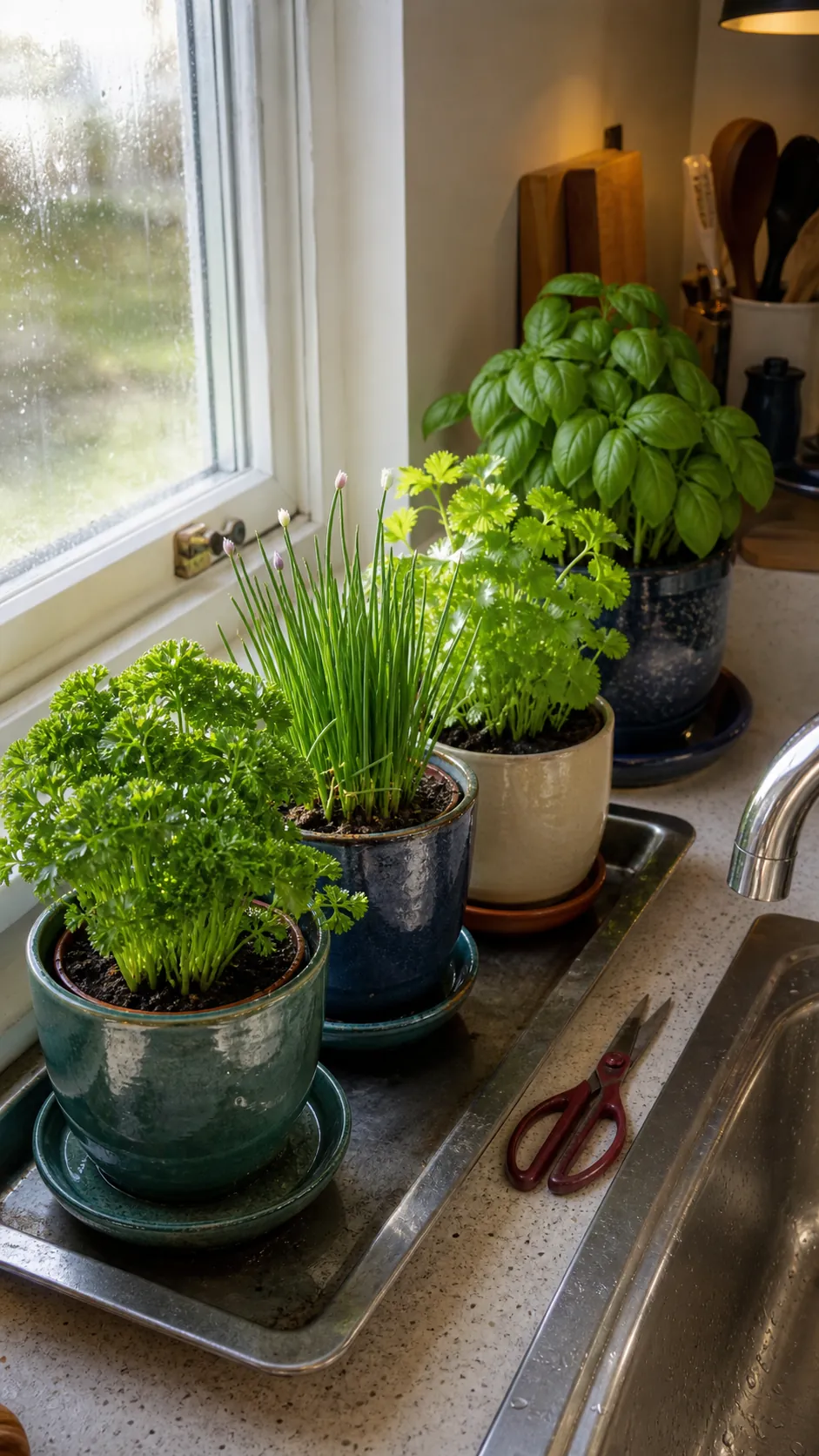
Parsley, chives, cilantro, and basil often need closer moisture checks than woody Mediterranean herbs. Glazed pots dry more slowly, while separate drainage holes and saucers prevent standing water. Place them where midday heat will not scorch tender leaves, and harvest regularly. Matching the container to the herb’s rhythm is a more reliable indoor herb garden DIY strategy than buying one decorative set.
Isolate Mint Before It Takes Over
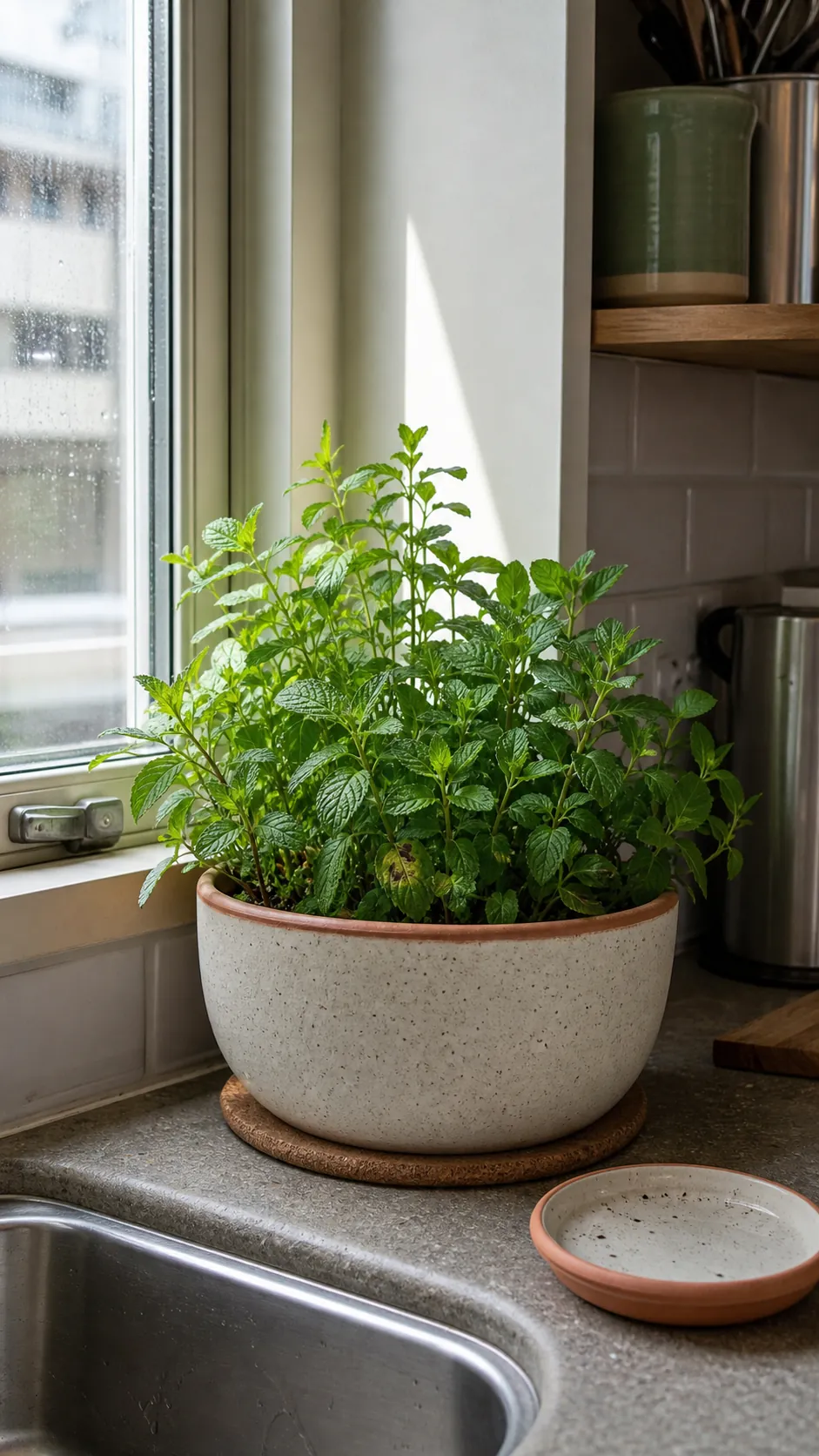
Mint is vigorous enough to crowd neighbours in a shared planter. Give it a separate, reasonably wide pot, pinch it often, and rotate it so growth does not lean into the glass. A saucer protects the sill, but empty collected water promptly. The separate container also makes it easy to move mint away from more sun-hungry herbs. Containment is the simplest way to keep mint useful rather than dominant.
Reserve the Sunniest Spot for Basil
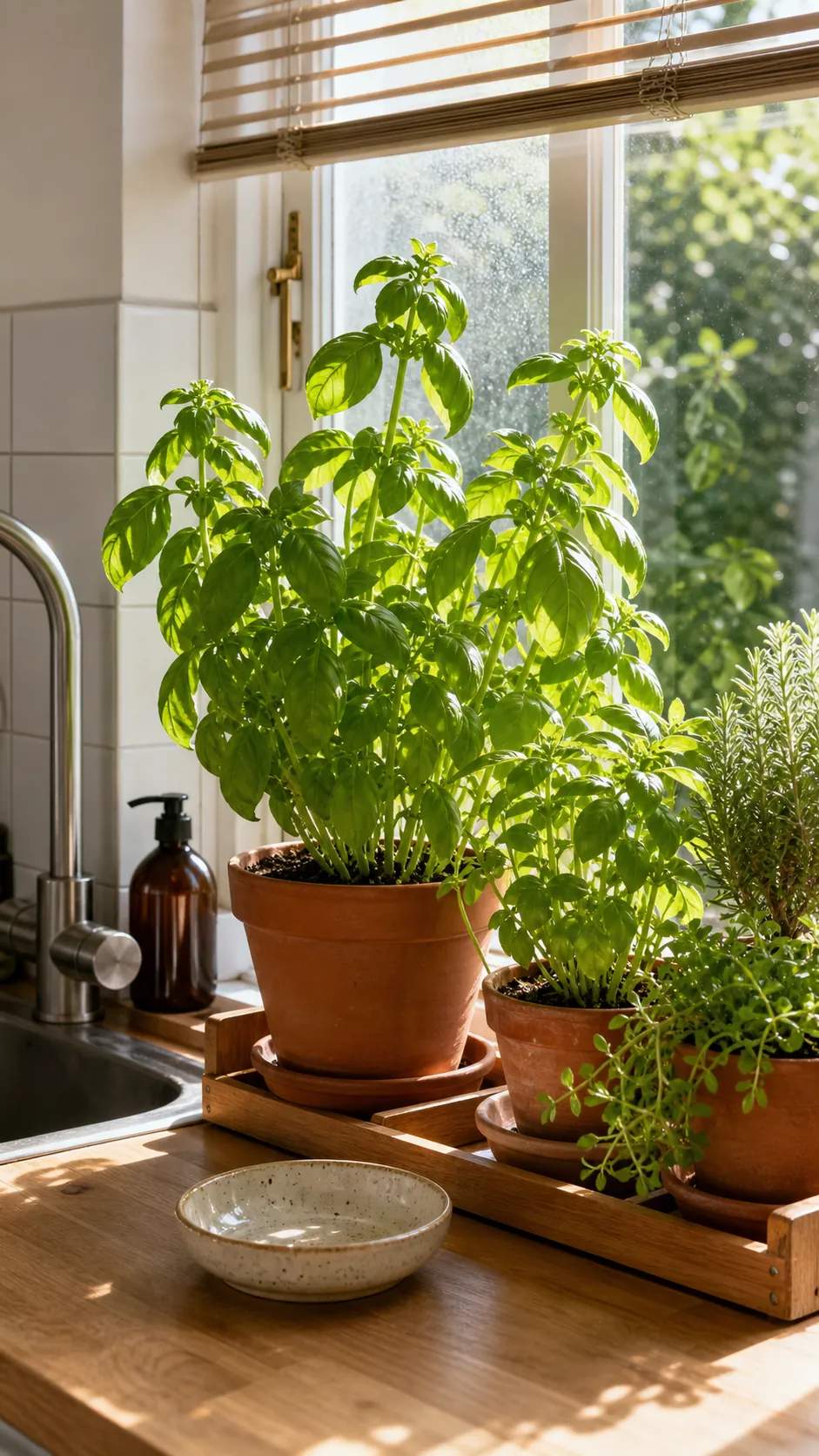
Basil responds to warmth, strong light, and frequent cutting. Put it in the brightest suitable spot, but watch how close the leaves sit to cold winter glass or fierce summer heat. Turn the pot, remove flower buds, and cut above leaf pairs to encourage branching. If stems stretch and leaves shrink, decoration is not the answer: the plant needs more usable light, often from a small grow lamp.
Use an East Window for Chives and Parsley
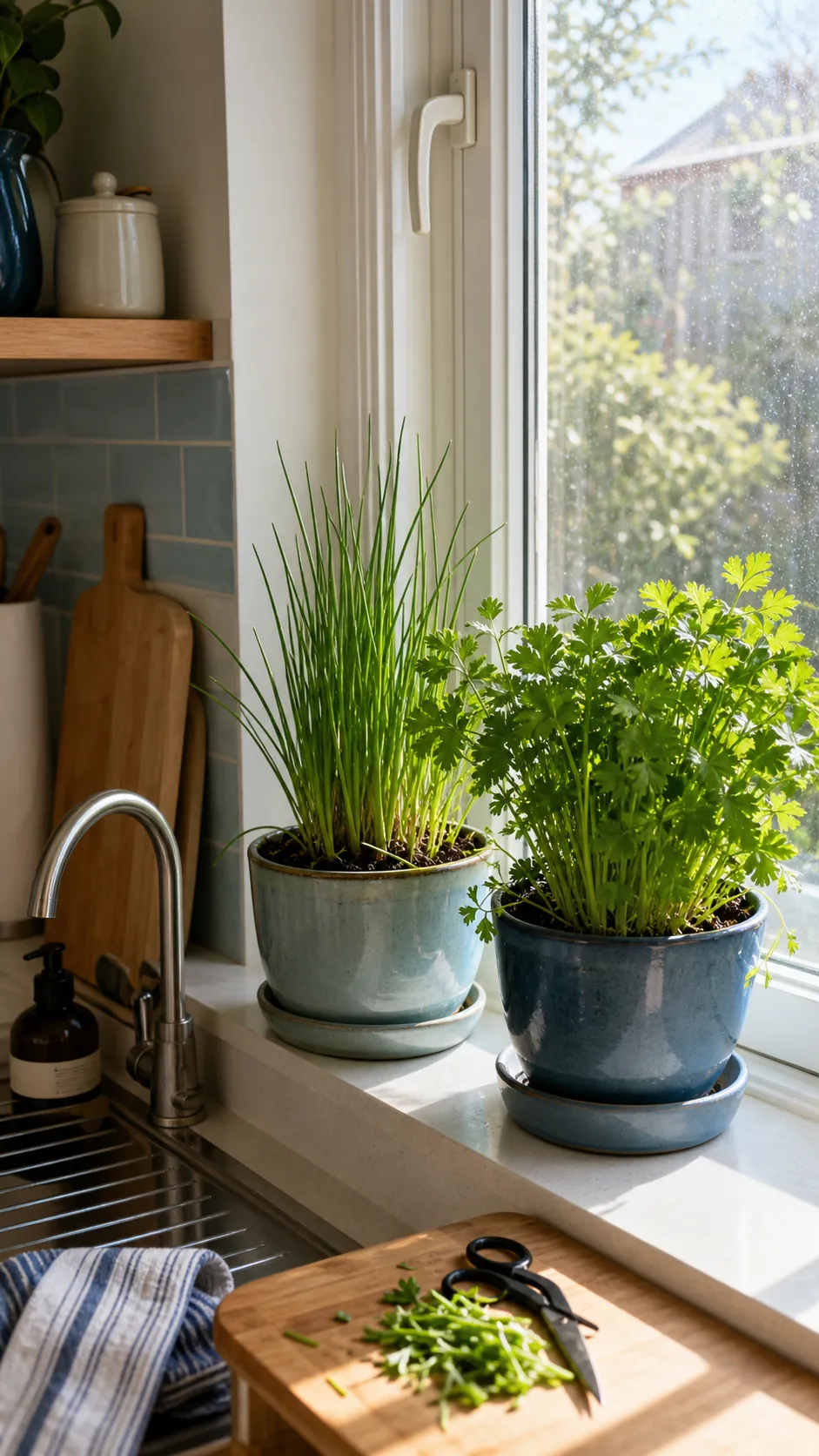
An east-facing window gives gentle morning sun without the most intense afternoon heat. Chives, parsley, and cilantro can be practical candidates when the location remains bright for the rest of the day. Keep leaves from touching cold glass and watch for one-sided growth. Match herbs to the light you actually have, not the exposure shown in a styled kitchen inspo photograph.
Set Every Pot on One Rotating Tray
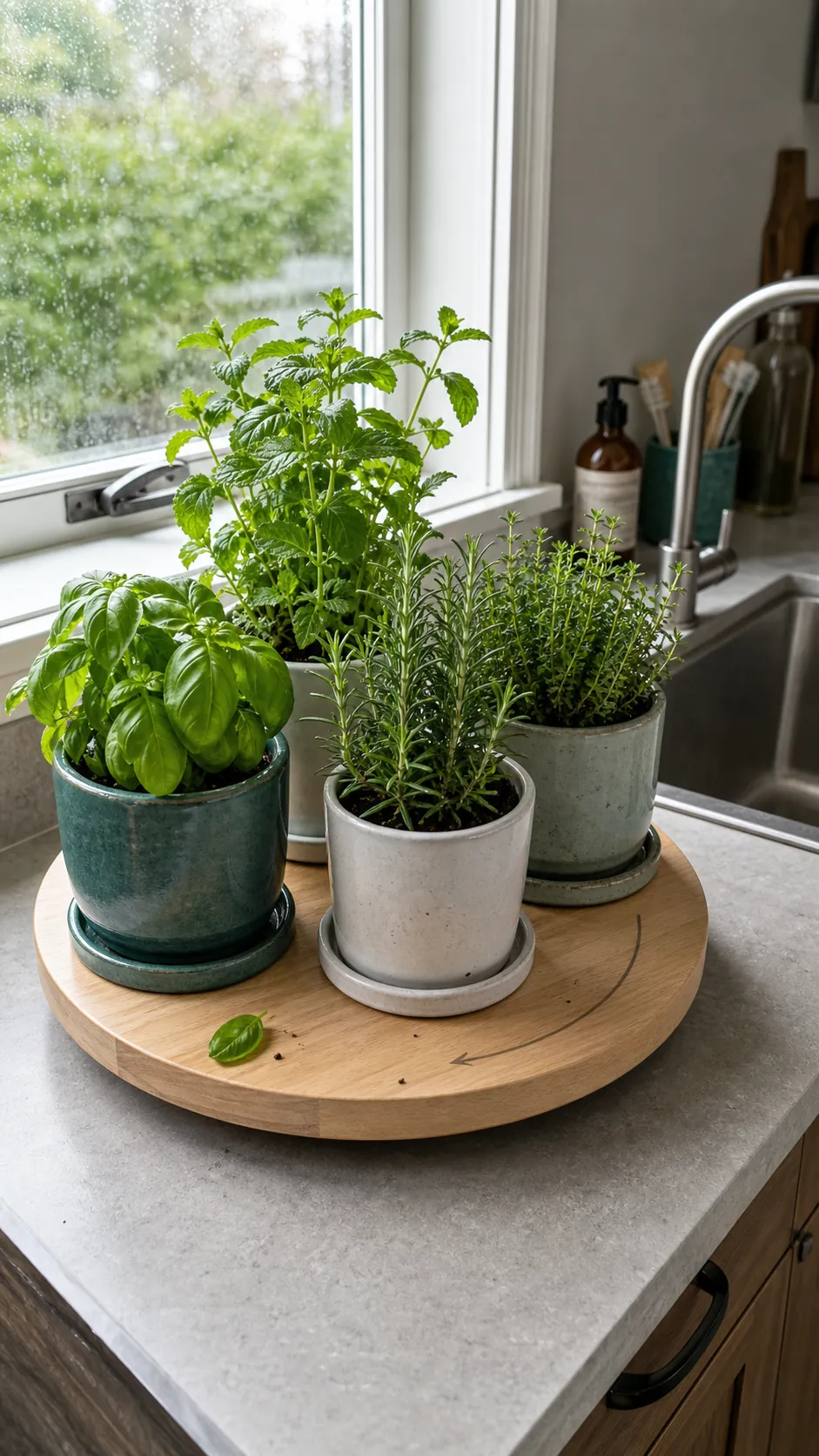
A low turntable makes a cluster easier to rotate, inspect, and clean behind. Use it only on a broad stable surface, keep the weight balanced, and turn it gradually so stems adapt rather than repeatedly changing direction. Individual saucers still matter. This simple window herb garden indoor idea helps plants grow more evenly while bringing hidden pests, dry pots, and fallen leaves into view.
Clip a Grow Light Above the Sill
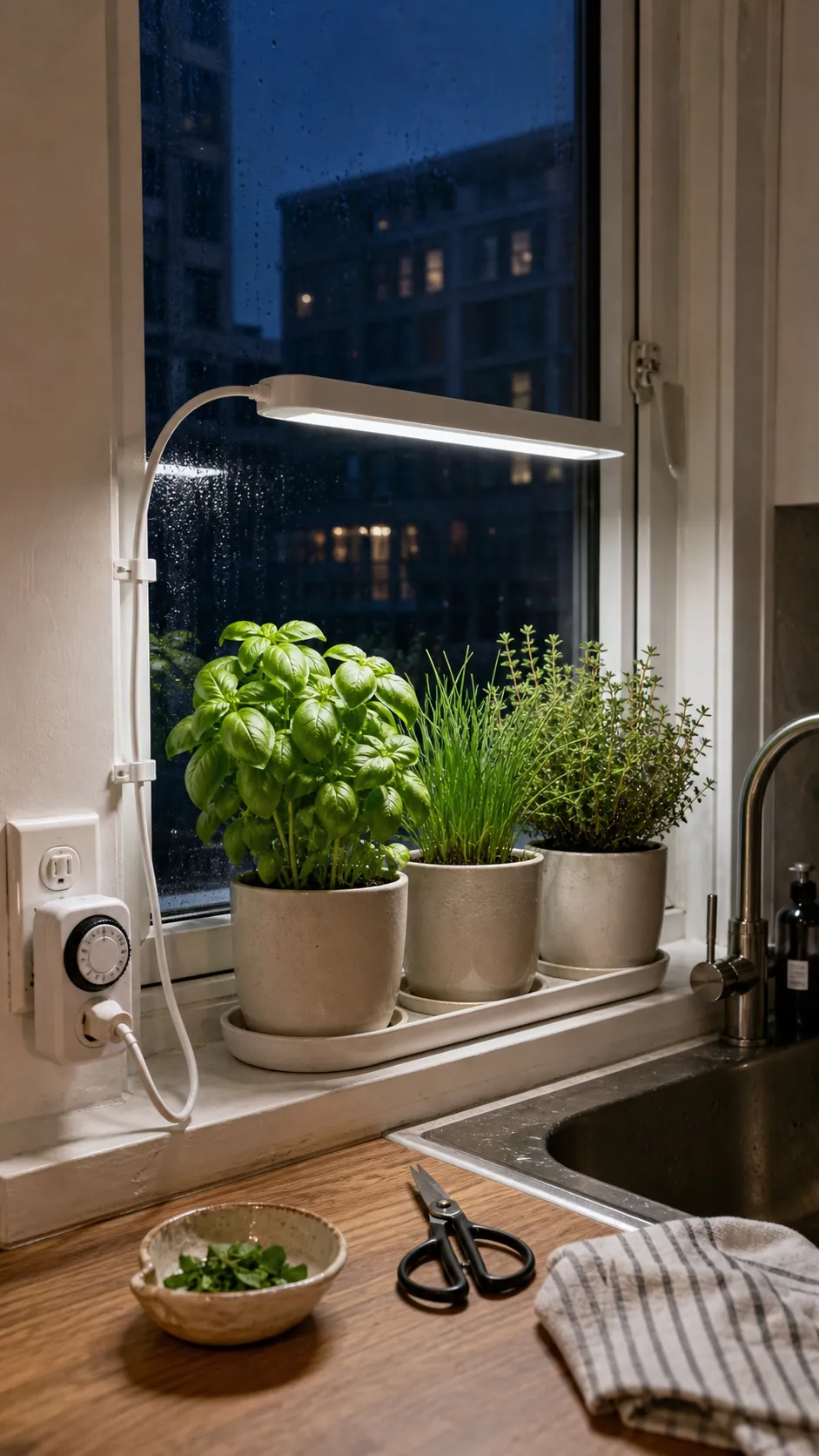
Winter days and shaded apartments may not provide enough hours of strong light, even beside a window. A slim adjustable grow light can supplement the natural source when it sits at the manufacturer’s recommended distance and runs on a timer. Keep cables away from the sink and allow darkness overnight. Use growth as evidence: pale stretched stems suggest the lamp needs better duration, distance, or coverage.
Install an Under-Shelf Light Strip
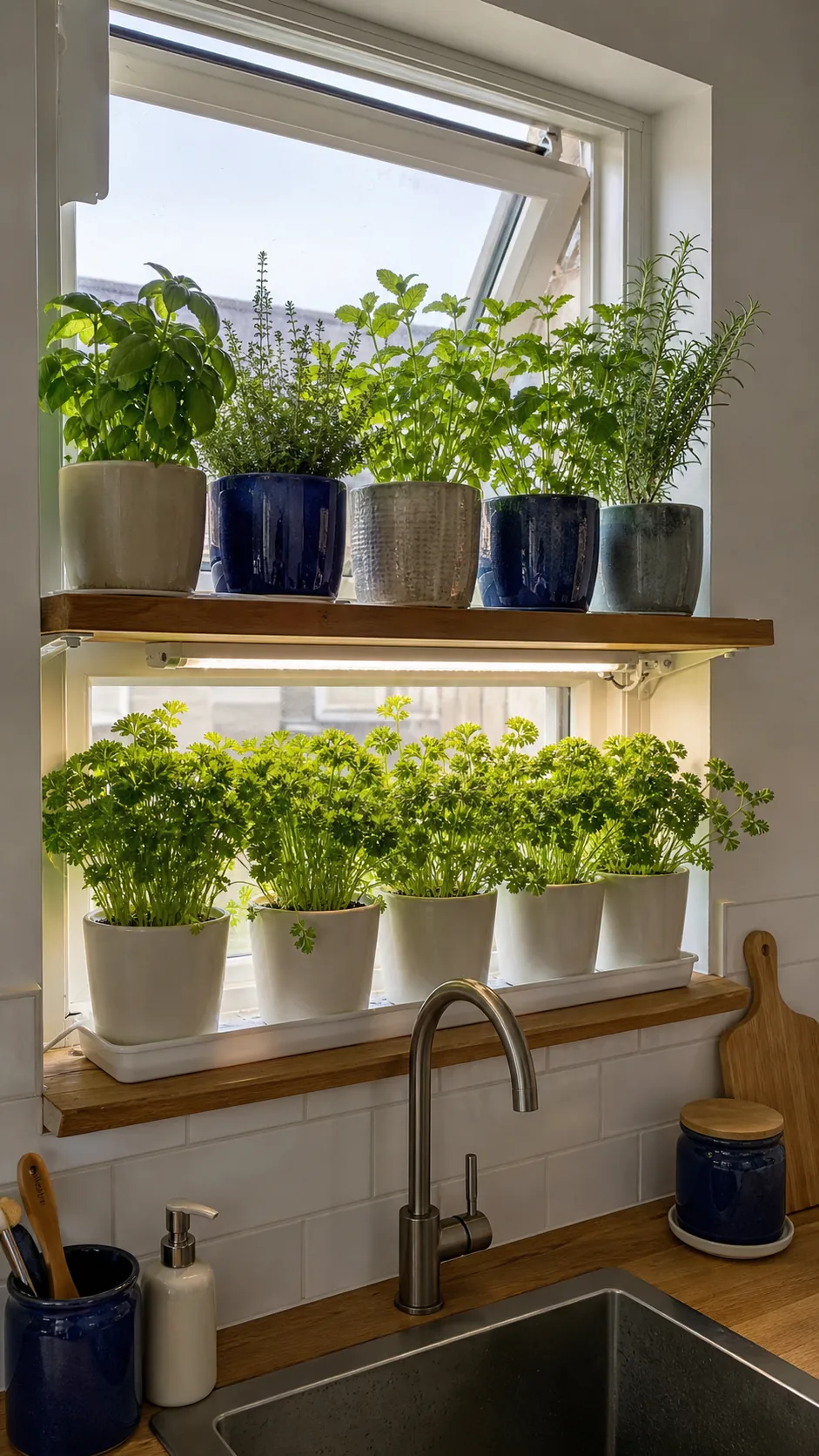
A shelf can double growing capacity but shade the pots below it. Fit a moisture-appropriate plant light beneath the upper shelf, secure every cable, and make the installation removable for cleaning. The beam should cover leaves evenly without heating them. This is especially useful for a kitchen garden window over sink, where the upper tier receives daylight and the lower tier needs intentional support rather than leftover brightness.
Start Seeds in a Shallow Cell Tray
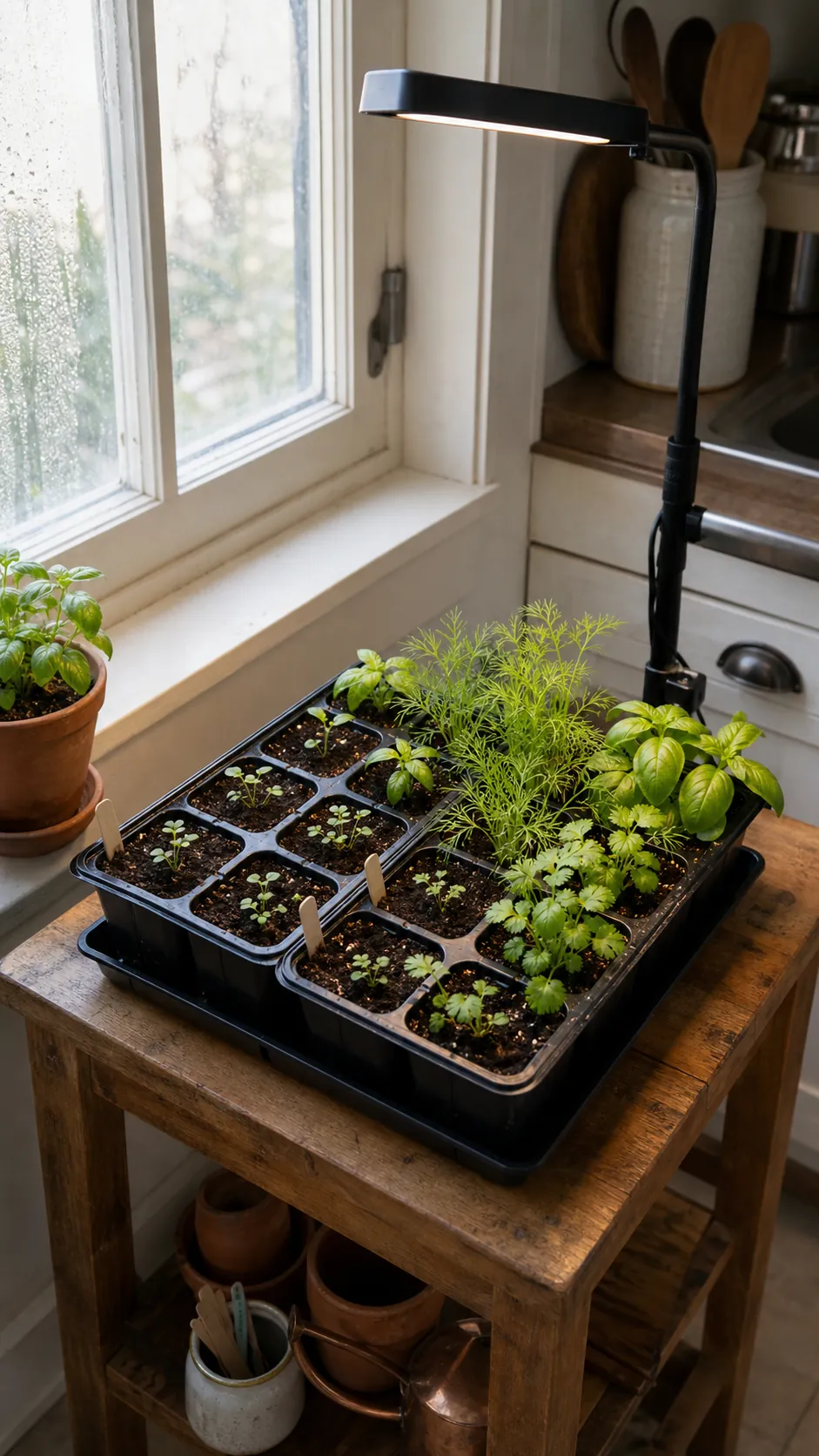
Seeds do not need decorative pots yet; they need clean cells, drainage, even moisture, warmth, and enough light as soon as they emerge. Start a few successions rather than sowing an entire packet at once. Label varieties, thin crowded seedlings, and empty water from the catch tray. Succession sowing avoids one brief glut and gives cilantro, dill, or basil replacements as older plants decline.
Grow Cuttings in Small Water Bottles
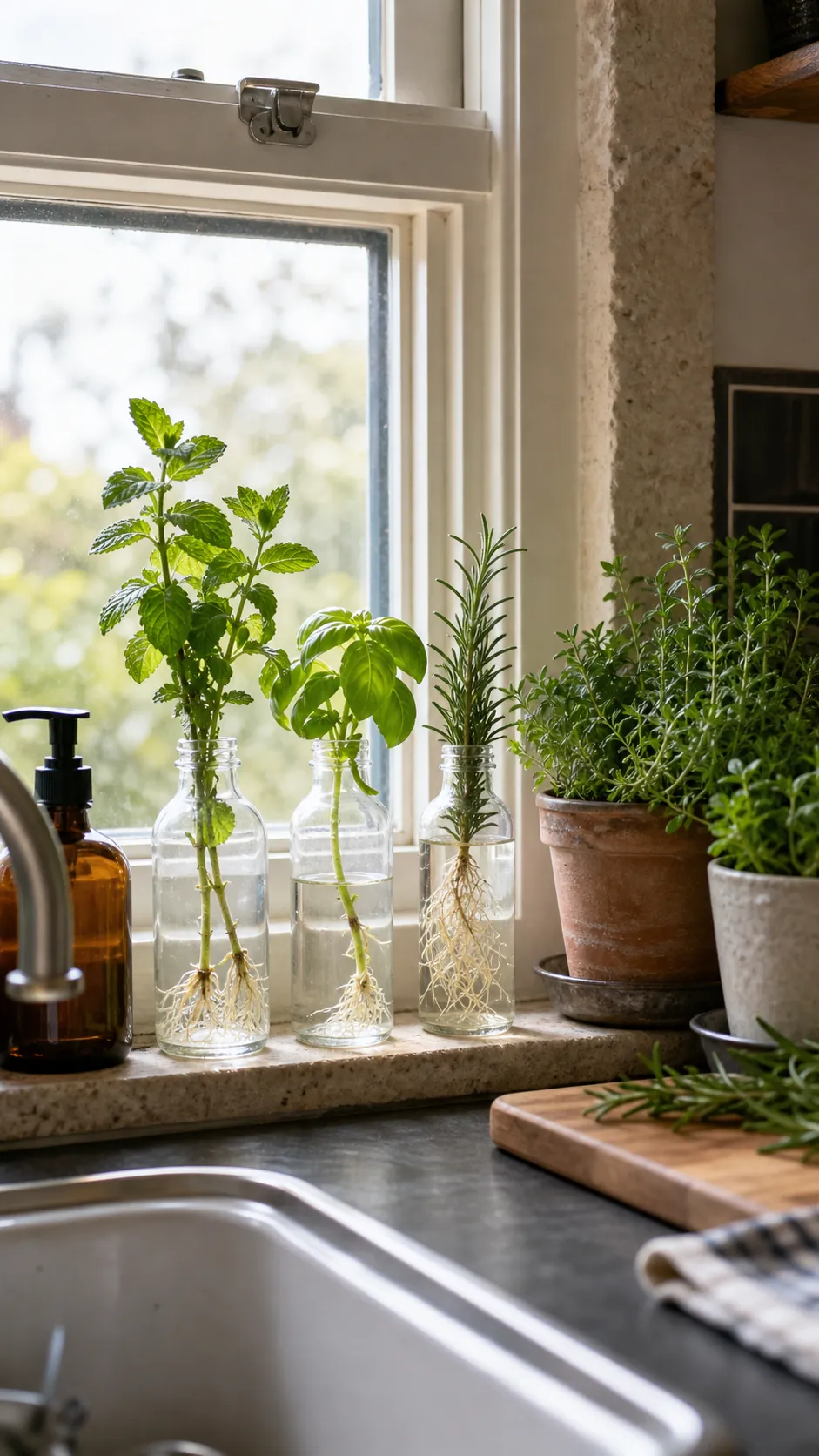
Small glass bottles make root development visible and turn pruning into new plants. Keep only the lower stem in water, remove submerged leaves, refresh the water, and move rooted cuttings into potting mix before roots become a tangled mass. Not every herb roots at the same speed. A row of bottles is useful when propagation remains a short stage, not a permanent cloudy-water display.
Try a Compact Countertop Hydroponic Unit
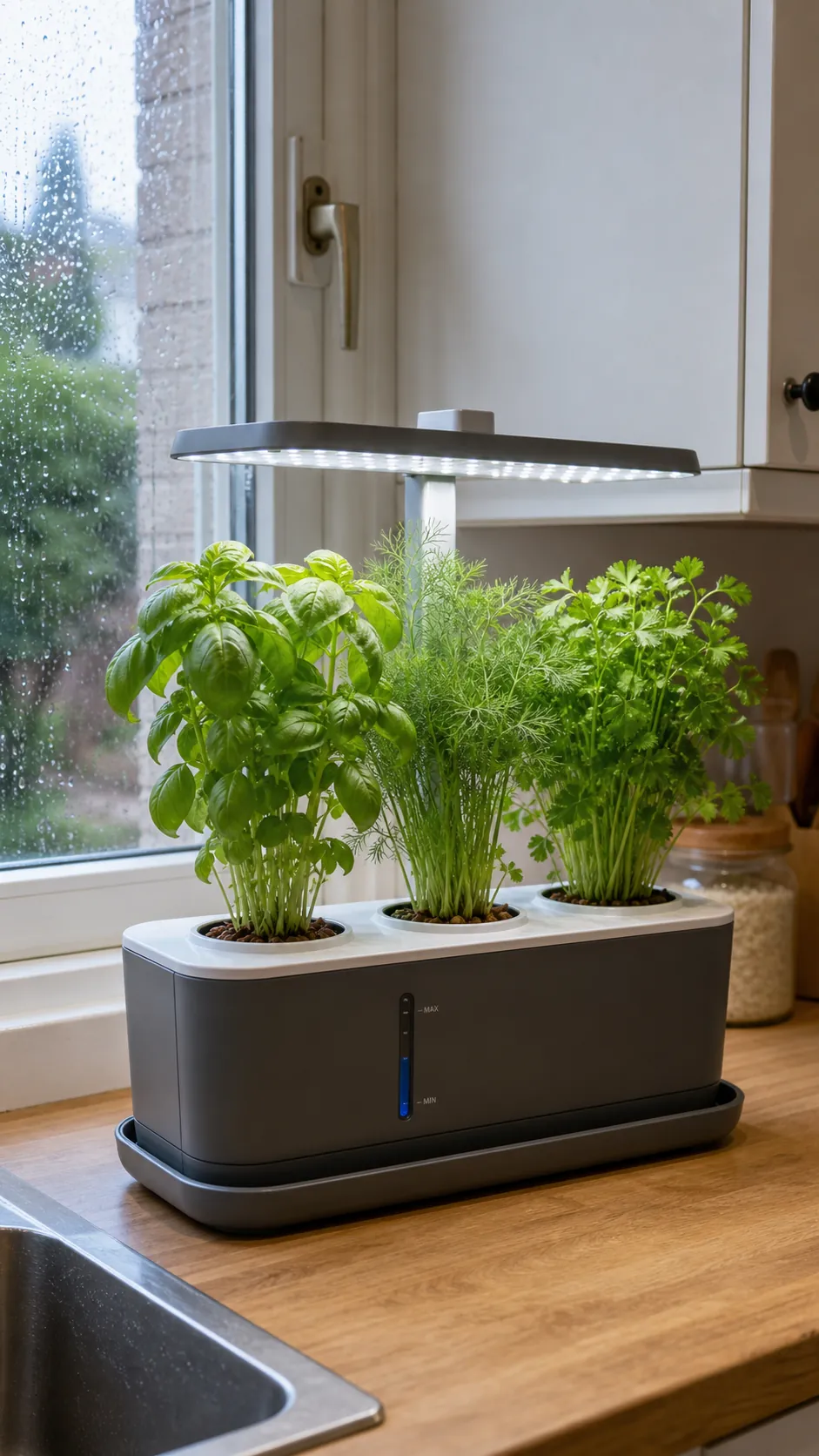
A compact hydroponic unit can suit someone who values a built-in light and predictable reservoir routine. It still needs cleaning, nutrient measurement, pruning, and enough clearance above mature plants. Choose a scale that leaves food-prep space and does not splash electrical parts near the sink. Hydroponics is a system, not a shortcut, but it can provide consistent herbs when window light is unreliable.
Hide Nursery Pots Inside Matching Covers
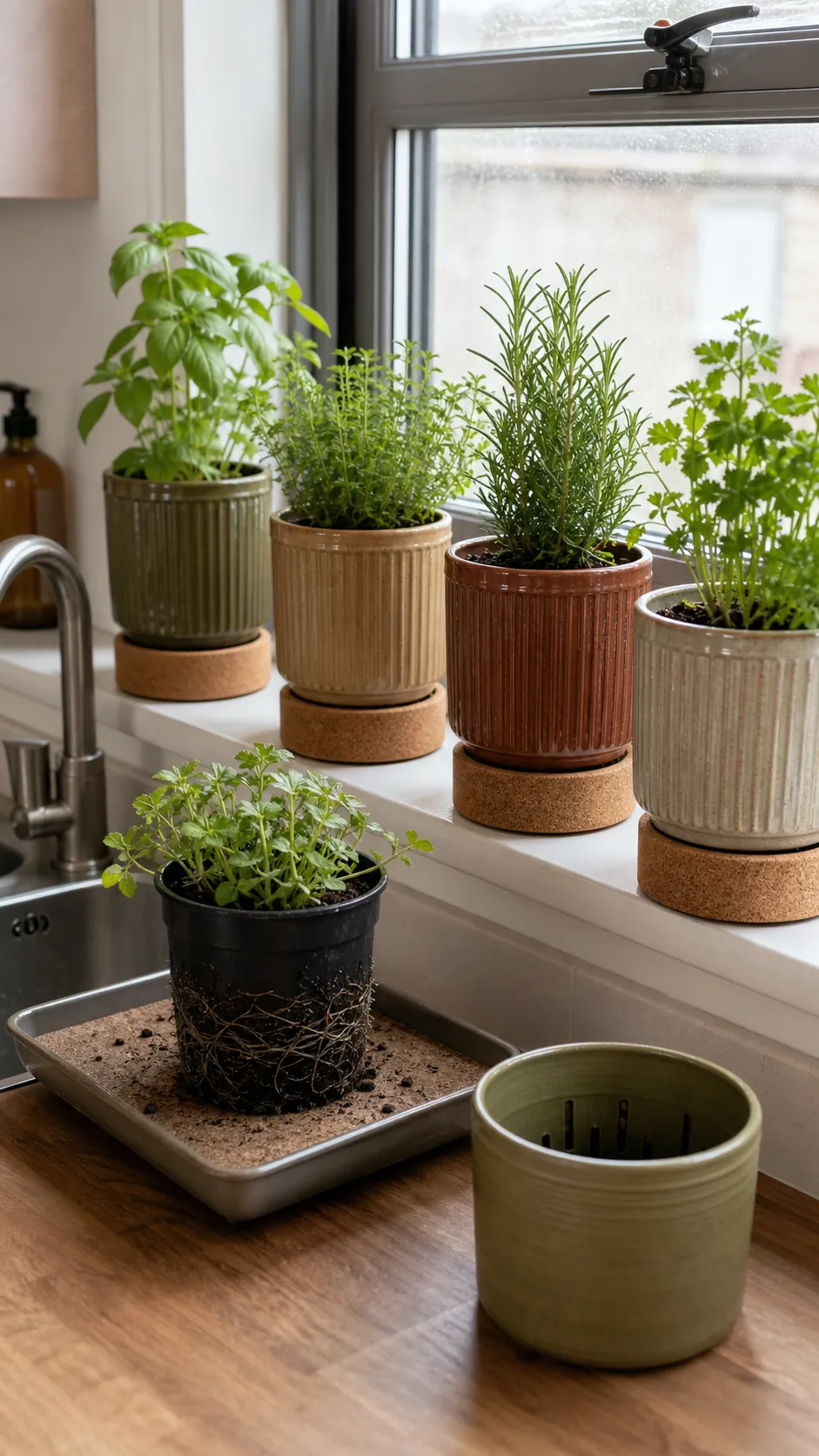
Decorative covers look cohesive while removable nursery pots preserve drainage and easy plant care. Lift each inner pot to water at the sink, let it drain completely, then return it to a dry cover. Add discreet risers so the base never sits in runoff. This approach creates a polished indoor window planter without sealing roots inside containers. Never mistake a watertight cover for a draining plant pot.
Divide a Long Trough With Inner Pots
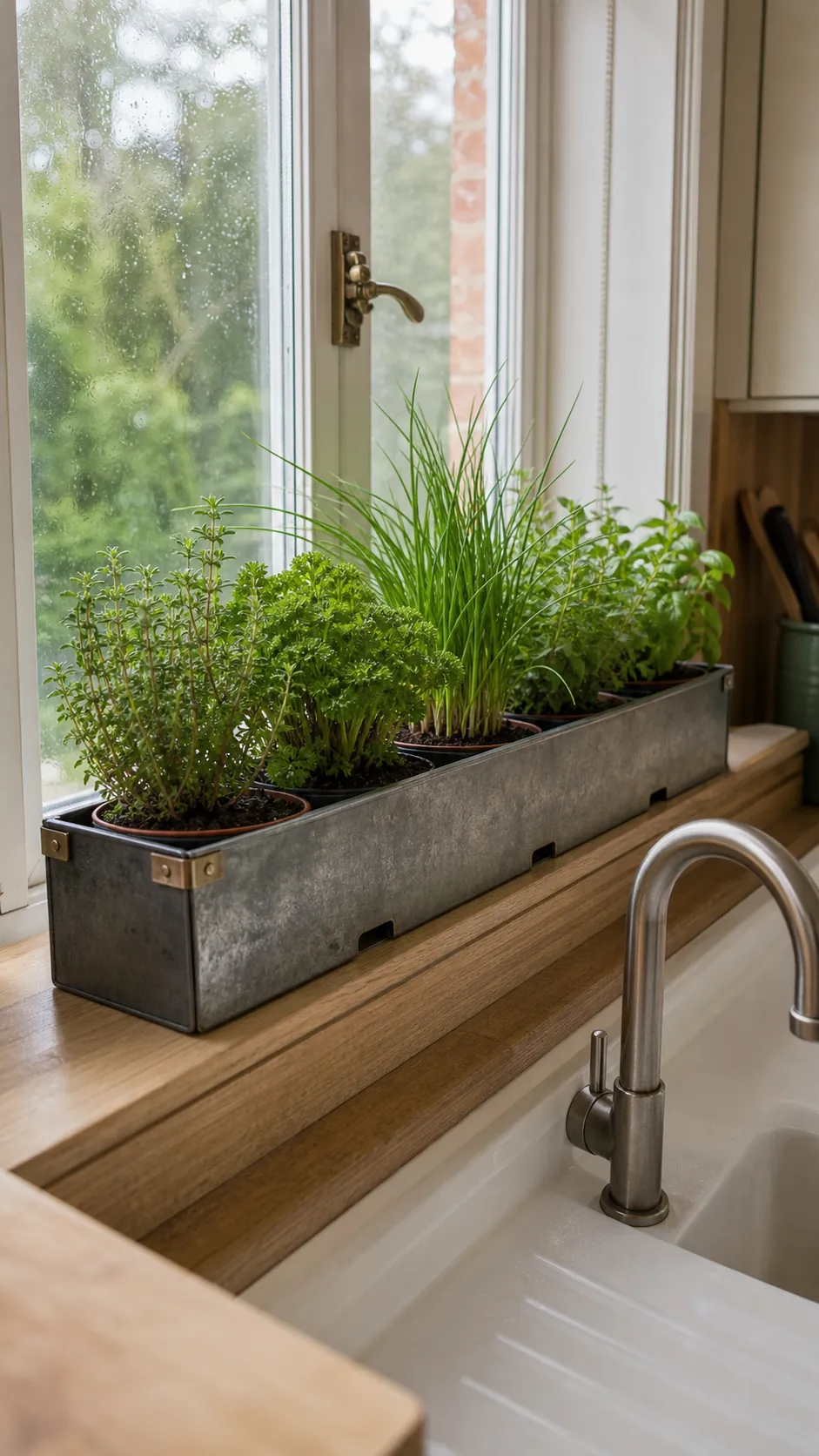
A single long trough creates a clean visual line, but separate inner pots keep root systems and watering schedules independent. Choose a waterproof outer box, provide finger room for lifting, and arrange herbs by mature height. The trough should not block ventilation slots or window hardware. The visual grouping stays unified while the horticulture stays flexible, which is the best of both formats.
Mount a Slim Rail for Herb Cups
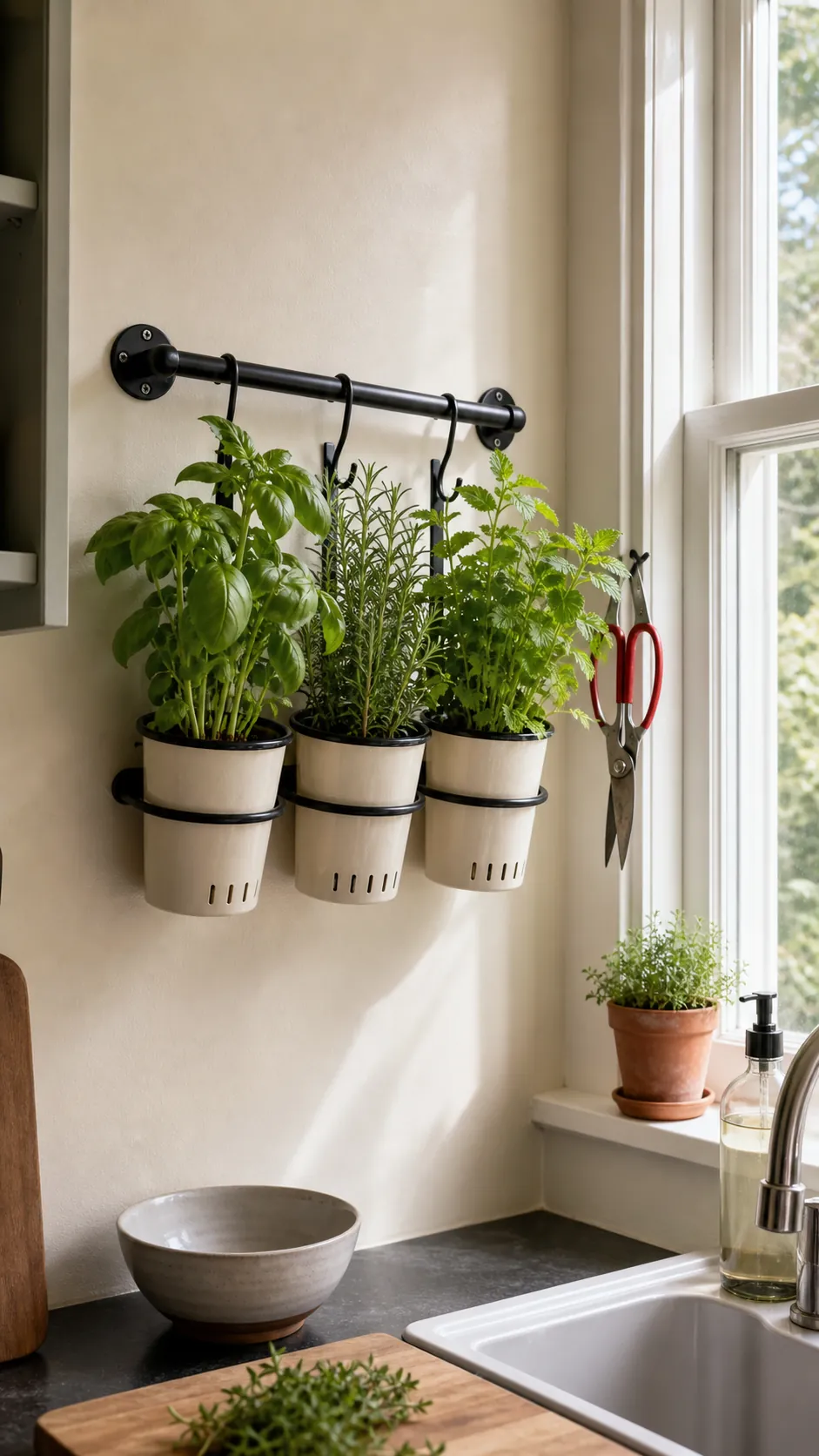
A securely fixed rail beside the window can hold removable cups for small herbs, snips, and plant labels. Every planting cup still needs drainage into a controlled liner, and the loaded rail must be appropriate for the wall. Keep it beyond splash and shoulder zones. This vertical herb planter idea works in a small kitchen when cups lift off for watering instead of sending runoff down the wall.
Roll a Herb Cart Toward the Best Light
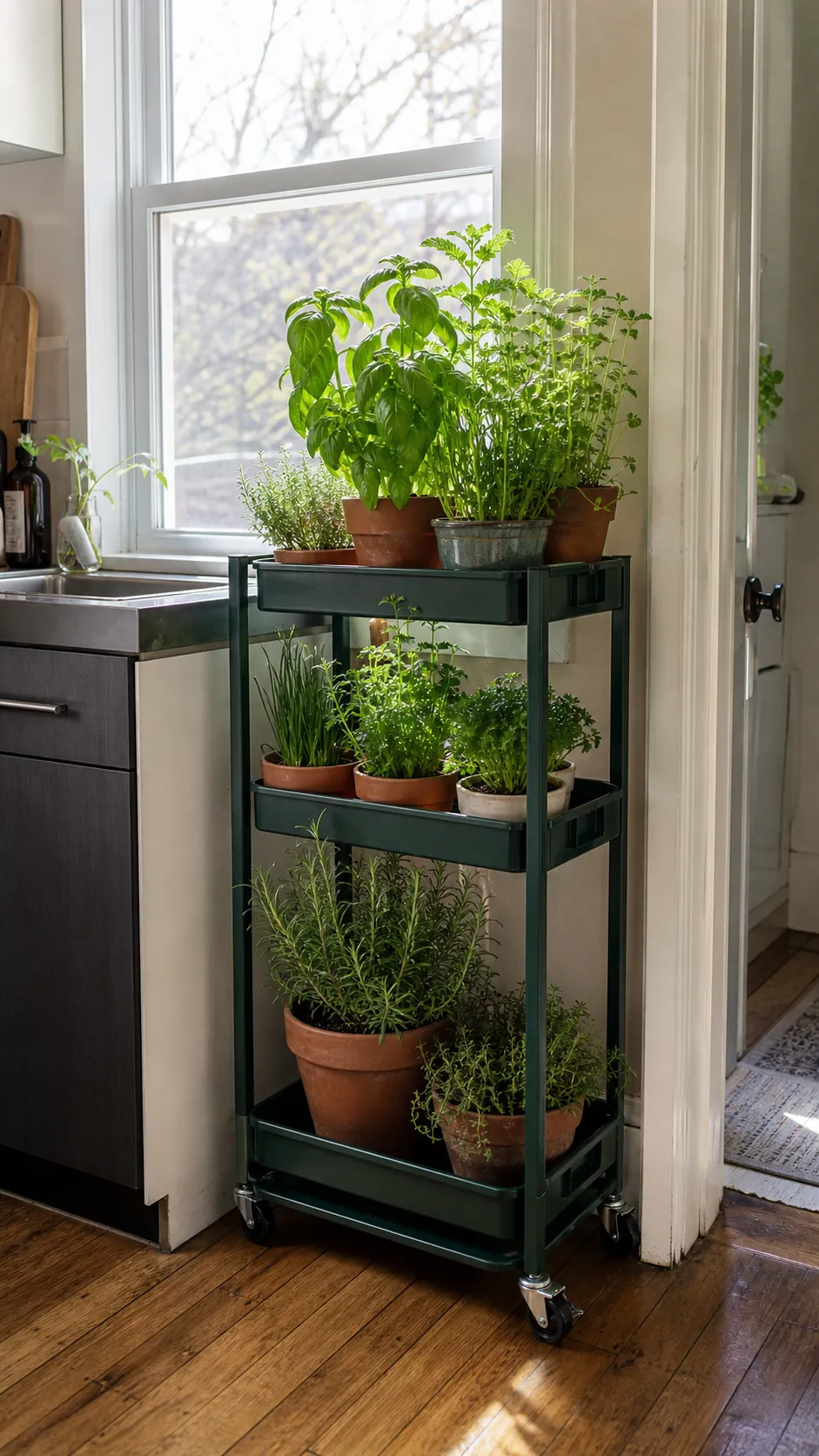
A narrow cart lets apartment gardeners follow seasonal light or move plants away while cooking. Lockable wheels, waterproof trays, and open shelves make it safer and easier to clean. Put heavy pots low and do not roll tender plants abruptly between very different temperatures. Mobility is useful when the brightest place changes, but the cart should never block a doorway or appliance.
Use a Tension Pole for Tiny Pots
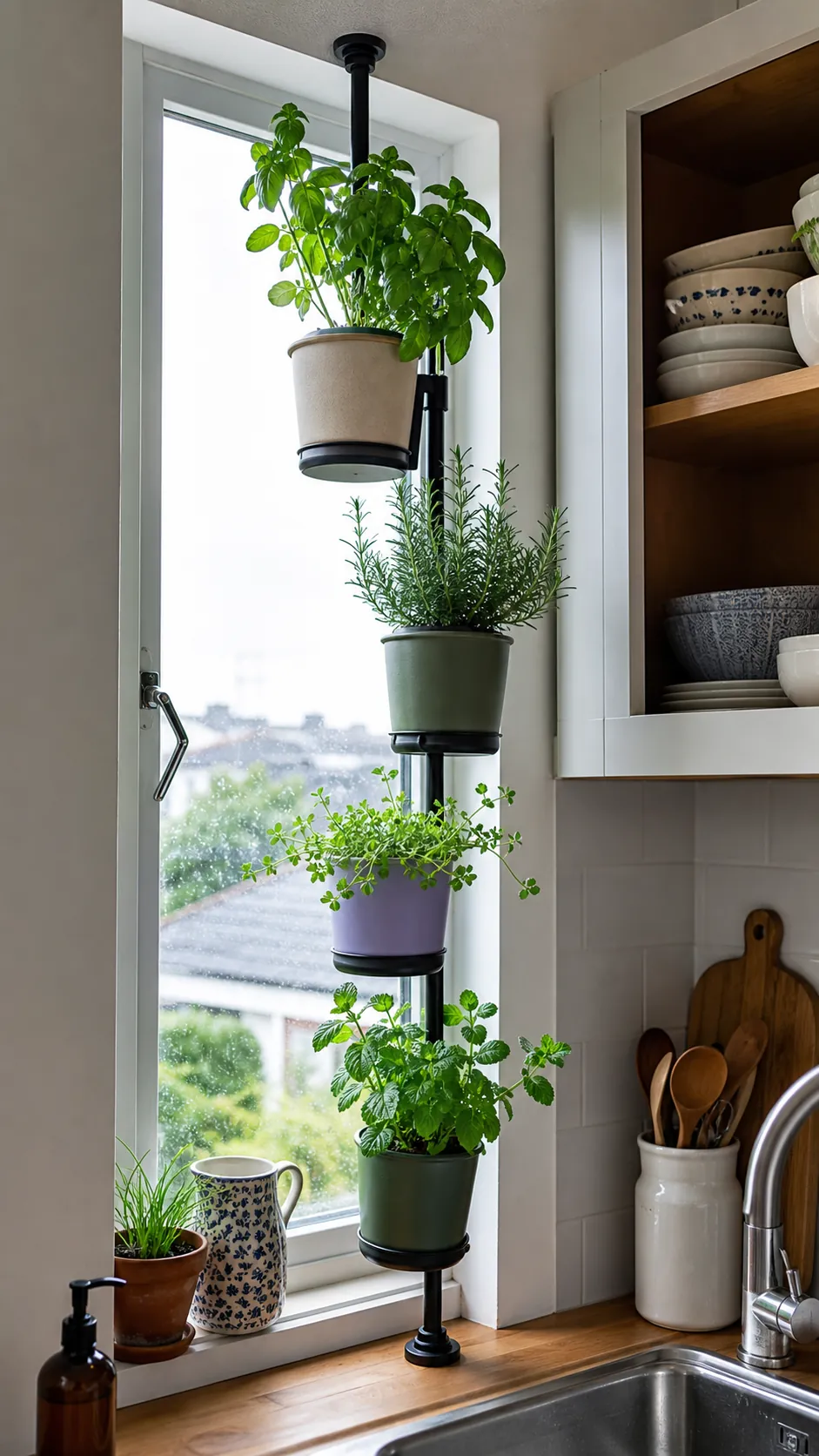
A tension pole can create several small planting levels without a permanent wall fixing, provided it is rated for the total wet weight and installed on sound surfaces. Use compact pots, check tension often, and keep the window latch accessible. Rotate individual cups rather than spinning the entire pole. Vertical capacity only helps when every level can be safely watered, harvested, and cleaned.
Suspend a Single Herb Bar Above the Sink
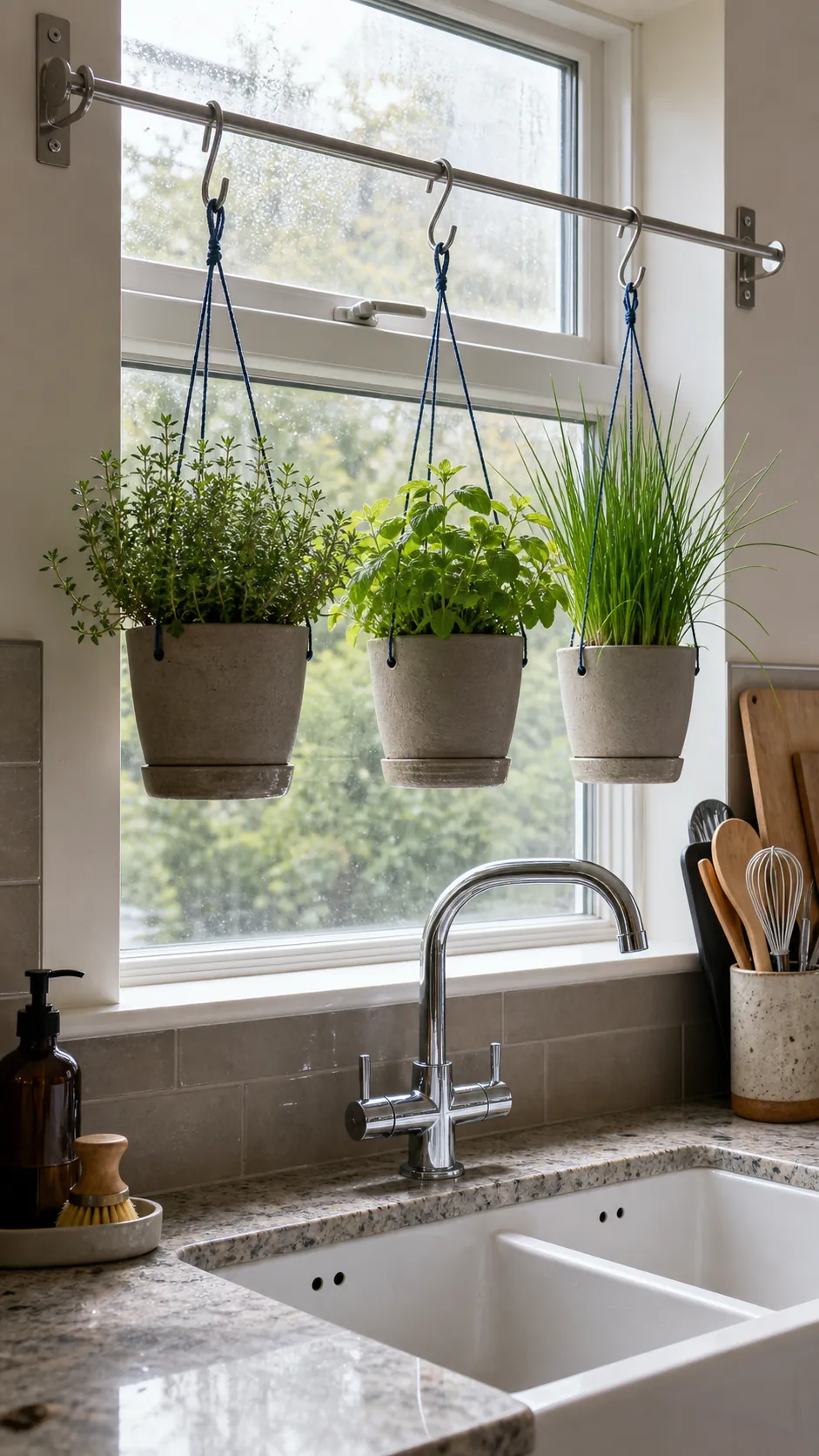
One ceiling- or wall-rated bar can support a limited row of lightweight planters above a sink, where drips are easier to manage. Keep foliage out of faces, taps, and opening windows, and use independent suspension points rather than improvised string. The composition should remain sparse enough for airflow. Three healthy accessible pots are better than a dramatic canopy that cannot be reached or inspected.
Create a Harvest Station Beside the Pots
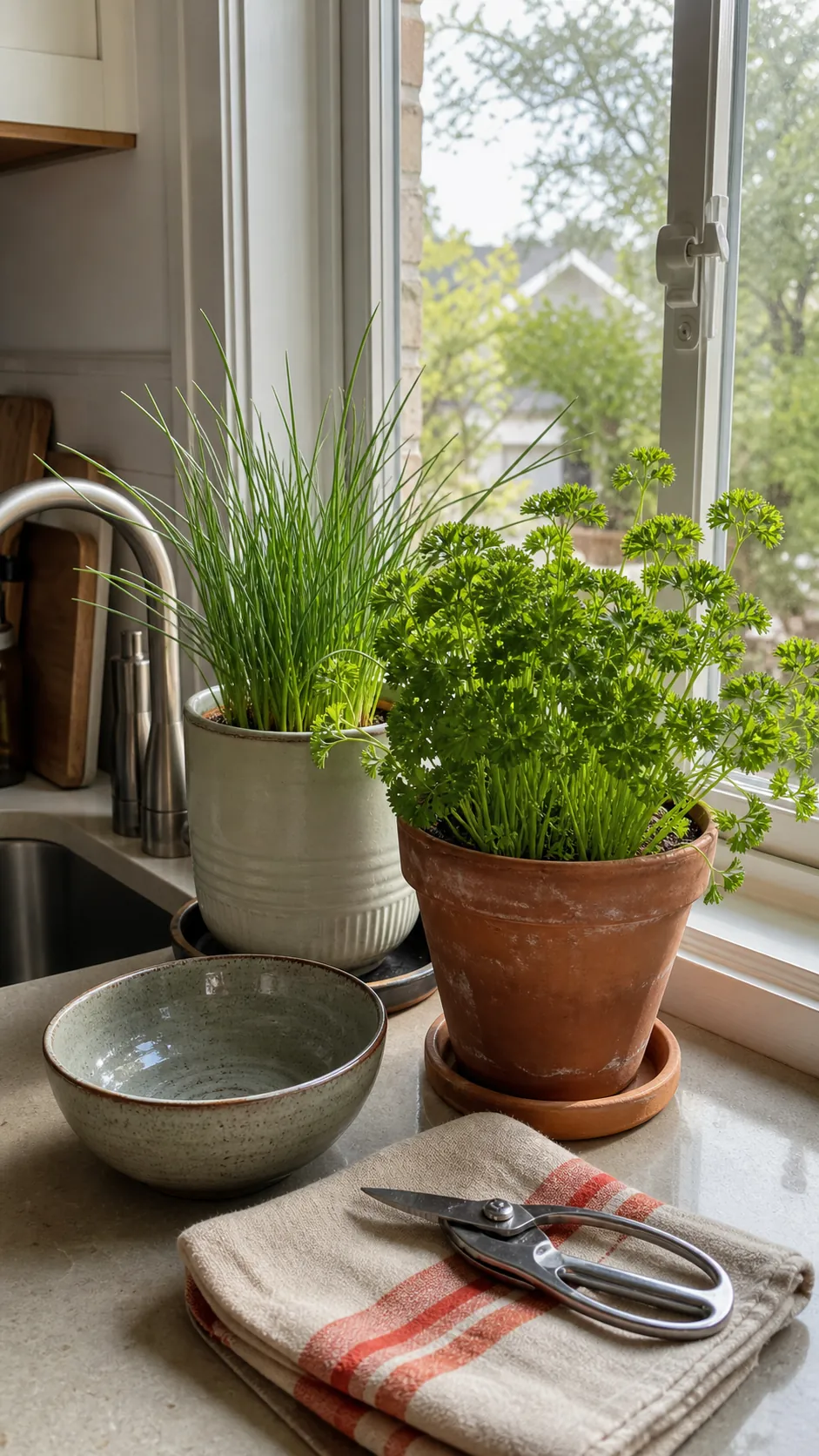
Fresh herbs get used more often when small scissors, a rinsing bowl, and a clean towel live nearby. Keep tools food-safe, dry the blades, and avoid leaving wet harvested stems on the sill. A tiny dated note can track sowing or feeding without turning the window into signage. This practical setup connects growing with cooking, so regular harvesting becomes part of the kitchen routine rather than an occasional project.
Rotate the Collection With the Seasons
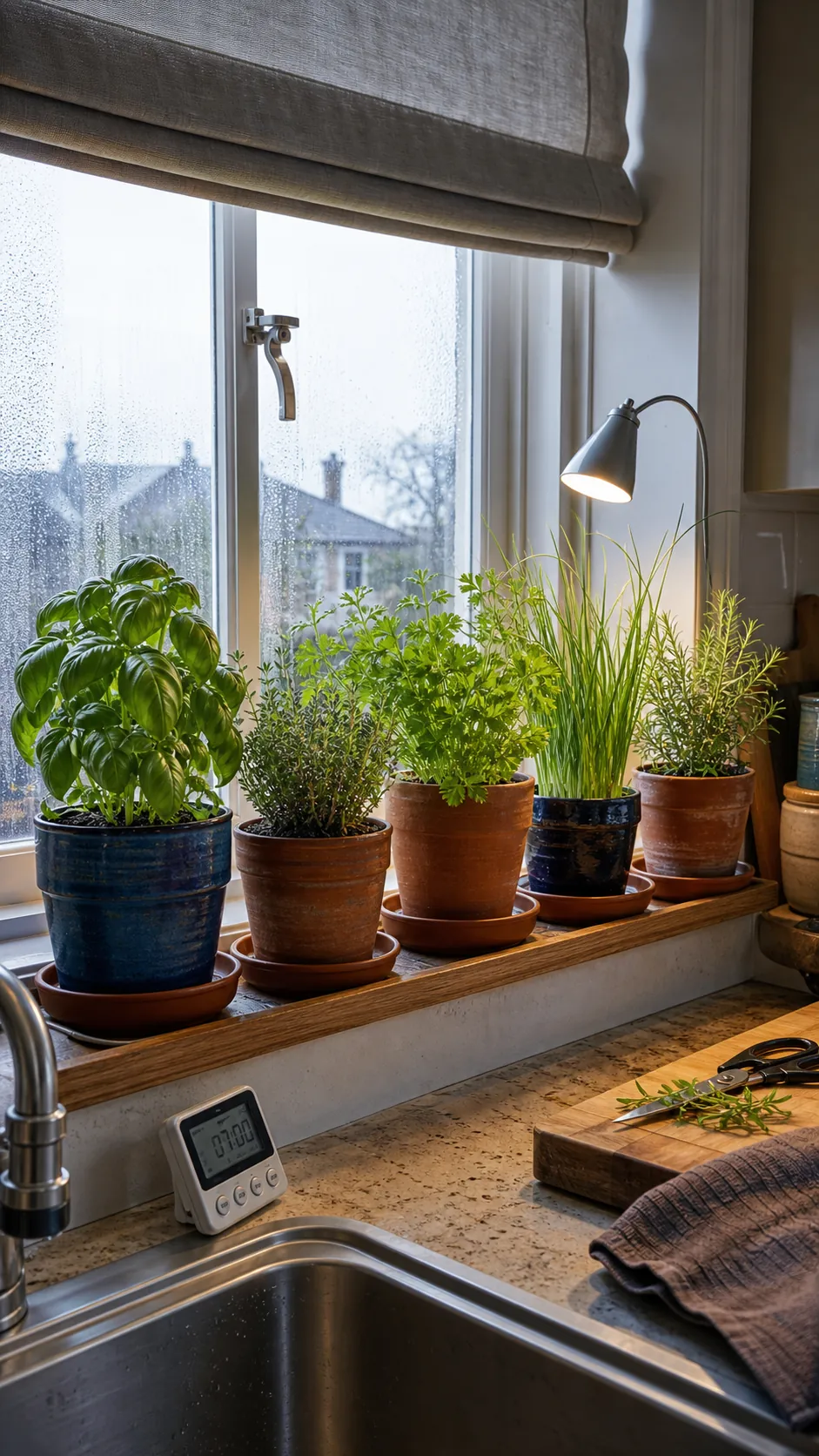
A kitchen window garden does not have to hold the same plants all year. Replace tired annuals, move cold-sensitive basil back from winter glass, add supplemental light when days shorten, and reduce watering as growth slows. Keep only herbs that are healthy and genuinely used. The strongest kitchen window herb garden is an evolving working collection: well lit, well drained, easy to harvest, and small enough to care for consistently.