You can make a room feel festive without giving up the surfaces and routes you use every day. Choose one main focal point, then let the smaller details support it instead of filling every corner. Start with what you own and decide where it will return after December, because a calm room should not require a crowded cupboard.
A natural tree with lights alone
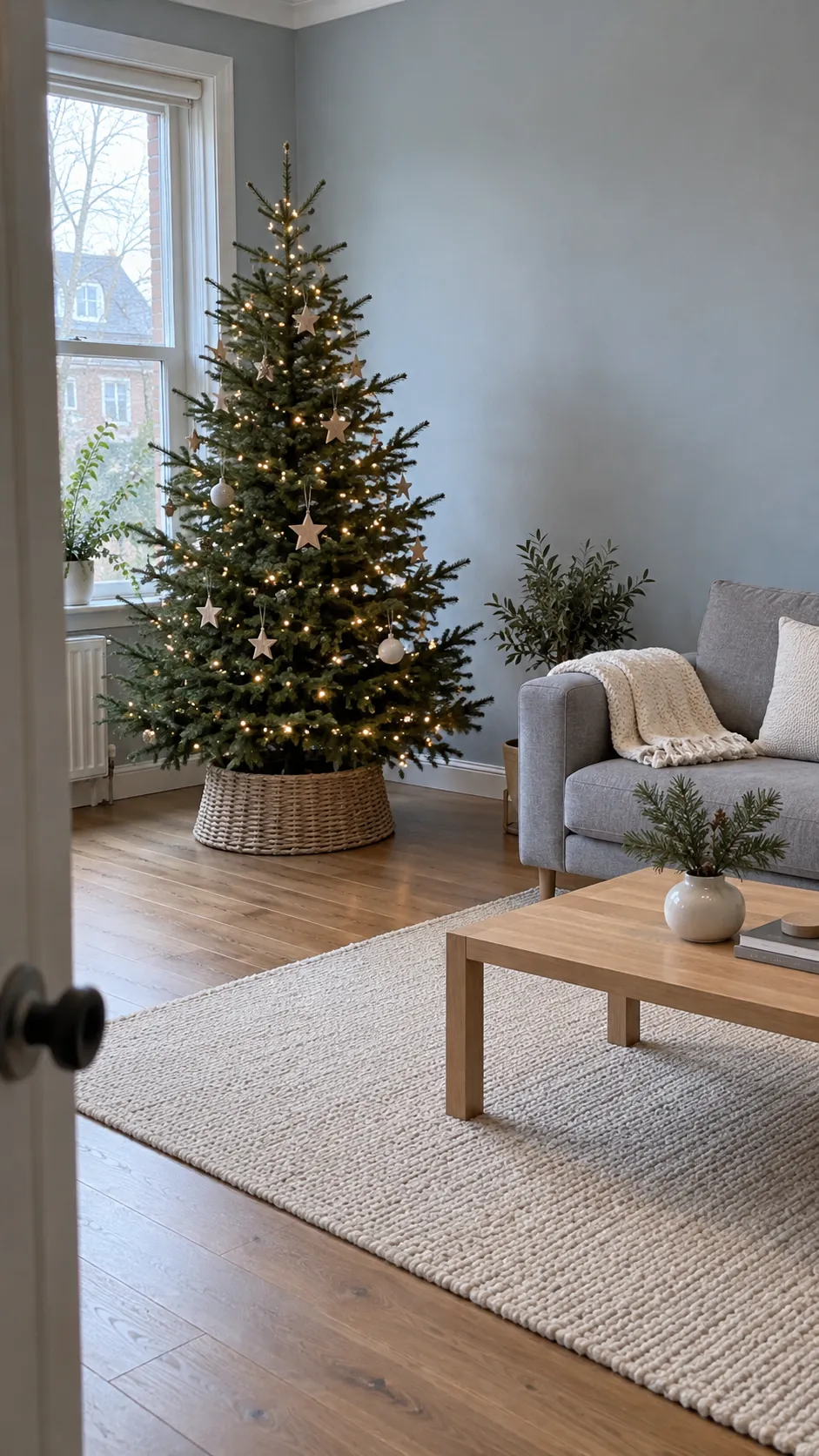
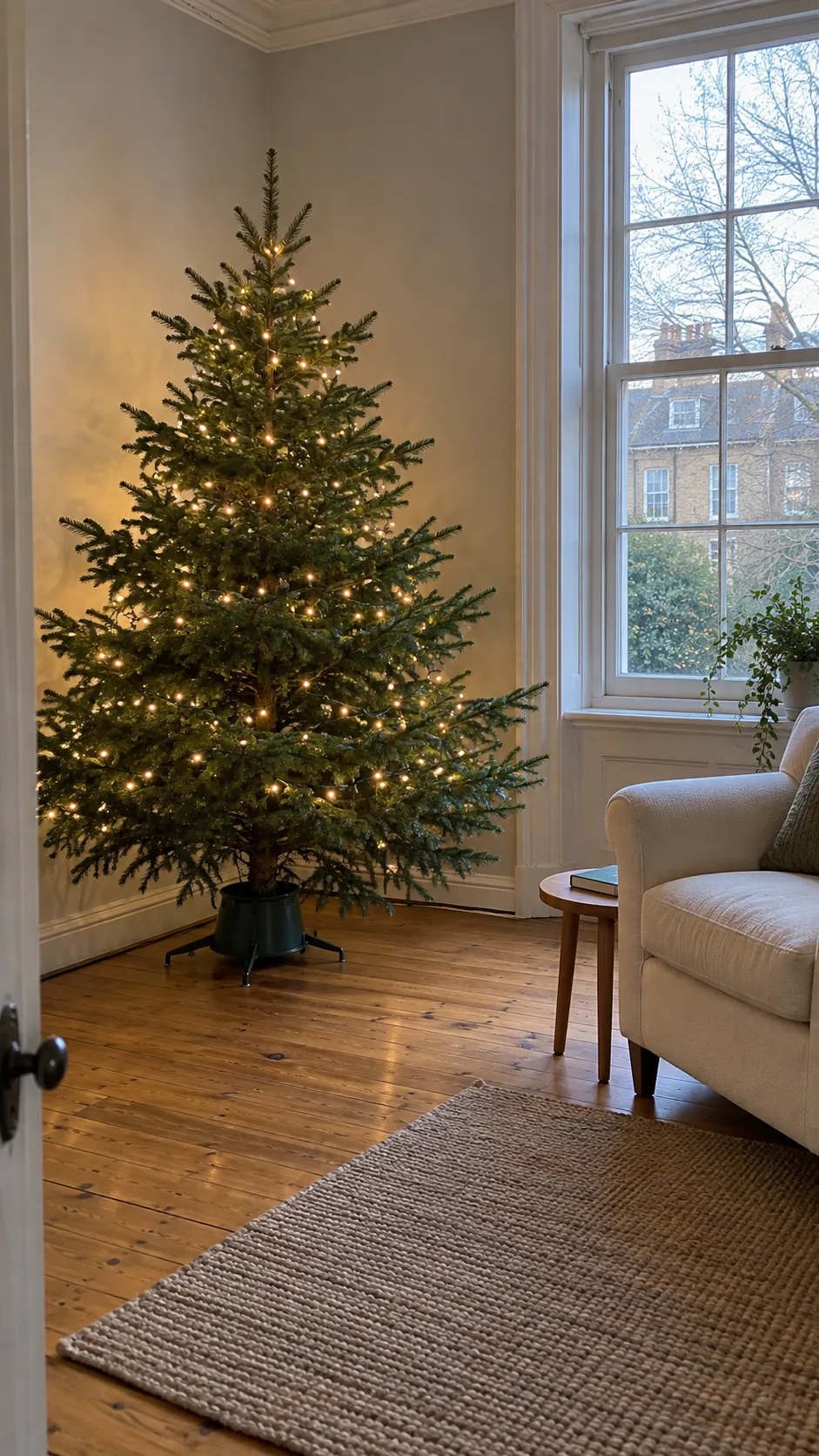
Let a tree’s branch shape carry the decoration before adding any ornaments. A single style of soft white light gives a clear focal point and reduces the number of pieces to unpack. Keep the stand stable and accessible for watering if the tree is cut. Choose the tree width from your available floor space, not just its height.
A basket that conceals a proper tree stand
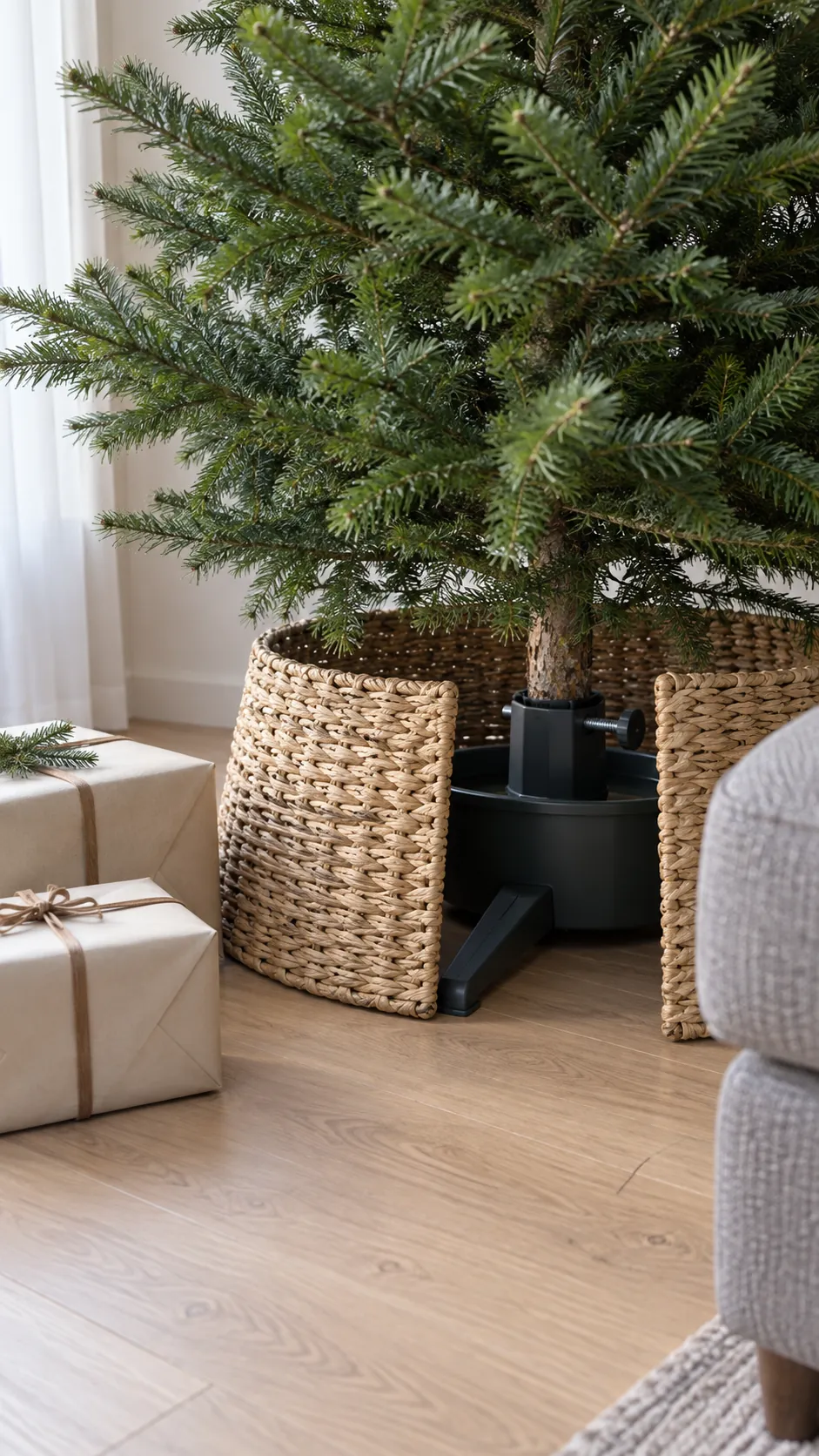
A basket can soften the base of a tree, but it does not replace a stable stand. Use an open collar or a basket sized around the existing support, keeping water and electrical parts separate. Leave enough access to inspect the stand and water a real tree. The texture works particularly well with white and wood Christmas decorations without requiring more ornaments.
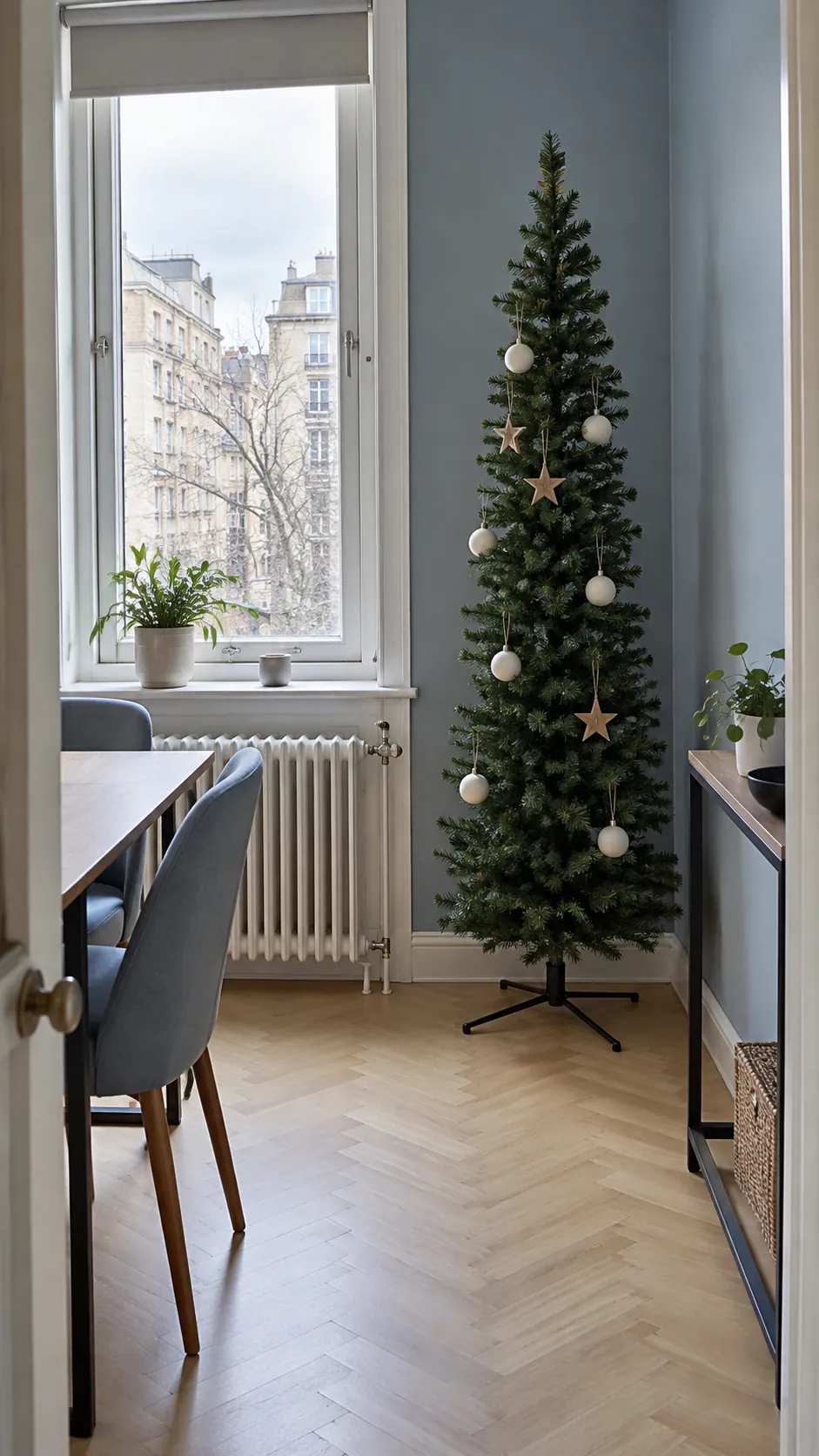
A slim tree beside an apartment window
A pencil tree suits a narrow corner when its base and lower branches fit outside the walking route. Measure the widest point of the assembled tree before buying it, since the advertised height tells you little about floor space. Hang a small number of lightweight ornaments where the branches can support them. Keep the window, radiator and curtain movement clear.
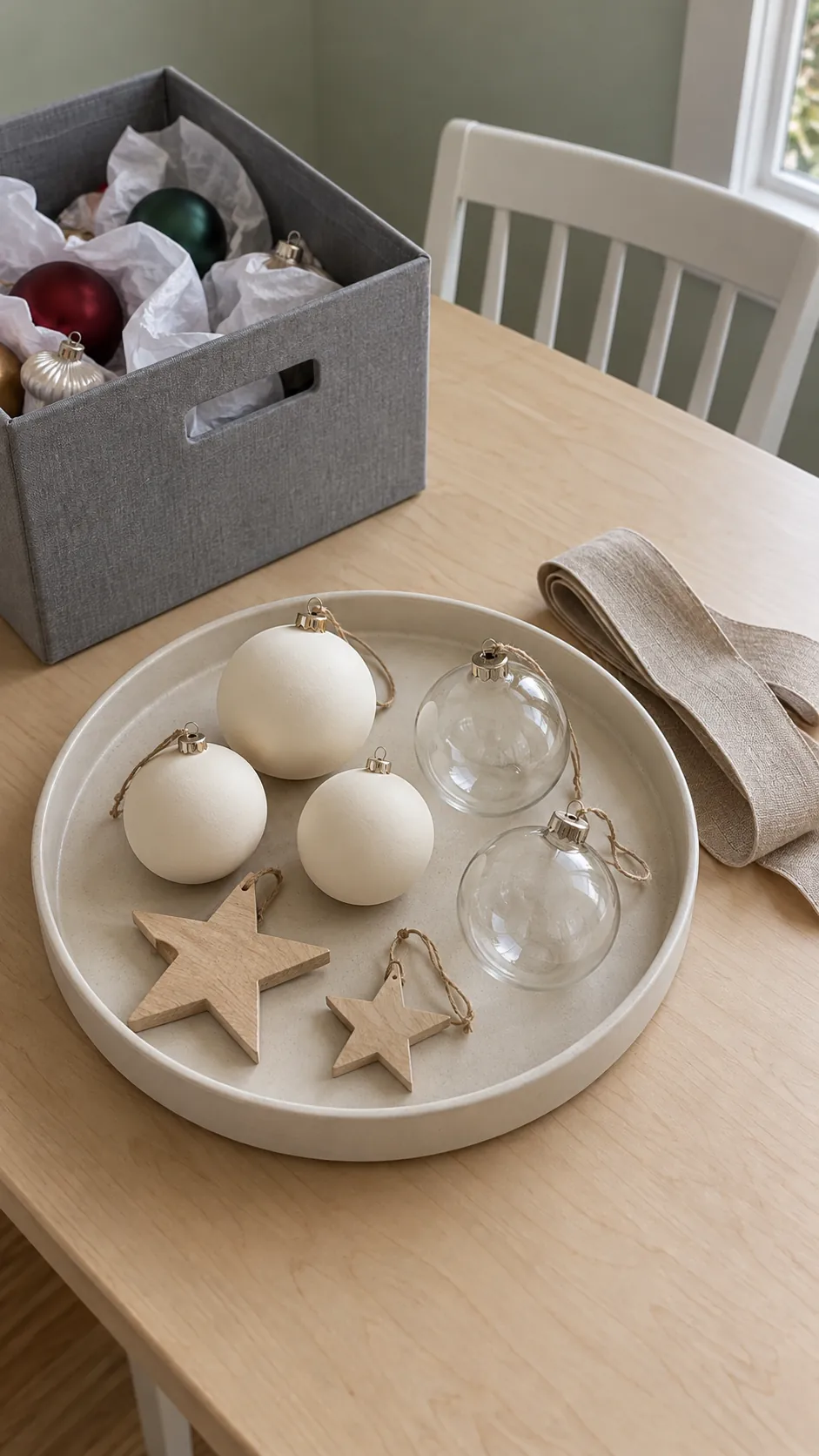
An edited palette of ornaments you already own
Choose a small group of existing ornaments that share one color or material instead of buying an entirely new neutral collection. Lay them out first, then return the pieces that compete with your chosen group to storage. Different shapes can sit together if their palette is restrained. This makes minimalist Christmas ornaments a decision about selection rather than a shopping list.
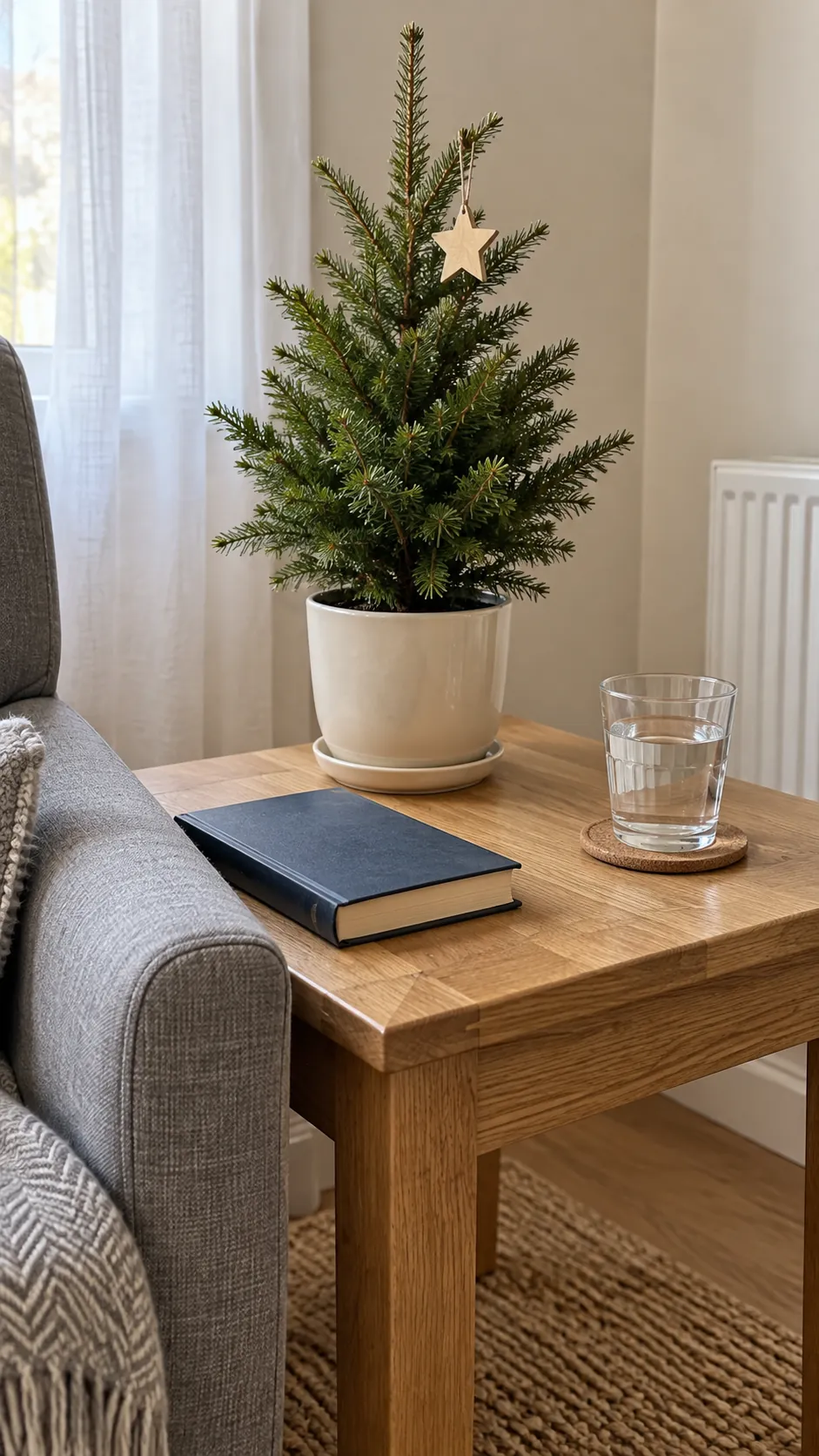
A tabletop tree on a stable side table
A small tree can feel complete with one star and no other decoration. Put it on a sturdy side table that is wide enough for the pot or stand, keeping the edge clear of trailing cords. A living tree needs drainage and plant care even when it is indoors briefly. Reserve the rest of the surface for the objects you actually use each day.
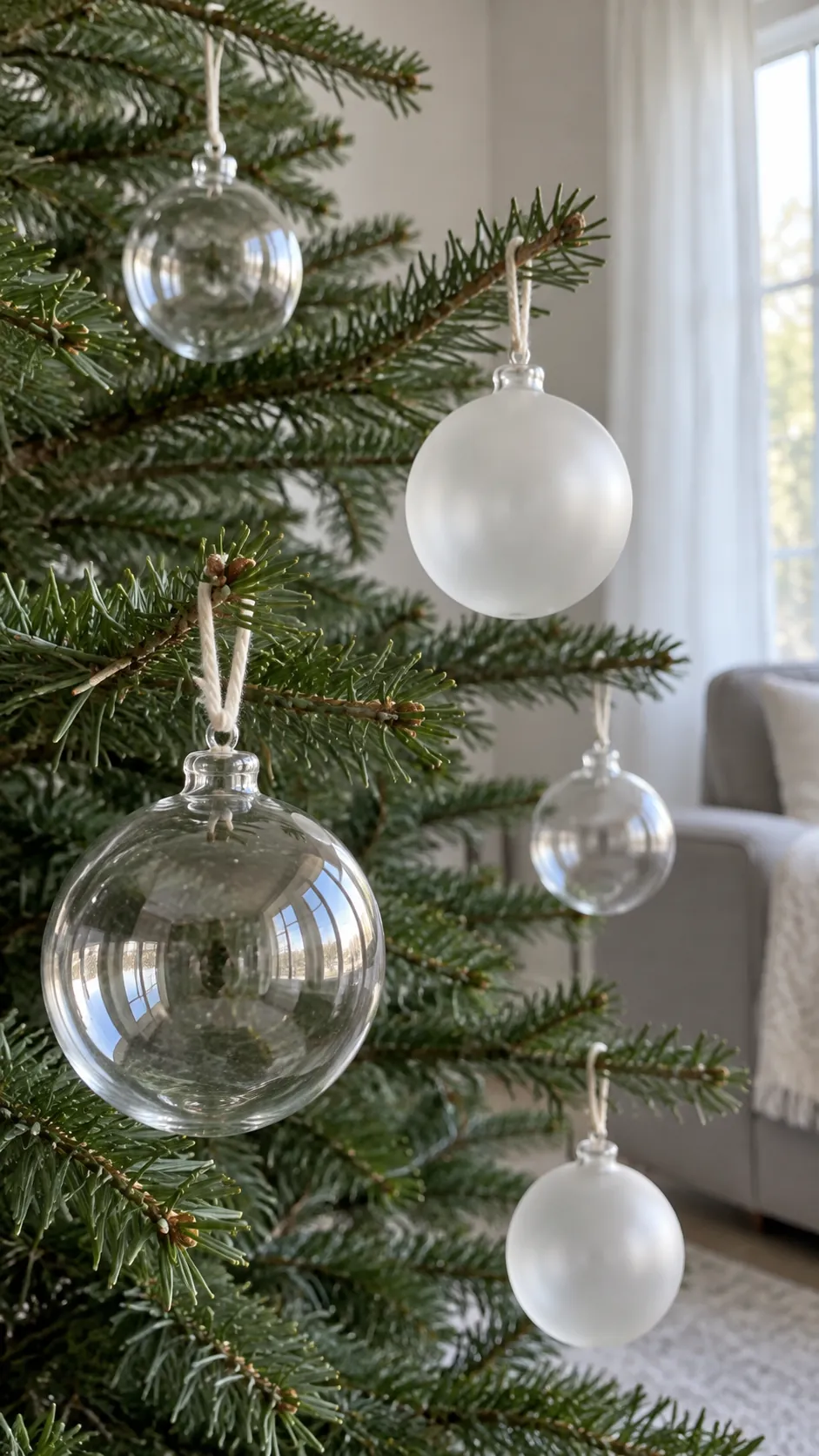
Clear ornaments used sparingly
Clear glass catches light without adding another strong color to the room. Space a few ornaments apart so the branch shape remains visible between them. Use secure loops and choose shatter resistant alternatives where pets or young children may reach the tree. Mixing clear and frosted surfaces gives quiet variation without adding several competing finishes.
A small pool of light in a reading corner
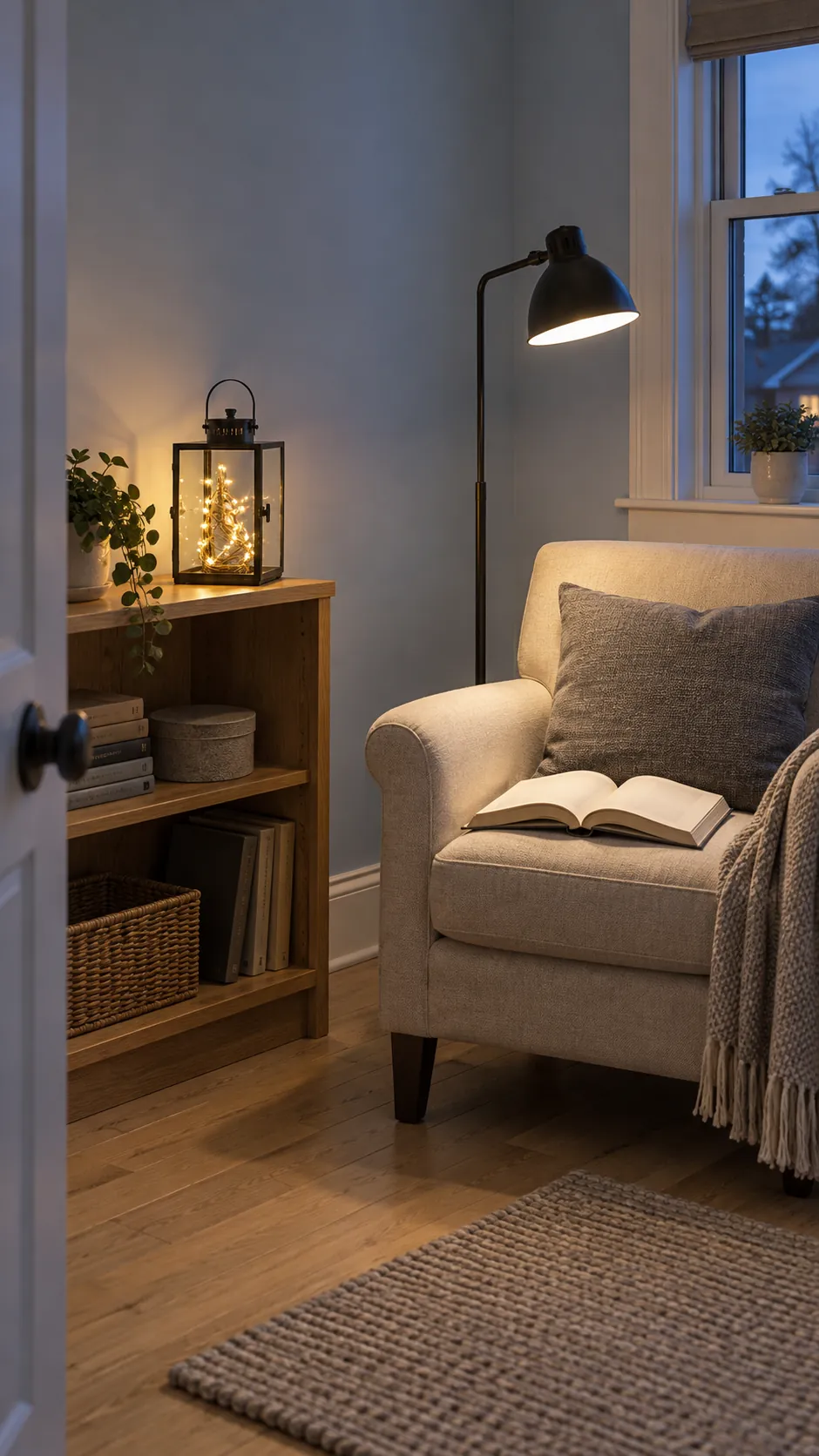
You do not need a second tree to make a bedroom or reading nook feel seasonal. Place a short light string inside a purpose made decorative lantern or on a suitable bare support, following the product’s placement instructions. Keep it away from bedding and switch it off when the room is unattended. A single warm accent can sit beside your usual neutral lamp rather than replacing practical reading light.
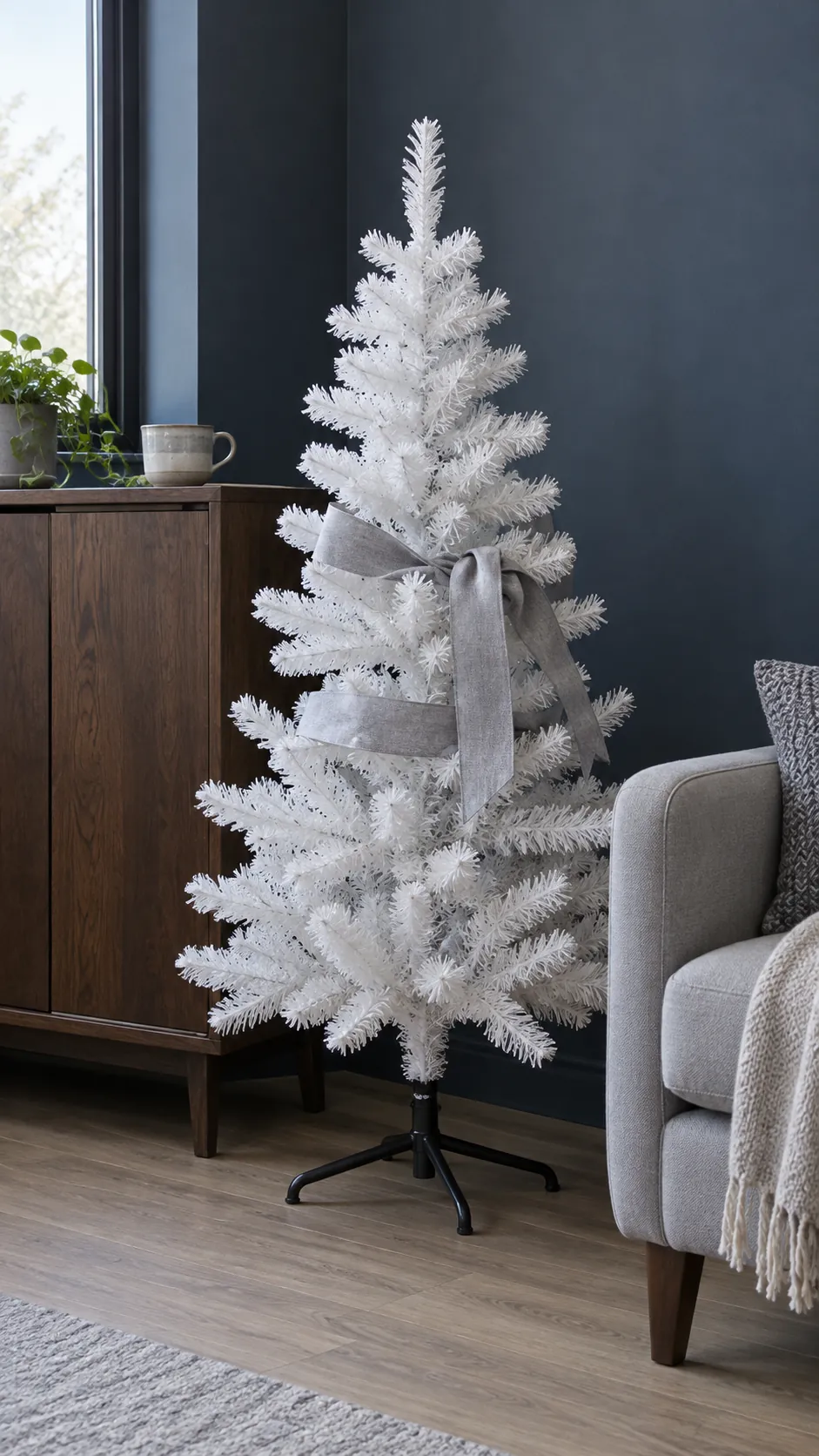
A small white tree against a darker background
A white artificial tree stands out best when the room gives its outline enough contrast. Put a compact version beside a grey wall or dark cabinet instead of adding white ornaments until the branches disappear. One muted ribbon or a few pale wooden shapes may be enough. Check that the base remains secure and the nearby seat can still be used normally.
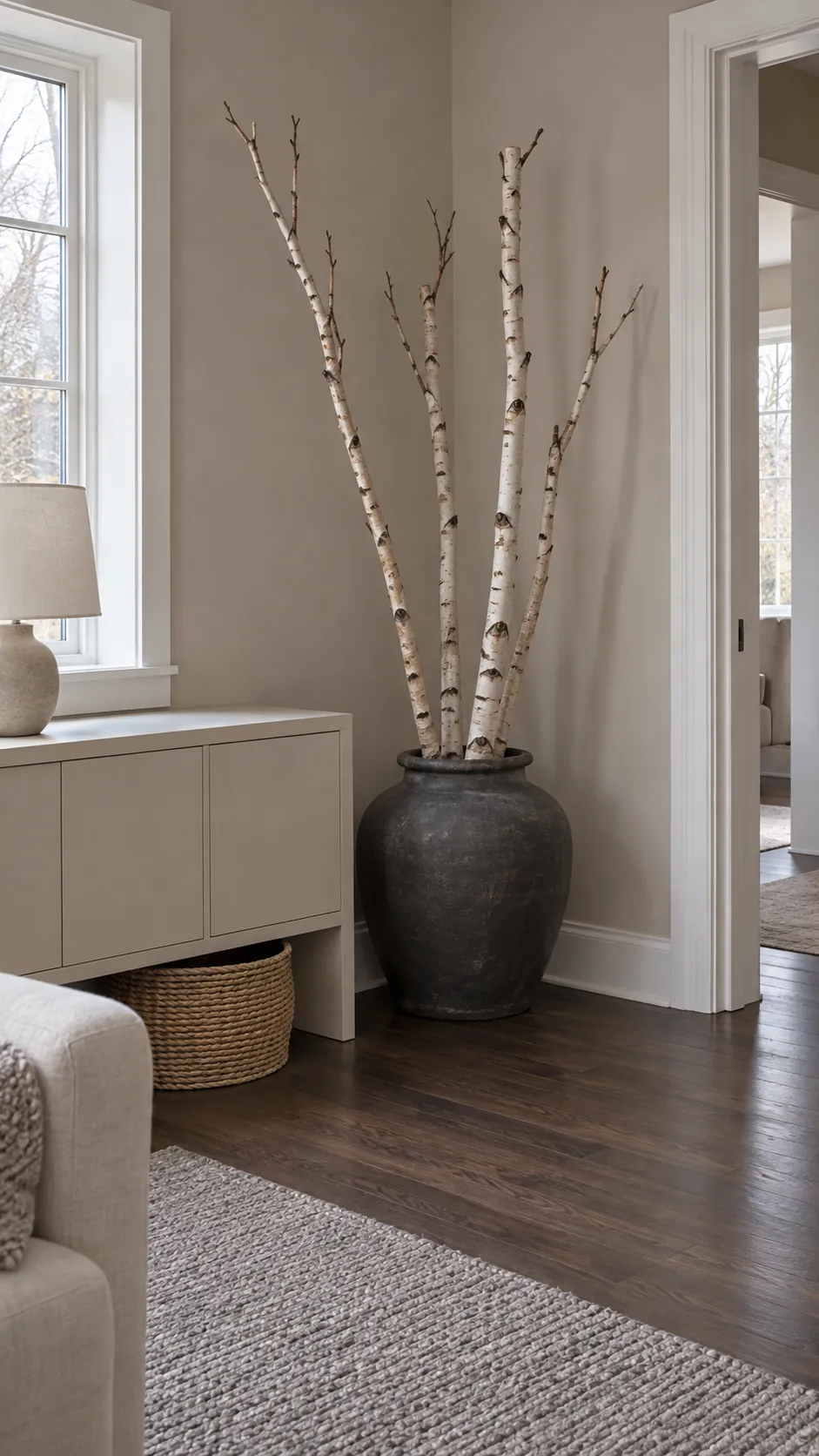
Birch branches in a heavy floor vessel
A few birch branches add height without the volume of a full tree. Choose a wide heavy vessel and trim the branches to suit the ceiling and surrounding furniture. Keep the arrangement in a corner rather than beside a narrow route where branches could catch clothing. Bare bark and a simple silhouette often provide all the seasonal detail this natural accent needs.
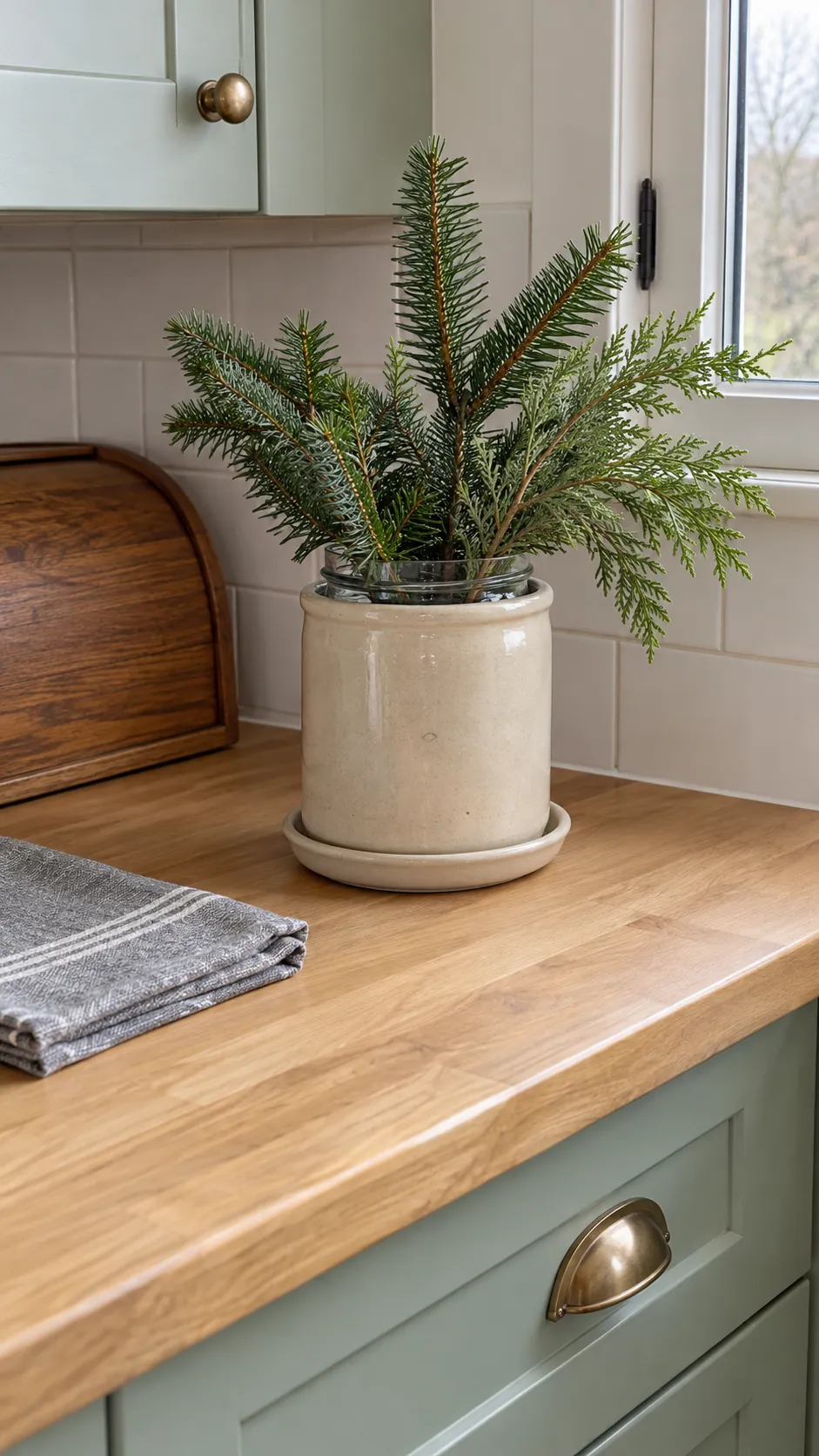
An everyday crock with clipped greenery
Use an ordinary ceramic crock to hold a short evergreen arrangement near the entrance or kitchen. Check that it is watertight, or place a suitable liner inside before adding water. Keep needles and sap away from food preparation surfaces, and trim the branches so cupboard doors still open. One familiar vessel can bring natural Christmas decorations into a working room without creating another display area.
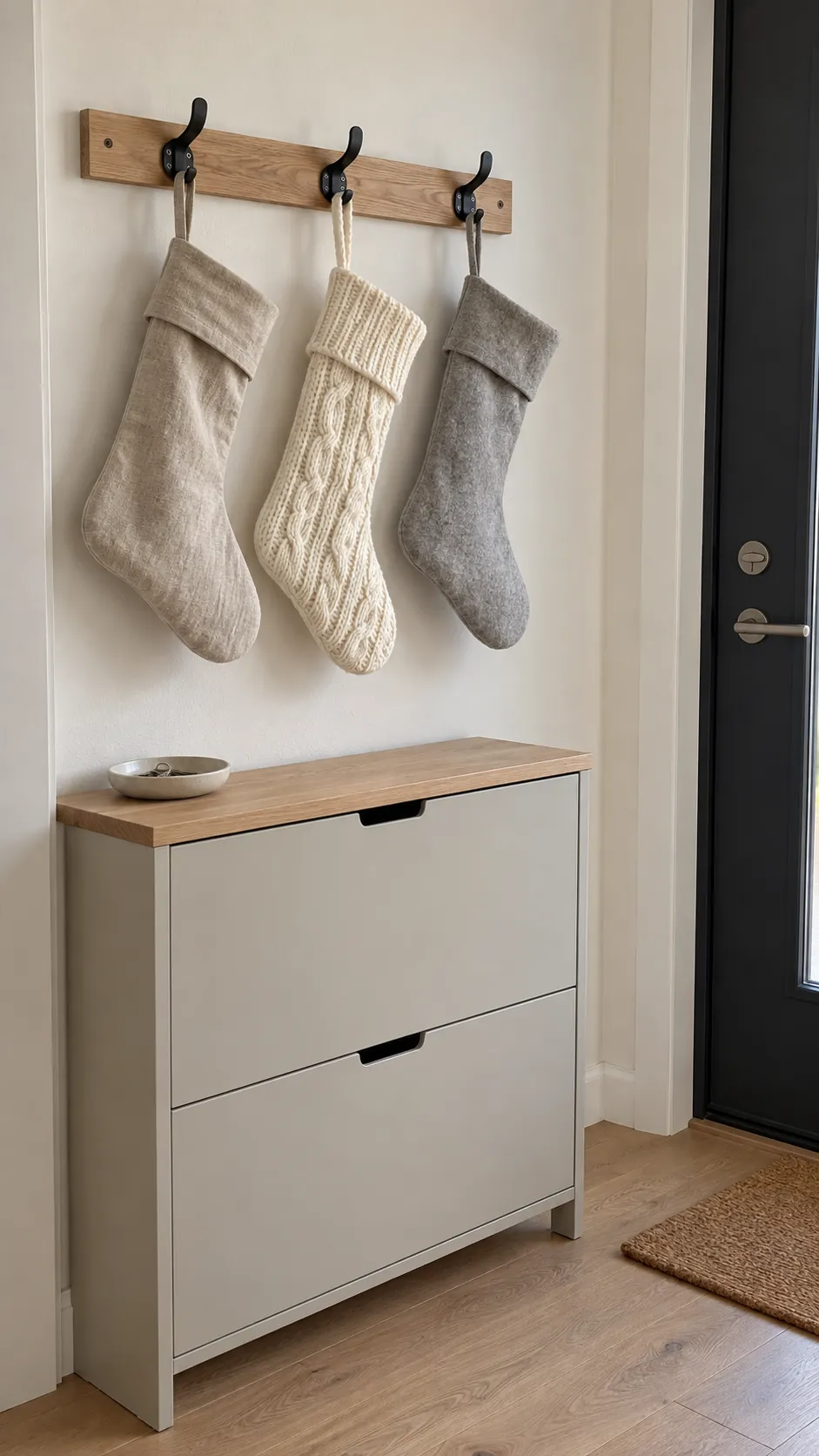
Neutral stockings on a separate hook rail
Linen or knitted stockings can sit on a simple hook rail instead of crowding a mantel. Use fixings suited to the wall and the expected filled weight, keeping loops securely on the hooks. A small palette makes different stocking shapes feel related. Position the rail away from heaters, open flames and places where the stockings will catch on passing bags.
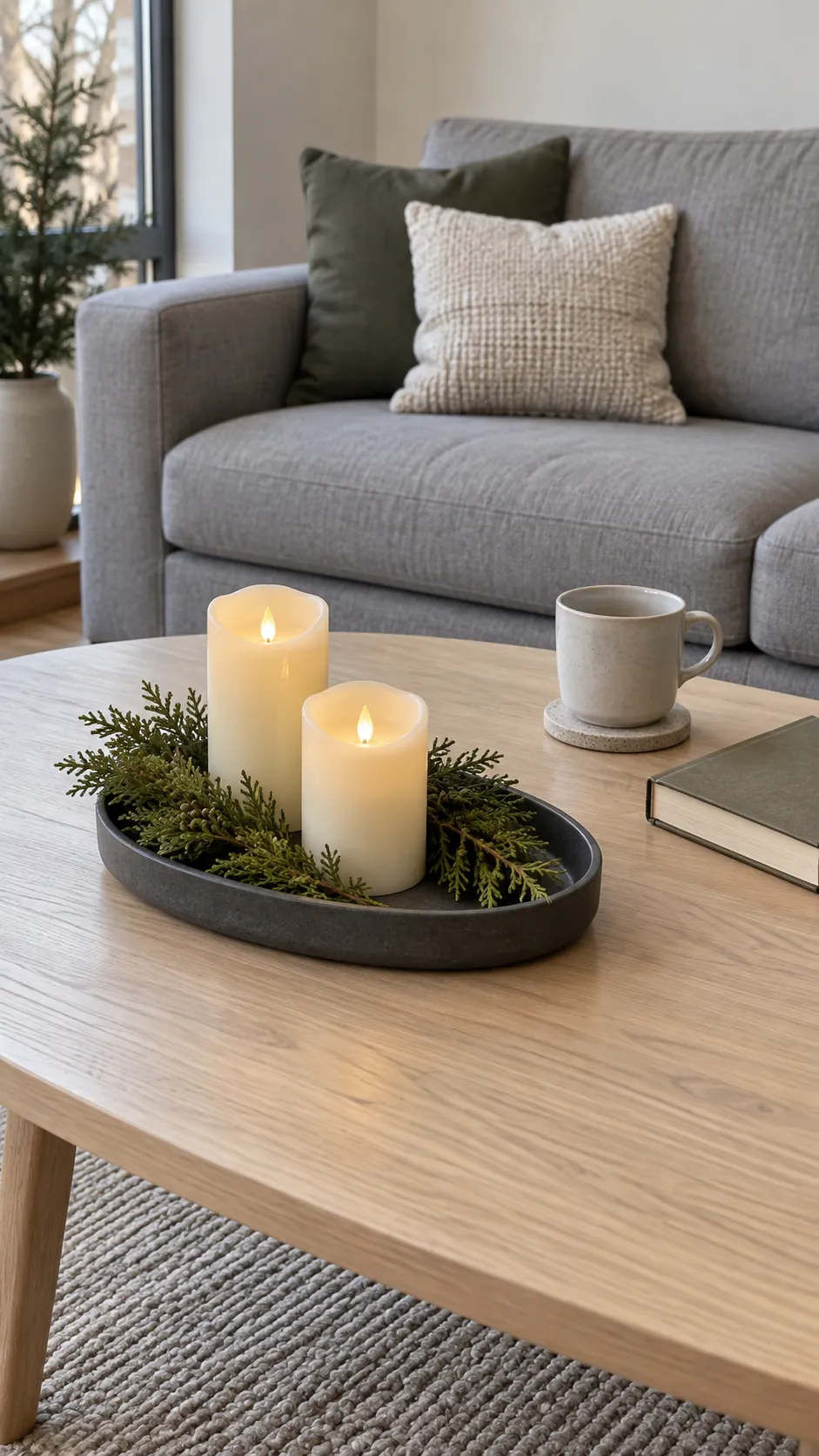
A contained greenery tray with battery candles
A low tray gives a few evergreen cuts and battery candles a defined home. Keep the arrangement compact enough to lift away when you need the table. Battery light is useful beside dry foliage, where open flames would need generous separation. Leave the surrounding surface clear so the small centerpiece remains a focal point rather than the start of a larger collection.
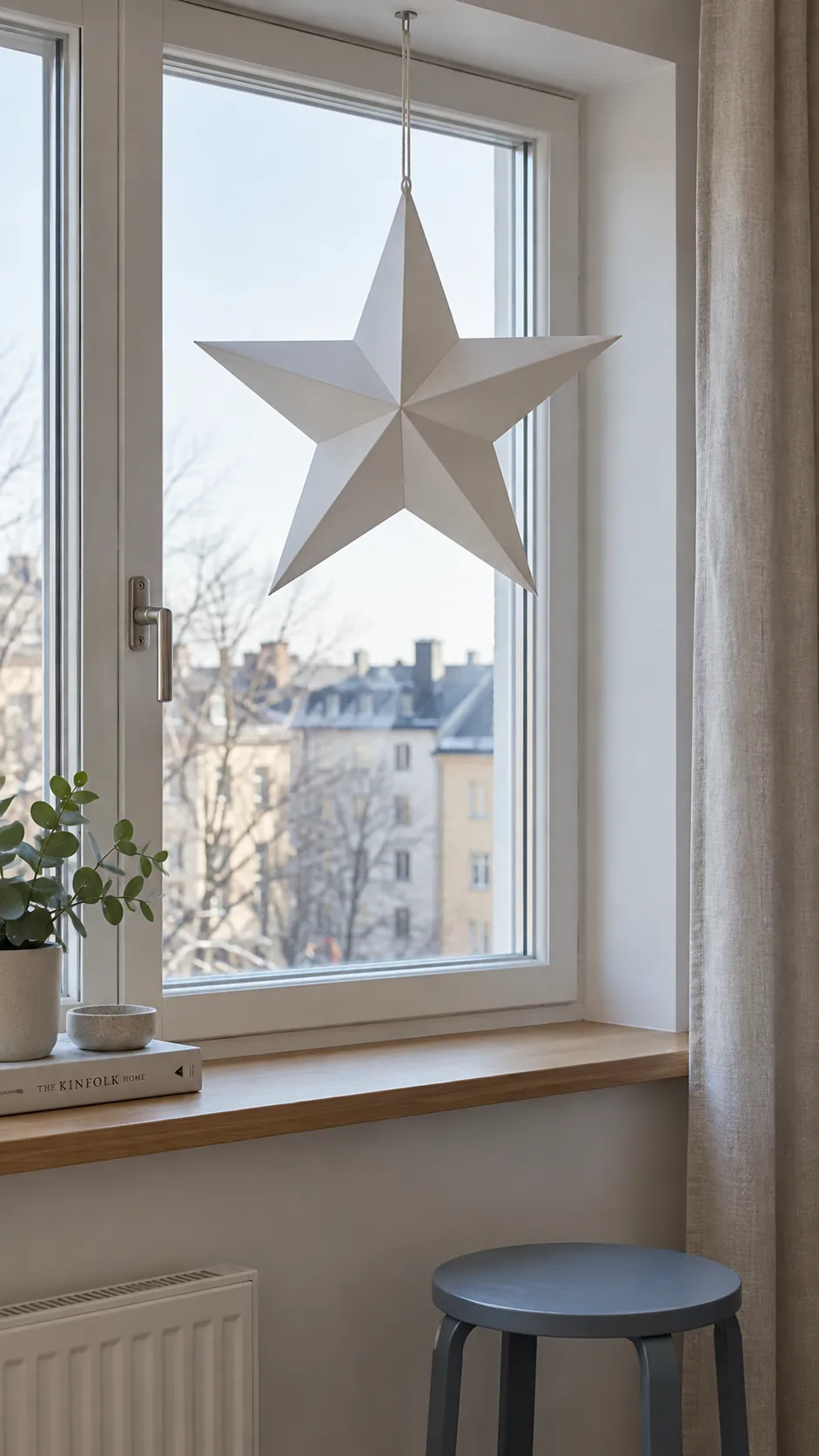
One folded paper star in the window
A single large paper star creates a stronger shape than many tiny ornaments in a busy window. Hang it from a suitable fixing with enough room to turn without hitting glass or blinds. Choose an unlit star, or use only the lighting arrangement its manufacturer specifies. Plain white or kraft paper gives Scandinavian Christmas decorations a clear silhouette without glitter.
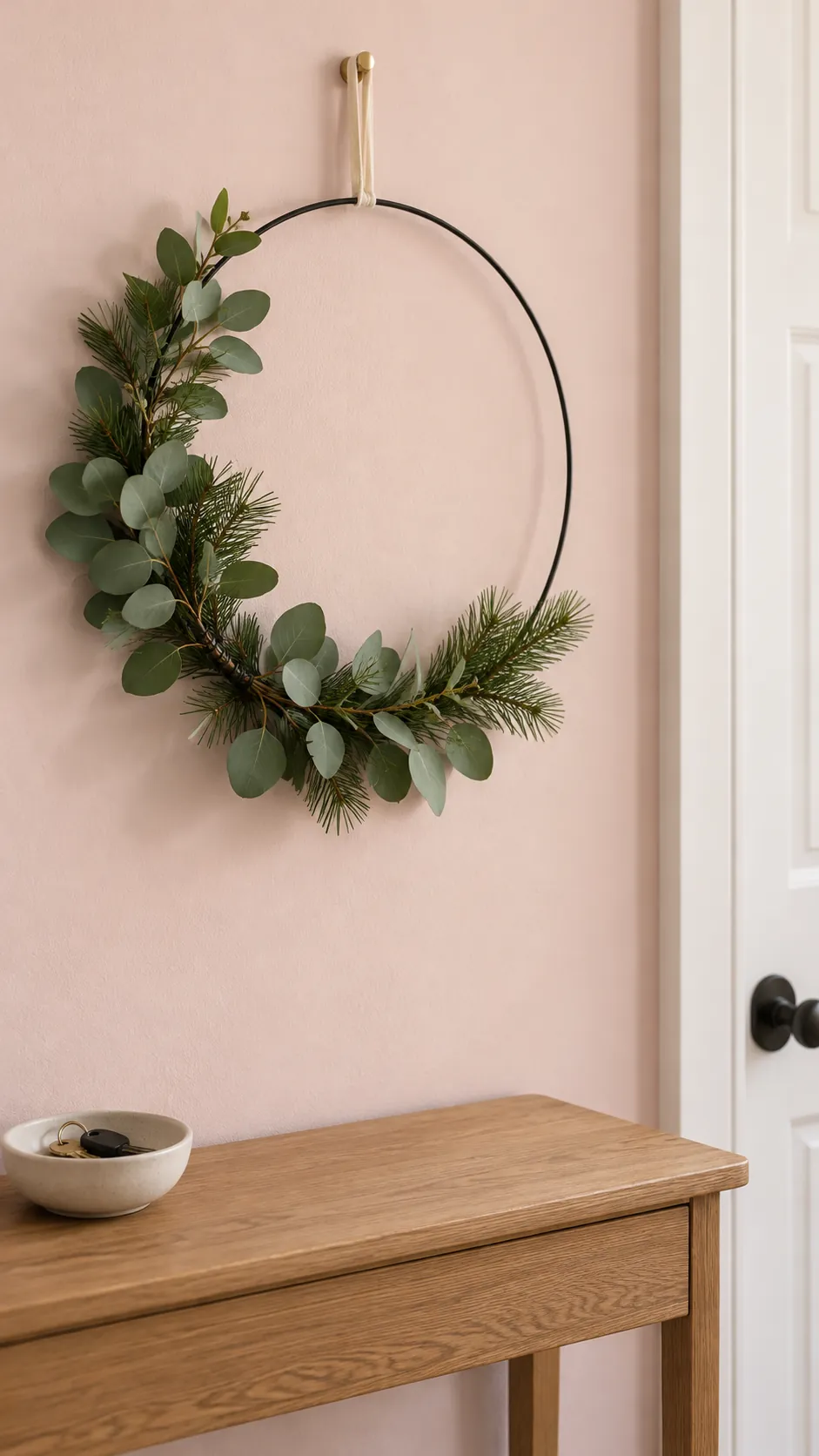
A sparse eucalyptus and pine wreath
An open wreath with greenery concentrated on one side can feel lighter than a dense full ring. Bind small stem bundles securely to a reusable hoop and trim projecting ends. Hang it on a suitable hook where the leaves will not rub against moving doors or leave marks on delicate finishes. Check fresh greenery regularly and remove it when it dries or begins to shed.
Plain wrapping with one repeatable tie
Use one roll of plain paper and a small selection of reusable ribbons for a coherent gift group. Cut paper to the package size so corners fold neatly without thick loose layers. A simple knot is often easier to stack than a large bow. Leave greenery off packages that need to travel or sit for weeks, since drying stems can shed and stain the paper.

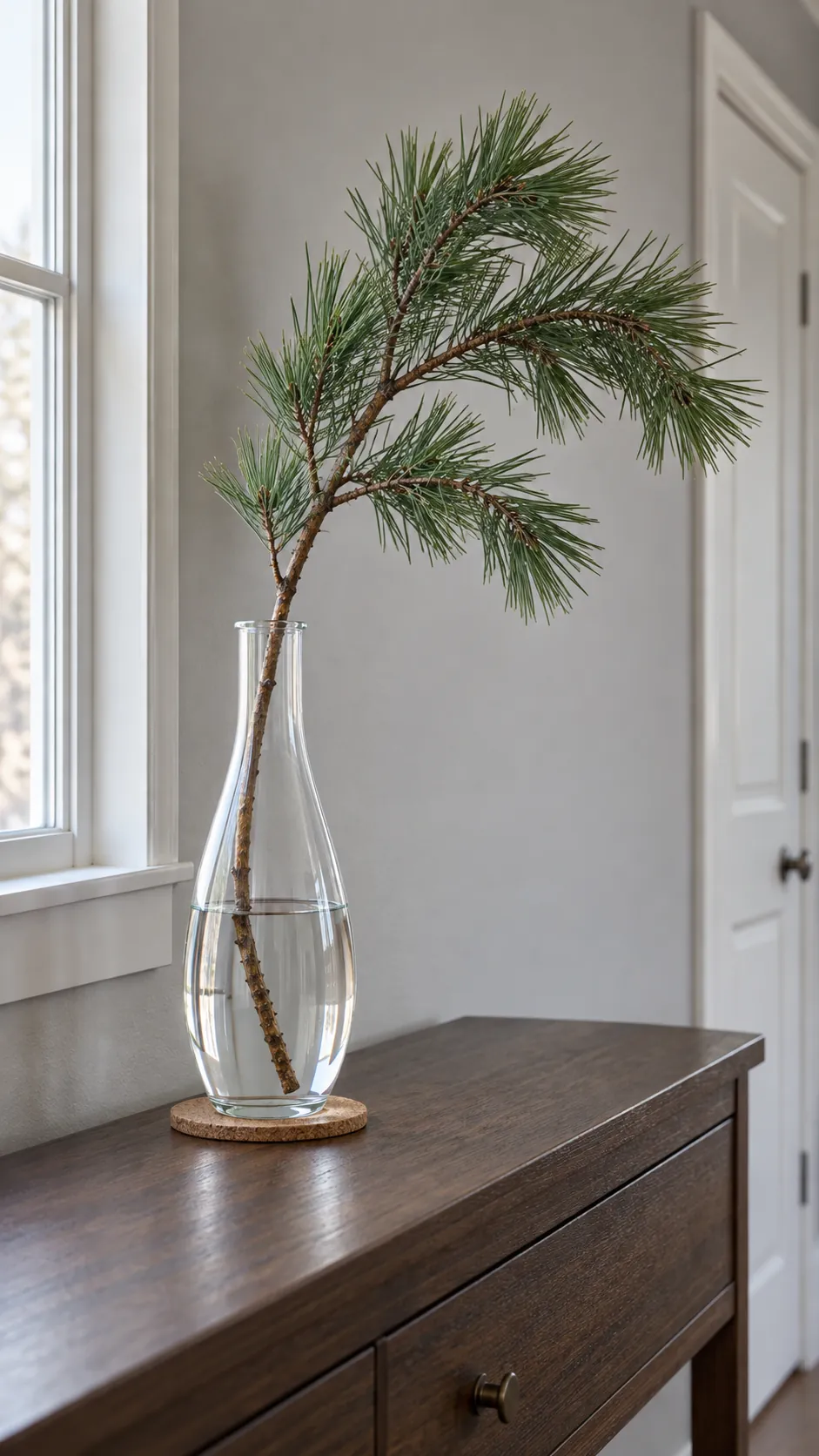
A single garland on an unused mantel
A short garland can define a mantel without covering its entire length. Keep it fully away from heat, and follow the fireplace’s required clearances if the appliance is used. A mantel above a working fire may need a different noncombustible decoration instead. On an unused fireplace, an open drape and one simple object usually give the greenery enough room to stand out.
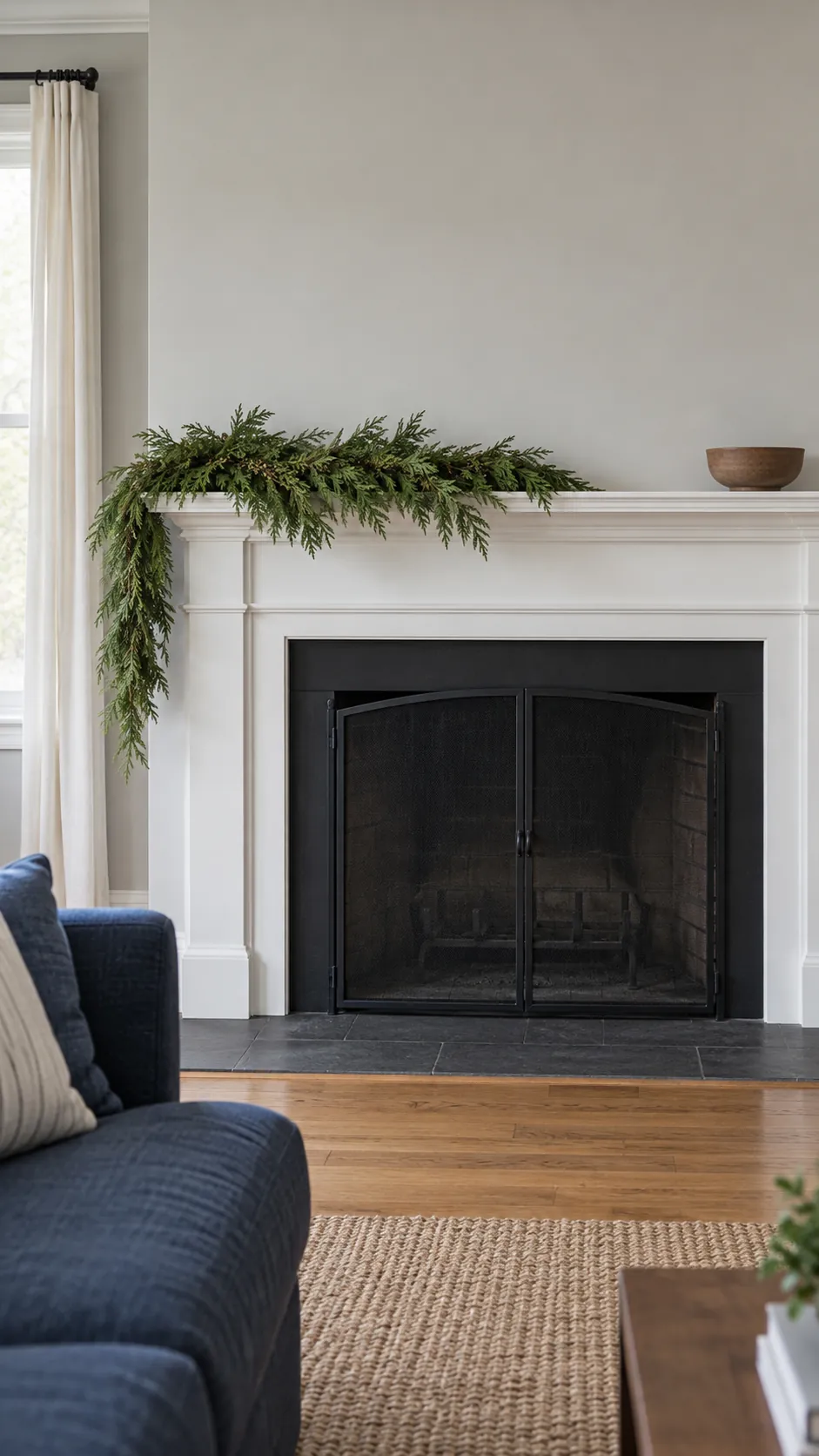
A reusable Advent garland with modest scale
Clip small reusable envelopes or fabric pouches to a sturdy cord and put the daily numbers on their backs for a quieter display. Use lightweight contents, such as a short shared activity or a small note, rather than bulky gifts that strain the line. Hang the garland on secure hooks outside children’s reach if cords could become a hazard. Store the empty envelopes flat so the same tradition can return next year.
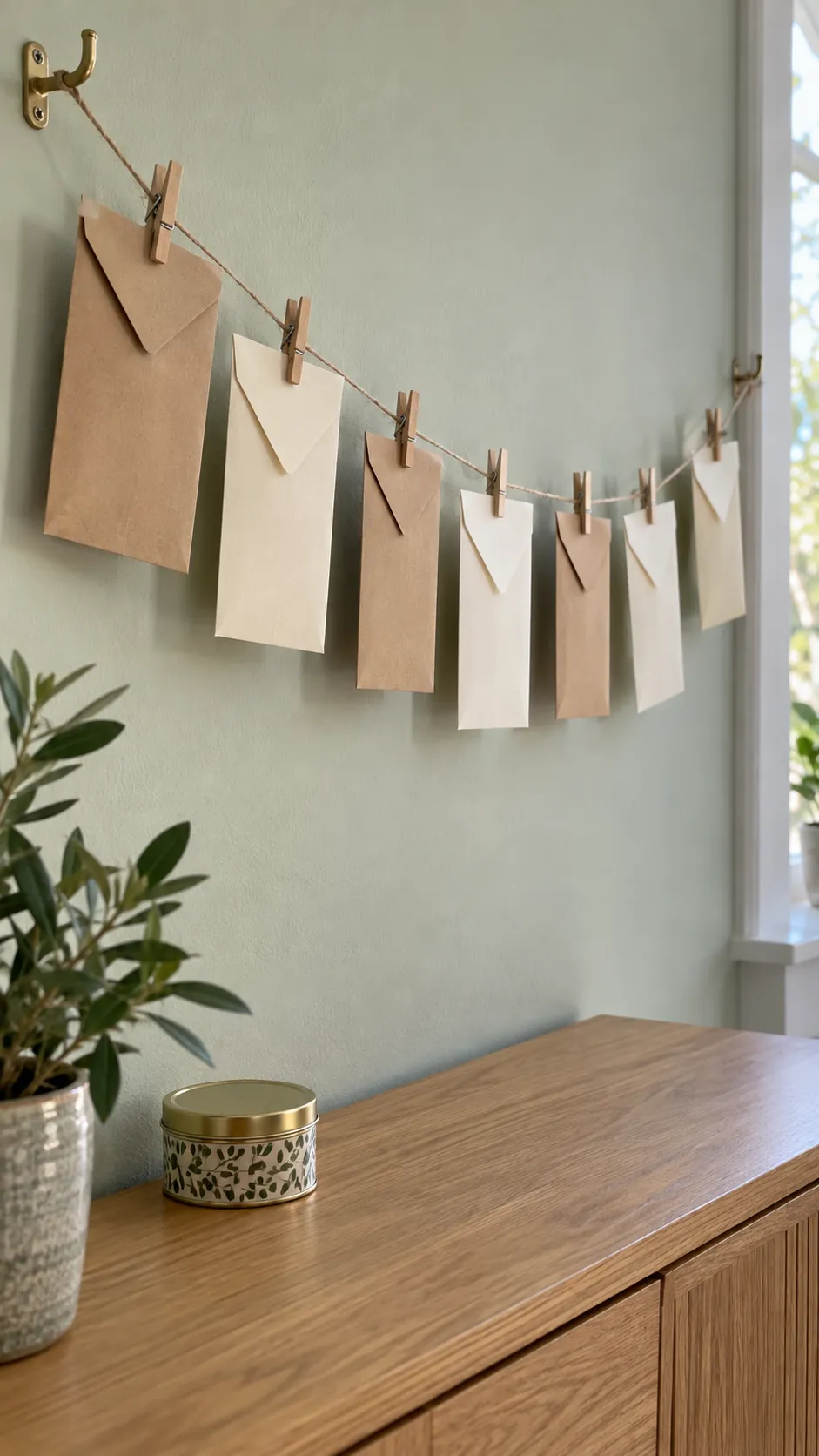
A linen runner that leaves serving space
For a minimalist Christmas dining table, start with the plates and serving dishes before adding a runner. A narrow linen strip and one low vase may provide enough seasonal detail. Keep glass bases on firm flat surfaces and leave greenery clear of food. The open table space is part of the design because it lets the meal work comfortably.
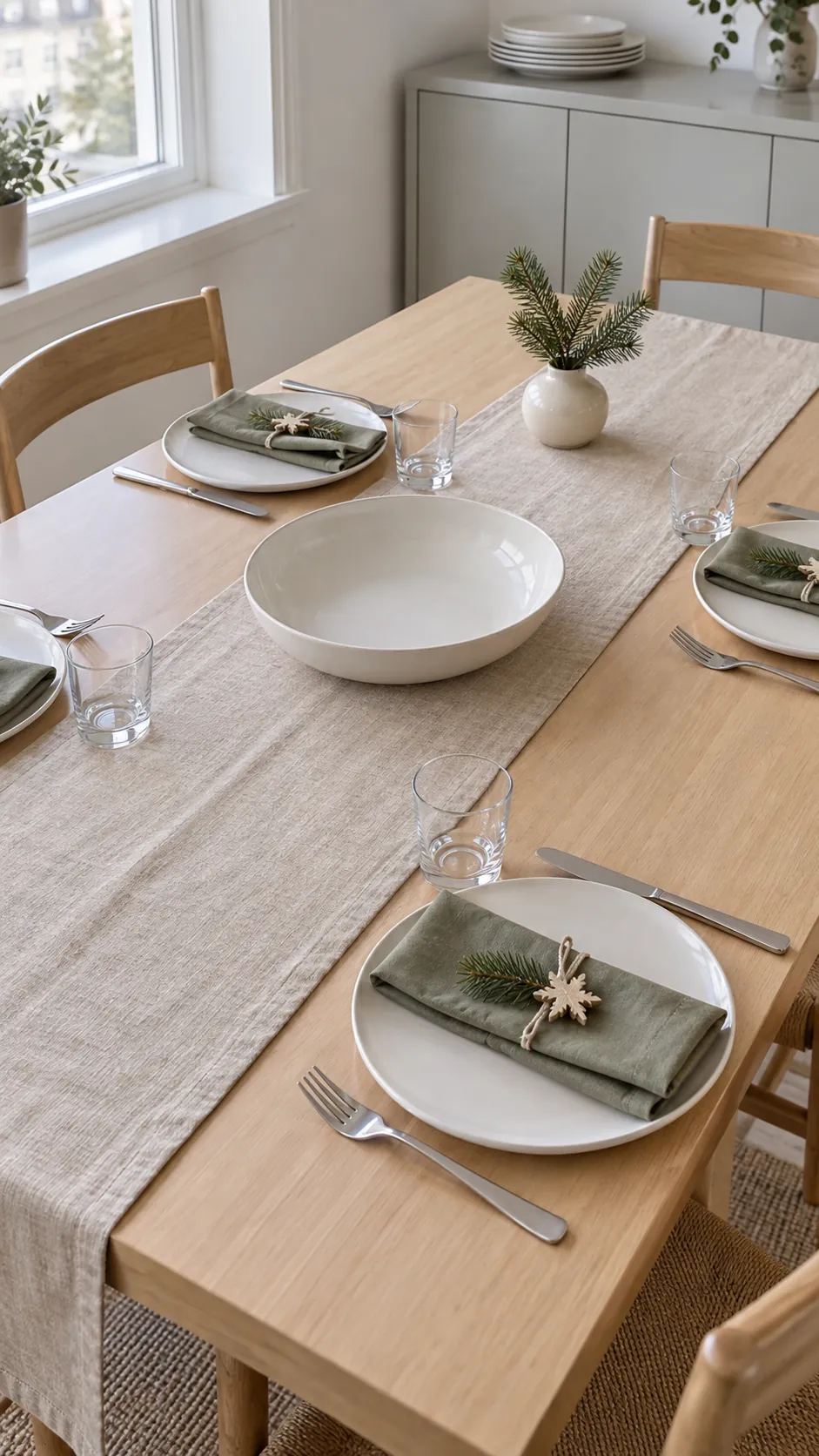
One pine branch in a clear vase
A single branch can show its shape better than a crowded arrangement. Choose a stable vase with an opening narrow enough to support the stem and keep its spread proportionate to the furniture below. Place it where a falling needle will be easy to clean and the branch cannot brush a lamp or picture. Change the water as needed and protect the surface beneath the vase.
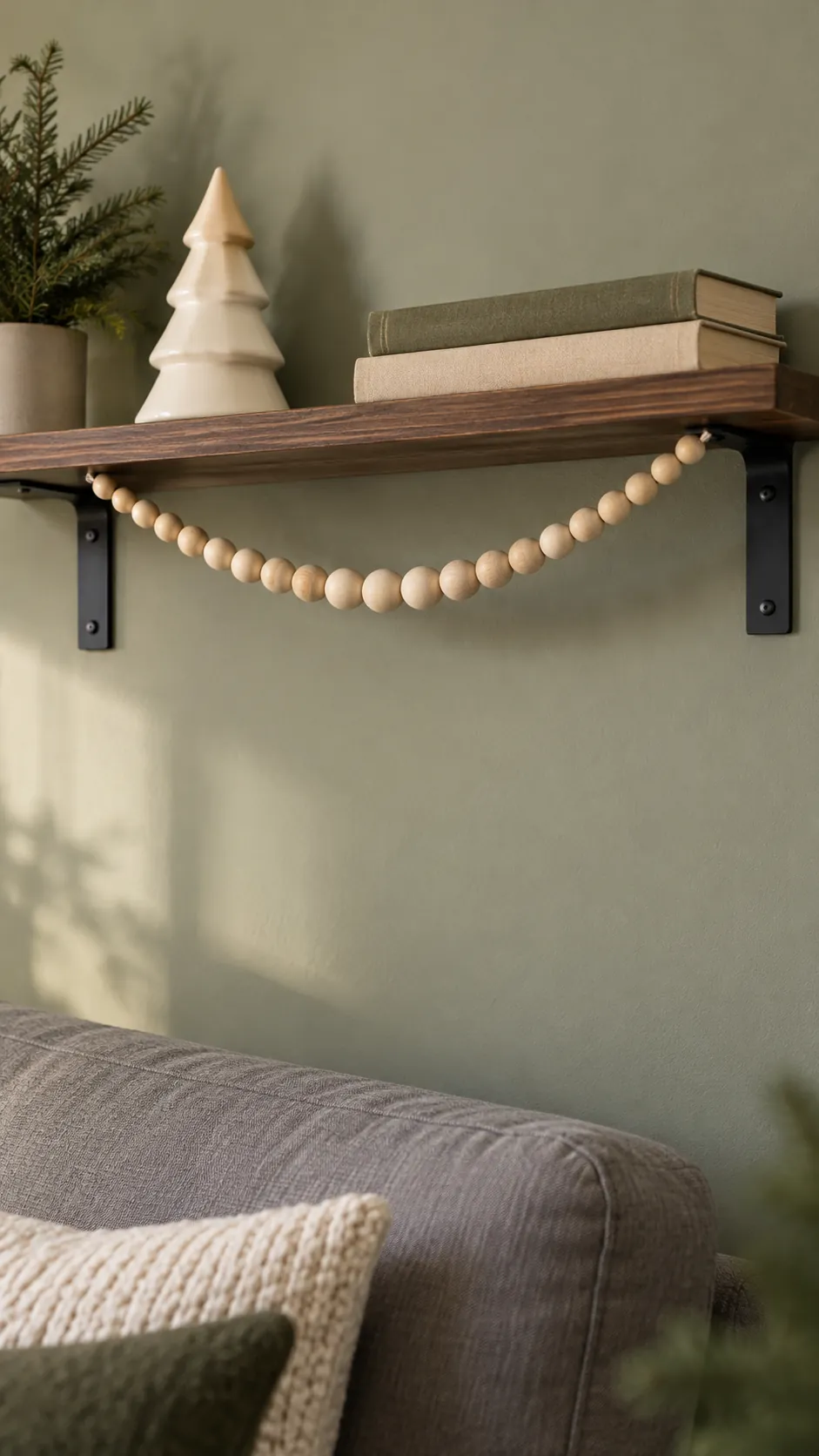
A short wooden bead garland
Natural wooden beads add texture when you want an alternative to shiny tinsel. Use a short strand on a shelf or tree section rather than wrapping every available surface. Secure both ends so the garland cannot slide down onto a seat or a child’s reach. Check the cord and bead connections before storage, since loose small beads need to be kept away from young children.
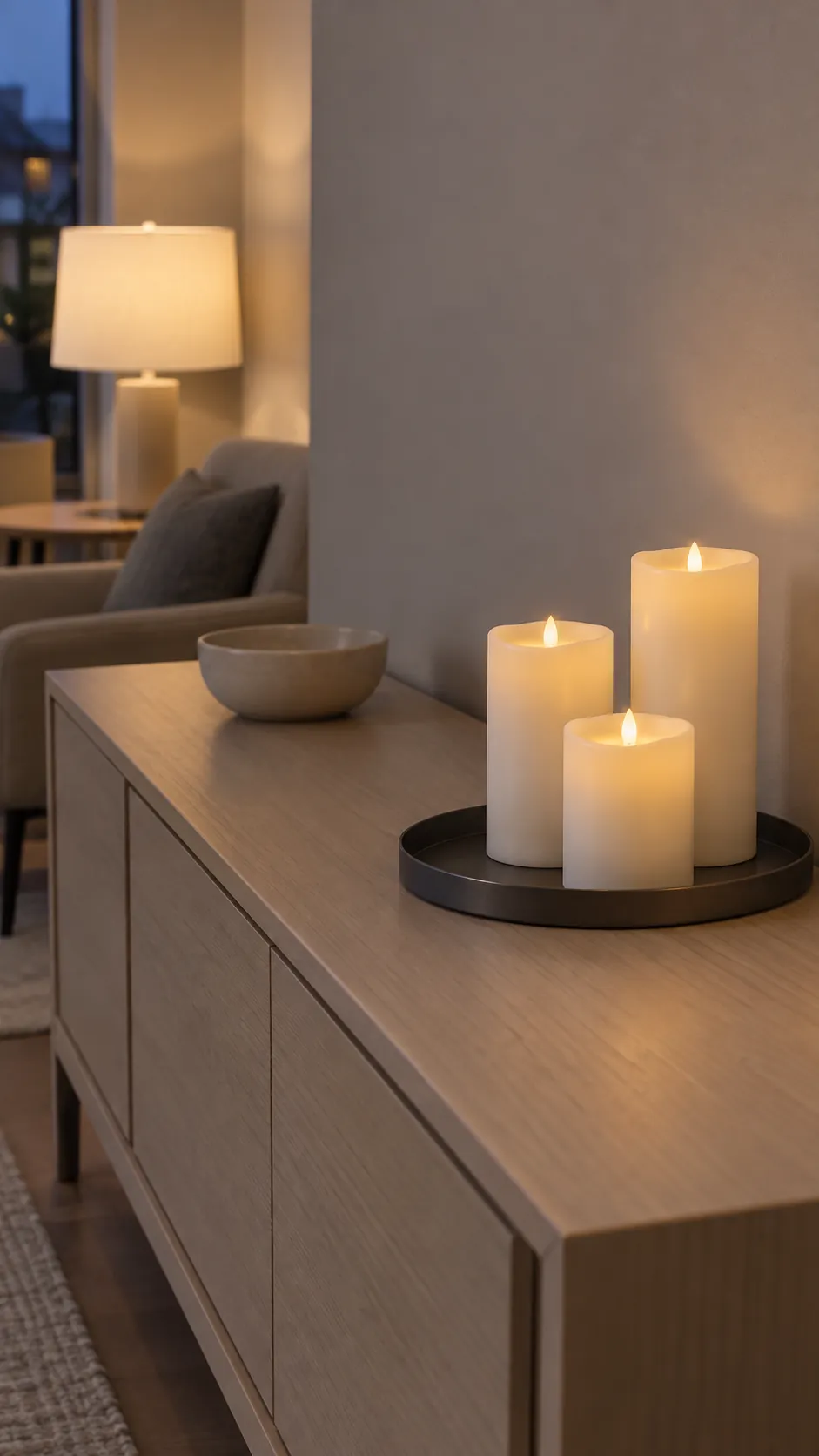
White battery pillars on a simple tray
Group a few white battery pillar candles in different heights on one rigid tray. Keep the number small enough that each shape remains visible rather than forming a wall of lights. A timer can make the display convenient if the product includes one, but it does not replace checking batteries and condition. Put the tray on a surface that stays useful around it, such as the far end of a console.
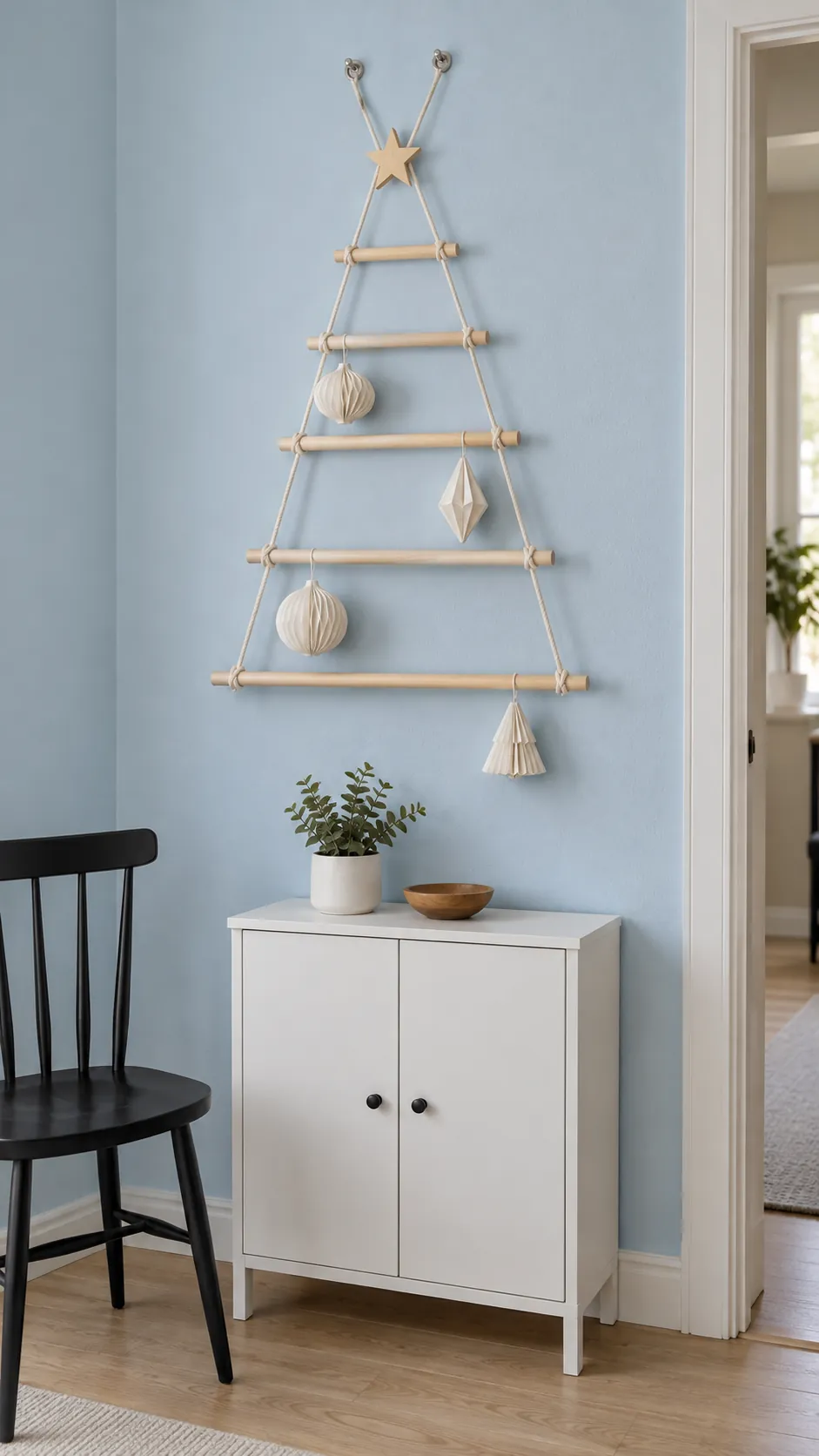
A flat wooden tree for a narrow wall
A tree shape made from light wooden dowels can bring the idea of a tree into a room with little spare floor space. Secure the structure with appropriate wall fixings and keep its lower edge clear of furniture movement. A few small ornaments are easier to manage than a dense web of cords. Check rental rules before attaching anything, and choose a freestanding tabletop option when mounting is unsuitable.
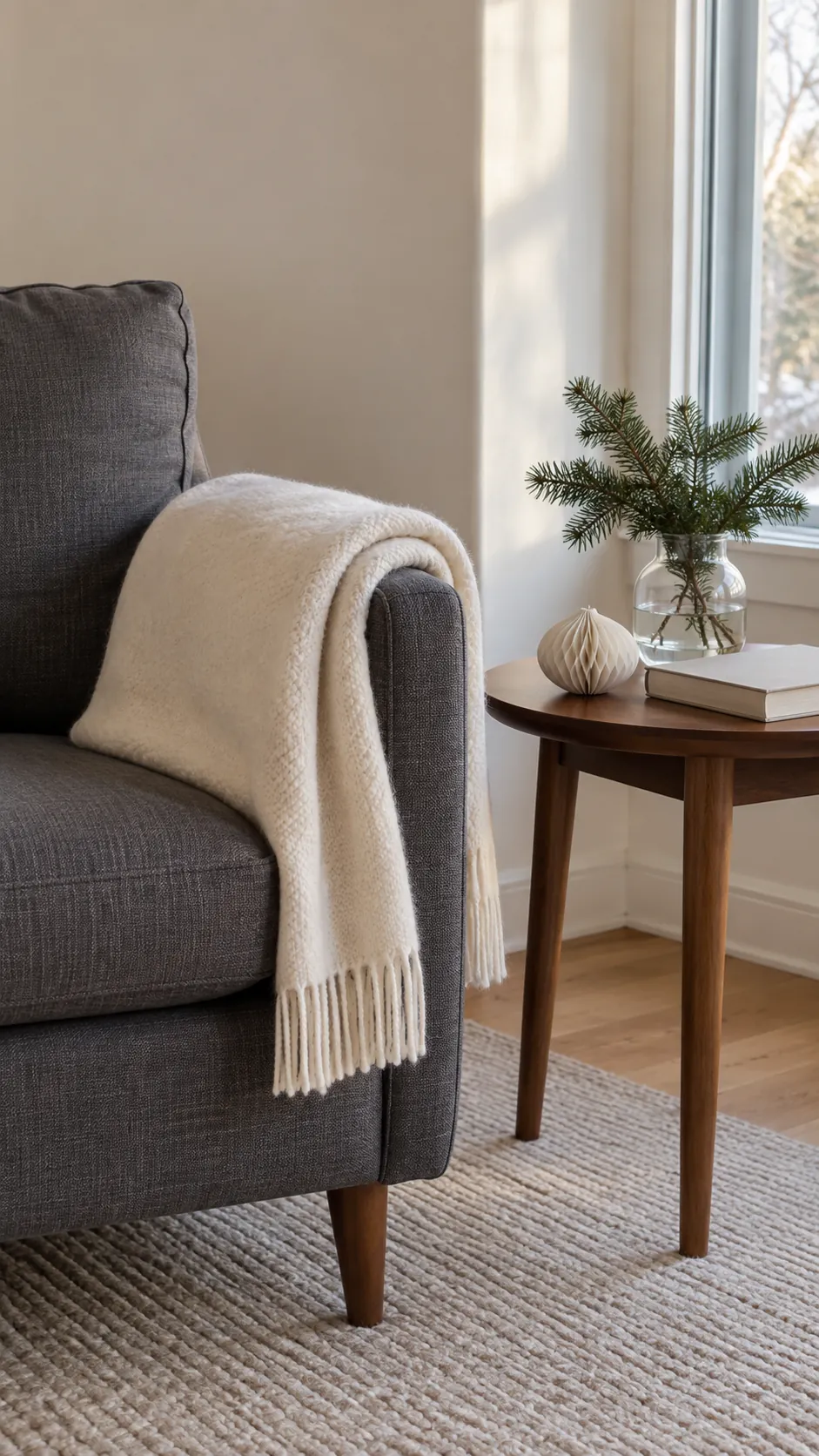
One neutral throw with a seasonal accent nearby
A cream or grey throw can make a room feel ready for winter while remaining useful after December. Fold it over a chair arm instead of layering several blankets on the same seat. Put the Christmas cue nearby, such as a small paper ornament or a short evergreen cut in a vase. The room stays calm because ordinary comfort and seasonal detail share the same limited space.
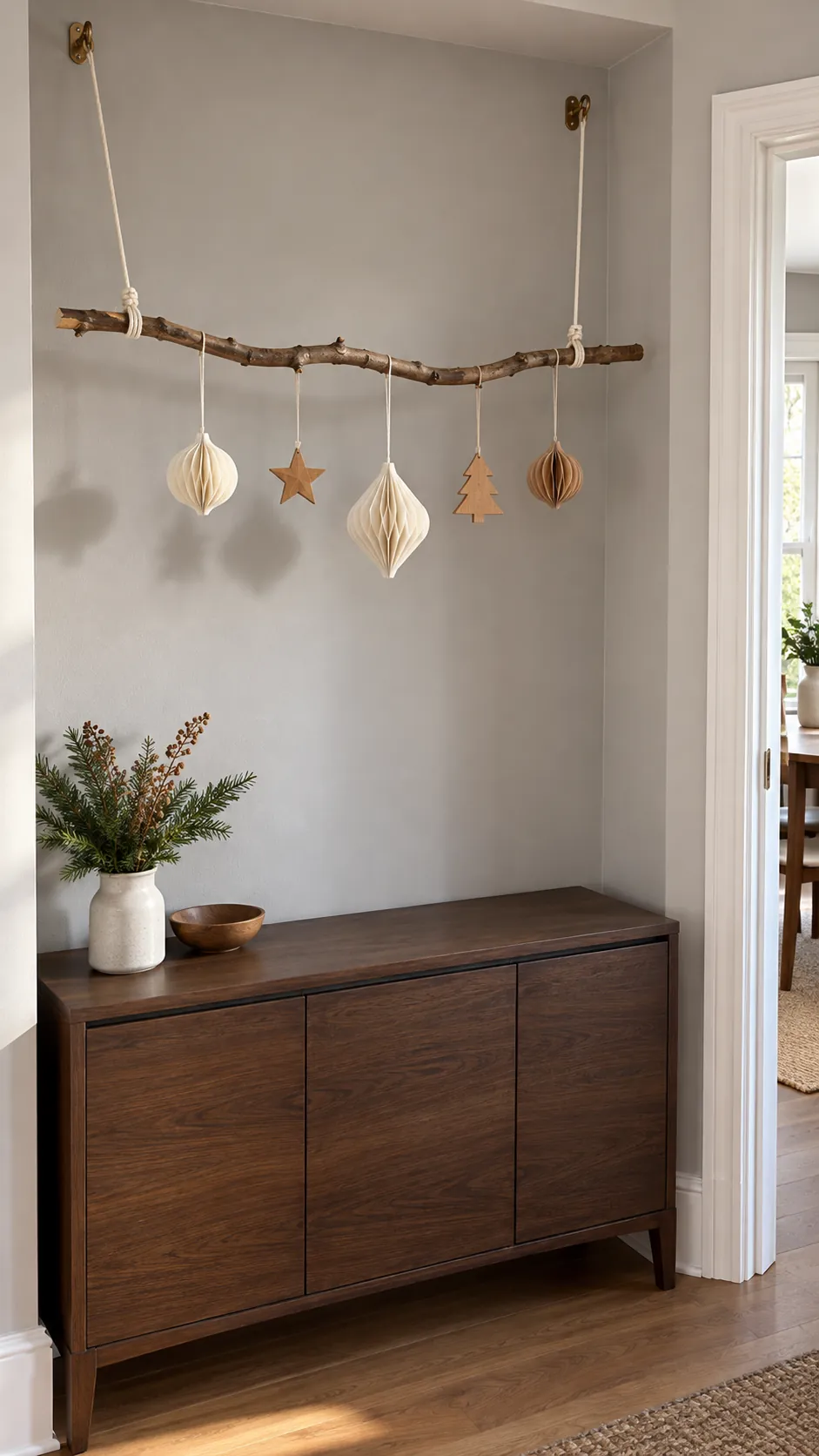
A suspended branch with lightweight ornaments
A small bare branch can hold a few paper or wooden ornaments when the support is properly planned. Use secure fixings rated for the full load and suspend it in a place where nobody will walk beneath it or pull the cord. Keep the branch short and the ornaments light. If the ceiling or wall cannot take the fitting, place the branch in a stable vessel instead.
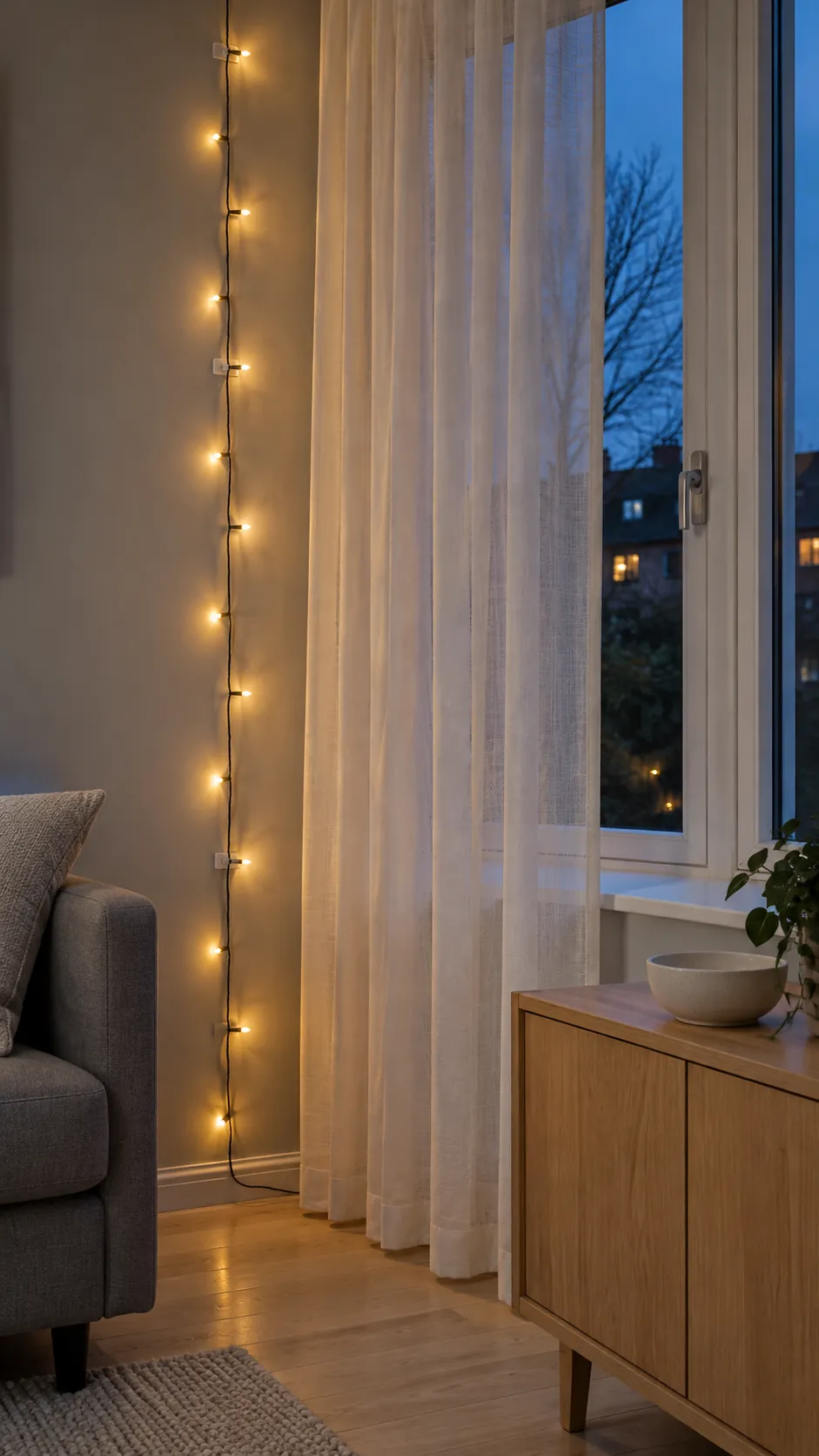
A visible light strand beside sheer curtains
Keep a light strand visibly separate from sheer fabric instead of hiding electrical parts inside folds. Use only lights suitable for the location and maintain the manufacturer’s required clearance from textiles. Route the lead away from bed areas, moving curtains and doorways. A short line of light beside the window can provide the effect without covering an entire wall.
A display that fits one storage box
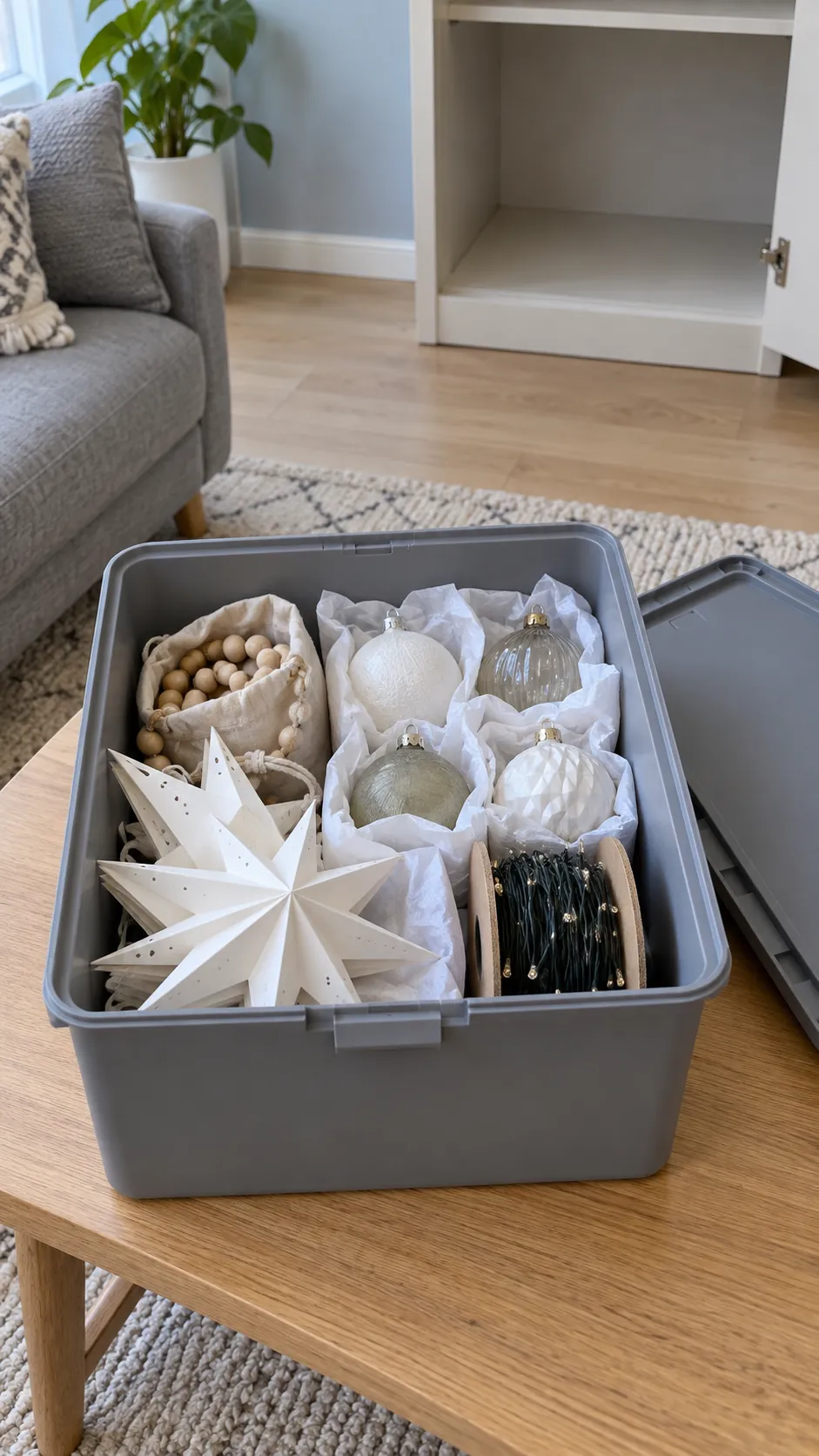
Choose a storage box before adding new decorations, then let its capacity set a practical limit. Fold paper pieces flat, wrap fragile ornaments separately and keep light strings on a simple reusable reel. Return only dry, clean materials to the box, removing spent batteries where the product instructions require it. When the decorations fit comfortably, next year’s setup starts with pieces you already know how to use.