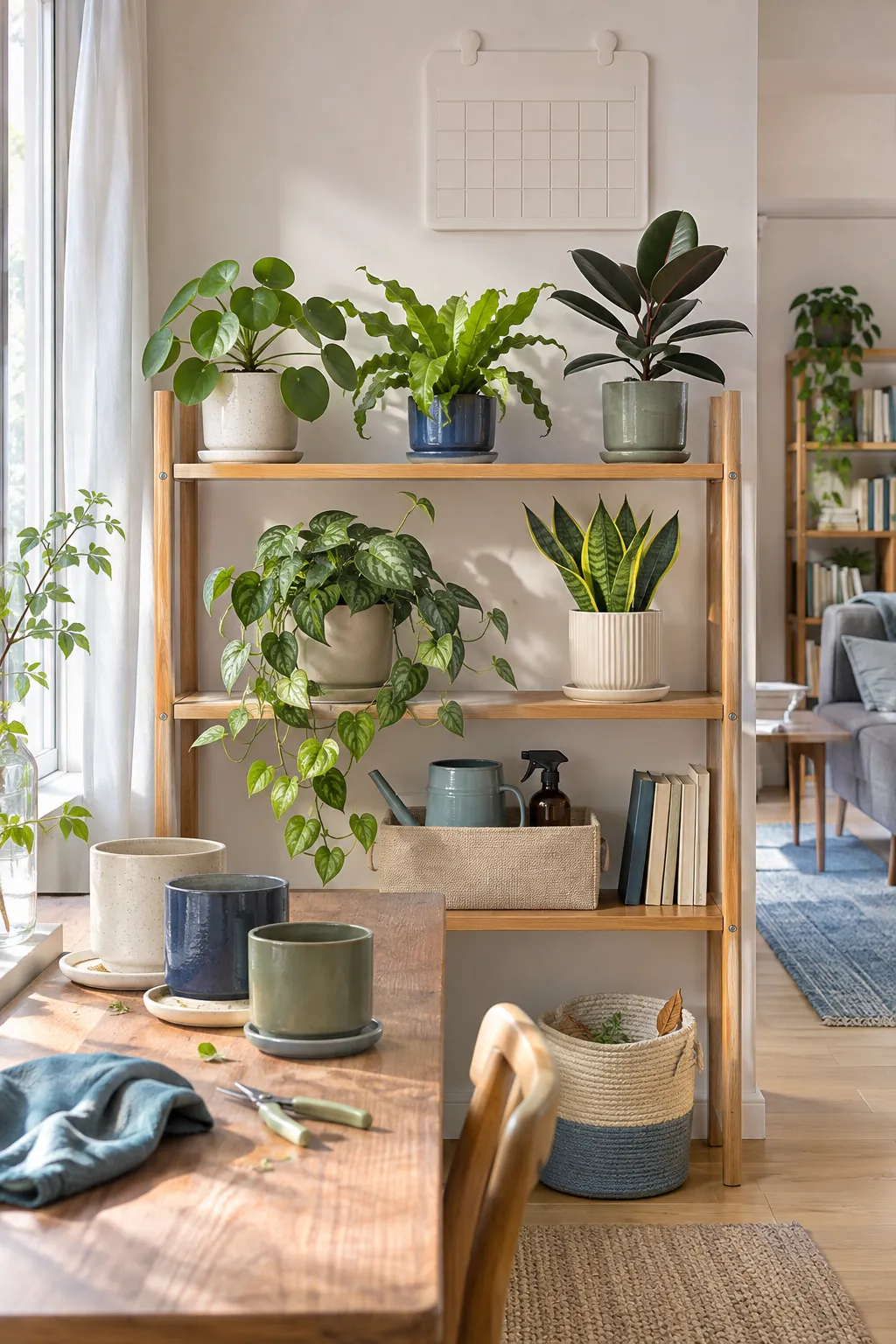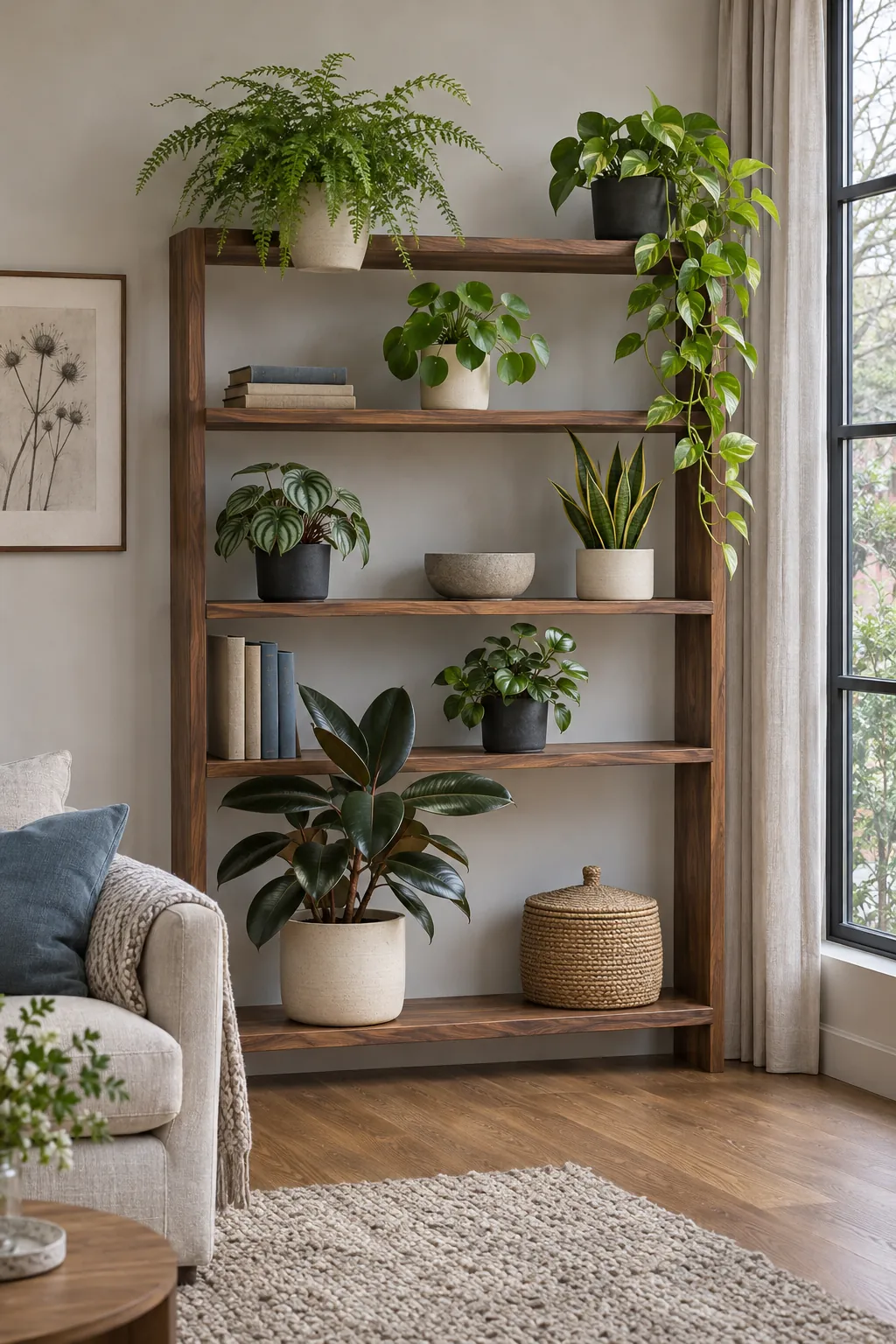
A crowded shelf often starts with good intentions. One new pot fills a gap, another plant joins the row, and soon every leaf competes with a container, book, or tool. A collected display works differently: it gives each plant enough light, care access, and visual space to hold its own shape.
The strongest arrangements do not depend on perfect matching. They use scale, repetition, contrast, and open space to turn useful plant storage into part of the room. Start with the idea that solves your current problem, then edit before you add anything else.
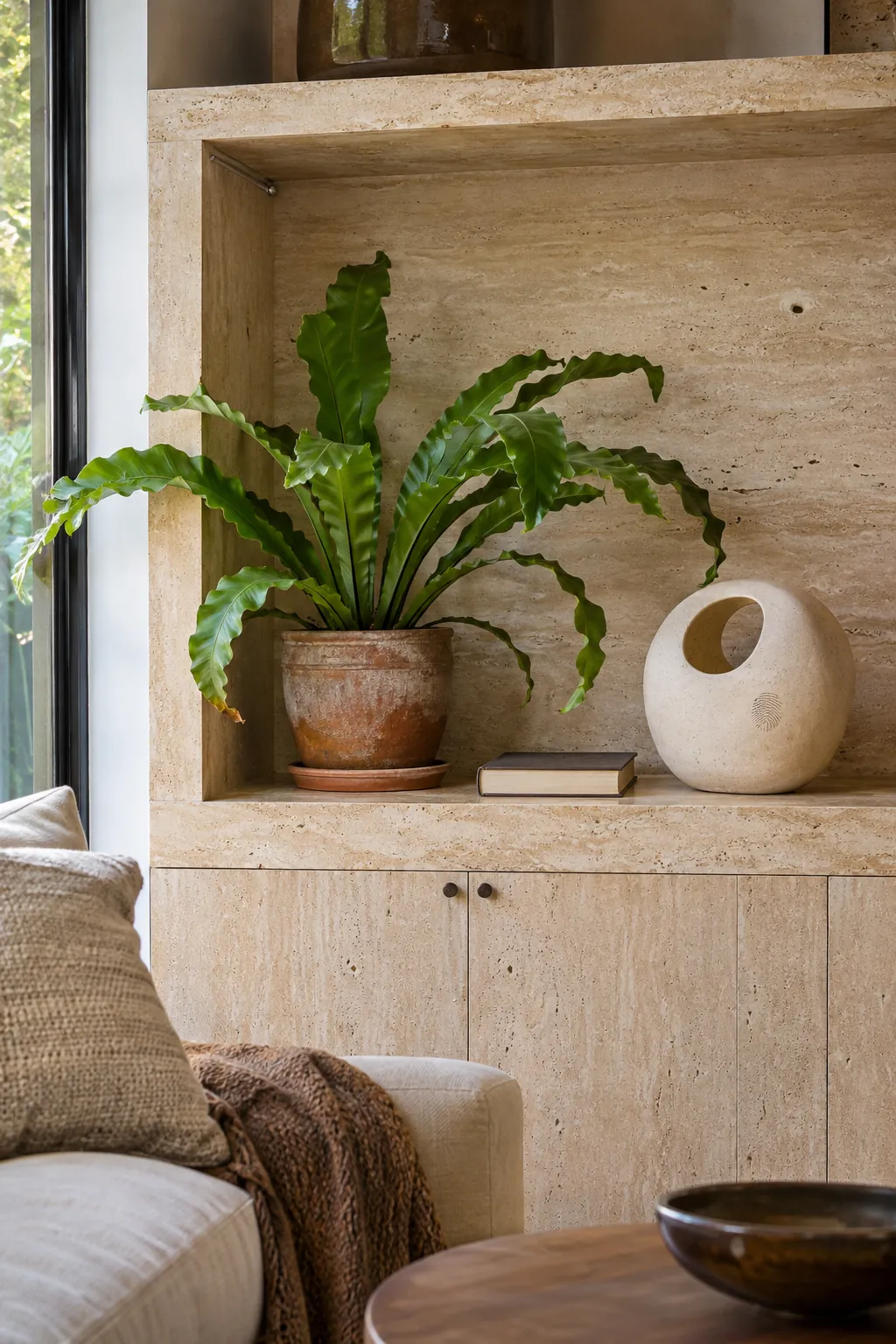
Start With One Large Anchor Plant
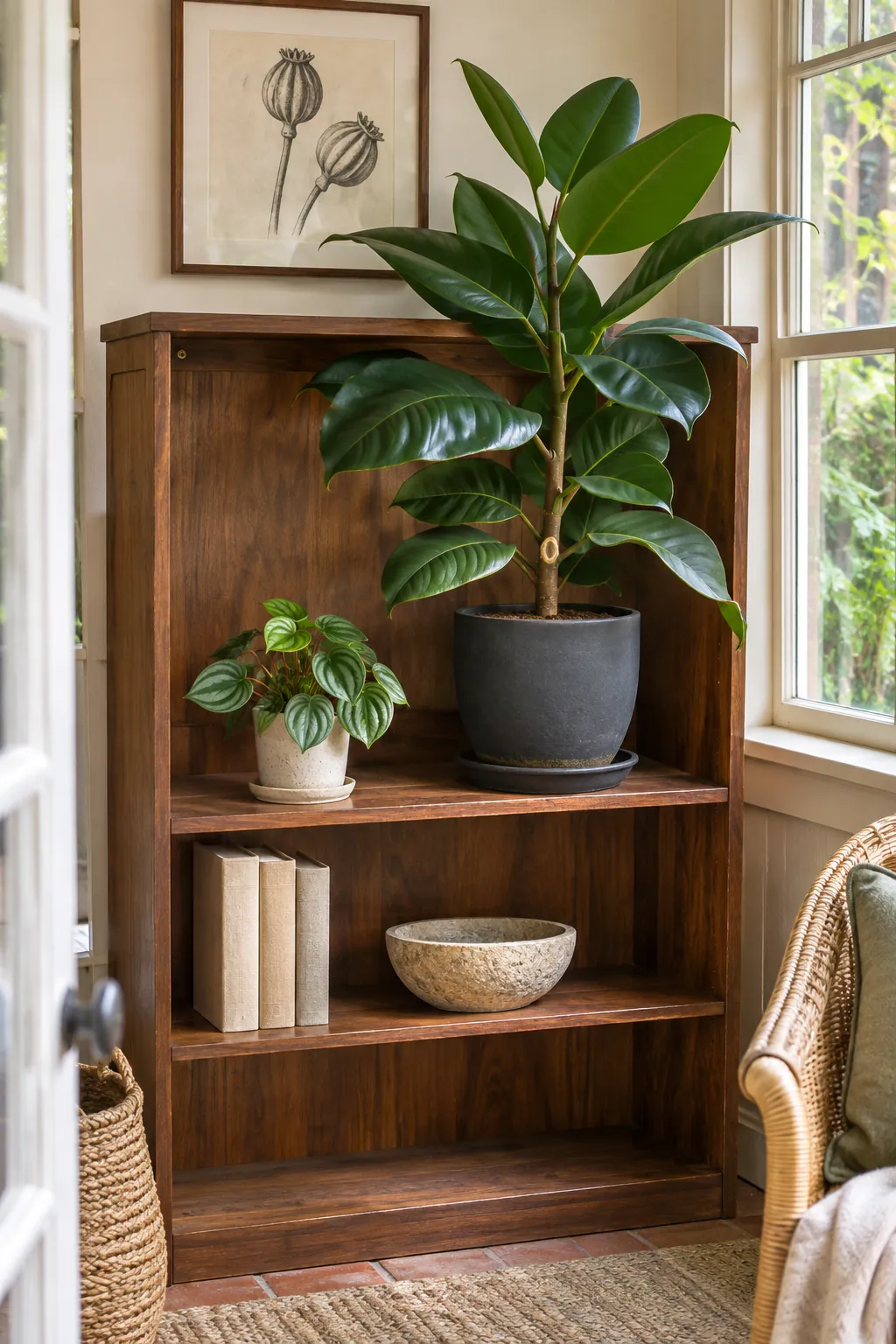
A single substantial plant gives the eye a clear place to begin. Set it off center so the rest of the shelf can balance its mass without becoming symmetrical. Choose a pot that fits the shelf depth and leaves room for watering.
Build Three Clear Height Levels
Use a tall plant, a medium object, and a low pot to create an easy visual rhythm. Keep the height changes obvious so the shelf does not read as a row of similar containers. A broad stable riser can lift the smallest plant without adding fragile clutter.
Repeat One Pot Color Across the Shelves
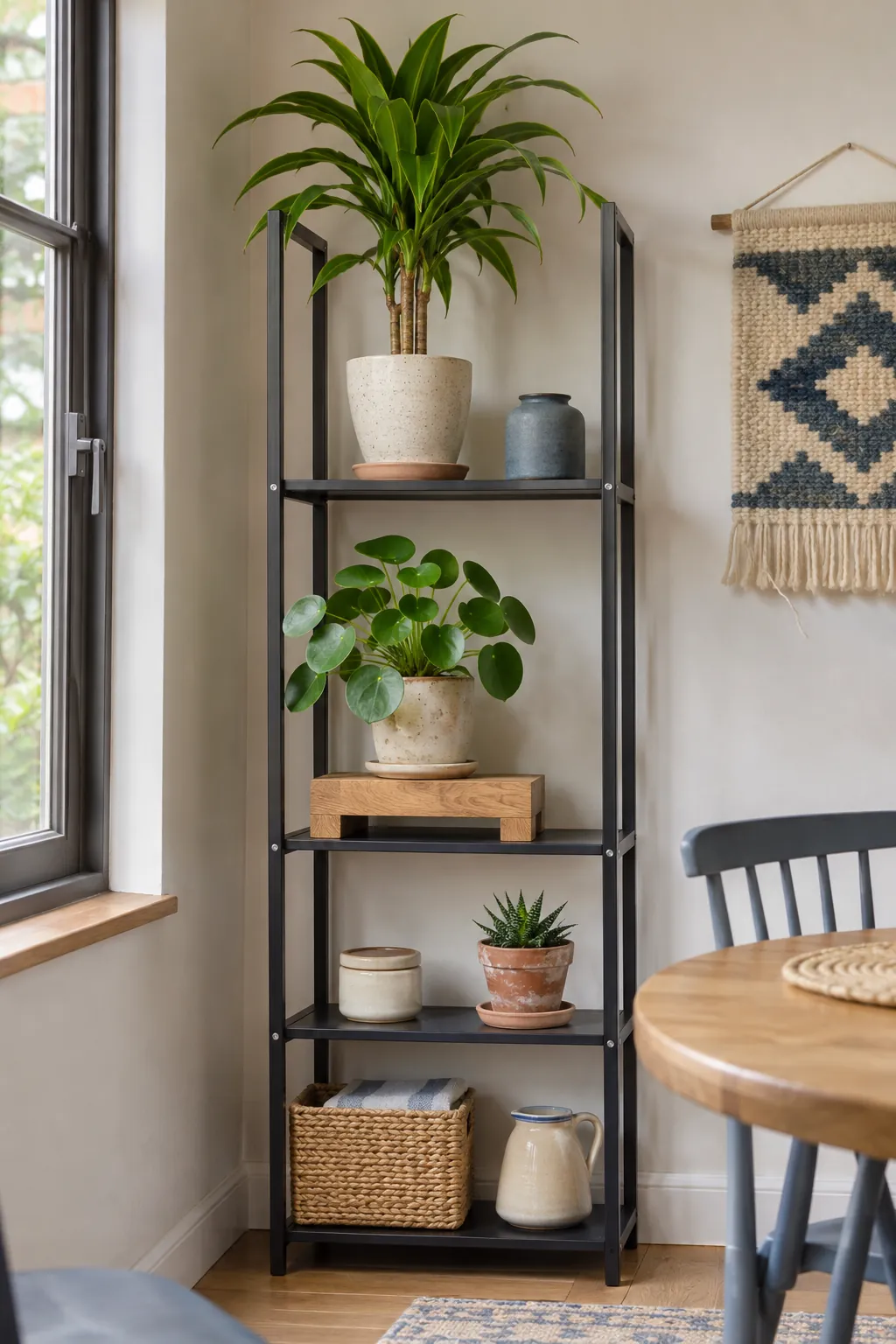
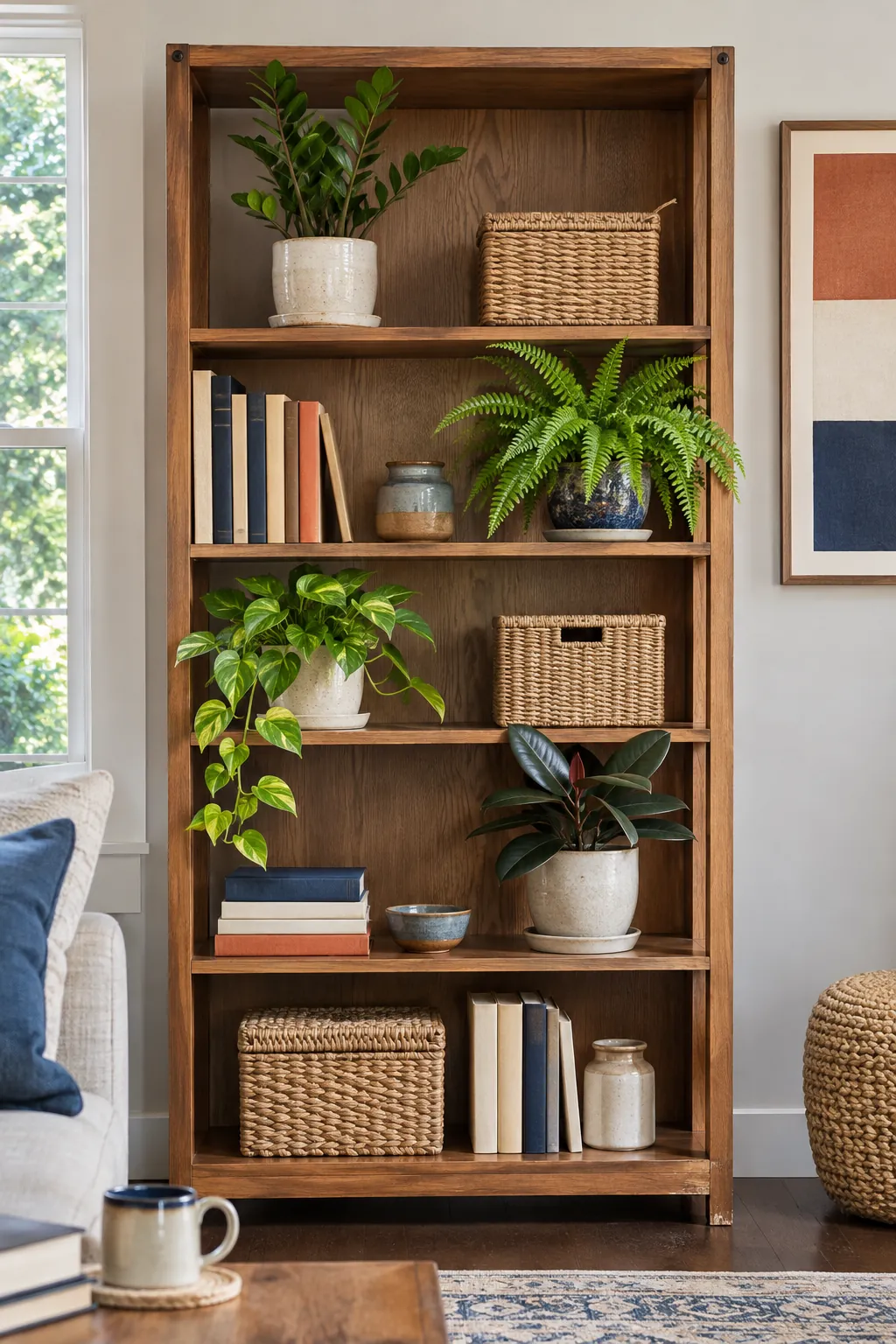
A repeated neutral pot color can connect plants with very different leaf shapes. The containers do not need to match, since varied textures and profiles keep the collection personal. Repeat the color at measured intervals instead of placing every similar pot together.
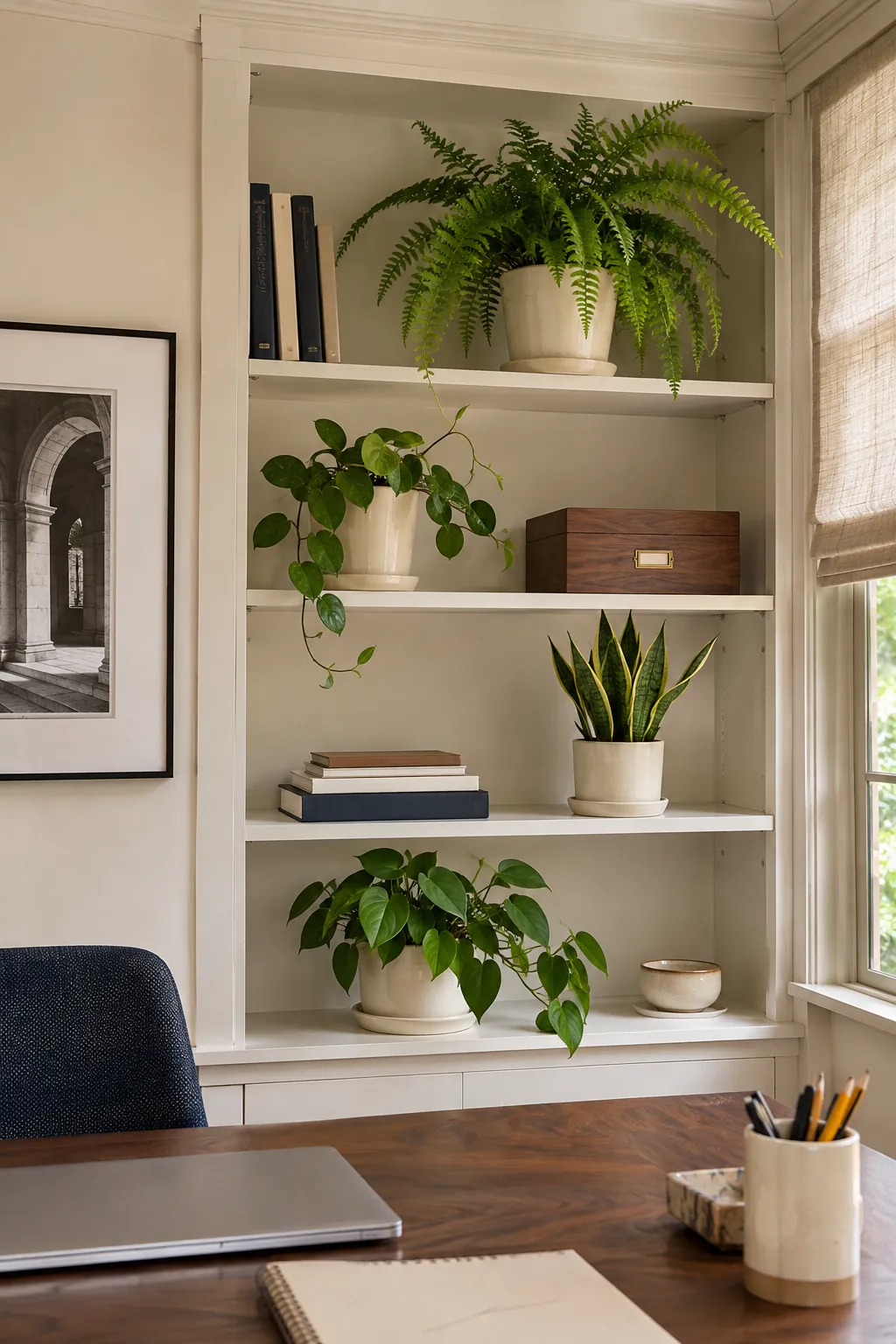
Mix Plants With Books You Actually Read
Books make useful horizontal shapes and prevent a shelf from feeling like plant storage. Keep them away from wet saucers and use only a small stack when it can support a light pot safely. Let visible spines face the room, but avoid packing every open gap.
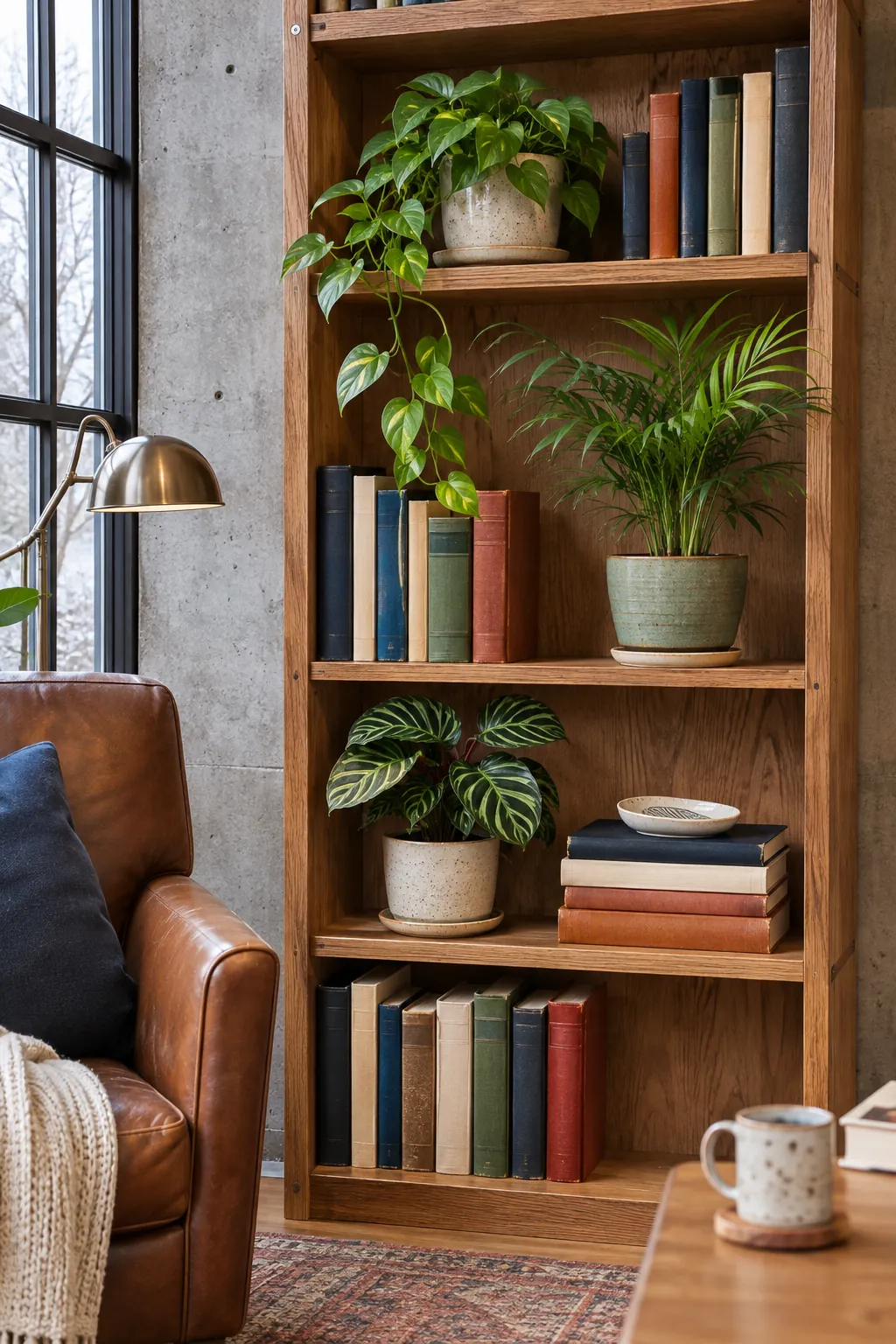
Leave One Open Zone on Every Shelf
Empty space lets individual leaves hold a clear outline. Reserve one generous gap rather than scattering tiny gaps between many objects. The result will still feel abundant because the plants have room to spread visually.
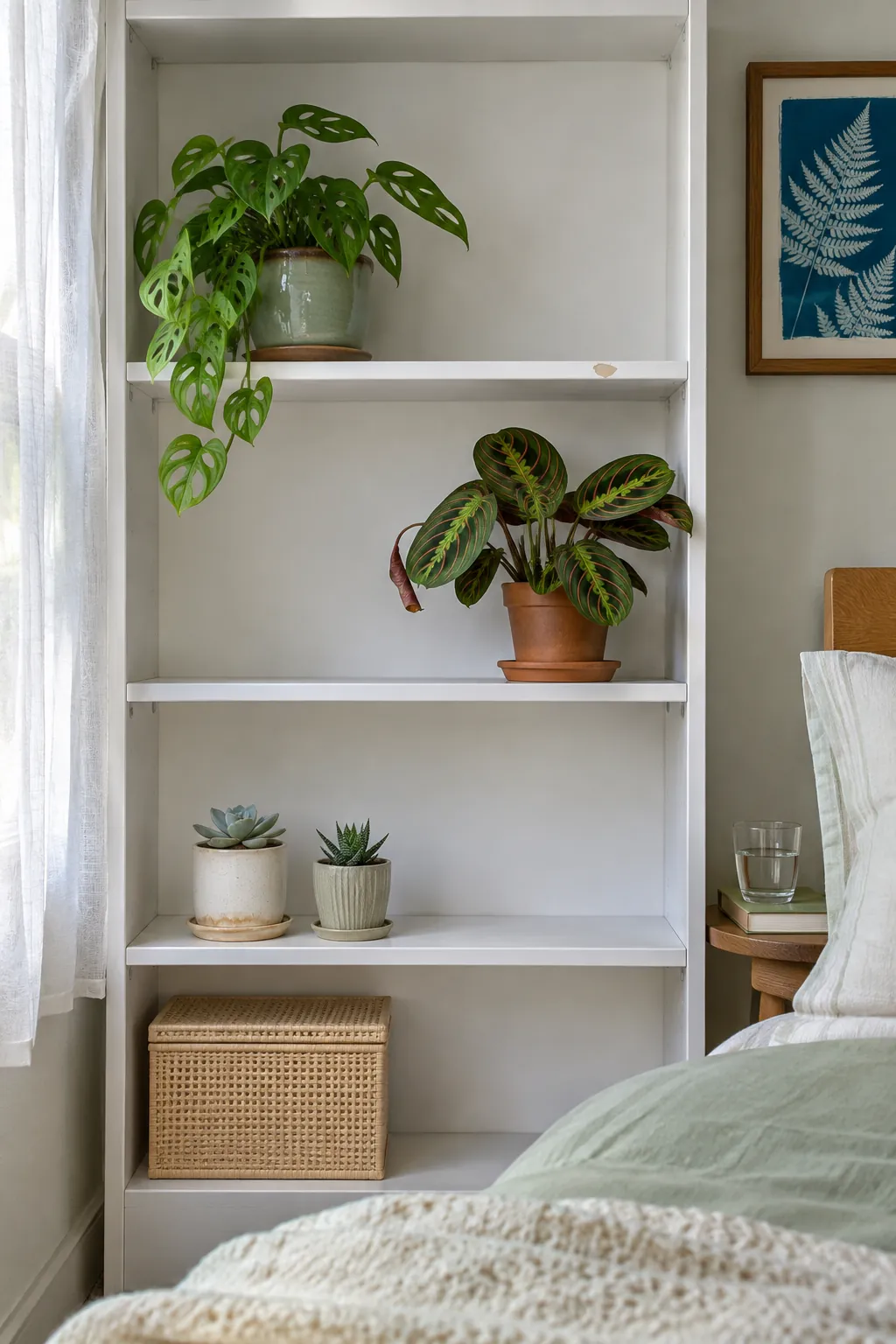
Let One Trailing Plant Fall From the Top
A trailing vine can connect upper and lower levels without filling each shelf. Place it near an outer edge where stems can fall freely and remain easy to trim. Keep the vine clear of doors, lamps, and frequently handled books.
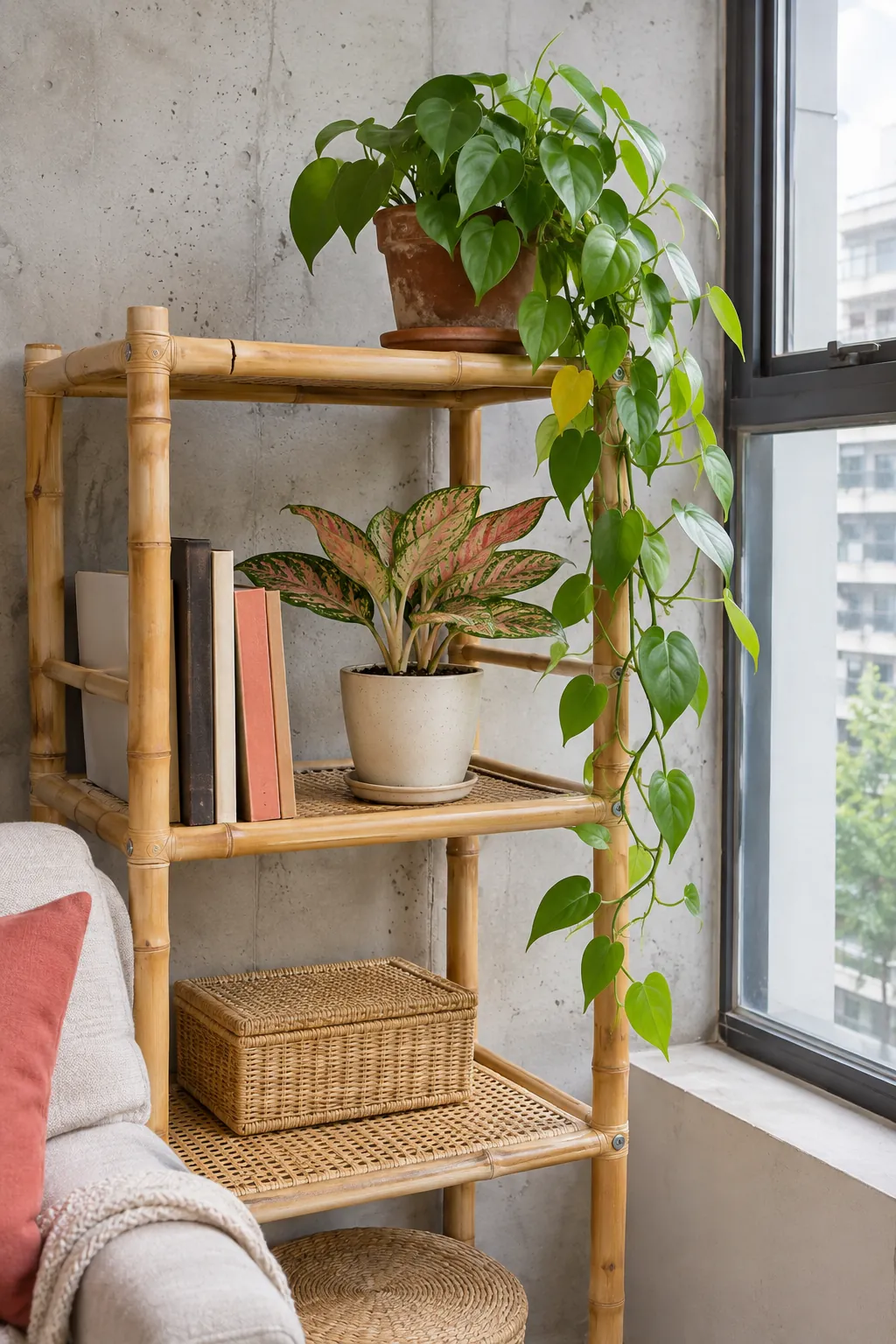
Give Climbers a Compact Support
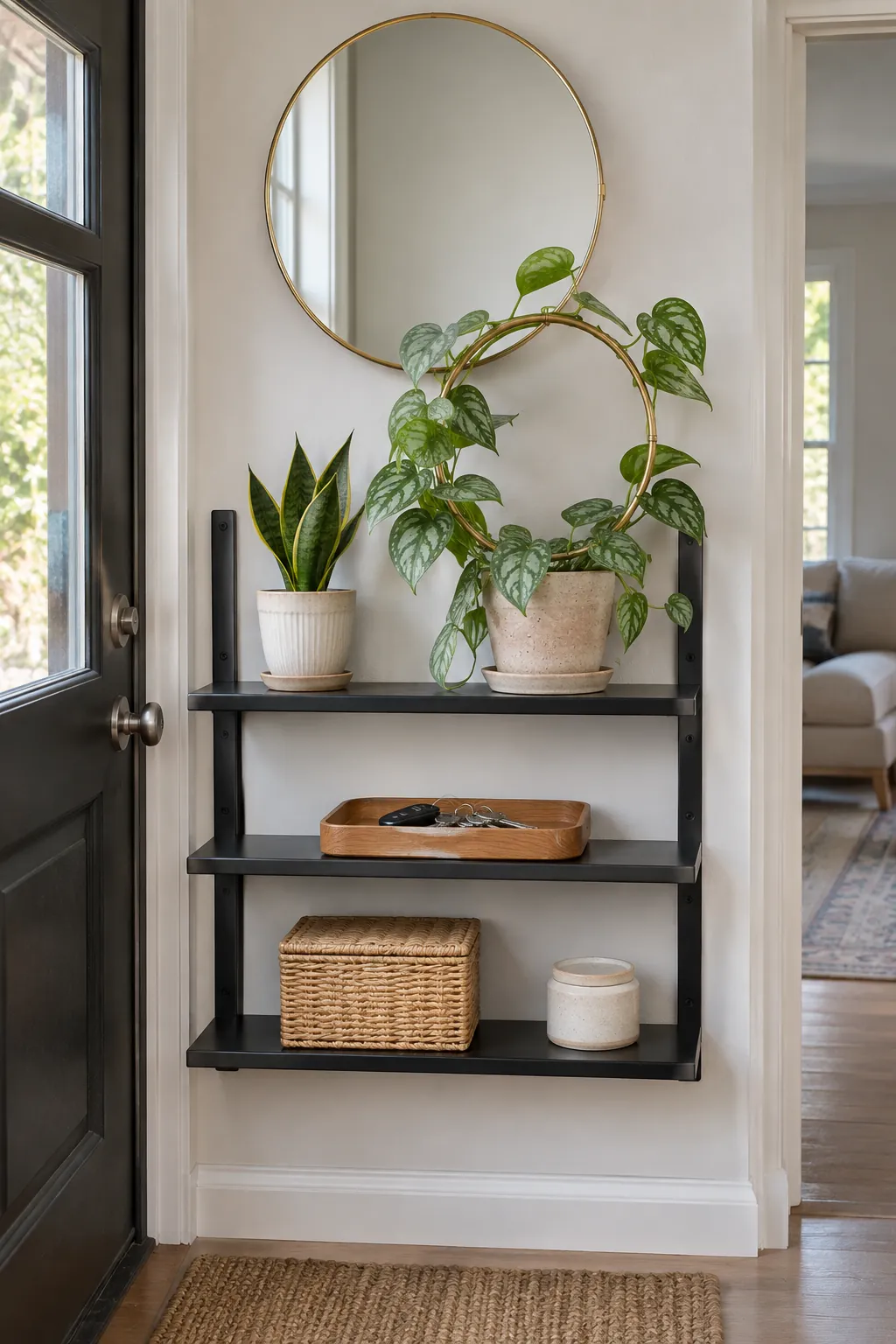
A small hoop or narrow trellis turns a wandering vine into a defined vertical shape. Secure the support inside the pot and guide stems loosely so new growth has room. This approach adds height without allowing vines to cover neighboring plants.
Group Small Pots in an Odd Number
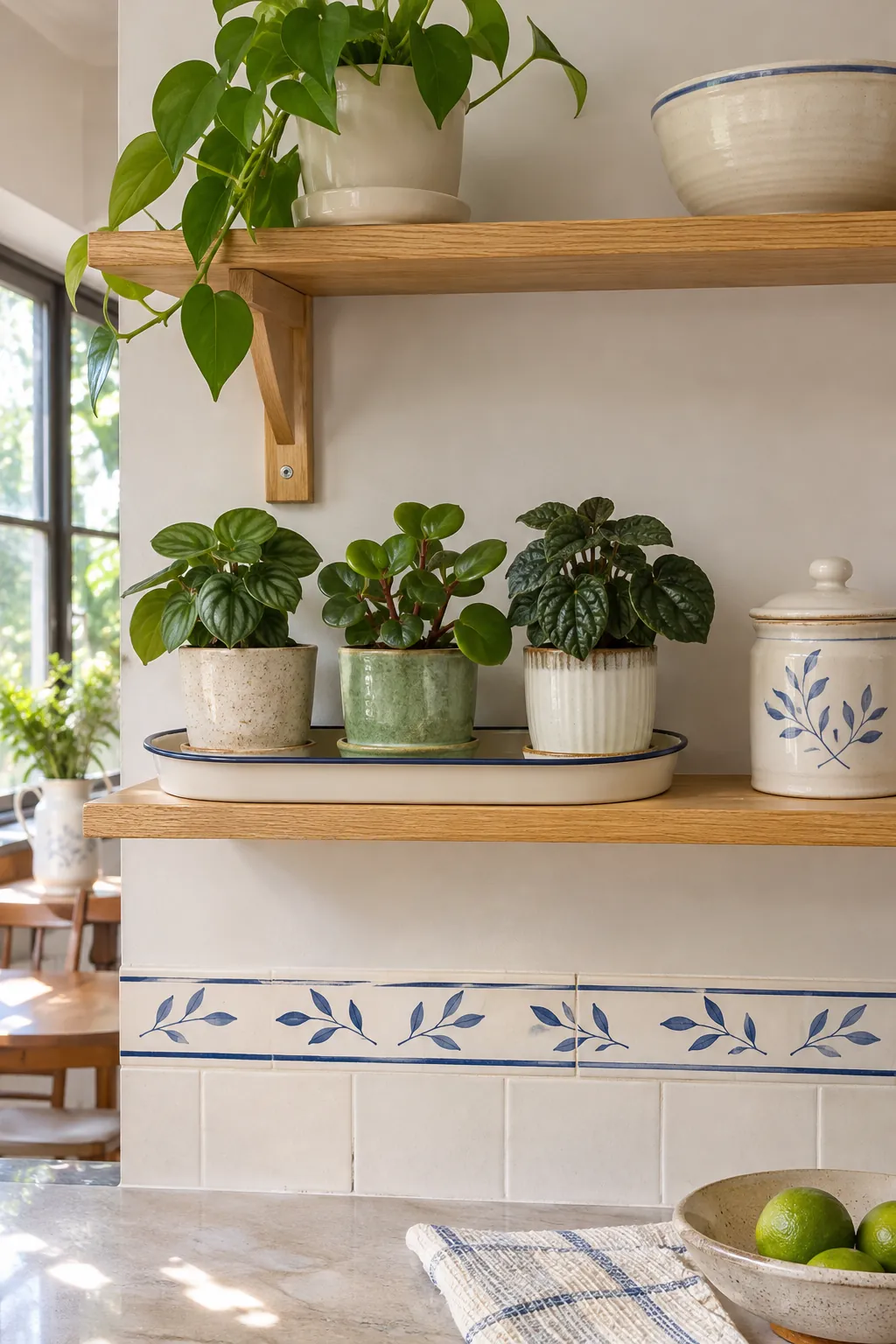
Three small plants often read as one considered group rather than loose pieces. Vary their heights and leaf textures while keeping enough space to lift each pot. A shared tray can unite the group and protect the shelf surface.
Stagger Greenery Across Alternate Shelves
Move plants left and right as the eye travels down the unit. This prevents a heavy vertical column and spreads leaf color through the whole shelf. Keep the largest plants near strong supports and the smallest near eye level.
Contrast Broad Leaves With Fine Foliage
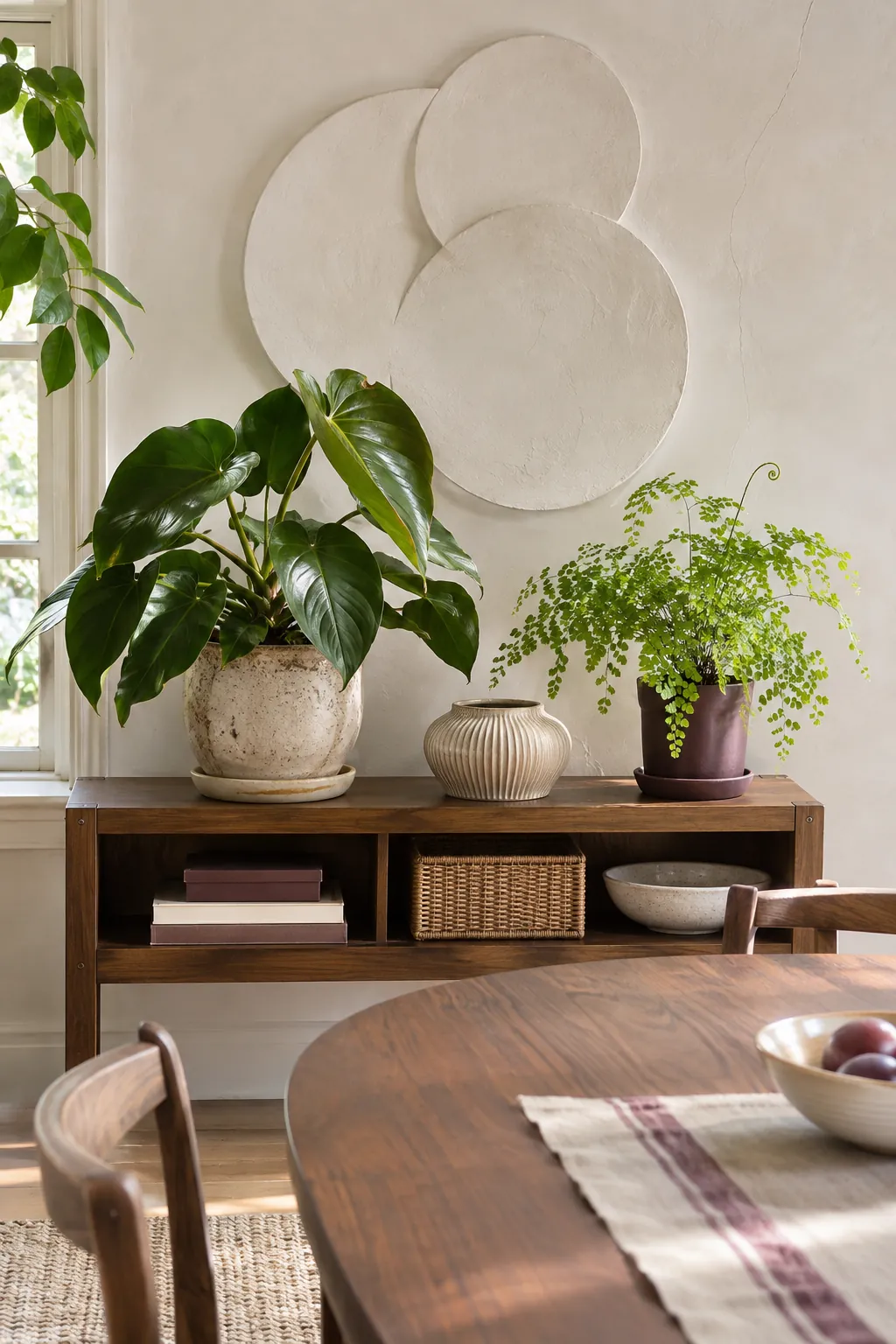
Pair one bold leaf shape with a plant that has delicate fronds or narrow blades. The difference makes both plants easier to see, even when their greens are similar. Give the finer plant a plain background so its outline does not disappear.
Arrange Plants by Their Real Light Needs
Good styling cannot compensate for the wrong light. Place bright light plants on the exposed side and shade tolerant plants where a shelf casts more cover. Check how the sun changes through the day before the arrangement becomes permanent.
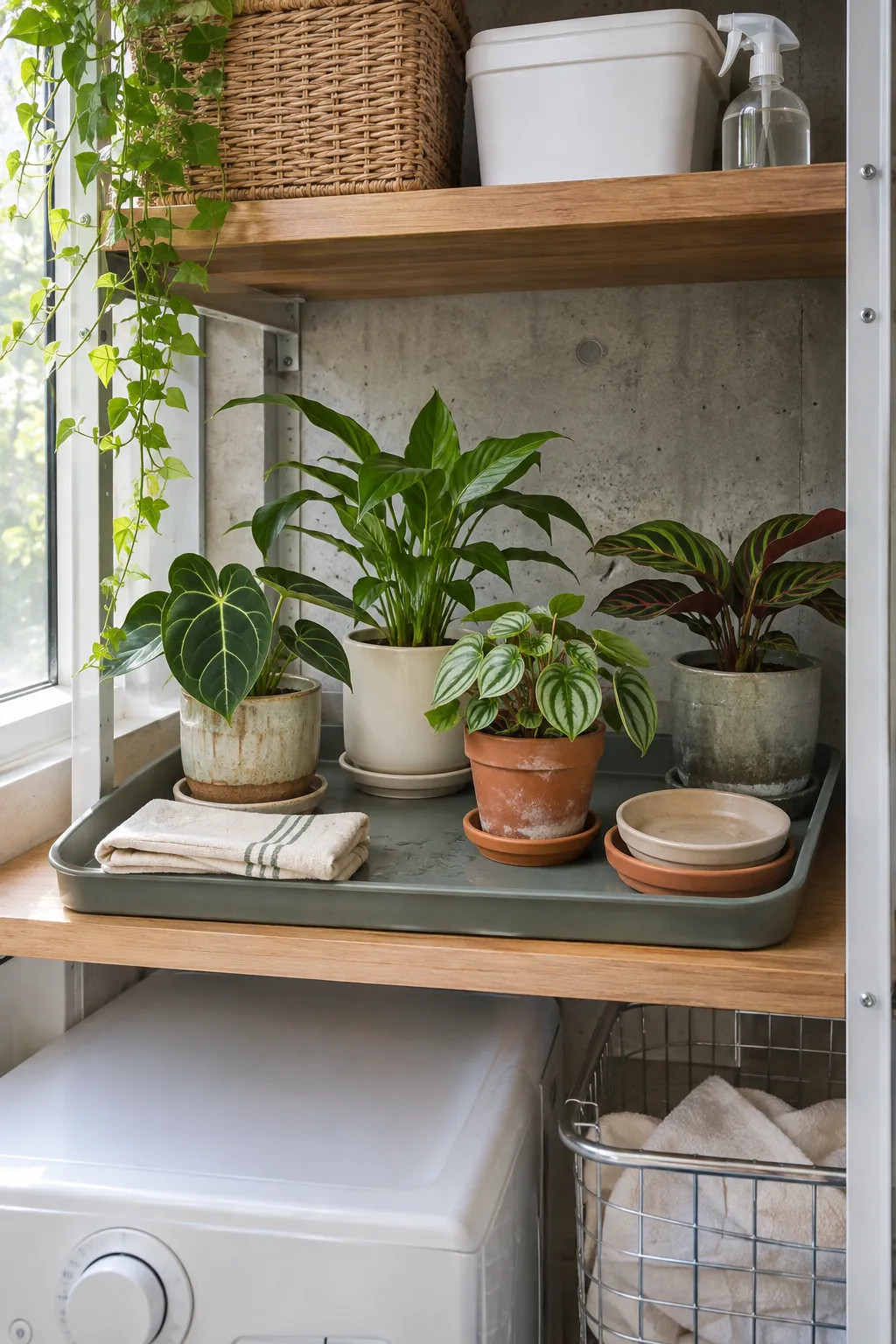
Use One Tray to Contain Care Clutter
A shallow waterproof tray creates a clean boundary around several pots. It catches minor drips and makes small containers easier to move for cleaning. Choose a tray with visible space around every saucer rather than forcing pots together.
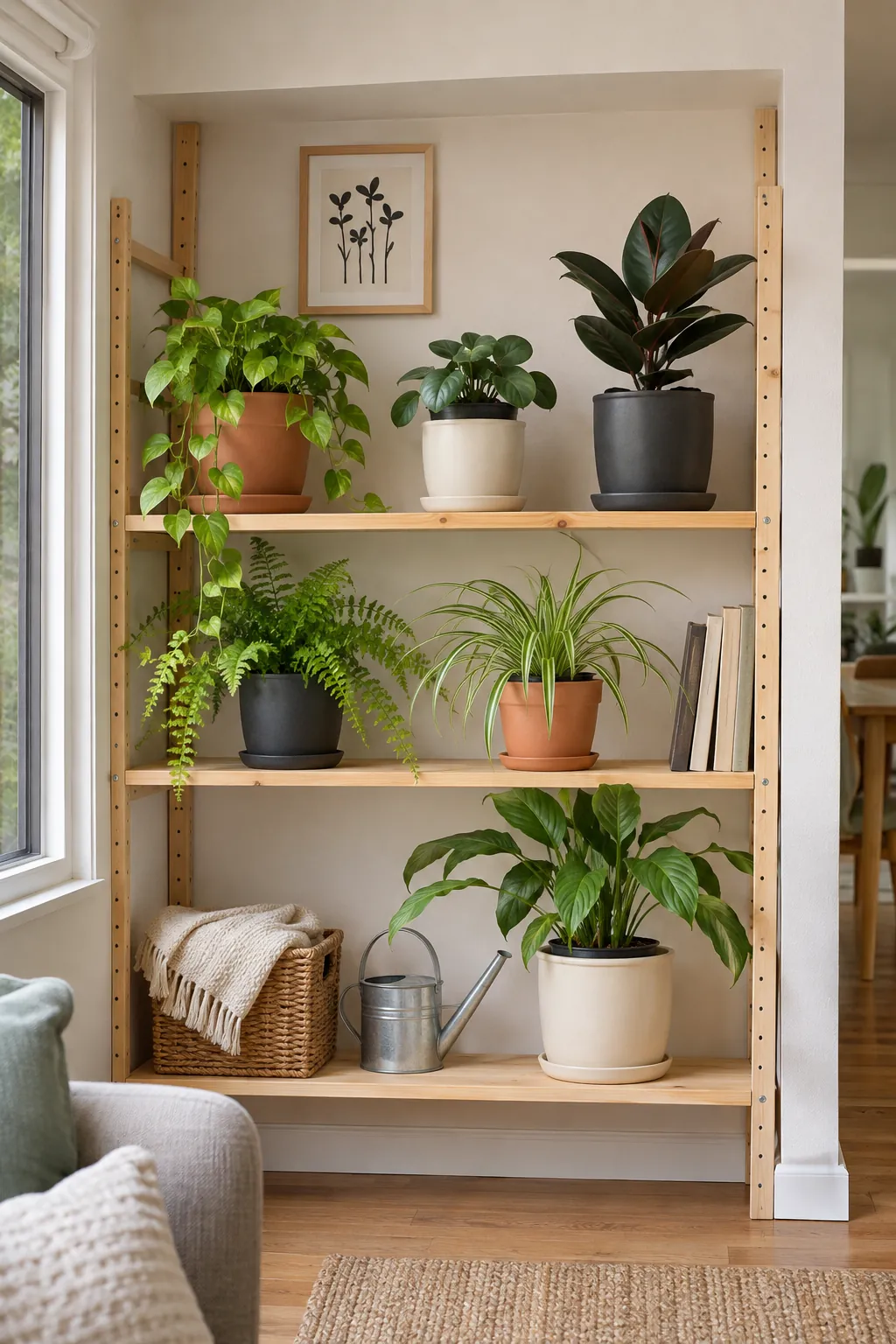
Slip Nursery Pots Into Coordinated Covers
Keeping plants in nursery pots can make watering and repotting easier. Place each one inside a stable cover pot with enough room to remove it without pulling foliage. A restrained mix of clay, cream, and charcoal covers creates unity without perfect matching.
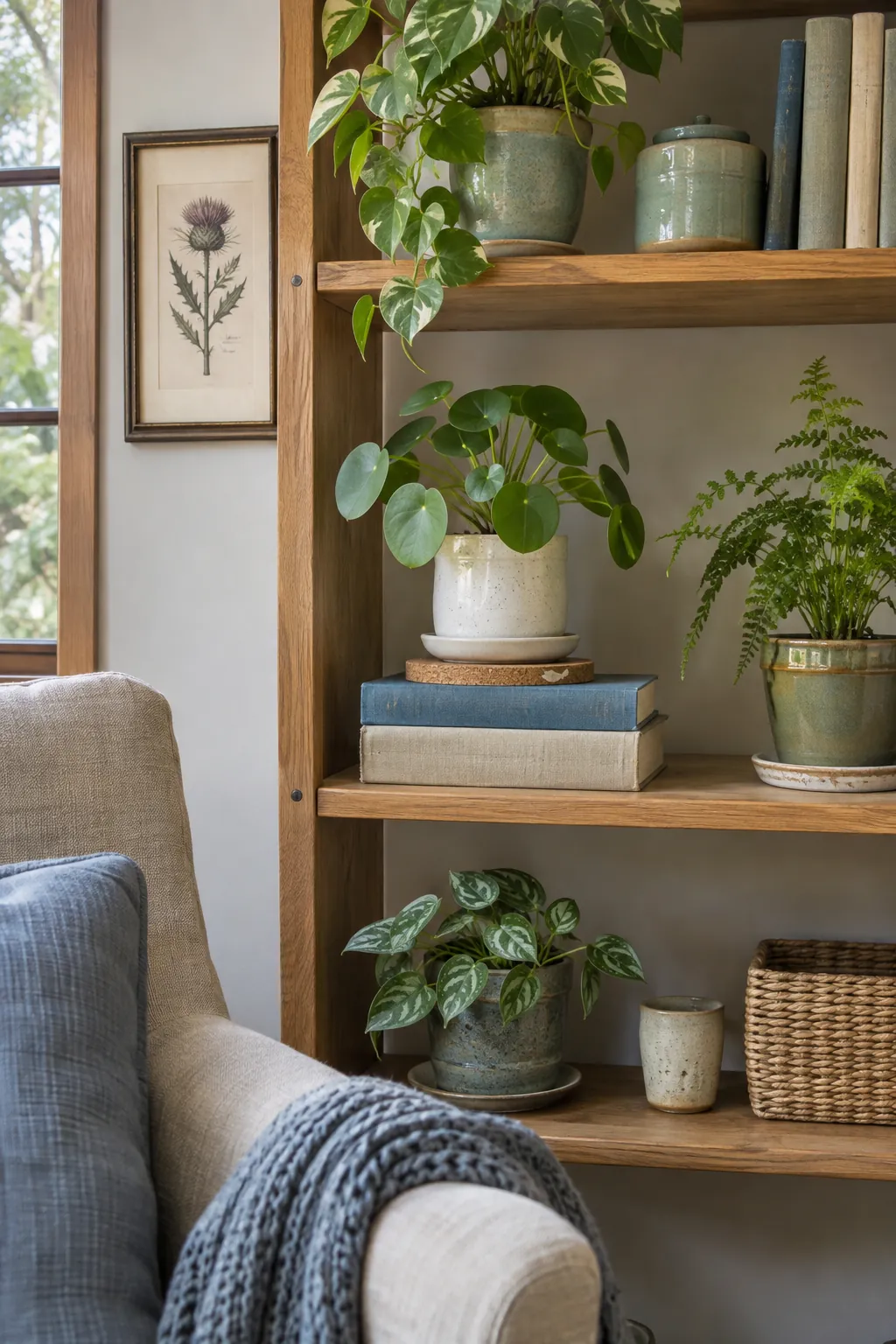
Turn a Book Stack Into a Low Riser
Two sturdy books can raise a small plant when the pot and saucer are light and dry underneath. Protect the covers with a rigid coaster and keep the stack away from active watering. Use this method as one accent, not beneath every pot.
Add One Sculptural Object for Contrast
A single object in stone, wood, or ceramic can give foliage a quiet counterpoint. Choose a simple form with enough visual weight to stand beside leaves. One object is usually stronger than a collection of unrelated ornaments.
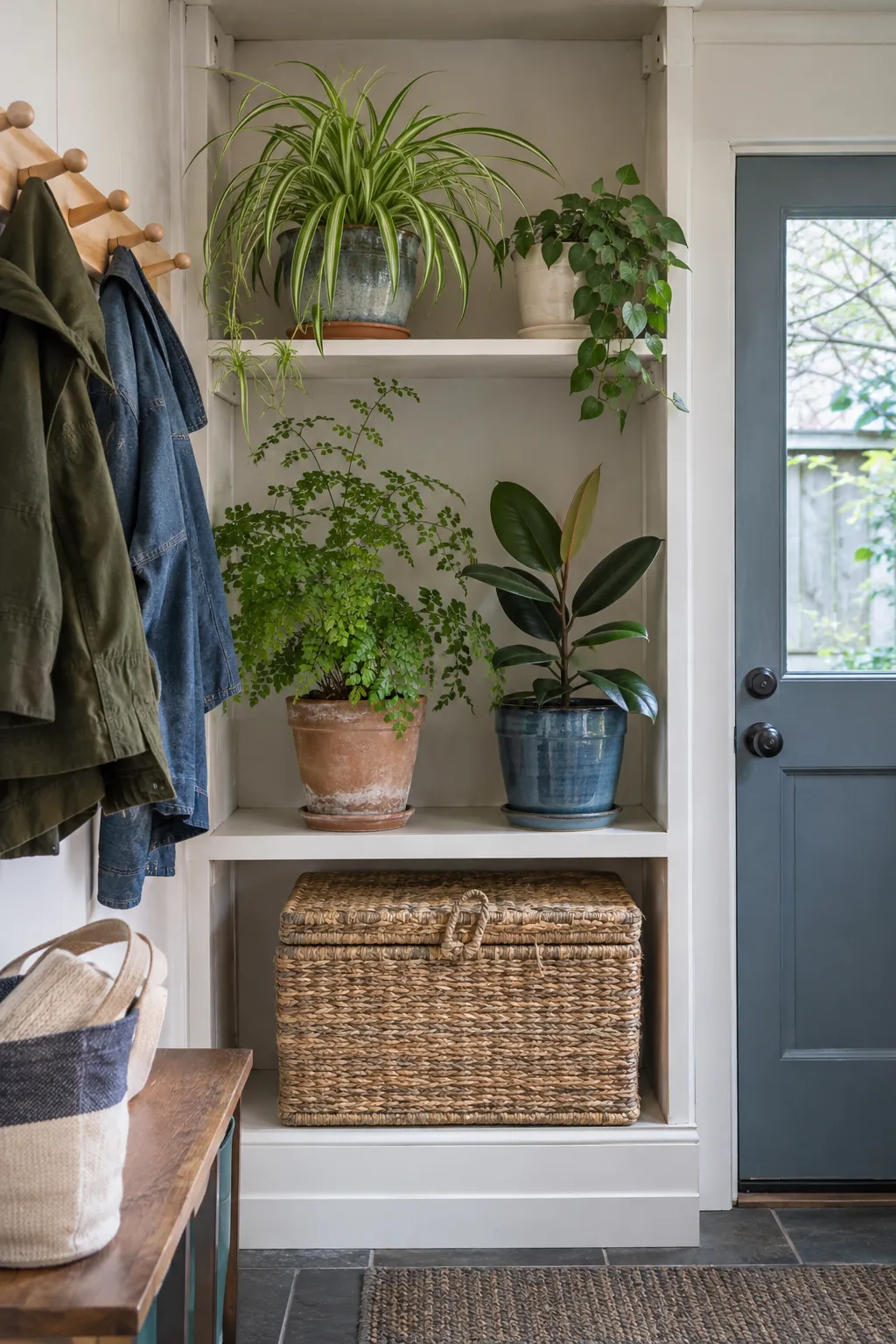
Store Tools in One Lidded Basket
A lidded basket can hold pruners, ties, cloths, and a moisture tool without leaving care supplies scattered. Place it on a lower shelf that can carry the weight and is easy to reach. The basket should fit fully inside the shelf depth.
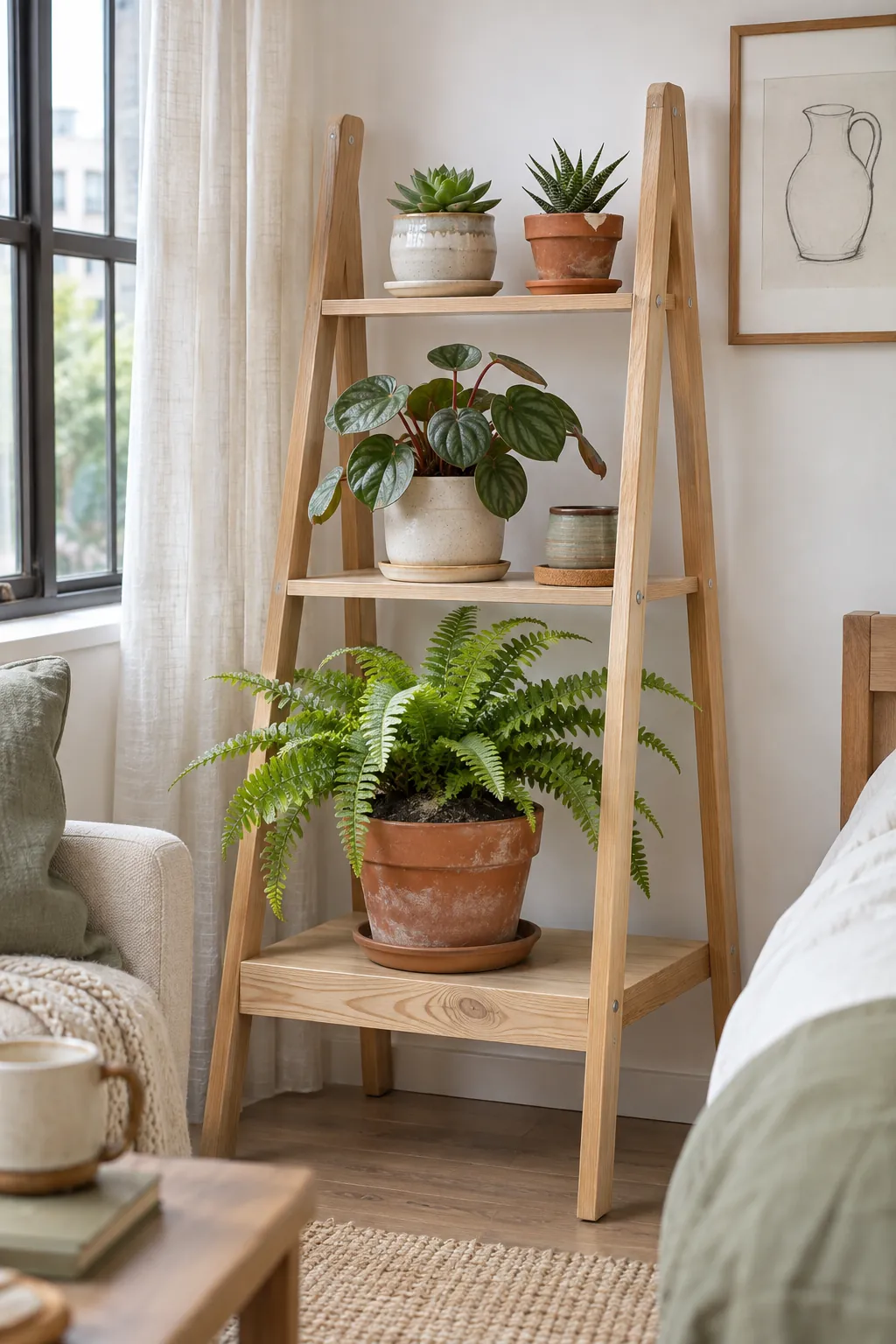
Use a Ladder Shelf for a Light Silhouette
A ladder shelf naturally gives plants less depth near the top and more support below. Reserve upper steps for compact light pots and lower steps for heavier foliage. Leave the sides open so the structure still feels airy.
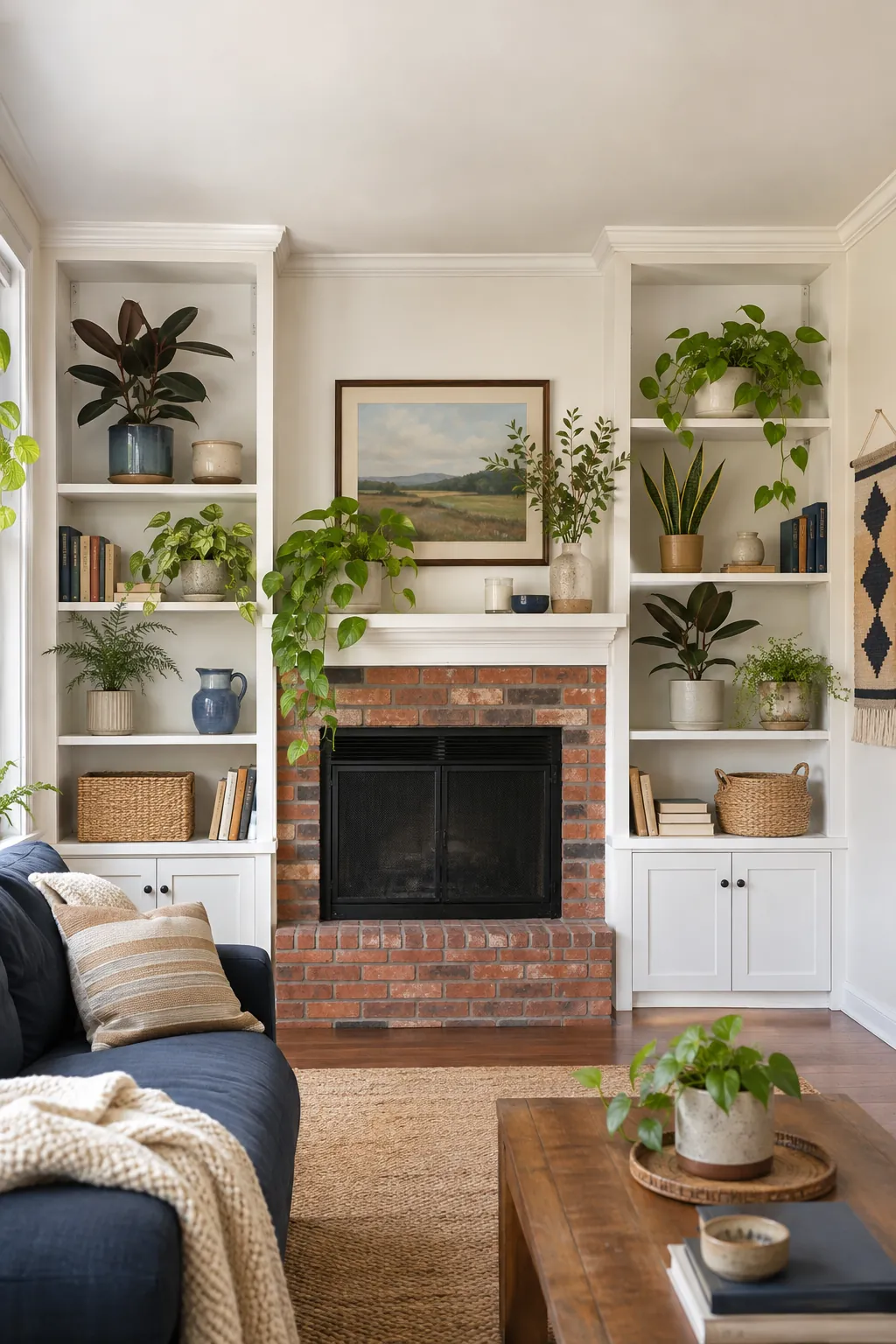
Balance Built In Shelves Without Mirroring Them
Treat two sides of a built in as related rather than identical. Repeat one color or leaf type across both sides, then vary the plant sizes and book stacks. This creates connection while avoiding a rigid paired display.
Keep a Floating Shelf Simple
A floating shelf looks best when its load feels light and secure. Use two or three compact plants with clear wall space around them. Confirm the fixings and weight limit before adding wet pots or stone containers.
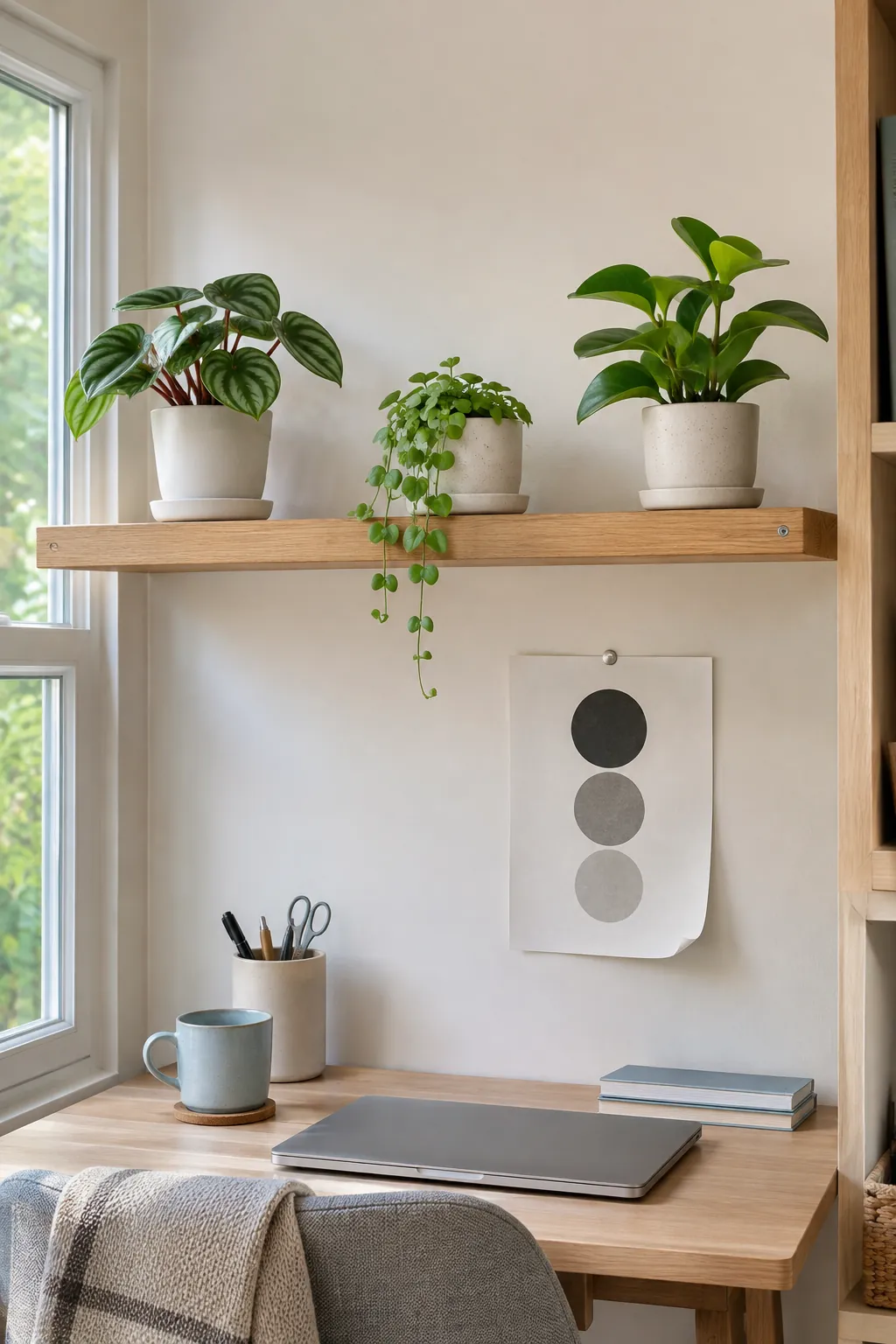
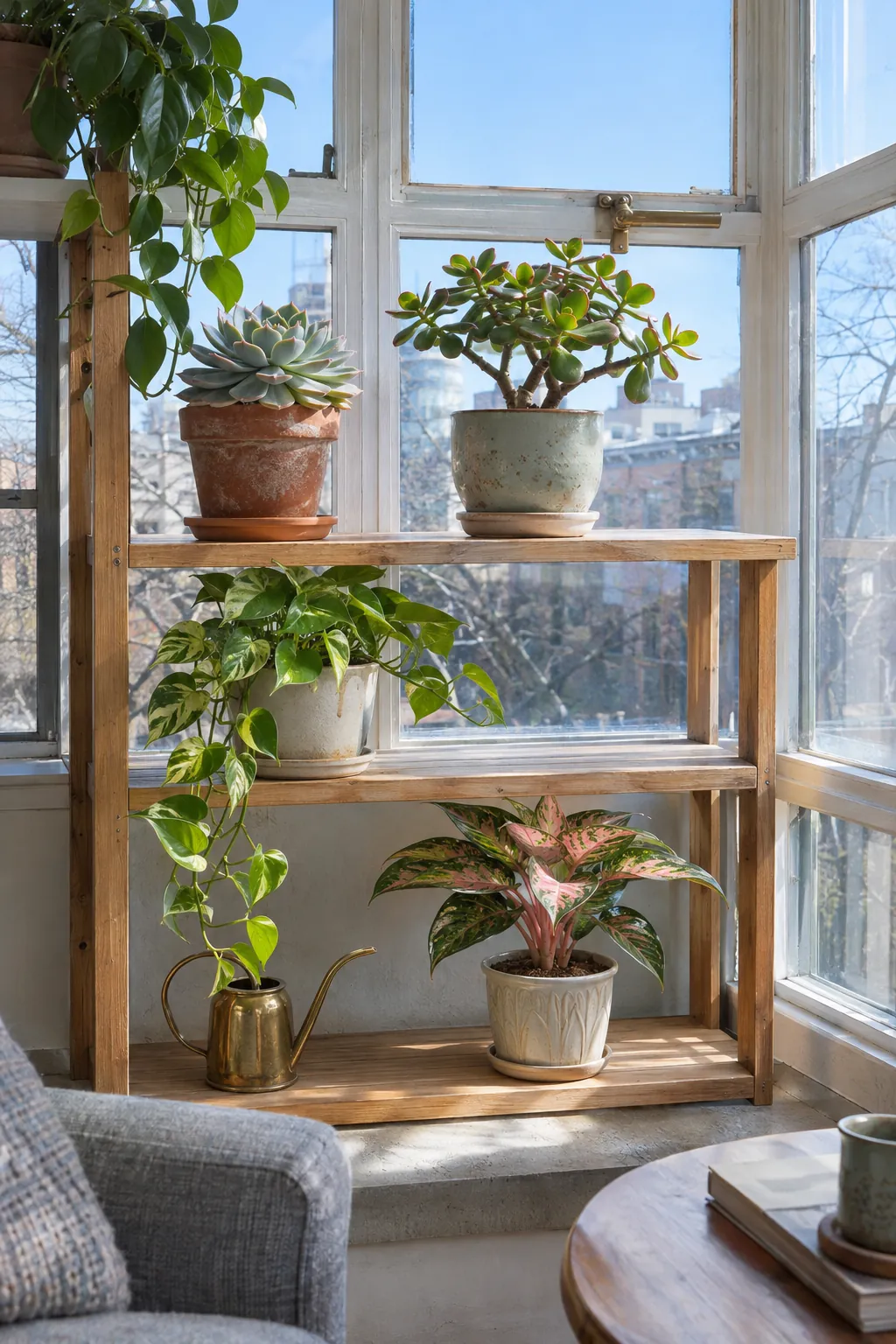
Create a Clear Window Shelf
A shelf in front of a window can expand growing space without blocking all daylight. Use narrow clear or pale supports and keep plant heights varied below the latch. Leave enough room to clean glass and operate the window safely.
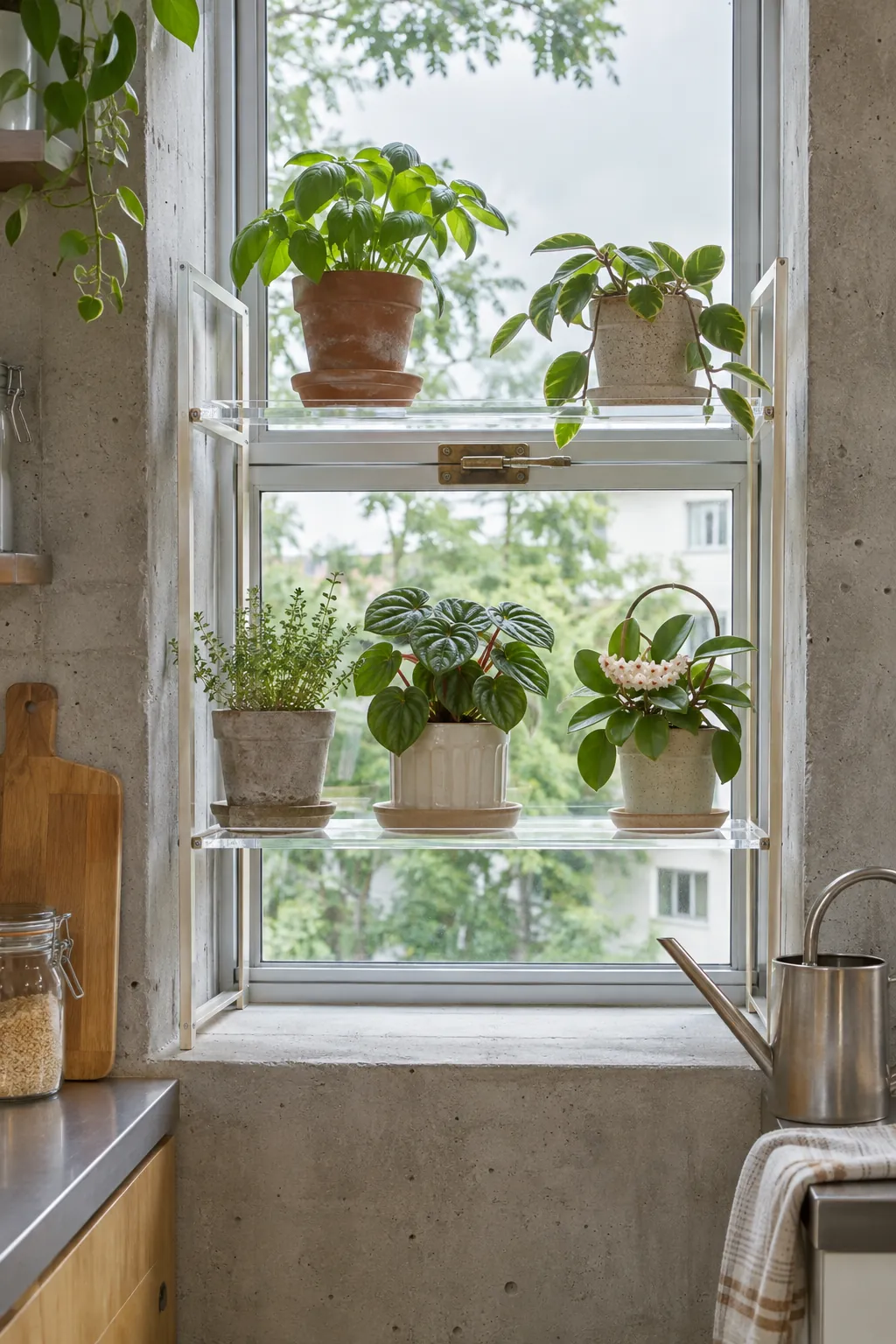
Integrate Slim Grow Lights
A slim light bar can support plants on a shelf that sits beyond useful daylight. Mount it above the foliage, route cables along the rear upright, and use a timer. Keep water trays below electrical parts and preserve a dark period each day.
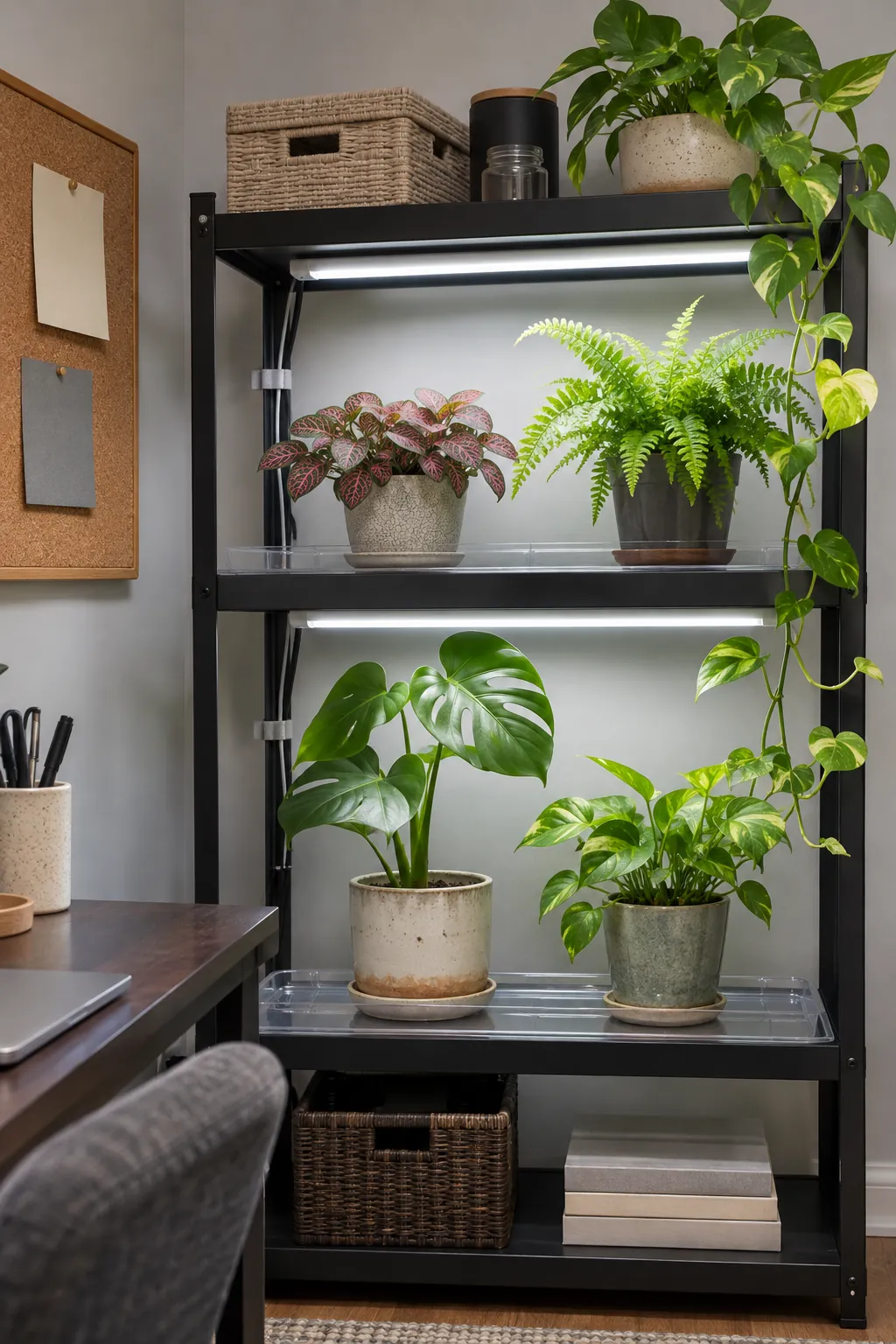
Trim Trailing Vines Into Deliberate Lines
Long vines look calmer when their route has a clear beginning and end. Remove weak growth, turn stems toward open space, and use discreet clips only where needed. Keep enough length for natural movement without letting foliage swallow the shelf.
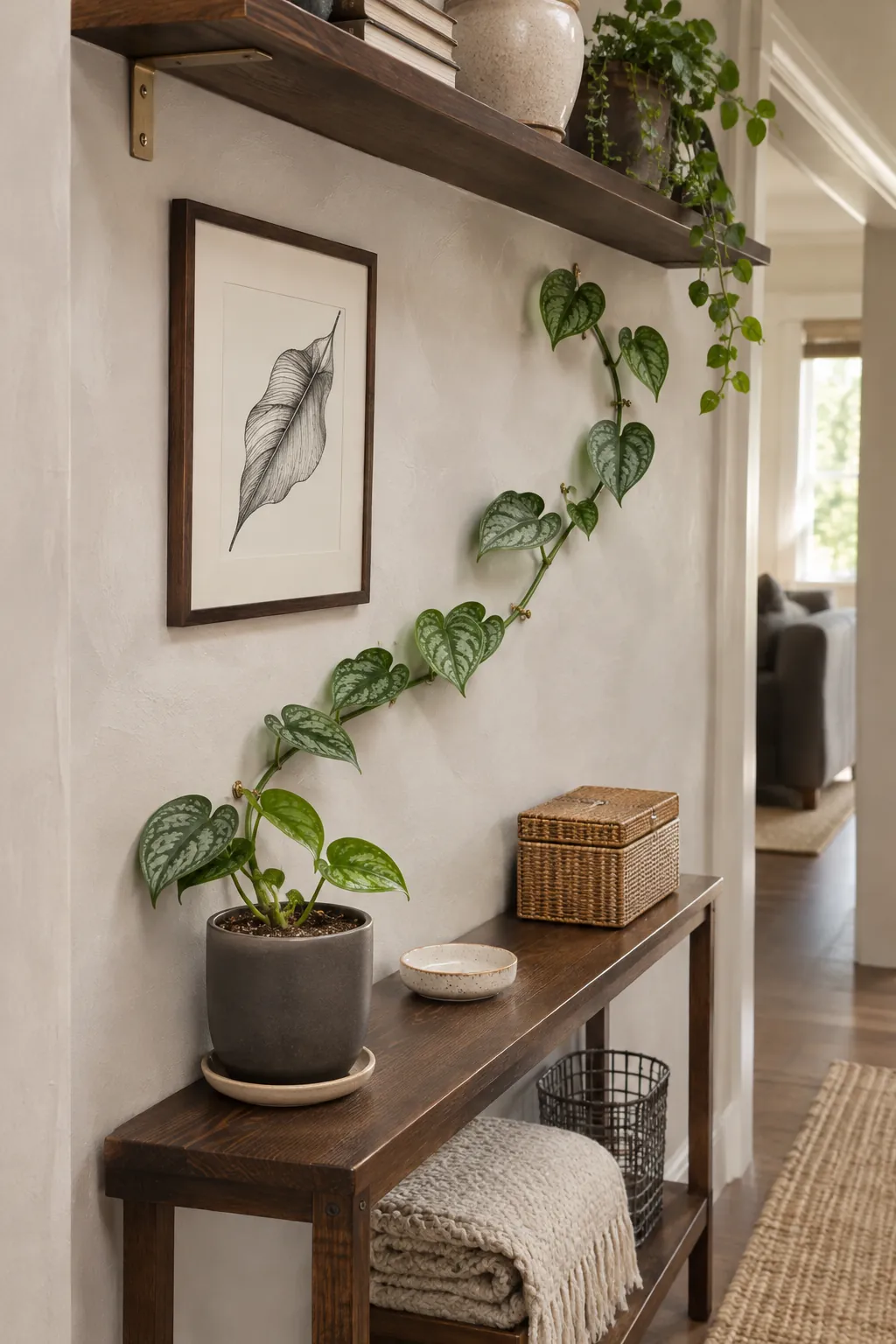
Use a Glass Cabinet as One Dense Zone
A glass cabinet can hold humidity loving plants in one contained display. Vary pot heights and keep the door, vents, and fan clear. The frame gives a dense collection visual order while allowing close inspection.
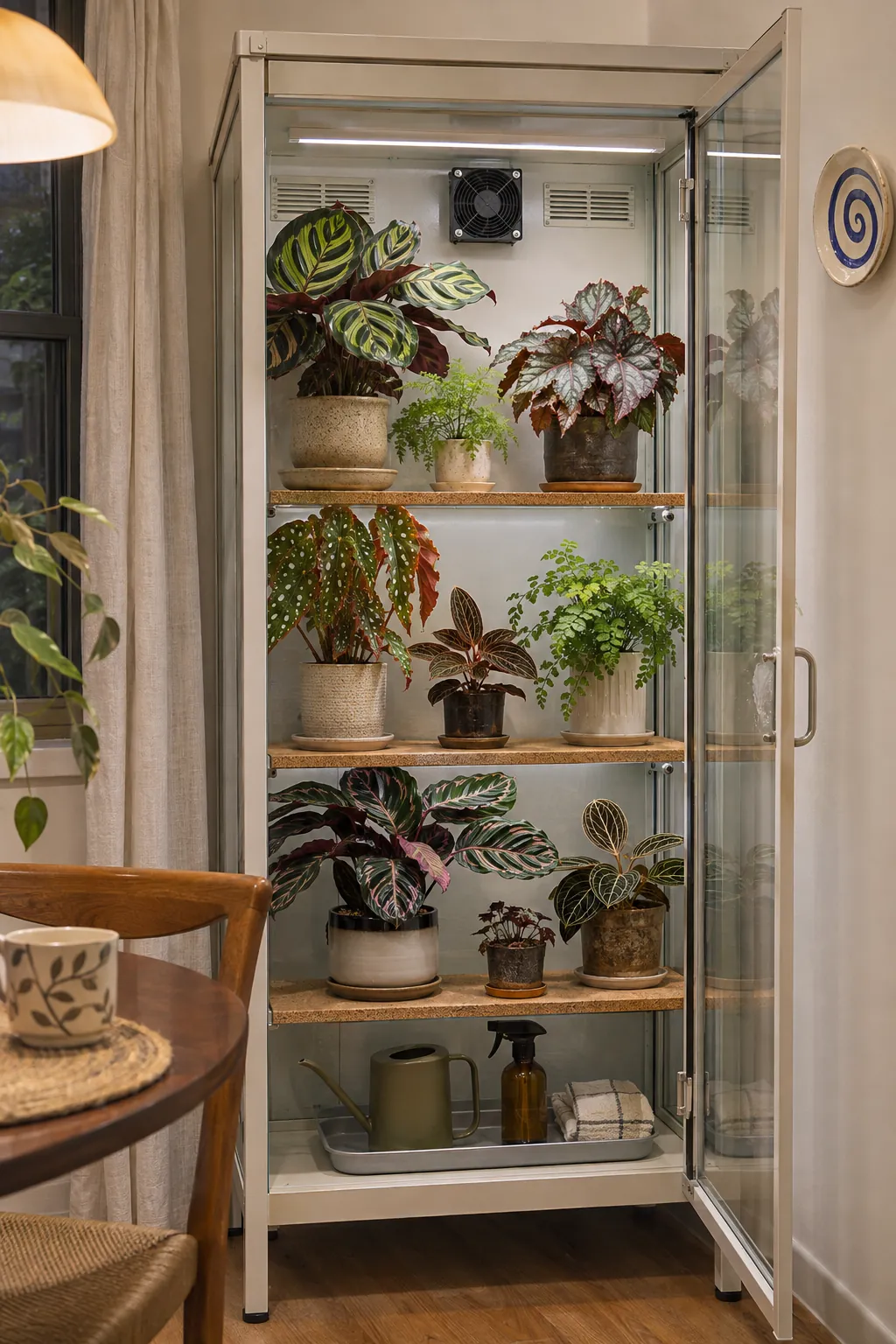
Change One Seasonal Accent at a Time
A small seasonal change can refresh the shelf without rebuilding it. Swap one pot cover, textile, or natural object while leaving plant positions that suit their light. Restrained changes protect both the visual balance and the plants.
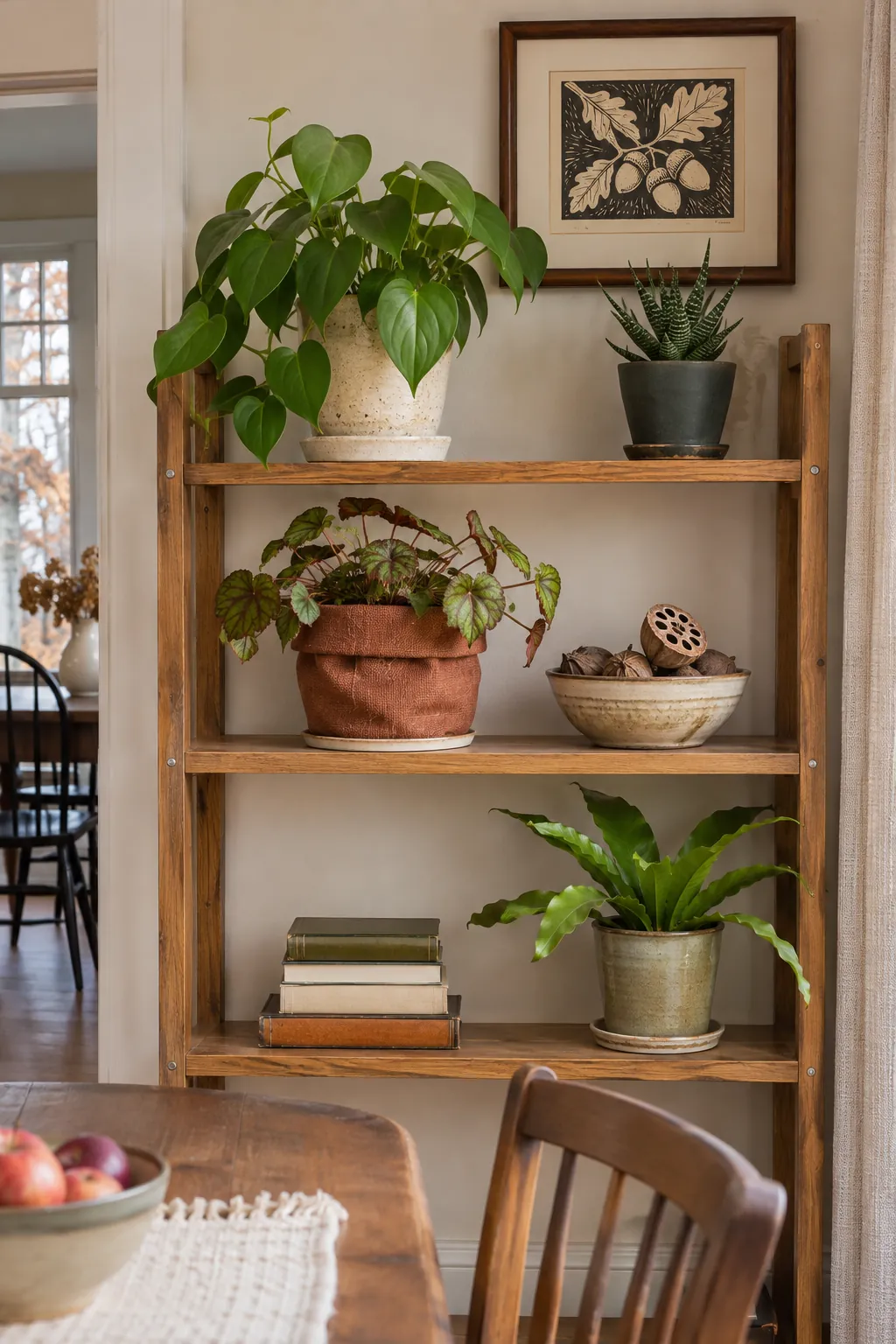
Edit the Shelf Once a Month
Regular editing keeps a collected display from becoming crowded. Remove empty covers, dead leaves, unused tools, and objects that no longer support the arrangement. Finish by checking light, airflow, watering access, and safe shelf weight.