
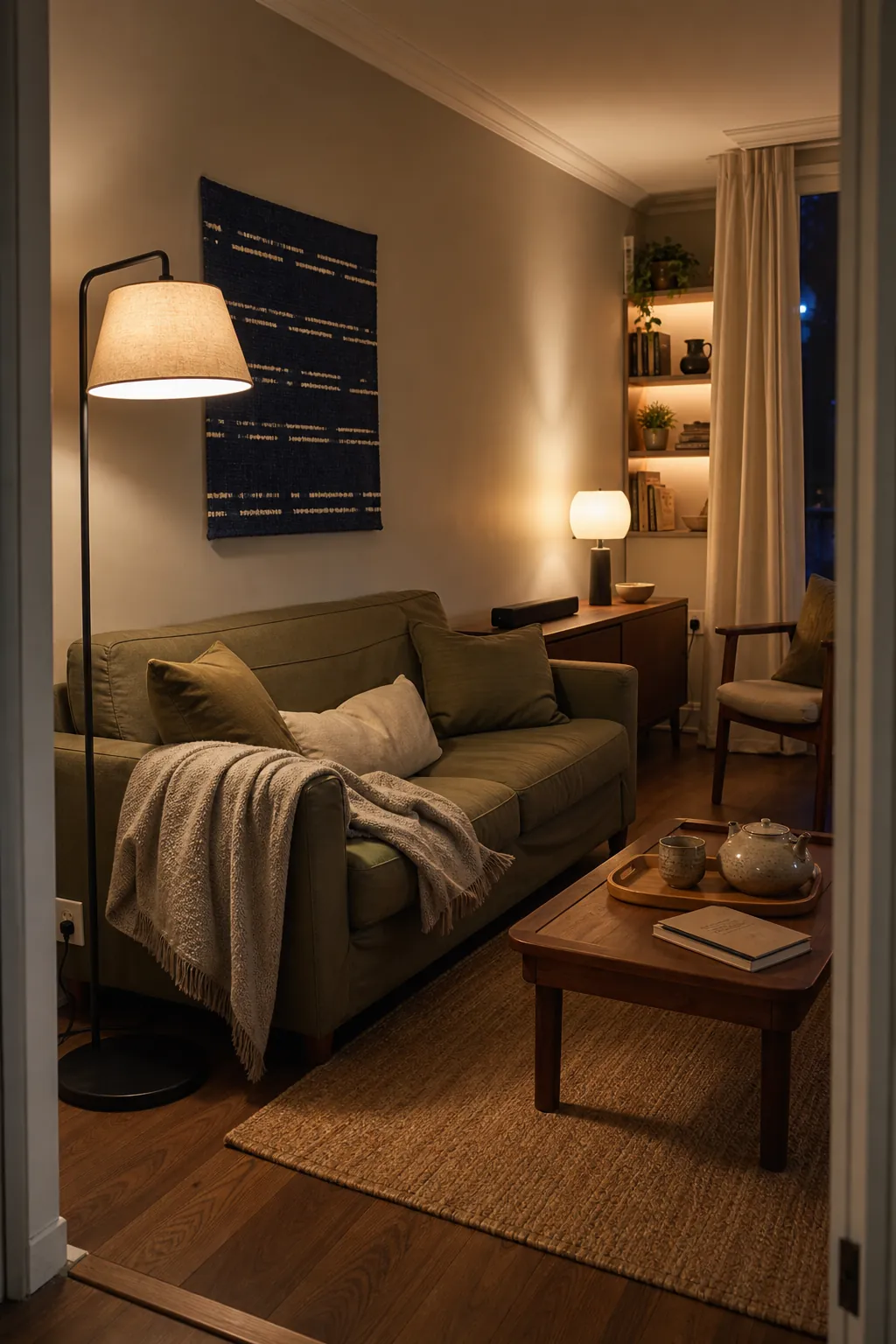
A small living room rarely needs more brightness everywhere. It needs light in the right places: beside the sofa for reading, across a wall for depth, near the floor for calm, and overhead only when the whole room must be visible. Several modest pools of light usually feel larger and more comfortable than one glaring center fixture.
These small living room lighting ideas solve common constraints raised by renters and compact-home owners: limited outlets, no spare floor space, television glare, exposed cords, and fixtures that make the room feel cluttered. Start with the activity you actually do after dark, then add one background layer so the room does not end at the sofa.
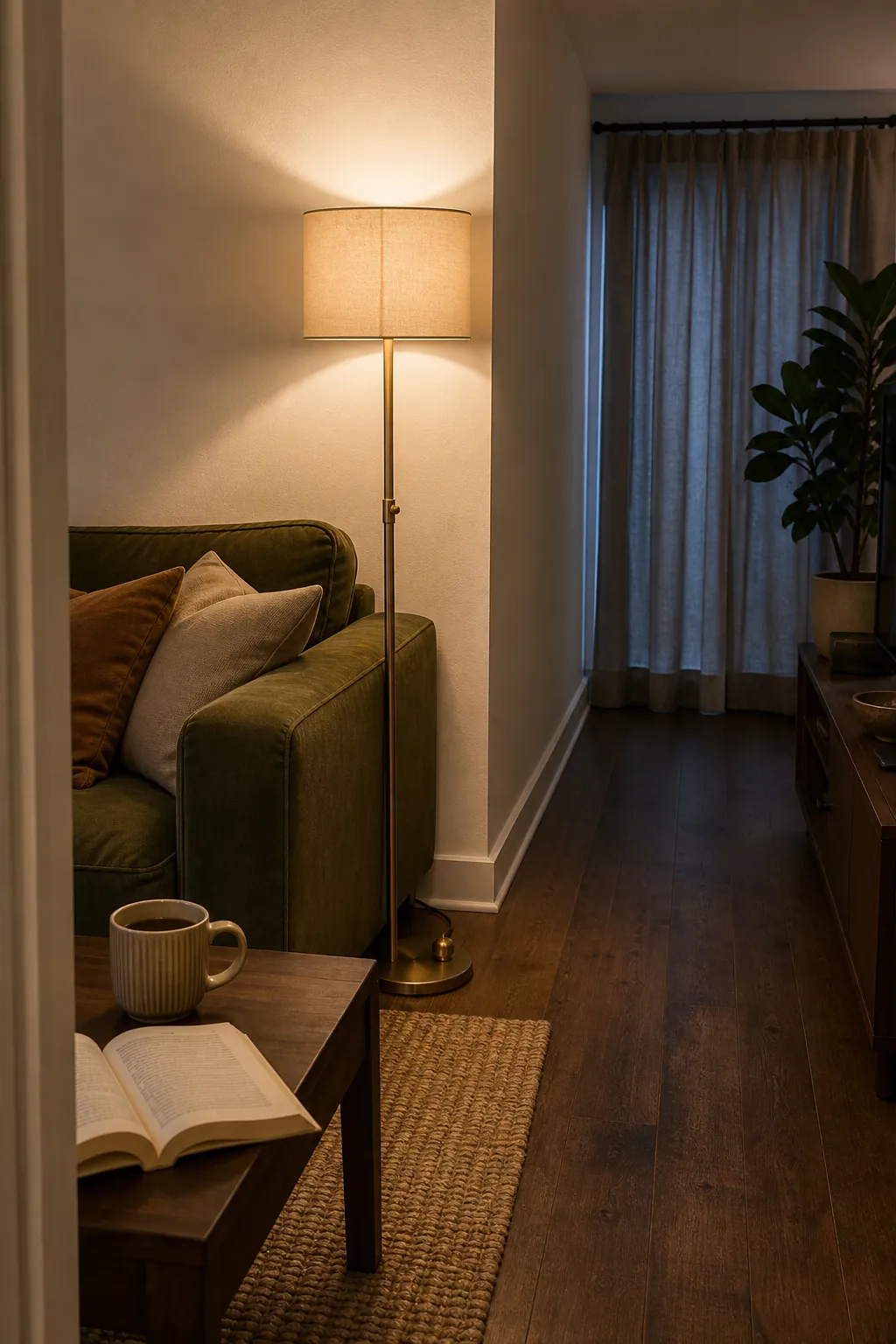
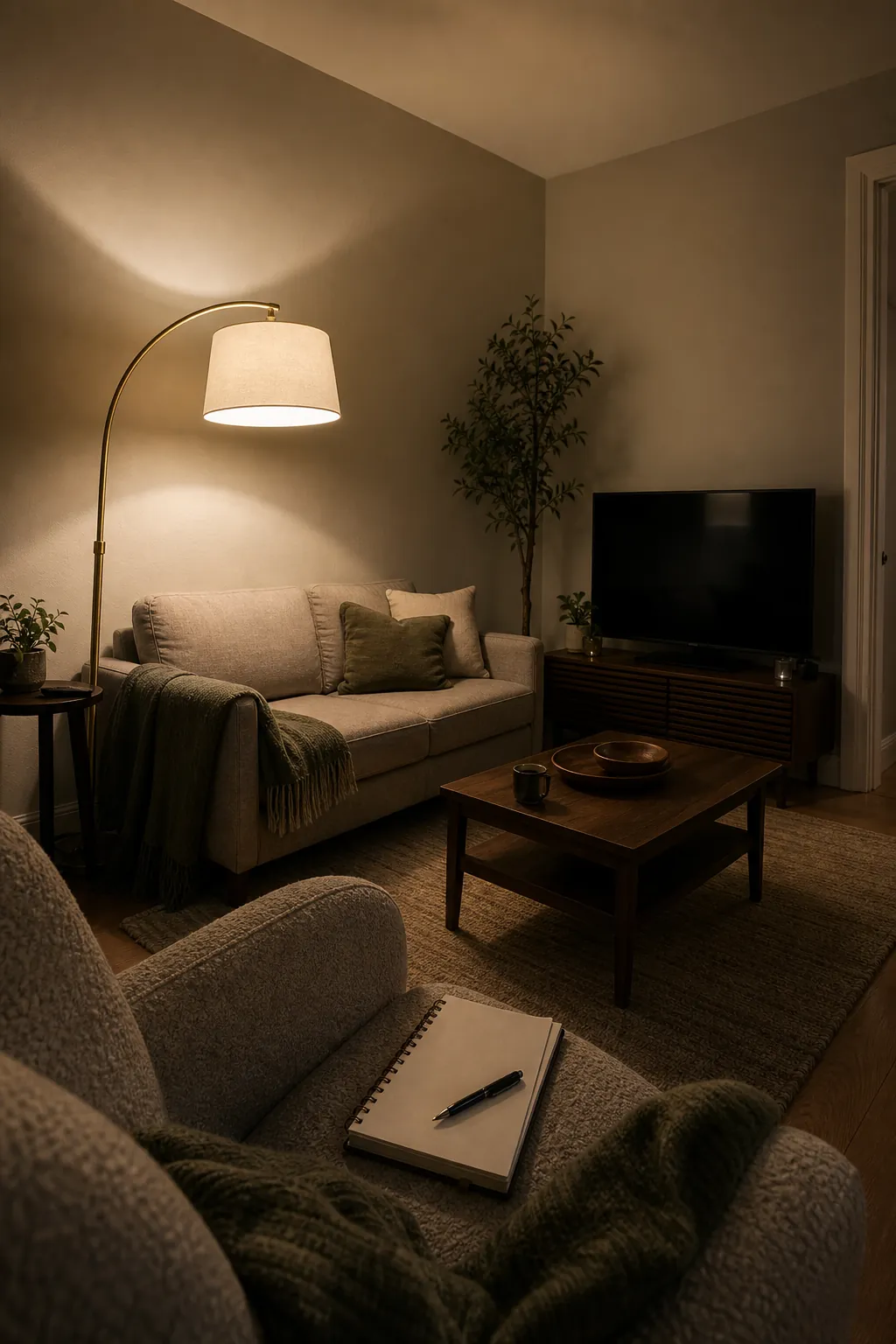
Tuck a Slim Floor Lamp Behind the Sofa
A narrow floor lamp can occupy the few inches between a sofa arm and the wall. Choose a stable base that slides partly under the furniture and a shade that hides the bulb from seated eyes. Aim it over one shoulder for reading while allowing a little light to reach the wall. The lamp should serve the seat without narrowing the walking path.
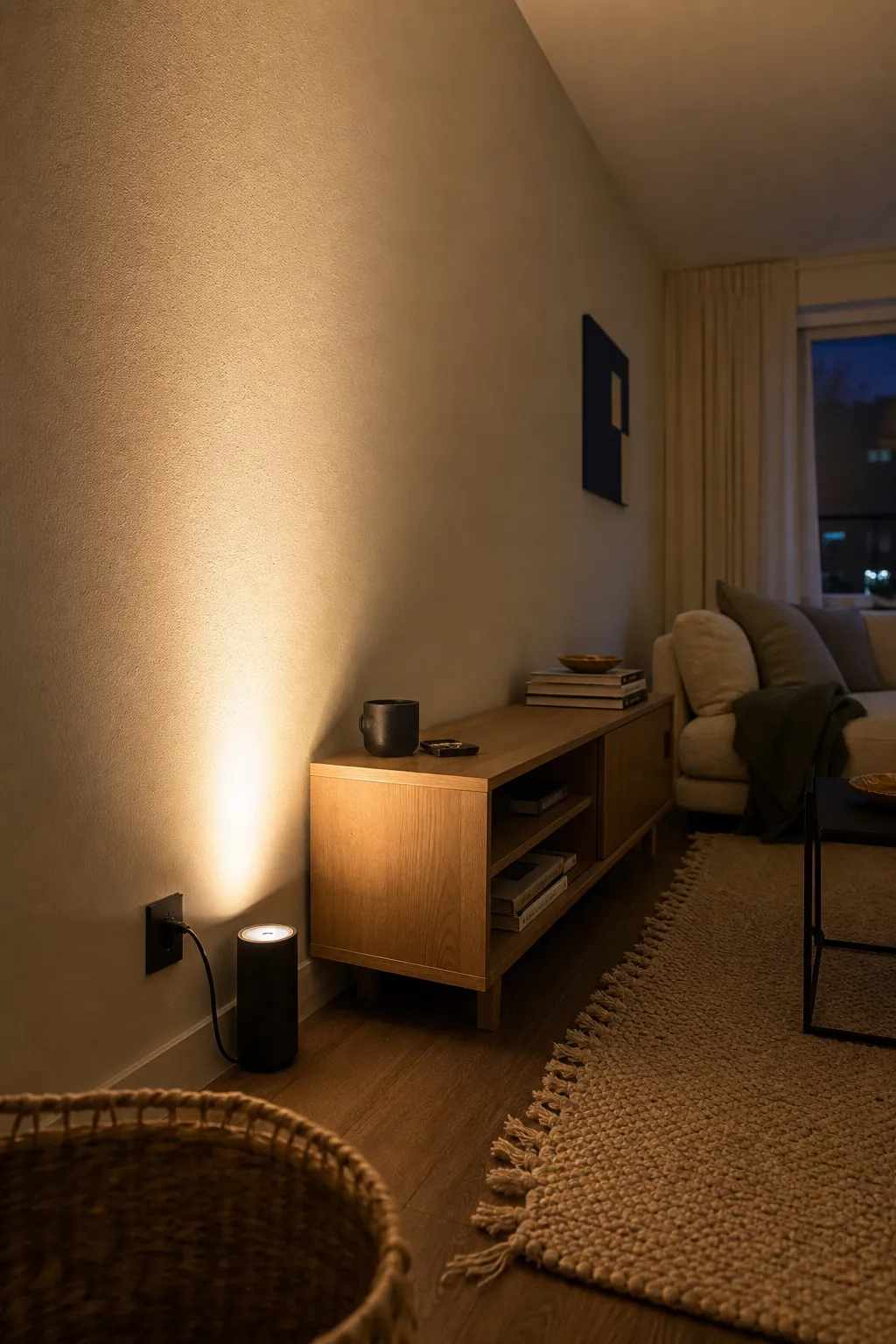
Wash the Longest Wall With Indirect Light
A softly illuminated wall becomes a broad ambient source and makes the room boundary easier to read. Point a shaded lamp or wide-beam uplight toward the longest uninterrupted wall, keeping the bulb itself concealed. Smooth paint gives an even wash; textured plaster creates more shadow, so test the angle before committing.
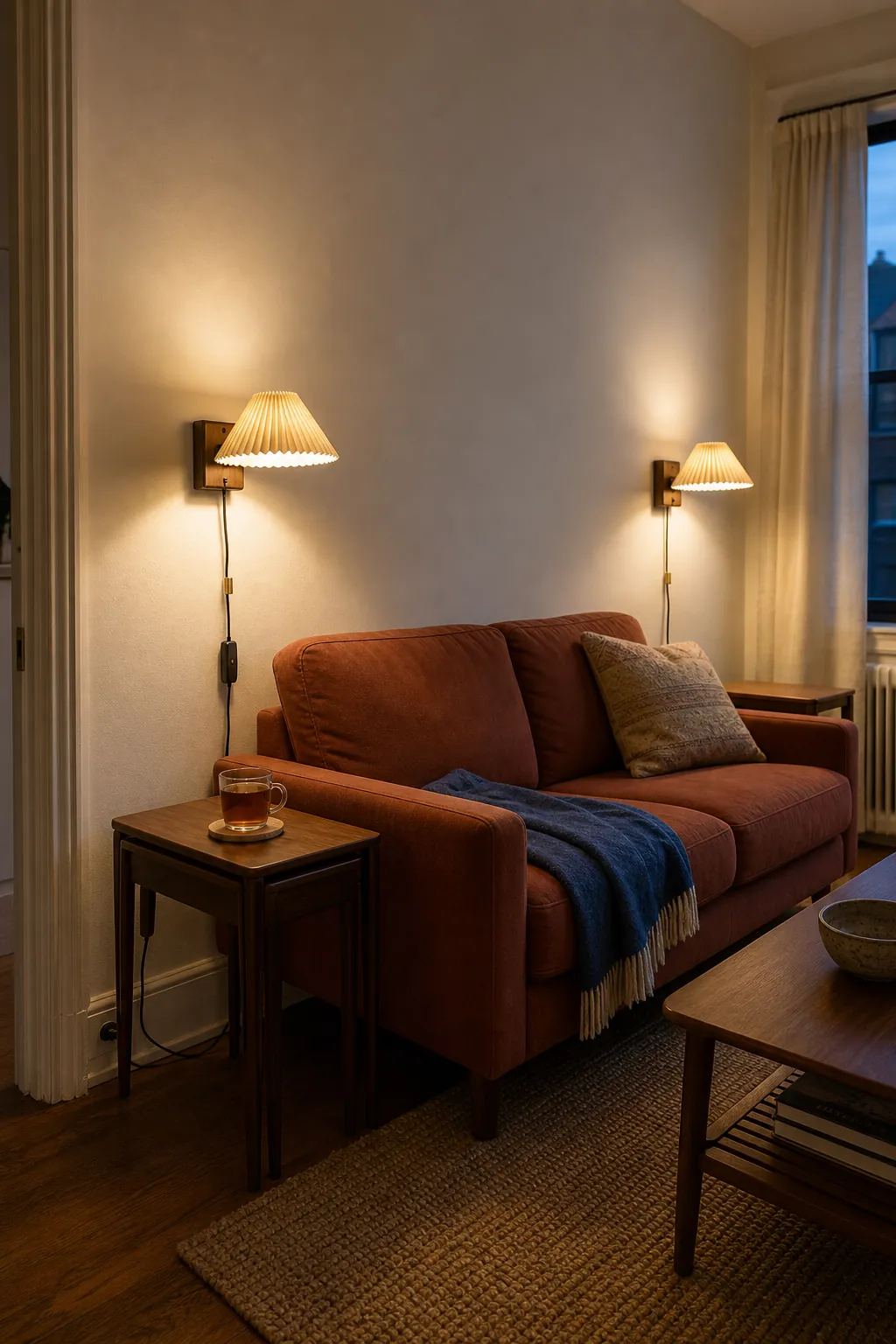
Mount Plug-In Sconces When Tables Are Tiny
Plug-in wall sconces preserve narrow side tables and avoid new electrical work. Position them where the shade cannot be bumped when someone stands, secure each cord vertically, and keep the switch reachable from the sofa. Swing-arm models can direct light onto a book, then fold back for ambient wall glow.
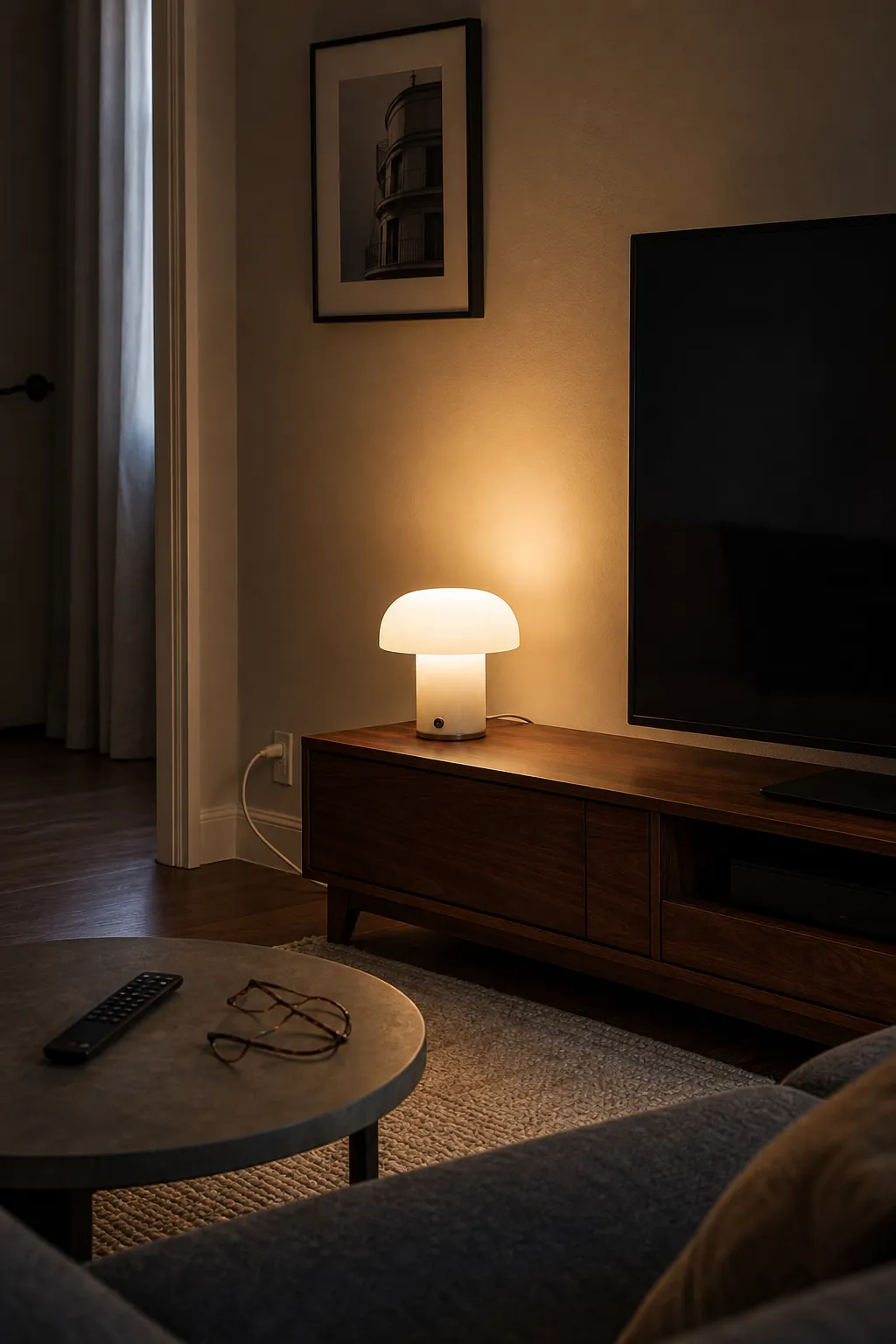
Place a Low Lamp on the Media Console
A short shaded lamp beside—not directly behind—the television can soften the contrast between a bright screen and a black room. Keep its reflection out of the screen by checking from every seat. Use a low output and an opaque shade so the lamp adds background light without competing with the picture.
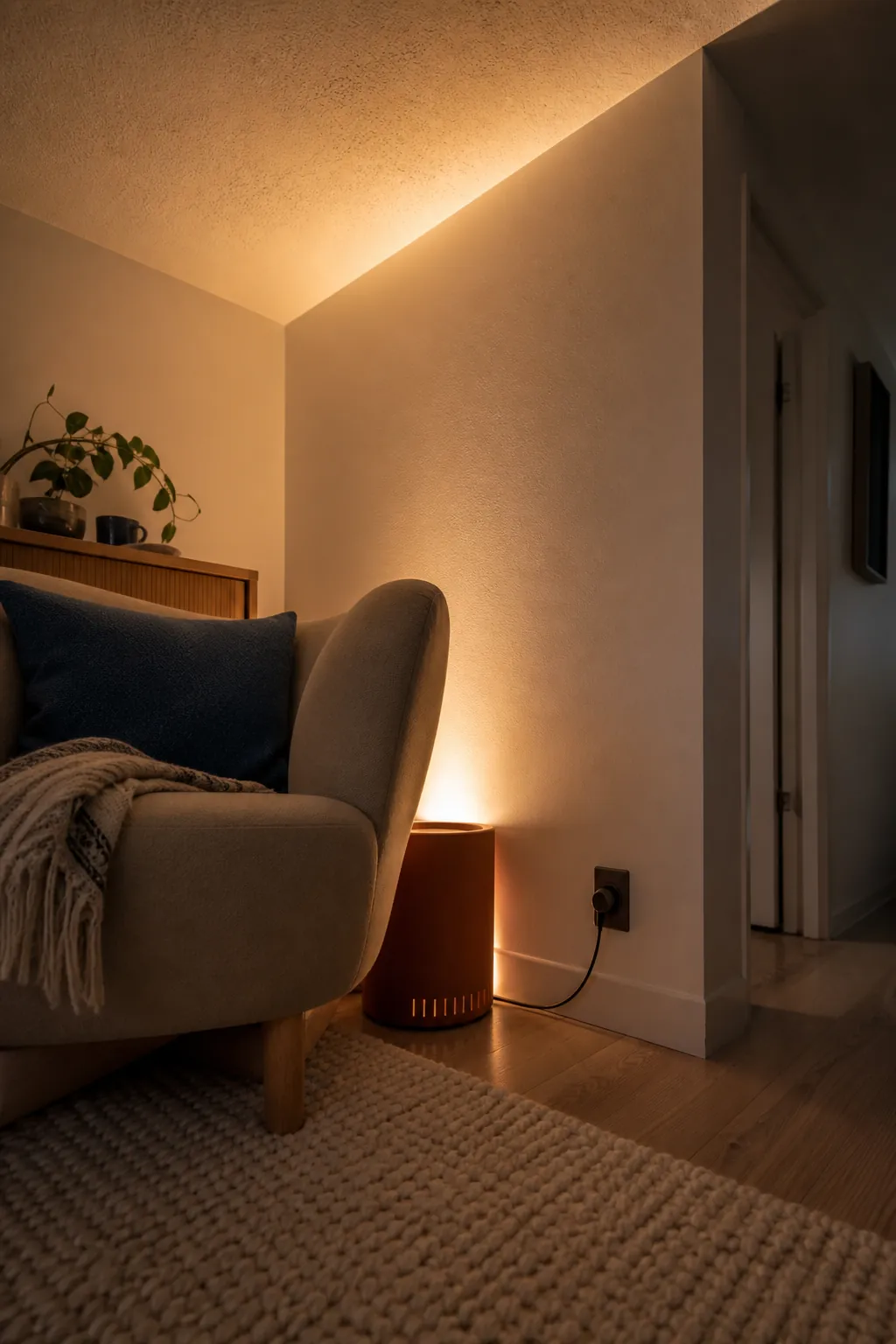
Bounce an Uplight Off a Pale Ceiling
A compact torchiere or can uplight can turn the ceiling into a large diffuser. This is especially useful where a pendant would hang too low. Place the source in a corner, shield the bright opening from normal sightlines, and use a dimmer. A pale matte ceiling spreads the light more gently than a glossy finish.
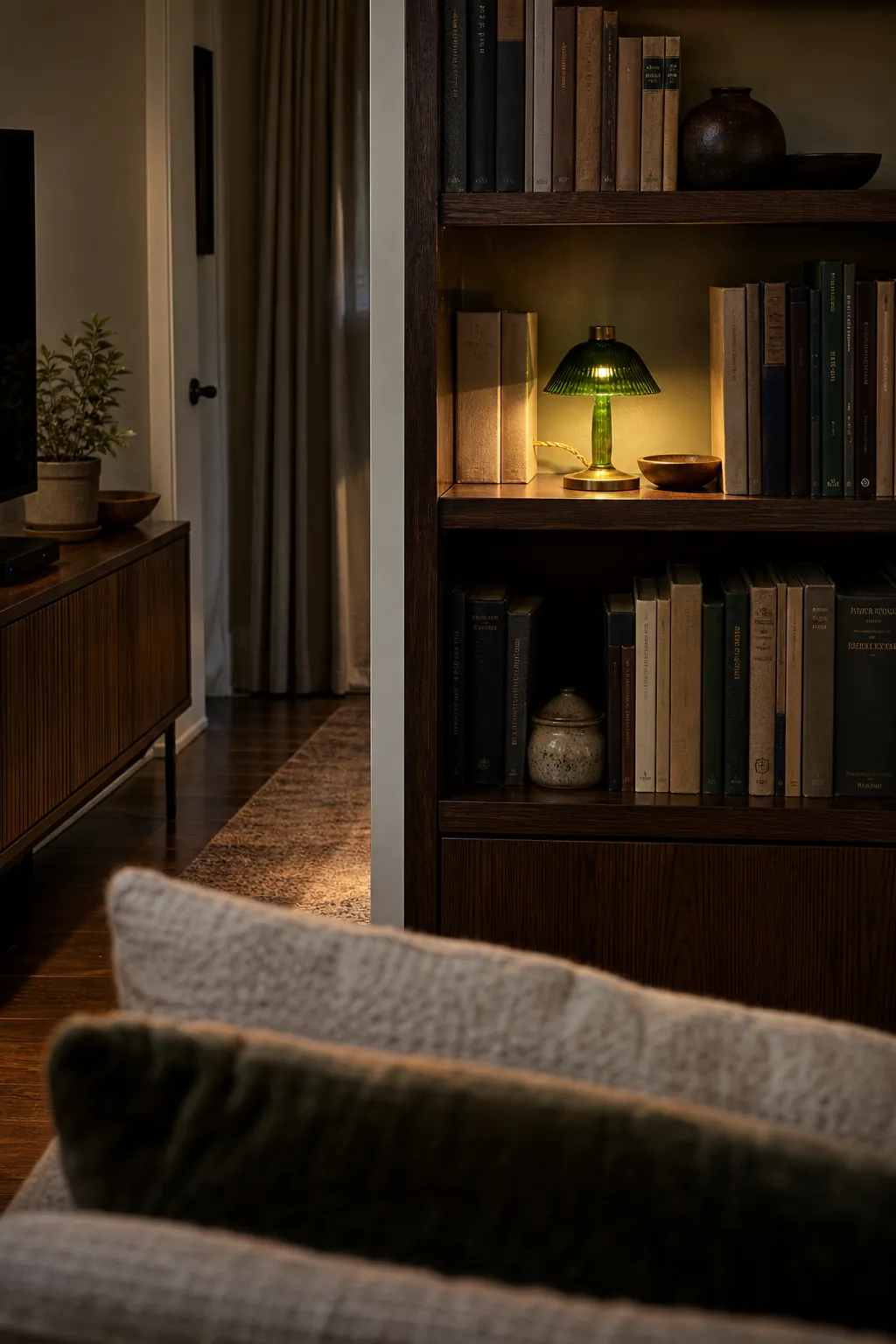
Use a Shelf Lamp as a Background Layer
A tiny lamp on a bookcase draws the eye beyond the seating area and prevents the far side of the room from disappearing. Leave breathing room around the shade, keep heat away from books, and hide the cable along the back of the shelf. The lamp should glow softly rather than light the entire bookcase.
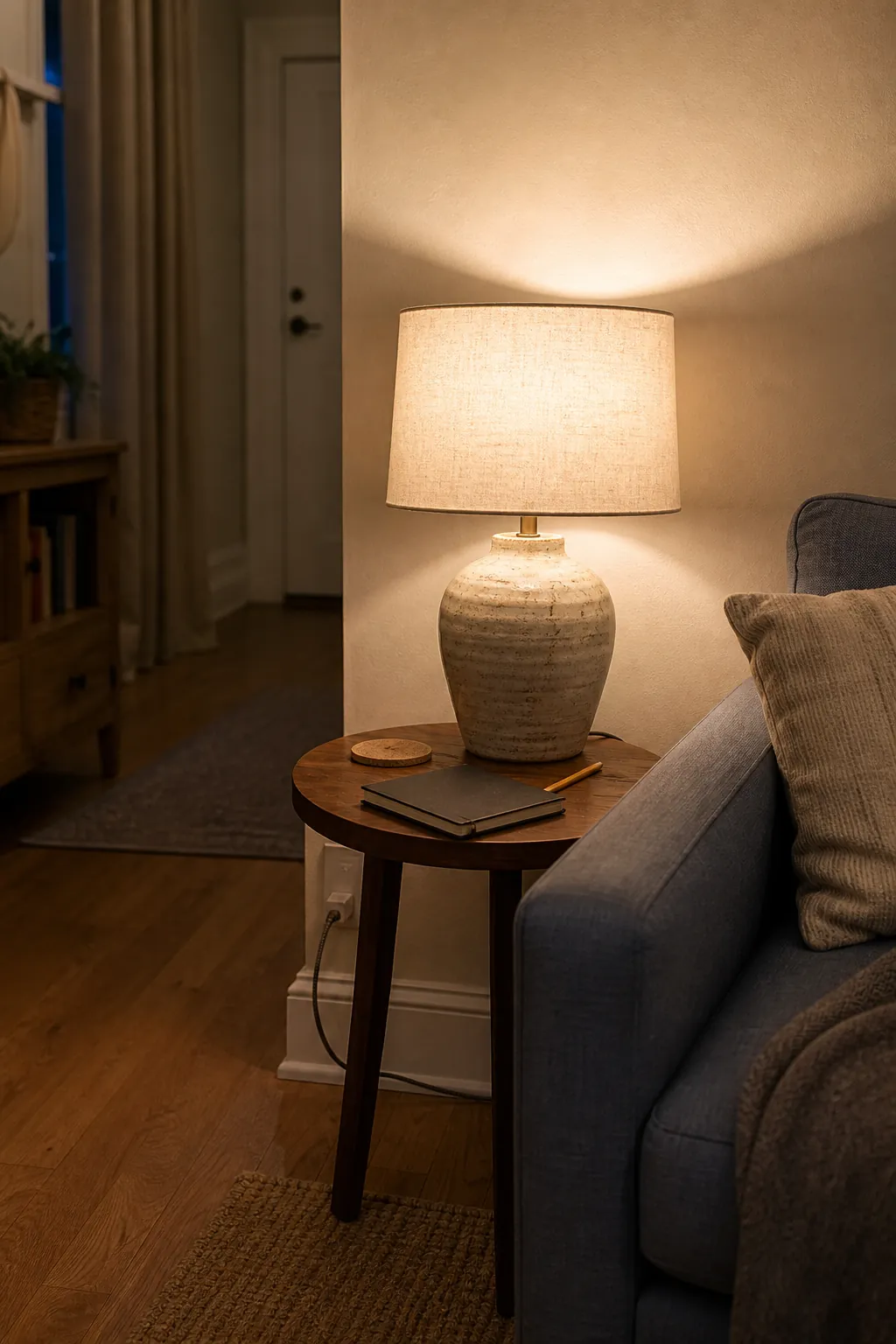
Choose a Table Lamp With a Diffusing Shade
In tight quarters, the shade matters as much as the base. Linen, paper, or opal glass spreads light across nearby faces and walls while hiding the bare bulb. Check the lamp from standing and seated positions. If the bulb appears under the shade, lower the lamp or choose a deeper diffuser.
Direct a Reading Lamp Across the Shoulder
For reading, light should arrive from the side and slightly behind the reader, landing on the page rather than in the eyes. An adjustable floor or table lamp makes that easy. Sit in the actual chair with a book before fixing the angle, and confirm that the beam does not spill onto the television.
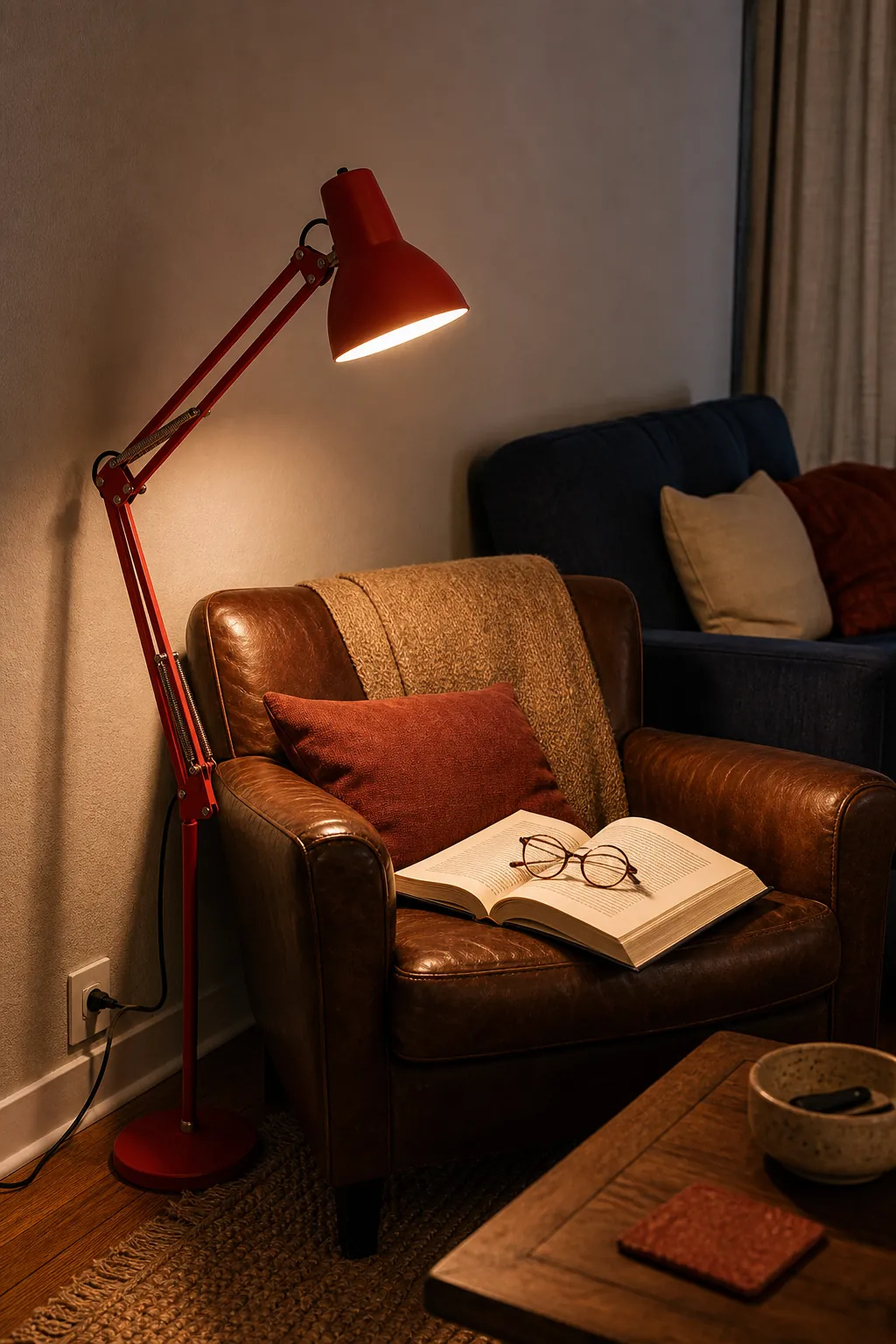
Frame an Alcove With Two Gentle Sconces
A balanced pair of compact sconces can give a shallow alcove or chimney breast structure without using floor area. Choose shallow profiles and broad diffusers. Keep their brightness restrained; in a small room, two fixtures read as a strong visual statement even when each produces only a modest pool.
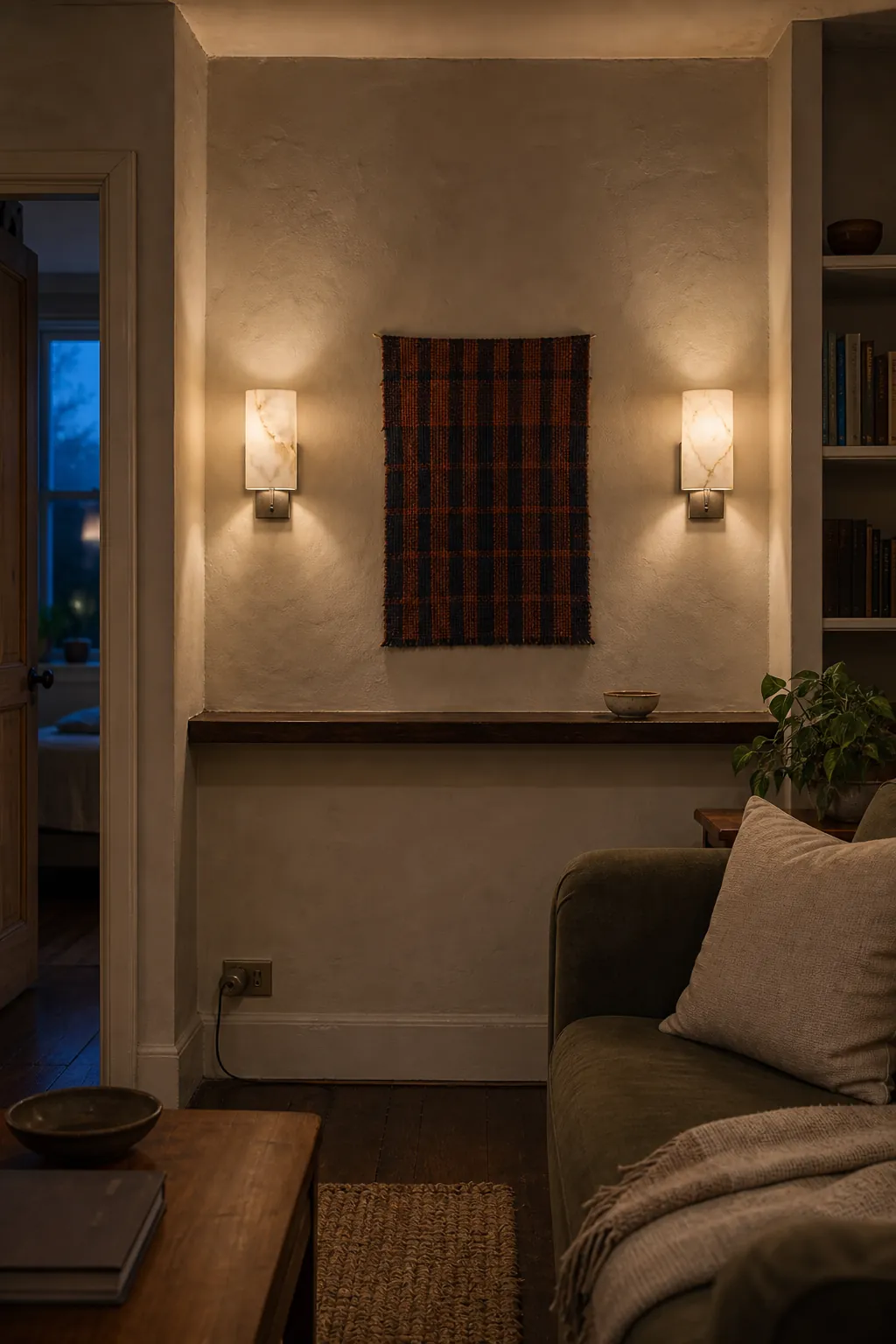
Hide a Warm Glow Behind a Tall Plant
A small uplight behind a plant creates moving leaf shadows and brightens an otherwise dead corner. Keep the source off the leaves, check that neither pot nor cable can tip, and avoid placing hot fixtures against foliage. One quiet shadow pattern is enough; stronger projection can make a compact room feel busy.
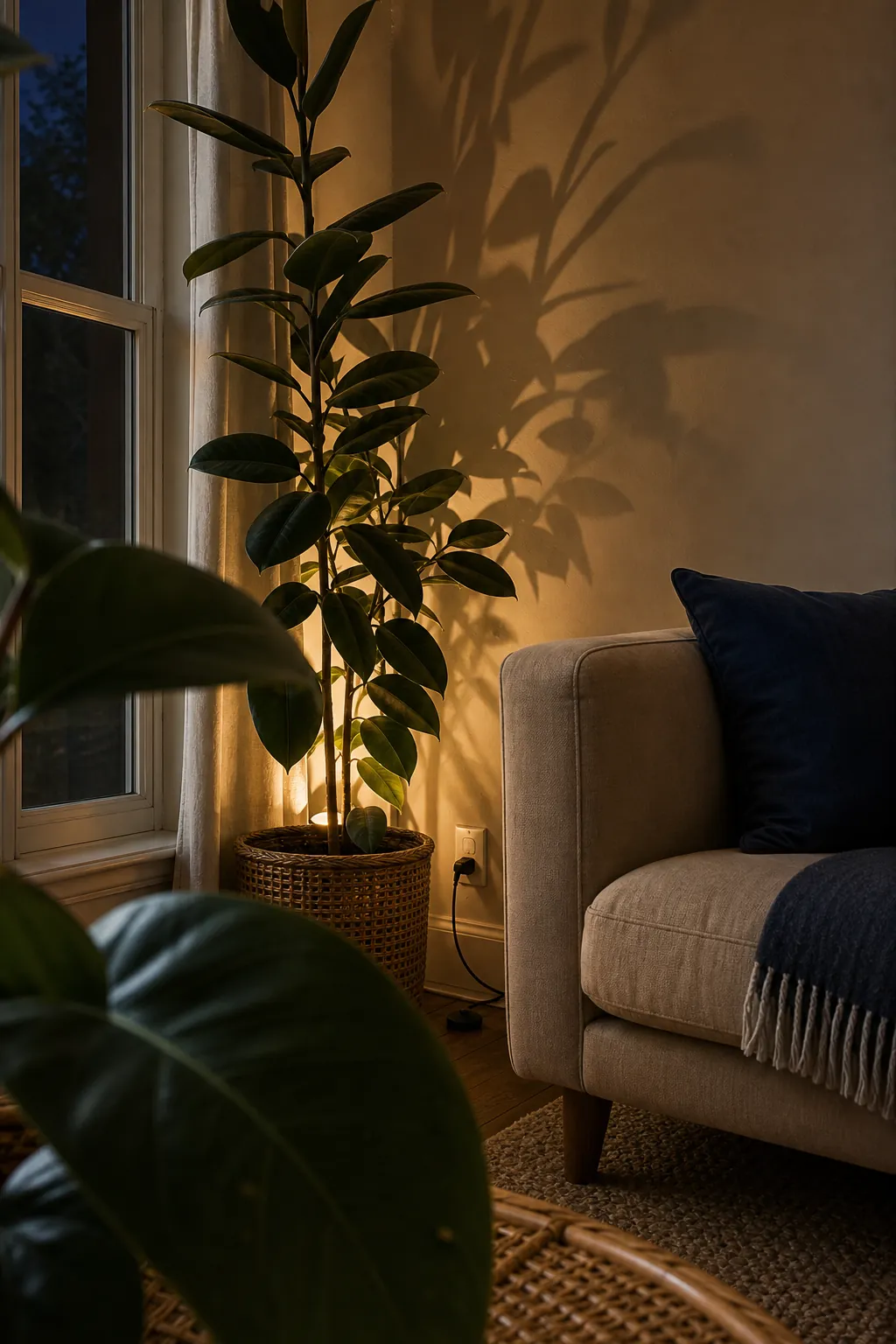
Light Curtains From the Room Side
A lamp near the window can make closed curtains feel like a soft boundary instead of a dark void. Place it on the room side so fabric remains safely clear of the bulb and shade. The resulting side glow emphasizes folds and makes the window wall feel deeper after sunset.
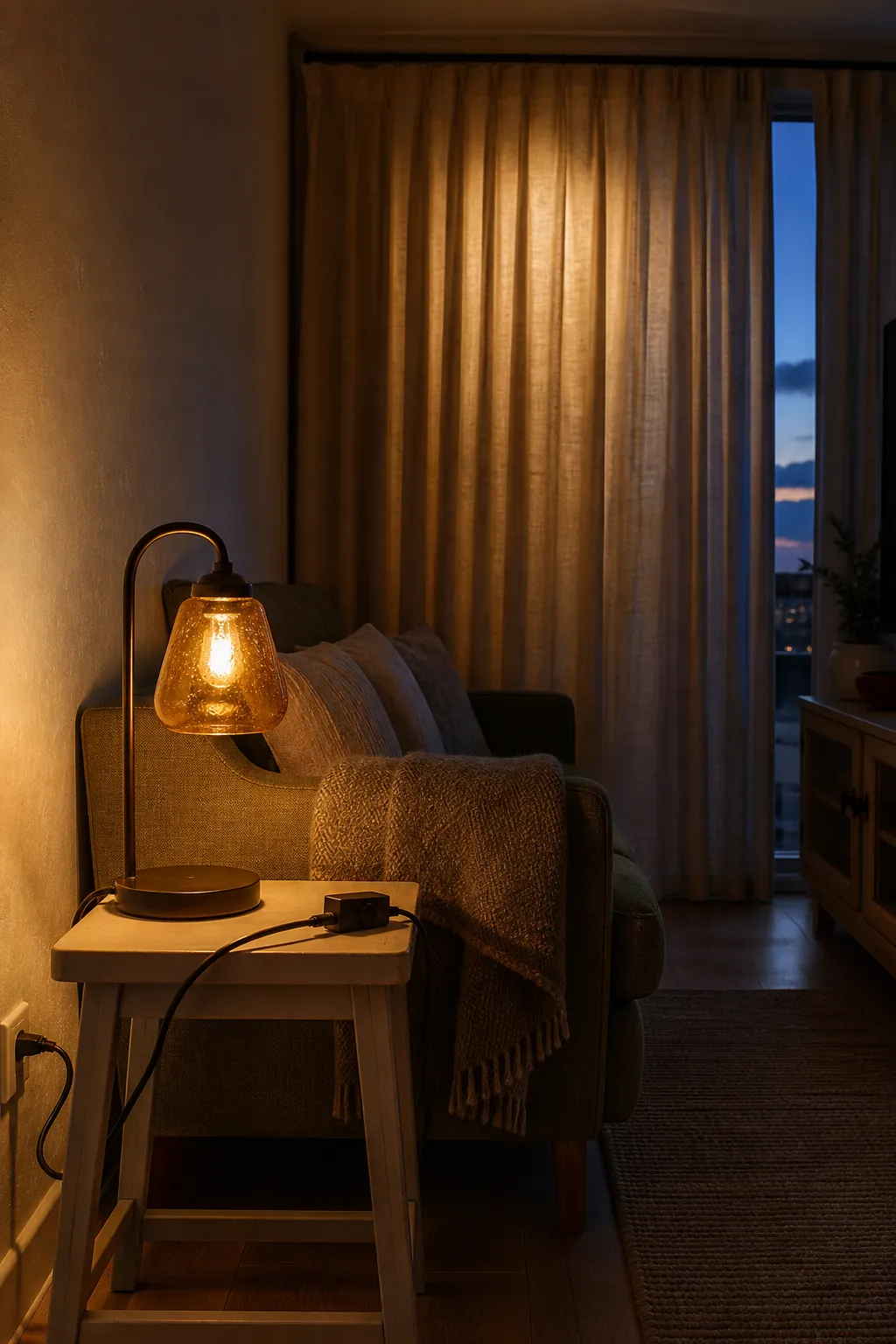
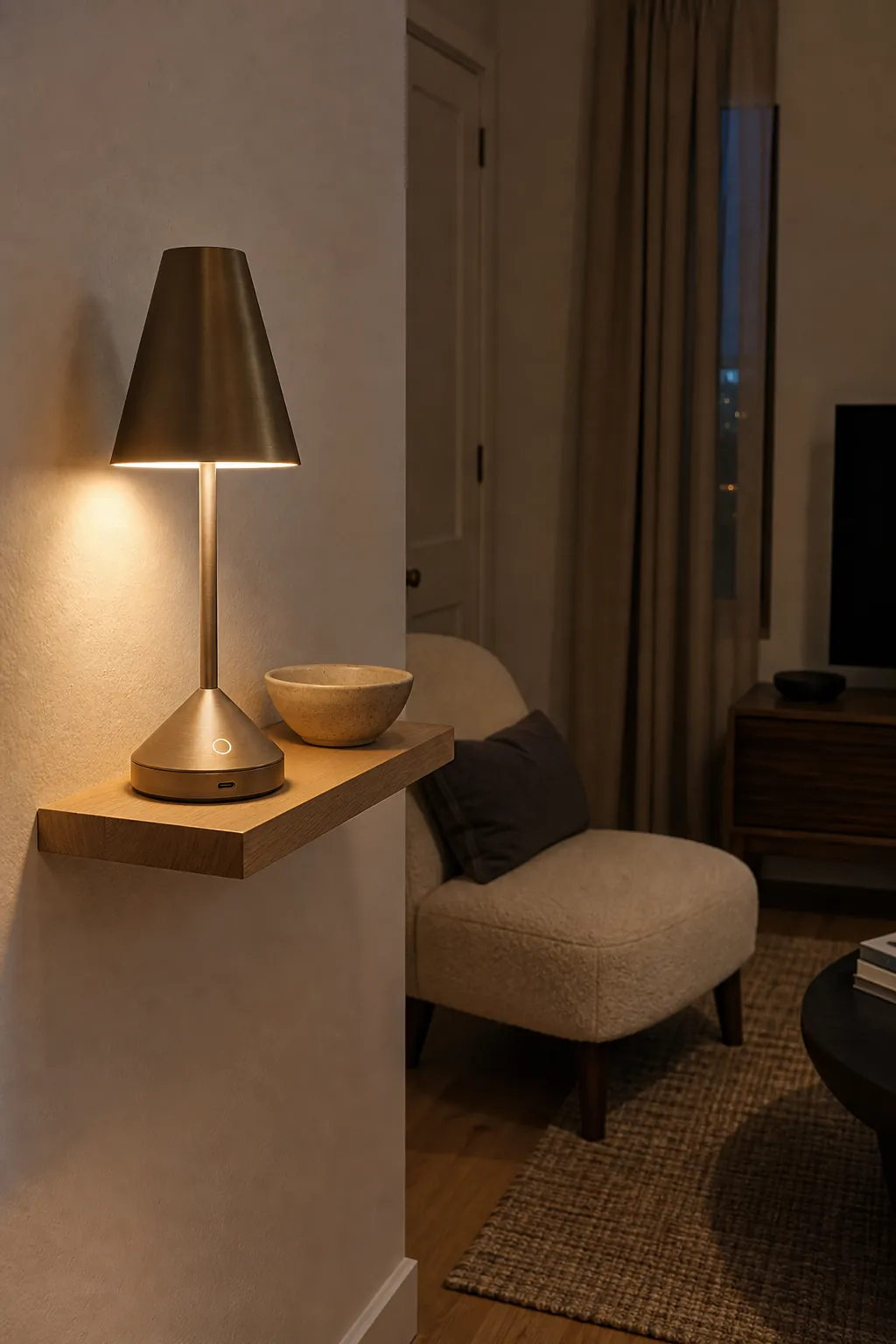
Add a Rechargeable Lamp to a Floating Shelf
Where an outlet is missing, a rechargeable lamp can create a useful pool on a floating shelf without a dangling cord. Choose a stable, lightweight model with a diffused source and assign it a regular charging place. This works best as an accent layer, not the only light in the room.
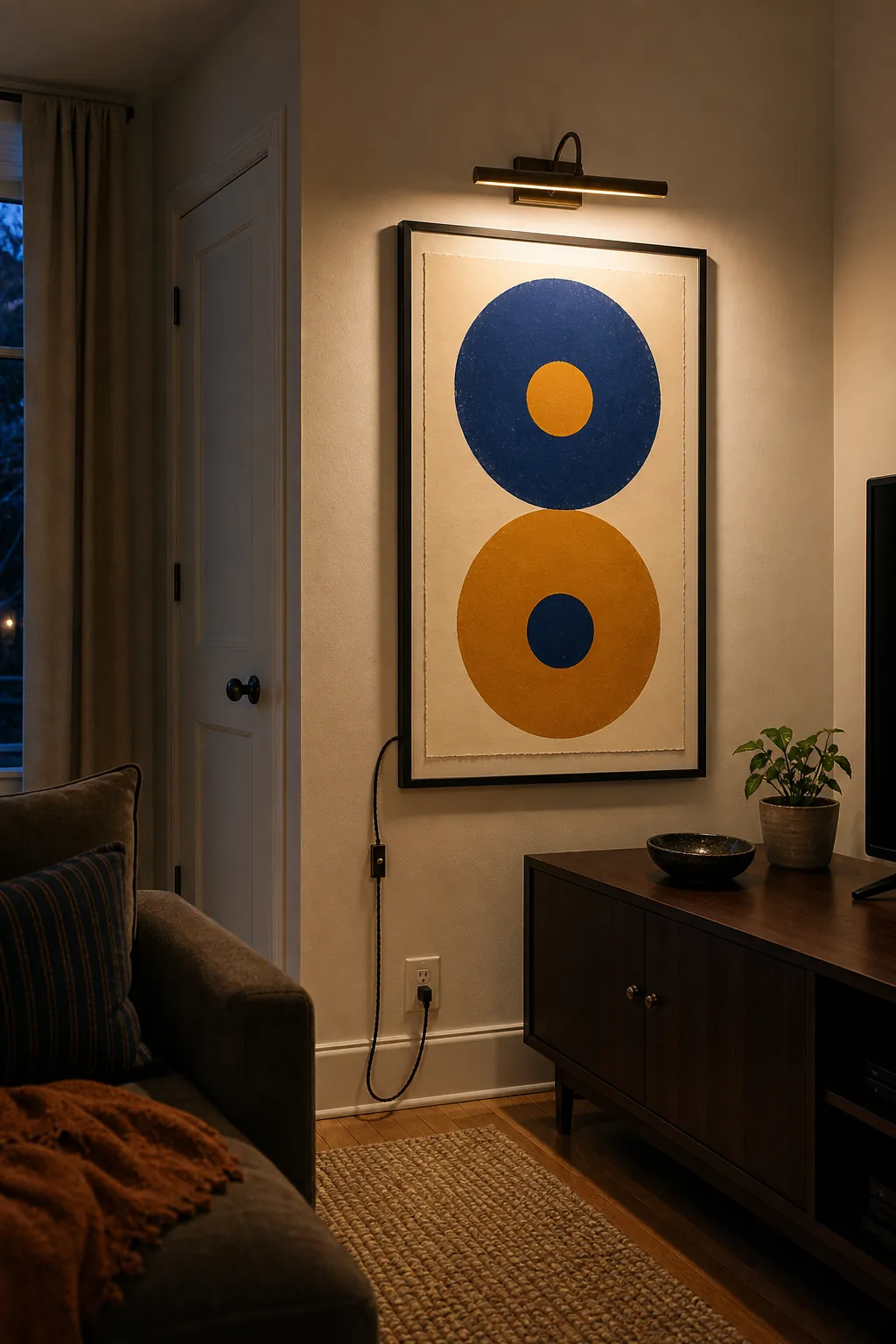
Use Picture Light Only Where Art Needs It
A narrow picture light can turn one meaningful piece into a nighttime focal point, but it should not become another bright bar in the room. Match its width to the frame, angle it away from glass reflections, and keep nearby walls quieter. Highlight one object rather than treating every wall as a display.
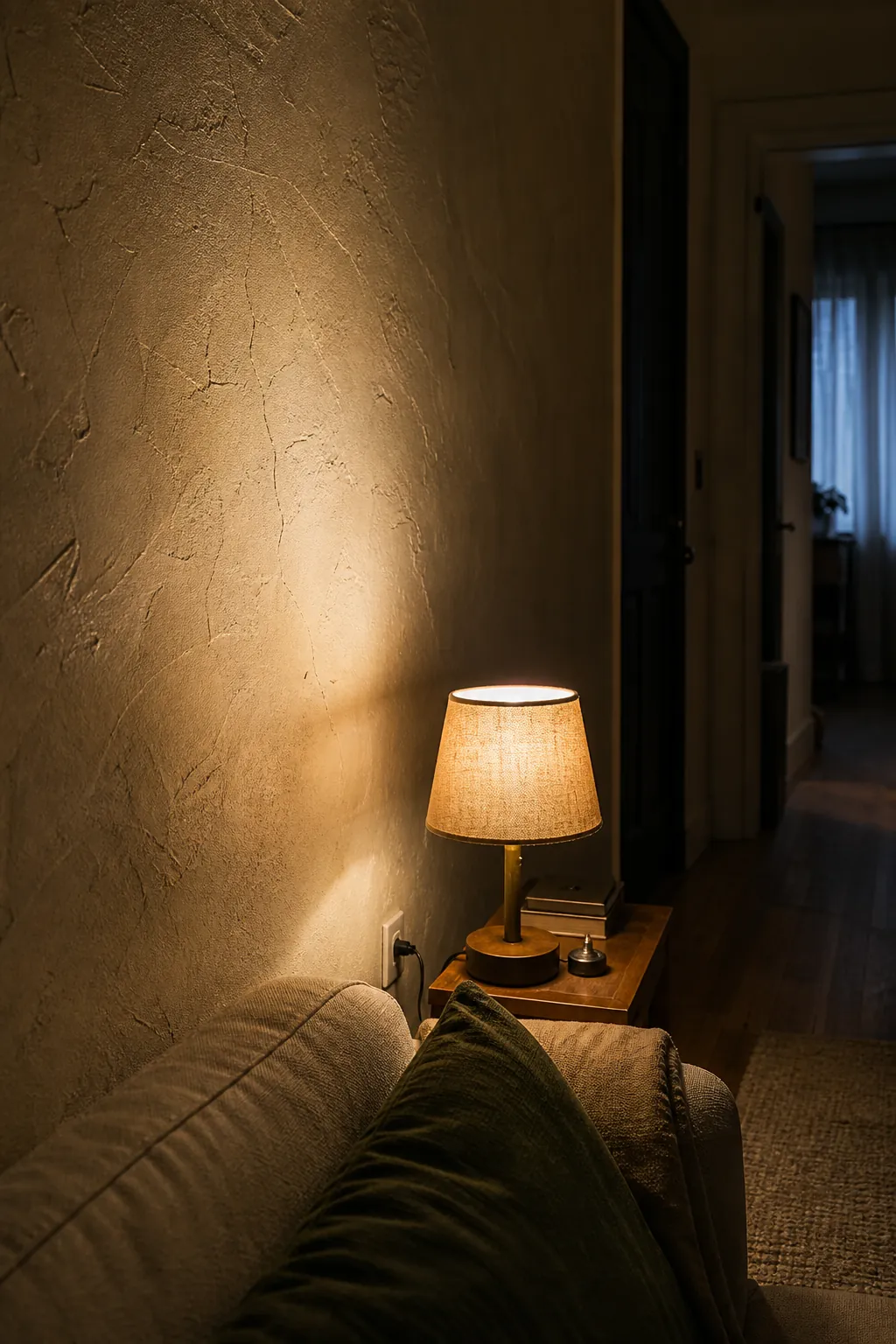
Aim a Lamp at Brick or Textured Plaster
Grazing light from the side reveals the depth of brick, limewash, or rough plaster. Place the lamp close enough to create small highlights and shadows, then dim it until the texture supports the room rather than dominating it. Inspect the surface first because wall washing also reveals repairs and uneven patches.
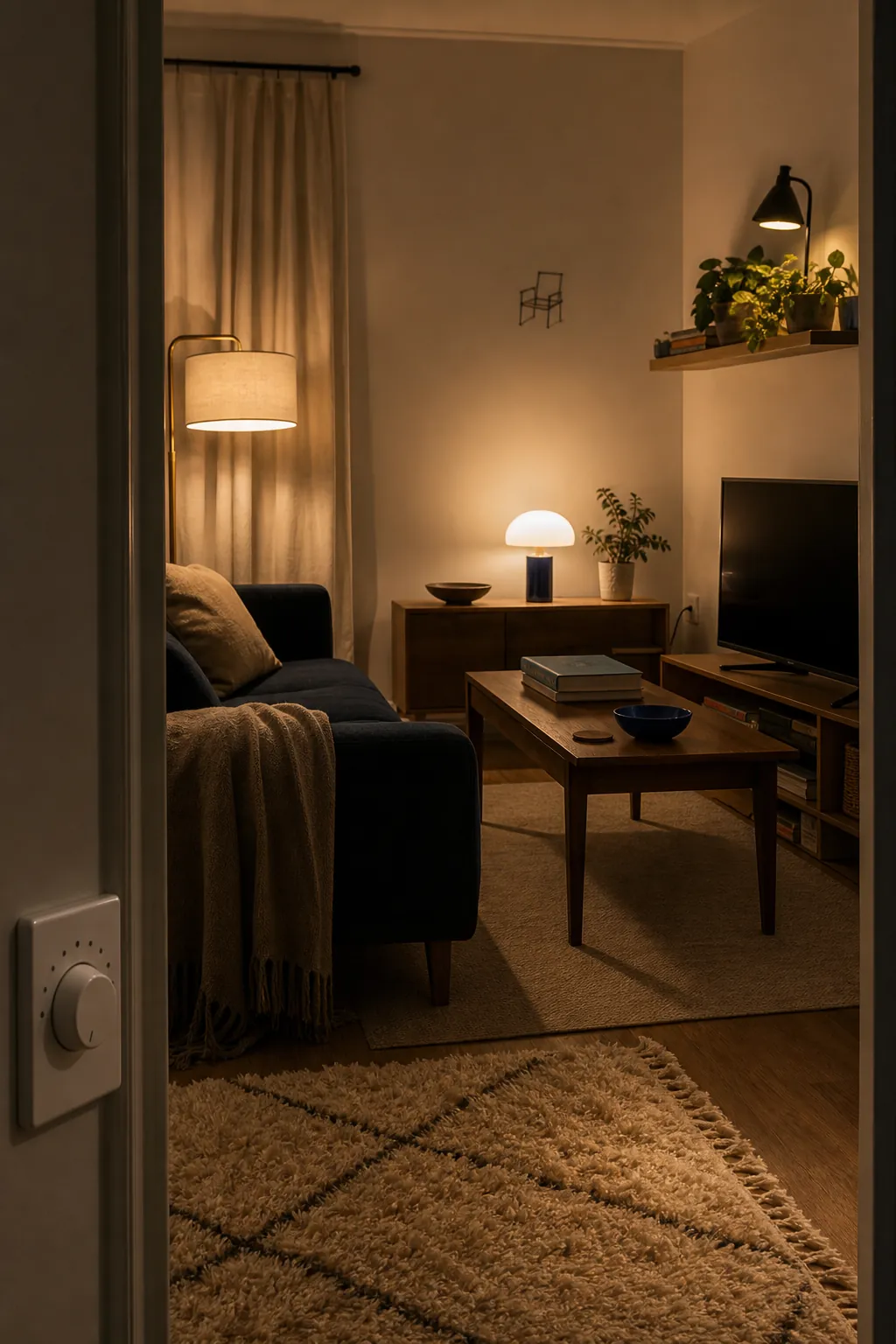
Put Every Evening Lamp on a Dimmer
Small rooms change character quickly as brightness rises. Dimmers let a reading lamp work hard for a task and then settle into the background. Test the lowest level before buying: some combinations flicker or remain too bright. Use compatible dimmable bulbs, plugs, or controls and keep a simple manual switch available.
Keep Bulb Color Consistent Across the Room
A cool-white lamp beside a warm sconce splits a small room into unrelated zones. For evening ambient lighting, bulbs around 2700K are a practical starting point. Match color by looking at surfaces, not packaging alone: wood, skin, paint, and upholstery should appear related from one pool to the next.
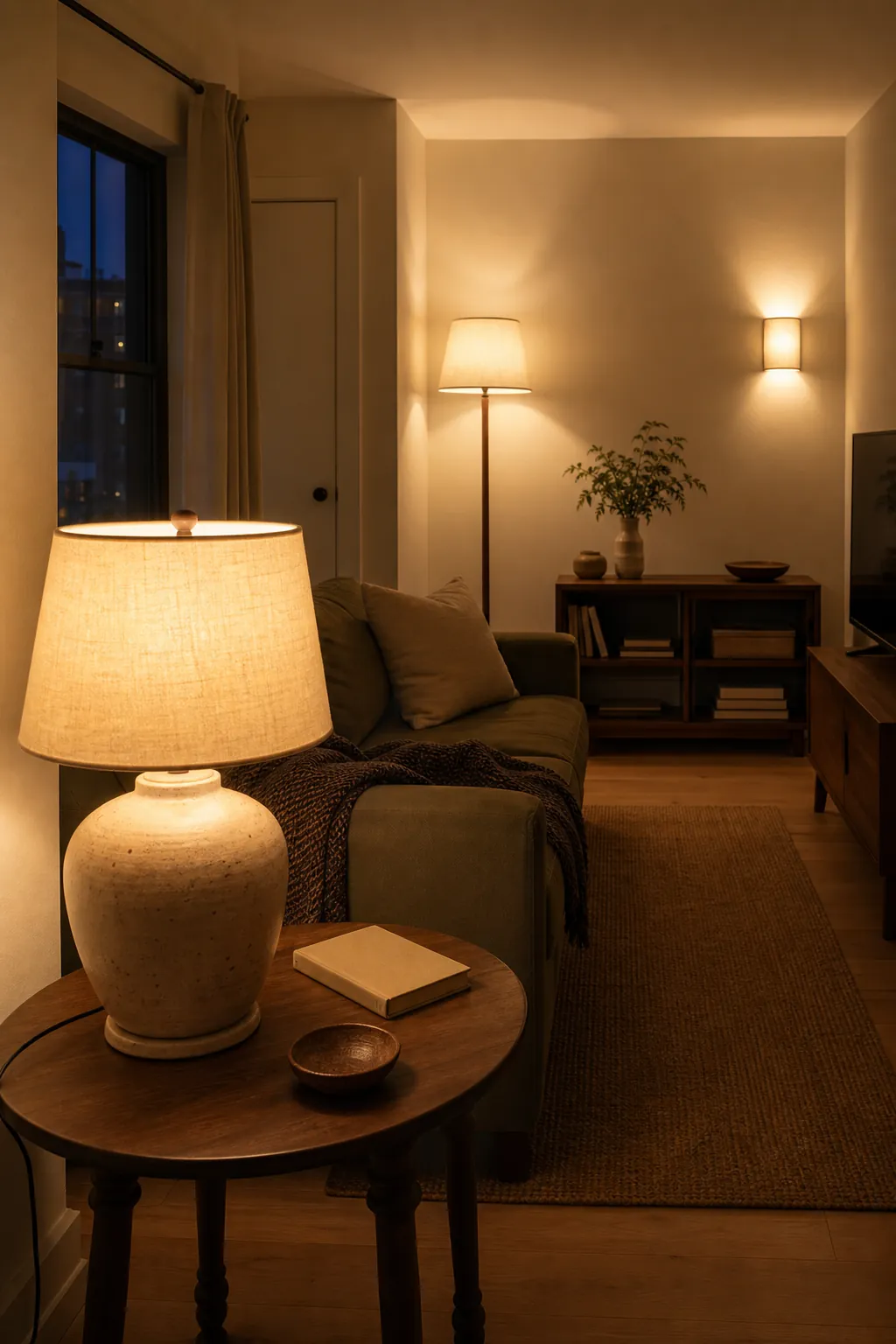
Choose High Color Rendering for Fabrics and Wood
Two bulbs with the same color temperature can make furnishings look very different. A high color-rendering lamp helps warm woods, green plants, skin tones, and colored textiles remain recognizable instead of muddy. This matters in a small living room because every surface sits close to a light source and contributes to the mood.
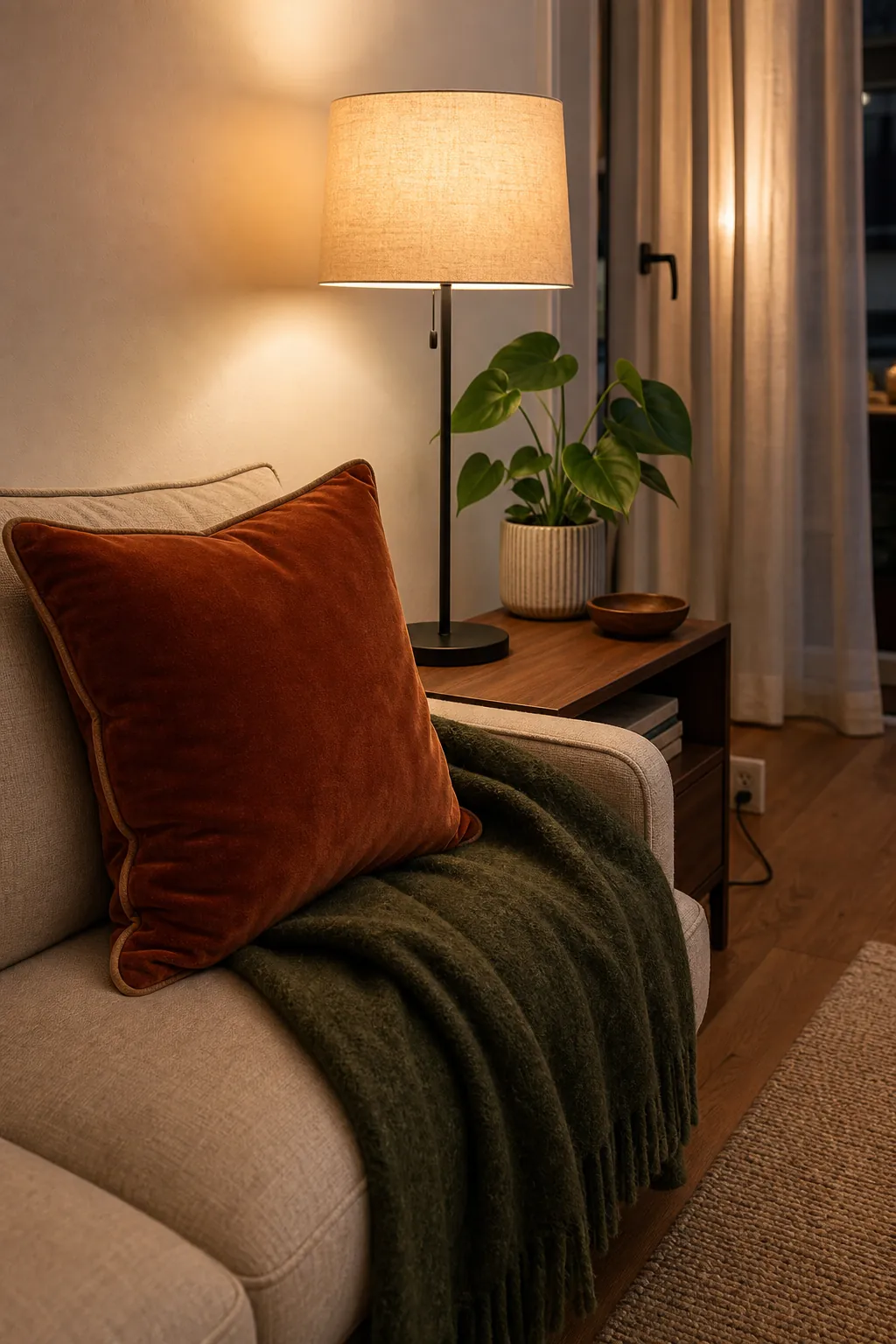
Use One Sculptural Lamp Instead of Several Objects
When surfaces are scarce, a lamp can provide both function and visual character. Choose one compact base with a memorable material or silhouette, then remove nearby decorative clutter. The shade still needs to control glare; sculpture is useful only when the lamp remains comfortable to live beside.
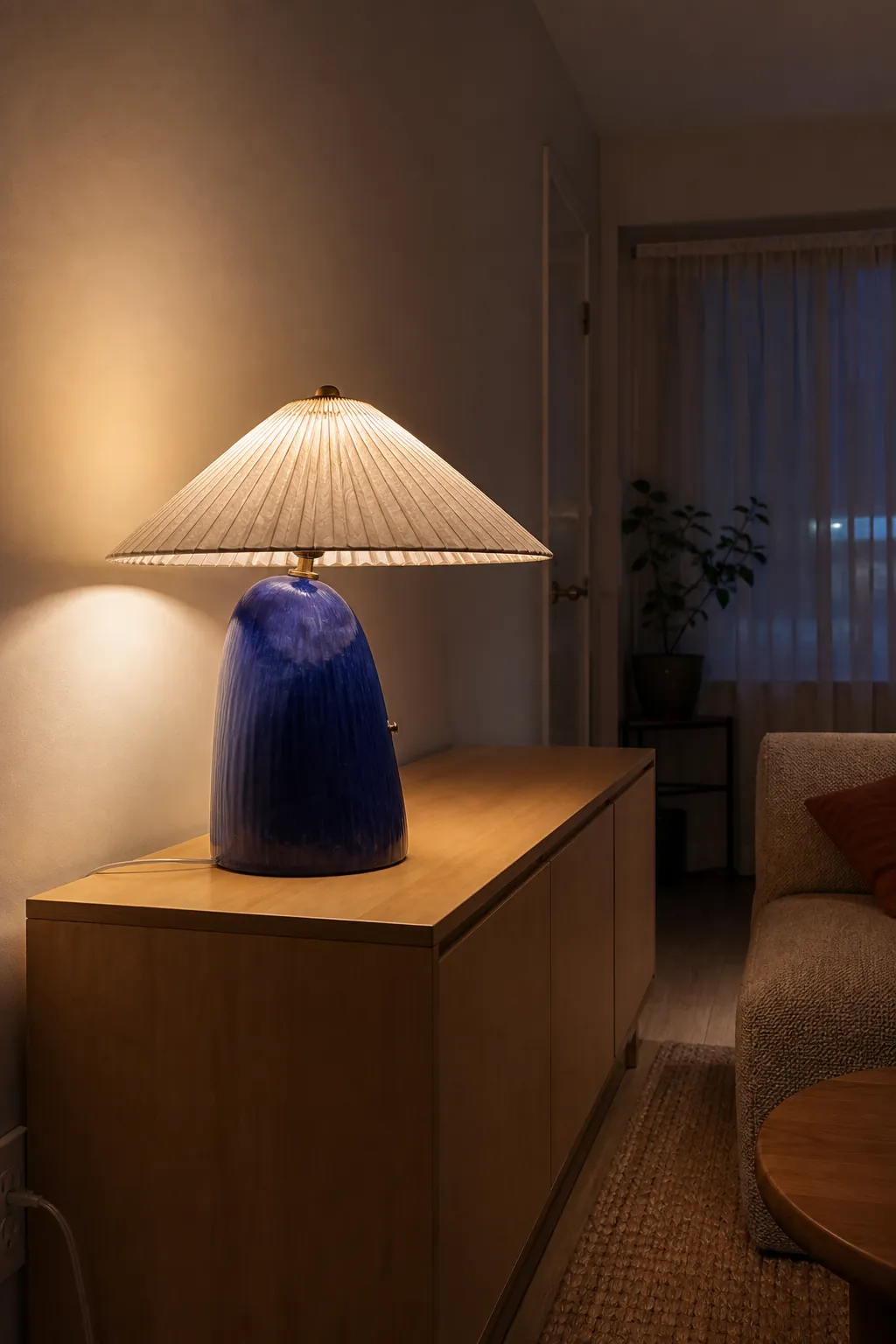
Let a Mirror Catch Side Light, Not the Bulb
A mirror can extend a soft wall glow, but a reflected bare bulb creates double glare. Stand at each seat while adjusting the lamp. The mirror should catch the illuminated wall, curtain, or shaded side of the fixture rather than its bright opening. A slight change in angle often solves the problem.
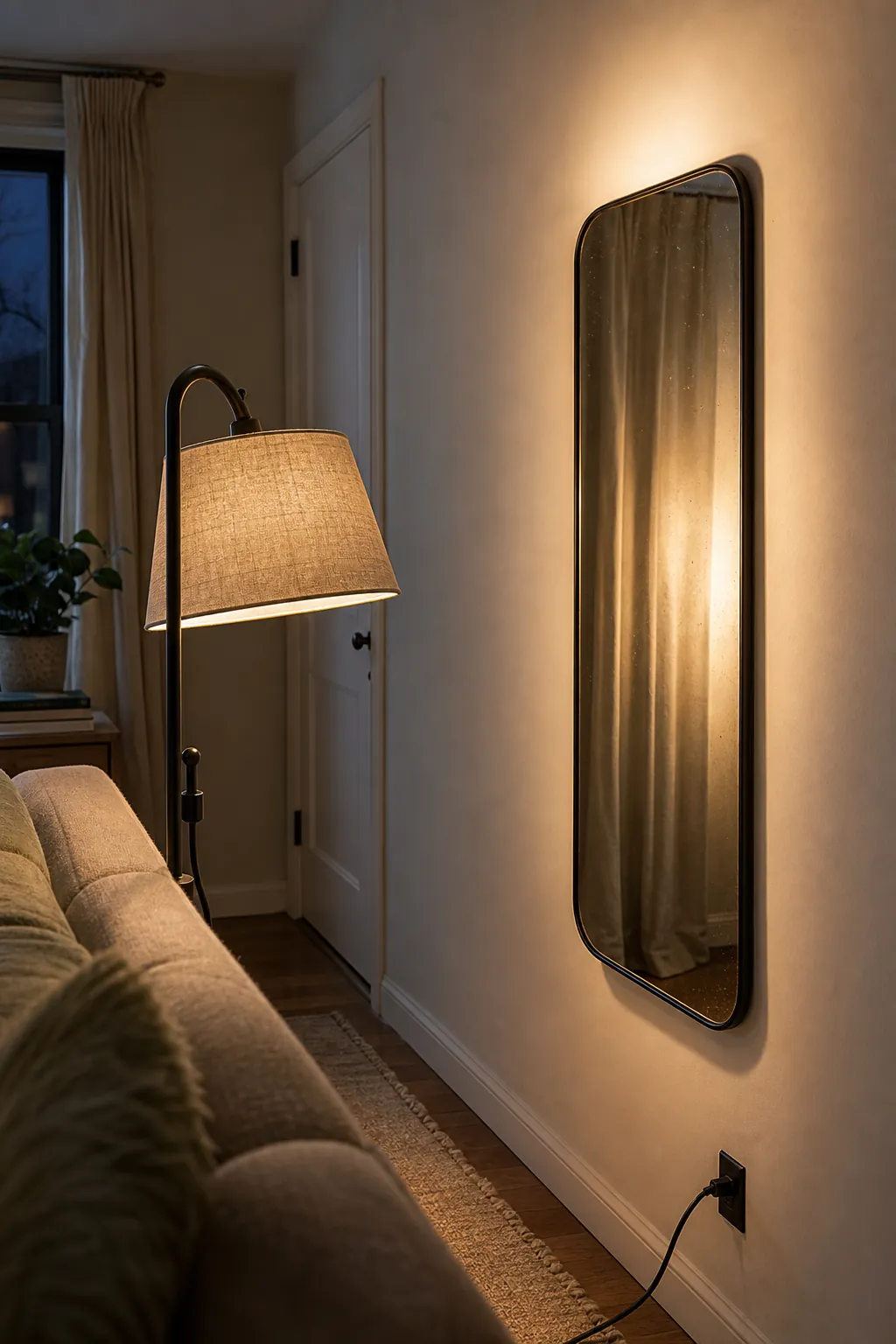
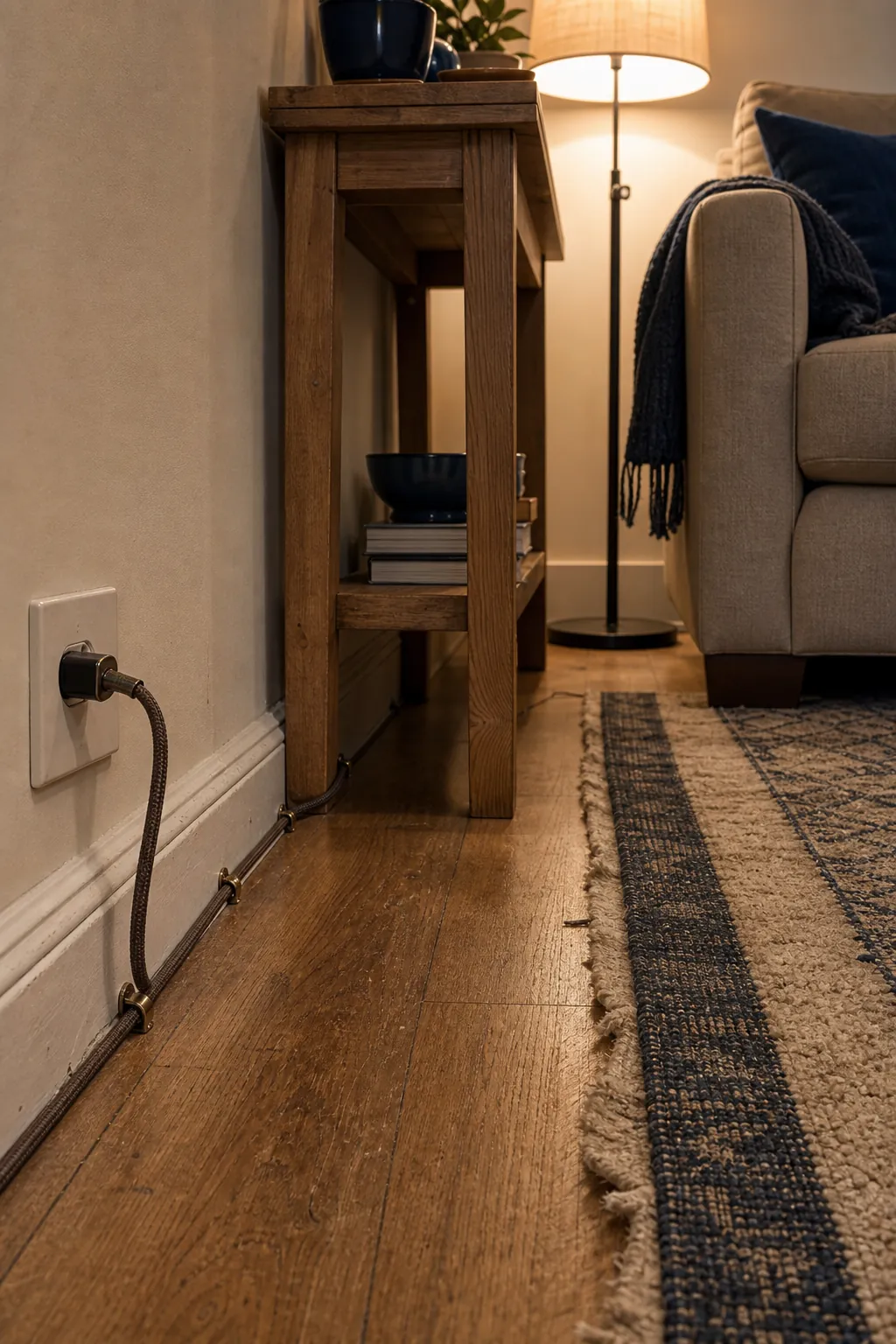
Run Cords Along Furniture Edges
A good lamp placement fails if its cable crosses the walking route. Use the nearest outlet, follow baseboards and furniture edges, and secure cords without pinching them under rugs or doors. Keep power strips ventilated and accessible. Cord planning belongs in the layout before the lamp earns its final position.
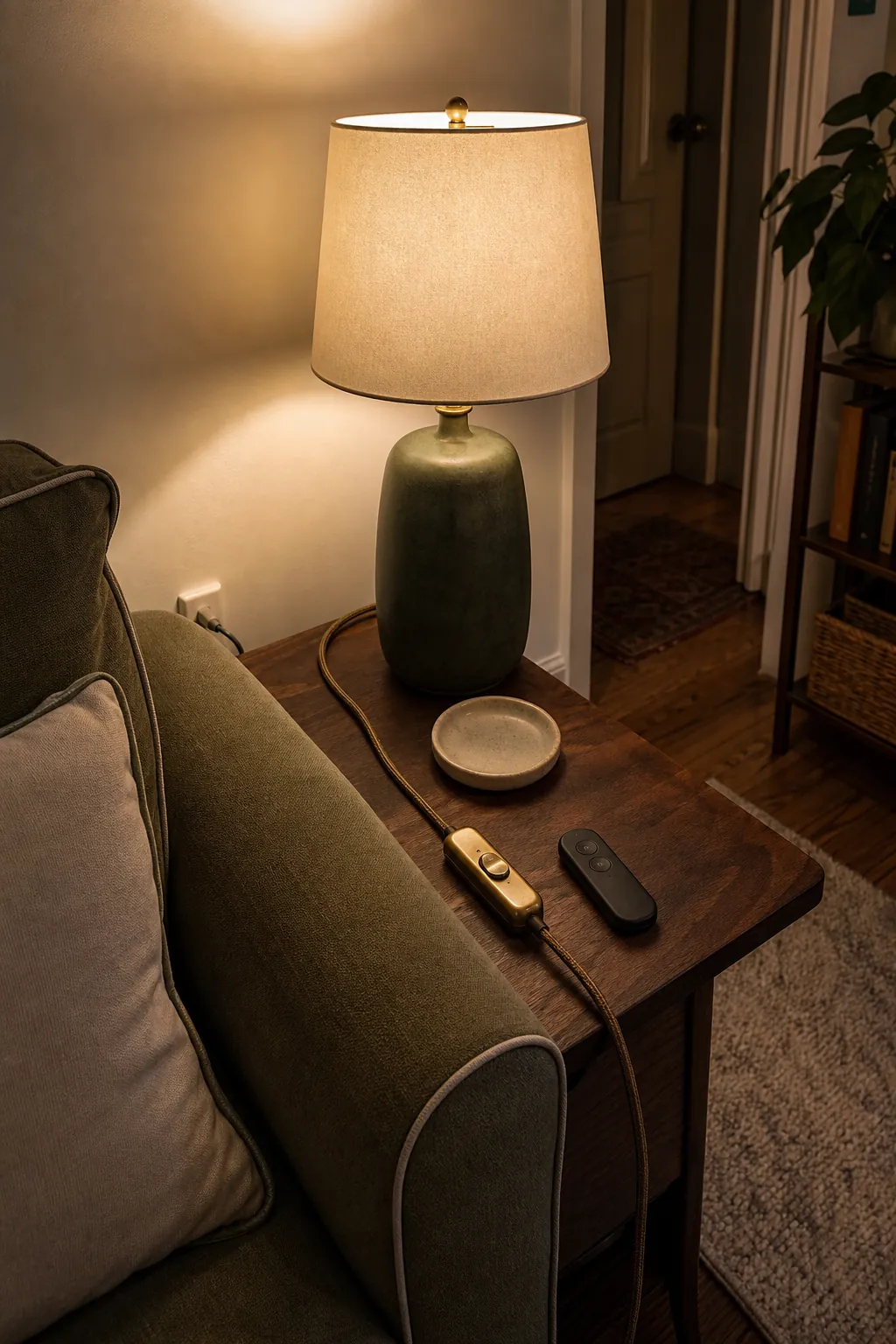
Put Switches Where You Enter and Sit
If every lamp requires a trip around the room, the overhead light will win. Use reachable inline switches, a switched outlet, simple remotes, or grouped smart plugs. Preserve manual control and label unfamiliar buttons. The useful scene is the one you can turn on at the doorway and adjust from the sofa.
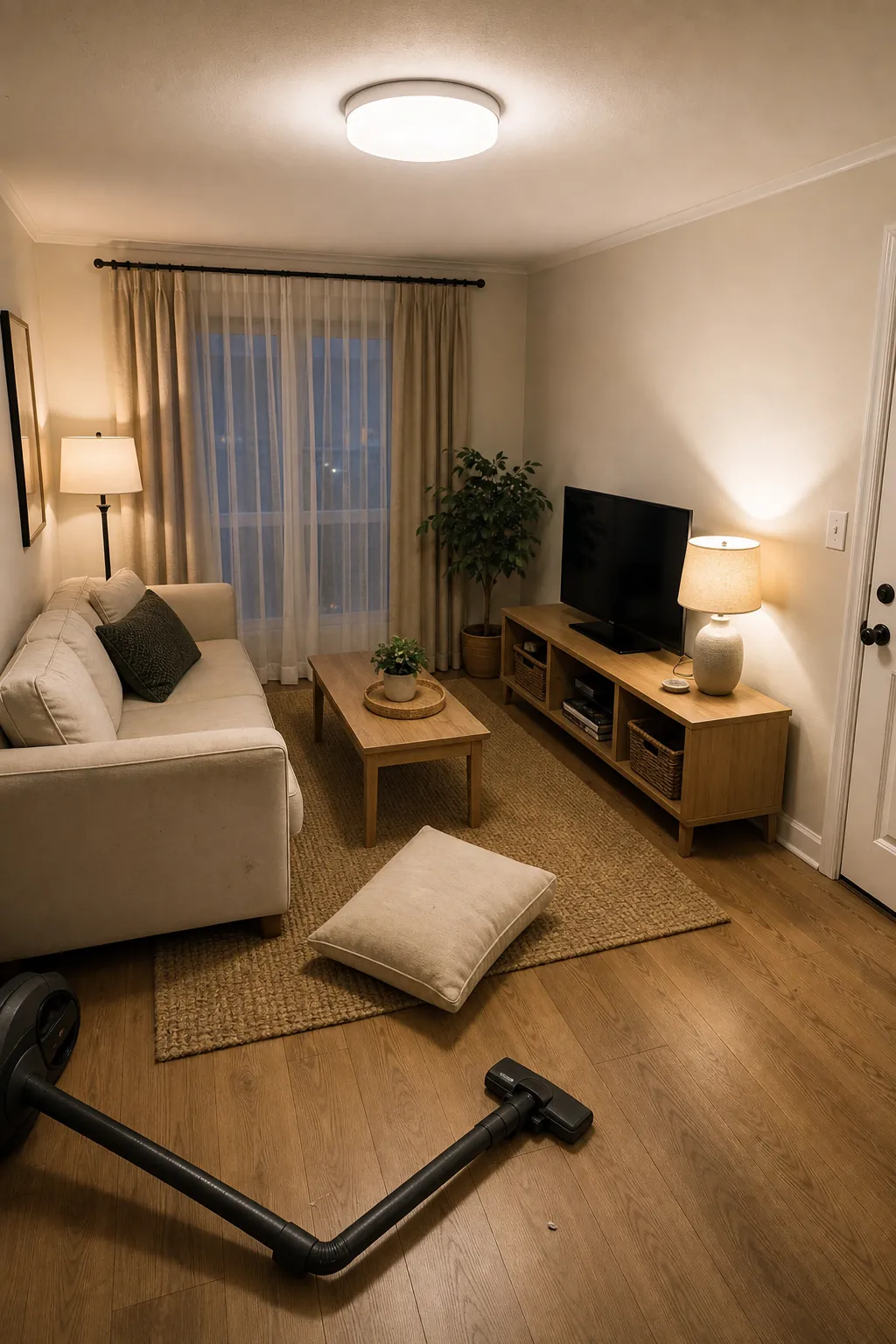
Separate Conversation Light From Cleaning Light
Soft lamps are ideal for conversation but frustrating when you drop a small object or need to vacuum. Keep a brighter diffused ceiling or portable task mode for chores. Once the work is done, switch back to the lower layers. One scheme does not have to perform every job at the same time.
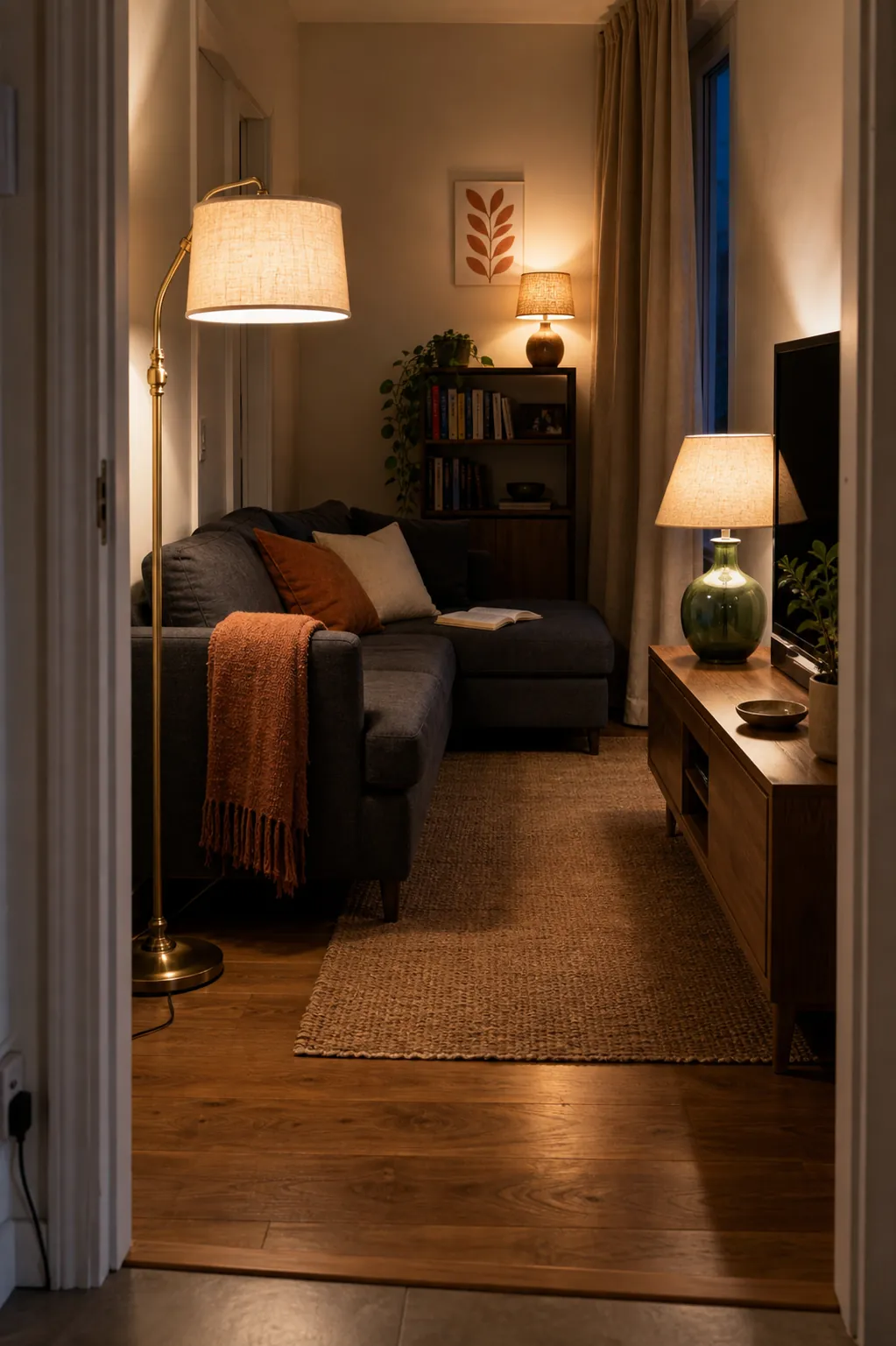
Create a Three-Lamp Evening Triangle
For a simple layered plan, place three modest sources at different heights and around different sides of the room: perhaps a floor lamp by the sofa, a low console lamp, and a shelf or wall light opposite. From the doorway, the pools should form a loose triangle rather than a bright row.
Test the Room From Every Seat
A fixture that looks perfect from the doorway may expose a bulb from the armchair or reflect in the television from the sofa. Turn on the evening scene and sit in every normal position. Adjust shades, beam directions, dimmer levels, and mirror angles until no seat receives a harsh bright point.
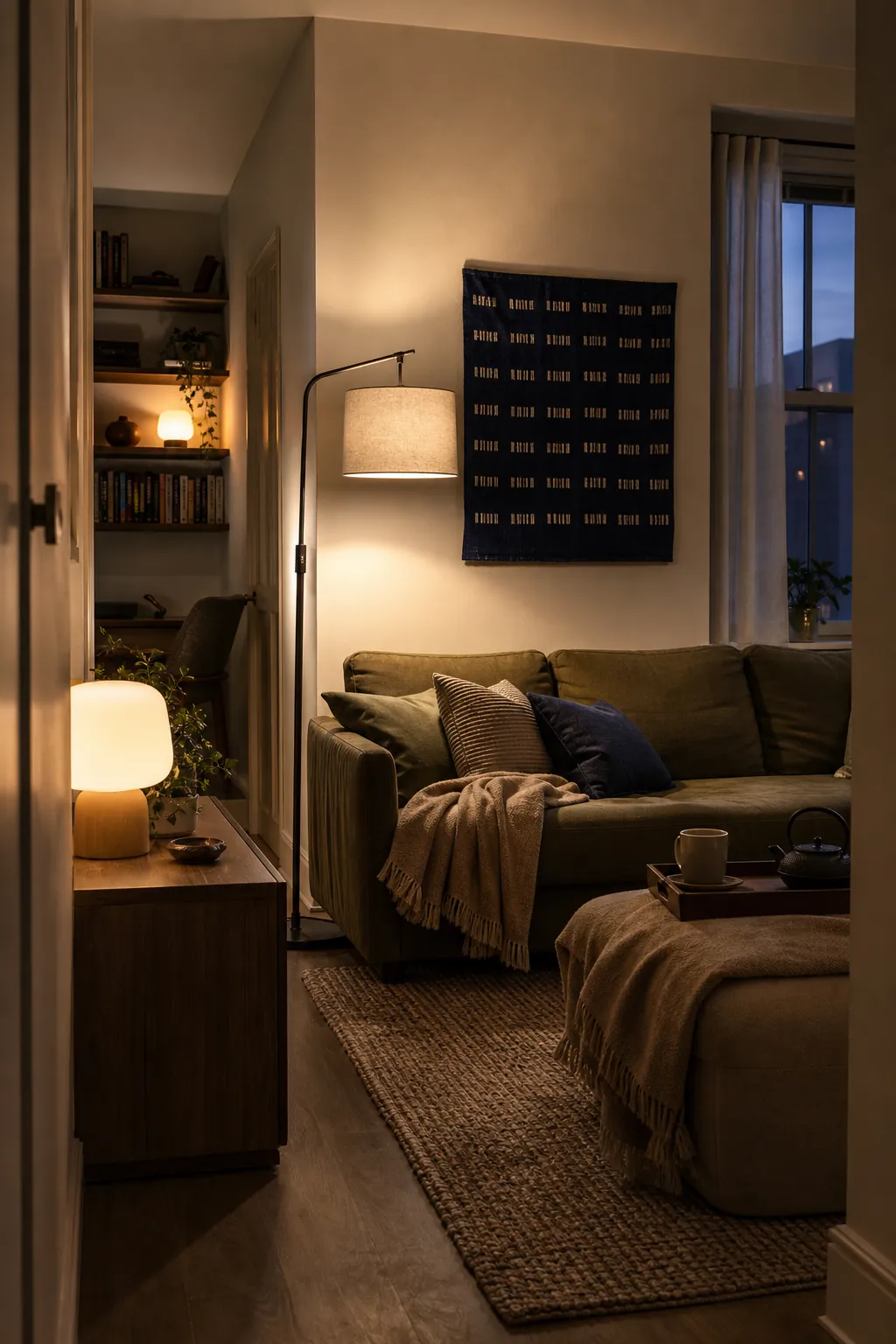
Build the Final Scene One Light at a Time
Begin with the lamp that supports the main activity, usually reading or conversation. Add one source on the opposite side to reveal the room’s depth, then introduce wall glow only where a boundary still feels flat or a corner disappears. Stop before every surface is equally bright.
Photograph the room at night, then look for three problems: a visible bare bulb, a black hole beyond the sofa, or a cable crossing the route. Correct those before buying another fixture. The best small living room lighting plan feels useful from each seat, calm from the doorway, and effortless to switch on.