An entry mirror earns its place when it catches useful light, gives you a last look before leaving, and stays clear of the door swing. In a narrow hall, the wrong frame depth or furniture pairing can make that simple task awkward. Start with the wall you can actually approach, then choose a shape and setting that suit the way your household enters and leaves.
Slim Rectangle Beside the Front Door
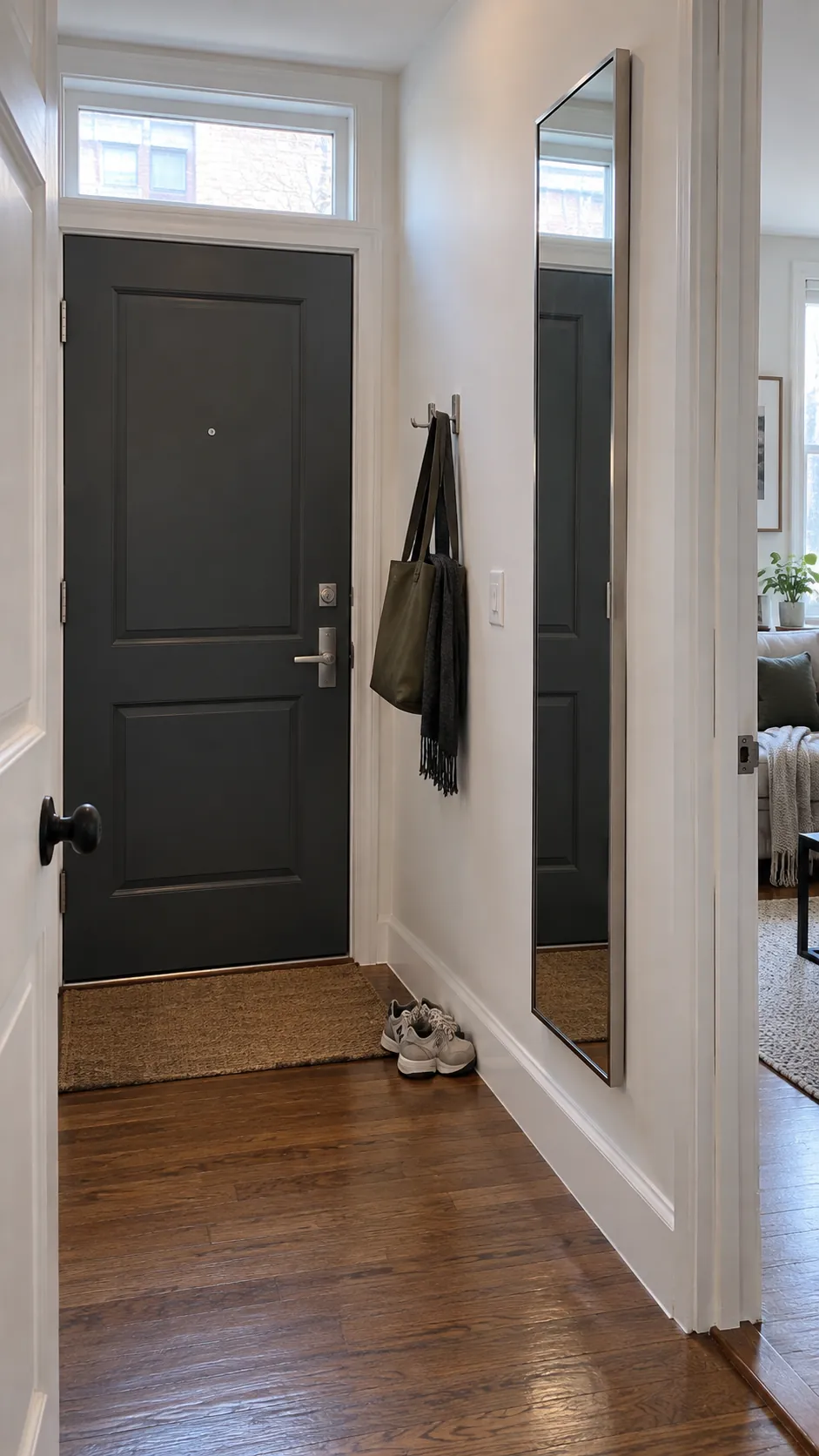
A narrow rectangular mirror gives a quick face check without consuming the full wall. Place it on the latch side if the open door would cover the hinge side, and leave room for the handle to move freely. A shallow frame keeps the passage comfortable when coats and bags pass by.
Round Mirror Above a Console
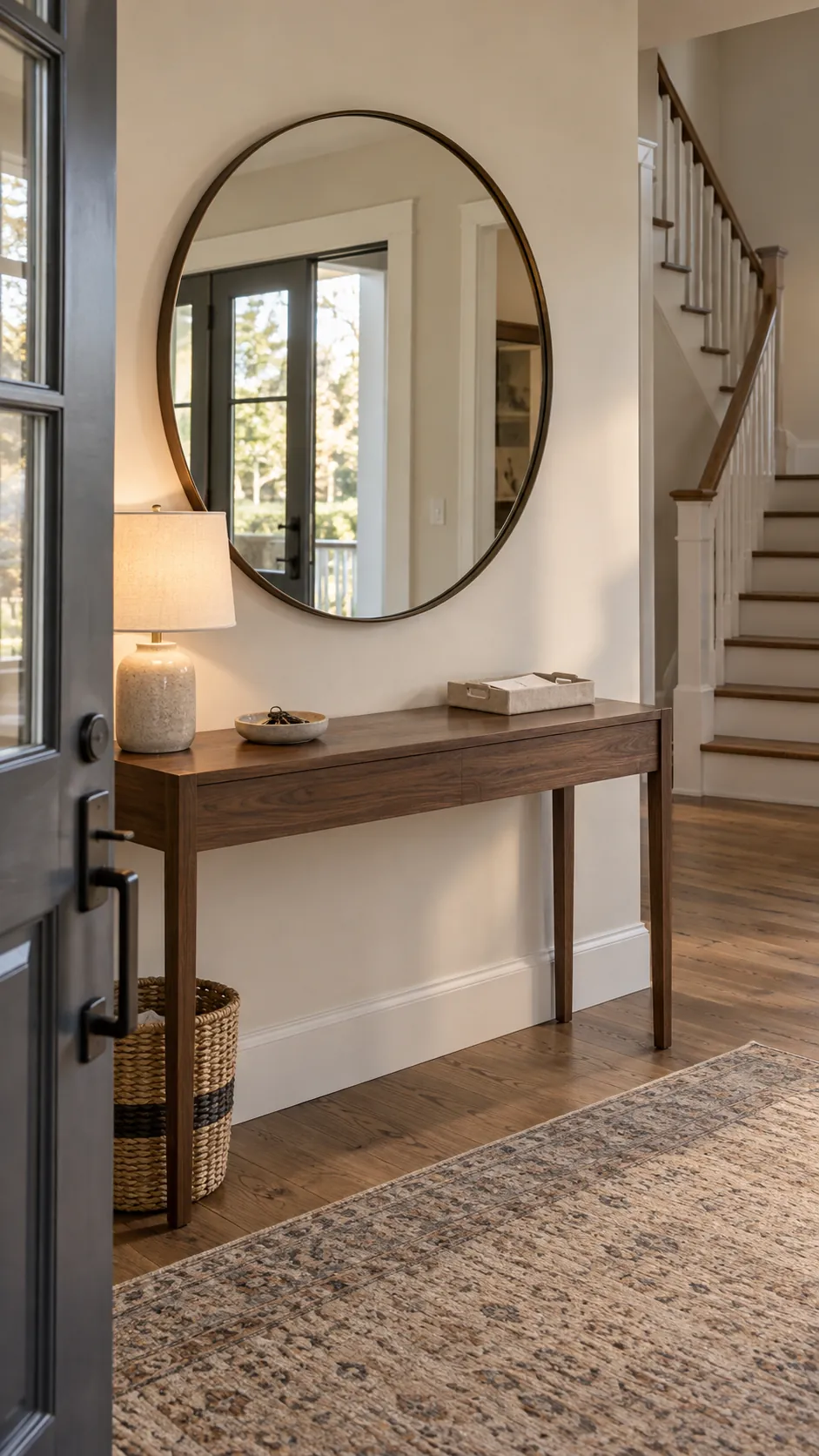
A round mirror softens the straight lines of a console and a doorway. Choose a diameter that feels substantial above the tabletop, while leaving visual breathing room on either side. Keep the key dish low so its reflection does not become the first thing you see.
Full Length Mirror for the Final Outfit Check
Give a full length mirror a clear standing spot so shoes and a bag do not block the view. Mount it on a wall away from the door swing, and test the sightline from the place where you naturally pause. Fasten a tall or leaning mirror securely according to its hardware instructions, especially around children and pets.
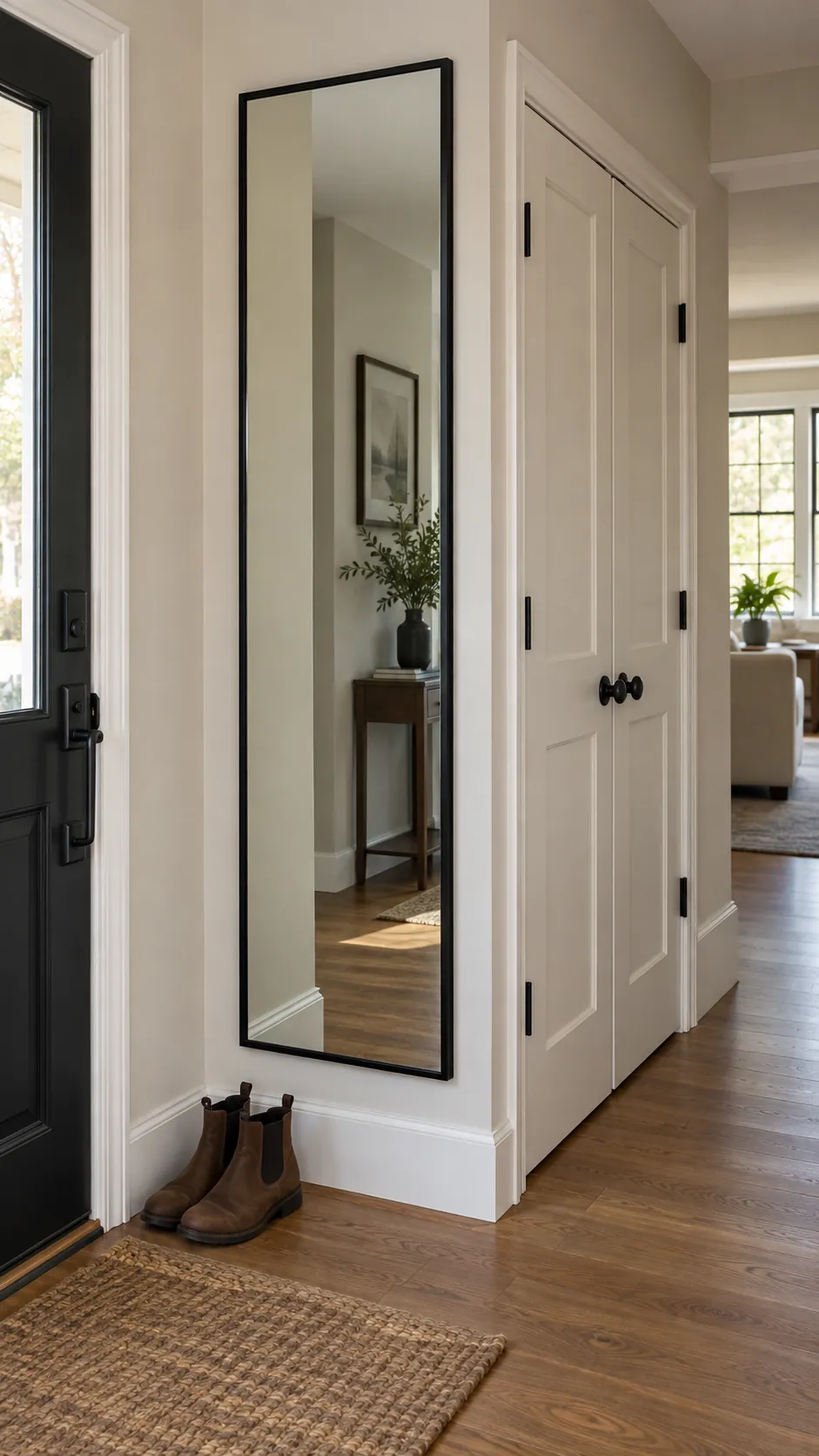
Arched Mirror in a Square Foyer
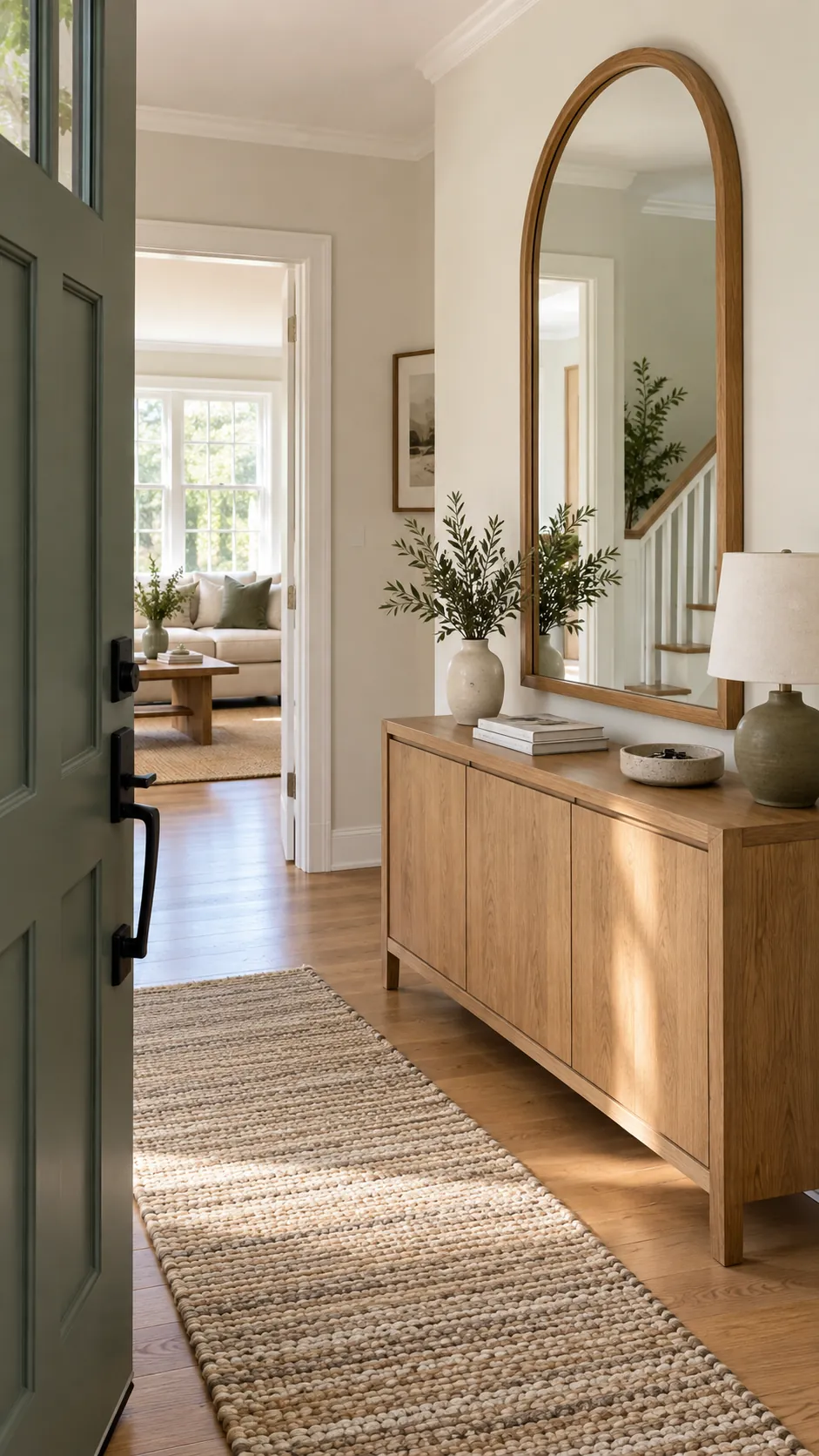
An arch introduces a softer silhouette when the foyer is all straight edges. Center it over a low cabinet to keep the curve visible rather than burying it behind tall objects. The shape reads best when the adjacent wall has enough empty space to show its outline.
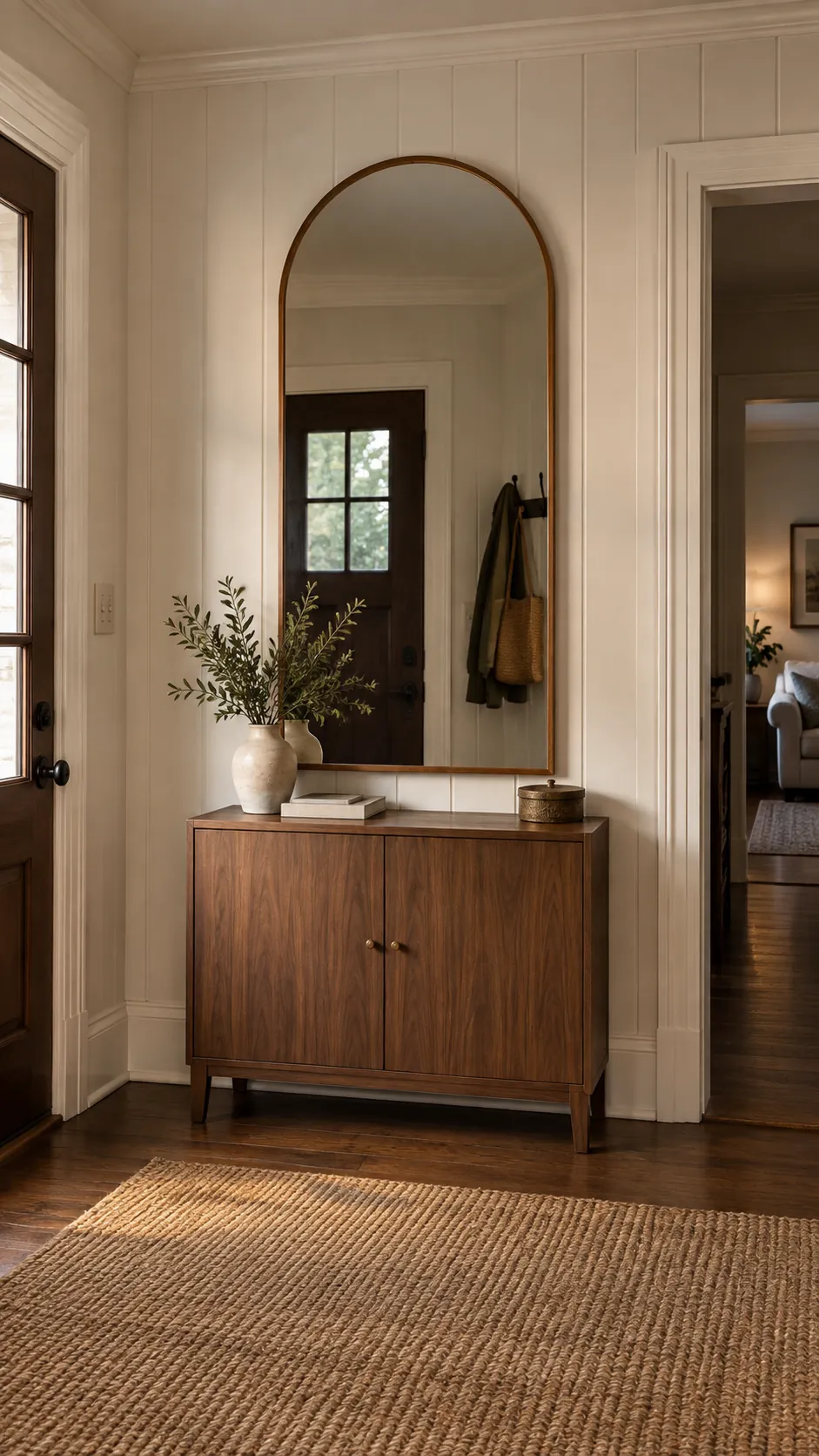
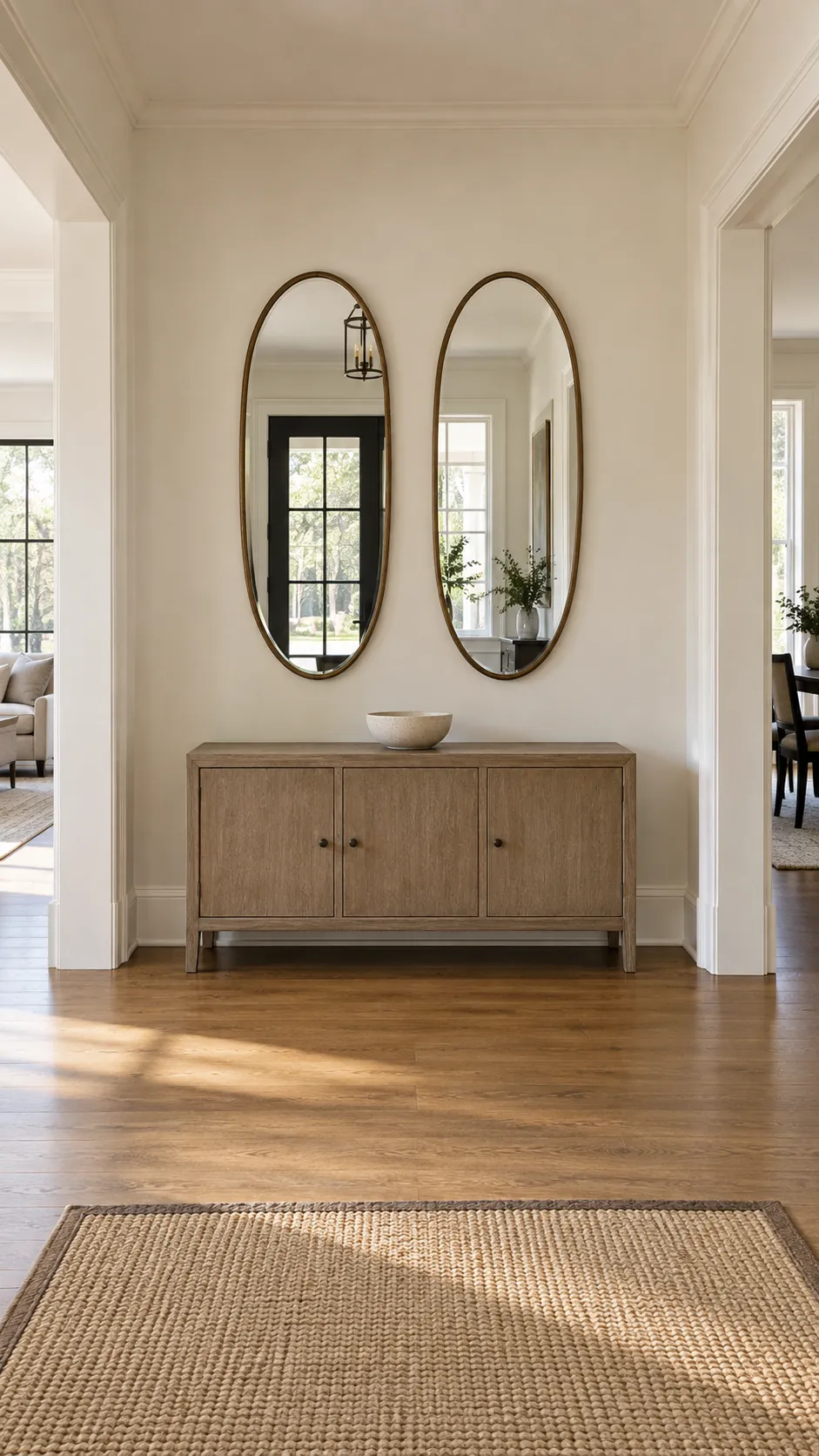
Oval Mirror Between Two Doorways
A vertical oval fits a narrow strip of wall that would crowd a wider round mirror. Check the trim clearance at both sides before buying, since a frame can be wider than the reflective glass. Its long shape draws the eye upward without asking for a large piece of furniture beneath it.
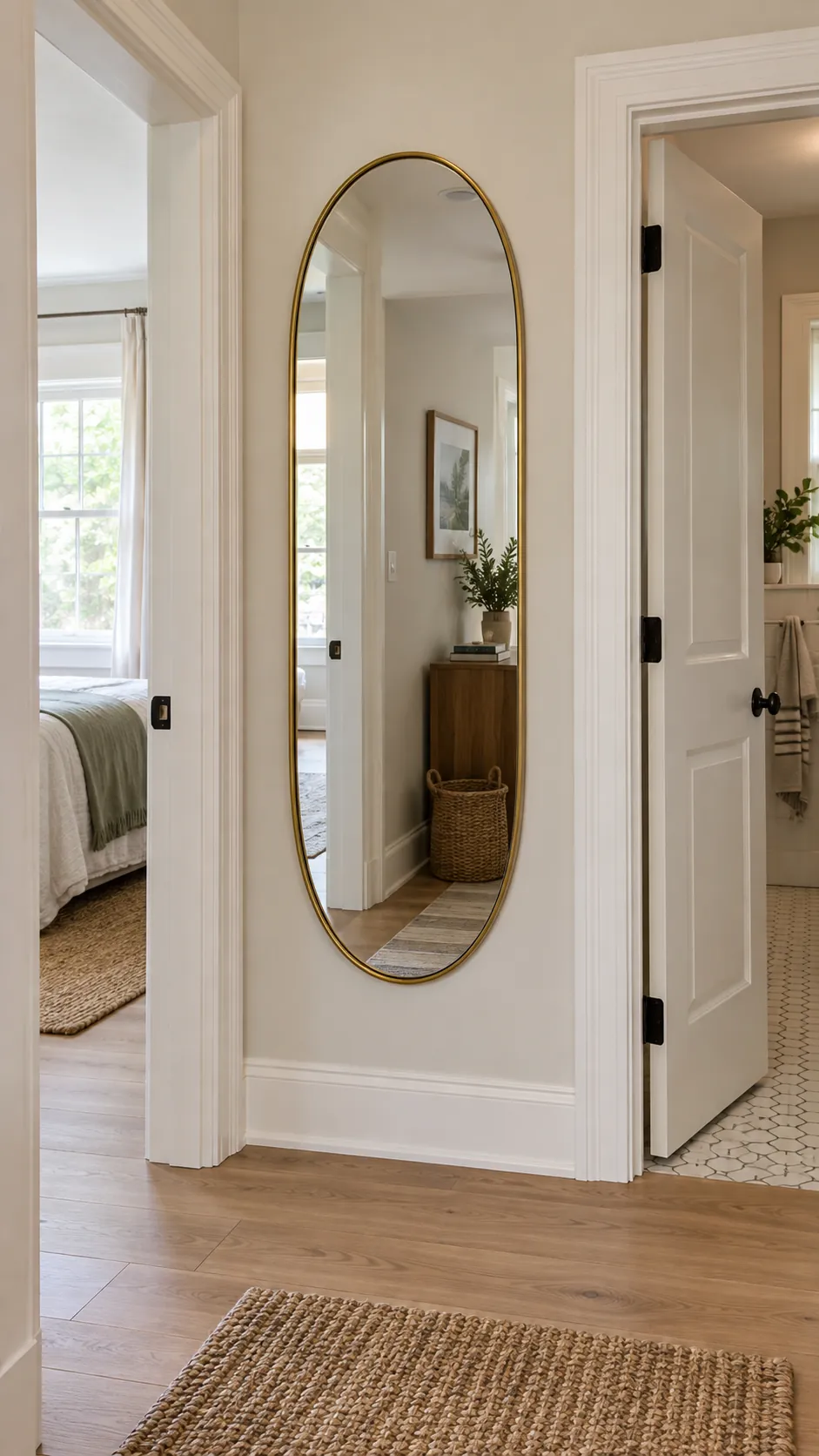
Windowpane Mirror for a Dim Hall
A divided mirror can suggest the rhythm of a window where the entry has none. Position it to catch light from an actual room opening rather than reflecting a dark closet. Choose simple muntins so the reflection stays useful for a quick check.
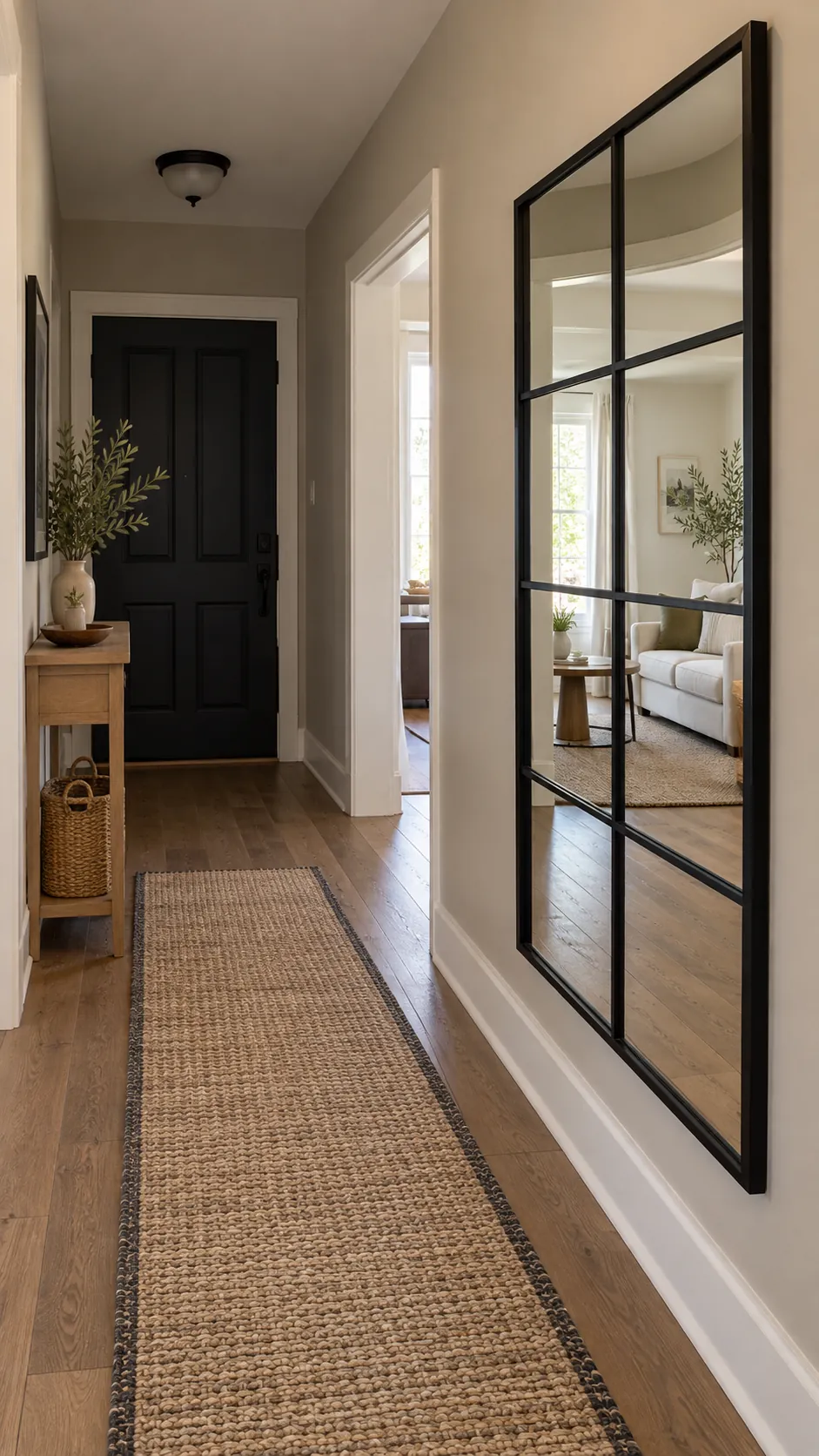
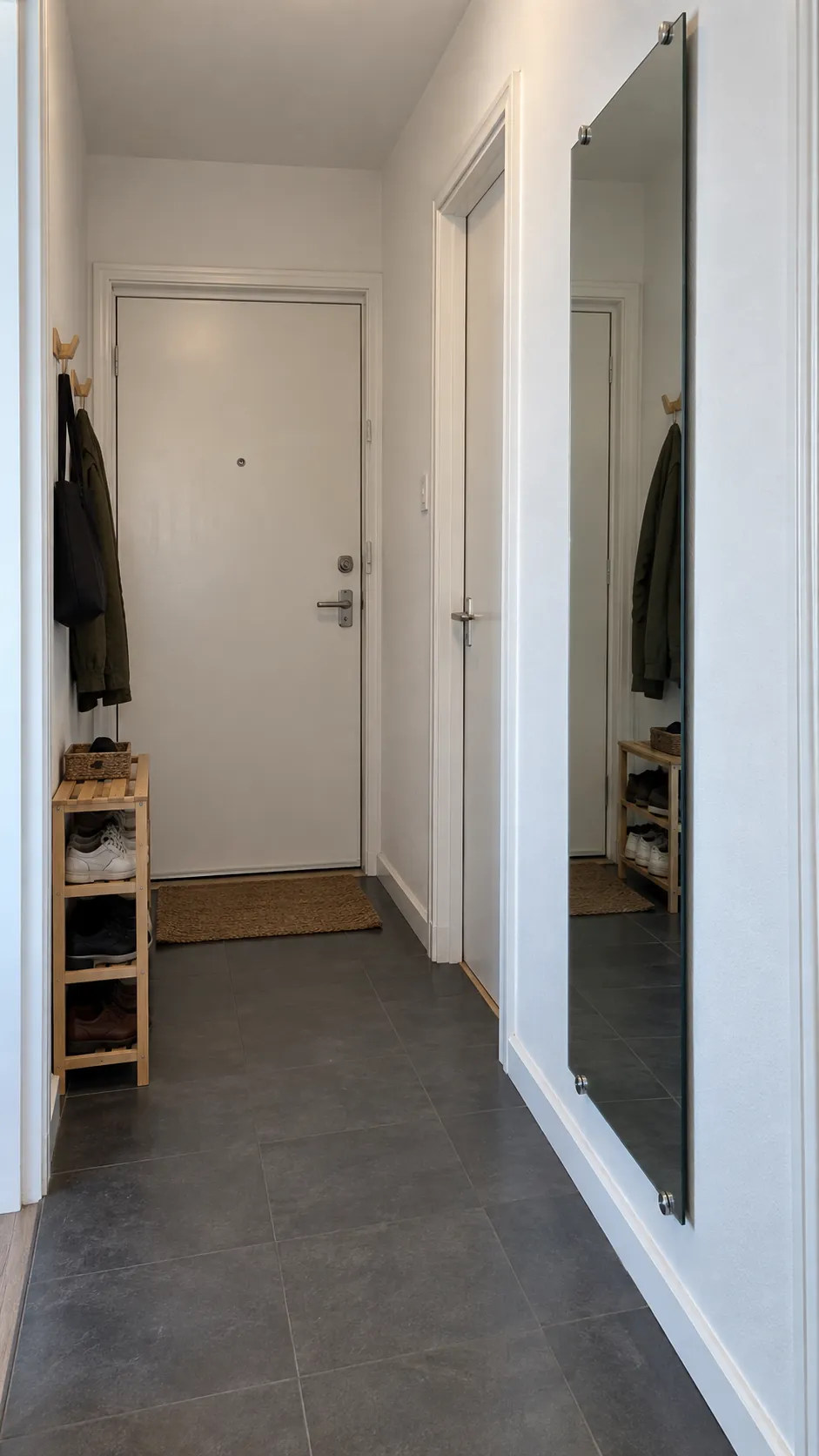
Frameless Mirror for Tight Clearance
A frameless panel makes a constrained entrance feel visually quieter. Look for polished edges and mounting hardware suited to the wall material. Before fixing it in place, tape out its dimensions and confirm that a shoulder or tote will not brush the edge.
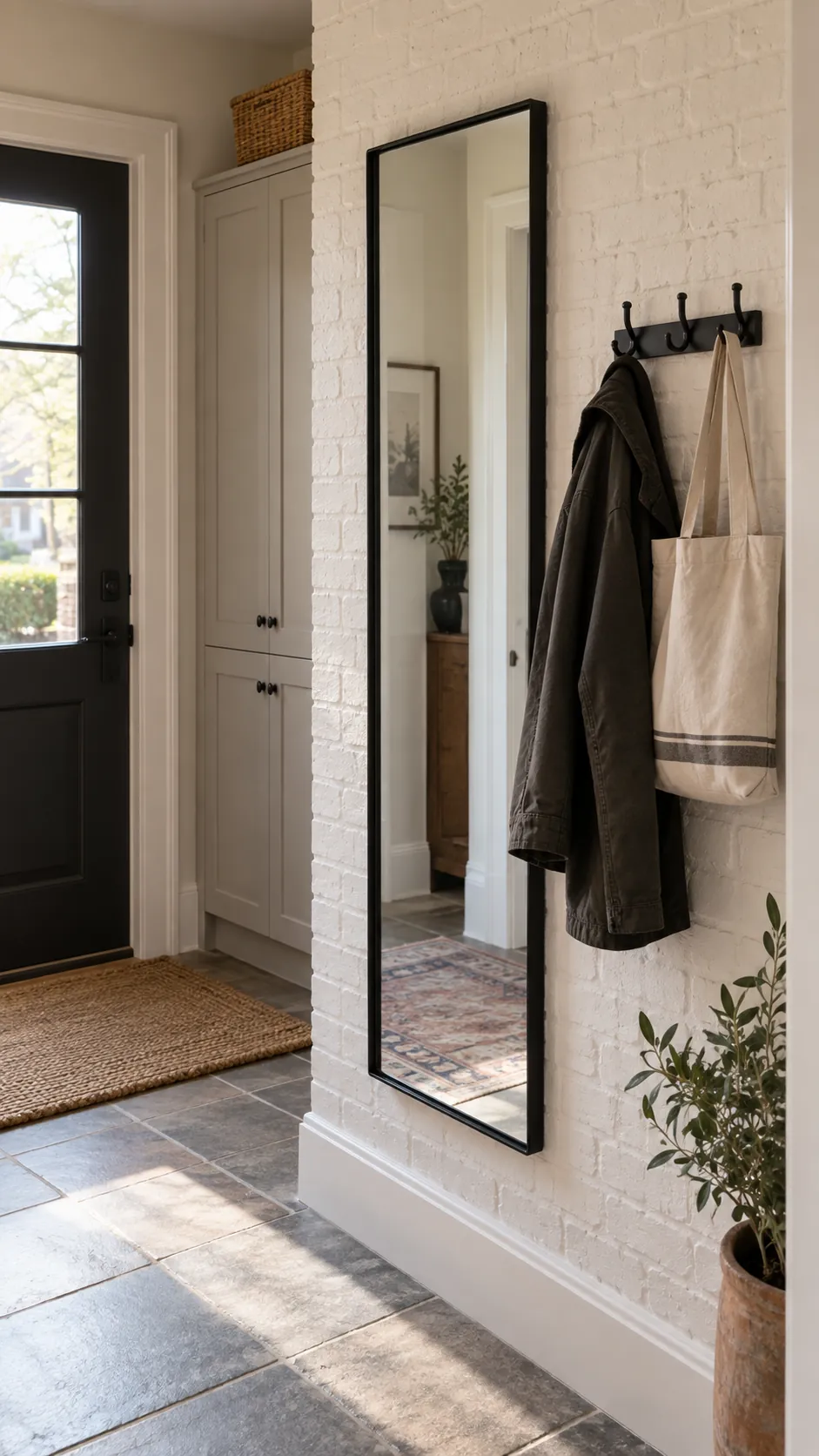
Black Metal Frame With Simple Hooks
A thin black frame can connect a mirror to dark door hardware without making the wall feel heavy. Put a short row of hooks beside, rather than directly below, the glass if hanging coats would hide the reflection. Keep everyday bags within reach but clear of the walking line.
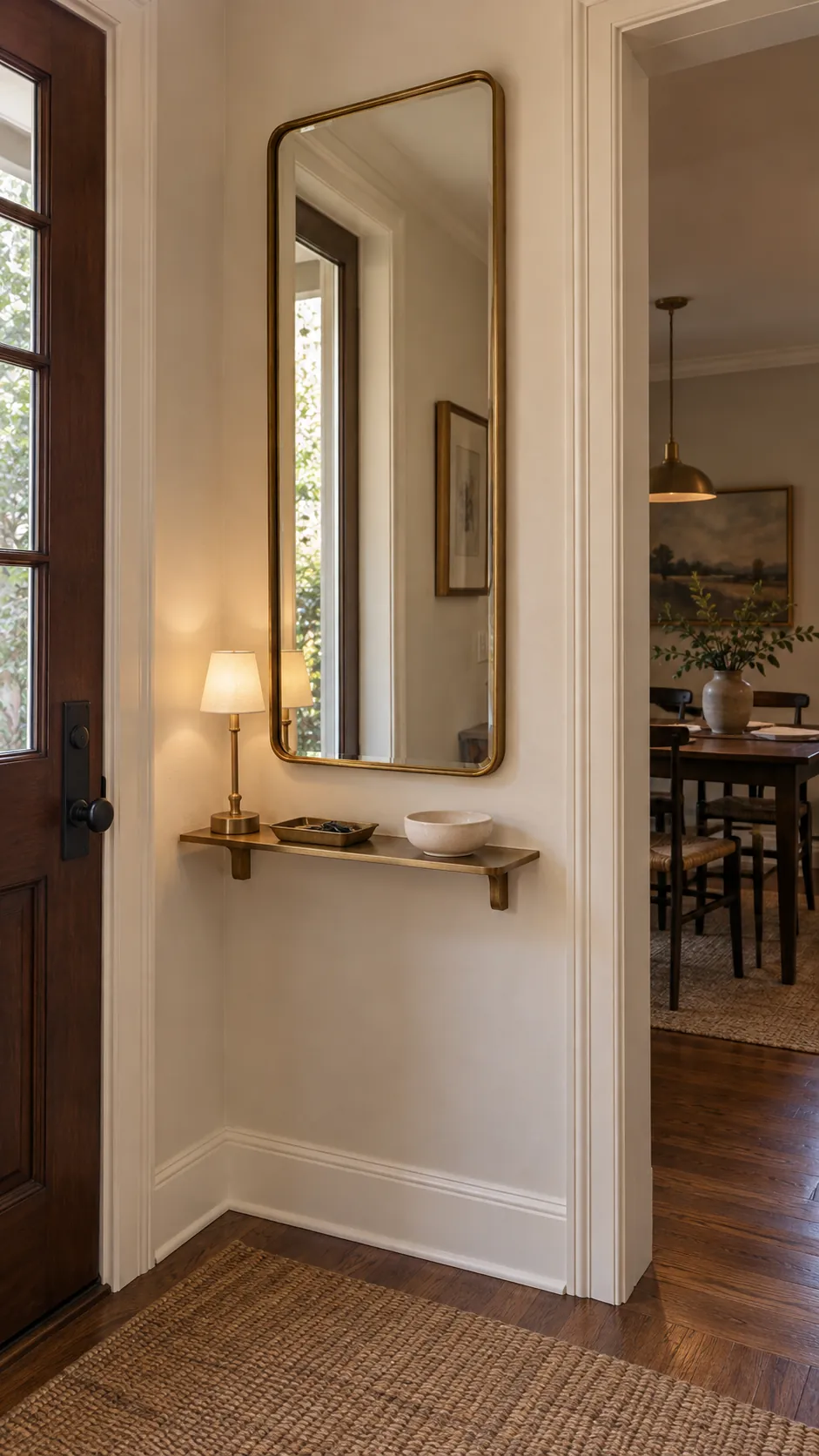
Warm Brass Mirror Against Pale Walls
A muted brass edge adds warmth to a pale entry without requiring several metallic accents. Repeat the finish once in a small lamp or key tray for a coherent look. If the entrance receives strong sun, view a sample at different times before choosing a highly reflective finish.
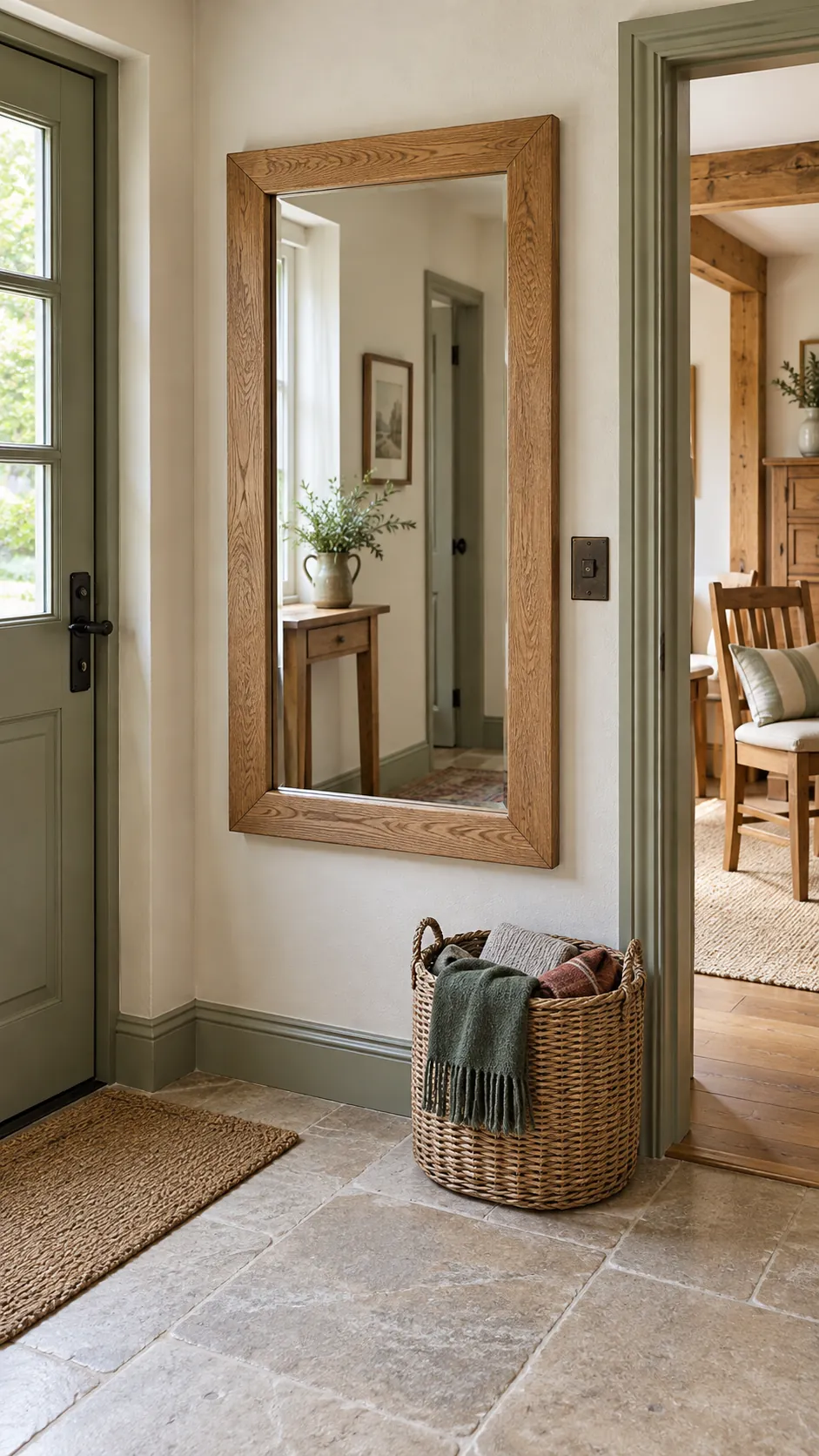
Oak Frame With a Woven Basket
A natural wood frame works well when the entry opens into a room with visible timber furniture. Pair it with one sturdy basket for scarves or dog gear, rather than filling the floor with smaller containers. Leave enough exposed wall around the mirror so its material remains noticeable.
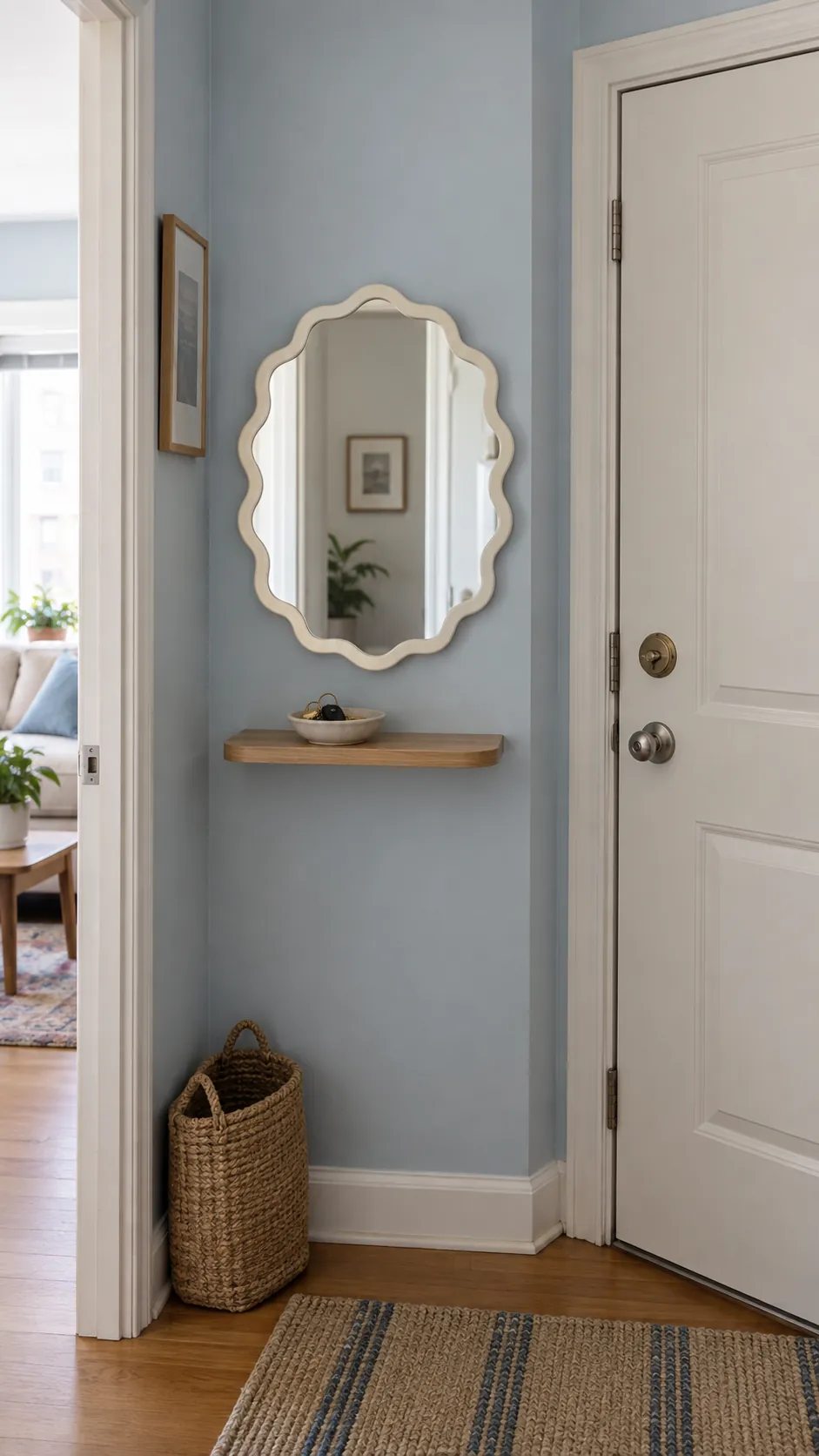
Scalloped Mirror as a Small Accent
A scalloped edge gives a compact entry a clear focal point without adding depth. Let that shape do the decorative work and keep nearby accessories plain. Check the actual reflective area, because a wide ornamental frame can leave less mirror than expected.
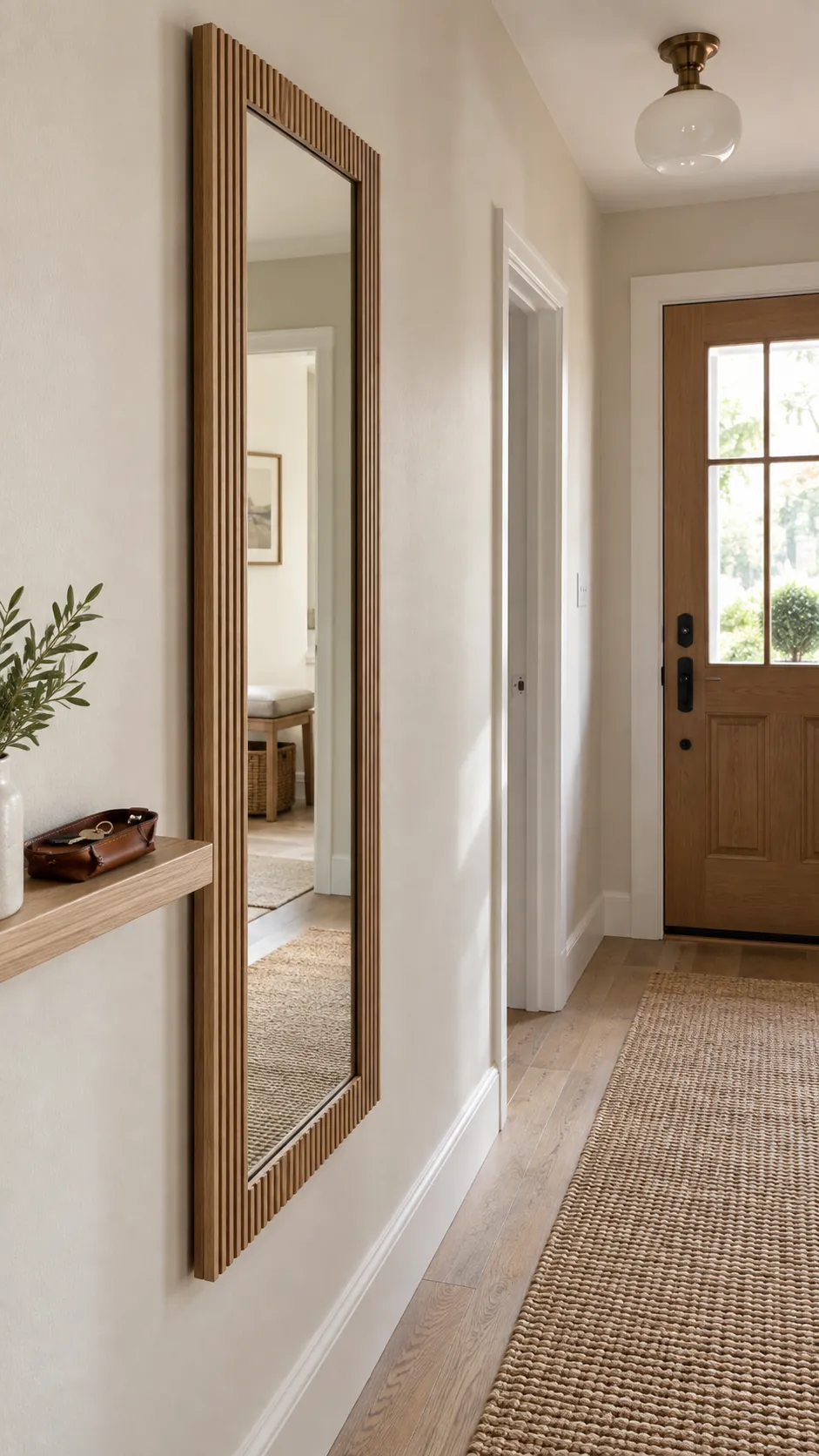
Fluted Frame in a Quiet Neutral Entry
Fine fluting brings texture to a neutral wall while keeping the mirror useful. A restrained frame works better here than a deeply carved one that projects into circulation space. Let side lighting reveal the grooves and keep competing patterns to a minimum.
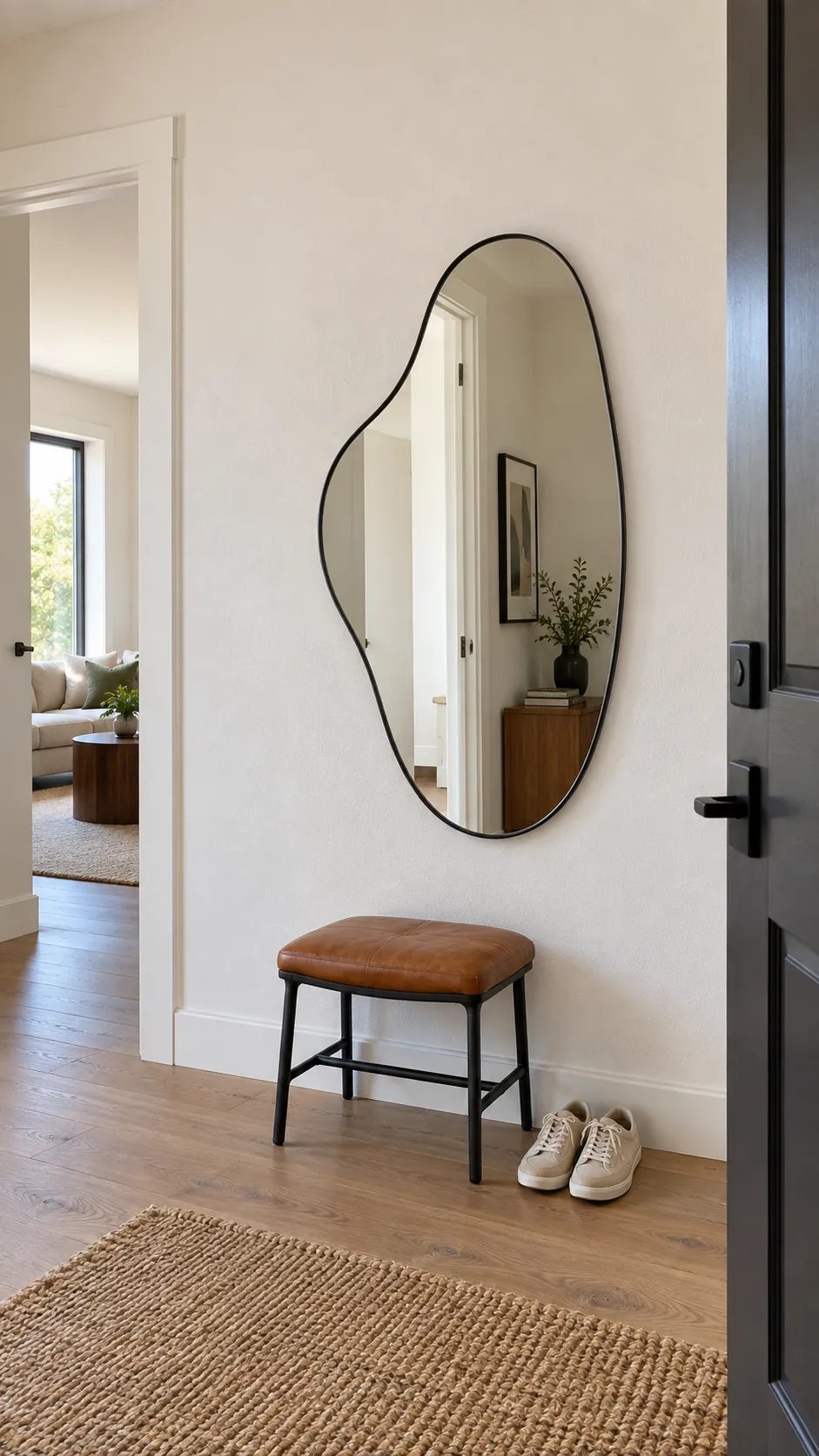
Asymmetrical Mirror on an Empty Wall
An irregular outline can make a blank entry wall feel intentional. Balance it with a simple low stool or a single wall hook instead of trying to center every object. Mock up its overall shape with paper first, since unusual edges are difficult to judge from product dimensions alone.
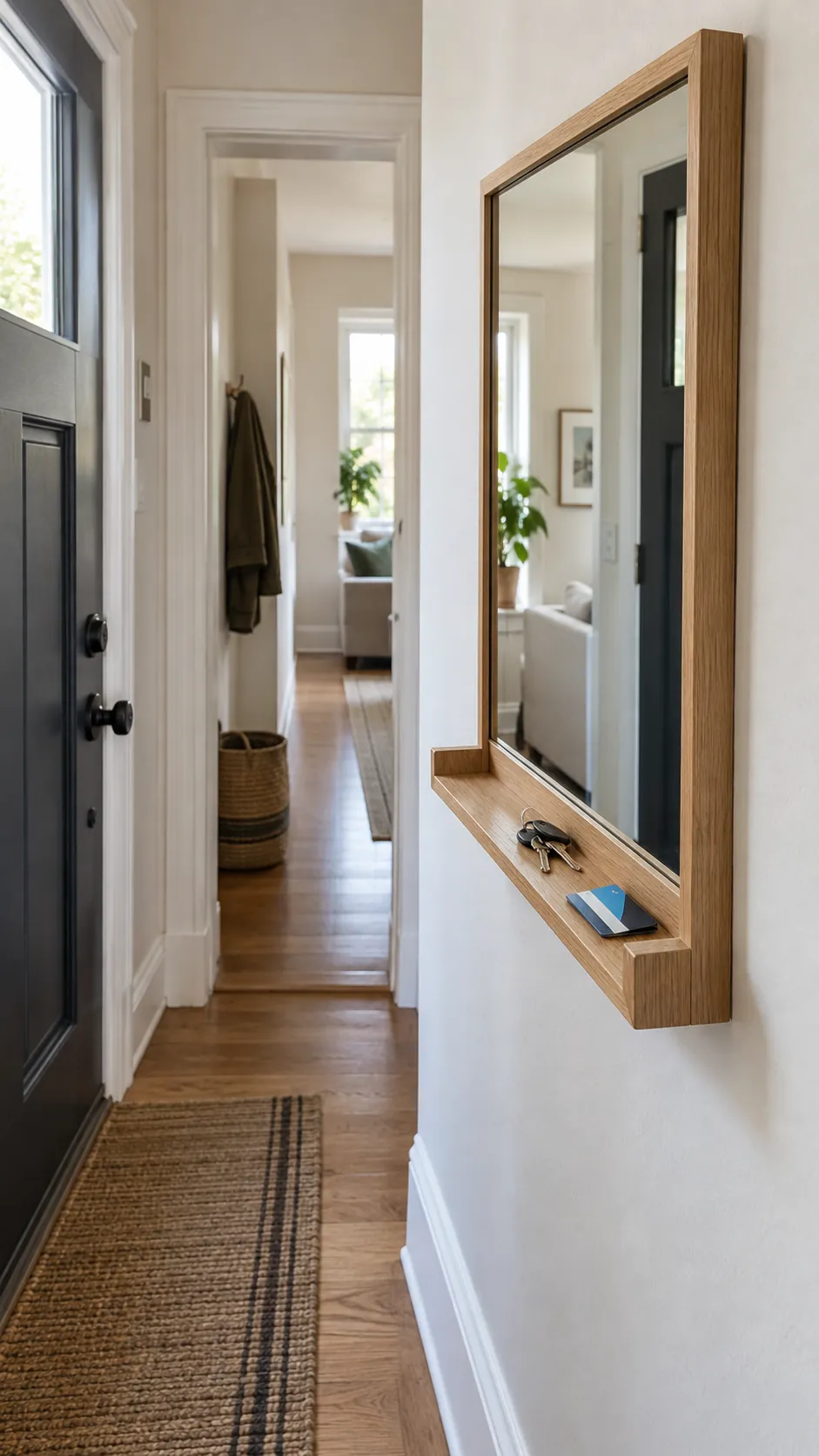
Mirror With an Integrated Ledge
A built in ledge can hold keys when a table would narrow the route. Check its depth against the hall clearance and reserve it for only a few objects. If the ledge is part of the mirror frame, follow the maker’s load guidance rather than treating it like a full shelf.
Mirror Above a Closed Shoe Cabinet
A closed cabinet hides shoes that would otherwise dominate the mirror’s reflection. Choose a cabinet shallow enough for the walkway and leave its doors room to open. Center the mirror over the usable cabinet width, not necessarily the entire wall.
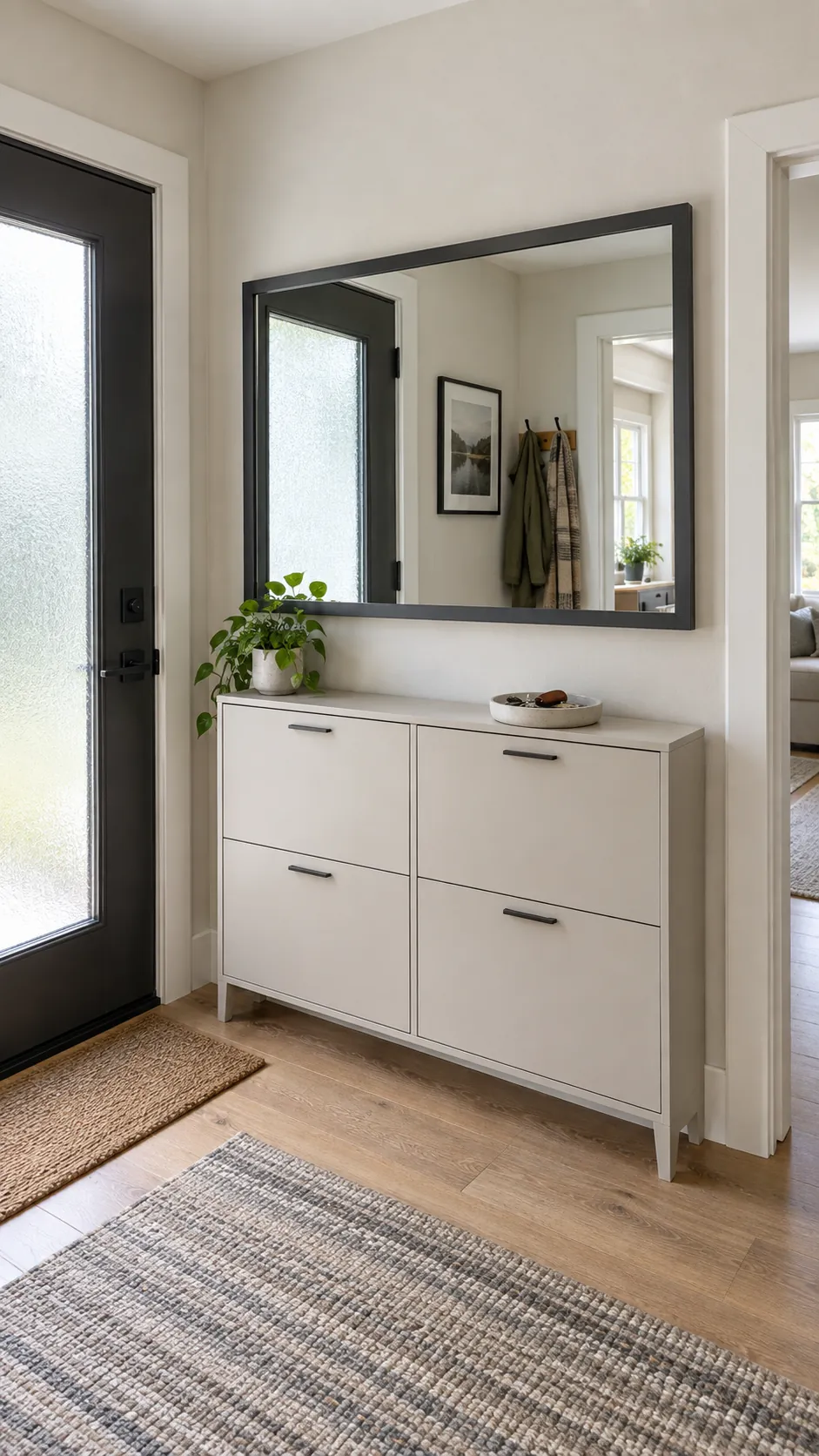
Mirror Behind a Compact Entry Bench
A bench gives people a place to sit while taking off shoes, while the mirror serves a separate standing moment. Hang the glass high enough that the bench back or cushions do not conceal it. Try sitting and standing in the space before finalizing both heights.
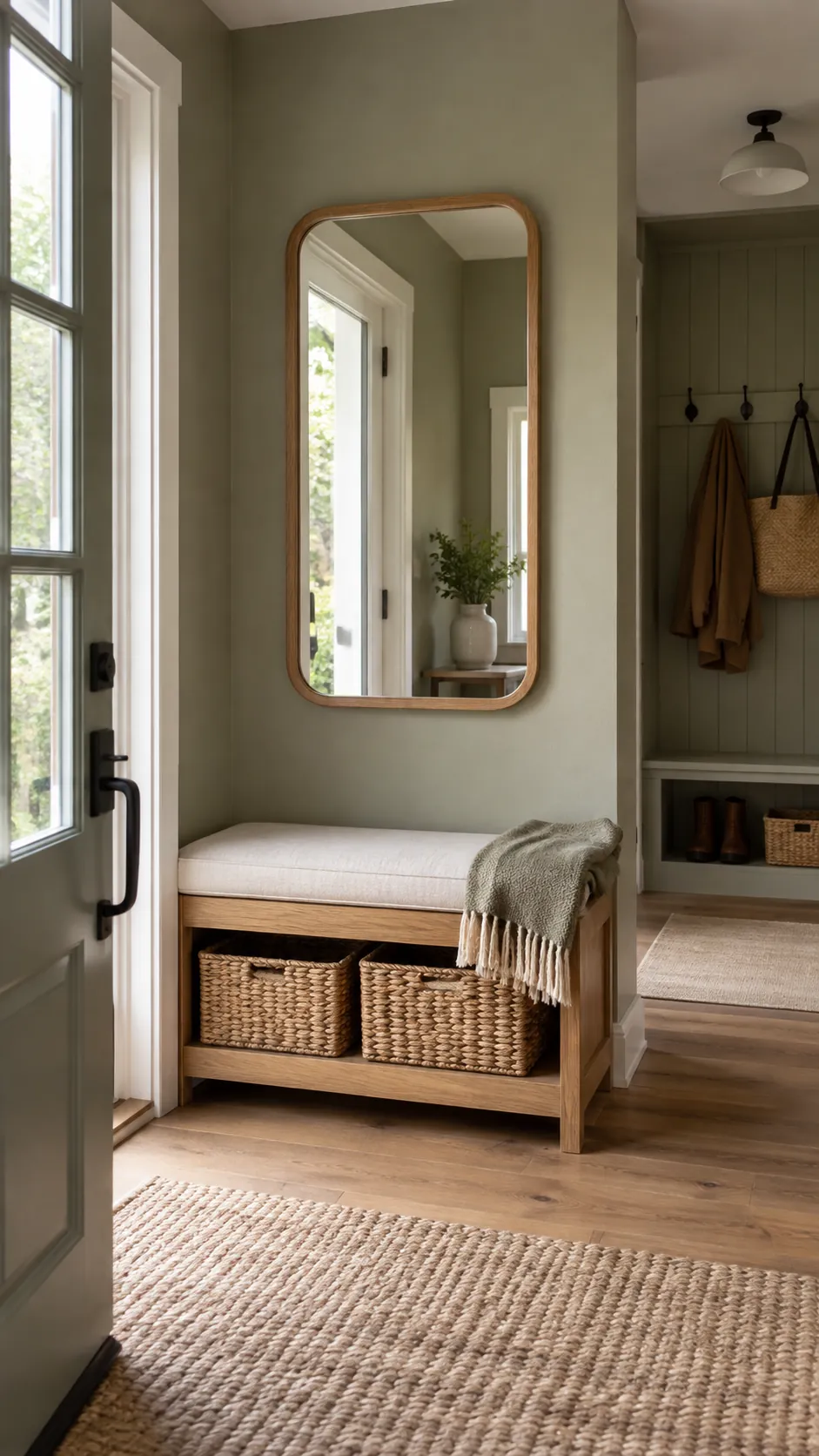
Corner Mirror Near a Stair Landing
A mirror on a short return wall can be useful when the main entry wall is occupied by doors. Keep it outside the stair handrail path and check reflections from both directions. A simple shape avoids turning a busy junction into a visual obstacle.
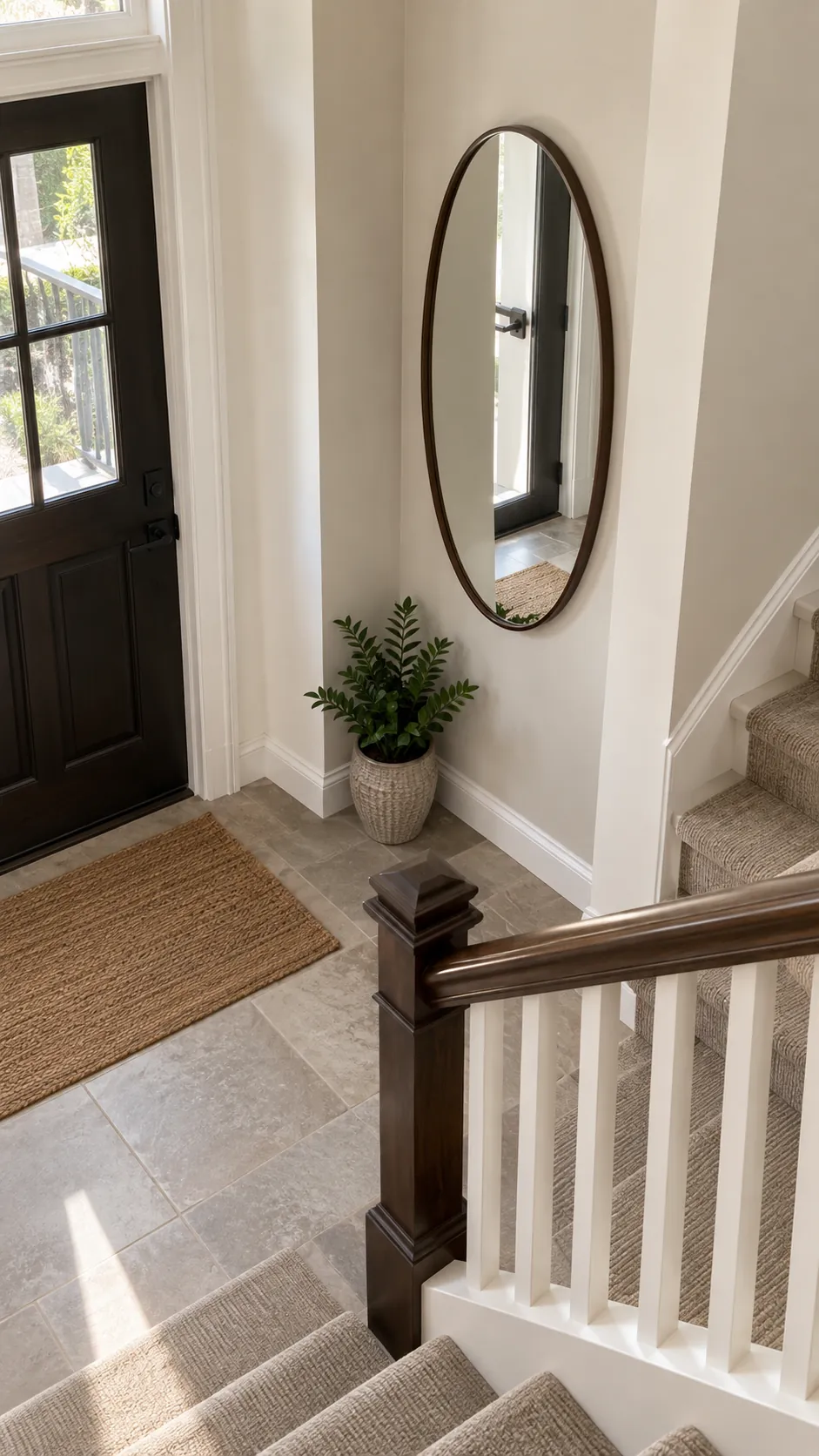
Mirror Facing a Side Window
Let a mirror borrow light from a window farther down the hall. Move a temporary mirror around before drilling so you can see what it reflects at eye level. A pleasant view or bright wall helps more than simply placing glass opposite any opening.
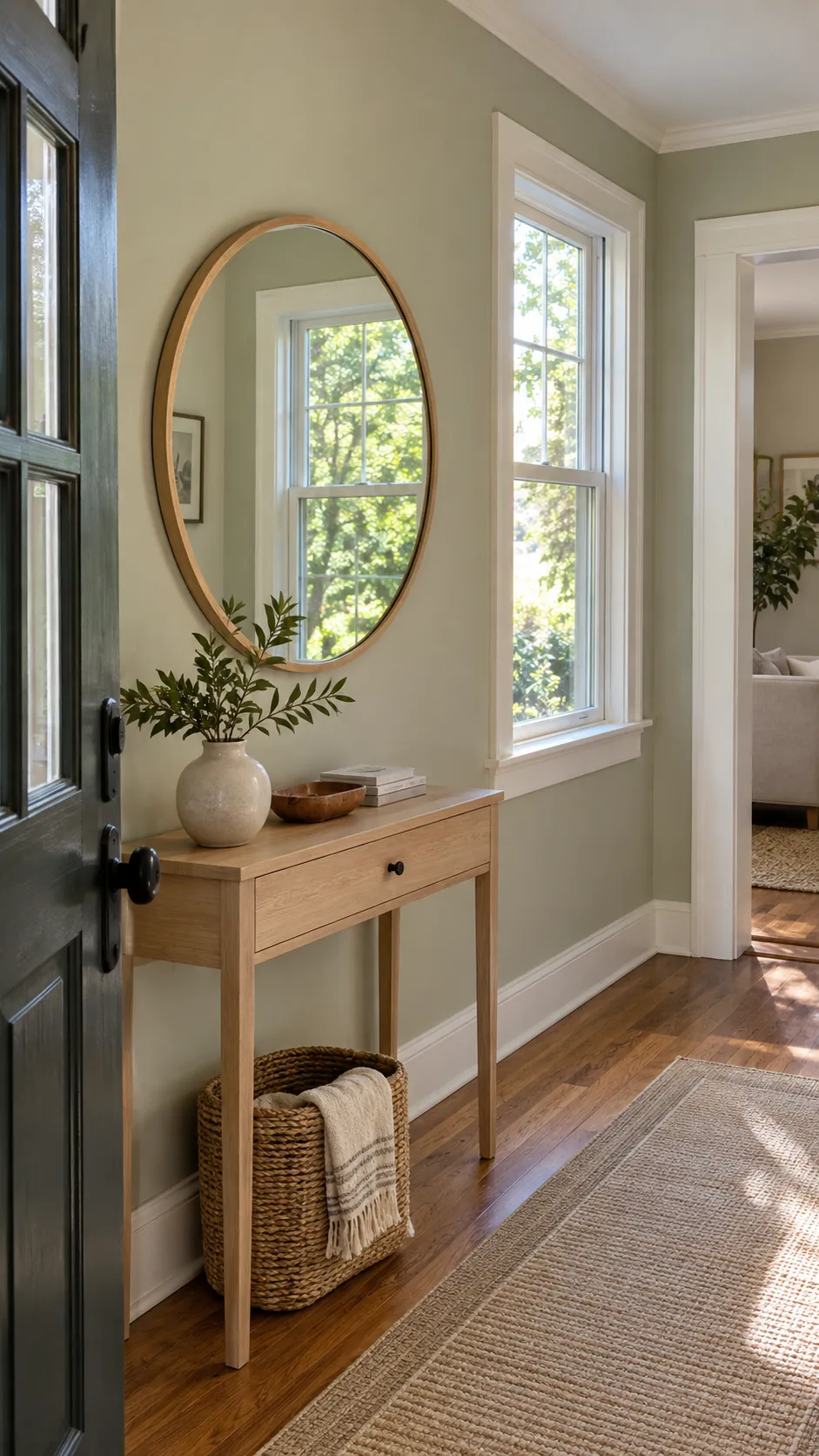
Mirror at the End of a Long Hall
An end wall gives a long entrance a destination and a practical check point. Keep the surrounding wall quiet so the mirror reads clearly from the doorway. Confirm that it reflects something welcoming rather than a utility door or an untidy corner.
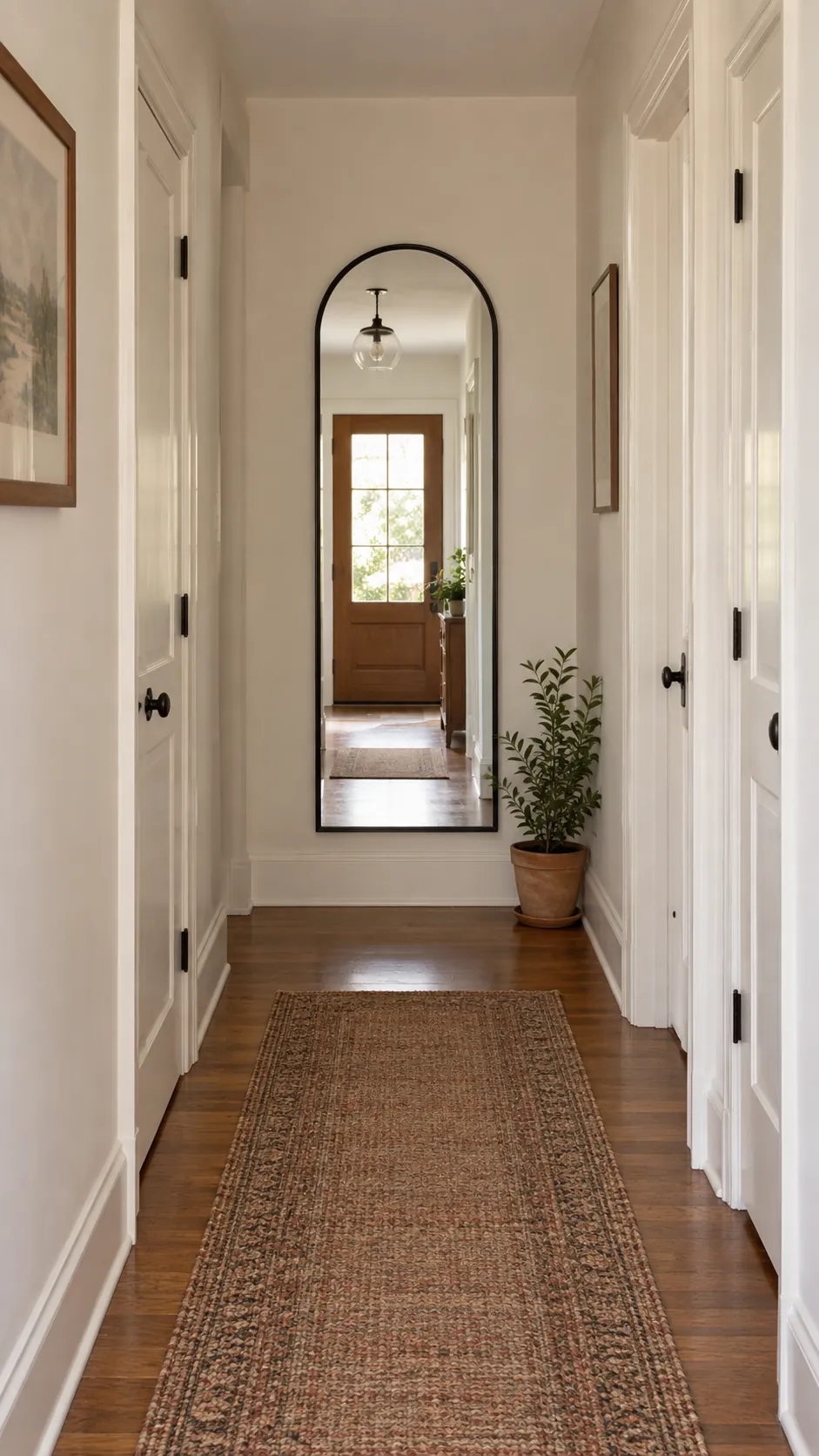
Mirror Between a Pair of Sconces
Two wall lights can brighten a mirror without relying on a ceiling fixture behind you. Keep their projection within the available passage width and place the light where it flatters a face rather than glaring in the glass. Have new wiring handled by a qualified professional where required.
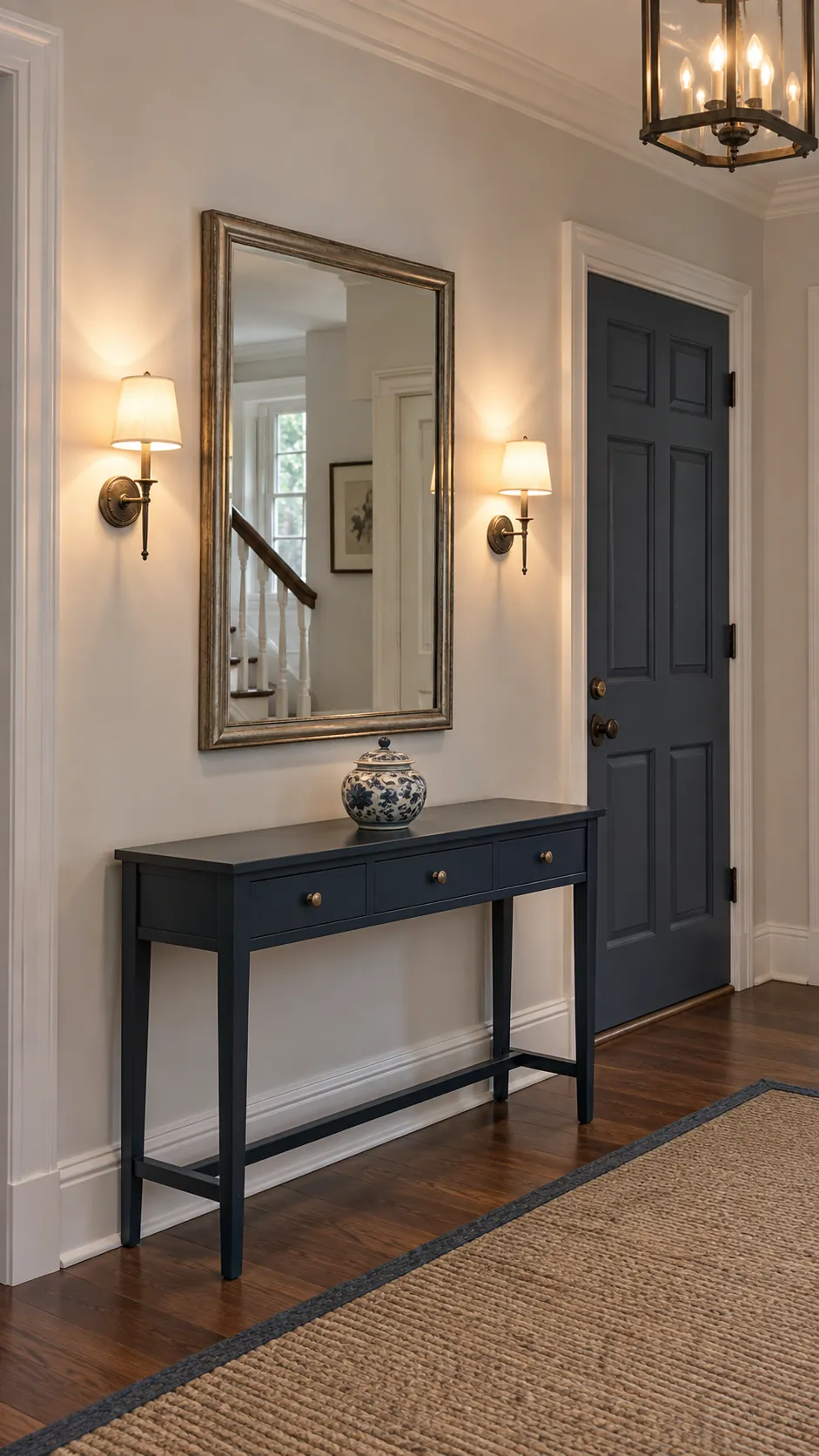
Picture Light Above a Traditional Mirror
A compact picture light draws attention to a framed mirror in a formal foyer. Test the beam angle so the bulb itself does not appear in the reflection. A warm, modest light level makes the entry comfortable without pretending to replace general illumination.
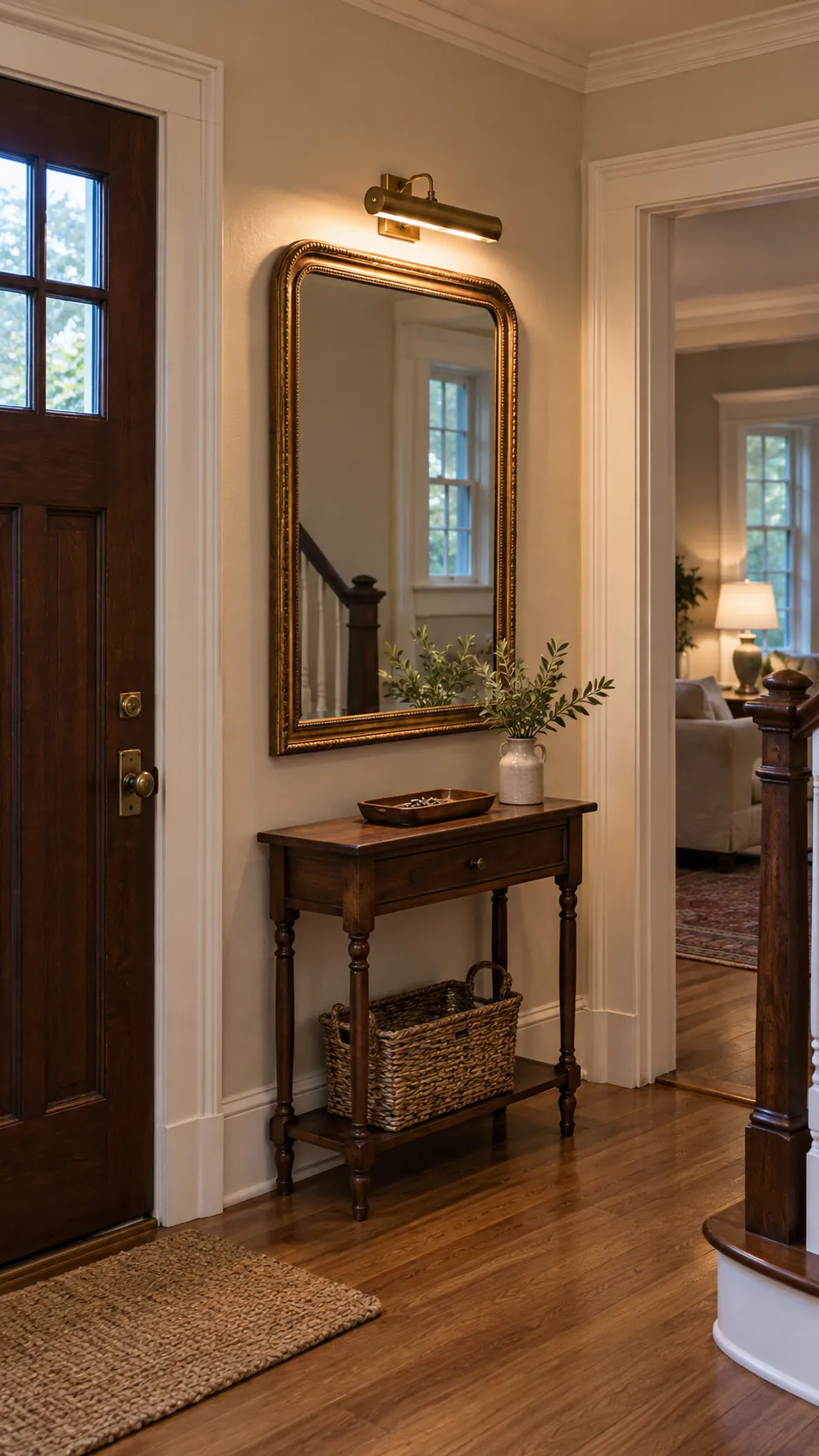
Mirror Within a Small Gallery Arrangement
Mix one mirror with a few personal photographs or prints to make a long wall more human. Establish a consistent gap between pieces and keep the mirror at a usable height. Choose artwork with a specific palette so the collection feels collected rather than crowded.
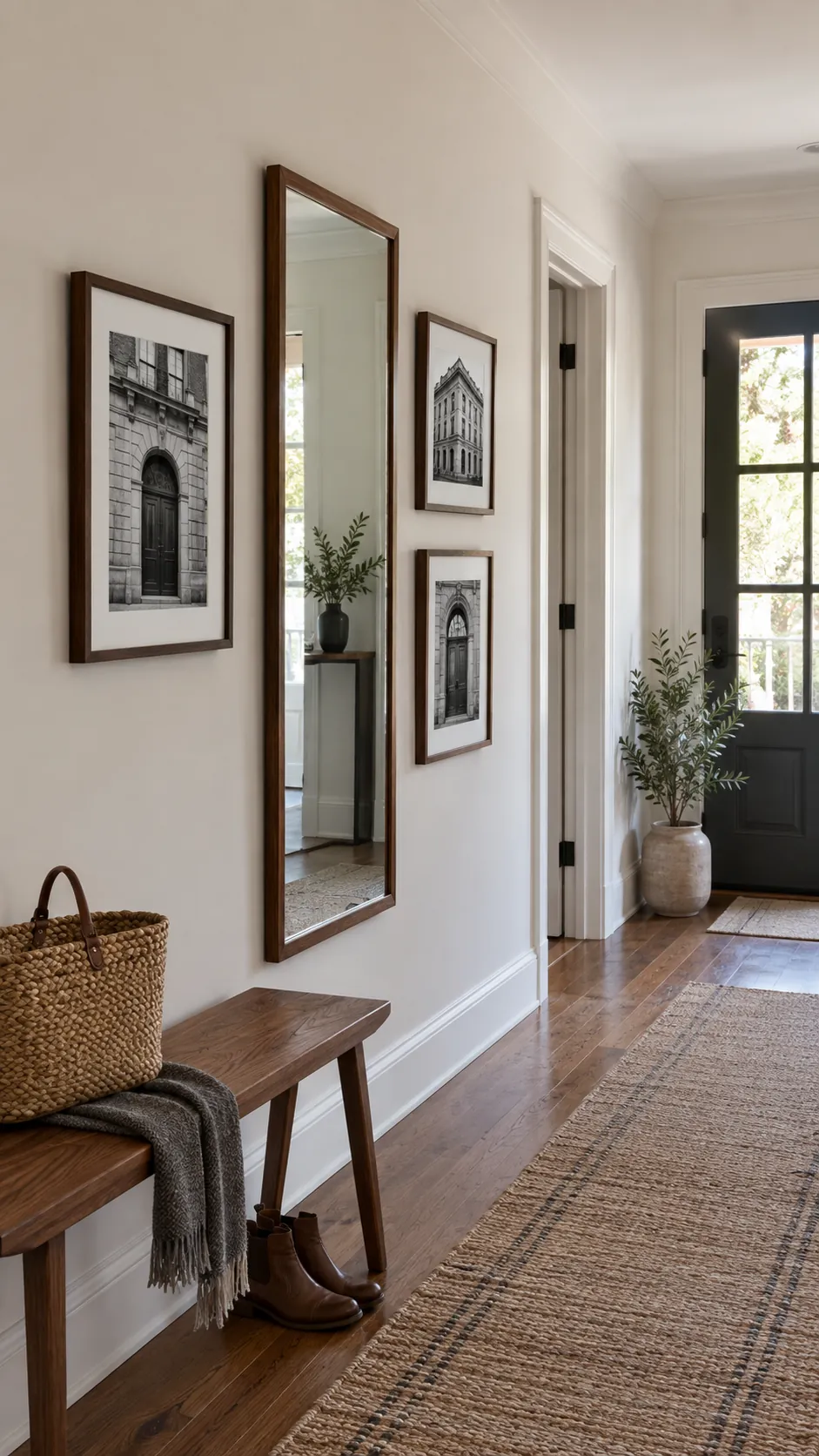
Two Matching Mirrors in a Wide Foyer
A pair can frame a centered cabinet or doorway in an unusually wide entrance. Measure the space between them as carefully as the outer margins. This arrangement needs open wall on both sides, so it is less suited to a narrow corridor.
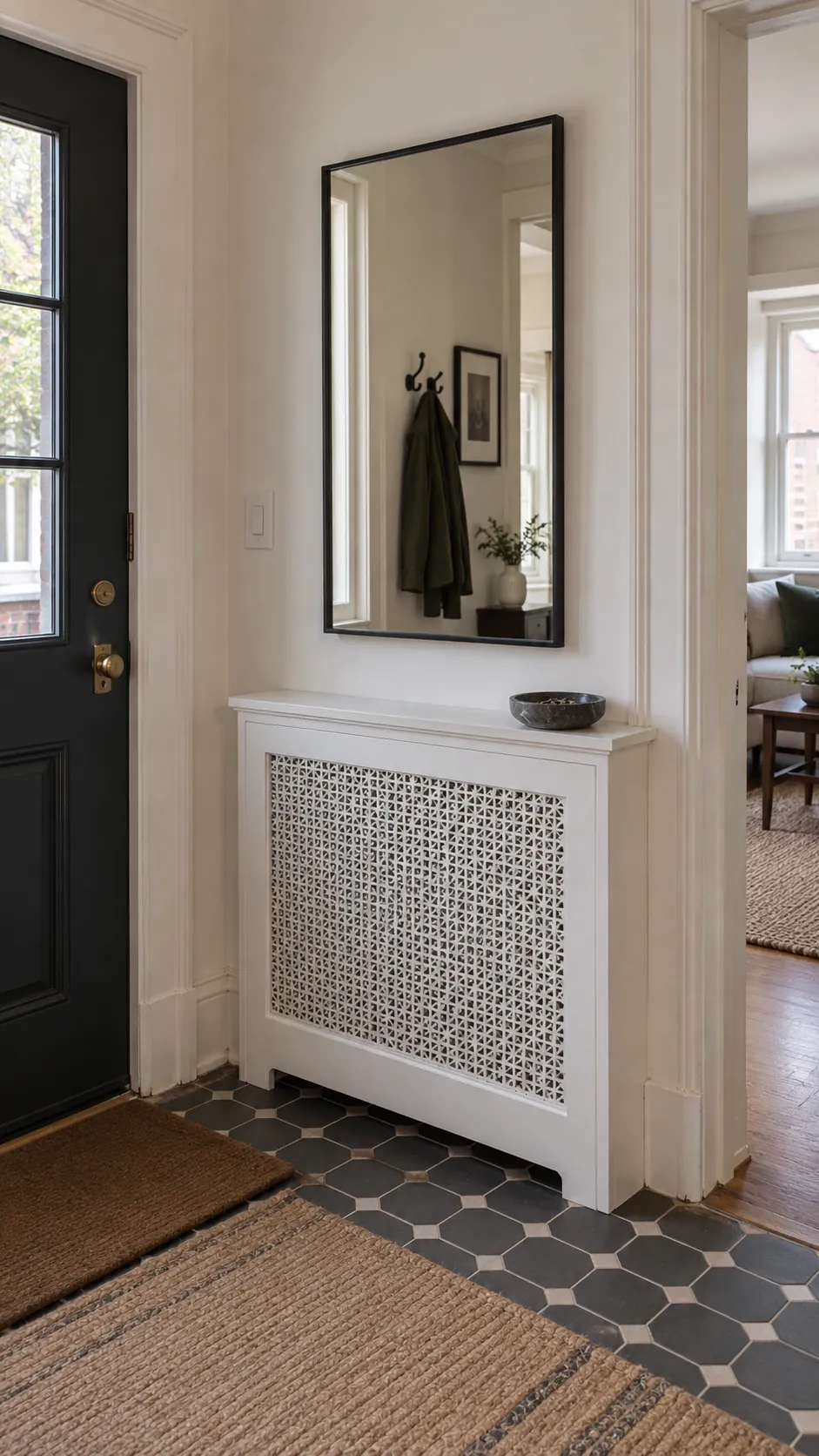
Mirror Over a Radiator Cover
A radiator cover may offer a slim landing surface where a separate console will not fit. Keep airflow openings clear and follow the radiator and mirror makers’ clearance guidance. A modest mirror above the cover can give the wall purpose without stacking heat sensitive decor on top.
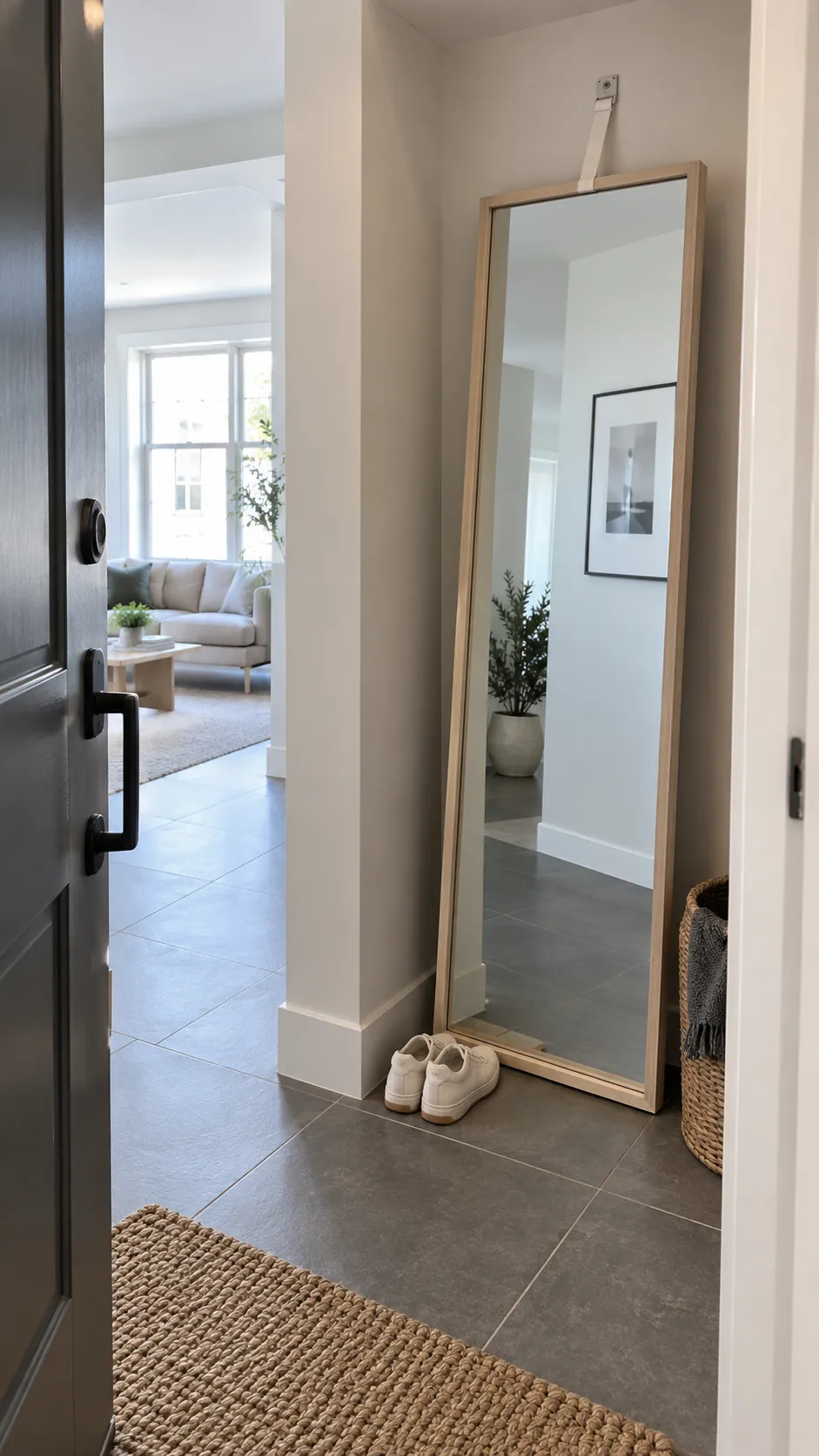
Leaning Mirror in a Renter Friendly Nook
A leaning mirror can suit a recess where permanent wall changes are limited. Choose a location away from the door and secure it with an approved anti tip method where permitted. If anchoring is not possible, a lighter wall mounted option with suitable approved fixings may be the safer choice.
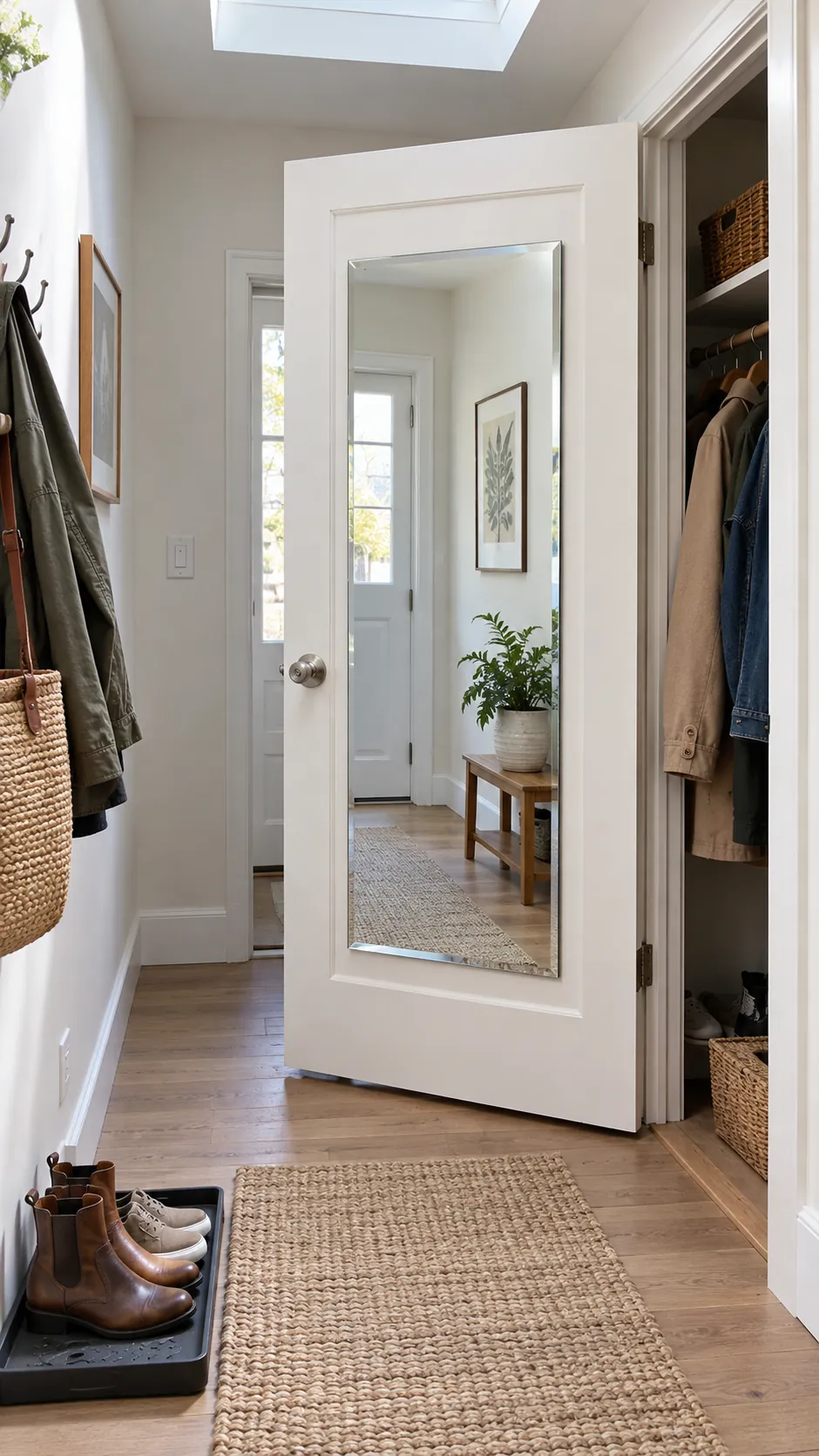
Mirror on a Coat Closet Door
A closet door can carry a mirror when every wall is already working hard. Check the door’s construction, hinges, and mirror weight before choosing a mounting method. Keep the handle accessible and test the reflection with the door both open and shut.
Softly Tinted Mirror for a Layered Entry
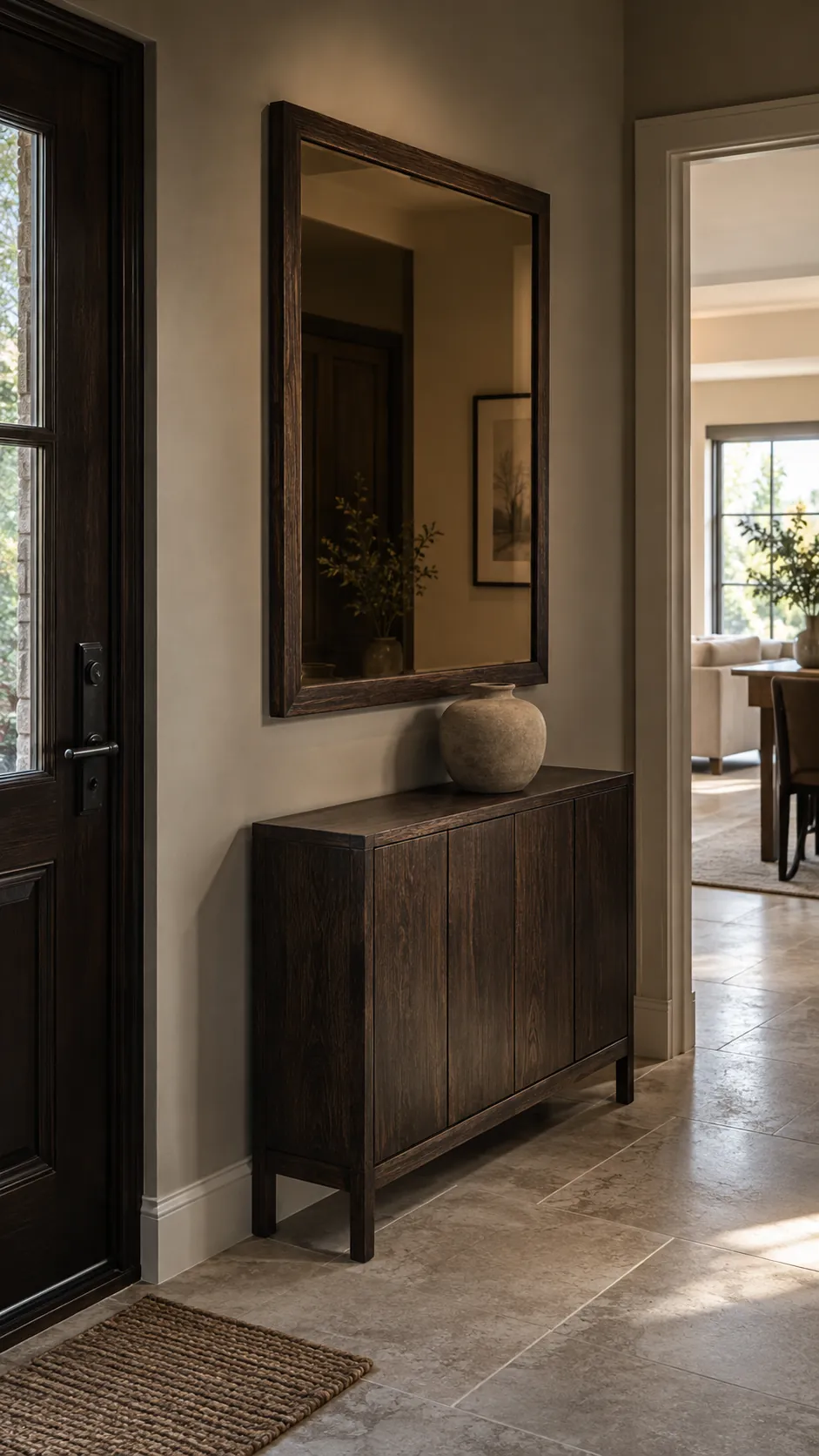
A subtle bronze tint can add depth to an entry with natural stone or dark wood. View it in the actual lighting before committing, since a tinted surface gives a less neutral outfit check. Use it where mood matters more than exact color judgment, and keep a clear mirror elsewhere if needed.