
Walking down a long, dark hallway can feel like moving through a tunnel. Many homes have these cramped corridors that lack windows and feel disconnected from the rest of the house. It is a common design challenge, but you do not have to settle for a gloomy passage. These spaces actually offer a great chance to show off your style if you use the right layout and lighting.
This list provides practical ways to make your hallway feel wider and brighter. Whether you want to lean into moody hallway ideas or find ways to reflect more light, these tips will help you make the most of every inch. You can turn a boring transition area into a standout feature of your home with just a few smart changes.
Full Length Mirror at the Hallway End
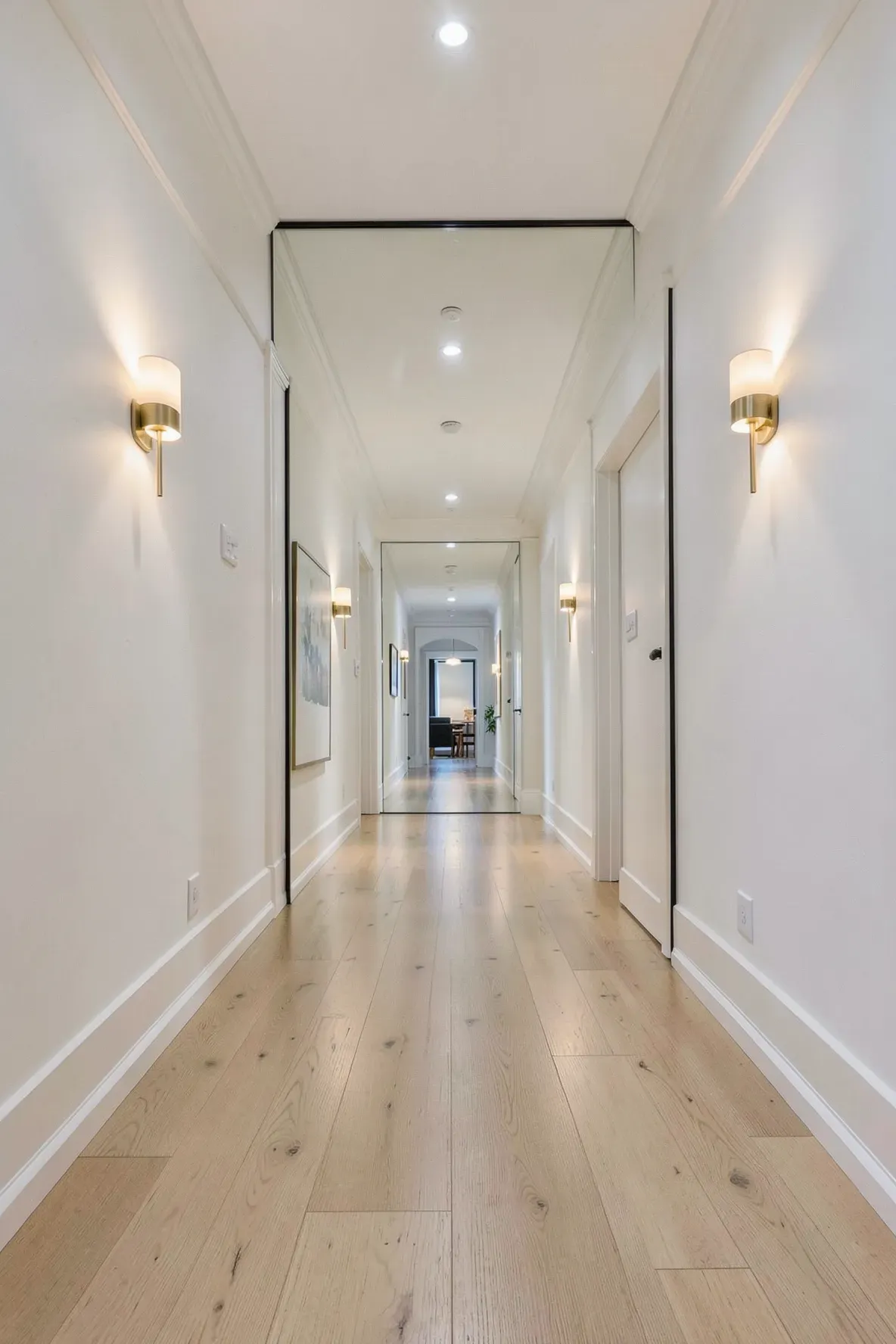
Placing a large mirror at the very end of a corridor is one of the most effective narrow corridor ideas. It creates an optical illusion that the floor continues much further than it actually does. This trick instantly doubles the visual depth of the space and catches any light coming from nearby rooms.
Choose a frame that matches your trim for a built-in look, or go frameless for a modern feel. Make sure the mirror is tall enough to reflect the ceiling and the floor. This simple addition stops the hallway from feeling like a dead end and makes the whole area feel more open.
High Gloss White Ceiling Paint
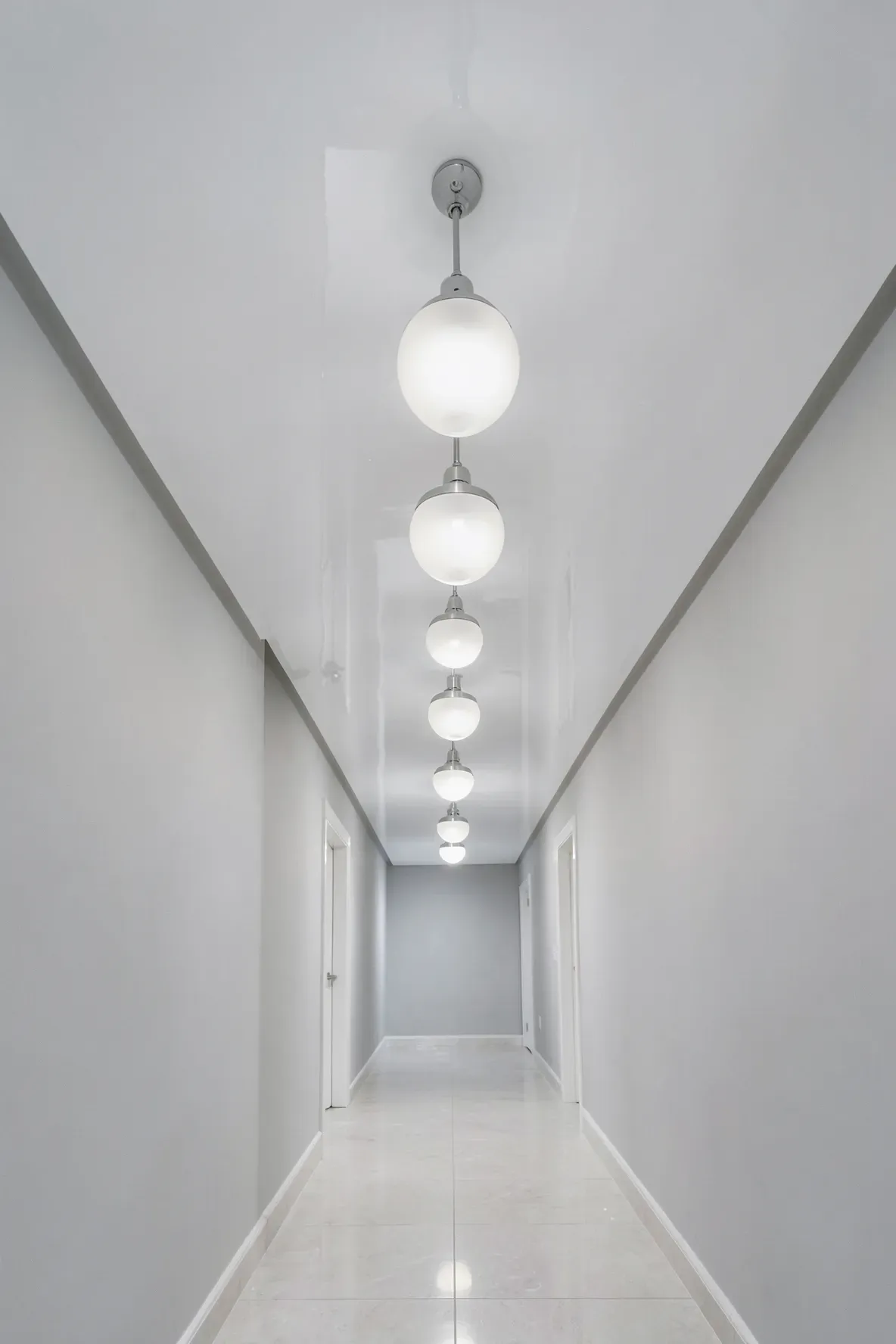
Most people use flat paint for ceilings, but a high-gloss finish works wonders in dark hallway ideas brighten efforts. The shiny surface acts like a horizontal mirror, bouncing light from lamps or open doors back down into the room. It makes the ceiling feel higher and the air feel less heavy.
For the best results, the ceiling needs to be perfectly smooth because gloss shows every bump. Use a crisp, cool white to keep the space feeling fresh. This small change helps light travel further down the length of the hall without adding any physical bulk to the walls.
Recessed LED Strip Lighting Along Baseboards
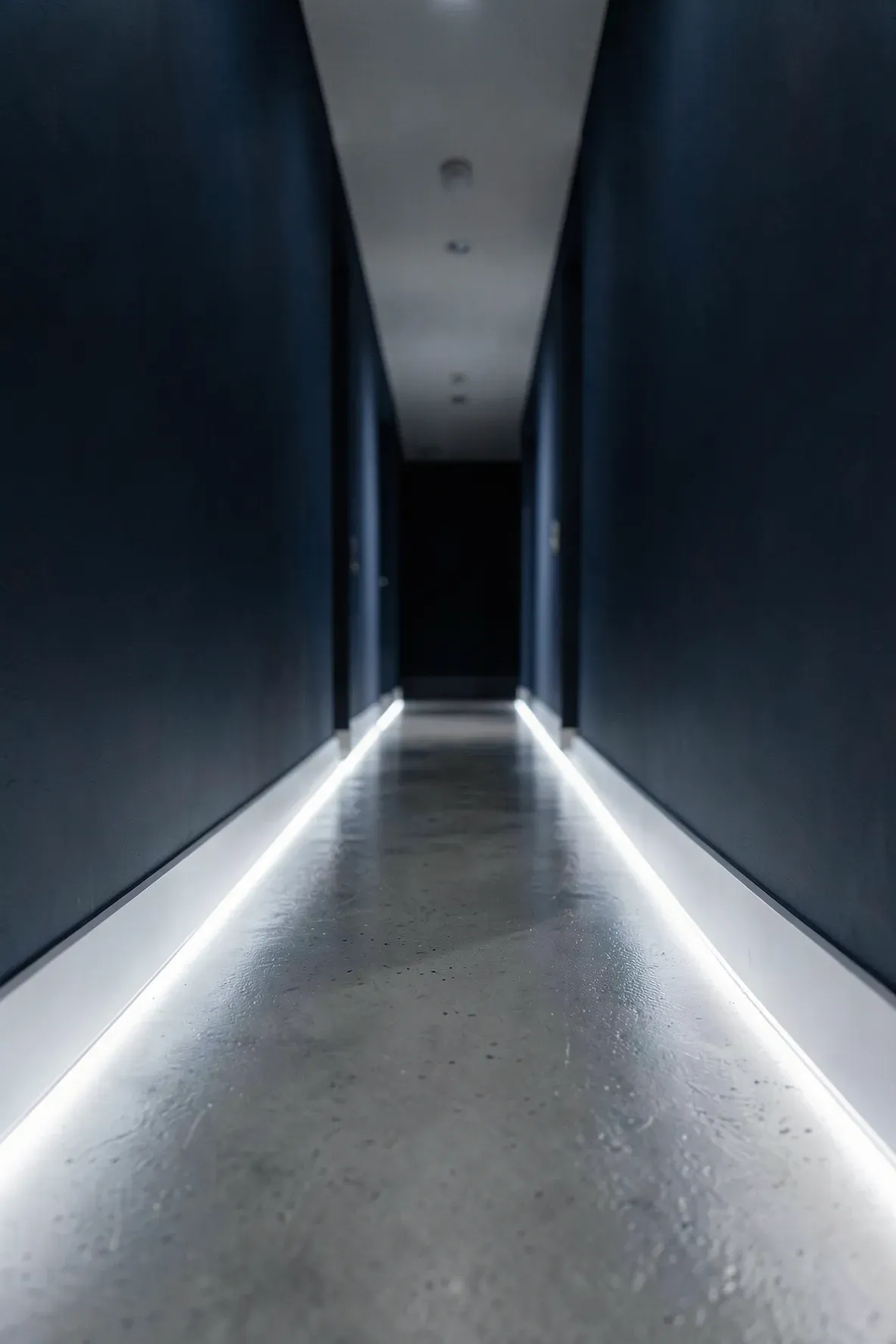
Adding light at the floor level changes how you perceive the width of a room. By installing thin LED strips along the baseboards, you create a soft glow that washes across the floor. This is one of those small dark hallway ideas that provides safety at night while making the walls feel like they are floating apart.
These lights are often hidden under a small lip on the baseboard or tucked into a channel. They provide a high-end look without the need for bulky lamps. It is a great way to add interest to the lower half of the wall where space is usually wasted.
Uniform Gallery Wall with Matching Frames
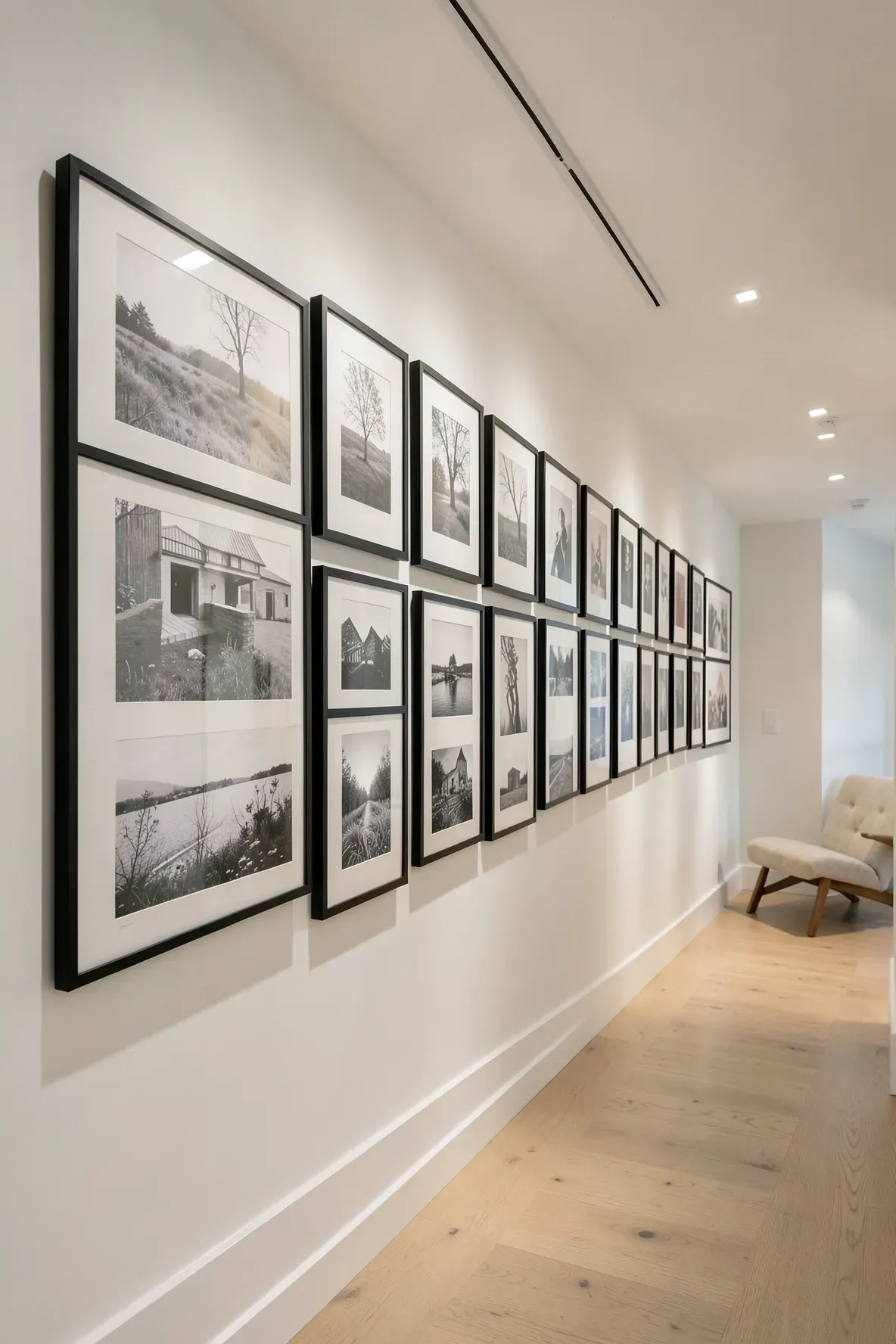
A long hallway provides a lot of wall space that often stays blank. To keep it from looking cluttered, use a series of identical frames. This creates a rhythmic pattern that leads the eye down the hall. It turns the narrow passage into an intentional gallery rather than just a walkway.
Space the frames evenly and keep them at eye level. Using large white mats inside the frames helps break up the art and adds a sense of brightness. This organized approach to hallway inspiration narrow spaces keeps the walls from feeling like they are closing in on you.
Large Scale Runner with Horizontal Stripes
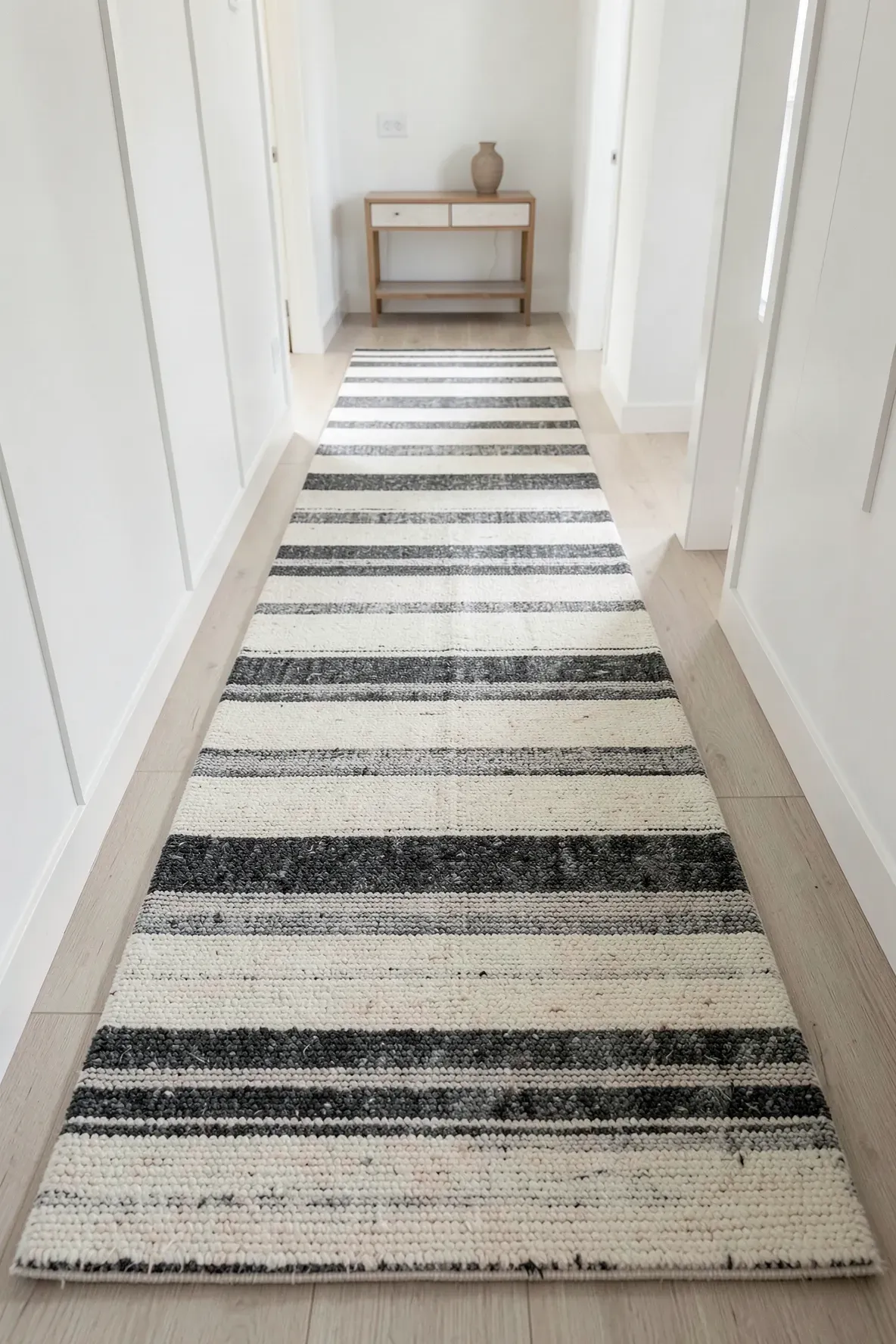
While vertical stripes make things look longer, horizontal stripes make things look wider. A long rug with stripes running from side to side is a classic choice for slim hallway ideas. It draws the eye outward toward the walls, tricking the brain into thinking the floor is broader than it is.
Look for a durable weave like sisal or a low-pile wool that can handle heavy foot traffic. The rug should cover most of the length of the hall but leave a few inches of flooring visible on the sides. This creates a framed look that anchors the space and adds much-needed texture.
Glass Inset Interior Doors
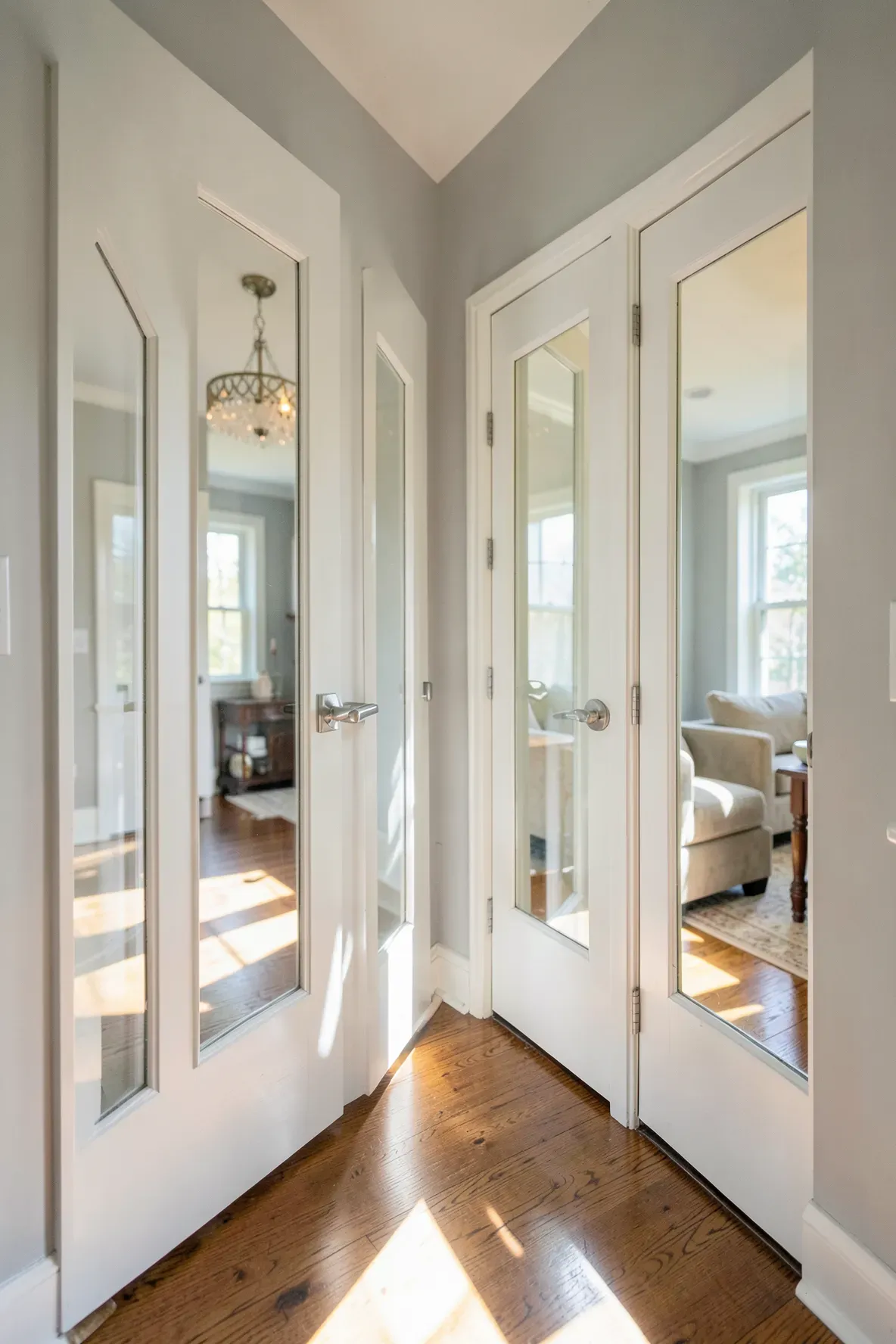
Solid wooden doors block light and make a hallway feel like a series of boxes. Replacing them with doors that feature glass panels allows light to spill in from adjacent rooms. Even frosted or reeded glass can provide privacy while still letting a glow pass through from a sunny bedroom or kitchen.
This is a great fix for long hallway entryway ideas where there are no windows. It connects the hallway to the rest of the home’s natural light sources. If you cannot replace the doors, even painting them a light color can help, but glass is the most effective way to share light between rooms.
Wainscoting Painted in a Lighter Shade
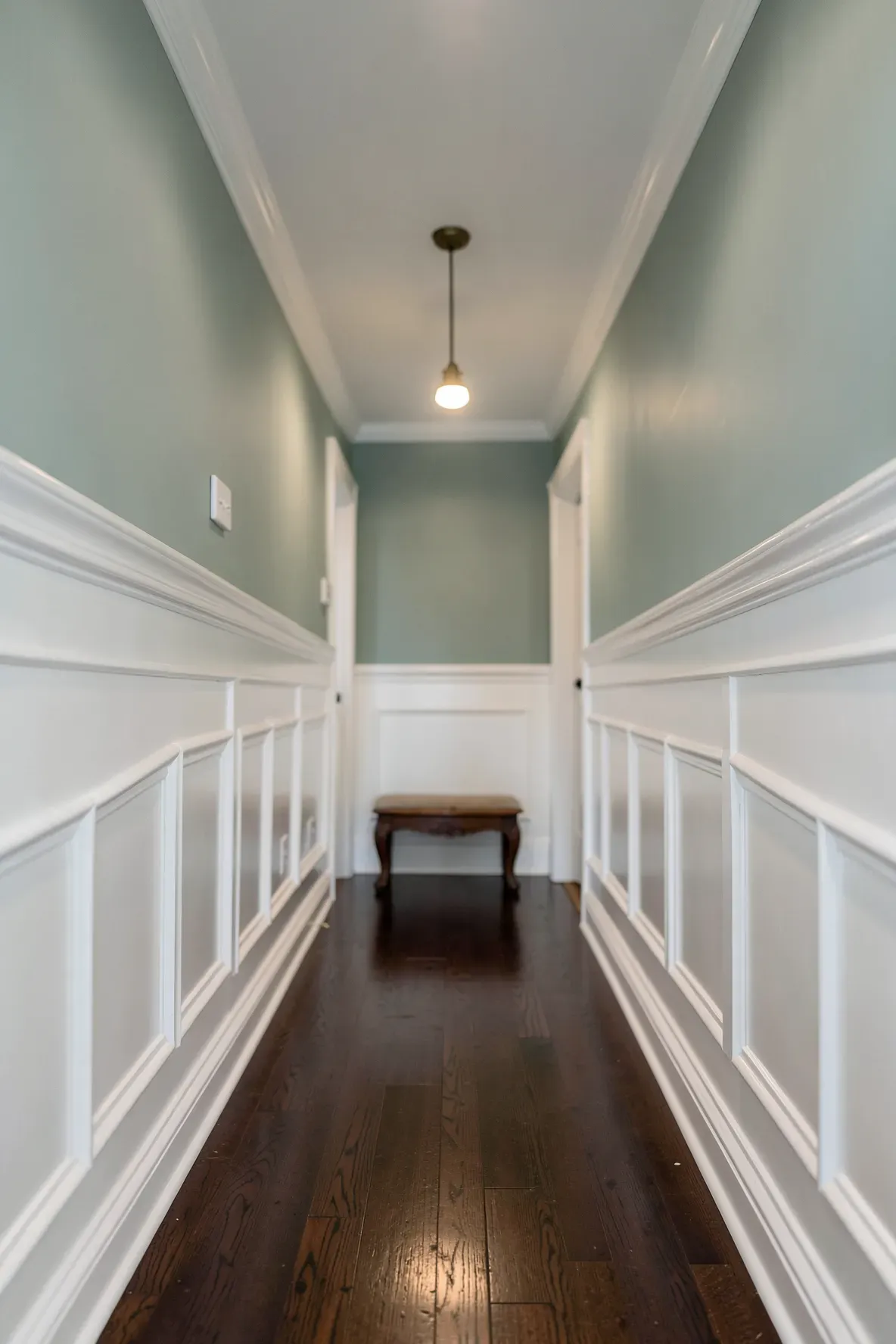
Installing wainscoting or beadboard on the bottom third of the wall adds architectural interest. If you paint this lower section a bright white and the top a slightly darker color, it grounds the space. This horizontal division breaks up the height of the wall and makes the narrow corridor feel more proportional.
It also protects the walls from scuffs in high-traffic areas. The trim work creates shadows and highlights that add depth. This is a traditional way to make a long entry hallway feel more like a designed room and less like a utilitarian passage.
Slim Floating Console Table
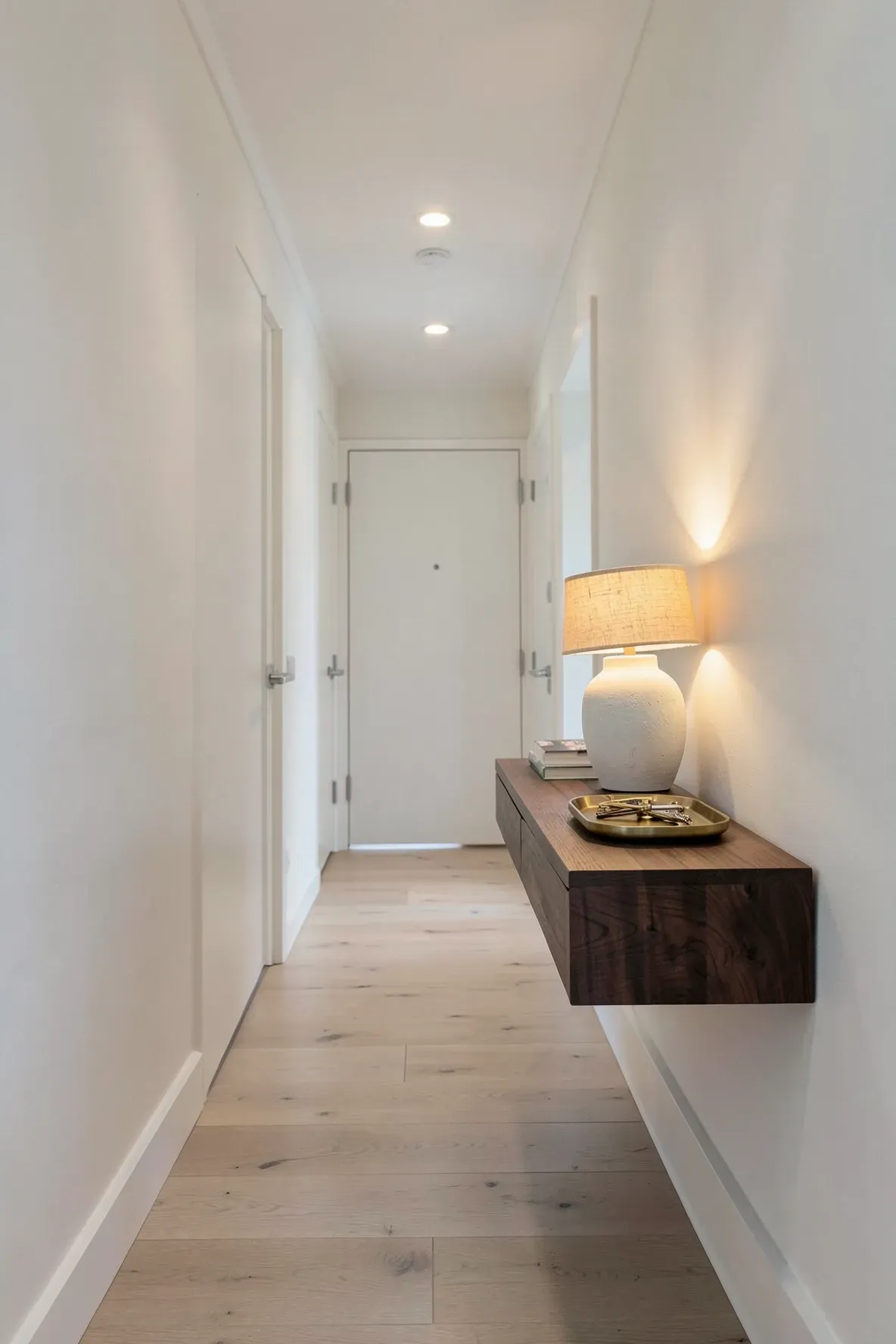
Floor space is at a premium in a narrow hallway design. A floating console table attaches directly to the wall, leaving the floor underneath clear. This visibility of the floor makes the hallway feel wider because there are no legs cluttering the walking path.
Choose a shallow model, perhaps only 8 to 10 inches deep. It provides a spot for keys or a small lamp without blocking the walkway. Keeping the furniture off the ground maintains a clean, minimalist look that prevents the hallway from feeling cramped.
Series of Identical Flush Mount Ceiling Lights
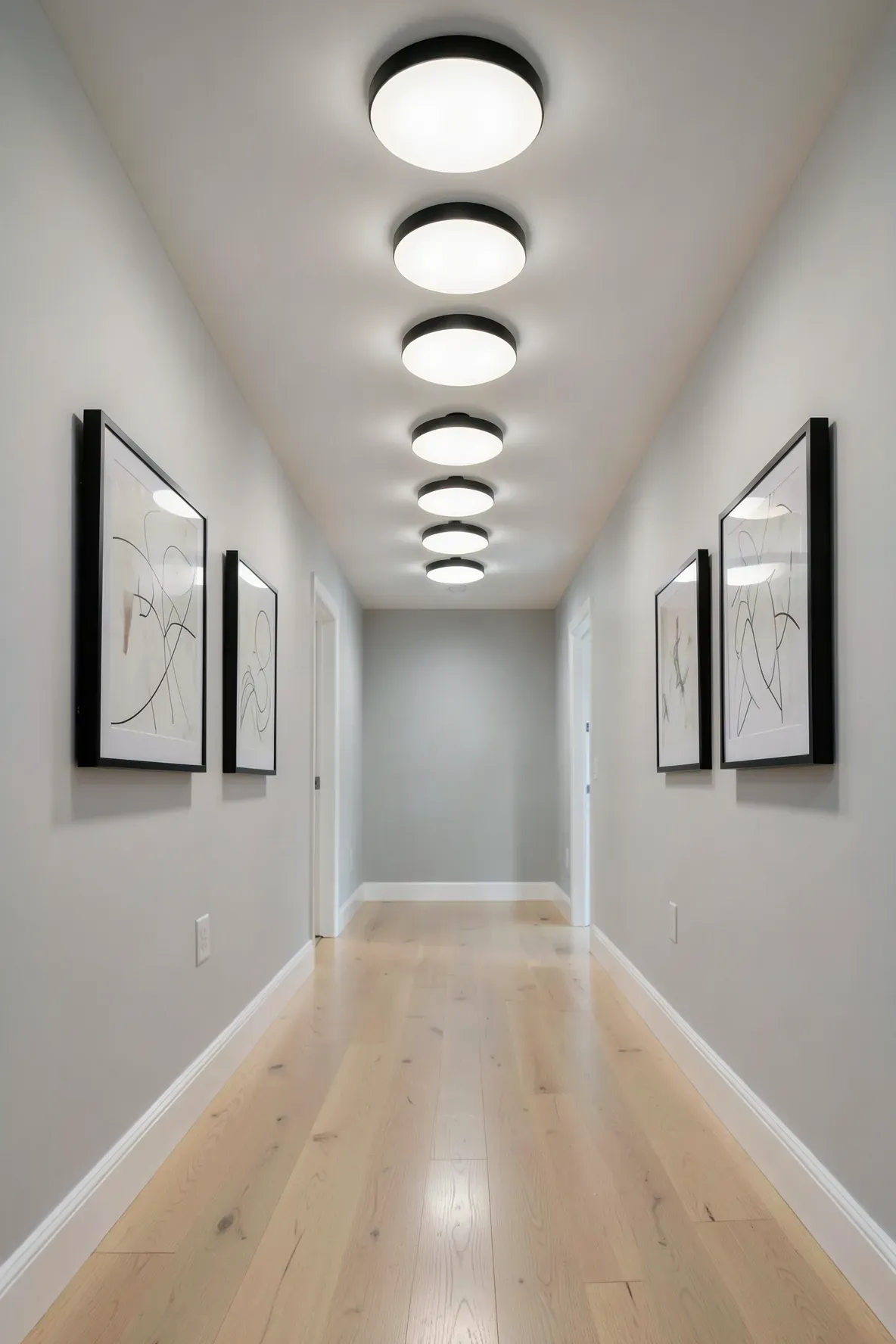
Rather than one single light in the middle of the hall, install several identical fixtures in a row. This creates a consistent path of light that eliminates dark corners. Having a repeating pattern overhead also adds a sense of order and architectural intent to the space.
Flush mounts are better than low-hanging lights in tight spaces because they stay out of the way. Look for fixtures with frosted glass to diffuse the light evenly. This setup ensures that every part of the long hallway is equally bright, which helps the space feel more inviting.
Light Wood Herringbone Flooring
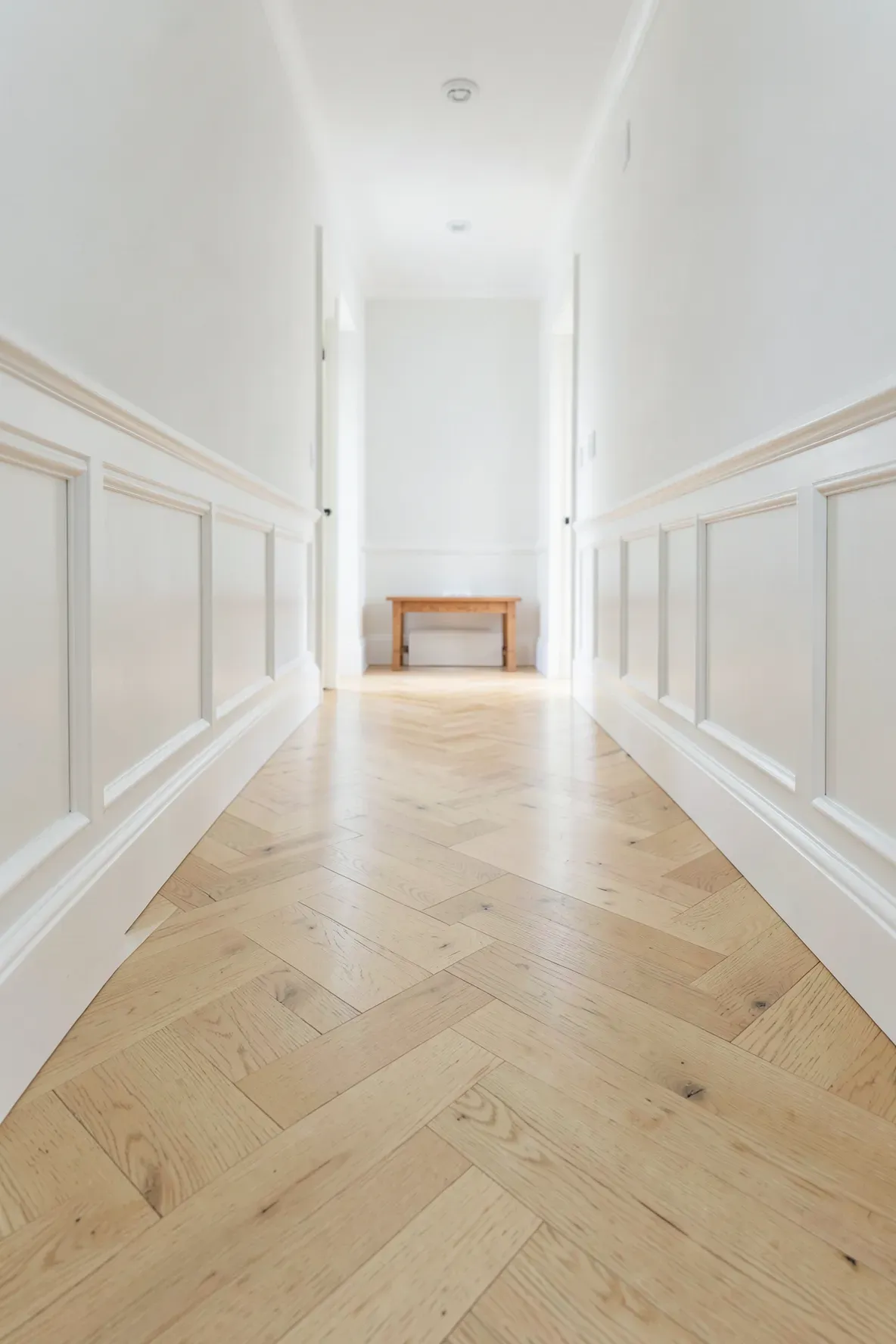
The pattern of your floor significantly impacts how wide a room feels. A herringbone pattern uses diagonal lines that push the gaze outward toward the walls. When done in a light wood like oak or maple, it reflects light and makes the floor feel expansive.
Light colors are essential for wide hallway ideas because dark floors can soak up all the light and make the space feel heavy. The pattern adds enough visual interest that you don’t need much else in the way of decor. It is a permanent way to fix the proportions of a difficult hallway.
Vertical Shiplap Wall Paneling
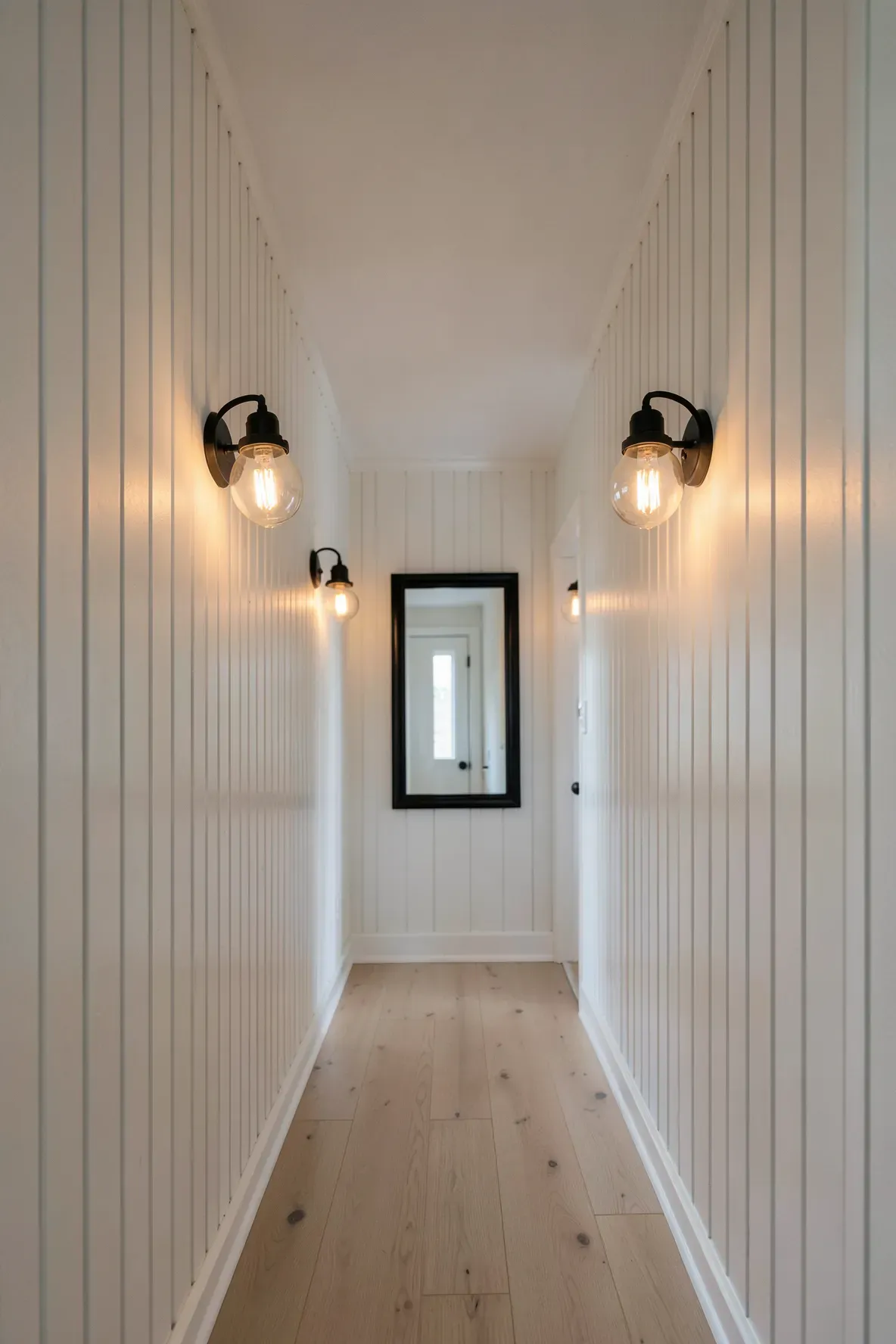
While horizontal lines widen, vertical lines can make a low ceiling feel much higher. Vertical shiplap draws the eye upward, which is helpful if your narrow hallway feels claustrophobic. Painting the panels a soft off-white or light gray adds texture without darkening the space.
This type of paneling is also very durable. It stands up well to the bumps and bags that often hit walls in tight corridors. It provides a clean, farmhouse or coastal look that makes the hallway feel more like a finished part of the home’s living space.
Decorative Transom Windows Above Doorways
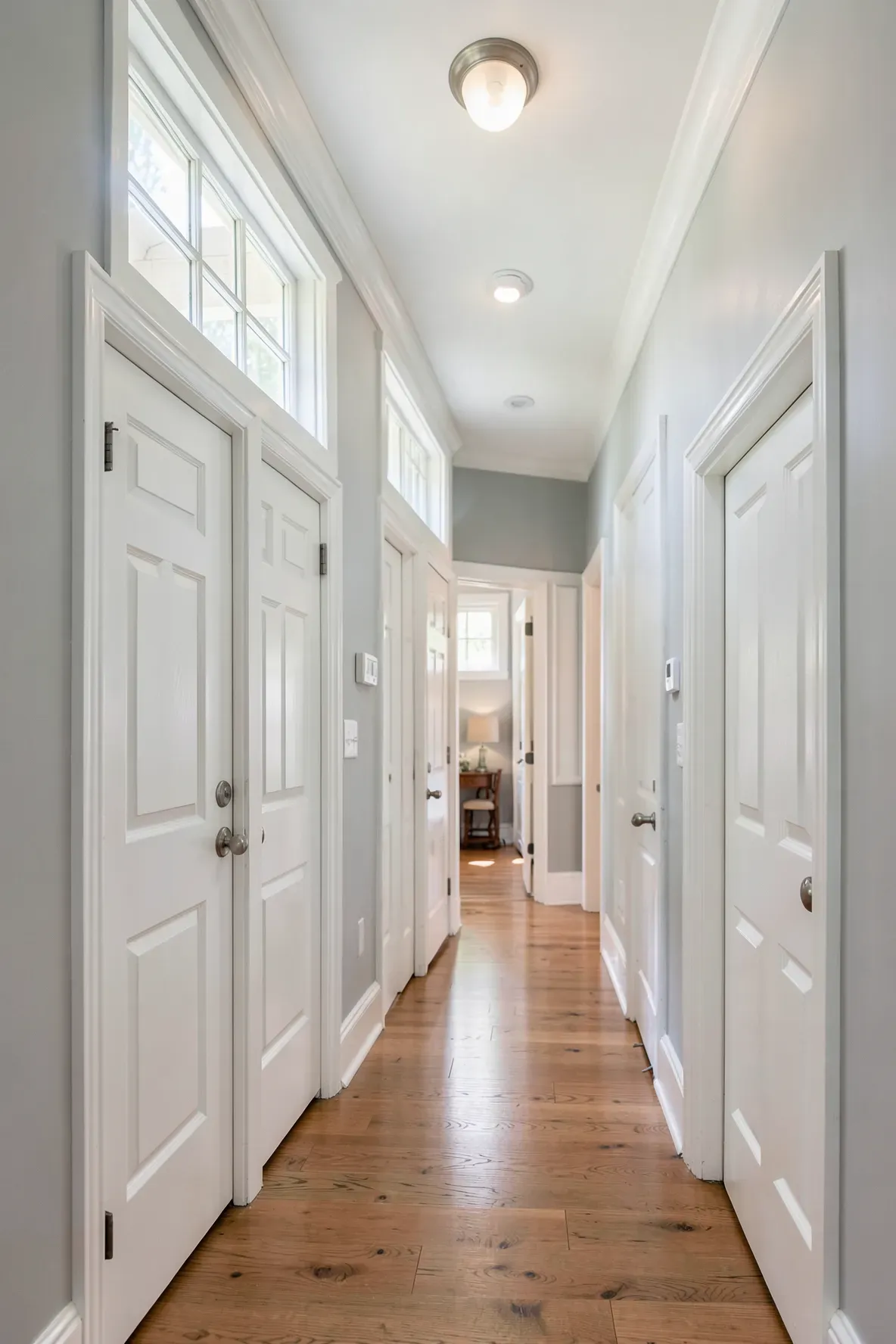
Transom windows are small panes of glass located above interior doors. They are a traditional architectural feature that lets light move between rooms even when the doors are closed. In a dark hallway, these windows can capture light from the tops of sunlit rooms.
If you are doing a renovation, adding these can be a major help for dark hallway ideas brighten projects. They add a historical feel and break up the solid wall of a long corridor. It is a smart way to get natural light into the center of a house where windows on exterior walls are not possible.
Oversized Round Mirror on a Side Wall
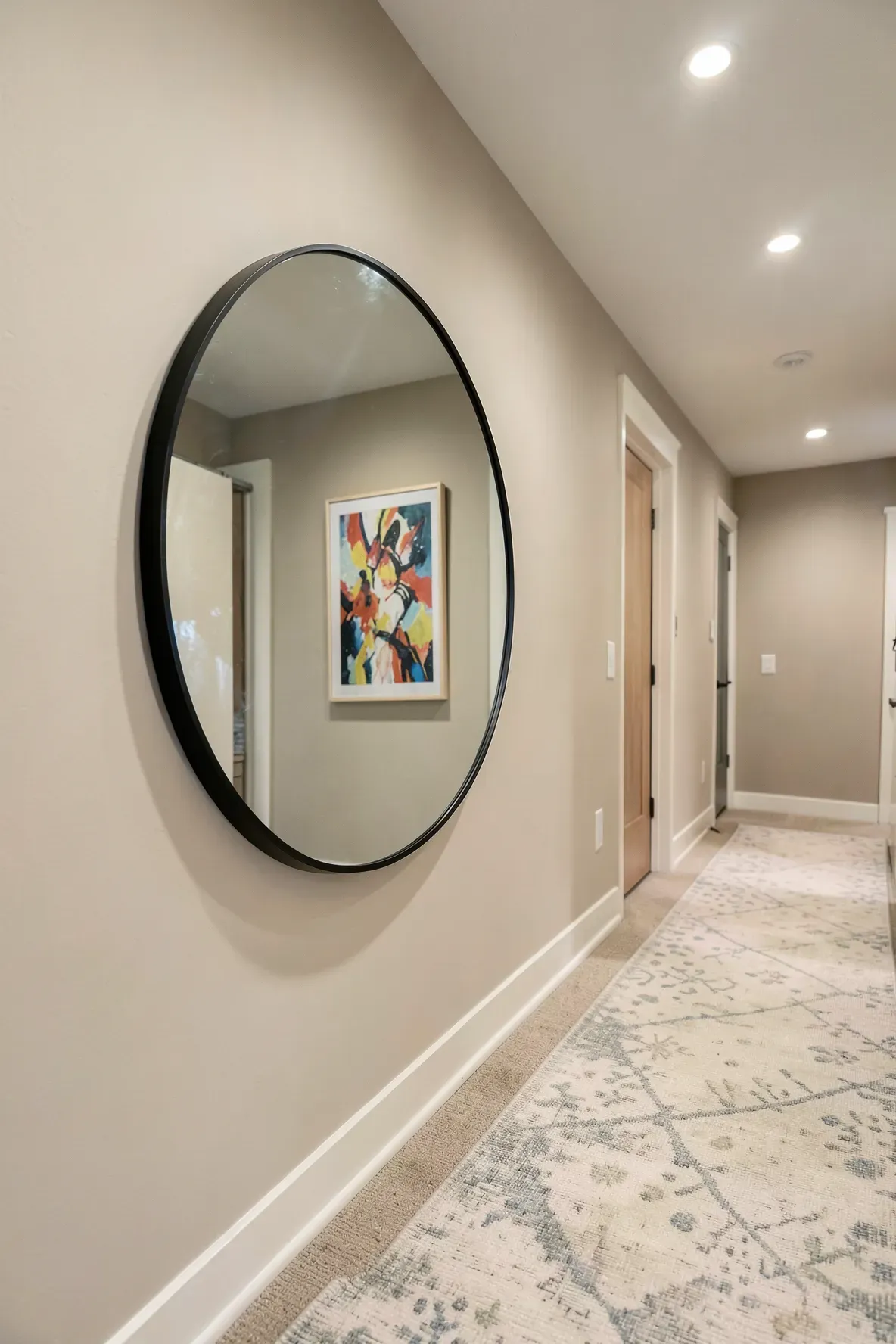
A large round mirror breaks up all the straight lines and sharp angles of a long corridor. Its curved shape is a nice contrast to the long walls and rectangular doors. Placing it on a side wall helps reflect light across the width of the hall, making it feel less like a slender tube.
Try to position the mirror opposite an open doorway or a piece of art. This gives the eye something interesting to look at in the reflection. A round mirror acts as a focal point that stops the hallway from feeling like a never-ending stretch of nothing.
Built-in Shallow Bookshelves Between Wall Studs
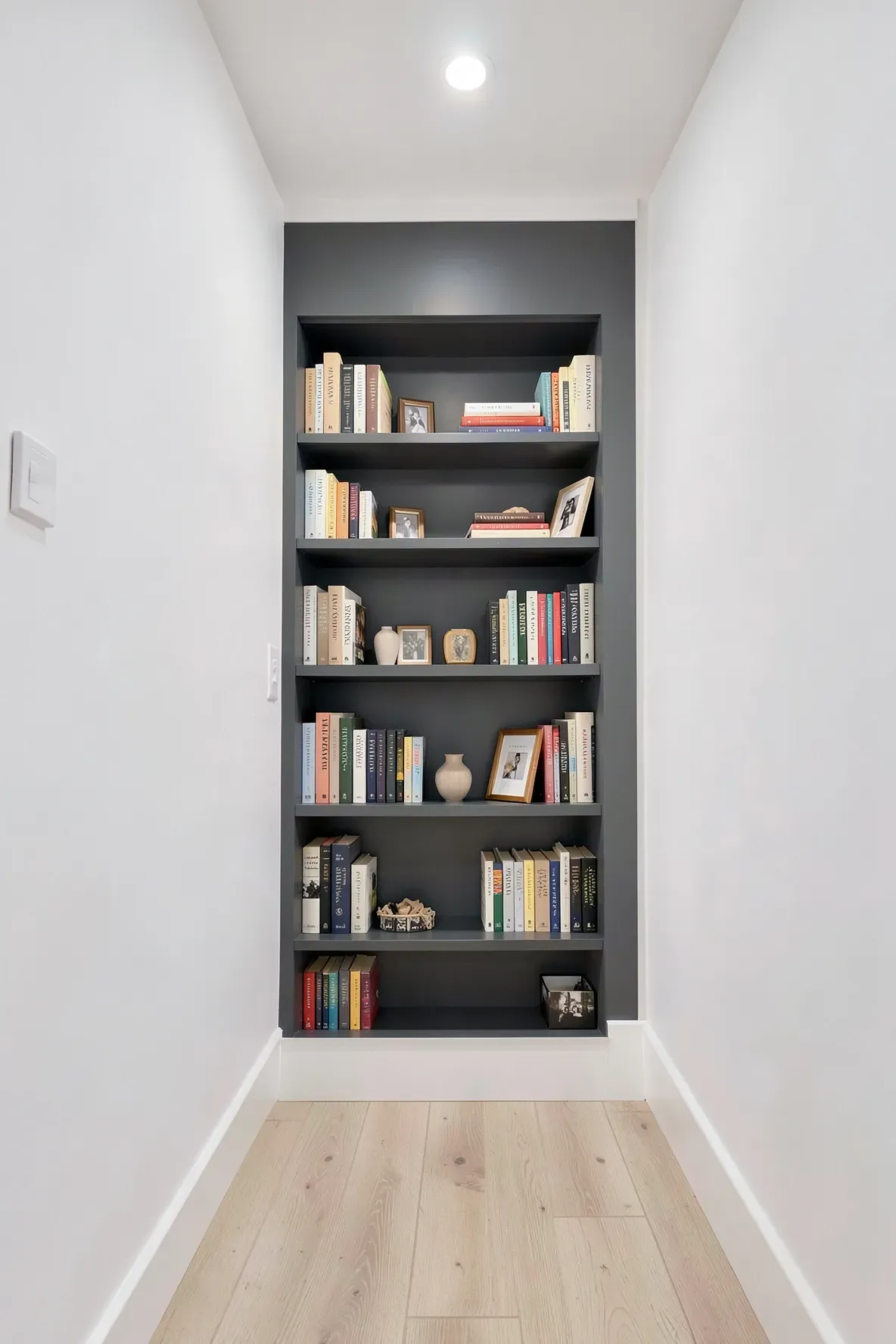
You can add storage to a narrow hallway without taking up any floor space by building into the walls. By using the space between the wooden studs, you can create shelves that are about 4 inches deep. This is plenty of room for paperbacks, small photos, or thin decor items.
Painting the back of these shelves a contrasting color can add depth. This solution turns a plain wall into a functional library. It is one of the best long hallway entryway ideas for people who need extra storage but cannot fit standard furniture.
Matte Black Wall Sconces with Upward Beams
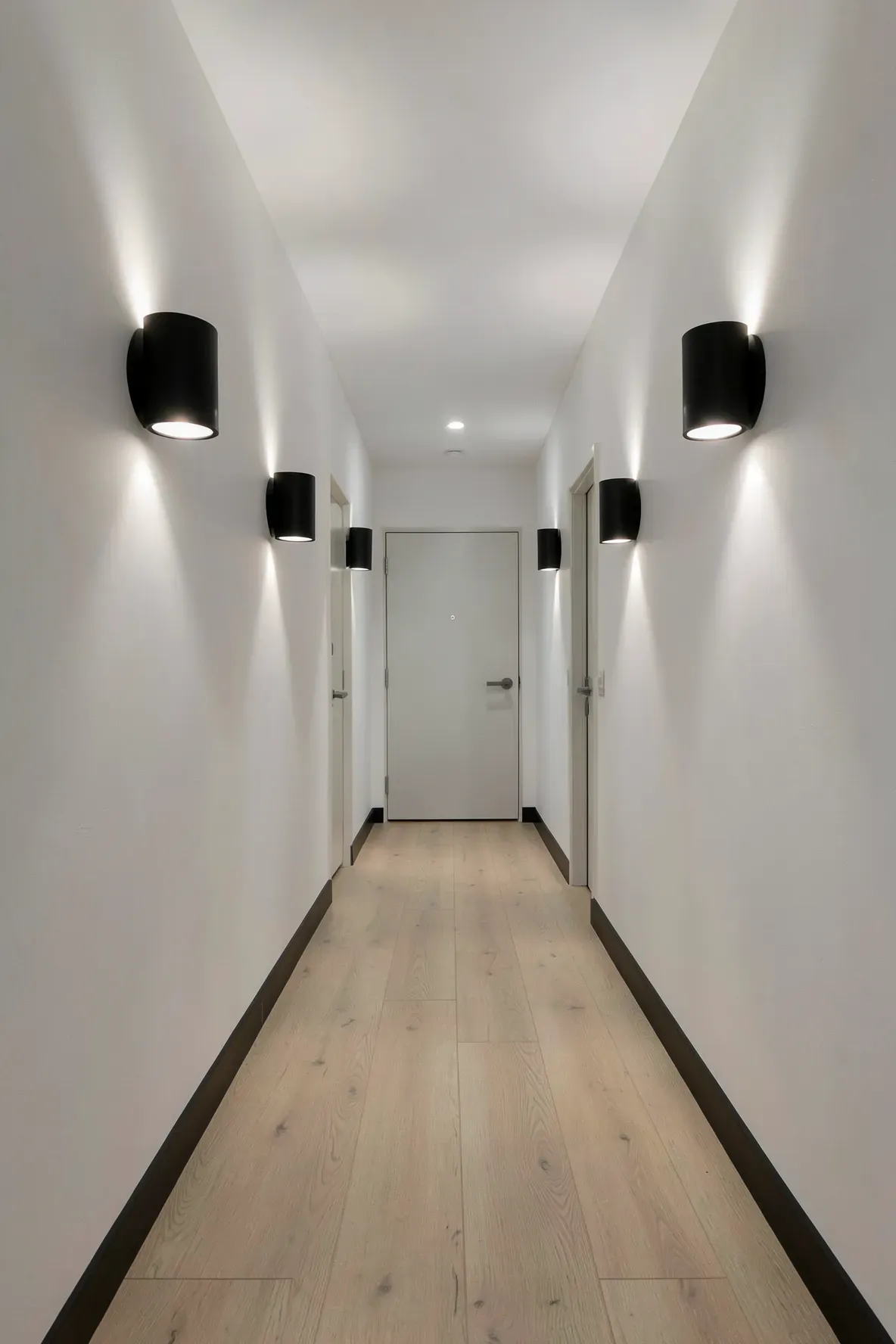
Wall sconces that point light toward the ceiling help to brighten the upper half of the room. This makes the hallway feel taller and airier. Using matte black fixtures creates a sharp, modern contrast against light-colored walls, which is a great look for moody hallway ideas.
Place these at regular intervals to ensure there are no dark spots. Because they sit on the wall, they don’t take up any walking space. The upward light also prevents harsh glares at eye level, making the passage through the hall much more comfortable.
Contrasting Dark Paint on the Far End Wall
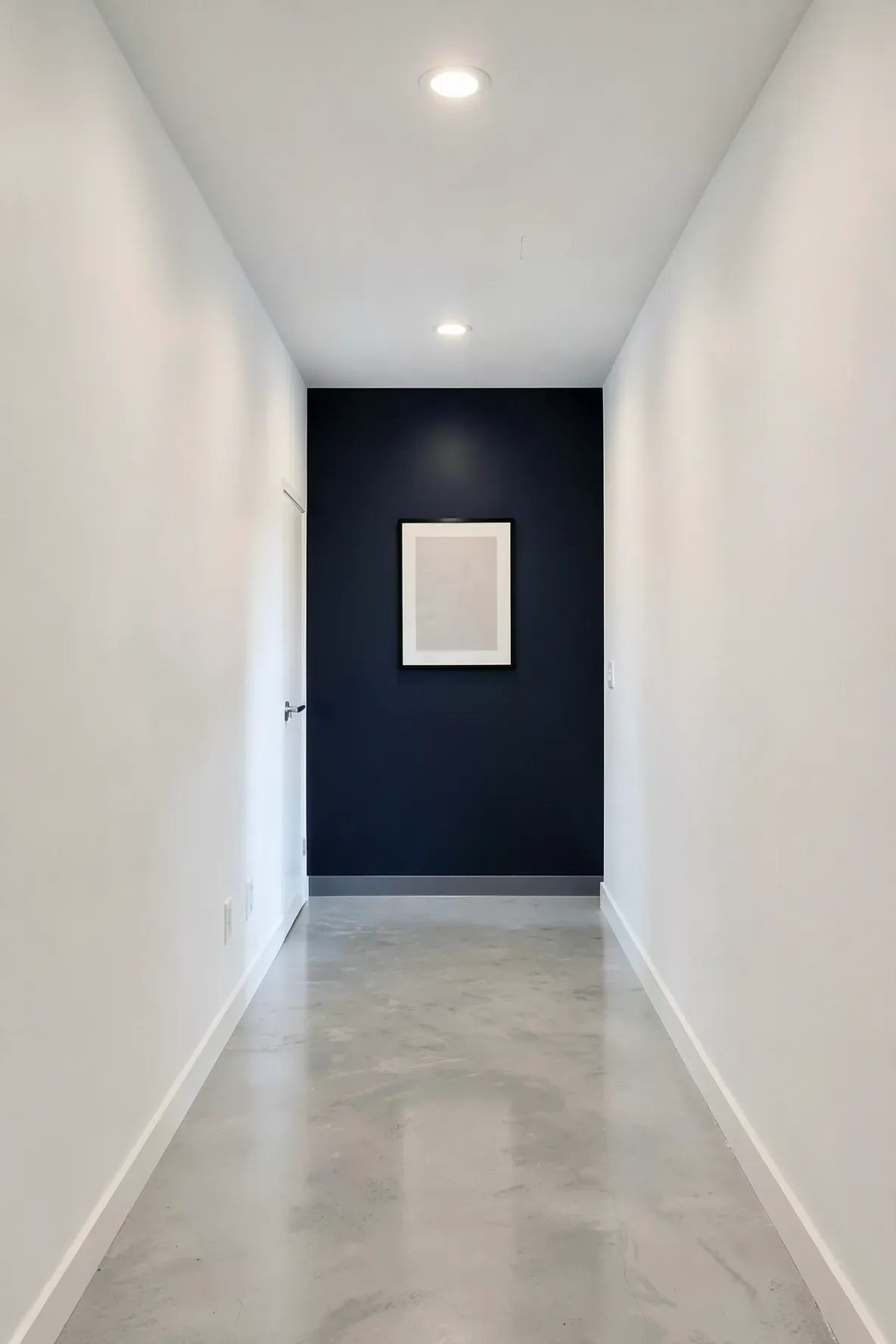
It sounds counterintuitive, but painting the very end wall of a hallway a dark, bold color can make the space feel better. This creates a focal point that draws the eye forward, making the hallway feel like it has a clear destination. It adds a sense of depth that a plain white wall lacks.
Use a deep navy, forest green, or charcoal for this accent wall. Keep the side walls light to maintain the brightness. This technique is a staple in narrow hallway design because it gives the long corridor a sense of purpose and style.
Skylight Installation for Natural Overhead Light
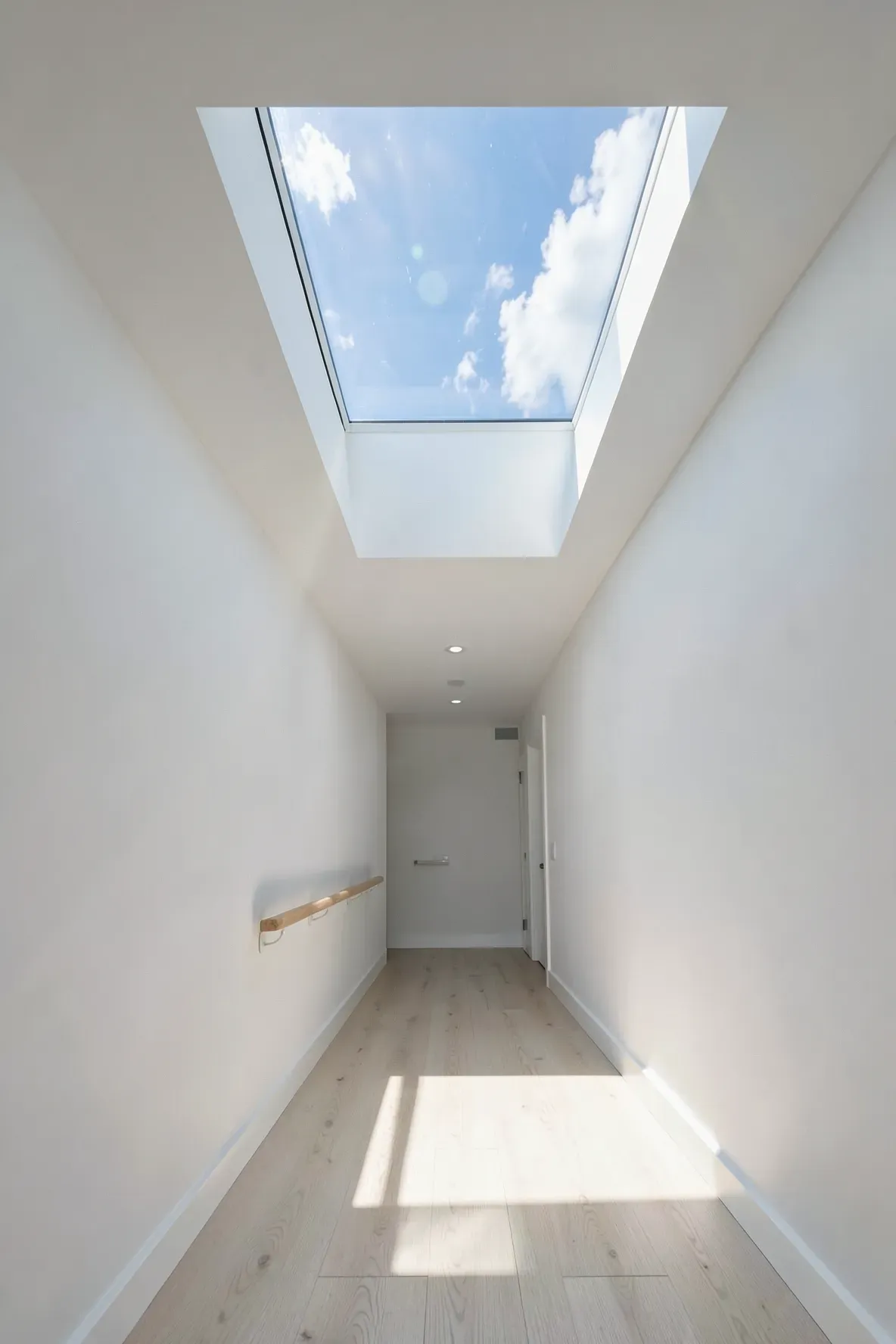
If your hallway is on the top floor, a skylight is the most powerful way to bring in light. Natural sunlight from above is much brighter than any lamp. It completely changes the atmosphere, making the space feel like an outdoor breezeway rather than an indoor tunnel.
For hallways that aren’t on the top floor, you can look into sun tubes. These use reflective pipes to bring light down from the roof through the attic. It is a more involved project, but it is the most effective way to brighten a dark hallway permanently.
Narrow Bench with Under-Seat Storage
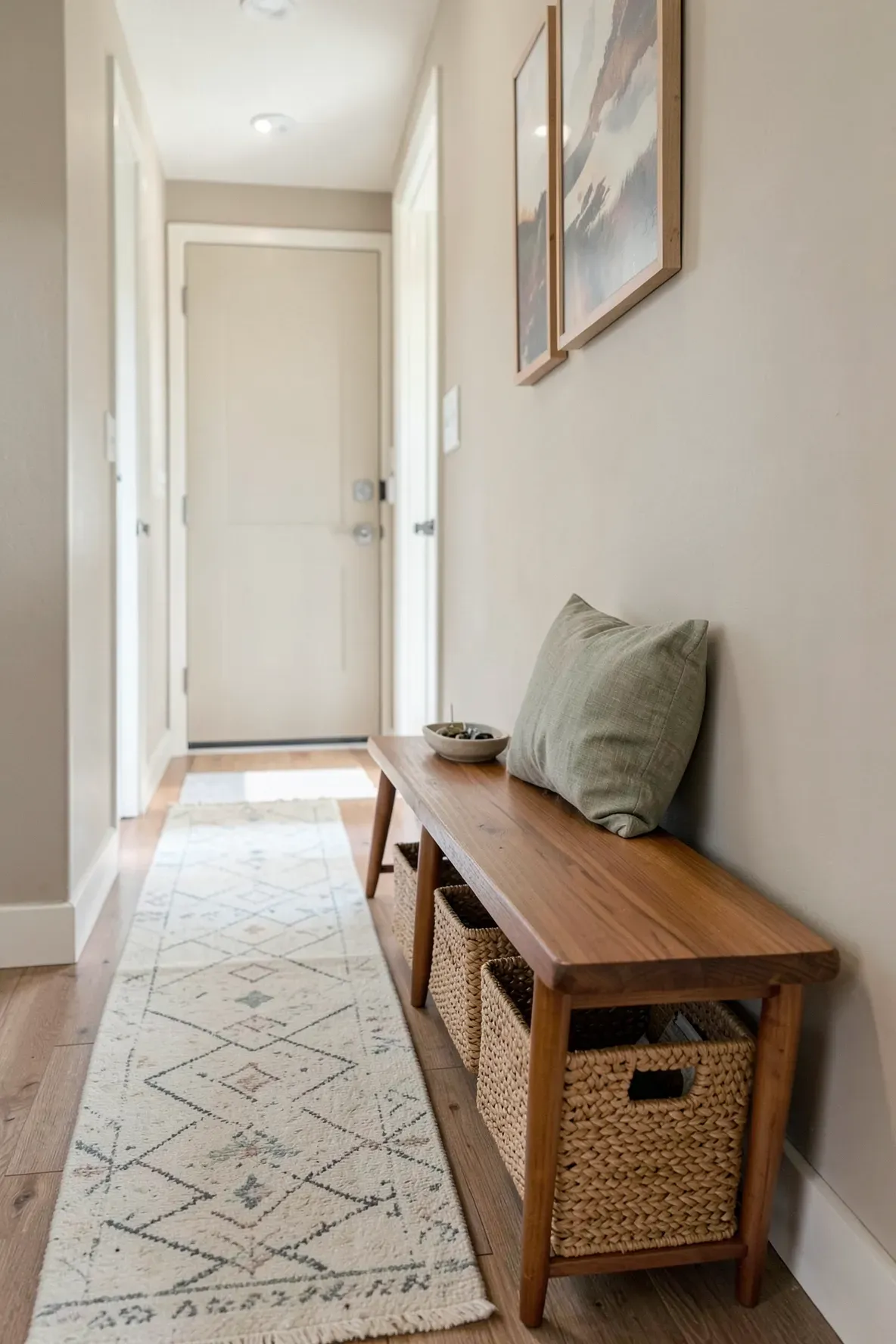
If your hallway is near the entrance, you likely need a place to sit and take off shoes. Look for a bench specifically designed for tight spaces, often called a “perch” bench. These are usually very thin and can fit against a wall without blocking the path.
Choosing a bench with an open bottom or legs makes the floor visible, which helps keep the space feeling open. You can tuck shoes underneath or use small baskets to keep things tidy. This adds functionality to long hallway entryway ideas without creating a bottleneck for traffic.
Light Reflective Metallic Wallpaper
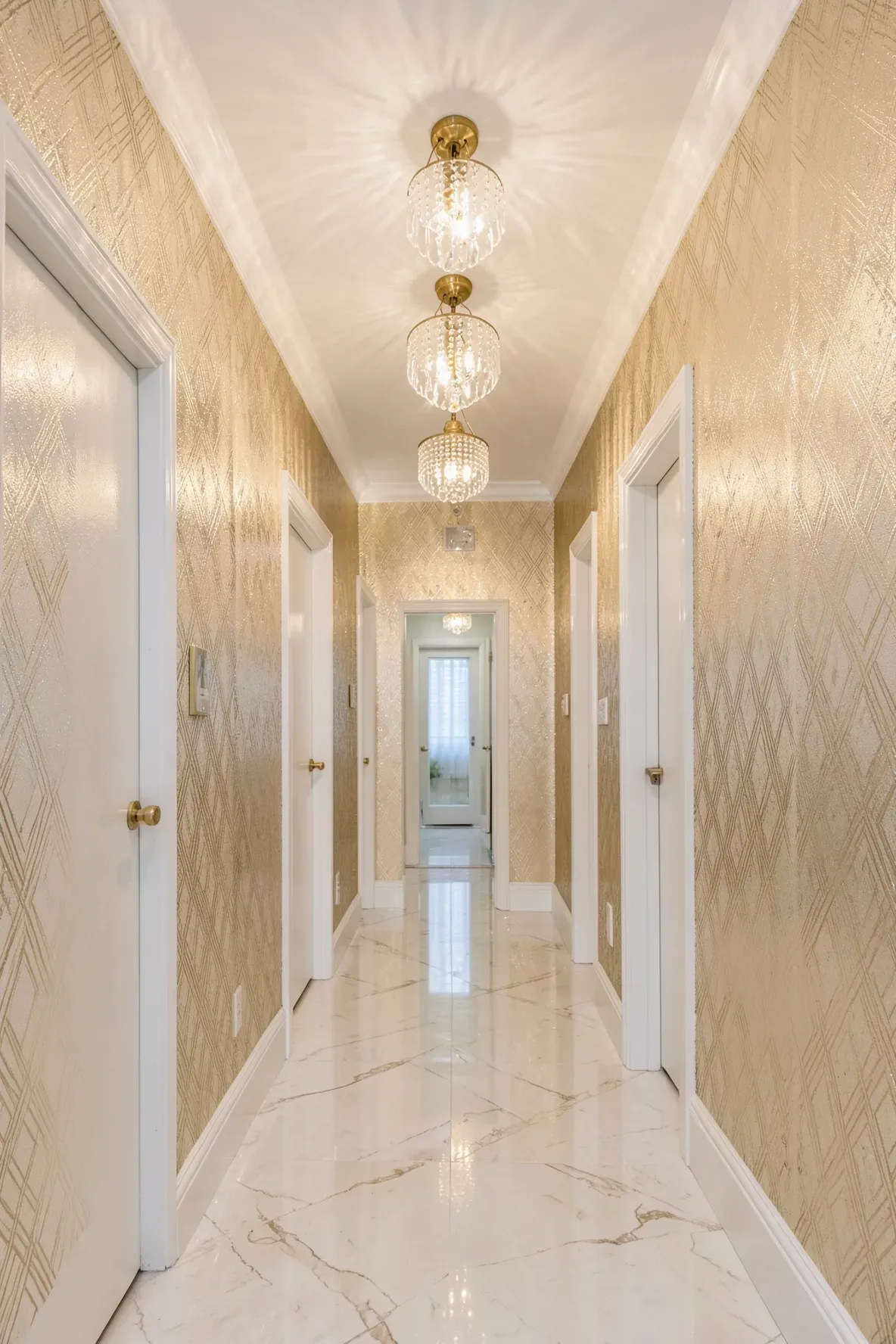
Wallpaper with a subtle metallic sheen can help bounce light around a dark corridor. You don’t need a bold or busy pattern; even a simple texture with gold or silver threads will work. It catches the light from ceiling fixtures and creates a soft shimmer.
This is a great option for small dark hallway ideas because it adds interest without the need for hanging heavy frames. The reflective surface makes the walls feel less solid and more expansive. It also adds a layer of sophistication to a part of the home that is often overlooked.
Glass Fronted Cabinet for Display
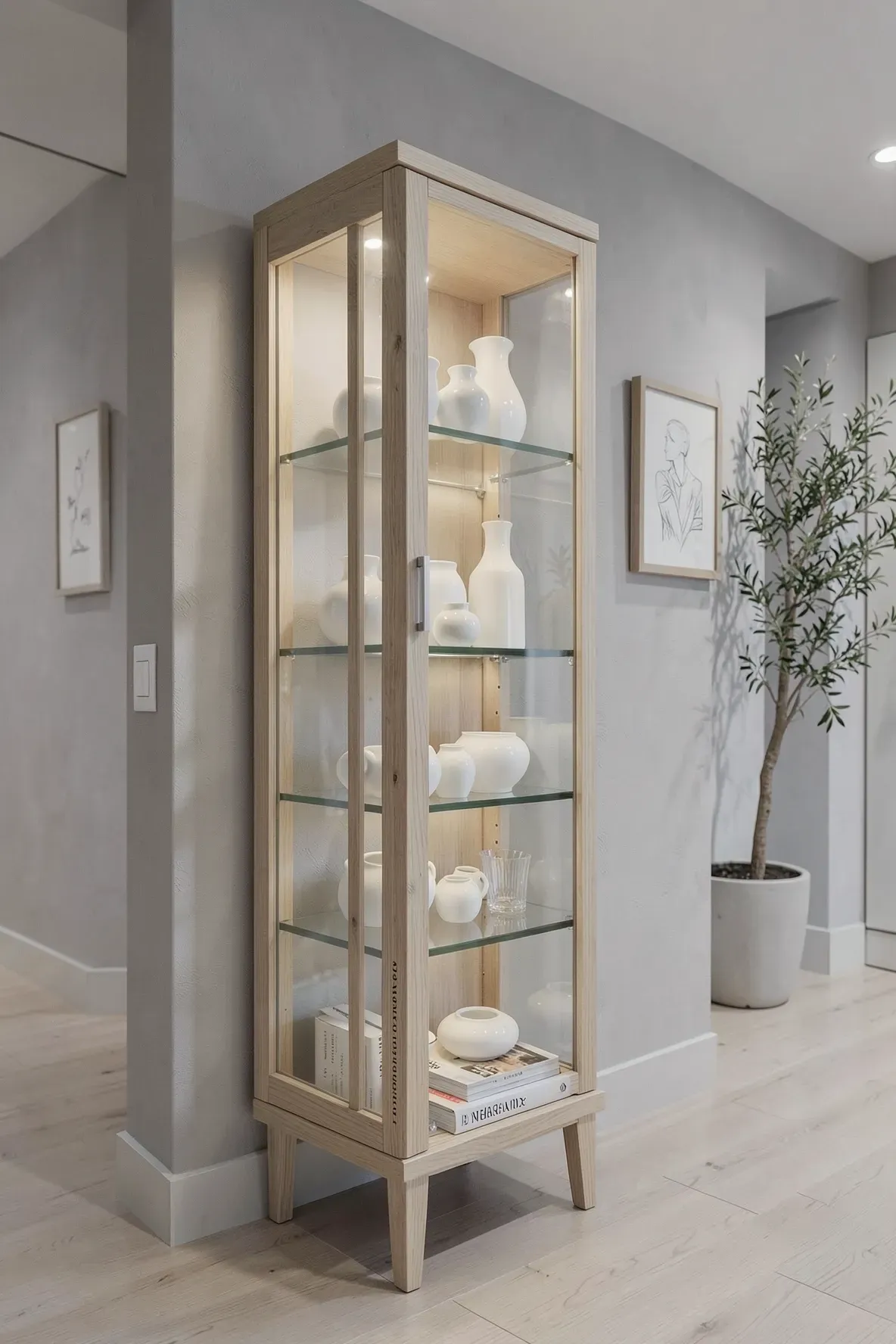
If you have a slightly wider section of the hall, a shallow glass-fronted cabinet can work well. The glass doors reflect light and allow you to see through to the back of the cabinet, which creates a sense of depth. It is a much lighter look than a solid wood cabinet or chest of drawers.
Use it to display colorful ceramics or books. This adds personality to the hallway and makes it feel like a curated gallery. It is a good example of how to use wide hallway ideas to add character without making the space feel cluttered or heavy.
Coordinated Hook Rail for Coats and Bags
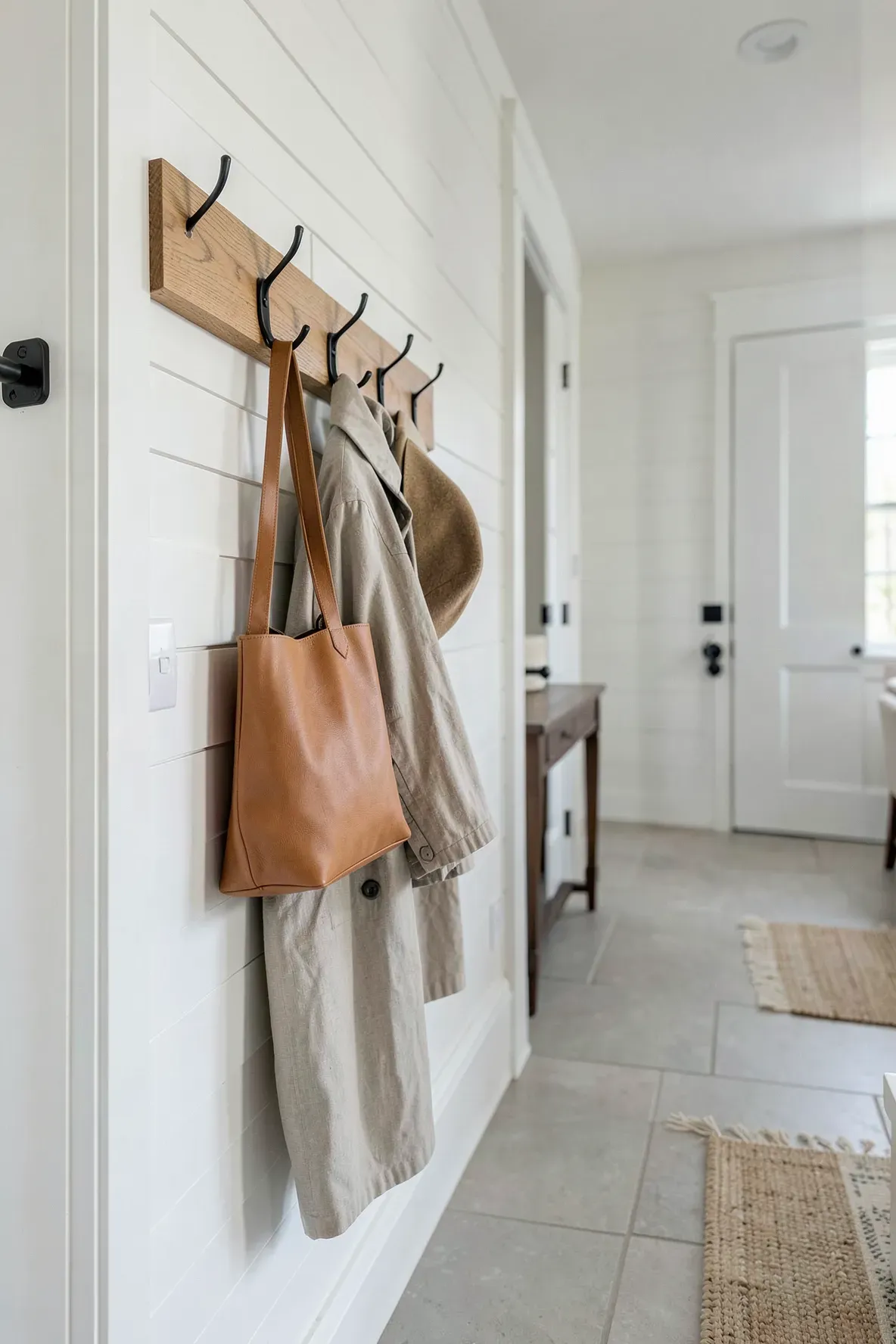
In a narrow entry, a bulky coat rack just won’t fit. A simple wall-mounted rail with hooks is a much better solution. By keeping the hooks in a straight, organized line, the space looks tidy rather than chaotic. Choose hooks that match your door hardware for a cohesive look.
Mount the rail at a standard height so coats don’t drag on the floor. This keeps the walkway clear and uses the wall for essential storage. It is a practical addition for any long entry hallway that needs to stay functional for a busy family.
Statement Pendant Light at the Entry Point
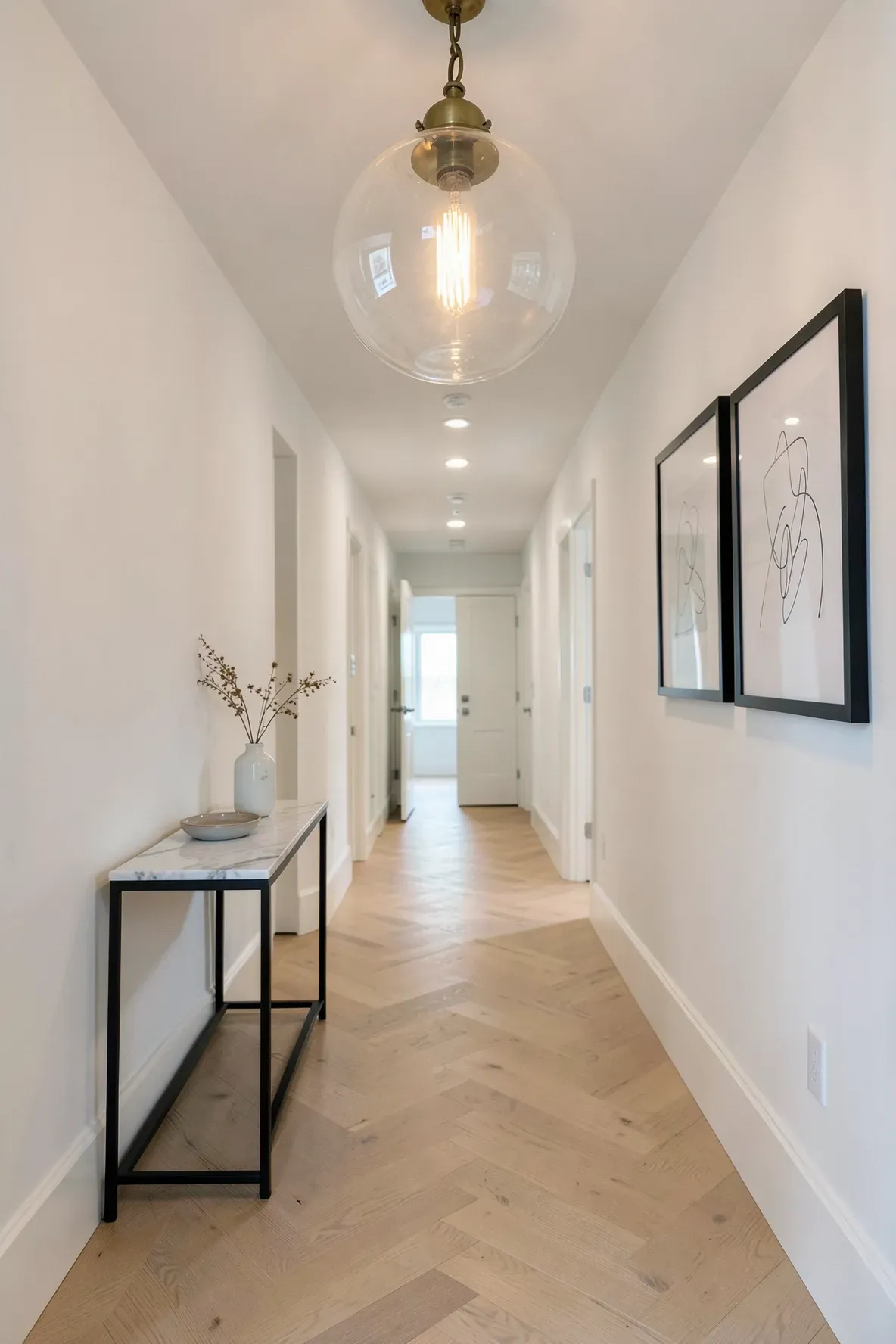
While flush mounts are great for the length of the hall, the entrance deserves something more substantial. A statement pendant light defines the start of the hallway and sets the tone for the rest of the home. It acts as a visual anchor that draws guests in.
Choose a fixture that is open or made of clear glass so it doesn’t feel too heavy in a tight space. This light provides a warm welcome and helps transition the eye from the doorway into the narrower parts of the corridor. It is a simple way to add a bit of luxury to the space.
Floor-to-Ceiling Vertical Mirror Panels
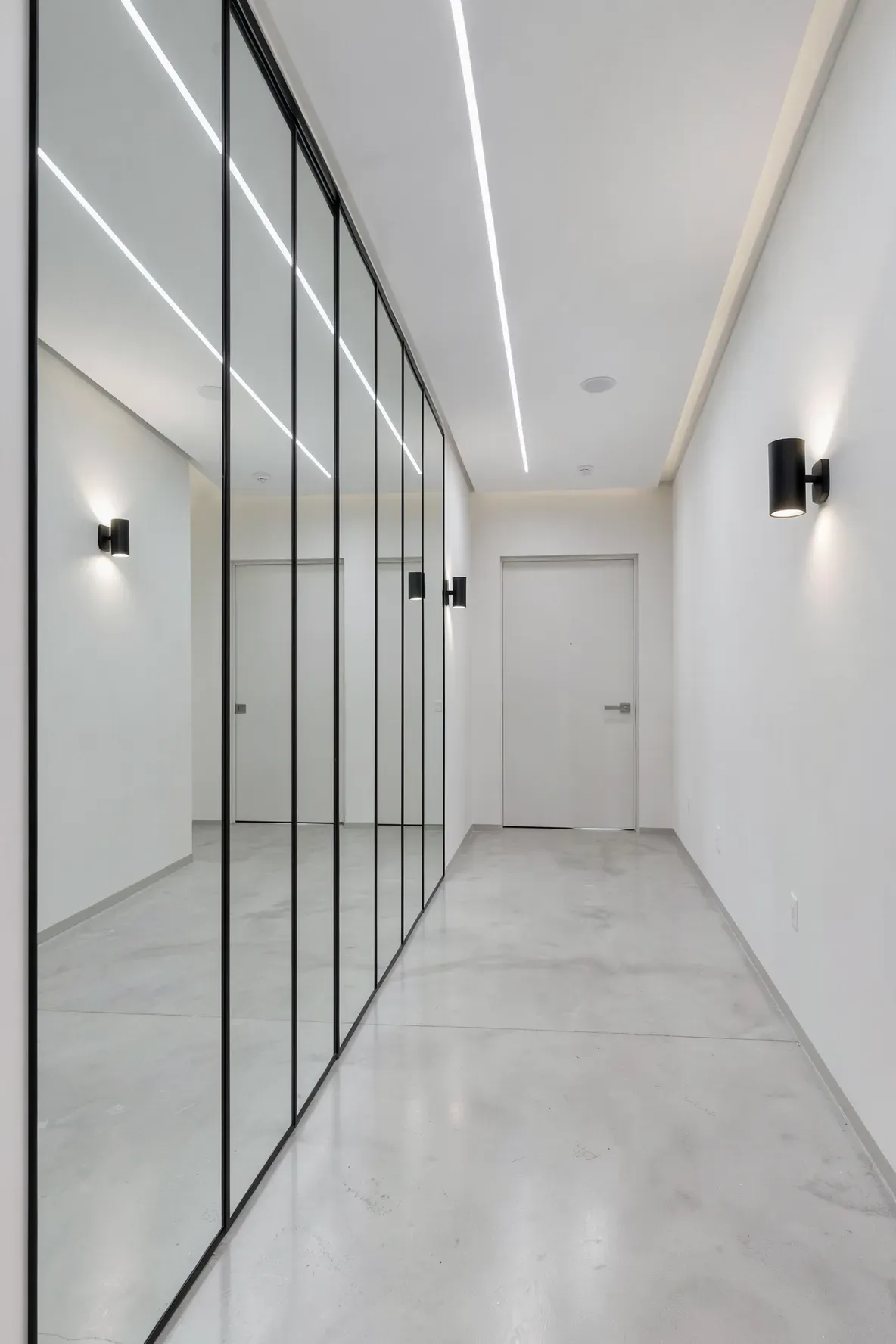
Instead of one small mirror, try installing several tall, thin mirror panels side-by-side. This covers a large portion of the wall and creates a “window” effect. It significantly opens up the side of the hallway, making it feel like there is another room just beyond the glass.
This is a bold narrow hallway design choice that works well in modern homes. It maximizes light reflection and completely eliminates the feeling of being closed in. Because the panels are flat against the wall, they take up zero floor space while providing a massive visual impact.
Neutral Toned Grasscloth Wallcovering
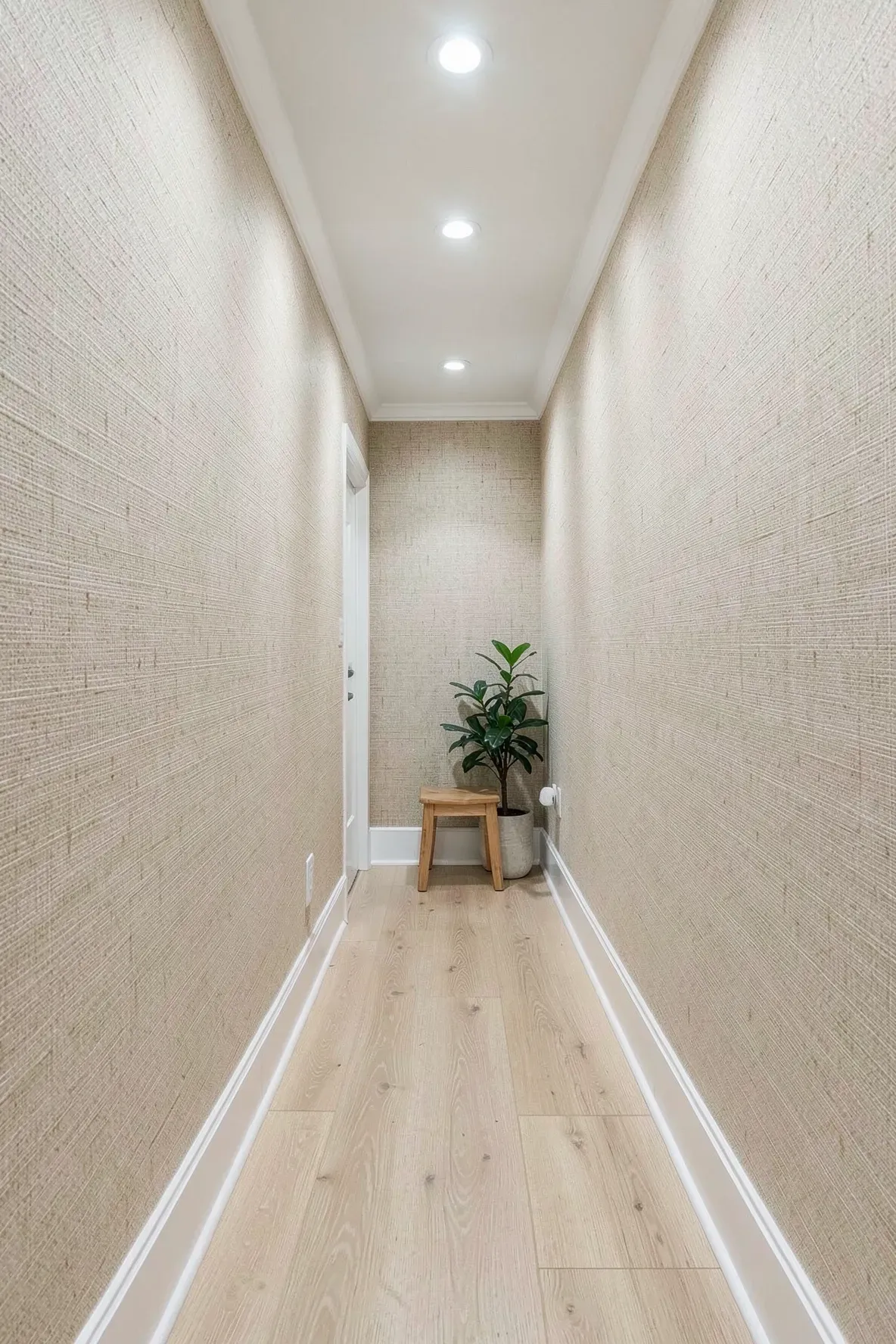
Grasscloth adds a natural texture that flat paint cannot provide. In a long hallway, the horizontal weave of the grass can subtly make the walls feel wider. Choosing a neutral color like beige, cream, or light gray keeps the space feeling bright and airy.
This texture absorbs sound, which is a bonus in long hallways that tend to be echoey. It makes the corridor feel more cozy and high-end. It is a sophisticated way to handle hallway inspiration narrow spaces where you want a
Integrated Picture Rail for Rotating Art
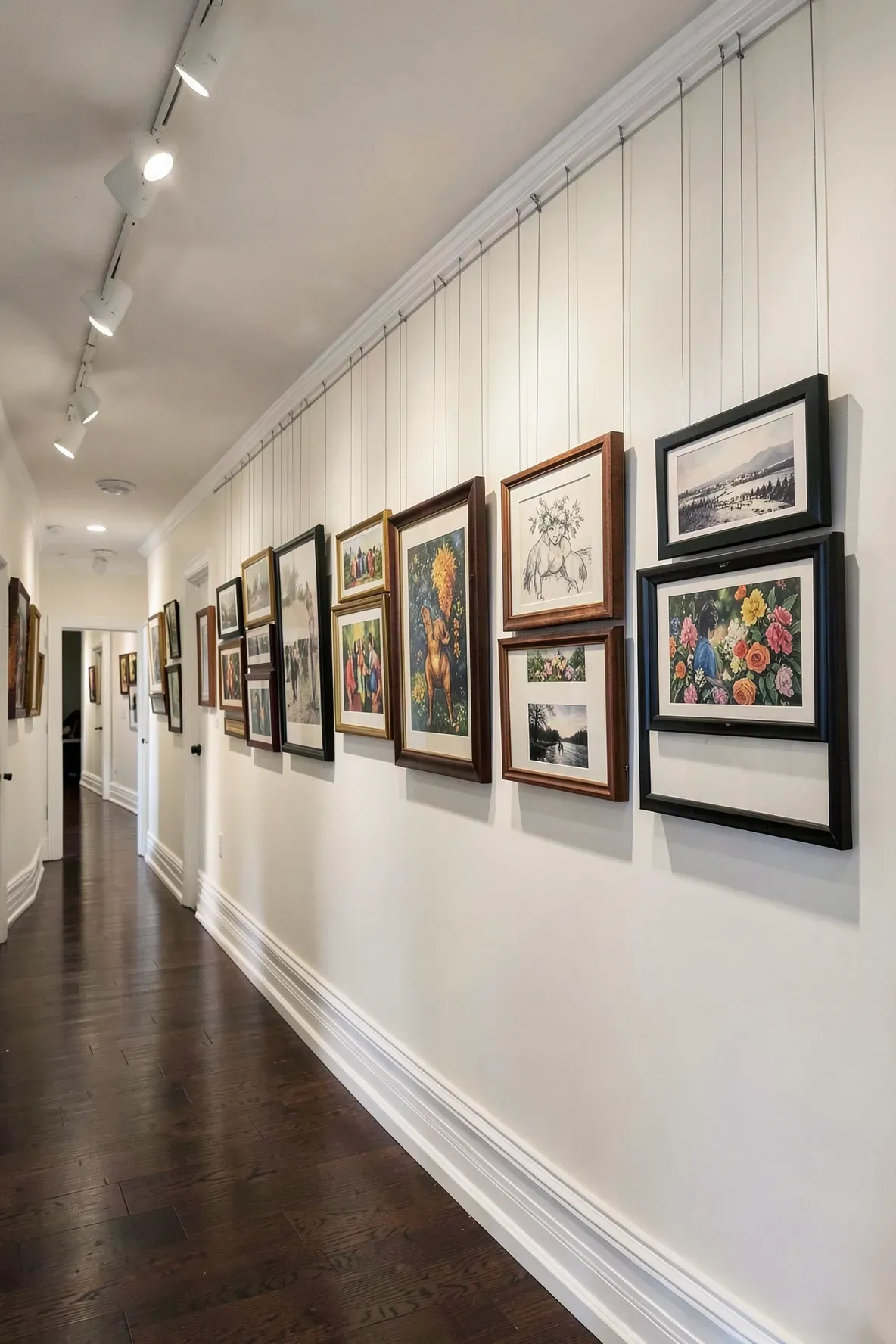
A picture rail is a thin piece of molding that runs along the top of the wall. It allows you to hang art from wires or hooks without putting holes in the drywall. This is perfect for people who like to change their decor often or want a flexible gallery space.
By hanging art at different heights along the rail, you can create a dynamic look that keeps the eye moving. It adds a traditional architectural detail that makes the hallway feel more intentional. It is an easy way to manage art in a long corridor without committing to a permanent layout.
White Painted Floorboards
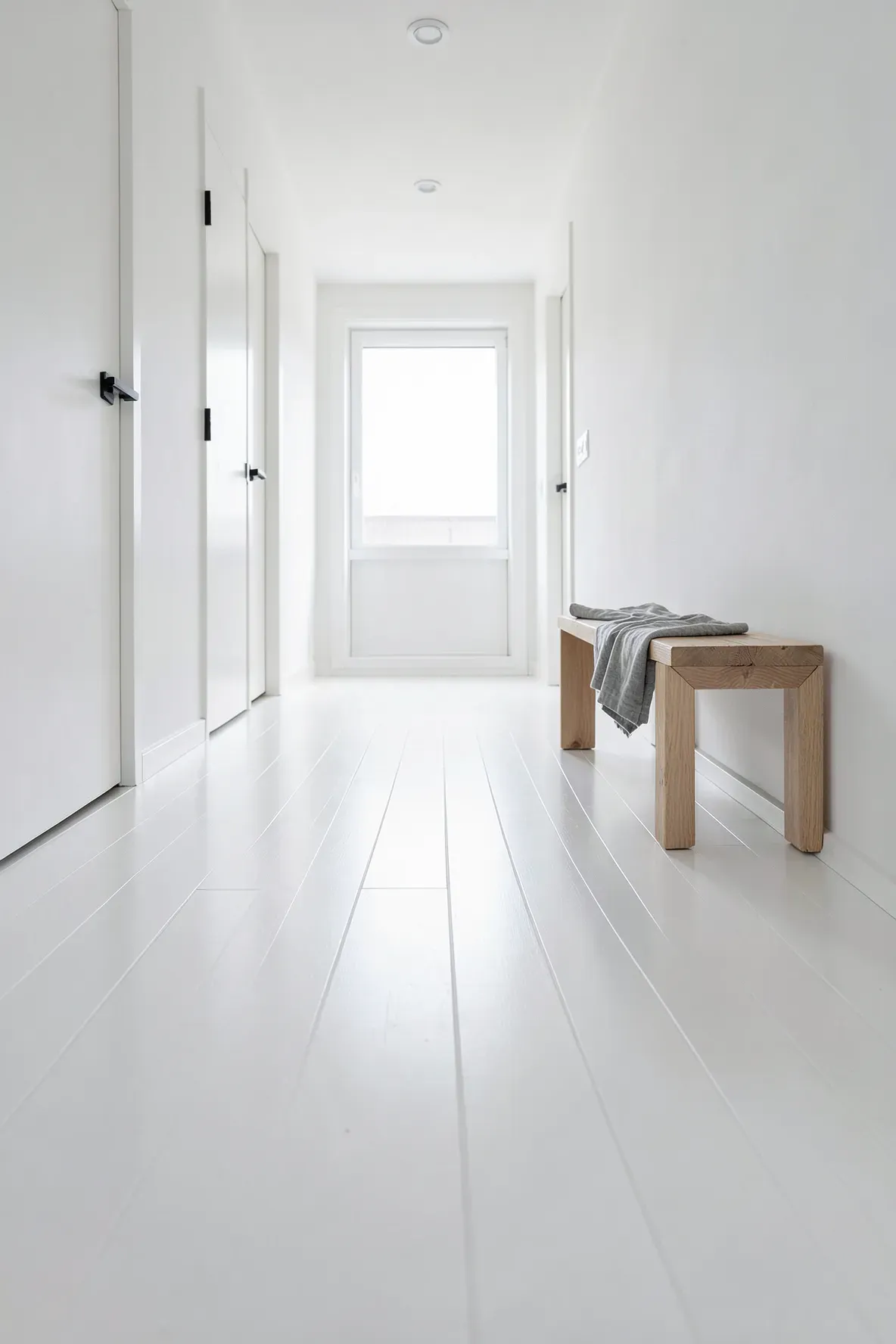
If you have old wood floors that are dark or damaged, painting them white can completely change the room. White floors reflect an incredible amount of light upward, instantly curing the gloom of a dark hallway. It creates a clean, Scandinavian look that feels very open.
Use a high-quality floor paint that can withstand foot traffic. While it requires a bit more cleaning, the payoff in brightness is worth the effort. This is one of the most drastic but effective dark hallway ideas brighten solutions for a tight budget.
Pocket Doors to Save Swing Space
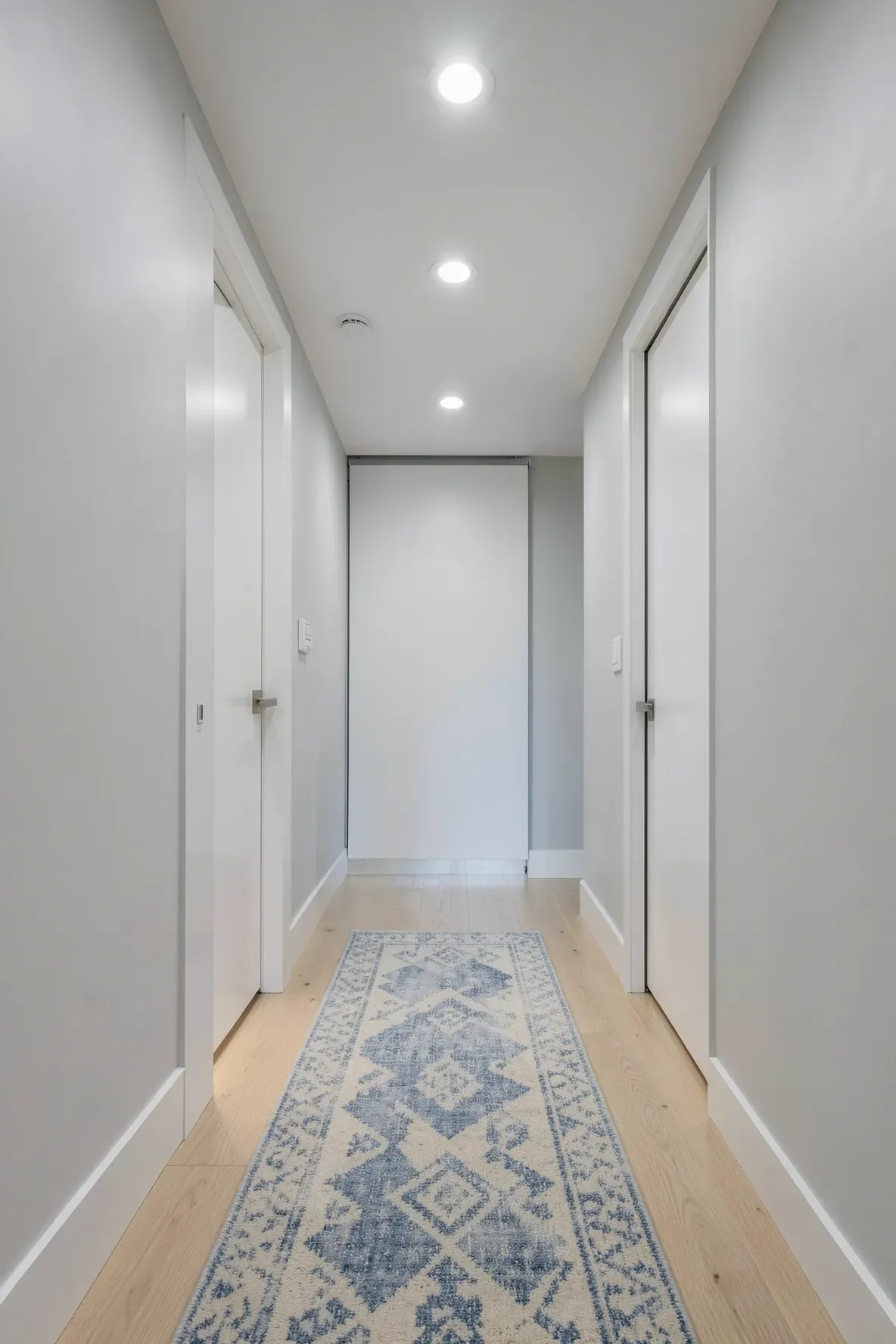
Standard doors that swing into a hallway can create major traffic jams and make the space feel even narrower. Pocket doors slide into the wall, completely removing the need for a door swing. This keeps the hallway clear and allows for a better flow of movement.
This is especially helpful in long entry hallway ideas where multiple doors might open into the same area. It makes the hallway feel wider because the walls remain flat and unobstructed. If you are doing a renovation, this is a smart structural change to improve the layout of your home.
Transforming a long, narrow, or dark hallway doesn’t always require a major renovation. By focusing on light-reflective surfaces, smart storage, and visual tricks like mirrors and patterns, you can make these transitional spaces feel like a natural part of your home. Whether you choose to brighten the space with white paint or embrace a more moody hallway vibe, the key is to be intentional with every design choice.