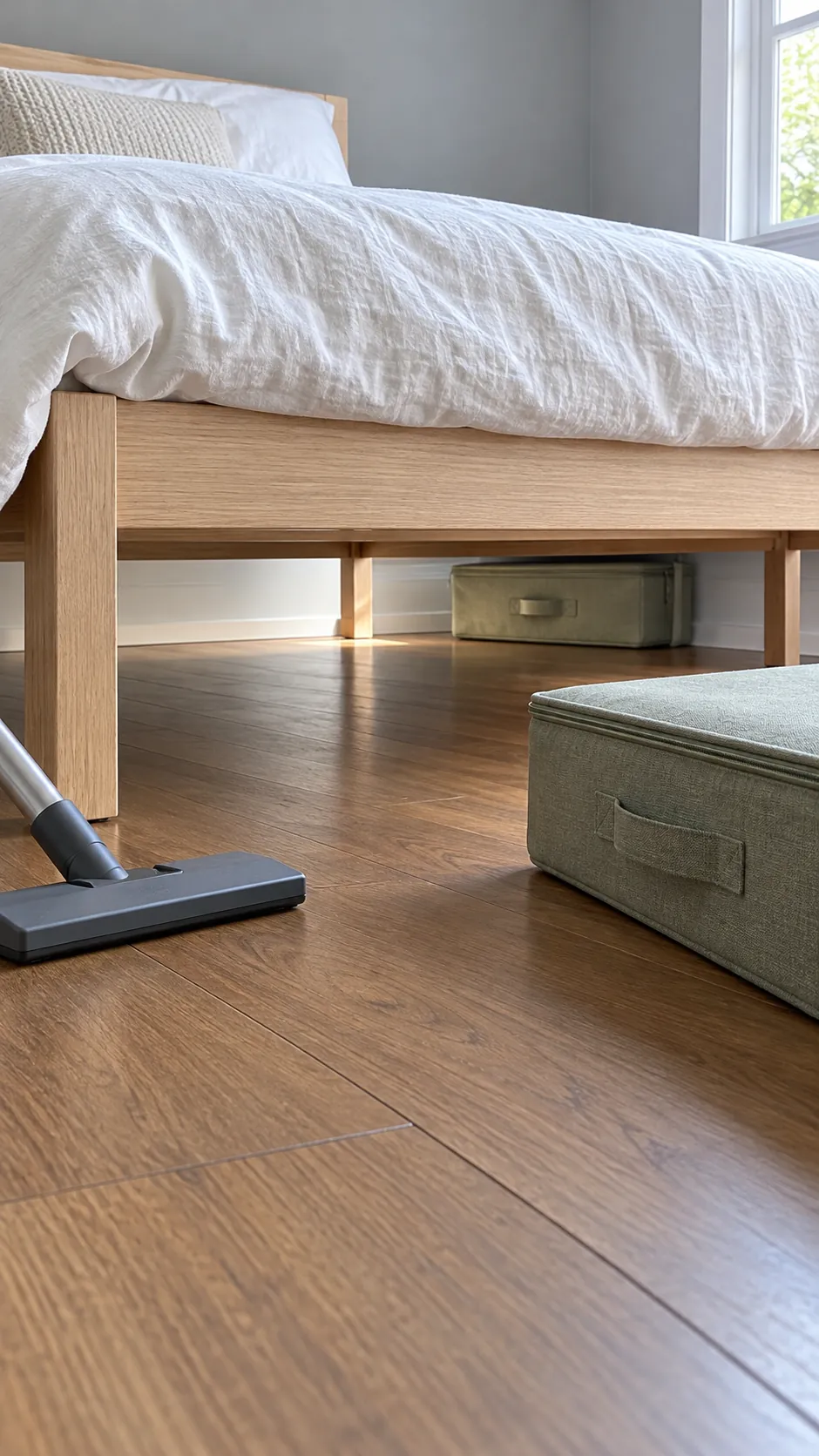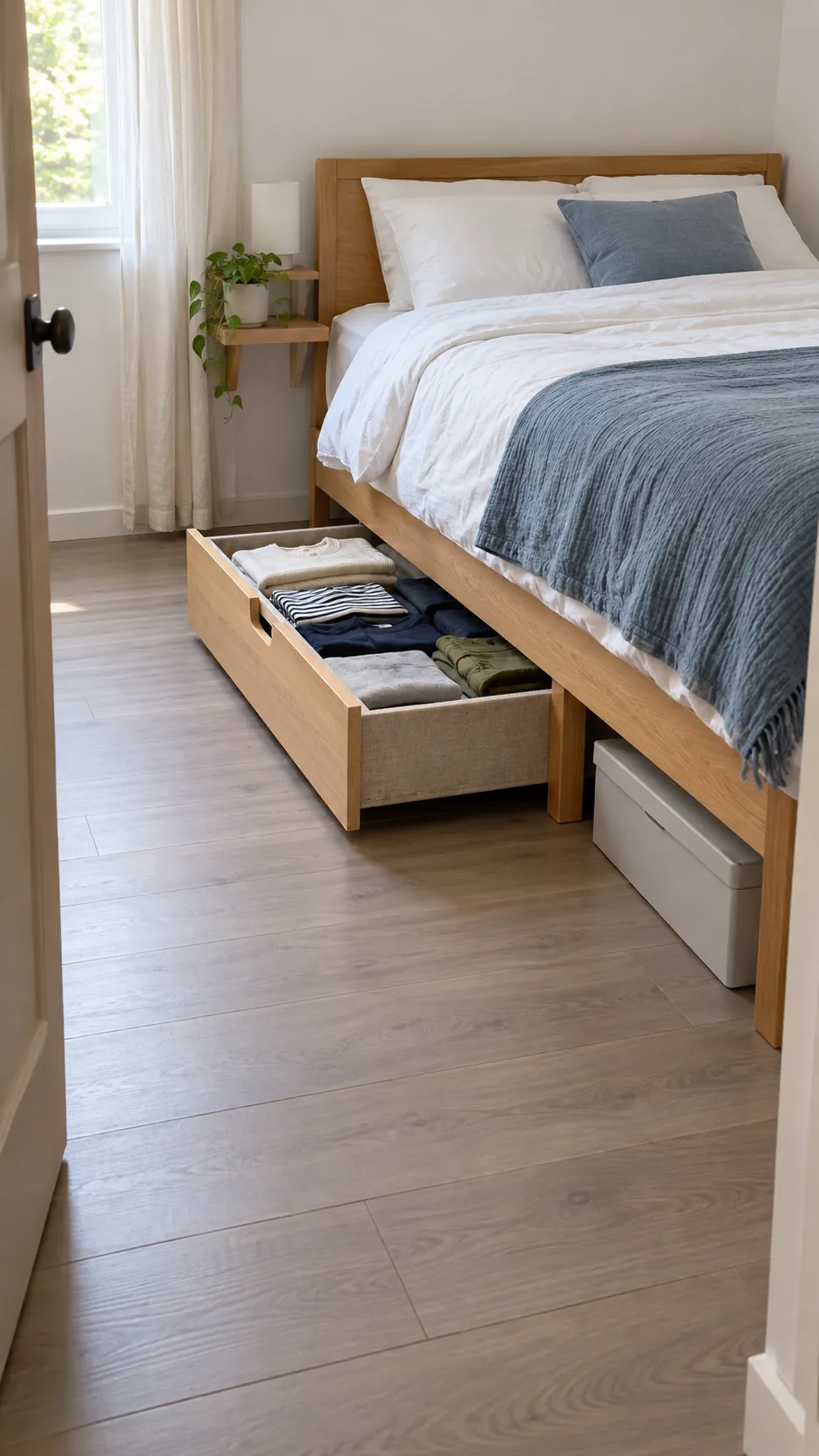
Clothes do not become easier to find just because they disappear beneath the bed. Without a dresser, this space has to do real daily work: protect fabrics, keep categories separate, and let you reach what you need. Measure the lowest frame clearance, the spaces between supports, and the floor needed to pull a container out before choosing any of these options.
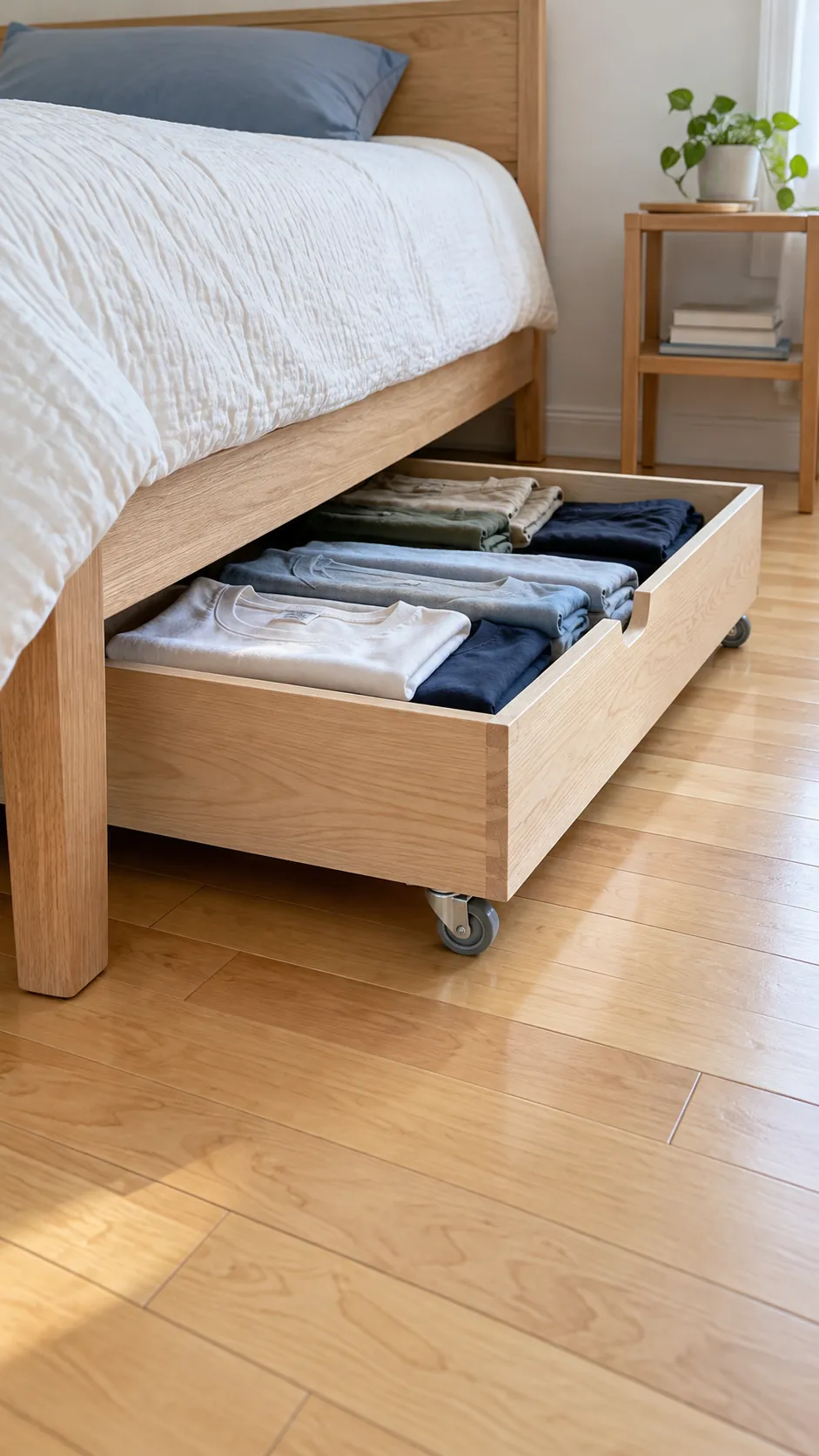
Choose a shallow drawer on wheels
A wheeled drawer is useful when you need clothes every day and can pull it fully clear of the bed. Measure the lowest rail and include the wheels in the drawer’s total height. Test the wheels on your actual flooring, because a unit that rolls well on wood may drag on thick carpet.
Check the pull out space before you choose the drawer depth. A bedside table can stop a drawer long before it clears the bed. Place one empty test box in the proposed position and practice removing it before buying a full set.
Use clear lidded bins for visible categories
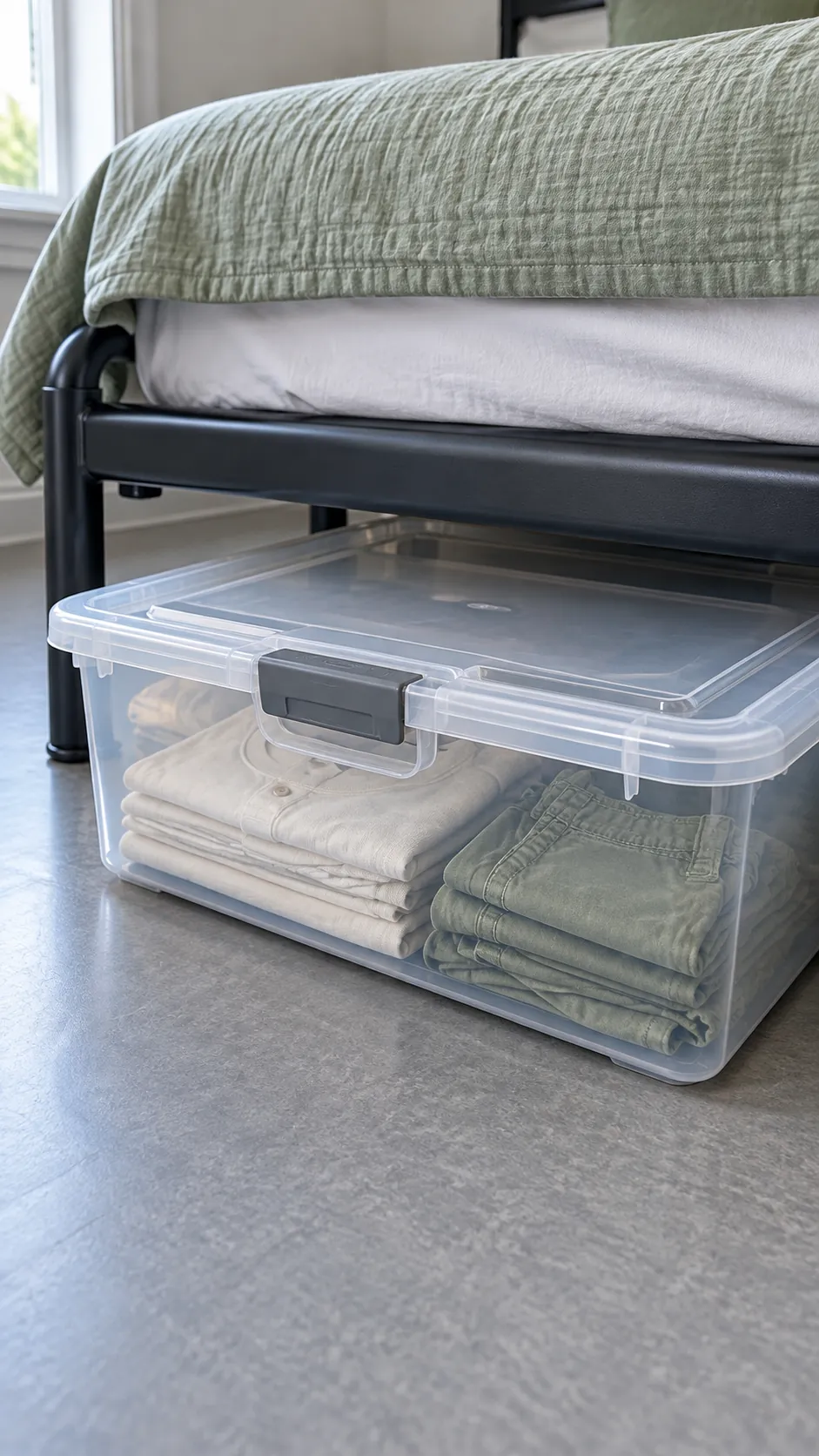
Transparent bins let you identify contents without opening every container. Choose lids that close without pressing on the clothing, and store only clean, completely dry items. A lid reduces dust exposure, but it does not solve moisture problems in a damp room.
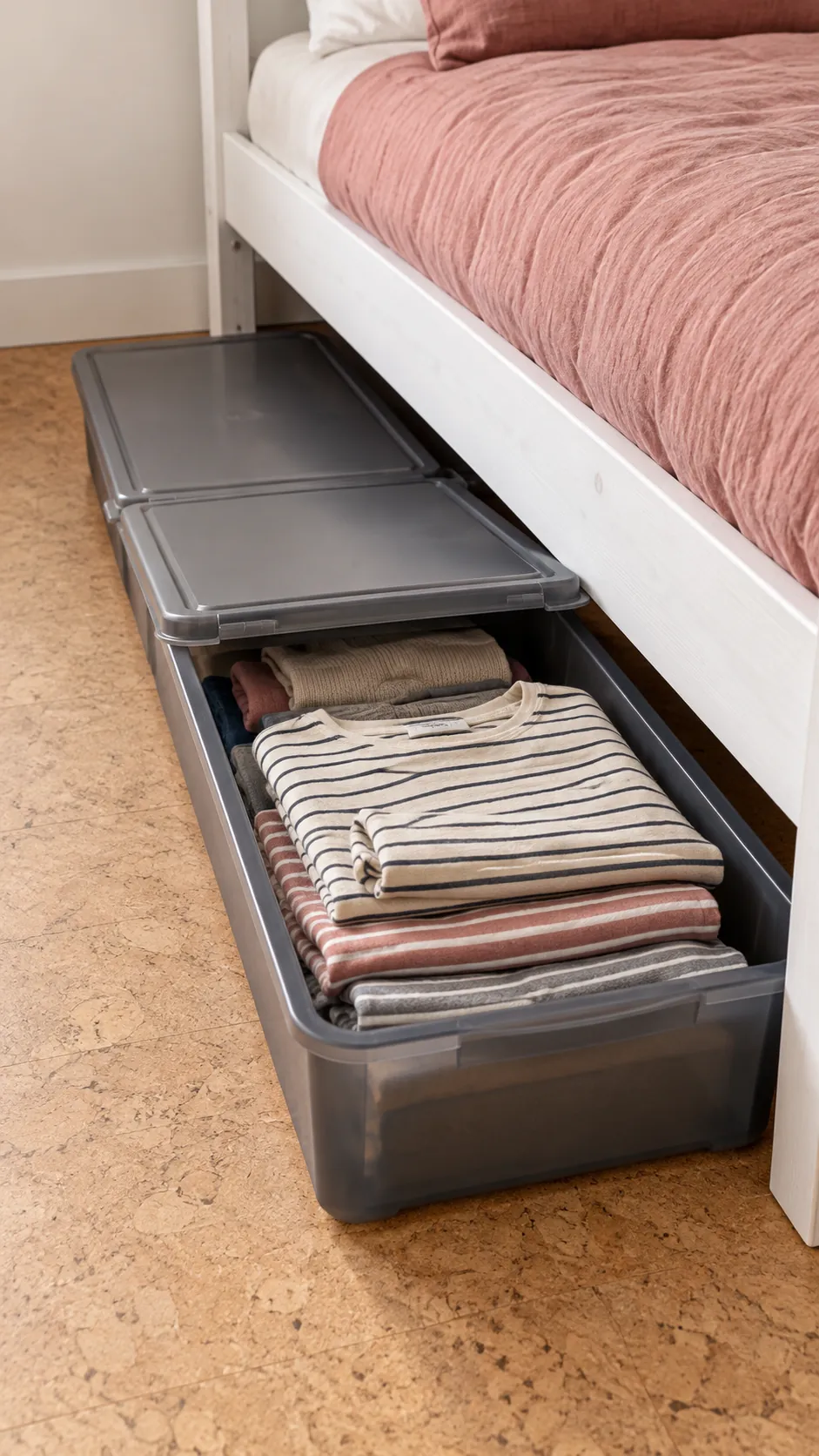
Try a lid that opens in two sections
A split lid can make a long container easier to use when only its front half will pull out. Check that the opened lid clears the bed rail and does not bend against it. Keep the most frequently used items beneath the accessible half, and treat the back as occasional storage.
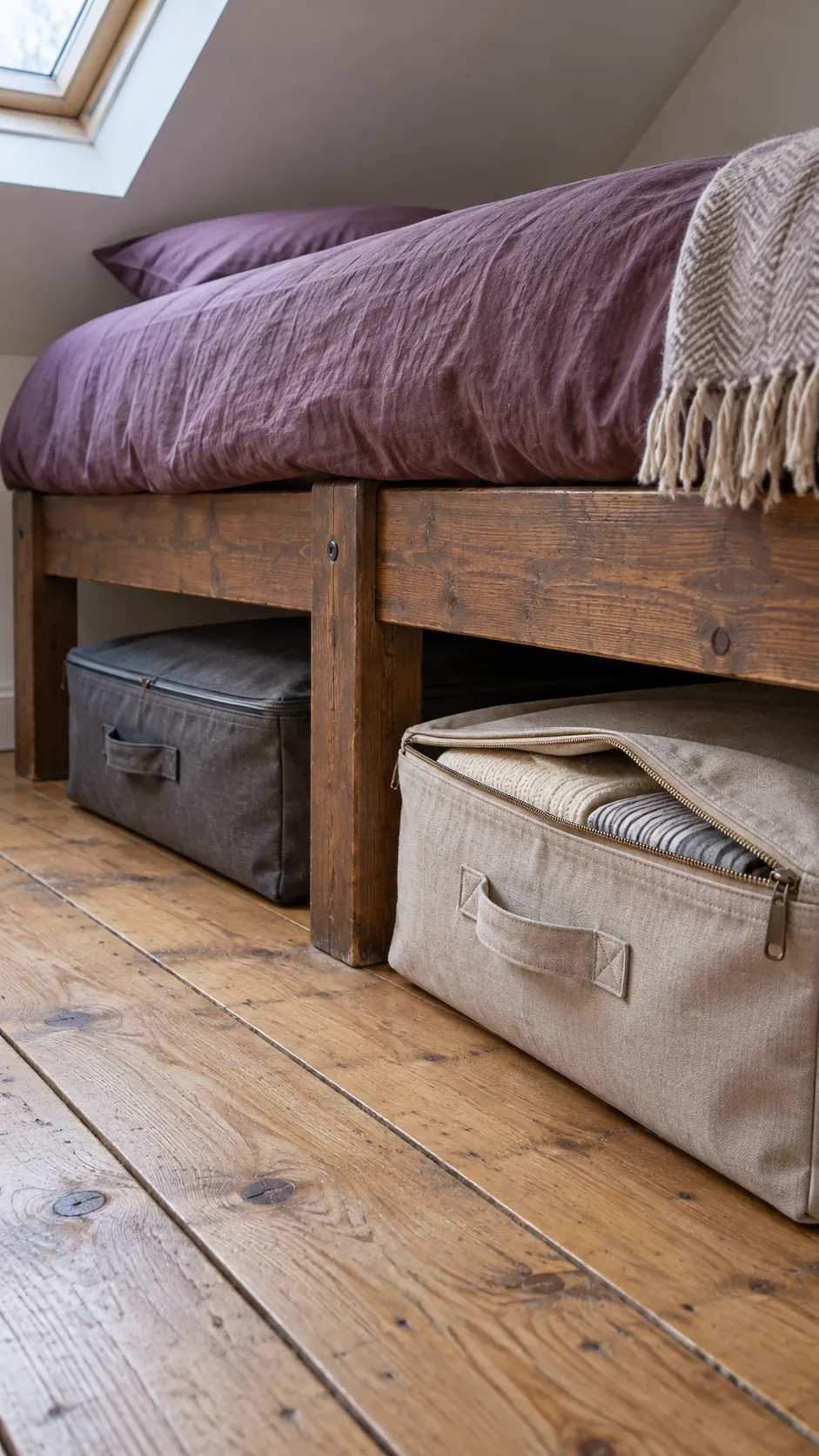
Fit soft zip cases between awkward supports
Fabric cases can be easier to position around bed legs than a large rigid box. Measure the usable spaces between supports and choose cases that fit without being crushed. Keep their contents light enough that the handles and seams are not strained when you pull them out.
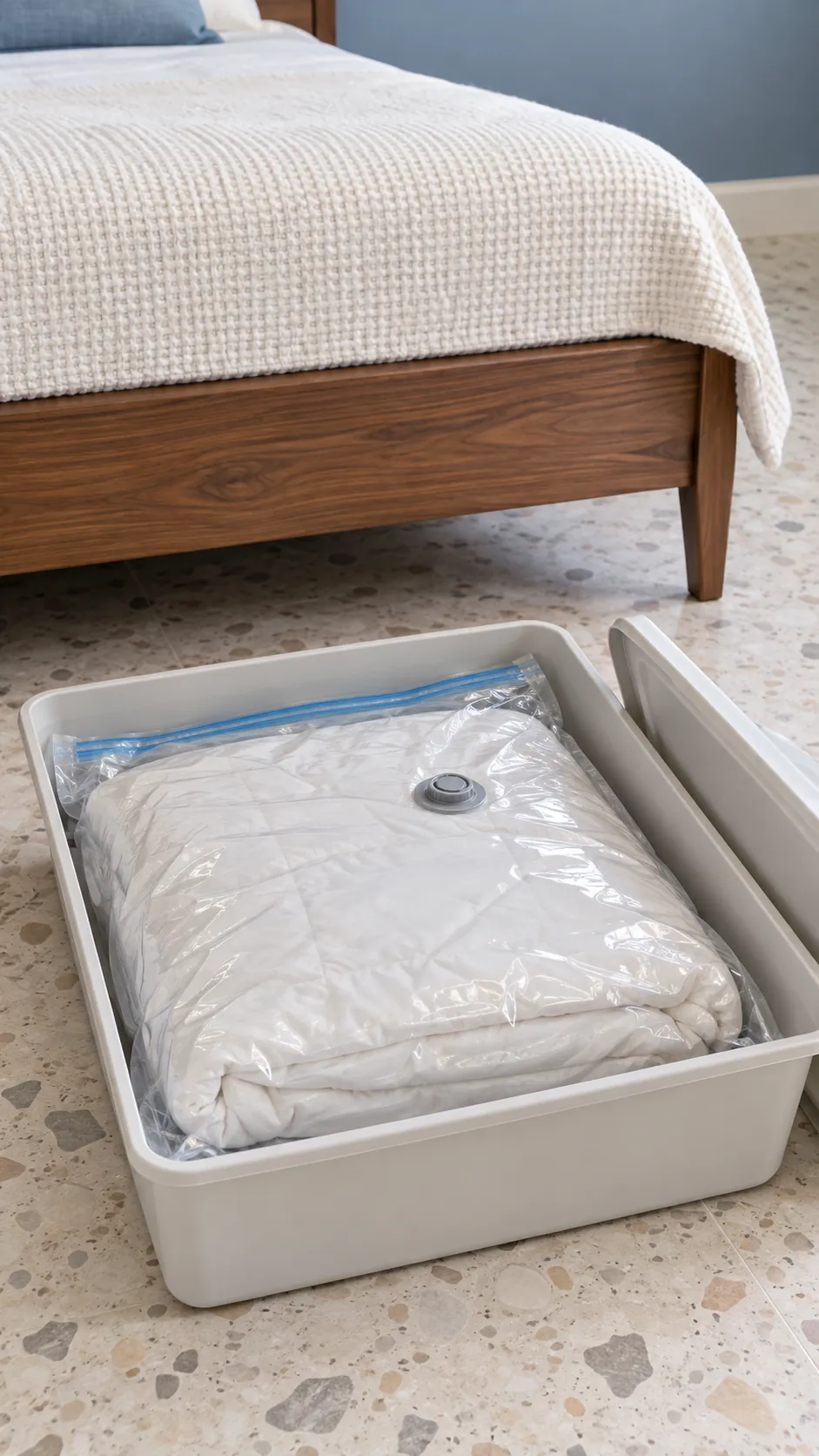
Compress suitable spare bedding in a storage bag
A compression bag can reduce the bulk of bedding that is suitable for this storage method. Follow the bedding and bag instructions, because some fillings and delicate materials should not stay tightly compressed. Put the sealed bag inside a protective container if the bed frame has rough edges, and keep it away from sharp fittings.
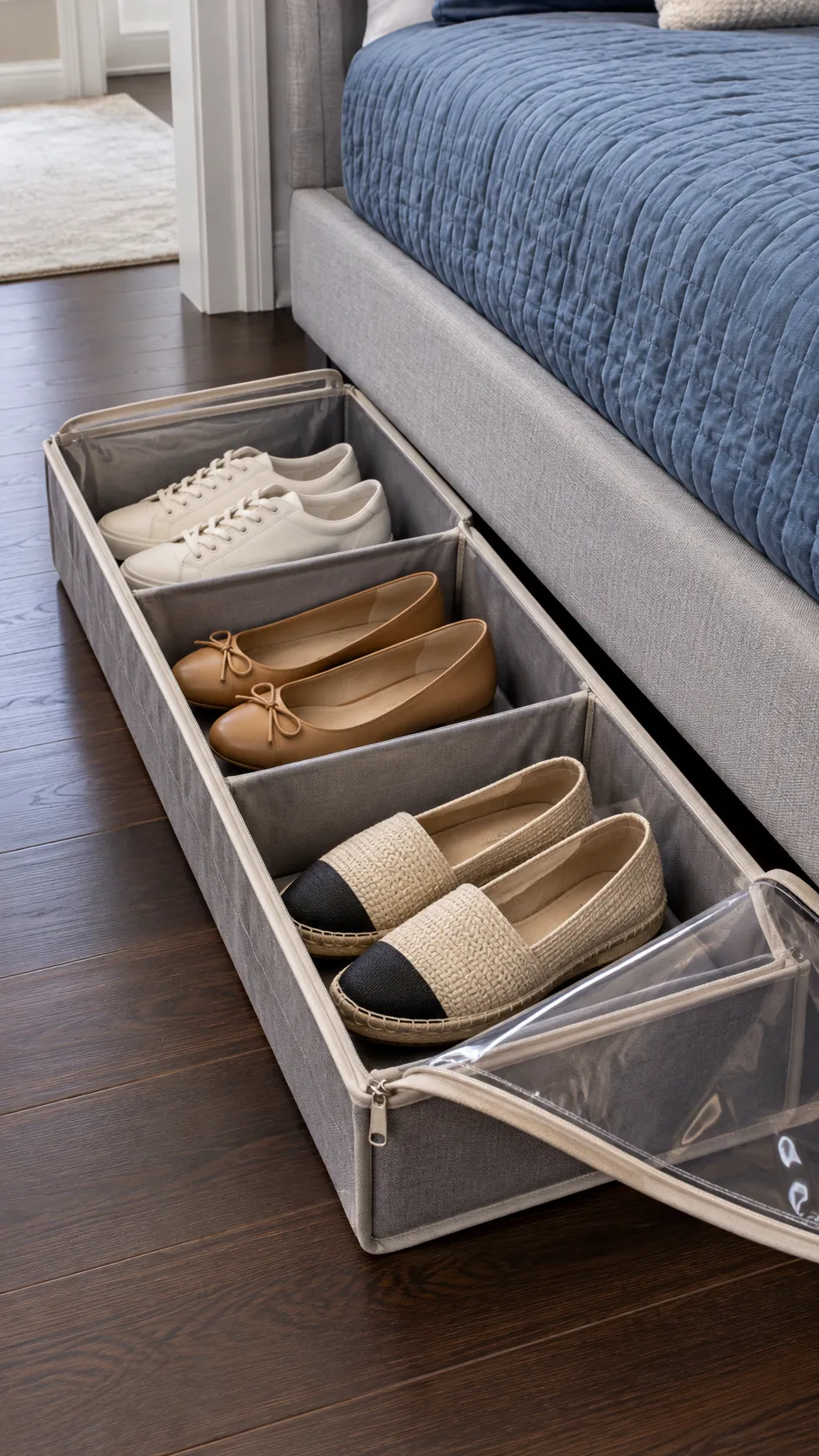
Separate occasional shoes in a covered organizer
A divided shoe case keeps pairs together and prevents soles from touching clothing. Clean and dry shoes before storing them, and choose a case suited to the ventilation conditions in your room. Measure the tallest pair rather than assuming every shoe will fit the same shallow compartment.
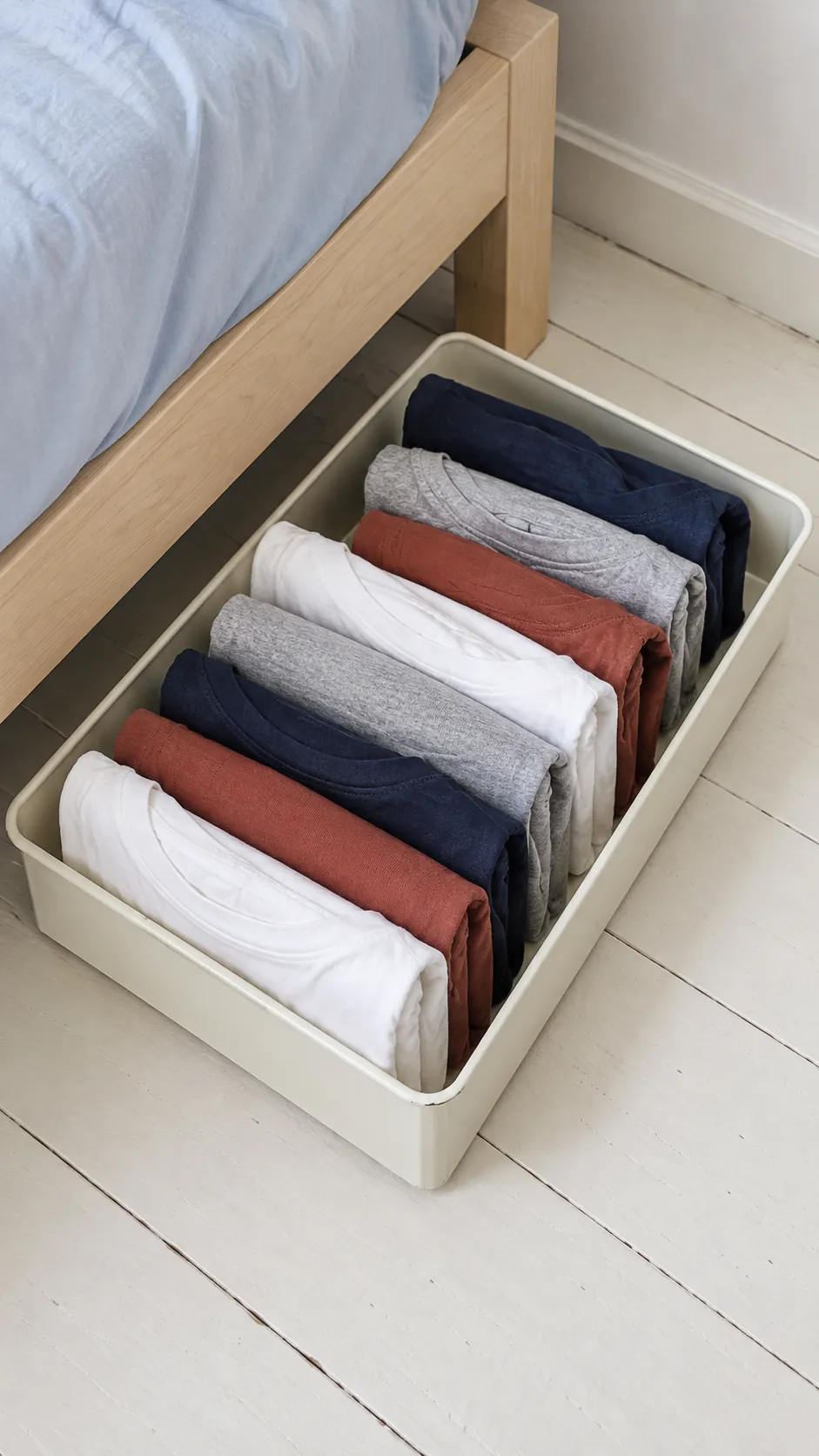
Stand folded tees in short rows
A shallow bin can work like a dresser drawer when tees are folded to fit its height. Arrange their folded edges upward so you can select one without disturbing the rest. Leave enough slack to return clean laundry without forcing the row into a solid block.
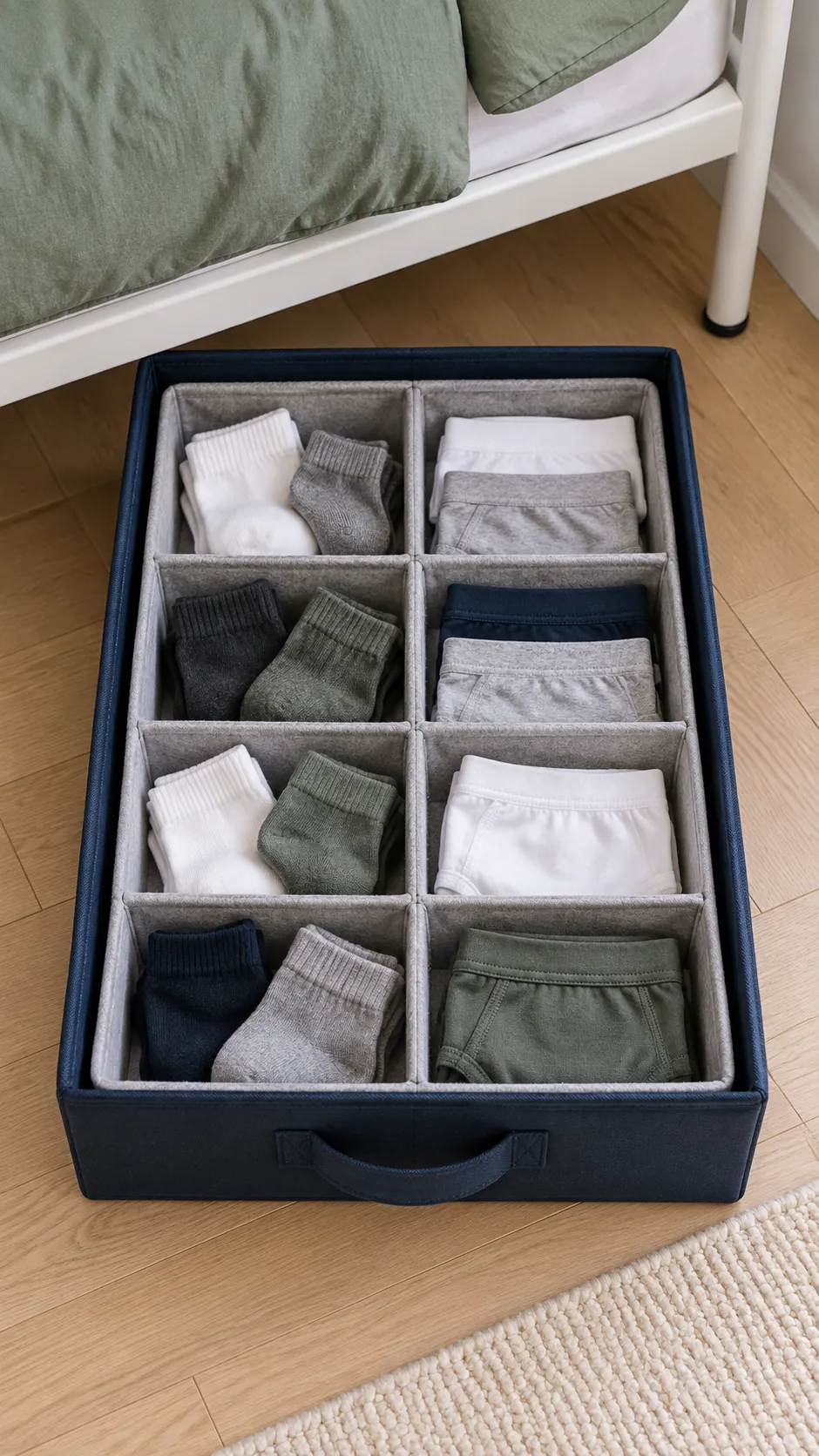
Add removable cells for socks and underwear
Small fabric dividers stop socks and underwear from mixing across a wide drawer. Choose cell sizes that suit the garments instead of squeezing everything into tiny squares. A removable insert is easier to lift out for sorting and cleaning than a collection of loose items scattered across the bin.
Give each person a separate container
Personal bins keep shared under bed storage from becoming one mixed clothing pile. Assign containers by actual needs and access, rather than insisting that both people use identical sizes. Put each person’s handle on the side they can reach, especially when the bed is close to a wall.
Agree on what belongs in each container. Shared bedding can have its own separate box. This keeps one person’s clothing from gradually taking over the other’s useful access space.
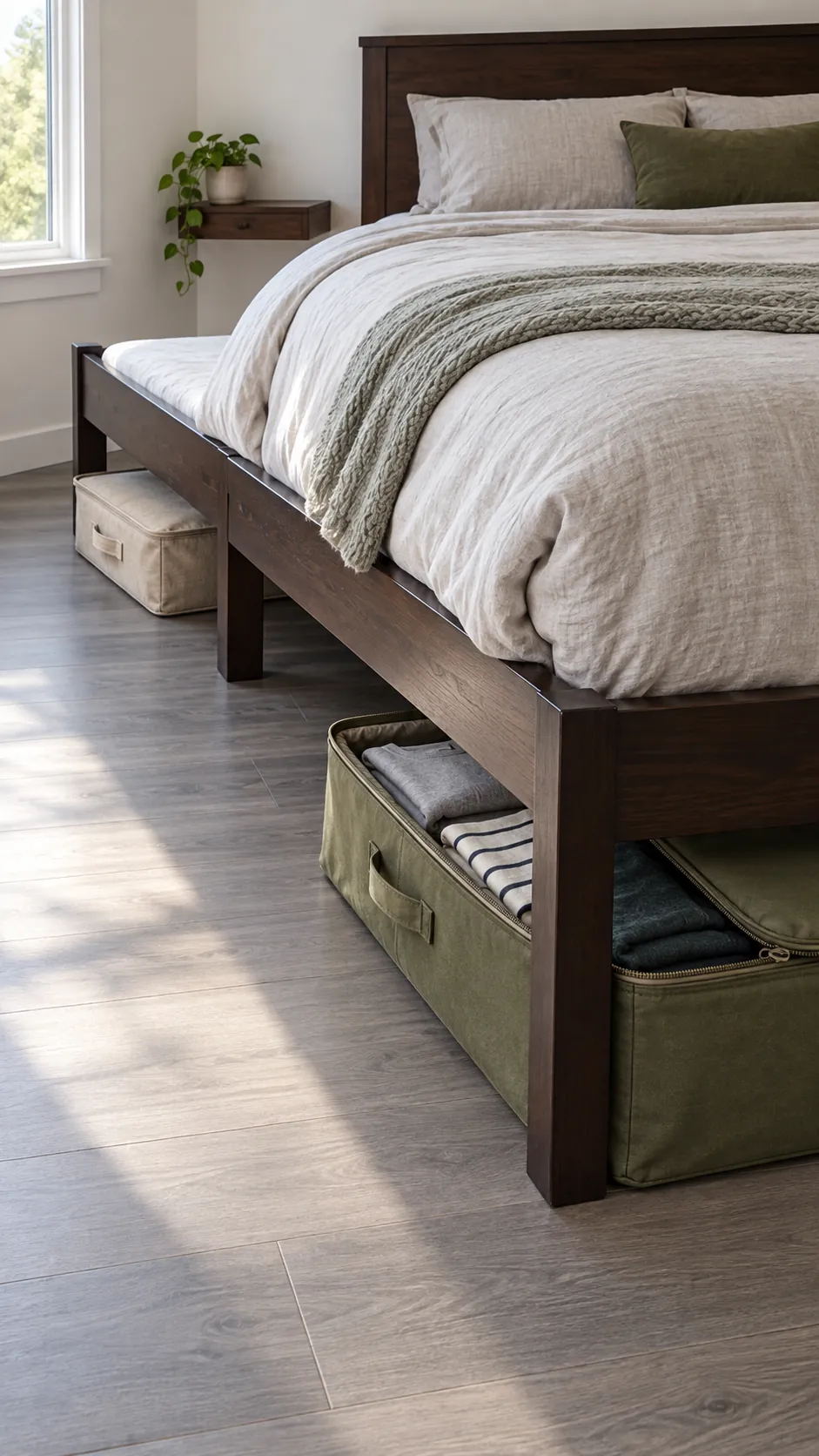
Rotate seasonal clothing behind daily items
Reserve the harder to reach area for clothing you will not need this season. Keep everyday clothes near the open edge so getting dressed does not require moving several boxes. At the seasonal change, inspect and refold the stored items before swapping their positions.
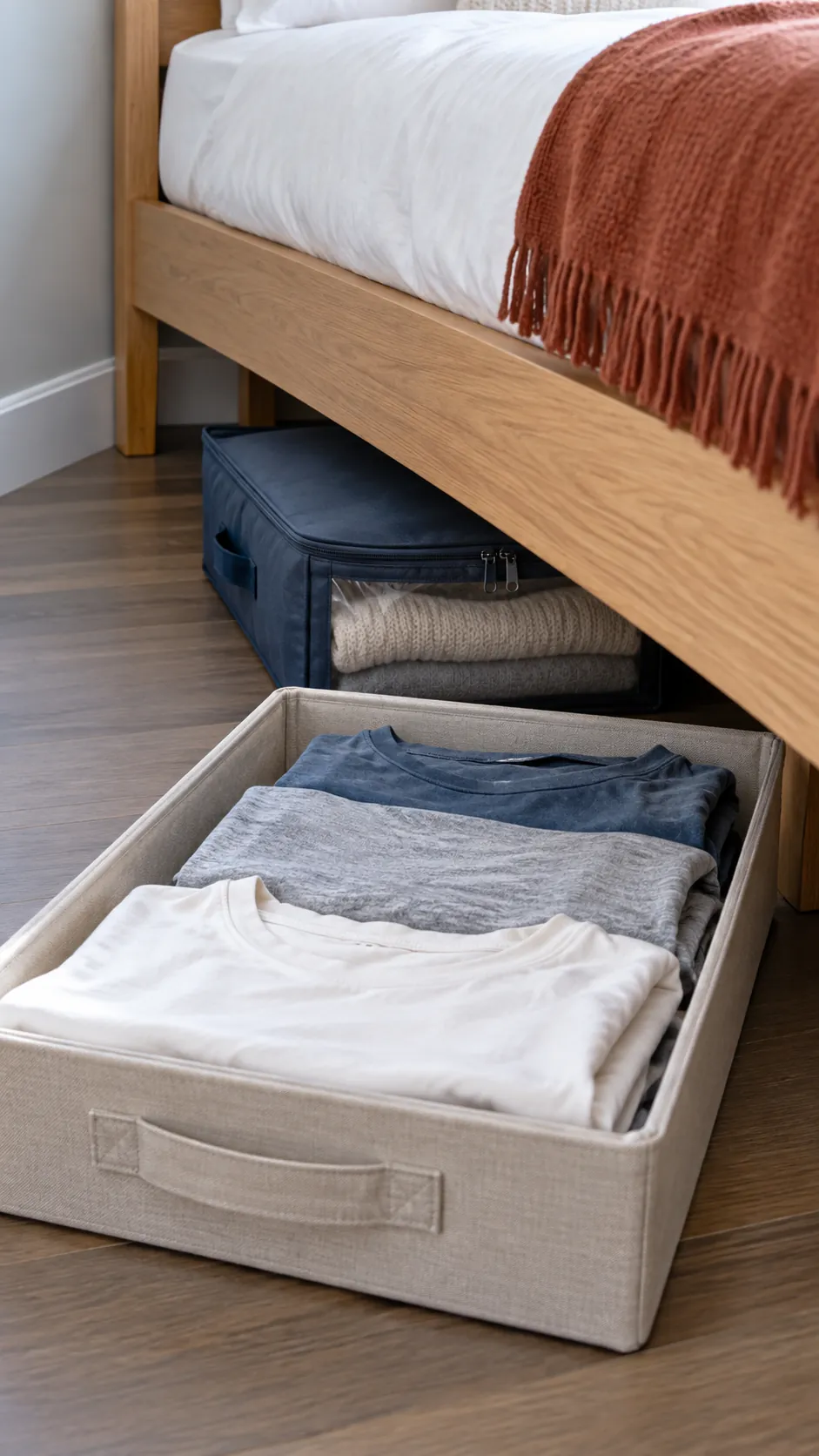
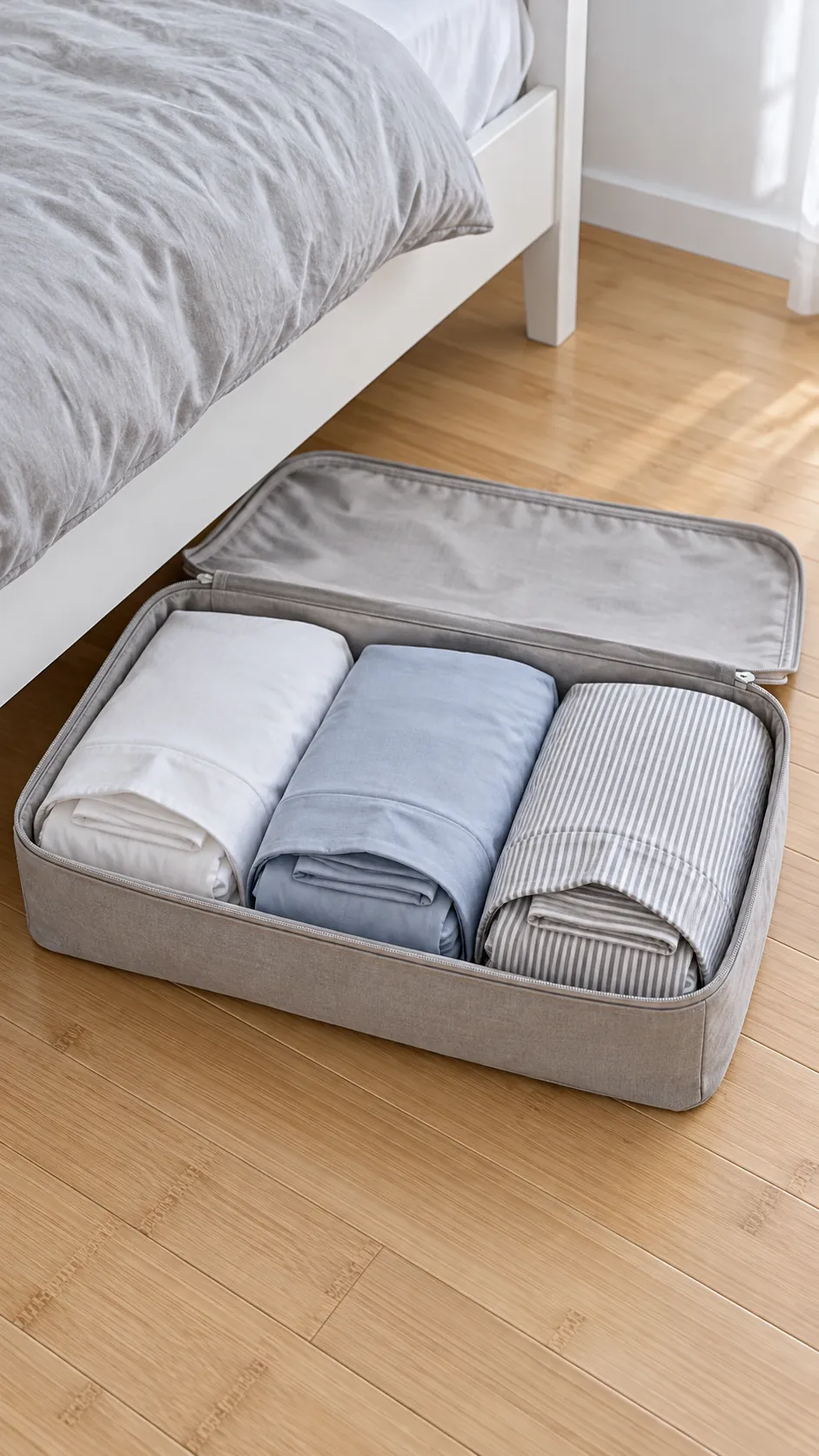
Bundle each sheet set inside its pillowcase
Keeping a sheet set together prevents a shallow bedding bin from becoming a search for matching pieces. Fold the fitted and flat sheets, then place them inside one matching pillowcase if the fabric and size allow. Store the bundle in a covered case and leave enough room to remove one set without unpacking the others.
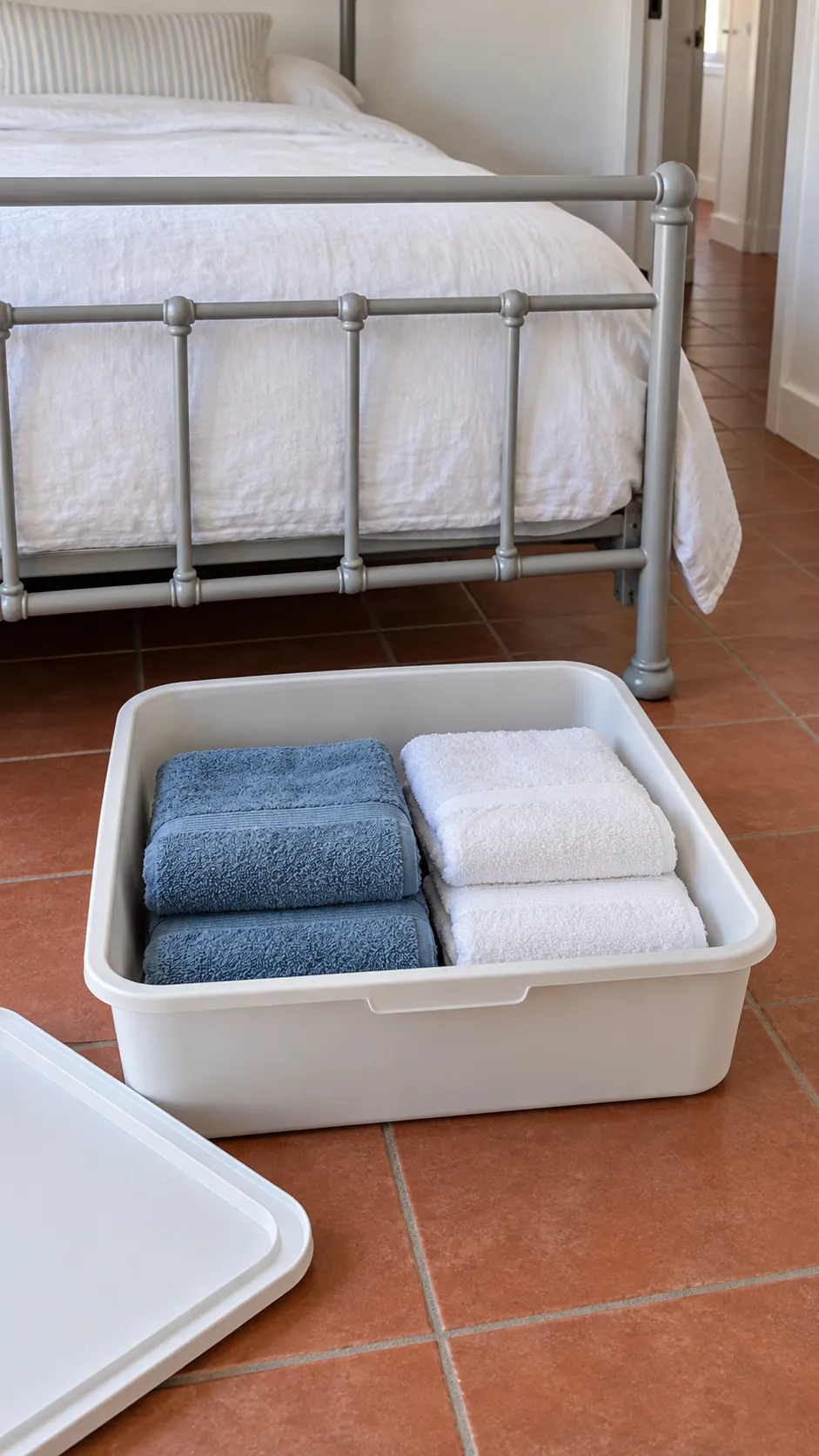
Reserve a washable bin for spare towels
Towels can free wardrobe space when they move into a clean covered under bed bin. Fold them to a consistent height so the lid closes without compressing a damp or overfilled stack. Let every towel dry fully before storage, and check the bin periodically if your bedroom tends to feel humid.
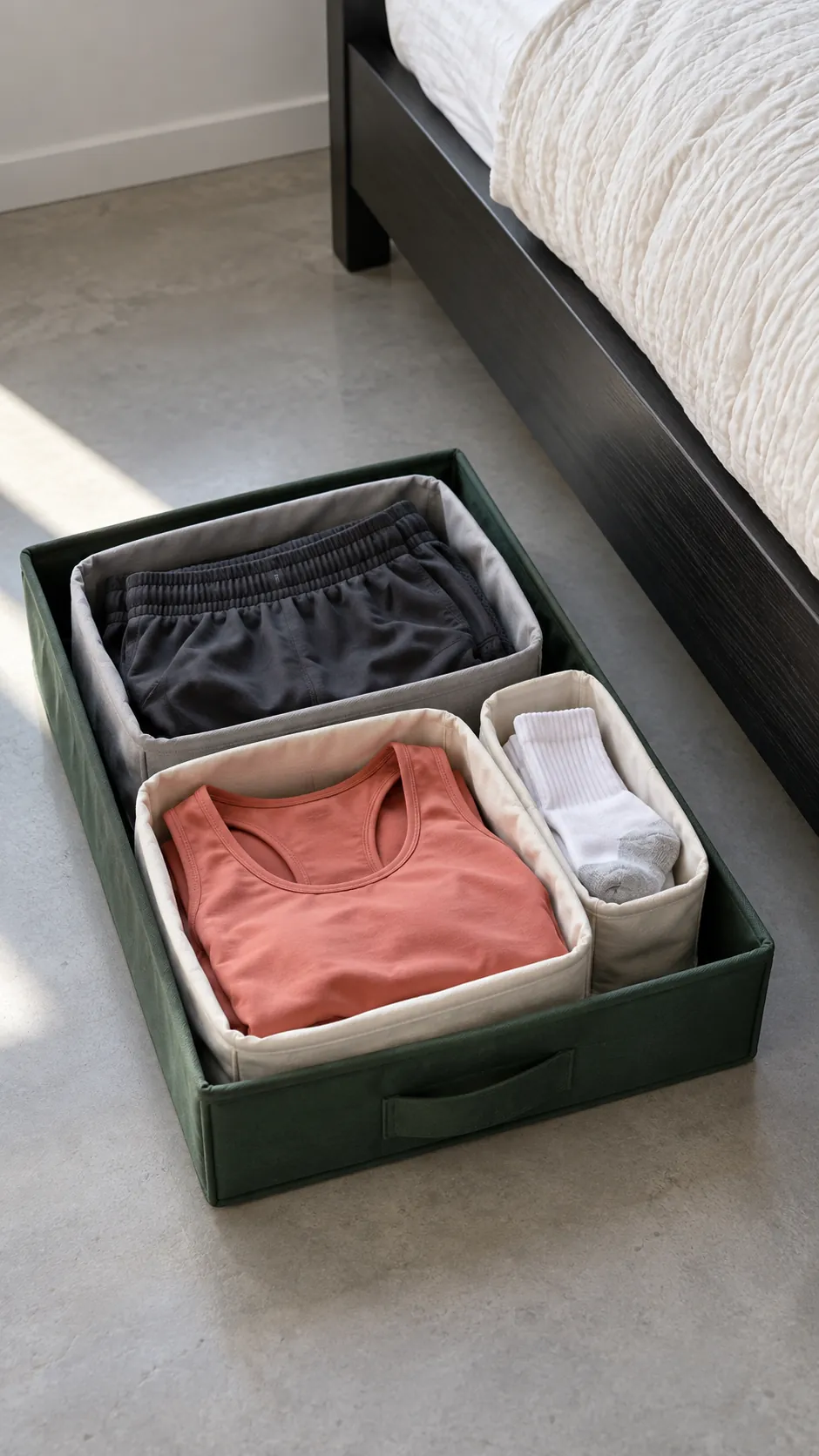
Group workout clothes by a complete session
Put a small set of exercise clothes together so you do not search several bins before leaving. A shallow organizer can separate tops, shorts, and clean socks while keeping them within one container. Keep used or damp workout gear out of this storage area, even if the bin is close to the bed.
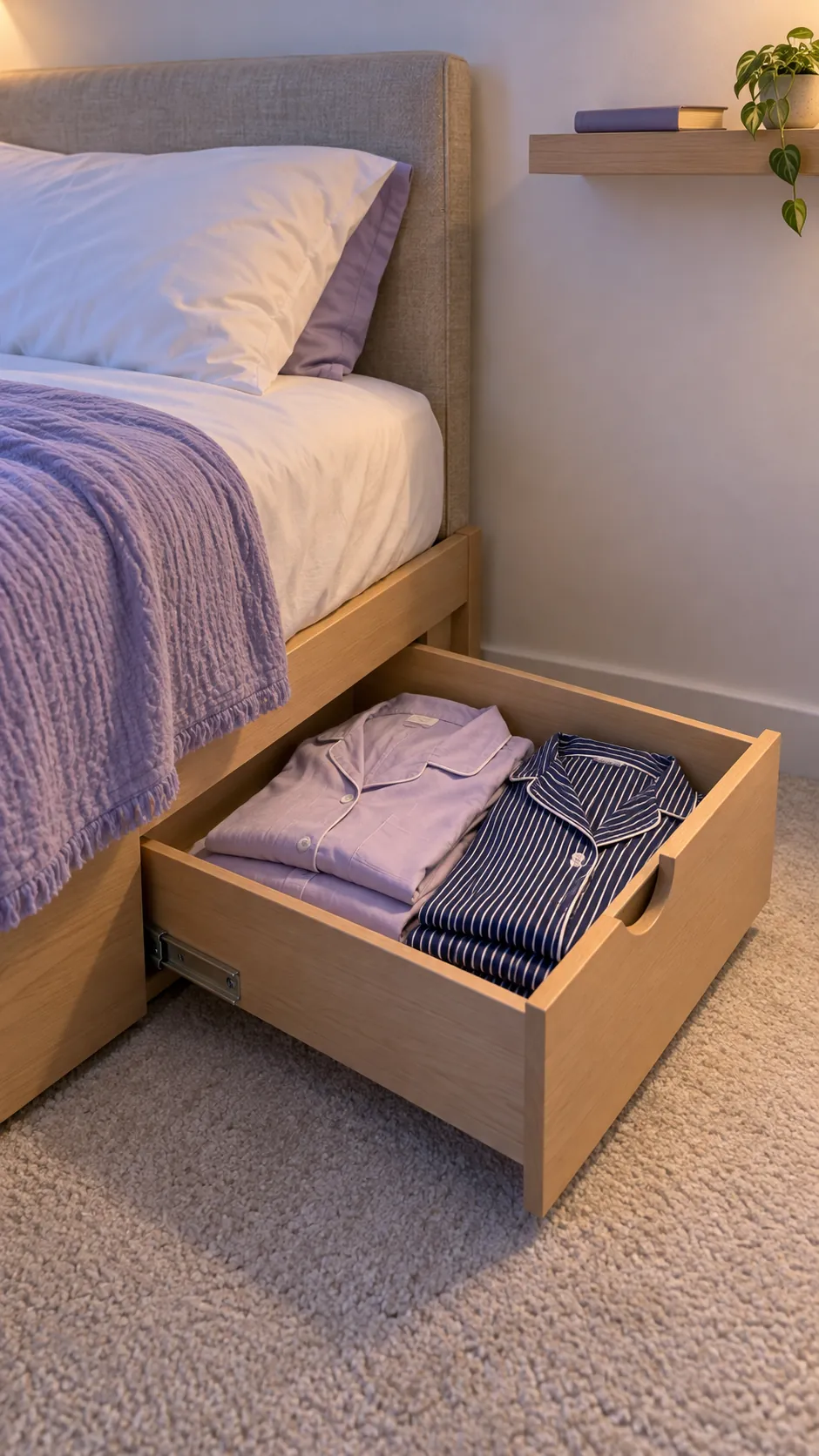
Keep sleepwear at the easiest edge
Sleepwear is a useful category for a small front drawer because you reach for it regularly. Place that drawer where the bedside table does not block its travel. If bending down is difficult, move this daily category to a more accessible height and use the bed space for occasional items instead.
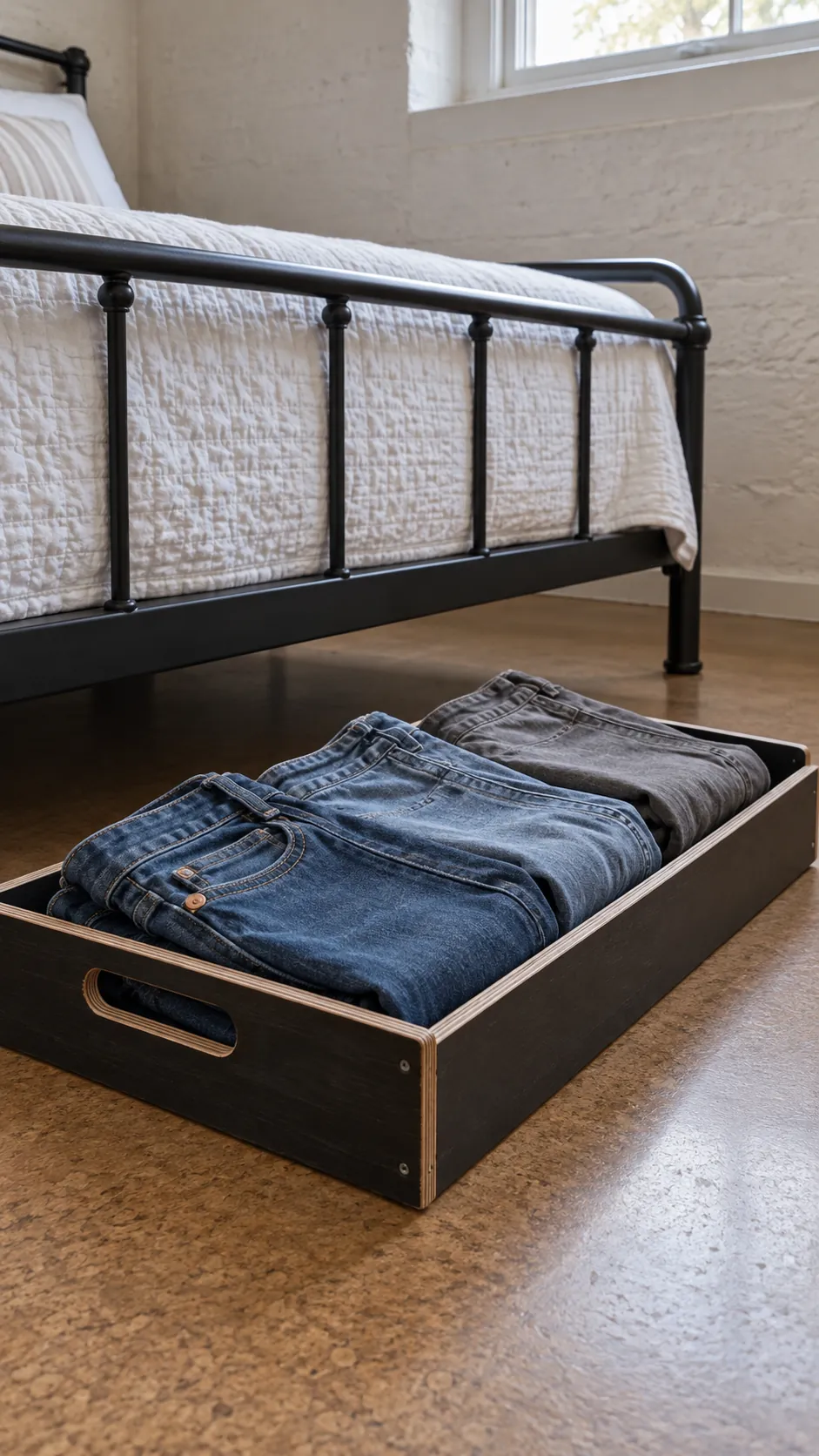
Lay denim in a low sturdy tray
Folded jeans are heavier than lightweight tees, so use a tray that can support them without sagging. Keep the stack low enough that you can see the pairs and move the tray comfortably. Several small loads are easier to handle than one long container packed with every pair you own. A handle at each end can help you reposition a compact tray without pulling on a weak lid.
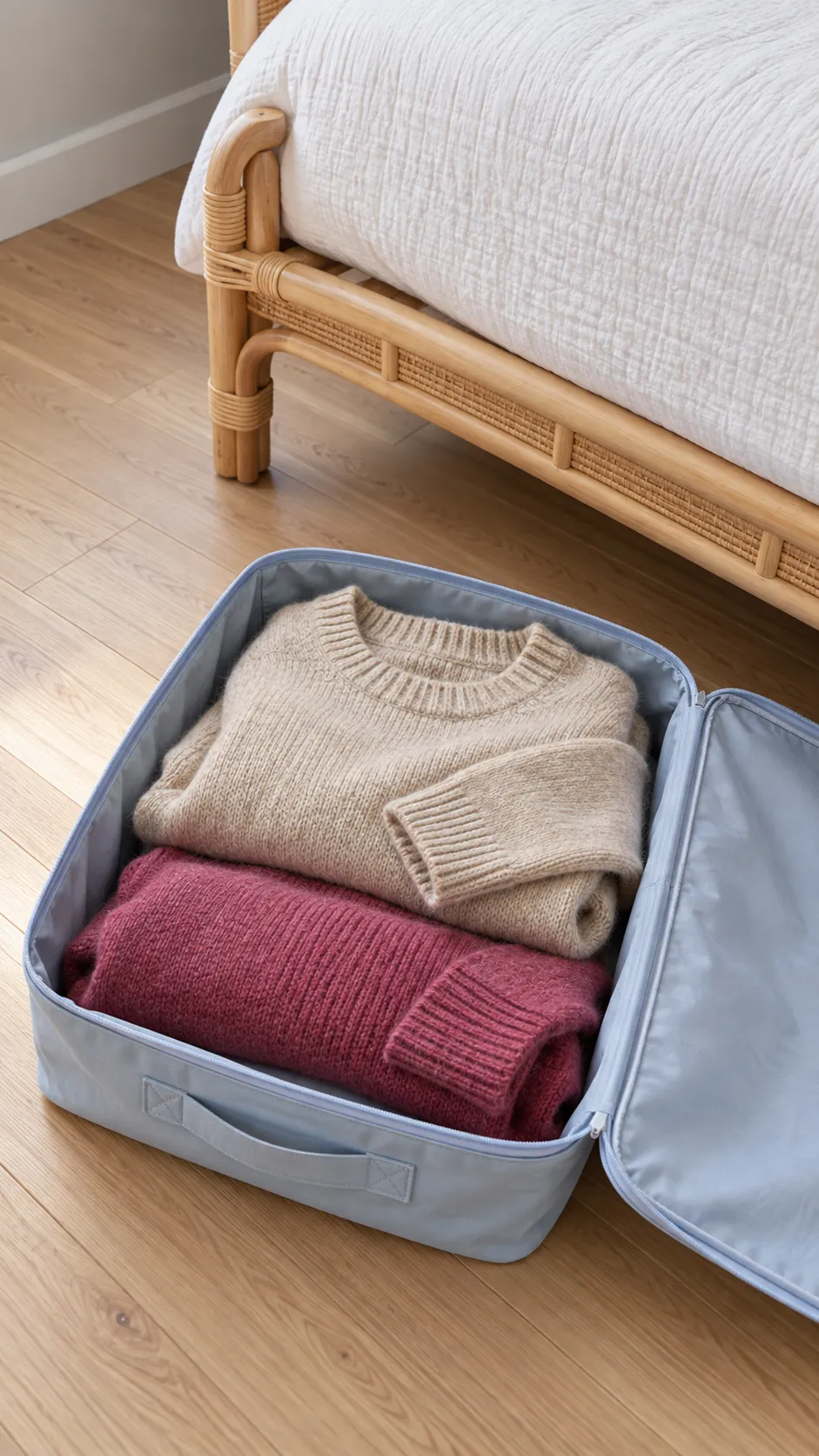
Protect delicate knits in a fabric case
Soft knitwear benefits from support beneath it rather than being crammed into narrow gaps. Fold each piece loosely in a clean fabric case and follow its care instructions for longer storage. Avoid tight compression for garments that may lose shape, and check that the case stays dry and protected from dust.
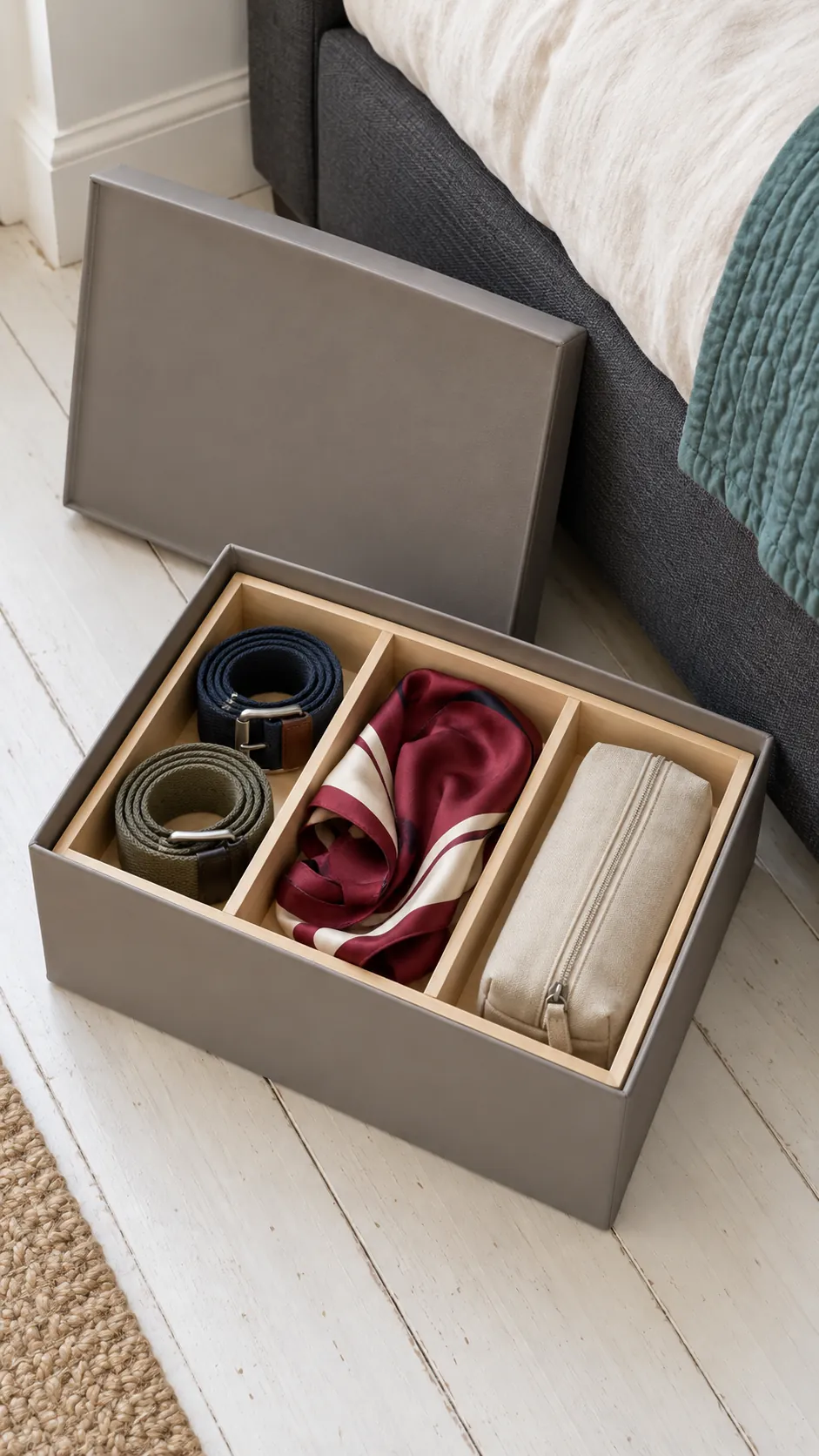
Use a shallow accessory tray inside a covered box
Belts, scarves, and small pouches can disappear inside a deep clothes bin. A shallow removable tray gives each category a visible area while an outer cover protects it from settling dust. Keep jewelry or valuables in storage suited to their security and care needs rather than treating the bed gap as a universal hiding place.
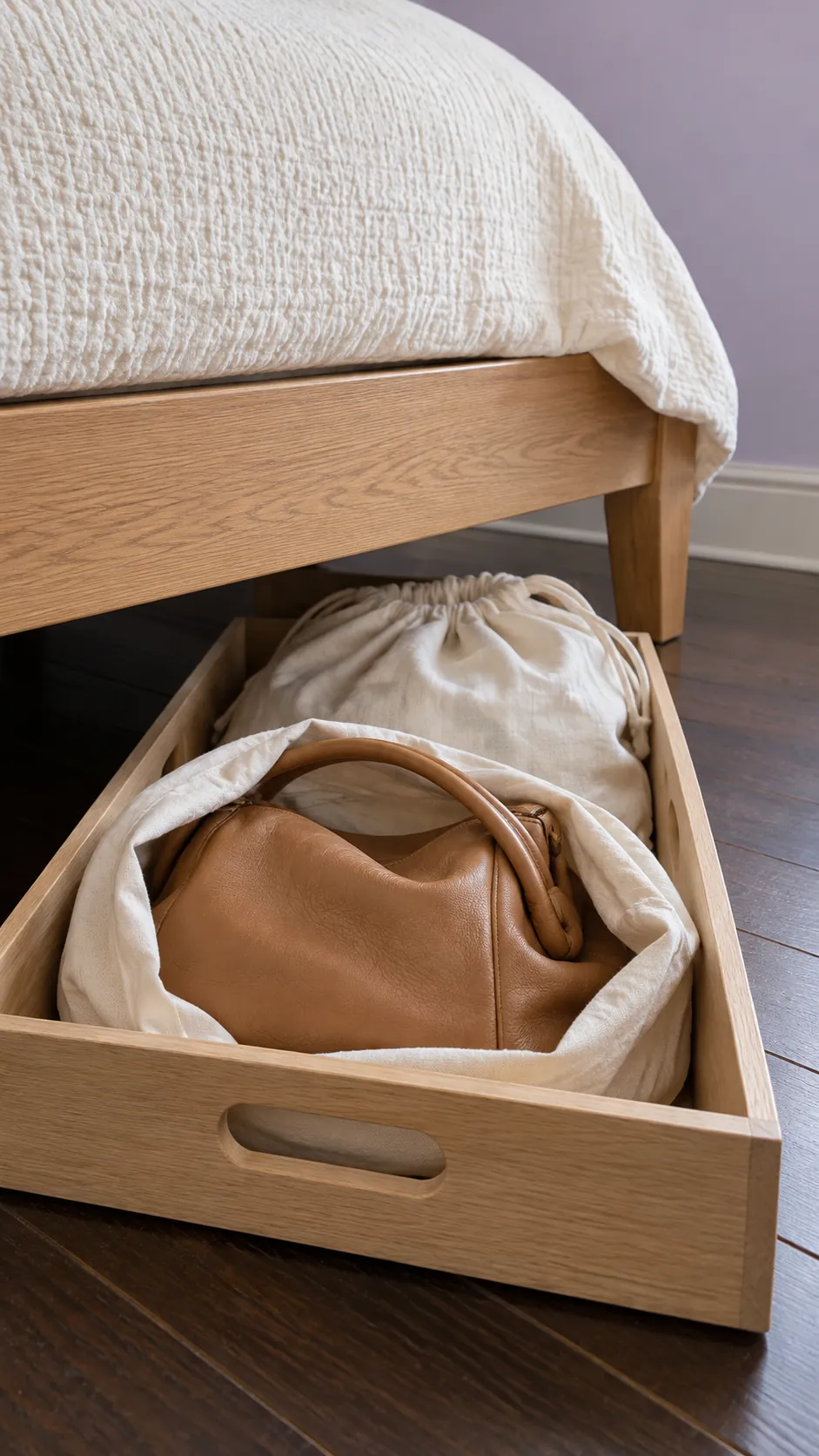
Store soft bags in individual cloth covers
Empty bags can fit beneath a bed when their shape and materials tolerate the available space. Use suitable cloth covers and gentle internal support where needed, without flattening handles or structured sides. Position the bags away from exposed bolts and leave room to lift them out without scraping the frame.
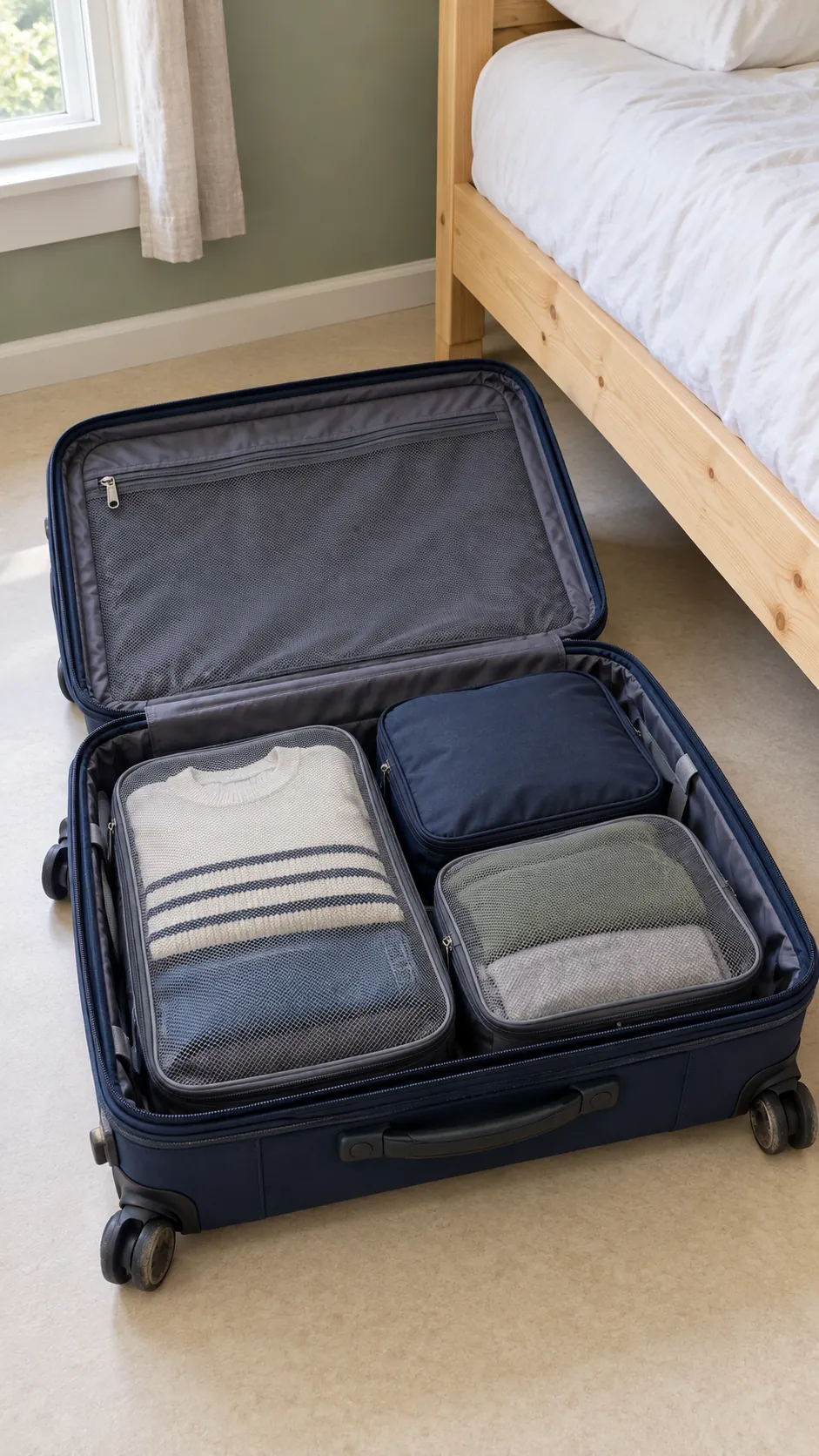
Put an empty suitcase to work
A clean suitcase that already fits beneath the bed can hold occasional clothing instead of occupying space empty. Use lightweight packing cubes to separate categories and keep the case manageable to move. Reserve it for items you can relocate easily when you need the suitcase for travel.
Avoid using the travel case for daily basics. Opening a full suitcase every morning adds work to getting dressed. If the case is difficult to pull out, choose a lighter category or leave it empty.
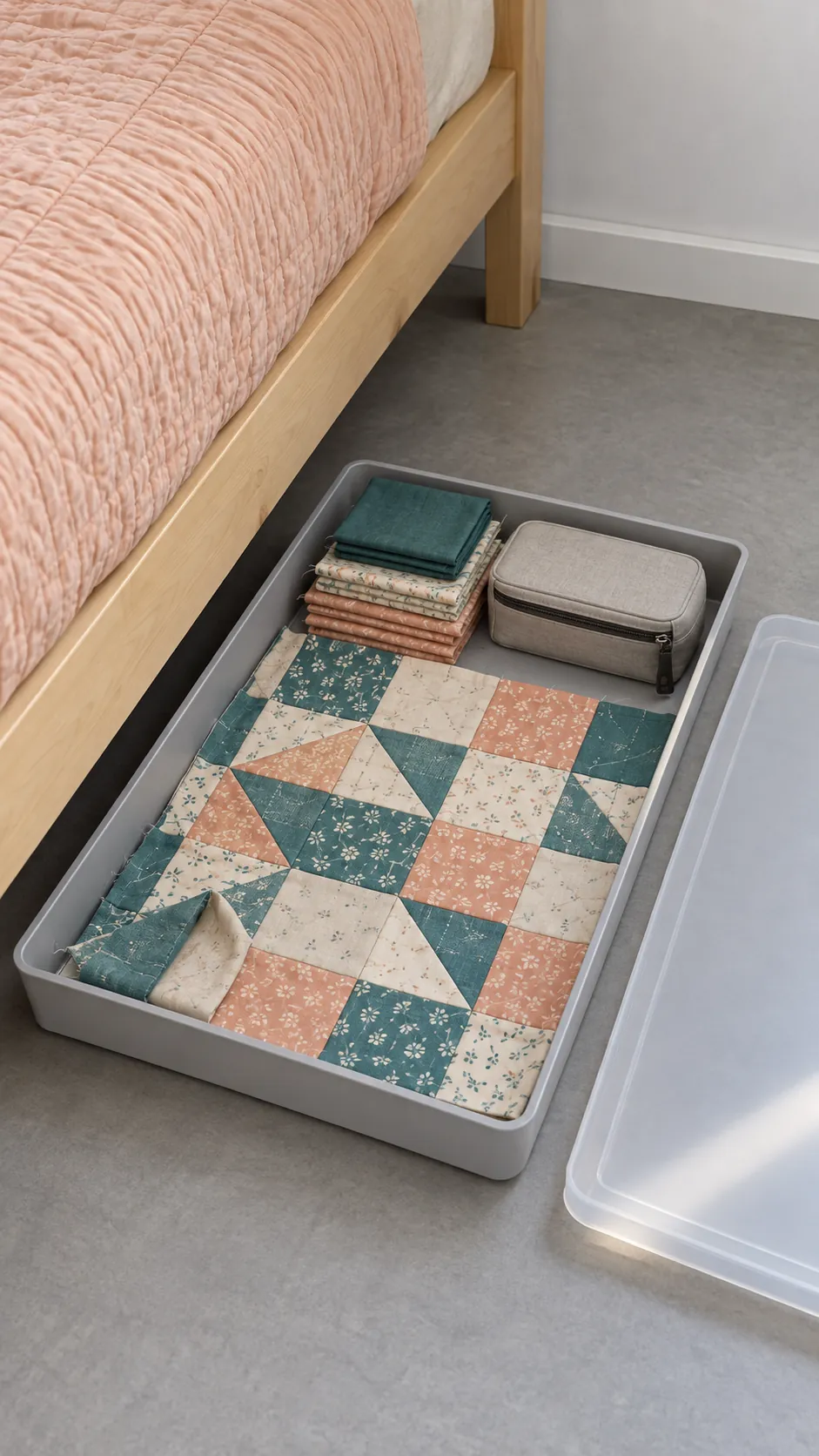
Keep a flat craft project in one tray
A shallow tray can hold an ongoing fabric or paper project without leaving it across the bed. Use a lid or suitable cover and keep sharp tools safely contained. Set a limit on the tray’s contents so the project remains easy to retrieve and does not become an indefinite mixed storage pile.
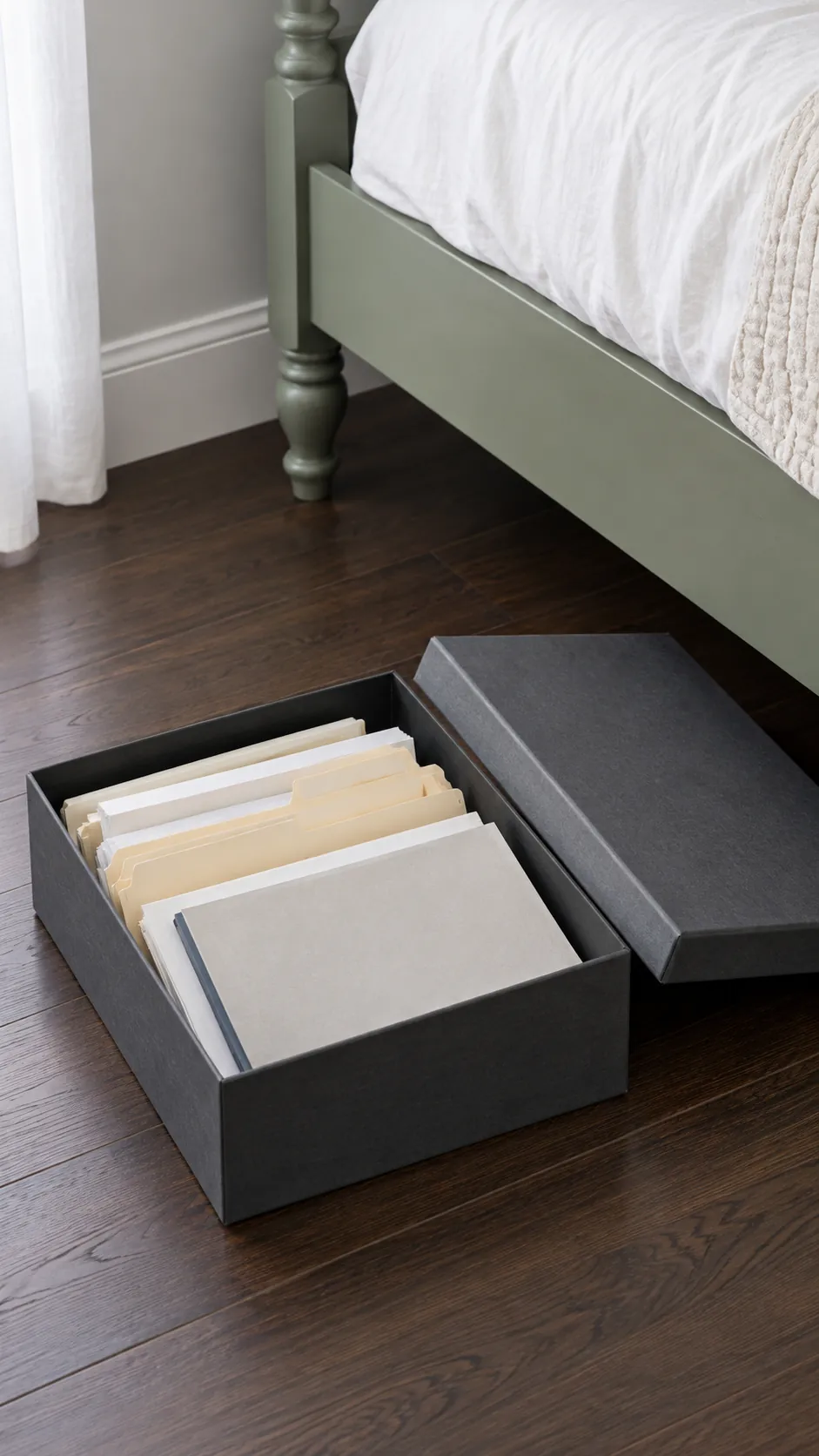
Use a document box for nonessential papers
A low covered document box can gather manuals or archived papers that do not need frequent access. Keep it dry and use storage materials appropriate for anything you intend to preserve. Important originals and sensitive records may need more secure or protective storage than the space beneath a bed provides.
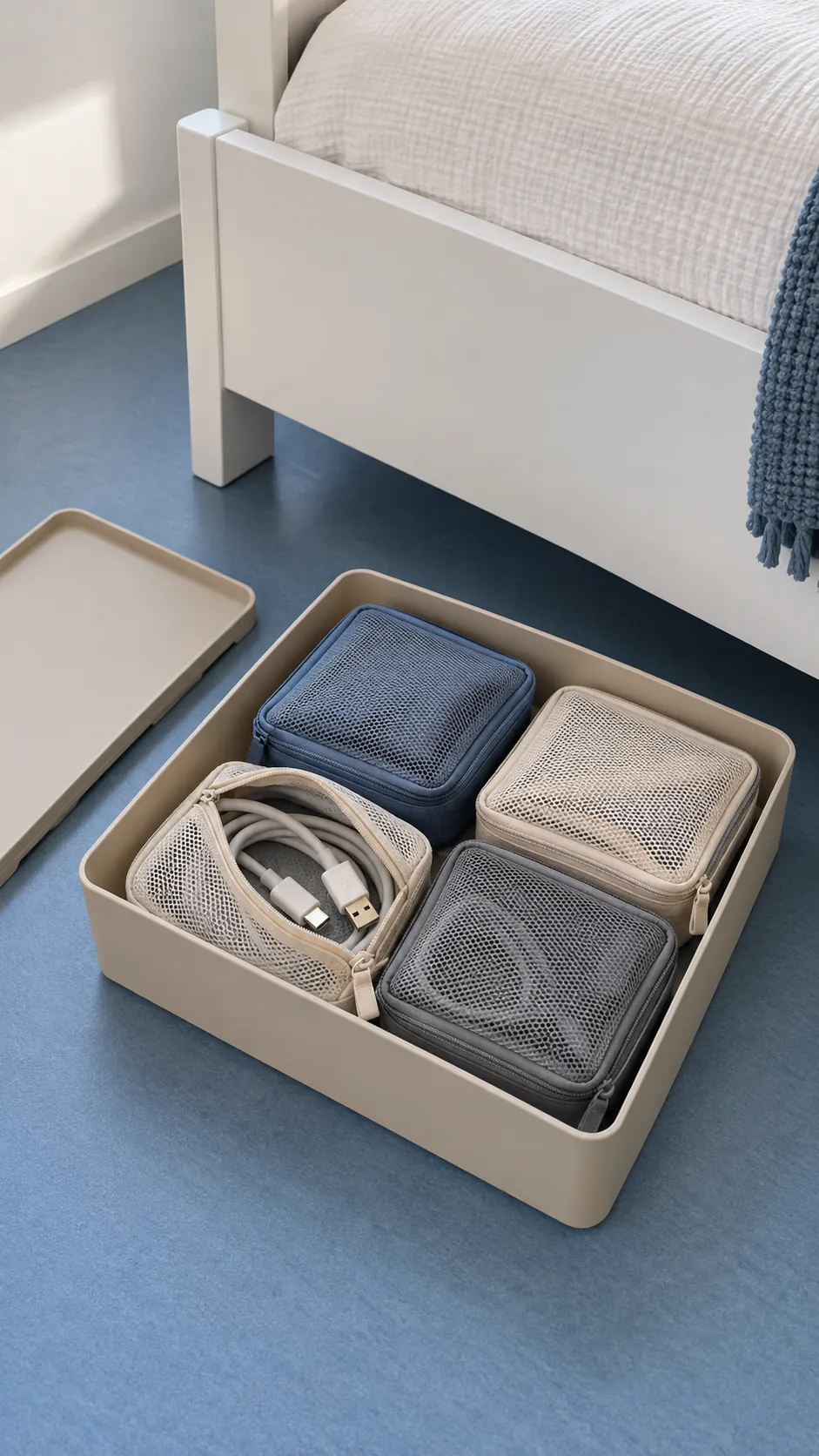
Contain spare cables in small zipped pouches
Loose cables tangle easily in a large storage bin. Coil each cable loosely, place related items in a pouch, and keep the pouches in one shallow box. Store only disconnected equipment here, avoid crushing connectors, and keep chargers in an open suitable location while they are operating.
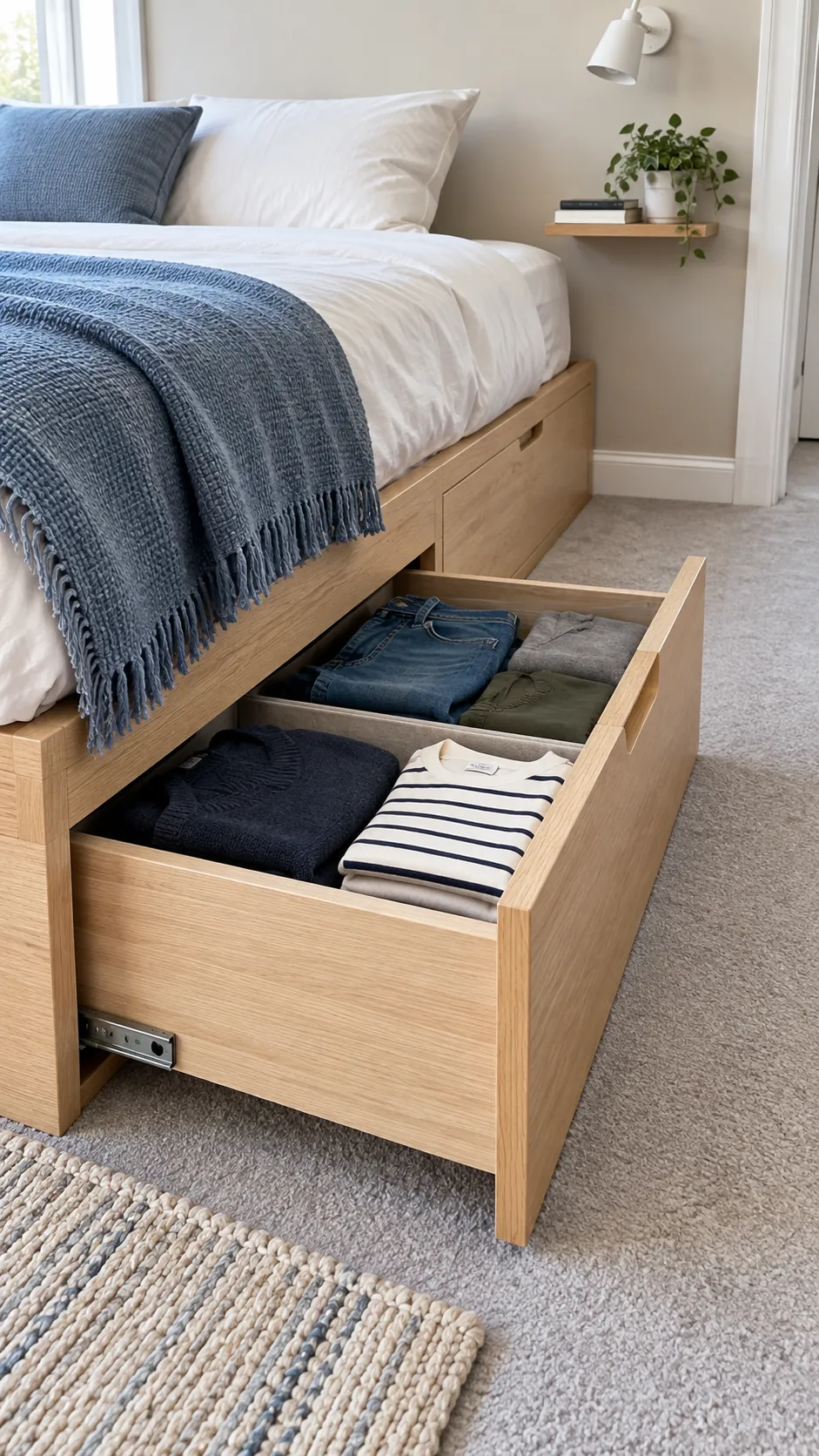
Choose a bed with integrated drawers
Built in drawers can replace part of a dresser’s function without adding another furniture footprint. Check the drawer travel against bedside tables, rugs, and the room’s walking space before choosing the bed. Measure the usable drawer interiors as well as the bed’s outside dimensions, because large fronts can conceal smaller storage compartments. A drawer is useful only when you can open it far enough to reach the back.
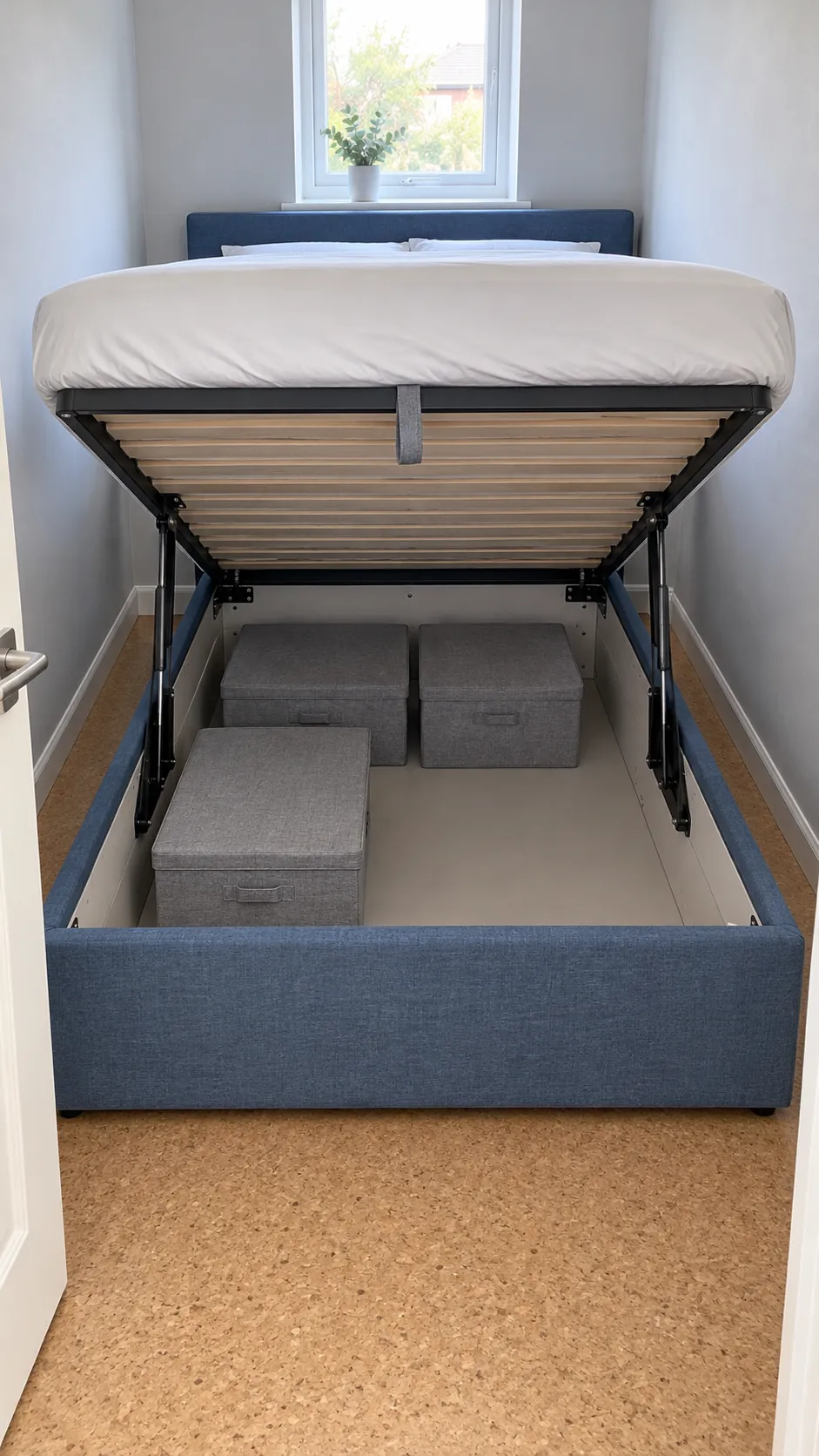
Consider a lifting base when side access is tight
A lifting storage bed can make sense when there is little room to pull drawers out beside it. Follow the bed’s operating and loading instructions, and keep stored items clear of the lifting mechanism. Do not work beneath an unsupported raised base or assume that every mattress is compatible with the lift system.
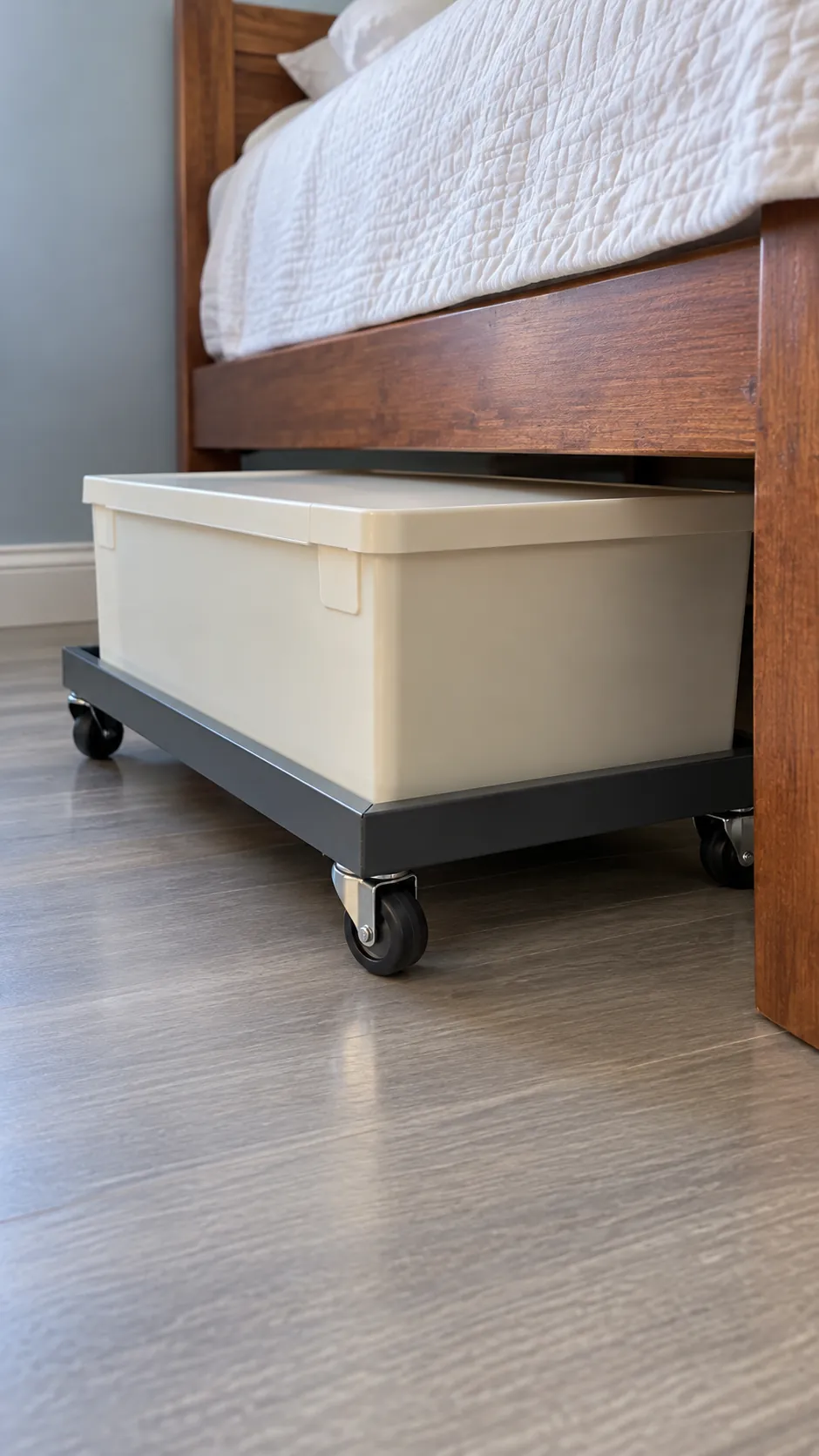
Set existing boxes on a suitable rolling platform
A low platform with suitable wheels can make a sturdy existing box easier to move. Check the combined height, the platform’s load rating, and whether the box remains stable while rolling. Choose a platform designed for the task instead of improvising a top heavy stack or attaching wheels to a weak container.
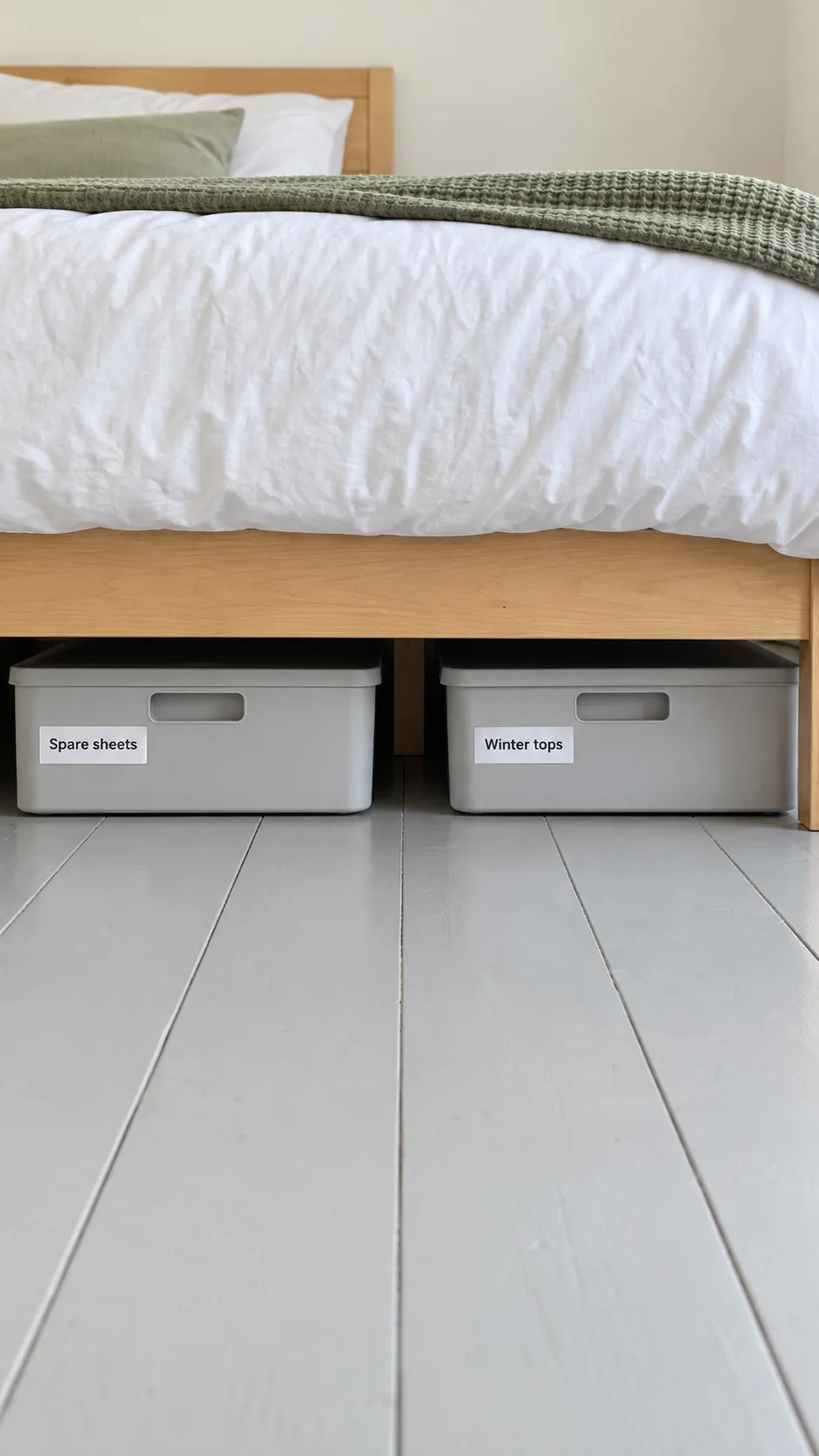
Label the edge you can actually see
A label on the lid is not useful when the container stays beneath the bed. Put a short contents label on the handle side or front edge, and update it whenever the category changes. Use specific wording such as spare sheets or winter tops so you do not have to open several similar boxes.
Leave a route for retrieval and cleaning
Under bed storage works only if you can remove it without shifting the whole room. Keep containers clear of bed supports, cables, vents, and any moving bed mechanism. Pull the storage out regularly to clean the floor and check for dust or moisture, then return only the items that still deserve the space.
Start with fewer containers than the gap could technically hold. Use the arrangement through a normal laundry cycle and notice what becomes awkward. Expand only when the remaining space is still easy to reach and maintain.